EP4497501A1 - Rhenium-based hydrogenation catalyst and its use and preparation - Google Patents
Rhenium-based hydrogenation catalyst and its use and preparation Download PDFInfo
- Publication number
- EP4497501A1 EP4497501A1 EP23188430.5A EP23188430A EP4497501A1 EP 4497501 A1 EP4497501 A1 EP 4497501A1 EP 23188430 A EP23188430 A EP 23188430A EP 4497501 A1 EP4497501 A1 EP 4497501A1
- Authority
- EP
- European Patent Office
- Prior art keywords
- support
- catalyst
- solid material
- dry powder
- carbon dioxide
- Prior art date
- Legal status (The legal status is an assumption and is not a legal conclusion. Google has not performed a legal analysis and makes no representation as to the accuracy of the status listed.)
- Pending
Links
- 239000003054 catalyst Substances 0.000 title claims abstract description 47
- 229910052702 rhenium Inorganic materials 0.000 title abstract description 16
- WUAPFZMCVAUBPE-UHFFFAOYSA-N rhenium atom Chemical compound [Re] WUAPFZMCVAUBPE-UHFFFAOYSA-N 0.000 title abstract 2
- 238000002360 preparation method Methods 0.000 title description 6
- 238000005984 hydrogenation reaction Methods 0.000 title description 2
- OKKJLVBELUTLKV-UHFFFAOYSA-N Methanol Chemical compound OC OKKJLVBELUTLKV-UHFFFAOYSA-N 0.000 claims abstract description 87
- CURLTUGMZLYLDI-UHFFFAOYSA-N Carbon dioxide Chemical compound O=C=O CURLTUGMZLYLDI-UHFFFAOYSA-N 0.000 claims abstract description 52
- GWEVSGVZZGPLCZ-UHFFFAOYSA-N Titan oxide Chemical compound O=[Ti]=O GWEVSGVZZGPLCZ-UHFFFAOYSA-N 0.000 claims abstract description 51
- 230000003197 catalytic effect Effects 0.000 claims abstract description 38
- 150000001875 compounds Chemical class 0.000 claims abstract description 38
- 239000000463 material Substances 0.000 claims abstract description 35
- 239000000843 powder Substances 0.000 claims abstract description 34
- 239000002243 precursor Substances 0.000 claims abstract description 32
- 229910002092 carbon dioxide Inorganic materials 0.000 claims abstract description 31
- 238000000034 method Methods 0.000 claims abstract description 28
- 239000001569 carbon dioxide Substances 0.000 claims abstract description 23
- 239000001257 hydrogen Substances 0.000 claims abstract description 23
- 229910052739 hydrogen Inorganic materials 0.000 claims abstract description 23
- 239000011343 solid material Substances 0.000 claims abstract description 22
- 229910052723 transition metal Inorganic materials 0.000 claims abstract description 22
- 150000003624 transition metals Chemical class 0.000 claims abstract description 22
- UFHFLCQGNIYNRP-UHFFFAOYSA-N Hydrogen Chemical compound [H][H] UFHFLCQGNIYNRP-UHFFFAOYSA-N 0.000 claims abstract description 21
- 238000006555 catalytic reaction Methods 0.000 claims abstract description 21
- 238000004519 manufacturing process Methods 0.000 claims abstract description 17
- 239000000725 suspension Substances 0.000 claims abstract description 16
- 229910052751 metal Inorganic materials 0.000 claims abstract description 15
- 239000002184 metal Substances 0.000 claims abstract description 15
- 230000002194 synthesizing effect Effects 0.000 claims abstract description 15
- 238000012545 processing Methods 0.000 claims abstract description 11
- 229910052709 silver Inorganic materials 0.000 claims abstract description 9
- 238000006243 chemical reaction Methods 0.000 claims description 14
- 229910052697 platinum Inorganic materials 0.000 claims description 8
- 229910052802 copper Inorganic materials 0.000 claims description 6
- 229910052793 cadmium Inorganic materials 0.000 claims description 5
- 229910052763 palladium Inorganic materials 0.000 claims description 5
- VHUUQVKOLVNVRT-UHFFFAOYSA-N Ammonium hydroxide Chemical compound [NH4+].[OH-] VHUUQVKOLVNVRT-UHFFFAOYSA-N 0.000 claims description 4
- GRYLNZFGIOXLOG-UHFFFAOYSA-N Nitric acid Chemical compound O[N+]([O-])=O GRYLNZFGIOXLOG-UHFFFAOYSA-N 0.000 claims description 4
- 239000004408 titanium dioxide Substances 0.000 claims description 4
- 229910017604 nitric acid Inorganic materials 0.000 claims description 3
- 238000001354 calcination Methods 0.000 claims description 2
- 238000001035 drying Methods 0.000 claims description 2
- BQCADISMDOOEFD-UHFFFAOYSA-N Silver Chemical compound [Ag] BQCADISMDOOEFD-UHFFFAOYSA-N 0.000 abstract 1
- 239000004332 silver Substances 0.000 abstract 1
- 239000000243 solution Substances 0.000 description 14
- XLYOFNOQVPJJNP-UHFFFAOYSA-N water Chemical compound O XLYOFNOQVPJJNP-UHFFFAOYSA-N 0.000 description 11
- 238000005470 impregnation Methods 0.000 description 9
- SQGYOTSLMSWVJD-UHFFFAOYSA-N silver(1+) nitrate Chemical compound [Ag+].[O-]N(=O)=O SQGYOTSLMSWVJD-UHFFFAOYSA-N 0.000 description 9
- 125000004429 atom Chemical group 0.000 description 8
- 230000015572 biosynthetic process Effects 0.000 description 7
- 238000003786 synthesis reaction Methods 0.000 description 7
- 239000008367 deionised water Substances 0.000 description 6
- 229910021641 deionized water Inorganic materials 0.000 description 6
- 238000011156 evaluation Methods 0.000 description 6
- TZIHFWKZFHZASV-UHFFFAOYSA-N methyl formate Chemical compound COC=O TZIHFWKZFHZASV-UHFFFAOYSA-N 0.000 description 6
- 238000003756 stirring Methods 0.000 description 6
- 238000002474 experimental method Methods 0.000 description 5
- LCGLNKUTAGEVQW-UHFFFAOYSA-N Dimethyl ether Chemical compound COC LCGLNKUTAGEVQW-UHFFFAOYSA-N 0.000 description 4
- VEXZGXHMUGYJMC-UHFFFAOYSA-N Hydrochloric acid Chemical compound Cl VEXZGXHMUGYJMC-UHFFFAOYSA-N 0.000 description 4
- 229910052799 carbon Inorganic materials 0.000 description 4
- VNWKTOKETHGBQD-UHFFFAOYSA-N methane Chemical compound C VNWKTOKETHGBQD-UHFFFAOYSA-N 0.000 description 4
- 238000012360 testing method Methods 0.000 description 4
- 238000002525 ultrasonication Methods 0.000 description 4
- 230000004913 activation Effects 0.000 description 3
- 238000000151 deposition Methods 0.000 description 3
- 239000006185 dispersion Substances 0.000 description 3
- 238000001803 electron scattering Methods 0.000 description 3
- 238000005516 engineering process Methods 0.000 description 3
- 229910052737 gold Inorganic materials 0.000 description 3
- 229910002651 NO3 Inorganic materials 0.000 description 2
- 238000004458 analytical method Methods 0.000 description 2
- 150000001450 anions Chemical class 0.000 description 2
- XIEPJMXMMWZAAV-UHFFFAOYSA-N cadmium nitrate Chemical compound [Cd+2].[O-][N+]([O-])=O.[O-][N+]([O-])=O XIEPJMXMMWZAAV-UHFFFAOYSA-N 0.000 description 2
- 150000001768 cations Chemical class 0.000 description 2
- 230000000052 comparative effect Effects 0.000 description 2
- XTVVROIMIGLXTD-UHFFFAOYSA-N copper(II) nitrate Chemical compound [Cu+2].[O-][N+]([O-])=O.[O-][N+]([O-])=O XTVVROIMIGLXTD-UHFFFAOYSA-N 0.000 description 2
- 230000008021 deposition Effects 0.000 description 2
- 239000007789 gas Substances 0.000 description 2
- 238000002173 high-resolution transmission electron microscopy Methods 0.000 description 2
- 150000002431 hydrogen Chemical class 0.000 description 2
- 238000005259 measurement Methods 0.000 description 2
- 229910044991 metal oxide Inorganic materials 0.000 description 2
- 150000004706 metal oxides Chemical class 0.000 description 2
- 229910052750 molybdenum Inorganic materials 0.000 description 2
- JKQOBWVOAYFWKG-UHFFFAOYSA-N molybdenum trioxide Chemical compound O=[Mo](=O)=O JKQOBWVOAYFWKG-UHFFFAOYSA-N 0.000 description 2
- 230000008569 process Effects 0.000 description 2
- 239000000047 product Substances 0.000 description 2
- 230000009467 reduction Effects 0.000 description 2
- 238000004088 simulation Methods 0.000 description 2
- 230000007306 turnover Effects 0.000 description 2
- HPTJABJPZMULFH-UHFFFAOYSA-N 12-[(Cyclohexylcarbamoyl)amino]dodecanoic acid Chemical compound OC(=O)CCCCCCCCCCCNC(=O)NC1CCCCC1 HPTJABJPZMULFH-UHFFFAOYSA-N 0.000 description 1
- QGZKDVFQNNGYKY-UHFFFAOYSA-N Ammonia Chemical compound N QGZKDVFQNNGYKY-UHFFFAOYSA-N 0.000 description 1
- QGZKDVFQNNGYKY-UHFFFAOYSA-O Ammonium Chemical compound [NH4+] QGZKDVFQNNGYKY-UHFFFAOYSA-O 0.000 description 1
- 238000012935 Averaging Methods 0.000 description 1
- OKTJSMMVPCPJKN-UHFFFAOYSA-N Carbon Chemical compound [C] OKTJSMMVPCPJKN-UHFFFAOYSA-N 0.000 description 1
- UGFAIRIUMAVXCW-UHFFFAOYSA-N Carbon monoxide Chemical compound [O+]#[C-] UGFAIRIUMAVXCW-UHFFFAOYSA-N 0.000 description 1
- 229910004042 HAuCl4 Inorganic materials 0.000 description 1
- 238000005054 agglomeration Methods 0.000 description 1
- 230000002776 aggregation Effects 0.000 description 1
- PNEYBMLMFCGWSK-UHFFFAOYSA-N aluminium oxide Inorganic materials [O-2].[O-2].[O-2].[Al+3].[Al+3] PNEYBMLMFCGWSK-UHFFFAOYSA-N 0.000 description 1
- QVGXLLKOCUKJST-UHFFFAOYSA-N atomic oxygen Chemical compound [O] QVGXLLKOCUKJST-UHFFFAOYSA-N 0.000 description 1
- RBAKORNXYLGSJB-UHFFFAOYSA-N azane;platinum(2+);dinitrate Chemical compound N.N.N.N.[Pt+2].[O-][N+]([O-])=O.[O-][N+]([O-])=O RBAKORNXYLGSJB-UHFFFAOYSA-N 0.000 description 1
- QOYRNHQSZSCVOW-UHFFFAOYSA-N cadmium nitrate tetrahydrate Chemical compound O.O.O.O.[Cd+2].[O-][N+]([O-])=O.[O-][N+]([O-])=O QOYRNHQSZSCVOW-UHFFFAOYSA-N 0.000 description 1
- 238000004364 calculation method Methods 0.000 description 1
- 229910002091 carbon monoxide Inorganic materials 0.000 description 1
- 239000007795 chemical reaction product Substances 0.000 description 1
- 238000007796 conventional method Methods 0.000 description 1
- SXTLQDJHRPXDSB-UHFFFAOYSA-N copper;dinitrate;trihydrate Chemical compound O.O.O.[Cu+2].[O-][N+]([O-])=O.[O-][N+]([O-])=O SXTLQDJHRPXDSB-UHFFFAOYSA-N 0.000 description 1
- 239000013078 crystal Substances 0.000 description 1
- 230000001419 dependent effect Effects 0.000 description 1
- 238000002003 electron diffraction Methods 0.000 description 1
- 239000000446 fuel Substances 0.000 description 1
- 125000002887 hydroxy group Chemical group [H]O* 0.000 description 1
- 238000003384 imaging method Methods 0.000 description 1
- 229910052809 inorganic oxide Inorganic materials 0.000 description 1
- 238000002372 labelling Methods 0.000 description 1
- 230000007246 mechanism Effects 0.000 description 1
- 239000011259 mixed solution Substances 0.000 description 1
- 238000012986 modification Methods 0.000 description 1
- 230000004048 modification Effects 0.000 description 1
- 239000002105 nanoparticle Substances 0.000 description 1
- 230000007935 neutral effect Effects 0.000 description 1
- 239000001301 oxygen Substances 0.000 description 1
- 229910052760 oxygen Inorganic materials 0.000 description 1
- 238000010979 pH adjustment Methods 0.000 description 1
- DTZRLFJKQHIVQA-UHFFFAOYSA-N palladium(2+);dinitrate;hydrate Chemical compound O.[Pd+2].[O-][N+]([O-])=O.[O-][N+]([O-])=O DTZRLFJKQHIVQA-UHFFFAOYSA-N 0.000 description 1
- GPNDARIEYHPYAY-UHFFFAOYSA-N palladium(II) nitrate Inorganic materials [Pd+2].[O-][N+]([O-])=O.[O-][N+]([O-])=O GPNDARIEYHPYAY-UHFFFAOYSA-N 0.000 description 1
- 239000002245 particle Substances 0.000 description 1
- 230000001737 promoting effect Effects 0.000 description 1
- 150000003839 salts Chemical class 0.000 description 1
- 230000035945 sensitivity Effects 0.000 description 1
- 229910001961 silver nitrate Inorganic materials 0.000 description 1
- 239000002002 slurry Substances 0.000 description 1
- 239000007787 solid Substances 0.000 description 1
Images


Classifications
-
- B—PERFORMING OPERATIONS; TRANSPORTING
- B01—PHYSICAL OR CHEMICAL PROCESSES OR APPARATUS IN GENERAL
- B01J—CHEMICAL OR PHYSICAL PROCESSES, e.g. CATALYSIS OR COLLOID CHEMISTRY; THEIR RELEVANT APPARATUS
- B01J23/00—Catalysts comprising metals or metal oxides or hydroxides, not provided for in group B01J21/00
- B01J23/16—Catalysts comprising metals or metal oxides or hydroxides, not provided for in group B01J21/00 of arsenic, antimony, bismuth, vanadium, niobium, tantalum, polonium, chromium, molybdenum, tungsten, manganese, technetium or rhenium
- B01J23/32—Manganese, technetium or rhenium
- B01J23/36—Rhenium
-
- B—PERFORMING OPERATIONS; TRANSPORTING
- B01—PHYSICAL OR CHEMICAL PROCESSES OR APPARATUS IN GENERAL
- B01J—CHEMICAL OR PHYSICAL PROCESSES, e.g. CATALYSIS OR COLLOID CHEMISTRY; THEIR RELEVANT APPARATUS
- B01J21/00—Catalysts comprising the elements, oxides, or hydroxides of magnesium, boron, aluminium, carbon, silicon, titanium, zirconium, or hafnium
- B01J21/06—Silicon, titanium, zirconium or hafnium; Oxides or hydroxides thereof
- B01J21/063—Titanium; Oxides or hydroxides thereof
-
- B—PERFORMING OPERATIONS; TRANSPORTING
- B01—PHYSICAL OR CHEMICAL PROCESSES OR APPARATUS IN GENERAL
- B01J—CHEMICAL OR PHYSICAL PROCESSES, e.g. CATALYSIS OR COLLOID CHEMISTRY; THEIR RELEVANT APPARATUS
- B01J23/00—Catalysts comprising metals or metal oxides or hydroxides, not provided for in group B01J21/00
- B01J23/38—Catalysts comprising metals or metal oxides or hydroxides, not provided for in group B01J21/00 of noble metals
- B01J23/54—Catalysts comprising metals or metal oxides or hydroxides, not provided for in group B01J21/00 of noble metals combined with metals, oxides or hydroxides provided for in groups B01J23/02 - B01J23/36
- B01J23/56—Platinum group metals
- B01J23/64—Platinum group metals with arsenic, antimony, bismuth, vanadium, niobium, tantalum, polonium, chromium, molybdenum, tungsten, manganese, technetium or rhenium
- B01J23/656—Manganese, technetium or rhenium
- B01J23/6567—Rhenium
-
- B—PERFORMING OPERATIONS; TRANSPORTING
- B01—PHYSICAL OR CHEMICAL PROCESSES OR APPARATUS IN GENERAL
- B01J—CHEMICAL OR PHYSICAL PROCESSES, e.g. CATALYSIS OR COLLOID CHEMISTRY; THEIR RELEVANT APPARATUS
- B01J23/00—Catalysts comprising metals or metal oxides or hydroxides, not provided for in group B01J21/00
- B01J23/38—Catalysts comprising metals or metal oxides or hydroxides, not provided for in group B01J21/00 of noble metals
- B01J23/54—Catalysts comprising metals or metal oxides or hydroxides, not provided for in group B01J21/00 of noble metals combined with metals, oxides or hydroxides provided for in groups B01J23/02 - B01J23/36
- B01J23/66—Silver or gold
- B01J23/68—Silver or gold with arsenic, antimony, bismuth, vanadium, niobium, tantalum, polonium, chromium, molybdenum, tungsten, manganese, technetium or rhenium
- B01J23/688—Silver or gold with arsenic, antimony, bismuth, vanadium, niobium, tantalum, polonium, chromium, molybdenum, tungsten, manganese, technetium or rhenium with manganese, technetium or rhenium
-
- B—PERFORMING OPERATIONS; TRANSPORTING
- B01—PHYSICAL OR CHEMICAL PROCESSES OR APPARATUS IN GENERAL
- B01J—CHEMICAL OR PHYSICAL PROCESSES, e.g. CATALYSIS OR COLLOID CHEMISTRY; THEIR RELEVANT APPARATUS
- B01J23/00—Catalysts comprising metals or metal oxides or hydroxides, not provided for in group B01J21/00
- B01J23/70—Catalysts comprising metals or metal oxides or hydroxides, not provided for in group B01J21/00 of the iron group metals or copper
- B01J23/76—Catalysts comprising metals or metal oxides or hydroxides, not provided for in group B01J21/00 of the iron group metals or copper combined with metals, oxides or hydroxides provided for in groups B01J23/02 - B01J23/36
- B01J23/84—Catalysts comprising metals or metal oxides or hydroxides, not provided for in group B01J21/00 of the iron group metals or copper combined with metals, oxides or hydroxides provided for in groups B01J23/02 - B01J23/36 with arsenic, antimony, bismuth, vanadium, niobium, tantalum, polonium, chromium, molybdenum, tungsten, manganese, technetium or rhenium
- B01J23/889—Manganese, technetium or rhenium
- B01J23/8896—Rhenium
-
- B—PERFORMING OPERATIONS; TRANSPORTING
- B01—PHYSICAL OR CHEMICAL PROCESSES OR APPARATUS IN GENERAL
- B01J—CHEMICAL OR PHYSICAL PROCESSES, e.g. CATALYSIS OR COLLOID CHEMISTRY; THEIR RELEVANT APPARATUS
- B01J37/00—Processes, in general, for preparing catalysts; Processes, in general, for activation of catalysts
- B01J37/02—Impregnation, coating or precipitation
- B01J37/0201—Impregnation
- B01J37/0205—Impregnation in several steps
-
- B—PERFORMING OPERATIONS; TRANSPORTING
- B01—PHYSICAL OR CHEMICAL PROCESSES OR APPARATUS IN GENERAL
- B01J—CHEMICAL OR PHYSICAL PROCESSES, e.g. CATALYSIS OR COLLOID CHEMISTRY; THEIR RELEVANT APPARATUS
- B01J37/00—Processes, in general, for preparing catalysts; Processes, in general, for activation of catalysts
- B01J37/02—Impregnation, coating or precipitation
- B01J37/0201—Impregnation
- B01J37/0207—Pretreatment of the support
-
- B—PERFORMING OPERATIONS; TRANSPORTING
- B01—PHYSICAL OR CHEMICAL PROCESSES OR APPARATUS IN GENERAL
- B01J—CHEMICAL OR PHYSICAL PROCESSES, e.g. CATALYSIS OR COLLOID CHEMISTRY; THEIR RELEVANT APPARATUS
- B01J37/00—Processes, in general, for preparing catalysts; Processes, in general, for activation of catalysts
- B01J37/02—Impregnation, coating or precipitation
- B01J37/0201—Impregnation
- B01J37/0211—Impregnation using a colloidal suspension
-
- B—PERFORMING OPERATIONS; TRANSPORTING
- B01—PHYSICAL OR CHEMICAL PROCESSES OR APPARATUS IN GENERAL
- B01J—CHEMICAL OR PHYSICAL PROCESSES, e.g. CATALYSIS OR COLLOID CHEMISTRY; THEIR RELEVANT APPARATUS
- B01J37/00—Processes, in general, for preparing catalysts; Processes, in general, for activation of catalysts
- B01J37/02—Impregnation, coating or precipitation
- B01J37/0201—Impregnation
- B01J37/0213—Preparation of the impregnating solution
-
- B—PERFORMING OPERATIONS; TRANSPORTING
- B01—PHYSICAL OR CHEMICAL PROCESSES OR APPARATUS IN GENERAL
- B01J—CHEMICAL OR PHYSICAL PROCESSES, e.g. CATALYSIS OR COLLOID CHEMISTRY; THEIR RELEVANT APPARATUS
- B01J37/00—Processes, in general, for preparing catalysts; Processes, in general, for activation of catalysts
- B01J37/02—Impregnation, coating or precipitation
- B01J37/0236—Drying, e.g. preparing a suspension, adding a soluble salt and drying
-
- B—PERFORMING OPERATIONS; TRANSPORTING
- B01—PHYSICAL OR CHEMICAL PROCESSES OR APPARATUS IN GENERAL
- B01J—CHEMICAL OR PHYSICAL PROCESSES, e.g. CATALYSIS OR COLLOID CHEMISTRY; THEIR RELEVANT APPARATUS
- B01J37/00—Processes, in general, for preparing catalysts; Processes, in general, for activation of catalysts
- B01J37/08—Heat treatment
- B01J37/082—Decomposition and pyrolysis
- B01J37/088—Decomposition of a metal salt
-
- B—PERFORMING OPERATIONS; TRANSPORTING
- B01—PHYSICAL OR CHEMICAL PROCESSES OR APPARATUS IN GENERAL
- B01J—CHEMICAL OR PHYSICAL PROCESSES, e.g. CATALYSIS OR COLLOID CHEMISTRY; THEIR RELEVANT APPARATUS
- B01J37/00—Processes, in general, for preparing catalysts; Processes, in general, for activation of catalysts
- B01J37/16—Reducing
- B01J37/18—Reducing with gases containing free hydrogen
-
- B—PERFORMING OPERATIONS; TRANSPORTING
- B01—PHYSICAL OR CHEMICAL PROCESSES OR APPARATUS IN GENERAL
- B01J—CHEMICAL OR PHYSICAL PROCESSES, e.g. CATALYSIS OR COLLOID CHEMISTRY; THEIR RELEVANT APPARATUS
- B01J37/00—Processes, in general, for preparing catalysts; Processes, in general, for activation of catalysts
- B01J37/34—Irradiation by, or application of, electric, magnetic or wave energy, e.g. ultrasonic waves ; Ionic sputtering; Flame or plasma spraying; Particle radiation
- B01J37/341—Irradiation by, or application of, electric, magnetic or wave energy, e.g. ultrasonic waves ; Ionic sputtering; Flame or plasma spraying; Particle radiation making use of electric or magnetic fields, wave energy or particle radiation
- B01J37/343—Irradiation by, or application of, electric, magnetic or wave energy, e.g. ultrasonic waves ; Ionic sputtering; Flame or plasma spraying; Particle radiation making use of electric or magnetic fields, wave energy or particle radiation of ultrasonic wave energy
-
- B—PERFORMING OPERATIONS; TRANSPORTING
- B01—PHYSICAL OR CHEMICAL PROCESSES OR APPARATUS IN GENERAL
- B01J—CHEMICAL OR PHYSICAL PROCESSES, e.g. CATALYSIS OR COLLOID CHEMISTRY; THEIR RELEVANT APPARATUS
- B01J2523/00—Constitutive chemical elements of heterogeneous catalysts
-
- Y—GENERAL TAGGING OF NEW TECHNOLOGICAL DEVELOPMENTS; GENERAL TAGGING OF CROSS-SECTIONAL TECHNOLOGIES SPANNING OVER SEVERAL SECTIONS OF THE IPC; TECHNICAL SUBJECTS COVERED BY FORMER USPC CROSS-REFERENCE ART COLLECTIONS [XRACs] AND DIGESTS
- Y02—TECHNOLOGIES OR APPLICATIONS FOR MITIGATION OR ADAPTATION AGAINST CLIMATE CHANGE
- Y02P—CLIMATE CHANGE MITIGATION TECHNOLOGIES IN THE PRODUCTION OR PROCESSING OF GOODS
- Y02P20/00—Technologies relating to chemical industry
- Y02P20/50—Improvements relating to the production of bulk chemicals
- Y02P20/52—Improvements relating to the production of bulk chemicals using catalysts, e.g. selective catalysts
Definitions
- the invention relates to a catalyst for synthesizing methanol from carbon dioxide and hydrogen, a use of and a manufacturing method for the catalyst as well as a flow reactor for synthesizing methanol from carbon dioxide and hydrogen comprising the catalyst.
- the reduction of carbon dioxide using hydrogen is a key process in the production of carbon neutral fuels.
- the synthesis of methanol from carbon dioxide and hydrogen is such a process.
- An aspect of the invention is a method for manufacturing a catalyst for synthesizing methanol from carbon dioxide and hydrogen via a catalysis, comprising a support and catalytic sites provided on the support for the catalysis and from at least a dissolved metal precursor compound including a compound of Re, the method comprising steps of
- a material which is present before a pH controlled Re deposition is a first solid material, a first dry powder or a material of the support and furthermore a material is obtained with or after a pH controlled Re deposition (a second solid material, a second dry powder).
- the transition metals other than Re comprise preferably at least one of Ag, Cu, Pd, Pt, and Cd. They may exert a promotor function in the catalysis.
- Ag is a particular preference, which, in order to further enhance a catalyst performance, in particular in terms of speed of a reaction catalyzed with the catalyst, can be more preferably combined with Pt and/or Pd.
- the transition metals or transition metals other than Re improve catalytic activity and allow efficient catalysis with low amounts of expensive material for transition metals including Re.
- the support may be any known support for a catalyst for synthesizing methanol from carbon dioxide and hydrogen via a catalysis, e.g. an inorganic oxide based support.
- Support examples are alumina, titanium dioxide and perovskites. Titanium dioxide is a preference. With regard to the crystal structure of titanium dioxide anatase is a preference.
- the support may be provided in a suspension, and the suspension may be preferably sonicated, which suppresses agglomeration of particles of the material of the support. It is preferable to provide the material of the support as an aqueous dispersion using ultrasonication and stirring.
- At least one of the above mentioned processing into a first and second dry powder may include drying and/or calcining. Conventional techniques may be used for these operations.
- the method for manufacturing of the invention involves an impregnation at pH between 2 and 4.
- a pH of 2 is preferred.
- HNO 3 and/or HCl may be used to adjust the pH between 2 and 4.
- a precursor compound of Re may be prepared in a solution of a pH between 3 and 4.
- a precursor compound of Au may be prepared in a solution of a pH between 1 and 2, e.g. 1.14 and then mixed with the precursor compound of Re in a solution.
- a pH between 2 and 4 is used in impregnating a material of the support with the solution containing the precursor compound of Re or with the mixed solutions.
- the pH between 2 and 4 is a pH of a slurry present in the step of impregnating to obtain a second solid material.
- metal specific preferences specifically possibly values within the range between 8 and 12 are as follows: Metal pH range pH value(s) Ag 9 - 12 9.36, 11.96 Cu 8.5 - 10 9.36 Cd 8.5 - 10 9.36 Pt 8.5 - 10 9.36 Pd 8.5 - 10 9.36
- NH 4 OH may be used to adjust the pH between 8 and 12.
- FIG. 1 schematically illustrates a metal oxide support for a catalyst with oxygen based groups which are exposed on the support in a suspension depending on a pH of the suspension.
- a specific pH which is 5.5 or about 5.5 when a material of the metal oxide support is TiO 2 , an OH group is exposed on the support.
- an ionic O group is exposed on the support.
- this group is able to interact with the cation of a dissolved precursor compound of a transition metal other than Re for providing a catalytic site on the support.
- a prevailing lateral extension of such a catalytic site on the support is preferably less than 15 nm, more preferably less than 2 nm most preferably less than 1 nm in the invention.
- Ag + as the cation and dissolved silver nitrate as the dissolved precursor compound is exemplified in Fig. 1 .
- a method according to the invention makes use of a preparation of Re/TiO 2 and Re-M/TiO 2 using modified impregnation procedures, wherein M is a transition metal other than Re, preferably selected from Ag, Au, Cu, Pd, Pt, Cd.
- M is particularly preferably selected from Pt, Pd, and Cd for providing catalytic sites, in particular for excellently promoting the conversion of CO 2 .
- M is particularly preferably selected from Au, Cu, and Ag, more preferably from Au and Cu, for providing catalytic sites, in particular for excellently ensuring selectivity for a conversion of carbon dioxide and hydrogen into methanol.
- M is particularly preferably selected from Pt and Ag, more preferably Ag, for providing catalytic sites, in particular for an excellent kinetic performance and turnover in synthesizing methanol from carbon dioxide and hydrogen.
- TiO 2 ( CAS: 13463-67-7 ) may be used as the material of the support, in particular anatase.
- anatase phase TiO 2 ST-01 supplied by Ishihara Sangyo, Japan was used as the material of the support.
- the section " 2. EXPERIMENTAL SECTION" of Ting et al., ACS Catalysis, Volume 9, Issue 4, Pages 3685 - 3693, 5 April 2019 shows a preparation of a catalyst with Re on a support.
- This catalyst preparation was modified by providing a material of the support with the material obtained from Example 1A above and the following steps, for finally obtaining an Re content of 0.1 wt% based on the weight of the material obtained from Example 1A.
- Examples 1A to 1B were repeated with replacing AgNO 3 in step 1 by a respective one of the above listed components f), g), h) and i) so as to replace Ag by another transition metal M, which respectively was Cu, Pd, Pt and Cd, and for finally obtaining a content of M which is 5.4 ⁇ mol per g support.
- M transition metal M
- Example 1B was modified by replacing step 7 by step i of Example 2.
- this catalyst preparation having a Re content of 0.1 wt% based on the total weight of the support.
- a commercial micro reactor was loaded with a respective sample according to the above indicated sample labelling.
- the samples are subjected to a pretreatment (reduction) in the reactor under the following conditions: 400 °C, 0.5 h, 10 mL/min of 90% H 2 / 10% Ar.
- the operation of the reactor after the pretreatment was performed for 48 h to meet the following test conditions:
- FIG. 3 shows the values S i for the samples indicated at the bars in the graph and mentioned above, specifically selectivity values for carbon monoxide with dark bars, selectivity values for methanol with bars left of the dark bars, selectivity values for methane with bars right of the dark bars.
- the rightmost bar or section for the sample “Au-promoted” indicates a selectivity value for dimethyl ether (DME) and the rightmost bars or sections for the samples "Cd-promoted", “Pt-promoted”, “Pd-promoted”, “Cu-promoted” and "Ag-promoted” indicate a selectivity value for methyl formate (MF).
- Fig. 4 shows turnover frequencies (TOF values) obtained for samples indicated at the bars in the graph and mentioned above.
- sample A1 In order to obtain 3 wt% Re per total weight of the support of TiO 2 in the finally prepared sample, a sample (sample A1) was prepared in line with the experimental section of Ting et al., ACS Catalysis, Volume 9, Issue 4, Pages 3685 - 3693, 5 April 2019 .
- sample A2 A catalyst with 3 wt% Pt and 30 wt% Mo per total weight of the support of TiO 2 in the finally prepared sample is indicated as sample A2 hereafter and is shown in the experimental section of Toyao et al., ACS Catalysis 2019, 9 (9), 8187-8196 (DOI: 10.1021/acscatal.9b01225 ).
- sample A3 In order to obtain 1 wt% Re per total weight of the support of TiO 2 in the finally prepared sample, a sample (sample A3) was prepared in line with the experimental section of Ting et al., ACS Catalysis, Volume 9, Issue 4, Pages 3685 - 3693, 5 April 2019 .
- Example B1 The above Example for a non-promoted catalyst was modified for adjusting the amount of the precursor of Re once to obtain 3 wt% Re per total weight of the support in the finally prepared sample (sample B1) and once to obtain 1 wt% Re per total weight of the support in the finally prepared sample (sample B2).
- Example B3 The above Examples 1A to 1B were modified for adjusting the amounts of the precursor of Ag and Re to obtain 1 wt% Re and 0.59 wt% Ag per total weight of the support in the finally prepared sample (sample B3).
- Fig. 5A shows a result of an evaluation of sample A1 with an electron scattering test.
- Fig. 5B shows a result of an evaluation of sample B1 with the electron scattering test.
- 5A and 5B show a dominant peak attributable to single Re atom sites (major Re site fraction) and a further peak attributable to sites of clustered pairs of Re atoms (minor Re site fraction) in Fig. 5B compared to a number peaks attributable to sites of clusters with Re atoms in Fig. 5A . Accordingly the invention allows producing of and shows products with prevailing sites of Re atoms having a lateral extension ⁇ 1 nm on a catalyst support.
- the invention profits from a new concept of depositing Re to provide catalytic sites on a catalysts support.
- the invention profits from combining catalytic sites on a support, one of which is based on Re and another one of which is based on M, a transition metal other than Re and in particular outstanding performance for specific representatives of M is apparent from Figs. 2 to 4 . It is believed that the catalytic sites are then dedicated to different catalytic mechanisms or dedicated separately to CO 2 activation and H 2 activation in a gas-solid heterogeneous catalytic operation mode of a reactor with the invention's catalyst.
- the invention may profit from the provision of catalytic sites on a support with a dedicated pH control in impregnation operations for each of two combined catalytic sites on a support, one of which is based on Re and another one of which is based on M, a transition metal other than Re.
Landscapes
- Chemical & Material Sciences (AREA)
- Engineering & Computer Science (AREA)
- Materials Engineering (AREA)
- Organic Chemistry (AREA)
- Chemical Kinetics & Catalysis (AREA)
- Physics & Mathematics (AREA)
- Health & Medical Sciences (AREA)
- Plasma & Fusion (AREA)
- Toxicology (AREA)
- Optics & Photonics (AREA)
- Thermal Sciences (AREA)
- Organic Low-Molecular-Weight Compounds And Preparation Thereof (AREA)
- Catalysts (AREA)
Abstract
A method for manufacturing a catalyst for synthesizing methanol from carbon dioxide and hydrogen via a catalysis, with catalytic sites provided on a titania support from at least a dissolved metal precursor compound including a compound of rhenium (Re), comprises steps of
- impregnating a first dry powder or material of the support, using the dissolved precursor compound of Re and using a pH between 2 and 4 to obtain a second solid material, and
- processing the second solid material into a second dry powder, and
- preferably impregnating a first solid material using a precursor being a compound of a transition metal other than Re, such as silver (Ag), in a suspension of the material of the support with a pH between 8 and 11.
- impregnating a first dry powder or material of the support, using the dissolved precursor compound of Re and using a pH between 2 and 4 to obtain a second solid material, and
- processing the second solid material into a second dry powder, and
- preferably impregnating a first solid material using a precursor being a compound of a transition metal other than Re, such as silver (Ag), in a suspension of the material of the support with a pH between 8 and 11.
Description
- The invention relates to a catalyst for synthesizing methanol from carbon dioxide and hydrogen, a use of and a manufacturing method for the catalyst as well as a flow reactor for synthesizing methanol from carbon dioxide and hydrogen comprising the catalyst.
- The reduction of carbon dioxide using hydrogen is a key process in the production of carbon neutral fuels. The synthesis of methanol from carbon dioxide and hydrogen is such a process.
- For a low temperature synthesis of methanol from carbon dioxide and hydrogen Ting et al., ACS Catalysis, Volume 9, shows a catalyst with catalytic sites of Re on a support made from TiO2. Slow kinetics and significant catalyst loss is observed in the known low temperature synthesis even with these catalysts. The PhD thesis by N. Phongprueksathat from 2023 at the Delft University of Technology in the Netherlands (ISBN 978-94-9458-946-7) investigates a catalyst with catalytic sites of Re on a support made from TiO2, for the synthesis of methanol from carbon dioxide and hydrogen.
- Also for a low temperature synthesis of methanol from carbon dioxide and hydrogen Toyao et al., ACS Catalysis 2019, 9 (9), 8187-8196 (DOI: 10.1021/acscatal.9b01225) shows a catalyst which is based on Pt nanoparticles on a support made from MoO3 and TiO2 and a related manufacture with a sequential impregnation with a precursor compound of Mo and then a precursor compound of Pt.
- With prior art catalysts at least some of the following problems or drawbacks are observed:
- a low CO2 conversion and/or low methanol production rate
- a low efficiency of catalytic sites on a support,
- an unreliable methanol production rate,
- a need of an expensive metal element source in significant amounts to provide catalytic sites.
- It is an object of the invention to improve the synthesis of methanol from carbon dioxide and hydrogen. It is an object of the invention to allow an excellent catalyst performance in the synthesis of methanol from carbon dioxide and hydrogen. It is an object of the invention to address aforementioned problems or drawbacks of the prior art.
- An aspect of the invention is a method for manufacturing a catalyst for synthesizing methanol from carbon dioxide and hydrogen via a catalysis, comprising a support and catalytic sites provided on the support for the catalysis and from at least a dissolved metal precursor compound including a compound of Re,
the method comprising steps of - impregnating a first dry powder or a material of the support, using the dissolved precursor compound of Re and using a pH between 2 and 4 to obtain a second solid material, and
- processing the second solid material into a second dry powder.
- Between 1 and 5 wt%, preferably between 2 and 4 wt% Re per total weight of the support may be deposited onto the support.
- The impregnating the material of the support to obtain a second solid material
- a) may proceed with a dissolved precursor of Au (a transition metal other than Re) or
- b) the method may preferably comprise steps of
- impregnating a material of the support to obtain a first solid material and using
- -- one or more of dissolved metal precursor compounds of a metal selected from transition metals other than Re, and
- -- a suspension of the material of the support with a pH between 8 and 11,
- processing the first solid material into the first dry powder, and
- the impregnating of the first dry powder to obtain the second solid material.
- impregnating a material of the support to obtain a first solid material and using
- Thus an aspect of the invention is also a method for manufacturing a catalyst for synthesizing methanol from carbon dioxide and hydrogen via a catalysis, comprising a support and catalytic sites provided on the support for the catalysis and from at least a dissolved metal precursor compound including a compound of Re,
the method comprising steps of - impregnating a material of the support to obtain a first solid material and using
- -- one or more of dissolved metal precursor compounds of a metal selected from transition metals other than Re, and
- -- a suspension of the material of the support with a pH between 8 and 11,
- processing the first solid material into the first dry powder, and
- impregnating the first dry powder using the dissolved precursor compound of Re and using a pH between 2 and 4 to obtain a second solid material, and
- processing the second solid material into a second dry powder.
- As described above, a material which is present before a pH controlled Re deposition is a first solid material, a first dry powder or a material of the support and furthermore a material is obtained with or after a pH controlled Re deposition (a second solid material, a second dry powder).
- The transition metals other than Re comprise preferably at least one of Ag, Cu, Pd, Pt, and Cd. They may exert a promotor function in the catalysis. Among them Ag is a particular preference, which, in order to further enhance a catalyst performance, in particular in terms of speed of a reaction catalyzed with the catalyst, can be more preferably combined with Pt and/or Pd. The transition metals or transition metals other than Re improve catalytic activity and allow efficient catalysis with low amounts of expensive material for transition metals including Re.
- The support may be any known support for a catalyst for synthesizing methanol from carbon dioxide and hydrogen via a catalysis, e.g. an inorganic oxide based support. Support examples are alumina, titanium dioxide and perovskites. Titanium dioxide is a preference. With regard to the crystal structure of titanium dioxide anatase is a preference. The support may be provided in a suspension, and the suspension may be preferably sonicated, which suppresses agglomeration of particles of the material of the support. It is preferable to provide the material of the support as an aqueous dispersion using ultrasonication and stirring.
- At least one of the above mentioned processing into a first and second dry powder may include drying and/or calcining. Conventional techniques may be used for these operations.
- As described the method for manufacturing of the invention involves an impregnation at pH between 2 and 4. In case that the precursor compound of Au is used together with the precursor compound of Re a pH of 2 is preferred. HNO3 and/or HCl may be used to adjust the pH between 2 and 4. A precursor compound of Re may be prepared in a solution of a pH between 3 and 4. A precursor compound of Au may be prepared in a solution of a pH between 1 and 2, e.g. 1.14 and then mixed with the precursor compound of Re in a solution. A pH between 2 and 4 is used in impregnating a material of the support with the solution containing the precursor compound of Re or with the mixed solutions. In particular the pH between 2 and 4 is a pH of a slurry present in the step of impregnating to obtain a second solid material.
- As described the method for manufacturing of the invention allows an impregnation at a pH between 8 and 12 to add another transition metal than Re. Here metal specific preferences specifically possibly values within the range between 8 and 12 are as follows:
Metal pH range pH value(s) Ag 9 - 12 9.36, 11.96 Cu 8.5 - 10 9.36 Cd 8.5 - 10 9.36 Pt 8.5 - 10 9.36 Pd 8.5 - 10 9.36 - NH4OH may be used to adjust the pH between 8 and 12.
- A catalyst is obtainable from the method according to the invention and is an aspect of the invention.
- An aspect of the invention is a catalyst for synthesizing methanol from carbon dioxide and hydrogen via a catalysis, comprising
- a support,
- a set of at least one catalytic site provided on the support for the catalysis and from a set of at least one dissolved metal precursor compound, including a compound of Re and optionally at least one compound selected from compounds of transition metals other than Re, wherein
- among catalytic sites of Re provided on the support, catalytic sites attributable to non-clustered Re atoms are prevailing in accordance with a frequency ratio between catalytic sites attributable to non-clustered Re atoms and catalytic sites attributable to clustered Re atoms of more than 1. In view of the principle of rounding off this means equal to 1.5 or more. Further preferred ranges for the ratio are 2.0 or 3.0. An amount of Re related to the weight of the support is preferably between 0.01 and 5 wt%, more preferably between 0.05 and 3.5 wt%. When catalytic sites of Re and of a transition metal other than Re like Ag are present on the support an amount of Re related to the weight of the support may be within the aforementioned ranges or may be preferably between 0.01 and 3 wt%, particularly preferably between 0.05 and 0.5 wt%, most preferably between 0.05 and 0.25 wt%.
- Further aspects of the invention are
- a flow reactor for synthesizing methanol from carbon dioxide and hydrogen comprising one or more catalysts according to the invention, and
- a use of one or more catalysts according to the invention in a flow reactor to catalyze a reaction for synthesizing methanol from carbon dioxide and hydrogen at a temperature between 100 and 200°C and a pressure between 15 and 30 MPa.
- Features, advantages, and technical and industrial significance of exemplary embodiments of the invention will be described below with reference to the accompanying drawings, in which like signs denote like elements, and wherein:
-
FIG. 1 schematically illustrates aspects of a manufacturing method for a catalyst according to the invention; and -
FIG. 2 ,3 and 4 show a performance of catalysts according to the invention. -
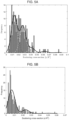
Fig. 5A shows data from a high resolution TEM measurement of sizes of catalytic sites according to the prior art. -
Fig. 5B shows data from a high resolution TEM measurement of sizes of catalytic sites according to the invention. -
FIG. 1 schematically illustrates a metal oxide support for a catalyst with oxygen based groups which are exposed on the support in a suspension depending on a pH of the suspension. At a specific pH, which is 5.5 or about 5.5 when a material of the metal oxide support is TiO2, an OH group is exposed on the support. - At a pH above the specific pH, e.g. between 8 and 12, in particular between 8 and 11 and more particularly between 9 and 11, an ionic O group is exposed on the support. In an impregnating operation this group is able to interact with the cation of a dissolved precursor compound of a transition metal other than Re for providing a catalytic site on the support. A prevailing lateral extension of such a catalytic site on the support is preferably less than 15 nm, more preferably less than 2 nm most preferably less than 1 nm in the invention. Ag+ as the cation and dissolved silver nitrate as the dissolved precursor compound is exemplified in
Fig. 1 . - At a pH below the specific pH, e.g. between 2 and 4, in particular between 3 and 4, an ionic OH2 + group is exposed on the support. In an impregnating operation this group is able to interact with the anion of a dissolved precursor compound of Re for providing a catalytic site on the support. Perrhenate as the anion and dissolved ammonium perrhenate as the dissolved precursor compound is exemplified in
Fig. 1 . - As exemplified in
Fig. 1 and explained above an aspect of the invention is the activation a support material by pH adjustment in a suspended state which alters dependent on the dissolved precursor compound used for impregnation and the catalytic site to be provided by the respective impregnation. Thus different impregnations are used for providing different catalytic sites, one of which is provided from a compound of Re, preferably a perrhenate salt. In other words and specifically for the case that a material of the support is TiO2 a method according to the invention makes use of a preparation of Re/TiO2 and Re-M/TiO2 using modified impregnation procedures, wherein M is a transition metal other than Re, preferably selected from Ag, Au, Cu, Pd, Pt, Cd. - M is particularly preferably selected from Pt, Pd, and Cd for providing catalytic sites, in particular for excellently promoting the conversion of CO2.
- M is particularly preferably selected from Au, Cu, and Ag, more preferably from Au and Cu, for providing catalytic sites, in particular for excellently ensuring selectivity for a conversion of carbon dioxide and hydrogen into methanol.
- M is particularly preferably selected from Pt and Ag, more preferably Ag, for providing catalytic sites, in particular for an excellent kinetic performance and turnover in synthesizing methanol from carbon dioxide and hydrogen.
- In impregnations in the manufacturing method according to the invention various components may be used. For adjusting a pH in water there may be used one or more of
- a) NH4OH, in particular at 25 vol.-% (CAS: 1336-21-6),
- b) HNO3, in particular at 67 vol.-% (CAS: 7697-37-2), and
- c) HCl, in particular at 37 vol.-% (CAS: 7647-01-0).
- For providing catalytic sites on the support there may be used one or more of
- d) Ag(NO3) at 99,90% purity (CAS: 7761-88-8)
- e) Au(O2CCH3)3 (CAS: 15804-32-7)
- f) Cu(NO3)2 (CAS: 10031-43-3)
- g) Pd(NO3)2 (CAS: 207596-32-5)
- h) H12N6O6Pt (CAS: 20634-12-2)
- i) Cd(NO3)2 (CAS: 10022-68-1), and
- j) NH4ReO4 at 99% purity (CAS: 13598-65-7).
- TiO2 (CAS: 13463-67-7) may be used as the material of the support, in particular anatase. In the following examples anatase phase TiO2 ST-01 supplied by Ishihara Sangyo, Japan was used as the material of the support.
-
- A catalyst preparation was established
- for finally obtaining an Ag content of 5.4 µmol per g support and
- by providing a material of the support with the following
step 2 and - by adopting a sequence of steps, instructions and for materials obtained in each step as follows:
- The section "2. EXPERIMENTAL SECTION" of Ting et al., ACS Catalysis, Volume 9, shows a preparation of a catalyst with Re on a support. This catalyst preparation was modified by providing a material of the support with the material obtained from Example 1A above and the following steps, for finally obtaining an Re content of 0.1 wt% based on the weight of the material obtained from Example 1A. The sequence of steps, instructions and the materials obtained in each step in processing the material obtained from Example 1A was as follows:
step instruction material obtained 7 re-disperse the grinded and promotor impregnated TiO2 powder from step 6 in 50 ml deionized water with a pH = 3-4 in a 100 ml round flask (10 Min Ultrasonication and afterwards stirring with a magnetic stirrer at 500-600 rpm) intransparent suspension (white-yellowish) 8 dissolve NH4ReO4 in 5 ml deionized water solution of NH4 + (aq) ReO4 -(aq), transparent solution 9 add perrhenate solution to dispersed support of step 7 and stir for 1 h at room temperature intransparent suspension (white-yellowish) 10 evaporate water using a rotary evaporator 40-60 °C and p < 75 mbar wet, white-yellowish powder 11 dry powder in oven at 100 °C over night ( around 12-14 h) dry white- yellowish powder 12 calcine grinded powder from step 11 at 350 °C, β=2 °C/min for 4 h in 1 L/min N2 white-yellowish powder - In the following samples of the resulting catalyst and related experiments are labelled "Ag-promoted".
- The sequence of steps and instructions according to Example 1A was modified for finally obtaining a Re content of 0.1 wt% based on the total weight of TiO2 used throughout the sequence of steps and an Au content of 5.4 µmol per g TiO2 used throughout the sequence of steps, as follows:
step instruction material obtained 1.1 dissolving Au(O2CCH3)3 in 5 ml deionized water intransparent brownish suspension 1.2 add HCl until suspension changed to a yellow transparent solution with a pH = 1.14 assumed to generate in solution HAuCl4 H+ (aq)AuCl4 - (aq) 2 disperse 5 g TiO2 in 50 ml deionized water with a pH = 3-4 in a 100 ml round flask (10 Min Ultrasonication and afterwards stirring with a magnetic stirrer at 500-600 rpm) intransparent suspension (white) 3 add to the dispersion a) the Re precursor solution prepared according to step 8 of Example 1B and the Au solution from step 1.2 to work with a pH = 2-4 intransparent suspension (white) 4 evaporate water using a rotary evaporator 40-60 °C and p < 75 mbar wet, yellowish powder 5 dry powder in oven at 100 °C over night (around 12-14 h) dry, yellowish powder 6 calcine grinded powder from step 5 at 350 °C, β=2 °C/min for 4 h in 1 L/min N2 white yellowish powder - In the following samples of the resulting catalyst and related experiments are labelled "Au-promoted" .
- Examples 1A to 1B were repeated with replacing AgNO3 in step 1 by a respective one of the above listed components f), g), h) and i) so as to replace Ag by another transition metal M, which respectively was Cu, Pd, Pt and Cd, and for finally obtaining a content of M which is 5.4 µmol per g support. In the following samples of the resulting catalysts and related experiments are labelled "Cu-promoted", "Pd-promoted", "Pt-promoted" or "Cd-promoted", according to the respective transition metal M used instead of Ag.
- Example 1B was modified by replacing step 7 by step i of Example 2. In the following samples and related experiments labelled "Unpromoted" are with this catalyst preparation having a Re content of 0.1 wt% based on the total weight of the support.
- In the following samples and related experiments labelled "Support" are with the anatase phase TiO2 ST-01 supplied by Ishihara Sangyo, Japan and subjected to dispersion and conversion into dry powder in accordance with steps i and 4 to 6 or Example 2.
- A commercial micro reactor was loaded with a respective sample according to the above indicated sample labelling. The samples are subjected to a pretreatment (reduction) in the reactor under the following conditions: 400 °C, 0.5 h, 10 mL/min of 90% H2/ 10% Ar. The operation of the reactor after the pretreatment was performed for 48 h to meet the following test conditions:
- Temperature: 150 °C,
- Pressure: 30 MPa,
- Volume ratio the reaction gases in the gas space: H2:CO2 = 10
- Weight Hourly Space Velocity: WHSV = 1.2 L/g*h.
- Reaction products leaving the micro reactor were analyzed as described in the PhD thesis by N. Phongprueksathat from 2023 at the Delft University of Technology in the Netherlands (ISBN 978-94-9458-946-7) from 30 h of to the end of 48 h of the operation of the micro reactor. The data were used to calculate values shown in
Figs. 2 to 4 . Values based on averaging the analysis over the time from 30 h of to the end of 48 h of the operation are indicated as bars inFigs. 2 to 4 and the fluctuations observed in the analysis over the time from 30 h of to the end of 48 h of the operation were used to calculate the error bars shown inFigs. 2 to 4 . Percentages for selectivity and CO2 conversion were obtained as in the PhD thesis by N. Phongprueksathat from 2023 at the Delft University of Technology in the Netherlands (ISBN 978-94-9458-946-7). CO2 conversion values XCO2 shown inFig. 2 and selectivity values Si shown inFig. 3 are valued obtained by scaling percentages so that 0% corresponds to a value of 0 and 100% corresponds to a value of 1.Fig. 2 shows the values XCO2 for the samples indicated at the bars in the graph and mentioned above.Fig. 3 shows the values Si for the samples indicated at the bars in the graph and mentioned above, specifically selectivity values for carbon monoxide with dark bars, selectivity values for methanol with bars left of the dark bars, selectivity values for methane with bars right of the dark bars. InFig. 3 the rightmost bar or section for the sample "Au-promoted" indicates a selectivity value for dimethyl ether (DME) and the rightmost bars or sections for the samples "Cd-promoted", "Pt-promoted", "Pd-promoted", "Cu-promoted" and "Ag-promoted" indicate a selectivity value for methyl formate (MF).Fig. 4 shows turnover frequencies (TOF values) obtained for samples indicated at the bars in the graph and mentioned above. - In order to obtain 3 wt% Re per total weight of the support of TiO2 in the finally prepared sample, a sample (sample A1) was prepared in line with the experimental section of Ting et al., ACS Catalysis, Volume 9, .
- A catalyst with 3 wt% Pt and 30 wt% Mo per total weight of the support of TiO2 in the finally prepared sample is indicated as sample A2 hereafter and is shown in the experimental section of Toyao et al., ACS Catalysis 2019, 9 (9), 8187-8196 (DOI: 10.1021/acscatal.9b01225).
- In order to obtain 1 wt% Re per total weight of the support of TiO2 in the finally prepared sample, a sample (sample A3) was prepared in line with the experimental section of Ting et al., ACS Catalysis, Volume 9, .
- The above Example for a non-promoted catalyst was modified for adjusting the amount of the precursor of Re once to obtain 3 wt% Re per total weight of the support in the finally prepared sample (sample B1) and once to obtain 1 wt% Re per total weight of the support in the finally prepared sample (sample B2).
- The above Examples 1A to 1B were modified for adjusting the amounts of the precursor of Ag and Re to obtain 1 wt% Re and 0.59 wt% Ag per total weight of the support in the finally prepared sample (sample B3).
- The procedure from the above section Flow reactor and Evaluation was repeated with above mentioned sample A1 and sample B1 and selectivity percentages as follows were obtained:
Selectivity (%) for CO for methanol for methane for methyl formate sample A1 1.4 22.5 76.6 -- sample B1 17.5 78.8 3.2 0.6 -
Fig. 5A shows a result of an evaluation of sample A1 with an electron scattering test. -
Fig. 5B shows a result of an evaluation of sample B1 with the electron scattering test. - For the electron scattering test a software product, namely the multi-slice program MULTEM, was used to perform accurate and fast electron diffraction and imaging simulations using Graphics Processing Units with CUDA (a product of Nvidia). Details are available in Ultramicroscopy, Volume 156, 2015 (https://doi.org/]0.1016/j.ultramic.2015.04.016). The sensitivity of the detector was considered in the simulation and the simulated scattering cross-section of single Re atom sites on the evaluated material was 0.0112 Å 2 - 0.0121 Å 2 in case of sample B1 and 0.0114 Å 2 - 0.0123 Å 2 in case of sample A1. The curves over the frequency bars in
Fig. 5A and 5B show a dominant peak attributable to single Re atom sites (major Re site fraction) and a further peak attributable to sites of clustered pairs of Re atoms (minor Re site fraction) inFig. 5B compared to a number peaks attributable to sites of clusters with Re atoms inFig. 5A . Accordingly the invention allows producing of and shows products with prevailing sites of Re atoms having a lateral extension < 1 nm on a catalyst support. - The procedure from the above section Flow reactor and Evaluation was repeated with above mentioned samples A3, B2, and B3 and the data obtained were used to calculate a percentage of conversion of educts into methanol and - with a calculation used in Ting et al., ACS Catalysis, Volume 9, - to obtain a hydrogenation per Re amount and time, i.e. a methanol production rate with the unit [mmol/mmolRe/h]. Obtained values and described catalyst features are as follows:
conversion methanol production rate sample A2 (3 wt% Pt, 30wt% Mo, prior art) - - sample A3 (1 wt% Re, prior art) 2.2 % 1.8 mmol/mmolRe/h sample B2 (1 wt% Re, invention) 17.1 % 7.09 mmol/mmolRe/h sample B3 (1 wt% Re, 0.59 wt% Ag, invention) 33.1 % 13.32 mmol/mmolRe/h - In view of the above it can be concluded that according to an aspect the invention profits from a new concept of depositing Re to provide catalytic sites on a catalysts support. In view of the above it can be concluded that according to an aspect the invention profits from combining catalytic sites on a support, one of which is based on Re and another one of which is based on M, a transition metal other than Re and in particular outstanding performance for specific representatives of M is apparent from
Figs. 2 to 4 . It is believed that the catalytic sites are then dedicated to different catalytic mechanisms or dedicated separately to CO2 activation and H2 activation in a gas-solid heterogeneous catalytic operation mode of a reactor with the invention's catalyst. In view of the above it can be concluded that according to an aspect the invention may profit from the provision of catalytic sites on a support with a dedicated pH control in impregnation operations for each of two combined catalytic sites on a support, one of which is based on Re and another one of which is based on M, a transition metal other than Re. - Although the present disclosure refers to specific exemplary embodiments, modifications may be provided to these examples without departing from the general scope of the invention as defined by the claims. In particular, individual characteristics of the different illustrated/mentioned embodiments may be combined in additional embodiments. Therefore, the description and the drawings should be considered in an illustrative rather than in a restrictive sense.
| Step | Instruction | material obtained |
| 1 | dissolve AgNO3 in 5 ml deionized water | solution of Ag+ (aq) NO3 - (aq), |
| 2 | disperse 5 g TiO2 in 50 ml deionized water with a pH = 9.36 in a 100 ml round flask (10 Min Ultrasonication and afterwards stirring with a magnetic stirrer at 500-600 rpm) | intransparent suspension (white) |
| 3 | Add the solution from step 1 to dispersed support of |
intransparent suspension (white) |
| 4 | evaporate water using rotary evaporator 40-60 °C and p < 75 mbar | wet, |
| 5 | Dry powder in oven at 100 °C over night (around 12-14 h) | dry white powder |
| 6 | Calcine grinded powder from |
white yellowish powder |
Claims (15)
- A method for manufacturing a catalyst for synthesizing methanol from carbon dioxide and hydrogen via a catalysis, comprising a support and catalytic sites provided on the support for the catalysis and from at least a dissolved metal precursor compound including a compound of Re,
the method comprising steps of- impregnating a first dry powder or a material of the support, using the dissolved precursor compound of Re and using a pH between 2 and 4 to obtain a second solid material, and- processing the second solid material into a second dry powder. - The method according to claim 1, comprising steps of- impregnating a material of the support to obtain a first solid material and using-- one or more of dissolved metal precursor compounds of a metal selected from transition metals other than Re and-- a suspension of the material of the support with a pH between 8 and 11,- processing the first solid material into the first dry powder, and- the impregnating of the first dry powder to obtain the second solid material.
- The method according to claim 2, wherein the transition metals other than Re comprise at least one of Ag, Cu, Pd, Pt, and Cd.
- The method according to claim 3, wherein the transition metals other than Re comprise Ag.
- The method according to claim 4, wherein the transition metals other than Re comprise Pt and/or Pd.
- The method according to claim 1, wherein the impregnating the material of the support to obtain a second solid material proceeds with a dissolved precursor of Au.
- The method according to any one of claims 1 to 6, wherein the support comprises titanium dioxide.
- The method according to any one of claims 1 to 7, wherein at least one of said processing into a first and second dry powder includes drying and/or calcining.
- The method for manufacturing according to any one of claims 1 to 8, wherein NH4OH is used to adjust the pH between 8 and 12.
- The method for manufacturing according to any one of claims 1 to 9, wherein HNO3 and/or HCl is used to adjust the pH between 2 and 4.
- A catalyst obtained from the method of any one of claims 1 to 10.
- A catalyst for synthesizing methanol from carbon dioxide and hydrogen via a catalysis, comprisinga support,a set of at least one catalytic site provided on the support for the catalysis and from a set of at least one dissolved metal precursor compounds, including a compound of Re and optionally at least one compound selected from compounds of transition metals other than Re,characterized in thatamong catalytic sites of Re provided on the support, catalytic sites attributable to non-clustered Re atoms are prevailing in accordance with a frequency ratio between catalytic sites attributable to non-clustered Re atoms and catalytic sites attributable to clustered Re atoms of more than 1.
- The catalyst according to claim 12 obtained from the method of any one of claims 1 to 10.
- A flow reactor for synthesizing methanol from carbon dioxide and hydrogen comprising the catalyst according to any one of claims 11 to 13.
- A use of the catalyst according to any one of claims 11 to 13 in a flow reactor to catalyze a reaction for synthesizing methanol from carbon dioxide and hydrogen at a temperature between 100 and 200°C and a pressure between 15 and 30 MPa.
Priority Applications (1)
| Application Number | Priority Date | Filing Date | Title |
|---|---|---|---|
| EP23188430.5A EP4497501A1 (en) | 2023-07-28 | 2023-07-28 | Rhenium-based hydrogenation catalyst and its use and preparation |
Applications Claiming Priority (1)
| Application Number | Priority Date | Filing Date | Title |
|---|---|---|---|
| EP23188430.5A EP4497501A1 (en) | 2023-07-28 | 2023-07-28 | Rhenium-based hydrogenation catalyst and its use and preparation |
Publications (1)
| Publication Number | Publication Date |
|---|---|
| EP4497501A1 true EP4497501A1 (en) | 2025-01-29 |
Family
ID=87520037
Family Applications (1)
| Application Number | Title | Priority Date | Filing Date |
|---|---|---|---|
| EP23188430.5A Pending EP4497501A1 (en) | 2023-07-28 | 2023-07-28 | Rhenium-based hydrogenation catalyst and its use and preparation |
Country Status (1)
| Country | Link |
|---|---|
| EP (1) | EP4497501A1 (en) |
-
2023
- 2023-07-28 EP EP23188430.5A patent/EP4497501A1/en active Pending
Non-Patent Citations (8)
| Title |
|---|
| "Structures, activities, and mechanisms under the spectroscopes", 28 February 2023, DELFT UNIVERSITY OF TECHNOLOGY, article PHONGPRUEKSATHAT N.: "Structures, activities, and mechanisms under the spectroscopes", XP093116566, DOI: 10.4233/uuid:3939622b-ccb0-42b3-868f-bc0764a96b4f * |
| CAS, no. 207596-32-5 |
| N. PHONGPRUEKSATHAT: "PhD thesis", 2023, DELFT UNIVERSITY OF TECHNOLOGY |
| PHONGPRUEKSATHAT N: "Structures, activities, and mechanisms under the spectroscopes: the quest for unveiling the nature of active sites for highly selective CO2 hydrogenation to methanol", 1 January 2024 (2024-01-01), XP093116882, Retrieved from the Internet <URL:https://research.tudelft.nl/en/publications/structures-activities-and-mechanisms-under-the-spectroscopes-the-> DOI: 10.4233/uuid:3939622b-ccb0-42b3- * |
| SHEN CHENYANG ET AL: "CO2 Hydrogenation to Methanol on Indium Oxide-Supported Rhenium Catalysts: The Effects of Size - Supporting information", ACS CATALYSIS, vol. 12, no. 20, 4 October 2022 (2022-10-04), US, pages 12658 - 12669, XP093116533, ISSN: 2155-5435, DOI: 10.1021/acscatal.2c03709 * |
| SHEN CHENYANG ET AL: "CO2 Hydrogenation to Methanol on Indium Oxide-Supported Rhenium Catalysts: The Effects of Size", ACS CATALYSIS, vol. 12, no. 20, 4 October 2022 (2022-10-04), US, pages 12658 - 12669, XP093116506, ISSN: 2155-5435, Retrieved from the Internet <URL:https://pubs.acs.org/doi/pdf/10.1021/acscatal.2c03709> DOI: 10.1021/acscatal.2c03709 * |
| TING ET AL., ACS CATALYSIS, vol. 9, 5 April 2019 (2019-04-05), pages 3685 - 3693 |
| TOYAO ET AL., ACS CATALYSIS, vol. 9, no. 9, 2019, pages 8187 - 8196 |
Similar Documents
| Publication | Publication Date | Title |
|---|---|---|
| Concepción et al. | Chemoselective hydrogenation catalysts: Pt on mesostructured CeO2 nanoparticles embedded within ultrathin layers of SiO2 binder | |
| Gao et al. | Atomic layers of B2 CuPd on Cu nanocubes as catalysts for selective hydrogenation | |
| Liu et al. | Evolution of isolated atoms and clusters in catalysis | |
| Zhou et al. | Potassium-promoted Pt–In bimetallic clusters encapsulated in silicalite-1 zeolite for efficient propane dehydrogenation | |
| Selinsek et al. | Revealing the structure and mechanism of palladium during direct synthesis of hydrogen peroxide in continuous flow using operando spectroscopy | |
| Vilé et al. | Advances in the design of nanostructured catalysts for selective hydrogenation | |
| Carrasquillo-Flores et al. | Reverse water–gas shift on interfacial sites formed by deposition of oxidized molybdenum moieties onto gold nanoparticles | |
| Moliner et al. | Reversible transformation of Pt nanoparticles into single atoms inside high-silica chabazite zeolite | |
| García et al. | Microwave synthesis of classically immiscible rhodium–silver and rhodium–gold alloy nanoparticles: highly active hydrogenation catalysts | |
| Claus et al. | Supported gold nanoparticles from quantum dot to mesoscopic size scale: Effect of electronic and structural properties on catalytic hydrogenation of conjugated functional groups | |
| Wittstock et al. | Nanoporous Au: an unsupported pure gold catalyst? | |
| Boronat et al. | Origin of the different activity and selectivity toward hydrogenation of single metal Au and Pt on TiO2 and bimetallic Au− Pt/TiO2 catalysts | |
| CN103041826B (en) | Bimetal nanometer catalyst as well as preparation and application method thereof | |
| Tang et al. | Atomic, molecular and hybrid oxygen structures on silver | |
| Fierro-Gonzalez et al. | A highly active catalyst for CO oxidation at 298 K: mononuclear Au III complexes anchored to La 2 O 3 nanoparticles | |
| Wilson et al. | From core–shell to alloys: The preparation and characterization of solution-synthesized AuPd nanoparticle catalysts | |
| Lo et al. | Probing the interface between encapsulated nanoparticles and metal–organic frameworks for catalytic selectivity control | |
| CN114682283A (en) | Carbon-nitrogen coated supported metal monoatomic catalyst, preparation method and application thereof | |
| Wang et al. | Design of Pt@ Sn core–shell nanocatalysts for highly selective hydrogenation of cinnamaldehyde to prepare cinnamyl alcohol | |
| Du et al. | Recent Advances in Constructing Interfacial Active Catalysts Based on Layered Double Hydroxides and Their Catalytic Mechanisms: H. Du et al. | |
| Luo et al. | Close intimacy between PtIn clusters and zeolite channels for ultrastability toward propane dehydrogenation | |
| Li et al. | Hydrothermally stable zeolite-encapsulated metal catalyst promoted by framework Sn species | |
| Xu et al. | Direct visualisation of metal–defect cooperative catalysis in Ru-doped defective MOF-808 | |
| Fu et al. | Fabrication of the PdAu surface alloy on an ordered intermetallic Au3Cu core for direct H2O2 synthesis at ambient pressure | |
| EP4497501A1 (en) | Rhenium-based hydrogenation catalyst and its use and preparation |
Legal Events
| Date | Code | Title | Description |
|---|---|---|---|
| PUAI | Public reference made under article 153(3) epc to a published international application that has entered the european phase |
Free format text: ORIGINAL CODE: 0009012 |
|
| STAA | Information on the status of an ep patent application or granted ep patent |
Free format text: STATUS: REQUEST FOR EXAMINATION WAS MADE |
|
| 17P | Request for examination filed |
Effective date: 20230728 |
|
| AK | Designated contracting states |
Kind code of ref document: A1 Designated state(s): AL AT BE BG CH CY CZ DE DK EE ES FI FR GB GR HR HU IE IS IT LI LT LU LV MC ME MK MT NL NO PL PT RO RS SE SI SK SM TR |