EP4496294A1 - Server device, management program, and management system - Google Patents
Server device, management program, and management system Download PDFInfo
- Publication number
- EP4496294A1 EP4496294A1 EP23770634.6A EP23770634A EP4496294A1 EP 4496294 A1 EP4496294 A1 EP 4496294A1 EP 23770634 A EP23770634 A EP 23770634A EP 4496294 A1 EP4496294 A1 EP 4496294A1
- Authority
- EP
- European Patent Office
- Prior art keywords
- session
- terminal
- server apparatus
- unit
- bidirectional communication
- Prior art date
- Legal status (The legal status is an assumption and is not a legal conclusion. Google has not performed a legal analysis and makes no representation as to the accuracy of the status listed.)
- Pending
Links
Images









Classifications
-
- H—ELECTRICITY
- H04—ELECTRIC COMMUNICATION TECHNIQUE
- H04W—WIRELESS COMMUNICATION NETWORKS
- H04W76/00—Connection management
- H04W76/10—Connection setup
- H04W76/11—Allocation or use of connection identifiers
-
- H—ELECTRICITY
- H04—ELECTRIC COMMUNICATION TECHNIQUE
- H04L—TRANSMISSION OF DIGITAL INFORMATION, e.g. TELEGRAPHIC COMMUNICATION
- H04L67/00—Network arrangements or protocols for supporting network services or applications
- H04L67/14—Session management
- H04L67/143—Termination or inactivation of sessions, e.g. event-controlled end of session
- H04L67/145—Termination or inactivation of sessions, e.g. event-controlled end of session avoiding end of session, e.g. keep-alive, heartbeats, resumption message or wake-up for inactive or interrupted session
-
- H—ELECTRICITY
- H04—ELECTRIC COMMUNICATION TECHNIQUE
- H04L—TRANSMISSION OF DIGITAL INFORMATION, e.g. TELEGRAPHIC COMMUNICATION
- H04L65/00—Network arrangements, protocols or services for supporting real-time applications in data packet communication
- H04L65/1066—Session management
- H04L65/1083—In-session procedures
- H04L65/1094—Inter-user-equipment sessions transfer or sharing
-
- H—ELECTRICITY
- H04—ELECTRIC COMMUNICATION TECHNIQUE
- H04L—TRANSMISSION OF DIGITAL INFORMATION, e.g. TELEGRAPHIC COMMUNICATION
- H04L67/00—Network arrangements or protocols for supporting network services or applications
- H04L67/14—Session management
- H04L67/146—Markers for unambiguous identification of a particular session, e.g. session cookie or URL-encoding
-
- H—ELECTRICITY
- H04—ELECTRIC COMMUNICATION TECHNIQUE
- H04W—WIRELESS COMMUNICATION NETWORKS
- H04W76/00—Connection management
- H04W76/10—Connection setup
- H04W76/19—Connection re-establishment
-
- H—ELECTRICITY
- H04—ELECTRIC COMMUNICATION TECHNIQUE
- H04W—WIRELESS COMMUNICATION NETWORKS
- H04W76/00—Connection management
- H04W76/30—Connection release
- H04W76/32—Release of transport tunnels
Definitions
- the present disclosure relates to a server apparatus, a management program, and a management system.
- the site where the site worker performs various kinds of work is generally in an environment where radio waves tend to get disrupted. Therefore, the bidirectional communication is frequently cut off, necessitating the site worker to connect the wearable terminal to a new session each time and perform an operation to resume the bidirectional communication.
- a wearable terminal is not provided with a user interface (for example, an operation screen) suitable for a complicated operation, and the operation for resuming bidirectional communication is a heavy operation load for a site worker.
- a user interface for example, an operation screen
- the present disclosure provides a server apparatus, a management program, and a management system for reducing the operation load for a site worker when resuming bidirectional communication.
- a first aspect of the present disclosure is a server apparatus configured to manage a session when bidirectional communication is performed by a first terminal and a second terminal, the server apparatus including: a control unit configured to reconnect the first terminal to the session to which the first terminal had been connected, when a connection request specifying an identifier of the session to which the first terminal had been connected is transmitted from the first terminal, and when the session to which the first terminal had been connected is maintained.
- a server apparatus which reduces the operation load of a site worker when resuming bidirectional communication.
- a second aspect of the present disclosure is the server apparatus according to the first aspect, wherein the control unit
- a third aspect of the present disclosure is the server apparatus according to the second aspect, wherein the control unit
- a fourth aspect of the present disclosure is a server apparatus according to any of the first to third aspects, wherein the control unit deletes a session for which a number of connected terminals has become zero, and maintains a session for which a number of connected terminals is one or more.
- a fifth aspect of the present disclosure is a server apparatus according to any of the second to fourth aspects, wherein the control unit
- a sixth aspect of the present disclosure is the server apparatus according to any of the second to fifth aspects, wherein the first terminal is used in an environment in which a frequency that the bidirectional communication is disconnected is higher than that of the second terminal.
- a seventh aspect of the present disclosure is the server apparatus according to the sixth aspect, wherein the first terminal is worn by a site worker, and the second terminal is used by a supporter who supports the site worker.
- An eighth aspect of the present disclosure is a management program that causes a control unit of a server apparatus configured to manage a session when bidirectional communication is performed by a first terminal and a second terminal, to execute a process of reconnecting the first terminal to the session to which the first terminal had been connected, when a connection request specifying an identifier of the session to which the first terminal had been connected is transmitted from the first terminal, and when the session to which the first terminal had been connected is maintained.
- a ninth aspect of the present disclosure is a management system including:
- an eighth aspect of the present disclosure it is possible to provide a management system for reducing an operation load on a site worker when resuming bidirectional communication.
- a tenth aspect of the present disclosure is a management system according to a ninth aspect, wherein the second terminal includes a control unit configured to
- An eleventh aspect of the present disclosure is a management system according to the ninth or tenth aspect, wherein
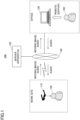
- FIG. 1 is a diagram illustrating an example of a system configuration of a management system.
- a management system 100 includes a wearable terminal 110, a server apparatus 120, and a supporter terminal 130.
- the wearable terminal 110 and the supporter terminal 130 are communicatively connected to the server apparatus 120 via a network 140, and can receive cloud services from the server apparatus 120.
- the wearable terminal 110 and the supporter terminal 130 can perform bidirectional communication under management by the server apparatus 120.
- the wearable terminal 110 has a shape to be worn on the head of the site worker 150, for example, and has a function of capturing a moving image, a function of detecting a voice (for example, the utterance of the site worker 150), and the like.
- the wearable terminal 110 has a function of receiving instructions from the supporter 160 as audio data via the network 140 and outputting the audio data to the site worker 150.
- the site worker 150 can perform various kinds of work while receiving appropriate instructions from the supporter 160.
- the operation load when the site worker 150 resumes the bidirectional communication can be reduced.
- the server apparatus 120 transmits the moving image data and the audio data received from the wearable terminal 110 to the supporter terminal 130.
- the server apparatus 120 transmits the audio data received from the supporter terminal 130 to the wearable terminal 110.
- the supporter terminal 130 is an example of the second terminal, and is installed, for example, in an office where the supporter 160 always resides while on duty, receives an instruction from the supporter 160, and transmits the instruction to the site worker 150 via the network 140. Further, the supporter terminal 130 acquires the moving image data captured by the wearable terminal 110 and the audio data detected by the wearable terminal 110 via the network 140, and outputs the acquired data to the supporter 160.
- FIG. 2 is a diagram illustrating an example of the hardware configuration of the wearable terminal and the server apparatus.
- FIG. 2 (a) is a diagram illustrating an example of the hardware configuration of the wearable terminal 110.
- the wearable terminal 110 includes a processor 201, a memory 202, an auxiliary storage device 203, a communication device 204, a GPS (Global Positioning System) device 205, and an operation device 206.
- the wearable terminal 110 also includes an audio input device 207, an audio output device 208, an imaging device 209, a connection device 210, and a short-range wireless communication device 211.
- the respective hardware elements of the wearable terminal 110 are connected to each other via a bus 220.
- the memory 202 has main storage devices such as a ROM (Read Only Memory) and a RAM (Random Access Memory).
- the processor 201 and the memory 202 form a so-called computer (also referred to as a "control unit"), and when the processor 201 executes various programs loaded into the memory 202, the computer implements various functions.
- the communication device 204 is a communication device for transmitting and receiving various kinds of data (for example, moving image data and audio data) to and from the server apparatus 120.
- the GPS device 205 detects positional information of the wearable terminal 110.
- the imaging device 209 captures the surroundings of the site worker 150 wearing the wearable terminal 110 and generates moving image data.
- the short-range wireless communication device 211 is a wireless device for performing short-range wireless communication with a wearable terminal worn by another site worker, who exists around the site worker 150 wearing the wearable terminal 110.
- FIG. 2 (b) is a diagram illustrating an example of the hardware configuration of the server apparatus 120.
- the server apparatus 120 includes a processor 231, a memory 232, an auxiliary storage device 233, an operation device 234, a display device 235, a communication device 236, and a drive device 237.
- the hardware of the server apparatus 120 is connected to each other via a bus 238.
- the processor 231 has various computing devices such as a CPU (Central Processing Unit).
- the processor 231 loads various programs (for example, a management program described later) into the memory 232 and executes the programs.
- programs for example, a management program described later
- the memory 232 has main storage devices such as a ROM (Read Only Memory) and a RAM (Random Access Memory).
- the processor 231 and the memory 232 form what is referred to as a computer (also referred to as a "control unit"), and the processor 231 executes various programs loaded into the memory 232, whereby the computer implements various functions.
- the auxiliary storage device 233 stores various programs and various kinds of data used when the various programs are executed by the processor 231.
- the communication device 236 is a communication device for communicating with an external device (for example, the wearable terminal 110, the supporter terminal 130) via the network 140.
- an external device for example, the wearable terminal 110, the supporter terminal 130
- the various programs installed in the auxiliary storage device 233 are installed, for example, when the distributed recording medium 240 is set in the drive device 237 and the various programs recorded in the recording medium 240 are read out by the drive device 237.
- the various programs installed in the auxiliary storage device 233 may be installed by being downloaded from the network 140 via the communication device 236.
- the hardware configuration of the supporter terminal 130 has not been mentioned here, it is assumed that the hardware configuration of the supporter terminal 130 is generally the same as that of the server apparatus 120. However, in the case of the supporter terminal 130, it is assumed that a program similar to the bidirectional communication program installed in the wearable terminal 110 is installed in the auxiliary storage device.
- a management program is installed in the server apparatus 120, and when the program is executed, the server apparatus 120 functions as an executing unit 310 and a managing unit 320. Further, the executing unit 310 of the server apparatus 120 functions as the generating unit 311, the determining unit 312, and the connecting unit 313.
- a bidirectional communication program is installed in the wearable terminal 110 and the supporter terminal 130, respectively.
- the wearable terminal 110 functions as the communication unit 330
- the supporter terminal 130 functions as the communication unit 340.
- FIG. 3 is a diagram for explaining the details of the processing of each unit before and after the bidirectional communication is started.
- FIG. 3 (a) is a diagram illustrating the details of the processing of each unit before the bidirectional communication.
- the generating unit 311 of the server apparatus 120 receives a request (connection request (generation)) from the from the communication unit 330 of the wearable terminal 110 requesting to
- the managing unit 320 of the server apparatus 120 When the managing unit 320 of the server apparatus 120 receives the participation request from the communication unit 330 of the wearable terminal 110 after the connection event is notified from the connecting unit 313 of the server apparatus 120, the managing unit 320 transmits the received participation request to the communication unit 340 of the supporter terminal 130.
- the communication unit 340 of the supporter terminal 130 Upon receiving the participation request, the communication unit 340 of the supporter terminal 130 sends a request (connection request (participation)) to the server apparatus 120, requesting to
- FIG. 3 (b) is a diagram illustrating details of the processing of the respective units of the server apparatus 120, the wearable terminal 110, and the supporter terminal 130 after the start of bidirectional communication.
- the executing unit 310 of the server apparatus 120 receives the moving image data and the audio data from the communication unit 330 of the wearable terminal 110, and transmits the received moving image data and the audio data to the communication unit 340 of the supporter terminal 130.
- the executing unit 310 of the server apparatus 120 receives the audio data from the communication unit 340 of the supporter terminal 130, and transmits the received audio data to the communication unit 330 of the wearable terminal 110.
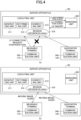
- FIG. 4 is a first diagram for explaining the details of the processing of the respective units at the time when the bidirectional communication is disconnected, reconnected, and after the bidirectional communication is resumed.
- FIG. 4 (a) is a diagram illustrating details of the processing of each unit of the server apparatus 120, the wearable terminal 110, and the supporter terminal 130 at the time of disconnection and reconnection of the bidirectional communication.
- the connecting unit 313 of the server apparatus 120 notifies the managing unit 320 of the server apparatus 120 of a disconnection event indicating that the bidirectional communication by the wearable terminal 110 is disconnected.
- the communication unit 330 of the wearable terminal 110 transmits to the server apparatus 120 a request (connection request (participation)) requesting to
- FIG. 4 (b) is a diagram illustrating details of the processing of each unit of the server apparatus 120, the wearable terminal 110, and the supporter terminal 130 when the bidirectional communication is resumed.
- the executing unit 310 of the server apparatus 120 receives the moving image data and the audio data from the communication unit 330 of the wearable terminal 110, and transmits the received moving image data and the audio data to the communication unit 340 of the supporter terminal 130.
- the executing unit 310 of the server apparatus 120 receives audio data from the communication unit 340 of the supporter terminal 130 and transmits the received audio data to the communication unit 330 of the wearable terminal 110.
- FIG. 5 is a diagram for explaining the details of the processing of the respective units at the end of bidirectional communication and after the end of bidirectional communication.
- FIG. 5 (a) is a diagram illustrating the details of the processing of the respective units of the server apparatus 120, the wearable terminal 110, and the supporter terminal 130 at the end of bidirectional communication.
- the determining unit 312 of the server apparatus 120 receives a request (disconnection request (exit)) from the communication unit 330 of the wearable terminal 110 and the communication unit 340 of the supporter terminal 130 requesting to
- FIG. 5 (b) is a diagram illustrating the processing of each unit of the server apparatus 120 after the end of the bidirectional communication.
- the connecting unit 313 of the server apparatus 120 notifies the managing unit 320 of the server apparatus 120 of a disconnection event indicating that the connection between the session having the specified session ID and the wearable terminal 110 is disconnected.
- the connecting unit 313 of the server apparatus 120 notifies the managing unit 320 of the server apparatus 120 of a disconnection event indicating that the connection between the session having the specified session ID and the supporter terminal 130 is disconnected.
- FIG. 6 is a first sequence diagram illustrating a flow of processing in the management system.
- the generating unit 311, the determining unit 312, and the connecting unit 313 will be described as the executing unit 310 without distinguishing these units from each other for the sake of simplifying the explanation.
- step S601 the communication unit 330 of the wearable terminal 110 receives a remote support request from the site worker 150 (for example, a specification of a session ID and a start operation with a start operation button are received.).
- a remote support request for example, a specification of a session ID and a start operation with a start operation button are received.
- step S604 the executing unit 310 of the server apparatus 120 notifies the managing unit 320 of the server apparatus 120 of the connection event.
- step S607 the managing unit 320 of the server apparatus 120 transmits the participation request received from the communication unit 330 of the wearable terminal 110 to the communication unit 340 of the supporter terminal 130.
- the executing unit 310 of the server apparatus 120 connects the supporter terminal 130 to the session. This enables bidirectional communication between the wearable terminal 110 and the supporter terminal 130. Details of the determination processing (step S609) by the executing unit 310 of the server apparatus 120 will be described later.
- step S610 the executing unit 310 of the server apparatus 120 notifies the managing unit 320 of the server apparatus 120 of the connection event.
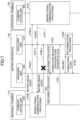
- FIG. 7 is a second sequence diagram illustrating the flow of processing in the management system.
- step S700 the communication unit 330 of the wearable terminal 110 starts bidirectional communication processing.
- step S701 the communication unit 340 of the supporter terminal 130 starts bidirectional communication processing.
- step S700_1 the communication unit 330 of the wearable terminal 110 transmits the moving image data obtained by capturing the state of the work site and the audio data obtained by detecting the speech of the site worker 150 to the executing unit 310 of the server apparatus 120.
- step S700_2 the executing unit 310 of the server apparatus 120 transmits the moving image data and the audio data transmitted from the communication unit 330 of the wearable terminal 110 to the communication unit 340 of the supporter terminal 130.
- step S701_l the communication unit 340 of the supporter terminal 130 transmits the audio data obtained by detecting the speech of the supporter 160 to the executing unit 310 of the server apparatus 120.
- step S701_2 the executing unit 310 of the server apparatus 120 transmits the audio data transmitted from the communication unit 340 of the supporter terminal 130 to the communication unit 330 of the wearable terminal 110. Thereafter, by performing bidirectional communication processing between the wearable terminal 110 and the supporter terminal 130, the following is repeated:
- step S700_n when the communication unit 330 of the wearable terminal 110 transmits moving image data and audio data to the executing unit 310 of the server apparatus 120, it is assumed that the radio wave of the wearable terminal 110 is interrupted and the bidirectional communication is disconnected.
- step S702 the executing unit 310 of the server apparatus 120 determines that the bidirectional communication by the wearable terminal 110 is disconnected, and notifies the managing unit 320 of the server apparatus 120 of the disconnect event.
- This enables bidirectional communication between the wearable terminal 110 and the supporter terminal 130. Accordingly, for example, when the site worker 150 wants to continue receiving instructions from the supporter 160 even after the bidirectional communication is disconnected, it is possible to smoothly receive instructions.
- FIG. 8 is a third sequence diagram illustrating the flow of processing in the management system. Because the processing from step S700 to step S702 in the sequence diagram illustrated in FIG. 8 is the same as the processing from step S700 to step S702 in the sequence diagram illustrated in FIG. 7 , a description thereof will be omitted here. The difference from the sequence diagram illustrated in FIG. 7 is from step S801.
- the site worker 150 inputs another session ID to make a remote support request (that is, to return to the sequence diagram of FIG. 6 ) .
- FIG. 9 is a fourth sequence diagram illustrating the flow of processing in the management system.
- the processing from step S700 to step S701_n is substantially the same as the processing from step S700 to step S700_n in the sequence diagram illustrated in FIG. 7 , and therefore, a description thereof is omitted here.
- the difference from the sequence diagram illustrated in FIG. 7 is from step S901.
- the bidirectional communication by the wearable terminal 110 continues uninterrupted until completion, without any mid-session disconnections.
- step S901 the processing when the site worker 150 and the supporter 160 exit the session will be described.
- step S901 the communication unit 330 of the wearable terminal 110 receives an instruction to end the remote support from the site worker 150.
- step S904 the communication unit 340 of the supporter terminal 130 receives an instruction to end the remote support from the supporter 160.
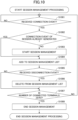
- FIG. 10 is a flowchart illustrating the flow of the session management processing.
- step S1001 the managing unit 320 of the server apparatus 120 determines whether a connection event has been received from the executing unit 310 of the server apparatus 120.
- step S1001 When it is determined in step S1001 that the connection event has not been received (NO in step S1001), the process waits until the connection event is received.
- step S1001 determines whether the connection event has been received (YES in step S1001).
- step S1002 the managing unit 320 of the server apparatus 120 determines whether the received connection event is a connection event for a session that has already been generated. When it is determined in step S1002 that the connection event is for a session that has already been generated (YES in step S1002), the process proceeds to step S1004.
- step S1002 when it is determined in step S1002 that the connection event is for a newly generated session (NO in step S1002), the process proceeds to step S1003.
- step S1003 the managing unit 320 of the server apparatus 120 starts management of the newly generated session as a session to be managed.
- step S1004 the managing unit 320 of the server apparatus 120 adds information for identifying the terminal corresponding to the received connection event to the session management list.
- step S1006 the managing unit 320 of the server apparatus 120 deletes information for identifying the terminal corresponding to the received disconnection event from the session management list, and the process proceeds to step S1007.
- step S1007 When it is determined in step S1007 that the number of terminals connected to the session to be managed is one or more (NO in step S1007), the process returns to step S1001.
- step S1007 when it is determined in step S1007 that the number of terminals connected to the session to be managed is zero (YES in step S1007), the process proceeds to step S1008.
- step S1008 the managing unit 320 of the server apparatus 120 ends the management of the session being managed.
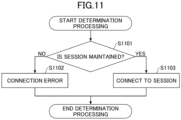
- FIG. 11 is a first flowchart illustrating the flow of the determination processing.
- the executing unit 310 of the server apparatus 120 Upon receiving the connection request (participation) specifying the session ID, the executing unit 310 of the server apparatus 120 starts the determination processing illustrated in FIG. 11 .
- step S1101 the executing unit 310 of the server apparatus 120 determines whether the session having the session ID specified in the received connection request (participation) has already been generated and is maintained. The determination is made based on the result of an inquiry made to the managing unit 320 managing the session.
- step S1102 the executing unit 310 of the server apparatus 120 transmits a connection error to the terminal (the wearable terminal 110 or supporter terminal 130) that has transmitted the connection request (participation).
- step S1101 when it is determined in step S1101 that the session has already been generated and is maintained (YES in step S1101), the process proceeds to step S1103.
- step S1103 the executing unit 310 of the server apparatus 120 connects the terminal (the wearable terminal 110 or the supporter terminal 130) that has transmitted the connection request (participation) to the session having the specified session ID.
- the server apparatus 120 is a server apparatus 120 that manages a session when the wearable terminal and the supporter terminal perform bidirectional communication, wherein:
- the wearable terminal can automatically reconnect to the same session. This eliminates the need for the site worker to perform a new operation for reconnection.
- the operation load on the site worker when resuming the bidirectional communication can be reduced.
- the communication unit 330 of the wearable terminal 110 when the bidirectional communication by the wearable terminal 110 is disconnected, the communication unit 330 of the wearable terminal 110 spontaneously transmits a connection request (participation). However, the communication unit 330 of the wearable terminal 110 may transmit the connection request (participation) based on a reconnection request from the managing unit 320 of the server apparatus 120, for example.
- Such a configuration is effective when, for example, the supporter 160 wants to continue giving instructions to the site worker 150 even after the bidirectional communication by the wearable terminal 110 is disconnected.
- the second embodiment will be described focusing on differences from the first embodiment.
- FIG. 12 is a fifth sequence diagram illustrating a flow of processing in the management system.
- steps S700 to S702 is the same as the processing from steps S700 to S702 described with reference to FIG. 7 , and therefore a description thereof will be omitted here.
- the managing unit 320 of the server apparatus 120 transmits a reconnection request when the session is maintained.
- the executing unit 310 of the server apparatus 120 determines that the session matches, the executing unit 310 connects the wearable terminal 110 to the session. Accordingly, the bidirectional communication between the wearable terminal 110 and the supporter terminal 130 is resumed. Details of the determination processing (step S1203) by the executing unit 310 of the server apparatus 120 will be described later.
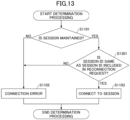
- FIG. 13 is a second flowchart illustrating the flow of the determination process.
- the executing unit 310 of the server apparatus 120 receives the connection request (participation) specifying the session ID, the executing unit 310 starts the determination process illustrated in FIG. 13 .
- the processing illustrated in steps S1101 to S1103 are the same as the processing illustrated in steps S1101 to S1103 of the determination processing illustrated in FIG. 11 , and a description thereof will be omitted here.
- step S1301 the executing unit 310 of the server apparatus 120 determines whether the session ID specified in the received connection request (participation) is the same as the session ID included in the reconnection request.
- step S1301 When it is determined in step S1301 that the session IDs are not the same (NO in step S1301), the process proceeds to step S1102. In this case, the executing unit 310 of the server apparatus 120 transmits a connection error to the communication unit 330 of the wearable terminal 110.
- step S1301 when it is determined in step S1301 that the session IDs are the same (YES in step S1301), the process proceeds to step S1103.
- the executing unit 310 of the server apparatus 120 connects the wearable terminal 110 to the session having the specified session ID.
- the executing unit 310 of the server apparatus 120 can prevent the wearable terminal 110 from reconnecting to an incorrect session and instead enable the wearable terminal 110 to reconnect to the appropriate session.
- the server apparatus 120 is a server apparatus 120 for managing a session when a wearable terminal and a supporter terminal perform bidirectional communication, wherein
- the executing unit 310 of the server apparatus 120 determines whether the session ID included in the reconnection request and the session ID specified in the connection request (participation) are the same.
- the wearable terminal may determine whether the session ID included in the reconnection request is the same as the session ID specified in the connection request (participation).
- the third embodiment will be described focusing on differences from the second embodiment.
- the wearable terminal 1410 functions as an identifier determining unit 1411 in addition to the communication unit 330.
- the details of the processing of each unit of the server apparatus 120, the wearable terminal 110, and the supporter terminal 130 will be described separately for each phase of the bidirectional communication with reference to FIGS. 14 and 15 . The description will focus on differences from FIGS. 3 and 4 .
- FIG. 14 is a second diagram for explaining the details of the processing of each unit before the bidirectional communication and after the bidirectional communication is started.
- the communication unit 330 of the wearable terminal 1410 transmits a connection request (generation) specifying a session ID to the server apparatus 120.
- the communication unit 330 stores the session ID specified in the connection request (generation) in an identifier storage unit 1412.
- FIG. 15 is a second diagram for explaining the details of the processing of each unit when the bidirectional communication is disconnected, reconnected, and after the bidirectional communication is resumed.
- the managing unit 320 of the server apparatus 120 transmits a reconnection request to the wearable terminal 1410.
- the identifier determining unit 1411 of the wearable terminal 1410 acquires the session ID included in the received reconnection request, and determines whether the session ID matches the session ID stored in the identifier storage unit 1412.
- the communication unit 330 of the wearable terminal 1410 transmits a connection request (participation) specifying the session ID to the server apparatus 120.
- the communication unit 330 of the wearable terminal 1410 transmits a connection request (generation) specifying a new session ID to the server apparatus 120.
- the communication unit 330 newly stores the session ID specified in the connection request (generation) in the identifier storage unit 1412.
- FIG. 16 is a sixth sequence diagram illustrating the processing flow in the management system.
- the communication unit 330 of the wearable terminal 1410 notifies the identifier determining unit 1411 of the reconnection request in step S1601.
- step S1603 the identifier determining unit 1411 of the wearable terminal 1410 notifies the communication unit 330 of the determination result.
- the communication unit 330 of the wearable terminal 1410 issues a connection request in accordance with the determination result. For example, if the session ID included in the reconnection request matches the session ID stored in the identifier storage unit 1412, a connection request (participation) specifying the session ID is transmitted to the executing unit 310 of the server apparatus 120 (see step S1202 in FIG. 16 ).
- connection request (generation) specifying a new session ID is transmitted to the executing unit 310 of the server apparatus 120 (not illustrated).
- FIG. 17 is a flowchart illustrating the flow of the identifier determination processing.
- the identifier determining unit 1411 of the wearable terminal 1410 starts the identifier determination process illustrated in FIG. 17 .
- step S1701 the identifier determining unit 1411 of the wearable terminal 1410 determines whether the session ID included in the reconnection request matches the session ID stored in the identifier storage unit 1412.
- step S1701 When it is determined in step S1701 that the session IDs do not match (NO in step S1701), the process proceeds to step S1702.
- step S1702 the identifier determining unit 1411 of the wearable terminal 1410 notifies the communication unit 330 of a determination result indicating that the session IDs do not match.
- step S1701 determines whether the session IDs match (YES in step S1701).
- step S1703 the identifier determining unit 1411 of the wearable terminal 1410 notifies the communication unit 330 of a determination result indicating that the session IDs match.
- the management system 100 has one wearable terminal and one supporter terminal.
- the management system 100 may have a plurality of wearable terminals and a plurality of supporter terminals.
- each of the plurality of supporter terminals can select a session to be connected to.
- the plurality of sessions may be, for example, two sessions including the first session and the second session, or three or more sessions.
- Each of the plurality of supporter terminals transmits a connection request (participation) specifying the session ID of the selected session to the executing unit 310 of the server apparatus 120.
- each of the plurality of supporter terminals can connect to an appropriate session even when a plurality of participation requests are received at the same timing.
- each of the plurality of supporter terminals can select a session to be reconnected to when the bidirectional communication is disconnected.
- Each of the plurality of supporter terminals transmits a connection request (participation) specifying the session ID of the selected session to the executing unit 310 of the server apparatus 120.
- each of the plurality of supporter terminals can reconnect to, for example, the session to which the supporter terminal had been connected immediately before.
Landscapes
- Engineering & Computer Science (AREA)
- Computer Networks & Wireless Communication (AREA)
- Signal Processing (AREA)
- Business, Economics & Management (AREA)
- General Business, Economics & Management (AREA)
- Multimedia (AREA)
- Health & Medical Sciences (AREA)
- Cardiology (AREA)
- General Health & Medical Sciences (AREA)
- Computer And Data Communications (AREA)
- Mobile Radio Communication Systems (AREA)
- Telephonic Communication Services (AREA)
Abstract
Description
- The present disclosure relates to a server apparatus, a management program, and a management system.
- There is known a management system that enables support for a site worker by a support person who is remote, in which when the site worker wearing a wearable terminal performs various kinds of work, the wearable terminal is connected to the terminal of the support person who is remote, and bidirectional communication is performed with the terminal of the support person.
- According to the management system, a site worker can receive instructions from a support person in real time, and can smoothly perform various kinds of work even if the site worker has only a few years of experience.
- [Patent document 1]
WO 2016/013530 - Here, the site where the site worker performs various kinds of work is generally in an environment where radio waves tend to get disrupted. Therefore, the bidirectional communication is frequently cut off, necessitating the site worker to connect the wearable terminal to a new session each time and perform an operation to resume the bidirectional communication.
- On the other hand, a wearable terminal is not provided with a user interface (for example, an operation screen) suitable for a complicated operation, and the operation for resuming bidirectional communication is a heavy operation load for a site worker.
- The present disclosure provides a server apparatus, a management program, and a management system for reducing the operation load for a site worker when resuming bidirectional communication.
- A first aspect of the present disclosure is
a server apparatus configured to manage a session when bidirectional communication is performed by a first terminal and a second terminal, the server apparatus including:
a control unit configured to reconnect the first terminal to the session to which the first terminal had been connected, when a connection request specifying an identifier of the session to which the first terminal had been connected is transmitted from the first terminal, and when the session to which the first terminal had been connected is maintained. - According to a first aspect of the present disclosure, it is possible to provide a server apparatus which reduces the operation load of a site worker when resuming bidirectional communication.
- A second aspect of the present disclosure is the server apparatus according to the first aspect, wherein the control unit
- determines whether the session having the identifier specified in the connection request is maintained when the connection request specifying the identifier of the session to which the first terminal had been connected is transmitted from the first terminal after the bidirectional connection by the first terminal is disconnected, and
- reconnects the first terminal to the session having the identifier specified in the connection request upon determining that the session is maintained, to resume the bidirectional communication with the second terminal already connected to the corresponding session.
- A third aspect of the present disclosure is the server apparatus according to the second aspect, wherein the control unit
- newly generates a session having the identifier specified in the connection request upon determining that the session is not maintained, and
- connects the first terminal to the newly generated session and connects the second terminal to the newly generated session according to a connection request from the second terminal, to resume the bidirectional communication by the first terminal and the second terminal.
- A fourth aspect of the present disclosure is a server apparatus according to any of the first to third aspects, wherein the control unit deletes a session for which a number of connected terminals has become zero, and maintains a session for which a number of connected terminals is one or more.
- A fifth aspect of the present disclosure is a server apparatus according to any of the second to fourth aspects, wherein the control unit
- transmits, to the first terminal, a reconnection request including the identifier of the session to which the first terminal had been connected, when the session to which the first terminal had been connected is maintained even after the bidirectional communication by the first terminal is disconnected, and
- reconnects the first terminal to the session having the identifier specified in the connection request when the connection request specifying the same identifier as the identifier included in the reconnection request is transmitted from the first terminal in response to transmitting the reconnection request, to resume the bidirectional communication with the second terminal already connected to the corresponding session.
- A sixth aspect of the present disclosure is the server apparatus according to any of the second to fifth aspects, wherein the first terminal is used in an environment in which a frequency that the bidirectional communication is disconnected is higher than that of the second terminal.
- A seventh aspect of the present disclosure is the server apparatus according to the sixth aspect, wherein the first terminal is worn by a site worker, and the second terminal is used by a supporter who supports the site worker.
- An eighth aspect of the present disclosure is a management program that causes a control unit of a server apparatus configured to manage a session when bidirectional communication is performed by a first terminal and a second terminal, to execute a process of
reconnecting the first terminal to the session to which the first terminal had been connected, when a connection request specifying an identifier of the session to which the first terminal had been connected is transmitted from the first terminal, and when the session to which the first terminal had been connected is maintained. - According to an eighth aspect of the present disclosure, it is possible to provide a management program for reducing an operation load on a site worker when bidirectional communication is resumed.
- A ninth aspect of the present disclosure is a management system including:
- a first terminal;
- a second terminal; and
- a server apparatus configured to manage a session when bidirectional communication is performed by the first terminal and the second terminal, wherein
- the server apparatus includes a control unit configured to reconnect the first terminal to the session to which the first terminal had been connected, when a connection request specifying an identifier of the session to which the first terminal had been connected is transmitted from the first terminal, and when the session to which the first terminal had been connected is maintained.
- According to an eighth aspect of the present disclosure, it is possible to provide a management system for reducing an operation load on a site worker when resuming bidirectional communication.
- A tenth aspect of the present disclosure is a management system according to a ninth aspect, wherein the second terminal includes a control unit configured to
- select either one of a first session or a second session when the first session and the second session are maintained, and
- transmit, to the server apparatus, a connection request specifying an identifier of the selected session.
- An eleventh aspect of the present disclosure is a management system according to the ninth or tenth aspect, wherein
- the control unit of the server apparatus transmits, to the first terminal, a reconnection request including the identifier of the session to which the first terminal had been connected, when the session to which the first terminal had been connected is maintained even after the bidirectional communication by the first terminal is disconnected, and
- the first terminal includes a control unit configured to
- store the specified identifier of the session when starting the bidirectional communication with the second terminal,
- determine whether the stored identifier is the same as the identifier included in the reconnection request, and
- transmit, to the server apparatus, the connection request specifying the stored identifier upon determining that the stored identifier is the same as the identifier included in the reconnection request.
-
- [
FIG. 1] FIG. 1 is a diagram illustrating an example of a system configuration of a management system. - [
FIG. 2] FIG. 2 is a diagram illustrating an example of a hardware configuration of a wearable terminal and a server apparatus. - [
FIG. 3] FIG. 3 is a first diagram for explaining details of processing of each unit before and after bidirectional communication is started. - [
FIG. 4] FIG. 4 is a first diagram for explaining details of processing of each unit at the time of bidirectional communication disconnection, reconnection, and after bidirectional communication is resumed. - [
FIG. 5] FIG. 5 is a diagram for explaining details of processing of each unit at the time of bidirectional communication disconnection and after bidirectional communication is ended. - [
FIG. 6] FIG. 6 is a first sequence diagram illustrating the flow of processing in the management system. - [
FIG. 7] FIG. 7 is a second sequence diagram illustrating the flow of processing in the management system. - [
FIG. 8] FIG. 8 is a third sequence diagram illustrating the flow of processing in the management system. - [
FIG. 9] FIG. 9 is a fourth sequence diagram illustrating the flow of processing in the management system. - [
FIG. 10] FIG. 10 is a flowchart illustrating the flow of the session management processing. - [
FIG. 11] FIG. 11 is a first flowchart illustrating the flow of the determination processing. - [
FIG. 12] FIG. 12 is a fifth sequence diagram illustrating the flow of processing in the management system. - [
FIG. 13] FIG. 13 is a second flowchart illustrating the flow of determination processing. - [
FIG. 14] FIG. 14 is a second diagram for explaining the details of processing of each unit before and after the start of bidirectional communication. - [
FIG. 15] FIG. 15 is a second diagram for explaining the details of processing of each unit when the bidirectional communication is disconnected, reconnected, and after the bidirectional communication is resumed. - [
FIG. 16] FIG. 16 is a sixth sequence diagram illustrating the flow of processing in the management system. - [
FIG. 17] FIG. 17 is a flowchart illustrating the flow of identifier determination processing. - Each embodiment will be described below with reference to the accompanying drawings. In the present specification and the drawings, elements having substantially the same functional configuration are denoted by the same reference numerals, thereby omitting redundant explanations.
- First, a system configuration of a management system according to a first embodiment will be described.
FIG. 1 is a diagram illustrating an example of a system configuration of a management system. As illustrated inFIG. 1 , amanagement system 100 includes awearable terminal 110, aserver apparatus 120, and asupporter terminal 130. In themanagement system 100, thewearable terminal 110 and thesupporter terminal 130 are communicatively connected to theserver apparatus 120 via anetwork 140, and can receive cloud services from theserver apparatus 120. Specifically, thewearable terminal 110 and thesupporter terminal 130 can perform bidirectional communication under management by theserver apparatus 120. - The
wearable terminal 110 is an example of a first terminal, and is a terminal worn by asite worker 150 at a work site. In the present embodiment, it is assumed that the work site is an environment where bidirectional communication is frequently cut off. - As illustrated in
FIG. 1 , thewearable terminal 110 has a shape to be worn on the head of thesite worker 150, for example, and has a function of capturing a moving image, a function of detecting a voice (for example, the utterance of the site worker 150), and the like. - Further, as illustrated in
FIG. 1 , thewearable terminal 110 has a function of transmitting video data in which the state of the work site is captured and audio data in which the speech of thesite worker 150 is detected to asupporter 160 via thenetwork 140. Thus, thesupporter 160 can acquire data necessary for giving instructions to thesite worker 150. - Further, as illustrated in
FIG. 1 , thewearable terminal 110 has a function of receiving instructions from thesupporter 160 as audio data via thenetwork 140 and outputting the audio data to thesite worker 150. Thus, thesite worker 150 can perform various kinds of work while receiving appropriate instructions from thesupporter 160. - The
server apparatus 120 is an apparatus that provides cloud services via thenetwork 140 and manages a session when thewearable terminal 110 and thesupporter terminal 130 perform bidirectional communication. Theserver apparatus 120 maintains a session even when the bidirectional communication is disconnected in one of the terminals (i.e. either thewearable terminal 110 or the supporter terminal 130) provided that the bidirectional communication is connected in the other one of the terminals. Therefore, for example, even when the bidirectional communication is disconnected in thewearable terminal 110 used in a work site where the frequency of disconnection is high, thewearable terminal 110 can automatically reconnect to the same session, eliminating the need for a new operation by the site worker. - Accordingly, according to the
server apparatus 120, the operation load when thesite worker 150 resumes the bidirectional communication can be reduced. - Further, while the
wearable terminal 110 is connected to the session and thesupporter terminal 130 is connected to the session, theserver apparatus 120 transmits the moving image data and the audio data received from thewearable terminal 110 to thesupporter terminal 130. - Similarly, while the
wearable terminal 110 is connected to the session and thesupporter terminal 130 is connected to the session, theserver apparatus 120 transmits the audio data received from thesupporter terminal 130 to thewearable terminal 110. - The
supporter terminal 130 is an example of the second terminal, and is installed, for example, in an office where thesupporter 160 always resides while on duty, receives an instruction from thesupporter 160, and transmits the instruction to thesite worker 150 via thenetwork 140. Further, thesupporter terminal 130 acquires the moving image data captured by thewearable terminal 110 and the audio data detected by thewearable terminal 110 via thenetwork 140, and outputs the acquired data to thesupporter 160. - Next, the hardware configuration of the
wearable terminal 110 and theserver apparatus 120 will be described with reference toFIG. 2. FIG. 2 is a diagram illustrating an example of the hardware configuration of the wearable terminal and the server apparatus. - First, the hardware configuration of the
wearable terminal 110 will be described.FIG. 2 (a) is a diagram illustrating an example of the hardware configuration of thewearable terminal 110. - As illustrated in
FIG. 2 (a) , thewearable terminal 110 includes aprocessor 201, amemory 202, anauxiliary storage device 203, acommunication device 204, a GPS (Global Positioning System)device 205, and anoperation device 206. Thewearable terminal 110 also includes anaudio input device 207, anaudio output device 208, animaging device 209, aconnection device 210, and a short-rangewireless communication device 211. The respective hardware elements of thewearable terminal 110 are connected to each other via abus 220. - The
processor 201 has various computing devices such as a CPU (Central Processing Unit). Theprocessor 201 loads various programs (for example, a bidirectional communication program described later) into thememory 202 and executes the programs. - The
memory 202 has main storage devices such as a ROM (Read Only Memory) and a RAM (Random Access Memory). Theprocessor 201 and thememory 202 form a so-called computer (also referred to as a "control unit"), and when theprocessor 201 executes various programs loaded into thememory 202, the computer implements various functions. - The
auxiliary storage device 203 stores various programs and various kinds of information used when the various programs are executed by theprocessor 201. - The
communication device 204 is a communication device for transmitting and receiving various kinds of data (for example, moving image data and audio data) to and from theserver apparatus 120. TheGPS device 205 detects positional information of thewearable terminal 110. - The
operation device 206 receives a simple operation with respect to thewearable terminal 110 by thesite worker 150 such as a power ON/OFF switch of thewearable terminal 110. - The
audio input device 207 detects the voice of thesite worker 150 wearing thewearable terminal 110 and audio data such as ambient sounds in the site. - The
audio output device 208 is, for example, a device for outputting audio of various kinds of data received from theserver apparatus 120 to thesite worker 150 wearing thewearable terminal 110. - The
imaging device 209 captures the surroundings of thesite worker 150 wearing thewearable terminal 110 and generates moving image data. - The
connection device 210 is a connection device for connecting various attached sensors to thewearable terminal 110. - The short-range
wireless communication device 211 is a wireless device for performing short-range wireless communication with a wearable terminal worn by another site worker, who exists around thesite worker 150 wearing thewearable terminal 110. - Next, the hardware configuration of the
server apparatus 120 will be described.FIG. 2 (b) is a diagram illustrating an example of the hardware configuration of theserver apparatus 120. As illustrated inFIG. 2 (b) , theserver apparatus 120 includes aprocessor 231, amemory 232, anauxiliary storage device 233, anoperation device 234, adisplay device 235, acommunication device 236, and adrive device 237. The hardware of theserver apparatus 120 is connected to each other via abus 238. - The
processor 231 has various computing devices such as a CPU (Central Processing Unit). Theprocessor 231 loads various programs (for example, a management program described later) into thememory 232 and executes the programs. - The
memory 232 has main storage devices such as a ROM (Read Only Memory) and a RAM (Random Access Memory). Theprocessor 231 and thememory 232 form what is referred to as a computer (also referred to as a "control unit"), and theprocessor 231 executes various programs loaded into thememory 232, whereby the computer implements various functions. - The
auxiliary storage device 233 stores various programs and various kinds of data used when the various programs are executed by theprocessor 231. - The
operation device 234 is an operation device for the administrator of theserver apparatus 120 to perform various operations. Thedisplay device 235 is a display device for displaying the results of various processes executed by theserver apparatus 120. - The
communication device 236 is a communication device for communicating with an external device (for example, thewearable terminal 110, the supporter terminal 130) via thenetwork 140. - The
drive device 237 is a device for setting therecording medium 240. Therecording medium 240 includes a medium for recording information optically, electrically, or magnetically, such as a CD-ROM, a flexible disk, a magneto-optical disk, and the like. Therecording medium 240 may also include a semiconductor memory for electrically recording information, such as a ROM, a flash memory, and the like. - The various programs installed in the
auxiliary storage device 233 are installed, for example, when the distributedrecording medium 240 is set in thedrive device 237 and the various programs recorded in therecording medium 240 are read out by thedrive device 237. Alternatively, the various programs installed in theauxiliary storage device 233 may be installed by being downloaded from thenetwork 140 via thecommunication device 236. - Although the hardware configuration of the
supporter terminal 130 has not been mentioned here, it is assumed that the hardware configuration of thesupporter terminal 130 is generally the same as that of theserver apparatus 120. However, in the case of thesupporter terminal 130, it is assumed that a program similar to the bidirectional communication program installed in thewearable terminal 110 is installed in the auxiliary storage device. - Next, the functional configurations of the
server apparatus 120, thewearable terminal 110, and thesupporter terminal 130 will be described. As described above, a management program is installed in theserver apparatus 120, and when the program is executed, theserver apparatus 120 functions as an executingunit 310 and a managingunit 320. Further, the executingunit 310 of theserver apparatus 120 functions as the generatingunit 311, the determiningunit 312, and the connectingunit 313. - As described above, a bidirectional communication program is installed in the
wearable terminal 110 and thesupporter terminal 130, respectively. When the program is executed, thewearable terminal 110 functions as thecommunication unit 330, and thesupporter terminal 130 functions as thecommunication unit 340. - Hereinafter, the details of the processing of each unit of the
server apparatus 120, thewearable terminal 110, and thesupporter terminal 130 will be described separately for each phase of the bidirectional communication. - First, the details of the processing of each unit of the
server apparatus 120, thewearable terminal 110, and thesupporter terminal 130 before and after the bidirectional communication is started will be described.FIG. 3 is a diagram for explaining the details of the processing of each unit before and after the bidirectional communication is started. -
FIG. 3 (a) is a diagram illustrating the details of the processing of each unit before the bidirectional communication. As illustrated inFIG. 3 (a) , before the bidirectional communication, the generatingunit 311 of theserver apparatus 120 receives a request (connection request (generation)) from the from thecommunication unit 330 of thewearable terminal 110 requesting to - generate a new session having a specified identifier (session ID); and
- connect the
wearable terminal 110 to the new session to be generated. - Upon receiving the connection request (generation) from the
communication unit 330 of thewearable terminal 110, the generatingunit 311 of theserver apparatus 120 generates a new session having a specified session ID (for example, session ID=AAA). The connectingunit 313 of theserver apparatus 120 connects thewearable terminal 110 to the generated new session and notifies the managingunit 320 of the connection event. Accordingly, the managingunit 320 of theserver apparatus 120 starts management of the new session having the session ID=AAA. - When the
communication unit 330 of thewearable terminal 110 is connected to the new session having the session ID=AAA, thecommunication unit 330 transmits a participation request including the session ID=AAA to theserver apparatus 120. - When the managing
unit 320 of theserver apparatus 120 receives the participation request from thecommunication unit 330 of thewearable terminal 110 after the connection event is notified from the connectingunit 313 of theserver apparatus 120, the managingunit 320 transmits the received participation request to thecommunication unit 340 of thesupporter terminal 130. - Upon receiving the participation request, the
communication unit 340 of thesupporter terminal 130 sends a request (connection request (participation)) to theserver apparatus 120, requesting to - participate in an existing session having the specified session ID; and
- connect the
supporter terminal 130 to the existing session. - Upon receiving the connection request (participation) from the
communication unit 340 of thesupporter terminal 130, the determiningunit 312 of theserver apparatus 120 determines whether a session having the specified session ID (for example, session ID=AAA) has already been generated and is maintained. The determination by the determiningunit 312 is performed based on the result of an inquiry to the managingunit 320 that manages the session. If the determiningunit 312 of theserver apparatus 120 determines that the session has already been generated and is maintained, the determiningunit 312 notifies the connectingunit 313 of theserver apparatus 120 of the determination result. - The connecting
unit 313 of theserver apparatus 120 connects thesupporter terminal 130 to the session having the session ID=AAA, and notifies the managingunit 320 of theserver apparatus 120 of the connection event. Accordingly, bidirectional communication between thewearable terminal 110 and thesupporter terminal 130 is started. -
FIG. 3 (b) is a diagram illustrating details of the processing of the respective units of theserver apparatus 120, thewearable terminal 110, and thesupporter terminal 130 after the start of bidirectional communication. As illustrated inFIG. 3 (b) , after the start of bidirectional communication, the executingunit 310 of theserver apparatus 120 receives the moving image data and the audio data from thecommunication unit 330 of thewearable terminal 110, and transmits the received moving image data and the audio data to thecommunication unit 340 of thesupporter terminal 130. The executingunit 310 of theserver apparatus 120 receives the audio data from thecommunication unit 340 of thesupporter terminal 130, and transmits the received audio data to thecommunication unit 330 of thewearable terminal 110. - Next, the details of the processing of the respective units of the
server apparatus 120, thewearable terminal 110, and thesupporter terminal 130 at the time when the bidirectional communication is disconnected, reconnected, and after the bidirectional communication is resumed will be described.FIG. 4 is a first diagram for explaining the details of the processing of the respective units at the time when the bidirectional communication is disconnected, reconnected, and after the bidirectional communication is resumed. - Among the diagrams,
FIG. 4 (a) is a diagram illustrating details of the processing of each unit of theserver apparatus 120, thewearable terminal 110, and thesupporter terminal 130 at the time of disconnection and reconnection of the bidirectional communication. When the radio wave of thewearable terminal 110 is interrupted and the bidirectional communication is disconnected, as illustrated inFIG. 4 (a) , the connectingunit 313 of theserver apparatus 120 notifies the managingunit 320 of theserver apparatus 120 of a disconnection event indicating that the bidirectional communication by thewearable terminal 110 is disconnected. - On the other hand, when the bidirectional communication is disconnected, the
communication unit 330 of thewearable terminal 110 transmits to the server apparatus 120 a request (connection request (participation)) requesting to - participate in an existing session having the specified session ID; and
- connect the
wearable terminal 110 to the existing session. - Upon receiving the connection request (participation) from the
communication unit 330 of thewearable terminal 110, the determiningunit 312 of theserver apparatus 120 determines whether a session having the specified session ID (for example, session ID=AAA) has already been generated and is maintained. As described above, the determination by the determiningunit 312 is made based on the result of an inquiry made to the managingunit 320 that manages the session. - At this point, the
supporter terminal 130 is connected to the session having the session ID=AAA, and the session having the session ID=AAA is maintained. Therefore, the determiningunit 312 of theserver apparatus 120 determines that the session having the specified session ID has already been generated and is maintained, and notifies the connectingunit 313 of theserver apparatus 120 of the determination result. - The connecting
unit 313 of theserver apparatus 120 connects thewearable terminal 110 to the session having the session ID=AAA, and notifies the managingunit 320 of theserver apparatus 120 of the connection event. Accordingly, the bidirectional communication between thewearable terminal 110 and thesupporter terminal 130 is resumed. -
FIG. 4 (b) is a diagram illustrating details of the processing of each unit of theserver apparatus 120, thewearable terminal 110, and thesupporter terminal 130 when the bidirectional communication is resumed. As illustrated inFIG. 4 (b) , when the bidirectional communication is resumed, the executingunit 310 of theserver apparatus 120 receives the moving image data and the audio data from thecommunication unit 330 of thewearable terminal 110, and transmits the received moving image data and the audio data to thecommunication unit 340 of thesupporter terminal 130. The executingunit 310 of theserver apparatus 120 receives audio data from thecommunication unit 340 of thesupporter terminal 130 and transmits the received audio data to thecommunication unit 330 of thewearable terminal 110. - Next, the details of the processing of the respective units of the
server apparatus 120, thewearable terminal 110, and thesupporter terminal 130 at the end of bidirectional communication and after the end of bidirectional communication will be described.FIG. 5 is a diagram for explaining the details of the processing of the respective units at the end of bidirectional communication and after the end of bidirectional communication. Among the diagrams,FIG. 5 (a) is a diagram illustrating the details of the processing of the respective units of theserver apparatus 120, thewearable terminal 110, and thesupporter terminal 130 at the end of bidirectional communication. As illustrated inFIG. 5 (a) , the determiningunit 312 of theserver apparatus 120 receives a request (disconnection request (exit)) from thecommunication unit 330 of thewearable terminal 110 and thecommunication unit 340 of thesupporter terminal 130 requesting to - exit the session having the specified session ID; and
- disconnect the connection with the session to exit from.
- When the determining
unit 312 of theserver apparatus 120 receives the disconnection request (exit), the connectingunit 313 of theserver apparatus 120 disconnects the session having the specified session ID (for example, session ID=AAA) from thewearable terminal 110 and thesupporter terminal 130. Accordingly, the number of terminals connected to the session having the session ID=AAA becomes zero, so that the generatingunit 311 of theserver apparatus 120 deletes the session having the session ID=AAA. -
FIG. 5 (b) is a diagram illustrating the processing of each unit of theserver apparatus 120 after the end of the bidirectional communication. As illustrated inFIG. 5 (b) , the connectingunit 313 of theserver apparatus 120 notifies the managingunit 320 of theserver apparatus 120 of a disconnection event indicating that the connection between the session having the specified session ID and thewearable terminal 110 is disconnected. Further, the connectingunit 313 of theserver apparatus 120 notifies the managingunit 320 of theserver apparatus 120 of a disconnection event indicating that the connection between the session having the specified session ID and thesupporter terminal 130 is disconnected. Accordingly, the managingunit 320 of theserver apparatus 120 ends the management of the session having the session ID=AAA. - Next, a flow of processing in the
management system 100 will be described. - First, a flow of processing in the
management system 100 before bidirectional communication will be described.FIG. 6 is a first sequence diagram illustrating a flow of processing in the management system. Hereinafter, in explaining the flow of processing in themanagement system 100, the generatingunit 311, the determiningunit 312, and the connectingunit 313 will be described as the executingunit 310 without distinguishing these units from each other for the sake of simplifying the explanation. - As illustrated in
FIG. 6 , in step S601, thecommunication unit 330 of thewearable terminal 110 receives a remote support request from the site worker 150 (for example, a specification of a session ID and a start operation with a start operation button are received.). - In step S602, the
communication unit 330 of thewearable terminal 110 transmits a connection request (generation) specifying a session ID (for example, session ID=AAA) to the executingunit 310 of theserver apparatus 120. - In step S603, the executing
unit 310 of theserver apparatus 120 generates a new session having the specified session ID (for example, session ID=AAA), and connects thewearable terminal 110 to the generated session. - In step S604, the executing
unit 310 of theserver apparatus 120 notifies the managingunit 320 of theserver apparatus 120 of the connection event. - In step S605, the managing
unit 320 of theserver apparatus 120 starts management of the session having the specified session ID (for example, session ID=AAA). - In step S606, the
communication unit 330 of thewearable terminal 110 transmits a participation request including the specified session ID (for example, session ID=AAA) to the managingunit 320 of theserver apparatus 120. - In step S607, the managing
unit 320 of theserver apparatus 120 transmits the participation request received from thecommunication unit 330 of thewearable terminal 110 to thecommunication unit 340 of thesupporter terminal 130. - In step S608, the
communication unit 340 of thesupporter terminal 130 transmits a connection request (participation) specifying the session ID (for example, session ID=AAA) included in the participation request received from the managingunit 320 of theserver apparatus 120 to the executingunit 310 of theserver apparatus 120. - In step S609, the executing
unit 310 of theserver apparatus 120 performs a determination process. Specifically, the executingunit 310 of theserver apparatus 120 determines whether a session having the session ID (for example, session ID=AAA) specified by the connection request (participation) sent from thecommunication unit 340 of thesupporter terminal 130 has already been generated and is maintained. Note that the determination is performed based on the result of an inquiry made to the managingunit 320 managing the session. - When it is determined that the session having the specified session ID has already been generated and is maintained, the executing
unit 310 of theserver apparatus 120 connects thesupporter terminal 130 to the session. This enables bidirectional communication between thewearable terminal 110 and thesupporter terminal 130. Details of the determination processing (step S609) by the executingunit 310 of theserver apparatus 120 will be described later. - In step S610, the executing
unit 310 of theserver apparatus 120 notifies the managingunit 320 of theserver apparatus 120 of the connection event. - Next, the flow of processing in the
management system 100 after bidirectional communication starts, when bidirectional communication is disconnected and reconnected will be described.FIG. 7 is a second sequence diagram illustrating the flow of processing in the management system. - As illustrated in
FIG. 7 , in step S700, thecommunication unit 330 of the wearable terminal 110 starts bidirectional communication processing. In step S701, thecommunication unit 340 of thesupporter terminal 130 starts bidirectional communication processing. - Specifically, in step S700_1, the
communication unit 330 of thewearable terminal 110 transmits the moving image data obtained by capturing the state of the work site and the audio data obtained by detecting the speech of thesite worker 150 to the executingunit 310 of theserver apparatus 120. - In step S700_2, the executing
unit 310 of theserver apparatus 120 transmits the moving image data and the audio data transmitted from thecommunication unit 330 of thewearable terminal 110 to thecommunication unit 340 of thesupporter terminal 130. - In step S701_l, the
communication unit 340 of thesupporter terminal 130 transmits the audio data obtained by detecting the speech of thesupporter 160 to the executingunit 310 of theserver apparatus 120. - In step S701_2, the executing
unit 310 of theserver apparatus 120 transmits the audio data transmitted from thecommunication unit 340 of thesupporter terminal 130 to thecommunication unit 330 of thewearable terminal 110. Thereafter, by performing bidirectional communication processing between thewearable terminal 110 and thesupporter terminal 130, the following is repeated: - transmission of the moving image data and the audio data by the
communication unit 330 of thewearable terminal 110; - reception of the moving image data and the audio data by the
communication unit 340 of thesupporter terminal 130; - transmission of audio data by the
communication unit 340 of thesupporter terminal 130; and - reception of audio data by the
communication unit 330 of thewearable terminal 110. - Here, in step S700_n, when the
communication unit 330 of thewearable terminal 110 transmits moving image data and audio data to the executingunit 310 of theserver apparatus 120, it is assumed that the radio wave of thewearable terminal 110 is interrupted and the bidirectional communication is disconnected. - In this case, in step S702, the executing
unit 310 of theserver apparatus 120 determines that the bidirectional communication by thewearable terminal 110 is disconnected, and notifies the managingunit 320 of theserver apparatus 120 of the disconnect event. - The managing
unit 320 of theserver apparatus 120 determines that the disconnect is not a normal disconnect but rather a network disconnect, because the executingunit 310 notifies of the disconnect event, but thewearable terminal 110 does not notify of the disconnect event. - On the other hand, the
communication unit 330 of the wearable terminal 110 starts reconnection when the radio wave is interrupted and the bidirectional communication is disconnected. Specifically, in step S703, thecommunication unit 330 of thewearable terminal 110 transmits a connection request (participation) specifying the session ID=AAA to the executingunit 310 of theserver apparatus 120. - In step S704, when the executing
unit 310 of theserver apparatus 120 receives a connection request (participation) from thecommunication unit 330 of thewearable terminal 110, the executingunit 310 performs a determination process. Specifically, the executingunit 310 of theserver apparatus 120 determines whether a session having the session ID=AAA specified by the connection request (participation) transmitted from thecommunication unit 330 of thewearable terminal 110 has already been generated and is maintained. The determination is made based on the result of an inquiry made to the managingunit 320 that manages the session. - As illustrated in
FIG. 7 , at this point, thesupporter terminal 130 continues to be connected to the session having the session ID=AAA. Therefore, the executingunit 310 of theserver apparatus 120 determines that the session having the session ID=AAA has already been generated and is maintained, and reconnects thewearable terminal 110 to the session having the session ID=AAA. This enables bidirectional communication between thewearable terminal 110 and thesupporter terminal 130. Accordingly, for example, when thesite worker 150 wants to continue receiving instructions from thesupporter 160 even after the bidirectional communication is disconnected, it is possible to smoothly receive instructions. - In step S705, the executing
unit 310 of theserver apparatus 120 notifies the managingunit 320 of a connection event indicating that thewearable terminal 110 is reconnected to the session having the session ID=AAA. - Next, the flow of processing in the
management system 100 after bidirectional communication starts, when bidirectional communication is disconnected, and when reconnected will be described.FIG. 8 is a third sequence diagram illustrating the flow of processing in the management system. Because the processing from step S700 to step S702 in the sequence diagram illustrated inFIG. 8 is the same as the processing from step S700 to step S702 in the sequence diagram illustrated inFIG. 7 , a description thereof will be omitted here. The difference from the sequence diagram illustrated inFIG. 7 is from step S801. - As illustrated in
FIG. 8 , when the bidirectional communication by thewearable terminal 110 is disconnected, thesupporter 160 of thesupporter terminal 130 may temporarily exit the session to which thesupporter terminal 130 is connected. Therefore, a process when thesupporter 160 exits the session will be described in step S801 and subsequent steps. - In step S801, the
communication unit 340 of thesupporter terminal 130 receives an instruction to end the remote support from thesupporter 160. - In step S802, the
communication unit 340 of thesupporter terminal 130 transmits a disconnection request (exit) specifying the session ID (for example, session ID=AAA) to the executingunit 310 of theserver apparatus 120. - In step S803, the executing
unit 310 of theserver apparatus 120 disconnects the session having the specified session ID (for example, session ID=AAA) from thesupporter terminal 130. At this point, because the number of terminals connected to the session having the session ID=AAA becomes zero, the executingunit 310 of theserver apparatus 120 deletes the session having the session ID=AAA. - In step S804, the executing
unit 310 of theserver apparatus 120 notifies the managingunit 320 of a disconnection event indicating that the connection between the session having the session ID=AAA and thesupporter terminal 130 is disconnected. - In step S805, the managing
unit 320 of theserver apparatus 120 ends the management of the session having the session ID=AAA upon receiving the disconnection event in steps S702 and S804. - Note that even if the
communication unit 330 of thewearable terminal 110 transmits a connection request (participation) specifying the session ID=AAA at this timing, thewearable terminal 110 cannot connect to the session having the session ID=AAA. From step S806, the processing is illustrated in a case where thewearable terminal 110 transmits a connection request (participation) after the management of the session having the session ID=AAA by the managingunit 320 of theserver apparatus 120 is ended. - In step S806, the
communication unit 330 of thewearable terminal 110 transmits a connection request (participation) specifying the session ID=AAA to the executingunit 310 of theserver apparatus 120. - In step S807, the executing
unit 310 of theserver apparatus 120 performs determination processing. Specifically, the executingunit 310 of theserver apparatus 120 determines whether a session having the session ID (for example, session ID=AAA) specified by the connection request (participation) transmitted from thecommunication unit 340 of thesupporter terminal 130 has already been generated and is maintained. Note that the determination is made based on the result of an inquiry made to the managingunit 320 managing the session. - At this time, the executing
unit 310 of theserver apparatus 120 determines that the session having the session ID=AAA has already been generated but is not maintained. Therefore, in step S808, the executingunit 310 of theserver apparatus 120 transmits a connection error to thecommunication unit 330 of thewearable terminal 110. - In this case, the
site worker 150 inputs another session ID to make a remote support request (that is, to return to the sequence diagram ofFIG. 6 ) . - Next, a flow of processing in the
management system 100 at the end of bidirectional communication will be described.FIG. 9 is a fourth sequence diagram illustrating the flow of processing in the management system. In the sequence diagram illustrated inFIG. 9 , the processing from step S700 to step S701_n is substantially the same as the processing from step S700 to step S700_n in the sequence diagram illustrated inFIG. 7 , and therefore, a description thereof is omitted here. The difference from the sequence diagram illustrated inFIG. 7 is from step S901. However, in the case of the sequence diagram illustrated inFIG. 9 , the bidirectional communication by thewearable terminal 110 continues uninterrupted until completion, without any mid-session disconnections. - As illustrated in
FIG. 9 , when the bidirectional communication is completed, thesite worker 150 of thewearable terminal 110 and thesupporter 160 of thesupporter terminal 130 perform an operation for exiting the session. Therefore, from step S901, the processing when thesite worker 150 and thesupporter 160 exit the session will be described. - In step S901, the
communication unit 330 of thewearable terminal 110 receives an instruction to end the remote support from thesite worker 150. - In step S902, the
communication unit 330 of thewearable terminal 110 transmits a disconnection request (exit) specifying the session ID (for example, session ID=AAA) to the executingunit 310 of theserver apparatus 120. - In step S903_1, the executing
unit 310 of theserver apparatus 120 disconnects the session having the session ID (for example, session ID=AAA). Further, the executingunit 310 of theserver apparatus 120 transmits a disconnection event indicating that the connection with the session having the session ID=AAA is disconnected to the managingunit 320 of theserver apparatus 120. - In step S903_2, the
communication unit 330 of thewearable terminal 110 directly transmits the disconnection event to the managingunit 320 of theserver apparatus 120. Thus, the managingunit 320 of theserver apparatus 120 can determine that the disconnection is normal by comparing the disconnection events of steps S930_1 and S930_2. - In step S904, the
communication unit 340 of thesupporter terminal 130 receives an instruction to end the remote support from thesupporter 160. - In step S905, the
communication unit 340 of thesupporter terminal 130 transmits a disconnection request (exit) specifying the session ID (for example, session ID=AAA) to the executingunit 310 of theserver apparatus 120. - In step S906, the executing
unit 310 of theserver apparatus 120 disconnects the session having the specified session ID (for example, session ID=AAA) from thesupporter terminal 130. Because the number of terminals connected to the session having the session ID=AAA becomes zero at this point, the executingunit 310 of theserver apparatus 120 deletes the session having the session ID=AAA. - In step S907, the executing
unit 310 of theserver apparatus 120 notifies the managingunit 320 of theserver apparatus 120 of a disconnection event indicating that the connection between the session having the session ID=AAA and thesupporter terminal 130 is disconnected. - In step S908, the managing
unit 320 of theserver apparatus 120 ends the management of the session having the session ID=AAA. - Among the processes in the
management system 100 illustrated inFIGS. 6 to 9 , the following will be described in detail: - processing of "session management start" and "session management end" (steps S605, S805, and S908) by the managing
unit 320 of the server apparatus 120 (hereinafter collectively referred to as "session management processing"); and - "determination processing" (steps S609, S704, and S807) by the executing
unit 310 of theserver apparatus 120. - First, the session management processing by the managing
unit 320 of theserver apparatus 120 will be described in detail.FIG. 10 is a flowchart illustrating the flow of the session management processing. - In step S1001, the managing
unit 320 of theserver apparatus 120 determines whether a connection event has been received from the executingunit 310 of theserver apparatus 120. - When it is determined in step S1001 that the connection event has not been received (NO in step S1001), the process waits until the connection event is received.
- On the other hand, when it is determined in step S1001 that the connection event has been received (YES in step S1001), the process proceeds to step S1002.
- In step S1002, the managing
unit 320 of theserver apparatus 120 determines whether the received connection event is a connection event for a session that has already been generated. When it is determined in step S1002 that the connection event is for a session that has already been generated (YES in step S1002), the process proceeds to step S1004. - On the other hand, when it is determined in step S1002 that the connection event is for a newly generated session (NO in step S1002), the process proceeds to step S1003.
- In step S1003, the managing
unit 320 of theserver apparatus 120 starts management of the newly generated session as a session to be managed. - In step S1004, the managing
unit 320 of theserver apparatus 120 adds information for identifying the terminal corresponding to the received connection event to the session management list. - In step S1005, the managing
unit 320 of theserver apparatus 120 determines whether a disconnection event has been received. When it is determined in step S1005 that a disconnection event has been received (YES in step S1005), the process proceeds to step S1006. - In step S1006, the managing
unit 320 of theserver apparatus 120 deletes information for identifying the terminal corresponding to the received disconnection event from the session management list, and the process proceeds to step S1007. - On the other hand, when it is determined in step S1005 that a disconnection event has not been received (NO in step S1005), the process proceeds directly to step S1007.
- In step S1007, the managing
unit 320 of theserver apparatus 120 determines whether the number of terminals connected to the session to be managed has become zero. - When it is determined in step S1007 that the number of terminals connected to the session to be managed is one or more (NO in step S1007), the process returns to step S1001.
- On the other hand, when it is determined in step S1007 that the number of terminals connected to the session to be managed is zero (YES in step S1007), the process proceeds to step S1008.
- In step S1008, the managing
unit 320 of theserver apparatus 120 ends the management of the session being managed. - Next, the details of the determination processing by the executing
unit 310 of theserver apparatus 120 will be described.FIG. 11 is a first flowchart illustrating the flow of the determination processing. Upon receiving the connection request (participation) specifying the session ID, the executingunit 310 of theserver apparatus 120 starts the determination processing illustrated inFIG. 11 . - In step S1101, the executing
unit 310 of theserver apparatus 120 determines whether the session having the session ID specified in the received connection request (participation) has already been generated and is maintained. The determination is made based on the result of an inquiry made to the managingunit 320 managing the session. - When it is determined in step S1101 that the session has already been generated but not maintained, or when it is determined that the session has not yet been generated (NO in step S1101), the process proceeds to step S1102.
- In step S1102, the executing
unit 310 of theserver apparatus 120 transmits a connection error to the terminal (thewearable terminal 110 or supporter terminal 130) that has transmitted the connection request (participation). - On the other hand, when it is determined in step S1101 that the session has already been generated and is maintained (YES in step S1101), the process proceeds to step S1103.
- In step S1103, the executing
unit 310 of theserver apparatus 120 connects the terminal (thewearable terminal 110 or the supporter terminal 130) that has transmitted the connection request (participation) to the session having the specified session ID. - As is clear from the above description, the
server apparatus 120 according to the first embodiment is aserver apparatus 120 that manages a session when the wearable terminal and the supporter terminal perform bidirectional communication, wherein: - when a connection request (participation) specifying the session ID of the session to which the wearable terminal had been connected is transmitted after the bidirectional communication by the wearable terminal is disconnected, it is determined whether the session having the session ID is maintained; and
- when the bidirectional communication by the supporter terminal is connected such that the session is maintained, the wearable terminal is reconnected to the session to resume the bidirectional communication with the supporter terminal.
- Thus, even if the bidirectional communication by the wearable terminal is disconnected, by maintaining the session if the bidirectional communication by the supporter terminal is connected, the wearable terminal can automatically reconnect to the same session. This eliminates the need for the site worker to perform a new operation for reconnection.
- Accordingly, according to the first embodiment, the operation load on the site worker when resuming the bidirectional communication can be reduced.
- In the first embodiment described above, when the bidirectional communication by the
wearable terminal 110 is disconnected, thecommunication unit 330 of thewearable terminal 110 spontaneously transmits a connection request (participation). However, thecommunication unit 330 of thewearable terminal 110 may transmit the connection request (participation) based on a reconnection request from the managingunit 320 of theserver apparatus 120, for example. Such a configuration is effective when, for example, thesupporter 160 wants to continue giving instructions to thesite worker 150 even after the bidirectional communication by thewearable terminal 110 is disconnected. Hereinafter, the second embodiment will be described focusing on differences from the first embodiment. - First, as a flow of processing in the
management system 100 according to the second embodiment, a flow of processing in themanagement system 100 after the start of the bidirectional communication, at the time of disconnection of the bidirectional communication, and at the time of reconnection will be described.FIG. 12 is a fifth sequence diagram illustrating a flow of processing in the management system. - In
FIG. 12 , the processing from steps S700 to S702 is the same as the processing from steps S700 to S702 described with reference toFIG. 7 , and therefore a description thereof will be omitted here. - In step S1201, the managing
unit 320 of theserver apparatus 120 transmits a reconnection request including the session ID (for example, session ID=AAA) of the connected session to the terminal (here, the wearable terminal 110) corresponding to the disconnection event. The managingunit 320 of theserver apparatus 120 transmits a reconnection request when the session is maintained. - In step S1202, the
communication unit 330 of thewearable terminal 110 transmits a connection request (participation) specifying the session ID=AAA included in the received reconnection request to the executingunit 310 of theserver apparatus 120. - In step S1203, the executing
unit 310 of theserver apparatus 120 performs determination processing. Specifically, the executingunit 310 of theserver apparatus 120 determines whether a session having the session ID=AAA specified by the connection request (participation) sent from thecommunication unit 330 of thewearable terminal 110 has already been generated and is maintained. The determination is made based on the result of an inquiry made to the managingunit 320 that manages the session. - When the executing
unit 310 of theserver apparatus 120 determines that the session has already been generated and is maintained, the executingunit 310 determines whether the specified session ID=AAA matches the session ID included in the reconnection request. - When the executing
unit 310 of theserver apparatus 120 determines that the session matches, the executingunit 310 connects thewearable terminal 110 to the session. Accordingly, the bidirectional communication between thewearable terminal 110 and thesupporter terminal 130 is resumed. Details of the determination processing (step S1203) by the executingunit 310 of theserver apparatus 120 will be described later. - Then, in step S1204, the executing
unit 310 of theserver apparatus 120 notifies the managingunit 320 of theserver apparatus 120 of the connection event. - Next, details of the "determination processing" (step S1203) by the executing
unit 310 of theserver apparatus 120 will be described.FIG. 13 is a second flowchart illustrating the flow of the determination process. When the executingunit 310 of theserver apparatus 120 receives the connection request (participation) specifying the session ID, the executingunit 310 starts the determination process illustrated inFIG. 13 . Among the determination processing illustrated inFIG. 13 , the processing illustrated in steps S1101 to S1103 are the same as the processing illustrated in steps S1101 to S1103 of the determination processing illustrated inFIG. 11 , and a description thereof will be omitted here. - In step S1301, the executing
unit 310 of theserver apparatus 120 determines whether the session ID specified in the received connection request (participation) is the same as the session ID included in the reconnection request. - When it is determined in step S1301 that the session IDs are not the same (NO in step S1301), the process proceeds to step S1102. In this case, the executing
unit 310 of theserver apparatus 120 transmits a connection error to thecommunication unit 330 of thewearable terminal 110. - On the other hand, when it is determined in step S1301 that the session IDs are the same (YES in step S1301), the process proceeds to step S1103. In this case, the executing
unit 310 of theserver apparatus 120 connects thewearable terminal 110 to the session having the specified session ID. - In this way, by determining whether the session IDs match as described above, the executing
unit 310 of theserver apparatus 120 can prevent thewearable terminal 110 from reconnecting to an incorrect session and instead enable thewearable terminal 110 to reconnect to the appropriate session. - As is clear from the above description, the
server apparatus 120 according to the second embodiment is aserver apparatus 120 for managing a session when a wearable terminal and a supporter terminal perform bidirectional communication, wherein - when the session to which the wearable terminal has been connected is maintained even after the bidirectional communication by the wearable terminal is disconnected, a reconnection request including the session ID of the session is transmitted to the wearable terminal; and
- when a connection request specifying the same session ID as the session ID included in the reconnection request is transmitted from the wearable terminal in response to the transmission of the reconnection request, the wearable terminal is reconnected to the session having the specified session ID, then, the bidirectional communication with the supporter terminal already connected to the session is resumed.
- Thus, according to the second embodiment, it is possible to reduce the operation load of the site worker when resuming the bidirectional communication, and to reconnect to an appropriate session.
- In the second embodiment described above, the executing
unit 310 of theserver apparatus 120 determines whether the session ID included in the reconnection request and the session ID specified in the connection request (participation) are the same. However, the wearable terminal may determine whether the session ID included in the reconnection request is the same as the session ID specified in the connection request (participation). Hereinafter, the third embodiment will be described focusing on differences from the second embodiment. - First, the functional configurations of the
server apparatus 120 and awearable terminal 1410 will be described. In the third embodiment, the wearable terminal 1410 functions as anidentifier determining unit 1411 in addition to thecommunication unit 330. Hereinafter, the details of the processing of each unit of theserver apparatus 120, thewearable terminal 110, and thesupporter terminal 130 will be described separately for each phase of the bidirectional communication with reference toFIGS. 14 and15 . The description will focus on differences fromFIGS. 3 and4 . -
FIG. 14 is a second diagram for explaining the details of the processing of each unit before the bidirectional communication and after the bidirectional communication is started. As illustrated inFIG. 14 (a) , before the bidirectional communication, thecommunication unit 330 of the wearable terminal 1410 transmits a connection request (generation) specifying a session ID to theserver apparatus 120. At this time, thecommunication unit 330 stores the session ID specified in the connection request (generation) in anidentifier storage unit 1412. -
FIG. 15 is a second diagram for explaining the details of the processing of each unit when the bidirectional communication is disconnected, reconnected, and after the bidirectional communication is resumed. As illustrated inFIG. 15 , when the bidirectional communication is disconnected, the managingunit 320 of theserver apparatus 120 transmits a reconnection request to thewearable terminal 1410. - The
identifier determining unit 1411 of thewearable terminal 1410 acquires the session ID included in the received reconnection request, and determines whether the session ID matches the session ID stored in theidentifier storage unit 1412. - Further, when it is determined by the
identifier determining unit 1411 that the session IDs match, thecommunication unit 330 of the wearable terminal 1410 transmits a connection request (participation) specifying the session ID to theserver apparatus 120. On the other hand, when it is determined by theidentifier determining unit 1411 that the session IDs do not match, thecommunication unit 330 of the wearable terminal 1410 transmits a connection request (generation) specifying a new session ID to theserver apparatus 120. At this time, thecommunication unit 330 newly stores the session ID specified in the connection request (generation) in theidentifier storage unit 1412. - Thus, by determining whether the session ID matches the session ID stored in the
identifier storage unit 1412, it is possible to avoid transmission of a connection request (participation) specifying an incorrect session ID and to reconnect to an appropriate session. - Next, the processing flow in the
management system 100 after the start of the bidirectional communication, when the bidirectional communication is disconnected, and when the connection is reconnected will be described.FIG. 16 is a sixth sequence diagram illustrating the processing flow in the management system. - The difference from the sequence diagram illustrated in
FIG. 12 is steps S1601 to S1603. As illustrated inFIG. 16 , when the reconnection request is received from the managingunit 320 of theserver apparatus 120, thecommunication unit 330 of thewearable terminal 1410 notifies theidentifier determining unit 1411 of the reconnection request in step S1601. - In step S1602, the
identifier determining unit 1411 of thewearable terminal 1410 performs identifier determination processing. Specifically, theidentifier determining unit 1411 of thewearable terminal 1410 determines whether the session ID (for example, session ID=AAA) included in the reconnection request matches the session ID stored in theidentifier storage unit 1412. Details of the identifier determination processing will be described later. - In step S1603, the
identifier determining unit 1411 of thewearable terminal 1410 notifies thecommunication unit 330 of the determination result. - Thus, the
communication unit 330 of the wearable terminal 1410 issues a connection request in accordance with the determination result. For example, if the session ID included in the reconnection request matches the session ID stored in theidentifier storage unit 1412, a connection request (participation) specifying the session ID is transmitted to the executingunit 310 of the server apparatus 120 (see step S1202 inFIG. 16 ). - On the other hand, if the session ID included in the reconnection request does not match the session ID stored in the
identifier storage unit 1412, a connection request (generation) specifying a new session ID is transmitted to the executingunit 310 of the server apparatus 120 (not illustrated). - Next, details of the "identifier determination processing" (step S1602) performed by the
wearable terminal 1410 will be described.FIG. 17 is a flowchart illustrating the flow of the identifier determination processing. Upon receiving the reconnection request from thecommunication unit 330, theidentifier determining unit 1411 of the wearable terminal 1410 starts the identifier determination process illustrated inFIG. 17 . - In step S1701, the
identifier determining unit 1411 of thewearable terminal 1410 determines whether the session ID included in the reconnection request matches the session ID stored in theidentifier storage unit 1412. - When it is determined in step S1701 that the session IDs do not match (NO in step S1701), the process proceeds to step S1702.
- In step S1702, the
identifier determining unit 1411 of thewearable terminal 1410 notifies thecommunication unit 330 of a determination result indicating that the session IDs do not match. - On the other hand, when it is determined in step S1701 that the session IDs match (YES in step S1701), the process proceeds to step S1703.
- In step S1703, the
identifier determining unit 1411 of thewearable terminal 1410 notifies thecommunication unit 330 of a determination result indicating that the session IDs match. - As is clear from the above description, in the
management system 100 according to the third embodiment, - the wearable terminal stores the session ID specified when starting the bidirectional communication; and
- the wearable terminal determines whether the stored session ID matches the session ID included in the reconnection request, and if the wearable terminal determines that the session ID matches, the wearable terminal transmits a connection request (participation) specifying the session ID included in the reconnection request to the server apparatus.
- Thus, according to the third embodiment, it is possible to reduce the operation load on the site worker when resuming the bidirectional communication, and to reconnect to the appropriate session.
- In the first to third embodiments described above, the
management system 100 has one wearable terminal and one supporter terminal. However, themanagement system 100 may have a plurality of wearable terminals and a plurality of supporter terminals. - In this case, when a plurality of sessions are generated by connection requests (generation) from a plurality of wearable terminals, each of the plurality of supporter terminals can select a session to be connected to. The plurality of sessions may be, for example, two sessions including the first session and the second session, or three or more sessions. Each of the plurality of supporter terminals transmits a connection request (participation) specifying the session ID of the selected session to the executing
unit 310 of theserver apparatus 120. - Thus, each of the plurality of supporter terminals can connect to an appropriate session even when a plurality of participation requests are received at the same timing.
- Similarly, each of the plurality of supporter terminals can select a session to be reconnected to when the bidirectional communication is disconnected. Each of the plurality of supporter terminals transmits a connection request (participation) specifying the session ID of the selected session to the executing
unit 310 of theserver apparatus 120. - Accordingly, each of the plurality of supporter terminals can reconnect to, for example, the session to which the supporter terminal had been connected immediately before.
- Although the embodiments have been described above, it will be understood that various changes in form and details are possible without departing from the spirit and scope of the claims.
- The present international application is based upon and claims priority to
Japanese patent application no. 2022-042156 filed on March 17, 2022 -
- 100:
- management system
- 110:
- wearable terminal
- 120:
- server apparatus
- 130:
- supporter terminal
- 310:
- executing unit
- 311:
- generating unit
- 312:
- determining unit
- 313:
- connecting unit
- 320:
- managing unit
- 330:
- communication unit
- 1410:
- wearable terminal
- 1411:
- identifier determining unit
Claims (11)
- A server apparatus configured to manage a session when bidirectional communication is performed by a first terminal and a second terminal, the server apparatus comprising:
a control unit configured to reconnect the first terminal to the session to which the first terminal had been connected, when a connection request specifying an identifier of the session to which the first terminal had been connected is transmitted from the first terminal, and when the session to which the first terminal had been connected is maintained. - The server apparatus according to claim 1, wherein the control unitdetermines whether the session having the identifier specified in the connection request is maintained when the connection request specifying the identifier of the session to which the first terminal had been connected is transmitted from the first terminal after the bidirectional connection by the first terminal is disconnected, andreconnects the first terminal to the session having the identifier specified in the connection request upon determining that the session is maintained, to resume the bidirectional communication with the second terminal already connected to the corresponding session.
- The server apparatus according to claim 2, wherein the control unitnewly generates a session having the identifier specified in the connection request upon determining that the session is not maintained, andconnects the first terminal to the newly generated session and connects the second terminal to the newly generated session according to a connection request from the second terminal, to resume the bidirectional communication by the first terminal and the second terminal.
- The server apparatus according to any one of claims 1 to 3, wherein the control unit deletes a session for which a number of connected terminals has become zero, and maintains a session for which a number of connected terminals is one or more.
- The server apparatus according to any one of claims 2 to 4, wherein the control unittransmits, to the first terminal, a reconnection request including the identifier of the session to which the first terminal had been connected, when the session to which the first terminal had been connected is maintained even after the bidirectional communication by the first terminal is disconnected, andreconnects the first terminal to the session having the identifier specified in the connection request when the connection request specifying the same identifier as the identifier included in the reconnection request is transmitted from the first terminal in response to transmitting the reconnection request, to resume the bidirectional communication with the second terminal already connected to the corresponding session.
- The server apparatus according to any one of claims 2 to 5, wherein the first terminal is used in an environment in which a frequency that the bidirectional communication is disconnected is higher than that of the second terminal.
- The server apparatus according to claim 6, wherein the first terminal is worn by a site worker, and the second terminal is used by a supporter who supports the site worker.
- A management program that causes a control unit of a server apparatus configured to manage a session when bidirectional communication is performed by a first terminal and a second terminal, to execute a process of
reconnecting the first terminal to the session to which the first terminal had been connected, when a connection request specifying an identifier of the session to which the first terminal had been connected is transmitted from the first terminal, and when the session to which the first terminal had been connected is maintained. - A management system comprising:a first terminal;a second terminal; anda server apparatus configured to manage a session when bidirectional communication is performed by the first terminal and the second terminal,
whereinthe server apparatus includes a control unit configured to reconnect the first terminal to the session to which the first terminal had been connected, when a connection request specifying an identifier of the session to which the first terminal had been connected is transmitted from the first terminal, and when the session to which the first terminal had been connected is maintained. - The management system according to claim 9, wherein the second terminal includes a control unit configured toselect either one of a first session or a second session when the first session and the second session are maintained, andtransmit, to the server apparatus, a connection request specifying an identifier of the selected session.
- The management system according to claim 9 or 10, whereinthe control unit of the server apparatustransmits, to the first terminal, a reconnection request including the identifier of the session to which the first terminal had been connected, when the session to which the first terminal had been connected is maintained even after the bidirectional communication by the first terminal is disconnected, andthe first terminal includes a control unit configured tostore the specified identifier of the session when starting the bidirectional communication with the second terminal,determine whether the stored identifier is the same as the identifier included in the reconnection request, andtransmit, to the server apparatus, the connection request specifying the stored identifier upon determining that the stored identifier is the same as the identifier included in the reconnection request.
Applications Claiming Priority (2)
| Application Number | Priority Date | Filing Date | Title |
|---|---|---|---|
| JP2022042156A JP7360657B2 (en) | 2022-03-17 | 2022-03-17 | Server equipment, management program and management system |
| PCT/JP2023/009022 WO2023176678A1 (en) | 2022-03-17 | 2023-03-09 | Server device, management program, and management system |
Publications (2)
| Publication Number | Publication Date |
|---|---|
| EP4496294A1 true EP4496294A1 (en) | 2025-01-22 |
| EP4496294A4 EP4496294A4 (en) | 2025-06-25 |
Family
ID=88023287
Family Applications (1)
| Application Number | Title | Priority Date | Filing Date |
|---|---|---|---|
| EP23770634.6A Pending EP4496294A4 (en) | 2022-03-17 | 2023-03-09 | Server device, management program, and management system |
Country Status (5)
| Country | Link |
|---|---|
| US (1) | US12587590B2 (en) |
| EP (1) | EP4496294A4 (en) |
| JP (1) | JP7360657B2 (en) |
| CN (1) | CN118872253B (en) |
| WO (1) | WO2023176678A1 (en) |
Family Cites Families (32)
| Publication number | Priority date | Publication date | Assignee | Title |
|---|---|---|---|---|
| US8117328B2 (en) | 2002-06-25 | 2012-02-14 | Microsoft Corporation | System and method for automatically recovering from failed network connections in streaming media scenarios |
| CN100377530C (en) * | 2005-09-28 | 2008-03-26 | 华为技术有限公司 | Method and system for automatic recovery of mobile terminal when networked game is interrupted |
| JP2007110631A (en) * | 2005-10-17 | 2007-04-26 | Ntt Docomo Inc | Group call server, group call system, terminal, and group call control method |
| CN101529853A (en) * | 2006-10-16 | 2009-09-09 | 马维尔国际贸易有限公司 | Network connection fast recovery |
| US8081958B2 (en) * | 2006-12-01 | 2011-12-20 | Yahoo! Inc. | User initiated invite for automatic conference participation by invitee |
| US8271777B2 (en) * | 2008-09-05 | 2012-09-18 | Psion Teklogix Inc. | Secure host connection |
| US8213915B1 (en) | 2009-02-12 | 2012-07-03 | Sprint Communications Company, L.P. | HTTP session management |
| US8238537B2 (en) * | 2009-02-27 | 2012-08-07 | Research In Motion Limited | System and method for reconnecting a device to a group call |
| JP5162508B2 (en) | 2009-03-23 | 2013-03-13 | 株式会社ソニー・コンピュータエンタテインメント | Client device, image display method, image processing program, and storage medium storing image processing program |
| US8473584B2 (en) | 2010-12-20 | 2013-06-25 | Sap Ag | Revocable indication of session termination |
| US8649768B1 (en) * | 2011-08-24 | 2014-02-11 | Cellco Partnership | Method of device authentication and application registration in a push communication framework |
| US9251194B2 (en) * | 2012-07-26 | 2016-02-02 | Microsoft Technology Licensing, Llc | Automatic data request recovery after session failure |
| US9356987B2 (en) * | 2012-10-09 | 2016-05-31 | Vantrix Corporation | System and method for optimizing a communication session between multiple terminals involving transcoding operations |
| US9106673B2 (en) * | 2012-12-28 | 2015-08-11 | Vonage Network, Llc | Systems and methods for connecting telephony communications |
| US11627173B2 (en) * | 2013-03-14 | 2023-04-11 | Comcast Cable Communications, Llc | Custom content insertion for user groups |
| US20150142982A1 (en) * | 2013-11-15 | 2015-05-21 | Microsoft Corporation | Preservation of connection session |
| JP6245371B2 (en) | 2014-07-22 | 2017-12-13 | 株式会社リコー | Control system, communication terminal, communication system, control method, and program |
| US20160099984A1 (en) * | 2014-10-03 | 2016-04-07 | Across Lab, Inc. | Method and apparatus for remote, multi-media collaboration, including archive and search capability |
| CN107005806A (en) * | 2014-12-03 | 2017-08-01 | 霍尼韦尔国际公司 | Method for determining gas information and location of an operator carrying a wireless gas detector during a gas/man down/panic event when communication with a monitoring station fails |
| CN104580537A (en) * | 2015-02-06 | 2015-04-29 | 深圳中兴网信科技有限公司 | Rapid reconnecting method based on XMPP (extensible messaging and presence protocol) client side, terminal and server |
| US20160247124A1 (en) * | 2015-02-24 | 2016-08-25 | Cisco Technology, Inc. | Deferred Automatic Creation of Human Readable Meeting Placeholder Join Links Based on a Calendar Entry |
| US10397284B2 (en) | 2015-07-29 | 2019-08-27 | Google Llc | Systems and methods for automatic reconnect of calls |
| US10021540B2 (en) * | 2016-05-19 | 2018-07-10 | Mutualink, Inc. | Voice connectivity of push-to-talk clients |
| US11349931B2 (en) * | 2016-08-31 | 2022-05-31 | Sap Se | Session management for collaboration sessions |
| US10320856B2 (en) * | 2016-10-06 | 2019-06-11 | Cisco Technology, Inc. | Managing access to communication sessions with communication identifiers of users and using chat applications |
| JP7171990B2 (en) | 2017-04-24 | 2022-11-16 | トーヨーカネツ株式会社 | Remote support system |
| CN109391656B (en) * | 2017-08-09 | 2021-10-08 | 中兴通讯股份有限公司 | A device management session recovery method, device, client and server |
| US20190238536A1 (en) * | 2018-01-26 | 2019-08-01 | Qualcomm Incorporated | Techniques for resuming a secure communication session |
| US11190598B2 (en) * | 2018-10-31 | 2021-11-30 | Comcast Cable Communications, Llc | Methods and systems for session management |
| JP7247672B2 (en) | 2019-03-14 | 2023-03-29 | 株式会社リコー | Communication terminal, communication system, communication method and program |
| JP7432474B2 (en) | 2020-09-02 | 2024-02-16 | 株式会社荏原製作所 | centrifugal compressor |
| US11928303B2 (en) * | 2021-05-15 | 2024-03-12 | Apple Inc. | Shared-content session user interfaces |
-
2022
- 2022-03-17 JP JP2022042156A patent/JP7360657B2/en active Active
-
2023
- 2023-03-09 WO PCT/JP2023/009022 patent/WO2023176678A1/en not_active Ceased
- 2023-03-09 US US18/845,608 patent/US12587590B2/en active Active
- 2023-03-09 EP EP23770634.6A patent/EP4496294A4/en active Pending
- 2023-03-09 CN CN202380027016.9A patent/CN118872253B/en active Active
Also Published As
| Publication number | Publication date |
|---|---|
| US20250112975A1 (en) | 2025-04-03 |
| JP7360657B2 (en) | 2023-10-13 |
| WO2023176678A1 (en) | 2023-09-21 |
| US12587590B2 (en) | 2026-03-24 |
| CN118872253B (en) | 2026-05-12 |
| EP4496294A4 (en) | 2025-06-25 |
| CN118872253A (en) | 2024-10-29 |
| JP2023136471A (en) | 2023-09-29 |
Similar Documents
| Publication | Publication Date | Title |
|---|---|---|
| US9854032B2 (en) | Context-aware task offloading among multiple devices | |
| US12464579B2 (en) | Information interaction method and apparatus, and electronic device | |
| WO2019005952A1 (en) | Multi-blockchain network data processing method, apparatus, and server | |
| CN111090687A (en) | Data processing method and device, system, and computer-readable storage medium | |
| CN109194972B (en) | Live stream acquisition method and device, computer equipment and storage medium | |
| CN112039699A (en) | Network slice selection method and device, storage medium and electronic equipment | |
| US12389360B2 (en) | Method and system for communication in service management and orchestration | |
| CN112911543B (en) | Vehicle-mounted terminal and time synchronization method and storage medium thereof | |
| CN111432001B (en) | Method, apparatus, electronic device and computer readable medium for jumping scenes | |
| CN111711472A (en) | NFC device output signal control method and terminal device, medium and electronic device | |
| CN118138790A (en) | Data stream switching method and device, storage medium and electronic equipment | |
| JP2025522394A (en) | METHOD, DEVICE, ELECTRONIC DEVICE, AND STORAGE MEDIUM FOR DISPLAYING CONFERENCE PAGE | |
| US20260039886A1 (en) | Recording and push-based streaming method and apparatus, device, and medium | |
| US20250112975A1 (en) | Server apparatus, management program and management system | |
| CN114374460B (en) | A method for obtaining system time and terminal equipment | |
| JP6173681B2 (en) | COMMUNICATION SYSTEM, CONTROL DEVICE, AND PROGRAM | |
| CN112235399B (en) | Content push method, device, computer equipment and storage medium | |
| CN109731345A (en) | Method of speech processing and device, electronic equipment, storage medium | |
| CN111770373B (en) | Content synchronization method, device and equipment based on live broadcast and storage medium | |
| CN112565173B (en) | Method and apparatus for message processing | |
| CN112187854A (en) | Task processing method and device for task processing | |
| CN117082648A (en) | Near field device communication method, device, equipment and storage medium | |
| US20250386095A1 (en) | Remote photographing method and apparatus, device, and storage medium | |
| CN115884326B (en) | Method, device, equipment and storage medium for broadcasting device information | |
| HK40037469A (en) | Content push method and apparatus, computer device, and storage medium |
Legal Events
| Date | Code | Title | Description |
|---|---|---|---|
| STAA | Information on the status of an ep patent application or granted ep patent |
Free format text: STATUS: THE INTERNATIONAL PUBLICATION HAS BEEN MADE |
|
| PUAI | Public reference made under article 153(3) epc to a published international application that has entered the european phase |
Free format text: ORIGINAL CODE: 0009012 |
|
| STAA | Information on the status of an ep patent application or granted ep patent |
Free format text: STATUS: REQUEST FOR EXAMINATION WAS MADE |
|
| 17P | Request for examination filed |
Effective date: 20240909 |
|
| AK | Designated contracting states |
Kind code of ref document: A1 Designated state(s): AL AT BE BG CH CY CZ DE DK EE ES FI FR GB GR HR HU IE IS IT LI LT LU LV MC ME MK MT NL NO PL PT RO RS SE SI SK SM TR |
|
| A4 | Supplementary search report drawn up and despatched |
Effective date: 20250526 |
|
| DAV | Request for validation of the european patent (deleted) | ||
| DAX | Request for extension of the european patent (deleted) | ||
| RIC1 | Information provided on ipc code assigned before grant |
Ipc: H04W 76/19 20180101ALI20250520BHEP Ipc: H04W 76/11 20180101ALI20250520BHEP Ipc: H04L 67/146 20220101ALI20250520BHEP Ipc: H04L 65/1094 20220101ALI20250520BHEP Ipc: H04L 67/145 20220101AFI20250520BHEP |
|
| STAA | Information on the status of an ep patent application or granted ep patent |
Free format text: STATUS: EXAMINATION IS IN PROGRESS |
|
| 17Q | First examination report despatched |
Effective date: 20251205 |
|
| GRAP | Despatch of communication of intention to grant a patent |
Free format text: ORIGINAL CODE: EPIDOSNIGR1 |
|
| STAA | Information on the status of an ep patent application or granted ep patent |
Free format text: STATUS: GRANT OF PATENT IS INTENDED |
|
| INTG | Intention to grant announced |
Effective date: 20260512 |