EP4495739A1 - Adaptive display backlight control system and method for controlling the backlight - Google Patents
Adaptive display backlight control system and method for controlling the backlight Download PDFInfo
- Publication number
- EP4495739A1 EP4495739A1 EP24153118.5A EP24153118A EP4495739A1 EP 4495739 A1 EP4495739 A1 EP 4495739A1 EP 24153118 A EP24153118 A EP 24153118A EP 4495739 A1 EP4495739 A1 EP 4495739A1
- Authority
- EP
- European Patent Office
- Prior art keywords
- backlight
- display
- person
- sensor
- microcontroller unit
- Prior art date
- Legal status (The legal status is an assumption and is not a legal conclusion. Google has not performed a legal analysis and makes no representation as to the accuracy of the status listed.)
- Pending
Links
Images


Classifications
-
- H—ELECTRICITY
- H04—ELECTRIC COMMUNICATION TECHNIQUE
- H04N—PICTORIAL COMMUNICATION, e.g. TELEVISION
- H04N23/00—Cameras or camera modules comprising electronic image sensors; Control thereof
- H04N23/60—Control of cameras or camera modules
- H04N23/667—Camera operation mode switching, e.g. between still and video, sport and normal or high- and low-resolution modes
-
- H—ELECTRICITY
- H04—ELECTRIC COMMUNICATION TECHNIQUE
- H04N—PICTORIAL COMMUNICATION, e.g. TELEVISION
- H04N7/00—Television systems
- H04N7/18—Closed-circuit television [CCTV] systems, i.e. systems in which the video signal is not broadcast
-
- F—MECHANICAL ENGINEERING; LIGHTING; HEATING; WEAPONS; BLASTING
- F41—WEAPONS
- F41C—SMALLARMS, e.g. PISTOLS, RIFLES; ACCESSORIES THEREFOR
- F41C33/00—Means for wearing or carrying smallarms
- F41C33/02—Holsters, i.e. cases for pistols having means for being carried or worn, e.g. at the belt or under the arm
- F41C33/029—Holsters, i.e. cases for pistols having means for being carried or worn, e.g. at the belt or under the arm combined with electronic devices, e.g. GPS
-
- G—PHYSICS
- G06—COMPUTING OR CALCULATING; COUNTING
- G06F—ELECTRIC DIGITAL DATA PROCESSING
- G06F1/00—Details not covered by groups G06F3/00 - G06F13/00 and G06F21/00
- G06F1/26—Power supply means, e.g. regulation thereof
- G06F1/32—Means for saving power
- G06F1/3203—Power management, i.e. event-based initiation of a power-saving mode
- G06F1/3206—Monitoring of events, devices or parameters that trigger a change in power modality
- G06F1/3231—Monitoring the presence, absence or movement of users
-
- G—PHYSICS
- G06—COMPUTING OR CALCULATING; COUNTING
- G06F—ELECTRIC DIGITAL DATA PROCESSING
- G06F1/00—Details not covered by groups G06F3/00 - G06F13/00 and G06F21/00
- G06F1/26—Power supply means, e.g. regulation thereof
- G06F1/32—Means for saving power
- G06F1/3203—Power management, i.e. event-based initiation of a power-saving mode
- G06F1/3234—Power saving characterised by the action undertaken
- G06F1/325—Power saving in peripheral device
- G06F1/3265—Power saving in display device
-
- G—PHYSICS
- G09—EDUCATION; CRYPTOGRAPHY; DISPLAY; ADVERTISING; SEALS
- G09G—ARRANGEMENTS OR CIRCUITS FOR CONTROL OF INDICATING DEVICES USING STATIC MEANS TO PRESENT VARIABLE INFORMATION
- G09G3/00—Control arrangements or circuits, of interest only in connection with visual indicators other than cathode-ray tubes
- G09G3/20—Control arrangements or circuits, of interest only in connection with visual indicators other than cathode-ray tubes for presentation of an assembly of a number of characters, e.g. a page, by composing the assembly by combination of individual elements arranged in a matrix no fixed position being assigned to or needed to be assigned to the individual characters or partial characters
- G09G3/34—Control arrangements or circuits, of interest only in connection with visual indicators other than cathode-ray tubes for presentation of an assembly of a number of characters, e.g. a page, by composing the assembly by combination of individual elements arranged in a matrix no fixed position being assigned to or needed to be assigned to the individual characters or partial characters by control of light from an independent source
- G09G3/3406—Control of illumination source
-
- G—PHYSICS
- G11—INFORMATION STORAGE
- G11B—INFORMATION STORAGE BASED ON RELATIVE MOVEMENT BETWEEN RECORD CARRIER AND TRANSDUCER
- G11B19/00—Driving, starting, stopping record carriers not specifically of filamentary or web form, or of supports therefor; Control thereof; Control of operating function ; Driving both disc and head
- G11B19/02—Control of operating function, e.g. switching from recording to reproducing
- G11B19/022—Control panels
-
- G—PHYSICS
- G11—INFORMATION STORAGE
- G11B—INFORMATION STORAGE BASED ON RELATIVE MOVEMENT BETWEEN RECORD CARRIER AND TRANSDUCER
- G11B19/00—Driving, starting, stopping record carriers not specifically of filamentary or web form, or of supports therefor; Control thereof; Control of operating function ; Driving both disc and head
- G11B19/02—Control of operating function, e.g. switching from recording to reproducing
- G11B19/027—Remotely controlled
-
- H—ELECTRICITY
- H04—ELECTRIC COMMUNICATION TECHNIQUE
- H04N—PICTORIAL COMMUNICATION, e.g. TELEVISION
- H04N1/00—Scanning, transmission or reproduction of documents or the like, e.g. facsimile transmission; Details thereof
- H04N1/32—Circuits or arrangements for control or supervision between transmitter and receiver or between image input and image output device, e.g. between a still-image camera and its memory or between a still-image camera and a printer device
- H04N1/32101—Display, printing, storage or transmission of additional information, e.g. ID code, date and time or title
- H04N1/32106—Display, printing, storage or transmission of additional information, e.g. ID code, date and time or title separate from the image data, e.g. in a different computer file
- H04N1/32117—Display, printing, storage or transmission of additional information, e.g. ID code, date and time or title separate from the image data, e.g. in a different computer file in a separate transmission or protocol signal prior to or subsequent to the image data transmission, e.g. in digital identification signal [DIS], in non standard setup [NSS] or in non standard field [NSF]
-
- H—ELECTRICITY
- H04—ELECTRIC COMMUNICATION TECHNIQUE
- H04N—PICTORIAL COMMUNICATION, e.g. TELEVISION
- H04N21/00—Selective content distribution, e.g. interactive television or video on demand [VOD]
- H04N21/40—Client devices specifically adapted for the reception of or interaction with content, e.g. set-top-box [STB]; Operations thereof
- H04N21/41—Structure of client; Structure of client peripherals
- H04N21/422—Input-only peripherals, i.e. input devices connected to specially adapted client devices, e.g. global positioning system [GPS]
- H04N21/42201—Input-only peripherals, i.e. input devices connected to specially adapted client devices, e.g. global positioning system [GPS] biosensors, e.g. heat sensor for presence detection, EEG sensors or any limb activity sensors worn by the user
-
- H—ELECTRICITY
- H04—ELECTRIC COMMUNICATION TECHNIQUE
- H04N—PICTORIAL COMMUNICATION, e.g. TELEVISION
- H04N21/00—Selective content distribution, e.g. interactive television or video on demand [VOD]
- H04N21/40—Client devices specifically adapted for the reception of or interaction with content, e.g. set-top-box [STB]; Operations thereof
- H04N21/43—Processing of content or additional data, e.g. demultiplexing additional data from a digital video stream; Elementary client operations, e.g. monitoring of home network or synchronising decoder's clock; Client middleware
- H04N21/442—Monitoring of processes or resources, e.g. detecting the failure of a recording device, monitoring the downstream bandwidth, the number of times a movie has been viewed, the storage space available from the internal hard disk
- H04N21/44213—Monitoring of end-user related data
- H04N21/44218—Detecting physical presence or behaviour of the user, e.g. using sensors to detect if the user is leaving the room or changes his face expression during a TV programme
-
- H—ELECTRICITY
- H04—ELECTRIC COMMUNICATION TECHNIQUE
- H04N—PICTORIAL COMMUNICATION, e.g. TELEVISION
- H04N21/00—Selective content distribution, e.g. interactive television or video on demand [VOD]
- H04N21/40—Client devices specifically adapted for the reception of or interaction with content, e.g. set-top-box [STB]; Operations thereof
- H04N21/43—Processing of content or additional data, e.g. demultiplexing additional data from a digital video stream; Elementary client operations, e.g. monitoring of home network or synchronising decoder's clock; Client middleware
- H04N21/443—OS processes, e.g. booting an STB, implementing a Java virtual machine in an STB or power management in an STB
- H04N21/4436—Power management, e.g. shutting down unused components of the receiver
-
- H—ELECTRICITY
- H04—ELECTRIC COMMUNICATION TECHNIQUE
- H04N—PICTORIAL COMMUNICATION, e.g. TELEVISION
- H04N23/00—Cameras or camera modules comprising electronic image sensors; Control thereof
- H04N23/60—Control of cameras or camera modules
- H04N23/62—Control of parameters via user interfaces
-
- H—ELECTRICITY
- H04—ELECTRIC COMMUNICATION TECHNIQUE
- H04N—PICTORIAL COMMUNICATION, e.g. TELEVISION
- H04N23/00—Cameras or camera modules comprising electronic image sensors; Control thereof
- H04N23/60—Control of cameras or camera modules
- H04N23/63—Control of cameras or camera modules by using electronic viewfinders
-
- H—ELECTRICITY
- H04—ELECTRIC COMMUNICATION TECHNIQUE
- H04N—PICTORIAL COMMUNICATION, e.g. TELEVISION
- H04N23/00—Cameras or camera modules comprising electronic image sensors; Control thereof
- H04N23/60—Control of cameras or camera modules
- H04N23/65—Control of camera operation in relation to power supply
- H04N23/651—Control of camera operation in relation to power supply for reducing power consumption by affecting camera operations, e.g. sleep mode, hibernation mode or power off of selective parts of the camera
-
- H—ELECTRICITY
- H04—ELECTRIC COMMUNICATION TECHNIQUE
- H04N—PICTORIAL COMMUNICATION, e.g. TELEVISION
- H04N23/00—Cameras or camera modules comprising electronic image sensors; Control thereof
- H04N23/60—Control of cameras or camera modules
- H04N23/66—Remote control of cameras or camera parts, e.g. by remote control devices
-
- H—ELECTRICITY
- H04—ELECTRIC COMMUNICATION TECHNIQUE
- H04N—PICTORIAL COMMUNICATION, e.g. TELEVISION
- H04N23/00—Cameras or camera modules comprising electronic image sensors; Control thereof
- H04N23/60—Control of cameras or camera modules
- H04N23/66—Remote control of cameras or camera parts, e.g. by remote control devices
- H04N23/661—Transmitting camera control signals through networks, e.g. control via the Internet
-
- H—ELECTRICITY
- H04—ELECTRIC COMMUNICATION TECHNIQUE
- H04N—PICTORIAL COMMUNICATION, e.g. TELEVISION
- H04N23/00—Cameras or camera modules comprising electronic image sensors; Control thereof
- H04N23/90—Arrangement of cameras or camera modules, e.g. multiple cameras in TV studios or sports stadiums
-
- H—ELECTRICITY
- H04—ELECTRIC COMMUNICATION TECHNIQUE
- H04N—PICTORIAL COMMUNICATION, e.g. TELEVISION
- H04N5/00—Details of television systems
- H04N5/76—Television signal recording
- H04N5/765—Interface circuits between an apparatus for recording and another apparatus
- H04N5/77—Interface circuits between an apparatus for recording and another apparatus between a recording apparatus and a television camera
-
- H—ELECTRICITY
- H04—ELECTRIC COMMUNICATION TECHNIQUE
- H04N—PICTORIAL COMMUNICATION, e.g. TELEVISION
- H04N7/00—Television systems
- H04N7/18—Closed-circuit television [CCTV] systems, i.e. systems in which the video signal is not broadcast
- H04N7/183—Closed-circuit television [CCTV] systems, i.e. systems in which the video signal is not broadcast for receiving images from a single remote source
- H04N7/185—Closed-circuit television [CCTV] systems, i.e. systems in which the video signal is not broadcast for receiving images from a single remote source from a mobile camera, e.g. for remote control
-
- H—ELECTRICITY
- H04—ELECTRIC COMMUNICATION TECHNIQUE
- H04N—PICTORIAL COMMUNICATION, e.g. TELEVISION
- H04N7/00—Television systems
- H04N7/18—Closed-circuit television [CCTV] systems, i.e. systems in which the video signal is not broadcast
- H04N7/188—Capturing isolated or intermittent images triggered by the occurrence of a predetermined event, e.g. an object reaching a predetermined position
-
- G—PHYSICS
- G03—PHOTOGRAPHY; CINEMATOGRAPHY; ANALOGOUS TECHNIQUES USING WAVES OTHER THAN OPTICAL WAVES; ELECTROGRAPHY; HOLOGRAPHY
- G03B—APPARATUS OR ARRANGEMENTS FOR TAKING PHOTOGRAPHS OR FOR PROJECTING OR VIEWING THEM; APPARATUS OR ARRANGEMENTS EMPLOYING ANALOGOUS TECHNIQUES USING WAVES OTHER THAN OPTICAL WAVES; ACCESSORIES THEREFOR
- G03B29/00—Combinations of cameras, projectors or photographic printing apparatus with non-photographic non-optical apparatus, e.g. clocks or weapons; Cameras having the shape of other objects
-
- G—PHYSICS
- G09—EDUCATION; CRYPTOGRAPHY; DISPLAY; ADVERTISING; SEALS
- G09G—ARRANGEMENTS OR CIRCUITS FOR CONTROL OF INDICATING DEVICES USING STATIC MEANS TO PRESENT VARIABLE INFORMATION
- G09G2320/00—Control of display operating conditions
- G09G2320/06—Adjustment of display parameters
- G09G2320/0613—The adjustment depending on the type of the information to be displayed
- G09G2320/062—Adjustment of illumination source parameters
-
- G—PHYSICS
- G09—EDUCATION; CRYPTOGRAPHY; DISPLAY; ADVERTISING; SEALS
- G09G—ARRANGEMENTS OR CIRCUITS FOR CONTROL OF INDICATING DEVICES USING STATIC MEANS TO PRESENT VARIABLE INFORMATION
- G09G2320/00—Control of display operating conditions
- G09G2320/06—Adjustment of display parameters
- G09G2320/0626—Adjustment of display parameters for control of overall brightness
-
- G—PHYSICS
- G09—EDUCATION; CRYPTOGRAPHY; DISPLAY; ADVERTISING; SEALS
- G09G—ARRANGEMENTS OR CIRCUITS FOR CONTROL OF INDICATING DEVICES USING STATIC MEANS TO PRESENT VARIABLE INFORMATION
- G09G2330/00—Aspects of power supply; Aspects of display protection and defect management
- G09G2330/02—Details of power systems and of start or stop of display operation
- G09G2330/021—Power management, e.g. power saving
- G09G2330/022—Power management, e.g. power saving in absence of operation, e.g. no data being entered during a predetermined time
-
- G—PHYSICS
- G09—EDUCATION; CRYPTOGRAPHY; DISPLAY; ADVERTISING; SEALS
- G09G—ARRANGEMENTS OR CIRCUITS FOR CONTROL OF INDICATING DEVICES USING STATIC MEANS TO PRESENT VARIABLE INFORMATION
- G09G2360/00—Aspects of the architecture of display systems
- G09G2360/14—Detecting light within display terminals, e.g. using a single or a plurality of photosensors
- G09G2360/144—Detecting light within display terminals, e.g. using a single or a plurality of photosensors the light being ambient light
-
- H—ELECTRICITY
- H04—ELECTRIC COMMUNICATION TECHNIQUE
- H04N—PICTORIAL COMMUNICATION, e.g. TELEVISION
- H04N2101/00—Still video cameras
-
- H—ELECTRICITY
- H04—ELECTRIC COMMUNICATION TECHNIQUE
- H04N—PICTORIAL COMMUNICATION, e.g. TELEVISION
- H04N2201/00—Indexing scheme relating to scanning, transmission or reproduction of documents or the like, and to details thereof
- H04N2201/32—Circuits or arrangements for control or supervision between transmitter and receiver or between image input and image output device, e.g. between a still-image camera and its memory or between a still-image camera and a printer device
- H04N2201/3201—Display, printing, storage or transmission of additional information, e.g. ID code, date and time or title
- H04N2201/3202—Display, printing, storage or transmission of additional information, e.g. ID code, date and time or title of communication or activity log or report
Definitions
- the present invention relates to a display capable of regulating backlight according to usage condition, and more particularly to an adaptive display backlight control system and a method for controlling the backlight according to a state of a user using the display.
- Various power-saving solutions are applicable to conventional computers, one of which is to provide a function of periodically turning off a display of a computer by detecting a status of a user using the computer. For example, a status of the user using a computer mouse and a keyboard can be detected. When it is detected that the time that the computer is not used meets a time threshold, the display of the computer is driven to be turned off until the user again uses the computer mouse or the keyboard.
- the display of the computer can be equipped with an ambient light sensor.
- the ambient light sensor allows a computer system to regulate a backlight of the display based on a result by sensing an ambient light.
- the present invention provides a method and a system for adaptively controlling the backlight according to the statuses of whether the user is in front of the display and whether the user pays attention to the display.
- the system is operated in a control circuit of the display backlight module.
- the system includes a microcontroller unit, a human sensor and a backlight regulation module.
- the human sensor includes a human presence sensor that can be a proximity sensor used to sense if any person is in front of a display.
- the human sensor includes a human attention sensor that can use an image sensor to capture an image and determine if the person pays attention to the display by an intelligence operator.
- the microcontroller unit generates a backlight-regulation instruction that is configured to be outputted to the backlight regulation module according to a signal generated by the human presence sensor relating to if the person is present in front of the display and a signal generated by the human attention sensor relating to if the person pays attention to the display. Accordingly, the backlight regulation module regulates a driving voltage being outputted to a backlight module of the display according to the backlight-regulation instruction.
- the adaptive display backlight control system further includes an ambient light sensor that can sense an ambient light around the display. Therefore, the microcontroller unit can also rely on the information of ambient light around the display, being combined with the signals generated by the human presence sensor and the human attention sensor, to regulate the driving voltage outputted to the backlight module.
- the intelligence operator performs an eyeball-tracking process according to images captured by an image sensor in front of the display.
- a result of the eyeball-tracking process can be used to determine whether or not the person pays attention to the display.
- the intelligence operator relies on the images of pupil centers or cornea reflection images of the person in front of the display captured by the image sensor to determine whether or not the person pays attention to the display.
- the intelligence operator defines an operating range in front of the display. Images of the head of the user can be captured within the operating range. The images captured by the image sensor within the operating range can be used by the intelligent model for determining whether or not the person pays attention to the display.
- the microcontroller unit when the microcontroller unit relies on a signal generated by the human presence sensor to determine if the person is present in front of the display, and relies on a signal generated by the human attention sensor to determine if the person pays attention to the display, the microcontroller unit accordingly generates a backlight-regulation instruction.
- the backlight-regulation instruction is provided to control the backlight regulation module for driving the backlight module to emit a normal backlight.
- the microcontroller unit determines that the person is present in front of the display according to a signal relating to if the person is present in front of the display. However, the microcontroller determines that the person does not pay attention to the display according to a signal relating to if the person pays attention to the display. Accordingly, the microcontroller unit generates a backlight-regulation instruction for controlling the backlight regulation module to drive the backlight module to emit a regulated backlight.
- the system uses a timer to set up a non-attention time and a light-dimming time.
- the backlight regulation module is controlled to regulate the backlight module to emit a regulated backlight according to a ratio within the light-dimming time until the backlight is completely turned off.
- the microcontroller unit generates a backlight-regulation instruction for controlling the backlight regulation module to drive the backlight module to emit a backlight under a power-saving mode or turn off the backlight if the microcontroller unit determines that the person is not present in front of the display according to a signal generated by the human presence sensor.
- the system is operated in a control circuit of a display backlight module and main circuit components of the system include a microcontroller unit for controlling operation of the system, a human sensor that is used to detect the status of a person in front of a display and a backlight regulation module that is controlled by the microcontroller unit for regulating a backlight brightness of the backlight regulation module.
- One main technical concept of the method for adaptively controlling the display backlight is to incorporate a human presence sensor and a human attention sensor to a display that is capable of regulating backlight according to an ambient light.
- the human presence sensor allows the display to determine whether or not a person is present in front of the display and the human attention sensor allows the display to determine whether or not the person in front of the display pays attention to the display.
- the backlight of the display can be regulated by a control circuit according to the ambient light. The backlight of the display will be gradually dimmed until the backlight is turned off automatically if it is determined that there is not a person present in front of the display, or the person does not pay attention to the display.
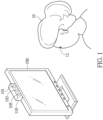
- Fig. 1 is a schematic diagram illustrating a display that applies an adaptive display backlight control system according to one embodiment of the present invention.
- a person 10 sits in front of a display 100.
- a multifunctional sensor module 110 is disposed on a top of the display 100.
- the sensor module 110 includes a proximity sensor 101, an image sensor 103 and an ambient light sensor 105.
- the proximity sensor 101 embodies the human presence sensor of the adaptive display backlight control system.
- the proximity sensor can detect image change in front of the display 100 by an image-processing technology, use an optical interruption principle with an infrared or Laser light source or detect reflective signals of an acoustic wave so as to sense if any object is in front of the display 100.
- the main components of the image sensor 103 includes a photographic lens, a photosensitive component and an image signal processor that can capture continuous images of the person 10 in front of the display 100, especially to capture the images of eyes 12 of the person 10. After that, an image-processing technology or an intelligent method is used for determining an attention direction of the eyes 12, and accordingly the system can determine if the person 10 pays attention to the display 100.
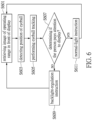
- the method for determining whether or not the person pays attention to the display applied to the adaptive display backlight control system can refer to a flowchart shown in Fig. 6 .
- Reference is made to Fig. 7 which shows a flowchart describing another implementation to determine whether or not the person 10 pays attention to the display 100 can be performed by capturing images of pupil centers or cornea reflection image of the person 10.
- Reference is next made to Fig. 8 which is a flowchart describing a process performed in the adaptive display backlight control system for determining whether or not the person pays attention to the display by a human attention sensor that is implemented by the image sensor 103 that is used to capture images of an operating range in front of the display 100 and an image-processing technology or an intelligent model.
- the sensor module 110 shown in the schematic diagram is used to represent one of various sensor applicable to the display 100, and the positions where the various sensors are disposed are not limited by that shown in the diagram.
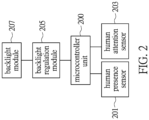
- Fig. 2 is a schematic diagram illustrating main components of the arrangement of the adaptive display backlight control system and a backlight module according to one embodiment of the present invention.
- the system can be adaptable to the circumstance shown in Fig. 1 .
- the main components of the adaptive display backlight control system shown in the diagram include a microcontroller unit 200 that is used to control operations of the circuit elements of the system and transmit signals to external circuit elements, and a human presence sensor 201 and human attention sensor 203 electrically connected with the microcontroller unit 200.
- the human presence sensor 201 is used to sense if the person 10 is present in front of the display 100.
- the human attention sensor 203 is used to sense whether or not the person 10 in front of the display 100 pays attention to the display 100.
- the microcontroller unit 200 also electrically connects with other circuit elements such as a backlight regulation module 205 and a backlight module 207 of the display 100.
- the human presence sensor 201 When the system is in operation, the human presence sensor 201 generates a signal relating to if the person 10 is present in front of the display 100, and the human attention sensor 203 generates a signal relating to if the person 10 pays attention to the display 100.
- the microcontroller unit 200 obtains the sensing signals generated by the human presence sensor 201 and the human attention sensor 203 so as to generate a backlight-regulation instruction being outputted to the backlight regulation module 205.
- the backlight regulation module 205 is used to regulate a driving voltage being outputted to the backlight module 207 according to the backlight-regulation instruction generated by the microcontroller unit 200.
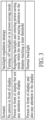
- a control strategy applied to the adaptive display backlight control system of Fig. 2 can refer to an exemplary example of a backlight regulation strategy shown in Fig. 3 that is operated in the method for adaptively controlling the display backlight.
- the human presence sensor 201 determines that no person is present in front of the display 100.
- the microcontroller unit 200 controls the human attention sensor 203 not to function, or the microcontroller unit 200 is configured to ignore the signals generated by the human attention sensor 203.
- the microcontroller unit 200 acquires the signals indicating that the person 10 is not present in front of the display 100 generated by the human presence sensor 201.
- the microcontroller unit 200 generates a corresponding backlight-regulation instruction for the backlight regulation module 205 to regulate a driving voltage being outputted to the backlight module 207 of the display 100. Accordingly, the backlight module 207 is driven to emit a backlight under a power-saving mode or to turn the backlight off gradually.
- the human presence sensor 201 senses that the person 10 is present in front of the display 100, but the human attention sensor 203 determines that the person 10 does not pay attention to the display 100.
- the microcontroller unit 200 also generates a corresponding backlight-regulation instruction that drives the backlight regulation module 205 to output a driving voltage to the backlight module 207 of the display 100.
- the driving voltage drives the backlight module 207 to enter a power-saving mode and to emit a regulated backlight.
- the microcontroller unit 200 when the human presence sensor 201 senses that the person 10 is present in front of the display 100 and the human attention sensor 203 determines that the person 10 also pays attention to the display 100, the microcontroller unit 200 generates a backlight-regulation instruction to control the backlight regulation module 205 to drive the backlight module 207 to emit a normal backlight.
- FIG. 4 is a schematic diagram illustrating a framework of the adaptive display backlight control system according to one embodiment of the present invention.
- a backlight regulation module 401 can adaptively regulate a backlight module 402 of a display 40 based on some conditions such as an ambient light, whether any person is present before the display 40, and whether the person pays attention to the display 40.
- the circuitry shown in the diagram includes a microcontroller unit 400 and other circuit components electrically connected with the microcontroller unit 400 for operating the adaptive display backlight control system.
- the backlight regulation module 401 relies on a backlight-regulation instruction generated by the microcontroller unit 400 to drive the backlight module 402 to emit different levels of backlight modes such as the normal backlight, the regulated backlight, the power-saving mode backlight and turn-off backlight described in Fig. 3 .
- the human presence sensor can be implemented by a proximity sensor 403.
- the proximity sensor 403 is used to sense any object or person in front of the display 40.
- the microcontroller unit 400 obtains sensing signals generated by the proximity sensor 403 and generates a backlight-regulation instruction according to a predetermined backlight regulation strategy.
- the human attention sensor can be implemented by an intelligence operator 405, an image signal processor 406 and an image sensor 407.
- the image sensor 407 disposed in front of the display 40 periodically or continuously captures images within an operating range before the display 40 and the image signal processor 406 then processes the images of the operating range so as to determine if any person is present in the operating range and also determine whether or not the person pays attention to the display 40 if the person is present before the display 40.
- the images are referred to for determining whether or not the person pays attention to the display 40.
- the intelligence operator 405 uses an intelligent model to calculate a probability that the person pays attention to the display 40 based on various image information. It is determined that the person pays attention to the display 40 if the probability meets a threshold; otherwise, it is determined that the person does not pay attention to the display 40.
- the abovementioned intelligent technology adopted by the system incorporates a machine-learning algorithm to learn image features of a large number of images of human bodies and faces that pay attention to a display.
- the image features can be referred to for classifying and training an intelligent model that is capable of determining whether or not a person pays attention to the display.
- the intelligent model can operate in the intelligence operator 405.
- the image sensor 407 captures images of facial features before the display 40
- the image signal processor 406 processes the images and the intelligent model of the intelligence operator 405 calculates a probability that the person pays attention to the display.
- the microcontroller unit 400 then obtains the probability of the person paying attention to the display from the intelligence operator 405 and then determines whether or not the person pays attention to the display 40. Accordingly, the adaptive display backlight control system generates a backlight-regulation instruction according to the backlight regulation strategy.
- the adaptive display backlight control system also includes an ambient light sensor 404.
- the ambient light sensor 404 is used to determine the information of ambient light around the display 40.
- the microcontroller unit 400 generates the backlight-regulation instruction for regulating the driving voltage being outputted tot eh backlight module based on the information of ambient light around the display. Further, the microcontroller unit 400 sets the backlight regulation strategy in response to the ambient light and accordingly generates the backlight-regulation instruction according to the signal generated by the ambient light sensor.
- the driving voltage being outputted to the backlight module is regulated according to the backlight-regulation instruction.
- the signals generated by the proximity sensor 403, the ambient light sensor 404 and the intelligence operator 405 can be individually referred to for regulating the backlight of the display, in addition the microcontroller unit 400 can overall consider the various sensing signals so as to generate the backlight-regulation instruction configured to be outputted to the backlight regulation module 401 based on the backlight regulation strategy.
- the backlight regulation module 401 then relies on the backlight-regulation instruction to regulate the driving voltage being outputted to the backlight module 402. Therefore, the backlight of the display 40 is adaptively regulated according to the driving voltage.
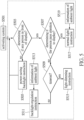
- Fig. 5 is a flowchart illustrating the method for controlling the display backlight through the adaptive display backlight control system according to one embodiment of the present invention.
- the above-mentioned sensors such as the ambient light sensor, the human presence sensor and the human attention sensor can be activated when certain conditions are satisfied. Further, the human presence sensor and the human attention sensor can be full-time operated.
- the microcontroller unit of the adaptive display backlight control system initializes the sensors and circuit components such as the image sensor and related circuits, the ambient light sensor, a power-management circuit, the human presence sensor, the human attention sensor and the lines connecting with the backlight regulation module.
- step S501 the backlight regulation module and the backlight module of the display of the adaptive display backlight control system are activated (step S501).
- the human presence sensor is activated to determine whether or not any person is present in front of the display (step S503). If it is determined that there is no person is in front of the display (represented as “no") the microcontroller unit generates a corresponding backlight-regulation instruction, e.g., a power-saving backlight instruction (step S505), and repeats the step S503 in order to determine whether or not any person is present in front of the display.
- step S507 it is determined that a person is present in front of the display (represented as "yes"), the step S507 is performed.
- the human attention sensor is activated to determine whether or not the person pays attention to the display (step S507). If it is determined that the person pays attention to the display (represented as "yes"), the microcontroller unit acquires information of ambient light from the ambient light sensor around the display (step S519) and generates a normal-light instruction (step S517).
- the backlight regulation module drives the backlight module to operate according to the normal-light instruction so as to emit a normal backlight by referring to the information of ambient light. The process then goes back to step S503 for continuing to proceed the steps of detecting the presence and attention of the person.
- step S507 when it is determined that the person stays in front of the display but does not pay attention to the display (represented as "no"), the system can simultaneously start a timer for counting a period of duration of the present state and determining if the present state continues to reach a time threshold set by the system (step S509). If it is determined that a time of the person not paying attention to the display does not exceed the time threshold (i.e., not timeout), the microcontroller unit refers to the information of ambient light (step S513) so as to generate a backlight-regulation instruction (step S511) for driving the backlight module to emit a regulated backlight. Afterwards, the process goes back to step S503 for continuing to detect the states of whether or not the person is present in front of the display and pays attention to the display.
- step S509 when it is determined that a time of the person not paying attention to the display reaches a time threshold set by the system (i.e., timeout), the microcontroller unit generates a light-dimming instruction (step S515).
- the microcontroller unit when the system is in operation, the microcontroller unit counts time on the status that the person is not present in front of the display and the person does not pay attention to the display. For example, the system sets up a non-attention time and a light-dimming time. When it is determined that the person does not pay attention to the display, the system acquires a period of duration from a timer.
- the microcontroller unit If a time that the person does not pay attention to the display reaches the non-attention time, the microcontroller unit generates a light-dimming instruction (step S515), and the backlight regulation module drives the backlight module to emit a regulated backlight according to a ratio within the light-dimming time until the backlight module is turned off.
- the above exemplary process is not used to limit the actual operation of the adaptive display backlight control system of the invention.
- the backlight module of the display has already operated to emit a power-saving mode backlight, the regulated backlight or in a dimming process
- the backlight module can immediately be regulated to operate under a normal backlight mode once the system senses that the person is present in front of the display and also pays attention to the display.
- the microcontroller unit can control the backlight regulation module to drive the backlight module to gradually dim the backlight to turning it off even if the backlight module originally emits a normal backlight.
- the process of fading the backlight to turning it off takes about 30 seconds and the duration time can be adjusted according to an actual condition.
- the adaptive display backlight control system uses a Hysteresis timer to prevent the problem that the user is discomforted by frequently switching on and off the backlight due to overly sensitive sensor, e.g., the overly sensitive human attention sensor.
- overly sensitive sensor e.g., the overly sensitive human attention sensor.
- the backlight regulation module of the system will immediately drive the backlight module to emit a normal backlight by referring to the information of ambient light around the display.
- the timer hysteresis timer is activated.
- the backlight regulation module drives the backlight module to gradually dim the backlight until turning it off once the system determines that the person does not pay attention to the display.
- an intelligence operator is incorporated in the system for performing an intelligent algorithm that allows the adaptive display backlight control system to use a model trained by a machine-learning method to determine whether or not the person pays attention to the display.
- a process of regulating the backlight by tracking eyeballs of a person is described.
- An operating range before the display is defined.
- the operating range is used to describe a range in front of the display for determining whether or not a person is present before the display.
- the image of the operating range relates to an image of a head of a person to be detected.
- the image features of the head of the person can be used to determine if the person pays attention to the display.
- an image sensor is used to capture continuous images of an operating range in front of the display (step S601), and an image signal processor processes the images so as to obtain positions and images of the eyeballs through an image-processing technology.
- the positions and the images of the eyeballs can be obtained by an intelligent module of the system (step S603).
- a process of eye tracking can be performed on the continuous images (step S605) so as to determine whether or not the person pays attention to the display (step S607).
- step S609 if it is determined that the person in front of the display does not pay attention to the display according to a result of eye tracking (represented as "no") and a backlight-regulation instruction for driving the backlight module to emit a regulated backlight is generated (step S609). More specifically, the backlight regulation module controls the backlight module according to the backlight-regulation instruction. If it is determined that the person does pay attention to the display, a normal-light instruction is generated by the microcontroller unit to drive the backlight module to operate with a normal scenario (step S611).
- Fig. 7 is a flowchart illustrating a process of capturing images of pupils or corneas for purpose of backlight regulation according to one embodiment of the present invention.
- the adaptive display backlight control system captures images of pupil centers or cornea reflection images of the person by the image sensor (step S701). After that, the system can determine if the person pays attention to the display through an intelligence operation that is an intelligent model trained by learning a large number of images of the pupil centers and the cornea reflection images relating to whether or not the person pays or does not pay attention to the display (step S703). The result of calculation of the intelligent model is referred to for determining whether or not the person pays attention to the display (step S705). Thus, the system performs backlight regulation according to the determination.
- Fig. 8 is a flowchart describing a process of capturing images of an operating range for purpose of backlight regulation according to one embodiment of the present invention.
- the image sensor is used to capture images of the operating range in front of the display (step S801).
- the image sensor captures the facial images of the person and the intelligence operation can calculate a probability of whether the person pays attention to the display according to the image features of the operating range (step S803). The probability allows the system to determine whether or not the person pays attention to the display (step S805).
- an intelligence operation is especially used in the system for efficiently determining whether or not the person pays attention to the display.
- Any electronic device applying the system can effectively achieve power saving by regulating the backlight.
Landscapes
- Engineering & Computer Science (AREA)
- Multimedia (AREA)
- Signal Processing (AREA)
- Theoretical Computer Science (AREA)
- General Engineering & Computer Science (AREA)
- Physics & Mathematics (AREA)
- General Physics & Mathematics (AREA)
- Health & Medical Sciences (AREA)
- General Health & Medical Sciences (AREA)
- Radar, Positioning & Navigation (AREA)
- Remote Sensing (AREA)
- Computer Networks & Wireless Communication (AREA)
- Social Psychology (AREA)
- Computer Hardware Design (AREA)
- Automation & Control Theory (AREA)
- Human Computer Interaction (AREA)
- Databases & Information Systems (AREA)
- Software Systems (AREA)
- Biophysics (AREA)
- Analytical Chemistry (AREA)
- Neurosurgery (AREA)
- Chemical & Material Sciences (AREA)
- Life Sciences & Earth Sciences (AREA)
- Biomedical Technology (AREA)
- Liquid Crystal Display Device Control (AREA)
- Fittings On The Vehicle Exterior For Carrying Loads, And Devices For Holding Or Mounting Articles (AREA)
- User Interface Of Digital Computer (AREA)
- Television Signal Processing For Recording (AREA)
- Devices For Indicating Variable Information By Combining Individual Elements (AREA)
- Photometry And Measurement Of Optical Pulse Characteristics (AREA)
- Electronic Switches (AREA)
Abstract
An adaptive display backlight control system and a method for controlling the backlight are provided. The system includes a microcontroller unit (200), a human presence sensor (201), a human attention sensor (203) and a backlight regulation module (205). The microcontroller unit (200) determines a driving signal applied to a backlight module (207) of a display (40) according to a signal relating to if a person is present in front of the display (40) as provided by the human-presence sensor, and a signal relating to if the person pays attention to the display (40) as provided by the human attention sensor (203). Further, the microcontroller unit (200) can obtain information of ambient light around the display (40) from an ambient light sensor (105), and then relies on the information of ambient light to regulate the driving signal applied to the backlight module (207).
Description
- The present invention relates to a display capable of regulating backlight according to usage condition, and more particularly to an adaptive display backlight control system and a method for controlling the backlight according to a state of a user using the display.
- Various power-saving solutions are applicable to conventional computers, one of which is to provide a function of periodically turning off a display of a computer by detecting a status of a user using the computer. For example, a status of the user using a computer mouse and a keyboard can be detected. When it is detected that the time that the computer is not used meets a time threshold, the display of the computer is driven to be turned off until the user again uses the computer mouse or the keyboard.
- Furthermore, for providing display brightness adapted to an environment, the display of the computer can be equipped with an ambient light sensor. The ambient light sensor allows a computer system to regulate a backlight of the display based on a result by sensing an ambient light.
- Besides the conventional technology that a display backlight can be adjusted according to the status of a computer mouse or a keyboard manipulated by a user and a result of sensing an ambient light, the present invention provides a method and a system for adaptively controlling the backlight according to the statuses of whether the user is in front of the display and whether the user pays attention to the display.
- According to one embodiment of an adaptive display backlight control system, the system is operated in a control circuit of the display backlight module. The system includes a microcontroller unit, a human sensor and a backlight regulation module. The human sensor includes a human presence sensor that can be a proximity sensor used to sense if any person is in front of a display. The human sensor includes a human attention sensor that can use an image sensor to capture an image and determine if the person pays attention to the display by an intelligence operator.
- The microcontroller unit generates a backlight-regulation instruction that is configured to be outputted to the backlight regulation module according to a signal generated by the human presence sensor relating to if the person is present in front of the display and a signal generated by the human attention sensor relating to if the person pays attention to the display. Accordingly, the backlight regulation module regulates a driving voltage being outputted to a backlight module of the display according to the backlight-regulation instruction.
- In an aspect of the present invention, the adaptive display backlight control system further includes an ambient light sensor that can sense an ambient light around the display. Therefore, the microcontroller unit can also rely on the information of ambient light around the display, being combined with the signals generated by the human presence sensor and the human attention sensor, to regulate the driving voltage outputted to the backlight module.
- In another aspect, in the process for determining whether or not a person pays attention to a display, the intelligence operator performs an eyeball-tracking process according to images captured by an image sensor in front of the display. A result of the eyeball-tracking process can be used to determine whether or not the person pays attention to the display.
- In one further aspect, the intelligence operator relies on the images of pupil centers or cornea reflection images of the person in front of the display captured by the image sensor to determine whether or not the person pays attention to the display.
- In another aspect, the intelligence operator defines an operating range in front of the display. Images of the head of the user can be captured within the operating range. The images captured by the image sensor within the operating range can be used by the intelligent model for determining whether or not the person pays attention to the display.
- In one of the scenarios, when the microcontroller unit relies on a signal generated by the human presence sensor to determine if the person is present in front of the display, and relies on a signal generated by the human attention sensor to determine if the person pays attention to the display, the microcontroller unit accordingly generates a backlight-regulation instruction. The backlight-regulation instruction is provided to control the backlight regulation module for driving the backlight module to emit a normal backlight.
- In another scenario, the microcontroller unit determines that the person is present in front of the display according to a signal relating to if the person is present in front of the display. However, the microcontroller determines that the person does not pay attention to the display according to a signal relating to if the person pays attention to the display. Accordingly, the microcontroller unit generates a backlight-regulation instruction for controlling the backlight regulation module to drive the backlight module to emit a regulated backlight.
- In one further scenario, the system uses a timer to set up a non-attention time and a light-dimming time. When it is determined that the time the person does not pay attention to the display meets the non-attention time, the backlight regulation module is controlled to regulate the backlight module to emit a regulated backlight according to a ratio within the light-dimming time until the backlight is completely turned off.
- The microcontroller unit generates a backlight-regulation instruction for controlling the backlight regulation module to drive the backlight module to emit a backlight under a power-saving mode or turn off the backlight if the microcontroller unit determines that the person is not present in front of the display according to a signal generated by the human presence sensor.
- These and other aspects of the present invention will become apparent from the following description of the embodiment taken in conjunction with the following drawings and their captions, although variations and modifications therein may be affected without departing from the spirit and scope of the novel concepts of the invention.
- The described embodiments may be better understood by reference to the following description and the accompanying drawings, in which:
-
Fig. 1 is a schematic diagram illustrating a framework of an adaptive display backlight control system according to one embodiment of the present invention; -
Fig. 2 is a schematic diagram illustrating main components that are used for cooperating the adaptive display backlight control system and the backlight module according to one embodiment of the present invention; -
Fig. 3 shows a table illustrating backlight regulation strategy being operated in the method for adaptively controlling display backlight according to one embodiment of the present invention; -
Fig. 4 is a schematic diagram illustrating a framework of the adaptive display backlight control system according to one embodiment of the present invention; -
Fig. 5 is a flowchart describing the method for adaptively controlling a display backlight according to one embodiment of the present invention; -
Fig. 6 is a flowchart describing a process of regulating backlight by tracking eyeballs in the method for adaptively controlling the display backlight according to one embodiment of the present invention; -
Fig. 7 is a flowchart describing a process of regulating backlight by capturing pupils or corneas in the method for adaptively controlling the display backlight according to one embodiment of the present invention; and -
Fig. 8 is a flowchart describing a process of regulating backlight by capturing an operating range in method for adaptively controlling the display backlight according to one embodiment of the present invention. - The present invention is more particularly described in the following examples that are intended as illustrative only since numerous modifications and variations therein will be apparent to those skilled in the art. Like numbers in the drawings indicate like components throughout the views. As used in the description herein and throughout the claims that follow, unless the context clearly dictates otherwise, the meaning of "a," "an" and "the" includes plural reference, and the meaning of "in" includes "in" and "on." Titles or subtitles can be used herein for the convenience of a reader, which shall have no influence on the scope of the present invention.
- The terms used herein generally have their ordinary meanings in the art. In the case of conflict, the present document, including any definitions given herein, will prevail. The same thing can be expressed in more than one way. Alternative language and synonyms can be used for any term(s) discussed herein, and no special significance is to be placed upon whether a term is elaborated or discussed herein. A recital of one or more synonyms does not exclude the use of other synonyms. The use of examples anywhere in this specification including examples of any terms is illustrative only, and in no way limits the scope and meaning of the present invention or of any exemplified term. Likewise, the present invention is not limited to various embodiments given herein. Numbering terms such as "first," "second" or "third" can be used to describe various components, signals or the like, which are for distinguishing one component/signal from another one only, and are not intended to, nor should be construed to impose any substantive limitations on the components, signals or the like.
- According to certain embodiments of a method for adaptively controlling a display backlight and a system of the present invention, the system is operated in a control circuit of a display backlight module and main circuit components of the system include a microcontroller unit for controlling operation of the system, a human sensor that is used to detect the status of a person in front of a display and a backlight regulation module that is controlled by the microcontroller unit for regulating a backlight brightness of the backlight regulation module.
- One main technical concept of the method for adaptively controlling the display backlight is to incorporate a human presence sensor and a human attention sensor to a display that is capable of regulating backlight according to an ambient light. The human presence sensor allows the display to determine whether or not a person is present in front of the display and the human attention sensor allows the display to determine whether or not the person in front of the display pays attention to the display. The backlight of the display can be regulated by a control circuit according to the ambient light. The backlight of the display will be gradually dimmed until the backlight is turned off automatically if it is determined that there is not a person present in front of the display, or the person does not pay attention to the display.
-
Fig. 1 is a schematic diagram illustrating a display that applies an adaptive display backlight control system according to one embodiment of the present invention. In the diagram, aperson 10 sits in front of adisplay 100. Amultifunctional sensor module 110 is disposed on a top of thedisplay 100. Thesensor module 110 includes aproximity sensor 101, animage sensor 103 and anambient light sensor 105. - The
proximity sensor 101 embodies the human presence sensor of the adaptive display backlight control system. The proximity sensor can detect image change in front of thedisplay 100 by an image-processing technology, use an optical interruption principle with an infrared or Laser light source or detect reflective signals of an acoustic wave so as to sense if any object is in front of thedisplay 100. - The main components of the
image sensor 103 includes a photographic lens, a photosensitive component and an image signal processor that can capture continuous images of theperson 10 in front of thedisplay 100, especially to capture the images ofeyes 12 of theperson 10. After that, an image-processing technology or an intelligent method is used for determining an attention direction of theeyes 12, and accordingly the system can determine if theperson 10 pays attention to thedisplay 100. - The method for determining whether or not the person pays attention to the display applied to the adaptive display backlight control system can refer to a flowchart shown in
Fig. 6 . Reference is made toFig. 7 , which shows a flowchart describing another implementation to determine whether or not theperson 10 pays attention to thedisplay 100 can be performed by capturing images of pupil centers or cornea reflection image of theperson 10. Reference is next made toFig. 8 , which is a flowchart describing a process performed in the adaptive display backlight control system for determining whether or not the person pays attention to the display by a human attention sensor that is implemented by theimage sensor 103 that is used to capture images of an operating range in front of thedisplay 100 and an image-processing technology or an intelligent model. - It should be noted that the
sensor module 110 shown in the schematic diagram is used to represent one of various sensor applicable to thedisplay 100, and the positions where the various sensors are disposed are not limited by that shown in the diagram. -
Fig. 2 is a schematic diagram illustrating main components of the arrangement of the adaptive display backlight control system and a backlight module according to one embodiment of the present invention. The system can be adaptable to the circumstance shown inFig. 1 . - The main components of the adaptive display backlight control system shown in the diagram include a
microcontroller unit 200 that is used to control operations of the circuit elements of the system and transmit signals to external circuit elements, and ahuman presence sensor 201 andhuman attention sensor 203 electrically connected with themicrocontroller unit 200. Thehuman presence sensor 201 is used to sense if theperson 10 is present in front of thedisplay 100. Thehuman attention sensor 203 is used to sense whether or not theperson 10 in front of thedisplay 100 pays attention to thedisplay 100. Themicrocontroller unit 200 also electrically connects with other circuit elements such as abacklight regulation module 205 and abacklight module 207 of thedisplay 100. - When the system is in operation, the
human presence sensor 201 generates a signal relating to if theperson 10 is present in front of thedisplay 100, and thehuman attention sensor 203 generates a signal relating to if theperson 10 pays attention to thedisplay 100. Themicrocontroller unit 200 obtains the sensing signals generated by thehuman presence sensor 201 and thehuman attention sensor 203 so as to generate a backlight-regulation instruction being outputted to thebacklight regulation module 205. Thebacklight regulation module 205 is used to regulate a driving voltage being outputted to thebacklight module 207 according to the backlight-regulation instruction generated by themicrocontroller unit 200. - Under the circumstance of
Fig. 1 , a control strategy applied to the adaptive display backlight control system ofFig. 2 can refer to an exemplary example of a backlight regulation strategy shown inFig. 3 that is operated in the method for adaptively controlling the display backlight. - In one of the scenarios, when the
person 10 leaves thedisplay 100, thehuman presence sensor 201 determines that no person is present in front of thedisplay 100. In the meantime, themicrocontroller unit 200 controls thehuman attention sensor 203 not to function, or themicrocontroller unit 200 is configured to ignore the signals generated by thehuman attention sensor 203. When themicrocontroller unit 200 acquires the signals indicating that theperson 10 is not present in front of thedisplay 100 generated by thehuman presence sensor 201. Further, it is determined that the time that the person is not present in front of the display reaches a time threshold set by the system, themicrocontroller unit 200 generates a corresponding backlight-regulation instruction for thebacklight regulation module 205 to regulate a driving voltage being outputted to thebacklight module 207 of thedisplay 100. Accordingly, thebacklight module 207 is driven to emit a backlight under a power-saving mode or to turn the backlight off gradually. - In another scenario, the
human presence sensor 201 senses that theperson 10 is present in front of thedisplay 100, but thehuman attention sensor 203 determines that theperson 10 does not pay attention to thedisplay 100. Similarly, if a time-counting result shows that a period of duration that theperson 10 does not pay attention to thedisplay 100 reaches another time threshold set by the system, themicrocontroller unit 200 also generates a corresponding backlight-regulation instruction that drives thebacklight regulation module 205 to output a driving voltage to thebacklight module 207 of thedisplay 100. The driving voltage drives thebacklight module 207 to enter a power-saving mode and to emit a regulated backlight. - In third scenario, when the
human presence sensor 201 senses that theperson 10 is present in front of thedisplay 100 and thehuman attention sensor 203 determines that theperson 10 also pays attention to thedisplay 100, themicrocontroller unit 200 generates a backlight-regulation instruction to control thebacklight regulation module 205 to drive thebacklight module 207 to emit a normal backlight. -
Fig. 4 is a schematic diagram illustrating a framework of the adaptive display backlight control system according to one embodiment of the present invention. Abacklight regulation module 401 can adaptively regulate abacklight module 402 of adisplay 40 based on some conditions such as an ambient light, whether any person is present before thedisplay 40, and whether the person pays attention to thedisplay 40. - The circuitry shown in the diagram includes a
microcontroller unit 400 and other circuit components electrically connected with themicrocontroller unit 400 for operating the adaptive display backlight control system. Thebacklight regulation module 401 relies on a backlight-regulation instruction generated by themicrocontroller unit 400 to drive thebacklight module 402 to emit different levels of backlight modes such as the normal backlight, the regulated backlight, the power-saving mode backlight and turn-off backlight described inFig. 3 . - The human presence sensor can be implemented by a
proximity sensor 403. Theproximity sensor 403 is used to sense any object or person in front of thedisplay 40. Themicrocontroller unit 400 obtains sensing signals generated by theproximity sensor 403 and generates a backlight-regulation instruction according to a predetermined backlight regulation strategy. - In an exemplary example, the human attention sensor can be implemented by an
intelligence operator 405, animage signal processor 406 and animage sensor 407. In one of the embodiments of the present invention, theimage sensor 407 disposed in front of thedisplay 40 periodically or continuously captures images within an operating range before thedisplay 40 and theimage signal processor 406 then processes the images of the operating range so as to determine if any person is present in the operating range and also determine whether or not the person pays attention to thedisplay 40 if the person is present before thedisplay 40. When the system determines that any person is present in front of thedisplay 40, the images are referred to for determining whether or not the person pays attention to thedisplay 40. In one embodiment of the present invention, theintelligence operator 405 uses an intelligent model to calculate a probability that the person pays attention to thedisplay 40 based on various image information. It is determined that the person pays attention to thedisplay 40 if the probability meets a threshold; otherwise, it is determined that the person does not pay attention to thedisplay 40. - The abovementioned intelligent technology adopted by the system incorporates a machine-learning algorithm to learn image features of a large number of images of human bodies and faces that pay attention to a display. The image features can be referred to for classifying and training an intelligent model that is capable of determining whether or not a person pays attention to the display. The intelligent model can operate in the
intelligence operator 405. When the adaptive display backlight control system is in operation, theimage sensor 407 captures images of facial features before thedisplay 40, theimage signal processor 406 processes the images and the intelligent model of theintelligence operator 405 calculates a probability that the person pays attention to the display. Themicrocontroller unit 400 then obtains the probability of the person paying attention to the display from theintelligence operator 405 and then determines whether or not the person pays attention to thedisplay 40. Accordingly, the adaptive display backlight control system generates a backlight-regulation instruction according to the backlight regulation strategy. - The adaptive display backlight control system also includes an ambient
light sensor 404. The ambientlight sensor 404 is used to determine the information of ambient light around thedisplay 40. Themicrocontroller unit 400 generates the backlight-regulation instruction for regulating the driving voltage being outputted tot eh backlight module based on the information of ambient light around the display. Further, themicrocontroller unit 400 sets the backlight regulation strategy in response to the ambient light and accordingly generates the backlight-regulation instruction according to the signal generated by the ambient light sensor. The driving voltage being outputted to the backlight module is regulated according to the backlight-regulation instruction. - In summation, the signals generated by the
proximity sensor 403, the ambientlight sensor 404 and theintelligence operator 405 can be individually referred to for regulating the backlight of the display, in addition themicrocontroller unit 400 can overall consider the various sensing signals so as to generate the backlight-regulation instruction configured to be outputted to thebacklight regulation module 401 based on the backlight regulation strategy. Thebacklight regulation module 401 then relies on the backlight-regulation instruction to regulate the driving voltage being outputted to thebacklight module 402. Therefore, the backlight of thedisplay 40 is adaptively regulated according to the driving voltage. - Reference is made to
Fig. 5 , which is a flowchart illustrating the method for controlling the display backlight through the adaptive display backlight control system according to one embodiment of the present invention. It should be noted that, when the system is in operation, the above-mentioned sensors such as the ambient light sensor, the human presence sensor and the human attention sensor can be activated when certain conditions are satisfied. Further, the human presence sensor and the human attention sensor can be full-time operated. - With activation of a computer system, the microcontroller unit of the adaptive display backlight control system initializes the sensors and circuit components such as the image sensor and related circuits, the ambient light sensor, a power-management circuit, the human presence sensor, the human attention sensor and the lines connecting with the backlight regulation module.
- In the beginning of the method, with the operation of the computer system, the backlight regulation module and the backlight module of the display of the adaptive display backlight control system are activated (step S501). The human presence sensor is activated to determine whether or not any person is present in front of the display (step S503). If it is determined that there is no person is in front of the display (represented as "no") the microcontroller unit generates a corresponding backlight-regulation instruction, e.g., a power-saving backlight instruction (step S505), and repeats the step S503 in order to determine whether or not any person is present in front of the display. When, in step S503, it is determined that a person is present in front of the display (represented as "yes"), the step S507 is performed.
- Next, the human attention sensor is activated to determine whether or not the person pays attention to the display (step S507). If it is determined that the person pays attention to the display (represented as "yes"), the microcontroller unit acquires information of ambient light from the ambient light sensor around the display (step S519) and generates a normal-light instruction (step S517). The backlight regulation module drives the backlight module to operate according to the normal-light instruction so as to emit a normal backlight by referring to the information of ambient light. The process then goes back to step S503 for continuing to proceed the steps of detecting the presence and attention of the person.
- In step S507, when it is determined that the person stays in front of the display but does not pay attention to the display (represented as "no"), the system can simultaneously start a timer for counting a period of duration of the present state and determining if the present state continues to reach a time threshold set by the system (step S509). If it is determined that a time of the person not paying attention to the display does not exceed the time threshold (i.e., not timeout), the microcontroller unit refers to the information of ambient light (step S513) so as to generate a backlight-regulation instruction (step S511) for driving the backlight module to emit a regulated backlight. Afterwards, the process goes back to step S503 for continuing to detect the states of whether or not the person is present in front of the display and pays attention to the display.
- In step S509, when it is determined that a time of the person not paying attention to the display reaches a time threshold set by the system (i.e., timeout), the microcontroller unit generates a light-dimming instruction (step S515). According to one of the embodiments of the present invention, when the system is in operation, the microcontroller unit counts time on the status that the person is not present in front of the display and the person does not pay attention to the display. For example, the system sets up a non-attention time and a light-dimming time. When it is determined that the person does not pay attention to the display, the system acquires a period of duration from a timer. If a time that the person does not pay attention to the display reaches the non-attention time, the microcontroller unit generates a light-dimming instruction (step S515), and the backlight regulation module drives the backlight module to emit a regulated backlight according to a ratio within the light-dimming time until the backlight module is turned off.
- It should be noted that the above exemplary process is not used to limit the actual operation of the adaptive display backlight control system of the invention. For example, even the display backlight module of the display has already operated to emit a power-saving mode backlight, the regulated backlight or in a dimming process, the backlight module can immediately be regulated to operate under a normal backlight mode once the system senses that the person is present in front of the display and also pays attention to the display. Alternatively, when it is determined that the person leaves the display and the duration also reaches another time threshold according to the timer, the microcontroller unit can control the backlight regulation module to drive the backlight module to gradually dim the backlight to turning it off even if the backlight module originally emits a normal backlight. It should be noted that the process of fading the backlight to turning it off takes about 30 seconds and the duration time can be adjusted according to an actual condition.
- According to one of the embodiments of the present invention, the adaptive display backlight control system uses a Hysteresis timer to prevent the problem that the user is discomforted by frequently switching on and off the backlight due to overly sensitive sensor, e.g., the overly sensitive human attention sensor. For example, when the human attention sensor senses that the person changes from not paying attention to the display to paying attention to the display, the backlight regulation module of the system will immediately drive the backlight module to emit a normal backlight by referring to the information of ambient light around the display. In the meantime, the timer hysteresis timer is activated. The backlight regulation module drives the backlight module to gradually dim the backlight until turning it off once the system determines that the person does not pay attention to the display.
- According to one embodiment of the adaptive display backlight control system, an intelligence operator is incorporated in the system for performing an intelligent algorithm that allows the adaptive display backlight control system to use a model trained by a machine-learning method to determine whether or not the person pays attention to the display.
- According to one of the embodiments of the present invention, such as a flowchart shown in
Fig. 6 , a process of regulating the backlight by tracking eyeballs of a person is described. An operating range before the display is defined. The operating range is used to describe a range in front of the display for determining whether or not a person is present before the display. The image of the operating range relates to an image of a head of a person to be detected. The image features of the head of the person can be used to determine if the person pays attention to the display. - In
Fig. 6 , an image sensor is used to capture continuous images of an operating range in front of the display (step S601), and an image signal processor processes the images so as to obtain positions and images of the eyeballs through an image-processing technology. The positions and the images of the eyeballs can be obtained by an intelligent module of the system (step S603). Afterwards, a process of eye tracking can be performed on the continuous images (step S605) so as to determine whether or not the person pays attention to the display (step S607). - Next, if it is determined that the person in front of the display does not pay attention to the display according to a result of eye tracking (represented as "no") and a backlight-regulation instruction for driving the backlight module to emit a regulated backlight is generated (step S609). More specifically, the backlight regulation module controls the backlight module according to the backlight-regulation instruction. If it is determined that the person does pay attention to the display, a normal-light instruction is generated by the microcontroller unit to drive the backlight module to operate with a normal scenario (step S611).
-
Fig. 7 is a flowchart illustrating a process of capturing images of pupils or corneas for purpose of backlight regulation according to one embodiment of the present invention. - The adaptive display backlight control system captures images of pupil centers or cornea reflection images of the person by the image sensor (step S701). After that, the system can determine if the person pays attention to the display through an intelligence operation that is an intelligent model trained by learning a large number of images of the pupil centers and the cornea reflection images relating to whether or not the person pays or does not pay attention to the display (step S703). The result of calculation of the intelligent model is referred to for determining whether or not the person pays attention to the display (step S705). Thus, the system performs backlight regulation according to the determination.
-
Fig. 8 is a flowchart describing a process of capturing images of an operating range for purpose of backlight regulation according to one embodiment of the present invention. - In the method for controlling adaptive display backlight control system, the image sensor is used to capture images of the operating range in front of the display (step S801). For example, the image sensor captures the facial images of the person and the intelligence operation can calculate a probability of whether the person pays attention to the display according to the image features of the operating range (step S803). The probability allows the system to determine whether or not the person pays attention to the display (step S805).
- In summation, according to the certain embodiments of the method for adaptively controlling the display backlight and the system, in addition to using sensor to determine the information of ambient light around the display and the state of whether the person is present in front of the display, an intelligence operation is especially used in the system for efficiently determining whether or not the person pays attention to the display. Any electronic device applying the system can effectively achieve power saving by regulating the backlight.
- The foregoing description of the exemplary embodiments of the invention has been presented only for the purposes of illustration and description and is not intended to be exhaustive or to limit the invention to the precise forms disclosed. Many modifications and variations are possible in light of the above teaching.
- The embodiments were chosen and described in order to explain the principles of the invention and their practical application so as to enable others skilled in the art to utilize the invention and various embodiments and with various modifications as are suited to the particular use contemplated. Alternative embodiments will become apparent to those skilled in the art to which the present invention pertains without departing from its spirit and scope.
Claims (15)
- An adaptive display backlight control system, characterized in that the system comprising:a microcontroller unit (200);a human presence sensor (201), electrically connected with the microcontroller unit (200), used to sense whether a person is in front of a display (40);a human attention sensor (203), electrically connected with the microcontroller unit (200), used to sense whether the person in front of the display (40) is paying attention to the display (40); anda backlight regulation module (205), electrically connected with the microcontroller unit (200), used to regulate a driving voltage of a backlight module (207) of the display (40) according to a backlight-regulation instruction generated by the microcontroller unit (200);wherein the microcontroller unit (200) generates the backlight-regulation instruction being outputted to the backlight regulation module (205) according to a signal generated by the human presence sensor (201) relating to whether the person is present in front of the display (40) and a signal generated by the human attention sensor (203) relating to whether the person is paying attention to the display (40).
- The adaptive display backlight control system according to claim 1, further comprising an ambient light sensor (105), electrically connected with the microcontroller unit (200), used to determine information of an ambient light around the display (40) and enable the microcontroller unit (200) to further regulate the driving voltage being outputted to the backlight module (207) according to signals generated by the ambient light sensor (105).
- The adaptive display backlight control system according to claim 1, wherein the human presence sensor (201) is implemented by a proximity sensor (101) for determining whether the person is in front of the display (40).
- The adaptive display backlight control system according to claim 1, wherein the human attention sensor (203) is implemented by an image sensor (103) and an intelligence operator is provided to perform an eyeball-tracking process according to images before the display (40) captured by the image sensor (103) and determine whether the person is paying attention to the display (40) according to a result of the eyeball-tracking process.
- The adaptive display backlight control system according to claim 4, wherein the intelligence operator determines whether the person is paying attention to the display (40) according to images of pupil centers or cornea reflection images of the person in front of the display (40) captured by the image sensor (103).
- The adaptive display backlight control system according to claim 4, wherein the intelligence operator defines an operating range in front of the display (40) and determines whether the person is paying attention to the display (40) according to images captured by the image sensor (103) within the operating range.
- The adaptive display backlight control system according to any of claim 1 to claim 6, wherein, when the microcontroller unit (200) determines that the person is present in front of the display (40) according to signals generated by the human presence sensor (201) and determines that the person is paying attention to the display (40) according to signals generated by the human attention sensor (203), the microcontroller unit (200) generates the backlight-regulation instruction for controlling the backlight regulation module (205) to drive the backlight module (207) to emit a normal backlight.
- The adaptive display backlight control system according to any of claim 1 to claim 7, wherein, when the microcontroller unit (200) determines that the person is present in front of the display (40) according to signals generated by the human presence sensor (201) and determines that the person is not paying attention to the display (40) according to signals generated by the human attention sensor (203), the microcontroller unit (200) generates the backlight-regulation instruction for controlling the backlight regulation module (205) to drive the backlight module (207) to emit a regulated backlight.
- The adaptive display backlight control system according to claim 8, wherein the adaptive display backlight control system uses a timer to set up a non-attention time and a light-dimming time; when it is determined that a time that the person is not paying attention to the display (40) reaches the non-attention time, the backlight regulation module (205) is regulated according to a ratio within the light-dimming time until the backlight module (207) is turned off.
- The adaptive display backlight control system according to any of claim 1 to claim 7, wherein, when the microcontroller unit (200) determines that the person is not present in front of the display (40) according to signals generated by the human presence sensor (201), the microcontroller unit (200) generates the backlight-regulation instruction for controlling the backlight regulation module (205) to drive the backlight module (207) to emit a backlight under a power-saving mode or turn off the backlight of the display (40).
- A method for adaptively controlling a backlight of a display (40), performed in a microcontroller unit (200), characterized in that the method comprising:determining whether a person is in front of the display (40) by a human presence sensor (201);determining whether the person is paying attention to the display (40) by a human attention sensor (203); andgenerating, by the microcontroller unit (200), a backlight-regulation instruction being outputted to a backlight regulation module (205) according to a signal generated by the human presence sensor (201) relating to whether the person is present in front of the display (40) and a signal generated by the human attention sensor (203) relating to whether the person is paying attention to the display (40), so as to enable the backlight regulation module (205) to regulate a driving voltage being outputted to a backlight module (207) of the display (40) according to the backlight-regulation instruction.
- The method according to claim 11, wherein the human attention sensor (203) is implemented by an image sensor (103) and an intelligence operator is provided to perform an eyeball-tracking process according to images before the display (40) captured by the image sensor (103) and determine whether the person is paying attention to the display (40) according to a result of the eyeball-tracking process.
- The method according to any of claim 11 or claim 12, wherein, when the microcontroller unit (200) determines that the person is present in front of the display (40) according to signals generated by the human presence sensor (201) and determines that the person is paying attention to the display (40) according to signals generated by the human attention sensor (203), the microcontroller unit (200) generates the backlight-regulation instruction for controlling the backlight regulation module (205) to drive the backlight module (207) to emit a normal backlight.
- The method according to any of claim 11 or claim 12, wherein, when the microcontroller unit (200) determines that the person is present in front of the display (40) according to signals generated by the human presence sensor (201) and determines that the person is not paying attention to the display (40) according to signals generated by the human attention sensor (203), the microcontroller unit (200) generates the backlight-regulation instruction for controlling the backlight regulation module (205) to drive the backlight module (207) to emit a regulated backlight; wherein, a timer is incorporated to set up a non-attention time and a light-dimming time, when it is determined that a time that the person is not paying attention to the display (40) reaches the non-attention time, the backlight regulation module (205) is regulated according to a ratio within the light-dimming time until the backlight module (207) is turned off.
- The method according to any of claim 11 or claim 12, wherein, when the microcontroller unit (200) determines that the person is not present in front of the display (40) according to signals generated by the human presence sensor (201), the microcontroller unit (200) generates the backlight-regulation instruction for controlling the backlight regulation module (205) to drive the backlight module (207) to emit the backlight under a power-saving mode or turn off the backlight of the display (40).
Applications Claiming Priority (1)
| Application Number | Priority Date | Filing Date | Title |
|---|---|---|---|
| US202363527509P | 2023-07-18 | 2023-07-18 |
Publications (1)
| Publication Number | Publication Date |
|---|---|
| EP4495739A1 true EP4495739A1 (en) | 2025-01-22 |
Family
ID=89029590
Family Applications (3)
| Application Number | Title | Priority Date | Filing Date |
|---|---|---|---|
| EP23213192.0A Pending EP4494945A1 (en) | 2023-07-18 | 2023-11-30 | Scalable in-vehicle video system and signal control apparatus |
| EP23213642.4A Pending EP4496305A1 (en) | 2023-07-18 | 2023-12-01 | Sensor device and operating method thereof |
| EP24153118.5A Pending EP4495739A1 (en) | 2023-07-18 | 2024-01-22 | Adaptive display backlight control system and method for controlling the backlight |
Family Applications Before (2)
| Application Number | Title | Priority Date | Filing Date |
|---|---|---|---|
| EP23213192.0A Pending EP4494945A1 (en) | 2023-07-18 | 2023-11-30 | Scalable in-vehicle video system and signal control apparatus |
| EP23213642.4A Pending EP4496305A1 (en) | 2023-07-18 | 2023-12-01 | Sensor device and operating method thereof |
Country Status (4)
| Country | Link |
|---|---|
| US (4) | US12587740B2 (en) |
| EP (3) | EP4494945A1 (en) |
| AU (3) | AU2023270306A1 (en) |
| TW (2) | TWI867768B (en) |
Families Citing this family (1)
| Publication number | Priority date | Publication date | Assignee | Title |
|---|---|---|---|---|
| US12587699B2 (en) * | 2024-01-24 | 2026-03-24 | Nissan North America, Inc. | Synchronizing playback of multimedia between in-vehicle and mobile devices |
Citations (7)
| Publication number | Priority date | Publication date | Assignee | Title |
|---|---|---|---|---|
| JP2002300447A (en) * | 2001-03-29 | 2002-10-11 | Seiko Epson Corp | Mobile terminal with camera |
| US20100295839A1 (en) * | 2009-05-19 | 2010-11-25 | Hitachi Consumer Electronics Co., Ltd. | Image Display Device |
| US20120299891A1 (en) * | 2010-02-24 | 2012-11-29 | Sharp Kabushiki Kaisha | Light emitting device for image display, and image display device |
| CN102842291A (en) * | 2012-09-04 | 2012-12-26 | 济南微晶电子技术有限公司 | Backlight adjusting system and method based on frontal-view face detection |
| CN108646907A (en) * | 2018-04-18 | 2018-10-12 | Oppo广东移动通信有限公司 | Backlight brightness adjusting method and related product |
| US20220147142A1 (en) * | 2019-03-27 | 2022-05-12 | Intel Corporation | Smart display panel apparatus and related methods |
| US20230195196A1 (en) * | 2020-06-26 | 2023-06-22 | Intel Corporation | Systems, methods, and apparatus for display panel human presence detection |
Family Cites Families (36)
| Publication number | Priority date | Publication date | Assignee | Title |
|---|---|---|---|---|
| GB2400667B (en) | 2003-04-15 | 2006-05-31 | Hewlett Packard Development Co | Attention detection |
| US7728316B2 (en) * | 2005-09-30 | 2010-06-01 | Apple Inc. | Integrated proximity sensor and light sensor |
| US7633076B2 (en) * | 2005-09-30 | 2009-12-15 | Apple Inc. | Automated response to and sensing of user activity in portable devices |
| US7714265B2 (en) * | 2005-09-30 | 2010-05-11 | Apple Inc. | Integrated proximity sensor and light sensor |
| TWM310381U (en) | 2006-08-14 | 2007-04-21 | Rung-Yuan Wang | Firearms control system |
| US20080061991A1 (en) | 2006-09-11 | 2008-03-13 | Randall Lee Urban | System and method for remote Audio/Video capture of weapon use |
| TWI397898B (en) * | 2008-04-22 | 2013-06-01 | Htc Corp | Portable electronic apparatus and backlight control method thereof |
| RU2493613C2 (en) * | 2008-08-22 | 2013-09-20 | Сони Корпорейшн | Image display device and driving method |
| US20100079508A1 (en) | 2008-09-30 | 2010-04-01 | Andrew Hodge | Electronic devices with gaze detection capabilities |
| US10282563B2 (en) | 2009-02-06 | 2019-05-07 | Tobii Ab | Video-based privacy supporting system |
| US20120169594A1 (en) * | 2010-12-30 | 2012-07-05 | Motorola-Mobility, Inc. | Electronic device and method for backlight control |
| TWI421624B (en) * | 2011-04-01 | 2014-01-01 | Ind Tech Res Inst | Adaptive surrounding view monitoring apparatus and method thereof |
| US9058703B2 (en) * | 2012-03-14 | 2015-06-16 | Flextronics Ap, Llc | Shared navigational information between vehicles |
| US9958228B2 (en) * | 2013-04-01 | 2018-05-01 | Yardarm Technologies, Inc. | Telematics sensors and camera activation in connection with firearm activity |
| CN104133548A (en) * | 2013-05-03 | 2014-11-05 | 中国移动通信集团公司 | Method and device for determining viewpoint area and controlling screen luminance |
| US10619961B2 (en) | 2013-07-01 | 2020-04-14 | Karl F. Milde, Jr. | Apparatus and method for assisting law enforcement in managing crisis situations |
| US20160165192A1 (en) | 2014-12-08 | 2016-06-09 | Amirbahman Saatchi | Methods, systems, and apparatuses for capturing and archiving firearm event telemetry and environmental conditions |
| BR112017014261A2 (en) | 2014-12-29 | 2018-03-06 | PogoTec, Inc. | firearm and holster, head protector and method for wireless power transfer |
| US9613587B2 (en) | 2015-01-20 | 2017-04-04 | Snaptrack, Inc. | Apparatus and method for adaptive image rendering based on ambient light levels |
| TWM509359U (en) | 2015-03-20 | 2015-09-21 | hong-yi Zhang | Photographing guns with wired charging capability and gun sleeve |
| JP6193912B2 (en) * | 2015-04-24 | 2017-09-06 | 株式会社パイ・アール | Drive recorder |
| US10267596B2 (en) | 2015-08-21 | 2019-04-23 | Roy L. Weekly | Safety system including a weapon holster and body-worn camera system |
| US10712126B2 (en) | 2015-08-25 | 2020-07-14 | Axon Enterprise, Inc. | Systems and methods for cooperation among weapons, holsters, and recorders |
| TWM518656U (en) * | 2015-12-07 | 2016-03-11 | Dynamas Technology Corp | Car interior audio-video monitoring system |
| CN105677042A (en) * | 2016-02-24 | 2016-06-15 | 广东欧珀移动通信有限公司 | Control method and device for display mode of terminal |
| US11280582B2 (en) | 2016-11-30 | 2022-03-22 | James Clinton Estes, III | Pistol activity recording device |
| KR102790278B1 (en) * | 2016-12-22 | 2025-04-03 | 삼성전자주식회사 | Apparatus and method for Display |
| US10324525B2 (en) * | 2016-12-31 | 2019-06-18 | Intel Corporation | Context aware selective backlighting techniques |
| US20210172716A1 (en) | 2017-02-06 | 2021-06-10 | Check 6 Tactical & Training, LLC | Gun video camera system |
| US11385022B2 (en) * | 2017-02-14 | 2022-07-12 | Axon Enterprise, Inc. | Mounting systems and methods for positioning a detector on a weapon holster |
| WO2019022717A1 (en) * | 2017-07-25 | 2019-01-31 | Hewlett-Packard Development Company, L.P. | Determining user presence based on sensed distance |
| US10354169B1 (en) | 2017-12-22 | 2019-07-16 | Motorola Solutions, Inc. | Method, device, and system for adaptive training of machine learning models via detected in-field contextual sensor events and associated located and retrieved digital audio and/or video imaging |
| CN112683108B (en) | 2020-12-29 | 2024-02-27 | 卢祺 | Weapon supervision method and device, storage medium and electronic device |
| US12010464B2 (en) | 2021-09-30 | 2024-06-11 | Getac Technology Corporation | Automated camera activation |
| US20230209156A1 (en) * | 2021-12-27 | 2023-06-29 | Digital Barriers Services, Ltd. | Methods and Systems for Managing Body-Worn Video Recording Devices |
| CN115695695A (en) | 2022-10-31 | 2023-02-03 | 深圳泰美威视科技有限公司 | Firearms Recording Device and Law Enforcement Recording System |
-
2023
- 2023-09-28 TW TW112137220A patent/TWI867768B/en active
- 2023-10-02 TW TW112137609A patent/TWI866509B/en active
- 2023-11-23 AU AU2023270306A patent/AU2023270306A1/en not_active Abandoned
- 2023-11-24 US US18/518,679 patent/US12587740B2/en active Active
- 2023-11-29 US US18/522,608 patent/US20250030942A1/en active Pending
- 2023-11-30 AU AU2023274162A patent/AU2023274162A1/en not_active Abandoned
- 2023-11-30 EP EP23213192.0A patent/EP4494945A1/en active Pending
- 2023-12-01 EP EP23213642.4A patent/EP4496305A1/en active Pending
- 2023-12-01 US US18/526,145 patent/US12347395B2/en active Active
-
2024
- 2024-01-22 EP EP24153118.5A patent/EP4495739A1/en active Pending
-
2025
- 2025-06-02 US US19/225,136 patent/US20250294248A1/en active Pending
- 2025-08-15 AU AU2025217384A patent/AU2025217384A1/en active Pending
Patent Citations (7)
| Publication number | Priority date | Publication date | Assignee | Title |
|---|---|---|---|---|
| JP2002300447A (en) * | 2001-03-29 | 2002-10-11 | Seiko Epson Corp | Mobile terminal with camera |
| US20100295839A1 (en) * | 2009-05-19 | 2010-11-25 | Hitachi Consumer Electronics Co., Ltd. | Image Display Device |
| US20120299891A1 (en) * | 2010-02-24 | 2012-11-29 | Sharp Kabushiki Kaisha | Light emitting device for image display, and image display device |
| CN102842291A (en) * | 2012-09-04 | 2012-12-26 | 济南微晶电子技术有限公司 | Backlight adjusting system and method based on frontal-view face detection |
| CN108646907A (en) * | 2018-04-18 | 2018-10-12 | Oppo广东移动通信有限公司 | Backlight brightness adjusting method and related product |
| US20220147142A1 (en) * | 2019-03-27 | 2022-05-12 | Intel Corporation | Smart display panel apparatus and related methods |
| US20230195196A1 (en) * | 2020-06-26 | 2023-06-22 | Intel Corporation | Systems, methods, and apparatus for display panel human presence detection |
Also Published As
| Publication number | Publication date |
|---|---|
| US20250294248A1 (en) | 2025-09-18 |
| TWI866509B (en) | 2024-12-11 |
| TW202505896A (en) | 2025-02-01 |
| US20250027748A1 (en) | 2025-01-23 |
| US20250029568A1 (en) | 2025-01-23 |
| AU2023274162A1 (en) | 2025-02-06 |
| EP4494945A1 (en) | 2025-01-22 |
| TWI867768B (en) | 2024-12-21 |
| TW202505274A (en) | 2025-02-01 |
| US20250030942A1 (en) | 2025-01-23 |
| AU2025217384A1 (en) | 2025-09-04 |
| US12587740B2 (en) | 2026-03-24 |
| EP4496305A1 (en) | 2025-01-22 |
| US12347395B2 (en) | 2025-07-01 |
| AU2023270306A1 (en) | 2025-02-06 |
Similar Documents
| Publication | Publication Date | Title |
|---|---|---|
| US12206978B2 (en) | Electronic system with eye protection by detecting eyes and face | |
| US11140319B2 (en) | Eye-tracking module with scenario-based mode switching function | |
| US20250294248A1 (en) | Adaptive display backlight control system and method for controlling the backlight | |
| US20030038754A1 (en) | Method and apparatus for gaze responsive text presentation in RSVP display | |
| CN109674579B (en) | Structure and control method of active light-shielding goggles | |
| US20140050360A1 (en) | Systems and methods for presence detection | |
| US20150268720A1 (en) | Device, head mounted display, control method of device and control method of head mounted display | |
| US8599200B2 (en) | Information processing apparatus, display controlling method, and display controlling apparatus | |
| TWI705354B (en) | Eye tracking apparatus and light source control method thereof | |
| US20180074644A1 (en) | Electronic apparatus and method of controlling the same | |
| US11417259B2 (en) | Driving method of display device and driving device | |
| WO2017083178A1 (en) | Adaptive user presence awareness for smart devices | |
| US20260127432A1 (en) | Processing sensing data using dedicated artificial intelligence processor to switch between power modes | |
| EP3223197A1 (en) | Information processing apparatus and image processing apparatus | |
| US12192611B2 (en) | Information processing device, visual line detection system, visual line detection method, and visual line detection program | |
| US7783382B2 (en) | Controlling machine actions based on luminance of environmental light and distance from user | |
| CN110103241A (en) | Lighting robot, lighting robot control method and control device | |
| CN102737611A (en) | Automatic display brightness adjusting method and portable electronic device | |
| EP3876144B1 (en) | Face identification method and face identification apparatus | |
| CN204859299U (en) | Display device | |
| KR20140129446A (en) | Education Management System Using HRI Technique | |
| KR102494735B1 (en) | Computer energy saving system based on idle mode control | |
| CN115606521B (en) | Pet bag control method, device, storage medium and electronic device | |
| US20250085775A1 (en) | Electronic device and control method of electronic device | |
| US12619305B2 (en) | Power management |
Legal Events
| Date | Code | Title | Description |
|---|---|---|---|
| PUAI | Public reference made under article 153(3) epc to a published international application that has entered the european phase |
Free format text: ORIGINAL CODE: 0009012 |
|
| STAA | Information on the status of an ep patent application or granted ep patent |
Free format text: STATUS: THE APPLICATION HAS BEEN PUBLISHED |
|
| AK | Designated contracting states |
Kind code of ref document: A1 Designated state(s): AL AT BE BG CH CY CZ DE DK EE ES FI FR GB GR HR HU IE IS IT LI LT LU LV MC ME MK MT NL NO PL PT RO RS SE SI SK SM TR |
|
| STAA | Information on the status of an ep patent application or granted ep patent |
Free format text: STATUS: REQUEST FOR EXAMINATION WAS MADE |
|
| 17P | Request for examination filed |
Effective date: 20250623 |