EP4495054A1 - Autothermal ammonia cracking process - Google Patents
Autothermal ammonia cracking process Download PDFInfo
- Publication number
- EP4495054A1 EP4495054A1 EP23186287.1A EP23186287A EP4495054A1 EP 4495054 A1 EP4495054 A1 EP 4495054A1 EP 23186287 A EP23186287 A EP 23186287A EP 4495054 A1 EP4495054 A1 EP 4495054A1
- Authority
- EP
- European Patent Office
- Prior art keywords
- ammonia
- partial oxidation
- steam
- unconverted
- effluent gas
- Prior art date
- Legal status (The legal status is an assumption and is not a legal conclusion. Google has not performed a legal analysis and makes no representation as to the accuracy of the status listed.)
- Withdrawn
Links
Images


Classifications
-
- C—CHEMISTRY; METALLURGY
- C01—INORGANIC CHEMISTRY
- C01B—NON-METALLIC ELEMENTS; COMPOUNDS THEREOF; METALLOIDS OR COMPOUNDS THEREOF NOT COVERED BY SUBCLASS C01C
- C01B3/00—Hydrogen; Gaseous mixtures containing hydrogen; Separation of hydrogen from mixtures containing it; Purification of hydrogen; Reversible storage of hydrogen
- C01B3/02—Production of hydrogen; Production of gaseous mixtures containing hydrogen
- C01B3/04—Production of hydrogen; Production of gaseous mixtures containing hydrogen by decomposition of inorganic compounds
- C01B3/047—Decomposition of ammonia
-
- C—CHEMISTRY; METALLURGY
- C01—INORGANIC CHEMISTRY
- C01B—NON-METALLIC ELEMENTS; COMPOUNDS THEREOF; METALLOIDS OR COMPOUNDS THEREOF NOT COVERED BY SUBCLASS C01C
- C01B2203/00—Integrated processes for the production of hydrogen or synthesis gas
- C01B2203/02—Processes for making hydrogen or synthesis gas
- C01B2203/0205—Processes for making hydrogen or synthesis gas containing a reforming step
- C01B2203/0227—Processes for making hydrogen or synthesis gas containing a reforming step containing a catalytic reforming step
- C01B2203/0244—Processes for making hydrogen or synthesis gas containing a reforming step containing a catalytic reforming step the reforming step being an autothermal reforming step, e.g. secondary reforming processes
-
- C—CHEMISTRY; METALLURGY
- C01—INORGANIC CHEMISTRY
- C01B—NON-METALLIC ELEMENTS; COMPOUNDS THEREOF; METALLOIDS OR COMPOUNDS THEREOF NOT COVERED BY SUBCLASS C01C
- C01B2203/00—Integrated processes for the production of hydrogen or synthesis gas
- C01B2203/04—Integrated processes for the production of hydrogen or synthesis gas containing a purification step for the hydrogen or the synthesis gas
- C01B2203/0415—Purification by absorption in liquids
-
- C—CHEMISTRY; METALLURGY
- C01—INORGANIC CHEMISTRY
- C01B—NON-METALLIC ELEMENTS; COMPOUNDS THEREOF; METALLOIDS OR COMPOUNDS THEREOF NOT COVERED BY SUBCLASS C01C
- C01B2203/00—Integrated processes for the production of hydrogen or synthesis gas
- C01B2203/14—Details of the flowsheet
- C01B2203/148—Details of the flowsheet involving a recycle stream to the feed of the process for making hydrogen or synthesis gas
-
- Y—GENERAL TAGGING OF NEW TECHNOLOGICAL DEVELOPMENTS; GENERAL TAGGING OF CROSS-SECTIONAL TECHNOLOGIES SPANNING OVER SEVERAL SECTIONS OF THE IPC; TECHNICAL SUBJECTS COVERED BY FORMER USPC CROSS-REFERENCE ART COLLECTIONS [XRACs] AND DIGESTS
- Y02—TECHNOLOGIES OR APPLICATIONS FOR MITIGATION OR ADAPTATION AGAINST CLIMATE CHANGE
- Y02E—REDUCTION OF GREENHOUSE GAS [GHG] EMISSIONS, RELATED TO ENERGY GENERATION, TRANSMISSION OR DISTRIBUTION
- Y02E60/00—Enabling technologies; Technologies with a potential or indirect contribution to GHG emissions mitigation
- Y02E60/30—Hydrogen technology
- Y02E60/36—Hydrogen production from non-carbon containing sources, e.g. by water electrolysis
Definitions
- the field of the present invention is that of a process for producing hydrogen by an endothermic cracking reaction of an ammonia feed stream.
- an effluent gas comprising hydrogen and nitrogen by an endothermic cracking reaction of an ammonia feed stream can be done in a catalytic reactor at elevated temperatures, generally from 500°C to 850°C.
- a catalytic reactor typically comprises a metallic shell, a catalyst and a heat source to provide heat to the endothermic reaction.
- autothermal ammonia cracking processes the heat is supplied directly by partial oxidation of the reactor feed. These autothermal processes allow large scale hydrogen production from ammonia. However, the process requires a high quantity of heat and energy, and an unconverted part of the ammonia feed stream is still present in the effluent gas. This unconverted ammonia can be a poison for some applications of the produced hydrogen, such as fuel cells, and can be harmful for a downstream equipment, such as a purification/separation unit of the nitrogen and hydrogen containing effluent gas.
- the invention proposes a process for producing hydrogen from an ammonia feed stream, comprising the following steps :
- the oxidant gas is an oxygen containing gas, such as air, an oxygen containing gas having more than 21% of oxygen or pure oxygen.
- the endothermic cracking conversion is performed by contact with a catalyst, such as a nickel containing catalyst.
- the non-catalytic partial oxidation and the endothermic cracking conversion are performed in a single reactor vessel.
- the endothermic cracking conversion performed by contact with a catalyst typically occurs in a catalytic reaction zone of the reactor vessel, downstream the non-catalytic partial oxidation.
- the process comprises a step of providing a liquid ammonia feedstock and a step of vaporizing the liquid ammonia feedstock, thereby obtaining a vaporized ammonia feed stream in gaseous form being the ammonia feed stream.
- the process comprises a step of pre-heating the ammonia feed stream, in particular the vaporized ammonia feed, at a feed pre-heat temperature prior to the non-catalytic partial oxidation.
- the feed pre-heat temperature is adjusted to control an amount of steam produced from the partial oxidation.
- the reactor vessel comprises a burner and the non-catalytic partial oxidation of the ammonia feed stream is performed by partially burning the ammonia feed stream, in particular in a gaseous form, with the burner.
- the burner comprises a burner nozzle and the oxidant gas is introduced into the reactor vessel through the burner nozzle.
- the process comprises a step of introducing moderator steam into the reactor vessel to protect the burner nozzle from overheating and a step of mixing of the moderator steam with the effluent gas.
- the oxidant gas is centrally introduced through the burner nozzle and the moderator steam is concentrically introduced through the burner nozzle around the oxidant gas.
- the moderator steam mixes in the effluent gas with the steam produced from the partial oxidation, thereby obtaining a water steam fraction of the effluent gas and the water steam fraction is condensed in the condensing step, thereby removing at least part of the unconverted ammonia from the effluent gas by absorption.
- the condensing of the steam produced from the partial oxidation produces an unconverted ammonia solution comprising the absorbed unconverted ammonia or the condensing of the water steam fraction produces an unconverted ammonia solution comprising the absorbed unconverted ammonia.
- the process comprises a step of adjusting the amount of moderator steam introduced into the reactor vessel to control the concentration of unconverted ammonia in the unconverted ammonia solution.
- the process comprises a step of measuring the concentration of unconverted ammonia in the unconverted ammonia solution, a step of comparing the measured concentration with a predetermined first threshold value of unconverted ammonia concentration and a step of increasing the amount of moderator steam introduced into the reactor vessel if the measured concentration is above said first threshold value.
- the process comprises a step of comparing the measured concentration with a predetermined second threshold value of unconverted ammonia concentration and a step of decreasing the amount of moderator steam introduced into the reactor vessel if the measured concentration is below said second threshold value.
- the first and second threshold values can be the same value.
- the process comprises a step of discharging the effluent gas from the reactor vessel, prior to condensing the steam produced from the partial oxidation or prior to condensing the water steam fraction.
- the non-catalytic partial oxidation of the ammonia feed stream produces nitrogen oxides mixed within the effluent gas and the process comprises a step of adjusting the amount of moderator steam introduced into the reactor vessel to control the amount of nitrogen oxides in the effluent gas.
- the process comprises a step of measuring the concentration of nitrogen oxides in the effluent gas, in particular in the discharged effluent gas, a step of comparing the measured concentration with a predetermined first threshold value of nitrogen oxides concentration and a step of increasing the amount of moderator steam introduced into the reactor vessel if the measured concentration is above said first threshold value.
- the process comprises a step of comparing the measured concentration with a predetermined second threshold value of nitrogen oxides concentration and a step of decreasing the amount of moderator steam introduced into the reactor vessel if the measured concentration is below said second threshold value.
- the first and second threshold values can be the same value.
- the effluent gas in particular the discharged effluent gas, has a water content comprised between 10 and 40%.
- the process comprises a step of providing a secondary ammonia feed stream and performing a secondary endothermic cracking conversion of at least part of the secondary ammonia feed stream in a secondary cracker heated by the discharged effluent gas, thereby producing a secondary effluent gas comprising hydrogen and nitrogen.
- the secondary effluent gas can be combined with the effluent gas discharged from the reactor vessel.
- the secondary ammonia feed stream can be derived from the ammonia feed stream.
- the process comprises a step of endothermic pre-cracking conversion of the ammonia feed stream prior to the non-catalytic partial oxidation, thereby producing a pre-cracked ammonia feed stream comprising hydrogen, nitrogen and uncracked ammonia, the non-catalytic partial oxidation step of the ammonia feed stream comprising a non-catalytic partial oxidation of the pre-cracked ammonia feed stream.
- the endothermic pre-cracking conversion is performed in a pre-cracker heated by the discharged effluent gas.
- the endothermic pre-cracking conversion is performed in an adiabatic pre-cracker.
- the process comprises a step of pre-cooling the effluent gas prior to condensing the steam produced from the partial oxidation.
- the step of pre-cooling the effluent gas is performed after the step of discharging the effluent gas from the reactor vessel.
- the step of pre-cooling the effluent gas can be performed by direct water quench.
- the direct water quench can be performed in a quench vessel directly connected to the reactor vessel.
- the condensing of the steam produced from the partial oxidation or the condensing of the water steam fraction is performed by cooling the effluent gas, for example by water-cooling, by air-cooling, by heat exchange between the effluent gas and the liquid ammonia feedstock, by cooling the effluent gas in a reboiler or by a combination of these options.
- the direct water quench may also cool the effluent gas after the pre-cooling, thereby condensing the steam produced from the partial oxidation.
- the condensing of the steam produced from the partial oxidation or the condensing of the water steam fraction is performed in a wash column.
- the condensing of the steam produced from the partial oxidation or the condensing of the water steam fraction is performed in an overhead part of the wash column.
- the condensing of the steam produced from the partial oxidation or the condensing of the water steam fraction is performed upstream a wash column.
- no additional water is introduced into the wash column.
- some additional water is introduced into the wash column.
- the additional water dilutes the condensed unconverted ammonia solution as a side effect.
- the additional water is sprayed into the wash column.
- part of the unconverted ammonia is removed from the effluent gas by absorption by the condensing of the steam produced from the partial oxidation or by the condensing of the water steam fraction and a remaining portion of unconverted ammonia is removed by further absorption in the wash column.
- a higher purity of the effluent gas can be reached.
- the further absorption is performed by recirculating a part of the unconverted ammonia solution in the wash column.
- the remaining portion of unconverted ammonia is removed by further absorption by contact with means of the wash column to increase a mass and heat transfer, such as a random packing, a structured packing, at least one bottom sieve or tray.
- the unconverted ammonia removed from the effluent gas by absorption is recovered in a gaseous form.
- the unconverted ammonia removed by absorption is recovered in a gaseous form by distillation of the unconverted ammonia solution, for example after discharging the unconverted ammonia solution from the wash column.
- the unconverted ammonia recovered in gaseous form can be recycled to the non-catalytic partial oxidation step.
- the unconverted ammonia recovered in gaseous form is recycled as part of the ammonia feed stream, for example after compression.
- At least part of the unconverted ammonia solution is vaporized and introduced as the moderator steam into the reactor vessel.
- the at least part of the unconverted ammonia solution is pumped before it is vaporized.
- the unconverted ammonia solution may be vaporized by heat exchange with an external heat source, such as a flue gas or a gas turbine exhaust gas.
- a first part of the unconverted ammonia solution is vaporized and introduced as moderator steam into the reactor vessel and the unconverted ammonia of a second part of the unconverted ammonia solution is recovered in a gaseous form, in particular by distillation of said second part.
- the unconverted ammonia of the second part of the unconverted ammonia solution can be recycled to the non-catalytic partial oxidation step.
- the unconverted ammonia recovered in gaseous form is recycled as part of the ammonia feed stream, for example after compression.
- the unconverted ammonia depleted effluent gas is purified, for example by pressure swing adsorption, thereby producing a hydrogen product stream.
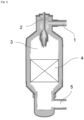
- Figure 1 is a schematic view of a reactor vessel 1 for performing an autothermal ammonia cracking reaction.
- An ammonia feed stream is fed through a reactor vessel inlet 1 to a burner part 3 of the reactor vessel 1.
- a liquid ammonia feedstock can be vaporized to obtain the ammonia feed stream in a gaseous form.
- the ammonia feed stream in gaseous form can be preheated at a feed pre-heat temperature of around 100°C.
- Air is fed as an oxidant gas through a nozzle 2 of the burner 3.
- the burner 3 is configured as a mixer for the reactants.
- the combustion reaction produces steam, ie. water steam, nitrogen and heat. In some cases, the combustion reaction also produces nitrogen oxides (NOx). Remaining amounts of the ammonia feed stream are not combusted.
- the produced heat serves as a heat input to an endothermic cracking conversion of a part of the non-combusted remaining amounts of ammonia.
- the endothermic cracking conversion is performed in a catalytic reaction zone 4 of the reactor vessel 1, downstream the burner 3.
- the catalytic reaction zone 4 comprises a catalyst, such as a nickel containing catalyst.
- the endothermic cracking conversion produces a cracked gas comprising hydrogen, nitrogen and some unconverted ammonia.
- FIG. 2 is an enlarged view of the nozzle 2.
- the nozzle comprises two supply channels arranged co-axially.
- a central channel 6 provides the air as an oxidant to the burner 3.
- An outer channel forms with the central channel 6 an annular gap 7 to introduce into the reactor vessel a moderator steam.
- the moderator steam acts as a shield 8 surrounding the oxidant gas flow, such that the oxidant gas runs away from the burner nozzle 2 and then only comes into contact with part of the ammonia feed stream for the combustion.
- the combustion flame is not in the direct vicinity of the burner nozzle. It is rather “pushed away" by the moderator steam shield 8.
- the steam produced from the partial oxidation is mixed with the cracked gas and the moderator steam in the reactor vessel.
- the mixture called effluent gas
- the mixture has a water content typically between 10 and 40%, for example around 18%, and around 0,5% of unconverted ammonia.
- the effluent gas is discharged from the reactor vessel 1 at a temperature of around 700°C.
- the overall steam contained in the effluent gas comprises the steam produced from the partial oxidation and the moderator steam, which are mixed together in the effluent gas as a water steam fraction of the effluent gas.
- the effluent gas is cooled and the water steam fraction of the effluent gas is condensed to liquid water in a downstream condenser.
- a part of the unconverted ammonia is absorbed in the liquid water, thereby making an unconverted ammonia solution separated from the effluent gas.
- the water content of the effluent gas exiting the condenser has decreased to 0,3 %, and its unconverted ammonia content has decreased to 0,09%. It is also possible to pre-cool the effluent gas prior to the condensation, for example by direct water quench : quench water comes into direct contact with the effluent gas, thereby cooling the effluent gas.
- the unconverted ammonia solution is advantageously vaporized and introduced as moderator steam into the reactor vessel 1. This way, the unconverted ammonia can be recycled to the non-catalytic partial oxidation step in a much more energy efficient manner and also serves as a protection shield 8 of the burner nozzle against overheating.
- the vaporized unconverted ammonia solution is readily at a pressure level suitable for being used as a moderator steam. No compression is needed and the pressure of the unconverted ammonia solution does not need to be let down.
- the feed pre-heat temperature can be adjusted to control the amount of steam produced from the partial oxidation.
- a higher feed pre-heat temperature means less steam produced from the non-catalytic partial oxidation : as less additional heat is required for the heat-up of the feed to the cracking conversion temperature thanks to a higher feed pre-heat temperature, less non-catalytic partial oxidation can occur, therefore less steam is produced by the partial oxidation.
- the amount of moderator steam introduced into the reactor vessel 1 may be adjusted. This may be implemented by a suitable controller (not represented), measuring the concentration of unconverted ammonia in the ammonia solution and in response regulating the amount of moderator steam introduced.
- the overall amount of water steam fraction available from the process can thereby be adjusted to meet the amount of unconverted ammonia to be removed by absorption in the condensing step, without wasting too much energy in moderator steam generation.
- the concentration of unconverted ammonia in the ammonia solution can also be controlled this way.
- the nitrogen oxide formation can be controlled by a suitable controller (not represented), measuring the concentration of nitrogen oxide in the effluent gas and in response regulating the amount of moderator steam introduced.
- a secondary ammonia feed stream is derived from the ammonia feed stream and fed to a secondary cracker.
- the secondary cracker is a gas-heated cracker (GHC), heated by the discharged effluent gas.
- the secondary cracker produces a secondary effluent gas comprising hydrogen and nitrogen.
- the secondary effluent gas is combined with the effluent gas discharged from the reactor vessel 1 and the secondary cracker is fluidically arranged in parallel of the reactor vessel.
- the ammonia feed stream undergoes a pre-cracking endothermal reaction, wherein a part of the ammonia feed stream is readily cracked to a pre-cracked ammonia feed stream comprising hydrogen, nitrogen and uncracked ammonia in a pre-cracker, before entering the reactor vessel 1.
- the pre-cracker is a gas-heated pre-cracker (GHC) fluidically connected upstream of the reactor vessel 1 and heated by the hot effluent gas discharged from the reactor vessel 1.
- GHC gas-heated pre-cracker
- the gas-heated cracker or the gas-heated pre-cracker can be a heat exchanger, having an effluent gas circulation section arranged in heat exchange relationship with an ammonia feed stream or secondary ammonia feed stream circulation section.
- the ammonia feed stream or secondary ammonia feed stream circulation section comprises a catalyst for promoting the secondary cracking or pre-cracking endothermal conversion.
- the secondary effluent gas is combined with the effluent gas upstream of the effluent gas circulation section of the gas-heated cracker (GHC). By doing so, the hot secondary effluent gas also contributes to the heating of the gas-heated cracker.
- the secondary effluent gas may also be combined with the effluent gas downstream of the effluent gas circulation section of the gas-heated cracker, as depicted in the second variant of figure 4 .
Landscapes
- Chemical & Material Sciences (AREA)
- Organic Chemistry (AREA)
- Engineering & Computer Science (AREA)
- Combustion & Propulsion (AREA)
- Inorganic Chemistry (AREA)
- Health & Medical Sciences (AREA)
- General Health & Medical Sciences (AREA)
- Industrial Gases (AREA)
- Organic Low-Molecular-Weight Compounds And Preparation Thereof (AREA)
- Treating Waste Gases (AREA)
Abstract
Process for producing hydrogen from an ammonia feed stream, comprising the following steps :
- non-catalytic partial oxidation of the ammonia feed stream with an oxidant gas, thereby producing steam from the partial oxidation, remaining amounts of ammonia not being oxidized;
- endothermic cracking conversion of part of the remaining amounts of ammonia, thereby producing a cracked gas comprising hydrogen, nitrogen and some unconverted ammonia;
- mixing of the cracked gas with the steam produced from the partial oxidation, thereby obtaining an effluent gas;
- condensing of the steam produced from the partial oxidation, thereby removing at least part of the unconverted ammonia from the effluent gas by absorption.
- non-catalytic partial oxidation of the ammonia feed stream with an oxidant gas, thereby producing steam from the partial oxidation, remaining amounts of ammonia not being oxidized;
- endothermic cracking conversion of part of the remaining amounts of ammonia, thereby producing a cracked gas comprising hydrogen, nitrogen and some unconverted ammonia;
- mixing of the cracked gas with the steam produced from the partial oxidation, thereby obtaining an effluent gas;
- condensing of the steam produced from the partial oxidation, thereby removing at least part of the unconverted ammonia from the effluent gas by absorption.
Description
- The field of the present invention is that of a process for producing hydrogen by an endothermic cracking reaction of an ammonia feed stream.
- The production of an effluent gas comprising hydrogen and nitrogen by an endothermic cracking reaction of an ammonia feed stream can be done in a catalytic reactor at elevated temperatures, generally from 500°C to 850°C. Such a unit typically comprises a metallic shell, a catalyst and a heat source to provide heat to the endothermic reaction. In autothermal ammonia cracking processes, the heat is supplied directly by partial oxidation of the reactor feed. These autothermal processes allow large scale hydrogen production from ammonia. However, the process requires a high quantity of heat and energy, and an unconverted part of the ammonia feed stream is still present in the effluent gas. This unconverted ammonia can be a poison for some applications of the produced hydrogen, such as fuel cells, and can be harmful for a downstream equipment, such as a purification/separation unit of the nitrogen and hydrogen containing effluent gas.
- It is an aim of the present invention to overcome these problems and to provide a process in which the unconverted ammonia following the ammonia cracking reaction is removed in an energy efficient manner.
- For this purpose, the invention proposes a process for producing hydrogen from an ammonia feed stream, comprising the following steps :
- non-catalytic partial oxidation of the ammonia feed stream with an oxidant gas, thereby producing steam from the partial oxidation, remaining amounts of ammonia not being oxidized;
- endothermic cracking conversion of part of the remaining amounts of ammonia, thereby producing a cracked gas comprising hydrogen, nitrogen and some unconverted ammonia;
- mixing of the cracked gas with the steam produced from the partial oxidation, thereby obtaining an effluent gas;
- condensing of the steam produced from the partial oxidation (condensing step), thereby removing at least part of the unconverted ammonia from the effluent gas by absorption.
- Absorbing the unconverted ammonia in the water produced as steam from the partial oxidation reduces the need to import additional water downstream the endothermic cracking conversion. An unconverted ammonia depleted effluent gas is obtained.
- In one embodiment, the oxidant gas is an oxygen containing gas, such as air, an oxygen containing gas having more than 21% of oxygen or pure oxygen.
- In one embodiment, the endothermic cracking conversion is performed by contact with a catalyst, such as a nickel containing catalyst.
- In one embodiment, the non-catalytic partial oxidation and the endothermic cracking conversion are performed in a single reactor vessel. The endothermic cracking conversion performed by contact with a catalyst typically occurs in a catalytic reaction zone of the reactor vessel, downstream the non-catalytic partial oxidation.
- In one embodiment, the process comprises a step of providing a liquid ammonia feedstock and a step of vaporizing the liquid ammonia feedstock, thereby obtaining a vaporized ammonia feed stream in gaseous form being the ammonia feed stream.
- In one embodiment, the process comprises a step of pre-heating the ammonia feed stream, in particular the vaporized ammonia feed, at a feed pre-heat temperature prior to the non-catalytic partial oxidation. In particular, the feed pre-heat temperature is adjusted to control an amount of steam produced from the partial oxidation.
- In one embodiment, the reactor vessel comprises a burner and the non-catalytic partial oxidation of the ammonia feed stream is performed by partially burning the ammonia feed stream, in particular in a gaseous form, with the burner. In particular, the burner comprises a burner nozzle and the oxidant gas is introduced into the reactor vessel through the burner nozzle.
- In one embodiment, the process comprises a step of introducing moderator steam into the reactor vessel to protect the burner nozzle from overheating and a step of mixing of the moderator steam with the effluent gas. In particular, the oxidant gas is centrally introduced through the burner nozzle and the moderator steam is concentrically introduced through the burner nozzle around the oxidant gas.
- In one embodiment, the moderator steam mixes in the effluent gas with the steam produced from the partial oxidation, thereby obtaining a water steam fraction of the effluent gas and the water steam fraction is condensed in the condensing step, thereby removing at least part of the unconverted ammonia from the effluent gas by absorption.
- In one embodiment, the condensing of the steam produced from the partial oxidation produces an unconverted ammonia solution comprising the absorbed unconverted ammonia or the condensing of the water steam fraction produces an unconverted ammonia solution comprising the absorbed unconverted ammonia.
- In one embodiment, the process comprises a step of adjusting the amount of moderator steam introduced into the reactor vessel to control the concentration of unconverted ammonia in the unconverted ammonia solution. In particular, the process comprises a step of measuring the concentration of unconverted ammonia in the unconverted ammonia solution, a step of comparing the measured concentration with a predetermined first threshold value of unconverted ammonia concentration and a step of increasing the amount of moderator steam introduced into the reactor vessel if the measured concentration is above said first threshold value. In particular, the process comprises a step of comparing the measured concentration with a predetermined second threshold value of unconverted ammonia concentration and a step of decreasing the amount of moderator steam introduced into the reactor vessel if the measured concentration is below said second threshold value. The first and second threshold values can be the same value.
- In one embodiment, the process comprises a step of discharging the effluent gas from the reactor vessel, prior to condensing the steam produced from the partial oxidation or prior to condensing the water steam fraction.
- In one embodiment, the non-catalytic partial oxidation of the ammonia feed stream produces nitrogen oxides mixed within the effluent gas and the process comprises a step of adjusting the amount of moderator steam introduced into the reactor vessel to control the amount of nitrogen oxides in the effluent gas. In particular, the process comprises a step of measuring the concentration of nitrogen oxides in the effluent gas, in particular in the discharged effluent gas, a step of comparing the measured concentration with a predetermined first threshold value of nitrogen oxides concentration and a step of increasing the amount of moderator steam introduced into the reactor vessel if the measured concentration is above said first threshold value. In particular, the process comprises a step of comparing the measured concentration with a predetermined second threshold value of nitrogen oxides concentration and a step of decreasing the amount of moderator steam introduced into the reactor vessel if the measured concentration is below said second threshold value. The first and second threshold values can be the same value.
- In one embodiment, the effluent gas, in particular the discharged effluent gas, has a water content comprised between 10 and 40%.
- In one embodiment, the process comprises a step of providing a secondary ammonia feed stream and performing a secondary endothermic cracking conversion of at least part of the secondary ammonia feed stream in a secondary cracker heated by the discharged effluent gas, thereby producing a secondary effluent gas comprising hydrogen and nitrogen. The secondary effluent gas can be combined with the effluent gas discharged from the reactor vessel. The secondary ammonia feed stream can be derived from the ammonia feed stream.
- In one embodiment, the process comprises a step of endothermic pre-cracking conversion of the ammonia feed stream prior to the non-catalytic partial oxidation, thereby producing a pre-cracked ammonia feed stream comprising hydrogen, nitrogen and uncracked ammonia, the non-catalytic partial oxidation step of the ammonia feed stream comprising a non-catalytic partial oxidation of the pre-cracked ammonia feed stream. In particular, the endothermic pre-cracking conversion is performed in a pre-cracker heated by the discharged effluent gas. Alternatively, the endothermic pre-cracking conversion is performed in an adiabatic pre-cracker.
- In one embodiment, the process comprises a step of pre-cooling the effluent gas prior to condensing the steam produced from the partial oxidation. In particular, the step of pre-cooling the effluent gas is performed after the step of discharging the effluent gas from the reactor vessel. The step of pre-cooling the effluent gas can be performed by direct water quench. In particular, the direct water quench can be performed in a quench vessel directly connected to the reactor vessel.
- In one embodiment, the condensing of the steam produced from the partial oxidation or the condensing of the water steam fraction is performed by cooling the effluent gas, for example by water-cooling, by air-cooling, by heat exchange between the effluent gas and the liquid ammonia feedstock, by cooling the effluent gas in a reboiler or by a combination of these options. The direct water quench may also cool the effluent gas after the pre-cooling, thereby condensing the steam produced from the partial oxidation.
- In one embodiment, the condensing of the steam produced from the partial oxidation or the condensing of the water steam fraction is performed in a wash column. In particular, the condensing of the steam produced from the partial oxidation or the condensing of the water steam fraction is performed in an overhead part of the wash column. Alternatively, the condensing of the steam produced from the partial oxidation or the condensing of the water steam fraction is performed upstream a wash column.
- In one embodiment, no additional water is introduced into the wash column. Alternatively, some additional water is introduced into the wash column. The additional water dilutes the condensed unconverted ammonia solution as a side effect. In particular, the additional water is sprayed into the wash column.
- In one embodiment, part of the unconverted ammonia is removed from the effluent gas by absorption by the condensing of the steam produced from the partial oxidation or by the condensing of the water steam fraction and a remaining portion of unconverted ammonia is removed by further absorption in the wash column. A higher purity of the effluent gas can be reached. In particular, the further absorption is performed by recirculating a part of the unconverted ammonia solution in the wash column. In particular, the remaining portion of unconverted ammonia is removed by further absorption by contact with means of the wash column to increase a mass and heat transfer, such as a random packing, a structured packing, at least one bottom sieve or tray.
- In one embodiment, the unconverted ammonia removed from the effluent gas by absorption is recovered in a gaseous form. In particular, the unconverted ammonia removed by absorption is recovered in a gaseous form by distillation of the unconverted ammonia solution, for example after discharging the unconverted ammonia solution from the wash column. The unconverted ammonia recovered in gaseous form can be recycled to the non-catalytic partial oxidation step. In particular, the unconverted ammonia recovered in gaseous form is recycled as part of the ammonia feed stream, for example after compression.
- In one embodiment, at least part of the unconverted ammonia solution is vaporized and introduced as the moderator steam into the reactor vessel. In particular, the at least part of the unconverted ammonia solution is pumped before it is vaporized. The unconverted ammonia solution may be vaporized by heat exchange with an external heat source, such as a flue gas or a gas turbine exhaust gas.
- In one embodiment, a first part of the unconverted ammonia solution is vaporized and introduced as moderator steam into the reactor vessel and the unconverted ammonia of a second part of the unconverted ammonia solution is recovered in a gaseous form, in particular by distillation of said second part. The unconverted ammonia of the second part of the unconverted ammonia solution can be recycled to the non-catalytic partial oxidation step. In particular, the unconverted ammonia recovered in gaseous form is recycled as part of the ammonia feed stream, for example after compression.
- In one embodiment, the unconverted ammonia depleted effluent gas is purified, for example by pressure swing adsorption, thereby producing a hydrogen product stream.
- [
Fig 1 ] is a schematic view of a reactor vessel suitable for implementing the process according to the invention, - [
Fig. 2 ] is an enlarged view of the burner nozzle of the autothermal cracker offigure 1 , - [
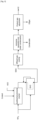
Fig. 3 ] is a schematic view of the process according to a first embodiment, in a first variant, - [
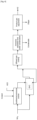
Fig. 4 ] is a schematic view of the process according to the first embodiment, in a second variant, - [
Fig. 5 ] is a schematic view of the process according to a second embodiment. - The following is a description of embodiments of the invention. The scope of the invention is not limited by these particular embodiments.
-
Figure 1 is a schematic view of areactor vessel 1 for performing an autothermal ammonia cracking reaction. An ammonia feed stream is fed through areactor vessel inlet 1 to aburner part 3 of thereactor vessel 1. A liquid ammonia feedstock can be vaporized to obtain the ammonia feed stream in a gaseous form. The ammonia feed stream in gaseous form can be preheated at a feed pre-heat temperature of around 100°C. - Air is fed as an oxidant gas through a
nozzle 2 of theburner 3. Part of the ammonia feed stream, along with the oxidant gas, serve as reactants for a non-catalytic oxidation : the ammonia feed stream is non-catalytically partially oxidized. Theburner 3 is configured as a mixer for the reactants. The combustion reaction produces steam, ie. water steam, nitrogen and heat. In some cases, the combustion reaction also produces nitrogen oxides (NOx). Remaining amounts of the ammonia feed stream are not combusted. The produced heat serves as a heat input to an endothermic cracking conversion of a part of the non-combusted remaining amounts of ammonia. The endothermic cracking conversion is performed in acatalytic reaction zone 4 of thereactor vessel 1, downstream theburner 3. Thecatalytic reaction zone 4 comprises a catalyst, such as a nickel containing catalyst. The endothermic cracking conversion produces a cracked gas comprising hydrogen, nitrogen and some unconverted ammonia. -
Figure 2 is an enlarged view of thenozzle 2. The nozzle comprises two supply channels arranged co-axially. Acentral channel 6 provides the air as an oxidant to theburner 3. An outer channel forms with thecentral channel 6 anannular gap 7 to introduce into the reactor vessel a moderator steam. The moderator steam acts as ashield 8 surrounding the oxidant gas flow, such that the oxidant gas runs away from theburner nozzle 2 and then only comes into contact with part of the ammonia feed stream for the combustion. The combustion flame is not in the direct vicinity of the burner nozzle. It is rather "pushed away" by themoderator steam shield 8. - The steam produced from the partial oxidation is mixed with the cracked gas and the moderator steam in the reactor vessel. The mixture, called effluent gas, has a water content typically between 10 and 40%, for example around 18%, and around 0,5% of unconverted ammonia. The effluent gas is discharged from the
reactor vessel 1 at a temperature of around 700°C. The overall steam contained in the effluent gas comprises the steam produced from the partial oxidation and the moderator steam, which are mixed together in the effluent gas as a water steam fraction of the effluent gas. - The effluent gas is cooled and the water steam fraction of the effluent gas is condensed to liquid water in a downstream condenser. A part of the unconverted ammonia is absorbed in the liquid water, thereby making an unconverted ammonia solution separated from the effluent gas. The water content of the effluent gas exiting the condenser has decreased to 0,3 %, and its unconverted ammonia content has decreased to 0,09%. It is also possible to pre-cool the effluent gas prior to the condensation, for example by direct water quench : quench water comes into direct contact with the effluent gas, thereby cooling the effluent gas.
- The unconverted ammonia solution is advantageously vaporized and introduced as moderator steam into the
reactor vessel 1. This way, the unconverted ammonia can be recycled to the non-catalytic partial oxidation step in a much more energy efficient manner and also serves as aprotection shield 8 of the burner nozzle against overheating. The vaporized unconverted ammonia solution is readily at a pressure level suitable for being used as a moderator steam. No compression is needed and the pressure of the unconverted ammonia solution does not need to be let down. - There are several ways of adjusting the amount of steam produced from the partial oxidation or of water steam fraction of the effluent gas, and thereby adjust the amount of steam available to condense and remove the unconverted ammonia, depending on its amounts.
- For example, the feed pre-heat temperature can be adjusted to control the amount of steam produced from the partial oxidation. A higher feed pre-heat temperature means less steam produced from the non-catalytic partial oxidation : as less additional heat is required for the heat-up of the feed to the cracking conversion temperature thanks to a higher feed pre-heat temperature, less non-catalytic partial oxidation can occur, therefore less steam is produced by the partial oxidation.
- Alternatively, the amount of moderator steam introduced into the
reactor vessel 1 may be adjusted. This may be implemented by a suitable controller (not represented), measuring the concentration of unconverted ammonia in the ammonia solution and in response regulating the amount of moderator steam introduced. The overall amount of water steam fraction available from the process can thereby be adjusted to meet the amount of unconverted ammonia to be removed by absorption in the condensing step, without wasting too much energy in moderator steam generation. The concentration of unconverted ammonia in the ammonia solution can also be controlled this way. - As the moderator steam also has an effect on reducing the temperature of the flame, the nitrogen oxide formation can be controlled by a suitable controller (not represented), measuring the concentration of nitrogen oxide in the effluent gas and in response regulating the amount of moderator steam introduced.
- In the embodiment of
figures 3 and4 , a secondary ammonia feed stream is derived from the ammonia feed stream and fed to a secondary cracker. The secondary cracker is a gas-heated cracker (GHC), heated by the discharged effluent gas. The secondary cracker produces a secondary effluent gas comprising hydrogen and nitrogen. In the embodiment offigures 3 and4 , the secondary effluent gas is combined with the effluent gas discharged from thereactor vessel 1 and the secondary cracker is fluidically arranged in parallel of the reactor vessel. - In the embodiment of
figure 5 , the ammonia feed stream undergoes a pre-cracking endothermal reaction, wherein a part of the ammonia feed stream is readily cracked to a pre-cracked ammonia feed stream comprising hydrogen, nitrogen and uncracked ammonia in a pre-cracker, before entering thereactor vessel 1. The pre-cracker is a gas-heated pre-cracker (GHC) fluidically connected upstream of thereactor vessel 1 and heated by the hot effluent gas discharged from thereactor vessel 1. The hydrogen from the pre-cracked ammonia feed stream stabilizes the non-catalytic partial oxidation and enhances the combustion properties in thereactor vessel 1. - The gas-heated cracker or the gas-heated pre-cracker can be a heat exchanger, having an effluent gas circulation section arranged in heat exchange relationship with an ammonia feed stream or secondary ammonia feed stream circulation section. The ammonia feed stream or secondary ammonia feed stream circulation section comprises a catalyst for promoting the secondary cracking or pre-cracking endothermal conversion. In the first variant of
figure 3 , the secondary effluent gas is combined with the effluent gas upstream of the effluent gas circulation section of the gas-heated cracker (GHC). By doing so, the hot secondary effluent gas also contributes to the heating of the gas-heated cracker. The secondary effluent gas may also be combined with the effluent gas downstream of the effluent gas circulation section of the gas-heated cracker, as depicted in the second variant offigure 4 .
Claims (15)
- Process for producing hydrogen from an ammonia feed stream, comprising the following steps :- non-catalytic partial oxidation of the ammonia feed stream with an oxidant gas, thereby producing steam from the partial oxidation, remaining amounts of ammonia not being oxidized;- endothermic cracking conversion of part of the remaining amounts of ammonia, thereby producing a cracked gas comprising hydrogen, nitrogen and some unconverted ammonia;- mixing of the cracked gas with the steam produced from the partial oxidation, thereby obtaining an effluent gas;- condensing of the steam produced from the partial oxidation, thereby removing at least part of the unconverted ammonia from the effluent gas by absorption.
- Process according to the preceding claim, wherein the non-catalytic partial oxidation and the endothermic cracking conversion are performed in a single reactor vessel (1) comprising a burner (3), the non-catalytic partial oxidation of the ammonia feed stream being performed by partially burning the ammonia feed stream with the burner (3), the burner comprising a burner nozzle (2), the oxidant gas being introduced into the reactor vessel through the burner nozzle (2).
- Process according to the preceding claim, comprising the following steps :- introducing moderator steam into the reactor vessel (1) to protect the burner nozzle (2) from overheating,- mixing of the moderator steam with the effluent gas,- in the effluent gas, mixing of the moderator steam with the steam produced from the partial oxidation, thereby obtaining a water steam fraction of the effluent gas,- condensing of the water steam fraction, thereby removing at least part of the unconverted ammonia from the effluent gas by absorption.
- Process according to the preceding claim, wherein the condensing of the water steam fraction produces an unconverted ammonia solution comprising the absorbed unconverted ammonia.
- Process according to the preceding claim, wherein at least part of the unconverted ammonia solution is vaporized and introduced as the moderator steam into the reactor vessel (1).
- Process according to the preceding claim, wherein a first part of the unconverted ammonia solution is vaporized and introduced as moderator steam into the reactor vessel (1) and the unconverted ammonia of a second part of the unconverted ammonia solution is recovered in a gaseous form, in particular by distillation of said second part.
- Process according to the preceding claim, wherein the unconverted ammonia of the second part of the unconverted ammonia solution is recycled to the non-catalytic partial oxidation step.
- Process according to one of claim 4 to 7, the process comprising a step of adjusting the amount of moderator steam introduced into the reactor vessel (1) to control the concentration of unconverted ammonia in the unconverted ammonia solution.
- Process according to one of claims 3 to 8, wherein the non-catalytic partial oxidation of the ammonia feed stream produces nitrogen oxides mixed within the effluent gas and the process comprises a step of adjusting the amount of moderator steam introduced into the reactor vessel (1) to control the amount of nitrogen oxides in the effluent gas.
- Process according to one of the preceding claims, comprising a step of endothermic pre-cracking conversion of the ammonia feed stream prior to the non-catalytic partial oxidation, thereby producing a pre-cracked ammonia feed stream comprising hydrogen, nitrogen and uncracked ammonia, the non-catalytic partial oxidation step of the ammonia feed stream comprising a non-catalytic partial oxidation of the pre-cracked ammonia feed stream.
- Process according to one of the preceding claims, comprising a step of pre-heating the ammonia feed stream at a feed pre-heat temperature prior to the non-catalytic partial oxidation, and a step of adjusting the feed pre-heat temperature to control an amount of steam produced from the partial oxidation.
- Process according to one of the preceding claims, wherein the condensing of the steam produced from the partial oxidation is performed in a wash column.
- Process according to the preceding claim, wherein part of the unconverted ammonia is removed from the effluent gas by absorption by the condensing of the steam produced from the partial oxidation and a remaining portion of unconverted ammonia is removed by further absorption in the wash column.
- Process according to one of claims 12 or 13, wherein no additional water is introduced into the wash column.
- Process according to one of the preceding claims, the process comprising a step of pre-cooling the effluent gas by direct water quench prior to condensing the steam produced from the partial oxidation.
Priority Applications (5)
| Application Number | Priority Date | Filing Date | Title |
|---|---|---|---|
| EP23186287.1A EP4495054A1 (en) | 2023-07-19 | 2023-07-19 | Autothermal ammonia cracking process |
| JP2025562017A JP2026524164A (en) | 2023-07-19 | 2024-07-11 | Autothermal ammonia decomposition process |
| PCT/EP2024/069730 WO2025016882A1 (en) | 2023-07-19 | 2024-07-11 | Autothermal ammonia cracking process |
| EP24743759.3A EP4747185A1 (en) | 2023-07-19 | 2024-07-11 | Autothermal ammonia cracking process |
| KR1020267001317A KR20260041786A (en) | 2023-07-19 | 2024-07-11 | Self-heating ammonia cracking method |
Applications Claiming Priority (1)
| Application Number | Priority Date | Filing Date | Title |
|---|---|---|---|
| EP23186287.1A EP4495054A1 (en) | 2023-07-19 | 2023-07-19 | Autothermal ammonia cracking process |
Publications (1)
| Publication Number | Publication Date |
|---|---|
| EP4495054A1 true EP4495054A1 (en) | 2025-01-22 |
Family
ID=87419074
Family Applications (2)
| Application Number | Title | Priority Date | Filing Date |
|---|---|---|---|
| EP23186287.1A Withdrawn EP4495054A1 (en) | 2023-07-19 | 2023-07-19 | Autothermal ammonia cracking process |
| EP24743759.3A Pending EP4747185A1 (en) | 2023-07-19 | 2024-07-11 | Autothermal ammonia cracking process |
Family Applications After (1)
| Application Number | Title | Priority Date | Filing Date |
|---|---|---|---|
| EP24743759.3A Pending EP4747185A1 (en) | 2023-07-19 | 2024-07-11 | Autothermal ammonia cracking process |
Country Status (4)
| Country | Link |
|---|---|
| EP (2) | EP4495054A1 (en) |
| JP (1) | JP2026524164A (en) |
| KR (1) | KR20260041786A (en) |
| WO (1) | WO2025016882A1 (en) |
Citations (6)
| Publication number | Priority date | Publication date | Assignee | Title |
|---|---|---|---|---|
| DE2617089C2 (en) * | 1976-04-17 | 1984-03-29 | Caloric Gesellschaft für Apparatebau mbH, 8032 Gräfelfing | Process for the catalytic cracking of ammonia |
| EP1106239B1 (en) * | 1999-12-10 | 2004-06-09 | The BOC Group plc | Method for purifying waste gas containing ammonia |
| WO2022189560A1 (en) * | 2021-03-11 | 2022-09-15 | Topsoe A/S | Method and system for producing hydrogen from ammonia cracking |
| WO2022265649A1 (en) * | 2021-06-18 | 2022-12-22 | Air Products And Chemicals, Inc. | Ammonia cracking for green hydrogen |
| WO2023274572A1 (en) * | 2021-06-30 | 2023-01-05 | Linde Gmbh | Method and device for producing hydrogen from ammonia |
| EP3672906B1 (en) * | 2017-08-24 | 2023-02-15 | Topsoe A/S | Autothermal ammonia cracking process |
-
2023
- 2023-07-19 EP EP23186287.1A patent/EP4495054A1/en not_active Withdrawn
-
2024
- 2024-07-11 EP EP24743759.3A patent/EP4747185A1/en active Pending
- 2024-07-11 WO PCT/EP2024/069730 patent/WO2025016882A1/en not_active Ceased
- 2024-07-11 KR KR1020267001317A patent/KR20260041786A/en active Pending
- 2024-07-11 JP JP2025562017A patent/JP2026524164A/en active Pending
Patent Citations (6)
| Publication number | Priority date | Publication date | Assignee | Title |
|---|---|---|---|---|
| DE2617089C2 (en) * | 1976-04-17 | 1984-03-29 | Caloric Gesellschaft für Apparatebau mbH, 8032 Gräfelfing | Process for the catalytic cracking of ammonia |
| EP1106239B1 (en) * | 1999-12-10 | 2004-06-09 | The BOC Group plc | Method for purifying waste gas containing ammonia |
| EP3672906B1 (en) * | 2017-08-24 | 2023-02-15 | Topsoe A/S | Autothermal ammonia cracking process |
| WO2022189560A1 (en) * | 2021-03-11 | 2022-09-15 | Topsoe A/S | Method and system for producing hydrogen from ammonia cracking |
| WO2022265649A1 (en) * | 2021-06-18 | 2022-12-22 | Air Products And Chemicals, Inc. | Ammonia cracking for green hydrogen |
| WO2023274572A1 (en) * | 2021-06-30 | 2023-01-05 | Linde Gmbh | Method and device for producing hydrogen from ammonia |
Also Published As
| Publication number | Publication date |
|---|---|
| EP4747185A1 (en) | 2026-05-27 |
| WO2025016882A1 (en) | 2025-01-23 |
| KR20260041786A (en) | 2026-03-27 |
| JP2026524164A (en) | 2026-07-21 |
Similar Documents
| Publication | Publication Date | Title |
|---|---|---|
| US7166139B2 (en) | Compact steam reformer | |
| EP3519731B1 (en) | Method for reducing nox emission | |
| KR970000480B1 (en) | Method for steam reforming method | |
| KR890001963B1 (en) | Apparatus and method for reforming hydrocarbons | |
| EP2421941B1 (en) | Method for sequestering carbon dioxide from a spent gas | |
| JP2024541429A (en) | Method for producing hydrogen | |
| SK280897B6 (en) | Process for the removal of sulphur dioxide from waste gases | |
| EP1742869A2 (en) | Process and plant for producing sulfuric acid from gases rich in sulfur dioxide | |
| JP2519691B2 (en) | Method and apparatus for producing sulfuric acid | |
| KR20260003766A (en) | Ammonia decomposition process using a recovery heat exchange reactor | |
| JP2024544188A (en) | How to crack ammonia | |
| US20040226217A1 (en) | Fuel processor for producing hydrogen from hydrocarbon fuels | |
| RU2561077C2 (en) | Method of obtaining hydrogen from hydrocarbon raw material | |
| EP4470968A1 (en) | Improved hydrogen production process | |
| WO2025016882A1 (en) | Autothermal ammonia cracking process | |
| EP2297027B1 (en) | Reformer reactor and method for converting hydrocarbon fuels into hydrogen rich gas | |
| CN101346326A (en) | Method and apparatus for producing methanol | |
| JP3775750B2 (en) | N ▲ Bottom 2 ▼ Manufacture of NO from O | |
| US10597302B2 (en) | Reactor for preparing hydrogen cyanide by the andrussow process, equipment comprising said reactor and process using such an equipment | |
| CN120476092A (en) | Ammonia cracking for hydrogen production | |
| KR20250129707A (en) | Method for producing a synthesis gas product containing hydrogen | |
| KR20160045738A (en) | Multitube reformer for a hydrocarbon- and alcohol-reforming system and hydrocarbon- and alcohol-reforming system comprising same, and associated method | |
| JP2009173479A (en) | Heat exchanger and combined fuel reactor | |
| JPS61183101A (en) | Treatment of byproduct produced in methanol decomposition or reforming | |
| WO2025061566A1 (en) | Conversion of a gas feed into a hydrogen-containing effluent gas, reducing a content of nitrogen oxides in the flue gas |
Legal Events
| Date | Code | Title | Description |
|---|---|---|---|
| PUAI | Public reference made under article 153(3) epc to a published international application that has entered the european phase |
Free format text: ORIGINAL CODE: 0009012 |
|
| STAA | Information on the status of an ep patent application or granted ep patent |
Free format text: STATUS: THE APPLICATION HAS BEEN PUBLISHED |
|
| AK | Designated contracting states |
Kind code of ref document: A1 Designated state(s): AL AT BE BG CH CY CZ DE DK EE ES FI FR GB GR HR HU IE IS IT LI LT LU LV MC ME MK MT NL NO PL PT RO RS SE SI SK SM TR |
|
| STAA | Information on the status of an ep patent application or granted ep patent |
Free format text: STATUS: THE APPLICATION IS DEEMED TO BE WITHDRAWN |
|
| 18D | Application deemed to be withdrawn |
Effective date: 20250723 |