EP4494708A2 - Modified tetracycline for treatment of alcohol use disorder, pain and other disorders involving inflammatory processes - Google Patents
Modified tetracycline for treatment of alcohol use disorder, pain and other disorders involving inflammatory processes Download PDFInfo
- Publication number
- EP4494708A2 EP4494708A2 EP24215329.4A EP24215329A EP4494708A2 EP 4494708 A2 EP4494708 A2 EP 4494708A2 EP 24215329 A EP24215329 A EP 24215329A EP 4494708 A2 EP4494708 A2 EP 4494708A2
- Authority
- EP
- European Patent Office
- Prior art keywords
- acetyl
- modified tetracycline
- pain
- aud
- disorder
- Prior art date
- Legal status (The legal status is an assumption and is not a legal conclusion. Google has not performed a legal analysis and makes no representation as to the accuracy of the status listed.)
- Pending
Links
Images












Classifications
-
- A—HUMAN NECESSITIES
- A61—MEDICAL OR VETERINARY SCIENCE; HYGIENE
- A61P—SPECIFIC THERAPEUTIC ACTIVITY OF CHEMICAL COMPOUNDS OR MEDICINAL PREPARATIONS
- A61P25/00—Drugs for disorders of the nervous system
- A61P25/30—Drugs for disorders of the nervous system for treating abuse or dependence
-
- A—HUMAN NECESSITIES
- A61—MEDICAL OR VETERINARY SCIENCE; HYGIENE
- A61B—DIAGNOSIS; SURGERY; IDENTIFICATION
- A61B5/00—Measuring for diagnostic purposes; Identification of persons
- A61B5/48—Other medical applications
- A61B5/4848—Monitoring or testing the effects of treatment, e.g. of medication
-
- A—HUMAN NECESSITIES
- A61—MEDICAL OR VETERINARY SCIENCE; HYGIENE
- A61K—PREPARATIONS FOR MEDICAL, DENTAL OR TOILETRY PURPOSES
- A61K31/00—Medicinal preparations containing organic active ingredients
- A61K31/65—Tetracyclines
-
- A—HUMAN NECESSITIES
- A61—MEDICAL OR VETERINARY SCIENCE; HYGIENE
- A61P—SPECIFIC THERAPEUTIC ACTIVITY OF CHEMICAL COMPOUNDS OR MEDICINAL PREPARATIONS
- A61P25/00—Drugs for disorders of the nervous system
- A61P25/30—Drugs for disorders of the nervous system for treating abuse or dependence
- A61P25/32—Alcohol-abuse
-
- A—HUMAN NECESSITIES
- A61—MEDICAL OR VETERINARY SCIENCE; HYGIENE
- A61P—SPECIFIC THERAPEUTIC ACTIVITY OF CHEMICAL COMPOUNDS OR MEDICINAL PREPARATIONS
- A61P25/00—Drugs for disorders of the nervous system
- A61P25/30—Drugs for disorders of the nervous system for treating abuse or dependence
- A61P25/34—Tobacco-abuse
-
- A—HUMAN NECESSITIES
- A61—MEDICAL OR VETERINARY SCIENCE; HYGIENE
- A61P—SPECIFIC THERAPEUTIC ACTIVITY OF CHEMICAL COMPOUNDS OR MEDICINAL PREPARATIONS
- A61P25/00—Drugs for disorders of the nervous system
- A61P25/30—Drugs for disorders of the nervous system for treating abuse or dependence
- A61P25/36—Opioid-abuse
-
- A—HUMAN NECESSITIES
- A61—MEDICAL OR VETERINARY SCIENCE; HYGIENE
- A61P—SPECIFIC THERAPEUTIC ACTIVITY OF CHEMICAL COMPOUNDS OR MEDICINAL PREPARATIONS
- A61P29/00—Non-central analgesic, antipyretic or antiinflammatory agents, e.g. antirheumatic agents; Non-steroidal antiinflammatory drugs [NSAID]
-
- A—HUMAN NECESSITIES
- A61—MEDICAL OR VETERINARY SCIENCE; HYGIENE
- A61P—SPECIFIC THERAPEUTIC ACTIVITY OF CHEMICAL COMPOUNDS OR MEDICINAL PREPARATIONS
- A61P31/00—Antiinfectives, i.e. antibiotics, antiseptics, chemotherapeutics
-
- C—CHEMISTRY; METALLURGY
- C07—ORGANIC CHEMISTRY
- C07C—ACYCLIC OR CARBOCYCLIC COMPOUNDS
- C07C237/00—Carboxylic acid amides, the carbon skeleton of the acid part being further substituted by amino groups
- C07C237/24—Carboxylic acid amides, the carbon skeleton of the acid part being further substituted by amino groups having the carbon atom of at least one of the carboxamide groups bound to a carbon atom of a ring other than a six-membered aromatic ring of the carbon skeleton
- C07C237/26—Carboxylic acid amides, the carbon skeleton of the acid part being further substituted by amino groups having the carbon atom of at least one of the carboxamide groups bound to a carbon atom of a ring other than a six-membered aromatic ring of the carbon skeleton of a ring being part of a condensed ring system formed by at least four rings, e.g. tetracycline
-
- C—CHEMISTRY; METALLURGY
- C07—ORGANIC CHEMISTRY
- C07D—HETEROCYCLIC COMPOUNDS
- C07D317/00—Heterocyclic compounds containing five-membered rings having two oxygen atoms as the only ring hetero atoms
- C07D317/08—Heterocyclic compounds containing five-membered rings having two oxygen atoms as the only ring hetero atoms having the hetero atoms in positions 1 and 3
- C07D317/72—Heterocyclic compounds containing five-membered rings having two oxygen atoms as the only ring hetero atoms having the hetero atoms in positions 1 and 3 spiro-condensed with carbocyclic rings
-
- C—CHEMISTRY; METALLURGY
- C07—ORGANIC CHEMISTRY
- C07C—ACYCLIC OR CARBOCYCLIC COMPOUNDS
- C07C2603/00—Systems containing at least three condensed rings
- C07C2603/02—Ortho- or ortho- and peri-condensed systems
- C07C2603/40—Ortho- or ortho- and peri-condensed systems containing four condensed rings
- C07C2603/42—Ortho- or ortho- and peri-condensed systems containing four condensed rings containing only six-membered rings
- C07C2603/44—Naphthacenes; Hydrogenated naphthacenes
- C07C2603/46—1,4,4a,5,5a,6,11,12a- Octahydronaphthacenes, e.g. tetracyclines
Definitions
- the present invention relates in general to the field of novel tetracycline derivatives with reduced antimicrobial activity for use in treating disorders of the central nervous system.
- Alcohol use disorder or alcoholism is a condition that affects roughly 5% of individuals worldwide.
- AUD is characterized by an increased tolerance to alcohol and a physical dependence on alcohol making it hard for an individual to control intake.
- Some of the long-term effects of ingesting ethanol include cognitive and psychological changes, liver cirrhosis, gastritis, cardiomyopathy, anemia, and certain types of cancers.
- Alcoholism is caused by a complex mixture of genetic and environmental factors. There have been several genes linked to the way people metabolize alcohol and the development of AUD. The availability of alcohol also contributed to the number of people with AUD. Alcohol is the most available and widely abused recreational drug with beer being the third-most popular drink behind water and tea. There are currently very few methods for treating alcoholism outside of rehabilitation therapy which can be costly and very public. There is an unsatisfied need for a pharmaceutical component that is able to help combat the debilitating effects of AUD.
- reaction product is then subjected to chromatographic filtration using a carrier material and an eluant, the eluant is distilled off.
- the product is subsequently cleaned by recrystallization.
- this application is also silent on the treatment of dependency disorders and only teaches the treatment of neurodegeneration.
- opioids Mark R. Hutchinson, Alexis L. Northcutt, Lindsey W. Chao, Jeffrey J. Kearney, Yingning Zhang, Debra L. Berkelhammer, Lisa C. Loram, Robert R. Rozeske, Sondra T. Bland, Steven F. Maier, Todd T. Gleeson, and Linda R. Watkins, Minocycline suppresses morphine-induced respiratory depression, suppresses morphine-induced reward, and enhances systemic morphine-induced analgesia, Brain, Behavior and Immunity 22(8): 1248-1256, 2009 ).
- the present invention includes a method of treating Alcohol Use Disorder (AUD), Substance Use Disorder (SUD), tobacco use, pain, or proinflammatory disorders comprising: providing a subject with an effective amount of a modified tetracycline or derivative thereof to ameliorate or eliminate the AUD, SUD, tobacco use, pain, or proinflammatory disorder, and wherein the modified tetracycline or derivative thereof has reduced binding to a microbial ribosome and has the formula:
- R 1 is methyl, ethyl, propyl, butyl, acetyl, alkyl
- R 2 is OH or acetyl
- R 3 is 0, OH, acetyl
- R 4 is H or acetyl
- R5 is H or acetyl, or has the formula: or
- the modified tetracycline has moderate to no antibacterial activity. In another aspect, the modified tetracycline has moderate to no antifungal activity. In another aspect, the modified tetracycline is a doxycycline, minocycline, or tigecycline. In another aspect, the ribosome is a bacterial ribosome. In another aspect, the modification at least one of: produces steric hindrance, blocks hydrogen bonding, or change coordination with divalent cations. In another aspect, the modified tetracycline further comprises a pharmaceutically acceptable buffer, excipient, filler, or carrier. In another aspect, the modified tetracycline is adapted for administration orally, enterally, parenterally, intramuscularly, intravenously, or intraperitoneally.
- the present invention includes a method of evaluating a candidate drug believed to be useful in treating Alcohol Use Disorder (AUD), Substance Use Disorder (SUD, including for opioids, tobacco use, pain, or proinflammatory disorders, the method comprising: a) measuring the Alcohol Use Disorder (AUD), Substance Use Disorder (SUD, tobacco use, pain, or proinflammatory disorders from a set of patients; b) administering a candidate drug to a first subset of the patients, and a placebo to a second subset of the patients, wherein the candidate drug is a C6' modified tetracycline that has the formula:
- R 1 is methyl, ethyl, propyl, butyl, acetyl, alkyl
- R 2 is OH or acetyl
- R 3 is 0, OH, acetyl
- R 4 is H or acetyl
- R5 is H or acetyl
- the modified tetracycline has the formula: or
- the molecule has moderate to no antibacterial activity. In another aspect, the molecule has moderate to no antifungal activity. In another aspect, the molecule inhibits Alcohol Use Disorder (AUD), Substance Use Disorder (SUD, pain and disorders involving potential inflammatory processes.
- the modified molecule is a doxycycline, minocycline, or tigecycline.
- the modified tetracycline further comprises a pharmaceutically acceptable buffer, excipient, filler, or carrier.
- the ribosome is a bacterial ribosome. In another aspect, the modification at least one of: produces steric hindrance, blocks hydrogen bonding, or change coordination with divalent cations.
- the present invention includes a method of treating Alcohol Use Disorder (AUD), Substance Use Disorder (SUD, tobacco use, pain, or proinflammatory disorders comprising: identifying a subject in need of treatment for at least one of AUD, Substance Use Disorder (SUD, tobacco use, pain, or a proinflammatory disorder; and providing the subject with an effective amount of a modified tetracycline or derivative thereof to ameliorate or eliminate the AUD, Substance Use Disorder (SUD, tobacco use, pain, or proinflammatory disorder, and wherein the modified tetracycline or derivative thereof has reduced binding to a microbial ribosome and has the formula:
- R 1 is methyl, ethyl, propyl, butyl, acetyl, alkyl
- R 2 is OH or acetyl
- R 3 is 0, OH, acetyl
- R 4 is H or acetyl
- R5 is H or acetyl, in a pharmaceutically acceptable carrier.
- the modified tetracycline has the formula: or
- the modified tetracycline has moderate to no antibacterial activity. In another aspect, the modified tetracycline has moderate to no antifungal activity. In another aspect, the modified tetracycline is a doxycycline, minocycline, or tigecycline. In another aspect, the ribosome is a bacterial ribosome. In another aspect, the modification at least one of: produces steric hindrance, blocks hydrogen bonding, or change coordination with divalent cations. In another aspect, the modified tetracycline further comprises a pharmaceutically acceptable buffer, excipient, filler, or carrier. In another aspect, the modified tetracycline is adapted for administration orally, enterally, intramuscularly, parenterally, intravenously, or intraperitoneally.
- the present invention overcomes the problems associates with tetracyclines when used to treat, e.g., Alcohol Use Disorder (AUD).
- AUD Alcohol Use Disorder
- the present invention allows for an increase in drug utilization and/or dosage as a pharmacotherapy for alcohol use disorder related problems, pain, and any other disorders with inflammatory components, as well as tobacco use.
- CCM chemically modified minocycline
- tetracycline analogs including doxycycline, minocycline, and tigecycline to be efficacious against various aspects of Alcohol Use Disorder (AUD), including cessation of drinking, withdrawal symptoms and sensitization and increased duration of pain
- AUD Alcohol Use Disorder
- FIG. 1 is a graph that shows that "sterilization" of the GI microbiome had no apparent effect on DID ethanol consumption or efficacy of tigecycline to reduce drinking.
- tigecycline a broad spectrum antibiotic
- a ten-day "sterilization" treatment with ampicillin, neomycin, metronidozale and vancomycin was used. Bedding was changed daily to avoid repopulation.
- DID was started on day 11 after one day of no metronidazole.
- FIG. 2 is a graph that shows that intracerebroventricular (ICV) Tigecycline reduced DID consumption.
- ICV intracerebroventricular
- the present inventors recognized for the first time that the mechanism of action of the CMM for use in Alcohol Use Disorder, pain and other disorders involving potential inflammatory processes does not involve tetracycline's general antibiotic properties. Thus, the present inventors tested several tetracyclines to determine structural or functional components that contributed to the AUD treatment efficacy. As shown in Table 1, it appears that the C6' hydrogen is, at least in part necessary to convey the positive action on AUD-related traits, but not those known to bind to the A-site of the bacterial ribosome (Schedlbauer et al. 2015).
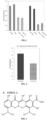
- FIG. 3 the inventors modified minocycline by acetylation ( FIG. 3 ) and determined its loss of antibiotic properties, see FIGS. 4A and 4B .
- efficacy of 10 mg/kg per os (p.o.) to reduce high drinking was confirmed in swine ( FIG. 7 ).
- FIGS. 8A-8C includes a list of molecules for use with the present invention.
- FIGS. 4A and 4B show that Minocycline acetate derivatives eliminated E. coli bactericidal action.
- FIGS. 5A to 5D are graphs that show that CMM1 - Acetylated minocycline derivative reduced ethanol consumption.
- DID Drinking In the Dark
- acetylated minocycline derivative Y, or CMM1
- the results show that acetylated minocycline, CMM1, reduced alcohol consumption in a dose-dependent response.
- FIGS. 6A and 6B are graphs that show that acetylated minocycline, CMM1, reduced alcohol withdrawal symptoms.
- Female and male DBA/2J mice were tested with CMM1, 100 mg/kg p.o., at 2 hrs following 4 g/kg 20% ethanol in saline. Shown are the Handling Induced Convulsion scores, background subtracted and summed over 24 hours.
- FIG. 7 is a graph that shows that CMM1 reduced alcohol consumption and preference in swine.
- Large White x Landrace hybrid swine were given a water vs 5% ethanol in a two-bucket choice.
- Mean ⁇ SEM, n 3/group.
- Acetylated tetracycline with a hydrogen R-group at R6' has a loss of antibiotic properties with retention of the ability to reduce alcohol consumption in mice.
- the modification effects also extend to doxycycline and tigecycline.
- the present invention includes any modification that removes the ability of the tetracycline class molecules to bind to the bacterial ribosome, with retention of anti-AUD or SUD activity or an innate immune modulatory function.
- the traits include, but are not limited to: reduction of alcohol consumption (both binge and dependence related drinking), suppression of alcohol withdrawal symptoms, relief of alcohol-mediated pain and emotional distress.
- Table 2 includes a list that compares the minocycline derivatives of the present invention to minocycline and its HCl salt.
- S.N o ChemDraw's Structure ChemDraw's Names Commercial Names (or) Given Names 1 4,7-Bis-dimethylamino-3,10,12,12a-tetrahydroxy-1,11-dioxo-1,4,4a,5,5a,6,11,12 a-octahydro-naphthacene-2-carboxylic acid amide
- Minocycline (MC) 2 4,7-Bis-dimethylamino-3,10,12,12a-tetrahydroxy-1,11-dioxo-1,4,4a,5,5a,6,11,12 a-octahydro-naphthacene-2-carboxylic acid amide.Hydrochlori de Minocycline hydrochloride (MC.HCl) 3 4,7-Bis-d
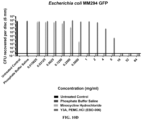
- FIGS. 8A to 8C show the activity of Methyl Ether Minocycline ( 4,7-Bis-dimethylamino-3,12,12a-trihydroxy-10-methoxy-1,11-dioxo-1,4,4a,5,5a,6,11,12a-octahydro-naphthacene-2-carboxylic acid amide, Hydrochloride), as shown with FIG. 8A E coli MM294 GFP zone of inhibition, FIG. 8B E coli MM294 GFP CFU/disc, and FIG. 8C reduction of binge ethanol consumption.
- Methyl Ether Minocycline 4,7-Bis-dimethylamino-3,12,12a-trihydroxy-10-methoxy-1,11-dioxo-1,4,4a,5,5a,6,11,12a-octahydro-naphthacene-2-carboxylic acid amide, Hydrochloride
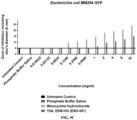
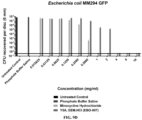
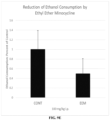
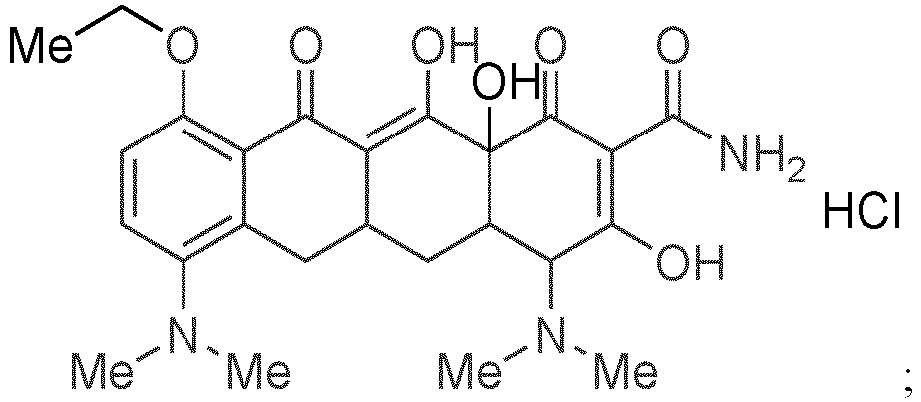
- FIGS. 9A to 9E show the activity of Ethyl Ether Minocycline (4,7-Bis-dimethylamino-10-ethoxy-3,12,12a-trihydroxy-1,11-dioxo-1,4,4a,5,5a,6,11,12a-octahydro-naphthacene-2-carboxylic acid amide, and the Hydrochloride salt), as shown with FIG. 9A E. coli MM294 GFP zone of inhibition, FIG. 9B E. coli MM294 GFP CFU/disc, FIG. 9C E. coli MM294 GFP zone of inhibition with the hydrochloride salt, FIG. 9D E. coli MM294 GFP CFU/disc inhibition with the hydrochloride salt, and FIG. 9E reduction of binge ethanol consumption.
- Ethyl Ether Minocycline 4,7-Bis-dimethylamino-10-ethoxy-3,12,12a-trihydroxy-1,11-
- FIGS. 10A to 10E show the activity of Propyl Ether Minocycline (4,7-Bis-dimethylamino-3,12,12a-trihydroxy-1,11-dioxo-10-propoxy-1,4,4a,5,5a,6,11,12a-octahydro-naphthacene-2-carboxylic acid amide, and the Hydrochloride salt), as shown with FIG. 10A E. coli MM294 GFP zoned of inhibition, FIG. 10B E. coli MM294 GFP CFU/disc, FIG. 10C E. coli MM294 GFP zone of inhibition with the hydrochloride salt, FIG. 10D E. coli MM294 GFP CFU/disc inhibition with the hydrochloride salt, and FIG. 10E reduction of binge ethanol consumption.
- Propyl Ether Minocycline (4,7-Bis-dimethylamino-3,12,12a-trihydroxy-1,11-dioxo-10
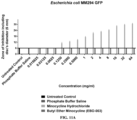
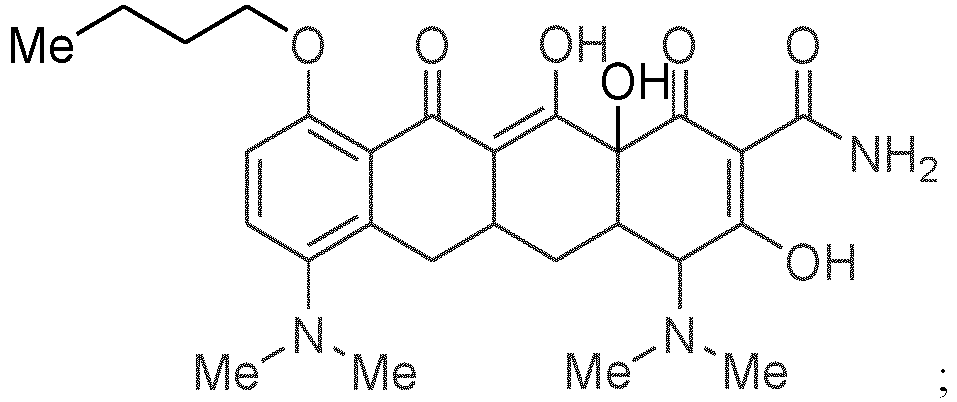
- FIGS. 11A to 11C show the activity of Butyl Ether Minocycline (10-Butoxy-4,7-bis-dimethylamino-3,12,12a-trihydroxy-1,11-dioxo-1,4,4a,5,5a,6,11,12a-octahydro-naphthacene-2-carboxylic acid amide, and the Hydrochloride salt), as shown with FIG. 11A E. coli MM294 GFP zone of inhibition, FIG. 11B E. coli MM294 GFP CFU/disc, and FIG. 11C reduction of binge ethanol consumption.
- Butyl Ether Minocycline (10-Butoxy-4,7-bis-dimethylamino-3,12,12a-trihydroxy-1,11-dioxo-1,4,4a,5,5a,6,11,12a-octahydro-naphthacene-2-carboxylic acid amide, and the Hydrochloride salt
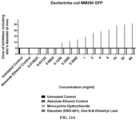
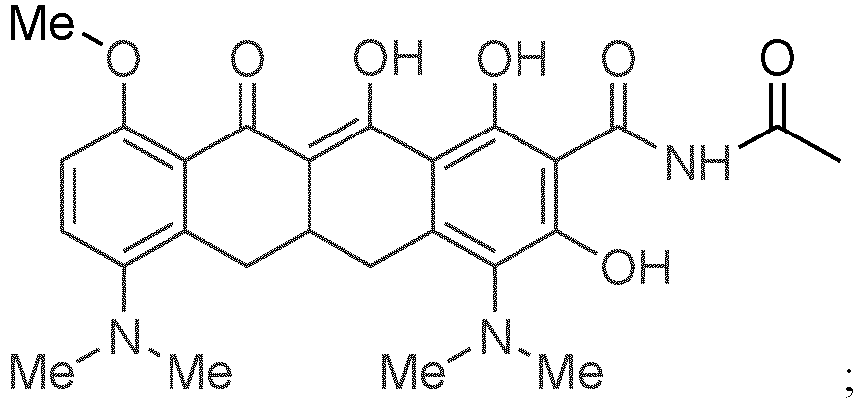
- FIGS. 12A to 12C show the activity of De Methyl Diacetate Minocycline (Acetic acid 9-acetylcarbamoyl-4-dimethylamino-8,10,11-trihydroxy-12-oxo-S,Sa,6,12-tetrahydro-naphthacen-1-yl ester), as shown with FIG. 12A E. coli MM294 GFP zone of inhibition, FIG. 12B E. coli MM294 GFP CFU/disc, and FIG. 12C reduction of binge ethanol consumption.
- De Methyl Diacetate Minocycline Acetic acid 9-acetylcarbamoyl-4-dimethylamino-8,10,11-trihydroxy-12-oxo-S,Sa,6,12-tetrahydro-naphthacen-1-yl ester
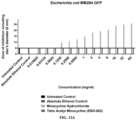
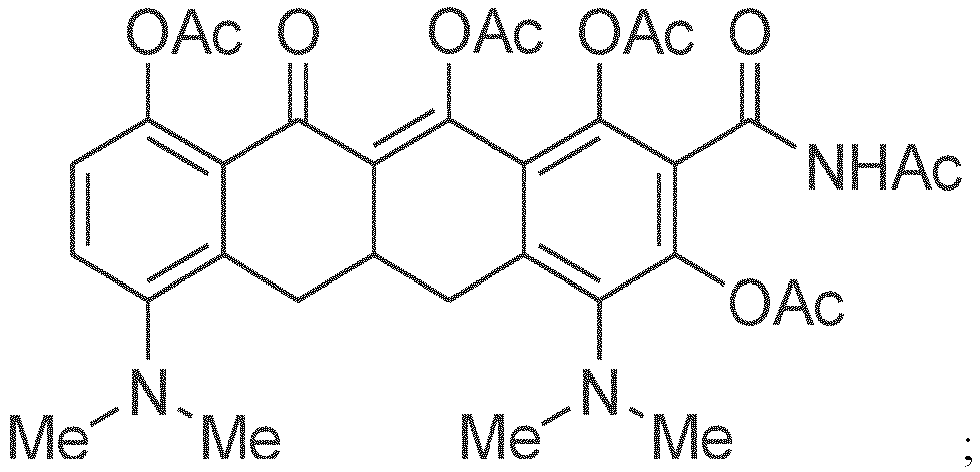
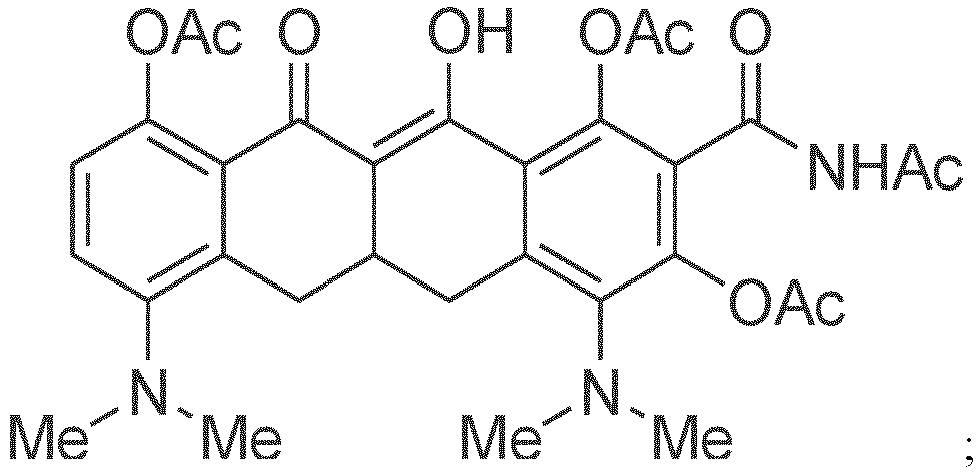
- FIGS. 13A to 13C show the activity of Tetra Acetyl Minocycline (Acetic acid 3,10-diacetoxy-2-acetylcarbamoyl-4,7-bis-dimethylamino-12-hydroxy-11-oxo-5,5a,6,11-tetrahydro-naphthacen-1-yl ester), as shown with FIG. 13A E. coli MM294 GFP zone of inhibition, FIG. 13B E. coli MM294 GFP CFU/disc, and FIG. 13C reduction of binge ethanol consumption.
- Tetra Acetyl Minocycline Acetic acid 3,10-diacetoxy-2-acetylcarbamoyl-4,7-bis-dimethylamino-12-hydroxy-11-oxo-5,5a,6,11-tetrahydro-naphthacen-1-yl ester
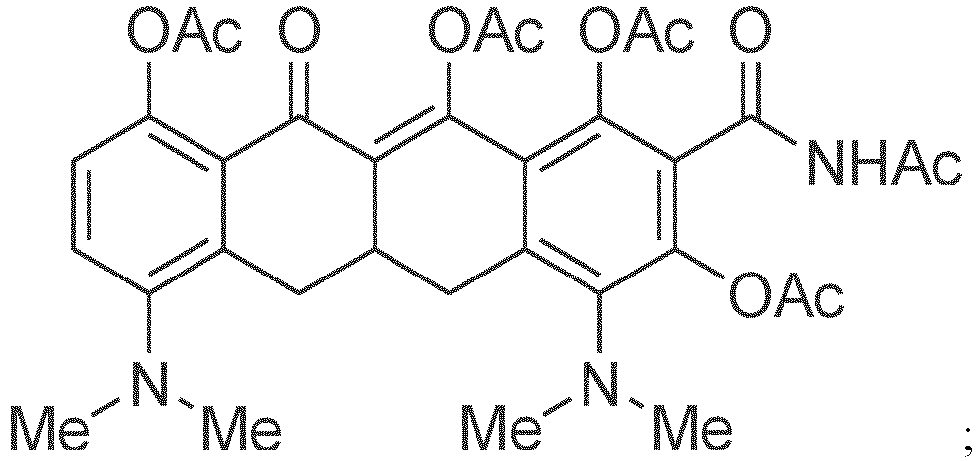
- FIGS. 14A to 14C show the activity of Penta Acetyl Minocycline (Acetic acid 3,10,12-triacetoxy-2-acetylcarbamoyl-4,7-bis-dimethylamino-11 -oxo-5,5a,6,11-tetrahydro-naphthacen-1-yl ester), as shown with FIG. 14A E. coli MM294 GFP zone of inhibition, FIG. 14B E. coli MM294 GFP CFU/disc, and FIG. 14C reduction of binge ethanol consumption.
- Penta Acetyl Minocycline Acetic acid 3,10,12-triacetoxy-2-acetylcarbamoyl-4,7-bis-dimethylamino-11 -oxo-5,5a,6,11-tetrahydro-naphthacen-1-yl ester
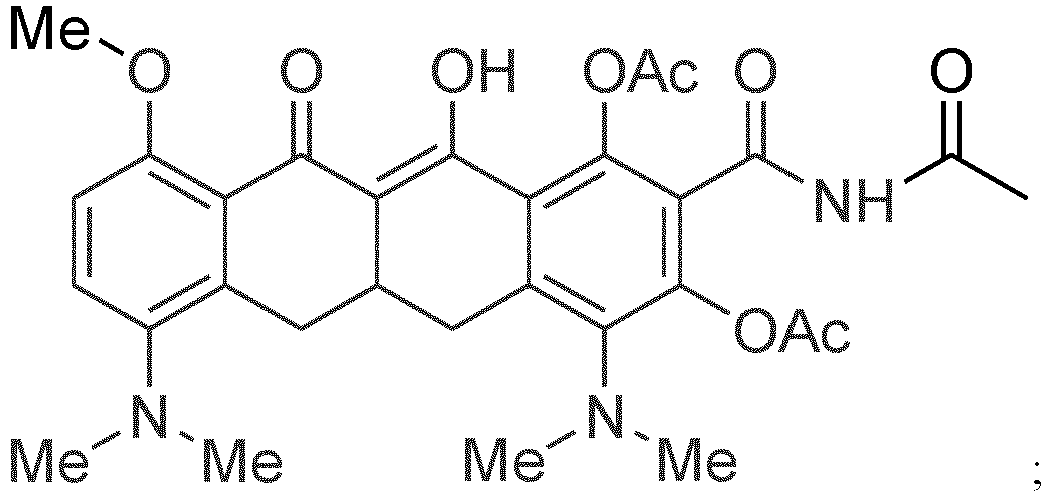
- FIGS. 15A to 15C show the activity of Methyl Ether N-Monoacetate Minocycline (4,7-Bis-dimethylamino-1,3,12-trihydroxy-10-methoxy-11-oxo-5,5a,6,11-tetrahydro-naphthacene-2-carboxylic acid acetyl-amide) and Methyl Ether Tri Acetate Minocycline (Acetic acid 4-acetoxy-3-acetylcarbamoyl-1,10-bis-dimethylamino-5-hydroxy-7-methoxy-6-oxo-6,11,11a,12-tetrahydro-naphthacen-2-yl ester), as shown with FIG. 15A E. coli MM294 GFP zone of inhibition, FIG. 15B E. coli MM294 GFP CFU/disc, and FIG. 15C reduction of binge ethanol consumption.
- Minocycline Methyl Ether N-Monoa
- compositions of the invention can be used to achieve methods of the invention.
- the words “comprising” (and any form of comprising, such as “comprise” and “comprises"), “having” (and any form of having, such as “have” and “has”), “including” (and any form of including, such as “includes” and “include”) or “containing” (and any form of containing, such as “contains” and “contain”) are inclusive or open-ended and do not exclude additional, unrecited elements or method steps.
- “comprising” may be replaced with “consisting essentially of” or “consisting of”.
- the phrase “consisting essentially of” requires the specified integer(s) or steps as well as those that do not materially affect the character or function of the claimed invention.
- the term “consisting” is used to indicate the presence of the recited integer (e.g., a feature, an element, a characteristic, a property, a method/process step or a limitation) or group of integers (e.g., feature(s), element(s), characteristic(s), property(ies), method/process steps or limitation(s)) only.
- words of approximation such as, without limitation, "about”, “substantial” or “substantially” refers to a condition that when so modified is understood to not necessarily be absolute or perfect but would be considered close enough to those of ordinary skill in the art to warrant designating the condition as being present.
- the extent to which the description may vary will depend on how great a change can be instituted and still have one of ordinary skill in the art recognize the modified feature as still having the required characteristics and capabilities of the unmodified feature.
- a numerical value herein that is modified by a word of approximation such as "about” may vary from the stated value by at least ⁇ 1, 2, 3, 4, 5, 6, 7, 10, 12 or 15%.
- compositions and/or methods disclosed and claimed herein can be made and executed without undue experimentation in light of the present disclosure. While the compositions and methods of this invention have been described in terms of preferred embodiments, it will be apparent to those of skill in the art that variations may be applied to the compositions and/or methods and in the steps or in the sequence of steps of the method described herein without departing from the concept, spirit and scope of the invention. All such similar substitutes and modifications apparent to those skilled in the art are deemed to be within the spirit, scope and concept of the invention as defined by the appended claims.
- each dependent claim can depend both from the independent claim and from each of the prior dependent claims for each and every claim so long as the prior claim provides a proper antecedent basis for a claim term or element.
Landscapes
- Health & Medical Sciences (AREA)
- Chemical & Material Sciences (AREA)
- Organic Chemistry (AREA)
- Life Sciences & Earth Sciences (AREA)
- Animal Behavior & Ethology (AREA)
- General Health & Medical Sciences (AREA)
- Public Health (AREA)
- Veterinary Medicine (AREA)
- Medicinal Chemistry (AREA)
- Pharmacology & Pharmacy (AREA)
- Addiction (AREA)
- Nuclear Medicine, Radiotherapy & Molecular Imaging (AREA)
- Chemical Kinetics & Catalysis (AREA)
- General Chemical & Material Sciences (AREA)
- Engineering & Computer Science (AREA)
- Biomedical Technology (AREA)
- Bioinformatics & Cheminformatics (AREA)
- Psychiatry (AREA)
- Neurosurgery (AREA)
- Neurology (AREA)
- Epidemiology (AREA)
- Biophysics (AREA)
- Heart & Thoracic Surgery (AREA)
- Pathology (AREA)
- Physics & Mathematics (AREA)
- Medical Informatics (AREA)
- Surgery (AREA)
- Molecular Biology (AREA)
- Pain & Pain Management (AREA)
- Rheumatology (AREA)
- Communicable Diseases (AREA)
- Oncology (AREA)
- Pharmaceuticals Containing Other Organic And Inorganic Compounds (AREA)
- Organic Low-Molecular-Weight Compounds And Preparation Thereof (AREA)
Abstract
Description
- This application claims priority to
U.S. Provisional Application Serial Nos. 62/684,467, filed June 13, 2018 U.S. Provisional Application Serial Nos. 62/684,509, filed June 13, 2018 - This invention was made with government support under NIH AA021142 awarded by the National Institute of Alcohol Abuse and Alcoholism (NIAAA). The government has certain rights in the invention.
- The present invention relates in general to the field of novel tetracycline derivatives with reduced antimicrobial activity for use in treating disorders of the central nervous system.
- Without limiting the scope of the invention, its background is described in connection with modified tetracyclines.
- Alcohol use disorder (AUD) or alcoholism is a condition that affects roughly 5% of individuals worldwide. AUD is characterized by an increased tolerance to alcohol and a physical dependence on alcohol making it hard for an individual to control intake. Some of the long-term effects of ingesting ethanol include cognitive and psychological changes, liver cirrhosis, gastritis, cardiomyopathy, anemia, and certain types of cancers. Alcoholism is caused by a complex mixture of genetic and environmental factors. There have been several genes linked to the way people metabolize alcohol and the development of AUD. The availability of alcohol also contributed to the number of people with AUD. Alcohol is the most available and widely abused recreational drug with beer being the third-most popular drink behind water and tea. There are currently very few methods for treating alcoholism outside of rehabilitation therapy which can be costly and very public. There is an unsatisfied need for a pharmaceutical component that is able to help combat the debilitating effects of AUD.
- One such modified tetracycline derivative is taught in
U.S. Patent Publication No. 20100173991, filed by Lorenz, et al. , and entitled "Method for the synthesis of A-ring aromatized acetyl minocyclines". Briefly, these applicants are said to teach a less complex method for the production of A-ring aromatized acetyl minocyclines of the formula:
- Another such modified tetracycline derivative is taught in
Patent Publication No. WO2009012741, also filed by Lorenz, et al. , entitled "Method for the synthesis of A-ring aromatized acetyl minocyclines". The application is said to teach a method for the production of A-ring aromatized acetyl minocyclines that is less complex. The method for the production of A-ring aromatized acetyl minocyclines of the formula (I), wherein R1 to R5 = acetyl and/or H is achieved when minocycline hydrochloride is reacted with acetic anhydride in the presence of a proton catcher. The reaction product is then subjected to chromatographic filtration using a carrier material and an eluant, the eluant is distilled off. The product is subsequently cleaned by recrystallization. Like the application described hereinabove, this application is also silent on the treatment of dependency disorders and only teaches the treatment of neurodegeneration. - However, a need remains for novel molecules for the treatment of alcohol consumption, including, but not limited to high drinking levels, withdrawal symptoms and increased sensitization and duration of pain, the alteration of innate immune responses, and reduction of tobacco consumption and the addiction process of other drugs subject to abuse, including opioids (Mark R. Hutchinson, Alexis L. Northcutt, Lindsey W. Chao, Jeffrey J. Kearney, Yingning Zhang, Debra L. Berkelhammer, Lisa C. Loram, Robert R. Rozeske, Sondra T. Bland, Steven F. Maier, Todd T. Gleeson, and Linda R. Watkins, Minocycline suppresses morphine-induced respiratory depression, suppresses morphine-induced reward, and enhances systemic morphine-induced analgesia, Brain, Behavior and Immunity 22(8): 1248-1256, 2009).
- In one embodiment, the present invention includes a method of treating Alcohol Use Disorder (AUD), Substance Use Disorder (SUD), tobacco use, pain, or proinflammatory disorders comprising: providing a subject with an effective amount of a modified tetracycline or derivative thereof to ameliorate or eliminate the AUD, SUD, tobacco use, pain, or proinflammatory disorder, and wherein the modified tetracycline or derivative thereof has reduced binding to a microbial ribosome and has the formula:
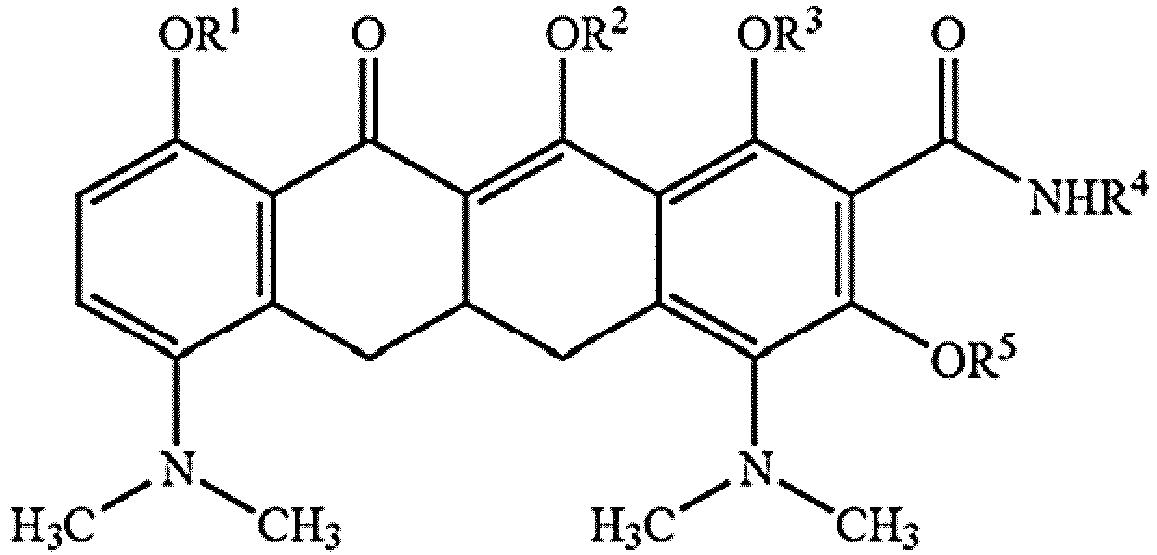
- wherein R1 is methyl, ethyl, propyl, butyl, acetyl, alkyl, R2 is OH or acetyl, R3 is 0, OH, acetyl, R4 is H or acetyl, and R5 is H or acetyl, or has the formula:


- In another aspect, the modified tetracycline has moderate to no antibacterial activity. In another aspect, the modified tetracycline has moderate to no antifungal activity. In another aspect, the modified tetracycline is a doxycycline, minocycline, or tigecycline. In another aspect, the ribosome is a bacterial ribosome. In another aspect, the modification at least one of: produces steric hindrance, blocks hydrogen bonding, or change coordination with divalent cations. In another aspect, the modified tetracycline further comprises a pharmaceutically acceptable buffer, excipient, filler, or carrier. In another aspect, the modified tetracycline is adapted for administration orally, enterally, parenterally, intramuscularly, intravenously, or intraperitoneally.
- In another embodiment, the present invention includes a method of evaluating a candidate drug believed to be useful in treating Alcohol Use Disorder (AUD), Substance Use Disorder (SUD, including for opioids, tobacco use, pain, or proinflammatory disorders, the method comprising: a) measuring the Alcohol Use Disorder (AUD), Substance Use Disorder (SUD, tobacco use, pain, or proinflammatory disorders from a set of patients; b) administering a candidate drug to a first subset of the patients, and a placebo to a second subset of the patients, wherein the candidate drug is a C6' modified tetracycline that has the formula:

- wherein R1 is methyl, ethyl, propyl, butyl, acetyl, alkyl, R2 is OH or acetyl, R3 is 0, OH, acetyl, R4 is H or acetyl, and R5 is H or acetyl; c) repeating step a) after the administration of the candidate drug or the placebo; and d) determining if the candidate drug reduces the Alcohol Use Disorder (AUD), Substance Use Disorder (SUD, pain, or proinflammatory disorders that is statistically significant as compared to any reduction occurring in the second subset of patients, wherein a statistically significant reduction indicates that the candidate drug is useful in treating Alcohol Use Disorder (AUD), Substance Use Disorder (SUD, tobacco use, pain, or proinflammatory disorders. In one aspect, the modified tetracycline has the formula:


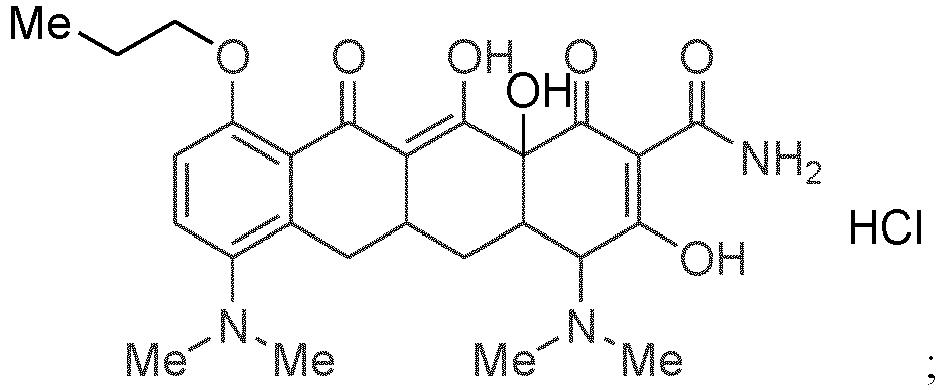


- In another aspect, the molecule has moderate to no antibacterial activity. In another aspect, the molecule has moderate to no antifungal activity. In another aspect, the molecule inhibits Alcohol Use Disorder (AUD), Substance Use Disorder (SUD, pain and disorders involving potential inflammatory processes. In another aspect, the modified molecule is a doxycycline, minocycline, or tigecycline. In another aspect, the modified tetracycline further comprises a pharmaceutically acceptable buffer, excipient, filler, or carrier. In another aspect, the ribosome is a bacterial ribosome. In another aspect, the modification at least one of: produces steric hindrance, blocks hydrogen bonding, or change coordination with divalent cations.
- In another embodiment, the present invention includes a method of treating Alcohol Use Disorder (AUD), Substance Use Disorder (SUD, tobacco use, pain, or proinflammatory disorders comprising: identifying a subject in need of treatment for at least one of AUD, Substance Use Disorder (SUD, tobacco use, pain, or a proinflammatory disorder; and providing the subject with an effective amount of a modified tetracycline or derivative thereof to ameliorate or eliminate the AUD, Substance Use Disorder (SUD, tobacco use, pain, or proinflammatory disorder, and wherein the modified tetracycline or derivative thereof has reduced binding to a microbial ribosome and has the formula:

- R1 is methyl, ethyl, propyl, butyl, acetyl, alkyl, R2 is OH or acetyl, R3 is 0, OH, acetyl, R4 is H or acetyl, and R5 is H or acetyl, in a pharmaceutically acceptable carrier. In one aspect, the modified tetracycline has the formula:


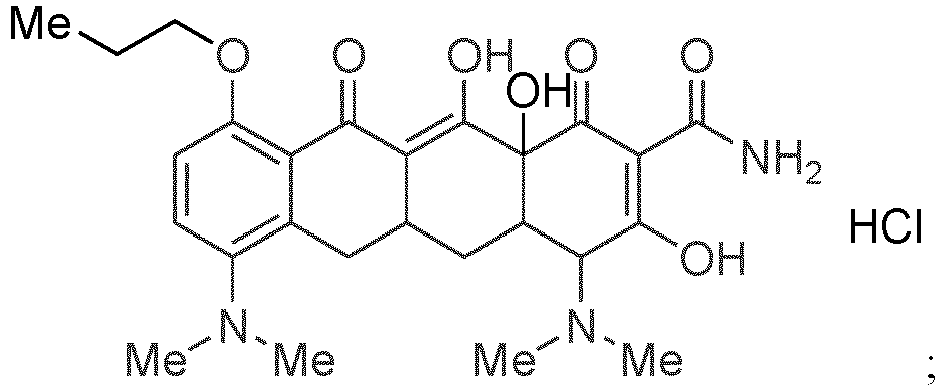


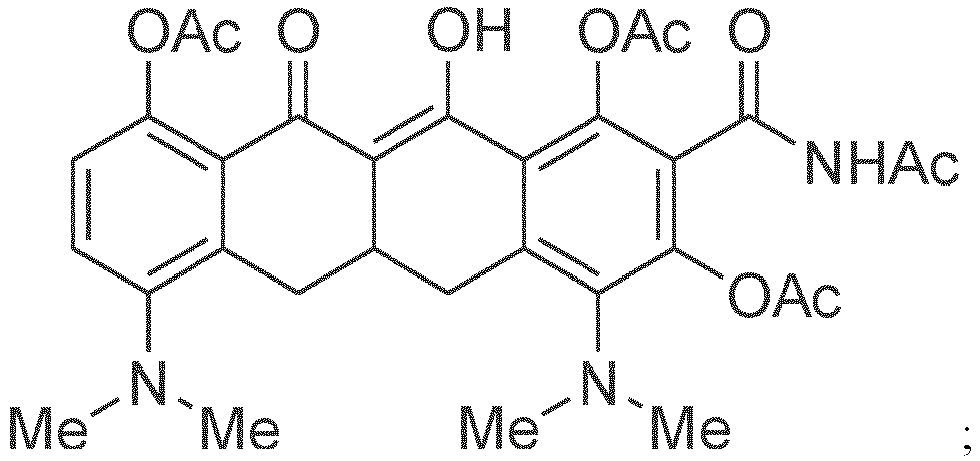

- In another aspect, the modified tetracycline has moderate to no antibacterial activity. In another aspect, the modified tetracycline has moderate to no antifungal activity. In another aspect, the modified tetracycline is a doxycycline, minocycline, or tigecycline. In another aspect, the ribosome is a bacterial ribosome. In another aspect, the modification at least one of: produces steric hindrance, blocks hydrogen bonding, or change coordination with divalent cations. In another aspect, the modified tetracycline further comprises a pharmaceutically acceptable buffer, excipient, filler, or carrier. In another aspect, the modified tetracycline is adapted for administration orally, enterally, intramuscularly, parenterally, intravenously, or intraperitoneally.
- For a more complete understanding of the features and advantages of the present invention, reference is now made to the detailed description of the invention along with the accompanying figures and in which:
-
FIG. 1 is a graph that shows "sterilization" of the GI microbiome had no apparent effect on DID ethanol consumption or efficacy of tigecycline to reduce drinking. -
FIG. 2 is a graph that shows intracerebroventricular (ICV) Tigecycline reduced DID consumption. -
FIG. 3 shows the structures of acetylated CMM1 and CMM2, in which all R=acetate for CMM1, and for CMM2 all R=acetate, except R4=H. -
FIGS. 4A and 4B show that Minocycline, but not acetate derivatives B and Y eliminated E. coli bactericidal action. -
FIGS. 5A to 5D shows the results from using CMM1 - Acetylated minocycline derivative reduced ethanol, but not water consumption. -
FIGS. 6A and 6B are graphs that show that acetylated minocycline, CMM1, reduced alcohol withdrawal symptoms. Female (FIG. 6A ) and male (FIG. 6B ) DBA/2J mice were tested with CMM1, 100 mg/kg p.o., at 2 hrs following 4 g/kg 20% ethanol in saline. -
FIG. 7 is a graph that shows that CMM1 reduced alcohol consumption and preference in swine. -
FIGS. 8A to 8C show the activity of Methyl Ether Minocycline ( 4,7-Bis-dimethylamino-3,12,12a-trihydroxy-10-methoxy-1,11-dioxo-1,4,4a,5,5a,6,11,12a-octahydro-naphthacene-2-carboxylic acid amide, Hydrochloride), as shown withFIG. 8A E coli MM294 GFP zone of inhibition,FIG. 8B E coli MM294 GFP CFU/disc, andFIG. 8C reduction of binge ethanol consumption. -
FIGS. 9A to 9E show the activity of Ethyl Ether Minocycline (4,7-Bis-dimethylamino-10-ethoxy-3,12,12a-trihydroxy-1,11-dioxo-1,4,4a,5,5a,6,11,12a-octahydro-naphthacene-2-carboxylic acid amide, and the Hydrochloride salt), as shown withFIG. 9A E.\ coli MM294 GFP zone of inhibition,FIG. 9B E. coli MM294 GFP CFU/disc,FIG. 9C E. coli MM294 GFP zone of inhibition with the hydrochloride salt,FIG. 9D E. coli MM294 GFP CFU/disc inhibition with the hydrochloride salt, andFIG. 9E reduction of binge ethanol consumption. -
FIGS. 10A to 10E show the activity of Propyl Ether Minocycline (4,7-Bis-dimethylamino-3,12,12a-trihydroxy-1,11-dioxo-10-propoxy-1,4,4a,5,5a,6,11,12a-octahydro-naphthacene-2-carboxylic acid amide, and the Hydrochloride salt), as shown withFIG. 10A E. coli MM294 GFP zone of inhibition,FIG. 10B E. coli MM294 GFP CFU/disc,FIG. 10C E. coli MM294 GFP zone of inhibition with the hydrochloride salt,FIG. 10D E. coli MM294 GFP CFU/disc inhibition with the hydrochloride salt, andFIG. 10E reduction of binge ethanol consumption. -
FIGS. 11A to 11C show the activity of Butyl Ether Minocycline (10-Butoxy-4,7-bis-dimethylamino-3,12,12a-trihydroxy-1,11-dioxo-1,4,4a,5,5a,6,11,12a-octahydro-naphthacene-2-carboxylic acid amide, and the Hydrochloride salt), as shown withFIG. 11A E. coli MM294 GFP zone of inhibition,FIG. 11B E. coli MM294 GFP CFU/disc, andFIG. 11C reduction of binge ethanol consumption. -
FIGS. 12A to 12C show the activity of De Methyl Diacetate Minocycline (Acetic acid 9-acetylcarbamoyl-4-dimethylamino-8,10,11-trihydroxy-12-oxo-S,Sa,6,12-tetrahydro-naphthacen-1-yl ester), as shown withFIG. 12A E. coli MM294 GFP zone of inhibition,FIG. 12B E. coli MM294 GFP CFU/disc, andFIG. 12C reduction of binge ethanol consumption. -
FIGS. 13A to 13C show the activity of Tetra Acetyl Minocycline (Acetic acid 3,10-diacetoxy-2-acetylcarbamoyl-4,7-bis-dimethylamino-12-hydroxy-11-oxo-5,5a,6,11-tetrahydro-naphthacen-1-yl ester), as shown withFIG. 13A E. coli MM294 GFP zone of inhibition,FIG. 13B E. coli MM294 GFP CFU/disc, andFIG. 13C reduction of binge ethanol consumption. -
FIGS. 14A to 14C show the activity of Penta Acetyl Minocycline (Acetic acid FIG. 14A E. coli MM294 GFP zone of inhibition,FIG. 14B E. coli MM294 GFP CFU/disc, andFIG. 14C reduction of binge ethanol consumption. -
FIGS. 15A to 15C show the activity of Methyl Ether N-Monoacetate Minocycline (4,7-Bis-dimethylamino-1,3,12-trihydroxy-10-methoxy-11-oxo-5,5a,6,11-tetrahydro-naphthacene-2-carboxylic acid acetyl-amide) and Methyl Ether Tri Acetate Minocycline (Acetic acid 4-acetoxy-3-acetylcarbamoyl-1,10-bis-dimethylamino-5-hydroxy-7-methoxy-6-oxo-6,11,11a,12-tetrahydro-naphthacen-2-yl ester), as shown withFIG. 15A E. coli MM294 GFP zone of inhibition,FIG. 15B E. coli MM294 GFP CFU/disc, andFIG. 15C reduction of binge ethanol consumption. - While the making and using of various embodiments of the present invention are discussed in detail below, it should be appreciated that the present invention provides many applicable inventive concepts that can be embodied in a wide variety of specific contexts. The specific embodiments discussed herein are merely illustrative of specific ways to make and use the invention and do not delimit the scope of the invention.
- To facilitate the understanding of this invention, a number of terms are defined below. Terms defined herein have meanings as commonly understood by a person of ordinary skill in the areas relevant to the present invention. Terms such as "a", "an" and "the" are not intended to refer to only a singular entity, but include the general class of which a specific example may be used for illustration. The terminology herein is used to describe specific embodiments of the invention, but their usage does not limit the invention, except as outlined in the claims.
- The present invention overcomes the problems associates with tetracyclines when used to treat, e.g., Alcohol Use Disorder (AUD). By eliminating the antibiotic properties of tetracyclines (e.g., doxycycline, minocycline, and tigecycline), the present invention allows for an increase in drug utilization and/or dosage as a pharmacotherapy for alcohol use disorder related problems, pain, and any other disorders with inflammatory components, as well as tobacco use.
- Only three pharmacotherapeutic treatments for Alcohol Use Disorder (AUD) are FDA approved and none are widely used (<10% of AUD patients) or show a strong effect to reduce risky- or dependence-based drinking in the long-term (<20% see sustained decreased drinking outcomes). Unfortunately, approximately 10% of the US population suffers from AUD and over 5% of all medical morbidities share risky ethanol consumption as an underlying issue. As a consequence, intoxication, in general, and 'alcohol addiction' (severe AUD), in particular, are important clinical problems. Given the limited pharmacotherapeutic choice, there is a compelling need for continued development of new treatments across the AUD spectrum (mild to severe DSM-V classification). In fact, improved treatments targeting high alcohol consumption and withdrawal-related symptoms are desirable as precipitating withdrawal can be a medical emergency with risk for death. To date, drugs targeting drinking do not protect against withdrawal, and drugs used to reduce withdrawal symptoms are often co-addictive with alcohol.
- The present inventors recently showed that tetracycline analogs were preclinically efficacious to reduce high alcohol consumption, withdrawal symptoms and alcohol-mediated pain sensitization and now have exciting preliminary data showing efficacy for an improved chemically modified minocycline (CMM) (Bergeson, Blanton, et al. 2016; Martinez et al. 2016; Bergeson, Nipper, et al. 2016; Syapin, Martinez, Curtis, Marquardt, Allison, Groot, Baby, Al-Hasan, Segura, et al. 2016). Further, the inventors have previously found tetracycline analogs, including doxycycline, minocycline, and tigecycline to be efficacious against various aspects of Alcohol Use Disorder (AUD), including cessation of drinking, withdrawal symptoms and sensitization and increased duration of pain (Bergeson, Blanton, et al. 2016; Martinez et al. 2016; Bergeson, Nipper, et al. 2016; Syapin, Martinez, Curtis, Marquardt, Allison, Groot, Baby, Al-Hasan, Segura-Ulate, et al. 2016; Agrawal et al. 2014; Agrawal et al. 2011). However, despite these encouraging results, the present inventors have found that the effect of these tetracyclines was through a central nervous system (CNS) function and not mediated in any part by changes in resident bacteria; see
FIGS. 1 and 2 . The data shown is key to understanding that the tetracyclines could be modified to remove the antibiotic property and still remain useful for AUD treatment. Other literature suggests that alcohol effects may be mediated, at least in part, by bacteria or their components (Blednov et al. 2011); for a recent review, see (Montesinos, Alfonso-Loeches, and Guerri 2016). However, despite this controversy in the literature, the present invention is the first to show that the action of the known CMMs does not require antibiotic properties. -
FIG. 1 is a graph that shows that "sterilization" of the GI microbiome had no apparent effect on DID ethanol consumption or efficacy of tigecycline to reduce drinking. Given the ability of the gut microbiome to change behavior, the present inventors determined whether tigecycline, a broad spectrum antibiotic, might work through modulation of the gut bacterial flora. A ten-day "sterilization" treatment with ampicillin, neomycin, metronidozale and vancomycin was used. Bedding was changed daily to avoid repopulation. DID was started on day 11 after one day of no metronidazole. Tigecycline was given at 100 mg/kg intraperitoneal (i.p.) n = 7, mean ± SEM. No significant difference was found for either DID alone or tigecycline treatment suggesting no role for microbiota signaling in alcohol consumption or tigecycline efficacy. -
FIG. 2 is a graph that shows that intracerebroventricular (ICV) Tigecycline reduced DID consumption. To test the hypothesis that tigecycline works at the level of the CNS, rather than the PNS, 3 ul of drug (9 mg/ml) was givenicv 20 hrs prior to DID testing. n = 9-11, mean ± SEM, **p < 0.01. The results suggest that tigecycline acts via the CNS to reduce alcohol consumption. - Thus, the present inventors recognized for the first time that the mechanism of action of the CMM for use in Alcohol Use Disorder, pain and other disorders involving potential inflammatory processes does not involve tetracycline's general antibiotic properties. Thus, the present inventors tested several tetracyclines to determine structural or functional components that contributed to the AUD treatment efficacy. As shown in Table 1, it appears that the C6' hydrogen is, at least in part necessary to convey the positive action on AUD-related traits, but not those known to bind to the A-site of the bacterial ribosome (Schedlbauer et al. 2015).
- Table 1. Of seven tetracyclines tested against AUD traits (Syapin, Martinez, Curtis, Marquardt, Allison, Groot, Baby, Al-Hasan, Segura-Ulate, et al. 2016) only doxycycline, minocycline and tigecycline were effective. Shown in grey highlight is that the R6' group is the only difference between the effective and non-effective tetracycline drugs, and together with our unpublished data in
FIGS. 1 and 2 , indicated that the structure of the molecule could be modified to lose its bacterial ribosome binding component. Removal of anti-microbial properties should reduce side effects and avoid increased drug resistance.
- Next, the inventors modified minocycline by acetylation (
FIG. 3 ) and determined its loss of antibiotic properties, seeFIGS. 4A and 4B . In addition, the inventors tested the CMM1 compound in mice using the Drinking In the Dark model (Rhodes et al. 2005) to show that the ability to reduce alcohol consumption was retained (FIGS. 5A to 5D ). Ability to reduce alcohol withdrawal symptoms was detected and is shown inFIGS. 6A and 6B . Finally, efficacy of 10 mg/kg per os (p.o.) to reduce high drinking was confirmed in swine (FIG. 7 ). - These initial findings with acetylation of minocycline can be expanded to further substitutions at the various positions (R1 to R5) following the teachings of the present invention. Briefly, the process taught herein is an example of modifications that change the affinity of tetracycline analogs to bind the bacterial ribosome. Thus, any such modification could include changes to produce steric hindrance, block hydrogen bonding, change coordination with divalent cations, or any other means to change affinity for ribosomal binding.
FIGS. 8A-8C includes a list of molecules for use with the present invention. -
FIG. 3 shows the structures of acetylated CMM1 and CMM2, in which all R=acetate for CMM1, and for CMM2 all R=acetate, except R4=H. -
FIGS. 4A and 4B show that Minocycline acetate derivatives eliminated E. coli bactericidal action. Minocycline and two acetylated derivatives, CMM1 (B) and CMM2 (Y), were tested in a dose response manner for A) zone of inhibition (ZOI) and B) recovered colony forming units (CFU) per disk. Data indicate a loss of antibiotic activity even at high doses. -
FIGS. 5A to 5D are graphs that show that CMM1 - Acetylated minocycline derivative reduced ethanol consumption. Using a standard Drinking In the Dark (DID) murine model of binge drinking, we tested the effect of 0, 25, 35, 50 and 100 mg/kg per os (p.o.) acetylated minocycline (derivative Y, or CMM1) vs control. As shown above, the derivative significantly reduced drinking (n=4/group, p=0.004). The results show that acetylated minocycline, CMM1, reduced alcohol consumption in a dose-dependent response. -
FIGS. 6A and 6B are graphs that show that acetylated minocycline, CMM1, reduced alcohol withdrawal symptoms. Female and male DBA/2J mice were tested with CMM1, 100 mg/kg p.o., at 2 hrs following 4 g/kg 20% ethanol in saline. Shown are the Handling Induced Convulsion scores, background subtracted and summed over 24 hours. CMM1 was more effective in females, and reduced onset, peak and duration of withdrawal symptoms. Note, that CMM1 was more effective than the parent drug, minocycline. Mean ± SEM, n=5/group. -
FIG. 7 is a graph that shows that CMM1 reduced alcohol consumption and preference in swine. Large White x Landrace hybrid swine were given a water vs 5% ethanol in a two-bucket choice. Total ethanol consumption and alcohol preference was reduced by CMM1. Mean ± SEM, n=3/group. - Acetylated tetracycline with a hydrogen R-group at R6' has a loss of antibiotic properties with retention of the ability to reduce alcohol consumption in mice. These data demonstrate that that, in addition to acetylated minocycline, the modification effects also extend to doxycycline and tigecycline. Specifically, the present invention includes any modification that removes the ability of the tetracycline class molecules to bind to the bacterial ribosome, with retention of anti-AUD or SUD activity or an innate immune modulatory function. The traits include, but are not limited to: reduction of alcohol consumption (both binge and dependence related drinking), suppression of alcohol withdrawal symptoms, relief of alcohol-mediated pain and emotional distress.
Table 2 includes a list that compares the minocycline derivatives of the present invention to minocycline and its HCl salt. S.N o ChemDraw's Structure ChemDraw's Names Commercial Names (or) Given Names 1 
4,7-Bis-dimethylamino-3,10,12,12a-tetrahydroxy-1,11-dioxo-1,4,4a,5,5a,6,11,12 a-octahydro-naphthacene-2-carboxylic acid amide Minocycline (MC) 2 
4,7-Bis-dimethylamino-3,10,12,12a-tetrahydroxy-1,11-dioxo-1,4,4a,5,5a,6,11,12 a-octahydro-naphthacene-2-carboxylic acid amide.Hydrochlori de Minocycline hydrochloride (MC.HCl) 3 
4,7-Bis-dimethylamino-3,12,12a-trihydroxy-10-methoxy-1,11-dioxo-1,4,4a,5,5a,6,11,12 a-octahydro-naphthacene-2-carboxylic acid amide.Hydrochlori de Methyl Ether Minocycline. Hydrochloride (MEMC.HCl) 4 
4,7-Bis-dimethylamino-3,12,12a-trihydroxy-10-methoxy-1,11-dioxo-1,4,4a,5,5a,6,11,12 a-octahydro-naphthacene-2-carboxylic acid amide Methyl Ether Minocycline (MEMC) 5 
4,7-Bis-dimethylamino-10-ethoxy-3,12,12a-trihydroxy-1,11-dioxo-1,4,4a,5,5a,6,11,12 a-octahydro-naphthacene-2-carboxylic acid amide.Hydrochlori de Ethyl Ether Minocycline .Hydro chloride (EEMC.HCl) 6 
4,7-Bis-dimethylamino-10-ethoxy-3,12,12a-trihydroxy-1,11-dioxo-1,4,4a,5,5a,6,11,12 a-octahydro-naphthacene-2-carboxylic acid amide Ethyl Ether Minocycline (EEMC) 7 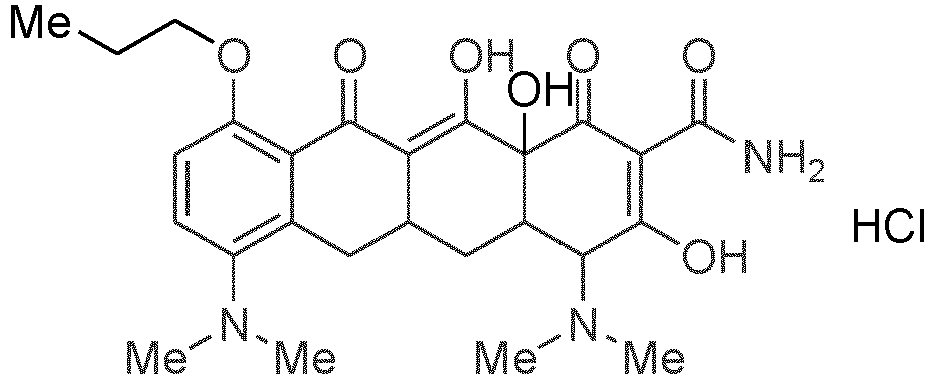
4,7-Bis-dimethylamino-3,12,12a-trihydroxy-1,11-dioxo-10-propoxy-1,4,4a,5,5a,6,11,12 a-octahydro-naphthacene-2-carboxylic acid amide.Hydrochlori de Propyl Ether Minocycline.Hydroc hloride (PEMC.HCl) 8 
4,7-Bis-dimethylamino-3,12,12a-trihydroxy-1,11-dioxo-10-propoxy-1,4,4a,5,5a,6,11,12 a-octahydro-naphthacene-2-carboxylic acid amide Propyl Ether Minocycline (PEMC) 9 
10-Butoxy-4,7-bis-dimethylamino-3,12,12a-trihydroxy-1,11-dioxo-1,4,4a,5,5a,6,11,12 a-octahydro-naphthacene-2-carboxylic acid amide.Hydrochlori de Butyl Ether Minocycline..Hydr ochloride (BEMC.HCl) 10 
10-Butoxy-4,7-bis-dimethylamino-3,12,12a-trihydroxy-1,11-dioxo-1,4,4a,5,5a,6,11,12 a-octahydro-naphthacene-2-carboxylic acid amide Butyl Ether Minocycline (BEMC) 11 
4,7-Bis-dimethylamino-1,3,12-trihydroxy-10-methoxy-11-oxo-5,5a,6,11-tetrahydro-naphthacene-2-carboxylic acid acetyl-amide Methyl Ether N-Monoacetate Minocycline (MEMAMC) 12 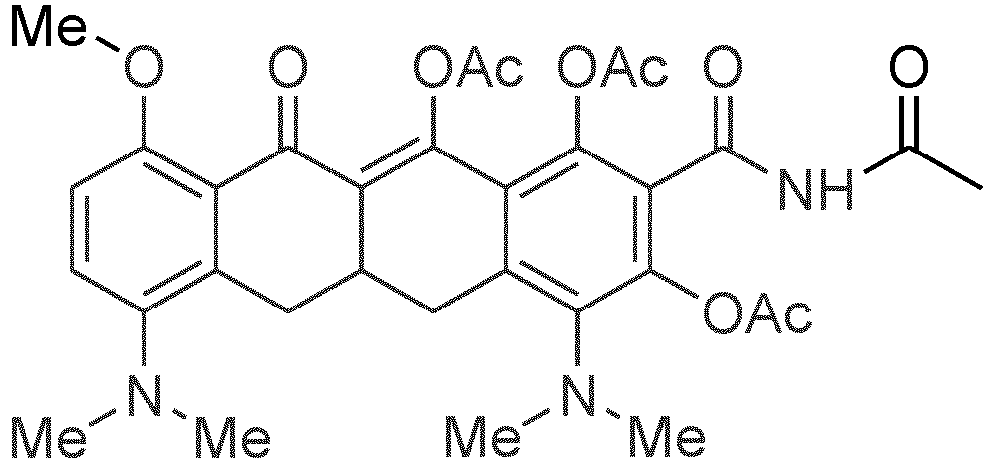
Acetic acid 4,5-diacetoxy-3-acetylcarbamoyl-1,10-bis-dimethylamino-7-methoxy-6-oxo-6,11,11a,12-tetrahydro-naphthacen-2-yl ester Methyl Ether Tetra acetate Minocycline (METAMC) 13 
Acetic acid 4-acetoxy-3-acetylcarbamoyl-1,10-bis-dimethylamino-5-hydroxy-7-methoxy-6-oxo-6,11,11a,12-tetrahydro-naphthacen-2-yl ester Methyl Ether Tri acetate Minocycline (METrAMC) 14 
Acetic acid 3,10,12-triacetoxy-2-acetylcarbamoyl-4,7-bis-dimethylamino-11-oxo-5,5a,6,11-tetrahydro-naphthacen-1-yl ester Penta acetyl Minocycline (PAMC) 15 
Acetic acid 3,10-diacetoxy-2-acetylcarbamoyl-4,7-bis-dimethylamino-12-hydroxy-11-oxo-5,5a,6,11-tetrahydro-naphthacen-1-yl ester Tetra acetyl Minocycline (TAMC) 16 
Acetic acid 9-acetylcarbamoyl-4-dimethylamino-8,10,11-trihydroxy-12-oxo-5,5a,6,12-tetrahydro-naphthacen-1-yl ester De Methyl Diacetate Minocycline (DMDAMC) -
FIGS. 8A to 8C show the activity of Methyl Ether Minocycline ( 4,7-Bis-dimethylamino-3,12,12a-trihydroxy-10-methoxy-1,11-dioxo-1,4,4a,5,5a,6,11,12a-octahydro-naphthacene-2-carboxylic acid amide, Hydrochloride), as shown withFIG. 8A E coli MM294 GFP zone of inhibition,FIG. 8B E coli MM294 GFP CFU/disc, andFIG. 8C reduction of binge ethanol consumption. -
FIGS. 9A to 9E show the activity of Ethyl Ether Minocycline (4,7-Bis-dimethylamino-10-ethoxy-3,12,12a-trihydroxy-1,11-dioxo-1,4,4a,5,5a,6,11,12a-octahydro-naphthacene-2-carboxylic acid amide, and the Hydrochloride salt), as shown withFIG. 9A E. coli MM294 GFP zone of inhibition,FIG. 9B E. coli MM294 GFP CFU/disc,FIG. 9C E. coli MM294 GFP zone of inhibition with the hydrochloride salt,FIG. 9D E. coli MM294 GFP CFU/disc inhibition with the hydrochloride salt, andFIG. 9E reduction of binge ethanol consumption. -
FIGS. 10A to 10E show the activity of Propyl Ether Minocycline (4,7-Bis-dimethylamino-3,12,12a-trihydroxy-1,11-dioxo-10-propoxy-1,4,4a,5,5a,6,11,12a-octahydro-naphthacene-2-carboxylic acid amide, and the Hydrochloride salt), as shown withFIG. 10A E. coli MM294 GFP zoned of inhibition,FIG. 10B E. coli MM294 GFP CFU/disc,FIG. 10C E. coli MM294 GFP zone of inhibition with the hydrochloride salt, FIG. 10D E. coli MM294 GFP CFU/disc inhibition with the hydrochloride salt, andFIG. 10E reduction of binge ethanol consumption. -
FIGS. 11A to 11C show the activity of Butyl Ether Minocycline (10-Butoxy-4,7-bis-dimethylamino-3,12,12a-trihydroxy-1,11-dioxo-1,4,4a,5,5a,6,11,12a-octahydro-naphthacene-2-carboxylic acid amide, and the Hydrochloride salt), as shown withFIG. 11A E. coli MM294 GFP zone of inhibition,FIG. 11B E. coli MM294 GFP CFU/disc, andFIG. 11C reduction of binge ethanol consumption. -
FIGS. 12A to 12C show the activity of De Methyl Diacetate Minocycline (Acetic acid 9-acetylcarbamoyl-4-dimethylamino-8,10,11-trihydroxy-12-oxo-S,Sa,6,12-tetrahydro-naphthacen-1-yl ester), as shown withFIG. 12A E. coli MM294 GFP zone of inhibition,FIG. 12B E. coli MM294 GFP CFU/disc, andFIG. 12C reduction of binge ethanol consumption. -
FIGS. 13A to 13C show the activity of Tetra Acetyl Minocycline (Acetic acid 3,10-diacetoxy-2-acetylcarbamoyl-4,7-bis-dimethylamino-12-hydroxy-11-oxo-5,5a,6,11-tetrahydro-naphthacen-1-yl ester), as shown withFIG. 13A E. coli MM294 GFP zone of inhibition,FIG. 13B E. coli MM294 GFP CFU/disc, andFIG. 13C reduction of binge ethanol consumption. -
FIGS. 14A to 14C show the activity of Penta Acetyl Minocycline (Acetic acid FIG. 14A E. coli MM294 GFP zone of inhibition,FIG. 14B E. coli MM294 GFP CFU/disc, andFIG. 14C reduction of binge ethanol consumption. -
FIGS. 15A to 15C show the activity of Methyl Ether N-Monoacetate Minocycline (4,7-Bis-dimethylamino-1,3,12-trihydroxy-10-methoxy-11-oxo-5,5a,6,11-tetrahydro-naphthacene-2-carboxylic acid acetyl-amide) and Methyl Ether Tri Acetate Minocycline (Acetic acid 4-acetoxy-3-acetylcarbamoyl-1,10-bis-dimethylamino-5-hydroxy-7-methoxy-6-oxo-6,11,11a,12-tetrahydro-naphthacen-2-yl ester), as shown withFIG. 15A E. coli MM294 GFP zone of inhibition,FIG. 15B E. coli MM294 GFP CFU/disc, andFIG. 15C reduction of binge ethanol consumption. - It is contemplated that any embodiment discussed in this specification can be implemented with respect to any method, kit, reagent, or composition of the invention, and vice versa. Furthermore, compositions of the invention can be used to achieve methods of the invention.
- It will be understood that particular embodiments described herein are shown by way of illustration and not as limitations of the invention. The principal features of this invention can be employed in various embodiments without departing from the scope of the invention. Those skilled in the art will recognize, or be able to ascertain using no more than routine experimentation, numerous equivalents to the specific procedures described herein. Such equivalents are considered to be within the scope of this invention and are covered by the claims.
- All publications and patent applications mentioned in the specification are indicative of the level of skill of those skilled in the art to which this invention pertains. All publications and patent applications are herein incorporated by reference to the same extent as if each individual publication or patent application was specifically and individually indicated to be incorporated by reference.
- The use of the word "a" or "an" when used in conjunction with the term "comprising" in the claims and/or the specification may mean "one," but it is also consistent with the meaning of "one or more," "at least one," and "one or more than one." The use of the term "or" in the claims is used to mean "and/or" unless explicitly indicated to refer to alternatives only or the alternatives are mutually exclusive, although the disclosure supports a definition that refers to only alternatives and "and/or." Throughout this application, the term "about" is used to indicate that a value includes the inherent variation of error for the device, the method being employed to determine the value, or the variation that exists among the study subjects.
- As used in this specification and claim(s), the words "comprising" (and any form of comprising, such as "comprise" and "comprises"), "having" (and any form of having, such as "have" and "has"), "including" (and any form of including, such as "includes" and "include") or "containing" (and any form of containing, such as "contains" and "contain") are inclusive or open-ended and do not exclude additional, unrecited elements or method steps. In embodiments of any of the compositions and methods provided herein, "comprising" may be replaced with "consisting essentially of" or "consisting of". As used herein, the phrase "consisting essentially of" requires the specified integer(s) or steps as well as those that do not materially affect the character or function of the claimed invention. As used herein, the term "consisting" is used to indicate the presence of the recited integer (e.g., a feature, an element, a characteristic, a property, a method/process step or a limitation) or group of integers (e.g., feature(s), element(s), characteristic(s), property(ies), method/process steps or limitation(s)) only.
- The term "or combinations thereof' as used herein refers to all permutations and combinations of the listed items preceding the term. For example, "A, B, C, or combinations thereof' is intended to include at least one of: A, B, C, AB, AC, BC, or ABC, and if order is important in a particular context, also BA, CA, CB, CBA, BCA, ACB, BAC, or CAB. Continuing with this example, expressly included are combinations that contain repeats of one or more item or term, such as BB, AAA, AB, BBC, AAABCCCC, CBBAAA, CABABB, and so forth. The skilled artisan will understand that typically there is no limit on the number of items or terms in any combination, unless otherwise apparent from the context.
- As used herein, words of approximation such as, without limitation, "about", "substantial" or "substantially" refers to a condition that when so modified is understood to not necessarily be absolute or perfect but would be considered close enough to those of ordinary skill in the art to warrant designating the condition as being present. The extent to which the description may vary will depend on how great a change can be instituted and still have one of ordinary skill in the art recognize the modified feature as still having the required characteristics and capabilities of the unmodified feature. In general, but subject to the preceding discussion, a numerical value herein that is modified by a word of approximation such as "about" may vary from the stated value by at least ±1, 2, 3, 4, 5, 6, 7, 10, 12 or 15%.
- All of the compositions and/or methods disclosed and claimed herein can be made and executed without undue experimentation in light of the present disclosure. While the compositions and methods of this invention have been described in terms of preferred embodiments, it will be apparent to those of skill in the art that variations may be applied to the compositions and/or methods and in the steps or in the sequence of steps of the method described herein without departing from the concept, spirit and scope of the invention. All such similar substitutes and modifications apparent to those skilled in the art are deemed to be within the spirit, scope and concept of the invention as defined by the appended claims.
- To aid the Patent Office, and any readers of any patent issued on this application in interpreting the claims appended hereto, applicants wish to note that they do not intend any of the appended claims to invoke
paragraph 6 of 35 U.S.C. § 112, U.S.C. § 112 paragraph (f), or equivalent, as it exists on the date of filing hereof unless the words "means for" or "step for" are explicitly used in the particular claim. - For each of the claims, each dependent claim can depend both from the independent claim and from each of the prior dependent claims for each and every claim so long as the prior claim provides a proper antecedent basis for a claim term or element.
-
- Agrawal, R. G., A. Hewetson, C. M. George, P. J. Syapin, and S. E. Bergeson. 2011. 'Minocycline reduces ethanol drinking', Brain, behavior, and immunity, 25 Suppl 1: S165-9.
- Agrawal, R. G., J. A. Owen, P. S. Levin, A. Hewetson, A. E. Berman, S. R. Franklin, R. J. Hogue, Y. Chen, C. Walz, B. D. Colvard, J. Nguyen, O. Velasquez, Y. Al-Hasan, Y. A. Blednov, A. K. Fowler, P. J. Syapin, and S. E. Bergeson. 2014. 'Bioinformatics analyses reveal age-specific neuroimmune modulation as a target for treatment of high ethanol drinking', Alcoholism, clinical and experimental research, 38: 428-37.
- Bergeson, S. E., H. Blanton, J. M. Martinez, D. C. Curtis, C. Sherfey, B. Seegmiller, P. C. Marquardt, J. A. Groot, C. L. Allison, C. Bezboruah, and J. Guindon. 2016. 'Binge Ethanol Consumption Increases Inflammatory Pain Responses and Mechanical and Cold Sensitivity: Tigecycline Treatment Efficacy Shows Sex Differences', Alcoholism, clinical and experimental research, 40: 2506-15.
- Bergeson, S. E., M. A. Nipper, J. Jensen, M. L. Helms, and D. A. Finn. 2016. 'Tigecycline Reduces Ethanol Intake in Dependent and Nondependent Male and Female C57BL/6J Mice', Alcoholism, clinical and experimental research, 40: 2491-98.
- Blednov, Y. A., J. M. Benavidez, C. Geil, S. Perra, H. Morikawa, and R. A. Harris. 2011. 'Activation of inflammatory signaling by lipopolysaccharide produces a prolonged increase of voluntary alcohol intake in mice', Brain, behavior, and immunity, 25 Suppl 1: S92-S105.
- Martinez, J. M., J. A. Groot, D. C. Curtis, C. L. Allison, P. C. Marquardt, A. N. Holmes, D. S. Edwards, D. R. Trotter, P. J. Syapin, D. A. Finn, and S. E. Bergeson. 2016. 'Effective Reduction of Acute Ethanol Withdrawal by the Tetracycline Derivative, Tigecycline, in Female and Male DBA/2J Mice', Alcoholism, clinical and experimental research, 40: 2499-505.
- Montesinos, J., S. Alfonso-Loeches, and C. Guerri. 2016. 'Impact of the Innate Immune Response in the Actions of Ethanol on the Central Nervous System', Alcoholism, clinical and experimental research, 40: 2260-70.
- Rhodes, J. S., K. Best, J. K. Belknap, D. A. Finn, and J. C. Crabbe. 2005. 'Evaluation of a simple model of ethanol drinking to intoxication in C57BL/6J mice', Physiology & Behavior, 84: 53-63.
- Schedlbauer, A., T. Kaminishi, B. Ochoa-Lizarralde, N. Dhimole, S. Zhou, J. P. Lopez-Alonso, S. R. Connell, and P. Fucini. 2015. 'Structural characterization of an alternative mode of tigecycline binding to the bacterial ribosome', Antimicrobial agents and chemotherapy, 59: 2849-54.
- Syapin, P. J., J. M. Martinez, D. C. Curtis, P. C. Marquardt, C. L. Allison, J. A. Groot, C. Baby, Y. M. Al-Hasan, I. Segura-Ulate, M. J. Scheible, K. T. Nicholson, J. L. Redondo, D. R. Trotter, D. S. Edwards, and S. E. Bergeson. 2016. 'Effective Reduction in High Ethanol Drinking by Semisynthetic Tetracycline Derivatives', Alcoholism, clinical and experimental research, 40: 2482-90.
- Moreover, the present application relates to the following items:
- 1. A method of treating Alcohol Use Disorder (AUD), Substance Use Disorder (SUD), tobacco use, pain, or proinflammatory disorders comprising:
- providing a subject with an effective amount of a modified tetracycline or derivative thereof to ameliorate or eliminate the AUD, SUD, tobacco use, pain, or proinflammatory disorder, and wherein the modified tetracycline or derivative thereof has reduced binding to a microbial ribosome and has the formula:

- R1 is methyl, ethyl, propyl, butyl, acetyl, alkyl, R2 is OH or acetyl, R3 is 0, OH, acetyl, R4 is H or acetyl, and R5 is H or acetyl.
- providing a subject with an effective amount of a modified tetracycline or derivative thereof to ameliorate or eliminate the AUD, SUD, tobacco use, pain, or proinflammatory disorder, and wherein the modified tetracycline or derivative thereof has reduced binding to a microbial ribosome and has the formula:
- 2. The method of
item 1, wherein the modified tetracycline has the formula:


- 3. The method of
item 1, wherein the modified tetracycline has moderate to no antibacterial activity. - 4. The method of
item 1, wherein the modified tetracycline has moderate to no antifungal activity. - 5. The method of
item 1, wherein the modified tetracycline is a doxycycline, minocycline, or tigecycline. - 6. The method of
item 1, wherein the ribosome is a bacterial ribosome. - 7. The method of
item 1, wherein the modification at least one of: produces steric hindrance, blocks hydrogen bonding, or change coordination with divalent cations. - 8. The method of
item 1, wherein the modified tetracycline further comprises a pharmaceutically acceptable buffer, excipient, filler, or carrier. - 9. The method of
item 1, wherein the modified tetracycline is adapted for administration orally, enterally, parenterally, intramuscularly, intravenously, or intraperitoneally. - 10. A method of evaluating a candidate drug believed to be useful in treating Alcohol Use Disorder (AUD), Substance Use Disorder (SUD, including for opioids, tobacco use, pain, or proinflammatory disorders, the method comprising:
- a) measuring the Alcohol Use Disorder (AUD), Substance Use Disorder (SUD, tobacco use, pain, or proinflammatory disorders from a set of patients;
- b) administering a candidate drug to a first subset of the patients, and a placebo to a second subset of the patients, wherein the candidate drug is a C6' modified tetracycline that has the formula:

- c) repeating step a) after the administration of the candidate drug or the placebo; and
- d) determining if the candidate drug reduces the Alcohol Use Disorder (AUD), Substance Use Disorder (SUD, pain, or proinflammatory disorders that is statistically significant as compared to any reduction occurring in the second subset of patients, wherein a statistically significant reduction indicates that the candidate drug is useful in treating Alcohol Use Disorder (AUD), Substance Use Disorder (SUD, tobacco use, pain, or proinflammatory disorders.
- 11. The method of
item 10, wherein the modified tetracycline has the formula:


- 12. The method of
item 10, wherein the molecule has moderate to no antibacterial activity. - 13. The method of
item 10, wherein the molecule has moderate to no antifungal activity. - 14. The method of
item 10, wherein the molecule inhibits Alcohol Use Disorder (AUD), Substance Use Disorder (SUD, pain and disorders involving potential inflammatory processes. - 15. The method of
item 10, wherein the modified molecule is a doxycycline, minocycline, or tigecycline. - 16. The method of
item 10, wherein the modified tetracycline further comprises a pharmaceutically acceptable buffer, excipient, filler, or carrier. - 17. The method of
item 10, wherein the ribosome is a bacterial ribosome. - 18. The method of
item 10, wherein the modification at least one of: produces steric hindrance, blocks hydrogen bonding, or change coordination with divalent cations. - 19. A method of treating Alcohol Use Disorder (AUD), Substance Use Disorder (SUD, tobacco use, pain, or proinflammatory disorders comprising:
- identifying a subject in need of treatment for at least one of AUD, Substance Use Disorder (SUD, tobacco use, pain, or a proinflammatory disorder; and
- providing the subject with an effective amount of a modified tetracycline or derivative thereof to ameliorate or eliminate the AUD, Substance Use Disorder (SUD, tobacco use, pain, or proinflammatory disorder, and wherein the modified tetracycline or derivative thereof has reduced binding to a microbial ribosome and has the formula:

- R1 is methyl, ethyl, propyl, butyl, acetyl, alkyl, R2 is OH or acetyl, R3 is 0, OH, acetyl, R4 is H or acetyl, and R5 is H or acetyl, in a pharmaceutically acceptable carrier.
- 20. The method of item 19, wherein the modified tetracycline has the formula:


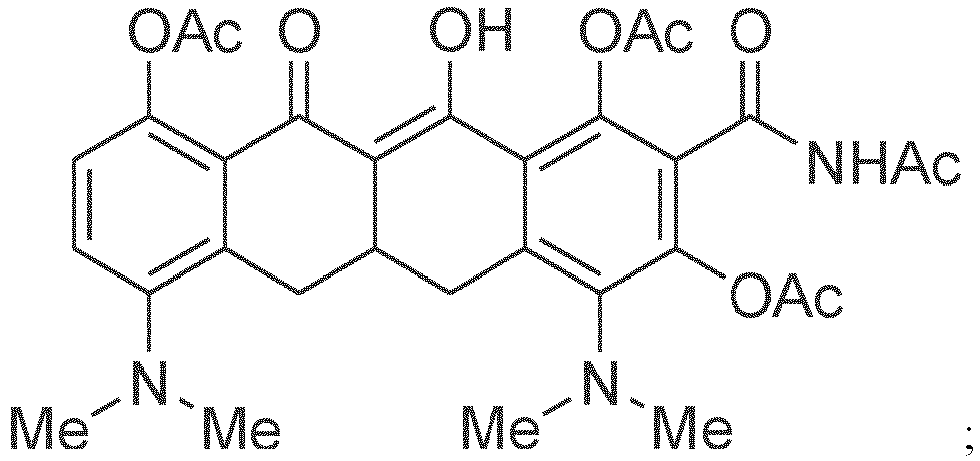

- 21. The method of item 19, wherein the modified tetracycline has moderate to no antibacterial activity.
- 22. The method of item 19, wherein the modified tetracycline has moderate to no antifungal activity.
- 23. The method of item 19, wherein the modified tetracycline is a doxycycline, minocycline, or tigecycline.
- 24. The method of item 19, wherein the ribosome is a bacterial ribosome.
- 25. The method of item 19, wherein the modification at least one of: produces steric hindrance, blocks hydrogen bonding, or change coordination with divalent cations.
- 26. The method of item 19, wherein the modified tetracycline further comprises a pharmaceutically acceptable buffer, excipient, filler, or carrier.
- 27. The method of item 19, wherein the modified tetracycline is adapted for administration orally, enterally, intramuscularly, parenterally, intravenously, or intraperitoneally.
Claims (12)
- A composition for use in a method of treating Alcohol Use Disorder (AUD), tobacco use, pain, or proinflammatory disorders comprising:an effective amount of a modified tetracycline or derivative thereof to ameliorate or eliminate the AUD, tobacco use, pain, or proinflammatory disorder, and wherein the modified tetracycline or derivative thereof has reduced binding to a microbial ribosome and has the formula:
 R1 is methyl, ethyl, propyl, butyl, acetyl, alkyl, R2 is H or acetyl, R3 is H or acetyl, R4 is H or acetyl, and R5 is H or acetyl.
 - The composition for use of claim 1, wherein the modified tetracycline has the formula:




- The composition for use of claim 1, wherein the modified tetracycline has moderate to no antibacterial activity or no antifungal activity.
- The composition for use of claim 1, wherein the modified tetracycline further comprises a pharmaceutically acceptable buffer, excipient, filler, or carrier or the modified tetracycline is adapted for administration orally, enterally, parenterally, intramuscularly, intravenously, or intraperitoneally.
- A method of evaluating a candidate drug believed to be useful in treating Alcohol Use Disorder (AUD), tobacco use, pain, or proinflammatory disorders, the method comprising:a) measuring the Alcohol Use Disorder (AUD), tobacco use, pain, or proinflammatory disorders from a set of patients;b) administering a candidate drug to a first subset of the patients, and a placebo to a second subset of the patients, wherein the candidate drug is a C6' modified tetracycline that has the formula:
 c) repeating step a) after the administration of the candidate drug or the placebo; andd) determining if the candidate drug reduces the Alcohol Use Disorder (AUD), tobacco use, pain, or proinflammatory disorders that is statistically significant as compared to any reduction occurring in the second subset of patients, wherein a statistically significant reduction indicates that the candidate drug is useful in treating Alcohol Use Disorder (AUD), tobacco use, pain, or proinflammatory disorders.
 - The method of claim 5, wherein the modified tetracycline has the formula:





- The method of claim 5, wherein the molecule has moderate to no antibacterial activity or no antifungal activity.
- The method of claim 5, wherein the modified tetracycline further comprises a pharmaceutically acceptable buffer, excipient, filler, or carrier or the modified tetracycline is adapted for administration orally, enterally, parenterally, intramuscularly, intravenously, or intraperitoneally.
- A composition for use in a method of treating Alcohol Use Disorder (AUD), tobacco use, pain, or proinflammatory disorders comprising:an effective amount of a modified tetracycline or derivative thereof to ameliorate or eliminate the AUD, tobacco use, pain, or proinflammatory disorder, and wherein the modified tetracycline or derivative thereof has reduced binding to a microbial ribosome and has the formula:
 R1 is methyl, ethyl, propyl, butyl, acetyl, alkyl, R2 is H or acetyl, R3 is H or acetyl, R4 is H or acetyl, and R5 is H or acetyl, in a pharmaceutically acceptable carrier, wherein the method comprises identifying a subject in need of treatment for at least one of AUD, tobacco use, pain, or a proinflammatory disorder.
 - The composition for use of claim 9, wherein the modified tetracycline has the formula:






- The composition for use of claim 9, wherein the modified tetracycline has moderate to no antibacterial activity or no antifungal activity.
- The composition for use of claim 9, wherein the modified tetracycline further comprises a pharmaceutically acceptable buffer, excipient, filler, or carrier or the modified tetracycline is adapted for administration orally, enterally, intramuscularly, parenterally, intravenously, or intraperitoneally.
Applications Claiming Priority (4)
| Application Number | Priority Date | Filing Date | Title |
|---|---|---|---|
| US201862684509P | 2018-06-13 | 2018-06-13 | |
| US201862684467P | 2018-06-13 | 2018-06-13 | |
| EP19820642.7A EP3806865B1 (en) | 2018-06-13 | 2019-06-13 | Modified tetracycline for treatment of substance use disorder |
| PCT/US2019/036892 WO2019241466A1 (en) | 2018-06-13 | 2019-06-13 | Modified tetracycline for treatment of alcohol use disorder, pain and other disorders involving potential inflammatory processes |
Related Parent Applications (1)
| Application Number | Title | Priority Date | Filing Date |
|---|---|---|---|
| EP19820642.7A Division EP3806865B1 (en) | 2018-06-13 | 2019-06-13 | Modified tetracycline for treatment of substance use disorder |
Publications (2)
| Publication Number | Publication Date |
|---|---|
| EP4494708A2 true EP4494708A2 (en) | 2025-01-22 |
| EP4494708A3 EP4494708A3 (en) | 2025-05-14 |
Family
ID=68843593
Family Applications (2)
| Application Number | Title | Priority Date | Filing Date |
|---|---|---|---|
| EP24215329.4A Pending EP4494708A3 (en) | 2018-06-13 | 2019-06-13 | Modified tetracycline for treatment of alcohol use disorder, pain and other disorders involving inflammatory processes |
| EP19820642.7A Active EP3806865B1 (en) | 2018-06-13 | 2019-06-13 | Modified tetracycline for treatment of substance use disorder |
Family Applications After (1)
| Application Number | Title | Priority Date | Filing Date |
|---|---|---|---|
| EP19820642.7A Active EP3806865B1 (en) | 2018-06-13 | 2019-06-13 | Modified tetracycline for treatment of substance use disorder |
Country Status (4)
| Country | Link |
|---|---|
| US (5) | US11542227B2 (en) |
| EP (2) | EP4494708A3 (en) |
| CA (2) | CA3234239A1 (en) |
| WO (2) | WO2019241466A1 (en) |
Families Citing this family (4)
| Publication number | Priority date | Publication date | Assignee | Title |
|---|---|---|---|---|
| WO2019241466A1 (en) | 2018-06-13 | 2019-12-19 | Texas Tech University System | Modified tetracycline for treatment of alcohol use disorder, pain and other disorders involving potential inflammatory processes |
| EP4117671A4 (en) * | 2020-03-10 | 2024-04-10 | Texas Tech University System | Novel modified tetracyclines for treatment of alcohol use disorder, pain and other disorders involving potential inflammatory processes |
| WO2023147011A1 (en) * | 2022-01-27 | 2023-08-03 | Vimu Therapeutics | Compositions and methods for inhibiting severe acute respiratory syndrome (sars) coronavirus-2 (sars-cov-2) |
| WO2025090761A1 (en) * | 2023-10-24 | 2025-05-01 | Texas Tech University System | Treatment of retinal degeneration with minocycline and minocycline analogs |
Citations (1)
| Publication number | Priority date | Publication date | Assignee | Title |
|---|---|---|---|---|
| WO2009012741A1 (en) | 2007-07-20 | 2009-01-29 | Otto-Von-Guericke Universität Magdeburg Medizinische Fakultät | Method for the synthesis of a-ring aromatized acetyl minocyclines |
Family Cites Families (15)
| Publication number | Priority date | Publication date | Assignee | Title |
|---|---|---|---|---|
| SE9803710L (en) * | 1998-09-25 | 2000-03-26 | A & Science Invest Ab | Use of certain substances for the treatment of nerve root damage |
| WO2002072031A2 (en) | 2001-03-14 | 2002-09-19 | Paratek Pharmaceuticals, Inc. | Substituted tetracycline compounds as synergistic antifungal agents |
| JP2004537544A (en) * | 2001-07-13 | 2004-12-16 | パラテック ファーマシューティカルズ インコーポレイテッド | Tetracycline compounds with targeted therapeutic activity |
| EA200900540A1 (en) * | 2002-07-12 | 2009-12-30 | Пэрэтек Фамэсьютикэлс, Инк. | SUBSTITUTED COMPOUNDS OF TETRACYCLINE, PHARMACEUTICAL COMPOSITION AND METHOD FOR TREATMENT OF TETRACYCLINE-SENSITIVE CONDITION IN SUBJECT |
| CA2503446C (en) * | 2002-10-24 | 2012-12-18 | Paratek Pharmaceuticals, Inc. | Methods of using substituted tetracycline compounds to modulate rna |
| WO2004064728A2 (en) * | 2003-01-16 | 2004-08-05 | Paratek Pharmaceuticals, Inc. | Use of specific tetracycline compounds in therapy |
| WO2004082617A2 (en) | 2003-03-14 | 2004-09-30 | Ppd Biomarker Discovery Sciences, Llc | Biological markers for diagnosing rheumatoid arthritis |
| US7807842B2 (en) | 2004-05-21 | 2010-10-05 | President And Fellows Of Harvard College | Synthesis of tetracyclines and analogues thereof |
| EP2269991A3 (en) | 2004-10-25 | 2011-09-21 | Paratek Pharmaceuticals, Inc. | Substituted tetracycline compounds |
| JP2009502809A (en) | 2005-07-21 | 2009-01-29 | パラテック ファーマシューティカルズ インコーポレイテッド | 10-Substituted Tetracycline and Method of Use |
| CA2730377C (en) | 2008-07-11 | 2017-09-19 | Neumedics | Tetracycline derivatives with reduced antibiotic activity and neuroprotective benefits |
| EP2659887A1 (en) | 2012-05-03 | 2013-11-06 | Otto-von-Guericke-Universität Magdeburg | Use of A-ring aromatic acetyl minocycline and pharmaceutical preparations derived from same for treatment and prevention of inflammation, autoimmune disorders and rejection of transplants |
| JP2015522810A (en) * | 2012-06-14 | 2015-08-06 | サインパス ファルマ, インク.Signpath Pharma, Inc. | Method and system for measuring the pharmacokinetics of liposomal curcumin and its metabolite tetrahydrocurcumin |
| EP2968372A1 (en) * | 2013-03-15 | 2016-01-20 | ReVance Therapeutics, Inc. | Minocycline derivatives |
| WO2019241466A1 (en) * | 2018-06-13 | 2019-12-19 | Texas Tech University System | Modified tetracycline for treatment of alcohol use disorder, pain and other disorders involving potential inflammatory processes |
-
2019
- 2019-06-13 WO PCT/US2019/036892 patent/WO2019241466A1/en not_active Ceased
- 2019-06-13 CA CA3234239A patent/CA3234239A1/en active Pending
- 2019-06-13 EP EP24215329.4A patent/EP4494708A3/en active Pending
- 2019-06-13 CA CA3103614A patent/CA3103614C/en active Active
- 2019-06-13 WO PCT/US2019/036928 patent/WO2019241490A1/en not_active Ceased
- 2019-06-13 EP EP19820642.7A patent/EP3806865B1/en active Active
- 2019-06-13 US US16/973,896 patent/US11542227B2/en active Active
- 2019-06-13 US US17/251,469 patent/US12486219B2/en active Active
-
2022
- 2022-11-29 US US18/059,533 patent/US12202785B2/en active Active
-
2024
- 2024-12-10 US US18/975,409 patent/US20250129014A1/en active Pending
-
2025
- 2025-11-14 US US19/389,759 patent/US20260103439A1/en active Pending
Patent Citations (2)
| Publication number | Priority date | Publication date | Assignee | Title |
|---|---|---|---|---|
| WO2009012741A1 (en) | 2007-07-20 | 2009-01-29 | Otto-Von-Guericke Universität Magdeburg Medizinische Fakultät | Method for the synthesis of a-ring aromatized acetyl minocyclines |
| US20100173991A1 (en) | 2007-07-20 | 2010-07-08 | Peter Lorenz | Method for the synthesis of a-ring aromatized acetyl minocyclines |
Non-Patent Citations (11)
| Title |
|---|
| AGRAWAL, R. G.J. A. OWENP. S. LEVINA. HEWETSONA. E. BERMANS. R. FRANKLINR. J. HOGUEY. CHENC. WALZB. D. COLVARD: "Bioinformatics analyses reveal age-specific neuroimmune modulation as a target for treatment of high ethanol drinking", ALCOHOLISM, CLINICAL AND EXPERIMENTAL RESEARCH, vol. 38, 2014, pages 428 - 37 |
| AGRAWAL, R. GA. HEWETSONC. M. GEORGEP. J. SYAPINS. E. BERGESON.: "Minocycline reduces ethanol drinking", BRAIN, BEHAVIOR, AND IMMUNITY, 25 SUPPL, vol. 1, 2011, pages 165 - 9 |
| BERGESON, S. E.H. BLANTONJ. M. MARTINEZD. C. CURTISC. SHERFEYB. SEEGMILLERP. C. MARQUARDTJ. A. GROOTC. L. ALLISONC. BEZBORUAH: "Binge Ethanol Consumption Increases Inflammatory Pain Responses and Mechanical and Cold Sensitivity: Tigecycline Treatment Efficacy Shows Sex Differences", ALCOHOLISM, CLINICAL AND EXPERIMENTAL RESEARCH, vol. 40, 2016, pages 2506 - 15, XP071479212, DOI: 10.1111/acer.13252 |
| BERGESON, S. E.M. A. NIPPERJ. JENSENM. L. HELMSD. A. FINN.: "Tigecycline Reduces Ethanol Intake in Dependent and Nondependent Male and Female C57BL/6J Mice", ALCOHOLISM, CLINICAL AND EXPERIMENTAL RESEARCH, vol. 40, 2016, pages 2491 - 98, XP055879027, DOI: 10.1111/acer.13251 |
| BLEDNOV, Y. AJ. M. BENAVIDEZC. GEILS. PERRAH. MORIKAWAR. A. HARRIS.: "Activation of inflammatory signaling by lipopolysaccharide produces a prolonged increase of voluntary alcohol intake in mice", BRAIN, BEHAVIOR, AND IMMUNITY, vol. 25, 2011, pages S92 - S105, XP028230752, DOI: 10.1016/j.bbi.2011.01.008 |
| MARK R. HUTCHINSONALEXIS L. NORTHCUTTLINDSEY W. CHAOJEFFREY J. KEARNEYYINGNING ZHANGDEBRA L. BERKELHAMMERLISA C. LORAMROBERT R. RO: "Minocycline suppresses morphine-induced respiratory depression, suppresses morphine-induced reward, and enhances systemic morphine-induced analgesia", BRAIN, BEHAVIOR AND IMMUNITY, vol. 22, no. 8, 2009, pages 1248 - 1256, XP025470953, DOI: 10.1016/j.bbi.2008.07.008 |
| MARTINEZ, J. M.J. A. GROOTD. C. CURTISC. L. ALLISONP. C. MARQUARDTA. N. HOLMESD. S. EDWARDSD. R. TROTTERP. J. SYAPIND. A. FINN: "Effective Reduction of Acute Ethanol Withdrawal by the Tetracycline Derivative, Tigecycline, in Female and Male DBA/2J Mice", ALCOHOLISM, CLINICAL AND EXPERIMENTAL RESEARCH, vol. 40, 2016, pages 2499 - 505, XP071479200, DOI: 10.1111/acer.13259 |
| MONTESINOS, J.S. ALFONSO-LOECHESC. GUERRI.: "Impact of the Innate Immune Response in the Actions of Ethanol on the Central Nervous System", ALCOHOLISM, CLINICAL AND EXPERIMENTAL RESEARCH, vol. 40, 2016, pages 2260 - 70, XP071479295, DOI: 10.1111/acer.13208 |
| RHODES, J. S.K. BESTJ. K. BELKNAPD. A. FINNJ. C. CRABBE.: "Evaluation of a simple model of ethanol drinking to intoxication in C57BL/6J mice", PHYSIOLOGY & BEHAVIOR, vol. 84, 2005, pages 53 - 63, XP004706801, DOI: 10.1016/j.physbeh.2004.10.007 |
| SCHEDLBAUER, AT. KAMINISHIB. OCHOA-LIZARRALDEN. DHIMOLES. ZHOUJ. P. LOPEZ-ALONSOS. R. CONNELLP. FUCINI.: "Structural characterization of an alternative mode of tigecycline binding to the bacterial ribosome", ANTIMICROBIAL AGENTS AND CHEMOTHERAPY, vol. 59, 2015, pages 2849 - 54 |
| SYAPIN, P. J.J. M. MARTINEZD. C. CURTISP. C. MARQUARDTC. L. ALLISONJ. A. GROOTC. BABYY. M. AL-HASANI. SEGURA-ULATEM. J. SCHEIBLE: "Effective Reduction in High Ethanol Drinking by Semisynthetic Tetracycline Derivatives", ALCOHOLISM, CLINICAL AND EXPERIMENTAL RESEARCH, vol. 40, 2016, pages 2482 - 90, XP055879025, DOI: 10.1111/acer.13253 |
Also Published As
| Publication number | Publication date |
|---|---|
| US20210403416A1 (en) | 2021-12-30 |
| EP3806865B1 (en) | 2024-12-18 |
| EP4494708A3 (en) | 2025-05-14 |
| WO2019241466A1 (en) | 2019-12-19 |
| US20220040208A1 (en) | 2022-02-10 |
| US20260103439A1 (en) | 2026-04-16 |
| EP3806865C0 (en) | 2024-12-18 |
| EP3806865A1 (en) | 2021-04-21 |
| US12202785B2 (en) | 2025-01-21 |
| US20250129014A1 (en) | 2025-04-24 |
| WO2019241490A1 (en) | 2019-12-19 |
| US12486219B2 (en) | 2025-12-02 |
| CA3103614C (en) | 2024-05-28 |
| EP3806865A4 (en) | 2022-06-01 |
| CA3103614A1 (en) | 2019-12-19 |
| CA3234239A1 (en) | 2019-12-19 |
| US20230127462A1 (en) | 2023-04-27 |
| US11542227B2 (en) | 2023-01-03 |
Similar Documents
| Publication | Publication Date | Title |
|---|---|---|
| US12202785B2 (en) | Modified tetracycline for treatment of alcohol use disorder, pain and other disorders involving potential inflammatory processes | |
| CA1171783A (en) | Combination of rapamycin and picibanil for the treatment of tumors | |
| AU2009356692B2 (en) | Chalcones as enhancer of antimicrobial agents | |
| US20220152011A1 (en) | Novel uses of piperidinyl-indole derivatives | |
| EP2365747A1 (en) | Methods for treating gastrointestinal diseases | |
| EP3655403A1 (en) | Compounds affecting pigment production and use thereof for treatment of bacterial diseases | |
| JP2003527417A (en) | Bactericidal antibacterial methods and compositions for use in treating Gram-positive bacterial infections | |
| JP2014526548A (en) | Compositions and methods for treating autoimmune diseases | |
| JPH0296523A (en) | Platinum chemical remedy product | |
| CN117105930B (en) | 3, 13-disubstituted berberine derivative, and preparation method and application thereof | |
| WO2021183628A1 (en) | Novel modified tetracyclines for treatment of alcohol use disorder, paint and other disorders involving potential inflammatory processes | |
| CN117529312A (en) | Combination of plinamycin IA and flopitin for the treatment or prevention of bacterial infections | |
| Steffen et al. | Treatment of travellers' diarrhoea with fleroxacin: a case study | |
| WO2010002965A2 (en) | Pneumonia treatment | |
| EP4426311B1 (en) | Boromycin as gametocytocidal compound | |
| JP6985135B2 (en) | Regulatory T cell differentiation inhibitor and immunomodulatory composition | |
| HK40109116B (en) | Novel uses of piperidinyl-indole derivatives | |
| HK40109116A (en) | Novel uses of piperidinyl-indole derivatives | |
| HK40022389B (en) | Piperidinyl-indole derivatives for use in the treatment of c3 glomerulopathy | |
| HK40022389A (en) | Piperidinyl-indole derivatives for use in the treatment of c3 glomerulopathy | |
| JPS646165B2 (en) |
Legal Events
| Date | Code | Title | Description |
|---|---|---|---|
| PUAI | Public reference made under article 153(3) epc to a published international application that has entered the european phase |
Free format text: ORIGINAL CODE: 0009012 |
|
| STAA | Information on the status of an ep patent application or granted ep patent |
Free format text: STATUS: THE APPLICATION HAS BEEN PUBLISHED |
|
| AC | Divisional application: reference to earlier application |
Ref document number: 3806865 Country of ref document: EP Kind code of ref document: P |
|
| AK | Designated contracting states |
Kind code of ref document: A2 Designated state(s): AL AT BE BG CH CY CZ DE DK EE ES FI FR GB GR HR HU IE IS IT LI LT LU LV MC MK MT NL NO PL PT RO RS SE SI SK SM TR |
|
| REG | Reference to a national code |
Ref country code: DE Ref legal event code: R079 Free format text: PREVIOUS MAIN CLASS: A61P0029000000 Ipc: A61K0031650000 |
|
| RIC1 | Information provided on ipc code assigned before grant |
Ipc: A61P 29/00 20060101ALI20250212BHEP Ipc: A61P 25/34 20060101ALI20250212BHEP Ipc: A61P 25/30 20060101ALI20250212BHEP Ipc: A61P 31/00 20060101ALI20250212BHEP Ipc: A61P 25/36 20060101ALI20250212BHEP Ipc: A61P 25/32 20060101ALI20250212BHEP Ipc: C07C 237/26 20060101ALI20250212BHEP Ipc: A61K 31/65 20060101AFI20250212BHEP |
|
| PUAL | Search report despatched |
Free format text: ORIGINAL CODE: 0009013 |
|
| AK | Designated contracting states |
Kind code of ref document: A3 Designated state(s): AL AT BE BG CH CY CZ DE DK EE ES FI FR GB GR HR HU IE IS IT LI LT LU LV MC MK MT NL NO PL PT RO RS SE SI SK SM TR |
|
| RIC1 | Information provided on ipc code assigned before grant |
Ipc: A61P 29/00 20060101ALI20250409BHEP Ipc: A61P 25/34 20060101ALI20250409BHEP Ipc: A61P 25/30 20060101ALI20250409BHEP Ipc: A61P 31/00 20060101ALI20250409BHEP Ipc: A61P 25/36 20060101ALI20250409BHEP Ipc: A61P 25/32 20060101ALI20250409BHEP Ipc: C07C 237/26 20060101ALI20250409BHEP Ipc: A61K 31/65 20060101AFI20250409BHEP |
|
| STAA | Information on the status of an ep patent application or granted ep patent |
Free format text: STATUS: REQUEST FOR EXAMINATION WAS MADE |
|
| 17P | Request for examination filed |
Effective date: 20251112 |
|
| GRAP | Despatch of communication of intention to grant a patent |
Free format text: ORIGINAL CODE: EPIDOSNIGR1 |
|
| STAA | Information on the status of an ep patent application or granted ep patent |
Free format text: STATUS: GRANT OF PATENT IS INTENDED |
|
| INTG | Intention to grant announced |
Effective date: 20260327 |