EP4492735A1 - Procede de restauration automatique de fonctionnalite dans une passerelle residentielle - Google Patents
Procede de restauration automatique de fonctionnalite dans une passerelle residentielle Download PDFInfo
- Publication number
- EP4492735A1 EP4492735A1 EP24187628.3A EP24187628A EP4492735A1 EP 4492735 A1 EP4492735 A1 EP 4492735A1 EP 24187628 A EP24187628 A EP 24187628A EP 4492735 A1 EP4492735 A1 EP 4492735A1
- Authority
- EP
- European Patent Office
- Prior art keywords
- residential gateway
- modem
- broadband
- controller
- network
- Prior art date
- Legal status (The legal status is an assumption and is not a legal conclusion. Google has not performed a legal analysis and makes no representation as to the accuracy of the status listed.)
- Granted
Links
Images
Classifications
-
- H—ELECTRICITY
- H04—ELECTRIC COMMUNICATION TECHNIQUE
- H04L—TRANSMISSION OF DIGITAL INFORMATION, e.g. TELEGRAPHIC COMMUNICATION
- H04L12/00—Data switching networks
- H04L12/28—Data switching networks characterised by path configuration, e.g. LAN [Local Area Networks] or WAN [Wide Area Networks]
- H04L12/2803—Home automation networks
- H04L12/283—Processing of data at an internetworking point of a home automation network
- H04L12/2834—Switching of information between an external network and a home network
-
- H—ELECTRICITY
- H04—ELECTRIC COMMUNICATION TECHNIQUE
- H04W—WIRELESS COMMUNICATION NETWORKS
- H04W24/00—Supervisory, monitoring or testing arrangements
- H04W24/04—Arrangements for maintaining operational condition
-
- H—ELECTRICITY
- H04—ELECTRIC COMMUNICATION TECHNIQUE
- H04L—TRANSMISSION OF DIGITAL INFORMATION, e.g. TELEGRAPHIC COMMUNICATION
- H04L41/00—Arrangements for maintenance, administration or management of data switching networks, e.g. of packet switching networks
- H04L41/06—Management of faults, events, alarms or notifications
- H04L41/0654—Management of faults, events, alarms or notifications using network fault recovery
-
- H—ELECTRICITY
- H04—ELECTRIC COMMUNICATION TECHNIQUE
- H04L—TRANSMISSION OF DIGITAL INFORMATION, e.g. TELEGRAPHIC COMMUNICATION
- H04L41/00—Arrangements for maintenance, administration or management of data switching networks, e.g. of packet switching networks
- H04L41/06—Management of faults, events, alarms or notifications
- H04L41/0654—Management of faults, events, alarms or notifications using network fault recovery
- H04L41/0659—Management of faults, events, alarms or notifications using network fault recovery by isolating or reconfiguring faulty entities
- H04L41/0661—Management of faults, events, alarms or notifications using network fault recovery by isolating or reconfiguring faulty entities by reconfiguring faulty entities
-
- H—ELECTRICITY
- H04—ELECTRIC COMMUNICATION TECHNIQUE
- H04L—TRANSMISSION OF DIGITAL INFORMATION, e.g. TELEGRAPHIC COMMUNICATION
- H04L41/00—Arrangements for maintenance, administration or management of data switching networks, e.g. of packet switching networks
- H04L41/06—Management of faults, events, alarms or notifications
- H04L41/0686—Additional information in the notification, e.g. enhancement of specific meta-data
-
- H—ELECTRICITY
- H04—ELECTRIC COMMUNICATION TECHNIQUE
- H04L—TRANSMISSION OF DIGITAL INFORMATION, e.g. TELEGRAPHIC COMMUNICATION
- H04L69/00—Network arrangements, protocols or services independent of the application payload and not provided for in the other groups of this subclass
- H04L69/40—Network arrangements, protocols or services independent of the application payload and not provided for in the other groups of this subclass for recovering from a failure of a protocol instance or entity, e.g. service redundancy protocols, protocol state redundancy or protocol service redirection
-
- H—ELECTRICITY
- H04—ELECTRIC COMMUNICATION TECHNIQUE
- H04L—TRANSMISSION OF DIGITAL INFORMATION, e.g. TELEGRAPHIC COMMUNICATION
- H04L12/00—Data switching networks
- H04L12/28—Data switching networks characterised by path configuration, e.g. LAN [Local Area Networks] or WAN [Wide Area Networks]
- H04L12/2854—Wide area networks, e.g. public data networks
- H04L12/2856—Access arrangements, e.g. Internet access
- H04L12/2869—Operational details of access network equipments
- H04L12/2898—Subscriber equipments
-
- H—ELECTRICITY
- H04—ELECTRIC COMMUNICATION TECHNIQUE
- H04L—TRANSMISSION OF DIGITAL INFORMATION, e.g. TELEGRAPHIC COMMUNICATION
- H04L41/00—Arrangements for maintenance, administration or management of data switching networks, e.g. of packet switching networks
- H04L41/08—Configuration management of networks or network elements
- H04L41/0876—Aspects of the degree of configuration automation
- H04L41/0886—Fully automatic configuration
-
- H—ELECTRICITY
- H04—ELECTRIC COMMUNICATION TECHNIQUE
- H04W—WIRELESS COMMUNICATION NETWORKS
- H04W88/00—Devices specially adapted for wireless communication networks, e.g. terminals, base stations or access point devices
- H04W88/16—Gateway arrangements
Definitions
- the present invention relates to a method for automatically restoring functionality in a residential gateway providing broadband access network services via fixed wireless access (FWA).
- FWA fixed wireless access
- FWA Fixed Wireless Access
- a method for restoring functionality of a broadband controller of a residential gateway comprising electronic circuitry implementing a modem for connecting the residential gateway to a mobile network via which a broadband network is accessible, the electronic circuitry further implementing the broadband controller for connecting the residential gateway to the broadband network.
- the method comprises: receiving, by the modem, via a user plane of the mobile network, an alert message instructing to apply a restoration strategy aimed at restoring functionality of the broadband controller; and applying, by the modem, the restoration strategy with respect to the broadband controller.
- the method further comprises: transmitting, by the modem, via the user plane of the mobile network, a confirmation message confirming that the restoration strategy has been applied.
- the confirmation message takes the form of a service SMS message intended for a dedicated telephone number.
- the alert message takes the form of an SMS message.
- the alert message contains information representative of the restoration strategy to be applied among a predefined set of restoration strategies.
- the alert message contains a description of a command or a set of commands to be applied in the restoration strategy.
- the modem when the restoration strategy consists of rebooting the residential gateway, the modem records in non-volatile memory information indicating that the confirmation message must be transmitted after rebooting the residential gateway and reestablishing the user plane of the mobile network.
- Also provided herein is a computer program comprising program code instructions causing an implementation of the method set forth above in any embodiment thereof, when said instructions are executed by a processor. Also provided herein is an information storage medium storing such program code instructions.
- a residential gateway comprising electronic circuitry configured to A residential gateway comprising electronic circuitry configured to implement a modem for connecting the residential gateway to a mobile network via which a broadband network is accessible, and a broadband controller for connecting the residential gateway to the broadband network.
- the electronic circuitry is configured to: receive, by the modem, via a user plane of the mobile network, an alert message instructing to apply a restoration strategy to restore functionality of the broadband controller; apply, by the modem, the restoration strategy with respect to the broadband controller; and transmit, by the modem, via the user plane of the mobile network, a confirmation message confirming that the restoration strategy has been applied.
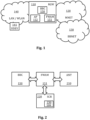
- FIG. 1 thus schematically illustrates a communication system comprising an RGW 110 residential gateway.
- the RGW 110 residential gateway implements Fixed Wireless Access (FWA) technology.
- the RGW 110 residential gateway is considered a Customer-Premises Equipment (CPE) in FWA technologies.
- FWA Fixed Wireless Access
- CPE Customer-Premises Equipment
- the residential gateway RGW 110 is capable of providing a set of services to an end user, including a broadband network access service, also referred to as a high-speed network or fixed access network, BBNET 130 via a mobile network MNET 120.
- a broadband network access service also referred to as a high-speed network or fixed access network, BBNET 130 via a mobile network MNET 120.
- broadband network also referred to as a high-speed network or fixed access network
- BBNET 130 also referred to as a high-speed network or fixed access network
- MNET 120 mobile network MNET 120.
- the RGW 110 residential gateway comprises a FWAM 151 modem for connecting the RGW 110 residential gateway to the MNET 120 mobile network and a BBC 150 broadband controller (or broadband access controller) for connecting the RGW 110 residential gateway to the BBNET 130 broadband network.
- broadband controller is also meant a broadband network access controller, or equivalently, a high-speed network access controller.
- the residential gateway RGW 110 preferably includes a LAN interface manager, such as an AP 152 access point for setting up a WLAN (“Wireless LAN” in English) type network, such as for example a Wi-Fi network.
- a WLAN Wireless LAN
- the user can thus benefit from the services offered by the BBNET 130 broadband network via a UDEV 141 user terminal or device (such as a computer, an electronic tablet, a smartphone, a TV decoder, etc.).
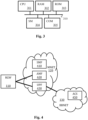
- FIG. 2 schematically illustrates an internal interconnection of the RGW 110 residential gateway.
- the FWAM 151 modem is interconnected with the BBC 150 controller.
- the FWAM modem 151 is interconnected with a SIM card reader (SIM card) SCR 220 in which a SIM card (SIM card) 230 can be placed.
- SIM card SIM card
- the FWAM modem 151 can be interconnected with an eSIM type chip soldered onto an electronic card of the residential gateway RGW 110 or integrated in software and/or hardware in the residential gateway RGW 110.
- the FWAM modem 151 implements a user equipment (UE) function (User Equipment) with respect to the mobile network MNET 120, according to the terminology used in mobile telephone network standards.
- UE user equipment
- the FWAM 151 modem is interconnected with an ANT 210 antenna system allowing the FWAM 151 modem to communicate with equipment on the MNET 120 mobile network.
- Interconnections within the RGW 110 residential gateway can be achieved using communication buses, for example PCI (Peripheral Component Interconnect) or USB (Universal Serial bus).
- PCI Peripheral Component Interconnect
- USB Universal Serial bus
- the FWAM modem 151 performs an authentication of the SIM card 230, or of the eSIM chip, with the mobile network MNET 120, for example by exchanging with an authentication center AuC ("Authentication Center" in English) of the mobile network MNET 120.
- AuC Authentication Center
- the FWAM modem 151 holds an encryption key allowing communications to be carried out by and with the residential gateway RGW 110 in the mobile network MNET 120.
- the residential gateway RGW 110 can thus benefit from the services of the mobile network MNET 120.
- An operational communication link is then established between the residential gateway RGW 110 and the core of the mobile network MNET 120, and another authentication can then be carried out through this communication link to enable the residential gateway RGW 110 to perform another authentication with the BBNET 130 broadband network in order to benefit from the services of the BBNET 130 broadband network.
- the FWAM 151 modem and the BBC 150 controller operate autonomously from each other. Each has its own processing/computational and memory resources.
- the FWAM 151 modem and the BBC 150 controller can be implemented in a software on a single processor and be interconnected by a software bus.
- the FWAM 151 modem and the BBC 150 controller may alternatively be implemented on separate processors and be interconnected by a hardware bus.
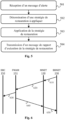
- FIG. 3 schematically illustrates a hardware arrangement usable in the RGW 110 residential gateway, more particularly for implementing the BBC 150 controller and/or the FWAM 151 modem.
- the hardware arrangement presented comprises, connected by a communication bus 310: a processor or CPU (Central Processing Unit) 301; a RAM (Random-Access Memory) 302; a non-volatile memory, for example of the ROM (Read Only Memory) type 303 or EEPROM (Electrically-Erasable Programmable ROM), or of the Flash type; a storage unit, such as a storage medium SM 304, for example a hard disk HDD, or a storage medium reader, such as an SD (Secure Digital) card reader; and a COM interface manager 305.
- a processor or CPU Central Processing Unit
- RAM Random-Access Memory
- non-volatile memory for example of the ROM (Read Only Memory) type 303 or EEPROM (Electrically-Erasable Programmable ROM), or of the Flash type
- a storage unit such as a storage medium SM 304, for example a hard disk HDD, or a storage medium reader, such as an SD (Secure Digital) card reader;
- the COM 305 interface manager allows the presented hardware arrangement to interact with other elements of the RGW 110 residential gateway, such as the SCR 220 SIM card reader or the ANT 210 antenna system or the AP 152 access point.
- the processor or CPU 301 is capable of executing instructions loaded into the RAM 302, in particular from the non-volatile memory 303 or from the storage medium SM (such as an SD card) 304. When the hardware arrangement presented is powered up, the processor or CPU 301 is thus capable of reading instructions from the RAM 302 and executing them.
- These instructions form a computer program causing in particular the implementation, by the processor or CPU 301, of the steps and behaviors described here in relation to the FWAM modem 151 and with the BBC controller 150, or more generally of the residential gateway RGW 110.
- All or part of the steps and behaviors described herein may thus be implemented in software form by executing a set of instructions by a programmable machine, for example a DSP (Digital Signal Processor) type processor or a microcontroller, or be implemented in hardware form by a machine or a dedicated electronic component (chip) or a set of dedicated electronic components (chipset), for example an FPGA (Field Signal Processor) component.
- a programmable machine for example a DSP (Digital Signal Processor) type processor or a microcontroller
- Programmable Gate Array (ASIC) or ASIC Application Specified Integrated Circuit
- the FWAM 151 modem and the BBC 150 controller and more generally the RGW 110 residential gateway, comprise electronic circuitry adapted and configured to implement the steps and behaviors described herein.
- FIG. 4 schematically illustrates logical communication paths in the communication system.
- the MNET 120 mobile network complies with 5G mobile telephony standards.
- the mobile network MNET 120 comprises, in addition to a radio access network RAN part (“Radio Access Network” in English), and a core network part which includes various equipment and/or functions including an SMF entity (“Session Management Function” in English) 410, an AMF entity (“Access and Mobility management Function” in English) 420 and a UPF entity (“User plane Function” in English) 430.
- RAN part Radio Access Network
- AMF entity Access and Mobility management Function” in English
- UPF entity User plane Function
- the UPF entity manages the user plane, also called the data plane, i.e. the transport of user traffic.
- a user plane link thus connects the residential gateway RGW 110 and the UPF entity 430.
- This user plane link is supported by an interface typically denoted NG-u between the radio access network part and the core network part.
- the exchanges made between the residential gateway RGW 110 and the broadband network BBNET 130 pass through the UPF entity 430 in the mobile network MNET 120.
- the exchanges via the mobile network MNET 120 which involve the controller BBC 150 pass through the user plane link with the UPF entity 430, whether for exchanges of control plane messages or exchanges of user plane data.
- the BBC 150 controller is in communication with the BBNET 130 broadband network.
- the BBC 150 controller typically implements a daimôn (“daemon” in English) according to the TR-069 protocol (“CPE WAN Management Protocol”, published by the Broadband Forum).
- FWAM modem 151 User data exchanges involving the FWAM modem 151, such as SMS ("Short Message Service”) message exchanges, pass through the user plane link with the UPF entity 430.
- SMS Short Message Service
- the SMF entity 410 and the AMF entity 420 cooperate in the implementation of the control plane of the mobile network MNET 120.
- a control plane link thus connects the residential gateway RGW 110 and the AMF entity 420.
- This control plane link is supported by an interface typically denoted NG-c between the radio access network part and the core network part.
- Fig. 5 schematically illustrates an algorithm for automatically restoring functionality of the residential gateway RGW 110, in one embodiment.
- the algorithm of the Fig. 5 aims to make the RGW 110 residential gateway fully operational following a failure noted in the BBC 150 controller.
- the failure of the BBC 150 controller is detected from the BBNET 130 broadband network, for example by the ACS 450 automatic configuration server.
- the FWAM modem 151 receives an alert message via the user plane of the mobile network MNET 120.
- the alert message is representative of a failure observed in the BBC controller 150.
- this alert message takes the form of an SMS message. Since this SMS message is not intended to be read by the user, the residential gateway RGW 110 erases it without storing it in the SIM card or in the memory of the FWAM modem 151. In another example, this message is received and processed by a secure element of the FWAM modem 151, an element to which the end user does not have access. This is referred to as a service SMS message or a silent SMS message.
- the alert message contains information representative of a restoration strategy to be applied by the FWAM modem 151 with respect to the BBC controller 150 (from a predefined set of restoration strategies).
- the alert message contains a description of a command or set of commands to be applied by the FWAM modem 151 with respect to the BBC controller 150 in the restoration strategy.
- the FWAM modem 151 determines a restoration strategy to be applied to deal with the observed failure of the BBC controller 150.
- the restoration strategy to be applied can be deduced from the alert message received.
- the restoration strategy to be applied can also be deduced by carrying out a few reaction tests of the BBC controller 150 to stimuli generated by the FWAM modem 151. This can make it possible to determine to what extent the BBC controller 150 is inoperative, or which functionality of the BBC controller 150 is to be restored, and to decide accordingly on the restoration strategy to be applied.
- the restoration strategy may consist in rebooting the residential gateway RGW 110, for example on request in the alert message or because the modem FWAM 151 has found that the controller BBC 150 is totally inoperative.
- the modem FWAM 151 records in non-volatile memory information indicating that the algorithm of the Fig. 5 at a step 504 when the residential gateway RGW 110 has restarted and the communication link with the mobile network MNET 120 is operational again (reestablishment of the user plane of the mobile network MNET 120).
- the recovery strategy may be to restart only the BBC 150 controller, for example when requested in the alert message or because the FWAM modem 151 has found that the BBC 150 controller is inoperable on part of a set of unit tests.
- the restore strategy may be to restore the BBC 150 controller to factory settings, for example when requested in the alert message.
- the recovery strategy may consist of executing a command or set of commands as predefined in the alert message.
- the objective of the restoration strategy is to restore functionality of the BBC 150 controller, and thus make the BBC 150 controller operational again and able to communicate with the BBNET 130 broadband network, so as to enable the RGW 110 residential gateway to benefit from the services of the BBNET 130 broadband network.
- the FWAM modem 151 transmits, in response to the alert message received in step 501, a message confirming application of the restoration strategy.
- the FWAM modem 151 checks which result the application of the restoration strategy gave, and includes information representative of said result in the response message.
- this alert message takes the form of a service SMS message intended for a dedicated telephone number. Since this service SMS message is not intended to be read by the user, the residential gateway RGW 110 erases it without storing it in the SIM card or in the memory of the FWAM modem 151.
- FIG. 6 schematically illustrates exchanges occurring in the communication system within the framework of an automatic restoration of functionality of the residential gateway RGW 110, in one embodiment.
- a device of the BBNET 130 broadband network detects a malfunction of the BBC 150 controller of the RGW 110 residential gateway.
- the ACS 450 automatic configuration server detects a loss of connection with the BBC 150 controller.
- the BBC 150 controller is supposed to periodically contact the ACS 450 automatic configuration server. If this is not the case, the ACS 450 automatic configuration server detects the loss of connection with the BBC 150 controller.
- a loss of connection with the BBC 150 controller can also be detected following a predefined number of unsuccessful attempts to contact the BBC 150 controller.
- a device of the BBNET broadband network 130 sends to a device of the MNET mobile network 120 an alert message to be sent to the FWA modem 151 of the residential gateway RGW 110.
- the device of the BBNET broadband network 130 informs the device of the MNET mobile network 120 in question of the identity of the residential gateway RGW 110, for example by its MAC address ("Medium Access Control" in English) or its IMEI identity ("International Mobile Equipment Identity” in English).
- the equipment of the BBNET 130 broadband network which sends the alert message to the equipment of the MNET 120 mobile network is generally part of an operational support system OSS (“Operational Support System” in English) of the BBNET 130 broadband network.
- the sending of this message can be carried out via an event notification of the “event log” or “web socket” type, or be transported by a MQTT (“Message Queuing Telemetry Transport”) or http(s) (“HyperText Transfer Protocol (Secure)”) protocol, etc.
- MQTT Message Queuing Telemetry Transport
- http(s) HyperText Transfer Protocol (Secure)
- the mobile network equipment MNET 120 transmits the alert message to the FWA modem 151 of the residential gateway RGW 110.
- this alert message takes the form of a service SMS message.
- the mobile network equipment MNET 120 in question is then an SMSC (“Short Message Service Center” in English).
- the FWA modem 151 applies a restoration strategy, as already explained in relation to the Fig. 5 .
- the FWA modem 151 sends, in response to the alert message, a message confirming application of the restoration strategy.
- this message takes the form of a service SMS message.
- the equipment of the mobile network MNET 120 having received the message confirming application of the restoration strategy informs an equipment of the broadband network BBNET 130, typically the automatic configuration server ACS 450. It is thus possible to automatically reestablish communication between the broadband network BBNET 130 and the BBC controller 150 of the residential gateway RGW 110, without therefore having to resort to human intervention.
- the alert message and the confirmation message can pass through an intermediary server, called a PNM (“Pro-active Network Management” server in English).
- PNM Pro-active Network Management
- the FWA modem 110 exchanges directly with the BBNET broadband network 130 as part of the application of the restoration strategy.
Landscapes
- Engineering & Computer Science (AREA)
- Computer Networks & Wireless Communication (AREA)
- Signal Processing (AREA)
- Automation & Control Theory (AREA)
- Computer Security & Cryptography (AREA)
- Computing Systems (AREA)
- Mobile Radio Communication Systems (AREA)
- Telephonic Communication Services (AREA)
Abstract
Description
- La présente invention concerne un procédé de restauration automatique de fonctionnalité dans une passerelle résidentielle (« residential gateway » en anglais) offrant des services d'accès réseau large bande (« broadband access » en anglais) via un accès sans-fil fixe (FWA, pour « Fixed Wireless Access » en anglais).
- Les technologies d'accès sans fil fixe (FWA) permettent aux opérateurs de réseaux de fournir un accès réseau large bande ultra-rapide, sans avoir à déployer de structures réseau câblées ou fibrées, en s'appuyant sur les technologies de réseaux mobiles de dernières générations (4G, 5G...). Cela permet notamment de fournir des services d'accès réseau large bande dans des zones géographiques suburbaines et rurales où le déploiement de la fibre optique peut présenter une complexité élevée de déploiement et de maintenance.
- Malgré les bénéfices apportés par ces technologies d'accès sans fil fixe, il demeure que certains dysfonctionnements nécessitent aujourd'hui une intervention humaine.
- Par exemple, dans le cas où une passerelle résidentielle ne communique plus avec un serveur de configuration automatique ACS (« Auto Configuration Server » en anglais), la liaison de plan de contrôle est rompue, il est généralement considéré que celle-ci ne peut pas être restaurée à distance si la panne provient de la partie accès large bande de la passerelle résidentielle. Il faut généralement une intervention manuelle et locale pour sortir de cette situation : redémarrage de la passerelle résidentielle, restauration de paramètres de sortie d'usine... Cela nécessite un appel technicien avec l'utilisateur final, voire qu'un technicien intervienne chez l'utilisateur final.
- Lorsque des tentatives de réparation manuelle (redémarrage, restauration de paramètres de sortie d'usine, configuration par interface graphique de la passerelle résidentielle accessible via une interface LAN (« Local Area Network » en anglais) échouent, si la panne est logicielle et non matérielle, il est potentiellement possible de restaurer la fonctionnalité d'accès large bande de la passerelle résidentielle en lui injectant des commandes particulières. Malheureusement, ce type d'opération n'est pas possible à distance si la liaison de plan de contrôle est rompue.
- Il est souhaitable de fournir une solution qui permette de traiter de manière automatique ce type de dysfonctionnements, sans intervention humaine.
- Il est proposé ici un procédé de restauration d'une fonctionnalité d'un contrôleur large bande d'une passerelle résidentielle, la passerelle résidentielle comportant de la circuiterie électronique implémentant un modem pour connecter la passerelle résidentielle à un réseau mobile via lequel un réseau large bande est accessible, la circuiterie électronique implémentant en outre le contrôleur large bande pour connecter la passerelle résidentielle au réseau large bande. Pour remédier à un dysfonctionnement du contrôleur large bande, le procédé comporte : recevoir, par le modem, par le biais d'un plan utilisateur du réseau mobile, un message d'alerte instruisant d'appliquer une stratégie de restauration visant à restaurer la fonctionnalité du contrôleur large bande ; et appliquer, par le modem, la stratégie de restauration à l'égard du contrôleur large bande.
- Ainsi, la restauration de la fonctionnalité d'un contrôleur large bande d'une passerelle résidentielle est réalisée de manière automatique, sans avoir recours à une intervention humaine.
- Selon un mode de réalisation particulier, le procédé comprend en outre : transmettre, par le modem, par le biais du plan utilisateur du réseau mobile, un message de confirmation confirmant que la stratégie de restauration a été appliquée.
- Selon un mode de réalisation particulier, le message de confirmation prend la forme d'un message SMS de service destiné à un numéro de téléphone dédié.
- Selon un mode de réalisation particulier, le message d'alerte prend la forme d'un message SMS.
- Selon un mode de réalisation particulier, le message d'alerte contient une information représentative de la stratégie de restauration à appliquer parmi un ensemble prédéfini de stratégies de restauration.
- Selon un mode de réalisation particulier, le message d'alerte contient un descriptif d'une commande ou d'un ensemble de commandes à appliquer dans la stratégie de restauration.
- Selon un mode de réalisation particulier, lorsque la stratégie de restauration consiste à rebooter la passerelle résidentielle, le modem enregistre en mémoire non-volatile une information indiquant devoir transmettre le message de confirmation après reboot de la passerelle résidentielle et remise en place du plan utilisateur du réseau mobile.
- Il est aussi proposé un programme d'ordinateur comportant des instructions de code de programme causant une implémentation du procédé exposé ci-dessus dans l'un quelconque de ses modes de réalisation, lorsque lesdites instructions sont exécutées par un processeur. Il est aussi proposé ici un support de stockage d'informations stockant de telles instructions de code de programme.
- Il est également proposé une passerelle résidentielle comportant de la circuiterie électronique configurée pour Passerelle résidentielle comportant de la circuiterie électronique configurée pour implémenter un modem pour connecter la passerelle résidentielle à un réseau mobile via lequel un réseau large bande est accessible, et un contrôleur large bande pour connecter la passerelle résidentielle au réseau large bande. Pour remédier à un dysfonctionnement du contrôleur large bande, la circuiterie électronique est configurée pour : recevoir, par le modem, par le biais d'un plan utilisateur du réseau mobile, un message d'alerte instruisant d'appliquer une stratégie de restauration visant à restaurer la fonctionnalité du contrôleur large bande ; appliquer, par le modem, la stratégie de restauration à l'égard du contrôleur large bande ; et transmettre, par le modem, par le biais du plan utilisateur du réseau mobile, un message de confirmation confirmant que la stratégie de restauration a été appliquée.
- Les caractéristiques de l'invention mentionnées ci-dessus, ainsi que d'autres, apparaîtront plus clairement à la lecture de la description suivante d'au moins un exemple de réalisation, ladite description étant faite en relation avec les dessins joints, parmi lesquels :
- [
Fig. 1 ] illustre schématiquement un système de communication ; - [
Fig. 2 ] illustre schématiquement une interconnexion interne d'une passerelle résidentielle du système de communication ; - [
Fig. 3 ] illustre schématiquement un agencement matériel utilisable dans la passerelle résidentielle ; - [
Fig. 4 ] illustre schématiquement des chemins de communication logiques dans le système de communication ; - [
Fig. 5 ] illustre schématiquement un algorithme de restauration automatique de fonctionnalité de la passerelle résidentielle, dans un mode de réalisation ; et - [
Fig. 6 ] illustre schématiquement des échanges intervenant dans le système de communication dans le cadre d'une restauration automatique de fonctionnalité de la passerelle résidentielle, dans un mode de réalisation. - La
Fig. 1 illustre ainsi schématiquement un système de communication comportant une passerelle résidentielle RGW 110. - La passerelle résidentielle RGW 110 implémente une technologie d'accès sans fil fixe (FWA). La passerelle résidentielle RGW 110 est considéré comme un équipement de type CPE (« Customer-Premises Equipment » en anglais) dans les technologies de type FWA.
- La passerelle résidentielle RGW 110 est apte à fournir un ensemble de services à un utilisateur final, dont un service d'accès à un réseau large bande, également désigné par réseau haut débit ou réseau d'accès fixe, BBNET 130 par l'intermédiaire d'un réseau mobile MNET 120. Il est fait usage de manière équivalente des termes « réseau large bande », « réseau haut débit », « réseau d'accès fixe ».
- La passerelle résidentielle RGW 110 comporte un modem FWAM 151 pour connecter la passerelle résidentielle RGW 110 au réseau mobile MNET 120 et un contrôleur large bande BBC 150 (ou contrôleur d'accès large bande) pour connecter la passerelle résidentielle RGW 110 au réseau large bande BBNET 130. Par les termes « contrôleur large bande », il également entendu un contrôleur d'accès au réseau large bande, ou de manière équivalente, un contrôleur d'accès au réseau haut débit.
- La passerelle résidentielle RGW 110 comporte préférentiellement un gestionnaire d'interface LAN, tel qu'un point d'accès AP 152 permettant de mettre en place un réseau de type WLAN (« Wireless LAN » en anglais), comme par exemple un réseau Wi-Fi. L'utilisateur peut ainsi profiter des services offerts par le réseau large bande BBNET 130 par le biais d'un terminal ou dispositif utilisateur UDEV 141 (tel qu'un ordinateur, une tablette électronique, un téléphone intelligent, un décodeur TV...).
- La
Fig. 2 illustre schématiquement une interconnexion interne de la passerelle résidentielle RGW 110. - Le modem FWAM 151 est interconnecté avec le contrôleur BBC 150.
- Le modem FWAM 151 est interconnecté avec un lecteur de carte SIM (« Subscriber Identity Module » en anglais) SCR 220 dans lequel peut être placée une carte SIM (« SIM card » en anglais) 230. En variante, le modem FWAM 151 peut être interconnecté avec une puce de type eSIM soudée sur une carte électronique de la passerelle résidentielle RGW 110 ou intégrée de manière logicielle et/ou matérielle dans la passerelle résidentielle RGW 110. Le modem FWAM 151 implémente une fonction d'équipement utilisateur UE (« User Equipment » en anglais) vis-à-vis du réseau mobile MNET 120, selon la terminologie employée dans les standards de réseaux de téléphonie mobile.
- Le modem FWAM 151 est interconnecté avec un système antennaire ANT 210 permettant au modem FWAM 151 de communiquer avec des équipements du réseau mobile MNET 120.
- Les interconnexions au sein de la passerelle résidentielle RGW 110 peuvent être réalisées grâce à des bus de communication, par exemple de type PCI (« Peripheral Component Interconnect » en anglais) ou USB (« Universal Serial bus » en anglais).
- Pour permettre à la passerelle résidentielle RGW 110 de bénéficier des services du réseau mobile MNET 120, le modem FWAM 151 effectue une authentification de la carte SIM 230, ou de la puce eSIM, auprès du réseau mobile MNET 120, par exemple en échangeant avec un centre d'authentification AuC (« Authentication Center » en anglais) du réseau mobile MNET 120. Suite à cette authentification préalable de la carte SIM 230, ou la puce eSIM, le modem FWAM 151 détient une clé de chiffrement permettant que des communications soient réalisées par et avec la passerelle résidentielle RGW 110 dans le réseau mobile MNET 120. La passerelle résidentielle RGW 110 peut ainsi bénéficier des services du réseau mobile MNET 120. Un lien de communication opérationnel est alors établi entre la passerelle résidentielle RGW 110 et le coeur du réseau mobile MNET 120, et une autre authentification peut être alors réalisée au travers ce lien de communication pour permettre à la passerelle résidentielle RGW 110 de réaliser une autre authentification auprès du réseau large bande BBNET 130 afin de pouvoir bénéficier des services du réseau large bande BBNET 130.
- Le modem FWAM 151 et le contrôleur BBC 150 opèrent de manière autonome l'un de l'autre. Chacun possède ses propres ressources de traitement/calculs et de mémoire. Le modem FWAM 151 et le contrôleur BBC 150 peuvent être implémentés de manière logicielle sur un même processeur et être interconnectés par un bus logiciel. Le modem FWAM 151 et le contrôleur BBC 150 peuvent être en variante implémentés sur des processeurs distincts et être interconnectés par un bus matériel.
- La
Fig. 3 illustre schématiquement un agencement matériel utilisable dans la passerelle résidentielle RGW 110, plus particulièrement pour implémenter le contrôleur BBC 150 et/ou le modem FWAM 151. - L'agencement matériel présenté comporte, reliés par un bus de communication 310 : un processeur ou CPU (« Central Processing Unit » en anglais) 301 ; une mémoire vive RAM (« Random-Access Memory » en anglais) 302 ; une mémoire non volatile, par exemple de type ROM (« Read Only Memory » en anglais) 303 ou EEPROM (« Electrically-Erasable Programmable ROM » en anglais), ou de type Flash ; une unité de stockage, telle qu'un support de stockage SM 304, par exemple un disque dur HDD, ou un lecteur de support de stockage, tel qu'un lecteur de cartes SD (« Secure Digital » en anglais) ; et un gestionnaire d'interfaces COM 305.
- Le gestionnaire d'interfaces COM 305 permet à l'agencement matériel présenté d'interagir avec d'autres éléments de la passerelle résidentielle RGW 110, comme par exemple le lecteur de carte SIM SCR 220 ou le système antennaire ANT 210 ou le point d'accès AP 152.
- Le processeur ou CPU 301 est capable d'exécuter des instructions chargées dans la mémoire vive 302, notamment à partir de la mémoire non volatile 303 ou du support de stockage SM (tel qu'une carte SD) 304. Lorsque l'agencement matériel présenté est mis sous tension, le processeur ou CPU 301 est ainsi capable de lire de la mémoire vive RAM 302 des instructions et de les exécuter. Ces instructions forment un programme d'ordinateur causant notamment l'implémentation, par le processeur ou CPU 301, des étapes et comportements décrits ici en relation avec le modem FWAM 151 et avec le contrôleur BBC 150, ou plus généralement de la passerelle résidentielle RGW 110.
- Tout ou partie des étapes et comportements décrits ici peut ainsi être implémenté sous forme logicielle par exécution d'un ensemble d'instructions par une machine programmable, par exemple un processeur de type DSP (« Digital Signal Processor » en anglais) ou un microcontrôleur, ou être implémenté sous forme matérielle par une machine ou un composant électronique (« chip » en anglais) dédié ou un ensemble de composants électroniques (« chipset » en anglais) dédié, par exemple un composant FPGA (« Field Programmable Gate Array » en anglais) ou ASIC (« Application Spécifie Integrated Circuit » en anglais). D'une manière générale, le modem FWAM 151 et le contrôleur BBC 150, et plus généralement la passerelle résidentielle RGW 110, comportent de la circuiterie électronique adaptée et configurée pour implémenter les étapes et comportements décrits ici.
- La
Fig. 4 illustre schématiquement des chemins de communication logiques dans le système de communication. - De manière illustrative, le réseau mobile MNET 120 est conforme aux standards de téléphonie mobile 5G.
- Le réseau mobile MNET 120 comporte, outre une partie réseau d'accès radio RAN (« Radio Access Network » en anglais), et une partie réseau coeur qui inclut divers équipements et/ou fonctions dont une entité SMF (« Session Management Function » en anglais) 410, une entité AMF (« Access and Mobility management Function » en anglais) 420 et une entité UPF (« User plane Function » en anglais) 430.
- Comme son nom l'indique, l'entité UPF gère le plan utilisateur, aussi appelé plan de données (« Data Plane » en anglais), c'est-à-dire le transport du trafic utilisateur. Une liaison de plan utilisateur relie ainsi la passerelle résidentielle RGW 110 et l'entité UPF 430. Cette liaison de plan utilisateur est supportée par une interface typiquement notée NG-u entre la partie réseau accès radio et la partie réseau coeur.
- Ainsi, en ce qui concerne la passerelle résidentielle RGW 110, les échanges réalisés entre la passerelle résidentielle RGW 110 et le réseau large bande BBNET 130 passent par l'entité UPF 430 dans le réseau mobile MNET 120. En d'autres termes, les échanges via le réseau mobile MNET 120 qui impliquent le contrôleur BBC 150 passent par la liaison de plan utilisateur avec l'entité UPF 430, que ce soit pour des échanges de messages de plan de contrôle (« Control Plane » en anglais) ou des échanges de données de plan utilisateur.
- Ainsi, le contrôleur BBC 150 est en communication avec le réseau large bande BBNET 130. Pour échanger avec un serveur de configuration automatique ACS 450 impliqué dans le plan de contrôle du réseau large bande BBNET 130, le contrôleur BBC 150 implémente typiquement un daimôn (« daemon » en anglais) selon le protocole TR-069 (« CPE WAN Management Protocol », édité par le Broadband Forum).
- Les échanges de données utilisateur qui impliquent le modem FWAM 151, tels que des échanges par messages SMS (« Short Message Service » en anglais), passent par la liaison de plan utilisateur avec l'entité UPF 430.
- Pour permettre la mise en place des liaisons de plan utilisateur dans le réseau mobile MNET 120, l'entité SMF 410 et l'entité AMF 420 coopèrent dans l'implémentation du plan de contrôle du réseau mobile MNET 120. Une liaison de plan contrôle relie ainsi la passerelle résidentielle RGW 110 et l'entité AMF 420. Cette liaison de plan de contrôle est supportée par une interface typiquement notée NG-c entre la partie réseau accès radio et la partie réseau coeur.
- La
Fig. 5 illustre schématiquement un algorithme de restauration automatique de fonctionnalité de la passerelle résidentielle RGW 110, dans un mode de réalisation. L'algorithme de laFig. 5 vise à rendre pleinement opérationnelle la passerelle résidentielle RGW 110 suite à une défaillance constatée du contrôleur BBC 150. Comme détaillé ci-après en relation avec laFig. 6 , la défaillance du contrôleur BBC 150 est constatée depuis le réseau large bande BBNET 130, par exemple par le serveur de configuration automatique ACS 450. - Dans une étape 501, le modem FWAM 151 reçoit un message d'alerte par le biais du plan utilisateur du réseau mobile MNET 120. Le message d'alerte est représentatif d'une défaillance constatée du contrôleur BBC 150.
- Dans un mode de réalisation particulier, ce message d'alerte prend la forme d'un message SMS. Ce message SMS n'ayant pas vocation à être lu par l'utilisateur, la passerelle résidentielle RGW 110 l'efface sans le conserver dans la carte SIM ou en mémoire du modem FWAM 151. Dans un autre exemple, ce message est reçu et traité par un élément sécurisé du modem FWAM 151, élément auquel l'utilisateur final n'a pas accès. On parle de message SMS de service ou de message SMS silencieux.
- Préférentiellement, le message d'alerte contient une information représentative d'une stratégie de restauration à appliquer par le modem FWAM 151 à l'égard du contrôleur BBC 150 (parmi un ensemble prédéfini de stratégies de restauration).
- Dans un mode de réalisation particulier, le message d'alerte contient un descriptif d'une commande ou d'un ensemble de commandes à appliquer par le modem FWAM 151 à l'égard du contrôleur BBC 150 dans la stratégie de restauration.
- Dans une étape 502, le modem FWAM 151 détermine une stratégie de restauration à appliquer pour faire face à la défaillance constatée du contrôleur BBC 150. La stratégie de restauration à appliquer peut être déduite du message d'alerte reçu. La stratégie de restauration à appliquer peut être aussi déduite en opérant quelques tests de réaction du contrôleur BBC 150 à des stimuli générés par le modem FWAM 151. Cela peut permettre de déterminer dans quelle mesure le contrôleur BBC 150 est inopérant, ou quelle fonctionnalité du contrôleur BBC 150 est à restaurer, et décider en conséquence de la stratégie de restauration à appliquer.
- La stratégie de restauration peut consister à rebooter la passerelle résidentielle RGW 110, par exemple sur demande dans le message d'alerte ou parce que le modem FWAM 151 a constaté que le contrôleur BBC 150 est totalement inopérant. Dans ce cas, le modem FWAM 151 enregistre en mémoire non-volatile une information indiquant devoir reprendre l'algorithme de la
Fig. 5 à une étape 504 lorsque la passerelle résidentielle RGW 110 aura redémarré et que le lien de communication avec le réseau mobile MNET 120 sera de nouveau opérationnel (remise en place du plan utilisateur du réseau mobile MNET 120). - La stratégie de restauration peut consister à redémarrer uniquement le contrôleur BBC 150, par exemple sur demande dans le message d'alerte ou parce que le modem FWAM 151 a constaté que le contrôleur BBC 150 est inopérant sur une partie d'un ensemble de tests unitaires.
- La stratégie de restauration peut consister à restaurer des paramètres de sortie d'usine du contrôleur BBC 150, par exemple sur demande dans le message d'alerte.
- La stratégie de restauration peut consister à exécuter une commande ou un ensemble de commandes comme prédéfinie(s) dans le message d'alerte.
- L'objectif de la stratégie de restauration est de restaurer une fonctionnalité du contrôleur BBC 150, et de rendre ainsi le contrôleur BBC 150 à nouveau opérationnel et apte à être en communication avec le réseau large bande BBNET 130, de manière à permettre à la passerelle résidentielle RGW 110 de bénéficier des services du réseau large bande BBNET 130.
- Alors, dans l'étape 504, le modem FWAM 151 transmet, en réponse au message d'alerte reçu à l'étape 501, un message de confirmation d'application de la stratégie de restauration. Dans un mode de réalisation particulier, le modem FWAM 151 vérifie quel résultat l'application de la stratégie de restauration a donné, et inclut une information représentative dudit résultat dans le message de réponse.
- Dans un mode de réalisation particulier, ce message d'alerte prend la forme d'un message SMS de service destiné à un numéro de téléphone dédié. Ce message SMS de service n'ayant pas vocation à être lu par l'utilisateur, la passerelle résidentielle RGW 110 l'efface sans le conserver dans la carte SIM ou en mémoire du modem FWAM 151.
- La
Fig. 6 illustre schématiquement des échanges intervenant dans le système de communication dans le cadre d'une restauration automatique de fonctionnalité de la passerelle résidentielle RGW 110, dans un mode de réalisation. - Préalablement aux échanges de la
Fig. 6 , un équipement du réseau large bande BBNET 130 détecte un dysfonctionnement du contrôleur BBC 150 de la passerelle résidentielle RGW 110. Par exemple, dans le plan de contrôle du réseau large bande BBNET 130, le serveur de configuration automatique ACS 450 détecte une perte de connexion avec le contrôleur BBC 150. Par exemple, en application du protocole TR-069, le contrôleur BBC 150 est supposé contacter de manière périodique le serveur de configuration automatique ACS 450. Si tel n'est pas le cas, le serveur de configuration automatique ACS 450 détecte la perte de connexion avec le contrôleur BBC 150. Une perte de connexion avec le contrôleur BBC 150 peut aussi être détectée suite à un nombre prédéfini de tentatives infructueuses de contacter le contrôleur BBC 150. - Dans une étape 610, suite à la détection du dysfonctionnement du contrôleur BBC 150 de la passerelle résidentielle RGW 110, un équipement du réseau large bande BBNET 130 envoie à un équipement du réseau mobile MNET 120 un message d'alerte à adresser au modem FWA 151 de la passerelle résidentielle RGW 110. L'équipement du réseau large bande BBNET 130 informe l'équipement du réseau mobile MNET 120 en question de l'identité de la passerelle résidentielle RGW 110, par exemple par son adresse MAC (« Medium Access Control » en anglais) ou son identité IMEI (« International Mobile Equipment Identity » en anglais). L'équipement du réseau large bande BBNET 130 qui envoie le message d'alerte à l'équipement du réseau mobile MNET 120 fait en général partie d'un système de support opérationnel OSS (« Operational Support System » en anglais) du réseau large bande BBNET 130. L'envoi de ce message peut être effectué via une notification événementielle de type « event log », ou « web socket », ou être transportée par un protocole MQTT (« Message Queuing Telemetry Transport » en anglais) ou http(s) (« HyperText Transfer Protocol (Secure) » en anglais), etc.
- Dans une étape 620, l'équipement du réseau mobile MNET 120 transmet le message d'alerte au modem FWA 151 de la passerelle résidentielle RGW 110. Comme déjà indiqué, dans un mode de réalisation particulier, ce message d'alerte prend la forme d'un message SMS de service. L'équipement du réseau mobile MNET 120 en question est alors un centre de messagerie SMSC (« Short Message Service Center » en anglais).
- Dans une étape 630, le modem FWA 151 applique une stratégie de restauration, comme déjà expliqué en relation avec la
Fig. 5 . - Une fois la stratégie de restauration appliquée, dans une étape 640, le modem FWA 151 envoie, en réponse au message d'alerte, un message de confirmation d'application de la stratégie de restauration. Comme déjà indiqué, dans un mode de réalisation particulier, ce message prend la forme d'un message SMS de service.
- Et dans une étape 650, l'équipement du réseau mobile MNET 120 ayant reçu le message de confirmation d'application de la stratégie de restauration en informe un équipement du réseau large bande BBNET 130, typiquement le serveur de configuration automatique ACS 450. Il est ainsi possible de rétablir de manière automatique la communication entre le réseau large bande BBNET 130 et le contrôleur BBC 150 de la passerelle résidentielle RGW 110, sans avoir donc recours à une intervention humaine.
- Dans un mode de réalisation particulier, au sein du réseau large bande BBNET 130, le message d'alerte et le message de confirmation peuvent transiter par un serveur intermédiaire, appelé serveur PNM (« Pro-active Network Management » en anglais).
- Dans un mode de réalisation particulier, le modem FWA 110 échange directement avec le réseau large bande BBNET 130 dans le cadre de l'application de la stratégie de restauration.
Claims (10)
- Procédé de restauration d'une fonctionnalité d'un contrôleur large bande (150) d'une passerelle résidentielle (110), la passerelle résidentielle (110) comportant de la circuiterie électronique implémentant un modem (151) pour connecter la passerelle résidentielle (110) à un réseau mobile (120) via lequel un réseau large bande (130) est accessible, la circuiterie électronique implémentant en outre le contrôleur large bande (150) pour connecter la passerelle résidentielle (110) au réseau large bande (130),
caractérisé en ce que, pour remédier à un dysfonctionnement du contrôleur large bande (150), le procédé comporte :- recevoir (501), par le modem (151), par le biais d'un plan utilisateur du réseau mobile (120), un message d'alerte instruisant d'appliquer une stratégie de restauration visant à restaurer la fonctionnalité du contrôleur large bande (150) ;- appliquer (503), par le modem (151), la stratégie de restauration à l'égard du contrôleur large bande (150). - Procédé selon la revendication 1, comportant en outre :- transmettre (504), par le modem (151), par le biais du plan utilisateur du réseau mobile (120), un message de confirmation confirmant que la stratégie de restauration a été appliquée.
- Procédé selon la revendication 2, dans lequel le message de confirmation prend la forme d'un message SMS de service destiné à un numéro de téléphone dédié.
- Procédé selon l'une quelconque des revendications 1 à 3, dans lequel le message d'alerte prend la forme d'un message SMS.
- Procédé selon l'une quelconque des revendications 1 à 4, dans lequel le message d'alerte contient une information représentative de la stratégie de restauration à appliquer parmi un ensemble prédéfini de stratégies de restauration.
- Procédé selon l'une quelconque des revendications 1 à 5, dans lequel le message d'alerte contient un descriptif d'une commande ou d'un ensemble de commandes à appliquer dans la stratégie de restauration.
- Procédé selon l'une quelconque des revendications 1 à 6, dans lequel, lorsque la stratégie de restauration consiste à rebooter la passerelle résidentielle (110), le modem (151) enregistre en mémoire non-volatile une information indiquant devoir transmettre (504) le message de confirmation après reboot de la passerelle résidentielle (110) et remise en place du plan utilisateur du réseau mobile (120).
- Passerelle résidentielle (110) comportant de la circuiterie électronique configurée pour implémenter un modem (151) pour connecter la passerelle résidentielle (110) à un réseau mobile (120) via lequel un réseau large bande (130) est accessible, et un contrôleur large bande (150) pour connecter la passerelle résidentielle (110) au réseau large bande (130),
caractérisé en ce que, pour remédier à un dysfonctionnement du contrôleur large bande (150), la circuiterie électronique est configurée pour :- recevoir (501), par le modem (151), par le biais d'un plan utilisateur du réseau mobile (120), un message d'alerte instruisant d'appliquer une stratégie de restauration visant à restaurer la fonctionnalité du contrôleur large bande (150) ;- appliquer (503), par le modem (151), la stratégie de restauration à l'égard du contrôleur large bande (150). - Produit programme d'ordinateur comportant des instructions de code de programme causant une implémentation du procédé selon l'une quelconque des revendications 1 à 7, lorsque lesdites instructions sont exécutées par un processeur.
- Support de stockage d'informations stockant des instructions de code de programme causant une implémentation du procédé selon l'une quelconque des revendications 1 à 7, lorsque lesdites instructions sont lues et exécutées par un processeur.
Applications Claiming Priority (1)
| Application Number | Priority Date | Filing Date | Title |
|---|---|---|---|
| FR2307444A FR3151165A1 (fr) | 2023-07-11 | 2023-07-11 | Procede de restauration automatique de fonctionnalite dans une passerelle residentielle |
Publications (2)
| Publication Number | Publication Date |
|---|---|
| EP4492735A1 true EP4492735A1 (fr) | 2025-01-15 |
| EP4492735B1 EP4492735B1 (fr) | 2025-09-10 |
Family
ID=88290941
Family Applications (1)
| Application Number | Title | Priority Date | Filing Date |
|---|---|---|---|
| EP24187628.3A Active EP4492735B1 (fr) | 2023-07-11 | 2024-07-10 | Procédé de restauration automatique de fonctionnalité dans une passerelle résidentielle |
Country Status (4)
| Country | Link |
|---|---|
| US (1) | US20250024277A1 (fr) |
| EP (1) | EP4492735B1 (fr) |
| AU (1) | AU2024204563B2 (fr) |
| FR (1) | FR3151165A1 (fr) |
Citations (3)
| Publication number | Priority date | Publication date | Assignee | Title |
|---|---|---|---|---|
| US20120278654A1 (en) * | 2011-05-01 | 2012-11-01 | Ming-Jye Shen | Remote cable access point reset |
| US20160285676A1 (en) * | 2013-11-07 | 2016-09-29 | Adaptive Spectrum And Signal Alignment, Inc. | Method and apparatus for diagnosing and configuring a broadband connection via an alternate communication path |
| US20210409261A1 (en) * | 2020-06-24 | 2021-12-30 | At&T Intellectual Property I, L.P. | Residential gateway with traffic scheduling |
-
2023
- 2023-07-11 FR FR2307444A patent/FR3151165A1/fr active Pending
-
2024
- 2024-06-28 US US18/759,034 patent/US20250024277A1/en active Pending
- 2024-07-01 AU AU2024204563A patent/AU2024204563B2/en active Active
- 2024-07-10 EP EP24187628.3A patent/EP4492735B1/fr active Active
Patent Citations (3)
| Publication number | Priority date | Publication date | Assignee | Title |
|---|---|---|---|---|
| US20120278654A1 (en) * | 2011-05-01 | 2012-11-01 | Ming-Jye Shen | Remote cable access point reset |
| US20160285676A1 (en) * | 2013-11-07 | 2016-09-29 | Adaptive Spectrum And Signal Alignment, Inc. | Method and apparatus for diagnosing and configuring a broadband connection via an alternate communication path |
| US20210409261A1 (en) * | 2020-06-24 | 2021-12-30 | At&T Intellectual Property I, L.P. | Residential gateway with traffic scheduling |
Also Published As
| Publication number | Publication date |
|---|---|
| FR3151165A1 (fr) | 2025-01-17 |
| US20250024277A1 (en) | 2025-01-16 |
| EP4492735B1 (fr) | 2025-09-10 |
| AU2024204563A1 (en) | 2025-01-30 |
| AU2024204563B2 (en) | 2026-01-22 |
Similar Documents
| Publication | Publication Date | Title |
|---|---|---|
| US11388005B2 (en) | Connected gateway server system for real-time vehicle control service | |
| EP3029968B1 (fr) | Procede de provisionnement d'un profil de souscripteur pour un module securise | |
| EP1535126B1 (fr) | Procede de migration d'une application logicielle dans une architecture multi-ordinateurs, procede et systeme multi-ordinateurs pour realiser une continuite de fonctionnement mettant en oeuvre ce procede de migration | |
| KR20070007155A (ko) | 네트워크 접속 디바이스에 대한 자동 데이터 전송을 위한방법 및 시스템 | |
| FR3045181A1 (fr) | Procede de transfert d'une nouvelle version d'un logiciel a au moins un compteur electrique via un reseau de communication | |
| KR20060047449A (ko) | 이동단말의 클라이언트 세션 복구방법 | |
| EP2210396B1 (fr) | Système d'interconnexion entre au moins un appareil de communication et au moins un système d'information distant et procédé d'interconnexion | |
| EP3777102A1 (fr) | Transmission de données depuis une entité de gestion vers un compteur électrique intelligent | |
| EP3972344B1 (fr) | Procede de basculement d'une station mobile entre deux points d'accès sans fil d'un reseau de communication et dispositif gestionnaire de connexions associe | |
| FR2984050A1 (fr) | Procede de gestion de la connectivite d'un terminal | |
| EP4492735B1 (fr) | Procédé de restauration automatique de fonctionnalité dans une passerelle résidentielle | |
| EP3785464B1 (fr) | Procédé d'association d'un nouveau noeud de collecte dans un reseau sans fil distribué | |
| EP3809796A1 (fr) | Procédé de mise en veille et procédé de réactivation d'au moins une partie d'un réseau de communication sans fil et noeud de collecte dudit réseau | |
| FR3096862A1 (fr) | Procede et dispositif d’installation d’un nœud dans un reseau domestique. | |
| EP4492840B1 (fr) | Procédé d' authentification automatique de passerelle résidentielle | |
| CN104718722B (zh) | 用于配置无线接口的设备以及设备的方法 | |
| EP3516851B1 (fr) | Procédés d'échange de messages et de gestion de messages, terminal et serveur de messagerie | |
| EP4568212A1 (fr) | Procede et dispositif de gestion d une mise a jour d un dispositif terminal dans un reseau de telecommunication. | |
| WO2005036822A1 (fr) | Procede et dispositif d'echange de donnees entre un terminal connecte a un reseau et une carte sim logee dans un terminal mobile | |
| EP3228115A1 (fr) | Technique d'accès à au moins un serveur d'administration | |
| CN112887976A (zh) | 智能终端的vpn网络自动恢复系统及方法 | |
| FR3153485A1 (fr) | Procede de duplication d’un reseau de communication local principal sur un reseau de communication local secondaire, dispositif de duplication et programme d’ordinateur correspondants. | |
| FR3129487A1 (fr) | Procede de reconnexion d’un compteur electrique intelligent et compteur electrique intelligent implementant ledit procede | |
| EP3264812A1 (fr) | Procédé de mise à jour d'éléments de sécurité, plate-forme ota et élément de sécurité correspondants | |
| EP3175601B1 (fr) | Procédé de traitement d'une connexion défaillante à un réseau de télécommunication |
Legal Events
| Date | Code | Title | Description |
|---|---|---|---|
| PUAI | Public reference made under article 153(3) epc to a published international application that has entered the european phase |
Free format text: ORIGINAL CODE: 0009012 |
|
| STAA | Information on the status of an ep patent application or granted ep patent |
Free format text: STATUS: EXAMINATION IS IN PROGRESS |
|
| 17P | Request for examination filed |
Effective date: 20240710 |
|
| AK | Designated contracting states |
Kind code of ref document: A1 Designated state(s): AL AT BE BG CH CY CZ DE DK EE ES FI FR GB GR HR HU IE IS IT LI LT LU LV MC ME MK MT NL NO PL PT RO RS SE SI SK SM TR |
|
| GRAP | Despatch of communication of intention to grant a patent |
Free format text: ORIGINAL CODE: EPIDOSNIGR1 |
|
| STAA | Information on the status of an ep patent application or granted ep patent |
Free format text: STATUS: GRANT OF PATENT IS INTENDED |
|
| RIC1 | Information provided on ipc code assigned before grant |
Ipc: H04W 88/16 20090101ALN20250502BHEP Ipc: H04L 41/08 20220101ALN20250502BHEP Ipc: H04L 41/0659 20220101ALI20250502BHEP Ipc: H04W 24/04 20090101ALI20250502BHEP Ipc: H04L 69/40 20220101ALI20250502BHEP Ipc: H04L 41/0686 20220101ALI20250502BHEP Ipc: H04L 41/0654 20220101ALI20250502BHEP Ipc: H04L 12/28 20060101AFI20250502BHEP |
|
| INTG | Intention to grant announced |
Effective date: 20250515 |
|
| GRAS | Grant fee paid |
Free format text: ORIGINAL CODE: EPIDOSNIGR3 |
|
| GRAA | (expected) grant |
Free format text: ORIGINAL CODE: 0009210 |
|
| STAA | Information on the status of an ep patent application or granted ep patent |
Free format text: STATUS: THE PATENT HAS BEEN GRANTED |
|
| AK | Designated contracting states |
Kind code of ref document: B1 Designated state(s): AL AT BE BG CH CY CZ DE DK EE ES FI FR GB GR HR HU IE IS IT LI LT LU LV MC ME MK MT NL NO PL PT RO RS SE SI SK SM TR |
|
| REG | Reference to a national code |
Ref country code: GB Ref legal event code: FG4D Free format text: NOT ENGLISH |
|
| REG | Reference to a national code |
Ref country code: CH Ref legal event code: EP |
|
| REG | Reference to a national code |
Ref country code: DE Ref legal event code: R096 Ref document number: 602024000634 Country of ref document: DE |
|
| REG | Reference to a national code |
Ref country code: IE Ref legal event code: FG4D Free format text: LANGUAGE OF EP DOCUMENT: FRENCH |
|
| PG25 | Lapsed in a contracting state [announced via postgrant information from national office to epo] |
Ref country code: NO Free format text: LAPSE BECAUSE OF FAILURE TO SUBMIT A TRANSLATION OF THE DESCRIPTION OR TO PAY THE FEE WITHIN THE PRESCRIBED TIME-LIMIT Effective date: 20251210 |
|
| REG | Reference to a national code |
Ref country code: LT Ref legal event code: MG9D |
|
| PG25 | Lapsed in a contracting state [announced via postgrant information from national office to epo] |
Ref country code: FI Free format text: LAPSE BECAUSE OF FAILURE TO SUBMIT A TRANSLATION OF THE DESCRIPTION OR TO PAY THE FEE WITHIN THE PRESCRIBED TIME-LIMIT Effective date: 20250910 |
|
| REG | Reference to a national code |
Ref country code: NL Ref legal event code: MP Effective date: 20250910 |
|
| PG25 | Lapsed in a contracting state [announced via postgrant information from national office to epo] |
Ref country code: HR Free format text: LAPSE BECAUSE OF FAILURE TO SUBMIT A TRANSLATION OF THE DESCRIPTION OR TO PAY THE FEE WITHIN THE PRESCRIBED TIME-LIMIT Effective date: 20250910 |
|
| PG25 | Lapsed in a contracting state [announced via postgrant information from national office to epo] |
Ref country code: GR Free format text: LAPSE BECAUSE OF FAILURE TO SUBMIT A TRANSLATION OF THE DESCRIPTION OR TO PAY THE FEE WITHIN THE PRESCRIBED TIME-LIMIT Effective date: 20251211 |
|
| PG25 | Lapsed in a contracting state [announced via postgrant information from national office to epo] |
Ref country code: SE Free format text: LAPSE BECAUSE OF FAILURE TO SUBMIT A TRANSLATION OF THE DESCRIPTION OR TO PAY THE FEE WITHIN THE PRESCRIBED TIME-LIMIT Effective date: 20250910 |
|
| PG25 | Lapsed in a contracting state [announced via postgrant information from national office to epo] |
Ref country code: LV Free format text: LAPSE BECAUSE OF FAILURE TO SUBMIT A TRANSLATION OF THE DESCRIPTION OR TO PAY THE FEE WITHIN THE PRESCRIBED TIME-LIMIT Effective date: 20250910 |
|
| PG25 | Lapsed in a contracting state [announced via postgrant information from national office to epo] |
Ref country code: PL Free format text: LAPSE BECAUSE OF FAILURE TO SUBMIT A TRANSLATION OF THE DESCRIPTION OR TO PAY THE FEE WITHIN THE PRESCRIBED TIME-LIMIT Effective date: 20250910 Ref country code: BG Free format text: LAPSE BECAUSE OF FAILURE TO SUBMIT A TRANSLATION OF THE DESCRIPTION OR TO PAY THE FEE WITHIN THE PRESCRIBED TIME-LIMIT Effective date: 20250910 |
|
| PG25 | Lapsed in a contracting state [announced via postgrant information from national office to epo] |
Ref country code: RS Free format text: LAPSE BECAUSE OF FAILURE TO SUBMIT A TRANSLATION OF THE DESCRIPTION OR TO PAY THE FEE WITHIN THE PRESCRIBED TIME-LIMIT Effective date: 20251210 |
|
| PG25 | Lapsed in a contracting state [announced via postgrant information from national office to epo] |
Ref country code: ES Free format text: LAPSE BECAUSE OF FAILURE TO SUBMIT A TRANSLATION OF THE DESCRIPTION OR TO PAY THE FEE WITHIN THE PRESCRIBED TIME-LIMIT Effective date: 20250910 |
|
| REG | Reference to a national code |
Ref country code: AT Ref legal event code: MK05 Ref document number: 1837093 Country of ref document: AT Kind code of ref document: T Effective date: 20250910 |
|
| PG25 | Lapsed in a contracting state [announced via postgrant information from national office to epo] |
Ref country code: NL Free format text: LAPSE BECAUSE OF FAILURE TO SUBMIT A TRANSLATION OF THE DESCRIPTION OR TO PAY THE FEE WITHIN THE PRESCRIBED TIME-LIMIT Effective date: 20250910 |
|
| PG25 | Lapsed in a contracting state [announced via postgrant information from national office to epo] |
Ref country code: SM Free format text: LAPSE BECAUSE OF FAILURE TO SUBMIT A TRANSLATION OF THE DESCRIPTION OR TO PAY THE FEE WITHIN THE PRESCRIBED TIME-LIMIT Effective date: 20250910 |
|
| PG25 | Lapsed in a contracting state [announced via postgrant information from national office to epo] |
Ref country code: AT Free format text: LAPSE BECAUSE OF FAILURE TO SUBMIT A TRANSLATION OF THE DESCRIPTION OR TO PAY THE FEE WITHIN THE PRESCRIBED TIME-LIMIT Effective date: 20250910 |
|
| PG25 | Lapsed in a contracting state [announced via postgrant information from national office to epo] |
Ref country code: IT Free format text: LAPSE BECAUSE OF FAILURE TO SUBMIT A TRANSLATION OF THE DESCRIPTION OR TO PAY THE FEE WITHIN THE PRESCRIBED TIME-LIMIT Effective date: 20250910 |
|
| PG25 | Lapsed in a contracting state [announced via postgrant information from national office to epo] |
Ref country code: IS Free format text: LAPSE BECAUSE OF FAILURE TO SUBMIT A TRANSLATION OF THE DESCRIPTION OR TO PAY THE FEE WITHIN THE PRESCRIBED TIME-LIMIT Effective date: 20260110 |
|
| PG25 | Lapsed in a contracting state [announced via postgrant information from national office to epo] |
Ref country code: CZ Free format text: LAPSE BECAUSE OF FAILURE TO SUBMIT A TRANSLATION OF THE DESCRIPTION OR TO PAY THE FEE WITHIN THE PRESCRIBED TIME-LIMIT Effective date: 20250910 Ref country code: PT Free format text: LAPSE BECAUSE OF FAILURE TO SUBMIT A TRANSLATION OF THE DESCRIPTION OR TO PAY THE FEE WITHIN THE PRESCRIBED TIME-LIMIT Effective date: 20260112 |
|
| PG25 | Lapsed in a contracting state [announced via postgrant information from national office to epo] |
Ref country code: SK Free format text: LAPSE BECAUSE OF FAILURE TO SUBMIT A TRANSLATION OF THE DESCRIPTION OR TO PAY THE FEE WITHIN THE PRESCRIBED TIME-LIMIT Effective date: 20250910 Ref country code: EE Free format text: LAPSE BECAUSE OF FAILURE TO SUBMIT A TRANSLATION OF THE DESCRIPTION OR TO PAY THE FEE WITHIN THE PRESCRIBED TIME-LIMIT Effective date: 20250910 |