EP4492547A1 - Battery housing structure - Google Patents
Battery housing structure Download PDFInfo
- Publication number
- EP4492547A1 EP4492547A1 EP22930887.9A EP22930887A EP4492547A1 EP 4492547 A1 EP4492547 A1 EP 4492547A1 EP 22930887 A EP22930887 A EP 22930887A EP 4492547 A1 EP4492547 A1 EP 4492547A1
- Authority
- EP
- European Patent Office
- Prior art keywords
- battery
- detection switch
- main surface
- frame
- housing structure
- Prior art date
- Legal status (The legal status is an assumption and is not a legal conclusion. Google has not performed a legal analysis and makes no representation as to the accuracy of the status listed.)
- Pending
Links
Images



Classifications
-
- H—ELECTRICITY
- H01—ELECTRIC ELEMENTS
- H01M—PROCESSES OR MEANS, e.g. BATTERIES, FOR THE DIRECT CONVERSION OF CHEMICAL ENERGY INTO ELECTRICAL ENERGY
- H01M10/00—Secondary cells; Manufacture thereof
- H01M10/42—Methods or arrangements for servicing or maintenance of secondary cells or secondary half-cells
- H01M10/48—Accumulators combined with arrangements for measuring, testing or indicating the condition of cells, e.g. the level or density of the electrolyte
-
- H—ELECTRICITY
- H01—ELECTRIC ELEMENTS
- H01M—PROCESSES OR MEANS, e.g. BATTERIES, FOR THE DIRECT CONVERSION OF CHEMICAL ENERGY INTO ELECTRICAL ENERGY
- H01M10/00—Secondary cells; Manufacture thereof
- H01M10/42—Methods or arrangements for servicing or maintenance of secondary cells or secondary half-cells
- H01M10/425—Structural combination with electronic components, e.g. electronic circuits integrated to the outside of the casing
-
- H—ELECTRICITY
- H01—ELECTRIC ELEMENTS
- H01M—PROCESSES OR MEANS, e.g. BATTERIES, FOR THE DIRECT CONVERSION OF CHEMICAL ENERGY INTO ELECTRICAL ENERGY
- H01M50/00—Constructional details or processes of manufacture of the non-active parts of electrochemical cells other than fuel cells, e.g. hybrid cells
- H01M50/20—Mountings; Secondary casings or frames; Racks, modules or packs; Suspension devices; Shock absorbers; Transport or carrying devices; Holders
- H01M50/202—Casings or frames around the primary casing of a single cell or a single battery
-
- H—ELECTRICITY
- H01—ELECTRIC ELEMENTS
- H01M—PROCESSES OR MEANS, e.g. BATTERIES, FOR THE DIRECT CONVERSION OF CHEMICAL ENERGY INTO ELECTRICAL ENERGY
- H01M50/00—Constructional details or processes of manufacture of the non-active parts of electrochemical cells other than fuel cells, e.g. hybrid cells
- H01M50/20—Mountings; Secondary casings or frames; Racks, modules or packs; Suspension devices; Shock absorbers; Transport or carrying devices; Holders
- H01M50/233—Mountings; Secondary casings or frames; Racks, modules or packs; Suspension devices; Shock absorbers; Transport or carrying devices; Holders characterised by physical properties of casings or racks, e.g. dimensions
- H01M50/242—Mountings; Secondary casings or frames; Racks, modules or packs; Suspension devices; Shock absorbers; Transport or carrying devices; Holders characterised by physical properties of casings or racks, e.g. dimensions adapted for protecting batteries against vibrations, collision impact or swelling
-
- H—ELECTRICITY
- H01—ELECTRIC ELEMENTS
- H01M—PROCESSES OR MEANS, e.g. BATTERIES, FOR THE DIRECT CONVERSION OF CHEMICAL ENERGY INTO ELECTRICAL ENERGY
- H01M50/00—Constructional details or processes of manufacture of the non-active parts of electrochemical cells other than fuel cells, e.g. hybrid cells
- H01M50/20—Mountings; Secondary casings or frames; Racks, modules or packs; Suspension devices; Shock absorbers; Transport or carrying devices; Holders
- H01M50/204—Racks, modules or packs for multiple batteries or multiple cells
- H01M50/207—Racks, modules or packs for multiple batteries or multiple cells characterised by their shape
- H01M50/209—Racks, modules or packs for multiple batteries or multiple cells characterised by their shape adapted for prismatic or rectangular cells
-
- Y—GENERAL TAGGING OF NEW TECHNOLOGICAL DEVELOPMENTS; GENERAL TAGGING OF CROSS-SECTIONAL TECHNOLOGIES SPANNING OVER SEVERAL SECTIONS OF THE IPC; TECHNICAL SUBJECTS COVERED BY FORMER USPC CROSS-REFERENCE ART COLLECTIONS [XRACs] AND DIGESTS
- Y02—TECHNOLOGIES OR APPLICATIONS FOR MITIGATION OR ADAPTATION AGAINST CLIMATE CHANGE
- Y02E—REDUCTION OF GREENHOUSE GAS [GHG] EMISSIONS, RELATED TO ENERGY GENERATION, TRANSMISSION OR DISTRIBUTION
- Y02E60/00—Enabling technologies; Technologies with a potential or indirect contribution to GHG emissions mitigation
- Y02E60/10—Energy storage using batteries
Definitions
- the present invention relates to a battery housing structure.
- a secondary battery such as a lithium ion battery can be repeatedly used by charging and is highly convenient
- the secondary battery is used in a wide range of fields such as a vehicle field, a communication field, an industrial field, a construction field, renewable energy, and portable equipment.
- an electrolytic solution is gasified due to deterioration of a material or the like used inside, and expansion occurs.
- leakage of the electrolytic solution or ignition may occur. For this reason, expansion of the secondary battery is detected.
- Patent Literature 1 JP 2019-198765 A
- the frame 7 is fixed to the lower casing 22 by a screw (not illustrated) or the like, and the frame 7 and the lower casing 22 constitute a housing body that houses the battery 8.
- the frame 7 is fixed to the lower casing 22 by the screw or the like, but a fixing method is not limited.
- the frame 7 does not come into contact with a component (for example, the electronic component 4 mounted on the main control board 6 or the like) other than the detection switch 5 before the frame 7 comes into contact with the detection switch 5, it is not always necessary to provide at least one of the convex portion 72 and the concave portion 73 in the frame 7.
- the number of concave portions 73 provided in the frame 7 may not be one.
- an opening slightly larger than the electronic component 4 mounted on the frame 7 side of the main control board 6 may be provided to prevent the frame 7 from coming into contact with a component (for example, the electronic component 4 mounted on the main control board 6 or the like) other than the detection switch 5 before coming into contact with the detection switch 5.
- the detection switch 5 only needs to be able to detect the contact with the frame 7, and may detect the contact with the frame 7 by any method.
- the battery 8 of the present embodiment is a secondary battery such as a lithium ion battery.
- the internal electrolytic solution expands, or gas is generated inside the secondary battery, so that expansion occurs.
- the secondary battery is deteriorated and cannot be used.
- such a defect of the battery 8 is detected by the detection switch 5.
- the center C2 of the battery cell 83A is an intersection of diagonal lines L3 and L4 of the battery cell 83A. Since the battery cell 83A according to the present embodiment has a rectangular shape or a substantially rectangular shape in plane view viewed from the first main surface 81 side, the intersection of the diagonal lines L3 and L4 of the battery cell 83A is set as the center C2 of the battery cell 83A. However, this is not the case when the shape of the battery cell 83A is different in plane view viewed from the first main surface 81 side.
- a method for causing the frame 7 to be more deformable than the lower casing 22 is not limited.
- the frame 7 and the lower casing 22 may be configured to be more easily deformed than the lower casing 22.
- the frame 7 may be configured to be more easily deformed than the lower casing 22.
- the frame 7 may be configured to be more easily deformed than the lower casing 22.
- the frame 7 may be configured to be more easily deformed than the lower casing 22.
- the detection switch 5 is provided at a position shifted from the center of the battery cell 83A housed in the battery 8. Since the electronic component 4 other than the detection switch 5 is mounted on the main control board 6 on which the detection switch 5 is mounted, it is difficult to provide the detection switch 5 such that the center of the detection switch 5 overlaps the position corresponding to the center of the battery cell 83A that expands most when the battery 8 expands. However, in the battery housing structure according to the present embodiment, even if the detection switch 5 is provided on the main control board 6 such that the center of the detection switch 5 is located at a position shifted from the center of the battery cell 83A, expansion of the battery 8 can be effectively detected.
- the electronic component 4, the main control board 6, the battery 8, and the like can be housed densely in the casing including the upper casing 21 and the lower casing 22, and a space in the casing including the upper casing 21 and the lower casing 22 can be effectively used.
- an opening slightly larger than the electronic component 4 mounted on the frame 7 side of the main control board 6 in plane view may be provided to prevent the frame 7 from coming into contact with a component (for example, the electronic component 4 mounted on the main control board 6 or the like) other than the detection switch 5 before coming into contact with the detection switch 5.
- the frame 7 is fixed to the lower casing 22, but the frame 7 may be in a state of not being fixed or locked anywhere in the lower casing 22, in other words, the frame 7 may be in a floating state.
- the frame 7 rises following the expansion of the battery 8, but as illustrated in Fig. 6 , in the frame 7, a portion (peripheral portion) other than a portion facing the center of the battery cell 83A housed in the battery 8 follows the expansion of the center of the battery cell 83A that expands the most. Therefore, even in a case where the detection switch 5 cannot be provided at a position facing the center of the battery cell 83A, since the peripheral portion of the frame 7 follows the expansion of the center of the battery cell 83A that expands the most, the expansion of the battery 8 can be detected similarly to the case where the detection switch 5 is provided such that the center of the detection switch 5 is located at a position facing the center of the battery cell 83A.
- the frame 7 floats following the expansion of the battery 8 on the side of the frame 7 opposite to the side fixed or locked to the lower casing 22 (in the example illustrated in Fig. 7 , the left side of the drawing).
- the side of the frame 7 that is not fixed or locked to the lower casing 22 follows the expansion of the center of the battery cell 83A that expands the most.
- an end portion of the frame 7 at a position opposite to the center of the detection switch 5 is preferably fixed or locked to the lower casing 22 with the center of the battery cell 83A as a symmetry point in plane view viewed from the first main surface 81 side of the battery 8.
- a cut hole, an opening, or a slit may be provided in at least a part other than a predetermined region facing the center of the battery cell 83A housed in the battery 8 of the frame 7 constituting the housing body.
- the cut hole and the like 74 provided in the frame 7 are provided in a U shape so as to surround the detection switch 5 in plane view, but are not necessarily provided in the U shape.
- the cut hole and the like 74 provided in the frame 7 are preferably provided in at least two directions of a predetermined region facing the detection switch 5.
- the cut hole and the like 74 provided in the frame 7 (first member) are provided in at least two directions of the predetermined region facing the detection switch 5.
Landscapes
- Chemical & Material Sciences (AREA)
- Chemical Kinetics & Catalysis (AREA)
- Electrochemistry (AREA)
- General Chemical & Material Sciences (AREA)
- Engineering & Computer Science (AREA)
- Manufacturing & Machinery (AREA)
- Microelectronics & Electronic Packaging (AREA)
- Battery Mounting, Suspending (AREA)
- Secondary Cells (AREA)
Abstract
Description
- The present invention relates to a battery housing structure.
- Since a secondary battery such as a lithium ion battery can be repeatedly used by charging and is highly convenient, the secondary battery is used in a wide range of fields such as a vehicle field, a communication field, an industrial field, a construction field, renewable energy, and portable equipment. However, in the secondary battery, an electrolytic solution is gasified due to deterioration of a material or the like used inside, and expansion occurs. As described above, when the secondary battery expands due to deterioration, leakage of the electrolytic solution or ignition may occur. For this reason, expansion of the secondary battery is detected.
- For example, in the conventional invention, it is proposed that a substantially rectangular main surface of a surface of the lithium ion battery is attached with four strain gauges for detecting the pressure of the battery surface, and the expansion of the lithium ion battery is detected based on measured values of the attached four strain gauges (see, for example, Patent Literature 1).
- Patent Literature 1:
JP 2019-198765 A - However, a method capable of more effectively detecting the expansion of the secondary battery is required.
- The present invention has been made to solve the above problems, and an object thereof is to provide a battery housing structure capable of more effectively detecting expansion of a battery.
- The present invention has been made in view of the above problems, and an object thereof is to provide a battery housing structure capable of more effectively detecting expansion of a battery.
- In order to solve the above problems, a battery housing structure according to the present invention includes a housing body of a battery, and the housing body has different ease of deformation with respect to expansion of the battery on a first main surface side of the battery and on a second main surface side of the battery.
- According to the present invention, it is possible to provide a battery housing structure capable of more effectively detecting expansion of a battery.
-
-
Fig. 1 is a perspective view of a terminal according to an embodiment. -
Fig. 2 is a cross-sectional view taken along the line A-A ofFig. 1 of the terminal according to the embodiment. -
Fig. 3 is a schematic plane view illustrating the center of a battery cell. -
Fig. 4 is a schematic diagram illustrating ease of deformation of a battery housing body. -
Fig. 5 is a schematic diagram illustrating ease of deformation of the battery housing body. -
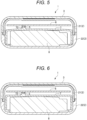
Fig. 6 is a diagram illustrating another example of a battery housing structure. -
Fig. 7 is a diagram illustrating another example of the battery housing structure. -
Fig. 8 is a diagram illustrating another example of the battery housing structure. -
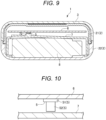
Fig. 9 is a diagram illustrating another example of the battery housing structure. -
Fig. 10 is a partially enlarged cross-sectional view of another example of the battery housing structure. - Hereinafter, a housing structure of a battery (secondary battery) according to an embodiment will be described with reference to the drawings.
- The battery housing structure according to the embodiment is a battery housing structure in a terminal carried by a watched person (for example, a child) used in a so-called monitoring system. Note that, in the following description, an example in which the battery housing structure is applied to the terminal used in the monitoring system will be described, but the battery housing structure can be applied as long as the battery is housed.
- As illustrated in
Fig. 1 , aterminal 1 has a rounded and substantially cubic shape, and has a configuration in which acover 3 is covered on acasing 2. - As illustrated in
Fig. 2 , thecasing 2 includes anupper casing 21 and a lower casing 22 (second member). Theupper casing 21 has arim portion 211A formed along an outer peripheral surface of alower end portion 211. Thelower casing 22 has agroove portion 221A formed along an inner peripheral surface of anupper end portion 221. By fitting therim portion 211A of theupper casing 21 and thegroove portion 221A of thelower casing 22, theupper casing 21 and thelower casing 22 are detachably engaged. - Further, the
upper casing 21 has a groove portion 212A formed along an outer peripheral surface of anupper end portion 212. Thecover 3 has arim portion 31A formed along an inner peripheral surface of alower end portion 31. By fitting the groove portion 212A of theupper casing 21 and therim portion 31A of thecover 3, theupper casing 21 and thecover 3 are detachably engaged. Note that theupper casing 21 and thecover 3 can be attached and detached with a relatively light force. - A main control board 6 (printed circuit board) on which
electronic components 4 such as various semiconductor chips, capacitors, and resistors, adetection switch 5, and the like are mounted, a frame 7 (first member), a battery 8 (secondary battery), and the like are housed in the casing including theupper casing 21 and thelower casing 22. - The
frame 7 is fixed to thelower casing 22 by a screw (not illustrated) or the like, and theframe 7 and thelower casing 22 constitute a housing body that houses thebattery 8. In the present embodiment, theframe 7 is fixed to thelower casing 22 by the screw or the like, but a fixing method is not limited. - The
detection switch 5 is a switch that detects contact with theframe 7, and is mounted on theframe 7 side of themain control board 6 existing between theupper casing 21 and theframe 7. That is, thedetection switch 5 is provided on the firstmain surface 81 side of thebattery 8. In addition, theterminal 1 has a configuration in which theframe 7 constituting the housing body is interposed between a firstmain surface 81 of thebattery 8 and thedetection switch 5 such that the firstmain surface 81 of thebattery 8 and thedetection switch 5 are not in direct contact with each other. As described above, thedetection switch 5 and thebattery 8 are not in direct contact with each other, and the force applied to thebattery 8 by contact with thedetection switch 5 is dispersed by theframe 7. Therefore, it is possible to prevent the excessive pressure from being applied to thebattery 8 due to contact with thedetection switch 5, and it is possible to suppress an internal electrolytic solution from leaking due to damages in the exterior of thebattery 8. In the example illustrated inFig. 2 , the center (see a center line L1) of thedetection switch 5 is provided at a position shifted from the center (see the center line L2) of abattery cell 83A housed in thebattery 8. However, the present invention is not limited thereto as long as thedetection switch 5 can be mounted on themain control board 6 such that the center of thedetection switch 5 is located at a position corresponding to the center of thebattery cell 83A housed in thebattery 8. - The
frame 7 constituting the housing body is provided with aconvex portion 72 at a position facing thedetection switch 5 on themain surface 71 on themain control board 6 side. Theframe 7 constituting the housing body is provided with aconcave portion 73 at a position other than the position facing thedetection switch 5, specifically, at a position facing theelectronic component 4 mounted on theframe 7 side of themain control board 6. Theconvex portion 72 and theconcave portion 73 are provided to prevent theframe 7 from coming into contact with a component (for example, theelectronic component 4 mounted on themain control board 6 or the like) other than thedetection switch 5 before coming into contact with thedetection switch 5 when thebattery 8 expands. As described above, by providing theconvex portion 72 and theconcave portion 73 in theframe 7, theelectronic component 4, themain control board 6, thebattery 8, and the like can be housed densely in the casing including theupper casing 21 and thelower casing 22, and a space in the casing including theupper casing 21 and thelower casing 22 can be effectively used. - In a case where the
battery 8 expands, if theframe 7 does not come into contact with a component (for example, theelectronic component 4 mounted on themain control board 6 or the like) other than thedetection switch 5 before theframe 7 comes into contact with thedetection switch 5, it is not always necessary to provide at least one of theconvex portion 72 and theconcave portion 73 in theframe 7. The number ofconcave portions 73 provided in theframe 7 may not be one. Instead of theconcave portion 73, an opening slightly larger than theelectronic component 4 mounted on theframe 7 side of themain control board 6 may be provided to prevent theframe 7 from coming into contact with a component (for example, theelectronic component 4 mounted on themain control board 6 or the like) other than thedetection switch 5 before coming into contact with thedetection switch 5. Thedetection switch 5 only needs to be able to detect the contact with theframe 7, and may detect the contact with theframe 7 by any method. - The
battery 8 of the present embodiment is a secondary battery such as a lithium ion battery. When the secondary battery is repeatedly charged and discharged, the internal electrolytic solution expands, or gas is generated inside the secondary battery, so that expansion occurs. In addition, when the expansion occurs, the secondary battery is deteriorated and cannot be used. In the present embodiment, such a defect of thebattery 8 is detected by thedetection switch 5. -
Fig. 3 is a schematic plane view illustrating the center of the battery cell. Thebattery 8 includes amain portion 83 in which thebattery cell 83A is housed and asub portion 84 in which a control circuit (not illustrated) and the like are housed. As illustrated inFig. 3 , in the battery housing structure according to the present embodiment, a center C1 of thedetection switch 5 and a center C2 of thebattery cell 83A are shifted from each other in plane view (a projection surface facing the detection switch 5) viewed from the firstmain surface 81 side of thebattery 8. In other words, in plane view viewed from the firstmain surface 81 side of thebattery 8, the center C1 of thedetection switch 5 and the center C2 of thebattery cell 83A do not overlap each other. In the battery housing structure according to the present embodiment, the center C2 of thebattery cell 83A is an intersection of diagonal lines L3 and L4 of thebattery cell 83A. Since thebattery cell 83A according to the present embodiment has a rectangular shape or a substantially rectangular shape in plane view viewed from the firstmain surface 81 side, the intersection of the diagonal lines L3 and L4 of thebattery cell 83A is set as the center C2 of thebattery cell 83A. However, this is not the case when the shape of thebattery cell 83A is different in plane view viewed from the firstmain surface 81 side. For example, when the shape of thebattery cell 83A is deformed (for example, a polygon) in plane view viewed from the firstmain surface 81 side, the geometric center of gravity of thebattery cell 83A may be set as the center of thebattery 8. In addition, when two ormore battery cells 83A are housed in thebattery 8, the intersection of the diagonal lines of eachbattery cell 83A or the geometric center of gravity may be set as the center. In this case, there are two or more centers C2. -
Figs. 4 and5 (illustration of thebattery cell 83A is omitted inFigs. 4 and5 ) are schematic diagrams illustrating ease of deformation of theframe 7 and thelower casing 22 constituting the housing body of thebattery 8.Fig. 4 is a schematic cross-sectional view of the housing body before thebattery 8 expands.Fig. 5 is a schematic cross-sectional view of the housing body after thebattery 8 expands. In theterminal 1 of the present embodiment, theframe 7 on the firstmain surface 81 side of thebattery 8 and thelower casing 22 on the secondmain surface 82 side of thebattery 8 are different in ease of deformation with respect to expansion of thebattery 8. Specifically, theframe 7 and thelower casing 22 constituting the housing body of thebattery 8 have a structure in which theframe 7 on the firstmain surface 81 side of thebattery 8 is more easily deformed than thelower casing 22 on the secondmain surface 82 side of thebattery 8, and as illustrated inFigs. 4 and5 , when thebattery 8 expands, theframe 7 deforms more than thelower casing 22. - Here, a method for causing the
frame 7 to be more deformable than thelower casing 22 is not limited. For example, by causing theframe 7 and thelower casing 22 to be made of different materials, theframe 7 may be configured to be more easily deformed than thelower casing 22. Further, for example, by changing the thickness T1 of theframe 7 and the thickness T2 of thelower casing 22, theframe 7 may be configured to be more easily deformed than thelower casing 22. Further, for example, by adopting a structure of theframe 7 and thelower casing 22, for example, a structure in which rigidity is improved such as a honeycomb structure in thelower casing 22, theframe 7 may be configured to be more easily deformed than thelower casing 22. Further, for example, by changing at least two of the material, thickness, and structure of theframe 7 and thelower casing 22, theframe 7 may be configured to be more easily deformed than thelower casing 22. - As described above, the battery housing structure according to the present embodiment includes the housing body of the battery including the
lower casing 22 and theframe 7, and the housing body has different ease of deformation with respect to expansion of thebattery 8 on the firstmain surface 81 side of thebattery 8 and on the secondmain surface 82 side of thebattery 8. For example, thedetection switch 5 that detects the expansion of thebattery 8 is provided on the firstmain surface 81 side of thebattery 8, and the housing body has a structure in which the firstmain surface 81 side of thebattery 8 is more easily deformed than the secondmain surface 82 side of thebattery 8, so that the expansion of thebattery 8 can be guided to thedetection switch 5 side, and the expansion of thebattery 8 can be effectively detected. - In the battery housing structure according to the present embodiment, the frame 7 (first member) constituting the housing body is interposed between the first
main surface 81 of the battery and thedetection switch 5 such that the firstmain surface 81 of thebattery 8 and thedetection switch 5 are not in direct contact with each other. Therefore, thedetection switch 5 and thebattery 8 are not in direct contact with each other, and the force applied to thebattery 8 due to contact with thedetection switch 5 is dispersed by theframe 7. As a result, it is possible to prevent the excessive pressure from being applied to thebattery 8 due to contact with thedetection switch 5, and it is possible to suppress an internal electrolytic solution from leaking due to damages in the exterior of thebattery 8. - In the battery housing structure according to the present embodiment, the
detection switch 5 is provided at a position shifted from the center of thebattery cell 83A housed in thebattery 8. Since theelectronic component 4 other than thedetection switch 5 is mounted on themain control board 6 on which thedetection switch 5 is mounted, it is difficult to provide thedetection switch 5 such that the center of thedetection switch 5 overlaps the position corresponding to the center of thebattery cell 83A that expands most when thebattery 8 expands. However, in the battery housing structure according to the present embodiment, even if thedetection switch 5 is provided on themain control board 6 such that the center of thedetection switch 5 is located at a position shifted from the center of thebattery cell 83A, expansion of thebattery 8 can be effectively detected. - In the battery housing structure according to the present embodiment, the frame 7 (first member) constituting the housing body is provided with the
convex portion 72 at a position facing thedetection switch 5. In the battery housing structure according to the present embodiment, the frame 7 (first member) constituting the housing body is provided with theconcave portion 73 in at least a part other than the position facing thedetection switch 5. By providing at least one of theconvex portion 72 and theconcave portion 73 in theframe 7 as described above, when thebattery 8 expands, it is possible to prevent theframe 7 from coming into contact with a component (for example, theelectronic component 4 mounted on themain control board 6 or the like) other than thedetection switch 5 before coming into contact with thedetection switch 5. In addition, theelectronic component 4, themain control board 6, thebattery 8, and the like can be housed densely in the casing including theupper casing 21 and thelower casing 22, and a space in the casing including theupper casing 21 and thelower casing 22 can be effectively used. As described above, instead of theconcave portion 73, an opening slightly larger than theelectronic component 4 mounted on theframe 7 side of themain control board 6 in plane view may be provided to prevent theframe 7 from coming into contact with a component (for example, theelectronic component 4 mounted on themain control board 6 or the like) other than thedetection switch 5 before coming into contact with thedetection switch 5. - In the battery housing structure according to the present embodiment, in the housing body including the
lower casing 22 and theframe 7, the firstmain surface 81 side of thebattery 8 and the secondmain surface 82 side of thebattery 8 are made of different members. As described above, the firstmain surface 81 side of thebattery 8 and the secondmain surface 82 side of thebattery 8 are made of different members, for example, theframe 7 is made of a material that is more easily deformed than thelower casing 22, so that the expansion of thebattery 8 can be guided to thedetection switch 5 side, and the expansion of the - In the battery housing structure according to the present embodiment, the
detection switch 5 is provided on themain control board 6 on which the electronic component 4 (device) other than thedetection switch 5 is mounted. As described above, by providing thedetection switch 5 on themain control board 6 on which theelectronic component 4 other than thedetection switch 5 is mounted, an increase in cost due to the provision of thedetection switch 5 can be suppressed, and the space in the casing including theupper casing 21 and thelower casing 22 can be effectively used. - Hereinafter, modifications of the embodiment will be described with reference to
Figs. 6 to 10 (inFigs. 6 to 9 , illustration of thebattery cell 83A is omitted). - In the above embodiment, the
frame 7 is fixed to thelower casing 22, but theframe 7 may be in a state of not being fixed or locked anywhere in thelower casing 22, in other words, theframe 7 may be in a floating state. - In this case, the
frame 7 rises following the expansion of thebattery 8, but as illustrated inFig. 6 , in theframe 7, a portion (peripheral portion) other than a portion facing the center of thebattery cell 83A housed in thebattery 8 follows the expansion of the center of thebattery cell 83A that expands the most. Therefore, even in a case where thedetection switch 5 cannot be provided at a position facing the center of thebattery cell 83A, since the peripheral portion of theframe 7 follows the expansion of the center of thebattery cell 83A that expands the most, the expansion of thebattery 8 can be detected similarly to the case where thedetection switch 5 is provided such that the center of thedetection switch 5 is located at a position facing the center of thebattery cell 83A. - Further, a part of the
frame 7 may be fixed or locked to thelower casing 22, in other words, theframe 7 may be brought into a cantilever state. - In this case, the
frame 7 floats following the expansion of thebattery 8 on the side of theframe 7 opposite to the side fixed or locked to the lower casing 22 (in the example illustrated inFig. 7 , the left side of the drawing). At this time, as illustrated inFig. 7 , the side of theframe 7 that is not fixed or locked to thelower casing 22 follows the expansion of the center of thebattery cell 83A that expands the most. Therefore, even in a case where thedetection switch 5 cannot be provided at a position facing the center of thebattery cell 83A, since the side of theframe 7 not fixed or locked to thelower casing 22 follows the expansion of the center of thebattery cell 83A that expands the most, the expansion of thebattery 8 can be detected similarly to the case where thedetection switch 5 is provided such that the center of thedetection switch 5 is located at a position facing the center of thebattery cell 83A. - Although the
frame 7 is fixed or locked to thelower casing 22, an end portion of theframe 7 at a position opposite to the center of thedetection switch 5 is preferably fixed or locked to thelower casing 22 with the center of thebattery cell 83A as a symmetry point in plane view viewed from the firstmain surface 81 side of thebattery 8. - In addition, a cut hole, an opening, or a slit (hereinafter, referred to as the cut hole and the like 74) may be provided in at least a part other than a predetermined region facing the center of the
battery cell 83A housed in thebattery 8 of theframe 7 constituting the housing body. In the example illustrated inFig. 8 , the cut hole and the like 74 provided in theframe 7 are provided in a U shape so as to surround thedetection switch 5 in plane view, but are not necessarily provided in the U shape. The cut hole and the like 74 provided in theframe 7 are preferably provided in at least two directions of a predetermined region facing thedetection switch 5. - By providing the cut hole and the like 74 in the
frame 7 as described above, even if theframe 7 is not in a floating state, aregion 75 surrounded by the cut hole and the like 74 is more likely to be displaced with respect to the pressure from thebattery cell 83A side as compared with a region other than theregion 75 of theframe 7. Therefore, as illustrated inFig. 9 , theregion 75 surrounded by the cut hole and the like 74 of theframe 7 follows the expansion of the center of thebattery cell 83A that expands most. For this reason, even in a case where thedetection switch 5 cannot be provided at the position facing the center of thebattery cell 83A, theregion 75 surrounded by the cut hole and the like 74 of theframe 7 follows the expansion of the center of thebattery cell 83A that expands the most. Therefore, the expansion of thebattery 8 can be detected similarly to the case where thedetection switch 5 is provided such that the center of thedetection switch 5 is located at the position facing the center of thebattery cell 83A. - As described above, in the battery housing structure according to the modification of the present embodiment, the frame 7 (first member) constituting the housing body is in a floating state of being not fixed or locked. Therefore, since the peripheral portion of the
frame 7 follows the expansion of the center of thebattery cell 83A that expands the most, the expansion of thebattery 8 can be detected similarly to the case where thedetection switch 5 is provided at a position facing the center of thebattery cell 83A. - Further, in the battery housing structure according to the modification of the present embodiment, the frame 7 (first member) constituting the housing body is provided with the cut hole and the like 74 in at least a part other than the predetermined region facing the center of the
battery cell 83A housed in thebattery 8. Therefore, since theregion 75 surrounded by the cut hole and the like 74 of theframe 7 follows the expansion of the center of thebattery cell 83A that expands the most, the expansion of thebattery 8 can be detected similarly to the case where thedetection switch 5 is provided such that the center of thedetection switch 5 is located at a position facing the center of thebattery cell 83A. - Further, in the battery housing structure according to the modification of the present embodiment, the cut hole and the like 74 provided in the frame 7 (first member) are provided in at least two directions of the predetermined region facing the
detection switch 5. By providing the cut hole and the like 74 in at least two directions of the predetermined region facing thedetection switch 5, it is possible to more reliably follow the expansion of the center of thebattery cell 83A. - Further, in the battery housing structure according to the present embodiment, when the
battery 8 expands, theconvex portion 72 is provided on theframe 7 to prevent theframe 7 from coming into contact with a component (for example, theelectronic component 4 mounted on themain control board 6 or the like) other than thedetection switch 5 before coming into contact with thedetection switch 5. However, as illustrated inFig. 10 , theconvex portion 72 may not be provided on theframe 7, and a rod-shapedswitch module 52 may be provided on abase portion 51 to extend the detection switch 5 (for example, a tactile switch or the like may be used). In addition, theframe 7 may be provided with theconvex portion 72, and theswitch module 52 of thedetection switch 5 may be extended. - In addition, each of the above embodiments is merely an example of implementation in implementing the present invention, and the technical scope of the present invention should not be interpreted in a limited manner. That is, the present invention can be implemented in various forms without departing from the gist or main features thereof.
-
- 1 Terminal
- 2 Casing
- 3 Cover
- 4 Electronic component
- 5 Detection switch
- 6 Main control board
- 7 Frame (first member)
- 8 Battery (secondary battery)
- 21 Upper casing
- 22 Lower casing (second member)
- 31 Lower end portion
- 31A Rim portion
- 51 Base portion
- 52 Switch module
- 71 Main surface
- 72 Convex portion
- 73 Concave portion
- 74 Cut hole and like
- 75 Region
- 81 First main surface
- 82 Second main surface
- 83 Main portion
- 83A Battery cell
- 84 Sub portion
- 211 Lower end portion
- 211A Rim portion
- 212 Upper end portion
- 212A Groove portion
- 221 Upper end portion
- 221A Groove portion
- T1 Thickness
- T2 Thickness
Claims (13)
- A battery housing structure comprising:a housing body of a battery, whereinthe housing body hasdifferent ease of deformation with respect to expansion of the battery on a first main surface side of the battery and on a second main surface side of the battery.
- The battery housing structure according to claim 1, whereina detection switch that detects expansion of the battery is provided on the first main surface side of the battery, andin the housing body,the first main surface side of the battery is more easily deformed than the second main surface side of the battery.
- The battery housing structure according to claim 2, wherein
a first member constituting the housing body is interposed between a first main surface of the battery and the detection switch such that the first main surface of the battery and the detection switch are not in direct contact with each other. - The battery housing structure according to claim 3, whereinthe first member isprovided with a convex portion at a position facing the detection switch.
- The battery housing structure according to claim 3, whereinthe first member isprovided with a concave portion or an opening in at least a part other than a position facing the detection switch.
- The battery housing structure according to claim 1, whereinthe housing body ismade of different members on the first main surface side of the battery and on the second main surface side of the battery.
- The battery housing structure according to claim 3, whereinthe housing body includesthe first member and a second member provided on the second main surface side of the battery, andthe first member isin a floating state of being not fixed or locked to the second member.
- The battery housing structure according to claim 3, whereinthe housing body includesthe first member and a second member provided on the second main surface side of the battery, anda part of the first member is fixed or locked to the second member.
- The battery housing structure according to claim 3, whereinthe first member isprovided with a cut hole, an opening, or a slit in at least a part of the first main surface side of the battery.
- The battery housing structure according to claim 9, wherein
the cut hole provided in the first member is provided in at least two directions of a predetermined region facing the detection switch. - The battery housing structure according to claim 2, whereinthe detection switch isprovided on a substrate on which a device other than the detection switch is mounted.
- The battery housing structure according to claim 11, whereinthe second main surface side of the battery of the housing body ismade of at least a part of a casing that houses the detection switch and the substrate.
- The battery housing structure according to claim 3, whereinthe detection switch isprovided at a position shifted from a center of a battery cell housed in the battery.
Applications Claiming Priority (1)
| Application Number | Priority Date | Filing Date | Title |
|---|---|---|---|
| PCT/JP2022/010834 WO2023170906A1 (en) | 2022-03-11 | 2022-03-11 | Battery housing structure |
Publications (2)
| Publication Number | Publication Date |
|---|---|
| EP4492547A1 true EP4492547A1 (en) | 2025-01-15 |
| EP4492547A4 EP4492547A4 (en) | 2026-02-25 |
Family
ID=87936445
Family Applications (1)
| Application Number | Title | Priority Date | Filing Date |
|---|---|---|---|
| EP22930887.9A Pending EP4492547A4 (en) | 2022-03-11 | 2022-03-11 | BATTERY HOUSING STRUCTURE |
Country Status (5)
| Country | Link |
|---|---|
| US (1) | US20250210739A1 (en) |
| EP (1) | EP4492547A4 (en) |
| JP (2) | JP7505832B2 (en) |
| CN (1) | CN118679626A (en) |
| WO (1) | WO2023170906A1 (en) |
Family Cites Families (6)
| Publication number | Priority date | Publication date | Assignee | Title |
|---|---|---|---|---|
| DE19837909C2 (en) * | 1998-08-20 | 2001-05-17 | Implex Hear Tech Ag | Protection device for a multi-rechargeable electrochemical battery |
| JP5256626B2 (en) * | 2007-03-08 | 2013-08-07 | 株式会社ニコン | Battery housing device and portable device |
| US8395519B2 (en) * | 2010-11-19 | 2013-03-12 | General Electric Company | Device and method of determining safety in a battery pack |
| US20180198177A1 (en) * | 2016-05-17 | 2018-07-12 | Shenzhen Sbase Electronics Technology Co., Ltd. | Device for detecting battery deformation by means of sensor module and method therefor |
| CN208400991U (en) * | 2018-02-12 | 2019-01-18 | 肇庆遨优动力电池有限公司 | A kind of device for lithium ion battery safety detection |
| JP2019198765A (en) | 2019-09-02 | 2019-11-21 | 株式会社三洋物産 | Game machine |
-
2022
- 2022-03-11 EP EP22930887.9A patent/EP4492547A4/en active Pending
- 2022-03-11 US US18/845,172 patent/US20250210739A1/en active Pending
- 2022-03-11 CN CN202280091567.7A patent/CN118679626A/en active Pending
- 2022-03-11 JP JP2023577841A patent/JP7505832B2/en active Active
- 2022-03-11 WO PCT/JP2022/010834 patent/WO2023170906A1/en not_active Ceased
-
2024
- 2024-05-21 JP JP2024082370A patent/JP7764061B2/en active Active
Also Published As
| Publication number | Publication date |
|---|---|
| US20250210739A1 (en) | 2025-06-26 |
| JP7764061B2 (en) | 2025-11-05 |
| WO2023170906A1 (en) | 2023-09-14 |
| JP2024105660A (en) | 2024-08-06 |
| EP4492547A4 (en) | 2026-02-25 |
| JP7505832B2 (en) | 2024-06-25 |
| JPWO2023170906A1 (en) | 2023-09-14 |
| CN118679626A (en) | 2024-09-20 |
Similar Documents
| Publication | Publication Date | Title |
|---|---|---|
| EP3731296B1 (en) | Battery cover plate assembly, battery cell, battery module, power battery and electric automobile | |
| CN115066786B (en) | Battery Module | |
| US9013036B2 (en) | Sealing member and electronic device using the same | |
| KR20140097938A (en) | Rechargeable Battery | |
| EP3726618A1 (en) | Battery cover plate assembly, single cell battery, battery module, power battery, and electric vehicle | |
| EP3038437B1 (en) | Mobile device | |
| JP2018521460A (en) | SECONDARY ELECTROCHEMICAL CELL SEALING BODY AND BATTERY HAVING PACKAGE TYPE CHIP SHIELD | |
| EP4404326A1 (en) | Battery, electric device, and manufacturing method for battery | |
| KR101440893B1 (en) | Rechargeable battery | |
| EP4492547A1 (en) | Battery housing structure | |
| JP4860196B2 (en) | Waterproof structure of battery mounting part in electronic equipment | |
| US20220057842A1 (en) | Electronic apparatus | |
| KR102280997B1 (en) | Battery module and battery pack including the same | |
| CN111989800B (en) | Batteries and electrical devices having said batteries | |
| KR20170016746A (en) | Secondary battery | |
| US20170338450A1 (en) | Secondary electrochemical battery sealing body with charging indicator | |
| KR20160087628A (en) | Battery Cell Having Electrolyte Sensing Member | |
| JP2014232752A (en) | Electronic apparatus | |
| JP2018049746A (en) | Power storage device | |
| US12407033B2 (en) | Apparatus and method for detecting damage to battery pack case | |
| KR102926521B1 (en) | Battery pack | |
| CN223639491U (en) | A controller | |
| EP4593210A1 (en) | Socket, electrical connector, battery pack and electric device | |
| US20250015403A1 (en) | End cover assembly of battery cell, battery cell, and battery | |
| CN223712871U (en) | Cell casing and cell |
Legal Events
| Date | Code | Title | Description |
|---|---|---|---|
| STAA | Information on the status of an ep patent application or granted ep patent |
Free format text: STATUS: THE INTERNATIONAL PUBLICATION HAS BEEN MADE |
|
| PUAI | Public reference made under article 153(3) epc to a published international application that has entered the european phase |
Free format text: ORIGINAL CODE: 0009012 |
|
| STAA | Information on the status of an ep patent application or granted ep patent |
Free format text: STATUS: REQUEST FOR EXAMINATION WAS MADE |
|
| 17P | Request for examination filed |
Effective date: 20241011 |
|
| AK | Designated contracting states |
Kind code of ref document: A1 Designated state(s): AL AT BE BG CH CY CZ DE DK EE ES FI FR GB GR HR HU IE IS IT LI LT LU LV MC MK MT NL NO PL PT RO RS SE SI SK SM TR |
|
| DAV | Request for validation of the european patent (deleted) | ||
| DAX | Request for extension of the european patent (deleted) | ||
| A4 | Supplementary search report drawn up and despatched |
Effective date: 20260128 |
|
| RIC1 | Information provided on ipc code assigned before grant |
Ipc: H01M 50/202 20210101AFI20260122BHEP |