EP4492508A1 - Hydrogen power plant systems and methods of operation associated with cold start - Google Patents
Hydrogen power plant systems and methods of operation associated with cold start Download PDFInfo
- Publication number
- EP4492508A1 EP4492508A1 EP24187551.7A EP24187551A EP4492508A1 EP 4492508 A1 EP4492508 A1 EP 4492508A1 EP 24187551 A EP24187551 A EP 24187551A EP 4492508 A1 EP4492508 A1 EP 4492508A1
- Authority
- EP
- European Patent Office
- Prior art keywords
- fuel cell
- cell stack
- predetermined temperature
- temperature threshold
- mode
- Prior art date
- Legal status (The legal status is an assumption and is not a legal conclusion. Google has not performed a legal analysis and makes no representation as to the accuracy of the status listed.)
- Pending
Links
Images


Classifications
-
- H—ELECTRICITY
- H01—ELECTRIC ELEMENTS
- H01M—PROCESSES OR MEANS, e.g. BATTERIES, FOR THE DIRECT CONVERSION OF CHEMICAL ENERGY INTO ELECTRICAL ENERGY
- H01M8/00—Fuel cells; Manufacture thereof
- H01M8/04—Auxiliary arrangements, e.g. for control of pressure or for circulation of fluids
- H01M8/04298—Processes for controlling fuel cells or fuel cell systems
- H01M8/043—Processes for controlling fuel cells or fuel cell systems applied during specific periods
- H01M8/04302—Processes for controlling fuel cells or fuel cell systems applied during specific periods applied during start-up
-
- H—ELECTRICITY
- H01—ELECTRIC ELEMENTS
- H01M—PROCESSES OR MEANS, e.g. BATTERIES, FOR THE DIRECT CONVERSION OF CHEMICAL ENERGY INTO ELECTRICAL ENERGY
- H01M8/00—Fuel cells; Manufacture thereof
- H01M8/04—Auxiliary arrangements, e.g. for control of pressure or for circulation of fluids
- H01M8/04298—Processes for controlling fuel cells or fuel cell systems
- H01M8/04694—Processes for controlling fuel cells or fuel cell systems characterised by variables to be controlled
- H01M8/04701—Temperature
- H01M8/04738—Temperature of auxiliary devices, e.g. reformer, compressor, burner
-
- H—ELECTRICITY
- H01—ELECTRIC ELEMENTS
- H01M—PROCESSES OR MEANS, e.g. BATTERIES, FOR THE DIRECT CONVERSION OF CHEMICAL ENERGY INTO ELECTRICAL ENERGY
- H01M16/00—Structural combinations of different types of electrochemical generators
- H01M16/003—Structural combinations of different types of electrochemical generators of fuel cells with other electrochemical devices, e.g. capacitors, electrolysers
- H01M16/006—Structural combinations of different types of electrochemical generators of fuel cells with other electrochemical devices, e.g. capacitors, electrolysers of fuel cells with rechargeable batteries
-
- H—ELECTRICITY
- H01—ELECTRIC ELEMENTS
- H01M—PROCESSES OR MEANS, e.g. BATTERIES, FOR THE DIRECT CONVERSION OF CHEMICAL ENERGY INTO ELECTRICAL ENERGY
- H01M8/00—Fuel cells; Manufacture thereof
- H01M8/04—Auxiliary arrangements, e.g. for control of pressure or for circulation of fluids
- H01M8/04007—Auxiliary arrangements, e.g. for control of pressure or for circulation of fluids related to heat exchange
-
- H—ELECTRICITY
- H01—ELECTRIC ELEMENTS
- H01M—PROCESSES OR MEANS, e.g. BATTERIES, FOR THE DIRECT CONVERSION OF CHEMICAL ENERGY INTO ELECTRICAL ENERGY
- H01M8/00—Fuel cells; Manufacture thereof
- H01M8/04—Auxiliary arrangements, e.g. for control of pressure or for circulation of fluids
- H01M8/04007—Auxiliary arrangements, e.g. for control of pressure or for circulation of fluids related to heat exchange
- H01M8/04037—Electrical heating
-
- H—ELECTRICITY
- H01—ELECTRIC ELEMENTS
- H01M—PROCESSES OR MEANS, e.g. BATTERIES, FOR THE DIRECT CONVERSION OF CHEMICAL ENERGY INTO ELECTRICAL ENERGY
- H01M8/00—Fuel cells; Manufacture thereof
- H01M8/04—Auxiliary arrangements, e.g. for control of pressure or for circulation of fluids
- H01M8/04007—Auxiliary arrangements, e.g. for control of pressure or for circulation of fluids related to heat exchange
- H01M8/04067—Heat exchange or temperature measuring elements, thermal insulation, e.g. heat pipes, heat pumps, fins
-
- H—ELECTRICITY
- H01—ELECTRIC ELEMENTS
- H01M—PROCESSES OR MEANS, e.g. BATTERIES, FOR THE DIRECT CONVERSION OF CHEMICAL ENERGY INTO ELECTRICAL ENERGY
- H01M8/00—Fuel cells; Manufacture thereof
- H01M8/04—Auxiliary arrangements, e.g. for control of pressure or for circulation of fluids
- H01M8/04223—Auxiliary arrangements, e.g. for control of pressure or for circulation of fluids during start-up or shut-down; Depolarisation or activation, e.g. purging; Means for short-circuiting defective fuel cells
- H01M8/04225—Auxiliary arrangements, e.g. for control of pressure or for circulation of fluids during start-up or shut-down; Depolarisation or activation, e.g. purging; Means for short-circuiting defective fuel cells during start-up
-
- H—ELECTRICITY
- H01—ELECTRIC ELEMENTS
- H01M—PROCESSES OR MEANS, e.g. BATTERIES, FOR THE DIRECT CONVERSION OF CHEMICAL ENERGY INTO ELECTRICAL ENERGY
- H01M8/00—Fuel cells; Manufacture thereof
- H01M8/04—Auxiliary arrangements, e.g. for control of pressure or for circulation of fluids
- H01M8/04223—Auxiliary arrangements, e.g. for control of pressure or for circulation of fluids during start-up or shut-down; Depolarisation or activation, e.g. purging; Means for short-circuiting defective fuel cells
- H01M8/04268—Heating of fuel cells during the start-up of the fuel cells
-
- H—ELECTRICITY
- H01—ELECTRIC ELEMENTS
- H01M—PROCESSES OR MEANS, e.g. BATTERIES, FOR THE DIRECT CONVERSION OF CHEMICAL ENERGY INTO ELECTRICAL ENERGY
- H01M8/00—Fuel cells; Manufacture thereof
- H01M8/04—Auxiliary arrangements, e.g. for control of pressure or for circulation of fluids
- H01M8/04298—Processes for controlling fuel cells or fuel cell systems
- H01M8/04313—Processes for controlling fuel cells or fuel cell systems characterised by the detection or assessment of variables; characterised by the detection or assessment of failure or abnormal function
- H01M8/0432—Temperature; Ambient temperature
-
- H—ELECTRICITY
- H01—ELECTRIC ELEMENTS
- H01M—PROCESSES OR MEANS, e.g. BATTERIES, FOR THE DIRECT CONVERSION OF CHEMICAL ENERGY INTO ELECTRICAL ENERGY
- H01M8/00—Fuel cells; Manufacture thereof
- H01M8/04—Auxiliary arrangements, e.g. for control of pressure or for circulation of fluids
- H01M8/04298—Processes for controlling fuel cells or fuel cell systems
- H01M8/04694—Processes for controlling fuel cells or fuel cell systems characterised by variables to be controlled
- H01M8/04701—Temperature
-
- H—ELECTRICITY
- H01—ELECTRIC ELEMENTS
- H01M—PROCESSES OR MEANS, e.g. BATTERIES, FOR THE DIRECT CONVERSION OF CHEMICAL ENERGY INTO ELECTRICAL ENERGY
- H01M8/00—Fuel cells; Manufacture thereof
- H01M8/04—Auxiliary arrangements, e.g. for control of pressure or for circulation of fluids
- H01M8/04298—Processes for controlling fuel cells or fuel cell systems
- H01M8/04992—Processes for controlling fuel cells or fuel cell systems characterised by the implementation of mathematical or computational algorithms, e.g. feedback control loops, fuzzy logic, neural networks or artificial intelligence
-
- H—ELECTRICITY
- H01—ELECTRIC ELEMENTS
- H01M—PROCESSES OR MEANS, e.g. BATTERIES, FOR THE DIRECT CONVERSION OF CHEMICAL ENERGY INTO ELECTRICAL ENERGY
- H01M8/00—Fuel cells; Manufacture thereof
- H01M8/06—Combination of fuel cells with means for production of reactants or for treatment of residues
- H01M8/0606—Combination of fuel cells with means for production of reactants or for treatment of residues with means for production of gaseous reactants
- H01M8/065—Combination of fuel cells with means for production of reactants or for treatment of residues with means for production of gaseous reactants by dissolution of metals or alloys; by dehydriding metallic substances
-
- H—ELECTRICITY
- H01—ELECTRIC ELEMENTS
- H01M—PROCESSES OR MEANS, e.g. BATTERIES, FOR THE DIRECT CONVERSION OF CHEMICAL ENERGY INTO ELECTRICAL ENERGY
- H01M8/00—Fuel cells; Manufacture thereof
- H01M8/08—Fuel cells with aqueous electrolytes
- H01M8/086—Phosphoric acid fuel cells [PAFC]
-
- H—ELECTRICITY
- H01—ELECTRIC ELEMENTS
- H01M—PROCESSES OR MEANS, e.g. BATTERIES, FOR THE DIRECT CONVERSION OF CHEMICAL ENERGY INTO ELECTRICAL ENERGY
- H01M8/00—Fuel cells; Manufacture thereof
- H01M8/10—Fuel cells with solid electrolytes
- H01M8/1016—Fuel cells with solid electrolytes characterised by the electrolyte material
- H01M8/1018—Polymeric electrolyte materials
-
- H—ELECTRICITY
- H01—ELECTRIC ELEMENTS
- H01M—PROCESSES OR MEANS, e.g. BATTERIES, FOR THE DIRECT CONVERSION OF CHEMICAL ENERGY INTO ELECTRICAL ENERGY
- H01M8/00—Fuel cells; Manufacture thereof
- H01M8/10—Fuel cells with solid electrolytes
- H01M2008/1095—Fuel cells with polymeric electrolytes
-
- H—ELECTRICITY
- H01—ELECTRIC ELEMENTS
- H01M—PROCESSES OR MEANS, e.g. BATTERIES, FOR THE DIRECT CONVERSION OF CHEMICAL ENERGY INTO ELECTRICAL ENERGY
- H01M2250/00—Fuel cells for particular applications; Specific features of fuel cell system
- H01M2250/40—Combination of fuel cells with other energy production systems
- H01M2250/402—Combination of fuel cell with other electric generators
-
- H—ELECTRICITY
- H01—ELECTRIC ELEMENTS
- H01M—PROCESSES OR MEANS, e.g. BATTERIES, FOR THE DIRECT CONVERSION OF CHEMICAL ENERGY INTO ELECTRICAL ENERGY
- H01M2250/00—Fuel cells for particular applications; Specific features of fuel cell system
- H01M2250/40—Combination of fuel cells with other energy production systems
- H01M2250/405—Cogeneration of heat or hot water
-
- Y—GENERAL TAGGING OF NEW TECHNOLOGICAL DEVELOPMENTS; GENERAL TAGGING OF CROSS-SECTIONAL TECHNOLOGIES SPANNING OVER SEVERAL SECTIONS OF THE IPC; TECHNICAL SUBJECTS COVERED BY FORMER USPC CROSS-REFERENCE ART COLLECTIONS [XRACs] AND DIGESTS
- Y02—TECHNOLOGIES OR APPLICATIONS FOR MITIGATION OR ADAPTATION AGAINST CLIMATE CHANGE
- Y02E—REDUCTION OF GREENHOUSE GAS [GHG] EMISSIONS, RELATED TO ENERGY GENERATION, TRANSMISSION OR DISTRIBUTION
- Y02E60/00—Enabling technologies; Technologies with a potential or indirect contribution to GHG emissions mitigation
- Y02E60/30—Hydrogen technology
- Y02E60/50—Fuel cells
Definitions
- This disclosure relates to power generation, and more particularly hydrogen fuel cells and methods of operation.
- Natural gas (NG) powerplants may take several hours from initial startup and heat up to operation where it can generate and export power. There are constraints that exist in NG units that may necessitate a relatively longer heat up time. These may include reformer heat ups, generating steam for an ejector, and reaching a high enough operating temperature to operate with some carbon monoxide (CO) in the fuel stream.
- NG Natural gas
- H 2 green hydrogen
- a hydrogen system for generating power may include a phosphoric acid fuel cell stack selectively coupled to a hydrogen fuel source.
- a control may include a processor and memory. The control may be configured to cause the fuel cell stack to operate in a first mode in response to a first predetermined temperature threshold being met such that the fuel cell stack may generate electricity when below a target operating temperature of the fuel cell stack. The control may be configured to cause the fuel cell stack to operate in a second mode in response to a second predetermined temperature threshold being met subsequent to the first predetermined temperature threshold being met. The second predetermined temperature threshold may be associated with the target operating temperature of the fuel cell stack.
- a method of operating a phosphoric acid fuel cell stack may include operating the phosphoric acid fuel cell stack in a first mode in response to a first predetermined temperature threshold being met such that the fuel cell stack may generate electricity when below a target operating temperature of the fuel cell stack.
- the method may include operating the fuel cell stack in a second mode in response to a second predetermined temperature threshold being met subsequent to the first predetermined temperature threshold being met.
- the second predetermined temperature threshold may be associated with the target operating temperature of the fuel cell stack.
- An aspect of the present disclosure relates to a hydrogen system for generating power comprising:
- the first predetermined temperature threshold may be less than 50 percent of the second predetermined temperature threshold.
- the first predetermined temperature threshold may be less than 60 degrees Celsius
- the second predetermined temperature threshold may be greater than 150 degrees Celsius.
- the first predetermined temperature threshold may be less than 33 percent of the second predetermined temperature threshold.
- the second predetermined temperature threshold may be a temperature sufficient to convert a predetermined percentage of the fuel conveyed to the fuel cell stack into energy without degradation of the fuel cell stack.
- the fuel cell stack may include a plurality of fuel cells.
- Each of the fuel cells may include an anode, a cathode and a solid polymer electrolyte membrane.
- the hydrogen system may further comprise a cooling assembly for providing cooling and/or heating augmentation to the fuel cell stack.
- the cooling assembly may comprise:
- the hydrogen system may further comprise an energy storage system configured to provide power to the heating source.
- the controller may be configured to cause the energy storage system to provide power to the heating source such that the heating source provides heating augmentation to the fuel cell stack.
- the controller may be configured to cause the heating source to heat the fuel cell stack in the first mode from the first predetermined temperature threshold to the second predetermined temperature threshold.
- a maximum quantity of power produceable by the fuel cell stack in the second mode may be greater than a maximum quantity of power produceable by the fuel cell stack in the first mode.
- An aspect of the present disclosure relates to a method of operating a phosphoric acid fuel cell stack comprising:
- the first predetermined temperature threshold may be less than 50 percent of the second predetermined temperature threshold.
- the first predetermined temperature threshold may be less than 60 degrees Celsius.
- the second predetermined temperature threshold may be greater than 150 degrees Celsius.
- the step of operating the fuel cell stack in the first mode may include heating the fuel cell stack by a heating source.
- the step of operating the fuel cell stack in the first mode may include supplying a first quantity of power to one or more loads associated with a power demand.
- the step of operating the fuel cell stack in the second mode may include supplying a second quantity of power to the one or more loads, the second quantity of power being greater than the first quantity of power.
- the first quantity of power may be insufficient to meet an entirety of the power demand.
- the method may further comprise causing an energy storage system to supply a difference in the power demand in the first mode such that the power demand is substantially met.
- the step of operating the fuel cell stack in the first mode may include heating the fuel cell stack by a heating source such that the fuel cell stack reaches the second predetermined temperature threshold.
- the method may further comprise causing the energy storage system to power the heating source to heat the fuel cell stack in the first mode.
- a first quantity of fuel supplied to the fuel cell stack in the first mode may be less than a second quantity of fuel supplied to the fuel cell stack in the second mode.
- Hydrogen powerplant systems designed according to the teachings disclosed herein may be useful for generating electricity that can be used for a variety of purposes separate from the system itself.
- the systems may incorporate one or more fuel stacks that may be operated during a cold start to provide electricity to one or more (e.g., customer) loads.
- a hydrogen system for generating power may include a phosphoric acid fuel cell stack selectively coupled to a hydrogen fuel source.
- a control may include a processor and memory. The control may be configured to cause the fuel cell stack to operate in a first mode in response to a first predetermined temperature threshold being met such that the fuel cell stack may generate electricity when below a target operating temperature of the fuel cell stack. The control may be configured to cause the fuel cell stack to operate in a second mode in response to a second predetermined temperature threshold being met subsequent to the first predetermined temperature threshold being met. The second predetermined temperature threshold may be associated with the target operating temperature of the fuel cell stack.
- the first predetermined temperature threshold may be less than 50 percent of the second predetermined temperature threshold.
- the first predetermined temperature threshold may be less than 60 degrees Celsius.
- a method of operating a phosphoric acid fuel cell stack may include operating the phosphoric acid fuel cell stack in a first mode in response to a first predetermined temperature threshold being met such that the fuel cell stack may generate electricity below a target operating temperature of the fuel cell stack.
- the method may include operating the fuel cell stack in a second mode in response to a second predetermined temperature threshold being met subsequent to the first predetermined temperature threshold being met.
- the second predetermined temperature threshold may be associated with the target operating temperature of the fuel cell stack.
- FIG. 1 discloses a hydrogen system (e.g., powerplant) 20 including one or more fuel cell stacks 22.
- Each stack 22 may include a plurality of fuel cells.
- the stack 22 may be a phosphoric acid fuel cell (PAFC) stack.
- PAFC phosphoric acid fuel cell
- Each of the fuel cells may include an anode and a cathode on opposite sides of an electrolyte.
- the electrolyte may be contained in a solid polymer electrolyte membrane.
- the cathode may generate exhaust in the form of water (H 2 0) and unused oxygen (O).
- the anode may generate exhaust in the form of unused hydrogen (H 2 ), which may be recycled in the fuel stream to the stack 22.
- Each stack 22 may be coupled to a fuel source 24.
- the fuel source 24 may be a container configured to convey fuel such as hydrogen to the stack(s) 22.
- the system 20 excludes any reformers for supplying hydrogen fuel to the stack(s) 22.
- Each stack 22 may be coupled to one or more (e.g., customer) loads 26.
- Each load 26 may be an electrical and/or thermal load.
- the stack 22 may be configured to supply electricity and/or heat in a fluid stream to the load 26.
- the system 20 may include an inverter that may be configured to convert DC power from the stack(s) 22 into AC power on the grid. The AC power may be communicated to the load(s) 26.
- the system 20 may include a cooling assembly 28 for providing cooling and/or heating augmentation to the stack(s) 22.
- the cooling assembly 28 may include a cooling loop.
- the cooling assembly 28 may include one or more coolers 29.
- the cooler(s) 29 may be situated in the cooling loop.
- Each stack 22 may be coupled to one or more of the coolers 29.
- Each cooler 29 may be configured to provide cooling and/or heat augmentation to the stack 22.
- the cooler 29 may be coupled to one or more accumulator(s) (ACC) 30 and/or heating source(s) 32, which may be situated in the cooling loop.
- the accumulator 30 may be configured to accumulate water in the cooling loop.
- One or more heat exchangers 34, 36 (HEX) may be situated in the cooling loop.
- the heat exchangers 34, 36 may be configured to deliver heat to a customer and/or control temperatures in the cooling loop.
- the heating source 32 may be a thermal management system (TMS).
- TMS thermal management system
- the heating source 32 may be configured to provide heating augmentation to a fluid in the cooling loop prior to, during and/or subsequent to operation of the stack(s) 22.
- the thermal management system may include one or more heaters which may be configured to draw power from a source, such as a power grid or standalone device.
- the system 20 may include an energy storage system (ESS) 38.
- the energy storage system 38 may include various energy storage devices, such as batteries and capacitors.
- the energy storage system 38 may be configured to provide power to the heating source(s) 32, which may eliminate or otherwise reduce power draws from the grid.
- the system 20 may include a control 40.
- the control 40 may include one or more analog and/or digital components.
- the control 40 may include at least one or more processors and memory.
- the control 40 may be configured to execute one or more instructions to implement any of the features disclosed herein.
- the control 40 may be coupled to one or more valves 42, pumps 44 and switches 46 of the system 20.
- the control 40 may be configured to cause the energy storage system 38 to provide power to the heating source(s) 32 such that the heating source(s) 32 provide heating augmentation to the stack(s) 22.
- the control 40 may be configured to cause each stack 22 to operate in one or more modes.
- Each stack 22 may be associated with a target (e.g., nominal or standard) operating temperature or range.
- the target operating temperature or range may be a temperature, or range of temperatures, sufficient to convert a predetermined percentage of the fuel conveyed to the stack 22 into energy without degradation of the stack 22 (e.g., due to excessive temperatures).
- the control 40 may be configured to cause the stack(s) 22 to operate in a first mode and a second, different mode.
- the first mode may be a start up (e.g., cold start) mode of the stack 22.
- the second mode may be a standard operating mode of the stack 22.
- the first mode may be associated with a first predetermined temperature threshold.
- the second mode may be associated with a second predetermined temperature threshold.
- the second predetermined temperature threshold may be greater than the first predetermined temperature threshold.
- the second predetermined temperature threshold may be the target operating temperature and/or within the target operating temperature range of the stack 22.
- the first predetermined temperature threshold may be less than 50 percent of the second predetermined temperature threshold, or more narrowly less than 33 percent of the second predetermined temperature threshold.
- the first predetermined temperature threshold may be less than approximately 60 degrees Celsius, such as approximately 55 degrees Celsius.
- the second predetermined temperature threshold may be greater than 150 degrees Celsius, such as approximately 175 degrees Celsius.
- the terms “approximately” and “substantially” mean ⁇ 5% of the stated value or relationship unless otherwise indicated.
- the stack(s) 22 may be configured to generate power in the first mode when a temperature of the respective stack 22 reaches the first predetermined temperature threshold.
- the control 40 may be configured to cause the heating source(s) 32 to heat the stack(s) 22 in the first mode from the first predetermined temperature threshold to the second predetermined temperature threshold.
- a maximum quantity of power producible by the stack(s) 22 in the second mode may be greater than the maximum quantity of power produced by the stack(s) 22 in the first mode.
- performance of the respective stack 22 when operating in the first mode may be less than performance of the stack 22 when operating in the second mode (e.g., at the target operating temperature or range).
- the stack(s) 22 may be configured to generate power concurrently with heating the stack(s) 22 to the target operating temperature or range.
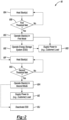
- Figure 2 discloses a method of operating a fuel stack in a flowchart 80 according to an implementation.
- the fuel stack may include any of the fuel stacks disclosed herein, such as the fuel stack 22 of Figure 1 . Fewer or additional steps than are recited below could be performed within the scope of this disclosure, and the recited order of steps is not intended to limit this disclosure.
- the control 40 may be configured to perform any of the features of the method 80. Reference is made to the system 20 of Figure 1 .
- the stack(s) 22 may be heated by one or more heating sources, such as the heating source(s) 32.
- a determination is made whether a present temperature of the respective stack 22 meets the first predetermined temperature threshold (e.g., approximately 55 degrees Celsius or more).
- One or more temperature sensors may be coupled to the stack 22. The sensors may communicate temperature information associated with the present temperature of the respective stack 22 to the control 40. The control 40 may be configured to compare the present temperature to the first predetermined temperature threshold to make the determination.
- fuel from the fuel source 24 may not be supplied to the stack 22 prior to the first predetermined temperature threshold being met such that the stack 22 is in a non-operational mode.
- the stack(s) 22 may be configured to operate in the first mode in response to the first predetermined temperature threshold being met.
- the control 40 may be configured to acuate the valve 42 to selectively cause the fuel source 24 to supply a quantity of fuel such as hydrogen to the fuel stack(s) 22 such that the stack(s) 22 may generate an amount of electricity, which may be in the form of direct current (DC).
- DC direct current
- Customer(s) associated with the load(s) 26 may have a power demand when the stack(s) 22 are operating in the first mode.
- the stack(s) 22 may supply power to one or more loads 26 during the first mode at step 80D.
- the stack(s) 22 may produce a quantity of power sufficient to partially meet the customer power demand subsequent to reaching the first predetermined temperature threshold.
- the quantity of power produced by the stack(s) 22 in the first mode may be insufficient to meet an entirety of the power demand.
- a difference of the power demand may be met by one or more other sources.
- the control 40 may be configured to actuate (e.g., close) the switch 46 to provide electricity to the load(s) 26 when in the first mode.
- the switch 46 may be open prior to the stack 22 operating in the first mode.
- the energy storage system 38 may supply a difference in the power demand in the first mode such that the power demand may be substantially met.
- the control 40 may be configured to cause the energy storage system 38 to supply the difference in the power demand in the first mode.
- the stack(s) 22 may be heated during the first mode to at least an intermediate temperature.
- the intermediate temperature may be between the first predetermined temperature threshold and the second predetermined temperature threshold (e.g., approximately 175 degrees Celsius).
- the stack(s) 22 may be configured to produce full DC power at the intermediate temperature.
- the stack 22 may be heated by various heating sources, including the heating sources 32 and/or waste heat from the respective stack(s) 22.
- the control 40 may cause the energy storage system 38 to power the heating source(s) 32 to heat the stack(s) 22 during the first mode.
- the control 40 may be configured to cause the energy storage system 38 to power the heating source(s) 32 such that the stack(s) 22 may reach or otherwise approach the second predetermined temperature threshold, which may be the target operating temperature or range.
- the control 40 may be configured to compare the present temperature to the second predetermined temperature threshold to make the determination.
- the stack(s) 22 may be configured to operate in the second mode in response to the second predetermined temperature threshold being met.
- the control 40 may be configured to cause the valve 42 to selectively cause the fuel source 24 to supply a quantity of fuel such as hydrogen to the fuel stack(s) 22 such that the stack(s) 22 may generate an amount of electricity, which may be in the form of direct current (DC).
- the quantity of fuel supplied to the stack(s) 22 at step 80H may be the same or may differ from (e.g., may be greater than) the amount of fuel supplied to the stack(s) 22 at step 80C.
- the stack(s) 22 may supply power to one or more loads 26 during the second mode at step 801.
- a (e.g., maximum) quantity of power produced by the stack(s) 22 in the second mode may be greater than the (e.g., maximum) quantity of power produced by the stack(s) 22 in the first mode.
- the stack(s) 22 may produce a quantity of power sufficient to substantially, or completely, meet the customer power demand in response to the present temperature of the respective stack 22 meeting the second predetermined temperature threshold.
- the energy storage system 38 may be deactivated when the stack(s) 22 are in the second mode.
- the control 40 may be configured to cause the energy storage system 38 to be deactivated in response to the present temperature of the stack(s) 22 meeting the second predetermined temperature threshold.
- Figures 3-4 disclose example plots associated with operation of the stack(s) 22 over a period of time (e.g., 40 minutes) utilizing the techniques disclosed herein.
- Figure 3 discloses a plot of exit temperature in degrees Celsius (C) associated with the stack 22 with respect to elapsed time.
- the plot may be associated with a first predetermined temperature threshold T1 and/or a second predetermined temperature threshold T2.
- the plot may be associated with a range of temperatures between approximately 55 degrees and approximately 175 degrees Celsius.
- the current may exceed 500 amps during normal operation. In implementations, the current may not exceed approximately 550 amps.
- Figure 4 discloses a plot of powerplant equivalent DC power in kilowatts (kW) with respect to elapsed time. In the implementation of Figure 4 , the plot may be associated with power that may exceed 500 kW DC.
- the control 40 may be operable to cause the stack 22 to run at a preselected current density (CD) level during the first (e.g., start up or cold start) mode.
- CD current density
- the preselected CD level may be the highest CD possible during the first mode.
- the highest CD possible may be associated with a maximum limit that should not be exceeded based on a rating of the balance of plant (BOP) components.
- BOP balance of plant
- the preselected CD level may be selected such that the powerplant exceeds an (e.g., minimum) voltage threshold.
- the control 40 may be operable to vary reactants to the stack 22 based on the preselected CD level during operation.
Landscapes
- Engineering & Computer Science (AREA)
- Sustainable Energy (AREA)
- Life Sciences & Earth Sciences (AREA)
- Sustainable Development (AREA)
- General Chemical & Material Sciences (AREA)
- Chemical & Material Sciences (AREA)
- Chemical Kinetics & Catalysis (AREA)
- Electrochemistry (AREA)
- Manufacturing & Machinery (AREA)
- Automation & Control Theory (AREA)
- Artificial Intelligence (AREA)
- Health & Medical Sciences (AREA)
- Computing Systems (AREA)
- Evolutionary Computation (AREA)
- Fuzzy Systems (AREA)
- Medical Informatics (AREA)
- Software Systems (AREA)
- Theoretical Computer Science (AREA)
- Fuel Cell (AREA)
Abstract
A hydrogen system for generating power may include a fuel cell stack selectively coupled to a hydrogen fuel source. A control may be configured to cause the fuel cell stack to operate in a first mode in response to a first predetermined temperature threshold being met such that the fuel cell stack may generate electricity when below a target operating temperature. The control may be configured to cause the fuel cell stack to operate in a second mode in response to a second predetermined temperature threshold being met subsequent to the first predetermined temperature threshold being met. A method of operating a fuel cell stack is also disclosed.
Description
- This disclosure relates to power generation, and more particularly hydrogen fuel cells and methods of operation.
- Natural gas (NG) powerplants may take several hours from initial startup and heat up to operation where it can generate and export power. There are constraints that exist in NG units that may necessitate a relatively longer heat up time. These may include reformer heat ups, generating steam for an ejector, and reaching a high enough operating temperature to operate with some carbon monoxide (CO) in the fuel stream.
- The growth of green hydrogen (H2) infrastructure is also projecting to increase the demand to use some of the H2 to convert to electricity for grid balancing and other applications.
- A hydrogen system for generating power may include a phosphoric acid fuel cell stack selectively coupled to a hydrogen fuel source. A control may include a processor and memory. The control may be configured to cause the fuel cell stack to operate in a first mode in response to a first predetermined temperature threshold being met such that the fuel cell stack may generate electricity when below a target operating temperature of the fuel cell stack. The control may be configured to cause the fuel cell stack to operate in a second mode in response to a second predetermined temperature threshold being met subsequent to the first predetermined temperature threshold being met. The second predetermined temperature threshold may be associated with the target operating temperature of the fuel cell stack.
- A method of operating a phosphoric acid fuel cell stack may include operating the phosphoric acid fuel cell stack in a first mode in response to a first predetermined temperature threshold being met such that the fuel cell stack may generate electricity when below a target operating temperature of the fuel cell stack. The method may include operating the fuel cell stack in a second mode in response to a second predetermined temperature threshold being met subsequent to the first predetermined temperature threshold being met. The second predetermined temperature threshold may be associated with the target operating temperature of the fuel cell stack.
- An aspect of the present disclosure relates to a hydrogen system for generating power comprising:
- a phosphoric acid fuel cell stack selectively coupled to a hydrogen fuel source; and
- a control including a processor and memory;
- wherein the control is configured to cause the fuel cell stack to operate in a first mode in response to a first predetermined temperature threshold being met such that the fuel cell stack generates electricity when below a target operating temperature of the fuel cell stack; and
- wherein the control is configured to cause the fuel cell stack to operate in a second mode in response to a second predetermined temperature threshold being met subsequent to the first predetermined temperature threshold being met, the second predetermined temperature threshold associated with the target operating temperature of the fuel cell stack.
- The first predetermined temperature threshold may be less than 50 percent of the second predetermined temperature threshold.
- The first predetermined temperature threshold may be less than 60 degrees Celsius
- The second predetermined temperature threshold may be greater than 150 degrees Celsius.
- The first predetermined temperature threshold may be less than 33 percent of the second predetermined temperature threshold.
- The second predetermined temperature threshold may be a temperature sufficient to convert a predetermined percentage of the fuel conveyed to the fuel cell stack into energy without degradation of the fuel cell stack.
- The fuel cell stack may include a plurality of fuel cells. Each of the fuel cells may include an anode, a cathode and a solid polymer electrolyte membrane.
- The hydrogen system may further comprise a cooling assembly for providing cooling and/or heating augmentation to the fuel cell stack. The cooling assembly may comprise:
- a cooling loop;
- a cooler coupled to the fuel cell stack; and
- a heating source;
- wherein the cooler and the heating source situated in the cooling loop.
- The hydrogen system may further comprise an energy storage system configured to provide power to the heating source. The controller may be configured to cause the energy storage system to provide power to the heating source such that the heating source provides heating augmentation to the fuel cell stack.
- The controller may be configured to cause the heating source to heat the fuel cell stack in the first mode from the first predetermined temperature threshold to the second predetermined temperature threshold.
- A maximum quantity of power produceable by the fuel cell stack in the second mode may be greater than a maximum quantity of power produceable by the fuel cell stack in the first mode.
- An aspect of the present disclosure relates to a method of operating a phosphoric acid fuel cell stack comprising:
- operating the phosphoric acid fuel cell stack in a first mode in response to a first predetermined temperature threshold being met such that the fuel cell stack generates electricity below a target operating temperature of the fuel cell stack; and
- operating the fuel cell stack in a second mode in response to a second predetermined temperature threshold being met subsequent to the first predetermined temperature threshold being met, the second predetermined temperature threshold associated with the target operating temperature of the fuel cell stack.
- The first predetermined temperature threshold may be less than 50 percent of the second predetermined temperature threshold.
- The first predetermined temperature threshold may be less than 60 degrees Celsius.
- The second predetermined temperature threshold may be greater than 150 degrees Celsius.
- The step of operating the fuel cell stack in the first mode may include heating the fuel cell stack by a heating source.
- The step of operating the fuel cell stack in the first mode may include supplying a first quantity of power to one or more loads associated with a power demand. The step of operating the fuel cell stack in the second mode may include supplying a second quantity of power to the one or more loads, the second quantity of power being greater than the first quantity of power.
- The first quantity of power may be insufficient to meet an entirety of the power demand. The method may further comprise causing an energy storage system to supply a difference in the power demand in the first mode such that the power demand is substantially met.
- The step of operating the fuel cell stack in the first mode may include heating the fuel cell stack by a heating source such that the fuel cell stack reaches the second predetermined temperature threshold.
- The method may further comprise causing the energy storage system to power the heating source to heat the fuel cell stack in the first mode.
- A first quantity of fuel supplied to the fuel cell stack in the first mode may be less than a second quantity of fuel supplied to the fuel cell stack in the second mode.
- Various features and advantages of at least one disclosed example aspect or embodiment will become apparent to those skilled in the art from the following detailed description. The drawing that accompanies the detailed description can be briefly described as follows.
- The invention is defined by the appended claims. However, for the purposes of the present disclosure it will be understood that any of the features defined above or described below may be utilised in isolation or in combination. For example, features described above in relation to one of the above aspects or below in relation to the detailed description may be utilised in any other aspect, or together form a new aspect.
-
-
Figure 1 schematically discloses a hydrogen system including one or more fuel stacks. -
Figure 2 discloses a method for operating a fuel stack. -
Figures 3-4 disclose plots associated with operation of a fuel stack. - Hydrogen powerplant systems designed according to the teachings disclosed herein may be useful for generating electricity that can be used for a variety of purposes separate from the system itself. The systems may incorporate one or more fuel stacks that may be operated during a cold start to provide electricity to one or more (e.g., customer) loads.
- A hydrogen system for generating power may include a phosphoric acid fuel cell stack selectively coupled to a hydrogen fuel source. A control may include a processor and memory. The control may be configured to cause the fuel cell stack to operate in a first mode in response to a first predetermined temperature threshold being met such that the fuel cell stack may generate electricity when below a target operating temperature of the fuel cell stack. The control may be configured to cause the fuel cell stack to operate in a second mode in response to a second predetermined temperature threshold being met subsequent to the first predetermined temperature threshold being met. The second predetermined temperature threshold may be associated with the target operating temperature of the fuel cell stack.
- In any implementations, the first predetermined temperature threshold may be less than 50 percent of the second predetermined temperature threshold.
- In any implementations, the first predetermined temperature threshold may be less than 60 degrees Celsius.
- A method of operating a phosphoric acid fuel cell stack may include operating the phosphoric acid fuel cell stack in a first mode in response to a first predetermined temperature threshold being met such that the fuel cell stack may generate electricity below a target operating temperature of the fuel cell stack. The method may include operating the fuel cell stack in a second mode in response to a second predetermined temperature threshold being met subsequent to the first predetermined temperature threshold being met. The second predetermined temperature threshold may be associated with the target operating temperature of the fuel cell stack.
-
Figure 1 discloses a hydrogen system (e.g., powerplant) 20 including one or more fuel cell stacks 22. Eachstack 22 may include a plurality of fuel cells. In implementations, thestack 22 may be a phosphoric acid fuel cell (PAFC) stack. Each of the fuel cells may include an anode and a cathode on opposite sides of an electrolyte. The electrolyte may be contained in a solid polymer electrolyte membrane. The cathode may generate exhaust in the form of water (H20) and unused oxygen (O). The anode may generate exhaust in the form of unused hydrogen (H2), which may be recycled in the fuel stream to thestack 22. Eachstack 22 may be coupled to afuel source 24. Thefuel source 24 may be a container configured to convey fuel such as hydrogen to the stack(s) 22. In implementations, thesystem 20 excludes any reformers for supplying hydrogen fuel to the stack(s) 22. - Each
stack 22 may be coupled to one or more (e.g., customer) loads 26. Eachload 26 may be an electrical and/or thermal load. Thestack 22 may be configured to supply electricity and/or heat in a fluid stream to theload 26. Thesystem 20 may include an inverter that may be configured to convert DC power from the stack(s) 22 into AC power on the grid. The AC power may be communicated to the load(s) 26. - The
system 20 may include a coolingassembly 28 for providing cooling and/or heating augmentation to the stack(s) 22. The coolingassembly 28 may include a cooling loop. The coolingassembly 28 may include one ormore coolers 29. The cooler(s) 29 may be situated in the cooling loop. Eachstack 22 may be coupled to one or more of thecoolers 29. Each cooler 29 may be configured to provide cooling and/or heat augmentation to thestack 22. The cooler 29 may be coupled to one or more accumulator(s) (ACC) 30 and/or heating source(s) 32, which may be situated in the cooling loop. Theaccumulator 30 may be configured to accumulate water in the cooling loop. One ormore heat exchangers 34, 36 (HEX) may be situated in the cooling loop. Theheat exchangers heating source 32 may be a thermal management system (TMS). Theheating source 32 may be configured to provide heating augmentation to a fluid in the cooling loop prior to, during and/or subsequent to operation of the stack(s) 22. The thermal management system may include one or more heaters which may be configured to draw power from a source, such as a power grid or standalone device. - The
system 20 may include an energy storage system (ESS) 38. Theenergy storage system 38 may include various energy storage devices, such as batteries and capacitors. Theenergy storage system 38 may be configured to provide power to the heating source(s) 32, which may eliminate or otherwise reduce power draws from the grid. - The
system 20 may include acontrol 40. Thecontrol 40 may include one or more analog and/or digital components. In implementations, thecontrol 40 may include at least one or more processors and memory. Thecontrol 40 may be configured to execute one or more instructions to implement any of the features disclosed herein. Thecontrol 40 may be coupled to one ormore valves 42, pumps 44 and switches 46 of thesystem 20. - The
control 40 may be configured to cause theenergy storage system 38 to provide power to the heating source(s) 32 such that the heating source(s) 32 provide heating augmentation to the stack(s) 22. - The
control 40 may be configured to cause eachstack 22 to operate in one or more modes. Eachstack 22 may be associated with a target (e.g., nominal or standard) operating temperature or range. The target operating temperature or range may be a temperature, or range of temperatures, sufficient to convert a predetermined percentage of the fuel conveyed to thestack 22 into energy without degradation of the stack 22 (e.g., due to excessive temperatures). - The
control 40 may be configured to cause the stack(s) 22 to operate in a first mode and a second, different mode. The first mode may be a start up (e.g., cold start) mode of thestack 22. The second mode may be a standard operating mode of thestack 22. The first mode may be associated with a first predetermined temperature threshold. The second mode may be associated with a second predetermined temperature threshold. The second predetermined temperature threshold may be greater than the first predetermined temperature threshold. In implementations, the second predetermined temperature threshold may be the target operating temperature and/or within the target operating temperature range of thestack 22. In implementations, the first predetermined temperature threshold may be less than 50 percent of the second predetermined temperature threshold, or more narrowly less than 33 percent of the second predetermined temperature threshold. In implementations, the first predetermined temperature threshold may be less than approximately 60 degrees Celsius, such as approximately 55 degrees Celsius. The second predetermined temperature threshold may be greater than 150 degrees Celsius, such as approximately 175 degrees Celsius. For the purposes of this disclosure, the terms "approximately" and "substantially" mean ±5% of the stated value or relationship unless otherwise indicated. - The stack(s) 22 may be configured to generate power in the first mode when a temperature of the
respective stack 22 reaches the first predetermined temperature threshold. Thecontrol 40 may be configured to cause the heating source(s) 32 to heat the stack(s) 22 in the first mode from the first predetermined temperature threshold to the second predetermined temperature threshold. A maximum quantity of power producible by the stack(s) 22 in the second mode may be greater than the maximum quantity of power produced by the stack(s) 22 in the first mode. In implementations, performance of therespective stack 22 when operating in the first mode may be less than performance of thestack 22 when operating in the second mode (e.g., at the target operating temperature or range). Utilizing the techniques disclosed herein, the stack(s) 22 may be configured to generate power concurrently with heating the stack(s) 22 to the target operating temperature or range. -
Figure 2 discloses a method of operating a fuel stack in aflowchart 80 according to an implementation. The fuel stack may include any of the fuel stacks disclosed herein, such as thefuel stack 22 ofFigure 1 . Fewer or additional steps than are recited below could be performed within the scope of this disclosure, and the recited order of steps is not intended to limit this disclosure. Thecontrol 40 may be configured to perform any of the features of themethod 80. Reference is made to thesystem 20 ofFigure 1 . - At
step 80A, the stack(s) 22 may be heated by one or more heating sources, such as the heating source(s) 32. Atstep 80B, a determination is made whether a present temperature of therespective stack 22 meets the first predetermined temperature threshold (e.g., approximately 55 degrees Celsius or more). One or more temperature sensors may be coupled to thestack 22. The sensors may communicate temperature information associated with the present temperature of therespective stack 22 to thecontrol 40. Thecontrol 40 may be configured to compare the present temperature to the first predetermined temperature threshold to make the determination. In implementations, fuel from thefuel source 24 may not be supplied to thestack 22 prior to the first predetermined temperature threshold being met such that thestack 22 is in a non-operational mode. - At
step 80C, the stack(s) 22 may be configured to operate in the first mode in response to the first predetermined temperature threshold being met. In implementations, thecontrol 40 may be configured to acuate thevalve 42 to selectively cause thefuel source 24 to supply a quantity of fuel such as hydrogen to the fuel stack(s) 22 such that the stack(s) 22 may generate an amount of electricity, which may be in the form of direct current (DC). - Customer(s) associated with the load(s) 26 may have a power demand when the stack(s) 22 are operating in the first mode. The stack(s) 22 may supply power to one or
more loads 26 during the first mode at step 80D. The stack(s) 22 may produce a quantity of power sufficient to partially meet the customer power demand subsequent to reaching the first predetermined temperature threshold. In implementations, the quantity of power produced by the stack(s) 22 in the first mode may be insufficient to meet an entirety of the power demand. A difference of the power demand may be met by one or more other sources. Thecontrol 40 may be configured to actuate (e.g., close) theswitch 46 to provide electricity to the load(s) 26 when in the first mode. Theswitch 46 may be open prior to thestack 22 operating in the first mode. - At
step 80E, theenergy storage system 38 may supply a difference in the power demand in the first mode such that the power demand may be substantially met. Thecontrol 40 may be configured to cause theenergy storage system 38 to supply the difference in the power demand in the first mode. - At
step 80F, the stack(s) 22 may be heated during the first mode to at least an intermediate temperature. The intermediate temperature may be between the first predetermined temperature threshold and the second predetermined temperature threshold (e.g., approximately 175 degrees Celsius). The stack(s) 22 may be configured to produce full DC power at the intermediate temperature. Thestack 22 may be heated by various heating sources, including theheating sources 32 and/or waste heat from the respective stack(s) 22. Thecontrol 40 may cause theenergy storage system 38 to power the heating source(s) 32 to heat the stack(s) 22 during the first mode. Thecontrol 40 may be configured to cause theenergy storage system 38 to power the heating source(s) 32 such that the stack(s) 22 may reach or otherwise approach the second predetermined temperature threshold, which may be the target operating temperature or range. - At
step 80G, a determination is made whether a present temperature of therespective stack 22 meets the second predetermined temperature threshold (e.g., approximately 175 degrees Celsius or more). Thecontrol 40 may be configured to compare the present temperature to the second predetermined temperature threshold to make the determination. - At
step 80H, the stack(s) 22 may be configured to operate in the second mode in response to the second predetermined temperature threshold being met. In implementations, thecontrol 40 may be configured to cause thevalve 42 to selectively cause thefuel source 24 to supply a quantity of fuel such as hydrogen to the fuel stack(s) 22 such that the stack(s) 22 may generate an amount of electricity, which may be in the form of direct current (DC). The quantity of fuel supplied to the stack(s) 22 atstep 80H may be the same or may differ from (e.g., may be greater than) the amount of fuel supplied to the stack(s) 22 atstep 80C. - The stack(s) 22 may supply power to one or
more loads 26 during the second mode atstep 801. In implementations, a (e.g., maximum) quantity of power produced by the stack(s) 22 in the second mode may be greater than the (e.g., maximum) quantity of power produced by the stack(s) 22 in the first mode. The stack(s) 22 may produce a quantity of power sufficient to substantially, or completely, meet the customer power demand in response to the present temperature of therespective stack 22 meeting the second predetermined temperature threshold. - At
step 80J, theenergy storage system 38 may be deactivated when the stack(s) 22 are in the second mode. Thecontrol 40 may be configured to cause theenergy storage system 38 to be deactivated in response to the present temperature of the stack(s) 22 meeting the second predetermined temperature threshold. -
Figures 3-4 disclose example plots associated with operation of the stack(s) 22 over a period of time (e.g., 40 minutes) utilizing the techniques disclosed herein.Figure 3 discloses a plot of exit temperature in degrees Celsius (C) associated with thestack 22 with respect to elapsed time. The plot may be associated with a first predetermined temperature threshold T1 and/or a second predetermined temperature threshold T2. In the implementation ofFigure 3 , the plot may be associated with a range of temperatures between approximately 55 degrees and approximately 175 degrees Celsius. The current may exceed 500 amps during normal operation. In implementations, the current may not exceed approximately 550 amps.Figure 4 discloses a plot of powerplant equivalent DC power in kilowatts (kW) with respect to elapsed time. In the implementation ofFigure 4 , the plot may be associated with power that may exceed 500 kW DC. - The
control 40 may be operable to cause thestack 22 to run at a preselected current density (CD) level during the first (e.g., start up or cold start) mode. In implementations, the preselected CD level may be the highest CD possible during the first mode. The highest CD possible may be associated with a maximum limit that should not be exceeded based on a rating of the balance of plant (BOP) components. The preselected CD level may be selected such that the powerplant exceeds an (e.g., minimum) voltage threshold. In implementations, the preselected CD level may meet the following formula:
stack 22 can support (e.g., approximately 550 A), and CDminvolt is the minimum voltage required for DC to AC power conversion at a required AC voltage (e.g., approximately 800 V DC) associated with the customer load(s) 26. Thecontrol 40 may be operable to vary reactants to thestack 22 based on the preselected CD level during operation. - The preceding description is illustrative rather than limiting in nature. Variations and modifications to the disclosed examples may become apparent to those skilled in the art that do not necessarily depart from the essence of this invention.
Claims (15)
- A hydrogen system for generating power comprising:a phosphoric acid fuel cell stack selectively coupled to a hydrogen fuel source; anda control including a processor and memory;wherein the control is configured to cause the fuel cell stack to operate in a first mode in response to a first predetermined temperature threshold being met such that the fuel cell stack generates electricity when below a target operating temperature of the fuel cell stack; andwherein the control is configured to cause the fuel cell stack to operate in a second mode in response to a second predetermined temperature threshold being met subsequent to the first predetermined temperature threshold being met, the second predetermined temperature threshold associated with the target operating temperature of the fuel cell stack.
- The hydrogen system as recited in claim 1, wherein the first predetermined temperature threshold is less than 50 percent of the second predetermined temperature threshold.
- The hydrogen system as recited in claim 1 or 2, wherein:the first predetermined temperature threshold is less than 60 degrees Celsius; andthe second predetermined temperature threshold is greater than 150 degrees Celsius; optionallywherein the first predetermined temperature threshold is less than 33 percent of the second predetermined temperature threshold.
- The hydrogen system as recited in claim 1 or 2, wherein the first predetermined temperature threshold is less than 60 degrees Celsius.
- The hydrogen system as recited in any preceding claim, wherein the second predetermined temperature threshold is a temperature sufficient to convert a predetermined percentage of the fuel conveyed to the fuel cell stack into energy without degradation of the fuel cell stack.
- The hydrogen system as recited in any preceding claim, wherein the fuel cell stack includes a plurality of fuel cells, each of the fuel cells include an anode, a cathode and a solid polymer electrolyte membrane.
- The hydrogen system as recited in any preceding claim, further comprising:
a cooling assembly for providing cooling and/or heating augmentation to the fuel cell stack, the cooling assembly comprising:a cooling loop;a cooler coupled to the fuel cell stack; anda heating source;wherein the cooler and the heating source are situated in the cooling loop. - The hydrogen system as recited in claim 7, further comprising:an energy storage system configured to provide power to the heating source; andwherein the controller is configured to cause the energy storage system to provide power to the heating source such that the heating source provides heating augmentation to the fuel cell stack; optionallywherein:
the control is configured to cause the heating source to heat the fuel cell stack in the first mode from the first predetermined temperature threshold to the second predetermined temperature threshold. - The hydrogen system as recited in any preceding claim, wherein:
a maximum quantity of power produceable by the fuel cell stack in the second mode is greater than a maximum quantity of power produceable by the fuel cell stack in the first mode. - A method of operating a phosphoric acid fuel cell stack comprising:operating the phosphoric acid fuel cell stack in a first mode in response to a first predetermined temperature threshold being met such that the fuel cell stack generates electricity below a target operating temperature of the fuel cell stack; andoperating the fuel cell stack in a second mode in response to a second predetermined temperature threshold being met subsequent to the first predetermined temperature threshold being met, the second predetermined temperature threshold associated with the target operating temperature of the fuel cell stack.
- The method as recited in claim 10, wherein the first predetermined temperature threshold is less than 50 percent of the second predetermined temperature threshold; optionally
wherein:the first predetermined temperature threshold is less than 60 degrees Celsius; andthe second predetermined temperature threshold is greater than 150 degrees Celsius. - The method as recited in any preceding claim, wherein:
the step of operating the fuel cell stack in the first mode includes heating the fuel cell stack by a heating source. - The method as recited in any preceding claim, wherein:the step of operating the fuel cell stack in the first mode includes supplying a first quantity of power to one or more loads associated with a power demand; andthe step of operating the fuel cell stack in the second mode includes supplying a second quantity of power to the one or more loads, the second quantity of power being greater than the first quantity of power.
- The method as recited in claim 13, wherein the first quantity of power is insufficient to meet an entirety of the power demand, and further comprising:causing an energy storage system to supply a difference in the power demand in the first mode such that the power demand is substantially met; optionallywherein:the step of operating the fuel cell stack in the first mode includes heating the fuel cell stack by a heating source such that the fuel cell stack reaches the second predetermined temperature threshold; optionallyfurther comprising:
causing the energy storage system to power the heating source to heat the fuel cell stack in the first mode. - The method as recited in any preceding claim, wherein:
a first quantity of fuel supplied to the fuel cell stack in the first mode is less than a second quantity of fuel supplied to the fuel cell stack in the second mode.
Applications Claiming Priority (2)
| Application Number | Priority Date | Filing Date | Title |
|---|---|---|---|
| US202363512988P | 2023-07-11 | 2023-07-11 | |
| US18/746,101 US20250023074A1 (en) | 2023-07-11 | 2024-06-18 | Hydrogen power plant systems and methods of operation associated with cold start |
Publications (1)
| Publication Number | Publication Date |
|---|---|
| EP4492508A1 true EP4492508A1 (en) | 2025-01-15 |
Family
ID=91898818
Family Applications (1)
| Application Number | Title | Priority Date | Filing Date |
|---|---|---|---|
| EP24187551.7A Pending EP4492508A1 (en) | 2023-07-11 | 2024-07-09 | Hydrogen power plant systems and methods of operation associated with cold start |
Country Status (3)
| Country | Link |
|---|---|
| US (1) | US20250023074A1 (en) |
| EP (1) | EP4492508A1 (en) |
| KR (1) | KR20250009927A (en) |
Citations (5)
| Publication number | Priority date | Publication date | Assignee | Title |
|---|---|---|---|---|
| EP1187242A2 (en) * | 2000-09-06 | 2002-03-13 | Honda Giken Kogyo Kabushiki Kaisha | Fuel cell system and method for operating the same |
| US20090017343A1 (en) * | 2007-07-12 | 2009-01-15 | Samsung Electronics Co., Ltd. | Fuel cell system having phosphoric acid polymer electrolyte membrane and method of starting the same |
| US20180323453A1 (en) * | 2017-05-08 | 2018-11-08 | GM Global Technology Operations LLC | Fuel cell architectures, thermal systems, and control logic for efficient heating of fuel cell stacks |
| EP3633778A1 (en) * | 2017-05-23 | 2020-04-08 | MICO Ltd. | Fuel cell system |
| US20210367252A1 (en) * | 2020-05-21 | 2021-11-25 | H2 Powertech, Llc | Hydrogen-producing fuel cell systems and methods of operating hydrogen-producing fuel cell systems for backup power operations |
-
2024
- 2024-06-18 US US18/746,101 patent/US20250023074A1/en active Pending
- 2024-07-09 EP EP24187551.7A patent/EP4492508A1/en active Pending
- 2024-07-10 KR KR1020240091148A patent/KR20250009927A/en active Pending
Patent Citations (5)
| Publication number | Priority date | Publication date | Assignee | Title |
|---|---|---|---|---|
| EP1187242A2 (en) * | 2000-09-06 | 2002-03-13 | Honda Giken Kogyo Kabushiki Kaisha | Fuel cell system and method for operating the same |
| US20090017343A1 (en) * | 2007-07-12 | 2009-01-15 | Samsung Electronics Co., Ltd. | Fuel cell system having phosphoric acid polymer electrolyte membrane and method of starting the same |
| US20180323453A1 (en) * | 2017-05-08 | 2018-11-08 | GM Global Technology Operations LLC | Fuel cell architectures, thermal systems, and control logic for efficient heating of fuel cell stacks |
| EP3633778A1 (en) * | 2017-05-23 | 2020-04-08 | MICO Ltd. | Fuel cell system |
| US20210367252A1 (en) * | 2020-05-21 | 2021-11-25 | H2 Powertech, Llc | Hydrogen-producing fuel cell systems and methods of operating hydrogen-producing fuel cell systems for backup power operations |
Also Published As
| Publication number | Publication date |
|---|---|
| KR20250009927A (en) | 2025-01-20 |
| US20250023074A1 (en) | 2025-01-16 |
Similar Documents
| Publication | Publication Date | Title |
|---|---|---|
| CN108093658B (en) | Systems and methods for fuel cell system ride-through for grid disturbances | |
| EP2226879B1 (en) | A method for starting up a back-up fuel cell electric generator comprising a compact manifold body | |
| CN103339773B (en) | Control the method and apparatus of the running status in fuel cell device | |
| Zhang et al. | Investigation of heating and cooling in a stand-alone high temperature PEM fuel cell system | |
| JP5976950B1 (en) | Power supply system and control method thereof | |
| WO2010123146A1 (en) | Method of controlling a fuel cell system | |
| KR101858809B1 (en) | Fuel cell system | |
| Peters et al. | Development and testing of a 5kW-class reversible solid oxide cell system | |
| US10573907B2 (en) | Load-following fuel cell system with energy storage | |
| WO2022038778A1 (en) | Fuel cell system and method for controlling fuel cell system | |
| JP2017027936A (en) | Power supply system and control method thereof | |
| EP4492508A1 (en) | Hydrogen power plant systems and methods of operation associated with cold start | |
| KR101418422B1 (en) | System for independent start-up of fuel cell for ship | |
| KR102953005B1 (en) | Fuel cell system | |
| US20250163595A1 (en) | Electrolyzer power conditioning system and methods of controlling the same | |
| US20180069250A1 (en) | Fuel cell system and its operation method | |
| EP4016679A1 (en) | Method for operating fuel cell system and fuel cell system | |
| KR102347322B1 (en) | Thermal Management Method and Device For PEFMC | |
| JP5266782B2 (en) | FUEL CELL SYSTEM AND CONTROL METHOD FOR FUEL CELL SYSTEM | |
| WO2023155996A1 (en) | A method and system to produce electrical power in an autonomous stationary situation using a chemical fuel obtained from organic source | |
| JP2019149346A (en) | Fuel cell system and operation method thereof | |
| CN117713156A (en) | Thermal control method, device, equipment and storage medium of fuel cell system | |
| Abbasi et al. | Power sharing control of fuel cell/gas-turbine hybrid power systems |
Legal Events
| Date | Code | Title | Description |
|---|---|---|---|
| PUAI | Public reference made under article 153(3) epc to a published international application that has entered the european phase |
Free format text: ORIGINAL CODE: 0009012 |
|
| STAA | Information on the status of an ep patent application or granted ep patent |
Free format text: STATUS: THE APPLICATION HAS BEEN PUBLISHED |
|
| AK | Designated contracting states |
Kind code of ref document: A1 Designated state(s): AL AT BE BG CH CY CZ DE DK EE ES FI FR GB GR HR HU IE IS IT LI LT LU LV MC ME MK MT NL NO PL PT RO RS SE SI SK SM TR |
|
| STAA | Information on the status of an ep patent application or granted ep patent |
Free format text: STATUS: REQUEST FOR EXAMINATION WAS MADE |
|
| 17P | Request for examination filed |
Effective date: 20250627 |