EP4492341A1 - Information processing device, processing method, and processing program - Google Patents
Information processing device, processing method, and processing program Download PDFInfo
- Publication number
- EP4492341A1 EP4492341A1 EP22937378.2A EP22937378A EP4492341A1 EP 4492341 A1 EP4492341 A1 EP 4492341A1 EP 22937378 A EP22937378 A EP 22937378A EP 4492341 A1 EP4492341 A1 EP 4492341A1
- Authority
- EP
- European Patent Office
- Prior art keywords
- symbol
- character string
- character
- relationship
- unit
- Prior art date
- Legal status (The legal status is an assumption and is not a legal conclusion. Google has not performed a legal analysis and makes no representation as to the accuracy of the status listed.)
- Pending
Links
Images










Classifications
-
- G—PHYSICS
- G06—COMPUTING OR CALCULATING; COUNTING
- G06V—IMAGE OR VIDEO RECOGNITION OR UNDERSTANDING
- G06V30/00—Character recognition; Recognising digital ink; Document-oriented image-based pattern recognition
- G06V30/10—Character recognition
-
- G—PHYSICS
- G06—COMPUTING OR CALCULATING; COUNTING
- G06V—IMAGE OR VIDEO RECOGNITION OR UNDERSTANDING
- G06V30/00—Character recognition; Recognising digital ink; Document-oriented image-based pattern recognition
- G06V30/10—Character recognition
- G06V30/18—Extraction of features or characteristics of the image
-
- G—PHYSICS
- G06—COMPUTING OR CALCULATING; COUNTING
- G06V—IMAGE OR VIDEO RECOGNITION OR UNDERSTANDING
- G06V30/00—Character recognition; Recognising digital ink; Document-oriented image-based pattern recognition
- G06V30/10—Character recognition
- G06V30/19—Recognition using electronic means
- G06V30/19007—Matching; Proximity measures
-
- G—PHYSICS
- G06—COMPUTING OR CALCULATING; COUNTING
- G06V—IMAGE OR VIDEO RECOGNITION OR UNDERSTANDING
- G06V30/00—Character recognition; Recognising digital ink; Document-oriented image-based pattern recognition
- G06V30/10—Character recognition
- G06V30/19—Recognition using electronic means
- G06V30/191—Design or setup of recognition systems or techniques; Extraction of features in feature space; Clustering techniques; Blind source separation
- G06V30/1916—Validation; Performance evaluation
-
- G—PHYSICS
- G06—COMPUTING OR CALCULATING; COUNTING
- G06V—IMAGE OR VIDEO RECOGNITION OR UNDERSTANDING
- G06V30/00—Character recognition; Recognising digital ink; Document-oriented image-based pattern recognition
- G06V30/10—Character recognition
- G06V30/26—Techniques for post-processing, e.g. correcting the recognition result
- G06V30/262—Techniques for post-processing, e.g. correcting the recognition result using context analysis, e.g. lexical, syntactic or semantic context
-
- G—PHYSICS
- G06—COMPUTING OR CALCULATING; COUNTING
- G06V—IMAGE OR VIDEO RECOGNITION OR UNDERSTANDING
- G06V30/00—Character recognition; Recognising digital ink; Document-oriented image-based pattern recognition
- G06V30/10—Character recognition
- G06V30/26—Techniques for post-processing, e.g. correcting the recognition result
- G06V30/262—Techniques for post-processing, e.g. correcting the recognition result using context analysis, e.g. lexical, syntactic or semantic context
- G06V30/268—Lexical context
-
- G—PHYSICS
- G06—COMPUTING OR CALCULATING; COUNTING
- G06V—IMAGE OR VIDEO RECOGNITION OR UNDERSTANDING
- G06V30/00—Character recognition; Recognising digital ink; Document-oriented image-based pattern recognition
- G06V30/40—Document-oriented image-based pattern recognition
- G06V30/41—Analysis of document content
- G06V30/412—Layout analysis of documents structured with printed lines or input boxes, e.g. business forms or tables
-
- G—PHYSICS
- G06—COMPUTING OR CALCULATING; COUNTING
- G06V—IMAGE OR VIDEO RECOGNITION OR UNDERSTANDING
- G06V30/00—Character recognition; Recognising digital ink; Document-oriented image-based pattern recognition
- G06V30/40—Document-oriented image-based pattern recognition
- G06V30/41—Analysis of document content
- G06V30/414—Extracting the geometrical structure, e.g. layout tree; Block segmentation, e.g. bounding boxes for graphics or text
-
- G—PHYSICS
- G06—COMPUTING OR CALCULATING; COUNTING
- G06V—IMAGE OR VIDEO RECOGNITION OR UNDERSTANDING
- G06V30/00—Character recognition; Recognising digital ink; Document-oriented image-based pattern recognition
- G06V30/40—Document-oriented image-based pattern recognition
- G06V30/42—Document-oriented image-based pattern recognition based on the type of document
- G06V30/422—Technical drawings; Geographical maps
Definitions
- the present disclosure relates to an information processing device, a processing method and a processing program.
- the image analysis device analyzes an image. For example, symbols and character strings are included in the image as the analysis object.
- There has been known a technology for extracting symbols and character strings see Patent Reference 1 or Non-patent Reference 1).
- Patent Reference 1 Japanese Patent No. 6076128
- Non-patent Reference 1 Shogo Yoneyama, Takashi Hirano and Yasuhiro Okada, "Extracting Symbol Information in Engineering Drawing Image", March Proceedings of the IEICE General Conference, March 2006
- Non-patent Reference 2 T. Hirano et al., "Structural Character Recognition Using Simulated Annealing", ICDAR 1997, Aug. 1997
- An object of the present disclosure is to make a determination on appropriate association.
- the information processing device includes an acquisition unit that acquires an image including a first symbol and a plurality of character strings and relationship information indicating a correspondence relationship between a symbol and a character string, an extraction unit that extracts the first symbol and the plurality of character strings based on the image, a distance calculation unit that calculates distances between the first symbol and the plurality of character strings based on a position of the first symbol and positions of the plurality of character strings, and a determination unit that determines a character string having a relationship with the first symbol based on the relationship information and the distances.
- Fig. 1 is a diagram showing hardware included in an information processing device in a first embodiment.
- the information processing device 100 is a device that executes a processing method.
- the information processing device 100 includes a processor 101, a volatile storage device 102 and a nonvolatile storage device 103.
- the processor 101 controls the whole of the information processing device 100.
- the processor 101 is a Central Processing Unit (CPU), a Field Programmable Gate Array (FPGA) or the like, for example.
- the processor 101 can also be a multiprocessor.
- the information processing device 100 may include processing circuitry.
- the volatile storage device 102 is main storage of the information processing device 100.
- the volatile storage device 102 is a Random Access Memory (RAM), for example.
- the nonvolatile storage device 103 is auxiliary storage of the information processing device 100.
- the nonvolatile storage device 103 is a Hard Disk Drive (HDD) or a Solid State Drive (SSD), for example.
- HDD Hard Disk Drive
- SSD Solid State Drive
- the information processing device 100 may include a scanner or a camera.
- Fig. 2 is a block diagram showing the functions of the information processing device in the first embodiment.
- the information processing device 100 includes a storage unit 110, an acquisition unit 120, an extraction unit 130 and an association determination unit 140.
- the storage unit 110 may be implemented as a storage area reserved in the volatile storage device 102 or the nonvolatile storage device 103.
- Part or all of the acquisition unit 120, the extraction unit 130 and the association determination unit 140 may be implemented by processing circuitry. Further, part or all of the acquisition unit 120, the extraction unit 130 and the association determination unit 140 may be implemented as modules of a program executed by the processor 101. For example, the program executed by the processor 101 is referred to also as a processing program. The processing program has been recorded in a record medium, for example.
- the acquisition unit 120 acquires an image.
- the acquisition unit 120 acquires an image obtained by the camera by photographing a target object.
- the acquisition unit 120 acquires the image from an external device. Incidentally, illustration of the external device is left out. Here, the image will be shown below.
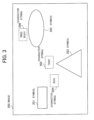
- Fig. 3 is a diagram showing an example of the image in the first embodiment.
- the image 200 is the image acquired by the acquisition unit 120.
- the image 200 includes symbols 201 to 203 and character strings 204 to 206.
- the extraction unit 130 extracts the symbols 201 to 203 and the character strings 204 to 206 based on the image 200. For example, the extraction unit 130 extracts the symbols 201 to 203 and the character strings 204 to 206 by using an extraction method described in the Patent Reference 1 or the Non-patent Reference 1. The result of the extraction will be shown below.
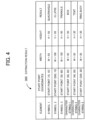
- Fig. 4 is a diagram showing an example of the extraction result in the first embodiment.
- the extraction result 300 includes items of element, start point coordinates, width, height and result.
- the extraction result 300 indicates that the start point coordinates of a symbol 1 (i.e., the symbol 201) are (10, 10).
- the extraction result 300 indicates that the width of the symbol 1 is "50" and the height of the symbol 1 is "50".
- the extraction result 300 indicates that the shape of the symbol 1 is a quadrangle.
- the extraction result 300 may include central coordinates of the symbol instead of the start point coordinates.
- the start point coordinates, the central coordinates and the like are referred to as position coordinates.
- the acquisition unit 120 acquires a relationship table.
- the acquisition unit 120 acquires the relationship table from the storage unit 110.
- the acquisition unit 120 acquires the relationship table from an external device.
- the relationship table will be shown below.
- Fig. 5 is a diagram showing an example of the relationship table in the first embodiment.
- the relationship table 111 has been stored in the storage unit 110.
- the relationship table 111 is referred to also as relationship information.
- the relationship table 111 is information indicating a correspondence relationship between a symbol and a character string.
- the relationship table 111 indicates that "quadrangle" has relationship with "box", "area” and "floor”.
- association determination unit 140 will be described below.
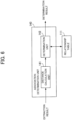
- Fig. 6 is a block diagram showing functions of the association determination unit in the first embodiment.
- the association determination unit 140 includes a distance calculation unit 141 and a determination unit 142.
- the distance calculation unit 141 calculates distances between one symbol and a plurality of character strings based on the position of the symbol and the positions of the plurality of character strings.
- this symbol is referred to also as a first symbol.
- the distance L2 between the symbol 201 and the character string 205 is calculated according to expression (2) .
- the distance L3 between the symbol 201 and the character string 206 is calculated according to expression (3) .
- the distance calculation unit 141 calculates the distances between the symbol 202 and the character strings 204 to 206 in a similar manner. Further, the distance calculation unit 141 calculates the distances between the symbol 203 and the character strings 204 to 206 in a similar manner. Incidentally, the distance may be either represented by the Euclidean distance or represented by different representation.
- the determination unit 142 determines a character string having a relationship with a symbol based on the relationship table 111 and the distances. In the following, a description will be given of a case of determining a character string having a relationship with the symbol 201. Here, the distances are used in ascending order. According to the above-described calculation results, the distance L2 is the smallest. Therefore, the character string 205 is considered to have a relationship with the symbol 201.
- the determination unit 142 refers to the relationship table 111. Based on the relationship table 111, the determination unit 142 determines that the symbol 201 (i.e., quadrangle) and the character string 205 (i.e., tent) have no relationship with each other.
- the determination unit 142 selects the distance L1 that is the second smallest distance.
- the determination unit 142 refers to the relationship table 111. Based on the relationship table 111, the determination unit 142 determines that the symbol 201 (i.e., quadrangle) and the character string 204 (i.e., box) have a relationship with each other.
- the determination unit 142 determines a character string having a relationship with the symbol 202 in a similar manner. Further, the determination unit 142 determines a character string having a relationship with the symbol 203 in a similar manner.
- the association determination unit 140 outputs a determination result.
- Fig. 7 is a flowchart showing an example of the process executed by the information processing device in the first embodiment.
- Step S11 The acquisition unit 120 acquires the image 200.
- Step S12 The extraction unit 130 extracts the symbols 201 to 203 and the character strings 204 to 206.
- the distance calculation unit 141 calculates the distances between the symbol 201 and the character strings 204 to 206.
- the distance calculation unit 141 calculates the distances between the symbol 202 and the character strings 204 to 206.
- the distance calculation unit 141 calculates the distances between the symbol 203 and the character strings 204 to 206.
- the determination unit 142 determines a character string having a relationship with the symbol 201 based on the relationship table 111 and the distances.
- the determination unit 142 determines a character string having a relationship with the symbol 202 based on the relationship table 111 and the distances.
- the determination unit 142 determines a character string having a relationship with the symbol 203 based on the relationship table 111 and the distances.
- the character strings 204 to 206 exist around the symbol 201.
- the information processing device 100 determines that the symbol 201 and the character string 204 have a relationship with each other.
- the information processing device 100 is capable of making a determination on appropriate association.
- the determination unit 142 determines a character string having a relationship with a symbol based on distances less than or equal to a predetermined threshold value TH among the plurality of calculated distances and the relationship table 111. In other words, the determination unit 142 does not make the determination on whether a character string has a relationship with the symbol or not by using a distance larger than the threshold value TH among the plurality of distances. When the distance between the symbol and a character string is large, the symbol and the character string have no relationship with each other. Therefore, distances larger than the threshold value TH are excluded from information for making the determination. Further, thanks to the exclusion of the distances larger than the threshold value TH, the number of times the determination unit 142 refers to the relationship table 111 decreases. Accordingly, the processing time is shortened.
- Fig. 8 is a block diagram showing functions of an information processing device in the second embodiment.
- Each component in Fig. 8 that is the same as a component shown in Fig. 2 is assigned the same reference character as in Fig. 2 .
- the information processing device 100a includes an extraction unit 130a, an association determination unit 140a and a character recognition unit 150. Part or all of the extraction unit 130a, the association determination unit 140a and the character recognition unit 150 may be implemented by processing circuitry. Further, part or all of the extraction unit 130a, the association determination unit 140a and the character recognition unit 150 may be implemented as modules of a program executed by the processor 101.
- the extraction unit 130a extracts the symbols 201 to 203 based on the image 200. Further, the extraction unit 130a extracts the positions of the character strings 204 to 206. That is, the extraction unit 130a does not extract the character strings 204 to 206.
- the character recognition unit 150 executes character recognition based on the image. Specifically, the character recognition unit 150 executes the character recognition based on the positions of the character strings 204 to 206. For example, the character recognition unit 150 executes the character recognition by a method described in Non-patent Reference 2. Incidentally, there are cases where the character recognition unit 150 commits a character recognition error. For example, the character recognition unit 150 misrecognizes a character string "tent" as a character string "tesot".
- association determination unit 140a will be described below.
- Fig. 9 is a block diagram showing functions of the association determination unit in the second embodiment.
- the association determination unit 140a includes a determination unit 142a.
- the determination unit 142a detects a plurality of character strings which are identical or similar to a plurality of character strings obtained by the character recognition, in the relationship table 111.
- the determination unit 142a determines a character string having a relationship with a symbol based on the plurality of detected character strings, the relationship table 111, and the distances.
- the determination unit 142a detects a character string “box” identical to the character string “box”, in the relationship table 111.
- the determination unit 142a detects a character string "tent” similar to the character string "tesot”, in the relationship table 111.
- the determination unit 142a detects a similar character string by making character string comparison.
- the determination unit 142a detects a character string "ring buoy” identical to the character string “ring buoy”, in the relationship table 111.
- the determination unit 142a determines a character string having a relationship with the symbol 203 based on the detected character strings "box", “tent” and “ring buoy", the relationship table 111, and the distances. The distances are used in ascending order. For example, the determination unit 142a determines based on the relationship table 111 that the symbol 203 (i.e., triangle) and the "tent” have a relationship with each other.
- the association determination unit 140 outputs a determination result indicating that the symbol 203 (i.e., triangle) and the "tent” have a relationship with each other.
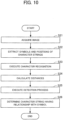
- Fig. 10 is a flowchart showing an example of the process executed by the information processing device in the second embodiment.
- Step S21 The acquisition unit 120 acquires the image 200.
- Step S22 The extraction unit 130a extracts the symbols 201 to 203 and the positions of the character strings 204 to 206.
- Step S23 The character recognition unit 150 executes the character recognition based on the image.
- Step S24 The distance calculation unit 141 calculates the distances between the symbol 201 and the character strings 204 to 206.
- the distance calculation unit 141 calculates the distances between the symbol 202 and the character strings 204 to 206.
- the distance calculation unit 141 calculates the distances between the symbol 203 and the character strings 204 to 206.
- Step S25 The determination unit 142a detects a plurality of character strings which are identical or similar to a plurality of character strings obtained by the character recognition, in the relationship table 111.
- the determination unit 142a determines a character string having a relationship with the symbol 201 based on the plurality of detected character strings, the relationship table 111, and the distances.
- the determination unit 142a determines a character string having a relationship with the symbol 202 based on the plurality of detected character strings, the relationship table 111, and the distances.
- the determination unit 142a determines a character string having a relationship with the symbol 203 based on the plurality of detected character strings, the relationship table 111, and the distances.
- the information processing device 100a is capable of detecting a character string having a relationship with a symbol even when the character recognition error has occurred.
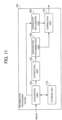
- Fig. 11 is a block diagram showing functions of an information processing device in the third embodiment.
- Each component in Fig. 11 that is the same as a component shown in Fig. 2 is assigned the same reference character as in Fig. 2 .
- the information processing device 100 further includes a character recognition unit 160 and a correction unit 170.
- Part or all of the character recognition unit 160 and the correction unit 170 may be implemented by processing circuitry. Further, part or all of the character recognition unit 160 and the correction unit 170 may be implemented as modules of a program executed by the processor 101.
- the character recognition unit 160 executes character recognition based on the image. For example, the character recognition unit 160 executes the character recognition by the method described in the Non-patent Reference 2.
- the acquisition unit 120 acquires correction information.
- the acquisition unit 120 acquires the correction information from the storage unit 110.
- the acquisition unit 120 acquires the correction information from an external device.
- the correction information will be shown concretely below.
- Fig. 12 is a diagram showing an example of the correction information in the third embodiment.
- the correction information 112 has been stored in the storage unit 110.
- the correction information 112 is information indicating a character string that should be associated preferentially out of a character string in the character recognition result and a character string in the determination result.
- the correction unit 170 identifies a character string that should be associated based on the character string in the determination result, the character recognition result as the result of the character recognition, and the correction information 112.
- the correction unit 170 corrects the character string in the determination result to the identification character string.
- the character recognition result is assumed to be "floor”.
- the determination result indicates that "quadrangle" and "box” have a relationship with each other. That is, the character string in the determination result is "box”.
- the correction unit 170 identifies the character string "floor” that should be associated based on the character string "box” in the determination result, the character recognition result "floor”, and the correction information 112.
- the correction unit 170 corrects the character string "box” in the determination result to the identification character string "floor”. Accordingly, information indicating that "quadrangle” and "floor” have a relationship with each other is outputted.
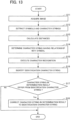
- Fig. 13 is a flowchart showing an example of the process executed by the information processing device in the third embodiment.
- the process of Fig. 13 differs from the process of Fig. 7 in that steps S15 to S18 are executed. Therefore, the steps S15 to S18 will be described below with reference to Fig. 13 . Then, the description is omitted for processing other than the steps S15 to S18.
- Step S15 The character recognition unit 160 executes the character recognition based on the image.
- Step S16 The correction unit 170 identifies the identification character string based on the character recognition result and the correction information 112.
- Step S17 The correction unit 170 determines whether or not the character string in the determination result and the identification character string differ from each other. If the two character strings differ from each other, the process advances to step S18. If the two character strings are the same as each other, the information processing device 100 outputs the determination result.
- Step S18 The correction unit 170 corrects the character string in the determination result to the identification character string.
- the step S15 may be performed before the step S12. Alternatively, the step S15 may be performed in parallel with the steps S12 to S14.
- the information processing device 100 is capable of making association between the character string that should be associated preferentially and the symbol.
- the information processing device 100 may execute the following process.
- the acquisition unit 120 acquires correct answer information of a character string.
- the correction unit 170 calculates a correct answer level of the character string in the character recognition result as the result of the character recognition based on the correct answer information. Further, the correction unit 170 calculates the correct answer level of the character string in the determination result based on the correct answer information.
- the correction unit 170 compares the correct answer level of the character string in the character recognition result with the correct answer level of the character string in the determination result. If the correct answer level of the character string in the character recognition result is higher than the correct answer level of the character string in the determination result, the correction unit 170 corrects the character string in the determination result to the character string in the character recognition result.
- the character recognition result is assumed to be "floor”.
- the determination result indicates that "quadrangle” and "box” have a relationship with each other. That is, the character string in the determination result is "box”.
- the correct answer information indicates "floor”.
- the correction unit 170 calculates the correct answer level of the character string in the character recognition result based on the correct answer information.
- the correction unit 170 calculates the correct answer level of the character string in the determination result based on the correct answer information.
- the correction unit 170 determines that the correct answer level of the character string in the character recognition result is higher than the correct answer level of the character string in the determination result.
- the correction unit 170 corrects the character string "box” in the determination result to the character string "floor” in the character recognition result. Accordingly, information indicating that "quadrangle” and "floor” have a relationship with each other is outputted.
- the information processing device 100 is capable of correcting the character string to an appropriate character string.
- Fig. 14 is a block diagram showing functions of an information processing device in the fourth embodiment.
- Each component in Fig. 14 that is the same as a component shown in Fig. 2 is assigned the same reference character as in Fig. 2 .
- the information processing device 100b includes an association determination unit 140b and a determination correction unit 180.
- Part or all of the association determination unit 140b and the determination correction unit 180 may be implemented by processing circuitry. Further, part or all of the association determination unit 140b and the determination correction unit 180 may be implemented as modules of a program executed by the processor 101.
- the acquisition unit 120 acquires correction information.
- the acquisition unit 120 acquires the correction information from the storage unit 110.
- the acquisition unit 120 acquires the correction information from an external device.
- the correction information will be shown concretely below.
- Fig. 15 is a diagram showing an example of the correction information in the fourth embodiment.
- the correction information 113 has been stored in the storage unit 110.
- the correction information 113 is information for correcting the determination result.
- the correction information 113 indicates a relationship between an extracted character string and an extracted symbol. A concrete way of using the correction information 113 will be explained later.
- association determination unit 140b will be described below.
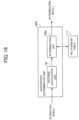
- Fig. 16 is a block diagram showing functions of the association determination unit in the fourth embodiment.
- the association determination unit 140b includes a determination unit 142b.
- the determination unit 142b identifies a combination of a symbol and a character string closest to the symbol based on the calculated distances. The determination unit 142b determines whether or not the relationship between the symbol and the character string closest to the symbol has been registered in the relationship table 111. If the relationship has been registered in the relationship table 111, the determination unit 142b outputs the relationship as the determination result.
- the determination correction unit 180 determines whether the determination result should be corrected or not based on the correction information 113. When the determination result should be corrected, the determination correction unit 180 corrects the determination result based on the correction information 113.
- Fig. 17 is a diagram showing an example of the image in the fourth embodiment.
- the determination unit 142b identifies a combination of the symbol 201 and the character string 204 closest to the symbol 201 based on the calculated distances. In Fig. 17 , the combination is indicated as a combination 11.
- the combination 11 is referred to also as a combination A.
- the determination unit 142b determines that the combination 11 has been registered in the relationship table 111.
- the determination correction unit 180 does not correct the determination result since the relationship indicated by the determination result has been registered in the correction information 113.
- the determination unit 142b identifies a combination of the symbol 203 and the character string 205 closest to the symbol 203 based on the calculated distances. In Fig. 17 , the combination is indicated as a combination 12.
- the combination 12 is referred to also as a combination B.
- the determination unit 142b determines that the combination 12 has been registered in the relationship table 111.
- the determination correction unit 180 does not correct the determination result since the relationship indicated by the determination result has been registered in the correction information 113.
- the determination unit 142b identifies a combination of the symbol 202 and the character string 206 closest to the symbol 202. In Fig. 17 , the combination is indicated as a combination 13.
- the combination 13 is referred to also as a combination C.
- the extraction unit 130 extracts the symbol 202 as "quadrangle".
- the determination unit 142b determines that the combination 13 has been registered in the relationship table 111.
- the determination correction unit 180 corrects the determination result since the relationship indicated by the determination result has not been registered in the correction information 113. Specifically, the determination correction unit 180 corrects the determination result "quadrangle, ring buoy” to "ellipse, ring buoy” based on the correction information 113.
- Fig. 18 is a diagram showing an example of a determination result list in the fourth embodiment.
- the determination result of the combination A indicates that "quadrangle” and “box” have a relationship with each other.
- the determination result of the combination B indicates that "triangle” and “tent” have a relationship with each other.
- the determination result of the combination C indicates that "ellipse” and "ring buoy” have a relationship with each other.
- the determination correction unit 180 corrects "quadrangle" to "ellipse". Accordingly, the information processing device 100b is capable of correcting an erroneously extracted symbol to a correct symbol. Then, the information processing device 100b is capable of outputting a correct determination result.
Landscapes
- Engineering & Computer Science (AREA)
- Computer Vision & Pattern Recognition (AREA)
- Physics & Mathematics (AREA)
- General Physics & Mathematics (AREA)
- Multimedia (AREA)
- Theoretical Computer Science (AREA)
- Artificial Intelligence (AREA)
- Computational Linguistics (AREA)
- Computer Graphics (AREA)
- Geometry (AREA)
- Character Discrimination (AREA)
- Character Input (AREA)
Abstract
Description
- The present disclosure relates to an information processing device, a processing method and a processing program.
- There has been known an image analysis device. The image analysis device analyzes an image. For example, symbols and character strings are included in the image as the analysis object. There has been known a technology for extracting symbols and character strings (see
Patent Reference 1 or Non-patent Reference 1). - Patent Reference 1:
Japanese Patent No. 6076128 - Non-patent Reference 1: Shogo Yoneyama, Takashi Hirano and Yasuhiro Okada, "Extracting Symbol Information in Engineering Drawing Image", March Proceedings of the IEICE General Conference, March 2006
- Non-patent Reference 2: T. Hirano et al., "Structural Character Recognition Using Simulated Annealing", ICDAR 1997, Aug. 1997
- Incidentally, there are cases where a plurality of character strings exist around a symbol. In such cases, there is a problem in that it is unclear which character string and the symbol are associated with each other.
- An object of the present disclosure is to make a determination on appropriate association.
- An information processing device according to an aspect of the present disclosure is provided. The information processing device includes an acquisition unit that acquires an image including a first symbol and a plurality of character strings and relationship information indicating a correspondence relationship between a symbol and a character string, an extraction unit that extracts the first symbol and the plurality of character strings based on the image, a distance calculation unit that calculates distances between the first symbol and the plurality of character strings based on a position of the first symbol and positions of the plurality of character strings, and a determination unit that determines a character string having a relationship with the first symbol based on the relationship information and the distances.
- According to the present disclosure, it is possible to make a determination on appropriate association.
-
-
Fig. 1 is a diagram showing hardware included in an information processing device in a first embodiment. -
Fig. 2 is a block diagram showing functions of the information processing device in the first embodiment. -
Fig. 3 is a diagram showing an example of an image in the first embodiment. -
Fig. 4 is a diagram showing an example of an extraction result in the first embodiment. -
Fig. 5 is a diagram showing an example of a relationship table in the first embodiment. -
Fig. 6 is a block diagram showing functions of an association determination unit in the first embodiment. -
Fig. 7 is a flowchart showing an example of a process executed by the information processing device in the first embodiment. -
Fig. 8 is a block diagram showing functions of an information processing device in a second embodiment. -
Fig. 9 is a block diagram showing functions of an association determination unit in the second embodiment. -
Fig. 10 is a flowchart showing an example of a process executed by the information processing device in the second embodiment. -
Fig. 11 is a block diagram showing functions of an information processing device in a third embodiment. -
Fig. 12 is a diagram showing an example of correction information in the third embodiment. -
Fig. 13 is a flowchart showing an example of a process executed by the information processing device in the third embodiment. -
Fig. 14 is a block diagram showing functions of an information processing device in a fourth embodiment. -
Fig. 15 is a diagram showing an example of correction information in the fourth embodiment. -
Fig. 16 is a block diagram showing functions of an association determination unit in the fourth embodiment. -
Fig. 17 is a diagram showing an example of the image in the fourth embodiment. -
Fig. 18 is a diagram showing an example of a determination result list in the fourth embodiment. - Embodiments will be described below with reference to the drawings. The following embodiments are just examples and a variety of modifications are possible within the scope of the present disclosure.
-
Fig. 1 is a diagram showing hardware included in an information processing device in a first embodiment. Theinformation processing device 100 is a device that executes a processing method. Theinformation processing device 100 includes aprocessor 101, avolatile storage device 102 and anonvolatile storage device 103. - The
processor 101 controls the whole of theinformation processing device 100. Theprocessor 101 is a Central Processing Unit (CPU), a Field Programmable Gate Array (FPGA) or the like, for example. Theprocessor 101 can also be a multiprocessor. Further, theinformation processing device 100 may include processing circuitry. - The
volatile storage device 102 is main storage of theinformation processing device 100. Thevolatile storage device 102 is a Random Access Memory (RAM), for example. Thenonvolatile storage device 103 is auxiliary storage of theinformation processing device 100. Thenonvolatile storage device 103 is a Hard Disk Drive (HDD) or a Solid State Drive (SSD), for example. - Further, the
information processing device 100 may include a scanner or a camera. - Next, functions included in the
information processing device 100 will be described below. -
Fig. 2 is a block diagram showing the functions of the information processing device in the first embodiment. Theinformation processing device 100 includes astorage unit 110, anacquisition unit 120, anextraction unit 130 and anassociation determination unit 140. - The
storage unit 110 may be implemented as a storage area reserved in thevolatile storage device 102 or thenonvolatile storage device 103. - Part or all of the
acquisition unit 120, theextraction unit 130 and theassociation determination unit 140 may be implemented by processing circuitry. Further, part or all of theacquisition unit 120, theextraction unit 130 and theassociation determination unit 140 may be implemented as modules of a program executed by theprocessor 101. For example, the program executed by theprocessor 101 is referred to also as a processing program. The processing program has been recorded in a record medium, for example. - The
acquisition unit 120 acquires an image. For example, in the case where theinformation processing device 100 includes a camera, theacquisition unit 120 acquires an image obtained by the camera by photographing a target object. Alternatively, for example, theacquisition unit 120 acquires the image from an external device. Incidentally, illustration of the external device is left out. Here, the image will be shown below. -
Fig. 3 is a diagram showing an example of the image in the first embodiment. Theimage 200 is the image acquired by theacquisition unit 120. Theimage 200 includessymbols 201 to 203 andcharacter strings 204 to 206. - The
extraction unit 130 extracts thesymbols 201 to 203 and thecharacter strings 204 to 206 based on theimage 200. For example, theextraction unit 130 extracts thesymbols 201 to 203 and thecharacter strings 204 to 206 by using an extraction method described in thePatent Reference 1 or theNon-patent Reference 1. The result of the extraction will be shown below. -
Fig. 4 is a diagram showing an example of the extraction result in the first embodiment. Theextraction result 300 includes items of element, start point coordinates, width, height and result. For example, theextraction result 300 indicates that the start point coordinates of a symbol 1 (i.e., the symbol 201) are (10, 10). For example, theextraction result 300 indicates that the width of thesymbol 1 is "50" and the height of thesymbol 1 is "50". Further, theextraction result 300 indicates that the shape of thesymbol 1 is a quadrangle. - The
extraction result 300 may include central coordinates of the symbol instead of the start point coordinates. Here, the start point coordinates, the central coordinates and the like are referred to as position coordinates. - The
acquisition unit 120 acquires a relationship table. For example, theacquisition unit 120 acquires the relationship table from thestorage unit 110. Alternatively, theacquisition unit 120 acquires the relationship table from an external device. Here, the relationship table will be shown below. -
Fig. 5 is a diagram showing an example of the relationship table in the first embodiment. For example, the relationship table 111 has been stored in thestorage unit 110. The relationship table 111 is referred to also as relationship information. The relationship table 111 is information indicating a correspondence relationship between a symbol and a character string. For example, the relationship table 111 indicates that "quadrangle" has relationship with "box", "area" and "floor". - Next, the
association determination unit 140 will be described below. -
Fig. 6 is a block diagram showing functions of the association determination unit in the first embodiment. Theassociation determination unit 140 includes adistance calculation unit 141 and adetermination unit 142. - The
distance calculation unit 141 calculates distances between one symbol and a plurality of character strings based on the position of the symbol and the positions of the plurality of character strings. Here, this symbol is referred to also as a first symbol. - For example, the distance L1 between the
symbol 201 and thecharacter string 204 is calculated according to expression (1). Specifically, thedistance calculation unit 141 calculates the distance L1 based on the position coordinates of thesymbol 201 and the position coordinates of thecharacter string 204.
- The distance L2 between the
symbol 201 and thecharacter string 205 is calculated according to expression (2) .
- The distance L3 between the
symbol 201 and thecharacter string 206 is calculated according to expression (3) .
- The
distance calculation unit 141 calculates the distances between thesymbol 202 and thecharacter strings 204 to 206 in a similar manner. Further, thedistance calculation unit 141 calculates the distances between thesymbol 203 and thecharacter strings 204 to 206 in a similar manner. Incidentally, the distance may be either represented by the Euclidean distance or represented by different representation. - The
determination unit 142 determines a character string having a relationship with a symbol based on the relationship table 111 and the distances. In the following, a description will be given of a case of determining a character string having a relationship with thesymbol 201. Here, the distances are used in ascending order. According to the above-described calculation results, the distance L2 is the smallest. Therefore, thecharacter string 205 is considered to have a relationship with thesymbol 201. Thedetermination unit 142 refers to the relationship table 111. Based on the relationship table 111, thedetermination unit 142 determines that the symbol 201 (i.e., quadrangle) and the character string 205 (i.e., tent) have no relationship with each other. Subsequently, thedetermination unit 142 selects the distance L1 that is the second smallest distance. Thedetermination unit 142 refers to the relationship table 111. Based on the relationship table 111, thedetermination unit 142 determines that the symbol 201 (i.e., quadrangle) and the character string 204 (i.e., box) have a relationship with each other. - The
determination unit 142 determines a character string having a relationship with thesymbol 202 in a similar manner. Further, thedetermination unit 142 determines a character string having a relationship with thesymbol 203 in a similar manner. - The
association determination unit 140 outputs a determination result. - Next, a process executed by the
information processing device 100 will be described below by using a flowchart.Fig. 7 is a flowchart showing an example of the process executed by the information processing device in the first embodiment. - (Step S11) The
acquisition unit 120 acquires theimage 200. - (Step S12) The
extraction unit 130 extracts thesymbols 201 to 203 and thecharacter strings 204 to 206. - (Step S13) The
distance calculation unit 141 calculates the distances between thesymbol 201 and thecharacter strings 204 to 206. Thedistance calculation unit 141 calculates the distances between thesymbol 202 and thecharacter strings 204 to 206. Thedistance calculation unit 141 calculates the distances between thesymbol 203 and thecharacter strings 204 to 206. - (Step S14) The
determination unit 142 determines a character string having a relationship with thesymbol 201 based on the relationship table 111 and the distances. Thedetermination unit 142 determines a character string having a relationship with thesymbol 202 based on the relationship table 111 and the distances. Thedetermination unit 142 determines a character string having a relationship with thesymbol 203 based on the relationship table 111 and the distances. - For example, the
character strings 204 to 206 exist around thesymbol 201. Theinformation processing device 100 determines that thesymbol 201 and thecharacter string 204 have a relationship with each other. Thus, according to the first embodiment, theinformation processing device 100 is capable of making a determination on appropriate association. - Further, the
determination unit 142 determines a character string having a relationship with a symbol based on distances less than or equal to a predetermined threshold value TH among the plurality of calculated distances and the relationship table 111. In other words, thedetermination unit 142 does not make the determination on whether a character string has a relationship with the symbol or not by using a distance larger than the threshold value TH among the plurality of distances. When the distance between the symbol and a character string is large, the symbol and the character string have no relationship with each other. Therefore, distances larger than the threshold value TH are excluded from information for making the determination. Further, thanks to the exclusion of the distances larger than the threshold value TH, the number of times thedetermination unit 142 refers to the relationship table 111 decreases. Accordingly, the processing time is shortened. - Next, a second embodiment will be described below. In the second embodiment, the description will be given mainly of features different from those in the first embodiment. In the second embodiment, the description is omitted for features in common with the first embodiment.
-
Fig. 8 is a block diagram showing functions of an information processing device in the second embodiment. Each component inFig. 8 that is the same as a component shown inFig. 2 is assigned the same reference character as inFig. 2 . - The
information processing device 100a includes anextraction unit 130a, anassociation determination unit 140a and acharacter recognition unit 150. Part or all of theextraction unit 130a, theassociation determination unit 140a and thecharacter recognition unit 150 may be implemented by processing circuitry. Further, part or all of theextraction unit 130a, theassociation determination unit 140a and thecharacter recognition unit 150 may be implemented as modules of a program executed by theprocessor 101. - The
extraction unit 130a extracts thesymbols 201 to 203 based on theimage 200. Further, theextraction unit 130a extracts the positions of thecharacter strings 204 to 206. That is, theextraction unit 130a does not extract thecharacter strings 204 to 206. - The
character recognition unit 150 executes character recognition based on the image. Specifically, thecharacter recognition unit 150 executes the character recognition based on the positions of thecharacter strings 204 to 206. For example, thecharacter recognition unit 150 executes the character recognition by a method described inNon-patent Reference 2. Incidentally, there are cases where thecharacter recognition unit 150 commits a character recognition error. For example, thecharacter recognition unit 150 misrecognizes a character string "tent" as a character string "tesot". - Next, the
association determination unit 140a will be described below. -
Fig. 9 is a block diagram showing functions of the association determination unit in the second embodiment. Theassociation determination unit 140a includes adetermination unit 142a. - The
determination unit 142a detects a plurality of character strings which are identical or similar to a plurality of character strings obtained by the character recognition, in the relationship table 111. Thedetermination unit 142a determines a character string having a relationship with a symbol based on the plurality of detected character strings, the relationship table 111, and the distances. - In the following, a description will be given concretely of a case of determining a character string having a relationship with the
symbol 203. It is assumed that character strings "box", "tesot" and "ring buoy" have been obtained by the character recognition. Thedetermination unit 142a detects a character string "box" identical to the character string "box", in the relationship table 111. Thedetermination unit 142a detects a character string "tent" similar to the character string "tesot", in the relationship table 111. For example, thedetermination unit 142a detects a similar character string by making character string comparison. Thedetermination unit 142a detects a character string "ring buoy" identical to the character string "ring buoy", in the relationship table 111. Thedetermination unit 142a determines a character string having a relationship with thesymbol 203 based on the detected character strings "box", "tent" and "ring buoy", the relationship table 111, and the distances. The distances are used in ascending order. For example, thedetermination unit 142a determines based on the relationship table 111 that the symbol 203 (i.e., triangle) and the "tent" have a relationship with each other. Theassociation determination unit 140 outputs a determination result indicating that the symbol 203 (i.e., triangle) and the "tent" have a relationship with each other. - Next, a process executed by the
information processing device 100a will be described below by using a flowchart. -
Fig. 10 is a flowchart showing an example of the process executed by the information processing device in the second embodiment. - (Step S21) The
acquisition unit 120 acquires theimage 200. - (Step S22) The
extraction unit 130a extracts thesymbols 201 to 203 and the positions of thecharacter strings 204 to 206. - (Step S23) The
character recognition unit 150 executes the character recognition based on the image. - (Step S24) The
distance calculation unit 141 calculates the distances between thesymbol 201 and thecharacter strings 204 to 206. Thedistance calculation unit 141 calculates the distances between thesymbol 202 and thecharacter strings 204 to 206. Thedistance calculation unit 141 calculates the distances between thesymbol 203 and thecharacter strings 204 to 206. - (Step S25) The
determination unit 142a detects a plurality of character strings which are identical or similar to a plurality of character strings obtained by the character recognition, in the relationship table 111. - (Step S26) The
determination unit 142a determines a character string having a relationship with thesymbol 201 based on the plurality of detected character strings, the relationship table 111, and the distances. Thedetermination unit 142a determines a character string having a relationship with thesymbol 202 based on the plurality of detected character strings, the relationship table 111, and the distances. Thedetermination unit 142a determines a character string having a relationship with thesymbol 203 based on the plurality of detected character strings, the relationship table 111, and the distances. - According to the second embodiment, the
information processing device 100a is capable of detecting a character string having a relationship with a symbol even when the character recognition error has occurred. - Next, a third embodiment will be described below. In the third embodiment, the description will be given mainly of features different from those in the first embodiment. In the third embodiment, the description is omitted for features in common with the first embodiment.
-
Fig. 11 is a block diagram showing functions of an information processing device in the third embodiment. Each component inFig. 11 that is the same as a component shown inFig. 2 is assigned the same reference character as inFig. 2 . Theinformation processing device 100 further includes acharacter recognition unit 160 and acorrection unit 170. - Part or all of the
character recognition unit 160 and thecorrection unit 170 may be implemented by processing circuitry. Further, part or all of thecharacter recognition unit 160 and thecorrection unit 170 may be implemented as modules of a program executed by theprocessor 101. - The
character recognition unit 160 executes character recognition based on the image. For example, thecharacter recognition unit 160 executes the character recognition by the method described in theNon-patent Reference 2. - The
acquisition unit 120 acquires correction information. For example, theacquisition unit 120 acquires the correction information from thestorage unit 110. Alternatively, for example, theacquisition unit 120 acquires the correction information from an external device. The correction information will be shown concretely below. -
Fig. 12 is a diagram showing an example of the correction information in the third embodiment. For example, thecorrection information 112 has been stored in thestorage unit 110. Thecorrection information 112 is information indicating a character string that should be associated preferentially out of a character string in the character recognition result and a character string in the determination result. - The
correction unit 170 identifies a character string that should be associated based on the character string in the determination result, the character recognition result as the result of the character recognition, and thecorrection information 112. When the character string in the determination result and the identified character string (hereinafter referred to as an identification character string) differ from each other, thecorrection unit 170 corrects the character string in the determination result to the identification character string. For example, the character recognition result is assumed to be "floor". The determination result indicates that "quadrangle" and "box" have a relationship with each other. That is, the character string in the determination result is "box". Thecorrection unit 170 identifies the character string "floor" that should be associated based on the character string "box" in the determination result, the character recognition result "floor", and thecorrection information 112. The character string "box" in the determination result and the identification character string "floor" differ from each other. Therefore, thecorrection unit 170 corrects the character string "box" in the determination result to the identification character string "floor". Accordingly, information indicating that "quadrangle" and "floor" have a relationship with each other is outputted. - Next, a process executed by the
information processing device 100 will be described below by using a flowchart. -
Fig. 13 is a flowchart showing an example of the process executed by the information processing device in the third embodiment. The process ofFig. 13 differs from the process ofFig. 7 in that steps S15 to S18 are executed. Therefore, the steps S15 to S18 will be described below with reference toFig. 13 . Then, the description is omitted for processing other than the steps S15 to S18. - (Step S15) The
character recognition unit 160 executes the character recognition based on the image. - (Step S16) The
correction unit 170 identifies the identification character string based on the character recognition result and thecorrection information 112. - (Step S17) The
correction unit 170 determines whether or not the character string in the determination result and the identification character string differ from each other. If the two character strings differ from each other, the process advances to step S18. If the two character strings are the same as each other, theinformation processing device 100 outputs the determination result. - (Step S18) The
correction unit 170 corrects the character string in the determination result to the identification character string. - The step S15 may be performed before the step S12. Alternatively, the step S15 may be performed in parallel with the steps S12 to S14.
- According to the third embodiment, the
information processing device 100 is capable of making association between the character string that should be associated preferentially and the symbol. - Further, the
information processing device 100 may execute the following process. Theacquisition unit 120 acquires correct answer information of a character string. Thecorrection unit 170 calculates a correct answer level of the character string in the character recognition result as the result of the character recognition based on the correct answer information. Further, thecorrection unit 170 calculates the correct answer level of the character string in the determination result based on the correct answer information. Thecorrection unit 170 compares the correct answer level of the character string in the character recognition result with the correct answer level of the character string in the determination result. If the correct answer level of the character string in the character recognition result is higher than the correct answer level of the character string in the determination result, thecorrection unit 170 corrects the character string in the determination result to the character string in the character recognition result. - The above process will be described specifically below. The character recognition result is assumed to be "floor". The determination result indicates that "quadrangle" and "box" have a relationship with each other. That is, the character string in the determination result is "box". The correct answer information indicates "floor". The
correction unit 170 calculates the correct answer level of the character string in the character recognition result based on the correct answer information. Thecorrection unit 170 calculates the correct answer level of the character string in the determination result based on the correct answer information. Thecorrection unit 170 determines that the correct answer level of the character string in the character recognition result is higher than the correct answer level of the character string in the determination result. Thecorrection unit 170 corrects the character string "box" in the determination result to the character string "floor" in the character recognition result. Accordingly, information indicating that "quadrangle" and "floor" have a relationship with each other is outputted. - As above, even when the character string in the determination result is erroneous, the
information processing device 100 is capable of correcting the character string to an appropriate character string. - Next, a fourth embodiment will be described below. In the fourth embodiment, the description will be given mainly of features different from those in the first embodiment. In the fourth embodiment, the description is omitted for features in common with the first embodiment.
-
Fig. 14 is a block diagram showing functions of an information processing device in the fourth embodiment. Each component inFig. 14 that is the same as a component shown inFig. 2 is assigned the same reference character as inFig. 2 . Theinformation processing device 100b includes anassociation determination unit 140b and adetermination correction unit 180. - Part or all of the
association determination unit 140b and thedetermination correction unit 180 may be implemented by processing circuitry. Further, part or all of theassociation determination unit 140b and thedetermination correction unit 180 may be implemented as modules of a program executed by theprocessor 101. - The
acquisition unit 120 acquires correction information. For example, theacquisition unit 120 acquires the correction information from thestorage unit 110. Alternatively, for example, theacquisition unit 120 acquires the correction information from an external device. The correction information will be shown concretely below. -
Fig. 15 is a diagram showing an example of the correction information in the fourth embodiment. For example, thecorrection information 113 has been stored in thestorage unit 110. Thecorrection information 113 is information for correcting the determination result. Specifically, thecorrection information 113 indicates a relationship between an extracted character string and an extracted symbol. A concrete way of using thecorrection information 113 will be explained later. - Next, the
association determination unit 140b will be described below. -
Fig. 16 is a block diagram showing functions of the association determination unit in the fourth embodiment. Theassociation determination unit 140b includes adetermination unit 142b. - The
determination unit 142b identifies a combination of a symbol and a character string closest to the symbol based on the calculated distances. Thedetermination unit 142b determines whether or not the relationship between the symbol and the character string closest to the symbol has been registered in the relationship table 111. If the relationship has been registered in the relationship table 111, thedetermination unit 142b outputs the relationship as the determination result. - In the case where the relationship has been registered in the relationship table 111, the
determination correction unit 180 determines whether the determination result should be corrected or not based on thecorrection information 113. When the determination result should be corrected, thedetermination correction unit 180 corrects the determination result based on thecorrection information 113. - Next, a process executed by the
information processing device 100b will be described below by using concrete examples. -
Fig. 17 is a diagram showing an example of the image in the fourth embodiment. Thedetermination unit 142b identifies a combination of thesymbol 201 and thecharacter string 204 closest to thesymbol 201 based on the calculated distances. InFig. 17 , the combination is indicated as acombination 11. Thecombination 11 is referred to also as a combination A. Thedetermination unit 142b determines that thecombination 11 has been registered in the relationship table 111. Thedetermination correction unit 180 does not correct the determination result since the relationship indicated by the determination result has been registered in thecorrection information 113. - The
determination unit 142b identifies a combination of thesymbol 203 and thecharacter string 205 closest to thesymbol 203 based on the calculated distances. InFig. 17 , the combination is indicated as acombination 12. Thecombination 12 is referred to also as a combination B. Thedetermination unit 142b determines that thecombination 12 has been registered in the relationship table 111. Thedetermination correction unit 180 does not correct the determination result since the relationship indicated by the determination result has been registered in thecorrection information 113. - The
determination unit 142b identifies a combination of thesymbol 202 and thecharacter string 206 closest to thesymbol 202. InFig. 17 , the combination is indicated as acombination 13. Thecombination 13 is referred to also as a combination C. Here, theextraction unit 130 extracts thesymbol 202 as "quadrangle". Thedetermination unit 142b determines that thecombination 13 has been registered in the relationship table 111. Thedetermination correction unit 180 corrects the determination result since the relationship indicated by the determination result has not been registered in thecorrection information 113. Specifically, thedetermination correction unit 180 corrects the determination result "quadrangle, ring buoy" to "ellipse, ring buoy" based on thecorrection information 113. -
Fig. 18 is a diagram showing an example of a determination result list in the fourth embodiment. The determination result of the combination A indicates that "quadrangle" and "box" have a relationship with each other. The determination result of the combination B indicates that "triangle" and "tent" have a relationship with each other. The determination result of the combination C indicates that "ellipse" and "ring buoy" have a relationship with each other. - As described above, when the
extraction unit 130 has extracted thesymbol 202 erroneously as "quadrangle", thedetermination correction unit 180 corrects "quadrangle" to "ellipse". Accordingly, theinformation processing device 100b is capable of correcting an erroneously extracted symbol to a correct symbol. Then, theinformation processing device 100b is capable of outputting a correct determination result. - Features in the embodiments described above can be appropriately combined with each other.
- 100: information processing device, 100a:
information processing device, 100b: information processing device, 101: processor, 102: volatile storage device, 103: nonvolatile storage device, 110: storage unit, 111: relationship table, 112: correction information, 113: correction information, 120: acquisition unit, 130: extraction unit, 130a: extraction unit, 140: association determination unit, 140a: association determination unit, 140b: association determination unit, 141: distance calculation unit, 142: determination unit, 142a: determination unit, 142b: determination unit, 150: character recognition unit, 160: character recognition unit, 170: correction unit, 180: determination correction unit, 200: image, 201 - 203: symbol, 204 - 206: character string, 300: extraction result
Claims (8)
- An information processing device comprising:an acquisition unit that acquires an image including a first symbol and a plurality of character strings and relationship information indicating a correspondence relationship between a symbol and a character string;an extraction unit that extracts the first symbol and the plurality of character strings based on the image;a distance calculation unit that calculates distances between the first symbol and the plurality of character strings based on a position of the first symbol and positions of the plurality of character strings; anda determination unit that determines a character string having a relationship with the first symbol based on the relationship information and the distances.
- The information processing device according to claim 1, wherein the determination unit determines the character string having a relationship with the first symbol based on distances less than or equal to a predetermined threshold value among the plurality of calculated distances and the relationship information.
- The information processing device according to claim 1 or 2, further comprising a character recognition unit that executes character recognition based on the image,
wherein the determination unit detects a plurality of character strings which are identical or similar to a plurality of character strings obtained by the character recognition, in the relationship information and determines the character string having a relationship with the first symbol based on the plurality of detected character strings, the relationship information, and the distances. - The information processing device according to claim 1 or 2, further comprising:a character recognition unit that executes character recognition based on the image; anda correction unit, whereinthe acquisition unit acquires correction information indicating a character string that should be associated preferentially out of a character string in a character recognition result as a result of the character recognition and a character string in a determination result of the determination, andthe correction unit identifies a character string that should be associated based on the character string in the determination result, the character recognition result, and the correction information, and when the character string in the determination result and an identification character string as the identified character string differ from each other, corrects the character string in the determination result to the identification character string.
- The information processing device according to claim 1 or 2, further comprising:a character recognition unit that executes character recognition based on the image; anda correction unit, whereinthe acquisition unit acquires correct answer information of a character string, andthe correction unit calculates a correct answer level of a character string in a character recognition result as a result of the character recognition based on the correct answer information, calculates the correct answer level of a character string in a determination result of the determination based on the correct answer information, and when the correct answer level of the character string in the character recognition result is higher than the correct answer level of the character string in the determination result, corrects the character string in the determination result to the character string in the character recognition result.
- The information processing device according to claim 1, further comprising a determination correction unit, whereinthe acquisition unit acquires correction information as information for correcting a determination result,the determination unit identifies a combination of the first symbol and a character string closest to the first symbol based on the distances and determines whether or not a relationship between the first symbol and the character string closest to the first symbol has been registered in the relationship information, andthe determination correction unit determines whether the determination result should be corrected or not based on the correction information when the relationship indicated by the determination result has been registered in the relationship information, and corrects the determination result based on the correction information when the determination result should be corrected.
- A processing method performed by an information processing device, the processing method comprising:acquiring an image including a first symbol and a plurality of character strings and relationship information indicating a correspondence relationship between a symbol and a character string, extracting the first symbol and the plurality of character strings based on the image, and calculating distances between the first symbol and the plurality of character strings based on a position of the first symbol and positions of the plurality of character strings; anddetermining a character string having a relationship with the first symbol based on the relationship information and the distances.
- A processing program that causes an information processing device to execute a process of:acquiring an image including a first symbol and a plurality of character strings and relationship information indicating a correspondence relationship between a symbol and a character string, extracting the first symbol and the plurality of character strings based on the image, calculating distances between the first symbol and the plurality of character strings based on a position of the first symbol and positions of the plurality of character strings, anddetermining a character string having a relationship with the first symbol based on the relationship information and the distances.
Applications Claiming Priority (1)
| Application Number | Priority Date | Filing Date | Title |
|---|---|---|---|
| PCT/JP2022/017581 WO2023199398A1 (en) | 2022-04-12 | 2022-04-12 | Information processing device, processing method, and processing program |
Publications (2)
| Publication Number | Publication Date |
|---|---|
| EP4492341A1 true EP4492341A1 (en) | 2025-01-15 |
| EP4492341A4 EP4492341A4 (en) | 2025-04-23 |
Family
ID=88329297
Family Applications (1)
| Application Number | Title | Priority Date | Filing Date |
|---|---|---|---|
| EP22937378.2A Pending EP4492341A4 (en) | 2022-04-12 | 2022-04-12 | INFORMATION PROCESSING DEVICE, PROCESSING METHOD AND PROCESSING PROGRAM |
Country Status (6)
| Country | Link |
|---|---|
| US (1) | US20240412544A1 (en) |
| EP (1) | EP4492341A4 (en) |
| JP (1) | JP7450840B1 (en) |
| CN (1) | CN119301651A (en) |
| AU (1) | AU2022453125B2 (en) |
| WO (1) | WO2023199398A1 (en) |
Family Cites Families (10)
| Publication number | Priority date | Publication date | Assignee | Title |
|---|---|---|---|---|
| US5251268A (en) * | 1991-08-09 | 1993-10-05 | Electric Power Research Institute, Inc. | Integrated method and apparatus for character and symbol recognition |
| JP2006227824A (en) * | 2005-02-16 | 2006-08-31 | Hitachi Ltd | Drawing recognition method and apparatus |
| JP5661663B2 (en) * | 2012-02-09 | 2015-01-28 | 京セラドキュメントソリューションズ株式会社 | Information extraction device |
| JP6076128B2 (en) | 2013-02-21 | 2017-02-08 | 三菱電機株式会社 | Character recognition device and character recognition method |
| CN107111748B (en) * | 2014-10-01 | 2020-09-22 | Abb瑞士股份有限公司 | Method and system for configuring devices of a control system based on engineering graphical objects |
| US10592704B2 (en) * | 2017-07-05 | 2020-03-17 | Brookshire Software, LLC | System and method for electronic automated printed circuit design |
| WO2020054067A1 (en) * | 2018-09-14 | 2020-03-19 | 三菱電機株式会社 | Image information processing device, image information processing method, and image information processing program |
| EP3660743B1 (en) * | 2018-11-30 | 2024-03-20 | Tata Consultancy Services Limited | Systems and methods for automating information extraction from piping and instrumentation diagrams |
| US11756323B2 (en) * | 2018-11-30 | 2023-09-12 | Doftech Co., Ltd. | Method of automatically recognizing and classifying design information in imaged PID drawing and method of automatically creating intelligent PID drawing using design information stored in database |
| EP4004811A4 (en) * | 2019-07-26 | 2023-07-12 | Patnotate LLC | Technologies for content analysis |
-
2022
- 2022-04-12 CN CN202280094348.4A patent/CN119301651A/en active Pending
- 2022-04-12 WO PCT/JP2022/017581 patent/WO2023199398A1/en not_active Ceased
- 2022-04-12 EP EP22937378.2A patent/EP4492341A4/en active Pending
- 2022-04-12 JP JP2024502424A patent/JP7450840B1/en active Active
- 2022-04-12 AU AU2022453125A patent/AU2022453125B2/en active Active
-
2024
- 2024-08-15 US US18/805,616 patent/US20240412544A1/en active Pending
Also Published As
| Publication number | Publication date |
|---|---|
| WO2023199398A1 (en) | 2023-10-19 |
| JP7450840B1 (en) | 2024-03-15 |
| CN119301651A (en) | 2025-01-10 |
| JPWO2023199398A1 (en) | 2023-10-19 |
| AU2022453125B2 (en) | 2025-03-06 |
| US20240412544A1 (en) | 2024-12-12 |
| EP4492341A4 (en) | 2025-04-23 |
| AU2022453125A1 (en) | 2024-08-15 |
Similar Documents
| Publication | Publication Date | Title |
|---|---|---|
| US10417773B2 (en) | Method and apparatus for detecting object in moving image and storage medium storing program thereof | |
| US10740899B2 (en) | Image processing apparatus for identifying region within image, information processing method, and storage medium | |
| CN104008384B (en) | Character identifying method and character recognition device | |
| US9785864B2 (en) | Image processing method, image processing apparatus, program, and recording medium | |
| US9202125B2 (en) | Video processing apparatus, video processing method, and recording medium | |
| US9613299B2 (en) | Method of identifying pattern training need during verification of recognized text | |
| WO2015007168A1 (en) | Character recognition method and device | |
| JP2000339457A (en) | Face image processing device | |
| KR102655789B1 (en) | Face detecting method and apparatus | |
| US20160259990A1 (en) | Region-of-interest detection apparatus, region-of-interest detection method, and recording medium | |
| CN112712084B (en) | Information processing device, method, storage medium and computer program product | |
| KR101866867B1 (en) | Method for detecting center of pupil | |
| CN1192324C (en) | Character extracting method | |
| US9208402B2 (en) | Face matching for mobile devices | |
| EP4492341A1 (en) | Information processing device, processing method, and processing program | |
| US20250322504A1 (en) | Information processing device, and detection method | |
| JPH10307889A (en) | Character recognition method, its device and recording medium recording character recognition program | |
| US20240070912A1 (en) | Image processing apparatus, information processing method, and storage medium | |
| US9070045B2 (en) | Crosstalk cascades for use in object detection | |
| CN111428565A (en) | A method and device for locating point cloud identification points based on deep learning | |
| US9390347B2 (en) | Recognition device, method, and computer program product | |
| CN106156772B (en) | For determining the method and apparatus of word spacing and for the method and system of participle | |
| EP3540630A1 (en) | Glint detection method | |
| KR102742277B1 (en) | Method to extract units of Manchu characters and system | |
| JP2007058722A (en) | Discriminator learning method, object discriminating apparatus, and program |
Legal Events
| Date | Code | Title | Description |
|---|---|---|---|
| STAA | Information on the status of an ep patent application or granted ep patent |
Free format text: STATUS: THE INTERNATIONAL PUBLICATION HAS BEEN MADE |
|
| PUAI | Public reference made under article 153(3) epc to a published international application that has entered the european phase |
Free format text: ORIGINAL CODE: 0009012 |
|
| STAA | Information on the status of an ep patent application or granted ep patent |
Free format text: STATUS: REQUEST FOR EXAMINATION WAS MADE |
|
| 17P | Request for examination filed |
Effective date: 20240806 |
|
| AK | Designated contracting states |
Kind code of ref document: A1 Designated state(s): AL AT BE BG CH CY CZ DE DK EE ES FI FR GB GR HR HU IE IS IT LI LT LU LV MC MK MT NL NO PL PT RO RS SE SI SK SM TR |
|
| A4 | Supplementary search report drawn up and despatched |
Effective date: 20250325 |
|
| RIC1 | Information provided on ipc code assigned before grant |
Ipc: G06V 30/19 20220101ALI20250319BHEP Ipc: G06V 30/18 20220101ALI20250319BHEP Ipc: G06V 30/10 20220101ALI20250319BHEP Ipc: G06V 30/422 20220101ALI20250319BHEP Ipc: G06V 30/412 20220101ALI20250319BHEP Ipc: G06V 30/262 20220101ALI20250319BHEP Ipc: G06V 30/414 20220101AFI20250319BHEP |
|
| DAV | Request for validation of the european patent (deleted) | ||
| DAX | Request for extension of the european patent (deleted) | ||
| STAA | Information on the status of an ep patent application or granted ep patent |
Free format text: STATUS: EXAMINATION IS IN PROGRESS |
|
| 17Q | First examination report despatched |
Effective date: 20250806 |
|
| GRAP | Despatch of communication of intention to grant a patent |
Free format text: ORIGINAL CODE: EPIDOSNIGR1 |
|
| STAA | Information on the status of an ep patent application or granted ep patent |
Free format text: STATUS: GRANT OF PATENT IS INTENDED |
|
| INTG | Intention to grant announced |
Effective date: 20260112 |