EP4492321A1 - Image processing method and apparatus, and storage medium, electronic device and product - Google Patents
Image processing method and apparatus, and storage medium, electronic device and product Download PDFInfo
- Publication number
- EP4492321A1 EP4492321A1 EP22931837.3A EP22931837A EP4492321A1 EP 4492321 A1 EP4492321 A1 EP 4492321A1 EP 22931837 A EP22931837 A EP 22931837A EP 4492321 A1 EP4492321 A1 EP 4492321A1
- Authority
- EP
- European Patent Office
- Prior art keywords
- image
- content
- template
- synthesis
- processing
- Prior art date
- Legal status (The legal status is an assumption and is not a legal conclusion. Google has not performed a legal analysis and makes no representation as to the accuracy of the status listed.)
- Pending
Links
Images




Classifications
-
- G—PHYSICS
- G06—COMPUTING OR CALCULATING; COUNTING
- G06T—IMAGE DATA PROCESSING OR GENERATION, IN GENERAL
- G06T11/00—Two-dimensional [2D] image generation
- G06T11/60—Creating or editing images; Combining images with text
-
- G—PHYSICS
- G06—COMPUTING OR CALCULATING; COUNTING
- G06T—IMAGE DATA PROCESSING OR GENERATION, IN GENERAL
- G06T5/00—Image enhancement or restoration
- G06T5/50—Image enhancement or restoration using two or more images, e.g. averaging or subtraction
-
- G—PHYSICS
- G06—COMPUTING OR CALCULATING; COUNTING
- G06T—IMAGE DATA PROCESSING OR GENERATION, IN GENERAL
- G06T5/00—Image enhancement or restoration
- G06T5/70—Denoising; Smoothing
-
- G—PHYSICS
- G06—COMPUTING OR CALCULATING; COUNTING
- G06T—IMAGE DATA PROCESSING OR GENERATION, IN GENERAL
- G06T7/00—Image analysis
- G06T7/10—Segmentation; Edge detection
- G06T7/11—Region-based segmentation
-
- G—PHYSICS
- G06—COMPUTING OR CALCULATING; COUNTING
- G06T—IMAGE DATA PROCESSING OR GENERATION, IN GENERAL
- G06T7/00—Image analysis
- G06T7/10—Segmentation; Edge detection
- G06T7/12—Edge-based segmentation
-
- G—PHYSICS
- G06—COMPUTING OR CALCULATING; COUNTING
- G06V—IMAGE OR VIDEO RECOGNITION OR UNDERSTANDING
- G06V10/00—Arrangements for image or video recognition or understanding
- G06V10/20—Image preprocessing
- G06V10/26—Segmentation of patterns in the image field; Cutting or merging of image elements to establish the pattern region, e.g. clustering-based techniques; Detection of occlusion
-
- G—PHYSICS
- G06—COMPUTING OR CALCULATING; COUNTING
- G06V—IMAGE OR VIDEO RECOGNITION OR UNDERSTANDING
- G06V10/00—Arrangements for image or video recognition or understanding
- G06V10/20—Image preprocessing
- G06V10/30—Noise filtering
-
- G—PHYSICS
- G06—COMPUTING OR CALCULATING; COUNTING
- G06V—IMAGE OR VIDEO RECOGNITION OR UNDERSTANDING
- G06V10/00—Arrangements for image or video recognition or understanding
- G06V10/40—Extraction of image or video features
- G06V10/44—Local feature extraction by analysis of parts of the pattern, e.g. by detecting edges, contours, loops, corners, strokes or intersections; Connectivity analysis, e.g. of connected components
-
- G—PHYSICS
- G06—COMPUTING OR CALCULATING; COUNTING
- G06V—IMAGE OR VIDEO RECOGNITION OR UNDERSTANDING
- G06V10/00—Arrangements for image or video recognition or understanding
- G06V10/40—Extraction of image or video features
- G06V10/44—Local feature extraction by analysis of parts of the pattern, e.g. by detecting edges, contours, loops, corners, strokes or intersections; Connectivity analysis, e.g. of connected components
- G06V10/443—Local feature extraction by analysis of parts of the pattern, e.g. by detecting edges, contours, loops, corners, strokes or intersections; Connectivity analysis, e.g. of connected components by matching or filtering
-
- G—PHYSICS
- G06—COMPUTING OR CALCULATING; COUNTING
- G06V—IMAGE OR VIDEO RECOGNITION OR UNDERSTANDING
- G06V10/00—Arrangements for image or video recognition or understanding
- G06V10/70—Arrangements for image or video recognition or understanding using pattern recognition or machine learning
- G06V10/74—Image or video pattern matching; Proximity measures in feature spaces
- G06V10/75—Organisation of the matching processes, e.g. simultaneous or sequential comparisons of image or video features; Coarse-fine approaches, e.g. multi-scale approaches; using context analysis; Selection of dictionaries
- G06V10/751—Comparing pixel values or logical combinations thereof, or feature values having positional relevance, e.g. template matching
-
- G—PHYSICS
- G06—COMPUTING OR CALCULATING; COUNTING
- G06V—IMAGE OR VIDEO RECOGNITION OR UNDERSTANDING
- G06V10/00—Arrangements for image or video recognition or understanding
- G06V10/70—Arrangements for image or video recognition or understanding using pattern recognition or machine learning
- G06V10/77—Processing image or video features in feature spaces; using data integration or data reduction, e.g. principal component analysis [PCA] or independent component analysis [ICA] or self-organising maps [SOM]; Blind source separation
- G06V10/7715—Feature extraction, e.g. by transforming the feature space, e.g. multi-dimensional scaling [MDS]; Mappings, e.g. subspace methods
-
- G—PHYSICS
- G06—COMPUTING OR CALCULATING; COUNTING
- G06V—IMAGE OR VIDEO RECOGNITION OR UNDERSTANDING
- G06V10/00—Arrangements for image or video recognition or understanding
- G06V10/70—Arrangements for image or video recognition or understanding using pattern recognition or machine learning
- G06V10/82—Arrangements for image or video recognition or understanding using pattern recognition or machine learning using neural networks
-
- G—PHYSICS
- G06—COMPUTING OR CALCULATING; COUNTING
- G06T—IMAGE DATA PROCESSING OR GENERATION, IN GENERAL
- G06T2200/00—Indexing scheme for image data processing or generation, in general
- G06T2200/24—Indexing scheme for image data processing or generation, in general involving graphical user interfaces [GUIs]
-
- G—PHYSICS
- G06—COMPUTING OR CALCULATING; COUNTING
- G06T—IMAGE DATA PROCESSING OR GENERATION, IN GENERAL
- G06T2207/00—Indexing scheme for image analysis or image enhancement
- G06T2207/20—Special algorithmic details
- G06T2207/20021—Dividing image into blocks, subimages or windows
-
- G—PHYSICS
- G06—COMPUTING OR CALCULATING; COUNTING
- G06T—IMAGE DATA PROCESSING OR GENERATION, IN GENERAL
- G06T2207/00—Indexing scheme for image analysis or image enhancement
- G06T2207/20—Special algorithmic details
- G06T2207/20048—Transform domain processing
-
- G—PHYSICS
- G06—COMPUTING OR CALCULATING; COUNTING
- G06T—IMAGE DATA PROCESSING OR GENERATION, IN GENERAL
- G06T2207/00—Indexing scheme for image analysis or image enhancement
- G06T2207/20—Special algorithmic details
- G06T2207/20084—Artificial neural networks [ANN]
-
- G—PHYSICS
- G06—COMPUTING OR CALCULATING; COUNTING
- G06T—IMAGE DATA PROCESSING OR GENERATION, IN GENERAL
- G06T2207/00—Indexing scheme for image analysis or image enhancement
- G06T2207/20—Special algorithmic details
- G06T2207/20212—Image combination
- G06T2207/20221—Image fusion; Image merging
-
- G—PHYSICS
- G06—COMPUTING OR CALCULATING; COUNTING
- G06T—IMAGE DATA PROCESSING OR GENERATION, IN GENERAL
- G06T2207/00—Indexing scheme for image analysis or image enhancement
- G06T2207/30—Subject of image; Context of image processing
- G06T2207/30196—Human being; Person
- G06T2207/30201—Face
-
- G—PHYSICS
- G06—COMPUTING OR CALCULATING; COUNTING
- G06V—IMAGE OR VIDEO RECOGNITION OR UNDERSTANDING
- G06V10/00—Arrangements for image or video recognition or understanding
- G06V10/94—Hardware or software architectures specially adapted for image or video understanding
- G06V10/945—User interactive design; Environments; Toolboxes
Definitions
- This application relates to the field of computer technology, and in particular, to an image processing method and apparatus, a storage medium, an electronic device, and a product.
- the embodiments of this application provide an image processing method and apparatus, a storage medium, an electronic device, and a product.
- the integrated fusion of a target image file to be processed and the content in a pre-set image template can be achieved accurately and effectively, and the image processing effect can be effectively improved.
- An image processing method includes: acquiring a pre-set image template, the pre-set image template comprising a template image content and an editable image area for incorporating an external image content obtained from an external image content source, the external image content being of a predetermined image content type; acquiring a first image; extracting, in response to the first image comprising a first image content of the predetermined image content type, the first image content from the first image, to generate a second image only comprising the first image content; and fusing the second image to the editable image area to generate a third image that comprises a content fusion of the template image content with the first image content.
- An image processing method includes: presenting an image synthesis interface comprising a pre-set image template, the pre-set image template comprising a template image content and an editable image area for incorporating an external image content obtained from an external image content source, the external image content being of a predetermined image content type; and presenting a first image in response to a synthesis operation in the image synthesis interface, the first image being generated by fusing a second image to the editable image area, the second image being generated by performing synthesis pre-processing on a first image content of the predetermined image content type in a third image, the second image only comprising the first image content.
- An image processing apparatus includes: a template display module, configured to present an image synthesis interface comprising a pre-set image template, the pre-set image template comprising a template image content and an editable image area for incorporating an external image content obtained from an external image content source, the external image content being of a predetermined image content type; and a target image synthesis module, configured to present a first image in response to a synthesis operation in the image synthesis interface, the first image being generated by fusing a second image to the editable image area, the second image being generated by performing synthesis pre-processing on a first image content of the predetermined image content type in a third image, the second image only comprising the first image content.
- An electronic device includes: a memory, the memory storing a computer program; and a processor, the processor reading the computer program stored in the memory to perform the method described in the embodiments of this application.
- FIG. 1 shows a schematic diagram of a system 100 that can be apply an embodiment of this application.
- the system 100 may include a server 101 and/or a terminal 102.
- the server 101 may be an independent physical server, or may be a server cluster or a distributed system of a plurality of the physical servers, or may be a cloud server providing basic cloud computing services, such as cloud service, cloud database, cloud computing, cloud function, cloud storage, network service, cloud communication, middleware service, domain name service, CDN, and big data and AI platforms.
- basic cloud computing services such as cloud service, cloud database, cloud computing, cloud function, cloud storage, network service, cloud communication, middleware service, domain name service, CDN, and big data and AI platforms.
- the terminal 102 may be any device.
- the terminal 102 includes, but is not limited to, a mobile phone, a personal computer, an intelligent voice interaction device, an intelligent household appliance, and a vehicle-mounted terminal, a VR/AR device, smart watch, and a computer.
- the terminal 102 or the server 101 may: acquire a pre-set image template, the pre-set image template comprising a template image content and an editable image area for incorporating an external image content obtained from an external image content source, the external image content being of a predetermined image content type; acquire a first image; extract, in response to the first image comprising a first image content of the predetermined image content type, the first image content from the first image, to generate a second image only comprising the first image content; and fuse the second image to the editable image area to generate a third image that comprises a content fusion of the template image content with the first image content.
- the terminal displays an "image synthesis interface".
- the user may open, for example, an "image synthesis interface” corresponding to "entrance 2-sub-entrance i-C functional entrance" of FIG. 2A in an application, and the "image synthesis interface” presents at least one pre-set image template.
- the user may select the pre-set image template in the "image synthesis interface” by a synthesis trigger operation, such as a click or a long press, and then the terminal acquires the pre-set image template selected by the user in response to the selection operation.
- the pre-set image template selected by the user in the scene is a template of the user CCC framed in FIG. 2A
- the editable image area (or alternatively, an image pre-synthesis area) may be a predetermined area 201 including a human-shaped area in the template of the user CCC in FIG. 2A
- the predetermined area may be used for incorporating the human image content
- the template image content which is predefined and specific to the pre-set image template, may be content in an area apart from the predetermined area 201.
- the template image content may be content in an area apart from the predetermined area 201 in the template of the user CCC.
- the image pre-synthesis area refers to an area in the pre-set image template
- the template image content refers to image content in an area apart from the image pre-synthesis area of the pre-set image template.
- the terminal may present the third image (or descriptively, a synthesized target image) in response to a synthesis operation in the image synthesis interface.
- the target image is generated by performing, by a background of the terminal, content compensation and synthesis processing on the second image (or descriptively, an image to be synthesized) in the image pre-synthesis area
- the image to be synthesized is generated by performing synthesis pre-processing on "human image content to be processed” in the first image (or descriptively, a target image file)
- the image to be synthesized only has the "human image content to be processed”
- the "human image content to be processed” satisfies a requirement of synthesizing "a human type of human image content", for example, the requirement is that the first image includes a first image content of the predetermined image content type.
- the presenting a synthesized target image in response to a synthesis operation in the image synthesis interface may include: displaying an image file selection interface (or alternatively, an image selection interface) in response to a synthesis trigger operation for the pre-set image template in the image synthesis interface, the image file selection interface displaying the target image file; and presenting the synthesized target image in response to the synthesis trigger operation for the target image file in the image file selection interface.
- a synthesis trigger operation for the pre-set image template of the user is an operation of "do the same style" clicked by the user under the template of the user CCC (namely, the selected pre-set image template) as shown in FIG. 2A .
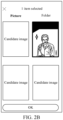
- a jump to the image file selection interface as shown in FIG. 2B may be triggered, and then the terminal "displays the image file selection interface".
- the image file selection interface may present a "target image file” in a particular position (e.g. an album or folder) or a "target image file” shot by real-time shooting and the like. Since the target image may be automatically generated only by triggering the synthesis trigger operation, the generation efficiency of the target image is improved.
- the terminal may specifically: determine whether the target image file includes human image content to be processed satisfying a requirement of synthesizing a human type of human image content; perform synthesis pre-processing on the human image content to be processed in the target image file to generate an image to be synthesized only having the human image content to be processed in a case that the target image file includes the human image content to be processed; and fuse the image to be synthesized to an image pre-synthesis area to generate a target image that includes a content fusion (or combination) of the template image content with the human image content to be synthesized.
- FIG. 3 schematically shows a flowchart of an image processing method according to an embodiment of this application.
- the execution entity of the image processing method may be any terminal, such as the terminal 102 shown in FIG. 1 .
- the image processing method may include step S210 to step S250.
- the pre-set image template is a pre-set image template for synthesizing other images
- the pre-set image template includes the image pre-synthesis area, and a contour shape of the image pre-synthesis area may be laid out according to requirements.
- the image pre-synthesis area may be used for synthesizing the predetermined type of image content, such as image content of a predetermined creature or a predetermined object.
- the pre-set image template may be acquired from a predetermined position. For example, a certain pre-set image template may be selected from an image processing application.
- the image pre-synthesis area may be a predetermined area including a human-shaped area in the template of the user CCC in FIG. 2A .
- the predetermined area may be used for synthesizing the human type of human image content, and the template image content may be content in an area apart from the predetermined area.
- the terminal When synthesizing the target image, the terminal first determines whether the target image file includes target image content to be processed satisfying a requirement of synthesizing a predetermined type of image content. For example, it determines whether the target image file includes the target image content to be processed satisfying the image content of a predetermined creature or a predetermined object.
- Synthesis pre-processing is performed on target image content to be processed in the target image file to generate an image to be synthesized only having the target image content to be processed in a case that the target image file includes the target image content to be processed.
- the image to be synthesized only has the target image content to be processed and does not have other content apart from the target image content to be processed.
- the image to be synthesized is fused to the image pre-synthesis area. For example, content compensation and synthesis processing is performed on the image to be synthesized in the image pre-synthesis area, so that adaptive synthesis processing can be effectively performed on content of two images to generate the target image fusing the template image content and the target image content to be processed.
- the image to be synthesized only includes the target image content to be processed, but does not include the remaining image content affecting the image synthesis. Therefore, the image to be synthesized is synthesized in the image pre-synthesis area, and the template image content in the pre-set image template and the target image content to be processed may be adaptively fused as a whole to generate an integrated target image. The two are independent from each other and not fused caused by simply adding mask processing, and in this way, the effects may be avoided. Further, in this application, the integrated fusion of a target image file to be processed and the content in a pre-set image template can be achieved accurately and effectively, and the image processing effect can be effectively improved.
- a pre-set image template is acquired, the pre-set image template includes an image pre-synthesis area and template image content, and the image pre-synthesis area is used for synthesizing a predetermined type of image content (or alternatively, an external image content of a predetermined image content type).
- the pre-set image template may be acquired from a predetermined position.
- a certain pre-set image template may be selected from an image processing application, and the selected pre-set image template may be acquired locally from a cloud or a terminal.
- the pre-set image template may include at least one, and each pre-set image template may include at least one image pre-synthesis area and template image content.
- the shape, size, and the like of at least one image pre-synthesis area included in each pre-set image template may be the same or different, and the template image content is the content of the area apart from the image pre-synthesis area.
- step S220 a target image file to be processed is determined.
- the target image file to be processed may be periodically acquired from a particular position (e.g. an album or folder), acquired in real time based on the user's operation, or autonomously acquired by the terminal.
- the target image file to be processed may be a picture stored in a certain folder designated by the user.
- the target image file to be processed may be a certain picture of a candidate image selected by the user in real time from an album of the terminal according to requirements.
- the target image file is acquired by the server or terminal executing the method.
- the above image processing method further includes: determining whether the target image file includes the target image content to be processed satisfying the requirement of synthesizing the predetermined type of image content.
- the computer device may determine whether the target image file includes the target image content to be processed satisfying the requirement of synthesizing the predetermined type of image content based on the pre-set image description information. For example, when the predetermined type is face, and the image description information includes "the image is an image shot with respect to a face", the computer device determines that the target image file includes the target image content to be processed satisfying the requirement of synthesizing the predetermined type of image content. In one of the ways, the computer device may perform real-time content detection on the target image file to determine whether the target image file includes the target image content to be processed satisfying the requirement of synthesizing the predetermined type of image content.
- the computer device may detect the target image file by a pre-trained machine learning model to determine whether there is a face in the target image file. If there is a face (i.e., the target image file to be processed includes an object of the predetermined type/image content type), it is determined that the target image file includes the target image content to be processed satisfying the requirement of synthesizing the predetermined type of image content.
- the determining a target image file to be processed in step S220 includes: determining a candidate image selected by a selection operation as the target image file to be processed in response to the selection operation for a candidate image.
- the image processing method further includes a step of determining target image content to be processed, including: determining whether the target image file includes the target image content to be processed satisfying a requirement of synthesizing the predetermined type of image content.
- the determining whether the target image file includes the target image content to be processed satisfying a requirement of synthesizing the predetermined type of image content includes: acquiring image description information corresponding to the target image file; and determining whether the target image file includes the target image content to be processed satisfying the requirement of synthesizing the predetermined type of image content based on the image description information.
- the candidate image is at least one image for selection, for example an image in a local album of the terminal.
- the user may select one or at least two candidate images from the candidate images by a selection operation, such as clicking, and the terminal determines the candidate image selected by the selection operation as the target image file to be processed.
- the terminal may acquire the image description information corresponding to the selected target image file from an information storage position in the database, and the image description information is pre-set. It can efficiently and accurately determine whether the target image file includes the target image content to be processed satisfying the requirement of synthesizing the predetermined type of image content based on the image description information without content detection. If the image description information indicates that the candidate image includes the target image content to be processed satisfying the requirement of synthesizing the predetermined type of image content, successful synthesis of the target image file and the template can be ensured. For example, when the image description information about the target image file is "there is the target image content to be processed", it may be determined that the target image file includes the target image content to be processed satisfying the requirement of synthesizing the predetermined type of image content.
- the computer device may detect the target image file by the machine learning model to determine whether the target image file includes the target image content to be processed satisfying the requirement of synthesizing the predetermined type of image content, generate the image description information according to a determination result, and store the image description information corresponding to the target image file.
- the image description information may be directly obtained without the need to detect by the machine learning model.
- the target image includes the target image content to be processed directly by the image description information, and the efficiency of determining the target image content to be processed can be improved.
- a candidate image set includes a target image file to be processed.
- step S200 Extract an image content feature from a candidate image for each candidate image in the candidate image set; and perform combined feature recognition processing based on the image content feature to obtain image description information corresponding to the candidate image, the image description information being used for indicating whether the image file includes the target image content to be processed satisfying the requirement of synthesizing the predetermined type of image content.
- the candidate image set includes at least one candidate image.
- respective image description information may be generated.
- the computer device may extract the image content feature from the current candidate image, and perform combined feature recognition processing on the extracted image content feature to obtain image description information about the current candidate image.
- the combined feature recognition processing refers to a process of comprehensively extracting a plurality of image content features characterizing local content to determine a recognition result.
- the image content feature is extracted to perform combination recognition processing, and the image description information can be accurately obtained.
- the image description information is used for indicating that the candidate image includes the predetermined type of target image content. Furthermore, whether the candidate image includes the target image content is acquired in advance. When the target image file to be processed is selected from the candidate image, whether the selected image includes the target image content can be accurately and efficiently determined.
- the predetermined type of image content is the figure image content corresponding to the figure type.
- the image content features are the features, such as the left eye, the right eye, the nose, the left half of the mouth, and the right half of the mouth, framed in the middle image of FIG. 5 .
- the image description information for indicating whether the image file includes the target image content to be processed can be accurately generated.
- the extracting an image content feature from a candidate image in step S200 includes step S201: Input the candidate image to a content feature extraction model for content feature extraction processing to obtain the image content feature; and the performing combined feature recognition processing based on the image content feature to obtain image description information corresponding to the candidate image in step S200 includes step S202: Input the image content feature to a content feature recognition model for combined feature recognition processing to obtain the image description information.
- the content feature extraction model i.e., a feature extraction model based on deep learning, may be configured to extract the image content feature from the image.
- the content feature extraction model is an intelligent model (referred to as a mobile neural network (MNN) feature extraction model for short) configured for feature extraction obtained by the MNN (a lightweight deep neural network inference engine) through the training of deep learning of the image feature, and can effectively extract the image content feature at an end side.
- MNN mobile neural network
- the content feature recognition model i.e. a feature recognition model based on deep learning, may be used for recognizing what type of image content an image content feature belongs to.
- the content feature recognition model is an intelligent model (referred to as a MNN feature recognition model for short) configured for feature alignment and recognition obtained by the MNN (a lightweight deep neural network inference engine) through the training of deep learning of the image feature, and can effectively recognize the image content feature at the end side.
- MNN a lightweight deep neural network inference engine
- the content feature extraction model and the content feature recognition model a dual scheme of feature extraction and recognition is realized to ensure the accuracy of the extracted image description information.
- the content feature extraction processing in step S201 and the image content feature recognition processing in step S202 may be performed based on a content recognition model.
- the content recognition model is an intelligent model for feature extraction and recognition obtained by the MNN (a lightweight deep neural network inference engine) through the training of deep learning of the portrait feature.
- the inputting the candidate image to a content feature extraction model for content feature extraction processing to obtain the image content feature in step S201 includes step S2011: Input the candidate image to a content feature extraction model for content feature extraction processing to obtain the image content feature.
- the candidate images are directly inputted to the feature content feature extraction model to extract the image content feature.
- the inputting the candidate image to a content feature extraction model for content feature extraction processing to obtain the image content feature in step S201 includes step S2012: Perform cross-segmentation processing on the candidate image according to a predetermined segmentation strategy to obtain at least two sub-images with an overlapping portion; and step S2013: Input the at least two sub-images to the content feature extraction model for local content feature extraction processing to obtain the image content feature.
- the predetermined segmentation strategy may be a strategy indicating the dimension, the number, and the overlapping area size of the segmented sub-images.
- the computer device performs cross-segmentation processing on the candidate image according to the predetermined segmentation strategy, and cross segment the candidate image into at least two sub-images with an overlapping portion based on strategy information about the dimension, the number, and the overlapping area size of the segmented sub-images.
- Local content feature extraction processing is performed based on at least two sub-images with an overlapping portion, and content feature extraction may be performed from the local candidate image corresponding to each sub-image, so as to avoid failing to extract the feature when there are defects in the candidate image.
- content feature extraction may be performed from the local candidate image corresponding to each sub-image, so as to avoid failing to extract the feature when there are defects in the candidate image.
- there is an overlapping portion between the sub-images to avoid a recognition error caused by feature segmentation.
- the content feature extraction model is an intelligent model (referred to as a MNN feature extraction model for short) configured for feature extraction obtained by the MNN (a lightweight deep neural network inference engine) through the training of deep learning of the portrait feature.
- MNN a lightweight deep neural network inference engine
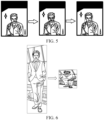
- the candidate image on the left side in FIG. 6 is directly inputted to the MNN feature extraction model, it needs to be compressed into a 320 * 320 square graph.
- the features of the compressed image, such as the left eye, the right eye and the nose have the defect of compression deformation, and the features cannot be extracted when the model is recognized.
- the computer device performs cross-segmentation processing on the candidate image on the left side in FIG. 6 to obtain 3 sub-images with overlapping portions shown on the right side in FIG. 7 , and the aspect ratio of the sub-images is 4: 3.
- the features can still be accurately extracted after the sub-images are compressed into a 320 * 320 square graph.
- the performing cross-segmentation processing on the candidate image according to a predetermined segmentation strategy to obtain at least two sub-images with an overlapping portion in step S2012 includes: detecting an aspect ratio of the candidate image; and performing cross-segmentation processing on the candidate image according to the predetermined segmentation strategy to obtain the at least two sub-images with an overlapping portion in a case that the aspect ratio is higher than a predetermined threshold value.
- the computer device By detecting the aspect ratio of the candidate image, if the aspect ratio is higher than the predetermined threshold value, the computer device performs cross-segmentation processing on the candidate image according to the predetermined segmentation strategy. For example, cross-segmentation processing is performed only when the aspect ratio of the candidate image on the left side of FIG. 6 is detected to be higher than the predetermined threshold value, therefore avoiding useless segmentation operations and improving the image processing efficiency. If the aspect ratio of the candidate image is less than the predetermined threshold value, cross-segmentation processing is paused, and content feature extraction processing is directly performed on the candidate image to obtain the image content feature.
- Cross-segmentation processing is performed only when the aspect ratio of the candidate image is detected to be higher than the predetermined threshold value, therefore avoiding useless segmentation operations and improving the image processing efficiency.
- step S230 synthesis pre-processing is performed on target image content to be processed in the target image file to generate an image to be synthesized only having the target image content to be processed in a case that the target image file includes the target image content to be processed.
- the image content feature includes a local feature corresponding to each of the at least two sub-images.
- the inputting the at least two sub-images to the content feature extraction model for local content feature extraction processing to obtain the image content feature includes: recognizing a feature area in the sub-image by the content feature extraction model for each of at least two sub-images and extracting a feature in the feature area to obtain a local feature corresponding to the sub-image.
- the feature area includes at least one of a left eye area, a right eye area, a nose area, a left half of mouth area, or a right half of mouth area.
- the inputting the image content feature to a content feature recognition model for combined feature recognition processing to obtain the image description information includes: inputting the local feature corresponding to each of the at least two sub-images to the content feature recognition model to generate the image description information by integrating respective local features through the content feature recognition model.
- the computer device For each of at least two sub-images, the computer device extracts the feature in the feature area of the sub-image by the content feature extraction model to obtain the local feature corresponding to each of the at least two sub-images.
- the local features corresponding to respective sub-images are integrated to obtain the image content feature.
- the computer device triggers the content feature recognition model to recognize the integrated local features corresponding to the respective sub-images and obtain a recognition result, and generates the image description information based on the recognition result.
- the result outputted by the content feature recognition model may be that the candidate image includes a face, and the image description information generated based on the result may be that "the present image includes a face and belongs to a portrait image”.
- the recognition result can be more accurate.
- the performing synthesis pre-processing on target image content to be processed in the target image file to generate an image to be synthesized only having the target image content to be processed in step S230 includes step S231: Detect the target image content to be processed in the target image file to obtain contour information about the target image content to be processed; and step S232: Extract the target image content to be processed from the target image file based on the contour information to obtain the image to be synthesized only having the target image content to be processed.
- the contour information refers to information describing the contour of the target image content to be processed.
- the target image content to be processed is a human image of a target human
- the contour information is information that can describe the contour of the human image
- the computer device may extract the human image from the target image file to be processed based on the detected contour information to generate the image to be synthesized only having the human image. Since the contour information is information describing the contour of the target image content to be processed, the target image content to be processed may be accurately extracted from a target image text to be processed by the contour information.
- the contour information is a mask image.
- the detecting the target image content to be processed in the target image file to obtain contour information about the target image content to be processed in step S231 includes: inputting the target image file to an image segmentation and extraction model for content segmentation and detection processing to obtain the mask image corresponding to the target image content to be processed, the mask image being an image for indicating a contour of the target image content to be processed.
- the image segmentation and extraction model namely, an image segmentation model based on deep learning
- the computer device may be configured to segment the image to generate the mask image.
- the image segmentation and extraction model is an intelligent model (referred to as a MNN segmentation and extraction model for short) configured to segment the image and generate a mask image obtained by the MNN (a lightweight deep neural network inference engine) through the training of deep learning of the image feature, and can effectively segment the image and generate the mask image at the end side.
- MNN a lightweight deep neural network inference engine
- the computer device inputs the target image file to be processed to an image segmentation and extraction model, and the image segmentation model may detect and segment the target image content to be processed to generate the mask image corresponding to the target image content to be processed.
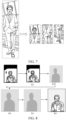
- the mask image is the image X3 as shown in FIG. 8 , each pixel in a content area corresponding to the target image content to be processed is a non-zero pixel, and each pixel in an area outside the content area is a zero pixel.
- the mask image may be used for indicating the contour of the target image content to be processed; and therefore, by generating the mask image, the target image content to be processed may be accurately extracted from the target image file based on the mask image.
- the extracting the target image content to be processed from the target image file based on the contour information to obtain the image to be synthesized only having the target image content to be processed in step S232 includes: performing mask superimposition processing on the mask image and the target image file to obtain the image to be synthesized, the image to be synthesized including a content area corresponding to the target image content to be processed, and a transparent area outside the content area in the image to be synthesized.
- Each pixel of the content area corresponding to the target image content to be processed in the mask image is a non-zero pixel, and each pixel in the area outside the content area is a zero pixel.
- Mask superimposition processing is performed on the mask image and the target image file to be processed to obtain the image to be synthesized.
- the image to be synthesized includes the content area corresponding to the target image content, and the outside of the content area in the image to be synthesized is the transparent area.
- the mask superimposition processing refers to a method of placing the mask image on the target image file to be processed and extracting the target image content to be processed based on overlapping pixel points in the mask image and the target image file.
- the image to be synthesized only including the target image content to be processed may be obtained only by performing mask superimposition processing on the mask image and the target image file, therefore improving the generation efficiency of the image to be synthesized.
- the inputting the target image file to an image segmentation and extraction model for content segmentation and detection processing to obtain the mask image corresponding to the target image content to be processed includes: performing dimension transformation processing on the target image file to obtain a transformed image with a target dimension, and inputting the transformed image to the image segmentation and extraction model for content segmentation and detection processing to obtain the mask image corresponding to the target image content to be processed; and the performing mask superimposition processing on the mask image and the target image file to obtain the image to be synthesized includes: transforming a dimension of the mask image to a dimension corresponding to the target image file to obtain a transformed mask image, performing filtering and noise reduction processing on the transformed mask image to obtain a target mask image, and performing mask superimposition processing on the target mask image and the target image file to obtain the image to be synthesized.
- the computer device performs dimension transformation processing on the target image file to be processed to obtain the transformed image with the target size, and then detects the transformed image using the image segmentation and extraction model, so that the mask image corresponding to the target image content may be accurately obtained.
- the performing mask superimposition processing on the target mask image and the target image file to obtain the image to be synthesized includes: placing the mask image on the target image file and determining a target pixel(s) in the target image file overlapping with a non-zero pixel in the mask image; and extracting the target pixel(s) to generate an image to be synthesized.
- the computer device adjusts the dimension of the target image file such that the dimension of the target image file is consistent with the dimension of the mask image. Further, the computer device places the mask image on the target image file and determines the target pixel in the target image file overlapping with the non-zero pixel in the mask image. The computer device extracts the target pixel and combines the respective target pixels based on the positions of the target pixels in the target image file to obtain the image to be synthesized.
- the computer device compresses the target image file XI to the transformed image X2 of 320 * 320 by dimension transformation processing, and inputs the MNN segmentation and extraction model for detection.
- the MNN segmentation and extraction model may detect and segment the figure image content from the transformed image X2 to generate the mask image X3.
- the computer device transforms the dimension of the mask image to the dimension corresponding to the target image file to obtain the transformed mask image, for example, transforming the mask image X3 in FIG. 8 to the original image size, namely, the dimension corresponding to the target image file to be processed, to obtain the transformed mask image X4.
- the computer device performs filtering and noise reduction processing on the transformed mask image to obtain the target mask image, for example, performing filtering and noise reduction processing on the transformed mask image X4 in FIG. 8 (for example, 5 order median filtering and noise reduction may be used) to obtain the target mask image X5.
- the computer device performs mask superimposition processing on the target mask image and the target image file to be processed to obtain the image to be synthesized, for example, performing mask superimposition processing on the target mask image X5 and the target image file X1 to be processed in FIG. 8 to obtain the image to be synthesized X6.
- the edge may be smoothed. Then, the edge of the target image content in the image to be synthesized is smoothed, so that the image synthesis effect can be ensured.
- the fusing the image to be synthesized to the image pre-synthesis area to generate a target image fusing the template image content and the target image content to be processed in step S240 includes performing content compensation and synthesis processing on the image to be synthesized in the image pre-synthesis area to generate the target image fusing the template image content and the target image content to be processed, the content compensation and synthesis processing including content compensation processing and synthesis processing, the content compensation processing referring to supplementing and modifying image content, and the synthesis processing referring to a synthesis process of synthesizing (or, combining, or fusing) at least two images into one image.
- the image synthesis strategy may include adjustment and compensation strategy information, such as the size, the brightness, the pixel color and the like of the image to be synthesized and/or the template image content, and strategy information, such as the placement position of the image to be synthesized or the alignment mode of the compensated image to be synthesized and template image content.
- the computer device determines an image synthesis strategy matched with the pre-set image template. After determining the matched image synthesis strategy, content compensation and synthesis processing may be performed on the image to be synthesized in the image pre-synthesis area according to the image synthesis strategy to generate a target image that effectively achieves integrated fusion of the template image content and the target image content to be processed.
- An image synthesis strategy corresponding to each image template may be pre-set to obtain a corresponding relationship between the image template and the image synthesis strategy, so that after determining the pre-set image template, the computer device may directly determine the matched image synthesis strategy based on the corresponding relationship.
- the fusing the image to be synthesized to the image pre-synthesis area in step S240 includes: performing content compensation and synthesis processing on the image to be synthesized in the image pre-synthesis area.
- the performing content compensation and synthesis processing on the image to be synthesized in the image pre-synthesis area includes: acquiring a pre-set content synthesis strategy corresponding to the pre-set image template; performing content compensation processing on the image to be synthesized and the template image content according to content compensation information in the pre-set content synthesis strategy to obtain the compensated image to be synthesized and the compensated template image content; and fusing the compensated image to be synthesized to the image pre-synthesis area to perform image synthesis on the compensated image to be synthesized and the compensated template image content.
- the computer device acquires the pre-set content synthesis strategy corresponding to the pre-set image template as an image synthesis strategy, and performs content compensation processing on content, such as a size, brightness, and a pixel color of the image to be synthesized and the template image content according to adjustment compensation strategy information about the size, the brightness, the pixel color, and the like of the image to be synthesized and/or the template image content in the pre-set content synthesis strategy.
- content compensation processing such as a size, brightness, and a pixel color of the image to be synthesized and the template image content according to adjustment compensation strategy information about the size, the brightness, the pixel color, and the like of the image to be synthesized and/or the template image content in the pre-set content synthesis strategy.
- image synthesis is performed on the compensated image to be synthesized and template image content, and image synthesis may be performed efficiently to generate the target image.
- a more suitable image to be synthesized and pre-set template image may be obtained.
- the final generated target image may be integrated, thereby improving the image processing effect.
- the fusing the image to be synthesized to the image pre-synthesis area in step S240 includes: performing content compensation and synthesis processing on the image to be synthesized in the image pre-synthesis area.
- the performing content compensation and synthesis processing on the image to be synthesized in the image pre-synthesis area includes: acquiring image feature information about the image to be synthesized and acquiring pre-set description information about the image pre-synthesis area; analyzing based on the image feature information and the pre-set description information to obtain an image synthesis strategy for matching the pre-set image template and the image to be synthesized; performing content compensation processing on the image to be synthesized and the template image content according to content compensation information in the image synthesis strategy to obtain the compensated image to be synthesized and the compensated template image content; and fusing the compensated image to be synthesized to the image pre-synthesis area to perform image synthesis on the compensated image to be synthesized and the compensated template image content.
- the computer device analyzes based on the image feature information and the pre-set description information to obtain a personalized image synthesis strategy, which may further adaptively fuse the two to generate the target image.
- the image feature information may be information, such as the size, the color, and the brightness of the target image content extracted from the image to be synthesized.
- the pre-set description information about the image pre-synthesis area is pre-set information for describing the area, and the pre-set description information may include information, such as the size, the color, and the brightness of the area.
- the way of analyzing based on the image feature information and the pre-set description information may include: determining a strategy matching both the image feature information and the pre-set description information from at least one pre-set strategy as an image synthesis strategy matching the pre-set image template and the image to be synthesized.
- the way of analyzing based on the image feature information and the pre-set description information may further include: inputting the image feature information and the pre-set description information to a pre-trained strategy analysis model based on deep learning.
- the model may analyze to output a prediction strategy label, and query a candidate strategy matching the prediction strategy label from at least one candidate strategy as the image synthesis strategy matching the pre-set image template and the image to be synthesized.
- the computer device performs content compensation processing on content, such as a size, brightness, and a pixel color of the image to be synthesized and the template image content according to content compensation information about the size, the brightness, the pixel color, and the like of the image to be synthesized and/or the template image content in the image synthesis strategy. Then, in the image pre-synthesis area, according to strategy information, such as the placement position of the image to be synthesized or the alignment mode of the compensated image to be synthesized and template image content in the image synthesis strategy, image synthesis is performed on the compensated image to be synthesized and template image content.
- content compensation information such as the placement position of the image to be synthesized or the alignment mode of the compensated image to be synthesized and template image content in the image synthesis strategy
- a more adaptive image to be synthesized and pre-set template image may be obtained.
- the final generated target image may be integrated, thereby improving the image processing effect.
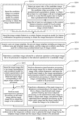
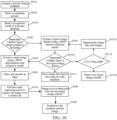
- the overall flow of image processing in the scene may include step S310 to step S311.
- Step S310 Acquire a pre-set image template, the pre-set image template including an image pre-synthesis area and template image content, and the image pre-synthesis area being used for synthesizing a predetermined type of image content.
- a predetermined type of image content in the scene is a human type of human image content.
- the terminal may present an image synthesis interface, the image synthesis interface displays a pre-set image template, the pre-set image template includes an image pre-synthesis area and template image content, and the image pre-synthesis area is used for synthesizing a human type of human image content.
- the user may open, for example, an "image synthesis interface” corresponding to "entrance 2-sub-entrance i-C functional entrance" of FIG. 2A in an application, and the "image synthesis interface” presents at least one pre-set image template.
- the user may select the pre-set image template in the "image synthesis interface” by a synthesis trigger operation, such as a click or a long press, and then the terminal acquires the pre-set image template selected by the user in response to the selection operation.
- the pre-set image template selected by the user is a template of the user CCC framed in FIG. 2A
- the image pre-synthesis area may be a predetermined area including a human area in the template of the user CCC in FIG. 2A .
- the predetermined area may be used for synthesizing the human type of human image content, and the template image content may be content in an area apart from a predetermined area.
- Step S320 Select a candidate picture. Namely, determining a target image file to be processed includes: determining a candidate image selected by a selection operation as the target image file to be processed in response to the selection operation for a candidate image.
- an image file selection interface may be displayed in the terminal. At least one candidate image may be presented in the image file selection interface.
- the user may select the candidate image by a selection operation, such as clicking the candidate image, as needed.
- the terminal determines the candidate image selected by the selection operation as a target image file to be processed, and the target image file may be highlighted in the image file selection interface by improving the brightness of the target image file or framing the target image file, and the like.
- the user clicks an operation of "do the same style" under the selected pre-set image template as shown in FIG. 2A to trigger the synthesis trigger operation for the pre-set image template and trigger the terminal to jump to the image file selection interface corresponding to a particular position (such as an album or a folder) as shown in FIG. 2B .
- the user selects a candidate image as the target image file in the picture interface and clicks "OK", which can trigger the synthesis trigger operation for the target image file.
- step S330 to step S340 it is determined whether the target image file includes the target image content to be processed satisfying a requirement of synthesizing the predetermined type of image content, and the predetermined type of target image content in the scene is the "human type of human image content".
- Step S330 Read a recognition result of a picture database. Specifically, image description information corresponding to the target image file is acquired.
- the terminal in response to the synthesis trigger operation for a target image file triggered by the user by a way, such as by clicking "OK" on the picture interface shown in FIG. 2B , the terminal may acquire the image description information stored associated with the target image file from the picture database.
- Step S340 Determine whether human image content is included. Specifically, based on the image description information, it is determined whether the target image file includes the target image content to be processed satisfying the requirement of synthesizing the predetermined type of image content. Namely, it is determined whether the image description information indicates whether the target image file includes the target image content to be processed satisfying the requirement of synthesizing the human type of human image content.
- step S350 If so, that is, if the target image file includes the target image content to be processed, the process proceeds to step S350 to step S380.
- step S390 If not, for example, the image description information is not acquired, the process proceeds to step S390.
- step S350 to step S380 synthesis pre-processing is performed on target image content to be processed in the target image file to generate an image to be synthesized only having the target image content to be processed.
- Step S350 Extract a mask image using a MNN segmentation and extraction model.
- the detecting the target image content to be processed in the target image file to obtain contour information about the target image content to be processed specifically includes: inputting the target image file to an image segmentation and extraction model (the MNN segmentation and extraction model in the scene) for content segmentation and detection processing to obtain the mask image corresponding to the target image content to be processed.
- Step S360 Filter and smooth an edge.
- the step of the inputting the target image file to an image segmentation and extraction model for content segmentation and detection processing to obtain the mask image corresponding to the target image content to be processed includes: performing dimension transformation processing on the target image file to obtain a transformed image with a target dimension, and inputting the transformed image to the image segmentation and extraction model for content segmentation and detection processing to obtain the mask image corresponding to the target image content to be processed. Further, the dimension of the mask image is transformed to the dimension corresponding to the target image file to obtain the transformed mask image, and filtering and noise reduction processing is performed on the transformed mask image to obtain the target (or filtered) mask image.
- Step S370 Perform mask superimposition to acquire an image to be synthesized.
- the extracting the target image content to be processed from the target image file based on the contour information to obtain the image to be synthesized only having the target image content to be processed includes: performing mask superimposition processing on the mask image and the target image file to obtain the image to be synthesized, the image to be synthesized including a content area corresponding to the target image content to be processed, and an outside of the content area in the image to be synthesized being a transparent area.
- step S360 When step S360 is performed to obtain the target mask image, mask superimposition processing is performed on the target mask image and the target image file to obtain the image to be synthesized.
- the mask superimposition processing may use a mask superimposition algorithm of opencv to extract the area of the original image.
- Step S380 Obtain the image to be synthesized only having target image content to be processed after the preceding step S310 to step S370.
- Step S390 Synthesize template and image. Specifically, content compensation and synthesis processing is performed on the image to be synthesized in the image pre-synthesis area to generate the target image fusing the template image content and the target image content to be processed.
- the target image synthesized in the terminal may be stored in a predetermined position, and the target image is presented in a target page. In the scene, the target image is displayed in an "editing" interface as shown in FIG. 2C , and the user may further edit the target image on the "editing" interface.
- step S340 the process may proceed to step S390.
- Step S390 Extract an image content feature using a MNN feature extraction model.
- extracting an image content feature from a candidate image specifically includes: inputting the candidate image to a content feature extraction model (such as the MNN feature extraction model) for content feature extraction processing to obtain the image content feature.
- a content feature extraction model such as the MNN feature extraction model
- Step S3100 Determine whether the image content feature is a human image feature.
- performing recognition processing based on the image content feature to obtain image description information specifically includes: inputting the image content feature to a content feature recognition model for combined feature recognition processing to obtain the image description information.
- the image description information is used for indicating whether the candidate image includes the target image content to be processed satisfying the requirement of synthesizing the predetermined type of image content (i.e. the human type of human image content).
- the predetermined type of image content is the human image content corresponding to the human type.
- the image content features are the human image features, such as the left eye, the right eye, the nose, the left half of the mouth, and the right half of the mouth, framed in the middle image of FIG. 5 .
- the image description information may be generated to indicate that the candidate image includes the target image content to be processed satisfying the requirement of synthesizing the predetermined type of image content (i.e. the human type of human image content).
- step S3100 if so, that is, if the image description information indicates that the candidate image includes the target image content to be processed satisfying the requirement of synthesizing the predetermined type of image content (i.e. the human type of human image content), the process may proceed to step S350 and step S3111.
- the predetermined type of image content i.e. the human type of human image content
- Step S3111 Store the image description information in the database.
- step S3100 if not, for example, the image content feature is not extracted or it is determined that the extracted image content feature is not the human image feature, the process proceeds to step S3112.
- Step S3112 Detect whether the candidate image is a long image. Specifically, the aspect ratio of the candidate image is detected. If the aspect ratio is higher than the predetermined threshold value, it is a long image; otherwise, it is not a long image.
- step S3113 If so, the process proceeds to step S3113. Otherwise, the process proceeds to step S3114.
- Step S3113 Segment the image into sub-images. Specifically, cross-segmentation processing is performed on the candidate image according to a predetermined segmentation strategy to obtain at least two sub-images with an overlapping portion. Then, the process proceeds to step S390. At least two sub-images are inputted to the content feature extraction model (such as the MNN feature extraction model) for local content feature extraction processing to obtain the image content feature. For example, if it is detected that the aspect ratio of the candidate image on the left side of FIG. 6 is higher than the predetermined threshold value, the candidate image is segmented. With reference to FIG. 7 , the candidate image on the left side in FIG. 6 is segmented to obtain 3 sub-images with overlapping portions shown on the right side in FIG. 7 , and the aspect ratio of the sub-images is 4: 3. The sub-images are compressed into 320 * 320 tensors and then inputted to the MNN feature extraction model for content feature extraction processing. Then, the process proceeds to step S3110.
- Step S3114 Determine that there is not any human image content in the candidate picture.
- the target image may be generated by adaptively fusing the pre-set image template and the human image content as a whole.
- the disadvantages of the image template and the human image content being independent from each other and not fused caused by simply adding mask processing can be avoided, thereby effectively improving the image processing effect. In this way, the operation of matting editing in image fusion is simplified, and the user's utilization rate of the whole function and user experience are improved.
- the dual model processing solution of feature extraction and recognition ensures the accuracy of identifying the human image content. By the recognition technology of long image segmentation, the overall recognition accuracy is increased, avoiding the determination error of some human image features.
- FIG. 11 shows a block diagram of an image processing apparatus according to an embodiment of this application.
- an image processing apparatus 400 may include a template acquisition module 410, an image acquisition module 420, an image processing module 430, and an image synthesis module 440.
- the template acquisition module 410 is configured to acquire a pre-set image template, the pre-set image template comprising a template image content and an editable image area for incorporating an external image content obtained from an external image content source, the external image content being of a predetermined image content type.
- the image acquisition module 420 is configured to acquire a first image.
- the image processing module 440 is configured to extract, in response to the first image comprising a first image content of the predetermined image content type, the first image content from the first image, to generate a second image only comprising the first image content.
- the image synthesis module 440 is configured to fuse the second image to the editable image area to generate a third image that comprises a content fusion of the template image content with the first image content.
- the image acquisition module 420 is configured to determine a candidate image selected by a selection operation as the first image in response to the selection operation for the candidate image.
- the image processing apparatus 400 further includes a content determination module, configured to acquire image description information corresponding to the first image; and determining, based on the image description information, whether the first image comprises the first image content.
- the candidate image set includes the first image
- the apparatus further includes an information extraction module, including: a content feature extraction unit, configured to extract an image content feature from each candidate image in the candidate image set; and a content feature recognition unit, configured to perform combined feature recognition processing based on the image content feature to obtain image description information corresponding to the candidate image, the image description information indicating whether the candidate image comprises the first image content.
- an information extraction module including: a content feature extraction unit, configured to extract an image content feature from each candidate image in the candidate image set; and a content feature recognition unit, configured to perform combined feature recognition processing based on the image content feature to obtain image description information corresponding to the candidate image, the image description information indicating whether the candidate image comprises the first image content.
- the content feature extraction unit is configured to input the candidate image to a content feature extraction model for content feature extraction processing to obtain the image content feature;
- the content feature recognition unit is configured to input the image content feature to a content feature recognition model for combined feature recognition processing to obtain the image description information.
- the content feature extraction unit includes: a segmentation sub-unit, configured to perform cross-segmentation processing on the candidate image according to a predetermined segmentation strategy to obtain at least two sub-images with an overlapping portion; and a feature extraction sub-unit, configured to input the at least two sub-images to the content feature extraction model for local content feature extraction processing to obtain the image content feature.
- the segmentation sub-unit is configured to detect an aspect ratio of the candidate image; and perform cross-segmentation processing on the candidate image according to the predetermined segmentation strategy to obtain the at least two sub-images with an overlapping portion in a case that the aspect ratio is higher than a predetermined threshold value.
- the image processing module includes: a detection unit, configured to detect the first image content in the first image to obtain contour information of the first image content; and a pre-processing unit, configured to extract the first image content from the first image based on the contour information to obtain the second image only comprising the first image content.
- the contour information is a mask image.
- the detection unit is configured to input the first image to an image segmentation and extraction model for content segmentation and detection processing to obtain the mask image corresponding to the first image content, the mask image indicating a contour of the first image content.
- the pre-processing unit is configured to perform mask superimposition processing on the mask image and the first image to obtain the second image, the second image comprising a content area corresponding to the first image content, and a transparent area outside the content area.
- the detection unit is configured to perform dimension transformation processing on the first image to obtain a transformed image with a desired dimension, and input the transformed image to the image segmentation and extraction model for content segmentation and detection processing to obtain the mask image corresponding to the first image content; and the pre-processing unit is configured to transforming a dimension of the mask image to a dimension corresponding to the first image to obtain a transformed mask image, performing filtering and noise reduction processing on the transformed mask image to obtain a filtered mask image, and perform mask superimposition processing on the filtered mask image and the first image to obtain the second image.
- the image synthesis module is further configured to perform content compensation and synthesis processing on the second image in the editable image area to generate the third image that includes a content fusion of the template image content with the first image content, the content compensation and synthesis processing comprising content compensation processing and synthesis processing, the content compensation processing referring to supplementing and modifying image content, and the synthesis processing referring to a synthesis process of synthesizing at least two images into one image.
- the image synthesis module includes a first synthesis unit, configured to acquire a pre-set content synthesis strategy corresponding to the pre-set image template; perform content compensation processing on the second image and the template image content according to content compensation information in the pre-set content synthesis strategy to obtain the compensated second image and the compensated template image content; and fuse the compensated second image to the editable image area, to synthesize the compensated second image and the compensated template image content.
- the image synthesis module includes a second synthesis unit, configured to acquire image feature information of the second image and pre-set description information of the editable image area; analyze the image feature information and the pre-set description information to obtain an image synthesis strategy matching the pre-set image template and the second image; perform content compensation processing on the second image and the template image content according to content compensation information in the image synthesis strategy to obtain the compensated second image and the compensated template image content; and fuse the compensated second image to the editable image area, to synthesize the compensated second image and the compensated template image content.
- a second synthesis unit configured to acquire image feature information of the second image and pre-set description information of the editable image area; analyze the image feature information and the pre-set description information to obtain an image synthesis strategy matching the pre-set image template and the second image; perform content compensation processing on the second image and the template image content according to content compensation information in the image synthesis strategy to obtain the compensated second image and the compensated template image content; and fuse the compensated second image to the editable image area, to synth
- the image processing apparatus includes: a template display module, configured to present an image synthesis interface comprising a pre-set image template, the pre-set image template comprising a template image content and an editable image area for incorporating an external image content obtained from an external image content source, the external image content being of a predetermined image content type; and a target image synthesis module, configured to present a first image in response to a synthesis operation in the image synthesis interface, the first image being generated by fusing a second image to the editable image area, the second image being generated by performing synthesis pre-processing on a first image content of the predetermined image content type in a third image, the second image only comprising the first image content.
- a template display module configured to present an image synthesis interface comprising a pre-set image template, the pre-set image template comprising a template image content and an editable image area for incorporating an external image content obtained from an external image content source, the external image content being of a predetermined image content type
- a target image synthesis module configured
- the target image synthesis module includes: a selection interface trigger unit, configured to display an image selection interface in response to a synthesis trigger operation for the pre-set image template in the image synthesis interface, the image selection interface displaying the third image; and present the first image in response to the synthesis trigger operation for the third image in the image selection interface.
- the synthesis trigger unit is configured to: determine a candidate image selected in response to a selection operation in the image selection interface as the third image, and highlight the third image; and present the first image in response to the synthesis trigger operation in the image selection interface.
- the image processing apparatus includes: a template display module, configured to present an image synthesis interface comprising a pre-set image template, the pre-set image template comprising a template image content and an editable image area for incorporating an external image content obtained from an external image content source, the external image content being of a predetermined image content type; and a target image synthesis module, configured to present a first image in response to a synthesis operation in the image synthesis interface, the first image being generated by fusing a second image to the editable image area, the second image being generated by performing synthesis pre-processing on a first image content of the predetermined image content type in a third image, the second image only comprising the first image content.
- a template display module configured to present an image synthesis interface comprising a pre-set image template, the pre-set image template comprising a template image content and an editable image area for incorporating an external image content obtained from an external image content source, the external image content being of a predetermined image content type
- a target image synthesis module configured
- the target image synthesis module includes: a selection interface trigger unit, configured to display an image selection interface in response to a synthesis trigger operation for the pre-set image template in the image synthesis interface, the image selection interface displaying the third image; and present the first image in response to the synthesis trigger operation for the third image in the image selection interface.
- the synthesis trigger unit is configured to: determine a candidate image selected in response to a selection operation in the image selection interface as the third image, and highlight the third image; and present the first image in response to the synthesis trigger operation in the image selection interface.
- modules or units of a device for action execution have been mentioned in the above detailed description, such a division is not mandatory. Indeed, the features and functions of two or more modules or units described above may be embodied in one module or unit according to the embodiments of this application. Conversely, the features and functions of one module or unit described above may be further divided to be embodied by more than one module or unit.
- the embodiments of this application further provide an electronic device.
- the electronic device may be the terminal or the server as shown in FIG. 12 , which shows a schematic structural diagram of the electronic device involved in the embodiments of this application.
- the electronic device may include components, such as a processor 501 of one or more processing cores, a memory 502 of one or more computer-readable storage media, a power supply 503, and an input unit 504.
- components such as a processor 501 of one or more processing cores, a memory 502 of one or more computer-readable storage media, a power supply 503, and an input unit 504.
- FIG. 12 the structure of the electronic device shown in FIG. 12 are not limiting the electronic device. Compared with the illustration, it may include more or fewer components, combine some components, or make a different arrangement of components.
- the processor 501 is the control center of the electronic device and utilizes various interfaces and lines to connect various portions of the overall computer device to perform various functions and process data of the computer device to detect the electronic device by running or executing software programs and/or modules stored in the memory 502 and invoking data stored in the memory 502.
- the processor 501 may include one or more processing cores.
- the processor 501 may integrate an application processor and a modem processor.
- the application processor primarily processes operating systems, user pages, applications, and the like; the modem processor primarily processes wireless communication. It will be appreciated that the modem processor described above may not be integrated into the processor 501.
- the memory 502 may be configured to store a software program and a module.
- the processor 501 runs the software program and module stored in the memory 502 to perform various functional applications and data processing.
- the memory 502 may mainly include a storage program area and a storage data area.
- the storage program area may store an operating system, an application program required by at least one function (such as a sound playing function and an image playing function), and the like; the storage data area may store data and the like created according to the use of the computer device.
- the memory 502 may include a high-speed random access memory and may further include a non-volatile memory, such as at least one disk storage device, a flash storage device, or other volatile solid-state storage devices. Accordingly, the memory 502 may further include a memory controller to provide the processor 501 with the access to the memory 502.
- the electronic device further includes the power supply 503 to power the various components.
- the power supply 503 may be logically connected to the processor 501 by a power management system to manage the functions, such as charging, discharging, and power consumption.
- the power supply 503 may further include any components, such as one or more of a direct or alternating current power supply, a recharging system, a power failure detection circuit, a power converter or inverter, and a power status indicator.
- the electronic device may further include the input unit 504.
- the input unit 504 may be configured to receive the inputted numeric or character information and produce a keyboard, a mouse, an analog stick, optical or trackball signal inputs related to user settings and function control.
- the electronic device may further include a display unit, which will not be described in detail herein.
- the processor 501 in the electronic device loads executable files corresponding to processes of one or more computer programs into the memory 502 according to the following instructions, and the processor 501 runs the computer programs stored in the memory 502 to realize various functions of the above embodiments of this application.
- the processor 501 may perform:
- acquiring a pre-set image template comprising a template image content and an editable image area for incorporating an external image content obtained from an external image content source, the external image content being of a predetermined image content type; acquiring a first image; extracting, in response to the first image comprising a first image content of the predetermined image content type, the first image content from the first image, to generate a second image only comprising the first image content; and fusing the second image to the editable image area to generate a third image that comprises a content fusion of the template image content with the first image content
- the embodiment of this application further provides a computer-readable storage medium, storing a computer program, which can be loaded by a processor to perform the steps in any one of the methods provided in the embodiments of this application.
- the computer-readable storage medium may include a read only memory (ROM), a random access memory (RAM), a disk, or a light disk.
- ROM read only memory
- RAM random access memory
- disk a disk
- light disk a light disk
- a computer program product or a computer program including a computer instruction stored in a computer-readable storage medium.
- a processor of a computer device reads the computer instruction from the computer-readable storage medium, and the processor executes the computer instruction to cause the computer device to perform the method provided in various alternative implementations in the above embodiments of this application.
Landscapes
- Engineering & Computer Science (AREA)
- Theoretical Computer Science (AREA)
- Physics & Mathematics (AREA)
- General Physics & Mathematics (AREA)
- Computer Vision & Pattern Recognition (AREA)
- Multimedia (AREA)
- Software Systems (AREA)
- Evolutionary Computation (AREA)
- Computing Systems (AREA)
- Databases & Information Systems (AREA)
- Artificial Intelligence (AREA)
- General Health & Medical Sciences (AREA)
- Medical Informatics (AREA)
- Health & Medical Sciences (AREA)
- Image Processing (AREA)
- Processing Or Creating Images (AREA)
- Editing Of Facsimile Originals (AREA)
Abstract
Description
- This application claims priority to
Chinese Patent Application No. 202210259239.5 - This application relates to the field of computer technology, and in particular, to an image processing method and apparatus, a storage medium, an electronic device, and a product.
- Image processing is a task of performing post-processing on a target image file to be processed, for example, performing post-processing on an image in a photo album of a mobile phone. In existing image processing schemes, there is a way of simply applying an image style of a template to an image to be processed. If there is target image content in the image to be processed, an image style of a template will be blindly applied to the image to be processed simply and directly. As such, the image style in the template and the target image content are obviously isolated from each other. It is equivalent to adding a special effect of a mask, and an integrated fusion effect of placing the target image content in the image style cannot be achieved.
- Therefore, with the existing image processing schemes, the integrated fusion of the template and the content in the image file to be processed cannot be achieved accurately and effectively, and there is a problem of a poor image processing effect.
- The embodiments of this application provide an image processing method and apparatus, a storage medium, an electronic device, and a product. The integrated fusion of a target image file to be processed and the content in a pre-set image template can be achieved accurately and effectively, and the image processing effect can be effectively improved.
- In order to solve the above technical problem, the embodiments of this application provide the following technical solutions.
- An image processing method includes: acquiring a pre-set image template, the pre-set image template comprising a template image content and an editable image area for incorporating an external image content obtained from an external image content source, the external image content being of a predetermined image content type; acquiring a first image; extracting, in response to the first image comprising a first image content of the predetermined image content type, the first image content from the first image, to generate a second image only comprising the first image content; and fusing the second image to the editable image area to generate a third image that comprises a content fusion of the template image content with the first image content.
- An image processing apparatus includes: a template acquisition module, configured to acquire a pre-set image template, the pre-set image template comprising a template image content and an editable image area for incorporating an external image content obtained from an external image content source, the external image content being of a predetermined image content type; an image acquisition module, configured to acquire a first image; an image processing module, configured to extract, in response to the first image comprising a first image content of the predetermined image content type, the first image content from the first image, to generate a second image only comprising the first image content; and an image synthesis module, configured to fuse the second image to the editable image area to generate a third image that comprises a content fusion of the template image content with the first image content.
- An image processing method includes: presenting an image synthesis interface comprising a pre-set image template, the pre-set image template comprising a template image content and an editable image area for incorporating an external image content obtained from an external image content source, the external image content being of a predetermined image content type; and presenting a first image in response to a synthesis operation in the image synthesis interface, the first image being generated by fusing a second image to the editable image area, the second image being generated by performing synthesis pre-processing on a first image content of the predetermined image content type in a third image, the second image only comprising the first image content.
- An image processing apparatus includes: a template display module, configured to present an image synthesis interface comprising a pre-set image template, the pre-set image template comprising a template image content and an editable image area for incorporating an external image content obtained from an external image content source, the external image content being of a predetermined image content type; and a target image synthesis module, configured to present a first image in response to a synthesis operation in the image synthesis interface, the first image being generated by fusing a second image to the editable image area, the second image being generated by performing synthesis pre-processing on a first image content of the predetermined image content type in a third image, the second image only comprising the first image content.
- A computer-readable storage medium stores thereon a computer program which, when executed by a processor of a computer, causes the computer to perform the method described in the embodiments of this application.
- An electronic device includes: a memory, the memory storing a computer program; and a processor, the processor reading the computer program stored in the memory to perform the method described in the embodiments of this application.
- A computer program product or a computer program includes a computer instruction stored in a computer-readable storage medium. A processor of a computer device reads the computer instruction from the computer-readable storage medium, and the processor executes the computer instruction to cause the computer device to perform the method provided in various alternative implementations described in the embodiments of this application.
-
-
FIG. 1 shows a schematic diagram of a system that can be apply an embodiment of this application. -
FIG. 2A to FIG. 2C show diagrams of terminal interface changes in a process of image processing in a scene. -
FIG. 3 shows a flowchart of an image processing method according to an embodiment of this application. -
FIG. 4 shows a flowchart of an image processing method according to another embodiment of this application. -
FIG. 5 shows a flowchart of feature recognition according to an embodiment of this application. -
FIG. 6 shows a flowchart of image compression processing according to an embodiment of this application. -
FIG. 7 shows a flowchart of image segmentation according to an embodiment of this application. -
FIG. 8 shows a flowchart of image extraction according to an embodiment of this application. -
FIG. 9 shows a schematic diagram of image synthesis according to an embodiment of this application. -
FIG. 10 shows a flowchart of a process of image processing in a scene. -
FIG. 11 shows a block diagram of an image processing apparatus according to another embodiment of this application. -
FIG. 12 shows a block diagram of an electronic device according to an embodiment of this application. -
FIG. 1 shows a schematic diagram of asystem 100 that can be apply an embodiment of this application. As shown inFIG. 1 , thesystem 100 may include aserver 101 and/or aterminal 102. - The
server 101 may be an independent physical server, or may be a server cluster or a distributed system of a plurality of the physical servers, or may be a cloud server providing basic cloud computing services, such as cloud service, cloud database, cloud computing, cloud function, cloud storage, network service, cloud communication, middleware service, domain name service, CDN, and big data and AI platforms. - The
terminal 102 may be any device. Theterminal 102 includes, but is not limited to, a mobile phone, a personal computer, an intelligent voice interaction device, an intelligent household appliance, and a vehicle-mounted terminal, a VR/AR device, smart watch, and a computer. - It will be easily appreciated that the image processing method of this application may be performed by the computer device, and the computer device may be the
server 101 or theterminal 102 described above. - In an implementation of the example, the
terminal 102 or theserver 101 may: acquire a pre-set image template, the pre-set image template comprising a template image content and an editable image area for incorporating an external image content obtained from an external image content source, the external image content being of a predetermined image content type; acquire a first image; extract, in response to the first image comprising a first image content of the predetermined image content type, the first image content from the first image, to generate a second image only comprising the first image content; and fuse the second image to the editable image area to generate a third image that comprises a content fusion of the template image content with the first image content. - In an implementation of the example, when a user synthesizes a target image using a terminal, the
terminal 102 may: present an image synthesis interface comprising a pre-set image template, the pre-set image template comprising a template image content and an editable image area for incorporating an external image content obtained from an external image content source, the external image content being of a predetermined image content type; and present a first image (i.e., the target image) in response to a synthesis operation in the image synthesis interface, the first image being generated by fusing a second image to the editable image area, the second image being generated by performing synthesis pre-processing on a first image content of the predetermined image content type in a third image, the second image only comprising the first image content. - In a scene, with reference to diagrams of terminal interface changes shown in
FIG. 2A to FIG. 2C , the user synthesizes a target image using a terminal (such as theterminal 102 shown inFIG. 1 ). In embodiments, the predetermined image content type refers to a type of an object in the image content. For example, the first image content/ external image content, of the predetermined image content type, is "human image content" in case that the image content includes a human object. It will be appreciated that the predetermined image content type in other scenes may be animal, vehicle, and the like. In embodiments, the editable image area in the pre-set image template refers to an image area in the pre-set image template which can be edited/modified to incorporate an external image content (that is, image content in the editable image area can be replaced by the external image content), while the template image content in the pre-set image template is located in an area, outside the editable image area and including fixed image content (which cannot be edited or modified) that is specific to the pre-set image template. In embodiments, the external image content refers to image content that is obtained from an external image source outside the pre-set image template. For example, the pre-set image template may be provided from a server, while the external image source may be a terminal in communication with the server or an image database external to the server. In embodiments, the external image source is an image source that is capable of providing image content/ images external to the pre-set image template; for example, the pre-set image template and the external image content can be provided by a same device (terminal or server) or different devices (respectively terminal and server) or locations (such as databases), as long as the provided image content is external to the pre-set image template. - In the scene, firstly, with reference to
FIG. 2A , the terminal displays an "image synthesis interface". Specifically, the user may open, for example, an "image synthesis interface" corresponding to "entrance 2-sub-entrance i-C functional entrance" ofFIG. 2A in an application, and the "image synthesis interface" presents at least one pre-set image template. The user may select the pre-set image template in the "image synthesis interface" by a synthesis trigger operation, such as a click or a long press, and then the terminal acquires the pre-set image template selected by the user in response to the selection operation. - For example, the pre-set image template selected by the user in the scene is a template of the user CCC framed in
FIG. 2A , and the editable image area (or alternatively, an image pre-synthesis area) may be apredetermined area 201 including a human-shaped area in the template of the user CCC inFIG. 2A . The predetermined area may be used for incorporating the human image content, and the template image content, which is predefined and specific to the pre-set image template, may be content in an area apart from thepredetermined area 201. For example, the template image content may be content in an area apart from thepredetermined area 201 in the template of the user CCC. It will be easily appreciated that the image pre-synthesis area refers to an area in the pre-set image template, and the template image content refers to image content in an area apart from the image pre-synthesis area of the pre-set image template. - Then, the terminal may present the third image (or descriptively, a synthesized target image) in response to a synthesis operation in the image synthesis interface. The target image is generated by performing, by a background of the terminal, content compensation and synthesis processing on the second image (or descriptively, an image to be synthesized) in the image pre-synthesis area, the image to be synthesized is generated by performing synthesis pre-processing on "human image content to be processed" in the first image (or descriptively, a target image file), the image to be synthesized only has the "human image content to be processed", and the "human image content to be processed" satisfies a requirement of synthesizing "a human type of human image content", for example, the requirement is that the first image includes a first image content of the predetermined image content type. The terminal may present the synthesized target image in the target interface. The synthesis pre-processing refers to a pre-processing step of image synthesis. By the step, the image to be synthesized only having the first image content of the predetermined image content type (or descriptively, target image content to be processed) may be generated. The content compensation and synthesis processing includes content compensation processing and synthesis processing. The content compensation processing refers to supplementing and modifying image content. The supplementing refers to supplementing a missing part of the image content by a known part of the image content. The modifying refers to modifying content, such as a size, brightness, and a pixel color of an image. The synthesis process refers to fusing a pre-set image template and an image to be synthesized.
- In conjunction with
FIG. 2B , in one of the ways, the presenting a synthesized target image in response to a synthesis operation in the image synthesis interface may include: displaying an image file selection interface (or alternatively, an image selection interface) in response to a synthesis trigger operation for the pre-set image template in the image synthesis interface, the image file selection interface displaying the target image file; and presenting the synthesized target image in response to the synthesis trigger operation for the target image file in the image file selection interface. - Specifically, in the scene, for example, a synthesis trigger operation for the pre-set image template of the user is an operation of "do the same style" clicked by the user under the template of the user CCC (namely, the selected pre-set image template) as shown in
FIG. 2A . After a terminal application detects the synthesis trigger operation for the pre-set image template, a jump to the image file selection interface as shown inFIG. 2B may be triggered, and then the terminal "displays the image file selection interface". The image file selection interface may present a "target image file" in a particular position (e.g. an album or folder) or a "target image file" shot by real-time shooting and the like. Since the target image may be automatically generated only by triggering the synthesis trigger operation, the generation efficiency of the target image is improved. - In one of the ways, the presenting the synthesized target image in response to the synthesis trigger operation for the target image file in the image file selection interface may include: determining a candidate image selected in response to a selection operation in the image file selection interface as the target image file, and highlighting the target image file in the image file selection interface; and presenting the synthesized target image in response to the synthesis trigger operation in the image file selection interface.
- At least one candidate image may be presented in the image file selection interface. In the image file selection interface, the user may select the candidate image by a selection operation, such as clicking the candidate image, as needed. Furthermore, the terminal determines the candidate image selected by the selection operation as the target image file to be processed, and the target image file may be highlighted in the image file selection interface by improving the brightness of the target image file or framing the target image file, and the like.
- The user may trigger the synthesis trigger operation for the target image file in the image file selection interface. For example, the synthesis trigger operation for the target image file is a trigger operation of "OK" clicked by the user in the image file selection interface as shown in
FIG. 2B . It is understood that the synthesis trigger operation may be set according to the requirements. After detecting the synthesis trigger operation for the target image file in the terminal, the target image may be synthesized in the background and presented in the target interface. - When the terminal synthesizes the target image in the background, the terminal may specifically: determine whether the target image file includes human image content to be processed satisfying a requirement of synthesizing a human type of human image content; perform synthesis pre-processing on the human image content to be processed in the target image file to generate an image to be synthesized only having the human image content to be processed in a case that the target image file includes the human image content to be processed; and fuse the image to be synthesized to an image pre-synthesis area to generate a target image that includes a content fusion (or combination) of the template image content with the human image content to be synthesized.
- The target image synthesized in the terminal may be stored in a predetermined position, and the target image is presented in a target page. In the scene, the target image is displayed in an "editing" interface as shown in
FIG. 2C , and the user may further edit the target image on the "editing" interface. - By displaying the image synthesis interface, a pre-set image template including the image pre-synthesis area and the template image content may be displayed by the image synthesis interface. By displaying the image synthesis interface, the synthesized target image may be presented in response to the synthesis operation triggered at the image synthesis interface. The synthesized target image is generated by fusing the image to be synthesized to the image pre-synthesis area. The image to be synthesized only includes the target image content to be processed, but does not include the remaining image content affecting the image synthesis. Therefore, the image to be synthesized is synthesized in the image pre-synthesis area, and the template image content in the pre-set image template and the target image content to be processed may be adaptively fused as a whole to generate an integrated target image. The two are independent from each other and not fused caused by simply adding mask processing, and in this way, the effects may be avoided. Furthermore, the integrated fusion can be achieved accurately and effectively, and the image processing effect can be effectively improved.
-
FIG. 3 schematically shows a flowchart of an image processing method according to an embodiment of this application. The execution entity of the image processing method may be any terminal, such as the terminal 102 shown inFIG. 1 . - As shown in
FIG. 3 , the image processing method may include step S210 to step S250. - Step S210: Acquire a pre-set image template, the pre-set image template including an image pre-synthesis area and template image content, and the image pre-synthesis area being used for synthesizing (or incorporating) an external image content of a predetermined image content type. In embodiments, the external image content is obtained from an external image content source.
- Step S220: Determine a target image file to be processed.
- Step S230: Perform synthesis pre-processing on target image content to be processed in the target image file to generate an image to be synthesized only having the target image content to be processed in a case that the target image file includes the target image content to be processed, the target image content to be processed being content satisfying a requirement of synthesizing the predetermined type of image content (or image content of a predetermined image content type).
- Step S240: Fuse the image to be synthesized to the image pre-synthesis area to generate a target image fusing the template image content and the target image content to be processed.
- The pre-set image template is a pre-set image template for synthesizing other images, the pre-set image template includes the image pre-synthesis area, and a contour shape of the image pre-synthesis area may be laid out according to requirements. The image pre-synthesis area may be used for synthesizing the predetermined type of image content, such as image content of a predetermined creature or a predetermined object. The pre-set image template may be acquired from a predetermined position. For example, a certain pre-set image template may be selected from an image processing application.
- In an example, with reference to
FIG. 2A , the user may open, for example, an "image synthesis interface" corresponding to "entrance 2-sub-entrance i-C functional entrance" ofFIG. 2A in an application, and the "image synthesis interface" presents at least one pre-set image template. The user may select the pre-set image template in the "image synthesis interface" by a synthesis trigger operation, such as a click or a long press, and then the terminal acquires the pre-set image template selected by the user in response to the selection operation. For example, the pre-set image template selected by the user is a template of the user CCC framed inFIG. 2A , and the image pre-synthesis area may be a predetermined area including a human-shaped area in the template of the user CCC inFIG. 2A . The predetermined area may be used for synthesizing the human type of human image content, and the template image content may be content in an area apart from the predetermined area. - The target image file to be processed, i.e. an image requiring further processing, may be determined from a particular position, e.g. a certain picture selected by the user from an album of the terminal.
- In an example, the user may trigger enabling the image file selection interface as shown in
FIG. 2B in the terminal. The image file selection interface may present a "target image file" in a particular position (e.g. an album or folder) or a "target image file" shot by real-time shooting and the like. The user may trigger the synthesis trigger operation for the target image file in the image file selection interface. For example, the user clicks "OK" in the image file selection interface as shown inFIG. 2B to trigger the synthesis trigger operation. After detecting the synthesis trigger operation for the target image file in the terminal, the target image may be synthesized in the background. - When synthesizing the target image, the terminal first determines whether the target image file includes target image content to be processed satisfying a requirement of synthesizing a predetermined type of image content. For example, it determines whether the target image file includes the target image content to be processed satisfying the image content of a predetermined creature or a predetermined object.
- Synthesis pre-processing is performed on target image content to be processed in the target image file to generate an image to be synthesized only having the target image content to be processed in a case that the target image file includes the target image content to be processed. The image to be synthesized only has the target image content to be processed and does not have other content apart from the target image content to be processed. Furthermore, the image to be synthesized is fused to the image pre-synthesis area. For example, content compensation and synthesis processing is performed on the image to be synthesized in the image pre-synthesis area, so that adaptive synthesis processing can be effectively performed on content of two images to generate the target image fusing the template image content and the target image content to be processed.
- In this way, based on step S210 to step S240, the pre-synthesis area for synthesizing the predetermined type of image content is set in the pre-set image template. During the image processing, it is first determined whether the target image file includes the target image content to be processed satisfying the requirement of synthesizing the predetermined type of image content. If the target image file includes the target image content to be processed, further processing is performed to avoid blind synthesis between the template and the content in the target image file to be processed and improve the synthesis accuracy. Further, during the synthesis processing, synthesis pre-processing is performed on the target image file to generate the image to be synthesized only having a predetermined type of target image content to be processed. Furthermore, the image to be synthesized only includes the target image content to be processed, but does not include the remaining image content affecting the image synthesis. Therefore, the image to be synthesized is synthesized in the image pre-synthesis area, and the template image content in the pre-set image template and the target image content to be processed may be adaptively fused as a whole to generate an integrated target image. The two are independent from each other and not fused caused by simply adding mask processing, and in this way, the effects may be avoided. Further, in this application, the integrated fusion of a target image file to be processed and the content in a pre-set image template can be achieved accurately and effectively, and the image processing effect can be effectively improved.
- With reference to
FIG. 4 , a particular process of each step performed when performing image processing will be described below. - In step S210, a pre-set image template is acquired, the pre-set image template includes an image pre-synthesis area and template image content, and the image pre-synthesis area is used for synthesizing a predetermined type of image content (or alternatively, an external image content of a predetermined image content type).
- The pre-set image template may be acquired from a predetermined position. For example, a certain pre-set image template may be selected from an image processing application, and the selected pre-set image template may be acquired locally from a cloud or a terminal.
- The pre-set image template may include at least one, and each pre-set image template may include at least one image pre-synthesis area and template image content. The shape, size, and the like of at least one image pre-synthesis area included in each pre-set image template may be the same or different, and the template image content is the content of the area apart from the image pre-synthesis area.
- In step S220, a target image file to be processed is determined.
- The target image file to be processed may be periodically acquired from a particular position (e.g. an album or folder), acquired in real time based on the user's operation, or autonomously acquired by the terminal. In some ways, the target image file to be processed may be a picture stored in a certain folder designated by the user. In some ways, the target image file to be processed may be a certain picture of a candidate image selected by the user in real time from an album of the terminal according to requirements. In embodiments, the target image file is acquired by the server or terminal executing the method.
- Before step S230, the above image processing method further includes: determining whether the target image file includes the target image content to be processed satisfying the requirement of synthesizing the predetermined type of image content.
- In one of the ways, the computer device may determine whether the target image file includes the target image content to be processed satisfying the requirement of synthesizing the predetermined type of image content based on the pre-set image description information. For example, when the predetermined type is face, and the image description information includes "the image is an image shot with respect to a face", the computer device determines that the target image file includes the target image content to be processed satisfying the requirement of synthesizing the predetermined type of image content. In one of the ways, the computer device may perform real-time content detection on the target image file to determine whether the target image file includes the target image content to be processed satisfying the requirement of synthesizing the predetermined type of image content. For example, when the predetermined type is face, the computer device may detect the target image file by a pre-trained machine learning model to determine whether there is a face in the target image file. If there is a face (i.e., the target image file to be processed includes an object of the predetermined type/image content type), it is determined that the target image file includes the target image content to be processed satisfying the requirement of synthesizing the predetermined type of image content.
- In an embodiment, the determining a target image file to be processed in step S220 includes: determining a candidate image selected by a selection operation as the target image file to be processed in response to the selection operation for a candidate image. Before step S230, the image processing method further includes a step of determining target image content to be processed, including: determining whether the target image file includes the target image content to be processed satisfying a requirement of synthesizing the predetermined type of image content.
- In an embodiment, the determining whether the target image file includes the target image content to be processed satisfying a requirement of synthesizing the predetermined type of image content includes: acquiring image description information corresponding to the target image file; and determining whether the target image file includes the target image content to be processed satisfying the requirement of synthesizing the predetermined type of image content based on the image description information.
- The candidate image is at least one image for selection, for example an image in a local album of the terminal. The user may select one or at least two candidate images from the candidate images by a selection operation, such as clicking, and the terminal determines the candidate image selected by the selection operation as the target image file to be processed.
- Further, in response to the selection operation, the terminal may acquire the image description information corresponding to the selected target image file from an information storage position in the database, and the image description information is pre-set. It can efficiently and accurately determine whether the target image file includes the target image content to be processed satisfying the requirement of synthesizing the predetermined type of image content based on the image description information without content detection. If the image description information indicates that the candidate image includes the target image content to be processed satisfying the requirement of synthesizing the predetermined type of image content, successful synthesis of the target image file and the template can be ensured. For example, when the image description information about the target image file is "there is the target image content to be processed", it may be determined that the target image file includes the target image content to be processed satisfying the requirement of synthesizing the predetermined type of image content.
- In an embodiment, when the target image file does not have the image description information, the computer device may detect the target image file by the machine learning model to determine whether the target image file includes the target image content to be processed satisfying the requirement of synthesizing the predetermined type of image content, generate the image description information according to a determination result, and store the image description information corresponding to the target image file. As such, when it subsequently needs to determine whether the target image file includes the image content to be processed again, the image description information may be directly obtained without the need to detect by the machine learning model.
- In the above embodiments, it is determined whether the target image includes the target image content to be processed directly by the image description information, and the efficiency of determining the target image content to be processed can be improved.
- In an embodiment, a candidate image set includes a target image file to be processed. Before the target image file to be processed is determined in step S220, there is further included step S200: Extract an image content feature from a candidate image for each candidate image in the candidate image set; and perform combined feature recognition processing based on the image content feature to obtain image description information corresponding to the candidate image, the image description information being used for indicating whether the image file includes the target image content to be processed satisfying the requirement of synthesizing the predetermined type of image content.
- Specifically, the candidate image set includes at least one candidate image. For each candidate image in the candidate image set, respective image description information may be generated. For example, for a current candidate image in the candidate image set, the computer device may extract the image content feature from the current candidate image, and perform combined feature recognition processing on the extracted image content feature to obtain image description information about the current candidate image. The combined feature recognition processing refers to a process of comprehensively extracting a plurality of image content features characterizing local content to determine a recognition result.
- For the candidate image, the image content feature is extracted to perform combination recognition processing, and the image description information can be accurately obtained. The image description information is used for indicating that the candidate image includes the predetermined type of target image content. Furthermore, whether the candidate image includes the target image content is acquired in advance. When the target image file to be processed is selected from the candidate image, whether the selected image includes the target image content can be accurately and efficiently determined.
- In an example, with reference to
FIG. 5 , the predetermined type of image content is the figure image content corresponding to the figure type. The image content features are the features, such as the left eye, the right eye, the nose, the left half of the mouth, and the right half of the mouth, framed in the middle image ofFIG. 5 . By combination recognition of these image content features, it can be accurately determined that these features belong to the face image framed in the right image ofFIG. 5 . Furthermore, the image description information for indicating whether the image file includes the target image content to be processed can be accurately generated. - In an embodiment, the extracting an image content feature from a candidate image in step S200 includes step S201: Input the candidate image to a content feature extraction model for content feature extraction processing to obtain the image content feature; and the performing combined feature recognition processing based on the image content feature to obtain image description information corresponding to the candidate image in step S200 includes step S202: Input the image content feature to a content feature recognition model for combined feature recognition processing to obtain the image description information.
- The content feature extraction model, i.e., a feature extraction model based on deep learning, may be configured to extract the image content feature from the image. In an implementation of the embodiment, the content feature extraction model is an intelligent model (referred to as a mobile neural network (MNN) feature extraction model for short) configured for feature extraction obtained by the MNN (a lightweight deep neural network inference engine) through the training of deep learning of the image feature, and can effectively extract the image content feature at an end side.
- The content feature recognition model, i.e. a feature recognition model based on deep learning, may be used for recognizing what type of image content an image content feature belongs to. In an embodiment of the embodiment, the content feature recognition model is an intelligent model (referred to as a MNN feature recognition model for short) configured for feature alignment and recognition obtained by the MNN (a lightweight deep neural network inference engine) through the training of deep learning of the image feature, and can effectively recognize the image content feature at the end side.
- In the embodiment, by the content feature extraction model and the content feature recognition model, a dual scheme of feature extraction and recognition is realized to ensure the accuracy of the extracted image description information.
- It will be appreciated that in an implementation, the content feature extraction processing in step S201 and the image content feature recognition processing in step S202 may be performed based on a content recognition model. For example, the content recognition model is an intelligent model for feature extraction and recognition obtained by the MNN (a lightweight deep neural network inference engine) through the training of deep learning of the portrait feature.
- In an embodiment, the inputting the candidate image to a content feature extraction model for content feature extraction processing to obtain the image content feature in step S201 includes step S2011: Input the candidate image to a content feature extraction model for content feature extraction processing to obtain the image content feature. In the embodiment, the candidate images are directly inputted to the feature content feature extraction model to extract the image content feature.
- In an embodiment, the inputting the candidate image to a content feature extraction model for content feature extraction processing to obtain the image content feature in step S201 includes step S2012: Perform cross-segmentation processing on the candidate image according to a predetermined segmentation strategy to obtain at least two sub-images with an overlapping portion; and step S2013: Input the at least two sub-images to the content feature extraction model for local content feature extraction processing to obtain the image content feature.
- The predetermined segmentation strategy may be a strategy indicating the dimension, the number, and the overlapping area size of the segmented sub-images. The computer device performs cross-segmentation processing on the candidate image according to the predetermined segmentation strategy, and cross segment the candidate image into at least two sub-images with an overlapping portion based on strategy information about the dimension, the number, and the overlapping area size of the segmented sub-images.
- Local content feature extraction processing is performed based on at least two sub-images with an overlapping portion, and content feature extraction may be performed from the local candidate image corresponding to each sub-image, so as to avoid failing to extract the feature when there are defects in the candidate image. In addition, there is an overlapping portion between the sub-images to avoid a recognition error caused by feature segmentation.
- With reference to
FIG. 6 , for example, the content feature extraction model is an intelligent model (referred to as a MNN feature extraction model for short) configured for feature extraction obtained by the MNN (a lightweight deep neural network inference engine) through the training of deep learning of the portrait feature. When the candidate image on the left side inFIG. 6 is directly inputted to the MNN feature extraction model, it needs to be compressed into a 320 * 320 square graph. The features of the compressed image, such as the left eye, the right eye and the nose have the defect of compression deformation, and the features cannot be extracted when the model is recognized. - Further, with reference to
FIG. 7 , the computer device performs cross-segmentation processing on the candidate image on the left side inFIG. 6 to obtain 3 sub-images with overlapping portions shown on the right side inFIG. 7 , and the aspect ratio of the sub-images is 4: 3. When the sub-images are inputted to the MNN feature extraction model, the features can still be accurately extracted after the sub-images are compressed into a 320 * 320 square graph. In an embodiment, the performing cross-segmentation processing on the candidate image according to a predetermined segmentation strategy to obtain at least two sub-images with an overlapping portion in step S2012 includes: detecting an aspect ratio of the candidate image; and performing cross-segmentation processing on the candidate image according to the predetermined segmentation strategy to obtain the at least two sub-images with an overlapping portion in a case that the aspect ratio is higher than a predetermined threshold value. - By detecting the aspect ratio of the candidate image, if the aspect ratio is higher than the predetermined threshold value, the computer device performs cross-segmentation processing on the candidate image according to the predetermined segmentation strategy. For example, cross-segmentation processing is performed only when the aspect ratio of the candidate image on the left side of
FIG. 6 is detected to be higher than the predetermined threshold value, therefore avoiding useless segmentation operations and improving the image processing efficiency. If the aspect ratio of the candidate image is less than the predetermined threshold value, cross-segmentation processing is paused, and content feature extraction processing is directly performed on the candidate image to obtain the image content feature. - Cross-segmentation processing is performed only when the aspect ratio of the candidate image is detected to be higher than the predetermined threshold value, therefore avoiding useless segmentation operations and improving the image processing efficiency.
- In step S230, synthesis pre-processing is performed on target image content to be processed in the target image file to generate an image to be synthesized only having the target image content to be processed in a case that the target image file includes the target image content to be processed.
- In an embodiment, the image content feature includes a local feature corresponding to each of the at least two sub-images. The inputting the at least two sub-images to the content feature extraction model for local content feature extraction processing to obtain the image content feature includes: recognizing a feature area in the sub-image by the content feature extraction model for each of at least two sub-images and extracting a feature in the feature area to obtain a local feature corresponding to the sub-image. The feature area includes at least one of a left eye area, a right eye area, a nose area, a left half of mouth area, or a right half of mouth area. The inputting the image content feature to a content feature recognition model for combined feature recognition processing to obtain the image description information includes: inputting the local feature corresponding to each of the at least two sub-images to the content feature recognition model to generate the image description information by integrating respective local features through the content feature recognition model.
- For each of at least two sub-images, the computer device extracts the feature in the feature area of the sub-image by the content feature extraction model to obtain the local feature corresponding to each of the at least two sub-images. The local features corresponding to respective sub-images are integrated to obtain the image content feature. Further, the computer device triggers the content feature recognition model to recognize the integrated local features corresponding to the respective sub-images and obtain a recognition result, and generates the image description information based on the recognition result. For example, when the local features corresponding to the sub-image are a left-eye feature, a right-eye feature, a nose feature, or the like, the result outputted by the content feature recognition model may be that the candidate image includes a face, and the image description information generated based on the result may be that "the present image includes a face and belongs to a portrait image".
- Since the local features corresponding to the respective sub-images are integrated for recognition, the recognition result can be more accurate.
- In an embodiment, the performing synthesis pre-processing on target image content to be processed in the target image file to generate an image to be synthesized only having the target image content to be processed in step S230 includes step S231: Detect the target image content to be processed in the target image file to obtain contour information about the target image content to be processed; and step S232: Extract the target image content to be processed from the target image file based on the contour information to obtain the image to be synthesized only having the target image content to be processed.
- The contour information refers to information describing the contour of the target image content to be processed. For example, the target image content to be processed is a human image of a target human, the contour information is information that can describe the contour of the human image, and the computer device may extract the human image from the target image file to be processed based on the detected contour information to generate the image to be synthesized only having the human image. Since the contour information is information describing the contour of the target image content to be processed, the target image content to be processed may be accurately extracted from a target image text to be processed by the contour information.
- In an embodiment, the contour information is a mask image. the detecting the target image content to be processed in the target image file to obtain contour information about the target image content to be processed in step S231 includes: inputting the target image file to an image segmentation and extraction model for content segmentation and detection processing to obtain the mask image corresponding to the target image content to be processed, the mask image being an image for indicating a contour of the target image content to be processed.
- The image segmentation and extraction model, namely, an image segmentation model based on deep learning, and the computer device may be configured to segment the image to generate the mask image. In an implementation of the embodiment, the image segmentation and extraction model is an intelligent model (referred to as a MNN segmentation and extraction model for short) configured to segment the image and generate a mask image obtained by the MNN (a lightweight deep neural network inference engine) through the training of deep learning of the image feature, and can effectively segment the image and generate the mask image at the end side.
- The computer device inputs the target image file to be processed to an image segmentation and extraction model, and the image segmentation model may detect and segment the target image content to be processed to generate the mask image corresponding to the target image content to be processed. The mask image is the image X3 as shown in
FIG. 8 , each pixel in a content area corresponding to the target image content to be processed is a non-zero pixel, and each pixel in an area outside the content area is a zero pixel. - The mask image may be used for indicating the contour of the target image content to be processed; and therefore, by generating the mask image, the target image content to be processed may be accurately extracted from the target image file based on the mask image.
- In an embodiment, the extracting the target image content to be processed from the target image file based on the contour information to obtain the image to be synthesized only having the target image content to be processed in step S232 includes: performing mask superimposition processing on the mask image and the target image file to obtain the image to be synthesized, the image to be synthesized including a content area corresponding to the target image content to be processed, and a transparent area outside the content area in the image to be synthesized.
- Each pixel of the content area corresponding to the target image content to be processed in the mask image is a non-zero pixel, and each pixel in the area outside the content area is a zero pixel. Mask superimposition processing is performed on the mask image and the target image file to be processed to obtain the image to be synthesized. The image to be synthesized includes the content area corresponding to the target image content, and the outside of the content area in the image to be synthesized is the transparent area. When the image to be synthesized is synthesized to a pre-set image template, the image to be synthesized is then only fused to the target image content.
- In an embodiment, the mask superimposition processing refers to a method of placing the mask image on the target image file to be processed and extracting the target image content to be processed based on overlapping pixel points in the mask image and the target image file.
- The image to be synthesized only including the target image content to be processed may be obtained only by performing mask superimposition processing on the mask image and the target image file, therefore improving the generation efficiency of the image to be synthesized.
- In an embodiment, the inputting the target image file to an image segmentation and extraction model for content segmentation and detection processing to obtain the mask image corresponding to the target image content to be processed includes: performing dimension transformation processing on the target image file to obtain a transformed image with a target dimension, and inputting the transformed image to the image segmentation and extraction model for content segmentation and detection processing to obtain the mask image corresponding to the target image content to be processed; and the performing mask superimposition processing on the mask image and the target image file to obtain the image to be synthesized includes: transforming a dimension of the mask image to a dimension corresponding to the target image file to obtain a transformed mask image, performing filtering and noise reduction processing on the transformed mask image to obtain a target mask image, and performing mask superimposition processing on the target mask image and the target image file to obtain the image to be synthesized.
- According to the adaptation requirements of the image segmentation and extraction model, the computer device performs dimension transformation processing on the target image file to be processed to obtain the transformed image with the target size, and then detects the transformed image using the image segmentation and extraction model, so that the mask image corresponding to the target image content may be accurately obtained.
- In an embodiment, the performing mask superimposition processing on the target mask image and the target image file to obtain the image to be synthesized includes: placing the mask image on the target image file and determining a target pixel(s) in the target image file overlapping with a non-zero pixel in the mask image; and extracting the target pixel(s) to generate an image to be synthesized.
- The computer device adjusts the dimension of the target image file such that the dimension of the target image file is consistent with the dimension of the mask image. Further, the computer device places the mask image on the target image file and determines the target pixel in the target image file overlapping with the non-zero pixel in the mask image. The computer device extracts the target pixel and combines the respective target pixels based on the positions of the target pixels in the target image file to obtain the image to be synthesized.
- For example, with reference to
FIG. 8 , the computer device compresses the target image file XI to the transformed image X2 of 320 * 320 by dimension transformation processing, and inputs the MNN segmentation and extraction model for detection. The MNN segmentation and extraction model may detect and segment the figure image content from the transformed image X2 to generate the mask image X3. - The computer device transforms the dimension of the mask image to the dimension corresponding to the target image file to obtain the transformed mask image, for example, transforming the mask image X3 in
FIG. 8 to the original image size, namely, the dimension corresponding to the target image file to be processed, to obtain the transformed mask image X4. - The computer device performs filtering and noise reduction processing on the transformed mask image to obtain the target mask image, for example, performing filtering and noise reduction processing on the transformed mask image X4 in
FIG. 8 (for example, 5 order median filtering and noise reduction may be used) to obtain the target mask image X5. The computer device performs mask superimposition processing on the target mask image and the target image file to be processed to obtain the image to be synthesized, for example, performing mask superimposition processing on the target mask image X5 and the target image file X1 to be processed inFIG. 8 to obtain the image to be synthesized X6. - By enlarging the mask image to the original image size, some jaggies will be produced at the edge. By performing filtering and noise reduction processing on the transformed mask image, the edge may be smoothed. Then, the edge of the target image content in the image to be synthesized is smoothed, so that the image synthesis effect can be ensured.
- The fusing the image to be synthesized to the image pre-synthesis area to generate a target image fusing the template image content and the target image content to be processed in step S240 includes performing content compensation and synthesis processing on the image to be synthesized in the image pre-synthesis area to generate the target image fusing the template image content and the target image content to be processed, the content compensation and synthesis processing including content compensation processing and synthesis processing, the content compensation processing referring to supplementing and modifying image content, and the synthesis processing referring to a synthesis process of synthesizing (or, combining, or fusing) at least two images into one image.
- The image synthesis strategy (including a pre-set content synthesis strategy and a personalized image synthesis strategy) may include adjustment and compensation strategy information, such as the size, the brightness, the pixel color and the like of the image to be synthesized and/or the template image content, and strategy information, such as the placement position of the image to be synthesized or the alignment mode of the compensated image to be synthesized and template image content. The computer device determines an image synthesis strategy matched with the pre-set image template. After determining the matched image synthesis strategy, content compensation and synthesis processing may be performed on the image to be synthesized in the image pre-synthesis area according to the image synthesis strategy to generate a target image that effectively achieves integrated fusion of the template image content and the target image content to be processed. An image synthesis strategy corresponding to each image template may be pre-set to obtain a corresponding relationship between the image template and the image synthesis strategy, so that after determining the pre-set image template, the computer device may directly determine the matched image synthesis strategy based on the corresponding relationship.
- With reference to
FIG. 9 , the computer device may perform content compensation and synthesis processing by a tool, such as a brush and a drawing board, and draw a figure image in the image to be synthesized M2 in the image pre-synthesis area of the pre-set image template M1 to obtain the fused target image M3. In an embodiment, the content compensation and synthesis processing may specifically be a processing process of drawing the target image content to be processed (non-transparent image content) in the image to be synthesized M2 in the image pre-synthesis area of the pre-set image template M2 by the tool, such as a brush and a drawing board, to obtain the target image M3. - Since the image to be processed only includes the target image content to be processed and does not include any other content, drawing the target image content to be processed in the image to be synthesized in the image pre-synthesis area may obtain an integrated target image.
- In an embodiment, the fusing the image to be synthesized to the image pre-synthesis area in step S240 includes: performing content compensation and synthesis processing on the image to be synthesized in the image pre-synthesis area. The performing content compensation and synthesis processing on the image to be synthesized in the image pre-synthesis area includes: acquiring a pre-set content synthesis strategy corresponding to the pre-set image template; performing content compensation processing on the image to be synthesized and the template image content according to content compensation information in the pre-set content synthesis strategy to obtain the compensated image to be synthesized and the compensated template image content; and fusing the compensated image to be synthesized to the image pre-synthesis area to perform image synthesis on the compensated image to be synthesized and the compensated template image content.
- In this embodiment, the computer device acquires the pre-set content synthesis strategy corresponding to the pre-set image template as an image synthesis strategy, and performs content compensation processing on content, such as a size, brightness, and a pixel color of the image to be synthesized and the template image content according to adjustment compensation strategy information about the size, the brightness, the pixel color, and the like of the image to be synthesized and/or the template image content in the pre-set content synthesis strategy. Then, in the image pre-synthesis area, according to strategy information, such as the placement position of the image to be synthesized or the alignment mode of the compensated image to be synthesized and template image content in the pre-set content synthesis strategy, image synthesis is performed on the compensated image to be synthesized and template image content, and image synthesis may be performed efficiently to generate the target image.
- By performing content compensation processing on the image to be synthesized and the pre-set template image, a more suitable image to be synthesized and pre-set template image may be obtained. By obtaining the more suitable image to be synthesized and pre-set template image, the final generated target image may be integrated, thereby improving the image processing effect.
- In an embodiment, the fusing the image to be synthesized to the image pre-synthesis area in step S240 includes: performing content compensation and synthesis processing on the image to be synthesized in the image pre-synthesis area. The performing content compensation and synthesis processing on the image to be synthesized in the image pre-synthesis area includes: acquiring image feature information about the image to be synthesized and acquiring pre-set description information about the image pre-synthesis area; analyzing based on the image feature information and the pre-set description information to obtain an image synthesis strategy for matching the pre-set image template and the image to be synthesized; performing content compensation processing on the image to be synthesized and the template image content according to content compensation information in the image synthesis strategy to obtain the compensated image to be synthesized and the compensated template image content; and fusing the compensated image to be synthesized to the image pre-synthesis area to perform image synthesis on the compensated image to be synthesized and the compensated template image content.
- In this embodiment, the computer device analyzes based on the image feature information and the pre-set description information to obtain a personalized image synthesis strategy, which may further adaptively fuse the two to generate the target image. The image feature information may be information, such as the size, the color, and the brightness of the target image content extracted from the image to be synthesized. The pre-set description information about the image pre-synthesis area is pre-set information for describing the area, and the pre-set description information may include information, such as the size, the color, and the brightness of the area.
- The way of analyzing based on the image feature information and the pre-set description information may include: determining a strategy matching both the image feature information and the pre-set description information from at least one pre-set strategy as an image synthesis strategy matching the pre-set image template and the image to be synthesized.
- The way of analyzing based on the image feature information and the pre-set description information may further include: inputting the image feature information and the pre-set description information to a pre-trained strategy analysis model based on deep learning. The model may analyze to output a prediction strategy label, and query a candidate strategy matching the prediction strategy label from at least one candidate strategy as the image synthesis strategy matching the pre-set image template and the image to be synthesized.
- The computer device performs content compensation processing on content, such as a size, brightness, and a pixel color of the image to be synthesized and the template image content according to content compensation information about the size, the brightness, the pixel color, and the like of the image to be synthesized and/or the template image content in the image synthesis strategy. Then, in the image pre-synthesis area, according to strategy information, such as the placement position of the image to be synthesized or the alignment mode of the compensated image to be synthesized and template image content in the image synthesis strategy, image synthesis is performed on the compensated image to be synthesized and template image content.
- By performing content compensation processing on the image to be synthesized and the pre-set template image, a more adaptive image to be synthesized and pre-set template image may be obtained. By obtaining the more adaptive image to be synthesized and pre-set template image, the final generated target image may be integrated, thereby improving the image processing effect.
- The foregoing embodiments are further described below in connection with a flow of image processing in an application scene. With reference to
FIG. 10 , an overall flowchart of image processing in the scene is shown. - With reference to
FIG. 10 , the overall flow of image processing in the scene may include step S310 to step S311. - Step S310: Acquire a pre-set image template, the pre-set image template including an image pre-synthesis area and template image content, and the image pre-synthesis area being used for synthesizing a predetermined type of image content. A predetermined type of image content in the scene is a human type of human image content.
- Specifically, the terminal may present an image synthesis interface, the image synthesis interface displays a pre-set image template, the pre-set image template includes an image pre-synthesis area and template image content, and the image pre-synthesis area is used for synthesizing a human type of human image content.
- With reference to
FIG. 2A , the user may open, for example, an "image synthesis interface" corresponding to "entrance 2-sub-entrance i-C functional entrance" ofFIG. 2A in an application, and the "image synthesis interface" presents at least one pre-set image template. The user may select the pre-set image template in the "image synthesis interface" by a synthesis trigger operation, such as a click or a long press, and then the terminal acquires the pre-set image template selected by the user in response to the selection operation. - In the scene, the pre-set image template selected by the user is a template of the user CCC framed in
FIG. 2A , and the image pre-synthesis area may be a predetermined area including a human area in the template of the user CCC inFIG. 2A . The predetermined area may be used for synthesizing the human type of human image content, and the template image content may be content in an area apart from a predetermined area. - Step S320: Select a candidate picture. Namely, determining a target image file to be processed includes: determining a candidate image selected by a selection operation as the target image file to be processed in response to the selection operation for a candidate image.
- Specifically, in response to a synthesis trigger operation for a pre-set image template in an image synthesis interface, an image file selection interface may be displayed in the terminal. At least one candidate image may be presented in the image file selection interface. In the image file selection interface, the user may select the candidate image by a selection operation, such as clicking the candidate image, as needed. Furthermore, the terminal determines the candidate image selected by the selection operation as a target image file to be processed, and the target image file may be highlighted in the image file selection interface by improving the brightness of the target image file or framing the target image file, and the like.
- For example, the user clicks an operation of "do the same style" under the selected pre-set image template as shown in
FIG. 2A to trigger the synthesis trigger operation for the pre-set image template and trigger the terminal to jump to the image file selection interface corresponding to a particular position (such as an album or a folder) as shown inFIG. 2B . The user selects a candidate image as the target image file in the picture interface and clicks "OK", which can trigger the synthesis trigger operation for the target image file. - In step S330 to step S340, it is determined whether the target image file includes the target image content to be processed satisfying a requirement of synthesizing the predetermined type of image content, and the predetermined type of target image content in the scene is the "human type of human image content".
- Step S330: Read a recognition result of a picture database. Specifically, image description information corresponding to the target image file is acquired. With reference to
FIG. 2B , in response to the synthesis trigger operation for a target image file triggered by the user by a way, such as by clicking "OK" on the picture interface shown inFIG. 2B , the terminal may acquire the image description information stored associated with the target image file from the picture database. - Step S340: Determine whether human image content is included. Specifically, based on the image description information, it is determined whether the target image file includes the target image content to be processed satisfying the requirement of synthesizing the predetermined type of image content. Namely, it is determined whether the image description information indicates whether the target image file includes the target image content to be processed satisfying the requirement of synthesizing the human type of human image content.
- If so, that is, if the target image file includes the target image content to be processed, the process proceeds to step S350 to step S380.
- If not, for example, the image description information is not acquired, the process proceeds to step S390.
- In step S350 to step S380, synthesis pre-processing is performed on target image content to be processed in the target image file to generate an image to be synthesized only having the target image content to be processed.
- Step S350: Extract a mask image using a MNN segmentation and extraction model. Namely, the detecting the target image content to be processed in the target image file to obtain contour information about the target image content to be processed specifically includes: inputting the target image file to an image segmentation and extraction model (the MNN segmentation and extraction model in the scene) for content segmentation and detection processing to obtain the mask image corresponding to the target image content to be processed.
- Step S360: Filter and smooth an edge. Specifically, the step of the inputting the target image file to an image segmentation and extraction model for content segmentation and detection processing to obtain the mask image corresponding to the target image content to be processed includes: performing dimension transformation processing on the target image file to obtain a transformed image with a target dimension, and inputting the transformed image to the image segmentation and extraction model for content segmentation and detection processing to obtain the mask image corresponding to the target image content to be processed. Further, the dimension of the mask image is transformed to the dimension corresponding to the target image file to obtain the transformed mask image, and filtering and noise reduction processing is performed on the transformed mask image to obtain the target (or filtered) mask image.
- Step S370: Perform mask superimposition to acquire an image to be synthesized.
- Specifically, the extracting the target image content to be processed from the target image file based on the contour information to obtain the image to be synthesized only having the target image content to be processed includes: performing mask superimposition processing on the mask image and the target image file to obtain the image to be synthesized, the image to be synthesized including a content area corresponding to the target image content to be processed, and an outside of the content area in the image to be synthesized being a transparent area.
- When step S360 is performed to obtain the target mask image, mask superimposition processing is performed on the target mask image and the target image file to obtain the image to be synthesized.
- The mask superimposition processing may use a mask superimposition algorithm of opencv to extract the area of the original image.
- Step S380: Obtain the image to be synthesized only having target image content to be processed after the preceding step S310 to step S370.
- Step S390: Synthesize template and image. Specifically, content compensation and synthesis processing is performed on the image to be synthesized in the image pre-synthesis area to generate the target image fusing the template image content and the target image content to be processed. The target image synthesized in the terminal may be stored in a predetermined position, and the target image is presented in a target page. In the scene, the target image is displayed in an "editing" interface as shown in
FIG. 2C , and the user may further edit the target image on the "editing" interface. - After step S340, the process may proceed to step S390.
- Step S390: Extract an image content feature using a MNN feature extraction model.
- Namely, extracting an image content feature from a candidate image specifically includes: inputting the candidate image to a content feature extraction model (such as the MNN feature extraction model) for content feature extraction processing to obtain the image content feature.
- Step S3100: Determine whether the image content feature is a human image feature.
- Namely, performing recognition processing based on the image content feature to obtain image description information specifically includes: inputting the image content feature to a content feature recognition model for combined feature recognition processing to obtain the image description information. The image description information is used for indicating whether the candidate image includes the target image content to be processed satisfying the requirement of synthesizing the predetermined type of image content (i.e. the human type of human image content).
- With reference to
FIG. 5 , the predetermined type of image content is the human image content corresponding to the human type. The image content features are the human image features, such as the left eye, the right eye, the nose, the left half of the mouth, and the right half of the mouth, framed in the middle image ofFIG. 5 . By combined recognition of these image content features, it can be determined that these features belong to the human image feature framed in the right image ofFIG. 5 . Furthermore, the image description information may be generated to indicate that the candidate image includes the target image content to be processed satisfying the requirement of synthesizing the predetermined type of image content (i.e. the human type of human image content). - After step S3100, if so, that is, if the image description information indicates that the candidate image includes the target image content to be processed satisfying the requirement of synthesizing the predetermined type of image content (i.e. the human type of human image content), the process may proceed to step S350 and step S3111.
- Step S3111: Store the image description information in the database.
- After step S3100, if not, for example, the image content feature is not extracted or it is determined that the extracted image content feature is not the human image feature, the process proceeds to step S3112.
- Step S3112: Detect whether the candidate image is a long image. Specifically, the aspect ratio of the candidate image is detected. If the aspect ratio is higher than the predetermined threshold value, it is a long image; otherwise, it is not a long image.
- If so, the process proceeds to step S3113. Otherwise, the process proceeds to step S3114.
- Step S3113: Segment the image into sub-images. Specifically, cross-segmentation processing is performed on the candidate image according to a predetermined segmentation strategy to obtain at least two sub-images with an overlapping portion. Then, the process proceeds to step S390. At least two sub-images are inputted to the content feature extraction model (such as the MNN feature extraction model) for local content feature extraction processing to obtain the image content feature. For example, if it is detected that the aspect ratio of the candidate image on the left side of
FIG. 6 is higher than the predetermined threshold value, the candidate image is segmented. With reference toFIG. 7 , the candidate image on the left side inFIG. 6 is segmented to obtain 3 sub-images with overlapping portions shown on the right side inFIG. 7 , and the aspect ratio of the sub-images is 4: 3. The sub-images are compressed into 320 * 320 tensors and then inputted to the MNN feature extraction model for content feature extraction processing. Then, the process proceeds to step S3110. - Step S3114: Determine that there is not any human image content in the candidate picture.
- In the scene, by applying the foregoing embodiments of this application, the following advantageous effects can be achieved.
- The target image may be generated by adaptively fusing the pre-set image template and the human image content as a whole. The disadvantages of the image template and the human image content being independent from each other and not fused caused by simply adding mask processing can be avoided, thereby effectively improving the image processing effect. In this way, the operation of matting editing in image fusion is simplified, and the user's utilization rate of the whole function and user experience are improved. The dual model processing solution of feature extraction and recognition ensures the accuracy of identifying the human image content. By the recognition technology of long image segmentation, the overall recognition accuracy is increased, avoiding the determination error of some human image features.
- To facilitate better implementation of the image processing method provided by the embodiments of this application, the embodiments of this application further provide an image processing apparatus based on the image processing method described above. The meaning of the noun is the same as that in the above image processing method, and the specific implementation details may refer to the description in the method embodiments.
FIG. 11 shows a block diagram of an image processing apparatus according to an embodiment of this application. - As shown in
FIG. 11 , animage processing apparatus 400 may include atemplate acquisition module 410, animage acquisition module 420, animage processing module 430, and animage synthesis module 440. - The
template acquisition module 410 is configured to acquire a pre-set image template, the pre-set image template comprising a template image content and an editable image area for incorporating an external image content obtained from an external image content source, the external image content being of a predetermined image content type. Theimage acquisition module 420 is configured to acquire a first image. Theimage processing module 440 is configured to extract, in response to the first image comprising a first image content of the predetermined image content type, the first image content from the first image, to generate a second image only comprising the first image content. Theimage synthesis module 440 is configured to fuse the second image to the editable image area to generate a third image that comprises a content fusion of the template image content with the first image content. - In some embodiments of this application, the
image acquisition module 420 is configured to determine a candidate image selected by a selection operation as the first image in response to the selection operation for the candidate image. Theimage processing apparatus 400 further includes a content determination module, configured to acquire image description information corresponding to the first image; and determining, based on the image description information, whether the first image comprises the first image content. - In some embodiments of this application, the candidate image set includes the first image, and the apparatus further includes an information extraction module, including: a content feature extraction unit, configured to extract an image content feature from each candidate image in the candidate image set; and a content feature recognition unit, configured to perform combined feature recognition processing based on the image content feature to obtain image description information corresponding to the candidate image, the image description information indicating whether the candidate image comprises the first image content.
- In some embodiments of this application, the content feature extraction unit is configured to input the candidate image to a content feature extraction model for content feature extraction processing to obtain the image content feature; the content feature recognition unit is configured to input the image content feature to a content feature recognition model for combined feature recognition processing to obtain the image description information.
- In some embodiments of this application, the content feature extraction unit includes: a segmentation sub-unit, configured to perform cross-segmentation processing on the candidate image according to a predetermined segmentation strategy to obtain at least two sub-images with an overlapping portion; and a feature extraction sub-unit, configured to input the at least two sub-images to the content feature extraction model for local content feature extraction processing to obtain the image content feature.
- In some embodiments of this application, the segmentation sub-unit is configured to detect an aspect ratio of the candidate image; and perform cross-segmentation processing on the candidate image according to the predetermined segmentation strategy to obtain the at least two sub-images with an overlapping portion in a case that the aspect ratio is higher than a predetermined threshold value.
- In some embodiments of this application, the image processing module includes: a detection unit, configured to detect the first image content in the first image to obtain contour information of the first image content; and a pre-processing unit, configured to extract the first image content from the first image based on the contour information to obtain the second image only comprising the first image content.
- In some embodiments of this application, the contour information is a mask image. The detection unit is configured to input the first image to an image segmentation and extraction model for content segmentation and detection processing to obtain the mask image corresponding to the first image content, the mask image indicating a contour of the first image content.
- In some embodiments of this application, the pre-processing unit is configured to perform mask superimposition processing on the mask image and the first image to obtain the second image, the second image comprising a content area corresponding to the first image content, and a transparent area outside the content area.
- In some embodiments of this application, the detection unit is configured to perform dimension transformation processing on the first image to obtain a transformed image with a desired dimension, and input the transformed image to the image segmentation and extraction model for content segmentation and detection processing to obtain the mask image corresponding to the first image content; and the pre-processing unit is configured to transforming a dimension of the mask image to a dimension corresponding to the first image to obtain a transformed mask image, performing filtering and noise reduction processing on the transformed mask image to obtain a filtered mask image, and perform mask superimposition processing on the filtered mask image and the first image to obtain the second image.
- In some embodiments of this application, the image synthesis module is further configured to perform content compensation and synthesis processing on the second image in the editable image area to generate the third image that includes a content fusion of the template image content with the first image content, the content compensation and synthesis processing comprising content compensation processing and synthesis processing, the content compensation processing referring to supplementing and modifying image content, and the synthesis processing referring to a synthesis process of synthesizing at least two images into one image.
- In some embodiments of this application, the image synthesis module includes a first synthesis unit, configured to acquire a pre-set content synthesis strategy corresponding to the pre-set image template; perform content compensation processing on the second image and the template image content according to content compensation information in the pre-set content synthesis strategy to obtain the compensated second image and the compensated template image content; and fuse the compensated second image to the editable image area, to synthesize the compensated second image and the compensated template image content.
- In some embodiments of this application, the image synthesis module includes a second synthesis unit, configured to acquire image feature information of the second image and pre-set description information of the editable image area; analyze the image feature information and the pre-set description information to obtain an image synthesis strategy matching the pre-set image template and the second image; perform content compensation processing on the second image and the template image content according to content compensation information in the image synthesis strategy to obtain the compensated second image and the compensated template image content; and fuse the compensated second image to the editable image area, to synthesize the compensated second image and the compensated template image content.
- According to an embodiment of this application, the image processing apparatus includes: a template display module, configured to present an image synthesis interface comprising a pre-set image template, the pre-set image template comprising a template image content and an editable image area for incorporating an external image content obtained from an external image content source, the external image content being of a predetermined image content type; and a target image synthesis module, configured to present a first image in response to a synthesis operation in the image synthesis interface, the first image being generated by fusing a second image to the editable image area, the second image being generated by performing synthesis pre-processing on a first image content of the predetermined image content type in a third image, the second image only comprising the first image content.
- In some embodiments of this application, the target image synthesis module includes: a selection interface trigger unit, configured to display an image selection interface in response to a synthesis trigger operation for the pre-set image template in the image synthesis interface, the image selection interface displaying the third image; and present the first image in response to the synthesis trigger operation for the third image in the image selection interface.
- In some embodiments of this application, the synthesis trigger unit is configured to: determine a candidate image selected in response to a selection operation in the image selection interface as the third image, and highlight the third image; and present the first image in response to the synthesis trigger operation in the image selection interface.
- Further, in some embodiments of this application, the image processing apparatus includes: a template display module, configured to present an image synthesis interface comprising a pre-set image template, the pre-set image template comprising a template image content and an editable image area for incorporating an external image content obtained from an external image content source, the external image content being of a predetermined image content type; and a target image synthesis module, configured to present a first image in response to a synthesis operation in the image synthesis interface, the first image being generated by fusing a second image to the editable image area, the second image being generated by performing synthesis pre-processing on a first image content of the predetermined image content type in a third image, the second image only comprising the first image content.
- In some embodiments of this application, the target image synthesis module includes: a selection interface trigger unit, configured to display an image selection interface in response to a synthesis trigger operation for the pre-set image template in the image synthesis interface, the image selection interface displaying the third image; and present the first image in response to the synthesis trigger operation for the third image in the image selection interface.
- In some embodiments of this application, the synthesis trigger unit is configured to: determine a candidate image selected in response to a selection operation in the image selection interface as the third image, and highlight the third image; and present the first image in response to the synthesis trigger operation in the image selection interface.
- Although several modules or units of a device for action execution have been mentioned in the above detailed description, such a division is not mandatory. Indeed, the features and functions of two or more modules or units described above may be embodied in one module or unit according to the embodiments of this application. Conversely, the features and functions of one module or unit described above may be further divided to be embodied by more than one module or unit.
- In addition, the embodiments of this application further provide an electronic device. The electronic device may be the terminal or the server as shown in
FIG. 12 , which shows a schematic structural diagram of the electronic device involved in the embodiments of this application. - Specifically, the electronic device may include components, such as a
processor 501 of one or more processing cores, amemory 502 of one or more computer-readable storage media, apower supply 503, and aninput unit 504. It will be understood by those skilled in the art that the structure of the electronic device shown inFIG. 12 are not limiting the electronic device. Compared with the illustration, it may include more or fewer components, combine some components, or make a different arrangement of components. - The
processor 501 is the control center of the electronic device and utilizes various interfaces and lines to connect various portions of the overall computer device to perform various functions and process data of the computer device to detect the electronic device by running or executing software programs and/or modules stored in thememory 502 and invoking data stored in thememory 502. Optionally, theprocessor 501 may include one or more processing cores. Preferably, theprocessor 501 may integrate an application processor and a modem processor. The application processor primarily processes operating systems, user pages, applications, and the like; the modem processor primarily processes wireless communication. It will be appreciated that the modem processor described above may not be integrated into theprocessor 501. - The
memory 502 may be configured to store a software program and a module. Theprocessor 501 runs the software program and module stored in thememory 502 to perform various functional applications and data processing. Thememory 502 may mainly include a storage program area and a storage data area. The storage program area may store an operating system, an application program required by at least one function (such as a sound playing function and an image playing function), and the like; the storage data area may store data and the like created according to the use of the computer device. In addition, thememory 502 may include a high-speed random access memory and may further include a non-volatile memory, such as at least one disk storage device, a flash storage device, or other volatile solid-state storage devices. Accordingly, thememory 502 may further include a memory controller to provide theprocessor 501 with the access to thememory 502. - The electronic device further includes the
power supply 503 to power the various components. Preferably, thepower supply 503 may be logically connected to theprocessor 501 by a power management system to manage the functions, such as charging, discharging, and power consumption. Thepower supply 503 may further include any components, such as one or more of a direct or alternating current power supply, a recharging system, a power failure detection circuit, a power converter or inverter, and a power status indicator. - The electronic device may further include the
input unit 504. Theinput unit 504 may be configured to receive the inputted numeric or character information and produce a keyboard, a mouse, an analog stick, optical or trackball signal inputs related to user settings and function control. - Although not shown, the electronic device may further include a display unit, which will not be described in detail herein. In particular, in the present embodiment, the
processor 501 in the electronic device loads executable files corresponding to processes of one or more computer programs into thememory 502 according to the following instructions, and theprocessor 501 runs the computer programs stored in thememory 502 to realize various functions of the above embodiments of this application. For example, theprocessor 501 may perform: - acquiring a pre-set image template, the pre-set image template comprising a template image content and an editable image area for incorporating an external image content obtained from an external image content source, the external image content being of a predetermined image content type; acquiring a first image; extracting, in response to the first image comprising a first image content of the predetermined image content type, the first image content from the first image, to generate a second image only comprising the first image content; and fusing the second image to the editable image area to generate a third image that comprises a content fusion of the template image content with the first image content
- It will be appreciated by those skilled in the art that all or part of the steps in various methods of the above embodiments may be performed by a computer program or by controlling relevant hardware through the computer program. The computer program may be stored in a computer-readable storage medium and loaded and executed by a processor.
- The embodiment of this application further provides a computer-readable storage medium, storing a computer program, which can be loaded by a processor to perform the steps in any one of the methods provided in the embodiments of this application.
- The computer-readable storage medium may include a read only memory (ROM), a random access memory (RAM), a disk, or a light disk.
- Since the computer program stored in the computer-readable storage medium may execute the steps in any one of the methods provided by the embodiments of this application, the advantageous effects that can be realized by the methods provided by the embodiments of this application can be realized, which are described in detail in the preceding embodiments and will not be described in detail herein.
- According to an aspect of this application, there is provided a computer program product or a computer program, including a computer instruction stored in a computer-readable storage medium. A processor of a computer device reads the computer instruction from the computer-readable storage medium, and the processor executes the computer instruction to cause the computer device to perform the method provided in various alternative implementations in the above embodiments of this application.
- Other implementations of this application will be apparent to those skilled in the art from consideration of the specification and practice of the implementations disclosed herein. This application is intended to cover any variations, use, or adaptive changes of this application. These variations, use, or adaptive changes follow the general principles of this application and include common knowledge or commonly used technical ways in the technical field that are not disclosed in this application.
- It will be understood that this application is not limited to the embodiments described above and shown in the drawings, and that various modifications and changes can be made without departing from the scope thereof.
Claims (20)
- An image processing method, executable by a computer device, comprising:acquiring a pre-set image template, the pre-set image template comprising a template image content and an editable image area for incorporating an external image content obtained from an external image content source, the external image content being of a predetermined image content type;acquiring a first image;extracting, in response to the first image comprising a first image content of the predetermined image content type, the first image content from the first image, to generate a second image only comprising the first image content; andfusing the second image to the editable image area to generate a third image that comprises a content fusion of the template image content with the first image content.
- The method according to claim 1, wherein the acquiring a first image comprises:determining a candidate image selected by a selection operation as the first image in response to the selection operation for the candidate image; andthe method further comprises:acquiring image description information corresponding to the first image, anddetermining, based on the image description information, whether the first image comprises the first image content.
- The method according to claim 1, wherein a candidate image set comprises the first image, and before the acquiring a first image, the method further comprises:extracting an image content feature from each candidate image in the candidate image set; andperforming combined feature recognition processing based on the image content feature to obtain image description information corresponding to the candidate image, the image description information indicating whether the candidate image comprises the first image content.
- The method according to claim 3, wherein the extracting an image content feature from each candidate image comprises:inputting the candidate image to a content feature extraction model for content feature extraction processing to obtain the image content feature; andthe performing combined feature recognition processing based on the image content feature to obtain image description information corresponding to the candidate image comprises:
inputting the image content feature to a content feature recognition model for combined feature recognition processing to obtain the image description information. - The method according to claim 4, wherein the inputting the candidate image to a content feature extraction model for content feature extraction processing to obtain the image content feature comprises:performing cross-segmentation processing on the candidate image according to a predetermined segmentation strategy to obtain at least two sub-images with an overlapping portion; andinputting the at least two sub-images to the content feature extraction model for local content feature extraction processing to obtain the image content feature.
- The method according to claim 5, wherein the performing cross-segmentation processing on the candidate image according to a predetermined segmentation strategy to obtain at least two sub-images with an overlapping portion comprises:detecting an aspect ratio of the candidate image; andperforming cross-segmentation processing on the candidate image according to the predetermined segmentation strategy to obtain the at least two sub-images with an overlapping portion in a case that the aspect ratio is higher than a predetermined threshold value.
- The method according to claim 1, wherein the extracting the first image content from the first image, to generate a second image only comprising the first image content comprises:detecting the first image content in the first image to obtain contour information of the first image content; andextracting the first image content from the first image based on the contour information to obtain the second image only comprising the first image content.
- The method according to claim 7, wherein the contour information is a mask image, and the detecting the first image content in the first image to obtain contour information of the first image content comprises:
inputting the first image to an image segmentation and extraction model for content segmentation and detection processing to obtain the mask image corresponding to the first image content, the mask image indicating a contour of the first image content. - The method according to claim 8, wherein the extracting the first image content from the first image based on the contour information to obtain the second image only comprising the first image content comprises:
performing mask superimposition processing on the mask image and the first image to obtain the second image, the second image comprising a content area corresponding to the first image content, and a transparent area outside the content area. - The method according to claim 9, wherein the inputting the first image to an image segmentation and extraction model for content segmentation and detection processing to obtain the mask image corresponding to the first image content comprises:performing dimension transformation processing on the first image to obtain a transformed image with a desired dimension, andinputting the transformed image to the image segmentation and extraction model for content segmentation and detection processing to obtain the mask image corresponding to the first image content; andthe performing mask superimposition processing on the mask image and the first image to obtain the second image comprises:transforming a dimension of the mask image to a dimension corresponding to the first image to obtain a transformed mask image,performing filtering and noise reduction processing on the transformed mask image to obtain a filtered mask image, andperforming mask superimposition processing on the filtered mask image and the first image to obtain the second image.
- The method according to claim 1, wherein the fusing the second image to the editable image area to generate a third image that includes a content fusion of the template image content with the first image content comprises:
performing content compensation and synthesis processing on the second image in the editable image area to generate the third image that includes the content fusion of the template image content with the first image content, the content compensation and synthesis processing comprising content compensation processing and synthesis processing, the content compensation processing referring to supplementing and modifying image content, and the synthesis processing referring to a synthesis process of synthesizing at least two images into one image. - The method according to claim 11, wherein the performing content compensation and synthesis processing on the second image in the editable image area comprises:acquiring a pre-set content synthesis strategy corresponding to the pre-set image template;performing content compensation processing on the second image and the template image content according to content compensation information in the pre-set content synthesis strategy to obtain the compensated second image and the compensated template image content; andfusing the compensated second image to the editable image area, to synthesize the compensated second image and the compensated template image content.
- The method according to claim 11, wherein the performing content compensation and synthesis processing on the second image in the editable image area comprises:acquiring image feature information of the second image and pre-set description information of the editable image area;analyzing the image feature information and the pre-set description information to obtain an image synthesis strategy matching the pre-set image template and the second image;performing content compensation processing on the second image and the template image content according to content compensation information in the image synthesis strategy to obtain the compensated second image and the compensated template image content; andfusing the compensated second image to the editable image area, to synthesize the compensated second image and the compensated template image content.
- An image processing method, executable by a terminal, comprising:presenting an image synthesis interface comprising a pre-set image template, the pre-set image template comprising a template image content and an editable image area for incorporating an external image content obtained from an external image content source, the external image content being of a predetermined image content type; andpresenting a first image in response to a synthesis operation in the image synthesis interface, the first image being generated by fusing a second image to the editable image area, the second image being generated by performing synthesis pre-processing on a first image content of the predetermined image content type in a third image, the second image only comprising the first image content.
- The method according to claim 14, wherein the presenting a first image in response to a synthesis operation in the image synthesis interface comprises:
displaying an image selection interface in response to a synthesis trigger operation for the pre-set image template in the image synthesis interface, the image selection interface displaying the third image; and presenting the first image in response to the synthesis trigger operation for the third image in the image selection interface. - The method according to claim 14, wherein the presenting the first image in response to the synthesis trigger operation for the third image in the image selection interface comprises:determining a candidate image selected in response to a selection operation in the image selection interface as the third image, and highlighting the third image; andpresenting the first image in response to the synthesis trigger operation in the image selection interface.
- An image processing apparatus, comprising:a template acquisition module, configured to acquire a pre-set image template, the pre-set image template comprising a template image content and an editable image area for incorporating an external image content obtained from an external image content source, the external image content being of a predetermined image content type;an image acquisition module, configured to acquire a first image;an image processing module, configured to extract, in response to the first image comprising a first image content of the predetermined image content type, the first image content from the first image, to generate a second image only comprising the first image content; andan image synthesis module, configured to fuse the second image to the editable image area to generate a third image that comprises a content fusion of the template image content with the first image content.
- A computer-readable storage medium, storing thereon a computer program which, when executed by one or more processors of a computer, causes the computer to perform the method according to any one of claims 1 to 16.
- An electronic device, comprising: one or more memories, the memories storing computer programs; and one or more processors, the processors reading the computer programs stored in the memories to perform the method according to any one of claims 1 to 16.
- A computer program product, comprising a computer program which, when executed by a processor, performs the method according to any one of claims 1 to 16.
Applications Claiming Priority (2)
| Application Number | Priority Date | Filing Date | Title |
|---|---|---|---|
| CN202210259239.5A CN116797500B (en) | 2022-03-14 | 2022-03-14 | Image processing method, device, storage medium, electronic equipment and product |
| PCT/CN2022/137131 WO2023173826A1 (en) | 2022-03-14 | 2022-12-07 | Image processing method and apparatus, and storage medium, electronic device and product |
Publications (2)
| Publication Number | Publication Date |
|---|---|
| EP4492321A1 true EP4492321A1 (en) | 2025-01-15 |
| EP4492321A4 EP4492321A4 (en) | 2025-07-09 |
Family
ID=88022143
Family Applications (1)
| Application Number | Title | Priority Date | Filing Date |
|---|---|---|---|
| EP22931837.3A Pending EP4492321A4 (en) | 2022-03-14 | 2022-12-07 | IMAGE PROCESSING METHOD AND DEVICE AS WELL AS STORAGE MEDIUM, ELECTRONIC DEVICE AND PRODUCT |
Country Status (4)
| Country | Link |
|---|---|
| US (1) | US20240104696A1 (en) |
| EP (1) | EP4492321A4 (en) |
| CN (1) | CN116797500B (en) |
| WO (1) | WO2023173826A1 (en) |
Families Citing this family (1)
| Publication number | Priority date | Publication date | Assignee | Title |
|---|---|---|---|---|
| CN112581463B (en) * | 2020-12-25 | 2024-02-27 | 北京百度网讯科技有限公司 | Image defect detection methods, devices, electronic equipment, storage media and products |
Family Cites Families (16)
| Publication number | Priority date | Publication date | Assignee | Title |
|---|---|---|---|---|
| US7787664B2 (en) * | 2006-03-29 | 2010-08-31 | Eastman Kodak Company | Recomposing photographs from multiple frames |
| JP2011134045A (en) * | 2009-12-24 | 2011-07-07 | Seiko Epson Corp | Image processor |
| US20150331888A1 (en) * | 2014-05-16 | 2015-11-19 | Ariel SHOMAIR | Image capture and mapping in an interactive playbook |
| PH12018500541B1 (en) * | 2015-09-11 | 2024-04-12 | Jumio Corp | Method and system for determining a quality metric in biometric authentication |
| CN109801249A (en) * | 2018-12-27 | 2019-05-24 | 深圳豪客互联网有限公司 | Image interfusion method, device, computer equipment and storage medium |
| CN112949360A (en) * | 2019-12-11 | 2021-06-11 | 广州市久邦数码科技有限公司 | Video face changing method and device |
| WO2021134311A1 (en) * | 2019-12-30 | 2021-07-08 | 苏州臻迪智能科技有限公司 | Method and apparatus for switching object to be photographed, and image processing method and apparatus |
| CN111640166B (en) * | 2020-06-08 | 2024-03-26 | 上海商汤智能科技有限公司 | AR group photo method, device, computer equipment and storage medium |
| CN111951353A (en) * | 2020-07-29 | 2020-11-17 | 广州华多网络科技有限公司 | Synthesis method, device, device and storage medium of electronic album |
| CN111968134B (en) * | 2020-08-11 | 2023-11-28 | 影石创新科技股份有限公司 | Target segmentation method, device, computer-readable storage medium and computer equipment |
| CN112750176B (en) * | 2020-09-10 | 2025-10-17 | 腾讯科技(深圳)有限公司 | Image processing method and device, electronic equipment and storage medium |
| CN112102340B (en) * | 2020-09-25 | 2024-06-11 | Oppo广东移动通信有限公司 | Image processing method, device, electronic device and computer readable storage medium |
| CN112215123B (en) * | 2020-10-09 | 2022-10-25 | 腾讯科技(深圳)有限公司 | Target detection method, device and storage medium |
| CN113240679B (en) * | 2021-05-17 | 2026-02-17 | 广州华多网络科技有限公司 | Image processing methods, apparatus, computer equipment and storage media |
| CN114004905B (en) * | 2021-10-25 | 2024-03-29 | 北京字节跳动网络技术有限公司 | Method, device, equipment and storage medium for generating character style pictogram |
| CN113989814B (en) * | 2021-11-23 | 2024-08-20 | 腾讯科技(深圳)有限公司 | Image generation method, device, computer equipment and storage medium |
-
2022
- 2022-03-14 CN CN202210259239.5A patent/CN116797500B/en active Active
- 2022-12-07 WO PCT/CN2022/137131 patent/WO2023173826A1/en not_active Ceased
- 2022-12-07 EP EP22931837.3A patent/EP4492321A4/en active Pending
-
2023
- 2023-12-04 US US18/527,970 patent/US20240104696A1/en active Pending
Also Published As
| Publication number | Publication date |
|---|---|
| CN116797500A (en) | 2023-09-22 |
| WO2023173826A1 (en) | 2023-09-21 |
| US20240104696A1 (en) | 2024-03-28 |
| EP4492321A4 (en) | 2025-07-09 |
| CN116797500B (en) | 2024-09-06 |
Similar Documents
| Publication | Publication Date | Title |
|---|---|---|
| CN110991380B (en) | Human attribute recognition method, device, electronic device and storage medium | |
| US20210366127A1 (en) | Image processing method and apparatus, computer-readable storage medium | |
| KR20210144625A (en) | Video data processing method, device and readable storage medium | |
| CN112330624B (en) | Medical image processing method and device | |
| JP2022538928A (en) | Image processing method and apparatus, electronic device, computer-readable storage medium | |
| Shi et al. | A benchmark and baseline for language-driven image editing | |
| CN110163861B (en) | Image processing method, device, storage medium and computer equipment | |
| CN109712082B (en) | Method and device for collaboratively repairing picture | |
| WO2024099026A1 (en) | Image processing method and apparatus, device, storage medium and program product | |
| CN115423936B (en) | AI virtual character and image processing method, system, electronic device and storage medium | |
| CN116030517A (en) | Model training method, face recognition method, device and computer storage medium | |
| EP4492321A1 (en) | Image processing method and apparatus, and storage medium, electronic device and product | |
| CN111753722B (en) | Fingerprint identification method and device based on feature point type | |
| CN106203428A (en) | The image significance detection method merged based on blur estimation | |
| CN112019868A (en) | Portrait segmentation method and device and electronic equipment | |
| CN111932447B (en) | Picture processing method, device, equipment and storage medium | |
| CN113506306A (en) | Multi-person matting method, system, device and storage medium | |
| CN119832591A (en) | Zooplankton intelligent identification method and system based on machine learning | |
| CN116958164B (en) | An image processing method, apparatus, electronic device, and storage medium | |
| HK40093792A (en) | Image processing method, apparatus, storage medium, electronic device and product | |
| HK40093792B (en) | Image processing method, apparatus, storage medium, electronic device and product | |
| CN116895092A (en) | Face recognition method, computer-readable storage medium and electronic device | |
| WO2023231159A1 (en) | Image retrieval method and apparatus for realizing achieving ia by combining rpa and ai, and electronic device | |
| Wang et al. | Near-infrared fusion for deep lightness enhancement | |
| CN111583168A (en) | Image synthesis method, image synthesis device, computer equipment and storage medium |
Legal Events
| Date | Code | Title | Description |
|---|---|---|---|
| STAA | Information on the status of an ep patent application or granted ep patent |
Free format text: STATUS: THE INTERNATIONAL PUBLICATION HAS BEEN MADE |
|
| PUAI | Public reference made under article 153(3) epc to a published international application that has entered the european phase |
Free format text: ORIGINAL CODE: 0009012 |
|
| STAA | Information on the status of an ep patent application or granted ep patent |
Free format text: STATUS: REQUEST FOR EXAMINATION WAS MADE |
|
| 17P | Request for examination filed |
Effective date: 20241011 |
|
| AK | Designated contracting states |
Kind code of ref document: A1 Designated state(s): AL AT BE BG CH CY CZ DE DK EE ES FI FR GB GR HR HU IE IS IT LI LT LU LV MC ME MK MT NL NO PL PT RO RS SE SI SK SM TR |
|
| DAV | Request for validation of the european patent (deleted) | ||
| DAX | Request for extension of the european patent (deleted) | ||
| A4 | Supplementary search report drawn up and despatched |
Effective date: 20250611 |
|
| RIC1 | Information provided on ipc code assigned before grant |
Ipc: G06V 10/94 20220101ALI20250604BHEP Ipc: G06V 10/82 20220101ALI20250604BHEP Ipc: G06V 10/77 20220101ALI20250604BHEP Ipc: G06V 10/75 20220101ALI20250604BHEP Ipc: G06V 10/44 20220101ALI20250604BHEP Ipc: G06V 10/26 20220101ALI20250604BHEP Ipc: G06T 7/12 20170101ALI20250604BHEP Ipc: G06T 7/11 20170101ALI20250604BHEP Ipc: G06F 3/04842 20220101ALI20250604BHEP Ipc: G06F 3/0481 20220101ALI20250604BHEP Ipc: G06T 5/50 20060101AFI20250604BHEP |