EP4491707A1 - Microorganism for producing carotenoid or producing material having carotenoid as precursor, comprising geranylgeranyl pyrophosphate synthase derived from dunaliella salina, and carotenoid or retinoid production method using same - Google Patents
Microorganism for producing carotenoid or producing material having carotenoid as precursor, comprising geranylgeranyl pyrophosphate synthase derived from dunaliella salina, and carotenoid or retinoid production method using same Download PDFInfo
- Publication number
- EP4491707A1 EP4491707A1 EP22933754.8A EP22933754A EP4491707A1 EP 4491707 A1 EP4491707 A1 EP 4491707A1 EP 22933754 A EP22933754 A EP 22933754A EP 4491707 A1 EP4491707 A1 EP 4491707A1
- Authority
- EP
- European Patent Office
- Prior art keywords
- carotenoid
- microorganism
- seq
- dna
- precursor
- Prior art date
- Legal status (The legal status is an assumption and is not a legal conclusion. Google has not performed a legal analysis and makes no representation as to the accuracy of the status listed.)
- Pending
Links
Images

Classifications
-
- C—CHEMISTRY; METALLURGY
- C12—BIOCHEMISTRY; BEER; SPIRITS; WINE; VINEGAR; MICROBIOLOGY; ENZYMOLOGY; MUTATION OR GENETIC ENGINEERING
- C12N—MICROORGANISMS OR ENZYMES; COMPOSITIONS THEREOF; PROPAGATING, PRESERVING, OR MAINTAINING MICROORGANISMS; MUTATION OR GENETIC ENGINEERING; CULTURE MEDIA
- C12N1/00—Microorganisms; Compositions thereof; Processes of propagating, maintaining or preserving microorganisms or compositions thereof; Processes of preparing or isolating a composition containing a microorganism; Culture media therefor
- C12N1/14—Fungi; Culture media therefor
- C12N1/16—Yeasts; Culture media therefor
-
- C—CHEMISTRY; METALLURGY
- C12—BIOCHEMISTRY; BEER; SPIRITS; WINE; VINEGAR; MICROBIOLOGY; ENZYMOLOGY; MUTATION OR GENETIC ENGINEERING
- C12N—MICROORGANISMS OR ENZYMES; COMPOSITIONS THEREOF; PROPAGATING, PRESERVING, OR MAINTAINING MICROORGANISMS; MUTATION OR GENETIC ENGINEERING; CULTURE MEDIA
- C12N15/00—Mutation or genetic engineering; DNA or RNA concerning genetic engineering, vectors, e.g. plasmids, or their isolation, preparation or purification; Use of hosts therefor
- C12N15/09—Recombinant DNA-technology
- C12N15/63—Introduction of foreign genetic material using vectors; Vectors; Use of hosts therefor; Regulation of expression
- C12N15/79—Vectors or expression systems specially adapted for eukaryotic hosts
- C12N15/80—Vectors or expression systems specially adapted for eukaryotic hosts for fungi
- C12N15/81—Vectors or expression systems specially adapted for eukaryotic hosts for fungi for yeasts
- C12N15/815—Vectors or expression systems specially adapted for eukaryotic hosts for fungi for yeasts for yeasts other than Saccharomyces
-
- C—CHEMISTRY; METALLURGY
- C12—BIOCHEMISTRY; BEER; SPIRITS; WINE; VINEGAR; MICROBIOLOGY; ENZYMOLOGY; MUTATION OR GENETIC ENGINEERING
- C12N—MICROORGANISMS OR ENZYMES; COMPOSITIONS THEREOF; PROPAGATING, PRESERVING, OR MAINTAINING MICROORGANISMS; MUTATION OR GENETIC ENGINEERING; CULTURE MEDIA
- C12N9/00—Enzymes; Proenzymes; Compositions thereof; Processes for preparing, activating, inhibiting, separating or purifying enzymes
- C12N9/10—Transferases (2.)
-
- C—CHEMISTRY; METALLURGY
- C12—BIOCHEMISTRY; BEER; SPIRITS; WINE; VINEGAR; MICROBIOLOGY; ENZYMOLOGY; MUTATION OR GENETIC ENGINEERING
- C12N—MICROORGANISMS OR ENZYMES; COMPOSITIONS THEREOF; PROPAGATING, PRESERVING, OR MAINTAINING MICROORGANISMS; MUTATION OR GENETIC ENGINEERING; CULTURE MEDIA
- C12N9/00—Enzymes; Proenzymes; Compositions thereof; Processes for preparing, activating, inhibiting, separating or purifying enzymes
- C12N9/10—Transferases (2.)
- C12N9/1085—Transferases (2.) transferring alkyl or aryl groups other than methyl groups (2.5)
-
- C—CHEMISTRY; METALLURGY
- C12—BIOCHEMISTRY; BEER; SPIRITS; WINE; VINEGAR; MICROBIOLOGY; ENZYMOLOGY; MUTATION OR GENETIC ENGINEERING
- C12P—FERMENTATION OR ENZYME-USING PROCESSES TO SYNTHESISE A DESIRED CHEMICAL COMPOUND OR COMPOSITION OR TO SEPARATE OPTICAL ISOMERS FROM A RACEMIC MIXTURE
- C12P23/00—Preparation of compounds containing a cyclohexene ring having an unsaturated side chain containing at least ten carbon atoms bound by conjugated double bonds, e.g. carotenes
-
- C—CHEMISTRY; METALLURGY
- C12—BIOCHEMISTRY; BEER; SPIRITS; WINE; VINEGAR; MICROBIOLOGY; ENZYMOLOGY; MUTATION OR GENETIC ENGINEERING
- C12P—FERMENTATION OR ENZYME-USING PROCESSES TO SYNTHESISE A DESIRED CHEMICAL COMPOUND OR COMPOSITION OR TO SEPARATE OPTICAL ISOMERS FROM A RACEMIC MIXTURE
- C12P9/00—Preparation of organic compounds containing a metal or atom other than H, N, C, O, S or halogen
-
- C—CHEMISTRY; METALLURGY
- C12—BIOCHEMISTRY; BEER; SPIRITS; WINE; VINEGAR; MICROBIOLOGY; ENZYMOLOGY; MUTATION OR GENETIC ENGINEERING
- C12Y—ENZYMES
- C12Y205/00—Transferases transferring alkyl or aryl groups, other than methyl groups (2.5)
- C12Y205/01—Transferases transferring alkyl or aryl groups, other than methyl groups (2.5) transferring alkyl or aryl groups, other than methyl groups (2.5.1)
- C12Y205/01029—Geranylgeranyl diphosphate synthase (2.5.1.29)
-
- C—CHEMISTRY; METALLURGY
- C12—BIOCHEMISTRY; BEER; SPIRITS; WINE; VINEGAR; MICROBIOLOGY; ENZYMOLOGY; MUTATION OR GENETIC ENGINEERING
- C12R—INDEXING SCHEME ASSOCIATED WITH SUBCLASSES C12C - C12Q, RELATING TO MICROORGANISMS
- C12R2001/00—Microorganisms ; Processes using microorganisms
- C12R2001/645—Fungi ; Processes using fungi
Definitions
- the present disclosure relates to a microorganism of the genus Yarrowia having an ability to produce carotenoid or a material having carotenoid as a precursor, the microorganism expressing Dunaliella salina-derived geranylgeranyl pyrophosphate synthase; a method of producing carotenoid or a material having carotenoid as a precursor using the microorganism; a composition for producing carotenoid or a material having carotenoid as a precursor; and use of the microorganism of the genus Yarrowia or a culture thereof in producing carotenoid or a material having carotenoid as a precursor.
- carotenoids and retinoids exert various functions in plants and animals, they are used in various industrial fields such as foods, feeds, etc.
- carotenoids such as beta-carotene are substances reported to have functions such as eliminating free radicals, acting as precursors for vitamin A in animals, enhancing the immune system of vertebrates, and reducing the risk of lung cancer
- retinoids are a group of materials chemically related to retinol which is vitamin A, and also used in cosmetics, therapeutic agents for skin diseases, etc.
- carotenoids e.g., beta-carotene
- retinoids e.g., retinol
- US Patent No. 7745170 it is still difficult to produce them with high purity.
- squalene C30
- C30 squalene (C30) may also be produced as a by-product. Therefore, the discovery of geranylgeranyl pyrophosphate synthase, which contributes to the efficient production of carotenoids or retinoids, is essential to increasing their production and to reducing squalene which is produced in a competing pathway.
- the problem to be solved in the present disclosure is to provide a microorganism producing carotenoid or a material having carotenoid as a precursor, the microorganism including Dunaliella salina-derived geranylgeranyl pyrophosphate synthase, a method of producing carotenoid or retinoid using the same and use thereof.
- An object of the present disclosure is to provide a microorganism of the genus Yarrowia having an ability to produce carotenoid or a material having carotenoid as a precursor, the microorganism expressing Dunaliella salina- derived geranylgeranyl pyrophosphate synthase.
- Another object of the present disclosure is to provide a method of producing carotenoid or a material having carotenoid as a precursor using the microorganism of the genus Yarrowia.
- Still another object of the present disclosure is to provide a composition for producing carotenoid or a material having carotenoid as a precursor, the composition comprising the microorganism of the genus Yarrowia or a culture thereof.
- Still another object of the present disclosure is to provide use of the microorganism of the genus Yarrowia in producing carotenoid or a material having carotenoid as a precursor.
- the present disclosure may effectively increase production of carotenoid and a material having carotenoid as a precursor by introducing a Dunaliella salina-derived geranylgeranyl pyrophosphate synthase gene into a microorganism of the genus Yarrowia.
- An aspect of the present disclosure provides a microorganism of the genus Yarrowia having an ability to produce carotenoid or a material having carotenoid as a precursor, the microorganism expressing Dunaliella salina- derived geranylgeranyl pyrophosphate synthase.
- geranylgeranyl pyrophosphate synthase is an enzyme capable of catalyzing the synthesis of geranylgeranyl pyrophosphate (GGPP).
- a substrate of the geranylgeranyl pyrophosphate synthase may be isopentenyl pyrophosphate (IPP) and dimethylallyl pyrophosphate (DMAPP).
- the geranylgeranyl pyrophosphate synthase may also be named 'GGS', 'GGPPS', 'GGPS', or 'polypeptide having geranylgeranyl pyrophosphate synthase activity'.
- the microorganism of the present disclosure may be a microorganism of the genus Yarrowia comprising or expressing a Dunaliella salina-derived geranylgeranyl pyrophosphate synthase protein which is a foreign protein, and may have the ability to produce carotenoid or a material having carotenoid as a precursor.
- An amino acid sequence of the GGPPS protein of the present disclosure may be a protein sequence having the geranylgeranyl pyrophosphate synthase activity, which is encoded by the GGPPS gene.
- the amino acid sequence may be available in various databases, such as the NCBI GenBank, etc., which are known databases, but is not limited thereto.
- the GGPPS protein of the present disclosure may be derived from Dunaliella salina, and any protein may be included in the present disclosure as long as it has the sequence or activity identical thereto.
- the GGPPS protein of the present disclosure may comprise, have, or consist of SEQ ID NO: 91 or an amino acid sequence having 80% or more homology or identity thereto, or may essentially consist of the amino acid sequence.
- GGPPS protein of the present disclosure is described as the protein comprising SEQ ID NO: 91, such expression does not exclude a mutation that may occur by the addition of a meaningless sequence upstream or downstream of the amino acid sequence of SEQ ID NO: 91, or a naturally-occurring mutation therein, or a silent mutation thereof, and it is obvious to those skilled in the art that any protein may fall within the GGPPS protein of the present disclosure, as long as it has activity identical or corresponding to that of the protein comprising the amino acid sequence.
- the GGPPS protein of the present disclosure may comprise the amino acid sequence of SEQ ID NO: 91 or an amino acid sequence having at least 80%, 85%, 86%, 87%, 88%, 89%, 90%, 91%, 92%, 93%, 94%, 95%, 96%, 97%, 98% or 99% homology or identity to the amino acid sequence of SEQ ID NO: 91.
- proteins having amino acid sequences in which some sequences are deleted, modified, substituted, or added are also included within the scope of the present disclosure as long as the amino acid sequences have such homology or identity and exhibit the efficacy corresponding to that of the above protein.
- polypeptide or protein comprising an amino acid sequence represented by a particular SEQ ID NO.', 'a polypeptide or protein consisting of an amino acid sequence represented by a particular SEQ ID NO.', or 'a polypeptide or protein having an amino acid sequence represented by a particular SEQ ID NO.' in the present disclosure
- a protein having an amino acid sequence with deletion, modification, substitution, conservative substitution, or addition of some sequence may also be used in the present disclosure, as long as it has activity identical or corresponding to that of the polypeptide consisting of the amino acid sequence of the corresponding SEQ ID NO. Examples thereof comprise those having an addition of a sequence that does not alter the function of the protein at the N-terminus, inside, and/or C-terminus of the amino acid sequence, a naturally occurring mutation, a silent mutation thereof, or a conservative substitution.
- the "conservative substitution” means the substitution of one amino acid with another amino acid having similar structural and/or chemical properties. Such an amino acid substitution may generally occur based on similarity in the polarity, charge, solubility, hydrophobicity, hydrophilicity, and/or amphipathic nature of the residues. Usually, conservative substitution may hardly affect or not affect the activity of polypeptides.
- the term 'homology' or 'identity' refers to the degree of similarity between two given amino acid sequences or nucleotide sequences and may be expressed as a percentage.
- the terms 'homology and identity' may be often used interchangeably.
- sequence homology or identity of conserved polynucleotides or polypeptides may be determined by a standard alignment algorithm, and default gap penalties established by a program to be used may be used together.
- Substantially, homologous or identical sequences may generally hybridize with each other along the entire sequence or at least about 50%, 60%, 70%, 80% or 90% of the entire length under moderate or highly stringent conditions. It is obvious that the hybridization also includes hybridization with a polynucleotide containing the usual codons or codons considering codon degeneracy in the polynucleotide.
- Whether any two polynucleotide or polypeptide sequences have homology, similarity, or identity may be determined using a known computer algorithm such as the "FASTA" program using a default parameter, for example, as in Pearson et al (1988) [Proc. Natl. Acad. Sci. USA 85]: 2444 .
- they may be determined using the Needleman-Wunsch algorithm ( Needleman and Wunsch, 1970, J. Mol. Biol. 48: 443-453 ) as performed in the Needleman program of the EMBOSS package ( EMBOSS: The European Molecular Biology Open Software Suite, Rice et al., 2000, Trends Genet.
- homology, similarity, or identity of polynucleotides or polypeptides may be determined by comparing sequence information using a GAP computer program, e.g., Needleman et al. (1970), J Mol Biol. 48:443 , for example, as disclosed in Smith and Waterman, Adv. Appl. Math (1981) 2:482 .
- the GAP program defines similarity as the number of aligned symbols (i.e., nucleotides or amino acids) which are similar, divided by the total number of symbols in the shorter of the two sequences.
- the default parameters for the GAP program may include: (1) a binary comparison matrix (containing a value of 1 for identities and 0 for non-identities) and the weighted comparison matrix (or EDNAFULL (EMBOSS version of NCBI NUC4.4) substitution matrix) of Gribskov et al(1986) Nucl. Acids Res. 14: 6745 , as disclosed by Schwartz and Dayhoff, eds., Atlas Of Protein Sequence And Structure, National Biomedical Research Foundation, pp. 353-358 (1979 ); (2) a penalty of 3.0 for each gap and an additional 0.10 penalty for each symbol in each gap (or gap open penalty 10, gap extension penalty 0.5); and (3) no penalty for end gaps.
- a binary comparison matrix containing a value of 1 for identities and 0 for non-identities
- the weighted comparison matrix or EDNAFULL (EMBOSS version of NCBI NUC4.4) substitution matrix
- any two polynucleotide or polypeptide sequences may be determined by comparing these sequences via Southern hybridization experiments under defined stringent conditions, and the appropriate hybridization conditions to be defined may be within the scope of the technology and may be determined by a method well known to one of ordinary skill in the art (e.g., J. Sambrook et al., Molecular Cloning, A Laboratory Manual, 2nd Edition, Cold Spring Harbor Laboratory press, Cold Spring Harbor, New York, 1989 ; F.M. Ausubel et al., Current Protocols in Molecular Biology, John Wiley & Sons, Inc., New York ).
- expression of the protein may be achieved by introducing a gene (polynucleotide) encoding the protein into a microorganism or injecting the protein thereinto, but is not limited thereto.
- the microorganism of the present disclosure may be introduced with the Dunaliella salina-derived geranylgeranyl pyrophosphate synthase gene. Further, introduction of the geranylgeranyl pyrophosphate synthase gene may also additionally comprise enhancing the activity thereof after the introduction.
- the 'geranylgeranyl pyrophosphate synthase gene' may be used interchangeably with 'ggs', 'ggpps', 'ggps', 'GGS gene', 'GGPPS gene', 'GGPS gene', 'gene encoding geranylgeranyl pyrophosphate synthase', 'polynucleotide encoding geranylgeranyl pyrophosphate synthase', or 'polynucleotide encoding the polypeptide having the geranylgeranyl pyrophosphate synthase activity'.
- sequence of the geranylgeranyl pyrophosphate synthase gene may be available in various databases, such as the NCBI GenBank, etc., which are known databases, but is not limited thereto.
- the Dunaliella salina-derived geranylgeranyl pyrophosphate synthase gene may comprise, have, or consist of a nucleotide sequence of SEQ ID NO: 1, but is not limited thereto.
- the geranylgeranyl pyrophosphate synthase gene consisting of the nucleotide sequence of SEQ ID NO: 1 may be codon-optimized for a microorganism of the genus Yarrowia, or more specifically, Yarrowia lipolytica.
- polynucleotide which is a nucleotide polymer in which nucleotide monomers are covalently bonded in a long chain, refers to a DNA strand having a predetermined length or more.
- polynucleotide or gene may have various modifications in the coding region within a range that does not change the amino acid sequence of the polypeptide, due to codon degeneracy or considering codons preferred by an organism to express the geranylgeranyl pyrophosphate synthase polypeptide.
- the polynucleotide or gene may comprise, for example, the nucleotide sequence of SEQ ID NO: 1, and may consist of a nucleotide sequence having 80% or more, 90% or more, 95% or more, 96% or more, 97% or more, 98% or more, or 99% or more homology or identity thereto, but is not limited thereto.
- polynucleotide or gene of the present disclosure may comprise a probe that may be prepared from a known gene sequence, for example, any sequence without limitation as long as it is a sequence that hybridizes with a complementary sequence to the entirety or a part of the nucleotide sequence under stringent conditions to encode the amino acid sequence of SEQ ID NO: 1.
- stringent conditions mean conditions that enable specific hybridization between polynucleotides. These conditions are specifically described in documents (e.g., J. Sambrook et al., supra).
- the stringent conditions may comprise conditions under which polynucleotides having high homology or identity, for example, 40% or higher, specifically 90% or higher, more specifically 95% or higher, 96% or higher, 97% or higher, 98% or higher, much more specifically 99% or higher homology or identity are hybridized with each other and polynucleotides having homology or identity lower than the above homology or identity are not hybridized with each other, or ordinary washing conditions of Southern hybridization, in which washing is performed once, specifically, two to three times at a salt concentration and temperature equivalent to 60°C, 1X SSC, 0.1% SDS, specifically 60°C, 0.1X SSC, 0.1% SDS, more specifically, 68°C, 0.1X SSC, 0.1% SDS.
- Hybridization requires that two nucleic acids have complementary sequences, although mismatches between nucleotides may be possible depending on the stringency of the hybridization.
- the term "complementary" is used to describe the relationship between mutually hybridizable nucleotides. For example, with respect to DNA, adenosine is complementary to thymine, and cytosine is complementary to guanine. Therefore, the polynucleotide of the present disclosure may also comprise an isolated nucleic acid fragment complementary to the entire sequence as well as a nucleic acid sequence substantially similar thereto.
- a polynucleotide having homology or identity may be detected using hybridization conditions comprising a hybridization step at a Tm value of 55°C and the above-described conditions.
- the Tm value may be 60°C, 63°C, or 65°C, but is not limited thereto, and may be appropriately adjusted by those skilled in the art according to the purpose.
- the appropriate stringency to hybridize the polynucleotide depends on the length and degree of complementarity of the polynucleotide, and the variables are well known in the art (see Sambrook et al., supra, 9.50-9.51, 11.7-11.8).
- the microorganism of the present disclosure may comprise a vector comprising the Dunaliella salina-derived geranylgeranyl pyrophosphate synthase gene of the present disclosure or the polynucleotide encoding the Dunaliella salina-derived geranylgeranyl pyrophosphate synthase.
- the vector of the present disclosure may comprise a DNA construct comprising a nucleotide sequence of a polynucleotide encoding a polypeptide of interest which is operably linked to a suitable expression regulatory region (or expression control sequence) so that the polypeptide of interest may be expressed in a suitable host.
- the expression regulatory region may comprise a promoter capable of initiating transcription, any operator sequence for controlling the transcription, a sequence encoding a suitable mRNA ribosome binding site, and a sequence controlling termination of transcription and translation.
- the vector may be transformed into a suitable host cell, and then replicated or function independently of the host genome, or may be integrated into the genome itself.
- the vector used in the present disclosure is not particularly limited, but any vector known in the art may be used.
- Examples of commonly used vectors comprise natural or recombinant plasmids, cosmids, viruses, and bacteriophages.
- pWE15, M13, MBL3, MBL4, IXII, ASHII, APII, t10, t11, Charon4A, Charon21A, etc. may be used as a phage vector or a cosmid vector
- pDC system, pBR system, pUC system, pBluescript II system, pGEM system, pTZ system, pCL system, pET system, etc. may be used as a plasmid vector.
- pDZ, pDC, pDCM2 Korean Patent Publication No. 10-2020-0136813
- pACYC177, pACYC184, pCL, pECCG117, pUC19, pBR322, pMW118, pCC1BAC, pIMR53 vector, etc. may be used.
- a polynucleotide encoding a polypeptide of interest may be inserted into a chromosome through a vector for intracellular chromosome insertion. Insertion of the polynucleotide into the chromosome may be performed by any method known in the art, for example, homologous recombination, but is not limited thereto.
- the vector may further comprise a selection marker for the confirmation of chromosome insertion.
- the selection marker is for selecting the cells transformed with vectors, i.e., for confirming the insertion of a nucleic acid molecule of interest, and markers that confer selectable phenotypes such as drug resistance, auxotrophy, resistance to cytotoxic agents, or expression of surface polypeptides may be used. In an environment treated with a selective agent, only cells expressing the selection marker survive or exhibit other phenotypic traits, and thus transformed cells may be selected.
- the term "transformation" means that a vector comprising a polynucleotide encoding a target polypeptide is introduced into a host cell or a microorganism so that the polypeptide encoded by the polynucleotide may be expressed in the host cell.
- the transformed polynucleotide may be located regardless of the position, either by being inserted into the chromosome of the host cell or located outside the chromosome as long as it may be expressed in the host cell.
- the polynucleotide comprises DNA and/or RNA encoding a polypeptide of interest.
- the polynucleotide may be introduced in any form as long as it may be introduced into a host cell and expressed.
- the polynucleotide may be introduced into a host cell in the form of an expression cassette, which is a gene construct containing all elements required for self-expression.
- the expression cassette may usually comprise a promoter operably linked to the polynucleotide, a transcription termination signal, a ribosome binding site, and a translation termination signal.
- the expression cassette may be in the form of an expression vector capable of self-replicating.
- the polynucleotide may be introduced into a host cell in its own form and operably linked to a sequence required for expression in the host cell, but is not limited thereto.
- operably linked means that the polynucleotide sequence is functionally linked to a promoter sequence that initiates and mediates transcription of the polynucleotide encoding the desired polypeptide of the present disclosure.
- the microorganism of the genus Yarrowia expressing the Dunaliella salina-derived GGPPS of the present disclosure may have enhanced geranylgeranyl pyrophosphate synthase activity, as compared to a microorganism of the genus Yarrowia not expressing the same, but is not limited thereto.
- the microorganism of the genus Yarrowia, into which the Dunaliella salina-derived GGPPS gene of the present disclosure is introduced may have enhanced geranylgeranyl pyrophosphate synthase activity, as compared to a microorganism of the genus Yarrowia, into which the Dunaliella salina-derived GGPPS gene is not introduced, but is not limited thereto.
- the microorganism of the genus Yarrowia into which the geranylgeranyl pyrophosphate synthase encoded by the Dunaliella salina- derived GGPPS gene of the present disclosure is introduced, may have enhanced geranylgeranyl pyrophosphate synthase activity, as compared to a microorganism of the genus Yarrowia, into which a geranylgeranyl pyrophosphate synthase encoded by Xanthophyllomyces dendrorhous-derived crtE or its variant gene crtEM1, Saccharomyces cerevisiae-derived BTS1 gene, or Yarrowia lipolytica- derived GGS1 gene is introduced, but is not limited thereto.
- strain of the genus Yarrowia or "microorganism of the genus Yarrowia” comprises all of wild-type microorganisms of the genus Yarrowia or naturally or artificially genetically modified microorganisms of the genus Yarrowia, and it may be a microorganism of the genus Yarrowia in which a specific mechanism is strengthened due to insertion of a foreign gene or an activity enhancement of an endogenous gene, and it may be a microorganism of the genus Yarrowia comprising the Dunaliella salina-derived GGPPS gene for producing carotenoid or a material having carotenoid as a precursor.
- the microorganism of the present disclosure may be a microorganism comprising any one or more of the GGPPS protein of the present disclosure, the GGPPS gene or polynucleotide encoding the GGPPS protein, and the vector comprising the gene or polynucleotide; a microorganism modified to express the Dunaliella salina-derived GGPPS protein or the GGPPS gene of the present disclosure; a microorganism (e.g., a recombinant strain) expressing the Dunaliella salina-derived GGPPS protein or GGPPS gene of the present disclosure; or a strain (e.g., a recombinant strain) having the activity of the Dunaliella salina- derived GGPPS of the present disclosure, but is not limited thereto.
- a microorganism comprising any one or more of the GGPPS protein of the present disclosure, the GGPPS gene or polynucleotide encoding the GGPPS protein, and the vector comprising
- the strain of the present disclosure may be a microorganism naturally having the geranylgeranyl pyrophosphate synthase or the ability to produce carotenoid or a material having carotenoid as a precursor; or a microorganism in which the geranylgeranyl pyrophosphate synthase or the ability to produce carotenoid or a material having carotenoid as a precursor is enhanced or provided by introducing the Dunaliella salina-derived GGPPS protein, gene, polynucleotide, or the vector comprising the same of the present disclosure into a parent strain not having the geranylgeranyl pyrophosphate synthase or the ability to produce carotenoid or the material having carotenoid as a precursor, but is not limited thereto.
- the strain of the present disclosure may comprise all of microorganisms which are transformed with the Dunaliella salina-derived GGPPS protein, gene, polynucleotide of the present disclosure, or the vector comprising the same to produce carotenoid or a material having carotenoid as a precursor or to have the enhanced production ability.
- the strain of the present disclosure may be a recombinant strain having the enhanced ability to produce carotenoid or a material having carotenoid as a precursor by expressing the Dunaliella salina-derived GGPPS of the present disclosure in the natural wild-type microorganism or the microorganism producing carotenoid or a material having carotenoid as a precursor.
- the recombinant strain having the enhanced ability to produce carotenoid or a material having carotenoid as a precursor may be a microorganism having the enhanced ability to produce carotenoid or a material having carotenoid as a precursor, as compared to a natural wild-type microorganism or a geranylgeranyl pyrophosphate synthase-unmodified microorganism (i.e., a microorganism of the genus Yarrowia comprising the wild-type geranylgeranyl pyrophosphate synthase gene (SEQ ID NO: 10) or a microorganism of the genus Yarrowia into which the Dunaliella salina-derived geranylgeranyl pyrophosphate synthase gene (SEQ ID NO: 1) is not introduced, but is not limited thereto.
- the strain having the enhanced ability to produce carotenoid or a material having carotenoid as a precursor of the present disclosure may be a microorganism having the enhanced ability to produce carotenoid or a material having carotenoid as a precursor, as compared to a microorganism of the genus Yarrowia comprising no Dunaliella salina-derived GGPPS (e.g., SEQ ID NO: 91); or comprising Xanthophyllomyces dendrorhous-derived CrtE or its variant CrtEM1, Saccharomyces cerevisiae-derived BTS 1, or Yarrowia lipolytica GGS1, but is not limited thereto.
- the genus Yarrowia comprising no Dunaliella salina-derived GGPPS (e.g., SEQ ID NO: 91); or comprising Xanthophyllomyces dendrorhous-derived CrtE or its variant CrtEM1, Saccharomyces cerevisia
- the unmodified microorganism which is the target strain for comparing whether the ability to produce carotenoid or a material having carotenoid as a precursor is enhanced or not, may be a strain CC08-1023, but is not limited thereto.
- the recombinant strain having the enhanced production ability may have about 0.001% or more or 0.01% or more enhancement of the beta-carotene or retinol-producing ability, as compared to that of the parent strain before modification or the unmodified microorganism.
- the microorganism has an increased ability of + value, as compared to that of the parent strain before modification or the unmodified microorganism, it is not limited thereto.
- the term "about” refers to a range which includes all of ⁇ 0.5, ⁇ 0.4, ⁇ 0.3, ⁇ 0.2, ⁇ 0.1, etc., and includes all of the values that are equivalent or similar to those following the term "about", but the range is not limited thereto.
- the term "unmodified microorganism” does not exclude strains comprising mutations that may occur naturally in microorganisms, and may be a wild-type strain or a natural strain itself or may be a strain before the trait is changed by genetic variation due to natural or artificial factors.
- the unmodified microorganism may be a strain in which the Dunaliella salina-derived GGPPS is not expressed, or into which the Dunaliella salina-derived GGPPS has not yet been introduced.
- the term “unmodified microorganism” may be used interchangeably with "strain before being modified", “microorganism before being modified”, “unvaried strain”, “unmodified strain”, “unvaried microorganism”, or "reference microorganism”.
- the microorganism of the present disclosure may be a microorganism of the genus Yarrowia, specifically, Yarrowia lipolytica, but is not limited thereto.
- partial or entire modification of the polynucleotide may be induced by (a) homologous recombination using a vector for chromosome insertion in the microorganism or genome editing using engineered nuclease (e.g., CRISPR-Cas9) and/or (b) treatment with light such as ultraviolet rays and radiation, and/or chemicals, but is not limited thereto.
- a method of modifying a part or the entirety of the gene may comprise a method of using a DNA recombination technology.
- nucleotide sequence or vector comprising a nucleotide sequence homologous to the gene of interest into the microorganism to cause homologous recombination
- a part or the entirety of the gene may be deleted.
- the nucleotide sequence or vector to be introduced may comprise a dominant selection marker, but is not limited thereto.
- the microorganism of the present disclosure may be a microorganism which is modified to further comprise polynucleotides encoding lycopene cyclase/phytoene synthase (crtYB) and phytoene desaturase (crtl) proteins, thereby exhibiting the activities of the proteins, or a microorganism in which the activities of the proteins are enhanced.
- the lycopene cyclase/phytoene synthase or phytoene desaturase may be a protein derived from Xanthophyllomyces dendrorhous, but is not limited thereto.
- the polynucleotide encoding the lycopene cyclase/phytoene synthase or phytoene desaturase may have or may comprise a sequence, based on a nucleotide sequence (GenBank: AY177204.1 or GenBank: AY177424.1) registered in the National Center for Biotechnology Information Search database (NCBI), respectively.
- the polynucleotide encoding the lycopene cyclase/phytoene synthase or phytoene desaturase may have or comprise SEQ ID NO: 59 or SEQ ID NO: 60, respectively.
- the polynucleotide may have or may comprise a nucleotide sequence having 80% or more, 85% or more, 90% or more, 95% or more, 96% or more, 97% or more, 98% or more, and less than 100% homology or identity to the sequence of SEQ ID NO: 59 or SEQ ID NO: 60, or may consist of or may essentially consist of a nucleotide sequence having 80% or more, 85% or more, 90% or more, 95% or more, 96% or more, 97% or more, 98% or more, and less than 100% homology or identity to the sequence of SEQ ID NO: 59 or SEQ ID NO: 60, but is not limited thereto.
- the microorganism of the present disclosure may be a microorganism which is modified to further comprise a polynucleotide encoding beta-carotene 15,15'-oxygenase (BLH) protein, thereby exhibiting the activity of the protein, or a microorganism in which the activity of the protein is enhanced, but is not limited thereto.
- the beta-carotene 15, 15'-oxygenase may be a protein derived from an Uncultured marine bacterium 66A03, but is not limited thereto.
- the polynucleotide encoding beta-carotene 15, 15'-oxygenase may have or comprise an amino acid sequence, based on Q4PNI0 which is registered in the UniProt Knowledgebase (UniProtKB).
- the polynucleotide encoding beta-carotene 15, 15'-oxygenase may have or comprise a sequence of SEQ ID NO: 12. The polynucleotide may undergo various modifications in the coding region within the scope that does not change the amino acid sequence in consideration of codon degeneracy or codons preferred in microorganisms that are intended to express the polypeptide of the present disclosure.
- the polynucleotide may have or comprise a nucleotide sequence having 80% or more, 85% or more, 90% or more, 95% or more, 96% or more, 97% or more, 98% or more, and less than 100% homology or identity to the sequence of SEQ ID NO: 12, or may consist of or essentially consist of a nucleotide sequence having 80% or more, 85% or more, 90% or more, 95% or more, 96% or more, 97% or more, 98% or more, and less than 100% homology or identity to the sequence of SEQ ID NO: 12, but is not limited thereto.
- the term "enhancement" of polypeptide activity means that the activity of a polypeptide is increased, as compared to the endogenous activity.
- the enhancement may be used interchangeably with terms such as activation, up-regulation, overexpression, and increase, etc.
- activation, enhancement, up-regulation, overexpression, and increase may comprise both exhibiting activity that was not originally possessed and exhibiting improved activity as compared to the endogenous activity or activity before modification.
- the "endogenous activity” means the activity of a specific polypeptide originally possessed by a parent strain before the trait is changed or an unmodified microorganism, when the trait is changed by genetic variation due to natural or artificial factors. This may be used interchangeably with "activity before modification”.
- the fact that the activity of a polypeptide is "enhanced”, “up-regulated”, “overexpressed”, or “increased” as compared to the endogenous activity means that the activity of the polypeptide is improved as compared to the activity and/or concentration (expression level) of a specific polypeptide originally possessed by a parent strain before the trait is changed or an unmodified microorganism.
- the enhancement may be achieved through the introduction of a foreign polypeptide or gene or the enhancement of endogenous activity and/or concentration (expression level) of the polypeptide.
- the enhancement of the activity of a polypeptide may be confirmed by an increase in the degree of activity and the expression level of the corresponding polypeptide or in the amount of the product produced from the corresponding polypeptide.
- the method is not limited as long as the activity of the polypeptide of interest may be enhanced as compared to that of the microorganism before being modified.
- genetic engineering and/or protein engineering well known to those skilled in the art, which are routine methods of molecular biology, may be used, but the method is not limited thereto (e.g., Sitnicka et al. Functional Analysis of Genes. Advances in Cell Biology. 2010, Vol. 2. 1-16 , Sambrook et al. Molecular Cloning 2012, etc .).
- the enhancement of the polypeptide of the present disclosure may be:
- Such enhancement of the polypeptide activity may be an increase in the activity or concentration expression level of the corresponding polypeptide, based on the activity or concentration of the polypeptide expressed in a wild-type or a microbial strain before being modified, or an increase in the amount of a product produced from the corresponding polypeptide, but is not limited thereto.
- the microorganism of the present disclosure may have the enhanced GGPPS activity by introducing the Dunaliella salina-derived GGPPS gene, but is not limited thereto.
- the microorganism of the present disclosure may have the ability to produce carotenoid or a material having carotenoid as a precursor.
- rotenoid refers to tetraterpene or a derivative thereof that gives colors such as yellow in fruits and vegetables.
- the carotenoid may be any one or more selected from the group consisting of xanthophyll, carotene, alpha-carotene, beta-carotene, gamma-carotene, phytoene, phytofluene, neurosporene, lutein, lycopene, zeaxanthin, capsanthin, canthaxanthin, and astaxanthin, but is not limited thereto.
- the material having carotenoid as a precursor may be retinoid, but is not limited thereto.
- retinoid chemically refers to the vitamin A group or a group of compounds chemically related thereto.
- the retinoid may be any one selected from the group consisting of retinol, retinal, retinoic acid, and retinyl ester, but is not limited thereto.
- the microorganism of the present disclosure may have a reduced ability to produce a by-product, but is not limited thereto.
- the by-product may refer to any material other than carotenoid or the material having carotenoid as a precursor during production thereof.
- a representative by-product generated during beta-carotene production may be squalene.
- the "squalene” is an unsaturated hydrocarbon (C 30 H 50 ) and is a material which is also used in the biosynthesis of steroid hormones, vitamin D, etc.
- the microorganism of the present disclosure may have the reduced by-products which are generated in the beta-carotene production pathway, and specifically, may have the reduced squalene production, but is not limited thereto.
- Another aspect of the present disclosure provides a method of producing carotenoid or the material having carotenoid as a precursor, the method comprising the step of culturing the microorganism of the genus Yarrowia of the present disclosure in a medium.
- microorganism, carotenoid, and material having carotenoid as a precursor are as described in other aspects.
- the term "culturing” refers to growing the microorganism of the genus Yarrowia of the present disclosure in appropriately adjusted environmental conditions.
- the culturing procedure may be performed according to appropriate media or culture conditions known in the art.
- Such culturing procedure may be easily adjusted according to the selected microorganism by a person skilled in the art.
- the culturing may be in a batch type, a continuous type, and/or a fed-batch type, but is not limited thereto.
- the microorganism of the genus Yarrowia of the present disclosure may be cultured under aerobic conditions in a common medium containing appropriate carbon sources, nitrogen sources, phosphorus sources, inorganic compounds, amino acids, and/or vitamins, while controlling the temperature, pH, etc.
- the culture temperature may be maintained at 20°C to 35°C, specifically, at 25°C to 35°C, and the culturing may be performed for about 10 hours to about 160 hours, about 20 hours to about 130 hours, about 24 hours to about 120 hours, about 36 hours to about 120 hours, about 48 hours to about 120 hours, about 48 hours, about 72 hours, or about 120 hours, but is not limited thereto.
- the carotenoid or the material having carotenoid as a precursor which is produced by the culturing of the present disclosure may be released into the medium or may remain in microorganisms.
- the method of producing carotenoid or the material having carotenoid as a precursor of the present disclosure may further comprise the steps of preparing the microorganism of the genus Yarrowia of the present disclosure, preparing a medium for culturing the microorganism, or a combination of these steps (regardless of the order, in any order), for example, before or after the culturing step.
- the method of producing carotenoid or the material having carotenoid as a precursor of the present disclosure may further comprise the step of recovering carotenoid or the material having carotenoid as a precursor from the medium resulting from the culturing of the microorganism of the genus Yarrowia (medium in which culturing has been performed) or from the microorganism of the genus Yarrowia of the present disclosure.
- the recovering step may be further included after the culturing step.
- the recovering may be collecting the desired retinol by using an appropriate method known in the art according to the method of culturing the microorganism of the present disclosure, for example, a batch, continuous, or fed-batch type culture.
- an appropriate method known in the art for example, a batch, continuous, or fed-batch type culture.
- centrifugation, filtration, treatment with a crystallized protein precipitating agent (salting-out), extraction, cell disruption, sonication, ultrafiltration, dialysis, various types of chromatography, such as molecular sieve chromatography (gel filtration), adsorption chromatography, ion exchange chromatography, and affinity chromatography, etc., HPLC, and a combination of these methods may be used, and retinol may be recovered from the medium or microorganism by using an appropriate method known in the art.
- the method of producing carotenoid or the material having carotenoid as a precursor of the present disclosure may further comprise a purification step.
- the purification may be performed by using an appropriate method known in the art.
- the recovering step and the purification step may be performed discontinuously (or continuously) regardless of the order, or may be performed simultaneously or integrated into one step, but is not limited thereto.
- the method of producing carotenoid of the present disclosure may further comprise the step of converting beta-carotene, which is produced by the microorganism of the genus Yarrowia of the present disclosure, into carotenoids other than beta-carotene.
- the converting step may be further included after the culturing step or the recovering step.
- the converting step may be performed using an appropriate method known in the art.
- the converting may be performed chemically or using an enzyme, but is not limited thereto.
- the method of producing retinoid of the present disclosure may further comprise the step of converting retinol, which is produced by the microorganism of the present disclosure, into retinoids other than retinol.
- the converting step may be further included after the culturing step or the recovering step.
- the converting step may be performed using an appropriate method known in the art.
- the converting may be performed using retinol acyltransferase, but is not limited thereto.
- retinoids other than retinol may be any one selected from the group consisting of retinal, retinoic acid, and retinyl ester, but is not limited thereto, as long as it is included in retinoids.
- Still another aspect of the present disclosure provides a composition for producing carotenoid or the material having carotenoid as a precursor, the composition comprising the microorganism of the genus Yarrowia of the present disclosure or a culture thereof.
- microorganism, carotenoid, or material having carotenoid as a precursor is as described in other aspects.
- composition of the present disclosure may further comprise any appropriate excipient commonly used, and the excipient may comprise, for example, a preserving agent, a wetting agent, a dispersing agent, a suspending agent, a buffer, a stabilizing agent, an isotonic agent, etc., but are not limited thereto.
- excipient may comprise, for example, a preserving agent, a wetting agent, a dispersing agent, a suspending agent, a buffer, a stabilizing agent, an isotonic agent, etc., but are not limited thereto.
- Still another aspect of the present disclosure provides use of the microorganism of the present disclosure or a culture thereof in producing carotenoid or a material having carotenoid as a precursor.
- microorganism, carotenoid, or material having carotenoid as a precursor are as described in other aspects.
- Example 1-1 Preparation of X . dendrorhous-derived crtYB-crtl inserted strain
- lycopene cyclase/phytoene synthase (crtYB) and phytoene desaturase (crtl) genes derived from Xanthophyllomyces dendrorhous were inserted into the genome of a high-fat yeast Yarrowia lipolytica CC08-0125 (Accession No. KCCM12972P) strain.
- crtYB a polynucleotide of SEQ ID NO: 59 was obtained, based on a nucleotide sequence (GenBank: AY177204.1) registered in the National Center for Biotechnology Information Search database (NCBI), and with regard to crtl, a polynucleotide of SEQ ID NO: 60 was obtained, based on a nucleotide sequence (GenBank: AY177424.1) registered in the NCBI.
- the polynucleotide sequences of crtYB and crtl were synthesized by Macrogen in the form of TEFINtp-crtYB-CYC1t (SEQ ID NO: 61), and TEFINtp-crtl-CYC1t (SEQ ID NO: 62), respectively.
- a cassette to be inserted into the MHY1(YALI0B21582g) gene site was designed using a URA3 gene (SEQ ID NO: 63) of Y. lipolytica as a selection marker.
- PCR was performed using the synthesized crtYB and crtl genes and KCCM12972P genomic DNA as templates, and primers of SEQ ID NO: 64 and SEQ ID NO: 65, SEQ ID NO: 66 and SEQ ID NO: 67, SEQ ID NO: 68 and SEQ ID NO: 69, SEQ ID NO: 70 and SEQ ID NO: 71, SEQ ID NO: 72 and SEQ ID NO: 73, and SEQ ID NO: 74 and SEQ ID NO: 75.
- PCR was performed by 35 cycles consisting of denaturation at 95°C for 1 min; annealing at 55°C for 1 min; and polymerization reaction at 72°C for 3 min. The resulting DNA fragments were prepared as a single cassette through overlap extension PCR.
- the cassette thus prepared was introduced into KCCM12972P strain by a heat shock method ( D.-C. Chen et al., Appl Microbiol Biotechnol, 1997 ), and then colonies were obtained, which were formed on a solid medium (YLMM1) without uracil. Colonies in which cassette insertion into the genome was confirmed using primers of SEQ ID NO: 76 and SEQ ID NO: 77 were spotted on a 5-FOA solid medium and cultured at 30°C for 3 days, and colonies grown on the 5-FOA solid medium were obtained to recover the URA3 marker. [Table 1] SEQ ID NO.
- a cassette for replacement of a native promoter (SEQ ID NO: 78) region of 3-hydroxy-3-methylglutaryl-CoA reductase (HMGR) gene of the strain which was prepared through Example 1-1 with a TEFINt promoter was designed, and each PCR was performed using genomic DNA of KCCM12972P as a template, and primers of SEQ ID NO: 79 and SEQ ID NO: 80, SEQ ID NO: 81 and SEQ ID NO: 82, SEQ ID NO: 83 and SEQ ID NO: 84, SEQ ID NO: 85 and SEQ ID NO: 86, and SEQ ID NO: 87 and SEQ ID NO: 88.
- PCR was performed by 35 cycles consisting of denaturation at 95°C for 1 min; annealing at 55°C for 1 min; and polymerization reaction at 72°C for 1 min and 30 sec.
- the resulting five DNA fragments were prepared as a single cassette through overlap extension PCR.
- the cassette thus prepared was introduced into the strain prepared in Example 1-1 by a heat shock method, and then colonies were obtained, which were formed on a solid medium (YLMM1) without uracil. Colonies in which cassette insertion was confirmed using primers of SEQ ID NO: 89 and SEQ ID NO: 90 were spotted on a 5-FOA solid medium and cultured at 30°C for 3 days, and colonies grown on the 5-FOA solid medium were obtained to recover the URA3 marker.
- the platform strain finally prepared was named CC08-1023.
- GGPPS genes GGPP synthase genes
- Example 2-1 Preparation of Dunaliella salina-derived GGPPS-inserted strain
- Ds.GGPPS Dunaliella salina-derived GGPPS gene
- SEQ ID NO: 1 codon optimization (SEQ ID NO: 1) of Ds.GGPPS was performed to be suitable for Y. lipolytica through http://atgme.org, based on a nucleotide sequence (GenBank: APW83741.1) registered in National Center for Biotechnology Information Search database (NCBI), and the gene (SEQ ID NO: 4) was synthesized by Macrogen in the form of TEFINtp-codon optimized GGPPS-TDH3t.
- a cassette to be inserted into the LIG4(YALI0D21384g) gene site was designed using the URA3 gene (SEQ ID NO: 5) of Y. lipolytica as a selection marker.
- PCR was performed for left homologous region, TEFINt promoter, Ds.GGPPS ORF, TDH3 terminator, URA3, repeat region, and right homologous region fragments using the synthesized Ds.GGP gene and genomic DNA of KCCM12972P as templates, and primers of SEQ ID NO: 15 and SEQ ID NO: 16, SEQ ID NO: 17 and SEQ ID NO: 18, SEQ ID NO: 19 and SEQ ID NO: 20, SEQ ID NO: 21 and SEQ ID NO: 22, SEQ ID NO: 23 and SEQ ID NO: 24, SEQ ID NO: 25 and SEQ ID NO: 26, and SEQ ID NO: 27 and SEQ ID NO: 28, as shown in Table 3, respectively.
- PCR was performed by 35 cycles consisting of denaturation at 95°C for 1 min; annealing at 55°C for 1 min; and polymerization reaction at 72°C for 2 min.
- the resulting DNA fragments were prepared as a single cassette through overlap extension PCR.
- the cassette thus prepared was introduced into the CC08-1023 strain by a heat shock method, and then colonies were obtained, which were formed on a solid medium (YLMM1) without uracil. Colonies in which cassette insertion into the genome was confirmed using primers of SEQ ID NO: 29 and SEQ ID NO: 30 were plated on a 5-FOA solid medium and cultured at 30°C for 3 days, and colonies grown on the 5-FOA solid medium were obtained to remove the URA3 marker. [Table 3] SEQ ID NO.
- Example 2-2 Preparation of Xanthophyllomyces dendrorhous- derived crtE variant gene-inserted strain
- the gene (SEQ ID NO: 7) was synthesized by Macrogen in the form of TEFINtp-crtEM1-TDH3t.
- a cassette to be inserted into the LIG4(YALI0D21384g) gene site was designed using the URA3 gene (SEQ ID NO: 5) of Y. lipolytica as a selection marker.
- PCR was performed for left homologous region, TEFINt promoter, crtEM1 ORF, TDH3 terminator, URA3, repeat region, and right homologous region fragments using the synthesized crtEM1 DNA and genomic DNA of KCCM12972P as templates, and primers of SEQ ID NO: 15 and SEQ ID NO: 16, SEQ ID NO: 17 and SEQ ID NO: 31, SEQ ID NO: 32 and SEQ ID NO: 33, SEQ ID NO: 34 and SEQ ID NO: 22, SEQ ID NO: 23 and SEQ ID NO: 24, SEQ ID NO: 25 and SEQ ID NO: 26, and SEQ ID NO: 27 and SEQ ID NO: 28, as shown in Table 4, respectively.
- PCR was performed by 35 cycles consisting of denaturation at 95°C for 1 min; annealing at 55°C for 1 min; and polymerization reaction at 72°C for 2 min.
- the resulting DNA fragments were prepared as a single cassette through overlap extension PCR.
- the cassette thus prepared was introduced into the CC08-1023 strain by a heat shock method, and then colonies were obtained, which were formed on a solid medium (YLMM1) without uracil. Colonies in which cassette insertion into the genome was confirmed using primers of SEQ ID NO: 29 and SEQ ID NO: 30 were plated on a 5-FOA solid medium and cultured at 30°C for 3 days, and colonies grown on the 5-FOA solid medium were obtained to remove the URA3 marker. [Table 4] SEQ ID NO.
- a polynucleotide of SEQ ID NO: 8 of BTS1 was obtained, based on a nucleotide sequence (YPL069C) registered in the Kyoto Encyclopedia of Genes and Genomes (KEGG).
- the gene was synthesized using the polynucleotide of BTS1 by Macrogen in the form of TEFINtp-Sc.BTS1-TDH3t (SEQ ID NO: 9).
- a cassette to be inserted into the LIG4(YALI0D21384g) gene site was designed using the URA3 gene (SEQ ID NO: 5) of Y. lipolytica as a selection marker.
- PCR was performed for left homologous region, TEFINt promoter, Sc.BTS1 ORF, TDH3 terminator, URA3, repeat region, and right homologous region fragments using the synthesized Sc.BTS1 DNA and genomic DNA of KCCM12972P as templates, and primers of SEQ ID NO: 15 and SEQ ID NO: 16, SEQ ID NO: 17 and SEQ ID NO: 35, SEQ ID NO: 36 and SEQ ID NO: 37, SEQ ID NO: 38 and SEQ ID NO: 22, SEQ ID NO: 23 and SEQ ID NO: 24, SEQ ID NO: 25 and SEQ ID NO: 26, and SEQ ID NO: 27 and SEQ ID NO: 28, as shown in Table 5, respectively.
- PCR was performed by 35 cycles consisting of denaturation at 95°C for 1 min; annealing at 55°C for 1 min; and polymerization reaction at 72°C for 2 min.
- the resulting DNA fragments were prepared as a single cassette through overlap extension PCR.
- the cassette thus prepared was introduced into the CC08-1023 strain by a heat shock method, and then colonies were obtained, which were formed on a solid medium (YLMM1) without uracil. Colonies in which cassette insertion into the genome was confirmed using primers of SEQ ID NO: 29 and SEQ ID NO: 30 were plated on a 5-FOA solid medium and cultured at 30°C for 3 days, and colonies grown on the 5-FOA solid medium were obtained to remove the URA3 marker. [Table 5] SEQ ID NO.
- Example 2-4 Preparation of Yarrowia lipolytica-derived GGS1-inserted strain
- YI.GGS1 Yarrowia lipolytica-derived GGS1 gene
- a polynucleotide of SEQ ID NO: 10 of GGS1 was obtained, based on a nucleotide sequence (YALI0D17050g) registered in the Kyoto Encyclopedia of Genes and Genomes (KEGG).
- the gene was synthesized using the polynucleotide of YI.GGS1 in the form of TEFINtp-YI.GGS1-TDH3t (SEQ ID NO: 11).
- a cassette to be inserted into the LIG4(YALI0D21384g) gene site was designed using the URA3 gene (SEQ ID NO: 5) of Y. lipolytica as a selection marker.
- PCR was performed for left homologous region, TEFINt promoter, YI.GGS1 ORF, TDH3 terminator, URA3, repeat region, and right homologous region fragments using the synthesized YI.GGS1 gene and genomic DNA of KCCM12972P as templates, and primers of SEQ ID NO: 15 and SEQ ID NO: 16, SEQ ID NO: 17 and SEQ ID NO: 39, SEQ ID NO: 40 and SEQ ID NO: 41, SEQ ID NO: 42 and SEQ ID NO: 22, SEQ ID NO: 23 and SEQ ID NO: 24, SEQ ID NO: 25 and SEQ ID NO: 26, and SEQ ID NO: 27 and SEQ ID NO: 28, as shown in Table 6, respectively.
- PCR was performed by 35 cycles consisting of denaturation at 95°C for 1 min; annealing at 55°C for 1 min; and polymerization reaction at 72°C for 2 min.
- the resulting DNA fragments were prepared as a single cassette through overlap extension PCR.
- the cassette thus prepared was introduced into the CC08-1023 strain by a heat shock method, and then colonies were obtained, which were formed on a solid medium (YLMM1) without uracil. Colonies in which cassette insertion into the genome was confirmed using primers of SEQ ID NO: 29 and SEQ ID NO: 30 were plated on a 5-FOA solid medium and cultured at 30°C for 3 days, and colonies grown on the 5-FOA solid medium were obtained to remove the URA3 marker.
- SEQ ID NO. Sequence (5'-3') 39 40 41 CTTCGCTCTTGATCTTCGGATAGTCACTGCGCATCCTCAAAGTAC 42 GTACTTTGAGGATGCGCAGTGACTATCCGAAGATCAAGAGCGAAG
- a flask test was performed on a total of 5 species, comprising the strains obtained in Examples 2-1 to 2-4 and the parent strain CC08-1023 obtained in Example 1.
- the strains were each inoculated at an initial OD of 2 in a 250 ml corner-baffle flask containing 20 ml of Yeast extract-Peptone-Dextrose (YPD) medium and cultured at 30°C for 48 hours with agitation at 200 rpm. After completion of the culture, 1 ml of the culture broth was centrifuged and the supernatant was removed.
- the composition of the YPD medium is as follows.
- phosphate buffer sodium phosphate buffer
- DMSO dimethyl sulfoxide
- CAS number 67-68-5 dimethyl sulfoxide
- acetone Sigma, CAS number 67-64-1
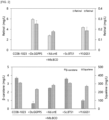
- FIG. 1 The results of measuring the analyzed beta-carotene and squalene concentrations are shown in FIG. 1 .
- the beta-carotene concentrations in CC08-1023 (parent strain), Ds.GGPPS-introduced strain, crtEM1-introduced strain, Sc.BTS1-introduced strain, and YI. GGS 1-introduced strain were 5.49 mg/L, 54.74 mg/L, 40.58 mg/L, 5.21 mg/L, and 49.22 mg/L, respectively.
- beta-carotene was increased by 49.25 mg/L, as compared to the parent strain, indicating the most excellent effect of increasing beta-carotene carotene.
- the squalene concentration was 313.24 mg/L, 211.86 mg/L, 235.27 mg/L, 253.28 mg/L, and 221.22 mg/L, respectively.
- squalene was reduced by 101.38mg/L, as compared to the CC08-1023 strain, indicating the most excellent effect of reducing squalene.
- Ds.GGPPS is the most effective as GGPP synthase in microorganisms of the genus Yarrowia.
- the geranylgeranyl pyrophosphate synthase derived from the closely related Saccharomyces cerevisiae, Yarrowia lipolytica, and Xanthophyllomyces dendrorhous was introduced, the effect was insignificant, whereas when the geranylgeranyl pyrophosphate synthase derived from the relatively unrelated Dunaliella salina was introduced, the effect was remarkable.
- Mb.BCO Uncultured marine bacterium 66A03-derived beta-carotene 15,15'oxygenase
- the gene was synthesized using the polynucleotide of Mb.BCO in the form of TEFINtp-codon optimized Mb.BCO-CYC1t (SEQ ID NO: 13).
- a cassette to be inserted into the KU70(YALI0C08701g) gene site was designed using the URA3 gene (SEQ ID NO: 5) of Y. lipolytica as a selection marker.
- PCR was performed for left homologous region, TEFINt promoter, Mb.BCO ORF, CYC1 terminator, URA3, repeat region, and right homologous region using the synthesized Mb.BCO and genomic DNA of KCCM12972P as templates, and primers of SEQ ID NO: 43 and SEQ ID NO: 44, SEQ ID NO: 45 and SEQ ID NO: 46, SEQ ID NO: 47 and SEQ ID NO: 48, SEQ ID NO: 49 and SEQ ID NO: 50, SEQ ID NO: 51 and SEQ ID NO: 52, SEQ ID NO: 53 and SEQ ID NO: 54, and SEQ ID NO: 55 and SEQ ID NO: 56, as shown in Table 7, respectively.
- PCR was performed by 35 cycles consisting of denaturation at 95°C for 1 min; annealing at 55°C for 1 min; and polymerization reaction at 72°C for 2 min.
- the resulting DNA fragments were prepared as a single cassette through overlap extension PCR.
- the cassette thus prepared was introduced into each of the strains prepared in Examples 2-1 to 2-4 by a heat shock method, and then colonies were obtained, which were formed on a solid medium (YLMM1) without uracil. Colonies in which cassette insertion into the genome was confirmed using primers of SEQ ID NO: 57 and SEQ ID NO: 58 were plated on a 5-FOA solid medium and cultured at 30°C for 3 days, and colonies grown on the 5-FOA solid medium were obtained to remove the URA3 marker. [Table 7] SEQ ID NO.
- a flask test was performed on a total of 5 species, comprising the strain obtained in Example 4 and the parent strain CC08-1023 obtained in Example 1.
- the strains were each inoculated at an initial OD of 2 in a 250 ml corner-baffle flask containing 20 ml of Yeast extract-Peptone-Dextrose (YPD) medium and 0.05% butylated hydroxytoluene, and cultured at 30°C for 48 hours with agitation at 200 rpm. After completion of the culture, 1 ml of the culture medium was centrifuged and the supernatant was removed.
- YPD Yeast extract-Peptone-Dextrose
- DMSO dimethyl sulfoxide
- acetone Sigma
- concentrations thereof were analyzed using HPLC equipment. The results of measuring the analyzed retinol, retinal, beta-carotene, and squalene concentrations are shown in FIG. 2 .
- retinol was not measured in the strain prepared by introducing Mb.BCO into the CC08-1023 strain.
- the retinol concentrations in four types of strains into which Mb.BCO was introduced after introducing each of Ds.GGPPS, crtEM1, Sc.BTS1, and YI,GGS1, based on CC08-1023 were 5.88 mg/L, 2.78 mg/L, 0 mg/L, and 4.35 mg/L, respectively.
- the beta-carotene concentrations in the five types of strains were 3.68 mg/L, 0.63 mg/L, 2.47 mg/L, 3.58 mg/L, and 0.98 mg/L, respectively, indicating that beta-carotene was converted to retinol, resulting in the low beta-carotene concentration.
- the squalene concentrations in the five types of strains were 309.88 mg/L, 233.52 mg/L, 282.19 mg/L, 306.34 mg/L, and 269.18 mg/L, respectively.
- Ds.GGGPS has the excellent effects on beta-carotene production, squalene reduction, and retinol production.
- SEQ ID NO. Name Sequence Type 1 codon optimized Ds.GGPPS ORF DNA 2 TEFINtp DNA 3 TDH3t DNA 4 TEFINtp-codon optimized Ds.GGPPS-TDH3t DNA 5 URA3 DNA 6 Codon optimized crtEM1 ORF DNA 7 TEFINtp-codon optimized crtEM1-TDH3t DNA 8 Sc.BTS1 ORF DNA 9 TEFINtp-Sc.BTS1-TDH3t DNA 10 YI.GGS1 ORF DNA 11 TEFINtp-YI.GGS1-TDH3t DNA 12 Codon optimized Mb.BCO ORF DNA 13 CYC1t DNA 14 TEFINtp-codon optimized Mb.BCO-CYC1t DNA 15 primer catcatttca aaagagggaa cage DNA 16 primer cgccqccaac ccggtctctg t
Landscapes
- Life Sciences & Earth Sciences (AREA)
- Chemical & Material Sciences (AREA)
- Health & Medical Sciences (AREA)
- Organic Chemistry (AREA)
- Engineering & Computer Science (AREA)
- Genetics & Genomics (AREA)
- Wood Science & Technology (AREA)
- Zoology (AREA)
- Bioinformatics & Cheminformatics (AREA)
- Biotechnology (AREA)
- General Engineering & Computer Science (AREA)
- General Health & Medical Sciences (AREA)
- Biochemistry (AREA)
- Microbiology (AREA)
- Biomedical Technology (AREA)
- Mycology (AREA)
- Medicinal Chemistry (AREA)
- Molecular Biology (AREA)
- General Chemical & Material Sciences (AREA)
- Chemical Kinetics & Catalysis (AREA)
- Botany (AREA)
- Tropical Medicine & Parasitology (AREA)
- Virology (AREA)
- Physics & Mathematics (AREA)
- Biophysics (AREA)
- Plant Pathology (AREA)
- Micro-Organisms Or Cultivation Processes Thereof (AREA)
- Preparation Of Compounds By Using Micro-Organisms (AREA)
Abstract
Description
- The present disclosure relates to a microorganism of the genus Yarrowia having an ability to produce carotenoid or a material having carotenoid as a precursor, the microorganism expressing Dunaliella salina-derived geranylgeranyl pyrophosphate synthase; a method of producing carotenoid or a material having carotenoid as a precursor using the microorganism; a composition for producing carotenoid or a material having carotenoid as a precursor; and use of the microorganism of the genus Yarrowia or a culture thereof in producing carotenoid or a material having carotenoid as a precursor.
- As carotenoids and retinoids exert various functions in plants and animals, they are used in various industrial fields such as foods, feeds, etc. Among them, carotenoids such as beta-carotene are substances reported to have functions such as eliminating free radicals, acting as precursors for vitamin A in animals, enhancing the immune system of vertebrates, and reducing the risk of lung cancer, and retinoids are a group of materials chemically related to retinol which is vitamin A, and also used in cosmetics, therapeutic agents for skin diseases, etc.
- However, despite these advantages, carotenoids (e.g., beta-carotene) and retinoids (e.g., retinol) are not synthesized in the animal body or are synthesized in insufficient amounts. In addition, even though industrial production is attempted using mutated microorganisms (
US Patent No. 7745170 ), it is still difficult to produce them with high purity. - For example, during preparation of microorganisms producing carotenoids or retinoids, squalene (C30) may also be produced as a by-product. Therefore, the discovery of geranylgeranyl pyrophosphate synthase, which contributes to the efficient production of carotenoids or retinoids, is essential to increasing their production and to reducing squalene which is produced in a competing pathway.
- The problem to be solved in the present disclosure is to provide a microorganism producing carotenoid or a material having carotenoid as a precursor, the microorganism including Dunaliella salina-derived geranylgeranyl pyrophosphate synthase, a method of producing carotenoid or retinoid using the same and use thereof.
- An object of the present disclosure is to provide a microorganism of the genus Yarrowia having an ability to produce carotenoid or a material having carotenoid as a precursor, the microorganism expressing Dunaliella salina-derived geranylgeranyl pyrophosphate synthase.
- Another object of the present disclosure is to provide a method of producing carotenoid or a material having carotenoid as a precursor using the microorganism of the genus Yarrowia.
- Still another object of the present disclosure is to provide a composition for producing carotenoid or a material having carotenoid as a precursor, the composition comprising the microorganism of the genus Yarrowia or a culture thereof.
- Still another object of the present disclosure is to provide use of the microorganism of the genus Yarrowia in producing carotenoid or a material having carotenoid as a precursor.
- The present disclosure may effectively increase production of carotenoid and a material having carotenoid as a precursor by introducing a Dunaliella salina-derived geranylgeranyl pyrophosphate synthase gene into a microorganism of the genus Yarrowia.
-
-
FIG. 1 shows results of flask tests of strains which were introduced with GGPP synthase genes derived from various microorganisms, respectively; and -
FIG. 2 shows results of flask tests of Mb.BCO-introduced strains. - The present disclosure will be described in detail as follows. Meanwhile, each description and embodiment disclosed in this disclosure may also be applied to other descriptions and embodiments. That is, all combinations of various elements disclosed in this disclosure fall within the scope of the present disclosure. Further, the scope of the present disclosure is not limited by the specific description described below. Further, a number of papers and patent documents are referenced and cited throughout this specification. The disclosures of the cited papers and patent documents are incorporated herein by reference in their entirety to further clarify the level and scope of the subject matter to which the present disclosure pertains.
- An aspect of the present disclosure provides a microorganism of the genus Yarrowia having an ability to produce carotenoid or a material having carotenoid as a precursor, the microorganism expressing Dunaliella salina-derived geranylgeranyl pyrophosphate synthase.
- As used herein, "geranylgeranyl pyrophosphate synthase" is an enzyme capable of catalyzing the synthesis of geranylgeranyl pyrophosphate (GGPP). A substrate of the geranylgeranyl pyrophosphate synthase may be isopentenyl pyrophosphate (IPP) and dimethylallyl pyrophosphate (DMAPP). The geranylgeranyl pyrophosphate synthase may also be named 'GGS', 'GGPPS', 'GGPS', or 'polypeptide having geranylgeranyl pyrophosphate synthase activity'.
- In one embodiment, the microorganism of the present disclosure may be a microorganism of the genus Yarrowia comprising or expressing a Dunaliella salina-derived geranylgeranyl pyrophosphate synthase protein which is a foreign protein, and may have the ability to produce carotenoid or a material having carotenoid as a precursor.
- An amino acid sequence of the GGPPS protein of the present disclosure may be a protein sequence having the geranylgeranyl pyrophosphate synthase activity, which is encoded by the GGPPS gene. The amino acid sequence may be available in various databases, such as the NCBI GenBank, etc., which are known databases, but is not limited thereto.
- In one embodiment, the GGPPS protein of the present disclosure may be derived from Dunaliella salina, and any protein may be included in the present disclosure as long as it has the sequence or activity identical thereto.
- In one embodiment, the GGPPS protein of the present disclosure may comprise, have, or consist of SEQ ID NO: 91 or an amino acid sequence having 80% or more homology or identity thereto, or may essentially consist of the amino acid sequence.
- Further, although one embodiment of the GGPPS protein of the present disclosure is described as the protein comprising SEQ ID NO: 91, such expression does not exclude a mutation that may occur by the addition of a meaningless sequence upstream or downstream of the amino acid sequence of SEQ ID NO: 91, or a naturally-occurring mutation therein, or a silent mutation thereof, and it is obvious to those skilled in the art that any protein may fall within the GGPPS protein of the present disclosure, as long as it has activity identical or corresponding to that of the protein comprising the amino acid sequence.
- Specifically, the GGPPS protein of the present disclosure may comprise the amino acid sequence of SEQ ID NO: 91 or an amino acid sequence having at least 80%, 85%, 86%, 87%, 88%, 89%, 90%, 91%, 92%, 93%, 94%, 95%, 96%, 97%, 98% or 99% homology or identity to the amino acid sequence of SEQ ID NO: 91. Further, it is apparent that proteins having amino acid sequences in which some sequences are deleted, modified, substituted, or added are also included within the scope of the present disclosure as long as the amino acid sequences have such homology or identity and exhibit the efficacy corresponding to that of the above protein.
- Although described as 'a polypeptide or protein comprising an amino acid sequence represented by a particular SEQ ID NO.', 'a polypeptide or protein consisting of an amino acid sequence represented by a particular SEQ ID NO.', or 'a polypeptide or protein having an amino acid sequence represented by a particular SEQ ID NO.' in the present disclosure, it is obvious that a protein having an amino acid sequence with deletion, modification, substitution, conservative substitution, or addition of some sequence may also be used in the present disclosure, as long as it has activity identical or corresponding to that of the polypeptide consisting of the amino acid sequence of the corresponding SEQ ID NO. Examples thereof comprise those having an addition of a sequence that does not alter the function of the protein at the N-terminus, inside, and/or C-terminus of the amino acid sequence, a naturally occurring mutation, a silent mutation thereof, or a conservative substitution.
- The "conservative substitution" means the substitution of one amino acid with another amino acid having similar structural and/or chemical properties. Such an amino acid substitution may generally occur based on similarity in the polarity, charge, solubility, hydrophobicity, hydrophilicity, and/or amphipathic nature of the residues. Usually, conservative substitution may hardly affect or not affect the activity of polypeptides.
- As used herein, the term 'homology' or 'identity' refers to the degree of similarity between two given amino acid sequences or nucleotide sequences and may be expressed as a percentage. The terms 'homology and identity' may be often used interchangeably.
- The sequence homology or identity of conserved polynucleotides or polypeptides may be determined by a standard alignment algorithm, and default gap penalties established by a program to be used may be used together. Substantially, homologous or identical sequences may generally hybridize with each other along the entire sequence or at least about 50%, 60%, 70%, 80% or 90% of the entire length under moderate or highly stringent conditions. It is obvious that the hybridization also includes hybridization with a polynucleotide containing the usual codons or codons considering codon degeneracy in the polynucleotide.
- Whether any two polynucleotide or polypeptide sequences have homology, similarity, or identity may be determined using a known computer algorithm such as the "FASTA" program using a default parameter, for example, as in Pearson et al (1988) [Proc. Natl. Acad. Sci. USA 85]: 2444. Alternatively, they may be determined using the Needleman-Wunsch algorithm (Needleman and Wunsch, 1970, J. Mol. Biol. 48: 443-453) as performed in the Needleman program of the EMBOSS package (EMBOSS: The European Molecular Biology Open Software Suite, Rice et al., 2000, Trends Genet. 16: 276-277) (version 5.0.0 or later) (including the GCG program package (Devereux, J., et al, Nucleic Acids Research 12: 387 (1984)), BLASTP, BLASTN, FASTA (Atschul, [S.] [F.,] [ET AL, J MOLEC BIOL 215]: 403 (1990); Guide to Huge Computers, Martin J. Bishop, [ED.,] Academic Press, San Diego,1994, and [CARILLO ETA/.](1988) SIAM J Applied Math 48: 1073). For example, homology, similarity, or identity may be determined using BLAST or ClustalW of the National Center for Biotechnology.
- Homology, similarity, or identity of polynucleotides or polypeptides may be determined by comparing sequence information using a GAP computer program, e.g., Needleman et al. (1970), J Mol Biol. 48:443, for example, as disclosed in Smith and Waterman, Adv. Appl. Math (1981) 2:482. Briefly, the GAP program defines similarity as the number of aligned symbols (i.e., nucleotides or amino acids) which are similar, divided by the total number of symbols in the shorter of the two sequences. The default parameters for the GAP program may include: (1) a binary comparison matrix (containing a value of 1 for identities and 0 for non-identities) and the weighted comparison matrix (or EDNAFULL (EMBOSS version of NCBI NUC4.4) substitution matrix) of Gribskov et al(1986) Nucl. Acids Res. 14: 6745, as disclosed by Schwartz and Dayhoff, eds., Atlas Of Protein Sequence And Structure, National Biomedical Research Foundation, pp. 353-358 (1979); (2) a penalty of 3.0 for each gap and an additional 0.10 penalty for each symbol in each gap (or gap open penalty 10, gap extension penalty 0.5); and (3) no penalty for end gaps.
- Further, whether any two polynucleotide or polypeptide sequences have homology, similarity, or identity may be determined by comparing these sequences via Southern hybridization experiments under defined stringent conditions, and the appropriate hybridization conditions to be defined may be within the scope of the technology and may be determined by a method well known to one of ordinary skill in the art (e.g., J. Sambrook et al., Molecular Cloning, A Laboratory Manual, 2nd Edition, Cold Spring Harbor Laboratory press, Cold Spring Harbor, New York, 1989; F.M. Ausubel et al., Current Protocols in Molecular Biology, John Wiley & Sons, Inc., New York).
- In the present disclosure, expression of the protein may be achieved by introducing a gene (polynucleotide) encoding the protein into a microorganism or injecting the protein thereinto, but is not limited thereto.
- In one embodiment, the microorganism of the present disclosure may be introduced with the Dunaliella salina-derived geranylgeranyl pyrophosphate synthase gene. Further, introduction of the geranylgeranyl pyrophosphate synthase gene may also additionally comprise enhancing the activity thereof after the introduction.
- As used herein, the 'geranylgeranyl pyrophosphate synthase gene' may be used interchangeably with 'ggs', 'ggpps', 'ggps', 'GGS gene', 'GGPPS gene', 'GGPS gene', 'gene encoding geranylgeranyl pyrophosphate synthase', 'polynucleotide encoding geranylgeranyl pyrophosphate synthase', or 'polynucleotide encoding the polypeptide having the geranylgeranyl pyrophosphate synthase activity'.
- The sequence of the geranylgeranyl pyrophosphate synthase gene may be available in various databases, such as the NCBI GenBank, etc., which are known databases, but is not limited thereto.
- In one embodiment, the Dunaliella salina-derived geranylgeranyl pyrophosphate synthase gene may comprise, have, or consist of a nucleotide sequence of SEQ ID NO: 1, but is not limited thereto.
- In one embodiment, the geranylgeranyl pyrophosphate synthase gene consisting of the nucleotide sequence of SEQ ID NO: 1 may be codon-optimized for a microorganism of the genus Yarrowia, or more specifically, Yarrowia lipolytica.
- As used herein, the term "polynucleotide", which is a nucleotide polymer in which nucleotide monomers are covalently bonded in a long chain, refers to a DNA strand having a predetermined length or more.
- Further, the polynucleotide or gene may have various modifications in the coding region within a range that does not change the amino acid sequence of the polypeptide, due to codon degeneracy or considering codons preferred by an organism to express the geranylgeranyl pyrophosphate synthase polypeptide. The polynucleotide or gene may comprise, for example, the nucleotide sequence of SEQ ID NO: 1, and may consist of a nucleotide sequence having 80% or more, 90% or more, 95% or more, 96% or more, 97% or more, 98% or more, or 99% or more homology or identity thereto, but is not limited thereto.
- Further, the polynucleotide or gene of the present disclosure may comprise a probe that may be prepared from a known gene sequence, for example, any sequence without limitation as long as it is a sequence that hybridizes with a complementary sequence to the entirety or a part of the nucleotide sequence under stringent conditions to encode the amino acid sequence of SEQ ID NO: 1. The "stringent conditions" mean conditions that enable specific hybridization between polynucleotides. These conditions are specifically described in documents (e.g., J. Sambrook et al., supra). For example, the stringent conditions may comprise conditions under which polynucleotides having high homology or identity, for example, 40% or higher, specifically 90% or higher, more specifically 95% or higher, 96% or higher, 97% or higher, 98% or higher, much more specifically 99% or higher homology or identity are hybridized with each other and polynucleotides having homology or identity lower than the above homology or identity are not hybridized with each other, or ordinary washing conditions of Southern hybridization, in which washing is performed once, specifically, two to three times at a salt concentration and temperature equivalent to 60°C, 1X SSC, 0.1% SDS, specifically 60°C, 0.1X SSC, 0.1% SDS, more specifically, 68°C, 0.1X SSC, 0.1% SDS.
- Hybridization requires that two nucleic acids have complementary sequences, although mismatches between nucleotides may be possible depending on the stringency of the hybridization. The term "complementary" is used to describe the relationship between mutually hybridizable nucleotides. For example, with respect to DNA, adenosine is complementary to thymine, and cytosine is complementary to guanine. Therefore, the polynucleotide of the present disclosure may also comprise an isolated nucleic acid fragment complementary to the entire sequence as well as a nucleic acid sequence substantially similar thereto.
- Specifically, a polynucleotide having homology or identity may be detected using hybridization conditions comprising a hybridization step at a Tm value of 55°C and the above-described conditions. Further, the Tm value may be 60°C, 63°C, or 65°C, but is not limited thereto, and may be appropriately adjusted by those skilled in the art according to the purpose.
- The appropriate stringency to hybridize the polynucleotide depends on the length and degree of complementarity of the polynucleotide, and the variables are well known in the art (see Sambrook et al., supra, 9.50-9.51, 11.7-11.8).
- In one embodiment, the microorganism of the present disclosure may comprise a vector comprising the Dunaliella salina-derived geranylgeranyl pyrophosphate synthase gene of the present disclosure or the polynucleotide encoding the Dunaliella salina-derived geranylgeranyl pyrophosphate synthase.
- The vector of the present disclosure may comprise a DNA construct comprising a nucleotide sequence of a polynucleotide encoding a polypeptide of interest which is operably linked to a suitable expression regulatory region (or expression control sequence) so that the polypeptide of interest may be expressed in a suitable host. The expression regulatory region may comprise a promoter capable of initiating transcription, any operator sequence for controlling the transcription, a sequence encoding a suitable mRNA ribosome binding site, and a sequence controlling termination of transcription and translation. The vector may be transformed into a suitable host cell, and then replicated or function independently of the host genome, or may be integrated into the genome itself.
- The vector used in the present disclosure is not particularly limited, but any vector known in the art may be used. Examples of commonly used vectors comprise natural or recombinant plasmids, cosmids, viruses, and bacteriophages. For example, pWE15, M13, MBL3, MBL4, IXII, ASHII, APII, t10, t11, Charon4A, Charon21A, etc. may be used as a phage vector or a cosmid vector, and pDC system, pBR system, pUC system, pBluescript II system, pGEM system, pTZ system, pCL system, pET system, etc. may be used as a plasmid vector. Specifically, pDZ, pDC, pDCM2 (
Korean Patent Publication No. 10-2020-0136813 - For example, a polynucleotide encoding a polypeptide of interest may be inserted into a chromosome through a vector for intracellular chromosome insertion. Insertion of the polynucleotide into the chromosome may be performed by any method known in the art, for example, homologous recombination, but is not limited thereto. The vector may further comprise a selection marker for the confirmation of chromosome insertion. The selection marker is for selecting the cells transformed with vectors, i.e., for confirming the insertion of a nucleic acid molecule of interest, and markers that confer selectable phenotypes such as drug resistance, auxotrophy, resistance to cytotoxic agents, or expression of surface polypeptides may be used. In an environment treated with a selective agent, only cells expressing the selection marker survive or exhibit other phenotypic traits, and thus transformed cells may be selected.
- As used herein, the term "transformation" means that a vector comprising a polynucleotide encoding a target polypeptide is introduced into a host cell or a microorganism so that the polypeptide encoded by the polynucleotide may be expressed in the host cell. The transformed polynucleotide may be located regardless of the position, either by being inserted into the chromosome of the host cell or located outside the chromosome as long as it may be expressed in the host cell. Further, the polynucleotide comprises DNA and/or RNA encoding a polypeptide of interest. The polynucleotide may be introduced in any form as long as it may be introduced into a host cell and expressed. For example, the polynucleotide may be introduced into a host cell in the form of an expression cassette, which is a gene construct containing all elements required for self-expression. The expression cassette may usually comprise a promoter operably linked to the polynucleotide, a transcription termination signal, a ribosome binding site, and a translation termination signal. The expression cassette may be in the form of an expression vector capable of self-replicating. Further, the polynucleotide may be introduced into a host cell in its own form and operably linked to a sequence required for expression in the host cell, but is not limited thereto.
- Further, the term "operably linked" means that the polynucleotide sequence is functionally linked to a promoter sequence that initiates and mediates transcription of the polynucleotide encoding the desired polypeptide of the present disclosure.
- In one embodiment, the microorganism of the genus Yarrowia expressing the Dunaliella salina-derived GGPPS of the present disclosure may have enhanced geranylgeranyl pyrophosphate synthase activity, as compared to a microorganism of the genus Yarrowia not expressing the same, but is not limited thereto.
- In one embodiment, the microorganism of the genus Yarrowia, into which the Dunaliella salina-derived GGPPS gene of the present disclosure is introduced, may have enhanced geranylgeranyl pyrophosphate synthase activity, as compared to a microorganism of the genus Yarrowia, into which the Dunaliella salina-derived GGPPS gene is not introduced, but is not limited thereto.
- In one embodiment, the microorganism of the genus Yarrowia, into which the geranylgeranyl pyrophosphate synthase encoded by the Dunaliella salina-derived GGPPS gene of the present disclosure is introduced, may have enhanced geranylgeranyl pyrophosphate synthase activity, as compared to a microorganism of the genus Yarrowia, into which a geranylgeranyl pyrophosphate synthase encoded by Xanthophyllomyces dendrorhous-derived crtE or its variant gene crtEM1, Saccharomyces cerevisiae-derived BTS1 gene, or Yarrowia lipolytica-derived GGS1 gene is introduced, but is not limited thereto.
- As used herein, the term "strain of the genus Yarrowia" or "microorganism of the genus Yarrowia" comprises all of wild-type microorganisms of the genus Yarrowia or naturally or artificially genetically modified microorganisms of the genus Yarrowia, and it may be a microorganism of the genus Yarrowia in which a specific mechanism is strengthened due to insertion of a foreign gene or an activity enhancement of an endogenous gene, and it may be a microorganism of the genus Yarrowia comprising the Dunaliella salina-derived GGPPS gene for producing carotenoid or a material having carotenoid as a precursor.
- The microorganism of the present disclosure may be a microorganism comprising any one or more of the GGPPS protein of the present disclosure, the GGPPS gene or polynucleotide encoding the GGPPS protein, and the vector comprising the gene or polynucleotide; a microorganism modified to express the Dunaliella salina-derived GGPPS protein or the GGPPS gene of the present disclosure; a microorganism (e.g., a recombinant strain) expressing the Dunaliella salina-derived GGPPS protein or GGPPS gene of the present disclosure; or a strain (e.g., a recombinant strain) having the activity of the Dunaliella salina-derived GGPPS of the present disclosure, but is not limited thereto.
- The strain of the present disclosure may be a microorganism naturally having the geranylgeranyl pyrophosphate synthase or the ability to produce carotenoid or a material having carotenoid as a precursor; or a microorganism in which the geranylgeranyl pyrophosphate synthase or the ability to produce carotenoid or a material having carotenoid as a precursor is enhanced or provided by introducing the Dunaliella salina-derived GGPPS protein, gene, polynucleotide, or the vector comprising the same of the present disclosure into a parent strain not having the geranylgeranyl pyrophosphate synthase or the ability to produce carotenoid or the material having carotenoid as a precursor, but is not limited thereto.
- For example, the strain of the present disclosure may comprise all of microorganisms which are transformed with the Dunaliella salina-derived GGPPS protein, gene, polynucleotide of the present disclosure, or the vector comprising the same to produce carotenoid or a material having carotenoid as a precursor or to have the enhanced production ability. For example, the strain of the present disclosure may be a recombinant strain having the enhanced ability to produce carotenoid or a material having carotenoid as a precursor by expressing the Dunaliella salina-derived GGPPS of the present disclosure in the natural wild-type microorganism or the microorganism producing carotenoid or a material having carotenoid as a precursor. The recombinant strain having the enhanced ability to produce carotenoid or a material having carotenoid as a precursor may be a microorganism having the enhanced ability to produce carotenoid or a material having carotenoid as a precursor, as compared to a natural wild-type microorganism or a geranylgeranyl pyrophosphate synthase-unmodified microorganism (i.e., a microorganism of the genus Yarrowia comprising the wild-type geranylgeranyl pyrophosphate synthase gene (SEQ ID NO: 10) or a microorganism of the genus Yarrowia into which the Dunaliella salina-derived geranylgeranyl pyrophosphate synthase gene (SEQ ID NO: 1) is not introduced, but is not limited thereto.
- For example, the strain having the enhanced ability to produce carotenoid or a material having carotenoid as a precursor of the present disclosure may be a microorganism having the enhanced ability to produce carotenoid or a material having carotenoid as a precursor, as compared to a microorganism of the genus Yarrowia comprising no Dunaliella salina-derived GGPPS (e.g., SEQ ID NO: 91); or comprising Xanthophyllomyces dendrorhous-derived CrtE or its variant CrtEM1, Saccharomyces cerevisiae-derived BTS 1, or Yarrowia lipolytica GGS1, but is not limited thereto. For example, the unmodified microorganism, which is the target strain for comparing whether the ability to produce carotenoid or a material having carotenoid as a precursor is enhanced or not, may be a strain CC08-1023, but is not limited thereto.
- For example, the recombinant strain having the enhanced production ability may have about 0.001% or more or 0.01% or more enhancement of the beta-carotene or retinol-producing ability, as compared to that of the parent strain before modification or the unmodified microorganism. However, as long as the microorganism has an increased ability of + value, as compared to that of the parent strain before modification or the unmodified microorganism, it is not limited thereto. The term "about" refers to a range which includes all of ±0.5, ±0.4, ±0.3, ±0.2, ±0.1, etc., and includes all of the values that are equivalent or similar to those following the term "about", but the range is not limited thereto.
- As used herein, the term "unmodified microorganism" does not exclude strains comprising mutations that may occur naturally in microorganisms, and may be a wild-type strain or a natural strain itself or may be a strain before the trait is changed by genetic variation due to natural or artificial factors. For example, the unmodified microorganism may be a strain in which the Dunaliella salina-derived GGPPS is not expressed, or into which the Dunaliella salina-derived GGPPS has not yet been introduced. The term "unmodified microorganism" may be used interchangeably with "strain before being modified", "microorganism before being modified", "unvaried strain", "unmodified strain", "unvaried microorganism", or "reference microorganism".
- The microorganism of the present disclosure may be a microorganism of the genus Yarrowia, specifically, Yarrowia lipolytica, but is not limited thereto.
- In the microorganism of the present disclosure, partial or entire modification of the polynucleotide may be induced by (a) homologous recombination using a vector for chromosome insertion in the microorganism or genome editing using engineered nuclease (e.g., CRISPR-Cas9) and/or (b) treatment with light such as ultraviolet rays and radiation, and/or chemicals, but is not limited thereto. A method of modifying a part or the entirety of the gene may comprise a method of using a DNA recombination technology. For example, by introducing a nucleotide sequence or vector comprising a nucleotide sequence homologous to the gene of interest into the microorganism to cause homologous recombination, a part or the entirety of the gene may be deleted. The nucleotide sequence or vector to be introduced may comprise a dominant selection marker, but is not limited thereto.
- The microorganism of the present disclosure may be a microorganism which is modified to further comprise polynucleotides encoding lycopene cyclase/phytoene synthase (crtYB) and phytoene desaturase (crtl) proteins, thereby exhibiting the activities of the proteins, or a microorganism in which the activities of the proteins are enhanced. The lycopene cyclase/phytoene synthase or phytoene desaturase may be a protein derived from Xanthophyllomyces dendrorhous, but is not limited thereto. In one embodiment, the polynucleotide encoding the lycopene cyclase/phytoene synthase or phytoene desaturase may have or may comprise a sequence, based on a nucleotide sequence (GenBank: AY177204.1 or GenBank: AY177424.1) registered in the National Center for Biotechnology Information Search database (NCBI), respectively. In one embodiment, the polynucleotide encoding the lycopene cyclase/phytoene synthase or phytoene desaturase may have or comprise SEQ ID NO: 59 or SEQ ID NO: 60, respectively. In the polynucleotide, various modifications may be made in the coding region as long as the amino acid sequence is not changed in consideration of codon degeneracy or codons preferred in microorganisms that are intended to express the polypeptide of the present disclosure. Specifically, the polynucleotide may have or may comprise a nucleotide sequence having 80% or more, 85% or more, 90% or more, 95% or more, 96% or more, 97% or more, 98% or more, and less than 100% homology or identity to the sequence of SEQ ID NO: 59 or SEQ ID NO: 60, or may consist of or may essentially consist of a nucleotide sequence having 80% or more, 85% or more, 90% or more, 95% or more, 96% or more, 97% or more, 98% or more, and less than 100% homology or identity to the sequence of SEQ ID NO: 59 or SEQ ID NO: 60, but is not limited thereto.
- The microorganism of the present disclosure may be a microorganism which is modified to further comprise a polynucleotide encoding beta-carotene 15,15'-oxygenase (BLH) protein, thereby exhibiting the activity of the protein, or a microorganism in which the activity of the protein is enhanced, but is not limited thereto. The beta-carotene 15, 15'-oxygenase may be a protein derived from an Uncultured marine bacterium 66A03, but is not limited thereto. In one embodiment, the polynucleotide encoding beta-carotene 15, 15'-oxygenase may have or comprise an amino acid sequence, based on Q4PNI0 which is registered in the UniProt Knowledgebase (UniProtKB). In one embodiment, the polynucleotide encoding beta-carotene 15, 15'-oxygenase may have or comprise a sequence of SEQ ID NO: 12. The polynucleotide may undergo various modifications in the coding region within the scope that does not change the amino acid sequence in consideration of codon degeneracy or codons preferred in microorganisms that are intended to express the polypeptide of the present disclosure. Specifically, the polynucleotide may have or comprise a nucleotide sequence having 80% or more, 85% or more, 90% or more, 95% or more, 96% or more, 97% or more, 98% or more, and less than 100% homology or identity to the sequence of SEQ ID NO: 12, or may consist of or essentially consist of a nucleotide sequence having 80% or more, 85% or more, 90% or more, 95% or more, 96% or more, 97% or more, 98% or more, and less than 100% homology or identity to the sequence of SEQ ID NO: 12, but is not limited thereto.
- As used herein, the term "enhancement" of polypeptide activity means that the activity of a polypeptide is increased, as compared to the endogenous activity. The enhancement may be used interchangeably with terms such as activation, up-regulation, overexpression, and increase, etc. Here, activation, enhancement, up-regulation, overexpression, and increase may comprise both exhibiting activity that was not originally possessed and exhibiting improved activity as compared to the endogenous activity or activity before modification. The "endogenous activity" means the activity of a specific polypeptide originally possessed by a parent strain before the trait is changed or an unmodified microorganism, when the trait is changed by genetic variation due to natural or artificial factors. This may be used interchangeably with "activity before modification". The fact that the activity of a polypeptide is "enhanced", "up-regulated", "overexpressed", or "increased" as compared to the endogenous activity means that the activity of the polypeptide is improved as compared to the activity and/or concentration (expression level) of a specific polypeptide originally possessed by a parent strain before the trait is changed or an unmodified microorganism.
- The enhancement may be achieved through the introduction of a foreign polypeptide or gene or the enhancement of endogenous activity and/or concentration (expression level) of the polypeptide. The enhancement of the activity of a polypeptide may be confirmed by an increase in the degree of activity and the expression level of the corresponding polypeptide or in the amount of the product produced from the corresponding polypeptide.
- For the enhancement of the activity of the polypeptide, various methods well known in the art may be applied, and the method is not limited as long as the activity of the polypeptide of interest may be enhanced as compared to that of the microorganism before being modified. Specifically, genetic engineering and/or protein engineering well known to those skilled in the art, which are routine methods of molecular biology, may be used, but the method is not limited thereto (e.g., Sitnicka et al. Functional Analysis of Genes. Advances in Cell Biology. 2010, Vol. 2. 1-16, Sambrook et al. Molecular Cloning 2012, etc.).
- Specifically, the enhancement of the polypeptide of the present disclosure may be:
- 1) increase in the intracellular copy number of the polynucleotide encoding the polypeptide;
- 2) replacement of a gene expression regulatory region on a chromosome encoding the polypeptide with a sequence exhibiting strong activity;
- 3) modification of a nucleotide sequence encoding a start codon or 5'-UTR region of the gene transcript encoding the polypeptide;
- 4) modification of the amino acid sequence of the polypeptide to enhance the activity of the polypeptide;
- 5) modification of the polynucleotide sequence encoding the polypeptide to enhance the activity of the polypeptide (e.g., modification of the polynucleotide sequence of the polypeptide gene to encode the polypeptide that has been modified to enhance the activity of the polypeptide);
- 6) introduction of a foreign polypeptide exhibiting the activity of the polypeptide or a foreign polynucleotide encoding the same;
- 7) codon optimization of the polynucleotide encoding the polypeptide;
- 8) analysis of the tertiary structure of the polypeptide to select and to modify or chemically modify the exposed site; or
- 9) a combination of two or more selected from 1) to 8), but is not particularly limited thereto.
- More specifically,
- 1) The increase in the intracellular copy number of the polynucleotide encoding the polypeptide may be achieved by the introduction of, into a host cell, a vector which may replicate and function independently of the host and to which the polynucleotide encoding the corresponding polypeptide is operably linked. Alternatively, the increase may be achieved by the introduction of one copy or two or more copies of the polynucleotide encoding the corresponding polypeptide into a chromosome of a host cell. The introduction into the chromosome may be performed by introducing a vector capable of inserting the polynucleotide into a chromosome of a host cell into the host cell, but is not limited thereto. The vector is as described above.
- 2) The replacement of a gene expression regulatory region (or expression control sequence) on a chromosome encoding the polypeptide with a sequence exhibiting strong activity may be, for example, the occurrence of variation in a sequence due to deletion, insertion, nonconservative or conservative substitution, or a combination thereof, or the replacement with a sequence exhibiting stronger activity so that the activity of the expression regulatory region is further enhanced. The expression regulatory region may comprise, but is not particularly limited to, a promoter, an operator sequence, a sequence encoding a ribosome binding site, a sequence controlling the termination of transcription and translation, etc. For example, the replacement may be to replace the original promoter with a strong promoter, but is not limited thereto.
Examples of known strong promoters comprise CJ1 to CJ7 promoters (US Patent No. US 7662943 B2 ), lac promoter, trp promoter, trc promoter, tac promoter, lambda phage PR promoter, PL promoter, tet promoter, gapA promoter, SPL7 promoter, SPL13(sm3) promoter (US Patent No. US 10584338 B2 US Patent No. US 10273491 B2 - 3) The modification of a nucleotide sequence encoding a start codon or 5'-UTR region of the gene transcript encoding the polypeptide may be, for example, the substitution with a nucleotide sequence encoding another start codon having a higher polypeptide expression rate as compared to an endogenous start codon, but is not limited thereto.
- 4) and 5) The modification of the amino acid sequence or the polynucleotide sequence may be the occurrence of variation in the sequence due to deletion, insertion, nonconservative or conservative substitution of the amino acid sequence of the polypeptide or the polynucleotide sequence encoding the polypeptide, or a combination thereof, or the replacement with an amino acid sequence or polynucleotide sequence modified to exhibit stronger activity or an amino acid sequence or polynucleotide sequence modified to be more active so that the activity of the polypeptide is enhanced, but is not limited thereto. The replacement may be specifically performed by inserting a polynucleotide into a chromosome by homologous recombination, but is not limited thereto. The vector used here may further comprise a selection marker for the confirmation of chromosome insertion. The selection marker is as described above.
- 6) The introduction of a foreign polynucleotide exhibiting the activity of the polypeptide may be the introduction of a foreign polynucleotide encoding a polypeptide exhibiting activity identical or similar to that of the polypeptide into a host cell. There is no limitation on its origin or sequence as long as the foreign polynucleotide exhibits activity identical or similar to that of the polypeptide. The method used in the introduction may be performed by appropriately selecting a known transformation method by those skilled in the art. As the introduced polynucleotide is expressed in a host cell, the polypeptide may be produced, and the activity thereof may be increased.
- 7) The codon optimization of the polynucleotide encoding the polypeptide may be the codon optimization of an endogenous polynucleotide so as to increase transcription or translation in a host cell, or the codon optimization of a foreign polynucleotide so as to perform optimized transcription and translation in a host cell.
- 8) The analysis of the tertiary structure of the polypeptide to select and to modify or chemically modify the exposed site may be, for example, to determine a template protein candidate according to the degree of similarity of the sequence by comparing the sequence information of a polypeptide to be analyzed with a database storing the sequence information of known proteins, to confirm the structure based on this, and to modify or chemically modify the exposed site to be modified or chemically modified.
- Such enhancement of the polypeptide activity may be an increase in the activity or concentration expression level of the corresponding polypeptide, based on the activity or concentration of the polypeptide expressed in a wild-type or a microbial strain before being modified, or an increase in the amount of a product produced from the corresponding polypeptide, but is not limited thereto.
- In one embodiment, the microorganism of the present disclosure may have the enhanced GGPPS activity by introducing the Dunaliella salina-derived GGPPS gene, but is not limited thereto.
- The microorganism of the present disclosure may have the ability to produce carotenoid or a material having carotenoid as a precursor.
- As used herein, the term "carotenoid" refers to tetraterpene or a derivative thereof that gives colors such as yellow in fruits and vegetables.
- In one embodiment, the carotenoid may be any one or more selected from the group consisting of xanthophyll, carotene, alpha-carotene, beta-carotene, gamma-carotene, phytoene, phytofluene, neurosporene, lutein, lycopene, zeaxanthin, capsanthin, canthaxanthin, and astaxanthin, but is not limited thereto.
- In one embodiment, the material having carotenoid as a precursor may be retinoid, but is not limited thereto.
- As used herein, the term "retinoid" chemically refers to the vitamin A group or a group of compounds chemically related thereto.
- In one embodiment, the retinoid may be any one selected from the group consisting of retinol, retinal, retinoic acid, and retinyl ester, but is not limited thereto.
- In one embodiment, the microorganism of the present disclosure may have a reduced ability to produce a by-product, but is not limited thereto.
- In the present disclosure, the by-product may refer to any material other than carotenoid or the material having carotenoid as a precursor during production thereof. For example, a representative by-product generated during beta-carotene production may be squalene.
- As used herein, the "squalene" is an unsaturated hydrocarbon (C30H50) and is a material which is also used in the biosynthesis of steroid hormones, vitamin D, etc. The microorganism of the present disclosure may have the reduced by-products which are generated in the beta-carotene production pathway, and specifically, may have the reduced squalene production, but is not limited thereto.
- Another aspect of the present disclosure provides a method of producing carotenoid or the material having carotenoid as a precursor, the method comprising the step of culturing the microorganism of the genus Yarrowia of the present disclosure in a medium.
- The microorganism, carotenoid, and material having carotenoid as a precursor are as described in other aspects.
- As used herein, the term "culturing" refers to growing the microorganism of the genus Yarrowia of the present disclosure in appropriately adjusted environmental conditions. In the present disclosure, the culturing procedure may be performed according to appropriate media or culture conditions known in the art. Such culturing procedure may be easily adjusted according to the selected microorganism by a person skilled in the art. Specifically, the culturing may be in a batch type, a continuous type, and/or a fed-batch type, but is not limited thereto.
- The microorganism of the genus Yarrowia of the present disclosure may be cultured under aerobic conditions in a common medium containing appropriate carbon sources, nitrogen sources, phosphorus sources, inorganic compounds, amino acids, and/or vitamins, while controlling the temperature, pH, etc.
- In the culturing of the present disclosure, the culture temperature may be maintained at 20°C to 35°C, specifically, at 25°C to 35°C, and the culturing may be performed for about 10 hours to about 160 hours, about 20 hours to about 130 hours, about 24 hours to about 120 hours, about 36 hours to about 120 hours, about 48 hours to about 120 hours, about 48 hours, about 72 hours, or about 120 hours, but is not limited thereto.
- The carotenoid or the material having carotenoid as a precursor which is produced by the culturing of the present disclosure may be released into the medium or may remain in microorganisms.
- The method of producing carotenoid or the material having carotenoid as a precursor of the present disclosure may further comprise the steps of preparing the microorganism of the genus Yarrowia of the present disclosure, preparing a medium for culturing the microorganism, or a combination of these steps (regardless of the order, in any order), for example, before or after the culturing step.
- The method of producing carotenoid or the material having carotenoid as a precursor of the present disclosure may further comprise the step of recovering carotenoid or the material having carotenoid as a precursor from the medium resulting from the culturing of the microorganism of the genus Yarrowia (medium in which culturing has been performed) or from the microorganism of the genus Yarrowia of the present disclosure. The recovering step may be further included after the culturing step.
- The recovering may be collecting the desired retinol by using an appropriate method known in the art according to the method of culturing the microorganism of the present disclosure, for example, a batch, continuous, or fed-batch type culture. For example, centrifugation, filtration, treatment with a crystallized protein precipitating agent (salting-out), extraction, cell disruption, sonication, ultrafiltration, dialysis, various types of chromatography, such as molecular sieve chromatography (gel filtration), adsorption chromatography, ion exchange chromatography, and affinity chromatography, etc., HPLC, and a combination of these methods may be used, and retinol may be recovered from the medium or microorganism by using an appropriate method known in the art.
- In addition, the method of producing carotenoid or the material having carotenoid as a precursor of the present disclosure may further comprise a purification step. The purification may be performed by using an appropriate method known in the art. In an exemplary embodiment, when the method of producing carotenoid or the material having carotenoid as a precursor of the present disclosure comprises both the recovering step and the purification step, the recovering step and the purification step may be performed discontinuously (or continuously) regardless of the order, or may be performed simultaneously or integrated into one step, but is not limited thereto.
- The method of producing carotenoid of the present disclosure may further comprise the step of converting beta-carotene, which is produced by the microorganism of the genus Yarrowia of the present disclosure, into carotenoids other than beta-carotene. In the method of producing carotenoids of the present disclosure, the converting step may be further included after the culturing step or the recovering step. The converting step may be performed using an appropriate method known in the art. For example, the converting may be performed chemically or using an enzyme, but is not limited thereto.
- The method of producing retinoid of the present disclosure may further comprise the step of converting retinol, which is produced by the microorganism of the present disclosure, into retinoids other than retinol. In the method of producing retinoids of the present disclosure, the converting step may be further included after the culturing step or the recovering step. The converting step may be performed using an appropriate method known in the art. For example, the converting may be performed using retinol acyltransferase, but is not limited thereto.
- In one embodiment, retinoids other than retinol may be any one selected from the group consisting of retinal, retinoic acid, and retinyl ester, but is not limited thereto, as long as it is included in retinoids.
- Still another aspect of the present disclosure provides a composition for producing carotenoid or the material having carotenoid as a precursor, the composition comprising the microorganism of the genus Yarrowia of the present disclosure or a culture thereof.
- The microorganism, carotenoid, or material having carotenoid as a precursor is as described in other aspects.
- The composition of the present disclosure may further comprise any appropriate excipient commonly used, and the excipient may comprise, for example, a preserving agent, a wetting agent, a dispersing agent, a suspending agent, a buffer, a stabilizing agent, an isotonic agent, etc., but are not limited thereto.
- Still another aspect of the present disclosure provides use of the microorganism of the present disclosure or a culture thereof in producing carotenoid or a material having carotenoid as a precursor.
- The microorganism, carotenoid, or material having carotenoid as a precursor are as described in other aspects.
- Hereinafter, the present disclosure will be described in more detail by way of exemplary embodiments. However, the following exemplary embodiments are only preferred embodiments for illustrating the present disclosure, and thus are not intended to limit the scope of the present disclosure thereto. Meanwhile, technical matters not described in the present specification may be sufficiently understood and easily implemented by those skilled in the technical field of the present disclosure or similar technical fields.
- To prepare platform strains for producing carotenoid or a material having carotenoid as a precursor, lycopene cyclase/phytoene synthase (crtYB) and phytoene desaturase (crtl) genes derived from Xanthophyllomyces dendrorhous were inserted into the genome of a high-fat yeast Yarrowia lipolytica CC08-0125 (Accession No. KCCM12972P) strain.
- With regard to crtYB, a polynucleotide of SEQ ID NO: 59 was obtained, based on a nucleotide sequence (GenBank: AY177204.1) registered in the National Center for Biotechnology Information Search database (NCBI), and with regard to crtl, a polynucleotide of SEQ ID NO: 60 was obtained, based on a nucleotide sequence (GenBank: AY177424.1) registered in the NCBI. The polynucleotide sequences of crtYB and crtl were synthesized by Macrogen in the form of TEFINtp-crtYB-CYC1t (SEQ ID NO: 61), and TEFINtp-crtl-CYC1t (SEQ ID NO: 62), respectively. A cassette to be inserted into the MHY1(YALI0B21582g) gene site was designed using a URA3 gene (SEQ ID NO: 63) of Y. lipolytica as a selection marker. Each PCR was performed using the synthesized crtYB and crtl genes and KCCM12972P genomic DNA as templates, and primers of SEQ ID NO: 64 and SEQ ID NO: 65, SEQ ID NO: 66 and SEQ ID NO: 67, SEQ ID NO: 68 and SEQ ID NO: 69, SEQ ID NO: 70 and SEQ ID NO: 71, SEQ ID NO: 72 and SEQ ID NO: 73, and SEQ ID NO: 74 and SEQ ID NO: 75. PCR was performed by 35 cycles consisting of denaturation at 95°C for 1 min; annealing at 55°C for 1 min; and polymerization reaction at 72°C for 3 min. The resulting DNA fragments were prepared as a single cassette through overlap extension PCR.
- The cassette thus prepared was introduced into KCCM12972P strain by a heat shock method (D.-C. Chen et al., Appl Microbiol Biotechnol, 1997), and then colonies were obtained, which were formed on a solid medium (YLMM1) without uracil. Colonies in which cassette insertion into the genome was confirmed using primers of SEQ ID NO: 76 and SEQ ID NO: 77 were spotted on a 5-FOA solid medium and cultured at 30°C for 3 days, and colonies grown on the 5-FOA solid medium were obtained to recover the URA3 marker.
[Table 1] SEQ ID NO. Sequence (5'-3') PCR product 64 GTGCGCTTCTCTCGTCTCGGTAACCCTGTC Homology left arm 65 ATGCGCCGCCAACCCGGTCTCTGGGGTGTGGTGGATGGGGTGTG 66 CACACCCCATCCACCACACCCCAGAGACCGGGTTGGCGGCGCAT TEFINtp-crtYB-CYC1t 67 CGCCGCCAACCCGGTCTCTTGAAGACGAAAGGGCCTCCG 68 CGGAGGCCCTTTCGTCTTCAAGAGACCGGGTTGGCGGCG TEFINtp-crtl-CYC1t 69 GACGAGTCAGACAGGAGGCATCAGACAGATACTCGTCGCG 70 CGCGACGAGTATCTGTCTGATGCCTCCTGTCTGACTCGTC URA3 71 ATGACGAGTCAGACAGGAGGCATGGTGGTATTGTGACTGGGGAT 72 ATCCCCAGTCACAATACCACCATGCCTCCTGTCTGACTCGTCAT Repeat region 73 CGGCGTCCTTCTCGTAGTCCGCTTTTGGTGGTGAAGAGGAGACT 74 AGTCTCCTCTTCACCACCAAAAGCGGACTACGAGAAGGACGCCG Homology right arm 75 CCACTCGTCACCAACAGTGCCGTGTGTTGC 76 TCGTACGTCTATACCAACAGATGG Forward 77 CGCATACACACACACTGCCGGGGG Reverse - A cassette for replacement of a native promoter (SEQ ID NO: 78) region of 3-hydroxy-3-methylglutaryl-CoA reductase (HMGR) gene of the strain which was prepared through Example 1-1 with a TEFINt promoter was designed, and each PCR was performed using genomic DNA of KCCM12972P as a template, and primers of SEQ ID NO: 79 and SEQ ID NO: 80, SEQ ID NO: 81 and SEQ ID NO: 82, SEQ ID NO: 83 and SEQ ID NO: 84, SEQ ID NO: 85 and SEQ ID NO: 86, and SEQ ID NO: 87 and SEQ ID NO: 88. PCR was performed by 35 cycles consisting of denaturation at 95°C for 1 min; annealing at 55°C for 1 min; and polymerization reaction at 72°C for 1 min and 30 sec. The resulting five DNA fragments were prepared as a single cassette through overlap extension PCR.
- The cassette thus prepared was introduced into the strain prepared in Example 1-1 by a heat shock method, and then colonies were obtained, which were formed on a solid medium (YLMM1) without uracil. Colonies in which cassette insertion was confirmed using primers of SEQ ID NO: 89 and SEQ ID NO: 90 were spotted on a 5-FOA solid medium and cultured at 30°C for 3 days, and colonies grown on the 5-FOA solid medium were obtained to recover the URA3 marker. Thus, the platform strain finally prepared was named CC08-1023.
- 20 g/L of glucose, 6.7 g/L of yeast nitrogen base without amino acids, 2 g/L of yeast synthetic drop-out medium supplements without uracil, 15 g/L of agar
- 20 g/L of glucose, 6.7 g/L of yeast nitrogen base without amino acids, 2 g/L of yeast synthetic drop-out medium supplements without uracil, 50 µg/mL of uracil, 1 g/L of 5-fluoroorotic acid (5-FOA), 15 g/L of agar
[Table 2] SEQ ID NO. Sequence (5'-3') PCR product 79 GACAATGCCTCGAGGAGGTTTAAAAGTAACT Homology left arm 80 GCGCCGCCAACCCGGTCTCTCTGTGTTAGTCGGATGATAGG 81 CCTATCATCCGACTAACACAGAGAGACCGGGTTGGCGGCGC TEFINt promoter 82 GACGAGTCAGACAGGAGGCACTGCGGTTAGTACTGCAAAAAG 83 CTTTTTGCAGTACTAACCGCAGTGCCTCCTGTCTGACTCGTC URA3 84 ATGCGCCGCCAACCCGGTCTCTTGGTGGTATTGTGACTGGGGAT 85 ATCCCCAGTCACAATACCACCAAGAGACCGGGTTGGCGGCGCAT Repeat region 86 CTTTCCAATAGCTGCTTGTAGCTGCGGTTAGTACTGCAAAA 87 TTTTGCAGTACTAACCGCAGCTACAAGCAGCTATTGGAAAG Homology right arm 88 GCTTAATGTGATTGATCTCAAACTTGATAG 89 GCTGTCTCTGCGAGAGCACGTCGA Forward 90 GGTTCGCACAACTTCTCGGGTGGC Reverse - Four types of GGPP synthase genes (hereinafter, referred to as GGPPS genes) derived from different origins were introduced into the genome of the strain CC08-1023 prepared in Example 1 as follows.
- To insert the Dunaliella salina-derived GGPPS gene (hereinbelow, referred to as Ds.GGPPS) into the chromosome of Yarrowia lipolytica, codon optimization (SEQ ID NO: 1) of Ds.GGPPS was performed to be suitable for Y. lipolytica through http://atgme.org, based on a nucleotide sequence (GenBank: APW83741.1) registered in National Center for Biotechnology Information Search database (NCBI), and the gene (SEQ ID NO: 4) was synthesized by Macrogen in the form of TEFINtp-codon optimized GGPPS-TDH3t. A cassette to be inserted into the LIG4(YALI0D21384g) gene site was designed using the URA3 gene (SEQ ID NO: 5) of Y. lipolytica as a selection marker.
- PCR was performed for left homologous region, TEFINt promoter, Ds.GGPPS ORF, TDH3 terminator, URA3, repeat region, and right homologous region fragments using the synthesized Ds.GGP gene and genomic DNA of KCCM12972P as templates, and primers of SEQ ID NO: 15 and SEQ ID NO: 16, SEQ ID NO: 17 and SEQ ID NO: 18, SEQ ID NO: 19 and SEQ ID NO: 20, SEQ ID NO: 21 and SEQ ID NO: 22, SEQ ID NO: 23 and SEQ ID NO: 24, SEQ ID NO: 25 and SEQ ID NO: 26, and SEQ ID NO: 27 and SEQ ID NO: 28, as shown in Table 3, respectively. PCR was performed by 35 cycles consisting of denaturation at 95°C for 1 min; annealing at 55°C for 1 min; and polymerization reaction at 72°C for 2 min. The resulting DNA fragments were prepared as a single cassette through overlap extension PCR.
- The cassette thus prepared was introduced into the CC08-1023 strain by a heat shock method, and then colonies were obtained, which were formed on a solid medium (YLMM1) without uracil. Colonies in which cassette insertion into the genome was confirmed using primers of SEQ ID NO: 29 and SEQ ID NO: 30 were plated on a 5-FOA solid medium and cultured at 30°C for 3 days, and colonies grown on the 5-FOA solid medium were obtained to remove the URA3 marker.
[Table 3] SEQ ID NO. Sequence (5'-3') 15 CATCATTTCAAAAGAGGGAACAGC 16 CGCCGCCAACCCGGTCTCTGTGTTTGGCGGTGTGAGTTGTC 17 GACAACTCACACCGCCAAACACAGAGACCGGGTTGGCGGCG 18 AGCTGCATCTGGTGGGCAGCCTGCGGTTAGTACTGCAAAAAGTGC 19 GCACTTTTTGCAGTACTAACCGCAGGCTGCCCACCAGATGCAGCT 20 CGCTCTTGATCTTCGGATAGTCAGTTCTGTCGGTATCCGA 21 TCGGATACCGACAGAACTGACTATCCGAAGATCAAGAGCG 22 
23 GCAGGCTTTTTCACCGTTCCAAGACTGCCTCCTGTCTGACTCGTC 24 CGCTCTTGATCTTCGGATAGTGGTGGTATTGTGACTGGGGA 25 TCCCCAGTCACAATACCACCACTATCCGAAGATCAAGAGCG 26 
27 
28 CCGATACAGTGTCCAAGTACG 29 GAGTGTCTGAAGACAAGGCTTC 30 GACGACAATGCTGAGCTCCG - To insert the Xanthophyllomyces dendrorhous-derived crtE variant gene crtEM1 (SEQ ID NO: 6, Hong et al., Applied Microbiology and Biotechnology, 2019 Jan;103(1):211-223) into the chromosome of Yarrowia lipolytica, the gene (SEQ ID NO: 7) was synthesized by Macrogen in the form of TEFINtp-crtEM1-TDH3t. A cassette to be inserted into the LIG4(YALI0D21384g) gene site was designed using the URA3 gene (SEQ ID NO: 5) of Y. lipolytica as a selection marker.
- PCR was performed for left homologous region, TEFINt promoter, crtEM1 ORF, TDH3 terminator, URA3, repeat region, and right homologous region fragments using the synthesized crtEM1 DNA and genomic DNA of KCCM12972P as templates, and primers of SEQ ID NO: 15 and SEQ ID NO: 16, SEQ ID NO: 17 and SEQ ID NO: 31, SEQ ID NO: 32 and SEQ ID NO: 33, SEQ ID NO: 34 and SEQ ID NO: 22, SEQ ID NO: 23 and SEQ ID NO: 24, SEQ ID NO: 25 and SEQ ID NO: 26, and SEQ ID NO: 27 and SEQ ID NO: 28, as shown in Table 4, respectively.
- PCR was performed by 35 cycles consisting of denaturation at 95°C for 1 min; annealing at 55°C for 1 min; and polymerization reaction at 72°C for 2 min. The resulting DNA fragments were prepared as a single cassette through overlap extension PCR.
- The cassette thus prepared was introduced into the CC08-1023 strain by a heat shock method, and then colonies were obtained, which were formed on a solid medium (YLMM1) without uracil. Colonies in which cassette insertion into the genome was confirmed using primers of SEQ ID NO: 29 and SEQ ID NO: 30 were plated on a 5-FOA solid medium and cultured at 30°C for 3 days, and colonies grown on the 5-FOA solid medium were obtained to remove the URA3 marker.
[Table 4] SEQ ID NO. Sequence (5'-3') 31 CTGTGAGGATGTTCGCGTAATCCTGCGGTTAGTACTGCAAAAAGTGC 32 GCACTTTTTGCAGTACTAACCGCAGGATTACGCGAACATCCTCACAG 33 CTTCGCTCTTGATCTTCGGATAGTCACAGAGGGATATCGGCTAG 34 CTAGCCGATATCCCTCTGTGACTATCCGAAGATCAAGAGCGAAG - To insert the Saccharomyces cerevisiae-derived BTS1 gene (hereinbelow, referred to as Sc.BTS1) into the chromosome of Yarrowia lipolytica, a polynucleotide of SEQ ID NO: 8 of BTS1 was obtained, based on a nucleotide sequence (YPL069C) registered in the Kyoto Encyclopedia of Genes and Genomes (KEGG). The gene was synthesized using the polynucleotide of BTS1 by Macrogen in the form of TEFINtp-Sc.BTS1-TDH3t (SEQ ID NO: 9). A cassette to be inserted into the LIG4(YALI0D21384g) gene site was designed using the URA3 gene (SEQ ID NO: 5) of Y. lipolytica as a selection marker.
- PCR was performed for left homologous region, TEFINt promoter, Sc.BTS1 ORF, TDH3 terminator, URA3, repeat region, and right homologous region fragments using the synthesized Sc.BTS1 DNA and genomic DNA of KCCM12972P as templates, and primers of SEQ ID NO: 15 and SEQ ID NO: 16, SEQ ID NO: 17 and SEQ ID NO: 35, SEQ ID NO: 36 and SEQ ID NO: 37, SEQ ID NO: 38 and SEQ ID NO: 22, SEQ ID NO: 23 and SEQ ID NO: 24, SEQ ID NO: 25 and SEQ ID NO: 26, and SEQ ID NO: 27 and SEQ ID NO: 28, as shown in Table 5, respectively. PCR was performed by 35 cycles consisting of denaturation at 95°C for 1 min; annealing at 55°C for 1 min; and polymerization reaction at 72°C for 2 min. The resulting DNA fragments were prepared as a single cassette through overlap extension PCR.
- The cassette thus prepared was introduced into the CC08-1023 strain by a heat shock method, and then colonies were obtained, which were formed on a solid medium (YLMM1) without uracil. Colonies in which cassette insertion into the genome was confirmed using primers of SEQ ID NO: 29 and SEQ ID NO: 30 were plated on a 5-FOA solid medium and cultured at 30°C for 3 days, and colonies grown on the 5-FOA solid medium were obtained to remove the URA3 marker.
[Table 5] SEQ ID NO. Sequence (5'-3') 35 CAGCTCATCTATCTTGGCCTCCTGCGGTTAGTACTGCAAAAAGTGC 36 GCACTTTTTGCAGTACTAACCGCAGGAGGCCAAGATAGATGAGCTG 37 CTTCGCTCTTGATCTTCGGATAGTCACAATTCGGATAAGTGGTCTATTATATATAAC 38 GTTATATATAATAGACCACTTATCCGAATTGTGACTATCCGAAGATCAAGAGCGAAG - To insert the Yarrowia lipolytica-derived GGS1 gene (hereinbelow, referred to as YI.GGS1) into the chromosome of Yarrowia lipolytica, a polynucleotide of SEQ ID NO: 10 of GGS1 was obtained, based on a nucleotide sequence (YALI0D17050g) registered in the Kyoto Encyclopedia of Genes and Genomes (KEGG). The gene was synthesized using the polynucleotide of YI.GGS1 in the form of TEFINtp-YI.GGS1-TDH3t (SEQ ID NO: 11). A cassette to be inserted into the LIG4(YALI0D21384g) gene site was designed using the URA3 gene (SEQ ID NO: 5) of Y. lipolytica as a selection marker.
- PCR was performed for left homologous region, TEFINt promoter, YI.GGS1 ORF, TDH3 terminator, URA3, repeat region, and right homologous region fragments using the synthesized YI.GGS1 gene and genomic DNA of KCCM12972P as templates, and primers of SEQ ID NO: 15 and SEQ ID NO: 16, SEQ ID NO: 17 and SEQ ID NO: 39, SEQ ID NO: 40 and SEQ ID NO: 41, SEQ ID NO: 42 and SEQ ID NO: 22, SEQ ID NO: 23 and SEQ ID NO: 24, SEQ ID NO: 25 and SEQ ID NO: 26, and SEQ ID NO: 27 and SEQ ID NO: 28, as shown in Table 6, respectively. PCR was performed by 35 cycles consisting of denaturation at 95°C for 1 min; annealing at 55°C for 1 min; and polymerization reaction at 72°C for 2 min. The resulting DNA fragments were prepared as a single cassette through overlap extension PCR.
- The cassette thus prepared was introduced into the CC08-1023 strain by a heat shock method, and then colonies were obtained, which were formed on a solid medium (YLMM1) without uracil. Colonies in which cassette insertion into the genome was confirmed using primers of SEQ ID NO: 29 and SEQ ID NO: 30 were plated on a 5-FOA solid medium and cultured at 30°C for 3 days, and colonies grown on the 5-FOA solid medium were obtained to remove the URA3 marker.
[Table 6] SEQ ID NO. Sequence (5'-3') 39 
40 
41 CTTCGCTCTTGATCTTCGGATAGTCACTGCGCATCCTCAAAGTAC 42 GTACTTTGAGGATGCGCAGTGACTATCCGAAGATCAAGAGCGAAG - A flask test was performed on a total of 5 species, comprising the strains obtained in Examples 2-1 to 2-4 and the parent strain CC08-1023 obtained in Example 1. The strains were each inoculated at an initial OD of 2 in a 250 ml corner-baffle flask containing 20 ml of Yeast extract-Peptone-Dextrose (YPD) medium and cultured at 30°C for 48 hours with agitation at 200 rpm. After completion of the culture, 1 ml of the culture broth was centrifuged and the supernatant was removed. The composition of the YPD medium is as follows.
- 4% glucose, 1% yeast extract, and 2% peptone dissolved in 0.1 M phosphate buffer (sodium phosphate buffer) (pH 7.0).
- Next, 0.5 ml of dimethyl sulfoxide (DMSO, Sigma, CAS number 67-68-5) was added, and the cells were disrupted by agitation (2,000 rpm) for 10 minutes at 55°C. Additionally, 0.5 ml of acetone (Sigma, CAS number 67-64-1) was added and agitated (2,000 rpm) at 45°C for 15 minutes to extract beta-carotene and squalene, and concentrations thereof were analyzed using HPLC equipment. The results of measuring the analyzed beta-carotene and squalene concentrations are shown in
FIG. 1 . - As a result, as shown in
FIG. 1 , the beta-carotene concentrations in CC08-1023 (parent strain), Ds.GGPPS-introduced strain, crtEM1-introduced strain, Sc.BTS1-introduced strain, and YI. GGS 1-introduced strain were 5.49 mg/L, 54.74 mg/L, 40.58 mg/L, 5.21 mg/L, and 49.22 mg/L, respectively. In particular, when Ds.GGPPS was introduced, beta-carotene was increased by 49.25 mg/L, as compared to the parent strain, indicating the most excellent effect of increasing beta-carotene carotene. - Additionally, the squalene concentration was 313.24 mg/L, 211.86 mg/L, 235.27 mg/L, 253.28 mg/L, and 221.22 mg/L, respectively. Similarly, when Ds.GGPPS was introduced, squalene was reduced by 101.38mg/L, as compared to the CC08-1023 strain, indicating the most excellent effect of reducing squalene.
- Based on these results, it was confirmed that Ds.GGPPS is the most effective as GGPP synthase in microorganisms of the genus Yarrowia. Surprisingly, when the geranylgeranyl pyrophosphate synthase derived from the closely related Saccharomyces cerevisiae, Yarrowia lipolytica, and Xanthophyllomyces dendrorhous was introduced, the effect was insignificant, whereas when the geranylgeranyl pyrophosphate synthase derived from the relatively unrelated Dunaliella salina was introduced, the effect was remarkable.
- To insert the Uncultured marine bacterium 66A03-derived beta-carotene 15,15'oxygenase (hereinbelow, referred to as Mb.BCO) gene into the chromosome of Yarrowia lipolytica, a polynucleotide sequence (SEQ ID NO: 12) was obtained by codon optimization of Mb.BCO to be suitable for Y. lipolytica through http://atgme.org, based on an amino acid sequence (Q4PNI0) registered in UniProt Knowledgebase (UniProtKB). The gene was synthesized using the polynucleotide of Mb.BCO in the form of TEFINtp-codon optimized Mb.BCO-CYC1t (SEQ ID NO: 13). A cassette to be inserted into the KU70(YALI0C08701g) gene site was designed using the URA3 gene (SEQ ID NO: 5) of Y. lipolytica as a selection marker.
- PCR was performed for left homologous region, TEFINt promoter, Mb.BCO ORF, CYC1 terminator, URA3, repeat region, and right homologous region using the synthesized Mb.BCO and genomic DNA of KCCM12972P as templates, and primers of SEQ ID NO: 43 and SEQ ID NO: 44, SEQ ID NO: 45 and SEQ ID NO: 46, SEQ ID NO: 47 and SEQ ID NO: 48, SEQ ID NO: 49 and SEQ ID NO: 50, SEQ ID NO: 51 and SEQ ID NO: 52, SEQ ID NO: 53 and SEQ ID NO: 54, and SEQ ID NO: 55 and SEQ ID NO: 56, as shown in Table 7, respectively. PCR was performed by 35 cycles consisting of denaturation at 95°C for 1 min; annealing at 55°C for 1 min; and polymerization reaction at 72°C for 2 min. The resulting DNA fragments were prepared as a single cassette through overlap extension PCR.
- The cassette thus prepared was introduced into each of the strains prepared in Examples 2-1 to 2-4 by a heat shock method, and then colonies were obtained, which were formed on a solid medium (YLMM1) without uracil. Colonies in which cassette insertion into the genome was confirmed using primers of SEQ ID NO: 57 and SEQ ID NO: 58 were plated on a 5-FOA solid medium and cultured at 30°C for 3 days, and colonies grown on the 5-FOA solid medium were obtained to remove the URA3 marker.
[Table 7] SEQ ID NO. Sequence (5'-3') 43 GGCGTTTCAGGTGGTTGCGTGAGTG 44 
45 
46 CAGTCGATCAGCATCAGGCCCTGCGGTTAGTACTGCAAAA 47 TTTTGCAGTACTAACCGCAGGGCCTGATGCTGATCGACTG 48 AACTAATTACATGACTCGAGCTAGTTCTTGATCTTGATTC 49 GAATCAAGATCAAGAACTAGCTCGAGTCATGTAATTAGTT 50 GACGAGTCAGACAGGAGGCAGCAAATTAAAGCCTTCGAGCGTCCC 51 GGGACGCTCGAAGGCTTTAATTTGCTGCCTCCTGTCTGACTCGTC 52 AACTAATTACATGACTCGAGTGGTGGTATTGTGACTGGGG 53 CCCCAGTCACAATACCACCACTCGAGTCATGTAATTAGTT 54 GCAGCAGTCATACATGTTCTGAGGCAAATTAAAGCCTTCGAGCGTCCC 55 GGGACGCTCGAAGGCTTTAATTTGCCTCAGAACATGTATGACTGCTGC 56 CTACTTTGTGCAGATTGAGGCCAAG 57 GTCGTCTGTCTTCTCTTCAG 58 CCACCAAGATGGGCAAGAAG - A flask test was performed on a total of 5 species, comprising the strain obtained in Example 4 and the parent strain CC08-1023 obtained in Example 1. The strains were each inoculated at an initial OD of 2 in a 250 ml corner-baffle flask containing 20 ml of Yeast extract-Peptone-Dextrose (YPD) medium and 0.05% butylated hydroxytoluene, and cultured at 30°C for 48 hours with agitation at 200 rpm. After completion of the culture, 1 ml of the culture medium was centrifuged and the supernatant was removed. Next, 0.5 ml of dimethyl sulfoxide (DMSO, Sigma) was added, and the cells were disrupted by agitation (2,000 rpm) for 10 minutes at 55°C. Additionally, 0.5 ml of acetone (Sigma) was added and agitated (2,000 rpm) at 45°C for 15 minutes to extract retinol, retinal, beta-carotene, and squalene, and concentrations thereof were analyzed using HPLC equipment. The results of measuring the analyzed retinol, retinal, beta-carotene, and squalene concentrations are shown in
FIG. 2 . - As a result, as shown in
FIG. 2 , retinol was not measured in the strain prepared by introducing Mb.BCO into the CC08-1023 strain. In contrast, the retinol concentrations in four types of strains into which Mb.BCO was introduced after introducing each of Ds.GGPPS, crtEM1, Sc.BTS1, and YI,GGS1, based on CC08-1023, were 5.88 mg/L, 2.78 mg/L, 0 mg/L, and 4.35 mg/L, respectively. - The beta-carotene concentrations in the five types of strains were 3.68 mg/L, 0.63 mg/L, 2.47 mg/L, 3.58 mg/L, and 0.98 mg/L, respectively, indicating that beta-carotene was converted to retinol, resulting in the low beta-carotene concentration. In addition, the squalene concentrations in the five types of strains were 309.88 mg/L, 233.52 mg/L, 282.19 mg/L, 306.34 mg/L, and 269.18 mg/L, respectively.
- These results confirmed that the enhancement of GGPP biosynthesis had a positive effect on increasing the retinol productivity.
- The above results also verified that Ds.GGGPS has the excellent effects on beta-carotene production, squalene reduction, and retinol production.
- Based on the above description, it will be understood by those skilled in the art that the present disclosure may be implemented in a different specific form without changing the technical spirit or essential characteristics thereof. In this regard, it should be understood that the above embodiment is not limitative, but illustrative in all aspects. The scope of the disclosure is defined by the appended claims rather than by the description preceding them, and therefore all changes and modifications that fall within metes and bounds of the claims, or equivalents of such metes and bounds are therefore intended to be embraced by the claims.
- Each sequence according to SEQ ID NO. of the present disclosure is shown in Table 8 below.
[Table 8] SEQ ID NO. Name Sequence Type 1 codon optimized Ds.GGPPS ORF 
DNA 2 TEFINtp 
DNA 
3 TDH3t 
DNA 4 TEFINtp-codon optimized Ds.GGPPS-TDH3t 
DNA 

5 URA3 
DNA 

6 Codon optimized crtEM1 ORF 
DNA 
7 TEFINtp-codon optimized crtEM1-TDH3t 
DNA 

8 Sc.BTS1 ORF 
DNA 
9 TEFINtp-Sc.BTS1-TDH3t 
DNA 
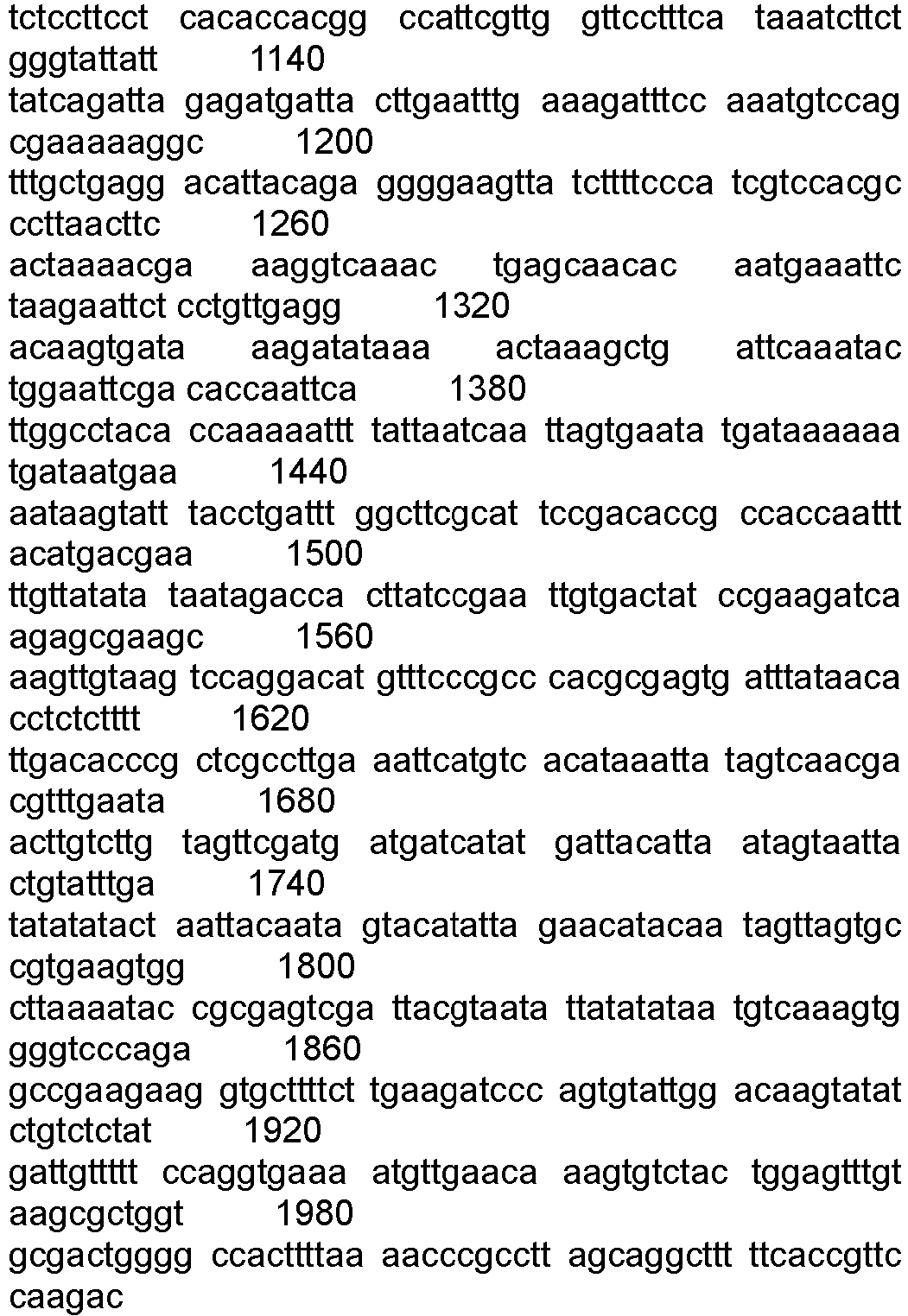
10 YI.GGS1 ORF 
DNA 
11 TEFINtp-YI.GGS1-TDH3t 
DNA 

12 Codon optimized Mb.BCO ORF 
DNA 
13 CYC1t 
DNA 14 TEFINtp-codon optimized Mb.BCO-CYC1t 
DNA 
15 primer catcatttca aaagagggaa cage DNA 16 primer cgccqccaac ccggtctctg tgtttggcgg tgtgagttgt c DNA 17 primer gacaactcac accqccaaac acagagaccg ggttggcggc g DNA 18 primer agctqcatct ggtgggcagc ctgcggttag tactgcaaaa agtgc DNA 19 primer gcactttttq cagtactaac cgcaggctgc ccaccagatg cagct DNA 20 primer cgctcttqat cttcggatag tcagttctgt cggtatccga DNA 21 primer tcggataccg acagaactga ctatccgaag atcaagagcg DNA 22 primer gacqagtcag acaggaggca gtcttggaac ggtgaaaaag cctgc DNA 23 primer gcaggctttt tcaccgttcc aagactgcct cctgtctgac tcgtc DNA 24 primer cgctcttgat cttcggatag tggtggtatt gtgactgggg a DNA 25 primer tccccagtca caataccacc actatccgaa gatcaagagc g DNA 26 primer catatggagt qttatttgaa ggggtcttgg aacggtgaaa aagcctgc DNA 27 primer gcaggctttt tcaccgttcc aagacccctt caaataacac tccatatg DNA 28 primer ccgatacagt gtccaagtac g DNA 29 primer gagtgtctga agacaaggct tc DNA 30 primer gacgacaatg ctgagctccg DNA 31 primer ctgtgaggat gttcgcgtaa tcctgcggtt agtactgcaa aaagtgc DNA 32 primer gcactttttg cagtactaac cgcaggatta cgcgaacatc ctcacag DNA 33 primer cttcgctctt gatcttcgga tagtcacaga qqqatatcqq ctag DNA 34 primer ctagccgata tccctctgtg actatccgaa gatcaagagc gaag DNA 35 primer cagctcatct atcttggcct cctgcggtta gtactgcaaa aagtgc DNA 36 primer gcactttttg cagtactaac cgcaggaggc caagatagat gagctg DNA 37 primer 
DNA 38 primer 
DNA 39 primer cttgaaatcc gcgctgttat aatcctgcgg ttagtactgc aaaaagtgc DNA 40 primer gcactttttg cagtactaac cgcaggatta taacagcgcg gatttcaag DNA 41 primer cttcqctctt qatcttcqqa taqtcactqc qcatcctcaa aqtac DNA 42 primer gtactttgag gatgcgcagt gactatccga agatcaagag cgaag DNA 43 primer ggcgtttcag gtggttgcgt gagtg DNA 44 primer 
DNA 45 primer 
DNA 46 primer cagtcgatca gcatcaggcc ctgcggttag tactgcaaaa DNA 47 primer ttttgcaqta ctaaccgcag ggcctgatgc tgatcgactg DNA 48 primer aactaattac atgactcqaq ctagttcttg atcttgattc DNA 49 primer gaatcaagat caagaactag ctcgagtcat gtaattagtt DNA 50 primer gacgagtcag acaggaggca gcaaattaaa gccttcgagc gtccc DNA 51 primer gqgacgctcg aaggctttaa tttgctgcct cctgtctgac tcgtc DNA 52 primer aactaattac atgactcgag tggtggtatt gtgactgggg DNA 53 primer ccccagtcac aataccacca ctcqagtcat gtaattagtt DNA 54 primer gcagcagtca tacatgttct gaggcaaatt aaagccttcg agcgtccc DNA 55 primer gqqacgctcg aaggctttaa tttgcctcag aacatgtatgactgctgc DNA 56 primer ctactttgtq cagattgagg ccaag DNA 57 primer gtcqtctqtc ttctcttcag DNA 58 primer ccaccaagat gggcaagaag DNA 59 crtYB 
DNA 

60 crtl 
DNA 

61 TEFINtp-crtYB-CYC1t 
DNA 


62 TEFINtp-crtl-CYC1t 
DNA 


63 URA3 
DNA 
64 primer gtgcgcttct ctcgtctcgg taaccctgtc DNA 65 primer atgcgccgcc aacccggtct ctggggtgtg gtggatgggg tgtg DNA 66 primer cacaccccat ccaccacacc ccagagaccg ggttggcggc gcat DNA 67 primer cgccqccaac ccggtctctt gaagacgaaa gggcctccg DNA 68 primer cqqaqqccct ttcgtcttca agagaccggg ttggcggcg DNA 69 primer gacgagtcag acaggaggca tcagacagat actcgtcgcg DNA 70 primer cgcgacgagt atctgtctga tgcctcctgt ctgactcgtc DNA 71 primer atgacqagtc agacaggagg catggtggta ttgtgactgg ggat DNA 72 primer atccccagtc acaataccac catqcctcct gtctgactcg teat DNA 73 primer cggcgtcctt ctcgtagtcc gcttttggtg gtgaagagga gact DNA 74 primer agtctcctct tcaccaccaa aagcggacta cgagaaggac gccg DNA 75 primer ccactcgtca ccaacagtgc cgtgtgttgc DNA 76 primer tcgtacgtct ataccaacag atgg DNA 77 primer cgcatacaca cacactgccg gggg DNA 78 HMGR native promoter 
DNA 79 primer gacaatqcct cgaggaggtt taaaagtaac t DNA 80 primer gcgccgccaa cccggtctct ctgtgttagt cggatgatag g DNA 81 primer cctatcatcc gactaacaca gagagaccgg gttggcggcg c DNA 82 primer gacgagtcag acaggaggca ctgcggttag tactgcaaaa ag DNA 83 primer ctttttgcaq tactaaccgc agtgcctcct qtctqactcq tc DNA 84 primer atgcgccgcc aacccggtct cttggtggta ttgtgactgg ggat DNA 85 primer atccccaqtc acaataccac caaqaqaccq qqttqqcqqc qcat DNA 86 primer ctttccaata gctgcttgta gctgcggtta gtactgcaaa a DNA 87 primer ttttgcaqta ctaaccgcag ctacaagcag ctattggaaa g DNA 88 primer gcttaatgtg attqatctca aacttgatag DNA 89 primer gctgtctctg cgagagcacg tcga DNA 90 primer gqttcqcaca acttctcggg tggc DNA 91 Ds. GGPPS 
Protein 


Claims (13)
- A microorganism of the genus Yarrowia having an ability to produce carotenoid or a material having carotenoid as a precursor, the microorganism expressing Dunaliella salina-derived geranylgeranyl pyrophosphate synthase.
- The microorganism of claim 1, wherein the geranylgeranyl pyrophosphate synthase consists of an amino acid sequence of SEQ ID NO: 91.
- The microorganism of claim 1, wherein the geranylgeranyl pyrophosphate synthase is encoded by a polynucleotide consisting of a nucleotide sequence of SEQ ID NO: 1.
- The microorganism of claim 1, wherein the microorganism of the genus Yarrowia is Yarrowia lipolytica.
- The microorganism of claim 1, wherein the material having carotenoid as a precursor is retinoid.
- The microorganism of claim 1, wherein the carotenoid is beta-carotene.
- The microorganism of claim 5, wherein the retinoid is retinol.
- The microorganism of claim 1, wherein the microorganism of the genus Yarrowia has a reduced ability to produce a by-product.
- The microorganism of claim 8, wherein the by-product is squalene.
- A method of producing carotenoid or a material having carotenoid as a precursor, the method comprising the steps of:culturing the microorganism of the genus Yarrowia of any one of claims 1 to 9 in a medium; andrecovering carotenoid or the material having carotenoid as a precursor from the microorganism of the genus Yarrowia or the medium.
- The method of claim 10, further comprising the step of:converting beta-carotene, which is produced by the microorganism of the genus Yarrowia, into carotenoids other than beta-carotene; orconverting retinol, which is produced by the microorganism of the genus Yarrowia, into retinoids other than retinol.
- A composition for producing carotenoid or a material having carotenoid as a precursor, the composition comprising the microorganism of the genus Yarrowia of any one of claims 1 to 9, or a culture thereof.
- Use of a microorganism of the genus Yarrowia in producing carotenoid or a material having carotenoid as a precursor, the microorganism having an ability to produce carotenoid or a material having carotenoid as a precursor by expressing Dunaliella salina-derived geranylgeranyl pyrophosphate synthase.
Applications Claiming Priority (2)
| Application Number | Priority Date | Filing Date | Title |
|---|---|---|---|
| KR1020220036257A KR102828744B1 (en) | 2022-03-23 | 2022-03-23 | Microorganism comprising Geranylgeranyl pyrophosphate synthase derived from Dunaliella salina, for producing carotenoid or compound in which a precursor thereof is carotenoid, and method using the same |
| PCT/KR2022/011047 WO2023182582A1 (en) | 2022-03-23 | 2022-07-27 | Microorganism for producing carotenoid or producing material having carotenoid as precursor, comprising geranylgeranyl pyrophosphate synthase derived from dunaliella salina, and carotenoid or retinoid production method using same |
Publications (2)
| Publication Number | Publication Date |
|---|---|
| EP4491707A1 true EP4491707A1 (en) | 2025-01-15 |
| EP4491707A4 EP4491707A4 (en) | 2025-10-22 |
Family
ID=88101158
Family Applications (1)
| Application Number | Title | Priority Date | Filing Date |
|---|---|---|---|
| EP22933754.8A Pending EP4491707A4 (en) | 2022-03-23 | 2022-07-27 | Microorganism for carotenoid production or carotenoid production with geranylgeranylpyrophosphate synthase from Dunaliella salana and carotenoid or retinoid production process therewith |
Country Status (5)
| Country | Link |
|---|---|
| US (1) | US20250197796A1 (en) |
| EP (1) | EP4491707A4 (en) |
| KR (1) | KR102828744B1 (en) |
| CN (1) | CN119487175A (en) |
| WO (1) | WO2023182582A1 (en) |
Families Citing this family (1)
| Publication number | Priority date | Publication date | Assignee | Title |
|---|---|---|---|---|
| CN119530281B (en) * | 2024-11-20 | 2025-08-22 | 江苏省中国科学院植物研究所 | Preparation method and application of caper squalene synthase knockout mutant material |
Family Cites Families (7)
| Publication number | Priority date | Publication date | Assignee | Title |
|---|---|---|---|---|
| ES2387674T3 (en) | 2003-09-17 | 2012-09-28 | Jx Nippon Oil & Energy Corporation | Process to produce zeaxanthin and beta-cryptoxanthin |
| KR100620092B1 (en) | 2004-12-16 | 2006-09-08 | 씨제이 주식회사 | Novel promoter sequences derived from Corynebacterium spp., Expression cassettes and vectors comprising the same, host cells comprising the vector and methods of expressing genes using the same |
| KR101632642B1 (en) | 2015-01-29 | 2016-06-22 | 씨제이제일제당 주식회사 | Novel promoter and uses thereof |
| BR112019004161B1 (en) | 2016-08-31 | 2021-07-27 | Cj Cheiljedang Corporation | NUCLEIC ACID MOLECULE THAT HAVE A PROMOTER ACTIVITY, GENE EXPRESSION CASSETTE, RECOMBINANT VECTOR, RECOMBINANT MICROORGANISM OF THE GENUS CORYNEBACTERIUM AND METHOD OF PRODUCING A TARGET PRODUCT |
| KR102098170B1 (en) * | 2018-09-21 | 2020-04-09 | 한국생산기술연구원 | A microorganism for producing a beta-carotene and a method for preparing a beta-carotene using the same |
| KR102278000B1 (en) | 2020-03-17 | 2021-07-15 | 씨제이제일제당 주식회사 | The method of producing L-tryptophan using enhancing the activity of prephenate dehydratase |
| CN112831427B (en) * | 2021-01-20 | 2022-08-23 | 山东大学 | Yarrowia lipolytica for high yield of beta-carotene and application thereof |
-
2022
- 2022-03-23 KR KR1020220036257A patent/KR102828744B1/en active Active
- 2022-07-27 CN CN202280096407.1A patent/CN119487175A/en active Pending
- 2022-07-27 US US18/849,201 patent/US20250197796A1/en active Pending
- 2022-07-27 WO PCT/KR2022/011047 patent/WO2023182582A1/en not_active Ceased
- 2022-07-27 EP EP22933754.8A patent/EP4491707A4/en active Pending
Also Published As
| Publication number | Publication date |
|---|---|
| WO2023182582A1 (en) | 2023-09-28 |
| US20250197796A1 (en) | 2025-06-19 |
| KR20230138332A (en) | 2023-10-05 |
| CN119487175A (en) | 2025-02-18 |
| EP4491707A4 (en) | 2025-10-22 |
| KR102828744B1 (en) | 2025-07-03 |
| JP2025510210A (en) | 2025-04-14 |
Similar Documents
| Publication | Publication Date | Title |
|---|---|---|
| JP6789436B2 (en) | ATP phosphoribosyltransferase variant and method for producing L-histidine using it | |
| KR20230149787A (en) | L-Histidine Export Protein and Method of Producing L-Histidine Using the Same | |
| US20250197796A1 (en) | Microorganism for producing carotenoid or producing material having carotenoid as precursor, comprising geranylgeranyl pyrophosphate synthase derived from dunaliella salina, and carotenoid or retinoid production method using same | |
| EP4361259A1 (en) | Novel beta-carotene 15,15-oxygenase variant and retinoid production method using same | |
| EP4491708A1 (en) | Microorganism for producing carotenoid or producing material having carotenoid as precursor, comprising geranylgeranyl pyrophosphate synthase derived from haematococcus pluvialis, and carotenoid or retinoid production method using same | |
| TW202302838A (en) | Strain for producing l-glutamic acid in high concentration and method for producing l-glutamic acid using the same | |
| JP7862595B2 (en) | Microorganisms that produce carotenoids or substances derived therefrom, including geranylgeranyl pyrophosphate synthase derived from Dunaliella salina, and a method for producing carotenoids or retinoids using the same. | |
| RU2831738C2 (en) | Version of geranylgeranyl pyrophosphate synthase and method of producing tetraterpene, its precursor and substance having tetraterpene as precursor, using same | |
| AU2022288842B2 (en) | Geranylgeranyl pyrophosphate synthase variant and tetraterpene using same, precursor thereof, and method for production of material having tetraterpene as precursor | |
| KR102756053B1 (en) | Microorganism having retinoid producing ability with enhanced activity of SNQ2 protein and method for producing retinoid using the same | |
| HK40109214A (en) | Geranylgeranyl pyrophosphate synthase variant and method of producing tetraterpene, precursor thereof, and material having tetraterpene as precursor using the same | |
| EP4671375A1 (en) | YARROWIA SP. MICROORGANISM FOR THE PRODUCTION OF A RETINOID WITH INCREASED PHO84 PROTEIN ACTIVITY AND RETINOID MANUFACTURING METHOD THEREBY | |
| KR102844339B1 (en) | Microorganism having retinoid producing ability with attenuated activity of chitin transglycosylase and method for producing retinoid using the same | |
| EP4101926B1 (en) | Novel glyceraldehyde-3-phosphate dehydrogenase variant and method for producing l-valine using same | |
| EP4050101B1 (en) | Novel phytoene synthase variant and method for producing xmp or gmp using same | |
| EP4678752A1 (en) | Yarrowia sp. microorganism for producing retinol with reduced abc3 protein activity and retinol production method using same | |
| HK40108208A (en) | Novel beta-carotene 15,15’-oxygenase variant and retinoid production method using same |
Legal Events
| Date | Code | Title | Description |
|---|---|---|---|
| STAA | Information on the status of an ep patent application or granted ep patent |
Free format text: STATUS: THE INTERNATIONAL PUBLICATION HAS BEEN MADE |
|
| PUAI | Public reference made under article 153(3) epc to a published international application that has entered the european phase |
Free format text: ORIGINAL CODE: 0009012 |
|
| STAA | Information on the status of an ep patent application or granted ep patent |
Free format text: STATUS: REQUEST FOR EXAMINATION WAS MADE |
|
| 17P | Request for examination filed |
Effective date: 20241011 |
|
| AK | Designated contracting states |
Kind code of ref document: A1 Designated state(s): AL AT BE BG CH CY CZ DE DK EE ES FI FR GB GR HR HU IE IS IT LI LT LU LV MC MK MT NL NO PL PT RO RS SE SI SK SM TR |
|
| DAV | Request for validation of the european patent (deleted) | ||
| DAX | Request for extension of the european patent (deleted) | ||
| A4 | Supplementary search report drawn up and despatched |
Effective date: 20250923 |
|
| RIC1 | Information provided on ipc code assigned before grant |
Ipc: C12N 1/16 20060101AFI20250917BHEP Ipc: C12N 9/10 20060101ALI20250917BHEP Ipc: C12N 15/81 20060101ALI20250917BHEP Ipc: C12P 23/00 20060101ALI20250917BHEP Ipc: C12R 1/645 20060101ALI20250917BHEP Ipc: C12P 9/00 20060101ALI20250917BHEP |