EP4491389A1 - Composite multifunctional glass and vehicle glass - Google Patents
Composite multifunctional glass and vehicle glass Download PDFInfo
- Publication number
- EP4491389A1 EP4491389A1 EP23766034.5A EP23766034A EP4491389A1 EP 4491389 A1 EP4491389 A1 EP 4491389A1 EP 23766034 A EP23766034 A EP 23766034A EP 4491389 A1 EP4491389 A1 EP 4491389A1
- Authority
- EP
- European Patent Office
- Prior art keywords
- adhesive film
- composite multifunctional
- film layer
- glass
- layer
- Prior art date
- Legal status (The legal status is an assumption and is not a legal conclusion. Google has not performed a legal analysis and makes no representation as to the accuracy of the status listed.)
- Pending
Links
Images


Classifications
-
- E—FIXED CONSTRUCTIONS
- E06—DOORS, WINDOWS, SHUTTERS, OR ROLLER BLINDS IN GENERAL; LADDERS
- E06B—FIXED OR MOVABLE CLOSURES FOR OPENINGS IN BUILDINGS, VEHICLES, FENCES OR LIKE ENCLOSURES IN GENERAL, e.g. DOORS, WINDOWS, BLINDS, GATES
- E06B9/00—Screening or protective devices for wall or similar openings, with or without operating or securing mechanisms; Closures of similar construction
- E06B9/24—Screens or other constructions affording protection against light, especially against sunshine; Similar screens for privacy or appearance; Slat blinds
-
- B—PERFORMING OPERATIONS; TRANSPORTING
- B32—LAYERED PRODUCTS
- B32B—LAYERED PRODUCTS, i.e. PRODUCTS BUILT-UP OF STRATA OF FLAT OR NON-FLAT, e.g. CELLULAR OR HONEYCOMB, FORM
- B32B17/00—Layered products essentially comprising sheet glass, or glass, slag, or like fibres
- B32B17/06—Layered products essentially comprising sheet glass, or glass, slag, or like fibres comprising glass as the main or only constituent of a layer, next to another layer of a specific material
- B32B17/10—Layered products essentially comprising sheet glass, or glass, slag, or like fibres comprising glass as the main or only constituent of a layer, next to another layer of a specific material of synthetic resin
- B32B17/10005—Layered products essentially comprising sheet glass, or glass, slag, or like fibres comprising glass as the main or only constituent of a layer, next to another layer of a specific material of synthetic resin laminated safety glass or glazing
- B32B17/10009—Layered products essentially comprising sheet glass, or glass, slag, or like fibres comprising glass as the main or only constituent of a layer, next to another layer of a specific material of synthetic resin laminated safety glass or glazing characterized by the number, the constitution or treatment of glass sheets
- B32B17/10036—Layered products essentially comprising sheet glass, or glass, slag, or like fibres comprising glass as the main or only constituent of a layer, next to another layer of a specific material of synthetic resin laminated safety glass or glazing characterized by the number, the constitution or treatment of glass sheets comprising two outer glass sheets
-
- B—PERFORMING OPERATIONS; TRANSPORTING
- B32—LAYERED PRODUCTS
- B32B—LAYERED PRODUCTS, i.e. PRODUCTS BUILT-UP OF STRATA OF FLAT OR NON-FLAT, e.g. CELLULAR OR HONEYCOMB, FORM
- B32B1/00—Layered products having a non-planar shape
-
- B—PERFORMING OPERATIONS; TRANSPORTING
- B32—LAYERED PRODUCTS
- B32B—LAYERED PRODUCTS, i.e. PRODUCTS BUILT-UP OF STRATA OF FLAT OR NON-FLAT, e.g. CELLULAR OR HONEYCOMB, FORM
- B32B17/00—Layered products essentially comprising sheet glass, or glass, slag, or like fibres
- B32B17/06—Layered products essentially comprising sheet glass, or glass, slag, or like fibres comprising glass as the main or only constituent of a layer, next to another layer of a specific material
- B32B17/10—Layered products essentially comprising sheet glass, or glass, slag, or like fibres comprising glass as the main or only constituent of a layer, next to another layer of a specific material of synthetic resin
- B32B17/10005—Layered products essentially comprising sheet glass, or glass, slag, or like fibres comprising glass as the main or only constituent of a layer, next to another layer of a specific material of synthetic resin laminated safety glass or glazing
- B32B17/10165—Functional features of the laminated safety glass or glazing
- B32B17/10293—Edge features, e.g. inserts or holes
- B32B17/10302—Edge sealing
-
- B—PERFORMING OPERATIONS; TRANSPORTING
- B32—LAYERED PRODUCTS
- B32B—LAYERED PRODUCTS, i.e. PRODUCTS BUILT-UP OF STRATA OF FLAT OR NON-FLAT, e.g. CELLULAR OR HONEYCOMB, FORM
- B32B17/00—Layered products essentially comprising sheet glass, or glass, slag, or like fibres
- B32B17/06—Layered products essentially comprising sheet glass, or glass, slag, or like fibres comprising glass as the main or only constituent of a layer, next to another layer of a specific material
- B32B17/10—Layered products essentially comprising sheet glass, or glass, slag, or like fibres comprising glass as the main or only constituent of a layer, next to another layer of a specific material of synthetic resin
- B32B17/10005—Layered products essentially comprising sheet glass, or glass, slag, or like fibres comprising glass as the main or only constituent of a layer, next to another layer of a specific material of synthetic resin laminated safety glass or glazing
- B32B17/1055—Layered products essentially comprising sheet glass, or glass, slag, or like fibres comprising glass as the main or only constituent of a layer, next to another layer of a specific material of synthetic resin laminated safety glass or glazing characterized by the resin layer, i.e. interlayer
-
- B—PERFORMING OPERATIONS; TRANSPORTING
- B32—LAYERED PRODUCTS
- B32B—LAYERED PRODUCTS, i.e. PRODUCTS BUILT-UP OF STRATA OF FLAT OR NON-FLAT, e.g. CELLULAR OR HONEYCOMB, FORM
- B32B17/00—Layered products essentially comprising sheet glass, or glass, slag, or like fibres
- B32B17/06—Layered products essentially comprising sheet glass, or glass, slag, or like fibres comprising glass as the main or only constituent of a layer, next to another layer of a specific material
- B32B17/10—Layered products essentially comprising sheet glass, or glass, slag, or like fibres comprising glass as the main or only constituent of a layer, next to another layer of a specific material of synthetic resin
- B32B17/10005—Layered products essentially comprising sheet glass, or glass, slag, or like fibres comprising glass as the main or only constituent of a layer, next to another layer of a specific material of synthetic resin laminated safety glass or glazing
- B32B17/1055—Layered products essentially comprising sheet glass, or glass, slag, or like fibres comprising glass as the main or only constituent of a layer, next to another layer of a specific material of synthetic resin laminated safety glass or glazing characterized by the resin layer, i.e. interlayer
- B32B17/10559—Shape of the cross-section
-
- B—PERFORMING OPERATIONS; TRANSPORTING
- B32—LAYERED PRODUCTS
- B32B—LAYERED PRODUCTS, i.e. PRODUCTS BUILT-UP OF STRATA OF FLAT OR NON-FLAT, e.g. CELLULAR OR HONEYCOMB, FORM
- B32B17/00—Layered products essentially comprising sheet glass, or glass, slag, or like fibres
- B32B17/06—Layered products essentially comprising sheet glass, or glass, slag, or like fibres comprising glass as the main or only constituent of a layer, next to another layer of a specific material
- B32B17/10—Layered products essentially comprising sheet glass, or glass, slag, or like fibres comprising glass as the main or only constituent of a layer, next to another layer of a specific material of synthetic resin
- B32B17/10005—Layered products essentially comprising sheet glass, or glass, slag, or like fibres comprising glass as the main or only constituent of a layer, next to another layer of a specific material of synthetic resin laminated safety glass or glazing
- B32B17/1055—Layered products essentially comprising sheet glass, or glass, slag, or like fibres comprising glass as the main or only constituent of a layer, next to another layer of a specific material of synthetic resin laminated safety glass or glazing characterized by the resin layer, i.e. interlayer
- B32B17/10559—Shape of the cross-section
- B32B17/10568—Shape of the cross-section varying in thickness
-
- B—PERFORMING OPERATIONS; TRANSPORTING
- B32—LAYERED PRODUCTS
- B32B—LAYERED PRODUCTS, i.e. PRODUCTS BUILT-UP OF STRATA OF FLAT OR NON-FLAT, e.g. CELLULAR OR HONEYCOMB, FORM
- B32B17/00—Layered products essentially comprising sheet glass, or glass, slag, or like fibres
- B32B17/06—Layered products essentially comprising sheet glass, or glass, slag, or like fibres comprising glass as the main or only constituent of a layer, next to another layer of a specific material
- B32B17/10—Layered products essentially comprising sheet glass, or glass, slag, or like fibres comprising glass as the main or only constituent of a layer, next to another layer of a specific material of synthetic resin
- B32B17/10005—Layered products essentially comprising sheet glass, or glass, slag, or like fibres comprising glass as the main or only constituent of a layer, next to another layer of a specific material of synthetic resin laminated safety glass or glazing
- B32B17/1055—Layered products essentially comprising sheet glass, or glass, slag, or like fibres comprising glass as the main or only constituent of a layer, next to another layer of a specific material of synthetic resin laminated safety glass or glazing characterized by the resin layer, i.e. interlayer
- B32B17/10761—Layered products essentially comprising sheet glass, or glass, slag, or like fibres comprising glass as the main or only constituent of a layer, next to another layer of a specific material of synthetic resin laminated safety glass or glazing characterized by the resin layer, i.e. interlayer containing vinyl acetal
-
- B—PERFORMING OPERATIONS; TRANSPORTING
- B32—LAYERED PRODUCTS
- B32B—LAYERED PRODUCTS, i.e. PRODUCTS BUILT-UP OF STRATA OF FLAT OR NON-FLAT, e.g. CELLULAR OR HONEYCOMB, FORM
- B32B17/00—Layered products essentially comprising sheet glass, or glass, slag, or like fibres
- B32B17/06—Layered products essentially comprising sheet glass, or glass, slag, or like fibres comprising glass as the main or only constituent of a layer, next to another layer of a specific material
- B32B17/10—Layered products essentially comprising sheet glass, or glass, slag, or like fibres comprising glass as the main or only constituent of a layer, next to another layer of a specific material of synthetic resin
- B32B17/10005—Layered products essentially comprising sheet glass, or glass, slag, or like fibres comprising glass as the main or only constituent of a layer, next to another layer of a specific material of synthetic resin laminated safety glass or glazing
- B32B17/1055—Layered products essentially comprising sheet glass, or glass, slag, or like fibres comprising glass as the main or only constituent of a layer, next to another layer of a specific material of synthetic resin laminated safety glass or glazing characterized by the resin layer, i.e. interlayer
- B32B17/1077—Layered products essentially comprising sheet glass, or glass, slag, or like fibres comprising glass as the main or only constituent of a layer, next to another layer of a specific material of synthetic resin laminated safety glass or glazing characterized by the resin layer, i.e. interlayer containing polyurethane
-
- B—PERFORMING OPERATIONS; TRANSPORTING
- B32—LAYERED PRODUCTS
- B32B—LAYERED PRODUCTS, i.e. PRODUCTS BUILT-UP OF STRATA OF FLAT OR NON-FLAT, e.g. CELLULAR OR HONEYCOMB, FORM
- B32B17/00—Layered products essentially comprising sheet glass, or glass, slag, or like fibres
- B32B17/06—Layered products essentially comprising sheet glass, or glass, slag, or like fibres comprising glass as the main or only constituent of a layer, next to another layer of a specific material
- B32B17/10—Layered products essentially comprising sheet glass, or glass, slag, or like fibres comprising glass as the main or only constituent of a layer, next to another layer of a specific material of synthetic resin
- B32B17/10005—Layered products essentially comprising sheet glass, or glass, slag, or like fibres comprising glass as the main or only constituent of a layer, next to another layer of a specific material of synthetic resin laminated safety glass or glazing
- B32B17/1055—Layered products essentially comprising sheet glass, or glass, slag, or like fibres comprising glass as the main or only constituent of a layer, next to another layer of a specific material of synthetic resin laminated safety glass or glazing characterized by the resin layer, i.e. interlayer
- B32B17/10788—Layered products essentially comprising sheet glass, or glass, slag, or like fibres comprising glass as the main or only constituent of a layer, next to another layer of a specific material of synthetic resin laminated safety glass or glazing characterized by the resin layer, i.e. interlayer containing ethylene vinylacetate
-
- B—PERFORMING OPERATIONS; TRANSPORTING
- B32—LAYERED PRODUCTS
- B32B—LAYERED PRODUCTS, i.e. PRODUCTS BUILT-UP OF STRATA OF FLAT OR NON-FLAT, e.g. CELLULAR OR HONEYCOMB, FORM
- B32B17/00—Layered products essentially comprising sheet glass, or glass, slag, or like fibres
- B32B17/06—Layered products essentially comprising sheet glass, or glass, slag, or like fibres comprising glass as the main or only constituent of a layer, next to another layer of a specific material
- B32B17/10—Layered products essentially comprising sheet glass, or glass, slag, or like fibres comprising glass as the main or only constituent of a layer, next to another layer of a specific material of synthetic resin
- B32B17/10005—Layered products essentially comprising sheet glass, or glass, slag, or like fibres comprising glass as the main or only constituent of a layer, next to another layer of a specific material of synthetic resin laminated safety glass or glazing
- B32B17/10807—Making laminated safety glass or glazing; Apparatus therefor
- B32B17/10816—Making laminated safety glass or glazing; Apparatus therefor by pressing
- B32B17/10871—Making laminated safety glass or glazing; Apparatus therefor by pressing in combination with particular heat treatment
-
- B—PERFORMING OPERATIONS; TRANSPORTING
- B32—LAYERED PRODUCTS
- B32B—LAYERED PRODUCTS, i.e. PRODUCTS BUILT-UP OF STRATA OF FLAT OR NON-FLAT, e.g. CELLULAR OR HONEYCOMB, FORM
- B32B17/00—Layered products essentially comprising sheet glass, or glass, slag, or like fibres
- B32B17/06—Layered products essentially comprising sheet glass, or glass, slag, or like fibres comprising glass as the main or only constituent of a layer, next to another layer of a specific material
- B32B17/10—Layered products essentially comprising sheet glass, or glass, slag, or like fibres comprising glass as the main or only constituent of a layer, next to another layer of a specific material of synthetic resin
- B32B17/10005—Layered products essentially comprising sheet glass, or glass, slag, or like fibres comprising glass as the main or only constituent of a layer, next to another layer of a specific material of synthetic resin laminated safety glass or glazing
- B32B17/10807—Making laminated safety glass or glazing; Apparatus therefor
- B32B17/1088—Making laminated safety glass or glazing; Apparatus therefor by superposing a plurality of layered products
-
- B—PERFORMING OPERATIONS; TRANSPORTING
- B32—LAYERED PRODUCTS
- B32B—LAYERED PRODUCTS, i.e. PRODUCTS BUILT-UP OF STRATA OF FLAT OR NON-FLAT, e.g. CELLULAR OR HONEYCOMB, FORM
- B32B17/00—Layered products essentially comprising sheet glass, or glass, slag, or like fibres
- B32B17/06—Layered products essentially comprising sheet glass, or glass, slag, or like fibres comprising glass as the main or only constituent of a layer, next to another layer of a specific material
- B32B17/10—Layered products essentially comprising sheet glass, or glass, slag, or like fibres comprising glass as the main or only constituent of a layer, next to another layer of a specific material of synthetic resin
- B32B17/10005—Layered products essentially comprising sheet glass, or glass, slag, or like fibres comprising glass as the main or only constituent of a layer, next to another layer of a specific material of synthetic resin laminated safety glass or glazing
- B32B17/10807—Making laminated safety glass or glazing; Apparatus therefor
- B32B17/10972—Degassing during the lamination
-
- B—PERFORMING OPERATIONS; TRANSPORTING
- B32—LAYERED PRODUCTS
- B32B—LAYERED PRODUCTS, i.e. PRODUCTS BUILT-UP OF STRATA OF FLAT OR NON-FLAT, e.g. CELLULAR OR HONEYCOMB, FORM
- B32B27/00—Layered products comprising a layer of synthetic resin
- B32B27/06—Layered products comprising a layer of synthetic resin as the main or only constituent of a layer, which is next to another layer of the same or of a different material
- B32B27/08—Layered products comprising a layer of synthetic resin as the main or only constituent of a layer, which is next to another layer of the same or of a different material of synthetic resin
-
- B—PERFORMING OPERATIONS; TRANSPORTING
- B32—LAYERED PRODUCTS
- B32B—LAYERED PRODUCTS, i.e. PRODUCTS BUILT-UP OF STRATA OF FLAT OR NON-FLAT, e.g. CELLULAR OR HONEYCOMB, FORM
- B32B27/00—Layered products comprising a layer of synthetic resin
- B32B27/30—Layered products comprising a layer of synthetic resin comprising vinyl (co)polymers; comprising acrylic (co)polymers
-
- B—PERFORMING OPERATIONS; TRANSPORTING
- B32—LAYERED PRODUCTS
- B32B—LAYERED PRODUCTS, i.e. PRODUCTS BUILT-UP OF STRATA OF FLAT OR NON-FLAT, e.g. CELLULAR OR HONEYCOMB, FORM
- B32B3/00—Layered products comprising a layer with external or internal discontinuities or unevennesses, or a layer of non-planar shape; Layered products comprising a layer having particular features of form
- B32B3/02—Layered products comprising a layer with external or internal discontinuities or unevennesses, or a layer of non-planar shape; Layered products comprising a layer having particular features of form characterised by features of form at particular places, e.g. in edge regions
- B32B3/08—Layered products comprising a layer with external or internal discontinuities or unevennesses, or a layer of non-planar shape; Layered products comprising a layer having particular features of form characterised by features of form at particular places, e.g. in edge regions characterised by added members at particular parts
-
- B—PERFORMING OPERATIONS; TRANSPORTING
- B32—LAYERED PRODUCTS
- B32B—LAYERED PRODUCTS, i.e. PRODUCTS BUILT-UP OF STRATA OF FLAT OR NON-FLAT, e.g. CELLULAR OR HONEYCOMB, FORM
- B32B7/00—Layered products characterised by the relation between layers; Layered products characterised by the relative orientation of features between layers, or by the relative values of a measurable parameter between layers, i.e. products comprising layers having different physical, chemical or physicochemical properties; Layered products characterised by the interconnection of layers
- B32B7/04—Interconnection of layers
- B32B7/12—Interconnection of layers using interposed adhesives or interposed materials with bonding properties
-
- B—PERFORMING OPERATIONS; TRANSPORTING
- B60—VEHICLES IN GENERAL
- B60J—WINDOWS, WINDSCREENS, NON-FIXED ROOFS, DOORS, OR SIMILAR DEVICES FOR VEHICLES; REMOVABLE EXTERNAL PROTECTIVE COVERINGS SPECIALLY ADAPTED FOR VEHICLES
- B60J1/00—Windows; Windscreens; Accessories therefor
-
- B—PERFORMING OPERATIONS; TRANSPORTING
- B32—LAYERED PRODUCTS
- B32B—LAYERED PRODUCTS, i.e. PRODUCTS BUILT-UP OF STRATA OF FLAT OR NON-FLAT, e.g. CELLULAR OR HONEYCOMB, FORM
- B32B17/00—Layered products essentially comprising sheet glass, or glass, slag, or like fibres
- B32B17/06—Layered products essentially comprising sheet glass, or glass, slag, or like fibres comprising glass as the main or only constituent of a layer, next to another layer of a specific material
- B32B17/10—Layered products essentially comprising sheet glass, or glass, slag, or like fibres comprising glass as the main or only constituent of a layer, next to another layer of a specific material of synthetic resin
- B32B17/10005—Layered products essentially comprising sheet glass, or glass, slag, or like fibres comprising glass as the main or only constituent of a layer, next to another layer of a specific material of synthetic resin laminated safety glass or glazing
- B32B17/10165—Functional features of the laminated safety glass or glazing
- B32B17/10431—Specific parts for the modulation of light incorporated into the laminated safety glass or glazing
- B32B17/10467—Variable transmission
-
- B—PERFORMING OPERATIONS; TRANSPORTING
- B32—LAYERED PRODUCTS
- B32B—LAYERED PRODUCTS, i.e. PRODUCTS BUILT-UP OF STRATA OF FLAT OR NON-FLAT, e.g. CELLULAR OR HONEYCOMB, FORM
- B32B17/00—Layered products essentially comprising sheet glass, or glass, slag, or like fibres
- B32B17/06—Layered products essentially comprising sheet glass, or glass, slag, or like fibres comprising glass as the main or only constituent of a layer, next to another layer of a specific material
- B32B17/10—Layered products essentially comprising sheet glass, or glass, slag, or like fibres comprising glass as the main or only constituent of a layer, next to another layer of a specific material of synthetic resin
- B32B17/10005—Layered products essentially comprising sheet glass, or glass, slag, or like fibres comprising glass as the main or only constituent of a layer, next to another layer of a specific material of synthetic resin laminated safety glass or glazing
- B32B17/10165—Functional features of the laminated safety glass or glazing
- B32B17/10431—Specific parts for the modulation of light incorporated into the laminated safety glass or glazing
- B32B17/10467—Variable transmission
- B32B17/10495—Variable transmission optoelectronic, i.e. optical valve
- B32B17/10504—Liquid crystal layer
-
- B—PERFORMING OPERATIONS; TRANSPORTING
- B32—LAYERED PRODUCTS
- B32B—LAYERED PRODUCTS, i.e. PRODUCTS BUILT-UP OF STRATA OF FLAT OR NON-FLAT, e.g. CELLULAR OR HONEYCOMB, FORM
- B32B17/00—Layered products essentially comprising sheet glass, or glass, slag, or like fibres
- B32B17/06—Layered products essentially comprising sheet glass, or glass, slag, or like fibres comprising glass as the main or only constituent of a layer, next to another layer of a specific material
- B32B17/10—Layered products essentially comprising sheet glass, or glass, slag, or like fibres comprising glass as the main or only constituent of a layer, next to another layer of a specific material of synthetic resin
- B32B17/10005—Layered products essentially comprising sheet glass, or glass, slag, or like fibres comprising glass as the main or only constituent of a layer, next to another layer of a specific material of synthetic resin laminated safety glass or glazing
- B32B17/10165—Functional features of the laminated safety glass or glazing
- B32B17/10431—Specific parts for the modulation of light incorporated into the laminated safety glass or glazing
- B32B17/10467—Variable transmission
- B32B17/10495—Variable transmission optoelectronic, i.e. optical valve
- B32B17/10532—Suspended particle layer
-
- B—PERFORMING OPERATIONS; TRANSPORTING
- B32—LAYERED PRODUCTS
- B32B—LAYERED PRODUCTS, i.e. PRODUCTS BUILT-UP OF STRATA OF FLAT OR NON-FLAT, e.g. CELLULAR OR HONEYCOMB, FORM
- B32B17/00—Layered products essentially comprising sheet glass, or glass, slag, or like fibres
- B32B17/06—Layered products essentially comprising sheet glass, or glass, slag, or like fibres comprising glass as the main or only constituent of a layer, next to another layer of a specific material
- B32B17/10—Layered products essentially comprising sheet glass, or glass, slag, or like fibres comprising glass as the main or only constituent of a layer, next to another layer of a specific material of synthetic resin
- B32B17/10005—Layered products essentially comprising sheet glass, or glass, slag, or like fibres comprising glass as the main or only constituent of a layer, next to another layer of a specific material of synthetic resin laminated safety glass or glazing
- B32B17/10165—Functional features of the laminated safety glass or glazing
- B32B17/10541—Functional features of the laminated safety glass or glazing comprising a light source or a light guide
-
- B—PERFORMING OPERATIONS; TRANSPORTING
- B32—LAYERED PRODUCTS
- B32B—LAYERED PRODUCTS, i.e. PRODUCTS BUILT-UP OF STRATA OF FLAT OR NON-FLAT, e.g. CELLULAR OR HONEYCOMB, FORM
- B32B2250/00—Layers arrangement
- B32B2250/03—3 layers
-
- B—PERFORMING OPERATIONS; TRANSPORTING
- B32—LAYERED PRODUCTS
- B32B—LAYERED PRODUCTS, i.e. PRODUCTS BUILT-UP OF STRATA OF FLAT OR NON-FLAT, e.g. CELLULAR OR HONEYCOMB, FORM
- B32B2250/00—Layers arrangement
- B32B2250/44—Number of layers variable across the laminate
-
- B—PERFORMING OPERATIONS; TRANSPORTING
- B32—LAYERED PRODUCTS
- B32B—LAYERED PRODUCTS, i.e. PRODUCTS BUILT-UP OF STRATA OF FLAT OR NON-FLAT, e.g. CELLULAR OR HONEYCOMB, FORM
- B32B2307/00—Properties of the layers or laminate
- B32B2307/70—Other properties
- B32B2307/732—Dimensional properties
- B32B2307/737—Dimensions, e.g. volume or area
- B32B2307/7375—Linear, e.g. length, distance or width
- B32B2307/7376—Thickness
-
- B—PERFORMING OPERATIONS; TRANSPORTING
- B32—LAYERED PRODUCTS
- B32B—LAYERED PRODUCTS, i.e. PRODUCTS BUILT-UP OF STRATA OF FLAT OR NON-FLAT, e.g. CELLULAR OR HONEYCOMB, FORM
- B32B2551/00—Optical elements
-
- B—PERFORMING OPERATIONS; TRANSPORTING
- B32—LAYERED PRODUCTS
- B32B—LAYERED PRODUCTS, i.e. PRODUCTS BUILT-UP OF STRATA OF FLAT OR NON-FLAT, e.g. CELLULAR OR HONEYCOMB, FORM
- B32B2605/00—Vehicles
-
- B—PERFORMING OPERATIONS; TRANSPORTING
- B32—LAYERED PRODUCTS
- B32B—LAYERED PRODUCTS, i.e. PRODUCTS BUILT-UP OF STRATA OF FLAT OR NON-FLAT, e.g. CELLULAR OR HONEYCOMB, FORM
- B32B2605/00—Vehicles
- B32B2605/08—Cars
-
- G—PHYSICS
- G02—OPTICS
- G02F—OPTICAL DEVICES OR ARRANGEMENTS FOR THE CONTROL OF LIGHT BY MODIFICATION OF THE OPTICAL PROPERTIES OF THE MEDIA OF THE ELEMENTS INVOLVED THEREIN; NON-LINEAR OPTICS; FREQUENCY-CHANGING OF LIGHT; OPTICAL LOGIC ELEMENTS; OPTICAL ANALOGUE/DIGITAL CONVERTERS
- G02F1/00—Devices or arrangements for the control of the intensity, colour, phase, polarisation or direction of light arriving from an independent light source, e.g. switching, gating or modulating; Non-linear optics
- G02F1/01—Devices or arrangements for the control of the intensity, colour, phase, polarisation or direction of light arriving from an independent light source, e.g. switching, gating or modulating; Non-linear optics for the control of the intensity, phase, polarisation or colour
- G02F1/13—Devices or arrangements for the control of the intensity, colour, phase, polarisation or direction of light arriving from an independent light source, e.g. switching, gating or modulating; Non-linear optics for the control of the intensity, phase, polarisation or colour based on liquid crystals, e.g. single liquid crystal display cells
- G02F1/133—Constructional arrangements; Operation of liquid crystal cells; Circuit arrangements
- G02F1/13306—Circuit arrangements or driving methods for the control of single liquid crystal cells
-
- G—PHYSICS
- G02—OPTICS
- G02F—OPTICAL DEVICES OR ARRANGEMENTS FOR THE CONTROL OF LIGHT BY MODIFICATION OF THE OPTICAL PROPERTIES OF THE MEDIA OF THE ELEMENTS INVOLVED THEREIN; NON-LINEAR OPTICS; FREQUENCY-CHANGING OF LIGHT; OPTICAL LOGIC ELEMENTS; OPTICAL ANALOGUE/DIGITAL CONVERTERS
- G02F2203/00—Function characteristic
- G02F2203/48—Variable attenuator
Definitions
- the present invention relates to the field of glass manufacturing, in particular to a composite multifunctional glass and a vehicle glass.
- a composite multifunctional glass product is a multifunctional laminated glass product formed by adding a composite multifunctional material layer intercalated between layers of a glass product.
- An object of the present invention is to provide a composite multifunctional glass and a vehicle glass, so as to solve the problem of wrinkles or wavy lines when a flat composite multifunctional material is sandwiched between double-curved or planar glass panes, as well as the problem of cracking due to a stress difference at the edge of a glass product including a composite multifunctional layer.
- the present invention adopts the following technical solutions.
- a composite multifunctional glass comprising a first glass pane, a first adhesive film layer, a composite multifunctional combination layer, a third adhesive film layer, and a second glass pane laminated in this order;
- the composite multifunctional combination layer has an area smaller than that of the composite multifunctional glass, and has a vacancy formed around the entire periphery thereof, which has a thickness consistent or substantially consistent with the thickness of the composite multifunctional combination layer;
- a second adhesive film layer is provided in the vacancy adjacent to the peripheral cut surface of the composite multifunctional combination layer; and the second adhesive film layer has one surface in contact with the third adhesive film layer, and a gap is formed between the other surface thereof and the first adhesive film layer.
- the thickness of the composite multifunctional composite layer is greater than that of the second adhesive film layer.
- the first adhesive film layer can be directly pressed against the contacting surface of the composite multifunctional combination layer, so as to smooth out the wrinkles or wavy lines appearing in the composite multifunctional combination layer.
- the composite multifunctional combination layer is expanded in all directions through degassing under the negative pressure effect upon vacuuming, and at the same time, the negative pressure enables the first adhesive film layer to be directly pressed against the contacting surface of the composite multifunctional combination layer, such that the wrinkles or wavy lines appearing in the composite multifunctional combination layer are smoothed out.
- the flowing characteristics of the first adhesive film layer allow it to fill the gap between the first adhesive film layer and the second adhesive film layer to form a qualified final product.
- the composite multifunctional combination layer described in the present invention refers to one or more functional elements or a layered structure including one or more functional elements.
- the composite multifunctional combination layer is an optical functional element, a photovoltaic component, an antenna communication device, a solar power generation device with a solar cell (silicon-, compound-, organic-based, etc.), or the like
- the optical functional element is selected from, but not limited to, one or more of PDLC (polymer dispersed liquid crystal), GHLC (guest-host effect liquid crystal), EC (electrochromic device), SPD (suspended particle device), LC, LED, a heat insulation film, a color changing film, a light guide film, a display film, or the like.
- the area S1 of the composite multifunctional combination layer is 0.6-0.9 times the area S2 of the composite multifunctional glass, that is, 0.6S2 ⁇ S1 ⁇ 0.9S2.
- the relationship between the thickness H of the composite multifunctional combination layer and the thickness H3 of the second adhesive film layer is: 0.7H ⁇ H3 ⁇ H.
- the relationship between the thickness H of the composite multifunctional combination layer and the thickness H3 of the second adhesive film layer is: 0.7H ⁇ H3 ⁇ 0.8H.
- the composite multifunctional composite layer has a thickness H satisfying 0.1 mm ⁇ H ⁇ 1.2 mm.
- the relationship between the thickness H1 of the first adhesive film layer and the thickness of the composite multifunctional combination layer is: 1.3H3 ⁇ H1 ⁇ 2H3.
- the first glass pane and the second glass pane are independently selected from a monolithic glass pane or a laminated glass pane, composed of organic glass or inorganic glass.
- the first glass pane and the second glass pane are used as two surface layers of the composite multifunctional glass product, and may be planar glass panes or double-curved glass panes. More preferably, the double-curved glass panes have a radius of curvature of ⁇ 2,200 mm.
- the first adhesive film layer, the second adhesive film layer, and the third adhesive film layer are independently an adhesive film layer formed from PVB (polyvinyl butyral), EVA (ethylene-vinyl acetate copolymer), PU (polyurethane) and the like.
- the composite multifunctional glass provided in the first aspect of the present invention, in the laminating process, there is a gap between the first adhesive film layer and the second adhesive film layer (with a height H2), such that the first adhesive film layer is not supported by the second adhesive film layer at the edge during the laminating process, and the composite multifunctional material layer can be squeezed, which favors better spreading of the composite multifunctional material layer, so as to avoid the occurrence of wrinkle or wave phenomena on the double-curved glass panes, thereby increasing the yield of finished products.
- the laminating process of the composite multifunctional glass is the same as the conventional processes, and is simple and easy to operate.
- a composite multifunctional glass comprising a first glass pane, a first adhesive film layer, a composite multifunctional combination layer, a third adhesive film layer, and a second glass pane laminated in this order;
- the thickness of the second adhesive film layer when 0.5 ⁇ S1/S2 ⁇ 0.98 and H ⁇ 0.15 mm, the thickness of the second adhesive film layer further satisfies H3 ⁇ H, and at this time the second adhesive film layer has one surface in contact with the third adhesive film layer, and a gap is formed between the other surface thereof and the first adhesive film layer.
- the height H2 of the gap is equal to the difference between the thickness H of the composite multifunctional combination layer and the thickness H3 of the second adhesive film layer.
- the thickness of the composite multifunctional composite layer is greater than that of the second adhesive film layer.
- the first adhesive film layer can be directly pressed against the contacting surface of the composite multifunctional combination layer, so as to smooth out the wrinkles or wavy lines appearing in the composite multifunctional combination layer.
- the composite multifunctional combination layer is expanded in all directions through degassing under the negative pressure effect upon vacuuming, and at the same time the negative pressure enables the first adhesive film layer to be directly pressed against the contacting surface of the composite multifunctional combination layer, such that the wrinkles or wavy lines appearing in the composite multifunctional combination layer are smoothed out.
- the flowing characteristics of the first adhesive film layer allow it to fill the gap between the first adhesive film layer and the second adhesive film layer to form a qualified final product.
- the second adhesive film layer is located around the periphery of the composite multifunctional combination layer and completely fills the vacant area around the composite multifunctional combination layer relative to the composite multifunctional glass product.
- the thickness H3 of the second adhesive film layer further satisfies H3>H, and at this time, a cavity is formed between the composite multifunctional combination layer and the first adhesive film layer.
- the height H2' of the cavity is equal to the difference between the thickness H3 of the second adhesive film layer and the thickness H of the composite multifunctional combination layer.
- the formation of the cavity allows the composite multifunctional layer after lamination to have a space for extension during external vacuuming and external pressurization of the glass product. This reduces the appearance of wrinkles or wavy lines, and also reduces the risk of cracking due to the stress difference at the edge of the composite multifunctional glass product.
- the thickness H of the composite multifunctional composite layer satisfies 0.08 mm ⁇ H ⁇ 1.2 mm.
- the first adhesive film layer has a thickness of 0.38 mm to 0.76 mm, more preferably 0.76 mm.
- the third adhesive film layer has a thickness of 0.38 mm to 0.76 mm, more preferably 0.38 mm.
- the first glass pane and the second glass pane are independently selected from a monolithic glass pane or a laminated glass pane, composed of organic glass or inorganic glass.
- the first glass pane and the second glass pane are used as two surface layers of the composite multifunctional glass product, and may be planar glass panes or double-curved glass panes. More preferably, the double-curved glass panes have a radius of curvature of ⁇ 2,200 mm.
- the first adhesive film layer, the second adhesive film layer, and the third adhesive film layer are independently an adhesive film layer formed from PVB (polyvinyl butyral), EVA (ethylene-vinyl acetate copolymer), PU (polyurethane) and the like.
- a vehicle glass comprising the composite multifunctional glass provided in the first aspect or the second aspect, for example, a front window glass, a rear window glass, a side window glass, a sunroof glass or the like.
- the thickness of the second adhesive film layer is determined by the thickness H of the composite multifunctional layer and the proportional relationship between the area S1 of the composite multifunctional layer and the area S2 of the composite multifunctional glass product.
- the present invention can well solve the wrinkle or wave phenomena currently occurred frequently upon laminating a composite multifunctional layer between double-curved glass panes, improve the total yield of finished products, and solve the problem of edge cracking appearing in glass products having a composite multifunctional layer.
- a composite multifunctional glass comprises a first glass pane 1, a first adhesive film layer 2, a composite multifunctional combination layer 6, a third adhesive film layer 4, and a second glass pane 5 which are sequentially laminated from top to bottom.
- the composite multifunctional combination layer 6 has an area S1 that is smaller than the area S2 of the composite multifunctional glass, and has a vacancy formed all around its periphery that is consistent or substantially consistent with its thickness; a second adhesive film layer 3 is provided in the vacancy adj acent to the peripheral cut surface of the composite multifunctional combination layer 6; and the second adhesive film layer 3 has one surface in contact with the third adhesive film layer 4, and a gap is formed between the other surface thereof and the first adhesive film layer 2.
- the second adhesive film layer 3 has a width consistent with the width of the vacancy (i.e., the vacancy is filled in the planar dimension as shown in FIG. 3 ), but has a thickness smaller than the height of the vacancy.
- a gap with the height H2 is formed between the second adhesive film layer 3 and the first adhesive film layer 2, and the height H2 of the gap is the height difference between the thickness H of the composite multifunctional combination layer 6 and the thickness H3 of the second adhesive film layer 3. Due to the existence of the height difference H2, the first adhesive film layer 2 is not supported by the second adhesive film layer 3 at the edge in the laminating process, and the composite multifunctional material layer 6 can be squeezed, which favors better spreading of the composite multifunctional material layer 6, so as to avoid the occurrence of wrinkle or wave phenomena in the double-curved glass panes, thereby increasing the yield of finished products.
- both the first glass pane 1 and the second glass pane 5 are monolithic glass panes composed of organic glass or inorganic glass, and are double-curved glass with a double curvature of 2,800 mm.
- the first adhesive film layer 2, the second adhesive film layer 3, and the third adhesive film layer 4 are each an adhesive film layer formed of PVB (polyvinyl butyral).
- the thickness H1 of the first adhesive film layer 2 is 0.76 mm; the thickness H3 of the second adhesive film layer 3 is 0.5 mm; the thickness of the third adhesive film layer 4 is 0.38 mm; the thickness H of the composite multifunctional material layer 6 is 0.7 mm; and the height H2 of the gap between the first adhesive film layer 2 and the second adhesive film layer 3 is 0.2 mm.
- the area (S1) of the composite multifunctional combination layer 6 is 0.6 times the area (S2) of the composite multifunctional glass.
- the first glass pane 1 is a monolithic glass pane composed of organic glass or inorganic glass
- the second glass layer 5 is a double-layer laminated glass pane. Both the first glass pane 1 and the second glass layer 5 are double-curved glass with a double curvature of 3,000 mm.
- the first glass pane 1 may also be a double-layer laminated glass pane.
- the first adhesive film layer 2, the second adhesive film layer 3, and the third adhesive film layer 4 are each an adhesive film layer formed of EVA (ethylene-vinyl acetate copolymer).
- the thickness H1 of the first adhesive film layer 2 is 1.14 mm; the thickness H3 of the second adhesive film layer 3 is 0.76 mm; the thickness of the third adhesive film layer 4 is 0.38 mm; the thickness H of the composite multifunctional material layer 6 is 1.0 mm; and the height H2 of the gap between the first adhesive film layer 2 and the second adhesive film layer 3 is 0.24 mm.
- the area (S1) of the composite multifunctional combination layer 6 is 0.8 times the area (S2) of the composite multifunctional glass.
- a composite multifunctional glass comprises a first glass pane 1, a first adhesive film layer 2, a composite multifunctional combination layer 6, a third adhesive film layer 4, and a second glass pane 5 which are sequentially laminated from top to bottom.
- the composite multifunctional combination layer 6 has an area S1 that is smaller than the area S2 of the composite multifunctional glass, and has a vacancy formed all around its periphery that is consistent or substantially consistent with its thickness H.
- the thickness H of the composite multifunctional combination layer 6 is 0.1 mm; the thickness H1 of the first adhesive film layer 2 is 0.76 mm; and the height of vacancy around the composite multifunctional combination layer 6 is 0.1 mm.
- the composite multifunctional glass product has a double curvature of 3,000 mm.
- the first adhesive film layer 2 can be directly pressed against the contacting surface of the composite multifunctional combination layer 6, such that the wrinkles or wavy lines appearing in the composite multifunctional combination layer 6 are smoothed out.
- the flowing characteristics of the first adhesive film layer 2 and the third adhesive film layer 4 allow them to fill the vacancy.
- the first glass pane 1 is a monolithic glass pane composed of organic glass or inorganic glass
- the second glass pane 5 is a double-layer laminated glass pane.
- a composite multifunctional glass comprises a first glass pane 1, a first adhesive film layer 2, a composite multifunctional combination layer 6, a third adhesive film layer 4, and a second glass pane 5 which are sequentially laminated from top to bottom.
- the composite multifunctional combination layer 6 has an area S1 that is smaller than the area S2 of the composite multifunctional glass, and has a vacancy formed all around its periphery that is consistent or substantially consistent with its thickness H.
- the thickness H of the composite multifunctional combination layer 6 is 1.0 mm; the thickness H1 of the first adhesive film layer 2 is 0.76 mm; and the thickness H4 of the third adhesive film layer 4 is 0.76 mm.
- a second adhesive film layer 3 with a height H3 is provided within the vacancy adjacent to the peripheral cut surface of the composite multifunctional combination layer 6; and the second adhesive film layer 3 has one surface in contact with the third adhesive film layer 4, and a gap with a height H2 is formed between the other surface thereof and the first adhesive film layer 2.
- the second adhesive film layer 3 has a width consistent with the width of the vacancy (i.e., the vacancy is filled in the planar dimension as shown in FIG. 3 ).
- H3 0 ⁇ H3 ⁇ H(S1/S2+0.2), and H3 ⁇ 0.8 mm.
- the composite multifunctional glass product has a double curvature of 2,800 mm.
- the second adhesive film layer 3 is located at the periphery of the composite multifunctional combination layer 6 and serves to fill the vacant area around the composite multifunctional combination layer 6 relative to the composite multifunctional glass product. After the lamination, a gap with a height H2 is formed.
- the first adhesive film layer 2 is contacted with and pressed against the composite multifunctional combination layer 6, such that the wrinkles or wavy lines of the composite multifunctional combination layer 6 that may occur in the curved product are smoothed out.
- the flowing characteristics of the first adhesive film layer 2 and the third adhesive film layer 4 allow them to fill the gap between the first adhesive film layer 2 and the second adhesive film layer 3, a qualified final product is formed.
- both the first glass pane 1 and the second glass pane 5 are monolithic glass panes composed of organic glass or inorganic glass, and are double-curved glass with a double curvature of 2,800 mm.
- the first adhesive film layer 2, the second adhesive film layer 3, and the third adhesive film layer 4 are each an adhesive film layer formed of PVB (polyvinyl butyral).
- the composite multifunctional glass product has a double curvature of 3,300 mm.
- the second adhesive film layer 3 is located around the periphery of the composite multifunctional combination layer 6 to completely fill the vacant area around the composite multifunctional combination layer 6 relative to the composite multifunctional glass product.
- a composite multifunctional glass comprises a first glass pane 1, a first adhesive film layer 2, a composite multifunctional combination layer 6, a third adhesive film layer 4, and a second glass pane 5 which are sequentially laminated from top to bottom.
- the composite multifunctional combination layer 6 has an area S1 that is smaller than the area S2 of the composite multifunctional glass, and has a vacancy formed all around its periphery that is consistent or substantially consistent with its thickness H.
- the thickness H of the composite multifunctional combination layer 6 is 1.0 mm; the thickness H1 of the first adhesive film layer 2 is 0.76 mm; and the thickness H4 of the third adhesive film layer 4 is 0.38 mm.
- the composite multifunctional glass product has a double curvature of 3,500 mm.
- the second adhesive film layer 3 is located around the periphery of the composite multifunctional combination layer 6 and serves to fill the vacant area around the composite multifunctional combination layer 6 relative to the composite multifunctional glass product; wherein the second adhesive film layer has a thickness H3>H, and a cavity of 0.1 mm 2 is formed between the composite multifunctional combination layer 6 and the first adhesive film layer 2.
- the formation of the cavity allows the composite multifunctional layer after lamination to have a space for extension during the external vacuuming and external pressurization of the glass product. This reduces the appearance of wrinkles or wavy lines, and also reduces the risk of cracking due to the stress difference at the edge of the composite multifunctional glass product.
Landscapes
- Engineering & Computer Science (AREA)
- Mechanical Engineering (AREA)
- Structural Engineering (AREA)
- Physics & Mathematics (AREA)
- Thermal Sciences (AREA)
- Architecture (AREA)
- Civil Engineering (AREA)
- Joining Of Glass To Other Materials (AREA)
- Laminated Bodies (AREA)
Abstract
Description
- This application claims priority to
Chinese Patent Application No.2022102278834, entitled "Composite Multifunctional Glass and Vehicle Glass", filed on March 08, 2022 Chinese Patent Application No.202220502660X, entitled "Composite Multifunctional Glass and Vehicle Glass", filed on March 08, 2022 - The present invention relates to the field of glass manufacturing, in particular to a composite multifunctional glass and a vehicle glass.
- A composite multifunctional glass product is a multifunctional laminated glass product formed by adding a composite multifunctional material layer intercalated between layers of a glass product.
- Most existing composite multifunctional materials have different thicknesss and are present in the form with flat surfaces. When sandwiched with double-curved glass panes or planar glass panes, the flat surface in particular cannot be completely fitted to the double-curved surface, the sandwiched composite multifunctional material will have a certain degree of wrinkles or wavy lines, and even a problem of cracking at the edge of the glass product due to a stress difference may occur.
- An object of the present invention is to provide a composite multifunctional glass and a vehicle glass, so as to solve the problem of wrinkles or wavy lines when a flat composite multifunctional material is sandwiched between double-curved or planar glass panes, as well as the problem of cracking due to a stress difference at the edge of a glass product including a composite multifunctional layer.
- In order to achieve the above object, the present invention adopts the following technical solutions.
- In a first aspect of the present invention, provided is a composite multifunctional glass, comprising a first glass pane, a first adhesive film layer, a composite multifunctional combination layer, a third adhesive film layer, and a second glass pane laminated in this order;
the composite multifunctional combination layer has an area smaller than that of the composite multifunctional glass, and has a vacancy formed around the entire periphery thereof, which has a thickness consistent or substantially consistent with the thickness of the composite multifunctional combination layer; a second adhesive film layer is provided in the vacancy adjacent to the peripheral cut surface of the composite multifunctional combination layer; and the second adhesive film layer has one surface in contact with the third adhesive film layer, and a gap is formed between the other surface thereof and the first adhesive film layer. - In the composite multifunctional glass, the thickness of the composite multifunctional composite layer is greater than that of the second adhesive film layer. During the thermal and high-pressure processing of the composite multifunctional glass product, the first adhesive film layer can be directly pressed against the contacting surface of the composite multifunctional combination layer, so as to smooth out the wrinkles or wavy lines appearing in the composite multifunctional combination layer. Specifically, during the subsequent production, the composite multifunctional combination layer is expanded in all directions through degassing under the negative pressure effect upon vacuuming, and at the same time, the negative pressure enables the first adhesive film layer to be directly pressed against the contacting surface of the composite multifunctional combination layer, such that the wrinkles or wavy lines appearing in the composite multifunctional combination layer are smoothed out. Subsequently, in conjunction with the thermal process, high pressure process and other processes, the flowing characteristics of the first adhesive film layer allow it to fill the gap between the first adhesive film layer and the second adhesive film layer to form a qualified final product.
- The composite multifunctional combination layer described in the present invention refers to one or more functional elements or a layered structure including one or more functional elements. Preferably, the composite multifunctional combination layer is an optical functional element, a photovoltaic component, an antenna communication device, a solar power generation device with a solar cell (silicon-, compound-, organic-based, etc.), or the like, and the optical functional element is selected from, but not limited to, one or more of PDLC (polymer dispersed liquid crystal), GHLC (guest-host effect liquid crystal), EC (electrochromic device), SPD (suspended particle device), LC, LED, a heat insulation film, a color changing film, a light guide film, a display film, or the like.
- According to the composite multifunctional glass provided in the first aspect of the present invention, preferably, the area S1 of the composite multifunctional combination layer is 0.6-0.9 times the area S2 of the composite multifunctional glass, that is, 0.6S2≤S1≤0.9S2.
- According to the composite multifunctional glass provided in the first aspect of the present invention, preferably, the relationship between the thickness H of the composite multifunctional combination layer and the thickness H3 of the second adhesive film layer is: 0.7H≤H3<H.
- According to the composite multifunctional glass provided in the first aspect of the present invention, preferably, the relationship between the thickness H of the composite multifunctional combination layer and the thickness H3 of the second adhesive film layer is: 0.7H≤H3<0.8H.
- According to the composite multifunctional glass provided in the first aspect of the present invention, preferably, the composite multifunctional composite layer has a thickness H satisfying 0.1 mm≤H≤1.2 mm.
- According to the composite multifunctional glass provided in the first aspect of the present invention, the height H2 of the gap is equal to the thickness difference between the thickness H of the composite multifunctional combination layer and the thickness H3 of the second adhesive film layer.
- According to the composite multifunctional glass provided in the first aspect of the present invention, preferably, the relationship between the thickness H1 of the first adhesive film layer and the thickness of the composite multifunctional combination layer is: 1.3H3≤H1≤2H3.
- According to the composite multifunctional glass provided in the first aspect of the present invention, preferably, the first glass pane and the second glass pane are independently selected from a monolithic glass pane or a laminated glass pane, composed of organic glass or inorganic glass.
- According to the composite multifunctional glass provided in the first aspect of the present invention, preferably, the first glass pane and the second glass pane are used as two surface layers of the composite multifunctional glass product, and may be planar glass panes or double-curved glass panes. More preferably, the double-curved glass panes have a radius of curvature of ≥2,200 mm.
- According to the composite multifunctional glass provided in the first aspect of the present invention, preferably, the first adhesive film layer, the second adhesive film layer, and the third adhesive film layer are independently an adhesive film layer formed from PVB (polyvinyl butyral), EVA (ethylene-vinyl acetate copolymer), PU (polyurethane) and the like.
- According to the composite multifunctional glass provided in the first aspect of the present invention, in the laminating process, there is a gap between the first adhesive film layer and the second adhesive film layer (with a height H2), such that the first adhesive film layer is not supported by the second adhesive film layer at the edge during the laminating process, and the composite multifunctional material layer can be squeezed, which favors better spreading of the composite multifunctional material layer, so as to avoid the occurrence of wrinkle or wave phenomena on the double-curved glass panes, thereby increasing the yield of finished products. In addition, the laminating process of the composite multifunctional glass is the same as the conventional processes, and is simple and easy to operate.
- In a second aspect of the present invention, provided is a composite multifunctional glass, comprising a first glass pane, a first adhesive film layer, a composite multifunctional combination layer, a third adhesive film layer, and a second glass pane laminated in this order;
- the composite multifunctional combination layer has an area S1 that is smaller than the area S2 of the composite multifunctional glass, and has a vacancy formed around the entire periphery thereof, which has a thickness consistent or substantially consistent with the thickness H of the composite multifunctional combination layer; a second adhesive film layer with a thickness H3 is provided in the vacancy adjacent to the peripheral cut surface of the composite multifunctional combination layer;
- when S1/S2≤0.5 and/or H<0.15 mm, H3 = 0; and
- when 0.5<Sl/S2<0.98 and H≥0.15 mm, 0<H3≤H (S1/S2+0.2).
- In a preferred embodiment, when 0.5<S1/S2<0.98 and H≥0.15 mm, the thickness of the second adhesive film layer further satisfies H3<H, and at this time the second adhesive film layer has one surface in contact with the third adhesive film layer, and a gap is formed between the other surface thereof and the first adhesive film layer. The height H2 of the gap is equal to the difference between the thickness H of the composite multifunctional combination layer and the thickness H3 of the second adhesive film layer.
- In a preferred embodiment, the thickness of the composite multifunctional composite layer is greater than that of the second adhesive film layer. During the thermal and high-pressure processing of the composite multifunctional glass product, the first adhesive film layer can be directly pressed against the contacting surface of the composite multifunctional combination layer, so as to smooth out the wrinkles or wavy lines appearing in the composite multifunctional combination layer. Specifically, during the subsequent production, the composite multifunctional combination layer is expanded in all directions through degassing under the negative pressure effect upon vacuuming, and at the same time the negative pressure enables the first adhesive film layer to be directly pressed against the contacting surface of the composite multifunctional combination layer, such that the wrinkles or wavy lines appearing in the composite multifunctional combination layer are smoothed out. Subsequently, through the thermal process, high pressure process and other processes, the flowing characteristics of the first adhesive film layer allow it to fill the gap between the first adhesive film layer and the second adhesive film layer to form a qualified final product.
- In another preferred embodiment, when 0.5<S1/S2<0.98 and H≥0.15 mm, the second adhesive film layer has a thickness H3=H; that is, the second adhesive film layer is disposed equally in thickness and level with the composite multifunctional combination layer. The second adhesive film layer is located around the periphery of the composite multifunctional combination layer and completely fills the vacant area around the composite multifunctional combination layer relative to the composite multifunctional glass product.
- In a preferred embodiment, when 0.5<Sl/S2<0.98 and H≥0.15 mm, the thickness H3 of the second adhesive film layer further satisfies H3>H, and at this time, a cavity is formed between the composite multifunctional combination layer and the first adhesive film layer. The height H2' of the cavity is equal to the difference between the thickness H3 of the second adhesive film layer and the thickness H of the composite multifunctional combination layer.
- In this preferred embodiment, the formation of the cavity allows the composite multifunctional layer after lamination to have a space for extension during external vacuuming and external pressurization of the glass product. This reduces the appearance of wrinkles or wavy lines, and also reduces the risk of cracking due to the stress difference at the edge of the composite multifunctional glass product.
- According to the composite multifunctional glass provided in the second aspect of the present invention, preferably, the thickness H of the composite multifunctional composite layer satisfies 0.08 mm≤H≤1.2 mm.
- According to the composite multifunctional glass provided in the second aspect of the present invention, preferably, the first adhesive film layer has a thickness of 0.38 mm to 0.76 mm, more preferably 0.76 mm.
- According to the composite multifunctional glass provided in the second aspect of the present invention, preferably, the third adhesive film layer has a thickness of 0.38 mm to 0.76 mm, more preferably 0.38 mm.
- According to the composite multifunctional glass provided in the second aspect of the present invention, preferably, the first glass pane and the second glass pane are independently selected from a monolithic glass pane or a laminated glass pane, composed of organic glass or inorganic glass.
- According to the composite multifunctional glass provided in the second aspect of the present invention, preferably, the first glass pane and the second glass pane are used as two surface layers of the composite multifunctional glass product, and may be planar glass panes or double-curved glass panes. More preferably, the double-curved glass panes have a radius of curvature of ≥2,200 mm.
- According to the composite multifunctional glass provided in the second aspect of the present invention, preferably, the first adhesive film layer, the second adhesive film layer, and the third adhesive film layer are independently an adhesive film layer formed from PVB (polyvinyl butyral), EVA (ethylene-vinyl acetate copolymer), PU (polyurethane) and the like.
- In a third aspect of the present invention, provided is a vehicle glass comprising the composite multifunctional glass provided in the first aspect or the second aspect, for example, a front window glass, a rear window glass, a side window glass, a sunroof glass or the like.
- In the composite multifunctional glass provided in the second aspect of the present invention, in the laminating process, the thickness of the second adhesive film layer is determined by the thickness H of the composite multifunctional layer and the proportional relationship between the area S1 of the composite multifunctional layer and the area S2 of the composite multifunctional glass product. By choosing the thickness H3 of the second adhesive film layer, problems can be solved by the following advantages:
- (1) When H<0.15 mm and/or S1/S2≤0.5, H3<H, H3=0, in the laminating process, a vacancy with a height that is consistent or substantially consistent with H is formed between the first adhesive film layer and the second adhesive film layer, such that the first adhesive film layer is not supported by the second adhesive film layer at the edge in the laminating process, and the composite multifunctional material layer can be squeezed, which favors better spreading of the composite multifunctional material layer to avoid the occurrence of wrinkle or wave phenomena in the double-curved glass panes.
- (2) When 0.5<S1/S2<0.98 and H≥0.15 mm, the thickness H3 of the second adhesive film layer, H, S1 and S2 satisfy the following relationship: 0<H3≤H(S1/S2+0.2). When H3<H, a gap with a height H2 is formed between the first adhesive film layer and the second adhesive film layer. In the thermal process, the first adhesive film layer is in contact with and pressed against the composite multifunctional combination layer, such that the wrinkles or wavy lines of the composite multifunctional combination layer that may occur in a curved product are smoothed out. Also, in the thermal process, high pressure process and other processes, the flowing characteristics of the first adhesive film layer and the third adhesive film layer allow them to fill the gap between the first adhesive film layer and the second adhesive film layer, and a qualified final product is formed.
- (3) When 0.5<S1/S2<0.98 and H≥0.15 mm, the thickness H3 of the second adhesive film layer, H, S1 and S2 satisfy the following relationship: 0<H3≤H(S1/S2+0.2). When H3=H, there is no gap between the first adhesive film layer and the second adhesive film layer. When the edge of the composite multifunctional combination layer is close to the edge of the glass product, with the influence of the glass stress, the glass product is subjected to external pressure during the processing. This approach solves the problem of highly susceptible cracking at the edge positions along the composite multifunctional layer.
- (4) When 0.5<S1/S2<0.98 and H≥0.15 mm, the thickness H3 of the second adhesive film layer, H, S1 and S2 satisfy the following relationship: 0<H3≤H(S1/S2+0.2). When H3>H, a cavity with a height H2' is formed between the composite multifunctional layer and the first adhesive film layer. The formation of the cavity allows the composite multifunctional layer after lamination to have a space for extension during the external vacuuming and external pressurization of the glass product, which reduces the appearance of wrinkle or wave phenomena and also reduces the risk of cracking due to the stress difference at the edge of the composite multifunctional glass product.
- The present invention can well solve the wrinkle or wave phenomena currently occurred frequently upon laminating a composite multifunctional layer between double-curved glass panes, improve the total yield of finished products, and solve the problem of edge cracking appearing in glass products having a composite multifunctional layer.
- The drawings described herein are for illustrative purposes only and are not intended to limit the scope of the present invention in any way. In addition, the shapes and scale sizes of the components in the drawings are merely illustrative and are used to help understand the present invention, and do not specifically limit the shapes and scale sizes of the components of the present invention. In light of the teaching of the present invention, a person skilled in the art may select various possible shapes and scale sizes according to specific situations to implement the present invention.
-
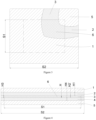
FIG. 1 is a schematic cross-sectional view of the composite multifunctional glass in Example 3. -
FIG. 2 is a schematic cross-sectional view of the composite multifunctional glass in Examples 1 and 4. -
FIG. 3 is a schematic planar view of the composite multifunctional glass in Examples 1 and 4. -
FIG. 4 is a schematic cross-sectional view of the composite multifunctional glass in Example 5. -
FIG. 5 is a schematic cross-sectional view of the composite multifunctional glass in Example 2. -
- 1: first glass pane;
- 2: first adhesive film layer;
- 3: second adhesive film layer;
- 4: third adhesive film layer;
- 5: second glass pane;
- 6: composite multifunctional combination layer;
- S1: the area of the composite
multifunctional combination layer 6; - S2: the area of the composite multifunctional glass;
- H: the thickness of the composite
multifunctional material layer 6; - H1: the thickness of the first
adhesive film layer 2; - H2: the height of the gap between the first
adhesive film layer 2 and the secondadhesive film layer 3; - H2': the height of the cavity between the first
adhesive film layer 2 and the compositemultifunctional combination layer 6; - H3: the thickness of the second
adhesive film layer 3; - H4: the thickness of the third
adhesive film layer 4. - In order to describe the present invention more clearly, the present invention will be further described below with reference to preferred examples and the accompanying drawings. Like parts in the drawings are designated with the same reference numerals. A person skilled in the art should understand that the content specifically described below is illustrative and not restrictive, and should not limit the protection scope of the present invention.
- In addition, the meanings of some orientation words, such as "upper" and "lower", mentioned in the examples of the present invention are related to the placement of the composite multifunctional glass, and should not be construed as limiting the protection scope of the present invention.
- As shown in
FIGS. 2 and3 , a composite multifunctional glass comprises afirst glass pane 1, a firstadhesive film layer 2, a compositemultifunctional combination layer 6, a thirdadhesive film layer 4, and asecond glass pane 5 which are sequentially laminated from top to bottom. - The composite
multifunctional combination layer 6 has an area S1 that is smaller than the area S2 of the composite multifunctional glass, and has a vacancy formed all around its periphery that is consistent or substantially consistent with its thickness; a secondadhesive film layer 3 is provided in the vacancy adj acent to the peripheral cut surface of the compositemultifunctional combination layer 6; and the secondadhesive film layer 3 has one surface in contact with the thirdadhesive film layer 4, and a gap is formed between the other surface thereof and the firstadhesive film layer 2. The secondadhesive film layer 3 has a width consistent with the width of the vacancy (i.e., the vacancy is filled in the planar dimension as shown inFIG. 3 ), but has a thickness smaller than the height of the vacancy. A gap with the height H2 is formed between the secondadhesive film layer 3 and the firstadhesive film layer 2, and the height H2 of the gap is the height difference between the thickness H of the compositemultifunctional combination layer 6 and the thickness H3 of the secondadhesive film layer 3. Due to the existence of the height difference H2, the firstadhesive film layer 2 is not supported by the secondadhesive film layer 3 at the edge in the laminating process, and the compositemultifunctional material layer 6 can be squeezed, which favors better spreading of the compositemultifunctional material layer 6, so as to avoid the occurrence of wrinkle or wave phenomena in the double-curved glass panes, thereby increasing the yield of finished products. - Specifically, in this example, both the
first glass pane 1 and thesecond glass pane 5 are monolithic glass panes composed of organic glass or inorganic glass, and are double-curved glass with a double curvature of 2,800 mm. The firstadhesive film layer 2, the secondadhesive film layer 3, and the thirdadhesive film layer 4 are each an adhesive film layer formed of PVB (polyvinyl butyral). - The thickness H1 of the first
adhesive film layer 2 is 0.76 mm; the thickness H3 of the secondadhesive film layer 3 is 0.5 mm; the thickness of the thirdadhesive film layer 4 is 0.38 mm; the thickness H of the compositemultifunctional material layer 6 is 0.7 mm; and the height H2 of the gap between the firstadhesive film layer 2 and the secondadhesive film layer 3 is 0.2 mm. The area (S1) of the compositemultifunctional combination layer 6 is 0.6 times the area (S2) of the composite multifunctional glass. - As shown in
FIG. 5 , the differences between the composite multifunctional glass in this example and that in Example include:
Thefirst glass pane 1 is a monolithic glass pane composed of organic glass or inorganic glass, and thesecond glass layer 5 is a double-layer laminated glass pane. Both thefirst glass pane 1 and thesecond glass layer 5 are double-curved glass with a double curvature of 3,000 mm. In addition, thefirst glass pane 1 may also be a double-layer laminated glass pane. - The first
adhesive film layer 2, the secondadhesive film layer 3, and the thirdadhesive film layer 4 are each an adhesive film layer formed of EVA (ethylene-vinyl acetate copolymer). - The thickness H1 of the first
adhesive film layer 2 is 1.14 mm; the thickness H3 of the secondadhesive film layer 3 is 0.76 mm; the thickness of the thirdadhesive film layer 4 is 0.38 mm; the thickness H of the compositemultifunctional material layer 6 is 1.0 mm; and the height H2 of the gap between the firstadhesive film layer 2 and the secondadhesive film layer 3 is 0.24 mm. The area (S1) of the compositemultifunctional combination layer 6 is 0.8 times the area (S2) of the composite multifunctional glass. - As shown in
FIG. 1 , a composite multifunctional glass comprises afirst glass pane 1, a firstadhesive film layer 2, a compositemultifunctional combination layer 6, a thirdadhesive film layer 4, and asecond glass pane 5 which are sequentially laminated from top to bottom. The compositemultifunctional combination layer 6 has an area S1 that is smaller than the area S2 of the composite multifunctional glass, and has a vacancy formed all around its periphery that is consistent or substantially consistent with its thickness H. - S1/S2=0.4, which satisfies S1/S2≤0.5, and a second
adhesive film layer 3 is not provided. The thickness H of the compositemultifunctional combination layer 6 is 0.1 mm; the thickness H1 of the firstadhesive film layer 2 is 0.76 mm; and the height of vacancy around the compositemultifunctional combination layer 6 is 0.1 mm. - The composite multifunctional glass product has a double curvature of 3,000 mm. The first
adhesive film layer 2 can be directly pressed against the contacting surface of the compositemultifunctional combination layer 6, such that the wrinkles or wavy lines appearing in the compositemultifunctional combination layer 6 are smoothed out. During the thermal and high pressure processing of the composite multifunctional glass pane product, the flowing characteristics of the firstadhesive film layer 2 and the thirdadhesive film layer 4 allow them to fill the vacancy. - In this example, the
first glass pane 1 is a monolithic glass pane composed of organic glass or inorganic glass, and thesecond glass pane 5 is a double-layer laminated glass pane. - Both the
first glass pane 1 and thesecond glass pane 5 are double-curved glass with a double curvature of 3,000 mm. The firstadhesive film layer 2, the secondadhesive film layer 3, and the thirdadhesive film layer 4 are each an adhesive film layer formed of PVB (polyvinyl butyral). - As shown in
FIGS. 2 and3 , a composite multifunctional glass comprises afirst glass pane 1, a firstadhesive film layer 2, a compositemultifunctional combination layer 6, a thirdadhesive film layer 4, and asecond glass pane 5 which are sequentially laminated from top to bottom. - The composite
multifunctional combination layer 6 has an area S1 that is smaller than the area S2 of the composite multifunctional glass, and has a vacancy formed all around its periphery that is consistent or substantially consistent with its thickness H. - Here, S1/S2=0.6; the thickness H of the composite
multifunctional combination layer 6 is 1.0 mm; the thickness H1 of the firstadhesive film layer 2 is 0.76 mm; and the thickness H4 of the thirdadhesive film layer 4 is 0.76 mm. - 0.5<S1/S2<0.98 and H≥0.15 mm are satisfied, and a second
adhesive film layer 3 with a height H3 is provided within the vacancy adjacent to the peripheral cut surface of the compositemultifunctional combination layer 6; and the secondadhesive film layer 3 has one surface in contact with the thirdadhesive film layer 4, and a gap with a height H2 is formed between the other surface thereof and the firstadhesive film layer 2. The secondadhesive film layer 3 has a width consistent with the width of the vacancy (i.e., the vacancy is filled in the planar dimension as shown inFIG. 3 ). - At this time, 0<H3≤H(S1/S2+0.2), and H3≤0.8 mm. When H3=0.8 mm, the height of the gap between the first
adhesive film layer 2 and the secondadhesive film layer 3 is H2=H-H3; that is, H2=1.0 mm-0.8 mm=0.2 mm. - The composite multifunctional glass product has a double curvature of 2,800 mm. The second
adhesive film layer 3 is located at the periphery of the compositemultifunctional combination layer 6 and serves to fill the vacant area around the compositemultifunctional combination layer 6 relative to the composite multifunctional glass product. After the lamination, a gap with a height H2 is formed. In the thermal processing, the firstadhesive film layer 2 is contacted with and pressed against the compositemultifunctional combination layer 6, such that the wrinkles or wavy lines of the compositemultifunctional combination layer 6 that may occur in the curved product are smoothed out. At the same time, as in thermal process, high pressure process and other processes, the flowing characteristics of the firstadhesive film layer 2 and the thirdadhesive film layer 4 allow them to fill the gap between the firstadhesive film layer 2 and the secondadhesive film layer 3, a qualified final product is formed. - In this example, both the
first glass pane 1 and thesecond glass pane 5 are monolithic glass panes composed of organic glass or inorganic glass, and are double-curved glass with a double curvature of 2,800 mm. The firstadhesive film layer 2, the secondadhesive film layer 3, and the thirdadhesive film layer 4 are each an adhesive film layer formed of PVB (polyvinyl butyral). - The differences between the composite multifunctional glass in this example and that in Example 2 include:
S1/S2=0.9; the thickness H of the compositemultifunctional combination layer 6 is 0.9 mm; the thickness H1 of the firstadhesive film layer 2 is 0.76 mm; and the thickness H4 of the thirdadhesive film layer 4 is 0.38 mm. - 0.5<S1/S2<0.98 and H≥0.15 mm are satisfied. The thickness H3 of the second adhesive film layer satisfies: 0<H3<H(S1/S2+0.2), and H3≤0.99 mm, preferably H3=0.9 mm; the height H2 of the gap between the first
adhesive film layer 2 and the secondadhesive film layer 3 is thus 0 mm; that is, the thickness of the second adhesive film layer is equal to that of the compositemultifunctional combination layer 6. - The composite multifunctional glass product has a double curvature of 3,300 mm. The second
adhesive film layer 3 is located around the periphery of the compositemultifunctional combination layer 6 to completely fill the vacant area around the compositemultifunctional combination layer 6 relative to the composite multifunctional glass product. - As shown in
FIG. 4 , a composite multifunctional glass comprises afirst glass pane 1, a firstadhesive film layer 2, a compositemultifunctional combination layer 6, a thirdadhesive film layer 4, and asecond glass pane 5 which are sequentially laminated from top to bottom. - The composite
multifunctional combination layer 6 has an area S1 that is smaller than the area S2 of the composite multifunctional glass, and has a vacancy formed all around its periphery that is consistent or substantially consistent with its thickness H. - Herein, S1/S2=0.9; the thickness H of the composite
multifunctional combination layer 6 is 1.0 mm; the thickness H1 of the firstadhesive film layer 2 is 0.76 mm; and the thickness H4 of the thirdadhesive film layer 4 is 0.38 mm. - 0.5<S1/S2<0.98 and H≥0.15 mm are satisfied, and a second
adhesive film layer 3 with a height H3 is provided in the vacancy adjacent to the peripheral cut surface of the compositemultifunctional combination layer 6. - The thickness H3 of the second adhesive film layer satisfies: 0<H3≤H(S1/S2+0.2), and H3≤1.1 mm, preferably H3=1.1 mm. At this time, a cavity with a height H2' of 0.1 mm is formed between the composite
multifunctional combination layer 6 and the firstadhesive film layer 2. - The composite multifunctional glass product has a double curvature of 3,500 mm. The second
adhesive film layer 3 is located around the periphery of the compositemultifunctional combination layer 6 and serves to fill the vacant area around the compositemultifunctional combination layer 6 relative to the composite multifunctional glass product; wherein the second adhesive film layer has a thickness H3>H, and a cavity of 0.1 mm2 is formed between the compositemultifunctional combination layer 6 and the firstadhesive film layer 2. The formation of the cavity allows the composite multifunctional layer after lamination to have a space for extension during the external vacuuming and external pressurization of the glass product. This reduces the appearance of wrinkles or wavy lines, and also reduces the risk of cracking due to the stress difference at the edge of the composite multifunctional glass product. - Obviously, the above examples of the present invention are merely examples for the purpose of clearly illustrating the present invention, and are not intended to limit the embodiments of the present invention. For a person of ordinary skill in the related field, in view of the above description, possible changes or variations in different forms can be made, while it is not possible to exhaustively describe all the embodiments herein. All the obvious changes or variations derived from the technical solutions of the present invention are also encompassed within the protection scope of the present invention.
Claims (19)
- A composite multifunctional glass, comprising a first glass pane (1), a first adhesive film layer (2), a composite multifunctional combination layer (6), a third adhesive film layer (4), and a second glass pane (5) laminated in this order;
wherein the composite multifunctional combination layer (6) has an area smaller than that of the composite multifunctional glass, and a vacancy is formed around the entire periphery of the composite multifunctional combination layer (6); in the vacancy, a second adhesive film layer (3) is provided adjacent to the peripheral cut surface of the composite multifunctional combination layer (6); one surface of the second adhesive film layer (3) is in contact with the third adhesive film layer (4), and a gap is formed between the other surface of the second adhesive film layer (3) and the first adhesive film layer (2). - The composite multifunctional glass according to claim 1, wherein the area of the composite multifunctional combination layer (6) is 0.6-0.9 times the area of the composite multifunctional glass.
- The composite multifunctional glass according to claim 1, wherein the thickness H of the composite multifunctional combination layer (6) and the thickness H3 of the second adhesive film layer (3) satisfy: 0.7H≤H3<H.
- The composite multifunctional glass according to claim 1, wherein the thickness H1 of the first adhesive film layer (2) and the thickness H3 of the second adhesive film layer (3) satisfy: 1.3H3≤H1<2H3.
- The composite multifunctional glass according to claim 3 or 4, wherein the composite multifunctional composite layer (6) has a thickness H satisfying: 0.1 mm≤H≤1.2 mm.
- The composite multifunctional glass according to claim 1, wherein the thickness H1 of the first adhesive film layer (2) and the thickness H3 of the second adhesive film layer (3) satisfy: 1.3H3≤H1≤2H3.
- The composite multifunctional glass according to claim 1, wherein the first glass pane (1) and the second glass pane (5) are planar glass panes or double-curved glass panes.
- The composite multifunctional glass according to claim 7, wherein the double-curved glass panes have a radius of curvature of ≥2,200 mm.
- The composite multifunctional glass according to claim 1, wherein the composite multifunctional combination layer (6) is an optical functional element.
- A composite multifunctional glass, comprising a first glass pane (1), a first adhesive film layer (2), a composite multifunctional combination layer (6), a third adhesive film layer (4), and a second glass pane (5) laminated in this order;wherein the composite multifunctional combination layer (6) has an area S1 which is smaller than the area S2 of the composite multifunctional glass, and a vacancy is formed around the entire periphery of the composite multifunctional combination layer (6); in the vacancy, a second adhesive film layer (3) having a thickness H3 is provided adjacent to the peripheral cut surface of the composite multifunctional combination layer (6);when S1/S2≤0.5 and/or H<0.15 mm, H3=0, wherein His the thickness of the composite multifunctional combination layer (6); andwhen 0.5<Sl/S2<0.98 and H≥0.15 mm, 0<H3≤H (S1/S2+0.2).
- The composite multifunctional glass according to claim 10, wherein when 0.5<S1/S2<0.98 and H≥0.15 mm, the thickness H3 of the second adhesive film layer (3) further satisfies H3<H, one surface of the second adhesive film layer (3) is in contact with the third adhesive film layer (4), and a gap is formed between the other surface of the second adhesive film layer (3) and the first adhesive film layer (2).
- The composite multifunctional glass according to claim 10, wherein when 0.5<S1/S2<0.98 and H≥0.15 mm, the thickness H3 of the second adhesive film layer (3) satisfies H3=H.
- The composite multifunctional glass according to claim 10, wherein when 0.5<S1/S2<0.98 and H≥0.15 mm, the thickness H3 of the second adhesive film layer (3) further satisfies H3>H, and a cavity is formed between the composite multifunctional combination layer (6) and the first adhesive film layer (2).
- The composite multifunctional glass according to claim 10, wherein the thickness H of the composite multifunctional composite layer (6) satisfies 0.08 mm≤H≤1.2 mm.
- The composite multifunctional glass according to claim 10, wherein the first adhesive film layer (2) has a thickness of 0.38 mm to 0.76 mm.
- The composite multifunctional glass according to claim 10, wherein the third adhesive film layer (4) has a thickness of 0.38 mm to 0.76 mm.
- The composite multifunctional glass according to claim 10, wherein the first glass pane (1) and the second glass pane (5) are planar glass panes or double-curved glass panes; and the double-curved glass panes have a radius of curvature of ≥2,200 mm.
- The composite multifunctional glass according to claim 10, wherein the composite multifunctional combination layer (6) is an optical functional element.
- A vehicle glass comprising the composite multifunctional glass according to any one of claims 1 to 18.
Applications Claiming Priority (3)
| Application Number | Priority Date | Filing Date | Title |
|---|---|---|---|
| CN202220502660.XU CN216993379U (en) | 2022-03-08 | 2022-03-08 | Composite multifunctional glass and vehicle glass |
| CN202210227883.4A CN114536890B (en) | 2022-03-08 | 2022-03-08 | Composite multifunctional glass and vehicle glass |
| PCT/CN2023/080255 WO2023169457A1 (en) | 2022-03-08 | 2023-03-08 | Composite multifunctional glass and vehicle glass |
Publications (2)
| Publication Number | Publication Date |
|---|---|
| EP4491389A1 true EP4491389A1 (en) | 2025-01-15 |
| EP4491389A4 EP4491389A4 (en) | 2025-06-25 |
Family
ID=87936038
Family Applications (1)
| Application Number | Title | Priority Date | Filing Date |
|---|---|---|---|
| EP23766034.5A Pending EP4491389A4 (en) | 2022-03-08 | 2023-03-08 | Composite multifunctional glass and vehicle glass |
Country Status (5)
| Country | Link |
|---|---|
| US (1) | US20250178316A1 (en) |
| EP (1) | EP4491389A4 (en) |
| JP (1) | JP7814537B2 (en) |
| KR (1) | KR20240160168A (en) |
| WO (1) | WO2023169457A1 (en) |
Family Cites Families (12)
| Publication number | Priority date | Publication date | Assignee | Title |
|---|---|---|---|---|
| JP2500974Y2 (en) * | 1990-01-11 | 1996-06-12 | 日本板硝子株式会社 | Laminated glass with built-in intermediate |
| JP5344116B2 (en) * | 2008-01-09 | 2013-11-20 | セントラル硝子株式会社 | Plastic film insert laminated glass |
| JP2012162427A (en) * | 2011-02-08 | 2012-08-30 | Fujifilm Corp | Laminated glass and method of producing the same |
| BE1020717A3 (en) * | 2012-06-19 | 2014-04-01 | Agc Glass Europe | VEHICLE ROOF. |
| JP2016064965A (en) * | 2013-10-10 | 2016-04-28 | セントラル硝子株式会社 | Method for producing laminated glass for vehicle |
| BR112019008525A2 (en) | 2016-11-02 | 2019-07-09 | Saint Gobain | method for producing a composite panel with a functional element |
| DE102016013680A1 (en) * | 2016-11-16 | 2018-05-17 | Audi Ag | disk device |
| JP7056419B2 (en) | 2018-07-05 | 2022-04-19 | 大日本印刷株式会社 | Laminated glass manufacturing method |
| JP6847305B2 (en) | 2018-12-20 | 2021-03-24 | ベバスト エスエーWebasto SE | Vehicle windowpanes with composites containing liquid crystal arrays |
| US11458707B2 (en) | 2020-09-01 | 2022-10-04 | AGC Inc. | Laminated glass |
| CN114536890B (en) * | 2022-03-08 | 2023-01-13 | 福耀玻璃工业集团股份有限公司 | Composite multifunctional glass and vehicle glass |
| CN216993379U (en) * | 2022-03-08 | 2022-07-19 | 福耀玻璃工业集团股份有限公司 | Composite multifunctional glass and vehicle glass |
-
2023
- 2023-03-08 EP EP23766034.5A patent/EP4491389A4/en active Pending
- 2023-03-08 WO PCT/CN2023/080255 patent/WO2023169457A1/en not_active Ceased
- 2023-03-08 KR KR1020247033079A patent/KR20240160168A/en active Pending
- 2023-03-08 JP JP2024553501A patent/JP7814537B2/en active Active
- 2023-03-08 US US18/844,683 patent/US20250178316A1/en active Pending
Also Published As
| Publication number | Publication date |
|---|---|
| EP4491389A4 (en) | 2025-06-25 |
| JP7814537B2 (en) | 2026-02-16 |
| KR20240160168A (en) | 2024-11-08 |
| WO2023169457A1 (en) | 2023-09-14 |
| US20250178316A1 (en) | 2025-06-05 |
| JP2025508081A (en) | 2025-03-21 |
Similar Documents
| Publication | Publication Date | Title |
|---|---|---|
| EP2953791B1 (en) | Glass laminate using textured adhesive | |
| EP2988930B1 (en) | Laminated glazing | |
| CN108290786B (en) | Laminated glass | |
| WO2013070497A1 (en) | Opto-electronic frontplane substrate | |
| CN111409330A (en) | Sandwich light modulation glass | |
| WO2015019925A1 (en) | Double glass | |
| JPWO2014126065A1 (en) | Glass panel | |
| JP7260790B2 (en) | Laminated glass for vehicle front windows | |
| CN107001136A (en) | Layered product and its manufacture method | |
| EP4491389A1 (en) | Composite multifunctional glass and vehicle glass | |
| JP7669930B2 (en) | Laminated glass and its manufacturing method, double-insulating glass | |
| US12017431B2 (en) | Glazing comprising a switchable device, laminated structure and method for manufacturing of a glazing | |
| CN111708239A (en) | A superimposed structure of a double-layer color-mixed cholesteric liquid crystal electronic paper and a bonding method thereof | |
| CN115362139A (en) | Laminated glass | |
| CN114536890B (en) | Composite multifunctional glass and vehicle glass | |
| CN216993379U (en) | Composite multifunctional glass and vehicle glass | |
| CN111847906A (en) | Laminated glass and preparation method thereof | |
| CN116685898B (en) | A dimming glass, its preparation method, and a vehicle thereof | |
| CN103592797B (en) | The manufacture method of use for electronic equipment component and electronic installation and use for electronic equipment component | |
| CN217060555U (en) | Polaroid, display module assembly and display device with OCA optical cement function | |
| JP2024135705A (en) | Solar cell module for laminated glass and manufacturing method thereof, and laminated glass and manufacturing method thereof | |
| CN209486427U (en) | Display panel and display device | |
| CN116953971A (en) | Dimming glass and preparation method thereof | |
| CN102130198A (en) | A solar cell module structure that prevents cell displacement during lamination | |
| CN216069029U (en) | Sandwich light modulation structure |
Legal Events
| Date | Code | Title | Description |
|---|---|---|---|
| STAA | Information on the status of an ep patent application or granted ep patent |
Free format text: STATUS: THE INTERNATIONAL PUBLICATION HAS BEEN MADE |
|
| PUAI | Public reference made under article 153(3) epc to a published international application that has entered the european phase |
Free format text: ORIGINAL CODE: 0009012 |
|
| STAA | Information on the status of an ep patent application or granted ep patent |
Free format text: STATUS: REQUEST FOR EXAMINATION WAS MADE |
|
| 17P | Request for examination filed |
Effective date: 20240930 |
|
| AK | Designated contracting states |
Kind code of ref document: A1 Designated state(s): AL AT BE BG CH CY CZ DE DK EE ES FI FR GB GR HR HU IE IS IT LI LT LU LV MC ME MK MT NL NO PL PT RO RS SE SI SK SM TR |
|
| DAV | Request for validation of the european patent (deleted) | ||
| DAX | Request for extension of the european patent (deleted) | ||
| A4 | Supplementary search report drawn up and despatched |
Effective date: 20250523 |
|
| RIC1 | Information provided on ipc code assigned before grant |
Ipc: B32B 3/26 20060101ALI20250519BHEP Ipc: C03C 27/12 20060101ALI20250519BHEP Ipc: B32B 3/08 20060101ALI20250519BHEP Ipc: B32B 27/08 20060101ALI20250519BHEP Ipc: B32B 7/12 20060101ALI20250519BHEP Ipc: G02F 1/169 20190101ALI20250519BHEP Ipc: G02F 1/153 20060101ALI20250519BHEP Ipc: G02F 1/137 20060101ALI20250519BHEP Ipc: G02F 1/1334 20060101ALI20250519BHEP Ipc: B60J 1/00 20060101ALI20250519BHEP Ipc: B32B 27/06 20060101ALI20250519BHEP Ipc: B32B 27/30 20060101ALI20250519BHEP Ipc: B32B 17/10 20060101ALI20250519BHEP Ipc: B32B 17/00 20060101AFI20250519BHEP |