EP4491231A2 - Regimen for treating a neisseria gonorrhoeae infection with gepotidacin - Google Patents
Regimen for treating a neisseria gonorrhoeae infection with gepotidacin Download PDFInfo
- Publication number
- EP4491231A2 EP4491231A2 EP24216292.3A EP24216292A EP4491231A2 EP 4491231 A2 EP4491231 A2 EP 4491231A2 EP 24216292 A EP24216292 A EP 24216292A EP 4491231 A2 EP4491231 A2 EP 4491231A2
- Authority
- EP
- European Patent Office
- Prior art keywords
- gepotidacin
- pharmaceutically acceptable
- infection
- acceptable salt
- administered
- Prior art date
- Legal status (The legal status is an assumption and is not a legal conclusion. Google has not performed a legal analysis and makes no representation as to the accuracy of the status listed.)
- Pending
Links
Images


Classifications
-
- A—HUMAN NECESSITIES
- A61—MEDICAL OR VETERINARY SCIENCE; HYGIENE
- A61K—PREPARATIONS FOR MEDICAL, DENTAL OR TOILETRY PURPOSES
- A61K31/00—Medicinal preparations containing organic active ingredients
- A61K31/33—Heterocyclic compounds
- A61K31/395—Heterocyclic compounds having nitrogen as a ring hetero atom, e.g. guanethidine or rifamycins
- A61K31/495—Heterocyclic compounds having nitrogen as a ring hetero atom, e.g. guanethidine or rifamycins having six-membered rings with two or more nitrogen atoms as the only ring heteroatoms, e.g. piperazine or tetrazines
- A61K31/4985—Pyrazines or piperazines ortho- or peri-condensed with heterocyclic ring systems
-
- A—HUMAN NECESSITIES
- A61—MEDICAL OR VETERINARY SCIENCE; HYGIENE
- A61K—PREPARATIONS FOR MEDICAL, DENTAL OR TOILETRY PURPOSES
- A61K45/00—Medicinal preparations containing active ingredients not provided for in groups A61K31/00 - A61K41/00
- A61K45/06—Mixtures of active ingredients without chemical characterisation, e.g. antiphlogistics and cardiaca
-
- A—HUMAN NECESSITIES
- A61—MEDICAL OR VETERINARY SCIENCE; HYGIENE
- A61P—SPECIFIC THERAPEUTIC ACTIVITY OF CHEMICAL COMPOUNDS OR MEDICINAL PREPARATIONS
- A61P15/00—Drugs for genital or sexual disorders; Contraceptives
-
- A—HUMAN NECESSITIES
- A61—MEDICAL OR VETERINARY SCIENCE; HYGIENE
- A61P—SPECIFIC THERAPEUTIC ACTIVITY OF CHEMICAL COMPOUNDS OR MEDICINAL PREPARATIONS
- A61P31/00—Antiinfectives, i.e. antibiotics, antiseptics, chemotherapeutics
- A61P31/04—Antibacterial agents
Definitions
- the present invention relates to a treatment method for the treatment of an infection caused by Neisseria gonorrhoeae, comprising administering gepotidacin or a pharmaceutically acceptable salt thereof to a human in need thereof, in accordance with a treatment regimen as defined herein.
- ⁇ leisseria gonorrhoeae is gram negative bacteria that can infect male and female humans. Infections are most common in the urogenital tract (including the cervix, uterus, and fallopian tubes in women, and the urethra in women and men) - generally called “gonorrhoea" - but can also be anorectal, conjunctival, or pharyngeal. If left untreated, infections caused by NG can disseminate to other areas of the body, which commonly causes synovium and skin infections.
- Consequences of untreated gonococcal infections include pelvic inflammatory disease, infertility in women and men, ectopic pregnancy, tubo-ovarian abscess, neonatal conjunctivitis, and disseminated gonorrhoea.
- NG has demonstrated the ability to develop resistance to most antibiotics recommended or used for treatment, suggesting the possibility of untreatable gonorrhea in the future.
- the Centers for Disease Control and Prevention and the World Health Organization have labeled drug-resistant NG with threat levels of urgent and high, respectively, and identified a critical need for new antibiotic treatments.
- Ceftriaxone in combination with azithromycin, is the last line of treatment recommended by CDC, EU and AU guidelines and treatment failures for pharyngeal infections have been reported in Australia, Japan, UK and Europe.
- Most gonococcal infections of the pharynx site of resistance and decreased efficacy that also serves as a reservoir for contamination of other anatomical sites - see for example Pharyngeal Clinical Infectious Diseases, Volume 49, Issue 12, 15 December 2009, Pages 1798-1800, https://doi.org/10.1086/648428 ) are asymptomatic.
- Gonococcal infections of the pharynx are more difficult to eradicate than are infections at urogenital and anorectal sites. Few antimicrobial regimens, including those involving oral cephalosporins, can reliably cure >90% of gonococcal pharyngeal infections. New oral antibiotics with favourable penetration properties at the pharyngeal site are urgently needed to address this major public health threat.
- Gepotidacin is a novel triazaacenaphthylene bacterial type II topoisomerase inhibitor that is currently in development.
- WO2016/027249 discloses generally the use of certain triazaacenaphthylene bacterial type II topoisomerase inhibitors, including gepotidacin, for the use in treating an infection caused by NG.
- gepotidacin was found to be efficacious against urogenital infection caused by NG (see Taylor SN, Morris DH, Avery AK, et al.
- gepotidacin is a novel mechanism antibacterial compound, appropriate dosages and dosage regimens with acceptable efficacy and safety profiles are required.
- the present invention provides a method for treating an infection caused by ⁇ leisseria gonorrhoeae in a human in need thereof, comprising administering gepotidacin or a pharmaceutically acceptable salt thereof to said human, wherein the gepotidacin or a pharmaceutically acceptable salt thereof is administered in two doses of 3g each, within one day.
- the present invention provides gepotidacin or a pharmaceutically acceptable salt thereof for use in the treatment of an infection caused by Neisseria gonorrhoeae, wherein the gepotidacin or a pharmaceutically acceptable salt thereof is administered in two doses of 3g each, within one day.
- the present invention provides use of gepotidacin or a pharmaceutically acceptable salt in the manufacture of a medicament for the treatment of an infection caused by ⁇ leisseria gonorrhoeae, wherein the gepotidacin or a pharmaceutically acceptable salt thereof is administered in two doses of 3g each, within one day.
- antibiotic is synonymous with “antibacterial” and “antimicrobial”.
- Gepotidacin and its racemic form are disclosed in WO 2008/1289422 , incorporated herein by reference in its entirety.
- Gepotidacin is (2 R )-2-( ⁇ 4-[(3,4-Dihydro-2 H -pyrano[2,3- c ]pyridin-6-ylmethyl)amino]-1-piperidinyl ⁇ methyl)-1,2-dihydro-3 H ,8 H -2a,5,8a-triazaacenaphthylene-3,8-dione:
- gepotidacin may encompass gepotidacin free base, or a salt of gepotidacin.
- the stated amount of gepotidacin in the composition refers to the amount of corresponding gepotidacin free base.
- the present invention provides a treatment regimen of two 3g doses gepotidacin administered 6-12 hours apart, or 10-12 hours apart (total dose 6g within one day).
- both the CDC and WHO recommend a dual antibiotic regimen consisting of a single IM 250-mg dose of ceftriaxone and a single oral 1-g dose of azithromycin (Centers for Disease Control and Prevention (CDC). Sexually transmitted diseases treatment guidelines, 2015. MMWR Recomm Rep 2015;64(No. RR-3):1-137; and World Health Organization (WHO), Global priority list of antibiotic-resistant bacteria to guide research, discovery, and development of new antibiotics. 2017).
- the present invention advantageously provides a more convenient single drug treatment regimen.
- the present invention provides a method for treating an infection caused by NG in a human in need thereof, comprising administering gepotidacin or a pharmaceutically acceptable salt thereof to said human, wherein the gepotidacin or a pharmaceutically acceptable salt thereof is administered in two doses of 3g each, within one day.
- the two doses of 3 grams each provides a total dose of 6g in one day.
- One day is used herein to mean one period of 24 hours, which commences on taking the first dose.
- Tro doses within one day is herein intended to mean the same as “bis in die” or "b.i.d.”
- the present invention provides gepotidacin or a pharmaceutically acceptable salt thereof for use in the treatment of an infection caused by NG, wherein the gepotidacin or a pharmaceutically acceptable salt thereof is administered in two doses of 3g each within one day.
- the present invention provides a method for treating an infection caused by NG in a human in need thereof, comprising administering gepotidacin or a pharmaceutically acceptable salt thereof to said human, wherein the gepotidacin or a pharmaceutically acceptable salt thereof is administered in two doses of 3g each at an interval of 6-12 hours.
- the present invention provides gepotidacin or a pharmaceutically acceptable salt thereof for use in the treatment of an infection caused by NG, wherein the gepotidacin or a pharmaceutically acceptable salt thereof is administered in two doses of 3g each at an interval of 6-12 hours.
- the present invention provides a method for treating an infection caused by NG in a human in need thereof, comprising administering gepotidacin or a pharmaceutically acceptable salt thereof to said human, wherein the gepotidacin or a pharmaceutically acceptable salt thereof is administered in two doses of 3g each at an interval of 10-12 hours.
- the present invention provides gepotidacin or a pharmaceutically acceptable salt thereof for use in the treatment of an infection caused by NG, wherein the gepotidacin or a pharmaceutically acceptable salt thereof is administered in two doses of 3g each at an interval of 10-12 hours.
- the phrase "infection caused by NG” may mean (1) that the skilled person suspects that the infection is caused by NG, for example due to clinical signs and symptoms, patient history or local epidemiology, or (2) that the skilled person proves or determines that the infection is caused by NG using standard methods such as culture results, or other information such as PCR, Gram stain or other stains.
- the infection is suspected to be caused by NG.
- the infection is proven to be caused by NG.
- the gepotidacin is used for the treatment of an infection caused by a gepotidacin-susceptible isolate of NG.
- Susceptible means that an isolate of a microorganism is inhibited by the usually achievable concentration of an antimicrobial agent when the recommended dosage is used for the site of infection.
- Susceptibility to gepotidacin may be determined by the skilled person from an isolate recovered from a sample from an infected human, using standard methods as published by e.g. the United States Federal Drug Agency (Antibacterial Susceptibility Test Interpretive Criteria), Clinical and Laboratory Standards Institute ("CLSI” - see for example Performance Standards for Antimicrobial Susceptibility Testing. 29th ed. CLSI supplement M100. Wayne, PA: Clinical and Laboratory Standards Institute; 2019 ; incorporated by reference herein in its entirety) or the European Union Committee on Antimicrobial Susceptibility Testing.
- gepotidacin-susceptible isolate of NG means that the gepotidacin MIC for an isolate of NG is 2 mg/L or less as measured by agar dilution according to CLSI guidelines. In one embodiment, it means that the MIC for the isolate is 1 mg/L or less as measured by agar dilution according to CLSI guidelines.
- the human is aged 12, 13, 14, 15, 16 or 17 years old.
- the human is aged 18 years or above.
- the human is male.
- the human is female.
- gonorrhea an infection caused by NG in the urogenital area
- gonorrhea an infection caused by NG in the urogenital area
- cervical and urethral gonorrhoea an infection caused by NG in the urogenital area
- the infection caused by NG is a urogenital infection (also known as gonorrhea).
- the infection caused by NG is a urethral or cervical infection (also known as urethral or cervical gonorrhea).
- the urogenital infection caused by NG is an uncomplicated urethral or cervical infection (also known as uncomplicated urethral or cervical gonorrhea).
- the infection caused by NG is a rectal infection.
- the infection caused by NG is a pharyngeal infection.
- Infections of the pharynx caused by NG are more difficult to eradicate than infections at urogenital and anorectal sites.
- Gepotidacin has the advantage of favourable tissue distribution in the pharynx area in humans, as shown herein.
- the present invention provides a method of treating a pharyngeal infection caused by NG in a human in need thereof, as defined herein.
- the human has failed at least one prior line of treatment of the infection, such as by ceftriaxone or ciprofloxacin.
- the NG is drug resistant.
- drug resistant is synonymous with “non-susceptible” and means that an isolate is not inhibited by the usually achievable concentrations of antimicrobial agent when the recommended dosage is used for the site of infection.
- Drug resistance of a NG isolate may be suspected, for example through knowledge of the infected patient's medical history, e.g. recurrent urogenital infection, or may be proven through established techniques, which include phenotypic or genotypic determination. For example, a phenotypic test of drug resistance of a bacterium to an antibacterial agent may be performed by measuring susceptibility to the antibacterial agent, using standard methods and published breakpoints.
- resistant means resistant as defined by CLSI breakpoints. In one embodiment, “resistant” is as defined by the relevant breakpoint in M100 CLSI.
- the NG isolate causing the infection is resistant to an antibacterial agent selected from the group consisting of ciprofloxacin, azithromycin, tetracycline, penicillin, ceftriaxone, cefixime, gentamicin and spectinomycin.
- the NG isolate causing the infection is resistant to at least one antibacterial agent selected from ciprofloxacin, penicillin, and tetracycline.
- the NG isolate is resistant to ciprofloxacin. In one embodiment, for any aspect of the present invention, the NG isolate is resistant to penicillin. In one embodiment, for any aspect of the present invention, the NG isolate is resistant to tetracycline.
- the NG isolate causing the infection is resistant to two antibacterial agents selected from ciprofloxacin, penicillin and tetracycline.
- the NG isolate causing the infection is resistant to ciprofloxacin, penicillin and tetracycline.
- WO2008/128942 discloses the preparation of the free base and the hydrochloride salt of gepotidacin.
- gepotidacin or a pharmaceutically acceptable salt thereof is intended to encompass gepotidacin, a pharmaceutically acceptable salt of gepotidacin, a solvate of gepotidacin, or any pharmaceutically acceptable combination of these.
- gepotidacin or a pharmaceutically acceptable salt thereof may include a pharmaceutically acceptable salt of gepotidacin that is further present as a solvate.
- the term "compound(s) of the invention” means a gepotidacin in any form, i.e., any salt or non-salt form (e.g., as a free base, or as a pharmaceutically acceptable salt thereof) and any physical form thereof (e.g., including non-solid forms (e.g., liquid or semi-solid forms), and solid forms (e.g., amorphous or crystalline forms, specific polymorphic forms, solvates, including hydrates), and mixtures of various forms.
- any salt or non-salt form e.g., as a free base, or as a pharmaceutically acceptable salt thereof
- any physical form thereof e.g., including non-solid forms (e.g., liquid or semi-solid forms), and solid forms (e.g., amorphous or crystalline forms, specific polymorphic forms, solvates, including hydrates), and mixtures of various forms.
- Suitable pharmaceutically acceptable salts include those described by Berge, Bighley and Monkhouse, J. Pharm. Sci (1977) 66, pp 1-19 .
- Gepotidacin is a base (contains a basic moiety), and therefore a desired salt form may be prepared by any suitable method known in the art, including treatment of the free base with an inorganic acid, such as hydrochloric acid, hydrobromic acid, sulfuric acid, nitric acid, phosphoric acid, and the like, or with an organic acid, such as acetic acid, trifluoroacetic acid, maleic acid, succinic acid, mandelic acid, fumaric acid, malonic acid, pyruvic acid, oxalic acid, glycolic acid, salicylic acid, pyranosidyl acid, such as glucuronic acid or galacturonic acid, alpha-hydroxy acid, such as citric acid or tartaric acid, amino acid, such as aspartic acid or glutamic acid, aromatic acid, such as benzoic acid or cinnamic acid, sulfonic acid, such as p-toluenesulfonic acid, methanesulfonic
- Examples of pharmaceutically acceptable salts include sulfates, pyrosulfates, bisulfates, sulfites, bisulfites, phosphates, chlorides, bromides, iodides, acetates, propionates, decanoates, caprylates, acrylates, formates, isobutyrates, caproates, heptanoates, propiolates, oxalates, malonates succinates, suberates, sebacates, fumarates, maleates, butyne-1,4-dioates, hexyne-1,6-dioates, benzoates, chlorobenzoates, methyl benzoates, dinitrobenzoates, hydroxybenzoates, methoxybenzoates, phthalates, phenylacetates, phenylpropionates, phenylbutrates, citrates, lactates, ⁇ -hydroxybutyrates, glycollates, tartrates mandelates, and
- Pharmaceutically acceptable salts of gepotidacin include the acid addition salts, for example their salts with mineral acids e.g. hydrochloric, hydrobromic, sulphuric nitric or phosphoric acids, or organic acids, e.g. acetic, fumaric, succinic, maleic, citric, benzoic, p-toluenesulphonic, methanesulphonic, naphthalenesulphonic acid or tartaric acids.
- mineral acids e.g. hydrochloric, hydrobromic, sulphuric nitric or phosphoric acids
- organic acids e.g. acetic, fumaric, succinic, maleic, citric, benzoic, p-toluenesulphonic, methanesulphonic, naphthalenesulphonic acid or tartaric acids.
- the present invention includes within its scope all possible stoichiometric and non-stoichiometric salt forms.
- the gepotidacin is gepotidacin free base.
- the gepotidacin is gepotidacin methanesulphonate.
- compositions and formulations acceptable and adaptable for use in methods and/or uses of the present invention are prepared using conventional art known pharmaceutical compositions, formulation or chemical materials, formulary excipients, preparation means, processes and/or methods and conventional techniques, etc.
- gepotidacin or pharmaceutically acceptable salts used in the present invention may be formulated for administration in any convenient way for use in human or veterinary medicine, by analogy with other antibacterials/antitubercular compounds.
- compositions used in the present invention may be formulated for administration by any route and include those in a form adapted for oral, topical or parenteral use and may be used in mammals including humans.
- compositions may be in the form of tablets, capsules, powders, granules, lozenges, suppositories, creams or liquid preparations, such as oral or sterile parenteral solutions or suspensions.
- the gepotidacin or pharmaceutically acceptable salt thereof of the present invention is in a tablet or a capsule form. In one embodiment, it is in a tablet form. In one embodiment, the tablet is a 750mg tablet.
- Tablets and capsules for oral administration in the present invention may be in unit dose presentation form, and may contain conventional excipients such as binding agents, fillers, tabletting lubricants, disintegrants, or wetting agents.
- the tablets may be coated according to methods well known in normal pharmaceutical practice.
- Oral liquid preparations may be in the form of, for example, aqueous or oily suspensions, solutions, emulsions, syrups or elixirs, or may be presented as a dry product for reconstitution with water or other suitable vehicle before use.
- Such liquid preparations may contain conventional additives, such as suspending agents, for example sorbitol, methyl cellulose, glucose syrup, gelatin, hydroxyethyl cellulose, carboxymethyl cellulose, aluminium stearate gel or hydrogenated edible fats, emulsifying agents, for example lecithin, sorbitan monooleate, or acacia; non-aqueous vehicles (which may include edible oils), for example almond oil, oily esters such as glycerine, propylene glycol, or ethyl alcohol; preservatives, for example methyl or propyl p -hydroxybenzoate or sorbic acid, and, if desired, conventional flavouring or colouring agents.
- suspending agents for example sorbitol, methyl cellulose, glucose syrup, gelatin, hydroxyethyl cellulose, carboxymethyl cellulose, aluminium stearate gel or hydrogenated edible fats, emulsifying agents, for example lecithin, sorbitan monooleate,
- Suppositories will contain conventional suppository bases, e.g. cocoa-butter or other glyceride.
- fluid unit dosage forms are prepared utilizing the compound and a sterile vehicle, water being preferred.
- the compound depending on the vehicle and concentration used, can be either suspended or dissolved in the vehicle.
- the compound can be dissolved in water for injection and filter sterilised before filling into a suitable vial or ampoule and sealing.
- agents such as a local anaesthetic, preservative and buffering agents can be dissolved in the vehicle.
- the composition can be frozen after filling into the vial and the water removed under vacuum.
- the dry lyophilized powder is then sealed in the vial and an accompanying vial of water for injection may be supplied to reconstitute the liquid prior to use.
- Parenteral suspensions are prepared in substantially the same manner except that the compound is suspended in the vehicle instead of being dissolved and sterilization cannot be accomplished by filtration.
- the compound can be sterilised by exposure to ethylene oxide before suspending in the sterile vehicle.
- a surfactant or wetting agent is included in the composition to facilitate uniform distribution of the compound.
- the quantity of the compound or pharmaceutical composition used in the present invention administered will vary depending on the patient and the mode of administration and can be any effective amount.
- compositions may contain from 0.1% by weight, preferably from 10-60% by weight, of the active material, depending on the method of administration. Where the compositions comprise dosage units, each unit will preferably contain from 50-1000 mg of the active ingredient. Unless otherwise noted, the amount of the active ingredient (i.e., gepotidacin) refers to that of gepotidacin free base.
- the compounds, and/or or compositions of the present invention can be administered orally, intravascularly, intraperitoneally, subcutaneously, intramuscularly or topically.
- the composition is adapted for oral administration.
- the gepotidacin or pharmaceutically acceptable salt thereof is administered orally.
- Gepotidacin exposures were assessed in plasma and other matrices, such as urine, saliva, epithelial lining fluid (ELF), Alveolar Macrophages (AM), cervix, rectum and pharynx, as follows:
- Plasma, Epithelial Lining Fluid (ELF) and Alveolar Macrophage (AM) PK were assessed following a single IV infusion of 1000 mg gepotidacin over 2 hours.
- AM exposure was assessed by Cmax and AUC(0-12) and it was approximately 120-fold and 97-fold higher, respectively, than in ELF.
- AUC(0-12) ratio of AM and ELF to free plasma was 178 and 1.84, respectively (gepotidacin free fraction equal to 0.67).
- Saliva, Urine and Plasma concentrations were determined after administration of gepotidacin 750 mg IV (healthy and renally impaired subjects) and 1500 mg orally (healthy and hepatically impaired subjects, as well as uUTI patients).
- the ratio of saliva AUC to unbound plasma AUC was consistently close to unity (RAUC ⁇ 0.75).
- urine Ctau exposures ranged from 322 to 352 ⁇ g/mL from Day 3 onwards.
- the minimum gepotidacin urine concentrations remained above a Minimum Inhibitory Concentration (MIC) of 4 ⁇ g/mL over the 12-hour dosing interval.
- MIC Minimum Inhibitory Concentration
- Plasma, cervix, rectum and pharynx swabs were collected after administration of gepotidacin 1500 mg BID to uUTI patients.
- the rank order of gepotidacin free-drug concentrations was highest in rectal tissue; followed by cervical tissue, which was similar to plasma concentrations; followed by pharyngeal tissue.
- PK results are shown in Table 1.
- gepotidacin displays enhanced intracellular penetration (high AM levels when compared to plasma), supporting the development of this new antibacterial for intracellular infections, such as gonorrhea.
- Saliva exposures correlated well with plasma, indicating that saliva samples could be collected in cases of limited feasibility of plasma samples.
- the high saliva levels supports the use of gepotidacin for the treatment of oral gonorrhea.
- Gepotidacin concentrations were observed in cervical, rectal, and pharyngeal swabs and support the use of gepotidacin for infections caused by NG in these areas.
- the isolate was collected during the Phase 2 clinical study mentioned above, and contained the mutation, ParC D86N.
- CFU colony forming units
- the NG isolate grew well in the hollow fibre infection model, reaching a total bacterial burden >8 log 10 CFU/mL by Day 1.
- the ciprofloxacin and ceftriaxone controls performed as expected given that the isolate was resistant to ciprofloxacin and susceptible to ceftriaxone.
- the gepotidacin exposures evaluated provided a full exposure response from treatment failure to success, with doses ⁇ 4.5 g sterilizing the system over the seven-day period.
- the relationship between change in log 10 CFU/mL from bacterial burden of the gepotidacin-resistant subpopulation on Day 7 took on the form of an inverted-U, with doses ⁇ 4.5 g preventing amplification of resistance within the system.
- Figure 1 shows the relationship between gepotidacin exposure (from 750 mg to 12 g) and change in log 10 CFU/mL from baseline of the gepotidacin-resistant subpopulation on Day 7.
- total daily gepotidacin doses of equal to or greater than 4500 mg prevented resistance amplification to gepotidacin for NG in the hollow fiber infection model.
- PK modelling see Hossain M et al, Population Pharmacokinetic Modeling of First-Time-in-Human Data of GSK2140944, a Novel Antimicrobial Agent. 53nd Annual Interscience Conference on Antimicrobial Agents and Chemotherapy Meeting, 10-13 September 2013, Denver, CO, USA , incorporated herein in its entirety
- PK simulations were conducted to assess safety with the objective of limiting the occurrence of maximum plasma exposures, which is important from a safety perspective due to corrected QT interval (QTc) increases and acetylcholinesterase inhibition.
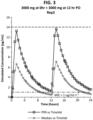
- Figures 2 and 3 were generated based on simulations of gepotidacin administered as two single oral 3,000-mg doses, given either 6 or 12 hours apart (the dashed lines in Figures 2 and 3 represent the Cmax value of potential clinical concern). These simulations demonstrate that the majority of the subjects (> 97%) are below the level for the tested dosing intervals.
- Example 3 Gepotadicin safety and pharmacokinetics (PK) in healthy adults and adolescents
- gepotidacin was administered with food to healthy adults ( ⁇ 18 years) in period 1 (1500 mg oral single dose), followed by period 2 (3000 mg x 2 oral doses Q12h) and period 3 (3000 mg x 2 oral doses Q6h).
- gepotidacin was administered with food to adolescents (12 to ⁇ 18 years) at the same dose regimens as period 1 (1500 mg oral single dose) and period 3 (3000 mg x 2 oral doses Q6h).
- Period 2 the observed AUC0-t exposures following the first dose were similar in adults at the 3000 mg dose level Q12 and Q6h. Higher accumulation ratios were observed in adults for Q6h as compared to Q12h.
- the shorter interval of Q6h resulted in higher accumulation ratios, as compared to Q12h, which led to a higher Cmax.
- the model had predicted 0.3% and 2.85 % of subjects above the value of potential clinical concern following the second dose of 3000mg Q12h and Q6h, respectively.
- the present study verified that a higher percentage of the subjects were above this value (15% for adults Q12h, 46% for adults Q6h and 58% for adolescents Q6h). No observed safety issues related to QT or AchE-I were observed with subjects having higher Cmax.
- This ongoing Phase III study aims to evaluate oral gepotidacin compared to intramuscular (IM) ceftriaxone plus oral azithromycin, a currently recommended treatment regimen, for the treatment of uncomplicated urogenital infection caused by NG in adolescent and adult participants.
- IM intramuscular
- Test-of-Cure microbiological success will be defined by body site (i.e., urogenital and, as appropriate, pharyngeal and/or rectal) as culture-confirmed bacterial eradication of NG observed at the TOC (Day 4 to 8) Visit.
- micro-ITT Microbiological Intent-to-Treat
- the study duration is approximately 21 days with 3 planned study visits: Baseline (Day 1) Visit, TOC (Day 4 to 8) Visit, and Follow-up (Day 14 to 21) Visit.
- the two 3000-mg doses, administered 6 to 12 hours apart, compared with the single 3000-mg dose used in the Phase II study, is expected to provide 2-fold higher systemic exposures that allow coverage of NG isolates with higher gepotidacin MIC values, which are likely to be observed in this global Phase III study, and also to reduce the risk of resistance emergence.
- the current diclosure also includes:
Landscapes
- Health & Medical Sciences (AREA)
- Veterinary Medicine (AREA)
- Chemical & Material Sciences (AREA)
- Medicinal Chemistry (AREA)
- Pharmacology & Pharmacy (AREA)
- Life Sciences & Earth Sciences (AREA)
- Animal Behavior & Ethology (AREA)
- General Health & Medical Sciences (AREA)
- Public Health (AREA)
- General Chemical & Material Sciences (AREA)
- Chemical Kinetics & Catalysis (AREA)
- Epidemiology (AREA)
- Nuclear Medicine, Radiotherapy & Molecular Imaging (AREA)
- Organic Chemistry (AREA)
- Engineering & Computer Science (AREA)
- Bioinformatics & Cheminformatics (AREA)
- Endocrinology (AREA)
- Reproductive Health (AREA)
- Communicable Diseases (AREA)
- Oncology (AREA)
- Pharmaceuticals Containing Other Organic And Inorganic Compounds (AREA)
Abstract
Description
- This invention was made with government support under the United States of America Department of Health and Human Services Assistant Secretary for Preparedness and Response, Biomedical Advanced Research and Development Authority (BARDA), within the Office of the Assistant Secretary for Preparedness and Response in the U.S. Department of Health and Human Services agreement no.: HHSO100201300011C. The government has certain rights in this invention.
- The present invention relates to a treatment method for the treatment of an infection caused by Neisseria gonorrhoeae, comprising administering gepotidacin or a pharmaceutically acceptable salt thereof to a human in need thereof, in accordance with a treatment regimen as defined herein.
- Λleisseria gonorrhoeae (NG) is gram negative bacteria that can infect male and female humans. Infections are most common in the urogenital tract (including the cervix, uterus, and fallopian tubes in women, and the urethra in women and men) - generally called "gonorrhoea" - but can also be anorectal, conjunctival, or pharyngeal. If left untreated, infections caused by NG can disseminate to other areas of the body, which commonly causes synovium and skin infections. Consequences of untreated gonococcal infections include pelvic inflammatory disease, infertility in women and men, ectopic pregnancy, tubo-ovarian abscess, neonatal conjunctivitis, and disseminated gonorrhoea.
- Over the past few decades, NG has demonstrated the ability to develop resistance to most antibiotics recommended or used for treatment, suggesting the possibility of untreatable gonorrhea in the future. The Centers for Disease Control and Prevention and the World Health Organization have labeled drug-resistant NG with threat levels of urgent and high, respectively, and identified a critical need for new antibiotic treatments.
- Treatment failures with cefixime or other oral cephalosporins have been reported in Asia, Europe, South Africa, and Canada. Ceftriaxone, in combination with azithromycin, is the last line of treatment recommended by CDC, EU and AU guidelines and treatment failures for pharyngeal infections have been reported in Australia, Japan, UK and Europe. Most gonococcal infections of the pharynx (site of resistance and decreased efficacy that also serves as a reservoir for contamination of other anatomical sites - see for example Pharyngeal Clinical Infectious Diseases, Volume 49, ) are asymptomatic. Gonococcal infections of the pharynx are more difficult to eradicate than are infections at urogenital and anorectal sites. Few antimicrobial regimens, including those involving oral cephalosporins, can reliably cure >90% of gonococcal pharyngeal infections. New oral antibiotics with favourable penetration properties at the pharyngeal site are urgently needed to address this major public health threat.
- Gepotidacin is a novel triazaacenaphthylene bacterial type II topoisomerase inhibitor that is currently in development.
WO2016/027249 discloses generally the use of certain triazaacenaphthylene bacterial type II topoisomerase inhibitors, including gepotidacin, for the use in treating an infection caused by NG. In aphase 2 study completed in 2017, which evaluated the efficacy, safety, and tolerability of gepotidacin in the treatment of uncomplicated urogenital gonorrhea caused by NG, gepotidacin was found to be efficacious against urogenital infection caused by NG (see Taylor SN, Morris DH, Avery AK, et al. Gepotidacin for the Treatment of Uncomplicated Urogenital Gonorrhea: A , incorporated herein by reference in its entirety). - There is still a need for an improved treatment for infection caused by NG, in view of the emergence of drug-resistant forms of NG. As gepotidacin is a novel mechanism antibacterial compound, appropriate dosages and dosage regimens with acceptable efficacy and safety profiles are required.
- In the first aspect, the present invention provides a method for treating an infection caused by Λleisseria gonorrhoeae in a human in need thereof, comprising administering gepotidacin or a pharmaceutically acceptable salt thereof to said human, wherein the gepotidacin or a pharmaceutically acceptable salt thereof is administered in two doses of 3g each, within one day.
- In another aspect, the present invention provides gepotidacin or a pharmaceutically acceptable salt thereof for use in the treatment of an infection caused by Neisseria gonorrhoeae, wherein the gepotidacin or a pharmaceutically acceptable salt thereof is administered in two doses of 3g each, within one day.
- In another aspect, the present invention provides use of gepotidacin or a pharmaceutically acceptable salt in the manufacture of a medicament for the treatment of an infection caused by Λleisseria gonorrhoeae, wherein the gepotidacin or a pharmaceutically acceptable salt thereof is administered in two doses of 3g each, within one day.
-
-
Figure 1 shows the relationship between gepotidacin exposure and change in NG log10 CFU/mL from baseline, as described in Example 2. -
Figure 2 shows simulated gepotidacin PK curves for two single oral 3,000 mg doses, given 6 hours apart. -
Figure 3 shows simulated gepotidacin PK curves for two single oral 3,000 mg doses, given 12 hours apart. - As used herein, the term "antibiotic" is synonymous with "antibacterial" and "antimicrobial".
- Gepotidacin and its racemic form are disclosed in
WO 2008/1289422 
- As used herein, the term "gepotidacin" may encompass gepotidacin free base, or a salt of gepotidacin. When a composition contains a salt of gepotidacin, the stated amount of gepotidacin in the composition refers to the amount of corresponding gepotidacin free base.
- A lack of validated preclinical models for NG has prevented the establishment of the pharmacokinetic/pharmacodynamic (PK/PD) parameter and magnitude predictive of gepotidacin efficacy in an infection caused by NG. In the
Phase 2 randomized dose-ranging single-oral dose evaluation, reported by Taylor SN et al., Clin Infect Dis. 2018;67(4):504-512 (incorporated herein by reference in its entirety), single oral doses of 1.5g and 3g of gepotidacin achieved ≥95% efficacy against urogenital infection caused by NG. - Surprisingly it has now been found that two 3g doses of gepotidacin administered within one day is a safe and efficacious treatment for infection caused by NG, with no increase in safety concerns. In particular, the present invention provides a treatment regimen of two 3g doses gepotidacin administered 6-12 hours apart, or 10-12 hours apart (total dose 6g within one day).
- For the treatment of uncomplicated gonorrhea, both the CDC and WHO recommend a dual antibiotic regimen consisting of a single IM 250-mg dose of ceftriaxone and a single oral 1-g dose of azithromycin (Centers for Disease Control and Prevention (CDC). Sexually transmitted diseases treatment guidelines, 2015. MMWR Recomm Rep 2015;64(No. RR-3):1-137; and World Health Organization (WHO), Global priority list of antibiotic-resistant bacteria to guide research, discovery, and development of new antibiotics. 2017). The present invention advantageously provides a more convenient single drug treatment regimen.
- Thus in the first aspect, the present invention provides a method for treating an infection caused by NG in a human in need thereof, comprising administering gepotidacin or a pharmaceutically acceptable salt thereof to said human, wherein the gepotidacin or a pharmaceutically acceptable salt thereof is administered in two doses of 3g each, within one day.
- As would be understood by a skilled person, the two doses of 3 grams each provides a total dose of 6g in one day. "One day" is used herein to mean one period of 24 hours, which commences on taking the first dose. "Two doses within one day" is herein intended to mean the same as "bis in die" or "b.i.d."
- In the second aspect, the present invention provides gepotidacin or a pharmaceutically acceptable salt thereof for use in the treatment of an infection caused by NG, wherein the gepotidacin or a pharmaceutically acceptable salt thereof is administered in two doses of 3g each within one day.
- In one embodiment, the present invention provides a method for treating an infection caused by NG in a human in need thereof, comprising administering gepotidacin or a pharmaceutically acceptable salt thereof to said human, wherein the gepotidacin or a pharmaceutically acceptable salt thereof is administered in two doses of 3g each at an interval of 6-12 hours.
- In one embodiment, the present invention provides gepotidacin or a pharmaceutically acceptable salt thereof for use in the treatment of an infection caused by NG, wherein the gepotidacin or a pharmaceutically acceptable salt thereof is administered in two doses of 3g each at an interval of 6-12 hours.
- In one embodiment, the present invention provides a method for treating an infection caused by NG in a human in need thereof, comprising administering gepotidacin or a pharmaceutically acceptable salt thereof to said human, wherein the gepotidacin or a pharmaceutically acceptable salt thereof is administered in two doses of 3g each at an interval of 10-12 hours.
- In one embodiment, the present invention provides gepotidacin or a pharmaceutically acceptable salt thereof for use in the treatment of an infection caused by NG, wherein the gepotidacin or a pharmaceutically acceptable salt thereof is administered in two doses of 3g each at an interval of 10-12 hours.
- As used herein, the phrase "infection caused by NG" may mean (1) that the skilled person suspects that the infection is caused by NG, for example due to clinical signs and symptoms, patient history or local epidemiology, or (2) that the skilled person proves or determines that the infection is caused by NG using standard methods such as culture results, or other information such as PCR, Gram stain or other stains. In one embodiment, in the method of the present invention, the infection is suspected to be caused by NG. In one embodiment, in the method of the present invention, the infection is proven to be caused by NG.
- In one embodiment, for any aspect of the present invention, the gepotidacin is used for the treatment of an infection caused by a gepotidacin-susceptible isolate of NG.
- As would be understood by the skilled person, "susceptible" means that an isolate of a microorganism is inhibited by the usually achievable concentration of an antimicrobial agent when the recommended dosage is used for the site of infection. Susceptibility to gepotidacin may be determined by the skilled person from an isolate recovered from a sample from an infected human, using standard methods as published by e.g. the United States Federal Drug Agency (Antibacterial Susceptibility Test Interpretive Criteria), Clinical and Laboratory Standards Institute ("CLSI" - see for example Performance Standards for Antimicrobial Susceptibility Testing. 29th ed. CLSI supplement M100. Wayne, PA: Clinical and Laboratory Standards Institute; 2019; incorporated by reference herein in its entirety) or the European Union Committee on Antimicrobial Susceptibility Testing.
- In one embodiment, "gepotidacin-susceptible isolate of NG "means that the gepotidacin MIC for an isolate of NG is 2 mg/L or less as measured by agar dilution according to CLSI guidelines. In one embodiment, it means that the MIC for the isolate is 1 mg/L or less as measured by agar dilution according to CLSI guidelines.
- In one embodiment, for any aspect of the present invention, the human is aged 12, 13, 14, 15, 16 or 17 years old.
- In one embodiment, for any aspect of the present invention, the human is aged 18 years or above.
- In one embodiment, for any aspect of the present invention, the human is male.
- In one embodiment, for any aspect of the present invention, the human is female.
- As used herein, an infection caused by NG in the urogenital area is termed "gonorrhea", which may include cervical and urethral gonorrhoea.
- In one embodiment, for any aspect of the present invention, the infection caused by NG is a urogenital infection (also known as gonorrhea).
- In one embodiment, for any aspect of the present invention, the infection caused by NG is a urethral or cervical infection (also known as urethral or cervical gonorrhea).
- In one embodiment, for any aspect of the present invention, the urogenital infection caused by NG is an uncomplicated urethral or cervical infection (also known as uncomplicated urethral or cervical gonorrhea).
- In one embodiment, for any aspect of the present invention, the infection caused by NG is a rectal infection.
- In one embodiment, for any aspect of the present invention, the infection caused by NG is a pharyngeal infection. Infections of the pharynx caused by NG are more difficult to eradicate than infections at urogenital and anorectal sites. Gepotidacin has the advantage of favourable tissue distribution in the pharynx area in humans, as shown herein. Thus the present invention provides a method of treating a pharyngeal infection caused by NG in a human in need thereof, as defined herein.
- In one embodiment, for any aspect of the present invention, the human has failed at least one prior line of treatment of the infection, such as by ceftriaxone or ciprofloxacin.
- In one embodiment, for any aspect of the present invention, the NG is drug resistant. As used herein, "drug resistant" is synonymous with "non-susceptible" and means that an isolate is not inhibited by the usually achievable concentrations of antimicrobial agent when the recommended dosage is used for the site of infection. Drug resistance of a NG isolate may be suspected, for example through knowledge of the infected patient's medical history, e.g. recurrent urogenital infection, or may be proven through established techniques, which include phenotypic or genotypic determination. For example, a phenotypic test of drug resistance of a bacterium to an antibacterial agent may be performed by measuring susceptibility to the antibacterial agent, using standard methods and published breakpoints.
- In one embodiment, in the present invention, "resistant" means resistant as defined by CLSI breakpoints. In one embodiment, "resistant" is as defined by the relevant breakpoint in M100 CLSI.
- In one embodiment, for any aspect of the present invention, the NG isolate causing the infection is resistant to an antibacterial agent selected from the group consisting of ciprofloxacin, azithromycin, tetracycline, penicillin, ceftriaxone, cefixime, gentamicin and spectinomycin.
- In one embodiment, for any aspect of the present invention, the NG isolate causing the infection is resistant to at least one antibacterial agent selected from ciprofloxacin, penicillin, and tetracycline.
- In one embodiment, for any aspect of the present invention, the NG isolate is resistant to ciprofloxacin. In one embodiment, for any aspect of the present invention, the NG isolate is resistant to penicillin. In one embodiment, for any aspect of the present invention, the NG isolate is resistant to tetracycline.
- In one embodiment, for any aspect of the present invention, the NG isolate causing the infection is resistant to two antibacterial agents selected from ciprofloxacin, penicillin and tetracycline.
- In one embodiment, for any aspect of the present invention, the NG isolate causing the infection is resistant to ciprofloxacin, penicillin and tetracycline.
-
WO2008/128942 discloses the preparation of the free base and the hydrochloride salt of gepotidacin. - It will be understood that the phrase "gepotidacin or a pharmaceutically acceptable salt thereof" is intended to encompass gepotidacin, a pharmaceutically acceptable salt of gepotidacin, a solvate of gepotidacin, or any pharmaceutically acceptable combination of these. Thus by way of non-limiting example used here for illustrative purpose, "gepotidacin or a pharmaceutically acceptable salt thereof" may include a pharmaceutically acceptable salt of gepotidacin that is further present as a solvate.
- As used herein, the term "compound(s) of the invention" means a gepotidacin in any form, i.e., any salt or non-salt form (e.g., as a free base, or as a pharmaceutically acceptable salt thereof) and any physical form thereof (e.g., including non-solid forms (e.g., liquid or semi-solid forms), and solid forms (e.g., amorphous or crystalline forms, specific polymorphic forms, solvates, including hydrates), and mixtures of various forms.
- Suitable pharmaceutically acceptable salts include those described by Berge, Bighley and Monkhouse, J. Pharm. Sci (1977) 66, pp 1-19.
- Gepotidacin is a base (contains a basic moiety), and therefore a desired salt form may be prepared by any suitable method known in the art, including treatment of the free base with an inorganic acid, such as hydrochloric acid, hydrobromic acid, sulfuric acid, nitric acid, phosphoric acid, and the like, or with an organic acid, such as acetic acid, trifluoroacetic acid, maleic acid, succinic acid, mandelic acid, fumaric acid, malonic acid, pyruvic acid, oxalic acid, glycolic acid, salicylic acid, pyranosidyl acid, such as glucuronic acid or galacturonic acid, alpha-hydroxy acid, such as citric acid or tartaric acid, amino acid, such as aspartic acid or glutamic acid, aromatic acid, such as benzoic acid or cinnamic acid, sulfonic acid, such as p-toluenesulfonic acid, methanesulfonic acid, ethanesulfonic acid or the like. Examples of pharmaceutically acceptable salts include sulfates, pyrosulfates, bisulfates, sulfites, bisulfites, phosphates, chlorides, bromides, iodides, acetates, propionates, decanoates, caprylates, acrylates, formates, isobutyrates, caproates, heptanoates, propiolates, oxalates, malonates succinates, suberates, sebacates, fumarates, maleates, butyne-1,4-dioates, hexyne-1,6-dioates, benzoates, chlorobenzoates, methyl benzoates, dinitrobenzoates, hydroxybenzoates, methoxybenzoates, phthalates, phenylacetates, phenylpropionates, phenylbutrates, citrates, lactates, γ-hydroxybutyrates, glycollates, tartrates mandelates, and sulfonates, such as xylenesulfonates, methanesulfonates, propanesulfonates, naphthalene-1-sulfonates and naphthalene-2-sulfonates.
- Pharmaceutically acceptable salts of gepotidacin include the acid addition salts, for example their salts with mineral acids e.g. hydrochloric, hydrobromic, sulphuric nitric or phosphoric acids, or organic acids, e.g. acetic, fumaric, succinic, maleic, citric, benzoic, p-toluenesulphonic, methanesulphonic, naphthalenesulphonic acid or tartaric acids.
- The present invention includes within its scope all possible stoichiometric and non-stoichiometric salt forms.
- In one embodiment, in any aspect of the present invention, the gepotidacin is gepotidacin free base.
- In one embodiment, in any aspect of the present invention, the gepotidacin is gepotidacin methanesulphonate.
- Pharmaceutical compositions and formulations acceptable and adaptable for use in methods and/or uses of the present invention are prepared using conventional art known pharmaceutical compositions, formulation or chemical materials, formulary excipients, preparation means, processes and/or methods and conventional techniques, etc.
- In particular, gepotidacin or pharmaceutically acceptable salts, used in the present invention may be formulated for administration in any convenient way for use in human or veterinary medicine, by analogy with other antibacterials/antitubercular compounds.
- The pharmaceutical compositions used in the present invention may be formulated for administration by any route and include those in a form adapted for oral, topical or parenteral use and may be used in mammals including humans.
- The compositions may be in the form of tablets, capsules, powders, granules, lozenges, suppositories, creams or liquid preparations, such as oral or sterile parenteral solutions or suspensions.
- In one embodiment, the gepotidacin or pharmaceutically acceptable salt thereof of the present invention is in a tablet or a capsule form. In one embodiment, it is in a tablet form. In one embodiment, the tablet is a 750mg tablet.
- Tablets and capsules for oral administration in the present invention may be in unit dose presentation form, and may contain conventional excipients such as binding agents, fillers, tabletting lubricants, disintegrants, or wetting agents. The tablets may be coated according to methods well known in normal pharmaceutical practice. Oral liquid preparations may be in the form of, for example, aqueous or oily suspensions, solutions, emulsions, syrups or elixirs, or may be presented as a dry product for reconstitution with water or other suitable vehicle before use. Such liquid preparations may contain conventional additives, such as suspending agents, for example sorbitol, methyl cellulose, glucose syrup, gelatin, hydroxyethyl cellulose, carboxymethyl cellulose, aluminium stearate gel or hydrogenated edible fats, emulsifying agents, for example lecithin, sorbitan monooleate, or acacia; non-aqueous vehicles (which may include edible oils), for example almond oil, oily esters such as glycerine, propylene glycol, or ethyl alcohol; preservatives, for example methyl or propyl p-hydroxybenzoate or sorbic acid, and, if desired, conventional flavouring or colouring agents.
- Suppositories will contain conventional suppository bases, e.g. cocoa-butter or other glyceride.
- For parenteral administration, fluid unit dosage forms are prepared utilizing the compound and a sterile vehicle, water being preferred. The compound, depending on the vehicle and concentration used, can be either suspended or dissolved in the vehicle. In preparing solutions the compound can be dissolved in water for injection and filter sterilised before filling into a suitable vial or ampoule and sealing.
- Advantageously, agents such as a local anaesthetic, preservative and buffering agents can be dissolved in the vehicle. To enhance the stability, the composition can be frozen after filling into the vial and the water removed under vacuum. The dry lyophilized powder is then sealed in the vial and an accompanying vial of water for injection may be supplied to reconstitute the liquid prior to use. Parenteral suspensions are prepared in substantially the same manner except that the compound is suspended in the vehicle instead of being dissolved and sterilization cannot be accomplished by filtration. The compound can be sterilised by exposure to ethylene oxide before suspending in the sterile vehicle. Advantageously, a surfactant or wetting agent is included in the composition to facilitate uniform distribution of the compound.
- Moreover, the quantity of the compound or pharmaceutical composition used in the present invention administered will vary depending on the patient and the mode of administration and can be any effective amount.
- The compositions may contain from 0.1% by weight, preferably from 10-60% by weight, of the active material, depending on the method of administration. Where the compositions comprise dosage units, each unit will preferably contain from 50-1000 mg of the active ingredient. Unless otherwise noted, the amount of the active ingredient (i.e., gepotidacin) refers to that of gepotidacin free base.
- Conventional administration methods may be suitable for use in the present invention.
- Depending upon the treatment being effected, the compounds, and/or or compositions of the present invention can be administered orally, intravascularly, intraperitoneally, subcutaneously, intramuscularly or topically. Preferably, the composition is adapted for oral administration. In one embodiment, for any aspect of the present invention, the gepotidacin or pharmaceutically acceptable salt thereof is administered orally.
- The Examples set forth below are illustrative of the present invention and are not intended to limit, in any way, the scope of the present invention.
- Gepotidacin exposures were assessed in plasma and other matrices, such as urine, saliva, epithelial lining fluid (ELF), Alveolar Macrophages (AM), cervix, rectum and pharynx, as follows:
- 1. Plasma, Epithelial Lining Fluid (ELF) and Alveolar Macrophage (AM) samples: A study to evaluate plasma and pulmonary pharmacokinetics (PK) following intravenous administration of gepotidacin in healthy adult subjects was conducted (see M Hossain, EF Dumont. Population Pharmacokinetic Modeling of Plasma and Epithelial Lining Fluid Data for a Novel Antimicrobial Compound. 54th Annual Interscience Conference on Antimicrobial Agents and Chemotherapy Meeting, 5-9 September 2014, Washington, D.C., USA, incorporated herein by reference in its entirety)
- 2. Saliva, Urine and plasma samples:
- a. A single-dose study to assess the PK of oral gepotidacin in male and female adult participants with varying degrees of hepatic impairment and in matched control participants with normal hepatic function (J. Hands et al. Pharmacokinetics of Gepotidacin in Subjects with Hepatic Impairment. ID Week, 2-6 October 2019, Washington DC, USA, incorporated herein by reference in its entirety)
- b. A single-dose study to assess the PK of gepotidacin in adult subjects with varying degrees of renal impairment and in matched control subjects with normal renal function
- 3. Urine, plasma, cervix, rectum and pharynx swabs: In a Phase 2a, single-center, single-arm, open-label study in the Unites States from July 2018 to January 2019 (see Overcash et al., Open Forum Infectious Diseases, , incorporated herein by reference in its entirety), a total of 22 female participants with uncomplicated Urinary Tract Infection (uUTI) were enrolled and evaluated for pharmacokinetics (PK), safety, and clinical efficacy. Participants were confined to the clinic from baseline (Days -1 to 1 predose) through on-therapy (
Days 1 to 5) and returned as outpatients for test-of-cure (TOC;Days 10 to 13) and follow-up (Day 28±3). Participants received oral gepotidacin 1,500 mg twice daily (BID) for 5 days. Two participants (9%) withdrew from the study due to lost to follow-up and family reasons; there were no discontinuations due to adverse events (AEs). The majority of participants were white, age ranged from 19 to 60 years, and body mass index ranged from 20.9 to 37.9 kg/m2. The number of past uUTI episodes ranged from 0 to 10 over the past 12 months across participants; the majority of participants reported ≤2 episodes. The mean total clinical symptom score at baseline was 7.9 (range: 4 to 12). All participants reported frequency and urgency, and all but 1 participant (5%) reported dysuria. Gepotidacin exposures in urine, cervix, rectum and pharynx were assessed. - Plasma, Epithelial Lining Fluid (ELF) and Alveolar Macrophage (AM) PKwere assessed following a single IV infusion of 1000 mg gepotidacin over 2 hours. AM exposure was assessed by Cmax and AUC(0-12) and it was approximately 120-fold and 97-fold higher, respectively, than in ELF. AUC(0-12) ratio of AM and ELF to free plasma was 178 and 1.84, respectively (gepotidacin free fraction equal to 0.67). Concentrations in AM and ELF changed in a similar manner as in plasma over the 12-hour sampling period.
- Saliva, Urine and Plasma concentrations were determined after administration of gepotidacin 750 mg IV (healthy and renally impaired subjects) and 1500 mg orally (healthy and hepatically impaired subjects, as well as uUTI patients). Saliva concentrations displayed a positive correlation to plasma concentrations in normal and renally impaired patients (R2 = 0.82), as well as in normal and hepatic impaired subjects (R2= 0.76). The ratio of saliva AUC to unbound plasma AUC was consistently close to unity (RAUC ≥ 0.75). In uUTI patients, urine Ctau exposures ranged from 322 to 352 µg/mL from
Day 3 onwards. The minimum gepotidacin urine concentrations remained above a Minimum Inhibitory Concentration (MIC) of 4 µg/mL over the 12-hour dosing interval. Overall the gepotidacin urinary exposure (AUC[0-48]) in participants with moderate and severe hepatic impairment was approximately 3.2-fold and 3.9-fold greater than that observed in matched healthy controls, respectively. - In normal renal function subjects, 37.4% of the gepotidacin dose was removed in the urine (fe%). As expected, the amount decreased to 22.1% in moderate subjects and 7.9% in End-Stage Renal Disease (ESRD) subjects not on hemodialysis. Less than 2% of the gepotidacin dose was excreted in the urine for the ESRD subjects on hemodialysis.
- Plasma, cervix, rectum and pharynx swabs were collected after administration of gepotidacin 1500 mg BID to uUTI patients. The rank order of gepotidacin free-drug concentrations was highest in rectal tissue; followed by cervical tissue, which was similar to plasma concentrations; followed by pharyngeal tissue. PK results are shown in Table 1.
TABLE 1 Summary of gepotidacin cervical, rectal, pharyngeal, and free plasma concentration time data (µg/ml) (pharmacokinetic population) Matrix N Day Planned relative time n Number imputed Mean %CV Minimum Maximum Cervical 18 4 Predose 18 0 1.30 131.3 0.0601 5.94 4 2 hours postdose 18 0 1.03 114.8 0.0190 4.25 Rectal 18 4 Predose 18 0 6.04 156.9 0.0678 36.30 4 2 hours postdose 18 0 12.3 214.6 0.0989 90.90 Pharyngeal 20 4 Predose 19 0 0.0330 106.4 0.00275 0.165 4 2 hours postdose 20 0 0.140 87.3 0.0118 0.527 Free plasma 21 4 Predose 21 0 0.618 44.2 0.308 1.33 4 2 hours postdose 21 0 3.94 42.3 0.938 7.50 a%CV, coefficient of variation; n, number of participants with evaluable values; N, number of participants in the treatment. - In conclusion, gepotidacin displays enhanced intracellular penetration (high AM levels when compared to plasma), supporting the development of this new antibacterial for intracellular infections, such as gonorrhea.
- Saliva exposures correlated well with plasma, indicating that saliva samples could be collected in cases of limited feasibility of plasma samples. In addition, the high saliva levels supports the use of gepotidacin for the treatment of oral gonorrhea.
- As the hepatic function decreased, the gepotidacin levels in urine increase, while with the reduction in renal function, reduced urine levels are observed.
- Gepotidacin concentrations were observed in cervical, rectal, and pharyngeal swabs and support the use of gepotidacin for infections caused by NG in these areas.
- A set of duplicate 7-day hollow fiber infection model studies was completed using an NG isolate from the
Phase 2 clinical trial (as reported by Scangarella-Oman N et al., 2018. Antimicrob Agents Chemother 62:e01221-18. https://doi.org/10.1128/AAC.01221-18, incorporated herein by reference in its entirety), with a gepotidacin MIC of 1 µg/mL and a ParC D86N mutation, to determine the gepotidacin exposure needed to prevent amplification of a resistant subpopulation when a pre-existing single step mutation to gepotidacin was already present. The results were discussed in VanScoy BD et al., A Hollow-Fiber Infection Model to Evaluate the Prevention of On- Therapy Resistance of Neisseria gonorrhoeae to Gepotidacin. 2018 STD Prevention Conference, 26-30 August 2018, Washington DC, USA (incorporated herein by reference in its entirety). - The NG clinical isolate evaluated was known to be ciprofloxacin-resistant (minimum inhibitory concentration [MIC]= 2 mg/L), susceptible to ceftriaxone (MIC = 0.004 mg/L), and with a gepotidacin agar/broth MIC of 1/0.5 mg/L. The isolate was collected during the
Phase 2 clinical study mentioned above, and contained the mutation, ParC D86N. - Gepotidacin, ciprofloxacin, and ceftriaxone MIC values were determined in triplicate using Gonococcal agar per CLSI guidelines (CLSI (2012) Methods for dilution antimicrobial susceptibility tests for bacteria that grow aerobically. Approved standard, 9th edition. CLSI document M07, Wayne, PA). In order to evaluate the MIC of each challenge compound under the liquid conditions utilized in the HFIM, MIC values were determined using fastidious broth (FB) medium modified to lack agarose.
- 10 mL of an initial bacterial density of 106 colony forming units (CFU)/mL was inoculated into the hollow-fiber cartridge (Fibercell Systems, Frederick, MD), utilizing modified FB medium.
- Assuming a 7-hour half-life for gepotidacin, human free-drug plasma concentration-time profiles were simulated following exposures observed after administration of 0.75 to 12 g of gepotidacin as a single oral dose. Ciprofloxacin and ceftriaxone exposures were simulated (half-lives of 3 and 7.5 hours, respectively), using free-drug plasma profiles following administration of a 0.5 g oral and 0.25 g intramuscular dose, respectively. Samples were collected for observation of simulated pharmacokinetic profiles and enumeration of bacterial burden over the study duration. All bacterial samples were plated on drug-free and agar supplemented with 2 x the agar MIC value of each respective challenge compound. MIC values were determined in duplicate for isolates that were found upon the drug-supplemented agar plates.
- The NG isolate grew well in the hollow fibre infection model, reaching a total bacterial burden >8 log10 CFU/mL by
Day 1. The ciprofloxacin and ceftriaxone controls performed as expected given that the isolate was resistant to ciprofloxacin and susceptible to ceftriaxone. The gepotidacin exposures evaluated provided a full exposure response from treatment failure to success, with doses ≥ 4.5 g sterilizing the system over the seven-day period. The relationship between change in log10 CFU/mL from bacterial burden of the gepotidacin-resistant subpopulation onDay 7 took on the form of an inverted-U, with doses ≥ 4.5 g preventing amplification of resistance within the system.Figure 1 shows the relationship between gepotidacin exposure (from 750 mg to 12 g) and change in log10 CFU/mL from baseline of the gepotidacin-resistant subpopulation onDay 7. - In summary, total daily gepotidacin doses of equal to or greater than 4500 mg (including 2 gepotidacin 3g doses, administered either 8 or 12 hours apart) prevented resistance amplification to gepotidacin for NG in the hollow fiber infection model.
- Population PK modelling (see Hossain M et al, Population Pharmacokinetic Modeling of First-Time-in-Human Data of GSK2140944, a Novel Antimicrobial Agent. 53nd Annual Interscience Conference on Antimicrobial Agents and Chemotherapy Meeting, 10-13 September 2013, Denver, CO, USA, incorporated herein in its entirety) and simulation using available pharmacokinetic data was conducted. PK simulations were conducted to assess safety with the objective of limiting the occurrence of maximum plasma exposures, which is important from a safety perspective due to corrected QT interval (QTc) increases and acetylcholinesterase inhibition.
- These simulations were conducted with the dose recommended for the treatment of gonorrhea.
Figures 2 and3 were generated based on simulations of gepotidacin administered as two single oral 3,000-mg doses, given either 6 or 12 hours apart (the dashed lines inFigures 2 and3 represent the Cmax value of potential clinical concern). These simulations demonstrate that the majority of the subjects (> 97%) are below the level for the tested dosing intervals. - In conclusion, two 3g doses of gepotadicin, administered 6-12 hours apart, as opposed to the single 1.5g/3g dose used in the
aforementioned Phase 2 trial, were found to have the advantages of: - providing 2-fold higher systemic exposures that allow coverage of NG isolates with higher gepotidacin MIC values;
- reducing the risk of clinical resistance emergence; and
- maintaining maximum plasma concentrations below levels of potential safety concern (related to Cmax dependent changes in QTc interval and acetylcholinesterase effects).
- Healthy adults and adolescents within the age ranges of 19-64 and 12-17 years old, respectively, participated in the study.
- In
Part 1 of the study, gepotidacin was administered with food to healthy adults (≥ 18 years) in period 1 (1500 mg oral single dose), followed by period 2 (3000 mg x 2 oral doses Q12h) and period 3 (3000 mg x 2 oral doses Q6h). - In
Part 2 of the study, gepotidacin was administered with food to adolescents (12 to < 18 years) at the same dose regimens as period 1 (1500 mg oral single dose) and period 3 (3000 mg x 2 oral doses Q6h). - In
Period 1, similar maximum concentration (Cmax) and slightly higher median area under the curve (AUC) exposures were observed for adolescents compared to adults. 1500 mg was generally well tolerated by adults and adolescents with few mild gastro-intestinal-tract (GI) adverse events (AEs). - In
Period 2, the observed AUC0-t exposures following the first dose were similar in adults at the 3000 mg dose level Q12 and Q6h. Higher accumulation ratios were observed in adults for Q6h as compared to Q12h. - In
Period 3, for the Q6h regimen following the second dose, the AUC was higher in adolescents, while Cmax was similar. - The shorter interval of Q6h resulted in higher accumulation ratios, as compared to Q12h, which led to a higher Cmax. The model had predicted 0.3% and 2.85 % of subjects above the value of potential clinical concern following the second dose of 3000mg Q12h and Q6h, respectively. The present study verified that a higher percentage of the subjects were above this value (15% for adults Q12h, 46% for adults Q6h and 58% for adolescents Q6h). No observed safety issues related to QT or AchE-I were observed with subjects having higher Cmax.
- Projection of ΔΔQTc values based on this data indicated that a longer dosing window of 10-12 hours would have the benefit of maintaining sufficient levels of gepotidacin in the body for efficacy, with no changes to the overall risk/benefit balance.
- This ongoing Phase III study aims to evaluate oral gepotidacin compared to intramuscular (IM) ceftriaxone plus oral azithromycin, a currently recommended treatment regimen, for the treatment of uncomplicated urogenital infection caused by NG in adolescent and adult participants.
- This is a Phase III, open-label (sponsor-blinded), parallel-group, multicenter, comparator-controlled, noninferiority study in adolescent and adult participants comparing the efficacy and safety of oral gepotidacin to IM ceftriaxone plus oral azithromycin in the treatment of uncomplicated urogenital gonorrhea caused by NG. Participants will be stratified by gender and sexual orientation and age; and will be randomly assigned to receive either oral gepotidacin or IM ceftriaxone plus oral azithromycin. Appropriate safety and microbiological assessments will be conducted at the Baseline (Day 1) Visit and repeated at the TOC (
Day 4 to 8) and Follow-up (Day 14 to 21) Visits. "Test-of-Cure" microbiological success will be defined by body site (i.e., urogenital and, as appropriate, pharyngeal and/or rectal) as culture-confirmed bacterial eradication of NG observed at the TOC (Day 4 to 8) Visit. - Approximately 500 to 600 participants will be screened and randomized to achieve approximately 400 participants with culture-confirmed urogenital gonorrhea in the Microbiological Intent-to-Treat (micro-ITT) Population, for an estimated total of 200 participants per treatment group in the micro-ITT Population. Enrollment will continue until the target number of participants in the micro-ITT Population has been reached.
- Participants will receive one of the following treatments:
- 1. Gepotidacin: 3000 mg administered orally at the study site during the Baseline (Day 1) Visit followed by self-administration of a second oral 3000-mg dose as an
outpatient 6 to 12 hours after the first dose (optimum window is 8 to 10 hours after the first dose; however, for participants who weigh <50 kg or have moderate renal impairment, the second dose should be taken approximately 12 hours after the first dose). - 2. Ceftriaxone plus azithromycin: A single IM 500-mg dose of ceftriaxone plus a single oral 1-g dose of azithromycin administered at the study site during the Baseline (Day 1) Visit.
- The study duration is approximately 21 days with 3 planned study visits: Baseline (Day 1) Visit, TOC (
Day 4 to 8) Visit, and Follow-up (Day 14 to 21) Visit. - In the Phase II study, both single oral doses of 1500 and 3000 mg gepotidacin were ≥95% efficacious (bacterial eradication) against urogenital NG with no unexpected safety signals at either dose. A total of 3 participants failed therapy at the urogenital body site (all with a baseline gepotidacin MIC of 1 pg/mL, which was among the highest MIC for gepotidacin), and analysis of the posttreatment cultures identified 2 isolates that had become resistant to gepotidacin (TOC gepotidacin MICs ≥32 µg/mL). Further analysis revealed that both isolates also had a pre-existing D86N polymorphism in the topoisomerase IV gene at Baseline. Following treatment, both isolates showed a second mutation, an A92T substitution in the DNA gyrase enzyme, which resulted in reduced susceptibility to gepotidacin. Of the 8 participants in the study with D86N-positive baseline urogenital NG isolates, 5 were microbiological successes (bacterial eradication), including 2 that were infected with baseline organisms with the higher gepotidacin MIC of 1 µg/mL. These data suggest that the 3000-mg single dose may provide close to an effective exposure and that this genotype may be overcome with appropriate dosing. In the current study, gepotidacin will be administered as 2 oral 3000-mg doses. The two 3000-mg doses, administered 6 to 12 hours apart, compared with the single 3000-mg dose used in the Phase II study, is expected to provide 2-fold higher systemic exposures that allow coverage of NG isolates with higher gepotidacin MIC values, which are likely to be observed in this global Phase III study, and also to reduce the risk of resistance emergence.
- The publications and references cited in the present application are incorporated herein by reference in their entirety.
- The current diclosure also includes:
- §1. A method for treating an infection caused by Λleisseria gonorrhoeae in a human in need thereof, comprising administering gepotidacin or a pharmaceutically acceptable salt thereof to said human, wherein the gepotidacin or a pharmaceutically acceptable salt thereof is administered in two doses of 3g each within one day.
- §2. A method as defined in
clause 1, wherein the gepotidacin or a pharmaceutically acceptable salt thereof is administered at an interval of 6-12 hours. - §3. A method as defined in
clause 1, wherein the gepotidacin or a pharmaceutically acceptable salt thereof is administered at an interval of 10-12 hours. - §4. A method as defined in any of clauses 1-3, wherein the gepotidacin is gepotidacin free base.
- §5. A method as defined in any of clauses 1-3, wherein the gepotidacin is gepotidacin methanesulphonate.
- §6. A method as defined in any of clauses 1-5, wherein the human is aged 12, 13, 14, 15, 16 or 17 years old.
- §7. A method as defined in any of clauses 1-5, wherein the human is aged 18 years or above.
- §8. A method as defined in any of clauses 1-7, wherein the human is male.
- §9. A method as defined in any of clauses 1-7, wherein the human is female.
- §10. A method as defined in any of clauses 1-9, wherein the infection caused by Λleisseria gonorrhoeae is a urogenital infection.
- §11. A method as defined in
clause 10, wherein the infection caused by Λleisseria gonorrhoeae is a urethral or cervical infection. - §12. A method as defined in clause 11, wherein the urogenital infection caused by Λleisseria gonorrhoeae is an uncomplicated urethral or cervical infection.
- §13. A method as defined in any of clauses 1-9, wherein the infection caused by Λleisseria gonorrhoeae is a rectal infection.
- §14. A method as defined in any of clauses 1-9, wherein the infection caused by Λleisseria gonorrhoeae is a pharyngeal infection.
- §15. A method as defined in any of clauses 1-14, wherein the human has failed at least one prior line of treatment of the infection.
- §16. A method as defined in any of clauses 1-14, wherein the Neisseria gonorrhoeae isolate is resistant to an antibacterial agent selected from the group consisting of: ciprofloxacin, azithromycin, tetracycline, penicillin, ceftriaxone, cefixime, gentamicin and spectinomycin.
- §17. A method as defined in any of clauses 1-16, wherein the gepotidacin or a pharmaceutically acceptable salt thereof is administered orally.
- §18. Gepotidacin or a pharmaceutically acceptable salt thereof for use in the treatment of an infection caused by Λleisseria gonorrhoeae, wherein the gepotidacin or a pharmaceutically acceptable salt thereof is administered in two doses of 3g each within one day.
- §19. Gepotidacin as defined in clause 18, wherein the gepotidacin or a pharmaceutically acceptable salt thereof is administered at an interval of 6-12 hours.
- §20. Gepotidacin as defined in clause 18, wherein the gepotidacin or a pharmaceutically acceptablesalt thereof is administered at an interval of 10-12 hours.
- §21. Use of gepotidacin or a pharmaceutically acceptable salt in the manufacture of a medicament for the treatment of an infection caused by Λleisseria gonorrhoeae, wherein the gepotidacin or a pharmaceutically acceptable salt thereof is administered in two doses of 3g each in one day.
- §22. Use as defined in clause 21, wherein the two doses are administered at an interval of 6-12 hours.
- §23. Use as defined in clause 22, wherein two doses are administered at an interval of 10-12 hours.
Claims (15)
- A method for treating an infection caused by Λleisseria gonorrhoeae in a human in need thereof, comprising administering gepotidacin or a pharmaceutically acceptable salt thereof to said human, wherein the gepotidacin or a pharmaceutically acceptable salt thereof is administered in two doses of 3g each within one day.
- A method as claimed in claim 1, wherein the gepotidacin or a pharmaceutically acceptable salt thereof is administered at an interval of 6-12 hours.
- A method as claimed in claim 1, wherein the gepotidacin or a pharmaceutically acceptable salt thereof is administered at an interval of 10-12 hours.
- A method as claimed in any of claims 1-3, wherein the gepotidacin is gepotidacin free base.
- A method as claimed in any of claims 1-3, wherein the gepotidacin is gepotidacin methanesulphonate.
- A method as claimed in any of claims 1-5, wherein the human is aged 12, 13, 14, 15, 16 or 17 years old; or wherein the human is aged 18 years or above.
- A method as claimed in any of claims 1-6, wherein the human is male; or wherein the human is female.
- A method as claimed in any of claims 1-7, wherein the infection caused by Λleisseria gonorrhoeae is a urogenital infection, for example a urethral or cervical infection (for example, an uncomplicated urethral or cervical infection).
- A method as claimed in any of claims 1-7, wherein the infection caused by Λleisseria gonorrhoeae is a rectal infection; or wherein the infection caused by Λleisseria gonorrhoeae is a pharyngeal infection.
- A method as claimed in any of claims 1-9, wherein the human has failed at least one prior line of treatment of the infection.
- A method as claimed in any of claims 1-9, wherein the Neisseria gonorrhoeae isolate is resistant to an antibacterial agent selected from the group consisting of: ciprofloxacin, azithromycin, tetracycline, penicillin, ceftriaxone, cefixime, gentamicin and spectinomycin.
- A method as claimed in any of claims 1-11, wherein the gepotidacin or a pharmaceutically acceptable salt thereof is administered orally.
- Gepotidacin or a pharmaceutically acceptable salt thereof for use in the treatment of an infection caused by Λleisseria gonorrhoeae, wherein the gepotidacin or a pharmaceutically acceptable salt thereof is administered in two doses of 3g each within one day.
- Gepotidacin as claimed in claim 13, wherein the gepotidacin or a pharmaceutically acceptable salt thereof is administered at an interval of 6-12 hours.
- Gepotidacin as claimed in claim 13, wherein the gepotidacin or a pharmaceutically acceptable salt thereof is administered at an interval of 10-12 hours.
Priority Applications (1)
| Application Number | Priority Date | Filing Date | Title |
|---|---|---|---|
| EP24216292.3A EP4491231A3 (en) | 2020-04-02 | 2020-04-02 | Regimen for treating a neisseria gonorrhoeae infection with gepotidacin |
Applications Claiming Priority (3)
| Application Number | Priority Date | Filing Date | Title |
|---|---|---|---|
| EP20730707.5A EP4125905B1 (en) | 2020-04-02 | 2020-04-02 | Regimen for treating a neisseria gonorrhoeae infection with gepotidacin |
| EP24216292.3A EP4491231A3 (en) | 2020-04-02 | 2020-04-02 | Regimen for treating a neisseria gonorrhoeae infection with gepotidacin |
| PCT/IB2020/000253 WO2021198715A1 (en) | 2020-04-02 | 2020-04-02 | Regimen for treating a neisseria gonorrhoeae infection with gepotidacin |
Related Parent Applications (1)
| Application Number | Title | Priority Date | Filing Date |
|---|---|---|---|
| EP20730707.5A Division EP4125905B1 (en) | 2020-04-02 | 2020-04-02 | Regimen for treating a neisseria gonorrhoeae infection with gepotidacin |
Publications (2)
| Publication Number | Publication Date |
|---|---|
| EP4491231A2 true EP4491231A2 (en) | 2025-01-15 |
| EP4491231A3 EP4491231A3 (en) | 2025-04-09 |
Family
ID=70978286
Family Applications (2)
| Application Number | Title | Priority Date | Filing Date |
|---|---|---|---|
| EP20730707.5A Active EP4125905B1 (en) | 2020-04-02 | 2020-04-02 | Regimen for treating a neisseria gonorrhoeae infection with gepotidacin |
| EP24216292.3A Pending EP4491231A3 (en) | 2020-04-02 | 2020-04-02 | Regimen for treating a neisseria gonorrhoeae infection with gepotidacin |
Family Applications Before (1)
| Application Number | Title | Priority Date | Filing Date |
|---|---|---|---|
| EP20730707.5A Active EP4125905B1 (en) | 2020-04-02 | 2020-04-02 | Regimen for treating a neisseria gonorrhoeae infection with gepotidacin |
Country Status (7)
| Country | Link |
|---|---|
| EP (2) | EP4125905B1 (en) |
| JP (2) | JP2023528560A (en) |
| CN (1) | CN115335054A (en) |
| BR (1) | BR112022018315A2 (en) |
| CA (1) | CA3176961A1 (en) |
| ES (1) | ES3004932T3 (en) |
| WO (1) | WO2021198715A1 (en) |
Families Citing this family (1)
| Publication number | Priority date | Publication date | Assignee | Title |
|---|---|---|---|---|
| CN119546302A (en) * | 2022-09-26 | 2025-02-28 | 葛兰素史密斯克莱知识产权发展有限公司 | Gepodacin for the treatment of bacterial prostatitis |
Citations (2)
| Publication number | Priority date | Publication date | Assignee | Title |
|---|---|---|---|---|
| WO2008128942A1 (en) | 2007-04-20 | 2008-10-30 | Glaxo Group Limited | Tricyclic nitrogen containing compounds as antibacterial agents |
| WO2016027249A1 (en) | 2014-08-22 | 2016-02-25 | Glaxosmithkline Intellectual Property Development Limited | Tricyclic nitrogen containing compounds for treating neisseria gonorrhoea infection |
Family Cites Families (2)
| Publication number | Priority date | Publication date | Assignee | Title |
|---|---|---|---|---|
| WO2014152317A2 (en) * | 2013-03-15 | 2014-09-25 | Melinta Therapeutics, Inc. | Methods of treating gonorrhea infections using quinolone antibiotics |
| TWI690317B (en) * | 2014-11-17 | 2020-04-11 | 英商安特西醫療有限公司 | Combination therapy for the treatment of drug-resistant bacterial infections |
-
2020
- 2020-04-02 JP JP2022559955A patent/JP2023528560A/en active Pending
- 2020-04-02 EP EP20730707.5A patent/EP4125905B1/en active Active
- 2020-04-02 CN CN202080099255.1A patent/CN115335054A/en active Pending
- 2020-04-02 CA CA3176961A patent/CA3176961A1/en active Pending
- 2020-04-02 WO PCT/IB2020/000253 patent/WO2021198715A1/en not_active Ceased
- 2020-04-02 EP EP24216292.3A patent/EP4491231A3/en active Pending
- 2020-04-02 ES ES20730707T patent/ES3004932T3/en active Active
- 2020-04-02 BR BR112022018315A patent/BR112022018315A2/en unknown
-
2025
- 2025-05-20 JP JP2025084386A patent/JP2025131626A/en active Pending
Patent Citations (2)
| Publication number | Priority date | Publication date | Assignee | Title |
|---|---|---|---|---|
| WO2008128942A1 (en) | 2007-04-20 | 2008-10-30 | Glaxo Group Limited | Tricyclic nitrogen containing compounds as antibacterial agents |
| WO2016027249A1 (en) | 2014-08-22 | 2016-02-25 | Glaxosmithkline Intellectual Property Development Limited | Tricyclic nitrogen containing compounds for treating neisseria gonorrhoea infection |
Non-Patent Citations (6)
| Title |
|---|
| BERGEBIGHLEYMONKHOUSE, J. PHARM. SCI, vol. 66, 1977, pages 1 - 19 |
| OVERCASH ET AL., OPEN FORUM INFECTIOUS DISEASES, vol. 6, 2 October 2019 (2019-10-02), pages S539, Retrieved from the Internet <URL:https://doi.org/10.1093/ofid/ofz360.1343> |
| PHARYNGEAL CLINICAL INFECTIOUS DISEASES, vol. 49, no. 12, 15 December 2009 (2009-12-15), pages 1798 - 1800, Retrieved from the Internet <URL:https://doi.org/10.1086/648428> |
| TAYLOR SN ET AL., CLIN INFECT DIS., vol. 67, no. 4, 2018, pages 504 - 512 |
| TAYLOR SNMORRIS DHAVERY AK ET AL.: "Gepotidacin for the Treatment of Uncomplicated Urogenital Gonorrhea: A Phase 2, Randomized, Dose-Ranging, Single-Oral Dose Evaluation.", CLIN INFECT DIS., vol. 67, no. 4, 2018, pages 504 - 512, XP055715877, DOI: 10.1093/cid/ciy145 |
| VANSCOY BD ET AL.: "A Hollow-Fiber Infection Model to Evaluate the Prevention of On- Therapy Resistance of Neisseria gonorrhoeae to Gepotidacin.", 2018 STD PREVENTION CONFERENCE, 30 August 2018 (2018-08-30) |
Also Published As
| Publication number | Publication date |
|---|---|
| ES3004932T3 (en) | 2025-03-13 |
| WO2021198715A1 (en) | 2021-10-07 |
| EP4125905A1 (en) | 2023-02-08 |
| EP4491231A3 (en) | 2025-04-09 |
| CA3176961A1 (en) | 2021-10-07 |
| EP4125905B1 (en) | 2024-12-25 |
| JP2025131626A (en) | 2025-09-09 |
| JP2023528560A (en) | 2023-07-05 |
| BR112022018315A2 (en) | 2022-10-25 |
| CN115335054A (en) | 2022-11-11 |
Similar Documents
| Publication | Publication Date | Title |
|---|---|---|
| TWI421097B (en) | Chalcone used as an enhancer of antimicrobial agents | |
| Stein | The 4‐Quinolone Antibiotics: Past, Present, and Future | |
| US9078874B2 (en) | Composition and method for treating cognitive impairments in down syndrom subjects | |
| KR102318025B1 (en) | Methods for retreating irritable bowel syndrome (ibs) | |
| EP3993796B1 (en) | Combination for the treatment of infections caused by mycoplasma genitalium | |
| JP2016029075A (en) | Method for treating irritable bowel syndrome (IBS) | |
| EP3946342A1 (en) | Gepotidacin for use in the treatment of bacterial urinary tract infections | |
| EP4125905B1 (en) | Regimen for treating a neisseria gonorrhoeae infection with gepotidacin | |
| Caeiro et al. | Moxifloxacin (Avelox®): a novel fluoroquinolone with a broad spectrum of activity | |
| KR20200086285A (en) | Oral rifamycin SV composition | |
| US20240108620A1 (en) | Treatment Regimen | |
| Keam et al. | Gatifloxacin: a review of its use in the treatment of bacterial infections in the US | |
| US20250099535A1 (en) | Gepotidacin and vancomycin for use in the treatment of an infection caused by staphylococcus saprophyticus | |
| JP3243514B2 (en) | Therapy-a drug for the treatment of refractory schizophrenia | |
| CN117396202A (en) | dosing regimen | |
| JP2025532252A (en) | Treatment method | |
| HK1176012B (en) | Chalcones as enhancer of antimicrobial agents |
Legal Events
| Date | Code | Title | Description |
|---|---|---|---|
| PUAI | Public reference made under article 153(3) epc to a published international application that has entered the european phase |
Free format text: ORIGINAL CODE: 0009012 |
|
| STAA | Information on the status of an ep patent application or granted ep patent |
Free format text: STATUS: REQUEST FOR EXAMINATION WAS MADE |
|
| 17P | Request for examination filed |
Effective date: 20241128 |
|
| AC | Divisional application: reference to earlier application |
Ref document number: 4125905 Country of ref document: EP Kind code of ref document: P |
|
| AK | Designated contracting states |
Kind code of ref document: A2 Designated state(s): AL AT BE BG CH CY CZ DE DK EE ES FI FR GB GR HR HU IE IS IT LI LT LU LV MC MK MT NL NO PL PT RO RS SE SI SK SM TR |
|
| REG | Reference to a national code |
Ref country code: DE Ref legal event code: R079 Free format text: PREVIOUS MAIN CLASS: A61P0031040000 Ipc: A61K0031498500 |
|
| PUAL | Search report despatched |
Free format text: ORIGINAL CODE: 0009013 |
|
| AK | Designated contracting states |
Kind code of ref document: A3 Designated state(s): AL AT BE BG CH CY CZ DE DK EE ES FI FR GB GR HR HU IE IS IT LI LT LU LV MC MK MT NL NO PL PT RO RS SE SI SK SM TR |
|
| RIC1 | Information provided on ipc code assigned before grant |
Ipc: A61P 31/04 20060101ALI20250303BHEP Ipc: A61P 15/00 20060101ALI20250303BHEP Ipc: A61K 45/06 20060101ALI20250303BHEP Ipc: A61K 31/4985 20060101AFI20250303BHEP |
|
| STAA | Information on the status of an ep patent application or granted ep patent |
Free format text: STATUS: EXAMINATION IS IN PROGRESS |
|
| 17Q | First examination report despatched |
Effective date: 20260205 |