EP4491185A1 - Medicine containing vitamin d derivative or pharmaceutically acceptable salt or solvate thereof, used in combination with immunomodulatory substance - Google Patents
Medicine containing vitamin d derivative or pharmaceutically acceptable salt or solvate thereof, used in combination with immunomodulatory substance Download PDFInfo
- Publication number
- EP4491185A1 EP4491185A1 EP23766912.2A EP23766912A EP4491185A1 EP 4491185 A1 EP4491185 A1 EP 4491185A1 EP 23766912 A EP23766912 A EP 23766912A EP 4491185 A1 EP4491185 A1 EP 4491185A1
- Authority
- EP
- European Patent Office
- Prior art keywords
- compound
- group
- mmol
- hydrogen atom
- optionally substituted
- Prior art date
- Legal status (The legal status is an assumption and is not a legal conclusion. Google has not performed a legal analysis and makes no representation as to the accuracy of the status listed.)
- Pending
Links
Images


Classifications
-
- A—HUMAN NECESSITIES
- A61—MEDICAL OR VETERINARY SCIENCE; HYGIENE
- A61K—PREPARATIONS FOR MEDICAL, DENTAL OR TOILETRY PURPOSES
- A61K31/00—Medicinal preparations containing organic active ingredients
- A61K31/33—Heterocyclic compounds
- A61K31/395—Heterocyclic compounds having nitrogen as a ring hetero atom, e.g. guanethidine or rifamycins
- A61K31/435—Heterocyclic compounds having nitrogen as a ring hetero atom, e.g. guanethidine or rifamycins having six-membered rings with one nitrogen as the only ring hetero atom
- A61K31/44—Non condensed pyridines; Hydrogenated derivatives thereof
- A61K31/445—Non condensed piperidines, e.g. piperocaine
-
- A—HUMAN NECESSITIES
- A61—MEDICAL OR VETERINARY SCIENCE; HYGIENE
- A61K—PREPARATIONS FOR MEDICAL, DENTAL OR TOILETRY PURPOSES
- A61K31/00—Medicinal preparations containing organic active ingredients
- A61K31/13—Amines
- A61K31/135—Amines having aromatic rings, e.g. ketamine, nortriptyline
- A61K31/137—Arylalkylamines, e.g. amphetamine, epinephrine, salbutamol, ephedrine or methadone
-
- A—HUMAN NECESSITIES
- A61—MEDICAL OR VETERINARY SCIENCE; HYGIENE
- A61K—PREPARATIONS FOR MEDICAL, DENTAL OR TOILETRY PURPOSES
- A61K31/00—Medicinal preparations containing organic active ingredients
- A61K31/33—Heterocyclic compounds
- A61K31/395—Heterocyclic compounds having nitrogen as a ring hetero atom, e.g. guanethidine or rifamycins
- A61K31/397—Heterocyclic compounds having nitrogen as a ring hetero atom, e.g. guanethidine or rifamycins having four-membered rings, e.g. azetidine
-
- A—HUMAN NECESSITIES
- A61—MEDICAL OR VETERINARY SCIENCE; HYGIENE
- A61K—PREPARATIONS FOR MEDICAL, DENTAL OR TOILETRY PURPOSES
- A61K31/00—Medicinal preparations containing organic active ingredients
- A61K31/33—Heterocyclic compounds
- A61K31/395—Heterocyclic compounds having nitrogen as a ring hetero atom, e.g. guanethidine or rifamycins
- A61K31/535—Heterocyclic compounds having nitrogen as a ring hetero atom, e.g. guanethidine or rifamycins having six-membered rings with at least one nitrogen and one oxygen as the ring hetero atoms, e.g. 1,2-oxazines
- A61K31/5375—1,4-Oxazines, e.g. morpholine
-
- A—HUMAN NECESSITIES
- A61—MEDICAL OR VETERINARY SCIENCE; HYGIENE
- A61K—PREPARATIONS FOR MEDICAL, DENTAL OR TOILETRY PURPOSES
- A61K31/00—Medicinal preparations containing organic active ingredients
- A61K31/59—Compounds containing 9, 10- seco- cyclopenta[a]hydrophenanthrene ring systems
-
- A—HUMAN NECESSITIES
- A61—MEDICAL OR VETERINARY SCIENCE; HYGIENE
- A61K—PREPARATIONS FOR MEDICAL, DENTAL OR TOILETRY PURPOSES
- A61K31/00—Medicinal preparations containing organic active ingredients
- A61K31/59—Compounds containing 9, 10- seco- cyclopenta[a]hydrophenanthrene ring systems
- A61K31/593—9,10-Secocholestane derivatives, e.g. cholecalciferol, i.e. vitamin D3
-
- A—HUMAN NECESSITIES
- A61—MEDICAL OR VETERINARY SCIENCE; HYGIENE
- A61K—PREPARATIONS FOR MEDICAL, DENTAL OR TOILETRY PURPOSES
- A61K45/00—Medicinal preparations containing active ingredients not provided for in groups A61K31/00 - A61K41/00
- A61K45/06—Mixtures of active ingredients without chemical characterisation, e.g. antiphlogistics and cardiaca
-
- A—HUMAN NECESSITIES
- A61—MEDICAL OR VETERINARY SCIENCE; HYGIENE
- A61P—SPECIFIC THERAPEUTIC ACTIVITY OF CHEMICAL COMPOUNDS OR MEDICINAL PREPARATIONS
- A61P19/00—Drugs for skeletal disorders
-
- A—HUMAN NECESSITIES
- A61—MEDICAL OR VETERINARY SCIENCE; HYGIENE
- A61P—SPECIFIC THERAPEUTIC ACTIVITY OF CHEMICAL COMPOUNDS OR MEDICINAL PREPARATIONS
- A61P25/00—Drugs for disorders of the nervous system
-
- A—HUMAN NECESSITIES
- A61—MEDICAL OR VETERINARY SCIENCE; HYGIENE
- A61P—SPECIFIC THERAPEUTIC ACTIVITY OF CHEMICAL COMPOUNDS OR MEDICINAL PREPARATIONS
- A61P25/00—Drugs for disorders of the nervous system
- A61P25/02—Drugs for disorders of the nervous system for peripheral neuropathies
-
- A—HUMAN NECESSITIES
- A61—MEDICAL OR VETERINARY SCIENCE; HYGIENE
- A61P—SPECIFIC THERAPEUTIC ACTIVITY OF CHEMICAL COMPOUNDS OR MEDICINAL PREPARATIONS
- A61P25/00—Drugs for disorders of the nervous system
- A61P25/14—Drugs for disorders of the nervous system for treating abnormal movements, e.g. chorea, dyskinesia
- A61P25/16—Anti-Parkinson drugs
-
- A—HUMAN NECESSITIES
- A61—MEDICAL OR VETERINARY SCIENCE; HYGIENE
- A61P—SPECIFIC THERAPEUTIC ACTIVITY OF CHEMICAL COMPOUNDS OR MEDICINAL PREPARATIONS
- A61P25/00—Drugs for disorders of the nervous system
- A61P25/18—Antipsychotics, i.e. neuroleptics; Drugs for mania or schizophrenia
-
- A—HUMAN NECESSITIES
- A61—MEDICAL OR VETERINARY SCIENCE; HYGIENE
- A61P—SPECIFIC THERAPEUTIC ACTIVITY OF CHEMICAL COMPOUNDS OR MEDICINAL PREPARATIONS
- A61P25/00—Drugs for disorders of the nervous system
- A61P25/22—Anxiolytics
-
- A—HUMAN NECESSITIES
- A61—MEDICAL OR VETERINARY SCIENCE; HYGIENE
- A61P—SPECIFIC THERAPEUTIC ACTIVITY OF CHEMICAL COMPOUNDS OR MEDICINAL PREPARATIONS
- A61P25/00—Drugs for disorders of the nervous system
- A61P25/24—Antidepressants
-
- A—HUMAN NECESSITIES
- A61—MEDICAL OR VETERINARY SCIENCE; HYGIENE
- A61P—SPECIFIC THERAPEUTIC ACTIVITY OF CHEMICAL COMPOUNDS OR MEDICINAL PREPARATIONS
- A61P25/00—Drugs for disorders of the nervous system
- A61P25/28—Drugs for disorders of the nervous system for treating neurodegenerative disorders of the central nervous system, e.g. nootropic agents, cognition enhancers, drugs for treating Alzheimer's disease or other forms of dementia
-
- A—HUMAN NECESSITIES
- A61—MEDICAL OR VETERINARY SCIENCE; HYGIENE
- A61P—SPECIFIC THERAPEUTIC ACTIVITY OF CHEMICAL COMPOUNDS OR MEDICINAL PREPARATIONS
- A61P3/00—Drugs for disorders of the metabolism
- A61P3/02—Nutrients, e.g. vitamins, minerals
-
- A—HUMAN NECESSITIES
- A61—MEDICAL OR VETERINARY SCIENCE; HYGIENE
- A61P—SPECIFIC THERAPEUTIC ACTIVITY OF CHEMICAL COMPOUNDS OR MEDICINAL PREPARATIONS
- A61P37/00—Drugs for immunological or allergic disorders
- A61P37/02—Immunomodulators
-
- A—HUMAN NECESSITIES
- A61—MEDICAL OR VETERINARY SCIENCE; HYGIENE
- A61P—SPECIFIC THERAPEUTIC ACTIVITY OF CHEMICAL COMPOUNDS OR MEDICINAL PREPARATIONS
- A61P43/00—Drugs for specific purposes, not provided for in groups A61P1/00-A61P41/00
-
- A—HUMAN NECESSITIES
- A61—MEDICAL OR VETERINARY SCIENCE; HYGIENE
- A61P—SPECIFIC THERAPEUTIC ACTIVITY OF CHEMICAL COMPOUNDS OR MEDICINAL PREPARATIONS
- A61P9/00—Drugs for disorders of the cardiovascular system
- A61P9/10—Drugs for disorders of the cardiovascular system for treating ischaemic or atherosclerotic diseases, e.g. antianginal drugs, coronary vasodilators, drugs for myocardial infarction, retinopathy, cerebrovascula insufficiency, renal arteriosclerosis
-
- C—CHEMISTRY; METALLURGY
- C07—ORGANIC CHEMISTRY
- C07D—HETEROCYCLIC COMPOUNDS
- C07D211/00—Heterocyclic compounds containing hydrogenated pyridine rings, not condensed with other rings
- C07D211/04—Heterocyclic compounds containing hydrogenated pyridine rings, not condensed with other rings with only hydrogen or carbon atoms directly attached to the ring nitrogen atom
- C07D211/06—Heterocyclic compounds containing hydrogenated pyridine rings, not condensed with other rings with only hydrogen or carbon atoms directly attached to the ring nitrogen atom having no double bonds between ring members or between ring members and non-ring members
- C07D211/36—Heterocyclic compounds containing hydrogenated pyridine rings, not condensed with other rings with only hydrogen or carbon atoms directly attached to the ring nitrogen atom having no double bonds between ring members or between ring members and non-ring members with hetero atoms or with carbon atoms having three bonds to hetero atoms with at the most one bond to halogen, e.g. ester or nitrile radicals, directly attached to ring carbon atoms
- C07D211/40—Oxygen atoms
- C07D211/44—Oxygen atoms attached in position 4
- C07D211/46—Oxygen atoms attached in position 4 having a hydrogen atom as the second substituent in position 4
-
- C—CHEMISTRY; METALLURGY
- C07—ORGANIC CHEMISTRY
- C07D—HETEROCYCLIC COMPOUNDS
- C07D295/00—Heterocyclic compounds containing polymethylene-imine rings with at least five ring members, 3-azabicyclo [3.2.2] nonane, piperazine, morpholine or thiomorpholine rings, having only hydrogen atoms directly attached to the ring carbon atoms
- C07D295/02—Heterocyclic compounds containing polymethylene-imine rings with at least five ring members, 3-azabicyclo [3.2.2] nonane, piperazine, morpholine or thiomorpholine rings, having only hydrogen atoms directly attached to the ring carbon atoms containing only hydrogen and carbon atoms in addition to the ring hetero elements
- C07D295/027—Heterocyclic compounds containing polymethylene-imine rings with at least five ring members, 3-azabicyclo [3.2.2] nonane, piperazine, morpholine or thiomorpholine rings, having only hydrogen atoms directly attached to the ring carbon atoms containing only hydrogen and carbon atoms in addition to the ring hetero elements containing only one hetero ring
- C07D295/03—Heterocyclic compounds containing polymethylene-imine rings with at least five ring members, 3-azabicyclo [3.2.2] nonane, piperazine, morpholine or thiomorpholine rings, having only hydrogen atoms directly attached to the ring carbon atoms containing only hydrogen and carbon atoms in addition to the ring hetero elements containing only one hetero ring with the ring nitrogen atoms directly attached to acyclic carbon atoms
-
- A—HUMAN NECESSITIES
- A61—MEDICAL OR VETERINARY SCIENCE; HYGIENE
- A61K—PREPARATIONS FOR MEDICAL, DENTAL OR TOILETRY PURPOSES
- A61K2300/00—Mixtures or combinations of active ingredients, wherein at least one active ingredient is fully defined in groups A61K31/00 - A61K41/00
-
- C—CHEMISTRY; METALLURGY
- C07—ORGANIC CHEMISTRY
- C07D—HETEROCYCLIC COMPOUNDS
- C07D205/00—Heterocyclic compounds containing four-membered rings with one nitrogen atom as the only ring hetero atom
- C07D205/02—Heterocyclic compounds containing four-membered rings with one nitrogen atom as the only ring hetero atom not condensed with other rings
- C07D205/04—Heterocyclic compounds containing four-membered rings with one nitrogen atom as the only ring hetero atom not condensed with other rings having no double bonds between ring members or between ring members and non-ring members
-
- C—CHEMISTRY; METALLURGY
- C07—ORGANIC CHEMISTRY
- C07D—HETEROCYCLIC COMPOUNDS
- C07D207/00—Heterocyclic compounds containing five-membered rings not condensed with other rings, with one nitrogen atom as the only ring hetero atom
- C07D207/02—Heterocyclic compounds containing five-membered rings not condensed with other rings, with one nitrogen atom as the only ring hetero atom with only hydrogen or carbon atoms directly attached to the ring nitrogen atom
- C07D207/04—Heterocyclic compounds containing five-membered rings not condensed with other rings, with one nitrogen atom as the only ring hetero atom with only hydrogen or carbon atoms directly attached to the ring nitrogen atom having no double bonds between ring members or between ring members and non-ring members
- C07D207/08—Heterocyclic compounds containing five-membered rings not condensed with other rings, with one nitrogen atom as the only ring hetero atom with only hydrogen or carbon atoms directly attached to the ring nitrogen atom having no double bonds between ring members or between ring members and non-ring members with hydrocarbon radicals, substituted by hetero atoms, attached to ring carbon atoms
-
- C—CHEMISTRY; METALLURGY
- C07—ORGANIC CHEMISTRY
- C07D—HETEROCYCLIC COMPOUNDS
- C07D211/00—Heterocyclic compounds containing hydrogenated pyridine rings, not condensed with other rings
- C07D211/04—Heterocyclic compounds containing hydrogenated pyridine rings, not condensed with other rings with only hydrogen or carbon atoms directly attached to the ring nitrogen atom
- C07D211/06—Heterocyclic compounds containing hydrogenated pyridine rings, not condensed with other rings with only hydrogen or carbon atoms directly attached to the ring nitrogen atom having no double bonds between ring members or between ring members and non-ring members
- C07D211/08—Heterocyclic compounds containing hydrogenated pyridine rings, not condensed with other rings with only hydrogen or carbon atoms directly attached to the ring nitrogen atom having no double bonds between ring members or between ring members and non-ring members with hydrocarbon or substituted hydrocarbon radicals directly attached to ring carbon atoms
- C07D211/18—Heterocyclic compounds containing hydrogenated pyridine rings, not condensed with other rings with only hydrogen or carbon atoms directly attached to the ring nitrogen atom having no double bonds between ring members or between ring members and non-ring members with hydrocarbon or substituted hydrocarbon radicals directly attached to ring carbon atoms with substituted hydrocarbon radicals attached to ring carbon atoms
- C07D211/20—Heterocyclic compounds containing hydrogenated pyridine rings, not condensed with other rings with only hydrogen or carbon atoms directly attached to the ring nitrogen atom having no double bonds between ring members or between ring members and non-ring members with hydrocarbon or substituted hydrocarbon radicals directly attached to ring carbon atoms with substituted hydrocarbon radicals attached to ring carbon atoms with hydrocarbon radicals, substituted by singly bound oxygen or sulphur atoms
- C07D211/22—Heterocyclic compounds containing hydrogenated pyridine rings, not condensed with other rings with only hydrogen or carbon atoms directly attached to the ring nitrogen atom having no double bonds between ring members or between ring members and non-ring members with hydrocarbon or substituted hydrocarbon radicals directly attached to ring carbon atoms with substituted hydrocarbon radicals attached to ring carbon atoms with hydrocarbon radicals, substituted by singly bound oxygen or sulphur atoms by oxygen atoms
-
- C—CHEMISTRY; METALLURGY
- C07—ORGANIC CHEMISTRY
- C07D—HETEROCYCLIC COMPOUNDS
- C07D211/00—Heterocyclic compounds containing hydrogenated pyridine rings, not condensed with other rings
- C07D211/04—Heterocyclic compounds containing hydrogenated pyridine rings, not condensed with other rings with only hydrogen or carbon atoms directly attached to the ring nitrogen atom
- C07D211/06—Heterocyclic compounds containing hydrogenated pyridine rings, not condensed with other rings with only hydrogen or carbon atoms directly attached to the ring nitrogen atom having no double bonds between ring members or between ring members and non-ring members
- C07D211/36—Heterocyclic compounds containing hydrogenated pyridine rings, not condensed with other rings with only hydrogen or carbon atoms directly attached to the ring nitrogen atom having no double bonds between ring members or between ring members and non-ring members with hetero atoms or with carbon atoms having three bonds to hetero atoms with at the most one bond to halogen, e.g. ester or nitrile radicals, directly attached to ring carbon atoms
- C07D211/40—Oxygen atoms
- C07D211/42—Oxygen atoms attached in position 3 or 5
-
- C—CHEMISTRY; METALLURGY
- C07—ORGANIC CHEMISTRY
- C07D—HETEROCYCLIC COMPOUNDS
- C07D211/00—Heterocyclic compounds containing hydrogenated pyridine rings, not condensed with other rings
- C07D211/04—Heterocyclic compounds containing hydrogenated pyridine rings, not condensed with other rings with only hydrogen or carbon atoms directly attached to the ring nitrogen atom
- C07D211/06—Heterocyclic compounds containing hydrogenated pyridine rings, not condensed with other rings with only hydrogen or carbon atoms directly attached to the ring nitrogen atom having no double bonds between ring members or between ring members and non-ring members
- C07D211/36—Heterocyclic compounds containing hydrogenated pyridine rings, not condensed with other rings with only hydrogen or carbon atoms directly attached to the ring nitrogen atom having no double bonds between ring members or between ring members and non-ring members with hetero atoms or with carbon atoms having three bonds to hetero atoms with at the most one bond to halogen, e.g. ester or nitrile radicals, directly attached to ring carbon atoms
- C07D211/40—Oxygen atoms
- C07D211/44—Oxygen atoms attached in position 4
-
- C—CHEMISTRY; METALLURGY
- C07—ORGANIC CHEMISTRY
- C07D—HETEROCYCLIC COMPOUNDS
- C07D241/00—Heterocyclic compounds containing 1,4-diazine or hydrogenated 1,4-diazine rings
- C07D241/02—Heterocyclic compounds containing 1,4-diazine or hydrogenated 1,4-diazine rings not condensed with other rings
- C07D241/04—Heterocyclic compounds containing 1,4-diazine or hydrogenated 1,4-diazine rings not condensed with other rings having no double bonds between ring members or between ring members and non-ring members
-
- C—CHEMISTRY; METALLURGY
- C07—ORGANIC CHEMISTRY
- C07D—HETEROCYCLIC COMPOUNDS
- C07D265/00—Heterocyclic compounds containing six-membered rings having one nitrogen atom and one oxygen atom as the only ring hetero atoms
- C07D265/28—1,4-Oxazines; Hydrogenated 1,4-oxazines
- C07D265/30—1,4-Oxazines; Hydrogenated 1,4-oxazines not condensed with other rings
-
- C—CHEMISTRY; METALLURGY
- C07—ORGANIC CHEMISTRY
- C07D—HETEROCYCLIC COMPOUNDS
- C07D295/00—Heterocyclic compounds containing polymethylene-imine rings with at least five ring members, 3-azabicyclo [3.2.2] nonane, piperazine, morpholine or thiomorpholine rings, having only hydrogen atoms directly attached to the ring carbon atoms
- C07D295/22—Heterocyclic compounds containing polymethylene-imine rings with at least five ring members, 3-azabicyclo [3.2.2] nonane, piperazine, morpholine or thiomorpholine rings, having only hydrogen atoms directly attached to the ring carbon atoms with hetero atoms directly attached to ring nitrogen atoms
- C07D295/26—Sulfur atoms
Definitions
- the present invention relates to a medicine for promoting induction of differentiation of oligodendrocyte progenitor cells into oligodendrocytes and a medicine for promoting remyelination, both used in combination with an immunosuppressant and containing a vitamin D derivative.
- the vitamin D derivative used in the present invention is a vitamin D derivative having a cyclic tertiary amine in the side chain and includes pharmaceutically acceptable salts and solvates thereof.
- Clinically applicable examples of the medicine for promoting remyelination include medicines for treating multiple sclerosis, neuromyelitis optica, progressive multifocal leukoencephalopathy, multiple system atrophy, acute disseminated encephalomyelitis, atopic myelitis, HTLV-1-associated myelopathy, HIV-associated leukoencephalopathy, Krabbe's disease, Guillain-Barre syndrome, Fisher's syndrome, chronic inflammatory demyelinating polyneuropathy, Charcot-Marie-Tooth disease, Parkinson's disease, schizophrenia, bipolar disorder, major depressive disorder, autistic spectrum disorder, attention deficit hyperactivity disorder, obsessive-compulsive disorder, post-traumatic stress disorder, drug-dependent depression, autism, Alzheimer-type dementia, Down's syndrome, or ischemic stroke.
- Oligodendrocyte forms a myelin sheath around the neuronal axon, and the main role is to increase the conduction velocity by inducing saltatory conduction. In addition, the oligodendrocyte is also involved in the neuronal metabolism.
- Demyelination or dysmyelination is reported in several inflammatory demyelinating diseases, neurodegenerative diseases, and psychiatric disorders. Demyelination is a condition in which the myelin sheath is destroyed and disappears, and the disappearance of myelin sheath causes various neurologic symptoms.
- Multiple sclerosis is a well-known neuroimmune disease that causes demyelination
- other known central nervous system inflammatory demyelinating diseases that cause demyelination include neuromyelitis optica, progressive multifocal leukoencephalopathy, multiple system atrophy, acute disseminated encephalomyelitis, atopic myelitis, HTLV-1-associated myelopathy, HIV-associated leukoencephalopathy, and Krabbe's disease.
- known peripheral nervous system demyelinating diseases include Guillain-Barre syndrome, Fisher's syndrome, chronic inflammatory demyelinating polyneuropathy, Charcot-Marie-Tooth disease.
- ischemic stroke is often accompanied by demyelination, which leads to subsequent functional decline. It is also reported that in Alzheimer-type dementia of a neurodegenerative disease, plasticity of the myelin sheath is suppressed by demyelination, leading to cognitive function decline.
- dysmyelination is found in the brains of patients with various psychiatric disorders, including schizophrenia, bipolar disorder, major depressive disorder, autistic spectrum disorder (ASD), attention deficit hyperactivity disorder, obsessive-compulsive disorder, post-traumatic stress disorder (PTSD), and drug-dependent depression, and is indicated to have an association with these diseases.
- 1 ⁇ ,25-dihydroxyvitamin D 3 has a promoting action of induction of differentiation from oligodendrocyte progenitor cell and neural stem cell into oligodendrocyte (NPLs 1 and 2).
- the action of 1 ⁇ ,25-dihydroxyvitamin D 3 and derivatives thereof are known to have two pathways (NPL 3).
- One is an action of regulating gene expression (genomic action) by binding to the vitamin D receptor (VDR) which is one of nuclear receptors.
- VDR vitamin D receptor
- PDIA3 protein disulfide isomerase A3
- 1 ⁇ ,25-dihydroxyvitamin D 3 is reported to have extremely low central nervous system penetration (NPLs 4 and 5). These literatures indicate that extremely high dose of 1 ⁇ ,25-dihydroxyvitamin D 3 is required to administer to reach a sufficient concentration in the brain. However, high-dose administration of 1 ⁇ ,25-dihydroxyvitamin D 3 will cause an increase in blood calcium levels, and thus is difficult.
- vitamin D derivatives with excellent central nervous system penetration that allows an exertion of the effect in the brain and further, a vitamin D derivative that allows disassociation of the action of promoting myelin regeneration from the action of increasing blood calcium levels. Such derivatives have not reported, so far.
- Known therapeutic agents for demyelinating diseases including multiple sclerosis include immunosuppressants such as fingolimod (FTY720), interferon ⁇ -1a, interferon ⁇ -1b, glatiramer acetate, mitoxantrone, natalizumab, siponimod, ozanimod, ponesimod, dimethyl fumarate, diroximel fumarate, cladribine, ocrelizumab, rituximab, ofatumumab, ublituximab, alemtuzumab, divozilimab, evobrutinib, orelabrutinib, tolebrutinib, remibrutinib, or fenebrutinib.
- Immunomodulators though shown to be effective for recurrence prevention and inhibition of symptom progression, do not directly promote axonal remyelination.
- an immunosuppressant is used as a therapeutic agent for a demyelinating disease in combination with a neurotransmitter receptor modulating substance selected from a muscarinic receptor antagonist, a dopamine receptor antagonist, a histamine receptor antagonist, a ⁇ -adrenergic receptor modulator, and an opioid receptor modulator (PTL 1).
- a neurotransmitter receptor modulating substance selected from a muscarinic receptor antagonist, a dopamine receptor antagonist, a histamine receptor antagonist, a ⁇ -adrenergic receptor modulator, and an opioid receptor modulator (PTL 1).
- PTL 1 opioid receptor modulator
- An object of the present invention is to provide a vitamin D derivative or a pharmaceutically acceptable salt or solvate thereof, having excellent central nervous system penetration and used in combination with an immunosuppressant, as a medicine for promoting induction of differentiation of oligodendrocyte progenitor cells into oligodendrocytes and a medicine for promoting remyelination.
- the present invention is a medicine for promoting induction of differentiation of oligodendrocyte progenitor cells into oligodendrocytes, and a medicine for promoting remyelination, both used in combination with an immunosuppressant and containing a vitamin D derivative represented by the following formula (1) or a pharmaceutically acceptable salt or solvate thereof.
- R represents any one of the structures Ra, Rb, Rc, Rd, and Re in the following formulas.
- R 1 , R 3 , R 8 , and R 10 each independently represent a C 1 -C 6 alkyl group optionally substituted with 1 to 3 halogen atoms, a C 3 -C 6 cycloalkyl group, a C 1 -C 6 alkoxy group optionally substituted with 1 to 3 halogen atoms, a halogen atom, or a hydrogen atom.
- R 2 , R 4 , R 9 , and R 11 each independently represent a hydrogen atom, a hydroxy group, or a C 1 -C 6 alkyl group optionally substituted with 1 to 3 halogen atoms.
- R 1 , R 3 , R 8 , and R 10 each independently represent a C 1 -C 6 alkoxy group optionally substituted with 1 to 3 halogen atoms, or a halogen atom, R 2 , R 4 , R 9 , and R 11 substituting on the same carbon atom as R 1 , R 3 , R 8 , and R 10 are not hydroxy groups, respectively.
- R 6 , R 7 , R 12 , R 13 , R 14 , R 15 , R 16 , R 17 , R 18 , R 19 , R 20 , R 21 , R 22 , and R 23 each independently represent a hydrogen atom, a C 1 -C 6 alkyl group optionally substituted with 1 to 3 halogen atoms, or a C 3 -C 6 cycloalkyl group.
- Each pair of R 1 and R 2 , R 3 and R 4 , R 6 and R 7 , R 8 and R 9 , R 10 and R 11 , R 12 and R 13 , R 14 and R 15 , R 16 and R 17 , R 18 and R 19 , R 20 and R 21 , and R 22 and R 23 can be bonded with each other to form a 3- to 5-membered ring structure.
- R 5 represents a hydrogen atom, a C 1 -C 6 alkyl group optionally substituted with one -OR 501 group, or a C 3 -C 6 cycloalkyl group optionally substituted with one -OR 501 group
- R 501 represents a hydrogen atom, or a C 1 -C 6 alkyl group.
- R 24 represents a hydrogen atom, a C 1 -C 3 alkyl group, or a C 1 -C 3 alkylsulfonyl group.
- the stereochemistry at C-2 of the pyrrolidine ring (Rb) represents (R) configuration or (S) configuration.
- X 1 and X 2 each independently represent a hydrogen atom or a C 1 -C 3 alkyl group, or X 1 and X 2 together form a methylidene group, or -(CH 2 ) m - (wherein m is an integer of 2 to 5).
- n an integer of 1 to 3.
- the stereochemistry of the hydroxy group at C-1 represents (R) configuration or (S) configuration.
- the stereochemistry of the methyl group at C-20 represents (R) configuration or (S) configuration.
- the present invention is a medicine for promoting induction of differentiation of oligodendrocyte progenitor cells into oligodendrocytes and a medicine for promoting remyelination, both containing a vitamin D derivative represented by the above formula (1) or a pharmaceutically acceptable salt or solvate thereof and an immunosuppressant.
- a medicine clinically applicable to promote remyelination for treating various central nervous system diseases represented by multiple sclerosis, neuromyelitis optica, progressive multifocal leukoencephalopathy, multiple system atrophy, acute disseminated encephalomyelitis, atopic myelitis, HTLV-1-associated myelopathy, HIV-associated leukoencephalopathy, Krabbe's disease, Guillain-Barre syndrome, Fisher's syndrome, chronic inflammatory demyelinating polyneuropathy, Charcot-Marie-Tooth disease, Parkinson's disease, schizophrenia, bipolar disorder, major depressive disorder, autistic spectrum disorder, attention deficit hyperactivity disorder, obsessive-compulsive disorder, post-traumatic stress disorder, drug-dependent depression, autism, Alzheimer-type dementia, and ischemic stroke.
- various central nervous system diseases represented by multiple sclerosis, neuromyelitis optica, progressive multifocal leukoencephalopathy, multiple system atrophy, acute disseminated encephalomyelitis,
- halogen atom means a fluorine atom, a chlorine atom, a bromine atom, and an iodine atom.
- C 1 to C 6 alkyl group means a monovalent saturated linear or branched aliphatic hydrocarbon group having 1 to 6 carbon atoms, and includes methyl group, ethyl group, n-propyl group, n-butyl group, n-pentyl group, n-hexyl group, isopropyl group, isobutyl group, s-butyl group, t-butyl group, isopentyl group, 2-methylbutyl group, neopentyl group, 1-ethylpropyl group, 4-methylpentyl group, 3-methylpentyl group, 2-methylpentyl group, 1-methylpentyl group, 3,3-dimethylbutyl group, 2,2-dimethylbutyl group, 1,1-dimethylbutyl group, 1,2-dimethylbutyl group, 1,3-dimethylbutyl group, 2,3-dimethylbutyl group, 1-ethylbut
- C 3 to C 6 cycloalkyl group means a cycloalkyl group having 3 to 6 carbon atoms.
- examples of those cyclic alkyl groups include, though not limited to these, cyclopropyl group, cyclobutyl group, cyclopentyl group, and cyclohexyl group.
- C 1 to C 6 alkoxy group means a group composed of an alkyl group having 1 to 6 carbon atoms among the above “C 1 to C 6 alkyl group” and an oxy group.
- these include methoxy group, ethoxy group, n-propyloxy group, isopropyloxy group, n-butoxy group, s-butoxy group, 2-methylpropoxy group, n-pentyloxy group, isopentyloxy group, 2-methylbutoxy group, 1-ethylpropoxy group, 2,2-dimethylpropoxy group, n-hexyloxy group, 4-methylpentoxy group, 3-methylpentoxy group, 2-methylpentoxy group, 3,3-dimethylbutoxy group, 2,2-dimethylbutoxy group, 1,1-dimethylbutoxy group, and t-butoxy group.
- C 1 to C 6 alkylsulfonyl group means a group composed of the above “C 1 to C 6 alkyl group” and a sulfonyl group. Examples of these include methylsulfonyl group, ethylsulfonyl group, and isopropylsulfonyl group.
- C in such as “C 1 " represents a carbon atom
- the numeral following “C” represents the number of carbon atoms.
- C 1 to C 6 represents a range from 1 to 6 carbon atoms.
- C 1 to C 3 alkyl group means those having 1 to 3 carbon atoms among the alkyl groups defined by “C 1 to C 6 alkyl group”. The rule of the numeral for carbon atoms is the same in other groups.
- C 1 to C 6 alkyl group optionally substituted with 1 to 3 halogen atoms means a C 1 to C 6 alkyl group which may have 1 to 3 halogen atoms at the substitutable positions.
- the C 1 to C 6 alkyl group may be substituted with halogen atoms of the same kind or different kind.
- C 1 to C 6 alkoxy group optionally substituted with 1 to 3 halogen atoms also obey the same rule.
- vitamin D derivative means a compound having a secosteroid structure (that is, 4-(2-cyclohexylideneethylidene)octahydro-1H-indene).
- X 1 and X 2 each independently represent a hydrogen atom or a C 1 to C 3 alkyl group, or X 1 and X 2 together form a methylidene group, or - (CH) 2 ) m - (wherein m is an integer of 2 to 5.)
- X 1 and X 2 each independently represent a hydrogen atom or a methyl group, or X 1 and X 2 together form a methylidene group.
- n an integer of 1 to 3.
- R represents the above-mentioned structures of Ra to Re.
- pyrrolidine ring (Rb) and morpholine ring (Rd) are particularly preferable structures.
- R 1 , R 3 , R 8 and R 10 each independently represent a C 1 to C 6 alkyl group optionally substituted with 1 to 3 halogen atoms, a C 3 to C 6 cycloalkyl group, a C 1 to C 6 alkoxy group optionally substituted with 1 to 3 halogen atoms, a halogen atom, or a hydrogen atom.
- R 1 , R 3 , R 8 and R 10 include a C 1 to C 6 alkyl group optionally substituted with 1 to 3 fluorine atoms, a C 3 to C 6 cycloalkyl group, a C 1 to C 6 alkoxy group optionally substituted with 1 to 3 fluorine atoms, a fluorine atom, or a hydrogen atom, and more preferred groups include methyl group, ethyl group, methoxy group, ethoxy group, difluoromethyl group, 1,1-difluoroethyl group, 2,2-difluoroethyl group, difluoromethoxy group, 2,2-difluoroethoxy group, 3,3-difluoropropyl group and 2,2-difluoropropyl group.
- R 2 , R 4 , R 9 and R 11 each independently represent a hydrogen atom, a hydroxy group, or a C 1 to C 3 alkyl group optionally substituted with 1 to 3 halogen atoms.
- a hydrogen atom, a hydroxy group, or a C 1 to C 3 alkyl group optionally substituted with 1 to 3 fluorine atoms is preferable, and a hydrogen atom or a hydroxy group is more preferable.
- R 1 , R 3 , R 8 and R 10 each independently represent a C 1 to C 6 alkoxy group optionally substituted with 1 to 3 halogen atoms, or a halogen atom
- each of R 2 , R 4 , R 9 and R 11 substituting the same carbon atom together with R 1, R 3, R 8 , or R 10 , is preferably not a hydroxy group but a hydrogen atom in this case.
- R 6 , R 7 , R 12 , R 13 , R 14 , R 15 , R 16 , R 17 , R 18 R 19 , R 20 , R 21 , R 22 , and R 23 each independently represent a hydrogen atom, a C 1 to C 6 alkyl group optionally substituted with 1 to 3 halogen atoms, or a C 3 to C 6 cycloalkyl group.
- a hydrogen atom, a C 1 to C 6 alkyl group optionally substituted with 1 to 3 fluorine atoms, or a C 3 to C 6 cycloalkyl group is preferable, and more preferable groups include hydrogen atom, methyl group, ethyl group, and difluoromethyl group.
- each pair of R 1 and R 2 , R 3 and R 4 , R 6 and R 7 , R 8 and R 9 , R 10 and R 11 , R 12 and R 13 , R 14 and R 15 , R 16 and R 17 , R 18 and R 19 , R 20 and R 21 , and R 22 and R 23 can be bonded with each other to form a 3- to 5-membered ring structure.
- the 3- to 5-membered ring structure is a hydrocarbon ring, and can form a cyclopropyl ring, a cyclobutyl ring, and a cyclopentyl ring together with a carbon atom which is substituted with R 1 and R 2 , R 3 and R 4 , R 6 and R 7 , R 8 and R 9 , R 10 and R 11 , R 12 and R 13 , R 14 and R 15 , R 16 and R 17 , R 18 and R 19 , R 20 and R 21 , and R 22 and R 23 .
- R 5 represents a hydrogen atom, a C 1 to C 6 alkyl group optionally substituted with a OR 501 , or a C 3 to C 6 cycloalkyl group optionally substituted with a OR 501 .
- R 501 represents a hydrogen atom or a C 1 to C 6 alkyl group. Among these, a hydrogen atom or a -C(CH 3 ) 2 -OR 501 is preferable.
- vitamin D derivatives represented by formula (1) or pharmaceutically acceptable salts or solvates thereof specific preferred examples of the present invention include vitamin D derivatives represented by formulas (1-1) and (1-2) or pharmaceutically acceptable salts or solvates thereof.
- the stereochemistry of the hydroxy group at C-1 represents (R) configuration or (S) configuration.
- R 4 represents a hydrogen atom, a hydroxy group, or a C 1 -C 3 alkyl group optionally substituted with 1 to 3 fluorine atoms. (However, when R 3 represents a C 1 -C 3 alkoxy group optionally substituted with 1 to 3 fluorine atoms, or a fluorine atom, R 4 is not a hydroxy group.)
- R 3 and R 4 can be bonded with each other to form a 3- to 5-membered ring structure.
- R 5 represents a C 1 -C 6 alkyl group optionally substituted with one -OR 501 group
- R 501 represents a hydrogen atom or a C 1 -C 6 alkyl group.
- R 5 represents (R) configuration or (S) configuration.
- X 1 and X 2 each independently represent a hydrogen atom or a C 1 -C 3 alkyl group, or X 1 and X 2 together form a methylidene group, or -(CH 2 ) m - (wherein m is an integer of 2 to 5).
- n an integer of 1 to 3.
- the stereochemistry at C-20 in the above formula (1-1) may be either (R) configuration or (S) configuration.]
- the stereochemistry of the hydroxy group at C-1 represents (R) configuration or (S) configuration.
- R 12 , R 13 , R 14 , R 15 , R 16 , R 17 , R 18 , and R 19 each independently represent a hydrogen atom, a C 1 -C 6 alkyl group optionally substituted with 1 to 3 halogen atoms, or a C 3 -C 6 cycloalkyl group.
- Each pair of R 12 and R 13 , R 14 and R 15 , R 16 and R 17 , and R 18 and R 19 can be bonded with each other to form a 3- to 5-membered ring structure.
- X 1 and X 2 each independently represent a hydrogen atom or a methyl group, or X 1 and X 2 together form a methylidene group.
- n an integer of 1 to 3.
- the stereochemistry at C-20 in the above formula (1-2) may be either (R) configuration or (S) configuration.
- preferred groups in the vitamin D derivative represented by formula (1) are also preferred groups in the vitamin D derivatives represented by formulas (1-1) and (1-2), and combinations of each preferred component described above in the vitamin D derivative represented by formula (1) are also preferred in the vitamin D derivatives represented by formulas (1-1) and (1-2).
- vitamin D derivatives represented by formulas (1-1) and (1-2) or pharmaceutically acceptable salts or solvates thereof more specific preferred examples include the vitamin D derivatives represented by the following formula (1A) or pharmaceutically acceptable salts or solvates thereof.
- R represents the structure of Rb or Rd in the following formula.
- R 3 represents a C 1 -C 6 alkyl group substituted with two fluorine atoms.
- R 3 represents (R) configuration or (S) configuration.
- R 14 and R 15 each independently represent a hydrogen atom or a C 1 -C 6 alkyl group.
- the stereochemistry of R 14 and R 15 each independently represents (R) configuration or (S) configuration.
- n an integer of 1 or 2.
- vitamin D derivative of the present invention represented by formula (1) include the compounds shown in the following tables.
- Table 1-1 Compound number Compound number Compound number A001 A002 A003 A004 A005 A006 A007 A008 A009 A010
- Table 1-2 Compound number Compound number Compound number Compound number A011 A012 A013 A014 A015 A016 A017 A018 A019 A020
- Table 1-3 Compound number Compound number A021 A022 A023 A024 A025 A026 A027 A028 A029 A030
- Table 1-4 Compound number Compound number Compound number A031 A032 A033 A034
- Table 1-5 Compound number Compound number Compound number B001 B002 B003 B004 B005 B006 B007 B008 B009 B010
- Table 1-6 Compound number Compound number Compound number Compound number B011 B012 B013 B014 B015 B0
- more preferred compounds include:
- a vitamin D derivative of the present invention can be converted into a pharmaceutically acceptable salt thereof, as necessary.
- a pharmaceutically acceptable salt thereof examples include hydrochloride, hydrobromide, methanesulfonate, para-toluenesulfonate, acetate, trifluoroacetate, fumarate, maleate, malate, succinate, oxalate, citrate, and benzoate.
- Particularly preferred salts include hydrochloride, acetate, fumarate, maleate, malate, and succinate.
- a vitamin D derivative of the present invention can be converted into a pharmaceutically acceptable solvate thereof, as necessary.
- a solvent include water, methanol, ethanol, 1-propanol, 2-propanol, butanol, acetonitrile, acetone, methyl ethyl ketone, methyl acetate, and ethyl acetate.
- preferred salts include water, methanol, ethanol, and acetonitrile.
- a vitamin D derivative represented by the above formula (1) may be synthesized by any method.
- synthesis can be performed as in scheme 1. That is, the target product (1) can be obtained by coupling compound (2) and cyclic amine compound (3) in the presence of a base, then deprotecting the protecting group of a hydroxy group, and purifying.
- R 30 in compound (2) in the above Scheme 1 represents a leaving group.
- the leaving group include a chlorine atom (Cl), a bromine atom (Br), an iodine atom (I), a methanesulfonyl group (OMs), and a para-toluenesulfonyl group (OTs).
- a preferred leaving group include an iodine atom and a para-toluenesulfonyl group.
- R 31 in compound (2) represents a protecting group for a hydroxy group.
- the protecting group include a trimethylsilyl group (TMS), a triethylsilyl group (TES), a t-butyldimethylsilyl group (TBS), and a t-butyldiphenylsilyl group (TBDPS) group.
- TMS trimethylsilyl group
- TES triethylsilyl group
- TBS t-butyldimethylsilyl group
- TDPS t-butyldiphenylsilyl group
- the cyclic amine compound (3) used to be subjected to the coupling reaction (step 1) with compound (2) may be a free form or a salt.
- the base in this step is not particularly limited, and examples of a preferred base include potassium carbonate, potassium hydrogen carbonate, and cesium carbonate.
- the base is added in an amount of 1 to 5 equivalents, and preferably 3 to 5 equivalents.
- potassium iodide or sodium iodide may be added to the reaction mixture.
- the amount of potassium iodide or sodium iodide to be added is preferably 1 to 2 equivalents.
- the solvent is also not particularly limited, and examples of a preferred solvent include N,N-dimethylformamide, and N-methyl-2-pyrrolidone.
- the coupling reaction is preferably performed at a temperature of 40°C to 70°C and for a reaction time of 6 hours to 48 hours.
- Step 1 may proceed to the deprotection reaction (step 2) after purification, or may proceed to the deprotection reaction (step 2) with the crude product of step 1.
- the compound of the above formula (2) can be synthesized, for example, as in the following scheme 2. (Wherein, X 1 , X 2 , and X 3 in the above scheme 2 are the same as defined in the above formula (1). R 30 and R 31 are the same as defined in Scheme 1.)
- compound (2) can be obtained by a coupling reaction with subjecting phosphine oxide derivative (4) and ketone (5) under a basic condition.
- a preferred base in this coupling reaction include sodium hydride, n-butyllithium, lithium diisopropylamide (LDA), lithium bis(trimethylsilyl)amide (LHMDS), potassium bis(trimethylsilyl)amide (KHMDS), and sodium bis(trimethylsilyl)amide (NaHMDS).
- the use amount of the base is preferably 1.1 to 2 equivalents of compound 4.
- the reaction is preferably carried out at -78 to -0°C for 1 to 3 hours.
- the target vitamin D derivative (1) can be obtained, in the same manner as in Scheme 1, from compound (2g) by coupling with cyclic amine compound (3) and deprotecting.
- the vitamin D derivative represented by the above formula (1) can be obtained by a different synthesis method: well-known compound (6c) and cyclic amine compound (3) are subjected to a coupling reaction in the presence of a base to synthesize compound (8), compound (8) is subjected to a coupling reaction with compound (9) in the presence of a Pd catalyst, followed by a deprotection reaction.
- R, X 1 , and X 2 in the above scheme are the same as defined in the above formula (1).
- the stereochemistry at C-1 in compound (1) and compound (9) are either (R) configuration or (S) configuration.
- compound (11) is obtained by tosylating the primary hydroxy group of well-known compound (10) (CAS Registry No. 300344-39-2 ), then desilylating, and oxidizing.
- Compound (11) and compound (4) described in scheme 2 are subjected to a coupling reaction to obtain compound (12).
- cyclic amine compound (3) is subjected to a coupling reaction and
- DIBAL-H diisobutylaluminum hydride
- each reaction in Scheme 6 of cyanation, DIBAL reduction, and reduction of aldehyde group is performed under commonly used conditions.
- the cyanation is performed by reaction with 1 to 3 equivalents of KCN and 0.1 to 0.3 equivalents of 18-crown-6 in N,N-dimethylformamide.
- the reaction temperature is preferably 80°C to 100°C.
- DIBAL reduction is performed in about 0.5 to 2 hours by adding 1 to 2 equivalents of diisobutylaluminum hydride (DIBAL-H) in toluene at -78°C to 0°C.
- DIBAL-H diisobutylaluminum hydride
- aldehyde form compound (14) is subjected to a reductive amination with cyclic amine compound (3) and subsequent deprotection to synthesize the vitamin D derivative represented by the above formula (1).
- R, X 1 , X 2 , and X 3 in the above scheme are the same as defined in the above formula (1), and R 31 is the same as defined in scheme 1.
- the reductive amination reagent is preferably sodium triacetoxyborohydride, sodium cyanoborohydride, or the like.
- the solvent is not particularly limited, but a preferred solvent is THF.
- the reaction may also be carried out using the cyclic amine compound (3) as a solvent.
- the reductive amination reaction can be carried out, for example, by reacting compound (14) with 1 to 5 equivalents of amine compound (3) and a reductive reagent (1 to 3 equivalents) in tetrahydrofuran (THF), followed by a deprotection reaction to give compound (1).
- THF tetrahydrofuran
- the vitamin D derivative represented by formula (1) or a pharmaceutically acceptable salt or solvate thereof has excellent central nervous system penetration and also has an excellent action of promoting differentiation of oligodendrocyte progenitor cells or neural stem cells into oligodendrocytes.
- the excellent action of promoting induction of differentiation into oligodendrocyte allows the vitamin D derivative represented by formula (1) or a pharmaceutically acceptable salt or solvate thereof to be useful as a remyelination promoter.
- the vitamin D derivative represented by formula (1) or a pharmaceutically acceptable salt or solvate thereof can be used as a clinically applicable remyelination promoter for treating diseases associated with demyelination or dysmyelination, such as multiple sclerosis, neuromyelitis optica, progressive multifocal leukoencephalopathy, multiple system atrophy, acute disseminated encephalomyelitis, atopic myelitis, HTLV-1-associated myelopathy, HIV-associated leukoencephalopathy, Krabbe's disease, Guillain-Barre syndrome, Fisher's syndrome, chronic inflammatory demyelinating polyneuropathy, Charcot-Marie-Tooth disease, Parkinson's disease, schizophrenia, bipolar disorder, major depressive disorder, autistic spectrum disorder, attention deficit hyperactivity disorder, obsessive-compulsive disorder, post-traumatic stress disorder, drug-dependent depression, autism, Alzheimer-type dementia, and ischemic stroke.
- the present invention relates to a medicine for promoting induction of differentiation of oligodendrocyte progenitor cells into oligodendrocytes and a medicine for promoting remyelination, both used in combination with an immunosuppressant and containing a vitamin D derivative represented by formula (1).
- Immunosuppressants though capable of reducing the frequency and severity of attacks or the accumulation of lesions, are considered not to promote remyelination of damaged axons.
- Use of a vitamin D derivative represented by formula (1) in combination with an immunosuppressant allows expectation for enhancing the therapeutic effect of the immunosuppressant and for the effect of further promoting induction of differentiation from oligodendrocyte progenitor cells into oligodendrocytes.
- immunosuppressants usable in combination with the vitamin D derivative represented by formula (1) include fingolimod (FTY720), interferon ⁇ -1a, interferon ⁇ -1b, glatiramer acetate, mitoxantrone, natalizumab, siponimod, ozanimod, ponesimod, dimethyl fumarate, diroximel fumarate, cladribine, ocrelizumab, rituximab, ofatumumab, ublituximab, alemtuzumab, divozilimab, evobrutinib, orelabrutinib, tolebrutinib, remibrutinib, and fenebrutinib, and particularly preferred is fingolimod (FTY720).
- the medicine for promoting induction of differentiation of oligodendrocyte progenitor cells into oligodendrocytes and the medicine for promoting remyelination, both containing a vitamin D derivative represented by the above formula (1) or a pharmaceutically acceptable salt or solvate thereof, are used with those typically used in formulations, such as carrier, base, excipient, and other additives to prepare a pharmaceutical composition.
- the present invention relates to a medicine for promoting induction of differentiation of oligodendrocyte progenitor cells into oligodendrocytes and a medicine for promoting remyelination, both containing a vitamin D derivative represented by formula (1) or a pharmaceutically acceptable salt or solvate thereof and an immunosuppressant.
- the medicine containing a vitamin D derivative represented by formula (1) and an immunosuppressant is used with those typically used in formulations, such as carrier, base, excipient, and other additives to prepare a pharmaceutical composition as described above, and administered as described above.
- the present invention involves use of a vitamin D derivative represented by formula (1) and/or an immunosuppressant at a therapeutically effective dose or optimal dose. In some embodiments, the present invention involves use of a vitamin D derivative represented by formula (1) and/or an immunosuppressant at a subtherapeutic dose. In some embodiments, the present invention involves use of a vitamin D derivative represented by formula (1) at a therapeutically effective dose or optimal dose and an immunosuppressant at a subtherapeutic dose. In some embodiments, the present invention involves use of an immunosuppressant at a therapeutically effective dose or optimal dose and a vitamin D derivative represented by formula (1) at a subtherapeutic dose.
- a vitamin D derivative represented by formula (1) and/or an immunosuppressant are formulated as a therapeutically effective dose or optimal dose. In some embodiments, a vitamin D derivative represented by formula (1) and/or an immunosuppressant are formulated as a subtherapeutic dose. In some embodiments, a vitamin D derivative represented by formula (1) is formulated as a therapeutically effective dose or optimal dose and an immunosuppressant is formulated as a subtherapeutic dose. In some embodiments, an immunosuppressant is formulated as a therapeutically effective dose or optimal dose and a vitamin D derivative represented by formula (1) is formulated as a subtherapeutic dose.
- the term "therapeutically effective dose or optimal dose” refers to a dose that can exert the therapeutic effect for the administration purpose in a single administration.
- the exact dose will differ depending on the purpose of the treatment, and will be ascertainable by one skilled in the art using known techniques (see, e.g., Lieberman, Pharmaceutical Dosage Forms (vols. 1-3, 1992 ); Lloyd, The Art, Science and Technology of Pharmaceutical Compounding (1999 ); Pickar, Dosage Calculations (1999 ); and Remington: The Science and Practice of Pharmacy, 20th Edition, 2003, Gennaro, Ed., Lippincott, Williams & Wilkins .).
- the term "subtherapeutic dose” refers to a dose of a pharmacologically active agent in a single administration, either as an administered dose of the pharmacologically active agent, or as an actual level of the pharmacologically active agent in a subject, that is functionally insufficient to exert an intended pharmacological effect by itself, or that is quantitatively less than the established therapeutic dose of the particular pharmacological agent (e.g., those listed in references consulted by one skilled in the art, such as the doses for pharmacological agents listed in Physicians' Desk Reference, 66th Ed., 2012, PDR Network, LLC ; or Brunton, et al., Goodman & Gilman's The Pharmacological Basis of Therapeutics, 12th edition, 2011, McGraw-Hill Professional ).
- a “subtherapeutic dose” can be defined in relative terms (i.e., as a percentage amount (less than 100%) of the conventionally administered amount of the pharmacologically active agent).
- the amount of a subtherapeutic dose may be about 1% to about 75% of the conventionally administered amount of pharmacologically active agent.
- a subtherapeutic dose may be about 75%, 50%, 30%, 25%, 20%, 10%, or less of the conventionally administered amount of pharmacologically active agent.
- the therapeutically effective amount of the active ingredient in the medicine of the present invention containing a vitamin D derivative represented by formula (1) varies depending on the administration route, the age and sex of the patient, and the severity of the disease, but is usually about 0.1 to 10000 ⁇ g/day, and the frequency of administration is usually 1 to 3 times/day to 1 to 3 times/week, and the formulation is preferably prepared to satisfy such conditions.
- a dose smaller than the above dose sometimes may be sufficient, and a dose exceeding the above range sometimes may be required.
- the medicine When used in combination with an immunosuppressant, the medicine may be used at a subtherapeutic dose, such as less than about 75%, less than about 70%, less than about 60%, less than about 50%, less than about 40%, less than about 30%, less than about 25%, less than about 20%, less than about 15%, less than about 10%, and less than about 5% of the above-mentioned dose.
- a subtherapeutic dose such as less than about 75%, less than about 70%, less than about 60%, less than about 50%, less than about 40%, less than about 30%, less than about 25%, less than about 20%, less than about 15%, less than about 10%, and less than about 5% of the above-mentioned dose.
- the immunosuppressant used in combination with the medicine of the present invention containing a vitamin D derivative represented by formula (1) is used at a therapeutically effective dose or a subtherapeutic dose.
- a therapeutically effective dose of benztropine is about 1 mg per day to about 10 mg per day
- a therapeutically effective dose of fingolimod is about 0.1 mg per day to about 1.5 mg per day
- a therapeutically effective dose of interferon ⁇ -1a is about 30 ⁇ g per week
- a therapeutically effective dose of interferon ⁇ -1b is about 250 ⁇ g every other day to about 500 ⁇ g every other day.
- the immunosuppressant may be used at a subtherapeutic dose, such as less than about 75%, less than about 70%, less than about 60%, less than about 50%, less than about 40%, less than about 30%, less than about 25%, less than about 20%, less than about 15%, less than about 10%, or less than about 5% of the conventionally administered dose of the immunosuppressant.
- a subtherapeutic dose such as less than about 75%, less than about 70%, less than about 60%, less than about 50%, less than about 40%, less than about 30%, less than about 25%, less than about 20%, less than about 15%, less than about 10%, or less than about 5% of the conventionally administered dose of the immunosuppressant.
- fingolimod may be used at a subtherapeutic dose of about 0.005 mg per day to about 0.375 mg per day
- interferon ⁇ -1a may be used at a subtherapeutic dose of about 0.3 ⁇ g per week to about 23 ⁇ g per week
- interferon ⁇ -1b may be used at a subtherapeutic dose of about 2 ⁇ g every other day to about 190 ⁇ g every other day.
- Fingolimod is conventionally administered at a therapeutically effective dose of about 0.5 mg per day to about 1.5 mg per day (e.g., about 0.5, about 0.6, about 0.7, about 0.8, about 0.9, about 1.0, about 1.1, about 1.2, about 1.3, about 1.4 or about 1.5 mg per day). See, e.g., Kappos et al., N Engl J Med 362:387-401 (2010 ).
- the subtherapeutic dose of fingolimod is about 0.005 mg per day to about 0.375 mg per day (e.g., about 0.005, about 0.01, about 0.02, about 0.03, about 0.04, about 0.05, about 0.06, about 0.07, about 0.08, about 0.09, about 0.1, about 0.15, about 0.2, about 0.25, about 0.3, about 0.35, or about 0.375 mg per day).
- the present invention provides a method for combined use of a medicine containing a vitamin D derivative represented by formula (1) and an immunosuppressant, for promoting induction of differentiation of oligodendrocyte progenitor cells into oligodendrocytes or for promoting remyelination.
- the medicine containing a vitamin D derivative represented by formula (1) and an immunosuppressant may be administered together or separately, and may be administered at the same time or at different times.
- the medicine containing a vitamin D derivative represented by formula (1) and an immunosuppressant can be independently administered at a frequency of once, twice, three times, four times, or more, or less per day, as needed.
- these agents are administered once per day.
- the agents are administered at the same time or same times, e.g., as a mixture.
- One or more of the agents can be administered as a sustained release formulation.
- the combined administration of a medicine containing a vitamin D derivative represented by formula (1) and an immunosuppressant includes administering one active agent within 0.5, 1, 2, 4, 6, 8, 10, 12, 16, 20, or 24 hours of an administration of a second active agent.
- the combined administration includes administrations of two active agents at the same time, at about the same time (e.g., within about 1, 5, 10, 15, 20, or 30 minutes from each other), or sequentially in any order.
- the combined administration may be achieved by co-formulation, i.e., preparing a single pharmaceutical composition containing both active agents (i.e., administered as a medicine containing a vitamin D derivative represented by formula (1) and an immunosuppressant).
- active agents and/or adjuvant agents may be bound or conjugated to one another.
- a medicine containing a vitamin D derivative represented by formula (1) and/or an immunosuppressant can be prophylactically administered to prevent the undesired recurrence of symptoms of a demyelinating disease such as multiple sclerosis (e.g., to prevent or delay the recurrence of clinical attacks in multiple sclerosis), or therapeutically administered to achieve a desired alleviation of symptoms of a demyelinating disease and maintain such alleviation of symptoms of a demyelinating disease over a sustained period of time.
- a demyelinating disease such as multiple sclerosis (e.g., to prevent or delay the recurrence of clinical attacks in multiple sclerosis)
- therapeutically administered to achieve a desired alleviation of symptoms of a demyelinating disease and maintain such alleviation of symptoms of a demyelinating disease over a sustained period of time.
- the present invention provides a kit for use in the treatment of multiple sclerosis, neuromyelitis optica, progressive multifocal leukoencephalopathy, multiple system atrophy, acute disseminated encephalomyelitis, atopic myelitis, HTLV-1-associated myelopathy, HIV-associated leukoencephalopathy, Krabbe's disease, Guillain-Barre syndrome, Fisher's syndrome, chronic inflammatory demyelinating polyneuropathy, Charcot-Marie-Tooth disease, Parkinson's disease, schizophrenia, bipolar disorder, major depressive disorder, autistic spectrum disorder, attention deficit hyperactivity disorder, obsessive-compulsive disorder, post-traumatic stress disorder, drug-dependent depression, autism, Alzheimer-type dementia, and ischemic stroke.
- the kit comprises a medicine containing a vitamin D derivative represented by formula (1) and an immunosuppressant.
- Lithium aluminum hydride [LAH, 115 mg, 3.03 mmol] was added at 0°C to a solution of the crude product [0.82 g] obtained in step 2 in THF [20 mL], and the mixture was stirred at room temperature for 1 hour.
- the reaction mixture was quenched with methanol at 0°C, a 5 M aqueous sodium hydroxide solution [6 mL] was added to the mixture, and the mixture was stirred at room temperature for 30 minutes.
- the reaction mixture was extracted with ethyl acetate, the organic layer was washed sequentially with saturated brine and a saturated aqueous ammonium chloride solution, dried over anhydrous magnesium sulfate, and concentrated under reduced pressure.
- the residue was purified by silica gel column chromatography to obtain 0.47 g of a deprotected product.
- para-Toluenesulfonyl chloride [0.25 g, 1.3 mmol] was added to a solution of the deprotected product [0.47 g, 0.8 mmol] obtained in step 3, trimethylamine hydrochloride [160 mg, 1.67 mmol], and triethylamine [0.3 mL, 2 mmol] in acetonitrile [10 mL] at room temperature and the mixture was stirred at room temperature for 2 hours. The reaction mixture was quenched with methanol and saturated brine was added to the mixture. The reaction mixture was extracted with ethyl acetate, the organic layer was dried over anhydrous magnesium sulfate, and concentrated under reduced pressure.
- each compound was synthesized in the same manner as in the synthesis method for compound A001 described in Example 1. In each example, only the raw material and the amine compound used are described. As for the base, potassium carbonate is used as in Example 1, and the equivalent thereof is appropriately changed depending on the raw material to be used according to the conditions of Example 1.
- Triethylamine 15 mL, 92 mmol was added to the mixture and the mixture was further stirred at the same temperature for 30 minutes.
- the reaction mixture was warmed to 0°C and stirred at the same temperature for 30 minutes.
- the reaction system was quenched with water and extracted with dichloromethane.
- the organic layer was dried over anhydrous magnesium sulfate and concentrated under reduced pressure.
- Methylmagnesium bromide [1 M in THF, 15.1 mL, 15.1 mmol] was added to a solution of t-butyl (S)-3-formylpyrrolidine-1-carboxylate (Compound 3b2) [2.00 g, 10 mmol] in THF [40 mL] at -78°C under a nitrogen atmosphere, and the reaction mixture was stirred at the same temperature for 1 hour. The reaction system was warmed to 0°C and was further stirred for 1 hour. The reaction mixture was quenched with a saturated aqueous ammonium chloride solution and extracted with ethyl acetate. The organic layer was dried over anhydrous magnesium sulfate and concentrated under reduced pressure.
- Compound 3b2 t-butyl (S)-3-formylpyrrolidine-1-carboxylate
- Compound C003 [10.0 mg, 0.019 mmol] was obtained by processing in the same manner as in steps 2 and 3 of Example 92 using compound 3c02 [46.8 mg, 0.107 mmol] obtained in step 1 of Example 92, (5R,6S,7R)-2,2,3,3,6,9,9,10,10-nonamethyl-5-(prop-2-yn-1-yl)-7-vinyl-4,8-dioxa-3,9-disilaundecane (Compound 7b) [50 mg, 0.131 mmol], and tetrakis(triphenylphosphine) palladium(0) [12.4 mg, 0.011 mmol].
- Tetrakis(triphenylphosphine) palladium(0) [15 mg, 0.013 mmol] was added to a mixed solution of compound 3c14-LP [29.9 mg, 0.0682 mmol] obtained in step 1 and compound 7b [38.7 mg, 0.101 mmol] in toluene [1 mL]/triethylamine [1 mL], and the mixture was heated and stirred at 100°C for 2 hours under a nitrogen atmosphere. After cooling to room temperature, the reaction mixture was concentrated under reduced pressure. The residue was roughly purified by silica gel column chromatography to obtain compound 3c15-LP [38.5 mg].
- Step 2b, Step 3b Synthesis of Compound C031b
- Triethylamine [3.3 mL, 23 mmol] was added to the mixture and the mixture was further stirred at the same temperature for 30 minutes.
- the reaction mixture was warmed to 0°C and stirred at the same temperature for 30 minutes.
- the reaction mixture was quenched with water and extracted with ethyl acetate.
- the organic layer was dried over anhydrous magnesium sulfate and concentrated under reduced pressure.
- Tetrakis(triphenylphosphine) palladium(0) [25 mg, 0.021 mmol] was added to a mixed solution of compound 3d12 [92.3 mg, 0.218 mmol] obtained in step 1 and compound 7b [90 mg, 0.235 mmol] in toluene [1 mL]/triethylamine [1 mL] and the mixture was heated and stirred at 100°C for 2 hours under a nitrogen atmosphere. After cooling to room temperature, the reaction mixture was concentrated under reduced pressure. The residue was roughly purified by preparative thin-layer chromatography to afford the low-polarity compound D009-LP [56.3 mg] and the high-polarity compound D009-MP [42.0 mg].
Landscapes
- Health & Medical Sciences (AREA)
- Chemical & Material Sciences (AREA)
- Organic Chemistry (AREA)
- Medicinal Chemistry (AREA)
- Pharmacology & Pharmacy (AREA)
- Life Sciences & Earth Sciences (AREA)
- Animal Behavior & Ethology (AREA)
- General Health & Medical Sciences (AREA)
- Public Health (AREA)
- Veterinary Medicine (AREA)
- Bioinformatics & Cheminformatics (AREA)
- Engineering & Computer Science (AREA)
- General Chemical & Material Sciences (AREA)
- Chemical Kinetics & Catalysis (AREA)
- Nuclear Medicine, Radiotherapy & Molecular Imaging (AREA)
- Epidemiology (AREA)
- Neurology (AREA)
- Neurosurgery (AREA)
- Biomedical Technology (AREA)
- Psychiatry (AREA)
- Emergency Medicine (AREA)
- Immunology (AREA)
- Psychology (AREA)
- Heart & Thoracic Surgery (AREA)
- Nutrition Science (AREA)
- Diabetes (AREA)
- Hematology (AREA)
- Obesity (AREA)
- Vascular Medicine (AREA)
- Urology & Nephrology (AREA)
- Pain & Pain Management (AREA)
- Cardiology (AREA)
- Hospice & Palliative Care (AREA)
- Physical Education & Sports Medicine (AREA)
- Pharmaceuticals Containing Other Organic And Inorganic Compounds (AREA)
- Acyclic And Carbocyclic Compounds In Medicinal Compositions (AREA)
Abstract
Description
- The present invention relates to a medicine for promoting induction of differentiation of oligodendrocyte progenitor cells into oligodendrocytes and a medicine for promoting remyelination, both used in combination with an immunosuppressant and containing a vitamin D derivative. More specifically, the vitamin D derivative used in the present invention is a vitamin D derivative having a cyclic tertiary amine in the side chain and includes pharmaceutically acceptable salts and solvates thereof. Clinically applicable examples of the medicine for promoting remyelination include medicines for treating multiple sclerosis, neuromyelitis optica, progressive multifocal leukoencephalopathy, multiple system atrophy, acute disseminated encephalomyelitis, atopic myelitis, HTLV-1-associated myelopathy, HIV-associated leukoencephalopathy, Krabbe's disease, Guillain-Barre syndrome, Fisher's syndrome, chronic inflammatory demyelinating polyneuropathy, Charcot-Marie-Tooth disease, Parkinson's disease, schizophrenia, bipolar disorder, major depressive disorder, autistic spectrum disorder, attention deficit hyperactivity disorder, obsessive-compulsive disorder, post-traumatic stress disorder, drug-dependent depression, autism, Alzheimer-type dementia, Down's syndrome, or ischemic stroke.
- Oligodendrocyte forms a myelin sheath around the neuronal axon, and the main role is to increase the conduction velocity by inducing saltatory conduction. In addition, the oligodendrocyte is also involved in the neuronal metabolism.
- Demyelination or dysmyelination is reported in several inflammatory demyelinating diseases, neurodegenerative diseases, and psychiatric disorders. Demyelination is a condition in which the myelin sheath is destroyed and disappears, and the disappearance of myelin sheath causes various neurologic symptoms. Multiple sclerosis is a well-known neuroimmune disease that causes demyelination, and other known central nervous system inflammatory demyelinating diseases that cause demyelination include neuromyelitis optica, progressive multifocal leukoencephalopathy, multiple system atrophy, acute disseminated encephalomyelitis, atopic myelitis, HTLV-1-associated myelopathy, HIV-associated leukoencephalopathy, and Krabbe's disease. In addition, known peripheral nervous system demyelinating diseases include Guillain-Barre syndrome, Fisher's syndrome, chronic inflammatory demyelinating polyneuropathy, Charcot-Marie-Tooth disease. Further, ischemic stroke is often accompanied by demyelination, which leads to subsequent functional decline. It is also reported that in Alzheimer-type dementia of a neurodegenerative disease, plasticity of the myelin sheath is suppressed by demyelination, leading to cognitive function decline.
- Further, dysmyelination is found in the brains of patients with various psychiatric disorders, including schizophrenia, bipolar disorder, major depressive disorder, autistic spectrum disorder (ASD), attention deficit hyperactivity disorder, obsessive-compulsive disorder, post-traumatic stress disorder (PTSD), and drug-dependent depression, and is indicated to have an association with these diseases.
- For these reasons, restoring demyelination and dysmyelination to normal is important in treating the central or peripheral nervous system.
- In recent years, it has been reported that 1α,25-dihydroxyvitamin D3 has a promoting action of induction of differentiation from oligodendrocyte progenitor cell and neural stem cell into oligodendrocyte (NPLs 1 and 2). The action of 1α,25-dihydroxyvitamin D3 and derivatives thereof are known to have two pathways (NPL 3). One is an action of regulating gene expression (genomic action) by binding to the vitamin D receptor (VDR) which is one of nuclear receptors. The other is an action of inducing signal transduction (non-genomic action) by binding to protein disulfide isomerase A3 (PDIA3). At present, it has not been clarified whether the action of inducing oligodendrocyte differentiation by 1α,25-dihydroxyvitamin D3 reported in
NPLs 1 and 2 is due to a genomic action or non-genomic action. In contrast, 1α,25-dihydroxyvitamin D3 and its derivatives have a main action of calcium-phosphorus metabolism. In general, derivatives with strong genomic action, expressed by transcription-enhancing activity values, have a strong action on calcium metabolism, which may increase blood calcium levels to cause hypercalcemia. Therefore, the dosage is limited, which may be unable to exert the desired pharmacological action. - Further, 1α,25-dihydroxyvitamin D3 is reported to have extremely low central nervous system penetration (NPLs 4 and 5). These literatures indicate that extremely high dose of 1α,25-dihydroxyvitamin D3 is required to administer to reach a sufficient concentration in the brain. However, high-dose administration of 1α,25-dihydroxyvitamin D3 will cause an increase in blood calcium levels, and thus is difficult.
- Therefore, strongly desired are a vitamin D derivative with excellent central nervous system penetration that allows an exertion of the effect in the brain and further, a vitamin D derivative that allows disassociation of the action of promoting myelin regeneration from the action of increasing blood calcium levels. Such derivatives have not reported, so far.
- Known therapeutic agents for demyelinating diseases including multiple sclerosis include immunosuppressants such as fingolimod (FTY720), interferon β-1a, interferon β-1b, glatiramer acetate, mitoxantrone, natalizumab, siponimod, ozanimod, ponesimod, dimethyl fumarate, diroximel fumarate, cladribine, ocrelizumab, rituximab, ofatumumab, ublituximab, alemtuzumab, divozilimab, evobrutinib, orelabrutinib, tolebrutinib, remibrutinib, or fenebrutinib. Immunomodulators, though shown to be effective for recurrence prevention and inhibition of symptom progression, do not directly promote axonal remyelination.
- Further, there is a report in which an immunosuppressant is used as a therapeutic agent for a demyelinating disease in combination with a neurotransmitter receptor modulating substance selected from a muscarinic receptor antagonist, a dopamine receptor antagonist, a histamine receptor antagonist, a β-adrenergic receptor modulator, and an opioid receptor modulator (PTL 1). However, there is not known a medicine, containing a vitamin D derivative and used in combination with an immunosuppressant, for promoting remyelination.
- [PTL 1]
JP-T-2014-506583 -
- [NPL 1] A. G. de la Fuente et al., Journal of Cell Biology, 2015, 211(5), 975-985
- [NPL 2] H. A. Shirazi et al., Experimental and Molecular Pathology, 2015, 98(2), 240-245
- [NPL 3] M. A. Zmijewski et al., Experimental Dermatology, 2020, 29, 876-884
- [NPL 4] M. R. Durk et al., The Journal of Neuroscience, 2014, 34(21), 7091-7101
- [NPL 5] E. C. Y. Chow et al., The American Journal of Physiology: Endocrinology and Metabolism, 2013, 304(9), E977-989
- An object of the present invention is to provide a vitamin D derivative or a pharmaceutically acceptable salt or solvate thereof, having excellent central nervous system penetration and used in combination with an immunosuppressant, as a medicine for promoting induction of differentiation of oligodendrocyte progenitor cells into oligodendrocytes and a medicine for promoting remyelination.
- As a result of diligent research for the above purpose, the present inventors reached the following inventions.
- That is, the present invention is a medicine for promoting induction of differentiation of oligodendrocyte progenitor cells into oligodendrocytes, and a medicine for promoting remyelination, both used in combination with an immunosuppressant and containing a vitamin D derivative represented by the following formula (1) or a pharmaceutically acceptable salt or solvate thereof.

- [In the formula, R represents any one of the structures Ra, Rb, Rc, Rd, and Re in the following formulas.

- R1, R3, R8, and R10 each independently represent a C1-C6 alkyl group optionally substituted with 1 to 3 halogen atoms, a C3-C6 cycloalkyl group, a C1-C6 alkoxy group optionally substituted with 1 to 3 halogen atoms, a halogen atom, or a hydrogen atom. R2, R4, R9, and R11 each independently represent a hydrogen atom, a hydroxy group, or a C1-C6 alkyl group optionally substituted with 1 to 3 halogen atoms. (However, when R1, R3, R8, and R10 each independently represent a C1-C6 alkoxy group optionally substituted with 1 to 3 halogen atoms, or a halogen atom, R2, R4, R9, and R11 substituting on the same carbon atom as R1, R3, R8, and R10 are not hydroxy groups, respectively.)
- R6, R7, R12, R13, R14, R15 , R16 , R17, R18, R19, R20, R21, R22, and R23 each independently represent a hydrogen atom, a C1-C6 alkyl group optionally substituted with 1 to 3 halogen atoms, or a C3-C6 cycloalkyl group.
- Each pair of R1 and R2, R3 and R4, R6 and R7, R8 and R9, R10 and R11, R12 and R13, R14 and R15, R16 and R17, R18 and R19, R20 and R21, and R22 and R23 can be bonded with each other to form a 3- to 5-membered ring structure.
- R5 represents a hydrogen atom, a C1-C6 alkyl group optionally substituted with one -OR501 group, or a C3-C6 cycloalkyl group optionally substituted with one -OR501 group, and R501 represents a hydrogen atom, or a C1-C6 alkyl group.
- R24 represents a hydrogen atom, a C1-C3 alkyl group, or a C1-C3 alkylsulfonyl group. The stereochemistry at C-2 of the pyrrolidine ring (Rb) represents (R) configuration or (S) configuration.
- X1 and X2 each independently represent a hydrogen atom or a C1-C3 alkyl group, or X1 and X2 together form a methylidene group, or -(CH2)m- (wherein m is an integer of 2 to 5).
- X3 represents a CH2 group or a C=CH2 group (However, when X1 and X2 together form a methylidene group, X3 is not a C=CH2 group.).
- n represents an integer of 1 to 3.
- The stereochemistry of the hydroxy group at C-1 represents (R) configuration or (S) configuration.
- The stereochemistry of the methyl group at C-20 represents (R) configuration or (S) configuration.]
- Further, the present invention is a medicine for promoting induction of differentiation of oligodendrocyte progenitor cells into oligodendrocytes and a medicine for promoting remyelination, both containing a vitamin D derivative represented by the above formula (1) or a pharmaceutically acceptable salt or solvate thereof and an immunosuppressant.
- In accordance with the present invention, a medicine clinically applicable to promote remyelination is provided for treating various central nervous system diseases represented by multiple sclerosis, neuromyelitis optica, progressive multifocal leukoencephalopathy, multiple system atrophy, acute disseminated encephalomyelitis, atopic myelitis, HTLV-1-associated myelopathy, HIV-associated leukoencephalopathy, Krabbe's disease, Guillain-Barre syndrome, Fisher's syndrome, chronic inflammatory demyelinating polyneuropathy, Charcot-Marie-Tooth disease, Parkinson's disease, schizophrenia, bipolar disorder, major depressive disorder, autistic spectrum disorder, attention deficit hyperactivity disorder, obsessive-compulsive disorder, post-traumatic stress disorder, drug-dependent depression, autism, Alzheimer-type dementia, and ischemic stroke.
-
-
Fig. 1 shows the results of clinical scores in combination therapy of the vitamin D derivative of the present invention with an immunosuppressant (fingolimod). The vertical axis represents the clinical score on the day after final administration (Day 30). -
Fig. 2 shows the results of blood lymphocyte counts in combination therapy of the vitamin D derivative of the present invention with an immunosuppressant (fingolimod). The vertical axis represents the blood lymphocyte counts on the day after final administration (Day 30). - Terms used alone or in combination in the present description will be explained below. Unless otherwise stated, the explanation of each substituent shall be common to each site. When a variable exists in each of any components, the variable is defined independently from other components. In addition, combinations of substituents and variables are permissible only if such combinations result in chemically stable compounds. When the substituent itself is substituted with two or more groups, these many groups can exist on the same or different carbon atom as long as a stable structure is formed.
- In the present invention, "halogen atom" means a fluorine atom, a chlorine atom, a bromine atom, and an iodine atom.
- In the present invention, "C1 to C6 alkyl group" means a monovalent saturated linear or branched aliphatic hydrocarbon group having 1 to 6 carbon atoms, and includes methyl group, ethyl group, n-propyl group, n-butyl group, n-pentyl group, n-hexyl group, isopropyl group, isobutyl group, s-butyl group, t-butyl group, isopentyl group, 2-methylbutyl group, neopentyl group, 1-ethylpropyl group, 4-methylpentyl group, 3-methylpentyl group, 2-methylpentyl group, 1-methylpentyl group, 3,3-dimethylbutyl group, 2,2-dimethylbutyl group, 1,1-dimethylbutyl group, 1,2-dimethylbutyl group, 1,3-dimethylbutyl group, 2,3-dimethylbutyl group, 1-ethylbutyl group, 2-ethylbutyl group, t-pentyl group, and isohexyl group.
- In the present invention, "methylidene group" means a =CH2 group.
- In the present invention, "C3 to C6 cycloalkyl group" means a cycloalkyl group having 3 to 6 carbon atoms. Examples of those cyclic alkyl groups include, though not limited to these, cyclopropyl group, cyclobutyl group, cyclopentyl group, and cyclohexyl group.
- In the present invention, "C1 to C6 alkoxy group" means a group composed of an alkyl group having 1 to 6 carbon atoms among the above "C1 to C6 alkyl group" and an oxy group. Examples of these include methoxy group, ethoxy group, n-propyloxy group, isopropyloxy group, n-butoxy group, s-butoxy group, 2-methylpropoxy group, n-pentyloxy group, isopentyloxy group, 2-methylbutoxy group, 1-ethylpropoxy group, 2,2-dimethylpropoxy group, n-hexyloxy group, 4-methylpentoxy group, 3-methylpentoxy group, 2-methylpentoxy group, 3,3-dimethylbutoxy group, 2,2-dimethylbutoxy group, 1,1-dimethylbutoxy group, and t-butoxy group.
- In the present invention, "C1 to C6 alkylsulfonyl group" means a group composed of the above "C1 to C6 alkyl group" and a sulfonyl group. Examples of these include methylsulfonyl group, ethylsulfonyl group, and isopropylsulfonyl group.
- In the above definition, for example, "C" in such as "C1" represents a carbon atom, and the numeral following "C" represents the number of carbon atoms. For example, "C1 to C6" represents a range from 1 to 6 carbon atoms. Of course, in the present invention, if the numeral for carbon atoms is changed, it means the same group having the changed number of carbon atoms. For example, "C1 to C3 alkyl group" means those having 1 to 3 carbon atoms among the alkyl groups defined by "C1 to C6 alkyl group". The rule of the numeral for carbon atoms is the same in other groups.
- In the present invention, "C1 to C6 alkyl group optionally substituted with 1 to 3 halogen atoms" means a C1 to C6 alkyl group which may have 1 to 3 halogen atoms at the substitutable positions. When a C1 to C6 alkyl group is substituted with a plurality of halogen atoms, the C1 to C6 alkyl group may be substituted with halogen atoms of the same kind or different kind. "C1 to C6 alkoxy group optionally substituted with 1 to 3 halogen atoms" and the like also obey the same rule.
- In the present invention, "vitamin D derivative" means a compound having a secosteroid structure (that is, 4-(2-cyclohexylideneethylidene)octahydro-1H-indene).
- In the above formula (1), X1 and X2 each independently represent a hydrogen atom or a C1 to C3 alkyl group, or X1 and X2 together form a methylidene group, or - (CH)2)m- (wherein m is an integer of 2 to 5.) Among them, it is preferable that X1 and X2 each independently represent a hydrogen atom or a methyl group, or X1 and X2 together form a methylidene group.
- In the above formula (1), X3 represents a CH2 or C=CH2 group (wherein, when X1 and X2 together form a methylidene group, X3 is not a C=CH2 group.)
- Preferred examples of combinations of X1, X2, and X3 are (i) when X1 represents a hydrogen atom or a methyl group, X2 represents a hydrogen atom, and X3 represents a C=CH2 group; (ii) X1 and X2 represent a hydrogen atom, and X3 represents a CH2 group; and (iii) X1 and X2 together form a methylidene group, and X3 represents a CH2 group.
- In the above formula (1), n represents an integer of 1 to 3.
- The stereochemistry of a methyl group at C-20 in the above formula (1) may be either (Reconfigured or (S)-configured.
The stereochemistry of the hydroxy group at C-1 in the above formula (1) may be either (Reconfigured or (S)-configured. - In the above formula (1), R represents the above-mentioned structures of Ra to Re. Among these, pyrrolidine ring (Rb) and morpholine ring (Rd) are particularly preferable structures.
- R1, R3, R8 and R10 each independently represent a C1 to C6 alkyl group optionally substituted with 1 to 3 halogen atoms, a C3 to C6 cycloalkyl group, a C1 to C6 alkoxy group optionally substituted with 1 to 3 halogen atoms, a halogen atom, or a hydrogen atom. Preferred groups for R1, R3, R8 and R10 include a C1 to C6 alkyl group optionally substituted with 1 to 3 fluorine atoms, a C3 to C6 cycloalkyl group, a C1 to C6 alkoxy group optionally substituted with 1 to 3 fluorine atoms, a fluorine atom, or a hydrogen atom, and more preferred groups include methyl group, ethyl group, methoxy group, ethoxy group, difluoromethyl group, 1,1-difluoroethyl group, 2,2-difluoroethyl group, difluoromethoxy group, 2,2-difluoroethoxy group, 3,3-difluoropropyl group and 2,2-difluoropropyl group.
- R2, R4, R9 and R11 each independently represent a hydrogen atom, a hydroxy group, or a C1 to C3 alkyl group optionally substituted with 1 to 3 halogen atoms. Among these, a hydrogen atom, a hydroxy group, or a C1 to C3 alkyl group optionally substituted with 1 to 3 fluorine atoms is preferable, and a hydrogen atom or a hydroxy group is more preferable. When R1, R3, R8 and R10 each independently represent a C1 to C6 alkoxy group optionally substituted with 1 to 3 halogen atoms, or a halogen atom, each of R2, R4, R9 and R11, substituting the same carbon atom together with R1, R3, R8, or R10, is preferably not a hydroxy group but a hydrogen atom in this case.
- R6, R7, R12, R13, R14, R15 , R16, R17, R18 R19, R20, R21, R22, and R23, each independently represent a hydrogen atom, a C1 to C6 alkyl group optionally substituted with 1 to 3 halogen atoms, or a C3 to C6 cycloalkyl group. Among these, a hydrogen atom, a C1 to C6 alkyl group optionally substituted with 1 to 3 fluorine atoms, or a C3 to C6 cycloalkyl group is preferable, and more preferable groups include hydrogen atom, methyl group, ethyl group, and difluoromethyl group.
- Also, each pair of R1 and R2, R3 and R4, R6 and R7, R8 and R9, R10 and R11, R12 and R13, R14 and R15, R16 and R17, R18 and R19, R20 and R21, and R22 and R23 can be bonded with each other to form a 3- to 5-membered ring structure. Here, the 3- to 5-membered ring structure is a hydrocarbon ring, and can form a cyclopropyl ring, a cyclobutyl ring, and a cyclopentyl ring together with a carbon atom which is substituted with R1 and R2, R3 and R4, R6 and R7, R8 and R9, R10 and R11, R12 and R13, R14 and R15, R16 and R17, R18 and R19, R20 and R21, and R22 and R23.
- R5 represents a hydrogen atom, a C1 to C6 alkyl group optionally substituted with a OR501, or a C3 to C6 cycloalkyl group optionally substituted with a OR501. R501 represents a hydrogen atom or a C1 to C6 alkyl group. Among these, a hydrogen atom or a -C(CH3)2-OR501 is preferable.
- R24 represents a hydrogen atom, a C1 to C3 alkyl group, or a C1 to C3 alkylsulfonyl group, and a methylsulfonyl group is particularly preferred.
- Further, among the vitamin D derivatives represented by formula (1) or pharmaceutically acceptable salts or solvates thereof, specific preferred examples of the present invention include vitamin D derivatives represented by formulas (1-1) and (1-2) or pharmaceutically acceptable salts or solvates thereof.
- A vitamin D derivative represented by formula (1-1) or a pharmaceutically acceptable salt or solvate thereof

- [In the formula, the stereochemistry of the hydroxy group at C-1 represents (R) configuration or (S) configuration.
- R3 represents a C1-C6 alkyl group optionally substituted with 1 to 3 fluorine atoms, a C3-C6 cycloalkyl group, a C1-C6 alkoxy group optionally substituted with 1 to 3 fluorine atoms, a fluorine atom, or a hydrogen atom.
- R4 represents a hydrogen atom, a hydroxy group, or a C1-C3 alkyl group optionally substituted with 1 to 3 fluorine atoms. (However, when R3 represents a C1-C3 alkoxy group optionally substituted with 1 to 3 fluorine atoms, or a fluorine atom, R4 is not a hydroxy group.)
- R3 and R4 can be bonded with each other to form a 3- to 5-membered ring structure.
- R5 represents a C1-C6 alkyl group optionally substituted with one -OR501 group, and R501 represents a hydrogen atom or a C1-C6 alkyl group.
- The stereochemistry of R5 represents (R) configuration or (S) configuration.
- X1 and X2 each independently represent a hydrogen atom or a C1-C3 alkyl group, or X1 and X2 together form a methylidene group, or -(CH2)m- (wherein m is an integer of 2 to 5).
- X3 represents a CH2 group or a C=CH2 group (However, when X1 and X2 together form a methylidene group, X3 is not a C=CH2 group.).
- n represents an integer of 1 to 3.
- The stereochemistry at C-20 in the above formula (1-1) may be either (R) configuration or (S) configuration.]
- A vitamin D derivative represented by formula (1-2) or a pharmaceutically acceptable salt or solvate thereof


- [In the formula, the stereochemistry of the hydroxy group at C-1 represents (R) configuration or (S) configuration.
- R12, R13, R14, R15, R16, R17, R18, and R19 each independently represent a hydrogen atom, a C1-C6 alkyl group optionally substituted with 1 to 3 halogen atoms, or a C3-C6 cycloalkyl group.
- Each pair of R12 and R13, R14 and R15, R16 and R17, and R18 and R19 can be bonded with each other to form a 3- to 5-membered ring structure.
- X1 and X2 each independently represent a hydrogen atom or a methyl group, or X1 and X2 together form a methylidene group.
- X3 represents a CH2 group or a C=CH2 group (However, when X1 and X2 together form a methylidene group, X3 is not a C=CH2 group.).
- n represents an integer of 1 to 3.
- The stereochemistry at C-20 in the above formula (1-2) may be either (R) configuration or (S) configuration.
- Note that, to each element of R3, R4, R5, R12, R13, R14, R15 , R16, R17, R18, R19, n, X1, X2, and X3 in the vitamin D derivative represented by formulas (1-1) and (1-2) or pharmaceutically acceptable salt or solvate thereof, there can be directly applied those described for the vitamin D derivative represented by formula (1) or a pharmaceutically acceptable salt or solvate thereof. In other words, preferred groups in the vitamin D derivative represented by formula (1) are also preferred groups in the vitamin D derivatives represented by formulas (1-1) and (1-2), and combinations of each preferred component described above in the vitamin D derivative represented by formula (1) are also preferred in the vitamin D derivatives represented by formulas (1-1) and (1-2).
- Further, among the vitamin D derivatives represented by formulas (1-1) and (1-2) or pharmaceutically acceptable salts or solvates thereof, more specific preferred examples include the vitamin D derivatives represented by the following formula (1A) or pharmaceutically acceptable salts or solvates thereof.
- A vitamin D derivative represented by formula (1A) or a pharmaceutically acceptable salt or solvate thereof


- [In the formula, R represents the structure of Rb or Rd in the following formula.

- R3 represents a C1-C6 alkyl group substituted with two fluorine atoms.
- The stereochemistry of R3 represents (R) configuration or (S) configuration.
- R14 and R15 each independently represent a hydrogen atom or a C1-C6 alkyl group. The stereochemistry of R14 and R15 each independently represents (R) configuration or (S) configuration.
- n represents an integer of 1 or 2.]
- Specific preferred examples of the vitamin D derivative of the present invention represented by formula (1) include the compounds shown in the following tables.
[Table 1-1] Compound number Compound number A001 
A002 
A003 
A004 
A005 
A006 
A007 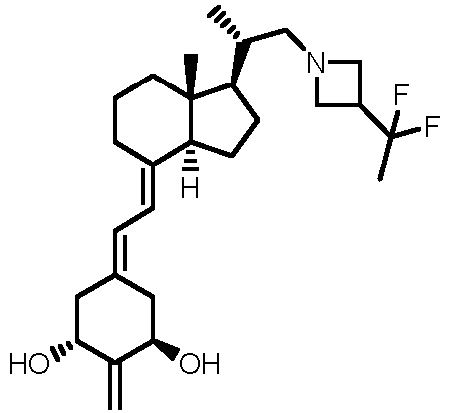
A008 
A009 
A010 
[Table 1-2] Compound number Compound number A011 
A012 
A013 
A014 
A015 
A016 
A017 
A018 
A019 
A020 
[Table 1-3] Compound number Compound number A021 
A022 
A023 
A024 
A025 
A026 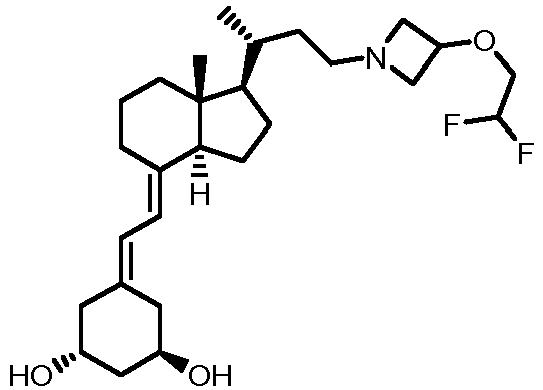
A027 
A028 
A029 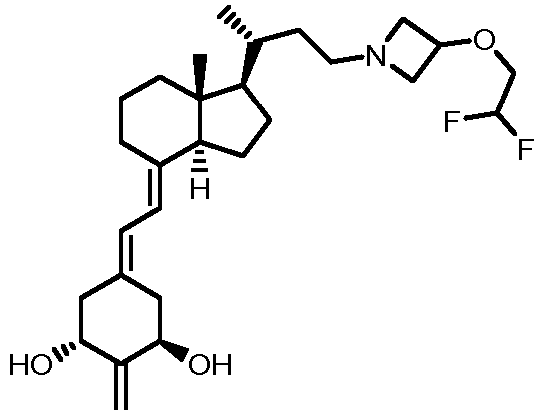
A030 
[Table 1-4] Compound number Compound number A031 
A032 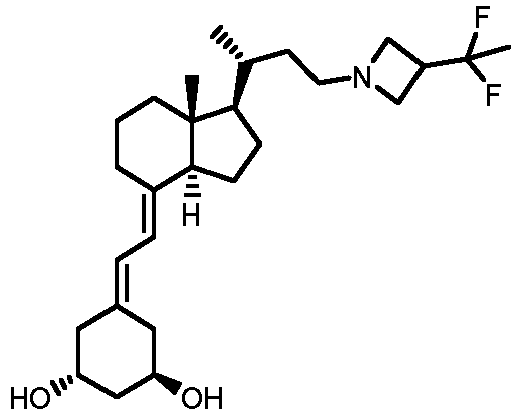
A033 
A034 
[Table 1-5] Compound number Compound number B001 
B002 
B003 
B004 
B005 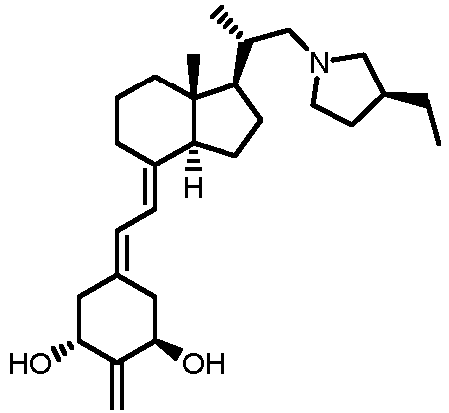
B006 
B007 
B008 
B009 
B010 
[Table 1-6] Compound number Compound number B011 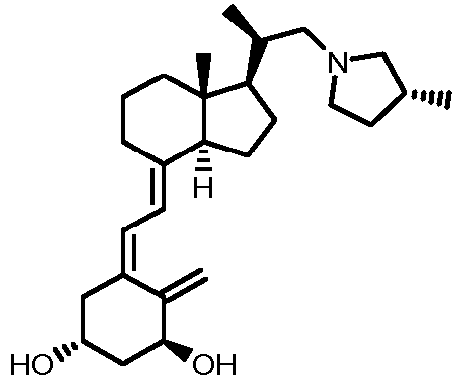
B012 
B013 
B014 
B015 
B016 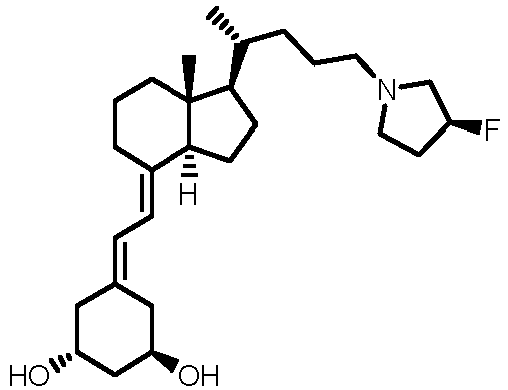
B017 
B018 
B019 
B020 
[Table 1-7] Compound number Compound number B021 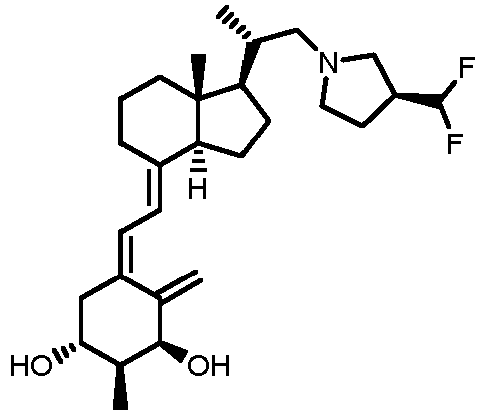
B022 
B023 
B024 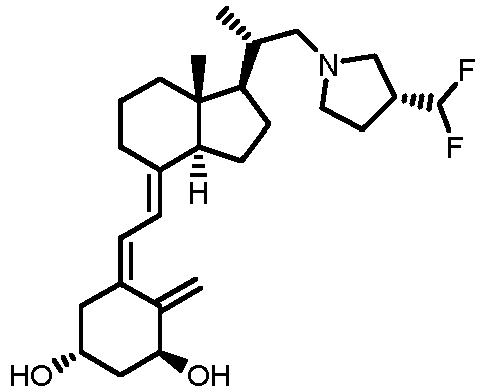
B025 
B026 
B027 
B028 
B029 
B030 
[Table 1-8] Compound number Compound number B031 
B032 
B033 
B034 
B035 
B036 
B037 
B038 
B039 
B040 
[Table 1-9] Compound number Compound number B041 
B042 
B043 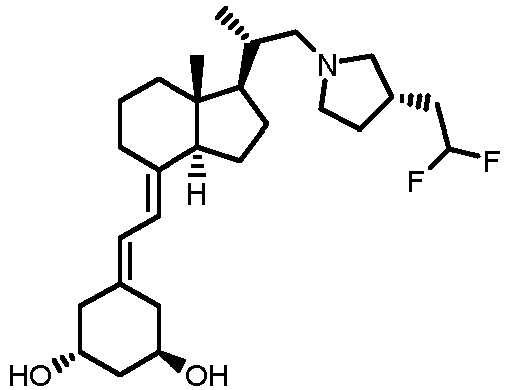
B044 
B045 
B046 
B047 
B048 
B049 
B050 
[Table 1-10] Compound number Compound number B051 
B052 
B053 
B054 
B055 
B056 
B057 
B058 
B059 
B060 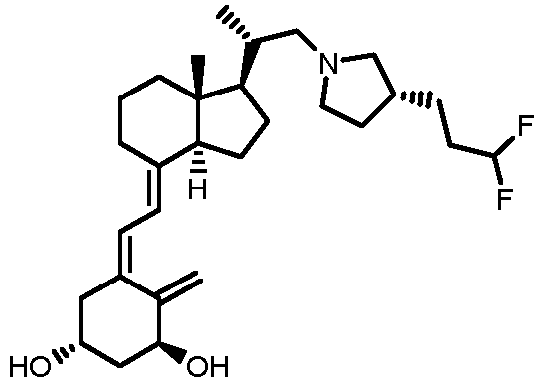
[Table 1-11] Compound number Compound number B061 
B062 
B063 
B064 
B065 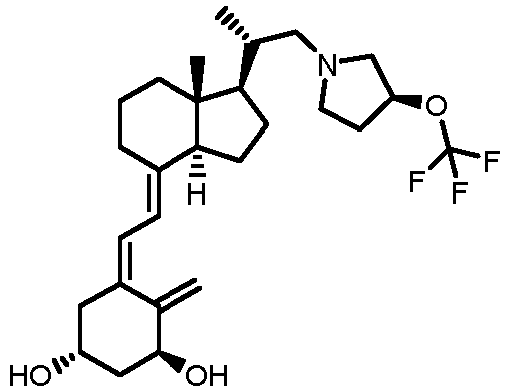
B066 
B067 
B068 
B069 
B070 
[Table 1-12] Compound number Compound number B071 
B072 
B073 
B074 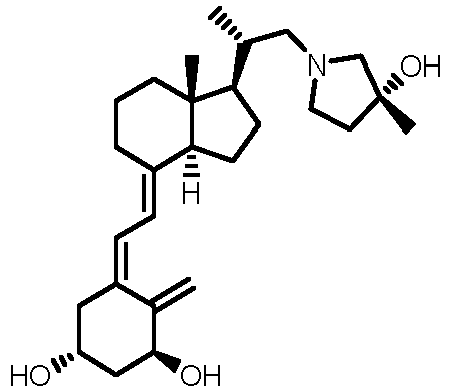
B075 
B076 
B077 
B078 
B079 
B080 
[Table 1-13] Compound number Compound number B081 
B082 
B083 
B084 
B085 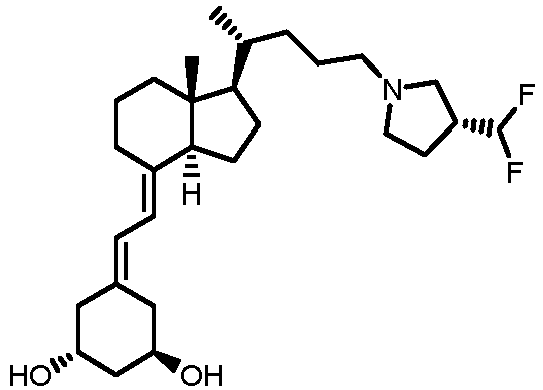
B086 
B087 
B088 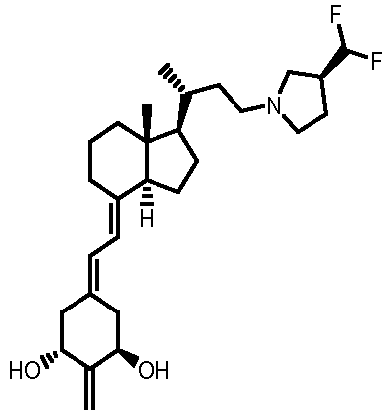
B089 
B090 
[Table 1-14] Compound number Compound number B091 
B092 
B093 
B094 
B095 
B096 
B097 
B098 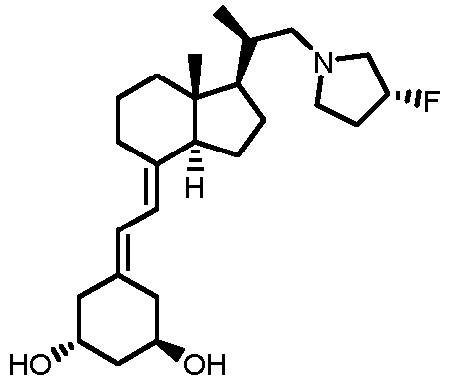
B099 
B100 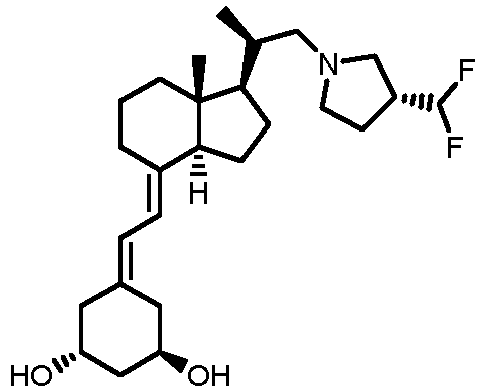
[Table 1-15] Compound number Compound number B101 
B102 
B103 
[Table 1-16] Compound number 
Compound number 
C001 
C002 
C003 
C004 
C005 
C006 
C007 
C008 
C009 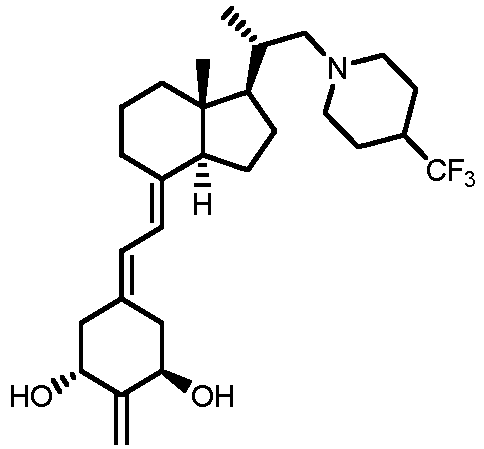
C010 
[Table 1-17] Compound number 
Compound number 
C011 
C012 
C013 
C014 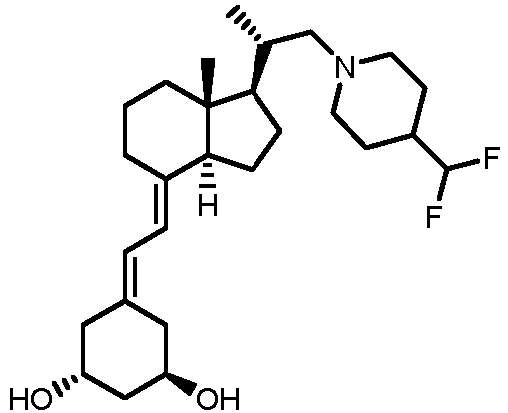
C015 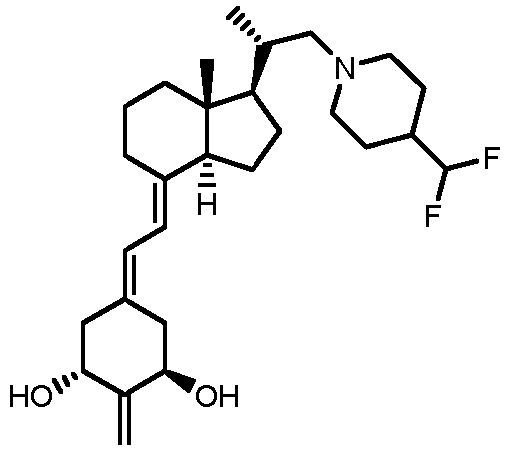
C016 
C017 
C018 
C19 
C020 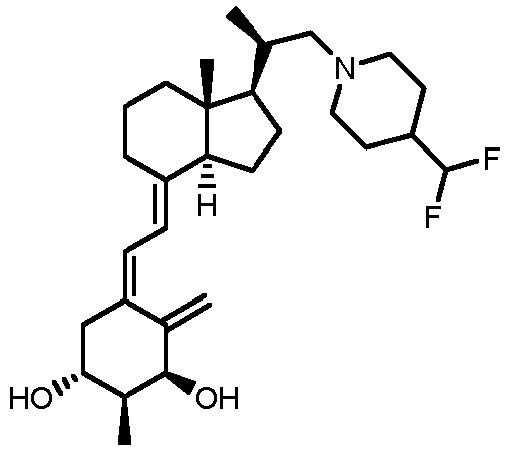
[Table 1-18] Compound number 
Compound number 
C021 
C022 
C023 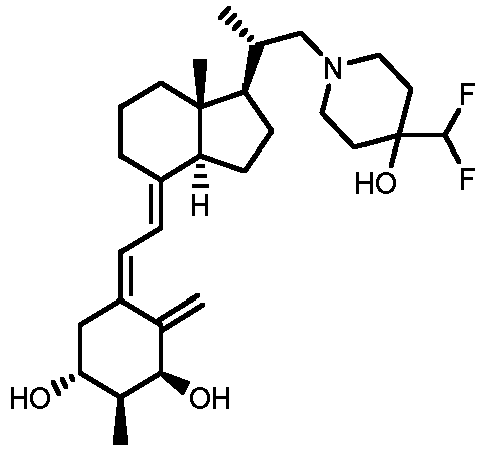
C024 
C025 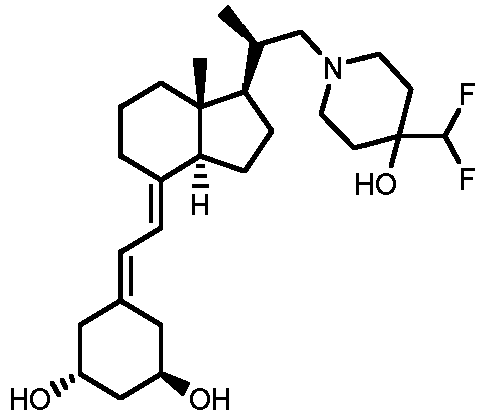
C026 
C027 
C028 
C029 
C030 
[Table 1-19] Compound number 
Compound number 
C031 
C032 
C033 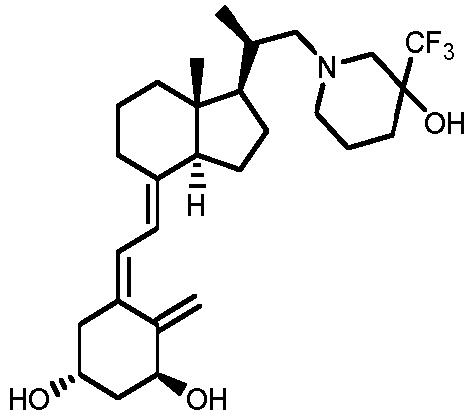
C034 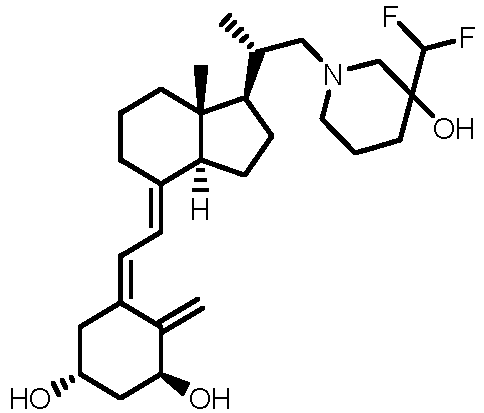
C035 
C036 
C037 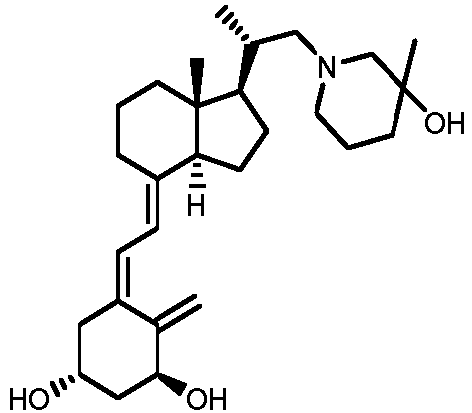
C038 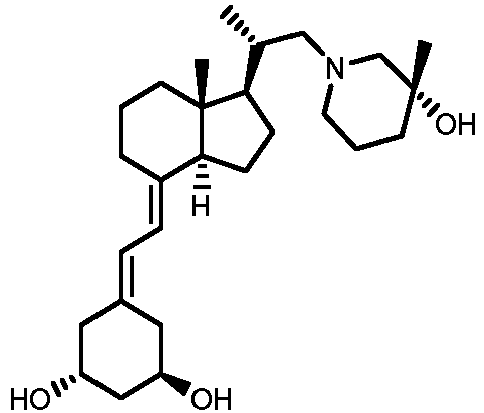
C039 
C040 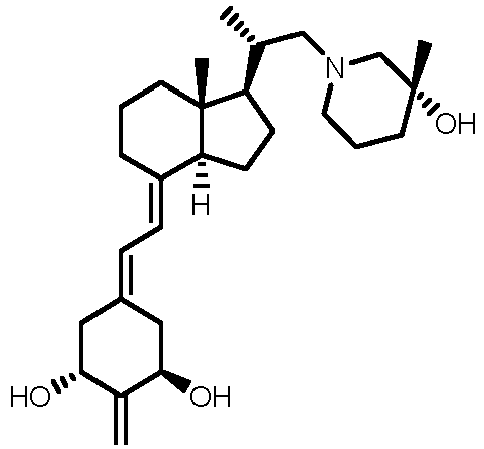
[Table 1-20] Compound number 
Compound number 
C041 
C042 
C043 
C044 
C045 
C046 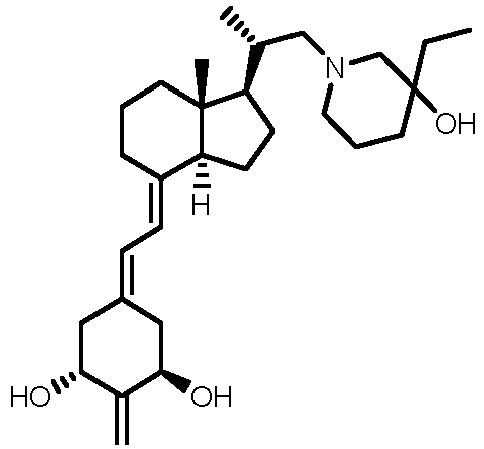
C047 
C048 
C049 
C050 
[Table 1-21] Compound number 
Compound number 
C051 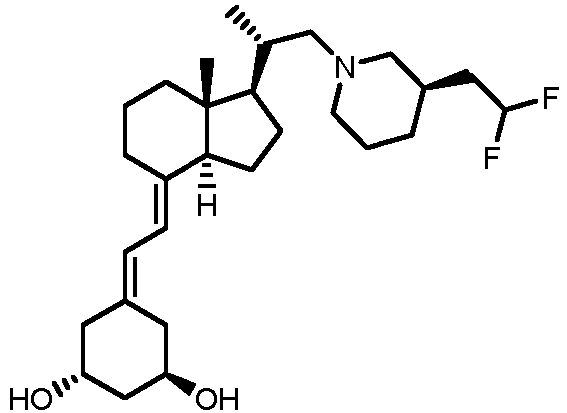
C052 
C053 
C054 
C055 
C056 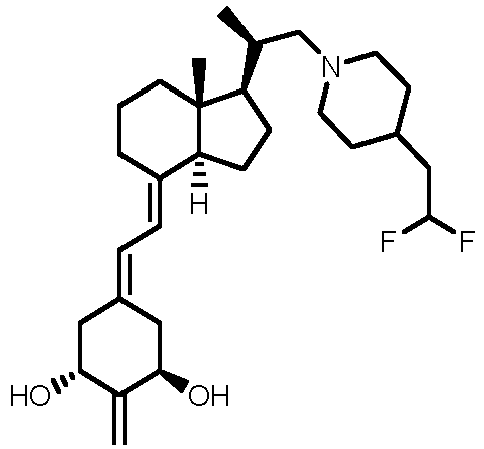
C057 
C058 
C059 
C060 
[Table 1-22] Compound number Compound number D001 
D002 
D003 
D004 
D005 
D006 
D007 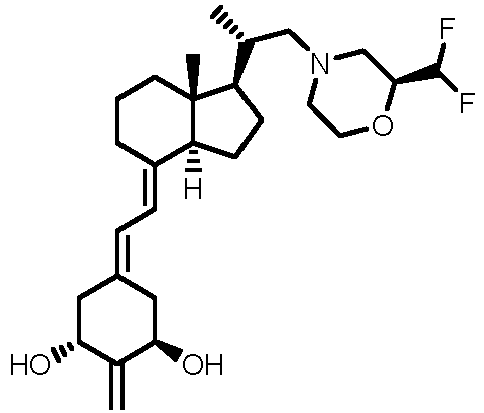
D008 
D009 
D010 
[Table 1-23] Compound number Compound number D011 
D012 
D013 
D014 
D015 
D016 
D017 
D018 
D019 
D020 
[Table 1-24] Compound number Compound number D021 
D022 
D023 
D024 
D025 
D026 
D027 
D028 
D029 
D030 
[Table 1-25] Compound number Compound number D031 
D032 
D033 
D034 
D035 
D036 
D037 
D038 
D039 
D040 
[Table 1-26] Compound number Compound number D041 
D042 
D043 
D044 
D045 
D046 
D047 
D048 
D049 
[Table 1-27] Compound number Compound number E001 
E002 
E003 
E004 
E005 
E006 
E007 
E008 
E009 
[Table 1-28] Compound number Compound number F001 
F002 
F003 
F004 
F005 
F006 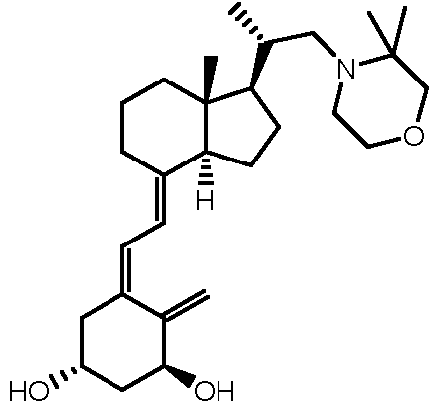
F007 
F008 
F009 
F010 
[Table 1-29] Compound number Compound number F011 
F012 
F013 
F014 
F015 
F016 
[Table 1-30] Compound number Compound number G001 
G002 
G003 
G004 
G005 
G006 
G007 
G008 
G009 
G010 
[Table 1-31] Compound number Compound number G011 
G012 
G013 
G014 
G015 
G016 
G018 
G020 
[Table 1-32] Compound number 
Compound number 
H001 
H002 
H003 
H011 
H012 
H013 
H014 
H015 
H016 
[Table 1-33] Compound number Compound number I001 
I002 
I003 
I004 
I005 
I006 
- Among these, more preferred compounds include:
- (1) (1R,3R)-5-(2-((1R,3aS,7aR,E)-1-((S)-1-((S)-3-(difluoromethyl)pyrrolidin-1-yl)propan-2-yl)-7a-methyloctahydro-4H-inden-4-ylidene)ethylidene)cyclohexane-1,3-diol (Compound B022)
- (2) (1R,3R)-5-(2-((1R,3aS,7aR,E)-1-((S)-1-((R)-3-(difluoromethyl)pyrrolidin-1-yl)propan-2-yl)-7a-methyloctahydro-4H-inden-4-ylidene)ethylidene)cyclohexane-1,3-diol (Compound B026)
- (3) (1R,3R)-5-(2-((1R,3aS,7aR,E)-1-((S)-1-((R)-3-(1,1-difluoroethyl)pyrrolidin-1-yl)propan-2-yl)-7a-methyloctahydro-4H-inden-4-ylidene)ethylidene)cyclohexane-1,3-diol (Compound B034)
- (4) (1R,3R)-5-(2-((1R,3aS,7aR,E)-1-((S)-1-((S)-3-(2,2-difluoroethyl)pyrrolidin-1-yl)propan-2-yl)-7a-methyloctahydro-4H-inden-4-ylidene)ethylidene)cyclohexane-1,3-diol (compound B043)
- (5) (1R,3R)-5-(2-((1R,3aS,7aR,E)-7a-methyl-1-((R)-4-morpholinobutan-2-yl)octahydro-4H-inden-4-ylidene)ethylidene)cyclohexane-1,3-diol (compound D023)
- (6) (1R,3R)-5-(2-((1R,3aS,7aR,E)-1-((S)-1-(3,3-dimethylmorpholino)propan-2-yl)-7a-methyloctahydro-4H-inden-4-ylidene)ethylidene)cyclohexane-1,3-diol (compound G006).
- A vitamin D derivative of the present invention can be converted into a pharmaceutically acceptable salt thereof, as necessary. Examples of such a salt include hydrochloride, hydrobromide, methanesulfonate, para-toluenesulfonate, acetate, trifluoroacetate, fumarate, maleate, malate, succinate, oxalate, citrate, and benzoate. Particularly preferred salts include hydrochloride, acetate, fumarate, maleate, malate, and succinate.
- In addition, a vitamin D derivative of the present invention can be converted into a pharmaceutically acceptable solvate thereof, as necessary. Examples of such a solvent include water, methanol, ethanol, 1-propanol, 2-propanol, butanol, acetonitrile, acetone, methyl ethyl ketone, methyl acetate, and ethyl acetate. Particularly, preferred salts include water, methanol, ethanol, and acetonitrile.
- A vitamin D derivative represented by the above formula (1) may be synthesized by any method. For example, when n = 1 in the above formula (1), synthesis can be performed as in scheme 1. That is, the target product (1) can be obtained by coupling compound (2) and cyclic amine compound (3) in the presence of a base, then deprotecting the protecting group of a hydroxy group, and purifying.

- Further, R31 in compound (2) represents a protecting group for a hydroxy group. Examples of the protecting group include a trimethylsilyl group (TMS), a triethylsilyl group (TES), a t-butyldimethylsilyl group (TBS), and a t-butyldiphenylsilyl group (TBDPS) group. Among these, a t-butyldimethylsilyl group (TBS) is preferable.)
- The cyclic amine compound (3) used to be subjected to the coupling reaction (step 1) with compound (2) may be a free form or a salt. The base in this step is not particularly limited, and examples of a preferred base include potassium carbonate, potassium hydrogen carbonate, and cesium carbonate. The base is added in an amount of 1 to 5 equivalents, and preferably 3 to 5 equivalents. Further, in order to accelerate the reaction, potassium iodide or sodium iodide may be added to the reaction mixture. The amount of potassium iodide or sodium iodide to be added is preferably 1 to 2 equivalents. The solvent is also not particularly limited, and examples of a preferred solvent include N,N-dimethylformamide, and N-methyl-2-pyrrolidone. The coupling reaction is preferably performed at a temperature of 40°C to 70°C and for a reaction time of 6 hours to 48 hours.
- Step 1 may proceed to the deprotection reaction (step 2) after purification, or may proceed to the deprotection reaction (step 2) with the crude product of step 1.
- The condition for the deprotection reaction (step 2) in the above scheme 1 is not particularly limited as long as it satisfies the deprotection condition for a silyl protecting group, and there can be mentioned deprotection with tetrabutylammonium fluoride (TBAF) or deprotection with hydrochloric acid. Preferable conditions are as follows, in tetrahydrofuran (THF), addition of 1 to 3 equivalents of tetrabutylammonium fluoride (TBAF) per hydroxy group, and stirring at room temperature to reflux temperature. Another preferable condition is as follows: in acetone or 2-butane, addition of 1 to 3 equivalents of hydrochloric acid per hydroxy group, and stirring at room temperature. The concentration of hydrochloric acid is preferably 1 M to 6 M. The vitamin D derivative (1) of the present invention can be obtained through purification after the posttreatment of the reaction by a generally used purification method, such as silica gel column chromatography or HPLC.
- The compound of the above formula (2) can be synthesized, for example, as in the following
scheme 2.
above scheme 2 are the same as defined in the above formula (1). R30 and R31 are the same as defined in Scheme 1.) - That is, compound (2) can be obtained by a coupling reaction with subjecting phosphine oxide derivative (4) and ketone (5) under a basic condition. Examples of a preferred base in this coupling reaction include sodium hydride, n-butyllithium, lithium diisopropylamide (LDA), lithium bis(trimethylsilyl)amide (LHMDS), potassium bis(trimethylsilyl)amide (KHMDS), and sodium bis(trimethylsilyl)amide (NaHMDS). The use amount of the base is preferably 1.1 to 2 equivalents of compound 4. The reaction is preferably carried out at -78 to -0°C for 1 to 3 hours.
- In the above formula (2), when R30 is a para-toluenesulfonyl group (OTs) and R31 is a t-butyldimethylsilyl group (TBS), each compound of combination as shown in the table below is well-known.
[Table 2] Compound Configuration at C-20 X3 X1 and X2 CAS Registry No. 2a S C=CH2 X1, X2 = H 114694-13-2 2b S CH2 X1, X2 = H 1621078-74-2 2c S CH2 X1and X2 together form methylene (=CH2) 610304-70-6 2d R C=CH2 X1, X2 = H 302904-94-5 2e R CH2 X1 and X2 together form methylene (=CH2) 1251827-23-2 - If a compound in the above formula (2) is not well-known, it can be synthesized as follows.
- For example, when X1 is a methyl group, X2 is a hydrogen atom, and X3 is C=CH2, the compound can be synthesized as in scheme 3 below. That is, in the presence of a Pd catalyst, compound (2g) can be synthesized by coupling reaction with well-known compound (6c) (CAS Registry No. 173388-39-1) and well-known compound (7b) (CAS Registry No. 203126-90-3). The target vitamin D derivative (1) can be obtained, in the same manner as in Scheme 1, from compound (2g) by coupling with cyclic amine compound (3) and deprotecting.

- The vitamin D derivative represented by the above formula (1) can be obtained by a different synthesis method: well-known compound (6c) and cyclic amine compound (3) are subjected to a coupling reaction in the presence of a base to synthesize compound (8), compound (8) is subjected to a coupling reaction with compound (9) in the presence of a Pd catalyst, followed by a deprotection reaction.

- The compound with n = 2 in the above formula (1) can be synthesized, for example, as in
scheme 5 below. That is, compound (11) is obtained by tosylating the primary hydroxy group of well-known compound (10) (CAS Registry No. 300344-39-2), then desilylating, and oxidizing. Compound (11) and compound (4) described inscheme 2 are subjected to a coupling reaction to obtain compound (12). Using compound (12), cyclic amine compound (3) is subjected to a coupling reaction and a deprotection reaction in the same manner as in scheme 1 to obtain the vitamin D derivative (1) of the present invention.
- Using compound (2) (n = 1) of scheme 1, the vitamin D derivative (1) (n = 2) can be synthesized in the manner as in scheme 6 below. That is, compound (2) is subjected to nitrilation to obtain compound (13), compound (13) is treated with diisobutylaluminum hydride (DIBAL-H) to obtain aldehyde form compound (14), aldehyde form compound (14) is then reduced to obtain alcohol form compound (15). Compound (15) is tosylated to obtain OTs form compound (16), and then compound (16) is subjected to a coupling reaction with cyclic amine compound (3) in the same manner as in scheme 1, followed by deprotection to obtain the target vitamin D derivative represented by the above formula (1). Each reaction in Scheme 6 of cyanation, DIBAL reduction, and reduction of aldehyde group is performed under commonly used conditions. For example, the cyanation is performed by reaction with 1 to 3 equivalents of KCN and 0.1 to 0.3 equivalents of 18-crown-6 in N,N-dimethylformamide. The reaction temperature is preferably 80°C to 100°C. DIBAL reduction is performed in about 0.5 to 2 hours by adding 1 to 2 equivalents of diisobutylaluminum hydride (DIBAL-H) in toluene at -78°C to 0°C. The reduction of aldehyde group is performed by reaction with 1 to 3 equivalents of sodium borohydride (NaBH4) at 0°C to room temperature to afford the compound (16).


- In addition to the above schemes, as shown in the following scheme 7, aldehyde form compound (14) is subjected to a reductive amination with cyclic amine compound (3) and subsequent deprotection to synthesize the vitamin D derivative represented by the above formula (1).


- The reductive amination reagent is preferably sodium triacetoxyborohydride, sodium cyanoborohydride, or the like.
- The solvent is not particularly limited, but a preferred solvent is THF.
- The reaction may also be carried out using the cyclic amine compound (3) as a solvent.
- The reductive amination reaction can be carried out, for example, by reacting compound (14) with 1 to 5 equivalents of amine compound (3) and a reductive reagent (1 to 3 equivalents) in tetrahydrofuran (THF), followed by a deprotection reaction to give compound (1).
- When n=2 for the cases of R=Rc and R=Re, synthesis can be performed, for example, as shown in Scheme 8 below. That is, the tosyl group of compound (2) (R30=OTs) is substituted to a cyano group to obtain compound (13b), which is then subjected to DIBAL reduction to obtain compound (14b). Compound (14b) is subjected to a reductive amination reaction with amine (3) to obtain compound (15), which is then deprotected to obtain the vitamin D derivative (1) (R = Rc, Re) of the present invention. Each reaction of cyanation, DIBAL reduction, and reductive amination in Scheme 8 proceeds under the same conditions as those described in Schemes 6 and 7. The reductive amination reaction proceeds under the same conditions as those described in Scheme 7.

- The vitamin D derivative represented by formula (1) or a pharmaceutically acceptable salt or solvate thereof has excellent central nervous system penetration and also has an excellent action of promoting differentiation of oligodendrocyte progenitor cells or neural stem cells into oligodendrocytes. The excellent action of promoting induction of differentiation into oligodendrocyte allows the vitamin D derivative represented by formula (1) or a pharmaceutically acceptable salt or solvate thereof to be useful as a remyelination promoter.
- The vitamin D derivative represented by formula (1) or a pharmaceutically acceptable salt or solvate thereof can be used as a clinically applicable remyelination promoter for treating diseases associated with demyelination or dysmyelination, such as multiple sclerosis, neuromyelitis optica, progressive multifocal leukoencephalopathy, multiple system atrophy, acute disseminated encephalomyelitis, atopic myelitis, HTLV-1-associated myelopathy, HIV-associated leukoencephalopathy, Krabbe's disease, Guillain-Barre syndrome, Fisher's syndrome, chronic inflammatory demyelinating polyneuropathy, Charcot-Marie-Tooth disease, Parkinson's disease, schizophrenia, bipolar disorder, major depressive disorder, autistic spectrum disorder, attention deficit hyperactivity disorder, obsessive-compulsive disorder, post-traumatic stress disorder, drug-dependent depression, autism, Alzheimer-type dementia, and ischemic stroke.
- The present invention relates to a medicine for promoting induction of differentiation of oligodendrocyte progenitor cells into oligodendrocytes and a medicine for promoting remyelination, both used in combination with an immunosuppressant and containing a vitamin D derivative represented by formula (1). Immunosuppressants, though capable of reducing the frequency and severity of attacks or the accumulation of lesions, are considered not to promote remyelination of damaged axons. Use of a vitamin D derivative represented by formula (1) in combination with an immunosuppressant allows expectation for enhancing the therapeutic effect of the immunosuppressant and for the effect of further promoting induction of differentiation from oligodendrocyte progenitor cells into oligodendrocytes.
- Examples of the immunosuppressants usable in combination with the vitamin D derivative represented by formula (1) include fingolimod (FTY720), interferon β-1a, interferon β-1b, glatiramer acetate, mitoxantrone, natalizumab, siponimod, ozanimod, ponesimod, dimethyl fumarate, diroximel fumarate, cladribine, ocrelizumab, rituximab, ofatumumab, ublituximab, alemtuzumab, divozilimab, evobrutinib, orelabrutinib, tolebrutinib, remibrutinib, and fenebrutinib, and particularly preferred is fingolimod (FTY720).
- The medicine for promoting induction of differentiation of oligodendrocyte progenitor cells into oligodendrocytes and the medicine for promoting remyelination, both containing a vitamin D derivative represented by the above formula (1) or a pharmaceutically acceptable salt or solvate thereof, are used with those typically used in formulations, such as carrier, base, excipient, and other additives to prepare a pharmaceutical composition. The carrier, base and excipient used in pharmaceutical compositions may be solid or liquid, and examples thereof include lactose, magnesium stearate starch, talc, gelatin, agar, pectin, gum arabic, olive oil, sesame oil, cocoa butter, ethylene glycol, and medium chain fatty acid triglycerides, as well as others commonly used. Administration may be in any form such as oral administration by tablet, pill, capsule, soft capsule, granule, powder, liquid, etc., or parenteral administration by injection such as intravenous injection, intramuscular injection, etc., suppository, transdermal and nasal administration, etc.
- The present invention relates to a medicine for promoting induction of differentiation of oligodendrocyte progenitor cells into oligodendrocytes and a medicine for promoting remyelination, both containing a vitamin D derivative represented by formula (1) or a pharmaceutically acceptable salt or solvate thereof and an immunosuppressant. The medicine containing a vitamin D derivative represented by formula (1) and an immunosuppressant is used with those typically used in formulations, such as carrier, base, excipient, and other additives to prepare a pharmaceutical composition as described above, and administered as described above.
- In some embodiments, the present invention involves use of a vitamin D derivative represented by formula (1) and/or an immunosuppressant at a therapeutically effective dose or optimal dose. In some embodiments, the present invention involves use of a vitamin D derivative represented by formula (1) and/or an immunosuppressant at a subtherapeutic dose. In some embodiments, the present invention involves use of a vitamin D derivative represented by formula (1) at a therapeutically effective dose or optimal dose and an immunosuppressant at a subtherapeutic dose. In some embodiments, the present invention involves use of an immunosuppressant at a therapeutically effective dose or optimal dose and a vitamin D derivative represented by formula (1) at a subtherapeutic dose.
- In some embodiments, a vitamin D derivative represented by formula (1) and/or an immunosuppressant are formulated as a therapeutically effective dose or optimal dose. In some embodiments, a vitamin D derivative represented by formula (1) and/or an immunosuppressant are formulated as a subtherapeutic dose. In some embodiments, a vitamin D derivative represented by formula (1) is formulated as a therapeutically effective dose or optimal dose and an immunosuppressant is formulated as a subtherapeutic dose. In some embodiments, an immunosuppressant is formulated as a therapeutically effective dose or optimal dose and a vitamin D derivative represented by formula (1) is formulated as a subtherapeutic dose.
- As used herein, the term "therapeutically effective dose or optimal dose" refers to a dose that can exert the therapeutic effect for the administration purpose in a single administration. The exact dose will differ depending on the purpose of the treatment, and will be ascertainable by one skilled in the art using known techniques (see, e.g., Lieberman, Pharmaceutical Dosage Forms (vols. 1-3, 1992); Lloyd, The Art, Science and Technology of Pharmaceutical Compounding (1999); Pickar, Dosage Calculations (1999); and Remington: The Science and Practice of Pharmacy, 20th Edition, 2003, Gennaro, Ed., Lippincott, Williams & Wilkins.).
- As used herein, the term "subtherapeutic dose" refers to a dose of a pharmacologically active agent in a single administration, either as an administered dose of the pharmacologically active agent, or as an actual level of the pharmacologically active agent in a subject, that is functionally insufficient to exert an intended pharmacological effect by itself, or that is quantitatively less than the established therapeutic dose of the particular pharmacological agent (e.g., those listed in references consulted by one skilled in the art, such as the doses for pharmacological agents listed in Physicians' Desk Reference, 66th Ed., 2012, PDR Network, LLC; or Brunton, et al., Goodman & Gilman's The Pharmacological Basis of Therapeutics, 12th edition, 2011, McGraw-Hill Professional). A "subtherapeutic dose" can be defined in relative terms (i.e., as a percentage amount (less than 100%) of the conventionally administered amount of the pharmacologically active agent). For example, the amount of a subtherapeutic dose may be about 1% to about 75% of the conventionally administered amount of pharmacologically active agent. In some embodiments, a subtherapeutic dose may be about 75%, 50%, 30%, 25%, 20%, 10%, or less of the conventionally administered amount of pharmacologically active agent.
- The therapeutically effective amount of the active ingredient in the medicine of the present invention containing a vitamin D derivative represented by formula (1) varies depending on the administration route, the age and sex of the patient, and the severity of the disease, but is usually about 0.1 to 10000 µg/day, and the frequency of administration is usually 1 to 3 times/day to 1 to 3 times/week, and the formulation is preferably prepared to satisfy such conditions. However, since the dose varies depending on various conditions, a dose smaller than the above dose sometimes may be sufficient, and a dose exceeding the above range sometimes may be required. When used in combination with an immunosuppressant, the medicine may be used at a subtherapeutic dose, such as less than about 75%, less than about 70%, less than about 60%, less than about 50%, less than about 40%, less than about 30%, less than about 25%, less than about 20%, less than about 15%, less than about 10%, and less than about 5% of the above-mentioned dose.
- The immunosuppressant used in combination with the medicine of the present invention containing a vitamin D derivative represented by formula (1) is used at a therapeutically effective dose or a subtherapeutic dose. For example, a therapeutically effective dose of benztropine is about 1 mg per day to about 10 mg per day, a therapeutically effective dose of fingolimod is about 0.1 mg per day to about 1.5 mg per day, a therapeutically effective dose of interferon β-1a is about 30 µg per week, and a therapeutically effective dose of interferon β-1b is about 250 µg every other day to about 500 µg every other day. The immunosuppressant may be used at a subtherapeutic dose, such as less than about 75%, less than about 70%, less than about 60%, less than about 50%, less than about 40%, less than about 30%, less than about 25%, less than about 20%, less than about 15%, less than about 10%, or less than about 5% of the conventionally administered dose of the immunosuppressant. For example, fingolimod may be used at a subtherapeutic dose of about 0.005 mg per day to about 0.375 mg per day, interferon β-1a may be used at a subtherapeutic dose of about 0.3 µg per week to about 23 µg per week, and interferon β-1b may be used at a subtherapeutic dose of about 2 µg every other day to about 190 µg every other day.
- Fingolimod (FTY720) is conventionally administered at a therapeutically effective dose of about 0.5 mg per day to about 1.5 mg per day (e.g., about 0.5, about 0.6, about 0.7, about 0.8, about 0.9, about 1.0, about 1.1, about 1.2, about 1.3, about 1.4 or about 1.5 mg per day). See, e.g., Kappos et al., N Engl J Med 362:387-401 (2010). Therefore, in some embodiments, the subtherapeutic dose of fingolimod is about 0.005 mg per day to about 0.375 mg per day (e.g., about 0.005, about 0.01, about 0.02, about 0.03, about 0.04, about 0.05, about 0.06, about 0.07, about 0.08, about 0.09, about 0.1, about 0.15, about 0.2, about 0.25, about 0.3, about 0.35, or about 0.375 mg per day).
- The present invention provides a method for combined use of a medicine containing a vitamin D derivative represented by formula (1) and an immunosuppressant, for promoting induction of differentiation of oligodendrocyte progenitor cells into oligodendrocytes or for promoting remyelination.
- The medicine containing a vitamin D derivative represented by formula (1) and an immunosuppressant may be administered together or separately, and may be administered at the same time or at different times. When administered, the medicine containing a vitamin D derivative represented by formula (1) and an immunosuppressant can be independently administered at a frequency of once, twice, three times, four times, or more, or less per day, as needed. In some embodiments, these agents are administered once per day. In some embodiments, the agents are administered at the same time or same times, e.g., as a mixture. One or more of the agents can be administered as a sustained release formulation.
- In some embodiments, the combined administration of a medicine containing a vitamin D derivative represented by formula (1) and an immunosuppressant includes administering one active agent within 0.5, 1, 2, 4, 6, 8, 10, 12, 16, 20, or 24 hours of an administration of a second active agent. The combined administration includes administrations of two active agents at the same time, at about the same time (e.g., within about 1, 5, 10, 15, 20, or 30 minutes from each other), or sequentially in any order. In some embodiments, the combined administration may be achieved by co-formulation, i.e., preparing a single pharmaceutical composition containing both active agents (i.e., administered as a medicine containing a vitamin D derivative represented by formula (1) and an immunosuppressant). In another embodiment, active agents and/or adjuvant agents may be bound or conjugated to one another.
- In some embodiments, a medicine containing a vitamin D derivative represented by formula (1) and/or an immunosuppressant can be prophylactically administered to prevent the undesired recurrence of symptoms of a demyelinating disease such as multiple sclerosis (e.g., to prevent or delay the recurrence of clinical attacks in multiple sclerosis), or therapeutically administered to achieve a desired alleviation of symptoms of a demyelinating disease and maintain such alleviation of symptoms of a demyelinating disease over a sustained period of time.
- In another aspect, the present invention provides a kit for use in the treatment of multiple sclerosis, neuromyelitis optica, progressive multifocal leukoencephalopathy, multiple system atrophy, acute disseminated encephalomyelitis, atopic myelitis, HTLV-1-associated myelopathy, HIV-associated leukoencephalopathy, Krabbe's disease, Guillain-Barre syndrome, Fisher's syndrome, chronic inflammatory demyelinating polyneuropathy, Charcot-Marie-Tooth disease, Parkinson's disease, schizophrenia, bipolar disorder, major depressive disorder, autistic spectrum disorder, attention deficit hyperactivity disorder, obsessive-compulsive disorder, post-traumatic stress disorder, drug-dependent depression, autism, Alzheimer-type dementia, and ischemic stroke. In some embodiments, the kit comprises a medicine containing a vitamin D derivative represented by formula (1) and an immunosuppressant.
- Hereinafter, the present invention will be described in more detail with reference to Examples, but the present invention is not limited thereto.
- The abbreviations in the present invention are as follows.
- Boc = t-butoxycarbonyl
- DAST = diethylaminosulfur trifluoride
- DIBAL-H = diisobutylaluminum hydride
- DMF = N,N-dimethylformamide
- LHMDS = lithium hexamethyldisilazane
- MBP = myelin basic protein
- MS4A = molecular sieves 4A
- NMO = N-methylmorpholine N-oxide
- NMP = N-methyl-2-pyrrolidone
- PTLC = preparative thin-layer chromatography
- TBAF = tetrabutylammonium fluoride
- TBS = t-butyldimethylsilyl group
- TES = triethylsilyl group
- TESCl = chlorotriethylsilane
- THF = tetrahydrofuran
- TPAP = tetrapropylammonium perruthenate
- Ts = p-toluenesulfonyl
- TsCl = p-toluenesulfonyl chloride
- In the following examples, when the compound of the present invention is obtained by preparative HPLC, the preparative conditions are as follows. Column: YMC-Pack ODS AM (inner diameter 3-30 cm) manufactured by YMC Co., Ltd. Mobile phase A solution: 5% acetonitrile-water (with 0.1% acetic acid) Mobile phase B solution: 95% acetonitrile-water (with 0.1% acetic acid)
- Addition amount: Crude product is dissolved in 1.3 mL of methanol and injected.
- Liquid delivery amount: 12 mL/min
- UV: 265 nm
- Liquid delivery program:
- 0 to 5 minutes: 5% B solution/95% A solution
- 5 to 45 minutes: Gradient to 100% B solution in 40 minutes
- 45 to 50 minutes: 100% B solution
- 50 to 55 minutes: Gradient to 5% B solution/95% A solution in 5 minutes
- When the analysis is performed by HPLC/MS in the following examples, the analysis conditions are as follows.
- Column: Gemini C18 (3 µm, inner diameter 4.6-30 mm) manufactured by Phenomenex Inc.
- Mobile phase A solution: 5% acetonitrile-water (with 0.1% trifluoroacetic acid)
- Mobile phase B solution: 95% acetonitrile-water (with 0.1% trifluoroacetic acid)
- Liquid delivery amount: 1.2 mL/min
- UV: 254 nm
- Liquid delivery program:
- 0 to 0.01 minutes: 2% B solution/98% A solution
- 0.01 to 0.3 minutes: Gradient to 40% B solution/60% A solution
- 0.3 to 2.3 minutes: Gradient to 100% B solution
- 2.3 to 4.2 minutes: 100% B solution
- 4.2 to 4.3 minutes: Gradient to 2% B solution/98% A solution
- 4.3 to 5.2 minutes: 2% B solution/98% A solution
- 5.2 minutes: Analysis completed
-
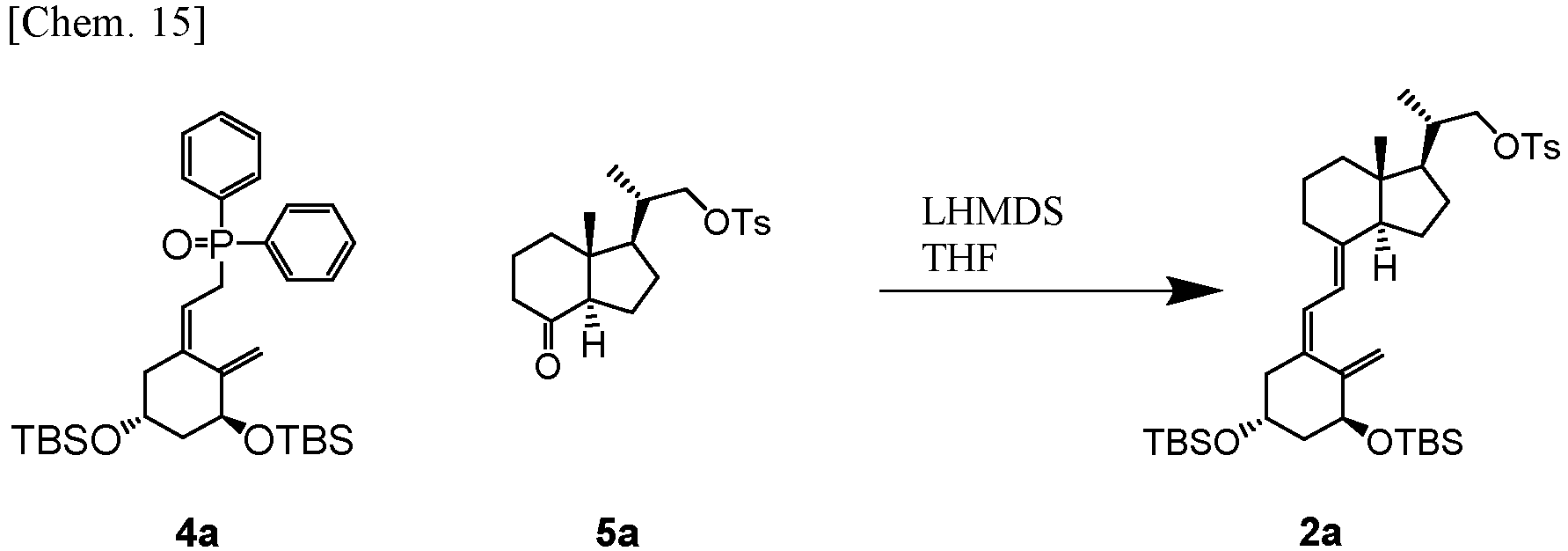
- Under an argon atmosphere, LHMDS [1 M in toluene, 10 mL] was added to a solution of ((Z)-2-((3 S,5R)-3,5-bis((t-butyldimethylsilyl)oxy)-2-methylenecyclooxylidene)ethyl)diphenylphosphine oxide (Compound 4a, CAS Registry No. 81522-68-1) [7.42 g, 12.7 mmol] in THF [50 mL], and the mixture was stirred at - 78°C for 1 hour. To the mixture, a solution of (2S)-2-((11R,3aR,7aR)-7a-methyl-4-oxooctadehydro-1H-inden-1-yl)propyl 4-methylbenzenesulfonate (Compound (5a), CAS Registry No. 342645-83-4) [3.6 g, 9.9 mmol] in THF [20 mL] was added and the mixture was further stirred at the same temperature for 1 hour. The reaction mixture was warmed to room temperature and stirred for 30 minutes. A saturated aqueous ammonium chloride solution was added to the reaction mixture, and the mixture was extracted with a mixed solvent of heptane/ethyl acetate (1/1). The organic layer was washed with water followed by 50% methanol-water, dried over anhydrous magnesium sulfate, and concentrated under reduced pressure. The residue was purified by silica gel column chromatography to obtain compound (2a) [4.79 g, 6.57 mmol] (Yield = 67%).
1H-NMR (CDCl3) δ: 7.79 (2H, d, J = 8.2 Hz), 7.31 (2H, d, J = 8.2 Hz), 6.22 (1H, d, J = 11.0 Hz), 5.99 (1H, d, J = 11.0 Hz), 5.17 (1H, d, J = 2.0 Hz), 4.84 (1H, d, J = 2.0 Hz), 4.38-4.16 (2H, m), 3.98 (1H, dd, J = 9.1, 3.2 Hz), 3.80 (1H, dd, J = 9.1, 6.4 Hz), 2.83 (1H, d, J = 12.3 Hz), 2.45 (3H, s), 2.42 (1H, d, J = 4.1 Hz), 2.22 (1H, dd, J = 13.0, 7.5 Hz), 1.97-1.57 (8H, m), 1.53-1.15 (9H, m), 0.99 (3H, d, J = 6.4 Hz), 0.87 (9H, s), 0.86 (9H, s), 0.49 (3H, s), 0.06 (9H, s), 0.04 (3H, s). -

- Under an argon atmosphere, LHMDS [1 M in toluene, 20 mL] was added to a solution of (2-((3R,5R)-3,5-bis((t-butyldimethylsilyl)oxy)cyclohexylidene)ethyl)diphenylphosphineoxide (Compound 4b, CAS Registry No. 139356-39-1) [8.55 g, 15.0 mmol] and (2S)-2-((1R,3aR,7aR)-7a-methyl-4-oxooctadehydro-1H-inden-1-yl)propyl 4-methylbenzenesulfonate (compound (5a), CAS Registry No.342645-83-4) [5.06 g, 13.9 mmol] in THF [85 mL] at -78°C and the mixture was stirred at -78°C for 2 hours. The reaction mixture was warmed to 0°C and stirred for 1 hour. A saturated aqueous ammonium chloride solution was added to the reaction mixture at room temperature, and the mixture was extracted with a mixed solvent of heptane/ethyl acetate (1/1). The organic layer was dried over anhydrous magnesium sulfate and concentrated under reduced pressure. Methanol was added to the residue to form a precipitate. The suspension was stirred for 2 hours. The precipitate was collected and dried to obtain compound (2b) [6.40 g, 8.92 mmol] (Yield = 64%).
1H-NMR (CDCl3) δ: 7.79 (2H, d, J = 8.2 Hz), 7.35 (2H, d, J = 8.2 Hz), 6.15 (1H, d, J = 11.0 Hz), 5.79 (1H, d, J = 11.4 Hz), 4.12-4.02 (2H, m), 3.98 (1H, dd, J = 9.1, 2.7 Hz), 3.81 (1H, dd, J = 9.1, 6.4 Hz), 2.80 (1H, dd, J = 12.1, 3.9 Hz), 2.46 (3H, s), 2.36 (2H, dd, J = 13.0, 4.8 Hz), 2.25 (1H, dd, J = 14.2, 2.7 Hz), 2.10 (1H, dd, J = 12.8, 8.2 Hz), 2.00-1.90 (2H, m), 1.80-1.60 (6H, m), 1.55-1.16 (6H, m), 0.99 (3H, d, J = 6.4 Hz), 0.87 (9H, s), 0.85 (9H, s), 0.50 (3H, s), 0.05 (3H, s), 0.05 (3H, s), 0.04 (6H, s). -

- Under an argon atmosphere, LHMDS [1 M in THF, 8.5 mL] was added to a solution of (2-((3R,5R)-3,5-bis((t-butyldimethylsilyl)oxy)-4-methylcyclohexylidene)ethyl)diphenylphosphineoxide (Compound (4c), CAS Registry No. 213250-64-7, 2.50 g, 4.29 mmol) and (2S)-2-((1R,3aR,7aR)-7a-methyl-4-oxooctadehydro-1H-inden-1-yl)propyl 4-methylbenzenesulfonate (Compound (5a), CAS Registry No. 342645-83-4, 2.35 g, 6.45 mmol) in THF [40 mL] at -78°C, and the mixture was stirred at -78°C for 2 hours. The reaction mixture was warmed to room temperature and quenched by adding a saturated aqueous ammonium chloride solution. The reaction mixture was extracted with ethyl acetate, the organic layer was dried over anhydrous magnesium sulfate, and concentrated under reduced pressure. The residue was purified by silica gel column chromatography to obtain compound (2c) (1.70 g, 2.30 mmol) (Yield = 54%).
1H-NMR (CDCl3) δ: 7.79 (2H, d, J = 8.8 Hz), 7.35 (2H, d, J = 7.8 Hz), 6.20 (1H, d, J = 11.2 Hz), 5.82 (1H, d, J = 11.2 Hz), 4.97 (1H, s), 4.92 (1H, s), 4.45-4.40 (2H, m), 3.99 (1H, dd, J = 9.3, 2.9 Hz), 3.81 (1H, dd, J = 9.0, 6.6 Hz), 2.81 (1H, dd, J = 12.2, 3.4 Hz), 2.54-2.42 (2H, m), 2.45 (3H, s), 2.32 (1H, dd, J = 13.2, 3.4 Hz), 2.17 (1H, dd, J = 12.7, 8.3 Hz), 2.02-1.90 (2H, m), 1.78-1.63 (4H, m), 1.55-1.15 (9H, m), 1.00 (3H, d, J = 6.3 Hz), 0.89 (9H, s), 0.85 (9H, s), 0.51 (3H, s), 0.07 (3H, s), 0.05 (3H, s), 0.04 (3H, s), 0.02 (3H, s). -

- Pivaloyl chloride [0.22 mL, 1.78 mmol] was added to a solution of (2S)-2-((1R,3aS,7aR,E)-4-(bromomethylene)-7a-methyloctahydro-1H-inden-1-yl)propan-1-ol (compound (6a), CAS Registry No. 218437-70-8) [345 mg, 1.20 mmol] in pyridine [7 mL] at 0°C, and the reaction mixture was stirred at room temperature for 1 hour. The reaction mixture was quenched with a saturated aqueous sodium hydrogen carbonate solution and transferred to saturated brine, and the mixture was extracted with ethyl acetate. The organic layer was dried over anhydrous magnesium sulfate and concentrated under reduced pressure. The residue was purified by silica gel column chromatography to obtain compound 6b [415 mg, 1.12 mmol] (Yield = 93%).
1H-NMR (CDCl3) δ: 5.67 (1H, d, J = 1.5 Hz), 4.07 (1H, dd, J = 10.7, 3.0 Hz), 3.79 (1H, dd, J = 10.7, 7.3 Hz), 2.95-2.85 (1H, m), 2.02-1.59 (9H, m), 1.55-1.25 (7H, m), 1.21 (9H, s), 1.03 (3H, d, J = 6.8 Hz), 0.59 (3H, s). - Compound 6b [415 mg, 1.12 mmol] obtained in step 1, (5R,6S,7R)-2, 2, 3, 3, 6, 9, 9,10,10-nonam ethyl-5 -(prop-2-yn-1-yl)-7-vinyl-4, 8-di oxa-3, 9-disilaundecane (Compound (7b), CAS Registry No. 203126-90-3) [513 mg, 1.34 mmol], and tetrakis(triphenylphosphine)palladium(0) [134.4 mg, 0.116 mmol] were added to a mixed solution of toluene [4 mL] and triethylamine [4 mL], and the mixture was heated and stirred at 100°C for 3 hours under a nitrogen atmosphere. After cooling to room temperature, saturated brine was added to the mixture, and the mixture was extracted with ethyl acetate. The organic layer was dried over anhydrous magnesium sulfate and concentrated under reduced pressure. The residue was purified by silica gel column chromatography to obtain 0.82 g of a crude product containing a coupling product.
- Lithium aluminum hydride [LAH, 115 mg, 3.03 mmol] was added at 0°C to a solution of the crude product [0.82 g] obtained in
step 2 in THF [20 mL], and the mixture was stirred at room temperature for 1 hour. The reaction mixture was quenched with methanol at 0°C, a 5 M aqueous sodium hydroxide solution [6 mL] was added to the mixture, and the mixture was stirred at room temperature for 30 minutes. The reaction mixture was extracted with ethyl acetate, the organic layer was washed sequentially with saturated brine and a saturated aqueous ammonium chloride solution, dried over anhydrous magnesium sulfate, and concentrated under reduced pressure. The residue was purified by silica gel column chromatography to obtain 0.47 g of a deprotected product. - para-Toluenesulfonyl chloride [0.25 g, 1.3 mmol] was added to a solution of the deprotected product [0.47 g, 0.8 mmol] obtained in step 3, trimethylamine hydrochloride [160 mg, 1.67 mmol], and triethylamine [0.3 mL, 2 mmol] in acetonitrile [10 mL] at room temperature and the mixture was stirred at room temperature for 2 hours. The reaction mixture was quenched with methanol and saturated brine was added to the mixture. The reaction mixture was extracted with ethyl acetate, the organic layer was dried over anhydrous magnesium sulfate, and concentrated under reduced pressure. The residue was purified by silica gel column chromatography to obtain compound 2g [0.43 g, 0.58 mmol]. 1H-NMR (CDCl3) δ: 7.79 (2H, d, J = 7.8 Hz), 7.34 (2H, d, J = 8.3 Hz), 6.22 (1H, d, J = 11.2 Hz), 6.01 (1H, d, J = 11.2 Hz), 5.12 (1H, d, J = 2.4 Hz), 4.86 (1H, d, J = 2.4 Hz), 4.20 (1H, d, J = 2.4 Hz), 3.98 (1H, dd, J = 9.0, 2.7 Hz), 3.83-3.78 (2H, m), 2.82 (1H, d, J = 12.2 Hz), 2.51-2.45 (5H, m), 2.16 (1H, dd, J = 13.2, 8.3 Hz), 1.97-1.63 (11H, m), 1.53-1.04 (10H, m), 0.99 (3H, d, J = 6.3 Hz), 0.95 (3H, d, J = 6.8 Hz), 0.88 (9H, s), 0.85 (9H, s), 0.49 (3H, s), 0.07 (3H, s), 0.05 (3H, s), 0.05 (3H, s), 0.02 (3H, s).
-

- A solution of compound (2a) [90 mg, 0.123 mmol] described in Reference example 1, 3-fluoroazetidine hydrochloride compound (3a1) [50 mg, 0.448 mmol], and K2CO3 [90 mg, 0.651 mmol] in DMF [1 mL] was heated and stirred at 60°C overnight. The reaction mixture was cooled to room temperature, saturated brine was added to the mixture, and the mixture was extracted with ethyl acetate. The organic layer was dried over anhydrous magnesium sulfate and concentrated under reduced pressure. The residue was partially purified by PTLC to obtain a coupling product [21.0 mg, 0.0332 mmol].
- TBAF [1 M in THF, 0.3 mL, 0.3 mmol] was added to a solution of the coupling product [21.0 mg, 0.0332 mmol] obtained in step 1 in THF [1 mL], and the mixture was heated and stirred at 50°C overnight. The reaction mixture was cooled to room temperature, a saturated aqueous sodium hydrogen carbonate solution was added to the mixture, and the mixture was extracted with ethyl acetate. The organic layer was washed with saturated brine, dried over anhydrous magnesium sulfate, and concentrated under reduced pressure. The residue was purified by preparative HPLC to obtain compound A001 [5.8 mg, 0.014 mmol].
1H-NMR (CD3OD) δ: 6.31 (1H, d, J = 11.2 Hz), 6.08 (1H, d, J = 11.2 Hz), 5.28 (1H, dd, J = 2.2, 1.2 Hz), 5.26-5.03 (1H, m), 4.34 (1H, t, J = 5.9 Hz), 4.15-4.09 (1H, m), 3.90-3.80 (2H, m), 3.54-3.40 (2H, m), 2.86 (1H, dd, J = 12.2, 3.9 Hz), 2.71 (1H, dd, J = 12.2, 2.9 Hz), 2.53-2.46 (2H, m), 2.25 (1H, dd, J = 13.4, 6.6 Hz), 2.05-1.97 (3H, m), 1.92-1.28 (14H, m), 1.00 (3H, d, J = 6.8 Hz), 0.59 (3H, s).
LC-MS: Exact Mass = 403.29 (C25H38FNO2) Obs. mass = 404.45 (M+H), - In the following examples, each compound was synthesized in the same manner as in the synthesis method for compound A001 described in Example 1. In each example, only the raw material and the amine compound used are described. As for the base, potassium carbonate is used as in Example 1, and the equivalent thereof is appropriately changed depending on the raw material to be used according to the conditions of Example 1.
- Compound A002 [9.0 mg, 0.022 mmol] was obtained by performing the reaction in the same manner as in Example 1 using compound (2c) [50 mg, 0.069 mmol] and 3-fluoroazetidine hydrochloride [30 mg, 0.269 mmol].
1H-NMR (CD3OD) δ: 6.26 (1H, d, J = 10.7 Hz), 5.91 (1H, d, J = 11.2 Hz), 5.30-5.08 (1H, m), 5.05 (2H, d, J = 6.8 Hz), 4.42-4.36 (2H, m), 3.96-3.87 (2H, m), 3.61-3.48 (2H, m), 2.87-2.46 (5H, m), 2.31-2.25 (2H, m), 2.10-2.00 (2H, m), 1.70-1.28 (9H, m), 1.01 (3H, d, J = 6.3 Hz), 0.60 (3H, s).
LC-MS: Exact Mass = 403.29 (C25H38FNO2) Obs. mass = 404.45 (M+H), - Compound A003 [8.7 mg, 0.022 mmol] was obtained by performing the reaction in the same manner as in Example 1 using compound (2a) [90 mg, 0.123 mmol] and 3-(difluoromethyl)azetidine hydrochloride [50 mg, 0.448 mmol].
1H-NMR (CD3OD) δ: 6.31 (1H, d, J = 10.7 Hz), 6.22-5.93 (2H, m), 5.28 (1H, dd, J = 2.2, 1.2 Hz), 4.34 (1H, t, J = 5.9 Hz), 4.15-4.09 (1H, m), 3.85-3.60 (4H, m), 3.20-3.08 (1H, m), 2.86 (2H, dt, J = 12.2, 3.0 Hz), 2.60-2.48 (2H, m), 2.25 (1H, dd, J = 13.4, 6.6 Hz), 2.05-2.00 (3H, m), 1.93-1.27 (13H, m), 1.01 (3H, d, J = 6.8 Hz), 0.60 (3H, s).
LC-MS: Exact Mass = 435.29 (C26H39F2NO2) Obs. mass = 436.45 (M+H), - Compound A004 [7.8 mg, 0.018 mmol] was obtained by performing the reaction in the same manner as in Example 1 using compound (2c) [50 mg, 0.069 mmol] and 3-(difluoromethyl)azetidine hydrochloride [30 mg, 0.269 mmol].
1H-NMR (CD3OD) δ: 6.26 (1H, d, J = 10.7 Hz), 6.08 (1H, td, J = 56.5, 4.6 Hz), 5.91 (1H, d, J = 11.7 Hz), 5.05 (2H, d, J = 7.5 Hz), 4.42-4.36 (2H, m), 3.80 (2H, q, J = 8.0 Hz), 3.66-3.61 (2H, m), 3.16-3.05 (1H, m), 2.86 (2H, dd, J = 12.2, 2.4 Hz), 2.66 (1H, dd, J = 13.2, 4.4 Hz), 2.57 (1H, dd, J = 12.2, 10.2 Hz), 2.48 (1H, dd, J = 13.2, 3.9 Hz), 2.31-2.25 (2H, m), 2.10-2.00 (3H, m), 1.70-1.31 (10H, m), 1.01 (3H, d, J = 6.3 Hz), 0.61 (3H, s). Exact Mass = 435.29 (C26H39F2NO2) Obs. mass = 436.45 (M+H), - Compound A005 [4.5 mg, 0.010 mmol] was obtained by performing the reaction in the same manner as in Example 1 using compound (2g) [50 mg, 0.067 mmol] and 3-(difluoromethyl)azetidine hydrochloride [30 mg, 0.269 mmol].
- 1H-NMR (CD3OD) δ: 6.32 (1H, d, J = 10.7 Hz), 6.23-5.90 (2H, m), 5.22 (1H, d, J = 2.0 Hz), 4.22 (1H, d, J = 3.4 Hz), 3.78-3.68 (3H, m), 3.57 (2H, dd, J = 15.6, 6.8 Hz), 3.13-3.02 (1H, m), 2.88-2.78 (2H, m), 2.62-2.48 (2H, m), 2.17 (1H, dd, J = 13.2, 8.3 Hz), 2.02 (2H, dd, J = 12.4, 4.6 Hz), 1.91-1.26 (12H, m), 1.03 (3H, d, J = 6.8 Hz), 1.00 (3H, d, J = 6.3 Hz), 0.58 (3H, s).
- Exact Mass = 435.29 (C27H41F2NO2) Obs. mass = 436.45 (M+H)
- Compound A006 [6.8 mg, 0.015 mmol] was obtained by performing the reaction in the same manner as in Example 1 using compound (2a) [90 mg, 0.123 mmol] and 3-(1,1-difluoroethyl)azetidine hydrochloride [60 mg, 0.381 mmol].
- 1H-NMR (CD3OD) δ: 6.31 (1H, d, J = 11.2 Hz), 6.09 (1H, d, J = 11.2 Hz), 5.28 (1H, dd, J = 2.2, 1.2 Hz), 4.34 (1H, t, J = 5.9 Hz), 4.15-4.08 (1H, m), 3.95-3.85 (2H, m), 3.68 (2H, q, J = 8.5 Hz), 3.29-3.10 (2H, m), 2.88 (2H, td, J = 12.0, 3.3 Hz), 2.61 (1H, dd, J = 12.2, 10.2 Hz), 2.51 (1H, dd, J = 13.7, 3.4 Hz), 2.25 (1H, dd, J = 13.4, 6.6 Hz), 2.08-1.95 (4H, m), 1.93-1.26 (18H, m), 1.01 (3H, d, J = 6.3 Hz), 0.60 (3H, s).
- Exact Mass = 449.31 (C27H41F2NO2) Obs. mass = 450.50 (M+H)
- Compound A007 [7.6 mg, 0.017 mmol] was obtained by performing the reaction in the same manner as in Example 1 using compound (2c) [50 mg, 0.069 mmol] and 3-(1,1-difluoroethyl)azetidine hydrochloride [30 mg, 0.19 mmol].
- 1H-NMR (CD3OD) δ: 6.26 (1H, d, J = 11.2 Hz), 5.92 (1H, d, J = 11.2 Hz), 5.05 (2H, dd, J = 7.0, 2.0 Hz), 4.43-4.34 (2H, m), 3.97-3.88 (2H, m), 3.75-3.65 (2H, m), 3.26-3.15 (1H, m), 2.93 (1H, dd, J = 12.4, 2.7 Hz), 2.85 (1H, dd, J = 12.0, 3.7 Hz), 2.69-2.60 (2H, m), 2.48 (1H, dd, J = 13.4, 4.1 Hz), 2.32-2.25 (2H, m), 2.11-2.00 (3H, m), 1.68-1.52 (9H, m), 1.42-1.30 (3H, m), 1.02 (3H, d, J = 6.8 Hz), 0.61 (3H, s).
- Exact Mass = 449.31 (C27H41F2NO2) Obs. mass = 450.45 (M+H)
- Compound A008 [4.7 mg, 0.010 mmol] was obtained by performing the reaction in the same manner as in Example 1 using compound (2g) [50 mg, 0.067 mmol] and 3-(1,1-difluoroethyl)azetidine hydrochloride [60 mg, 0.38 mmol].
- 1H-NMR (CD3OD) δ: 6.32 (1H, d, J = 11.2 Hz), 6.09 (1H, d, J = 10.7 Hz), 5.22 (1H, d, J = 2.0 Hz), 4.22 (1H, d, J = 3.4 Hz), 3.92-3.83 (2H, m), 3.75-3.61 (3H, m), 3.27-3.12 (1H, m), 2.87 (2H, dd, J = 11.0, 3.7 Hz), 2.63-2.55 (2H, m), 2.20-2.00 (3H, m), 1.92-1.27 (15H, m), 1.03 (3H, d, J = 6.8 Hz), 1.01 (3H, d, J = 6.8 Hz), 0.59 (3H, s).
- Exact Mass = 463.32 (C28H43F2NO2) Obs. mass = 464.50 (M+H)
- Compound A009 [7.5 mg, 0.016 mmol] was obtained by performing the reaction in the same manner as in Example 1 using compound (2a) [90 mg, 0.123 mmol] and 3-(trifluoromethyl)-3-azetidinol hydrochloride [44 mg, 0.247 mmol].
- 1H-NMR (CD3OD) δ: 6.32 (1H, d, J = 11.2 Hz), 6.09 (1H, d, J = 11.2 Hz), 5.29 (1H, dd, J = 2.4, 1.5 Hz), 4.35 (1H, t, J = 5.9 Hz), 4.16-4.10 (1H, m), 3.62 (2H, dd, J = 9.3, 2.9 Hz), 3.25 (2H, t, J = 8.8 Hz), 2.87 (1H, dd, J = 11.5, 4.1 Hz), 2.58 (1H, dd, J = 12.0, 3.2 Hz), 2.52 (1H, dd, J = 13.2, 3.4 Hz), 2.34-2.24 (2H, m), 2.06-2.04 (1H, m), 2.03-2.00 (3H, m), 1.93-1.20 (14H, m), 0.99 (3H, d, J = 6.8 Hz), 0.59 (3H, s).
- Exact Mass = 469.28 (C26H38F3NO3) Obs. mass = 470.60 (M+H)
- Compound A010 [8.4 mg, 0.018 mmol] was obtained by performing the reaction in the same manner as in Example 1 using compound (2b) [50 mg, 0.070 mmol] and 3-(trifluoromethyl)-3-azetidinol hydrochloride [37 mg, 0.208 mmol].
- 1H-NMR (CD3OD) δ: 6.22 (1H, d, J = 11.2 Hz), 5.89 (1H, d, J = 11.2 Hz), 4.07-3.95 (2H, m), 3.62 (2H, dd, J = 9.3, 2.9 Hz), 3.25 (2H, t, J = 9.0 Hz), 2.84 (1H, dd, J = 12.7, 3.9 Hz), 2.62-2.57 (2H, m), 2.41 (1H, dd, J = 13.2, 3.4 Hz), 2.32 (1H, dd, J = 11.7, 9.8 Hz), 2.25-2.11 (2H, m), 2.05-2.00 (2H, m), 1.95-1.26 (13H, m), 1.00 (3H, d, J = 6.3 Hz), 0.59 (3H, s).
- Exact Mass = 457.28 (C25H38F3NO3) Obs. mass = 458.65 (M+H)
- Compound A011 [11.0 mg, 0.023 mmol] was obtained by performing the reaction in the same manner as in Example 1 using compound (2c) [50 mg, 0.069 mmol] and 3-(trifluoromethyl)-3-azetidinol hydrochloride [40.2 mg, 0.226 mmol].
Exact Mass = 469.28 (C26H38F3NO3) Obs. mass = 470.35 (M+H) - Compound A012 [3.0 mg, 0.006 mmol] was obtained by performing the reaction in the same manner as in Example 1 using compound (2b) [50 mg, 0.070 mmol] and 3-methoxy-3-(trifluoromethyl)-azetidine hydrochloride [30 mg, 0.157 mmol].
- 1H-NMR (CD3OD) δ: 6.21 (1H, d, J = 11.0 Hz), 5.89 (1H, d, J = 11.4 Hz), 4.05-3.96 (2H, m), 3.45 (3H, s), 3.45 (3H, dd, J = 8.0, 3.0 Hz), 3.35 (4H, t, J = 12.1 Hz), 2.83 (1H, dd, J = 11.7, 3.9 Hz), 2.59 (1H, dd, J = 13.3, 3.7 Hz), 2.52 (1H, dd, J = 11.9, 3.2 Hz), 2.40 (1H, dd, J = 13.5, 3.4 Hz), 2.30-2.13 (3H, m), 2.04-1.28 (17H, m), 0.99 (3H, d, J = 6.4 Hz), 0.58 (3H, s).
- Exact Mass = 471.30 (C26H40F3NO3) Obs. mass = 472.35 (M+H)
- Compound A013 [1.5 mg, 0.003 mmol] was obtained by performing the reaction in the same manner as in Example 1 using compound (2b) [50 mg, 0.070 mmol] and 3-(trifluoromethoxy)-azetidine hydrochloride [50 mg, 0.169 mmol].
Exact Mass = 457.28 (C25H38F3NO3) Obs. mass = 458.25 (M+H) - Compound A014 [7.4 mg, 0.016 mmol] was obtained by performing the reaction in the same manner as in Example 1 using compound (2b) [50 mg, 0.070 mmol] and 3-(2,2,2-trifluoroethoxy)-azetidine hydrochloride [30 mg, 0.193 mmol].
- 1H-NMR (CD3OD) δ: 6.19 (1H, d, J = 11.0 Hz), 5.87 (1H, d, J = 11.0 Hz), 4.26-4.20 (1H, m), 4.05-3.93 (2H, m), 3.88 (2H, q, J = 9.0 Hz), 3.61 (2H, q, J = 7.6 Hz), 2.99 (1H, t, J = 6.9 Hz), 2.93 (1H, t, J = 6.9 Hz), 2.81 (1H, dd, J = 11.9, 4.1 Hz), 2.57 (1H, dd, J = 13.3, 3.7 Hz), 2.47 (1H, dd, J = 11.7, 3.0 Hz), 2.39 (1H, dd, J = 13.3, 3.2 Hz), 2.27 (1H, dd, J = 11.9, 9.6 Hz), 2.21-2.11 (2H, m), 2.02-1.25 (15H, m), 0.97 (3H, d, J = 6.4 Hz), 0.56 (3H, s).
- Exact Mass = 471.30 (C26H40F3NO3) Obs. mass = 472.25 (M+H)
- Compound A015 [12.8 mg, 0.028 mmol] was obtained by performing the reaction in the same manner as in Example 1 using compound (2b) [50 mg, 0.070 mmol] and 3-(2,2-difluoroethoxy)-azetidine hydrochloride [35 mg, 0.202 mmol].
- 1H-NMR (CD3OD) δ: 6.16 (1H, d, J = 10.7 Hz), 5.85 (1H, tt, J = 3.5, 55.0 Hz), 5.84 (1H, d, J = 10.7 Hz), 4.17-4.11 (1H, m), 4.02-3.90 (2H, m), 3.63-3.52 (4H, m), 2.92 (2H, dt, J = 22.9, 6.8 Hz), 2.78 (1H, dd, J = 12.0, 3.7 Hz), 2.54 (1H, dd, J = 13.2, 3.4 Hz), 2.44 (1H, dd, J = 12.2, 2.9 Hz), 2.36 (1H, dd, J = 13.2, 3.4 Hz), 2.26-2.09 (3H, m), 1.99-1.24 (15H, m), 0.94 (3H, d, J = 6.3 Hz), 0.53 (3H, s).
- Exact Mass = 453.31 (C26H41F2NO3) Obs. mass = 454.25 (M+H)
- Compound A016 [20.6 mg, 0.044 mmol] was obtained by performing the reaction in the same manner as in Example 1 using compound (2c) [100 mg, 0.137 mmol] and 3-(2,2-difluoroethoxy)-azetidine hydrochloride [70 mg, 0.403 mmol].
- 1H-NMR (CD3OD) δ: 6.24 (1H, d, J = 11.0 Hz), 6.03-5.74 (2H, m), 5.03 (2H, d, J = 6.9 Hz), 4.43-4.30 (2H, m), 4.20-4.14 (1H, m), 3.68-3.55 (4H, m), 2.97 (1H, t, J = 6.9 Hz), 2.92 (1H, t, J = 6.9 Hz), 2.83 (1H, dd, J = 11.9, 3.7 Hz), 2.65 (1H, dd, J = 13.3, 4.6 Hz), 2.49-2.42 (2H, m), 2.30-2.20 (3H, m), 2.03-1.87 (3H, m), 1.68-1.44 (6H, m), 1.40-1.25 (3H, m), 0.97 (3H, d, J = 6.4 Hz), 0.57 (3H, s).
- Exact Mass = 453.31 (C27H41F2NO3) Obs. mass = 454.25 (M+H)
- Compound A017 [24.6 mg, 0.053 mmol] was obtained by performing the reaction in the same manner as in Example 1 using compound (2a) [100 mg, 0.137 mmol] and 3-(2,2-difluoroethoxy)-azetidine hydrochloride [70 mg, 0.403 mmol].
- 1H-NMR (CD3OD) δ: 6.27 (1H, d, J = 10.7 Hz), 6.04 (1H, d, J = 11.2 Hz), 5.85 (1H, tt, J = 55.4, 3.8 Hz), 5.24 (1H, d, J = 1.0 Hz), 4.85 (1H, s), 4.30 (1H, t, J = 5.9 Hz), 4.18-4.03 (2H, m), 3.63-3.50 (4H, m), 2.97-2.80 (3H, m), 2.49-2.41 (2H, m), 2.25-2.18 (2H, m), 1.96-1.20 (17H, m), 0.94 (3H, d, J = 6.3 Hz), 0.53 (3H, s).
- Exact Mass = 465.31 (C27H41F2NO3) Obs. mass = 466.30 (M+H)
- Compound A018 [15 mg, 0.033 mmol] was obtained by performing the reaction in the same manner as in Example 1 using compound (2c) [50 mg, 0.069 mmol] and 3-(difluoromethoxy)-azetidine hydrochloride [33 mg, 0.207 mmol].
- 1H-NMR (CD3OD) δ: 6.43 (1H, t, J = 75.0 Hz), 6.27 (1H, d, J = 11.2 Hz), 5.92 (1H, d, J = 11.2 Hz), 5.06 (2H, d, J = 6.8 Hz), 4.89-4.82 (1H, m), 4.40 (2H, ddd, J = 13.7, 7.1, 4.6 Hz), 3.98 (2H, q, J = 7.5 Hz), 3.50 (2H, ddd, J = 18.8, 9.5, 6.1 Hz), 2.88-2.84 (1H, m), 2.80 (1H, dd, J = 12.2, 2.9 Hz), 2.68 (1H, dd, J = 13.4, 4.1 Hz), 2.57 (1H, dd, J = 12.0, 10.0 Hz), 2.49 (1H, dd, J = 13.4, 3.7 Hz), 2.32-2.26 (2H, m), 2.09-2.00 (2H, m), 1.95-1.90 (1H, m), 1.71-1.49 (6H, m), 1.42-1.30 (3H, m), 1.02 (3H, d, J = 6.3 Hz), 0.61 (3H, s).
- Exact Mass = 451.30 (C26H39F2NO3) Obs. mass = 452.40 (M+H)
- Compound A019 [10.1 mg, 0.0225 mmol] was obtained by performing the reaction in the same manner as in Example 1 using compound (2c) [50 mg, 0.069 mmol] and 3-(2,2-difluoroethyl)-azetidine hydrochloride [35 mg, 0.222 mmol].
Exact Mass = 449.31 (C27H41F2NO2) Obs. mass = 450.25 (M+H) - Compound A020 [10.0 mg, 0.023 mmol] was obtained by performing the reaction in the same manner as in Example 1 using compound (2b) [50 mg, 0.070 mmol] and 3-(difluoromethoxy)-azetidine hydrochloride [30 mg, 0.244 mmol].
- 1H-NMR (CD3OD) δ: 6.36 (1H, t, J = 75.0 Hz), 6.21 (1H, d, J = 11.2 Hz), 5.89 (1H, d, J = 11.2 Hz), 4.74-4.68 (1H, m), 4.08-3.95 (2H, m), 3.65 (2H, q, J = 6.8 Hz), 3.09 (1H, t, J = 6.8 Hz), 3.03 (1H, t, J = 6.8 Hz), 2.83 (1H, dd, J = 12.4, 3.7 Hz), 2.59 (1H, dd, J = 13.7, 3.9 Hz), 2.49 (1H, dd, J = 11.7, 2.9 Hz), 2.41 (1H, t, J = 6.6 Hz), 2.29 (1H, dd, J = 11.7, 9.3 Hz), 2.23-1.27 (18H, m), 0.99 (3H, d, J = 6.3 Hz), 0.58 (3H, s).
- Exact Mass = 439.29 (C25H39F2NO3) Obs. mass = 440.20 (M+H)
- Compound A021 [ 12.2 mg, 0.028 mmol] was obtained by performing the reaction in the same manner as in Example 1 using compound (2b) [50 mg, 0.070 mmol] and 3-(2,2-difluoroethyl)-azetidine hydrochloride [35 mg, 0.222 mmol].
- 1H-NMR (CD3OD) δ: 6.21 (1H, d, J = 11.4 Hz), 6.00-5.69 (2H, m), 4.06-3.95 (2H, m), 3.52 (2H, dd, J = 17.2, 7.5 Hz), 2.93-2.78 (3H, m), 2.73-2.65 (1H, m), 2.59 (1H, dd, J = 13.3, 3.7 Hz), 2.48 (1H, dd, J = 11.9, 2.7 Hz), 2.40 (1H, dd, J = 13.5, 3.4 Hz), 2.25-1.97 (7H, m), 1.95-1.72 (3H, m), 1.68-1.44 (6H, m), 1.38-1.23 (3H, m), 0.98 (3H, d, J = 6.4 Hz), 0.58 (3H, s).
- Exact Mass = 437.31 (C26H41F2NO2) Obs. mass = 438.35 (M+H)
- Compound B001 [17.5 mg, 0.042 mmol] was obtained by performing the reaction in the same manner as in Example 1 using compound (2a) [90 mg, 0.123 mmol] and 3-(S)-methylpyrrolidine hydrochloride [40 mg, 0.331 mmol].
- 1H-NMR (CD3OD) δ: 6.32 (1H, d, J = 11.2 Hz), 6.09 (1H, d, J = 11.2 Hz), 5.28 (1H, dd, J = 2.4, 1.5 Hz), 4.89 (1H, dd, J = 2.4, 1.5 Hz), 4.34 (1H, dd, J = 6.3, 5.4 Hz), 4.15-4.10 (1H, m), 3.55 (1H, dd, J = 11.0, 7.6 Hz), 3.42-3.35 (2H, m), 3.09 (1H, dd, J = 12.7, 2.9 Hz), 2.99 (1H, t, J = 12.0 Hz), 2.87 (1H, dd, J = 12.0, 3.7 Hz), 2.78 (1H, t, J = 10.0 Hz), 2.53-2.44 (2H, m), 2.30-2.16 (2H, m), 2.07-1.96 (4H, m), 1.90-1.30 (15H, m), 1.14 (3H, d, J = 6.6 Hz), 1.13 (3H, d, J = 6.3 Hz), 0.63 (3H, s).
- Exact Mass = 413.31 (C27H43NO2) Obs. mass = 414.45 (M+H)
- Compound B002 [13.7 mg, 0.033 mmol] was obtained by performing the reaction in the same manner as in Example 1 using compound (2c) [50 mg, 0.069 mmol] and 3-(S)-methylpyrrolidine hydrochloride [20 mg, 0.235 mmol].
- 1H-NMR (CD3OD) δ: 6.26 (1H, d, J = 11.2 Hz), 5.92 (1H, d, J = 11.2 Hz), 5.05 (2H, d, J = 5.9 Hz), 4.44-4.35 (2H, m), 3.55 (1H, dd, J = 10.7, 7.8 Hz), 3.43-3.35 (2H, m), 3.10 (1H, dd, J = 12.7, 2.9 Hz), 2.99 (1H, t, J = 12.0 Hz), 2.89-2.75 (2H, m), 2.66 (1H, dd, J = 13.2, 4.4 Hz), 2.52-2.41 (2H, m), 2.32-2.17 (3H, m), 2.10-1.95 (3H, m), 1.89-1.34 (11H, m), 1.14 (3H, d, J = 6.6 Hz), 1.13 (3H, d, J = 6.3 Hz), 0.64 (3H, s).
- Exact Mass = 413.33 (C27H43NO2) Obs. mass = 414.45 (M+H)
- Compound B003 [5.7 mg, 0.014 mmol] was obtained by performing the reaction in the same manner as in Example 1 using compound (2c) [50 mg, 0.069 mmol] and 3-(R)-methylpyrrolidine hydrochloride [30 mg, 0.247 mmol].
Exact Mass = 413.33 (C27H43NO2) Obs. mass = 414.25 (M+H) - Compound B004 [15.3 mg, 0.038 mmol] was obtained by performing the reaction in the same manner as in Example 1 using compound (2b) [55.3 mg, 0.077 mmol] and 3-(R)-methylpyrrolidine hydrochloride [28.3 mg, 0.233 mmol].
- 1H-NMR (CD3OD) δ: 6.21 (1H, d, J = 10.7 Hz), 5.89 (1H, d, J = 10.7 Hz), 4.06-3.95 (2H, m), 2.83 (1H, dd, J = 12.0, 3.7 Hz), 2.74-2.50 (5H, m), 2.46-2.12 (7H, m), 2.07-1.47 (17H, m), 1.35 (2H, ddd, J = 23.4, 10.7, 2.9 Hz), 1.26 (1H, dd, J = 18.5, 9.3 Hz), 1.05 (3H, d, J = 6.8 Hz), 0.60 (3H, s).
- Exact Mass = 401.33 (C26H43NO2) Obs. mass = 402.25 (M+H)
- Compound B005 [7.0 mg, 0.016 mmol] was obtained by performing the reaction in the same manner as in Example 1 using compound (2c) [50 mg, 0.069 mmol] and 3-(S)-ethylpyrrolidine hydrochloride [30 mg, 0.221 mmol].
Exact Mass = 427.35 (C28H45NO2) Obs. mass = 428.25 (M+H) - Compound B006 [5.0 mg, 0.011 mmol] was obtained by performing the reaction in the same manner as in Example 1 using compound (2c) [50 mg, 0.069 mmol] and 3-(R)-ethylpyrrolidine hydrochloride [30 mg, 0.221 mmol].
- 1H-NMR (CD3OD) δ: 6.26 (1H, d, J = 11.4 Hz), 5.91 (1H, d, J = 11.4 Hz), 5.05 (2H, d, J = 6.9 Hz), 4.41 (1H, dd, J = 6.4, 4.6 Hz), 4.37 (1H, dd, J = 7.8, 4.6 Hz), 2.85 (1H, dd, J = 11.9, 4.1 Hz), 2.74 (2H, q, J = 7.6 Hz), 2.67 (1H, dd, J = 13.7, 4.6 Hz), 2.48 (1H, dd, J = 13.5, 3.9 Hz), 2.38-2.22 (5H, m), 2.12-1.92 (6H, m), 1.70-1.22 (12H, m), 1.05 (3H, d, J = 6.9 Hz), 0.90 (3H, t, J = 7.5 Hz), 0.60 (3H, s).
- Exact Mass = 427.35 (C28H45NO2) Obs. mass = 428.25 (M+H)
- Compound B007 [9.4 mg, 0.023 mmol] was obtained by performing the reaction in the same manner as in Example 1 using compound (2b) [50 mg, 0.070 mmol] and 3-(S)-ethylpyrrolidine hydrochloride [37 mg, 0.273 mmol].
1H-NMR (CD3OD) δ: 6.21 (1H, d, J = 11.0 Hz), 5.89 (1H, d, J = 11.0 Hz), 4.08-3.95 (2H, m), 2.85-2.71 (3H, m), 2.59 (1H, d, J = 11.0 Hz), 2.42-2.28 (4H, m), 2.23-1.51 (16H, m), 1.45-1.23 (6H, m), 1.05 (3H, d, J = 5.9 Hz), 0.90 (3H, t, J = 7.5 Hz), 0.60 (3H, s). - Compound B008 [8.6 mg, 0.021 mmol] was obtained by performing the reaction in the same manner as in Example 1 using compound (2b) [50 mg, 0.070 mmol] and 3-(R)-ethylpyrrolidine hydrochloride [39 mg, 0.288 mmol].
1H-NMR (CD3OD) δ: 6.21 (1H, d, J = 11.4 Hz), 5.89 (1H, d, J = 11.4 Hz), 4.07-3.95 (2H, m), 2.93 (1H, t, J = 8.0 Hz), 2.83 (1H, dd, J = 11.9, 3.7 Hz), 2.68 (1H, t, J = 7.5 Hz), 2.59 (1H, dd, J = 13.5, 3.7 Hz), 2.48-2.13 (6H, m), 2.10-1.20 (20H, m), 1.05 (3H, d, J = 6.9 Hz), 0.90 (3H, t, J = 7.3 Hz), 0.60 (3H, s). - Compound B012 [8.9 mg, 0.022 mmol] was obtained by performing the reaction in the same manner as in Example 1 using compound (2b) [50 mg, 0.070 mmol] and 3-(S)-fluoropyrrolidine hydrochloride [30 mg, 0.239 mmol].
- 1H-NMR (CD3OD) δ: 6.20 (1H, d, J = 11.0 Hz), 5.87 (1H, d, J = 11.4 Hz), 5.19-5.02 (1H, m), 4.05-3.93 (2H, m), 2.84-2.65 (4H, m), 2.59-2.54 (1H, m), 2.39 (1H, dd, J = 13.3, 3.2 Hz), 1.04 (3H, d, J = 6.4 Hz), 0.93 (1H, t, J = 7.3 Hz), 0.58 (3H, s).
- Exact Mass = 405.30 (C25H40FNO2) Obs. mass = 406.30 (M+H)
- Compound B013 [8.4 mg, 0.021 mmol] was obtained by performing the reaction in the same manner as in Example 1 using compound (2b) [50 mg, 0.070 mmol] and 3-(R)-fluoropyrrolidine hydrochloride [30 mg, 0.239 mmol].
- 1H-NMR (CD3OD) δ: 6.20 (1H, d, J = 11.0 Hz), 5.87 (1H, d, J = 11.0 Hz), 5.20-5.03 (1H, m), 4.04-3.93 (2H, m), 2.92-1.47 (25H, m), 1.38-1.23 (4H, m), 1.04 (3H, d, J = 6.9 Hz), 0.58 (3H, s).
- Exact Mass = 405.30 (C25H40FNO2) Obs. mass = 406.30 (M+H)
- Compound B020 [22.8 mg, 0.051 mmol] was obtained by performing the reaction in the same manner as in Example 1 using compound (2a) [90 mg, 0.123 mmol] and 3-(S)-(difluoromethyl)pyrrolidine hydrochloride [60 mg, 0.381 mmol].
- 1H-NMR (CD3OD) δ: 6.32 (1H, d, J = 11.2 Hz), 6.09 (1H, d, J = 11.2 Hz), 5.89 (1H, td, J = 56.7, 4.7 Hz), 5.28 (1H, dd, J = 2.4, 1.5 Hz), 4.34 (1H, t, J = 5.9 Hz), 4.15-4.09 (1H, m), 3.21 (1H, dd, J = 10.5, 8.5 Hz), 3.00-2.00 (14H, m), 1.90-1.27 (13H, m), 1.09 (3H, d, J = 6.3 Hz), 0.62 (3H, s).
- Exact Mass = 449.31 (C27H41F2NO2) Obs. mass = 450.30 (M+H)
- Compound B021 [3.8 mg, 0.008 mmol] was obtained by performing the reaction in the same manner as in Example 1 using compound (2g) [50 mg, 0.067 mmol] and 3-(S)-(difluoromethyl)pyrrolidine hydrochloride [35 mg, 0.222 mmol].
- 1H-NMR (CD3OD) δ: 6.33 (1H, d, J = 11.2 Hz), 6.09 (1H, d, J = 11.2 Hz), 5.81 (1H, td, J = 57.0, 5.7 Hz), 5.22 (1H, d, J = 2.0 Hz), 4.88 (1H, d, J = 2.0 Hz), 4.22 (1H, d, J = 3.4 Hz), 3.72 (1H, td, J = 8.2, 4.2 Hz), 2.98-2.83 (2H, m), 2.76-2.52 (5H, m), 2.44 (2H, d, J = 7.3 Hz), 2.17 (1H, dd, J = 13.2, 8.3 Hz), 2.07-1.93 (3H, m), 1.84-1.24 (11H, m), 1.06 (3H, d, J = 6.3 Hz), 1.03 (3H, d, J = 6.8 Hz), 0.59 (3H, s).
- Exact Mass = 463.32 (C28H43F2NO2) Obs. mass = 464.35 (M+H)
- Compound B022 [10.5 mg, 0.024 mmol] was obtained by performing the reaction in the same manner as in Example 1 using compound (2b) [55 mg, 0.077 mmol] and 3-(S)-(difluoromethyl)pyrrolidine hydrochloride [25 mg, 0.208 mmol].
- 1H-NMR (CD3OD) δ: 6.21 (1H, d, J = 10.7 Hz), 5.89 (1H, d, J = 10.7 Hz), 5.78 (1H, td, J = 57.0, 6.0 Hz), 4.06-3.95 (2H, m), 2.82 (2H, dd, J = 18.8, 10.0 Hz), 2.66-2.50 (4H, m), 2.44-1.92 (11H, m), 1.86-1.23 (13H, m), 1.05 (3H, d, J = 6.3 Hz), 0.60 (3H, s).
- Exact Mass = 437.31 (C26H41F2NO2) Obs. mass = 438.35 (M+H)
- Compound B023 [9.0 mg, 0.020 mmol] was obtained by performing the reaction in the same manner as in Example 1 using compound (2c) [50 mg, 0.069 mmol] and 3-(S)-(difluoromethyl)pyrrolidine hydrochloride [33 mg, 0.209 mmol].
- 1H-NMR (CD3OD) δ: 6.27 (1H, d, J = 10.7 Hz), 6.05-5.76 (2H, m), 5.05 (2H, d, J = 6.3 Hz), 4.42-4.36 (2H, m), 3.25 (1H, t, J = 9.5 Hz), 3.03 (2H, t, J = 7.1 Hz), 2.91-2.72 (5H, m), 2.66 (1H, dd, J = 13.7, 4.4 Hz), 2.48 (1H, dd, J = 13.4, 4.1 Hz), 2.32-1.96 (7H, m), 1.93-1.29 (10H, m), 1.10 (3H, d, J = 6.3 Hz), 0.63 (3H, s).
- Exact Mass = 449.31 (C27H41F2NO2) Obs. mass = 450.30 (M+H)
- Compound B024 [7.2 mg, 0.016 mmol] was obtained by performing the reaction in the same manner as in Example 1 using compound (2a) [90 mg, 0.123 mmol] and 3-(R)-(difluoromethyl)pyrrolidine hydrochloride [45 mg, 0.372 mmol].
- 1H-NMR (CD3OD) δ: 6.32 (1H, d, J = 11.2 Hz), 6.08 (1H, d, J = 11.2 Hz), 5.75 (1H, td, J = 57.0, 5.0 Hz), 5.28 (1H, dd, J = 2.4, 1.5 Hz), 4.89 (1H, dd, J = 2.4, 1.0 Hz), 4.34 (1H, t, J = 5.9 Hz), 4.15-4.09 (1H, m), 2.86 (1H, dd, J = 12.2, 3.4 Hz), 2.61-1.19 (27H, m), 1.04 (3H, d, J = 6.3 Hz), 0.59 (3H, s).
- Exact Mass = 449.31 (C27H41F2NO2) Obs. mass = 450.45 (M+H)
- Compound B025 [7.0 mg, 0.015 mmol] was obtained by performing the reaction in the same manner as in Example 1 using compound (2g) [50 mg, 0.067 mmol] and 3-(R)-(difluoromethyl)pyrrolidine hydrochloride [25 mg, 0.206 mmol].
- 1H-NMR (CD3OD) δ: 6.33 (1H, d, J = 11.2 Hz), 6.09 (1H, d, J = 10.7 Hz), 5.75 (1H, td, J = 57.3, 5.2 Hz), 5.22 (1H, d, J = 1.5 Hz), 4.89 (1H, s), 4.22 (1H, d, J = 3.4 Hz), 3.72 (1H, td, J = 8.1, 4.4 Hz), 2.86 (1H, dd, J = 11.0, 4.0 Hz), 2.63-1.24 (29H, m), 1.04 (3H, d, J = 7.3 Hz), 1.04 (3H, d, J = 6.8 Hz), 0.58 (3H, s).
- Exact Mass = 463.32 (C28H43F2NO2) Obs. mass = 464.35 (M+H)
- Compound B026 [7.2 mg, 0.016 mmol] was obtained by performing the reaction in the same manner as in Example 1 using compound (2b) [55 mg, 0.077 mmol] and 3-(R)-(difluoromethyl)pyrrolidine hydrochloride [27 mg, 0.226 mmol].
- 1H-NMR (CD3OD) δ: 6.22 (1H, d, J = 10.7 Hz), 5.89 (1H, d, J = 10.7 Hz), 5.76 (1H, td, J = 57.0, 5.0 Hz), 4.06-3.96 (2H, m), 2.84 (1H, dd, J = 12.0, 3.8 Hz), 2.65-2.52 (5H, m), 2.47-1.49 (21H, m), 1.40-1.22 (4H, m), 1.05 (3H, d, J = 6.3 Hz), 0.60 (3H, s).
- Exact Mass = 437.31 (C26H41F2NO2) Obs. mass = 438.3 (M+H)
- Compound B027 [11.0 mg, 0.025 mmol] was obtained by performing the reaction in the same manner as in Example 1 using compound (2c) [50 mg, 0.069 mmol] and 3-(R)-(difluoromethyl)pyrrolidine hydrochloride [25 mg, 0.206 mmol].
- 1H-NMR (CD3OD) δ: 6.26 (1H, d, J = 11.2 Hz), 5.91 (1H, d, J = 11.2 Hz), 5.77 (1H, td, J = 57.0, 5.0 Hz), 5.05 (2H, d, J = 6.3 Hz), 4.43-4.34 (2H, m), 2.85 (1H, dd, J = 12.2, 3.9 Hz), 2.71-2.25 (11H, m), 2.07-1.92 (4H, m), 1.83-1.24 (10H, m), 1.05 (3H, d, J = 6.3 Hz), 0.61 (3H, s).
- Exact Mass = 449.31 (C27H41F2NO2) Obs. mass = 450.45 (M+H)
-

- Under cooling to -78°C, a solution of dimethyl sulfoxide [4.1 mL, 58 mmol] in dichloromethane [10 mL] was added to a solution of oxalyl chloride [2.45 mL, 28.6 mmol] in dichloromethane [25 mL] and the mixture was stirred at the same temperature for 10 minutes. A solution of t-butyl (S)-3-(hydroxymethyl)pyrrolidine-1-carboxylate [3.84 g, 19.1 mmol] in dichloromethane [15 mL] was added to the mixture. The mixture was stirred at -78°C for 45 minutes. Triethylamine [15 mL, 92 mmol] was added to the mixture and the mixture was further stirred at the same temperature for 30 minutes. The reaction mixture was warmed to 0°C and stirred at the same temperature for 30 minutes. The reaction system was quenched with water and extracted with dichloromethane. The organic layer was dried over anhydrous magnesium sulfate and concentrated under reduced pressure. The residue was purified by silica gel column chromatography to obtain t-butyl (S)-3-formylpyrrolidine-1-carboxylate (Compound 3b2) [3.78 g, 19.0 mmol] (Yield = 99%).
1H-NMR(CDCl3) δ:9.69 (1H, J = 1.5 Hz), 3.72-3.65 (1H, m), 3.53-3.35 (3H, m), 3.03 (1H, s), 2.25-2.05 (2H, m), 1.46 (9H, s). - Methylmagnesium bromide [1 M in THF, 15.1 mL, 15.1 mmol] was added to a solution of t-butyl (S)-3-formylpyrrolidine-1-carboxylate (Compound 3b2) [2.00 g, 10 mmol] in THF [40 mL] at -78°C under a nitrogen atmosphere, and the reaction mixture was stirred at the same temperature for 1 hour. The reaction system was warmed to 0°C and was further stirred for 1 hour. The reaction mixture was quenched with a saturated aqueous ammonium chloride solution and extracted with ethyl acetate. The organic layer was dried over anhydrous magnesium sulfate and concentrated under reduced pressure. The residue was purified by silica gel column chromatography to obtain t-butyl (S)-3-(1-hydroxyethyl)pyrrolidine-1-carboxylate (Compound 3b3) [1.60 g, 7.41 mmol] (Yield = 74%).
1H-NMR(CDCl3) δ: 3.70-2.90 (5H, m), 2.15-2.03 (1H, m), 1.46 (9H, s), 1.30-1.21 (4H, m). - Under cooling to -78°C, a solution of dimethyl sulfoxide [1.6 mL, 23 mmol] in dichloromethane [10 mL] was added to a solution of oxalyl chloride [1 mL, 11.7 mmol] in dichloromethane [10 mL] and the mixture was stirred at the same temperature for 10 minutes. A solution of t-butyl (S)-3-(1-hydroxyethyl)pyrrolidine-1-carboxylate (Compound 3b3) [1.60 g, 7.41 mmol] in dichloromethane [10 mL] was added to the mixture. The mixture was stirred at -78°C for 45 minutes. Triethylamine [4.2 mL, 30 mmol] was added to the mixture and the mixture was further stirred at the same temperature for 30 minutes. The reaction mixture was warmed to 0°C and stirred at the same temperature for 30 minutes. The reaction mixture was quenched with water and extracted with dichloromethane. The organic layer was dried over anhydrous magnesium sulfate and concentrated under reduced pressure. The residue was purified by silica gel column chromatography to obtain t-butyl (S)-3-acetylpyrrolidine-1-carboxylate (Compound 3b4) [1.45 g, 6.80 mmol] (Yield = 91%). 1H-NMR(CDCl3) δ: 3.65-3.10 (5H, m), 3.14 (1H, s), 2.08 (3H, s), 2.05-1.95 (2H, m), 1.46 (9H, s).
- A solution of t-butyl (S)-3-acetylpyrrolidine-1-carboxylate (Compound 3b4) [1.10 g, 5.16 mmol] in dichloromethane [20 mL] was cooled to 0°C. DAST [0.93 mL, 2.5 mmol] was added thereto. The reaction mixture was stirred overnight and warmed to room temperature. The reaction mixture was ice-cooled and carefully quenched with water. The mixture was extracted with dichloromethane at room temperature and the organic layer was washed with a saturated aqueous sodium hydrogen carbonate solution. The organic layer was dried over anhydrous magnesium sulfate and concentrated under reduced pressure, and the residue was purified by silica gel column chromatography to obtain t-butyl (S)-3-(1,1-difluoroethyl)pyrrolidine-1-carboxylate (Compound 3b5) [0.58 g, 2.5 mmol] (Yield = 48%).
- A solution of the above t-butyl (S)-3-(1,1-difluoroethyl)pyrrolidine-1-carboxylate (Compound 3b5) [0.58 g, 2.5 mmol] in 4 M hydrogen chloride in-dioxane [10 mL] was stirred at room temperature overnight. The reaction mixture was concentrated under reduced pressure to obtain 3-(S)-(1,1-difluoroethyl)pyrrolidine hydrochloride (Compound 3b6) [354 mg, 2.06 mmol].
1H-NMR(DMSO-d6) δ: 9.40 (2H, s), 3.40-3.0 (4H, m), 2.92-2.38 (1H, m), 2.05-2.00 (1H, m), 1.90-1.80 (1H, m), 1.65 (3H, t, J = 20 Hz). -

- t-Butyl (R)-3-formylpyrrolidine-1-carboxylate (Compound 3b8) [2.42 g, 12.1 mmol] was obtained by performing the reaction in the same manner as in step 1 of Reference example 5 using t-butyl (R)-3-(hydroxymethyl)pyrrolidine-1-carboxylate (3b7) [3.16 g, 15.7 mmol] as a starting material.
- t-Butyl (R)-3-(1-hydroxyethyl)pyrrolidine-1-carboxylate (Compound 3b9) [1.64 g, 7.62 mmol] was obtained by performing the reaction in the same manner as in
step 2 of Reference example 5 using t-butyl (R)-3-formylpyrrolidine-1-carboxylate (Compound 3b8) [2.42 g, 12.1 mmol] as a starting material. - t-Butyl (R)-3-acetylpyrrolidine-1-carboxylate (Compound 3b10) [1.50 g, 7.03 mmol]was obtained by performing the reaction in the same manner as in step 3 of Reference example 5 using t-butyl (R)-3-(1-hydroxyethyl)pyrrolidine-1-carboxylate (Compound 3b9) [1.64 g, 7.62 mmol] as a starting material. (Yield = 92%)
- DAST [1.8 mL, 13.6 mmol] was added to a solution of t-butyl (R)-3-acetylpyrrolidine-1-carboxylate (Compound 3b10) [1.50 g, 7.03 mmol] in dichloromethane [30 mL] at 0°C and the mixture was stirred at room temperature overnight. The next morning, DAST [1.8 mL, 13.6 mmol] was further added to the mixture, and the mixture was further stirred at room temperature for 1 day. The reaction mixture was cooled to 0°C, quenched with a saturated aqueous sodium carbonate solution and extracted with dichloromethane. The organic layer was dried over anhydrous magnesium sulfate and concentrated under reduced pressure. The residue was purified by silica gel column chromatography to obtain t-butyl (R)-3-(1,1-difluoroethyl)pyrrolidine-1-carboxylate (Compound 3b11) [0.87 g, 3.7 mmol] (Yield = 53%).
- 3-(R)-(1,1-difluoroethyl)pyrrolidine hydrochloride (3b12) [0.63 g, 3.7 mmol] was obtained by performing the reaction in the same manner as in
step 5 of Reference example 5 using t-butyl (R)-3-(1,1-difluoroethyl)pyrrolidine-1-carboxylate (Compound 3b11) [0.87 g, 3.7 mmol] as a starting material. (Yield = 100%)
1H-NMR (DMSO-D6) δ: 9.60 (1H, br s), 9.40 (1H, br s), 3.37-3.30 (1H, br m), 3.25-3.00 (3H, br m), 2.96-2.81 (1H, m), 2.12-2.03 (1H, m), 1.91-1.77 (1H, m), 1.66 (3H, t, J= 19.3 Hz). - Compound B028 [12.7 mg, 0.027 mmol] was obtained by performing the reaction in the same manner as in Example 1 using compound (2a) [90 mg, 0.123 mmol] and 3-(S)-(1,1-difluoroethyl)pyrrolidine hydrochloride (3b6) [45 mg, 0.262 mmol].
1H-NMR (CD3OD) δ: 6.31 (1H, d, J = 10.7 Hz), 6.09 (1H, d, J = 11.2 Hz), 5.28 (1H, dd, J = 2.4, 1.0 Hz), 4.33 (1H, d, J = 5.4 Hz), 4.14-4.09 (1H, m), 3.43 (1H, dd, J = 10.7, 8.3 Hz), 3.25-2.78 (8H, m), 2.51 (1H, dd, J = 13.7, 3.4 Hz), 2.28-1.97 (7H, m), 1.92-1.28 (17H, m), 1.11 (3H, d, J = 6.3 Hz), 0.63 (3H, d, J = 7.3 Hz). - Compound B029 [5.8 mg, 0.012 mmol] was obtained by performing the reaction in the same manner as in Example 1 using compound (2g) [50 mg, 0.067 mmol] and 3-(S)-(1,1-difluoroethyl)pyrrolidine hydrochloride (3b6) [35 mg, 0.204 mmol].
- 1H-NMR (CD3OD) δ: 6.33 (1H, d, J = 11.2 Hz), 6.09 (1H, d, J = 11.2 Hz), 5.22 (1H, d, J = 1.5 Hz), 4.89 (1H, d, J = 1.5 Hz), 4.22 (1H, d, J = 3.4 Hz), 3.72 (1H, td, J = 8.2, 4.2 Hz), 3.01 (1H, t, J = 9.0 Hz), 2.87 (1H, dd, J = 12.0, 3.7 Hz), 2.82-2.38 (8H, m), 2.17 (1H, dd, J = 13.2, 8.3 Hz), 2.06-1.94 (4H, m), 1.88-1.43 (13H, m), 1.39-1.24 (3H, m), 1.06 (3H, d, J = 6.8 Hz), 1.04 (3H, d, J = 7.3 Hz), 0.59 (3H, s).
- Exact Mass = 477.34 (C29H45F2NO2) Obs. mass = 478.45 (M+H)
- Compound B030 [13.5 mg, 0.030 mmol] was obtained by performing the reaction in the same manner as in Example 1 using compound (2b) [55 mg, 0.077 mmol] and 3-(S)-(1,1-difluoroethyl)pyrrolidine hydrochloride (3b6) [29.2 mg, 0.216 mmol]. 1H-NMR (CD3OD) δ: 6.21 (1H, d, J = 11.2 Hz), 5.89 (1H, d, J = 11.2 Hz), 4.06-3.95 (2H, m), 2.93 (1H, t, J = 9.0 Hz), 2.83 (1H, dd, J = 12.0, 3.2 Hz), 2.73-2.50 (4H, m), 2.42-2.31 (4H, m), 2.23-1.47 (20H, m), 1.41-1.22 (3H, m), 1.06 (3H, d, J = 6.3 Hz), 0.60 (3H, s). Exact Mass = 451.33 (C27H43F2NO2) Obs. mass = 452.45 (M+H)
- Compound B031 [12.9 mg, 0.028 mmol] was obtained by performing the reaction in the same manner as in Example 1 using compound (2c) [50 mg, 0.069 mmol] and 3-(S)-(1,1-difluoroethyl)pyrrolidine hydrochloride (3b6) [35 mg, 0.204 mmol].
- 1H-NMR (CD3OD) δ: 6.26 (1H, d, J = 11.2 Hz), 5.92 (1H, d, J = 11.2 Hz), 5.05 (2H, d, J = 6.3 Hz), 4.43-4.34 (2H, m), 3.42 (1H, dd, J = 10.7, 8.3 Hz), 3.24-2.78 (7H, m), 2.66 (1H, dd, J = 13.2, 4.4 Hz), 2.48 (1H, dd, J = 13.2, 3.9 Hz), 2.32-1.97 (7H, m), 1.83-1.30 (13H, m), 1.12 (3H, d, J = 6.8 Hz), 0.64 (3H, s).
- Exact Mass = 463.33 (C28H43F2NO2) Obs. mass = 464.3 (M+H)
- Compound B032 [12.7 mg, 0.027 mmol] was obtained by performing the reaction in the same manner as in Example 1 using compound (2a) [90 mg, 0.123 mmol] and 3-(R)-(1,1-difluoroethyl)pyrrolidine hydrochloride (3b12) [50 mg, 0.291 mmol].
- 1H-NMR (CD3OD) δ: 6.32 (1H, d, J = 11.2 Hz), 6.09 (1H, d, J = 11.2 Hz), 5.28 (1H, dd, J = 2.2, 1.2 Hz), 4.34 (1H, t, J = 5.9 Hz), 4.15-4.10 (1H, m), 3.12-3.00 (2H, m), 2.94-2.75 (5H, m), 2.66 (2H, d, J = 7.3 Hz), 2.51 (1H, dd, J = 13.4, 3.2 Hz), 2.26 (1H, dd, J = 13.7, 6.8 Hz), 2.13-1.94 (5H, m), 1.90-1.23 (16H, m), 1.09 (3H, d, J = 6.3 Hz), 0.62 (3H, s).
- Exact Mass = 463.33 (C28H43F2NO2) Obs. mass = 464.45 (M+H)
- Compound B033 [6.8 mg, 0.014 mmol] was obtained by performing the reaction in the same manner as in Example 1 using compound (2g) [50 mg, 0.067 mmol] and 3-(R)-(1,1-difluoroethyl)pyrrolidine hydrochloride (3b12) [25 mg, 0.146 mmol].
- 1H-NMR (CD3OD) δ: 6.33 (1H, d, J = 11.2 Hz), 6.09 (1H, d, J = 11.2 Hz), 5.22 (1H, d, J = 2.0 Hz), 4.22 (1H, d, J = 3.4 Hz), 3.72 (1H, td, J = 8.2, 4.2 Hz), 2.89-1.94 (16H, m), 1.88-1.22 (16H, m), 1.05 (6H, d, J = 6.8 Hz), 1.03 (6H, d, J = 6.8 Hz), 0.59 (3H, s).
- Exact Mass = 477.34 (C29H45F2NO2) Obs. mass = 478.5 (M+H)
- Compound B034 [11.8 mg, 0.026 mmol] was obtained by performing the reaction in the same manner as in Example 1 using compound (2b) [55 mg, 0.077 mmol] and 3-(R)-(1,1-difluoroethyl)pyrrolidine hydrochloride (3b12) [28.2 mg, 0.164 mmol]. 1H-NMR (CD3OD) δ: 6.21 (1H, d, J = 10.7 Hz), 5.89 (1H, d, J = 10.7 Hz), 4.06-3.95 (2H, m), 2.83 (1H, dd, J = 12.0, 3.7 Hz), 2.74-2.50 (5H, m), 2.46-2.12 (7H, m), 2.07-1.47 (17H, m), 1.35 (2H, ddd, J = 23.4, 10.7, 2.9 Hz), 1.26 (1H, dd, J = 18.5, 9.3 Hz), 1.05 (3H, d, J = 6.8 Hz), 0.60 (3H, s).
Exact Mass = 451.33 (C27H43F2NO2) Obs. mass = 452.3 (M+H) - Compound B035 [12.9 mg, 0.028 mmol] was obtained by performing the reaction in the same manner as in Example 1 using compound (2c) [50 mg, 0.069 mmol] and 3-(R)-(1,1-difluoroethyl)pyrrolidine hydrochloride (3b12) [26 mg, 0.152 mmol].
- 1H-NMR (CD3OD) δ: 6.26 (1H, d, J = 11.2 Hz), 5.92 (1H, d, J = 11.2 Hz), 5.05 (2H, d, J = 6.3 Hz), 4.43-4.34 (2H, m), 3.17-3.05 (2H, m), 2.99-2.64 (8H, m), 2.48 (1H, dd, J = 13.2, 3.9 Hz), 2.31-2.25 (2H, m), 2.16-1.96 (5H, m), 1.78-1.28 (13H, m), 1.10 (3H, d, J = 6.3 Hz), 0.63 (3H, s).
- Exact Mass = 463.33 (C28H43F2NO2) Obs. mass = 464.5 (M+H)
-

- Under cooling to -78°C, a solution of dimethyl sulfoxide [1.0 mL, 14 mmol] in dichloromethane [10 mL] was added to a solution of oxalyl chloride [0.66 mL, 7.7 mmol] in dichloromethane [10 mL], and the mixture was stirred at the same temperature for 10 minutes. A solution of t-butyl-3-(R)-(2-hydroxyethyl)pyrrolidine-1-carboxylate (Compound 3b13) [1.0 g, 4.64 mmol] in dichloromethane [10 mL] was added to the mixture. The mixture was stirred at -78°C for 1 hour. Triethylamine [3.3 mL, 23 mmol] was added to the mixture and the mixture was further stirred at the same temperature for 40 minutes. The reaction mixture was warmed to 0°C and stirred at the same temperature for 30 minutes. The reaction mixture was quenched with water and extracted with ethyl acetate. The organic layer was dried over anhydrous magnesium sulfate and concentrated under reduced pressure. The residue was purified by silica gel column chromatography to obtain t-butyl-3-(R)-(2-oxoethyl)pyrrolidine-1-carboxylate (Compound 3b14) [0.85 g, 4.0 mmol] (Yield = 86%).
- DAST [0.7 mL, 5 mmol] was added to a solution of t-butyl-3-(R)-(2-oxoethyl)pyrrolidine-1-carboxylate (Compound 3b14) [0.85 g, 4.0 mmol] in dichloromethane [20 mL] at 0°C, and the mixture was stirred at room temperature overnight. The reaction mixture was cooled to 0°C, quenched with water, and extracted with dichloromethane. The organic layer was washed with a saturated aqueous sodium hydrogen carbonate solution, dried over anhydrous magnesium sulfate, and concentrated under reduced pressure. The residue was purified by silica gel column chromatography to obtain t-butyl-3-(R)-(2,2-difluoroethyl)pyrrolidine-1-carboxylate (Compound 3b15) [799 mg, 3.4 mmol] (Yield = 85%).
- A solution of t-butyl-3-(R)-(2,2-difluoroethyl)pyrrolidine-1-carboxylate (Compound 3b15) [799 mg, 3.4 mmol] in 4 M hydrogen chloride in dioxane [6 mL] was stirred at room temperature overnight. The reaction mixture was concentrated under reduced pressure and dried to obtain 3-(R)-(2,2-difluoroethyl)pyrrolidine hydrochloride (Compound 3b16) [562.7 mmol] (Yield = 96%).
1H-NMR (DMSO-d6) δ: 9.88 (2H, br s), 5.90 (1H, tt, J = 55.9, 3.8 Hz), 3.53 (2H, d, J = 40.5 Hz), 3.29 (1H, br s), 2.95 (1H, br s), 2.62-2.54 (1H, m), 2.33-2.20 (1H, m), 2.11-1.99 (2H, m), 1.80-1.65 (1H, m). -

- t-Butyl-3-(S)-(2-oxoethyl)pyrrolidine-1-carboxylate (Compound 3b18) [0.72 g, 3.4 mmol] was obtained by performing the reaction in the same manner as in step 1 of Reference example 7 using t-butyl-3-(S)-(2-hydroxyethyl)pyrrolidine-1-carboxylate (Compound 3b17) [1.0 g, 4.64 mmol] as a starting material. (Yield = 73%)
- t-Butyl-3-(S)-(2,2-difluoroethyl)pyrrolidine-1-carboxylate (Compound 3b19) [679 mg, 2.89 mmol] was obtained by performing the reaction in the same manner as in
step 2 of Reference example 7 using t-butyl-3-(S)-(2-oxoethyl)pyrrolidine-1-carboxylate (Compound 3b18) [0.72 g, 3.4 mmol] as a starting material. (Yield = 62%) - 3-(S)-(2,2-Difluoroethyl)pyrrolidine hydrochloride (Compound 3b20) [524.9 mg, 3.06 mmol] was obtained by performing the reaction in the same manner as in step 3 of Reference example 7 using t-butyl-3-(S)-(2,2-difluoroethyl)pyrrolidine-1-carboxylate (Compound 3b19) [679 mg, 2.89 mmol] as a starting material. (Yield = quant)
1H-NMR (DMSO-d6) δ: 9.86 (2H, br s), 5.91 (1H, tt, J = 55.9, 3.7 Hz), 3.53 (2H, d, J = 38.5 Hz), 3.29 (1H, br s), 2.95 (1H, br s), 2.65-2.50 (1H, m), 2.35-2.20 (1H, m), 2.15-2.00 (2H, m), 1.80-1.65 (1H, m). - Compound B036 [17.2 mg, 0.037 mmol] was obtained by performing the reaction in the same manner as in Example 1 using compound (2a) [90 mg, 0.123 mmol] and 3-(R)-(2,2-difluoroethyl)pyrrolidine hydrochloride (3b16) [50 mg, 0.292 mmol]. 1H-NMR (CD3OD) δ: 6.32 (1H, d, J = 10.7 Hz), 6.12-5.81 (2H, m), 5.28 (1H, d, J = 1.0 Hz), 4.34 (1H, t, J = 5.9 Hz), 4.15-4.10 (1H, m), 3.45 (1H, dd, J = 10.2, 7.8 Hz), 3.23-3.18 (2H, m), 2.95-2.80 (3H, m), 2.74 (1H, t, J = 10.2 Hz), 2.59-2.45 (2H, m), 2.30-1.90 (8H, m), 1.89-1.31 (14H, m), 1.11 (3H, d, J = 6.3 Hz), 0.63 (3H, s).
Exact Mass = 463.33 (C28H43F2NO2) Obs. mass = 464.5 (M+H) - Compound B037 [24.1 mg, 0.052 mmol] was obtained by performing the reaction in the same manner as in Example 1 using compound (2a) [90 mg, 0.123 mmol] and 3-(S)-(2,2-difluoroethyl)pyrrolidine hydrochloride (3b20) [50 mg, 0.292 mmol]. 1H-NMR (CD3OD) δ: 6.32 (1H, d, J = 10.7 Hz), 6.09 (1H, d, J = 10.7 Hz), 5.98 (1H, tt, J = 3.0, 56.0 Hz), 5.29 (1H, t, J = 1.2 Hz), 4.34 (1H, t, J = 5.9 Hz), 4.12 (1H, td, J = 6.5, 3.3 Hz), 3.55 (1H, dd, J = 11.0, 8.1 Hz), 3.41-3.34 (2H, m), 3.08-2.93 (4H, m), 2.88 (1H, dd, J = 12.0, 3.7 Hz), 2.69-2.55 (1H, m), 2.51 (1H, dd, J = 13.7, 3.4 Hz), 2.35-2.04 (8H, m), 2.01-1.96 (3H, m), 1.90-1.33 (16H, m), 1.13 (3H, d, J = 6.8 Hz), 0.63 (3H, s).
Exact Mass = 463.33 (C28H43F2NO2) Obs. mass = 464.5 (M+H) - Compound B038 [10.2 mg, 0.021 mmol] was obtained by performing the reaction in the same manner as in Example 1 using compound (2g) [55 mg, 0.074 mmol] and 3-(R)-(2,2-difluoroethyl)pyrrolidine hydrochloride (3b16) [40 mg, 0.184 mmol]. 1H-NMR (CD3OD) δ: 6.33 (1H, d, J = 11.2 Hz), 6.09 (1H, d, J= 11.2 Hz), 5.88 (1H, tt, J = 56.6, 4.6 Hz), 5.22 (1H, d, J = 1.5 Hz), 4.22 (1H, d, J = 3.4 Hz), 3.72 (1H, td, J = 8.1, 4.2 Hz), 2.94 (1H, t, J = 8.3 Hz), 2.86 (1H, dd, J = 12.4, 4.1 Hz), 2.68-2.52 (3H, m), 2.33-2.03 (9H, m), 1.98-1.24 (20H, m), 1.05 (3H, d, J = 7.0 Hz), 1.03 (3H, d, J = 6.3 Hz), 0.96-0.87 (1H, m), 0.58 (3H, s).
Exact Mass = 477.34 (C29H45F2NO2) Obs. mass = 478.3 (M+H) - Compound B039 [9.2 mg, 0.019 mmol] was obtained by performing the reaction in the same manner as in Example 1 using compound (2g) [55 mg, 0.074 mmol] and 3-(S)-(2,2-difluoroethyl)pyrrolidine hydrochloride (3b20) [40 mg, 0.184 mmol].
1H-NMR (CD3OD) δ: 6.33 (1H, d, J = 10.7 Hz), 6.09 (1H, d, J= 11.2 Hz), 5.87 (1H, tt, J = 56.6, 4.6 Hz), 5.22 (1H, d, J = 1.5 Hz), 4.22 (1H, d, J = 3.4 Hz), 3.72 (1H, td, J = 8.1, 4.4 Hz), 2.86 (1H, dd, J = 12.4, 4.1 Hz), 2.79-2.68 (2H, m), 2.59 (1H, dd, J = 13.4, 4.1 Hz), 2.39-1.21 (23H, m), 1.04 (3H, d, J = 6.3 Hz), 1.03 (3H, d, J = 7.0 Hz), 0.58 (3H, s). Exact Mass = 477.34 (C29H45F2NO2) Obs. mass = 478.35 (M+H) - Compound B040 [11.4 mg, 0.025 mmol] was obtained by performing the reaction in the same manner as in Example 1 using compound (2c) [50 mg, 0.069 mmol] and 3-(R)-(2,2-difluoroethyl)pyrrolidine hydrochloride (3b16) [30 mg, 0.175 mmol]. 1H-NMR (CD3OD) δ: 6.26 (1H, d, J = 11.2 Hz), 5.96 (1H, tt, J = 56.5, 4.0 Hz), 5.92 (1H, d, J= 11.2 Hz), 5.05 (2H, d, J = 5.9 Hz), 4.39 (2H, ddd, J = 14.3, 7.2, 4.5 Hz), 3.44 (1H, dd, J = 10.7, 7.8 Hz), 3.24-3.12 (2H, m), 2.94-2.82 (3H, m), 2.74 (1H, t, J = 10.2 Hz), 2.66 (1H, dd, J = 13.2, 4.4 Hz), 2.56 (1H, q, J = 8.1 Hz), 2.48 (1H, dd, J = 13.7, 3.9 Hz), 2.34-2.17 (3H, m), 2.08-1.93 (5H, m), 1.83-1.28 (10H, m), 1.12 (3H, d, J = 6.3 Hz), 0.63 (3H, s).
Exact Mass = 463.32 (C28H43F2NO2) Obs. mass = 464.35 (M+H) - Compound B041 [11.8 mg, 0.026 mmol] was obtained by performing the reaction in the same manner as in Example 1 using compound (2c) [50 mg, 0.069 mmol] and 3-(S)-(2,2-difluoroethyl)pyrrolidine hydrochloride (3b20) [30 mg, 0.175 mmol]. 1H-NMR (CD3OD) δ: 6.26 (1H, d, J = 11.2 Hz), 5.96 (2H, tt, J = 56.5, 4.0 Hz), 5.92 (2H, d, J = 11.2 Hz), 5.05 (2H, d, J = 5.9 Hz), 4.39 (2H, ddd, J = 14.4, 7.1, 4.4 Hz), 3.37 (1H, dd, J= 10.2, 8.3 Hz), 3.26-3.20 (1H, m), 3.15-3.05 (1H, m), 2.92-2.74 (4H, m), 2.66 (1H, dd, J = 13.4, 4.1 Hz), 2.62-2.53 (1H, m), 2.48 (1H, dd, J = 13.4, 4.1 Hz), 2.32-2.19 (3H, m), 2.08-1.92 (5H, m), 1.83-1.30 (10H, m), 1.11 (3H, d, J = 6.3 Hz), 0.63 (3H, s).
Exact Mass = 463.32 (C28H43F2NO2) Obs. mass = 464.40 (M+H) - Compound B042 [14.2 mg, 0.031 mmol] was obtained by performing the reaction in the same manner as in Example 1 using compound (2b) [50 mg, 0.070 mmol] and 3-(R)-(2,2-difluoroethyl)pyrrolidine hydrochloride (3b16) [30 mg, 0.175 mmol]. 1H-NMR (CD3OD) δ: 6.21 (1H, d, J = 11.2 Hz), 5.92 (1H, tt, J = 56.5, 4.2 Hz), 5.89 (1H, d, J = 10.0 Hz), 4.06-3.95 (2H, m), 3.17 (1H, t, J = 8.3 Hz), 2.97-2.80 (3H, m), 2.61-1.91 (15H, m), 1.86-1.26 (13H, m), 1.08 (3H, d, J = 6.8 Hz), 0.61 (3H, s).
Exact Mass = 451.33 (C27H43F2NO2) Obs. mass = 452.30 (M+H) - Compound B043 [8.3 mg, 0.018 mmol] was obtained by performing the reaction in the same manner as in Example 1 using compound (2b) [50 mg, 0.070 mmol] and 3-(S)-(2,2-difluoroethyl)pyrrolidine hydrochloride (3b20) [30 mg, 0.175 mmol].
- 1H-NMR (CD3OD) δ: 6.21 (1H, d, J = 10.7 Hz), 5.91 (1H, tt, J = 56.6, 4.0 Hz), 5.89 (1H, d, J = 10.7 Hz), 4.05-3.96 (2H, m), 3.05-2.80 (3H, m), 2.65-2.39 (8H, m), 2.23-1.90 (10H, m), 1.87-1.25 (14H, m), 1.07 (3H, d, J = 6.3 Hz), 0.61 (3H, s).
- Exact Mass = 451.33 (C27H43F2NO2) Obs. mass = 452.25 (M+H)
-

- A solution of compound (2a) [100 mg, 0.137 mmol], triethyl[3-(trifluoromethyl)pyrrolidin-3-yl]oxysilane (Compound 3b21) [80 mg, 0.297 mmol], and potassium carbonate [60 mg, 0.434 mmol] in DMF [1 mL] was stirred at 60°C overnight. The reaction mixture was quenched with saturated brine and extracted with ethyl acetate. The organic layer was dried over anhydrous magnesium sulfate and concentrated under reduced pressure. The residue was purified by silica gel column chromatography to afford the target product with low polarity (Compound B044-TBSLP) [32.2 mg, 0.039 mmol] and the target product with high polarity (Compound B044-TBSMP) [35.5 mg, 0.043 mmol].
- TBAF [1 M in THF, 0.5 mL, 0.5 mmol] was added to a solution of compound B044-TBSLP [32.2 mg, 0.039 mmol] in THF [1 mL], and the mixture was stirred at 50°C overnight. The reaction mixture was quenched with saturated magnesium hydrogen carbonate and the organic layer was washed with saturated brine, dried over anhydrous magnesium sulfate, and concentrated under reduced pressure. The residue was purified by HPLC to obtain compound B044a [7.7 mg, 0.016 mmol].
- 1H-NMR (CD3OD) δ: 6.27 (1H, d, J = 11.2 Hz), 6.04 (1H, d, J = 11.2 Hz), 5.24 (1H, dd, J = 2.4, 1.5 Hz), 4.30 (1H, t, J = 6.0 Hz), 4.12-4.00 (1H, m), 2.92 (1H, d, J = 10.7 Hz), 2.84-2.73 (2H, m), 2.52-2.41 (3H, m), 2.28-2.08 (5H, m), 2.02-1.22 (18H, m), 1.00 (3H, d, J = 6.3 Hz), 0.55 (3H, s).
- Exact Mass = 483.3 (C27H40F3NO3) Obs. mass = 484.3 (M+H)
- Compound B044-TBSMP [35.5 mg, 0.043 mmol] was processed in the same manner as in step 2a to obtain Compound B044b [10.0 mg, 0.021 mmol].
- 1H-NMR (CD3OD) δ: 6.27 (1H, d, J = 11.2 Hz), 6.04 (1H, d, J = 10.7 Hz), 5.24 (1H, dd, J = 2.4, 1.0 Hz), 4.30 (1H, t, J = 5.9 Hz), 4.08 (1H, dt, J = 10.9, 3.8 Hz), 2.84-2.41 (7H, m), 2.26-1.20 (24H, m), 1.00 (3H, d, J = 6.3 Hz), 0.55 (3H, s).
- Exact Mass = 483.3 (C27H40F3NO3) Obs. mass = 484.3 (M+H)
- Compound B045a [9.3 mg, 0.020 mmol] and compound B045b [7.9 mg, 0.017 mmol] were obtained by performing the reaction in the same manner as in Example 56 using compound 2b [100 mg, 0.139 mmol] and triethyl[3-(trifluoromethyl)pyrrolidin-3-yl]oxysilane (Compound 3b21) [100.4 mg, 0.373 mmol] as starting materials.
-
- 1H-NMR (CD3OD) δ: 6.21 (1H, d, J = 10.7 Hz), 5.88 (1H, d, J = 11.2 Hz), 4.06-3.94 (2H, m), 3.08 (1H, d, J = 11.2 Hz), 2.94 (1H, q, J = 8.0 Hz), 2.83 (1H, dd, J = 11.2, 4.4 Hz), 2.74-2.55 (3H, m), 2.48-2.37 (3H, m), 2.26-2.03 (6H, m), 2.02-1.95 (2H, m), 1.94-1.24 (15H, m), 1.05 (3H, d, J = 6.3 Hz), 0.60 (3H, s).
- Exact Mass = 471.30 (C26H40F3NO3) Obs. mass = 472.25 (M+H)
-
- 1H-NMR (CD3OD) δ: 6.21 (1H, d, J = 10.7 Hz), 5.89 (1H, d, J = 11.2 Hz), 4.06-3.94 (2H, m), 2.85-2.75 (4H, m), 2.66 (1H, dd, J= 15.6, 7.3 Hz), 2.61-2.13 (8H, m), 2.10-1.98 (2H, m), 1.93-1.24 (13H, m), 1.06 (3H, d, J = 6.8 Hz), 0.60 (3H, s).
- Exact Mass = 471.30 (C26H40F3NO3) Obs. mass = 472.25 (M+H)
- Compound B046a [8.1 mg, 0.017 mmol] and compound B046b [5.6 mg, 0.012 mmol] were obtained by performing the reaction in the same manner as in Example 56 using compound 2c [100 mg, 0.137 mmol] and triethyl[3-(trifluoromethyl)pyrrolidin-3-yl]oxysilane (Compound 3b21) [144.3 mg, 0.536 mmol] as starting materials.
-
- 1H-NMR (CD3OD) δ: 6.26 (1H, d, J = 10.7 Hz), 5.91 (1H, d, J = 11.2 Hz), 5.05 (2H, d, J = 6.8 Hz), 4.43-4.35 (2H, m), 3.03 (1H, d, J = 11.2 Hz), 2.91-2.83 (2H, m), 2.69-2.17 (10H, m), 2.08-2.00 (2H, m), 1.95-1.85 (2H, m), 1.70-1.49 (6H, m), 1.40-1.25 (3H, m), 1.05 (3H, d, J = 6.3 Hz), 0.61 (3H, s).
- Exact Mass = 483.3 (C27H40F3NO3) Obs. mass = 484.25 (M+H)
-
- 1H-NMR (CD3OD) δ: 6.26 (1H, d, J = 11.2 Hz), 5.91 (1H, d, J = 10.7 Hz), 5.05 (2H, d, J = 6.8 Hz), 4.39 (2H, ddd, J = 13.9, 7.1, 4.6 Hz), 2.87-2.77 (4H, m), 2.71-2.65 (2H, m), 2.50-2.18 (6H, m), 2.09-2.00 (2H, m), 1.98-1.90 (2H, m), 1.71-1.52 (6H, m), 1.39-1.25 (3H, m), 1.06 (3H, d, J = 6.3 Hz), 0.61 (3H, s).
- Exact Mass = 483.3 (C27H40F3NO3) Obs. mass = 484.30 (M+H)
- Compound B047 [14.5 mg, 0.031 mmol] was obtained by performing the reaction in the same manner as in Example 1 using compound (2a) [50 mg, 0.069 mmol] and 3-(S)-(difluoromethoxy)pyrrolidine hydrochloride [30 mg, 0.173 mmol].
1H-NMR (CD3OD) δ: 6.40 (1H, t, J = 75.0 Hz), 6.33 (1H, d, J = 11.2 Hz), 6.09 (1H, d, J = 11.2 Hz), 5.29 (1H, dd, J = 2.2, 1.2 Hz), 4.80-4.75 (1H, m), 4.35 (1H, t, J = 5.9 Hz), 4.17-4.10 (1H, m), 3.03 (1H, dd, J = 11.2, 5.9 Hz), 2.95-2.85 (2H, m), 2.74 (1H, dd, J = 11.0, 3.2 Hz), 2.67-2.60 (1H, m), 2.55-2.42 (3H, m), 2.30-2.20 (2H, m), 2.08-1.95 (4H, m), 1.93-1.83 (3H, m), 1.77-1.22 (10H, m), 1.08 (3H, d, J = 6.3 Hz), 0.61 (3H, s). Exact Mass = 465.31 (C27H41F2NO3) Obs. mass = 466.30 (M+H) - Compound B048 [9.2 mg, 0.020 mmol] was obtained by performing the reaction in the same manner as in Example 1 using compound (2a) [50 mg, 0.069 mmol] and 3-(R)-(difluoromethoxy)pyrrolidine hydrochloride [30 mg, 0.173 mmol].
- 1H-NMR (CD3OD) δ: 6.39 (1H, t, J = 75.0 Hz), 6.33 (1H, d, J = 11.2 Hz), 6.09 (1H, d, J = 11.2 Hz), 5.29 (1H, dd, J = 2.4, 1.5 Hz), 4.80-4.73 (1H, m), 4.35 (1H, t, J = 6.1 Hz), 4.17-4.10 (1H, m), 2.90-1.94 (14H, m), 1.89 (3H, t, J = 5.4 Hz), 1.74-1.24 (10H, m), 1.07 (3H, d, J = 6.8 Hz), 0.61 (3H, s).
- Exact Mass = 465.31 (C27H41F2NO3) Obs. mass = 466.40 (M+H)
- Compound B049 [13.4 mg, 0.029 mmol] was obtained by performing the reaction in the same manner as in Example 1 using compound (2c) [50 mg, 0.069 mmol] and 3-(S)-(difluoromethoxy)pyrrolidine hydrochloride [30 mg, 0.173 mmol].
- 1H-NMR (CD3OD) δ: 6.39 (1H, t, J = 75.0 Hz), 6.27 (1H, d, J = 11.2 Hz), 5.92 (1H, d, J = 11.2 Hz), 5.06 (2H, dd, J = 7.0, 2.0 Hz), 4.77-4.72 (1H, m), 4.40 (2H, ddd, J = 14.0, 7.0, 4.5 Hz), 2.96 (1H, dd, J = 11.0, 6.1 Hz), 2.90-2.76 (2H, m), 2.70-2.60 (2H, m), 2.54-2.18 (8H, m), 2.09-1.85 (4H, m), 1.71-1.50 (6H, m), 1.42-1.25 (3H, m), 1.07 (3H, d, J = 6.3 Hz), 0.62 (3H, s).
- Exact Mass = 465.31 (C27H41F2NO3) Obs. mass = 466.40 (M+H)
- Compound B050 [13.0 mg, 0.028 mmol] was obtained by performing the reaction in the same manner as in Example 1 using compound (2c) [50 mg, 0.069 mmol] and 3-(R)-(difluoromethoxy)pyrrolidine hydrochloride [30 mg, 0.173 mmol].
- 1H-NMR (CD3OD) δ: 6.44 (1H, t, J = 75.0 Hz), 6.27 (1H, d, J = 11.2 Hz), 5.92 (1H, d, J = 11.2 Hz), 5.06 (2H, d, J = 5.9 Hz), 4.88-4.84 (1H, m), 4.40 (2H, ddd, J = 14.3, 7.2, 4.5 Hz), 3.08 (2H, d, J = 4.4 Hz), 3.06-2.85 (3H, m), 2.71-2.63 (3H, m), 2.49 (1H, dd, J = 13.4, 3.7 Hz), 2.35-1.98 (7H, m), 1.78-1.50 (6H, m), 1.41-1.28 (3H, m), 1.10 (3H, d, J = 6.3 Hz), 0.63 (3H, s).
- Exact Mass = 465.31 (C27H41F2NO3) Obs. mass = 466.40 (M+H)
- Compound B051 [7.6 mg, 0.017 mmol] was obtained by performing the reaction in the same manner as in Example 1 using compound (2b) [50 mg, 0.070 mmol] and 3-(S)-(difluoromethoxy)pyrrolidine hydrochloride [30 mg, 0.173 mmol].
- 1H-NMR (CD3OD) δ: 6.42 (1H, t, J = 75.0 Hz), 6.22 (1H, d, J = 11.2 Hz), 5.90 (1H, d, J = 11.2 Hz), 4.84-4.79 (1H, m), 4.07-3.96 (2H, m), 3.12 (1H, dd, J = 11.7, 6.3 Hz), 3.03-2.96 (1H, m), 2.85 (2H, dd, J = 11.5, 3.2 Hz), 2.77-2.50 (4H, m), 2.41 (1H, dd, J = 13.7, 3.4 Hz), 2.33-1.96 (7H, m), 1.91-1.27 (12H, m), 1.09 (3H, d, J = 6.8 Hz), 0.62 (3H, s).
- Exact Mass = 453.31 (C26H41F2NO3) Obs. mass = 454.35 (M+H)
- Compound B052 [6.6 mg, 0.015 mmol] was obtained by performing the reaction in the same manner as in Example 1 using compound (2b) [50 mg, 0.070 mmol] and 3-(R)-(difluoromethoxy)pyrrolidine hydrochloride [30 mg, 0.173 mmol].
- 1H-NMR (CD3OD) δ: 6.43 (1H, t, J = 75.0 Hz), 6.22 (1H, d, J = 11.2 Hz), 5.90 (1H, d, J = 11.2 Hz), 4.88-4.81 (1H, m), 4.07-3.95 (2H, m), 3.04-2.81 (5H, m), 2.65-2.55 (3H, m), 2.42 (1H, dd, J = 13.4, 3.2 Hz), 2.33-1.97 (7H, m), 1.91-1.27 (12H, m), 1.09 (3H, d, J = 6.8 Hz), 0.62 (3H, s).
- Exact Mass = 453.31 (C26H41F2NO3) Obs. mass = 454.35 (M+H)
-

- Sodium hydride [60% in oil, 0.32 g, 8 mmol] was added in a solution of t-butyl-3-(S)-hydroxypyrrolidine-1-carboxylate (Compound 3b22) [1.20 g, 6.41 mmol] in THF [17 mL] at 0°C, and the mixture was stirred at 0°C for 20 minutes. To the mixture, 2,2-difluoroethyl trifluoromethanesulfonate [1.65 g, 7.71 mmol] was added and the reaction mixture was stirred at 0°C for 2 hours. The reaction mixture was quenched with saturated ammonium chloride and saturated brine was added thereto. The mixture was extracted with ethyl acetate, and the organic layer was dried over anhydrous magnesium sulfate and concentrated under reduced pressure. The residue was purified by silica gel column chromatography to obtain t-butyl-3-(S)-(2,2-difluoroethoxy)pyrrolidine-1-carboxylate (Compound 3b23) [1.51 g, 6.01 mmol] (Yield = 94%).
- A solution of t-butyl-3-(S)-(2,2-difluoroethoxy)pyrrolidine-1-carboxylate (Compound 3b23) [1.51 g, 6.01 mmol] 4 M hydrogen chloride in dioxane [15 mL] e was stirred at room temperature overnight. The reaction mixture was concentrated under reduced pressure and dried to obtain 3-(S)-(2,2-difluoroethoxy)pyrrolidine hydrochloride (Compound 3b24) [1.12 g, 5.97 mmol] (Yield = 99%).
1H-NMR (DMSO-D6) δ: 9.41 (2H, s), 6.14 (1H, tt, J = 54.9, 3.7 Hz), 4.34-4.27 (1H, m), 3.72 (2H, td, J= 15.1, 3.9 Hz), 3.25-3.06 (4H, m), 2.08-2.02 (1H, m), 1.97-1.87 (1H, m). -

- t-Butyl-3-(R)-(2,2-difluoroethoxy)pyrrolidine-1-carboxylate (Compound 3b26) [1.37 g, 5.45 mmol] was obtained by performing the reaction in the same manner as in step 1 of Reference example 9 using t-butyl-3-(R)-hydroxypyrrolidine-1-carboxylate (Compound 3b25) [1.13 g, 6.04 mmol] as a starting material. (Yield = 90%)
- 3-(R)-(2,2-Difluoroethoxy)pyrrolidine hydrochloride (Compound 3b27) [1.04 g, 5.54 mmol] was obtained by performing the reaction in the same manner as in
step 2 of Reference example 9 using t-butyl-3-(R)-(2,2-difluoroethoxy)pyrrolidine-1-carboxylate (Compound 3b26) [1.37 g, 5.45 mmol] as a starting material. (Yield = 92%)
1H-NMR (DMSO-D6) δ: 9.54 (2H, s), 6.14 (1H, tt, J = 54.9, 3.7 Hz), 4.31 (1H, dd, J = 5.1, 3.2 Hz), 3.72 (2H, td, J = 15.1, 3.9 Hz), 3.24-3.06 (4H, m), 2.07-2.02 (1H, m), 1.98-1.86 (1H, m). - Compound B053 [13.8 mg, 0.029 mmol] was obtained by performing the reaction in the same manner as in Example 1 using compound 2a [50 mg, 0.069 mmol] and 3-(S)-(2,2-difluoroethoxy)pyrrolidine hydrochloride (Compound 3b24) [40 mg, 213 mmol].
- 1H-NMR (CD3OD) δ: 6.33 (1H, d, J = 11.2 Hz), 6.10 (1H, d, J= 11.2 Hz), 5.94 (1H, tt, J = 55.0, 4.0 Hz), 5.29 (1H, dd, J = 2.4, 1.0 Hz), 4.37-4.30 (2H, m), 4.17-4.10 (1H, m), 3.71 (2H, tdd, J = 14.5, 3.7, 2.8 Hz), 3.28-3.08 (4H, m), 2.92-2.83 (2H, m), 2.76 (1H, t, J = 11.5 Hz), 2.52 (1H, dd, J = 13.2, 3.4 Hz), 2.30-2.17 (2H, m), 2.12-2.00 (4H, m), 1.91-1.29 (13H, m), 1.11 (3H, d, J = 6.3 Hz), 0.63 (3H, s).
- Exact Mass = 479.32 (C28H43F2NO3) Obs. mass = 480.4 (M+H)
- Compound B054 [13.7 mg, 0.029 mmol] was obtained by performing the reaction in the same manner as in Example 1 using compound 2a [50 mg, 0.069 mmol] and 3-(R)-(2,2-difluoroethoxy)pyrrolidine hydrochloride (Compound 3b27) [35 mg, 187 mmol].
1H-NMR (CD3OD) δ: 6.32 (1H, d, J = 11.2 Hz), 6.08 (1H, d, J= 11.2 Hz), 5.89 (1H, tt, J = 55.4, 4.0 Hz), 5.28 (1H, dd, J = 1.2, 2.0 Hz), 4.89 (1H, d, J = 2.0 Hz), 4.34 (1H, t, J = 5.9 Hz), 4.16-4.10 (2H, m), 3.69-3.54 (2H, m), 2.86 (1H, dd, J= 12.2, 3.4 Hz), 2.68-2.23 (8H, m), 2.13-1.21 (17H, m), 1.04 (3H, d, J = 6.3 Hz), 0.59 (3H, s). - Compound B055 [15.0 mg, 0.031 mmol] was obtained by performing the reaction in the same manner as in Example 1 using compound 2c [50 mg, 0.069 mmol] and 3-(S)-(2,2-difluoroethoxy)pyrrolidine hydrochloride (Compound 3b24) [40 mg, 213 mmol].
- 1H-NMR (CD3OD) δ: 6.27 (1H, d, J = 11.2 Hz), 5.94 (1H, tt, J = 4.0, 55.0 Hz), 5.93 (1H, d, J= 11.2 Hz), 5.06 (2H, d, J= 5.9 Hz), 4.43-4.29 (3H, m), 3.78-3.64 (2H, m), 3.28-3.07 (4H, m), 2.87 (2H, dd, J= 12.4, 2.7 Hz), 2.76 (1H, t, J= 11.5 Hz), 2.67 (1H, dd, J= 13.2, 4.4 Hz), 2.49 (1H, dd, J= 13.2, 3.9 Hz), 2.33-2.04 (6H, m), 1.81-1.26 (9H, m), 1.12 (3H, d, J = 6.3 Hz), 0.64 (3H, s).
- Exact Mass = 479.32 (C28H43F2NO3) Obs. mass = 480.35 (M+H)
- Compound B056 [13.2 mg, 0.028 mmol] was obtained by performing the reaction in the same manner as in Example 1 using compound 2c [50 mg, 0.069 mmol] and 3-(R)-(2,2-difluoroethoxy)pyrrolidine hydrochloride (Compound 3b27) [35 mg, 187 mmol].
- 1H-NMR (CD3OD) δ: 6.26 (1H, d, J = 11.2 Hz), 5.91 (1H, d, J= 11.2 Hz), 5.89 (1H, tt, J = 56.0, 4.0 Hz), 5.05 (2H, d, J = 8.0 Hz), 4.42-4.36 (2H, m), 4.17-4.10 (1H, m), 3.70-3.55 (2H, m), 2.85 (1H, dd, J = 12.0, 3.7 Hz), 2.69-2.24 (10H, m), 2.13-1.23 (15H, m), 1.05 (3H, d, J = 6.3 Hz), 0.61 (3H, s).
- Exact Mass = 479.32 (C28H43F2NO3) Obs. mass = 480.35 (M+H)
- Compound B057 [15.1 mg, 0.032 mmol] was obtained by performing the reaction in the same manner as in Example 1 using compound 2b [50 mg, 0.070 mmol] and 3-(S)-(2,2-difluoroethoxy)pyrrolidine hydrochloride (Compound 3b24) [40 mg, 214 mmol].
1H-NMR (CD3OD) δ: 6.22 (1H, d, J = 10.7 Hz), 5.94 (1H, tt, J = 55.0, 4.0 Hz), 5.91 (1H, d, J = 10.7 Hz), 4.33-4.29 (1H, m), 4.07-3.96 (2H, m), 3.71 (2H, dtd, J = 3.0, 14.0, 4.0 Hz), 3.29-3.05 (4H, m), 2.86 (2H, d, J = 12.2 Hz), 2.75 (1H, t, J = 11.5 Hz), 2.60 (1H, dd, J = 13.4, 3.7 Hz), 2.42 (1H, dd, J = 13.4, 3.2 Hz), 2.26-1.95 (7H, m), 1.88-1.30 (11H, m), 1.11 (3H, d, J = 6.3 Hz), 0.64 (3H, s). - Compound B058 [10.3 mg, 0.022 mmol] was obtained by performing the reaction in the same manner as in Example 1 using compound 2b [50 mg, 0.070 mmol] and 3-(R)-(2,2-difluoroethoxy)pyrrolidine hydrochloride (Compound 3b27) [35 mg, 187 mmol].
- 1H-NMR (CD3OD) δ: 6.21 (1H, d, J = 11.2 Hz), 5.89 (1H, tt, J = 55.0, 4.0 Hz), 5.88 (1H, d, J= 11.2 Hz), 4.16-4.10 (1H, m), 4.06-3.95 (2H, m), 3.62 (2H, tt, J= 14.4, 4.0 Hz), 2.83 (1H, dd, J = 11.7, 3.9 Hz), 2.68-2.56 (4H, m), 2.49 (1H, q, J = 7.8 Hz), 2.40 (1H, dd, J = 13.2, 3.4 Hz), 2.35-1.21 (21H, m), 1.04 (3H, d, J = 6.3 Hz), 0.60 (3H, s).
- Exact Mass = 467.32 (C27H43F2NO3) Obs. mass = 468.25 (M+H)
-

- A solution of t-butyl-3-(R)-(2-hydroxyethyl)pyrrolidine-1-carboxylate (Compound 3b13) [1.05 g, 4.88 mmol] and p-toluenesulfonyl chloride [1.08 g, 5.66 mmol] in pyridine [10 mL] was stirred at room temperature overnight. The reaction mixture was transferred to brine and the mixture was extracted with ethyl acetate. The organic layer was dried over anhydrous magnesium sulfate and concentrated under reduced pressure. The residue was purified by silica gel column chromatography to obtain t-butyl-3-(R)-(2-(tosyloxy)ethyl)pyrrolidine-1-carboxylate (Compound 3b28) [1.46 g, 3.95 mmol] (Yield = 81%).
- Potassium cyanide [1.009 g, 15.50 mmol] and 18-crown-6 [114 mg, 0.431 mmol] were added to a solution of t-butyl-3-(R)-(2-(tosyloxy)ethyl)pyrrolidine-1-carboxylate (Compound 3b28) [1.46 g, 3.95 mmol] in DMF [20 mL] and the reaction mixture was stirred at 60°C overnight. The reaction mixture was poured into saturated brine at room temperature and the mixture was extracted with ethyl acetate. The organic layer was dried over anhydrous magnesium sulfate and concentrated under reduced pressure. The residue was purified by silica gel column chromatography to obtain t-butyl-3-(S)-(2-cyanoethyl)pyrrolidine-1-carboxylate (Compound 3b29) [0.74 g, 3.3 mmol] (Yield = 68%).
- A solution of t-butyl-3-(S)-(2-cyanoethyl)pyrrolidine-1-carboxylate (Compound 3b29) [0.74 g, 3.3 mmol] in toluene [30 mL] was cooled to -78°C under a nitrogen atmosphere. To the solution, a solution of diisobutylaluminum hydride (DIBAL-H) in toluene [1.5 M, 4 mL, 6 mmol] was added, and the mixture was stirred at the same temperature for 1.5 hours. The reaction mixture was warmed to room temperature and quenched with saturated ammonium chloride. A 2 M aqueous sodium hydroxide solution [10 mL] was added to the mixture, and the mixture was stirred at room temperature for 30 minutes. The mixture was extracted with ethyl acetate and the organic layer was washed with a saturated aqueous ammonium chloride solution, dried over anhydrous magnesium sulfate, and concentrated under reduced pressure. The residue was purified by silica gel column chromatography to obtain t-butyl-3-(S)-(2-oxopropyl)pyrrolidine-1-carboxylate (Compound 3b30) [280 mg, 1.23 mmol] (Yield = 37%).
- A solution of t-butyl-3-(R)-(2-oxopropyl)pyrrolidine-1-carboxylate (Compound 3b30) [280 mg, 1.23 mmol] in dichloromethane [10 mL] was cooled to 0°C, DAST [0.60 mL, 4.55 mmol] was added to the solution, and the mixture was stirred overnight. The next morning, DAST [0.60 mL, 4.55 mmol] was further added to the mixture at 0°C, and the mixture was further stirred for 1 day. The reaction mixture was cooled to 0°C, quenched with a saturated aqueous sodium hydrogen carbonate solution, and extracted with ethyl acetate. The organic layer was dried over anhydrous magnesium sulfate and concentrated under reduced pressure. The residue was purified by silica gel column chromatography to obtain t-butyl-3-(S)-(3,3-difluoropropyl)pyrrolidine-1-carboxylate (Compound 3b31) [230.1 mg, 0.923 mmol] (Yield = 75%).
- A solution of t-butyl-3-(S)-(3,3-difluoropropyl)pyrrolidine-1-carboxylate (Compound 3b31) [230.1 mg, 0.923 mmol] in 4 M hydrogen chloride in dioxane [5 mL, 20 mmol] was stirred at room temperature overnight. The reaction mixture was concentrated under reduced pressure and dried to obtain 3-(S)-(3,3-difluoropropyl)pyrrolidine hydrochloride (Compound 3b32) [173.7 mg, 0.923 mmol] (Yield = 100%).
1H-NMR (DMSO-D6) δ: 9.22 (2H, s), 6.07 (1H, tt, J = 56.7, 4.3 Hz), 3.35-3.15 (2H, m), 3.09-3.00 (1H, m), 2.68 (1H, dd, J = 11.4, 8.7 Hz), 2.23-2.11 (1H, m), 2.08-1.98 (1H, m), 1.91-1.76 (2H, m), 1.56-1.39 (3H, m). -

- A solution of t-butyl-3-(S)-(2-hydroxyethyl)pyrrolidine-1-carboxylate (Compound 3b17) [1.06 g, 4.92 mmol], p-toluenesulfonyl chloride [1.08 g, 5.66 mmol], and 4-dimethylaminopyridine [20 mg, 0.163 mmol] in pyridine [10 mL] was stirred at room temperature for 1.5 hours. The reaction mixture was poured into brine and the mixture was extracted with ethyl acetate. The organic layer was dried over anhydrous magnesium sulfate and concentrated under reduced pressure. The residue was purified by silica gel column chromatography to obtain t-butyl-3-(S)-(2-(tosyloxy)ethyl)pyrrolidine-1-carboxylate (Compound 3b33) [1.28 g, 3.46 mmol] (Yield = 70%).
- Potassium cyanide [618 mg, 9.49 mmol] and 18-crown-6 ether [97.2 mg, 0.368 mmol] were added to a solution of t-butyl-3-(S)-(2-(tosyloxy)ethyl)pyrrolidine-1-carboxylate (Compound 3b33) [1.28 g, 3.46 mmol] in DMF [20 mL] and the reaction mixture was stirred at 60°C overnight. The reaction mixture was poured into saturated brine and the mixture was extracted with ethyl acetate. The organic layer was dried over anhydrous magnesium sulfate and concentrated under reduced pressure. The residue was purified by silica gel column chromatography to obtain t-butyl-3-(R)-(2-cyanoethyl)pyrrolidine-1-carboxylate (Compound 3b34) [0.81 g, 3.46 mmol] (Yield = 100%).
- A solution of t-butyl-3-(R)-(2-cyanoethyl)pyrrolidine-1-carboxylate (Compound 3b34) [0.81 g, 3.46 mmol] in toluene [30 mL] was cooled to -78°C under a nitrogen atmosphere. To the solution, a solution of diisobutylaluminum hydride (DIBAL-H) in toluene [1.5 M, 5.4 mL, 8.1 mmol] was added, and the mixture was stirred at the same temperature for 1.5 hours. The reaction mixture was warmed to room temperature and quenched with saturated ammonium chloride. A 2M aqueous sodium hydroxide solution [10 mL] was added to the mixture, and the mixture was stirred at room temperature for 30 minutes. The mixture was extracted with ethyl acetate, the organic layer was washed with a saturated aqueous ammonium chloride solution, dried over anhydrous magnesium sulfate, and concentrated under reduced pressure. The residue was purified by silica gel column chromatography to obtain t-butyl-3-(R)-(2-oxopropyl)pyrrolidine-1-carboxylate (Compound 3b35) [447.3 mg, 1.97 mmol] (Yield = 54%).
- A solution of t-butyl-3-(R)-(2-oxopropyl)pyrrolidine-1-carboxylate (Compound 3b35) [447.3 mg, 1.97 mmol] in dichloromethane [30 mL] was cooled to 0°C and DAST [0.63 mL, 4.77 mmol] was added to the solution and the mixture was stirred overnight. The next morning, DAST [0.63 mL, 4.77 mmol] was further added to the mixture at 0°C, and the mixture was further stirred for 1 day. The reaction mixture was cooled to 0°C, quenched with a saturated aqueous sodium hydrogen carbonate solution, and extracted with ethyl acetate. The organic layer was dried over anhydrous magnesium sulfate and concentrated under reduced pressure. The residue was purified by silica gel column chromatography to obtain t-butyl-3-(R)-(3,3-difluoropropyl)pyrrolidine-1-carboxylate (Compound 3b36) [269.7 mg, 1.08 mmol].
- A solution of t-butyl-3-(R)-(3,3-difluoropropyl)pyrrolidine-1-carboxylate (Compound 3b36) [269.7 mg, 1.08 mmol] in 4 M hydrogen chloride in dioxane [5 mL, 20 mmol] was stirred at room temperature overnight. The reaction mixture was concentrated under reduced pressure and dried to obtain 3-(R)-(3,3-difluoropropyl)pyrrolidine hydrochloride (Compound 3b37) [203.2 mg, 1.08 mmol] (Yield = 100%).
1H-NMR (DMSO-D6) δ: 9.03 (2H, s), 6.03 (1H, tt, J = 56.8, 4.3 Hz), 3.24 (1H, dd, J = 11.2, 7.8 Hz), 3.19-3.13 (1H, m), 3.06-2.98 (1H, m), 2.65 (1H, dd, J= 11.2, 8.8 Hz), 2.18-2.10 (1H, m), 2.08-1.97 (1H, m), 1.87-1.73 (2H, m), 1.53-1.36 (3H, m). - Compound B059 [12.3 mg, 0.257 mmol] was obtained by performing the reaction in the same manner as in Example 1 using compound (2a) [50.0 mg, 0.069 mmol] and 3-(S)-(3,3-difluoropropyl)pyrrolidine hydrochloride (Compound 3b32) [30 mg, 0.162 mmol].
- 1H-NMR (CD3OD) δ: 6.30 (1H, d, J = 11.4 Hz), 6.07 (1H, d, J= 11.4 Hz), 5.83 (1H, tt, J = 56.9, 4.4 Hz), 5.27 (1H, dd, J = 2.3, 1.4 Hz), 4.33 (1H, t, J = 5.9 Hz), 4.13-4.07 (1H, m), 2.91-2.83 (2H, m), 2.65-2.58 (1H, m), 2.54-2.43 (2H, m), 2.28-1.20 (32H, m), 1.03 (3H, d, J = 6.4 Hz), 0.58 (3H, s).
- Exact Mass = 477.34 (C29H45F2NO2) Obs. mass = 478.25 (M+H)
- Compound B060 [13.4 mg, 0.28 mmol] was obtained by performing the reaction in the same manner as in Example 1 using compound (2a) [50.0 mg, 0.069 mmol] and 3-(R)-(3,3-difluoropropyl)pyrrolidine hydrochloride (Compound 3b37) [35 mg, 0.189 mmol].
1H-NMR (CD3OD) δ: 6.32 (1H, d, J = 11.2 Hz), 6.08 (1H, d, J= 11.2 Hz), 5.85 (1H, tt, J = 56.0, 4.0 Hz), 5.28 (1H, dd, J = 2.0, 1.2 Hz), 4.34 (1H, t, J = 5.9 Hz), 4.15-4.10 (1H, m), 2.86 (1H, dd, J = 12.0, 4.6 Hz), 2.79-2.70 (2H, m), 2.51 (1H, dd, J = 13.4, 3.2 Hz), 2.40-1.24 (28H, m), 1.05 (3H, d, J = 6.8 Hz), 0.59 (3H, s). - Compound B061 [14.7 mg, 0.31 mmol] was obtained by performing the reaction in the same manner as in Example 1 using compound (2c) [50.0 mg, 0.069 mmol] and 3-(S)-(3,3-difluoropropyl)pyrrolidine hydrochloride (Compound 3b32) [30 mg, 0.162 mmol].
1H-NMR (CD3OD) δ: 6.26 (1H, d, J = 11.0 Hz), 5.91 (1H, d, J= 11.0 Hz), 5.85 (1H, tt, J = 57.5, 4.0 Hz), 5.05 (2H, d, J = 6.4 Hz), 4.42-4.35 (2H, m), 2.92 (1H, t, J = 8.5 Hz), 2.85 (1H, dd, J= 12.1, 3.4 Hz), 2.70-2.60 (2H, m), 2.51-2.46 (2H, m), 2.31-2.25 (4H, m), 2.21-1.22 (22H, m), 1.05 (3H, d, J = 6.4 Hz), 0.61 (3H, s). - Compound B062 [17.7 mg, 0.037 mmol] was obtained by performing the reaction in the same manner as in Example 1 using compound (2c) [50.0 mg, 0.069 mmol] and 3-(R)-(3,3-difluoropropyl)pyrrolidine hydrochloride (Compound 3b37) [30 mg, 0.205 mmol].
- 1H-NMR (CD3OD) δ: 6.28 (1H, d, J = 11.2 Hz), 5.93 (1H, d, J= 11.2 Hz), 5.91 (2H, tt, J = 57.0, 4.0 Hz), 5.06 (2H, d, J = 5.9 Hz), 4.40 (2H, ddd, J = 14.4, 7.1, 4.4 Hz), 3.51 (1H, dd, J = 11.0, 8.1 Hz), 3.42-3.26 (3H, m), 3.07-2.85 (4H, m), 2.67 (1H, dd, J = 13.4, 4.1 Hz), 2.49 (1H, dd, J = 13.7, 3.9 Hz), 2.45-2.20 (4H, m), 2.12-1.95 (3H, m), 1.90-1.33 (15H, m), 1.14 (3H, d, J = 6.8 Hz), 0.65 (3H, s).
- Exact Mass = 477.34 (C29H45F2NO2) Obs. mass = 478.40 (M+H)
- Compound B063 [9.8 mg, 0.021 mmol] was obtained by performing the reaction in the same manner as in Example 1 using compound (2b) [50.0 mg, 0.070 mmol] and 3-(S)-(3,3-difluoropropyl)pyrrolidine hydrochloride (Compound 3b32) [30 mg, 0.162 mmol].
- 1H-NMR (CD3OD) δ: 6.21 (1H, d, J = 11.0 Hz), 5.89 (2H, d, J= 11.0 Hz), 5.85 (1H, tt, J = 4.5, 57.0 Hz), 4.06-3.95 (2H, m), 2.92 (1H, t, J = 8.5 Hz), 2.83 (1H, dd, J = 11.7, 3.9 Hz), 2.68-2.55 (2H, m), 2.52-2.45 (1H, m), 2.41 (1H, dd, J = 13.3, 3.2 Hz), 2.32-1.22 (31H, m), 1.05 (3H, d, J = 6.4 Hz), 0.60 (3H, s).
- Exact Mass = 465.34 (C28H45F2NO2) Obs. mass = 466.30 (M+H)
- Compound B064 [10.3 mg, 0.022 mmol] was obtained by performing the reaction in the same manner as in Example 1 using compound (2b) [50.0 mg, 0.070 mmol] and 3-(R)-(3,3-difluoropropyl)pyrrolidine hydrochloride (Compound 3b37) [40 mg, 0.215 mmol].
- 1H-NMR (CD3OD) δ: 6.21 (1H, d, J = 11.2 Hz), 5.88 (1H, d, J= 11.2 Hz), 5.85 (1H, tt, J = 57.0, 4.0 Hz), 4.06-3.95 (2H, m), 2.83 (1H, dd, J = 12.0, 3.7 Hz), 2.77-2.70 (2H, m), 2.59 (1H, dd, J = 13.4, 3.7 Hz), 2.42-1.21 (31H, m), 1.05 (3H, d, J = 6.8 Hz), 0.60 (3H, s).
- Exact Mass = 465.34 (C28H45F2NO2) Obs. mass = 466.35 (M+H)
- Compound B065 [5.7 mg, 0.012 mmol] was obtained by performing the reaction in the same manner as in Example 1 using compound (2a) [50.0 mg, 0.069 mmol] and 3-(S)-(trifluoromethoxy)pyrrolidine hydrochloride [35 mg, 0.183 mmol].
- 1H-NMR (CD3OD) δ: 6.32 (1H, d, J = 11.2 Hz), 6.08 (1H, d, J = 11.2 Hz), 5.28 (1H, dd, J = 1.8, 1.0 Hz), 4.89 (1H, dd, J = 1.8, 1.0 Hz), 4.86-4.80 (2H, m), 4.34 (1H, t, J = 5.9 Hz), 4.14-4.05 (1H, m), 2.86 (2H, dd, J = 10.7, 5.9 Hz), 2.81-2.75 (1H, m), 2.62 (1H, dd, J = 10.7, 2.4 Hz), 2.51 (1H, dd, J = 13.2, 3.4 Hz), 2.38-2.16 (6H, m), 2.07-1.87 (7H, m), 1.73-1.21 (11H, m), 1.06 (3H, t, J = 8.1 Hz), 0.59 (3H, s).
- Exact Mass = 483.30 (C27H40F3NO3) Obs. mass = 484.35 (M+H)
- Compound B066 [6.1 mg, 0.013 mmol] was obtained by performing the reaction in the same manner as in Example 1 using compound [2a] [50.0 mg, 0.069 mmol] and 3-(R)-(trifluoromethoxy)pyrrolidine hydrochloride [35 mg, 0.183 mmol].
1H-NMR (CD3OD) δ: 6.32 (1H, d, J = 11.2 Hz), 6.08 (1H, d, J = 11.2 Hz), 5.28 (1H, dd, J = 2.4, 1.5 Hz), 4.89 (1H, dd, J = 2.2, 1.5 Hz), 4.86-4.82 (1H, m), 4.34 (1H, t, J = 5.9 Hz), 4.15-4.09 (1H, m), 2.86 (1H, dd, J = 12.2, 3.4 Hz), 2.78 (1H, dd, J = 11.2, 2.4 Hz), 2.67-2.62 (2H, m), 2.55-2.43 (2H, m), 2.35-2.20 (4H, m), 2.07-1.91 (4H, m), 1.88 (2H, t, J = 5.9 Hz), 1.75-1.63 (2H, m), 1.60-1.21 (8H, m), 1.04 (3H, d, J = 6.8 Hz), 0.59 (3H, s). Exact Mass = 483.30 (C27H40F3NO3) Obs. mass = 484.20 (M+H) - Compound B067 [5.7 mg, 0.012 mmol] was obtained by performing the reaction in the same manner as in Example 1 using compound (2c) [50.0 mg, 0.069 mmol] and 3-(S)-(trifluoromethoxy)pyrrolidine hydrochloride [35 mg, 0.183 mmol].
1H-NMR (CD3OD) δ: 6.27 (1H, d, J = 10.7 Hz), 5.91 (1H, d, J = 11.2 Hz), 5.05 (2H, d, J = 7.3 Hz), 4.88-4.80 (2H, m), 4.42-4.36 (2H, m), 2.89-2.77 (3H, m), 2.65 (2H, td, J = 13.0, 4.0 Hz), 2.48 (1H, dd, J = 13.4, 4.1 Hz), 2.40-2.22 (7H, m), 2.07-1.90 (5H, m), 1.60 (7H, tt, J = 24.6, 8.1 Hz), 1.38-1.21 (4H, m), 1.05 (3H, d, J = 6.3 Hz), 0.61 (3H, s). Exact Mass = 483.30 (C27H40F3NO3) Obs. mass = 484.40 (M+H) - Compound B068 [6.7 mg, 0.014 mmol] was obtained by performing the reaction in the same manner as in Example 1 using compound (2c) [50.0 mg, 0.069 mmol] and 3-(R)-(trifluoromethoxy)pyrrolidine hydrochloride [35 mg, 0.183 mmol].
- 1H-NMR (CD3OD) δ: 6.26 (1H, d, J = 11.2 Hz), 5.91 (1H, d, J = 11.2 Hz), 5.05 (2H, d, J = 6.8 Hz), 4.86-4.83 (1H, m), 4.43-4.35 (2H, m), 2.87-2.79 (2H, m), 2.68-2.63 (3H, m), 2.49 (2H, dd, J = 15.9, 6.6 Hz), 2.37-2.20 (5H, m), 2.07-1.90 (4H, m), 1.70-1.21 (10H, m), 1.05 (3H, d, J = 6.3 Hz), 0.61 (3H, s).
- Exact Mass = 483.30 (C27H40F3NO3) Obs. mass = 484.30 (M+H)
- Compound B069 [6.8 mg, 0.014 mmol] was obtained by performing the reaction in the same manner as in Example 1 using compound (2b) [50.0 mg, 0.070 mmol] and 3-(S)-(trifluoromethoxy)pyrrolidine hydrochloride [35 mg, 0.183 mmol].
- 1H-NMR (CD3OD) δ: 6.20 (1H, d, J = 11.0 Hz), 5.87 (1H, d, J = 11.0 Hz), 4.85-4.80 (1H, m), 4.04-3.93 (2H, m), 2.87-2.73 (3H, m), 2.66-2.53 (2H, m), 2.41-2.11 (7H, m), 2.05-1.47 (12H, m), 1.37-1.23 (3H, m), 1.03 (3H, d, J = 6.4 Hz), 0.58 (3H, s).
- Exact Mass = 471.30 (C26H40F3NO3) Obs. mass = 472.25 (M+H)
- Compound B070 [6.2 mg, 0.013 mmol] was obtained by performing the reaction in the same manner as in Example 1 using compound (2b) [50.0 mg, 0.070 mmol] and 3-(R)-(trifluoromethoxy)pyrrolidine hydrochloride [35 mg, 0.183 mmol].
- 1H-NMR (CD3OD) δ: 6.20 (1H, d, J = 11.4 Hz), 5.87 (1H, d, J = 11.0 Hz), 4.85-4.81 (1H, m), 4.04-3.93 (2H, m), 2.82 (1H, dd, J = 11.7, 3.9 Hz), 2.78 (1H, dd, J = 3.0, 12.0 Hz), 2.66-2.61 (2H, m), 2.57 (1H, dd, J = 13.3, 3.7 Hz), 2.46 (1H, q, J = 7.9 Hz), 2.39 (1H, dd, J = 13.3, 3.2 Hz), 2.34-2.11 (5H, m), 2.05-1.71 (6H, m), 1.65-1.47 (6H, m), 1.38-1.21 (3H, m), 1.03 (3H, d, J = 6.4 Hz), 0.58 (3H, s).
- Exact Mass = 471.30 (C26H40F3NO3) Obs. mass = 472.25 (M+H)
- Compound B071 [10.7 mg, 0.025 mmol] was obtained by performing the reaction in the same manner as in Example 1 using compound (2a) [50.0 mg, 0.069 mmol] and (S)-3-methylpyrrolidin-3-ol hydrochloride [30 mg, 0.218 mmol].
- 1H-NMR (CD3OD) δ: 6.32 (1H, d, J = 11.2 Hz), 6.08 (1H, d, J = 10.7 Hz), 5.28 (1H, s), 4.34 (1H, t, J = 5.9 Hz), 4.18-4.08 (2H, m), 2.86 (1H, dd, J = 12.2, 3.4 Hz), 2.76 (1H, q, J = 8.0 Hz), 2.63-2.40 (4H, m), 2.35-2.20 (4H, m), 2.07-1.25 (21H, m), 1.05 (3H, d, J = 6.8 Hz), 0.59 (3H, s).
- Exact Mass = 429.32 (C27H43NO3) Obs. mass = 430.30 (M+H)
- Compound B072 [9.7 mg, 0.023 mmol] was obtained by performing the reaction in the same manner as in Example 1 using compound (2b) [50.0 mg, 0.070 mmol] and (S)-3-methylpyrrolidin-3-ol hydrochloride [30 mg, 0.218 mmol].
- 1H-NMR (CD3OD) δ: 6.21 (1H, d, J = 11.2 Hz), 5.88 (1H, d, J = 11.2 Hz), 4.06-3.95 (2H, m), 2.83 (1H, dd, J = 11.7, 3.9 Hz), 2.77 (1H, dd, J = 16.6, 7.3 Hz), 2.61-2.13 (9H, m), 2.06-1.72 (7H, m), 1.69-1.48 (6H, m), 1.40-1.33 (2H, m), 1.33 (3H, s), 1.29-1.21 (1H, m), 1.05 (3H, d, J = 6.3 Hz), 0.59 (3H, s).
- Exact Mass = 417.32 (C26H43NO3) Obs. mass = 418.30 (M+H)
- Compound B073 [9.6 mg, 0.022 mmol] was obtained by performing the reaction in the same manner as in Example 1 using compound (2c) [50.0 mg, 0.069 mmol] and (S)-3-methylpyrrolidin-3-ol hydrochloride [30 mg, 0.218 mmol].
- 1H-NMR (CD3OD) δ: 6.26 (1H, d, J = 11.2 Hz), 5.91 (1H, d, J = 11.2 Hz), 5.05 (2H, d, J = 6.8 Hz), 4.42-4.36 (2H, m), 2.85 (1H, dd, J = 12.0, 3.7 Hz), 2.77 (1H, dd, J = 16.6, 7.3 Hz), 2.67 (1H, dd, J= 13.4, 4.1 Hz), 2.63-2.40 (4H, m), 2.36-2.25 (4H, m), 2.10-1.90 (3H, m), 1.86-1.75 (2H, m), 1.72-1.50 (6H, m), 1.37 (2H, td, J = 11.8, 3.1 Hz), 1.33 (3H, s), 1.30-1.21 (2H, m), 1.05 (3H, d, J = 6.3 Hz), 0.60 (3H, s).
- Exact Mass = 429.32 (C27H43NO3) Obs. mass = 430.30 (M+H)
- Compound B074[10.3 mg, 0.024 mmol] was obtained by performing the reaction in the same manner as in Example 1 using compound (2a) [50.0 mg, 0.069 mmol] and (R)-3-methylpyrrolidin-3-ol hydrochloride [30 mg, 0.218 mmol].
- 1H-NMR (CD3OD) δ: 6.32 (1H, d, J = 11.2 Hz), 6.08 (1H, d, J = 11.2 Hz), 5.28 (1H, dd, J = 2.4, 1.5 Hz), 4.34 (1H, t, J = 6.1 Hz), 4.16-4.05 (1H, m), 2.86 (1H, dd, J = 12.0, 3.7 Hz), 2.75-2.53 (3H, m), 2.51 (1H, dd, J = 13.4, 3.7 Hz), 2.38 (1H, d, J = 9.8 Hz), 2.34-2.22 (3H, m), 2.07-1.77 (9H, m), 1.73-1.36 (9H, m), 1.33 (3H, s), 1.31-1.23 (3H, m), 1.05 (3H, d, J = 6.3 Hz), 0.59 (3H, s).
- Exact Mass = 429.32 (C27H43NO3) Obs. mass =430.30 (M+H)
- Compound B075 [9.5 mg, 0.023 mmol] was obtained by performing the reaction in the same manner as in Example 1 using compound (2b) [50.0 mg, 0.070 mmol] and (R)-3-methylpyrrolidin-3-ol hydrochloride [30 mg, 0.218 mmol].
- 1H-NMR (CD3OD) δ: 6.21 (1H, d, J = 11.2 Hz), 5.88 (1H, d, J = 10.7 Hz), 4.06-3.95 (2H, m), 2.83 (1H, dd, J = 12.2, 3.4 Hz), 2.73-2.52 (4H, m), 2.42-2.13 (6H, m), 2.07-1.48 (14H, m), 1.42-1.35 (2H, m), 1.33 (3H, s), 1.31-1.22 (2H, m), 1.05 (3H, d, J = 6.3 Hz), 0.59 (3H, s).
- Exact Mass = 417.32 (C26H43NO3) Obs. mass = 418.30 (M+H)
- Compound B076[13.3 mg, 0.031 mmol] was obtained by performing the reaction in the same manner as in Example 1 using compound (2c) [50.0 mg, 0.069 mmol] and (R)-3-methylpyrrolidin-3-ol hydrochloride [30 mg, 0.218 mmol].
1H-NMR (CD3OD) δ: 6.26 (1H, d, J = 10.7 Hz), 5.91 (1H, d, J = 11.2 Hz), 5.05 (2H, d, J = 6.8 Hz), 4.42-4.36 (2H, m), 2.85 (1H, dd, J = 12.2, 3.9 Hz), 2.73-2.62 (3H, m), 2.58 (1H, dd, J = 14.6, 8.3 Hz), 2.48 (1H, dd, J = 13.4, 3.7 Hz), 2.40-2.16 (5H, m), 2.07-1.77 (5H, m), 1.70-1.49 (6H, m), 1.43-1.23 (6H, m), 1.06 (3H, d, J = 6.8 Hz), 0.60 (3H, s). Exact Mass = 429.32 (C27H43NO3) Obs. mass = 430.25 (M+H) - Compound B077 [9.6 mg, 0.021 mmol] was obtained by performing the reaction in the same manner as in Example 1 using compound (2c) [50.0 mg, 0.069 mmol] and 3-cyclopropylpyrrolidin-3-ol hydrochloride [30 mg, 0.183 mmol].
- 1H-NMR (CD3OD) δ: 6.26 (1H, d, J = 11.2 Hz), 5.91 (1H, d, J = 11.2 Hz), 5.05 (2H, d, J = 6.8 Hz), 4.42-4.36 (2H, m), 2.99-2.24 (12H, m), 2.07-1.28 (16H, m), 1.08-1.00 (1H, m), 1.05 (3H, d, J = 6.3 Hz), 0.60 (3H, s), 0.45-0.30 (4H, m).
- Exact Mass = 455.34 (C29H45NO3) Obs. mass = 456.35 (M+H)
- Compound B078 [7.2 mg, 0.016 mmol] was obtained by performing the reaction in the same manner as in Example 1 using compound (2b) [50.0 mg, 0.070 mmol] and 3-trifluoromethylpyrrolidine hydrochloride [48.3 mg, 0.275 mmol].
- 1H-NMR (CD3OD) δ: 6.21 (1H, d, J = 10.7 Hz), 5.89 (1H, d, J = 11.2 Hz), 4.06-3.95 (2H, m), 2.99-2.81 (3H, m), 2.69-2.49 (4H, m), 2.45-2.10 (6H, m), 2.07-1.48 (14H, m), 1.39-1.20 (4H, m), 1.04 (3H, d, J = 6.3 Hz), 0.60 (3H, s).
- Exact Mass = 455.30 (C26H40F3NO2) Obs. mass = 456.30 (M+H)
- Compound B079 [11.4 mg, 0.024 mmol] was obtained by performing the reaction in the same manner as in Example 1 using compound (2c) [100.0 mg, 0.137 mmol] and 3-trifluoromethylpyrrolidine hydrochloride [48.3 mg, 0.275 mmol].
Exact Mass = 467.30 (C27H40F3NO2) Obs. mass = 468.35 (M+H) -


- A solution of (2S)-2-((1R,3aS,7aR,E)-4-(bromomethylene)-7a-methyloctahydro-1H-inden-1-yl)propyl 4-methylbenzenesulfonate (Compound 6c, CAS Registry No. 173388-39-1) [388 mg, 0.879 mmol], triethyl-[[4-(trifluoromethyl)-4-piperidyl]oxy]silane (Compound 3c01) [653 mg, 2.30 mmol] and potassium carbonate [551 mg, 3.99 mmol] in DMF [2.5 mL] was heated and stirred at 100°C for 4 hours. The reaction mixture was poured into a saturated aqueous ammonium chloride solution and the mixture was extracted with ethyl acetate. The organic layer was dried over anhydrous magnesium sulfate and concentrated under reduced pressure. The residue was purified by silica gel column chromatography to obtain 1-((2S)-2-((1R,3aS,7aR,E)-4-(bromomethylene)-7a-methyloctahydro-1H-inden-1-yl)propyl)-4-(trifluoromethyl)piperidin-4-ol (Compound 3c02) [266.4 mg, 0.608 mmol].
1H-NMR (CDCl3) δ: 5.65 (1H, s), 2.91-2.85 (1H, m), 2.80 (1H, d, J = 11.2 Hz), 2.63 (1H, dd, J = 5.9 Hz), 4.15-4.06 (1H, m), 2.89-2.81 (2H, m), 2.63 (1H, d, J = 11.2 Hz), 2.51 (1H, dd, J= 11.2, 4.0 Hz), 2.37 (1H, td, J= 12.0, 2.3 Hz), 2.28 (1H, dd, J= 12.2, 3.4 Hz), 2.09-1.84 (8H, m), 1.68-1.23 (16H, m), 1.00 (3H, d, J = 6.9 Hz), 0.59 (3H, s). - Compound 3c02 [47.1 mg, 0.107 mmol] synthesized in step 1, (5R,7S)-2,2,3,3,9,9,10,10-octamethyl-5-(prop-2-yn-1-yl)-7-vinyl-4,8-dioxa-3,9-disilaundecane (Compound 7a, CAS Registry No. 161055-41-0) [49.4 mg, 0.134 mmol], and tetrakis(triphenylphosphine) palladium(0) [12.4 mg, 0.011 mmol] were dissolved in a mixture of toluene [0.5 mL] and triethylamine [0.5 mL], and the solution was heated and stirred at 100°C for 3 hours under a nitrogen atmosphere. The reaction mixture was concentrated under reduced pressure and roughly purified by thin-layer chromatography to obtain a crude product [73.9 mg] containing compound 3c03.
- The crude product [73.9 mg] containing compound 3c03 obtained in
step 2 was dissolved in acetone [1 mL], 6 N hydrochloric acid [0.2 mL] was added to the solution, and the mixture was stirred at room temperature for 8 hours. The reaction mixture was quenched, diluted with saturated brine, and extracted with ethyl acetate. The organic layer was dried over anhydrous magnesium sulfate and concentrated under reduced pressure. The residue was purified by preparative thin-layer chromatography to obtain compound C001 [6.3 mg, 0.013 mmol]. - 1H-NMR (CD3OD) δ: 6.32 (1H, d, J = 11.2 Hz), 6.08 (1H, d, J = 11.2 Hz), 5.28 (1H, t, J = 1.2 Hz), 4.34 (1H, t, J = 5.9 Hz), 4.15-4.06 (1H, m), 2.89-2.81 (2H, m), 2.63 (1H, d, J = 11.2 Hz), 2.51 (1H, dd, J = 13.2, 3.4 Hz), 2.41-2.23 (3H, m), 2.11-2.02 (3H, m), 1.98-1.21 (19H, m), 1.03 (3H, d, J = 6.3 Hz), 0.60 (3H, s).
- Exact Mass = 497.31 (C28H42F3NO3) Obs. mass = 498.4 (M+H)
- Compound C002 [7.2 mg, 0.015 mmol] was obtained by performing the reaction in the same manner as in Example 1 using compound (2b) [100 mg, 0.139 mmol] and triethyl-[[4-(trifluoromethyl)-4-piperidyl]oxy]silane [86.4 mg, 0.305 mmol].
- 1H-NMR (CD3OD) δ: 6.21 (1H, d, J = 11.0 Hz), 5.89 (1H, d, J = 11.4 Hz), 4.06-3.95 (2H, m), 2.87-2.80 (2H, m), 2.65-2.57 (2H, m), 2.44-2.28 (3H, m), 2.23-1.48 (20H, m), 1.38-1.24 (4H, m), 1.03 (3H, d, J = 6.4 Hz), 0.60 (3H, s).
- Exact Mass = 485.31 (C27H42F3NO3) Obs. mass = 486.25 (M+H)
- Compound C003 [10.0 mg, 0.019 mmol] was obtained by processing in the same manner as in
steps 2 and 3 of Example 92 using compound 3c02 [46.8 mg, 0.107 mmol] obtained in step 1 of Example 92, (5R,6S,7R)-2,2,3,3,6,9,9,10,10-nonamethyl-5-(prop-2-yn-1-yl)-7-vinyl-4,8-dioxa-3,9-disilaundecane (Compound 7b) [50 mg, 0.131 mmol], and tetrakis(triphenylphosphine) palladium(0) [12.4 mg, 0.011 mmol]. - 1H-NMR (CD3OD) δ: 6.33 (1H, d, J = 11.2 Hz), 6.10 (1H, d, J = 11.2 Hz), 5.22 (1H, d, J = 2.0 Hz), 4.22 (1H, d, J = 3.4 Hz), 3.72 (1H, td, J = 8.1, 4.1 Hz), 3.17 (1H, d, J = 10.2 Hz), 3.00 (1H, d, J = 11.2 Hz), 2.89-2.75 (2H, m), 2.67 (1H, d, J = 12.7 Hz), 2.62-2.52 (2H, m), 2.42 (1H, t, J = 11.7 Hz), 2.19-1.97 (5H, m), 1.93-1.20 (13H, m), 1.08 (3H, d, J = 6.8 Hz), 1.03 (3H, d, J = 6.8 Hz), 0.61 (3H, s).
- Exact Mass = 511.33 (C29H44F3NO3) Obs. mass = 512.4 (M+H)
- Compound C004 [18.7 mg, 0.038 mmol] was obtained by performing the reaction in the same manner as in Example 1 using compound (2c) [60.0 mg, 0.082 mmol] and triethyl-[[4-(trifluoromethyl)-4-piperidyl]oxy]silane [70 mg, 0.247 mmol].
- 1H-NMR (CD3OD) δ: 6.27 (1H, d, J = 10.7 Hz), 5.92 (1H, d, J = 11.2 Hz), 5.05 (2H, d, J = 6.3 Hz), 4.43-4.34 (2H, m), 3.28-3.24 (1H, m), 3.10 (1H, d, J = 11.7 Hz), 2.95-2.64 (5H, m), 2.56-2.46 (2H, m), 2.32-2.25 (2H, m), 2.12-1.96 (6H, m), 1.87-1.29 (12H, m), 1.10 (3H, d, J = 6.3 Hz), 0.63 (3H, s).
- Exact Mass = 497.31 (C28H42F3NO3) Obs. mass = 498.4 (M+H)
-

- 1-((2S)-2-((1R,3aS,7aR,E)-4-(Bromomethylene)-7a-methyloctahydro-1H-inden-1-yl)propyl)-4-(trifluoromethyl)piperidine (Compound 3c05) [36.0 mg, 0.085 mmol] was obtained by processing in the same manner as in step 1 of Example 92 using compound 6c [62.1 mg, 0.141 mmol] and 4-trifluoromethylpiperidine hydrochloride (Compound 3c04) [57.0 mg, 0.201 mmol] as starting materials.
- Compound C007 [5.5 mg, 0.011 mmol] was obtained by processing in the same manner as in
steps 2 and 3 of Example 92 using 3c05 [36.0 mg, 0.085 mmol], compound 7a [41.0 mg, 0.111 mmol], and tetrakis(triphenylphosphine) palladium(0) [12.4 mg, 0.011 mmol] as raw materials. - 1H-NMR (CD3OD) δ: 6.32 (1H, d, J = 11.2 Hz), 6.08 (1H, d, J = 11.7 Hz), 5.28 (1H, dd, J = 2.4, 1.5 Hz), 4.34 (1H, t, J = 5.9 Hz), 4.12 (1H, br s), 3.04 (1H, d, J = 11.2 Hz), 2.90-2.82 (2H, m), 2.53-2.49 (1H, m), 2.30-2.22 (3H, m), 2.09-1.22 (30H, m), 1.02 (3H, d, J = 6.8 Hz), 0.59 (3H, s).
- Exact Mass = 481.32 (C28H42F3NO2) Obs. mass = 482.4 (M+H)
- Compound C008 [9.8 mg, 0.021 mmol] was obtained by performing the reaction in the same manner as in Example 1 using compound (2b) [50.0 mg, 0.070 mmol] and 4-trifluoromethylpiperidine hydrochloride [30 mg, 0.196 mmol].
- 1H-NMR (CD3OD) δ: 6.21 (1H, d, J = 11.0 Hz), 5.88 (1H, d, J = 11.4 Hz), 4.06-3.95 (2H, m), 3.04 (1H, d, J = 11.4 Hz), 2.88-2.80 (2H, m), 2.59 (1H, dd, J = 13.3, 3.7 Hz), 2.40 (1H, dd, J= 13.3, 3.7 Hz), 2.26 (1H, dd, J= 12.1, 3.0 Hz), 2.23-1.73 (13H, m), 1.67-1.48 (8H, m), 1.38-1.22 (4H, m), 1.02 (3H, d, J = 6.4 Hz), 0.60 (3H, s).
- Exact Mass = 469.32 (C27H42F3NO2) Obs. mass = 470.30 (M+H)
- Compound C009 [7.6 mg, 0.016 mmol] was obtained by performing the reaction in the same manner as in Example 1 using compound (2c) [60.0 mg, 0.082 mmol] and 4-trifluoromethylpiperidine hydrochloride [50 mg, 0.326 mmol].
- 1H-NMR (CD3OD) δ: 6.26 (1H, d, J = 11.2 Hz), 5.91 (1H, d, J = 11.2 Hz), 5.05 (2H, d, J = 5.9 Hz), 4.43-4.35 (2H, m), 3.35-3.31 (1H, m), 3.14 (1H, d, J = 11.7 Hz), 2.86 (1H, dd, J = 12.4, 3.7 Hz), 2.69-2.04 (12H, m), 1.92-1.27 (13H, m), 1.07 (3H, d, J = 6.3 Hz), 0.62 (3H, s).
- Exact Mass = 481.32 (C28H42F3NO2) Obs. mass = 482.4 (M+H)
- Compound C010 [12.0 mg, 0.024 mmol] was obtained by performing the reaction in the same manner as in
steps 2 and 3 of Example 92 using compound 3c05 [42.0 mg, 0.099 mmol] obtained in step 1 of Example 96, compound 7b [50 mg, 0.131 mmol], and tetrakis(triphenylphosphine) palladium(0) [20.0 mg, 0.017 mmol] as starting materials. - 1H-NMR (DMSO-D6) δ: 6.19 (1H, d, J = 11.2 Hz), 5.99 (1H, d, J = 11.2 Hz), 5.17 (1H, d, J = 2.4 Hz), 4.75 (2H, dd, J = 11.7, 3.4 Hz), 4.57 (1H, d, J = 4.4 Hz), 4.15 (1H, t, J = 3.4 Hz), 3.63-3.59 (1H, m), 2.93 (1H, d, J = 11.2 Hz), 2.77 (2H, t, J = 12.7 Hz), 2.46 (1H, dd, J = 14.1, 3.4 Hz), 2.22-1.14 (27H, m), 0.95 (3H, d, J = 5.9 Hz), 0.85 (3H, d, J = 6.8 Hz), 0.52 (3H, s).
- Exact Mass = 495.33 (C29H44F3NO2) Obs. mass = 496.4 (M+H)
-

- 1-((2S)-2-((1R,3aS,7aR,E)-4-(Bromomethylene)-7a-methyloctahydro-1H-inden-1-yl)propyl)-4-(difluoromethyl)piperidine (Compound 3c08) [16.0 mg, 0.0394 mmol] was obtained by processing in the same manner as in step 1 of Example 92 using compound 6c [59.7 mg, 0.135 mmol] and 4-difluoromethylpiperidine hydrochloride (Compound 3c07) [79.4 mg, 0.294 mmol] as starting materials.
- Compound C013 [2.5 mg, 0.0054 mmol] was obtained by processing in the same manner as in
steps 2 and 3 of Example 92 using 3c08 [16.0 mg, 0.0394 mmol], compound 7a [20.0 mg, 0.0542 mmol], and tetrakis(triphenylphosphine) palladium(0) [10.0 mg, 0.0086 mmol] as raw materials. - 1H-NMR (CD3OD) δ: 6.32 (1H, d, J = 11.2 Hz), 6.08 (1H, d, J = 11.2 Hz), 5.68 (1H, td, J = 57.0, 5.0 Hz), 5.28 (1H, d, J = 1.5 Hz), 4.34 (1H, d, J = 5.9 Hz), 4.12 (1H, brs), 3.05-2.82 (3H, m), 2.51 (1H, dd, J = 10.2, 5.1 Hz), 2.28-2.22 (2H, m), 2.06-1.22 (22H, m), 1.02 (3H, d, J = 6.8 Hz), 0.59 (3H, s).
- Exact Mass = 463.33 (C28H43F2NO2) Obs. mass = 464.4 (M+H)
- Compound C014 [8.3 mg, 0.018 mmol] was obtained by performing the reaction in the same manner as in Example 1 using compound (2b) [50.0 mg, 0.070 mmol] and 4-difluoromethylpiperidine hydrochloride [30 mg, 0.222 mmol].
- 1H-NMR (CD3OD) δ: 6.21 (1H, d, J = 11.0 Hz), 5.88 (1H, d, J = 11.0 Hz), 5.65 (1H, td, J = 56.8, 4.3 Hz), 4.05-3.95 (2H, m), 3.02 (1H, d, J = 11.0 Hz), 2.83 (2H, dd, J = 12.3, 3.0 Hz), 2.59 (1H, dd, J = 13.3, 3.7 Hz), 2.40 (1H, dd, J = 13.3, 3.2 Hz), 2.27-2.13 (3H, m), 2.05-1.21 (22H, m), 1.02 (3H, d, J = 6.4 Hz), 0.60 (3H, s).
- Exact Mass = 451.33 (C27H43F2NO2) Obs. mass = 452.25 (M+H)
- Compound C015 [14.2 mg, 0.031 mmol] was obtained by performing the reaction in the same manner as in Example 1 using compound (2c) [50.0 mg, 0.069 mmol] and 4-difluoromethylpiperidine hydrochloride [35 mg, 0.204 mmol].
- 1H-NMR (CD3OD) δ: 6.27 (1H, d, J = 10.7 Hz), 5.91 (2H, d, J = 10.7 Hz), 5.76 (2H, td, J = 56.0, 5.0 Hz), 5.05 (2H, d, J = 5.9 Hz), 4.42-4.36 (2H, m), 3.48 (2H, t, J = 11.5 Hz), 2.88-2.00 (15H, m), 1.91-1.32 (13H, m), 1.10 (3H, d, J = 6.3 Hz), 0.64 (3H, s).
- Exact Mass = 463.33 (C28H43F2NO2) Obs. mass = 464.40 (M+H)
- Compound C016 [8.0 mg, 0.017 mmol] was obtained by processing in the same manner as in
steps 2 and 3 of Example 100 using compound 3c08 [35.7 mg, 0.093 mmol] obtained in step 1 of Example 100, compound 7b [50 mg, 0.131 mmol], and tetrakis(triphenylphosphine) palladium(0) [20.0 mg, 0.017 mmol] as starting materials. 1H-NMR (CD3OD) δ: 6.33 (1H, d, J = 11.2 Hz), 6.09 (1H, d, J = 11.2 Hz), 5.67 (1H, td, J = 56.8, 4.2 Hz), 5.22 (1H, d, J = 1.5 Hz), 4.22 (1H, d, J = 3.4 Hz), 3.72 (1H, td, J = 8.2, 4.2 Hz), 3.10 (1H, d, J = 11.2 Hz), 2.89 (2H, dd, J = 16.6, 11.7 Hz), 2.59 (1H, dd, J = 13.4, 4.1 Hz), 2.35 (1H, t, J = 6.1 Hz), 2.21-1.90 (7H, m), 1.86-1.26 (19H, m), 1.03 (6H, d, J = 6.8 Hz), 0.59 (3H, s).
Exact Mass = 477.34 (C29H45F2NO2) Obs. mass = 478.4 (M+H) - Compound C021 [18.3 mg, 0.038 mmol] was obtained by performing the reaction in the same manner as in Example 1 using compound (2a) [90.0 mg, 0.123 mmol] and 4-(difluoromethyl)-4-((trimethylsilyl)oxy)piperidine [83.2 mg, 0.373 mmol].
- 1H-NMR (CD3OD) δ: 6.32 (1H, d, J = 11.2 Hz), 6.08 (1H, d, J = 11.2 Hz), 5.51 (1H, t, J = 56.4 Hz), 5.28 (1H, t, J = 1.2 Hz), 4.89 (1H, d, J = 2.4 Hz), 4.34 (1H, t, J = 6.0 Hz), 4.16-4.09 (1H, m), 2.86 (1H, dd, J = 12.2, 3.4 Hz), 2.79 (1H, d, J = 10.7 Hz), 2.60 (1H, d, J = 11.2 Hz), 2.51 (1H, dd, J= 13.2, 3.4 Hz), 2.45-2.36 (1H, m), 2.34-2.03 (7H, m), 1.98-1.27 (21H, m), 1.03 (3H, d, J = 6.3 Hz), 0.60 (3H, s).
- Exact Mass = 479.32 (C28H43F2NO3) Obs. mass = 480.4 (M+H)
- Compound C022 [13.4 mg, 0.028 mmol] was obtained by performing the reaction in the same manner as in Example 1 using compound (2c) [50.0 mg, 0.069 mmol] and 4-(difluoromethyl)-4-((trimethylsilyl)oxy)piperidine [38.5 mg, 0.172 mmol].
- 1H-NMR (CD3OD) δ: 6.27 (1H, d, J = 11.2 Hz), 5.92 (1H, d, J = 11.2 Hz), 5.63 (1H, t, J = 56.1 Hz), 5.05 (2H, d, J = 6.3 Hz), 4.42-4.35 (2H, m), 3.19-2.25 (11H, m), 2.09-1.96 (5H, m), 1.90-1.28 (13H, m), 1.11 (3H, d, J = 6.3 Hz), 0.64 (3H, s).
- Exact Mass = 479.32 (C28H43F2NO3) Obs. mass = 480.30 (M+H)
-

- 1-((2S)-2-((1R,3aS,7aR,E)-4-(Bromomethylene)-7a-methyloctahydro-1H-inden-1-yl)propyl)-4-(difluoromethyl)-4-((trimethylsilyl)oxy)piperidine (Compound 3c11) [54.2 mg, 0.110 mmol] was obtained by processing in the same manner as in step 1 of Example 92 using compound 6c [89.2 mg, 0.202 mmol] and 4-(difluoromethyl)-4-((trimethylsilyl)oxy)piperidine [94.3 mg, 0.422 mmol] as starting materials.
- Compound C023 [16.4 mg, 0.033 mmol] was obtained by processing in the same manner as in
steps 2 and 3 of Example 92 using 3c1 1 [50.7 mg, 0.103 mmol], compound 7b [49.5 mg, 0.129 mmol], and tetrakis(triphenylphosphine) palladium(0) [23.0 mg, 0.020 mmol] as raw materials.
1H-NMR (CD3OD) δ: 6.33 (1H, d, J = 11.2 Hz), 6.09 (1H, d, J = 11.2 Hz), 5.51 (1H, t, J = 56.4 Hz), 5.22 (1H, d, J = 2.0 Hz), 4.89 (1H, d, J = 2.4 Hz), 4.22 (1H, d, J = 3.4 Hz), 3.72 (1H, td, J = 8.2, 4.2 Hz), 2.86 (1H, dd, J = 12.0, 3.7 Hz), 2.78 (1H, d, J = 11.2 Hz), 2.59 (2H, dd, J= 13.2, 3.9 Hz), 2.40 (1H, td, J = 11.6, 2.1 Hz), 2.30 (1H, dd, J = 12.2, 2.4 Hz), 2.19-1.20 (23H, m), 1.04 (6H, d, J = 8.0 Hz), 1.03 (6H, d, J = 6.3 Hz), 0.59 (3H, s). Exact Mass = 493.34 (C29H45F2NO3) Obs. mass = 494.40 (M+H) - Compound C028 [10.0 mg, 0.0225 mmol] was obtained by performing the reaction in the same manner as in Example 1 using compound (2a) [90.0 mg, 0.069 mmol] and 4-methylpiperidin-4-ol [42 mg, 0.365 mmol].
- 1H-NMR (CD3OD) δ: 6.32 (1H, d, J = 11.2 Hz), 6.09 (1H, d, J = 11.2 Hz), 5.28 (1H, dd, J = 2.4, 1.5 Hz), 4.35 (1H, t, J = 6.1 Hz), 4.15-4.10 (1H, m), 3.50-3.18 (4H, m), 3.10-2.92 (2H, m), 2.89-2.86 (1H, m), 2.77 (1H, t, J = 12.0 Hz), 2.51 (1H, dd, J = 13.2, 3.4 Hz), 2.26 (1H, dd, J = 13.2, 6.8 Hz), 2.08-2.01 (3H, m), 1.95-1.30 (17H, m), 1.28 (3H, s), 1.12 (3H, d, J = 6.3 Hz), 0.64 (3H, s).
- Exact Mass = 443.34 (C28H45NO3) Obs. mass = 444.40 (M+H)
-


- A solution of compound (2a) [100 mg, 0.137 mmol], 3-(trifluoromethyl)piperidin-3-ol hydrochloride (Compound 3c13) [60 mg 0.292 mmol], and potassium carbonate [60 mg, 0.434 mmol] in DMF [1 mL] was stirred at 60°C overnight. The reaction mixture was quenched with saturated brine and extracted with ethyl acetate. The organic layer was dried over anhydrous magnesium sulfate and concentrated under reduced pressure. The residue was purified by silica gel column chromatography to afford the target product with the low polarity (Compound C030-TBSLP) [21.2 mg, 0.0292 mmol] and the target product with the high polarity (Compound C030-TBSMP) [22.3 mg, 0.0307 mmol].
- TBAF [1 M in THF, 0.5 mL, 0.5 mmol] was added to a solution of compound C030-TBSLP [21.2 mg, 0.0292 mmol] in THF [1 mL], and the mixture was stirred at 50°C overnight. The reaction mixture was quenched with saturated magnesium hydrogen carbonate, and the organic layer was washed with saturated brine, dried over anhydrous magnesium sulfate, and concentrated under reduced pressure. The residue was purified by HPLC to obtain compound C030a [10.3 mg, 0.0207 mmol].
- 1H-NMR (CD3OD) δ: 6.32 (1H, d, J = 11.2 Hz), 6.08 (1H, d, J = 11.2 Hz), 5.28 (1H, t, J = 1.2 Hz), 4.34 (1H, t, J= 5.9 Hz), 4.15-4.09 (1H, m), 3.05-2.93 (1H, m), 2.87 (1H, dd, J = 12.2, 3.4 Hz), 2.80 (1H, d, J = 11.7 Hz), 2.53-2.44 (4H, m), 2.25 (1H, dd, J = 13.2, 6.8 Hz), 2.13 (2H, t, J = 11.5 Hz), 2.07-2.00 (4H, m), 1.94-1.24 (20H, m), 1.06 (3H, d, J = 6.3 Hz), 0.61 (3H, s).
- Exact Mass = 497.31 (C28H42F3NO3) Obs. mass = 498.40 (M+H)
- Compound C030b [9.7 mg, 0.019 mmol] was obtained from Compound C030-TBSMP [22.3 mg, 0.0307 mmol] by performing the reaction in the same manner as in step 2a.
- 1H-NMR (CD3OD) δ: 6.32 (1H, d, J = 11.2 Hz), 6.09 (1H, d, J = 11.2 Hz), 5.28 (1H, dd, J = 2.4, 1.5 Hz), 4.34 (1H, t, J = 5.9 Hz), 4.15-4.09 (1H, m), 2.98 (1H, d, J = 11.2 Hz), 2.87 (2H, d, J = 11.2 Hz), 2.53 (2H, td, J = 12.3, 3.1 Hz), 2.45-1.98 (9H, m), 1.92-1.23 (18H, m), 1.05 (3H, d, J = 6.3 Hz), 0.61 (3H, s).
- Exact Mass = 497.31 (C28H42F3NO3) Obs. mass = 498.40 (M+H)
-

- Potassium carbonate [390 mg, 2.82 mmol] was added to a solution [4 mL] of compound 6c [220.6 mg, 0.500 mmol] and 3-(trifluoromethyl)piperidin-3-ol hydrochloride (compound 3c13) [315 mg, 1.53 mmol] in DMF [4 mL] at room temperature, and the reaction mixture was heated and stirred at 60°C for 20 hours. The reaction mixture was cooled to room temperature and poured into saturated brine, and the mixture was extracted with ethyl acetate. The organic layer was dried over anhydrous magnesium sulfate and concentrated under reduced pressure. The residue was purified by silica gel column chromatography to afford the low-polarity compound 3c14-LP [65.6 mg, 0.150 mmol] and the high-polarity compound 3c14-MP [57.2 mg, 0.130 mmol].
- Tetrakis(triphenylphosphine) palladium(0) [15 mg, 0.013 mmol] was added to a mixed solution of compound 3c14-LP [29.9 mg, 0.0682 mmol] obtained in step 1 and compound 7b [38.7 mg, 0.101 mmol] in toluene [1 mL]/triethylamine [1 mL], and the mixture was heated and stirred at 100°C for 2 hours under a nitrogen atmosphere. After cooling to room temperature, the reaction mixture was concentrated under reduced pressure. The residue was roughly purified by silica gel column chromatography to obtain compound 3c15-LP [38.5 mg].
- TBAF [1 M in THF, 0.6 mL, 0.6 mmol] was added to a solution of compound 3c15-LP [38.5 mg, 0.052 mmol] in THF [1 mL], and the mixture was heated and stirred at 60°C overnight. After cooling to room temperature, a saturated aqueous sodium hydrogen carbonate solution was added to the reaction mixture, and the mixture was extracted with ethyl acetate. The organic layer was dried over anhydrous magnesium sulfate and concentrated under reduced pressure. The residue was purified to obtain compound C031a [10.5 mg, 0.0205 mmol].
- 1H-NMR (CD3OD) δ: 6.33 (1H, d, J = 10.7 Hz), 6.09 (1H, d, J = 11.2 Hz), 5.22 (1H, d, J = 2.0 Hz), 4.22 (1H, d, J = 3.4 Hz), 3.72 (1H, td, J = 8.1, 4.2 Hz), 2.97 (1H, d, J = 11.2 Hz), 2.86 (1H, dd, J= 11.7, 3.4 Hz), 2.77 (1H, d, J= 11.7 Hz), 2.59 (1H, dd, J= 13.4, 4.1 Hz), 2.47-2.41 (2H, m), 2.19-2.00 (5H, m), 1.94-1.23 (17H, m), 1.06 (3H, d, J = 6.3 Hz), 1.03 (3H, d, J = 6.8 Hz), 0.59 (3H, s).
- Exact Mass = 511.33 (C29H44F3NO3) Obs. mass = 512.4 (M+H)
- Compound C031b [11.5 mg, 0.0225 mmol] was obtained by processing in the same manner as in steps 2a and 3a using compound 3c14-MP [26.6 mg, 0.0595 mmol] obtained in step 1 and compound 7b [33.2 mg, 0.0868 mmol] as starting materials.
- 1H-NMR (DMSO-D6) δ: 6.19 (1H, d, J = 11.2 Hz), 5.99 (1H, d, J = 11.2 Hz), 5.58 (1H, s), 5.17 (1H, d, J = 2.4 Hz), 4.77 (1H, d, J = 2.9 Hz), 4.75 (1H, d, J = 4.4 Hz), 4.57 (1H, d, J = 3.4 Hz), 4.15 (1H, t, J = 2.4 Hz), 3.61 (1H, br s), 2.79 (1H, dd, J = 12.7, 3.9 Hz), 2.66 (1H, d, J = 10.7 Hz), 2.46 (2H, dd, J = 14.9, 3.7 Hz), 2.18 (1H, dd, J = 12.2, 2.9 Hz), 2.11-1.13 (23H, m), 0.96 (3H, d, J = 6.3 Hz), 0.85 (3H, d, J = 6.8 Hz), 0.52 (3H, s).
- Exact Mass = 511.33 (C29H44F3NO3) Obs. mass = 512.4 (M+H)
- Compound C032a [11.0 mg, 0.0221 mmol] and compound C032b [14.4 mg, 0.0289 mmol] were obtained by performing the reaction in the same manner as in Example 108 using compound (2c) [110 mg, 151 mmol] and 3-(trifluoromethyl)piperidin-3-ol hydrochloride (Compound 3c13) [125 mg 0.608 mmol] as starting materials.
- 1H-NMR (CD3OD) δ: 6.26 (1H, d, J = 11.2 Hz), 5.91 (1H, d, J = 11.2 Hz), 5.05 (2H, d, J = 6.3 Hz), 4.39 (2H, ddd, J = 13.9, 7.1, 4.4 Hz), 3.00 (1H, d, J = 10.7 Hz), 2.88-2.77 (2H, m), 2.67 (1H, dd, J = 13.2, 4.4 Hz), 2.50-2.46 (3H, m), 2.31-2.25 (2H, m), 2.16-2.00 (5H, m), 1.98-1.48 (12H, m), 1.39-1.21 (3H, m), 1.07 (3H, d, J = 6.3 Hz), 0.62 (3H, s).
- Exact Mass = 497.31 (C28H42F3NO3) Obs. mass = 498.40 (M+H)
- 1H-NMR (CD3OD) δ: 6.26 (1H, d, J = 11.2 Hz), 5.91 (1H, d, J = 11.2 Hz), 5.05 (2H, d, J = 7.0 Hz), 4.42-4.33 (2H, m), 3.03 (1H, d, J = 11.7 Hz), 2.93 (1H, d, J = 11.7 Hz), 2.86 (1H, dd, J= 12.2, 3.4 Hz), 2.69-2.60 (2H, m), 2.50-2.25 (6H, m), 2.09-2.00 (4H, m), 1.93-1.25 (14H, m), 1.06 (3H, d, J = 6.3 Hz), 0.63 (3H, s).
- Exact Mass = 497.31 (C28H42F3NO3) Obs. mass = 498.40 (M+H)
- Compound C034a [8.2 mg, 0.017 mmol] and compound C034b [3.7 mg, 0.0077 mmol] were obtained by performing the reaction in the same manner as in Example 108 using compound (2a) [100 mg, 0.137 mmol] and 3-(difluoromethyl)piperidin-3-ol hydrochloride [50 mg 0.267 mmol] as starting materials.
- 1H-NMR (CD3OD) δ: 6.33 (1H, d, J = 11.2 Hz), 6.09 (1H, d, J = 11.2 Hz), 5.85 (1H, t, J = 55.9 Hz), 5.29 (1H, dd, J = 2.4, 1.0 Hz), 4.35 (1H, t, J = 5.9 Hz), 4.16-4.10 (1H, m), 2.90-2.75 (3H, m), 2.54-2.42 (4H, m), 2.32-2.18 (2H, m), 2.07-1.99 (3H, m), 1.94-1.24 (18H, m), 1.06 (3H, d, J = 6.3 Hz), 0.61 (3H, s).
- Exact Mass = 479.32 (C28H43F2NO3) Obs. mass = 480.45 (M+H)
- 1H-NMR (CD3OD) δ: 6.33 (1H, d, J = 10.7 Hz), 6.09 (1H, d, J = 11.2 Hz), 5.84 (1H, t, J = 55.9 Hz), 5.29 (1H, t, J = 1.2 Hz), 4.35 (1H, t, J = 5.9 Hz), 4.16-4.10 (1H, m), 2.88 (1H, dd, J = 12.4, 3.2 Hz), 2.67-2.40 (6H, m), 2.26 (1H, dd, J = 13.4, 7.1 Hz), 2.15 (1H, t, J = 11.2 Hz), 2.09-1.98 (2H, m), 1.91-1.22 (17H, m), 1.04 (3H, d, J = 6.3 Hz), 0.61 (3H, s). Exact Mass = 479.32 (C28H43F2NO3) Obs. mass = 480.35 (M+H)
- Compound C035a [15.5 mg, 0.033 mmol] and compound C035b [15.0 mg, 0.032 mmol] were obtained by performing the reaction in the same manner as in Example 108 using compound (2b) [116.1 mg, 0.162 mmol] and 3-(difluoromethyl)piperidin-3-ol hydrochloride [70.0 mg 0.373 mmol] as starting materials.
- 1H-NMR (CD3OD) δ: 6.22 (1H, d, J = 11.2 Hz), 5.89 (1H, d, J = 11.2 Hz), 5.89 (1H, t, J = 56.0 Hz), 4.07-3.96 (2H, m), 2.84 (1H, dd, J = 11.5, 4.1 Hz), 2.67-2.55 (2H, m), 2.49-2.35 (2H, m), 2.29-2.04 (7H, m), 2.01-1.21 (19H, m), 1.02 (3H, d, J = 6.3 Hz), 0.60 (3H, s).
- Exact Mass = 467.32 (C27H43F2NO3) Obs. mass = 468.35 (M+H)
- 1H-NMR (CD3OD) δ: 6.21 (1H, d, J = 11.2 Hz), 5.88 (1H, d, J = 11.2 Hz), 5.85 (1H, t, J = 56.0 Hz), 4.06-3.94 (2H, m), 2.83 (1H, dd, J = 11.5, 3.7 Hz), 2.59 (1H, dd, J = 13.2, 3.4 Hz), 2.46-1.50 (28H, m), 1.37-1.25 (3H, m), 1.02 (3H, d, J = 6.3 Hz), 0.59 (3H, s). Exact Mass = 467.32 (C27H43F2NO3) Obs. mass = 468.35 (M+H)
- Compound C036a [17.0 mg, 0.0354 mmol] and compound C036b [14.5 mg, 0.030 mmol] were obtained by performing the reaction in the same manner as in Example 108 using compound (2c) [100 mg 0.137 mmol] and 3-(difluoromethyl)piperidin-3-ol hydrochloride [49.8 mg 329 mmol] as starting materials.
- 1H-NMR (CD3OD) δ: 6.27 (1H, d, J = 11.2 Hz), 5.92 (1H, d, J = 11.2 Hz), 5.84 (1H, t, J = 57.0 Hz), 5.06 (2H, d, J = 6.3 Hz), 4.40 (2H, ddd, J = 14.1, 7.1, 4.4 Hz), 2.86 (1H, dd, J = 12.2, 3.4 Hz), 2.80 (2H, d, J = 11.7 Hz), 2.68 (1H, dd, J = 13.4, 4.1 Hz), 2.56 (1H, dd, J = 11.7, 3.2 Hz), 2.51-2.45 (3H, m), 2.33-2.20 (3H, m), 2.10-2.00 (2H, m), 1.94-1.26 (14H, m), 1.07 (3H, d, J = 6.3 Hz), 0.63 (3H, s).
- Exact Mass = 479.32 (C28H43F2NO3) Obs. mass = 480.40 (M+H)
- 1H-NMR (CD3OD) δ: 6.28 (1H, d, J = 10.7 Hz), 5.93 (1H, d, J = 10.0 Hz), 5.81 (1H, t, J = 55.0 Hz), 5.06 (2H, d, J = 7.0 Hz), 4.45-4.36 (2H, m), 3.01-1.99 (16H, m), 1.94-1.29 (14H, m), 1.07 (3H, d, J = 6.3 Hz), 0.65 (3H, s).
- Exact Mass = 479.32 (C28H43F2NO3) Obs. mass = 480.40 (M+H)
- Compound C037a [8.1 mg, 0.018 mmol] and compound C037b [10.2 mg, 0.023 mmol] were obtained by performing the reaction in the same manner as in Example 108 using compound (2a) [90 mg, 0.123 mmol] and 3-methylpiperidin-3-ol [42 mg, 0.365 mmol] as starting materials.
- 1H-NMR (CD3OD) δ: 6.32 (1H, d, J = 11.0 Hz), 6.08 (1H, d, J = 11.0 Hz), 5.28 (1H, s), 4.34 (1H, t, J = 5.9 Hz), 4.12-4.06 (1H, m), 2.87 (1H, dd, J = 12.3, 3.0 Hz), 2.51 (1H, dd, J = 13.3, 3.2 Hz), 2.28-1.21 (24H, m), 1.18 (3H, s), 1.03 (3H, d, J = 6.4 Hz), 0.59 (3H, s).
- 1H-NMR (DMSO-D6) δ: 6.19 (1H, d, J = 11.4 Hz), 5.98 (1H, d, J = 11.4 Hz), 5.22 (1H, d, J = 1.4 Hz), 4.88 (1H, d, J = 5.0 Hz), 4.75 (1H, d, J = 1.8 Hz), 4.56 (1H, d, J = 3.7 Hz), 4.25-3.95 (3H, m), 2.79 (1H, dd, J = 11.0, 4.0 Hz), 2.36 (1H, d, J = 13.7 Hz), 2.18-1.15 (23H, m), 1.11 (3H, s), 0.96 (3H, d, J = 6.4 Hz), 0.52 (3H, s).
- Compound C038 [13.9 mg, 0.032 mmol] was obtained by performing the reaction in the same manner as in Example 1 using compound (2b) [50 mg, 0.070 mmol] and (R)-3-methylpiperidin-3-ol hydrochloride [30 mg, 0.198 mmol] as starting materials. 1H-NMR (CD3OD) δ: 6.21 (1H, d, J = 11.2 Hz), 5.88 (1H, d, J = 11.2 Hz), 4.05-3.94 (2H, m), 2.83 (1H, dd, J = 12.2, 3.9 Hz), 2.59 (1H, dd, J = 13.2, 3.4 Hz), 2.42-2.13 (7H, m), 2.07-1.21 (21H, m), 1.18 (3H, s), 1.03 (3H, d, J = 6.3 Hz), 0.60 (3H, s).
- Exact Mass = 431.34 (C27H45NO3) Obs. mass = 432.30 (M+H)
- Compound C039 [10.9 mg, 0.025 mmol] was obtained by performing the reaction in the same manner as in Example 1 using compound (2b) [50 mg, 0.070 mmol] and (S)-3-methylpiperidin-3-ol [30 mg, 0.198 mmol] as starting materials.
- 1H-NMR (CD3OD) δ: 6.21 (1H, d, J = 11.2 Hz), 5.88 (1H, d, J = 11.2 Hz), 4.06-3.95 (2H, m), 2.83 (1H, dd, J= 12.2, 3.4 Hz), 2.59 (1H, dd, J= 13.2, 3.4 Hz), 2.40 (1H, dd, J= 13.2, 3.4 Hz), 2.31-1.20 (26H, m), 1.18 (3H, s), 1.03 (3H, d, J = 6.3 Hz), 0.60 (3H, s).
- Exact Mass = 431.34 (C27H45NO3) Obs. mass = 432.30 (M+H)
- Compound C040 [7.3 mg, 0.016 mmol] was obtained by performing the reaction in the same manner as in Example 1 using compound (2c) [50 mg, 0.069 mmol] and (R)-3-methylpiperidin-3-ol [30 mg, 0.198 mmol] as starting materials.
- 1H-NMR (CD3OD) δ: 6.26 (1H, d, J = 11.2 Hz), 5.90 (1H, d, J = 11.2 Hz), 5.05 (2H, d, J = 6.8 Hz), 4.43-4.35 (2H, m), 2.85 (1H, dd, J = 11.7, 3.4 Hz), 2.67 (1H, dd, J = 13.2, 4.4 Hz), 2.48 (1H, dd, J = 13.2, 3.9 Hz), 2.43-2.25 (6H, m), 2.10-1.90 (5H, m), 1.76-1.21 (15H, m), 1.18 (3H, s), 1.03 (3H, d, J = 6.3 Hz), 0.60 (3H, s).
- Exact Mass = 443.34 (C28H45NO3) Obs. mass = 444.35 (M+H)
- Compound C041 [8.2 mg, 0.018 mmol] was obtained by performing the reaction in the same manner as in Example 1 using compound (2c) [50 mg, 0.069 mmol] and (S)-3-methylpiperidin-3-ol [30 mg, 0.198 mmol] as starting materials.
- 1H-NMR (CD3OD) δ: 6.26 (1H, d, J = 11.2 Hz), 5.91 (1H, d, J = 11.2 Hz), 5.05 (2H, d, J = 6.8 Hz), 4.42-4.36 (2H, m), 2.85 (1H, dd, J = 12.2, 3.4 Hz), 2.67 (1H, dd, J = 13.2, 4.4 Hz), 2.48 (2H, dd, J = 13.4, 3.7 Hz), 2.31-2.25 (4H, m), 2.15-1.88 (6H, m), 1.68-1.21 (14H, m), 1.18 (3H, s), 1.03 (3H, d, J = 6.3 Hz), 0.62 (3H, d, J = 14.6 Hz).
- Exact Mass = 443.34 (C28H45NO3) Obs. mass = 444.35 (M+H)
- Compound C042a [18.0 mg, 0.041 mmol] and compound C042b [5.7 mg, 0.012 mmol] were obtained by performing the reaction in the same manner as in Example 108 using compound (2a) [100 mg, 0.137 mmol] and 3-ethylpiperidin-3-ol [40 mg, 0.310 mmol] as starting materials.
- 1H-NMR (CD3OD) δ: 6.32 (1H, d, J = 11.0 Hz), 6.08 (1H, d, J = 11.0 Hz), 5.28 (1H, s), 4.34 (1H, t, J = 5.9 Hz), 4.14-4.10 (1H, m), 2.86 (1H, dd, J = 12.6, 3.0 Hz), 2.51 (2H, dd, J = 13.0, 3.0 Hz), 2.25 (3H, dd, J = 13.3, 6.4 Hz), 2.10-1.85 (8H, m), 1.73-1.25 (15H, m), 1.03 (3H, d, J = 6.4 Hz), 0.89 (3H, t, J = 7.5 Hz), 0.59 (3H, s).
- Exact Mass = 457.36 (C29H47NO3) Obs. mass = 458.25 (M+H)
- 1H-NMR (CD3OD) δ: 6.32 (1H, d, J = 11.0 Hz), 6.08 (1H, d, J = 11.4 Hz), 5.28 (1H, s), 4.34 (1H, t, J = 5.9 Hz), 4.15-4.07 (1H, m), 2.86 (1H, dd, J = 12.3, 4.6 Hz), 2.51 (1H, dd, J = 13.3, 3.2 Hz), 2.42-2.20 (5H, m), 2.07-1.20 (22H, m), 1.03 (3H, d, J = 6.4 Hz), 0.90 (3H, t, J = 7.5 Hz), 0.59 (3H, s).
- Exact Mass = 457.36 (C29H47NO3) Obs. mass = 458.25 (M+H)
- Compound C043a [5.2 mg, 0.011 mmol] and compound C043b [18.5 mg, 0.040 mmol] were obtained by performing the reaction in the same manner as in Example 108 using compound (2a) [100 mg, 0.310 mmol] and 3-methoxy-3-methylpiperidine [40 mg, 0.310 mmol] as starting materials.
- 1H-NMR (CD3OD) δ: 6.32 (1H, d, J = 11.4 Hz), 6.08 (1H, d, J = 11.0 Hz), 5.28 (1H, s), 4.34 (1H, t, J = 5.9 Hz), 4.15-4.10 (1H, m), 3.22 (3H, s), 2.86 (1H, dd, J = 11.9, 3.7 Hz), 2.51 (1H, dd, J = 13.5, 3.4 Hz), 2.42 (1H, br s), 2.28-2.20 (5H, m), 2.07-1.87 (6H, m), 1.68-1.21 (13H, m), 1.17 (3H, s), 1.02 (3H, d, J = 6.4 Hz), 0.59 (3H, s).
- Exact Mass = 457.36 (C29H47NO3) Obs. mass = 458.25 (M+H)
- 1H-NMR (CD3OD) δ: 6.32 (1H, d, J = 11.0 Hz), 6.08 (1H, d, J = 11.4 Hz), 5.28 (1H, d, J = 0.9 Hz), 4.34 (1H, t, J = 5.7 Hz), 4.13-4.08 (1H, m), 3.20 (3H, s), 2.86 (1H, dd, J = 12.1, 4.3 Hz), 2.58-2.48 (2H, m), 2.35-2.20 (4H, m), 2.07-1.21 (20H, m), 1.17 (3H, s), 1.03 (3H, d, J = 6.4 Hz), 0.59 (3H, s).
- Exact Mass = 457.36 (C29H47NO3) Obs. mass = 458.25 (M+H)
- Compound C044a [15.8 mg, 0.035 mmol] and compound C044b [7.5 mg, 0.017 mmol] were obtained by performing the reaction in the same manner as in Example 108 using compound (2b) [100 mg, 0.139 mmol] and 3-ethylpiperidin-3-ol [40 mg, 0.310 mmol] as starting materials.
- 1H-NMR (CD3OD) δ: 6.21 (1H, d, J = 11.0 Hz), 5.88 (1H, d, J = 11.0 Hz), 4.06-3.95 (2H, m), 2.84 (1H, dd, J= 12.3, 3.2 Hz), 2.59 (1H, dd, J= 13.3, 3.7 Hz), 2.40 (1H, dd, J= 13.5, 3.4 Hz), 2.29-1.20 (27H, m), 1.03 (3H, d, J = 6.4 Hz), 0.89 (3H, t, J = 7.3 Hz), 0.60 (3H, s).
- Exact Mass = 445.36 (C28H47NO3) Obs. mass = 446.30 (M+H)
- 1H-NMR (CD3OD) δ: 6.21 (1H, d, J = 11.4 Hz), 5.88 (1H, d, J = 11.0 Hz), 4.06-3.95 (2H, m), 2.83 (1H, dd, J = 12.0, 4.0 Hz), 2.59 (1H, dd, J = 14.0, 4.0 Hz), 2.42-1.21 (33H, m), 1.03 (3H, d, J = 6.4 Hz), 0.90 (3H, t, J = 7.3 Hz), 0.60 (3H, s).
- Exact Mass = 445.36 (C28H47NO3) Obs. mass = 446.30 (M+H)
- Compound C045a [6.5 mg, 0.015 mmol] and compound C045b [18.4 mg, 0.041 mmol] were obtained by performing the reaction in the same manner as in Example 108 using compound (2b) [100 mg, 0.139 mmol] and 3-methoxy-3-methylpiperidine [40 mg, 0.310 mmol] as starting materials.
- 1H-NMR (CD3OD) δ: 6.21 (1H, d, J = 11.4 Hz), 5.88 (1H, d, J = 11.0 Hz), 4.06-3.95 (2H, m), 3.22 (3H, s), 2.83 (1H, dd, J= 12.1, 3.9 Hz), 2.59 (1H, dd, J= 13.3, 3.7 Hz), 2.40 (2H, dd, J= 13.3, 3.7 Hz), 2.26-2.11 (6H, m), 2.07-1.51 (17H, m), 1.37-1.19 (4H, m), 1.17 (3H, s), 1.02 (3H, d, J = 6.4 Hz), 0.59 (3H, s).
- Exact Mass = 445.36 (C28H47NO3) Obs. mass = 446.30 (M+H)
- 1H-NMR (CD3OD) δ: 6.21 (1H, d, J = 11.0 Hz), 5.88 (1H, d, J = 11.0 Hz), 4.06-3.95 (2H, m), 3.21 (3H, s), 2.83 (1H, dd, J = 11.0, 4.6 Hz), 2.59 (2H, dd, J = 13.7, 3.7 Hz), 2.57-2.52 (2H, br m), 2.40 (1H, dd, J = 13.5, 3.4 Hz), 2.30-1.21 (26H, m), 1.17 (3H, s), 1.04 (3H, d, J = 6.4 Hz), 0.60 (3H, s).
- Exact Mass = 445.36 (C28H47NO3) Obs. mass = 446.30 (M+H)
- Compound C046a [16.8 mg, 0.037 mmol] and compound C046b [15.3 mg, 0.033 mmol] were obtained by performing the reaction in the same manner as in Example 108 using compound (2c) [100 mg, 0.137 mmol] and 3-ethylpiperidin-3-ol [60 mg, 0.464 mmol] as starting materials.
- 1H-NMR (CD3OD) δ: 6.26 (1H, d, J = 10.7 Hz), 5.91 (1H, d, J = 11.2 Hz), 5.05 (2H, d, J = 6.8 Hz), 4.43-4.33 (2H, m), 2.85 (1H, dd, J = 12.2, 3.4 Hz), 2.67 (1H, dd, J = 13.4, 4.1 Hz), 2.57-2.49 (1H, br m), 2.48 (1H, dd, J = 10.0, 5.0 Hz), 2.31-1.88 (11H, m), 1.68-1.25 (16H, m), 1.03 (3H, d, J = 6.3 Hz), 0.89 (3H, t, J = 7.6 Hz), 0.60 (3H, s).
- Exact Mass = 457.36 (C29H47NO3) Obs. mass = 458.35 (M+H)
- 1H-NMR (CD3OD) δ: 6.26 (1H, d, J = 11.2 Hz), 5.91 (1H, d, J = 11.2 Hz), 5.05 (2H, d, J = 6.8 Hz), 4.45-4.35 (2H, m), 2.85 (1H, dd, J = 11.0, 3.8 Hz), 2.67 (1H, dd, J = 13.2, 4.4 Hz), 2.48 (1H, dd, J = 13.2, 3.9 Hz), 2.42-2.25 (6H, m), 2.07-1.88 (6H, m), 1.76-1.21 (17H, m), 1.03 (3H, d, J = 6.3 Hz), 0.90 (3H, t, J = 7.6 Hz), 0.60 (3H, s).
- Exact Mass = 457.36 (C29H47NO3) Obs. mass = 458.35 (M+H)
- Compound C047a [18.1 mg, 0.040 mmol] and compound C047b [14.9 mg, 0.033 mmol] were obtained by performing the reaction in the same manner as in Example 108 using compound (2c) [100 mg, 0.137 mmol] and 3-methoxy-3-methylpiperidine [60 mg, 0.464 mmol] as starting materials.
- 1H-NMR (CD3OD) δ: 6.26 (1H, d, J = 11.2 Hz), 5.90 (1H, d, J = 11.2 Hz), 5.05 (2H, t, J = 3.9 Hz), 4.42-4.36 (2H, m), 3.22 (3H, s), 2.85 (1H, dd, J = 12.0, 3.7 Hz), 2.67 (1H, dd, J = 13.4, 4.1 Hz), 2.48 (1H, dd, J = 13.2, 3.9 Hz), 2.40-1.85 (12H, m), 1.70-1.20 (15H, m), 1.17 (3H, s), 1.03 (3H, d, J = 6.3 Hz), 0.60 (3H, s).
- Exact Mass = 457.36 (C29H47NO3) Obs. mass = 458.35 (M+H)
- 1H-NMR (CD3OD) δ: 6.26 (1H, d, J = 10.7 Hz), 5.91 (1H, d, J = 11.2 Hz), 5.05 (2H, d, J = 6.8 Hz), 4.42-4.36 (2H, m), 3.20 (3H, s), 2.85 (1H, dd, J = 12.2, 3.9 Hz), 2.67 (1H, dd, J = 13.2, 4.4 Hz), 2.56 (1H, s), 2.48 (1H, dd, J = 13.2, 3.9 Hz), 2.31-1.20 (28H, m), 1.17 (3H, s), 1.04 (3H, d, J = 6.3 Hz), 0.61 (3H, s).
- Exact Mass = 457.36 (C29H47NO3) Obs. mass = 458.35 (M+H)
- Compound C048 [6.0 mg, 0.013 mmol] was obtained by performing the reaction in the same manner as in Example 1 using compound (2a) [90 mg, 0.123 mmol] and (S)-3-(difluoromethyl)piperidine hydrochloride (CAS Registry No. 2227197-58-0) [90 mg, 0.524 mmol] as starting materials.
1H-NMR (CD3OD) δ: 6.32 (1H, d, J = 11.2 Hz), 6.08 (1H, d, J = 11.2 Hz), 5.77 (1H, td, J = 56.7, 4.7 Hz), 5.28 (1H, dd, J = 2.4, 1.5 Hz), 4.34 (1H, t, J = 5.9 Hz), 4.15-4.09 (1H, m), 3.05-2.70 (3H, m), 2.51 (1H, dd, J = 13.7, 3.4 Hz), 2.42 (1H, d, J = 9.8 Hz), 2.30-2.15 (3H, m), 2.10-1.96 (4H, m), 1.91-1.21 (18H, m), 1.04 (3H, d, J = 6.3 Hz), 0.61 (3H, s). Exact Mass = 463.33 (C28H43F2NO2) Obs. mass = 464.50 (M+H) - Compound C049 [5.3 mg, 0.011 mmol] was obtained by performing the reaction in the same manner as in Example 1 using compound (2c) [50 mg, 0.069 mmol] and (S)-3-(difluoromethyl)piperidine hydrochloride [50 mg, 0.291 mmol] as starting materials. 1H-NMR (CD3OD) δ: 6.26 (1H, d, J = 11.2 Hz), 5.91 (2H, d, J = 11.2 Hz), 5.74 (2H, td, J = 56.5, 5.0 Hz), 5.05 (2H, d, J = 7.3 Hz), 4.45-4.35 (2H, m), 2.92-2.82 (2H, m), 2.69-2.61 (2H, m), 2.48 (1H, dd, J = 12.9, 4.1 Hz), 2.31-1.21 (28H, m), 1.02 (3H, d, J = 6.3 Hz), 0.61 (3H, s).
Exact Mass = 463.33 (C28H43F2NO2) Obs. mass = 464.50 (M+H) - Compound C050 [6.0 mg, 0.013 mmol] was obtained by performing the reaction in the same manner as in Example 1 using compound (2g) [50 mg, 0.067 mmol] and (S)-3-(difluoromethyl)piperidine hydrochloride [50 mg, 0.291 mmol] as starting materials. 1H-NMR (CD3OD) δ: 6.33 (1H, d, J = 11.2 Hz), 6.09 (1H, d, J = 11.2 Hz), 5.74 (1H, td, J = 56.8, 4.9 Hz), 5.22 (1H, d, J = 2.0 Hz), 4.22 (1H, d, J = 3.4 Hz), 3.72 (1H, td, J = 8.2, 4.2 Hz), 2.92-2.80 (2H, m), 2.64-2.57 (2H, m), 2.27 (1H, dd, J= 12.2, 2.9 Hz), 2.21-1.93 (7H, m), 1.81-1.20 (17H, m), 1.03 (3H, d, J = 7.1 Hz), 1.02 (3H, d, J= 6.5 Hz), 0.59 (3H, s).
Exact Mass = 477.34 (C29H45F2NO2) Obs. mass = 478.50 (M+H) - Compound C051 [12.2 mg, 0.026 mmol] was obtained by performing the reaction in the same manner as in Example 1 using compound (2b) [50 mg, 0.070 mmol] and (R)-3-(2,2-difluoroethyl)piperidine hydrochloride [35 mg, 0.189 mmol] as starting materials.
- 1H-NMR (CD3OD) δ: 6.21 (1H, d, J = 11.0 Hz), 6.10-5.79 (2H, m), 4.06-3.95 (2H, m), 2.90-2.81 (2H, m), 2.70-2.60 (1H,m), 2.59 (1H, dd, J= 13.7, 3.7 Hz), 2.41 (1H, dd, 13.3, 3.2 Hz), 2.27-2.13 (3H, m), 2.07-1.47 (20H, m), 1.37-1.20 (3H, m), 1.02 (3H, d, J = 6.4 Hz), 0.60 (3H, s).
- Exact Mass = 465.34 (C28H45F2NO2) Obs. mass = 466.25 (M+H)
- Compound C052 [13.9 mg, 0.029 mmol] was obtained by performing the reaction in the same manner as in Example 1 using compound (2a) [90 mg, 0.123 mmol] and (S)-3-(1,1-difluoroethyl)piperidine hydrochloride [100 mg, 0.539 mmol] as starting materials.
- 1H-NMR (CD3OD) δ: 5.85 (1H, d, J = 10.7 Hz), 5.63 (1H, d, J = 11.2 Hz), 4.82 (1H, dd, J = 2.4, 1.5 Hz), 3.88 (1H, t, J = 6.1 Hz), 3.70-3.60 (1H, m), 2.78 (1H, d, J = 8.3 Hz), 2.57 (1H, d, J= 11.7 Hz), 2.41 (1H, dd, J= 12.0, 3.7 Hz), 2.15 (1H, dd, J= 12.7, 2.9 Hz), 2.05 (1H, dd, J = 13.2, 3.4 Hz), 1.94-1.53 (9H, m), 1.46-0.80 (22H, m), 0.60 (3H, d, J = 6.8 Hz), 0.16 (3H, s).
- Exact Mass = 477.34 (C29H45F2NO2) Obs. mass = 478.50 (M+H)
- Compound C053 [7.8 mg, 0.016 mmol] was obtained by performing the reaction in the same manner as in Example 1 using compound (2c) [50 mg, 0.069 mmol] and (S)-3-(1,1-difluoroethyl)piperidine hydrochloride [50 mg, 0.269 mmol] as starting materials.
-
- 1H-NMR (CD3OD) δ: 6.26 (1H, d, J = 11.2 Hz), 5.91 (1H, d, J = 11.2 Hz), 5.05 (2H, d, J = 6.5 Hz), 4.43-4.35 (2H, m), 3.20 (1H, d, J = 10.7 Hz), 2.99-2.93 (1H, m), 2.90-2.81 (1H, m), 2.69-1.94 (12H, m), 1.88-1.49 (13H, m), 1.40-1.20 (4H, m), 1.06 (3H, d, J = 6.8 Hz), 0.63 (3H, s).
- Exact Mass = 477.34 (C29H45F2NO2) Obs. mass = 478.50 (M+H)
- Compound C054 [8.0 mg, 0.016 mmol] was obtained by performing the reaction in the same manner as in Example 1 using compound (2g) [50 mg, 0.067 mmol] and (S)-3-(1,1-difluoroethyl)piperidine hydrochloride [50 mg, 0.269 mmol] as starting materials. 1H-NMR (CD3OD) δ: 6.33 (1H, d, J = 11.2 Hz), 6.09 (1H, d, J = 11.2 Hz), 5.22 (1H, d, J = 2.0 Hz), 4.22 (1H, d, J = 3.4 Hz), 3.72 (1H, td, J = 8.1, 4.2 Hz), 3.13 (1H, d, J = 9.3 Hz), 2.87 (2H, d, J = 12.2 Hz), 2.59 (1H, dd, J = 13.7, 3.9 Hz), 2.43 (1H, d, J = 12.2 Hz), 2.31-1.98 (9H, m), 1.89-1.17 (27H, m), 1.04 (3H, d, J = 6.3 Hz), 1.04 (3H, d, J = 6.8 Hz), 0.60 (3H, s).
Exact Mass = 491.36 (C30H47F2NO2) Obs. mass = 492.55 (M+H) - Compound C055 [25.0 mg, 0.0523 mmol] was obtained by performing the reaction in the same manner as in Example 1 using compound (2c) [95.0 mg, 0.130 mmol] and 4-(1,1-difluoroethyl)piperidine hydrochloride [75.0 mg, 0.404 mmol] as starting materials.
- 1H-NMR (CD3OD) δ: 6.26 (1H, d, J = 11.2 Hz), 5.91 (1H, d, J = 11.2 Hz), 5.05 (2H, d, J = 6.8 Hz), 4.43-4.35 (2H, m), 3.15 (1H, d, J = 11.7 Hz), 2.98-2.83 (2H, m), 2.67 (1H, dd, J= 13.4, 4.1 Hz), 2.48 (1H, dd, J= 13.2, 3.9 Hz), 2.39-1.92 (9H, m), 1.86-1.23 (19H, m), 1.04 (3H, d, J = 6.3 Hz), 0.61 (3H, s).
Exact Mass = 477.34 (C29H45F2NO2) Obs. mass =478.45 (M+H) - Compound C059 [32.1 mg, 0.0672 mmol] was obtained by performing the reaction in the same manner as in Example 1 using compound (2c) [95.0 mg, 0.130 mmol] and 4-(2,2-difluoroethyl)piperidine hydrochloride [75.0 mg, 0.404 mmol] as starting materials.
- 1H-NMR (CD3OD) δ: 6.26 (1H, d, J = 11.2 Hz), 5.99 (2H, tt, J = 57.0, 5.0 Hz), 5.92 (2H, d, J = 11.0 Hz), 5.05 (2H, d, J = 8.0 Hz), 4.43-4.35 (2H, m), 3.43 (1H, d, J = 12.7 Hz), 2.87-2.57 (6H, m), 2.48 (1H, dd, J = 13.4, 4.1 Hz), 2.32-2.25 (2H, m), 2.09-1.96 (5H, m), 1.90-1.28 (16H, m), 1.10 (3H, d, J = 6.3 Hz), 0.64 (3H, s).
- Exact Mass = 477.34 (C29H45F2NO2) Obs. mass =478.45 (M+H)
-


- 4-((2S)-2-((1R,3aS,7aR,E)-4-(Bromomethylene)-7a-methyloctahydro-1H-inden-1-yl)propyl)morpholine (Compound 3d01) [317.6 mg, 0.891 mmol] was obtained by performing the reaction in the same manner as in step 1 of Example 92 using compound 6c [437.6 mg, 0.991 mmol] and morpholine [0.26 mL, 3.0 mmol] as starting materials.
- Compound D001 [7.7 mg, 0.019 mmol] was obtained by processing in the same manner as in
step 2 and step 3 of Example 92 using the compound 3d01 [38 mg, 0.107 mmol] obtained in step 1, compound 7a [53.2 mg, 0.144 mmol], and tetrakis(triphenylphosphine) palladium(0) [15.0 mg, 0.013 mmol]. - 1H-NMR (CD3OD) δ: 6.31 (1H, d, J = 11.2 Hz), 6.08 (1H, d, J = 11.2 Hz), 5.28 (1H, dd, J = 2.4, 1.5 Hz), 4.89 (1H, s), 4.34 (1H, t, J = 5.9 Hz), 4.14-4.08 (1H, m), 3.76-3.66 (5H, m), 2.86 (1H, dd, J= 12.0, 3.7 Hz), 2.72-2.64 (3H, m), 2.53-2.40 (5H, m), 2.27-2.16 (3H, m), 2.11-1.98 (3H, m), 1.93-1.84 (4H, m), 1.79-1.25 (12H, m), 1.08-1.06 (1H, m), 1.05 (3H, d, J = 6.0 Hz), 0.60 (3H, s).
- Exact Mass = 415.31 (C26H41NO3) Obs. mass = 416.40 (M+H)
- Compound D002 [2.6 mg, 0.006 mmol] was obtained by processing in the same manner as in
step 2 and step 3 of Example 92 using compound 3d01 [38 mg, 0.107 mmol] obtained in step 1 of Example 134, compound 7b [55.7 mg, 0.146 mmol], and tetrakis(triphenylphosphine) palladium(0) [15.0 mg, 0.013 mmol]. - 1H-NMR (CD3OD) δ: 6.33 (1H, d, J = 11.2 Hz), 6.09 (1H, d, J = 11.2 Hz), 5.22 (1H, d, J = 2.4 Hz), 4.89 (1H, s), 4.22 (1H, d, J = 3.4 Hz), 3.75-3.61 (6H, m), 2.87 (1H, d, J = 12.7 Hz), 2.59 (1H, dd, J = 13.7, 4.4 Hz), 2.54-2.46 (2H, m), 2.25 (3H, dd, J = 12.2, 2.9 Hz), 2.17 (1H, dd, J= 13.4, 8.1 Hz), 2.06-1.21 (14H, m), 1.03 (3H, d, J = 6.6 Hz), 1.03 (3H, d, J = 7.0 Hz), 0.59 (3H, d, J = 7.3 Hz).
- Exact Mass = 429.32 (C27H43NO3) Obs. mass = 430.40 (M+H)
- Compound D004 [9.2 mg, 0.023 mmol] was obtained by performing the reaction in the same manner as in Example 1 using compound (2b) [50 mg, 0.07 mmol] and morpholine [0.05 mL] as starting materials.
- 1H-NMR (CD3OD) δ: 6.21 (1H, d, J = 11.2 Hz), 5.88 (1H, d, J = 11.2 Hz), 4.12-3.95 (2H, m), 3.72-3.61 (4H, m), 2.83 (1H, dd, J = 13.4, 3.7 Hz), 2.59 (1H, dd, J = 13.4, 3.7 Hz), 2.53-2.49 (2H, m), 2.40 (1H, dd, J = 13.7, 3.4 Hz), 2.28-2.13 (5H, m), 2.06-1.21 (17H, m), 1.03 (3H, d, J = 6.3 Hz), 0.59 (3H, s).
- Exact Mass = 403.31 (C25H41NO3) Obs. mass = 404.30 (M+H)
-

- Under cooling to -78°C, a solution of dimethyl sulfoxide [1 mL, 14 mmol] in dichloromethane [4 mL] was added to a solution of oxalyl chloride [0.6 mL, 7 mmol] in dichloromethane [9 mL] and the mixture was stirred at the same temperature for 10 minutes. To the mixture, a solution of t-butyl-(S)-2-(hydroxymethyl)morpholine-4-carboxylate (Compound 3d03) [1.0 g, 4.6 mmol] in dichloromethane [10 mL] was added. The mixture was stirred at -78°C for 45 minutes. Triethylamine [3.3 mL, 23 mmol] was added to the mixture and the mixture was further stirred at the same temperature for 30 minutes. The reaction mixture was warmed to 0°C and stirred at the same temperature for 30 minutes. The reaction mixture was quenched with water and extracted with ethyl acetate. The organic layer was dried over anhydrous magnesium sulfate and concentrated under reduced pressure. The residue was purified by silica gel column chromatography to obtain t-butyl-(S)-2-formylmorpholine-4-carboxylate (Compound 3d04) [0.72 g, 3.3 mmol] (Yield = 73%).
- A solution of t-butyl-(S)-2-formylmorpholine-4-carboxylate (Compound 3d04) [0.72 g, 3.3 mmol] in dichloromethane [20 mL] was cooled to 0°C and diethylaminosulfur trifluoride (DAST) [1 mL, 7.57 mmol] was added to the solution and the mixture was stirred overnight. The reaction mixture was cooled to 0°C, quenched with water and extracted with dichloromethane. The organic layer was dried over anhydrous magnesium sulfate and concentrated under reduced pressure. The residue was purified by silica gel column chromatography to obtain t-butyl-(S)-2-(difluoromethyl)morpholine-4-carboxylate (Compound 3d05) [0.58 g, 2.4 mmol] (Yield = 53%).
- A 4 M hydrogen chloride dioxane solution [10 mL, 40 mmol] was added to t-butyl-(S)-2-(difluoromethyl)morpholine-4-carboxylate (Compound 3d05) [0.58 g, 2.4 mmol] and the mixture was stirred overnight. The reaction mixture was concentrated under reduced pressure and dried to obtain (S)-2-(difluoromethyl)morpholine hydrochloride (Compound 3d06) [382.5 mg, 2.20 mmol] (Yield = 90%).
1H-NMR (DMSO-D6) δ: 9.79 (2H, s), 6.13 (1H, td, J = 54.0, 3.3 Hz), 4.18-4.09 (1H, m), 4.03 (1H, dd, J = 12.7, 3.9 Hz), 3.85 (1H, td, J = 12.4, 2.4 Hz), 3.27 (1H, d, J = 12.2 Hz), 3.20 (1H, d, J = 13.2 Hz), 2.99 (1H, td, J = 12.4, 4.0 Hz), 2.92 (1H, t, J = 12.0 Hz). - Compound D005 [6.0 mg, 0.013 mmol] was obtained by performing the reaction in the same manner as in Example 1 using compound (2a) [90 mg, 0.123 mmol] and compound (3d06) [65 mg, 0.374 mmol] as starting materials.
- 1H-NMR (CD3OD) δ: 6.32 (1H, d, J = 11.2 Hz), 6.08 (1H, d, J = 11.2 Hz), 5.77 (1H, td, J = 55.4, 4.2 Hz), 5.28 (1H, dd, J= 2.2, 1.2 Hz), 4.89 (1H, d, J = 1.5 Hz), 4.34 (1H, t, J = 5.9 Hz), 4.14-4.09 (1H, m), 3.86 (1H, d, J = 10.7 Hz), 3.70-3.61 (2H, m), 2.89-2.80 (2H, m), 2.57-2.49 (2H, m), 2.31-2.23 (3H, m), 2.07-1.21 (18H, m), 1.04 (3H, d, J = 6.3 Hz), 0.60 (3H, s).
- Exact Mass = 465.31 (C27H41F2NO3) Obs. mass = 466.40 (M+H)
-

- t-Butyl-(R)-2-formylmorpholine-4-carboxylate (Compound 3d08) [0.70 g, 3.3 mmol] was obtained by processing in the same manner as in step 1 of Example 137 using t-butyl-(R)-2-(hydroxymethyl)morpholine-4-carboxylate (Compound 3d07) [1.00 g, 3.3 mmol] as a starting material. (Yield = 71%)
- t-Butyl-(R)-2-(difluoromethyl)morpholine-4-carboxylate (Compound 3d09) [0.55 g, 2.3 mmol] was obtained by processing in the same manner as in
step 2 of Example 137 using t-butyl-(R)-2-formylmorpholine-4-carboxylate (Compound 3d08) [0.70 g, 3.3 mmol] as a starting material. (Yield = 50%) - (R)-2-(difluoromethyl)morpholine hydrochloride (Compound 3d10) [384.8 mg, 2.22 mmol] was obtained by processing in the same manner as in step 3 of Example 137 using t-butyl-(R)-2-(difluoromethyl)morpholine-4-carboxylate (Compound 3d09) [0.55 g, 2.3 mmol] as a starting material. (Yield = 96%)
1H-NMR (DMSO-D6) δ: 9.62 (2H, s), 6.13 (1H, td, J = 54.0, 3.3 Hz), 4.11 (1H, tdd, J = 14.8, 7.6, 3.8 Hz), 4.03 (1H, dd, J = 12.7, 3.9 Hz), 3.83 (1H, td, J = 12.4, 2.4 Hz), 3.28 (1H, d, J = 12.2 Hz), 3.20 (1H, dd, J = 12.0, 2.4 Hz), 3.00 (1H, td, J = 12.0, 3.9 Hz), 2.93 (1H, t, J = 12.0 Hz). - Compound D006 [7.6 mg, 0.016 mmol] was obtained by performing the reaction in the same manner as in Example 1 using compound (2a) [90 mg, 0.123 mmol] and compound (3d10) [65 mg, 0.374 mmol] as starting materials.
- 1H-NMR (CD3OD) δ: 6.32 (1H, d, J = 10.7 Hz), 6.08 (1H, d, J = 11.2 Hz), 5.76 (1H, td, J = 55.4, 4.2 Hz), 5.28 (1H, t, J = 1.2 Hz), 4.34 (1H, t, J = 6.1 Hz), 4.15-4.09 (1H, m), 3.88 (1H, dt, J = 11.4, 2.6 Hz), 3.78-3.69 (1H, m), 3.61 (1H, td, J = 11.2, 2.4 Hz), 2.87 (1H, dd, J = 12.2, 3.4 Hz), 2.71 (2H, dd, J = 28.8, 11.2 Hz), 2.51 (1H, dd, J = 13.7, 3.4 Hz), 2.31 (1H, dd, J= 12.2, 2.9 Hz), 2.25 (1H, dd, J = 13.7, 6.8 Hz), 2.16 (1H, t, J= 10.7 Hz), 2.07-1.99 (4H, m), 1.96-1.26 (14H, m), 1.04 (3H, d, J = 6.3 Hz), 0.59 (3H, s).
- Exact Mass = 465.31 (C27H41F2NO3) Obs. mass = 466.40 (M+H)
- Compound D007 [17.0 mg, 0.037 mmol] was obtained by performing the reaction in the same manner as in Example 1 using compound (2c) [90 mg, 0.123 mmol] and compound (3d06) [65 mg, 0.374 mmol] described in Example 137 as starting materials.
- 1H-NMR (DMSO-D6) δ: 6.14 (2H, d, J = 11.2 Hz), 6.02 (2H, td, J = 55.0, 4.0 Hz), 5.82 (1H, d, J = 11.2 Hz), 4.93-4.75 (2H, m), 4.91 (2H, d, J = 6.0 Hz), 4.24 (2H, td, J = 4.0, 16.0 Hz), 3.83 (1H, d, J = 10.7 Hz), 3.67-3.47 (2H, m), 2.78 (2H, d, J = 10.7 Hz), 2.55-2.50 (2H, m), 2.34 (1H, dd, J = 12.9, 3.7 Hz), 2.22-1.18 (21H, m), 0.98 (3H, d, J = 6.3 Hz), 0.54 (3H, s).
- Exact Mass = 465.31 (C27H41F2NO3) Obs. mass = 466.35 (M+H)
- Compound D008 [17.3 mg, 0.037 mmol] was obtained by performing the reaction in the same manner as in Example 1 using compound (2c) [90 mg, 0.123 mmol] and compound (3d10) [65 mg, 0.374 mmol] described in Example 138 as starting materials.
- 1H-NMR (DMSO-D6) δ: 6.14 (2H, d, J = 11.2 Hz), 6.01 (2H, td, J = 55.0, 4.0 Hz), 5.82 (1H, d, J = 11.2 Hz), 4.91 (2H, d, J = 10.0 Hz), 4.89-4.80 (1H, m), 4.28-4.21 (2H, m), 3.84 (1H, d, J = 11.2 Hz), 3.74-3.65 (1H, m), 3.58-3.45 (2H, m), 2.79-2.74 (1H, m), 2.69 (1H, d, J = 11.7 Hz), 2.62 (1H, d, J = 11.2 Hz), 2.53 (1H, d, J = 6.0 Hz), 2.34 (1H, dd, J = 13.2, 3.4 Hz), 2.23-1.77 (9H, m), 1.65-1.18 (10H, m), 0.98 (3H, d, J = 6.3 Hz), 0.53 (3H, s).
- Exact Mass = 465.31 (C27H41F2NO3) Obs. mass = 466.40 (M+H)
-

- A suspension of compound 6c [203 mg, 0.46 mmol], 2-(trifluoromethyl)morpholine (compound 3d11) [153 mg, 0.986 mmol] and potassium carbonate [227 mg, 1.64 mmol] in DMF [5 mL] was stirred at 60°C overnight. The reaction mixture was quenched with saturated brine and extracted with ethyl acetate. The organic layer was dried over anhydrous magnesium sulfate and concentrated under reduced pressure. The residue was partially purified by silica gel column chromatography to obtain compound 3d12 [92.3 mg, 0.218 mmol] of a diastereomer mixture.
- Tetrakis(triphenylphosphine) palladium(0) [25 mg, 0.021 mmol] was added to a mixed solution of compound 3d12 [92.3 mg, 0.218 mmol] obtained in step 1 and compound 7b [90 mg, 0.235 mmol] in toluene [1 mL]/triethylamine [1 mL] and the mixture was heated and stirred at 100°C for 2 hours under a nitrogen atmosphere. After cooling to room temperature, the reaction mixture was concentrated under reduced pressure. The residue was roughly purified by preparative thin-layer chromatography to afford the low-polarity compound D009-LP [56.3 mg] and the high-polarity compound D009-MP [42.0 mg].
- D009-LP: Exact Mass = 725.48 (C40H70F3NO3Si2) Obs. mass = 726.60 (M+H)
- D009-MP: Exact Mass = 725.48 (C40H70F3NO3Si2) Obs. mass = 726.60 (M+H)
- TBAF [1 M in THF, 1 mL] was added to a solution of compound D009-LP [56.3 mg] obtained in
step 2 in THF [1 mL], and the mixture was stirred at 50°C overnight. The reaction mixture was quenched with a saturated aqueous sodium hydrogen carbonate solution and extracted with ethyl acetate. The organic layer was dried over anhydrous magnesium sulfate and concentrated under reduced pressure. The residue was purified by reverse phase HPLC to obtain compound D009a [16.7 mg, 0.0336 mmol]. - 1H-NMR (CD3OD) δ: 6.33 (1H, d, J = 11.2 Hz), 6.09 (1H, d, J = 11.2 Hz), 5.22 (1H, d, J = 2.0 Hz), 4.89 (1H, d, J = 2.0 Hz), 4.22 (1H, d, J = 3.4 Hz), 4.05-3.96 (1H, m), 3.92 (1H, dd, J = 11.0, 3.0 Hz), 3.72 (1H, td, J = 8.1, 4.4 Hz), 3.63 (1H, td, J = 11.3, 2.3 Hz), 2.87 (1H, dd, J= 11.0, 4.4 Hz), 2.77 (2H, d, J= 11.7 Hz), 2.59 (1H, dd, J= 13.4, 4.1 Hz), 2.32 (1H, dd, J = 12.2, 2.9 Hz), 2.23-2.14 (2H, m), 2.06-1.18 (18H, m), 1.03 (6H, d, J = 7.3 Hz), 0.58 (3H, s).
- Exact Mass = 497.31 (C28H42F3NO3) Obs. mass = 498.40 (M+H)
- Compound D009b [9.1 mg, 0.018 mmol] was obtained by processing in the same manner as in step 3a using D009-MP [42.0 mg] as a starting material.
- 1H-NMR (DMSO-D6) δ: 6.19 (1H, d, J = 10.7 Hz), 5.99 (1H, d, J = 11.2 Hz), 5.17 (1H, d, J = 2.4 Hz), 4.77 (1H, d, J = 2.4 Hz), 4.75 (1H, d, J = 4.4 Hz), 4.57 (1H, d, J = 4.4 Hz), 4.15 (1H, t, J= 3.7 Hz), 4.10-4.00 (1H, m), 3.89 (1H, d, J= 10.2 Hz), 3.66-3.55 (2H, m), 2.88 (1H, d, J = 10.2 Hz), 2.79 (1H, d, J = 9.3 Hz), 2.56 (2H, d, J = 11.7 Hz), 2.25-1.16 (22H, m), 0.97 (3H, d, J = 5.9 Hz), 0.85 (3H, d, J = 6.8 Hz), 0.53 (3H, s).
- Exact Mass = 497.31 (C28H42F3NO3) Obs. mass = 498.40 (M+H)
- Compound (D010) [11.6 mg, 0.027 mmol] was obtained by performing the reaction in the same manner as in Example 1 using compound (2c) [50 mg, 0.069 mmol] and (S)-2-methylmorpholine hydrochloride [30 mg, 0.297 mmol] as starting materials. 1H-NMR (CD3OD) δ: 6.26 (1H, d, J = 11.2 Hz), 5.91 (1H, d, J = 11.2 Hz), 5.05 (2H, d, J = 6.8 Hz), 4.43-4.35 (2H, m), 3.79 (1H, dd, J = 11.5, 1.7 Hz), 3.68-3.57 (2H, m), 2.85 (1H, dd, J = 12.0, 3.7 Hz), 2.75 (1H, d, J = 11.7 Hz), 2.69-2.61 (2H, m), 2.48 (1H, dd, J = 13.4, 4.1 Hz), 2.31-2.22 (3H, m), 2.07-1.82 (6H, m), 1.70-1.49 (6H, m), 1.38-1.25 (3H, m), 1.10 (3H, d, J = 6.3 Hz), 1.03 (3H, d, J= 6.3 Hz), 0.60 (3H, s).
Exact Mass = 429.32 (C27H43NO3) Obs. mass = 430.35 (M+H) - Compound (D011) [11.3 mg, 0.0256 mmol] was obtained by performing the reaction in the same manner as in Example 1 using compound (2c) [50 mg, 0.069 mmol] and 4-oxa-7-azaspiro[2,5]octane hydrochloride [35 mg, 0.234 mmol] as starting materials. 1H-NMR (CD3OD) δ: 6.27 (1H, d, J = 10.7 Hz), 5.92 (1H, d, J = 10.7 Hz), 5.06 (2H, d, J = 7.3 Hz), 4.43-4.37 (2H, m), 3.80-3.68 (2H, m), 2.86 (1H, dd, J = 12.2, 3.9 Hz), 2.68 (1H, dd, J= 13.7, 4.4 Hz), 2.57-2.25 (8H, m), 2.08-1.90 (4H, m), 1.71-1.50 (6H, m), 1.40-1.26 (3H, m), 1.04 (3H, d, J = 6.3 Hz), 0.71 (2H, s), 0.61 (3H, s), 0.59-0.48 (2H, m).
Exact Mass = 441.32 (C28H43NO3) Obs. mass = 442.35 (M+H) - Compound (D012) [9.9 mg, 21 mmol] was obtained by performing the reaction in the same manner as in Example 1 using compound (2c) [50 mg, 0.069 mmol] and 6-oxa-9-azaspiro[4,5]decane hydrochloride [35 mg, 0.248 mmol] as starting materials.
- 1H-NMR (CD3OD) δ: 6.26 (1H, d, J = 10.7 Hz), 5.91 (1H, d, J = 11.2 Hz), 5.05 (2H, d, J = 7.3 Hz), 4.45-4.33 (2H, m), 3.72-3.60 (2H, m), 2.85 (1H, dd, J = 12.7, 3.4 Hz), 2.67 (1H, dd, J = 13.2, 4.4 Hz), 2.48 (1H, dd, J = 13.2, 3.9 Hz), 2.39-2.19 (6H, m), 2.16-1.88 (5H, m), 1.84-1.25 (18H, m), 1.04 (3H, d, J = 6.8 Hz), 0.60 (3H, s).
- Exact Mass = 469.36 (C30H47NO3) Obs. mass = 470.35 (M+H)
- Compound (D013) [17.6 mg, 0.040 mmol] was obtained by performing the reaction in the same manner as in Example 1 using compound (2c) [50 mg, 0.069 mmol] and (2S,6R)-2,6-dimethylmorpholine [35 mg, 0.304 mmol] as starting materials.
- 1H-NMR (CD3OD) δ: 6.26 (1H, d, J = 11.2 Hz), 5.91 (1H, d, J = 11.2 Hz), 5.05 (2H, t, J = 3.9 Hz), 4.42-4.36 (2H, m), 3.73-3.59 (2H, m), 2.85 (1H, dd, J = 12.0, 3.7 Hz), 2.79 (1H, d, J = 11.2 Hz), 2.67 (1H, dd, J = 13.2, 4.4 Hz), 2.62 (1H, d, J = 11.2 Hz), 2.48 (1H, dd, J = 13.7, 3.9 Hz), 2.27 (2H, td, J = 12.7, 6.0 Hz), 2.22 (1H, dd, J = 12.0, 3.2 Hz), 2.16-1.89 (4H, m), 1.79 (1H, dd, J = 25.9, 15.6 Hz), 1.70-1.21 (12H, m), 1.12 (3H, d, J = 5.0 Hz), 1.10 (3H, d, J = 5.0 Hz), 1.03 (3H, d, J = 6.3 Hz), 0.60 (3H, s).
- Exact Mass = 443.34 (C28H45NO3) Obs. mass = 444.30 (M+H)
- Compound (D014) [10.8 mg, 0.024 mmol] was obtained by performing the reaction in the same manner as in Example 1 using compound (2c) [50 mg, 0.069 mmol] and 2,2-dimethylmorpholine [35 mg, 0.304 mmol] as starting materials.
- 1H-NMR (CD3OD) δ: 6.26 (1H, d, J = 10.7 Hz), 5.91 (1H, d, J = 11.2 Hz), 5.05 (2H, d, J = 7.3 Hz), 4.43-4.35 (2H, m), 3.75-3.64 (2H, m), 2.85 (1H, dd, J = 11.0, 3.9 Hz), 2.67 (1H, dd, J= 13.4, 4.1 Hz), 2.48 (1H, dd, J= 13.2, 3.9 Hz), 2.40-1.88 (13H, m), 1.68-1.21 (18H, m), 1.04 (3H, d, J = 6.3 Hz), 0.60 (3H, s).
- Exact Mass = 443.34 (C28H45NO3) Obs. mass = 444.30 (M+H)
- Compound (D015) [2.0 mg, 0.0047 mmol] was obtained by performing the reaction in the same manner as in Example 1 using compound (2c) [50 mg, 0.069 mmol] and (S)-3-methylmorpholine hydrochloride [30 mg, 0.218 mmol] as starting materials. 1H-NMR (CD3OD) δ: 6.26 (1H, d, J = 11.2 Hz), 5.91 (1H, d, J = 10.7 Hz), 5.05 (2H, d, J = 6.8 Hz), 4.45-4.35 (2H, m), 3.75 (1H, dt, J = 11.4, 3.3 Hz), 3.60 (2H, ddd, J = 24.4, 11.2, 2.4 Hz), 3.21 (1H, dd, J = 11.0, 9.5 Hz), 2.84 (2H, td, J = 11.3, 3.3 Hz), 2.67 (1H, dd, J = 13.2, 4.4 Hz), 2.48 (1H, dd, J = 13.2, 3.9 Hz), 2.37 (1H, t, J = 11.5 Hz), 2.31-2.25 (3H, m), 2.08-2.02 (5H, m), 1.96 (1H, dd, J = 11.5, 8.1 Hz), 1.68-1.52 (6H, m), 1.32 (4H, dt, J = 32.9, 10.5 Hz), 1.02 (3H, d, J = 6.3 Hz), 0.93 (3H, d, J = 6.3 Hz), 0.61 (3H, s).
Exact Mass = 429.32 (C27H43NO3) Obs. mass = 430.25 (M+H) - Compound (D016) [5.0 mg, 0.011 mmol] was obtained by performing the reaction in the same manner as in Example 1 using compound (2c) [50 mg, 0.069 mmol] and (2R,5S)-2,5-dimethylmorpholine [30 mg, 0.260 mmol] as starting materials.
Exact Mass = 443.34 (C28H45NO3) Obs. mass = 444.30 (M+H) - Compound (D017) [8.2 mg, 0.018 mmol] was obtained by performing the reaction in the same manner as in Example 1 using compound (2c) [50 mg, 0.069 mmol] and (2R,5R)-2,5-dimethylmorpholine [30 mg, 0.260 mmol] as starting materials.
Exact Mass = 443.34 (C28H45NO3) Obs. mass = 444.30 (M+H) - Compound (D018) [5.3 mg, 0.012 mmol] was obtained by performing the reaction in the same manner as in Example 1 using compound (2c) [50 mg, 0.069 mmol] and (R)-2-methylmorpholine hydrochloride [40 mg, 0.291 mmol] as starting materials. 1H-NMR (CD3OD) δ: 6.26 (1H, d, J = 11.4 Hz), 5.91 (1H, d, J = 11.0 Hz), 5.05 (2H, d, J = 7.3 Hz), 4.42-4.36 (2H, m), 3.80-3.73 (1H, m), 3.67 (1H, td, J = 11.3, 2.4 Hz), 3.62-3.53 (1H, m), 2.85 (1H, dd, J = 12.1, 3.9 Hz), 2.80 (1H, d, J = 11.0 Hz), 2.67 (1H, dd, J = 13.3, 4.1 Hz), 2.56 (1H, dd, J = 11.9, 1.8 Hz), 2.48 (1H, dd, J = 13.3, 4.1 Hz), 2.31-2.22 (3H, m), 2.17 (1H, td, J = 11.5, 3.5 Hz), 2.07-1.89 (4H, m), 1.70-1.50 (7H, m), 1.38-1.21 (3H, m), 1.11 (3H, d, J = 5.9 Hz), 1.03 (3H, d, J = 6.4 Hz), 0.61 (3H, s).
Exact Mass = 429.32 (C27H43NO3) Obs. mass = 430.40 (M+H) - Compound (D019) [11.2 mg, 0.0261 mmol] was obtained by performing the reaction in the same manner as in Example 1 using compound (2b) [50 mg, 0.070 mmol] and 4-oxa-7-azaspiro[2,5]octane hydrochloride [35 mg, 0.234 mmol] as starting materials. 1H-NMR (CD3OD) δ: 6.21 (1H, d, J = 11.2 Hz), 5.88 (1H, d, J = 11.2 Hz), 4.06-3.95 (2H, m), 3.79-3.67 (2H, m), 2.83 (1H, dd, J = 11.0, 3.9 Hz), 2.62-2.50 (2H, m), 2.44-2.13 (8H, m), 2.07-1.48 (14H, m), 1.38-1.20 (4H, m), 1.03 (3H, d, J = 6.3 Hz), 0.70 (2H, s), 0.59 (3H, s), 0.57-0.49 (2H, m).
Exact Mass = 429.32 (C27H43NO3) Obs. mass = 430.30 (M+H) - Compound (D020) [4.3 mg, 0.010 mmol] was obtained by performing the reaction in the same manner as in Example 1 using compound (2b) [50 mg, 0.070 mmol] and (2R,5S)-2,5-dimethylmorpholine [30 mg, 0.260 mmol] as starting materials.
Exact Mass = 431.34 (C27H45NO3) Obs. mass = 432.25 (M+H) - Compound (D021) [5.4 mg, 0.013 mmol] was obtained by performing the reaction in the same manner as in Example 1 using compound (2b) [50 mg, 0.070 mmol] and (2R,5R)-2,5-dimethylmorpholine [30 mg, 0.260 mmol] as starting materials.
Exact Mass = 431.34 (C27H45NO3) Obs. mass = 432.30 (M+H) - Compound (E001) [14.3 mg, 0.029 mmol] was obtained by performing the reaction in the same manner as in Example 92 using 1-methylsulfonylpiperazine instead of the starting material of triethyl-[[4-(trifluoromethyl)-4-piperidyl]oxy]silane in step 1 of Example 92.
- 1H-NMR (CD3OD) δ: 6.32 (1H, d, J = 10.7 Hz), 6.08 (1H, d, J = 11.2 Hz), 5.28 (1H, t, J = 1.2 Hz), 4.34 (1H, t, J = 6.1 Hz), 4.15-4.05 (1H, m), 3.25-3.15 (5H, m), 2.89-2.80 (4H, m), 2.66-2.03 (11H, m), 1.94-1.22 (13H, m), 1.04 (3H, d, J = 6.3 Hz), 0.60 (3H, s).
- Exact Mass = 492.30 (C27H44N2O4S) Obs. mass = 493.40 (M+H)
- Compound (E003) [9.4 mg, 0.019 mmol] was obtained by performing the reaction in the same manner as in Example 1 using compound (2c) [50 mg, 0.069 mmol] and 1-(methylsulfonyl)piperazine [40 mg, 0.254 mmol] as starting materials.
- 1H-NMR (CD3OD) δ: 6.26 (1H, d, J = 11.0 Hz), 5.91 (1H, d, J = 11.0 Hz), 5.05 (2H, d, J = 7.3 Hz), 4.42-4.35 (2H, m), 3.26-3.13 (4H, m), 2.88-2.80 (1H, m), 2.82 (3H, s), 2.70-2.58 (3H, m), 2.48 (1H, dd, J= 13.3, 4.1 Hz), 2.40-2.25 (5H, m), 2.09-2.00 (3H, m), 1.98-1.90 (1H, m), 1.75-1.52 (6H, m), 1.39-1.28 (3H, m), 1.04 (3H, d, J = 6.4 Hz), 0.61 (3H, s).
- Exact Mass = 492.30 (C27H44N2O4S) Obs. mass = 493.25 (M+H)
- Compound (E005a) [11.3 mg, 0.0234 mmol] and compound (E005b) [9.7 mg, 0.020 mmol] were obtained by performing the reaction in the same manner as in Example 108 using compound (2a) [100 mg, 0.137 mmol] and 2-(trifluoromethyl)piperazine [50 mg, 0.324 mmol] as starting materials.
- 1H-NMR (CD3OD) δ: 6.32 (1H, d, J = 11.2 Hz), 6.08 (1H, d, J = 11.2 Hz), 5.28 (1H, dd, J = 2.4, 1.5 Hz), 4.34 (1H, t, J = 5.9 Hz), 4.15-4.09 (1H, m), 3.43-3.37 (1H, m), 3.00-2.95 (1H, m), 2.90-2.76 (4H, m), 2.51 (1H, dd, J= 13.4, 3.2 Hz), 2.34-1.99 (7H, m), 1.94-1.21 (15H, m), 1.02 (3H, d, J = 6.3 Hz), 0.59 (3H, s).
- Exact Mass = 482.31 (C27H41F3N2O2) Obs. mass = 483.4 (M+H)
- 1H-NMR (CD3OD) δ: 6.32 (1H, d, J = 11.2 Hz), 6.08 (1H, d, J = 11.2 Hz), 5.28 (1H, dd, J = 2.4, 1.5 Hz), 4.34 (1H, t, J = 5.9 Hz), 4.15-4.09 (1H, m), 3.35-3.30 (1H, m), 2.95 (2H, d, J = 11.2 Hz), 2.85 (2H, td, J = 11.7, 2.9 Hz), 2.63 (1H, d, J = 11.7 Hz), 2.51 (1H, dd, J = 13.7, 3.4 Hz), 2.33-1.97 (7H, m), 1.94-1.21 (15H, m), 1.02 (3H, d, J = 6.8 Hz), 0.60 (3H, s).
- Exact Mass = 482.31 (C27H41F3N2O2) Obs. mass = 483.3 (M+H)
- Compound (E006a) [7.0 mg, 0.015 mmol] and compound (E006b) [7.0 mg, 0.015 mmol] were obtained by performing the reaction in the same manner as in Example 108 using compound (2b) [100 mg, 0.139 mmol] and 2-(trifluoromethyl)piperazine [70 mg, 0.454 mmol] as starting materials.
- 1H-NMR (CD3OD) δ: 6.21 (1H, d, J = 11.4 Hz), 5.89 (1H, d, J = 11.0 Hz), 4.06-3.93 (2H, m), 3.41-3.37 (1H, m), 2.97 (1H, d, J = 12.3 Hz), 2.86-2.74 (4H, m), 2.59 (1H, dd, J = 13.5, 3.4 Hz), 2.40 (1H, dd, J = 13.3, 3.7 Hz), 2.31 (1H, dd, J = 11.9, 3.2 Hz), 2.23-1.48 (17H, m), 1.38-1.21 (4H, m), 1.02 (3H, d, J = 6.4 Hz), 0.60 (3H, s).
- Exact Mass = 470.31 (C26H41F3N2O2) Obs. mass = 471.25 (M+H)
- 1H-NMR (CD3OD) δ: 6.21 (1H, d, J = 11.4 Hz), 5.89 (1H, d, J = 11.0 Hz), 4.06-3.93 (2H, m), 3.36-3.30 (1H, m), 2.95 (2H, d, J = 11.9 Hz), 2.85 (2H, td, J = 11.5, 2.9 Hz), 2.65-2.54 (2H, m), 2.40 (1H, dd, J = 13.3, 3.7 Hz), 2.31 (1H, dd, J = 12.1, 3.0 Hz), 2.23-1.49 (16H, m), 1.38-1.21 (4H, m), 1.03 (3H, d, J = 6.4 Hz), 0.60 (3H, s).
- Exact Mass = 470.31 (C26H41F3N2O2) Obs. mass = 471.25 (M+H)
- Compound (E007a) [20.9 mg, 0.042 mmol] and compound (E007b) [27.4 mg, 0.055 mmol] were obtained by performing the reaction in the same manner as in Example 109 using compound (6c) [264.5 mg, 0.599 mmol] and 2-(trifluoromethyl)piperazine [220.7 mg, 1.43 mmol] as starting materials.
- 1H-NMR (CD3OD) δ: 6.33 (1H, d, J = 11.0 Hz), 6.09 (1H, d, J = 11.0 Hz), 5.22 (1H, d, J = 2.0 Hz), 4.88 (1H, brs), 4.22 (1H, d, J = 3.4 Hz), 3.75-3.68 (1H, m), 3.47-3.30 (2H, m), 2.99-2.75 (6H, m), 2.59 (1H, dd, J = 13.7, 3.9 Hz), 2.33 (1H, dd, J = 12.0, 3.2 Hz), 2.19-2.01 (6H, m), 1.93-1.42 (12H, m), 1.38-1.21 (4H, m), 1.04 (3H, d, J = 6.3 Hz), 1.02 (3H, d, J = 6.4 Hz), 0.58 (3H, s).
- 1H-NMR (CD3OD) δ: 6.33 (1H, d, J = 11.0 Hz), 6.09 (1H, d, J = 11.0 Hz), 5.22 (1H, d, J = 2.0 Hz), 4.89 (1H, brs), 4.22 (1H, d, J = 3.4 Hz), 3.75-3.69 (1H, m), 3.38-3.30 (1H, m), 2.98-2.80 (4H, m), 2.63-2.57 (2H, m), 2.30 (1H, dd, J = 12.2, 3.4 Hz), 2.17 (2H, dd, J = 11.2, 2.9 Hz), 2.06-1.97 (4H, m), 1.91-1.20 (13H, m), 1.04 (3H, d, J = 6.3 Hz), 1.02 (3H, d, J = 6.3 Hz), 0.59 (3H, s).
- Compound (E009) [20.6 mg, 0.041 mmol] was obtained by performing the reaction in the same manner as in Example 1 using compound (2a) [100 mg, 0.137 mmol] and 4-(ethylsulfonyl)piperazine [55 mg, 0.309 mmol] as starting materials.
1H-NMR (CD3OD) δ: 6.32 (1H, d, J = 11.2 Hz), 6.08 (1H, d, J = 11.2 Hz), 5.28 (1H, dd, J = 2.4, 1.0 Hz), 4.34 (1H, t, J= 5.9 Hz), 4.15-4.09 (1H, m), 3.28-3.23 (3H, m), 3.02 (2H, q, J = 7.3 Hz), 2.87 (1H, dd, J = 12.0, 3.7 Hz), 2.65-2.55 (2H, m), 2.51 (1H, dd, J = 13.4, 3.2 Hz), 2.39-2.30 (3H, m), 2.25 (1H, dd, J = 13.4, 6.6 Hz), 2.10-1.99 (3H, m), 1.94-1.21 (17H, m), 1.03 (3H, d, J = 6.3 Hz), 0.59 (3H, s). -

- para-Toluenesulfonyl chloride [1.6 g, 8.4 mmol] was added to a solution of (3R)-3-((1R,4S,7aR)-7a-methyl-4-((triethylsilyl)oxy)octahydro-1H-inden-1-yl)butan-1-ol (Compound 10, CAS Registry No. 300344-39-2) [2.37 g, 6.68 mmol] in pyridine [12 mL], and the mixture was stirred at room temperature for 3 hours. The reaction mixture was transferred to saturated brine and the mixture was extracted with ethyl acetate. The organic layer was washed sequentially with 1 M hydrochloric acid, saturated sodium hydrogen carbonate and saturated brine. The organic layer was dried over anhydrous magnesium sulfate and concentrated under reduced pressure to obtain crude product containing compound 17.
- The above crude product containing compound 17 was dissolved in acetone [30 mL], then to the solution, 2 M hydrochloric acid [10 mL, 20 mmol] was added at room temperature, and the mixture was stirred at room temperature for 1 hour. The reaction system was quenched with a saturated aqueous sodium hydrogen carbonate solution and extracted with ethyl acetate. The organic layer was dried over anhydrous magnesium sulfate and concentrated under reduced pressure. The residue was purified by silica gel column chromatography to obtain (3R)-3-((1R,4S,7aR)-4-hydroxy-7a-methyloctahydro-1H-inden-1-yl)butyl 4-methylbenzenesulfonate (Compound 18) [1.37 g, 3.47 mmol] (Two step yield = 52%).
- A solution of compound 18 [1.37 g, 3.47 mmol] obtained in
step 2, 4-methylmorpholine N-oxide (NMO) [0.67 g, 5.0 mmol] and molecular sieves 4A (MS4A) [1.5 g] in dichloromethane [30 mL] was stirred at 0°C for 1 hour. Tetrabutylammonium perruthenate (TPAP) [120 mg, 0.342 mmol] was added to the reaction mixture, and the mixture was stirred at 0°C for 1 hour. Heptane [30 mL] was added to the reaction mixture at room temperature and the mixture was filtered through Celite. The filtrate was washed sequentially with a saturated aqueous ammonium chloride solution and saturated brine. The organic layer was dried over anhydrous magnesium sulfate and concentrated under reduced pressure. The residue was purified by silica gel column chromatography to obtain (3R)-3-((1R,3aR,7aR)-7a-methyl-4-oxooctahydro-1H-inden-1-yl)butyl 4-methylbenzenesulfonate (Compound 11) [1.15 g, 2.93 mmol] (Yield = 84%).
1H-NMR(CDCl3) δ: 7.79 (2H, d, J = 7.8 Hz), 7.35 (2H, d, J = 7.8 Hz), 4.06-3.94 (2H, m), 2.45 (3H, s), 2.43 (1H, dd, J = 12.2 7.8 Hz), 2.33-2.17 (2H, m), 2.11-1.65 (6H, m), 1.60-0.99 (9H, m), 0.91 (3H, d, J = 6.3 Hz), 0.60 (3H, s). - Under a nitrogen atmosphere, LHMDS [1 M in THF, 5 mL, 5 mmol] was added to a solution of compound 4a [2.1 g, 3.6 mmol] in THF [21 mL] at -78°C and the reaction mixture was stirred at the same temperature for 30 minutes. A solution of compound 11 [0.85 g, 2.2 mmol] obtained in step 3 in THF [10 mL] was added to the mixture, and the reaction mixture was further stirred at the same temperature for 1.5 hours. The reaction mixture was warmed to room temperature, a saturated aqueous ammonium chloride solution was added to the mixture, and the mixture was extracted with ethyl acetate. The organic layer was dried over anhydrous magnesium sulfate and concentrated under reduced pressure. The residue was purified by silica gel column chromatography to obtain compound 16a [1.21 g, 1.63 mmol] (Yield = 72%).
1H-NMR (CDCl3) δ: 7.80 (2H, d, J = 8.2 Hz), 7.35 (2H, d, J = 8.2 Hz), 6.23 (1H, d, J = 11.0 Hz), 6.00 (1H, d, J = 11.4 Hz), 5.18 (1H, s), 4.86 (1H, d, J = 2.3 Hz), 4.37 (1H, dd, J = 7.0, 4.0 Hz), 4.23-4.16 (1H, m), 4.15-4.03 (2H, m), 2.82 (1H, d, J = 11.9 Hz), 2.48-2.41 (1H, m), 2.45 (3H, s), 2.21 (1H, dd, J = 13.0, 7.5 Hz), 1.96-1.58 (8H, m), 1.53-1.18 (10H, m), 0.88 (9H, s), 0.88 (9H, s), 0.84 (3H, d, J = 6.9 Hz), 0.49 (3H, s), 0.07 (3H, s), 0.06 (9H, s). -

- Potassium cyanide [2.16 g, 33.2 mmol] was added to a solution of compound 2b [11.94 g, 16.65 mmol] and 18-crown-6 [0.45 g, 1.7 mmol] in DMF [100 mL], and the mixture was heated and stirred at 60°C for 4 hours. After cooling to room temperature, the reaction mixture was poured into saturated brine and the mixture was extracted with ethyl acetate. The organic layer was washed with saturated brine. The organic layer was dried over anhydrous magnesium sulfate and concentrated under reduced pressure. The residue was purified by silica gel column chromatography to obtain compound 13b [8.02 g, 14.0 mmol] (Yield = 84.2%).
1H-NMR (CDCl3) δ: 6.16 (1H, d, J = 11.4 Hz), 5.82 (1H, d, J = 11.0 Hz), 4.11-4.02 (2H, m), 2.82 (1H, dd, J = 12.3, 2.7 Hz), 2.40-2.35 (3H, m), 2.30-2.22 (2H, m), 2.08 (2H, dt, J = 23.0, 7.9 Hz), 1.98-1.88 (2H, m), 1.82-1.59 (6H, m), 1.55-1.26 (8H, m), 1.18 (3H, d, J = 6.4 Hz), 0.87 (9H, s), 0.86 (9H, s), 0.56 (3H, s), 0.06 (3H, s), 0.05 (9H, s). - Under a nitrogen atmosphere, a solution of diisobutylaluminum hydride (DIBAL-H) [1 M in hexane, 42 mL, 42 mmol] was added to a solution of compound 13b [8.02 g, 14.0 mmol] in THF[120 mL] at -10°C, and the mixture was stirred at the same temperature for 1 hour. The reaction system was quenched with a saturated aqueous ammonium chloride solution. A saturated aqueous solution of potassium sodium tartrate (Rochelle salt) was added to the mixture, and the mixture was extracted with ethyl acetate. The organic layer was washed with saturated brine, dried over anhydrous magnesium sulfate, and concentrated under reduced pressure. The residue was purified by silica gel column chromatography to obtain compound 14b [4.93 g, 8.57 mmol] (Yield = 61%).
1H-NMR (CDCl3) δ: 9.76 (1H, dd, J = 3.2, 1.4 Hz), 6.16 (1H, d, J = 11.4 Hz), 5.82 (1H, d, J= 11.4 Hz), 4.10-4.04 (2H, m), 2.82 (1H, dd, J= 11.7, 3.9 Hz), 2.48 (1H, dd, J= 15.3, 3.0 Hz), 2.42-2.35 (2H, m), 2.27-1.77 (9H, m), 1.70-1.60 (4H, m), 1.58-1.50 (3H, m), 1.40-1.25 (5H, m), 1.03 (3H, d, J = 6.9 Hz), 0.87 (9H, s), 0.86 (9H, s), 0.59 (3H, s), 0.06 (3H, s), 0.05 (6H, s). - Compound 14b [4.92 g, 8.56 mmol] was dissolve in a mixed solution of THF [50 mL]/methanol [50 mL], sodium borohydride [0.65 g, 17.0 mmol] was added to the solution at 0°C, and the mixture was stirred at room temperature for 1 hour. The reaction mixture was quenched with saturated ammonium chloride at 0°C, poured into saturated brine, and the mixture was extracted with ethyl acetate. The organic layer was washed with saturated brine, dried over anhydrous magnesium sulfate, and concentrated under reduced pressure. The residue was purified by silica gel column chromatography to obtain compound 15b [4.32 g, 7.49 mmol] (Yield = 87%).
1H-NMR (CDCl3) δ: 6.17 (1H, d, J = 10.5 Hz), 5.82 (1H, d, J = 11.0 Hz), 4.12-4.03 (2H, m), 3.78-3.60 (2H, m), 2.81 (1H, d, J = 11.9 Hz), 2.42-2.35 (2H, m), 2.26 (1H, d, J= 13.3 Hz), 2.11 (1H, t, J = 10.1 Hz), 2.04-1.90 (3H, m), 1.82-1.60 (6H, m), 1.59-1.48 (4H, m), 1.35-1.22 (5H, m), 1.16 (1H, s), 0.99-0.92 (3H, m), 0.87 (9H, s), 0.86 (9H, s), 0.55 (3H, s), 0.08-0.03 (12H, m) - TsCl [3.45 g, 18.1 mmol] and 4-dimethylaminopyridine [94 mg, 0.77 mmol] were added to a solution of compound 15b [4.17 g, 7.23 mmol] in pyridine [40 mL], and the mixture was stirred at room temperature for 2 hours. The reaction mixture was poured into saturated brine and the mixture was extracted with ethyl acetate. The organic layer was washed with saturated brine, dried over anhydrous magnesium sulfate, and concentrated under reduced pressure. The residue was purified by silica gel column chromatography to obtain compound 16b [4.60 g, 6.29 mmol] (Yield = 87%).
1H-NMR (CDCl3) δ: 7.80 (2H, d, J = 8.3 Hz), 7.35 (2H, d, J = 8.3 Hz), 6.16 (1H, d, J = 11.2 Hz), 5.80 (1H, d, J = 11.2 Hz), 4.17-4.01 (4H, m), 2.85-2.70 (1H, m), 2.45 (3H, s), 2.41-2.23 (2H, m), 1.98-1.60 (8H, m), 1.51-1.18 (10H, m), 0.87-0.85 (27H, m), 0.50 (3H, s), 0.05 (6H, s), 0.05 (6H, s). -

- A solution of (3R)-3-((1R,3aR,7aR)-7a-methyl-4-oxooctahydro-1H-inden-1-yl)butyl 4-methylbenzenesulfonate (Compound 11) [1.24 g, 3.28 mmol] described in step 3 of Reference example 13, and compound 4c [1.3 g, 2.2 mmol] in THF [15 mL] was cooled to -78°C under a nitrogen atmosphere. LHMDS [1 M in THF, 4.5 mL, 4.5 mmol] was added dropwise to the solution, and the mixture was stirred at the same temperature for 3 hours. The reaction mixture was warmed to room temperature and quenched with a saturated aqueous ammonium chloride solution. The reaction mixture was extracted with ethyl acetate, the organic layer was dried over anhydrous magnesium sulfate, and concentrated under reduced pressure. The residue was purified by silica gel column chromatography to obtain compound 16c [0.83 g, 1.1 mmol] (Yield = 50%).
1H-NMR (CDCl3) δ: 7.80 (2H, d, J = 8.3 Hz), 7.35 (2H, d, J = 8.8 Hz), 6.21 (1H, d, J = 11.2 Hz), 5.83 (1H, d, J = 11.2 Hz), 4.97 (1H, s), 4.92 (1H, s), 4.43 (2H, dd, J = 7.6, 4.1 Hz), 4.11-4.02 (2H, m), 2.81 (1H, dd, J = 10.0, 3.8 Hz), 2.55-2.45 (2H, m), 2.45 (3H, s), 2.31 (1H, dd, J = 13.4, 3.2 Hz), 2.17 (1H, dd, J = 12.4, 8.5 Hz), 1.99-1.60 (6H, m), 1.52-1.18 (8H, m), 0.90 (9H, s), 0.87 (9H, s), 0.50 (3H, s), 0.07 (3H, s), 0.05 (3H, s), 0.03 (3H, s). - Compound (A022) [14.7 mg, 0.0336 mmol] was obtained by performing the reaction in the same manner as in Example 1 using compound (16b) [100 mg, 0.137 mmol] and 3-difluoromethylazetidine hydrochloride [60 mg, 0.418 mmol] as starting materials.
- 1H-NMR (CD3OD) δ: 6.21 (1H, d, J = 11.2 Hz), 6.00 (1H, td, J = 57.0, 5.0 Hz), 5.88 (1H, d, J = 11.2 Hz), 4.05 (2H, s), 4.05-3.94 (2H, m), 3.38 (2H, t, J = 8.3 Hz), 3.17 (2H, t, J = 7.3 Hz), 2.91 (1H, td, J = 13.5, 7.3 Hz), 2.82 (1H, dd, J= 12.2, 3.9 Hz), 2.58 (1H, dd, J = 13.7, 3.4 Hz), 2.52 (1H, dd, J = 10.7, 4.9 Hz), 2.46-2.38 (2H, m), 2.22-2.12 (2H, m), 2.06-1.90 (3H, m), 1.86-1.27 (13H, m), 1.17-1.06 (1H, m), 0.96 (3H, d, J = 6.3 Hz), 0.57 (3H, s).
- Exact Mass = 437.31 (C26H41F2NO2) Obs. mass = 438.25 (M+H)
- Compound A023 [9.8 mg, 0.020 mmol] was obtained by performing the reaction in the same manner as in Example 1 using compound (16c) [50 mg, 0.067 mmol] and 3-hydroxy-3-(trifluoromethyl)azetidine [30 mg, 0.213 mmol] as starting materials.
- 1H-NMR (CD3OD) δ: 6.27 (1H, d, J = 11.2 Hz), 5.91 (1H, d, J = 11.2 Hz), 5.06 (2H, d, J = 6.8 Hz), 4.43-4.37 (2H, m), 3.70 (2H, d, J = 10.7 Hz), 2.86 (1H, dd, J = 12.0, 3.7 Hz), 2.75-2.53 (3H, m), 2.49 (1H, dd, J = 13.2, 3.9 Hz), 2.32-2.25 (2H, m), 2.08-1.98 (2H, m), 1.95-1.13 (12H, m), 0.98 (3H, d, J = 6.3 Hz), 0.59 (3H, s).
- Exact Mass = 483.30 (C27H40F3NO3) Obs. mass = 484.25 (M+H)
- Compound A024 [17.0 mg, 0.376 mmol] was obtained by performing the reaction in the same manner as in Example 1 using compound (16b) [100 mg, 0.137 mmol] and 3-(2,2-difluoroethyl)azetidine hydrochloride [70 mg, 0.444 mmol] as starting materials.
- 1H-NMR (CD3OD) δ: 6.21 (1H, d, J = 11.2 Hz), 5.88 (1H, d, J= 11.2 Hz), 5.86 (1H, tt, J = 56.0, 4.5 Hz), 4.06-3.95 (2H, m), 3.49 (2H, t, J = 7.6 Hz), 2.87 (2H, dt, J = 3.0, 8.0 Hz), 2.83 (1H, dd, J = 13.0, 4.0 Hz), 2.75-2.63 (1H, m), 2.58 (1H, dd, J = 13.2, 3.9 Hz), 2.54-2.49 (1H, m), 2.44-2.36 (2H, m), 2.23-1.91 (7H, m), 1.87-1.44 (9H, m), 1.33 (3H, td, J = 9.6, 6.0 Hz), 1.15-1.05 (1H, m), 0.96 (3H, d, J = 6.8 Hz), 0.57 (3H, s).
- Exact Mass = 451.33 (C27H43F2NO2) Obs. mass = 452.25 (M+H)
- Compound A025 [21.6 mg, 0.476 mmol] was obtained by performing the reaction in the same manner as in Example 1 using compound (16b) [100 mg, 0.137 mmol] and 3-(difluoromethoxy)azetidine [70 mg, 0.444 mmol] as starting materials. 1H-NMR (CD3OD) δ: 6.38 (1H, t, J = 75.0 Hz), 6.21 (1H, d, J = 10.7 Hz), 5.88 (1H, d, J = 10.7 Hz), 4.76-4.70 (1H, m), 4.06-3.95 (2H, m), 3.64 (2H, td, J = 6.1, 2.4 Hz), 3.12-3.07 (2H, m), 2.83 (1H, dd, J = 11.5, 4.1 Hz), 2.61-2.44 (3H, m), 2.40 (1H, dd, J = 13.7, 3.4 Hz), 2.23-2.13 (2H, m), 2.05-1.92 (3H, m), 1.87-1.73 (2H, m), 1.68-1.45 (7H, m), 1.38-1.28 (3H, m), 1.17-1.06 (1H, m), 0.96 (3H, d, J = 6.3 Hz), 0.57 (3H, s).
Exact Mass = 453.31 (C26H41F2NO3) Obs. mass = 454.25 (M+H) - Compound A026 [12.8 mg, 0.0282 mmol] was obtained by performing the reaction in the same manner as in Example 1 using compound (16b) [50 mg, 0.068 mmol] and 3-(2,2-difluoroethoxy)azetidine hydrochloride [35 mg, 0.202 mmol] as starting materials.
1H-NMR (CD3OD) δ: 6.16 (1H, d, J = 10.7 Hz), 5.85 (1H, tt, J = 3.5, 55.0 Hz), 5.84 (1H, d, J = 10.7 Hz), 4.17-4.11 (1H, m), 4.02-3.90 (2H, m), 3.63-3.52 (4H, m), 2.92 (2H, dt, J = 22.9, 6.8 Hz), 2.78 (1H, dd, J = 12.0, 3.7 Hz), 2.54 (1H, dd, J = 13.2, 3.4 Hz), 2.44 (1H, dd, J= 12.2, 2.9 Hz), 2.36 (1H, dd, J= 13.2, 3.4 Hz), 2.26-2.09 (3H, m), 1.99-1.24 (15H, m), 0.94 (3H, d, J = 6.3 Hz), 0.53 (3H, s). - Compound A027 [1.6 mg, 0.0033 mmol] was obtained by performing the reaction in the same manner as in Example 1 using compound (16b) [50 mg, 0.068 mmol] and 3-methoxy-3-(trifluoromethyl)azetidine hydrochloride [30 mg, 0.157 mmol] as starting materials.
Exact Mass = 485.31 (C27H42F3NO3) Obs. mass = 486.25 (M+H) - Compound A028 [1.1 mg, 0.0023 mmol] was obtained by performing the reaction in the same manner as in Example 1 using compound (16b) [50 mg, 0.068 mmol] and 3-(trifluoromethoxy)azetidine hydrochloride [30 mg, 0.169 mmol] as starting materials.
Exact Mass = 471.30 (C26H40F3NO3) Obs. mass = 472.25 (M+H) - Compound A029 [15.9 mg, 0.0332 mmol] was obtained by performing the reaction in the same manner as in Example 1 using compound (16c) [50 mg, 0.067 mmol] and 3-(2,2-difluoroethoxy)azetidine hydrochloride [35 mg, 0.202 mmol] as starting materials.
- 1H-NMR (CD3OD) δ: 6.24 (1H, d, J = 11.4 Hz), 6.04-5.74 (2H, m), 5.03 (2H, d, J = 6.9 Hz), 4.42-4.32 (2H, m), 4.21-4.15 (1H, m), 3.62 (2H, dd, J= 14.4, 3.9 Hz), 3.59-3.56 (2H, m), 2.99-2.94 (2H, m), 2.83 (1H, dd, J = 12.3, 3.7 Hz), 2.65 (1H, dd, J = 13.3, 4.6 Hz), 2.57-2.40 (3H, m), 2.30-2.23 (2H, m), 2.05-1.85 (3H, m), 1.69-1.23 (10H, m), 1.16-1.06 (1H, m), 0.94 (3H, d, J = 6.4 Hz), 0.56 (3H, s).
- Exact Mass = 479.32 (C28H43F2NO3) Obs. mass = 480.25 (M+H)
- Compound A030 [10.9 mg, 0.234 mmol] was obtained by performing the reaction in the same manner as in Example 5 using compound (16c) [50 mg, 0.067 mmol] and 3-(difluoromethoxy)azetidine [30 mg, 0.244 mmol] as starting materials.
- 1H-NMR (CD3OD) δ: 6.38 (1H, t, J = 75.0 Hz), 6.26 (1H, d, J = 11.2 Hz), 5.90 (1H, d, J = 11.2 Hz), 5.05 (2H, d, J= 6.8 Hz), 4.76-4.70 (1H, m), 4.43-4.35 (2H, m), 3.68-3.60 (2H, m), 3.12-3.07 (2H, m), 2.84 (1H, dd, J = 4.0, 12.6 Hz), 2.66 (1H, dd, J = 12.6, 4.0 Hz), 2.60-2.42 (3H, m), 2.31-2.24 (2H, m), 2.07-2.00 (2H, m), 1.98-1.90 (2H, m), 1.69-1.40 (7H, m), 1.38-1.25 (3H, m), 1.17-1.09 (1H, m), 0.96 (3H, d, J = 6.3 Hz), 0.58 (3H, s).
- Exact Mass = 465.31 (C27H41F2NO3) Obs. mass = 466.25 (M+H)
- Compound A031 [9.4 mg, 0.021 mmol] was obtained by performing the reaction in the same manner as in Example 1 using compound (16c) [50 mg, 0.067 mmol] and 3-(difluoromethyl)azetidine hydrochloride [30 mg, 0.209 mmol] as starting materials.
- 1H-NMR (CD3OD) δ: 6.27 (1H, d, J = 11.2 Hz), 6.10 (1H, td, J = 56.4, 4.2 Hz), 5.92 (1H, d, J = 11.2 Hz), 5.06 (2H, d, J = 6.8 Hz), 4.40 (2H, ddd, J = 14.3, 7.2, 4.5 Hz), 3.80 (2H, t, J = 9.3 Hz), 3.65 (2H, t, J = 8.1 Hz), 3.17-3.09 (1H, m), 2.89 (2H, ddd, J = 23.1, 11.6, 4.3 Hz), 2.78 (1H, td, J = 11.3, 5.2 Hz), 2.68 (1H, dd, J= 13.4, 4.1 Hz), 2.49 (1H, dd, J = 13.2, 3.9 Hz), 2.32-2.25 (2H, m), 2.11-1.97 (3H, m), 1.96-1.90 (1H, m), 1.72-1.18 (12H, m), 1.00 (3H, d, J = 6.3 Hz), 0.60 (3H, s).
- Exact Mass = 449.31 (C27H41F2NO2) Obs. mass = 450.40 (M+H)
- Compound A032 [15.5 mg, 0.0343 mmol] was obtained by performing the reaction in the same manner as in Example 1 using compound (16b) [100 mg, 0.137 mmol] and 3-(1,1-difluoroethyl)azetidine hydrochloride [70 mg, 0.444 mmol] as starting materials.
- 1H-NMR (CD3OD) δ: 6.21 (1H, d, J = 11.2 Hz), 5.88 (1H, d, J = 11.2 Hz), 4.06-3.95 (2H, m), 3.43 (2H, t, J = 8.1 Hz), 3.12 (2H, td, J = 7.9, 2.1 Hz), 3.04-2.93 (1H, m), 2.83 (1H, dd, J = 12.0, 3.7 Hz), 2.58 (1H, dd, J = 13.7, 3.9 Hz), 2.54-2.49 (1H, m), 2.46-2.36 (2H, m), 2.23-2.13 (2H, m), 2.05-1.91 (3H, m), 1.87-1.41 (13H, m), 1.38-1.28 (3H, m), 1.16-1.03 (1H, m), 0.96 (3H, d, J = 6.8 Hz), 0.57 (3H, s).
- Exact Mass = 451.33 (C27H43F2NO2) Obs. mass = 452.30 (M+H)
- Compound A034 [8.1 mg, 0.018 mmol] was obtained using compound (16b) [50 mg, 0.068 mmol] and 3-isopropylazetidin-3-ol hydrochloride [30 mg, 0.218 mmol]. 1H-NMR (CD3OD) δ: 6.21 (1H, d, J = 11.0 Hz), 5.88 (1H, d, J = 11.4 Hz), 4.06-3.95 (2H, m), 3.39 (1H, s), 3.37 (1H, s), 3.01 (1H, s), 2.99 (1H, s), 2.83 (1H, dd, J = 11.9, 3.7 Hz), 2.64-2.55 (2H, m), 2.49-2.36 (2H, m), 2.23-2.13 (2H, m), 2.05-1.29 (16H, m), 1.19-1.10 (1H, m), 0.97 (3H, d, J = 6.9 Hz), 0.90 (6H, d, J = 6.9 Hz), 0.57 (3H, s).
Exact Mass = 445.36 (C28H47NO3) Obs. mass = 446.30 (M+H) - Compound B014 [9.0 mg, 0.021 mmol] was obtained using compound (16b) [50 mg, 0.068 mmol] and (S)-3-fluoropyrrolidine hydrochloride [30 mg, 0.239 mmol]. Exact Mass = 419.32 (C26H42FNO2) Obs. mass = 420.30 (M+H)
- Compound B015 [7.9 mg, 0.019 mmol] was obtained using compound (16b) [50 mg, 0.068 mmol] and (R)-3-fluoropyrrolidine hydrochloride [30 mg, 0.239 mmol]. Exact Mass = 419.32 (C26H42FNO2) Obs. mass = 420.30 (M+H)
- Compound B080 [12.5 mg, 0.0277 mmol] was obtained using compound (16b) [50 mg, 0.068 mmol] and (S)-3-(difluoromethyl)pyrrolidine hydrochloride [30 mg, 0.190 mmol].
- 1H-NMR (CD3OD) δ: 6.22 (1H, d, J = 11.2 Hz), 5.89 (1H, d, J = 11.2 Hz), 5.81 (1H, td, J = 57.0, 5.0 Hz), 4.07-3.96 (2H, m), 2.84 (1H, dd, J = 12.0, 4.0 Hz), 2.80 (1H, t, J = 9.0 Hz), 2.71-2.39 (8H, m), 2.24-2.14 (2H, m), 2.07-1.92 (4H, m), 1.88-1.27 (15H, m), 0.99 (3H, d, J = 6.3 Hz), 0.59 (3H, s).
- Exact Mass = 451.33 (C27H43F2NO2) Obs. mass = 452.30 (M+H)
- Compound B081 [12.4 mg, 0.0275 mmol] was obtained using compound (16b) [50 mg, 0.068 mmol] and (R)-3-(difluoromethyl)pyrrolidine hydrochloride [30 mg, 0.190 mmol].
- 1H-NMR (CD3OD) δ: 6.22 (1H, d, J = 11.2 Hz), 5.89 (1H, d, J = 11.2 Hz), 5.80 (1H, td, J = 56.5, 5.0 Hz), 4.07-3.96 (2H, m), 2.84 (1H, dd, J = 12.0, 3.7 Hz), 2.77-2.47 (8H, m), 2.41 (1H, dd, J = 13.4, 3.2 Hz), 2.24-2.14 (2H, m), 2.07-1.95 (4H, m), 1.92-1.27 (15H, m), 0.99 (3H, d, J = 6.3 Hz), 0.59 (3H, s).
- Exact Mass = 451.33 (C27H43F2NO2) Obs. mass = 452.30 (M+H)
- Compound B082 [8.4 mg, 0.018 mmol] was obtained using compound (16b) [50 mg, 0.068 mmol] and (R)-3-(2,2-difluoroethyl)pyrrolidine hydrochloride [30 mg, 0.175 mmol].
- 1H-NMR (CD3OD) δ: 6.22 (1H, d, J = 11.2 Hz), 5.97 (1H, tt, J = 56.0, 4.0 Hz), 5.90 (1H, d, J = 11.2 Hz), 4.07-3.95 (2H, m), 3.35 (1H, dd, J = 10.5, 8.1 Hz), 3.18-2.83 (5H, m), 2.70 (1H, t, J = 9.8 Hz), 2.60 (1H, dd, J = 13.4, 3.7 Hz), 2.56-2.48 (1H, m), 2.41 (1H, dd, J = 13.2, 3.4 Hz), 2.27-1.95 (9H, m), 1.88-1.29 (16H, m), 1.01 (3H, d, J = 6.3 Hz), 0.60 (3H, s).
- Exact Mass = 465.34 (C28H45F2NO2) Obs. mass = 466.35 (M+H)
- Compound B083 [9.3 mg, 0.020 mmol] was obtained using compound (16b) [50 mg, 0.068 mmol] and (S)-3-(1,1-difluoroethyl)pyrrolidine hydrochloride [30 mg, 0.175 mmol].
- 1H-NMR (CD3OD) δ: 6.22 (1H, d, J = 11.2 Hz), 5.89 (1H, d, J = 11.2 Hz), 4.07-3.96 (2H, m), 2.90 (1H, t, J = 9.3 Hz), 2.86-2.39 (9H, m), 2.24-2.14 (2H, m), 2.07-1.46 (15H, m), 1.59 (3H, t, J = 19.0 Hz), 1.39-1.28 (4H, m), 0.99 (3H, d, J = 6.8 Hz), 0.59 (3H, s).
- Exact Mass = 465.34 (C28H45F2NO2) Obs. mass = 466.35 (M+H)
- Compound B086 [10.0 mg, 0.0214 mmol] was obtained using compound (16b) [50 mg, 0.068 mmol] and (S)-3-(difluoromethoxy)pyrrolidine hydrochloride [25 mg, 0.182 mmol].
- 1H-NMR (CD3OD) δ: 5.96 (1H, t, J = 75.0 Hz), 5.79 (1H, d, J = 11.4 Hz), 5.47 (1H, d, J = 11.4 Hz), 4.35-4.30 (1H, m), 3.65-3.53 (2H, m), 2.43-2.30 (4H, m), 2.19-1.97 (5H, m), 1.86-1.70 (3H, m), 1.64-0.85 (18H, m), 0.56 (3H, d, J = 6.4 Hz), 0.16 (3H, s).
- Exact Mass = 467.32 (C27H43F2NO3) Obs. mass = 468.30 (M+H)
- Compound B087 [6.5 mg, 0.014 mmol] was obtained using compound (16b) [50 mg, 0.068 mmol] and (R)-3-(difluoromethoxy)pyrrolidine hydrochloride [26.5 mg, 0.153 mmol].
- 1H-NMR (CD3OD) δ: 6.38 (1H, t, J = 75.0 Hz), 6.21 (1H, d, J = 11.4 Hz), 5.89 (1H, d, J = 11.4 Hz), 4.79-4.72 (1H, m), 4.06-3.95 (2H, m), 2.85-2.71 (4H, m), 2.59 (1H, dd, J = 13.3, 3.7 Hz), 2.48 (3H, dt, J = 14.2, 6.5 Hz), 2.41 (1H, dd, J = 13.5, 3.4 Hz), 2.27-2.13 (3H, m), 2.06-1.26 (18H, m), 0.98 (3H, d, J = 6.4 Hz), 0.58 (3H, s).
- Exact Mass = 467.32 (C27H43F2NO3) Obs. mass = 468.30 (M+H)
- Compound B088 [12.1 mg, 0.0261 mmol] was obtained using compound (16c) [50 mg, 0.067 mmol] and (S)-3-(difluoromethoxy)pyrrolidine hydrochloride [30 mg, 0.190 mmol].
- 1H-NMR (CD3OD) δ: 6.27 (1H, d, J = 11.2 Hz), 5.93 (1H, dt, J = 6.0, 57.0 Hz), 5.92 (1H, d, J = 11.2 Hz), 5.06 (2H, d, J = 8.0 Hz), 4.40 (2H, ddd, J = 13.9, 7.1, 4.4 Hz), 3.23 (1H, dd, J = 11.2, 8.8 Hz), 3.10-2.80 (8H, m), 2.68 (1H, dd, J = 13.2, 4.4 Hz), 2.49 (1H, dd, J = 13.7, 3.9 Hz), 2.32-2.26 (2H, m), 2.20-1.91 (7H, m), 1.82-1.33 (12H, m), 1.01 (3H, d, J = 6.8 Hz), 0.60 (3H, s).
- Exact Mass = 463.33 (C28H43F2NO2) Obs. mass = 464.40 (M+H)
- Compound B089 [10.0 mg, 0.0216 mmol] was obtained using compound (16c) [50 mg, 0.067 mmol] and (R)-3-(difluoromethoxy)pyrrolidine hydrochloride [33 mg, 0.209 mmol].
- 1H-NMR (CD3OD) δ: 6.27 (1H, d, J = 11.2 Hz), 5.91 (1H, d, J = 11.2 Hz), 5.90 (1H, td, J = 56.0, 5.0 Hz), 5.05 (2H, d, J = 7.0 Hz), 4.43-4.36 (2H, m), 3.12 (1H, dd, J = 11.0, 9.0 Hz), 3.04-2.71 (8H, m), 2.67 (1H, dd, J = 13.2, 4.4 Hz), 2.49 (1H, dd, J = 13.7, 3.9 Hz), 2.32-1.95 (7H, m), 1.92-1.32 (13H, m), 1.01 (3H, d, J = 6.3 Hz), 0.60 (3H, s).
- Exact Mass = 463.33 (C28H43F2NO2) Obs. mass = 464.45 (M+H)
- Compound B090 [8.2 mg, 0.017 mmol] was obtained using compound (16c) [50 mg, 0.067 mmol] and (R)-3-(2,2-difluoroethyl)pyrrolidine hydrochloride [38 mg, 0.174 mmol].
- 1H-NMR (CD3OD) δ: 6.27 (1H, d, J = 10.7 Hz), 5.97 (1H, tt, J = 56.0, 4.0 Hz), 5.92 (1H, d, J = 10.7 Hz), 5.06 (2H, d, J = 6.3 Hz), 4.43-4.37 (2H, m), 3.41 (1H, dd, J = 10.7, 7.8 Hz), 3.24-3.12 (2H, m), 3.07 (1H, td, J = 12.0, 4.7 Hz), 2.96 (1H, td, J = 11.8, 4.7 Hz), 2.86 (1H, dd, J = 12.0, 3.7 Hz), 2.78 (1H, t, J = 10.2 Hz), 2.68 (1H, dd, J = 13.4, 4.1 Hz), 2.59-2.45 (2H, m), 2.33-2.20 (3H, m), 2.09-1.98 (5H, m), 1.81-1.33 (13H, m), 1.02 (3H, d, J = 6.3 Hz), 0.60 (3H, s).
- Exact Mass = 477.34 (C29H45F2NO2) Obs. mass = 478.25 (M+H)
- Compound B091 [12,7 mg, 0.0166 mmol] was obtained using compound (16c) [50 mg, 0.067 mmol] and (S)-3-(1,1-difluoroethyl)pyrrolidine hydrochloride [35 mg, 0.161 mmol].
- 1H-NMR (CD3OD) δ: 6.27 (1H, d, J = 11.2 Hz), 5.92 (1H, d, J = 11.2 Hz), 5.06 (2H, d, J = 6.3 Hz), 4.40 (2H, ddd, J = 14.0, 7.0, 4.5 Hz), 3.37-3.28 (1H, m), 3.21-2.84 (7H, m), 2.68 (1H, dd, J = 13.2, 4.4 Hz), 2.49 (1H, dd, J = 13.7, 3.9 Hz), 2.32-2.08 (4H, m), 2.02-1.95 (2H, m), 1.87-1.33 (15H, m), 1.02 (3H, d, J = 6.3 Hz), 0.60 (3H, s).
- Exact Mass = 477.34 (C29H45F2NO2) Obs. mass = 478.25 (M+H)
- Compound B092 [14.0 mg, 0.0293 mmol] was obtained using compound (16c) [50 mg, 0.067 mmol] and (S)-3-(2,2-difluoroethyl)pyrrolidine hydrochloride [40 mg, 0.233 mmol].
- 1H-NMR (CD3OD) δ: 6.28 (1H, d, J = 11.2 Hz), 5.99 (1H, tt, J = 56.0, 3.0 Hz), 5.93 (1H, d, J = 11.2 Hz), 5.06 (2H, d, J = 6.3 Hz), 4.40 (2H, ddd, J 14.0, 7.0, 4.5 Hz), 3.49 (1H, dd, J= 11.0, 7.6 Hz), 3.31-3.23 (2H, m), 3.17-3.03 (2H, m), 2.95-2.80 (2H, tm), 2.68 (1H, dd, J = 13.2, 4.4 Hz), 2.62-2.54 (1H, m), 2.50 (1H, dd, J = 13.7 3.9 Hz), 2.33-1.99 (8H, m), 1.85-1.34 (12H, m), 1.02 (3H, d, J = 6.3 Hz), 0.61 (3H, s).
- Exact Mass = 477.34 (C29H45F2NO2) Obs. mass = 478.40 (M+H)
- Compound B093 [10.7 mg, 0.0224 mmol] was obtained using compound (16c) [50 mg, 0.067 mmol] and (R)-3-(1,1-difluoroethyl)pyrrolidine hydrochloride [38 mg, 0.221 mmol].
- 1H-NMR (CD3OD) δ: 6.27 (1H, d, J = 11.2 Hz), 5.92 (1H, d, J = 11.2 Hz), 5.06 (2H, d, J = 6.3 Hz), 4.46-4.35 (2H, m), 3.22-2.85 (8H, m), 2.68 (1H, dd, J = 13.4, 4.1 Hz), 2.49 (1H, dd, J = 13.4, 4.1 Hz), 2.33-1.97 (8H, m), 1.90-1.33 (16H, m), 1.02 (3H, d, J = 6.3 Hz), 0.60 (3H, s).
- Exact Mass = 477.34 (C29H45F2NO2) Obs. mass = 478.40 (M+H)
- Compound B094 [13.1 mg, 0.0266 mmol] was obtained using compound (16c) [50 mg, 0.067 mmol] and (R)-3-(3,3-difluoropropyl)pyrrolidine hydrochloride [35 mg, 0.189 mmol].
- 1H-NMR (CD3OD) δ: 6.28 (1H, d, J = 11.2 Hz), 5.93 (1H, d, J= 11.2 Hz), 5.91 (1H, tt, J = 57.5, 4.0 Hz), 5.06 (2H, d, J = 5.9 Hz), 4.40 (2H, ddd, J = 14.0, 7.1, 4.4 Hz), 3.47 (1H, dd, J = 11.2, 7.8 Hz), 3.31-3.25 (2H, m), 3.19-2.84 (4H, tm), 2.68 (1H, dd, J = 13.4, 4.1 Hz), 2.50 (1H, dd, J = 13.7 3.9 Hz), 2.42-1.94 (8H, m), 1.90-1.30 (17H, m), 1.02 (3H, d, J = 6.3 Hz), 0.61 (3H, s).
- Exact Mass = 491.36 (C30H47F2NO2) Obs. mass = 492.40 (M+H)
- Compound 16a [100 mg, 0.134 mmol] was dissolved in THF [1 mL], morpholine [0.2 mL, 2 mmol] was added to the solution, and the mixture was stirred at 60°C overnight. The reaction mixture was once cooled to 50°C, TBAF [1 M in THF, 0.4 mL, 0.4 mmol] was added to the mixture, and the mixture was refluxed for 4 hours. The reaction mixture was cooled to room temperature, then saturated sodium hydrogen carbonate was added thereto, the mixture was quenched, and extracted with ethyl acetate. The organic layer was dried over anhydrous magnesium sulfate and concentrated under reduced pressure. The residue was purified by HPLC in the same manner as in Example 1 to obtain compound D022 [17.6 mg, 0.041 mmol].
- 1H-NMR (CD3OD) δ: 6.31 (1H, d, J = 11.2 Hz), 6.08 (1H, d, J = 11.2 Hz), 5.28 (1H, t, J = 1.2 Hz), 4.34 (1H, t, J = 5.9 Hz), 4.1-4.08 (1H, m), 3.75 (4H, t, J = 4.6 Hz), 2.86 (1H, dd, J = 12.0, 3.7 Hz), 2.76-2.66 (6H, m), 2.60 (1H, td, J = 11.7, 4.9 Hz), 2.51 (1H, dd, J = 13.7, 3.4 Hz), 2.25 (1H, dd, J = 13.2, 6.8 Hz), 2.11-2.00 (3H, m), 1.90-1.28 (17H, m), 1.04-0.99 (1H, m), 0.99 (3H, d, J = 6.8 Hz), 0.58 (3H, s).
- Exact Mass = 429.32 (C27H43NO3) Obs. mass = 430.30 (M+H)
-


- Morpholine [0.2 mL] and sodium triacetoxyborohydride [110 mg, 0.519 mmol] were added to a solution of compound 14b [100 mg, 0.174 mmol] described in
step 2 of Reference example 14 in THF [2 mL] and the mixture was heated and stirred at 60°C overnight. The reaction system was cooled, then transferred to saturated brine, and the mixture was extracted with ethyl acetate. The organic layer was washed with saturated brine, dried over anhydrous magnesium sulfate, and concentrated under reduced pressure to obtain crude product containing D023-di-OTBS [81.1 mg]. The crude product was used in the next reaction without further purification. - TBAF [1 M in THF, 0.4 mL, 0.4 mmol] was added to a solution of the above crude product containing D023-di-OTBS [81.1 mg] in THF [1 mL], and the mixture was heated and stirred at 60°C for 5 hours. The reaction mixture was cooled, then poured into saturated sodium hydrogen carbonate, and the mixture was extracted with ethyl acetate. The organic layer was washed with saturated brine, dried over anhydrous magnesium sulfate, and concentrated under reduced pressure. The residue was purified by reverse phase HPLC to obtain compound D023 [22.1 mg, 0.053 mmol].
- 1H-NMR (CD3OD) δ: 6.21 (1H, d, J = 11.0 Hz), 5.88 (1H, d, J = 11.4 Hz), 4.06-3.95 (2H, m), 3.69 (4H, t, J = 4.6 Hz), 2.83 (1H, dd, J = 11.9, 4.1 Hz), 2.59 (1H, dd, J = 13.7, 3.7 Hz), 2.50-2.37 (6H, m), 2.33 (1H, td, J= 11.4, 5.3 Hz), 2.23-2.13 (2H, m), 2.06-1.93 (4H, m), 1.88-1.47 (9H, m), 1.39-1.27 (4H, m), 0.98 (3H, d, J = 6.4 Hz), 0.58 (3H, s).
- Exact Mass = 417.32 (C26H43NO3) Obs. mass = 418.35 (M+H)
- Compound D024 [22.2 mg, 0.052 mmol] was obtained by performing the reaction in the same manner as in Example 1 using compound (16c) [120 mg, 0.097 mmol] and morpholine [0.1 mL, 1.1 mmol].
- 1H-NMR (CD3OD) δ: 6.26 (1H, d, J = 11.2 Hz), 5.91 (1H, d, J = 11.2 Hz), 5.05 (2H, dd, J = 8.0, 1.0 Hz), 4.42-4.36 (2H, m), 3.71 (4H, t, J = 4.6 Hz), 2.85 (1H, dd, J = 12.0, 3.7 Hz), 2.67 (1H, dd, J= 13.4, 4.1 Hz), 2.58-2.37 (7H, m), 2.31-2.24 (2H, m), 2.07-1.93 (3H, m), 1.49 (11H, ttt, J = 61.2, 17.2, 7.4 Hz), 0.99 (3H, d, J = 6.3 Hz), 0.58 (3H, s).
- Exact Mass = 429.32 (C27H43NO3) Obs. mass = 430.35 (M+H)
- Compound D025 [13.8 mg, 0.031 mmol] was obtained by processing in the same manner as in Example 1 using compound (16c) [50 mg, 0.067 mmol] and (S)-2-methylmorpholine [30 mg, 0.297 mmol].
1H-NMR (CD3OD) δ: 6.26 (1H, d, J = 11.2 Hz), 5.91 (1H, d, J = 11.2 Hz), 5.05 (2H, d, J = 8.0 Hz), 4.45-4.33 (2H, m), 3.82 (1H, dd, J = 10.2, 3.0 Hz), 3.66-3.55 (2H, m), 2.85 (1H, dd, J = 12.0, 3.7 Hz), 2.82-2.75 (2H, m), 2.67 (1H, dd, J = 13.7, 4.4 Hz), 2.48 (1H, dd, J = 13.7, 3.9 Hz), 2.44-2.24 (4H, m), 2.08-1.93 (4H, m), 1.79 (1H, dd, J = 11.7, 10.2 Hz), 1.71-1.26 (11H, m), 1.11 (3H, d, J = 6.3 Hz), 0.98 (3H, d, J = 6.8 Hz), 0.58 (3H, s). Exact Mass = 443.34 (C28H45NO3) Obs. mass = 444.30 (M+H) - Compound D026 [12.0 mg, 0.026 mmol] was obtained by processing in the same manner as in Example 1 using compound (16c) [50 mg, 0.067 mmol] and 4-oxa-7-azaspiro[2.5]octane [30 mg, 0.265 mmol].
- 1H-NMR (CD3OD) δ: 6.26 (1H, d, J = 10.7 Hz), 5.90 (1H, d, J = 11.2 Hz), 5.05 (2H, d, J = 6.8 Hz), 4.42-4.36 (2H, m), 3.75 (2H, t, J = 4.9 Hz), 2.85 (1H, dd, J = 12.0, 3.7 Hz), 2.67 (1H, dd, J = 12.0, 4.0 Hz), 2.64-2.24 (9H, m), 2.07-1.96 (3H, m), 1.70-1.27 (11H, m), 0.98 (3H, d, J = 6.8 Hz), 0.77-0.70 (2H, m), 0.59-0.53 (2H, m), 0.58 (3H, s).
- Exact Mass = 455.34 (C29H45NO3) Obs. mass = 456.30 (M+H)
- Compound D027 [18.0 mg, 0.037 mmol] was obtained by processing in the same manner as in Example 1 using compound (16c) [50 mg, 0.067 mmol] and 6-oxa-9-azaspiro[4.5]decane [30 mg, 0.212 mmol].
- 1H-NMR (CD3OD) δ: 6.27 (1H, d, J = 10.7 Hz), 5.92 (1H, d, J = 10.7 Hz), 5.06 (2H, t, J = 3.9 Hz), 4.43-4.37 (2H, m), 3.73-3.63 (2H, m), 2.86 (1H, dd, J = 12.0, 3.7 Hz), 2.67 (1H, dd, J = 13.4, 4.1 Hz), 2.49 (1H, dd, J = 13.4, 3.7 Hz), 2.40-2.25 (8H, m), 2.07-1.94 (3H, m), 1.81-1.18 (20H, m), 0.99 (3H, d, J = 6.3 Hz), 0.59 (3H, s).
- Exact Mass = 483.37 (C31H49NO3) Obs. mass = 484.35 (M+H)
- Compound D028 [17.3 mg, 0.0378 mmol] was obtained by processing in the same manner as in Example 1 using compound (16c) [50 mg, 0.067 mmol] and (2S,6R)-2,6-dimethylmorpholine [30 mg, 0.260 mmol].
- 1H-NMR (CD3OD) δ: 6.26 (1H, d, J = 11.2 Hz), 5.90 (1H, d, J = 11.2 Hz), 5.04 (2H, d, J = 6.8 Hz), 4.42-4.36 (2H, m), 3.69-3.63 (2H, m), 2.82 (3H, q, J = 12.0 Hz), 2.66 (1H, dd, J = 13.2, 3.9 Hz), 2.48 (1H, dd, J = 13.4, 3.7 Hz), 2.43-2.24 (4H, m), 2.06-1.96 (3H, m), 1.74-1.26 (15H, m), 1.12 (3H, d, J = 6.1 Hz), 1.12 (3H, d, J = 6.0 Hz), 0.98 (3H, d, J = 6.3 Hz), 0.58 (3H, s).
- Exact Mass = 457.36 (C29H47NO33) Obs. mass = 458.35 (M+H)
- Compound D029 [13.6 mg, 0.030 mmol] was obtained by processing in the same manner as in Example 1 using compound (16c) [50 mg, 0.067 mmol] and 2,2-dimethylmorpholine [30 mg, 0.260 mmol].
- 1H-NMR (CD3OD) δ: 6.26 (1H, d, J = 11.2 Hz), 5.90 (1H, d, J = 11.2 Hz), 5.05 (2H, d, J = 6.8 Hz), 4.39 (2H, dt, J = 15.0, 4.8 Hz), 3.70 (2H, ddd, J = 21.5, 12.0, 4.4 Hz), 2.85 (1H, dd, J = 12.2, 3.4 Hz), 2.66 (1H, dd, J = 13.2, 4.4 Hz), 2.48 (1H, dd, J = 13.2, 3.9 Hz), 2.39-2.24 (7H, m), 2.16 (1H, d, J= 10.7 Hz), 2.08-1.92 (3H, m), 1.70-1.48 (8H, m), 1.38-1.31 (3H, m), 1.25-1.13 (8H, m), 0.98 (3H, d, J = 6.3 Hz), 0.58 (3H, s).
- Exact Mass = 457.36 (C29H47NO3) Obs. mass = 458.35 (M+H)
- Compound D030 [11.2 mg, 0.0252 mmol] was obtained by processing in the same manner as in Example 1 using compound (16b) [50 mg, 0.068 mmol] and 4-oxa-7-azaspiro[2.5]octane [30 mg, 0.265 mmol].
- 1H-NMR (CD3OD) δ: 6.21 (1H, d, J = 11.2 Hz), 5.88 (1H, d, J = 11.2 Hz), 4.06-3.95 (2H, m), 3.75 (2H, t, J = 4.9 Hz), 2.83 (1H, dd, J = 12.2, 3.4 Hz), 2.61-2.31 (9H, m), 2.23-2.13 (2H, m), 2.05-1.28 (18H, m), 0.98 (3H, d, J = 6.8 Hz), 0.74 (2H, t, J = 5.6 Hz), 0.62-0.55 (2H, m), 0.57 (3H, s).
- Exact Mass = 443.34 (C28H45NO3) Obs. mass = 444.35 (M+H)
- Compound D031 [14.9 mg, 0.0336 mmol] was obtained by processing in the same manner as in Example 1 using compound (16c) [50 mg, 0.067 mmol] and (R)-3-methylmorpholine [30 mg, 0.297 mmol].
- 1H-NMR (CD3OD) δ: 6.26 (1H, d, J = 11.2 Hz), 5.91 (1H, d, J = 10.7 Hz), 5.05 (2H, d, J = 8.0 Hz), 4.42-4.36 (2H, m), 3.77 (1H, dt, J= 11.4, 2.8 Hz), 3.68-3.58 (2H, m), 3.23 (1H, dd, J = 11.2, 9.3 Hz), 2.88-2.81 (2H, m), 2.77 (1H, dt, J = 11.9, 2.7 Hz), 2.67 (1H, dd, J = 13.2, 4.4 Hz), 2.50-2.21 (6H, m), 2.08-1.93 (3H, m), 1.74-1.14 (13H, m), 1.00 (3H, d, J = 6.3 Hz), 0.99 (3H, d, J = 6.0 Hz), 0.58 (3H, s).
- Exact Mass = 443.34 (C28H45NO3) Obs. mass = 444.30 (M+H)
- Compound D032 [12.3 mg, 0.0277 mmol] was obtained by processing in the same manner as in Example 1 using compound (16c) [50 mg, 0.067 mmol] and (S)-3-methylmorpholine [30 mg, 0.297 mmol].
- 1H-NMR (CD3OD) δ: 6.26 (1H, d, J = 11.2 Hz), 5.91 (1H, d, J = 11.2 Hz), 5.05 (2H, d, J = 7.3 Hz), 4.43-4.33 (2H, m), 3.83-3.76 (1H, m), 3.62 (2H, ddd, J = 23.5, 13.5, 5.0 Hz), 3.23 (1H, dd, J = 11.2, 9.3 Hz), 2.87-2.64 (4H, m), 2.50-2.25 (6H, m), 2.07-1.91 (3H, m), 1.70-1.27 (11H, m), 1.00 (3H, d, J = 6.3 Hz), 0.98 (3H, d, J = 8.1 Hz), 0.59 (3H, s).
- Exact Mass = 443.34 (C28H45NO3) Obs. mass = 444.35 (M+H)
- Compound D033 [11.4 mg, 0.0238 mmol] was obtained by processing in the same manner as in Example 1 using compound (16c) [50 mg, 0.067 mmol] and (S)-2-(difluoromethyl)morpholine hydrochloride (Compound 3d06) [40 mg, 0.230 mmol] described in step 3 of Example 137.
- 1H-NMR (CD3OD) δ: 6.26 (1H, d, J = 10.7 Hz), 5.91 (1H, d, J = 10.7 Hz), 5.77 (1H, td, J = 55.0, 4.0 Hz), 5.05 (2H, d, J = 6.8 Hz), 4.43-4.33 (2H, m), 3.91 (1H, d, J = 11.7 Hz), 3.75-3.62 (2H, m), 2.92-2.80 (2H, m), 2.75 (1H, dd, J = 12.0, 3.2 Hz), 2.67 (1H, dd, J = 13.2, 4.4 Hz), 2.50-2.15 (7H, m), 2.07-1.91 (4H, m), 1.68-1.21 (12H, m), 0.99 (3H, d, J = 6.8 Hz), 0.58 (3H, s).
- Exact Mass = 479.32 (C28H43F2NO3) Obs. mass = 480.30 (M+H)
- Compound D034 [7.5 mg, 0.016 mmol] was obtained by processing in the same manner as in Example 1 using compound (16b) [50 mg, 0.068 mmol] and (S)-2-(difluoromethyl)morpholine hydrochloride (Compound 3d06) [40 mg, 0.230 mmol] described in step 3 of Example 137.
- 1H-NMR (CD3OD) δ: 6.21 (1H, d, J = 11.2 Hz), 5.89 (1H, d, J = 11.2 Hz), 5.77 (1H, td, J = 55.0, 4.0 Hz), 4.06-3.95 (2H, m), 3.90 (1H, d, J = 10.0 Hz), 3.75-3.62 (2H, m), 2.88 (1H, d, J = 10.7 Hz), 2.83 (1H, dd, J = 10.7, 4.0 Hz), 2.75 (1H, dd, J = 11.7, 2.0 Hz), 2.58 (1H, dd, J = 13.2, 3.4 Hz), 2.48-2.35 (3H, m), 2.23-1.91 (7H, m), 1.87-1.26 (14H, m), 0.98 (3H, d, J = 6.8 Hz), 0.58 (3H, s).
- Exact Mass = 467.32 (C27H43F2NO3) Obs. mass = 468.35 (M+H)
- Compound D035 [4.3 mg, 0.0090 mmol] was obtained by processing in the same manner as in Example 1 using compound (16a) [50 mg, 0.067 mmol] and (S)-2-(difluoromethyl)morpholine hydrochloride (Compound 3d06) [40 mg, 0.230 mmol] described in step 3 of Example 137.
- 1H-NMR (CD3OD) δ: 6.32 (1H, d, J = 11.2 Hz), 6.08 (1H, d, J = 11.2 Hz), 5.77 (1H, td, J = 55.3, 4.2 Hz), 5.28 (1H, dd, J = 2.4, 1.5 Hz), 4.34 (1H, t, J = 5.9 Hz), 4.14-4.09 (1H, m), 3.90 (1H, d, J = 11.7 Hz), 3.73-3.62 (2H, m), 2.87 (2H, dd, J = 10.7, 5.9 Hz), 2.74 (1H, d, J = 11.7 Hz), 2.53-2.34 (3H, m), 2.28-2.14 (2H, m), 2.03-1.87 (7H, m), 1.73-1.20 (16H, m), 0.98 (3H, d, J = 6.3 Hz), 0.57 (3H, s).
- Exact Mass = 479.32 (C28H43F2NO3) Obs. mass = 480.35 (M+H)
- Compound D036 [10.3 mg, 0.0215 mmol] was obtained by processing in the same manner as in Example 1 using compound (16c) [50 mg, 0.067 mmol] and (R)-2-(difluoromethyl)morpholine hydrochloride (Compound 3d10) [40 mg, 0.230 mmol] described in step 3 of Example 138.
- 1H-NMR (CD3OD) δ: 6.26 (1H, d, J = 11.2 Hz), 5.91 (1H, d, J = 11.2 Hz), 5.77 (1H, td, J = 55.0, 4.0 Hz), 5.05 (2H, d, J = 6.8 Hz), 4.44-4.34 (2H, m), 3.91 (1H, d, J = 11.2 Hz), 3.74-3.61 (2H, m), 2.84 (2H, d, J = 11.7 Hz), 2.78 (1H, d, J = 11.7 Hz), 2.67 (1H, dd, J = 13.2, 4.4 Hz), 2.50-2.24 (5H, m), 2.18-1.96 (5H, m), 1.72-1.22 (13H, m), 0.99 (3H, d, J = 6.3 Hz), 0.59 (3H, s).
- Exact Mass = 479.32 (C28H43F2NO3) Obs. mass = 480.35 (M+H)
- Compound D037 [2.0 mg, 0.0042 mmol] was obtained by processing in the same manner as in Example 1 using compound (16a) [50 mg, 0.067 mmol] and (R)-2-(difluoromethyl)morpholine hydrochloride (Compound 3d10) [40 mg, 0.230 mmol] described in step 3 of Example 138.
- 1H-NMR (CD3OD) δ: 6.32 (1H, d, J = 11.2 Hz), 6.08 (1H, d, J = 11.2 Hz), 5.77 (1H, td, J = 55.4, 4.1 Hz), 5.28 (1H, dd, J = 2.4, 1.5 Hz), 4.34 (1H, t, J = 5.9 Hz), 4.15-4.08 (1H, m), 3.91 (1H, d, J = 10.2 Hz), 3.76-3.68 (1H, m), 3.63 (1H, td, J = 11.5, 2.4 Hz), 2.88-2.73 (4H, m), 2.51 (1H, dd, J = 13.4, 3.2 Hz), 2.47-1.87 (14H, m), 1.61-1.36 (18H, m), 0.98 (3H, d, J = 6.3 Hz), 0.56 (3H, s).
- Exact Mass = 479.32 (C28H43F2NO3) Obs. mass = 480.30 (M+H)
- Compound D038 [14.2 mg, 0.031 mmol] was obtained by processing in the same manner as in Example 1 using compound (16c) [50 mg, 0.068 mmol] and (2R,5S)-2,5-dimethylmorpholine [30 mg, 0.260 mmol].
Exact Mass = 457.36 (C29H47NO3) Obs. mass = 458.30 (M+H) - Compound D039 [13.8 mg, 0.030 mmol] was obtained by processing in the same manner as in Example 1 using compound (16c) [50 mg, 0.068 mmol] and (2R,5R)-2,5-dimethylmorpholine [30 mg, 0.260 mmol].
Exact Mass = 457.36 (C29H47NO3) Obs. mass = 458.30 (M+H) - Compound D040 [43.7 mg, 0.101 mmol] was obtained by processing in the same manner as in Example 1 using compound (16c) [100 mg, 0.136 mmol], (R)-2-methylmorpholine [0.2 mL], and THF [2 mL].
- 1H-NMR (CD3OD) δ: 6.26 (1H, d, J = 11.0 Hz), 5.91 (1H, d, J = 11.4 Hz), 5.05 (2H, d, J = 6.9 Hz), 4.43-4.35 (2H, m), 3.82 (1H, dd, J = 11.7, 2.1 Hz), 3.67-3.55 (2H, m), 2.88-2.81 (2H, m), 2.76 (1H, d, J= 11.9 Hz), 2.67 (1H, dd, J= 13.3, 4.1 Hz), 2.48 (1H, dd, J = 13.5, 3.9 Hz), 2.44-2.25 (4H, m), 2.10 (1H, td, J= 11.7, 3.4 Hz), 2.04-1.93 (3H, m), 1.77-1.27 (12H, m), 1.12 (3H, d, J = 6.4 Hz), 0.98 (3H, d, J = 6.4 Hz), 0.58 (3H, s).
- Exact Mass = 443.34 (C28H45NO3) Obs. mass = 432.35 (M+H)
- Compound D041 [30.0 mg, 0.070 mmol] was obtained by processing in the same manner as in Example 188 using compound (14b) [100 mg, 0.174 mmol], (S)-2-methylmorpholine [0.2 mL], and THF [2 mL].
- 1H-NMR (CD3OD) δ: 6.21 (1H, d, J = 11.0 Hz), 5.88 (1H, d, J = 11.4 Hz), 4.06-3.95 (2H, m), 3.82 (1H, dd, J = 11.7, 2.1 Hz), 3.65-3.58 (2H, m), 2.85-2.76 (3H, m), 2.59 (1H, dd, J = 13.3, 3.7 Hz), 2.42-2.28 (3H, m), 2.23-2.13 (2H, m), 2.08-1.92 (4H, m), 1.87-1.25 (14H, m), 1.11 (3H, d, J = 6.4 Hz), 0.98 (3H, d, J = 6.4 Hz), 0.58 (3H, s).
- Exact Mass = 431.34 (C27H45NO3) Obs. mass = 432.35 (M+H)
- Compound D042 [30.0 mg, 0.070 mmol] was obtained by processing in the same manner as in Example 188 using compound (14b) [100 mg, 0.174 mmol], (R)-3-methylmorpholine [0.2 mL], and THF [2 mL].
- 1H-NMR (CD3OD) δ: 6.21 (1H, d, J = 11.0 Hz), 5.89 (1H, d, J = 11.0 Hz), 4.04-3.96 (2H, m), 3.77 (1H, d, J = 11.4 Hz), 3.68-3.58 (2H, m), 3.23 (1H, dd, J = 11.2, 9.4 Hz), 2.88-2.80 (2H, m), 2.77 (1H, dt, J = 12.2, 3.0 Hz), 2.59 (1H, dd, J = 13.5, 3.0 Hz), 2.48-2.30 (3H, m), 2.28-2.13 (3H, m), 2.08-1.95 (4H, m), 1.88-1.17 (14H, m), 1.00 (6H, d, J = 6.8 Hz), 0.99 (6H, d, J = 5.7 Hz), 0.58 (3H, s).
- Exact Mass = 431.34 (C27H45NO3) Obs. mass = 432.35 (M+H)
- Compound D043 [40.9 mg, 0.095 mmol] was obtained by processing in the same manner as in Example 188 using compound (14b) [100 mg, 0.174 mmol], (S)-3-methylmorpholine [0.2 mL], and THF [2 mL].
- 1H-NMR (CD3OD) δ: 6.21 (1H, d, J = 11.4 Hz), 5.89 (1H, d, J = 11.0 Hz), 4.06-3.93 (2H, m), 3.78 (1H, dt, J = 11.4, 2.7 Hz), 3.68-3.55 (2H, m), 3.22 (1H, dd, J = 11.4, 9.6 Hz), 2.88-2.70 (3H, m), 2.59 (1H, dd, J = 13.3, 3.7 Hz), 2.42-2.13 (6H, m), 2.06-1.21 (18H, m), 0.99 (3H, d, J = 5.0 Hz), 0.98 (3H, t, J = 3.2 Hz), 0.58 (3H, s).
- Exact Mass = 431.34 (C27H45NO3) Obs. mass = 432.35 (M+H)
- Compound D045 [5.6 mg, 0.013 mmol] was obtained by processing in the same manner as in Example 1 using compound (16a) [50 mg, 0.067 mmol] and (S)-3-methylmorpholine [0.023 mL, 0.202 mmol].
- 1H-NMR (CD3OD) δ: 6.32 (1H, d, J = 11.0 Hz), 6.08 (1H, d, J = 11.4 Hz), 5.28 (1H, s), 4.89 (1H, d, J = 1.8 Hz), 4.35 (1H, t, J = 5.7 Hz), 4.12 (1H, q, J = 6.1 Hz), 3.78 (1H, dt, J = 11.0, 3.5 Hz), 3.65 (1H, dd, J= 11.9, 3.2 Hz), 3.63-3.57 (1H, m), 3.23 (1H, dd, J= 11.2, 9.4 Hz), 2.88-2.70 (3H, m), 2.51 (1H, dd, J = 13.3, 3.2 Hz), 2.44-2.23 (4H, m), 2.10-1.92 (3H, m), 1.88 (2H, t, J = 5.5 Hz), 1.73-1.30 (12H, m), 0.99 (3H, d, J = 6.4 Hz), 0.98 (3H, d, J = 6.4 Hz), 0.58 (3H, s).
- Exact Mass = 443.34 (C28H45NO3) Obs. mass = 444.35 (M+H)
- Compound D046 [5.5 mg, 0.012 mmol] was obtained by processing in the same manner as in Example 1 using compound (16a) [50 mg, 0.067 mmol] and (R)-3-methylmorpholine [0.023 mL, 0.202 mmol].
- 1H-NMR (CD3OD) δ: 6.32 (1H, d, J = 11.4 Hz), 6.08 (1H, d, J = 11.4 Hz), 5.28 (1H, s), 4.89 (1H, d, J = 2.3 Hz), 4.35 (1H, t, J = 5.9 Hz), 4.18-4.06 (1H, m), 3.77 (1H, d, J = 11.4 Hz), 3.68-3.55 (2H, m), 3.23 (1H, dd, J= 11.4, 9.1 Hz), 2.95-2.70 (3H, m), 2.55-2.15 (5H, m), 2.05-1.83 (5H, m), 1.73-1.16 (12H, m), 1.00 (3H, d, J = 6.4 Hz), 0.99 (3H, d, J = 6.4 Hz), 0.57 (3H, s).
- Exact Mass = 443.34 (C28H45NO3) Obs. mass = 444.35 (M+H)
- Compound D047 [6.7 mg, 0.015 mmol] was obtained by processing in the same manner as in Example 1 using compound (16a) [50 mg, 0.067 mmol] and (R)-2-methylmorpholine hydrochloride [27.8 mg, 0.202 mmol].
1H-NMR (CD3OD) δ: 6.32 (1H, d, J = 11.4 Hz), 6.08 (1H, d, J = 11.0 Hz), 5.28 (1H, s), 4.89 (1H, d, J = 1.8 Hz), 4.34 (1H, t, J = 5.9 Hz), 4.14-4.10 (1H, m), 3.82 (1H, dd, J = 11.7, 2.1 Hz), 3.68-3.55 (2H, m), 2.89-2.73 (3H, m), 2.51 (1H, dd, J= 13.3, 3.7 Hz), 2.46-2.23 (3H, m), 2.11 (1H, td, J = 11.7, 3.4 Hz), 2.04-1.92 (3H, m), 1.88 (2H, t, J = 6.0 Hz), 1.78-1.25 (12H, m), 1.11 (3H, d, J = 6.4 Hz), 0.98 (3H, d, J = 6.4 Hz), 0.57 (3H, s). Exact Mass = 443.34 (C28H45NO3) Obs. mass = 444.35 (M+H) - Compound D048 [6.8 mg, 0.015 mmol] was obtained by processing in the same manner as in Example 1 using compound (16a) [50 mg, 0.067 mmol] and (S)-2-methylmorpholine hydrochloride [0.023 mL, 0.202 mmol].
- 1H-NMR (CD3OD) δ: 6.32 (1H, d, J = 11.0 Hz), 6.08 (1H, d, J = 11.0 Hz), 5.28 (1H, s), 4.89 (1H, d, J = 2.3 Hz), 4.34 (1H, t, J = 5.9 Hz), 4.15-4.10 (2H, m), 3.82 (1H, dd, J = 11.7, 2.1 Hz), 3.65-3.59 (2H, m), 2.87 (1H, d, J = 11.4 Hz), 2.79 (2H, t, J = 9.4 Hz), 2.51 (1H, dd, J = 13.3, 3.7 Hz), 2.44-2.23 (3H, m), 2.09-1.92 (4H, m), 1.88 (2H, t, J = 5.5 Hz), 1.81 (1H, dd, J = 20.4, 9.8 Hz), 1.71-1.28 (12H, m), 1.11 (3H, d, J = 5.9 Hz), 0.98 (3H, d, J = 6.4 Hz), 0.57 (3H, s).
- Exact Mass = 443.34 (C28H45NO3) Obs. mass = 444.35 (M+H)
- Compound D049 [9.3 mg, 0.021 mmol] was obtained by processing in the same manner as in Example 188 using compound (14b) [50 mg, 0.087 mmol] and 3,3-dimethylmorpholine [0.054 mL, 0.435 mmol].
- 1H-NMR (CD3OD) δ: 6.21 (1H, d, J = 11.0 Hz), 5.88 (1H, d, J = 11.4 Hz), 4.04-3.95 (2H, m), 3.73-3.65 (2H, m), 2.83 (1H, dd, J= 12.1, 3.9 Hz), 2.61-2.52 (3H, m), 2.42-2.37 (3H, m), 2.23-2.13 (2H, m), 2.05-2.02 (1H, m), 1.96-1.93 (1H, m), 1.86-1.81 (1H, m), 1.78-1.72 (1H, m), 1.66-1.50 (6H, m), 1.38-1.32 (3H, m), 1.19-1.16 (1H, m), 1.01 (6H, d, J = 4.1 Hz), 0.97 (3H, d, J = 6.4 Hz), 0.57 (3H, s).
- Exact Mass = 445.36 (C28H47NO3) Obs. mass = 446.30 (M+H)
- Compound E002 [11.2 mg, 0.022 mmol] was obtained by processing in the same manner as in Example 1 using compound (16a) [100 mg, 0.134 mmol] and 4-(methylsulfonyl)piperazine [67 mg, 0.408 mmol].
1H-NMR (CD3OD) δ: 6.40 (1H, d, J = 11.2 Hz), 6.16 (1H, d, J = 11.2 Hz), 5.36 (1H, dd, J = 2.4, 1.5 Hz), 4.43 (1H, t, J = 5.9 Hz), 4.22-4.15 (1H, m), 2.95 (1H, dd, J = 9.0, 4.0 Hz), 2.91 (3H, s), 2.68-2.39 (7H, m), 2.33 (1H, dd, J= 13.4, 6.6 Hz), 2.27-1.34 (19H, m), 1.06 (3H, d, J = 6.3 Hz), 0.65 (3H, s). - Compound E004 [16.0 mg, 0.0316 mmol] was obtained by processing in the same manner as in Example 1 using compound (16c) [50 mg, 0.067 mmol] and 4-(methylsulfonyl)piperazine [40 mg, 0.244 mmol].
- 1H-NMR (CD3OD) δ: 6.26 (1H, d, J = 11.0 Hz), 5.91 (1H, d, J = 11.0 Hz), 5.05 (2H, d, J = 6.9 Hz), 4.43-4.35 (2H, m), 3.22 (4H, t, J = 5.0 Hz), 2.89-2.82 (4H, m), 2.83 (3H, s), 2.67 (1H, dd, J = 13.3, 4.1 Hz), 2.61-2.36 (7H, m), 2.31-2.25 (2H, m), 2.09-2.00 (2H, m), 1.98-1.90 (1H, m), 1.68-1.48 (7H, m), 1.40-1.25 (4H, m), 0.99 (3H, d, J = 6.4 Hz), 0.59 (3H, s).
- Exact Mass = 506.32 (C28H46N2O4S) Obs. mass = 507.25 (M+H)
-

- DIBAL-H [1.5 M in toluene, 10 mL] was added to a solution of (4R)-4-((1R,4S,7aR)-7a-methyl-4-((triethylsilyl)oxy)octahydro-1H-inden-1-yl)pentanenitrile [5.1 g, 15 mmol] in toluene [50 mL] at -78°C, and the mixture was stirred for 1.5 hours. The mixture was warmed to 0°C, and further stirred for 1 hour. The reaction system was quenched with methanol. A 5 M aqueous sodium hydroxide solution was added to the reaction system, and the mixture was stirred at room temperature for 10 minutes. The reaction system was poured into saturated brine and the mixture was extracted with ethyl acetate. The organic layer was washed with brine and a saturated aqueous ammonium chloride solution, dried over anhydrous magnesium sulfate, and concentrated under reduced pressure. The residue was partially purified by silica gel column chromatography to obtain (4R)-4-((1R,4S,7aR)-7a-methyl-4-((triethylsilyl)oxy)octahydro-1H-inden-1-yl)pentanal [3.65 g].
- The above compound [3.65 g] obtained in step 1 was dissolved in a mixed solvent of toluene [20 mL] and methanol [20 mL], then to the solution, sodium tetrahydroborate [0.88 g, 23 mmol] was added at 0°C, and the mixture was stirred at the same temperature for 30 minutes. The reaction mixture was quenched with a saturated aqueous ammonium chloride solution, poured into saturated brine, and the mixture was extracted with ethyl acetate. The organic layer was dried over anhydrous magnesium sulfate and concentrated under reduced pressure. The residue was purified by silica gel column chromatography to obtain (4R)-4-((1R,4S,7aR)-7a-methyl-4-((triethylsilyl)oxy)octahydro-1H-inden-1-yl)pentan-1-ol [2.37 g, 6.68 mmol].
- para-Toluenesulfonyl chloride [1.6 g, 8.4 mmol] was added to a solution of the above compound [2.37 g, 6.68 mmol] obtained in
step 2 in pyridine [12 mL], and the mixture was stirred at room temperature for 3 hours. The reaction mixture was poured into saturated brine and the mixture was extracted with ethyl acetate. The organic layer was washed with saturated brine, dried over anhydrous magnesium sulfate, and concentrated under reduced pressure. - The residue obtained in step 3 was dissolved in acetone [30 mL], then to the solution, 2 M hydrochloric acid [10 mL] was added, and the mixture was stirred at room temperature for 1 hour. The reaction mixture was quenched with a saturated aqueous sodium hydrogen carbonate solution and extracted with ethyl acetate. The organic layer was dried over anhydrous magnesium sulfate and concentrated under reduced pressure. The residue was purified by silica gel column chromatography to obtain (4R)-4-((1R,4S,7aR)-4-hydroxy-7a-methyloctahydro-1H-inden-1-yl)pentyl 4-methylbenzenesulfonate [1.37 g, 3.47 mmol].
- A solution of (4R)-4-((1R,4S,7aR)-4-hydroxy-7a-methyloctahydro-1H-inden-1-yl)pentyl 4-methylbenzenesulfonate [1.37 g, 3.47 mmol] obtained in step 4, N-methylmorpholine-N-oxide monohydrate [0.67 g, 5.0 mmol], and molecular sieves 4A [1.5 g] in dichloromethane [30 mL] was stirred at 0°C for 1 hour. Tetrapropylammonium perruthenate [120 mg, 0.342 mmol] was added to the reaction mixture, and the mixture was stirred at 0°C for 1 hour. The reaction mixture was diluted with heptane and filtered through Celite. The filtrate was washed with a saturated aqueous ammonium chloride solution, and then with saturated brine. The organic layer was dried over anhydrous magnesium sulfate and concentrated under reduced pressure. The residue was purified by silica gel column chromatography to obtain (4R)-4-((1R,7aR)-7a-methyl-4-oxooctahydro-1H-inden-1-yl)pentyl 4-methylbenzenesulfonate [1.15 g, 2.93 mmol]. 1H-NMR (CDCl3) δ: 7.79 (2H, t, J = 4.1 Hz), 7.35 (2H, d, J = 7.8 Hz), 4.06-3.94 (2H, m), 2.45 (3H, s), 2.43 (1H, dd, J = 12.2, 7.8 Hz), 2.33-2.17 (2H, m), 2.11-1.65 (6H, m), 1.60-0.99 (9H, m), 0.91 (3H, d, J = 6.3 Hz), 0.60 (3H, s).
- Under an argon atmosphere, at -78°C, LHMDS [1 M in THF, 2.6 mL, 2.6 mmol] was added to a solution of (2-((3R,5R)-3,5-bis((t-butyldimethylsilyl)oxy)cyclohexylidene)ethyl)diphenylphosphineoxide (Compound 4b, CAS Registry No. 139356-39-1) [0.99 g, 1.7 mmol] in THF [10 mL], and the mixture was stirred for 15 minutes. A solution of (4R)-4-((1R,7aR)-7a-methyl-4-oxooctahydro-1H-inden-1-yl)pentyl 4-methylbenzenesulfonate [1.15 g, 2.93 mmol] obtained in
step 5 in THF [10 mL] was added to the reaction mixture, and the mixture was stirred at -78°C for 1.5 hours. The reaction mixture was returned to room temperature, then a saturated aqueous ammonium chloride solution was added to the mixture, and the mixture was extracted with ethyl acetate. The organic layer was dried over anhydrous magnesium sulfate and concentrated under reduced pressure. The residue was purified by silica gel column chromatography to obtain (4R)-4-((1R,3aS,7aR,E)-4-(2-((3R,5R)-3,5-bis((t-butyldimethysilyl)oxy)cyclohexylidene)ethylidene)-7a-methyloctahydro-1H-inden-1-yl)pentyl 4-methylbenzenesulfonate (Compound 19b) [0.67 g, 0.90 mmol].
1H-NMR (CDCl3) δ: 7.80 (2H, d, J = 8.3 Hz), 7.35 (2H, d, J = 8.8 Hz), 6.16 (1H, d, J = 10.7 Hz), 5.81 (1H, d, J = 11.2 Hz), 4.10-3.99 (4H, m), 2.80 (1H, d, J = 11.7 Hz), 2.45 (3H, s), 2.40-2.07 (4H, m), 1.96-1.61 (10H, m), 1.53-1.21 (12H, m), 1.07-1.00 (1H, m), 0.87 (9H, s), 0.86 (9H, s), 0.50 (3H, s), 0.05 (6H, s), 0.05 (6H, s). - Compound A033 [10.6 mg, 0.0227 mmol] was obtained by processing in the same manner as in Example 1 using compound 19b [50 mg, 0.067 mmol] described in Reference example 16 and 3-difluoromethoxyazetidine [30 mg, 0.244 mmol] as starting materials.
- 1H-NMR (CD3OD) δ: 6.38 (1H, t, J = 75.0 Hz), 6.21 (1H, d, J = 10.7 Hz), 5.88 (1H, d, J = 10.7 Hz), 4.76-4.70 (1H, m), 4.06-3.94 (2H, m), 3.65 (2H, dd, J = 9.0, 6.6 Hz), 3.11 (2H, dd, J = 9.0, 6.0 Hz), 2.83 (1H, dd, J = 12.0, 3.7 Hz), 2.59 (1H, dd, J = 13.4, 3.7 Hz), 2.52-2.38 (3H, m), 2.23-2.13 (2H, m), 2.03-1.27 (17H, m), 1.12-1.03 (1H, m), 0.95 (3H, d, J = 6.3 Hz), 0.57 (3H, s).
- Exact Mass = 467.32 (C27H43F2NO3) Obs. mass = 468.30 (M+H)
- Compound B016 [12.0 mg, 0.0277 mmol] was obtained by processing in the same manner as in Example 1 using compound 19b [50 mg, 0.067 mmol] described in Reference Example 16 and (S)-3-fluoropyrrolidine hydrochloride [30 mg, 0.239 mmol] as starting materials.
Exact Mass = 433.34 (C27H44FNO2) Obs. mass = 434.30 (M+H) - Compound B017 [14.0 mg, 0.0323 mmol] was obtained by performing the reaction in the same manner as in Example 1 using compound 19b [50 mg, 0.067 mmol] and (R)-3-fluoropyrrolidine hydrochloride [30 mg, 0.239 mmol] as starting materials. Exact Mass = 433.34 (C27H44FNO2) Obs. mass = 434.30 (M+H)
- Compound B084 [5.0 mg, 0.011 mmol] was obtained by processing in the same manner as in Example 1 using compound 19b [55 mg, 0.074 mmol] and (S)-3-(difluoromethyl)pyrrolidine hydrochloride [50 mg, 0.317 mmol] as starting materials. 1H-NMR (CD3OD) δ: 6.22 (1H, d, J = 10.7 Hz), 5.89 (2H, d, J = 10.7 Hz), 5.81 (2H, td, J = 56.0, 6.0 Hz), 4.13-3.96 (2H, m), 2.86-2.14 (13H, m), 2.05-1.29 (21H, m), 1.14-1.05 (1H, m), 0.98 (3H, d, J = 6.8 Hz), 0.58 (3H, s).
Exact Mass = 465.34 (C28H45F2NO2) Obs. mass = 466.40 (M+H) - Compound B085 [14.7 mg, 0.0316 mmol] was obtained by processing in the same manner as in Example 1 using compound 19b [55 mg, 0.074 mmol] and (R)-3-(difluoromethyl)pyrrolidine hydrochloride [50 mg, 0.317 mmol] as starting materials. 1H-NMR (CD3OD) δ: 6.22 (1H, d, J = 11.2 Hz), 5.89 (2H, d, J = 11.2 Hz), 5.80 (2H, td, J = 58.0, 5.0 Hz), 4.07-3.96 (2H, m), 2.84 (1H, dd, J = 12.2, 3.4 Hz), 2.77 (1H, t, J = 9.0 Hz), 2.69-2.39 (8H, m), 2.24-2.14 (2H, m), 2.06-1.31 (20H, m), 1.15-1.05 (1H, m), 0.98 (3H, d, J = 6.3 Hz), 0.58 (3H, s).
Exact Mass = 465.34 (C28H45F2NO2) Obs. mass = 466.40 (M+H) - Compound D044 [15.1 mg, 0.0350 mmol] was obtained by processing in the same manner as in Example 1 using compound 19b [55 mg, 0.074 mmol] and morpholine [0.05 mL, 0.58 mmol] as starting materials.
- 1H-NMR (CD3OD) δ: 6.22 (1H, d, J = 10.7 Hz), 5.89 (1H, d, J = 11.2 Hz), 4.07-3.96 (2H, m), 3.70 (4H, t, J = 4.6 Hz), 2.84 (1H, dd, J = 12.0, 3.7 Hz), 2.60 (1H, dd, J = 13.2, 3.4 Hz), 2.48-2.14 (9H, m), 2.05-1.30 (18H, m), 1.13-1.04 (1H, m), 0.98 (3H, d, J= 6.3 Hz), 0.58 (3H, s).
- Exact Mass = 431.34 (C27H45NO3) Obs. mass = 432.30 (M+H)
-

- Sodium hydrogen carbonate [1.43 g, 17.0 mmol] was added to a mixed solution of compound 2a [4.15 g, 5.69 mmol] in DMSO [40 mL] and toluene [50 mL], and the reaction mixture was stirred at 100°C for 3 hours. After cooling to room temperature, the reaction mixture was added to a saturated aqueous ammonium chloride solution and the mixture was extracted with heptane. The organic layer was washed with saturated brine, dried over anhydrous magnesium sulfate, and concentrated under reduced pressure. The residue was purified by silica gel column chromatography to obtain 2-((1R,3aS,7aR,E)-4-((Z)-2-((3S,5R)-3,5-bis((t-butyldimethylsilyl)oxy)-2-methylenecyclohexylidene)ethylidene)-7a-methyloctahydro-1H-inden-1-yl)propanal (Compound 20a) [2.37 g, 4.14 mmol].
- Diazabicycloundecene (DBU) [1.5 mL] was added to a solution of compound 20a [2.37 g, 4.14 mmol] in THF [50 mL], and the solution was heated and refluxed for 38 hours. After cooling to room temperature, the reaction mixture was transferred to saturated brine and the mixture was extracted with ethyl acetate. The organic layer was washed with saturated brine, dried over anhydrous magnesium sulfate, and concentrated under reduced pressure. The crude product was used in the next reaction without purification.
- The crude product obtained in step 2 was dissolved in a mixed solution of THF [50 mL] and methanol [50 mL], then to the solution, sodium tetrahydroborate [0.38 g, 10 mmol] was added at 0°C, and the mixture was stirred at the same temperature for 1 hour. The reaction mixture was quenched with a saturated aqueous ammonium chloride solution, transferred to saturated brine, and the mixture was extracted with ethyl acetate. The organic layer was dried over anhydrous magnesium sulfate and concentrated under reduced pressure. The residue was purified by silica gel column chromatography to obtain 2-((1R,3aS,7aR,E)-4-((Z)-2-((3S,5R)-3,5-bis((t-butyldimethylsilyl)oxy)-2-methylenecyclohexylidene)ethylidene)-7a-methyloctahydro-1H-inden-1-yl)propan-1-ol (Compound 21a) [1.96 g, 3.41 mmol].
- p-Toluenesulfonyl chloride [1.01 g, 5.30 mmol] and 4-dimethylaminopyridine (DMAP) [100 mg, 0.818 mmol] were added to a solution of compound 21a [1.96 g, 3.41 mmol] obtained in step 3 in pyridine [20 mL], and the mixture was stirred at room temperature overnight. The reaction mixture was concentrated under reduced pressure, diluted with toluene, and washed with saturated brine. The organic layer was dried over anhydrous magnesium sulfate and concentrated under reduced pressure. The crude product (Compound 22a) was used in the next reaction without purification.
- The crude product (Compound 22a) obtained in step 4 was dissolved in acetone [120 mL], then to the solution, 3 M hydrochloric acid [20 mL, 60 mmol] was added, and the mixture was stirred at room temperature for 6 hours. The reaction mixture was quenched with a 5 M aqueous sodium hydroxide solution and a saturated aqueous sodium hydrogen carbonate solution. Acetone in the reaction mixture was removed under reduced pressure. Ethyl acetate was added to the residue, and the mixture was washed with saturated brine. The organic layer was dried over anhydrous magnesium sulfate and concentrated under reduced pressure. The residue was purified by silica gel column chromatography to obtain a mixture of R and S diastereomers at C-20. A mixed solvent [10 mL] of heptane/ethyl acetate (1/10) was added to the mixture, and the mixture was irradiated with ultrasonic waves for 3 minutes. The solid [798 mg] generated in the solution by ultrasonic irradiation was collected by filtration. Anhydrous methanol was added to a portion [545 mg] of the solid and the suspension was heated and refluxed for 45 minutes. The suspension was slowly cooled to room temperature. The solid in the reaction liquid was filtered and recovered to obtain (2R)-2-((1R,3aS,7aR,E)-4-((Z)-2-((3S,5R)-3,5-dihydroxy-2-methylenecyclohexylidene)ethylidene)-7a-methyloctahydro-1H-inden-1-yl)propyl 4-methylbenzenesulfonate (Compound 23a) [342 mg, 683 mmol]. 1H-NMR (CD3OD) δ: 7.77 (2H, d, J = 8.2 Hz), 7.45 (2H, d, J = 8.2 Hz), 6.29 (1H, d, J = 11.0 Hz), 6.05 (1H, d, J = 11.0 Hz), 5.27 (1H, s), 4.33 (1H, t, J = 5.9 Hz), 4.14-4.07 (2H, m), 3.82 (1H, dd, J = 9.4, 6.6 Hz), 2.83 (1H, dd, J= 12.3, 3.2 Hz), 2.50 (1H, dd, J= 13.5, 3.4 Hz), 2.45 (3H, s), 2.24 (1H, dd, J = 13.3, 6.9 Hz), 1.96 (1H, dd, J = 11.7, 7.5 Hz), 1.89-1.27 (12H, m), 1.19 (1H, td, J = 12.5, 3.8 Hz), 0.89 (3H, d, J = 6.9 Hz), 0.45 (3H, s).
- Compound 23a [40 mg, 0.080 mmol] was dissolved in pyrrolidine [0.6 mL] and the solution was stirred at 60°C overnight. The reaction mixture was concentrated under reduced pressure. The residue was purified by reverse phase HPLC to obtain compound B009 [16.0 mg, 0.040 mmol].
Exact Mass = 399.31 (C26H41NO2) Obs. mass = 400.25 (M+H) - A solution of compound 23a [40 mg, 0.080 mmol], (S)-3-methylpyrrolidine hydrochloride [30 mg, 0.247 mmol], and potassium carbonate [60 mg, 0.434 mmol] in DMF [1 mL] were stirred at 60°C overnight. The reaction mixture was quenched with saturated brine and extracted with ethyl acetate. The organic layer was dried over anhydrous magnesium sulfate and concentrated under reduced pressure. The residue was purified by reverse phase HPLC to obtain compound B010 [14.6 mg, 0.0353 mmol].
1H-NMR (CD3OD) δ: 6.31 (1H, d, J = 11.4 Hz), 6.08 (1H, d, J = 11.4 Hz), 5.28 (1H, dd, J = 2.7, 1.4 Hz), 4.89 (1H, d, J = 2.7 Hz), 4.35 (1H, t, J = 5.9 Hz), 4.15-4.10 (1H, m), 2.86 (1H, dd, J= 11.9, 4.1 Hz), 2.78-2.67 (2H, m), 2.54-2.19 (7H, m), 2.07-1.85 (8H, m), 1.73-1.27 (12H, m), 1.02 (3H, d, J = 6.9 Hz), 0.94 (3H, d, J = 6.4 Hz), 0.59 (3H, s). - Compound B011 [13.0 mg, 0.0314 mmol] was obtained by processing in the same manner as in Example 223 using compound 23a [40 mg, 0.080 mmol] and (R)-3-methylpyrrolidine hydrochloride [30 mg, 0.247 mmol] as starting materials.
1H-NMR (CD3OD) δ: 6.31 (1H, d, J = 11.0 Hz), 6.08 (1H, d, J = 11.4 Hz), 5.28 (1H, dd, J = 2.3, 1.4 Hz), 4.89 (1H, d, J = 2.3 Hz), 4.35 (1H, t, J = 5.9 Hz), 4.15-4.09 (1H, m), 2.93-2.84 (2H, m), 2.71-2.65 (1H, m), 2.53-2.42 (3H, m), 2.29-2.17 (3H, m), 2.06-1.80 (8H, m), 1.73-1.28 (11H, m), 1.02 (3H, d, J = 6.9 Hz), 0.94 (3H, d, J = 6.4 Hz), 0.59 (3H, s). - Compound B018 [10.6 mg, 0.0254 mmol] was obtained by processing in the same manner as in Example 223 using compound 23a [40 mg, 0.080 mmol] and (S)-3-fluoropyrrolidine hydrochloride [30 mg, 0.239 mmol] as starting materials.
- 1H-NMR (CD3OD) δ: 6.31 (1H, d, J = 11.4 Hz), 6.08 (1H, d, J = 11.0 Hz), 5.28 (1H, dd, J = 2.3, 1.1 Hz), 5.22-5.03 (1H, m), 4.89 (1H, d, J = 2.3 Hz), 4.35 (1H, t, J = 5.9 Hz), 4.15-4.08 (1H, m), 2.95-2.83 (2H, m), 2.76 (1H, dd, J = 14.6, 7.8 Hz), 2.59-1.82 (14H, m), 1.73-1.28 (10H, m), 0.95 (3H, d, J = 6.9 Hz), 0.59 (3H, s).
- Exact Mass = 417.30 (C26H40FNO2) Obs. mass = 418.25 (M+H)
- Compound B019 [9.7 mg, 0.023 mmol] was obtained by processing in the same manner as in Example 223 using compound 23a [40 mg, 0.080 mmol] and (R)-3-fluoropyrrolidine hydrochloride [30 mg, 0.239 mmol] as starting materials.
- 1H-NMR (CD3OD) δ: 6.31 (1H, d, J = 11.4 Hz), 6.08 (1H, d, J = 11.0 Hz), 5.28 (1H, d, J = 2.3 Hz), 5.21-5.03 (1H, m), 4.89 (1H, d, J = 2.3 Hz), 4.35 (1H, t, J = 5.7 Hz), 4.16-4.10 (1H, m), 2.88-2.65 (4H, m), 2.54-2.49 (2H, m), 2.36-1.84 (11H, m), 1.73-1.28 (10H, m), 0.95 (3H, d, J = 6.4 Hz), 0.59 (3H, s).
- Exact Mass = 417.30 (C26H40FNO2) Obs. mass = 418.20 (M+H)
- Compound B095 [14.5 mg, 0.0323 mmol] was obtained by processing in the same manner as in Example 223 using compound 23a [40 mg, 0.080 mmol] and (S)-3-(difluoromethyl)pyrrolidine hydrochloride [40 mg, 0.239 mmol] as starting materials. 1H-NMR (CD3OD) δ: 6.31 (1H, d, J = 11.4 Hz), 6.08 (1H, d, J = 11.4 Hz), 5.74 (1H, td, J = 57.3, 5.2 Hz), 5.28 (1H, dd, J = 2.3, 1.4 Hz), 4.89 (1H, dd, J = 2.3, 1.4 Hz), 4.35 (1H, t, J = 5.7 Hz), 4.15-4.10 (1H, m), 2.86 (1H, dd, J = 11.0, 4.0 Hz), 2.60-2.44 (7H, m), 2.35-2.20 (2H, m), 2.03-1.27 (16H, m), 0.94 (3H, d, J = 6.4 Hz), 0.59 (3H, s).
Exact Mass = 449.31 (C27H41F2NO2) Obs. mass = 450.25 (M+H) - Compound B096 [12.0 mg, 0.0267 mmol] was obtained by processing in the same manner as in Example 223 using compound 23a [40 mg, 0.080 mmol] and (R)-3-(difluoromethyl)pyrrolidine hydrochloride [40 mg, 0.239 mmol] as starting materials. 1H-NMR (CD3OD) δ: 6.31 (1H, d, J = 11.0 Hz), 6.08 (1H, d, J = 11.4 Hz), 5.76 (1H, td, J = 57.2, 5.9 Hz), 5.28 (1H, dd, J = 2.3, 1.4 Hz), 4.89 (1H, d, J = 1.4 Hz), 4.35 (1H, t, J = 5.9 Hz), 4.15-4.10 (1H, m), 2.86 (1H, dd, J = 12.1, 3.4 Hz), 2.71 (1H, t, J = 8.7 Hz), 2.60-2.23 (8H, m), 2.03-1.27 (16H, m), 0.94 (3H, d, J = 6.4 Hz), 0.59 (3H, s).
Exact Mass = 449.31 (C27H41F2NO2) Obs. mass = 450.20 (M+H) -

- Compound 20b [3.31 g, 5.90 mmol] was obtained by processing in the same manner as in step 1 of Reference example 17 using the compound 2b [4.70 g, 6.55 mmol] as a starting material.
- Compound 21b [3.12 g, 5.54 mmol] was obtained by processing in the same manner as in steps 2 and 3 of Reference example 17 using the compound 20b [3.31 g, 5.90 mmol] as a starting material.
- Compound 22b [3.12 g, 5.54 mmol] was obtained by processing in the same manner as in step 4 of Reference example 17 using compound 21b [3.12 g, 5.54 mmol] as a starting material.
- A desilylated crude product was obtained by processing in the same manner as in step 5 of Reference example 17 using compound 22b [3.12 g, 5.54 mmol] as a starting material. This crude product was purified by preparative HPLC, and the compound with the high polarity was recovered to obtain compound 23b [0.66 g].
1H-NMR (CD3OD) δ: 7.77 (2H, d, J = 8.2 Hz), 7.44 (2H, d, J = 8.2 Hz), 6.19 (1H, d, J = 11.0 Hz), 5.86 (1H, d, J = 11.0 Hz), 4.09-3.95 (3H, m), 3.83 (1H, dd, J = 9.6, 6.9 Hz), 2.80 (1H, d, J = 13.3 Hz), 2.56 (1H, dd, J = 13.3, 3.7 Hz), 2.45 (3H, s), 2.40 (1H, dd, J = 14.4, 3.4 Hz), 2.22-2.12 (2H, m), 1.98 (1H, dd, J = 7.0, 12.0 Hz), 1.88-1.16 (14H, m), 0.90 (3H, d, J = 6.9 Hz), 0.45 (3H, s). - Compound B097 [9.0 mg, 0.022 mmol] was obtained by processing in the same manner as in Example 223 using compound 23b [40 mg, 0.082 mmol] and (S)-3-fluoropyrrolidine hydrochloride [30 mg, 0.239 mmol] as starting materials.
- 1H-NMR (CD3OD) δ: 6.21 (1H, d, J = 11.0 Hz), 5.89 (1H, d, J = 11.4 Hz), 5.13 (1H, dt, J = 55.8, 5.7 Hz), 4.06-3.95 (2H, m), 2.94-2.74 (3H, m), 2.61-2.37 (6H, m), 2.32 (1H, t, J = 11.0 Hz), 2.23-1.27 (22H, m), 0.96 (3H, d, J = 6.9 Hz), 0.60 (3H, s).
- Exact Mass = 405.30 (C25H40FNO2) Obs. mass = 406.20 (M+H)
- Compound B098 [14.7 mg, 0.0362 mmol] was obtained by processing in the same manner as in Example 223 using compound 23b [40 mg, 0.082 mmol] and (R)-3-fluoropyrrolidine hydrochloride [30 mg, 0.239 mmol] as starting materials.
- 1H-NMR (CD3OD) δ: 6.21 (1H, d, J = 11.0 Hz), 5.89 (1H, d, J = 11.4 Hz), 5.12 (1H, dt, J = 56.0, 5.4 Hz), 4.06-3.95 (2H, m), 2.85-2.65 (4H, m), 2.59 (1H, dd, J = 13.3, 3.7 Hz), 2.52 (1H, dd, J = 11.7, 4.8 Hz), 2.41 (1H, dd, J = 13.3, 3.2 Hz), 2.36-1.28 (20H, m), 0.95 (3H, d, J = 6.4 Hz), 0.60 (3H, s).
- Exact Mass = 405.30 (C25H40FNO2) Obs. mass = 406.25 (M+H)
- Compound B099 [10.0 mg, 0.0229 mmol] was obtained by processing in the same manner as in Example 223 using compound 23b [40 mg, 0.082 mmol] and (S)-3-(difluoromethyl)pyrrolidine hydrochloride [35 mg, 0.222 mmol] as starting materials. 1H-NMR (CD3OD) δ: 6.21 (1H, d, J = 11.4 Hz), 5.89 (1H, d, J = 11.4 Hz), 5.74 (1H, td, J = 57.5, 5.0 Hz), 4.06-3.95 (2H, m), 2.83 (1H, dd, J = 11.7, 4.3 Hz), 2.61-2.44 (6H, m), 2.40 (1H, dd, J = 13.3, 3.7 Hz), 2.30 (1H, t, J = 11.0 Hz), 2.23-2.13 (2H, m), 2.05-1.27 (15H, m), 0.95 (3H, d, J = 6.4 Hz), 0.60 (3H, s).
Exact Mass = 437.31 (C26H41F2NO2) Obs. mass = 438.20 (M+H) - Compound B100 [10.0 mg, 0.0229 mmol] was obtained by processing in the same manner as in Example 223 using compound 23b [40 mg, 0.082 mmol] and (R)-3-(difluoromethyl)pyrrolidine hydrochloride [35 mg, 0.222 mmol] as starting materials. 1H-NMR (CD3OD) δ: 6.21 (1H, d, J = 11.4 Hz), 5.89 (1H, d, J = 11.4 Hz), 5.76 (1H, td, J = 57.0, 5.0 Hz), 4.06-3.95 (2H, m), 2.83 (1H, dd, J = 12.3, 3.2 Hz), 2.71 (1H, t, J = 8.7 Hz), 2.61-2.37 (7H, m), 2.27 (1H, t, J = 10.7 Hz), 2.18 (2H, ddd, J = 25.6, 12.6, 5.3 Hz), 2.04-1.26 (16H, m), 0.95 (3H, d, J = 6.4 Hz), 0.59 (3H, s).
Exact Mass = 437.31 (C26H41F2NO2) Obs. mass = 438.25 (M+H) - Compound B101 [8.1 mg, 0.018 mmol] was obtained by processing in the same manner as in Example 223 using compound 23b [40 mg, 0.082 mmol] and (S)-3-(1,1-difluoroethyl)pyrrolidine hydrochloride [35 mg, 0.204 mmol] as starting materials. 1H-NMR (CD3OD) δ: 6.21 (1H, d, J = 11.4 Hz), 5.89 (1H, d, J = 11.0 Hz), 4.06-3.95 (2H, m), 2.83 (1H, dd, J = 11.4, 3.2 Hz), 2.69-2.36 (7H, m), 2.31 (1H, t, J = 11.0 Hz), 2.23-2.13 (2H, m), 2.04-1.27 (20H, m), 0.95 (3H, d, J = 6.9 Hz), 0.60 (3H, s).
Exact Mass = 451.33 (C27H43F2NO2) Obs. mass = 452.25 (M+H) - Compound B102 [11.3 mg, 0.0250 mmol] was obtained by processing in the same manner as in Example 223 using compound 23b [40 mg, 0.082 mmol] and (R)-3-(1,1-difluoroethyl)pyrrolidine hydrochloride [35 mg, 0.204 mmol] as starting materials. 1H-NMR (CD3OD) δ: 6.21 (1H, d, J = 11.0 Hz), 5.89 (1H, d, J = 11.0 Hz), 4.06-3.95 (2H, m), 2.86-2.78 (2H, m), 2.70-2.55 (4H, m), 2.52-2.38 (4H, m), 2.30-2.13 (5H, m), 2.04-1.27 (24H, m), 0.95 (3H, d, J = 6.9 Hz), 0.60 (3H, s).
Exact Mass = 451.33 (C27H43F2NO2) Obs. mass = 452.25 (M+H) - Compound B103 [14.7 mg, 0.0326 mmol] was obtained by processing in the same manner as in Example 223 using compound 23b [40 mg, 0.082 mmol] and (S)-3-(2,2-difluoroethyl)pyrrolidine hydrochloride [40 mg, 0.233 mmol] as starting materials. 1H-NMR (CD3OD) δ: 6.21 (1H, d, J = 11.4 Hz), 5.89 (1H, d, J = 11.4 Hz), 5.88 (1H, tt, J = 56.0, 5.0 Hz), 4.06-3.95 (2H, m), 2.90 (1H, t, J = 8.5 Hz), 2.83 (1H, dd, J = 11.7, 3.9 Hz), 2.67-1.28 (33H, m), 0.95 (3H, d, J = 6.4 Hz), 0.60 (3H, s).
Exact Mass = 451.33 (C27H43F2NO2) Obs. mass = 452.25 (M+H) -

- 1-((2R)-2-((1R,3aS,7aR,E)-4-(Bromomethylene)-7a-methyloctahydro-1H-inden-1-yl)propyl)-4-(trifluoromethyl)piperidin-4-ol (Compound 25) [106.4 mg, 0.2427 mmol] was obtained by processing in the same manner as in Example 92 using (2R)-2-((1R,3aS,7aR,E)-4-(bromomethylene)-7a-methyloctahydro-1H-inden-1-yl)propyl 4-methylbenzenesulfonate [200.6 mg, 0.4545 mmol] and triethyl-[[4-(trifluoromethyl)-4-piperidyl]oxy]silane [257.2 mg, 0.9075 mmol] as starting materials.
- Compound C005 [13.6 mg, 0.0273 mmol] was obtained by processing in the same manner as in step 2 and step 3 of Example 92 using compound 25 [49 mg, 0.111 mmol] obtained in step 1, compound 7a [57.2 mg, 0.155 mmol], and tetrakis(triphenylphosphine)palladium(0) [23.2 mg, 0.0201 mmol] as starting materials. 1H-NMR (CD3OD) δ: 6.32 (1H, d, J = 10.7 Hz), 6.09 (1H, d, J = 11.2 Hz), 5.29 (1H, t, J = 1.2 Hz), 4.35 (1H, t, J = 5.9 Hz), 4.15-4.10 (1H, m), 3.23 (1H, d, J = 11.2 Hz), 3.09 (1H, d, J = 11.7 Hz), 2.96-2.83 (3H, m), 2.63 (1H, td, J = 12.4, 2.8 Hz), 2.57-2.47 (2H, m), 2.26 (1H, dd, J = 13.7, 6.8 Hz), 2.10-1.97 (5H, m), 1.92-1.29 (17H, m), 0.99 (3H, d, J = 6.3 Hz), 0.61 (3H, s).
Exact Mass = 497.31 (C28H42F3NO3) Obs. mass = 498.3 (M+H) - Compound C006 [15.8 mg, 0.0309 mmol] was obtained by processing in the same manner as in step 2 and step 3 of Example 92 using compound 25 [49 mg, 0.111 mmol] obtained in step 1 of Example 236 and compound 7b [55 mg, 0.144 mmol] as starting materials.
- 1H-NMR (CD3OD) δ: 6.32 (1H, d, J = 11.2 Hz), 6.10 (1H, d, J = 11.2 Hz), 5.22 (1H, d, J = 2.0 Hz), 4.22 (1H, d, J = 3.4 Hz), 3.72 (1H, td, J = 8.1, 4.2 Hz), 3.23 (1H, d, J = 11.7 Hz), 3.09 (1H, d, J = 11.2 Hz), 2.95-2.83 (3H, m), 2.68-2.50 (3H, m), 2.17 (1H, dd, J = 13.2, 8.3 Hz), 2.09-1.98 (4H, m), 1.93-1.30 (15H, m), 1.04 (3H, d, J = 7.3 Hz), 0.98 (3H, d, J = 6.3 Hz), 0.60 (3H, s).
- Exact Mass = 511.33 (C29H44F3NO3) Obs. mass = 512.4 (M+H)
-


- Compound 27 [105.7 mg, 0.250 mmol] was obtained by performing the reaction in the same manner as in step 1 of Example 236 using compound 24 [185 mg, 0.419 mmol] and compound 3c04 [215 mg, 1.40 mmol] as starting materials.
1H-NMR (CDCl3) δ: 5.65 (1H, t, J = 2.0 Hz), 2.98-2.86 (3H, m), 2.35 (1H, dd, J = 12.0, 5.1 Hz), 2.01-1.60 (15H, m), 1.56-1.21 (7H, m), 0.90 (3H, d, J = 6.8 Hz), 0.57 (3H, s). Exact Mass = 421.16 (C20H31BrF3N) Obs. mass = 422.20 (M+H) - Compound C011 [15.9 mg, 0.033 mmol] was obtained by processing in the same manner as in step 2 and step 3 of Example 92 using compound 27 [32 mg, 0.076 mmol] obtained in step 1, compound 7a [40.7 mg, 0.110 mmol], and tetrakis(triphenylphosphine)palladium(0) [15.0 mg, 0.013 mmol] as starting materials.
- 1H-NMR (CD3OD) δ: 6.31 (1H, d, J = 11.2 Hz), 6.09 (1H, d, J = 11.2 Hz), 5.28 (1H, dd, J = 2.4, 1.5 Hz), 4.35 (1H, t, J = 5.9 Hz), 4.15-4.07 (1H, m), 3.34 (1H, d, J = 10.2 Hz), 3.19 (1H, d, J= 11.7 Hz), 2.87 (1H, dd, J= 12.0, 3.7 Hz), 2.79 (1H, dd, J= 12.4, 4.1 Hz), 2.53-2.40 (3H, m), 2.35-2.23 (3H, m), 2.06-1.97 (2H, m), 1.93-1.28 (17H, m), 0.97 (3H, d, J = 6.3 Hz), 0.60 (3H, s).
- Exact Mass = 481.32 (C28H42F3NO2) Obs. mass = 482.4 (M+H)
- Compound C012 [15.8 mg, 0.0319 mmol] was obtained by processing in the same manner as in step 2 and step 3 of Example 92 using compound 27 [33 mg, 0.078 mmol] obtained in step 1 of Example 238, compound 7b [42.7 mg, 0.112 mmol], and tetrakis(triphenylphosphine)palladium(0) [15.0 mg, 0.013 mmol] as starting materials. 1H-NMR (CD3OD) δ: 6.33 (1H, d, J = 11.2 Hz), 6.11 (1H, d, J = 11.2 Hz), 5.23 (1H, d, J = 1.5 Hz), 4.23 (1H, d, J = 3.4 Hz), 3.73 (1H, td, J = 8.1, 4.4 Hz), 3.34 (1H, d, J = 10.0 Hz), 3.19 (1H, d, J = 11.7 Hz), 2.88 (1H, dd, J = 12.2, 3.9 Hz), 2.80 (1H, dd, J = 12.2, 3.9 Hz), 2.60 (1H, dd, J = 13.7, 4.4 Hz), 2.52-1.99 (8H, m), 1.89-1.29 (17H, m), 1.05 (3H, d, J = 6.8 Hz), 0.98 (3H, d, J = 6.3 Hz), 0.60 (3H, s).
Exact Mass = 495.33 (C29H44F3NO2) Obs. mass = 496.4 (M+H) -

- A solution of compound 24 [200 mg, 0.454 mmol], compound 3c07 [160 mg, 0.932 mmol], and potassium carbonate [250 mg, 1.81 mmol] in DMF [1 mL] was stirred at 80°C for 2 days. After cooling to room temperature, the reaction mixture was transferred to saturated brine and extracted with ethyl acetate. The organic layer was dried over anhydrous magnesium sulfate and concentrated under reduced pressure. The residue was purified by silica gel column chromatography to obtain compound 29 [58.6 mg, 0.145 mmol].
1H-NMR (CDCl3) δ: 5.65 (1H, t, J = 2.0 Hz), 5.56 (1H, td, J = 57.0, 4.0 Hz), 2.98-2.80 (3H, m), 2.35 (1H, dd, J= 12.2, 4.9 Hz), 2.00-1.61 (12H, m), 1.58-1.21 (9H, m), 0.90 (3H, d, J = 6.8 Hz), 0.51 (3H, s). - Compound C017 [13.5 mg, 0.029 mmol] was obtained by processing in the same manner as in step 2 and step 3 of Example 92 using compound 29 [53 mg, 0.131 mmol] obtained in step 1 and (SR,7S)-2,2,3,3,9,9,10,10-octamethyl-5-(prop-2-yn-1-yl)-7-vinyl-4,8-dioxa-3,9-disilaundecane (Compound 3c04) [65 mg, 0.176 mmol], and tetrakis(triphenylphosphine)palladium(0) [23.0 mg, 0.020 mmol] as starting materials. 1H-NMR (CD3OD) δ: 6.31 (1H, d, J = 11.2 Hz), 6.09 (1H, d, J = 10.7 Hz), 5.76 (1H, td, J = 56.5, 4.1 Hz), 5.29 (1H, t, J = 1.2 Hz), 4.35 (1H, t, J = 5.9 Hz), 4.14-4.08 (1H, m), 3.47 (1H, d, J = 12.2 Hz), 3.00 (1H, dd, J = 12.4, 4.1 Hz), 2.87 (1H, dd, J = 12.3, 3.5 Hz), 2.75 (1H, td, J = 12.3, 2.8 Hz), 2.64 (1H, t, J = 11.7 Hz), 2.53 (2H, dd, J = 13.4, 11.0 Hz), 2.26 (1H, dd, J = 13.7, 6.8 Hz), 2.10-1.98 (3H, m), 1.91-1.31 (18H, m), 1.00 (3H, d, J = 6.8 Hz), 0.62 (3H, s).
Exact Mass = 463.33 (C28H43F2NO2) Obs. mass = 464.3 (M+H) -

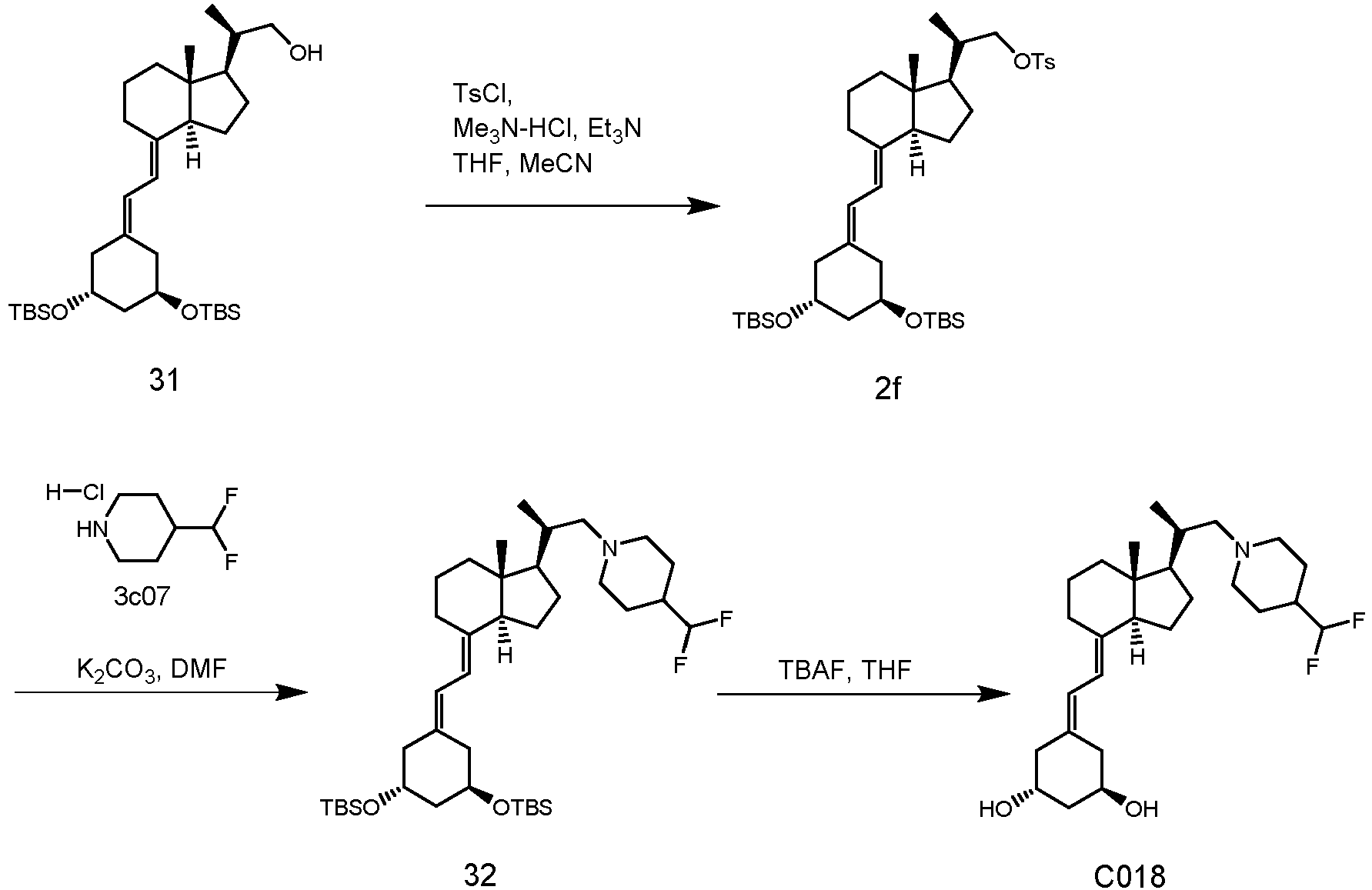
- TsCl [40.7 mg, 0.213 mmol] was added to a mixed solution of (2R)-2-((1R,3aS,7aR,E)-4-(2-((3R,5R)-3,5-bis((t-butyldimethylsilyl)oxy)cyclohexylidene)ethylidene)-7a-methyloctahydro-1H-inden-1-yl)propan-1-ol (Compound 31, CAS Registry No. 161970-22-5) [80.2 mg, 0.142 mmol], trimethylamine hydrochloride [16.7 mg, 0.175 mmol], and triethylamine [0.08 mL, 0.57 mmol] in THF [1 mL]/acetonitrile [1 mL] at room temperature, and the reaction mixture was stirred at room temperature for 2 hours. The reaction mixture was quenched with methanol [0.2 mL] and concentrated under reduced pressure. The residue was diluted with ethyl acetate and washed with saturated brine. The organic layer was dried over anhydrous magnesium sulfate and concentrated under reduced pressure. The residue was purified by thin-layer chromatography [1 mm, heptane/EtOAc = 9/1] to obtain compound 2f [90.2 mg, 0.126 mmol].
1H-NMR (CDCl3) δ: 7.79 (2H, d, J = 8.3 Hz), 7.34 (2H, d, J = 8.3 Hz), 6.14 (1H, d, J = 11.2 Hz), 5.79 (1H, d, J = 11.2 Hz), 4.15-4.02 (4H, m), 3.82 (1H, dd, J = 9.3, 6.8 Hz), 2.85-2.75 (1H, m), 2.45 (3H, s), 2.36 (2H, dd, J = 13.4, 5.1 Hz), 2.25 (1H, dd, J = 13.7, 2.9 Hz), 2.09 (1H, dd, J = 13.2, 7.8 Hz), 1.95 (1H, t, J = 9.3 Hz), 1.88-1.71 (3H, m), 1.68-1.57 (4H, m), 1.55-1.18 (7H, m), 0.90 (3H, d, J = 6.3 Hz), 0.87 (9H, s), 0.85 (9H, s), 0.45 (3H, s), 0.05 (3H, s), 0.05 (3H, s), 0.04 (6H, s). - A solutions of compound 2f [40 mg, 0.056 mol] obtained in step 1, 4-difluoromethylpiperidine hydrochloride [3c09, 28.7 mg, 0.167 mmol], and potassium carbonate [38.5 mg, 0.279 mmol] in DMF [1 mL] was stirred at 60°C overnight. The reaction mixture was quenched with saturated brine and extracted with ethyl acetate. The organic layer was dried over anhydrous magnesium sulfate and concentrated under reduced pressure. The residue was partially purified by thin-layer chromatography [1 mm, heptane/EtOAc = 9/1] to obtain compound 32 [18.4 mg, 0.027 mmol].
Exact Mass = 679.50 (C39H71F2NO2Si2) Obs. mass = 680.6 (M+H) - TBAF [1 M in THF, 0.5 mL, 0.5 mmol] was added to a solution of compound 32 [18.4 mg, 0.027 mmol] obtained in step 2 in THF [1 mL], and the mixture was stirred at 50°C overnight. The reaction mixture was quenched with a saturated aqueous sodium hydrogen carbonate solution and extracted with ethyl acetate. The organic layer was dried over anhydrous magnesium sulfate and concentrated under reduced pressure. The residue was purified by reverse phase HPLC to obtain compound C018 [6.3 mg, 0.014 mmol]. 1H-NMR (CD3OD) δ: 6.21 (1H, d, J = 11.2 Hz), 5.90 (1H, d, J = 11.2 Hz), 5.75 (1H, td, J= 56.5, 4.0 Hz), 4.05-3.96 (2H, m), 3.41 (1H, d, J= 11.7 Hz), 3.26 (1H, d, J= 11.7 Hz), 2.93 (1H, dd, J = 12.4, 4.1 Hz), 2.85-1.97 (11H, m), 1.92-1.30 (16H, m), 0.99 (3H, d, J= 6.8 Hz), 0.62 (3H, d, J = 4.4 Hz).
Exact Mass = 451.33 (C27H43F2NO2) Obs. mass = 452.40 (M+H) -

- A solution of (2R)-2-((1R,3aS,7aR,E)-4-(2-((3R,5R)-3,5-bis((t-butyldimethylsilyl)oxy)-4-methylenecyclohexylidene)ethylidene)-7a-methyloctahydro-1H-inden-1-yl)propyl 4-methylbenzenesulfonate (Compound 2e, CAS Registry No. 1251827-23-2) [40 mg, 54.9 mmol], 4-difluoromethylpiperidine (Compound 3c07) [30.2 mg, 0.176 mmol], and potassium carbonate [40 mg, 0.289 mmol] in DMF [1 mL] was stirred at 60°C overnight. The reaction mixture was quenched with saturated brine and extracted with ethyl acetate. The organic layer was dried over anhydrous magnesium sulfate and concentrated under reduced pressure. The residue was partially purified by preparative thin-layer chromatography [1 mm, heptane/EtOAc = 9/1] to obtain compound 33 [19.0 mg, 0.0274 mmol].
Exact Mass = 691.50 (C40H71F2NO2Si2) Obs. mass = 692.6 (M+H) - TBAF [1 M in THF, 0.2 mL, 0.2 mmol] was added to a solution of compound 33 [19.0 mg, 0.0274 mmol] obtained in step 1 in THF [1 mL], and the mixture was stirred at 50°C overnight. The reaction mixture was quenched with a saturated aqueous sodium hydrogen carbonate solution and extracted with ethyl acetate. The organic layer was dried over anhydrous magnesium sulfate and concentrated under reduced pressure. The residue was purified by reverse phase HPLC to obtain compound C019 [6.0 mg, 0.013 mmol]. 1H-NMR (CD3OD) δ: 6.26 (1H, d, J = 11.2 Hz), 5.92 (2H, d, J = 11.2 Hz), 5.75 (2H, td, J = 55.0, 4.0 Hz), 5.05 (2H, d, J = 6.3 Hz), 4.42-4.36 (2H, m), 3.43 (1H, d, J = 12.2 Hz), 2.94 (1H, dd, J = 12.7, 3.9 Hz), 2.86 (1H, dd, J = 12.4, 4.1 Hz), 2.69-2.24 (7H, m), 2.09-1.98 (3H, m), 1.89-1.28 (15H, m), 1.00 (3H, d, J = 6.3 Hz), 0.63 (3H, s).
Exact Mass = 463.33 (C28H43F2NO2) Obs. mass = 464.50 (M+H) - Compound C020 [15.1 mg, 0.0316 mmol] was obtained by processing in the same manner as in step 2 and step 3 of Example 240 using compound 29 [34.7 mg, 0.086 mmol] obtained in step 1 of Example 240, compound 7b [44.5 mg, 0.116 mmol], and tetrakis(triphenylphosphine)palladium(0) [17.0 mg, 0.015 mmol] as starting materials. 1H-NMR (CD3OD) δ: 6.32 (1H, d, J = 11.2 Hz), 6.10 (1H, d, J = 11.2 Hz), 5.76 (1H, td, J = 56.4, 4.1 Hz), 5.22 (1H, d, J = 2.0 Hz), 4.88 (1H, d, J = 2.4 Hz), 4.22 (1H, d, J = 3.4 Hz), 3.72 (1H, td, J = 8.1, 4.2 Hz), 3.47 (1H, d, J = 12.2 Hz), 3.33 (1H, s), 2.99 (1H, dd, J = 12.4, 4.1 Hz), 2.87 (1H, dd, J = 12.0, 3.7 Hz), 2.78-2.71 (1H, m), 2.67-2.49 (3H, m), 2.20-1.97 (4H, m), 1.91-1.31 (17H, m), 1.04 (3H, d, J = 7.3 Hz), 0.99 (3H, d, J = 6.3 Hz), 0.61 (3H, s).
Exact Mass = 477.34 (C29H45F2NO2) Obs. mass = 478.40 (M+H) -

- Compound C024 [17.9 mg, 0.0373 mmol] was obtained by performing the reaction in the same manner as in step 1 and step 2 of Example 242 using compound (2d) [80.0 mg, 0.110 mmol] and 4-(difluoromethyl)-4-((trimethylsilyl)oxy)piperidine [76.7 mg, 0.343 mmol].
- 1H-NMR (CD3OD) δ: 6.32 (1H, d, J = 10.7 Hz), 6.09 (1H, d, J = 11.2 Hz), 5.61 (1H, t, J = 56.1 Hz), 5.28 (1H, dd, J = 2.4, 1.5 Hz), 4.35 (1H, t, J = 5.9 Hz), 4.15-4.09 (1H, m), 3.24 (1H, d, J = 11.7 Hz), 3.09 (1H, d, J = 11.7 Hz), 2.99-2.85 (3H, m), 2.74-2.65 (1H, m), 2.59-2.49 (2H, m), 2.28-1.95 (5H, m), 1.91-1.28 (18H, m), 0.99 (3H, d, J = 6.3 Hz), 0.62 (3H, s).
- Exact Mass = 479.32 (C28H43F2NO3) Obs. mass = 480.30 (M+H)
- Compound C025 [6.5 mg, 0.014 mmol] was obtained by performing the reaction in the same manner as in Example 242 using compound 2f [40 mg, 0.056 mmol] described in step 1 of Example 241 and 4-(difluoromethyl)-4-((trimethylsilyl)oxy)piperidine [37 mg, 0.166 mmol].
- 1H-NMR (CD3OD) δ: 6.21 (1H, d, J = 11.2 Hz), 5.90 (1H, d, J = 11.2 Hz), 5.61 (1H, t, J = 56.1 Hz), 4.06-3.95 (2H, m), 3.29-3.24 (1H, m), 3.11 (1H, d, J = 11.2 Hz), 3.00-2.56 (7H, m), 2.41 (1H, dd, J= 13.2, 3.4 Hz), 2.23-1.95 (7H, m), 1.88-1.28 (16H, m), 1.00 (3H, d, J = 6.3 Hz), 0.62 (3H, s).
- Exact Mass = 467.32 (C27H43F2NO3) Obs. mass = 468.30 (M+H)
- Compound C026 [6.2 mg, 0.013 mmol] was obtained by performing the reaction in the same manner as in Example 242 using compound 2e [40 mg, 0.055 mmol] and 4-(difluoromethyl)-4-((trimethylsilyl)oxy)piperidine [40 mg, 0.171 mmol].
- 1H-NMR (CD3OD) δ: 6.26 (1H, d, J = 11.2 Hz), 5.92 (1H, d, J = 11.2 Hz), 5.62 (1H, t, J = 55.9 Hz), 5.05 (2H, d, J = 5.9 Hz), 4.42-4.36 (2H, m), 3.16 (1H, d, J = 12.2 Hz), 3.02 (2H, td, J = 12.3, 2.6 Hz), 2.88-2.61 (4H, m), 2.48 (1H, dd, J = 13.4, 4.1 Hz), 2.32-1.97 (6H, m), 1.90-1.31 (13H, m), 1.01 (3H, d, J = 6.3 Hz), 0.63 (3H, s).
- Exact Mass = 479.32 (C28H43F2NO3) Obs. mass = 480.40 (M+H)
-


- A solution of compound 24 [120 mg, 0.272 mmol], compound 3c10 [189 mg, 0.848 mmol], and potassium carbonate [183 mg, 1.32 mmol] in DMF [1 mL] was stirred at 60°C overnight. The reaction mixture was quenched with saturated brine and extracted with ethyl acetate. The organic layer was dried over anhydrous magnesium sulfate and concentrated under reduced pressure. The residue was purified by silica gel column chromatography to obtain compound 35 [76.9 mg, 0.156 mmol].
1H-NMR (CDCl3) δ: 5.65 (1H, s), 5.46 (1H, t, J = 56.1 Hz), 2.93-2.85 (1H, m), 2.63 (2H, dd, J = 35.4, 11.0 Hz), 2.45-2.22 (2H, m), 2.09-1.22 (25H, m), 0.90 (3H, d, J = 6.3 Hz), 0.58 (3H, s), 0.15 (9H, s). - A mixed solution of compound 35 [70.5 mg, 0.143 mmol] obtained in step 1, compound 7b [65.3 mg, 0.171 mmol], and tetrakis(triphenylphosphine)palladium(0) [25.0 mg, 0.022 mmol] in toluene [1 mL]/triethylamine [1 mL] was stirred at 100°C for 2 hours under a nitrogen atmosphere. After cooling to room temperature, the reaction mixture was concentrated under reduced pressure. The residue was partially purified by preparative thin-layer chromatography to obtain 94.5 mg of a crude product containing compound 36. TBAF [1 M in THF, 1 mL, 1 mmol] was added to a solution of the crude product in THF [1 mL], and the mixture was stirred at 50°C for 1 day. The reaction mixture was quenched with a saturated aqueous sodium hydrogen carbonate solution and extracted with ethyl acetate. The organic layer was dried over anhydrous magnesium sulfate and concentrated under reduced pressure. The residue was purified by reverse phase HPLC to obtain compound C027 [24.1 mg, 0.0488 mmol].
- 1H-NMR (CD3OD) δ: 6.32 (1H, d, J = 11.2 Hz), 6.09 (1H, d, J = 11.2 Hz), 5.51 (1H, t, J = 56.6 Hz), 5.22 (1H, d, J = 2.0 Hz), 4.22 (1H, d, J = 3.4 Hz), 3.72 (1H, td, J = 8.2, 4.2 Hz), 2.86 (1H, dd, J = 12.0, 3.2 Hz), 2.78 (1H, d, J = 11.2 Hz), 2.65-2.57 (2H, m), 2.47 (1H, dd, J = 12.2, 4.4 Hz), 2.36 (1H, t, J= 10.7 Hz), 2.19-1.28 (27H, m), 1.04 (3H, d, J = 6.8 Hz), 0.92 (3H, d, J = 6.3 Hz), 0.58 (3H, s).
- Exact Mass = 493.34 (C29H45F2NO3) Obs. mass = 494.40 (M+H)
- Compound C029 [17.4 mg, 0.039 mmol] was obtained by processing in the same manner as in Example 242 using compound 2d [80 mg, 0.110 mmol] and 4-hydroxy-4-methylpiperidine 45 mg, 0.391 mmol] as starting materials.
- Exact Mass = 443.34 (C28H45NO3) Obs. mass = 444.40 (M+H)
- Compound C033a [10 mg, 0.020 mmol] and compound C033b [9.0 mg, 0.018 mmol] were obtained by processing in the same manner as in Example 108 using compound 2d [105.4 mg, 0.145 mmol] as a starting material instead of compound 2a in Example 108.
- 1H-NMR (CD3OD) δ: 6.31 (1H, d, J = 11.2 Hz), 6.08 (1H, d, J = 11.2 Hz), 5.28 (1H, dd, J = 2.4, 1.5 Hz), 4.34 (1H, t, J = 5.9 Hz), 4.14-4.09 (1H, m), 2.95-2.80 (3H, m), 2.63 (1H, dd, J = 12.2, 4.4 Hz), 2.51 (1H, dd, J = 13.4, 3.2 Hz), 2.28-2.19 (5H, m), 2.04-1.96 (3H, m), 1.90-1.28 (19H, m), 0.95 (3H, d, J = 6.3 Hz), 0.59 (3H, s).
- Exact Mass = 497.31 (C28H42F3NO3) Obs. mass = 498.40 (M+H)
- 1H-NMR (CD3OD) δ: 6.31 (1H, d, J= 10.7 Hz), 6.08 (1H, d, J= 11.2 Hz), 5.28 (1H, t, J = 1.2 Hz), 4.34 (1H, t, J= 5.9 Hz), 4.14-4.09 (1H, m), 2.87 (2H, d, J= 11.2 Hz), 2.71 (1H, d, J = 11.2 Hz), 2.56-2.48 (2H, m), 2.34 (1H, d, J = 11.7 Hz), 2.25 (1H, dd, J = 13.2, 6.8 Hz), 2.05-1.97 (4H, m), 1.90-1.25 (21H, m), 0.94 (3H, d, J = 6.8 Hz), 0.58 (3H, s).
- Exact Mass = 497.31 (C28H42F3NO3) Obs. mass = 498.40 (M+H)
- Compound C056 [8.2 mg, 0.017 mmol] was obtained by processing in the same manner as in Example 242 using compound 2e [40 mg, 0.055 mmol] and 4-(2,2-difluoroethyl)piperidine hydrochloride [35 mg, 0.189 mmol] as starting materials.
- 1H-NMR (CD3OD) δ: 6.26 (1H, d, J = 11.2 Hz), 5.99 (2H, tt, J = 56.0, 4.0 Hz), 5.92 (2H, d, J = 11.2 Hz), 5.05 (2H, d, J = 5.9 Hz), 4.42-4.36 (2H, m), 3.49 (1H, d, J = 11.7 Hz), 3.35-3.30 (1H, m), 3.11 (1H, dd, J = 12.4, 4.1 Hz), 2.92-2.63 (5H, m), 2.48 (1H, dd, J = 13.2, 3.9 Hz), 2.32-1.94 (7H, m), 1.91-1.32 (14H, m), 1.02 (3H, d, J = 6.3 Hz), 0.63 (3H, s).
- Exact Mass = 477.34 (C29H45F2NO2) Obs. mass = 478.40 (M+H)
- Compound C057 [6.7 mg, 0.014 mmol] was obtained by processing in the same manner as in Example 242 using compound 2e [40 mg, 0.055 mmol] and 4-(1,1-difluoroethyl)piperidine hydrochloride [37 mg, 0.200 mmol] as starting materials.
- 1H-NMR (CD3OD) δ: 6.26 (1H, d, J = 11.2 Hz), 5.92 (1H, d, J = 11.2 Hz), 5.05 (2H, t, J = 3.4 Hz), 4.42-4.36 (2H, m), 3.48 (1H, d, J = 12.2 Hz), 3.35-3.33 (1H, m), 2.99 (1H, dd, J = 12.7, 3.9 Hz), 2.86 (1H, dd, J = 12.0, 3.5 Hz), 2.79-1.94 (14H, m), 1.92-1.32 (17H, m), 1.01 (3H, d, J = 6.8 Hz), 0.63 (3H, s).
- Exact Mass = 477.34 (C29H45F2NO2) Obs. mass = 478.40 (M+H)
- Compound C058 [5.5 mg, 0.013 mmol] was obtained by processing in the same manner as in Example 242 using compound 2d [40 mg, 0.055 mmol] and 4-fluoropiperidine hydrochloride [23 mg, 0.165 mmol] as starting materials.
- 1H-NMR (CD3OD) δ: 6.31 (1H, d, J = 11.2 Hz), 6.08 (1H, d, J = 11.2 Hz), 5.28 (1H, dd, J = 2.4, 1.5 Hz), 4.89 (1H, s), 4.61 (1H, dt, J = 49.3, 3.4 Hz), 4.34 (1H, t, J = 5.9 Hz), 4.14-4.09 (1H, m), 2.86 (1H, dd, J = 12.0, 3.7 Hz), 2.64 (1H, s), 2.53-2.19 (7H, m), 2.07-1.96 (5H, m), 1.90-1.26 (17H, m), 0.92 (3H, d, J = 6.3 Hz), 0.58 (3H, s).
- Exact Mass = 431.32 (C27H42FNO2) Obs. mass = 432.30 (M+H)
- Compound C060 [6.8 mg, 0.014 mmol] was obtained by processing in the same manner as in Example 242 using compound 2e [40 mg, 0.055 mmol] and 4-(trifluoromethyl)piperidine [30 mg, 0.196 mmol] as starting materials.
- 1H-NMR (CD3OD) δ: 6.26 (1H, d, J = 11.2 Hz), 5.92 (1H, d, J = 11.2 Hz), 5.05 (2H, d, J = 6.3 Hz), 4.42-4.36 (2H, m), 3.16 (1H, d, J = 11.7 Hz), 2.86 (1H, dd, J = 12.0, 3.7 Hz), 2.76 (1H, dd, J = 12.2, 4.4 Hz), 2.66 (1H, dd, J = 13.4, 4.1 Hz), 2.51-2.02 (8H, m), 1.93-1.28 (14H, m), 0.97 (3H, d, J = 6.3 Hz), 0.61 (3H, s).
- Exact Mass = 481.32 (C28H42F3NO2) Obs. mass = 482.40 (M+H)
-

- A solution of compound 24 [89.2 mg, 0.202 mmol], morpholine [0.1 mL, 1.16 mmol], and potassium carbonate [156 mg, 1.13 mmol] in DMF [1 mL] was stirred at 60°C for 17 hours. The reaction mixture was quenched with brine and extracted with ethyl acetate. The organic layer was dried over anhydrous magnesium sulfate and concentrated under reduced pressure. The residue was purified by silica gel column chromatography to obtain compound 37 [61.4 mg, 0.172 mmol].
1H-NMR (CDCl3) δ: 5.65 (1H, d, J = 2.0 Hz), 3.75-3.64 (4H, m), 2.91-2.83 (1H, m), 2.47-2.41 (2H, m), 2.38 (1H, dd, J = 11.7, 4.9 Hz), 2.33-2.24 (2H, m), 2.01-1.19 (12H, m), 0.92 (3H, d, J = 6.8 Hz), 0.57 (3H, s). - Compound D003 [14.1 mg, 0.033 mmol] was obtained by processing in the same manner as in
step 2 and step 3 of Example 236 using compound 37 [29.9 mg, 0.084 mmol], compound 7b [38.5 mg, 0.101 mmol], and tetrakis(triphenylphosphine)palladium(0) [11.0 mg, 0.009 mmol].
1H-NMR (CD3OD) δ: 6.33 (1H, d, J = 11.2 Hz), 6.10 (1H, d, J = 11.2 Hz), 5.23 (1H, d, J = 2.0 Hz), 4.23 (1H, d, J = 3.4 Hz), 3.78-3.68 (5H, m), 2.88 (1H, dd, J = 12.0, 3.7 Hz), 2.73-2.46 (7H, m), 2.27-2.10 (3H, m), 2.06-2.03 (1H, m), 2.01-1.97 (2H, m), 1.96-1.28 (14H, m), 1.04 (3H, d, J = 6.8 Hz), 0.96 (3H, d, J = 6.3 Hz), 0.60 (3H, s). - Compound E008a [3.3 mg, 0.007 mmol] and compound (E008b) [7.0 mg, 0.015 mmol] were obtained by performing the reaction in the same manner as in Example 108 using compound 24 [260 mg, 0.589 mmol] and 2-(trifluoromethyl)piperazine [190 mg, 1.23 mmol] as starting materials.
- 1H-NMR(CD3OD) δ: 6.31 (1H, d, J = 11.2 Hz), 6.08 (1H, d, J = 11.2 Hz), 5.28 (1H, t, J = 1.2 Hz), 4.34 (1H, t, J= 5.9 Hz), 4.15-4.08 (1H, m), 2.99-2.76 (7H, m), 2.53-1.21 (33H, m), 0.92 (3H, d, J = 6.8 Hz), 0.58 (3H, s).
- Exact Mass = 482.31 (C27H41F3N2O2) Obs. mass = 483.4 (M+H)
- Exact Mass = 482.31 (C27H41F3N2O2) Obs. mass = 483.4 (M+H)
-


- A solution of Compound (2a) [50 mg, 0.069 mmol] described in Reference example 1, (S)-2-methylpiperidine [24.8 µL, 0.206 mmol], potassium iodide [22.8 mg, 0.137 mmol], and potassium carbonate [28.4 mg, 0.206 mmol] in NMP [1 mL] was heated and stirred at 60°C overnight. The reaction mixture was cooled to room temperature, saturated brine was added to the mixture, and the mixture was extracted with ethyl acetate. The organic layer was dried over anhydrous magnesium sulfate and concentrated under reduced pressure to obtain a crude containing coupling product.
- 2 M Hydrochloric acid [0.2 mL, 0.4 mmol] was added to a solution of the coupling product obtained in step 1 in acetone [0.6 mL], and the mixture was stirred at room temperature for 4 hours. The reaction mixture was neutralized with a saturated aqueous sodium hydrogen carbonate solution and extracted with ethyl acetate. The organic layer was washed with saturated brine, dried over anhydrous magnesium sulfate, and concentrated under reduced pressure. The residue was purified by preparative HPLC to obtain compound F001 [5.4 mg, 0.013 mmol].
- 1H-NMR (CD3OD) δ: 6.32 (1H, d, J = 11.0 Hz), 6.10 (1H, d, J = 11.4 Hz), 5.30-5.27 (1H, m), 4.35 (1H, t, J = 5.7 Hz), 4.15-4.10 (1H, m), 3.56-3.52 (1H, m), 3.27-3.25 (1H, m), 3.08-3.03 (1H, m), 2.92-2.87 (3H, m), 2.51 (1H, dd, J = 13.5, 3.4 Hz), 2.26 (1H, dd, J = 13.5, 6.6 Hz), 2.07-2.04 (2H, m), 1.90-1.86 (4H, m), 1.83-1.51 (11H, m), 1.43-1.28 (4H, m), 1.37 (3H, d, J = 9.0 Hz), 1.12 (3H, d, J = 6.4 Hz), 0.65 (3H, s).
- LC-MS: Exact Mass = 427.35 (C28H45NO2) Obs. mass = 428.25 (M+H)
- In the following examples, each compound was synthesized in the same manner as in the synthesis method for the compound described in Example 301. In each example, only the raw material and the amine compound used are described. Potassium iodide and potassium carbonate are used as in Example 301, and the equivalent amount thereof is appropriately altered depending on the raw material to be used according to the conditions of Example 301.
- Compound F002 [19.2 mg, 0.0449 mmol] was obtained by performing the reaction in the same manner as in Example 301 using compound (2a) [50 mg, 0.069 mmol] and (R)-2-methylpiperidine [24.8 µL, 0.206 mmol].
- 1H-NMR (CD3OD): 6.32 (1H, d, J = 11.0 Hz), 6.10 (1H, d, J = 11.0 Hz), 5.29-5.28 (1H, m), 4.35 (1H, t, J = 5.9 Hz), 4.15-4.10 (1H, m), 3.42-3.39 (2H, m), 3.25-3.23 (1H, m), 3.12-3.09 (1H, m), 2.88 (1H, dd, J = 11.9, 3.7 Hz), 2.67 (1H, dd, J = 13.3, 10.5 Hz), 2.51 (1H, dd, J = 13.3, 3.7 Hz), 2.26 (1H, dd, J = 13.5, 6.7 Hz), 2.09-1.96 (4H, m), 1.91-1.51 (15H, m), 1.42-1.38 (3H, m), 1.36 (4H, d, J = 6.4 Hz), 1.15 (3H, d, J= 6.4 Hz), 0.65 (3H, s).
- LC-MS: Exact Mass = 427.35 (C28H45NO2) Obs. mass = 428.20 (M+H)
- Compound F003 [8.2 mg, 0.019 mmol] was obtained by performing the reaction in the same manner as in Example 301 using compound (2a) [50 mg, 0.069 mmol] and 2,2-dimethylpiperidine hydrochloride [30.79 mg, 0.206 mmol].
- 1H-NMR (CD3OD) δ: 6.32 (1H, d, J = 11.0 Hz), 6.10 (1H, d, J = 11.0 Hz), 5.29-5.28 (1H, m), 4.35 (1H, t, J = 5.9 Hz), 4.14-4.10 (1H, m), 3.46-3.44 (1H, m), 3.14-3.11 (1H, m), 2.88 (1H, dd, J = 11.9, 4.1 Hz), 2.51 (1H, dd, J = 14.2, 4.6 Hz), 2.26 (1H, dd, J = 13.3, 6.9 Hz), 2.08-1.96 (4H, m), 1.91-1.70 (12H, m), 1.62-1.51 (3H, m), 1.45-1.36 (10H, m), 1.17 (3H, d, J = 6.4 Hz), 0.65 (3H, s).
- LC-MS: Exact Mass = 441.36 (C29H47NO2) Obs. mass = 442.25 (M+H)
- Compound F004 [6.2 mg, 0.014 mmol] was obtained by performing the reaction in the same manner as in Example 301 using compound (2a) [50 mg, 0.069 mmol] and (S)-3-methylmorpholine [20.8 mg, 0.206 mmol].
- 1H-NMR (CD3OD) δ: 6.32 (1H, d, J = 11.0 Hz), 6.08 (1H, d, J = 11.0 Hz), 5.28 (1H, s), 4.89 (1H, d, J = 1.8 Hz), 4.34 (1H, t, J = 5.9 Hz), 4.15-4.10 (1H, m), 3.77 (1H, d, J = 11.4 Hz), 3.67-3.56 (2H, m), 3.26-3.20 (1H, m), 2.88-2.84 (2H, m), 2.51 (1H, dd, J = 13.5, 3.4 Hz), 2.41 (1H, t, J = 11.7 Hz), 2.37-2.31 (1H, m), 2.25 (1H, dd, J = 13.7, 6.9 Hz), 2.15-1.87 (8H, m), 1.73-1.21 (9H, m), 1.02 (3H, d, J = 6.4 Hz), 0.95 (3H, d, J = 6.4 Hz), 0.60 (3H, s).
- LC-MS: Exact Mass = 429.32 (C27H43NO3) Obs. mass = 430.25 (M+H)
- Compound F005 [9.6 mg, 0.022 mmol] was obtained by performing the reaction in the same manner as in Example 301 using compound (2a) [50 mg, 0.069 mmol] and (R)-3-methylmorpholine [20.8 mg, 0.206 mmol].
- 1H-NMR (CD3OD) δ: 6.32 (1H, d, J = 11.0 Hz), 6.09 (1H, d, J = 11.0 Hz), 5.29-5.28 (1H, m), 4.34 (1H, t, J = 5.9 Hz), 4.13-4.10 (1H, m), 3.77-3.69 (3H, m), 3.39 (1H, dd, J = 11.7, 7.5 Hz), 2.94-2.76 (4H, m), 2.71-2.65 (1H, m), 2.51 (1H, dd, J = 13.5, 3.4 Hz), 2.26 (1H, dd, J = 13.5, 6.6 Hz), 2.12-1.99 (12H, m), 1.88 (2H, t, J = 5.5 Hz), 1.73-1.26 (10H, m), 1.10 (3H, d, J = 6.9 Hz), 1.08 (3H, d, J = 6.4 Hz), 0.60 (3H, s).
- LC-MS: Exact Mass = 429.32 (C27H43NO3) Obs. mass = 430.25 (M+H)
- Compound F006 [4.7 mg, 0.011 mmol] was obtained by performing the reaction in the same manner as in Example 301 using compound (2a) [50 mg, 0.069 mmol] and 3,3-dimethylmorpholine [15.8 mg, 0.137 mmol].
- 1H-NMR (CD3OD) δ: 6.32 (1H, d, J = 11.0 Hz), 6.08 (1H, d, J = 11.4 Hz), 5.29-5.27 (1H, m), 4.34 (1H, t, J = 5.9 Hz), 4.15-4.09 (1H, m), 3.84-3.80 (1H, m), 3.69-3.62 (1H, m), 3.45-3.34 (2H, m), 2.89-2.80 (2H, m), 2.74-2.67 (1H, m), 2.51 (1H, dd, J= 13.3, 3.7 Hz), 2.39-2.35 (2H, m), 2.26 (1H, dd, J= 13.3, 6.9 Hz), 2.07-1.99 (3H, m), 1.90-1.87 (2H, m), 1.72-1.65 (2H, m), 1.58-1.45 (4H, m), 1.38-1.25 (3H, m), 1.11 (3H, s), 1.07-1.03 (6H, m), 0.60 (3H, s).
- LC-MS: Exact Mass = 443.34 (C28H45NO3) Obs. mass = 444.20 (M+H)
- Compound F007 [6.1 mg, 0.014 mmol] was obtained by performing the reaction in the same manner as in Example 301 using compound (2a) [50 mg, 0.069 mmol] and 7-oxa-4-azaspiro[2.5]octane hydrochloride [20 mg, 0.134 mmol].
- 1H-NMR (CD3OD): 6.31 (1H, d, J = 11.0 Hz), 6.08 (1H, d, J = 11.0 Hz), 5.28 (1H, dd, J = 2.0, 1.1 Hz), 4.89 (1H, d, J= 2.0 Hz), 4.34 (1H, t, J= 5.9 Hz), 4.15-4.11 (1H, m), 3.83-3.77 (1H, m), 3.65 (1H, d, J = 11.4 Hz), 3.55 (1H, dt, J = 11.0, 4.0 Hz), 3.17 (1H, d, J = 11.4 Hz), 2.98 (2H, t, J = 11.2 Hz), 2.86 (1H, dd, J = 12.0, 4.0 Hz), 2.75 (1H, ddd, J = 13.5, 4.6, 3.0 Hz), 2.51 (1H, dd, J = 13.3, 3.7 Hz), 2.25 (1H, dd, J = 13.3, 6.9 Hz), 2.18-1.26 (22H, m), 1.21-0.90 (3H, m), 0.93 (3H, d, J = 6.4 Hz), 0.74-0.69 (1H, m), 0.60-0.41 (2H, m), 0.57 (3H, s).
- LC-MS: Exact Mass = 441.32 (C28H43NO3) Obs. mass = 442.20 (M+H)
- Compound F008 [2.5 mg, 0.0055 mmol] was obtained by performing the reaction in the same manner as in Example 301 using compound (2a) [50 mg, 0.069 mmol] and (S)-3-cyclopropylmorpholine [26.2 mg, 0.206 mmol].
- 1H-NMR (CD3OD) δ: 6.32 (1H, d, J = 11.0 Hz), 6.09 (1H, d, J = 11.0 Hz), 5.28 (1H, s), 4.35 (1H, t, J = 5.7 Hz), 4.13-4.11 (1H, m), 3.77 (2H, dd, J= 11.0, 3.2 Hz), 3.58 (1H, dd, J = 11.4, 9.1 Hz), 3.41-3.35 (1H, m), 3.02-2.82 (3H, m), 2.51 (1H, dd, J = 13.5, 3.4 Hz), 2.27-2.24 (1H, m), 2.10-2.02 (5H, m), 1.89-1.86 (3H, m), 1.73-1.25 (11H, m), 1.06 (3H, d, J = 6.4 Hz), 0.70-0.66 (1H, m), 0.60 (3H, s), 0.51-0.44 (2H, m), 0.29-0.24 (1H, m), 0.11-0.07 (1H, m).
- LC-MS: Exact Mass = 455.34 (C29H45NO3) Obs. mass = 456.20 (M+H)
- Compound F009 [8.9 mg, 0.019 mmol] was obtained by performing the reaction in the same manner as in Example 301 using compound (2a) [50 mg, 0.069 mmol] and (S)-3-isopropylmorpholine [27.0 mg, 0.210 mmol].
LC-MS: Exact Mass = 457.36 (C29H47NO3) Obs. mass = 458.25 (M+H) - Compound F010 [8.2 mg, 0.018 mmol] was obtained by performing the reaction in the same manner as in Example 301 using compound (2a) [50 mg, 0.069 mmol] and (R)-3-isopropylmorpholine [26.6 mg, 0.206 mmol].
LC-MS: Exact Mass = 457.36 (C29H47NO3) Obs. mass = 458.25 (M+H) - Compound F011 [15.2 mg, 0.0343 mmol] was obtained by performing the reaction in the same manner as in Example 301 using compound (2a) [50 mg, 0.069 mmol] and (S)-2,4-dimethylpiperazine dihydrochloride [38.5 mg, 0.206 mmol].
- 1H-NMR (CD3OD) δ: 6.32 (1H, d, J = 11.0 Hz), 6.08 (1H, d, J = 11.4 Hz), 5.30-5.27 (1H, m), 4.34 (1H, t, J = 5.9 Hz), 4.13-4.11 (1H, m), 3.15-3.02 (3H, m), 2.87 (1H, d, J = 11.9 Hz), 2.66 (1H, t, J = 10.5 Hz), 2.56 (4H, s), 2.51 (2H, d, J = 11.4 Hz), 2.42 (1H, t, J = 10.7 Hz), 2.30-2.16 (3H, m), 2.08-1.99 (3H, m), 1.90-1.86 (2H, m), 1.73-1.26 (9H, m), 1.11 (3H, d, J = 5.9 Hz), 1.03 (3H, d, J = 6.4 Hz), 0.61 (3H, s).
- LC-MS: Exact Mass = 442.36 (C28H46N2O2) Obs. mass = 443.20 (M+H)
- Compound F012 [18.7 mg, 0.0422 mmol] was obtained by performing the reaction in the same manner as in Example 301 using compound (2a) [50 mg, 0.069 mmol] and (R)-2,4-dimethylpiperazine dihydrochloride [38.5 mg, 0.206 mmol].
- 1H-NMR (CD3OD) δ: 6.31 (1H, d, J = 11.4 Hz), 6.08 (1H, d, J = 11.0 Hz), 5.28 (1H, s), 4.34 (1H, t, J = 5.9 Hz), 4.13-4.11 (1H, m), 2.97-2.62 (8H, m), 2.55 (3H, s), 2.53-2.46 (2H, m), 2.26 (1H, dd, J= 13.5, 6.6 Hz), 2.06-1.98 (4H, m), 1.89-1.87 (2H, m), 1.71-1.66 (2H, m), 1.57-1.21 (7H, m), 1.13 (3H, d, J = 6.4 Hz), 1.04 (3H, d, J = 6.4 Hz), 0.59 (3H, s).
- LC-MS: Exact Mass = 442.36 (C28H46N2O2) Obs. mass = 443.20 (M+H)
- Compound F013 [2.0 mg, 0.0044 mmol] was obtained by performing the reaction in the same manner as in Example 301 using compound (2a) [50 mg, 0.069 mmol] and (R)-2-(pyrrolidin-2-yl)propan-2-ol hydrochloride [34.1 mg, 0.206 mmol]. 1H-NMR (CD3OD) δ: 6.32 (1H, d, J = 11.0 Hz), 6.09 (1H, d, J = 11.4 Hz), 5.29-5.27 (1H, m), 4.34 (1H, t, J = 5.9 Hz), 4.14-4.11 (1H, m), 3.41 (1H, s), 3.20 (1H, s), 2.99-2.86 (4H, m), 2.51 (1H, dd, J = 13.5, 3.4 Hz), 2.26 (1H, dd, J = 13.3, 6.4 Hz), 2.06-1.94 (6H, m), 1.88-1.85 (3H, m), 1.74-1.68 (3H, m), 1.59-1.51 (3H, m), 1.40-1.31 (3H, m), 1.27 (3H, s), 1.24 (3H, s), 1.18 (3H, d, J = 6.4 Hz), 0.63 (3H, s).
LC-MS: Exact Mass = 457.36 (C29H47NO3) Obs. mass = 458.20 (M+H) - Compound F014 [20.5 mg, 0.0448 mmol] was obtained by performing the reaction in the same manner as in Example 301 using compound (2a) [50 mg, 0.069 mmol] and (S)-2-(pyrrolidin-2-yl)propan-2-ol hydrochloride [34.1 mg, 0.206 mmol]. 1H-NMR (CD3OD) δ: 6.32 (1H, d, J = 11.4 Hz), 6.09 (1H, d, J = 11.0 Hz), 5.30-5.28 (1H, m), 4.34 (1H, t, J = 5.9 Hz), 4.15-4.10 (1H, m), 3.59-3.54 (1H, m), 3.49-3.39 (2H, m), 3.25-3.19 (1H, m), 2.89-2.79 (2H, m), 2.51 (1H, dd, J = 13.3, 3.2 Hz), 2.29-1.95 (9H, m), 1.90-1.87 (3H, m), 1.73-1.68 (2H, m), 1.60-1.50 (3H, m), 1.41-1.35 (3H, m), 1.29 (3H, s), 1.25 (3H, s), 1.19 (3H, d, J = 6.4 Hz), 0.64 (3H, s).
LC-MS: Exact Mass = 457.36 (C29H47NO3) Obs. mass = 458.20 (M+H) - Compound F015 [18.4 mg, 0.039 mmol] was obtained by performing the reaction in the same manner as in Example 301 using compound (2a) [50 mg, 0.069 mmol] and (R)-2-(1-methoxy-1-methyl-ethyl)pyrrolidine [30 mg, 0.209 mmol].
- 1H-NMR (CD3OD): 6.23 (1H, d, J = 11.0 Hz), 6.02 (1H, d, J = 11.0 Hz), 5.26 (1H, s), 4.79 (1H, s), 4.25-4.20 (1H, m), 4.01 (1H, s), 3.12 (3H, s), 3.01-2.81 (2H, m), 2.54-2.49 (32H, m), 2.37 (2H, dd, J = 21.3, 11.2 Hz), 2.20 (1H, dd, J = 13.5, 5.7 Hz), 2.13-1.14 (20H, m), 1.10 (3H, s), 1.06 (3H, s), 1.03 (3H, s), 0.56 (3H, s).
- LC-MS: Exact Mass = 471.37 (C30H49NO3) Obs. mass = 472.20 (M+H)
- Compound F016 [25 mg, 0.053 mmol] was obtained by performing the reaction in the same manner as in Example 301 using compound (2a) [50 mg, 0.069 mmol] and (S)-2-(1-methoxy-1-methyl-ethyl)pyrrolidine hydrochloride [37.0 mg, 0.209 mmol]. 1H-NMR (CD3OD) δ: 6.32 (1H, d, J = 11.0 Hz), 6.10 (1H, d, J = 11.0 Hz), 5.30-5.27 (1H, m), 4.89-4.88 (1H, m), 4.35 (1H, t, J = 5.9 Hz), 4.14-4.11 (1H, m), 3.60-3.52 (2H, m), 3.35 (1H, d, J = 12.8 Hz), 3.27-3.21 (1H, m), 2.90-2.78 (2H, m), 2.51 (1H, dd, J = 13.7, 3.7 Hz), 2.29-2.18 (2H, m), 2.10-1.97 (7H, m), 1.90-1.87 (2H, m), 1.73-1.68 (2H, m), 1.63-1.50 (3H, m), 1.42-1.35 (3H, m), 1.26 (3H, s), 1.25 (3H, s), 1.18 (3H, d, J = 6.4 Hz), 0.64 (3H, s).
LC-MS: Exact Mass = 471.37 (C30H49NO3) Obs. mass = 472.20 (M+H) - Compound G001 [5.7 mg, 0.014 mmol] was obtained by performing the reaction in the same manner as in Example 301 using compound (2b) [50 mg, 0.070 mmol] and (S)-2-methylpiperidine [13.8 mg, 0.139 mmol].
- 1H-NMR (CD3OD) δ: 6.21 (1H, d, J = 11.0 Hz), 5.90 (1H, d, J = 11.0 Hz), 4.06-3.94 (2H, m), 3.55 (1H, d, J = 11.4 Hz), 3.27 (1H, s), 3.08-3.03 (1H, m), 2.93-2.83 (3H, m), 2.59 (1H, dd, J = 13.3, 3.7 Hz), 2.41 (1H, dd, J = 13.3, 3.2 Hz), 2.23-2.14 (2H, m), 2.10-2.03 (2H, m), 2.01-1.96 (1H, m), 1.89-1.88 (1H, m), 1.84-1.52 (11H, m), 1.43-1.32 (6H, m), 1.12 (3H, d, J = 6.4 Hz), 0.65 (3H, s).
- LC-MS: Exact Mass = 415.35 (C27H45NO2) Obs. mass = 416.20 (M+H)
- Compound G002 [3.4 mg, 0.0082 mmol] was obtained by performing the reaction in the same manner as in Example 301 using compound (2b) [50 mg, 0.070 mmol] and (R)-2-methylpiperidine [13.8 mg, 0.139 mmol].
- 1H-NMR (CD3OD) δ: 6.21 (1H, d, J = 11.4 Hz), 5.91 (1H, d, J = 11.0 Hz), 4.05-3.94 (2H, m), 3.45-3.41 (2H, m), 3.25 (1H, s), 3.13-3.09 (1H, m), 2.87-2.83 (1H, m), 2.68 (1H, dd, J = 13.3, 10.5 Hz), 2.59 (1H, dd, J = 13.3, 3.7 Hz), 2.41 (1H, dd, J = 13.5, 3.4 Hz), 2.23-2.15 (2H, m), 2.09-2.02 (3H, m), 1.86-1.51 (14H, m), 1.43-1.39 (3H, m), 1.36 (3H, d, J = 6.9 Hz), 1.15 (3H, d, J = 6.4 Hz), 0.65 (3H, s).
- LC-MS: Exact Mass = 415.35 (C27H45NO2) Obs. mass = 416.20 (M+H)
- Compound G003 [3.5 mg, 0.0081 mmol] was obtained by performing the reaction in the same manner as in Example 301 using compound (2b) [50 mg, 0.070 mmol] and 2,2-dimethylpiperidine hydrochloride [20.9 mg, 0.139 mmol].
- 1H-NMR (CD3OD) δ: 6.21 (1H, d, J = 11.4 Hz), 5.90 (1H, d, J = 11.0 Hz), 4.05-3.95 (2H, m), 3.45 (1H, s), 3.12 (1H, s), 2.87-2.83 (1H, m), 2.60 (1H, dd, J = 13.3, 3.7 Hz), 2.41 (1H, dd, J = 13.5, 3.4 Hz), 2.22-2.15 (2H, m), 2.10-2.01 (3H, m), 1.83-1.52 (14H, m), 1.44-1.35 (9H, m), 1.18 (3H, d, J = 6.4 Hz), 0.66 (3H, s).
- LC-MS: Exact Mass = 429.36 (C28H47NO2) Obs. mass = 430.20 (M+H)
- Compound G004 [4.3 mg, 0.010 mmol] was obtained by performing the reaction in the same manner as in Example 301 using compound (2b) [50 mg, 0.070 mmol] and (S)-3-methylmorpholine [21.2 mg, 0.209 mmol].
- 1H-NMR (CD3OD) δ: 6.21 (1H, d, J = 11.4 Hz), 5.89 (1H, d, J = 11.0 Hz), 4.05-3.95 (2H, m), 3.77 (1H, d, J = 11.4 Hz), 3.67-3.56 (2H, m), 3.26-3.20 (1H, m), 2.88-2.81 (2H, m), 2.59 (1H, dd, J = 13.3, 3.7 Hz), 2.44-2.32 (3H, m), 2.23-1.51 (16H, m), 1.38-1.22 (3H, m), 1.03 (3H, d, J = 6.4 Hz), 0.95 (3H, d, J = 6.4 Hz), 0.60 (3H, s).
- LC-MS: Exact Mass = 417.32 (C26H43NO3) Obs. mass = 418.25 (M+H)
- Compound G005 [6.3 mg, 0.015 mmol] was obtained by performing the reaction in the same manner as in Example 301 using compound (2b) [50 mg, 0.070 mmol] and (R)-3-methylmorpholine [21.2 mg, 0.209 mmol].
- 1H-NMR (CD3OD) δ: 6.21 (1H, d, J = 11.0 Hz), 5.89 (1H, d, J = 11.0 Hz), 4.06-3.95 (2H, m), 3.71-3.63 (3H, m), 3.33-3.28 (1H, m), 2.85-2.72 (3H, m), 2.61-2.46 (3H, m), 2.40 (1H, dd, J = 13.5, 3.4 Hz), 2.23-2.13 (2H, m), 2.06-1.22 (16H, m), 1.05 (3H, d, J = 6.4 Hz), 1.02 (3H, d, J = 6.4 Hz), 0.59 (3H, s).
- LC-MS: Exact Mass = 417.32 (C26H43NO3) Obs. mass = 418.20 (M+H)
- Compound G006 [4.9 mg, 0.011 mmol] was obtained by performing the reaction in the same manner as in Example 301 using compound (2b) [50 mg, 0.070 mmol] and 3,3-dimethylmorpholine [16.1 mg, 0.139 mmol].
- 1H-NMR (CD3OD) δ: 6.21 (1H, d, J = 11.0 Hz), 5.89 (1H, d, J = 11.4 Hz), 4.06-3.94 (2H, m), 3.82-3.78 (1H, m), 3.65-3.59 (1H, m), 3.39 (1H, d, J = 11.0 Hz), 3.32 (1H, s), 2.85-2.81 (1H, m), 2.73-2.69 (1H, m), 2.62-2.56 (2H, m), 2.40 (1H, dd, J = 13.5, 3.4 Hz), 2.33-2.13 (4H, m), 2.07-1.97 (3H, m), 1.87-1.81 (1H, m), 1.78-1.72 (1H, m), 1.67-1.50 (6H, m), 1.37-1.25 (3H, m), 1.06-1.04 (6H, m), 1.01 (3H, s), 0.60 (3H, s).
- LC-MS: Exact Mass = 431.34 (C27H45NO3) Obs. mass = 432.20 (M+H)
- Compound G007 [2.2 mg, 0.0051 mmol] was obtained by performing the reaction in the same manner as in Example 301 using compound (2b) [50 mg, 0.070 mmol] and 7-oxa-4-azaspiro[2.5]octane hydrochloride [20.9 mg, 0.139 mmol].
- 1H-NMR (CD3OD) δ: 6.21 (1H, d, J = 11.0 Hz), 5.88 (1H, d, J = 11.0 Hz), 4.05-3.96 (2H, m), 3.83-3.78 (1H, m), 3.66 (1H, d, J = 11.4 Hz), 3.58-3.54 (1H, m), 3.18 (1H, d, J = 11.4 Hz), 3.03-2.97 (2H, m), 2.85-2.75 (2H, m), 2.59 (1H, dd, J = 13.3, 3.7 Hz), 2.40 (1H, dd, J = 13.5, 3.4 Hz), 2.22-2.13 (2H, m), 2.05-1.98 (4H, m), 1.86-1.74 (2H, m), 1.69-1.50 (5H, m), 1.40-1.21 (4H, m), 0.93 (3H, d, J = 6.4 Hz), 0.73-0.70 (1H, m), 0.58 (3H, s), 0.55-0.49 (2H, m), 0.46-0.42 (1H, m).
- LC-MS: Exact Mass = 429.32 (C27H43NO3) Obs. mass = 430.15 (M+H)
- Compound G008 [13.7 mg, 0.0309 mmol] was obtained by performing the reaction in the same manner as in Example 301 using compound (2b) [50 mg, 0.070 mmol] and (S)-3-cyclopropylmorpholine [26.6 mg, 0.209 mmol].
- 1H-NMR (CD3OD) δ: 6.22 (1H, d, J = 11.0 Hz), 5.89 (1H, d, J = 11.0 Hz), 4.05-3.96 (2H, m), 3.84-3.79 (2H, m), 3.61 (1H, td, J = 11.4, 2.3 Hz), 3.44 (1H, dd, J = 11.9, 10.1 Hz), 3.10-2.99 (2H, m), 2.84 (1H, dd, J = 11.9, 3.7 Hz), 2.59 (1H, dd, J = 13.3, 4.1 Hz), 2.41 (1H, dd, J = 13.5, 3.4 Hz), 2.25-2.15 (4H, m), 2.08-2.00 (2H, m), 1.94-1.92 (1H, m), 1.86-1.51 (9H, m), 1.39-1.29 (3H, m), 1.08 (3H, d, J = 6.4 Hz), 0.76-0.69 (1H, m), 0.61 (3H, s), 0.58-0.46 (2H, m), 0.35-0.29 (1H, m), 0.15-0.11 (1H, m).
- LC-MS: Exact Mass = 443.34 (C28H45NO3) Obs. mass = 444.20 (M+H)
- Compound G009 [6.1 mg, 0.014 mmol] was obtained by performing the reaction in the same manner as in Example 301 using compound (2b) [50 mg, 0.070 mmol] and (S)-3-isopropylmorpholine [27.0 mg, 0.209 mmol].
LC-MS: Exact Mass = 445.36 (C28H47NO3) Obs. mass = 446.20 (M+H) - Compound G010 [10.6 mg, 0.0238 mmol] was obtained by performing the reaction in the same manner as in Example 301 using compound (2b) [50 mg, 0.070 mmol] and (R)-3-isopropylmorpholine [27.0 mg, 0.209 mmol].
LC-MS: Exact Mass = 445.36 (C28H47NO3) Obs. mass = 446.20 (M+H) - Compound G011 [7.9 mg, 0.018 mmol] was obtained by performing the reaction in the same manner as in Example 301 using compound (2b) [50 mg, 0.070 mmol] and (S)-1,3-dimethylpiperazine dihydrochloride [26.1 mg, 0.139 mmol].
- 1H-NMR (CD3OD) δ: 6.21 (1H, d, J = 11.0 Hz), 5.89 (1H, d, J = 11.0 Hz), 4.05-3.95 (2H, m), 3.14-2.99 (3H, m), 2.84 (1H, dd, J = 12.6, 3.0 Hz), 2.65-2.50 (7H, m), 2.42-2.38 (2H, m), 2.28-2.15 (4H, m), 2.06-2.02 (2H, m), 1.85-1.82 (1H, m), 1.78-1.52 (6H, m), 1.38-1.26 (3H, m), 1.11 (3H, d, J = 5.9 Hz), 1.03 (3H, d, J = 6.4 Hz), 0.61 (3H, s).
- LC-MS: Exact Mass = 430.36 (C27H46N2O2) Obs. mass = 431.20 (M+H)
- Compound G012 [10.3 mg, 0.0239 mmol] was obtained by performing the reaction in the same manner as in Example 301 using compound (2b) [50 mg, 0.070 mmol] and (R)-1,3-dimethylpiperazine dihydrochloride [26.1 mg, 0.139 mmol].
- 1H-NMR (CD3OD) δ: 6.21 (1H, d, J = 11.4 Hz), 5.89 (1H, d, J = 11.4 Hz), 4.05-3.95 (2H, m), 2.95 (3H, d, J = 11.0 Hz), 2.84 (2H, d, J = 11.4 Hz), 2.74-2.57 (4H, m), 2.54 (3H, s), 2.40 (2H, dd, J = 13.5, 3.9 Hz), 2.20-2.14 (2H, m), 2.05-2.00 (3H, m), 1.86-1.82 (1H, m), 1.79-1.73 (1H, m), 1.66-1.52 (6H, m), 1.43-1.25 (3H, m), 1.14 (3H, d, J = 6.4 Hz), 1.05 (3H, d, J = 6.4 Hz), 0.59 (3H, s).
- LC-MS: Exact Mass = 430.36 (C27H46N2O2) Obs. mass = 431.20 (M+H)
- Compound G013 [5.8 mg, 0.013 mmol] was obtained by performing the reaction in the same manner as in Example 301 using compound (2b) [50 mg, 0.070 mmol] and 2-[(2R)-pyrrolidin-2-yl]propan-2-ol hydrochloride [34.7 mg, 0.209 mmol].
- 1H-NMR (CD3OD) δ: 6.21 (1H, d, J = 11.0 Hz), 5.89 (1H, d, J = 11.0 Hz), 4.05-3.95 (2H, m), 3.01 (1H, s), 2.89-2.82 (3H, m), 2.73 (1H, s), 2.59 (1H, dd, J = 13.3, 3.7 Hz), 2.41 (1H, dd, J = 13.3, 3.2 Hz), 2.18 (2H, td, J = 14.1, 6.9 Hz), 2.06-1.48 (17H, m), 1.39-1.27 (3H, m), 1.22 (6H, d, J = 10.1 Hz), 1.16 (3H, d, J = 6.4 Hz), 0.62 (3H, s).
- LC-MS: Exact Mass = 445.36 (C28H47NO3) Obs. mass = 446.30 (M+H)
- Compound G014 [14.2 mg, 0.0319 mmol] was obtained by performing the reaction in the same manner as in Example 301 using compound (2b) [50 mg, 0.070 mmol] and 2-[(2S)-pyrrolidin-2-yl]propan-2-ol [27.0 mg, 0.209 mmol].
- 1H-NMR (CD3OD) δ: 6.21 (1H, d, J = 11.4 Hz), 5.90 (1H, d, J = 11.4 Hz), 4.05-3.95 (2H, m), 3.61-3.55 (1H, m), 3.51-3.40 (2H, m), 3.26-3.20 (1H, m), 2.85-2.79 (2H, m), 2.59 (1H, dd, J = 13.5, 3.4 Hz), 2.40 (1H, dd, J = 13.5, 3.0 Hz), 2.22-1.34 (25H, m), 1.28 (6H, d, J = 16.9 Hz), 1.19 (3H, d, J = 6.4 Hz), 0.64 (3H, s).
- LC-MS: Exact Mass = 445.36 (C28H47NO3) Obs. mass = 446.30 (M+H)
- Compound G015 [15.6 mg, 0.0339 mmol] was obtained by performing the reaction in the same manner as in Example 301 using compound (2b) [50 mg, 0.070 mmol] and (R)-2-(1-methoxy-1-methyl-ethyl)-pyrrolidine [20.0 mg, 0.139 mmol].
- 1H-NMR (CD3OD) δ: 6.21 (1H, d, J = 11.0 Hz), 5.90 (1H, d, J = 11.0 Hz), 4.05-4.02 (1H, m), 3.99-3.95 (1H, m), 3.49-3.45 (2H, m), 3.10-3.04 (3H, m), 2.85 (1H, dd, J = 11.2, 3.4 Hz), 2.60 (1H, dd, J = 13.5, 3.9 Hz), 2.41 (1H, dd, J = 13.3, 3.2 Hz), 2.21-2.12 (3H, m), 2.11-1.97 (6H, m), 1.89-1.52 (8H, m), 1.41-1.33 (3H, m), 1.28 (3H, s), 1.26 (3H, s), 1.18 (3H, d, J = 6.4 Hz), 0.64 (3H, s).
- LC-MS: Exact Mass = 459.37 (C29H49NO3) Obs. mass = 460.25 (M+H)
- Compound G016 [5.6 mg, 0.012 mmol] was obtained by performing the reaction in the same manner as in Example 301 using compound (2b) [50 mg, 0.070 mmol] and (R)-2-(1-methoxy-1-methyl-ethyl)-pyrrolidine hydrochloride [25.1 mg, 0.139 mmol]. 1H-NMR (CD3OD) δ: 6.22 (1H, d, J = 11.0 Hz), 5.91 (1H, d, J = 11.4 Hz), 4.06-4.03 (1H, m), 4.00-3.96 (1H, m), 3.60-3.52 (2H, m), 3.37 (1H, d, J = 11.9 Hz), 3.28-3.22 (1H, m), 2.87-2.79 (2H, m), 2.60 (1H, dd, J = 13.3, 3.7 Hz), 2.41 (1H, dd, J = 13.3, 3.2 Hz), 2.26-1.96 (11H, m), 1.88-1.83 (1H, m), 1.79-1.53 (6H, m), 1.42-1.35 (3H, m), 1.27 (3H, s), 1.26 (3H, s), 1.19 (3H, d, J = 6.4 Hz), 0.65 (3H, s).
LC-MS: Exact Mass = 459.37 (C29H49NO3) Obs. mass = 460.25 (M+H) -

- A solution of compound (14b) described in Reference example 14 [50 mg, 0.087 mmol], (S)-2-methylpiperidine [43.2 mg, 0.435 mmol], and sodium triacetoxyborohydride [55.3 mg, 0.261 mmol] in THF [1 mL] was stirred at room temperature overnight. A saturated aqueous sodium hydrogen carbonate solution was added to the reaction mixture to quench, and the mixture was extracted with ethyl acetate. The organic layer was dried over anhydrous magnesium sulfate and concentrated under reduced pressure to obtain a crude product containing compound (G017-diOTBS).
- TBAF [1 M in THF, 0.2 mL, 0.2 mmol] was added to a solution of the crude product obtained in step 3 in THF [1 mL], and the mixture was stirred at 60°C overnight. A saturated aqueous sodium hydrogen carbonate solution was added to the reaction mixture to quench, and the mixture was extracted with ethyl acetate. The organic layer was dried over anhydrous magnesium sulfate and concentrated under reduced pressure. The residue was purified by reverse phase HPLC to obtain compound (G017) [9.8 mg, 23 mmol].
- 1H-NMR (CD3OD) δ: 6.21 (1H, d, J = 11.0 Hz), 5.88 (1H, d, J = 11.0 Hz), 4.06-3.95 (2H, m), 2.89-2.81 (2H, m), 2.67-2.56 (2H, m), 2.50-2.38 (2H, m), 2.31 (1H, s), 2.24-2.13 (3H, m), 2.06-1.94 (3H, m), 1.87-1.18 (20H, m), 1.09 (3H, d, J = 6.4 Hz), 0.97 (3H, d, J = 6.4 Hz), 0.58 (3H, s).
- LC-MS: Exact Mass = 429.36 (C28H47NO2) Obs. mass = 430.30 (M+H)
- Compound G018 [8.3 mg, 0.019 mmol] was obtained by performing the reaction in the same manner as in
steps 1 and 2 of Example 333 using compound (14b) [50 mg, 0.087 mmol] described in Reference example 14, (R)-2-methylpiperidine [43.2 mg, 0.435 mmol], and sodium triacetoxyborohydride [55.3 mg, 0.261 mmol]. - 1H-NMR (CD3OD) δ: 6.21 (1H, d, J = 11.0 Hz), 5.88 (1H, d, J = 11.0 Hz), 4.05-3.95 (2H, m), 2.86-2.73 (3H, m), 2.59 (1H, dd, J = 13.5, 3.4 Hz), 2.42-2.34 (3H, m), 2.28-2.13 (3H, m), 2.06-1.95 (3H, m), 1.86-1.54 (12H, m), 1.39-1.29 (6H, m), 1.25-1.19 (1H, m), 1.09 (3H, d, J = 5.9 Hz), 0.98 (3H, d, J = 5.5 Hz), 0.57 (3H, s).
- LC-MS: Exact Mass = 429.36 (C28H47NO2) Obs. mass = 430.30 (M+H)
- Compound G019 [3.7 mg, 0.0083 mmol] was obtained by performing the reaction in the same manner as in
steps 1 and 2 of Example 333 using compound (14b) [50 mg, 0.087 mmol] described in Reference example 14, (S)-1,3-dimethylpiperazine dihydrochloride [81.4 mg, 0.435 mmol], and sodium triacetoxyborohydride [55.3 mg, 0.261 mmol]. - 1H-NMR (CD3OD) δ: 6.21 (1H, d, J = 11.0 Hz), 5.89 (1H, d, J = 11.0 Hz), 4.06-3.94 (2H, m), 3.20-3.16 (1H, m), 2.99-2.82 (5H, m), 2.66-2.50 (4H, m), 2.43-2.39 (4H, m), 2.26-2.13 (3H, m), 2.07-2.00 (3H, m), 1.87-1.81 (1H, m), 1.78-1.72 (1H, m), 1.67-1.52 (7H, m), 1.40-1.34 (4H, m), 1.20 (3H, d, J = 6.4 Hz), 0.99 (3H, d, J = 6.4 Hz), 0.59 (3H, s).
- LC-MS: Exact Mass = 444.37 (C28H48N2O2) Obs. mass = 445.20 (M+H)
- Compound G020 [4.3 mg, 0.0097 mmol] was obtained by performing the reaction in the same manner as in
steps 1 and 2 of Example 333 using compound (14b) [50 mg, 0.087 mmol] described in Reference example 14, (R)-1,3-dimethylpiperazine dihydrochloride [81.4 mg, 0.435 mmol], and sodium triacetoxyborohydride [55.3 mg, 0.261 mmol]. - 1H-NMR (CD3OD) δ: 6.21 (1H, d, J = 11.0 Hz), 5.89 (1H, d, J = 11.0 Hz), 4.05-3.95 (2H, m), 3.16-3.13 (1H, m), 3.05 (1H, td, J = 12.6, 4.4 Hz), 2.91-2.82 (4H, m), 2.74 (1H, t, J = 10.7 Hz), 2.60-2.50 (3H, m), 2.42-2.39 (4H, m), 2.27-2.13 (3H, m), 2.08-1.98 (3H, m), 1.86-1.82 (1H, m), 1.78-1.27 (12H, m), 1.21 (3H, d, J = 6.4 Hz), 1.01 (3H, d, J = 6.4 Hz), 0.58 (3H, s).
- LC-MS: Exact Mass = 444.37 (C28H48N2O2) Obs. mass = 445.20 (M+H)
- Compound H001 [19.9 mg, 0.0465 mmol] was obtained by performing the reaction in the same manner as in Example 301 using compound (2c) [50 mg, 0.069 mmol] and (S)-2-methylpiperidine [20.4 mg, 0.206 mmol].
- 1H-NMR (CD3OD) δ: 6.27 (1H, d, J = 11.0 Hz), 5.93 (1H, d, J = 11.0 Hz), 5.05 (2H, d, J = 5.5 Hz), 4.42-4.36 (2H, m), 3.55-3.52 (1H, m), 3.27-3.25 (1H, m), 3.08-3.05 (1H, m), 2.93-2.85 (3H, m), 2.66 (1H, dd, J = 13.3, 4.1 Hz), 2.48 (1H, dd, J = 13.5, 3.9 Hz), 2.32-2.25 (2H, m), 2.11-1.89 (6H, m), 1.83-1.50 (9H, m), 1.44-1.34 (3H, m), 1.38 (3H, d, J = 7.0 Hz), 1.12 (3H, d, J = 6.4 Hz), 0.66 (3H, s).
- LC-MS: Exact Mass = 427.35 (C28H45NO2) Obs. mass = 428.20 (M+H)
- Compound H002 [26.4 mg, 0.0617 mmol] was obtained by performing the reaction in the same manner as in Example 301 using compound (2c) [50 mg, 0.069 mmol] and (R)-2-methylpiperidine [20.4 mg, 0.206 mmol].
- 1H-NMR (CD3OD) δ: 6.27 (1H, d, J = 11.0 Hz), 5.93 (1H, d, J = 11.4 Hz), 5.05 (2H, d, J = 5.9 Hz), 4.42-4.36 (2H, m), 3.45-3.41 (2H, m), 3.25 (1H, s), 3.12-3.08 (1H, m), 2.87 (1H, dd, J = 12.3, 3.7 Hz), 2.71-2.65 (2H, m), 2.48 (1H, dd, J = 13.3, 4.1 Hz), 2.31-2.25 (2H, m), 2.11-2.00 (3H, m), 1.89-1.76 (5H, m), 1.72-1.53 (7H, m), 1.44-1.39 (3H, m), 1.36 (3H, d, J = 6.9 Hz), 1.15 (3H, d, J = 6.4 Hz), 0.66 (3H, s).
- LC-MS: Exact Mass = 427.35 (C28H45NO2) Obs. mass = 428.20 (M+H)
- Compound H003 [8.8 mg, 0.020 mmol] was obtained by performing the reaction in the same manner as in Example 301 using compound (2c) [50 mg, 0.069 mmol] and 2,2-dimethylpiperidine hydrochloride [30.8 mg, 0.206 mmol].
- 1H-NMR (CD3OD) δ: 6.27 (1H, d, J = 11.0 Hz), 5.93 (1H, d, J = 11.0 Hz), 5.05 (2H, d, J = 5.9 Hz), 4.42-4.36 (2H, m), 3.44 (1H, s), 3.12 (1H, s), 2.87 (1H, dd, J = 12.1, 3.4 Hz), 2.67 (1H, dd, J = 13.3, 4.1 Hz), 2.48 (1H, dd, J = 13.3, 4.1 Hz), 2.31-2.25 (2H, m), 2.12-2.03 (3H, m), 1.81-1.53 (11H, m), 1.45-1.36 (8H, m), 1.18 (3H, d, J = 6.4 Hz), 0.66 (3H, s).
- LC-MS: Exact Mass = 441.36 (C29H47NO2) Obs. mass = 442.20 (M+H)
- Compound H011 [14.9 mg, 0.0337 mmol] was obtained by performing the reaction in the same manner as in Example 301 using compound (2c) [50 mg, 0.069 mmol] and (S)-1,3-dimethylpiperazine dihydrochloride [38.5 mg, 0.206 mmol].
- 1H-NMR (CD3OD) δ: 6.26 (1H, d, J = 11.0 Hz), 5.91 (1H, d, J = 11.4 Hz), 5.05 (2H, d, J = 6.4 Hz), 4.42-4.36 (2H, m), 3.16-3.02 (3H, m), 2.86 (1H, dd, J = 11.7, 3.9 Hz), 2.67 (2H, dd, J = 13.3, 5.0 Hz), 2.56 (4H, s), 2.54-2.40 (3H, m), 2.31-2.17 (4H, m), 2.10-1.98 (3H, m), 1.68-1.52 (6H, m), 1.40-1.25 (3H, m), 1.12 (3H, d, J = 5.9 Hz), 1.03 (3H, d, J = 6.4 Hz), 0.62 (3H, s).
- LC-MS: Exact Mass = 442.36 (C28H46N2O2) Obs. mass = 443.20 (M+H)
- Compound H012 [14.3 mg, 0.0323 mmol] was obtained by performing the reaction in the same manner as in Example 301 using compound (2c) [50 mg, 0.069 mmol] and (R)-1,3-dimethylpiperazine dihydrochloride [38.5 mg, 0.206 mmol].
- 1H-NMR (CD3OD) δ: 6.26 (1H, d, J = 11.4 Hz), 5.91 (1H, d, J = 11.4 Hz), 5.05 (2H, d, J = 6.4 Hz), 4.42-4.35 (2H, m), 2.93-2.82 (5H, m), 2.69-2.62 (4H, m), 2.50 (3H, s), 2.46 (1H, d, J = 3.7 Hz), 2.31-2.25 (2H, m), 2.05-1.98 (3H, m), 1.68-1.52 (6H, m), 1.40-1.25 (3H, m), 1.13 (3H, d, J = 6.4 Hz), 1.05 (3H, d, J = 6.4 Hz), 0.60 (3H, s).
- LC-MS: Exact Mass = 442.36 (C28H46N2O2) Obs. mass = 443.20 (M+H)
- Compound H013 [12.0 mg, 0.0260 mmol] was obtained by performing the reaction in the same manner as in Example 301 using compound (2c) [50 mg, 0.069 mmol] and (R)-2-(pyrrolidin-2-yl)propan-2-ol hydrochloride [34.1 mg, 0.206 mmol]. 1H-NMR (CD3OD) δ: 6.27 (1H, d, J = 11.4 Hz), 5.92 (1H, d, J = 11.4 Hz), 5.05 (2H, d, J = 5.9 Hz), 4.42-4.36 (2H, m), 3.51-3.46 (1H, m), 3.33 (1H, s), 3.10-3.02 (3H, m), 2.86 (1H, dd, J = 12.1, 3.9 Hz), 2.67 (1H, dd, J = 13.3, 4.1 Hz), 2.48 (1H, dd, J = 13.5, 3.9 Hz), 2.31-2.25 (2H, m), 2.16-1.97 (6H, m), 1.90-1.80 (2H, m), 1.69-1.53 (5H, m), 1.41-1.34 (3H, m), 1.30 (3H, s), 1.26 (3H, s), 1.20 (3H, d, J = 6.4 Hz), 0.65 (3H, s).
LC-MS: Exact Mass = 457.36 (C29H47NO3) Obs. mass = 458.20 (M+H) - Compound H014 [14.0 mg, 0.0306 mmol] was obtained by performing the reaction in the same manner as in Example 301 using compound (2c) [50 mg, 0.069 mmol] and (S)-2-(pyrrolidin-2-yl)propan-2-ol hydrochloride [34.1 mg, 0.206 mmol].
- 1H-NMR (CD3OD) δ: 6.27 (1H, d, J = 11.0 Hz), 5.92 (1H, d, J = 11.0 Hz), 5.05 (2H, d, J = 5.9 Hz), 4.42-4.36 (2H, m), 3.60-3.54 (1H, m), 3.49 (1H, t, J = 7.5 Hz), 3.42 (1H, d, J = 12.8 Hz), 3.26-3.20 (1H, m), 2.88-2.80 (2H, m), 2.67 (1H, dd, J = 13.3, 4.6 Hz), 2.48 (1H, dd, J = 13.5, 3.9 Hz), 2.31-1.95 (10H, m), 1.92-1.88 (1H, m), 1.69-1.35 (8H, m), 1.30 (3H, s), 1.26 (3H, s), 1.20 (3H, d, J = 6.9 Hz), 0.65 (3H, s).
- LC-MS: Exact Mass = 457.36 (C29H47NO3) Obs. mass = 458.20 (M+H)
- Compound H015 [15.2 mg, 0.0322 mmol] was obtained by performing the reaction in the same manner as in Example 301 using compound (2c) [50 mg, 0.069 mmol] and (R)-2-(1-methoxy-1-methyl-ethyl)-pyrrolidine [30.0 mg, 0.209 mmol]. LC-MS: Exact Mass = 471.37 (C30H49NO3) Obs. mass = 472.20 (M+H)
- Compound H016 [25.2 mg, 0.0534 mmol] was obtained by performing the reaction in the same manner as in Example 301 using compound (2c) [50 mg, 0.069 mmol] and (S)-2-(1-methoxy-1-methyl-ethyl)-pyrrolidine hydrochloride [37.0 mg, 0.206 mmol].
- 1H-NMR (CD3OD) δ: 6.27 (1H, d, J = 11.0 Hz), 5.93 (1H, d, J = 11.0 Hz), 5.06 (2H, d, J = 5.5 Hz), 4.43-4.36 (2H, m), 3.60-3.53 (2H, m), 3.38 (1H, d, J = 11.4 Hz), 3.28-3.22 (1H, m), 2.89-2.80 (2H, m), 2.67 (1H, dd, J = 13.3, 4.6 Hz), 2.49 (1H, dd, J = 13.5, 3.9 Hz), 2.31-2.21 (3H, m), 2.13-1.95 (7H, m), 1.72-1.54 (5H, m), 1.42-1.36 (3H, m), 1.27 (3H, s), 1.26 (3H, s), 1.19 (3H, d, J = 6.4 Hz), 0.66 (3H, s).
- LC-MS: Exact Mass = 471.37 (C30H49NO3) Obs. mass = 472.20 (M+H)
-


- A suspension [1 mL] of compound (6c) [70 mg, 0.159 mmol], (S)-2-methylpiperidine [47.2 mg, 0.476 mmol], potassium iodide [52.7 mg, 0.317 mmol], and potassium carbonate [65.8 mg, 0.476 mmol] in NMP was stirred at 60°C overnight. The reaction mixture was transferred to saturated brine and the mixture was extracted with ethyl acetate. The organic layer was dried over anhydrous magnesium sulfate and concentrated under reduced pressure to obtain a crude product containing compound (346a).
- A mixture of crude product containing compound (346a) obtained in step 1, compound (346b) [CAS Registry No. 143681-90-7, 93.8 mg, 0.190 mmol], tetrakis(triphenylphosphine) palladium(0) [36.7 mg, 0.0318 mmol], and toluene-triethylamine mixed liquid [1/1, 1 mL] was stirred at 100°C for 1 hour. The reaction mixture was concentrated, then diluted with ethyl acetate, and washed with saturated brine. The organic layer was dried over anhydrous magnesium sulfate and concentrated under reduced pressure to obtain a crude product containing compound (I001-diOTBS).
- The compound (1001-diOTBS) obtained in
Step 2 was dissolved in THF [1 mL], then to the solution, TBAF [1 M in THF, 0.5 mL, 0.5 mmol] was added, and the mixture was stirred at 50°C for 3 hours. The reaction mixture was transferred to a saturated aqueous sodium hydrogen carbonate solution and the mixture was extracted with ethyl acetate. The organic layer was dried over anhydrous magnesium sulfate and concentrated under reduced pressure. The residue was purified by HPLC to obtain compound I001 [5.6 mg, 0.013 mmol]. - 1H-NMR (CD3OD) δ: 6.34 (1H, d, J = 11.0 Hz), 6.03 (1H, d, J = 11.4 Hz), 5.36 (1H, t, J = 2.3 Hz), 3.98-3.95 (1H, m), 3.74-3.69 (1H, m), 3.56-3.52 (1H, m), 3.26 (1H, s), 3.08-3.02 (1H, m), 2.91-2.82 (4H, m), 2.57-2.54 (1H, m), 2.31-2.27 (1H, m), 2.16-2.04 (4H, m), 1.89-1.36 (24H, m), 1.15-1.10 (4H, m), 0.61 (3H, s).
- LC-MS: Exact Mass = 427.35 (C28H45NO2) Obs. mass = 428.20 (M+H)
- Compound I002 [7.0 mg, 0.016 mmol] was obtained by performing the reaction in the same manner as in steps 1 to 3 of Example 346 using compound (6c) [70 mg, 0.159 mmol] and (R)-2-methylpiperidine [47.2 mg, 0.476 mmol].
- 1H-NMR (CD3OD) δ: 6.34 (1H, d, J = 11.0 Hz), 6.03 (1H, d, J = 11.0 Hz), 5.36 (1H, t, J = 2.3 Hz), 3.96 (1H, dd, J = 11.2, 4.8 Hz), 3.74-3.68 (1H, m), 3.43-3.38 (3H, m), 3.25 (1H, d, J = 12.8 Hz), 3.12-3.07 (1H, m), 2.90-2.85 (1H, m), 2.67 (1H, t, J = 11.9 Hz), 2.57-2.54 (1H, m), 2.31-2.29 (1H, m), 2.15-2.00 (5H, m), 1.88-1.34 (26H, m), 1.17-1.13 (4H, m), 0.61 (3H, s).
- LC-MS: Exact Mass = 427.35 (C28H45NO2) Obs. mass = 428.20 (M+H)
- Compound I003 [2.6 mg, 0.0059 mmol] was obtained by performing the reaction in the same manner as in steps 1 to 3 of Example 346 using compound (6c) [70 mg, 0.159 mmol] and 2,2-dimethylpiperidine hydrochloride [47.2 mg, 0.476 mmol].
- 1H-NMR (CD3OD) δ: 6.34 (1H, d, J = 11.4 Hz), 6.03 (1H, d, J = 11.0 Hz), 5.36 (1H, t, J = 2.1 Hz), 3.98-3.93 (1H, m), 3.73-3.68 (1H, m), 3.46-3.42 (2H, m), 3.12 (1H, s), 2.90-2.86 (1H, m), 2.57-2.54 (1H, m), 2.32-2.28 (1H, m), 2.16-2.03 (5H, m), 1.82-1.67 (14H, m), 1.56-1.35 (18H, m), 1.19-1.15 (4H, m), 0.62 (3H, s).
- LC-MS: Exact Mass = 441.36 (C29H47NO2) Obs. mass = 442.25 (M+H)
- Compound I004 [10.5 mg, 0.024 mmol] was obtained by performing the reaction in the same manner as in steps 1 to 3 of Example 346 using compound (6c) [70 mg, 0.159 mmol] and (S)-3-methylmorpholine [32.1 mg, 0.317 mmol].
- 1H-NMR (CD3OD) δ: 6.34 (1H, d, J = 11.4 Hz), 6.01 (1H, d, J = 11.4 Hz), 5.37-5.35 (1H, m), 3.97 (1H, dd, J = 11.0, 4.6 Hz), 3.83-3.80 (1H, m), 3.74-3.60 (3H, m), 3.00 (1H, d, J = 12.3 Hz), 2.87 (1H, d, J = 12.3 Hz), 2.58-2.53 (3H, m), 2.32-2.25 (3H, m), 2.13-2.01 (4H, m), 1.94-1.90 (1H, m), 1.73-1.66 (4H, m), 1.55-1.30 (7H, m), 1.08-1.01 (7H, m), 0.58 (3H, s).
- LC-MS: Exact Mass = 429.32 (C27H43NO3) Obs. mass = 430.25 (M+H)
- Compound I005 [9.3 mg, 0.022 mmol] was obtained by performing the reaction in the same manner as in steps 1 to 3 of Example 346 using compound (6c) [70 mg, 0.159 mmol] and (R)-3-methylmorpholine [32.1 mg, 0.317 mmol].
- 1H-NMR (CD3OD) δ: 6.33 (1H, d, J = 11.4 Hz), 6.01 (1H, d, J = 11.4 Hz), 5.37-5.35 (1H, m), 3.97 (1H, dd, J = 11.0, 4.6 Hz), 3.72-3.68 (5H, m), 2.88-2.80 (3H, m), 2.65-2.53 (3H, m), 2.32-2.28 (1H, m), 2.16-1.99 (5H, m), 1.94-1.93 (1H, m), 1.73-1.25 (12H, m), 1.05 (7H, dd, J = 6.4, 2.3 Hz), 0.56 (3H, s).
- LC-MS: Exact Mass = 429.32 (C27H43NO3) Obs. mass = 430.25 (M+H)
- Compound I006 [2.2 mg, 0.005 mmol] was obtained by performing the reaction in the same manner as in steps 1 to 3 of Example 346 using compound (6c) [70 mg, 0.159 mmol] and 3,3-dimethylmorpholine [36.5 mg, 0.317 mmol].
- 1H-NMR (CD3OD) δ: 6.33 (1H, d, J = 11.0 Hz), 6.01 (1H, d, J = 11.0 Hz), 5.35 (1H, t, J = 2.1 Hz), 3.97 (1H, dd, J = 11.0, 4.6 Hz), 3.82-3.79 (1H, m), 3.74-3.60 (3H, m), 3.43-3.38 (1H, m), 3.34 (1H, s), 2.88-2.74 (3H, m), 2.65-2.61 (1H, m), 2.54 (1H, dd, J = 12.6, 2.5 Hz), 2.35-2.28 (4H, m), 2.16-1.99 (5H, m), 1.70-1.67 (3H, m), 1.55-1.45 (6H, m), 1.39-1.24 (4H, m), 1.07-1.02 (11H, m), 0.56 (3H, s).
- LC-MS: Exact Mass = 443.34 (C28H45NO3) Obs. mass = 444.20 (M+H)
-
- (1) A reporter vector was constructed using pGL4.26 vector (Promega Corporation) and incorporating a sequence of DR3 (×4) gene promoter portion upstream of the luciferase gene. An expression vector was constructed by inserting a DNA sequence encoding human VDR and human RXRα into pcDNA3 vector (Thermo Fisher Scientific, Inc.). Human RenillaLuc-CMV vector (Promega Corporation) was used for the correction of gene transfer efficiency. HOS cells (ATCC) were cultured in DMEM medium containing 10% FBS under the condition of 37°C and 5% CO2, and passaged every 2 or 3 days.
- (2) The passaged cells were collected by centrifugation and dispersed in phenol red free DMEM medium containing deactivated and 5% charcoal-treated fetal bovine serum (CSS) at a density of 4×10⁵ cells/mL, and then the various vectors described in (1) were introduced using Lipofectamine LTX (Thermo Fisher Scientific, Inc.) reagent at a ratio of 0.25 mL per 1 mL of the cell solution. HOS cells into which the VDR gene was introduced were seeded on a white 384-well plate (Aurora Inc.) at 0.01 mL/well. After the incubation for 3 hours under the condition of 37°C and 5% CO2, a solution (final concentration: 200 nM) of 1α,25-dihydroxyvitamin D3 in DMSO and a solution (various concentrations) of the test compound in DMSO were added to be the final concentration of DMSO at 0.1%. The well containing DMSO alone was prepared as blank, and the well containing a solution (final concentration: 200 nM) of 1α,25-dihydroxyvitamin D3 in DMSO was prepared as control.
- (3) After the incubation for 21 hours under the condition of 37°C and 5% CO2, the luciferase activity was measured by multi-label counter EnVision (PerkinElmer, Inc.) using Dual-Glo Luciferase Assay kit (Promega Corporation). At the same time, the activity of Renilla luciferase was measured and used to correct the gene transfer efficiency. The firefly luciferase activity was corrected using the Renilla luciferase activity, the transcriptional activity rate (blank: 0%, control: 100%) of the test compound was calculated, and then EC50 values were calculated from Formula fit208 of XLfit (IDBS).
- (4) Result
- The activity of the derivatives of the present invention using the aforementioned evaluation is shown in the following table. The activity is shown by the following symbols.
- * 100 nM < EC50 ≤ 1000 nM
- ** 10 nM < EC50 ≤ 100 nM
- *** 1 nM < EC50 ≤ 10 nM
- **** EC50 ≤ 1 nM
- When the activities of 1α,25-dihydroxyvitamin D3 were evaluated multiple times using this evaluation system, the activity values were shown as from 2.93 nM to 11.30 nM in EC50.
[Table 3-1] Compound number Activity Compound number Activity Compound number Activity A001 * A002 ** A006 ** A007 ** A008 ** A009 *** A010 *** A011 **** A012 ** A013 * A016 ** A018 *** A019 ** A021 * A023 **** A025 * A027 *** A028 * A030 ** B002 ** B003 *** B004 *** B005 *** B008 ** B009 * B010 ** B011 ** B012 * B013 * B014 ** B015 ** B016 ** B017 ** B018 ** B020 ** B021 ** B022 ** B023 *** B025 ** B026 ** B027 *** B028 **** B029 *** B030 ** B031 *** B032 *** BOSS *** B035 *** B036 ** B037 ** BOSS ** B039 *** B040 *** B041 *** B042 ** B043 ** B044a **** B044b **** B045a **** B045b **** B046a **** B046b **** B047 ** B048 ** B049 *** B050 *** B051 ** B052 ** B053 ** B054 ** B055 *** B056 ** B057 * B059 * B060 ** B061 *** B062 ** B063 ** B064 * B065 ** B066 ** B067 *** B068 *** B069 ** B070 ** B071 ** B072 ** B073 *** B074 * B075 * B076 ** B077 ** B080 ** [Table 3-2] Compound number Activity Compound number Activity Compound number Activity B081 ** B082 ** B088 ** B084 ** B085 ** B087 * B088 *** B090 *** B091 *** B092 ** B093 *** B094 ** B095 * B096 *** B098 ** B099 ** B100 *** B101 ** B102 *** B103 ** C001 *** C002 ** C003 ** C004 ** C006 **** C009 ** C010 ** C011 *** C012 *** C015 ** C016 * C017 ** C018 ** C019 *** C020 *** C021 * C022 ** C023 *** C024 *** C025 ** C026 *** C029 * C030b *** C031a **** C031b *** C033a **** C033b *** C034a **** C034b ** C035a **** C035b ** C036a **** C036b ** C037a **** C037b ** C039 *** C040 ** C041 **** C042a **** C043a *** C043b * C044a ** C044b * C045a ** C046a **** C046b *** C047a *** C047b ** C048 ** C049 *** C050 *** C051 * C052 ** C053 *** C054 ** C055 ** C056 ** C057 *** C058 ** C059 ** C060 *** D003 ** D005 ** D006 ** D007 *** D008 *** D009a *** D009b ** D010 *** D011 *** D012 *** D014 *** D015 ** D017 ** D019 ** D022 ** D023 ** D025 ** D026 *** D028 *** D029 *** D030 *** [Table 3-3] Compound number Activity Compound number Activity Compound number Activity D031 *** D032 ** D033 *** D034 ** D035 ** D036 *** D039 *** D040 *** D041 * D042 ** D044 *** D045 ** D046 ** D049 * - From the results of the test, the vitamin D derivatives of the present invention shown in the above Table were confirmed to act on the vitamin D receptor (VDR).
- On the other hand, the activity of derivatives of the present invention (compound F001 to I006) by this evaluation system showed EC50 value of 100 nM or more in all the derivatives except compound G013. When the activity of 1α,25-dihydroxyvitamin D3 was evaluated by this evaluation system multiple times, the activity values showed EC50 = 2.93 nM to 11.30 nM. From the above results, it was confirmed that the vitamin D derivative of the present invention (compound F001 to I006, except compound G013) has a weak activity (genomic action) on the vitamin D receptor.
- Regarding vitamin D derivatives, which was confirmed to act on the vitamin D receptor (VDR) in Example 352, the promotive activity of oligodendrocyte progenitor cell (OPC) differentiation was evaluated by MBP gene expression (mRNA).
- A forebrain obtained from SD rat (Charles River Japan, 1 day old) was crushed with 70 µm Cell Strainer (Falcon #352350), and a cell suspension was prepared by collecting the cells in oligodendrocyte progenitor cell separation medium (20% FBS/2 mM Glutamax (Gibco #35050-061)/1 mM sodium pyruvate (Gibco #11360-070)/1% penicillin-streptomycin (Invitrogen #15140-122)/DMEM (Gibco #11960-044)). The cell suspension was seeded in a poly-D-lysine coated T75 flask (Thermo Fisher Scientific #132704) and cultured for about 2 weeks. After culturing, the flask was shaken using a rotary shaker (WAKENYAKU #WB-101SRC) for about 1 hour (37°C, 100 rpm), and the supernatant was discarded to remove microglia. Subsequently, oligodendrocyte progenitor cell separation medium was added to the flask, and the mixture was similarly shaken for about 22 hours (37°C, 200 rpm), and the supernatant was collected to prepare oligodendrocyte progenitor cells.
- The oligodendrocyte progenitor cell prepared was suspended in a differentiation medium (2% B27 (Thermo Fisher Scientific, Inc. #17504-044)/1% penicillin-streptomycin (Invitrogen Corporation #15140-122)/10 ng/mL CNTF (PeproTech Inc. #AF-450-13)/DMEM (Gibco #11960-044)), and seeded on a 96-well plate coated with poly-L-ornithine (FUJIFILM Wako Pure Chemical Corporation #163-27421) under the condition of 0.65×10⁴ cells/well, and on a 384-well plate under the condition of 2×10³ cells/well using an automatic dispensing system (LABCYTE #Echo555). After cell seeding, the test compound (triiodothyronine (T3) = 30 nM, vitamin D derivative of the present invention and GSK239512 = 1 µM) prepared in a differentiation medium were added from above and the cells were cultured for 4 days. After culturing, the cells seeded on the 96-well plate were subjected to immunostaining against MBP using following methods: fixation (4% paraformaldehyde solution, 30 minutes, room temperature), PBS washing, membrane permeation treatment (0.1% Trion X-100 (SIGMA #X100-100ML)/PBS, 3 minutes, room temperature), blocking (3% BSA (SIGMA #A9647-10G)/PBS, 1 hour, room temperature), primary antibody reaction (MBP antibody (abcam plc #ab40390), 2.5 µg/mL, 4°C, 24 hours), PBS washing, secondary antibody reaction (Alexa488 anti-rabbit IgG (Thermo Fisher Scientific, Inc. #A-11034), 5µg/mL, room temperature, 1 hour), PBS washing, and nuclear staining (Hoechst33342 (DOJINDO #NU043), 10 µg/mL, room temperature, 5 minutes). Subsequently, images of each well were acquired using a fluorescence microscope (KEYENCE CORPORATION #BZ-X800), the number of MBP-positive cells and Hoechst 33342-positive cells were measured using an image analysis application (KEYENCE CORPORATION #BZ-X800 Analyzer), and then the ratio (the number of MBP-positive cells/the number of Hoechst33342-positive cells) was calculated. The cells seeded on the 384-well plate were subjected to real-time PCR using Cells-to-CT 1-Step TaqMan Kit (Thermo Fisher Scientific, Inc. #A25602) and QuantStudio 12K Flex Real-Time PCR System (Thermo Fisher Scientific, Inc. #4472380). The experiment was performed in accordance with the protocol attached to the kit. MBP (Thermo Fisher Scientific, Inc. #Assay ID Rn00690616_m1) and β actin (Thermo Fisher Scientific, Inc. #Assay ID Rn00667869_m1) were used as primers, and the expression levels of each were measured and the ratio (MBP/β actin) was calculated. Analysis was performed using XLfit5 (IDBS), and the relative values of the average value of wells added with each compound were calculated by subtracting the average value of wells added with DMSO as background, and assuming the average value of wells added with triiodothyronine (T3), a thyroid hormone, as 100%.
- In
WO2013/107336 pamphlet, GSK239512 is reported to promote an oligodendrocyte progenitor cells (OPCs) differentiation. 1 µM of GSK239512 showed 1.8 times higher enhancement in the MBP gene expression compared with the wells added with DMSO in the evaluation of the present invention. This action intensity was shown in percentage (hereinafter referred to as T3 base) assuming the average value of DMSO group as 0% and the average value of triiodothyronine (T3) group as 100%, resulting a promotive activity of 18%. The 1α,25-dihydroxyvitamin D3 showed no promotive activity in this evaluation (promoting activity of 0% at T3 base). On the other hand, the derivative of the present invention at the amount of 1 µM showed the promotive activity of 20% or more at T3 base in the following compounds: A019, B002, B004, B005, B006, B007, B008, B020, B021, B022, B023, B024, B026, B027, B028, B029, B030, B031, B032, B034, B035, B036, B037, B040, B041, B042, B043, B047, B048, B049, B051, B053, B054, B055, B056, B057, B058, B059, B061, B062, B063, B064, B067, B070, B073 B080, B081, B082, B086, B087, C001, C019, C022, C035a, C035b, C036a, C037a, C037b, C045a, C045b, C049, C051, C052, C053, C054, C055, C056, C057, D003, D004, D007, D008, D010, D012, D015, D017, D019, D023, D024, D025, D029, D030, D031, D032, D037, D038, D041, D043, D044, D047, D048. Furthermore, the promotive activity of 50% or more at T3 base was shown in the following compounds: B005, B006, B007, B008, B020, B022, B023, B028, B029, B030, B031, B032, B034, B035, B036, B037, B041, B042, B043, B049, B053, B054, B056, B057, B058, B063, B064, B080, B081, B086, B087, C001, C019, C022, C036a, C037a, C049, C051, C053, C055, C056, C057, D019, D004, D010, D015. - From the above results, it was clarified that the vitamin D derivative of the present invention has a promotive activity equal to or higher than that of the well-known compound GSK239512.
- The promotive activity of oligodendrocyte progenitor cell (OPC) differentiation of the vitamin D derivatives was evaluated by immunostaining of MBP.
- A fore-brain obtained from SD rats (Charles River Japan, 1 day old) was crushed with a 70 µm cell strainer (Falcon #352350), and a cell suspension was prepared by collecting the cells in oligodendrocyte progenitor cell separation medium (20% FBS/2 mM Glutamax (Gibco #35050-061)/1 mM sodium pyruvate (Gibco #11360-070)/1% penicillin-streptomycin (Invitrogen #15140-122)/DMEM (Gibco #11960-044)). The cell suspension was seeded in a poly-D-lysine coated T75 flask (Thermo Fisher Scientific #132704) and cultured for 10 days. After culturing, the flask was shaken using a rotary shaker (WAKENYAKU #WB-101SRC) for about 1 hour (37°C, 100 rpm), and the supernatant was discarded to remove microglia. Subsequently, oligodendrocyte progenitor cell separation medium was added to the flask, and the mixture was similarly shaken for about 22 hours (37°C, 200 rpm), and the supernatant was collected to prepare oligodendrocyte progenitor cells.
- The oligodendrocyte progenitor cells prepared were suspended in a differentiation medium (2% B27 (Thermo Fisher Scientific, Inc. #17504-044)/1% penicillin-streptomycin (Invitrogen Corporation #15140-122)/1% sodium pyruvate (FUJIFILM Wako Pure Chemical Corporation #191-03061)/10 ng/mL CNTF (PeproTech Inc. #AF-450-13)/DMEM (Gibco #11960-044)), and seeded on a 96-well plate coated with poly-L-ornithine (FUJIFILM Wako Pure Chemical Corporation #163-27421) under the condition of 0.65×10⁴ cells/well. After cell seeding, the test compound (triiodothyronine (T3)=30 nM, vitamin D derivative of the present invention=2 µM) prepared in a differentiation medium were added from above and the cells were cultured for 4 days. After culturing, the cells were subjected to immunostaining against MBP using following methods: fixation (4% paraformaldehyde solution, 30 minutes, room temperature), PBS washing, membrane permeation treatment (0.1% Trion X-100 (SIGMA #X100-100ML)/PBS, 3 minutes, room temperature), blocking (3% BSA (SIGMA #A9647-10G)/PBS, 1 hour, room temperature), primary antibody reaction (MBP antibody (abcam plc #ab40390), 2.5 µg/mL, 4°C, 24 hours), PBS washing, secondary antibody reaction (Alexa488 anti-rabbit IgG (Thermo Fisher Scientific, Inc. #A-11034), 5 µg/mL, room temperature, 1 hour), PBS washing, and nuclear staining (Hoechst33342 (DOJINDO #NU043), 10 µg/mL, room temperature, 5 minutes). Subsequently, images of each well were acquired using a fluorescence microscope (KEYENCE CORPORATION #BZ-X800), the number of MBP-positive cells and Hoechst 33342-positive cells were measured using an image analysis application (KEYENCE CORPORATION #BZ-X800 Analyzer), and then the ratio (the number of MBP-positive cells/the number of Hoechst33342-positive cells) was calculated.
- The results are shown by the following symbols in the table below. Note that the significant differences in the table below were obtained by the t-test performed in the DMSO group.
* <0.05 ** <0.01 *** <0.001 **** <0.0001 ns No significant difference [Table 4-1] Test 1 Compound name mean Standard deviation (S.D.) Significant difference DMSO 0.09 0.02 T3 0.49 0.03 **** Compound B020 0.38 0.02 **** Compound B022 0.47 0.05 **** Compound B023 0.50 0.04 **** Compound B024 0.28 0.01 **** Compound B026 0.38 0.03 **** Compound B027 0.29 0.03 **** Compound B029 0.31 0.05 **** Compound B034 0.57 0.03 **** Compound B036 0.59 0.05 **** Compound B037 0.49 0.07 **** Compound B040 0.59 0.03 **** Compound B041 0.56 0.05 **** Compound B042 0.62 0.02 **** [Table 4-2] Test 2Compound name mean Standard deviation (S.D.) Significant difference DMSO 0.07 0.03 T3 0.46 0.09 **** Compound B043 0.53 0.03 **** Compound B051 0.45 0.03 **** Compound B055 0.56 0.02 **** Compound B057 0.57 0.06 **** Compound B058 0.49 0.03 **** Compound B064 0.61 0.03 **** Compound C036a 0.53 0.07 **** Compound C036b 0.22 0.03 *** Compound C055 0.48 0.03 **** Compound D019 0.57 0.04 **** Compound D023 0.36 0.07 **** Compound D024 0.39 0.06 **** [Table 4-3] Test 3 Compound name mean Standard deviation (S.D.) Significant difference DMSO 0.11 0.02 T3 0.40 0.04 **** Compound G001 0.34 0.03 **** Compound G002 0.33 0.06 **** Compound G003 0.47 0.03 **** Compound G004 0.27 0.05 **** Compound G005 0.34 0.05 **** Compound F004 0.37 0.04 **** Compound F005 0.40 0.04 **** [Table 4-4] Test 4 Compound name mean Standard deviation (S.D.) Significant difference DMSO 0.16 0.02 T3 0.44 0.03 **** Compound F006 0.44 0.10 **** Compound G006 0.50 0.04 **** Compound G007 0.34 0.05 **** Compound I004 0.44 0.04 **** Compound I005 0.43 0.04 **** Compound I006 0.51 0.05 **** [Table 4-5] Test 5Compound name mean Standard deviation (S.D.) Significant difference DMSO 0.17 0.03 T3 0.45 0.05 **** Compound F008 0.45 0.04 **** Compound F011 0.26 0.04 *** Compound G008 0.36 0.06 **** Compound G011 0.22 0.02 ** Compound G012 0.22 0.04 * Compound H011 0.30 0.05 *** [Table 4-6] Test 6 Compound name mean Standard deviation (S.D.) Significant difference DMSO 0.16 0.05 T3 0.56 0.09 **** Compound G013 0.55 0.08 **** Compound G014 0.44 0.05 **** Compound G015 0.52 0.06 **** Compound G017 0.52 0.05 **** Compound G018 0.48 0.04 **** [Table 4-7] Test 7 Compound name mean Standard deviation (S.D.) Significant difference DMSO 0.18 0.06 T3 0.41 0.03 **** Compound F001 0.29 0.06 ** Compound F002 0.31 0.06 ** Compound F003 0.32 0.08 ** Compound F012 0.23 0.05 ns Compound G016 0.37 0.07 *** Compound H001 0.48 0.05 **** Compound H012 0.28 0.04 ** [Table 4-8] Test 8 Compound name mean Standard deviation (S.D.) Significant difference DMSO 0.20 0.03 T3 0.41 0.05 **** Compound F014 0.29 0.06 *** Compound F015 0.35 0.07 *** Compound F016 0.32 0.08 *** Compound H013 0.35 0.04 **** Compound H014 0.37 0.04 **** Compound H015 0.34 0.04 **** Compound H016 0.30 0.06 ** [Table 4-9] Test 9 Compound name mean Standard deviation (S.D.) Significant difference DMSO 0.19 0.02 T3 0.43 0.05 **** Compound F013 0.31 0.04 **** Compound H002 0.39 0.08 **** Compound H003 0.30 0.04 *** Compound I001 0.30 0.05 *** Compound I002 0.31 0.04 **** Compound I003 0.33 0.06 **** - As shown in Tables 4-1 to 4-9, the strong effect of the derivative of the present invention on the differentiation in rat OPCs was also confirmed by immunohistochemistry.
- The promoting activity of compounds in oligodendrocyte differentiation of mouse neural stem cell (mNSC)
- The evaluation was carried out as follows in accordance with the method reported in NPL 2 (H. A. Shirazi et al., Experimental and Molecular Pathology, 2015, 98(2), 240-245).
- OriCell Strain C57BL/6 mouse neural stem cells (NSCs) (Cyagen Biosciences Inc., Cat. No. MUBNF-01001) were used as mouse neural stem cells. OriCell NSC growth medium (Cyagen Biosciences Inc., Cat. No. GUXNX-90011) was used as the growth medium. To NSC basal medium (100 mL) included in this product, B27 (1 mL), Penicillin-Streptomycin (1 mL), Glutamine (1 mL), bFGF (20 µL), EGF (10 µL), and Heparin (100 µL) were added to prepare the growth medium. Mouse neural stem cells were reconstituted in a T-25 flask using 5 the growth medium and proliferated as a neurosphere by suspension culture. The cells were expanded by passaging at a split ratio = 1:2 in a CO2 incubator (5% CO2, 37°C, wet) to obtain the required number of cells. ACCUTASE (Innovative Cell Technologies, Cat. No. AT104) was used as the passage reagent.
- OriCell NSC growth medium (Cyagen, Cat. No. GUXNX-90011) was used as the differentiation medium. To the NSC basal medium (100 mL) included in the product, B27 (1 mL), Penicillin-Streptomycin (1 mL), Glutamine (1 mL), and then FBS (2 mL) (Cell Culture Bioscience, Cat. No. 171012) were added to prepare the differentiation medium. The differentiation medium containing test substance was prepared to a target final concentration by diluting a solution of 20 mM compound in DMSO to 10-fold with DMSO and then to 2×10⁵-fold with the differentiation medium. Additive-free differentiation medium for control was prepared by diluting DMSO to 2×10⁵-fold with the differentiation medium to be a final concentration of 5×10⁻⁵%.
- The mouse neural stem cells were seeded on a poly-L-Lysine/Laminin-coated 96-well plate at a cell density of 2.0×10⁴ cells/100 µL/well using the differentiation medium and the culture was started in a CO2 incubator (5% CO2, 37°C, wet). The next day, the medium was replaced with the differentiation medium containing a test substance or an additive-free differentiation medium for control, and evaluation of the test substance (N = 5) was started (day 0). The medium was replaced every other day by 60% of the medium in the wells. On day 10, cells were fixed and immunostained.
- After the medium was removed, the cells were fixed by adding 100 µL of 4% paraformaldehyde-PBS and being incubated at room temperature for 30 minutes. Next, the cells were washed 3 times with PBS, 100 µL of 5% Goat Serum/PBS was added thereto, and the mixture was incubated at room temperature for 30 minutes to perform blocking and membrane permeation treatment. Next, the solution was replaced with 100 µL of a primary antibody solution (a solution of 3% BSA/PBS added with 1/200 times the amount of anti-GalC antibody (mouse IgG3, Millipore, Cat. No. MAB342)) and incubated at 4°C overnight. After the cells were washed 3 times with 3% BSA/PBS solution, the solution was replaced with 100 µL of a secondary antibody solution (a solution of 3% BSA/PBS added with 1/500 times the amount of secondary antibody Alexa Fluor 488 Goat Anti-mouse IgG (H+L) (Thermo Fisher Scientific, Inc., Cat. No. A-11001) and with 1/1000 times the amount of Hoechst 33342 (Thermo Fisher Scientific, Inc., Cat. No. H3570)) and incubated at room temperature for 2 hours. After the cells were washed 3 times with PBS, 100 µL of PBS was added to the wells, and the wells were photographed with fluorescence microscopy. Images were taken under the same condition in all wells, and blue fluorescence and green fluorescence were simultaneously photographed.
- Using the hybrid cell counting software provided in the fluorescence microscope (Keyence, BZ-X700), co-localized spots of green fluorescence and blue fluorescence were extracted, and the number of these spots was defined as the total number of GalC-positive cells, and the oligodendrocyte differentiation ratio was calculated by the following calculation: the total number of GalC-positive cells/the number of nuclei (number of blue fluorescence spots). A significant difference test was performed by t-test between the additive-free group and the sample-added group.
- The results are shown in the following table. In this experiment, treatment of neural stem cells (NSC) with 1000 nM of 1α,25-dihydroxyvitamin D3 (1α,25(OH)2D3) showed 1.5 times of promoting activity in a Gal/C-positive oligodendrocyte differentiation. This was almost the same result as in
NPL 2. On the other hand, the derivative of the present invention also showed a promoting activity in oligodendrocyte differentiation equal to or higher than that of 1α,25(OH)2D3.[Table 5] Compound name Concentration (nM) Gal/C positive ratio Average value (standard error) P value Significant difference Vehicle - 8.38 (0.50) 1α,25(OH)2D3 10 12.10 (0,80) 0.00439 ** 100 12.36 (0.80) 0.00295 ** 1000 13.17 (0.49) 0.00013 *** D004 10 12.61 (0.44) 0.00022 *** 100 15.55 (0.39) 0.000003 *** 1000 16.76 (0.76) 0.000015 *** D023 10 8.63 (0.47) 0.71990 100 11.51 (1.38) 0.66065 1000 12.19 (0.67) 0.00192 ** D042 10 12.25 (0.62) 0.00127 ** 100 14.27 (1.76) 0.01249 * 1000 15.80 (0.44) 0.000003 *** D043 10 12.81 (0.68) 0.00079 *** 100 12.27 (0.91) 0.00567 ** 1000 16.09 (1.88) 0.00415 ** D044 10 9.10 (0.85) 0.48634 100 8.22 (0.47) 0.81953 1000 12.37 (0.99) 0.00717 ** D045 10 11.46 (0.72) 0.00820 ** 100 12.01 (0.69) 0.00288 ** 1000 14.93 (1.29) 0.00149 ** (*: <0.05, **: <0.01, ***: <0.005) - Calcium increasing action of the vitamin D derivatives of the present invention confirmed to have a weak activity (genomic action) on the vitamin D receptor (VDR) in Example 352 was evaluated.
- After acclimatizing C57BL/6J mice (7 weeks old, male) for 1 week, the mice were divided into groups of 5 mice based on the body weight, and administration of the compound or vehicle was started. The administration solution used was a compound (in ethanol) or ethanol diluted 100-fold with 0.1% Trion X-100 (SIGMA #X100-100ML)/saline, and the repeated oral administration at once a day was performed. After administration of 2 weeks, euthanasia was performed by collecting all blood under general anesthesia. The calcium concentration of the obtained serum sample was measured with an automatic analyzer (Hitachi automatic analyzer 7180).
- The calcium increasing action of the compound of the present invention is shown in the table below.
[Table 6] Test 1 Compound Dose (µg/kg) Serum calcium conc. (mg/dL) Calcium conc. Fluctuation range (mg/dL) Vehicle - 8.9 1α,25-dihydroxyvitamin D3 0.6 10.2 1.3 2 12.9 4.0 Compound G004 20 8.9 0 60 8.8 -0.1 200 9.0 0.1 Compound G005 20 9.1 0.2 60 9.1 0.2 200 9.0 0.1 Compound G006 20 8.9 0 60 8.9 0 200 8.6 -0.3 - In this test, administration of 1α,25-dihydroxyvitamin D3 increased serum calcium concentration from a low dose at 0.6 µg/kg, and the fluctuation range of calcium concentration was 4.0 mg/dL at a dose of 2 µg/kg, resulting in the state of hypercalcemia. On the other hand, the compound of the present invention, having very weak activity (genomic action) to the vitamin D receptor, did not increase serum calcium concentration even at a dose 10 times or more higher than that of 1α,25-of-dihydroxyvitamin D3 (2.0 µg/kg). This result clearly showed that the derivative of the present invention was dissociated from the calcium action.
- The test compound (10 mg/mL in ethanol) was diluted 100-fold with 0.1% Trion X-100 (SIGMA #X100-100ML)/saline to prepare an administration solution. The administration solution was administered orally to C57BL/6J mice (8 weeks old, male, n = 3) at a single dose (1 mg/kg). Mice were euthanized at 6 points of 0.25, 0.5, 1, 2, 4, and 8 hours after administration, and plasma and brain sampling were performed. After preparing a homogenate from the collected brain using Tissue Lyser II (QIAGEN #85300), acetonitrile was added to the homogenate and the homogenate was centrifuged (12000 rpm, 5 minutes) to extract the administered test compound contained in the brain. Similarly, the plasma was subjected to addition of acetonitrile and centrifugal separation to extract the administered test compound contained in the plasma. Each extracted sample was subjected to measurement of the concentration of administered test compound using LC/MS/MS (SHIMADZU UFLC/MS/MS (8050)).
- The following table shows the results (mean ± standard deviation (S.D.))of measurement of the concentration in blood and the concentration in brain of each evaluated derivative at the maximum value of the concentration in brain (brain Cmax). In addition, the table shows the ratio of concentration in brain/concentration in blood which are obtained by dividing each brain concentration (average value) by the blood concentration (average value)).
[Table 7-1] Compound At brain Cmax Concentration ratio in brain / in blood Concentration in blood (mean±SD, nM) Concentration in brain (mean±SD, pmol/g) B018 841±197 533±197 0.63 B020 676±175 410±23 0.61 B021 320±53 237±33 0.74 B022 316±84 529±53 1.67 B023 248±28 852±48 3.44 B024 431±46 652±85 1.51 B026 218±31 384±40 1.76 B027 126±14 414±40 3.29 B029 161±40 156±15 0.97 B034 251±9 562±50 2.24 B036 61±11 68±36 1.12 B037 88±19 74±17 0.84 B040 70±10 153±35 2.18 B041 207±59 317±19 1.53 B042 79±7 60±5 0.75 B043 74±1 80±9 1.08 B045a 530±97 185±116 0.35 B045b 444±113 109±22 0.25 B051 304±35 644±92 2.12 B055 309±17 327±28 1.06 B057 271±16 141±8 0.52 B058 78±15 67±9 0.86 B064 72±11 38±12 0.53 C002 402±38 156±14 0.39 C006 510±55 239±23 0.47 C019 335±85 614±153 1.83 C036a 849±40 566±89 0.67 C036b 853±89 495±16 0.58 C039 132±15 101±8 0.77 C055 190±23 338±36 1.78 C059 167±29 241±21 1.44 [Table 7-2] Compound At brain Cmax Concentration ratio in brain / in blood Concentration in blood (mean±SD, nM) Concentration in brain (mean±SD, pmol/g) D019 280±53 811±163 2.89 D023 580±107 595±23 1.03 D024 368±26 726±88 1.97 - The test compound (2 mg/mL in ethanol) was diluted 100-fold with 0.1% Trion X-100 (SIGMA #X100-100ML)/saline to prepare an administration solution. The administration solution was administered orally to C57BL/6J mice (8 weeks old, male, n = 3) at a single dose (0.2 mg/kg). Mice were euthanized at 6 points of 0.25, 0.5, 1, 2, 4, and 8 hours after administration, and plasma and brain sampling were performed. After preparing a homogenate from the collected brain using Tissue Lyser II (QIAGEN #85300), acetonitrile was added to the homogenate and the homogenate was centrifuged (12000 rpm, 5 minutes) to extract the administered compound contained in the brain. Similarly, the plasma was subjected to addition of acetonitrile and centrifugal separation to extract the administered test compound contained in the plasma. Each extracted sample was subjected to measurement of the concentration of administered test compound using LC/MS/MS (SHIMADZU UFLC/MS/MS (8050)).
- The following table shows the results (mean ± standard deviation (S.D.)) of measurement of the concentration in blood and the concentration in brain of each evaluated derivative at the maximum value of the concentration in brain (brain Cmax). In addition, the table shows the ratio of concentration in brain/concentration in blood which are obtained by dividing each brain concentration (average value) by the blood concentration (average value)).
[Table 8] Compound At brain Cmax Concentration ratio in brain / in blood Concentration in blood (mean±SD, nM) Concentration in brain (mean±SD, pmol/g) G004 72.2±10.4 171.2±37.4 2.35 G005 84.1±9.7 140.8±17.6 1.67 G006 58.9±0.5 137.8±11.5 2.38 - All of the compounds of the present invention showed a ratio of concentration in brain/concentration in blood of 0.25 to 3.44 even under the condition of oral administration. According to
NPL 5, the ratio of concentration in brain/concentration in blood of 1α,25-dihydroxyvitamin D3 is reported as 0.007 ± 0.003. Thus, the derivatives of the present invention can be demonstrated to have significantly improved central nervous system penetration compared with 1α,25-dihydroxyvitamin D3. - C57BL/6J mice (8 weeks old, male) were fed a diet containing 0.3% cuprizone (bis(cyclohexanone)oxaldihydrazone) (Research Diets, Inc. #D17042709) for 6 weeks to induce demyelination. Subsequently, the mice were divided into groups of 8 mice based on the body weight, the diet was switched to a cuprizone-free diet (Research Diets, Inc. #D10001), and administration of the test compound or vehicle was started. The administration solution was a compound (in ethanol) or ethanol diluted 100-fold with 0.1% Trion X-100 (SIGMA #X100-100ML)/saline, and the repeated oral administration at once a day was performed. After administration of 4 weeks, the mice were euthanized, perfused with a 4% paraformaldehyde solution, and then brain sampling was performed. The brain sample obtained was embedded in paraffin to prepare a coronal section specimen at Bregma +1. The specimen was stained with Luxor Fast Blue (LFB) to visualize the myelin sheath, and images were acquired using a fluorescence microscope (KEYENCE #BZ-X710). The corpus callosum area and the LFB staining positive area in the corpus callosum of the obtained pathological specimen image were measured using an image analysis application (KEYENCE #BZ-H3C/BZ-H3XD), and the ratio (LFB staining positive area in the corpus callosum/ corpus callosum area) was calculated. The intact group is a non-pathogenic group, and the intact group and the control group were sampled after feeding the diet containing 0.3% cuprizone for 6 weeks.
- The results are shown in the following table. In the table, the ratio of LFB staining positive area in the corpus callosum/ corpus callosum area of the untreated group, fed with the cuprizone-free diet for 6 weeks, was regarded as 100%. As a result, the control group, fed with the cuprizone-containing diet for 6 weeks, decreased the ratio to 23.6%, and was confirmed to progress demyelination. The group, in which the cuprizone-containing diet was fed for 6 weeks and switched to the cuprizone-free diet, and the vehicle was administered, improved the ratio of area of LFB staining positive/area of corpus callosum to 50.1%. On the other hand, among the groups in which the cuprizone-containing diet was fed for 6 weeks and switched to the cuprizone-free diet, the compound B034, B043, and D023 administration groups improved the ratios of area of LFB staining positive/area of corpus callosum to 88.1%, 84.9%, and 87.0%, respectively, and significantly promoted demyelination regeneration as compared with 50.1% in the vehicle-administered group. In addition, GSK239512 described in
WO2013/107336 pamphlet was evaluated in the test to show the ratio of LFB staining positive area/corpus callosum area of 45.8%, in which no demyelination regeneration promoting action was shown as compared with the vehicle-administered group.[Table 9] Compound name Dose Ratio (%): area of LFB staining positive / area of corpus callosum mean S.D. Untreated 100.0 14 Control 23.6 5 Vehicle 50.1 16 Compound B034 6 µg/kg 88.1 26 Compound B043 2 µg/kg 84.9 18 Compound D023 20 µg/kg 87.0 26 GSK239512 10 mg/kg 45.8 24 - From the above results, it has been revealed that the vitamin D derivative of the present invention has a more effective activity for regenerating myelin sheath than a known compound (GSK239512) that have been reported to promote oligodendrocyte differentiation.
- Using a mouse experimental autoimmune encephalomyelitis model, we evaluated the efficacy of the vitamin D derivative of the present invention in combination with fingolimod (an immunosuppressant) approved as a therapeutic drug for multiple sclerosis.
- A mouse experimental autoimmune encephalomyelitis model was generated using the Hooke Kit MOG35-55/CFA Emulsion PTX (Cosmo Bio # EK-2110). C57BL/6J mice (11 weeks old, female) were anesthetized with 2.5% isoflurane inhalation and administered 0.1 mL of MOG35-55-CFA subcutaneously to the back and base of the tail, and then two hours later, administered 0.1 mL of pertussis toxin (PTX) intraperitoneally for the initial immunization. One day after the first immunization, 0.1 mL of PTX was administered intraperitoneally again. After the first immunization, clinical scores were measured once a day based on the following criteria.
- 0 No abnormality
- 0.5 Decrease in tension at the tip of the tail
- 1.0 Limp tail
- 1.5 Limp tail, and weakness of one hind limb
- 2.0 Limp tail, and weakness of both hind limbs with abnormal gait
- 2.5 Limp tail, and partial paralysis of one hind limb or abnormal righting reflex
- 3.0 Limp tail, and partial paralysis of both hind limbs
- 3.5 Limp tail, and paralysis of one hind limb
- 4.0 Limp tail, and paralyses of both hind limbs
- 4.5 Limp tail, paralyses of both hind legs, and weakness of one forelimb
- 5.0 Limp tail, paralyses of both hind limbs, and weakness of both forelimbs (moribund)
- Sixteen days after the first immunization, the disease-induced groups were divided into six groups of eight mice each based on the clinical scores, and administration of the compound (D023 6 µg/kg) or vehicle was started. The administration solutions were a 100-fold dilution of the compound (ethanol solution) or ethanol with 0.1% Trion X-100 (SIGMA #X100-100ML)/saline, and a fingolimod (Tokyo Chemical Industry Co., Ltd. #F1018) solution (0.1 mg/kg or 1.0 mg/kg) or its vehicle(0.5 w/v% methylcellulose 400 solution (Fujifilm Wako Pure Chemical Corporation #133-17815)), each administration solution was orally administered repeatedly once a day for two consecutive administrations (two administrations of the compound or its vehicle and fingolimod solution or its vehicle). Two weeks after administration, the mice were euthanized and their spinal cords and whole blood were collected. The intact group indicates a non-treated group.
- The results are shown in
Figs. 1 and2 . On the day after the final administration (day 30: 30 days after the first immunization), the combination group of compound D023 and fingolimod 0.1 mg/kg (Combination L) showed a significantly lower clinical score than the single group of fingolimod 0.1 mg/kg (Fingolimod L) (Fig. 1 ). Further, the combination group of compound D023 and fingolimod 1.0 mg/kg (Combination H) also showed a significantly lower clinical score than the single group of fingolimod 1.0 mg/kg (Fingolimod H) (Fig. 1 ). In contrast, there was no significant difference in blood lymphocyte count between the combination group of compound D023 and fingolimod 0.1 mg/kg (Combination L) and the single group of fingolimod 0.1 mg/kg (Fingolimod L), and neither was there a significant difference between the combination group of compound D023 and fingolimod 1.0 mg/kg (Combination H) and the single group of fingolimod 1.0 mg/kg (Fingolimod H) (Fig. 2 ).
Claims (19)
- A medicine for promoting induction of differentiation of oligodendrocyte progenitor cells into oligodendrocytes, used in combination with an immunosuppressant, comprising: a vitamin D derivative represented by formula (1) or a pharmaceutically acceptable salt or solvate thereof.

 R1, R3, R8, and R10 each independently represent a C1-C6 alkyl group optionally substituted with 1 to 3 halogen atoms, a C3-C6 cycloalkyl group, a C1-C6 alkoxy group optionally substituted with 1 to 3 halogen atoms, a halogen atom, or a hydrogen atom.R2, R4, R9, and R11 each independently represent a hydrogen atom, a hydroxy group, or a C1-C6 alkyl group optionally substituted with 1 to 3 halogen atoms. (However, when R1, R3, R8, and R10 each independently represent a C1-C6 alkoxy group optionally substituted with 1 to 3 halogen atoms, or a halogen atom, R2, R4, R9, and R11 substituting on the same carbon atom as R1, R3, R8, and R10 are not hydroxy groups, respectively.)R6, R7, R12, R13, R14, R15, R16, R17, R18, R19, R20, R21, R22, and R23 each independently represent a hydrogen atom, a C1-C6 alkyl group optionally substituted with 1 to 3 halogen atoms, or a C3-C6 cycloalkyl group.Each pair of R1 and R2, R3 and R4, R6 and R7, R8 and R9, R10 and R11, R12 and R13, R14 and R15, R16 and R17, R18 and R19, R20 and R21, and R22 and R23 can be bonded with each other to form a 3- to 5-membered ring structure.R5 represents a hydrogen atom, a C1-C6 alkyl group optionally substituted with one -OR501 group, or a C3-C6 cycloalkyl group optionally substituted with one -OR501 group, and R501 represents a hydrogen atom, or a C1-C6 alkyl group.R24 represents a hydrogen atom, a C1-C3 alkyl group, or a C1-C3 alkylsulfonyl group.The stereochemistry at C-2 of the pyrrolidine ring (Rb) represents (R) configuration or (S) configuration.X1 and X2 each independently represent a hydrogen atom or a C1-C3 alkyl group, or X1 and X2 together form a methylidene group, or -(CH2)m- (wherein m is an integer of 2 to 5).X3 represents a CH2 group or a C=CH2 group (However, when X1 and X2 together form a methylidene group, X3 is not a C=CH2 group.).n represents an integer of 1 to 3.The stereochemistry of the hydroxy group at C-1 represents (R) configuration or (S) configuration.The stereochemistry of the methyl group at C-20 represents (R) configuration or (S) configuration.]
 - A medicine for promoting remyelination, used in combination with an immunosuppressant, comprising: a vitamin D derivative represented by formula (1) or a pharmaceutically acceptable salt or solvate thereof.

 R1, R3, R8, and R10 each independently represent a C1-C6 alkyl group optionally substituted with 1 to 3 halogen atoms, a C3-C6 cycloalkyl group, a C1-C6 alkoxy group optionally substituted with 1 to 3 halogen atoms, a halogen atom, or a hydrogen atom.R2, R4, R9, and R11 each independently represent a hydrogen atom, a hydroxy group, or a C1-C6 alkyl group optionally substituted with 1 to 3 halogen atoms. (However, when R1, R3, R8, and R10 each independently represent a C1-C6 alkoxy group optionally substituted with 1 to 3 halogen atoms, or a halogen atom, R2, R4, R9, and R11 substituting on the same carbon atom as R1, R3, R8, and R10 are not hydroxy groups, respectively.)R6, R7, R12, R13, R14, R15, R16, R17, R18, R19, R20, R21, R22, and R23 each independently represent a hydrogen atom, a C1-C6 alkyl group optionally substituted with 1 to 3 halogen atoms, or a C3-C6 cycloalkyl group.Each pair of R1 and R2, R3 and R4, R6 and R7, R8 and R9, R10 and R11, R12 and R13, R14 and R15, R16 and R17, R18 and R19, R20 and R21, and R22 and R23 can be bonded with each other to form a 3- to 5-membered ring structure.R5 represents a hydrogen atom, a C1-C6 alkyl group optionally substituted with one -OR501 group, or a C3-C6 cycloalkyl group optionally substituted with one -OR501 group, and R501 represents a hydrogen atom, or a C1-C6 alkyl group.R24 represents a hydrogen atom, a C1-C3 alkyl group, or a C1-C3 alkylsulfonyl group.The stereochemistry at C-2 of the pyrrolidine ring (Rb) represents (R) configuration or (S) configuration.X1 and X2 each independently represent a hydrogen atom or a C1-C3 alkyl group, or X1 and X2 together form a methylidene group, or -(CH2)m- (wherein m is an integer of 2 to 5).X3 represents a CH2 group or a C=CH2 group (However, when X1 and X2 together form a methylidene group, X3 is not a C=CH2 group.).n represents an integer of 1 to 3.The stereochemistry of the hydroxy group at C-1 represents (R) configuration or (S) configuration.The stereochemistry of the methyl group at C-20 represents (R) configuration or (S) configuration.]
 - A medicine used in combination with an immunosuppressant, comprising: a vitamin D derivative represented by formula (1) or a pharmaceutically acceptable salt or solvate thereof, for treating one or more diseases selected from the group consisting of multiple sclerosis, neuromyelitis optica, progressive multifocal leukoencephalopathy, multiple system atrophy, acute disseminated encephalomyelitis, atopic myelitis, HTLV-1-associated myelopathy, HIV-associated leukoencephalopathy, Krabbe's disease, Guillain-Barre syndrome, Fisher's syndrome, chronic inflammatory demyelinating polyneuropathy, Charcot-Marie-Tooth disease, Parkinson's disease, schizophrenia, bipolar disorder, major depressive disorder, autistic spectrum disorder, attention deficit hyperactivity disorder, obsessive-compulsive disorder, post-traumatic stress disorder, drug-dependent depression, autism, Alzheimer-type dementia, and ischemic stroke.

 R1, R3, R8, and R10 each independently represent a C1-C6 alkyl group optionally substituted with 1 to 3 halogen atoms, a C3-C6 cycloalkyl group, a C1-C6 alkoxy group optionally substituted with 1 to 3 halogen atoms, a halogen atom, or a hydrogen atom.R2, R4, R9, and R11 each independently represent a hydrogen atom, a hydroxy group, or a C1-C6 alkyl group optionally substituted with 1 to 3 halogen atoms. (However, when R1, R3, R8, and R10 each independently represent a C1-C6 alkoxy group optionally substituted with 1 to 3 halogen atoms, or a halogen atom, R2, R4, R9, and R11 substituting on the same carbon atom as R1, R3, R8, and R10 are not hydroxy groups, respectively.)R6, R7, R12, R13, R14, R15, R16, R17, R18, R19, R20, R21, R22, and R23 each independently represent a hydrogen atom, a C1-C6 alkyl group optionally substituted with 1 to 3 halogen atoms, or a C3-C6 cycloalkyl group.Each pair of R1 and R2, R3 and R4, R6 and R7, R8 and R9, R10 and R11, R12 and R13, R14 and R15, R16 and R17, R18 and R19, R20 and R21, and R22 and R23 can be bonded with each other to form a 3- to 5-membered ring structure.R5 represents a hydrogen atom, a C1-C6 alkyl group optionally substituted with one -OR501 group, or a C3-C6 cycloalkyl group optionally substituted with one -OR501 group, and R501 represents a hydrogen atom, or a C1-C6 alkyl group.R24 represents a hydrogen atom, a C1-C3 alkyl group, or a C1-C3 alkylsulfonyl group.The stereochemistry at C-2 of the pyrrolidine ring (Rb) represents (R) configuration or (S) configuration.X1 and X2 each independently represent a hydrogen atom or a C1-C3 alkyl group, or X1 and X2 together form a methylidene group, or -(CH2)m- (wherein m is an integer of 2 to 5).X3 represents a CH2 group or a C=CH2 group (However, when X1 and X2 together form a methylidene group, X3 is not a C=CH2 group.).n represents an integer of 1 to 3.The stereochemistry of the hydroxy group at C-1 represents (R) configuration or (S) configuration.The stereochemistry of the methyl group at C-20 represents (R) configuration or (S) configuration.]
 - A medicine for promoting induction of differentiation of oligodendrocyte progenitor cells into oligodendrocytes comprising: a vitamin D derivative represented by formula (1) or a pharmaceutically acceptable salt or solvate thereof and an immunosuppressant.


 R1, R3, R8, and R10 each independently represent a C1-C6 alkyl group optionally substituted with 1 to 3 halogen atoms, a C3-C6 cycloalkyl group, a C1-C6 alkoxy group optionally substituted with 1 to 3 halogen atoms, a halogen atom, or a hydrogen atom.R2, R4, R9, and R11 each independently represent a hydrogen atom, a hydroxy group, or a C1-C6 alkyl group optionally substituted with 1 to 3 halogen atoms. (However, when R1, R3, R8, and R10 each independently represent a C1-C6 alkoxy group optionally substituted with 1 to 3 halogen atoms, or a halogen atom, R2, R4, R9, and R11 substituting on the same carbon atom as R1, R3, R8, and R10 are not hydroxy groups, respectively.)R6, R7, R12, R13, R14, R15, R16, R17, R18, R19, R20, R21, R22, and R23 each independently represent a hydrogen atom, a C1-C6 alkyl group optionally substituted with 1 to 3 halogen atoms, or a C3-C6 cycloalkyl group.Each pair of R1 and R2, R3 and R4, R6 and R7, R8 and R9, R10 and R11, R12 and R13, R14 and R15, R16 and R17, R18 and R19, R20 and R21, and R22 and R23 can be bonded with each other to form a 3- to 5-membered ring structure.R5 represents a hydrogen atom, a C1-C6 alkyl group optionally substituted with one -OR501 group, or a C3-C6 cycloalkyl group optionally substituted with one -OR501 group, and R501 represents a hydrogen atom, or a C1-C6 alkyl group.R24 represents a hydrogen atom, a C1-C3 alkyl group, or a C1-C3 alkylsulfonyl group.The stereochemistry at C-2 of the pyrrolidine ring (Rb) represents (R) configuration or (S) configuration.X1 and X2 each independently represent a hydrogen atom or a C1-C3 alkyl group, or X1 and X2 together form a methylidene group, or -(CH2)m- (wherein m is an integer of 2 to 5).X3 represents a CH2 group or a C=CH2 group (However, when X1 and X2 together form a methylidene group, X3 is not a C=CH2 group.).n represents an integer of 1 to 3.The stereochemistry of the hydroxy group at C-1 represents (R) configuration or (S) configuration.The stereochemistry of the methyl group at C-20 represents (R) configuration or (S) configuration.]
 - A medicine for promoting remyelination: comprising a vitamin D derivative represented by formula (I) or a pharmaceutically acceptable salt or solvate thereof and an immunosuppressant.

 R1, R3, R8, and R10 each independently represent a C1-C6 alkyl group optionally substituted with 1 to 3 halogen atoms, a C3-C6 cycloalkyl group, a C1-C6 alkoxy group optionally substituted with 1 to 3 halogen atoms, a halogen atom, or a hydrogen atom.R2, R4, R9, and R11 each independently represent a hydrogen atom, a hydroxy group, or a C1-C6 alkyl group optionally substituted with 1 to 3 halogen atoms. (However, when R1, R3, R8, and R10 each independently represent a C1-C6 alkoxy group optionally substituted with 1 to 3 halogen atoms, or a halogen atom, R2, R4, R9, and R11 substituting on the same carbon atom as R1, R3, R8, and R10 are not hydroxy groups, respectively.)R6, R7, R12, R13, R14, R15, R16, R17, R18, R19, R20, R21, R22, and R23 each independently represent a hydrogen atom, a C1-C6 alkyl group optionally substituted with 1 to 3 halogen atoms, or a C3-C6 cycloalkyl group.Each pair of R1 and R2, R3 and R4, R6 and R7, R8 and R9, R10 and R11, R12 and R13, R14 and R15, R16 and R17, R18 and R19, R20 and R21, and R22 and R23 can be bonded with each other to form a 3- to 5-membered ring structure.R5 represents a hydrogen atom, a C1-C6 alkyl group optionally substituted with one -OR501 group, or a C3-C6 cycloalkyl group optionally substituted with one -OR501 group, and R501 represents a hydrogen atom, or a C1-C6 alkyl group.R24 represents a hydrogen atom, a C1-C3 alkyl group, or a C1-C3 alkylsulfonyl group.The stereochemistry at C-2 of the pyrrolidine ring (Rb) represents (R) configuration or (S) configuration.X1 and X2 each independently represent a hydrogen atom or a C1-C3 alkyl group, or X1 and X2 together form a methylidene group, or -(CH2)m- (wherein m is an integer of 2 to 5).X3 represents a CH2 group or a C=CH2 group (However, when X1 and X2 together form a methylidene group, X3 is not a C=CH2 group.).n represents an integer of 1 to 3.The stereochemistry of the hydroxy group at C-1 represents (R) configuration or (S) configuration.The stereochemistry of the methyl group at C-20 represents (R) configuration or (S) configuration.]
 - A medicine used in combination with an immunosuppressant, comprising: a vitamin D derivative represented by formula (I) or a pharmaceutically acceptable salt or solvate thereof and an immunosuppressant, for treating one or more diseases selected from the group consisting of multiple sclerosis, neuromyelitis optica, progressive multifocal leukoencephalopathy, multiple system atrophy, acute disseminated encephalomyelitis, atopic myelitis, HTLV-1-associated myelopathy, HIV-associated leukoencephalopathy, Krabbe's disease, Guillain-Barre syndrome, Fisher's syndrome, chronic inflammatory demyelinating polyneuropathy, Charcot-Marie-Tooth disease, Parkinson's disease, schizophrenia, bipolar disorder, major depressive disorder, autistic spectrum disorder, attention deficit hyperactivity disorder, obsessive-compulsive disorder, post-traumatic stress disorder, drug-dependent depression, autism, Alzheimer-type dementia, and ischemic stroke.


 R1, R3, R8, and R10 each independently represent a C1-C6 alkyl group optionally substituted with 1 to 3 halogen atoms, a C3-C6 cycloalkyl group, a C1-C6 alkoxy group optionally substituted with 1 to 3 halogen atoms, a halogen atom, or a hydrogen atom.R2, R4, R9, and R11 each independently represent a hydrogen atom, a hydroxy group, or a C1-C6 alkyl group optionally substituted with 1 to 3 halogen atoms. (However, when R1, R3, R8, and R10 each independently represent a C1-C6 alkoxy group optionally substituted with 1 to 3 halogen atoms, or a halogen atom, R2, R4, R9, and R11 substituting on the same carbon atom as R1, R3, R8, and R10 are not hydroxy groups, respectively.)R6, R7, R12, R13, R14, R15, R16, R17, R18, R19, R20, R21, R22, and R23 each independently represent a hydrogen atom, a C1-C6 alkyl group optionally substituted with 1 to 3 halogen atoms, or a C3-C6 cycloalkyl group.Each pair of R1 and R2, R3 and R4, R6 and R7, R8 and R9, R10 and R11, R12 and R13, R14 and R15, R16 and R17, R18 and R19, R20 and R21, and R22 and R23 can be bonded with each other to form a 3- to 5-membered ring structure.R5 represents a hydrogen atom, a C1-C6 alkyl group optionally substituted with one -OR501 group, or a C3-C6 cycloalkyl group optionally substituted with one -OR501 group, and R501 represents a hydrogen atom, or a C1-C6 alkyl group.R24 represents a hydrogen atom, a C1-C3 alkyl group, or a C1-C3 alkylsulfonyl group.The stereochemistry at C-2 of the pyrrolidine ring (Rb) represents (R) configuration or (S) configuration.X1 and X2 each independently represent a hydrogen atom or a C1-C3 alkyl group, or X1 and X2 together form a methylidene group, or -(CH2)m- (wherein m is an integer of 2 to 5).X3 represents a CH2 group or a C=CH2 group (However, when X1 and X2 together form a methylidene group, X3 is not a C=CH2 group.).n represents an integer of 1 to 3.The stereochemistry of the hydroxy group at C-1 represents (R) configuration or (S) configuration.The stereochemistry of the methyl group at C-20 represents (R) configuration or (S) configuration.]
 - The medicine according to any one of claims 1 to 6, wherein formula (1) is as follows:R1, R3, R8, and R10 each independently represent a C1-C6 alkyl group optionally substituted with 1 to 3 fluorine atoms, a C3-C6 cycloalkyl group, a C1-C6 alkoxy group optionally substituted with 1 to 3 fluorine atoms, a fluorine atom, or a hydrogen atom.R2, R4, R9, and R11 each independently represent a hydrogen atom, a hydroxy group, or a C1-C3 alkyl group optionally substituted with 1 to 3 fluorine atoms. (However, when R1, R3, R5, and R7 each independently represent a C1-C6 alkoxy group optionally substituted with 1 to 3 fluorine atoms, or a fluorine atom, R2, R4, R9, and R11 substituting on the same carbon atom as R1, R3, R8, and R10 are not hydroxy groups, respectively.)R12, R13, R14, R15, R16, R17, R18, R19, R22, and R23 each independently represent a hydrogen atom, a C1-C6 alkyl group optionally substituted with 1 to 3 fluorine atoms, or a C3-C6 cycloalkyl group.Each pair of R1 and R2, R3 and R4, R8 and R9, R10 and R11, R12 and R13, R14 and R15, R16 and R17, R18 and R19, and R22 and R23 can be bonded with each other to form a 3- to 5-membered ring structure.R24 represents a hydrogen atom, a C1-C3 alkyl group, or a C1-C3 alkylsulfonyl group.X1 and X2 each independently represent a hydrogen atom or a methyl group, or X1 and X2 together form a methylidene group.X3 represents a CH2 group or a C=CH2 group (However, when X1 and X2 together form a methylidene group, X3 is not a C=CH2 group.).n represents an integer of 1 to 3.The stereochemistry of the methyl group at C-20 represents (R) configuration or (S) configuration.
- The medicine according to any one of claims 1 to 7, wherein R represents Rb.
- The medicine according to any one of claims 1 to 7, wherein R represents Rd.
- The medicine according to any one of claims 1 to 9, wherein X1 and X2 represent a hydrogen atom and X3 represents a CH2 group.
- The medicine according to any one of claims 1 to 6, wherein the vitamin D derivative represented by formula (1) is represented by the following formula (1A).


 R3 represents a C1-C6 alkyl group substituted with two fluorine atoms.The stereochemistry of R3 represents (R) configuration or (S) configuration.R14 and R15 each independently represent a hydrogen atom or a C1-C6 alkyl group.The stereochemistry of R14 and R15 each independently represents (R) configuration or (S) configuration.n represents an integer of 1 or 2.]
 - The medicine according to any one of claims 1 to 6, wherein the vitamin D derivative represented by formula (1) is any one of the following vitamin D derivatives, or a pharmaceutically acceptable salt or solvate thereof:(1) (1R,3R)-5-(2-((1R,3aS,7aR,E)-1-((S)-1-((S)-3-(difluoromethyl)pyrrolidin-1-yl)propan-2-yl)-7a-methyloctahydro-4H-inden-4-ylidene)ethylidene)cyclohexane-1,3-diol (Compound B022)(2) (1R,3R)-5-(2-((1R,3aS,7aR,E)-1-((S)-1-((R)-3-(difluoromethyl)pyrrolidin-1-yl)propan-2-yl)-7a-methyloctahydro-4H-inden-4-ylidene)ethylidene)cyclohexane-1,3-diol (Compound B026)(3) (1R,3R)-5-(2-((1R,3aS,7aR,E)-1-((S)-1-((R)-3-(1,1-difluoroethyl)pyrrolidin-1-yl)propan-2-yl)-7a-methyloctahydro-4H-inden-4-ylidene)ethylidene)cyclohexane-1,3-diol (Compound B034)(4) (1R,3R)-5-(2-((1R,3aS,7aR,E)-1-((S)-1-((S)-3-(2,2-difluoroethyl)pyrrolidin-1-yl)propan-2-yl)-7a-methyloctahydro-4H-inden-4-ylidene)ethylidene)cyclohexane-1,3-diol (compound B043)(5) (1R,3R)-5-(2-((1R,3aS,7aR,E)-7a-methyl-1-((R)-4-morpholinobutan-2-yl)octahydro-4H-inden-4-ylidene)ethylidene)cyclohexane-1,3-diol (compound D023)(6) (1R,3R)-5-(2-((1R,3aS,7aR,E)-1-((S)-1-(3,3-dimethylmorpholino)propan-2-yl)-7a-methyloctahydro-4H-inden-4-ylidene)ethylidene)cyclohexane-1,3-diol (compound G006).
- The medicine according to any one of claims 1 to 12, wherein the immunosuppressant is fingolimod (FTY720), interferon β-1a, interferon β-1b, glatiramer acetate, mitoxantrone, natalizumab, siponimod, ozanimod, ponesimod, dimethyl fumarate, diroximel fumarate, cladribine, ocrelizumab, rituximab, ofatumumab, ublituximab, alemtuzumab, divozilimab, evobrutinib, orelabrutinib, tolebrutinib, remibrutinib, or fenebrutinib.
- The medicine according to any one of claims 1 to 13, wherein each of the vitamin D derivative represented by formula (1) and the immunosuppressant is contained at a therapeutically effective dose or is used at a therapeutically effective dose.
- The medicine according to any one of claims 1 to 13, wherein the vitamin D derivative represented by formula (1) is contained at a therapeutically effective dose, and the immunosuppressant is used at a subtherapeutic dose or is contained at a subtherapeutic dose.
- The medicine according to any one of claims 1 to 13, wherein each of the vitamin D derivative represented by formula (1) and the immunosuppressant is contained at a subtherapeutic dose or is used at a therapeutically effective dose.
- The medicine according to any one of claims 1 to 16, wherein the medicine is formulated for systemic administration.
- The medicine according to any one of claims 1 to 17, wherein the vitamin D derivative represented by formula (1) and the immunosuppressant are administered sequentially.
- The medicine according to any one of claims 1 to 17, wherein the vitamin D derivative represented by formula (1) and the immunosuppressant are administered simultaneously.
Applications Claiming Priority (2)
| Application Number | Priority Date | Filing Date | Title |
|---|---|---|---|
| JP2022038187 | 2022-03-11 | ||
| PCT/JP2023/008969 WO2023171736A1 (en) | 2022-03-11 | 2023-03-09 | Medicine containing vitamin d derivative or pharmaceutically acceptable salt or solvate thereof, used in combination with immunomodulatory substance |
Publications (2)
| Publication Number | Publication Date |
|---|---|
| EP4491185A1 true EP4491185A1 (en) | 2025-01-15 |
| EP4491185A4 EP4491185A4 (en) | 2026-04-08 |
Family
ID=87935206
Family Applications (1)
| Application Number | Title | Priority Date | Filing Date |
|---|---|---|---|
| EP23766912.2A Pending EP4491185A4 (en) | 2022-03-11 | 2023-03-09 | MEDICINES CONTAINING A VITAMIN D DERIVATIVE OR PHARMACEUTICALLY SAFE SALT OR SOLVATE OF IT FOR USE IN COMBINATION WITH AN IMMUNOMODULATORY SUBSTANCE |
Country Status (11)
| Country | Link |
|---|---|
| US (1) | US20250195488A1 (en) |
| EP (1) | EP4491185A4 (en) |
| JP (1) | JP7776615B2 (en) |
| KR (1) | KR20240161815A (en) |
| CN (1) | CN119451681A (en) |
| AU (1) | AU2023231903A1 (en) |
| CA (1) | CA3254743A1 (en) |
| IL (1) | IL315323A (en) |
| MX (1) | MX2024010908A (en) |
| TW (1) | TW202400184A (en) |
| WO (1) | WO2023171736A1 (en) |
Families Citing this family (1)
| Publication number | Priority date | Publication date | Assignee | Title |
|---|---|---|---|---|
| CN122580095A (en) * | 2024-01-16 | 2026-08-14 | 北京诺诚健华医药科技有限公司 | Treatment methods for Alzheimer's disease |
Family Cites Families (6)
| Publication number | Priority date | Publication date | Assignee | Title |
|---|---|---|---|---|
| WO2006074227A2 (en) * | 2005-01-04 | 2006-07-13 | Johns Hopkins University | HIGHLY ANTIPROLIFERATIVE, LOW-CALCEMIC, ANALOGS OF THE HORMONE 1α, 25-DIHYDROXYVITAMIN D3 WITH CARBONYL SIDE CHAINS |
| JPWO2010053165A1 (en) * | 2008-11-04 | 2012-04-05 | 帝人ファーマ株式会社 | Vitamin D3 lactam derivative |
| ES2716865T3 (en) | 2011-02-18 | 2019-06-17 | Scripps Research Inst | Directed differentiation of oligodendrocyte precursor cells to a myelinating cell target |
| CN104114538B (en) * | 2012-01-16 | 2016-04-13 | 葛兰素史克知识产权发展有限公司 | therapeutic use |
| EP2908827A4 (en) * | 2012-10-19 | 2016-08-31 | Celus Pharmaceuticals Inc | USE OF ANALOGUES OF VITAMIN D FOR THE TREATMENT OF NEUROLOGICAL DISEASE |
| IL300818A (en) * | 2020-09-15 | 2023-04-01 | Teijin Pharma Ltd | Vitamin d derivative having cyclic amine in side chain |
-
2023
- 2023-03-09 AU AU2023231903A patent/AU2023231903A1/en active Pending
- 2023-03-09 MX MX2024010908A patent/MX2024010908A/en unknown
- 2023-03-09 US US18/845,625 patent/US20250195488A1/en active Pending
- 2023-03-09 CA CA3254743A patent/CA3254743A1/en active Pending
- 2023-03-09 WO PCT/JP2023/008969 patent/WO2023171736A1/en not_active Ceased
- 2023-03-09 IL IL315323A patent/IL315323A/en unknown
- 2023-03-09 EP EP23766912.2A patent/EP4491185A4/en active Pending
- 2023-03-09 TW TW112108707A patent/TW202400184A/en unknown
- 2023-03-09 JP JP2024506389A patent/JP7776615B2/en active Active
- 2023-03-09 CN CN202380039354.4A patent/CN119451681A/en active Pending
- 2023-03-09 KR KR1020247033853A patent/KR20240161815A/en active Pending
Also Published As
| Publication number | Publication date |
|---|---|
| MX2024010908A (en) | 2024-09-23 |
| TW202400184A (en) | 2024-01-01 |
| EP4491185A4 (en) | 2026-04-08 |
| WO2023171736A1 (en) | 2023-09-14 |
| KR20240161815A (en) | 2024-11-12 |
| CA3254743A1 (en) | 2025-04-14 |
| CN119451681A (en) | 2025-02-14 |
| US20250195488A1 (en) | 2025-06-19 |
| IL315323A (en) | 2024-10-01 |
| JP7776615B2 (en) | 2025-11-26 |
| AU2023231903A1 (en) | 2024-09-19 |
| JPWO2023171736A1 (en) | 2023-09-14 |
Similar Documents
| Publication | Publication Date | Title |
|---|---|---|
| EP3978496B1 (en) | Btk inhibitor ring derivative, preparation method therefor and pharmaceutical application thereof | |
| EP3762393B1 (en) | Alpha-hydroxy phenylacetic acid pharmacophore or bioisostere mcl-1 protein antagonists | |
| EP4215519A1 (en) | Vitamin d derivative having cyclic amine in side chain | |
| EP3166939B1 (en) | Therapeutic compounds and methods of use thereof | |
| EP4332103A1 (en) | Sulfoximine-containing atr inhibitor compound | |
| TWI676628B (en) | Compounds that inhibit mcl-1 protein | |
| EP2857401A1 (en) | Novel -lactamase inhibitor and method for producing same | |
| EP2103619A1 (en) | Imidazothiazole derivatives | |
| EP2298778A1 (en) | Imidazothiazole derivative having 4,7-diazaspiroý2.5¨octane ring structure | |
| EP4385985A1 (en) | Heterocyclic derivative, and composition and pharmaceutical use thereof | |
| JPWO2010082612A1 (en) | Imidazothiazole derivatives having a proline ring structure | |
| EP3459941A1 (en) | Pyrrolidine derivative | |
| US20250195488A1 (en) | Medicine containing vitamin d derivative or pharmaceutically acceptable salt or solvate thereof, used in combination with immunomodulatory substance | |
| HK40096072A (en) | Vitamin d derivative having cyclic amine in side chain | |
| RU2819389C1 (en) | Vitamin d derivative containing cyclic amine in side chain | |
| EP1942109A1 (en) | Taxane compound with azetidine ring structure | |
| EP2457923B1 (en) | Sterol derivative | |
| EP4686495A1 (en) | Macrocyclic ligands for fk506-binding proteins for treatment of diseases with improved characteristics | |
| HK40119379A (en) | Vitamin d derivative having cyclic amine in side chain | |
| EP4700015A1 (en) | Heterocyclic ring-substituted aromatic compound, preparation method therefor, and use thereof | |
| HK40094036A (en) | Vitamin d derivative having cyclic amine in side chain | |
| HK40094036B (en) | Vitamin d derivative having cyclic amine in side chain | |
| EP1847530A1 (en) | Diamine derivative | |
| HK1130058A (en) | Imidazothiazole derivatives | |
| HK1017683A (en) | Amidino derivatives useful as nitric oxide synthase inhibitors |
Legal Events
| Date | Code | Title | Description |
|---|---|---|---|
| STAA | Information on the status of an ep patent application or granted ep patent |
Free format text: STATUS: THE INTERNATIONAL PUBLICATION HAS BEEN MADE |
|
| PUAI | Public reference made under article 153(3) epc to a published international application that has entered the european phase |
Free format text: ORIGINAL CODE: 0009012 |
|
| STAA | Information on the status of an ep patent application or granted ep patent |
Free format text: STATUS: REQUEST FOR EXAMINATION WAS MADE |
|
| 17P | Request for examination filed |
Effective date: 20241009 |
|
| AK | Designated contracting states |
Kind code of ref document: A1 Designated state(s): AL AT BE BG CH CY CZ DE DK EE ES FI FR GB GR HR HU IE IS IT LI LT LU LV MC ME MK MT NL NO PL PT RO RS SE SI SK SM TR |
|
| DAV | Request for validation of the european patent (deleted) | ||
| DAX | Request for extension of the european patent (deleted) | ||
| REG | Reference to a national code |
Ref country code: DE Ref legal event code: R079 Free format text: PREVIOUS MAIN CLASS: A61K0031590000 Ipc: A61K0031593000 |
|
| A4 | Supplementary search report drawn up and despatched |
Effective date: 20260305 |
|
| RIC1 | Information provided on ipc code assigned before grant |
Ipc: A61K 31/593 20060101AFI20260227BHEP Ipc: A61K 31/137 20060101ALI20260227BHEP Ipc: A61K 45/06 20060101ALI20260227BHEP Ipc: A61P 3/02 20060101ALI20260227BHEP Ipc: A61P 9/10 20060101ALI20260227BHEP Ipc: A61P 19/00 20060101ALI20260227BHEP Ipc: A61P 25/00 20060101ALI20260227BHEP Ipc: A61P 25/02 20060101ALI20260227BHEP Ipc: A61P 25/16 20060101ALI20260227BHEP Ipc: A61P 25/18 20060101ALI20260227BHEP Ipc: A61P 25/22 20060101ALI20260227BHEP Ipc: A61P 25/24 20060101ALI20260227BHEP Ipc: A61P 25/28 20060101ALI20260227BHEP Ipc: A61P 37/02 20060101ALI20260227BHEP Ipc: A61P 43/00 20060101ALI20260227BHEP |