EP4491043A1 - Porous biological ceramic-modified heating structure, and preparation method therefor and application thereof - Google Patents
Porous biological ceramic-modified heating structure, and preparation method therefor and application thereof Download PDFInfo
- Publication number
- EP4491043A1 EP4491043A1 EP23799113.8A EP23799113A EP4491043A1 EP 4491043 A1 EP4491043 A1 EP 4491043A1 EP 23799113 A EP23799113 A EP 23799113A EP 4491043 A1 EP4491043 A1 EP 4491043A1
- Authority
- EP
- European Patent Office
- Prior art keywords
- heating structure
- porous bioceramic
- porous
- preparation
- modified
- Prior art date
- Legal status (The legal status is an assumption and is not a legal conclusion. Google has not performed a legal analysis and makes no representation as to the accuracy of the status listed.)
- Pending
Links
Images


Classifications
-
- H—ELECTRICITY
- H05—ELECTRIC TECHNIQUES NOT OTHERWISE PROVIDED FOR
- H05B—ELECTRIC HEATING; ELECTRIC LIGHT SOURCES NOT OTHERWISE PROVIDED FOR; CIRCUIT ARRANGEMENTS FOR ELECTRIC LIGHT SOURCES, IN GENERAL
- H05B3/00—Ohmic-resistance heating
- H05B3/20—Heating elements having extended surface area substantially in a two-dimensional [2D] plane, e.g. plate-heater
- H05B3/22—Heating elements having extended surface area substantially in a two-dimensional [2D] plane, e.g. plate-heater non-flexible
- H05B3/26—Heating elements having extended surface area substantially in a two-dimensional [2D] plane, e.g. plate-heater non-flexible heating conductor mounted on insulating base
- H05B3/265—Heating elements having extended surface area substantially in a two-dimensional [2D] plane, e.g. plate-heater non-flexible heating conductor mounted on insulating base the insulating base being an inorganic material, e.g. ceramic
-
- A—HUMAN NECESSITIES
- A24—TOBACCO; CIGARS; CIGARETTES; SIMULATED SMOKING DEVICES; SMOKERS' REQUISITES
- A24F—SMOKERS' REQUISITES; MATCH BOXES; SIMULATED SMOKING DEVICES
- A24F40/00—Electrically operated smoking devices; Component parts thereof; Manufacture thereof; Maintenance or testing thereof; Charging means specially adapted therefor
- A24F40/40—Constructional details, e.g. connection of cartridges and battery parts
- A24F40/42—Cartridges or containers for inhalable precursors
-
- A—HUMAN NECESSITIES
- A24—TOBACCO; CIGARS; CIGARETTES; SIMULATED SMOKING DEVICES; SMOKERS' REQUISITES
- A24F—SMOKERS' REQUISITES; MATCH BOXES; SIMULATED SMOKING DEVICES
- A24F40/00—Electrically operated smoking devices; Component parts thereof; Manufacture thereof; Maintenance or testing thereof; Charging means specially adapted therefor
- A24F40/40—Constructional details, e.g. connection of cartridges and battery parts
-
- A—HUMAN NECESSITIES
- A24—TOBACCO; CIGARS; CIGARETTES; SIMULATED SMOKING DEVICES; SMOKERS' REQUISITES
- A24F—SMOKERS' REQUISITES; MATCH BOXES; SIMULATED SMOKING DEVICES
- A24F40/00—Electrically operated smoking devices; Component parts thereof; Manufacture thereof; Maintenance or testing thereof; Charging means specially adapted therefor
- A24F40/40—Constructional details, e.g. connection of cartridges and battery parts
- A24F40/48—Fluid transfer means, e.g. pumps
-
- A—HUMAN NECESSITIES
- A24—TOBACCO; CIGARS; CIGARETTES; SIMULATED SMOKING DEVICES; SMOKERS' REQUISITES
- A24F—SMOKERS' REQUISITES; MATCH BOXES; SIMULATED SMOKING DEVICES
- A24F40/00—Electrically operated smoking devices; Component parts thereof; Manufacture thereof; Maintenance or testing thereof; Charging means specially adapted therefor
- A24F40/70—Manufacture
-
- C—CHEMISTRY; METALLURGY
- C04—CEMENTS; CONCRETE; ARTIFICIAL STONE; CERAMICS; REFRACTORIES
- C04B—LIME, MAGNESIA; SLAG; CEMENTS; COMPOSITIONS THEREOF, e.g. MORTARS, CONCRETE OR LIKE BUILDING MATERIALS; ARTIFICIAL STONE; CERAMICS; REFRACTORIES; TREATMENT OF NATURAL STONE
- C04B35/00—Shaped ceramic products characterised by their composition; Ceramics compositions; Processing powders of inorganic compounds preparatory to the manufacturing of ceramic products
- C04B35/01—Shaped ceramic products characterised by their composition; Ceramics compositions; Processing powders of inorganic compounds preparatory to the manufacturing of ceramic products based on oxide ceramics
- C04B35/447—Shaped ceramic products characterised by their composition; Ceramics compositions; Processing powders of inorganic compounds preparatory to the manufacturing of ceramic products based on oxide ceramics based on phosphates, e.g. hydroxyapatite
-
- C—CHEMISTRY; METALLURGY
- C04—CEMENTS; CONCRETE; ARTIFICIAL STONE; CERAMICS; REFRACTORIES
- C04B—LIME, MAGNESIA; SLAG; CEMENTS; COMPOSITIONS THEREOF, e.g. MORTARS, CONCRETE OR LIKE BUILDING MATERIALS; ARTIFICIAL STONE; CERAMICS; REFRACTORIES; TREATMENT OF NATURAL STONE
- C04B35/00—Shaped ceramic products characterised by their composition; Ceramics compositions; Processing powders of inorganic compounds preparatory to the manufacturing of ceramic products
- C04B35/622—Forming processes; Processing powders of inorganic compounds preparatory to the manufacturing of ceramic products
-
- C—CHEMISTRY; METALLURGY
- C25—ELECTROLYTIC OR ELECTROPHORETIC PROCESSES; APPARATUS THEREFOR
- C25D—PROCESSES FOR THE ELECTROLYTIC OR ELECTROPHORETIC PRODUCTION OF COATINGS; ELECTROFORMING; APPARATUS THEREFOR
- C25D7/00—Electroplating characterised by the article coated
-
- C—CHEMISTRY; METALLURGY
- C25—ELECTROLYTIC OR ELECTROPHORETIC PROCESSES; APPARATUS THEREFOR
- C25D—PROCESSES FOR THE ELECTROLYTIC OR ELECTROPHORETIC PRODUCTION OF COATINGS; ELECTROFORMING; APPARATUS THEREFOR
- C25D7/00—Electroplating characterised by the article coated
- C25D7/06—Wires; Strips; Foils
-
- C—CHEMISTRY; METALLURGY
- C25—ELECTROLYTIC OR ELECTROPHORETIC PROCESSES; APPARATUS THEREFOR
- C25D—PROCESSES FOR THE ELECTROLYTIC OR ELECTROPHORETIC PRODUCTION OF COATINGS; ELECTROFORMING; APPARATUS THEREFOR
- C25D9/00—Electrolytic coating other than with metals
- C25D9/04—Electrolytic coating other than with metals with inorganic materials
- C25D9/08—Electrolytic coating other than with metals with inorganic materials by cathodic processes
-
- C—CHEMISTRY; METALLURGY
- C25—ELECTROLYTIC OR ELECTROPHORETIC PROCESSES; APPARATUS THEREFOR
- C25D—PROCESSES FOR THE ELECTROLYTIC OR ELECTROPHORETIC PRODUCTION OF COATINGS; ELECTROFORMING; APPARATUS THEREFOR
- C25D9/00—Electrolytic coating other than with metals
- C25D9/04—Electrolytic coating other than with metals with inorganic materials
- C25D9/08—Electrolytic coating other than with metals with inorganic materials by cathodic processes
- C25D9/10—Electrolytic coating other than with metals with inorganic materials by cathodic processes on iron or steel
-
- C—CHEMISTRY; METALLURGY
- C25—ELECTROLYTIC OR ELECTROPHORETIC PROCESSES; APPARATUS THEREFOR
- C25D—PROCESSES FOR THE ELECTROLYTIC OR ELECTROPHORETIC PRODUCTION OF COATINGS; ELECTROFORMING; APPARATUS THEREFOR
- C25D9/00—Electrolytic coating other than with metals
- C25D9/04—Electrolytic coating other than with metals with inorganic materials
- C25D9/08—Electrolytic coating other than with metals with inorganic materials by cathodic processes
- C25D9/12—Electrolytic coating other than with metals with inorganic materials by cathodic processes on light metals
-
- H—ELECTRICITY
- H05—ELECTRIC TECHNIQUES NOT OTHERWISE PROVIDED FOR
- H05B—ELECTRIC HEATING; ELECTRIC LIGHT SOURCES NOT OTHERWISE PROVIDED FOR; CIRCUIT ARRANGEMENTS FOR ELECTRIC LIGHT SOURCES, IN GENERAL
- H05B3/00—Ohmic-resistance heating
- H05B3/10—Heating elements characterised by the composition or nature of the materials or by the arrangement of the conductor
- H05B3/12—Heating elements characterised by the composition or nature of the materials or by the arrangement of the conductor characterised by the composition or nature of the conductive material
- H05B3/14—Heating elements characterised by the composition or nature of the materials or by the arrangement of the conductor characterised by the composition or nature of the conductive material the material being non-metallic
- H05B3/141—Conductive ceramics, e.g. metal oxides, metal carbides, barium titanate, ferrites, zirconia, vitrous compounds
-
- H—ELECTRICITY
- H05—ELECTRIC TECHNIQUES NOT OTHERWISE PROVIDED FOR
- H05B—ELECTRIC HEATING; ELECTRIC LIGHT SOURCES NOT OTHERWISE PROVIDED FOR; CIRCUIT ARRANGEMENTS FOR ELECTRIC LIGHT SOURCES, IN GENERAL
- H05B3/00—Ohmic-resistance heating
- H05B3/20—Heating elements having extended surface area substantially in a two-dimensional [2D] plane, e.g. plate-heater
- H05B3/34—Heating elements having extended surface area substantially in a two-dimensional [2D] plane, e.g. plate-heater flexible, e.g. heating nets or webs
-
- A—HUMAN NECESSITIES
- A24—TOBACCO; CIGARS; CIGARETTES; SIMULATED SMOKING DEVICES; SMOKERS' REQUISITES
- A24F—SMOKERS' REQUISITES; MATCH BOXES; SIMULATED SMOKING DEVICES
- A24F40/00—Electrically operated smoking devices; Component parts thereof; Manufacture thereof; Maintenance or testing thereof; Charging means specially adapted therefor
- A24F40/40—Constructional details, e.g. connection of cartridges and battery parts
- A24F40/46—Shape or structure of electric heating means
-
- C—CHEMISTRY; METALLURGY
- C04—CEMENTS; CONCRETE; ARTIFICIAL STONE; CERAMICS; REFRACTORIES
- C04B—LIME, MAGNESIA; SLAG; CEMENTS; COMPOSITIONS THEREOF, e.g. MORTARS, CONCRETE OR LIKE BUILDING MATERIALS; ARTIFICIAL STONE; CERAMICS; REFRACTORIES; TREATMENT OF NATURAL STONE
- C04B2235/00—Aspects relating to ceramic starting mixtures or sintered ceramic products
- C04B2235/70—Aspects relating to sintered or melt-casted ceramic products
- C04B2235/95—Products characterised by their size, e.g. microceramics
-
- C—CHEMISTRY; METALLURGY
- C04—CEMENTS; CONCRETE; ARTIFICIAL STONE; CERAMICS; REFRACTORIES
- C04B—LIME, MAGNESIA; SLAG; CEMENTS; COMPOSITIONS THEREOF, e.g. MORTARS, CONCRETE OR LIKE BUILDING MATERIALS; ARTIFICIAL STONE; CERAMICS; REFRACTORIES; TREATMENT OF NATURAL STONE
- C04B2235/00—Aspects relating to ceramic starting mixtures or sintered ceramic products
- C04B2235/70—Aspects relating to sintered or melt-casted ceramic products
- C04B2235/96—Properties of ceramic products, e.g. mechanical properties such as strength, toughness, wear resistance
- C04B2235/963—Surface properties, e.g. surface roughness
-
- H—ELECTRICITY
- H05—ELECTRIC TECHNIQUES NOT OTHERWISE PROVIDED FOR
- H05B—ELECTRIC HEATING; ELECTRIC LIGHT SOURCES NOT OTHERWISE PROVIDED FOR; CIRCUIT ARRANGEMENTS FOR ELECTRIC LIGHT SOURCES, IN GENERAL
- H05B2203/00—Aspects relating to Ohmic resistive heating covered by group H05B3/00
- H05B2203/013—Heaters using resistive films or coatings
-
- H—ELECTRICITY
- H05—ELECTRIC TECHNIQUES NOT OTHERWISE PROVIDED FOR
- H05B—ELECTRIC HEATING; ELECTRIC LIGHT SOURCES NOT OTHERWISE PROVIDED FOR; CIRCUIT ARRANGEMENTS FOR ELECTRIC LIGHT SOURCES, IN GENERAL
- H05B2203/00—Aspects relating to Ohmic resistive heating covered by group H05B3/00
- H05B2203/014—Heaters using resistive wires or cables not provided for in H05B3/54
-
- H—ELECTRICITY
- H05—ELECTRIC TECHNIQUES NOT OTHERWISE PROVIDED FOR
- H05B—ELECTRIC HEATING; ELECTRIC LIGHT SOURCES NOT OTHERWISE PROVIDED FOR; CIRCUIT ARRANGEMENTS FOR ELECTRIC LIGHT SOURCES, IN GENERAL
- H05B2203/00—Aspects relating to Ohmic resistive heating covered by group H05B3/00
- H05B2203/021—Heaters specially adapted for heating liquids
-
- H—ELECTRICITY
- H05—ELECTRIC TECHNIQUES NOT OTHERWISE PROVIDED FOR
- H05B—ELECTRIC HEATING; ELECTRIC LIGHT SOURCES NOT OTHERWISE PROVIDED FOR; CIRCUIT ARRANGEMENTS FOR ELECTRIC LIGHT SOURCES, IN GENERAL
- H05B2214/00—Aspects relating to resistive heating, induction heating and heating using microwaves, covered by groups H05B3/00, H05B6/00
- H05B2214/04—Heating means manufactured by using nanotechnology
Definitions
- This application belongs to the technical field of heating materials, and in particular to a porous bioceramic-modified heating structure and a preparation method and an application thereof.
- An electronic vaporization process is a heat transfer process accompanied by boiling.
- a heating structure commonly used in the field of electronic vaporization includes a heating wire, a heating mesh, etc. However, the surfaces of the heating wire and the heating mesh are smooth surfaces. To enhance boiling heat transfer, increasing the specific surface area of the heating structure is an important method to increase the heat transfer coefficient, reduce the temperature, and improve energy utilization.
- micro-nano porous structure commonly used in the prior art is a porous metal structure, including porous copper, porous silver, porous nickel, etc.
- these metals are heavy metals, and in the vaporization process, these metal elements will enter vaporization liquid, which does not meet safety requirements for use in the field of electronic vaporization. Additionally, the mismatch between expansion coefficients of the porous metals and a substrate of the heating structure can easily lead to the problem of thermal failure.
- the technical problem to be solved by this application is to overcome the defects that in the prior art, a heating structure is smooth in surface and low in heat transfer efficiency, and the temperature of a heating wire and a heating mesh in a vaporization process is high; and a commonly used porous structure contains heavy metals that can easily precipitate into vaporization liquid, failing to meet safety requirements for use and prone to thermal failures and the like. Therefore, a porous bioceramic-modified heating structure and a preparation method and an application thereof are provided.
- This application provides a porous bioceramic-modified heating structure, including a substrate and a porous bioceramic layer located on a surface of the substrate.
- the porous bioceramic layer includes micro-nano protrusions, and a base material of the porous bioceramic layer is calcium phosphate salt.
- a thickness of the porous bioceramic layer ranges from 10 ⁇ m to 500 ⁇ m.
- a size of the micro-nano protrusions ranges from 10 nm to 100 ⁇ m.
- the micro-nano protrusions are at least in one of an acicular shape, a granular shape, a grass ball shape, and a sheet shape.
- the heating structure satisfies one or any combination of the following three conditions:
- This application further provides a preparation method of the above porous bioceramic-modified heating structure, including the following steps: using an electrodeposition method to prepare the porous bioceramic layer on the surface of the substrate.
- the electrodeposition method includes: conducting an electrodeposition reaction in an aqueous solution containing calcium ions and phosphate ions under acidic conditions, and subsequent hydrothermal treatment.
- a concentration of the calcium ions in the aqueous solution ranges from 0.005 mol/L to 0.1 mol/L, and a concentration of the phosphate ions ranges from 0.005 mol/L to 0.1 mol/L;
- the temperature for the hydrothermal treatment ranges from 50°C to 80°C, and the time for the hydrothermal treatment ranges from 24 h to 48 h; optionally, the hydrothermal treatment is conducted under alkaline conditions;
- This application further provides an application of the above porous bioceramic-modified heating structure or the porous bioceramic-modified heating structure prepared by the above preparation method in a heating element, a vaporizer, or an electronic vaporization device.
- the electronic vaporization device is an e-cigarette.
- the heating element includes a liquid guiding substrate 1 and a heating structure.
- the heating structure is arranged on the surface of the liquid guiding substrate and is configured to heat and vaporize liquid to form aerosol.
- the heating structure may be a heating wire 2, a heating mesh 3, or a heating film 4.
- the liquid guiding substrate transports the liquid through capillary action force, and may be a porous material such as cotton, porous ceramic, and porous glass.
- the e-cigarette includes a mouthpiece 9, a vaporizer 5, and a main body 7.
- the vaporizer 5 includes a liquid storage tank 10 and a heating structure 6.
- the porous bioceramic-modified heating structure includes the substrate and the porous bioceramic layer located on the surface of the substrate, where the porous bioceramic layer includes the micro-nano protrusions, and the base material of the porous bioceramic layer is the calcium phosphate salt.
- the specific surface area of the heating structure is increased, thereby reducing the bubble size and increasing the detachment frequency in the vaporization process, so as to improve the vaporization efficiency and also reduce the temperature of the substrate of the heating structure in the vaporization process; and additionally, the micro-nano protrusion structure isolates the contact between the substrate of the heating structure and the vaporization liquid, thereby reducing the risk of the heavy metals from the substrate precipitating into the vaporization liquid, meanwhile, the base material of the porous bioceramic layer is the calcium phosphate salt, which does not contain the heavy metals, there is no risk of the heavy metals precipitating into the vaporization liquid, the expansion coefficient matches the substrate, and therefore the problem of the thermal failure is not likely to happen.
- the porous bioceramic-modified heating structure provided by this application, by limiting the thickness of the porous bioceramic layer and the size and the shape of the micro-nano protrusions, the specific surface area of the heating structure can be further increased, and the vaporization efficiency of the heating structure is improved.
- the generation of the calcium phosphate salt is accompanied by nanoscale and microscale hydrogen bubbles in the electrodeposition preparation process.
- These hydrogen bubbles are natural pore-forming agents, creating specific bubble detachment channels.
- these bubble detachment channels become natural detachment channels for gaseous vaporization media, thereby preparing a heating structure with a high specific surface area and vaporization efficiency.
- liquid guiding substrate 1, heating wire; 3, heating mesh; 4, heating film; 5, vaporizer; 6, heating structure; 7, main body; 8, power supply; 9, mouthpiece; and 10, liquid storage tank.
- a porous bioceramic-modified heating structure includes a substrate and a porous bioceramic layer located on a surface of the substrate.
- the material of the substrate is an iron-chromium-aluminum heating wire
- the base material of the porous bioceramic layer is hydroxyapatite
- the heating structure is a heating wire.
- a preparation method of the porous bioceramic-modified heating structure includes: preparing a mixed solution of 0.01 mol/L CaCh and 0.01 mol/L Na 2 HPO 4 , adjusting the pH to 6 with ammonia water, and conducting an electrodeposition reaction at 90°C for 40 min.
- the heating wire is used as a cathode, and an insoluble anode (pure titanium sheet) is used.
- Calcium phosphate salt is generated on the heating wire (i.e., the cathode).
- the current density for the reaction is 0.4 mA/cm 2 .
- Hydrogen gas is also generated in the process of generating the calcium phosphate salt. The generation and detachment of the hydrogen gas create natural pores between protrusions of the calcium phosphate salt.
- the heating wire modified by the calcium phosphate salt is placed into a 0.1 mol/L sodium hydroxide solution at 60°C for 36 h to completely convert the obtained precursor calcium phosphate salt into hydroxyapatite (HAP).
- HAP hydroxyapatite
- the bioceramic is sintered in a nitrogen atmosphere at 1200°C for 3 h to obtain the porous bioceramic-modified heating structure.
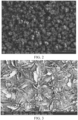
- FIG. 1 is an electron microscope image of the surface of the modified heating structure.
- the protrusions are in a strip shape with the thickness of about 20 ⁇ m, and the size of the protrusions ranges from 2 ⁇ m to 10 ⁇ m.
- a porous bioceramic-modified heating structure includes a substrate and a porous bioceramic layer located on a surface of the substrate.
- the material of the substrate is an iron-chromium-aluminum metal heating wire
- the base material of the porous bioceramic layer is hydroxyapatite
- the heating structure is a heating wire.
- a preparation method of the porous bioceramic-modified heating structure includes: preparing a mixed solution of 0.005 mol/L CaCh and 0.005 mol/L Na 2 HPO 4 , adjusting the pH to 6 with ammonia water, and conducting an electrodeposition reaction at 90°C for 40 min.
- the heating wire is used as a cathode, and an insoluble anode (pure titanium sheet) is used.
- Calcium phosphate salt is generated on the heating wire (i.e., the cathode).
- the current density for the reaction is 0.6 mA/cm 2 .
- Hydrogen gas is also generated in the process of generating the calcium phosphate salt. The generation and detachment of the hydrogen gas create natural pores between protrusions of the calcium phosphate salt.
- the heating wire modified by the calcium phosphate salt is placed into a 0.1 mol/L sodium hydroxide solution at 60°C for 48 h to completely convert the obtained precursor calcium phosphate salt into hydroxyapatite (HAP).
- HAP hydroxyapatite
- the bioceramic is sintered in a nitrogen atmosphere at 1200°C for 3 h to obtain the porous bioceramic-modified heating structure.
- FIG. 2 is an electron microscope image of the surface of the modified heating structure.
- the protrusions are in a grass ball shape with the thickness of about 20 ⁇ m, the diameter of a single ball is about 20 ⁇ m, and the grass ball is composed of branches with the diameter of about 2 ⁇ m to 5 ⁇ m.
- a porous bioceramic-modified heating structure includes a substrate and a porous bioceramic layer located on a surface of the substrate.
- the material of the substrate is an iron-chromium-aluminum metal heating mesh
- the base material of the porous bioceramic layer is hydroxyapatite
- the heating structure is a heating wire.
- a preparation method of the porous bioceramic-modified heating structure includes: preparing a mixed solution of 0.005 mol/L CaCl 2 and 0.005 mol/L Na 2 HPO 4 , adjusting the pH to 6 with ammonia water, and conducting an electrodeposition reaction at 90°C for 40 min.
- the heating wire is used as a cathode, and an insoluble anode (pure titanium sheet) is used.
- Calcium phosphate salt is generated on the iron-chromium-aluminum metal heating mesh (i.e., the cathode).
- the current density for the reaction is 0.7 mA/cm 2 .
- Hydrogen gas is also generated in the process of generating the calcium phosphate salt. The generation and detachment of the hydrogen gas create natural pores between protrusions of the calcium phosphate salt.
- the heating wire modified by the calcium phosphate salt is placed into a 0.1 mol/L sodium hydroxide solution at 60°C for 24 h to completely convert the obtained precursor calcium phosphate salt into hydroxyapatite (HAP).
- HAP hydroxyapatite
- the bioceramic is sintered in an air atmosphere at 1200°C for 3 h to obtain the porous bioceramic-modified heating structure.
- FIG. 3 is an electron microscope image of the surface of the modified heating structure. As can be seen from the figure, the protrusions are in a petal shape with the thickness of about 10 ⁇ m, and the length of each petal is about 10 ⁇ m.
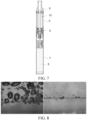
- FIG. 8 illustrates bubble diagrams in the process of boiling in Embodiment 1 before (left figure) and after (right figure) modification of the heating wire at the same power. It may be apparently seen from the figures that after modification with micro-nano porous hydroxyapatite, the number of generated bubbles is increased and the diameter is significantly reduced, and the frequency of bubble detachment is improved.
Landscapes
- Chemical & Material Sciences (AREA)
- Engineering & Computer Science (AREA)
- Materials Engineering (AREA)
- Organic Chemistry (AREA)
- Ceramic Engineering (AREA)
- Inorganic Chemistry (AREA)
- Chemical Kinetics & Catalysis (AREA)
- Electrochemistry (AREA)
- Metallurgy (AREA)
- Manufacturing & Machinery (AREA)
- Structural Engineering (AREA)
- Materials For Medical Uses (AREA)
Abstract
Description
- This application claims priority to
Chinese Patent Application No. 202210488051.8, entitled "POROUS BIOCERAMIC-MODIFIED HEATING STRUCTURE AND PREPARATION METHOD AND APPLICATION THEREOF", filed with the China National Intellectual Property Administration on May 6, 2022 - This application belongs to the technical field of heating materials, and in particular to a porous bioceramic-modified heating structure and a preparation method and an application thereof.
- An electronic vaporization process is a heat transfer process accompanied by boiling. A heating structure commonly used in the field of electronic vaporization includes a heating wire, a heating mesh, etc. However, the surfaces of the heating wire and the heating mesh are smooth surfaces. To enhance boiling heat transfer, increasing the specific surface area of the heating structure is an important method to increase the heat transfer coefficient, reduce the temperature, and improve energy utilization.
- With the development of nanotechnology, many researchers have found that processing a micro structure or a nano structure on the surface of an ordinary heating structure can improve the boiling heat transfer performance of a heat transfer surface. This is because after the heat transfer surface is modified through the micro-nano structure, the specific surface area is greatly increased, exhibiting better heat transfer performance than the smooth surfaces. In particular, the use of the micro-nano structure can increase the number of gasification cores in a boiling process, increase the frequency of bubble detachment, etc., thereby strengthening the boiling process. Therefore, if a micro-nano porous structure can be applied to the field of electronic vaporization, the effects of enhancing the vaporization process, reducing the vaporization temperature, and improving the vaporization efficiency can also be achieved.
- The micro-nano porous structure commonly used in the prior art is a porous metal structure, including porous copper, porous silver, porous nickel, etc. However, these metals are heavy metals, and in the vaporization process, these metal elements will enter vaporization liquid, which does not meet safety requirements for use in the field of electronic vaporization. Additionally, the mismatch between expansion coefficients of the porous metals and a substrate of the heating structure can easily lead to the problem of thermal failure.
- Therefore, the technical problem to be solved by this application is to overcome the defects that in the prior art, a heating structure is smooth in surface and low in heat transfer efficiency, and the temperature of a heating wire and a heating mesh in a vaporization process is high; and a commonly used porous structure contains heavy metals that can easily precipitate into vaporization liquid, failing to meet safety requirements for use and prone to thermal failures and the like. Therefore, a porous bioceramic-modified heating structure and a preparation method and an application thereof are provided.
- Therefore, this application provides the following technical solutions.
- This application provides a porous bioceramic-modified heating structure, including a substrate and a porous bioceramic layer located on a surface of the substrate.
- The porous bioceramic layer includes micro-nano protrusions, and a base material of the porous bioceramic layer is calcium phosphate salt.
- Optionally, a thickness of the porous bioceramic layer ranges from 10 µm to 500 µm. Optionally, a size of the micro-nano protrusions ranges from 10 nm to 100 µm.
- Optionally, the micro-nano protrusions are at least in one of an acicular shape, a granular shape, a grass ball shape, and a sheet shape.
- Optionally, the heating structure satisfies one or any combination of the following three conditions:
- (1) the heating structure is a heating mesh, a heating wire, or a heating film;
- (2) the calcium phosphate salt is at least one of hydroxyapatite, β-tricalcium phosphate, and biphasic calcium phosphate; and
- (3) the material of the substrate is an iron-chromium-aluminum alloy, a nickel-chromium alloy, stainless steel, titanium metal, or nickel metal.
- This application further provides a preparation method of the above porous bioceramic-modified heating structure, including the following steps: using an electrodeposition method to prepare the porous bioceramic layer on the surface of the substrate.
- Optionally, the electrodeposition method includes: conducting an electrodeposition reaction in an aqueous solution containing calcium ions and phosphate ions under acidic conditions, and subsequent hydrothermal treatment.
- Optionally, a concentration of the calcium ions in the aqueous solution ranges from 0.005 mol/L to 0.1 mol/L, and a concentration of the phosphate ions ranges from 0.005 mol/L to 0.1 mol/L;
- optionally, a pH of the aqueous solution is 4 to 6;
- optionally, a current density for the electrodeposition reaction ranges from 0.001 mA/cm2 to 1 mA/cm2; and
- a time and a temperature for the electrodeposition reaction are conventional operating parameters in the art.
- Optionally, the temperature for the hydrothermal treatment ranges from 50°C to 80°C, and the time for the hydrothermal treatment ranges from 24 h to 48 h; optionally, the hydrothermal treatment is conducted under alkaline conditions;
- optionally, a calcination step is further included after the hydrothermal treatment; and
- optionally, a calcination temperature ranges from 600°C to 1200°C, a calcination time ranges from 2 h to 4 h, and a calcination atmosphere is a nitrogen atmosphere, an inert atmosphere, or a reducing atmosphere.
- This application further provides an application of the above porous bioceramic-modified heating structure or the porous bioceramic-modified heating structure prepared by the above preparation method in a heating element, a vaporizer, or an electronic vaporization device.
- Optionally, the electronic vaporization device is an e-cigarette.
- As shown in
FIG. 4 to FIG. 6 , the heating element includes a liquid guidingsubstrate 1 and a heating structure. The heating structure is arranged on the surface of the liquid guiding substrate and is configured to heat and vaporize liquid to form aerosol. - The heating structure may be a
heating wire 2, aheating mesh 3, or aheating film 4. - The liquid guiding substrate transports the liquid through capillary action force, and may be a porous material such as cotton, porous ceramic, and porous glass.
- As shown in
FIG. 7 , the e-cigarette includes amouthpiece 9, avaporizer 5, and amain body 7. Thevaporizer 5 includes aliquid storage tank 10 and aheating structure 6. - The main body is provided with a
power supply 8 that provides power to theheating structure 6. The technical solutions of this application have the following advantages:
the porous bioceramic-modified heating structure provided by this application includes the substrate and the porous bioceramic layer located on the surface of the substrate, where the porous bioceramic layer includes the micro-nano protrusions, and the base material of the porous bioceramic layer is the calcium phosphate salt. By arranging the porous bioceramic layer including the micro-nano protrusions on the substrate of the heating structure in this application, the specific surface area of the heating structure is increased, thereby reducing the bubble size and increasing the detachment frequency in the vaporization process, so as to improve the vaporization efficiency and also reduce the temperature of the substrate of the heating structure in the vaporization process; and additionally, the micro-nano protrusion structure isolates the contact between the substrate of the heating structure and the vaporization liquid, thereby reducing the risk of the heavy metals from the substrate precipitating into the vaporization liquid, meanwhile, the base material of the porous bioceramic layer is the calcium phosphate salt, which does not contain the heavy metals, there is no risk of the heavy metals precipitating into the vaporization liquid, the expansion coefficient matches the substrate, and therefore the problem of the thermal failure is not likely to happen. - According to the porous bioceramic-modified heating structure provided by this application, by limiting the thickness of the porous bioceramic layer and the size and the shape of the micro-nano protrusions, the specific surface area of the heating structure can be further increased, and the vaporization efficiency of the heating structure is improved.
- According to the preparation method of the porous bioceramic-modified heating structure provided by this application, the generation of the calcium phosphate salt is accompanied by nanoscale and microscale hydrogen bubbles in the electrodeposition preparation process. These hydrogen bubbles are natural pore-forming agents, creating specific bubble detachment channels. When the porous bioceramic is applied to the vaporization field, these bubble detachment channels become natural detachment channels for gaseous vaporization media, thereby preparing a heating structure with a high specific surface area and vaporization efficiency.
- In order to describe technical solutions in specific implementations of this application or in the prior art more clearly, accompanying drawings required to be used in the descriptions of the specific implementations or the prior art will be simply introduced below. It is apparent that the accompanying drawings described below are some implementations of this application, and those of ordinary skill in the art can obtain other accompanying drawings according to these accompanying drawings without creative work.
-
FIG. 1 is an electron microscope image of the surface of a porous bioceramic-modified heating structure according toEmbodiment 1 of this application; -
FIG. 2 is an electron microscope image of the surface of a porous bioceramic-modified heating structure according toEmbodiment 2 of this application; -
FIG. 3 is an electron microscope image of the surface of a porous bioceramic-modified heating structure according toEmbodiment 3 of this application; -
FIG. 4 is a schematic structural diagram of a heating element according to this application; -
FIG. 5 is a schematic structural diagram of another heating element according to this application; -
FIG. 6 is a schematic structural diagram of still another heating element according to this application; -
FIG. 7 is a schematic structural diagram of an e-cigarette according to this application; and -
FIG. 8 illustrates bubble diagrams of a pool boiling experiment before (left figure) and after (right figure) modifying the heating wire inEmbodiment 1 of this application. - In the drawings, 1, liquid guiding substrate; 2, heating wire; 3, heating mesh; 4, heating film; 5, vaporizer; 6, heating structure; 7, main body; 8, power supply; 9, mouthpiece; and 10, liquid storage tank.
- The following embodiments are provided to better facilitate a further understanding of this application, are not limited to the described optimal implementations, and do not constitute limitations on the content and scope of protection of the present disclosure. Any product derived by any person from the inspiration of the present disclosure or by combining the features of this application with other prior art, which is the same or similar to this application, falls within the scope of protection of this application.
- Embodiments in which specific experimental steps or conditions are not indicated are implemented according to the operations of conventional experimental steps or conditions described in the literatures in the art. Reagents or instruments used without indicating a manufacturer are conventional reagent products that are commercially available.
- A porous bioceramic-modified heating structure includes a substrate and a porous bioceramic layer located on a surface of the substrate. The material of the substrate is an iron-chromium-aluminum heating wire, the base material of the porous bioceramic layer is hydroxyapatite, and the heating structure is a heating wire.
- A preparation method of the porous bioceramic-modified heating structure includes:
preparing a mixed solution of 0.01 mol/L CaCh and 0.01 mol/L Na2HPO4, adjusting the pH to 6 with ammonia water, and conducting an electrodeposition reaction at 90°C for 40 min. In the reaction process, the heating wire is used as a cathode, and an insoluble anode (pure titanium sheet) is used. Calcium phosphate salt is generated on the heating wire (i.e., the cathode). The current density for the reaction is 0.4 mA/cm2. Hydrogen gas is also generated in the process of generating the calcium phosphate salt. The generation and detachment of the hydrogen gas create natural pores between protrusions of the calcium phosphate salt. - The heating wire modified by the calcium phosphate salt is placed into a 0.1 mol/L sodium hydroxide solution at 60°C for 36 h to completely convert the obtained precursor calcium phosphate salt into hydroxyapatite (HAP).
- To enhance the strength of bioceramic, the bioceramic is sintered in a nitrogen atmosphere at 1200°C for 3 h to obtain the porous bioceramic-modified heating structure.
-
FIG. 1 is an electron microscope image of the surface of the modified heating structure. As can be seen from the figure, the protrusions are in a strip shape with the thickness of about 20 µm, and the size of the protrusions ranges from 2 µm to 10 µm. - A porous bioceramic-modified heating structure includes a substrate and a porous bioceramic layer located on a surface of the substrate. The material of the substrate is an iron-chromium-aluminum metal heating wire, the base material of the porous bioceramic layer is hydroxyapatite, and the heating structure is a heating wire.
- A preparation method of the porous bioceramic-modified heating structure includes:
preparing a mixed solution of 0.005 mol/L CaCh and 0.005 mol/L Na2HPO4, adjusting the pH to 6 with ammonia water, and conducting an electrodeposition reaction at 90°C for 40 min. In the reaction process, the heating wire is used as a cathode, and an insoluble anode (pure titanium sheet) is used. Calcium phosphate salt is generated on the heating wire (i.e., the cathode). The current density for the reaction is 0.6 mA/cm2. Hydrogen gas is also generated in the process of generating the calcium phosphate salt. The generation and detachment of the hydrogen gas create natural pores between protrusions of the calcium phosphate salt. - The heating wire modified by the calcium phosphate salt is placed into a 0.1 mol/L sodium hydroxide solution at 60°C for 48 h to completely convert the obtained precursor calcium phosphate salt into hydroxyapatite (HAP).
- To enhance the strength of bioceramic, the bioceramic is sintered in a nitrogen atmosphere at 1200°C for 3 h to obtain the porous bioceramic-modified heating structure.
-
FIG. 2 is an electron microscope image of the surface of the modified heating structure. As can be seen from the figure, the protrusions are in a grass ball shape with the thickness of about 20 µm, the diameter of a single ball is about 20 µm, and the grass ball is composed of branches with the diameter of about 2 µm to 5 µm. - A porous bioceramic-modified heating structure includes a substrate and a porous bioceramic layer located on a surface of the substrate. The material of the substrate is an iron-chromium-aluminum metal heating mesh, the base material of the porous bioceramic layer is hydroxyapatite, and the heating structure is a heating wire.
- A preparation method of the porous bioceramic-modified heating structure includes:
preparing a mixed solution of 0.005 mol/L CaCl2 and 0.005 mol/L Na2HPO4, adjusting the pH to 6 with ammonia water, and conducting an electrodeposition reaction at 90°C for 40 min. In the reaction process, the heating wire is used as a cathode, and an insoluble anode (pure titanium sheet) is used. Calcium phosphate salt is generated on the iron-chromium-aluminum metal heating mesh (i.e., the cathode). The current density for the reaction is 0.7 mA/cm2. Hydrogen gas is also generated in the process of generating the calcium phosphate salt. The generation and detachment of the hydrogen gas create natural pores between protrusions of the calcium phosphate salt. - The heating wire modified by the calcium phosphate salt is placed into a 0.1 mol/L sodium hydroxide solution at 60°C for 24 h to completely convert the obtained precursor calcium phosphate salt into hydroxyapatite (HAP).
- To enhance the strength of bioceramic, the bioceramic is sintered in an air atmosphere at 1200°C for 3 h to obtain the porous bioceramic-modified heating structure.
-
FIG. 3 is an electron microscope image of the surface of the modified heating structure. As can be seen from the figure, the protrusions are in a petal shape with the thickness of about 10 µm, and the length of each petal is about 10 µm. - Under the saturated atmospheric pressure, a pool boiling experiment is conducted with a mixture of propylene glycol (PG)/vegetable glycerin (VG) = 3:7 as working fluid. During the experiment, the temperature of the working fluid is maintained at 210°C.
FIG. 8 illustrates bubble diagrams in the process of boiling inEmbodiment 1 before (left figure) and after (right figure) modification of the heating wire at the same power. It may be apparently seen from the figures that after modification with micro-nano porous hydroxyapatite, the number of generated bubbles is increased and the diameter is significantly reduced, and the frequency of bubble detachment is improved. Under the condition of the same power of 12 W, film boiling occurs on the surface of the unmodified heating wire, causing the heating wire to turn red; while the modified heating wire is in a nucleate boiling stage, and the heating wire has a low temperature. That is, after bio-modification with the porous bioceramic, the vaporization efficiency of the heating wire in the electronic vaporization process can be improved, and meanwhile the temperature of the substrate of the heating structure in the vaporization process is reduced. Other embodiments have similar technical effects and are not shown individually. - Apparently, the above embodiments are merely examples for clear descriptions, but do not limit the implementations. Those of ordinary skill in the art can make other different forms of changes or variations based on the above descriptions. It is neither necessary nor possible to exhaust all implementations. Obvious changes or variations expanded therefrom still fall within the scope of protection of the present disclosure.
Claims (15)
- A porous bioceramic-modified heating structure, comprising:a substrate; anda porous bioceramic layer located on a surface of the substrate,wherein the porous bioceramic layer comprises micro-nano protrusions, andwherein a base material of the porous bioceramic layer is calcium phosphate salt.
- The porous bioceramic-modified heating structure of claim 1, wherein a thickness of the porous bioceramic layer ranges from 10 µm to 500 µm.
- The porous bioceramic-modified heating structure of claim 1 or 2, wherein a size of the micro-nano protrusions ranges from 10 nm to 100 µm.
- The porous bioceramic-modified heating structure of any one of claims 1 to 3, wherein the micro-nano protrusions are at least in one of an acicular shape, a granular shape, a grass ball shape, and a sheet shape.
- The porous bioceramic-modified heating structure of any one of claims 1 to 3, wherein the heating structure satisfies one or any combination of the following three conditions:(1) the heating structure is a heating mesh, a heating wire, or a heating film;(2) the calcium phosphate salt is at least one of hydroxyapatite, β-tricalcium phosphate, and biphasic calcium phosphate; and(3) a material of the substrate is an iron-chromium-aluminum alloy, a nickel-chromium alloy, stainless steel, titanium metal, or nickel metal.
- A preparation method of the porous bioceramic-modified heating structure of any one of claims 1 to 5, comprising the following steps: using an electrodeposition method to prepare the porous bioceramic layer on the surface of the substrate.
- The preparation method of the porous bioceramic-modified heating structure of claim 6, wherein the electrodeposition method comprises:conducting an electrodeposition reaction in an aqueous solution containing calcium ions and phosphate ions under acidic conditions, andsubsequent hydrothermal treatment.
- The preparation method of the porous bioceramic-modified heating structure of claim 7, wherein a concentration of the calcium ions in the aqueous solution ranges from 0.005 mol/L to 0.1 mol/L, and
wherein a concentration of the phosphate ions ranges from 0.005 mol/L to 0.1 mol/L. - The preparation method of the porous bioceramic-modified heating structure of claim 7, wherein a pH of the aqueous solution is 4 to 6.
- The preparation method of the porous bioceramic-modified heating structure of claim 7, wherein a current density for the electrodeposition reaction ranges from 0.001 mA/cm2 to 1 mA/cm2.
- The preparation method of the porous bioceramic-modified heating structure of claim 7, wherein a temperature for the hydrothermal treatment ranges from 50°C to 80°C, and
wherein a time for the hydrothermal treatment ranges from 24 h to 48 h. - The preparation method of the porous bioceramic-modified heating structure of claim 7, wherein the hydrothermal treatment is conducted under alkaline conditions.
- The preparation method of the porous bioceramic-modified heating structure of claim 7, further comprising:
a calcination step after the hydrothermal treatment. - The preparation method of the porous bioceramic-modified heating structure of claim 13, wherein a calcination temperature ranges from 600°C to 1200°C,wherein a calcination time ranges from 2 h to 4 h, andwherein a calcination atmosphere is a nitrogen atmosphere, an inert atmosphere, or a reducing atmosphere.
- An application of the porous bioceramic-modified heating structure of any one of claims 1 to 5 or the porous bioceramic-modified heating structure prepared by the preparation method of any one of claims 6 to 14 in a heating element, a vaporizer, or an electronic vaporization device.
Applications Claiming Priority (2)
| Application Number | Priority Date | Filing Date | Title |
|---|---|---|---|
| CN202210488051.8A CN117044993A (en) | 2022-05-06 | 2022-05-06 | A porous bioceramic modified heating structure and its preparation method and application |
| PCT/CN2023/079043 WO2023213124A1 (en) | 2022-05-06 | 2023-03-01 | Porous biological ceramic-modified heating structure, and preparation method therefor and application thereof |
Publications (2)
| Publication Number | Publication Date |
|---|---|
| EP4491043A1 true EP4491043A1 (en) | 2025-01-15 |
| EP4491043A4 EP4491043A4 (en) | 2025-07-02 |
Family
ID=88646200
Family Applications (1)
| Application Number | Title | Priority Date | Filing Date |
|---|---|---|---|
| EP23799113.8A Pending EP4491043A4 (en) | 2022-05-06 | 2023-03-01 | Heating structure modified with porous biological ceramics and manufacturing method therefor and application thereof |
Country Status (4)
| Country | Link |
|---|---|
| US (1) | US20250049120A1 (en) |
| EP (1) | EP4491043A4 (en) |
| CN (1) | CN117044993A (en) |
| WO (1) | WO2023213124A1 (en) |
Families Citing this family (2)
| Publication number | Priority date | Publication date | Assignee | Title |
|---|---|---|---|---|
| CN118530044A (en) * | 2024-05-24 | 2024-08-23 | 深圳市沁园春科技有限公司 | Preparation method of atomizer core substrate |
| CN118909293B (en) * | 2024-07-25 | 2025-06-17 | 常州君华医疗科技有限公司 | Micron-sized polyetheretherketone microspheres and preparation method and application thereof |
Family Cites Families (14)
| Publication number | Priority date | Publication date | Assignee | Title |
|---|---|---|---|---|
| JP2005067966A (en) * | 2003-08-26 | 2005-03-17 | Makoto Kitamura | Calcium phosphate ceramics porous material and its manufacturing method |
| EP3240445B1 (en) * | 2014-12-31 | 2019-07-03 | UTVG Global IP B.V. | Personal electronic delivery system, atomizer assembly, use thereof and corresponding production method |
| CN104826563B (en) * | 2015-04-01 | 2017-05-17 | 浙江理工大学 | Preparation method of hydroxyapatite/sericin hybrid microcapsule |
| US12193503B2 (en) * | 2018-09-28 | 2025-01-14 | Philip Morris Products S.A. | Heater assembly for an aerosol-generating system |
| CN210642434U (en) * | 2019-08-22 | 2020-06-02 | 厦门海赛米克新材料科技有限公司 | Improved structure of porous ceramic, electronic cigarette and porous ceramic atomizer |
| CN110720676B (en) * | 2019-10-15 | 2023-12-22 | 深圳麦克韦尔科技有限公司 | Heating element, preparation method thereof and electronic cigarette |
| CN113729295A (en) * | 2020-05-28 | 2021-12-03 | 张家港外星人新材料科技有限公司 | Electronic cigarette smoking set with oxide micro-nano film coated on surface of resistance heating material |
| PH12022553418A1 (en) * | 2020-06-18 | 2024-04-22 | Philip Morris Products Sa | Heater assembly having fluid permeable heater with directly deposited transport material |
| CN111974661A (en) * | 2020-07-18 | 2020-11-24 | 钟术光 | Ultrasonic atomization sheet and ultrasonic atomizer |
| US12514290B2 (en) * | 2020-09-23 | 2026-01-06 | Philip Morris Products S.A. | Heating element having increased resistance |
| CN214431825U (en) * | 2020-11-18 | 2021-10-22 | 深圳麦克韦尔科技有限公司 | Ceramic heating element, atomizer and electronic atomization device |
| CN112315039B (en) * | 2020-11-18 | 2024-11-22 | 深圳麦克韦尔科技有限公司 | Ceramic heating element, atomizer, electronic atomization device and preparation method of ceramic heating element |
| CN215347051U (en) * | 2021-03-01 | 2021-12-31 | 深圳市锐丽科技有限公司 | Atomizing core based on microporous ceramic matrix and electronic cigarette comprising atomizing core |
| CN113511910A (en) * | 2021-04-22 | 2021-10-19 | 深圳市博迪科技开发有限公司 | A kind of preparation method of porous ceramic heating element and porous ceramic heating element |
-
2022
- 2022-05-06 CN CN202210488051.8A patent/CN117044993A/en active Pending
-
2023
- 2023-03-01 WO PCT/CN2023/079043 patent/WO2023213124A1/en not_active Ceased
- 2023-03-01 EP EP23799113.8A patent/EP4491043A4/en active Pending
-
2024
- 2024-10-31 US US18/932,896 patent/US20250049120A1/en active Pending
Also Published As
| Publication number | Publication date |
|---|---|
| WO2023213124A1 (en) | 2023-11-09 |
| CN117044993A (en) | 2023-11-14 |
| EP4491043A4 (en) | 2025-07-02 |
| US20250049120A1 (en) | 2025-02-13 |
Similar Documents
| Publication | Publication Date | Title |
|---|---|---|
| US20250049120A1 (en) | Porous bioceramic-modified heating structure and preparation method and application thereof | |
| Zhang et al. | Advanced non-noble materials in bifunctional catalysts for ORR and OER toward aqueous metal–air batteries | |
| JP4933770B2 (en) | Fuel cell catalyst, production method thereof, membrane-electrode assembly including the same, and fuel cell system | |
| Zhang et al. | One-step coaxial electrodeposition of Co 0.85 Se on CoNi 2 S 4 nanotube arrays for flexible solid-state asymmetric supercapacitors | |
| Liu et al. | A review of modulation strategies for improving the catalytic performance of transition metal sulfide self-supported electrodes for the hydrogen evolution reaction | |
| CN115305496B (en) | Preparation method and application of rare earth cerium doped cobalt phosphide/iron phosphide heterogeneous material | |
| CN109560310A (en) | A kind of fuel cell very low platinum carrying amount self-humidifying membrane electrode and preparation method thereof | |
| CN104157832B (en) | A kind of preparation method of ferroferric oxide/carbon composite lithium ion battery material | |
| CN114318406B (en) | A kind of carbon dioxide reduction ethylene catalyst, catalytic electrode and preparation method | |
| CN108722453A (en) | A molybdenum phosphide/carbon composite nanomaterial for alkaline electrocatalytic hydrogen evolution | |
| CN106207201B (en) | A reduced graphene oxide/graphene foam composite with gradient distribution of oxygen-containing functional groups and its application in vanadium batteries | |
| CN106882841A (en) | A kind of titanium dioxide nano thread/two-dimensional layer carbonization titanium composite material and its low temperature preparation method | |
| CN106219616A (en) | A kind of molybdenum dioxide/cobalt acid nickel classification hybrid nanostructure array and preparation method thereof | |
| Ma et al. | Synthesis and applications of one-dimensional porous nanowire arrays: a review | |
| CN102583271A (en) | Spiny Sb2Se3 semiconductor hydrogen storage material and preparation method thereof | |
| CN110752378A (en) | Biomass-based active carbon-coated iron carbide three-dimensional porous microbial fuel cell anode material, anode and preparation method thereof | |
| CN108930056A (en) | A kind of method that anodizing prepares meso-porous nano piece tungsten C film | |
| KR20030038770A (en) | Fuel cell and method for preparation thereof | |
| CN1957250B (en) | Electrochemical electrode using nickel-containing nanostructured material having dendrite structure as active layer, and method for producing the same | |
| CN111763954A (en) | A kind of preparation method of lamellar WO3 photoanode material and its application in photoelectric catalysis | |
| CN115799554A (en) | Diffusion layer, preparation method thereof and membrane electrode | |
| JP4162083B2 (en) | Electrolyte membrane and fuel cell using the electrolyte membrane | |
| CN102776565B (en) | Method for preparing nano-structure single crystal silver | |
| CN120600935A (en) | A three-dimensional multi-interface heterostructure lithium-sulfur battery interlayer and preparation method thereof, and a lithium-sulfur battery | |
| CN102998344B (en) | Novel nanosheet film for sensor and preparation method thereof |
Legal Events
| Date | Code | Title | Description |
|---|---|---|---|
| STAA | Information on the status of an ep patent application or granted ep patent |
Free format text: STATUS: THE INTERNATIONAL PUBLICATION HAS BEEN MADE |
|
| PUAI | Public reference made under article 153(3) epc to a published international application that has entered the european phase |
Free format text: ORIGINAL CODE: 0009012 |
|
| STAA | Information on the status of an ep patent application or granted ep patent |
Free format text: STATUS: REQUEST FOR EXAMINATION WAS MADE |
|
| 17P | Request for examination filed |
Effective date: 20241010 |
|
| AK | Designated contracting states |
Kind code of ref document: A1 Designated state(s): AL AT BE BG CH CY CZ DE DK EE ES FI FR GB GR HR HU IE IS IT LI LT LU LV MC ME MK MT NL NO PL PT RO RS SE SI SK SM TR |
|
| A4 | Supplementary search report drawn up and despatched |
Effective date: 20250602 |
|
| RIC1 | Information provided on ipc code assigned before grant |
Ipc: H05B 3/26 20060101ALI20250526BHEP Ipc: C25D 9/12 20060101ALI20250526BHEP Ipc: C25D 9/10 20060101ALI20250526BHEP Ipc: C04B 35/622 20060101ALI20250526BHEP Ipc: C04B 35/447 20060101ALI20250526BHEP Ipc: C25D 9/08 20060101ALI20250526BHEP Ipc: H05B 3/34 20060101ALI20250526BHEP Ipc: H05B 3/14 20060101ALI20250526BHEP Ipc: A24F 40/40 20200101AFI20250526BHEP |
|
| DAV | Request for validation of the european patent (deleted) | ||
| DAX | Request for extension of the european patent (deleted) |