EP4489348A1 - An access controller for a three-dimensional content system - Google Patents
An access controller for a three-dimensional content system Download PDFInfo
- Publication number
- EP4489348A1 EP4489348A1 EP23306143.1A EP23306143A EP4489348A1 EP 4489348 A1 EP4489348 A1 EP 4489348A1 EP 23306143 A EP23306143 A EP 23306143A EP 4489348 A1 EP4489348 A1 EP 4489348A1
- Authority
- EP
- European Patent Office
- Prior art keywords
- user
- virtual reality
- reality device
- communication link
- identification
- Prior art date
- Legal status (The legal status is an assumption and is not a legal conclusion. Google has not performed a legal analysis and makes no representation as to the accuracy of the status listed.)
- Granted
Links
Images

Classifications
-
- H—ELECTRICITY
- H04—ELECTRIC COMMUNICATION TECHNIQUE
- H04L—TRANSMISSION OF DIGITAL INFORMATION, e.g. TELEGRAPHIC COMMUNICATION
- H04L67/00—Network arrangements or protocols for supporting network services or applications
- H04L67/01—Protocols
- H04L67/131—Protocols for games, networked simulations or virtual reality
-
- H—ELECTRICITY
- H04—ELECTRIC COMMUNICATION TECHNIQUE
- H04L—TRANSMISSION OF DIGITAL INFORMATION, e.g. TELEGRAPHIC COMMUNICATION
- H04L67/00—Network arrangements or protocols for supporting network services or applications
- H04L67/14—Session management
- H04L67/141—Setup of application sessions
-
- H—ELECTRICITY
- H04—ELECTRIC COMMUNICATION TECHNIQUE
- H04L—TRANSMISSION OF DIGITAL INFORMATION, e.g. TELEGRAPHIC COMMUNICATION
- H04L63/00—Network architectures or network communication protocols for network security
- H04L63/04—Network architectures or network communication protocols for network security for providing a confidential data exchange among entities communicating through data packet networks
- H04L63/0428—Network architectures or network communication protocols for network security for providing a confidential data exchange among entities communicating through data packet networks wherein the data content is protected, e.g. by encrypting or encapsulating the payload
-
- H—ELECTRICITY
- H04—ELECTRIC COMMUNICATION TECHNIQUE
- H04L—TRANSMISSION OF DIGITAL INFORMATION, e.g. TELEGRAPHIC COMMUNICATION
- H04L63/00—Network architectures or network communication protocols for network security
- H04L63/08—Network architectures or network communication protocols for network security for authentication of entities
-
- H—ELECTRICITY
- H04—ELECTRIC COMMUNICATION TECHNIQUE
- H04L—TRANSMISSION OF DIGITAL INFORMATION, e.g. TELEGRAPHIC COMMUNICATION
- H04L63/00—Network architectures or network communication protocols for network security
- H04L63/10—Network architectures or network communication protocols for network security for controlling access to devices or network resources
- H04L63/102—Entity profiles
-
- H—ELECTRICITY
- H04—ELECTRIC COMMUNICATION TECHNIQUE
- H04L—TRANSMISSION OF DIGITAL INFORMATION, e.g. TELEGRAPHIC COMMUNICATION
- H04L67/00—Network arrangements or protocols for supporting network services or applications
- H04L67/14—Session management
- H04L67/143—Termination or inactivation of sessions, e.g. event-controlled end of session
Definitions
- the field of the invention relates to data platforms and systems and more particularly to an access controller for a three-dimensional content system and a method for securely accessing a three-dimensional content.
- each stage is managed by a separate environment: a test environment, a preproduction environment, optionally a staging environment and a production environment.
- the new content is a three-dimensional content
- the user in charge of the test, validation and deployment of the new three-dimensional content must use an application installed on a virtual reality device, such as e.g. a virtual reality helmet, in communication with the platform to validate the content at each stage.
- a virtual reality device such as e.g. a virtual reality helmet
- the version of the application installed on the virtual reality device shall be compatible with the corresponding environment.
- Such an operation implies trusting the user entirely regarding the use of the correct version of the application on the virtual reality device, which is not satisfactory from a security point of view as the user could use a version of the application which does not match with the environment that the user wants to use at a given time.
- Such an operation also implies the creation of a secured link between the virtual reality device and the platform that shall be managed by the platform operator, which may be complex to implement and operate.
- the present invention concerns a method for allowing at least one virtual reality device to access a data platform of a three-dimensional content system, said three-dimensional content system comprising said data platform, at least one identification portal, said at least one virtual reality device and an access controller, said at least one virtual reality device being intended to be used by a user and being configured to communicate with the access controller on an access communication link and with the data platform on a data communication link, an application characterized by a cryptographic footprint being installed on said virtual reality device for using a content installed on said data platform, the data platform comprising a plurality of application environments configured each for storing a set of data of a content and a copy of said cryptographic footprint of the application installed on the virtual reality device and for communicating with the access controller on a control communication link, said at least one identification portal being configured to communicate with the user via a network equipment on a first identification communication link to identify the user and select one of the application environments that the user is allowed to communicate with based on said user's profile, said at least one identification portal being configured to
- the method according to the invention allows to ensure the use of the correct version of the application installed on the virtual reality device with the application environment that the user is allowed to access.
- the access controller allows creating a hub that manages all communications between the data platform and the outside world, checking with the data platform that the version of the application installed on the virtual reality device is compatible with the application environment that the user wants to access to and allows the creation of a secured communication between the virtual reality device and the selected authorized application.
- the application environments may comprise a test environment, a pre-production environment, a staging environment and/or the production environment.
- the step of identifying the user comprises the authentication of said user.
- the session is activated for the user for a predetermined duration.
- the method comprises a step of, prior to the activation of the session, checking if a session is already active for the given user and of deleting the active session.
- the identification of the user via the first or the second identification communication link is performed by the identification portal using an internal identity provider module configured to authenticate the user of the at least one virtual reality device.
- the identification of the user via the first or the second identification communication link is performed by the identification portal via an external identity provider module configured to authenticate the user of the at least one virtual reality device.
- the invention also relates to a computer program comprising instructions which, when the program is executed by a computer, cause the computer to carry out the steps of the method as described here before.
- the invention also relates to an access controller for a three-dimensional content system, said three-dimensional content system comprising a data platform, at least one identification portal, at least one virtual reality device and an access controller, said at least one virtual reality device being intended to be used by a user and being configured to communicate with the access controller on an access communication link and with the data platform on a data communication link, an application characterized by a cryptographic footprint being installed on said virtual reality device for using a content installed on said data platform, the data platform comprising a plurality of application environments configured each for storing a set of data of a content and a copy of the cryptographic footprint of the application installed on the virtual reality device and for communicating with the access controller on a control communication link, said at least one identification portal being configured to communicate with the user via a network equipment on a first identification communication link to identify said user and select one of the application environments that the user is allowed to communicate with based on said user's profile, said at least one identification portal being configured to communicate with the user on a second identification communication link to identify said user via
- the access controller is configured to activate a session for a predetermined time duration.
- the access controller is configured to, prior to activating a session, check if a session is already active for the given user and to delete the active session.
- the invention also relates to a three-dimensional content system three-dimensional content system for at least one virtual reality device, said three-dimensional content system comprising a data platform, at least one identification portal, at least one virtual reality device and an access controller according to any of the preceding claims, said at least one virtual reality device being intended to be used by a user and being configured to communicate with the access controller on an access communication link and with the data platform on a data communication link, an application characterized by a cryptographic footprint being installed on said virtual reality device for using a content installed on said data platform, the data platform comprising a plurality of application environments configured each for storing a set of data of a content and a copy of the cryptographic footprint of the application stored on the virtual reality device and for communicating with the access controller on a control communication link, said at least one identification portal being configured to communicate with the user via a network equipment on a first identification communication link to identify said user and select one of the application environments that the user is allowed to communicate with based on said user's profile, said at least one identification portal being configured to
- the access controller is internal to the data platform.
- the access controller is external to the data platform.
- the identification portal is configured to identify the user via the first or the second identification communication link using an internal identity provider module, said internal identity provider module being configured to authenticate the user of the at least one virtual reality device.
- the identification portal is configured to identify the user via the first or the second identification communication link via an external identity provider module, said external identity provider module being configured to authenticate the user of the at least one virtual reality device.
- Figure 1 describes an example of a three-dimensional content system 1 according to the invention.
- the three-dimensional content system 1 comprises a data platform 10, an identification portal 20, a virtual reality device 30 intended to be used by a user 5, an access controller 40 and a network equipment 50.
- the data platform 10 comprises a plurality of application environments 110.
- Each application environment 110 is configured to store a set of data of a content used with an application installed on the virtual reality device 30 and a copy of the cryptographic footprint of the application stored on the virtual reality device 30 as described here after.
- Each application environment 110 is configured to communicate with the access controller 40 on a control communication link CCL.
- the data platform 10 comprises several application environments 110 such as a test environment, a pre-production environment and a production environment.
- the test environment allows the user 5 to test the content using the virtual reality device 30.
- the pre-production environment allows the user 5 to validate the content using the virtual reality device 30.
- the production environment allows the user to use the content as a service using the virtual reality device 30.
- the identification portal 20 stores the profile of the users 5 authorized to access the data platform 10.
- the profile of each user 5 indicates which application environment 110 can be accessed by said user 5.
- the identification portal 20 is configured to communicate with the user 5 on a first identification communication link ICL1 through the network equipment 50 and with the user 5 on a second identification communication link ICL2 through the virtual reality device 30, to identify the user 5 in two different manners.
- the identification portal 20 may be a web site accessible through the Internet.
- the identification portal 20 is configured to select one of the application environments 110 that the user 5 is allowed to communicate with based on said user's profile and with one of the application environments hosted on the data platform 10 on a request communication link RCL. Each user 5 is only allowed to access one and only one application environment 110 at a time with a given identifier. A user 5 may be able to access different application environments 110, at different times, using different identifiers.
- the identification portal 20 may be a unique physical entity or comprises several entities, one per application environment 110.
- the virtual reality device 30 is a virtual reality helmet.
- the virtual reality device 30 stores a version of an application characterized by a cryptographic footprint or data footprint.
- the cryptographic footprint may for example be the hash of the application.
- the hash known from the skilled person as such, consists in assigning a numeric or alphanumeric string to (a piece of data) by applying a function whose output values are all the same number of bits in length.
- This application installed on the virtual reality device 30 allows using the content installed on one of the application environments 110 through a user session.
- the virtual reality device 30 is configured to communicate with the identification portal 20 on the second identification communication link ICL2 to identify the user 5 and with the access controller 40 on an access communication link ACL once, and only once, the user 5 has been identified via the second identification communication link ICL2.
- the virtual reality device 30 is configured to communicate with an application environment 110 hosted on the data platform 10 on a data communication link DCL via a first communication network 60 using a network address of the selected application environment 110 received from the access controller 40 after identification.
- the access controller 40 is configured to receive a cryptographic footprint sent by one of the application environments 110 of the data platform 10 on the control communication link CCL, said cryptographic footprint allowing to identify the version of the application installed on the application environment 110 that sent it.
- the cryptographic footprint is sent to the access controller 40 once the user has been identified using the network equipment 50 and by the application environment 110 the user 5 is authorized to access to.
- the access controller 40 is then configured to activate a session for the user 5 allowing the user 5 to access said application environment 110.
- the access controller 40 is configured to receive the cryptographic footprint of the application stored on the virtual reality user device 30 sent by said virtual reality device 30 on the access communication link ACL via a second communication network 70, said cryptographic footprint allowing to identify the version of the application installed on the virtual reality device 30.
- the cryptographic footprint is sent by the virtual reality device once the user 5 has been identified using the virtual reality device 30,
- the access controller 40 is configured to compare both cryptographic footprints received respectively on the control communication link CCL and on the access communication link ACL.
- the access controller 40 is configured to send a network address of said application environment 110 to the virtual reality device 30 on the access communication link ACL for said at least one virtual reality device 30 to create a secured communication between said at least one virtual reality device 30 and said application environment only if the session is valid (i.e. if the identification portal 20 confirms that the user can access the associated application environment 110).
- the access controller 40 comprises one or several processors that implement the technical functions mentioned hereabove.
- the network equipment 50 can be any suitable device able to trigger the creation of a new session or the activation of an existing session with one of the application environments 110.
- the network device 50 may for example be a smartphone or a computer, such as e.g. a laptop.
- the network device 50 is configured to allow the user 5 to connect to the identification portal 20 via a third communication network 80 to create a new session or continue with an existing session.
- the first communication network 60 allows the communication between the virtual reality device 30 and one of the application environments 110 through a data communication link DCL.
- the first communication network 60 may be the Internet.
- the second communication network 70 allows the communication between the virtual reality device 30 and the identification portal 20 through the second identification communication link ICL2, and between the virtual reality device 30 and the access controller 40 through the access communication link ACL.
- the second communication network 70 may be the Internet.
- the third communication network 80 allows the communication between the network equipment 50 and the identification portal 20 through the first identification communication link ICL1.
- the third communication network 80 may be the Internet.
- the first communication network 60, the second communication network 70 and the third communication network 80 may be three separated communication network physical entities or two separated communication network physical entities or be one same communication network physical entity.
- a step S1 the user 5 connects to the identification portal 20 using an identifier and a password via the network equipment 50 and the first identification communication link ICL1 created through the third communication network 80.
- the user 5 is then identified by the identification portal 20.
- the identification comprises here authenticating the user 5.
- the identification portal 20 retrieves the profile associated with said user 5 in its memory zone to determine which application environment 110 the user 5 is allowed to access in a step S2.
- the identification credentials of the user 5 allow said user to access only one of the application environments 110 at a time by the creation of a unique session between the user 5 and the allowed application environment 110.
- the network equipment 50 notifies the selected application environment 110 via the request communication link RCL in a step S3.
- the selected application environment 110 sends to the access controller 40 via the control communication link CCL a copy of the cryptographic footprint stored on said selected application environment 110, which corresponds to a given application on the virtual reality device 30 and which is received via the control communication link CCL by the access controller 40 in a step S4.
- the access controller 40 checks if a session is already opened for the user 5, deletes all opened sessions and activates a new session for the user 5 to access the selected application environment 110.
- the session is opened for a predetermined duration, for example a few dozen of minutes.
- a step S6 the user 5 connects to the identification portal 20 using an identifier and a password via the virtual reality device 30 and the second identification communication link ICL2 created through the second communication network 70.
- the user 5 is then identified by the identification portal 20 through the second communication network 70.
- the identification comprises here authenticating the user 5.
- the virtual reality device 30 sends the cryptographic footprint of the application stored on said virtual reality device 30 on the access communication link ACL, which is received by the access controller 40.
- the access controller 40 compares the cryptographic footprint received on the control communication link CCL and the cryptographic footprint received on access communication link ACL.
- the access controller 40 sends in a step S9 the network address of the selected application environment 110, and optionally authentication data to secure the data communication link DCL, to the virtual reality device 30 on the access communication link ACL.
- the virtual reality device 40 establishes a communication, preferably secured, on the data communication link DCL with the selected application environment 110 using the network address in order to communicate with said application environment 110, for example to use data or modify data or add new data stored in said application environment 110.
- the invention allows therefore to guarantee that the two versions used on the virtual reality device 30 is the same as the one that was originally installed and indexed on the application environment 110 that the user 5 is allowed to access.
Landscapes
- Engineering & Computer Science (AREA)
- Computer Networks & Wireless Communication (AREA)
- Signal Processing (AREA)
- Computer Security & Cryptography (AREA)
- Computer Hardware Design (AREA)
- Computing Systems (AREA)
- General Engineering & Computer Science (AREA)
- Information Transfer Between Computers (AREA)
Abstract
Description
- The field of the invention relates to data platforms and systems and more particularly to an access controller for a three-dimensional content system and a method for securely accessing a three-dimensional content.
- In order for a content created by a provider to be deployed on a data platform, i.e. put into production, the platform operator must take it through several stages: testing, then preproduction (or validation), optionally staging (e.g. validation by the client), and finally production. Within the platform, each stage is managed by a separate environment: a test environment, a preproduction environment, optionally a staging environment and a production environment.
- When the new content is a three-dimensional content, the user in charge of the test, validation and deployment of the new three-dimensional content must use an application installed on a virtual reality device, such as e.g. a virtual reality helmet, in communication with the platform to validate the content at each stage. For each stage, the version of the application installed on the virtual reality device shall be compatible with the corresponding environment.
- Such an operation implies trusting the user entirely regarding the use of the correct version of the application on the virtual reality device, which is not satisfactory from a security point of view as the user could use a version of the application which does not match with the environment that the user wants to use at a given time.
- Such an operation also implies the creation of a secured link between the virtual reality device and the platform that shall be managed by the platform operator, which may be complex to implement and operate.
- It is therefore an object of the present invention to provide a method for securing a three-dimensional data platform.
- To this end, the present invention concerns a method for allowing at least one virtual reality device to access a data platform of a three-dimensional content system, said three-dimensional content system comprising said data platform, at least one identification portal, said at least one virtual reality device and an access controller, said at least one virtual reality device being intended to be used by a user and being configured to communicate with the access controller on an access communication link and with the data platform on a data communication link, an application characterized by a cryptographic footprint being installed on said virtual reality device for using a content installed on said data platform, the data platform comprising a plurality of application environments configured each for storing a set of data of a content and a copy of said cryptographic footprint of the application installed on the virtual reality device and for communicating with the access controller on a control communication link, said at least one identification portal being configured to communicate with the user via a network equipment on a first identification communication link to identify the user and select one of the application environments that the user is allowed to communicate with based on said user's profile, said at least one identification portal being configured to communicate with the user via the virtual reality device on a second identification communication link to identify the user and further authorize a communication with the access controller, said at least one identification portal being configured to communicate with the data platform on a request communication link, said method comprising the steps of:
- identifying, by the identification portal, using the network equipment, via the first identification communication link, the user of the at least one virtual reality device,
- selecting, by the identification portal, based on the user's profile, one of the application environments,
- notifying, by the network equipment, to the data platform, on the request communication link, said selected application environment,
- sending, by the selected application environment, to the access controller on the control communication link, a copy of the cryptographic footprint stored on said selected application environment, and receiving, by the access controller, said sent cryptographic footprint by the access controller on the control communication link,
- activating, by the access controller, a session for the authenticated user to access the selected application environment,
- identifying, by the identification portal, via the second identification communication link, the user using the virtual reality device during the activated session,
- receiving, by the access controller, via the access communication link, the cryptographic footprint of the application installed on the at least one virtual reality device sent by said at least one virtual reality device,
- comparing, by the access controller, both received cryptographic footprints,
- sending, by the access controller, via the access communication link, a network address of the selected application environment and authentication data to the virtual reality device,
- creating, by the at least one virtual reality device, a secured data communication link between said at least one virtual reality device and the selected application environment.
- The method according to the invention allows to ensure the use of the correct version of the application installed on the virtual reality device with the application environment that the user is allowed to access. The access controller allows creating a hub that manages all communications between the data platform and the outside world, checking with the data platform that the version of the application installed on the virtual reality device is compatible with the application environment that the user wants to access to and allows the creation of a secured communication between the virtual reality device and the selected authorized application.
- For example, the application environments may comprise a test environment, a pre-production environment, a staging environment and/or the production environment.
- Preferably, the step of identifying the user comprises the authentication of said user.
- Advantageously, the session is activated for the user for a predetermined duration.
- Still advantageously, the method comprises a step of, prior to the activation of the session, checking if a session is already active for the given user and of deleting the active session.
- In an embodiment, the identification of the user via the first or the second identification communication link is performed by the identification portal using an internal identity provider module configured to authenticate the user of the at least one virtual reality device.
- In another embodiment, the identification of the user via the first or the second identification communication link is performed by the identification portal via an external identity provider module configured to authenticate the user of the at least one virtual reality device.
- The invention also relates to a computer program comprising instructions which, when the program is executed by a computer, cause the computer to carry out the steps of the method as described here before.
- The invention also relates to an access controller for a three-dimensional content system, said three-dimensional content system comprising a data platform, at least one identification portal, at least one virtual reality device and an access controller, said at least one virtual reality device being intended to be used by a user and being configured to communicate with the access controller on an access communication link and with the data platform on a data communication link, an application characterized by a cryptographic footprint being installed on said virtual reality device for using a content installed on said data platform, the data platform comprising a plurality of application environments configured each for storing a set of data of a content and a copy of the cryptographic footprint of the application installed on the virtual reality device and for communicating with the access controller on a control communication link, said at least one identification portal being configured to communicate with the user via a network equipment on a first identification communication link to identify said user and select one of the application environments that the user is allowed to communicate with based on said user's profile, said at least one identification portal being configured to communicate with the user on a second identification communication link to identify said user via the virtual reality device and further authorize a communication with the access controller, said at least one identification portal being configured to communicate with the application environments hosted on the data platform on a request communication link, said access controller being configured to:
- receive a cryptographic footprint sent by a selected application environment on the control communication link,
- activate a session for an authenticated user to access the selected application environment,
- receive a cryptographic footprint of the application installed on the at least one virtual reality device sent by said at least one virtual reality device via the access communication link,
- compare both received cryptographic footprints,
- send a network address of the selected application environment to the virtual reality device on the access communication link for said at least one virtual reality device to create a secured data communication link between said at least one virtual reality device and the selected application environment.
- Preferably, the access controller is configured to activate a session for a predetermined time duration.
- Preferably, the access controller is configured to, prior to activating a session, check if a session is already active for the given user and to delete the active session.
- The invention also relates to a three-dimensional content system three-dimensional content system for at least one virtual reality device, said three-dimensional content system comprising a data platform, at least one identification portal, at least one virtual reality device and an access controller according to any of the preceding claims, said at least one virtual reality device being intended to be used by a user and being configured to communicate with the access controller on an access communication link and with the data platform on a data communication link, an application characterized by a cryptographic footprint being installed on said virtual reality device for using a content installed on said data platform, the data platform comprising a plurality of application environments configured each for storing a set of data of a content and a copy of the cryptographic footprint of the application stored on the virtual reality device and for communicating with the access controller on a control communication link, said at least one identification portal being configured to communicate with the user via a network equipment on a first identification communication link to identify said user and select one of the application environments that the user is allowed to communicate with based on said user's profile, said at least one identification portal being configured to communicate with the user on a second identification communication link to identify said user via the virtual reality device and further authorize the communication with the access controller, said at least one identification portal being configured to communicate with the application environments hosted on the data platform on a request communication link.
- In an embodiment, the access controller is internal to the data platform.
- In another embodiment, the access controller is external to the data platform.
- According to an embodiment, the identification portal is configured to identify the user via the first or the second identification communication link using an internal identity provider module, said internal identity provider module being configured to authenticate the user of the at least one virtual reality device.
- According to an embodiment, the identification portal is configured to identify the user via the first or the second identification communication link via an external identity provider module, said external identity provider module being configured to authenticate the user of the at least one virtual reality device.
- These and other features, aspects, and advantages of the present invention are better understood with regards to the following Detailed Description of the Preferred Embodiments, appended Claims, and accompanying Figures, where:
-
Figure 1 schematically illustrates an embodiment of the system according to the invention. -
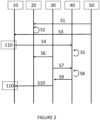
Figure 2 schematically illustrates an embodiment of the method according to the invention. -
Figure 1 describes an example of a three-dimensional content system 1 according to the invention. - The three-
dimensional content system 1 comprises adata platform 10, anidentification portal 20, avirtual reality device 30 intended to be used by auser 5, anaccess controller 40 and anetwork equipment 50. - The
data platform 10 comprises a plurality ofapplication environments 110. - Each
application environment 110 is configured to store a set of data of a content used with an application installed on thevirtual reality device 30 and a copy of the cryptographic footprint of the application stored on thevirtual reality device 30 as described here after. - Each
application environment 110 is configured to communicate with theaccess controller 40 on a control communication link CCL. - Preferably, the
data platform 10 comprisesseveral application environments 110 such as a test environment, a pre-production environment and a production environment. The test environment allows theuser 5 to test the content using thevirtual reality device 30. The pre-production environment allows theuser 5 to validate the content using thevirtual reality device 30. The production environment allows the user to use the content as a service using thevirtual reality device 30. - The
identification portal 20 stores the profile of theusers 5 authorized to access thedata platform 10. The profile of eachuser 5 indicates whichapplication environment 110 can be accessed by saiduser 5. - The
identification portal 20 is configured to communicate with theuser 5 on a first identification communication link ICL1 through thenetwork equipment 50 and with theuser 5 on a second identification communication link ICL2 through thevirtual reality device 30, to identify theuser 5 in two different manners. Theidentification portal 20 may be a web site accessible through the Internet. - The
identification portal 20 is configured to select one of theapplication environments 110 that theuser 5 is allowed to communicate with based on said user's profile and with one of the application environments hosted on thedata platform 10 on a request communication link RCL. Eachuser 5 is only allowed to access one and only oneapplication environment 110 at a time with a given identifier. Auser 5 may be able to accessdifferent application environments 110, at different times, using different identifiers. - The
identification portal 20 may be a unique physical entity or comprises several entities, one perapplication environment 110. - For example, the
virtual reality device 30 is a virtual reality helmet. - The
virtual reality device 30 stores a version of an application characterized by a cryptographic footprint or data footprint. The cryptographic footprint may for example be the hash of the application. The hash, known from the skilled person as such, consists in assigning a numeric or alphanumeric string to (a piece of data) by applying a function whose output values are all the same number of bits in length. - This application installed on the
virtual reality device 30 allows using the content installed on one of theapplication environments 110 through a user session. - The
virtual reality device 30 is configured to communicate with theidentification portal 20 on the second identification communication link ICL2 to identify theuser 5 and with theaccess controller 40 on an access communication link ACL once, and only once, theuser 5 has been identified via the second identification communication link ICL2. - The
virtual reality device 30 is configured to communicate with anapplication environment 110 hosted on thedata platform 10 on a data communication link DCL via afirst communication network 60 using a network address of the selectedapplication environment 110 received from theaccess controller 40 after identification. - The
access controller 40 is configured to receive a cryptographic footprint sent by one of theapplication environments 110 of thedata platform 10 on the control communication link CCL, said cryptographic footprint allowing to identify the version of the application installed on theapplication environment 110 that sent it. The cryptographic footprint is sent to theaccess controller 40 once the user has been identified using thenetwork equipment 50 and by theapplication environment 110 theuser 5 is authorized to access to. Theaccess controller 40 is then configured to activate a session for theuser 5 allowing theuser 5 to access saidapplication environment 110. - The
access controller 40 is configured to receive the cryptographic footprint of the application stored on the virtualreality user device 30 sent by saidvirtual reality device 30 on the access communication link ACL via asecond communication network 70, said cryptographic footprint allowing to identify the version of the application installed on thevirtual reality device 30. The cryptographic footprint is sent by the virtual reality device once theuser 5 has been identified using thevirtual reality device 30, - The
access controller 40 is configured to compare both cryptographic footprints received respectively on the control communication link CCL and on the access communication link ACL. - The
access controller 40 is configured to send a network address of saidapplication environment 110 to thevirtual reality device 30 on the access communication link ACL for said at least onevirtual reality device 30 to create a secured communication between said at least onevirtual reality device 30 and said application environment only if the session is valid (i.e. if theidentification portal 20 confirms that the user can access the associated application environment 110). - The
access controller 40 comprises one or several processors that implement the technical functions mentioned hereabove. - The
network equipment 50 can be any suitable device able to trigger the creation of a new session or the activation of an existing session with one of theapplication environments 110. Thenetwork device 50 may for example be a smartphone or a computer, such as e.g. a laptop. - The
network device 50 is configured to allow theuser 5 to connect to theidentification portal 20 via athird communication network 80 to create a new session or continue with an existing session. - The
first communication network 60 allows the communication between thevirtual reality device 30 and one of theapplication environments 110 through a data communication link DCL. Thefirst communication network 60 may be the Internet. - The
second communication network 70 allows the communication between thevirtual reality device 30 and theidentification portal 20 through the second identification communication link ICL2, and between thevirtual reality device 30 and theaccess controller 40 through the access communication link ACL. Thesecond communication network 70 may be the Internet. - The
third communication network 80 allows the communication between thenetwork equipment 50 and theidentification portal 20 through the first identification communication link ICL1. Thethird communication network 80 may be the Internet. - The
first communication network 60, thesecond communication network 70 and thethird communication network 80 may be three separated communication network physical entities or two separated communication network physical entities or be one same communication network physical entity. - In a step S1, the
user 5 connects to theidentification portal 20 using an identifier and a password via thenetwork equipment 50 and the first identification communication link ICL1 created through thethird communication network 80. - The
user 5 is then identified by theidentification portal 20. The identification comprises here authenticating theuser 5. - Once the
user 5 has been identified on theidentification portal 20, theidentification portal 20 retrieves the profile associated with saiduser 5 in its memory zone to determine whichapplication environment 110 theuser 5 is allowed to access in a step S2. The identification credentials of theuser 5 allow said user to access only one of theapplication environments 110 at a time by the creation of a unique session between theuser 5 and the allowedapplication environment 110. - Once an
application environment 110 has been selected based on the user's profile and rights, thenetwork equipment 50 notifies the selectedapplication environment 110 via the request communication link RCL in a step S3. - The selected
application environment 110 sends to theaccess controller 40 via the control communication link CCL a copy of the cryptographic footprint stored on said selectedapplication environment 110, which corresponds to a given application on thevirtual reality device 30 and which is received via the control communication link CCL by theaccess controller 40 in a step S4. - Then in a step S5, the
access controller 40 checks if a session is already opened for theuser 5, deletes all opened sessions and activates a new session for theuser 5 to access the selectedapplication environment 110. Preferably, the session is opened for a predetermined duration, for example a few dozen of minutes. - Then, in a step S6, the
user 5 connects to theidentification portal 20 using an identifier and a password via thevirtual reality device 30 and the second identification communication link ICL2 created through thesecond communication network 70. Theuser 5 is then identified by theidentification portal 20 through thesecond communication network 70. The identification comprises here authenticating theuser 5. - Then, in a step S7, when the
user 5 has been identified, thevirtual reality device 30 sends the cryptographic footprint of the application stored on saidvirtual reality device 30 on the access communication link ACL, which is received by theaccess controller 40. - In a step S8, the
access controller 40 compares the cryptographic footprint received on the control communication link CCL and the cryptographic footprint received on access communication link ACL. - If both cryptographic footprints are identical, which means that the version of the application stored on the
virtual reality device 30 is compatible with the targeted application environment 110 (i.e. the application stored on thevirtual reality device 30 has not been altered or modified by the user 5), and if the credentials of theuser 5 are still valid for the current session, theaccess controller 40 sends in a step S9 the network address of the selectedapplication environment 110, and optionally authentication data to secure the data communication link DCL, to thevirtual reality device 30 on the access communication link ACL. - In a step S10, the
virtual reality device 40 establishes a communication, preferably secured, on the data communication link DCL with the selectedapplication environment 110 using the network address in order to communicate with saidapplication environment 110, for example to use data or modify data or add new data stored in saidapplication environment 110. - The invention allows therefore to guarantee that the two versions used on the
virtual reality device 30 is the same as the one that was originally installed and indexed on theapplication environment 110 that theuser 5 is allowed to access.
Claims (15)
- A method for allowing at least one virtual reality device (30) to access a data platform (10) of a three-dimensional content system (1), said three-dimensional content system (1) comprising said data platform (10), at least one identification portal (20), said at least one virtual reality device (30) and an access controller (40), said at least one virtual reality device (30) being intended to be used by a user (5) and being configured to communicate with the access controller (40) on an access communication link (ACL) and with the data platform (10) on a data communication link (DCL), an application characterized by a cryptographic footprint being installed on said virtual reality device (30) for using a content installed on said data platform (10), the data platform (10) comprising a plurality of application environments (110) configured each for storing a set of data of a content and a copy of said cryptographic footprint of the application installed on the virtual reality device (30) and for communicating with the access controller (40) on a control communication link (CCL), said at least one identification portal (20) being configured to communicate with the user (5) via a network equipment (50) on a first identification communication link (ICL1) to identify the user (5) and select one of the application environments that the user (5) is allowed to communicate with based on said user's profile, said at least one identification portal (20) being configured to communicate with the user (5) via the virtual reality device (30) on a second identification communication link (ICL2) to identify the user and further to authorize a communication with the access controller (40), said at least one identification portal (20) being configured to communicate with the data platform (10) on a request communication link (RCL), said method comprising the steps of:- identifying (S1), by the identification portal (20), using the network equipment (50), via the first identification communication link (ICL1), the user (5) of the at least one virtual reality device (30),- selecting (S2), by the identification portal (20), based on the user's profile, one of the application environments (110),- notifying (S3), by the network equipment (50), to the data platform (10), on the request communication link (RCL), said selected application environment (110),- sending (S4), by the selected application environment (110), to the access controller (40), on the control communication link (CCL), a copy of the cryptographic footprint stored on said selected application environment (110), and receiving, by the access controller (40), said sent cryptographic footprint on the control communication link (CCL),- activating (S5), by the access controller (40), a session for the authenticated user (5) to access the selected application environment (110),- identifying (S6), by the identification portal (20), via the second identification communication link (ICL2), the user (5) using the virtual reality device (30) during the activated session,- receiving (S7), by the access controller (40), via the access communication link (ACL), the cryptographic footprint of the application installed on the at least one virtual reality device (30) sent by said at least one virtual reality device (30),- comparing (S8) by the access controller (40), both received cryptographic footprints,- sending (S9), by the access controller (40), via the access communication link (ACL), a network address of the selected application environment (110) and authentication data to the virtual reality device (30),- creating (S10), by the at least one virtual reality device (30), a secured data communication link (DCL) between said at least one virtual reality device (30) and the selected application environment (110).
- The method according to the preceding claim, wherein the steps of identifying the user (5) comprises the authentication of said user (5).
- The method according to any of the preceding claims, wherein the session is activated for the user (5) for a predetermined duration.
- The method according to claim 3, said method comprising a step of, prior to the activation of the session, checking if a session is already active for the given user (5) and of deleting the active session.
- The method according to any of the preceding claims, wherein the identification of the user (5) via the first or the second identification communication link (ICL1, ICL2) is performed by the identification portal (20) using an internal identity provider module configured to authenticate the user (5) of the at least one virtual reality device (30).
- The method according to any of the claims 1 to 4, wherein the identification of the user (5) via the first or the second identification communication link (ICL1, ICL2) is performed by the identification portal (20) via an external identity provider module configured to authenticate the user (5) of the at least one virtual reality device (30).
- A computer program comprising instructions which, when the program is executed by a computer, cause the computer to carry out the steps of the method according to any one of the preceding claims.
- An access controller (40) for a three-dimensional content system (1), said three-dimensional content system (1) comprising a data platform (10), at least one identification portal (20), at least one virtual reality device (30) and an access controller (40), said at least one virtual reality device (30) being intended to be used by a user (5) and being configured to communicate with the access controller (40) on an access communication link (ACL) and with the data platform (10) on a data communication link (DCL), an application characterized by a cryptographic footprint being installed on said virtual reality device (30) for using a content installed on said data platform (10), the data platform (10) comprising a plurality of application environments configured each for storing a set of data of a content and a copy of the cryptographic footprint of the application installed on the virtual reality device (30) and for communicating with the access controller (40) on a control communication link (CCL), said at least one identification portal (20) being configured to communicate with the user (5) via a network equipment (50) on a first identification communication link (ICL1) to identify said user (5) and select one of the application environments (110) that the user (5) is allowed to communicate with based on said user's profile, said at least one identification portal (20) being configured to communicate with the user (5) on a second identification communication link (ICL2) to identify said user (5) via the virtual reality device (30) and further authorize a communication with the access controller (40), said at least one identification portal (20) being configured to communicate with the application environments (110) hosted on the data platform (10) on a request communication link (RCL), said access controller (40) being configured to:- receive a cryptographic footprint sent by a selected application environment (110) on the control communication link (CCL),- activate a session for an authenticated user (5) to access the selected application environment (110),- receive a cryptographic footprint of the application installed on the at least one virtual reality device (30) sent by said at least one virtual reality device (30) via the access communication link (ACL),- compare both received cryptographic footprints,- send a network address of the selected application environment (110) to the virtual reality device (30) on the access communication link (ACL) for said at least one virtual reality device (30) to create a secured data communication link (DCL) between said at least one virtual reality device (30) and the selected application environment (110).
- The access controller (40) according to claim 8, said access controller (40) being configured to activate a session for a predetermined time duration.
- The access controller (40) according to any of claims 8 to 9, said access controller (40) being configured to, prior to activating a session, check if a session is already active for the given user (5) and to delete the active session.
- A three-dimensional content system (1) for at least one virtual reality device (30), said three-dimensional content system (1) comprising a data platform (10), at least one identification portal (20), at least one virtual reality device (30) and an access controller (40) according to any of the preceding claims, said at least one virtual reality device (30) being intended to be used by a user (5) and being configured to communicate with the access controller (40) on an access communication link (ACL) and with the data platform (10) on a data communication link (DCL), an application characterized by a cryptographic footprint being installed on said virtual reality device (30) for using a content installed on said data platform (10), the data platform (10) comprising a plurality of application environments configured each for storing a set of data of a content and a copy of the cryptographic footprint of the application stored on the virtual reality device (30) and for communicating with the access controller (40) on a control communication link (CCL), said at least one identification portal (20) being configured to communicate with the user (5) via a network equipment (50) on a first identification communication link (ICL1) to identify said user (5) and select one of the application environments (110) that the user (5) is allowed to communicate with based on said user's profile, said at least one identification portal (20) being configured to communicate with the user (5) on a second identification communication link (ICL2) to identify said user via the virtual reality device (30) and further authorize the communication with the access controller (40), said at least one identification portal (20) being configured to communicate with the application environments (110) hosted on the data platform (10) on a request communication link (RCL).
- The system (1) according to the preceding claim, wherein the access controller (40) is internal to the data platform (10).
- The system (1) according to claim 11, wherein the access controller (40) is external to the data platform (10).
- The system (1) according to any of claims 11 to 13, wherein the identification portal (20) is configured to identify the user (5) via the first or the second identification communication link (ICL1, ICL2) using an internal identity provider module configured to authenticate the user (5) of the at least one virtual reality device (30).
- The system (1) according to any of the claims 11 to 14, wherein the identification portal (20) is configured to identify the user (5) via the first or the second identification communication link (ICL1, ICL2) via an external identity provider module configured to authenticate the user (5) of the at least one virtual reality device (30).
Priority Applications (2)
| Application Number | Priority Date | Filing Date | Title |
|---|---|---|---|
| EP23306143.1A EP4489348B1 (en) | 2023-07-06 | 2023-07-06 | An access controller for a three-dimensional content system |
| US18/762,570 US12489819B2 (en) | 2023-07-06 | 2024-07-02 | Access controller for a three-dimensional content system |
Applications Claiming Priority (1)
| Application Number | Priority Date | Filing Date | Title |
|---|---|---|---|
| EP23306143.1A EP4489348B1 (en) | 2023-07-06 | 2023-07-06 | An access controller for a three-dimensional content system |
Publications (2)
| Publication Number | Publication Date |
|---|---|
| EP4489348A1 true EP4489348A1 (en) | 2025-01-08 |
| EP4489348B1 EP4489348B1 (en) | 2026-03-04 |
Family
ID=88188742
Family Applications (1)
| Application Number | Title | Priority Date | Filing Date |
|---|---|---|---|
| EP23306143.1A Active EP4489348B1 (en) | 2023-07-06 | 2023-07-06 | An access controller for a three-dimensional content system |
Country Status (2)
| Country | Link |
|---|---|
| US (1) | US12489819B2 (en) |
| EP (1) | EP4489348B1 (en) |
Citations (4)
| Publication number | Priority date | Publication date | Assignee | Title |
|---|---|---|---|---|
| EP3495949A1 (en) * | 2016-08-04 | 2019-06-12 | Tencent Technology (Shenzhen) Company Limited | Virtual reality-based information verification method, device, data storage medium, and virtual reality apparatus |
| US20200228524A1 (en) * | 2017-08-23 | 2020-07-16 | Visa International Service Association | Secure authorization for access to private data in virtual reality |
| CN111460407A (en) * | 2020-03-31 | 2020-07-28 | 福建省建瓯市朝阳竹编帽业有限公司 | Safety helmet management platform based on block chain |
| US20220351469A1 (en) * | 2019-06-21 | 2022-11-03 | Huawei Technologies Co., Ltd. | Simulation Object Identity Recognition Method, Related Apparatus, and System |
Family Cites Families (3)
| Publication number | Priority date | Publication date | Assignee | Title |
|---|---|---|---|---|
| US9271131B2 (en) * | 2013-09-09 | 2016-02-23 | Trutext, Inc. | Systems and methods for managing communications across multiple identities |
| US10594798B2 (en) * | 2016-06-16 | 2020-03-17 | Veniam, Inc. | Systems and methods for managing containers in a network of moving things |
| CN107766132B (en) * | 2017-06-25 | 2019-03-15 | 平安科技(深圳)有限公司 | Multi-task scheduling method, application server and computer readable storage medium |
-
2023
- 2023-07-06 EP EP23306143.1A patent/EP4489348B1/en active Active
-
2024
- 2024-07-02 US US18/762,570 patent/US12489819B2/en active Active
Patent Citations (4)
| Publication number | Priority date | Publication date | Assignee | Title |
|---|---|---|---|---|
| EP3495949A1 (en) * | 2016-08-04 | 2019-06-12 | Tencent Technology (Shenzhen) Company Limited | Virtual reality-based information verification method, device, data storage medium, and virtual reality apparatus |
| US20200228524A1 (en) * | 2017-08-23 | 2020-07-16 | Visa International Service Association | Secure authorization for access to private data in virtual reality |
| US20220351469A1 (en) * | 2019-06-21 | 2022-11-03 | Huawei Technologies Co., Ltd. | Simulation Object Identity Recognition Method, Related Apparatus, and System |
| CN111460407A (en) * | 2020-03-31 | 2020-07-28 | 福建省建瓯市朝阳竹编帽业有限公司 | Safety helmet management platform based on block chain |
Also Published As
| Publication number | Publication date |
|---|---|
| US12489819B2 (en) | 2025-12-02 |
| EP4489348B1 (en) | 2026-03-04 |
| US20250016235A1 (en) | 2025-01-09 |
Similar Documents
| Publication | Publication Date | Title |
|---|---|---|
| CN109787988B (en) | Identity strengthening authentication and authorization method and device | |
| CN101227468B (en) | Method, device and system for authenticating user to network | |
| CN106060072B (en) | Authentication method and device | |
| CN110149328A (en) | Interface method for authenticating, device, equipment and computer readable storage medium | |
| CN109257391A (en) | A kind of access authority opening method, device, server and storage medium | |
| CN106506494A (en) | Application access method of open platform | |
| CN107145531B (en) | Distributed file system and user management method of distributed file system | |
| CN102624720A (en) | Method, device and system for identity authentication | |
| US20110078784A1 (en) | Vpn system and method of controlling operation of same | |
| CN108616504A (en) | A kind of sensor node identity authorization system and method based on Internet of Things | |
| CN106101054A (en) | The single-point logging method of a kind of multisystem and centralized management system | |
| CN109962892A (en) | A kind of authentication method and client, server logging in application | |
| CN106936797A (en) | The management method and system of magnetic disk of virtual machine and file encryption key in a kind of cloud | |
| CN110351265A (en) | A kind of authentication method based on JWT, computer-readable medium and system | |
| CN104735085A (en) | Terminal two-factor secure login protection method | |
| CN108701202A (en) | Data Leakage Detection System | |
| CN109842600A (en) | A kind of method that realizing mobile office, terminal device and MDM equipment | |
| CN113922975A (en) | Security control method, server, terminal, system and storage medium | |
| CN112995325A (en) | Service debugging method, debugging service, electronic device, and computer storage medium | |
| CN114372254B (en) | Multi-authentication authorization method under big data environment | |
| CN111090841A (en) | A kind of authentication method and device for industrial control system | |
| EP4489348B1 (en) | An access controller for a three-dimensional content system | |
| KR101436404B1 (en) | User authenticating method and apparatus | |
| CN109547217B (en) | One-to-many identity authentication system and method based on dynamic password | |
| CN114091012A (en) | Data set viewing system and viewing method |
Legal Events
| Date | Code | Title | Description |
|---|---|---|---|
| PUAI | Public reference made under article 153(3) epc to a published international application that has entered the european phase |
Free format text: ORIGINAL CODE: 0009012 |
|
| STAA | Information on the status of an ep patent application or granted ep patent |
Free format text: STATUS: THE APPLICATION HAS BEEN PUBLISHED |
|
| AK | Designated contracting states |
Kind code of ref document: A1 Designated state(s): AL AT BE BG CH CY CZ DE DK EE ES FI FR GB GR HR HU IE IS IT LI LT LU LV MC ME MK MT NL NO PL PT RO RS SE SI SK SM TR |
|
| P01 | Opt-out of the competence of the unified patent court (upc) registered |
Free format text: CASE NUMBER: APP_22906/2025 Effective date: 20250514 |
|
| STAA | Information on the status of an ep patent application or granted ep patent |
Free format text: STATUS: REQUEST FOR EXAMINATION WAS MADE |
|
| 17P | Request for examination filed |
Effective date: 20250617 |
|
| GRAP | Despatch of communication of intention to grant a patent |
Free format text: ORIGINAL CODE: EPIDOSNIGR1 |
|
| STAA | Information on the status of an ep patent application or granted ep patent |
Free format text: STATUS: GRANT OF PATENT IS INTENDED |
|
| RIC1 | Information provided on ipc code assigned before grant |
Ipc: H04L 9/40 20220101AFI20250915BHEP Ipc: H04L 67/131 20220101ALI20250915BHEP |
|
| INTG | Intention to grant announced |
Effective date: 20251020 |
|
| GRAS | Grant fee paid |
Free format text: ORIGINAL CODE: EPIDOSNIGR3 |
|
| GRAA | (expected) grant |
Free format text: ORIGINAL CODE: 0009210 |
|
| STAA | Information on the status of an ep patent application or granted ep patent |
Free format text: STATUS: THE PATENT HAS BEEN GRANTED |
|
| AK | Designated contracting states |
Kind code of ref document: B1 Designated state(s): AL AT BE BG CH CY CZ DE DK EE ES FI FR GB GR HR HU IE IS IT LI LT LU LV MC ME MK MT NL NO PL PT RO RS SE SI SK SM TR |
|
| REG | Reference to a national code |
Ref country code: CH Ref legal event code: F10 Free format text: ST27 STATUS EVENT CODE: U-0-0-F10-F00 (AS PROVIDED BY THE NATIONAL OFFICE) Effective date: 20260304 Ref country code: GB Ref legal event code: FG4D |
|
| REG | Reference to a national code |
Ref country code: IE Ref legal event code: FG4D |
|
| REG | Reference to a national code |
Ref country code: DE Ref legal event code: R096 Ref document number: 602023012967 Country of ref document: DE |