EP4488879A1 - Method, computer readable medium, recommendation system, electronic device for debiasing data - Google Patents

Method, computer readable medium, recommendation system, electronic device for debiasing data Download PDF

Info

Publication number
EP4488879A1
EP4488879A1 EP23183596.8A EP23183596A EP4488879A1 EP 4488879 A1 EP4488879 A1 EP 4488879A1 EP 23183596 A EP23183596 A EP 23183596A EP 4488879 A1 EP4488879 A1 EP 4488879A1
Authority
EP
European Patent Office
Prior art keywords
sensitive
balanced
fair
representations
features
Prior art date
Legal status (The legal status is an assumption and is not a legal conclusion. Google has not performed a legal analysis and makes no representation as to the accuracy of the status listed.)
Ceased
Application number
EP23183596.8A
Other languages
German (de)
French (fr)
Inventor
Jean-Francois TON
Mengyue YANG
Current Assignee (The listed assignees may be inaccurate. Google has not performed a legal analysis and makes no representation or warranty as to the accuracy of the list.)
Lemon Inc Cayman Island
Original Assignee
Lemon Inc Cayman Island
Priority date (The priority date is an assumption and is not a legal conclusion. Google has not performed a legal analysis and makes no representation as to the accuracy of the date listed.)
Filing date
Publication date
Application filed by Lemon Inc Cayman Island filed Critical Lemon Inc Cayman Island
Priority to EP23183596.8A priority Critical patent/EP4488879A1/en
Priority to US18/747,267 priority patent/US20250013855A1/en
Publication of EP4488879A1 publication Critical patent/EP4488879A1/en
Ceased legal-status Critical Current

Links

Images

Classifications

    • GPHYSICS
    • G06COMPUTING OR CALCULATING; COUNTING
    • G06NCOMPUTING ARRANGEMENTS BASED ON SPECIFIC COMPUTATIONAL MODELS
    • G06N3/00Computing arrangements based on biological models
    • G06N3/02Neural networks
    • G06N3/04Architecture, e.g. interconnection topology
    • G06N3/045Combinations of networks
    • G06N3/0455Auto-encoder networks; Encoder-decoder networks
    • GPHYSICS
    • G06COMPUTING OR CALCULATING; COUNTING
    • G06NCOMPUTING ARRANGEMENTS BASED ON SPECIFIC COMPUTATIONAL MODELS
    • G06N3/00Computing arrangements based on biological models
    • G06N3/02Neural networks
    • G06N3/04Architecture, e.g. interconnection topology
    • G06N3/047Probabilistic or stochastic networks
    • GPHYSICS
    • G06COMPUTING OR CALCULATING; COUNTING
    • G06NCOMPUTING ARRANGEMENTS BASED ON SPECIFIC COMPUTATIONAL MODELS
    • G06N3/00Computing arrangements based on biological models
    • G06N3/02Neural networks
    • G06N3/08Learning methods
    • G06N3/088Non-supervised learning, e.g. competitive learning
    • GPHYSICS
    • G06COMPUTING OR CALCULATING; COUNTING
    • G06NCOMPUTING ARRANGEMENTS BASED ON SPECIFIC COMPUTATIONAL MODELS
    • G06N3/00Computing arrangements based on biological models
    • G06N3/02Neural networks
    • G06N3/08Learning methods
    • G06N3/0895Weakly supervised learning, e.g. semi-supervised or self-supervised learning
    • GPHYSICS
    • G06COMPUTING OR CALCULATING; COUNTING
    • G06NCOMPUTING ARRANGEMENTS BASED ON SPECIFIC COMPUTATIONAL MODELS
    • G06N3/00Computing arrangements based on biological models
    • G06N3/02Neural networks
    • G06N3/08Learning methods
    • G06N3/094Adversarial learning
    • GPHYSICS
    • G06COMPUTING OR CALCULATING; COUNTING
    • G06QINFORMATION AND COMMUNICATION TECHNOLOGY [ICT] SPECIALLY ADAPTED FOR ADMINISTRATIVE, COMMERCIAL, FINANCIAL, MANAGERIAL OR SUPERVISORY PURPOSES; SYSTEMS OR METHODS SPECIALLY ADAPTED FOR ADMINISTRATIVE, COMMERCIAL, FINANCIAL, MANAGERIAL OR SUPERVISORY PURPOSES, NOT OTHERWISE PROVIDED FOR
    • G06Q30/00Commerce
    • G06Q30/02Marketing; Price estimation or determination; Fundraising
    • G06Q30/0241Advertisements

Definitions

  • the present application is in the field of bias rectification in recommendation platforms or systems.
  • bias in such systems are apparent in the cosmetics industry's advertisement sector, where the training data may contain biases leading to the recommendation of makeup products primarily to women, even if they are not interested in cosmetics. This unfairness stems from feedback loops that amplify correlations between gender and cosmetics at each recommendation iteration. Gender, which is sensitive information, may not be explicitly used as an input to the recommendation system but can be inferred from other inputs correlated with gender, such as purchasing history or social media following. Moreover, there may be other biases, such as item-specific biases, where popular items receive more exposure than less popular ones, thus limiting the audience to smaller vendors.
  • the present invention tackles the problem of fairness in recommendation systems feedback loops from a data debiasing perspective.
  • the proposed approach involves learning debiased representations of the data as input for downstream recommendation models, enabling unbiased recommendations to users.
  • the concept of balanced fairness is hereby introduced. This concept involves training a model on a dataset where recommendations are uniformly selected based on sensitive attributes. This is a two-stage process. In the first stage, the representation learning framework extracts sensitive-correlated information from context features. In the second stage, the process removes biases across sensitive groups using an adversarial learning strategy. It is understood that this approach is orthogonal to standard fairness constraint-based methods (or other similar methods) and can thus be combined for improved results from these methods. It is further understood that the debiasing training framework enables the training of a recommendation model on biased data as if it came from a balanced/unbiased dataset, and the first stage allows the measurement of the extent to which sensitive information has been removed.
  • the present disclosure provides a method, or more specifically a computer-implemented method, for debiasing data received by or for training a recommendation system, the method comprising: receiving data comprising sensitive-correlated information; obtaining sensitivity representations of the sensitive-correlated information from the data using a plurality of neural networks trained in relation to a set of predetermined context features; deriving a learned representation from the sensitivity representations; and generating a balanced fair prediction from the recommendation system based on the learned representation.
  • the present disclosure provides a recommendation system for providing a balanced fair recommendation or prediction based on at least one balanced fair criterion, the system comprising a plurality of neural networks trained in relation to a set of predetermined context features, wherein the system is configured to: receive data comprising sensitive-correlated information; obtain sensitivity representations of the sensitive-correlated information from the data using the plurality of neural networks; derive a learned representation from the sensitivity representations; and generate a balanced fair prediction from the recommendation system based on the learned representation.
  • the present disclosure provides an electronic device comprising a processor and a memory, wherein the processor is configured to receive data comprising sensitive-correlated information; obtain sensitivity representations of the sensitive-correlated information from the data using a plurality of neural networks trained in relation to a set of predetermined context features; derive a learned representation from the sensitivity representations; and generate a balanced fair prediction from the recommendation system based on the learned representation.
  • any of the methods described above may be realised in computer software. Therefore, there is also provided a computer readable medium, in transitory or non-transitory form, comprising instructions which, when implemented in a processor of a computing system, cause the system to implement a method as described in any preceding clause. Further, there is provided an electronic device comprising a processor and a memory, wherein the processor is configured to implement any of the methods described here.
  • Embodiments of the present invention are described below by way of example only. These examples represent the best mode of putting the invention into practice that are currently known to the applicant although they are not the only ways in which this could be achieved.
  • the description sets forth the functions of the example and the sequence of steps for constructing and operating the example. However, the same or equivalent functions and sequences may be accomplished by different examples.
  • the present invention approaches the fairness problem from a data debiasing perspective, focusing on learning debiased representations of the data to be used as inputs for downstream recommendation models.
  • This approach involves a fair feature extraction step before applying the recommendation model to determine the unbiased true relevance score of the user-item pair, thus achieving fairness by unbiasedly recommending items to the user.
  • This approach is orthogonal to standard fairness constraint-based methods, and the two can be combined for improved results.
  • the present approach is operatable in two stages: Stage 1) introduction of identifiable variational autoencoder architecture (iVAE) methods for disentangling representations in recommendation systems, such that sensitive attributes can subsequently be removed through representation learning; and Stage 2) Introduction of an end-to-end adversarial algorithm which allows us to create a model that satisfies the proposed balanced fair objective.
  • iVAE identifiable variational autoencoder architecture
  • Some of the benefits of the two-stage method are that: 1) improve explainability of the overall process, where the user can determine which part of the model works or is functional and which does not; 2) Improve modularity, where the user can use the intermediate results from stage 1 for different algorithms/processes as stage 1; and 3) reduce cost and time of training, it is evidenced that in the experiments of the two-stage method.
  • c ⁇ R d is defined as a context variable collected from an online recommendation system, including user and item context features.
  • the item index from the vendor is denoted as ' ⁇ [1, ⁇ ' , m ] with o i ⁇ 0,1 indicating if item i is exposed to the user.
  • the feedback of user u for item is denoted as y ⁇ 0,1.
  • the sensitive group features on the user side and producer side are denoted as g u ⁇ G u and g i ⁇ G i , respectively.
  • g u corresponds to the indicator variable for sensitive information such as gender
  • g i corresponds to sensitive information for items such as movie tags in the movie recommendation system.
  • a representation learning framework is used, with z u ⁇ R l u , z i ⁇ R l i , and z n ⁇ R l n and representing neural network representations of the user sensitive features, item sensitive features, and neither user nor item sensitive features, respectively.
  • the balanced fair objective is defined for any downstream recommendation model f as follows:
  • Balanced fairness is defined as the property that a recommendation model f* minimizes the BFO, i.e.,
  • a two-stage representation learning framework is herein proposed, as illustrated in Figure 2 .
  • an identifiable VAE is used to extract sensitive-correlated information from context features.
  • the sensitive are disentangled from the non-sensitive information using an injective function ⁇ : R d ⁇ R z to obtain a representation z ⁇ R z from context c .
  • the disentangled representation z comprises user and item sensitive representations, respectively.
  • z n ⁇ R l n captures the remaining information from the context, which is orthogonal to the sensitive attributes.
  • the second stage involves learning a second-level representation of these sensitive representations to remove biases across sensitive groups.
  • a novel adversarial learning strategy is proposed, where these representations are used as input to any recommendation model.
  • L n D kl q ⁇ ⁇ z n
  • the disentangled representations obtained from stage one is utilized as input to a balanced representation function ⁇ : R l u + l i ⁇ R b , along with the non-sensitive representation Z n .
  • ⁇ : R l u + l i ⁇ R b the disentangled representations obtained from stage one is utilized as input to a balanced representation function ⁇ : R l u + l i ⁇ R b , along with the non-sensitive representation Z n .
  • These learned representations are then used to predict user feedback y using a downstream recommendation model ⁇ : R b + l n ⁇ 0,1 , as depicted in Figure 2 .
  • a discriminator D R l u + l i ⁇ R 2 that determines if the current representation of disentangled context features satisfies "Fair Exposure”
  • a representation learning function n that learns balanced sensitive features, eliminating unfair factors in historical data.
  • L b ⁇ ⁇ ⁇ ⁇ ⁇ D ⁇ ⁇ L b D ⁇ ⁇ ⁇ ⁇ ⁇ + L b D ⁇ ⁇ ⁇ ⁇ ⁇ D
  • L b ⁇ denotes the user feedback prediction
  • L b D represents the discriminator.
  • L b D is expressed as min ⁇ ⁇ , ⁇ ⁇ , ⁇ ⁇ max ⁇ D L b ⁇ ⁇ ⁇ ⁇ D ⁇ ⁇ , s .
  • is the Kronecker delta function
  • o i t is the sensitive attribute of the i-th user in the t-th instance
  • y is a hyperparameter.
  • the present debiasing training framework enables the training of a recommendation model as if the data originated from a balanced/unbiased dataset, even with access only to biased data. Moreover, stage one of present framework enables the measurement of the degree to which sensitive information has been eliminated.
  • Sensitive-correlated information refers to sensitive information extracted from the context features using one or more methods described herein, where the underlying information may be correlated with a person or user.
  • the sensitive-correlated information may include information related to a person's identity, i.e., identifiable information (PII).
  • PII identifiable information
  • the sensitive-correlated information may comprise historical items correlated to gender, preferences, ethnicity, social income status, etc.
  • Sensitivity representations herein refer to user/item/non sensitive representations in a representation learning framework. These user/item/non representations may be represented by one or more neural networks such that each neural network is a representation of the user sensitive features, item sensitive features, or neither user nor item sensitive features.
  • user-sensitive representation may comprise a representation of sensitive-correlated information related to a user, such as the user's gender, preferences, ethnicity, social income status, etc.
  • User/item/non-sensitive features refer to the attributes or characteristics of users, items, or other entities that do not contain sensitive or personally identifiable information (PII). These features can include demographic information, behavioral patterns, preferences, usage statistics, or any other relevant data that does not pose a risk to privacy or security.
  • PII personally identifiable information
  • a set of predetermined context features or context features herein refer to features that ascribe to context. For example, the user's historical interactions, gender, preferences etc.
  • Learned representation refers to an aggregate of sensitive representation of features and items exposure, where bias stemmed therefrom are removed.
  • the learn representation may thus be derived or derivable from the sensitivity representations through a learning process using iVAEs or neural networks, where the iVAEs or networks optimize for a balanced fair objective.
  • the learned representation is part of any end-to-end adversarial algorithm, which creates a model satisfying the balanced fair objective.
  • An example of learned representation n is illustrated in Figure 2 , where bias stemming from the sensitive features and item exposure using a learned representation n are removed.
  • VAE variational autoencoder architecture
  • iVAE is a probabilistic generative model that utilizes a prior and noise distribution.
  • iVAE is a specialized variant of VAE that addresses the identifiability challenge and promotes the learning of disentangled and interpretable latent representations. It finds applications in various domains, including generative modeling, unsupervised learning, and representation learning.
  • the iVAE requires a plurality of neural networks as part of its architecture.
  • Neural network components include an encoder and a decoder.
  • the neural networks map the input variable to a latent space that corresponds to the parameters of a variational distribution and map from the latent space to the input space to produce or generate data.
  • iVAE incorporates identifiability constraints in its design.
  • iVAE architecture is modified to ensure the learned latent representations are identifiable or distinguishable.
  • Identifiability refers to the ability to recover the latent variables from the observed data uniquely.
  • iVAE aims to disentangle and separate the underlying factors of variation in the data, leading to more interpretable and meaningful latent representations.
  • iVAE architecture may vary depending on the implementation, whether in the first stage or second. Still, in most cases, the implementation involves modifications to the loss function or the introduction of additional regularization terms that encourage identifiability. These modifications can help overcome the common problem of latent variable models where different latent configurations can produce similar outputs, making it difficult to interpret the learned representations.
  • the neural networks herein may comprise iVAEs, where an iVAE used in the first stage may be based on the feedforward Neural network architectures as described in the iVAE paper by Khemakhem et al. 2020.
  • the feedforward networks may also be used, where the input size depends on the dimensions of the concatenated input vectors.
  • Balanced fair prediction is a prediction that is balanced for fairness.
  • the prediction is made by a model (i.e., recommendation model) based on a balanced fair objective, where the balanced fair objective is minimized for the recommendation model that is deemed balanced fair.
  • Definition 2 provides an example of balanced fairness.
  • a balanced fair prediction may comprise a set of recommendations.
  • the set of recommendations could serve as the output of the present system.
  • the recommendations would be uniformly sampled while conditioned on the sensitive attributes. This effectively removes the inherent basis toward a (minority) particular group of users, meaning the recommendations do not take advantage of or disadvantage this group.
  • the present invention can rectify the feedback loop as in this case, in this case, it can uncover the true relevance with respect to an item and user. If the recommendations were not uniform, we could easily bias the recommendation for a sensitive group, i.e., females would always be recommended make-up irrespective of their historical interactions.
  • Balanced fair objective is an objective achieving balanced fairness.
  • the objective can be achieved by minimizing a loss function ⁇ as provided by Definition 1 herein provided. It is understood that balanced fair objective aims to achieve or derive learned representations from data, as if the training data were sampled uniformly at random, conditioned on sensitive attributes such as gender. Doing so ensures that the feedback loop is not increased in recommendation systems, allowing users not to be unfairly recommended items based on prior data.
  • Balanced fair criterion is a criterion derived from the balanced fair objective to achieve balanced fairness, which involves training a model on a dataset where recommendations are uniformly selected based on sensitive attributes. These sensitive attributes are removed through representative learning, for example by the identifiable VAE during the representation learning, based on the balanced fair criterion.
  • Figure 1 is a flow diagram 100 illustrating an example of a method for ratifying unfairness for a recommendation system.
  • the method achieves this by debiasing data received by or for training a recommendation system.
  • the method comprises two stages.
  • method 102 receives data comprising sensitive-correlated information. From the data, the method obtains 104 sensitivity representations of the sensitive-correlated information using a plurality of neural networks trained in relation to a set of predetermined context features.
  • the set of predetermined context features may be collected from a recommendation system.
  • the sensitivity representations may comprise representations of user features, item features, and non-sensitive features.
  • the method applies a learning strategy to derive 106 a learned representation from the sensitivity representations.
  • the learned representation may comprise a balanced fair objective, where the underlying concept of balanced fairness (in the form of prediction) is defined by a balanced fair recommendation model/system that minimizes the balanced fair objective. Based on the learned representation, the method would thus generate 108 a balanced fair prediction from the recommendation model/ system.
  • an adversarial learning strategy could be applied or may be applicable to generate a balanced fair prediction.
  • the adversarial learning strategy further comprises: determining whether the sensitivity representations satisfy a balanced fair criterion, where the balanced fair criterion may be determined by minimizing the balanced fair objective; and applying a balanced representation function to a subset of sensitivity representations that satisfy the balanced fair criterion to obtain the learned representation, wherein the balanced representation function is configured to remove non-sensitive features and sensitive features from the sensitivity representations not satisfying the balanced fair criterion.
  • the balanced fair prediction may be part of a recommendation provided by the recommendation system to a user.
  • the method may incorporate the balanced fair prediction as part of the data received by the recommendation system as the method is iterated.
  • the plurality of neural networks is configured to extract the sensitive-correlated information from the set of predetermined context features, wherein the sensitive-correlated information is represented by the sensitivity representations.
  • the plurality of neural networks comprises a first neural network representative of user sensitive features, a second neural network representative of item sensitive features, and a third neural network representative of non-sensitive features.
  • the first, second, and third neural networks comprise an identifiable variational autoencoder architecture.
  • Context Data Input The initial step in the process involves inputting the necessary context data into present recommendation system.
  • gender is considered a sensitive attribute.
  • item-sensitive features are not incorporated, though it's essential to understand that they can be incorporated just as easily in a real-world scenario.
  • Present context data consists of an assortment of information wherein gender is one of the key attributes.
  • iVAE create Disentangled Representations Using iVAE: The next step is to apply the Inferred iVAE once the context data is set.
  • the function of iVAE is to generate representations in the latent space that effectively disentangle all the information regarding gender from the non-gender-specific information. In other words, iVAE helps us to differentiate or separate the gender-sensitive attributes from the rest, making these attributes distinct latent variables.
  • BFO Balanced Fairness Objective
  • the method After setting up the BFO objective, the method proceeds to train the model.
  • This training process aims to teach the model to function as though operating on unbiased data. Meaning the model learns to provide recommendations as if it were trained on data such that the trained model provides recommendations that are distributed uniformly with respect to bias factors and conditioned on the sensitive attribute (i.e., gender). In other words, post-training, the recommendation system will behave as if the original input data had no bias towards any specific gender.
  • the present invention enables us to create a recommendation system that treats gender fairly in its decision-making process by ensuring that the sensitive attribute does not unduly influence the recommendations.
  • Figure 2 is a pictorial diagram 200 illustrating an example of the two-stage method of ratifying unfairness.
  • (a) shows the context generation process 202, where ⁇ is the feature inference function in the disentanglement method.
  • the method may be used in a recommendation system.
  • the method may comprise an identifiable VAE that removes sensitive attributes through subsequent representation learning.
  • the figure shows process 204, where its main objective is to remove the light lines (identified by scissors), i.e., removing the bias stemming from the sensitive features and item exposure using a learned representation n.
  • n a learned representation
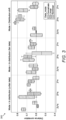
  • Figure 3 is a pictorial diagram illustrating an example of the results obtained from the two-stage method using synthetic data. The results verify the effectiveness of the proposed method.
  • Synthetic data comprises a dataset of 10,000 users with 9 sensitive groups and 32 items with 3 sensitive groups. Each user and item have 32-dimension sensitive features and 32-dimension non-sensitive features, which are sampled from a uniform distribution U(-1, 1 ) .
  • the context Cui is generated by a function l z u s z i s z u n z i n , where several options for i : (1) concatenation of z u s , z i s , z u n , and z i n are considered, (2) a linear function, and (3) a nonlinear function.
  • a concatenation function c z n z i s z u s
  • a linear function c A z n z i s z u s + b , where is A is a randomly generated invertible matrix and b is a random vector sampled from uniform distribution U(-1, 1) and (3) A nonlinear generative process where an additional sigmoid layer is added based on linear function.
  • the distance correlation scores for user-sensitive feature z u s , item-sensitive feature z i s , and non-sensitive feature z n are presented in Figure 3 . Table 1 presents the results using the concatenation function. The disentanglement of all three functions is analyzed.
  • x 1 a T ⁇ 1 ⁇ 2 c ui + b
  • x 2 a T ⁇ 3 ⁇ 2 ⁇ c ui + b
  • y ui I ⁇ x 1 + x 1 ⁇ x 2
  • the score function does not depend on the sensitive information and hence can be used as the fair ground truth to assess the present method.
  • Figure 3 further shows for each graph the distance correlation between the learned representation and the ground truth representation. If the distance correlation is well above 0.5, there is evidence that the latent representations are indeed identifiable.
  • a 3:1 ratio is maintained between the training and testing sets, which includes the validation set.
  • the data is resampled to ensure that each sensitive group has an equal number of samples in the test set.
  • the associated statistical information is presented in Table 1.
  • the dimensions of the user/item embeddings are empirically set to 32, and the weighting parameters ⁇ and y are determined within the range of [0.001, 0.5].
  • Different base models such as MLP and GMF are used for evaluation. All experiments are conducted on a server with a 16-core CPU, 128g memory, and an NVIDIA V100 GPU.
  • the binary cross-entropy loss is used to implement ⁇ .
  • Categorical features for users are encoded using an embedding matrix, while continuous features are derived by multiplying with weighting matrices.
  • Activation functions such as SoftMax function with a 2-dimension output and ELU are employed.
  • the disentanglement function ⁇ consists of three separate functions ⁇ u ( c ), ⁇ i ( c ), and ⁇ n (c) to infer z u , z i and z n , respectively.
  • Each neural network is defined as V 1 ELU( V 2 ELU (V 3 [c])).
  • the generate function architecture is A 1 ELU(A 2 ELU(A 3 [z i , z u , z n ])).
  • Table 1 Comparisons on Synthetic data. Our proposed method B-FAIR is outperforming the baselines on mean performance ( ⁇ is the standard error of the results).
  • B-FAIR is the proposed method
  • B-FAIR-d is the reduced method without disentanglement.
  • the table shows experiments performed under a controlled environment using synthetic data deemed fair and unbiased. Synthetic data are generated based on equations identified in the above sections. Based on the experiments, B-FAIR has achieved significant performance improvements over the base model across all four metrics (AUC, ACC, NDCG@5, and Precision@5). These metrics are appropriate standards for determining whether the present invention achieves less biased prediction. Further experiments are conducted by removing the disentanglement step(B-FAIR(-d)) to investigate individual components of the two-stage method and the impact on the present invention.
  • B-FAIR(-d) does not perform as well as B-FAIR, indicating that the disentanglement step is crucial to the performance.
  • the term “In distribution” refers to the use of fair data for both training and testing, while “Distribution Shift” implies the use of unfair data for training and fair data for testing.
  • the bars in the figure are generally above 0.5, indicating successful learning of disentangled representations that are highly correlated with the ground truth latent variables.
  • c z n z i s z u s (i.e., concatenation)
  • the disentangling process seems to work best with the highest distance correlations, likely because it is the simplest. This is followed by the linear and non-linear mixture functions.
  • Figure 4 is a block diagram illustrating an example computing apparatus/system 400 that may be used to implement one or more aspects of the present invention, apparatus, method(s), and/or process(es) combinations thereof, modifications thereof, and/or as described with reference to figures 1 to 3 and/or as described herein.
  • Computing apparatus/system 400 includes one or more processor unit(s) 402, an input/output unit 404, communications unit/interface 406, a memory unit 408 in which the one or more processor unit(s) 402 are connected to the input/output unit 404, communications unit/interface 406, and the memory unit 408.
  • the computing apparatus/system 400 may be a server, or one or more servers networked together.
  • the computing apparatus/system 400 may be a computer or supercomputer/processing facility or hardware/software suitable for processing or performing the one or more aspects of the system(s), apparatus, method(s), and/or process(es) combinations thereof, modifications thereof, and/or as described with reference to figures 1 to 3 and/or as described herein.
  • the communications interface 406 may connect the computing apparatus/system 400, via a communication network, with one or more services, devices, the server system(s), cloud-based platforms, systems for implementing subject-matter databases and/or knowledge graphs for implementing the invention as described herein.
  • the memory unit 408 may store one or more program instructions, code or components such as, by way of example only but not limited to, an operating system and/or code/component(s) associated with the process(es)/method(s) as described with reference to figures 1 to 3 , additional data, applications, application firmware/software and/or further program instructions, code and/or components associated with implementing the functionality and/or one or more function(s) or functionality associated with one or more of the method(s) and/or process(es) of the device, service and/or server(s) hosting the process(es)/method(s)/system(s), apparatus, mechanisms and/or system(s)/platforms/architectures for implementing the invention as described herein, combinations thereof, modifications thereof, and/or as described with reference to at least one of the figures 1 to 3 .
  • the output may be to a remote device such as a user device, not shown, in which case the output devices may be replaced by a data port.
  • Any of the methods described here may be implemented in the form of a computer readable medium or an article such as a computer or processor non-transitory readable medium, or a computer or processor non-transitory storage medium, such as for example a memory, a disk drive, or a USB flash memory, encoding, including or storing instructions, e.g., computer-executable instructions, which, when executed by a processor or controller, carry out methods disclosed herein.
  • a storage medium may be provided such as memory, computer-executable instructions such as executable code and a controller such as controller.
  • Any of the methods described here may be implemented in an electronic device comprising a processor and a memory, wherein the processor is configured to implement any of the methods described here.
  • a system in which the methods described here may be implemented may include components such as, but not limited to, a plurality of central processing units (CPU), e.g., similar to controller, or any other suitable multi-purpose or specific processors or controllers, a plurality of input units, a plurality of output units, a plurality of memory units, and a plurality of storage units. Other suitable hardware components and/or software components may be included.
  • a system may include or may be, for example, a personal computer, a desktop computer, a mobile computer, a laptop computer, a notebook computer, a terminal, a workstation, a server computer, a Personal Digital Assistant (PDA) device, a tablet computer, a network device, or any other suitable computing device.
  • PDA Personal Digital Assistant
  • hardware logic components may include Field-programmable Gate Arrays (FPGAs), Program-specific Integrated Circuits (ASICs), Program-specific Standard Products (ASSPs), System-on-a-chip systems (SOCs). Complex Programmable Logic Devices (CPLDs), etc.
  • FPGAs Field-programmable Gate Arrays
  • ASICs Program-specific Integrated Circuits
  • ASSPs Program-specific Standard Products
  • SOCs System-on-a-chip systems
  • CPLDs Complex Programmable Logic Devices
  • a computing device used to implement any of the methods described here may be a distributed system. Thus, for instance, several devices may be in communication by way of a network connection and may collectively perform tasks described as being performed by the computing device.
  • a computing device may be located remotely and accessed via a network or other communication link (for example using a communication interface).
  • 'computer' is used herein to refer to any device with processing capability such that it can execute instructions. Those skilled in the art will realise that such processing capabilities are incorporated into many different devices and therefore the term 'computer' includes PCs, servers, mobile telephones, personal digital assistants and many other devices.
  • a remote computer may store an example of the process described as software.
  • a local or terminal computer may access the remote computer and download a part or all of the software to run the program.
  • the local computer may download pieces of the software as needed, or execute some software instructions at the local terminal and some at the remote computer (or computer network).
  • a dedicated circuit such as a DSP, programmable logic array, or the like.
  • any reference to 'an' item refers to one or more of those items.
  • the term 'comprising' is used herein to mean including the method steps or elements identified, but that such steps or elements do not comprise an exclusive list and a method or apparatus may contain additional steps or elements.
  • the terms "component” and “system” are intended to encompass computer-readable data storage that is configured with computer-executable instructions that cause certain functionality to be performed when executed by a processor.
  • the computer-executable instructions may include a routine, a function, or the like. It is also to be understood that a component or system may be localized on a single device or distributed across several devices.
  • the acts described herein may comprise computer-executable instructions that can be implemented by one or more processors and/or stored on a computer-readable medium or media.
  • the computer-executable instructions can include routines, sub-routines, programs, threads of execution, and/or the like.
  • results of acts of the methods can be stored in a computer-readable medium, displayed on a display device, and/or the like.

Landscapes

  • Engineering & Computer Science (AREA)
  • Physics & Mathematics (AREA)
  • Theoretical Computer Science (AREA)
  • General Health & Medical Sciences (AREA)
  • Computing Systems (AREA)
  • Biomedical Technology (AREA)
  • Biophysics (AREA)
  • Computational Linguistics (AREA)
  • Data Mining & Analysis (AREA)
  • Evolutionary Computation (AREA)
  • Life Sciences & Earth Sciences (AREA)
  • Molecular Biology (AREA)
  • Artificial Intelligence (AREA)
  • General Engineering & Computer Science (AREA)
  • General Physics & Mathematics (AREA)
  • Mathematical Physics (AREA)
  • Software Systems (AREA)
  • Health & Medical Sciences (AREA)
  • Probability & Statistics with Applications (AREA)
  • Information Retrieval, Db Structures And Fs Structures Therefor (AREA)

Abstract

Present approach includes methods, computer readable medium, systems, devices for debiasing data. Debiased data is received by or for training a recommendation system. The present approach includes steps of receiving data comprising sensitive-correlated information; obtaining sensitivity representations of the sensitive-correlated information from the data using a plurality of neural networks trained in relation to a set of predetermined context features; deriving a learned representation from the sensitivity representations; and generating a balanced fair prediction from the recommendation system based on the learned representation.

Description

    Technical Field
  • The present application is in the field of bias rectification in recommendation platforms or systems.
  • Background
  • Popular online recommendation platforms aim to facilitate the efficient browsing of items by providing personalized recommendations to customers based on their interests. These platforms use recommendation policies that connect customers and producers by training their models on large amounts of logged data. However, the social responsibility of recommendation systems has become a pressing issue in recent times, with users questioning the transparency and possible biases in these systems.
  • Examples of bias in such systems are apparent in the cosmetics industry's advertisement sector, where the training data may contain biases leading to the recommendation of makeup products primarily to women, even if they are not interested in cosmetics. This unfairness stems from feedback loops that amplify correlations between gender and cosmetics at each recommendation iteration. Gender, which is sensitive information, may not be explicitly used as an input to the recommendation system but can be inferred from other inputs correlated with gender, such as purchasing history or social media following. Moreover, there may be other biases, such as item-specific biases, where popular items receive more exposure than less popular ones, thus limiting the audience to smaller vendors.
  • The problem of unfairness due to biased training data is well-known, and building a model based on such data creates feedback loops that amplify biases, making it harder to determine the true relevance score. Traditionally, fairness constraints have been designed based on sensitive information to ensure fair treatment of individuals or groups under the online policy. However, these model-based approaches mainly focus on fair predictions, i.e., exposure being independent of the sensitive attributes, which may degrade the performance of the original recommendation model.
  • For these reasons, there is an unmet need to tackle the unfairness caused by biased training data while maintaining the original performance of the recommendation model/system by using a novel approach to rectifying unfairness in the recommendation systems described herein.
  • Summary
  • This summary is provided to introduce a simplified selection of concepts, which is further described below in the Detailed Description. This summary is not intended to identify key features or essential features of the claimed subject matter; variants and alternative features which facilitate the working of the claimed subject matter, and/or serve to achieve a substantially similar technical effect should be considered as falling into the scope of the claims.
  • The present invention tackles the problem of fairness in recommendation systems feedback loops from a data debiasing perspective. The proposed approach involves learning debiased representations of the data as input for downstream recommendation models, enabling unbiased recommendations to users. The concept of balanced fairness is hereby introduced. This concept involves training a model on a dataset where recommendations are uniformly selected based on sensitive attributes. This is a two-stage process. In the first stage, the representation learning framework extracts sensitive-correlated information from context features. In the second stage, the process removes biases across sensitive groups using an adversarial learning strategy. It is understood that this approach is orthogonal to standard fairness constraint-based methods (or other similar methods) and can thus be combined for improved results from these methods. It is further understood that the debiasing training framework enables the training of a recommendation model on biased data as if it came from a balanced/unbiased dataset, and the first stage allows the measurement of the extent to which sensitive information has been removed.
  • In a first aspect, the present disclosure provides a method, or more specifically a computer-implemented method, for debiasing data received by or for training a recommendation system, the method comprising: receiving data comprising sensitive-correlated information; obtaining sensitivity representations of the sensitive-correlated information from the data using a plurality of neural networks trained in relation to a set of predetermined context features; deriving a learned representation from the sensitivity representations; and generating a balanced fair prediction from the recommendation system based on the learned representation.
  • In a second aspect, the present disclosure provides a recommendation system for providing a balanced fair recommendation or prediction based on at least one balanced fair criterion, the system comprising a plurality of neural networks trained in relation to a set of predetermined context features, wherein the system is configured to: receive data comprising sensitive-correlated information; obtain sensitivity representations of the sensitive-correlated information from the data using the plurality of neural networks; derive a learned representation from the sensitivity representations; and generate a balanced fair prediction from the recommendation system based on the learned representation.
  • In a third aspect, the present disclosure provides an electronic device comprising a processor and a memory, wherein the processor is configured to receive data comprising sensitive-correlated information; obtain sensitivity representations of the sensitive-correlated information from the data using a plurality of neural networks trained in relation to a set of predetermined context features; derive a learned representation from the sensitivity representations; and generate a balanced fair prediction from the recommendation system based on the learned representation.
  • Any of the methods described above may be realised in computer software. Therefore, there is also provided a computer readable medium, in transitory or non-transitory form, comprising instructions which, when implemented in a processor of a computing system, cause the system to implement a method as described in any preceding clause. Further, there is provided an electronic device comprising a processor and a memory, wherein the processor is configured to implement any of the methods described here.
  • Brief Description of the Drawings
  • Embodiments of the present invention are described below, by way of example, with reference to the following drawings.
    • Figure 1 is a flow diagram illustrating an example of a method for ratifying unfairness for a recommendation system according to one or more aspects of the disclosure;
    • Figure 2 is a pictorial diagram illustrating an example of the two-stage method of ratifying unfairness according to one or more aspects of the disclosure;
    • Figure 3 is a pictorial diagram illustrating an example of the results obtained from the two-stage method according to one or more aspects of the disclosure; and
    • Figure 4 is a block diagram of a computing device or apparatus suitable for implementing one or more aspects of the disclosure.
    Detailed Description
  • Embodiments of the present invention are described below by way of example only. These examples represent the best mode of putting the invention into practice that are currently known to the applicant although they are not the only ways in which this could be achieved. The description sets forth the functions of the example and the sequence of steps for constructing and operating the example. However, the same or equivalent functions and sequences may be accomplished by different examples.
  • The present invention approaches the fairness problem from a data debiasing perspective, focusing on learning debiased representations of the data to be used as inputs for downstream recommendation models. This approach involves a fair feature extraction step before applying the recommendation model to determine the unbiased true relevance score of the user-item pair, thus achieving fairness by unbiasedly recommending items to the user. This approach is orthogonal to standard fairness constraint-based methods, and the two can be combined for improved results.
  • The present approach is operatable in two stages: Stage 1) introduction of identifiable variational autoencoder architecture (iVAE) methods for disentangling representations in recommendation systems, such that sensitive attributes can subsequently be removed through representation learning; and Stage 2) Introduction of an end-to-end adversarial algorithm which allows us to create a model that satisfies the proposed balanced fair objective. An exemplary two-stage method is described in the following sections.
  • Some of the benefits of the two-stage method are that: 1) improve explainability of the overall process, where the user can determine which part of the model works or is functional and which does not; 2) Improve modularity, where the user can use the intermediate results from stage 1 for different algorithms/processes as stage 1; and 3) reduce cost and time of training, it is evidenced that in the experiments of the two-stage method.
  • Two-stage Method
  • Here, c d
    Figure imgb0001
    is defined as a context variable collected from an online recommendation system, including user and item context features. The item index from the vendor is denoted as ' ∈ [1, ··· ' , m] with oi ∈ 0,1 indicating if item i is exposed to the user. The feedback of user u for item is denoted as y ∈ 0,1. The sensitive group features on the user side and producer side are denoted as gu Gu and gi Gi, respectively. For the recommendation setting, gu corresponds to the indicator variable for sensitive information such as gender, while gi corresponds to sensitive information for items such as movie tags in the movie recommendation system. A representation learning framework is used, with z u l u , z i l i
    Figure imgb0002
    , and z n l n
    Figure imgb0003
    and representing neural network representations of the user sensitive features, item sensitive features, and neither user nor item sensitive features, respectively. In the following sections, more details are provided regarding these representations. Finally, the logged training dataset is denoted as D = c n o i n g u n g i n y n n = 1 N
    Figure imgb0004
    , which has been collected in a biased and unfair manner.
  • To address the issue of unfair feedback loops in recommendation systems, a novel objective is proposed. The novel objective differs from the traditional fairness metrics of demographic parity, equalized odds, and equal opportunity. The balanced fair objective (BFO) is defined for any downstream recommendation model f as follows:
  • Definition 1. (Balanced Fair Objective), For any loss function δ, the balanced fair objective on any downstream recommendation model f is defined as: L b ƒ = E c , z u , z i , z n E o i p uni o i | z u , z i o i δ y , ƒ c z u z i z n . = E c , o i , z n E z u , z i p z u z i o i δ y , ƒ c z u z i z n .
    Figure imgb0005
  • where δ is any loss function. Balanced fairness is defined as the property that a recommendation model f* minimizes the BFO, i.e.,
  • Definition 2. (Balanced Fairness) A recommendation model f* is called balanced fair if the model minimizes the BFO i.e., ƒ * = arg min ƒ E c , z u , z i , z n E o i p uni o i | z u , z i o i δ y , ƒ c z n z i z n = arg min ƒ E c , o i ,z n E z u , z i p z u z i o i δ y , ƒ c z n z i z n = arg min ƒ L b ƒ .
    Figure imgb0006
  • The present assertion is that a model can be considered balanced fair and devoid of feedback loops only if it has been trained on a dataset where recommendations are chosen uniformly irrespective of sensitive attributes, in line with its definition.
  • To ensure balanced fairness, a two-stage representation learning framework is herein proposed, as illustrated in Figure 2. In the first stage, an identifiable VAE is used to extract sensitive-correlated information from context features. The sensitive are disentangled from the non-sensitive information using an injective function ϕ : d z
    Figure imgb0007
    to obtain a representation z z
    Figure imgb0008
    from context c. The disentangled representation z comprises user and item sensitive representations, respectively. z n l n
    Figure imgb0009
    captures the remaining information from the context, which is orthogonal to the sensitive attributes. (Refer to Figure 2)
  • The second stage involves learning a second-level representation of these sensitive representations to remove biases across sensitive groups. A novel adversarial learning strategy is proposed, where these representations are used as input to any recommendation model.
  • For the disentanglement learning part, the objective function is defined as L dis θ ϕ θ h = ELBO λL n .
    Figure imgb0010
  • Here, ELBO represents the evidence lower bound and is computed as ELBO = E q E q θ ϕ z | c , g u , g i log p θ h , λ 1 , λ 2 c | z D kl q θ ϕ z u | c , g u , g i p λ 1 , λ 2 z u | g u D kl q θ ϕ z i | c , g u , g i p λ 1 , λ 2 z i | g i D kl q θ ϕ z n | c , g u , g i p z n
    Figure imgb0011
  • The additional objective to get proper is defined as L n = D kl q θ ϕ z n | c , g u , g i N λ 1 g u g i , λ 2 g u g i .
    Figure imgb0012
  • In the second stage, the disentangled representations obtained from stage one is utilized as input to a balanced representation function η : l u + l i b
    Figure imgb0013
    , along with the non-sensitive representation Zn . These learned representations are then used to predict user feedback y using a downstream recommendation model ƒ : b + l n 0,1
    Figure imgb0014
    , as depicted in Figure 2. To achieve this, an adversarial learning strategy is proposed, the strategy comprising of two components: (1) A discriminator D : l u + l i 2
    Figure imgb0015
    that determines if the current representation of disentangled context features satisfies "Fair Exposure", and (2) A representation learning function n that learns balanced sensitive features, eliminating unfair factors in historical data. η : l u + l i b
    Figure imgb0016
    , along with the non-sensitive representation Zn . These learned representations are then used to predict user feedback y using a downstream recommendation model ƒ : b + l n 0,1
    Figure imgb0017
    , as depicted in Figure 2.
  • The objective function of stage two is defined as L b θ ϕ θ η θ D θ ƒ = L b D θ ϕ θ η θ ƒ + L b D θ ϕ θ η θ D
    Figure imgb0018
    , where L b ƒ
    Figure imgb0019
    denotes the user feedback prediction and L b D
    Figure imgb0020
    represents the discriminator. Specifically, L b ƒ
    Figure imgb0021
    is given by, 1 N t = 1 N o i t δ y t , ƒ η zu t zi t , zn t ,
    Figure imgb0022
    while L b D
    Figure imgb0023
    is expressed as min θ ƒ , θ ϕ , θ η max θ D L b θ ϕ θ η θ D θ ƒ , s . t . k = 0 1 D k η z u z i = 1 ,
    Figure imgb0024
    where δ is the Kronecker delta function, o i t
    Figure imgb0025
    is the sensitive attribute of the i-th user in the t-th instance, and y is a hyperparameter.
  • The present debiasing training framework enables the training of a recommendation model as if the data originated from a balanced/unbiased dataset, even with access only to biased data. Moreover, stage one of present framework enables the measurement of the degree to which sensitive information has been eliminated.
  • Sensitive-correlated information herein refers to sensitive information extracted from the context features using one or more methods described herein, where the underlying information may be correlated with a person or user. The sensitive-correlated information may include information related to a person's identity, i.e., identifiable information (PII). For example, the sensitive-correlated information may comprise historical items correlated to gender, preferences, ethnicity, social income status, etc.
  • Sensitivity representations herein refer to user/item/non sensitive representations in a representation learning framework. These user/item/non representations may be represented by one or more neural networks such that each neural network is a representation of the user sensitive features, item sensitive features, or neither user nor item sensitive features. For example, user-sensitive representation may comprise a representation of sensitive-correlated information related to a user, such as the user's gender, preferences, ethnicity, social income status, etc.
  • User/item/non-sensitive features refer to the attributes or characteristics of users, items, or other entities that do not contain sensitive or personally identifiable information (PII). These features can include demographic information, behavioral patterns, preferences, usage statistics, or any other relevant data that does not pose a risk to privacy or security.
  • A set of predetermined context features or context features herein refer to features that ascribe to context. For example, the user's historical interactions, gender, preferences etc.
  • Learned representation refers to an aggregate of sensitive representation of features and items exposure, where bias stemmed therefrom are removed. The learn representation may thus be derived or derivable from the sensitivity representations through a learning process using iVAEs or neural networks, where the iVAEs or networks optimize for a balanced fair objective. In other words, the learned representation is part of any end-to-end adversarial algorithm, which creates a model satisfying the balanced fair objective. An example of learned representation n is illustrated in Figure 2, where bias stemming from the sensitive features and item exposure using a learned representation n are removed.
  • In general, variational autoencoder architecture (VAE) is a probabilistic generative model that utilizes a prior and noise distribution. iVAE is a specialized variant of VAE that addresses the identifiability challenge and promotes the learning of disentangled and interpretable latent representations. It finds applications in various domains, including generative modeling, unsupervised learning, and representation learning.
  • The iVAE requires a plurality of neural networks as part of its architecture. Neural network components include an encoder and a decoder. The neural networks map the input variable to a latent space that corresponds to the parameters of a variational distribution and map from the latent space to the input space to produce or generate data.
  • In the present invention, iVAE incorporates identifiability constraints in its design. iVAE architecture is modified to ensure the learned latent representations are identifiable or distinguishable. Identifiability refers to the ability to recover the latent variables from the observed data uniquely. By imposing identifiability constraints, iVAE aims to disentangle and separate the underlying factors of variation in the data, leading to more interpretable and meaningful latent representations.
  • It is understood that specific details of the iVAE architecture may vary depending on the implementation, whether in the first stage or second. Still, in most cases, the implementation involves modifications to the loss function or the introduction of additional regularization terms that encourage identifiability. These modifications can help overcome the common problem of latent variable models where different latent configurations can produce similar outputs, making it difficult to interpret the learned representations.
  • For example, the neural networks herein may comprise iVAEs, where an iVAE used in the first stage may be based on the feedforward Neural network architectures as described in the iVAE paper by Khemakhem et al. 2020. Similarly, in the second stage, the feedforward networks may also be used, where the input size depends on the dimensions of the concatenated input vectors.
  • Balanced fair prediction is a prediction that is balanced for fairness. The prediction is made by a model (i.e., recommendation model) based on a balanced fair objective, where the balanced fair objective is minimized for the recommendation model that is deemed balanced fair. Herein Definition 2 provides an example of balanced fairness. In a commendation system, a balanced fair prediction may comprise a set of recommendations. The set of recommendations could serve as the output of the present system. The recommendations would be uniformly sampled while conditioned on the sensitive attributes. This effectively removes the inherent basis toward a (minority) particular group of users, meaning the recommendations do not take advantage of or disadvantage this group.
  • By ensuring that the recommendations are uniformly conditioned on the sensitive attributes, the present invention can rectify the feedback loop as in this case, in this case, it can uncover the true relevance with respect to an item and user. If the recommendations were not uniform, we could easily bias the recommendation for a sensitive group, i.e., females would always be recommended make-up irrespective of their historical interactions.
  • Balanced fair objective is an objective achieving balanced fairness. The objective can be achieved by minimizing a loss function δ as provided by Definition 1 herein provided. It is understood that balanced fair objective aims to achieve or derive learned representations from data, as if the training data were sampled uniformly at random, conditioned on sensitive attributes such as gender. Doing so ensures that the feedback loop is not increased in recommendation systems, allowing users not to be unfairly recommended items based on prior data.
  • Balanced fair criterion is a criterion derived from the balanced fair objective to achieve balanced fairness, which involves training a model on a dataset where recommendations are uniformly selected based on sensitive attributes. These sensitive attributes are removed through representative learning, for example by the identifiable VAE during the representation learning, based on the balanced fair criterion.
  • Figure 1 is a flow diagram 100 illustrating an example of a method for ratifying unfairness for a recommendation system. The method achieves this by debiasing data received by or for training a recommendation system. The method comprises two stages.
  • In the first stage, method 102 receives data comprising sensitive-correlated information. From the data, the method obtains 104 sensitivity representations of the sensitive-correlated information using a plurality of neural networks trained in relation to a set of predetermined context features. The set of predetermined context features may be collected from a recommendation system. The sensitivity representations may comprise representations of user features, item features, and non-sensitive features.
  • Subsequently, in the second stage, the method applies a learning strategy to derive 106 a learned representation from the sensitivity representations. The learned representation may comprise a balanced fair objective, where the underlying concept of balanced fairness (in the form of prediction) is defined by a balanced fair recommendation model/system that minimizes the balanced fair objective. Based on the learned representation, the method would thus generate 108 a balanced fair prediction from the recommendation model/ system.
  • In this stage, an adversarial learning strategy could be applied or may be applicable to generate a balanced fair prediction. The adversarial learning strategy further comprises: determining whether the sensitivity representations satisfy a balanced fair criterion, where the balanced fair criterion may be determined by minimizing the balanced fair objective; and applying a balanced representation function to a subset of sensitivity representations that satisfy the balanced fair criterion to obtain the learned representation, wherein the balanced representation function is configured to remove non-sensitive features and sensitive features from the sensitivity representations not satisfying the balanced fair criterion.
  • The balanced fair prediction may be part of a recommendation provided by the recommendation system to a user. Optionally, the method may incorporate the balanced fair prediction as part of the data received by the recommendation system as the method is iterated.
  • In general, the plurality of neural networks is configured to extract the sensitive-correlated information from the set of predetermined context features, wherein the sensitive-correlated information is represented by the sensitivity representations. The plurality of neural networks comprises a first neural network representative of user sensitive features, a second neural network representative of item sensitive features, and a third neural network representative of non-sensitive features. The first, second, and third neural networks comprise an identifiable variational autoencoder architecture. An exemplary two-stage method is described in the following sections.
  • Context Data Input: The initial step in the process involves inputting the necessary context data into present recommendation system. In this instance, gender is considered a sensitive attribute. To clarify, in this example, item-sensitive features are not incorporated, though it's essential to understand that they can be incorporated just as easily in a real-world scenario. Present context data consists of an assortment of information wherein gender is one of the key attributes.
  • Creating Disentangled Representations Using iVAE: The next step is to apply the Inferred iVAE once the context data is set. The function of iVAE is to generate representations in the latent space that effectively disentangle all the information regarding gender from the non-gender-specific information. In other words, iVAE helps us to differentiate or separate the gender-sensitive attributes from the rest, making these attributes distinct latent variables.
  • Removing Bias Using BFO Objective: Following the disentanglement phase, the method progresses to stage 2. In this stage, the previously created disentangled representations are leveraged, and they are integrated into the Balanced Fairness Objective (BFO). This BFO objective is designed to control and minimize the bias in the present machine learning model by adjusting the model's predictions to ensure they are fair, regardless of the sensitive attribute (gender, in this case).
  • Training the Model and Obtaining the Unbiased Recommendation System: After setting up the BFO objective, the method proceeds to train the model. This training process aims to teach the model to function as though operating on unbiased data. Meaning the model learns to provide recommendations as if it were trained on data such that the trained model provides recommendations that are distributed uniformly with respect to bias factors and conditioned on the sensitive attribute (i.e., gender). In other words, post-training, the recommendation system will behave as if the original input data had no bias towards any specific gender.
  • It is understood that the present invention enables us to create a recommendation system that treats gender fairly in its decision-making process by ensuring that the sensitive attribute does not unduly influence the recommendations.
  • Figure 2 is a pictorial diagram 200 illustrating an example of the two-stage method of ratifying unfairness. On the left, (a) shows the context generation process 202, where ø is the feature inference function in the disentanglement method. The method may be used in a recommendation system. The method may comprise an identifiable VAE that removes sensitive attributes through subsequent representation learning.
  • On the right, the figure shows process 204, where its main objective is to remove the light lines (identified by scissors), i.e., removing the bias stemming from the sensitive features and item exposure using a learned representation n. Here depicts an end-to-end adversarial algorithm that allows us to create a model that satisfies the proposed balanced fair objective.
  • Figure 3 is a pictorial diagram illustrating an example of the results obtained from the two-stage method using synthetic data. The results verify the effectiveness of the proposed method.
  • Synthetic data comprises a dataset of 10,000 users with 9 sensitive groups and 32 items with 3 sensitive groups. Each user and item have 32-dimension sensitive features and 32-dimension non-sensitive features, which are sampled from a uniform distribution U(-1, 1).
  • Let zus, zis represent the sensitive features of the user and item, and zus, zis denote the non-sensitive features of the user and item, respectively. The context Cui is generated by a function l z u s z i s z u n z i n
    Figure imgb0026
    , where several options for i : (1) concatenation of z u s , z i s , z u n
    Figure imgb0027
    , and z i n
    Figure imgb0028
    are considered, (2) a linear function, and (3) a nonlinear function. Specifically, (1) A concatenation function c = z n z i s z u s
    Figure imgb0029
    , (2) A linear function c = A z n z i s z u s + b
    Figure imgb0030
    , where is A is a randomly generated invertible matrix and b is a random vector sampled from uniform distribution U(-1, 1) and (3) A nonlinear generative process where an additional sigmoid layer is added based on linear function. The distance correlation scores for user-sensitive feature z u s
    Figure imgb0031
    , item-sensitive feature z i s
    Figure imgb0032
    , and non-sensitive feature zn are presented in Figure 3. Table 1 presents the results using the concatenation function. The disentanglement of all three functions is analyzed. After defining the context generation process, scores are computed based on the context. Specifically, for each item i, a score ru,i , is defined, which is used to create a top-N exposure list. 5 items from 32 item sets are selected to recommend to the user. r ui = 1 σ a T κ 1 κ 2 c ui + N 0 0.02 )
    Figure imgb0033
  • Based on the exposure list, feedback is generated of a user u on item i (in the exposure list) as follows: x 1 = a T κ 1 κ 2 c ui + b , x 2 = a T κ 3 κ 2 c ui + b
    Figure imgb0034
    y ui = I σ x 1 + x 1 x 2
    Figure imgb0035
  • K (·) functions are piecewise, where k1 (x) = x - 0.5 if x > 0, otherwise k1 (x) = 0.k2 (x) = x if x > 0, otherwise k2 (x) = 0. a is normalization term. Note that the above recommendation policy is unfair since the exposure list is influenced by both sensitive and non-sensitive context information. To evaluate how well B-FAIR performs, a fair dataset for testing is generated using the below fair policy, r ui = 1 σ a T κ 1 κ 2 z u n z i n + N 0 0.02 )
    Figure imgb0036
  • In the above equation, the score function does not depend on the sensitive information and hence can be used as the fair ground truth to assess the present method.
  • Figure 3 further shows for each graph the distance correlation between the learned representation and the ground truth representation. If the distance correlation is well above 0.5, there is evidence that the latent representations are indeed identifiable.
  • At implementation, a 3:1 ratio is maintained between the training and testing sets, which includes the validation set. The data is resampled to ensure that each sensitive group has an equal number of samples in the test set. The associated statistical information is presented in Table 1. The dimensions of the user/item embeddings are empirically set to 32, and the weighting parameters λ and y are determined within the range of [0.001, 0.5].
  • Different base models, such as MLP and GMF, are used for evaluation. All experiments are conducted on a server with a 16-core CPU, 128g memory, and an NVIDIA V100 GPU. For modelling user feedback, the binary cross-entropy loss is used to implement δ. Categorical features for users are encoded using an embedding matrix, while continuous features are derived by multiplying with weighting matrices. Activation functions such as SoftMax function with a 2-dimension output and ELU are employed. The disentanglement function ø consists of three separate functions φu (c), φi (c), and φn (c) to infer zu, zi and zn, respectively. Each neural network is defined as V 1 ELU(V 2 ELU (V3[c])). The generate function architecture is A1ELU(A2ELU(A3[zi, zu, zn ])). A linear layer is used for the balanced representation function, and the discriminator function is defined as D ϕ = σ B E Γ B ξ ζ ζ
    Figure imgb0037
    . Table 1: Comparisons on Synthetic data. Our proposed method B-FAIR is outperforming the baselines on mean performance (±is the standard error of the results).
    Strategy MLP GMF
    Metrics AUC ↑ ACC ↑ N@5 ↑ P@5 ↑ AUC ↑ ACC ↑ N@5 ↑ P@5 ↑
    Base .882±.003 .807±.002 .851±.003 .846±.001 .882±.003 .798±.002 .849±.001 .849±.001
    B-FAIR .916±.003 .827±.003 .858±.002 .863±.001 .907±.002 .822±.001 .861±.003 .858±.002
    B-FAIR-d .897±.003 .813±.003 .853±.003 .850±.001 .890±.004 .794±.001 .853±.001 .841±.002
  • In Table 1, B-FAIR is the proposed method, and B-FAIR-d is the reduced method without disentanglement. The table shows experiments performed under a controlled environment using synthetic data deemed fair and unbiased. Synthetic data are generated based on equations identified in the above sections. Based on the experiments, B-FAIR has achieved significant performance improvements over the base model across all four metrics (AUC, ACC, NDCG@5, and Precision@5). These metrics are appropriate standards for determining whether the present invention achieves less biased prediction. Further experiments are conducted by removing the disentanglement step(B-FAIR(-d)) to investigate individual components of the two-stage method and the impact on the present invention. As shown, B-FAIR(-d) does not perform as well as B-FAIR, indicating that the disentanglement step is crucial to the performance. These experiments have confirmed and validated the hypothesis that method B-FAIR enables successful training of a recommendation policy as if the logged data were balanced and fair.
  • In Figure 3, it is important to note that a higher distance correlation indicates a greater ability of the disentangling step to extract information. Furthermore, to confirm the efficacy of this stage, even in the presence of a distribution shift, three additional plots are included as shown in the figure.
  • Further, in Figure 3, the term "In distribution" refers to the use of fair data for both training and testing, while "Distribution Shift" implies the use of unfair data for training and fair data for testing. The bars in the figure are generally above 0.5, indicating successful learning of disentangled representations that are highly correlated with the ground truth latent variables. Notably, when c = z n z i s z u s
    Figure imgb0038
    (i.e., concatenation), the disentangling process seems to work best with the highest distance correlations, likely because it is the simplest. This is followed by the linear and non-linear mixture functions. These findings demonstrate that disentangled representations can be obtained.
  • Figure 4 is a block diagram illustrating an example computing apparatus/system 400 that may be used to implement one or more aspects of the present invention, apparatus, method(s), and/or process(es) combinations thereof, modifications thereof, and/or as described with reference to figures 1 to 3 and/or as described herein.
  • Computing apparatus/system 400 includes one or more processor unit(s) 402, an input/output unit 404, communications unit/interface 406, a memory unit 408 in which the one or more processor unit(s) 402 are connected to the input/output unit 404, communications unit/interface 406, and the memory unit 408. In some respects, the computing apparatus/system 400 may be a server, or one or more servers networked together. In some other respects, the computing apparatus/system 400 may be a computer or supercomputer/processing facility or hardware/software suitable for processing or performing the one or more aspects of the system(s), apparatus, method(s), and/or process(es) combinations thereof, modifications thereof, and/or as described with reference to figures 1 to 3 and/or as described herein.
  • The communications interface 406 may connect the computing apparatus/system 400, via a communication network, with one or more services, devices, the server system(s), cloud-based platforms, systems for implementing subject-matter databases and/or knowledge graphs for implementing the invention as described herein. The memory unit 408 may store one or more program instructions, code or components such as, by way of example only but not limited to, an operating system and/or code/component(s) associated with the process(es)/method(s) as described with reference to figures 1 to 3, additional data, applications, application firmware/software and/or further program instructions, code and/or components associated with implementing the functionality and/or one or more function(s) or functionality associated with one or more of the method(s) and/or process(es) of the device, service and/or server(s) hosting the process(es)/method(s)/system(s), apparatus, mechanisms and/or system(s)/platforms/architectures for implementing the invention as described herein, combinations thereof, modifications thereof, and/or as described with reference to at least one of the figures 1 to 3. The output may be to a remote device such as a user device, not shown, in which case the output devices may be replaced by a data port.
  • Any of the methods described here may be implemented in the form of a computer readable medium or an article such as a computer or processor non-transitory readable medium, or a computer or processor non-transitory storage medium, such as for example a memory, a disk drive, or a USB flash memory, encoding, including or storing instructions, e.g., computer-executable instructions, which, when executed by a processor or controller, carry out methods disclosed herein. For example, a storage medium may be provided such as memory, computer-executable instructions such as executable code and a controller such as controller. Any of the methods described here may be implemented in an electronic device comprising a processor and a memory, wherein the processor is configured to implement any of the methods described here.
  • A system in which the methods described here may be implemented may include components such as, but not limited to, a plurality of central processing units (CPU), e.g., similar to controller, or any other suitable multi-purpose or specific processors or controllers, a plurality of input units, a plurality of output units, a plurality of memory units, and a plurality of storage units. Other suitable hardware components and/or software components may be included. A system may include or may be, for example, a personal computer, a desktop computer, a mobile computer, a laptop computer, a notebook computer, a terminal, a workstation, a server computer, a Personal Digital Assistant (PDA) device, a tablet computer, a network device, or any other suitable computing device.
  • Unless explicitly stated, the methods described here are not constrained to a particular order or sequence. Additionally, some of the described methods or elements thereof can occur or be performed at the same point in time.
  • Alternatively, or in addition, the functionality described herein can be performed, at least in part, by one or more hardware logic components. For example, and without limitation, hardware logic components that can be used may include Field-programmable Gate Arrays (FPGAs), Program-specific Integrated Circuits (ASICs), Program-specific Standard Products (ASSPs), System-on-a-chip systems (SOCs). Complex Programmable Logic Devices (CPLDs), etc.
  • It is to be understood that a computing device used to implement any of the methods described here may be a distributed system. Thus, for instance, several devices may be in communication by way of a network connection and may collectively perform tasks described as being performed by the computing device.
  • It will be appreciated that a computing device may be located remotely and accessed via a network or other communication link (for example using a communication interface).
  • The term 'computer' is used herein to refer to any device with processing capability such that it can execute instructions. Those skilled in the art will realise that such processing capabilities are incorporated into many different devices and therefore the term 'computer' includes PCs, servers, mobile telephones, personal digital assistants and many other devices.
  • Those skilled in the art will realise that storage devices utilised to store program instructions can be distributed across a network. For example, a remote computer may store an example of the process described as software. A local or terminal computer may access the remote computer and download a part or all of the software to run the program. Alternatively, the local computer may download pieces of the software as needed, or execute some software instructions at the local terminal and some at the remote computer (or computer network). Those skilled in the art will also realise that by utilising conventional techniques known to those skilled in the art that all, or a portion of the software instructions may be carried out by a dedicated circuit, such as a DSP, programmable logic array, or the like.
  • The invention is not limited to solutions to any or all of the stated problems or those that have any or all of the stated benefits and advantages.
  • Any reference to 'an' item refers to one or more of those items. The term 'comprising' is used herein to mean including the method steps or elements identified, but that such steps or elements do not comprise an exclusive list and a method or apparatus may contain additional steps or elements.
  • As used herein, the terms "component" and "system" are intended to encompass computer-readable data storage that is configured with computer-executable instructions that cause certain functionality to be performed when executed by a processor. The computer-executable instructions may include a routine, a function, or the like. It is also to be understood that a component or system may be localized on a single device or distributed across several devices.
  • Further, to the extent that the term "includes" is used in either the detailed description or the claims, such term is intended to be inclusive in a manner similar to the term "comprising" as "comprising" is interpreted when employed as a transitional word in a claim.
  • Moreover, the acts described herein may comprise computer-executable instructions that can be implemented by one or more processors and/or stored on a computer-readable medium or media. The computer-executable instructions can include routines, sub-routines, programs, threads of execution, and/or the like. Still further, results of acts of the methods can be stored in a computer-readable medium, displayed on a display device, and/or the like.
  • The order of the steps of the methods described herein is exemplary, but the steps may be carried out in any suitable order, or simultaneously where appropriate. Additionally, steps may be added or substituted in, or individual steps may be deleted from any of the methods without departing from the scope of the subject matter described herein. Aspects of any of the examples described above may be combined with aspects of any of the other examples described to form further examples without losing the effect sought.
  • Features discussed above may be combined as appropriate, as would be apparent to a person skilled in the art, and may be combined except where it is expressly provided that such a combination is not possible or the person skilled in the art would understand that such a combination is self-evidently not possible.
  • The foregoing describes methods computer readable media and electronic devices as described in the following clauses:
    • Clause 1: a computer-implemented method, for debiasing data received by or for training a recommendation system, the method comprising: receiving data comprising sensitive-correlated information; obtaining sensitivity representations of the sensitive-correlated information from the data using a plurality of neural networks trained in relation to a set of predetermined context features; deriving a learned representation from the sensitivity representations; and generating a balanced fair prediction from the recommendation system based on the learned representation.
    • Clause 2: a recommendation system for providing a balanced fair recommendation or prediction based on at least one balanced fair criterion, the system comprising a plurality of neural networks trained in relation to a set of predetermined context features, wherein the system is configured to: receive data comprising sensitive-correlated information; obtain sensitivity representations of the sensitive-correlated information from the data using the plurality of neural networks; derive a learned representation from the sensitivity representations; and generate a balanced fair prediction from the recommendation system based on the learned representation.
    • Clause 3: an electronic device comprising a processor and a memory, wherein the processor is configured to receive data comprising sensitive-correlated information; obtain sensitivity representations of the sensitive-correlated information from the data using a plurality of neural networks trained in relation to a set of predetermined context features; derive a learned representation from the sensitivity representations; and generate a balanced fair prediction from the recommendation system based on the learned representation.
    • Clause 4: a computer readable medium comprising instructions which, when implemented in a processor of a computing system, cause the system to receive data comprising sensitive-correlated information; obtain sensitivity representations of the sensitive-correlated information from the data using a plurality of neural networks trained in relation to a set of predetermined context features; derive a learned representation from the sensitivity representations; and generate a balanced fair prediction from the recommendation system based on the learned representation.
    • Clause 5: as described in any previous Clauses, wherein the balanced fair prediction as part of a recommendation provided by the recommendation system to a user.
    • Clause 6: as described in any previous Clauses, further comprising: incorporating the balanced fair prediction as part of the data received by the recommendation system as the method is iterated.
    • Clause 7: as described in any previous Clauses, wherein the plurality of neural networks comprises a first neural network representative of user sensitive features, a second neural network representative of item sensitive features, and a third neural network representative of non-sensitive features.
    • Clause 8: as described in any previous Clauses, wherein the first, second, and third neural networks comprise an identifiable variational autoencoder architecture.
    • Clause 9: as described in any previous Clauses, wherein the set of predetermined context features is collected from a recommendation system.
    • Clause 10: as described in any previous Clauses, wherein the plurality of neural networks is configured to extract the sensitive-correlated information from the set of predetermined context features, wherein the sensitive-correlated information is represented by the sensitivity representations.
    • Clause 11: as described in any previous Clauses, wherein the sensitivity representations comprise representations of user features, item features, and non-sensitive features.
    • Clause 12: as described in any previous Clauses, wherein the learned representation comprises a balanced fair objective.
    • Clause 13: as described in any previous Clauses, wherein said deriving the learned representation from the sensitivity representations, further comprising: applying an adversarial learning strategy consisting of: determining whether the sensitivity representations satisfy at least one balanced fair criterion; and applying a balanced representation function to a subset of sensitivity representations that satisfy said at least one balanced fair criterion to obtain the learned representation, wherein the balanced representation function is configured to remove non-sensitive features and sensitive features from the sensitivity representations not satisfying said at least one balanced fair criterion.
    • Clause 14: as described in any previous Clauses, wherein said at least one balanced fair criterion is determined by minimizing the balanced fair objective.
  • It will be understood that the above description of a preferred embodiment is given by way of example only and that various modifications may be made by those skilled in the art. What has been described above includes examples of one or more embodiments. It is, of course, not possible to describe every conceivable modification and alteration of the above devices or methods for purposes of describing the aforementioned aspects, but one of ordinary skill in the art can recognize that many further modifications and permutations of various aspects are possible. Accordingly, the described aspects are intended to embrace all such alterations, modifications, and variations that fall within the scope of the appended claims.

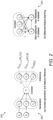
Claims (15)

  1. A computer-implemented method for debiasing data received by or for training a recommendation system, the method comprising:
    receiving data comprising sensitive-correlated information;
    obtaining sensitivity representations of the sensitive-correlated information from the data using a plurality of neural networks trained in relation to a set of predetermined context features;
    deriving a learned representation from the sensitivity representations; and
    generating a balanced fair prediction from the recommendation system based on the learned representation.
  2. The method of claim 1, wherein the balanced fair prediction as part of a recommendation provided by the recommendation system to a user.
  3. The method of claim 1, further comprising: incorporating the balanced fair prediction as part of the data received by the recommendation system as the method is iterated.
  4. The method of any preceding claims, wherein the plurality of neural networks comprises a first neural network representative of user sensitive features, a second neural network representative of item sensitive features, and a third neural network representative of non-sensitive features.

  5. The method of claim 4, wherein the first, second, and third neural networks comprise an identifiable variational autoencoder architecture.
  6. The method of any preceding claims, wherein the set of predetermined context features is collected from a recommendation system.
  7. The method of any preceding claims, wherein the plurality of neural networks is configured to extract the sensitive-correlated information from the set of predetermined context features, wherein the sensitive-correlated information is represented by the sensitivity representations.
  8. The method of any preceding claims, wherein the sensitivity representations comprise representations of user features, item features, and non-sensitive features.
  9. The method of any preceding claims, wherein the learned representation comprises a balanced fair objective.
  10. The method of any preceding claims, wherein said deriving the learned representation from the sensitivity representations, further comprising: applying an adversarial learning strategy consisting of:
    determining whether the sensitivity representations satisfy at least one balanced fair criterion; and
    applying a balanced representation function to a subset of sensitivity representations that satisfy said at least one balanced fair criterion to obtain the learned representation, wherein the balanced representation function is configured to remove non-sensitive features and sensitive features from the sensitivity representations not satisfying said at least one balanced fair criterion.
  11. The method of claim 10, wherein said at least one balanced fair criterion is determined by minimizing the balanced fair objective.
  12. A computer readable medium comprising instructions which, when implemented in a processor of a computing system, cause the system to implement a method as claimed in any preceding claim.
  13. A recommendation system for providing a balanced fair recommendation or prediction based on at least one balanced fair criterion, the system comprising a plurality of neural networks trained in relation to a set of predetermined context features, wherein the system is configured to:
    receive data comprising sensitive-correlated information;
    obtain sensitivity representations of the sensitive-correlated information from the data using the plurality of neural networks;
    derive a learned representation from the sensitivity representations; and
    generate a balanced fair prediction from the recommendation system based on the learned representation.
  14. The system of claim 14, wherein the system is further configured according to any preceding claims 2 to 11.
  15. An electronic device comprising a processor and a memory, wherein the processor is configured to implement a method as claimed in any preceding claims 1 to 11.
EP23183596.8A 2023-07-05 2023-07-05 Method, computer readable medium, recommendation system, electronic device for debiasing data Ceased EP4488879A1 (en)

Priority Applications (2)

Application Number Priority Date Filing Date Title
EP23183596.8A EP4488879A1 (en) 2023-07-05 2023-07-05 Method, computer readable medium, recommendation system, electronic device for debiasing data
US18/747,267 US20250013855A1 (en) 2023-07-05 2024-06-18 Method, computer readable medium, recommendation system, electronic device for debiasing data

Applications Claiming Priority (1)

Application Number Priority Date Filing Date Title
EP23183596.8A EP4488879A1 (en) 2023-07-05 2023-07-05 Method, computer readable medium, recommendation system, electronic device for debiasing data

Publications (1)

Publication Number Publication Date
EP4488879A1 true EP4488879A1 (en) 2025-01-08

Family

ID=87158003

Family Applications (1)

Application Number Title Priority Date Filing Date
EP23183596.8A Ceased EP4488879A1 (en) 2023-07-05 2023-07-05 Method, computer readable medium, recommendation system, electronic device for debiasing data

Country Status (2)

Country Link
US (1) US20250013855A1 (en)
EP (1) EP4488879A1 (en)

Families Citing this family (2)

* Cited by examiner, † Cited by third party
Publication number Priority date Publication date Assignee Title
CN120123593B (en) * 2025-03-13 2026-03-17 华中科技大学 A fair recommendation method and apparatus based on contrastive learning
CN120915270B (en) * 2025-10-13 2026-02-10 南京瑞蓝世光电传感技术研究院有限公司 Anti-interference filtering method and device for fire emergency communications

Non-Patent Citations (2)

* Cited by examiner, † Cited by third party
Title
SCHNABEL TOBIAS ET AL: "Recommendations as Treatments: Debiasing Learning and Evaluation", ARXIV (CORNELL UNIVERSITY), 27 May 2016 (2016-05-27), Ithaca, XP093110506, Retrieved from the Internet <URL:https://arxiv.org/pdf/1602.05352.pdf> [retrieved on 20231208], DOI: 10.48550/arxiv.1602.05352 *
YANG MENGYUE ET AL: "Rectifying Unfairness in Recommendation Feedback Loop", PRACTICE AND EXPERIENCE IN ADVANCED RESEARCH COMPUTING, ACMPUB27, NEW YORK, NY, USA, 23 July 2023 (2023-07-23), pages 28 - 37, XP059123541, ISBN: 978-1-4503-9913-5, DOI: 10.1145/3539618.3591754 *

Also Published As

Publication number Publication date
US20250013855A1 (en) 2025-01-09

Similar Documents

Publication Publication Date Title
US11893467B2 (en) Model interpretation
Fan et al. Improving fairness for data valuation in horizontal federated learning
Farrell et al. Deep neural networks for estimation and inference
Hartford et al. Deep IV: A flexible approach for counterfactual prediction
CN112381428B (en) Business allocation method, device, equipment and storage medium based on reinforcement learning
US20250124281A1 (en) Methods of providing data privacy for neural network based inference
US20250013855A1 (en) Method, computer readable medium, recommendation system, electronic device for debiasing data
CN113158241B (en) Job recommendation method and device based on federated learning
CN112163963B (en) Service recommendation method, device, computer equipment and storage medium
CN115292587B (en) Recommendation method and system based on knowledge distillation and causal reasoning
US20240378501A1 (en) Dual machine learning pipelines for transforming data and optimizing data transformation
CN113268669B (en) Relation mining-oriented interest point recommendation method based on joint neural network
CN114912142B (en) Data desensitization method, device, electronic device and storage medium
US20230237252A1 (en) Digital posting match recommendation apparatus and methods
Navgaran et al. Evolutionary based matrix factorization method for collaborative filtering systems
Dai et al. Training data attribution for diffusion models
CN117349899B (en) Sensitive data processing method, system and storage medium based on forgetting model
Carlsson et al. Pure exploration in bandits with linear constraints
CN113158047A (en) Recommendation model training and information pushing method, device, equipment and medium
US20250053674A1 (en) Apparatus and method for communications associated with one or more data sets
US11144938B2 (en) Method and system for predictive modeling of consumer profiles
CN116257688A (en) Information recommendation method based on differential privacy random gradient descent
Wang et al. Toward dual roles of users in recommender systems
Zhou et al. Conformal classification with equalized coverage for adaptively selected groups
Hoshino Two-step estimation of incomplete information social interaction models with sample selection

Legal Events

Date Code Title Description
PUAI Public reference made under article 153(3) epc to a published international application that has entered the european phase

Free format text: ORIGINAL CODE: 0009012

STAA Information on the status of an ep patent application or granted ep patent

Free format text: STATUS: REQUEST FOR EXAMINATION WAS MADE

17P Request for examination filed

Effective date: 20230705

AK Designated contracting states

Kind code of ref document: A1

Designated state(s): AL AT BE BG CH CY CZ DE DK EE ES FI FR GB GR HR HU IE IS IT LI LT LU LV MC ME MK MT NL NO PL PT RO RS SE SI SK SM TR

STAA Information on the status of an ep patent application or granted ep patent

Free format text: STATUS: THE APPLICATION HAS BEEN REFUSED

18R Application refused

Effective date: 20250205