EP4488798A1 - Idle time prediction method and idle time prediction device - Google Patents
Idle time prediction method and idle time prediction device Download PDFInfo
- Publication number
- EP4488798A1 EP4488798A1 EP24186793.6A EP24186793A EP4488798A1 EP 4488798 A1 EP4488798 A1 EP 4488798A1 EP 24186793 A EP24186793 A EP 24186793A EP 4488798 A1 EP4488798 A1 EP 4488798A1
- Authority
- EP
- European Patent Office
- Prior art keywords
- idle
- durations
- predicted
- state
- probability
- Prior art date
- Legal status (The legal status is an assumption and is not a legal conclusion. Google has not performed a legal analysis and makes no representation as to the accuracy of the status listed.)
- Pending
Links
Images

Classifications
-
- G—PHYSICS
- G06—COMPUTING OR CALCULATING; COUNTING
- G06F—ELECTRIC DIGITAL DATA PROCESSING
- G06F1/00—Details not covered by groups G06F3/00 - G06F13/00 and G06F21/00
- G06F1/26—Power supply means, e.g. regulation thereof
- G06F1/32—Means for saving power
- G06F1/3203—Power management, i.e. event-based initiation of a power-saving mode
-
- G—PHYSICS
- G06—COMPUTING OR CALCULATING; COUNTING
- G06F—ELECTRIC DIGITAL DATA PROCESSING
- G06F1/00—Details not covered by groups G06F3/00 - G06F13/00 and G06F21/00
- G06F1/26—Power supply means, e.g. regulation thereof
- G06F1/32—Means for saving power
- G06F1/3203—Power management, i.e. event-based initiation of a power-saving mode
- G06F1/3234—Power saving characterised by the action undertaken
- G06F1/3296—Power saving characterised by the action undertaken by lowering the supply or operating voltage
-
- G—PHYSICS
- G06—COMPUTING OR CALCULATING; COUNTING
- G06F—ELECTRIC DIGITAL DATA PROCESSING
- G06F1/00—Details not covered by groups G06F3/00 - G06F13/00 and G06F21/00
- G06F1/26—Power supply means, e.g. regulation thereof
- G06F1/32—Means for saving power
- G06F1/3203—Power management, i.e. event-based initiation of a power-saving mode
- G06F1/3206—Monitoring of events, devices or parameters that trigger a change in power modality
-
- G—PHYSICS
- G06—COMPUTING OR CALCULATING; COUNTING
- G06F—ELECTRIC DIGITAL DATA PROCESSING
- G06F1/00—Details not covered by groups G06F3/00 - G06F13/00 and G06F21/00
- G06F1/26—Power supply means, e.g. regulation thereof
- G06F1/32—Means for saving power
- G06F1/3203—Power management, i.e. event-based initiation of a power-saving mode
- G06F1/3234—Power saving characterised by the action undertaken
-
- G—PHYSICS
- G06—COMPUTING OR CALCULATING; COUNTING
- G06F—ELECTRIC DIGITAL DATA PROCESSING
- G06F1/00—Details not covered by groups G06F3/00 - G06F13/00 and G06F21/00
- G06F1/26—Power supply means, e.g. regulation thereof
- G06F1/32—Means for saving power
- G06F1/3203—Power management, i.e. event-based initiation of a power-saving mode
- G06F1/3234—Power saving characterised by the action undertaken
- G06F1/3243—Power saving in microcontroller unit
-
- G—PHYSICS
- G06—COMPUTING OR CALCULATING; COUNTING
- G06F—ELECTRIC DIGITAL DATA PROCESSING
- G06F1/00—Details not covered by groups G06F3/00 - G06F13/00 and G06F21/00
- G06F1/26—Power supply means, e.g. regulation thereof
- G06F1/32—Means for saving power
- G06F1/3203—Power management, i.e. event-based initiation of a power-saving mode
- G06F1/3234—Power saving characterised by the action undertaken
- G06F1/3287—Power saving characterised by the action undertaken by switching off individual functional units in the computer system
Definitions
- unused units of the system can enter idle states to reduce power consumption. For example, a portion of a processor or the entire processor, may enter an idle state, or a subsystem of the system may enter an idle state for saving power.
- Idle time prediction methods and devices are defined in the independent claims.
- the dependent claims define preferred embodiments thereof.
- all preferred features applicable to one of the idle time prediction methods as defined in the dependent claims are applicable to the corresponding idle time prediction device.
- An embodiment provides an idle time prediction method used for a system.
- the idle time prediction method includes obtaining n idle durations corresponding to n time points, determining if the n idle durations are normally distributed, selecting a predicted idle state according to an average of the n idle durations if the n idle durations are normally distributed, and controlling the system to enter the predicted idle state, where n is an integer larger than one.
- the idle time prediction method includes obtaining n idle durations corresponding to n time points, determining if the n idle durations are of a normal distribution, generating a probability according to m idle states corresponding to m idle durations of the n idle durations if the n idle durations are not normally distributed, selecting a predicted idle state according to the probability, and controlling the system to enter the predicted idle state, where n and m are integers larger than one, and m ⁇ n.
- the idle time prediction device includes a monitor and a processor.
- the monitor is coupled to the system and used to observe the system to obtain n idle durations corresponding to n time points.
- the processor is coupled to the monitor and used to determine if the n idle durations are normally distributed, select a predicted idle state according to an average of the n idle durations if the n idle durations are normally distributed, and control the system to enter the predicted idle state, where n is an integer larger than one.
- the idle time prediction device includes a monitor and a processor.
- the monitor is coupled to the system and used to observe the system to obtain n idle durations corresponding to n time points.
- the processor is coupled to the monitor and used to determine if the n idle durations are of a normal distribution, generate a probability according to m idle states corresponding to m idle durations of the n idle durations if the n idle durations are not normally distributed, select a predicted idle state according to the probability, and control the system to enter the predicted idle state, where n and m are integers larger than one, and m ⁇ n.
- FIG.1 illustrates an idle time prediction device 100 for controlling a system 155 according to an embodiment.
- the idle time prediction device 100 can include a monitor 110 and a processor 120.
- the monitor 110 can be coupled to the system 155 for observing the system 155 to obtain n idle durations ID1 to IDn corresponding to n time points, where n is an integer larger than one.
- the n idle durations ID1 to IDn can be actual idle durations obtained through measurement and observation and can be recorded in a log file.
- the processor 120 can be coupled to the monitor 110 and the system 155 for determining if the n idle durations ID1 to IDn are normally distributed. If the n idle durations are normally distributed, the processor 120 can select a predicted idle state IS_p according to an average (expressed as ID_avg) of the n idle durations ID1 to IDn. Then, the processor 120 can transmit a control signal Sc to control the system 155 to enter the predicted idle state IS_p. For example, if the average ID_avg is 500 milliseconds and corresponding to a shallow idle state defined for the system 155, the predicted idle state IS_p can be the shallow idle state. In another example, if the average ID_avg is 10 seconds and corresponding to a deep idle state defined for the system 155, the predicted idle state IS_p can be the deep idle state.
- the processor 120 can generate a probability (expressed as P) according to m idle states corresponding to m idle durations of the n idle durations, where n and m are integers larger than one, and m ⁇ n.
- the predicted idle state IS_p can be selected according to the probability P, and the processor 120 can transmit a control signal Sc to control the system 155 to enter the predicted idle state IS_p.
- the abovementioned predicted idle state IS_p can be a shallow idle state or a deep idle state, where the shallow idle state can be corresponding to a shorter idle duration, and the deep idle state can be corresponding to a longer idle duration.
- the abovementioned predicted idle state IS_p can be one of a plurality of idle states, where the plurality of idle states are corresponding to a plurality of different idle durations respectively.
- the processor 120 can include a central processing unit (CPU), a graphic processing unit (GPU), a tensor processing unit (TPU), a neural network processing unit (NPU), an application specific integrated circuit (ASIC), a deep learning processing unit (DPU), a vector processing unit (VPU), a microprocessor, a micro controller unit (MCU) and/or an appropriate processing unit.
- the monitor 110 can be implemented using hardware (e.g. circuit on a printed circuit board, circuit on a field-programmable gate array and/or integrated circuit), and appropriate software and/or firmware can be installed in the monitor 110 for measuring the n idle durations ID1 to IDn.
- the processor 120 and the monitor 110 can be separated in different units or integrated in one unit.
- the processor 120 and the monitor 110 can be integrated in an application specific integrated circuit (ASIC) with appropriate software and/or firmware.
- ASIC application specific integrated circuit
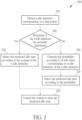
- FIG.2 is a flowchart of an idle time prediction method 200 for the system 155 according to an embodiment.
- the idle time prediction method 200 can be performed with the idle time prediction device 100 in FIG.1 .
- the idle time prediction method 200 can include the following steps.
- Step 210 obtain n idle durations ID1 to IDn corresponding to n time points;
- Step 220 determine if the n idle durations ID1 to IDn are normally distributed; if so, enter Step 230; otherwise, enter Step 240;
- Step 230 select the predicted idle state IS_p according to the average ID_avg of the n idle durations ID1 to IDn; enter Step 250;
- Step 240 generate the probability P according to m idle states corresponding to m idle durations of the n idle durations ID1 to IDn;
- Step 245 select the predicted idle state IS_p according to the probability P.
- Step 250 control the system 155 to enter the predicted idle state IS_p.
- Step 210 can be performed using the monitor 110.
- Step 220 to Step 250 can be performed using the processor 120.
- the n idle durations ID1 to IDn can be determined to be normally distributed if the average ID_avg of the n idle durations ID1 to IDn is larger than k times a standard deviation (expressed as ⁇ ) of the n idle durations ID1 to IDn, and k is an integer larger than one. For example, k can be six. In other words, if the average ID_avg is larger than six times the standard deviation ⁇ (i.e. ID_avg > 6 * ⁇ ), the n idle durations ID1 to IDn can be determined to be normally distributed.
- variable i can be integers from 1 to n.
- the n idle durations ID1 to IDn can be determined to be normally distributed if the standard deviation ⁇ of the n idle durations ID1 to IDn is smaller than a predetermined threshold.
- the predetermined threshold can be determined according to experiments.
- the n idle durations ID1 to IDn can be classified into a plurality of idle states, and the predicted idle state IS_p can be one of the plurality of idle states.
- the plurality of idle states can include a deep idle state corresponding to a longer idle duration and a shallow idle state corresponding to a shorter idle duration.
- the plurality of idle states can include a first idle state, a second idle state and a third idle state corresponding to different idle durations respectively.
- n and m can be integers larger than one, and m ⁇ n.
- the m idle durations used for generating the probability P can be consecutive in time.
- the probability P can be generated using a machine learning model according to the m idle states corresponding to the m idle durations of the n idle durations ID1 to IDn.
- the machine learning model can include a convolutional neural network (CNN), a recurrent neural network (RNN), a deep neural network (DNN) and/or a proper neural network model.
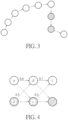
- FIG.3 illustrates a state diagram for describing the idle states of the system 155 according to an example.
- FIG.3 can be corresponding to a plurality of idle states related to the n idle durations ID1 to IDn of the system 155.
- each "bubble" can represent an idle state
- a white bubble can represent a shallow idle state
- a gray bubble can represent a deep idle state.
- the idle states in FIG.3 are actual idle states recorded by observing the system 155.
- the first state to the sixth state of the system 155 can be shallow idle states
- the seventh state and the eighth state of the system 155 can be deep idle states
- the ninth state of the system 155 can be a shallow idle state.
- FIG.3 is merely an example, and more actual idle states of the system 155 can be observed in practice. For example, 31 or 62 idle states of the system 155 can be observed and recorded.
- FIG.4 illustrates a diagram for predicting the idle state of the system 155 according to the actual idle states related to the n idle durations ID1 to IDn of the system 155 in an example.
- FIG.4 can be related to Step 240 and Step 245 in FIG.2 .
- the probability of entering a second shallow state e.g. the state ⁇
- the probability of entering a third shallow state e.g. the state ⁇
- the probability of entering a third shallow state may be 0.7 (i.e. 70%).
- the probability of entering a shallow state may be 0.5 (i.e. 50%).
- the probability of entering a shallow state may be 0.2 (i.e. 20%).
- FIG.4 is merely an example showing six idle states. In practice, the diagram of FIG.4 can include more idle states, such as 62 idle states.
- the probability P can be estimated using the machine learning model (e.g. neural network model) of the processor 120.
- a hidden Markov model and a hidden Markov algorithm can be used to generate the probability P (e.g. one of the probabilities mentioned in FIG.4 ) according to a portion or all of the actual idle states related to the n idle durations ID1 to IDn of the system 155.
- the system 155 can include a processor (e.g. CPU, GPU or microcontroller), a memory (e.g. synchronous dynamic random-access memory, dynamic random-access memory, or double data-rate synchronous dynamic random-access memory), an interface and/or a bus (e.g. infra-bus).
- a processor e.g. CPU, GPU or microcontroller
- a memory e.g. synchronous dynamic random-access memory, dynamic random-access memory, or double data-rate synchronous dynamic random-access memory
- an interface and/or a bus e.g. infra-bus
- a proper idle state (e.g. a shallow idle state or a deep idle state) can be predicted and selected for the system 155 to enter the selected idle state.
- the controls for the system 155 can be more accurate.
- the processor 120 can better control the idle states for the system 155, and the related overhead and power consumption are effectively reduced.
Landscapes
- Engineering & Computer Science (AREA)
- Theoretical Computer Science (AREA)
- General Engineering & Computer Science (AREA)
- Physics & Mathematics (AREA)
- General Physics & Mathematics (AREA)
- Computer Hardware Design (AREA)
- Computing Systems (AREA)
- Management, Administration, Business Operations System, And Electronic Commerce (AREA)
- Feedback Control In General (AREA)
- Compression, Expansion, Code Conversion, And Decoders (AREA)
Abstract
An idle time prediction method (200) for a system includes obtaining n idle durations corresponding to n time points (210), determining if the n idle durations are of a normal distribution (220), generating a probability according to m idle states corresponding to m idle durations of the n idle durations if the n idle durations are not normally distributed (240), selecting a predicted idle state according to the probability (245), and controlling the system to enter the predicted idle state (250), where n and m are integers larger than one, and m ≤ n.
Description
- This application claims the benefit of
U.S. Provisional Application No. 63/512,311, filed on July 7th, 2023 - When a system is in operation, unused units of the system can enter idle states to reduce power consumption. For example, a portion of a processor or the entire processor, may enter an idle state, or a subsystem of the system may enter an idle state for saving power.
- However, it is a challenge to perform controls related to the idle states. If a unit enters an idle state which is overly deep, the idle time may be too long, and the overhead of re-awakening the unit may be excessive. If a unit enters an idle state which is too shallow, the effect of saving power may be insufficient. Hence, a solution is still in need to better control the idle states for a system.
- Idle time prediction methods and devices are defined in the independent claims. The dependent claims define preferred embodiments thereof. In particular, all preferred features applicable to one of the idle time prediction methods as defined in the dependent claims are applicable to the corresponding idle time prediction device. An embodiment provides an idle time prediction method used for a system. The idle time prediction method includes obtaining n idle durations corresponding to n time points, determining if the n idle durations are normally distributed, selecting a predicted idle state according to an average of the n idle durations if the n idle durations are normally distributed, and controlling the system to enter the predicted idle state, where n is an integer larger than one.
- Another embodiment provides an idle time prediction method used for a system. The idle time prediction method includes obtaining n idle durations corresponding to n time points, determining if the n idle durations are of a normal distribution, generating a probability according to m idle states corresponding to m idle durations of the n idle durations if the n idle durations are not normally distributed, selecting a predicted idle state according to the probability, and controlling the system to enter the predicted idle state, where n and m are integers larger than one, and m ≤ n.
- Another embodiment provides an idle time prediction device used for a system. The idle time prediction device includes a monitor and a processor. The monitor is coupled to the system and used to observe the system to obtain n idle durations corresponding to n time points. The processor is coupled to the monitor and used to determine if the n idle durations are normally distributed, select a predicted idle state according to an average of the n idle durations if the n idle durations are normally distributed, and control the system to enter the predicted idle state, where n is an integer larger than one.
- Another embodiment provides an idle time prediction device used for a system. The idle time prediction device includes a monitor and a processor. The monitor is coupled to the system and used to observe the system to obtain n idle durations corresponding to n time points. The processor is coupled to the monitor and used to determine if the n idle durations are of a normal distribution, generate a probability according to m idle states corresponding to m idle durations of the n idle durations if the n idle durations are not normally distributed, select a predicted idle state according to the probability, and control the system to enter the predicted idle state, where n and m are integers larger than one, and m ≤ n.
- These and other objectives of the present invention will no doubt become obvious to those of ordinary skill in the art after reading the following detailed description of the preferred embodiment that is illustrated in the various figures and drawings.
-
-
FIG. 1 illustrates an idle time prediction device for controlling a system according to an embodiment. -
FIG.2 is a flowchart of an idle time prediction method for the system according to an embodiment. -
FIG.3 illustrates a state diagram for describing the idle states of the system according to an example. -
FIG.4 illustrates a diagram for predicting the idle state of the system according to the actual idle states related to the n idle durations of the system in an example. - In the text, an asterisk (i.e. *) may be the multiplication sign.
FIG.1 illustrates an idletime prediction device 100 for controlling asystem 155 according to an embodiment. The idletime prediction device 100 can include amonitor 110 and aprocessor 120. Themonitor 110 can be coupled to thesystem 155 for observing thesystem 155 to obtain n idle durations ID1 to IDn corresponding to n time points, where n is an integer larger than one. The n idle durations ID1 to IDn can be actual idle durations obtained through measurement and observation and can be recorded in a log file. - The
processor 120 can be coupled to themonitor 110 and thesystem 155 for determining if the n idle durations ID1 to IDn are normally distributed. If the n idle durations are normally distributed, theprocessor 120 can select a predicted idle state IS_p according to an average (expressed as ID_avg) of the n idle durations ID1 to IDn. Then, theprocessor 120 can transmit a control signal Sc to control thesystem 155 to enter the predicted idle state IS_p. For example, if the average ID_avg is 500 milliseconds and corresponding to a shallow idle state defined for thesystem 155, the predicted idle state IS_p can be the shallow idle state. In another example, if the average ID_avg is 10 seconds and corresponding to a deep idle state defined for thesystem 155, the predicted idle state IS_p can be the deep idle state. - In another condition, if the n idle durations are not normally distributed, the
processor 120 can generate a probability (expressed as P) according to m idle states corresponding to m idle durations of the n idle durations, where n and m are integers larger than one, and m ≤ n. In this condition, the predicted idle state IS_p can be selected according to the probability P, and theprocessor 120 can transmit a control signal Sc to control thesystem 155 to enter the predicted idle state IS_p. - For example, the abovementioned predicted idle state IS_p can be a shallow idle state or a deep idle state, where the shallow idle state can be corresponding to a shorter idle duration, and the deep idle state can be corresponding to a longer idle duration. In another example, the abovementioned predicted idle state IS_p can be one of a plurality of idle states, where the plurality of idle states are corresponding to a plurality of different idle durations respectively.
- The
processor 120 can include a central processing unit (CPU), a graphic processing unit (GPU), a tensor processing unit (TPU), a neural network processing unit (NPU), an application specific integrated circuit (ASIC), a deep learning processing unit (DPU), a vector processing unit (VPU), a microprocessor, a micro controller unit (MCU) and/or an appropriate processing unit. Themonitor 110 can be implemented using hardware (e.g. circuit on a printed circuit board, circuit on a field-programmable gate array and/or integrated circuit), and appropriate software and/or firmware can be installed in themonitor 110 for measuring the n idle durations ID1 to IDn. Theprocessor 120 and themonitor 110 can be separated in different units or integrated in one unit. For example, theprocessor 120 and themonitor 110 can be integrated in an application specific integrated circuit (ASIC) with appropriate software and/or firmware. -
FIG.2 is a flowchart of an idletime prediction method 200 for thesystem 155 according to an embodiment. The idletime prediction method 200 can be performed with the idletime prediction device 100 inFIG.1 . The idletime prediction method 200 can include the following steps. - Step 210: obtain n idle durations ID1 to IDn corresponding to n time points;
- Step 220: determine if the n idle durations ID1 to IDn are normally distributed; if so, enter
Step 230; otherwise, enterStep 240; - Step 230: select the predicted idle state IS_p according to the average ID_avg of the n idle durations ID1 to IDn; enter
Step 250; - Step 240: generate the probability P according to m idle states corresponding to m idle durations of the n idle durations ID1 to IDn;
- Step 245: select the predicted idle state IS_p according to the probability P; and
- Step 250: control the
system 155 to enter the predicted idle state IS_p. -
Step 210 can be performed using themonitor 110.Step 220 toStep 250 can be performed using theprocessor 120. - In
Step 220, the n idle durations ID1 to IDn can be determined to be normally distributed if the average ID_avg of the n idle durations ID1 to IDn is larger than k times a standard deviation (expressed as σ) of the n idle durations ID1 to IDn, and k is an integer larger than one. For example, k can be six. In other words, if the average ID_avg is larger than six times the standard deviation σ (i.e. ID_avg > 6 *σ), the n idle durations ID1 to IDn can be determined to be normally distributed. The standard deviation σ can be generated with the following equation eq-1:
- In equation eq-1, the variable i can be integers from 1 to n.
- According to another embodiment, in
Step 220, the n idle durations ID1 to IDn can be determined to be normally distributed if the standard deviation σ of the n idle durations ID1 to IDn is smaller than a predetermined threshold. Here, the predetermined threshold can be determined according to experiments. - In
FIG.2 , the n idle durations ID1 to IDn can be classified into a plurality of idle states, and the predicted idle state IS_p can be one of the plurality of idle states. For example, the plurality of idle states can include a deep idle state corresponding to a longer idle duration and a shallow idle state corresponding to a shorter idle duration. In another example, the plurality of idle states can include a first idle state, a second idle state and a third idle state corresponding to different idle durations respectively. - In
Step 240 andStep 245, n and m can be integers larger than one, and m ≤ n. InStep 240, the m idle durations used for generating the probability P can be consecutive in time. InStep 240, the probability P can be generated using a machine learning model according to the m idle states corresponding to the m idle durations of the n idle durations ID1 to IDn. For example, the machine learning model can include a convolutional neural network (CNN), a recurrent neural network (RNN), a deep neural network (DNN) and/or a proper neural network model. -
FIG.3 illustrates a state diagram for describing the idle states of thesystem 155 according to an example.FIG.3 can be corresponding to a plurality of idle states related to the n idle durations ID1 to IDn of thesystem 155. InFIG.3 , each "bubble" can represent an idle state, a white bubble can represent a shallow idle state, and a gray bubble can represent a deep idle state. The idle states inFIG.3 are actual idle states recorded by observing thesystem 155. As shown inFIG.3 , sequentially, the first state to the sixth state of thesystem 155 can be shallow idle states, the seventh state and the eighth state of thesystem 155 can be deep idle states, and the ninth state of thesystem 155 can be a shallow idle state.FIG.3 is merely an example, and more actual idle states of thesystem 155 can be observed in practice. For example, 31 or 62 idle states of thesystem 155 can be observed and recorded. -
FIG.4 illustrates a diagram for predicting the idle state of thesystem 155 according to the actual idle states related to the n idle durations ID1 to IDn of thesystem 155 in an example.FIG.4 can be related toStep 240 andStep 245 inFIG.2 . As shown inFIG.4 , after thesystem 155 has entered a first shallow idle state (e.g. the state α), the probability of entering a second shallow state (e.g. the state β) may be 0.8 (i.e. 80%). After thesystem 155 has entered two consecutive shallow idle states (e.g. the states α and β), the probability of entering a third shallow state (e.g. the state γ) may be 0.7 (i.e. 70%). After thesystem 155 has entered a first deep idle state (e.g. the state δ), the probability of entering a shallow state (e.g. the state β) may be 0.5 (i.e. 50%). After thesystem 155 has entered two consecutive deep idle states (e.g. the states δ and ε), the probability of entering a shallow state (e.g. the state γ) may be 0.2 (i.e. 20%).FIG.4 is merely an example showing six idle states. In practice, the diagram ofFIG.4 can include more idle states, such as 62 idle states. - In
Step 240 and Step 245 ofFIG.2 , the probability P can be estimated using the machine learning model (e.g. neural network model) of theprocessor 120. A hidden Markov model and a hidden Markov algorithm can be used to generate the probability P (e.g. one of the probabilities mentioned inFIG.4 ) according to a portion or all of the actual idle states related to the n idle durations ID1 to IDn of thesystem 155. - According to embodiments, the
system 155 can include a processor (e.g. CPU, GPU or microcontroller), a memory (e.g. synchronous dynamic random-access memory, dynamic random-access memory, or double data-rate synchronous dynamic random-access memory), an interface and/or a bus (e.g. infra-bus). - In summary, by using the idle
time prediction device 100 and the idletime prediction method 200, a proper idle state (e.g. a shallow idle state or a deep idle state) can be predicted and selected for thesystem 155 to enter the selected idle state. Hence, the controls for thesystem 155 can be more accurate. As a result, theprocessor 120 can better control the idle states for thesystem 155, and the related overhead and power consumption are effectively reduced. - Those skilled in the art will readily observe that numerous modifications and alterations of the device and method may be made while retaining the teachings of the invention. Accordingly, the above disclosure should be construed as limited only by the metes and bounds of the appended claims.
Claims (13)
- An idle time prediction method (200) used for a system, comprising:obtaining n idle durations corresponding to n time points (210);determining if the n idle durations are normally distributed (220);selecting a predicted idle state according to an average of the n idle durations if the n idle durations are normally distributed (230); andcontrolling the system to enter the predicted idle state (250);wherein n is an integer larger than one.
- The method (200) of claim 1, further comprising, if the n idle durations are not normally distributed:generating a probability according to m idle states corresponding to m idle durations of the n idle durations (240); andselecting a predicted idle state according to the probability (245) ;wherein n and m are integers larger than one, and m ≤ n.
- An idle time prediction method (200) used for a system, comprising:obtaining n idle durations corresponding to n time points (210);determining if the n idle durations are of a normal distribution (220);generating a probability according to m idle states corresponding to m idle durations of the n idle durations if the n idle durations are not normally distributed (240);selecting a predicted idle state according to the probability (245); andcontrolling the system to enter the predicted idle state (250);wherein n and m are integers larger than one, and m ≤ n.
- The method (200) of claim 2 or 3, wherein the m idle durations are consecutive in time.
- The method (200) of any one of claims 1 to 4, wherein the n idle durations are determined to be normally distributed if the average of the n idle durations is larger than k times a standard deviation of the n idle durations, and k is an integer larger than one.
- The method (200) of claim 5, wherein k is six.
- The method (200) of any one of claims 1 to 4, wherein the n idle durations are determined to be normally distributed if a standard deviation of the n idle durations is smaller than a predetermined threshold.
- The method (200) of any one of claims 1 to 7, wherein the n idle durations are classified into a plurality of idle states, and the predicted idle state is one of the plurality of idle states.
- The method (200) of claim 8, wherein the plurality of idle states comprise a deep idle state and a light idle state, and a first duration corresponding to the deep idle state is longer than a second duration corresponding to the light idle state.
- The method (200) of any one of claims 2, 3, and 4 to 9 being directly or indirectly dependent on claim 2 or 3, wherein the probability is generated using a machine learning model according to the m idle states corresponding to the m idle durations of the n idle durations.
- An idle time prediction device (100) used for a system (155), comprising:a monitor (110) coupled to the system (155) and configured to observe the system (155) to obtain n idle durations corresponding to n time points; anda processor (120) coupled to the monitor (110) and configured to determine if the n idle durations are normally distributed, select a predicted idle state according to an average of the n idle durations if the n idle durations are normally distributed, and control the system (155) to enter the predicted idle state;wherein n is an integer larger than one.
- The device (100) of claim 11, wherein the processor (120) is further adapted to, if the n idle durations are not normally distributed (220):generate a probability according to m idle states corresponding to m idle durations of the n idle durations (240); andselect a predicted idle state according to the probability (245) ;wherein n and m are integers larger than one, and m ≤ n.
- An idle time prediction device (100) used for a system (155), comprising:a monitor (110) coupled to the system (155) and configured to observe the system (155) to obtain n idle durations corresponding to n time points; anda processor (120) coupled to the monitor (110) and configured to determine if the n idle durations are of a normal distribution, generate a probability according to m idle states corresponding to m idle durations of the n idle durations if the n idle durations are not normally distributed, select a predicted idle state according to the probability, and control the system (155) to enter the predicted idle state;wherein n and m are integers larger than one, and m ≤ n.
Applications Claiming Priority (2)
| Application Number | Priority Date | Filing Date | Title |
|---|---|---|---|
| US202363512311P | 2023-07-07 | 2023-07-07 | |
| US18/764,182 US20250013286A1 (en) | 2023-07-07 | 2024-07-04 | Idle time prediction method and idle time prediction device |
Publications (1)
| Publication Number | Publication Date |
|---|---|
| EP4488798A1 true EP4488798A1 (en) | 2025-01-08 |
Family
ID=91853448
Family Applications (1)
| Application Number | Title | Priority Date | Filing Date |
|---|---|---|---|
| EP24186793.6A Pending EP4488798A1 (en) | 2023-07-07 | 2024-07-05 | Idle time prediction method and idle time prediction device |
Country Status (3)
| Country | Link |
|---|---|
| US (1) | US20250013286A1 (en) |
| EP (1) | EP4488798A1 (en) |
| TW (1) | TW202503482A (en) |
Citations (2)
| Publication number | Priority date | Publication date | Assignee | Title |
|---|---|---|---|---|
| US20140181553A1 (en) * | 2012-12-21 | 2014-06-26 | Advanced Micro Devices, Inc. | Idle Phase Prediction For Integrated Circuits |
| US20220317757A1 (en) * | 2021-03-31 | 2022-10-06 | Advanced Micro Devices, Inc. | Low power state selection based on idle duration history |
-
2024
- 2024-07-04 US US18/764,182 patent/US20250013286A1/en active Pending
- 2024-07-05 EP EP24186793.6A patent/EP4488798A1/en active Pending
- 2024-07-05 TW TW113125209A patent/TW202503482A/en unknown
Patent Citations (2)
| Publication number | Priority date | Publication date | Assignee | Title |
|---|---|---|---|---|
| US20140181553A1 (en) * | 2012-12-21 | 2014-06-26 | Advanced Micro Devices, Inc. | Idle Phase Prediction For Integrated Circuits |
| US20220317757A1 (en) * | 2021-03-31 | 2022-10-06 | Advanced Micro Devices, Inc. | Low power state selection based on idle duration history |
Also Published As
| Publication number | Publication date |
|---|---|
| US20250013286A1 (en) | 2025-01-09 |
| TW202503482A (en) | 2025-01-16 |
Similar Documents
| Publication | Publication Date | Title |
|---|---|---|
| Eden et al. | Nonparametric estimation of Spearman's rank correlation with bivariate survival data | |
| EP3633549A1 (en) | Facial detection training method, apparatus and electronic device | |
| EP3719601A1 (en) | Abnormality determination system, motor control device, and abnormality determination device | |
| Beinborn et al. | Analyzing cognitive plausibility of subword tokenization | |
| JP2025513749A (en) | Allocating computational resources between model size and training data while training a machine learning model | |
| US20190332920A1 (en) | Unsupervised detection of intermediate reinforcement learning goals | |
| US20230206074A1 (en) | Method of slicing deep learning model for heterogeneous embedded system and inferencing method based on sliced deep learning model in heterogeneous embedded system | |
| EP3916667A1 (en) | Real-time time series prediction for anomaly detection | |
| CN113468813B (en) | Desulfurization system inlet SO2Concentration prediction method and device and electronic equipment | |
| WO2017186050A1 (en) | Segmented sentence recognition method and device for human-machine intelligent question-answer system | |
| CN111797609B (en) | Model training method and device | |
| EP4411729B1 (en) | Voice wakeup method and apparatus, electronic device, and storage medium | |
| Ruta et al. | Deep bi-directional LSTM networks for device workload forecasting | |
| US20190180194A1 (en) | Computer-readable recording medium, abnormality candidate extraction method, and abnormality candidate extraction apparatus | |
| US12374157B2 (en) | Facial recognition method and apparatus | |
| US20250013286A1 (en) | Idle time prediction method and idle time prediction device | |
| EP3992878B1 (en) | Method and apparatus for processing wafer inspection task, system, and storage medium | |
| CN121277783A (en) | Idle time prediction method and idle time prediction device | |
| CN111161747B (en) | Prediction method and device based on Tensorflow awakening model and computer equipment | |
| US11676033B1 (en) | Training machine learning models to be robust against label noise | |
| CN116821638B (en) | Data analysis method and system for AI chip application optimization design | |
| CN113515591A (en) | Text bad information identification method and device, electronic equipment and storage medium | |
| CN114863930B (en) | A method, system, device, and storage medium for extracting voice data of a target person. | |
| RU2534487C1 (en) | Apparatus for classifying fuzzy situations | |
| RU2579993C1 (en) | Device for classifying extended range fuzzy situations |
Legal Events
| Date | Code | Title | Description |
|---|---|---|---|
| PUAI | Public reference made under article 153(3) epc to a published international application that has entered the european phase |
Free format text: ORIGINAL CODE: 0009012 |
|
| STAA | Information on the status of an ep patent application or granted ep patent |
Free format text: STATUS: THE APPLICATION HAS BEEN PUBLISHED |
|
| AK | Designated contracting states |
Kind code of ref document: A1 Designated state(s): AL AT BE BG CH CY CZ DE DK EE ES FI FR GB GR HR HU IE IS IT LI LT LU LV MC ME MK MT NL NO PL PT RO RS SE SI SK SM TR |
|
| STAA | Information on the status of an ep patent application or granted ep patent |
Free format text: STATUS: REQUEST FOR EXAMINATION WAS MADE |
|
| 17P | Request for examination filed |
Effective date: 20250224 |