EP4488415A1 - Use of nitinol as a catalyst for the hydrogen evolution reaction - Google Patents
Use of nitinol as a catalyst for the hydrogen evolution reaction Download PDFInfo
- Publication number
- EP4488415A1 EP4488415A1 EP23184129.7A EP23184129A EP4488415A1 EP 4488415 A1 EP4488415 A1 EP 4488415A1 EP 23184129 A EP23184129 A EP 23184129A EP 4488415 A1 EP4488415 A1 EP 4488415A1
- Authority
- EP
- European Patent Office
- Prior art keywords
- evolution reaction
- hydrogen evolution
- alkaline
- electrolyte solution
- catalyst
- Prior art date
- Legal status (The legal status is an assumption and is not a legal conclusion. Google has not performed a legal analysis and makes no representation as to the accuracy of the status listed.)
- Pending
Links
- 229910001000 nickel titanium Inorganic materials 0.000 title claims abstract description 55
- 239000001257 hydrogen Substances 0.000 title claims abstract description 51
- 229910052739 hydrogen Inorganic materials 0.000 title claims abstract description 51
- UFHFLCQGNIYNRP-UHFFFAOYSA-N Hydrogen Chemical compound [H][H] UFHFLCQGNIYNRP-UHFFFAOYSA-N 0.000 title claims abstract description 46
- 238000006243 chemical reaction Methods 0.000 title claims abstract description 33
- 239000003054 catalyst Substances 0.000 title description 31
- HLXZNVUGXRDIFK-UHFFFAOYSA-N nickel titanium Chemical compound [Ti].[Ti].[Ti].[Ti].[Ti].[Ti].[Ti].[Ti].[Ti].[Ti].[Ti].[Ni].[Ni].[Ni].[Ni].[Ni].[Ni].[Ni].[Ni].[Ni].[Ni].[Ni].[Ni].[Ni].[Ni] HLXZNVUGXRDIFK-UHFFFAOYSA-N 0.000 title description 5
- PXHVJJICTQNCMI-UHFFFAOYSA-N Nickel Chemical compound [Ni] PXHVJJICTQNCMI-UHFFFAOYSA-N 0.000 claims abstract description 27
- 238000000034 method Methods 0.000 claims abstract description 27
- 239000008151 electrolyte solution Substances 0.000 claims abstract description 25
- 238000005868 electrolysis reaction Methods 0.000 claims abstract description 21
- XLYOFNOQVPJJNP-UHFFFAOYSA-N water Substances O XLYOFNOQVPJJNP-UHFFFAOYSA-N 0.000 claims abstract description 21
- 229910001868 water Inorganic materials 0.000 claims abstract description 21
- 239000012528 membrane Substances 0.000 claims abstract description 12
- 239000007809 chemical reaction catalyst Substances 0.000 claims abstract description 10
- 229910052759 nickel Inorganic materials 0.000 claims abstract description 10
- 238000004519 manufacturing process Methods 0.000 claims abstract description 5
- HEMHJVSKTPXQMS-UHFFFAOYSA-M Sodium hydroxide Chemical compound [OH-].[Na+] HEMHJVSKTPXQMS-UHFFFAOYSA-M 0.000 claims description 36
- KWYUFKZDYYNOTN-UHFFFAOYSA-M Potassium hydroxide Chemical compound [OH-].[K+] KWYUFKZDYYNOTN-UHFFFAOYSA-M 0.000 claims description 32
- 239000007864 aqueous solution Substances 0.000 claims description 6
- 150000002431 hydrogen Chemical class 0.000 abstract description 6
- 229910045601 alloy Inorganic materials 0.000 description 27
- 239000000956 alloy Substances 0.000 description 26
- 239000003792 electrolyte Substances 0.000 description 17
- BASFCYQUMIYNBI-UHFFFAOYSA-N platinum Chemical compound [Pt] BASFCYQUMIYNBI-UHFFFAOYSA-N 0.000 description 13
- 239000010936 titanium Substances 0.000 description 12
- QVGXLLKOCUKJST-UHFFFAOYSA-N atomic oxygen Chemical compound [O] QVGXLLKOCUKJST-UHFFFAOYSA-N 0.000 description 7
- 239000000463 material Substances 0.000 description 7
- 239000001301 oxygen Substances 0.000 description 7
- 229910052760 oxygen Inorganic materials 0.000 description 7
- 229910052719 titanium Inorganic materials 0.000 description 7
- RTAQQCXQSZGOHL-UHFFFAOYSA-N Titanium Chemical compound [Ti] RTAQQCXQSZGOHL-UHFFFAOYSA-N 0.000 description 6
- 229910000734 martensite Inorganic materials 0.000 description 5
- IJGRMHOSHXDMSA-UHFFFAOYSA-N Atomic nitrogen Chemical compound N#N IJGRMHOSHXDMSA-UHFFFAOYSA-N 0.000 description 4
- 229910052799 carbon Inorganic materials 0.000 description 4
- -1 hydroxide ions Chemical class 0.000 description 4
- 239000002105 nanoparticle Substances 0.000 description 4
- 229910052697 platinum Inorganic materials 0.000 description 4
- 239000000758 substrate Substances 0.000 description 4
- 238000012360 testing method Methods 0.000 description 4
- 239000003011 anion exchange membrane Substances 0.000 description 3
- 229910001566 austenite Inorganic materials 0.000 description 3
- 230000015572 biosynthetic process Effects 0.000 description 3
- 238000010438 heat treatment Methods 0.000 description 3
- 238000005259 measurement Methods 0.000 description 3
- 239000000203 mixture Substances 0.000 description 3
- 238000010587 phase diagram Methods 0.000 description 3
- 230000010287 polarization Effects 0.000 description 3
- XKRFYHLGVUSROY-UHFFFAOYSA-N Argon Chemical compound [Ar] XKRFYHLGVUSROY-UHFFFAOYSA-N 0.000 description 2
- OKTJSMMVPCPJKN-UHFFFAOYSA-N Carbon Chemical compound [C] OKTJSMMVPCPJKN-UHFFFAOYSA-N 0.000 description 2
- 239000004693 Polybenzimidazole Substances 0.000 description 2
- ZLMJMSJWJFRBEC-UHFFFAOYSA-N Potassium Chemical compound [K] ZLMJMSJWJFRBEC-UHFFFAOYSA-N 0.000 description 2
- 238000002441 X-ray diffraction Methods 0.000 description 2
- 239000011248 coating agent Substances 0.000 description 2
- 238000000576 coating method Methods 0.000 description 2
- 238000010586 diagram Methods 0.000 description 2
- 230000000694 effects Effects 0.000 description 2
- 230000005611 electricity Effects 0.000 description 2
- 238000000840 electrochemical analysis Methods 0.000 description 2
- 238000002474 experimental method Methods 0.000 description 2
- 150000004679 hydroxides Chemical class 0.000 description 2
- KHYBPSFKEHXSLX-UHFFFAOYSA-N iminotitanium Chemical compound [Ti]=N KHYBPSFKEHXSLX-UHFFFAOYSA-N 0.000 description 2
- 229910052757 nitrogen Inorganic materials 0.000 description 2
- 229920002492 poly(sulfone) Polymers 0.000 description 2
- 229920002480 polybenzimidazole Polymers 0.000 description 2
- 229920002981 polyvinylidene fluoride Polymers 0.000 description 2
- 230000002441 reversible effect Effects 0.000 description 2
- 238000007669 thermal treatment Methods 0.000 description 2
- 230000009466 transformation Effects 0.000 description 2
- BQCIDUSAKPWEOX-UHFFFAOYSA-N 1,1-Difluoroethene Chemical compound FC(F)=C BQCIDUSAKPWEOX-UHFFFAOYSA-N 0.000 description 1
- 229910000575 Ir alloy Inorganic materials 0.000 description 1
- 229910001030 Iron–nickel alloy Inorganic materials 0.000 description 1
- 229910003266 NiCo Inorganic materials 0.000 description 1
- 239000004793 Polystyrene Substances 0.000 description 1
- 229910001260 Pt alloy Inorganic materials 0.000 description 1
- 229910000929 Ru alloy Inorganic materials 0.000 description 1
- 229910052786 argon Inorganic materials 0.000 description 1
- 239000012159 carrier gas Substances 0.000 description 1
- 230000015556 catabolic process Effects 0.000 description 1
- 230000002860 competitive effect Effects 0.000 description 1
- 238000006731 degradation reaction Methods 0.000 description 1
- 238000002848 electrochemical method Methods 0.000 description 1
- 239000006260 foam Substances 0.000 description 1
- 239000007789 gas Substances 0.000 description 1
- 230000014509 gene expression Effects 0.000 description 1
- 229910021397 glassy carbon Inorganic materials 0.000 description 1
- 229910002804 graphite Inorganic materials 0.000 description 1
- 239000010439 graphite Substances 0.000 description 1
- 229910052741 iridium Inorganic materials 0.000 description 1
- 238000004502 linear sweep voltammetry Methods 0.000 description 1
- RVTZCBVAJQQJTK-UHFFFAOYSA-N oxygen(2-);zirconium(4+) Chemical compound [O-2].[O-2].[Zr+4] RVTZCBVAJQQJTK-UHFFFAOYSA-N 0.000 description 1
- 230000003071 parasitic effect Effects 0.000 description 1
- 229920006393 polyether sulfone Polymers 0.000 description 1
- 229920001296 polysiloxane Polymers 0.000 description 1
- 229920002223 polystyrene Polymers 0.000 description 1
- 235000013855 polyvinylpyrrolidone Nutrition 0.000 description 1
- 229920000036 polyvinylpyrrolidone Polymers 0.000 description 1
- 239000001267 polyvinylpyrrolidone Substances 0.000 description 1
- 125000001453 quaternary ammonium group Chemical group 0.000 description 1
- 239000002994 raw material Substances 0.000 description 1
- 238000011160 research Methods 0.000 description 1
- 229910052707 ruthenium Inorganic materials 0.000 description 1
- 125000000467 secondary amino group Chemical group [H]N([*:1])[*:2] 0.000 description 1
- 238000013112 stability test Methods 0.000 description 1
- 239000010935 stainless steel Substances 0.000 description 1
- 229910001220 stainless steel Inorganic materials 0.000 description 1
- 125000001302 tertiary amino group Chemical group 0.000 description 1
- 229910001928 zirconium oxide Inorganic materials 0.000 description 1
Images

Classifications
-
- C—CHEMISTRY; METALLURGY
- C25—ELECTROLYTIC OR ELECTROPHORETIC PROCESSES; APPARATUS THEREFOR
- C25B—ELECTROLYTIC OR ELECTROPHORETIC PROCESSES FOR THE PRODUCTION OF COMPOUNDS OR NON-METALS; APPARATUS THEREFOR
- C25B1/00—Electrolytic production of inorganic compounds or non-metals
- C25B1/01—Products
- C25B1/02—Hydrogen or oxygen
- C25B1/04—Hydrogen or oxygen by electrolysis of water
-
- C—CHEMISTRY; METALLURGY
- C25—ELECTROLYTIC OR ELECTROPHORETIC PROCESSES; APPARATUS THEREFOR
- C25B—ELECTROLYTIC OR ELECTROPHORETIC PROCESSES FOR THE PRODUCTION OF COMPOUNDS OR NON-METALS; APPARATUS THEREFOR
- C25B11/00—Electrodes; Manufacture thereof not otherwise provided for
- C25B11/04—Electrodes; Manufacture thereof not otherwise provided for characterised by the material
- C25B11/042—Electrodes formed of a single material
- C25B11/046—Alloys
-
- C—CHEMISTRY; METALLURGY
- C25—ELECTROLYTIC OR ELECTROPHORETIC PROCESSES; APPARATUS THEREFOR
- C25B—ELECTROLYTIC OR ELECTROPHORETIC PROCESSES FOR THE PRODUCTION OF COMPOUNDS OR NON-METALS; APPARATUS THEREFOR
- C25B11/00—Electrodes; Manufacture thereof not otherwise provided for
- C25B11/04—Electrodes; Manufacture thereof not otherwise provided for characterised by the material
- C25B11/051—Electrodes formed of electrocatalysts on a substrate or carrier
- C25B11/052—Electrodes comprising one or more electrocatalytic coatings on a substrate
-
- C—CHEMISTRY; METALLURGY
- C25—ELECTROLYTIC OR ELECTROPHORETIC PROCESSES; APPARATUS THEREFOR
- C25B—ELECTROLYTIC OR ELECTROPHORETIC PROCESSES FOR THE PRODUCTION OF COMPOUNDS OR NON-METALS; APPARATUS THEREFOR
- C25B11/00—Electrodes; Manufacture thereof not otherwise provided for
- C25B11/04—Electrodes; Manufacture thereof not otherwise provided for characterised by the material
- C25B11/051—Electrodes formed of electrocatalysts on a substrate or carrier
- C25B11/073—Electrodes formed of electrocatalysts on a substrate or carrier characterised by the electrocatalyst material
- C25B11/075—Electrodes formed of electrocatalysts on a substrate or carrier characterised by the electrocatalyst material consisting of a single catalytic element or catalytic compound
- C25B11/089—Alloys
-
- C—CHEMISTRY; METALLURGY
- C25—ELECTROLYTIC OR ELECTROPHORETIC PROCESSES; APPARATUS THEREFOR
- C25B—ELECTROLYTIC OR ELECTROPHORETIC PROCESSES FOR THE PRODUCTION OF COMPOUNDS OR NON-METALS; APPARATUS THEREFOR
- C25B13/00—Diaphragms; Spacing elements
- C25B13/04—Diaphragms; Spacing elements characterised by the material
- C25B13/08—Diaphragms; Spacing elements characterised by the material based on organic materials
-
- C—CHEMISTRY; METALLURGY
- C25—ELECTROLYTIC OR ELECTROPHORETIC PROCESSES; APPARATUS THEREFOR
- C25B—ELECTROLYTIC OR ELECTROPHORETIC PROCESSES FOR THE PRODUCTION OF COMPOUNDS OR NON-METALS; APPARATUS THEREFOR
- C25B9/00—Cells or assemblies of cells; Constructional parts of cells; Assemblies of constructional parts, e.g. electrode-diaphragm assemblies; Process-related cell features
- C25B9/17—Cells comprising dimensionally-stable non-movable electrodes; Assemblies of constructional parts thereof
- C25B9/19—Cells comprising dimensionally-stable non-movable electrodes; Assemblies of constructional parts thereof with diaphragms
-
- C—CHEMISTRY; METALLURGY
- C25—ELECTROLYTIC OR ELECTROPHORETIC PROCESSES; APPARATUS THEREFOR
- C25B—ELECTROLYTIC OR ELECTROPHORETIC PROCESSES FOR THE PRODUCTION OF COMPOUNDS OR NON-METALS; APPARATUS THEREFOR
- C25B9/00—Cells or assemblies of cells; Constructional parts of cells; Assemblies of constructional parts, e.g. electrode-diaphragm assemblies; Process-related cell features
- C25B9/17—Cells comprising dimensionally-stable non-movable electrodes; Assemblies of constructional parts thereof
- C25B9/19—Cells comprising dimensionally-stable non-movable electrodes; Assemblies of constructional parts thereof with diaphragms
- C25B9/23—Cells comprising dimensionally-stable non-movable electrodes; Assemblies of constructional parts thereof with diaphragms comprising ion-exchange membranes in or on which electrode material is embedded
-
- Y—GENERAL TAGGING OF NEW TECHNOLOGICAL DEVELOPMENTS; GENERAL TAGGING OF CROSS-SECTIONAL TECHNOLOGIES SPANNING OVER SEVERAL SECTIONS OF THE IPC; TECHNICAL SUBJECTS COVERED BY FORMER USPC CROSS-REFERENCE ART COLLECTIONS [XRACs] AND DIGESTS
- Y02—TECHNOLOGIES OR APPLICATIONS FOR MITIGATION OR ADAPTATION AGAINST CLIMATE CHANGE
- Y02E—REDUCTION OF GREENHOUSE GAS [GHG] EMISSIONS, RELATED TO ENERGY GENERATION, TRANSMISSION OR DISTRIBUTION
- Y02E60/00—Enabling technologies; Technologies with a potential or indirect contribution to GHG emissions mitigation
- Y02E60/30—Hydrogen technology
- Y02E60/36—Hydrogen production from non-carbon containing sources, e.g. by water electrolysis
Definitions
- the invention relates to methods for producing hydrogen (H 2 ) through a hydrogen evolution reaction occurring during water electrolysis.
- the invention is remarkable in that a nickel-titanium alloy NiTi with a specific stoichiometry is used as a catalyst for this reaction.
- an embodiment of the present invention provides a method for producing hydrogen, comprising:
- the nickel-titanium alloy consists of NiTi with a nickel atomic percentage lying in the range 50% to 56%.
- the nickel-titanium alloy may correspond to an alloy commercially available under the trade name "Nitinol".
- NiTi alloy the nickel-titanium alloy described above will be noted "NiTi alloy" in the description below.
- the invention relies on the use of the NiTi alloy as a hydrogen evolution reaction catalyst combined with the heating of the electrolyte solution. This leads to the formation of a particular structure on the catalyst surface, resulting in high performance catalyst for hydrogen evolution reaction with notably low overpotentials. More particularly, the heating results in obtaining a NiTi alloy wherein martensitic (monoclinic) phase has been transformed, totally or in part, to austenitic (cubic) phase, leading to a significant decrease of the overpotential which, in other words, means hydrogen production at lower electricity input.
- the NiTi alloy constitutes a higher efficiency catalyst resulting in lower energy input requirement for the water splitting reaction, and achieve exceptionally high current densities and low onset potentials compared to state-of-the-art catalyst i.e. Pt.
- the temperature imposed to the alkaline electrolyte solution is at least 50°C, for example at least 55°C.
- the hydrogen evolution reaction is performed through an alkaline water electrolysis process and the temperature imposed to the alkaline electrolyte solution is at least 60°C, for example at least 70°C or at least 80°C.
- the hydrogen evolution reaction is performed through an alkaline membrane electrolysis process, and the temperature imposed to the alkaline electrolyte solution is less than 60°C.
- the alkaline electrolyte solution is a potassium hydroxide (KOH) or sodium hydroxide (NaOH) aqueous solution.
- the hydrogen evolution reaction may be performed through an alkaline water electrolysis process and the concentration of the potassium hydroxide or sodium hydroxide aqueous solution may vary from 1 M to 6 M.
- the hydrogen evolution reaction may be performed through an alkaline membrane electrolysis process, and the concentration of the potassium hydroxide or sodium hydroxide aqueous solution may vary from 0.1 M to 1M.
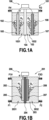
- FIG. 1A and FIG. 1B illustrates two possible electrochemical cells that may be used for carrying out an embodiment of the invention.
- the electrochemical cell 101 of FIG. 1A comprises an alkaline electrolyte solution 103.
- the alkaline electrolyte solution 103 may comprise water and hydroxide ions, notably water and potassium or sodium hydroxide (KOH or NaOH) for example at concentrations varying from 1 M to 6 M. Unless the contrary is specified, the concentrations are taken before starting the hydrogen evolution reaction.
- the electrochemical cell 101 comprises a cathode 105 present in the alkaline electrolyte solution 103.
- the electrolyte on the cathodic side is designated as the catholyte 1031.
- the cathode 105 comprises a hydrogen evolution reaction catalyst formed of a NiTi alloy.
- the NiTi alloy is a binary nickel-titanium alloy comprising 50% to 56% of nickel in atomic percentage, the remainder being titanium (50% to 44% of titanium in atomic percentage).
- the catalyst is at least located on the electrically active outside surface of the cathode 105.
- the cathode 105 may be made entirely of the NiTi alloy or, in a variant, the cathode comprises a coating of the NiTi alloy, for example in the form of nanoparticles which may have a D50 size less than or equal to 100 nm, for example lying in the range 5 nm to 100 nm, for example lying the range 5 nm to 50 nm, covering an electrically conductive substrate formed of a different material.
- the hydrogen evolution reaction with hydrogen bubbles 102 occur at the cathode side 105.
- the flow of hydrogen H 2 outside the cell 101 is designated by the arrow FH.
- the electrochemical cell 101 also comprises an anode 107 present in the same alkaline electrolyte 103.
- the electrolyte on the anodic side is referred to as the anolyte 1032.
- Oxygen evolution reaction with oxygen bubbles 108 occur on the anode 107.
- the flow of oxygen O 2 outside the cell 101 is designated by the arrow FO.
- the cathodic and anodic sides of the cell are separated by a separator 104 and an external bias 106 is applied to drive the overall reaction.
- the electrochemical cell 201 of FIG.1B comprises an alkaline electrolyte solution 203.
- the alkaline electrolyte solution 203 may comprise water and hydroxide ions, notably water and potassium or sodium hydroxide (KOH or NaOH) for example at concentrations varying from 0.1 M to 1 M.
- KOH or NaOH potassium or sodium hydroxide
- the electrochemical cell 201 comprises a cathode 205 present in the alkaline electrolyte solution 203.
- the electrolyte on the cathodic side is designated as the catholyte 2031.
- the cathode 205 comprises a hydrogen evolution reaction catalyst formed of a NiTi alloy.
- the NiTi alloy is a binary nickel-titanium alloy comprising 50% to 56% of nickel in atomic percentage, the remainder being titanium (50% to 44% of titanium in atomic percentage).
- the catalyst is at least located on the electrically active outside surface of the cathode 205.
- the cathode 205 may be made entirely of the NiTi alloy or, in a variant, the cathode comprises a coating of the NiTi alloy, for example in the form of nanoparticles which may have a D50 size less than or equal to 100 nm, for example lying in the range 5 nm to 100 nm, for example lying the range 5 nm to 50 nm, covering an electrically conductive substrate formed of a different material.
- the hydrogen evolution reaction with hydrogen bubbles 202 occur at the cathode side 205.
- the electrochemical cell 201 also comprises an anode 207 present in the same alkaline electrolyte 203.
- the electrolyte on the anodic side is referred to as the anolyte 2032.
- Oxygen evolution reaction with oxygen bubbles 208 occur on the anode 207.
- the cathode 205 and anode 207 are sandwiched with an anion exchange membrane 204 in between and an external bias 206 is applied to drive the overall reaction.
- the anion exchange membrane 204 is located between the cathode 205 and the anode 207 and may be in contact with them.
- the catholyte 2031 and the anolyte 2032 can be recirculated in the respective cathodic and anodic chambers.
- the introduction of the catholyte 2031 in the cell 201 is designated by the arrow F1 and the introduction of the anolyte 2032 in the cell 201 is designated by the arrow F2.
- the catholyte 2031 is evacuated from the cell 201 along with hydrogen H 2 (arrow F1H) and the anolyte 2032 is evacuated from the cell 201 along with oxygen O 2 (arrow F2O).
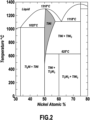
- FIG. 2 shows a portion of the Ni-Ti binary phase diagram showing the light gray region related to the structure of interest NiTi.
- the nickel-titanium alloy may correspond to commercially available Nitinol grades with 50% to 56% nickel in atomic percentage.
- the temperature defines the thermal treatment that Ni and Ti need to undergo in order to form the required Nitinol.
- the thus formed Nitinol keeps the same NiTi stoichiometry.
- the nickel-titanium alloy has undergone a thermal treatment in the temperature range of 450°C to 1300°C before being used as the hydrogen evolution reaction catalyst to form the NiTi structure.
- the anode 107 or 207 may for example comprise a material selected from: Ni, NiFe, NiCo or NiCoFe based oxides and hydroxides.
- the anode 107 or 207 may in a variant comprise a material selected from: Ir or Ir alloy, Ru or Ru alloy, Pt or Pt alloy based oxides and hydroxides.
- the anode 107 or 207 may in a variant be in carbon, for example in glassy carbon.
- the anode 107 or 207 may be in the form of perforated plates, meshes, foams, felts or in the form of nanoparticles deposited on Ni or stainless steel porous substrates, preferentially with a porosity of 30% - 90%.
- the nanoparticles may have a D50 size less than or equal to 100 nm, for example lying in the range 5 nm to 100 nm, for example lying the range 5 nm to 50 nm.
- a potential difference between the anode 107 (or 207) and the cathode 105 (or 205) is imposed leading to water electrolysis and to the production, on the one hand, of hydrogen 102 (or 202) through a hydrogen evolution reaction at the cathode 105 (or 205), and, on the other hand, of oxygen 108 (or 208) at the anode 107 (or 207).
- This potential difference is imposed by an electricity source 106 (or 206) connected to the anode 107 (or 207) and to the cathode 105 (or 205) respectively.
- the separator 104 may comprise a material selected from: zirconium oxide on a polymeric substrate (marketed under the name Zirfon TM ), ion-solvating membranes based on polybenzimidazole (PBI) and blend membranes of polysulfone with polyvinylpyrrolidone (PSU-PVP).
- the anion exchange membrane 204 may for example comprise a material selected from the group consisting of: quaternary ammonium groups, tertiary amine groups, secondary amine groups on a polystyrene, polysulfone, poly(ethersulfone), poly(vinylidene fluoride) (PVDF).
- the temperature of the electrolyte is maintained at a value at least equal to 35°C, for example at least equal to 50°C or at least equal to 55°C.
- the temperature imposed to the alkaline electrolyte solution 203 may lie in the range 35°C to 60°C, for example 50°C to 60°C or 55°C to 60°C.
- the temperature can be increased when an alkaline water electrolysis process is carried out as shown in FIG. 1A .
- the temperature imposed to the alkaline electrolyte solution may be at least equal to 60°C, for example at least equal to 65°C, for example at least equal to 70°C, for example at least equal to 75°C or at least equal to 80°C.
- the control of the temperature of the electrolyte is performed using a jacketed reactor in a water bath.
- the NiTi alloy (Ni 50.2% to Ti 49.8% so Ni/Ti equals 1.008) is a mixture of two phases - martensite (monoclinic) and austenite (cubic), heating the catalyst results in the formation of only the austenite (cubic) phase. This is reflected by the XRD patterns provided in FIG. 3 . The inventors found that the change from the martensite phase to the austenite phase coincides with a significant decrease in overpotential of the hydrogen evolution reaction.
- NiTi wires (2.0 mm diameter) having 50.2% at. Ni and 49.8% at. Ti were used. The wires were cut into specified lengths so that 15 mm remains immersed in the electrolyte such that the working electrode has a geometric surface area of 1 cm 2 .
- Ni (99.98 % purity) and Ti (99.99 % purity) wires having 2.0 mm diameter and Pt (99.95 % purity) wire having 0.5 mm diameter were used in the present study.
- the electrocatalytic activities of the catalysts towards HER and the durability studies were performed in a standard three-electrode setup using a jacketed 50 ml electrochemical reactor. 37 ml of 1 M KOH was used as an electrolyte.
- a silicone griffin beaker heater with a PID temperature controller was used to regulate the temperature of the reactor.
- a K -type thermocouple was dipped inside the electrolyte, temperature was monitored using a multimeter throughout the experiment. It was ensured before each experiment that the temperature is stable at least for 1 h. All the electrodes were thoroughly cleaned before performing the electrochemical tests. For each particular temperature studied, a new NiTi sample was taken. Before all the electrochemical tests, the electrolyte was degassed with a nitrogen flow for 30 min and after that, the nitrogen flow was subsequently maintained during all tests. The NiTi wire served as the working electrode and a graphite rod was the counter electrode. The potentials were measured with respect to a reversible hydrogen electrode.
- the electrochemical measurements were performed using a potentiostat. Each catalyst was cycled from -0.05 V to -0.4 V for 500 cycles at a 50 mV s -1 scan rate. Thereafter, a linear sweep voltammetry (LSV) was performed at 1 mV s -1 scan rate to record the cathodic polarization current in the same potential range for all the catalysts. All the polarization curves mentioned in this work are the ones performed after 500 cycles and with a 1 mV s -1 scan rate. All plots were corrected with iR compensation to account for the ohmic losses.
- the chronopotentiometric HER stability tests of the electrodes were carried out at a constant current density of -10 mA cm -2 .
- the faradaic efficiency measurement was done in a leak tight 100 ml reactor connected directly to a gas chromatograph to measure the evolved hydrogen gas with argon as a carrier gas.
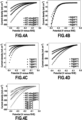
- FIG. 4A-4I show the results obtained.
- FIG. 4A-4D show polarization curves of (A) NiTi, (B) Ni, (C) Ti and (D) Pt wires at different temperatures presenting different overpotentials at a current density of -10 mA cm -2 .
- FIG. 4A shows the performance of the NiTi alloy catalyst (invention) towards hydrogen evolution reaction. The curves are labeled with the electrolyte temperature imposed during the test, e.g. "NiTi alloy@20°C" relates to a test with an electrolyte temperature of 20°C.
- FIG. 4B shows the performance of a nickel catalyst (not covered by the invention) for different electrolyte temperatures.
- FIG. 4C shows the performance of a titanium catalyst (not covered by the invention) for different electrolyte temperatures and FIG. 4D shows that of the state-of-the-art catalyst Platinum.
- FIG. 4E shows a comparison between the electrocatalytic activities of NiTi alloy and Pt at different temperatures towards hydrogen evolution reaction. The curves of FIG. 4B-4E are labeled in a similar way as FIG. 4A mutatis mutandis.
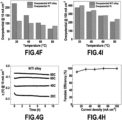
- FIG. 4F and 4I show the comparisons between the overpotentials measured at 10 and 100 mA.cm -2 for NiTi alloy and Pt.
- FIG. 4G shows the stabilities of the NiTi alloy catalysts at different temperatures at a current density of 10 mA.cm -2 .
- FIG.4H shows the Faradaic efficiency measurement of the hydrogen evolved by the NiTi alloy catalyst at different current densities.
- NiTi alloy Whilst nickel and titanium show poor performance for hydrogen evolution, generating up to (depending on temperature) 55 mA.cm -2 and 4 mA.cm -2 , respectively at 0.4 V vs. RHE (Reversible Hydrogen Electrode); the NiTi alloy shows 450 mA.cm -2 at 0.4 V vs. RHE for a temperature of 80°C, and already about 200 mA.cm -2 at 40°C. The same NiTi alloy shows excellent stability over a 9 hour measurement. The onset potentials for the reaction decrease significantly as the temperature increases for the NiTi alloy which reaches an optimum at 80 °C. The NiTi alloy catalyst shows significantly lower overpotentials needed to achieve 10 and 100 mA.cm -2 current densities at a temperature of 80°C. The NiTi alloy catalyst also shows better performances than the Pt catalyst.
- the Faradaic Efficiency (percentage of current used for hydrogen evolution) - to confirm there are no parasitic reactions - was measured to be 100% at high current densities for the NiTi alloy catalyst ( FIG. 4H ).
Landscapes
- Chemical & Material Sciences (AREA)
- Engineering & Computer Science (AREA)
- Chemical Kinetics & Catalysis (AREA)
- Electrochemistry (AREA)
- Materials Engineering (AREA)
- Metallurgy (AREA)
- Organic Chemistry (AREA)
- Inorganic Chemistry (AREA)
- Electrolytic Production Of Non-Metals, Compounds, Apparatuses Therefor (AREA)
- Electrodes For Compound Or Non-Metal Manufacture (AREA)
Abstract
The invention concerns a method for producing hydrogen, comprising:- performing a hydrogen evolution reaction through an alkaline water electrolysis or alkaline membrane electrolysis process using an electrochemical cell comprising:(a) an alkaline electrolyte solution comprising water,(b) a cathode comprising a hydrogen evolution reaction catalyst, and(c) an anode,wherein the hydrogen evolution reaction catalyst is formed of a nickel-titanium alloy having a nickel atomic percentage lying in the range 50% to 56%, and wherein a temperature of at least 35°C is imposed to the alkaline electrolyte solution.
Description
- The invention relates to methods for producing hydrogen (H2) through a hydrogen evolution reaction occurring during water electrolysis. The invention is remarkable in that a nickel-titanium alloy NiTi with a specific stoichiometry is used as a catalyst for this reaction.
- It is known to produce hydrogen by performing a hydrogen evolution reaction through a water electrolysis process using an electrochemical cell. Platinum-based catalysts are commonly used to facilitate conversion of protons to H2. These catalysts provide high yield of hydrogen formation but are very expensive and not based on abundant materials.
- Research has been carried out to propose cheaper and more efficient catalysts based on abundant raw materials. In this connection, some nickel-based catalysts have been tested. However, the performances of such catalysts need to be improved to be competitive with platinum-based catalysts.
- In a first aspect, an embodiment of the present invention provides a method for producing hydrogen, comprising:
- performing a hydrogen evolution reaction through an alkaline water electrolysis or alkaline membrane electrolysis process using an electrochemical cell comprising:
- (a) an alkaline electrolyte solution comprising water,
- (b) a cathode comprising a hydrogen evolution reaction catalyst, and
- (c) an anode,
- The nickel-titanium alloy consists of NiTi with a nickel atomic percentage lying in the
range 50% to 56%. The nickel-titanium alloy may correspond to an alloy commercially available under the trade name "Nitinol". - For the sake of conciseness, the nickel-titanium alloy described above will be noted "NiTi alloy" in the description below. The invention relies on the use of the NiTi alloy as a hydrogen evolution reaction catalyst combined with the heating of the electrolyte solution. This leads to the formation of a particular structure on the catalyst surface, resulting in high performance catalyst for hydrogen evolution reaction with notably low overpotentials. More particularly, the heating results in obtaining a NiTi alloy wherein martensitic (monoclinic) phase has been transformed, totally or in part, to austenitic (cubic) phase, leading to a significant decrease of the overpotential which, in other words, means hydrogen production at lower electricity input. The NiTi alloy constitutes a higher efficiency catalyst resulting in lower energy input requirement for the water splitting reaction, and achieve exceptionally high current densities and low onset potentials compared to state-of-the-art catalyst i.e. Pt.
- According to another embodiment, the temperature imposed to the alkaline electrolyte solution is at least 50°C, for example at least 55°C.
- Operating in this temperature range further favors the transformation of martensitic phase into austenitic phase, thus further improving the performance of the catalyst.
- According to another embodiment, the hydrogen evolution reaction is performed through an alkaline water electrolysis process and the temperature imposed to the alkaline electrolyte solution is at least 60°C, for example at least 70°C or at least 80°C.
- Operating in this temperature range further favors the transformation of martensitic phase into austenitic phase, thus further improving the performance of the catalyst.
- According to another embodiment, the hydrogen evolution reaction is performed through an alkaline membrane electrolysis process, and the temperature imposed to the alkaline electrolyte solution is less than 60°C.
- Operating in this temperature range avoids any risk of membrane degradation.
- According to still another embodiment, the alkaline electrolyte solution is a potassium hydroxide (KOH) or sodium hydroxide (NaOH) aqueous solution.
- In particular, the hydrogen evolution reaction may be performed through an alkaline water electrolysis process and the concentration of the potassium hydroxide or sodium hydroxide aqueous solution may vary from 1 M to 6 M.
- In a variant, the hydrogen evolution reaction may be performed through an alkaline membrane electrolysis process, and the concentration of the potassium hydroxide or sodium hydroxide aqueous solution may vary from 0.1 M to 1M.
- Higher concentrations of NaOH or KOH in the electrolyte leads to better performance.
- Features, advantages, and technical and industrial significance of exemplary embodiments of the invention will be described below with reference to the accompanying drawings, in which like signs denote like elements, and wherein:
-
FIG. 1A is a schematic diagram illustrating the implementation of the NiTi catalyst in an alkaline water electrolysis process according to an embodiment of the invention; -
FIG. 1B is a schematic diagram illustrating the implementation of the NiTi catalyst in an alkaline membrane electrolysis process according to another embodiment of the invention; -
FIG. 2 shows a portion of the Ni-Ti binary phase diagram; -
FIG. 3 shows XRD patterns of the NiTi alloy at different temperatures; -
FIG. 4A-4I shows experimental results comparing the performances of the method according to an embodiment of the invention with methods not covered by the invention. - The following description of the example embodiments refers to the accompanying drawings. It does not limit the disclosure. Instead, the scope of the disclosure is defined by the appended claims.
-
FIG. 1A and FIG. 1B illustrates two possible electrochemical cells that may be used for carrying out an embodiment of the invention. - The
electrochemical cell 101 ofFIG. 1A comprises analkaline electrolyte solution 103. Thealkaline electrolyte solution 103 may comprise water and hydroxide ions, notably water and potassium or sodium hydroxide (KOH or NaOH) for example at concentrations varying from 1 M to 6 M. Unless the contrary is specified, the concentrations are taken before starting the hydrogen evolution reaction. - The
electrochemical cell 101 comprises acathode 105 present in thealkaline electrolyte solution 103. The electrolyte on the cathodic side is designated as thecatholyte 1031. Thecathode 105 comprises a hydrogen evolution reaction catalyst formed of a NiTi alloy. The NiTi alloy is a binary nickel-titanium alloy comprising 50% to 56% of nickel in atomic percentage, the remainder being titanium (50% to 44% of titanium in atomic percentage). The catalyst is at least located on the electrically active outside surface of thecathode 105. Thecathode 105 may be made entirely of the NiTi alloy or, in a variant, the cathode comprises a coating of the NiTi alloy, for example in the form of nanoparticles which may have a D50 size less than or equal to 100 nm, for example lying in therange 5 nm to 100 nm, for example lying therange 5 nm to 50 nm, covering an electrically conductive substrate formed of a different material. The hydrogen evolution reaction withhydrogen bubbles 102 occur at thecathode side 105. The flow of hydrogen H2 outside thecell 101 is designated by the arrow FH. Theelectrochemical cell 101 also comprises ananode 107 present in the samealkaline electrolyte 103. The electrolyte on the anodic side is referred to as theanolyte 1032. Oxygen evolution reaction withoxygen bubbles 108 occur on theanode 107. The flow of oxygen O2 outside thecell 101 is designated by the arrow FO. The cathodic and anodic sides of the cell are separated by aseparator 104 and anexternal bias 106 is applied to drive the overall reaction. - The
electrochemical cell 201 ofFIG.1B comprises analkaline electrolyte solution 203. Thealkaline electrolyte solution 203 may comprise water and hydroxide ions, notably water and potassium or sodium hydroxide (KOH or NaOH) for example at concentrations varying from 0.1 M to 1 M. - The
electrochemical cell 201 comprises acathode 205 present in thealkaline electrolyte solution 203. The electrolyte on the cathodic side is designated as thecatholyte 2031. Thecathode 205 comprises a hydrogen evolution reaction catalyst formed of a NiTi alloy. The NiTi alloy is a binary nickel-titanium alloy comprising 50% to 56% of nickel in atomic percentage, the remainder being titanium (50% to 44% of titanium in atomic percentage). The catalyst is at least located on the electrically active outside surface of thecathode 205. Thecathode 205 may be made entirely of the NiTi alloy or, in a variant, the cathode comprises a coating of the NiTi alloy, for example in the form of nanoparticles which may have a D50 size less than or equal to 100 nm, for example lying in therange 5 nm to 100 nm, for example lying therange 5 nm to 50 nm, covering an electrically conductive substrate formed of a different material. The hydrogen evolution reaction withhydrogen bubbles 202 occur at thecathode side 205. Theelectrochemical cell 201 also comprises ananode 207 present in the samealkaline electrolyte 203. The electrolyte on the anodic side is referred to as theanolyte 2032. Oxygen evolution reaction withoxygen bubbles 208 occur on theanode 207. Thecathode 205 andanode 207 are sandwiched with ananion exchange membrane 204 in between and anexternal bias 206 is applied to drive the overall reaction. Theanion exchange membrane 204 is located between thecathode 205 and theanode 207 and may be in contact with them. Thecatholyte 2031 and theanolyte 2032 can be recirculated in the respective cathodic and anodic chambers. The introduction of thecatholyte 2031 in thecell 201 is designated by the arrow F1 and the introduction of theanolyte 2032 in thecell 201 is designated by the arrow F2. Thecatholyte 2031 is evacuated from thecell 201 along with hydrogen H2 (arrow F1H) and theanolyte 2032 is evacuated from thecell 201 along with oxygen O2 (arrow F2O). -
FIG. 2 shows a portion of the Ni-Ti binary phase diagram showing the light gray region related to the structure of interest NiTi. As indicated above, the nickel-titanium alloy may correspond to commercially available Nitinol grades with 50% to 56% nickel in atomic percentage. In this phase diagram, the temperature defines the thermal treatment that Ni and Ti need to undergo in order to form the required Nitinol. At room temperature, the thus formed Nitinol keeps the same NiTi stoichiometry. The nickel-titanium alloy has undergone a thermal treatment in the temperature range of 450°C to 1300°C before being used as the hydrogen evolution reaction catalyst to form the NiTi structure. - In both the
electrochemical cells anode anode anode anode range 5 nm to 100 nm, for example lying therange 5 nm to 50 nm. A potential difference between the anode 107 (or 207) and the cathode 105 (or 205) is imposed leading to water electrolysis and to the production, on the one hand, of hydrogen 102 (or 202) through a hydrogen evolution reaction at the cathode 105 (or 205), and, on the other hand, of oxygen 108 (or 208) at the anode 107 (or 207). This potential difference is imposed by an electricity source 106 (or 206) connected to the anode 107 (or 207) and to the cathode 105 (or 205) respectively. - The
separator 104 may comprise a material selected from: zirconium oxide on a polymeric substrate (marketed under the name Zirfon™), ion-solvating membranes based on polybenzimidazole (PBI) and blend membranes of polysulfone with polyvinylpyrrolidone (PSU-PVP). - The
anion exchange membrane 204 may for example comprise a material selected from the group consisting of: quaternary ammonium groups, tertiary amine groups, secondary amine groups on a polystyrene, polysulfone, poly(ethersulfone), poly(vinylidene fluoride) (PVDF). - During the hydrogen evolution reaction, the temperature of the electrolyte is maintained at a value at least equal to 35°C, for example at least equal to 50°C or at least equal to 55°C. When an alkaline membrane electrolysis process is carried out as shown in
FIG. 1B , the temperature imposed to thealkaline electrolyte solution 203 may lie in the range 35°C to 60°C, for example 50°C to 60°C or 55°C to 60°C. The temperature can be increased when an alkaline water electrolysis process is carried out as shown inFIG. 1A . In this case, the temperature imposed to the alkaline electrolyte solution may be at least equal to 60°C, for example at least equal to 65°C, for example at least equal to 70°C, for example at least equal to 75°C or at least equal to 80°C. The control of the temperature of the electrolyte is performed using a jacketed reactor in a water bath. - Whilst at room temperature, 20 °C, the NiTi alloy (Ni 50.2% to Ti 49.8% so Ni/Ti equals 1.008) is a mixture of two phases - martensite (monoclinic) and austenite (cubic), heating the catalyst results in the formation of only the austenite (cubic) phase. This is reflected by the XRD patterns provided in
FIG. 3 . The inventors found that the change from the martensite phase to the austenite phase coincides with a significant decrease in overpotential of the hydrogen evolution reaction. - Wires of various compositions were tested for the hydrogen evolution reaction. NiTi wires (2.0 mm diameter) having 50.2% at. Ni and 49.8% at. Ti were used. The wires were cut into specified lengths so that 15 mm remains immersed in the electrolyte such that the working electrode has a geometric surface area of 1 cm2. Ni (99.98 % purity) and Ti (99.99 % purity) wires having 2.0 mm diameter and Pt (99.95 % purity) wire having 0.5 mm diameter were used in the present study. The electrocatalytic activities of the catalysts towards HER and the durability studies were performed in a standard three-electrode setup using a jacketed 50 ml electrochemical reactor. 37 ml of 1 M KOH was used as an electrolyte. A silicone griffin beaker heater with a PID temperature controller was used to regulate the temperature of the reactor. A K-type thermocouple was dipped inside the electrolyte, temperature was monitored using a multimeter throughout the experiment. It was ensured before each experiment that the temperature is stable at least for 1 h. All the electrodes were thoroughly cleaned before performing the electrochemical tests. For each particular temperature studied, a new NiTi sample was taken. Before all the electrochemical tests, the electrolyte was degassed with a nitrogen flow for 30 min and after that, the nitrogen flow was subsequently maintained during all tests. The NiTi wire served as the working electrode and a graphite rod was the counter electrode. The potentials were measured with respect to a reversible hydrogen electrode. The electrochemical measurements were performed using a potentiostat. Each catalyst was cycled from -0.05 V to -0.4 V for 500 cycles at a 50 mV s-1 scan rate. Thereafter, a linear sweep voltammetry (LSV) was performed at 1 mV s-1 scan rate to record the cathodic polarization current in the same potential range for all the catalysts. All the polarization curves mentioned in this work are the ones performed after 500 cycles and with a 1 mV s-1 scan rate. All plots were corrected with iR compensation to account for the ohmic losses. The chronopotentiometric HER stability tests of the electrodes were carried out at a constant current density of -10 mA cm-2. The faradaic efficiency measurement was done in a leak tight 100 ml reactor connected directly to a gas chromatograph to measure the evolved hydrogen gas with argon as a carrier gas.
-
FIG. 4A-4I show the results obtained. -
FIG. 4A-4D show polarization curves of (A) NiTi, (B) Ni, (C) Ti and (D) Pt wires at different temperatures presenting different overpotentials at a current density of -10 mA cm-2.FIG. 4A shows the performance of the NiTi alloy catalyst (invention) towards hydrogen evolution reaction. The curves are labeled with the electrolyte temperature imposed during the test, e.g. "NiTi alloy@20°C" relates to a test with an electrolyte temperature of 20°C.FIG. 4B shows the performance of a nickel catalyst (not covered by the invention) for different electrolyte temperatures.FIG. 4C shows the performance of a titanium catalyst (not covered by the invention) for different electrolyte temperatures andFIG. 4D shows that of the state-of-the-art catalyst Platinum.FIG. 4E shows a comparison between the electrocatalytic activities of NiTi alloy and Pt at different temperatures towards hydrogen evolution reaction. The curves ofFIG. 4B-4E are labeled in a similar way asFIG. 4A mutatis mutandis.FIG. 4F and 4I show the comparisons between the overpotentials measured at 10 and 100 mA.cm-2 for NiTi alloy and Pt.FIG. 4G shows the stabilities of the NiTi alloy catalysts at different temperatures at a current density of 10 mA.cm-2.FIG.4H shows the Faradaic efficiency measurement of the hydrogen evolved by the NiTi alloy catalyst at different current densities. - Whilst nickel and titanium show poor performance for hydrogen evolution, generating up to (depending on temperature) 55 mA.cm-2 and 4 mA.cm-2, respectively at 0.4 V vs. RHE (Reversible Hydrogen Electrode); the NiTi alloy shows 450 mA.cm-2 at 0.4 V vs. RHE for a temperature of 80°C, and already about 200 mA.cm-2 at 40°C. The same NiTi alloy shows excellent stability over a 9 hour measurement. The onset potentials for the reaction decrease significantly as the temperature increases for the NiTi alloy which reaches an optimum at 80 °C. The NiTi alloy catalyst shows significantly lower overpotentials needed to achieve 10 and 100 mA.cm-2 current densities at a temperature of 80°C. The NiTi alloy catalyst also shows better performances than the Pt catalyst.
- The Faradaic Efficiency (percentage of current used for hydrogen evolution) - to confirm there are no parasitic reactions - was measured to be 100% at high current densities for the NiTi alloy catalyst (
FIG. 4H ). - The expressions "lying in the range" or "varying from ... to ..." are to be understood as including the limits of the range.
Claims (9)
- A method for producing hydrogen (102 ; 202), comprising:- performing a hydrogen evolution reaction through an alkaline water electrolysis or alkaline membrane electrolysis process using an electrochemical cell (101 ; 201) comprising:wherein the hydrogen evolution reaction catalyst is formed of a nickel-titanium alloy having a nickel atomic percentage lying in the range 50% to 56%, and wherein a temperature of at least 35°C is imposed to the alkaline electrolyte solution.(a) an alkaline electrolyte solution (103 ; 203) comprising water,(b) a cathode (105 ; 205) comprising a hydrogen evolution reaction catalyst, and(c) an anode (107 ; 207),
- A method according to claim 1, wherein the temperature imposed to the alkaline electrolyte solution (103 ; 203) is at least 50°C.
- A method according to claim 2, wherein the hydrogen evolution reaction is performed through an alkaline water electrolysis process, and wherein the temperature imposed to the alkaline electrolyte solution (103) is at least 60°C.
- A method according to claim 3, wherein the temperature imposed to the alkaline electrolyte solution (103) is at least 70°C.
- A method according to claim 4, wherein the temperature imposed to the alkaline electrolyte solution (103) is at least 80°C.
- A method according to claim 1 or 2, wherein the hydrogen evolution reaction is performed through an alkaline membrane electrolysis process, and wherein the temperature imposed to the alkaline electrolyte solution (203) is less than 60°C.
- A method according to any one of claims 1 to 6, wherein the alkaline electrolyte solution (103 ; 203) is a potassium hydroxide or sodium hydroxide aqueous solution.
- A method according to claim 7, wherein the hydrogen evolution reaction is performed through an alkaline water electrolysis process, and wherein the concentration of the potassium hydroxide or sodium hydroxide aqueous solution varies from 1 M to 6 M.
- A method according to claim 7, wherein the hydrogen evolution reaction is performed through an alkaline membrane electrolysis process, and wherein the concentration of the potassium hydroxide or sodium hydroxide aqueous solution varies from 0.1 M to 1M.
Priority Applications (1)
| Application Number | Priority Date | Filing Date | Title |
|---|---|---|---|
| EP23184129.7A EP4488415A1 (en) | 2023-07-07 | 2023-07-07 | Use of nitinol as a catalyst for the hydrogen evolution reaction |
Applications Claiming Priority (1)
| Application Number | Priority Date | Filing Date | Title |
|---|---|---|---|
| EP23184129.7A EP4488415A1 (en) | 2023-07-07 | 2023-07-07 | Use of nitinol as a catalyst for the hydrogen evolution reaction |
Publications (1)
| Publication Number | Publication Date |
|---|---|
| EP4488415A1 true EP4488415A1 (en) | 2025-01-08 |
Family
ID=87196377
Family Applications (1)
| Application Number | Title | Priority Date | Filing Date |
|---|---|---|---|
| EP23184129.7A Pending EP4488415A1 (en) | 2023-07-07 | 2023-07-07 | Use of nitinol as a catalyst for the hydrogen evolution reaction |
Country Status (1)
| Country | Link |
|---|---|
| EP (1) | EP4488415A1 (en) |
Citations (2)
| Publication number | Priority date | Publication date | Assignee | Title |
|---|---|---|---|---|
| CN110592614A (en) * | 2019-09-27 | 2019-12-20 | 西南石油大学 | A three-dimensional self-supporting water splitting hydrogen production electrocatalyst and its preparation method |
| CN113529131A (en) * | 2021-07-20 | 2021-10-22 | 安徽工业大学 | Electrocatalytic material for hydrogen evolution under high current density, preparation method and application thereof |
-
2023
- 2023-07-07 EP EP23184129.7A patent/EP4488415A1/en active Pending
Patent Citations (2)
| Publication number | Priority date | Publication date | Assignee | Title |
|---|---|---|---|---|
| CN110592614A (en) * | 2019-09-27 | 2019-12-20 | 西南石油大学 | A three-dimensional self-supporting water splitting hydrogen production electrocatalyst and its preparation method |
| CN113529131A (en) * | 2021-07-20 | 2021-10-22 | 安徽工业大学 | Electrocatalytic material for hydrogen evolution under high current density, preparation method and application thereof |
Non-Patent Citations (2)
| Title |
|---|
| KRSTAJIC ET AL: "Kinetic properties of the Ti-Ni intermetallic phases and alloys for hydrogen evolution", JOURNAL OF ALLOYS AND COMPOUNDS, ELSEVIER SEQUOIA, LAUSANNE, CH, vol. 257, no. 1-2, 25 July 1997 (1997-07-25), pages 245 - 252, XP005272446, ISSN: 0925-8388, DOI: 10.1016/S0925-8388(97)00018-2 * |
| STOJIC D L J ET AL: "ELECTROCHEMICAL H/D ISOTOPE SEPARATION EFFICIENCY ALONG A HYPO-HYPER-D-ELECTRONIC (TI-NI) PHASE DIAGRAM", JOURNAL OF NEW MATERIALS FOR ELECTROCHEMICAL SYSTEMS, ECOLE POLYTECHNIQUE DE MONTREAL, MONTREAL, CA, vol. 6, no. 1, 1 January 2003 (2003-01-01), pages 55 - 60, XP001201495, ISSN: 1480-2422 * |
Similar Documents
| Publication | Publication Date | Title |
|---|---|---|
| Kuleshov et al. | Development and performances of a 0.5 kW high-pressure alkaline water electrolyser | |
| NO150532B (en) | DEVICE FOR LEVELS | |
| US20240392452A1 (en) | Electrode for gas evolution in electrolytic processes | |
| KR101584725B1 (en) | Alkaline anion exchange membrane water electrolyzer using Ni electrodeposited hydrophilic porous carbon material and method for preparing the same | |
| US20150191834A1 (en) | Composite electrodes for the electrolysis of water | |
| CN116261486A (en) | Catalyst for tungsten oxide and oxygen evolution reaction | |
| CN111575726B (en) | An electrochemical reactor for electrochemical reduction of carbon dioxide | |
| KR102946184B1 (en) | Anode Accelerated Evaluation Method | |
| KR102799606B1 (en) | Anode for alkaline water electrolysis and method for producing the same | |
| Chang et al. | An investigation of thermally prepared electrodes for oxygen reduction in alkaline solution | |
| US4497698A (en) | Lanthanum nickelate perovskite-type oxide for the anodic oxygen evolution catalyst | |
| RU93804U1 (en) | HYDROGEN ELECTROCHEMICAL CELL | |
| EP4488415A1 (en) | Use of nitinol as a catalyst for the hydrogen evolution reaction | |
| CN119736652A (en) | A heteroatom-doped nickel-based alloy/carbonized wood hybrid electrode and its preparation method and application | |
| JP7659138B1 (en) | Electrode containing oxygen evolution electrode catalyst | |
| KR102425855B1 (en) | Electrode for Alkaline Water Electrolysis, and Preparation Method thereof | |
| KR20230115502A (en) | Nickel-iron hydroxide using in situ precipitation method, manufacturing method thereof and its application for oxygen generating electrode | |
| CN114457352A (en) | Device and method for producing hydrogen by stepwise electrolysis of water based on acidic electrolyte | |
| JP7561419B2 (en) | Electrochemical system and method for manufacturing oxygen electrode of electrochemical system | |
| JP7561418B2 (en) | Electrochemical system and method for manufacturing oxygen electrode of electrochemical system | |
| KR102893101B1 (en) | Fuel cell-water electrolysis cell hybrid system based on oxidation reaction sharing | |
| KR20210073894A (en) | Highly-durable anodized stainless steel electrode for water eletrolysis and preparation method thereof | |
| US20240368783A1 (en) | Electrolyzer electrocatalyst comprising cobalt (co) oxide, zirconium (zr) and a noble metal, an electrode comprising the electrocatalyst and the use of the electrocatalyst in an electrolysis process | |
| JP7831757B2 (en) | Electrodes, water electrolytic cells, water electrolytic devices, carbon dioxide reduction electrolytic cells, and carbon dioxide electrolytic devices | |
| Santos et al. | Insights on the Performance of Nickel Foam and Stainless Steel Foam Electrodes for Alkaline Water Electrolysis. Sustainability 2023, 15, 11011 |
Legal Events
| Date | Code | Title | Description |
|---|---|---|---|
| PUAI | Public reference made under article 153(3) epc to a published international application that has entered the european phase |
Free format text: ORIGINAL CODE: 0009012 |
|
| STAA | Information on the status of an ep patent application or granted ep patent |
Free format text: STATUS: REQUEST FOR EXAMINATION WAS MADE |
|
| 17P | Request for examination filed |
Effective date: 20230707 |
|
| AK | Designated contracting states |
Kind code of ref document: A1 Designated state(s): AL AT BE BG CH CY CZ DE DK EE ES FI FR GB GR HR HU IE IS IT LI LT LU LV MC ME MK MT NL NO PL PT RO RS SE SI SK SM TR |