EP4488271A1 - Indazole compound and pharmaceutical use thereof - Google Patents
Indazole compound and pharmaceutical use thereof Download PDFInfo
- Publication number
- EP4488271A1 EP4488271A1 EP23760138.0A EP23760138A EP4488271A1 EP 4488271 A1 EP4488271 A1 EP 4488271A1 EP 23760138 A EP23760138 A EP 23760138A EP 4488271 A1 EP4488271 A1 EP 4488271A1
- Authority
- EP
- European Patent Office
- Prior art keywords
- alkyl
- optionally substituted
- alkoxy
- hydroxy
- formula
- Prior art date
- Legal status (The legal status is an assumption and is not a legal conclusion. Google has not performed a legal analysis and makes no representation as to the accuracy of the status listed.)
- Pending
Links
Classifications
-
- A—HUMAN NECESSITIES
- A61—MEDICAL OR VETERINARY SCIENCE; HYGIENE
- A61K—PREPARATIONS FOR MEDICAL, DENTAL OR TOILETRY PURPOSES
- A61K31/00—Medicinal preparations containing organic active ingredients
- A61K31/33—Heterocyclic compounds
- A61K31/395—Heterocyclic compounds having nitrogen as a ring hetero atom, e.g. guanethidine or rifamycins
- A61K31/495—Heterocyclic compounds having nitrogen as a ring hetero atom, e.g. guanethidine or rifamycins having six-membered rings with two or more nitrogen atoms as the only ring heteroatoms, e.g. piperazine or tetrazines
- A61K31/505—Pyrimidines; Hydrogenated pyrimidines, e.g. trimethoprim
- A61K31/506—Pyrimidines; Hydrogenated pyrimidines, e.g. trimethoprim not condensed and containing further heterocyclic rings
-
- C—CHEMISTRY; METALLURGY
- C07—ORGANIC CHEMISTRY
- C07D—HETEROCYCLIC COMPOUNDS
- C07D231/00—Heterocyclic compounds containing 1,2-diazole or hydrogenated 1,2-diazole rings
- C07D231/54—Heterocyclic compounds containing 1,2-diazole or hydrogenated 1,2-diazole rings condensed with carbocyclic rings or ring systems
- C07D231/56—Benzopyrazoles; Hydrogenated benzopyrazoles
-
- A—HUMAN NECESSITIES
- A61—MEDICAL OR VETERINARY SCIENCE; HYGIENE
- A61K—PREPARATIONS FOR MEDICAL, DENTAL OR TOILETRY PURPOSES
- A61K31/00—Medicinal preparations containing organic active ingredients
- A61K31/33—Heterocyclic compounds
- A61K31/395—Heterocyclic compounds having nitrogen as a ring hetero atom, e.g. guanethidine or rifamycins
- A61K31/41—Heterocyclic compounds having nitrogen as a ring hetero atom, e.g. guanethidine or rifamycins having five-membered rings with two or more ring hetero atoms, at least one of which being nitrogen, e.g. tetrazole
- A61K31/415—1,2-Diazoles
- A61K31/416—1,2-Diazoles condensed with carbocyclic ring systems, e.g. indazole
-
- A—HUMAN NECESSITIES
- A61—MEDICAL OR VETERINARY SCIENCE; HYGIENE
- A61K—PREPARATIONS FOR MEDICAL, DENTAL OR TOILETRY PURPOSES
- A61K31/00—Medicinal preparations containing organic active ingredients
- A61K31/33—Heterocyclic compounds
- A61K31/395—Heterocyclic compounds having nitrogen as a ring hetero atom, e.g. guanethidine or rifamycins
- A61K31/435—Heterocyclic compounds having nitrogen as a ring hetero atom, e.g. guanethidine or rifamycins having six-membered rings with one nitrogen as the only ring hetero atom
- A61K31/44—Non condensed pyridines; Hydrogenated derivatives thereof
- A61K31/4427—Non condensed pyridines; Hydrogenated derivatives thereof containing further heterocyclic ring systems
- A61K31/4439—Non condensed pyridines; Hydrogenated derivatives thereof containing further heterocyclic ring systems containing a five-membered ring with nitrogen as a ring hetero atom, e.g. omeprazole
-
- A—HUMAN NECESSITIES
- A61—MEDICAL OR VETERINARY SCIENCE; HYGIENE
- A61K—PREPARATIONS FOR MEDICAL, DENTAL OR TOILETRY PURPOSES
- A61K31/00—Medicinal preparations containing organic active ingredients
- A61K31/33—Heterocyclic compounds
- A61K31/395—Heterocyclic compounds having nitrogen as a ring hetero atom, e.g. guanethidine or rifamycins
- A61K31/435—Heterocyclic compounds having nitrogen as a ring hetero atom, e.g. guanethidine or rifamycins having six-membered rings with one nitrogen as the only ring hetero atom
- A61K31/44—Non condensed pyridines; Hydrogenated derivatives thereof
- A61K31/4427—Non condensed pyridines; Hydrogenated derivatives thereof containing further heterocyclic ring systems
- A61K31/444—Non condensed pyridines; Hydrogenated derivatives thereof containing further heterocyclic ring systems containing a six-membered ring with nitrogen as a ring heteroatom, e.g. amrinone
-
- A—HUMAN NECESSITIES
- A61—MEDICAL OR VETERINARY SCIENCE; HYGIENE
- A61K—PREPARATIONS FOR MEDICAL, DENTAL OR TOILETRY PURPOSES
- A61K31/00—Medicinal preparations containing organic active ingredients
- A61K31/33—Heterocyclic compounds
- A61K31/395—Heterocyclic compounds having nitrogen as a ring hetero atom, e.g. guanethidine or rifamycins
- A61K31/535—Heterocyclic compounds having nitrogen as a ring hetero atom, e.g. guanethidine or rifamycins having six-membered rings with at least one nitrogen and one oxygen as the ring hetero atoms, e.g. 1,2-oxazines
- A61K31/5375—1,4-Oxazines, e.g. morpholine
- A61K31/5377—1,4-Oxazines, e.g. morpholine not condensed and containing further heterocyclic rings, e.g. timolol
-
- A—HUMAN NECESSITIES
- A61—MEDICAL OR VETERINARY SCIENCE; HYGIENE
- A61K—PREPARATIONS FOR MEDICAL, DENTAL OR TOILETRY PURPOSES
- A61K9/00—Medicinal preparations characterised by special physical form
- A61K9/20—Pills, tablets, discs, rods
- A61K9/2004—Excipients; Inactive ingredients
- A61K9/2013—Organic compounds, e.g. phospholipids, fats
-
- A—HUMAN NECESSITIES
- A61—MEDICAL OR VETERINARY SCIENCE; HYGIENE
- A61K—PREPARATIONS FOR MEDICAL, DENTAL OR TOILETRY PURPOSES
- A61K9/00—Medicinal preparations characterised by special physical form
- A61K9/20—Pills, tablets, discs, rods
- A61K9/2004—Excipients; Inactive ingredients
- A61K9/2013—Organic compounds, e.g. phospholipids, fats
- A61K9/2018—Sugars, or sugar alcohols, e.g. lactose, mannitol; Derivatives thereof, e.g. polysorbates
-
- A—HUMAN NECESSITIES
- A61—MEDICAL OR VETERINARY SCIENCE; HYGIENE
- A61K—PREPARATIONS FOR MEDICAL, DENTAL OR TOILETRY PURPOSES
- A61K9/00—Medicinal preparations characterised by special physical form
- A61K9/20—Pills, tablets, discs, rods
- A61K9/2004—Excipients; Inactive ingredients
- A61K9/2022—Organic macromolecular compounds
- A61K9/205—Polysaccharides, e.g. alginate, gums; Cyclodextrin
- A61K9/2059—Starch, including chemically or physically modified derivatives; Amylose; Amylopectin; Dextrin
-
- A—HUMAN NECESSITIES
- A61—MEDICAL OR VETERINARY SCIENCE; HYGIENE
- A61K—PREPARATIONS FOR MEDICAL, DENTAL OR TOILETRY PURPOSES
- A61K9/00—Medicinal preparations characterised by special physical form
- A61K9/48—Preparations in capsules, e.g. of gelatin, of chocolate
- A61K9/4816—Wall or shell material
- A61K9/4825—Proteins, e.g. gelatin
-
- A—HUMAN NECESSITIES
- A61—MEDICAL OR VETERINARY SCIENCE; HYGIENE
- A61K—PREPARATIONS FOR MEDICAL, DENTAL OR TOILETRY PURPOSES
- A61K9/00—Medicinal preparations characterised by special physical form
- A61K9/48—Preparations in capsules, e.g. of gelatin, of chocolate
- A61K9/4841—Filling excipients; Inactive ingredients
- A61K9/4858—Organic compounds
-
- A—HUMAN NECESSITIES
- A61—MEDICAL OR VETERINARY SCIENCE; HYGIENE
- A61K—PREPARATIONS FOR MEDICAL, DENTAL OR TOILETRY PURPOSES
- A61K9/00—Medicinal preparations characterised by special physical form
- A61K9/48—Preparations in capsules, e.g. of gelatin, of chocolate
- A61K9/4841—Filling excipients; Inactive ingredients
- A61K9/4866—Organic macromolecular compounds
-
- A—HUMAN NECESSITIES
- A61—MEDICAL OR VETERINARY SCIENCE; HYGIENE
- A61P—SPECIFIC THERAPEUTIC ACTIVITY OF CHEMICAL COMPOUNDS OR MEDICINAL PREPARATIONS
- A61P11/00—Drugs for disorders of the respiratory system
-
- A—HUMAN NECESSITIES
- A61—MEDICAL OR VETERINARY SCIENCE; HYGIENE
- A61P—SPECIFIC THERAPEUTIC ACTIVITY OF CHEMICAL COMPOUNDS OR MEDICINAL PREPARATIONS
- A61P11/00—Drugs for disorders of the respiratory system
- A61P11/06—Antiasthmatics
-
- A—HUMAN NECESSITIES
- A61—MEDICAL OR VETERINARY SCIENCE; HYGIENE
- A61P—SPECIFIC THERAPEUTIC ACTIVITY OF CHEMICAL COMPOUNDS OR MEDICINAL PREPARATIONS
- A61P21/00—Drugs for disorders of the muscular or neuromuscular system
-
- A—HUMAN NECESSITIES
- A61—MEDICAL OR VETERINARY SCIENCE; HYGIENE
- A61P—SPECIFIC THERAPEUTIC ACTIVITY OF CHEMICAL COMPOUNDS OR MEDICINAL PREPARATIONS
- A61P37/00—Drugs for immunological or allergic disorders
- A61P37/08—Antiallergic agents
-
- A—HUMAN NECESSITIES
- A61—MEDICAL OR VETERINARY SCIENCE; HYGIENE
- A61P—SPECIFIC THERAPEUTIC ACTIVITY OF CHEMICAL COMPOUNDS OR MEDICINAL PREPARATIONS
- A61P9/00—Drugs for disorders of the cardiovascular system
-
- C—CHEMISTRY; METALLURGY
- C07—ORGANIC CHEMISTRY
- C07D—HETEROCYCLIC COMPOUNDS
- C07D401/00—Heterocyclic compounds containing two or more hetero rings, having nitrogen atoms as the only ring hetero atoms, at least one ring being a six-membered ring with only one nitrogen atom
- C07D401/02—Heterocyclic compounds containing two or more hetero rings, having nitrogen atoms as the only ring hetero atoms, at least one ring being a six-membered ring with only one nitrogen atom containing two hetero rings
- C07D401/04—Heterocyclic compounds containing two or more hetero rings, having nitrogen atoms as the only ring hetero atoms, at least one ring being a six-membered ring with only one nitrogen atom containing two hetero rings directly linked by a ring-member-to-ring-member bond
-
- C—CHEMISTRY; METALLURGY
- C07—ORGANIC CHEMISTRY
- C07D—HETEROCYCLIC COMPOUNDS
- C07D401/00—Heterocyclic compounds containing two or more hetero rings, having nitrogen atoms as the only ring hetero atoms, at least one ring being a six-membered ring with only one nitrogen atom
- C07D401/14—Heterocyclic compounds containing two or more hetero rings, having nitrogen atoms as the only ring hetero atoms, at least one ring being a six-membered ring with only one nitrogen atom containing three or more hetero rings
-
- C—CHEMISTRY; METALLURGY
- C07—ORGANIC CHEMISTRY
- C07D—HETEROCYCLIC COMPOUNDS
- C07D403/00—Heterocyclic compounds containing two or more hetero rings, having nitrogen atoms as the only ring hetero atoms, not provided for by group C07D401/00
- C07D403/02—Heterocyclic compounds containing two or more hetero rings, having nitrogen atoms as the only ring hetero atoms, not provided for by group C07D401/00 containing two hetero rings
- C07D403/04—Heterocyclic compounds containing two or more hetero rings, having nitrogen atoms as the only ring hetero atoms, not provided for by group C07D401/00 containing two hetero rings directly linked by a ring-member-to-ring-member bond
-
- C—CHEMISTRY; METALLURGY
- C07—ORGANIC CHEMISTRY
- C07D—HETEROCYCLIC COMPOUNDS
- C07D403/00—Heterocyclic compounds containing two or more hetero rings, having nitrogen atoms as the only ring hetero atoms, not provided for by group C07D401/00
- C07D403/14—Heterocyclic compounds containing two or more hetero rings, having nitrogen atoms as the only ring hetero atoms, not provided for by group C07D401/00 containing three or more hetero rings
-
- C—CHEMISTRY; METALLURGY
- C07—ORGANIC CHEMISTRY
- C07D—HETEROCYCLIC COMPOUNDS
- C07D405/00—Heterocyclic compounds containing both one or more hetero rings having oxygen atoms as the only ring hetero atoms, and one or more rings having nitrogen as the only ring hetero atom
- C07D405/14—Heterocyclic compounds containing both one or more hetero rings having oxygen atoms as the only ring hetero atoms, and one or more rings having nitrogen as the only ring hetero atom containing three or more hetero rings
-
- C—CHEMISTRY; METALLURGY
- C07—ORGANIC CHEMISTRY
- C07D—HETEROCYCLIC COMPOUNDS
- C07D409/00—Heterocyclic compounds containing two or more hetero rings, at least one ring having sulfur atoms as the only ring hetero atoms
- C07D409/14—Heterocyclic compounds containing two or more hetero rings, at least one ring having sulfur atoms as the only ring hetero atoms containing three or more hetero rings
-
- C—CHEMISTRY; METALLURGY
- C07—ORGANIC CHEMISTRY
- C07D—HETEROCYCLIC COMPOUNDS
- C07D413/00—Heterocyclic compounds containing two or more hetero rings, at least one ring having nitrogen and oxygen atoms as the only ring hetero atoms
- C07D413/14—Heterocyclic compounds containing two or more hetero rings, at least one ring having nitrogen and oxygen atoms as the only ring hetero atoms containing three or more hetero rings
-
- C—CHEMISTRY; METALLURGY
- C07—ORGANIC CHEMISTRY
- C07D—HETEROCYCLIC COMPOUNDS
- C07D451/00—Heterocyclic compounds containing 8-azabicyclo [3.2.1] octane, 9-azabicyclo [3.3.1] nonane, or 3-oxa-9-azatricyclo [3.3.1.0<2,4>] nonane ring systems, e.g. tropane or granatane alkaloids, scopolamine; Cyclic acetals thereof
- C07D451/02—Heterocyclic compounds containing 8-azabicyclo [3.2.1] octane, 9-azabicyclo [3.3.1] nonane, or 3-oxa-9-azatricyclo [3.3.1.0<2,4>] nonane ring systems, e.g. tropane or granatane alkaloids, scopolamine; Cyclic acetals thereof containing not further condensed 8-azabicyclo [3.2.1] octane or 3-oxa-9-azatricyclo [3.3.1.0<2,4>] nonane ring systems, e.g. tropane; Cyclic acetals thereof
- C07D451/04—Heterocyclic compounds containing 8-azabicyclo [3.2.1] octane, 9-azabicyclo [3.3.1] nonane, or 3-oxa-9-azatricyclo [3.3.1.0<2,4>] nonane ring systems, e.g. tropane or granatane alkaloids, scopolamine; Cyclic acetals thereof containing not further condensed 8-azabicyclo [3.2.1] octane or 3-oxa-9-azatricyclo [3.3.1.0<2,4>] nonane ring systems, e.g. tropane; Cyclic acetals thereof with hetero atoms directly attached in position 3 of the 8-azabicyclo [3.2.1] octane or in position 7 of the 3-oxa-9-azatricyclo [3.3.1.0<2,4>] nonane ring system
-
- C—CHEMISTRY; METALLURGY
- C07—ORGANIC CHEMISTRY
- C07D—HETEROCYCLIC COMPOUNDS
- C07D471/00—Heterocyclic compounds containing nitrogen atoms as the only ring hetero atoms in the condensed system, at least one ring being a six-membered ring with one nitrogen atom, not provided for by groups C07D451/00 - C07D463/00
- C07D471/02—Heterocyclic compounds containing nitrogen atoms as the only ring hetero atoms in the condensed system, at least one ring being a six-membered ring with one nitrogen atom, not provided for by groups C07D451/00 - C07D463/00 in which the condensed system contains two hetero rings
- C07D471/04—Ortho-condensed systems
Definitions
- the present invention relates to an indazole compound or a pharmaceutically acceptable salt thereof having hematopoietic prostaglandin D synthase (hereinafter to be abbreviated as "H-PGDS”) inhibitory activity, a pharmaceutical composition containing the same, a pharmaceutical use thereof, and the like.
- H-PGDS hematopoietic prostaglandin D synthase
- Prostaglandin D synthase is an enzyme that synthesizes prostaglandin D 2 (PGD 2 ) by using prostaglandin H 2 (PGH 2 ) as a substrate.
- PGD 2 prostaglandin D 2
- Phostaglandin H 2 prostaglandin H 2
- H-PGDS is predominantly expressed in mast cells and hematopoietic cells such as neutrophils and macrophages, and is involved in allergy and inflammation.
- expression of L-PGDS is mainly found in the central nervous system and L-PGDS plays a role in sleep regulation and pain regulation.
- PAD is classified into mild intermittent claudication (IC: Intermittent Claudication) and severe comprehensive chronic limb threatening ischemia (CLTI: Chronic Limb Threatening Ischemia), and H-PGDS inhibitors are expected to provide therapeutic drugs for these disease conditions (Non-patent Documents 8, 9).
- Peripheral arterial disease is also called chronic arterial occlusive disease or arteriosclerosis obliterans.
- DP D-prostanoid
- CRTH2 chemo-triggered receptor-like molecule
- Non-patent Document 4 It has also been reported that PGD 2 exacerbates inflammation by recruiting eosinophils into the airways via the CRTH2 receptor (Non-patent Document 4), and that CRTH2 receptor inhibitors show bronchial inflammation improving effects in COPD model mouse (Non-patent Document 5). From these findings, H-PGDS inhibitors are expected to show therapeutic effects on allergic asthma and COPD by suppressing PGD 2 production and suppressing inflammation in the airways.
- H-PGDS inhibitors may also show therapeutic effects on DMD.
- H-PGDS inhibitors are considered to provide therapeutic agents for allergic rhinitis.
- H-PGDS inhibitors are considered to provide therapeutic agents for sarcopenia.
- the present invention provides an indazole compound having H-PGDS inhibitory activity or a pharmaceutically acceptable salt thereof, a pharmaceutical composition containing the same, a pharmaceutical use thereof, and the like. Accordingly, the present invention provides the following.
- a pharmaceutical composition comprising the compound of Item 1 or a pharmaceutically acceptable salt thereof, and a pharmaceutically acceptable carrier.
- An H-PGDS inhibitor comprising the compound of Item 1 or a pharmaceutically acceptable salt thereof.
- a therapeutic or prophylactic agent for a disease selected from the group consisting of peripheral arterial diseases, cardiovascular diseases, allergic asthma, chronic obstructive pulmonary diseases, and Duchenne muscular dystrophy, the agent comprising the compound of Item 1 or a pharmaceutically acceptable salt thereof.
- a method for inhibiting H-PGDS in a mammal comprising administering a pharmaceutically effective amount of the compound of Item 1 or a pharmaceutically acceptable salt thereof to the mammal.
- a method for treating or preventing a disease selected from the group consisting of peripheral arterial diseases, cardiovascular diseases, allergic asthma, chronic obstructive pulmonary diseases, and Duchenne muscular dystrophy in a mammal comprising administering a pharmaceutically effective amount of the compound of Item 1 or a pharmaceutically acceptable salt thereof to the mammal.
- the compound of Item 1 or a pharmaceutically acceptable salt thereof for use in inhibiting H-PGDS is a pharmaceutically acceptable salt thereof for use in inhibiting H-PGDS.
- a commercial package comprising the pharmaceutical composition of Item 2 and a written matter associated therewith, the written matter stating that the pharmaceutical composition can be used for treatment or prophylaxis of a disease selected from the group consisting of peripheral arterial diseases, cardiovascular diseases, allergic asthma, chronic obstructive pulmonary diseases, and Duchenne muscular dystrophy.
- a kit comprising the pharmaceutical composition of Item 2 and a written matter associated therewith, the written matter stating that the pharmaceutical composition can be used for treatment or prophylaxis of a disease selected from the group consisting of peripheral arterial diseases, cardiovascular diseases, allergic asthma, chronic obstructive pulmonary diseases, and Duchenne muscular dystrophy.
- the compound of Item 1A which is represented by the formula [IA]: (wherein each symbol is as defined for Item 1A), or a pharmaceutically acceptable salt thereof.
- the compound of Item 1A which is selected from the group consisting of the following structural formulas: and or a pharmaceutically acceptable salt thereof.
- a pharmaceutical composition comprising the compound of any one of Items 1A to 21A or a pharmaceutically acceptable salt thereof, and a pharmaceutically acceptable carrier.
- An H-PGDS inhibitor comprising the compound of any one of Items 1A to 21A or a pharmaceutically acceptable salt thereof.
- a therapeutic or prophylactic agent for a disease selected from the group consisting of peripheral arterial diseases, cardiovascular diseases, allergic asthma, chronic obstructive pulmonary diseases, and Duchenne muscular dystrophy, the agent comprising the compound of any one of Items 1A to 21A or a pharmaceutically acceptable salt thereof.
- a method for inhibiting H-PGDS in a mammal comprising administering a pharmaceutically effective amount of the compound of any one of Items 1A to 21A or a pharmaceutically acceptable salt thereof to the mammal.
- a method for treating or preventing a disease selected from the group consisting of peripheral arterial diseases, cardiovascular diseases, allergic asthma, chronic obstructive pulmonary diseases, and Duchenne muscular dystrophy in a mammal comprising administering a pharmaceutically effective amount of the compound of any one of Items 1A to 21A or a pharmaceutically acceptable salt thereof to the mammal.
- a commercial package comprising the pharmaceutical composition of Item 22A and a written matter associated therewith, the written matter stating that the pharmaceutical composition can be used for treatment or prophylaxis of a disease selected from the group consisting of peripheral arterial diseases, cardiovascular diseases, allergic asthma, chronic obstructive pulmonary diseases, and Duchenne muscular dystrophy.
- a kit comprising the pharmaceutical composition of Item 22A and a written matter associated therewith, the written matter stating that the pharmaceutical composition can be used for treatment or prophylaxis of a disease selected from the group consisting of peripheral arterial diseases, cardiovascular diseases, allergic asthma, chronic obstructive pulmonary diseases, and Duchenne muscular dystrophy.
- a pharmaceutical composition comprising the compound of any one of Items 1A to 21A and Item 33A or a pharmaceutically acceptable salt thereof, and a pharmaceutically acceptable carrier.
- An H-PGDS inhibitor comprising the compound of any one of Items 1A to 21A and Item 33A or a pharmaceutically acceptable salt thereof.
- a therapeutic or prophylactic agent for a disease selected from the group consisting of peripheral arterial diseases, cardiovascular diseases, allergic asthma, chronic obstructive pulmonary diseases, allergic rhinitis, sarcopenia, and Duchenne muscular dystrophy, the agent comprising the compound of any one of Items 1A to 21A and Item 33A or a pharmaceutically acceptable salt thereof.
- peripheral arterial disease is intermittent claudication or comprehensive severe chronic lower extremity ischemia based on PAD.
- a method for inhibiting H-PGDS in a mammal comprising administering a pharmaceutically effective amount of the compound of any one of Items 1A to 21A and Item 33A or a pharmaceutically acceptable salt thereof to the mammal.
- a method for treating or preventing a disease selected from the group consisting of peripheral arterial diseases, cardiovascular diseases, allergic asthma, chronic obstructive pulmonary diseases, allergic rhinitis, sarcopenia, and Duchenne muscular dystrophy in a mammal comprising administering a pharmaceutically effective amount of the compound of any one of Items 1A to 21A and Item 33A or a pharmaceutically acceptable salt thereof to the mammal.
- peripheral arterial disease is intermittent claudication or comprehensive severe chronic lower extremity ischemia based on PAD.
- a therapeutic or prophylactic agent for a disease selected from the group consisting of peripheral arterial diseases, cardiovascular diseases, allergic asthma, chronic obstructive pulmonary diseases, allergic rhinitis, sarcopenia, and Duchenne muscular dystrophy.
- Item 42A wherein the peripheral arterial disease is intermittent claudication or comprehensive severe chronic lower extremity ischemia based on PAD.
- a disease selected from the group consisting of peripheral arterial diseases, cardiovascular diseases, allergic asthma, chronic obstructive pulmonary diseases, allergic rhinitis, sarcopenia, and Duchenne muscular dystrophy.
- a commercial package comprising the pharmaceutical composition of Item 34A and a written matter associated therewith, the written matter stating that the pharmaceutical composition can be used for treatment or prophylaxis of a disease selected from the group consisting of peripheral arterial diseases, cardiovascular diseases, allergic asthma, chronic obstructive pulmonary diseases, allergic rhinitis, sarcopenia, and Duchenne muscular dystrophy.
- a disease selected from the group consisting of peripheral arterial diseases, cardiovascular diseases, allergic asthma, chronic obstructive pulmonary diseases, allergic rhinitis, sarcopenia, and Duchenne muscular dystrophy.
- a kit comprising the pharmaceutical composition of Item 22A and a written matter associated therewith, the written matter stating that the pharmaceutical composition can be used for treatment or prophylaxis of a disease selected from the group consisting of peripheral arterial diseases, cardiovascular diseases, allergic asthma, chronic obstructive pulmonary diseases, allergic rhinitis, sarcopenia, and Duchenne muscular dystrophy.
- a disease selected from the group consisting of peripheral arterial diseases, cardiovascular diseases, allergic asthma, chronic obstructive pulmonary diseases, allergic rhinitis, sarcopenia, and Duchenne muscular dystrophy.
- the wavy line shown by the following: indicates a binding site in the structures or groups represented by the chemical formulas.
- the bond shown by the following: is a single bond or a double bond.
- the "C 1-6 alkyl” means a linear or branched chain saturated hydrocarbon group having 1 to 6 carbon atoms.
- the "C 1-6 alkyl” includes, for example, methyl, ethyl, n-propyl, isopropyl, n-butyl, sec-butyl, isobutyl, tert-butyl, n-pentyl, isopentyl, neopentyl, 2-methylbutyl, 1,1-dimethylpropyl, 1-ethylpropyl, n-hexyl, isohexyl, 1,1-dimethylbutyl, 2,2-dimethylbutyl, 3,3-dimethylbutyl, and 2-ethylbutyl.
- the "C 1-4 alkoxy” means a group in which the above-mentioned “C 1-4 alkyl” is bonded to an oxygen atom.
- the “C 1-4 alkoxy” includes methoxy, ethoxy, n-propoxy, isopropoxy, n-butoxy, sec-butoxy, isobutoxy, and tert-butoxy.
- Preferred “C 1-4 alkoxy” is methoxy or ethoxy.
- the "C 1-6 alkoxy” means a group in which the above-mentioned “C 1-6 alkyl” is bonded to an oxygen atom.
- the "C 1-6 alkoxy” includes, for example, methoxy, ethoxy, n-propoxy, isopropoxy, n-butoxy, sec-butoxy, isobutoxy, tert-butoxy, pentyloxy, isopentyloxy, neopentyloxy, 2-methylbutoxy, 1,1-dimethylpropoxy, 1-ethylpropoxy, hexyloxy, isohexyloxy, 1,1-dimethylbutoxy, 2,2-dimethylbutoxy, 3,3-dimethylbutoxy, and 2-ethylbutoxy.
- Preferred “C 1-6 alkoxy” is methoxy, ethoxy, n-propoxy, isopropoxy, isobutoxy, tert-butoxy, or isopentyloxy.
- halogen includes, for example, fluorine, chlorine, bromine, and iodine.
- Preferred “halogen” is fluorine or chlorine.
- C 1-4 haloalkyl means the above-mentioned “C 1-4 alkyl” substituted by 1 to 7 halogens independently selected from the group of the above-mentioned group of "halogen".
- the "C 1-4 haloalkyl” includes, for example, monofluoromethyl, difluoromethyl, trifluoromethyl, chlorofluoromethyl, 2-fluoroethyl, 2-chloroethyl, 2-bromoethyl, 1,1-difluoroethyl, 2,2-difluoroethyl, 1-fluoro-1-methylethyl, 2,2,2-trifluoro-1-methylethyl, 2,2,2-trifluoroethyl, pentafluoroethyl, 3-fluoropropyl, 3-chloropropyl, 1,1-difluoropropyl, 3,3,3-trifluoropropyl, and 4,4,4-trifluorobutyl.
- C 1-6 haloalkyl means the above-mentioned “C 1-6 alkyl” substituted by 1 to 9 halogens independently selected from the group of the above-mentioned “halogen”.
- the "C 1-6 haloalkyl” includes, for example, monofluoromethyl, difluoromethyl, trifluoromethyl, chlorofluoromethyl, 2-fluoroethyl, 2-chloroethyl, 2-bromoethyl, 1,1-difluoroethyl, 2,2-difluoroethyl, 1-fluoro-1-methylethyl, 2,2,2-trifluoro-1-methylethyl, 2,2,2-trifluoroethyl, pentafluoroethyl, 3-fluoropropyl, 3-chloropropyl, 1,1-difluoropropyl, 3,3,3-trifluoropropyl, 4,4,4-trifluorobutyl, 5,5,5-
- the "C 4-6 cycloalkyl” means a monocyclic saturated hydrocarbon ring group having 4 to 6 carbon atoms.
- the "C 4-6 cycloalkyl” includes, for example, cyclobutyl, cyclopentyl, and cyclohexyl.
- Preferred “C 4-6 cycloalkyl” is cyclobutyl or cyclohexyl. More preferred “C 4-6 cycloalkyl” is cyclohexyl.
- the "C 3-6 cycloalkyl” means a monocyclic saturated hydrocarbon ring group having 3 to 6 carbon atoms.
- the "C 3-6 cycloalkyl” includes, for example, cyclopropyl, cyclobutyl, cyclopentyl, and cyclohexyl.
- Preferred “C 3-6 cycloalkyl” is cyclopropyl, cyclobutyl, or cyclohexyl.
- the "4- to 6-membered heterocycloalkyl containing 1 or 2 hetero atoms independently selected from the group consisting of nitrogen and oxygen atoms” means a 4- to 6-membered monocyclic saturated heterocyclic group containing, as a ring-constituting atom besides carbon atom, 1 or 2 hetero atoms independently selected from the group consisting of nitrogen and oxygen.
- the "4- to 6-membered heterocycloalkyl containing 1 or 2 hetero atoms independently selected from the group consisting of nitrogen and oxygen atoms” includes, for example, azetidinyl, oxetanyl, diazetidinyl, dioxetanyl, pyrrolidinyl, tetrahydrofuranyl, imidazolidinyl, pyrazolidinyl, oxazolidinyl, isoxazolidinyl, dioxolanyl, piperidinyl, tetrahydropyranyl, 1,3-diazacyclohexanyl, piperazinyl, morpholinyl, tetrahydro-1,2-oxazinyl, and dioxanyl.
- Preferred "4- to 6-membered heterocycloalkyl containing 1 or 2 hetero atoms independently selected from the group consisting of nitrogen and oxygen atoms" is azetidinyl, pyrrolidinyl, or morpholinyl.
- the "5- or 6-membered heterocycloalkyl containing one nitrogen atom” means a 5- or 6-membered monocyclic saturated heterocyclic group containing one nitrogen atom as a ring-constituting atom besides carbon atom.
- the "5- or 6-membered heterocycloalkyl containing one nitrogen atom” includes, for example, pyrrolidinyl and piperidinyl.
- Preferred “5- or 6-membered heterocycloalkyl containing one nitrogen atom” is piperidinyl.
- the "4- to 6-membered heterocycloalkyl containing one oxygen atom” means a 4- to 6-membered monocyclic saturated heterocyclic group containing one oxygen atom as a ring-constituting atom besides carbon atom.
- the "4- to 6-membered heterocycloalkyl containing one oxygen atom” includes, for example, oxetanyl, tetrahydrofuranyl, and tetrahydropyranyl.
- Preferred "4- to 6-membered heterocycloalkyl containing one oxygen atom” is oxetanyl or tetrahydropyranyl.
- the "C 5-8 bridged cycloalkyl” means a 5- to 8-membered, bridged cyclic saturated hydrocarbon group.
- the "C 5-8 bridged cycloalkyl” includes, for example, bicyclo[1.1.1]pentyl, bicyclo[2.2.1]heptyl, and bicyclo[2.2.2]octyl.
- Preferred “C 5-8 bridged cycloalkyl” is bicyclo[1.1.1]pentyl or bicyclo[2.2.2]octyl. More preferred "C 5-8 bridged cycloalkyl” is bicyclo[1.1.1]pentyl.
- the "8-membered bridged heterocycloalkyl containing one nitrogen atom” means a 8-membered bridged saturated heterocyclic group containing one nitrogen atom as a ring-constituting atom besides carbon atom.
- the "8-membered bridged heterocycloalkyl containing one nitrogen atom” includes, for example, the following groups:
- the "7- to 11-membered spiro heterocycloalkyl containing one nitrogen atom” means a 7- to 11-membered spiro-type saturated heterocyclic group containing one nitrogen atom as a ring-constituting atom besides carbon atom.
- the "7- to 11-membered spiro heterocycloalkyl containing one nitrogen atom” includes, for example, the following groups:
- the "6- to 9-membered saturated or partially unsaturated fused ring group containing 1 or 2 nitrogen atoms means a 6-to 9-membered fused heterocyclic group containing 1 or 2 nitrogen atoms as a ring-constituting atom besides carbon atom, and means a fused ring group containing at least one saturated ring in the ring constituting the fused ring.
- the "6- to 9-membered saturated or partially unsaturated fused ring group containing 1 or 2 nitrogen atoms” includes, for example, the following groups:
- ⁇ is "optionally substituted” by ⁇ means that ⁇ is unsubstituted or any substitutable hydrogen of ⁇ is replaced by ⁇ .
- C 1-6 alkyl optionally substituted by hydroxy means that C 1-6 alkyl is unsubstituted or any hydrogen in C 1-6 alkyl is replaced by hydroxy.
- each substituent of the compound of formula [II] is exemplified below.
- each substituent of the compound of formula [II] is not limited to the specific embodiments.
- the compound of the formula [II] also includes an embodiment in which any two or more of the specific embodiments of each substituent are combined.
- Y 1 is preferably a nitrogen atom.
- Y 2 is preferably a nitrogen atom.
- Y 3 is preferably a carbon atom.
- Y 4 is preferably a carbon atom.
- R 1 More preferred embodiment of R 1 is
- R 1 is methyl, fluorine, chlorine, difluoromethyl, or trifluoromethyl.
- Preferred embodiments of R 2 in the number of m are each independently halogen.
- R 2 in the number of m include fluorine and chlorine.
- m is preferably 0 or 1.
- Preferred embodiments of R 3 in the number of n are each independently halogen.
- R 3 in the number of n include fluorine and chlorine.
- each substituent of the compound of formula [I] is exemplified below.
- each substituent of the compound of formula [I] is not limited to the specific embodiments.
- the compound of the formula [I] also includes an embodiment in which any two or more of the specific embodiments of each substituent are combined.
- Y 1 is preferably a nitrogen atom.
- R 1 More preferred embodiment of R 1 is
- R 1 is methyl, fluorine, chlorine, difluoromethyl, or trifluoromethyl.
- Preferred embodiments of R 2 in the number of m are each independently halogen.
- R 2 in the number of m include fluorine and chlorine.
- m is preferably 0 or 1.
- Preferred embodiments of R 3 in the number of n are each independently halogen.
- n is preferably 0 or 1.
- each substituent of the compound of formula [III] is exemplified below.
- each substituent of the compound of formula [III] is not limited to the specific embodiments.
- the compound of the formula [III] also includes an embodiment in which any two or more of the specific embodiments of each substituent are combined.
- R 1 is C 1-4 alkyl.
- R 2 in the number of m are each independently
- R 2 in the number of m are each independently halogen.
- m is preferably 0 or 1.
- Preferred embodiments of R 3 in the number of n are each independently halogen.
- R 3 in the number of n include fluorine and chlorine.
- each substituent of the compound of formula [IV] is exemplified below.
- each substituent of the compound of formula [IV] is not limited to the specific embodiments.
- the compound of the formula [IV] also includes an embodiment in which any two or more of the specific embodiments of each substituent are combined.
- Y 1 is preferably a nitrogen atom.
- Y 2 is preferably a nitrogen atom.
- Y 3 is preferably a carbon atom.
- Y 4 is preferably a carbon atom.
- R 1 is C 1-4 alkyl.
- R 1 is methyl
- m is preferably 0.
- Preferred embodiments of R 3 in the number of n are each independently halogen.
- R 3 in the number of n is fluorine.
- n is preferably 0 or 1.
- R 4 is preferably C 4-6 cycloalkyl (wherein the cycloalkyl is optionally substituted by 1 or 2 substituents independently selected from the group consisting of
- R 4 is more preferably C 4-6 cycloalkyl (wherein the cycloalkyl is
- One of the preferred embodiments of the compound of the formula [II] is a compound of the formula [II] wherein
- One of the more preferred embodiments of the compound of the formula [II] is a compound of the formula [II] wherein
- One of the further preferred embodiments of the compound of the formula [II] is a compound of the formula [II] wherein X 1 , X 2 , X 3 and X 4 are each independently a carbon or a nitrogen atom (wherein the total number of the nitrogen atoms for X 1 , X 2 , X 3 and X 4 is 0 or 1);
- One of the preferred embodiments of the compound of the formula [I] is a compound of the formula [I] wherein
- One of the more preferred embodiments of the compound of the formula [I] is a compound of the formula [I] wherein
- One of the further preferred embodiments of the compound of the formula [I] is a compound of the formula [I] wherein
- One of the preferred embodiments of the compound of the formula [IC] is a compound represented by the formula [ICa]: wherein X 1 , R 1 , R 2 , R 12 and m are as defined above.
- One of the more preferred embodiments of the compound of the formula [IC] is a compound of the formula [ICa], wherein X 1 , R 1 , R 2 and m are as defined above:
- One of the preferred embodiments of the compound of the formula [III] is a compound of the formula [III] wherein
- One of the more preferred embodiments of the compound of the formula [III] is a compound of the formula [III] wherein
- One of the preferred embodiments of the compound of the formula [IV] is a compound of the formula [IV] wherein
- the "pharmaceutically acceptable salt” may be any salt known in the art that does not accompany excessive toxicity. Specifically, salts with inorganic acids, salts with organic acid, salts with inorganic bases, salts with organic bases and the like can be mentioned. Various forms of pharmaceutically acceptable salts are well-known in the pertinent technical field and are described, for example, in the following reference documents:
- Pharmaceutically acceptable salts of the compound of the present invention can be each obtained by reacting the compound of the present invention with an inorganic acid, an organic acid, an inorganic base, or an organic base according to a method known per se.
- salt with inorganic acid examples include salts with hydrofluoric acid, hydrochloric acid, hydrobromic acid, hydroiodic acid, nitric acid, phosphoric acid, and sulfuric acid.
- salt with organic acid examples include salts with acetic acid, adipic acid, alginic acid, 4-aminosalicylic acid, anhydromethylenecitric acid, benzoic acid, benzenesulfonic acid, calcium edetate, camphoric acid, 10-camphorsulfonic acid, carbonic acid, citric acid, edetic acid, ethane-1,2-disulfonic acid, dodecylsulfuric acid, ethanesulfonic acid, fumaric acid, glucoheptonic acid, gluconic acid, glucuronic acid, glycolylarsanilic acid, hexylresorcinic acid, hydroxy-naphthoic acid, 2-hydroxy-1-ethanesulfonic acid, lactic acid, lactobionic acid, malic acid, maleic acid, mandelic acid, methanesulfonic acid, methylsulfuric acid, methylnitric acid, methylenebis (sal)
- Examples of the salt with inorganic base include salts with lithium, sodium, potassium, magnesium, calcium, barium, aluminum, zinc, bismuth, and ammonium.
- salt with organic base examples include salts with arecoline, betaine, choline, clemizole, ethylenediamine, N-methylglucamine, N-benzylphenethylamine, tris(hydroxymethyl)methylamine, arginine, and lysine.
- salts with inorganic acid examples include salts with hydrochloric acid, nitric acid, sulfuric acid, phosphoric acid, and hydrobromic acid.
- salts with inorganic base examples include salts with sodium, potassium, calcium, magnesium, and zinc.
- salts with organic base examples include salts with tris(hydroxymethyl)methylamine, N-methylglucamine, and lysine.
- solvates can be obtained according to conventional methods.
- the compound of the present invention may exist as a tautomer.
- the compound of the present invention can be a single tautomer or a mixture of individual tautomers.
- the structure represented by the following formula: is, unless otherwise indicated, present as
- the compound of the present invention may have a carbon double bond.
- the compound of the present invention can be present as E form, Z form, or a mixture of E form and Z form.
- the compound of the present invention may contain a stereoisomer that should be recognized as a cis/trans isomer.
- the compound of the present invention can be present as a cis form, a trans form, or a mixture of a cis form and a trans form.
- the compound of the present invention may contain one or more asymmetric carbons.
- the compound of the present invention may be present as a single enantiomer, a single diastereomer, a mixture of enantiomers or a mixture of diastereomers.
- the compound of the present invention may be present as an atropisomer.
- the compound of the present invention may be present as an individual atropisomer or a mixture of atropisomers.
- the compound of the present invention may simultaneously contain plural structural characteristics that produce the above-mentioned isomers. Moreover, the compound of the present invention may contain the above-mentioned isomers at any ratio.
- a diastereomeric mixture can be separated into each diastereomer by conventional methods such as chromatography, crystallization and the like.
- each diastereomer can also be formed by using a stereochemically single starting material, or by a synthetic method using a stereoselective reaction.
- An enantiomeric mixture can be separated into each single enantiomer by a method well-known in the pertinent technical field.
- the isomer ratio can be increased or a single substantially pure diastereomer can be separated from the diastereomeric mixture.
- the separated diastereomer can be converted to a desired enantiomer by removing the added chiral auxiliary by a cleavage reaction.
- a mixture of enantiomers can be directly separated by a chromatographic method using a chiral stationary phase, as is well-known in the pertinent technical field.
- either enantiomer can be obtained by using substantially pure optically active starting materials or by stereoselective synthesis (asymmetric induction) of a prochiral intermediate using a chiral auxiliary and an asymmetric catalyst.
- the absolute steric configuration can be determined based on the X-ray crystal analysis of the resultant crystalline product or intermediate.
- a resultant crystalline product or intermediate derivatized with a reagent having an asymmetric center with a known steric configuration may be used where necessary.
- the compound of the present invention or a pharmaceutically acceptable salt thereof is preferred. More preferred is the compound of the present invention or a pharmaceutically acceptable salt thereof, each of which is purified to a chemical purity of not less than 80%.
- the pharmaceutical composition of the present invention may be produced according to a method known in the technical field of pharmaceutical preparations, by mixing the compound of the present invention or a pharmaceutically acceptable salt thereof with a suitable amount of at least one kind of pharmaceutically acceptable carrier and the like as appropriate. While the content of the compound of the present invention or a pharmaceutically acceptable salt thereof in the pharmaceutical composition varies depending on the dosage form, dose and the like, it is, for example, 0.1 to 100 wt% of the whole composition.
- the dosage form of a pharmaceutical composition containing the compound of the present invention or a pharmaceutically acceptable salt thereof include oral preparations such as tablet, capsule, granule, powder, troche, syrup, emulsion, suspension and the like, and parenteral agents such as external preparation, suppository, injection, eye drop, nasal preparations, pulmonary preparation and the like.
- the "pharmaceutically acceptable carrier” include various organic or inorganic carrier substances conventionally used as preparation materials, for example, excipient, disintegrant, binder, fluidizer, lubricant, and the like for solid preparations, solvent, solubilizing agent, suspending agent, isotonicity agent, buffering agent, soothing agent and the like for liquid preparations, and base, emulsifier, wetting agent, stabilizer, stabilizing agent, dispersing agent, plasticizer, pH regulator, absorption promoter, gelling agent, antiseptic, filler, dissolving agent, solubilizing agent, suspending agent, and the like for semisolid preparations. Where necessary, moreover, additives such as preservative, antioxidant, colorant, sweetening agent, and the like may be used.
- excipient examples include lactose, sucrose, D-mannitol, D-sorbitol, cornstarch, dextrin, microcrystalline cellulose, crystalline cellulose, carmellose, carmellose calcium, sodium carboxymethyl starch, low-substituted hydroxypropyl cellulose, gum arabic, and the like.
- disintegrant examples include carmellose, carmellose calcium, carmellose sodium, sodium carboxymethyl starch, croscarmellose sodium, crospovidone, low-substituted hydroxypropyl cellulose, hydroxypropylmethylcellulose, crystalline cellulose, and the like.
- binder examples include hydroxypropyl cellulose, hydroxypropylmethylcellulose, povidone, crystalline cellulose, sucrose, dextrin, starch, gelatin, carmellose sodium, gum arabic, and the like.
- fluidizer examples include light anhydrous silicic acid, magnesium stearate, and the like.
- lubricant examples include magnesium stearate, calcium stearate, talc, and the like.
- solvent examples include purified water, ethanol, propylene glycol, macrogol, sesame oil, corn oil, olive oil, and the like.
- Examples of the “solubilizing agents” include propylene glycol, D-mannitol, benzyl benzoate, ethanol, triethanolamine, sodium carbonate, sodium citrate, and the like.
- isotonic agent examples include glucose, D-sorbitol, sodium chloride, D-mannitol, and the like.
- buffering agent examples include sodium hydrogen phosphate, sodium acetate, sodium carbonate, sodium citrate, and the like.
- the “soothing agent” examples include benzyl alcohol, and the like.
- preservative examples include ethyl parahydroxybenzoate, chlorobutanol, benzyl alcohol, sodium dehydroacetate, sorbic acid, and the like.
- antioxidant examples include sodium sulfite, ascorbic acid and the like.
- colorant examples include food colors (e.g., Food Color Red No. 2 or 3, Food Color yellow No. 4 or 5, etc.), ⁇ -carotene, and the like.
- sweetening agent examples include saccharin sodium, dipotassium glycyrrhizinate, aspartame, and the like.
- the compound of the present invention or a pharmaceutically acceptable salt thereof has an H-PGDS inhibitory action, it is useful for the treatment and/or prophylaxis of various diseases or conditions that can be expected to be improved by regulation of H-PGDS activity.
- various diseases or conditions that can be expected to be improved by regulation of H-PGDS activity include peripheral arterial diseases (e.g., intermittent claudication and comprehensive severe chronic lower extremity ischemia), cardiovascular diseases, allergic asthma, chronic obstructive pulmonary diseases, allergic rhinitis, sarcopenia, and Duchenne muscular dystrophy.
- inhibit H-PGDS means to inhibit the function of H-PGDS and eliminate or attenuate the activity. For example, it means to inhibit the function of H-PGDS based on the below-mentioned Experimental Example 1.
- human H-PGDS is preferably inhibited.
- H-PGDS inhibitor means a substance that inhibits the function of H-PGDS.
- an H-PGDS inhibitor is expected to be useful for the treatment and/or prophylaxis of a disease selected from the group consisting of peripheral arterial diseases (e.g., intermittent claudication and comprehensive severe chronic lower extremity ischemia), cardiovascular diseases, allergic asthma, chronic obstructive pulmonary diseases, allergic rhinitis, sarcopenia, and Duchenne muscular dystrophy.
- peripheral arterial diseases e.g., intermittent claudication and comprehensive severe chronic lower extremity ischemia
- cardiovascular diseases e.g., allergic asthma, chronic obstructive pulmonary diseases, allergic rhinitis, sarcopenia, and Duchenne muscular dystrophy.
- the "treatment” includes improvement of symptoms, prevention of aggravation, maintenance of remission, prevention of relapse, and further, prevention of recurrence.
- prophylaxis means suppression of the onset of symptoms.
- a general method for producing the compound of the formula [I] or a pharmaceutically acceptable salt thereof, the compound of the formula [II] or a pharmaceutically acceptable salt thereof, the compound of the formula [III] or a pharmaceutically acceptable salt thereof, or the compound of formula [IV] or a pharmaceutically acceptable salt thereof is exemplified below.
- the production method of the compound of the formula [I] or a pharmaceutically acceptable salt thereof, the compound of the formula [II] or a pharmaceutically acceptable salt thereof, the compound of the formula [III] or a pharmaceutically acceptable salt thereof, or the compound of the formula [IV] or a pharmaceutically acceptable salt thereof is not limited thereto.
- the compound obtained in each step can be isolated and/or purified as necessary by known methods such as distillation, recrystallization, and column chromatography. In some cases, the compound can proceed to the next step without isolation and/or purification.
- Production method A1 Production method of compound [II] or a salt thereof
- Compound [A1-3] or a salt thereof can be obtained by reacting compound [A1-1] or a salt thereof with compound [A1-2] or a salt thereof in a solvent in the presence of a base by adding a metal catalyst as necessary.
- solvent examples include tetrahydrofuran, N,N-dimethylformamide, N,N-dimethylacetamide, dimethyl sulfoxide, dichloromethane and mixed solvents thereof.
- Preferred solvent is N,N-dimethylformamide.
- Examples of the base include potassium tert-butoxide, potassium carbonate, cesium carbonate and pyridine.
- Preferred base is potassium carbonate.
- metal catalyst examples include copper iodide (I) and copper acetate (II).
- the reaction temperature is, for example, 20°C to 120°C, preferably 20°C to 90°C.
- Compound [A1-1] or a salt thereof may be a commercially available product, or produced from a commercially available product by a known method.
- Compound [A1-2] or a salt thereof may be a commercially available product, or produced from a commercially available product by a known method.
- Compound [A1-4] or a salt thereof can be produced by removing R A11 of compound [A1-3] or a salt thereof by a deprotection reaction.
- the deprotection reaction may be carried out under conditions suitable for the kind of R A11 .
- R A11 is ethyl
- compound [A1-4] or a salt thereof can be produced by hydrolyzing compound [A1-3] or a salt thereof in a solvent in the presence of a base.
- Examples of the base include lithium hydroxide ⁇ monohydrate, sodium hydroxide, and potassium hydroxide.
- the solvent examples include methanol, tetrahydrofuran, water, and mixed solvents thereof.
- Preferred solvent is a mixed solvent of tetrahydrofuran and water.
- the reaction temperature is, for example, 20°C to 80°C, preferably 20°C to 30°C.
- Compound [II] or a salt thereof can be produced by reacting compound [A1-4] or a salt thereof with compound [A1-5] or a salt thereof in a solvent in the presence of a condensing agent and a base.
- condensing agent examples include dicyclohexylcarbodiimide (DCC), 1-ethyl-3-(3-dimethylaminopropyl)carbodiimide hydrochloride (WSC ⁇ HCl), diisopropyl carbodiimide, 1,1'-carbonyldiimidazole (CDI), 1-hydroxy-7-azabenzotriazole, O-(7-azabenzotriazol-1-yl)-N,N,N',N'-tetramethyluronium hexafluorophosphate (HATU), hexafluorophosphoric acid (benzotriazol-1-yloxy)tripyrrolidinophosphonium (PyBOP), (1-cyano-2-ethoxy-2-oxoethylideneaminooxy)dimethylaminomorpholinocarbenium hexafluorophosphate (COMU), and diphenylphosphoryl azide.
- Preferred condensing agent is 1-
- Examples of the base include triethylamine and N,N-diisopropylethylamine. Preferred base is triethylamine.
- the reaction temperature is, for example, 20°C to 30°C.
- Compound [A1-5] or a salt thereof may be a commercially available product, or produced from a commercially available product by a known method. For example, it can be obtained by the below-mentioned production methods B1 to B4.
- Compound [II] or a salt thereof may also be produced by performing this production method by using, instead of compound [A1-5] or a salt thereof, a compound having a functional group or a protected functional group or a salt thereof that can be converted to compound [A1-5] or a salt thereof by a known reaction to obtain a compound corresponding to compound [II] or a salt thereof, and converting the functional group thereof.
- Production method A1a Production method of compound [I] or a salt thereof
- Compound [I] or a salt thereof can be produced by performing production method A1 by using compound [A1a-1] or a salt thereof instead of compound [A1-1] or a salt thereof: wherein each symbol is as defined above.
- Compound [A1a-1] or a salt thereof may be a commercially available product, or produced from a commercially available product by a known method.
- Production method A2 Another method for producing compound [II] or a salt thereof
- Compound [II] or a salt thereof can also be produced by, for example, the following production method A2.
- Compound [A2-2] or a salt thereof can be produced by reacting compound [A2-1] or a salt thereof with compound [A1-5] or a salt thereof, according to step A1-3.
- Compound [A2-1] or a salt thereof may be a commercially available product, or produced from a commercially available product by a known method.
- Compound [II] or a salt thereof can be produced by reacting compound [A2-2] or a salt thereof with compound [A1-1] or a salt thereof according to step A1-1.
- Compound [A2-1] or a salt thereof may be a commercially available product, or produced from a commercially available product by a known method.
- Compound [II] or a salt thereof may also be produced by performing this production method by using, instead of compound [A1-5] or a salt thereof, a compound having a functional group or a protected functional group or a salt thereof that can be converted to compound [A1-5] or a salt thereof by a known reaction to obtain a compound corresponding to compound [II] or a salt thereof, and converting the functional group thereof.
- Production method A2a Another method for producing compound [I] or a salt thereof
- Compound [I] or a salt thereof can be produced by performing production method A2 by using compound [A1a-1] or a salt thereof instead of Compound [A1-1] or a salt thereof:
- Production method A3 Production method of compound [III] or a salt thereof
- Compound [III] or a salt thereof can be produced, for example, by the following production method A3.
- Compound [A3-2] or a salt thereof can be obtained by reacting compound [A3-1] or a salt thereof with compound [A1-2] or a salt thereof in a solvent in the presence of a base and a catalyst.
- solvent examples include toluene, 1,4-dioxane, tetrahydrofuran, 1,2-dimethoxyethane, cyclopentyl methyl ether, N,N-dimethylformamide, N,N-dimethylacetamide, acetonitrile, and mixed solvents thereof with water.
- Preferred solvent is a mixed solvent of 1,2-dimethoxyethane and water.
- Examples of the base include potassium phosphate, sodium carbonate, sodium hydrogen carbonate, potassium carbonate, and tetrabutylammonium acetate.
- Preferred base is potassium phosphate.
- the catalyst examples include palladium acetate, tetrakis triphenylphosphine palladium, bis(triphenylphosphine) palladium dichloride, (bis (diphenylphosphino) ferrocene) palladium dichloride-dichloromethane complex, and (2-dicyclohexylphosphino-2',4',6'-triisopropyl-1,1'-biphenyl) [2-(2'-amino-1,1'-biphenyl)]palladium(II) methanesulfonate.
- Preferred catalyst is (bis(diphenylphosphino)ferrocene)palladium dichloride-dichloromethane complex.
- the reaction temperature is, for example, 70°C to 100°C.
- Compound [A3-1] or a salt thereof may be a commercially available product, or produced from a commercially available product by a known method.
- Compound [A3-3] or a salt thereof can be produced by reacting compound [A3-2] or a salt thereof according to step A1-2.
- Compound [III] or a salt thereof can be produced by reacting compound [A3-3] or a salt thereof with compound [A1-5] or a salt thereof, according to step A1-3.
- Production method A4 Production method of compound [IV] or a salt thereof
- Compound [A4-2] or a salt thereof can be produced by reacting compound [A4-1] or a salt thereof with compound [A1-2] or a salt thereof, according to step A3-1.
- Compound [A4-3] or a salt thereof can be produced by reacting compound [A4-2] or a salt thereof according to step A1-2.
- Production method B Production method of compound [A1-5] or a salt thereof
- [A1-5] or a salt thereof can be obtained by the following production methods B1 to B4.
- the starting material may be a commercially available product, or produced from a commercially available product by a known method.
- Production method B1 Production method of compound [A1-5-B1] or a salt thereof
- Compound [B1-3] or a salt thereof can be produced by reacting compound [B1-1] or a salt thereof with compound [B1-2] or a salt thereof in a solvent in the presence of an acid and a reducing agent.
- Examples of the acid include trimethylsilyl trifluoromethanesulfonate.
- Examples of the reducing agent include triethylsilane and trimethylsilane.
- Preferred reducing agent is triethylsilane.
- solvent examples include acetonitrile and dichloromethane.
- Preferred solvent is acetonitrile.
- the reaction temperature is, for example, 0°C to 10°C.
- Compound [B1-1] or a salt thereof may be a commercially available product, or produced from a commercially available product by a known method.
- Compound [A1-5-B1] or a salt thereof can be produced by removing R B11 and R B15 of compound [B1-3] or a salt thereof by a deprotection reaction.
- the deprotection reaction can be carried out under conditions suitable for the kind of each of R B11 and R B15 .
- R B11 is benzyloxycarbonyl
- R B15 is benzyl
- compound [A1-5-B1] or a salt thereof can be obtained by subjecting compound [B1-3] or a salt thereof to a catalytic hydrogenation reaction.
- compound [A1-5-B1] or a salt thereof can be obtained by reacting compound [B1-2] or a salt thereof in a solvent under a hydrogen atmosphere in the presence of a catalyst.
- the solvent examples include methanol, ethanol, tetrahydrofuran, ethyl acetate, acetic acid, and mixed solvents thereof.
- Preferred solvent is methanol.
- the pressure of hydrogen gas is, for example, 1 to 10 atm, preferably 1 to 4 atm.
- the reaction temperature is, for example, 20°C to 30°C.
- Compound [B2-3] or a salt thereof can be obtained by reacting compound [B2-1] or a salt thereof with compound [B2-2] in a solvent in the presence of a metal catalyst.
- Examples of the solvent include dichloromethane.
- metal catalyst examples include rhodium (II) acetate and rhodium (II) octanoate.
- Preferred metal catalyst is rhodium (II) acetate.
- the reaction temperature is, for example, 20°C to 40°C.
- Compound [B2-1] or a salt thereof may be a commercially available product, or produced from a commercially available product by a known method.
- Compound [B2-2] may be a commercially available product, or produced from a commercially available product by a known method.
- Examples of the base include potassium hexamethyl disilazide, sodium hexamethyl disilazide, lithium hexamethyl disilazide, and lithium diisopropylamide.
- the reaction temperature is, for example, -78°C to 30°C.
- Compound [B2-4] may be a commercially available product, or produced from a commercially available product by a known method.
- Compound [B2-7] or a salt thereof can be obtained by reacting compound [B2-5] or a salt thereof with compound [B2-6], according to step B2-2.
- Compound [B2-8] or a salt thereof can be produced by reducing compound [B2-7] or a salt thereof in a solvent.
- Examples of the reducing agent include lithium aluminum hydride and sodium borohydride.
- Preferred reducing agent is lithium aluminum hydride.
- solvent examples include tetrahydrofuran.
- the reaction temperature is, for example, 0°C to 20°C, preferably 0°C to 10°C.
- Compound [A1-5-B2] or a salt thereof can be produced by removing R B21 and R B22 of compound [B2-8] or a salt thereof by a deprotection reaction.
- the deprotection reaction can be carried out under conditions suitable for the kind of each of R B21 and R B22 .
- R B21 and R B22 are each benzyl
- compound [A1-5-B2] or a salt thereof can be obtained by reacting compound [B2-8] or a salt thereof in a solvent under a hydrogen atmosphere in the presence of a catalyst.
- the solvent examples include methanol, ethanol, tetrahydrofuran, ethyl acetate, acetic acid, and mixed solvents thereof.
- Preferred solvent is a mixed solvent of methanol and tetrahydrofuran.
- the pressure of hydrogen gas is, for example, 1 to 10 atm, preferably 1 to 4 atm.
- the reaction temperature is, for example, 20°C to 30°C.
- Production method B3 Production method of compound [A1-5-B3] _ or a salt thereof
- Compound [B3-3] or a salt thereof can be obtained by reacting compound [B3-1] or a salt thereof with compound [B3-2] or a salt thereof in a solvent in the presence of a condensing agent and a base.
- solvent examples include 1,4-dioxane, tetrahydrofuran, diethyl ether, 1,2-dimethoxyethane, cyclopentyl methyl ether, toluene, hexane, xylene, dichloromethane, chloroform, N,N-dimethylformamide, N,N-dimethylacetamide, dimethyl sulfoxide, acetonitrile, pyridine, and mixed solvents thereof.
- Preferred solvent is N,N-dimethylformamide.
- Examples of the base include pyridine, triethylamine, and N,N-diisopropylethylamine.
- Preferred base is N,N-diisopropylethylamine.
- the reaction temperature is, for example, 0°C to 60°C, preferably 0°C to 40°C.
- Compound [B3-2] or a salt thereof may be a commercially available product, or produced from a commercially available product by a known method.
- solvent examples include 1,4-dioxane, tetrahydrofuran, diethyl ether, 1,2-dimethoxyethane, cyclopentyl methyl ether, and mixed solvents thereof.
- Preferred solvent is tetrahydrofuran.
- the reaction temperature is, for example, -78°C to 40°C, preferably -78°C to 0°C.
- R B34 is C 1-4 alkyl
- compound [B3-5] or a salt thereof can be obtained by reacting compound [B3-3] or a salt thereof with compound [B3-4] in a solvent.
- solvent examples include 1,4-dioxane, tetrahydrofuran, diethyl ether, 1,2-dimethoxyethane, cyclopentyl methyl ether, and mixed solvents thereof.
- Preferred solvent is tetrahydrofuran.
- the reaction temperature is, for example, -78°C to 40°C, preferably 0°C to 20°C.
- Compound [B3-4] may be a commercially available product, or produced from a commercially available product by a known method.
- Compound [B3-7] or a salt thereof can be obtained by reacting compound [B3-5] or a salt thereof with compound [B3-6] or a salt thereof in a solvent in the presence of a base.
- solvent examples include tetrahydrofuran, dimethoxyethane, benzene, toluene, methanol, ethanol, and mixed solvents thereof.
- Preferred solvent is tetrahydrofuran.
- Examples of the base include sodium hydride, sodium methoxide, sodium ethoxide, and n-butyllithium.
- Preferred base is sodium hydride.
- the reaction temperature is, for example, -78°C to 100°C, preferably 0°C to 70°C.
- Compound [B3-6] or a salt thereof may be a commercially available product, or produced from a commercially available product by a known method.
- Compound [B3-8] or a salt thereof can be obtained by subjecting compound [B3-7] or a salt thereof to a catalytic hydrogenation reaction.
- compound [B3-8] or a salt thereof can be obtained by reacting compound [B3-7] or a salt thereof in a solvent under a hydrogen atmosphere in the presence of a catalyst.
- the solvent examples include methanol, ethanol, tetrahydrofuran, ethyl acetate, acetic acid, and mixed solvents thereof.
- Preferred solvent is a mixed solvent of methanol and tetrahydrofuran.
- the pressure of hydrogen gas is, for example, 1 to 10 atm, preferably 1 to 4 atm.
- Examples of the catalyst include palladium-carbon and palladium hydroxide-carbon.
- Preferred palladium catalyst is palladium-carbon.
- the reaction temperature is, for example, 0°C to 70°C, preferably 0°C to 40°C.
- Compound [A1-5-B3] or a salt thereof can be produced by removing R B31 of compound [B3-8] or a salt thereof by a deprotection reaction.
- the deprotection reaction can be carried out under conditions suitable for the kind of R B31 .
- R B31 is tert-butoxycarbonyl
- compound [A1-5-B3] or a salt thereof can be obtained by reacting compound [B3-8] or a salt thereof with an acid in a solvent.
- the solvent examples include ethyl acetate, 1,4-dioxane, methanol, cyclopentyl methyl ether, and mixed solvents thereof.
- Preferred solvent is ethyl acetate, methanol, or a mixed solvent thereof.
- Examples of the acid include hydrogen chloride, sulfuric acid, and trifluoroacetic acid.
- Preferred acid is hydrogen chloride.
- the reaction temperature is, for example, 0°C to 50°C, preferably 0°C to 30°C.
- Production method B4 Production method of compound [A1-5-B4] or a salt thereof
- Compound [B4-1] or a salt thereof can be obtained by reacting compound [B3-5] or a salt thereof with Meldrum's acid in a solvent in the presence of Lewis acid and a base.
- solvent examples include benzene, toluene, dichloromethane, chloroform, tetrahydrofuran, and mixed solvents thereof.
- Preferred solvent is tetrahydrofuran.
- Lewis acid examples include titanium tetrachloride.
- Examples of the base include piperidine, morpholine, and pyridine.
- Preferred base is pyridine.
- the reaction temperature is, for example, 0°C to 50°C, preferably 0°C to 30°C.
- Compound [B3-5] or a salt thereof can be obtained according to production method B3, step B3-1, and step B3-2-1 or B3-2-2.
- Compound [B4-3] or a salt thereof can be obtained by reacting compound [B4-1] or a salt thereof with compound [B4-2] in a solvent.
- R B34 is C 1-4 alkyl, it is preferable to add copper(I) bromide to the reaction system.
- solvent examples include diethyl ether, tetrahydrofuran, dimethoxyethane, and mixed solvents thereof.
- Preferred solvent is tetrahydrofuran.
- the reaction temperature is, for example, 0°C to 40°C.
- Compound [B4-2] may be a commercially available product, or produced from a commercially available product by a known method.
- Compound [B4-5] or a salt thereof can be obtained by reacting compound [B4-3] or a salt thereof in solvent [B4-4].
- Examples of the solvent [B4-4] include methanol, ethanol, and tert-butyl alcohol.
- Preferred solvent [B4-4] is methanol.
- the reaction temperature is, for example, 20°C to 110°C, preferably 60°C to 100°C.
- Compound [B4-6] or a salt thereof can be obtained by reacting compound [B4-5] or a salt thereof in a solvent in the presence of sodium chloride.
- the solvent examples include dimethyl sulfoxide, water, and mixed solvents thereof.
- Preferred solvent is a mixed solvent of dimethyl sulfoxide and water.
- the reaction temperature is, for example, 100°C to 160°C, preferably 120°C to 150°C.
- Compound [A1-5-B4] or a salt thereof can be produced by removing R B31 of compound [B4-6] or a salt thereof by a deprotection reaction according to step B3-5.
- the method for producing the compound of the present invention or a pharmaceutically acceptable salt thereof is specifically described below. However, the production method of the compound of the present invention or a pharmaceutically acceptable salt thereof is not limited to the following.
- the compound obtained in each step can be isolated and/or purified as necessary by known methods such as distillation, recrystallization, and column chromatography. In some cases, the compound can proceed to the next step without isolation and/or purification.
- the room temperature refers to a temperature in the state where the temperature is not controlled, and one embodiment is 1°C to 40°C.
- Example 1 Production of 2-(6-fluoro-3-methyl-1H-indazol-1-yl)-N-(trans-4-(2-hydroxypropan-2-yl)cyclohexyl)pyrimidine-5-carboxamide
- Step 1-1 Ethyl 2-(6-fluoro-3-methyl-1H-indazol-1-yl)pyrimidine-5-carboxylate
- Step 1-2 2-(6-Fluoro-3-methyl-1H-indazol-1-yl)pyrimidine-5-carboxylic acid
- Step 1-3 2-(6-Fluoro-3-methyl-1H-indazol-1-yl)-N-(trans-4-(2-hydroxypropan-2-yl)cyclohexyl)pyrimidine-5-carboxamide
- Step 1-4 2-(6-Fluoro-3-methyl-1H-indazol-1-yl)pyrimidine-5-carboxylic acid
- Step 1-5 2-(6-Fluoro-3-methyl-1H-indazol-1-yl)-N-(trans-4-(2-hydroxypropan-2-yl)cyclohexyl)pyrimidine-5-carboxamide monohydrate
- Step 1-6 2-(6-Fluoro-3-methyl-1H-indazol-1-yl)-N-(trans-4-(2-hydroxypropan-2-yl)cyclohexyl)pyrimidine-5-carboxamide
- Step 1-7 2-(6-Fluoro-3-methyl-1H-indazol-1-yl)-N-(trans-4-(2-hydroxypropan-2-yl)cyclohexyl)pyrimidine-5-carboxamide monohydrate
- Step 2-1 tert-Butyl 2-chloropyrimidine-5-carboxylate
- Step 2-2 tert-Butyl 2-(3-methyl-1H-pyrazolo[3,4-c]pyridin-1-yl)pyrimidine-5-carboxylate
- Step 2-4 N-(Trans-4-(2-hydroxy-2-methylpropyl)cyclohexyl)-2-(3-methyl-1H-pyrazolo[3,4-c]pyridin-1-yl)pyrimidine-5-carboxamide
- Step 3-1 tert-Butyl 2-chloropyrimidine-5-carboxylate
- Step 3-2 tert-Butyl 2-(3-methyl-1H-pyrazolo[3,4-c]pyridin-1-yl)pyrimidine-5-carboxylate
- Step 3-3 2-(3-Methyl-1H-pyrazolo[3,4-c]pyridin-1-yl)pyrimidine-5-carboxylic acid monohydrochloride
- Step 3-4 Ethyl 2-(trans-4-(dibenzylamino)cyclohexyl)acetate
- Step 3-5 1-(Trans-4-(dibenzylamino)cyclohexyl)-2-methylpropan-2-ol
- Step 3-6 1-(Trans-4-aminocyclohexyl)-2-methylpropan-2-ol
- Step 3-7 N-(Trans-4-(2-hydroxy-2-methylpropyl)cyclohexyl)-2-(3-methyl-1H-pyrazolo[3,4-c]pyridin-1-yl)pyrimidine-5-carboxamide
- Step 4-1 Ethyl 2-(3-methyl-1H-indazol-1-yl)pyrimidine-5-carboxylate
- Step 4-2 2-(3-Methyl-1H-indazol-1-yl)pyrimidine-5-carboxylic acid
- Step 4-4 Ethyl 2- ⁇ [trans-4-(dibenzylamino)cyclohexyl]oxy ⁇ acetate
- Step 4-5 1- ⁇ [Trans-4-(dibenzylamino)cyclohexyl]oxy ⁇ -2-methylpropan-2-ol
- Step 4-6 1-((Trans-4-aminocyclohexyl)oxy)-2-methylpropan-2-ol
- Step 4-7 N-(Trans-4-(2-hydroxy-2-methylpropoxy)cyclohexyl)-2-(3-methyl-1H-indazol-1-yl)pyrimidine-5-carboxamide
- Example 5 Production of N-(trans-4-(2-hydroxy-2-methylpropyl)cyclohexyl)-2-(3-methyl-1H-pyrazolo[3,4-c]pyridin-1-yl)pyrimidine-5-carboxamide
- Step 5-1 tert-Butyl 2-chloropyrimidine-5-carboxylate
- Step 5-2 tert-Butyl 2-(3-methyl-1H-pyrazolo[3,4-c]pyridin-1-yl)pyrimidine-5-carboxylate
- Step 5-3 2-(3-Methyl-1H-pyrazolo[3,4-c]pyridin-1-yl)pyrimidine-5-carboxylic acid monohydrochloride
- Step 5-5 ethyl 2- ⁇ [trans-4-(dibenzylamino)cyclohexyl]oxy ⁇ acetate
- Step 5-6 1- ⁇ [Trans-4-(dibenzylamino)cyclohexyl]oxy ⁇ -2-methylpropan-2-ol
- Step 5-7 1-((Trans-4-aminocyclohexyl)oxy)-2-methylpropan-2-ol
- Step 5-8 N-(Trans-4-(2-hydroxy-2-methylpropyl)cyclohexyl)-2-(3-methyl-1H-pyrazolo[3,4-c]pyridin-1-yl)pyrimidine-5-carboxamide
- Example 6 Production of 2-(3-(difluoromethyl)-1H-indazol-1-yl)-N-(trans-4-(3-(methylsulfonyl)propoxy)cyclohexyl)pyrimidine-5-carboxamide
- Step 6-2 Ethyl 2-(3-(difluoromethyl)-1H-indazol-1-yl)pyrimidine-5-carboxylate
- Step 6-3 2-(3-(Difluoromethyl)-1H-indazol-1-yl)pyrimidine-5-carboxylic acid
- Step 6-4 Methyl (E)-3-((trans-4-((tert-butoxycarbonyl)amino)cyclohexyl)oxy)acrylate
- Step 6-5 Methyl 3-((trans-4-((tert-butoxycarbonyl)amino)cyclohexyl)oxy)propionate
- Step 6-6 3-((Trans-4-((tert-butoxycarbonyl)amino)cyclohexyl)oxy)propionic acid
- Step 6-7 tert-Butyl (trans-4-(3-hydroxypropoxy) cyclohexyl) carbamate
- the mixture was stirred for 2 hr, allowed to gradually return to room temperature, and stirred for 90 min.
- To the reaction mixture were added saturated aqueous sodium hydrogen carbonate, water and ethyl acetate, and the layers were separated. The aqueous layer was extracted with ethyl acetate. The combined organic layer was washed successively with water and saturated brine, and dried over sodium sulfate. Sodium sulfate was removed by filtration, and the filtrate was concentrated under reduced pressure to give the title compound (0.774 g).
- Step 6-8 3-((Trans-4-((tert-butyl-butoxycarbonyl)amino)cyclohexyl)oxy)propylmethanesulfonate
- Step 6-9 tert-Butyl (trans-4-(3-(methylsulfonyl)propoxy)cyclohexyl)carbamate
- Step 6-11 2-(3-(Difluoromethyl)-1H-indazol-1-yl)-N-(trans-4-(3-(methylsulfonyl)propoxy)cyclohexyl)pyrimidine-5-carboxamide
- Example 7 Production of 2-(6-fluoro-3-methyl-1H-indazol-1-yl)-N-(3-(2-hydroxypropan-2-yl)bicyclo[1.1.1]pentan-1-yl)pyrimidine-5-carboxamide
- Step 7-1 Ethyl 2-(6-fluoro-3-methyl-1H-indazol-1-yl)pyrimidine-5-carboxylate
- Step 7-2 2-(6-Fluoro-3-methyl-1H-indazol-1-yl)pyrimidine-5-carboxylic acid
- Step 7-3 tert-Butyl (3-(2-hydroxypropan-2-yl)bicyclo[1.1.1]pentan-1-yl)carbamate
- Step 7-4 2-(3-Aminobicyclo[1.1.1]pentan-1-yl)propan-2-ol monohydrochloride
- Step 7-5 2-(6-Fluoro-3-methyl-1H-indazol-1-yl)-N-(3-(2-hydroxypropan-2-yl)bicyclo[1.1.1]pentan-1-yl)pyrimidine-5-carboxamide
- Example 8 Production of 2-(3-(difluoromethyl)-1H-indazol-1-yl)-N-(trans-4-(5-(methoxymethyl)-1,3,4-oxadiazol-2-yl)cyclohexyl)pyrimidine-5-carboxamide
- Step 8-1 3-(Difluoromethyl)-1H-indazole
- Step 8-2 Ethyl 2-(3-(difluoromethyl)-1H-indazol-1-yl)pyrimidine-5-carboxylate
- Step 8-3 2-(3-(Difluoromethyl)-1H-indazol-1-yl)pyrimidine-5-carboxylic acid
- Step 8-4 tert-Butyl (trans-4-(2-(2-methoxyacetyl)hydrazine-1-carbonyl) cyclohexyl) carbamate
- Step 8-5 tert-Butyl (trans-4-(5-(methoxymethyl)-1,3,4-oxadiazol-2-yl)cyclohexyl)carbamate
- Step 8-6 Trans-4-(5-(methoxymethyl)-1,3,4-oxadiazol-2-yl)cyclohexan-1-amine
- Step 8-7 2-(3-(Difluoromethyl)-1H-indazol-1-yl)-N-(trans-4-(5-(methoxymethyl)-1,3,4-oxadiazol-2-yl)cyclohexyl)pyrimidine-5-carboxamide
- Example 9 2-(3-(difluoromethyl)-1H-pyrazolo[3,4-c]pyridin-1-yl)-N-(trans-4-(2-hydroxypropan-2-yl)cyclohexyl)pyrimidine-5-carboxamide
- Step 9-1 3-Iodo-1H-pyrazolo[3,4-c]pyridine
- Step 9-2 3-Iodo-1-((2-(trimethylsilyl)ethoxy)methyl)-1H-pyrazolo[3,4-c]pyridine
- Step 9-3 1-((2-(Trimethylsilyl)ethoxy)methyl)-1H-pyrazolo[3,4-c]pyridine-3-carbaldehyde
- Step 9-4 3-(Difluoromethyl)-1-((2-(trimethylsilyl)ethoxy)methyl)-1H-pyrazolo[3,4-c]pyridine
- Step 9-6 Ethyl 2-(3-(difluoromethyl)-1H-pyrazolo[3,4-c]pyridin-1-yl)pyrimidine-5-carboxylate
- Step 9-7 2-(3-(Difluoromethyl)-1H-pyrazolo[3,4-c]pyridin-1-yl)pyrimidine-5-carboxylic acid
- Step 9-8 2-(3-(Difluoromethyl)-1H-pyrazolo[3,4-c]pyridin-1-yl)-N-(trans-4-(2-hydroxypropan-2-yl)cyclohexyl)pyrimidine-5-carboxamide
- Example 10 2-(3-(difluoromethyl)-6-fluoro-1H-indazol-1-yl)-N-(3-(2-hydroxypropan-2-yl)bicyclo[1.1.1]pentan-1-yl)pyrimidine-5-carboxamide
- Step 10-1 3-(Difluoromethyl)-6-fluoro-1H-indazole
- Step 10-2 Ethyl 2-(3-(difluoromethyl)-6-fluoro-1H-indazol-1-yl)pyrimidine-5-carboxylate
- Step 10-3 2-(3-(Difluoromethyl)-6-fluoro-1H-indazol-1-yl)pyrimidine-5-carboxylic acid
- Step 10-4 tert-Butyl (3-(2-hydroxypropan-2-yl)bicyclo[1.1.1]pentan-1-yl)carbamate
- Step 10-5 2-(3-Aminobicyclo[1.1.1]pentan-1-yl)propan-2-ol monohydrochloride
- Step 10-6 2-(3-(Difluoromethyl)-6-fluoro-1H-indazol-1-yl)-N-(3-(2-hydroxypropan-2-yl)bicyclo[1.1.1]pentan-1-yl)pyrimidine-5-carboxamide
- Example 229 Production of N-(trans-4-(1-hydroxy-2-methylpropoxy)cyclohexyl)-2-(3-methyl-1H-indazol-1-yl)pyrimidine-5-carboxamide
- Step 11-1 Ethyl 2- ⁇ [trans-4-(dibenzylamino)cyclohexyl]oxy ⁇ -propionate
- Step 11-2 Ethyl 2- ⁇ [trans-4-(dibenzylamino)cyclohexyl]oxy ⁇ -2-methylpropionate
- reaction mixture was allowed to gradually return to room temperature, stirred for 1 hr, and left standing overnight.
- water and ethyl acetate were added to the reaction mixture.
- the layers were separated, and the aqueous layer was extracted once with ethyl acetate.
- the combined organic layer was concentrated under reduced pressure.
- Step 11-3 2- ⁇ [Trans-4-(dibenzylamino)cyclohexyl]oxy ⁇ -2-methylpropan-1-ol
- Step 11-4 2-((Trans-4-aminocyclohexyl)oxy)-2-methylpropan-1-ol
- Step 11-5 N-(Trans-4-(1-hydroxy-2-methylpropoxy)cyclohexyl)-2-(3-methyl-1H-indazol-1-yl)pyrimidine-5-carboxamide
- Example 241 Production of 3-(trans-4-(2-(6-fluoro3-methyl-1H-indazol-1-yl)pyrimidine-5-carboxyamide)cyclohexyl)-3-methylbutyric acid
- Step 12-1 tert-Butyl ⁇ trans-4-[methoxy(methyl)carbamoyl]cyclohexyl ⁇ carbamate
- Step 12-2 tert-Butyl (trans-4-acetylcyclohexyl)carbamate
- Step 12-3 tert-Butyl (trans-4-(1-(2,2-dimethyl-4,6-dioxo-1,3-dioxan-5-ylidene) ethyl) cyclohexyl) carbamate
- Step 12-4 tert-Butyl (trans-4-(2-(2,2-dimethyl-4,6-dioxo-1,3-dioxan-5-yl)propan-2-yl)cyclohexyl)carbamate
- Step 12-5 Methyl 3-(trans-4-((tert-butoxycarbonyl)amino)cyclohexyl)-3-methylbutyrate
- Step 12-6 Methyl 3-(trans-4-aminocyclohexyl)-3-methylbutyrate monohydrochloride
- Step 12-7 Methyl 3-(trans-4-(2-(6-fluoro-3-methyl-1H-indazol-1-yl)pyrimidine-5-carboxyamido)cyclohexyl)-3-methylbutyrate
- Step 12-8 3-(Trans-4-(2-(6-fluoro-3-methyl-1H-indazol-1-yl)pyrimidine-5-carboxyamido)cyclohexyl)-3-methylbutyric acid
- Example 306 Production of N-(trans-4-(((S)-1-hydroxypropan-2-yl)oxy)cyclohexyl)-2-(3-methyl-1H-indazol-1-yl)pyrimidine-5-carboxamide
- Step 13-1 (S)-((1-(Benzyloxy)propan-2-yl)oxy)trimethylsilane
- Step 13-2 Benzyl (trans-4-(((S)-1-(benzyloxy)propan-2-yl)oxy)cyclohexyl)carbamate
- Step 13-3 (S)-2-((Trans-4-aminocyclohexyl)oxy)propan-1-ol
- Step 13-4 N-(Trans-4-(((S)-1-hydroxypropan-2-yl)oxy)cyclohexyl)-2-(3-methyl-1H-indazol-1-yl)pyrimidine-5-carboxamide
- Example 335 Production of (S)-3-(trans-4-(4-(4-fluoro-1-methyl-1H-indazol-3-yl)benzamido)cyclohexyl)butanoic acid
- Step 14-1 Methyl 4-(4-fluoro-1-methyl-1H-indazol-3-yl)benzoate
- Step 14-2 4-(4-Fluoro-1-methyl-1H-indazol-3-yl)benzoic acid
- Step 14-3 Ethyl 3-(trans-4-((tert-butoxycarbonyl)amino)cyclohexyl)-3-oxopropionate (assumed to be enol-keto 1/9 mixture)
- the reaction mixture was stirred at room temperature for 26 hr.
- 20 wt% aqueous citric acid solution 1000 mL
- Ethyl acetate 1000 mL
- the organic layer was washed successively with 10 wt% aqueous citric acid solution (1000 mL), water (1000 mL), 7.5 wt% aqueous sodium hydrogen carbonate solution (1000 mL), and saturated brine (1000 mL).
- the organic layer was dried over sodium sulfate, sodium sulfate was removed by filtration, and the filtrate was concentrated under reduced pressure.
- Step 14-4 Ethyl (Z)-3-(trans-4-((tert-butoxycarbonyl)amino)cyclohexyl)-3-(tosyloxy)acrylate
- the organic layer was washed successively with water (234 mL) and saturated brine (1172 mL).
- the organic layer was dried over sodium sulfate (234 g), CARBORAFFIN-20 (23 g) was added thereto, and sodium sulfate and CARBORAFFIN-20 were removed by filtration, and the mixture was concentrated under reduced pressure.
- To the residue was added ethyl acetate (200 mL), and the filtrate was dissolved at 85°C, and ethyl acetate (150 mL) was added.
- n-Hexane (1050 mL) was added dropwise at 50°C, and the seed crystal was added at 40°C.
- Step 14-4-1 Ethyl 3-(trans-4-((tert-butoxycarbonyl)amino)cyclohexyl)-3-oxopropionate
- Step 14-4-2 Ethyl (Z)-3-(trans-4-((tert-butoxycarbonyl)amino)cyclohexyl)-3-(tosyloxy)acrylate
- Step 14-5 Ethyl (E)-3-(trans-4-((tert-butoxycarbonyl)amino)cyclohexyl)-2-butenoate
- Step 14-6 Ethyl (S)-3-(trans-4-((tert-butoxycarbonyl)amino)cyclohexyl)butanoate
- Step 14-7 Ethyl (S)-3-(trans-4-aminocyclohexyl)butanoate hydrochloride
- Step 14-8 Ethyl (S)-3-(trans-4-(4-(4-fluoro-1-methyl-1H-indazol-3-yl)benzamido)cyclohexyl)butanoate
- Step 14-9 (S)-3-(Trans-4-(4-(4-fluoro-1-methyl-1H-indazol-3-yl)benzamido)cyclohexyl)butanoic acid
- Example 426 Production of N-(trans-4-(2-hydroxypropan-2-yl)cyclohexyl)-2-(3-methylimidazo[1,5-a]pyridin-1-yl)pyrimidine-5-carboxamide
- Step 15-1 2,2,2-Trifluoro-1-(3-methylimidazo[1,5-a]pyridin-1-yl)ethan-1-one
- Step 15-2 3-Methylimidazo[1,5-a]pyridine-1-carboxylic acid
- Step 15-4 3-Methylimidazo[1,5-a]pyridine-1-carbonitrile
- Step 15-5 Ethyl 2-(3-methylimidazo[1,5-a]pyridin-1-yl)pyrimidine-5-carboxylate
- Step 15-6 2-(3-Methylimidazo[1,5-a]pyridin-1-yl)pyrimidine-5-carboxylic acid
- Step 15-7 N-(Trans-4-(2-hydroxypropan-2-yl) cyclohexyl)-2-(3-methylimidazo[1,5-a]pyridin-1-yl)pyrimidine-5-carboxamide
- Example compounds were obtained by a method similar to the above-mentioned production methods and Production Examples, or using a known method as necessary.
- the structural formula and property data of each Example compound are shown in the following Table 1.
- the H-PGDS binding inhibitory activity of the test compound was measured by AlphaLISA antagonistic assay.
- a specific protocol is as follows.
- the H-PGDS binding inhibitory activity (inhibitory rate) of each test compound was calculated as follows, and the IC 50 value was calculated from the inhibitory rate at two concentrations sandwiching 50%.
- inhibitory rate % 1 ⁇ fluorescence of test compound well ⁇ fluorescence of blank well fluorescence of solvent control well ⁇ fluorescence of blank well ⁇ 100
- the biotinylated H-PGDS inhibitor used in Experimental Example 1 was produced by biotinylating the H-PGDS inhibitor produced by the following steps.
- the H-PGDS inhibitor subjected to biotinylation may be any of enantiomers A and B described later, and enantiomer B was used in this Experimental Example.
- H-PGDS inhibitor (3- ⁇ 4-[4-(3,7-difluoro-1H-pyrrolo[3,2-c]pyridin-4-yl)piperidine-1-carboxamido]bicyclo[2.2.2]octan-1-yl ⁇ butyric acid)
- the title compound represented by the following formula: has an asymmetric carbon at the ⁇ -position of the carboxy group.
- asymmetric reduction is performed using a chiral phosphine ligand in the following step 10A or step 10B.
- a compound obtained using R-Sp form as the chiral phosphine ligand is referred to as enantiomer A
- a compound obtained using S-Rp form is referred to as enantiomer B.
- Step 1 tert-Butyl 4-(7-fluoro-1H-pyrrolo [3,2-c]pyridin-4-yl)-3,6-dihydropyridine-1(2H)-carboxylate
- Step 2 tert-Butyl 4-(7-fluoro-1H-pyrrolo[3,2-c]pyridin-4-yl)piperidine-1-carboxylate
- Step 6 4-[(tert-Butoxycarbonyl)amino]bicyclo[2.2.2]octane-1-carboxylic acid
- Step 7 tert-Butyl ⁇ 4-[methoxy(methyl)carbamoyl]bicyclo[2.2.2]octan-1-yl ⁇ carbamate
- Step 8 tert-Butyl (4-acetylbicyclo[2.2.2]octan-1-yl)carbamate
- the reaction mixture was stirred at room temperature for 3 hr and at 50°C for 15 hr.
- saturated aqueous ammonium chloride solution 100 mL
- ethyl acetate 200 mL
- the organic layer was washed with saturated brine (50 mL).
- the organic layer was dried over sodium sulfate, sodium sulfate was removed by filtration, and the filtrate was concentrated under reduced pressure.
- Step 10A Ethyl (S)-3- ⁇ 4-[(tert-butoxycarbonyl)amino]bicyclo[2.2.2]octan-1-yl ⁇ butyrate (enantiomer A)
- Step 11A Ethyl (S)-3-(4-aminobicyclo[2.2.2]octan-1-yl)butyrate monohydrochloride (enantiomer A)
- Step 12A Ethyl (S)-3- ⁇ 4-[4-(3,7-difluoro-1H-pyrrolo[3,2-c]pyridin-4-yl)piperidine-1-carboxamido]bicyclo[2.2.2]octan-1-yl ⁇ butyrate (enantiomer A)
- Step 13A (S)-3- ⁇ 4-[4-(3,7-Difluoro-1H-pyrrolo[3,2-c]pyridin-4-yl)piperidine-1-carboxamido]bicyclo[2.2.2]octan-1-yl ⁇ butyric acid (enantiomer A)
- Step 10B Ethyl (R)-3- ⁇ 4-[(tert-butoxycarbonyl)amino]bicyclo[2.2.2]octan-1-yl ⁇ butyrate (enantiomer B)
- Step 11B Ethyl (R)-3-(4-aminobicyclo[2.2.2]octan-1-yl)butyrate monohydrochloride (enantiomer B)
- Step 12B Ethyl (R)-3- ⁇ 4-[4-(3,7-difluoro-1H-pyrrolo[3,2-c]pyridin-4-yl)piperidine-1-carboxamido]bicyclo[2.2.2]octan-1-yl ⁇ butyrate (enantiomer B)
- Step 13B (R)-3- ⁇ 4-[4-(3,7-Difluoro-1H-pyrrolo[3,2-c]pyridin-4-yl)piperidine-1-carboxamido]bicyclo[2.2.2]octan-1-yl ⁇ butyric acid (enantiomer B)
- reaction mixture was purified by silica gel reversed-phase column chromatography (eluent: water/trifluoroacetic acid/acetonitrile) and lyophilized. The residue was added to VariPure IPE column (manufactured by Agilent) and eluted with methanol. The eluate was concentrated under reduced pressure and dried under reduced pressure to give the title compound (14 mg).
- PCR Polymerase Chain Reaction
- Human H-PGDS expression plasmid DNA was isolated from Escherichia coli DH5 ⁇ (manufactured by TOYOBO, model number DNA-903) transformed with the obtained In-Fusion reaction product.
- the base sequence of human H-PGDS cloned into the vector was determined by the Dye Terminator method using BigDye Terminator v3.1 Cycle Sequencing Kit (manufactured by Applied Biosystems, model number 4337456). The determined sequence was identical to the sequence of the protein translation region of human H-PGDS (Accession number NM_014485.2) registered in the NCBI Reference Database.
- Escherichia coli BL21 (DE3) (Merck KGaA, model number 69450-4) transformed with human H-PGDS-expressing plasmid DNA was cultured at 37°C using 2 ⁇ YT medium (manufactured by Becton Dickinson, model number 244020) until the optical concentration at 620 nm reached 0.6 or higher, and then cultured at 30°C for 6 hr in the presence of 1 mmol/L isopropyl ⁇ -D-1-thiogalactopyranoside. After completion of the culture, bacterial cells were collected and suspended in Homogenate Buffer (PBS(-), cOmplete (registered trade mark), EDTA-free (F.
- PBS(-) Homogenate Buffer
- cOmplete registered trade mark
- EDTA-free F.
- the supernatant fraction obtained by centrifuging 21,100 ⁇ g, 10 min, 4°C
- the sample after dialysis was added to a Glutathione Sepharose 4B column (manufactured by GE Healthcare, model number 17075604).
- human H-PGDS was eluted with the eluent (5 mmol/L Tris-HCl (pH 8.0), 150 mmol/L NaCl, 1 mmol/L MgCl 2 , 15 mmol/L Glutathione).
- Glutathione Sepharose 4B column eluate was added to a gel filtration column (Superdex-200 30/100 GL (manufactured by GE HealthCare, model number 17-5175-01)), and eluted with gel filtration Buffer (5 mmol/L Tris-HCl (pH 8.0), 150 mmol/L NaCl, 1 mmol/L MgCl 2 ). Eluted fractions were collected and used as human H-PGDS purified fractions.
- the protein concentration of the human H-PGDS purified fraction was measured with Pierce 660nm Protein Assay Reagent (manufactured by Thermo Fisher Scientific Inc., model number 22660). Purified fractions were stored at -80°C after rapid freezing using liquid nitrogen. Human H-PGDS was detected by Western blotting using a rabbit anti-H-PGDS polyclonal antibody (manufactured by LifeSpan BioSciences, Inc, model number LS-B6886).
- H-PGDS inhibitory activity was performed according to the following protocol attached to Prostaglandin D Synthase Inhibitor Screening Assay Kit (Cat. No. 10006595, Cayman Chemical Company) and Prostaglandin D2 Express ELISA Kit (Cat. No. 512041, Cayman Chemical Company). Human recombinant H-PGDS prepared as described above was used.
Landscapes
- Chemical & Material Sciences (AREA)
- Health & Medical Sciences (AREA)
- Organic Chemistry (AREA)
- Life Sciences & Earth Sciences (AREA)
- Medicinal Chemistry (AREA)
- Pharmacology & Pharmacy (AREA)
- Animal Behavior & Ethology (AREA)
- General Health & Medical Sciences (AREA)
- Public Health (AREA)
- Veterinary Medicine (AREA)
- Epidemiology (AREA)
- General Chemical & Material Sciences (AREA)
- Chemical Kinetics & Catalysis (AREA)
- Engineering & Computer Science (AREA)
- Bioinformatics & Cheminformatics (AREA)
- Nuclear Medicine, Radiotherapy & Molecular Imaging (AREA)
- Pulmonology (AREA)
- Orthopedic Medicine & Surgery (AREA)
- Immunology (AREA)
- Neurology (AREA)
- Physical Education & Sports Medicine (AREA)
- Cardiology (AREA)
- Heart & Thoracic Surgery (AREA)
- Biophysics (AREA)
- Molecular Biology (AREA)
- Pharmaceuticals Containing Other Organic And Inorganic Compounds (AREA)
- Plural Heterocyclic Compounds (AREA)
Abstract
Description
- The present invention relates to an indazole compound or a pharmaceutically acceptable salt thereof having hematopoietic prostaglandin D synthase (hereinafter to be abbreviated as "H-PGDS") inhibitory activity, a pharmaceutical composition containing the same, a pharmaceutical use thereof, and the like.
- Prostaglandin D synthase (PGDS) is an enzyme that synthesizes prostaglandin D2 (PGD2) by using prostaglandin H2 (PGH2) as a substrate. There are two types of PGDS: hematopoietic PGDS (H-PGDS) and lipocalin-type PGDS (L-PGDS). These two types of enzymes show no homology in amino acid sequence, and are different in tissue distribution and cell localization. H-PGDS is predominantly expressed in mast cells and hematopoietic cells such as neutrophils and macrophages, and is involved in allergy and inflammation. On the other hand, expression of L-PGDS is mainly found in the central nervous system and L-PGDS plays a role in sleep regulation and pain regulation.
- The use of the H-PGDS inhibitor is described below.
- (1) Peripheral arterial disease (PAD) and cardiovascular disease (CAD)
- In the femoral artery ligation model, which is a PAD model, an increase in lower leg blood flow was observed in H-PGDS knockout mouse as compared with wild-type mouse, suggesting that collateral blood flow pathways are involved in this increase in the lower leg blood flow (Patent Document 1). In addition, it has been reported that some PAD patients having well-developed collateral blood flow pathways show higher walking function (Non-patent Document 1). Furthermore, collateral blood flow pathways are also present in the heart, and some CAD patients having well-developed collateral blood flow pathways have been reported to show better prognosis (Non-patent Document 2). Based on these findings, H-PGDS inhibitors are expected to achieve therapeutic effects on PAD and CAD by increasing the blood flow to lower legs and heart via collateral blood flow pathways. PAD is classified into mild intermittent claudication (IC: Intermittent Claudication) and severe comprehensive chronic limb threatening ischemia (CLTI: Chronic Limb Threatening Ischemia), and H-PGDS inhibitors are expected to provide therapeutic drugs for these disease conditions (Non-patent Documents 8, 9).
- Peripheral arterial disease is also called chronic arterial occlusive disease or arteriosclerosis obliterans.
- It has been reported that the D-prostanoid (DP) receptor, which is the receptor for PGD2, and the chemo-triggered receptor-like molecule (CRTH2) receptor expressed in Th2 cells are involved in allergic asthma and chronic obstructive pulmonary diseases (COPD). In an asthma model, reduced allergic asthma symptoms such as reduced infiltration of eosinophils and lymphocytes into the lungs and decreased airway hyperresponsiveness have been found in DP receptor knockout mice, as compared with wild-type mice (Non-patent Document 3). It has also been reported that PGD2 exacerbates inflammation by recruiting eosinophils into the airways via the CRTH2 receptor (Non-patent Document 4), and that CRTH2 receptor inhibitors show bronchial inflammation improving effects in COPD model mouse (Non-patent Document 5). From these findings, H-PGDS inhibitors are expected to show therapeutic effects on allergic asthma and COPD by suppressing PGD2 production and suppressing inflammation in the airways.
- It has been reported that the expression of H-PGDS increases in the muscle tissue of Duchenne muscular dystrophy (DMD) patients and mdx mice, which are DMD model mice (Non-patent Document 6). Furthermore, it has also been reported that the H-PGDS inhibitor HQL-79 suppresses myonecrosis and increases muscle strength in mdx mice (Non-patent Document 7). From these findings, H-PGDS inhibitors may also show therapeutic effects on DMD.
- In an animal model of allergic rhinitis, it has been reported that the PGD2 concentration in nasal lavage fluid increases and the administration of an H-PGDS inhibitor improves nasal obstruction (Non-patent Document 10). From the above results, H-PGDS inhibitors are considered to provide therapeutic agents for allergic rhinitis.
- In sarcopenia model animals, a muscle atrophy suppressive action by the administration of H-PGDS inhibitors has been reported (Patent Document 2). From the above results, H-PGDS inhibitors are considered to provide therapeutic agents for sarcopenia.
-
- [Patent Document 1]
WO 2011/052628 - [Patent Document 2]
WO 2019/203296 -
- [Non-patent Document 1] McDermott MM, et al., JACC Cardiovasc Imaging. 2013 Jun; 6(6):687-94.
- [Non-patent Document 2] Steg PG, et al., Circulation. 2010 Jun 29; 121(25):2724-30.
- [Non-patent Document 3] Matsuoka T, et al., Science. 2000 Mar 17; 287(5460):2013-7.
- [Non-patent Document 4] George L, et al., Ther Adv Chronic Dis. 2016 Jan; 7(1):34-51.
- [Non-patent Document 5] Sargent C, et al., Br J Pharmacol 7 (2009): 003P.
- [Non-patent Document 6] Okinaga T, et al., Acta Neuropathol. 2002 Oct; 104(4):377-84.
- [Non-patent Document 7] Mohri I, et al., Am J Pathol. 2009 May; 174(5):1735-44.
- [Non-patent Document 8] Hamburg NM, et al., Circulation J 2017; 81:281-289
- [Non-patent Document 9] Tran B, Heart 2021; 107: 1835-1843
- [Non-patent Document 10] Kajiwara D, et al., European Journal of Pharmacology 667 (2011) 389-395.
- The present invention provides an indazole compound having H-PGDS inhibitory activity or a pharmaceutically acceptable salt thereof, a pharmaceutical composition containing the same, a pharmaceutical use thereof, and the like. Accordingly, the present invention provides the following.
- A compound selected from the group consisting of the following structural formulas:


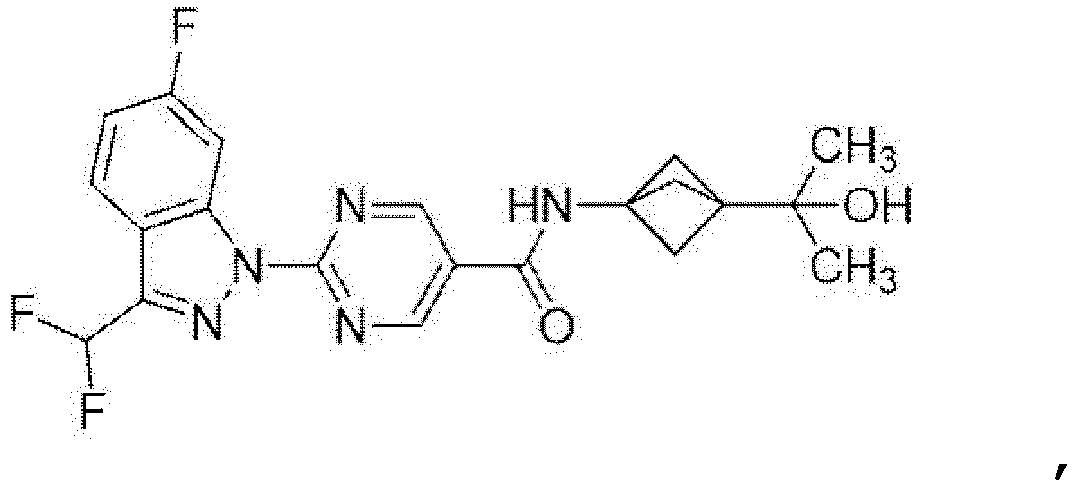
- A pharmaceutical composition comprising the compound of Item 1 or a pharmaceutically acceptable salt thereof, and a pharmaceutically acceptable carrier.
- An H-PGDS inhibitor comprising the compound of Item 1 or a pharmaceutically acceptable salt thereof.
- A therapeutic or prophylactic agent for a disease selected from the group consisting of peripheral arterial diseases, cardiovascular diseases, allergic asthma, chronic obstructive pulmonary diseases, and Duchenne muscular dystrophy, the agent comprising the compound of Item 1 or a pharmaceutically acceptable salt thereof.
- A method for inhibiting H-PGDS in a mammal, comprising administering a pharmaceutically effective amount of the compound of Item 1 or a pharmaceutically acceptable salt thereof to the mammal.
- A method for treating or preventing a disease selected from the group consisting of peripheral arterial diseases, cardiovascular diseases, allergic asthma, chronic obstructive pulmonary diseases, and Duchenne muscular dystrophy in a mammal, comprising administering a pharmaceutically effective amount of the compound of Item 1 or a pharmaceutically acceptable salt thereof to the mammal.
- Use of the compound of Item 1 or a pharmaceutically acceptable salt thereof in producing an H-PGDS inhibitor.
- Use of the compound of Item 1 or a pharmaceutically acceptable salt thereof in producing a therapeutic or prophylactic agent for a disease selected from the group consisting of peripheral arterial diseases, cardiovascular diseases, allergic asthma, chronic obstructive pulmonary diseases, and Duchenne muscular dystrophy.
- The compound of Item 1 or a pharmaceutically acceptable salt thereof for use in inhibiting H-PGDS.
- The compound of Item 1 or a pharmaceutically acceptable salt thereof for use in the treatment or prophylaxis of a disease selected from the group consisting of peripheral arterial diseases, cardiovascular diseases, allergic asthma, chronic obstructive pulmonary diseases, and Duchenne muscular dystrophy.
- A commercial package comprising the pharmaceutical composition of Item 2 and a written matter associated therewith, the written matter stating that the pharmaceutical composition can be used for treatment or prophylaxis of a disease selected from the group consisting of peripheral arterial diseases, cardiovascular diseases, allergic asthma, chronic obstructive pulmonary diseases, and Duchenne muscular dystrophy.
- A kit comprising the pharmaceutical composition of Item 2 and a written matter associated therewith, the written matter stating that the pharmaceutical composition can be used for treatment or prophylaxis of a disease selected from the group consisting of peripheral arterial diseases, cardiovascular diseases, allergic asthma, chronic obstructive pulmonary diseases, and Duchenne muscular dystrophy.
- A compound of the formula [II]:

- X1, X2, X3, X4, Y1, Y2, Y3 and Y4 are each independently a carbon or a nitrogen atom (wherein the total number of the nitrogen atoms for X1, X2, X3 and X4 is 0 or 1, and the total number of the nitrogen atoms for Y1, Y2, Y3 and Y4 is 0, 1 or 2),
- m is 0, 1 or 2,
- n is 0, 1 or 2,
- R1 is
- (1) hydroxy,
- (2) cyano,
- (3) C1-4 alkyl (wherein the alkyl is optionally substituted by hydroxy or C1-4 alkoxy),
- (4) C1-4 alkoxy,
- (5) halogen,
- (6) C1-4 haloalkyl, or
- (7) C3-6 cycloalkyl,
- R2 in the number of m are each independently
- (1) cyano,
- (2) C1-4 alkyl,
- (3) C1-4 alkoxy,
- (4) halogen, or
- (5) C1-4 haloalkyl,
- R3 in the number of n are each independently
- (1) C1-4 alkyl,
- (2) C1-4 alkoxy, or
- (3) halogen, and
- R4 is
- (1) ring Cy [wherein the ring Cy is
- (a) C4-6 cycloalkyl (wherein the cycloalkyl is optionally substituted by 1 or 2 substituents independently selected from the group consisting of
- (I) hydroxy,
- (II) cyano,
- (III) oxo,
- (IV) C1-6 alkyl (wherein the alkyl is optionally substituted by
- (i) hydroxy,
- (ii) carboxy,
- (iii) -CONH2,
- (iv) -CO-C1-4 alkoxy,
- (v) -SO2-C1-4 alkyl, or
- (vi) a group represented by the formula:

- (V) C1-6 alkoxy (wherein the alkoxy is optionally substituted by hydroxy or -SO2-C1-4 alkyl),
- (VI) carboxy,
- (VII) -CO-NR5R6 [wherein R5 and R6 are each independently C1-4 alkyl (wherein the alkyl is optionally substituted by C1-4 alkoxy), or R5 and R6 optionally form, together with the nitrogen atom bonded thereto, 4- to 6-membered heterocycloalkyl containing 1 or 2 hetero atoms independently selected from the group consisting of nitrogen and oxygen atoms {wherein the heterocycloalkyl is optionally substituted by 1 or 2 substituents independently selected from the group consisting of
- (i) hydroxy, and
- (ii) C1-6 alkyl (wherein the alkyl is optionally substituted by hydroxy)}],
- (VIII) -NR7R8 {wherein R7 and R8 are each independently C1-4 alkyl or -CO-C1-6 alkyl (wherein the alkyl is optionally substituted by cyano)},
- (IX) -O-C1-6 haloalkyl,
- (X) a group represented by the formula:

- (XI) a group represented by the formula:

- (XII) a group represented by the formula:

- (b) C5-8 bridged cycloalkyl {wherein the bridged cycloalkyl is optionally substituted by
- (I) hydroxy,
- (II) C1-6 alkyl (wherein the alkyl is optionally substituted by
- (i) hydroxy,
- (ii) carboxy,
- (iii) -CONH2,
- (iv) -CO-C1-4 alkoxy,
- (v) -SO2-C1-4 alkyl, or
- (vi) a group represented by the formula:

- (III) C1-6 alkoxy (wherein the alkoxy is optionally substituted by hydroxy or -SO2-C1-4 alkyl),
- (IV) carboxy,
- (V) -CO-C1-4 alkoxy,
- (VI) -O-C1-6 haloalkyl, or
- (VII) a group represented by the formula:

- (c) 5- or 6-membered heterocycloalkyl containing one nitrogen atom [wherein the heterocycloalkyl is optionally substituted by 1 to 3 substituents independently selected from the group consisting of
- (I) oxo,
- (II) C1-6 alkyl,
- (III) -CO-R11 {wherein R11 is
- (i) C1-6 alkyl (wherein the alkyl is optionally substituted by
- (A) hydroxy,
- (B) cyano, or
- (C) C1-4 alkoxy),
- (ii) C1-6 alkoxy,
- (iii) C1-6 haloalkyl,
- (iv) C3-6 cycloalkyl (wherein the cycloalkyl is optionally substituted by halogen), or
- (v) 4- to 6-membered heterocycloalkyl containing one oxygen atom (wherein the heterocycloalkyl is optionally substituted by halogen)}, and
- (i) C1-6 alkyl (wherein the alkyl is optionally substituted by
- (IV) a group represented by the formula:

- (d) 8-membered bridged heterocycloalkyl containing one nitrogen atom {wherein the bridged heterocycloalkyl is optionally substituted by -CO-R11},
- (e) 7- to 11-membered spiro heterocycloalkyl containing one nitrogen atom {wherein the spiro heterocycloalkyl is optionally substituted by -CO-R11},
- (f) 6- to 9-membered saturated or partially unsaturated fused ring group containing 1 or 2 nitrogen atoms (wherein the fused ring group is optionally substituted by -CO-R11),
- (g) a group represented by the formula:

- (h) a group represented by the formula:

- (i) a group represented by the formula:

- (a) C4-6 cycloalkyl (wherein the cycloalkyl is optionally substituted by 1 or 2 substituents independently selected from the group consisting of
- (2) C1-4 alkyl {wherein the alkyl is optionally substituted by
- (a) C3-6 cycloalkyl (wherein the cycloalkyl is optionally substituted by 1 or 2 substituents independently selected from the group consisting of hydroxy and C1-4 alkyl optionally substituted by hydroxy), or
- (b) phenyl}, or
- (3) C1-4 haloalkyl (wherein the haloalkyl is optionally substituted by C3-6 cycloalkyl optionally substituted by hydroxy)],
- (1) ring Cy [wherein the ring Cy is
- or a pharmaceutically acceptable salt thereof.
- The compound of Item 1A, which is represented by the formula [I]:

or a pharmaceutically acceptable salt thereof. - The compound of Item 1A or 2A, wherein the total number of the nitrogen atoms for Y1, Y2, Y3 and Y4 is 1 or 2, or a pharmaceutically acceptable salt thereof.
- The compound of Item 1A, which is represented by the formula [IA]:

or a pharmaceutically acceptable salt thereof. - The compound of any one of Items 1A to 4A, wherein R3 is halogen, or a pharmaceutically acceptable salt thereof.
- The compound of any one of Items 1A to 5A, wherein R4 is ring Cy, or a pharmaceutically acceptable salt thereof.
- The compound of Item 1A, which is represented by the formula [IB]:

or a pharmaceutically acceptable salt thereof. - The compound of any one of Items 1A to 7A, wherein R1 is
- (1) C1-4 alkyl (wherein the alkyl is optionally substituted by hydroxy or C1-4 alkoxy),
- (2) C1-4 alkoxy,
- (3) halogen, or
- (4) C1-4 haloalkyl,
- The compound of any one of Items 1A to 8A, wherein R2 is halogen, or a pharmaceutically acceptable salt thereof.
- The compound of any one of Items 1A to 9A, wherein ring Cy is
- (1) C4-6 cycloalkyl (wherein the cycloalkyl is optionally substituted by 1 or 2 substituents independently selected from the group consisting of
- (a) hydroxy,
- (b) cyano,
- (c) oxo,
- (d) C1-6 alkyl (wherein the alkyl is optionally substituted by
- (I) hydroxy,
- (II) carboxy,
- (III) -CONH2,
- (IV) -CO-C1-4 alkoxy,
- (V) -SO2-C1-4 alkyl, or
- (VI) a group represented by the formula:

- (e) C1-6 alkoxy (wherein the alkoxy is optionally substituted by hydroxy or -SO2-C1-4 alkyl),
- (f) carboxy,
- (g) -CO-NR5R6 [wherein R5 and R6 are each independently C1-4 alkyl (wherein the alkyl is optionally substituted by C1-4 alkoxy), or R5 and R6 optionally form, together with the nitrogen atom bonded thereto, 4- to 6-membered heterocycloalkyl containing 1 or 2 hetero atoms independently selected from the group consisting of nitrogen and oxygen atoms {wherein the heterocycloalkyl is optionally substituted by 1 or 2 substituents independently selected from the group consisting of
- (I) hydroxy, and
- (II) C1-6 alkyl (wherein the alkyl is optionally substituted by hydroxy)}],
- (h) -NR7R8 {wherein R7 and R8 are each independently C1-4 alkyl, or -CO-C1-6 alkyl (wherein the alkyl is optionally substituted by cyano)},
- (i) -O-C1-6 haloalkyl,
- (j) a group represented by the formula:

- (k) a group represented by the formula:

- (m) a group represented by the formula:

- (2) C5-8 bridged cycloalkyl {wherein the bridged cycloalkyl is optionally substituted by
- (a) hydroxy,
- (b) C1-6 alkyl (wherein the alkyl is optionally substituted by
- (I) hydroxy,
- (II) carboxy,
- (III) -CONH2,
- (IV) -CO-C1-4 alkoxy,
- (V) -SO2-C1-4 alkyl, or
- (VI) a group represented by the formula:

- (c) C1-6 alkoxy (wherein the alkoxy is optionally substituted by hydroxy or -SO2-C1-4 alkyl),
- (d) carboxy,
- (e) -CO-C1-4 alkoxy,
- (f) -O-C1-6 haloalkyl, or
- (g) a group represented by the formula:

- (3) 5- or 6-membered heterocycloalkyl containing one nitrogen atom [wherein the heterocycloalkyl is optionally substituted by 1 to 3 substituents independently selected from the group consisting of
- (a) oxo,
- (b) C1-6 alkyl,
- (c) -CO-R11 {wherein R11 is
- (I) C1-6 alkyl (wherein the alkyl is optionally substituted by
- (i) hydroxy,
- (ii) cyano, or
- (iii) C1-4 alkoxy),
- (II) C1-6 alkoxy,
- (III) C1-6 haloalkyl,
- (IV) C3-6 cycloalkyl (wherein the cycloalkyl is optionally substituted by halogen), or
- (V) 4- to 6-membered heterocycloalkyl containing one oxygen atom (wherein the heterocycloalkyl is optionally substituted by halogen)}, and
- (I) C1-6 alkyl (wherein the alkyl is optionally substituted by
- (d) a group represented by the formula:

- (4) 8-membered bridged heterocycloalkyl containing one nitrogen atom {wherein the bridged heterocycloalkyl is optionally substituted by -CO-R11},
- (5) 7- to 11-membered spiro heterocycloalkyl containing one nitrogen atom {wherein the spiro heterocycloalkyl is optionally substituted by -CO-R11}, or
- (6) a 6- to 9-membered saturated or partially unsaturated fused ring group containing 1 or 2 nitrogen atoms (wherein the fused ring group is optionally substituted by -CO-R11),
- The compound of any one of Items 1A to 9A, wherein ring Cy is
- (1) C4-6 cycloalkyl (wherein the cycloalkyl is optionally substituted by 1 or 2 substituents independently selected from the group consisting of
- (a) hydroxy,
- (b) cyano,
- (c) oxo,
- (d) C1-6 alkyl (wherein the alkyl is optionally substituted by
- (I) hydroxy,
- (II) carboxy,
- (III) -CONH2,
- (IV) -CO-C1-4 alkoxy,
- (V) -SO2-C1-4 alkyl, or
- (VI) a group represented by the formula:

- (e) C1-6 alkoxy (wherein the alkoxy is optionally substituted by hydroxy or -SO2-C1-4 alkyl),
- (f) carboxy,
- (g) -CO-NR5R6 [wherein R5 and R6 are each independently C1-4 alkyl (wherein the alkyl is optionally substituted by C1-4 alkoxy), or R5 and R6 optionally form, together with the nitrogen atom bonded thereto, 4- to 6-membered heterocycloalkyl containing 1 or 2 hetero atoms independently selected from the group consisting of nitrogen and oxygen atoms {wherein the heterocycloalkyl is optionally substituted by 1 or 2 substituents independently selected from the group consisting of
- (I) hydroxy, and
- (II) C1-6 alkyl (wherein the alkyl is optionally substituted by hydroxy)}],
- (h) -NR7R8 {wherein R7 and R8 are each independently C1-4 alkyl, or -CO-C1-6 alkyl (wherein the alkyl is optionally substituted by cyano)},
- (i) -O-C1-6 haloalkyl,
- (j) a group represented by the formula:

- (k) a group represented by the formula:

- (m) a group represented by the formula:

- (2) C5-8 bridged cycloalkyl {wherein the bridged cycloalkyl is optionally substituted by
- (a) hydroxy,
- (b) C1-6 alkyl (wherein the alkyl is optionally substituted by
- (I) hydroxy,
- (II) carboxy,
- (III) -CONH2,
- (IV) -CO-C1-4 alkoxy,
- (V) -SO2-C1-4 alkyl, or
- (VI) a group represented by the formula:

- (c) C1-6 alkoxy (wherein the alkoxy is optionally substituted by hydroxy or -SO2-C1-4 alkyl),
- (d) carboxy,
- (e) -CO-C1-4 alkoxy,
- (f) -O-C1-6 haloalkyl, or
- (g) a group represented by the formula:

- (3) 5- or 6-membered heterocycloalkyl containing one nitrogen atom [wherein the heterocycloalkyl is optionally substituted by 1 to 3 substituents independently selected from the group consisting of
- (a) oxo,
- (b) C1-6 alkyl,
- (c) -CO-R11 {wherein R11 is
- (I) C1-6 alkyl (wherein the alkyl is optionally substituted by
- (i) hydroxy,
- (ii) cyano, or
- (iii) C1-4 alkoxy),
- (II) C1-6 alkoxy,
- (III) C1-6 haloalkyl,
- (IV) C3-6 cycloalkyl (wherein the cycloalkyl is optionally substituted by halogen), or
- (V) 4- to 6-membered heterocycloalkyl containing one oxygen atom (wherein the heterocycloalkyl is optionally substituted by halogen)}, and
- (I) C1-6 alkyl (wherein the alkyl is optionally substituted by
- (d) a group represented by the formula:

- (4) 8-membered bridged heterocycloalkyl containing one nitrogen atom {wherein the bridged heterocycloalkyl is optionally substituted by -CO-R11},
- The compound of any one of Items 1A to 9A, wherein ring Cy is
- (1) C4-6 cycloalkyl (wherein the cycloalkyl is optionally substituted by 1 or 2 substituents independently selected from the group consisting of
- (a) hydroxy,
- (b) cyano,
- (c) oxo,
- (d) C1-6 alkyl (wherein the alkyl is optionally substituted by
- (I) hydroxy,
- (II) carboxy,
- (III) -CONH2,
- (IV) -CO-C1-4 alkoxy,
- (V) -SO2-C1-4 alkyl, or
- (VI) a group represented by the formula:

- (e) C1-6 alkoxy (wherein the alkoxy is optionally substituted by hydroxy or -SO2-C1-4 alkyl),
- (f) carboxy,
- (g) -CO-NR5R6 [wherein R5 and R6 are each independently C1-4 alkyl (wherein the alkyl is optionally substituted by C1-4 alkoxy), or R5 and R6 optionally form, together with the nitrogen atom bonded thereto, 4- to 6-membered heterocycloalkyl containing 1 or 2 hetero atoms independently selected from the group consisting of nitrogen and oxygen atoms {wherein the heterocycloalkyl is optionally substituted by 1 or 2 substituents independently selected from the group consisting of
- (I) hydroxy, and
- (II) C1-6 alkyl (wherein the alkyl is optionally substituted by hydroxy)}],
- (h) -NR7R8 {wherein R7 and R8 are each independently C1-4 alkyl, or -CO-C1-6 alkyl (wherein the alkyl is optionally substituted by cyano)},
- (i) -O-C1-6 haloalkyl,
- (j) a group represented by the formula:

- (k) a group represented by the formula:

- (m) a group represented by the formula:

- (2) C5-8 bridged cycloalkyl {wherein the bridged cycloalkyl is optionally substituted by
- (a) hydroxy,
- (b) C1-6 alkyl (wherein the alkyl is optionally substituted by
- (I) hydroxy,
- (II) carboxy,
- (III) -CONH2,
- (IV) -CO-C1-4 alkoxy,
- (V) -SO2-C1-4 alkyl, or
- (VI) a group represented by the formula:

- (c) C1-6 alkoxy (wherein the alkoxy is optionally substituted by hydroxy or -SO2-C1-4 alkyl),
- (d) carboxy,
- (e) -CO-C1-4 alkoxy,
- (f) -O-C1-6 haloalkyl, or
- (g) a group represented by the formula:

- The compound of any one of Items 1A to 9A, wherein ring Cy is
- (1) cyclohexyl (wherein the cyclohexyl is optionally substituted by 1 or 2 substituents independently selected from the group consisting of
- (a) hydroxy,
- (b) cyano,
- (c) oxo,
- (d) C1-6 alkyl (wherein the alkyl is optionally substituted by
- (I) hydroxy,
- (II) carboxy,
- (III) -CONH2,
- (IV) -CO-C1-4 alkoxy,
- (V) -SO2-C1-4 alkyl, or
- (VI) a group represented by the formula:

- (e) C1-6 alkoxy (wherein the alkoxy is optionally substituted by hydroxy or -SO2-C1-4 alkyl),
- (f) carboxy,
- (g) -CO-NR5R6 [wherein R5 and R6 are each independently C1-4 alkyl (wherein the alkyl is optionally substituted by C1-4 alkoxy), or R5 and R6 optionally form, together with the nitrogen atom bonded thereto, 4- to 6-membered heterocycloalkyl containing 1 or 2 hetero atoms independently selected from the group consisting of nitrogen and oxygen atoms {wherein the heterocycloalkyl is optionally substituted by 1 or 2 substituents independently selected from the group consisting of
- (I) hydroxy, and
- (II) C1-6 alkyl (wherein the alkyl is optionally substituted by hydroxy)}],
- (h) -NR7R8 {wherein R7 and R8 are each independently C1-4 alkyl, or -CO-C1-6 alkyl (wherein the alkyl is optionally substituted by cyano)},
- (i) -O-C1-6 haloalkyl,
- (j) a group represented by the formula:

- (k) a group represented by the formula:
-

- (m) a group represented by the formula:

- (2) a group represented by the formula:

- (a) hydroxy,
- (b) C1-6 alkyl (wherein the alkyl is optionally substituted by
- (I) hydroxy,
- (II) carboxy,
- (III) -CONH2,
- (IV) -CO-C1-4 alkoxy,
- (V) -SO2-C1-4 alkyl, or
- (VI) a group represented by the formula:

- (c) C1-6 alkoxy (wherein the alkoxy is optionally substituted by hydroxy or -SO2-C1-4 alkyl),
- (d) carboxy,
- (e) -CO-C1-4 alkoxy,
- (f) -O-C1-6 haloalkyl, or
- (g) a group represented by the formula:

- The compound of any one of Items 1A to 9A, wherein ring Cy is
- (1) a group represented by the formula:

- (a) hydrogen,
- (b) hydroxy,
- (c) cyano,
- (d) C1-6 alkyl (wherein the alkyl is optionally substituted by
- (I) hydroxy,
- (II) carboxy,
- (III) -CONH2,
- (IV) -CO-C1-4 alkoxy,
- (V) -SO2-C1-4 alkyl, or
- (VI) a group represented by the formula:

- (e) C1-6 alkoxy (wherein the alkoxy is optionally substituted by hydroxy or -SO2-C1-4 alkyl),
- (f) carboxy,
- (g) -CO-NR5R6 [wherein R5 and R6 are each independently C1-4 alkyl (wherein the alkyl is optionally substituted by C1-4 alkoxy), or R5 and R6 optionally form, together with the nitrogen atom bonded thereto, 4- to 6-membered heterocycloalkyl containing 1 or 2 hetero atoms independently selected from the group consisting of nitrogen and oxygen atoms {wherein the heterocycloalkyl is optionally substituted by 1 or 2 substituents independently selected from the group consisting of
- (I) hydroxy, and
- (II) C1-6 alkyl (wherein the alkyl is optionally substituted by hydroxy)}],
- (h) -NR7R8 {wherein R7 and R8 are each independently C1-4 alkyl or -CO-C1-6 alkyl (wherein the alkyl is optionally substituted by cyano)},
- (i) -O-C1-6 haloalkyl,
- (j) a group represented by the formula:

- (k) a group represented by the formula:

- (m) a group represented by the formula:

- (2) a group represented by the formula:

- (a) hydrogen,
- (b) hydroxy,
- (c) C1-6 alkyl (wherein the alkyl is optionally substituted by
- (I) hydroxy,
- (II) carboxy,
- (III) -CONH2,
- (IV) -CO-C1-4 alkoxy,
- (V) -SO2-C1-4 alkyl, or
- (VI) a group represented by the formula:

- (d) C1-6 alkoxy (wherein the alkoxy is optionally substituted by hydroxy or -SO2-C1-4 alkyl),
- (e) carboxy,
- (f) -CO-C1-4 alkoxy,
- (g) -O-C1-6 haloalkyl, or
- (h) a group represented by the formula:

- The compound of Item 1A or 14A, which is represented by the formula [IC]:

- X1, R1, R2 and m are as defined for Item 1A, and
- R12 is as defined for Item 14A,
- or a pharmaceutically acceptable salt thereof.
- The compound of Item 15A, wherein
R12 is - (1) hydroxy,
- (2) cyano,
- (3) C1-6 alkyl (wherein the alkyl is optionally substituted by
- (a) hydroxy,
- (b) carboxy,
- (c) -CONH2,
- (d) -CO-C1-4 alkoxy,
- (e) -SO2-C1-4 alkyl, or
- (f) a group represented by the formula:

- (4) C1-6 alkoxy (wherein the alkoxy is optionally substituted by hydroxy or -SO2-C1-4 alkyl),
- (5) -CO-NR5R6 [wherein R5 and R6 form, together with the nitrogen atom bonded thereto, 4- to 6-membered heterocycloalkyl containing 1 or 2 hetero atoms independently selected from the group consisting of nitrogen and oxygen atoms {wherein the heterocycloalkyl is optionally substituted by C1-6 alkyl (wherein the alkyl is optionally substituted by hydroxy)}],
- (6) -NR7R8 {wherein R7 and R8 are each independently C1-4 alkyl or -CO-C1-6 alkyl (wherein the alkyl is optionally substituted by cyano) },
- (7) a group represented by the formula:

- (8) a group represented by the formula:

- (9) a group represented by the formula:

or a pharmaceutically acceptable salt thereof. - The compound of Item 1A or 14A, which is represented by the formula [ID]:

- X1, R1, R2 and m are as defined for Item 1A, and
- R14 is as defined for Item 14A,
- or a pharmaceutically acceptable salt thereof.
- The compound of Item 17A, wherein R14 is C1-6 alkyl (wherein the alkyl is optionally substituted by hydroxy), or a pharmaceutically acceptable salt thereof.
- The compound of Item 1A which is selected from the group consisting of the following structural formulas:


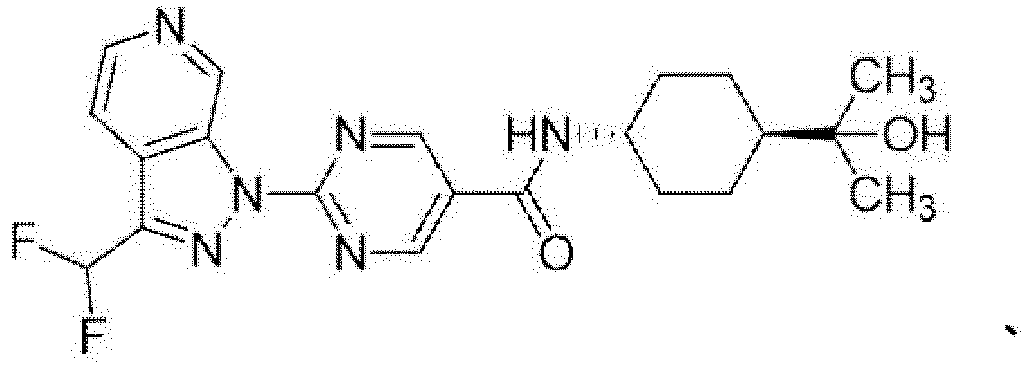


- A compound of the formula [III]:

- X1, X2, X3, X4, Y1, Y2, Y3 and Y4 are each independently a carbon or a nitrogen atom (wherein the total number of the nitrogen atoms for X1, X2, X3 and X4 is 0 or 1, and the total number of the nitrogen atoms for Y1, Y2, Y3 and Y4 is 0, 1 or 2), and other symbols are as defined for Item 1A},
- or a pharmaceutically acceptable salt thereof.
- A compound of the formula [IV]:

- X1, X5, X6, Y1, Y2, Y3 and Y4 are each independently a carbon or a nitrogen atom (wherein the total number of the nitrogen atoms for X5 and X6 is 1, and the total number of the nitrogen atoms for Y1, Y2, Y3 and Y4 is 0, 1 or 2), and
- other symbols are as defined for Item 1A},
- or a pharmaceutically acceptable salt thereof.
- A pharmaceutical composition comprising the compound of any one of Items 1A to 21A or a pharmaceutically acceptable salt thereof, and a pharmaceutically acceptable carrier.
- An H-PGDS inhibitor comprising the compound of any one of Items 1A to 21A or a pharmaceutically acceptable salt thereof.
- A therapeutic or prophylactic agent for a disease selected from the group consisting of peripheral arterial diseases, cardiovascular diseases, allergic asthma, chronic obstructive pulmonary diseases, and Duchenne muscular dystrophy, the agent comprising the compound of any one of Items 1A to 21A or a pharmaceutically acceptable salt thereof.
- A method for inhibiting H-PGDS in a mammal, comprising administering a pharmaceutically effective amount of the compound of any one of Items 1A to 21A or a pharmaceutically acceptable salt thereof to the mammal.
- A method for treating or preventing a disease selected from the group consisting of peripheral arterial diseases, cardiovascular diseases, allergic asthma, chronic obstructive pulmonary diseases, and Duchenne muscular dystrophy in a mammal, comprising administering a pharmaceutically effective amount of the compound of any one of Items 1A to 21A or a pharmaceutically acceptable salt thereof to the mammal.
- Use of the compound of any one of Items 1A to 21A or a pharmaceutically acceptable salt thereof in producing an H-PGDS inhibitor.
- Use of the compound of any one of Items 1A to 21A or a pharmaceutically acceptable salt thereof in producing a therapeutic or prophylactic agent for a disease selected from the group consisting of peripheral arterial diseases, cardiovascular diseases, allergic asthma, chronic obstructive pulmonary diseases, and Duchenne muscular dystrophy.
- The compound of any one of Items 1A to 21A or a pharmaceutically acceptable salt thereof for use in inhibiting H-PGDS.
- The compound of any one of Items 1A to 21A or a pharmaceutically acceptable salt thereof for use in the treatment or prophylaxis of a disease selected from the group consisting of peripheral arterial diseases, cardiovascular diseases, allergic asthma, chronic obstructive pulmonary diseases, and Duchenne muscular dystrophy.
- A commercial package comprising the pharmaceutical composition of Item 22A and a written matter associated therewith, the written matter stating that the pharmaceutical composition can be used for treatment or prophylaxis of a disease selected from the group consisting of peripheral arterial diseases, cardiovascular diseases, allergic asthma, chronic obstructive pulmonary diseases, and Duchenne muscular dystrophy.
- A kit comprising the pharmaceutical composition of Item 22A and a written matter associated therewith, the written matter stating that the pharmaceutical composition can be used for treatment or prophylaxis of a disease selected from the group consisting of peripheral arterial diseases, cardiovascular diseases, allergic asthma, chronic obstructive pulmonary diseases, and Duchenne muscular dystrophy.
- A compound selected from the group consisting of the following structural formulas:


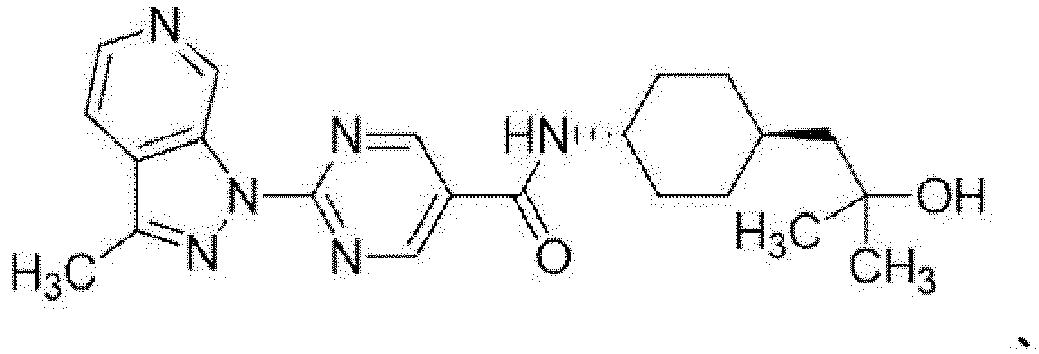


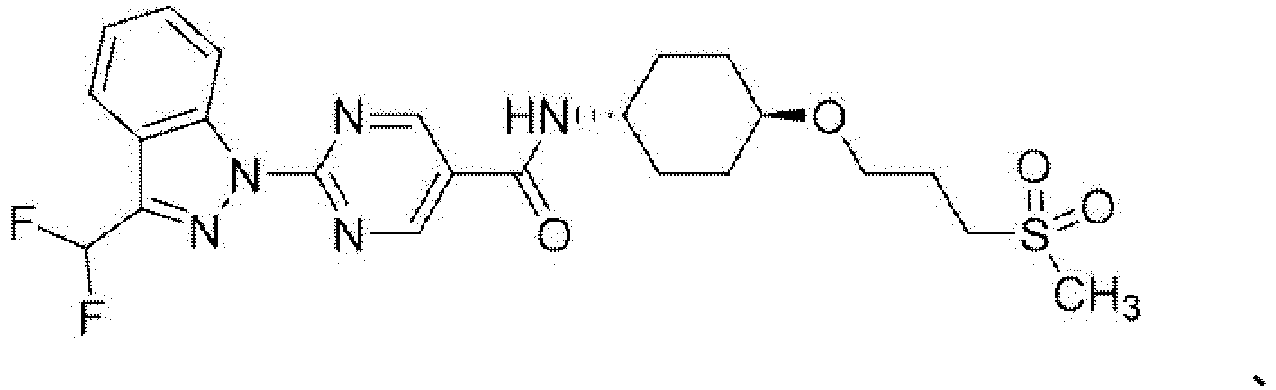


- A pharmaceutical composition comprising the compound of any one of Items 1A to 21A and Item 33A or a pharmaceutically acceptable salt thereof, and a pharmaceutically acceptable carrier.
- An H-PGDS inhibitor comprising the compound of any one of Items 1A to 21A and Item 33A or a pharmaceutically acceptable salt thereof.
- A therapeutic or prophylactic agent for a disease selected from the group consisting of peripheral arterial diseases, cardiovascular diseases, allergic asthma, chronic obstructive pulmonary diseases, allergic rhinitis, sarcopenia, and Duchenne muscular dystrophy, the agent comprising the compound of any one of Items 1A to 21A and Item 33A or a pharmaceutically acceptable salt thereof.
- The therapeutic or prophylactic agent of Item 36A, wherein the peripheral arterial disease is intermittent claudication or comprehensive severe chronic lower extremity ischemia based on PAD.
- A method for inhibiting H-PGDS in a mammal, comprising administering a pharmaceutically effective amount of the compound of any one of Items 1A to 21A and Item 33A or a pharmaceutically acceptable salt thereof to the mammal.
- A method for treating or preventing a disease selected from the group consisting of peripheral arterial diseases, cardiovascular diseases, allergic asthma, chronic obstructive pulmonary diseases, allergic rhinitis, sarcopenia, and Duchenne muscular dystrophy in a mammal, comprising administering a pharmaceutically effective amount of the compound of any one of Items 1A to 21A and Item 33A or a pharmaceutically acceptable salt thereof to the mammal.
- The method of Item 39A, wherein the peripheral arterial disease is intermittent claudication or comprehensive severe chronic lower extremity ischemia based on PAD.
- Use of the compound of any one of Items 1A to 21A and Item 33A or a pharmaceutically acceptable salt thereof in producing an H-PGDS inhibitor.
- Use of the compound of any one of Items 1A to 21A and Item 33A or a pharmaceutically acceptable salt thereof in producing a therapeutic or prophylactic agent for a disease selected from the group consisting of peripheral arterial diseases, cardiovascular diseases, allergic asthma, chronic obstructive pulmonary diseases, allergic rhinitis, sarcopenia, and Duchenne muscular dystrophy.
- The use of Item 42A, wherein the peripheral arterial disease is intermittent claudication or comprehensive severe chronic lower extremity ischemia based on PAD.
- The compound of any one of Items 1A to 21A and Item 33A or a pharmaceutically acceptable salt thereof for use in inhibiting H-PGDS.
- The compound of any one of Items 1A to 21A and Item 33A and Item 33A or a pharmaceutically acceptable salt thereof for use in the treatment or prophylaxis of a disease selected from the group consisting of peripheral arterial diseases, cardiovascular diseases, allergic asthma, chronic obstructive pulmonary diseases, allergic rhinitis, sarcopenia, and Duchenne muscular dystrophy.
- The compound of Item 45A or a pharmaceutically acceptable salt thereof, wherein the peripheral arterial disease is intermittent claudication or comprehensive severe chronic lower extremity ischemia based on PAD.
- A commercial package comprising the pharmaceutical composition of Item 34A and a written matter associated therewith, the written matter stating that the pharmaceutical composition can be used for treatment or prophylaxis of a disease selected from the group consisting of peripheral arterial diseases, cardiovascular diseases, allergic asthma, chronic obstructive pulmonary diseases, allergic rhinitis, sarcopenia, and Duchenne muscular dystrophy.
- A kit comprising the pharmaceutical composition of Item 22A and a written matter associated therewith, the written matter stating that the pharmaceutical composition can be used for treatment or prophylaxis of a disease selected from the group consisting of peripheral arterial diseases, cardiovascular diseases, allergic asthma, chronic obstructive pulmonary diseases, allergic rhinitis, sarcopenia, and Duchenne muscular dystrophy.
- The definitions of the terms in the present specification are as follows.
- In the chemical formulas, the wavy line shown by the following:

- In the chemical formulas, the bond shown by the following:

- The "C1-4 alkyl" means a linear or branched chain saturated hydrocarbon group having 1 to 4 carbon atoms. The "C1-4 alkyl" includes methyl, ethyl, n-propyl, isopropyl, n-butyl, sec-butyl, isobutyl, and tert-butyl. Preferred "C1-4 alkyl" is methyl, ethyl, or isopropyl. More preferred "C1-4 alkyl" is methyl or ethyl.
- The "C1-6 alkyl" means a linear or branched chain saturated hydrocarbon group having 1 to 6 carbon atoms. The "C1-6 alkyl" includes, for example, methyl, ethyl, n-propyl, isopropyl, n-butyl, sec-butyl, isobutyl, tert-butyl, n-pentyl, isopentyl, neopentyl, 2-methylbutyl, 1,1-dimethylpropyl, 1-ethylpropyl, n-hexyl, isohexyl, 1,1-dimethylbutyl, 2,2-dimethylbutyl, 3,3-dimethylbutyl, and 2-ethylbutyl. Preferred "C1-6 alkyl" is methyl, ethyl, isopropyl, isobutyl, tert-butyl, or isopentyl. More preferred "C1-6 alkyl" is methyl, ethyl, isopropyl, isobutyl, or tert-butyl.
- The "C1-4 alkoxy" means a group in which the above-mentioned "C1-4 alkyl" is bonded to an oxygen atom. The "C1-4 alkoxy" includes methoxy, ethoxy, n-propoxy, isopropoxy, n-butoxy, sec-butoxy, isobutoxy, and tert-butoxy. Preferred "C1-4 alkoxy" is methoxy or ethoxy.
- The "C1-6 alkoxy" means a group in which the above-mentioned "C1-6 alkyl" is bonded to an oxygen atom. The "C1-6 alkoxy" includes, for example, methoxy, ethoxy, n-propoxy, isopropoxy, n-butoxy, sec-butoxy, isobutoxy, tert-butoxy, pentyloxy, isopentyloxy, neopentyloxy, 2-methylbutoxy, 1,1-dimethylpropoxy, 1-ethylpropoxy, hexyloxy, isohexyloxy, 1,1-dimethylbutoxy, 2,2-dimethylbutoxy, 3,3-dimethylbutoxy, and 2-ethylbutoxy. Preferred "C1-6 alkoxy" is methoxy, ethoxy, n-propoxy, isopropoxy, isobutoxy, tert-butoxy, or isopentyloxy.
- The "halogen" includes, for example, fluorine, chlorine, bromine, and iodine. Preferred "halogen" is fluorine or chlorine.
- The "C1-4 haloalkyl" means the above-mentioned "C1-4 alkyl" substituted by 1 to 7 halogens independently selected from the group of the above-mentioned group of "halogen". The "C1-4 haloalkyl" includes, for example, monofluoromethyl, difluoromethyl, trifluoromethyl, chlorofluoromethyl, 2-fluoroethyl, 2-chloroethyl, 2-bromoethyl, 1,1-difluoroethyl, 2,2-difluoroethyl, 1-fluoro-1-methylethyl, 2,2,2-trifluoro-1-methylethyl, 2,2,2-trifluoroethyl, pentafluoroethyl, 3-fluoropropyl, 3-chloropropyl, 1,1-difluoropropyl, 3,3,3-trifluoropropyl, and 4,4,4-trifluorobutyl. Preferred "C1-4 haloalkyl" is difluoromethyl, trifluoromethyl, or 2,2-difluoroethyl.
- The "C1-6 haloalkyl" means the above-mentioned "C1-6 alkyl" substituted by 1 to 9 halogens independently selected from the group of the above-mentioned "halogen". The "C1-6 haloalkyl" includes, for example, monofluoromethyl, difluoromethyl, trifluoromethyl, chlorofluoromethyl, 2-fluoroethyl, 2-chloroethyl, 2-bromoethyl, 1,1-difluoroethyl, 2,2-difluoroethyl, 1-fluoro-1-methylethyl, 2,2,2-trifluoro-1-methylethyl, 2,2,2-trifluoroethyl, pentafluoroethyl, 3-fluoropropyl, 3-chloropropyl, 1,1-difluoropropyl, 3,3,3-trifluoropropyl, 4,4,4-trifluorobutyl, 5,5,5-trifluoropentyl, and 6,6,6-trifluorohexyl. Preferred "C1-6 haloalkyl" is difluoromethyl, trifluoromethyl, 1-fluoro-1-methylethyl, or 2,2,2-trifluoroethyl.
- The "C4-6 cycloalkyl" means a monocyclic saturated hydrocarbon ring group having 4 to 6 carbon atoms. The "C4-6 cycloalkyl" includes, for example, cyclobutyl, cyclopentyl, and cyclohexyl. Preferred "C4-6 cycloalkyl" is cyclobutyl or cyclohexyl. More preferred "C4-6 cycloalkyl" is cyclohexyl.
- The "C3-6 cycloalkyl" means a monocyclic saturated hydrocarbon ring group having 3 to 6 carbon atoms. The "C3-6 cycloalkyl" includes, for example, cyclopropyl, cyclobutyl, cyclopentyl, and cyclohexyl. Preferred "C3-6 cycloalkyl" is cyclopropyl, cyclobutyl, or cyclohexyl.
- The "4- to 6-membered heterocycloalkyl containing 1 or 2 hetero atoms independently selected from the group consisting of nitrogen and oxygen atoms" means a 4- to 6-membered monocyclic saturated heterocyclic group containing, as a ring-constituting atom besides carbon atom, 1 or 2 hetero atoms independently selected from the group consisting of nitrogen and oxygen. The "4- to 6-membered heterocycloalkyl containing 1 or 2 hetero atoms independently selected from the group consisting of nitrogen and oxygen atoms" includes, for example, azetidinyl, oxetanyl, diazetidinyl, dioxetanyl, pyrrolidinyl, tetrahydrofuranyl, imidazolidinyl, pyrazolidinyl, oxazolidinyl, isoxazolidinyl, dioxolanyl, piperidinyl, tetrahydropyranyl, 1,3-diazacyclohexanyl, piperazinyl, morpholinyl, tetrahydro-1,2-oxazinyl, and dioxanyl. Preferred "4- to 6-membered heterocycloalkyl containing 1 or 2 hetero atoms independently selected from the group consisting of nitrogen and oxygen atoms" is azetidinyl, pyrrolidinyl, or morpholinyl.
- The "5- or 6-membered heterocycloalkyl containing one nitrogen atom" means a 5- or 6-membered monocyclic saturated heterocyclic group containing one nitrogen atom as a ring-constituting atom besides carbon atom. The "5- or 6-membered heterocycloalkyl containing one nitrogen atom" includes, for example, pyrrolidinyl and piperidinyl. Preferred "5- or 6-membered heterocycloalkyl containing one nitrogen atom" is piperidinyl.
- The "4- to 6-membered heterocycloalkyl containing one oxygen atom" means a 4- to 6-membered monocyclic saturated heterocyclic group containing one oxygen atom as a ring-constituting atom besides carbon atom. The "4- to 6-membered heterocycloalkyl containing one oxygen atom" includes, for example, oxetanyl, tetrahydrofuranyl, and tetrahydropyranyl. Preferred "4- to 6-membered heterocycloalkyl containing one oxygen atom" is oxetanyl or tetrahydropyranyl.
- The "C5-8 bridged cycloalkyl" means a 5- to 8-membered, bridged cyclic saturated hydrocarbon group. The "C5-8 bridged cycloalkyl" includes, for example, bicyclo[1.1.1]pentyl, bicyclo[2.2.1]heptyl, and bicyclo[2.2.2]octyl. Preferred "C5-8 bridged cycloalkyl" is bicyclo[1.1.1]pentyl or bicyclo[2.2.2]octyl. More preferred "C5-8 bridged cycloalkyl" is bicyclo[1.1.1]pentyl.
- The "8-membered bridged heterocycloalkyl containing one nitrogen atom" means a 8-membered bridged saturated heterocyclic group containing one nitrogen atom as a ring-constituting atom besides carbon atom. The "8-membered bridged heterocycloalkyl containing one nitrogen atom" includes, for example,
the following groups:
- The "7- to 11-membered spiro heterocycloalkyl containing one nitrogen atom" means a 7- to 11-membered spiro-type saturated heterocyclic group containing one nitrogen atom as a ring-constituting atom besides carbon atom. The "7- to 11-membered spiro heterocycloalkyl containing one nitrogen atom" includes, for example,
the following groups:
- The "6- to 9-membered saturated or partially unsaturated fused ring group containing 1 or 2 nitrogen atoms" means a 6-to 9-membered fused heterocyclic group containing 1 or 2 nitrogen atoms as a ring-constituting atom besides carbon atom, and means a fused ring group containing at least one saturated ring in the ring constituting the fused ring. The "6- to 9-membered saturated or partially unsaturated fused ring group containing 1 or 2 nitrogen atoms" includes, for example,
the following groups: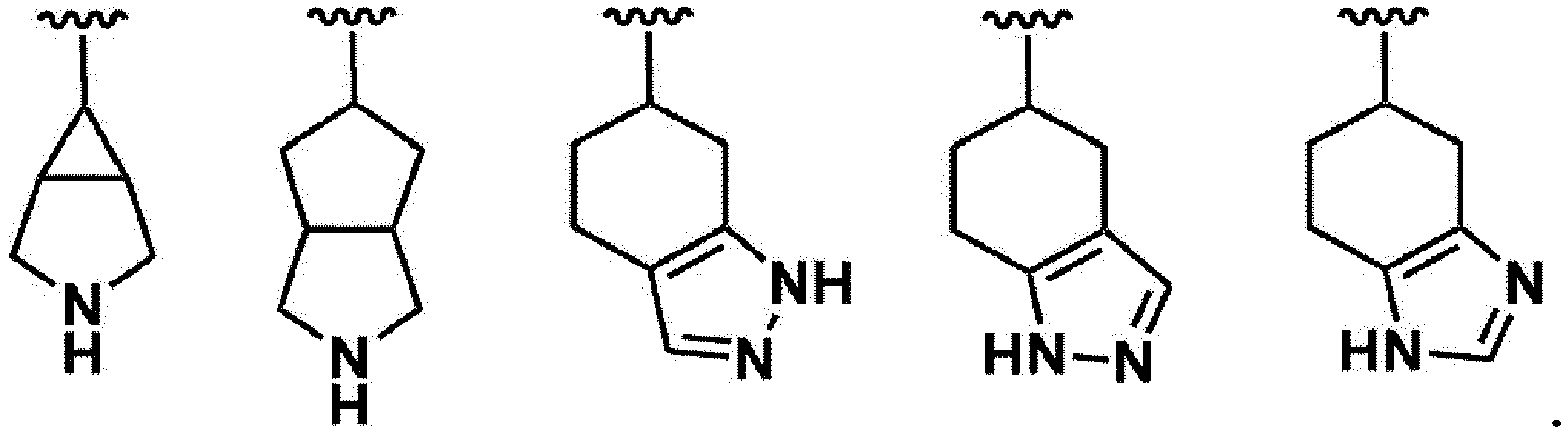
- That α is "optionally substituted" by β means that α is unsubstituted or any substitutable hydrogen of α is replaced by β. For example, "C1-6 alkyl optionally substituted by hydroxy" means that C1-6 alkyl is unsubstituted or any hydrogen in C1-6 alkyl is replaced by hydroxy.
- Specific embodiments of each substituent of the compound of formula [II] are exemplified below. However, each substituent of the compound of formula [II] is not limited to the specific embodiments. In addition, the compound of the formula [II] also includes an embodiment in which any two or more of the specific embodiments of each substituent are combined.
- Y1 is preferably a nitrogen atom.
- Y2 is preferably a nitrogen atom.
- Y3 is preferably a carbon atom.
- Y4 is preferably a carbon atom.
- Preferred embodiment of R1 is
- (1) hydroxy,
- (2) C1-4 alkyl (wherein the alkyl is optionally substituted by hydroxy or C1-4 alkoxy),
- (3) C1-4 alkoxy,
- (4) halogen, or
- (5) C1-4 haloalkyl.
- More preferred embodiment of R1 is
- (1) C1-4 alkyl (wherein the alkyl is optionally substituted by hydroxy or C1-4 alkoxy),
- (2) halogen, or
- (3) C1-4 haloalkyl.
- Preferred specific example of R1 is methyl, fluorine, chlorine, difluoromethyl, or trifluoromethyl.
- Preferred embodiments of R2 in the number of m are each independently halogen.
- Preferred specific examples of R2 in the number of m include fluorine and chlorine.
- m is preferably 0 or 1.
- Preferred embodiments of R3 in the number of n are each independently halogen.
- Preferred specific examples of R3 in the number of n include fluorine and chlorine.
- n is preferably 0 or 1.
-
- R4 is preferably
- (a) C4-6 cycloalkyl (wherein the cycloalkyl is optionally substituted by 1 or 2 substituents independently selected from the group consisting of
- (I) hydroxy,
- (II) cyano,
- (III) oxo,
- (IV) C1-6 alkyl (wherein the alkyl is optionally substituted by
- (i) hydroxy,
- (ii) carboxy,
- (iii) -CONH2,
- (iv) -CO-C1-4 alkoxy,
- (v) -SO2-C1-4 alkyl, or
- (vi) a group represented by the formula:
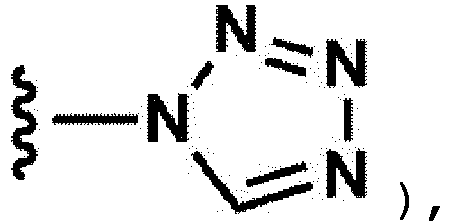
- (V) C1-6 alkoxy (wherein the alkoxy is optionally substituted by hydroxy or -SO2-C1-4 alkyl),
- (VI) carboxy,
- (VII) -CO-NR5R6 [wherein R5 and R6 are each independently C1-4 alkyl (wherein the alkyl is optionally substituted by C1-4 alkoxy), or R5 and R6 optionally form, together with the nitrogen atom bonded thereto, 4- to 6-membered heterocycloalkyl containing 1 or 2 hetero atoms independently selected from the group consisting of nitrogen and oxygen atoms {wherein the heterocycloalkyl is optionally substituted by 1 or 2 substituents independently selected from the group consisting of
- (i) hydroxy, and
- (ii) C1-6 alkyl (wherein the alkyl is optionally substituted by hydroxy)}],
- (VIII) -NR7R8 {wherein R7 and R8 are each independently C1-4 alkyl or -CO-C1-6 alkyl (wherein the alkyl is optionally substituted by cyano)},
- (IX) -O-C1-6 haloalkyl,
- (X) a group represented by the formula:

- (XI) a group represented by the formula:
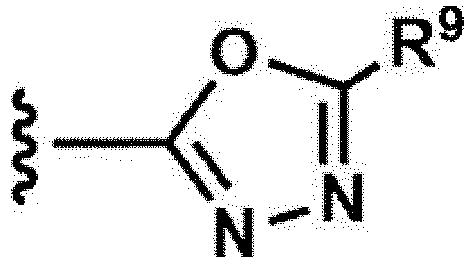
- (XII) a group represented by the formula:

- (b) C5-8 bridged cycloalkyl {wherein the bridged cycloalkyl is optionally substituted by
- (I) hydroxy,
- (II) C1-6 alkyl (wherein the alkyl is optionally substituted by
- (i) hydroxy,
- (ii) carboxy,
- (iii) -CONH2,
- (iv) -CO-C1-4 alkoxy,
- (v) -SO2-C1-4 alkyl, or
- (vi) a group represented by the formula:

- (III) C1-6 alkoxy (wherein the alkoxy is optionally substituted by hydroxy or -SO2-C1-4 alkyl),
- (IV) carboxy,
- (V) -CO-C1-4 alkoxy,
- (VI) -O-C1-6 haloalkyl, or
- (VII) a group represented by the formula:

- (c) 5- or 6-membered heterocycloalkyl containing one nitrogen atom [wherein the heterocycloalkyl is
- (I) oxo,
- (II) C1-6 alkyl,
- (III) -CO-R11 {wherein R11 is optionally substituted by 1 to 3 substituents independently selected from the group consisting of
- (i) C1-6 alkyl (wherein the alkyl is optionally substituted by
- (A) hydroxy,
- (B) cyano, or
- (C) C1-4 alkoxy),
- (ii) C1-6 alkoxy,
- (iii) C1-6 haloalkyl,
- (iv) C3-6 cycloalkyl (wherein the cycloalkyl is optionally substituted by halogen), or
- (v) 4- to 6-membered heterocycloalkyl containing one oxygen atom (wherein the heterocycloalkyl is optionally substituted by halogen)}, and
- (i) C1-6 alkyl (wherein the alkyl is optionally substituted by
- (IV) a group represented by the formula:

- (d) 8-membered bridged heterocycloalkyl containing one nitrogen atom {wherein the bridged heterocycloalkyl is optionally substituted by -CO-R11},
- (e) 7- to 11-membered spiro heterocycloalkyl containing one nitrogen atom {wherein the spiro heterocycloalkyl is optionally substituted by -CO-R11}, or
- (f) 6- to 9-membered saturated or partially unsaturated fused ring group containing 1 or 2 nitrogen atoms (wherein the fused ring group is optionally substituted by -CO-R11).
- (a) C4-6 cycloalkyl (wherein the cycloalkyl is optionally substituted by 1 or 2 substituents independently selected from the group consisting of
- R4 is more preferably
- (a) C4-6 cycloalkyl (wherein the cycloalkyl is optionally substituted by 1 or 2 substituents independently selected from the group consisting of
- (I) hydroxy,
- (II) cyano,
- (III) oxo,
- (IV) C1-6 alkyl (wherein the alkyl is optionally substituted by
- (i) hydroxy,
- (ii) carboxy,
- (iii) -CONH2,
- (iv) -CO-C1-4 alkoxy,
- (v) -SO2-C1-4 alkyl, or
- (vi) a group represented by the formula:

- (V) C1-6 alkoxy (wherein the alkoxy is optionally substituted by hydroxy or -SO2-C1-4 alkyl),
- (VI) carboxy,
- (VII) -CO-NR5R6 [wherein R5 and R6 are each independently C1-4 alkyl (wherein the alkyl is optionally substituted by C1-4 alkoxy), or R5 and R6 optionally form, together with the nitrogen atom bonded thereto, 4- to 6-membered heterocycloalkyl containing 1 or 2 hetero atoms independently selected from the group consisting of nitrogen and oxygen atoms {wherein the heterocycloalkyl is optionally substituted by 1 or 2 substituents independently selected from the group consisting of
- (i) hydroxy, and
- (ii) C1-6 alkyl (wherein the alkyl is optionally substituted by hydroxy)}],
- (VIII) -NR7R8 {wherein R7 and R8 are each independently C1-4 alkyl or -CO-C1-6 alkyl (wherein the alkyl is optionally substituted by cyano)},
- (IX) -O-C1-6 haloalkyl,
- (X) a group represented by the formula:

- (XI) a group represented by the formula:

- (XII) a group represented by the formula:

- (b) C5-8 bridged cycloalkyl {wherein the bridged cycloalkyl is optionally substituted by
- (I) hydroxy,
- (II) C1-6 alkyl (wherein the alkyl is optionally substituted by
- (i) hydroxy, or
- (ii) -SO2-C1-4 alkyl),
- (III) carboxy, or
- (IV) -CO-C1-4 alkoxy},
- (c) 5- or 6-membered heterocycloalkyl containing one nitrogen atom [wherein the heterocycloalkyl is optionally substituted by 1 to 3 substituents independently selected from the group consisting of
- (I) oxo,
- (II) C1-6 alkyl, and
- (III) -CO-R11 {wherein R11 is
- (i) C1-6 alkyl (wherein the alkyl is optionally substituted by
- (A) hydroxy,
- (B) cyano, or
- (C) C1-4 alkoxy),
- (ii) C1-6 alkoxy,
- (iii) C1-6 haloalkyl,
- (iv) C3-6 cycloalkyl (wherein the cycloalkyl is optionally substituted by halogen), or
- (v) 4- to 6-membered heterocycloalkyl containing one oxygen atom (wherein the heterocycloalkyl is optionally substituted by halogen)}],
- (i) C1-6 alkyl (wherein the alkyl is optionally substituted by
- (d) 8-membered bridged heterocycloalkyl containing one nitrogen atom {wherein the bridged heterocycloalkyl is optionally substituted by -CO-R11a {wherein R11a is
- (i) C1-6 alkyl (wherein the alkyl is optionally substituted by
- (A) hydroxy, or
- (B) cyano), or
- (ii) C1-6 alkoxy,}},
- (i) C1-6 alkyl (wherein the alkyl is optionally substituted by
- (e) 7- to 11-membered spiro heterocycloalkyl containing one nitrogen atom {wherein the spiro heterocycloalkyl is optionally substituted by -CO-R11a}, or
- (f) 6- to 9-membered saturated or partially unsaturated fused ring group containing 1 or 2 nitrogen atoms (wherein the fused ring group is optionally substituted by -CO-C1-6 alkyl (wherein the alkyl is optionally substituted by hydroxy)).
- (a) C4-6 cycloalkyl (wherein the cycloalkyl is optionally substituted by 1 or 2 substituents independently selected from the group consisting of
- R4 is further preferably
- (a) C4-6 cycloalkyl (wherein the cycloalkyl is optionally substituted by
- (I) hydroxy,
- (II) cyano,
- (III) C1-6 alkyl (wherein the alkyl is optionally substituted by
- (i) hydroxy,
- (ii) carboxy,
- (iii) -CONH2,
- (iv) -CO-C1-4 alkoxy,
- (v) -SO2-C1-4 alkyl, or
- (vi) a group represented by the formula:

- (IV) C1-6 alkoxy (wherein the alkoxy is optionally substituted by hydroxy or -SO2-C1-4 alkyl),
- (V) -CO-NR5R6 [wherein R5 and R6 form, together with the nitrogen atom bonded thereto, 4- to 6-membered heterocycloalkyl containing 1 or 2 hetero atoms independently selected from the group consisting of nitrogen and oxygen atoms {wherein the heterocycloalkyl is optionally substituted by C1-6 alkyl (wherein the alkyl is optionally substituted by hydroxy)}],
- (VI) -NR7R8 {wherein R7 and R8 are each independently C1-4 alkyl or -CO-C1-6 alkyl (wherein the alkyl is optionally substituted by cyano)},
- (VII) a group represented by the formula:

- (VIII) a group represented by the formula:

- (IX) a group represented by the formula:

- (b) C5-8 bridged cycloalkyl {wherein the bridged cycloalkyl is optionally substituted by C1-6 alkyl (wherein the alkyl is optionally substituted by hydroxy)},
- (c) 5- or 6-membered heterocycloalkyl containing one nitrogen atom [wherein the heterocycloalkyl is optionally substituted by -CO-R11 {wherein R11 is
- (i) C1-6 alkyl (wherein the alkyl is optionally substituted by
- (A) hydroxy,
- (B) cyano, or
- (C) C1-4 alkoxy),
- (ii) C1-6 alkoxy,
- (iii) C1-6 haloalkyl,
- (iv) C3-6 cycloalkyl (wherein the cycloalkyl is optionally substituted by halogen), or
- (v) 4- to 6-membered heterocycloalkyl containing one oxygen atom (wherein the heterocycloalkyl is optionally substituted by halogen)}], or
- (i) C1-6 alkyl (wherein the alkyl is optionally substituted by
- (d) 8-membered bridged heterocycloalkyl containing one nitrogen atom {wherein the bridged heterocycloalkyl is optionally substituted by -CO-C1-6 alkyl (wherein the alkyl is optionally substituted by
- (A) hydroxy, or
- (B) cyano)}.
- (a) C4-6 cycloalkyl (wherein the cycloalkyl is optionally substituted by
- Specific embodiments of each substituent of the compound of formula [I] are exemplified below. However, each substituent of the compound of formula [I] is not limited to the specific embodiments. In addition, the compound of the formula [I] also includes an embodiment in which any two or more of the specific embodiments of each substituent are combined.
- Y1 is preferably a nitrogen atom.
- Y2 is preferably a nitrogen atom.
- Y3 is preferably a carbon atom.
- Y4 is preferably a carbon atom.
- Preferred embodiment of R1 is
- (1) hydroxy,
- (2) C1-4 alkyl (wherein the alkyl is optionally substituted by hydroxy or C1-4 alkoxy),
- (3) C1-4 alkoxy,
- (4) halogen, or
- (5) C1-4 haloalkyl.
- More preferred embodiment of R1 is
- (1) C1-4 alkyl (wherein the alkyl is optionally substituted by hydroxy or C1-4 alkoxy),
- (2) halogen, or
- (3) C1-4 haloalkyl.
- Preferred specific example of R1 is methyl, fluorine, chlorine, difluoromethyl, or trifluoromethyl.
- Preferred embodiments of R2 in the number of m are each independently halogen.
- Preferred specific examples of R2 in the number of m include fluorine and chlorine.
- m is preferably 0 or 1.
- Preferred embodiments of R3 in the number of n are each independently halogen.
- Preferred specific examples of R3 in the number of n include fluorine and chlorine.
- n is preferably 0 or 1.
-
- R4 is preferably
- (a) C4-6 cycloalkyl (wherein the cycloalkyl is optionally substituted by 1 or 2 substituents independently selected from the group consisting of
- (I) hydroxy,
- (II) cyano,
- (III) oxo,
- (IV) C1-6 alkyl (wherein the alkyl is optionally substituted by
- (i) hydroxy,
- (ii) carboxy,
- (iii) -CONH2,
- (iv) -CO-C1-4 alkoxy,
- (v) -SO2-C1-4 alkyl, or
- (vi) a group represented by the formula:

- (V) C1-6 alkoxy (wherein the alkoxy is optionally substituted by hydroxy or -SO2-C1-4 alkyl),
- (VI) carboxy,
- (VII) -CO-NR5R6 [wherein R5 and R6 are each independently C1-4 alkyl (wherein the alkyl is optionally substituted by C1-4 alkoxy), or R5 and R6 optionally form, together with the nitrogen atom bonded thereto, 4- to 6-membered heterocycloalkyl containing 1 or 2 hetero atoms independently selected from the group consisting of nitrogen and oxygen atoms {wherein the heterocycloalkyl is optionally substituted by 1 or 2 substituents independently selected from the group consisting of
- (i) hydroxy, and
- (ii) C1-6 alkyl (wherein the alkyl is optionally substituted by hydroxy)}],
- (VIII) -NR7R8 {wherein R7 and R8 are each independently C1-4 alkyl or -CO-C1-6 alkyl (wherein the alkyl is optionally substituted by cyano)},
- (IX) -O-C1-6 haloalkyl,
- (X) a group represented by the formula:

- (XI) a group represented by the formula:

- (XII) a group represented by the formula:
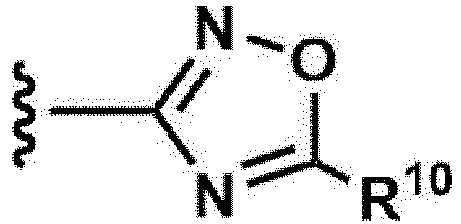
- (b) C5-8 bridged cycloalkyl {wherein the bridged cycloalkyl is optionally substituted by
- (I) hydroxy,
- (II) C1-6 alkyl (wherein the alkyl is optionally substituted by
- (i) hydroxy,
- (ii) carboxy,
- (iii) -CONH2,
- (iv) -CO-C1-4 alkoxy,
- (v) -SO2-C1-4 alkyl, or
- (vi) a group represented by the formula:

- (III) C1-6 alkoxy (wherein the alkoxy is optionally substituted by hydroxy or -SO2-C1-4 alkyl),
- (IV) carboxy,
- (V) -CO-C1-4 alkoxy,
- (VI) -O-C1-6 haloalkyl, or
- (VII) a group represented by the formula:

- (c) 5- or 6-membered heterocycloalkyl containing one nitrogen atom [wherein the heterocycloalkyl is optionally substituted by 1 to 3 substituents independently selected from the group consisting of
- (I) oxo,
- (II) C1-6 alkyl,
- (III) -CO-R11 {wherein R11 is
- (i) C1-6 alkyl (wherein the alkyl is optionally substituted by
- (A) hydroxy,
- (B) cyano, or
- (C) C1-4 alkoxy),
- (ii) C1-6 alkoxy,
- (iii) C1-6 haloalkyl,
- (iv) C3-6 cycloalkyl (wherein the cycloalkyl is optionally substituted by halogen), or
- (v) 4- to 6-membered heterocycloalkyl containing one oxygen atom (wherein the heterocycloalkyl is optionally substituted by halogen)}, and
- (i) C1-6 alkyl (wherein the alkyl is optionally substituted by
- (IV) a group represented by the formula:

- (d) 8-membered bridged heterocycloalkyl containing one nitrogen atom {wherein the bridged heterocycloalkyl is optionally substituted by -CO-R11},
- (e) 7- to 11-membered spiro heterocycloalkyl containing one nitrogen atom {wherein the spiro heterocycloalkyl is optionally substituted by -CO-R11}, or
- (f) 6- to 9-membered saturated or partially unsaturated fused ring group containing 1 or 2 nitrogen atoms (wherein the fused ring group is optionally substituted by -CO-R11).
- (a) C4-6 cycloalkyl (wherein the cycloalkyl is optionally substituted by 1 or 2 substituents independently selected from the group consisting of
- R4 is more preferably
- (a) C4-6 cycloalkyl (wherein the cycloalkyl is optionally substituted by 1 or 2 substituents independently selected from the group consisting of
- (I) hydroxy,
- (II) cyano,
- (III) oxo,
- (IV) C1-6 alkyl (wherein the alkyl is optionally substituted by
- (i) hydroxy,
- (ii) carboxy,
- (iii) -CONH2,
- (iv) -CO-C1-4 alkoxy,
- (v) -SO2-C1-4 alkyl, or
- (vi) a group represented by the formula:

- (V) C1-6 alkoxy (wherein the alkoxy is optionally substituted by hydroxy or -SO2-C1-4 alkyl),
- (VI) carboxy,
- (VII) -CO-NR5R6 [wherein R5 and R6 are each independently C1-4 alkyl (wherein the alkyl is optionally substituted by C1-4 alkoxy), or R5 and R6 optionally form, together with the nitrogen atom bonded thereto, 4- to 6-membered heterocycloalkyl containing 1 or 2 hetero atoms independently selected from the group consisting of nitrogen and oxygen atoms {wherein the heterocycloalkyl is optionally substituted by 1 or 2 substituents independently selected from the group consisting of
- (i) hydroxy, and
- (ii) C1-6 alkyl (wherein the alkyl is optionally substituted by hydroxy)}],
- (VIII) -NR7R8 {wherein R7 and R8 are each independently C1-4 alkyl or -CO-C1-6 alkyl (wherein the alkyl is optionally substituted by cyano)},
- (IX) -O-C1-6 haloalkyl,
- (X) a group represented by the formula:

- (XI) a group represented by the formula:
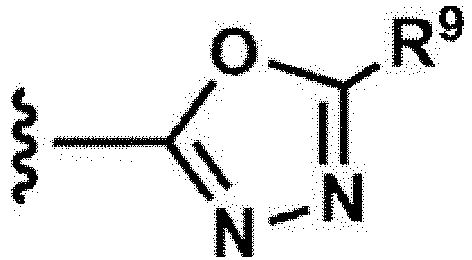
- (XII) a group represented by the formula:

- (b) C5-8 bridged cycloalkyl {wherein the bridged cycloalkyl is optionally substituted by
- (I) hydroxy,
- (II) C1-6 alkyl (wherein the alkyl is optionally substituted by
- (i) hydroxy, or
- (ii) -SO2-C1-4 alkyl),
- (III) carboxy, or
- (IV) -CO-C1-4 alkoxy},
- (c) 5- or 6-membered heterocycloalkyl containing one nitrogen atom [wherein the heterocycloalkyl is optionally substituted by 1 to 3 substituents independently selected from the group consisting of
- (I) oxo,
- (II) C1-6 alkyl, and
- (III) -CO-R11 {wherein R11 is
- (i) C1-6 alkyl (wherein the alkyl is optionally substituted by
- (A) hydroxy,
- (B) cyano, or
- (C) C1-4 alkoxy),
- (ii) C1-6 alkoxy,
- (iii) C1-6 haloalkyl,
- (iv) C3-6 cycloalkyl (wherein the cycloalkyl is optionally substituted by halogen), or
- (v) 4- to 6-membered heterocycloalkyl containing one oxygen atom (wherein the heterocycloalkyl is optionally substituted by halogen)}],
- (i) C1-6 alkyl (wherein the alkyl is optionally substituted by
- (d) 8-membered bridged heterocycloalkyl containing one nitrogen atom {wherein the bridged heterocycloalkyl is optionally substituted by -CO-R11a {wherein R11a is
- (i) C1-6 alkyl (wherein the alkyl is optionally substituted by
- (A) hydroxy, or
- (B) cyano), or
- (ii) C1-6 alkoxy,}},
- (i) C1-6 alkyl (wherein the alkyl is optionally substituted by
- (e) 7- to 11-membered spiro heterocycloalkyl containing one nitrogen atom {wherein the spiro heterocycloalkyl is optionally substituted by -CO-R11a}, or
- (f) 6- to 9-membered saturated or partially unsaturated fused ring group containing 1 or 2 nitrogen atoms (wherein the fused ring group is optionally substituted by -CO-C1-6 alkyl (wherein the alkyl is optionally substituted by hydroxy)).
- (a) C4-6 cycloalkyl (wherein the cycloalkyl is optionally substituted by 1 or 2 substituents independently selected from the group consisting of
- R4 is further preferably
- (a) C4-6 cycloalkyl (wherein the cycloalkyl is optionally substituted by
- (I) hydroxy,
- (II) cyano,
- (III) C1-6 alkyl (wherein the alkyl is optionally substituted by
- (i) hydroxy,
- (ii) carboxy,
- (iii) -CONH2,
- (iv) -CO-C1-4 alkoxy,
- (v) -SO2-C1-4 alkyl, or
- (vi) a group represented by the formula:

- (IV) C1-6 alkoxy (wherein the alkoxy is optionally substituted by hydroxy or -SO2-C1-4 alkyl),
- (V) -CO-NR5R6 [wherein R5 and R6 form, together with the nitrogen atom bonded thereto, 4- to 6-membered heterocycloalkyl containing 1 or 2 hetero atoms independently selected from the group consisting of nitrogen and oxygen atoms {wherein the heterocycloalkyl is optionally substituted by C1-6 alkyl (wherein the alkyl is optionally substituted by hydroxy)}],
- (VI) -NR7R8 {wherein R7 and R8 are each independently C1-4 alkyl or -CO-C1-6 alkyl (wherein the alkyl is optionally substituted by cyano)},
- (VII) a group represented by the formula:

- (VIII) a group represented by the formula:

- (IX) a group represented by the formula:

- (b) C5-8 bridged cycloalkyl {wherein the bridged cycloalkyl is optionally substituted by C1-6 alkyl (wherein the alkyl is optionally substituted by hydroxy)},
- (c) 5- or 6-membered heterocycloalkyl containing one nitrogen atom [wherein the heterocycloalkyl is optionally substituted by -CO-R11 {wherein R11 is
- (i) C1-6 alkyl (wherein the alkyl is optionally substituted by
- (A) hydroxy,
- (B) cyano, or
- (C) C1-4 alkoxy),
- (ii) C1-6 alkoxy,
- (iii) C1-6 haloalkyl,
- (iv) C3-6 cycloalkyl (wherein the cycloalkyl is optionally substituted by halogen), or
- (v) 4- to 6-membered heterocycloalkyl containing one oxygen atom (wherein the heterocycloalkyl is optionally substituted by halogen)}], or
- (i) C1-6 alkyl (wherein the alkyl is optionally substituted by
- (d) 8-membered bridged heterocycloalkyl containing one nitrogen atom {wherein the bridged heterocycloalkyl is optionally substituted by -CO-C1-6 alkyl (wherein the alkyl is optionally substituted by
- (A) hydroxy, or
- (B) cyano)}.
- (a) C4-6 cycloalkyl (wherein the cycloalkyl is optionally substituted by
- In a partial structure represented by the formula:

- X1 is carbon or a nitrogen atom;
- m is 0 or 1;
- R1 is
- (1) hydroxy,
- (2) C1-4 alkyl (wherein the alkyl is optionally substituted by hydroxy or C1-4 alkoxy),
- (3) C1-4 alkoxy,
- (4) halogen, or
- (5) C1-4 haloalkyl; and
- R2 in the number of m are each independently halogen,
more preferably, - X1 is carbon or a nitrogen atom;
- m is 0 or 1;
- R1 is
- (1) C1-4 alkyl (wherein the alkyl is optionally substituted by hydroxy or C1-4 alkoxy),
- (2) halogen, or
- (3) C1-4 haloalkyl; and
- R2 in the number of m are each independently halogen.
- Specific embodiments of each substituent of the compound of formula [III] are exemplified below. However, each substituent of the compound of formula [III] is not limited to the specific embodiments. In addition, the compound of the formula [III] also includes an embodiment in which any two or more of the specific embodiments of each substituent are combined.
- Preferred embodiment of R1 is
- (1) C1-4 alkyl,
- (2) C1-4 haloalkyl, or
- (3) C3-6 cycloalkyl.
- More preferred embodiment of R1 is C1-4 alkyl.
- Specific preferable example of R1 is methyl.
- Preferred embodiments of R2 in the number of m are each independently
- (1) cyano,
- (2) C1-4 alkyl,
- (3) C1-4 alkoxy, or
- (4) halogen.
- More preferred embodiments of R2 in the number of m are each independently halogen.
- Preferred specific examples of R2 in the number of m include fluorine and chlorine.
- m is preferably 0 or 1.
- Preferred embodiments of R3 in the number of n are each independently halogen.
- Preferred specific examples of R3 in the number of n include fluorine and chlorine.
-
- R4 is preferably
- (a) C4-6 cycloalkyl (wherein the cycloalkyl is optionally substituted by 1 or 2 substituents independently selected from the group consisting of
- (I) hydroxy,
- (II) cyano,
- (III) oxo,
- (IV) C1-6 alkyl (wherein the alkyl is optionally substituted by
- (i) hydroxy,
- (ii) carboxy,
- (iii) -CONH2,
- (iv) -CO-C1-4 alkoxy,
- (v) -SO2-C1-4 alkyl, or
- (vi) a group represented by the formula:

- (V) C1-6 alkoxy (wherein the alkoxy is optionally substituted by hydroxy or -SO2-C1-4 alkyl),
- (VI) carboxy,
- (VII) -CO-NR5R6 [wherein R5 and R6 are each independently C1-4 alkyl (wherein the alkyl is optionally substituted by C1-4 alkoxy), or R5 and R6 optionally form, together with the nitrogen atom bonded thereto, 4- to 6-membered heterocycloalkyl containing 1 or 2 hetero atoms independently selected from the group consisting of nitrogen and oxygen atoms {wherein the heterocycloalkyl is optionally substituted by 1 or 2 substituents independently selected from the group consisting of
- (i) hydroxy, and
- (ii) C1-6 alkyl (wherein the alkyl is optionally substituted by hydroxy)}],
- (VIII) -NR7R8 {wherein R7 and R8 are each independently C1-4 alkyl or -CO-C1-6 alkyl (wherein the alkyl is optionally substituted by cyano)},
- (IX) -O-C1-6 haloalkyl,
- (X) a group represented by the formula:

- (XI) a group represented by the formula:

- (XII) a group represented by the formula:

- (b) C5-8 bridged cycloalkyl {wherein the bridged cycloalkyl is optionally substituted by
- (I) hydroxy,
- (II) C1-6 alkyl (wherein the alkyl is optionally substituted by
- (i) hydroxy,
- (ii) carboxy,
- (iii) -CONH2,
- (iv) -CO-C1-4 alkoxy,
- (v) -SO2-C1-4 alkyl, or
- (vi) a group represented by the formula:

- (III) C1-6 alkoxy (wherein the alkoxy is optionally substituted by hydroxy or -SO2-C1-4 alkyl),
- (IV) carboxy,
- (V) -CO-C1-4 alkoxy,
- (VI) -O-C1-6 haloalkyl, or
- (VII) a group represented by the formula:

- (c) 5- or 6-membered heterocycloalkyl containing one nitrogen atom [wherein the heterocycloalkyl is optionally substituted by 1 to 3 substituents independently selected from the group consisting of
- (I) oxo,
- (II) C1-6 alkyl,
- (III) -CO-R11 {wherein R11 is
- (i) C1-6 alkyl (wherein the alkyl is optionally substituted by
- (A) hydroxy,
- (B) cyano, or
- (C) C1-4 alkoxy),
- (ii) C1-6 alkoxy,
- (iii) C1-6 haloalkyl,
- (iv) C3-6 cycloalkyl (wherein the cycloalkyl is optionally substituted by halogen), or
- (v) 4- to 6-membered heterocycloalkyl containing one oxygen atom (wherein the heterocycloalkyl is optionally substituted by halogen)}, and
- (i) C1-6 alkyl (wherein the alkyl is optionally substituted by
- (IV) a group represented by the formula:

- (d) 6- to 9-membered saturated or partially unsaturated fused ring group containing 1 or 2 nitrogen atoms {wherein the fused ring group is optionally substituted by -CO-R11}, or
- (e) a group represented by the formula:

- (a) C4-6 cycloalkyl (wherein the cycloalkyl is optionally substituted by 1 or 2 substituents independently selected from the group consisting of
- R4 is more preferably
- (a) C4-6 cycloalkyl (wherein the cycloalkyl is optionally substituted by 1 or 2 substituents independently selected from the group consisting of
- (I) hydroxy,
- (II) cyano,
- (III) C1-6 alkyl (wherein the alkyl is optionally substituted by
- (i) hydroxy,
- (ii) carboxy, or
- (iii) -SO2-C1-4 alkyl),
- (IV) -O-C1-6 haloalkyl,
- (V) a group represented by the formula:

- (VI) a group represented by the formula:

- (b) C5-8 bridged cycloalkyl {wherein the bridged cycloalkyl is optionally substituted by
- (I) hydroxy,
- (II) C1-6 alkyl (wherein the alkyl is optionally substituted by
- (i) hydroxy,
- (ii) carboxy, or
- (iii) -CO-C1-4 alkoxy), or
- (III) carboxy},
- (c) 5- or 6-membered heterocycloalkyl containing one nitrogen atom [wherein the heterocycloalkyl is optionally substituted by a group represented by the formula:

- (d) 6- to 9-membered saturated or partially unsaturated fused ring group containing 1 or 2 nitrogen atoms, or
- (e) a group represented by the formula:

- (a) C4-6 cycloalkyl (wherein the cycloalkyl is optionally substituted by 1 or 2 substituents independently selected from the group consisting of
- Specific embodiments of each substituent of the compound of formula [IV] are exemplified below. However, each substituent of the compound of formula [IV] is not limited to the specific embodiments. In addition, the compound of the formula [IV] also includes an embodiment in which any two or more of the specific embodiments of each substituent are combined.
- Y1 is preferably a nitrogen atom.
- Y2 is preferably a nitrogen atom.
- Y3 is preferably a carbon atom.
- Y4 is preferably a carbon atom.
- Preferred embodiment of R1 is C1-4 alkyl.
- Preferred specific example of R1 is methyl.
- m is preferably 0.
- Preferred embodiments of R3 in the number of n are each independently halogen.
- Preferred specific example of R3 in the number of n is fluorine.
- n is preferably 0 or 1.
- R4 is preferably C4-6 cycloalkyl (wherein the cycloalkyl is optionally substituted by 1 or 2 substituents independently selected from the group consisting of
- (I) hydroxy,
- (II) cyano,
- (III) oxo,
- (IV) C1-6 alkyl (wherein the alkyl is optionally substituted by
- (i) hydroxy,
- (ii) carboxy,
- (iii) -CONH2,
- (iv) -CO-C1-4 alkoxy,
- (v) -SO2-C1-4 alkyl, or
- (vi) a group represented by the formula:

- (V) C1-6 alkoxy (wherein the alkoxy is optionally substituted by hydroxy or -SO2-C1-4 alkyl),
- (VI) carboxy,
- (VII) -CO-NR5R6 [wherein R5 and R6 are each independently C1-4 alkyl (wherein the alkyl is optionally substituted by C1-4 alkoxy), or R5 and R6 optionally form, together with the nitrogen atom bonded thereto, 4- to 6-membered heterocycloalkyl containing 1 or 2 hetero atoms independently selected from the group consisting of nitrogen and oxygen atoms {wherein the heterocycloalkyl is optionally substituted by 1 or 2 substituents independently selected from the group consisting of
- (i) hydroxy, and
- (ii) C1-6 alkyl (wherein the alkyl is optionally substituted by hydroxy)}],
- (VIII) -NR7R8 {wherein R7 and R8 are each independently C1-4 alkyl or -CO-C1-6 alkyl (wherein the alkyl is optionally substituted by cyano)},
- (IX) -O-C1-6 haloalkyl,
- (X) a group represented by the formula:

- (XI) a group represented by the formula:

- (XII) a group represented by the formula:

- R4 is more preferably C4-6 cycloalkyl (wherein the cycloalkyl is
- (I) hydroxy, or
- (II) C1-6 alkyl (wherein the alkyl is optionally substituted by
- (i) hydroxy, or
- (ii) carboxy).
- One of the preferred embodiments of the compound of the formula [II] is a compound of the formula [II] wherein
- X1, X2, X3 and X4 are each independently a carbon or a nitrogen atom (wherein the total number of the nitrogen atoms for X1, X2, X3 and X4 is 0 or 1);
- Y1 and Y2 are each a nitrogen atom;
- Y3 and Y4 are each a carbon atom;
- m is 0 or 1;
- n is 0 or 1;
- R1 is
- (1) hydroxy,
- (2) C1-4 alkyl (wherein the alkyl is optionally substituted by hydroxy or C1-4 alkoxy),
- (3) C1-4 alkoxy,
- (4) halogen, or
- (5) C1-4 haloalkyl;
- R2 in the number of m are each independently halogen;
- R3 in the number of n are each independently halogen;
- R4 is
- (a) C4-6 cycloalkyl (wherein the cycloalkyl is optionally substituted by 1 or 2 substituents independently selected from the group consisting of
- (I) hydroxy,
- (II) cyano,
- (III) oxo,
- (IV) C1-6 alkyl (wherein the alkyl is optionally substituted by
- (i) hydroxy,
- (ii) carboxy,
- (iii) -CONH2,
- (iv) -CO-C1-4 alkoxy,
- (v) -SO2-C1-4 alkyl, or
- (vi) a group represented by the formula:

- (V) C1-6 alkoxy (wherein the alkoxy is optionally substituted by hydroxy or -SO2-C1-4 alkyl),
- (VI) carboxy,
- (VII) -CO-NR5R6 [wherein R5 and R6 are each independently C1-4 alkyl (wherein the alkyl is optionally substituted by C1-4 alkoxy), or R5 and R6 optionally form, together with the nitrogen atom bonded thereto, 4- to 6-membered heterocycloalkyl containing 1 or 2 hetero atoms independently selected from the group consisting of nitrogen and oxygen atoms {wherein the heterocycloalkyl is optionally substituted by 1 or 2 substituents independently selected from the group consisting of
- (i) hydroxy, and
- (ii) C1-6 alkyl (wherein the alkyl is optionally substituted by hydroxy)}],
- (VIII) -NR7R8 {wherein R7 and R8 are each independently C1-4 alkyl or -CO-C1-6 alkyl (wherein the alkyl is optionally substituted by cyano)},
- (IX) -O-C1-6 haloalkyl,
- (X) a group represented by the formula:

- (XI) a group represented by the formula:

- (XII) a group represented by the formula:

- (b) C5-8 bridged cycloalkyl {wherein the bridged cycloalkyl is optionally substituted by
- (I) hydroxy,
- (II) C1-6 alkyl (wherein the alkyl is optionally substituted by
- (i) hydroxy,
- (ii) carboxy,
- (iii) -CONH2,
- (iv) -CO-C1-4 alkoxy,
- (v) -SO2-C1-4 alkyl, or
- (vi) a group represented by the formula:

- (III) C1-6 alkoxy (wherein the alkoxy is optionally substituted by hydroxy or -SO2-C1-4 alkyl),
- (IV) carboxy,
- (V) -CO-C1-4 alkoxy,
- (VI) -O-C1-6 haloalkyl, or
- (VII) a group represented by the formula:

- (c) 5- or 6-membered heterocycloalkyl containing one nitrogen atom [wherein the heterocycloalkyl is optionally substituted by 1 to 3 substituents independently selected from the group consisting of
- (I) oxo,
- (II) C1-6 alkyl,
- (III) -CO-R11 {wherein R11 is
- (i) C1-6 alkyl (wherein the alkyl is optionally substituted by
- (A) hydroxy,
- (B) cyano, or
- (C) C1-4 alkoxy),
- (ii) C1-6 alkoxy,
- (iii) C1-6 haloalkyl,
- (iv) C3-6 cycloalkyl (wherein the cycloalkyl is optionally substituted by halogen), or
- (v) 4- to 6-membered heterocycloalkyl containing one oxygen atom (wherein the heterocycloalkyl is optionally substituted by halogen)}, and
- (i) C1-6 alkyl (wherein the alkyl is optionally substituted by
- (IV) a group represented by the formula:

- (d) 8-membered bridged heterocycloalkyl containing one nitrogen atom {wherein the bridged heterocycloalkyl is optionally substituted by -CO-R11},
- (e) 7- to 11-membered spiro heterocycloalkyl containing one nitrogen atom {wherein the spiro heterocycloalkyl is optionally substituted by -CO-R11}, or
- (f) 6- to 9-membered saturated or partially unsaturated fused ring group containing 1 or 2 nitrogen atoms (wherein the fused ring group is optionally substituted by -CO-R11).
- (a) C4-6 cycloalkyl (wherein the cycloalkyl is optionally substituted by 1 or 2 substituents independently selected from the group consisting of
- One of the more preferred embodiments of the compound of the formula [II] is a compound of the formula [II] wherein
- X1, X2, X3 and X4 are each independently a carbon or a nitrogen atom (wherein the total number of the nitrogen atoms for X1, X2, X3 and X4 is 0 or 1);
- Y1 and Y2 are each a nitrogen atom;
- Y3 and Y4 are each a carbon atom;
- m is 0 or 1;
- n is 0 or 1;
- R1 is
- (1) C1-4 alkyl (wherein the alkyl is optionally substituted by hydroxy or C1-4 alkoxy),
- (2) halogen, or
- (3) C1-4 haloalkyl;
- R2 in the number of m are each independently halogen;
- R3 in the number of n are each independently halogen;
- R4 is
- (a) C4-6 cycloalkyl (wherein the cycloalkyl is optionally substituted by 1 or 2 substituents independently selected from the group consisting of
- (I) hydroxy,
- (II) cyano,
- (III) oxo,
- (IV) C1-6 alkyl (wherein the alkyl is optionally substituted by
- (i) hydroxy,
- (ii) carboxy,
- (iii) -CONH2,
- (iv) -CO-C1-4 alkoxy,
- (v) -SO2-C1-4 alkyl, or
- (vi) a group represented by the formula:

- (V) C1-6 alkoxy (wherein the alkoxy is optionally substituted by hydroxy or -SO2-C1-4 alkyl),
- (VI) carboxy,
- (VII) -CO-NR5R6 [wherein R5 and R6 are each independently C1-4 alkyl (wherein the alkyl is optionally substituted by C1-4 alkoxy), or R5 and R6 optionally form, together with the nitrogen atom bonded thereto, 4- to 6-membered heterocycloalkyl containing 1 or 2 hetero atoms independently selected from the group consisting of nitrogen and oxygen atoms {wherein the heterocycloalkyl is optionally substituted by 1 or 2 substituents independently selected from the group consisting of
- (i) hydroxy, and
- (ii) C1-6 alkyl (wherein the alkyl is optionally substituted by hydroxy)}],
- (VIII) -NR7R8 {wherein R7 and R8 are each independently C1-4 alkyl or -CO-C1-6 alkyl (wherein the alkyl is optionally substituted by cyano)},
- (IX) -O-C1-6 haloalkyl,
- (X) a group represented by the formula:

- (XI) a group represented by the formula:
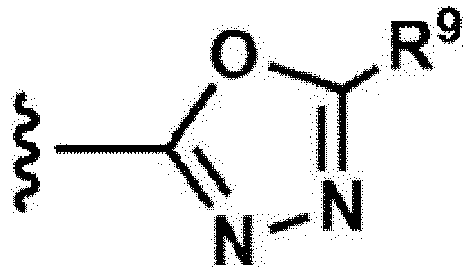
- (XII) a group represented by the formula:

- (b) C5-8 bridged cycloalkyl {wherein the bridged cycloalkyl is optionally substituted by
- (I) hydroxy,
- (II) C1-6 alkyl (wherein the alkyl is optionally substituted by
- (i) hydroxy, or
- (ii) -SO2-C1-4 alkyl),
- (III) carboxy, or
- (IV) -CO-C1-4 alkoxy},
- (c) 5- or 6-membered heterocycloalkyl containing one nitrogen atom [wherein the heterocycloalkyl is optionally substituted by 1 to 3 substituents independently selected from the group consisting of
- (I) oxo,
- (II) C1-6 alkyl, and
- (III) -CO-R11 {wherein R11 is
- (i) C1-6 alkyl (wherein the alkyl is optionally substituted by
- (A) hydroxy,
- (B) cyano, or
- (C) C1-4 alkoxy),
- (ii) C1-6 alkoxy,
- (iii) C1-6 haloalkyl,
- (iv) C3-6 cycloalkyl (wherein the cycloalkyl is optionally substituted by halogen), or
- (v) 4- to 6-membered heterocycloalkyl containing one oxygen atom (wherein the heterocycloalkyl is optionally substituted by halogen)}],
- (i) C1-6 alkyl (wherein the alkyl is optionally substituted by
- (d) 8-membered bridged heterocycloalkyl containing one nitrogen atom {wherein the bridged heterocycloalkyl is -CO-R11a {wherein R11a is optionally substituted by
- (i) C1-6 alkyl (wherein the alkyl is optionally substituted by
- (A) hydroxy, or
- (B) cyano), or
- (ii) C1-6 alkoxy}},
- (i) C1-6 alkyl (wherein the alkyl is optionally substituted by
- (e) 7- to 11-membered spiro heterocycloalkyl containing one nitrogen atom {wherein the spiro heterocycloalkyl is optionally substituted by -CO-R11a}, or
- (f) 6- to 9-membered saturated or partially unsaturated fused ring group containing 1 or 2 nitrogen atoms (wherein the fused ring group is optionally substituted by -CO-C1-6 alkyl (wherein the alkyl is optionally substituted by hydroxy)).
- (a) C4-6 cycloalkyl (wherein the cycloalkyl is optionally substituted by 1 or 2 substituents independently selected from the group consisting of
- One of the further preferred embodiments of the compound of the formula [II] is a compound of the formula [II] wherein X1, X2, X3 and X4 are each independently a carbon or a nitrogen atom (wherein the total number of the nitrogen atoms for X1, X2, X3 and X4 is 0 or 1);
- Y1 and Y2 are each a nitrogen atom;
- Y3 and Y4 are each a carbon atom;
- m is 0 or 1;
- n is 0 or 1;
- R1 is
- (1) C1-4 alkyl (wherein the alkyl is optionally substituted by hydroxy or C1-4 alkoxy),
- (2) halogen, or
- (3) C1-4 haloalkyl;
- R2 in the number of m are each independently halogen;
- R3 in the number of n are each independently halogen;
- R4 is
- (a) C4-6 cycloalkyl (wherein the cycloalkyl is optionally substituted by
- (I) hydroxy,
- (II) cyano,
- (III) C1-6 alkyl (wherein the alkyl is optionally substituted by
- (i) hydroxy,
- (ii) carboxy,
- (iii) -CONH2,
- (iv) -CO-C1-4 alkoxy,
- (v) -SO2-C1-4 alkyl, or
- (vi) a group represented by the formula:

- (IV) C1-6 alkoxy (wherein the alkoxy is optionally substituted by hydroxy or -SO2-C1-4 alkyl),
- (V) -CO-NR5R6 [wherein R5 and R6 form, together with the nitrogen atom bonded thereto, 4- to 6-membered heterocycloalkyl containing 1 or 2 hetero atoms independently selected from the group consisting of nitrogen and oxygen atoms {wherein the heterocycloalkyl is optionally substituted by C1-6 alkyl (wherein the alkyl is optionally substituted by hydroxy)}],
- (VI) -NR7R8 {wherein R7 and R8 are each independently C1-4 alkyl or -CO-C1-6 alkyl (wherein the alkyl is optionally substituted by cyano)},
- (VII) a group represented by the formula:

- (VIII) a group represented by the formula:

- (IX) a group represented by the formula:

- (b) C5-8 bridged cycloalkyl {wherein the bridged cycloalkyl is optionally substituted by C1-6 alkyl (wherein the alkyl is optionally substituted by hydroxy)},
- (c) 5- or 6-membered heterocycloalkyl containing one nitrogen atom [wherein the heterocycloalkyl is optionally substituted by -CO-R11 {wherein R11 is
- (i) C1-6 alkyl (wherein the alkyl is optionally substituted by
- (A) hydroxy,
- (B) cyano, or
- (C) C1-4 alkoxy),
- (ii) C1-6 alkoxy,
- (iii) C1-6 haloalkyl,
- (iv) C3-6 cycloalkyl (wherein the cycloalkyl is optionally substituted by halogen), or
- (v) 4- to 6-membered heterocycloalkyl containing one oxygen atom (wherein the heterocycloalkyl is optionally substituted by halogen)}], or
- (i) C1-6 alkyl (wherein the alkyl is optionally substituted by
- (d) 8-membered bridged heterocycloalkyl containing one nitrogen atom {wherein the bridged heterocycloalkyl is optionally substituted by -CO-C1-6 alkyl (wherein the alkyl is optionally substituted by
- (A) hydroxy, or
- (B) cyano)}.
- (a) C4-6 cycloalkyl (wherein the cycloalkyl is optionally substituted by
- One of the preferred embodiments of the compound of the formula [I] is a compound of the formula [I] wherein
- X1 is carbon or a nitrogen atom;
- Y1 and Y2 are each a nitrogen atom;
- Y3 and Y4 are each a carbon atom;
- m is 0 or 1;
- n is 0 or 1;
- R1 is
- (1) hydroxy,
- (2) C1-4 alkyl (wherein the alkyl is optionally substituted by hydroxy or C1-4 alkoxy),
- (3) C1-4 alkoxy,
- (4) halogen, or
- (5) C1-4 haloalkyl;
- R2 in the number of m are each independently halogen;
- R3 in the number of n are each independently halogen;
- R4 is
- (a) C4-6 cycloalkyl (wherein the cycloalkyl is optionally substituted by 1 or 2 substituents independently selected from the group consisting of
- (I) hydroxy,
- (II) cyano,
- (III) oxo,
- (IV) C1-6 alkyl (wherein the alkyl is optionally substituted by
- (i) hydroxy,
- (ii) carboxy,
- (iii) -CONH2,
- (iv) -CO-C1-4 alkoxy,
- (v) -SO2-C1-4 alkyl, or
- (vi) a group represented by the formula:

- (V) C1-6 alkoxy (wherein the alkoxy is optionally substituted by hydroxy or -SO2-C1-4 alkyl),
- (VI) carboxy,
- (VII) -CO-NR5R6 [wherein R5 and R6 are each independently C1-4 alkyl (wherein the alkyl is optionally substituted by C1-4 alkoxy), or R5 and R6 optionally form, together with the nitrogen atom bonded thereto, 4- to 6-membered heterocycloalkyl containing 1 or 2 hetero atoms independently selected from the group consisting of nitrogen and oxygen atoms {wherein the heterocycloalkyl is optionally substituted by 1 or 2 substituents independently selected from the group consisting of
- (i) hydroxy, and
- (ii) C1-6 alkyl (wherein the alkyl is optionally substituted by hydroxy)}],
- (VIII) -NR7R8 {wherein R7 and R8 are each independently C1-4 alkyl or -CO-C1-6 alkyl (wherein the alkyl is optionally substituted by cyano)},
- (IX) -O-C1-6 haloalkyl,
- (X) a group represented by the formula:

- (XI) a group represented by the formula:

- (XII) a group represented by the formula:

- (b) C5-8 bridged cycloalkyl {wherein the bridged cycloalkyl is optionally substituted by
- (I) hydroxy,
- (II) C1-6 alkyl (wherein the alkyl is optionally substituted by
- (i) hydroxy,
- (ii) carboxy,
- (iii) -CONH2,
- (iv) -CO-C1-4 alkoxy,
- (v) -SO2-C1-4 alkyl, or
- (vi) a group represented by the formula:

- (III) C1-6 alkoxy (wherein the alkoxy is optionally substituted by hydroxy or -SO2-C1-4 alkyl),
- (IV) carboxy,
- (V) -CO-C1-4 alkoxy,
- (VI) -O-C1-6 haloalkyl, or
- (VII) a group represented by the formula:
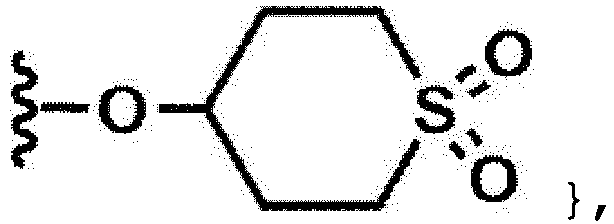
- (c) 5- or 6-membered heterocycloalkyl containing one nitrogen atom [wherein the heterocycloalkyl is optionally substituted by 1 to 3 substituents independently selected from the group consisting of
- (I) oxo,
- (II) C1-6 alkyl,
- (III) -CO-R11 {wherein R11 is
- (i) C1-6 alkyl (wherein the alkyl is optionally substituted by
- (A) hydroxy,
- (B) cyano, or
- (C) C1-4 alkoxy),
- (ii) C1-6 alkoxy,
- (iii) C1-6 haloalkyl,
- (iv) C3-6 cycloalkyl (wherein the cycloalkyl is optionally substituted by halogen), or
- (v) 4- to 6-membered heterocycloalkyl containing one oxygen atom (wherein the heterocycloalkyl is optionally substituted by halogen)}, and
- (i) C1-6 alkyl (wherein the alkyl is optionally substituted by
- (IV) a group represented by the formula:

- (d) 8-membered bridged heterocycloalkyl containing one nitrogen atom {wherein the bridged heterocycloalkyl is optionally substituted by -CO-R11},
- (e) 7- to 11-membered spiro heterocycloalkyl containing one nitrogen atom {wherein the spiro heterocycloalkyl is optionally substituted by -CO-R11}, or
- (f) 6- to 9-membered saturated or partially unsaturated fused ring group containing 1 or 2 nitrogen atoms (wherein the fused ring group is optionally substituted by -CO-R11).
- (a) C4-6 cycloalkyl (wherein the cycloalkyl is optionally substituted by 1 or 2 substituents independently selected from the group consisting of
- One of the more preferred embodiments of the compound of the formula [I] is a compound of the formula [I] wherein
- X1 is carbon or a nitrogen atom;
- Y1 and Y2 are each a nitrogen atom;
- Y3 and Y4 are each a carbon atom;
- m is 0 or 1;
- n is 0 or 1;
- R1 is
- (1) C1-4 alkyl (wherein the alkyl is optionally substituted by hydroxy or C1-4 alkoxy),
- (2) halogen, or
- (3) C1-4 haloalkyl,;
- R2 in the number of m are each independently halogen;
- R3 in the number of n are each independently halogen;
- R4 is
- (a) C4-6 cycloalkyl (wherein the cycloalkyl is optionally substituted by 1 or 2 substituents independently selected from the group consisting of
- (I) hydroxy,
- (II) cyano,
- (III) oxo,
- (IV) C1-6 alkyl (wherein the alkyl is optionally substituted by
- (i) hydroxy,
- (ii) carboxy,
- (iii) -CONH2,
- (iv) -CO-C1-4 alkoxy,
- (v) -SO2-C1-4 alkyl, or
- (vi) a group represented by the formula:

- (V) C1-6 alkoxy (wherein the alkoxy is optionally substituted by hydroxy or -SO2-C1-4 alkyl),
- (VI) carboxy,
- (VII) -CO-NR5R6 [wherein R5 and R6 are each independently C1-4 alkyl (wherein the alkyl is optionally substituted by C1-4 alkoxy), or R5 and R6 optionally form, together with the nitrogen atom bonded thereto, 4- to 6-membered heterocycloalkyl containing 1 or 2 hetero atoms independently selected from the group consisting of nitrogen and oxygen atoms {wherein the heterocycloalkyl is optionally substituted by 1 or 2 substituents independently selected from the group consisting of
- (i) hydroxy, and
- (ii) C1-6 alkyl (wherein the alkyl is optionally substituted by hydroxy)}],
- (VIII) -NR7R8 {wherein R7 and R8 are each independently C1-4 alkyl or -CO-C1-6 alkyl (wherein the alkyl is optionally substituted by cyano)},
- (IX) -O-C1-6 haloalkyl,
- (X) a group represented by the formula:

- (XI) a group represented by the formula:

- (XII) a group represented by the formula:

- (b) C5-8 bridged cycloalkyl {wherein the bridged cycloalkyl is optionally substituted by
- (I) hydroxy,
- (II) C1-6 alkyl (wherein the alkyl is optionally substituted by
- (i) hydroxy, or
- (ii) -SO2-C1-4 alkyl,),
- (III) carboxy, or
- (IV) -CO-C1-4 alkoxy,},
- (c) 5- or 6-membered heterocycloalkyl containing one nitrogen atom [wherein the heterocycloalkyl is optionally substituted by 1 to 3 substituents independently selected from the group consisting of
- (I) oxo,
- (II) C1-6 alkyl, and
- (III) -CO-R11 {wherein R11 is
- (i) C1-6 alkyl (wherein the alkyl is optionally substituted by
- (A) hydroxy,
- (B) cyano, or
- (C) C1-4 alkoxy),
- (ii) C1-6 alkoxy,
- (iii) C1-6 haloalkyl,
- (iv) C3-6 cycloalkyl (wherein the cycloalkyl is optionally substituted by halogen), or
- (v) 4- to 6-membered heterocycloalkyl containing one oxygen atom (wherein the heterocycloalkyl is optionally substituted by halogen)}],
- (i) C1-6 alkyl (wherein the alkyl is optionally substituted by
- (d) 8-membered bridged heterocycloalkyl containing one nitrogen atom {wherein the bridged heterocycloalkyl is optionally substituted by -CO-R11a {wherein R113 is
- (i) C1-6 alkyl (wherein the alkyl is optionally substituted by
- (A) hydroxy, or
- (B) cyano), or
- (ii) C1-6 alkoxy}},
- (i) C1-6 alkyl (wherein the alkyl is optionally substituted by
- (e) 7- to 11-membered spiro heterocycloalkyl containing one nitrogen atom {wherein the spiro heterocycloalkyl is optionally substituted by -CO-R11a}, or
- (f) 6- to 9-membered saturated or partially unsaturated fused ring group containing 1 or 2 nitrogen atoms (wherein the fused ring group is optionally substituted by -CO-C1-6 alkyl (wherein the alkyl is optionally substituted by hydroxy)).
- (a) C4-6 cycloalkyl (wherein the cycloalkyl is optionally substituted by 1 or 2 substituents independently selected from the group consisting of
- One of the further preferred embodiments of the compound of the formula [I] is a compound of the formula [I] wherein
- X1 is carbon or a nitrogen atom;
- Y1 and Y2 are each a nitrogen atom;
- Y3 and Y4 are each a carbon atom;
- m is 0 or 1;
- n is 0 or 1;
- R1 is
- (1) C1-4 alkyl (wherein the alkyl is optionally substituted by hydroxy or C1-4 alkoxy),
- (2) halogen, or
- (3) C1-4 haloalkyl;
- R2 in the number of m are each independently halogen;
- R3 in the number of n are each independently halogen;
- R4 is
- (a) C4-6 cycloalkyl (wherein the cycloalkyl is optionally substituted by
- (I) hydroxy,
- (II) cyano,
- (III) C1-6 alkyl (wherein the alkyl is optionally substituted by
- (i) hydroxy,
- (ii) carboxy,
- (iii) -CONH2,
- (iv) -CO-C1-4 alkoxy,
- (v) -SO2-C1-4 alkyl, or
- (vi) a group represented by the formula:

- (IV) C1-6 alkoxy (wherein the alkoxy is optionally substituted by hydroxy or -SO2-C1-4 alkyl),
- (V) -CO-NR5R6 [wherein R5 and R6 form, together with the nitrogen atom bonded thereto, 4- to 6-membered heterocycloalkyl containing 1 or 2 hetero atoms independently selected from the group consisting of nitrogen and oxygen atoms {wherein the heterocycloalkyl is optionally substituted by C1-6 alkyl (wherein the alkyl is optionally substituted by hydroxy)}],
- (VI) -NR7R8 {wherein R7 and R8 are each independently C1-4 alkyl or -CO-C1-6 alkyl (wherein the alkyl is optionally substituted by cyano)},
- (VII) a group represented by the formula:

- (VIII) a group represented by the formula:

- (IX) a group represented by the formula:

- (b) C5-8 bridged cycloalkyl {wherein the bridged cycloalkyl is optionally substituted by C1-6 alkyl (wherein the alkyl is optionally substituted by hydroxy)},
- (c) 5- or 6-membered heterocycloalkyl containing one nitrogen atom [wherein the heterocycloalkyl is optionally substituted by -CO-R11 {wherein R11 is
- (i) C1-6 alkyl (wherein the alkyl is optionally substituted by
- (A) hydroxy,
- (B) cyano, or
- (C) C1-4 alkoxy),
- (ii) C1-6 alkoxy,
- (iii) C1-6 haloalkyl,
- (iv) C3-6 cycloalkyl (wherein the cycloalkyl is optionally substituted by halogen), or
- (v) 4- to 6-membered heterocycloalkyl containing one oxygen atom (wherein the heterocycloalkyl is optionally substituted by halogen)}], or
- (i) C1-6 alkyl (wherein the alkyl is optionally substituted by
- (d) 8-membered bridged heterocycloalkyl containing one nitrogen atom {wherein the bridged heterocycloalkyl is optionally substituted by -CO-C1-6 alkyl (wherein the alkyl is optionally substituted by
- (A) hydroxy, or
- (B) cyano)}.
- (a) C4-6 cycloalkyl (wherein the cycloalkyl is optionally substituted by
- R1 is
- One of the preferred embodiments of the compound of the formula [IC] is a compound represented by the formula [ICa]:
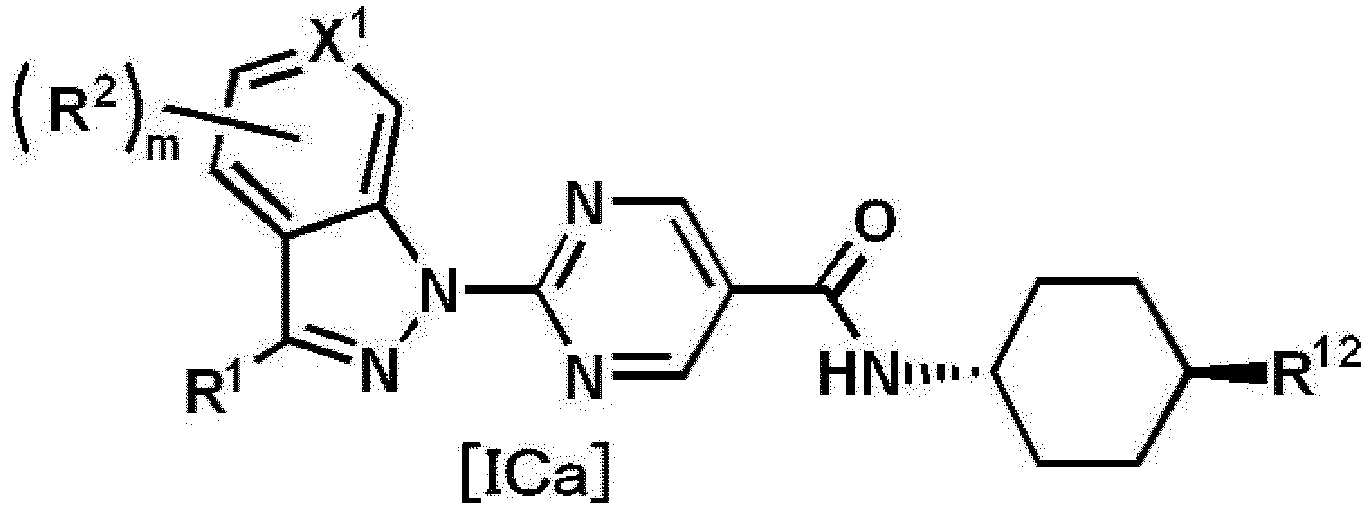
- One of the more preferred embodiments of the compound of the formula [IC] is a compound of the formula [ICa], wherein X1, R1, R2 and m are as defined above:
- R12 is
- (1) hydroxy,
- (2) cyano,
- (3) C1-6 alkyl (wherein the alkyl is optionally substituted by
- (a) hydroxy,
- (b) carboxy,
- (c) -CONH2,
- (d) -CO-C1-4 alkoxy,
- (e) -SO2-C1-4 alkyl, or
- (f) a group represented by the formula:

- (4) C1-6 alkoxy (wherein the alkoxy is optionally substituted by hydroxy or -SO2-C1-4 alkyl),
- (5) -CO-NR5R6 [wherein R5 and R6 form, together with the nitrogen atom bonded thereto, 4- to 6-membered heterocycloalkyl containing 1 or 2 hetero atoms independently selected from the group consisting of nitrogen and oxygen atoms {wherein the heterocycloalkyl is optionally substituted by C1-6 alkyl (wherein the alkyl is optionally substituted by hydroxy)}],
- (6) -NR7R8 {wherein R7 and R8 are each independently C1-4 alkyl or -CO-C1-6 alkyl (wherein the alkyl is optionally substituted by cyano) },
- (7) a group represented by the formula:
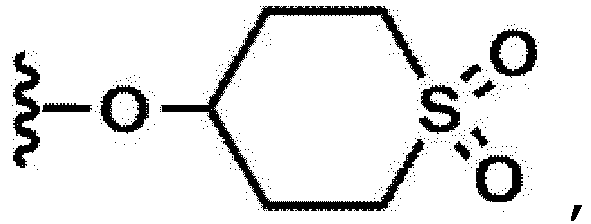
- (8) a group represented by the formula:

- (9) a group represented by the formula:

- One of the preferred embodiments of the compound of the formula [III] is a compound of the formula [III] wherein
- X1, X2, X3, X4, Y1, Y2, Y3 and Y4 are each independently a carbon or a nitrogen atom (wherein the total number of the nitrogen atoms for X1, X2, X3 and X4 is 0 or 1, and the total number of the nitrogen atoms for Y1, Y2, Y3 and Y4 is 0, 1 or 2);
- m is 0 or 1;
- n is 0, 1 or 2;
- R1 is
- (1) C1-4 alkyl,
- (2) C1-4 haloalkyl, or
- (3) C3-6 cycloalkyl;
- R2 in the number of m are each independently
- (1) cyano,
- (2) C1-4 alkyl,
- (3) C1-4 alkoxy, or
- (4) halogen;
- R3 in the number of n are each independently halogen;
- R4 is
- (a) C4-6 cycloalkyl (wherein the cycloalkyl is optionally substituted by 1 or 2 substituents independently selected from the group consisting of
- (I) hydroxy,
- (II) cyano,
- (III) oxo,
- (IV) C1-6 alkyl (wherein the alkyl is optionally substituted by
- (i) hydroxy,
- (ii) carboxy,
- (iii) -CONH2,
- (iv) -CO-C1-4 alkoxy,
- (v) -SO2-C1-4 alkyl, or
- (vi) a group represented by the formula:

- (V) C1-6 alkoxy (wherein the alkoxy is optionally substituted by hydroxy or -SO2-C1-4 alkyl),
- (VI) carboxy,
- (VII) -CO-NR5R6 [wherein R5 and R6 are each independently C1-4 alkyl (wherein the alkyl is optionally substituted by C1-4 alkoxy), or R5 and R6 optionally form, together with the nitrogen atom bonded thereto, 4- to 6-membered heterocycloalkyl containing 1 or 2 hetero atoms independently selected from the group consisting of nitrogen and oxygen atoms {wherein the heterocycloalkyl is optionally substituted by 1 or 2 substituents independently selected from the group consisting of
- (i) hydroxy, and
- (ii) C1-6 alkyl (wherein the alkyl is optionally substituted by hydroxy)}],
- (VIII) -NR7R8 {wherein R7 and R8 are each independently C1-4 alkyl or -CO-C1-6 alkyl (wherein the alkyl is optionally substituted by cyano)},
- (IX) -O-C1-6 haloalkyl,
- (X) a group represented by the formula:

- (XI) a group represented by the formula:

- (XII) a group represented by the formula:
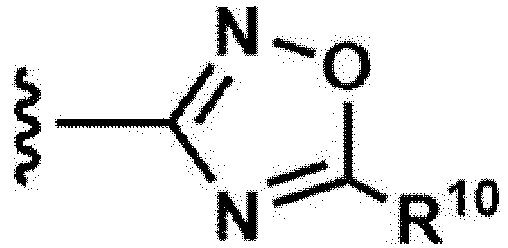
- (b) C5-8 bridged cycloalkyl {wherein the bridged cycloalkyl is optionally substituted by
- (I) hydroxy,
- (II) C1-6 alkyl (wherein the alkyl is optionally substituted by
- (i) hydroxy,
- (ii) carboxy,
- (iii) -CONH2,
- (iv) -CO-C1-4 alkoxy,
- (v) -SO2-C1-4 alkyl, or
- (vi) a group represented by the formula:

- (III) C1-6 alkoxy (wherein the alkoxy is optionally substituted by hydroxy or -SO2-C1-4 alkyl),
- (IV) carboxy,
- (V) -CO-C1-4 alkoxy,
- (VI) -O-C1-6 haloalkyl, or
- (VII) a group represented by the formula:

- (c) 5- or 6-membered heterocycloalkyl containing one nitrogen atom [wherein the heterocycloalkyl is optionally substituted by 1 to 3 substituents independently selected from the group consisting of
- (I) oxo,
- (II) C1-6 alkyl,
- (III) -CO-R11 {wherein R11 is
- (i) C1-6 alkyl (wherein the alkyl is optionally substituted by
- (A) hydroxy,
- (B) cyano, or
- (C) C1-4 alkoxy),
- (ii) C1-6 alkoxy,
- (iii) C1-6 haloalkyl,
- (iv) C3-6 cycloalkyl (wherein the cycloalkyl is optionally substituted by halogen), or
- (v) 4- to 6-membered heterocycloalkyl containing one oxygen atom (wherein the heterocycloalkyl is optionally substituted by halogen)}, and
- (i) C1-6 alkyl (wherein the alkyl is optionally substituted by
- (IV) a group represented by the formula:

- (d) a 6- to 9-membered saturated or partially unsaturated fused ring group containing 1 or 2 nitrogen atoms (wherein the fused ring group is optionally substituted by -CO-R11), or
- (e) a group represented by the formula:

- (a) C4-6 cycloalkyl (wherein the cycloalkyl is optionally substituted by 1 or 2 substituents independently selected from the group consisting of
- One of the more preferred embodiments of the compound of the formula [III] is a compound of the formula [III] wherein
- X1, X2, X3, X4, Y1, Y2, Y3 and Y4 are each independently a carbon or a nitrogen atom (wherein the total number of the nitrogen atoms for X1, X2, X3 and X4 is 0 or 1, and the total number of the nitrogen atoms for Y1, Y2, Y3 and Y4 is 0, 1 or 2);
- m is 0 or 1;
- n is 0, 1 or 2;
- R1 is C1-4 alkyl;
- R2 in the number of m are each independently halogen;
- R3 in the number of n are each independently halogen;
- R4 is
- (a) C4-6 cycloalkyl (wherein the cycloalkyl is optionally substituted by 1 or 2 substituents independently selected from the group consisting of
- (I) hydroxy,
- (II) cyano,
- (III) C1-6 alkyl (wherein the alkyl is optionally substituted by
- (i) hydroxy,
- (ii) carboxy, or
- (iii) -SO2-C1-4 alkyl,),
- (IV) -O-C1-6 haloalkyl,
- (V) a group represented by the formula:

- (VI) a group represented by the formula:

- (b) C5-8 bridged cycloalkyl {wherein the bridged cycloalkyl is optionally substituted by
- (I) hydroxy,
- (II) C1-6 alkyl (wherein the alkyl is optionally substituted by
- (i) hydroxy,
- (ii) carboxy, or
- (iii) -CO-C1-4 alkoxy), or
- (III) carboxy},
- (c) 5- or 6-membered heterocycloalkyl containing one nitrogen atom [wherein the heterocycloalkyl is optionally substituted by a group represented by the formula:

- (d) a 6- to 9-membered saturated or partially unsaturated fused ring group containing 1 or 2 nitrogen atoms, or
- (e) a group represented by the formula:

- (a) C4-6 cycloalkyl (wherein the cycloalkyl is optionally substituted by 1 or 2 substituents independently selected from the group consisting of
- One of the preferred embodiments of the compound of the formula [IV] is a compound of the formula [IV] wherein
- X1, X5 and X6 are each independently a carbon or a nitrogen atom (wherein the total number of the nitrogen atoms for X5 and X6 is 1);
- Y1 and Y2 are each a nitrogen atom;
- Y3 and Y4 are each a carbon atom;
- m is 0;
- n is 0 or 1;
- R1 is C1-4 alkyl;
- R3 in the number of n are each independently halogen;
- R4 is C4-6 cycloalkyl (wherein the cycloalkyl is optionally substituted by 1 or 2 substituents independently selected from the group consisting of
- (I) hydroxy,
- (II) cyano,
- (III) oxo,
- (IV) C1-6 alkyl (wherein the alkyl is optionally substituted by
- (i) hydroxy,
- (ii) carboxy,
- (iii) -CONH2,
- (iv) -CO-C1-4 alkoxy,
- (v) -SO2-C1-4 alkyl, or
- (vi) a group represented by the formula:
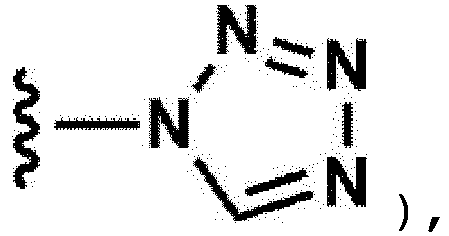
- (V) C1-6 alkoxy (wherein the alkoxy is optionally substituted by hydroxy or -SO2-C1-4 alkyl),
- (VI) carboxy,
- (VII) -CO-NR5R6 [wherein R5 and R6 are each independently C1-4 alkyl (wherein the alkyl is optionally substituted by C1-4 alkoxy), or R5 and R6 optionally form, together with the nitrogen atom bonded thereto, 4- to 6-membered heterocycloalkyl containing 1 or 2 hetero atoms independently selected from the group consisting of nitrogen and oxygen atoms {wherein the heterocycloalkyl is optionally substituted by 1 or 2 substituents independently selected from the group consisting of
- (i) hydroxy, and
- (ii) C1-6 alkyl (wherein the alkyl is optionally substituted by hydroxy)}],
- (VIII) -NR7R8 {wherein R7 and R8 are each independently C1-4 alkyl or -CO-C1-6 alkyl (wherein the alkyl is optionally substituted by cyano)},
- (IX) -O-C1-6 haloalkyl,
- (X) a group represented by the formula:

- (XI) a group represented by the formula:

- (XII) a group represented by the formula:

- One of the more preferred embodiments of the compound of the formula [IV] is a compound of the formula [IV] wherein
- X1, X5 and X6 are each independently a carbon or a nitrogen atom (wherein the total number of the nitrogen atoms for X5 and X6 is 1);
- Y1 and Y2 are each a nitrogen atom;
- Y3 and Y4 are each a carbon atom;
- m is 0;
- n is 0 or 1;
- R1 is C1-4 alkyl;
- R3 in the number of n are each independently halogen;
- R4 is C4-6 cycloalkyl (wherein the cycloalkyl is optionally substituted by
- (I) hydroxy, or
- (II) C1-6 alkyl (wherein the alkyl is optionally substituted by
- (i) hydroxy, or
- (ii) carboxy)).
- The "pharmaceutically acceptable salt" may be any salt known in the art that does not accompany excessive toxicity. Specifically, salts with inorganic acids, salts with organic acid, salts with inorganic bases, salts with organic bases and the like can be mentioned. Various forms of pharmaceutically acceptable salts are well-known in the pertinent technical field and are described, for example, in the following reference documents:
- (a) Berge et al., J. Pharm. Sci., 66, p1-19 (1977),
- (b) Stahl et al., "Handbook of Pharmaceutical Salts: Properties, Selection, and Use" (Wiley-VCH, Weinheim, Germany, 2002),
- (c) Paulekuhn et al., J. Med. Chem., 50, p6665-6672 (2007).
- Pharmaceutically acceptable salts of the compound of the present invention can be each obtained by reacting the compound of the present invention with an inorganic acid, an organic acid, an inorganic base, or an organic base according to a method known per se.
- Examples of the salt with inorganic acid include salts with hydrofluoric acid, hydrochloric acid, hydrobromic acid, hydroiodic acid, nitric acid, phosphoric acid, and sulfuric acid.
- Examples of the salt with organic acid include salts with acetic acid, adipic acid, alginic acid, 4-aminosalicylic acid, anhydromethylenecitric acid, benzoic acid, benzenesulfonic acid, calcium edetate, camphoric acid, 10-camphorsulfonic acid, carbonic acid, citric acid, edetic acid, ethane-1,2-disulfonic acid, dodecylsulfuric acid, ethanesulfonic acid, fumaric acid, glucoheptonic acid, gluconic acid, glucuronic acid, glycolylarsanilic acid, hexylresorcinic acid, hydroxy-naphthoic acid, 2-hydroxy-1-ethanesulfonic acid, lactic acid, lactobionic acid, malic acid, maleic acid, mandelic acid, methanesulfonic acid, methylsulfuric acid, methylnitric acid, methylenebis (salicylic acid), galactaric acid, naphthalene-2-sulfonic acid, 2-naphthoic acid, 1,5-naphthalene disulfonic acid, oleic acid, oxalic acid, pamoic acid, pantothenic acid, pectic acid, picric acid, propionic acid, polygalacturonic acid, salicylic acid, stearic acid, succinic acid, tannic acid, tartaric acid, teoclic acid, thiocyanic acid, trifluoroacetic acid, p-toluenesulfonic acid, undecanoic acid, aspartic acid, and glutamic acid.
- Examples of the salt with inorganic base include salts with lithium, sodium, potassium, magnesium, calcium, barium, aluminum, zinc, bismuth, and ammonium.
- Examples of the salt with organic base include salts with arecoline, betaine, choline, clemizole, ethylenediamine, N-methylglucamine, N-benzylphenethylamine, tris(hydroxymethyl)methylamine, arginine, and lysine.
- Preferred embodiments of the "pharmaceutically acceptable salt" are as follows.
- Examples of the salts with inorganic acid include salts with hydrochloric acid, nitric acid, sulfuric acid, phosphoric acid, and hydrobromic acid.
- Examples of the salts with organic acid include salts with oxalic acid, maleic acid, citric acid, fumaric acid, lactic acid, malic acid, succinic acid, tartaric acid, acetic acid, trifluoroacetic acid, benzoic acid, glucuronic acid, oleic acid, pamoic acid, methanesulfonic acid, benzenesulfonic acid, p-toluenesulfonic acid, and 2-hydroxy-1-ethanesulfonic acid.
- Examples of the salts with inorganic base include salts with sodium, potassium, calcium, magnesium, and zinc.
- Examples of the salts with organic base include salts with tris(hydroxymethyl)methylamine, N-methylglucamine, and lysine.
- The compound of the present invention or a pharmaceutically acceptable salt thereof may exist as a solvate thereof. The "solvate" refers to the compound of the present invention or a pharmaceutically acceptable salt thereof with which a solvent molecule is coordinated, and also includes hydrates. Such solvates are preferably pharmaceutically acceptable solvates. Such solvates include, for example, hydrate, ethanol solvate, dimethylsulfoxide-solvate, and the like of the compound of the present invention or a pharmaceutically acceptable salt thereof.
- Specific examples include hemihydrate, monohydrate, dihydrate or mono ethanol solvate of the compound of the present invention or a monohydrate of a sodium salt of the compound of the present invention, 2/3 ethanol solvate of dihydrochloride of the compound of the present invention, and the like. These solvates can be obtained according to conventional methods.
- The compound of the present invention may exist as a tautomer. In this case, the compound of the present invention can be a single tautomer or a mixture of individual tautomers. For example, the structure represented by the following formula:

- (1)

- (2)

- (3) a mixture of these.
- The compound of the present invention may have a carbon double bond. In this case, the compound of the present invention can be present as E form, Z form, or a mixture of E form and Z form.
- The compound of the present invention may contain a stereoisomer that should be recognized as a cis/trans isomer. In this case, the compound of the present invention can be present as a cis form, a trans form, or a mixture of a cis form and a trans form.
- The compound of the present invention may contain one or more asymmetric carbons. In this case, the compound of the present invention may be present as a single enantiomer, a single diastereomer, a mixture of enantiomers or a mixture of diastereomers.
- The compound of the present invention may be present as an atropisomer. In this case, the compound of the present invention may be present as an individual atropisomer or a mixture of atropisomers.
- The compound of the present invention may simultaneously contain plural structural characteristics that produce the above-mentioned isomers. Moreover, the compound of the present invention may contain the above-mentioned isomers at any ratio.
- In the absence of other reference such as annotation and the like, the formulae, chemical structures and compound names indicated in the present specification without specifying the stereochemistry thereof encompass all the above-mentioned isomers that may exist.
- A diastereomeric mixture can be separated into each diastereomer by conventional methods such as chromatography, crystallization and the like. In addition, each diastereomer can also be formed by using a stereochemically single starting material, or by a synthetic method using a stereoselective reaction.
- An enantiomeric mixture can be separated into each single enantiomer by a method well-known in the pertinent technical field.
- For example, from a diastereomeric mixture formed by reacting a mixture of enantiomers with a compound known as a chiral auxiliary, which is a substantially pure enantiomer, the isomer ratio can be increased or a single substantially pure diastereomer can be separated from the diastereomeric mixture. The separated diastereomer can be converted to a desired enantiomer by removing the added chiral auxiliary by a cleavage reaction. Alternatively, a mixture of enantiomers can be directly separated by a chromatographic method using a chiral stationary phase, as is well-known in the pertinent technical field. Alternatively, either enantiomer can be obtained by using substantially pure optically active starting materials or by stereoselective synthesis (asymmetric induction) of a prochiral intermediate using a chiral auxiliary and an asymmetric catalyst.
- The absolute steric configuration can be determined based on the X-ray crystal analysis of the resultant crystalline product or intermediate. In this case, a resultant crystalline product or intermediate derivatized with a reagent having an asymmetric center with a known steric configuration may be used where necessary.
- The compound of the present invention may be labeled with an isotope element (2H(D), 3H, 14C, 18F, 35S, etc.). For example, when the compound of the formula [I] has a methyl group, the methyl group is replaced with -CD3 group, and the thus-obtained compound is also encompassed in the present invention.
- As the compound of the present invention or a pharmaceutically acceptable salt thereof, the compound of the present invention or a pharmaceutically acceptable salt thereof, each of which is substantially purified, is preferred. More preferred is the compound of the present invention or a pharmaceutically acceptable salt thereof, each of which is purified to a chemical purity of not less than 80%.
- The pharmaceutical composition of the present invention may be produced according to a method known in the technical field of pharmaceutical preparations, by mixing the compound of the present invention or a pharmaceutically acceptable salt thereof with a suitable amount of at least one kind of pharmaceutically acceptable carrier and the like as appropriate. While the content of the compound of the present invention or a pharmaceutically acceptable salt thereof in the pharmaceutical composition varies depending on the dosage form, dose and the like, it is, for example, 0.1 to 100 wt% of the whole composition.
- The dosage form of a pharmaceutical composition containing the compound of the present invention or a pharmaceutically acceptable salt thereof (hereinafter also to be referred to as "the pharmaceutical composition of the present invention" in the present specification) include oral preparations such as tablet, capsule, granule, powder, troche, syrup, emulsion, suspension and the like, and parenteral agents such as external preparation, suppository, injection, eye drop, nasal preparations, pulmonary preparation and the like.
- Examples of the "pharmaceutically acceptable carrier" include various organic or inorganic carrier substances conventionally used as preparation materials, for example, excipient, disintegrant, binder, fluidizer, lubricant, and the like for solid preparations, solvent, solubilizing agent, suspending agent, isotonicity agent, buffering agent, soothing agent and the like for liquid preparations, and base, emulsifier, wetting agent, stabilizer, stabilizing agent, dispersing agent, plasticizer, pH regulator, absorption promoter, gelling agent, antiseptic, filler, dissolving agent, solubilizing agent, suspending agent, and the like for semisolid preparations. Where necessary, moreover, additives such as preservative, antioxidant, colorant, sweetening agent, and the like may be used.
- Examples of the "excipient" include lactose, sucrose, D-mannitol, D-sorbitol, cornstarch, dextrin, microcrystalline cellulose, crystalline cellulose, carmellose, carmellose calcium, sodium carboxymethyl starch, low-substituted hydroxypropyl cellulose, gum arabic, and the like.
- Examples of the "disintegrant" include carmellose, carmellose calcium, carmellose sodium, sodium carboxymethyl starch, croscarmellose sodium, crospovidone, low-substituted hydroxypropyl cellulose, hydroxypropylmethylcellulose, crystalline cellulose, and the like.
- Examples of the "binder" include hydroxypropyl cellulose, hydroxypropylmethylcellulose, povidone, crystalline cellulose, sucrose, dextrin, starch, gelatin, carmellose sodium, gum arabic, and the like.
- Examples of the "fluidizer" include light anhydrous silicic acid, magnesium stearate, and the like.
- Examples of the "lubricant" include magnesium stearate, calcium stearate, talc, and the like.
- Examples of the "solvent" include purified water, ethanol, propylene glycol, macrogol, sesame oil, corn oil, olive oil, and the like.
- Examples of the "solubilizing agents" include propylene glycol, D-mannitol, benzyl benzoate, ethanol, triethanolamine, sodium carbonate, sodium citrate, and the like.
- Examples of the "suspending agent" include benzalkonium chloride, carmellose, hydroxypropylcellulose, propylene glycol, povidone, methylcellulose, glycerol monostearate, and the like.
- Examples of the "isotonic agent" include glucose, D-sorbitol, sodium chloride, D-mannitol, and the like.
- Examples of the "buffering agent" include sodium hydrogen phosphate, sodium acetate, sodium carbonate, sodium citrate, and the like.
- Examples of the "soothing agent" include benzyl alcohol, and the like.
- Examples of the "base" include water, animal and vegetable oils (olive oil, corn oil, peanut oil, sesame oil, castor oil, etc.), lower alcohols (ethanol, propanol, propylene glycol, 1,3-butyleneglycol, phenol, etc.), higher fatty acid and ester thereof, waxes, higher alcohol, polyhydric alcohol, hydrocarbons (white petrolatum, liquid paraffin, paraffin, etc.), hydrophilic petrolatum, purified lanolin, absorption ointment, hydrolyzed lanolin, hydrophilic ointment, starch, pullulan, gum arabic, gum tragacanth, gelatin, dextran, cellulose derivative (methyl cellulose, carboxymethyl cellulose, hydroxyethyl cellulose, hydroxypropyl cellulose, etc.), synthetic polymers (carboxyvinyl polymer, sodium polyacrylate, polyvinyl alcohol, polyvinylpyrrolidone, etc.), propylene glycol, macrogol (macrogol 200-600, etc.), and combinations of two or more kinds thereof.
- Examples of the "preservative" include ethyl parahydroxybenzoate, chlorobutanol, benzyl alcohol, sodium dehydroacetate, sorbic acid, and the like.
- Examples of the "antioxidant" include sodium sulfite, ascorbic acid and the like.
- Examples of the "colorant" include food colors (e.g., Food Color Red No. 2 or 3, Food Color yellow No. 4 or 5, etc.), β-carotene, and the like.
- Examples of the "sweetening agent" include saccharin sodium, dipotassium glycyrrhizinate, aspartame, and the like.
- The pharmaceutical composition of the present invention can be administered orally or parenterally (topical, rectal, intravenous administration, intramuscular, subcutaneous, etc.) to human as well as mammals other than human (e.g., mouse, rat, hamster, guinea pig, rabbit, cat, dog, swine, bovine, horse, sheep, monkey, etc.). The dose of the compound of the present invention or a pharmaceutically acceptable salt thereof (hereinafter also to be referred to as a "pharmaceutically effective amount" in the present specification) may appropriately vary depending on the subject of administration, administration route, target disease, symptoms, severity of the disease, and combinations of these. For example, the daily dose for oral administration to an adult patient is generally within the range of about 0.01 mg to 1 g, based on the compound of the present invention as the active ingredient. This amount can be administered in one to several portions.
- Since the compound of the present invention or a pharmaceutically acceptable salt thereof has an H-PGDS inhibitory action, it is useful for the treatment and/or prophylaxis of various diseases or conditions that can be expected to be improved by regulation of H-PGDS activity. Examples of the various diseases or conditions that can be expected to be improved by regulation of H-PGDS activity include peripheral arterial diseases (e.g., intermittent claudication and comprehensive severe chronic lower extremity ischemia), cardiovascular diseases, allergic asthma, chronic obstructive pulmonary diseases, allergic rhinitis, sarcopenia, and Duchenne muscular dystrophy.
- To "inhibit H-PGDS" means to inhibit the function of H-PGDS and eliminate or attenuate the activity. For example, it means to inhibit the function of H-PGDS based on the below-mentioned Experimental Example 1. To "inhibit H-PGDS", human H-PGDS is preferably inhibited.
- The "H-PGDS inhibitor" means a substance that inhibits the function of H-PGDS. For example, an H-PGDS inhibitor is expected to be useful for the treatment and/or prophylaxis of a disease selected from the group consisting of peripheral arterial diseases (e.g., intermittent claudication and comprehensive severe chronic lower extremity ischemia), cardiovascular diseases, allergic asthma, chronic obstructive pulmonary diseases, allergic rhinitis, sarcopenia, and Duchenne muscular dystrophy.
- In the present specification, the "treatment" includes improvement of symptoms, prevention of aggravation, maintenance of remission, prevention of relapse, and further, prevention of recurrence.
- In the present specification, "prophylaxis" means suppression of the onset of symptoms.
- Unless there is a contradiction between one embodiment disclosed in a certain part of the specification and embodiments disclosed in other parts, any combination of two or more of thereof is intended to be encompassed in the present invention.
- Preferred specific embodiment of the active ingredient in the H-PGDS inhibitor or pharmaceutical composition of the present invention is the compound of the present invention or a pharmaceutically acceptable salt thereof.
- A general method for producing the compound of the formula [I] or a pharmaceutically acceptable salt thereof, the compound of the formula [II] or a pharmaceutically acceptable salt thereof, the compound of the formula [III] or a pharmaceutically acceptable salt thereof, or the compound of formula [IV] or a pharmaceutically acceptable salt thereof is exemplified below. However, the production method of the compound of the formula [I] or a pharmaceutically acceptable salt thereof, the compound of the formula [II] or a pharmaceutically acceptable salt thereof, the compound of the formula [III] or a pharmaceutically acceptable salt thereof, or the compound of the formula [IV] or a pharmaceutically acceptable salt thereof is not limited thereto.
- The compound obtained in each step can be isolated and/or purified as necessary by known methods such as distillation, recrystallization, and column chromatography. In some cases, the compound can proceed to the next step without isolation and/or purification.
- In the present specification, the room temperature refers to a temperature in the state where the temperature is not controlled, and one embodiment is 1°C to 40°C.
- Compound [II] or a salt thereof can be produced, for example, by production method A1 shown below:

- X1, X2, X3, X4, Y1, Y2, Y3 and Y4 are each independently a carbon or a nitrogen atom (wherein the total number of the nitrogen atoms for X1, X2, X3 and X4 is 0 or 1, and the total number of the nitrogen atoms for Y1, Y2, Y3 and Y4 is 0, 1 or 2),
- RA11 is a carboxy-protecting group (e.g., methyl, ethyl and tert-butyl),
- LA11 is a leaving group {for example, halogen, boronic acid, and boronic acid ester (e.g., boronic acid pinacol ester)}, and
- R1, R2, R3, R4, m and n are as defined above.
- Compound [A1-3] or a salt thereof can be obtained by reacting compound [A1-1] or a salt thereof with compound [A1-2] or a salt thereof in a solvent in the presence of a base by adding a metal catalyst as necessary.
- Examples of the solvent include tetrahydrofuran, N,N-dimethylformamide, N,N-dimethylacetamide, dimethyl sulfoxide, dichloromethane and mixed solvents thereof. Preferred solvent is N,N-dimethylformamide.
- Examples of the base include potassium tert-butoxide, potassium carbonate, cesium carbonate and pyridine. Preferred base is potassium carbonate.
- Examples of the metal catalyst include copper iodide (I) and copper acetate (II).
- The reaction temperature is, for example, 20°C to 120°C, preferably 20°C to 90°C.
- Compound [A1-1] or a salt thereof may be a commercially available product, or produced from a commercially available product by a known method.
- Compound [A1-2] or a salt thereof may be a commercially available product, or produced from a commercially available product by a known method.
- Compound [A1-4] or a salt thereof can be produced by removing RA11 of compound [A1-3] or a salt thereof by a deprotection reaction. The deprotection reaction may be carried out under conditions suitable for the kind of RA11. For example, when RA11 is ethyl, compound [A1-4] or a salt thereof can be produced by hydrolyzing compound [A1-3] or a salt thereof in a solvent in the presence of a base.
- Examples of the base include lithium hydroxide·monohydrate, sodium hydroxide, and potassium hydroxide.
- Examples of the solvent include methanol, tetrahydrofuran, water, and mixed solvents thereof. Preferred solvent is a mixed solvent of tetrahydrofuran and water.
- The reaction temperature is, for example, 20°C to 80°C, preferably 20°C to 30°C.
- Compound [II] or a salt thereof can be produced by reacting compound [A1-4] or a salt thereof with compound [A1-5] or a salt thereof in a solvent in the presence of a condensing agent and a base.
- Examples of the condensing agent include dicyclohexylcarbodiimide (DCC), 1-ethyl-3-(3-dimethylaminopropyl)carbodiimide hydrochloride (WSC·HCl), diisopropyl carbodiimide, 1,1'-carbonyldiimidazole (CDI), 1-hydroxy-7-azabenzotriazole, O-(7-azabenzotriazol-1-yl)-N,N,N',N'-tetramethyluronium hexafluorophosphate (HATU), hexafluorophosphoric acid (benzotriazol-1-yloxy)tripyrrolidinophosphonium (PyBOP), (1-cyano-2-ethoxy-2-oxoethylideneaminooxy)dimethylaminomorpholinocarbenium hexafluorophosphate (COMU), and diphenylphosphoryl azide. Preferred condensing agent is 1-ethyl-3-(3-dimethylaminopropyl)carbodiimide hydrochloride (WSC·HCl).
- Examples of the base include triethylamine and N,N-diisopropylethylamine. Preferred base is triethylamine.
- Examples of the solvent include tetrahydrofuran, N,N-dimethylformamide, N,N-dimethylacetamide, dimethyl sulfoxide, acetonitrile, and mixed solvents thereof. Preferred solvent is N,N-dimethylformamide.
- The reaction temperature is, for example, 20°C to 30°C.
- Compound [A1-5] or a salt thereof may be a commercially available product, or produced from a commercially available product by a known method. For example, it can be obtained by the below-mentioned production methods B1 to B4.
- Compound [II] or a salt thereof may also be produced by performing this production method by using, instead of compound [A1-5] or a salt thereof, a compound having a functional group or a protected functional group or a salt thereof that can be converted to compound [A1-5] or a salt thereof by a known reaction to obtain a compound corresponding to compound [II] or a salt thereof, and converting the functional group thereof.
-

- Compound [I] or a salt thereof can be produced by performing production method A1 by using compound [A1a-1] or a salt thereof instead of compound [A1-1] or a salt thereof:

- Compound [A1a-1] or a salt thereof may be a commercially available product, or produced from a commercially available product by a known method.
- Compound [II] or a salt thereof can also be produced by, for example, the following production method A2.

- X1, X2, X3, X4, Y1, Y2, Y3 and Y4 are each independently a carbon or a nitrogen atom (wherein the total number of the nitrogen atoms for X1, X2, X3 and X4 is 0 or 1, and the total number of the nitrogen atoms for Y1, Y2, Y3 and Y4 is 0, 1 or 2), and
- LA11, R1, R2, R3, R4, m and n are as defined above.
- Compound [A2-2] or a salt thereof can be produced by reacting compound [A2-1] or a salt thereof with compound [A1-5] or a salt thereof, according to step A1-3.
- Compound [A2-1] or a salt thereof may be a commercially available product, or produced from a commercially available product by a known method.
- Compound [II] or a salt thereof can be produced by reacting compound [A2-2] or a salt thereof with compound [A1-1] or a salt thereof according to step A1-1.
- Compound [A2-1] or a salt thereof may be a commercially available product, or produced from a commercially available product by a known method.
- Compound [II] or a salt thereof may also be produced by performing this production method by using, instead of compound [A1-5] or a salt thereof, a compound having a functional group or a protected functional group or a salt thereof that can be converted to compound [A1-5] or a salt thereof by a known reaction to obtain a compound corresponding to compound [II] or a salt thereof, and converting the functional group thereof.
- Compound [I] or a salt thereof can be produced by performing production method A2 by using compound [A1a-1] or a salt thereof instead of Compound [A1-1] or a salt thereof:
- Compound [III] or a salt thereof can be produced, for example, by the following production method A3.

- X1, X2, X3, X4, Y1, Y2, Y3 and Y4 are each independently a carbon or a nitrogen atom (wherein the total number of the nitrogen atoms for X1, X2, X3 and X4 is 0 or 1, and the total number of the nitrogen atoms for Y1, Y2, Y3 and Y4 is 0, 1 or 2),
- LA31 is a leaving group {for example, halogen, boronic acid, and boronic acid ester (e.g., boronic acid pinacol ester)},
- RA31 is halogen, boronic acid, or boronic acid ester (e.g., boronic acid pinacol ester)} (wherein when LA31 is halogen, RA31 is boronic acid or boronic acid ester, and when LA31 is boronic acid or boronic acid ester, RA31 is halogen), and
- R1, R2, R3, R4, RA11, m and n are as defined above.
- Compound [A3-2] or a salt thereof can be obtained by reacting compound [A3-1] or a salt thereof with compound [A1-2] or a salt thereof in a solvent in the presence of a base and a catalyst.
- Examples of the solvent include toluene, 1,4-dioxane, tetrahydrofuran, 1,2-dimethoxyethane, cyclopentyl methyl ether, N,N-dimethylformamide, N,N-dimethylacetamide, acetonitrile, and mixed solvents thereof with water. Preferred solvent is a mixed solvent of 1,2-dimethoxyethane and water.
- Examples of the base include potassium phosphate, sodium carbonate, sodium hydrogen carbonate, potassium carbonate, and tetrabutylammonium acetate. Preferred base is potassium phosphate.
- Examples of the catalyst include palladium acetate, tetrakis triphenylphosphine palladium, bis(triphenylphosphine) palladium dichloride, (bis (diphenylphosphino) ferrocene) palladium dichloride-dichloromethane complex, and (2-dicyclohexylphosphino-2',4',6'-triisopropyl-1,1'-biphenyl) [2-(2'-amino-1,1'-biphenyl)]palladium(II) methanesulfonate. Preferred catalyst is (bis(diphenylphosphino)ferrocene)palladium dichloride-dichloromethane complex.
- The reaction temperature is, for example, 70°C to 100°C.
- Compound [A3-1] or a salt thereof may be a commercially available product, or produced from a commercially available product by a known method.
- Compound [A3-3] or a salt thereof can be produced by reacting compound [A3-2] or a salt thereof according to step A1-2.
- Compound [III] or a salt thereof can be produced by reacting compound [A3-3] or a salt thereof with compound [A1-5] or a salt thereof, according to step A1-3.
- Compound [III] or a salt thereof may also be produced by performing this production method by using, instead of compound [A1-5] or a salt thereof, a compound having a functional group or a protected functional group or a salt thereof that can be converted to compound [A1-5] or a salt thereof by a known reaction to obtain a compound corresponding to compound [III] or a salt thereof, and converting the functional group thereof.
- Compound [IV] or a salt thereof can be produced, for example, by the following production method A4.
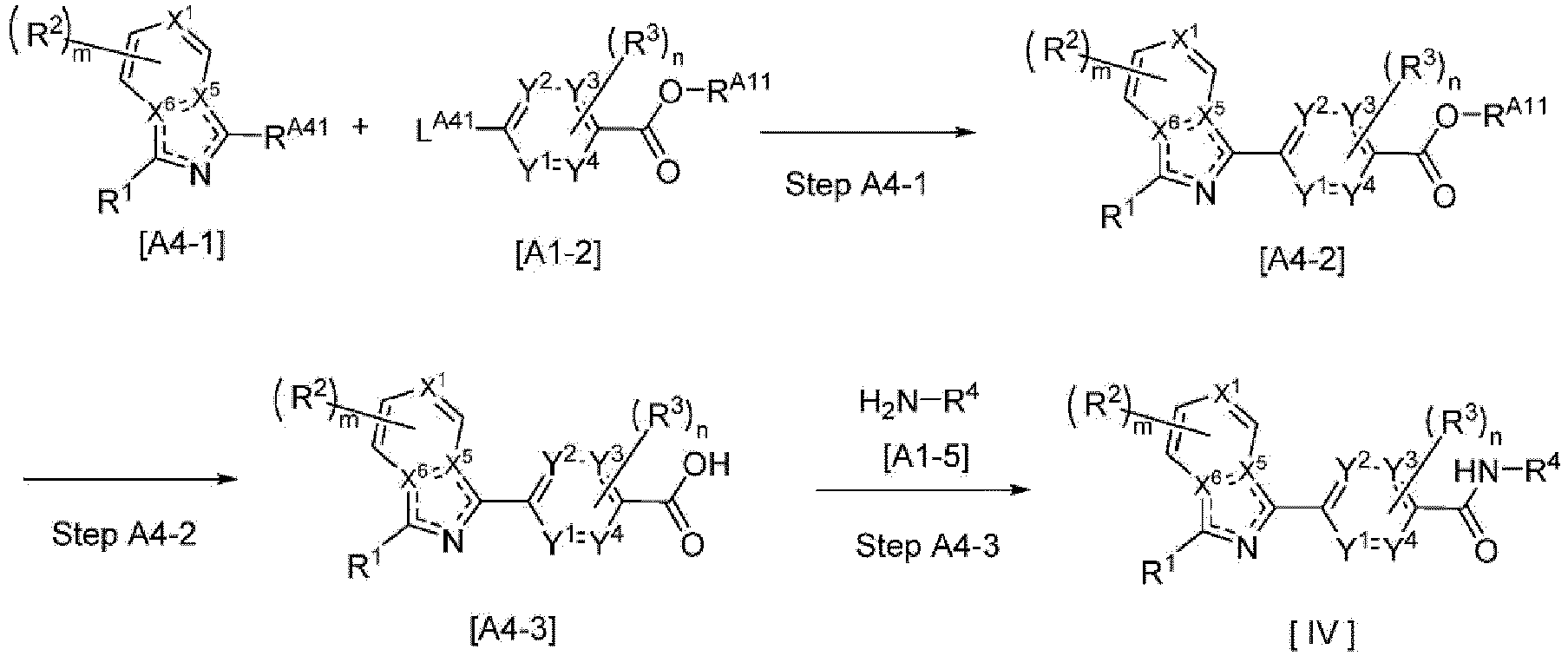
- X1, X5, X6, Y1, Y2, Y3 and Y4 are each independently a carbon or a nitrogen atom (wherein the total number of the nitrogen atoms for X5 and X6 is 1, and the total number of the nitrogen atoms for Y1, Y2, Y3 and Y4 is 0, 1 or 2),
- LA41 is a leaving group {for example, halogen, boronic acid, and boronic acid ester (e.g., boronic acid pinacol ester)},
- RA41 is hydrogen, halogen, boronic acid, or boronic acid ester (e.g., boronic acid pinacol ester)}(wherein when LA41 is halogen, RA41 is hydrogen, boronic acid or boronic acid ester, and when LA41 is boronic acid or boronic acid ester, RA41 is hydrogen or halogen), and
- R1, R2, R3, R4, RA11, m and n are as defined above.
- Compound [A4-2] or a salt thereof can be produced by reacting compound [A4-1] or a salt thereof with compound [A1-2] or a salt thereof, according to step A3-1.
- Compound [A4-1] or a salt thereof may be a commercially available product, or produced from a commercially available product by a known method.
- Compound [A4-3] or a salt thereof can be produced by reacting compound [A4-2] or a salt thereof according to step A1-2.
- Compound [IV] or a salt thereof can be produced by reacting compound [A4-3] or a salt thereof with compound [A1-5] or a salt thereof, according to step A1-3.
- Compound [IV] or a salt thereof may also be produced by performing this production method by using, instead of compound [A1-5] or a salt thereof, a compound having a functional group or a protected functional group or a salt thereof that can be converted to compound [A1-5] or a salt thereof by a known reaction to obtain a compound corresponding to compound [IV] or a salt thereof, and converting the functional group thereof.
-
H2N-R4
[A1-5]
wherein R4 is as defined above. - In one embodiment, [A1-5] or a salt thereof can be obtained by the following production methods B1 to B4. In any production method, the starting material may be a commercially available product, or produced from a commercially available product by a known method.
-

- RB11 is an amino-protecting group (e.g., benzyloxycarbonyl),
- RB12 is a hydroxy-protecting group (e.g., trimethylsilyl),
- RB13 and RB14 are each independently hydrogen or C1-4 alkyl,
- RB15 is a hydroxy-protecting group (e.g., benzyl),
- Cy=O is a group in which two hydrogens on the same carbon atom constituting ring Cy are substituted by oxo, and
- ring Cy is as defined above.
- Compound [B1-3] or a salt thereof can be produced by reacting compound [B1-1] or a salt thereof with compound [B1-2] or a salt thereof in a solvent in the presence of an acid and a reducing agent.
- Examples of the acid include trimethylsilyl trifluoromethanesulfonate.
- Examples of the reducing agent include triethylsilane and trimethylsilane. Preferred reducing agent is triethylsilane.
- Examples of the solvent include acetonitrile and dichloromethane. Preferred solvent is acetonitrile.
- The reaction temperature is, for example, 0°C to 10°C.
- Compound [B1-1] or a salt thereof may be a commercially available product, or produced from a commercially available product by a known method.
- Compound [B1-2] or a salt thereof, commercially available product, or produced from a commercially available product by a known method.
- Compound [A1-5-B1] or a salt thereof can be produced by removing RB11 and RB15 of compound [B1-3] or a salt thereof by a deprotection reaction. The deprotection reaction can be carried out under conditions suitable for the kind of each of RB11 and RB15. For example, when RB11 is benzyloxycarbonyl and RB15 is benzyl, compound [A1-5-B1] or a salt thereof can be obtained by subjecting compound [B1-3] or a salt thereof to a catalytic hydrogenation reaction. For example, compound [A1-5-B1] or a salt thereof can be obtained by reacting compound [B1-2] or a salt thereof in a solvent under a hydrogen atmosphere in the presence of a catalyst.
- Examples of the solvent include methanol, ethanol, tetrahydrofuran, ethyl acetate, acetic acid, and mixed solvents thereof. Preferred solvent is methanol.
- The pressure of hydrogen gas is, for example, 1 to 10 atm, preferably 1 to 4 atm.
- Examples of the catalyst include palladium-carbon and palladium hydroxide-carbon. Preferred catalyst is palladium hydroxide-carbon.
- The reaction temperature is, for example, 20°C to 30°C.
-

- RB21 and RB22 are each independently an amino-protecting group (e.g., benzyl),
- RB23, RB24 and RB26 are each independently C1-4 alkyl,
- RB25 are each independently halogen, and
- ring Cy is as defined above.
- Compound [B2-3] or a salt thereof can be obtained by reacting compound [B2-1] or a salt thereof with compound [B2-2] in a solvent in the presence of a metal catalyst.
- Examples of the solvent include dichloromethane.
- Examples of the metal catalyst include rhodium (II) acetate and rhodium (II) octanoate. Preferred metal catalyst is rhodium (II) acetate.
- The reaction temperature is, for example, 20°C to 40°C.
- Compound [B2-1] or a salt thereof may be a commercially available product, or produced from a commercially available product by a known method.
- Compound [B2-2] may be a commercially available product, or produced from a commercially available product by a known method.
- Compound [B2-5] or a salt thereof can be obtained by reacting compound [B2-3] or a salt thereof with compound [B2-4] in a solvent in the presence of a base.
- Examples of the solvent include diethyl ether, tetrahydrofuran, dimethoxyethane, benzene, toluene, hexamethylphosphoric triamide, and mixed solvents thereof. Preferred solvent is tetrahydrofuran.
- Examples of the base include potassium hexamethyl disilazide, sodium hexamethyl disilazide, lithium hexamethyl disilazide, and lithium diisopropylamide.
- The reaction temperature is, for example, -78°C to 30°C.
- Compound [B2-4] may be a commercially available product, or produced from a commercially available product by a known method.
- Compound [B2-7] or a salt thereof can be obtained by reacting compound [B2-5] or a salt thereof with compound [B2-6], according to step B2-2.
- Compound [B2-6] may be a commercially available product, or produced from a commercially available product by a known method.
- Compound [B2-8] or a salt thereof can be produced by reducing compound [B2-7] or a salt thereof in a solvent.
- Examples of the reducing agent include lithium aluminum hydride and sodium borohydride. Preferred reducing agent is lithium aluminum hydride.
- Examples of the solvent include tetrahydrofuran.
- The reaction temperature is, for example, 0°C to 20°C, preferably 0°C to 10°C.
- Compound [A1-5-B2] or a salt thereof can be produced by removing RB21 and RB22 of compound [B2-8] or a salt thereof by a deprotection reaction. The deprotection reaction can be carried out under conditions suitable for the kind of each of RB21 and RB22. For example, when RB21 and RB22 are each benzyl, compound [A1-5-B2] or a salt thereof can be obtained by reacting compound [B2-8] or a salt thereof in a solvent under a hydrogen atmosphere in the presence of a catalyst.
- Examples of the solvent include methanol, ethanol, tetrahydrofuran, ethyl acetate, acetic acid, and mixed solvents thereof. Preferred solvent is a mixed solvent of methanol and tetrahydrofuran.
- The pressure of hydrogen gas is, for example, 1 to 10 atm, preferably 1 to 4 atm.
- Examples of the catalyst include palladium-carbon and palladium hydroxide-carbon. Preferred catalyst is palladium hydroxide-carbon.
- The reaction temperature is, for example, 20°C to 30°C.
-

- RB31 is an amino-protecting group (e.g., tert-butoxycarbonyl or benzyloxycarbonyl, preferably tert-butoxycarbonyl),
- RB32 and RB38 are each independently C1-4 alkyl,
- RB33 is halogen,
- RB34, RB35, RB36 and RB37 are each independently hydrogen or C1-4 alkyl, and
- ring Cy is as defined above.
- Compound [B3-3] or a salt thereof can be obtained by reacting compound [B3-1] or a salt thereof with compound [B3-2] or a salt thereof in a solvent in the presence of a condensing agent and a base.
- Examples of the solvent include 1,4-dioxane, tetrahydrofuran, diethyl ether, 1,2-dimethoxyethane, cyclopentyl methyl ether, toluene, hexane, xylene, dichloromethane, chloroform, N,N-dimethylformamide, N,N-dimethylacetamide, dimethyl sulfoxide, acetonitrile, pyridine, and mixed solvents thereof. Preferred solvent is N,N-dimethylformamide.
- Examples of the condensing agent include dicyclohexylcarbodiimide (DCC), 1-ethyl-3-(3-dimethylaminopropyl)carbodiimide hydrochloride (WSC·HCl), diisopropyl carbodiimide, 1,1'-carbonyldiimidazole (CDI), O-(7-azabenzotriazol-1-yl)-N,N,N',N'-tetramethyluronium hexafluorophosphate (HATU), hexafluorophosphoric acid (benzotriazol-1-yloxy)tripyrrolidinophosphonium (PyBOP), (1-cyano-2-ethoxy-2-oxoethylideneaminooxy)dimethylaminomorpholinocarbenium hexafluorophosphate (COMU), and diphenylphosphoryl azide. Preferred condensing agent is 1-ethyl-3-(3-dimethylaminopropyl)carbodiimide hydrochloride (WSC·HCl).
- Examples of the base include pyridine, triethylamine, and N,N-diisopropylethylamine. Preferred base is N,N-diisopropylethylamine.
- The reaction temperature is, for example, 0°C to 60°C, preferably 0°C to 40°C.
- Compound [B3-1] or a salt thereof may be a commercially available product, or produced from a commercially available product by a known method.
- Compound [B3-2] or a salt thereof may be a commercially available product, or produced from a commercially available product by a known method.
- When RB34 is hydrogen, compound [B3-5] or a salt thereof can be obtained by reducing compound [B3-3] or a salt thereof in a solvent.
- Examples of the solvent include 1,4-dioxane, tetrahydrofuran, diethyl ether, 1,2-dimethoxyethane, cyclopentyl methyl ether, and mixed solvents thereof. Preferred solvent is tetrahydrofuran.
- Examples of the reducing agent include diisobutylaluminum hydride and lithium aluminum hydride. Preferred reducing agent is lithium aluminum hydride.
- The reaction temperature is, for example, -78°C to 40°C, preferably -78°C to 0°C.
- When RB34 is C1-4 alkyl, compound [B3-5] or a salt thereof can be obtained by reacting compound [B3-3] or a salt thereof with compound [B3-4] in a solvent.
- Examples of the solvent include 1,4-dioxane, tetrahydrofuran, diethyl ether, 1,2-dimethoxyethane, cyclopentyl methyl ether, and mixed solvents thereof. Preferred solvent is tetrahydrofuran.
- The reaction temperature is, for example, -78°C to 40°C, preferably 0°C to 20°C.
- Compound [B3-4] may be a commercially available product, or produced from a commercially available product by a known method.
- Compound [B3-7] or a salt thereof can be obtained by reacting compound [B3-5] or a salt thereof with compound [B3-6] or a salt thereof in a solvent in the presence of a base.
- Examples of the solvent include tetrahydrofuran, dimethoxyethane, benzene, toluene, methanol, ethanol, and mixed solvents thereof. Preferred solvent is tetrahydrofuran.
- Examples of the base include sodium hydride, sodium methoxide, sodium ethoxide, and n-butyllithium. Preferred base is sodium hydride.
- The reaction temperature is, for example, -78°C to 100°C, preferably 0°C to 70°C.
- Compound [B3-6] or a salt thereof may be a commercially available product, or produced from a commercially available product by a known method.
- Compound [B3-8] or a salt thereof can be obtained by subjecting compound [B3-7] or a salt thereof to a catalytic hydrogenation reaction. For example, compound [B3-8] or a salt thereof can be obtained by reacting compound [B3-7] or a salt thereof in a solvent under a hydrogen atmosphere in the presence of a catalyst.
- Examples of the solvent include methanol, ethanol, tetrahydrofuran, ethyl acetate, acetic acid, and mixed solvents thereof. Preferred solvent is a mixed solvent of methanol and tetrahydrofuran.
- The pressure of hydrogen gas is, for example, 1 to 10 atm, preferably 1 to 4 atm.
- Examples of the catalyst include palladium-carbon and palladium hydroxide-carbon. Preferred palladium catalyst is palladium-carbon.
- The reaction temperature is, for example, 0°C to 70°C, preferably 0°C to 40°C.
- Compound [A1-5-B3] or a salt thereof can be produced by removing RB31 of compound [B3-8] or a salt thereof by a deprotection reaction. The deprotection reaction can be carried out under conditions suitable for the kind of RB31. For example, when RB31 is tert-butoxycarbonyl, compound [A1-5-B3] or a salt thereof can be obtained by reacting compound [B3-8] or a salt thereof with an acid in a solvent.
- Examples of the solvent include ethyl acetate, 1,4-dioxane, methanol, cyclopentyl methyl ether, and mixed solvents thereof. Preferred solvent is ethyl acetate, methanol, or a mixed solvent thereof.
- Examples of the acid include hydrogen chloride, sulfuric acid, and trifluoroacetic acid. Preferred acid is hydrogen chloride.
- The reaction temperature is, for example, 0°C to 50°C, preferably 0°C to 30°C.
-

- RB41 and RB43 are each independently C1-4 alkyl,
- RB42 is halogen, and
- RB31, RB34 and ring Cy are as defined above.
- Compound [B4-1] or a salt thereof can be obtained by reacting compound [B3-5] or a salt thereof with Meldrum's acid in a solvent in the presence of Lewis acid and a base.
- Examples of the solvent include benzene, toluene, dichloromethane, chloroform, tetrahydrofuran, and mixed solvents thereof. Preferred solvent is tetrahydrofuran.
- Examples of the Lewis acid include titanium tetrachloride.
- Examples of the base include piperidine, morpholine, and pyridine. Preferred base is pyridine.
- The reaction temperature is, for example, 0°C to 50°C, preferably 0°C to 30°C.
- Compound [B3-5] or a salt thereof can be obtained according to production method B3, step B3-1, and step B3-2-1 or B3-2-2.
- Compound [B4-3] or a salt thereof can be obtained by reacting compound [B4-1] or a salt thereof with compound [B4-2] in a solvent. When RB34 is C1-4 alkyl, it is preferable to add copper(I) bromide to the reaction system.
- Examples of the solvent include diethyl ether, tetrahydrofuran, dimethoxyethane, and mixed solvents thereof. Preferred solvent is tetrahydrofuran.
- The reaction temperature is, for example, 0°C to 40°C.
- Compound [B4-2] may be a commercially available product, or produced from a commercially available product by a known method.
- Compound [B4-5] or a salt thereof can be obtained by reacting compound [B4-3] or a salt thereof in solvent [B4-4].
- Examples of the solvent [B4-4] include methanol, ethanol, and tert-butyl alcohol. Preferred solvent [B4-4] is methanol.
- The reaction temperature is, for example, 20°C to 110°C, preferably 60°C to 100°C.
- Compound [B4-6] or a salt thereof can be obtained by reacting compound [B4-5] or a salt thereof in a solvent in the presence of sodium chloride.
- Examples of the solvent include dimethyl sulfoxide, water, and mixed solvents thereof. Preferred solvent is a mixed solvent of dimethyl sulfoxide and water.
- The reaction temperature is, for example, 100°C to 160°C, preferably 120°C to 150°C.
- Compound [A1-5-B4] or a salt thereof can be produced by removing RB31 of compound [B4-6] or a salt thereof by a deprotection reaction according to step B3-5.
- The method for producing the compound of the present invention or a pharmaceutically acceptable salt thereof is specifically described below. However, the production method of the compound of the present invention or a pharmaceutically acceptable salt thereof is not limited to the following.
- The compound obtained in each step can be isolated and/or purified as necessary by known methods such as distillation, recrystallization, and column chromatography. In some cases, the compound can proceed to the next step without isolation and/or purification.
- In the present specification, the room temperature refers to a temperature in the state where the temperature is not controlled, and one embodiment is 1°C to 40°C.
- NMR was measured at 400 MHz.
-

-

- A suspension of 6-fluoro-3-methyl-1H-indazole (200 mg), ethyl 2-chloropyrimidine-carboxylate (161 mg) and cesium carbonate (698 mg) in N,N-dimethylformamide (2.0 mL) was stirred at 90°C for 4 hr. To the reaction mixture was added water at room temperature, and the precipitated solid was collected by filtration and dried under reduced pressure at 70°C to give the title compound (158 mg).
1H-NMR (DMSO-D6) δ: 9.28 (2H, s), 8.42 (1H, dd, J = 10.5, 2.2 Hz), 7.94 (1H, dd, J = 8.2, 5.2 Hz), 7.30 (1H, ddd, J = 10.5, 8.2, 2.2 Hz), 4.40 (2H, q, J = 7.2 Hz), 2.61 (3H, s), 1.37 (3H, t, J = 7.2 Hz). -

- To a suspension of ethyl 2-(6-fluoro-3-methyl-1H-indazol-1-yl)pyrimidine-5-carboxylate (158 mg) in methanol/tetrahydrofuran (2.37 mL, methanol/tetrahydrofuran=1/2) was added 4 M aqueous sodium hydroxide solution (0.263 mL) at room temperature, and the mixture was stirred for 2 hr. To the reaction mixture were added 2 M hydrochloric acid (0.526 mL) and water at room temperature, and the precipitated solid was collected by filtration and dried under reduced pressure at 70°C to give a crude product (65.6 mg) containing the title compound.
-

- To a suspension of a crude product (30 mg) containing 2-(6-fluoro-3-methyl-1H-indazol-1-yl)pyrimidine-5-carboxylic acid, 2-(trans-4-aminocyclohexyl)propan-2-ol (22.53 mg) and triethylamine (0.023 mL) in N,N-dimethylformamide (0.6 mL) were added 1-hydroxy-7-azabenzotriazole (4.5 mg) and 1-ethyl-3-(3-dimethylaminopropyl)carbodiimide hydrochloride (31.7 mg) at room temperature, and the mixture was stirred for 30 min, left standing overnight, and further stirred for 6 hr. To the reaction mixture were added water and ethyl acetate at room temperature, and the layers were separated. The aqueous layer was extracted once with ethyl acetate. The combined organic layer was washed twice with water and concentrated under reduced pressure. To the residue was added ethyl acetate, and slurry purification was performed. The solid was collected by filtration and dried under reduced pressure at 70°C to give the title compound (8.5 mg).
1H-NMR (DMSO-D6)δ: 9.23 (2H, s), 8.54 (1H, d, J = 8.2 Hz), 8.40 (1H, dd, J = 10.2, 2.0 Hz), 7.94 (1H, dd, J = 8.6, 5.6 Hz), 7.29 (1H, ddd, J = 10.2, 8.6, 2.0 Hz), 4.05 (1H, br s), 3.81-3.68 (1H, m), 2.61 (3H, s), 1.96 (2H, d, J = 10.5 Hz), 1.86 (2H, d, J = 10.5 Hz), 1.40-1.26 (2H, m), 1.25-1.00 (3H, m), 1.06 (6H, s). MS(M+H) :412 MS(M-H) :410 -

- To a suspension of ethyl 2-(6-fluoro-3-methyl-1H-indazol-1-yl)pyrimidine-5-carboxylate (177.68 g) synthesized in the same manner as in step 1-1 in tetrahydrofuran/water (2.132 L, tetrahydrofuran/water=2/1) was added dropwise 4 M aqueous lithium hydroxide solution (192 mL) at room temperature, and the mixture was stirred under a nitrogen stream for 2 hr. To the reaction mixture were successively added dropwise 2 M hydrochloric acid (385 mL) and water (1060 mL) at room temperature, and the mixture was stirred for 6 hr and left standing overnight. The precipitated solid was collected by filtration, washed with water (1440 mL), air dried for 3 days, and dried under reduced pressure at 60°C to give the title compound (166.22 g).
-

- To a suspension of 2-(6-fluoro-3-methyl-1H-indazol-1-yl)pyrimidine-5-carboxylic acid (150 g), 2-(trans-4-aminocyclohexyl)propan-2-ol (104 g) and 1-hydroxy-7-azabenzotriazole (75 g) in N,N-dimethylformamide (1.95 L) were added triethylamine (115 mL), 1-ethyl-3-(3-dimethylaminopropyl)carbodiimide hydrochloride (158 g) and N,N-dimethylformamide (75 mL) at room temperature, and the mixture was stirred under a nitrogen stream for 5 hr. To the reaction mixture were added 1-ethyl-3-(3-dimethylaminopropyl)carbodiimide hydrochloride (52.8 g) and N,N-dimethylformamide (75 mL) at room temperature, and the mixture was stirred under a nitrogen stream overnight. To the reaction mixture was added dropwise 5.0 wt% aqueous sodium hydrogen carbonate solution (4.2 L) at room temperature, and the mixture was stirred for 2 hr. The solid was collected by filtration, washed with water (1.5 L), air dried for 2 days, and dried under reduced pressure at 60°C to give the title compound as crystals (α crystal, 219.92 g).
-

- A suspension of 2-(6-fluoro-3-methyl-1H-indazol-1-yl)-N-(trans-4-(2-hydroxypropan-2-yl)cyclohexyl)pyrimidine-5-carboxamide monohydrate crystal (α crystal, 37.4 g) in acetonitrile (748 mL) was stirred for 2 days under an argon atmosphere at room temperature. The precipitated solid was collected by pressure filtration with nitrogen and dried under reduced pressure at 60°C to give the title compound as crystals (β crystal, 34.42 g).
- A suspension of 2-(6-fluoro-3-methyl-1H-indazol-1-yl)-N-(trans-4-(2-hydroxypropan-2-yl)cyclohexyl)pyrimidine-5-carboxamide monohydrate crystal (α crystal, 500 mg) in tetrahydrofuran/water (6.0 mL, tetrahydrofuran/water=5/1) was stirred at 75°C until it became a solution. To the reaction mixture was added dropwise water (4.0 mL) at the same temperature, and the mixture was stirred for 30 min, cooled to room temperature, and stirred for 1 hr. To the reaction mixture was added dropwise water (5.0 mL) at room temperature, and the mixture was stirred for 3 hr. The precipitated solid was collected by filtration and dried under reduced pressure to give the title compound as crystals (γ crystal, 466.6 mg).
-

-

- To a solution of 2-chloropyrimidine-5-carboxylic acid (2.0 g) and N,N-dimethyl-4-aminopyridine (0.462 g) in tert-butyl alcohol/chloroform (30 mL, tert-butyl alcohol/chloroform=2/1) was added di-tert-butyl bicarbonate (5.51 g) at room temperature, and the mixture was stirred at 60°C for 90 min and left standing overnight. To the reaction mixture was added ethyl acetate at room temperature, and the organic layer was washed successively with saturated aqueous sodium hydrogen carbonate, aqueous citric acid solution and saturated brine. The organic layer was dried over sodium sulfate, sodium sulfate was removed by filtration, and the filtrate was concentrated under reduced pressure. The residue was purified by silica gel column chromatography (eluent: n-hexane/ethyl acetate) to give the title compound (990 mg). 1H-NMR (DMSO-D6) δ: 9.13 (2H, s), 1.57 (9H, s).
-

- A suspension of tert-butyl 2-chloropyrimidine-5-carboxylate (100 mg), 3-methyl-1H-pyrazolo[3,4-c]pyridine (62 mg) and cesium carbonate (182 mg) in N,N-dimethylformamide (1.0 mL) was stirred at room temperature for 30 min and left standing overnight. To the reaction mixture was added water at room temperature, and the precipitated solid was collected by filtration and dried under reduced pressure at 70°C to give the title compound (130 mg).
1H-NMR (DMSO-D6) δ: 10.01 (1H, s), 9.29 (2H, s), 8.55 (1H, d, J = 5.2 Hz), 7.95 (1H, d, J = 5.2 Hz), 2.67 (3H, s), 1.61 (9H, s). -

- To a suspension of tert-butyl 2-(3-methyl-1H-pyrazolo[3,4-c]pyridin-1-yl)pyrimidine-5-carboxylate (130 mg) in ethyl acetate (0.26 mL) was added 4 M hydrogen chloride/ethyl acetate solution (1.3 mL) at room temperature, and the mixture was stirred for 6 hr and left standing overnight. The reaction mixture was concentrated under reduced pressure. To the residue was added trifluoroacetic acid (0.65 mL) at room temperature, and the mixture was stirred for 5 hr and left standing overnight. To the reaction mixture was added 4 M hydrogen chloride/ethyl acetate solution at room temperature, and the precipitated solid was collected by filtration, and dried under reduced pressure at 70°C to give the title compound (97.8 mg).
1H-NMR (DMSO-D6) δ: 13.73 (1H, br s), 10.06 (1H, s), 9.34 (2H, s), 8.62 (1H, d, J = 5.5 Hz), 8.15-8.08 (1H, m), 2.70 (3H, s). -

- To a suspension of 2-(3-methyl-1H-pyrazolo[3,4-c]pyridin-1-yl)pyrimidine-5-carboxylic acid monohydrochloride (30 mg), 2-(trans-4-aminocyclohexyl)propan-2-ol (19.41 mg), 1-hydroxy-7-azabenzotriazole (4.2 mg) and 1-ethyl-3-(3-dimethylaminopropyl)carbodiimide hydrochloride (29.6 mg) in N,N-dimethylformamide (0.6 mL) was added triethylamine (0.0215 mL) at room temperature, and the mixture was stirred for 45 min and left standing overnight. The reaction mixture was purified by reversed-phase silica gel column chromatography (eluent: water/acetonitrile=95/5 to 0/100) to give the title compound (35.1 mg).
1H-NMR (DMSO-D6) δ: 9.99 (1H, s), 9.28 (2H, s), 8.58 (1H, d, J = 7.6 Hz), 8.53 (1H, d, J = 5.3 Hz), 7.94 (1H, d, J = 5.3 Hz), 4.05 (1H, br s), 3.81-3.68 (1H, m), 2.66 (3H, s), 1.97 (2H, d, J = 10.2 Hz), 1.86 (2H, d, J = 10.2 Hz), 1.40-1.26 (2H, m), 1.25-1.03 (3H, m), 1.06 (6H, s). MS(M+H):395 MS(M-H):393 -

-

- To a solution of 2-chloropyrimidine-5-carboxylic acid (2.0 g) and N,N-dimethyl-4-aminopyridine (0.462 g) in tert-butyl alcohol/chloroform (30 mL, tert-butyl alcohol/chloroform=2/1) was added di-tert-butyl bicarbonate (5.51 g) at room temperature, and the mixture was stirred at 60°C for 90 min and left standing overnight. To the reaction mixture was added ethyl acetate at room temperature, and the organic layer was washed successively with saturated aqueous sodium hydrogen carbonate, aqueous citric acid solution and saturated brine. The organic layer was dried over sodium sulfate, sodium sulfate was removed by filtration, and the filtrate was concentrated under reduced pressure. The residue was purified by silica gel column chromatography (eluent: n-hexane/ethyl acetate) to give the title compound (990 mg). 1H-NMR (DMSO-D6) δ: 9.13 (2H, s), 1.57 (9H, s).
-

- A suspension of tert-butyl 2-chloropyrimidine-5-carboxylate (100 mg), 3-methyl-1H-pyrazolo[3,4-c]pyridine (62 mg) and cesium carbonate (182 mg) in N,N-dimethylformamide (1.0 mL) was stirred at room temperature for 30 min and left standing overnight. To the reaction mixture was added water at room temperature, and the precipitated solid was collected by filtration and dried under reduced pressure at 70°C to give the title compound (130 mg).
1H-NMR (DMSO-D6) δ: 10.01 (1H, s), 9.29 (2H, s), 8.55 (1H, d, J = 5.2 Hz), 7.95 (1H, d, J = 5.2 Hz), 2.67 (3H, s), 1.61 (9H, s). -

- To a suspension of tert-butyl 2-(3-methyl-1H-pyrazolo[3,4-c]pyridin-1-yl)pyrimidine-5-carboxylate (130 mg) in ethyl acetate (0.26 mL) was added 4 M hydrogen chloride/ethyl acetate solution (1.3 mL) at room temperature, and the mixture was stirred for 6 hr and left standing overnight. The reaction mixture was concentrated under reduced pressure. To the residue was added trifluoroacetic acid (0.65 mL) at room temperature, and the mixture was stirred for 5 hr and left standing overnight. To the reaction mixture was added 4 M hydrogen chloride/ethyl acetate solution at room temperature, and the precipitated solid was collected by filtration and dried under reduced pressure at 70°C to give the title compound (97.8 mg).
1H-NMR (DMSO-D6) δ: 13.73 (1H, br s), 10.06 (1H, s), 9.34 (2H, s), 8.62 (1H, d, J = 5.5 Hz), 8.15-8.08 (1H, m), 2.70 (3H, s). -

- To a suspension of ethyl 2-(trans-4-aminocyclohexyl)acetate monohydrochloride (3.0 g) and potassium carbonate (5.99 g) in acetonitrile (30 mL) was added benzyl bromide (3.4 mL) at room temperature, and the mixture was stirred overnight. To the reaction mixture were added water (30 mL) and ethyl acetate (30 mL) at room temperature, and the layers were separated. The aqueous layer was extracted with ethyl acetate (10 mL). The combined organic layer was washed with saturated brine, and concentrated under reduced pressure. The residue was purified by silica gel column chromatography (eluent: n-hexane/ethyl acetate=96/4 to 74/26) to give a crude product (5.068 g) containing the title compound.
-

- To a solution of the crude product containing ethyl 2-(trans-4-(dibenzylamino)cyclohexyl)acetate crude product (3.847 g) in tetrahydrofuran (20 mL) was added 3.0 M tetrahydrofuran solution (11 mL) of methylmagnesium bromide under ice-cooling, and the mixture was allowed to gradually return to room temperature and stirred overnight. To the reaction mixture were added saturated aqueous ammonium chloride solution (15 mL) and ethyl acetate (20 mL) under ice-cooling. After partitioning, the organic layer was washed with saturated brine, and concentrated under reduced pressure. The residue was purified by silica gel column chromatography (eluent: n-hexane/ethyl acetate=94/6 to 53/47) to give the title compound (1.45 g).
1H-NMR (DMSO-D6) δ: 7.35-7.26 (8H, m), 7.21-7.17 (2H, m), 3.96 (1H, s), 3.57 (4H, s), 2.38-2.31 (1H, m), 1.85-1.76 (4H, m), 1.42-1.31 (3H, m), 1.21-1.15 (2H, m), 1.06 (6H, s), 0.82-0.73 (2H, m). -

- To a solution of 1-(trans-4-(dibenzylamino)cyclohexyl)-2-methylpropan-2-ol (1.45 g) in methanol (20 mL) was added 20% palladium hydroxide-carbon (368 mg) at room temperature. Under 1 atm hydrogen atmosphere, the mixture was stirred at room temperature overnight. The reaction mixture was filtered through celite, and the filtrate was concentrated under reduced pressure to give the title compound (692 mg).
1H-NMR (DMSO-D6) δ: 3.98 (1H, br s), 2.44-2.37 (1H, m), 1.76-1.67 (4H, m), 1.47 (2H, br s), 1.34-1.22 (4H, m), 1.07 (6H, s), 0.99-0.84 (3H, m). -

- To a suspension of 2-(3-methyl-1H-pyrazolo[3,4-c]pyridin-1-yl)pyrimidine-5-carboxylic acid monohydrochloride (30 mg), 1-(trans-4-aminocyclohexyl)-2-methylpropan-2-ol (21.14 mg), 1-hydroxy-7-azabenzotriazole (4.5 mg) and 1-ethyl-3-(3-dimethylaminopropyl)carbodiimide hydrochloride (31.7 mg) in N,N-dimethylformamide (0.6 mL) was added triethylamine (0.0215 mL) at room temperature, and the mixture was stirred for 45 min and left standing overnight. The reaction mixture was purified by reversed-phase silica gel column chromatography (eluent: water/acetonitrile=95/5 to 0/100) to give the title compound (22.4 mg).
- 1H-NMR (DMSO-D6) δ: 9.99 (1H, s), 9.27 (2H, s), 8.56 (1H, d, J = 7.6 Hz), 8.53 (1H, d, J = 5.3 Hz), 7.94 (1H, d, J = 5.3 Hz), 4.04 (1H, br s), 3.82-3.69 (1H, m), 2.66 (3H, s), 1.88 (4H, d, J = 10.6 Hz), 1.50-1.22 (5H, m), 1.21-0.98 (2H, m), 1.11 (6H, s).
- MS (M+H) :409 MS (M-H) :407
-

-

- A suspension of 3-methyl-1H-indazole (5.0 g), ethyl 2-chloropyrimidine-carboxylate (8.47 g) and cesium carbonate (24.65 g) in N,N-dimethylformamide (25 mL) was stirred at 90°C for 3 hr. To the reaction mixture were added water, ethyl acetate and chloroform at room temperature, and the layers were separated. The aqueous layer was extracted once with ethyl acetate. The combined organic layer was washed with saturated brine, and dried over magnesium sulfate. Magnesium sulfate was removed by filtration, and the filtrate was concentrated under reduced pressure. The residue was purified by silica gel column chromatography (eluent: n-hexane/ethyl acetate=85/15 to 0/100) to give a crude product (9.5 g) containing the title compound. To the crude product (9.5 g) containing the title compound was added n-hexane/ethyl acetate (30 mL, n-hexane/ethyl acetate=1/2), and slurry purification was performed. The solid was collected by filtration and dried under reduced pressure to give a crude product (7.8 g) containing the title compound. A solution of the crude product (7.8 g) containing the title compound in chloroform was purified by silica gel column chromatography (eluent: chloroform) to give the title compound (6.4 g).
1H-NMR (DMSO-D6) δ: 9.26 (2H, s), 8.69-8.67 (1H, m), 7.90-7.88 (1H, m), 7.66-7.62 (1H, m), 7.43-7.39 (1H, m), 4.39 (2H, q, J = 7.1 Hz), 2.62 (3H, s), 1.37 (3H, t, J = 7.2 Hz). -

- To a solution of ethyl 2-(3-methyl-1H-indazol-1-yl)pyrimidine-5-carboxylate (3.0 g) in tetrahydrofuran (60 mL) was added 2 M aqueous sodium hydroxide solution (15.94 mL) at room temperature, and the mixture was stirred for 3 hr. To the reaction mixture was added 2 M aqueous sodium hydroxide solution (5.31 mL) at room temperature, and the mixture was stirred for 1 hr and left standing overnight. To the reaction mixture was added 2 M hydrochloric acid (21.25 mL) at room temperature, and the mixture was stirred for 30 min. To the reaction mixture was added water at room temperature, and the mixture was stirred for 30 min. The precipitated solid was collected by filtration and dried under reduced pressure to give the title compound (2.47 g).
1H-NMR (DMSO-D6) δ: 13.64 (1H, br s), 9.26 (2H, s), 8.70 (1H, d, J = 8.2 Hz), 7.89 (1H, d, J = 7.5 Hz), 7.66-7.62 (1H, m), 7.41 (1H, t, J = 7.5 Hz), 2.62 (3H, s). -

- To a suspension of trans-4-aminocyclohexan-1-ol (5.0 g) and potassium carbonate (13.2 g) in acetonitrile (80 mL) was added benzyl bromide (10.9 mL) at room temperature, and the mixture was stirred overnight. To the reaction mixture was added water (100 mL) at room temperature, and the precipitated solid was collected by filtration, washed three times with water (40 mL), and dried under reduced pressure at 80°C to give the title compound (12.88 g). The title compound (10.38 g) was obtained from the starting material, trans-4-aminocyclohexan-1-ol (5.0 g), by a similar production method.
1H-NMR (DMSO-D6) δ: 7.35-7.27 (8H, m), 7.21-7.17 (2H, m), 4.43 (1H, br s), 3.55 (4H, s), 3.36-3.29 (1H, m), 2.39-2.31 (1H, m), 1.83-1.76 (4H, m), 1.43-1.37 (2H, m), 1.03-0.93 (2H, m). -

- To a solution of trans-4-(dibenzylamino)cyclohexan-1-ol (5.0 g) in dichloromethane (50 mL) was added rhodium (II) acetate dimer (22.4 mg) at room temperature, 15 wt% ethyl diazoacetate/toluene solution (57.5 mL) was added dropwise over 2 hr, and the mixture was stirred for 2 hr. The reaction mixture was concentrated under reduced pressure. The residue was purified by silica gel column chromatography (eluent: n-hexane/ethyl acetate=93/7 to 40/60) to give the title compound (5.779 g).
1H-NMR (CDCl3) δ: 7.38-7.32 (4H, m), 7.31-7.24 (4H, m), 7.23-7.17 (2H, m), 4.20 (2H, q, J = 7.4 Hz), 4.07 (2H, s), 3.60 (4H, s), 3.32-3.20 (1H, m), 2.58-2.47 (1H, m), 2.13-2.05 (2H, m), 1.96-1.87 (2H, m), 1.43-1.16 (7H, m). -

- To a solution of ethyl 2-{[trans-4-(dibenzylamino)cyclohexyl]oxy}acetate (5.779 g) in tetrahydrofuran (57.8 mL) was added 1.02 M tetrahydrofuran solution (44.6 mL) of methylmagnesium bromide under ice-cooling, and the mixture was stirred at the same temperature for 2 hr. To the reaction mixture was added saturated aqueous ammonium chloride solution under ice-cooling. To the reaction mixture was added ethyl acetate at room temperature, and the layers were separated. The aqueous layer was extracted once with ethyl acetate. The combined organic layer was washed successively with water and saturated brine, and dried over sodium sulfate. Sodium sulfate was removed by filtration, and the filtrate was concentrated under reduced pressure. The residue was purified by silica gel column chromatography (eluent: n-hexane/ethyl acetate=93/7 to 40/60) to give the title compound (4.04 g).
1H-NMR (CDCl3) δ: 7.38-7.33 (4H, m), 7.32-7.25 (4H, m), 7.23-7.17 (2H, m), 3.60 (4H, s), 3.24 (2H, s), 3.22-3.12 (1H, m), 2.57-2.47 (1H, m), 2.33 (1H, s), 2.10-2.01 (2H, m), 1.96-1.86 (2H, m), 1.43-1.33 (2H, m), 1.20-1.10 (8H, m). -

- To a solution of 1-{[trans-4-(dibenzylamino)cyclohexyl]oxy}-2-methylpropan-2-ol (3.715 g) in methanol/tetrahydrofuran (40 mL, methanol/tetrahydrofuran=1/1) was added 20% palladium hydroxide-carbon (310 mg) at room temperature. Under 1 atm hydrogen atmosphere, the mixture was stirred at room temperature overnight. The reaction mixture was filtered through celite, and the filtrate was concentrated under reduced pressure to give the title compound (1.926 g). 1H-NMR (DMSO-D6) δ: 4.17 (1H, br s), 3.18-3.11 (2H, m), 2.55-2.48 (2H, m), 1.92-1.86 (2H, m), 1.75-1.68 (2H, m), 1.47 (2H, br s), 1.20-1.09 (2H, m), 1.06-0.96 (2H, m), 1.04 (6H, s).
-

- A suspension of 2-(3-methyl-1H-indazol-1-yl)pyrimidine-5-carboxylic acid (30 mg), 1-((trans-4-aminocyclohexyl)oxy)-2-methylpropan-2-ol (27 mg), 1-hydroxy-7-azabenzotriazole (16 mg) and 1-ethyl-3-(3-dimethylaminopropyl)carbodiimide hydrochloride (35 mg) in N,N-dimethylformamide (1.0 mL) was stirred overnight. To the reaction mixture were added saturated aqueous sodium hydrogen carbonate (2.0 mL) and water (3.0 mL) at room temperature, and the precipitated solid was collected by filtration and dried under reduced pressure to give the title compound (44.8 mg).
- 1H-NMR (DMSO-D6) δ: 9.22 (2H, s), 8.67 (1H, d, J = 8.6 Hz), 8.53 (1H, d, J = 7.6 Hz), 7.89 (1H, d, J = 7.9 Hz), 7.65-7.61 (1H, m), 7.42-7.38 (1H, m), 4.22 (1H, s), 3.85-3.76 (1H, m), 3.29-3.22 (1H, m), 3.19 (2H, s), 2.62 (3H, s), 2.06-2.01 (2H, m), 1.95-1.91 (2H, m), 1.45-1.23 (4H, m), 1.08 (6H, s).
- MS(M+H):424 MS(M-H):422
-
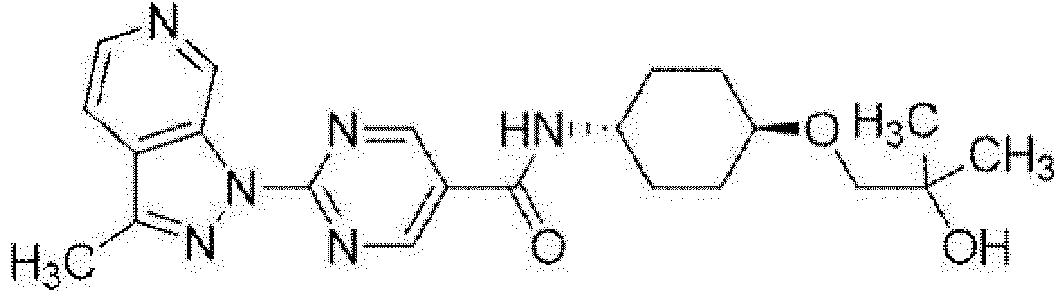
-

- To a solution of 2-chloropyrimidine-5-carboxylic acid (2.0 g) and N,N-dimethyl-4-aminopyridine (0.462 g) in tert-butyl alcohol/chloroform (30 mL, tert-butyl alcohol/chloroform=2/1) was added di-tert-butyl bicarbonate (5.51 g) at room temperature, and the mixture was stirred at 60°C for 90 min and left standing overnight. To the reaction mixture was added ethyl acetate at room temperature, and the organic layer was washed successively with saturated aqueous sodium hydrogen carbonate, aqueous citric acid solution and saturated brine. The organic layer was dried over sodium sulfate, sodium sulfate was removed by filtration, and the filtrate was concentrated under reduced pressure. The residue was purified by silica gel column chromatography (eluent: n-hexane/ethyl acetate) to give the title compound (990 mg). 1H-NMR (DMSO-D6) δ: 9.13 (2H, s), 1.57 (9H, s).
-

- A suspension of tert-butyl 2-chloropyrimidine-5-carboxylate (500 mg), 3-methyl-1H-pyrazolo[3,4-c]pyridine (310 mg) and cesium carbonate (911 mg) in N,N-dimethylformamide (5.0 mL) was stirred at room temperature for 1 hr and left standing overnight. To the reaction mixture was added water at room temperature, and the precipitated solid was collected by filtration and dried under reduced pressure at 70°C to give the title compound (618 mg).
1H-NMR (DMSO-D6) δ: 10.01 (1H, s), 9.29 (2H, s), 8.55 (1H, d, J = 5.3 Hz), 7.95 (1H, dd, J = 5.3, 0.9 Hz), 2.67 (3H, s), 1.60 (9H, s). -

- A solution of tert-butyl 2-(3-methyl-1H-pyrazolo[3,4-c]pyridin-1-yl)pyrimidine-5-carboxylate (618 mg) in trifluoroacetic acid (3.09 mL) was stirred for 2 hr and left standing overnight. To the reaction mixture was added 4 M hydrogen chloride/ethyl acetate solution at room temperature, and the mixture was stirred for 1 hr. The precipitated solid was collected by filtration, and dried under reduced pressure at 70°C to give the title compound (563 mg).
1H-NMR (DMSO-D6) δ: 13.77 (1H, br s), 10.08 (1H, s), 9.35 (2H, s), 8.66 (1H, d, J = 5.2 Hz), 8.23 (1H, d, J = 5.2 Hz), 2.72 (3H, s). -

- To a suspension of trans-4-aminocyclohexan-1-ol (5.0 g) and potassium carbonate (13.2 g) in acetonitrile (80 mL) was added benzyl bromide (10.9 mL) at room temperature, and the mixture was stirred overnight. To the reaction mixture was added water (100 mL) at room temperature, and the precipitated solid was collected by filtration, washed 3 times with water (40 mL), and dried under reduced pressure at 80°C to give the title compound (12.88 g).
1H-NMR (DMSO-D6) δ: 7.35-7.27 (8H, m), 7.21-7.17 (2H, m), 4.43 (1H, br s), 3.55 (4H, s), 3.36-3.29 (1H, m), 2.39-2.31 (1H, m), 1.83-1.76 (4H, m), 1.43-1.37 (2H, m), 1.03-0.93 (2H, m). -

- To a solution of trans-4-(dibenzylamino)cyclohexan-1-ol (5.0 g) in dichloromethane (50 mL) was added rhodium (II) acetate dimer (22.4 mg) at room temperature, 15 wt% ethyl diazoacetate/toluene solution (57.5 mL) was added dropwise over 2 hr, and the mixture was stirred for 2 hr. The reaction mixture was concentrated under reduced pressure. The residue was purified by silica gel column chromatography (eluent: n-hexane/ethyl acetate=93/7 to 40/60) to give the title compound (5.779 g).
1H-NMR (CDCl3) δ: 7.38-7.32 (4H, m), 7.31-7.24 (4H, m), 7.23-7.17 (2H, m), 4.20 (2H, q, J = 7.4 Hz), 4.07 (2H, s), 3.60 (4H, s), 3.32-3.20 (1H, m), 2.58-2.47 (1H, m), 2.13-2.05 (2H, m), 1.96-1.87 (2H, m), 1.43-1.16 (7H, m). -

- To a solution of ethyl 2-{[trans-4-(dibenzylamino)cyclohexyl]oxy}acetate (5.779 g) in tetrahydrofuran (57.8 mL) was added 1.02 M tetrahydrofuran solution (44.6 mL) of methylmagnesium bromide under ice-cooling, and the mixture was stirred at the same temperature for 2 hr. To the reaction mixture was added saturated aqueous ammonium chloride solution under ice-cooling. To the reaction mixture was added ethyl acetate at room temperature. After partitioning, the aqueous layer was extracted once with ethyl acetate. The combined organic layer was washed successively with water and saturated brine, and dried over sodium sulfate. Sodium sulfate was removed by filtration, and the filtrate was concentrated under reduced pressure. The residue was purified by silica gel column chromatography (eluent: n-hexane/ethyl acetate=93/7 to 40/60) to give the title compound (4.04 g).
1H-NMR (CDCl3) δ: 7.38-7.33 (4H, m), 7.32-7.25 (4H, m), 7.23-7.17 (2H, m), 3.60 (4H, s), 3.24 (2H, s), 3.22-3.12 (1H, m), 2.57-2.47 (1H, m), 2.33 (1H, s), 2.10-2.01 (2H, m), 1.96-1.86 (2H, m), 1.43-1.33 (2H, m), 1.20-1.10 (8H, m). -

- To a solution of 1-{[trans-4-(dibenzylamino)cyclohexyl]oxy}-2-methylpropan-2-ol (3.715 g) in methanol (20 mL) was added 20% palladium hydroxide-carbon (310 mg) at room temperature. Under 1 atm hydrogen atmosphere, the mixture was stirred at room temperature overnight. The reaction mixture was filtered through celite, and the filtrate was concentrated under reduced pressure to give the title compound (1.926 g).
1H-NMR (DMSO-D6) δ: 4.17 (1H, br s), 3.18-3.11 (2H, m), 2.55-2.48 (2H, m), 1.92-1.86 (2H, m), 1.75-1.68 (2H, m), 1.47 (2H, br s), 1.20-1.09 (2H, m), 1.06-0.96 (2H, m), 1.04 (6H, s). -

- To a suspension of 2-(3-methyl-1H-pyrazolo[3,4-c]pyridin-1-yl)pyrimidine-5-carboxylic acid monohydrochloride (30 mg), 1-((trans-4-aminocyclohexyl)oxy)-2-methylpropan-2-ol (23.11 mg), 1-hydroxy-7-azabenzotriazole (4.2 mg) and 1-ethyl-3-(3-dimethylaminopropyl)carbodiimide hydrochloride (29.6 mg) in N,N-dimethylformamide (0.6 mL) was added triethylamine (0.0215 mL) at room temperature, and the mixture was stirred for 2 hr and left standing overnight. To the reaction mixture was added water at room temperature, and the precipitated solid was collected by filtration and dried under reduced pressure at 70°C to give the title compound (41.4 mg).
- 1H-NMR (DMSO-D6) δ: 9.99 (1H, s), 9.27 (2H, s), 8.58 (1H, d, J = 7.5 Hz), 8.54 (1H, d, J = 5.2 Hz), 7.94 (1H, d, J = 5.2 Hz), 4.20 (1H, br s), 3.87-3.74 (1H, m), 3.51-3.22 (1H, m), 3.19 (2H, s), 2.67 (3H, s), 2.04 (2H, d, J = 10.5 Hz), 1.93 (2H, d, J = 10.5 Hz), 1.48-1.20 (4H, m), 1.07 (6H, s).
- MS(M+H):425 MS(M-H):423
-

-

- To a solution of 1H-indazole-3-carbaldehyde (1.5 g) in dichloromethane (10 mL) was added N,N-diethylaminosulfur trifluoride (2.71 mL) under ice-cooling, and the mixture was allowed to gradually return to room temperature and stirred for 5 hr. To the reaction mixture was added dropwise saturated aqueous sodium hydrogen carbonate under ice-cooling, ethyl acetate was added, and the layers were separated. The aqueous layer was extracted once with ethyl acetate. The combined organic layer was washed with saturated brine, and dried over magnesium sulfate. Magnesium sulfate was removed by filtration, and the filtrate was concentrated under reduced pressure. The residue was purified by silica gel column chromatography (eluent: n-hexane/ethyl acetate=95/5 to 80/20) and silica gel column chromatography (eluent: n-hexane/ethyl acetate=100/0 to 85/15) to give the title compound (343 mg). The title compound (673 mg) was obtained from the starting material, 1H-indazole-3-carboxaldehyde, by a similar production method.
1H-NMR (DMSO-D6) δ: 13.59 (1H, s), 7.84 (1H, d, J = 8.2 Hz), 7.64 (1H, d, J = 9.0 Hz), 7.46 (1H, t, J = 7.5 Hz), 7.34 (1H, t, J = 53.9 Hz), 7.25 (1H, t, J = 7.5 Hz). -

- A suspension of 3-(difluoromethyl)-1H-indazole (0.95 g), ethyl 2-chloropyrimidine-carboxylate (1.1 g) and cesium carbonate (2.2 g) in N,N-dimethylformamide (10 mL) was stirred at room temperature for 4 hr. To the reaction mixture was added water under ice-cooling, and the mixture was stirred for 1 hr. The precipitated solid was collected by filtration and dried under reduced pressure to give the title compound (1.73 g).
1H-NMR (DMSO-D6) δ: 9.38 (2H, s), 8.81 (1H, d, J = 8.6 Hz), 8.01 (1H, d, J = 8.1 Hz), 7.77 (1H, t, J = 8.4 Hz), 7.57 (1H, t, J = 54.0 Hz), 7.54 (1H, t, J = 7.6 Hz), 4.42 (2H, q, J = 7.1 Hz), 1.38 (3H, t, J = 7.1 Hz). -

- To a solution of ethyl 2-(3-(difluoromethyl)-1H-indazol-1-yl)pyrimidine-5-carboxylate (1.73 g) in tetrahydrofuran (10 mL) was added 2 M aqueous sodium hydroxide solution (5.03 mL) under ice-cooling, and the mixture was allowed to gradually return to room temperature and stirred for 6 hr. To the reaction mixture was added 2 M hydrochloric acid (5.0 mL) under ice-cooling, and the mixture was stirred for 1 hr. The precipitated solid was collected by filtration and dried under reduced pressure to give the title compound (1.45 g).
1H-NMR (DMSO-D6) δ: 13.80 (1H, br s), 9.35 (2H, s), 8.82 (1H, d, J = 8.5 Hz), 8.01 (1H, d, J = 7.9 Hz), 7.78-7.74 (1H, m), 7.56 (1H, t, J = 54.0 Hz), 7.56-7.51 (1H, m). -

- To a suspension of tert-butyl (trans-4-hydroxycyclohexyl)carbamate (5.0 g) and 1,4-diazabicyclo[2,2,2]octane (0.261 g) in tetrahydrofuran (50 mL) was added dropwise methyl propiolate (1.935 mL) at room temperature, and the mixture was stirred for 1 hr and left standing overnight. To the reaction mixture was added ethyl acetate at room temperature, and the organic layer was washed successively twice with saturated aqueous ammonium chloride solution and once with saturated brine. The organic layer was dried over sodium sulfate, sodium sulfate was removed by filtration, and the filtrate was concentrated under reduced pressure to give a crude product (7.42 g) containing the title compound.
-

- To a solution of a crude product (2.0 g) containing methyl (E)-3-((trans-4-((tert-butoxycarbonyl)amino)cyclohexyl)oxy)acrylate in methanol (9.37 mL) was added 10% palladium-carbon (187 mg) at room temperature. Under 1 atm hydrogen atmosphere, the mixture was stirred at room temperature for 3 hr. The reaction mixture was filtered through celite, and the filtrate was concentrated under reduced pressure to give a crude product (1.71 g) containing the title compound.
-

- To a solution of a crude product (0.974 mg) containing methyl 3-((trans-4-((tert-butoxycarbonyl)amino)cyclohexyl)oxy)propionate in methanol (9.14 mL) was added 4 M aqueous sodium hydroxide solution (1.13 mL) at room temperature, and the mixture was stirred for 45 min and left standing overnight. The reaction mixture was concentrated under reduced pressure. To the residue were added water and ethyl acetate, the layers were separated, to the aqueous layer was added 2 M hydrochloric acid (2.4 mL), and the mixture was extracted twice with ethyl acetate. The combined organic layer was washed with saturated brine, and dried over sodium sulfate. Sodium sulfate was removed by filtration, and the filtrate was concentrated under reduced pressure to give the title compound (0.94 g).
1H-NMR (DMSO-D6) δ: 12.04 (1H, br s), 6.69 (1H, d, J = 7.4 Hz), 3.58 (2H, t, J = 6.4 Hz), 3.22-3.10 (2H, m), 2.39 (2H, t, J = 6.4 Hz), 1.94-1.85 (2H, m), 1.79-1.70 (2H, m), 1.37 (9H, s), 1.24-1.07 (4H, m). -
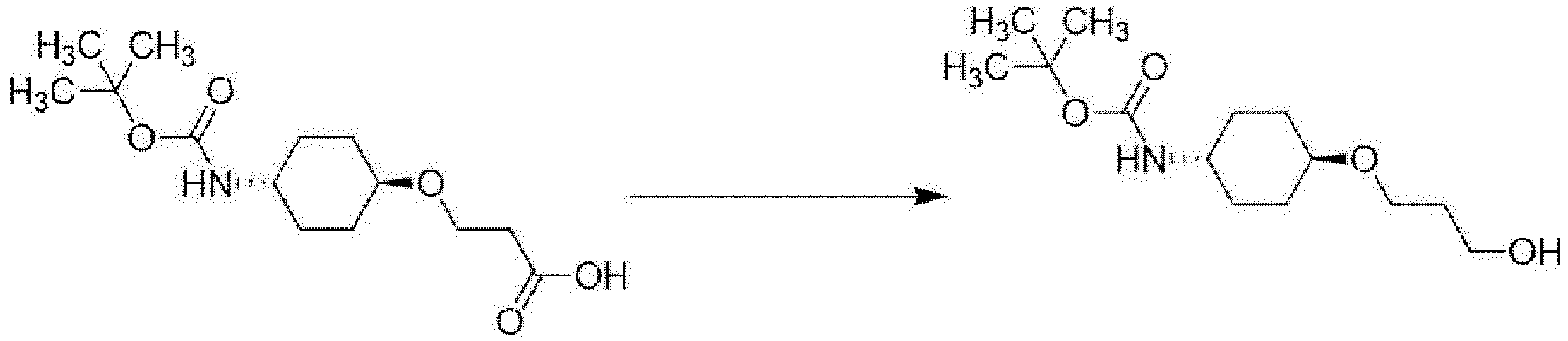
- To a solution of 3-((trans-4-((tert-butoxycarbonyl)amino)cyclohexyl)oxy)propionic acid (0.94 g) and triethylamine (0.384 mL) in tetrahydrofuran (7.548 mL) was added isobutyl chloroformate (0.362 mL) under ice-cooling, and the mixture was stirred for 30 min. The reaction mixture was filtered to remove insoluble materials. To the filtrate was added dropwise sodium borohydride (0.298 g)/0.05 M aqueous sodium hydroxide solution (0.3774 mL) under ice-cooling. The mixture was stirred for 2 hr, allowed to gradually return to room temperature, and stirred for 90 min. To the reaction mixture were added saturated aqueous sodium hydrogen carbonate, water and ethyl acetate, and the layers were separated. The aqueous layer was extracted with ethyl acetate. The combined organic layer was washed successively with water and saturated brine, and dried over sodium sulfate. Sodium sulfate was removed by filtration, and the filtrate was concentrated under reduced pressure to give the title compound (0.774 g).
1H-NMR (DMSO-D6) δ: 6.68 (1H, d, J = 7.9 Hz), 4.32 (1H, t, J = 5.1 Hz), 3.46-3.38 (4H, m), 3.23-3.05 (2H, m), 1.95-1.86 (2H, m), 1.80-1.70 (2H, m), 1.65-1.55 (2H, m), 1.37 (9H, s), 1.22-1.04 (4H, m). -

- To a solution of tert-butyl (trans-4-(3-hydroxypropoxy)cyclohexyl)carbamate (370 mg) and triethylamine (0.238 mL) in tetrahydrofuran (1.55 mL) was added methanesulfonic anhydride (297 mg) under ice-cooling. The mixture was allowed to gradually return to room temperature, and stirred for 90 min. To the reaction mixture were added water and ethyl acetate at room temperature, and the layers were separated. The aqueous layer was extracted with ethyl acetate. The combined organic layer was washed successively with saturated aqueous sodium hydrogen carbonate and saturated brine, and dried over sodium sulfate. Sodium sulfate was removed by filtration, and the filtrate was concentrated under reduced pressure to give the title compound (420 mg).
1H-NMR (DMSO-D6) δ: 6.70 (1H, d, J = 7.2 Hz), 4.23 (2H, t, J = 6.4 Hz), 3.46 (2H, t, J = 6.2 Hz), 3.23-3.06 (2H, m), 3.15 (3H, s), 1.97-1.81 (4H, m), 1.80-1.69 (2H, m), 1.37 (9H, s), 1.23-1.05 (4H, m). -

- A suspension of 3-((trans-4-((tert-butyl-butoxycarbonyl)amino)cyclohexyl)oxy)propyl methanesulfonate (420 mg), sodium methanesulfinate (242 mg) and sodium iodide (186 mg) in N,N-dimethylformamide (1.987 mL) was stirred at 70°C for 1 hr, and at 100°C for 3 hr. To the reaction mixture was added water at room temperature, and the precipitated solid was collected by filtration, and dried under reduced pressure at 60°C to give the title compound (220 mg). Step 6-8 and step 6-9 were separately performed to give the title compound (47.2 mg).
1H-NMR (DMSO-D6) δ: 6.70 (1H, d, J = 7.5 Hz), 3.47 (2H, t, J = 6.4 Hz), 3.24-3.06 (4H, m), 2.97 (3H, s), 1.98-1.81 (4H, m), 1.81-1.67 (2H, m), 1.37 (9H, s), 1.23-1.07 (4H, m). -

- To a suspension of tert-butyl (trans-4-(3-(methylsulfonyl)propoxy)cyclohexyl)carbamate (253 mg) in ethyl acetate (1.265 mL) was added 4 M hydrogen chloride/ethyl acetate solution (1.265 mL) at room temperature, and the mixture was stirred for 2 hr and left standing overnight. The precipitated solid was collected by filtration, washed with ethyl acetate, and dried under reduced pressure at 60°C for 1 hr to give the title compound (202 mg).
1H-NMR (DMSO-D6) δ: 7.87 (3H, br s), 3.50 (2H, t, J = 6.2 Hz), 3.24-3.15 (1H, m), 3.14-3.07 (2H, m), 3.03-2.91 (1H, m), 2.97 (3H, s), 2.04-1.82 (6H, m), 1.40-1.27 (2H, m), 1.26-1.13 (2H, m). -

- To a suspension of 2-(3-(difluoromethyl)-1H-indazol-1-yl)pyrimidine-5-carboxylic acid (30 mg), trans-4-(3-(methylsulfonyl)propoxy)cyclohexan-1-amine monohydrochloride (33.7 mg) and triethylamine (0.0261 mL) in N,N-dimethylformamide (0.5 mL) were added 1-hydroxy-7-azabenzotriazole (4.22 mg) and 1-ethyl-3-(3-dimethylaminopropyl)carbodiimide hydrochloride (29.7 mg) at room temperature, and the mixture was stirred overnight. To the reaction mixture was added water at room temperature, and the precipitated solid was collected by filtration and dried under reduced pressure. The solid was dissolved in dimethyl sulfoxide and purified by reversed-phase silica gel column chromatography (eluent: water/acetonitrile=95/5 to 0/100) to give the title compound (38.5 mg).
- 1H-NMR (DMSO-D6) δ: 9.30 (2H, s), 8.78 (1H, d, J = 8.6 Hz), 8.63 (1H, d, J = 7.5 Hz), 8.00 (1H, d, J = 8.1 Hz), 7.75 (1H, t, J = 8.1 Hz), 7.56 (1H, t, J = 53.9 Hz), 7.52 (1H, t, J = 7.5 Hz), 3.86-3.76 (1H, m), 3.53 (2H, t, J = 6.2 Hz), 3.30-3.25 (1H, m), 3.16-3.11 (2H, m), 2.99 (3H, s), 2.07-2.02 (2H, m), 1.97-1.87 (4H, m), 1.46-1.36 (2H, m), 1.33-1.23 (2H, m).
- MS(M+H):508 MS(M-H):506
-

-
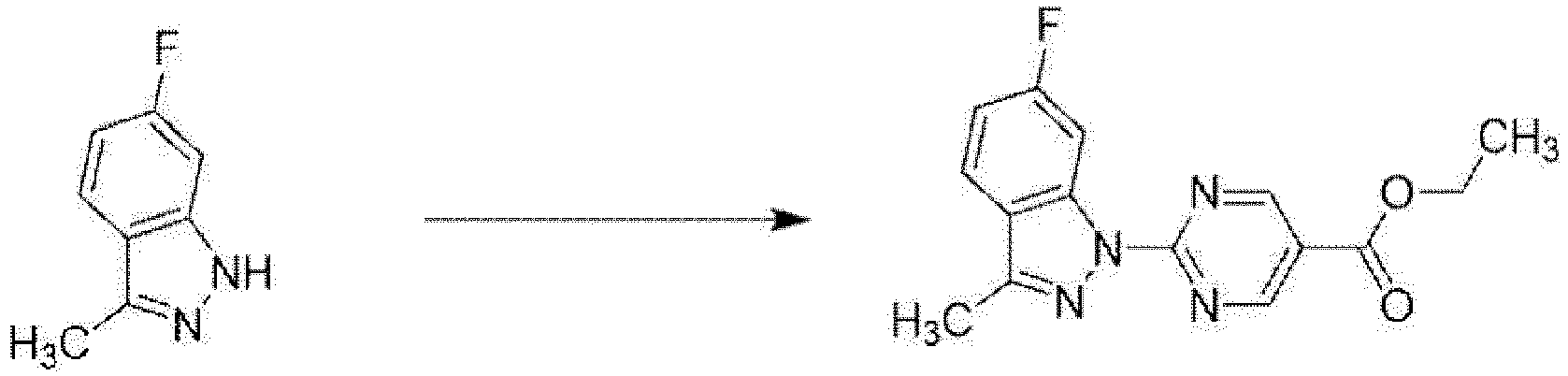
- A suspension of 6-fluoro-3-methyl-1H-indazole (1.5 g), ethyl 2-chloropyrimidine-carboxylate (2.05 g) and cesium carbonate (6.51 g) in N,N-dimethylformamide (10 mL) was stirred for 3 hr and left standing overnight at room temperature . To the reaction mixture was added water at room temperature, and the precipitated solid was collected by filtration , and dried under reduced pressure. The solid was dissolved in chloroform, and purified by silica gel column chromatography (eluent: chloroform) to give the title compound (2.65 g).
1H-NMR (DMSO-D6) δ: 9.30 (2H, s), 8.44 (1H, dd, J = 10.4, 2.1 Hz), 7.95 (1H, dd, J = 8.8, 5.3 Hz), 7.31 (1H, td, J = 8.9, 2.2 Hz), 4.40 (2H, q, J = 7.1 Hz), 2.61 (3H, s), 1.37 (3H, t, J = 7.1 Hz). -

- To a solution of ethyl 2-(6-fluoro-3-methyl-1H-indazol-1-yl)pyrimidine-5-carboxylate (2.65 g) in tetrahydrofuran (53 mL) was added 2 M aqueous sodium hydroxide solution (13.24 mL) at room temperature, and the mixture was stirred for 3 hr and left standing overnight. To the reaction mixture was added 2 M aqueous sodium hydroxide solution (4.41 mL) at room temperature, and the mixture was stirred for 1 hr. To the reaction mixture was added 2 M hydrochloric acid (17.65 mL) at room temperature. The mixture was stirred for 30 min and left standing overnight, and concentrated under reduced pressure. To the residue was added water, and the mixture was stirred for 30 min, and the precipitated solid was collected by filtration and dried under reduced pressure to give the title compound (2.38 g).
1H-NMR (DMSO-D6) δ: 13.68 (1H, br s), 9.27 (2H, s), 8.44 (1H, dd, J = 10.5, 2.2 Hz), 7.95 (1H, dd, J = 9.0, 5.2 Hz), 7.31 (1H, td, J = 8.6, 2.0 Hz), 2.61 (3H, s). -

- To a solution of methyl 3-((tert-butoxycarbonyl)amino)bicyclo[1.1.1]pentane-1-carboxylate (2.0 g) in tetrahydrofuran (10 mL) were added 1.02 M tetrahydrofuran solution (33 mL) of methylmagnesium bromide under ice-cooling, and the mixture was stirred at the same temperature for 1 hr, allowed to gradually return to room temperature, and stirred for 2 hr. To the reaction mixture was added saturated aqueous ammonium chloride solution (40 mL) under ice-cooling. To the reaction mixture was added ethyl acetate at room temperature (40 mL), and the layers were separated. The aqueous layer was extracted once with ethyl acetate (10 mL). The combined organic layer was washed with saturated brine and dried over sodium sulfate. Sodium sulfate was removed by filtration, and the filtrate was concentrated under reduced pressure to give the title compound (2.0 g).
1H-NMR (DMSO-D6) δ: 7.34 (1H, br s), 4.07 (1H, br s), 1.70 (6H, s), 1.37 (9H, s), 1.02 (6H, s). -

- To a solution of tert-butyl (3-(2-hydroxypropan-2-yl)bicyclo[1.1.1]pentan-1-yl)carbamate (414 mg) in ethyl acetate (4.0 mL) was added 4 M hydrogen chloride/ethyl acetate solution (4.0 mL) at room temperature, and the mixture was stirred overnight. To the reaction mixture was added ethyl acetate at room temperature (10 mL), and the precipitated solid was collected by filtration and dried under reduced pressure to give the title compound (271 mg).
1H-NMR (DMSO-D6) δ: 8.79 (3H, br s), 4.21 (1H, br s), 1.80 (6H, s), 1.05 (6H, s). -

- To a suspension of 2-(6-fluoro-3-methyl-1H-indazol-1-yl)pyrimidine-5-carboxylic acid (30 mg), 2-(3-aminobicyclo[1.1.1]pentan-1-yl)propan-2-ol monohydrochloride (28 mg), 1-hydroxy-7-azabenzotriazole (16 mg) and 1-ethyl-3-(3-dimethylaminopropyl)carbodiimide hydrochloride (36 mg) in N,N-dimethylformamide (1.0 mL) was added triethylamine (0.030 mL) at room temperature, and the mixture was stirred overnight. To the reaction mixture were added saturated aqueous sodium hydrogen carbonate (2.0 mL) and water (3.0 mL) at room temperature, and the precipitated solid was collected by filtration and dried under reduced pressure to give the title compound (42.7 mg).
1H-NMR (DMSO-D6) δ: 9.24 (1H, br s), 9.22 (2H, s), 8.39 (1H, dd, J = 10.3, 2.2 Hz), 7.94 (1H, dd, J = 8.8, 5.3 Hz), 7.32-7.26 (1H, m), 4.20 (1H, s), 2.61 (3H, s), 1.96 (6H, s), 1.09 (6H, s). MS(M+H):396 MS(M-H) :394 -

-

- To a solution of 1H-indazole-3-carbaldehyde (1.5 g) in dichloromethane (10 mL) was added N,N-diethylaminosulfur trifluoride (2.71 mL) under ice-cooling, and the mixture was allowed to gradually return to room temperature and stirred for 5 hr. To the reaction mixture was added dropwise saturated aqueous sodium hydrogen carbonate under ice-cooling, and ethyl acetate was added. The layers were separated, and the aqueous layer was extracted once with ethyl acetate. The combined organic layer was washed with saturated brine and dried over magnesium sulfate. Magnesium sulfate was removed by filtration, and the filtrate was concentrated under reduced pressure. The residue was purified by silica gel column chromatography (eluent: n-hexane/ethyl acetate=95/5 to 80/20) and silica gel column chromatography (eluent: n-hexane/ethyl acetate=100/0 to 85/15) to give the title compound (343 mg). The title compound (673 mg) was obtained from the starting material, 1H-indazole-3-carboxaldehyde, by a similar production method.
1H-NMR (DMSO-D6) δ: 13.59 (1H, s), 7.84 (1H, d, J = 8.2 Hz), 7.64 (1H, d, J = 9.0 Hz), 7.46 (1H, t, J = 7.5 Hz), 7.34 (1H, t, J = 53.9 Hz), 7.25 (1H, t, J = 7.5 Hz). -

- A suspension of 3-(difluoromethyl)-1H-indazole (0.95 g), ethyl 2-chloropyrimidine-carboxylate (1.1 g) and cesium carbonate (2.2 g) in N,N-dimethylformamide (10 mL) was stirred at room temperature for 4 hr. To the reaction mixture was added water at room temperature and the mixture was stirred for 1 hr. The precipitated solid was collected by filtration and dried under reduced pressure to give the title compound (1.73 g).
1H-NMR (DMSO-D6) δ: 9.38 (2H, s), 8.81 (1H, d, J = 8.6 Hz), 8.01 (1H, d, J = 8.1 Hz), 7.77 (1H, t, J = 8.4 Hz), 7.57 (1H, t, J = 54.0 Hz), 7.54 (1H, t, J = 7.6 Hz), 4.42 (2H, q, J = 7.1 Hz), 1.38 (3H, t, J = 7.1 Hz). -

- To a solution of ethyl 2-(3-(difluoromethyl)-1H-indazol-1-yl)pyrimidine-5-carboxylate (1.73 g) in tetrahydrofuran (10 mL) was added 2 M aqueous sodium hydroxide solution (5.03 mL) under ice-cooling, and the mixture was allowed to gradually return to room temperature and stirred for 6 hr. To the reaction mixture was added 2 M hydrochloric acid (5.0 mL) at room temperature, and the mixture was stirred for 1 hr. The precipitated solid was collected by filtration and dried under reduced pressure to give the title compound (1.45 g).
1H-NMR (DMSO-D6) δ: 13.80 (1H, br s), 9.35 (2H, s), 8.82 (1H, d, J = 8.5 Hz), 8.01 (1H, d, J = 7.9 Hz), 7.78-7.74 (1H, m), 7.56 (1H, t, J = 54.0 Hz), 7.56-7.51 (1H, m). -

- To trans-4-((tert-butoxycarbonyl)amino)cyclohexane-1-carboxylic acid (800 mg), methoxyacetic acid hydrazide (411 mg), 1-hydroxy-7-azabenzotriazole (134 mg) and 1-ethyl-3-(3-dimethylaminopropyl)carbodiimide hydrochloride (819 mg) were added N,N-dimethylformamide (10 mL) and triethylamine (732 mg) in a water bath, and the mixture was stirred for 10 min and stirred at room temperature overnight. To the reaction mixture was added water (20 mL) at room temperature, and the mixture was stirred for 1 hr. The precipitated solid was collected by filtration and dried under reduced pressure to give the title compound (650 mg).
1H-NMR (DMSO-D6) δ: 9.64 (2H, d, J = 7.5 Hz), 6.71 (1H, d, J = 7.5 Hz), 3.87 (2H, s), 3.31 (3H, s), 3.22-3.09 (1H, m), 2.14-2.01 (1H, m), 1.85-1.68 (4H, br m), 1.46-1.30 (11H, m), 1.21-1.09 (2H, m). -

- To a solution of tert-butyl (trans-4-(2-(2-methoxyacetyl)hydrazine -1-carbonyl)cyclohexyl)carbamate (650 mg), hexachloroethane (701 mg) and diisopropylethylamine (1.054 mL) in acetonitrile (12 mL) was added two divided portions of triphenylphosphine (725 mg) under ice-cooling, and the mixture was stirred for 15 min. The mixture was stirred at room temperature for 30 min and then at 70°C for 3 hr. To the reaction mixture were added hexachloroethane (350 mg), diisopropylethylamine (0.5 mL) and triphenylphosphine (370 mg) in a water bath, and the mixture was stirred at 80°C for 2 hr. To the reaction mixture were added toluene and water in a water bath, and the layers were separated. The organic layer was washed successively with 5 wt% aqueous potassium hydrogen sulfate solution and saturated brine, and concentrated under reduced pressure. To the residue was added ethyl acetate at room temperature, insoluble material was removed by filtration, and the residue was concentrated under reduced pressure. The residue was purified by silica gel column chromatography (eluent: n-hexane/ethyl acetate=34/66) to give crude product (480 mg) containing the title compound.
-

- To a solution of a crude product (480 mg) containing tert-butyl (trans-4-(5-(methoxymethyl)-1,3,4-oxadiazol-2-yl)cyclohexyl)carbamate in ethyl acetate (1.0 mL) was added trifluoroacetic acid (1.5 mL) at room temperature, and the mixture was stirred for 3 hr. To the reaction mixture was added trifluoroacetic acid (5.0 mL) at room temperature, and the mixture was stirred at 40°C for 1 hr. The reaction mixture was concentrated under reduced pressure, and ethyl acetate and Wakogel (registered trade mark) 50NH2 (1.5 g) were added to the residue. The mixture was stirred for 30 min and filtered through celite, and the filtrate was concentrated under reduced pressure. The residue was purified by Bond Elut SCX (Agilent technologies) (eluent: methanol to 1 M ammonia/methanol solution) to give a crude product (190 mg) containing the title compound.
-

- A suspension of a crude product (51 mg) containing trans-4-(5-(methoxymethyl)-1,3,4-oxadiazol-2-yl)cyclohexan-1-amine, 2-(3-(difluoromethyl)-1H-indazol-1-yl)pyrimidine-5-carboxylic acid (50 mg), triethylamine (52.3 mg), 1-hydroxy-7-azabenzotriazole (25.8 mg) and 1-ethyl-3-(3-dimethylaminopropyl)carbodiimide hydrochloride (49.5 mg) in N,N-dimethylformamide (1.2 mL) was stirred overnight at room temperature. To the reaction mixture was added water at room temperature, and the precipitated solid was collected by filtration, and dried under reduced pressure. To this solid was added n-hexane/ethyl acetate (n-hexane/ethyl acetate=1/1) solution, and slurry purification was performed. The solid was collected by filtration, and dried under reduced pressure. The solid was dissolved in methanol and purified by amino silica gel column chromatography (eluent: ethyl acetate/methanol=100/0 to 97/3) to give a crude product containing the title compound. To the crude product containing the title compound was added ethyl acetate, and the mixture was slurry purified. The solid was collected by filtration and dried under reduced pressure to give the title compound (22 mg).
- 1H-NMR (DMSO-D6) δ: 9.33 (2H, s), 8.79 (1H, d, J = 5.1 Hz), 8.74 (1H, d, J = 7.6 Hz), 8.01 (1H, d, J = 8.1 Hz), 7.78-7.74 (1H, m), 7.57 (1H, t, J = 53.0 Hz), 7.56-7.49 (1H, m), 4.63 (2H, s), 3.95-3.85 (1H, m), 3.35 (3H, s), 3.06-2.96 (1H, m), 2.24-2.22 (2H, br m), 2.18-2.16 (2H, br m), 1.75-1.46 (4H, m).
- MS(M+H):484 MS(M-H) :482
-

-

- To a suspension of 1H-pyrazolo[3,4-c]pyridine (4.95 g) and potassium carbonate (17.23 g) in N,N-dimethylformamide (49.5 mL) was added iodine (10.55 g) under ice-cooling, and the mixture was stirred at room temperature for 3 hr. The reaction mixture was added to 10 wt% aqueous sodium thiosulfate solution (300 mL), and the mixture was stirred at room temperature for 1 hr. The precipitated solid was collected by filtration and dried under reduced pressure to give the title compound (8.66 g).
1H-NMR (DMSO-D6) δ: 14.06 (1H, s), 9.05 (1H, s), 8.30 (1H, d, J = 6.0 Hz), 7.45 (1H, d, J = 6.0 Hz). -

- To a suspension of sodium hydride (0.612 g, 60 wt% oil dispersion) in N,N-dimethylformamide (10 mL) was added dropwise N,N-dimethylformamide (30 mL) solution of 3-iodo-1H-pyrazolo[3,4-c]pyridine (3.0 g) under ice-cooling, and the mixture was stirred at the same temperature for 1 hr. To the reaction mixture was added 2-(chloromethoxy)ethyltrimethylsilane (2.7 mL) under ice-cooling, and the mixture was stirred at room temperature for 2 hr. The reaction mixture and ethyl acetate were added to water (60 mL) at room temperature. The layers were separated, and the aqueous layer was extracted once with ethyl acetate. The combined organic layer was washed successively with water and saturated brine, and dried over sodium sulfate. Sodium sulfate was removed by filtration, and the filtrate was concentrated under reduced pressure. The residue was purified by silica gel column chromatography (eluent: n-hexane/ethyl acetate=90/10 to 50/50) to give the title compound (2.55 g).
1H-NMR (DMSO-D6) δ: 9.26 (1H, s), 8.38 (1H, d, J = 6.0 Hz), 7.49 (1H, d, J = 6.0 Hz), 5.88 (2H, s), 3.54 (2H, t, J = 7.9 Hz), 0.80 (2H, t, J = 7.9 Hz), -0.12 (9H, s). -

- To a solution of 3-iodo-1-((2-(trimethylsilyl)ethoxy)methyl)-1H-pyrazolo[3,4-c]pyridine (1.1 g) in tetrahydrofuran (20 mL) was added dropwise 2.0 M tetrahydrofuran solution (2.198 mL) of isopropylmagnesium chloride under ice-salt bath cooling, and the mixture was stirred for 1 hr. At the same temperature, N,N-dimethylformamide (0.908 mL) was added and the mixture was stirred for 2 hr. To the reaction mixture was added saturated aqueous ammonium chloride solution at the same temperature. Ethyl acetate was added thereto at room temperature, and the layers were separated. The organic layer was washed successively with water and saturated brine, and dried over sodium sulfate. Sodium sulfate was removed by filtration, and the filtrate was concentrated under reduced pressure. The residue was purified by silica gel column chromatography (eluent: n-hexane/ethyl acetate=90/10 to 0/100) to give the title compound (0.26 g).
1H-NMR (DMSO-D6) δ: 10.42 (1H, s), 9.44 (1H, s), 8.42 (1H, d, J = 6.0 Hz), 8.05 (1H, d, J = 6.0 Hz), 6.22 (2H, s), 3.64 (2H, t, J = 7.9 Hz), 0.85 (2H, t, J = 7.9 Hz), -0.10 (9H, s). -

- To a solution of 1-((2-(trimethylsilyl)ethoxy)methyl)-1H-pyrazolo[3,4-c]pyridine-3-carbaldehyde (260 mg) in dichloromethane (5.0 mL) was added dropwise Deoxo-Fluor (registered trade mark) (0.518 mL) under ice-cooling. The mixture was stirred at the same temperature for 1 hr, and at room temperature for 4 hr. To the reaction mixture was slowly added saturated aqueous sodium hydrogen carbonate under ice-cooling. To the reaction mixture was added ethyl acetate at room temperature, and the organic layer was washed successively with water and saturated brine. The organic layer was dried over sodium sulfate, sodium sulfate was removed by filtration, and the filtrate was concentrated under reduced pressure. The residue was purified by silica gel column chromatography (eluent: n-hexane/ethyl acetate=90/10 to 0/100) to give the title compound (260 mg).
1H-NMR (DMSO-D6) δ: 9.34 (1H, s), 8.25 (1H, d, J = 5.4 Hz), 7.75 (1H, d, J = 5.4 Hz), 7.75 (1H, t, J = 52.5 Hz), 5.99 (2H, s), 3.59 (2H, t, J = 7.9 Hz), 0.86 (2H, t, J = 7.9 Hz), -0.08 (9H, s). -

- To a solution of 3-(difluoromethyl)-1-((2-(trimethylsilyl)ethoxy)methyl)-1H-pyrazolo[3,4-c]pyridine (260 mg) in dichloromethane (1.5 mL) was added trifluoroacetic acid (1.5 mL) at room temperature, and the mixture was stirred overnight. The reaction mixture was concentrated under reduced pressure, and chloroform and triethylamine (0.182 mL) was added to the residue. The mixture was purified by silica gel column chromatography {eluent: n-hexane/ethyl acetate (containing 5% 2 M ammonia/methanol solution)=90/10 to 0/100} to give a crude product (83 mg) containing the title compound.
-

- A suspension of a crude product (54 mg) containing 3-(difluoromethyl)-1H-pyrazolo[3,4-c]pyridine, ethyl 2-chloropyrimidine-carboxylate (59.6 mg) and cesium carbonate (156 mg) in N,N-dimethylformamide (0.6 mL) was stirred at room temperature for 1 hr. To the reaction mixture was added water at room temperature, and the precipitated solid was collected by filtration, washed with water, and dried under reduced pressure. The solid was purified by silica gel column chromatography (eluent: n-hexane/ethyl acetate=80/20 to 0/100) to give the title compound (70 mg).
1H-NMR (DMSO-D6) δ: 10.13 (1H, d, J = 1.2 Hz), 9.42 (2H, s), 8.63 (1H, d, J = 5.4 Hz), 8.00 (1H, d, J = 5.4 Hz), 7.63 (1H, t, J = 53.1 Hz), 4.42 (2H, q, J = 7.1 Hz), 1.37 (3H, t, J = 7.1 Hz). -

- To a solution of ethyl 2-(3-(difluoromethyl)-1H-pyrazolo[3,4-c]pyridin-1-yl)pyrimidine-5-carboxylate (70 mg) in tetrahydrofuran (1.0 mL) was added 2 M aqueous sodium hydroxide solution (0.329 mL) at room temperature, and the mixture was stirred overnight. To the reaction mixture was added 1 M hydrochloric acid (0.658 mL) at room temperature, and the mixture was stirred for 1 hr. The precipitated solid was collected by filtration, washed with water, and dried under reduced pressure to give the title compound (33 mg).
1H-NMR (DMSO-D6) δ: 13.88 (1H, br s), 10.15 (1H, s), 9.41 (2H, s), 8.64 (1H, d, J = 5.4 Hz), 8.01 (1H, d, J = 5.4 Hz), 7.64 (1H, t, J = 53.1 Hz). -

- To a suspension of 2-(3-(difluoromethyl)-1H-pyrazolo[3,4-c]pyridin-1-yl)pyrimidine-5-carboxylic acid (33 mg) and 2-(trans-4-aminocyclohexyl)propan-2-ol (26.7 mg) in N,N-dimethylformamide (0.33 mL) were added triethylamine (0.0237 mL), 1-hydroxy-7-azabenzotriazole (15.42 mg) and 1-ethyl-3-(3-dimethylaminopropyl)carbodiimide hydrochloride (26.1 mg) at room temperature, and the mixture was stirred overnight. To the reaction mixture were added water (2.0 mL) and saturated aqueous sodium hydrogen carbonate (1.0 mL) at room temperature, and the mixture was stirred for 1 hr. The precipitated solid was collected by filtration, washed with water, and dried under reduced pressure to give the title compound (42 mg).
- 1H-NMR (DMSO-D6) δ: 10.12 (1H, s), 9.35 (2H, s), 8.67 (1H, d, J = 7.5 Hz), 8.62 (1H, d, J = 5.4 Hz), 8.00 (1H, d, J = 5.4 Hz), 7.64 (1H, t, J = 53.3 Hz), 4.06 (1H, s), 3.81-3.70 (1H, m), 1.99-1.85 (4H, m), 1.38-1.28 (2H, m), 1.22-1.11 (3H, m), 1.05 (6H, s).
- MS(M+H) :431 MS(M-H):429
-

-

- To a suspension of 6-fluoro-1H-indazole-3-carbaldehyde (500 mg) in dichloromethane (15 mL) was added N,N-diethylaminosulfur trifluoride (0.805 mL) under ice-cooling, and the mixture was allowed to gradually return to room temperature and stirred for 4 hr. To the reaction mixture were added saturated aqueous sodium hydrogen carbonate (10 mL) and water (5 mL) under ice-cooling. To the reaction mixture was added chloroform at room temperature, and the layers were separated. The organic layer was concentrated under reduced pressure. The residue was purified by silica gel column chromatography (eluent: n-hexane/ethyl acetate=92/8 to 34/66) to give a crude product (205 mg) containing the title compound.
-

- A suspension of a crude product (205 mg) containing 3-(difluoromethyl)-6-fluoro-1H-indazole, ethyl 2-chloropyrimidine-carboxylate (206 mg) and cesium carbonate (456 mg) in N,N-dimethylformamide (4.0 mL) was stirred at 60°C for 5 hr. To the reaction mixture was added water (25 mL) at room temperature, and the precipitated solid was collected by filtration, and dried under reduced pressure. The solid was dissolved in chloroform and purified twice by silica gel column chromatography (eluent: n-hexane/ethyl acetate=92/8 to 34/66) to give the title compound (275 mg).
1H-NMR (DMSO-D6) δ: 9.39 (2H, s), 8.57 (1H, dd, J = 10.4, 2.3 Hz), 8.05 (1H, dd, J = 8.8, 5.3 Hz), 7.57 (1H, t, J = 53.4 Hz), 7.48-7.42 (1H, m), 4.42 (2H, q, J = 7.2 Hz), 1.38 (3H, t, J = 7.2 Hz). -

- To a suspension of ethyl 2-(3-(difluoromethyl)-6-fluoro-1H-indazol-1-yl)pyrimidine-5-carboxylate (275 mg) in tetrahydrofuran (10 mL) was added 2 M aqueous sodium hydroxide solution (0.85 mL) at room temperature, and the mixture was stirred for 8 hr. To the reaction mixture were added 1 M hydrochloric acid (1.7 mL) and water (15 mL) at room temperature, and the mixture was left standing overnight. The precipitated solid was collected by filtration and dried under reduced pressure to give the title compound (210 mg).
1H-NMR (DMSO-D6) δ: 13.84 (1H, br s), 9.36 (2H, s), 8.56 (1H, dd, J = 10.2, 2.3 Hz), 8.04 (1H, dd, J = 8.8, 5.3 Hz), 7.56 (1H, t, J = 53.2 Hz), 7.47-7.42 (1H, m). -

- To a solution of methyl 3-((tert-butoxycarbonyl)amino)bicyclo[1.1.1]pentane-1-carboxylate (2.0 g) in tetrahydrofuran (10 mL) was added 1.02 M tetrahydrofuran solution (33 mL) of methylmagnesium bromide under ice-cooling. The mixture was stirred at the same temperature for 1 hr, allowed to gradually return to room temperature, and stirred for 2 hr. To the reaction mixture was added saturated aqueous ammonium chloride solution (40 mL) under ice-cooling. To the reaction mixture was added ethyl acetate (40 mL) at room temperature, the layers were separated, and the aqueous layer was extracted once with ethyl acetate (10 mL). The combined organic layer was washed with saturated brine, and dried over sodium sulfate. Sodium sulfate was removed by filtration, and the filtrate was concentrated under reduced pressure to give the title compound (2.0 g).
1H-NMR (DMSO-D6) δ: 7.34 (1H, br s), 4.07 (1H, br s), 1.70 (6H, s), 1.37 (9H, s), 1.02 (6H, s). -

- To a solution of tert-butyl (3-(2-hydroxypropan-2-yl)bicyclo[1.1.1]pentan-1-yl)carbamate (414 mg) in ethyl acetate (4.0 mL) was added 4 M hydrogen chloride/ethyl acetate solution (4.0 mL) at room temperature, and the mixture was stirred overnight. To the reaction mixture was added ethyl acetate (10 mL) at room temperature, and the precipitated solid was collected by filtration and dried under reduced pressure to give the title compound (271 mg).
1H-NMR (DMSO-D6) δ: 8.79 (3H, br s), 4.21 (1H, br s), 1.80 (6H, s), 1.05 (6H, s). -

- To a suspension of 2-(3-(difluoromethyl)-6-fluoro-1H-indazol-1-yl)pyrimidine-5-carboxylic acid (62 mg), 2-(3-aminobicyclo[1.1.1]pentan-1-yl)propan-2-ol monohydrochloride (48 mg), 1-hydroxy-7-azabenzotriazole (31 mg) and 1-ethyl-3-(3-dimethylaminopropyl)carbodiimide hydrochloride (49 mg) in N,N-dimethylformamide (1.0 mL) was added triethylamine (0.050 mL) at room temperature, and the mixture was stirred overnight. To the reaction mixture were added saturated aqueous sodium hydrogen carbonate (1.0 mL) and water (12 mL) at room temperature, and the precipitated solid was collected by filtration and dried under reduced pressure to give the title compound (74.5 mg).
- 1H-NMR (DMSO-D6) δ: 9.33 (1H, br s), 9.30 (2H, s), 8.52 (1H, dd, J = 10.3, 2.2 Hz), 8.04 (1H, dd, J = 8.8, 5.3 Hz), 7.56 (1H, t, J = 53.2 Hz), 7.46-7.41 (1H, m), 4.21 (1H, s), 1.96 (6H, s), 1.09 (6H, s).
- MS(M+H) :432 MS(M-H):430
-

-

- To 1.13 M n-hexane solution (7.81 mL) of lithium bis(trimethylsilyl)amide was added dropwise at -78°C tetrahydrofuran (15.3 mL) solution of 2-{[trans-4-(dibenzylamino)cyclohexyl]oxy}ethyl acetate (1.53 g) synthesized in the same manner as in Production Example 4, step 4-4, and the mixture was stirred at the same temperature for 20 min. To the reaction mixture was added dropwise methyl iodide (1.003 mL) at the same temperature. The mixture was stirred for 1 hr, allowed to gradually return to room temperature, and left standing overnight. To the reaction mixture were added water and ethyl acetate. The layers were separated, and the aqueous layer was extracted once with ethyl acetate. The combined organic layer was concentrated under reduced pressure. The residue was purified by silica gel chromatography (eluent: n-hexane/ethyl acetate=98/2 to 80/20) to give the title compound (422 mg).
1H-NMR (DMSO-D6) δ: 7.33-7.26 (8H, m), 7.23-7.16 (2H, m), 4.13-4.00 (3H, m), 3.55 (4H, s), 3.25-3.15 (1H, m), 2.44-2.31 (1H, m), 2.07-1.88 (2H, m), 1.85-1.73 (2H, m), 1.46-1.30 (2H, m), 1.25-1.13 (6H, m), 1.10-0.88 (2H, m). -

- To 2.0 M tetrahydrofuran/n-heptane/ethylbenzene solution (1.174 mL) of lithium diisopropylamide was added dropwise at - 78°C tetrahydrofuran (4.22 mL) solution of ethyl 2-{[trans-4-(dibenzylamino)cyclohexyl]oxy}propionate (422 mg), and the mixture was stirred at the same temperature for 30 min. To the reaction mixture was added dropwise methyl iodide (0.267 mL) at the same temperature, hexamethylphosphoric triamide (0.204 mL) was added, and the mixture was stirred for 40 min. The reaction mixture was allowed to gradually return to room temperature, stirred for 1 hr, and left standing overnight. To the reaction mixture were added water and ethyl acetate. The layers were separated, and the aqueous layer was extracted once with ethyl acetate. The combined organic layer was concentrated under reduced pressure. The residue was purified by silica gel chromatography (eluent: n-hexane/ethyl acetate=98/2 to 78/22) to give the title compound (388 mg).
1H-NMR (DMSO-D6) δ: 7.36-7.24 (8H, m), 7.23-7.16 (2H, m), 4.09 (2H, q, J = 7.2 Hz), 3.55 (4H, s), 3.27-3.20 (1H, m), 2.37-2.30 (1H, m), 1.95-1.84 (2H, m), 1.81-1.71 (2H, m), 1.50-1.35 (2H, m), 1.29 (6H, s), 1.19 (3H, t, J = 7.0 Hz), 1.11-0.97 (2H, m). -

- To a suspension of lithium aluminum hydride (76 mg) in tetrahydrofuran (3.88 mL) was added dropwise tetrahydrofuran (1.94 mL) solution of ethyl 2-{[trans-4-(dibenzylamino)cyclohexyl]oxy}-2-methylpropionate (388 mg) under ice-cooling. The mixture was allowed to gradually return to room temperature, stirred for 1 hr, and left standing overnight. To the reaction mixture were successively added water (0.076 mL), 4 M aqueous sodium hydroxide solution (0.076 mL) and water (0.228 mL) under ice-cooling. The mixture was filtered through celite, and the filtrate was concentrated under reduced pressure to give the title compound (329 mg).
1H-NMR (DMSO-D6) δ: 7.36-7.25 (8H, m), 7.22-7.16 (2H, m), 4.45 (1H, t, J = 5.5 Hz), 3.55 (4H, s), 3.49-3.34 (1H, m), 3.16 (2H, d, J = 5.5 Hz), 2.39-2.30 (1H, m), 1.86-1.71 (4H, m), 1.51-1.39 (2H, m), 1.12-0.93 (8H, m). -

- To a solution of 2-{[trans-4-(dibenzylamino)cyclohexyl]oxy}-2-methylpropan-1-ol (150 mg) in tetrahydrofuran/methanol (1.5 mL, tetrahydrofuran/methanol=1/1) was added 20% palladium hydroxide-carbon (15 mg) at room temperature. Under 1 atm hydrogen, the mixture was stirred at room temperature overnight. The reaction mixture was filtered through celite, and the filtrate was concentrated under reduced pressure to give the title compound (68.8 mg).
1H-NMR (DMSO-D6) δ: 4.46 (1H, t, J = 5.1 Hz), 3.48-3.35 (2H, m), 3.17 (2H, d, J = 5.1 Hz), 2.25-1.91 (2H, m), 1.77-1.63 (4H, m), 1.25-0.96 (10H, m). -

- A suspension of 2-(3-methyl-1H-indazol-1-yl)pyrimidine-5-carboxylic acid (30 mg) synthesized in the same manner as in Production Example 4, step 4-2, 2-((trans-4-aminocyclohexyl)oxy)-2-methylpropan-1-ol (24.31 mg), 1-hydroxy-7-azabenzotriazole (4.82 mg) and 1-ethyl-3-(3-dimethylaminopropyl)carbodiimide hydrochloride (33.9 mg) in N,N-dimethylformamide (0.6 mL) was stirred for 3 hr. To the reaction mixture was added water (3.0 mL) at room temperature, and the precipitated solid was collected by filtration, washed with water, and dried under reduced pressure at 70°C to give a crude product (41.6 mg) containing the title compound. The crude product was purified by reversed-phase silica gel chromatography (eluent: water/acetonitrile=95/5 to 0/100) to give the title compound (23.9 mg).
1H-NMR (DMSO-D6) δ: 9.21 (2H, s), 8.67 (1H, d, J = 8.3 Hz), 8.51 (1H, d, J = 7.4 Hz), 7.89 (1H, d, J = 7.6 Hz), 7.63 (1H, dd, J = 8.3, 7.5 Hz), 7.40 (1H, dd, J = 7.6, 7.5 Hz), 4.53 (1H, br s), 3.82-3.67 (1H, m), 3.58-3.45 (1H, m), 3.22 (2H, s), 2.62 (3H, s), 1.97-1.76 (4H, m), 1.51-1.22 (4H, m), 1.09 (6H, s). MS (M+H) :424 MS (M-H) :422 -

-

- Under a nitrogen atmosphere, to a solution of trans-4-[(tert-butoxycarbonyl)amino]cyclohexanecarboxylic acid (25.0 g), N,O-dimethylhydroxylamine hydrochloride (13.1 g) and N,N-diisopropylethylamine (23.3 mL) in N,N-dimethylformamide (250 mL) were successively added portions of 1-hydroxy-1H-benzotriazole monohydrate (20.5 g) and 1-ethyl-3-(3-dimethylaminopropyl)carbodiimide hydrochloride (25.7 g) under water cooling, and the mixture was stirred for 7 days. To the reaction mixture was added dropwise saturated aqueous sodium hydrogen carbonate/water (250 mL, saturated aqueous sodium hydrogen carbonate/water =1/2) at room temperature, and the mixture was stirred. The precipitated solid was collected by filtration, washed with water (300 mL), and dried under reduced pressure to give the title compound (24.45 g).
1H-NMR (CDCl3) δ: 4.40-4.33 (1H, m), 3.69 (3H, s), 3.48-3.39 (1H, m), 3.17 (3H, s), 2.64-2.57 (1H, m), 2.11-2.07 (2H, m), 1.86-1.81 (2H, m), 1.67-1.57 (2H, m), 1.44 (9H, s), 1.14 (2H, ddd, J = 24.9, 12.7, 3.4 Hz). -

- Under an argon atmosphere, to a solution of tert-butyl {trans-4-[methoxy(methyl)carbamoyl]cyclohexyl}carbamate (3.0 g) in tetrahydrofuran (20 mL) was added 1.02 M tetrahydrofuran solution (22.6 mL) of methylmagnesium bromide under ice-cooling, and the mixture was stirred for 3 hr. To the reaction mixture were added saturated aqueous ammonium chloride solution (20 mL), water (10 mL) and ethyl acetate (30 mL) under ice-cooling, and the layers were separated. The aqueous layer was extracted once with ethyl acetate (20 mL). The combined organic layer was washed successively with water and saturated brine, and dried over sodium sulfate. Sodium sulfate was removed by filtration, and the filtrate was concentrated under reduced pressure to give the title compound (2.464 g).
1H-NMR (DMSO-D6) δ: 6.72 (1H, d, J = 7.9 Hz), 3.17-3.07 (1H, m), 2.27-2.20 (1H, m), 2.08 (3H, s), 1.87-1.76 (4H, m), 1.37 (9H, s), 1.26-1.09 (4H, m). -

- A 1.0 M dichloromethane solution (31 mL) of titanium tetrachloride (IV) was added to tetrahydrofuran (20 mL) under ice-cooling. To the reaction mixture were added tetrahydrofuran (28 mL) solution of tert-butyl (trans-4-acetylcyclohexyl)carbamate (2.464 g) and 2,2-dimethyl-1,3-dioxane-4,6-dione (1.619 g), and pyridine (4.54 mL) under ice-cooling. The mixture was allowed to gradually return to room temperature and stirred overnight. To the reaction mixture were added saturated aqueous ammonium chloride solution (30 mL), water (15 mL) and ethyl acetate (60 mL) at room temperature. After partitioning, the organic layer was washed successively with water and saturated brine, and concentrated under reduced pressure. To the residue were added ethyl acetate (3.0 mL), n-hexane (30 mL) and water (10 mL) and the mixture was slurry stirred for 1 hr. The solid was collected by filtration and dried under reduced pressure to give the title compound (2.254 g) .
1H-NMR (DMSO-D6) δ: 6.75 (1H, d, J = 8.1 Hz), 3.42-3.35 (1H, m), 3.32-3.22 (1H, m), 2.29 (3H, s), 1.85-1.81 (2H, m), 1.67 (6H, s), 1.60-1.49 (4H, m), 1.38 (9H, s), 1.24-1.14 (2H, m). -

- To a solution of copper(I) bromide (2.64 g) in tetrahydrofuran (20 mL) was added 1.0 M tetrahydrofuran solution (37 mL) of methylmagnesium bromide under ice-cooling. To the reaction mixture was added tetrahydrofuran (40 mL) solution of tert-butyl (trans-4-(1-(2,2-dimethyl-4,6-dioxo-1,3-dioxan-5-ylidene)ethyl)cyclohexyl)carbamate (2.254 g) under ice-cooling. The mixture was stirred for 90 min, allowed to gradually return to room temperature, and stirred for 90 min. To the reaction mixture were added saturated aqueous ammonium chloride solution (60 mL) and ethyl acetate (80 mL) at room temperature. After partitioning, the organic layer was washed with saturated brine, and concentrated under reduced pressure. The residue was purified by silica gel column chromatography (eluent: n-hexane/ethyl acetate=92/8 to 34/66) to give the title compound (217 mg).
1H-NMR (DMSO-D6) δ: 6.66 (1H, d, J = 7.9 Hz), 3.81 (1H, s), 3.12 (1H, m), 1.82-1.77 (2H, m), 1.73 (3H, s), 1.69-1.60 (3H, m), 1.65 (3H, s), 1.37 (9H, s), 1.13-1.02 (4H, m), 1.02 (6H, s). -

- A solution of tert-butyl (trans-4-(2-(2,2-dimethyl-4,6-dioxo-1,3-dioxan-5-yl)propan-2-yl)cyclohexyl)carbamate (205 mg) in methanol (6.0 mL) was stirred at 80°C for 8 hr and left standing overnight. The reaction mixture was concentrated under reduced pressure. To the residue were added dimethyl sulfoxide (2.0 mL), water (0.2 mL) and sodium chloride (70 mg), and the mixture was stirred at 140°C for 7 hr. To the reaction mixture were added water (15 mL) and ethyl acetate (15 mL) at room temperature, and the layers were separated. The aqueous layer was extracted once with ethyl acetate (5.0 mL). The combined organic layer was washed successively with water, and saturated brine, and the residue was concentrated under reduced pressure to give a crude product (179 mg) containing the title compound.
-

- To a solution of a crude product (179 mg) containing methyl 3-(trans-4-((tert-butoxycarbonyl)amino)cyclohexyl)-3-methylbutyrate in ethyl acetate (2.0 mL) was added 4 M hydrogen chloride/ethyl acetate (2.0 mL) solution at room temperature, and the mixture was stirred overnight. The reaction mixture was concentrated under reduced pressure to give the title compound (131 mg).
1H-NMR (DMSO-D6) δ: 7.95 (3H, br s), 3.57 (3H, s), 2.92-2.85 (1H, m), 2.21 (2H, s), 1.99-1.96 (2H, m), 1.77-1.74 (2H, m), 1.33-0.96 (5H, m), 0.90 (6H, s). -

- To a suspension of 2-(6-fluoro-3-methyl-1H-indazol-1-yl)pyrimidine-5-carboxylic acid (50 mg) synthesized in the same manner as in Production Example 1, step 1-2, methyl 3-(trans-4-aminocyclohexyl)-3-methylbutyrate monohydrochloride (55 mg), 1-hydroxy-7-azabenzotriazole (25 mg) and 1-ethyl-3-(3-dimethylaminopropyl)carbodiimide hydrochloride (55 mg) in N,N-dimethylformamide (1.5 mL) was added triethylamine (0.040 mL) at room temperature, and the mixture was stirred overnight. To the reaction mixture were successively added saturated aqueous sodium hydrogen carbonate (2.0 mL) and water (3.0 mL) at room temperature, and the precipitated solid was collected by filtration and dried under reduced pressure to give a crude product (77 mg) containing the title compound.
-

- A suspension of a crude product (30 mg) containing methyl 3-(trans-4-(2-(6-fluoro-3-methyl-1H-indazol-1-yl)pyrimidine-5-carboxyamido)cyclohexyl)-3-methylbutyrate, sodium iodide (67 mg) and chlorotrimethylsilane (0.05 mL) in acetonitrile (2.0 mL) was stirred at 85°C for 7 hr. To the reaction mixture were added sodium iodide (63 mg) and chlorotrimethylsilane (0.05 mL) at room temperature, and the mixture was stirred at 85°C for 9 hr. To the reaction mixture were successively added water (4.0 mL) and 1 M hydrochloric acid (0.5 mL) at room temperature, and the solid was collected by filtration. The solid was dissolved in dimethyl sulfoxide, and purified by reversed-phase silica gel chromatography (eluent: water/acetonitrile=90/10 to 0/100) to give the title compound (7.3 mg).
- 1H-NMR (DMSO-D6) δ: 9.27-9.26 (2H, m), 8.83-8.73 (1H, br m), 8.40 (1H, dd, J = 10.4, 2.3 Hz), 7.94 (1H, dd, J = 8.7, 5.4 Hz), 7.31-7.26 (1H, m), 3.75-3.65 (1H, m), 2.61 (3H, s), 1.94-1.90 (2H, m), 1.86-1.83 (2H, m), 1.85 (2H, s), 1.48-1.41 (1H, m), 1.36-1.27 (2H, m), 1.11-1.02 (2H, m), 0.91 (6H, s).
- MS (M+H) :454 MS (M-H) :452
-

-

- To a solution of (S)-1-benzyloxy-2-propanol (500 mg) and triethylamine (0.922 mL) in tetrahydrofuran (5.0 mL) was added trimethylsilyl chloride (0.408 mL) in a water bath, and the mixture was stirred and left standing overnight. To the reaction mixture was added n-hexane/ethyl acetate (n-hexane/ethyl acetate=10/1) at room temperature, and the mixture was stirred. The insoluble material was filtered off, and the filtrate was concentrated to give a crude product (767.8 mg) containing the title compound.
-

- To a solution of a crude product (767.8 mg) containing (S)-((1-(benzyloxy)propan-2-yl)oxy)trimethylsilane, benzyl (4-oxocyclohexyl)carbamate (1481 mg) and triethylsilane (1045 mg) in acetonitrile (20 mL) was added dropwise acetonitrile (2.0 mL) solution of trimethylsilyl trifluoromethanesulfonate (1.094 mL) under ice-cooling, and the mixture was stirred at the same temperature for 3 hr. To the reaction mixture were added 1 M hydrochloric acid and ethyl acetate, and the layers were separated. The organic layer was washed with saturated brine. The organic layer was dried over sodium sulfate, sodium sulfate was removed by filtration, and the filtrate was concentrated under reduced pressure. The residue was purified by silica gel chromatography (eluent: n-hexane/ethyl acetate=80/20 to 76/24) to give the title compound (504.5 mg).
1H-NMR (DMSO-D6) δ: 7.39-7.26 (10H, m), 7.17 (1H, d, J = 7.6 Hz), 4.99 (2H, s), 4.48 (2H, s), 3.74-3.65 (1H, m), 3.40-3.23 (4H, m), 1.91-1.85 (2H, m), 1.82-1.75 (2H, m), 1.21-1.14 (4H, m), 1.04 (3H, d, J = 6.3 Hz). -

- To a solution of benzyl (trans-4-(((S)-1-(benzyloxy)propan-2-yl)oxy)cyclohexyl)carbamate (504 mg) in methanol (10 mL) was added 20% palladium hydroxide-carbon (178 mg) at room temperature. Under 4 atm hydrogen, the mixture was stirred overnight at room temperature. The reaction mixture was filtered through celite, and the filtrate was concentrated under reduced pressure. To a solution of the residue in methanol (10 mL) was added 20% palladium hydroxide-carbon (178 mg) at room temperature. Under 4 atm hydrogen, the mixture was stirred at room temperature for 2 days. The reaction mixture was filtered through celite, and the filtrate was concentrated under reduced pressure. The residue was purified by Bond Elut SCX (Agilent technologies) (eluent: methanol, 1 M ammonia/methanol solution) to give the title compound (176 mg).
1H-NMR (DMSO-D6) δ: 4.45 (1H, br s), 3.49-3.42 (1H, m), 3.34-3.14 (4H, m), 1.85-1.70 (4H, m), 1.61 (2H, br s), 1.18-0.95 (4H, m), 0.99 (3H, d, J = 5.0 Hz). -

- To a suspension of 2-(3-methyl-1H-indazol-1-yl)pyrimidine-5-carboxylic acid (40 mg) synthesized in the same manner as in Production Example 4, step 4-2, and (S)-2-((trans-4-aminocyclohexyl)oxy)propan-1-ol (32.7 mg) in N,N-dimethylformamide (0.6 mL) were successively added triethylamine (0.0329 mL), 1-hydroxy-7-azabenzotriazole (21.41 mg) and 1-ethyl-3-(3-dimethylaminopropyl)carbodiimide hydrochloride (36.2 mg) at room temperature, and the mixture was stirred at the same temperature for 20 hr. To the reaction mixture was added water (0.6 mL) at room temperature, and the mixture was purified by reversed-phase silica gel chromatography (eluent: water (containing 0.1% formic acid)/acetonitrile=100/0 to 60/40) and concentrated. The precipitated solid was collected by filtration, washed with water, and dried under reduced pressure to give the title compound (46.2 mg).
- 1H-NMR (DMSO-D6) δ: 9.20 (2H, s), 8.66 (1H, d, J = 8.3 Hz), 8.51 (1H, d, J = 7.4 Hz), 7.87 (1H, d, J = 7.9 Hz), 7.63-7.60 (1H, m), 7.39-7.37 (1H, m), 4.48 (1H, t, J = 5.8 Hz), 3.80-3.73 (1H, m), 3.52-3.48 (1H, m), 3.39-3.31 (2H, m), 3.23-3.17 (1H, m), 2.61 (3H, s), 1.97-1.89 (4H, m), 1.43-1.20 (4H, m), 1.02 (3H, d, J = 6.2 Hz).
- MS (M+H) :410 MS (M-H) :408
-

-

- Under a nitrogen atmosphere, a suspension of 4-bromo-1H-pyrrolo[3,2-c]pyridine (202 mg), (4-(methoxycarbonyl)phenyl)boronic acid (359 mg), potassium phosphate (769 mg) and [1,1'-bis(di-tert-butylphosphino)ferrocene]palladium(II) dichloride-dichloromethane adduct (74 mg) in 1,2-dimethoxyethane/water (5.0 mL, 1,2-dimethoxyethane/water=4/1) was stirred under microwave irradiation at 100°C for 45 min. The reaction mixture was purified by silica gel chromatography (eluent: n-hexane/ethyl acetate=100/0 to 70/30) to give a crude product (352 mg) containing the title compound.
-

- A solution of a crude product (352 mg) containing methyl 4-(4-fluoro-1-methyl-1H-indazol-3-yl)benzoate in methanol (3.0 mL) was stirred under microwave irradiation at 100°C for 20 min. To the reaction mixture was added 1 M hydrochloric acid at room temperature until a solid was precipitated. The precipitated solid was collected by filtration, and dried under reduced pressure at 60°C to give a crude product (315 mg) containing the title compound.
-

- Under a nitrogen atmosphere, to a solution of trans-4-[(tert-butoxycarbonyl)amino]cyclohexanecarboxylic acid (200 g) in tetrahydrofuran (900 mL) was added 1,1'-carbonyldiimidazole (140 g) in portions over 7 min at room temperature while rinsing in with tetrahydrofuran (100 mL). After stirring for 1.5 hr, at room temperature, potassium ethyl malonate (196 g) was added in portions over 2 min, and magnesium chloride (110 g) was added in portions over 2 min while rinsing in with tetrahydrofuran (200 mL). The reaction mixture was stirred at room temperature for 26 hr. To the reaction mixture was added 20 wt% aqueous citric acid solution (1000 mL) at room temperature, and the mixture was stirred for 20 min. Ethyl acetate (1000 mL) was added thereto, and the layers were separated. The organic layer was washed successively with 10 wt% aqueous citric acid solution (1000 mL), water (1000 mL), 7.5 wt% aqueous sodium hydrogen carbonate solution (1000 mL), and saturated brine (1000 mL). The organic layer was dried over sodium sulfate, sodium sulfate was removed by filtration, and the filtrate was concentrated under reduced pressure. The residue was dissolved by adding n-hexane/ethyl acetate (800 mL, n-hexane/ethyl acetate=1/3), and insoluble material was filtered off. The filtrate was concentrated under reduced pressure and dried under reduced pressure to give the title compound (247 g).
1H-NMR (CDCl3) δ: 12.14 (0.1H, s), 4.95 (0.1H, s), 4.36 (1H, br s), 4.19 (2H, q, J = 7.1 Hz), 3.47 (1.8H, s), 3.40 (1H, br s), 2.49-2.33 (0.9H, m), 2.16-2.05 (2H, m), 2.01-1.93 (2H, m), 1.93-1.89 (0.1H, m), 1.53-1.36 (11H, m), 1.27 (3H, t, J = 7.2 Hz), 1.17-1.07 (2H, m). -

- Under a nitrogen atmosphere, to a solution of ethyl 3-(trans-4-((tert-butoxycarbonyl)amino)cyclohexyl)-3-oxopropionate (234.4 g) in acetonitrile/toluene (937 mL, acetonitrile/toluene=1/3) were added tetramethylethylenediamine (169 mL) and lithium chloride (47.5 g) at room temperature, and the mixture was stirred for 30 min. To the reaction mixture was added dropwise acetonitrile/toluene (468 mL, acetonitrile/toluene=1/3) solution of p-toluenesulfonylchloride (214 g) under ice-cooling over 20 min, while rinsing in with acetonitrile/toluene (4118 mL, acetonitrile/toluene=1/3). After stirring for 2 hr, 5.0 wt% aqueous sodium hydrogen carbonate solution (1172 mL) was added dropwise over 1 min under ice-cooling. To the reaction mixture was added toluene (937 mL), and the layers were separated. The organic layer was washed successively with water (234 mL) and saturated brine (1172 mL). The organic layer was dried over sodium sulfate (234 g), CARBORAFFIN-20 (23 g) was added thereto, and sodium sulfate and CARBORAFFIN-20 were removed by filtration, and the mixture was concentrated under reduced pressure. To the residue was added ethyl acetate (200 mL), and the filtrate was dissolved at 85°C, and ethyl acetate (150 mL) was added. n-Hexane (1050 mL) was added dropwise at 50°C, and the seed crystal was added at 40°C. To this suspension was added dropwise n-hexane (2100 mL) at 40°C. The mixture was stirred at the same temperature for 2 hr, allowed to gradually return to room temperature, and stirred for 15 hr. The precipitated solid was collected by filtration, washed with n-hexane/ethyl acetate (500 mL, n-hexane/ethyl acetate=19/1), and dried under reduced pressure to give the title compound (302 g).
-

- To a solution of trans-4-((tert-butoxycarbonyl)amino)cyclohexanecarboxylic acid (1.0 g) in tetrahydrofuran (5 mL) was added 1,1'-carbonyldiimidazole (700 mg) at room temperature, and the mixture was stirred for 1 hr. Potassium ethyl malonate (839 mg) and magnesium chloride (470 mg) were added at room temperature, and the mixture was stirred at room temperature for 1 hr, and at 70°C for 3 hr. To the reaction mixture was added 10 wt% aqueous citric acid solution (5.0 mL) at room temperature, and the mixture was stirred for 15 min. Ethyl acetate (5.0 mL) was added thereto, and the layers were separated. The organic layer was washed successively once with 10 wt% aqueous citric acid solution (5.0 mL), once with water (5.0 mL), three times with saturated aqueous sodium hydrogen carbonate solution (3.0 mL), and once with saturated brine. The organic layer was dried over sodium sulfate. Sodium sulfate was removed by filtration, and the filtrate was concentrated under reduced pressure. To the residue was dissolved by adding n-hexane/ethyl acetate (n-hexane/ethyl acetate=1/2), and insoluble material was filtered off. The filtrate was concentrated under reduced pressure and dried under reduced pressure to give a crude product (1.16 g) containing the title compound.
-

- To a solution of ethyl 3-(trans-4-((tert-butoxycarbonyl)amino)cyclohexyl)-3-oxopropionate (1.15 g) in acetonitrile (9.26 mL) were added lithium chloride (235 mg) and tetramethylethylenediamine (0.829 mL) at room temperature, and the mixture was stirred for 15 min. To the reaction mixture was added dropwise acetonitrile (2.3 mL) solution of p-toluenesulfonylchloride (1.056 g) under ice-cooling, and the mixture was stirred for 1 hr. To the reaction mixture were added water (16 mL) and toluene (16 mL), and the layers were separated. The organic layer was washed successively with water, saturated aqueous sodium hydrogen carbonate, and saturated brine. The organic layer was dried over sodium sulfate (234 g), sodium sulfate was removed by filtration, and the filtrate was concentrated under reduced pressure. The residue was purified by silica gel chromatography (eluent: n-hexane/ethyl acetate=85/15 to 65/35) to give the title compound (1.40 g).
1H-NMR (CDCl3) δ: 7.93-7.86 (2H, m), 7.38-7.31 (2H, m), 5.52-5.49 (1H, m), 4.34 (1H, br s), 4.05 (2H, q, J = 7.1 Hz), 3.36 (1H, br s), 2.46 (3H, s), 2.39-2.28 (1H, m), 2.10-1.98 (4H, m), 1.43 (9H, s), 1.29-1.15 (5H, m), 1.13-1.00 (2H, m). -

- To a solution of ethyl (Z)-3-(trans-4-((tert-butoxycarbonyl)amino)cyclohexyl)-3-(tosyloxy)acrylate (210 g) in tetrahydrofuran (1050 mL) was added iron chloride (III) (3.64 g) under sodium chloride/ice-cooling, and 1.0 M tetrahydrofuran solution (1229 mL) of methylmagnesium bromide was added dropwise. To the reaction mixture was added 10 wt% aqueous citric acid solution (1000 mL) under sodium chloride/ice-cooling, and the mixture was stirred at room temperature for 1 hr. Ethyl acetate (840 mL) was added thereto, and the layers were separated. The organic layer was washed successively with 5.0 wt% aqueous sodium hydrogen carbonate solution (1050 mL), water (1050 mL), and saturated brine (1050 mL). The organic layer was dried over sodium sulfate (210 g), CARBORAFFIN-20 (21 g) was added thereto, sodium sulfate and CARBORAFFIN-20 were removed by filtration, and the filtrate was concentrated under reduced pressure. The residue was dissolved by adding n-hexane/ethyl acetate (1600 mL, n-hexane/ethyl acetate=9/1) at 85°C, and the mixture was allowed to gradually return to room temperature and stirred for 15 hr. The precipitated solid was collected by filtration, washed with n-hexane/ethyl acetate (400 mL, n-hexane/ethyl acetate=19/1), and dried under reduced pressure to give a crude product (100 g) containing the title compound. The crude products (40 g and 60 g) containing the title compound were purified by silica gel chromatography (eluent: n-hexane/ethyl acetate=95/5 to 50/50) to give the title compound (44.09 g).
1H-NMR (CDCl3) δ: 5.65 (1H, s), 4.37 (1H, br s), 4.14 (2H, q, J = 7.1 Hz), 3.39 (1H, br s), 2.13 (3H, d, J = 1.2 Hz), 2.12-2.03 (2H, m), 1.99-1.88 (1H, m), 1.84-1.74 (2H, m), 1.44 (9H, s), 1.42-1.30 (2H, m), 1.27 (3H, t, J = 7.2 Hz), 1.20-1.06 (2H, m). -

- Under a nitrogen atmosphere, a solution of bis[η-(2,5-nornornadiene)]rhodium (I) tetrafluoroborate (0.36 g) and (R)-1-[(Sp)-2-(di-tert-butylphosphino)ferrocenyl]ethyl bis(2-methylphenyl)phosphine (CAS No.: 849924-76-1) (0.583 g) in methanol (120 mL) was stirred at room temperature for 1 hr. To the reaction mixture was added a solution of ethyl (E)-3-(trans-4-((tert-butoxycarbonyl)amino)cyclohexyl)-2-butenoate (30 g) in methanol (210 mL) at room temperature, and the mixture was stirred under 3.9 atm hydrogen for 2 days. The reaction mixture was concentrated under reduced pressure. It was combined with a concentrate obtained from ethyl (E)-3-(trans-4-((tert-butoxycarbonyl)amino)cyclohexyl)-2-butenoate (14 g) by a similar production method to give a crude product (46 g) containing the title compound.
-

- To a solution of a crude product (100 g) containing ethyl (S)-3-(trans-4-((tert-butoxycarbonyl)amino)cyclohexyl)butanoate synthesized in the same manner as in step 14-6 in ethyl acetate (100 mL) was added dropwise 4 M hydrogen chloride/ethyl acetate (500 mL) solution under ice-cooling over 10 min. The mixture was allowed to gradually return to room temperature and stirred for 90 min. To the reaction mixture was added n-hexane (300 mL) and the mixture was stirred for 30 min. The precipitated solid was collected by filtration, washed with n-hexane/ethyl acetate (100 mL, n-hexane/ethyl acetate=9/1), and dried under reduced pressure to give the title compound (56.8 g).
1H-NMR (DMSO-D6) δ: 7.87 (3H, br s), 4.05 (2H, q, J = 7.1 Hz), 2.89 (1H, tt, J = 11.7, 3.8 Hz), 2.35 (1H, dd, J = 14.9, 5.2 Hz), 2.05 (1H, dd, J = 15.0, 9.0 Hz), 2.00-1.87 (2H, m), 1.83-1.71 (1H, m), 1.71-1.59 (2H, m), 1.33-1.20 (2H, m), 1.17 (3H, t, J = 7.2 Hz), 1.14-0.96 (3H, m), 0.83 (3H, d, J = 6.7 Hz). -

- To a suspension of a crude product (50 mg) containing 4-(4-fluoro-1-methyl-1H-indazol-3-yl)benzoic acid, 1-ethyl-3-(3-dimethylaminopropyl)carbodiimide hydrochloride (42.6 mg), 1-hydroxy-1H-benzotriazole monohydrate (31.2 mg), and ethyl (S)-3-(trans-4-aminocyclohexyl)butanoate hydrochloride (50.8 mg) in N,N-dimethylformamide (1.5 mL) was added triethylamine (0.064 mL) at room temperature, and the mixture was stirred for 3 hr. To the reaction mixture was added water at room temperature until a solid was precipitated, and the precipitated solid was collected by filtration and dried under reduced pressure to give a crude product (110 mg) containing the title compound.
-

- To a solution of a crude product (86.6 mg) containing ethyl (S)-3-(trans-4-(4-(4-fluoro-1-methyl-1H-indazol-3-yl)benzamido)cyclohexyl)butanoate in tetrahydrofuran/methanol (3 mL, tetrahydrofuran/methanol=1/2) was added 2 M aqueous sodium hydroxide solution (0.463 mL) at room temperature, and the mixture was stirred under microwave irradiation at 100°C for 20 min. To the reaction mixture was added 2 M hydrochloric acid (0.463 mL) at room temperature, and the precipitated solid was collected by filtration, and dried under reduced pressure at 60°C to give the title compound (68.7 mg).
- 1H-NMR (DMSO-D6) δ: 11.98 (1H, br s), 8.30-8.24 (1H, m), 8.06-8.01 (2H, m), 8.00-7.95 (2H, m), 7.93-7.88 (1H, m), 7.81-7.76 (1H, m), 7.43-7.36 (1H, m), 4.14 (3H, s), 3.80-3.68 (1H, m), 2.35-2.27 (1H, m), 2.04-1.95 (1H, m), 1.94-1.86 (2H, m), 1.84-1.74 (1H, m), 1.73-1.65 (2H, m), 1.42-1.27 (2H, m), 1.25-1.06 (3H, m), 0.89-0.85 (3H, m).
- MS (M+H) :438 MS (M-H) :436
-

-

- To a solution of 2-picolylamine (2.098 g) and pyridine (6.2 mL) in chloroform (15 mL) was added dropwise acetyl chloride (1.4 mL) under ice-cooling, and the mixture was stirred at the same temperature for 20 min. To the reaction mixture was added dropwise trifluoroacetic anhydride (5.5 mL) under ice-cooling, and the mixture was stirred at room temperature overnight. To the reaction mixture was added saturated aqueous sodium hydrogen carbonate (60 mL) at room temperature, and the layers were separated. The aqueous layer was extracted once with chloroform (15 mL). The combined organic layer was concentrated under reduced pressure, and toluene (30 mL) was added to the residue. The mixture was concentrated under reduced pressure, and the residue was purified by silica gel chromatography (eluent: n-hexane/ethyl acetate=84/16 to 0/100) to give a crude product (1.98 g) containing the title compound.
-

- To a solution of a crude product (1.98 g) containing 2,2,2-trifluoro-1-(3-methylimidazo[1,5-a]pyridin-1-yl)ethan-1-one in methanol (20 mL) was added 2 M aqueous sodium hydroxide solution (20 mL) at room temperature, and the mixture was stirred at 80°C for 7 hr. To the reaction mixture was added 6 M hydrochloric acid (6.6 mL) at room temperature, and methanol contained in the reaction mixture was concentrated under reduced pressure. To the residue was added 1 M hydrochloric acid (7.0 mL) at room temperature, and the precipitated solid was collected by filtration and dried under reduced pressure to give the title compound (811 mg).
1H-NMR (DMSO-D6) δ: 8.43-8.39 (1H, m), 8.04-8.01 (1H, m), 7.35-7.28 (1H, m), 7.09-7.03 (1H, m), 2.70 (3H, s). -

- A mixture of 3-methylimidazo[1,5-a]pyridine-1-carboxylic acid (510 mg) and thionyl chloride (3.0 mL) was stirred at 70°C for 7 hr, and left standing overnight at room temperature. The reaction mixture was concentrated under reduced pressure, and 28% aqueous ammonia solution (5.0 mL) was added to the obtained residue under ice-cooling. The mixture was warmed to room temperature and stirred overnight. The precipitated solid was collected by filtration, washed with water, and dried under reduced pressure to give a crude product (352 mg) containing the title compound.
-

- To a solution of a crude product (352 mg) containing 3-methylimidazo[1,5-a]pyridine-1-carboxamide and triethylamine (0.65 mL) in chloroform (5.0 mL) was added trifluoroacetic anhydride (0.37 mL) under ice-cooling, and the mixture was allowed to gradually return to room temperature and stirred overnight. To the reaction mixture were added triethylamine (0.33 mL) and trifluoroacetic acid (0.20 mL) under ice-cooling, and the mixture was allowed to gradually return to room temperature and stirred overnight. To the reaction mixture was added saturated aqueous sodium hydrogen carbonate (5.0 mL), and the layers were separated. The organic layer was concentrated under reduced pressure. The residue was purified by silica gel chromatography (eluent: n-hexane/ethyl acetate=88/12 to 0/100) to give the title compound (254 mg).
1H-NMR (DMSO-D6) δ: 8.41-8.39 (1H, m), 7.76-7.73 (1H, m), 7.29-7.25 (1H, m), 7.02-6.98 (1H, m), 2.64 (3H, s). -

- To a solution of 3-methylimidazo[1,5-a]pyridine-1-carbonitrile (254 mg) in methanol (7 mL) were added 5.0 M methanol solution (0.032 mL) of sodium methoxide at room temperature, and the mixture was stirred at the same temperature for 5 hr. To the reaction mixture was added 5.0 M methanol solution (0.32 mL) of sodium methoxide at room temperature, and the mixture was stirred at room temperature overnight. To the reaction mixture was added 5.0 M methanol solution (0.32 mL) of sodium methoxide at room temperature, and the mixture was stirred at room temperature overnight. This step was repeated twice. To the reaction mixture was added ammonium chloride (463 mg) at room temperature, and the mixture was stirred for 72 hr. The mixture was filtered through celite, and concentrated under reduced pressure. To the residue were successively added N,N-dimethylformamide (4.0 mL), potassium carbonate (675 mg) and ethyl 2-formyl-3-oxopropionate (0.611 mL) at room temperature, and the mixture was stirred at 100°C for 7 hr. To the reaction mixture were added ethyl acetate (20 mL) and water (15 mL) at room temperature, and the layers were separated. The aqueous layer was extracted once with ethyl acetate (10 mL). The combined organic layer was washed successively with water and saturated brine, dried over sodium sulfate, and concentrated under reduced pressure. The residue was purified twice by silica gel chromatography (eluent: n-hexane/acetone=66/34 to 34/66, then chloroform/methanol=90/10) to give the title compound (230 mg).
1H-NMR (DMSO-D6) δ: 9.16 (2H, s), 8.55-8.53 (1H, m), 8.35 (1H, d, J = 6.5 Hz), 7.28-7.24 (1H, m), 7.00-6.96 (1H, m), 4.40-4.34 (2H, m), 2.70 (3H, s), 1.38-1.34 (3H, m). -

- To a suspension of ethyl 2-(3-methylimidazo [1,5-a]pyridin-l-yl)pyrimidine-5-carboxylate (180 mg) in methanol (3.0 mL) was added 2 M aqueos sodium hydroxide solution (0.7 mL) at room temperature, and the mixture was stirred overnight. To the reaction mixture were successively added 1 M hydrochloric acid (1.4 mL) and water (15.0 mL) at room temperature, and the precipitated solid was collected by filtration and dried under reduced pressure to give the title compound (82 mg).
1H-NMR (DMSO-D6) δ: 13.54 (1H, br s), 9.21 (2H, s), 8.55 (1H, d, J = 9.2 Hz), 8.46-8.44 (1H, m), 7.39-7.35 (1H, m), 7.12-7.08 (1H, m), 2.78 (3H, s). -

- A suspension of 2-(3-methylimidazo[1,5-a]pyridin-1-yl)pyrimidine-5-carboxylic acid (30 mg), 2-(trans-4-aminocyclohexyl)propan-2-ol (25 mg), 1-hydroxy-7-azabenzotriazole (16 mg) and 1-ethyl-3-(3-dimethylaminopropyl)carbodiimide hydrochloride (36 mg) in N,N-dimethylformamide (1.0 mL) was stirred at room temperature overnight. To the reaction mixture were added saturated aqueous sodium hydrogen carbonate (2.0 mL) and water (3.0 mL) at room temperature, and the precipitated solid was collected by filtration and dried under reduced pressure to give the title compound (31.4 mg).
- 1H-NMR (DMSO-D6) δ: 9.13 (2H, s), 8.51 (1H, d, J = 8.8 Hz), 8.44 (1H, d, J = 7.9 Hz), 8.32 (1H, d, J = 6.7 Hz), 7.23-7.19 (1H, m), 6.97-6.93 (1H, m), 4.04 (1H, br s), 3.78-3.68 (1H, m), 2.70 (3H, s), 1.97-1.91 (2H, m), 1.88-1.82 (2H, m), 1.36-1.09 (5H, m), 1.05 (6H, s).
- MS (M+H) :394 MS (M-H) :438
- Other Example compounds were obtained by a method similar to the above-mentioned production methods and Production Examples, or using a known method as necessary. The structural formula and property data of each Example compound are shown in the following Table 1.

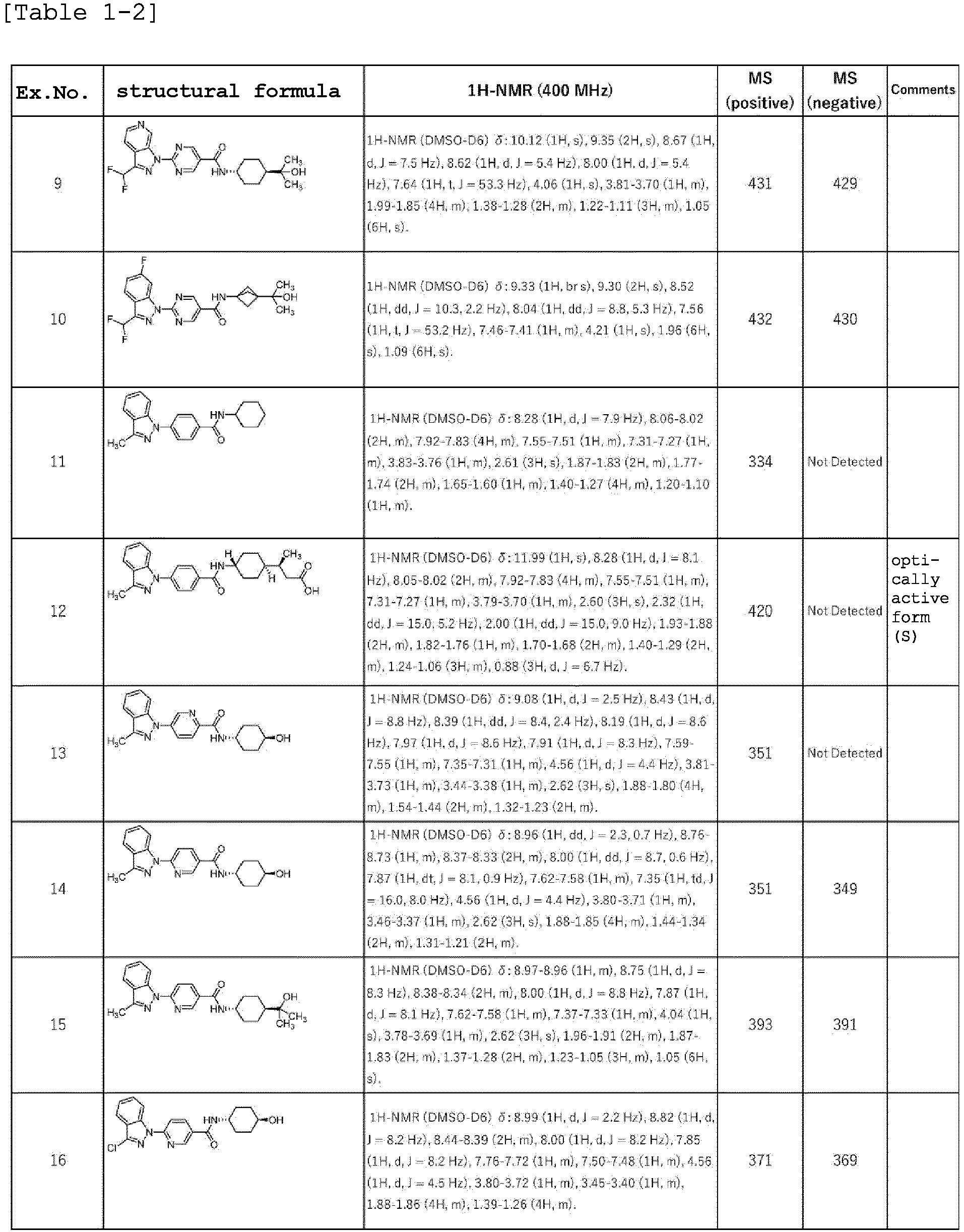


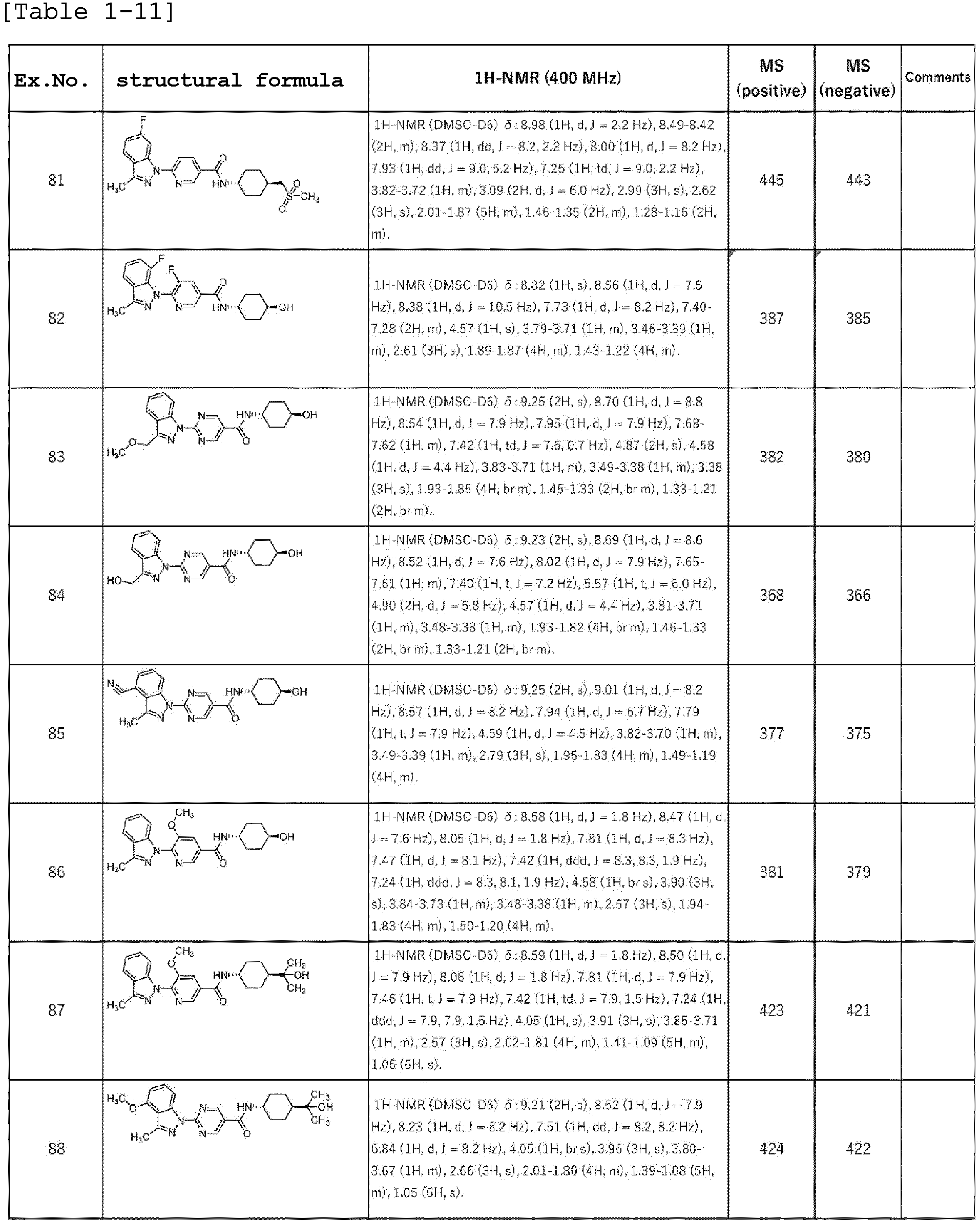


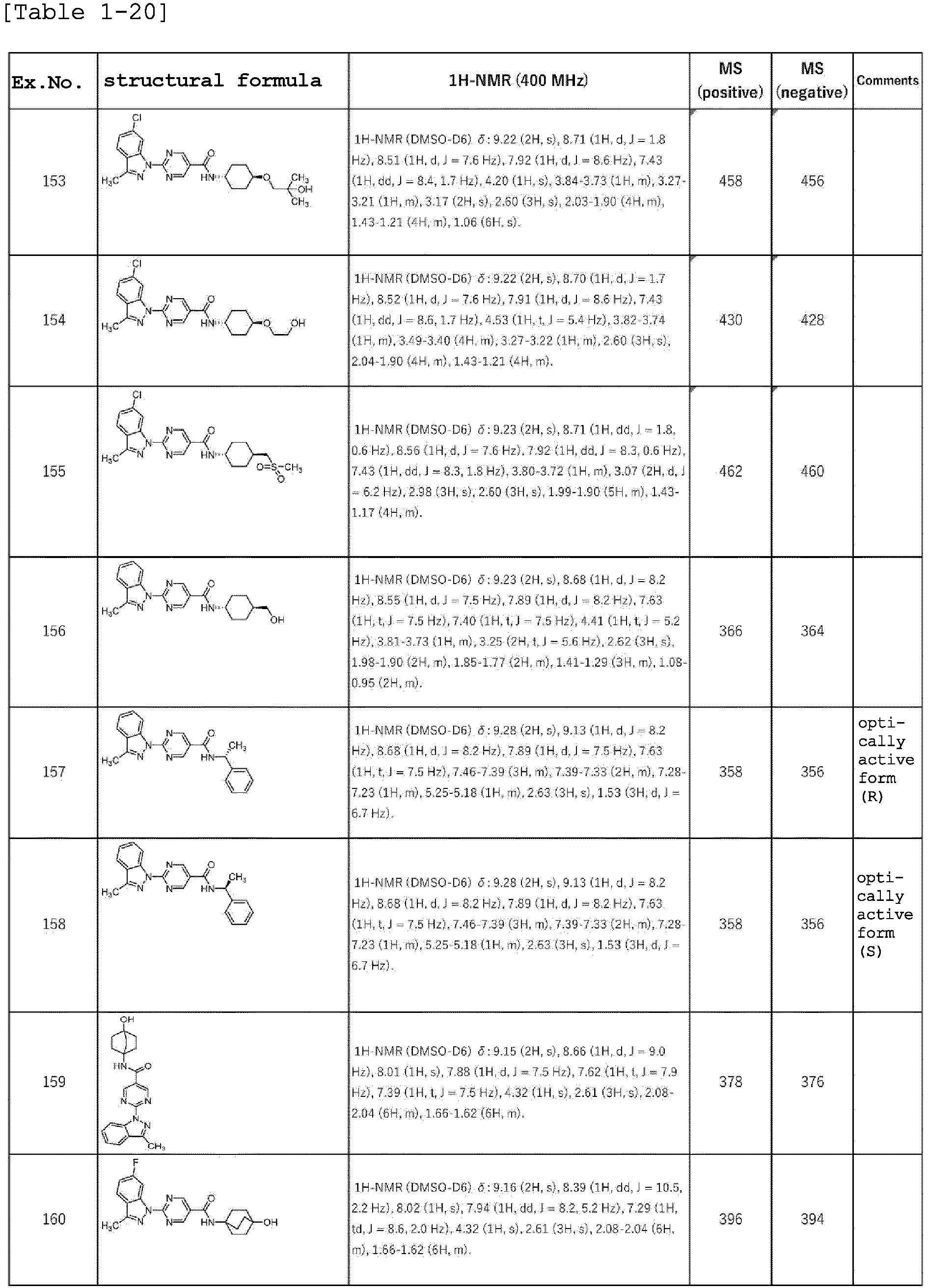


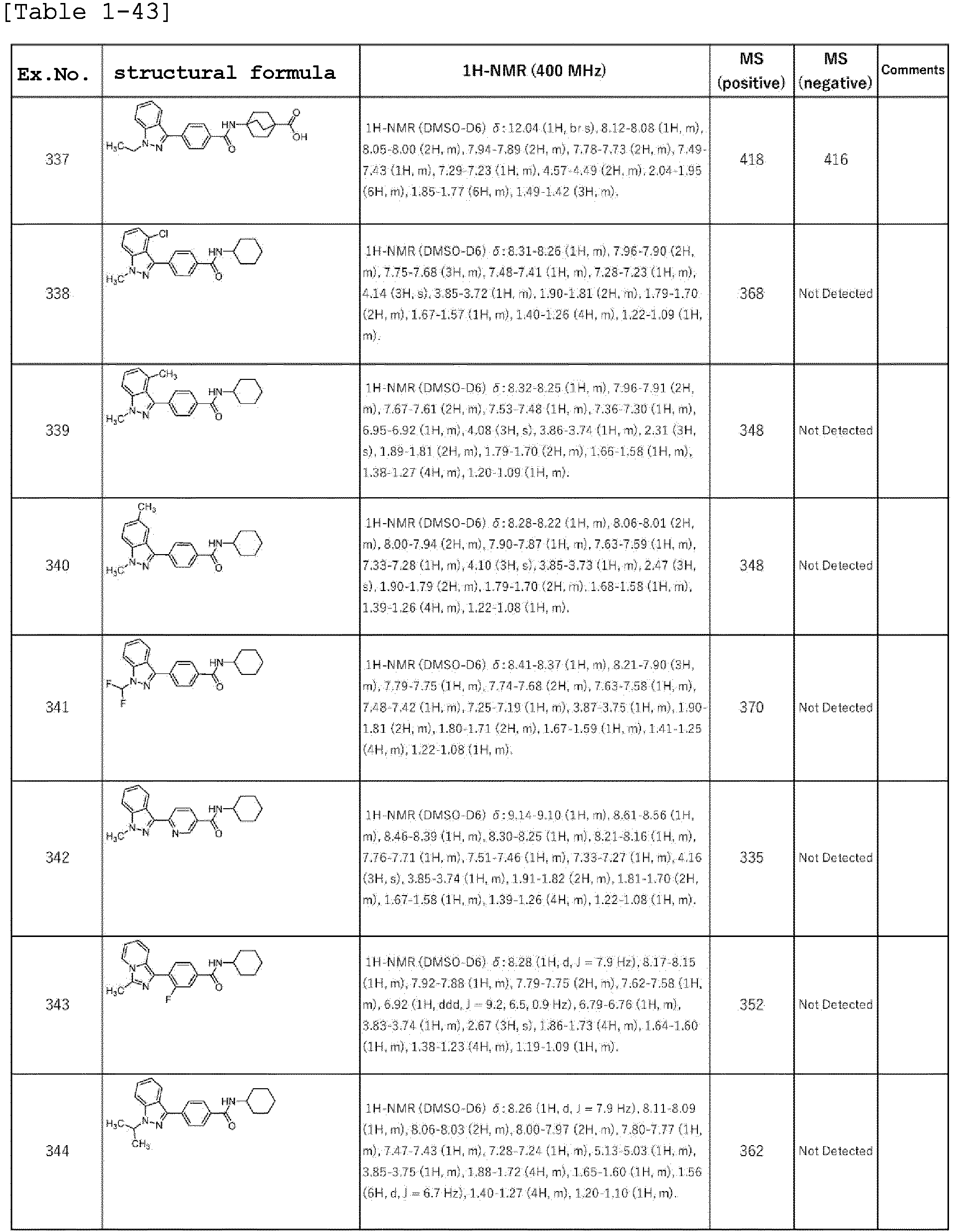


- The H-PGDS binding inhibitory activity of the test compound was measured by AlphaLISA antagonistic assay. A specific protocol is as follows.
- In an AlphaPlate-384 Shallow well plate (Cat. 6008350, PerkinElmer) were added and mixed 240 nL/well of DMSO solution as a compound solution or a solvent control, 3 µL/well (final concentration: 45 nmol/L) of biotinylated H-PGDS inhibitor (see below for the production method) diluted with 2%(v/v) DMSO-containing Assay Buffer (50 mM HEPES-NaOH (pH 7.5), 2 mM GSH, 150 mM NaCl, 2 mM MgCl2, 0.005% Surfactant P20), and 2 µL/well (final concentration: 0.3 nmol/L) of His-tagged human H-PGDS (Cat. ATGP1557, ATgen) diluted with Assay Buffer. As a blank, 2 µL/well of Assay Buffer was added instead of His-tagged human H-PGDS. This plate was allowed to stand at room temperature for 60 min, and Nickel Chelate AlphaLISA Acceptor Beads (Cat. AL108C, Perkin Elmer) at 5 µL/well (final concentration: 20 µg/mL) were added and mixed. After allowing to stand at room temperature for 30 min under shading, AlphaScreen Streptavidin donor beads (Cat. 6760002S, Perkin Elmer) were added at 5 µL/well (final concentration: 30 µg/mL) and mixed. After allowing to stand at room temperature for 60 min under shading, AlphaLISA signals (excitation wavelength: 680 nm, measurement wavelength: 615 nm) were measured using Enspire (Perkin Elmer).
- The H-PGDS binding inhibitory activity (inhibitory rate) of each test compound was calculated as follows, and the IC50 value was calculated from the inhibitory rate at two concentrations sandwiching 50%.

- The results of human H-PGDS binding inhibitory activity are shown in the following Table 2.


- The biotinylated H-PGDS inhibitor used in Experimental Example 1 was produced by biotinylating the H-PGDS inhibitor produced by the following steps. The H-PGDS inhibitor subjected to biotinylation may be any of enantiomers A and B described later, and enantiomer B was used in this Experimental Example.
- The title compound represented by the following formula:

- In this Production Example, asymmetric reduction is performed using a chiral phosphine ligand in the following step 10A or step 10B. A compound obtained using R-Sp form as the chiral phosphine ligand is referred to as enantiomer A, and a compound obtained using S-Rp form is referred to as enantiomer B.
-

- Under an argon atmosphere, to a solution of 4-bromo-7-fluoro-1H-pyrrolo[3,2-c]pyridine (4.5 g) and tert-butyl 4-(4,4,5,5-tetramethyl-1,3,2-dioxaborolan-2-yl)-3,6-dihydropyridine-1(2H)-carboxylate (9.6 g) in toluene/ethanol (42 mL, toluene/ethanol=2.5/1) were added 2 M aqueous sodium carbonate solution (21 mL) and [1,1'-bis(di-tert-butylphosphino)ferrocene]palladium(II) dichloride-dichloromethane adduct (1.7 g) at room temperature, and the mixture was stirred at 100°C overnight. The reaction mixture was filtered through celite, and water and ethyl acetate were added thereto. After partitioning, the organic layer was washed with saturated brine. The organic layer was dried over sodium sulfate, sodium sulfate was removed by filtration, and the filtrate was concentrated under reduced pressure. The residue was purified by silica gel column chromatography (eluent: n-hexane/ethyl acetate=70/30 to 35/65) to give the title compound (6.3 g).
1H-NMR (DMSO-D6) δ: 1.44 (9H, s), 2.68-2.71 (2H, m), 3.54-3.58 (2H, m), 4.08-4.11 (2H, m), 6.49-6.51 (1H, m), 6.86-6.88 (1H, m), 7.55-7.57 (1H, m), 8.10 (1H, d, J = 2.1 Hz), 12.20 (1H, br s). -

- To a solution of tert-butyl 4-(7-fluoro-1H-pyrrolo[3,2-c]pyridin-4-yl)-3,6-dihydropyridine-1(2H)-carboxylate (6.3 g) in tetrahydrofuran/methanol (63 mL, tetrahydrofuran/methanol=1/1) was added 10% palladium-carbon (1.3 g) at room temperature, and the mixture was stirred overnight under 1 atm hydrogen atmosphere. The reaction mixture was filtered through celite, and the filtrate was concentrated under reduced pressure to give the title compound (6.3 g).
1H-NMR (DMSO-D6) δ: 1.42 (9H, s), 1.70-1.80 (4H, m), 2.83-2.99 (2H, m), 3.26-3.36 (1H, m), 4.04-4.10 (2H, m), 6.75-6.77 (1H, m), 7.49-7.51 (1H, m), 8.03 (1H, d, J = 2.7 Hz), 12.09 (1H, br s). -

- Under an argon atmosphere, to a suspension of tert-butyl 4-(7-fluoro-1H-pyrrolo[3,2-c]pyridin-4-yl)piperidine-1-carboxylate (3.3 g) in acetonitrile (33 mL) was added acetic acid (6.6 mL) at room temperature. To the reaction mixture was added N-fluoro-N'-(chloromethyl)triethylenediamine bis(tetrafluoroborate) (5.5 g) in several divided portions at room temperature, and the mixture was stirred for 2 hr. The reaction mixture was added dropwise to saturated aqueous sodium hydrogen carbonate solution (120 mL) over 10 min at room temperature. To the reaction mixture was added sodium dithionite (2.5 g) at room temperature, and the mixture was stirred for 30 min. To the reaction mixture was added ethyl acetate and, after partitioning, the organic layer was washed with saturated brine. The organic layer was dried over sodium sulfate, sodium sulfate was removed by filtration, and the filtrate was concentrated under reduced pressure. The residue was purified twice by silica gel column chromatography (eluent: n-hexane/ethyl acetate=80/20 to 50/50) to give the title compound (0.99 g).
1H-NMR (CDCl3) δ: 1.48 (9H, s), 1.87-1.97 (4H, m), 2.84-2.94 (2H, m), 3.35-3.43 (1H, m), 4.22-4.34 (2H, m), 7.06 (1H, t, J = 2.8 Hz), 8.11 (1H, d, J = 2.7 Hz), 8.22 (1H, br s). -

- To a solution of tert-butyl 4-(3,7-difluoro-1H-pyrrolo[3,2-c]pyridin-4-yl)piperidine-1-carboxylate (0.99 g) in ethyl acetate (5.0 mL) was added 4 M hydrogen chloride/ethyl acetate (9.9 mL) solution at room temperature, and the mixture was stirred for 3 hr. To the reaction mixture was added ethyl acetate (5.0 mL) at room temperature, and the mixture was stirred for 1 hr. The precipitated solid was collected by filtration and dried under reduced pressure to give the title compound (0.78 g).
1H-NMR (DMSO-D6) δ: 1.99-2.20 (4H, m), 3.04-3.13 (2H, m), 3.37-3.43 (2H, m), 3.53-3.60 (1H, m), 7.76 (1H, s), 8.27 (1H, s), 8.80 (1H, br s), 9.05 (1H, br s), 12.56 (1H, br s). -

- To a suspension of methyl 4-aminobicyclo[2.2.2]octane-1-carboxylate (25 g) and triethylamine (23 mL) in tetrahydrofuran (250 mL) was added di-tert-butyl bicarbonate (38 mL) at room temperature, and the mixture was stirred for 15 hr. The reaction mixture was concentrated under reduced pressure, and n-hexane/ethyl acetate (100 mL, n-hexane/ethyl acetate=90/10) was added to the residue. The precipitated solid was collected by filtration, washed with n-hexane/ethyl acetate (60 mL, n-hexane/ethyl acetate=90/10), and dried under reduced pressure to give the title compound (37 g).
1H-NMR (DMSO-D6) δ: 1.35 (9H, s), 1.73 (12H, s), 3.55 (3H, s), 6.44 (1H, br s). -

- To a suspension of methyl 4-[(tert-butoxycarbonyl)amino]bicyclo[2.2.2]octane-1-carboxylate (37 g) in tetrahydrofuran/methanol (370 mL, tetrahydrofuran/methanol=1/1) was added 2 M aqueous sodium hydroxide solution (130 mL) at room temperature, and the mixture was stirred at 60°C for 4 hr. To the reaction mixture was added 2 M hydrochloric acid (130 mL) under ice-cooling, and the mixture was stirred for 1 hr. The precipitated solid was collected by filtration and dried under reduced pressure to give the title compound (27 g).
1H-NMR (DMSO-D6) δ: 1.35 (9H, s), 1.72 (12H, s), 6.41 (1H, br s), 11.98 (1H, s). -

- Under an argon atmosphere, to a solution of 4-[(tert-butoxycarbonyl)amino]bicyclo[2.2.2]octane-1-carboxylic acid (10 g) in N,N-dimethylformamide (100 mL) were added O-(7-azabenzotriazol-1-yl)-N,N,N',N'-tetramethyluronium hexafluorophosphate (17 g), N,O-dimethylhydroxylamine hydrochloride (4.4 g) and N,N-diisopropylethylamine (16 mL) at room temperature, and the mixture was stirred for 4 hr. To the reaction mixture were added N,N-diisopropylethylamine (2.6 mL) and N,O-dimethylhydroxylamine hydrochloride (1.5 g) at room temperature, and the mixture was stirred for 18 hr. To the reaction mixture were added water (100 mL) and ethyl acetate (200 mL) at room temperature. After partitioning, the organic layer was washed successively with water (200 mL), saturated aqueous sodium hydrogen carbonate solution (100 mL) and saturated brine (50 mL). The organic layer was dried over sodium sulfate, sodium sulfate was removed by filtration, and the filtrate was concentrated under reduced pressure to give the title compound (12 g).
1H-NMR (CDCl3) δ: 1.42 (9H, s), 1.82-1.87 (6H, m), 1.95-1.99 (6H, m), 3.14 (3H, s), 3.64 (3H, s), 4.35 (1H, br s). -

- Under an argon atmosphere, to a solution of tert-butyl {4-[methoxy(methyl)carbamoyl]bicyclo[2.2.2]octan-1-yl}carbamate (8.0 g) in tetrahydrofuran (80 mL) was added dropwise 1.1 M tetrahydrofuran (57 mL) solution of methylmagnesium bromide over 15 min under ice-cooling, and the mixture was stirred for 40 min. To the reaction mixture was added 0.95 M tetrahydrofuran (22 mL) solution of methylmagnesium bromide under ice-cooling, and the mixture was stirred at the same temperature for 30 min and at room temperature for 2.5 hr. To the reaction mixture were added 10 wt% aqueous citric acid solution and ethyl acetate (100 mL) at room temperature. After partitioning, the organic layer was washed with saturated brine. The organic layer was dried over sodium sulfate, sodium sulfate was removed by filtration, and the filtrate was concentrated under reduced pressure. To the residue was added n-hexane/ethyl acetate (13 mL, n-hexane/ethyl acetate=2/1), and the mixture was stirred. The precipitated solid was collected by filtration, washed with n-hexane/ethyl acetate (n-hexane/ethyl acetate=10/1) and dried under reduced pressure to give the title compound (2.5 g). In addition, the filtrate was concentrated under reduced pressure, and the residue was purified by silica gel column chromatography (eluent: n-hexane/ethyl acetate=95/5 to 60/40) to give the title compound (3.6 g).
1H-NMR (CDCl3) δ: 1.42 (9H, s), 1.78-1.83 (6H, m), 1.84-1.89 (6H, m), 2.08 (3H, s), 4.35 (1H, br s). -

- Under an argon atmosphere, to a suspension of sodium hydride (1.8 g, 60 wt% oil dispersion) in tetrahydrofuran (60 mL) was added dropwise tetrahydrofuran (6.0 mL) solution of triethyl phosphonoacetate (10 g) over 20 min under ice-cooling, and the mixture was stirred for 1 hr. To the reaction mixture was added dropwise tetrahydrofuran (30 mL) solution of tert-butyl (4-acetylbicyclo[2.2.2]octan-1-yl)carbamate (6.0 g) over 10 min under ice-cooling. The reaction mixture was stirred at room temperature for 3 hr and at 50°C for 15 hr. To the reaction mixture were added saturated aqueous ammonium chloride solution (100 mL) and ethyl acetate (200 mL) at room temperature. After partitioning, the organic layer was washed with saturated brine (50 mL). The organic layer was dried over sodium sulfate, sodium sulfate was removed by filtration, and the filtrate was concentrated under reduced pressure. The residue was purified by silica gel column chromatography (eluent: n-hexane/ethyl acetate=95/5 to 60/40) to give the title compound (4.1 g).
1H-NMR (CDCl3) δ: 1.27 (3H, t, J = 7.2 Hz), 1.42 (9H, s), 1.68-1.72 (6H, m), 1.85-1.88 (6H, m), 2.10 (3H, s), 4.13 (2H, q, J = 7.2 Hz), 4.34 (1H, br s), 5.63 (1H, s). -

- Under an argon atmosphere, a solution of bis[η-(2,5-norbornadiene)]rhodium (I) tetrafluoroborate (28 mg) and (R)-1-[(Sp)-2-(di-tert-butylphosphino)ferrocenyl]ethyl bis(2-methylphenyl)phosphine (R-Sp form) (CAS No.: 849924-76-1) (42 mg) in methanol (1.5 mL) was stirred at room temperature for 1 hr. To the reaction mixture was added a solution of ethyl 3-{4-[(tert-butoxycarbonyl)amino]bicyclo[2.2.2]octan-1-yl}-2-butenoate (0.50 g) in methanol (4.0 mL) at room temperature, and the mixture was stirred under 4 atm hydrogen atmosphere for 60 hr. The reaction mixture was concentrated under reduced pressure, and the residue was purified by silica gel column chromatography (eluent: n-hexane/ethyl acetate=98/2 to 80/20) to give the title compound (0.46 g).
1H-NMR (CDCl3) δ: 0.81 (3H, d, J = 6.7 Hz), 1.25 (3H, t, J = 7.2 Hz), 1.41-1.48 (6H, m), 1.42 (9H, s), 1.68-1.74 (1H, m), 1.76-1.81 (6H, m), 1.87 (1H, dd, J = 14.6, 10.9 Hz), 2.41 (1H, dd, J = 14.6, 3.2 Hz), 4.12 (2H, q, J = 7.2 Hz), 4.30 (1H, s). -

- To ethyl (S)-3-{4-[(tert-butoxycarbonyl)amino]bicyclo[2.2.2]octan-1-yl}butyrate (enantiomer A) (0.46 g) was added 4 M hydrogen chloride/ethyl acetate (4.6 mL) solution at room temperature, and the mixture was stirred for 2 hr. The reaction mixture was concentrated under reduced pressure and azeotropically distilled with toluene to give the title compound (0.36 g).
1H-NMR (DMSO-D6) δ: 0.75 (3H, d, J = 6.7 Hz), 1.17 (3H, t, J = 7.1 Hz), 1.38-1.50 (6H, m), 1.59-1.68 (7H, m), 1.83 (1H, dd, J = 14.9, 10.6 Hz), 2.42 (1H, dd, J = 14.9, 3.1 Hz), 4.05 (2H, q, J = 7.1 Hz), 7.86-8.04 (3H, m). -

- Under an argon atmosphere, to a solution of triphosgene (36 mg) in tetrahydrofuran (1.5 mL) was added dropwise a suspension of ethyl (S)-3-(4-aminobicyclo[2.2.2]octan-1-yl)butyrate monohydrochloride (enantiomer A) (0.10 g) and N,N-diisopropylethylamine (0.14 mL) in tetrahydrofuran (3.0 mL) under ice-cooling, and the mixture was stirred for 1 hr. To the reaction mixture were added N,N-diisopropylethylamine (0.16 mL), water (0.45 mL) and 3,7-difluoro-4-(piperidin-4-yl)-1H-pyrrolo[3,2-c]pyridine dihydrochloride (80 mg) under ice-cooling, and the mixture was stirred at room temperature for 15 hr. The reaction mixture was concentrated under reduced pressure and purified by silica gel column chromatography (eluent: n-hexane/ethyl acetate=85/15 to 30/70) to give the title compound (0.12 g).
1H-NMR (CDCl3) δ: 0.83 (3H, d, J = 6.7 Hz), 1.25 (3H, t, J = 7.1 Hz), 1.46-1.51 (6H, m), 1.71-1.73 (1H, m), 1.85-1.97 (11H, m), 2.44 (1H, dd, J = 14.8, 3.2 Hz), 2.88-2.96 (2H, m), 3.33-3.41 (1H, m), 4.00-4.05 (2H, m), 4.12 (2H, q, J = 7.2 Hz), 4.20 (1H, s), 7.06 (1H, t, J = 2.9 Hz), 8.10 (1H, d, J = 2.8 Hz), 8.31 (1H, br s). -

- To a solution of ethyl (S)-3-{4-[4-(3,7-difluoro-1H-pyrrolo[3,2-c]pyridin-4-yl)piperidine-1-carboxamido]bicyclo[2.2.2]octan-1-yl}butyrate (enantiomer A) (0.12 g) in tetrahydrofuran/methanol (2.4 mL, tetrahydrofuran/methanol=1/1) was added 2 M aqueous sodium hydroxide solution (0.59 mL) at room temperature, and the mixture was stirred at 65°C for 2 hr. To the reaction mixture were added 2 M hydrochloric acid (0.59 mL), water and ethyl acetate under ice-cooling. After partitioning, the organic layer was washed with saturated brine. The organic layer was dried over sodium sulfate, sodium sulfate was removed by filtration, and the filtrate was concentrated under reduced pressure to give the title compound (0.094 g).
- 1H-NMR (DMSO-D6) δ: 0.76 (3H, d, J = 6.7 Hz), 1.31-1.46 (6H, m), 1.50-1.61 (1H, m), 1.67-1.82 (11H, m), 2.33-2.39 (1H, m), 2.68-2.77 (2H, m), 3.21-3.29 (1H, m), 4.03-4.09 (2H, m), 5.60 (1H, s), 7.54 (1H, d, J = 2.5 Hz), 8.08 (1H, d, J = 3.0 Hz), 11.95 (2H, br s).
- MS (M+H) :475 MS (M-H) :473
-

- Under an argon atmosphere, a solution of bis[η-(2,5-norbornadiene)]rhodium (I) tetrafluoroborate (28 mg) and (S)-1-[(Rp)-2-(di-tert-butylphosphino)ferrocenyl]ethyl bis(2-methylphenyl)phosphine (S-Rp form) (CAS No.: 849924-77-2) (45 mg) in methanol (1.5 mL) was stirred at room temperature for 1 hr. To the reaction mixture was added a solution of ethyl 3-{4-[(tert-butoxycarbonyl)amino]bicyclo[2.2.2]octan-1-yl}-2-butenoate (0.50 g) in methanol (4.0 mL) at room temperature, and the mixture was stirred under a 4 atm hydrogen atmosphere for 65 hr. The reaction mixture was concentrated under reduced pressure, and the residue was purified by silica gel column chromatography (eluent: n-hexane/ethyl acetate=98/2 to 80/20) to give the title compound (0.54 g).
1H-NMR (CDCl3) δ: 0.81 (3H, d, J = 6.7 Hz), 1.25 (3H, t, J = 7.2 Hz), 1.41-1.48 (6H, m), 1.42 (9H, s), 1.68-1.74 (1H, m), 1.76-1.81 (6H, m), 1.87 (1H, dd, J = 14.6, 10.9 Hz), 2.41 (1H, dd, J = 14.6, 3.2 Hz), 4.12 (2H, q, J = 7.2 Hz), 4.30 (1H, s). -

- To ethyl (R)-3-{4-[(tert-butoxycarbonyl)amino]bicyclo[2.2.2]octan-1-yl}butyrate (enantiomer B) (0.54 g) was added 4 M hydrogen chloride/ethyl acetate (4.8 mL) solution at room temperature, and the mixture was stirred for 3 hr. The reaction mixture was concentrated under reduced pressure and azeotropically distilled with toluene to give the title compound (0.36 g).
1H-NMR (CDCl3) δ: 0.82 (3H, d, J = 5.3 Hz), 1.23-1.27 (3H, m), 1.48-1.55 (6H, m), 1.73-1.79 (1H, m), 1.85-1.93 (7H, m), 2.38 (1H, d, J = 14.8 Hz), 4.09-4.15 (2H, m), 8.23 (3H, br s). -

- Under an argon atmosphere, to a solution of triphosgene (36 mg) in tetrahydrofuran (0.8 mL) was added dropwise a suspension of ethyl (R)-3-(4-aminobicyclo[2.2.2]octan-1-yl)butyrate monohydrochloride (enantiomer B) (100 mg) and N,N-diisopropylethylamine (0.14 mL) in tetrahydrofuran (1.6 mL) under ice-cooling, and the mixture was stirred for 1 hr. To the reaction mixture were added N,N-diisopropylethylamine (0.16 mL), 3,7-difluoro-4-(piperidin-4-yl)-1H-pyrrolo[3,2-c]pyridine dihydrochloride (80 mg) and water (0.24 mL) under ice-cooling, and the mixture was stirred at room temperature for 15 hr. The reaction mixture was concentrated, and the residue was purified by silica gel column chromatography (eluent: n-hexane/ethyl acetate=80/20 to 0/100) to give the title compound (62 mg).
1H-NMR (CDCl3) δ: 0.83 (3H, d, J = 6.7 Hz), 1.25 (3H, t, J = 7.1 Hz), 1.46-1.51 (6H, m), 1.71-1.73 (1H, m), 1.85-1.97 (11H, m), 2.44 (1H, dd, J = 14.8, 3.2 Hz), 2.88-2.96 (2H, m), 3.33-3.41 (1H, m), 4.00-4.05 (2H, m), 4.12 (2H, q, J = 7.2 Hz), 4.20 (1H, s), 7.06 (1H, t, J = 2.9 Hz), 8.10 (1H, d, J = 2.8 Hz), 8.19 (1H, br s). -

- To a solution of ethyl (R)-3-{4-[4-(3,7-difluoro-1H-pyrrolo[3,2-c]pyridin-4-yl)piperidine-1-carboxamido]bicyclo[2.2.2]octan-1-yl}butyrate (enantiomer B) (62 mg) in tetrahydrofuran/methanol (1.2 mL, tetrahydrofuran/methanol=1/1) was added 2 M aqueous sodium hydroxide solution (0.31 mL) at room temperature, and the mixture was stirred at 65°C for 2 hr. To the reaction mixture were added 2 M hydrochloric acid (0.31 mL) and ethyl acetate at room temperature. After partitioning, the organic layer was washed with saturated brine. The organic layer was dried over sodium sulfate, sodium sulfate was removed by filtration, and the filtrate was concentrated under reduced pressure to give the title compound (48 mg).
- 1H-NMR (DMSO-D6) δ: 0.74 (3H, d, J = 6.7 Hz), 1.30-1.40 (6H, m), 1.51-1.58 (1H, m), 1.66-1.79 (11H, m), 2.31-2.37 (1H, m), 2.65-2.74 (2H, m), 3.21-3.27 (1H, m), 4.01-4.06 (2H, m), 5.59 (1H, s), 7.52-7.53 (1H, m), 8.06 (1H, d, J = 3.0 Hz), 11.90-11.97 (2H, m).
- MS (M+H) :475 MS(M-H) :473
- To a solution of (R)-3-{4-[4-(3,7-difluoro-1H-pyrrolo[3,2-c]pyridin-4-yl)piperidine-1-carboxamido]bicyclo[2.2.2]octan-1-yl}butyric acid (enantiomer B) (10 mg) and N-(35-amino-3,6,9,12,15,18,21,24,27,30,33-undecaoxapentatriacontyl)-5-(2-oxohexahydro-1H-thieno[3,4-d]imidazol-4-yl)pentanamide (16.25 mg) in N,N-dimethylformamide (0.5 mL) were added 1-ethyl-3-(3-dimethylaminopropyl)carbodiimide hydrochloride (4.85 mg) and 1H-benzo[d] [1,2,3]triazol-1-ol hydrate at room temperature, and the mixture was left standing overnight. The reaction mixture was purified by silica gel reversed-phase column chromatography (eluent: water/trifluoroacetic acid/acetonitrile) and lyophilized. The residue was added to VariPure IPE column (manufactured by Agilent) and eluted with methanol. The eluate was concentrated under reduced pressure and dried under reduced pressure to give the title compound (14 mg).
- Using the human H-PGDS expression plasmid DNA (pET28b/hH-PGDS) as a template, PCR (Polymerase Chain Reaction) was performed to amplify a DNA fragment containing human H-PGDS with a NotI recognition cleavage sequence immediately before the translation initiation codon and a BamHI recognition cleavage sequence immediately below the translation end codon. The purified DNA fragment was fused to pET15b (manufactured by Merck KGaA, model number 69661) digested with NotI and BamHI, by using In-Fusion HD Cloning Kit (manufactured by Takara Bio Inc., model number 639649). Human H-PGDS expression plasmid DNA was isolated from Escherichia coli DH5α (manufactured by TOYOBO, model number DNA-903) transformed with the obtained In-Fusion reaction product. The base sequence of human H-PGDS cloned into the vector was determined by the Dye Terminator method using BigDye Terminator v3.1 Cycle Sequencing Kit (manufactured by Applied Biosystems, model number 4337456). The determined sequence was identical to the sequence of the protein translation region of human H-PGDS (Accession number NM_014485.2) registered in the NCBI Reference Database.
- Escherichia coli BL21 (DE3) (Merck KGaA, model number 69450-4) transformed with human H-PGDS-expressing plasmid DNA was cultured at 37°C using 2×YT medium (manufactured by Becton Dickinson, model number 244020) until the optical concentration at 620 nm reached 0.6 or higher, and then cultured at 30°C for 6 hr in the presence of 1 mmol/L isopropyl β-D-1-thiogalactopyranoside. After completion of the culture, bacterial cells were collected and suspended in Homogenate Buffer (PBS(-), cOmplete (registered trade mark), EDTA-free (F. Hoffmann-La Roche Ltd, model number 1873580). Using an Ultrasonic disruptor UD-201 (manufactured by TOMY DIGITAL BIOLOGY CO., LTD.), the bacterial cells suspended for 15 seconds at out put:4, duty cycle:50 were disrupted, and this operation was repeated three times. After removing the precipitate by centrifugation (13,100×g, 15 min, 4°C) and ammonium sulfate was added to the supernatant to 40% saturation and stirred at 4°C for 1 hr or more. After removing the precipitate by centrifugation (13,100×g, 10 min, 4°C), ammonium sulfate was added to the supernatant to 60% saturation, and the mixture was stirred at 4°C for 1 hr or more. Thereafter, the precipitate obtained by centrifugation was suspended in PBS(-) and dialyzed twice for 2 hr or more against a dialysis fluid (50 mmol/L potassium phosphate (pH 6.0), 150 mmol/L NaCl, 1 mmol/L MgCl2). The supernatant fraction obtained by centrifuging (21,100×g, 10 min, 4°C) the sample after dialysis was added to a Glutathione Sepharose 4B column (manufactured by GE Healthcare, model number 17075604). After washing the column with the dialysis fluid, human H-PGDS was eluted with the eluent (5 mmol/L Tris-HCl (pH 8.0), 150 mmol/L NaCl, 1 mmol/L MgCl2, 15 mmol/L Glutathione). Glutathione Sepharose 4B column eluate was added to a gel filtration column (Superdex-200 30/100 GL (manufactured by GE HealthCare, model number 17-5175-01)), and eluted with gel filtration Buffer (5 mmol/L Tris-HCl (pH 8.0), 150 mmol/L NaCl, 1 mmol/L MgCl2). Eluted fractions were collected and used as human H-PGDS purified fractions.
- The protein concentration of the human H-PGDS purified fraction was measured with Pierce 660nm Protein Assay Reagent (manufactured by Thermo Fisher Scientific Inc., model number 22660). Purified fractions were stored at -80°C after rapid freezing using liquid nitrogen. Human H-PGDS was detected by Western blotting using a rabbit anti-H-PGDS polyclonal antibody (manufactured by LifeSpan BioSciences, Inc, model number LS-B6886).
- Calculation of the H-PGDS inhibitory activity of a compound was performed according to the following protocol attached to Prostaglandin D Synthase Inhibitor Screening Assay Kit (Cat. No. 10006595, Cayman Chemical Company) and Prostaglandin D2 Express ELISA Kit (Cat. No. 512041, Cayman Chemical Company). Human recombinant H-PGDS prepared as described above was used.
- In a 96 well V-bottom plate (Cat. No. 3363, Costar) were added and mixed lightly 10 µL/well of DMSO solution (10 % v/v) diluted with Assay buffer (0.1 mol/L Tris-HCl, pH 8.0) as a compound solution or a solvent control diluted with Assay buffer, 10 µL/well of MgCl2 solution at a final concentration of 2 mmol/L, 10 µL/well of GSH solution at a final concentration of 0.8 mmol/L, and human recombinant H-PGDS at a final concentration of 1.6 µg/mL, or 10 µL/well of Assay buffer as a blank. This plate was allowed to stand at room temperature for 10 min, 10 µL/well of PGH2 at a final concentration of 50 µmol/L was added to initiate an enzyme reaction, and the reaction was carried out for 1 min while mixing with a plate mixer. After the enzyme reaction, 0.5 mol/L of HCl was added at 10 µL/well to discontinue the reaction. Furthermore, a FeCl2 solution dissolved in 0.1 mol/L hydrochloric acid to a concentration of 0.4 mg/mL was added at 10 µL/well to perform reduction of PGH2. This enzyme reaction solution was diluted 4000-fold with EIA buffer, and the diluted enzyme reaction solution was added to an ELISA plate at 50 µL/well. Prostaglandin D2 Express AChE Tracer and Prostaglandin D2 Express EIA Monoclonal Antibody were added to this plate at 50 µL/well each. As a Non-Specific Binding sample (NSB), 100 µL/well of EIA buffer and 50 µL/well of Prostaglandin D2 Express AChE Tracer were added in another well, and 50 µL/well of EIA buffer and 50 µL/well of Prostaglandin D2 Express AChE Tracer, and 50 µL/well of prostaglandin D2 Express EIA Monoclonal Antibody were added as B0 samples. This plate was reacted for 2 hr while mixing with a plate mixer. After completion of the reaction, the reaction solution was removed and Wash buffer was added at 200 µL/well. This process was repeated 5 times to wash the plate. After washing the plate, 200 µL/well of Ellman's Reagent was added to all wells, and the mixture was reacted for 30 min in shading while mixing with a plate mixer. After completion of the reaction, the absorbance at 420 nm was measured using a microplate reader.
- The H-PGDS binding inhibitory activity (inhibitory rate) of the compound was calculated as follows, and the IC50 value for H-PGDS activity was calculated from the inhibitory rate at two concentrations sandwiching 50%.

- *1: B = OD420 of each well - OD420 of NSB
- *2: B0 = OD420 of B0 - OD420 of NSB
- Also, the human H-PGDS inhibitory activity (IC50 value) was calculated for the compound (enantiomer A) according to the above-mentioned method.
- The evaluation results of each compound are shown in the following Table 3.
[Table 3] compound human H-PGDS inhibitory activity IC50 (nM) (3-{4-[4-(3,7-difluoro-1H-pyrrolo[3,2-c]pyridin-4-yl)piperidine-1-carboxamido]-bicyclo[2.2.2]octan-1-yl}-butyric acid) enantiomer A 5 enantiomer B 6 - Formulation Examples of the present invention include the following formulations. However, the present invention is not limited by these Formulation Examples.
-
1) compound of Example 1 30 mg 2) microcrystalline cellulose 10 mg 3) lactose 19 mg 4) magnesium stearate 1 mg - 1), 2), 3) and 4) are mixed and filled in a gelatin capsule.
-
1) compound of Example 1 10 g 2) lactose 50 g 3) cornstarch 15 g 4) carmellose calcium 44 g 5) magnesium stearate 1 g - A total amount of 1), 2) and 3) and 30 g of 4) are kneaded with water, vacuum dried, and sieved. The sieved powder is mixed with 14 g of 4) and 1 g of 5), and the mixture is punched with a tableting machine. As a result, 1000 tablets containing 10 mg of the compound of Example 1 per tablet are obtained.
- The compound of the present invention or a pharmaceutically acceptable salt thereof has H-PGDS inhibitory activity, and is useful for the treatment and/or prophylaxis of a disease selected from the group consisting of peripheral arterial diseases (e.g., intermittent claudication and comprehensive severe chronic lower extremity ischemia), cardiovascular diseases, allergic asthma, chronic obstructive pulmonary diseases, allergic rhinitis, sarcopenia, and Duchenne muscular dystrophy.
Claims (31)
- A compound of the formula [I]:
 X1, Y1, Y2, Y3 and Y4 are each independently a carbon or a nitrogen atom (wherein the total number of the nitrogen atoms for Y1, Y2, Y3 and Y4 is 0, 1 or 2),m is 0, 1 or 2,n is 0, 1 or 2,R1 is(1) hydroxy,(2) cyano,(3) C1-4 alkyl (wherein the alkyl is optionally substituted by hydroxy or C1-4 alkoxy),(4) C1-4 alkoxy,(5) halogen,(6) C1-4 haloalkyl, or(7) C3-6 cycloalkyl,R2 in the number of m are each independently(1) cyano,(2) C1-4 alkyl,(3) C1-4 alkoxy,(4) halogen, or(5) C1-4 haloalkyl,R3 in the number of n are each independently(1) C1-4 alkyl,(2) C1-4 alkoxy, or(3) halogen, andR4 isor a pharmaceutically acceptable salt thereof.(1) ring Cy [wherein the ring Cy is(a) C4-6 cycloalkyl (wherein the cycloalkyl is optionally substituted by 1 or 2 substituents independently selected from the group consisting of(I) hydroxy,(II) cyano,(III) oxo,(IV) C1-6 alkyl (wherein the alkyl is optionally substituted by(i) hydroxy,(ii) carboxy,(iii) -CONH2,(iv) -CO-C1-4 alkoxy,(v) -SO2-C1-4 alkyl, or(vi) a group represented by the formula:
 (V) C1-6 alkoxy (wherein the alkoxy is optionally substituted by hydroxy or -SO2-C1-4 alkyl),(VI) carboxy,(VII) -CO-NR5R6 [wherein R5 and R6 are each independently C1-4 alkyl (wherein the alkyl is optionally substituted by C1-4 alkoxy), or R5 and R6 optionally form, together with the nitrogen atom bonded thereto, 4- to 6-membered heterocycloalkyl containing 1 or 2 hetero atoms independently selected from the group consisting of nitrogen and oxygen atoms {wherein the heterocycloalkyl is optionally substituted by 1 or 2 substituents independently selected from the group consisting of(i) hydroxy, and(ii) C1-6 alkyl (wherein the alkyl is optionally substituted by hydroxy)}],(VIII) -NR7R8 {wherein R7 and R8 are each independently C1-4 alkyl or -CO-C1-6 alkyl (wherein the alkyl is optionally substituted by cyano)},(IX) -O-C1-6 haloalkyl,(X) a group represented by the formula:
 (XI) a group represented by the formula:
 (XII) a group represented by the formula:
 (b) C5-8 bridged cycloalkyl {wherein the bridged cycloalkyl is optionally substituted by(I) hydroxy,(II) C1-6 alkyl (wherein the alkyl is optionally substituted by(i) hydroxy,(ii) carboxy,(iii) -CONH2,(iv) -CO-C1-4 alkoxy,(v) -SO2-C1-4 alkyl, or(vi) a group represented by the formula:
 (III) C1-6 alkoxy (wherein the alkoxy is optionally substituted by hydroxy or -SO2-C1-4 alkyl),(IV) carboxy,(V) -CO-C1-4 alkoxy,(VI) -O-C1-6 haloalkyl, or(VII) a group represented by the formula:
 (c) 5- or 6-membered heterocycloalkyl containing one nitrogen atom [wherein the heterocycloalkyl is optionally substituted by 1 to 3 substituents independently selected from the group consisting of(I) oxo,(II) C1-6 alkyl,(III) -CO-R11 {wherein R11 is(i) C1-6 alkyl (wherein the alkyl is optionally substituted by(A) hydroxy,(B) cyano, or(C) C1-4 alkoxy),(ii) C1-6 alkoxy,(iii) C1-6 haloalkyl,(iv) C3-6 cycloalkyl (wherein the cycloalkyl is optionally substituted by halogen), or(v) 4- to 6-membered heterocycloalkyl containing one oxygen atom (wherein the heterocycloalkyl is optionally substituted by halogen)}, and(IV) a group represented by the formula:
 (d) 8-membered bridged heterocycloalkyl containing one nitrogen atom {wherein the bridged heterocycloalkyl is optionally substituted by -CO-R11},(e) 7- to 11-membered spiro heterocycloalkyl containing one nitrogen atom {wherein the spiro heterocycloalkyl is optionally substituted by -CO-R11},(f) 6- to 9-membered saturated or partially unsaturated fused ring group containing 1 or 2 nitrogen atoms (wherein the fused ring group is optionally substituted by -CO-R11),(g) a group represented by the formula:
 (h) a group represented by the formula:
 (i) a group represented by the formula:
 (2) C1-4 alkyl {wherein the alkyl is optionally substituted by(a) C3-6 cycloalkyl (wherein the cycloalkyl is optionally substituted by 1 or 2 substituents independently selected from the group consisting of hydroxy and C1-4 alkyl optionally substituted by hydroxy), or(b) phenyl}, or(3) C1-4 haloalkyl (wherein the haloalkyl is optionally substituted by C3-6 cycloalkyl optionally substituted by hydroxy)],
 - The compound of Claim 1, wherein the total number of the nitrogen atoms for Y1, Y2, Y3 and Y4 is 1 or 2, or a pharmaceutically acceptable salt thereof.
- The compound of Claim 1, which is represented by the formula [IA]:

or a pharmaceutically acceptable salt thereof. - The compound of any one of Claims 1 to 3, wherein R3 is halogen, or a pharmaceutically acceptable salt thereof.
- The compound of any one of Claims 1 to 4, wherein R4 is ring Cy, or a pharmaceutically acceptable salt thereof.
- The compound of Claim 1, which is represented by the formula [IB]:

or a pharmaceutically acceptable salt thereof. - The compound of any one of Claims 1 to 6, wherein R1 is(1) C1-4 alkyl (wherein the alkyl is optionally substituted by hydroxy or C1-4 alkoxy),(2) C1-4 alkoxy,(3) halogen, or(4) C1-4 haloalkyl,or a pharmaceutically acceptable salt thereof.
- The compound of any one of Claims 1 to 7, wherein R2 is halogen, or a pharmaceutically acceptable salt thereof.
- The compound of any one of Claims 1 to 8, wherein ring Cy is(1) C4-6 cycloalkyl (wherein the cycloalkyl is optionally substituted by 1 or 2 substituents independently selected from the group consisting of(a) hydroxy,(b) cyano,(c) oxo,(d) C1-6 alkyl (wherein the alkyl is optionally substituted by(I) hydroxy,(II) carboxy,(III) -CONH2,(IV) -CO-C1-4 alkoxy,(V) -SO2-C1-4 alkyl, or(VI) a group represented by the formula:
 (e) C1-6 alkoxy (wherein the alkoxy is optionally substituted by hydroxy or -SO2-C1-4 alkyl),(f) carboxy,(g) -CO-NR5R6 [wherein R5 and R6 are each independently C1-4 alkyl (wherein the alkyl is optionally substituted by C1-4 alkoxy), or R5 and R6 optionally form, together with the nitrogen atom bonded thereto, 4- to 6-membered heterocycloalkyl containing 1 or 2 hetero atoms independently selected from the group consisting of nitrogen and oxygen atoms {wherein the heterocycloalkyl is optionally substituted by 1 or 2 substituents independently selected from the group consisting of(I) hydroxy, and(II) C1-6 alkyl (wherein the alkyl is optionally substituted by hydroxy)}],(h) -NR7R8 {wherein R7 and R8 are each independently C1-4 alkyl, or -CO-C1-6 alkyl (wherein the alkyl is optionally substituted by cyano)},(i) -O-C1-6 haloalkyl,(j) a group represented by the formula:
 (k) a group represented by the formula:
 (m) a group represented by the formula:
 (2) C5-8 bridged cycloalkyl {wherein the bridged cycloalkyl is optionally substituted by(a) hydroxy,(b) C1-6 alkyl (wherein the alkyl is optionally substituted by(I) hydroxy,(II) carboxy,(III) -CONH2,(IV) -CO-C1-4 alkoxy,(V) -SO2-C1-4 alkyl, or(VI) a group represented by the formula:
 (c) C1-6 alkoxy (wherein the alkoxy is optionally substituted by hydroxy or -SO2-C1-4 alkyl),(d) carboxy,(e) -CO-C1-4 alkoxy,(f) -O-C1-6 haloalkyl, or(g) a group represented by the formula:
 (3) 5- or 6-membered heterocycloalkyl containing one nitrogen atom [wherein the heterocycloalkyl is optionally substituted by 1 to 3 substituents independently selected from the group consisting of(a) oxo,(b) C1-6 alkyl,(c) -CO-R11 {wherein R11 is(I) C1-6 alkyl (wherein the alkyl is optionally substituted by(i) hydroxy,(ii) cyano, or(iii) C1-4 alkoxy),(II) C1-6 alkoxy,(III) C1-6 haloalkyl,(IV) C3-6 cycloalkyl (wherein the cycloalkyl is optionally substituted by halogen), or(V) 4- to 6-membered heterocycloalkyl containing one oxygen atom (wherein the heterocycloalkyl is optionally substituted by halogen)}, and(d) a group represented by the formula:
 (4) 8-membered bridged heterocycloalkyl containing one nitrogen atom {wherein the bridged heterocycloalkyl is optionally substituted by -CO-R11},(5) 7- to 11-membered spiro heterocycloalkyl containing one nitrogen atom {wherein the spiro heterocycloalkyl is optionally substituted by -CO-R11}, or(6) a 6- to 9-membered saturated or partially unsaturated fused ring group containing 1 or 2 nitrogen atoms (wherein the fused ring group is optionally substituted by -CO-R11),or a pharmaceutically acceptable salt thereof.
 - The compound of any one of Claims 1 to 9, wherein ring Cy is(1) C4-6 cycloalkyl (wherein the cycloalkyl is optionally substituted by 1 or 2 substituents independently selected from the group consisting of(a) hydroxy,(b) cyano,(c) oxo,(d) C1-6 alkyl (wherein the alkyl is optionally substituted by(I) hydroxy,(II) carboxy,(III) -CONH2,(IV) -CO-C1-4 alkoxy,(V) -SO2-C1-4 alkyl, or(VI) a group represented by the formula:
 (e) C1-6 alkoxy (wherein the alkoxy is optionally substituted by hydroxy or -SO2-C1-4 alkyl),(f) carboxy,(g) -CO-NR5R6 [wherein R5 and R6 are each independently C1-4 alkyl (wherein the alkyl is optionally substituted by C1-4 alkoxy), or R5 and R6 optionally form, together with the nitrogen atom bonded thereto, 4- to 6-membered heterocycloalkyl containing 1 or 2 hetero atoms independently selected from the group consisting of nitrogen and oxygen atoms {wherein the heterocycloalkyl is optionally substituted by 1 or 2 substituents independently selected from the group consisting of(I) hydroxy, and(II) C1-6 alkyl (wherein the alkyl is optionally substituted by hydroxy)}],(h) -NR7R8 {wherein R7 and R8 are each independently C1-4 alkyl, or -CO-C1-6 alkyl (wherein the alkyl is optionally substituted by cyano)},(i) -O-C1-6 haloalkyl,(j) a group represented by the formula:
 (k) a group represented by the formula:
 (m) a group represented by the formula:
 (2) C5-8 bridged cycloalkyl {wherein the bridged cycloalkyl is optionally substituted by(a) hydroxy,(b) C1-6 alkyl (wherein the alkyl is optionally substituted by(I) hydroxy,(II) carboxy,(III) -CONH2,(IV) -CO-C1-4 alkoxy,(V) -SO2-C1-4 alkyl, or(VI) a group represented by the formula:
 (c) C1-6 alkoxy (wherein the alkoxy is optionally substituted by hydroxy or -SO2-C1-4 alkyl),(d) carboxy,(e) -CO-C1-4 alkoxy,(f) -O-C1-6 haloalkyl, or(g) a group represented by the formula:
 (3) 5- or 6-membered heterocycloalkyl containing one nitrogen atom [wherein the heterocycloalkyl is optionally substituted by 1 to 3 substituents independently selected from the group consisting of(a) oxo,(b) C1-6 alkyl,(c) -CO-R11 {wherein R11 is(I) C1-6 alkyl (wherein the alkyl is optionally substituted by(i) hydroxy,(ii) cyano, or(iii) C1-4 alkoxy),(II) C1-6 alkoxy,(III) C1-6 haloalkyl,(IV) C3-6 cycloalkyl (wherein the cycloalkyl is optionally substituted by halogen), or(V) 4- to 6-membered heterocycloalkyl containing one oxygen atom (wherein the heterocycloalkyl is optionally substituted by halogen)}, and(d) a group represented by the formula:
 (4) 8-membered bridged heterocycloalkyl containing one nitrogen atom {wherein the bridged heterocycloalkyl is optionally substituted by -CO-R11},or a pharmaceutically acceptable salt thereof.
 - The compound of any one of Claims 1 to 8, wherein ring Cy is(1) C4-6 cycloalkyl (wherein the cycloalkyl is optionally substituted by 1 or 2 substituents independently selected from the group consisting of(a) hydroxy,(b) cyano,(c) oxo,(d) C1-6 alkyl (wherein the alkyl is optionally substituted by(I) hydroxy,(II) carboxy,(III) -CONH2,(IV) -CO-C1-4 alkoxy,(V) -SO2-C1-4 alkyl, or(VI) a group represented by the formula:
 (e) C1-6 alkoxy (wherein the alkoxy is optionally substituted by hydroxy or -SO2-C1-4 alkyl),(f) carboxy,(g) -CO-NR5R6 [wherein R5 and R6 are each independently C1-4 alkyl (wherein the alkyl is optionally substituted by C1-4 alkoxy), or R5 and R6 optionally form, together with the nitrogen atom bonded thereto, 4- to 6-membered heterocycloalkyl containing 1 or 2 hetero atoms independently selected from the group consisting of nitrogen and oxygen atoms {wherein the heterocycloalkyl is optionally substituted by 1 or 2 substituents independently selected from the group consisting of(I) hydroxy, and(II) C1-6 alkyl (wherein the alkyl is optionally substituted by hydroxy)}],(h) -NR7R8 {wherein R7 and R8 are each independently C1-4 alkyl, or -CO-C1-6 alkyl (wherein the alkyl is optionally substituted by cyano)},(i) -O-C1-6 haloalkyl,(j) a group represented by the formula:
 (k) a group represented by the formula:
 (m) a group represented by the formula:
 (2) C5-8 bridged cycloalkyl {wherein the bridged cycloalkyl is optionally substituted byor a pharmaceutically acceptable salt thereof.(a) hydroxy,(b) C1-6 alkyl (wherein the alkyl is optionally substituted by(I) hydroxy,(II) carboxy,(III) -CONH2,(IV) -CO-C1-4 alkoxy,(V) -SO2-C1-4 alkyl, or(VI) a group represented by the formula:
 (c) C1-6 alkoxy (wherein the alkoxy is optionally substituted by hydroxy or -SO2-C1-4 alkyl),(d) carboxy,(e) -CO-C1-4 alkoxy,(f) -O-C1-6 haloalkyl, or(g) a group represented by the formula:
- The compound of any one of Claims 1 to 8, wherein ring Cy is(1) cyclohexyl (wherein the cyclohexyl is optionally substituted by 1 or 2 substituents independently selected from the group consisting of(a) hydroxy,(b) cyano,(c) oxo,(d) C1-6 alkyl (wherein the alkyl is optionally substituted by(I) hydroxy,(II) carboxy,(III) -CONH2,(IV) -CO-C1-4 alkoxy,(V) -SO2-C1-4 alkyl, or(VI) a group represented by the formula:
 (e) C1-6 alkoxy (wherein the alkoxy is optionally substituted by hydroxy or -SO2-C1-4 alkyl),(f) carboxy,(g) -CO-NR5R6 [wherein R5 and R6 are each independently C1-4 alkyl (wherein the alkyl is optionally substituted by C1-4 alkoxy), or R5 and R6 optionally form, together with the nitrogen atom bonded thereto, 4- to 6-membered heterocycloalkyl containing 1 or 2 hetero atoms independently selected from the group consisting of nitrogen and oxygen atoms {wherein the heterocycloalkyl is optionally substituted by 1 or 2 substituents independently selected from the group consisting of(I) hydroxy, and(II) C1-6 alkyl (wherein the alkyl is optionally substituted by hydroxy)}],(h) -NR7R8 {wherein R7 and R8 are each independently C1-4 alkyl, or -CO-C1-6 alkyl (wherein the alkyl is optionally substituted by cyano)},(i) -O-C1-6 haloalkyl,(j) a group represented by the formula:
 (k) a group represented by the formula:
 (m) a group represented by the formula:
 (2) a group represented by the formula:
 (a) hydroxy,(b) C1-6 alkyl (wherein the alkyl is optionally substituted by(I) hydroxy,(II) carboxy,(III) -CONH2,(IV) -CO-C1-4 alkoxy,(V) -SO2-C1-4 alkyl, or(VI) a group represented by the formula:
 (c) C1-6 alkoxy (wherein the alkoxy is optionally substituted by hydroxy or -SO2-C1-4 alkyl),(d) carboxy,(e) -CO-C1-4 alkoxy,(f) -O-C1-6 haloalkyl, or(g) a group represented by the formula:
- The compound of any one of Claims 1 to 8, wherein ring Cy is(1) a group represented by the formula:
 (a) hydrogen,(b) hydroxy,(c) cyano,(d) C1-6 alkyl (wherein the alkyl is optionally substituted by(I) hydroxy,(II) carboxy,(III) -CONH2,(IV) -CO-C1-4 alkoxy,(V) -SO2-C1-4 alkyl, or(VI) a group represented by the formula:
 (e) C1-6 alkoxy (wherein the alkoxy is optionally substituted by hydroxy or -SO2-C1-4 alkyl),(f) carboxy,(g) -CO-NR5R6 [wherein R5 and R6 are each independently C1-4 alkyl (wherein the alkyl is optionally substituted by C1-4 alkoxy), or R5 and R6 optionally form, together with the nitrogen atom bonded thereto, 4- to 6-membered heterocycloalkyl containing 1 or 2 hetero atoms independently selected from the group consisting of nitrogen and oxygen atoms {wherein the heterocycloalkyl is optionally substituted by 1 or 2 substituents independently selected from the group consisting of(I) hydroxy, and(II) C1-6 alkyl (wherein the alkyl is optionally substituted by hydroxy)}],(h) -NR7R8 {wherein R7 and R8 are each independently C1-4 alkyl or -CO-C1-6 alkyl (wherein the alkyl is optionally substituted by cyano)},(i) -O-C1-6 haloalkyl,(j) a group represented by the formula:
 (k) a group represented by the formula:
 (m) a group represented by the formula:
 (2) a group represented by the formula:
 (a) hydrogen,(b) hydroxy,(c) C1-6 alkyl (wherein the alkyl is optionally substituted by(I) hydroxy,(II) carboxy,(III) -CONH2,(IV) -CO-C1-4 alkoxy,(V) -SO2-C1-4 alkyl, or(VI) a group represented by the formula:
 (d) C1-6 alkoxy (wherein the alkoxy is optionally substituted by hydroxy or -SO2-C1-4 alkyl),(e) carboxy,(f) -CO-C1-4 alkoxy,(g) -O-C1-6 haloalkyl, or(h) a group represented by the formula:or a pharmaceutically acceptable salt thereof.
- The compound of Claim 1 or 13, which is represented by the formula [IC]:
 X1, R1, R2 and m are as defined for Claim 1, andR12 is as defined for Claim 13,or a pharmaceutically acceptable salt thereof.
 - The compound of Claim 14, wherein
R12 is(1) hydroxy,(2) cyano,(3) C1-6 alkyl (wherein the alkyl is optionally substituted by(a) hydroxy,(b) carboxy,(c) -CONH2,(d) -CO-C1-4 alkoxy,(e) -SO2-C1-4 alkyl, or(f) a group represented by the formula: (4) C1-6 alkoxy (wherein the alkoxy is optionally substituted by hydroxy or -SO2-C1-4 alkyl),(5) -CO-NR5R6 [wherein R5 and R6 form, together with the nitrogen atom bonded thereto, 4- to 6-membered heterocycloalkyl containing 1 or 2 hetero atoms independently selected from the group consisting of nitrogen and oxygen atoms {wherein the heterocycloalkyl is optionally substituted by C1-6 alkyl (wherein the alkyl is optionally substituted by hydroxy)}],(6) -NR7R8 {wherein R7 and R8 are each independently C1-4 alkyl or -CO-C1-6 alkyl (wherein the alkyl is optionally substituted by cyano) },(7) a group represented by the formula:
 (8) a group represented by the formula:
 (9) a group represented by the formula:or a pharmaceutically acceptable salt thereof.
- The compound of Claim 1 or 13, which is represented by the formula [ID] :
 X1, R1, R2 and m are as defined for Claim 1, andR14 is as defined for Claim 13,or a pharmaceutically acceptable salt thereof.
 - The compound of Claim 16, wherein R14 is C1-6 alkyl (wherein the alkyl is optionally substituted by hydroxy), or a pharmaceutically acceptable salt thereof.
- A compound selected from the group consisting of the following structural formulas:


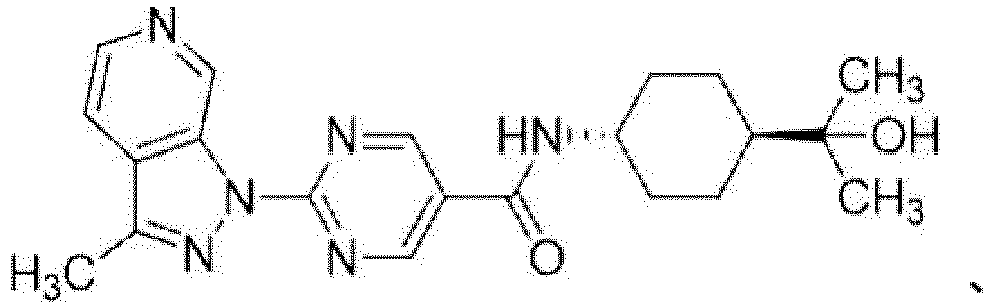


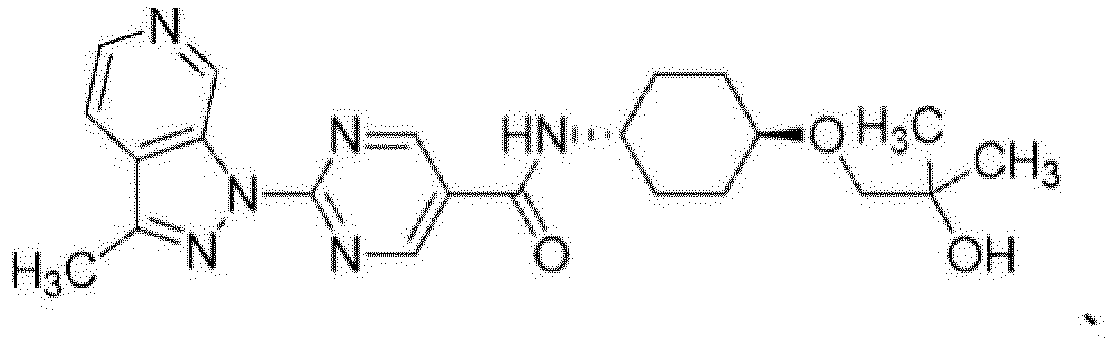


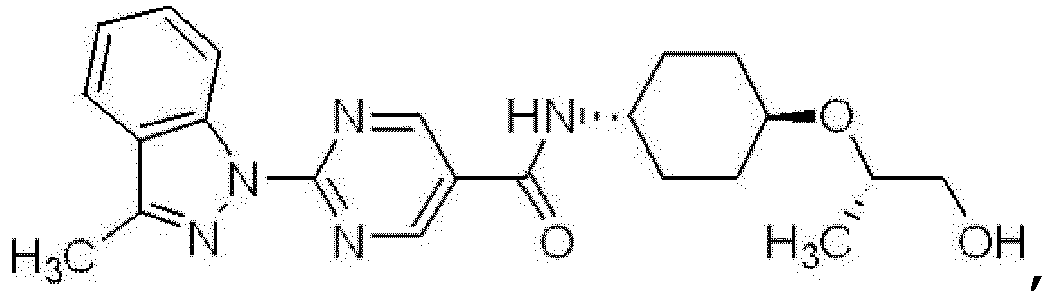
- A pharmaceutical composition comprising the compound of any one of Claims 1 to 18 or a pharmaceutically acceptable salt thereof, and a pharmaceutically acceptable carrier.
- An H-PGDS inhibitor comprising the compound of any one of Claims 1 to 18 or a pharmaceutically acceptable salt thereof.
- A therapeutic or prophylactic agent for a disease selected from the group consisting of peripheral arterial diseases, cardiovascular diseases, allergic asthma, chronic obstructive pulmonary diseases, allergic rhinitis, sarcopenia, and Duchenne muscular dystrophy, the agent comprising the compound of any one of Claims 1 to 18 or a pharmaceutically acceptable salt thereof.
- The therapeutic or prophylactic agent of Claim 21, wherein the peripheral arterial disease is intermittent claudication or comprehensive severe chronic lower extremity ischemia based on PAD.
- A method for inhibiting H-PGDS in a mammal, comprising administering a pharmaceutically effective amount of the compound of any one of Claims 1 to 18 or a pharmaceutically acceptable salt thereof to the mammal.
- A method for treating or preventing a disease selected from the group consisting of peripheral arterial diseases, cardiovascular diseases, allergic asthma, chronic obstructive pulmonary diseases, allergic rhinitis, sarcopenia, and Duchenne muscular dystrophy in a mammal, comprising administering a pharmaceutically effective amount of the compound of any one of Claims 1 to 18 or a pharmaceutically acceptable salt thereof to the mammal.
- The method of Claim 24, wherein the peripheral arterial disease is intermittent claudication or comprehensive severe chronic lower extremity ischemia based on PAD.
- Use of the compound of any one of Claims 1 to 18 or a pharmaceutically acceptable salt thereof in producing an H-PGDS inhibitor.
- Use of the compound of any one of Claims 1 to 18 or a pharmaceutically acceptable salt thereof in producing a therapeutic or prophylactic agent for a disease selected from the group consisting of peripheral arterial diseases, cardiovascular diseases, allergic asthma, chronic obstructive pulmonary diseases, allergic rhinitis, sarcopenia, and Duchenne muscular dystrophy.
- The use of Claim 27, wherein the peripheral arterial disease is intermittent claudication or comprehensive severe chronic lower extremity ischemia based on PAD.
- The compound of any one of Claims 1 to 18 or a pharmaceutically acceptable salt thereof for use in inhibiting H-PGDS.
- The compound of any one of Claims 1 to 18 or a pharmaceutically acceptable salt thereof for use in the treatment or prophylaxis of a disease selected from the group consisting of peripheral arterial diseases, cardiovascular diseases, allergic asthma, chronic obstructive pulmonary diseases, allergic rhinitis, sarcopenia, and Duchenne muscular dystrophy.
- The compound of Claim 30 or a pharmaceutically acceptable salt thereof, wherein the peripheral arterial disease is intermittent claudication or comprehensive severe chronic lower extremity ischemia based on PAD.
Applications Claiming Priority (3)
| Application Number | Priority Date | Filing Date | Title |
|---|---|---|---|
| JP2022029771 | 2022-02-28 | ||
| JP2022185318 | 2022-11-18 | ||
| PCT/JP2023/006921 WO2023163140A1 (en) | 2022-02-28 | 2023-02-27 | Indazole compound and pharmaceutical use thereof |
Publications (2)
| Publication Number | Publication Date |
|---|---|
| EP4488271A1 true EP4488271A1 (en) | 2025-01-08 |
| EP4488271A4 EP4488271A4 (en) | 2026-03-04 |
Family
ID=87766088
Family Applications (1)
| Application Number | Title | Priority Date | Filing Date |
|---|---|---|---|
| EP23760138.0A Pending EP4488271A4 (en) | 2022-02-28 | 2023-02-27 | INDAZOL COMPOUND AND PHARMACEUTICAL USE OF THEREA |
Country Status (15)
| Country | Link |
|---|---|
| US (1) | US20250195518A1 (en) |
| EP (1) | EP4488271A4 (en) |
| JP (1) | JPWO2023163140A1 (en) |
| KR (1) | KR20240154607A (en) |
| AR (1) | AR128619A1 (en) |
| AU (1) | AU2023225437A1 (en) |
| CA (1) | CA3245288A1 (en) |
| CL (1) | CL2024002553A1 (en) |
| CO (1) | CO2024011353A2 (en) |
| IL (1) | IL314430A (en) |
| MX (1) | MX2024010510A (en) |
| PE (1) | PE20242009A1 (en) |
| TW (1) | TW202404954A (en) |
| WO (1) | WO2023163140A1 (en) |
| ZA (1) | ZA202406229B (en) |
Families Citing this family (1)
| Publication number | Priority date | Publication date | Assignee | Title |
|---|---|---|---|---|
| US20240383891A1 (en) * | 2023-05-16 | 2024-11-21 | Springworks Therapeutics, Inc. | Benzimidazole and related analogs for inhibiting yap/taz-tead |
Family Cites Families (6)
| Publication number | Priority date | Publication date | Assignee | Title |
|---|---|---|---|---|
| DOP2006000210A (en) * | 2005-10-04 | 2007-06-15 | Aventis Pharma Inc | AMIDA PYRIMIDINE COMPOUNDS AS PGDS INHIBITORS |
| JP2013014520A (en) | 2009-10-28 | 2013-01-24 | Univ Of Tokyo | Angiogenesis promoter |
| ES2989178T3 (en) | 2018-04-19 | 2024-11-25 | National Univ Corporationtokyo Univ Of Agriculture And Technology | Prostaglandin D2 production inhibitors as preventive and therapeutic agents for sarcopenia |
| EP3837262B1 (en) * | 2018-08-14 | 2026-06-17 | Amgen Inc. | N-cyano-7-azanorbornane derivatives and uses thereof |
| JP7734129B2 (en) * | 2020-06-19 | 2025-09-04 | 佐藤製薬株式会社 | Fused ring compounds that inhibit H-PGDS |
| ES3075760T3 (en) * | 2021-03-15 | 2026-08-07 | Chiesi Farm Spa | Heterocyclic derivatives as janus kinase inhibitors |
-
2023
- 2023-02-27 EP EP23760138.0A patent/EP4488271A4/en active Pending
- 2023-02-27 PE PE2024001847A patent/PE20242009A1/en unknown
- 2023-02-27 KR KR1020247031785A patent/KR20240154607A/en active Pending
- 2023-02-27 CA CA3245288A patent/CA3245288A1/en active Pending
- 2023-02-27 WO PCT/JP2023/006921 patent/WO2023163140A1/en not_active Ceased
- 2023-02-27 JP JP2024503280A patent/JPWO2023163140A1/ja active Pending
- 2023-02-27 AR ARP230100459A patent/AR128619A1/en unknown
- 2023-02-27 AU AU2023225437A patent/AU2023225437A1/en active Pending
- 2023-02-27 US US18/842,025 patent/US20250195518A1/en active Pending
- 2023-02-27 MX MX2024010510A patent/MX2024010510A/en unknown
- 2023-02-27 IL IL314430A patent/IL314430A/en unknown
- 2023-03-01 TW TW112107349A patent/TW202404954A/en unknown
-
2024
- 2024-08-14 ZA ZA2024/06229A patent/ZA202406229B/en unknown
- 2024-08-22 CO CONC2024/0011353A patent/CO2024011353A2/en unknown
- 2024-08-26 CL CL2024002553A patent/CL2024002553A1/en unknown
Also Published As
| Publication number | Publication date |
|---|---|
| CO2024011353A2 (en) | 2024-08-30 |
| JPWO2023163140A1 (en) | 2023-08-31 |
| AU2023225437A1 (en) | 2024-07-18 |
| MX2024010510A (en) | 2024-09-06 |
| AR128619A1 (en) | 2024-05-29 |
| EP4488271A4 (en) | 2026-03-04 |
| IL314430A (en) | 2024-09-01 |
| WO2023163140A1 (en) | 2023-08-31 |
| ZA202406229B (en) | 2025-04-30 |
| KR20240154607A (en) | 2024-10-25 |
| US20250195518A1 (en) | 2025-06-19 |
| CL2024002553A1 (en) | 2025-01-03 |
| TW202404954A (en) | 2024-02-01 |
| CA3245288A1 (en) | 2025-06-13 |
| PE20242009A1 (en) | 2024-10-03 |
Similar Documents
| Publication | Publication Date | Title |
|---|---|---|
| EP2694472B1 (en) | Sulfonamide derivative and use thereof | |
| EP3041842B1 (en) | Spirocyclic compounds as tryptophan hydroxylase inhibitors | |
| CN105263927B (en) | glutaminyl cyclase inhibitor | |
| EP3806958B1 (en) | 6-aminopyridin-3-yl pyrazoles as modulators of roryt | |
| EP3807261B1 (en) | Pyridinyl pyrazoles as modulators of roryt | |
| EP3807251B1 (en) | Phenyl and pyridinyl substituted imidazoles as modulators of roryt | |
| EP3354651B1 (en) | Trifluoromethyl alcohols as modulators of ror-gamma-t | |
| RU2684102C2 (en) | Method for producing medicaments | |
| JP2014185159A (en) | Fluorene compound and pharmaceutical use thereof | |
| JP7481435B2 (en) | 2H-BENZOPYRAN DERIVATIVES AS CRAC INHIBITORS | |
| EP3693358B1 (en) | Nitrogen-containing heteroaryl compound, and pharmaceutical use thereof | |
| KR20170090497A (en) | Dihydropyrimidine-2-one compounds and medicinal uses thereof | |
| EP4155304A1 (en) | Compound used as ret kinase inhibitor and application thereof | |
| EP3057421B1 (en) | Alkyl linked quinolinyl modulators of ror(gamma)t | |
| US20250195518A1 (en) | Indazole compound and pharmaceutical use thereof | |
| KR101950057B1 (en) | Paroxetine derivative | |
| HK40123212A (en) | Indazole compound and pharmaceutical use thereof | |
| JP7756718B2 (en) | Octahydroisoquinolinyl derivatives | |
| CN118765278A (en) | Indazole compounds and their pharmaceutical uses | |
| CN118946569A (en) | Conjugates of chemotherapeutic drugs and tissue-binding small molecules, compositions and methods thereof | |
| CN119486724A (en) | RXFP1 modulators for the treatment of resistant hypertension or heart failure with pulmonary hypertension | |
| CN113735825B (en) | 1,2,3, 6-Tetrahydropyridine compound and preparation method and application thereof | |
| HK40027595A (en) | Nitrogen-containing heteroaryl compound, and pharmaceutical use thereof | |
| WO2025011612A1 (en) | Imidazopyridine pyrimidone compound, preparation method therefor and use thereof | |
| KR20170102360A (en) | Pyrazole compound |
Legal Events
| Date | Code | Title | Description |
|---|---|---|---|
| STAA | Information on the status of an ep patent application or granted ep patent |
Free format text: STATUS: THE INTERNATIONAL PUBLICATION HAS BEEN MADE |
|
| PUAI | Public reference made under article 153(3) epc to a published international application that has entered the european phase |
Free format text: ORIGINAL CODE: 0009012 |
|
| STAA | Information on the status of an ep patent application or granted ep patent |
Free format text: STATUS: REQUEST FOR EXAMINATION WAS MADE |
|
| 17P | Request for examination filed |
Effective date: 20240823 |
|
| AK | Designated contracting states |
Kind code of ref document: A1 Designated state(s): AL AT BE BG CH CY CZ DE DK EE ES FI FR GB GR HR HU IE IS IT LI LT LU LV MC ME MK MT NL NO PL PT RO RS SE SI SK SM TR |
|
| DAV | Request for validation of the european patent (deleted) | ||
| REG | Reference to a national code |
Ref country code: HK Ref legal event code: DE Ref document number: 40123212 Country of ref document: HK |
|
| A4 | Supplementary search report drawn up and despatched |
Effective date: 20260130 |
|
| RIC1 | Information provided on ipc code assigned before grant |
Ipc: C07D 403/04 20060101AFI20260126BHEP Ipc: A61K 31/416 20060101ALI20260126BHEP Ipc: A61K 31/4439 20060101ALI20260126BHEP Ipc: A61K 31/444 20060101ALI20260126BHEP Ipc: A61K 31/506 20060101ALI20260126BHEP Ipc: A61K 31/5377 20060101ALI20260126BHEP Ipc: A61P 9/00 20060101ALI20260126BHEP Ipc: A61P 11/00 20060101ALI20260126BHEP Ipc: A61P 11/06 20060101ALI20260126BHEP Ipc: A61P 21/00 20060101ALI20260126BHEP Ipc: A61P 37/08 20060101ALI20260126BHEP Ipc: C07D 231/56 20060101ALI20260126BHEP Ipc: C07D 401/04 20060101ALI20260126BHEP Ipc: C07D 401/14 20060101ALI20260126BHEP Ipc: C07D 403/14 20060101ALI20260126BHEP Ipc: C07D 405/14 20060101ALI20260126BHEP Ipc: C07D 409/14 20060101ALI20260126BHEP Ipc: C07D 413/14 20060101ALI20260126BHEP Ipc: C07D 451/04 20060101ALI20260126BHEP Ipc: C07D 471/04 20060101ALI20260126BHEP |
|
| RAP1 | Party data changed (applicant data changed or rights of an application transferred) |
Owner name: SHIONOGI & CO., LTD. |
|
| STAA | Information on the status of an ep patent application or granted ep patent |
Free format text: STATUS: EXAMINATION IS IN PROGRESS |
|
| 17Q | First examination report despatched |
Effective date: 20260522 |