EP4487847A1 - Compounds derived from 4-amino-n-(4-aminophenyl)benzamide and analogues and use thereof - Google Patents
Compounds derived from 4-amino-n-(4-aminophenyl)benzamide and analogues and use thereof Download PDFInfo
- Publication number
- EP4487847A1 EP4487847A1 EP23763038.9A EP23763038A EP4487847A1 EP 4487847 A1 EP4487847 A1 EP 4487847A1 EP 23763038 A EP23763038 A EP 23763038A EP 4487847 A1 EP4487847 A1 EP 4487847A1
- Authority
- EP
- European Patent Office
- Prior art keywords
- picolinimidamido
- chloro
- benzamide
- phenyl
- amino
- Prior art date
- Legal status (The legal status is an assumption and is not a legal conclusion. Google has not performed a legal analysis and makes no representation as to the accuracy of the status listed.)
- Pending
Links
Classifications
-
- C—CHEMISTRY; METALLURGY
- C07—ORGANIC CHEMISTRY
- C07D—HETEROCYCLIC COMPOUNDS
- C07D401/00—Heterocyclic compounds containing two or more hetero rings, having nitrogen atoms as the only ring hetero atoms, at least one ring being a six-membered ring with only one nitrogen atom
- C07D401/02—Heterocyclic compounds containing two or more hetero rings, having nitrogen atoms as the only ring hetero atoms, at least one ring being a six-membered ring with only one nitrogen atom containing two hetero rings
- C07D401/12—Heterocyclic compounds containing two or more hetero rings, having nitrogen atoms as the only ring hetero atoms, at least one ring being a six-membered ring with only one nitrogen atom containing two hetero rings linked by a chain containing hetero atoms as chain links
-
- C—CHEMISTRY; METALLURGY
- C07—ORGANIC CHEMISTRY
- C07D—HETEROCYCLIC COMPOUNDS
- C07D213/00—Heterocyclic compounds containing six-membered rings, not condensed with other rings, with one nitrogen atom as the only ring hetero atom and three or more double bonds between ring members or between ring members and non-ring members
- C07D213/02—Heterocyclic compounds containing six-membered rings, not condensed with other rings, with one nitrogen atom as the only ring hetero atom and three or more double bonds between ring members or between ring members and non-ring members having three double bonds between ring members or between ring members and non-ring members
- C07D213/04—Heterocyclic compounds containing six-membered rings, not condensed with other rings, with one nitrogen atom as the only ring hetero atom and three or more double bonds between ring members or between ring members and non-ring members having three double bonds between ring members or between ring members and non-ring members having no bond between the ring nitrogen atom and a non-ring member or having only hydrogen or carbon atoms directly attached to the ring nitrogen atom
- C07D213/60—Heterocyclic compounds containing six-membered rings, not condensed with other rings, with one nitrogen atom as the only ring hetero atom and three or more double bonds between ring members or between ring members and non-ring members having three double bonds between ring members or between ring members and non-ring members having no bond between the ring nitrogen atom and a non-ring member or having only hydrogen or carbon atoms directly attached to the ring nitrogen atom with hetero atoms or with carbon atoms having three bonds to hetero atoms with at the most one bond to halogen, e.g. ester or nitrile radicals, directly attached to ring carbon atoms
- C07D213/78—Carbon atoms having three bonds to hetero atoms, with at the most one bond to halogen, e.g. ester or nitrile radicals
-
- A—HUMAN NECESSITIES
- A61—MEDICAL OR VETERINARY SCIENCE; HYGIENE
- A61K—PREPARATIONS FOR MEDICAL, DENTAL OR TOILETRY PURPOSES
- A61K31/00—Medicinal preparations containing organic active ingredients
- A61K31/33—Heterocyclic compounds
- A61K31/395—Heterocyclic compounds having nitrogen as a ring hetero atom, e.g. guanethidine or rifamycins
- A61K31/41—Heterocyclic compounds having nitrogen as a ring hetero atom, e.g. guanethidine or rifamycins having five-membered rings with two or more ring hetero atoms, at least one of which being nitrogen, e.g. tetrazole
- A61K31/4164—1,3-Diazoles
- A61K31/4184—1,3-Diazoles condensed with carbocyclic rings, e.g. benzimidazoles
-
- A—HUMAN NECESSITIES
- A61—MEDICAL OR VETERINARY SCIENCE; HYGIENE
- A61K—PREPARATIONS FOR MEDICAL, DENTAL OR TOILETRY PURPOSES
- A61K31/00—Medicinal preparations containing organic active ingredients
- A61K31/33—Heterocyclic compounds
- A61K31/395—Heterocyclic compounds having nitrogen as a ring hetero atom, e.g. guanethidine or rifamycins
- A61K31/435—Heterocyclic compounds having nitrogen as a ring hetero atom, e.g. guanethidine or rifamycins having six-membered rings with one nitrogen as the only ring hetero atom
- A61K31/44—Non condensed pyridines; Hydrogenated derivatives thereof
- A61K31/4402—Non condensed pyridines; Hydrogenated derivatives thereof only substituted in position 2, e.g. pheniramine, bisacodyl
-
- A—HUMAN NECESSITIES
- A61—MEDICAL OR VETERINARY SCIENCE; HYGIENE
- A61K—PREPARATIONS FOR MEDICAL, DENTAL OR TOILETRY PURPOSES
- A61K31/00—Medicinal preparations containing organic active ingredients
- A61K31/33—Heterocyclic compounds
- A61K31/395—Heterocyclic compounds having nitrogen as a ring hetero atom, e.g. guanethidine or rifamycins
- A61K31/435—Heterocyclic compounds having nitrogen as a ring hetero atom, e.g. guanethidine or rifamycins having six-membered rings with one nitrogen as the only ring hetero atom
- A61K31/44—Non condensed pyridines; Hydrogenated derivatives thereof
- A61K31/4427—Non condensed pyridines; Hydrogenated derivatives thereof containing further heterocyclic ring systems
- A61K31/444—Non condensed pyridines; Hydrogenated derivatives thereof containing further heterocyclic ring systems containing a six-membered ring with nitrogen as a ring heteroatom, e.g. amrinone
-
- A—HUMAN NECESSITIES
- A61—MEDICAL OR VETERINARY SCIENCE; HYGIENE
- A61K—PREPARATIONS FOR MEDICAL, DENTAL OR TOILETRY PURPOSES
- A61K45/00—Medicinal preparations containing active ingredients not provided for in groups A61K31/00 - A61K41/00
- A61K45/06—Mixtures of active ingredients without chemical characterisation, e.g. antiphlogistics and cardiaca
-
- A—HUMAN NECESSITIES
- A61—MEDICAL OR VETERINARY SCIENCE; HYGIENE
- A61P—SPECIFIC THERAPEUTIC ACTIVITY OF CHEMICAL COMPOUNDS OR MEDICINAL PREPARATIONS
- A61P33/00—Antiparasitic agents
- A61P33/02—Antiprotozoals, e.g. for leishmaniasis, trichomoniasis, toxoplasmosis
-
- C—CHEMISTRY; METALLURGY
- C07—ORGANIC CHEMISTRY
- C07D—HETEROCYCLIC COMPOUNDS
- C07D213/00—Heterocyclic compounds containing six-membered rings, not condensed with other rings, with one nitrogen atom as the only ring hetero atom and three or more double bonds between ring members or between ring members and non-ring members
- C07D213/02—Heterocyclic compounds containing six-membered rings, not condensed with other rings, with one nitrogen atom as the only ring hetero atom and three or more double bonds between ring members or between ring members and non-ring members having three double bonds between ring members or between ring members and non-ring members
- C07D213/04—Heterocyclic compounds containing six-membered rings, not condensed with other rings, with one nitrogen atom as the only ring hetero atom and three or more double bonds between ring members or between ring members and non-ring members having three double bonds between ring members or between ring members and non-ring members having no bond between the ring nitrogen atom and a non-ring member or having only hydrogen or carbon atoms directly attached to the ring nitrogen atom
- C07D213/06—Heterocyclic compounds containing six-membered rings, not condensed with other rings, with one nitrogen atom as the only ring hetero atom and three or more double bonds between ring members or between ring members and non-ring members having three double bonds between ring members or between ring members and non-ring members having no bond between the ring nitrogen atom and a non-ring member or having only hydrogen or carbon atoms directly attached to the ring nitrogen atom containing only hydrogen and carbon atoms in addition to the ring nitrogen atom
-
- C—CHEMISTRY; METALLURGY
- C07—ORGANIC CHEMISTRY
- C07D—HETEROCYCLIC COMPOUNDS
- C07D213/00—Heterocyclic compounds containing six-membered rings, not condensed with other rings, with one nitrogen atom as the only ring hetero atom and three or more double bonds between ring members or between ring members and non-ring members
- C07D213/02—Heterocyclic compounds containing six-membered rings, not condensed with other rings, with one nitrogen atom as the only ring hetero atom and three or more double bonds between ring members or between ring members and non-ring members having three double bonds between ring members or between ring members and non-ring members
- C07D213/04—Heterocyclic compounds containing six-membered rings, not condensed with other rings, with one nitrogen atom as the only ring hetero atom and three or more double bonds between ring members or between ring members and non-ring members having three double bonds between ring members or between ring members and non-ring members having no bond between the ring nitrogen atom and a non-ring member or having only hydrogen or carbon atoms directly attached to the ring nitrogen atom
- C07D213/60—Heterocyclic compounds containing six-membered rings, not condensed with other rings, with one nitrogen atom as the only ring hetero atom and three or more double bonds between ring members or between ring members and non-ring members having three double bonds between ring members or between ring members and non-ring members having no bond between the ring nitrogen atom and a non-ring member or having only hydrogen or carbon atoms directly attached to the ring nitrogen atom with hetero atoms or with carbon atoms having three bonds to hetero atoms with at the most one bond to halogen, e.g. ester or nitrile radicals, directly attached to ring carbon atoms
- C07D213/72—Nitrogen atoms
- C07D213/73—Unsubstituted amino or imino radicals
-
- C—CHEMISTRY; METALLURGY
- C07—ORGANIC CHEMISTRY
- C07D—HETEROCYCLIC COMPOUNDS
- C07D213/00—Heterocyclic compounds containing six-membered rings, not condensed with other rings, with one nitrogen atom as the only ring hetero atom and three or more double bonds between ring members or between ring members and non-ring members
- C07D213/02—Heterocyclic compounds containing six-membered rings, not condensed with other rings, with one nitrogen atom as the only ring hetero atom and three or more double bonds between ring members or between ring members and non-ring members having three double bonds between ring members or between ring members and non-ring members
- C07D213/04—Heterocyclic compounds containing six-membered rings, not condensed with other rings, with one nitrogen atom as the only ring hetero atom and three or more double bonds between ring members or between ring members and non-ring members having three double bonds between ring members or between ring members and non-ring members having no bond between the ring nitrogen atom and a non-ring member or having only hydrogen or carbon atoms directly attached to the ring nitrogen atom
- C07D213/60—Heterocyclic compounds containing six-membered rings, not condensed with other rings, with one nitrogen atom as the only ring hetero atom and three or more double bonds between ring members or between ring members and non-ring members having three double bonds between ring members or between ring members and non-ring members having no bond between the ring nitrogen atom and a non-ring member or having only hydrogen or carbon atoms directly attached to the ring nitrogen atom with hetero atoms or with carbon atoms having three bonds to hetero atoms with at the most one bond to halogen, e.g. ester or nitrile radicals, directly attached to ring carbon atoms
- C07D213/78—Carbon atoms having three bonds to hetero atoms, with at the most one bond to halogen, e.g. ester or nitrile radicals
- C07D213/81—Amides; Imides
-
- C—CHEMISTRY; METALLURGY
- C07—ORGANIC CHEMISTRY
- C07D—HETEROCYCLIC COMPOUNDS
- C07D235/00—Heterocyclic compounds containing 1,3-diazole or hydrogenated 1,3-diazole rings, condensed with other rings
- C07D235/02—Heterocyclic compounds containing 1,3-diazole or hydrogenated 1,3-diazole rings, condensed with other rings condensed with carbocyclic rings or ring systems
- C07D235/04—Benzimidazoles; Hydrogenated benzimidazoles
- C07D235/06—Benzimidazoles; Hydrogenated benzimidazoles with only hydrogen atoms, hydrocarbon or substituted hydrocarbon radicals, directly attached in position 2
- C07D235/14—Radicals substituted by nitrogen atoms
-
- C—CHEMISTRY; METALLURGY
- C07—ORGANIC CHEMISTRY
- C07D—HETEROCYCLIC COMPOUNDS
- C07D235/00—Heterocyclic compounds containing 1,3-diazole or hydrogenated 1,3-diazole rings, condensed with other rings
- C07D235/02—Heterocyclic compounds containing 1,3-diazole or hydrogenated 1,3-diazole rings, condensed with other rings condensed with carbocyclic rings or ring systems
- C07D235/04—Benzimidazoles; Hydrogenated benzimidazoles
- C07D235/24—Benzimidazoles; Hydrogenated benzimidazoles with hetero atoms or with carbon atoms having three bonds to hetero atoms with at the most one bond to halogen, e.g. ester or nitrile radicals, directly attached in position 2
- C07D235/30—Nitrogen atoms not forming part of a nitro radical
-
- C—CHEMISTRY; METALLURGY
- C07—ORGANIC CHEMISTRY
- C07D—HETEROCYCLIC COMPOUNDS
- C07D401/00—Heterocyclic compounds containing two or more hetero rings, having nitrogen atoms as the only ring hetero atoms, at least one ring being a six-membered ring with only one nitrogen atom
- C07D401/14—Heterocyclic compounds containing two or more hetero rings, having nitrogen atoms as the only ring hetero atoms, at least one ring being a six-membered ring with only one nitrogen atom containing three or more hetero rings
-
- C—CHEMISTRY; METALLURGY
- C07—ORGANIC CHEMISTRY
- C07D—HETEROCYCLIC COMPOUNDS
- C07D403/00—Heterocyclic compounds containing two or more hetero rings, having nitrogen atoms as the only ring hetero atoms, not provided for by group C07D401/00
- C07D403/02—Heterocyclic compounds containing two or more hetero rings, having nitrogen atoms as the only ring hetero atoms, not provided for by group C07D401/00 containing two hetero rings
- C07D403/12—Heterocyclic compounds containing two or more hetero rings, having nitrogen atoms as the only ring hetero atoms, not provided for by group C07D401/00 containing two hetero rings linked by a chain containing hetero atoms as chain links
Definitions
- the present invention relates to 4-amino- N -(4-aminophenyl)benzamide derivatives and analogues, as well as the use thereof in the treatment of diseases, affecting both humans and animals, caused by protozoa such as trypanosomatids (leishmaniasis, trypanosomiasis). Therefore, the invention falls within the pharmaceutical and veterinary sector.
- Human leishmaniasis is a disease that exists worldwide, where its prevalence has reached 12 million cases. It particularly appears in tropical and subtropical regions, although it is also found in Mediterranean countries. Furthermore, there is a strong incidence of infection by Leishmania in immunocompromised patients, especially among AIDS patients ( Alvar, J. et al. Adv. Parasitol. 2006, 61, 223-74 ). Parasites of the genus Leishmania cause different forms of the disease which range from cutaneous leishmaniasis, which is milder, to visceral leishmaniasis, a much more serious form of the disease that is fatal if not treated properly. The species Leishmania that appears in the Mediterranean region and specifically in Spain is L.
- Therapeutic options for treating leishmaniasis include pentavalent antimonial derivatives (sodium stibogluconate and meglumine antimoniate), the antibiotic amphotericin B and liposomal formulation thereof AmBisome ® , the antibiotic paromomycin, the alkylphosphocholine derivative miltefosine, 8-aminoquinoline sitamaquine and diamidine pentamidine ( Mishra, J. et al. Curr. Med. Chem. 2007, 14, 1153-69 ).
- these drugs have several limitations such as their toxicity, their difficult administration, their high price and, the most worrying, the emergence of strains resistant to antimonials ( Croft, S.
- the pathogenic protozoan Trypanosoma cruzi is the etiologic agent of Chagas disease or American trypanosomiasis; this parasitosis is endemic to 21 Latin American countries, where it causes more than 7,000 deaths annually and keeps around 25 million people at risk of contracting the infection. In the area originally affected by the disease, it is transmitted mainly through the contaminated faeces of blood-sucking bugs of the Reduviidae family, although there are alternative routes of infection such as the oral route, transfusion of contaminated blood or the congenital route, among others. As a consequence of the international migrations that have occurred in recent decades, Chagas disease is an emerging pathology in countries such as the United States or Spain, currently affecting about 7 million people around the world.
- the initial acute phase of Chagas disease is generally mild or asymptomatic and lasts 1-2 months.
- the infection persists throughout life, although 60-70% of infected individuals enter what is called the indeterminate phase of the disease, and never develop clinical manifestations. However, the remaining 30-40% develop the chronic phase of the disease 10-30 years after the initial infection, which is characterised by very serious cardiomyopathy and/or severe digestive problems (megacolon and megaesophagus).
- HAT Human African trypanosomiasis
- T. b. gambiense T. b. rhodesiense.
- Other species and subspecies of Trypanosoma T. congolense, T. brucei subs. brucei ) infect livestock, causing the disease called nagana, with great economic damage in sub-Saharan Africa.
- bisarylimidamides derived from 4,4'-(furan-2,5-diyl)dianiline on Leishmania and Trypanosoma cruzi has been described ( Batista, D. D. G. J. Antimicrob. Agents Chemother. 2010, 54, 2940 ).
- bisarylimimamides derived from 4,4'-(furan-2,5-diyl)dianiline with activity on apicomplexa parasites Besnoitia besnoiti, Neospora canine and Toxoplasma gondii have been described ( Kropf, C. Parasitology 2012, 139, 208 ).
- bisarylimidamides derived from benzidine, benzene-1,4-diamine, 4,4'-methylenedianiline, 4,4'-oxydianiline and 4,4'-(oxybis(methylene))dianiline with leishmanicidal activity Banerjee, M. Eur. J. Med. Chem. 2012, 55, 449
- arylimidamides derived from 9 H- carbazole-2,7-diamine, 4,4'-(ethyne-1,2-diyl)dianiline and 1,3-phenylenedimethanamine Timm, B. L. Antimicrob. Agents Chemother.
- WO2016033635 and WO2005051296 also relate to compounds for treating or preventing protozoan infection.
- Some advantages of the compounds described in the present patent are their improved physico-chemical properties (that is, its greater lipophilicity and a reduced p K a ) that make them more bioavailable and, therefore, more potent against intracellular amastigote forms (that is, clinically relevant form in humans) of protozoan parasites, especially of the genera Leishmania and/or Trypanosoma. Furthermore, these compounds are more active and/or selective against these genera than the reference drugs miltefosine and benznidazole, respectively, such that they can be used against drug-resistant strains.
- the present invention discloses a family of compounds that have antiprotozoal activity in the micromolar range and that, therefore, are useful for the treatment of diseases caused by protozoa, preferably belonging to the genera Leishmania and Trypanosoma.
- a first aspect of the present invention relates to a compound of general formula (I),
- solvate is intended to indicate a pharmaceutically acceptable solvate form of a specified compound that maintains the biological efficacy of said compound.
- solvates include compounds of the invention together with water, isopropanol, ethanol, methanol, DMSO (dimethyl sulfoxide), ethyl acetate, acetic acid or ethanolamine.
- hydrate is used when said solvent is water. Solvation methods are generally known in the field.
- salts derived from inorganic bases include salts of aluminium, ammonium, calcium, copper, ferric salts, ferrous salts, lithium, magnesium, manganic salts, manganous salts, potassium, sodium, zinc and the like.
- Salts derived from pharmaceutically acceptable non-toxic organic bases include salts of primary, secondary and tertiary amines, substituted amines including natural substituted amines, cyclic amines, and basic ion exchange resins, such as arginine, betaine, caffeine, choline, N,N' -dibenzylethylenediamine, diethylamine, 2-diethylaminoethanol, 2-dimethylaminoethanol, ethanolamine, ethylenediamine, N -ethyl-morpholine, N- ethylpiperidine, glucamine, glucosamine, histidine, hydrabamine, isopropylamine, lysine, methylglucamine, morpholine, piperazine, piperidine, polyamine resins, procaine, purines, theobromine, triethylamine, trimethylamine, tripropylamine, tromethamine, and the like.
- basic ion exchange resins such
- salts can be prepared from pharmaceutically acceptable non-toxic acids, including inorganic and organic acids.
- acids include acetic acid, benzenesulphonic acid, benzoic acid, camphorsulphonic acid, citric acid, ethanesulphonic acid, fumaric acid, gluconic acid, glutamic acid, hydrobromic acid, hydrochloric acid, isethionic acid, lactic acid, maleic acid, malic acid, mandelic acid, methanesulphonic acid, mucic acid, nitric acid, pamoic acid, pantothenic acid, phosphorus acid, succinic acid, sulphuric acid, tartaric acid, p-toluenesulphonic acid and the like.
- Preferred examples of pharmaceutically acceptable salts include salts of ammonium, calcium, magnesium, potassium and sodium, and those formed from maleic acid, fumaric acid, benzoic acid, ascorbic acid, pamoic acid, succinic acid, hydrochloric acid, sulphuric acid, bismethylenesalicylic acid, methanesulphonic acid, ethanedisulphonic acid, propionic acid, tartaric acid, salicylic acid, citric acid, gluconic acid, aspartic acid, stearic acid, palmitic acid, itaconic acid, glycolic acid, p-aminobenzoic acid, glutamic acid, benzenesulphonic acid, cyclohexylsulfamic acid, phosphoric acid and nitric acid.
- isomer mainly refers to structural isomers, such as tautomers.
- tautomer refers to one of two or more structural isomers of a compound that exist in equilibrium and are easily converted from one isomeric form to another. Common tautomeric pairs are, for example, amine-imine.
- halide refers to F, Cl, Br or I.
- R 1 and R 2 are the same and, more preferably, R 1 and R 2 are H.
- R 1 and R 2 are Cl.
- R 1 and R 2 are O'Pr.
- R 1 and R 2 are F.
- X and Y are CH.
- X is CH and Y is N.
- X and Y are both N.
- Z is and, more preferably, Z is
- Z is
- R 3 and R 3 ' are the same.
- R 3 and R 3 ' are the same and are:
- Z is and R 3 and R 3 ' are:
- Z is and R 3 and R 3 ' are:
- R 3 and R 3 ' are the same and are:
- Z is and R 3 and R 3 ' are
- the compounds of the invention for use thereof are selected from the list comprising:
- Another aspect of the present invention relates to a compound of formula (I) or any of the pharmaceutically acceptable isomers, solvates or salts thereof, as defined in the first aspect of the invention, for use thereof in the treatment and/or prevention of diseases caused by protozoan parasites. These diseases occur in an animal, preferably a mammal, including humans.
- treatment or prevention means reversing, alleviating, inhibiting the progress of, or preventing the disorder or condition to which it applies in such terms, one or more symptoms of such disorder or condition.
- the compounds for use are administered to an animal, more preferably a mammal.
- the mammal is a human.
- the protozoan parasites are of the genus Leishmania or Trypanosoma. Even more preferably, the parasites are of the species L. aethiopica, L. amazonensis, L. arabica, L. archibaldi, L. aristedesi, L. braziliensis, L. chagasi (syn. L. infantum), L. colombiensis, L. deanei, L. donovani, L. enriettii, L. equatorensis, L. forattinii, L. gamhami, L. gerbili, L. guyanensis, L. herreri, L. hertigi, L. infantum, L.
- the parasites are of the species T. brucei, T. cruzi and L. donovani.
- the disease caused by protozoan parasites is selected from leishmaniasis, human African trypanosomiasis (sleeping sickness), animal trypanosomiasis, or American trypanosomiasis (Chagas disease).
- the invention relates to a compound selected from:
- the invention relates to a compound selected from:
- Another aspect of the present invention relates to a compound of general formula (I) or any of the pharmaceutically acceptable isomers, solvates or salts thereof, as described in the first aspect of the invention, with the condition that the compound is not: nor any of the tautomers thereof.
- the compounds of the invention include compounds that differ only in the presence of one or more isotopically enriched atoms.
- compounds that have said structure with the exception of the substitution of a hydrogen for deuterium or tritium, or the substitution of a carbon by a carbon enriched in 13 C or 14 C or a nitrogen enriched in 15 N, are within the scope of this invention.
- the present invention further relates to a pharmaceutical composition
- a pharmaceutical composition comprising a therapeutically effective amount of at least one compound of formula (I) as previously defined, any of the pharmaceutically acceptable isomers, solvates or salts thereof, with a pharmaceutically acceptable excipient, adjuvant and/or carrier.
- excipients, adjuvants and/or carriers refers to molecular entities or substances with which the active ingredient is administered.
- Such pharmaceutical excipients, adjuvants or carriers can be sterile liquids, such as water and oil, including those of petroleum or animal, plant or synthetic origin. such as peanut oil, soy oil, mineral oil, sesame oil and the like, excipients, disintegrants, wetting or thinning agents.
- therapeutically effective amount refers to the amount of the agent or compound capable of developing the therapeutic action determined by the pharmacological properties thereof, calculated to produce the desired effect and, in general, will be determined, among other causes, by the very characteristics of the compounds, as well as the age and condition of the patient, the severity of the illness or disorder, and the route and frequency of administration.
- Said therapeutic composition can be prepared in solid or suspension form, in a pharmaceutically acceptable diluent.
- the therapeutic composition provided by this invention can be administered via any suitable route of administration, for which said composition will be formulated in the pharmaceutical form suitable for the chosen route of administration.
- the compounds described in the present invention for use thereof, as well as the pharmaceutical compositions containing them can be used together with other additional drugs in order to provide a combination therapy.
- Said additional drugs can make up part of the same pharmaceutical composition or, alternatively, they can be provided in the form of a separate composition for the administration thereof which is simultaneous or not to that of the pharmaceutical composition comprising a compound of the invention.
- the composition of the invention further comprises at least one other active ingredient.
- this active ingredient is an antiparasitic agent, more preferably, it is an antiprotozoal agent.
- the present invention relates to the use of a compound of formula (I), or any of the isomers thereof or the pharmaceutically acceptable salts thereof, for the preparation of a medicament, preferably for use thereof in the treatment and/or prevention of diseases caused by protozoan parasites.
- the present invention further relates to a method for the treatment and/or prevention of diseases caused by protozoan parasites that comprises administering a therapeutically effective amount of a compound of formula (I) or any of the pharmaceutically acceptable isomers, solvates or salts thereof to a subject (human or animal).
- Scheme 1 Synthesis of compounds of the invention of formula (I) (compounds within the formulae 1 and 3 indicated in scheme 1) where Z is -CONH- in said formula.
- the acid chloride that is obtained as an oil is slowly added with the help of a syringe to a solution under stirring of nitroaniline (1.0 eq.) and DIPEA (2.0 eq.) in anhydrous toluene (20 mL) under an Argon atmosphere.
- the reaction mixture is stirred overnight at room temperature.
- the solvent is removed under vacuum and MeOH is added to the crude, to facilitate the precipitation of a solid.
- the precipitate is plate filtered and washed successively (3x) with 0.1 M aqueous HCl (10 mL) and MeOH (20 mL) to obtain the product as a powdered solid.
- 5-nitro-N-(5-nitropyridin-2-yl)picolinamide (4b).
- a catalytic amount of DMF is added drop by drop (10 drops), under an argon atmosphere, to a suspension of 5-aminopicolinic acid (1.9 g; 11.2 mmol) in anhydrous dichloromethane (10 mL) cooled with an ice bath.
- oxalyl chloride (1.4 g; 1 mL; 11.2 mmol) is added dropwise and the reaction mixture is stirred at room temperature overnight.
- 1,3-bis(4-aminophenyl)urea 10
- 1,3-bis(4-nitrophenyl)urea 2.4 g; 8.0 mmol
- the reaction is carried out in KIMAX tubes.
- a solution of diamine (1 eq.) and thiophosgene (2.5 eq.) in an Et 2 O:H 2 O mixture (3:1) (2 mL) is stirred at room temperature overnight. After stirring a solid appears at the bottom of the tube.
- the precipitated solid is filtered on a plate and washed with distilled H 2 O (100 mL). Purification is carried out in a column with Et 2 O:EtOAc. The product is dried at 40 °C, obtaining a solid.
- the reaction mixture was stirred overnight and the reaction was stopped by adding a 5 % Na 2 S 2 O 3 aqueous solution (3.5 mL). Brine (50 mL) was added and the aqueous phase was extracted with CH 2 Cl 2 (3 ⁇ 30 mL). The organic phase was dried and the solvent was evaporated, obtaining a yellowish oil.
- the product was purified by chromatography on silica (Hexane:EtOAc, 100:0->40:60), obtaining a brown solid.
- Reagents and conditions (i) NaH, DMF, di-tert-butyldicarbonate, 0 °C ⁇ 25 °C; (ii) NaH, DMF, CH 3 I, 0 °C ⁇ 25 °C.
- the Boc-protected intermediate (19 g, 79.7 mmol, 1 eq), is added to a NaH solution (4.0 g, 167.4 mmol, 2.1 eq) in anhydrous DMF (300 mL) stirred at 0 °C (ice bath), after 15 minutes of stirring, methyl iodide (22.6 g, 159.5 mmol, 2 eq) is added stirring at room temperature.
- the reaction crude oil is neutralised with a saturated NaHCOs solution (200 mL).
- the organic phase is extracted with EtOAc (3 ⁇ 200 mL), washed with brine, dried over MgSO 4 .
- the organic phase is concentrated under vacuum.
- the product is purified by silica column chromatography eluting with a mixture of hexane:EtOAC (100:0 ⁇ 90:10), obtaining a yellowish solid.
- the product dissolved in CH 3 CN/H 2 O was lyophilised, obtaining a whitish solid (10.9 g, 54.3 %).
- a microwave tube was loaded with methyl ( Z )- N -tert-butoxycarbonylpyridine-2-carbimidethioate 7 (4 eq.), diamine 5a-l (1 eq.) and mercury chloride (II) (4 eq.).
- the tube is sealed and anhydrous CH 2 Cl 2 (5 mL) is added, followed by the addition of anhydrous triethylamine (7 eq.).
- the reaction mixture is irradiated for 1 h at 50 °C.
- the reaction mixture is diluted in CH 2 Cl 2 and is filtered over Celite, using a mixture of CH 2 Cl 2 :MeOH (50 mL). The solvent is stirred under vacuum.
- the pure compound is obtained by chromatography.
- the product was purified by circular chromatography with a silica plate (2 mm) previously neutralised with n -hexane (235 mL) and Et 3 N (15 mL); eluent: hexane:EtOAC (6:4 --+ 4:6).
- the product was obtained as a yellowish solid (181 mg, 67 %).
- the product was purified by circular chromatography with a silica plate (2 mm) previously neutralised with n-hexane (235 mL) and Et 3 N (15 mL); eluent: CH 2 Cl 2 :EtOAC (95:5 -> 90:10).
- the product was obtained as a yellowish solid (32 mg, 12 %).
- the reaction mixture was filtered over florisil, washing the precipitate with CH 2 Cl 2 and MeOH.
- the organic phase was washed successively with H 2 O and brine, dried on Na 2 SO 4 and the solvent was removed under vacuum.
- the product was purified by circular chromatography with a silica plate (2 mm) previously neutralised with n -hexane (235 mL) and Et 3 N (15 mL); eluent: hexane:EtOAC (2:3).
- the product was obtained as a yellowish solid (56 mg, 50 %).
- reaction mixture was filtered over Celite and florisil, washing the precipitate with CH 2 Cl 2 and MeOH.
- the reagents and secondary products elute with H 2 O/CH 3 CN: 90/10 ⁇ 40/60 while the desired product 2i elutes with 100% DMSO.
- the product was obtained as a yellowish solid (23 mg, 18 %).
- reaction mixture was filtered over Celite and florisil, washing the precipitate with CH 2 Cl 2 and MeOH.
- the reagents and secondary products elute with H 2 O/CH 3 CN: 90/10 ⁇ 40/60 while the desired product 2k elutes with 100% DMSO.
- the product was obtained as a yellowish solid (48.4 mg, 38 %).
- the reaction mixture was filtered over Celite and florisil, washing the precipitate with CH 2 Cl 2 and MeOH.
- the solvent was stirred under vacuum and the product was purified by reverse phase chromatography (C-18).
- the reagents and secondary products elute with H 2 O/CH 3 CN: 90/10 ⁇ 40/60 while the desired product 2k elutes with 100% DMSO.
- the product was obtained as a yellowish powder (27.8 mg, 22 %).
- Trifluoroacetic acid (2 mL) is slowly added to a stirred solution in CH 2 Cl 2 (2 mL) of the Boc-protected compound cooled with an ice bath. The resulting mixture is stirred for 2 hours at 0 °C. Excess trifluoroacetic acid and dichloromethane are evaporated under vacuum. The process is repeated, adding CH 2 Cl 2 to the crude and evaporating the solvent under high vacuum. The sticky solid is ground with diethyl ether to precipitate the product as a powdered solid.
- N,N- ((carbonylbis(azanediyl))bis(4,1-phenylene))dipicolinimidamide (18).
- the compounds were evaluated in vitro against promastigote forms of L. donovani (cepa MHOM/ET/67/HU3) following the MTT method described previously (Kennedy ML, et al. J Med Chem 2001, 44 , 4668-4676) and intracellular amastigotes of the parasite L . donovani (strain MHOM/ET/67/HU3) infecting macrophages derived from THP-1 cells and applying the resazurin colorimetric method described previously (Koutsoni OS, et al. Bio-protocol 2019 ;9:e3410). Furthermore, their cytotoxicity on human THP-1 cells was evaluated and the selectivity index (SI) of each compound was calculated (Table 1).
- SI selectivity index
- the compounds object of this patent show activities on promastigote and intracellular amastigote forms of L. donovani in the micromolar to submicromolar range (3a, 3b, 3c, 3d, 3f, 3g, 3h, 17) , being of similar potency to the reference drug miltefosine used in this trial.
- the compounds 3b, 3c, 3d which are more effective on intracellular amastigote forms with respect to promastigote forms.
- the compounds show selectivity towards Leishmania with selectivity indices (SI) > 19 against human THP-1 cells for the most active compounds (3a, 3b, 3c, 3d, 17).
- Compound 3a stands out due to its submicromolar activity against promastigote and intracellular amastigote forms of L. donovani, as well as its selectivity index >76.
- Table 1 to Leishmanicidal activity of the compounds of the invention (EC 50 represents the concentration of the compound to produce 50 % of the maximum effect of that compound) Cmpd EC 50 ( ⁇ M) Sl b L. donovani promastigotes L.
- Example 3 In vitro assays of the trypanocidal activity of the compounds of the invention.
- the compounds were evaluated in vitro against bloodtream trypomastigote forms of T.b. brucei (wild strain s427 and drug-resistant strain B48) following the Alamar blue colorimetric method described previously ( Ebiloma GU, et al. Eur. J. Med. Chem. 2018, 150, 385-402 ). Moreover, the compounds were evaluated in vitro against epimastigotes and intracellular amastigotes of T. cruzi (CL strain lacZ) following a previously described protocol ( Fonseca-Berzal C, et al. Eur. J. Med. Chem. 2016, 115, 295-310 ).
- the compounds of the invention of the bis(2-aminoimidazolines) series show activities in the micromolar range against the sensitive strain (s427) and the drug-resistant strain B48 of the parasite Trypanosoma brucei (Table 2).
- Compounds of the bisarylimidamide series show activities in the submicromolar range against the susceptible strain (s427) and the drug-resistant strain B48. It should be noted that the compounds are equipotent against the sensitive and drug-resistant B48 strains (Resistance factor ⁇ 1).
- the compounds 3a, 3b, and 3d in particular are the most potent of the series with submicromolar activity and a selectivity index > 118.
- the compounds of the bisarylimidamide series stand out with activities on epimastigotes in the nanomolar (3c, 3d, 3f), submicromolar (3a, 3b, 3i, 3j, 3k, 3l) and low micromolar (3e, 3g, 17) range. These compounds are also active on the intracellular amastigote form of T. cruzi, with activities in the submicromolar (3c, 3d, 3F) to low micromolar (3a, 3g, 17) range.
- Example 4 Stability of the compound JN-II-40 against hepatic and serum metabolism.
- Compound 3a was not metabolised by human liver and mouse liver microsomes (CD-1). Neither was it metabolised by enzymes using the cofactor UDPGA (Uridine 5'-diphosphoglucuronic acid) (phase 2 enzymes) from mouse liver and human liver microsomes. No significant metabolites in the reaction time of up to 120 min were found. Therefore, the compound 3a is stable. Its half-life time was more than 2 h. In comparison, human liver microsomes rapidly metabolised (high intrinsic clearance) diclofenac under the same conditions with a half-life of less than 30 min. Comparatively, mouse liver microsomes (CD-1) slowly metabolised the drug diclofenac.
- UDPGA Uridine 5'-diphosphoglucuronic acid
Landscapes
- Chemical & Material Sciences (AREA)
- Health & Medical Sciences (AREA)
- Organic Chemistry (AREA)
- Veterinary Medicine (AREA)
- General Health & Medical Sciences (AREA)
- Life Sciences & Earth Sciences (AREA)
- Medicinal Chemistry (AREA)
- Public Health (AREA)
- Animal Behavior & Ethology (AREA)
- Pharmacology & Pharmacy (AREA)
- Epidemiology (AREA)
- Chemical Kinetics & Catalysis (AREA)
- Tropical Medicine & Parasitology (AREA)
- Nuclear Medicine, Radiotherapy & Molecular Imaging (AREA)
- General Chemical & Material Sciences (AREA)
- Pharmaceuticals Containing Other Organic And Inorganic Compounds (AREA)
- Organic Low-Molecular-Weight Compounds And Preparation Thereof (AREA)
- Acyclic And Carbocyclic Compounds In Medicinal Compositions (AREA)
Abstract
Description
- The present invention relates to 4-amino-N-(4-aminophenyl)benzamide derivatives and analogues, as well as the use thereof in the treatment of diseases, affecting both humans and animals, caused by protozoa such as trypanosomatids (leishmaniasis, trypanosomiasis). Therefore, the invention falls within the pharmaceutical and veterinary sector.
- Human leishmaniasis is a disease that exists worldwide, where its prevalence has reached 12 million cases. It particularly appears in tropical and subtropical regions, although it is also found in Mediterranean countries. Furthermore, there is a strong incidence of infection by Leishmania in immunocompromised patients, especially among AIDS patients (Alvar, J. et al. Adv. Parasitol. 2006, 61, 223-74). Parasites of the genus Leishmania cause different forms of the disease which range from cutaneous leishmaniasis, which is milder, to visceral leishmaniasis, a much more serious form of the disease that is fatal if not treated properly. The species Leishmania that appears in the Mediterranean region and specifically in Spain is L. infantum, which causes cutaneous and visceral forms of the disease. Therapeutic options for treating leishmaniasis include pentavalent antimonial derivatives (sodium stibogluconate and meglumine antimoniate), the antibiotic amphotericin B and liposomal formulation thereof AmBisome®, the antibiotic paromomycin, the alkylphosphocholine derivative miltefosine, 8-aminoquinoline sitamaquine and diamidine pentamidine (Mishra, J. et al. Curr. Med. Chem. 2007, 14, 1153-69). However, these drugs have several limitations such as their toxicity, their difficult administration, their high price and, the most worrying, the emergence of strains resistant to antimonials (Croft, S. L. et al. Clin Microbiol Rev 2006, 19, 111-26) and miltefosine (Srivastava, S. et al. Parasites & Vectors 2017,10, 49). Furthermore, the treatment of the most complex forms of the disease, as well as in cases of co-infection with HIV, is not very effective.
- The pathogenic protozoan Trypanosoma cruzi is the etiologic agent of Chagas disease or American trypanosomiasis; this parasitosis is endemic to 21 Latin American countries, where it causes more than 7,000 deaths annually and keeps around 25 million people at risk of contracting the infection. In the area originally affected by the disease, it is transmitted mainly through the contaminated faeces of blood-sucking bugs of the Reduviidae family, although there are alternative routes of infection such as the oral route, transfusion of contaminated blood or the congenital route, among others. As a consequence of the international migrations that have occurred in recent decades, Chagas disease is an emerging pathology in countries such as the United States or Spain, currently affecting about 7 million people around the world.
- After infection, the initial acute phase of Chagas disease is generally mild or asymptomatic and lasts 1-2 months. The infection persists throughout life, although 60-70% of infected individuals enter what is called the indeterminate phase of the disease, and never develop clinical manifestations. However, the remaining 30-40% develop the chronic phase of the disease 10-30 years after the initial infection, which is characterised by very serious cardiomyopathy and/or severe digestive problems (megacolon and megaesophagus).
- There is no vaccine available for Chagas disease, and the only two drugs available, the nitroheterocycles nifurtimox and benznidazole, are effective in the acute phase, but they show limited efficacy in the chronic phase. Moreover, both compounds can produce severe side effects and, in addition, there are strains of the parasite that are naturally resistant to both drugs. There are currently no therapeutic alternatives that can replace nifurtimox and benznidazole.
- Human African trypanosomiasis (HAT or sleeping sickness) is a parasitic infection, transmitted by the tsetse fly, caused by two subspecies of Trypanosoma brucei: T. b. gambiense and T. b. rhodesiense. Other species and subspecies of Trypanosoma (T. congolense, T. brucei subs. brucei) infect livestock, causing the disease called nagana, with great economic damage in sub-Saharan Africa.
- Treatment options for sleeping sickness have been based for decades on relatively toxic drugs that require long administration protocols and hospitalisation of patients (H.P. de Koning, Trav. Med. Infect. Dis. 2020, 5(1), 14). In recent years, a new active drug taken orally has been registered, fexinidazole, for both stages of the gambiense HAT. Although the approval of fexinidazole constitutes an important breakthrough in the battle against the disease, the possible emergence of cross-resistance between these two drugs from the nitroimidazole family, fexinidazole and nifurtimox (both used for late-stage gambiense HAT) should not be overlooked. Furthermore, rhodesiense HAT remains the most neglected disease in the world with only suramin (early stage) and melarsoprol (an extremely toxic arsenic derivative) in propylene glycol to treat late-stage disease.
- Moreover, the phenomenon of resistance to veterinary drugs (diminazene, ethidium bromide) used to treat animal trypanosomiasis in cattle is on the rise. Therefore, the discovery of new trypanocidal drugs for veterinary use is a high priority issue.
- The in vivo activity of bisarylimidamides derived from 4,4'-(furan-2,5-diyl)dianiline on Leishmania and Trypanosoma cruzi has been described (Batista, D. D. G. J. Antimicrob. Agents Chemother. 2010, 54, 2940). Furthermore, bisarylimimamides derived from 4,4'-(furan-2,5-diyl)dianiline with activity on apicomplexa parasites Besnoitia besnoiti, Neospora canine and Toxoplasma gondii have been described (Kropf, C. Parasitology 2012, 139, 208). In addition, bisarylimidamides derived from benzidine, benzene-1,4-diamine, 4,4'-methylenedianiline, 4,4'-oxydianiline and 4,4'-(oxybis(methylene))dianiline with leishmanicidal activity (Banerjee, M. Eur. J. Med. Chem. 2012, 55, 449) and arylimidamides derived from 9H-carbazole-2,7-diamine, 4,4'-(ethyne-1,2-diyl)dianiline and 1,3-phenylenedimethanamine (Timm, B. L. Antimicrob. Agents Chemother. 2014, 58, 3720) or [1,1':3',1"-terphenyl]-diamine (Guedes-Da-Silva, F. H. Antimicrob. Agents Chemother. 2016, 60, 2425) on T. cruzi have been described. Moreover, mono-arylimidamides have been described with activity on Leishmania (Zhu, X. Bioorg. Med. Chem. Lett. 2016, 26, 2551).
-
WO2016033635 andWO2005051296 also relate to compounds for treating or preventing protozoan infection. - However, no bis-arylimidamide or bis-2-aminobenzimidazole compounds derived from N-phenylbenzamide, 1,3-diphenylurea, 1,2-diphenylethane, or N-(piridin-2-yl)picolinamide as leishmanicidal and tripanocidal agents.
- Bis-2-aminoimidazoline derivatives with a skeleton of N-phenylbenzamide with activity on T. brucei have been described (Rodriguez et al J. Med. Chem. 2008, 51, 909-923). However, bis-2-aminoimidazoline derivatives with two substituents in the N-phenylbenzamide skeleton have not been described.
- Some advantages of the compounds described in the present patent are their improved physico-chemical properties (that is, its greater lipophilicity and a reduced pK a) that make them more bioavailable and, therefore, more potent against intracellular amastigote forms (that is, clinically relevant form in humans) of protozoan parasites, especially of the genera Leishmania and/or Trypanosoma. Furthermore, these compounds are more active and/or selective against these genera than the reference drugs miltefosine and benznidazole, respectively, such that they can be used against drug-resistant strains.
- The present invention discloses a family of compounds that have antiprotozoal activity in the micromolar range and that, therefore, are useful for the treatment of diseases caused by protozoa, preferably belonging to the genera Leishmania and Trypanosoma.
- Therefore, a first aspect of the present invention relates to a compound of general formula (I),

- or any of the pharmaceutically acceptable isomers, solvates or salts thereof,
- wherein:
- R1 and R2 are independently selected from H, O i Pr, and halogen;
- R3 and R3' are independently selected from

- Z is selected from

- X and Y are independently selected from CH and N,
- for use thereof as a medicament.
- The term "solvate" is intended to indicate a pharmaceutically acceptable solvate form of a specified compound that maintains the biological efficacy of said compound. Examples of solvates include compounds of the invention together with water, isopropanol, ethanol, methanol, DMSO (dimethyl sulfoxide), ethyl acetate, acetic acid or ethanolamine. The term "hydrate" is used when said solvent is water. Solvation methods are generally known in the field.
- The term "pharmaceutically acceptable salt" refers to salts prepared from pharmaceutically acceptable non-toxic bases including inorganic bases and organic bases. Salts derived from inorganic bases include salts of aluminium, ammonium, calcium, copper, ferric salts, ferrous salts, lithium, magnesium, manganic salts, manganous salts, potassium, sodium, zinc and the like. Salts derived from pharmaceutically acceptable non-toxic organic bases include salts of primary, secondary and tertiary amines, substituted amines including natural substituted amines, cyclic amines, and basic ion exchange resins, such as arginine, betaine, caffeine, choline, N,N'-dibenzylethylenediamine, diethylamine, 2-diethylaminoethanol, 2-dimethylaminoethanol, ethanolamine, ethylenediamine, N-ethyl-morpholine, N-ethylpiperidine, glucamine, glucosamine, histidine, hydrabamine, isopropylamine, lysine, methylglucamine, morpholine, piperazine, piperidine, polyamine resins, procaine, purines, theobromine, triethylamine, trimethylamine, tripropylamine, tromethamine, and the like. When the compound of the present invention is basic, salts can be prepared from pharmaceutically acceptable non-toxic acids, including inorganic and organic acids. Such acids include acetic acid, benzenesulphonic acid, benzoic acid, camphorsulphonic acid, citric acid, ethanesulphonic acid, fumaric acid, gluconic acid, glutamic acid, hydrobromic acid, hydrochloric acid, isethionic acid, lactic acid, maleic acid, malic acid, mandelic acid, methanesulphonic acid, mucic acid, nitric acid, pamoic acid, pantothenic acid, phosphorus acid, succinic acid, sulphuric acid, tartaric acid, p-toluenesulphonic acid and the like.
- Preferred examples of pharmaceutically acceptable salts include salts of ammonium, calcium, magnesium, potassium and sodium, and those formed from maleic acid, fumaric acid, benzoic acid, ascorbic acid, pamoic acid, succinic acid, hydrochloric acid, sulphuric acid, bismethylenesalicylic acid, methanesulphonic acid, ethanedisulphonic acid, propionic acid, tartaric acid, salicylic acid, citric acid, gluconic acid, aspartic acid, stearic acid, palmitic acid, itaconic acid, glycolic acid, p-aminobenzoic acid, glutamic acid, benzenesulphonic acid, cyclohexylsulfamic acid, phosphoric acid and nitric acid.
- The term isomer mainly refers to structural isomers, such as tautomers. Specifically, the term tautomer refers to one of two or more structural isomers of a compound that exist in equilibrium and are easily converted from one isomeric form to another. Common tautomeric pairs are, for example, amine-imine.
- The term "halide" refers to F, Cl, Br or I.
- Hereinafter, the compounds of formula (I), the pharmaceutically acceptable isomers, solvates or salts thereof will be referred to as compounds of the invention.
- In a preferred embodiment of the compounds of the invention for use thereof, R1 and R2 are the same and, more preferably, R1 and R2 are H.
- In another preferred embodiment, R1 and R2 are Cl.
- In another preferred embodiment, R1 and R2 are O'Pr.
- In another preferred embodiment, R1 and R2 are F.
- In a preferred embodiment, X and Y are CH.
- In another preferred embodiment, X is CH and Y is N.
- In another preferred embodiment, X and Y are both N.
- In a preferred embodiment, Z is


- In another embodiment, Z is

- In a preferred embodiment, R3 and R3' are the same.
- In a preferred embodiment, R3 and R3' are the same and are:

- In another preferred embodiment, Z is


- In another preferred embodiment, Z is


- In another preferred embodiment, R3 and R3' are the same and are:

- In another preferred embodiment, Z is

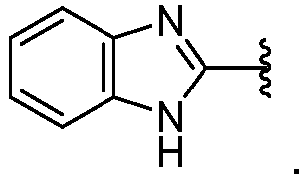
- In another preferred embodiment, the compounds of the invention for use thereof are selected from the list comprising:
- 4-(picolinimidamido)-N-(4-(picolinimidamido)phenyl)benzamide (3a)
- 5-(picolinimidamido)-N-(5-(picolinimidamido)pyridin-2-yl)picolinamide (3b)
- 3-chloro-N-(2-chloro-4-(picolinimidamido)phenyl)-4-(picolinimidamido)benzamide (3c)
- 3-chloro-N-(3-chloro-4-(picolinimidamido)phenyl)-4-(picolinimidamido)benzamide (3d)
- 2-chloro-N-(2-chloro-4-(picolinimidamido)phenyl)-4-(picolinimidamido)benzamide (3e)
- 2-chloro-N-(3-chloro-4-(picolinimidamido)phenyl)-4-(picolinimidamido)benzamide (3f)
- 2-isopropoxy-N-(2-isopropoxy-4-(picolinimidamido)phenyl)-4-(picolinimidamido)benzamide (3g)
- 4-(picolinimidamido)-N-(5-(picolinimidamido)pyridin-2-yl)benzamide (3h)
- 3-fluoro-N-(2-fluoro-4-(picolinimidamido)phenyl)-4-(picolinimidamido)benzamide di-trifluoroacetate (3i)
- 3-fluoro-N-(3-fluoro-4-(picolinimidamido)phenyl)-4-(picolinimidamido)benzamide di-trifluoroacetate (3j)
- 2-fluoro-N-(2-fluoro-4-(picolinimidamido)phenyl)-4-(picolinimidamido)benzamide di-trifluoroacetate (3k)
- 2-fluoro-N-(3-fluoro-4-(picolinimidamido)phenyl)-4-(picolinimidamido)benzamide di-trifluoroacetate (3l)
- N,N"-(ethane-1,2-diylbis(4,1-phenylene))dipicolinimidamide (17)
- N,N"-((carbonylbis(azanediyl))bis(4,1-phenylene))dipicolinimidamide (18)
- 4-((1,3-dihydro-2H-benzo[d]imidazol-2-ylidene)amino)-N-(4-((1,3-dihydro-2H-benzo[dJimidazol-2-ylidene)amino)phenyl)benzamide (1a)
- 5-((1,3-dihydro-2H-benzo[d]imidazol-2-ylidene)amino)-N-(5-((1,3-dihydro-2H-benzo[d]imidazol-2-ylidene)amino)pyridin-2-il)picolinamide (1b)
- 3-chloro-N-(2-chloro-4-((1,3-dihydro-2H-benzo[d]imidazol-2-ylidene)amino)phenyl)-4-((1,3-dihydro-2H-benzo[d]imidazol-2-ylidene)amino)benzamide (1c)
- 3-chloro-N-(3-chloro-4-((1,3-dihydro-2H-benzo[d]imidazol-2-ylidene)amino)phenyl)-4-((1,3-dihydro-2H-benzo[d]imidazol-2-ylidene)amino)benzamide (1d)
- 2-chloro-N-(2-chloro-4-((1,3-dihydro-2H-benzo[d]imidazol-2-ylidene)amino)phenyl)-4-((1,3-dihydro-2H-benzo[d]imidazol-2-ylidene)amino)benzamide (1e)
- 2-chloro-N-(3-chloro-4-((1,3-dihydro-2H-benzo[d]imidazol-2-ylidene)amino)phenyl)-4-((1,3-dihydro-2H-benzo[d]imidazol-2-ylidene)amino)benzamide (1f)
- 4,4'-(ethane-1,2-diyl)bis(N-(1H-benzo[d]imidazol-2(3H)-ylidene)aniline (13)
- 1,3-bis(4-((1,3-dihydro-2H-benzo[d]imidazol-2-ylidene)amino)phenyl)urea (14).
- Another aspect of the present invention relates to a compound of formula (I) or any of the pharmaceutically acceptable isomers, solvates or salts thereof, as defined in the first aspect of the invention, for use thereof in the treatment and/or prevention of diseases caused by protozoan parasites. These diseases occur in an animal, preferably a mammal, including humans.
- The term "treatment or prevention" as used herein, unless indicated otherwise, means reversing, alleviating, inhibiting the progress of, or preventing the disorder or condition to which it applies in such terms, one or more symptoms of such disorder or condition.
- In a preferred embodiment, the compounds for use are administered to an animal, more preferably a mammal. In another preferred embodiment, the mammal is a human.
- In a preferred embodiment, the protozoan parasites are of the genus Leishmania or Trypanosoma. Even more preferably, the parasites are of the species L. aethiopica, L. amazonensis, L. arabica, L. archibaldi, L. aristedesi, L. braziliensis, L. chagasi (syn. L. infantum), L. colombiensis, L. deanei, L. donovani, L. enriettii, L. equatorensis, L. forattinii, L. gamhami, L. gerbili, L. guyanensis, L. herreri, L. hertigi, L. infantum, L. killicki, L. lainsoni, L. major, L. mexicana, L. naiffi, L. panamensis, L. peruviana, L. pifanoi, L. shawi, L. tarentolae, L. tropica, L. turanica, L. venezuelensis, T. brucei, T. cruzi, T. congolense, T. equinum, T. equiperdum, T. evansi, T. vivax. Even more preferably, the parasites are of the species T. brucei, T. cruzi and L. donovani.
- In another preferred embodiment, the disease caused by protozoan parasites is selected from leishmaniasis, human African trypanosomiasis (sleeping sickness), animal trypanosomiasis, or American trypanosomiasis (Chagas disease).
- In a preferred embodiment, the invention relates to a compound selected from:
- 4-(picolinimidamido)-N-(4-(picolinimidamido)phenyl)benzamide (3a)
- 5-(picolinimidamido)-N-(5-(picolinimidamido)pyridin-2-yl)picolinamide (3b)
- 3-chloro-N-(2-chloro-4-(picolinimidamido)phenyl)-4-(picolinimidamido)benzamide (3c)
- 3-chloro-N-(3-chloro-4-(picolinimidamido)phenyl)-4-(picolinimidamido)benzamide (3d)
- 2-chloro-N-(3-chloro-4-(picolinimidamido)phenyl)-4-(picolinimidamido)benzamide (3f)
- 2-isopropoxy-N-(2-isopropoxy-4-(picolinimidamido)phenyl)-4-(picolinimidamido)benzamide (3g)
- 4-(picolinimidamido)-N-(5-(picolinimidamido)pyridin-2-yl)benzamide (3h)
- N,N"-(ethane-1,2-diylbis(4,1-phenylene))dipicolinimidamide (17),
- 4-(picolinimidamido)-N-(4-(picolinimidamido)phenyl)benzamide (3a)
- 5-(picolinimidamido)-N-(5-(picolinimidamido)pyridin-2-yl)picolinamide (3b)
- 3-chloro-N-(2-chloro-4-(picolinimidamido)phenyl)-4-(picolinimidamido)benzamide (3c)
- 3-chloro-N-(3-chloro-4-(picolinimidamido)phenyl)-4-(picolinimidamido)benzamide (3d)
- N,N"-(ethane-1,2-diylbis(4,1-phenylene))dipicolinimidamide (17),
- Another preferred embodiment of the invention relates to a compound selected from:
- 4-(picolinimidamido)-N-(4-(picolinimidamido)phenyl)benzamide (3a)
- 5-(picolinimidamido)-N-(5-(picolinimidamido)pyridin-2-yl)picolinamide (3b)
- 3-chloro-N-(3-chloro-4-(picolinimidamido)phenyl)-4-(picolinimidamido)benzamide (3d) for use thereof in the treatment and/or prevention of diseases caused by protozoan parasites of the genus Trypanosoma, more preferably, of the species T. brucei, even more preferably, of the sensitive strain T. brucei s427 and/or the drug-resistant strain T. brucei B48.
- In a preferred embodiment, the invention relates to a compound selected from:
- 4-(picolinimidamido)-N-(4-(picolinimidamido)phenyl)benzamide (3a)
- 5-(picolinimidamido)-N-(5-(picolinimidamido)pyridin-2-yl)picolinamide (3b)
- 3-chloro-N-(2-chloro-4-(picolinimidamido)phenyl)-4-(picolinimidamido)benzamide (3c)
- 3-chloro-N-(3-chloro-4-(picolinimidamido)phenyl)-4-(picolinimidamido)benzamide (3d)
- 2-chloro-N-(2-chloro-4-(picolinimidamido)phenyl)-4-(picolinimidamido)benzamide (3e)
- 2-chloro-N-(3-chloro-4-(picolinimidamido)phenyl)-4-(picolinimidamido)benzamide (3f)
- 2-isopropoxy-N-(2-isopropoxy-4-(picolinimidamido)phenyl)-4-(picolinimidamido)benzamide (3g)
- N,N"-(ethane-1,2-diylbis(4,1-phenylene))dipicolinimidamide (17)
- 3-fluoro-N-(2-fluoro-4-(picolinimidamido)phenyl)-4-(picolinimidamido)benzamide di-trifluoroacetate (3i)
- 3-fluoro-N-(3-fluoro-4-(picolinimidamido)phenyl)-4-(picolinimidamido)benzamide di-trifluoroacetate (3j)
- 2-fluoro-N-(2-fluoro-4-(picolinimidamido)phenyl)-4-(picolinimidamido)benzamide di-trifluoroacetate (3k)
- 2-fluoro-N-(3-fluoro-4-(picolinimidamido)phenyl)-4-(picolinimidamido)benzamide di-trifluoroacetate (3l),
- 3-chloro-N-(2-chloro-4-(picolinimidamido)phenyl)-4-(picolinimidamido)benzamide (3c)
- 3-chloro-N-(3-chloro-4-(picolinimidamido)phenyl)-4-(picolinimidamido)benzamide (3d)
- 2-chloro-N-(3-chloro-4-(picolinimidamido)phenyl)-4-(picolinimidamido)benzamide (3f) for use thereof in the treatment and/or prevention of diseases caused by protozoan parasites of the genus Trypanosoma, more preferably, of the species T. cruzi.
- Another aspect of the present invention relates to a compound of general formula (I) or any of the pharmaceutically acceptable isomers, solvates or salts thereof, as described in the first aspect of the invention, with the condition that the compound is not:

- The preferred embodiments of the compounds of the invention referred to in this last aspect of the invention are those already mentioned in the first aspect of the invention that referred to said compounds for use thereof.
- Unless otherwise indicated, the compounds of the invention include compounds that differ only in the presence of one or more isotopically enriched atoms. For example, compounds that have said structure, with the exception of the substitution of a hydrogen for deuterium or tritium, or the substitution of a carbon by a carbon enriched in 13C or 14C or a nitrogen enriched in 15N, are within the scope of this invention.
- The present invention further relates to a pharmaceutical composition comprising a therapeutically effective amount of at least one compound of formula (I) as previously defined, any of the pharmaceutically acceptable isomers, solvates or salts thereof, with a pharmaceutically acceptable excipient, adjuvant and/or carrier.
- The expression "excipients, adjuvants and/or carriers" refers to molecular entities or substances with which the active ingredient is administered. Such pharmaceutical excipients, adjuvants or carriers can be sterile liquids, such as water and oil, including those of petroleum or animal, plant or synthetic origin. such as peanut oil, soy oil, mineral oil, sesame oil and the like, excipients, disintegrants, wetting or thinning agents.
- The expression "therapeutically effective amount" refers to the amount of the agent or compound capable of developing the therapeutic action determined by the pharmacological properties thereof, calculated to produce the desired effect and, in general, will be determined, among other causes, by the very characteristics of the compounds, as well as the age and condition of the patient, the severity of the illness or disorder, and the route and frequency of administration.
- Said therapeutic composition can be prepared in solid or suspension form, in a pharmaceutically acceptable diluent. The therapeutic composition provided by this invention can be administered via any suitable route of administration, for which said composition will be formulated in the pharmaceutical form suitable for the chosen route of administration.
- The compounds described in the present invention for use thereof, as well as the pharmaceutical compositions containing them can be used together with other additional drugs in order to provide a combination therapy. Said additional drugs can make up part of the same pharmaceutical composition or, alternatively, they can be provided in the form of a separate composition for the administration thereof which is simultaneous or not to that of the pharmaceutical composition comprising a compound of the invention.
- Therefore, in a preferred embodiment, the composition of the invention further comprises at least one other active ingredient. Preferably, this active ingredient is an antiparasitic agent, more preferably, it is an antiprotozoal agent.
- The present invention relates to the use of a compound of formula (I), or any of the isomers thereof or the pharmaceutically acceptable salts thereof, for the preparation of a medicament, preferably for use thereof in the treatment and/or prevention of diseases caused by protozoan parasites.
- The present invention further relates to a method for the treatment and/or prevention of diseases caused by protozoan parasites that comprises administering a therapeutically effective amount of a compound of formula (I) or any of the pharmaceutically acceptable isomers, solvates or salts thereof to a subject (human or animal).
- Throughout the description and the claims, the word "comprises" and its variants do not intend to exclude other technical features, additives, components or steps. For those skilled in the art, other objects, advantages and features of the invention may be partially deduced from both the description and the embodiment of the invention. The following examples are provided by way of illustration, and are not meant to limit the present invention.
- Next, the invention will be illustrated by means of assays carried out by the inventors, which demonstrate the specificity and effectiveness of the compounds described in the present invention.
- Scheme 1: Synthesis of compounds of the invention of formula (I) (compounds within the formulae 1 and 3 indicated in scheme 1) where Z is -CONH- in said formula.


- 50 °C; (viii) naphthalen-2-ylmethyl pyridine-2-carbimidothioate hydrobromide (8), EtOH/CH3CN (3:1), 0 °C→25 °C; (ix) CF3CO2H, CH2Cl2, 0 °C.
- Scheme 2: Synthesis of compounds of the invention 13 and 17 of formula (I) where Z is -CH2CH2- in said formula and 14 and 18 where Z is -NHCONH-.

- The reactions were carried out in high pressure-resistant screw cap flasks. A solution of carboxylic acid (all carboxylic acids used are commercially available) (1.5 eq.) in SOCl2 (25 mL) was stirred at 80 °C for the time indicated in each case. Once at room temperature, the flask is carefully opened, due to the internal pressure of SO2 and HCl. The solution is concentrated under vacuum to remove excess SOCl2, CH2Cl2 is added to the flask to remove traces of SOCl2 and the solvent is removed. The acid chloride that is obtained as an oil is slowly added with the help of a syringe to a solution under stirring of nitroaniline (1.0 eq.) and DIPEA (2.0 eq.) in anhydrous toluene (20 mL) under an Argon atmosphere. The reaction mixture is stirred overnight at room temperature. Then the solvent is removed under vacuum and MeOH is added to the crude, to facilitate the precipitation of a solid. The precipitate is plate filtered and washed successively (3x) with 0.1 M aqueous HCl (10 mL) and MeOH (20 mL) to obtain the product as a powdered solid.
- 5-nitro-N-(5-nitropyridin-2-yl)picolinamide (4b). A catalytic amount of DMF is added drop by drop (10 drops), under an argon atmosphere, to a suspension of 5-aminopicolinic acid (1.9 g; 11.2 mmol) in anhydrous dichloromethane (10 mL) cooled with an ice bath. Next, oxalyl chloride (1.4 g; 1 mL; 11.2 mmol) is added dropwise and the reaction mixture is stirred at room temperature overnight. Next, Et3N is added to the reaction mixture cooled with an ice bath, followed by the slow addition of a solution of 5-nitropyridine-2-amine (1.1 g; 8 mmol) in anhydrous toluene (15 mL). The reaction mixture was stirred for 12 hours at room temperature. Next, it is cooled with an ice bath and cold methanol is added to precipitate the product as a greyish solid (1.9 g; 81%). 1H NMR (300 MHz, DMSO-d 6) δ 11.02 (s, 1H), 9.51 (d, J = 2.4 Hz, 1H), 9.25 (d, J = 2.7 Hz, 1H), 8.86 (dd, J = 8.6, 2.4 Hz, 1H), 8.74 (dd, J = 9.2, 2.7 Hz, 1H), 8.46 (d, J = 9.2 Hz, 1H), 8.43 (d, J = 8.6 Hz, 1H). 13C NMR (75 MHz, DMSO-d 6) δ 161.4, 154.5, 152.3, 146.3, 145.0, 144.2, 140.8, 134.8, 134.0, 123.7, 113.1. HPLC (UV) > 95 %. LRMS (ESI-): m/z 288.3 [M-H].
- 3-chloro-N-(2-chloro-4-nitrophenyl)-4-nitrobenzamide (4c). A mixture of 3-chloro-4-nitrobenzoic acid (850 mg; 1.5 mmol) and SOCl2 (5 mL) reacted following the general method. After 12 h of reaction, the acid chloride was obtained in the form of yellowish oil. The acid chloride was added to a suspension of 2-chloro-4-nitroaniline (485 mg; 2.8 mmol) and DIPEA (728 mg; 0.98 mL; 5.6 mmol) in anhydrous toluene (20 mL). The reaction mixture was stirred at room temperature under an argon atmosphere for 16 h, obtaining the compound 4c as a brown solid (760 mg; 76 %). 1H NMR (300 MHz, DMSO-d 6) δ 10.73 (s, 1H), 8.44 (d, J = 2.6 Hz, 1H), 8.32 (d, J = 1.8 Hz, 1H), 8.29 (dd, J = 8.9, 2.6 Hz, 1H), 8.27 (d, J = 8.5 Hz, 1H), 8.13 (dd, J = 8.5, 1.8 Hz, 1H), 8.02 (d, J = 8.9 Hz, 1H). 13C NMR (101 MHz, DMSO) δ 163.2, 149.5, 145.1, 140.7, 138.1, 131.0, 128.7, 128.3, 127.5, 125.9, 125.2, 125.1, 123.0. HPLC (UV) > 95 %. LRMS (ESI-): m/z 354.3 [M-H].
- 3-chloro-N-(3-chloro-4-nitrophenyl)-4-nitrobenzamide (4d). A mixture of 3-chloro-4-nitrobenzoic acid (3 g; 15 mmol) and SOCl2 (50 mL) reacted following the general method. After 12 h of reaction, the acid chloride was obtained as a dark yellow oil. The acid chloride was added to a suspension of 3-chloro-4-nitroaniline (1.7 g; 10 mmol) and DIPEA (2.6 g; 3.5 mL; 20 mmol) in anhydrous toluene (20 mL). The reaction mixture was stirred at room temperature under an argon atmosphere for 16 h, obtaining the compound 4d as a brown solid (2.7 g; 77%). 1H NMR (300 MHz, DMSO-d 6) δ 11.09 (s, 1H), 8.32 (d, J = 1.8 Hz, 1H), 8.27 (d, J = 8.4 Hz, 1H), 8.20 (d, J = 2.4 Hz, 1H) 8.20 (d, J = 8.9 Hz, 1H), 8.12 (dd, J = 8.4, 1.8 Hz, 1H), 7.93 (dd, J = 8.9, 2.4 Hz, 1H). 13C NMR (75 MHz, DMSO-d 6) δ 163.5, 149.4, 143.5, 142.2, 138.5, 130.9, 128.3, 127.5, 126.6, 125.9, 125.1, 121.7, 119.0. HPLC (UV) > 95 %. LRMS (ESI-): m/z 354.3 [M-H].
- 2-chloro-N-(2-chloro-4-nitrophenyl)-4-nitrobenzamide (4e). A mixture of 2-chloro-4-nitrobenzoic acid (1.5 g; 7.5 mmol) and SOCl2 (30 mL) reacted following the general method. After 12 h of reaction, the acid chloride was obtained in the form of yellowish oil. The acid chloride was added to a suspension of 2-chloro-4-nitroaniline (863 mg; 5 mmol) and DIPEA (1.5 g; 11.25 mmol) in anhydrous toluene (10 mL). The reaction mixture was stirred at room temperature under an argon atmosphere for 24 h, obtaining the compound 4e as a brown solid (1.5 g; 83%). 1H NMR (300 MHz, DMSO-ds) δ 10.89 (s, 1H), 8.43 (d, J = 2.2 Hz, 1H), 8.41 (d, J = 2.6 Hz, 1H), 8.32 (dd, J = 8.4, 2.2 Hz, 1H), 8.30 (dd, J = 9.0, 2.6 Hz, 1H), 8.22 (d, J = 9.0 Hz, 1H), 7.96 (d, J = 8.4 Hz, 1H). 13C NMR (75 MHz, DMSO-d 6) δ 164.3, 148.6, 144.6, 141.4, 140.2, 131.3, 130.3, 126.8, 125.9, 125.1, 124.6, 123.1, 122.5. HPLC (UV) > 95 %. LRMS (ESI-): m/z 354.2 [M-H].
- 2-chloro-N-(3-chloro-4-nitrophenyl)-4-nitrobenzamide (4f). A mixture of 2-chloro-4-nitrobenzoic acid (1.7 g; 8.4 mmol) and SOCl2 (20 mL) reacted following the general method. After 12 h of reaction, the acid chloride was obtained in the form of yellowish oil. The acid chloride was added to a suspension of 3-chloro-4-nitroaniline (970 mg; 5.6 mmol) and DIPEA (1.5 g; 2.0 mL; 11.3 mmol) in anhydrous toluene (10 mL). The reaction mixture was stirred at room temperature under an argon atmosphere for 12 h, obtaining the compound 4f as a yellowish solid (1.3 g; 65 %). 1H NMR (300 MHz, DMSO-d 6) δ 11.41 (s, 1H), 8.46 (d, J = 2.2 Hz, 1H), 8.34 (dd, J = 8.4, 2.2 Hz, 1H), 8.20 (d, J = 9.0 Hz, 1H), 8.13 (d, J = 2.2 Hz, 1H), 7.98 (d, J= 8.4 Hz, 1H), 7.79 (dd, J = 9.0, 2.2 Hz, 1H). 13C NMR (75 MHz, DMSO-d 6) δ 164.3, 148.8, 143.1, 142.4, 141.2, 131.2, 130.3, 127.7, 126.9, 124.8, 122.7, 121.1, 118.5. HPLC (UV) > 95 %. LRMS (ESI-): m/z 354.3 [M-H].
- 2-isopropoxy-N-(3-isopropoxy-4-nitrophenyl)-4-nitrobenzamide (4g). A mixture of 2-isopropoxy-4-nitrobenzoic acid (0.5 g, 2.2 mmol) and SOCl2 reacted following the general method. After 12 h of reaction, the acid chloride was obtained as a yellowish oil. The acid chloride was added to a suspension of 2-isopropoxy-4-nitroaniline (291 mg; 1.5 mmol) and DIPEA (383 mg; 0.5 mL; 3.0 mmol) in anhydrous toluene (10 mL). The reaction mixture was stirred at room temperature under an argon atmosphere for 48 h, obtaining the compound 4g as a yellowish solid (410 mg; 69 %) by recrystallisation in MeOH. 1H NMR (300 MHz, DMSO-d6 ) δ 10.07 (s, 1H), 8.65 (d, J = 8.9 Hz, 1H), 8.15 (d, J = 8.6 Hz, 1H), 8.00 (d, J = 2.2 Hz, 1H), 7.95 (d, J = 2.2 Hz, 1H), 7.93 - 7.89 (m, 2H), 5.06 (d, J = 6.0 Hz, 1H), 4.95 (d, J = 6.0 Hz, 1H), 1.44 (d, J = 6.0 Hz, 6H), 1.39 (d, J = 6.0 Hz, 6H). 13C NMR (75 MHz, DMSO-d6) δ 162.8, 156.0, 150.8, 147.0, 143.6, 134.5, 133.1, 128.9, 120.3, 117.2, 116.1, 110.4, 108.5, 74.3, 73.0, 22.0.
- 3-fluoro-N-(2-fluoro-4-nitrophenyl)-4-nitrobenzamide (4i). A mixture of 3-fluoro-4-nitrobenzoic acid (1.13 g, 6.1 mmol) and SOCl2 (5 mL) reacted following the general method. After 17 h of reaction, the acid chloride was obtained in the form of a yellowish solid. The acid chloride 610 mg, 3 mmol) dissolved in anhydrous THF (2 mL) was added to a suspension of 2-fluoro-4-nitroaniline (312 mg, 2 mmol) and DIPEA (0.7 mL, 4 mmol) in anhydrous THF (5 mL). The reaction mixture was stirred at room temperature under an argon atmosphere for 3 days, obtaining the compound 4i as a whitish solid (620 mg, 96 %). M.p. 204.3 °C. 1H NMR (300 MHz, DMSO-d 6) δ 11.06 (s, 1H), 8.43 - 8.12 (m, 6H), 8.00 (dd, J = 7.0, 1.3 Hz, 1H). 13C NMR (75 MHz, DMSO-d 6) δ 162.1, 158.7 (d, J = 253.1 Hz), 152.4 (d, J = 250.9 Hz), 149.7 (d, J = 9.2 Hz), 143.8 (d, J = 8.4 Hz), 132.1 (d, J = 11.4 Hz), 131.5 (d, J = 3.4 Hz), 129.6 (d, J = 15.8 Hz), 123, 5, 120.6 (d, J = 3.5 Hz), 119.7 (d, J = 3.8 Hz), 112.1 (d, J = 27.3 Hz), 111.9 (d, J = 24.7 Hz).
- 3-fluoro-N-(3-fluoro-4-nitrophenyl)-4-nitrobenzamide (4j). Following the general method, 4j was obtained as a solid (230 mg, 65 %). 1H NMR (300 MHz, DMSO-d 6) δ 11.18 (s, 1H), 8.35 (t, J = 8.0 Hz, 1H), 8.25 (t, J = 8.9 Hz, 1H), 8.19 - 8.08 (m, 1H), 8.09 - 7.92 (m, 2H), 7.80 - 7.67 (m, 1H).13C NMR (75 MHz, DMSO-d 6) δ 163.6, 155.4 (d, J = 259.8 Hz), 154.2 (d, J = 262.3 Hz), 145.6 (d, J= 11.5 Hz), 140.5 (d, J = 7.5 Hz), 138.9 (d, J = 7.8 Hz), 131.9 (d, J = 7.0 Hz), 127.5, 126.7 (d, J = 2.7 Hz), 124.8 (d, J = 4.1 Hz), 118.1 (d, J = 22.7 Hz), 115.9 (d, J = 3.3 Hz), 108.3 (d, J = 26.1 Hz).
- 2-fluoro-N-(2-fluoro-4-nitrophenyl)-4-nitrobenzamide (4k). Following the general method, 4k was obtained as a whitish solid (270 mg, 77 %). 1H NMR (300 MHz, DMSO-d 6) δ 11.07 (s, 1H), 8.45-8.12 (m, 5H), 8.00 (dd, J = 6.9, 8.5 Hz, 1H). 13C NMR (75 MHz, DMSO-d 6) δ 162.1, 158.7 (d, J = 253.3 Hz), 152.3 (J = 250.8 Hz), 154.0, 150.7, 149.7 (d, J = 9.1 Hz), 143.8 (d, J = 8.4 Hz), 132.1 (d, J = 11.6 Hz), 131.5 (d, J = 3.3 Hz), 129.6 (d, J = 15.7 Hz), 123.5, 120.6 (d, J = 3.3 Hz), 119.7 (d, J = 3.8 Hz), 112.1 (d, J = 27.5 Hz), 111.9 (d, J = 24.7 Hz).
- 2-fluoro-N-(3-fluoro-4-nitrophenyl)-4-nitrobenzamide (4l). Following the general method, 4l was obtained as a solid (272 mg, 77 %). 1H NMR (300 MHz, DMSO-d 6) δ 11.46 (s, 1H), 8.33 (dd, J = 2.2, 9.7 Hz, 1H), 8.30 - 8.17 (m, 2H), 8.07 - 8.00 (m, 1H), 8.00 - 7.90 (m, 1H), 7.64 (dd, J = 2.3, 9.0 Hz, 1H). 13C NMR (75 MHz, DMSO-d 6) δ 162.1, 158.7 (d, J = 216.2 Hz), 153.8, 149.7 (d, J = 8.9 Hz), 145.2 (d, J = 11.4 Hz), 132.0 (d, J = 6.5 Hz), 131.3, 129.6 (d, J = 15.2 Hz), 127.7, 119.8 (d, J = 3.8 Hz), 115.5, 112.3 (d, J = 27.2 Hz), 107.9 (d, J = 26.1 Hz).
- SnCl2.2H2O (10 eq.) was added to a mixture of the dinitrobenzamide in EtOAc (20 mL) and a catalytic amount of concentrated HCl (20 drops). The reaction mixture is stirred overnight at 50 °C, achieving complete dissolution of the nitrobenzamide. The reaction crude is filtered over a layer of Celite, which is washed with a mixture of CH2CL2:MeOH (1:1) (250 mL). The filtrate is evaporated under high vacuum and the solid obtained is diluted in EtOAC, and it is basified (pH = 8) by adding a 10 % NaHCOs aqueous solution. The compound is extracted with EtOAc several times. A complete extraction of the aqueous phase is verified by TLC developed with ninhydrin. The organic phase is washed with a saturated sodium chloride solution, it is dried over MgSO4, and the solvent was removed under high vacuum.
- 5-amino-No-(5-aminopyridin-2-yl)picolinamide (5b). The compound 4b (1.5 g; 5.3 mmol) was hydrogenated in the presence of Pd-C 5 % (300 mg; 20 % w/w) with a Parr hydrogenator, obtaining 5b as a brown powder by recrystallisation in EtOAc (1.2 g; 99.8 %). 1H NMR (400 MHz, DMSO-d 6) δ 9.80 (s, 1H), 7.96 (d, J = 2.7 Hz, 1H), 7.94 (d, J = 8.7 Hz, 1H), 7.82 (d, J = 8.7 Hz, 1H), 7.70 (d, J = 2.7 Hz, 1H), 7.03 (dd, J = 8.7, 2.7 Hz, 2H), 6.12 (s, 2H), 5.13 (s, 2H). 13C NMR (101 MHz, DMSO-d 6) δ 161.5, 148.0, 141.7, 141.3, 136.4, 134.4, 133.7, 123.1, 122.7, 119.4, 113.3. HPLC (UV) > 95 %. LRMS (ESI+): m/z 229.1 [M+H].
- 4-amino-N-(4-amino-2-chlorophenyl)-3-chlorobenzamide (5c). The compound 4c (5.5 g; 15.4 mmol) and SnCl2.2H2O (35 g; 154 mmol) reacted following the general method, obtaining 5c as a brown powder by recrystallisation in EtOAc (4.1 g; 90 %);1H NMR (300 MHz, DMSO-d 6) δ 9.40 (s, 1H), 7.86 (d, J = 2.0 Hz, 1H), 7.67 (dd, J = 8.5, 2.0 Hz, 1H), 7.04 (d, J = 8.5 Hz, 1H), 6.81 (d, J = 8.5 Hz, 1H), 6.68 (d, J = 2.5 Hz, 1H), 6.51 (dd, J = 8.5, 2.5 Hz, 1H), 5.95 (br s, 2H), 5.33 (br s, 2H). 13C NMR (75 MHz, DMSO-d 6) δ 164.3, 148.3, 147.7, 130.7, 129.8, 128.8, 127.7, 123.0, 122.1, 116.1, 114.1, 113.4, 112.6. HPLC (UV) > 95 %. LRMS (ESI+): m/z 296.1 [M+H].
- 4-amino-N-(4-amino-3-chlorophenyl)-3-chlorobenzamide (5d). The compound 4d (2 g; 5.6 mmol) and SnCl2.2H2O (12.6 g; 562 mmol) reacted following the general method, obtaining 5d as a yellowish powder by recrystallisation in EtOAc (4.1 g; 90 %). 1H NMR (400 MHz, Methanol-d 4) δ 7.84 (d, J = 2.1 Hz, 1H), 7.64 (dd, J = 8.5, 2.1 Hz, 1H), 7.60 (d, J = 2.4 Hz, 1H), 7.27 (dd, J = 8.6, 2.4 Hz, 1H), 6.84 (d, J = 8.5 Hz, 1H), 6.83 (d, J = 8.6 Hz, 1H). 13C NMR (101 MHz, Methanol-d 4) δ 167.4, 149.2, 142.0, 131.1, 130.1, 128.5, 124.3, 123.8, 122.7, 119.8, 118.7, 117.1, 115.5. HPLC (UV) > 95 %. LRMS (ESI+): m/z 296.1 [M+H].
- 4-amino-N-(4-amino-2-chlorophenyl)-2-chlorobenzamide (5e). The compound 4e (1.4 g; 4.0 mmol) and SnCl2.2H2O (9 g; 40 mmol) reacted following the general method, obtaining 5e as a brown powder by recrystallisation in EtOAc (693 mg; 59 %). 1H NMR (400 MHz, DMSO-d 6) δ 9.25 (s, 1H), 7.33 (d, J = 8.2 Hz, 1H), 7.16 (d, J = 8.4 Hz, 1H), 6.66 (d, J = 2.6 Hz, 1H), 6.62 (d, J = 2.2 Hz, 1H), 6.56 - 6.47 (m, 2H), 5.75 (s, 2H), 5.32 (s, 2H). 13C NMR (126 MHz, DMSO-d 6) δ 165.3, 151.5, 148.0, 131.5, 130.8, 129.7, 128.8, 122.9, 122.2, 113.8, 113.4, 112.6, 111.6. HPLC (UV) > 95 %. LRMS (ESI+): m/z 296.1 [M+H].
- 4-amino-N-(4-amino-3-chlorophenyl)-2-chlorobenzamide (5f). The compound 4f (1 g; 2.5 mmol) and SnCl2.2H2O (4.75 g; 25 mmol) reacted following the general method, obtaining 5f as a yellowish powder by recrystallisation in CHCl3 (520 mg; 71 %). 1H NMR (300 MHz, DMSO-d 6) δ 9.83 (s, 1H), 7.68 (d, J = 2.4 Hz, 1H), 7.28 (dd, J = 8.8, 2.4 Hz, 1H), 7.23 (d, J = 8.4 Hz, 1H), 6.75 (d, J= 8.8 Hz, 1H), 6.63 (d, J = 2.1 Hz, 1H), 6.53 (dd, J = 8.4, 2.1 Hz, 1H), 5.74 (s, 2H), 5.12 (s, 2H). HPLC (UV) > 95 %. LRMS (ESI+): m/z 296.1 [M+H].
- 4-amino-N-(4-amino-3-isopropoxypheyil)-2-isopropoxybenzamide (5g). The compound 4g (324 mg: 0.8 mmol) was hydrogenated in the presence of Pd-C 5 % (65 mg) with a Parr hydrogenator, obtaining 5g as a brown solid (253 mg, 92.4 %) by recrystallisation in EtOAc/Hexane. 1H NMR (300 MHz, DMSO-d 6) δ 9.51 (s, 1H), 7.87 (d, J = 8.6 Hz, 1H), 7.72 (d, J = 8.5 Hz, 1H), 6.32 (d, J = 2.3 Hz, 1H), 6.30 (d, J = 2.0 Hz, 1H), 6.23 (dd, J = 8.5, 2.0 Hz, 1H), 6.12 (dd, J = 8.6, 2.3 Hz, 1H), 5.72 (s, 2H), 4.86 (s, 2H), 4.65 (d, J = 6.0 Hz, 1H), 4.49 (d, J = 6.0 Hz, 1H), 1.39 (d, J = 6.0 Hz, 6H), 1.30 (d, J = 6.0 Hz, 6H). 13C NMR (75 MHz, DMSO-d 6) δ 162.3, 157.1, 153.3, 148.0, 145.2, 132.8, 122.6, 118.4, 110.3, 106.8, 105.6, 100.1, 98.4, 71.6, 70.6, 22.2, 22.0.
- 4-amino-N-(4-amino-2-fluorophenyl)-3-fluorobenzamide (5i). The compound 4i (476 mg, 1.47 mmol) was hydrogenated in the presence of Pd-C 5 % (86 mg) with a Parr hydrogenator, obtaining 5i as a greyish solid (230 mg, 59.4 %) by recrystallisation in EtOAc/MeOH (98/2). 1H NMR (300 MHz, DMSO-d 6) δ 9.32 (s, 1H), 7.59 (m, 2H), 7.01 (t, J = 8.7 Hz, 1H), 6.77 (t, J = 8.7 Hz, 1H), 6.38 (m, 2H), 5.76 (s, 2H), 5.30 (s, 2H).13C NMR (75 MHz, DMSO-d 6) δ 164.3, 157.4 (d, J = 243.1 Hz), 149.4 (d, J = 236.9 Hz), 148.5 (d, J = 11.0 Hz), 139.9 (d, J = 13.0 Hz), 128.8 (d, J = 3.5 Hz), 124.7, 121.1 (d, J = 5.5 Hz), 114.7 (d, J = 4.9 Hz), 114.3 (d, J= 19.6 Hz), 113.4 (d, J= 13.5 Hz), 109.3, 100.4 (d, J = 23.0 Hz).
- 4-amino-N-(4-amino-3-fluorophenyl)-3-fluorobenzamide (5j). The compound 4j (177 mg, 0.55 mmol) was hydrogenated in the presence of Pd-C 5 % with a Parr hydrogenator (H2, 24 Psi) for 2.5 h, obtaining 5j as a greyish solid by recrystallisation in EtOAc. 1H NMR (300 MHz, DMSO-d 6) δ 9.67 (s, 1H), 7.74 - 7.42 (m, 3H), 7.21 - 7.16 (m, 1H), 6.88 - 6.65 (m, 2H), 5.78 (s, 2H), 4.90 (s, 2H). 13C NMR (75 MHz, DMSO-d 6) δ 163.7, 149.7 (d, J = 235.8 Hz), 148.9 (d, J = 236.1 Hz), 139.9 (d, J = 13.1 Hz), 132.1 (d, J = 13.0 Hz), 128.9 (d, J = 9.5 Hz), 124.7, 121.6 (d, J = 5.5 Hz), 116.8 (d, J = 3.1 Hz), 115.8 (d, J = 5.4 Hz), 114.7 (d, J = 5.0 Hz), 114.2 (d, J = 19.3 Hz), 108.2 (d, J = 23.0 Hz).
- 4-amino-N-(4-amino-2-fluorophenyl)-2-fluorobenzamide (5k). The compound 4k (200 mg, 0.62 mmol) was hydrogenated in the presence of Pd-C 5 % (60 mg) with a Parr hydrogenator (H2, 28 Psi) for 2 h, obtaining 5k as a greyish solid by recrystallisation in EtOAc. 1H NMR (300 MHz, DMSO-d 6) δ 8.82 (d, J = 7.3 Hz, 1H), 7.49 (t, J = 8.8 Hz, 1H), 7.26 (t, J = 8.8 Hz, 1H), 6.46 - 6.27 (m, 4H), 6.00 (s, 2H), 5.28 (s, 2H). 13C NMR (75 MHz, DMSO-d 6) δ 162.3, 161.5 (d, J = 245.5 Hz), 156.2 (d, J = 241.9 Hz), 153.7 (d, J = 12.7 Hz), 147.9 (d, J = 10.8 Hz), 131.9 (d, J = 4.8 Hz), 127.1, 113.9 (d, J = 12.7 Hz), 109.5, 109.2 (d, J = 2.1 Hz), 108.7 (d, J = 12.8 Hz), 100.3 (d, J = 22.8 Hz), 99.2 (d, J = 26.6 Hz).
- 4-amino-N-(4-amino-3-fluorophenyl)-2-fluorobenzamide (5l). The compound 4l (155 mg, 0.48 mmol) was hydrogenated in the presence of Pd-C 5 % (50 mg) with a Parr hydrogenator (H2, 23 Psi) for 2 h, obtaining 5l as a greyish solid (20 mg, 16 %) by recrystallisation in EtOAc. 1H NMR (300 MHz, DMSO-d 6) δ 9.77 - 9.27 (m, 1H), 7.60 - 7.32 (m, 2H), 7.22 - 7.04 (m, 1H), 6.70 (t, J = 9.6 Hz, 1H), 6.48 - 6.24 (m, 2H), 5.95 (s, 2H), 4.89 (s, 2H). 13C NMR (75 MHz, DMSO-d 6) δ 162.2, 161.0 (d, J = 246.6 Hz), 153.4 (d, J = 12.5 Hz), 149.7 (d, J = 235.7 Hz), 132.1 (d, J = 13.1 Hz), 131.4 (d, J = 4.9 Hz), 128.8 (d, J = 9.6 Hz), 116.4 (d, J = 2.9 Hz), 115.8 (d, J = 5.4 Hz), 110.2 (d, J = 12.6 Hz), 109.4, 107.8 (d, J = 23.2 Hz), 99.3 (d, J = 26.0 Hz).
- 1,3-bis(4-aminophenyl)urea (10). 1,3-bis(4-nitrophenyl)urea (2.4 g; 8.0 mmol) was hydrogenated in the presence of Pd-C 5 % (213 mg) with a Parr hydrogenator, obtaining 10 as a slightly violet powder by recrystallisation in MeOH/DMF (520 mg; 27 %). 1H NMR (300 MHz, DMSO-d 6) δ 7.91 (s, 2H), 7.04 (d, J = 8.1 Hz, 4H), 6.49 (d, J = 8.1 Hz, 4H), 4.71 (s, 4H). HPLC (UV) > 95 %. LRMS (ESI+): m/z 243.3 [M+H].
- The reaction is carried out in KIMAX tubes. A solution of diamine (1 eq.) and thiophosgene (2.5 eq.) in an Et2O:H2O mixture (3:1) (2 mL) is stirred at room temperature overnight. After stirring a solid appears at the bottom of the tube. The precipitated solid is filtered on a plate and washed with distilled H2O (100 mL). Purification is carried out in a column with Et2O:EtOAc. The product is dried at 40 °C, obtaining a solid.
- 4-isothiocyanato-N-(4-isothiocyanatophenyl)benzamide (6a). The 4-amino-N-(4-aminophenyl)benzamide 5a (3.4 g, 15 mmol), commercially available, reacted with thiophosgene (2.5 mL, 33 mmol) following the general method, obtaining 6a as a greyish solid (92 %). 1H NMR (300 MHz, Chloroform-d) δ 7.88 (s 1H, NH), 7.85 (d, J = 8.7, 2H), 7.63 (d, J = 8.8, 2H), 7.31 (d, J = 8.7, 2H), 7.22 (d, J = 8.8, 2H). 13C NMR (75 MHz, CDCl3) δ 164.7, 138.6, 137.1, 135.9, 135.5, 133.2, 129.0, 127.8, 127.0, 126.5, 121.5. Mp. 199-200 °C. HPLC (UV) > 95 %. LRMS (ESI+) m/z = 312.3 (M+H).
- 5-isothiocyanato-N-(5-isothiocyanatopyridin-2-yl)picolinamide (6b). 5b (74.5 mg, 0.32 eq.) reacted with thiophosgene (62 µL, 0.81 eq.) following the general method, obtaining 6b as a brown solid. The compound was purified by chromatography on silica eluting with petroleum etherEtOAc (100:0 -> 50:50). 1H NMR (300 MHz, DMSO-d 6) δ 10.43 (s, 1H), 8.81 (s, 1H), 8.63 - 8.43 (m, 1H), 8.37 - 8.12 (m, 3H), 8.00 (m, 1H). 13C NMR (75 MHz, DMSO-d 6) δ 181.4, 172.1, 165.0, 162.2, 153.8, 146.3, 139.9, 136.2, 129.7, 126.3, 124.6, 123.6. HPLC (UV) > 95 %. LRMS (ESI+) m/z = 314.3 (M+H).
- 3-chloro-N-(2-chloro-4-isothiocyanatophenyl)-4-isothiocyanatobenzamide (6c). 5c (100 mg, 0.34 mmol) reacted with thiophosgene (65 µL, 0.85 mmol) following the general method, obtaining 6c as a brown solid (44 %). 1H NMR (300 MHz, Chloroform-d) δ 8.53 (d, J = 8.9 Hz, 1H), 8.31 (s, 1H), 7.98 (s, 1H), 7.74 (d, J = 8.3 Hz, 1H), 7.36 (dd, J = 8.3, 1.1 Hz, 1H), 7.21 (dd, J = 8.9, 1.3 Hz, 1H). HPLC (UV) > 95 %. LRMS (ESI+) m/z = 377.8 (M-H).
- 3-chloro-N-(3-chloro-4-isothiocyanatophenyl)-4-isothiocyanatobenzamide (6d). 5d (150 mg, 0.51 mmol) reacted with thiophosgene (147 mg, 0.1 mL, 1.28 mmol) following the general method, obtaining 6d as a whitish solid (160 mg, 83 %). 1H NMR (300 MHz, DMSO-d 6) δ 10.63 (s, 1H), 8.15 (d, J = 2.0 Hz, 1H), 8.08 (d, J = 2.4 Hz, 1H), 7.94 (dd, J = 8.4, 2.0 Hz, 1H), 7.73 (dd, J = 8.8, 2.4 Hz, 1H), 7.67 (d, J = 8.4 Hz, 1H), 7.51 (d, J = 8.8 Hz, 1H). 13C NMR (75 MHz, DMSO-d 6) δ 163.2, 139.1, 138.7, 136.7, 134.0, 131.4, 130.5, 130.4, 129.2, 128.0, 127.5, 127.3, 123.3, 120.7, 119.7. HPLC (UV) > 95 %. LRMS (ES-) m/z = 377.7 (M-H).
- 2-chloro-N-(2-chloro-4-isothiocyanatophenyl)-4-isothiocyanatobenzamide (6e). 5e (100 mg, 0.34 mmol) reacted with thiophosgene (98 mg, 65 µL, 0.85 mmol) following the general method. The product was purified on silica chromatography eluting with petroleum ether: EtOAc (100:0 → 25:75), obtaining 6e as a whitish solid (85 mg, 66 %). 1H NMR (300 MHz, DMSO-d6 ) δ 10.41 (s, 1H), 7.79 (d, J= 9.2 Hz, 1H), 7.75 (d, J = 2.0 Hz, 1H), 7.74 (d, J = 2.4 Hz, 1H), 7.68 (d, J = 8.2 Hz, 1H), 7.54 (dd, J = 8.2, 2.0 Hz, 1H), 7.49 (dd, J = 9.0, 2.4 Hz, 1H). HPLC (UV) > 95 %. LRMS (ESI-) m/z = 377.8 (M-H).
- 2-chloro-N-(3-chloro-4-isothiocyanatophenyl)-4-isothiocyanatobenzamide (6f). 5f (310 mg, 1.05 mmol) reacted with thiophosgene (303 mg, 0.2 mL, 2.63 mmol) following the general method, obtaining 6f as a whitish solid (94 mg, 24 %). 1H NMR (300 MHz, Chloroform-d) δ 8.15 (s, 1H), 7.86 (d, J = 2.3 Hz, 1H), 7.74 (d, J= 8.2 Hz, 1H), 7.45 (dd, J = 8.6, 2.3 Hz, 1H), 7.28 (d, J = 2.0 Hz, 1H), 7.22 (d, J = 8.6 Hz, 1 H), 7.20 (dd, J = 8.2, 2.0 Hz, 1 H). 13C NMR (75 MHz, Chloroform-d) δ 163.3, 140.1, 139.1, 136.8, 135.4, 132.6, 132.6, 132.0, 131.8, 127.4, 127.1, 126.3, 124.8, 121.5, 119.1. HPLC (UV) > 95 %. LRMS (ESI-) m/z = 377.8 (M-H)
- 1,2-bis(4-isothiocyanatophenyl)ethane (11). 4,4'-diaminobibenzyl 9 (1,28 g, 6 mmol) reacted with thiophosgene (1.73 g: 1.15 mL, 15 mmol) following the general method. The product was purified by chromatography on silica eluting with n-hexane: EtOAc (100→0 to 80→20), obtaining 11 as a whitish solid (1.4 g, 79 %). 1H NMR (400 MHz, Chloroform-d) δ 7.12 (d, J = 8.6 Hz, 4H), 7.07 (d, J = 8.6 Hz, 4H), 2.89 (s, 4H). HPLC (UV) > 95 %. LRMS (ESI+) m/z = 297.3 (M+H).
- 1,3-bis(4-isothiocyanatophenyl)urea (12). 10 (201 mg, 0.83 mmol) reacted with thiophosgene (0.16 mL, 2.08 mmol) following the general method, obtaining 12 as a whitish solid (174 mg: 64 %). 1H NMR (400 MHz, DMSO-d 6) δ 9.03 (s, 2H), 7.52 (d, J = 8.9 Hz, 4H), 7.37 (d, J = 8.9 Hz, 4H).
- 13C NMR (101 MHz, DMSO-d 6) δ 152.1, 139.2, 132.2, 126.7, 123.2, 119.0. HPLC (UV) > 95 %. LRMS (ES+) m/z = 314.3 (M+H).
- In a KIMAX tube, a solution of the isothiocyanate (1 eq.) and o-phenylenediamine (2.2 eq.) is prepared in anhydrous DMF (4 mL) and stirred at 0 °C (ice bath) until complete formation of the thiourea intermediate (verified by TLC and HPLC-MS). The EDC hydrochloride (2.5 eq.) is then added in a single step and the reaction mixture is stirred at 60 °C for 24 hours. After said time has elapsed, pieces of ice are added to the reaction crude and the tube is vigorously stirred. The precipitated solid is purified by circular chromatography (Chromatotron) using CH2CL2:MeOH (9:1; 8:2; 7:3; 6:4; 1:1) as an elution system.
- 4-((1H-benzo[d]imidazol-2(3H)-ylidene)amino)-N-(4-((1H-benzo[d]imidazol-2(3H)-ylidene)amino)phenyl)benzamide (1a). A solution of 6a (200 mg, 0.64 mmol) and o-phenylenediamine (151 mg, 1.4 mmol) in anhydrous DMF (10 mL) was stirred at room temperature for 2 h until the reagents were consumed. Iodine (405 mg, 1.6 mmol) was added to the reaction mixture, followed by potassium carbonate (221 mg, 1.6 mmol). The reaction mixture was stirred overnight and the reaction was stopped by adding a 5 % Na2S2O3 aqueous solution (3.5 mL). Brine (50 mL) was added and the aqueous phase was extracted with CH2Cl2 (3 × 30 mL). The organic phase was dried and the solvent was evaporated, obtaining a yellowish oil. The product was purified by chromatography on silica (Hexane:EtOAc, 100:0->40:60), obtaining a brown solid. 1H NMR (300 MHz, Methanol-d 4) δ 8.20 (d, J = 8.6 Hz, 2H), 7.98 (d, J = 8.8 Hz, 2H), 7.64 (d, J = 8.8 Hz, 2H), 7.58 - 7.43 (m, 6H), 7.40 - 7.28 (m, 4H). HPLC (UV) > 95 %. LRMS (ESI+) m/z = 459.2 [M+H].
- 5-((1H-benzo[d]imidazol-2(3H)-ylidene)amino)-N-(5-((1H-benzo[d]imidazol-2(3H)-ylidene)amino)pyridin-2-yl)picolinamide (1b). The reaction was carried out following the general method using 6b (20 mg, 64 pmol), o-phenylenediamine (15 mg, 140 µmol), DMF (4 mL) and EDC hydrochloride (30.6 mg, 160 µmol) with 12 h of stirring at 60 °C. After this time, ice was added to the reaction mixture to precipitate the product. The solid was isolated by filtration, washed with cold water and dried, obtaining a brown solid.1H NMR (300 MHz, DMSO-d 6) δ 11.32 (s, 1H), 11.07 (s, 1H), 10.26 (s, 1H), 10.19 (s, 1H), 9.60 (s, 1H), 8.96 (d, J = 2.5 Hz, 1H), 8.77 (d, J = 2.6 Hz, 1H), 8.66 (dd, J = 8.5, 2.2 Hz, 1H), 8.33 (dd, J = 9.0, 2.6 Hz, 1H), 8.26 (d, J = 8.9 Hz, 1H), 8.19 (d, J = 8.7 Hz, 1H), 7.52 -7.23 (m, 4H), 7.11 - 6.93 (m, 4H). 13C NMR (75 MHz, DMSO-d 6) δ 161.5, 150.3, 149.2, 144.5, 142.9, 142.5, 140.8, 140.4, 137.5, 137.4, 134.4, 132.9, 132.7, 126.7, 123.7, 123.0, 120.9, 120.6, 119.9, 116.5, 116.0, 113.0, 110.0, 109.5. HPLC (UV) > 95 %. LRMS (ESI+) m/z = 462.2 [M+H].
- 4-((1H-benzo[d]imidazol-2(3H)-ylidene)amino)-N-(4-((1H-benzo[d]imidazol-2(3H)-ylidene)amino)-2-chlorophenyl)-3-chlorobenzamide (1c). The reaction was carried out following the general method using 6c (125 mg, 0.33 mmol), o-phenylenediamine (78 mg, 0.72 mmol), DMF (4 mL) and EDC hydrochloride (157 mg, 0.82 mmol) with 12 h of stirring at 60 °C. The product was purified by circular chromatography on silica (CH2Cl2:MeOH, 100:0→70:30), obtaining a yellowish solid (75 mg, 43 %). 1H NMR (500 MHz, DMSO-d 6) δ 10.04 (s, 1H), 9.04 (t, J = 5.7 Hz, 1H), 8.86 (d, J = 8.9 Hz, 1H), 8.17 (d, J = 2.1 Hz, 1H), 8.12 (d, J = 2.5 Hz, 1H), 8.05 (dd, J = 8.7, 2.1 Hz, 1H), 7.61 (dd, J = 8.6, 2.5 Hz, 1H), 7.50 (d, J = 8.7 Hz, 1H), 7.45 (dd, J = 5.9, 3.2 Hz, 1H), 7.38 (td, J = 6.2, 3.2 Hz, 3H), 7.21 (dd, J = 5.9, 3.2 Hz, 1H), 7.09 (td, J = 6.2, 3.2 Hz, 4H), 3.46 - 3.40 (m, 2H). 13C NMR (126 MHz, DMSO-d 6) δ 163.9, 150.0, 149.5, 149.3, 139.6, 139.1, 130.4, 129.9, 129.4, 128.8, 128.5, 127.7, 127.4, 123.0, 121.0, 120.7, 118.6, 118.4, 117.2, 111.2. HPLC (UV) > 95 %. LRMS (ESI+) m/z = 528.2 [M+H].
- 4-((1H-benzo[d]imidazol-2(3H)-ylidene)amino)-N-(4-((1H-benzo[d]imidazol-2(3H)-ylidene)amino)-3-chlorophenyl)-3-chlorobenzamide (1d). The reaction was carried out following the general method using 6d (102 mg, 0.27 mmol), o-phenylenediamine (64 mg, 0.60 mmol), DMF (4 mL) and EDC hydrochloride (131 mg, 0.68 mmol) with 48 h of stirring at 60 °C. The product was purified by circular chromatography on silica (CH2Cl2:MeOH, 100:0→70:30), obtaining a yellowish solid (21 mg; 15 %).1H NMR (400 MHz, DMSO-d 6) δ 10.93 (br s, 3H), 9.50 (br s, 2H), 9.23 (br s, 2H), 8.85 (d, J = 9.8 Hz, 2H), 8.72 (d, J = 9.8 Hz, 2H), 8.59 - 8.30 (m, 6H), 3.16 (br s, 2H). 13C NMR (101 MHz, DMSO-d 6) δ 161.1, 154.2, 152.1, 146.1, 144.6, 143.8, 140.7, 134.4, 133.6, 123.4, 112.9. HPLC (UV) > 95 %. LRMS (ES+) m/z 528.1 [M+H].
- 4-((1H-benzo[d]imidazol-2(3H)-ylidene)amino)-N-(4-((1H-benzo[d]imidazol-2(3H)-ylidene)amino)-2-chlorophenyl)-2-chlorobenzamide (1e). The reaction was carried out following the general method using 6e (50 mg, 0.13 mmol), o-phenylenediamine (31 mg, 0.29 mmol), DMF (4 mL) and EDC hydrochloride (63 mg, 0.33 mmol) with 48 h of stirring at 60 °C. The product was purified by circular chromatography on silica (CH2Cl2:MeOH-NH3(saturated), 100:0→80:20), obtaining a yellowish solid (20 mg; 17 %). 1H NMR (400 MHz, DMSO-d 6) δ 11.17 (s, 1H), 11.06 (s, 1H), 9.92 (s, 1H), 9.84 (s, 1H), 9.70 (s, 1H), 8.23 (d, J = 2.4 Hz, 1H), 8.21 (d, J = 2.4 Hz, 1H), 7.69 (dd, J = 2.2, 8.1 Hz, 1H), 7.59 - 7.53 (m, 3H), 7.43 (d, J = 7.1 Hz, 1H), 7.40 (d, J = 7.1 Hz, 1H), 7.32 (t, J = 8.7 Hz, 2H), 7.04 (m, 4H). 13C NMR (101 MHz, DMSO-d6 ) δ 165.2, 150.0, 149.5, 143.2, 142.8, 142.6, 139.9, 132.6, 132.6, 131.0, 130.1, 129.2, 128.2, 127.5, 127.2, 120.7, 120.6, 120.3, 120.0, 117.0, 117.0, 116.3, 116.1, 115.9, 115.0, 109.8, 109.6. HPLC (UV) > 95 %. LRMS (ESI+) m/z = 528.2 [M+H].
- 4-((1H-benzo[d]imidazol-2(3H)-ylidene)amino)-N-(4-((1H-benzo[d]imidazol-2(3H)-ylidene)amino)-3-chlorophenyl)-2-clorobenzamide (1f). The reaction was carried out following the general method using 6f (83 mg, 0.22 mmol), o-phenylenediamine (52 mg, 0.48 mmol), DMF (4 mL) and EDC hydrochloride (106 mg, 0.55 mmol) with 72 h of stirring at 60 °C. The product was purified by circular chromatography on silica (CH2Cl2: MeOH-NH3(saturated), 100:0→90:10), obtaining a yellowish solid (68 mg; 59 %). 1H NMR (500 MHz, Methanol-d 4) δ 8.07 (d, J = 8.8 Hz, 1H), 8.02 (d, J = 2.4 Hz, 1H), 7.85 (d, J = 2.1 Hz, 1H), 7.57 (dd, J = 8.8, 2.4 Hz, 1H), 7.56 (d, J = 8.5 Hz, 1H), 7.53 (dd, J = 8.5, 2.1 Hz, 1H), 7.43 - 7.29 (m, 4H), 7.12 (m, 2H), 7.07 (m, 2H). 13C NMR (126 MHz, Methanol-d 4) δ 168.0, 152.4, 151.1, 144.9, 135.9, 134.5, 133.2, 131.0, 129.9, 125.5, 123.0, 122.5, 122.4, 122.2, 120.8, 119.1, 116.7. HPLC (UV) 94.2 %. HRMS (ESI+) m/z = 528.2 [M+H].
- 4,4'-(ethane-1,2-diyl)bis(N-(1H-benzo[d]imidazol-2(3H)-ylidene)aniline) (13). The reaction was carried out following the general method using 11 (225 mg; 0.76 mmol), o-phenylenediamine (180 mg; 1.67 mmol), DMF (3 mL) and EDC hydrochloride. The product was purified by circular chromatography on silica (CH2Cl2:MeOH, 100:0 → 92:8), obtaining a whitish solid (182 mg, 54 %). 1H NMR (400 MHz, DMSO-d 6) δ 9.29 (s, 2H), 7.63 (d, J = 8.5 Hz, 4H), 7.29 (dd, J = 5.8, 3.2 Hz, 4H), 7.16 (d, J = 8.5 Hz, 4H), 6.97 (dd, J= 5.8, 3.2 Hz, 4H), 2.83 (s, 4H). 13C NMR (101 MHz, DMSO-d 6) δ 162.4, 150.8, 138.7, 133.8, 128.7, 120.0, 117.2, 36.7. HPLC (UV) > 95 %. LRMS (ESI+) m/z = 445.3 [M+H].
- 1,3-bis(4-((1H-benzo[d]imidazol-2(3H)-ylidene)amino)phenyl)urea (14). The reaction was carried out following the general method using 12 (103 mg, 0.32 mmol), o-phenylenediamine (756 mg, 0.7 mmol), DMF (1 mL) and EDC hydrochloride (154 mg, 0.8 mmol) with 48 h of stirring at 60 °C. The product was purified by circular chromatography on silica (CH2Cl2: MeOH-NH3(saturated) 98.75:1.25 -> 80:20), obtaining a yellowish solid (38 mg: 25 %). 1H NMR (400 MHz, DMSO-d 6) δ 10.86 (br s, 2H), 9.25 (br s, 2H), 8.47 (s, 2H), 7.65 (d, J = 8.9 Hz, 4H), 7.39 (d, J = 8.9 Hz, 4H), 7.28 (dd, J = 5.8, 3.3 Hz, 4H), 6.97 (dd, J = 5.8, 3.3 Hz, 4H). 13C NMR (101 MHz, DMSO-d 6) δ 171.4, 152.9, 152.9, 151.0, 135.3, 133.3, 119.8, 119.1, 117.9. HPLC (UV) > 95 %. LRMS (ESI+) m/z 475.5 [M+H].
-

- Reagents and conditions: (i) NaH, DMF, di-tert-butyldicarbonate, 0 °C → 25 °C; (ii) NaH, DMF, CH3I, 0 °C → 25 °C.
- A solution of NaH (2.2 eq) in anhydrous DMF is stirred at 0 °C (ice bath). Then, the pyridine-2-carbothioamide (1 eq) is added and the mixture is stirred for 5 minutes, followed by the slow addition of di-tert-butyl dicarbonate (2.2 eq) and stirring at room temperature for 2 hours. The reaction crude is neutralised with a saturated NaHCOs solution. The organic phase is extracted with EtOAc, washed with a saturated NaCl solution, dried over MgSO4. The organic phase is concentrated under vacuum to obtain the Boc-protected intermediate as a yellow oil.
- The Boc-protected intermediate (19 g, 79.7 mmol, 1 eq), is added to a NaH solution (4.0 g, 167.4 mmol, 2.1 eq) in anhydrous DMF (300 mL) stirred at 0 °C (ice bath), after 15 minutes of stirring, methyl iodide (22.6 g, 159.5 mmol, 2 eq) is added stirring at room temperature. The reaction crude oil is neutralised with a saturated NaHCOs solution (200 mL). The organic phase is extracted with EtOAc (3 × 200 mL), washed with brine, dried over MgSO4. The organic phase is concentrated under vacuum. The product is purified by silica column chromatography eluting with a mixture of hexane:EtOAC (100:0 → 90:10), obtaining a yellowish solid. The product dissolved in CH3CN/H2O was lyophilised, obtaining a whitish solid (10.9 g, 54.3 %). 1H NMR (400 MHz, DMSO-d 6) δ 8.64 (dd, J = 4.7, 1.6 Hz, 1H), 7.97 (td, J = 7.7, 1.6 Hz, 1H), 7.73 (dd, J = 7.7, 1.1 Hz, 1H), 7.56 (ddd, J = 7.7, 4.7, 1.1 Hz, 1H), 2.43 (s, 3H), 1.38 (s, 9H). 13C NMR (101 MHz, DMSO-d 6) δ 169.4, 159.3, 150.9, 149.1, 137.8, 126.3, 121.9, 80.9, 27.5, 13.6.
- A microwave tube was loaded with methyl (Z)-N-tert-butoxycarbonylpyridine-2-carbimidethioate 7 (4 eq.), diamine 5a-l (1 eq.) and mercury chloride (II) (4 eq.). The tube is sealed and anhydrous CH2Cl2 (5 mL) is added, followed by the addition of anhydrous triethylamine (7 eq.). The reaction mixture is irradiated for 1 h at 50 °C. The reaction mixture is diluted in CH2Cl2 and is filtered over Celite, using a mixture of CH2Cl2:MeOH (50 mL). The solvent is stirred under vacuum. The pure compound is obtained by chromatography.
- tert-butyl ((E)-((6-((5-((E)-N'-(tert-butoxycarbonyl)picolinimidamido)pyridin-2-yl)carbamoyl)pyridin-3-yl)amino)(pyridin-2-yl)methylene)carbamate (2b). The reaction was carried out with 5b (99 mg; 0.43 mmol), 7 (436 mg; 1.73 mmol), HgCl2 (469 mg; 1.73 mmol), Et3N (1.75 mL; 1.73 mmol) and anhydrous dichloromethane (2 mL) following the general method. The product was purified by flash chromatography on silica eluting with Hexane/EtOAc (100:0→80:20), obtaining a yellowish solid (97 mg; 36 %). 1H NMR (300 MHz, DMSO-d 6) δ 10.49 (br s, 8H), 9.78 (s, 1H), 8.97 (br s, 2H), 8.03 - 7.88 (m, 2H), 7.81 (d, J = 8.5 Hz, 1H), 7.70 (d, J = 2.8 Hz, 1H), 7.03 (dd, J = 8.7, 2.5 Hz, 2H), 6.16 (s, 1H), 5.14 (s, 1H), 1.20 (s, 18H). 13C NMR (126 MHz, DMSO-d 6) δ 161.5, 148.1, 141.7, 141.3, 136.3, 134.4, 133.7, 123.1, 122.6, 119.3, 113.3, 8.4. HPLC (UV) > 95 %. LRMS (ESI+): m/z = 638.4 [M+H].
- tert-butyl ((E)-((4-((4-((E)-N'-(tert-butoxycarbonyl)picolinimidamido)-2-chlorophenyl)carbamoyl)-2-chlorophenyl)amino)(pyridin-2-yl)methylene)carbamate (2c). The reaction was carried out with 5c (150 mg, 0.5 mmol), 7 (515 mg, 2 mmol), HgCl2 (554 mg, 2 mmol), Et3N (0.3 mL, 2 mmol) and anhydrous dichloromethane (2 mL) following the general method. The product was purified by reverse phase column chromatography (C18) with a 12 g cartridge using H2O:CH3CN (100:0 → 0:100), obtaining a yellowish solid (159 mg, 44 %). 1H NMR (500 MHz, DMSO-d 6) δ 10.04 (s, 1H), 9.99 (br s, 2H), 8.70 (ddd, J = 4.8, 1.7, 1.0 Hz, 2H), 8.62 (ddd, J = 3.6, 1.7, 1.0 Hz, 1H), 8.08 - 7.98 (m, 3H), 7.96 - 7.83 (m, 1H), 7.74 - 7.67 (m, 3H), 7.59 (ddd, J = 7.7, 4.8, 1.0 Hz, 2H), 7.50 (d, J = 8.7 Hz, 2H), 1.23 (br s, 18H). 13C NMR (126 MHz, DMSO-d 6) δ 163.9, 160.1, 156.3, 151.4, 151.1, 149.3, 149.1, 148.5, 138.5, 137.2, 130.2, 129.6, 128.9, 128.8, 127.0, 125.6, 125.0, 123.2, 123.1, 120.8, 119.5, 80.4, 79.0, 27.6, 27.5. HPLC (UV) > 92 %. LRMS (ESI+): m/z 704.3 [M+H].
- tert-butyl ((E)-((4-((4-((AND)-N'-(tert-butoxycarbonyl)picolinimidamido)-3-chlorophenyl)carbamoyl)-2-chlorophenyl)amino)(pyridin-2-yl)methylene)carbamate (2d). The reaction was carried out with 5d (79 mg, 0.3 mmol), 7 (273 mg, 1.1 mmol), HgCl2 (293 mg, 1.1 mmol), Et3N (0.2 mL, 1.1 mmol) and anhydrous dichloromethane (2 mL) following the general method. The product was purified by reverse phase column chromatography (C18) with a 12 g cartridge using H2O:CH3NC (100:0 → 0:100), obtaining a yellowish solid (61 mg, 32 %). 1H NMR (500 MHz, DMSO-d 6) δ 10.28 (s, 1H), 9.38 (s, 1H), 8.86 - 8.57 (m, 3H), 8.55 - 8.39 (m, 1H), 8.19 - 7.79 (m, 4H), 7.76 - 7.46 (m, 4H), 7.37 - 7.21 (m, 1H), 7.18 - 6.92 (m, 2H), 1.22 (br s, 18H). 13C NMR (126 MHz, DMSO-d 6) δ 163.6, 151.1, 148.5, 148.3, 141.6, 137.1, 128.6, 127.0, 125.5, 124.9, 123.1, 121.2, 120.7, 119.2, 80.4, 80.1, 27.6, 27.5. HPLC (UV) > 95 %. LRMS (ESI+): m/z 704.32 [M+H].
- tert-butyl ((E)-((4-((4-((E)-AT-(tert-butoxycarbonyl)picolinimidamido)-2-chlorophenyl)carbamoyl)-3-chlorophenyl)amino)(pyridin-2-yl)methylene)carbamate (2e). The reaction was carried out with 5e (112 mg, 0.38 mmol), 7 (240 mg, 0.95 mmol), HgCl2 (248 mg, 0.91 mmol), Et3N (154 mg, 1.5 mmol) and anhydrous dichloromethane (3 mL) following the general method. The product was purified by circular chromatography with a silica plate (2 mm) previously neutralised with n-hexane (235 mL) and Et3N (15 mL); eluent: hexane:EtOAC (6:4 --+ 4:6). The product was obtained as a yellowish solid (181 mg, 67 %). 1H NMR (500 MHz, DMSO-d 6) δ 10.17 (s, 1H), 9.26 (s, 1H), 8.85 - 8.54 (m, 2H), 8.25 - 7.97 (m, 3H), 7.72 (ddd, J = 6.8, 4.8, 1.9 Hz, 2H), 7.33 (d, J = 8.3 Hz, 1H), 7.17 (d, J = 8.8 Hz, 1H), 6.66 (d, J = 2.4 Hz, 1H), 6.62 (d, J= 1.7 Hz, 1H), 6.52 (m, 2H), 5.76 (s, 1H), 5.34 (s, 1H), 1.48 (s, 18H). 13C NMR (126 MHz, DMSO-d 6) δ 162.0, 151.4, 149.8, 149.0, 148.6, 148.1, 148.0, 138.5, 131.5, 130.8, 129.6, 128.7, 128.0, 127.4, 122.9, 122.6, 122.2, 113.7, 113.4, 112.6, 111.6, 81.5, 81.0, 28.2, 27.6.
- tert-butyl ((E)-((4-((4-((E)-N'-(tert-butoxycarbonyl)picolinimidamido)-3-chlorophenyl)carbamoyl)-3-chlorophenyl)amino)(pyridin-2-yl)methylene)carbamate (2f). The reaction was carried out with 5f (109 mg, 0.37 mmol), 7 (235 mg, 0.93 mmol), HgCl2 (242 mg, 0.89 mmol), Et3N (150 mg, 1.5 mmol) and anhydrous dichloromethane (2 mL) following the general method. The product was purified by circular chromatography with a silica plate (2 mm) previously neutralised with n-hexane (235 mL) and Et3N (15 mL); eluent: CH2Cl2:EtOAC (95:5 -> 90:10). The product was obtained as a yellowish solid (32 mg, 12 %). 1H NMR (300 MHz, DMSO-d 6) δ 10.53 (s, 1H), 10.10 (br s, 2H), 9.58 (m, 1H), 9.37 (m, 1H), 8.75 - 8.66 (m, 2H), 8.67 - 8.57 (m, 1H), 8.15 - 7.93 (m, 3H), 7.85 - 7.76 (m, 1H), 7.73 - 7.66 (m, 1H), 7.65 - 7.52 (m, 3H), 7.06 - 6.92 (m, 1H), 1.24 (s, 9H), 1.22 (s, 9H). 13C NMR (101 MHz, DMSO-d 6) δ 165.7, 160.8, 160.0, 156.3, 153.2, 151.1, 144.8, 141.7, 138.5, 137.3, 133.6, 129.5, 125.7, 123.1, 120.6, 119.9, 118.8, 113.6, 113.1, 80.1, 79.2, 27.5.
- tert-butyl ((E)-((4-((4-((E)-N'-(tert-butoxycarbonyl)picolinimidamido)-2-isopropoxyphenyl)carbamoyl)-3-isopropoxyphenyl)amino)(pyridin-2-yl)methylene)carbamate (2g). The reaction was carried out with 5g (50 mg, 0.15 mmol), 7 (96 mg, 0.38 mmol), HgCl2 (98 mg, 0.36 mmol), Et3N (61 mg, 0.6 mmol) and anhydrous dichloromethane (3 mL) following the general method. The reaction mixture was filtered over florisil, washing the precipitate with CH2Cl2 and MeOH. The organic phase was washed successively with H2O and brine, dried on Na2SO4 and the solvent was removed under vacuum. The product was purified by circular chromatography with a silica plate (2 mm) previously neutralised with n-hexane (235 mL) and Et3N (15 mL); eluent: hexane:EtOAC (2:3). The product was obtained as a yellowish solid (56 mg, 50 %). 1H NMR (500 MHz, DMSO-d 6) δ 10.06 (s, 1H), 9.91 (s, 1H), 9.80 (s, 1H), 8.70 (dd, J = 9.9, 4.8 Hz, 2H), 8.33 (d, J = 8.8 Hz, 1H), 8.10 - 7.95 (m, 3H), 7.77 - 7.65 (m, 3H), 7.59 (ddd, J = 12.4, 7.9, 5.1 Hz, 3H), 7.48 (s, 1H), 7.37 (d, J = 7.5 Hz, 1H), 4.72 (hept, J = 6.0 Hz, 1H), 4.59 (d, J = 6.0 Hz, 1H), 1.47 (d, J = 6.0 Hz, 6H), 1.39 (d, J = 6.0 Hz, 6H), 1.25 (s, 9H), 1.22 (s, 9H).
- tert-butyl ((E)-((4-((4-((E)-N'-(tert-butoxycarbonyl)picolinimidamido)-2-fluorophenyl)carbamoyl)-2-fluorophenyl)amino)(pyridin-2-yl)methylene)carbamate (2i). The reaction was carried out with 5i (51 mg, 0.19 mmol), 7 (195 mg, 0.77 mmol), HgCl2 (211 mg, 0.78 mmol), Et3N (107 µL, 0.77 mmol) and anhydrous dichloromethane (2 mL) following the general method. The reaction mixture was filtered over Celite and florisil, washing the precipitate with CH2Cl2 and MeOH. The solvent was removed under vacuum and the product was purified by reverse phase chromatography (12g, C-18). The reagents and secondary products elute with H2O/CH3CN: 90/10→40/60 while the desired product 2i elutes with 100% DMSO. The product was obtained as a yellowish solid (23 mg, 18 %). 1H NMR (500 MHz, DMSO-d 6) δ 10.09 - 9.92 (m, 2H), 8.70 (d, J = 4.8 Hz, 1H), 8.59 - 8.47 (m, 1H), 8.31 (s, 1H), 8.14 - 8.06 (m, 1H), 8.00 (dd, J = 7.8, 1.8 Hz, 1H), 7.92 - 7.66 (m, 5H), 7.63 - 7.47 (m, 4H), 7.24-7.05 (m, 1H), 1.24 (s, 18H). 13C NMR (126 MHz, DMSO-d 6) δ 160.6, 156.8, 154.9, 152.2, 151.9, 149.6, 138.6, 137.6, 127.9, 127.8, 126.1, 126.0, 123.6, 123.5, 116.6, 115.6, 108.4, 108.2, 106.5, 79.6, 79.4, 28.0, 27.9. LRMS (ESI+) m/z 672 [M+H]+.
- tert-butyl ((E)-((4-((4-((E)-N'-(tert-butoxycarbonyl)picolinimidamido)-3-fluorophenyl)carbamoyl)-2-fluorophenyl)amino)(pyridin-2-yl)methylene)carbamate (2j). The reaction was carried out with 5j (51 mg, 0.19 mmol), 7 (197 mg, 0.78 mmol), HgCl2 (217 mg, 0.80 mmol), Et3N (109 µL, 0.77 mmol) and anhydrous dichloromethane (2 mL) following the general method. The reaction mixture was filtered over Celite and florisil, washing the precipitate with CH2Cl2 and MeOH. The solvent was removed under vacuum and the product was purified by reverse phase chromatography (12g, C-18). The reagents and secondary products elute with H2O/CH3CN: 90/10→40/60 while the desired product 2i elutes with 100% DMSO. The product was obtained as a yellowish solid (28.2 mg, 22 %). 1H NMR (300 MHz, DMSO-d 6) δ 10.09 - 9.92 (m, 3H), 8.82 - 8.44 (m, 2H), 8.14 - 6.95 (m, 12H), 1.22 (s, 18H). 13C NMR (126 MHz, DMSO-d 6) δ 164.4, 164.2, 162.5, 153.5, 152.0, 151.9, 151.6, 151.3, 149.4, 149.3, 149.1, 149.0, 148.8, 138.9, 137.6, 128.5, 126.0, 124.5, 123.7, 123.4, 123.1, 116.4, 116.2, 116.2, 108.4, 108.2, 108.0, 80.9, 80.6, 28.0, 27.9. HPLC-MS (UV): > 95 %. LRMS (ESI+) m/z 672 [M+H]+.
- tert-butyl ((E)-((4-((4-((E)-N'-(tert-butoxycarbonyl)picolinimidamido)-2-fluorophenyl)carbamoyl)-3-fluorophenyl)amino)(pyridin-2-yl)methylene)carbamate (2k). The reaction was carried out with 5k (50 mg, 0.19 mmol), 7 (194 mg, 0.77 mmol), HgCl2 (208 mg, 0.77 mmol), Et3N (110 µL, 0.79 mmol) and anhydrous dichloromethane (2 mL) following the general method. The reaction mixture was filtered over Celite and florisil, washing the precipitate with CH2Cl2 and MeOH. The solvent was removed under vacuum and the product was purified by reverse phase chromatography (12g, C-18). The reagents and secondary products elute with H2O/CH3CN: 90/10→40/60 while the desired product 2k elutes with 100% DMSO. The product was obtained as a yellowish solid (48.4 mg, 38 %). 1H NMR (500 MHz, DMSO-d 6) δ 10.19 (s, 1H), 9.99 (s, 1H), 9.88 (d, J = 3.3 Hz, 1H), 8.70 (tt, J = 5.5, 1.1 Hz, 2H), 8.21 - 7.96 (m, 3H), 7.83 (t, J = 13.6 Hz, 2H), 7.76 (t, J = 8.7 Hz, 1H), 7.73 - 7.66 (m, 2H), 7.63 (d, J = 8.3 Hz, 1H), 7.61 - 7.53 (m, 2H), 7.52 (d, J = 8.3 Hz, 1H), 1.25 - 1.22 (m, 18H). 13C NMR (126 MHz, DMSO-d 6) δ 162.6, 160.6, 160.4, 156.8, 156.7, 151.9, 151.5, 149.6, 149.5, 149.1, 149.0, 148.9, 137.7, 137.6, 131.3, 126.2, 126.0, 123.6, 123.5, 121.4, 121.3, 116.6, 116.4, 108.3, 108.1, 107.7, 107.5, 79.8, 79.4, 28.01, 27.99. HPLC (UV): > 95 %. LRMS (ESI+): m/z 672 [M+H].
- tert-butyl ((E)-((4-((4-((E)-Mo'-(tert-butoxycarbonyl)picolinimidamido)-3-fluorophenyl)carbamoyl)-3-fluorophenyl)amino)(pyridin-2-yl)methylene)carbamate (2l). The reaction was carried out with 5l (50 mg, 0.19 mmol), 7 (194 mg, 0.77 mmol), HgCl2 (214 mg, 0.79 mmol), Et3N (106 µL, 0.76 mmol) and anhydrous dichloromethane (2 mL) following the general method. The reaction mixture was filtered over Celite and florisil, washing the precipitate with CH2Cl2 and MeOH. The solvent was stirred under vacuum and the product was purified by reverse phase chromatography (C-18). The reagents and secondary products elute with H2O/CH3CN: 90/10→40/60 while the desired product 2k elutes with 100% DMSO. The product was obtained as a yellowish powder (27.8 mg, 22 %). 1H NMR (500 MHz, DMSO-d 6) δ 10.56 - 10.33 (m, 1H), 10.31 -10.12 (m, 1H), 9.61 - 9.39 (m, 1H), 8.72 - 8.63 (m, 2H), 8.13 - 7.36 (m, 10H), 7.35 - 6.45 (m, 1H), 1.26 (s, 9H), 1.22 (d, J = 5.7 Hz, 9H). 13C NMR (126 MHz, DMSO-d 6) δ 162.7, 160.5, 160.4, 158.5, 156.7, 153.5, 152.0, 151.6, 151.52, 151.46, 151.1, 149.6, 149.3, 148.7, 137.7, 137.6, 130.9, 126.2, 125.9, 123.6, 123.4, 123.2, 116.4, 115.9, 115.8, 107.8, 107.6, 80.6, 79.8, 28.03, 27.99, 27.92. HPLC (UV): > 95 %. LRMS (ESI+): m/z 672 [M+H].
- Trifluoroacetic acid (2 mL) is slowly added to a stirred solution in CH2Cl2 (2 mL) of the Boc-protected compound cooled with an ice bath. The resulting mixture is stirred for 2 hours at 0 °C. Excess trifluoroacetic acid and dichloromethane are evaporated under vacuum. The process is repeated, adding CH2Cl2 to the crude and evaporating the solvent under high vacuum. The sticky solid is ground with diethyl ether to precipitate the product as a powdered solid.
- 5-(picolinimidamido)-N-(5-(picolinimidamido)pyridin-2-yl)picolinamide di-trifluoroacetate (3b). Following the general method with 5b (80 mg; 0.13 mmol) 3b was obtained as a brown solid (78 mg; 90 %). 1H NMR (500 MHz, DMSO-d 6) δ 11.68 (br s, 1H), 10.55 (s, 1H), 9.44 (br s, 1H), 8.95 - 8.87 (m, 2H), 8.85 - 8.79 (m, 2H), 8.48 - 8.40 (m, 5H)), 8.27 (d, J = 8.1 Hz, 2H), 8.22 (d, J = 9.9 Hz, 1H), 7.98 - 7.80 (m, 4H). HPLC (UV): > 95 %. LRMS (ESI+): m/z 438.3 [M+H].
- 3-chloro-N-(2-chloro-4-(picolinimidamido)phenyl)-4-(picolinimidamido)benzamide di-trifluoroacetate (3c). Following the general method with 5c (50 mg; 70 µmol) 3c was obtained as a yellowish solid (45 mg, 88 %). 1H NMR (500 MHz, DMSO-d 6) δ 10.41 (s, 1H), 10.09 (br s, 1H), 9.56 (br s, 1H), 8.91 (d, J = 4.4 Hz, 1H), 8.84 (d, J = 5.3 Hz, 1H), 8.42 - 8.32 (m, 2H), 8.32 - 8.20 (m, 2H), 8.17 (t, J = 7.8, 7.8 Hz, 1H), 8.09 (dd, J = 8.3, 2.0 Hz, 1H), 7.87 (dd, J = 8.3, 4.7 Hz, 1H), 7.82 - 7.73 (m, 3H), 7.61 - 7.46 (m, 2H), 3.63 (br s, 2H). 13C NMR (126 MHz, DMSO-d 6) δ 163.8, 159.6, 149.9, 149.4, 144.6, 138.5, 138.2, 134.9, 130.1, 129.6, 129.3, 128.7, 128.1, 127.2, 125.2, 123.9, 123.1. HPLC (UV) > 95 %. LRMS (ESI+): m/z 504.3 [M+H].
- 3-chloro-N-(3-chloro-4-(picolinimidamido)phenyl)-4-(picolinimidamido)benzamide di-trifluoroacetate (3d). Following the general method with 5d (25 mg; 36 µmol) 3d was obtained as a yellowish solid (20 mg, 76 %). 1H NMR (500 MHz, DMSO-d 6) δ 10.49 (br s, 3H), 9.14 - 8.78 (m, 3H), 8.61 - 8.28 (m, 3H), 8.25 - 8.04 (m, 3H), 8.03 - 7.68 (m, 3H), 7.36 - 7.17 (m, 3H). HPLC (UV) > 95 %. LRMS (ESI+): m/z 504.3 [M+H].
- 2-chloro-N-(2-chloro-4-(picolinimidamido)phenyl)-4-(picolinimidamido)benzamide di-trifluoroacetate (3e). Following the general method with 5e (57 mg; 80 µmol) 3e was obtained as a brown solid (31 mg, 67 %). 1H NMR (300 MHz, DMSO-d 6) δ 10.16 (br s, 1H), 9.94 (s, 1H), 9.85 (s, 2H), 9.49 (br s, 1H), 7.72 (d, J = 8.6 Hz, 2H), 7.53 - 7.40 (m, 5H), 7.33 - 7.24 (m, 2H), 7.13 (s, 1H), 6.85 (d, J = 2.1 Hz, 2H), 6.76 - 6.72 (m, 2H).
- 2-chloro-N-(3-chloro-4-(picolinimidamido)phenyl)-4-(picolinimidamido)benzamide di-trifluoroacetate (3f). Following the general method with 5f (30 mg; 40 µmol) 3f was obtained as a whitish solid (24 mg, 82 %). 1H NMR (400 MHz, DMSO-d 6) δ 11.01 (s, 1H), 8.92 - 8.90 (m, 1H), 8.89 - 8.87 (m, 1H), 8.46 - 8.31 (m, 2H), 8.29 - 8.15 (m, 3H), 7.90 - 7.81 (m, 2H), 7.81 - 7.75 (m, 2H), 7.69 (br s, 1H), 7.58 (d, J = 8.6 Hz, 1H), 7.50 (br s, 1H), 3.52 (brs, 4H). 13C NMR (101 MHz, DMSO-d 6) δ 164.9, 159.8, 150.0, 149.9, 149.7, 149.5, 144.3, 140.3, 138.5, 138.3, 131.0, 130.9, 130.2, 129.6, 128.7, 128.3, 124.5, 123.6, 120.6, 119.5. LRMS (ESI+): m/z 405.4 [M+H].
- 2-isopropoxy-N-(2-isopropoxy-4-(picolinimidamido)phenyl)-4-(picolinimidamido)benzamide di-hydrochloride (3g). A solution of HCl (4M in dioxane) was added dropwise to a solution of the compound 5g in CH2CL2 (3 mL) cooled with an ice bath. The resulting mixture was stirred for 2 hours at 0°C. Excess HCl and dichloromethane are evaporated under vacuum. The sticky solid is ground with Et2Or to precipitate the product as a brown solid (24 mg, 65 %). 1H NMR (400 MHz, DMSO-d 6) δ 9.83 (s, 1H), 9.21 (s, 1H), 8.89 (d, J = 4.8 Hz, 1H), 8.74 - 8.61 (m, 1H), 8.40 (dd, J = 8.5, 4.6 Hz, 1H), 8.22 (ddd, J = 11.2, 6.4, 2.5 Hz, 1H), 8.17 - 7.97 (m, 1H), 7.85 (dd, J = 7.7, 4.8 Hz, 1H), 7.77 (dd, J = 9.9, 8.5 Hz, 2H), 7.14 (d, J = 2.3 Hz, 1H), 6.93 (dd, J = 8.5, 2.3 Hz, 1H), 6.45 - 6.41 (m, 1H), 6.36 - 6.32 (m, 1H), 4.75 - 4.58 (m, 4H), 3.73 - 3.64 (m, 1H), 3.52 - 3.43 (m, 1H), 1.44 - 1.36 (m, 12H). 13C NMR (101 MHz, DMSO-d 6) δ 163.2, 159.5, 157.3, 149.8, 149.0, 148.6, 148.3, 147.4, 147.1, 144.5, 138.5, 138.4, 137.9, 133.1, 129.1, 128.6, 128.0, 126.5, 123.8, 122.6, 122.0, 121.4, 114.9, 108.6, 107.8, 72.2, 71.9, 22.0, 21.9.
- 3-fluoro-N-(2-fluoro-4-(picolinimidamido)phenyl)-4-(picolinimidamido)benzamide di-trifluoroacetate (3i). Following the general method with 5i (6.5 mg; 0.01 mmol) 3i was obtained as a yellowish solid (5.5 mg, 97 %). 1H NMR (300 MHz, DMSO-d 6) δ 10.24 (s, 1H), 9.44 (br s, 1H), 8.89 (d, J = 4.0 Hz, 1H), 8.76 (d, J = 3.5 Hz, 1H), 8.37 (d, J = 7.9 Hz, 3H), 8.23 (t, J= 7.8 Hz, 1H), 8.11 (t, J = 7.7 Hz, 1H), 8.02 - 7.67 (m, 7H), 7.46 (d, J = 10.8 Hz, 1H), 7.40 - 7.24 (m, 2H). HPLC-MS (UV) > 95 %; LRMS (ESI+) m/z 472 [M+H].
- 3-fluoro-N-(3-fluoro-4-(picolinimidamido)phenyl)-4-(picolinimidamido)benzamide di-trifluoroacetate (3j). Following the general method with 5j (10.7 mg; 0.016 mmol) 3j was obtained as a yellowish solid (7.5 mg, 80 %). 1H NMR (300 MHz, DMSO-d 6) δ 10.24 (s, 1H), 9.44 (br s, 1H), 8.89 (d, J = 4.0 Hz, 1H), 8.76 (d, J = 3.5 Hz, 1H), 8.37 (d, J = 7.9 Hz, 3H), 8.23 (t, J = 7.8 Hz, 1H), 8.11 (t, J = 7.7 Hz, 1H), 8.02 - 7.67 (m, 7H), 7.46 (d, J = 10.8 Hz, 1H), 7.40 - 7.24 (m, 2H), 13C NMR (126 MHz, DMSO-d 6) δ 165.2, 158.8, 157.9, 155.9, 151.0, 150.2, 146.1, 139.9, 139.5, 129.8, 129.0, 128.3, 126.1, 125.0, 124.0, 123.0, 117.4, 117.2, 115.1. HPLC (UV); > 95 %. LRMS (ESI+) m/z 472 [M+H]+.
- 2-fluoro-N-(2-fluoro-4-(picolinimidamido)phenyl)-4-(picolinimidamido)benzamide di-trifluoroacetate (3k). Following the general method with 5k (15.3 mg; 0.023 mmol) 3k was obtained as a yellowish solid (12.6 mg, 94 %). 1H NMR (300 MHz, DMSO-d 6) δ 10.25 (br s, 1H), 8.83 (s, 2H), 8.47 (s, 1H), 8.30 (s, 4H), 7.89 (s, 5H), 7.13 (s, 6H). 13C NMR (126 MHz, DMSO-d 6) δ 164.9, 163.6, 161.6, 160.9, 160.7, 160.5, 160.2, 152.3, 152.1, 134.4, 131.4, 131.0, 128.6, 126.6, 123.5, 116.5, 105.4. HPLC-MS (UV) > 95 %; LRMS (ESI+) m/z 472 [M+H].
- 2-fluoro-N-(3-fluoro-4-(picolinimidamido)phenyl)-4-(picolinimidamido)benzamide di-trifluoroacetate (3l). Following the general method with 5l (12.7 mg; 0.019 mmol) 3l was obtained as a yellowish solid (10.3 mg, 93 %). 1H NMR (300 MHz, DMSO-d 6) δ 11.72 (br s, 1H), 10.90 (s, 1H), 10.06 (br s, 1H), 9.30 (br s, 2H), 8.89 (t, J = 5.8 Hz, 2H) , 8.38 (d, J = 8.1 Hz, 2H), 8.30 - 8.17 (m, 2H), 7.97 (d, J = 12.8 Hz, 1H), 7.86 (dt, J = 13.9, 7.7 Hz, 3H), 7.65 (d, J = 8.9 Hz, 1H), 7.53 (t, J = 8.7 Hz, 1H), 7.45 (d, J = 9.8 Hz, 1H), 7.34 (d, J = 8.5 Hz, 1H). 13C NMR (126 MHz, DMSO-d 6) δ 165.4, 163.1, 161.1, 152.6, 152.2, 146.8, 141.3, 133.9, 133.8, 131.6, 131.4, 131.0, 126.4, 126.3, 124.0, 119.0, 119.0, 110.6, 110.4. HPLC-MS (UV) = 95 %; LRMS (ESI+) m/z 472 [M+H].
- 4-(picolinimidamido)-N-(4-(picolinimidamido)phenyl)benzamide di-trifluoroacetate (3a). A solution of the commercial diamine 5a (0.5 g; 2.2 mmol) in EtOH/CH3CN (3:1, 6 mL) was stirred at 0 °C. Next, a solution of 8 (2 g, 5.5 mmol) in EtOH/CH3CN (3:1, 6 mL) was slowly added. The reaction mixture was stirred at room temperature for 48 h. The solvents were evaporated under vacuum and the product was purified by silica column chromatography eluting with hexane:EtOAc (20:80 → 0:100), obtaining a yellowish solid (220 mg; 23 %). 1H NMR (400 MHz, DMSO-d 6) δ 10.05 (s, 1H), 8.65 (ddt, J = 6.7, 4.9, 1.4, 1.4 Hz, 2H), 8.33 (d, J = 8.0 Hz, 2H), 8.07 - 7.88 (m, 4H), 7.79 (d, J = 8.7 Hz, 2H), 7.56 (dddd, J = 9.0, 7.5, 4.8, 1.3 Hz, 2H), 7.05 (d, J = 8.0 Hz, 2H), 6.95 (d, J = 8.2 Hz, 2H), 6.90 - 6.00 (m, 4H). 13C NMR (101 MHz, DMSO-d 6) δ 164.8, 153.7, 151.8, 151.6, 151.2, 148.1, 148.0, 145.6, 137.2, 137.1, 134.2, 129.0, 128.6, 125.6, 125.4, 121.6, 121.5, 121.4, 121.2, 113.7, 112.5. HPLC (UV): > 95%. LRMS (ESI+): m/z 436.4 [M+H].
- 4-(picolinimidamido)-N-(5-(picolinimidamido)pyridin-2-yl)benzamide di-hydrochloride (3h). A solution of 5h (86 mg; 0.38 mmol) in EtOH/CH3CN (3:1, 8 mL) was stirred at 0 °C. Next, the solid 8 (284 mg, 0.79 mmol) was added in one go. The reaction mixture was stirred at 0 °C and then allowed to return to room temperature, continuing stirring for 5 days. Et2O was added to the reaction mixture and the precipitate was collected on a filter plate. The precipitate was washed with EtzO, and then dissolved in EtOH (20 mL). The solution was cooled with an ice bath and basified (pH ≈ 10) with NaOH 1N. Next, the ethanol was evaporated under vacuum and water (25 mL) was added to the crude. The aqueous phase was extracted with EtOAc (3×40 mL). The organic phase was washed with brine and dried over Na2SO4. The solvent was evaporated, obtaining a yellowish residue. A first purification by silica chromatography (5 g SI cartridge) with CHCl3/ NH3(sat.)-MeOH: 0->5 % yielded a mixture (≈75/25, 38 mg) of the expected product 3h (M = 436) together with the mono-substituted product (M = 332). The mixture was dissolved in CH2Cl2/MeOH (2 mL), cooled with an ice bath, and treated with a saturated HClg solution in dioxane. The reaction was stirred gently at 0 °C for 1 h. The precipitate (i.e., hydrochloride of the mono-substituted product, white solid, 20 mg) was collected by filtration. The filtrate was evaporated and the solid obtained was recrystallised with CH2Cl2/MeOH at -20 °C. The product was washed with Et2O, obtaining a whitish solid (10 mg). HPLC = 91 %. 1H NMR (400 MHz, DMSO-d 6) δ 11.99 (brs, 1H), 11.84 (brs, 1H), 11.27 (s, 1H), 10.22 (brs, 1H), 10.20 (brs, 1H), 9.50 (brs, 2H), 8.92 (d, J = 4.7 Hz, 2H), 8.55 (d, J = 2.7 Hz, 1H), 8.50 (d, J = 8.0 Hz, 1H), 8.47 (d, J = 9.2 Hz, 1H), 8.41 (d, J = 8.8 Hz, 1H), 8.31-8.20 (m, 4H), 8.01 (dd, J = 8.8, 2.7 Hz, 1H), 7.92 - 7.84 (m, 2H), 7.65 (d, J = 8.1 Hz, 2H). LRMS (ESI+) m/z 437 [M+H]+.
- N,N"-(ethane-1,2-diylbis(4,1-phenylene))dipicolinimidamide (17). A suspension of 4,4'-diaminobibenzyl 16 (106 mg, 0.5 mmol) and naftalen-2-ylmethyl pyridine-2-carbimidotioate 8 (449 mg, 1.25 mmol) in EtOH/CH3CN (3:1, 16 mL) was stirred overnight. The solvent was evaporated under vacuum and the product was purified by silica column chromatography eluting with hexane:EtOAc (100:0 → 10:90). The product 17 was obtained as a yellowish solid (51 mg, 24 %). 1H NMR (500 MHz, DMSO-d 6) δ 8.63 (ddd, J = 4.8, 1.8, 1.1 Hz, 2H), 8.31 (d, J = 7.8 Hz, 2H), 7.95 (td, J = 7.8, 7.8, 1.8 Hz, 2H), 7.55 (ddd, J = 7.8, 4.8, 1.1 Hz, 2H), 7.33 - 7.17 (m, 4H), 6.88 (d, J = 7.8 Hz, 4H), 2.87 (s, 4H). 13C NMR (126 MHz, DMSO-d 6) δ 151.8, 151.4, 148.0, 147.5, 137.1, 135.6, 129.2, 125.4, 121.4, 121.3, 36.9. HRMS: 95 %. Anal. Calc.: C, 74.26; H, 5.75; N, 19.99. It being found that: C, 73.59; H, 5.74; N, 19.36.
- N,N-((carbonylbis(azanediyl))bis(4,1-phenylene))dipicolinimidamide (18). A suspension of 1,3-bis(4-aminophenyl)urea 10 (300 mg, 1,2 mmol) and naphthalen-2-ylmethyl pyridine-2-carbimidothioate hydrobromide 8 (1.1 g, 3.1 mmol) in EtOH/CH3CN (3:1, 24 mL) was stirred overnight. The solid obtained was washed with MeOH and dried. Next, the solid was dissolved in CH2CL2 and MeOH was added to precipitate the product as a whitish solid (220 mg, 39.4 %). 1H NMR (400 MHz, DMSO-d 6) δ 7.90 - 7.88 (m, 4H), 7.88 - 7.86 (m, 4H), 7.86 - 7.84 (m, 2H), 7.83 - 7.81 (m, 4H), 7.80 - 7.77 (m, 2H), 7.66 - 7.64 (m, 2H), 7.53 - 7.48 (m, 4H). 13C NMR (101 MHz, DMSO) δ 150.9, 139.7, 133.0, 128.0, 127.5, 127.5, 127.4, 126.9, 126.2, 126.0, 125.7.
- The compounds were evaluated in vitro against promastigote forms of L. donovani (cepa MHOM/ET/67/HU3) following the MTT method described previously (Kennedy ML, et al. J Med Chem 2001, 44, 4668-4676) and intracellular amastigotes of the parasite L. donovani (strain MHOM/ET/67/HU3) infecting macrophages derived from THP-1 cells and applying the resazurin colorimetric method described previously (Koutsoni OS, et al. Bio-protocol 2019;9:e3410). Furthermore, their cytotoxicity on human THP-1 cells was evaluated and the selectivity index (SI) of each compound was calculated (Table 1). All of these cell lines were cultured at 28 °C in RPMI 1640 modified medium (Invitrogen) supplemented with 10 % hiFBS (Invitrogen), as previously described (Jackson, PR, et al. Am. J. Trop. Med. Hyg. 1984, 33, 808- 819).
- The compounds object of this patent show activities on promastigote and intracellular amastigote forms of L. donovani in the micromolar to submicromolar range (3a, 3b, 3c, 3d, 3f, 3g, 3h, 17), being of similar potency to the reference drug miltefosine used in this trial. Of note are the compounds 3b, 3c, 3d which are more effective on intracellular amastigote forms with respect to promastigote forms.
- Furthermore, the compounds show selectivity towards Leishmania with selectivity indices (SI) > 19 against human THP-1 cells for the most active compounds (3a, 3b, 3c, 3d, 17). Compound 3a stands out due to its submicromolar activity against promastigote and intracellular amastigote forms of L. donovani, as well as its selectivity index >76.
Table 1. to Leishmanicidal activity of the compounds of the invention (EC50 represents the concentration of the compound to produce 50 % of the maximum effect of that compound) Cmpd EC50 (µM) Sl b L. donovani promastigotes L. donovani intracellular amastigotes THP-1 cells 13 8.67 ± 3.84 >10 14.10 ± 4.41 1.6 3a 0.26 ± 0.05 0.65 ± 0.20 >50 > 76.9 3b 0.97 ± 0.24 0.55 ± 0.06 11.15 ± 3.33 20.3 3c 1.63 ± 0.29 0.91 ± 0.30 18.59 ± 2.36 20.4 3d 1.44 ± 0.13 0.78 ± 0.11 16.42 ± 1.25 21.1 3f 0.89 ± 0.22 2.56 ± 0.41 49.44 ± 6.80 19.3 3g 3.00 ± 0.51 4.19 ± 0.57 >50 >11.9 3h 1.47 ± 0.46 >10 >50 - 17 0.33 ± 0.06 1.11 ± 0.23 >50 >45.0 AmB d 0.07 ± 0.01 0.24 27.85 116.0 MIL e 6.51 ± 0.35 0.91 ± 0.05 26.25 ± 2.58 28.8 a Parasites and THP-1 cells were cultured in the presence of increasing concentrations of the compounds. The data represent the mean ± standard deviation of 3 independent experiments. b SI= selectivity index (EC50 THP-1/EC50 parasite (amastigote form)). c not assayed. d Amphotericin B. e Miltefosine. - The compounds were evaluated in vitro against bloodtream trypomastigote forms of T.b. brucei (wild strain s427 and drug-resistant strain B48) following the Alamar blue colorimetric method described previously (Ebiloma GU, et al. Eur. J. Med. Chem. 2018, 150, 385-402). Moreover, the compounds were evaluated in vitro against epimastigotes and intracellular amastigotes of T. cruzi (CL strain lacZ) following a previously described protocol (Fonseca-Berzal C, et al. Eur. J. Med. Chem. 2016, 115, 295-310).
- The compounds of the invention of the bis(2-aminoimidazolines) series show activities in the micromolar range against the sensitive strain (s427) and the drug-resistant strain B48 of the parasite Trypanosoma brucei (Table 2). Compounds of the bisarylimidamide series show activities in the submicromolar range against the susceptible strain (s427) and the drug-resistant strain B48. It should be noted that the compounds are equipotent against the sensitive and drug-resistant B48 strains (Resistance factor ≈1). The compounds 3a, 3b, and 3d in particular are the most potent of the series with submicromolar activity and a selectivity index > 118.
- Regarding the activity on the parasite Trypanosoma cruzi (Table 3), the compounds of the bisarylimidamide series stand out with activities on epimastigotes in the nanomolar (3c, 3d, 3f), submicromolar (3a, 3b, 3i, 3j, 3k, 3l) and low micromolar (3e, 3g, 17) range. These compounds are also active on the intracellular amastigote form of T. cruzi, with activities in the submicromolar (3c, 3d, 3F) to low micromolar (3a, 3g, 17) range. It is worth highlighting the compound 3f, which is twice as potent as the reference drug benznidazole, and the compound 3c, which has the same potency as benznidazole. All compounds are selective towards the parasite with selectivity indices between 24 and 399 against intracellular amastigotes.
Table 2. a Activity on T. brucei (EC50) of the compounds of the invention and cytotoxicity (CC50: is the cytotoxic concentration: the concentration that causes 50 % cell death) on HEK cells. Cmpd EC50 (µM) CC50 (µM) SI T. bruceib T. brucei B48c HEK 1a 85.6 ± 2.3 81.9 ± 8.5 (0.79) d >100 1b 11.3 ± 0.2 11.6 ± 0.3 (1.03) 80.9 ± 2.7 7.2 1c 1.96 ± 0.03 1.93 ± 0.04 (0.99) 16.8 ± 0.9 8.6 1d 1.68 ± 0.06 1.81 ± 0.06 (1.08) 20.3 ± 1.9 12 1e 5.56 ± 0.26 5.75 ± 0.11 (1.03) 16.2 ± 0.5 2.9 1f 2.64 ± 0.09 2.93 ± 0.17 (1.11) 10.2 ± 0.3 3.9 13 2.3 ± 0.2 2.2 ± 0.2 13.5 ± 0.1 5.9 14 57.1 ± 1.4 68.8 ± 1.4 (1.2) >200 >3.5 3a 0.708 ± 0.061 0.68 ± 0.06 (0.96) >200 >282 3b 0.12 ± 0.01 0.35 ± 0.02 (2.9) 14.2 ± 0.8 118 3c 10.5 ± 1.9 12.5 ± 2.0 (1.19) 46.0 ± 0.1 4.4 3d 0.25 ± 0.04 0.69 ± 0.16 (2.73) 33.4 ± 3.1 133 3e 15.5 ± 2.7 28.1 ± 2.6 (1.81) >100 >6.5 3f 9.4 ± 0.96 7.6 ± 0.8 35.1 ± 3.5 3.7 3g 5.07 ± 0.03 3.96 ± 0.22 (0.78) 69.0 ± 1.7 13.6 3h 23.7±0.7 24.010.4 >100 >4.2 pent. e 0.0033 ± 0.0006 0.55 ± 0.03 (168) dimin. f 0.101 ± 0.005 1.33 ± 0.14 (13.1) a The data represent the mean ± standard deviation of 3 independent experiments. b Strain s427 of T. b. brucei. c Strain B48 of T. b. brucei resistant to pentamidine and diminazene. d RF = resistance factor (EC50 T. b. B48 / EC50 T. b. s427). e Pentamidine. f Diminazene. Table 3. a Activity on T. cruzi (EC50, µM) of the compounds of the invention Cmpd T. cruzi epimastigotes T. cruzi intracellular amastigotes L929 cells (72 h) SI epi b SI amast 3a 0.21 ± 0.02 1.28 ± 0.34 89.1 ± 8.3 424 69.6 3b 0.35 ± 0.07 nd 0.79 ± 0.08 2.26 3c 0.03 ± 0.00 0.58 ± 0.09 44.85 ± 7.59 1495 77.3 3d 0.06 ± 0.00 0.55 ± 0.17 9.55 ± 1.50 159 17.4 3e 32.65 ± 1.75 nd >200 >6.1 3f 0.03 ± 0.00 0.26 ± 0.04 103.6 ± 10.3 3454 399 3g 7.52 ± 0.26 3.51 ± 0.08 85.15 ± 4.76 11.3 24.3 3i 0.22 ± 0.02 nd 7.51 ± 1.65 34.1 3j 0.53 ± 0.08 nd < 6.25 < 11.8 3k 0.47 ± 0.04 nd 15.91 ± 0.66 33.9 3l 0.15 ± 0.01 nd 24.71 ± 4.05 165 17 4.33 ± 0.65 7.66 ± 0.75 >200 >46 >26.1 benzn c 25.27 ± 2.10 0.54 ± 0.01 >200 >7.9 >370 a Parasites (strain CL lacZ) and L929 cells were cultured in the presence of increasing concentrations of the compounds. The data represent the mean ± standard deviation of 3 independent experiments. b Sl= selectivity index (EC50 L929 / EC50 parasite). c Reference drug: benznidazole. - The microsomal stability of the compound 3a towards metabolism by the cytochrome P450 (Phase I metabolism) and uridine glucuronosyl transferase (UGT) (Phase II metabolism) in the presence of NADPH (nicotinamide adenine dinucleotide phosphate) and UDPGA was studied (Table 4). To that end, the previously described protocol was followed (Manzano JI, et al. J.Med. Chem. 2019, 62, 10664-10675).
- Compound 3a was not metabolised by human liver and mouse liver microsomes (CD-1). Neither was it metabolised by enzymes using the cofactor UDPGA (Uridine 5'-diphosphoglucuronic acid) (phase 2 enzymes) from mouse liver and human liver microsomes. No significant metabolites in the reaction time of up to 120 min were found. Therefore, the compound 3a is stable. Its half-life time was more than 2 h. In comparison, human liver microsomes rapidly metabolised (high intrinsic clearance) diclofenac under the same conditions with a half-life of less than 30 min. Comparatively, mouse liver microsomes (CD-1) slowly metabolised the drug diclofenac.
- Compound 3a was unchanged in human serum and was stable during 1 h of incubation. Then, it is concluded that, in the experimental conditions used, the compound is metabolically stable against microsomal fractions from humans and mice, and in human serum.
Table 4. Hepatic and serum metabolism Hepatic metabolism of the compound 3a t1/2 mouse (microsomes, phase I/II) > 2 h > 2 h t1/2 human (microsomes, phase I) > 2 h t1/2 human (S9 fraction, phase II) Metabolism in human serum > 1 h
Claims (21)
- A compound of general formula (I)
 or any of the pharmaceutically acceptable isomers, solvates or salts thereof,wherein:R1 and R2 are independently selected from H, O'Pr and halogen;R3 and R3' are independently selected from
 Z is selected from
 X and Y are independently selected from CH and N,for use thereof as a medicament.
 - The compound for use, according to claim 1, wherein R1 and R2 are the same.
- The compound for use, according to claim 2, wherein R1 and R2 are H.
- The compound for use, according to claim 2, wherein R1 and R2 are Cl.
- The compound for use, according to claim 2, wherein R1 and R2 are O'Pr.
- The compound for use, according to claim 2, wherein R1 and R2 are F.
- The compound for use, according to any of the preceding claims, wherein
X and Y are CH. - The compound for use, according to any of the preceding claims 1 to 6, wherein X is CH and Y is N.
- The compound for use, according to any of the preceding claims 1 to 6, wherein X and Y are both N.
- The compound for use, according to any of the preceding claims, wherein
Z is
- The compound for use, according to any of the preceding claims, wherein
R3 and R3' are the same and are :
- The compound for use, according to claim 1, wherein the compound is selected from:- 4-(picolinimidamido)-N-(4-(picolinimidamido)phenyl)benzamide (3a)- 5-(picolinimidamido)-N-(5-(picolinimidamido)pyridin-2-yl)picolinamide (3b)- 3-chloro-N-(2-chloro-4-(picolinimidamido)phenyl)-4-(picolinimidamido)benzamide (3c)- 3-chloro-N-(3-chloro-4-(picolinimidamido)phenyl)-4-(picolinimidamido)benzamide (3d)- 2-chloro-N-(2-chloro-4-(picolinimidamido)phenyl)-4-(picolinimidamido)benzamide (3e)- 2-chloro-N-(3-chloro-4-(picolinimidamido)phenyl)-4-(picolinimidamido)benzamide (3f)- 2-isopropoxy-N-(2-isopropoxy-4-(picolinimidamido)phenyl)-4-(picolinimidamido)benzamide (3g)- 4-(picolinimidamido)-N-(5-(picolinimidamido)pyridin-2-yl)benzamide (3h)- 3-fluoro-N-(2-fluoro-4-(picolinimidamido)phenyl)-4-(picolinimidamido)benzamide di-trifluoroacetate (3i)- 3-fluoro-N-(3-fluoro-4-(picolinimidamido)phenyl)-4-(picolinimidamido)benzamide di-trifluoroacetate (3j)- 2-fluoro-N-(2-fluoro-4-(picolinimidamido)phenyl)-4-(picolinimidamido)benzamide di-trifluoroacetate (3k)- 2-fluoro-N-(3-fluoro-4-(picolinimidamido)phenyl)-4-(picolinimidamido)benzamide di-trifluoroacetate (3l)- N,N"-(ethane-1,2-diylbis(4,1-phenylene))dipicolinimidamide (17)- N,N"-((carbonylbis(azanediyl))bis(4,1-phenylene))dipicolinimidamide (18)- 4-((1,3-dihydro-2H-benzo[d]imidazol-2-ylidene)amino)-N-(4-((1,3-dihydro-2H-benzo[d]imidazol-2-ylidene)amino)phenyl)benzamide (1a)- 5-((1,3-dihydro-2H-benzo[d]imidazol-2-ylidene)amino)-N-(5-((1,3-dihydro-2H-benzo[d]imidazol-2-ylidene)amino)pyridin-2-il)picolinamide (1b)- 3-chloro-N-(2-chloro-4-((1,3-dihydro-2H-benzo[d]imidazol-2-ylidene)amino)phenyl)-4-((1,3-dihydro-2H-benzo[d]imidazol-2-ylidene)amino)benzamide (1c)- 3-chloro-N-(3-chloro-4-((1,3-dihydro-2H-benzo[d]imidazol-2-ylidene)amino)phenyl)-4-((1,3-dihydro-2H-benzo[d]imidazol-2-ylidene)amino)benzamide (1d)- 2-chloro-N-(2-chloro-4-((1,3-dihydro-2H-benzo[d]imidazol-2-ylidene)amino)phenyl)-4-((1,3-dihydro-2H-benzo[d]imidazol-2-ylidene)amino)benzamide (1e)- 2-chloro-N-(3-chloro-4-((1,3-dihydro-2H-benzo[d]imidazol-2-ylidene)amino)phenyl)-4-((1,3-dihydro-2H-benzo[d]imidazol-2-ylidene)amino)benzamide (1f)- -4,4'-(ethane-1,2-diyl)bis(N-(1H-benzo[d]imidazol-2(3H)-ylidene)aniline(13)- 1,3-bis(4-((1,3-dihydro-2H-benzo[d]imidazol-2-ylidene)amino)phenyl)urea (14).
- A compound of general formula (I) described in any of claims 1 to 12, for use in the prevention and/or treatment of diseases caused by protozoan parasites.
- The compound for use, according to claim 13, wherein the protozoan parasites are of the genera Leishmania or Trypanosoma.
- The compound for use, according to claim 14, wherein protozoan parasites of the genera Leishmania or Trypanosoma are of the species L. aethiopica, L. amazonensis, L. arabica, L. archibaldi, L. aristedesi, L. braziliensis, L. chagasi (syn. L. infantum), L. colombiensis, L. deanei, L. donovani, L. enriettii, L. equatorensis, L. forattinii, L. gamhami, L. gerbili, L. guyanensis, L. herreri, L. hertigi, L. infantum, L. killicki, L. lainsoni, L. major, L. mexicana, L. naiffi, L. panamensis, L. peruviana, L. pifanoi, L. shawi, L. tarentolae, L. tropica, L. turanica, L. venezuelensis, T. brucei, T. cruzi, T. congolense, T. equinum, T. equiperdum, T. evansi or T. vivax.
- The compound for use, according to claim 15, wherein the protozoan parasites are of the species T. brucei, T. cruzi and/or L. donovani.
- The compound for use, according to any of the preceding claims 13 to 16, wherein the disease is selected from leishmaniasis, human African trypanosomiasis, animal tripanosomiasis or American tripanosomiasis.
- A compound of general formula (I)
 or any of the pharmaceutically acceptable isomers, solvates or salts thereof,wherein:
R1, R2, R3, R3', Z, X and Y are described according to any of claims 1 to 10, and with the condition that the compound is not: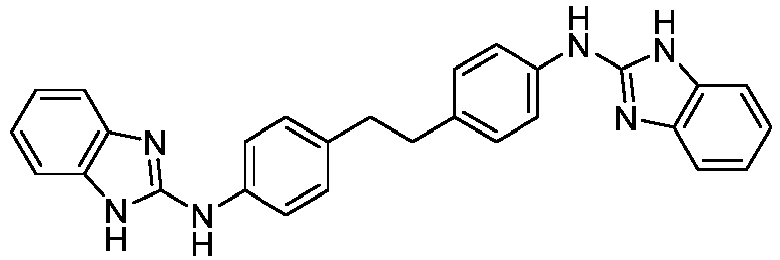
- The compound according to claim 18, wherein the compound is selected from:- 4-(picolinimidamido)-N-(4-(picolinimidamido)phenyl)benzamide (3a)- 5-(picolinimidamido)-N-(5-(picolinimidamido)pyridin-2-yl)picolinamide (3b)- 3-chloro-N (2-chloro-4-(picolinimidamido)phenyl)-4-(picolinimidamido)benzamide (3c)- 3-chloro-N-(3-chloro-4-(picolinimidamido)phenyl)-4-(picolinimidamido)benzamide (3d)- 2-chloro-N-(2-chloro-4-(picolinimidamido)phenyl)-4-(picolinimidamido)benzamide (3e)- 2-chloro-N-(3-chloro-4-(picolinimidamido)phenyl)-4-(picolinimidamido)benzamide (3f)- 2-isopropoxy-N-(2-isopropoxy-4-(picolinimidamido)phenyl)-4-(picolinimidamido)benzamide (3g)- 4-(picolinimidamido)-N-(5-(picolinimidamido)pyridin-2-yl)benzamide (3h)- 3-fluoro-N-(2-fluoro-4-(picolinimidamido)phenyl)-4-(picolinimidamido)benzamide di-trifluoroacetate (3i)- 3-fluoro-N-(3-fluoro-4-(picolinimidamido)phenyl)-4-(picolinimidamido)benzamide di-trifluoroacetate (3j)- 2-fluoro-N-(2-fluoro-4-(picolinimidamido)phenyl)-4-(picolinimidamido)benzamide di-trifluoroacetate (3k)- 2-fluoro-N-(3-fluoro-4-(picolinimidamido)phenyl)-4-(picolinimidamido)benzamide di-trifluoroacetate (3l)- N,N"-(ethane-1,2-diyI bis(4,1 -phenylene))dipicolinimidamide (17)- N,N"-((carbonylbis(azanediyl))bis(4,1-phenylene))dipicolinimidamide (18)- 4-((1,3-dihydro-2H-benzo[d]imidazol-2-ylidene)amino)-N-(4-((1,3-dihydro-2H-benzo[d]imidazol-2-ylidene)amino)phenyl)benzamide (1a)- 5-((1,3-dihydro-2H-benzo[d]imidazol-2-ylidene)amino)-N-(5-((1,3-dihydro-2H-benzo[d]imidazol-2-ylidene)amino)pyridin-2-il)picolinamide (1b)- 3-chloro-N-(2-chloro-4-((1,3-dihydro-2H-benzo[d]imidazol-2-ylidene)amino)phenyl)-4-((1,3-dihydro-2H-benzo[d]imidazol-2-ylidene)amino)benzamide (1c)- 3-chloro-N-(3-chloro-4-((1,3-dihydro-2H-benzo[d]imidazol-2-ylidene)amino)phenyl)-4-((1,3-dihydro-2H-benzo[d]imidazol-2-ylidene)amino)benzamide (1d)- 2-chloro-N-(2-chloro-4-((1,3-dihydro-2H-benzo[d]imidazol-2-ylidene)amino)phenyl)-4-((1,3-dihydro-2H-benzo[d]imidazol-2-ylidene)amino)benzamide (1e)- 2-chloro-N-(3-chloro-4-((1,3-dihydro-2H-benzo[d]imidazol-2-ylidene)amino)phenyl)-4-((1,3-dihydro-2H-benzo[d]imidazol-2-ylidene)amino)benzamide (1f)- 1,3-bis(4-((1,3-dihydro-2H-benzo[d]imidazol-2-ylidene)amino)phenyl)urea (14).
- A pharmaceutical composition comprising a compound of general formula (I) described according to any of claims 18 to 19, together with a pharmaceutically acceptable excipient, adjuvant and/or carrier.
- The pharmaceutical composition, according to claim 20, which further comprises another antiparasitic agent.
Applications Claiming Priority (2)
| Application Number | Priority Date | Filing Date | Title |
|---|---|---|---|
| ES202230181A ES2950283B2 (en) | 2022-03-04 | 2022-03-04 | COMPOUNDS DERIVED FROM 4-AMINO-N-(4-AMINOPHENYL)BENZAMIDE AND ANALOGUES AND USE THEREOF |
| PCT/ES2023/070084 WO2023166232A1 (en) | 2022-03-04 | 2023-02-16 | Compounds derived from 4-amino-n-(4-aminophenyl)benzamide and analogues and use thereof |
Publications (2)
| Publication Number | Publication Date |
|---|---|
| EP4487847A1 true EP4487847A1 (en) | 2025-01-08 |
| EP4487847A4 EP4487847A4 (en) | 2026-02-25 |
Family
ID=87883111
Family Applications (1)
| Application Number | Title | Priority Date | Filing Date |
|---|---|---|---|
| EP23763038.9A Pending EP4487847A4 (en) | 2022-03-04 | 2023-02-16 | 4-AMINO-N-(4-AMINOPHENYL)BENZAMIDE DERIVED COMPOUNDS AND ANALOGUES AND USES THEREM |
Country Status (4)
| Country | Link |
|---|---|
| US (1) | US20250214964A1 (en) |
| EP (1) | EP4487847A4 (en) |
| ES (1) | ES2950283B2 (en) |
| WO (1) | WO2023166232A1 (en) |
Family Cites Families (2)
| Publication number | Priority date | Publication date | Assignee | Title |
|---|---|---|---|---|
| CN1886367A (en) | 2003-11-24 | 2006-12-27 | 北卡罗来纳大学查珀尔希尔分校 | Fused ring dicationic anti-protozoan agents and their prodrugs |
| EP3188722B1 (en) | 2014-09-02 | 2021-08-04 | Neoculi Pty Ltd | Methods for treating protozoan infections |
-
2022
- 2022-03-04 ES ES202230181A patent/ES2950283B2/en active Active
-
2023
- 2023-02-16 EP EP23763038.9A patent/EP4487847A4/en active Pending
- 2023-02-16 WO PCT/ES2023/070084 patent/WO2023166232A1/en not_active Ceased
- 2023-02-16 US US18/843,911 patent/US20250214964A1/en active Pending
Also Published As
| Publication number | Publication date |
|---|---|
| EP4487847A4 (en) | 2026-02-25 |
| ES2950283A1 (en) | 2023-10-06 |
| WO2023166232A1 (en) | 2023-09-07 |
| US20250214964A1 (en) | 2025-07-03 |
| ES2950283B2 (en) | 2024-02-12 |
Similar Documents
| Publication | Publication Date | Title |
|---|---|---|
| US11155561B2 (en) | Substituted glutarimides as Btk inhibitors | |
| JP2024520495A (en) | Compounds, compositions and methods for modulating ferroptosis and treating excitotoxic disorders | |
| CZ299125B6 (en) | Omega-carboxyaryl substituted diphenyl ureas as raf kinase inhibitors, their use and pharmaceutical compositions containing thereof | |
| US20070197495A1 (en) | Anti-parasitic compounds and methods of their use | |
| EP4301357A1 (en) | Thyroid hormone receptor beta agonist compounds | |
| US20210040054A1 (en) | Substituted Hydrophobic Benzene Sulfonamide Thiazole Compounds for Use in Treating Cancer | |
| EP3781567B1 (en) | Imidazopyridines useful as mitochondrial uncouplers | |
| US6197797B1 (en) | Cyanoguanidines as cell proliferation inhibitors | |
| EP3022173B1 (en) | Compounds for the treatment and/or prevention of parasitic diseases and method of production thereof | |
| JP2767321B2 (en) | Piperazine derivative and drug containing the same | |
| US6646129B2 (en) | Cyanoguanidines as cell proliferation inhibitors | |
| US20250214964A1 (en) | Compounds derived from 4-amino-n-(4-aminophenyl) benzamide and analogues and use thereof | |
| US6156801A (en) | 2-phenoxyaniline derivatives | |
| CN106061951A (en) | Benzimidazoles and their use in the treatment of tuberculosis | |
| WO2021077102A1 (en) | Novel antiparasitic compounds and methods | |
| CN109422751A (en) | One kind has the degradation active compound of tyrosine protein kinase JAK3 | |
| EP3649109B1 (en) | Ethynyl compounds, their preparation and their therapeutic use for the treatment of malaria | |
| EP0562796A1 (en) | Phenoxyacetic acid compounds and medical preparations containing them | |
| JP5099692B2 (en) | Novel trihalomethionine derivative and pharmaceutical containing the same | |
| HK40020712A (en) | Ethynyl compounds, their preparation and their therapeutic use for the treatment of malaria | |
| HK40020712B (en) | Ethynyl compounds, their preparation and their therapeutic use for the treatment of malaria | |
| CZ242994A3 (en) | 1,4-naphthoquinone derivatives exhibiting anti-protozoic and anti-parasitic activity | |
| US20060167269A1 (en) | Compounds and methods for the inhibition of compounds cruzi | |
| WO2024123015A1 (en) | Pharmaceutical composition comprising, as active ingredient, gpr40 agonist having improved stability | |
| EP3502109A1 (en) | Triazole-phenyl-thiazole heterocycles as innovative inhibitors of trypanothione reductase and their use as leishmanicides |
Legal Events
| Date | Code | Title | Description |
|---|---|---|---|
| STAA | Information on the status of an ep patent application or granted ep patent |
Free format text: STATUS: THE INTERNATIONAL PUBLICATION HAS BEEN MADE |
|
| PUAI | Public reference made under article 153(3) epc to a published international application that has entered the european phase |
Free format text: ORIGINAL CODE: 0009012 |
|
| STAA | Information on the status of an ep patent application or granted ep patent |
Free format text: STATUS: REQUEST FOR EXAMINATION WAS MADE |
|
| 17P | Request for examination filed |
Effective date: 20240902 |
|
| AK | Designated contracting states |
Kind code of ref document: A1 Designated state(s): AL AT BE BG CH CY CZ DE DK EE ES FI FR GB GR HR HU IE IS IT LI LT LU LV MC ME MK MT NL NO PL PT RO RS SE SI SK SM TR |
|
| RAP1 | Party data changed (applicant data changed or rights of an application transferred) |
Owner name: CONSEJO SUPERIOR DE INVESTIGACIONES CIENTIFICAS |
|
| DAV | Request for validation of the european patent (deleted) | ||
| DAX | Request for extension of the european patent (deleted) | ||
| A4 | Supplementary search report drawn up and despatched |
Effective date: 20260126 |
|
| RIC1 | Information provided on ipc code assigned before grant |
Ipc: A61K 31/4184 20060101AFI20260120BHEP Ipc: A61K 31/4402 20060101ALI20260120BHEP Ipc: A61K 31/444 20060101ALI20260120BHEP Ipc: A61K 45/06 20060101ALI20260120BHEP Ipc: A61P 33/02 20060101ALI20260120BHEP Ipc: C07D 235/14 20060101ALI20260120BHEP Ipc: C07D 213/06 20060101ALI20260120BHEP Ipc: C07D 213/78 20060101ALI20260120BHEP Ipc: C07D 213/81 20060101ALI20260120BHEP Ipc: C07D 235/30 20060101ALI20260120BHEP Ipc: C07D 401/14 20060101ALI20260120BHEP |