EP4485941A1 - Automated avoidance of media file encoding redundancies - Google Patents
Automated avoidance of media file encoding redundancies Download PDFInfo
- Publication number
- EP4485941A1 EP4485941A1 EP24177013.0A EP24177013A EP4485941A1 EP 4485941 A1 EP4485941 A1 EP 4485941A1 EP 24177013 A EP24177013 A EP 24177013A EP 4485941 A1 EP4485941 A1 EP 4485941A1
- Authority
- EP
- European Patent Office
- Prior art keywords
- unique identifier
- video frames
- media file
- encoded media
- video
- Prior art date
- Legal status (The legal status is an assumption and is not a legal conclusion. Google has not performed a legal analysis and makes no representation as to the accuracy of the status listed.)
- Pending
Links
Images


Classifications
-
- H—ELECTRICITY
- H04—ELECTRIC COMMUNICATION TECHNIQUE
- H04N—PICTORIAL COMMUNICATION, e.g. TELEVISION
- H04N21/00—Selective content distribution, e.g. interactive television or video on demand [VOD]
- H04N21/80—Generation or processing of content or additional data by content creator independently of the distribution process; Content per se
- H04N21/83—Generation or processing of protective or descriptive data associated with content; Content structuring
- H04N21/835—Generation of protective data, e.g. certificates
- H04N21/8352—Generation of protective data, e.g. certificates involving content or source identification data, e.g. Unique Material Identifier [UMID]
-
- H—ELECTRICITY
- H04—ELECTRIC COMMUNICATION TECHNIQUE
- H04N—PICTORIAL COMMUNICATION, e.g. TELEVISION
- H04N19/00—Methods or arrangements for coding, decoding, compressing or decompressing digital video signals
- H04N19/10—Methods or arrangements for coding, decoding, compressing or decompressing digital video signals using adaptive coding
- H04N19/134—Methods or arrangements for coding, decoding, compressing or decompressing digital video signals using adaptive coding characterised by the element, parameter or criterion affecting or controlling the adaptive coding
-
- H—ELECTRICITY
- H04—ELECTRIC COMMUNICATION TECHNIQUE
- H04L—TRANSMISSION OF DIGITAL INFORMATION, e.g. TELEGRAPHIC COMMUNICATION
- H04L9/00—Cryptographic mechanisms or cryptographic arrangements for secret or secure communications; Network security protocols
- H04L9/32—Cryptographic mechanisms or cryptographic arrangements for secret or secure communications; Network security protocols including means for verifying the identity or authority of a user of the system or for message authentication, e.g. authorization, entity authentication, data integrity or data verification, non-repudiation, key authentication or verification of credentials
- H04L9/3236—Cryptographic mechanisms or cryptographic arrangements for secret or secure communications; Network security protocols including means for verifying the identity or authority of a user of the system or for message authentication, e.g. authorization, entity authentication, data integrity or data verification, non-repudiation, key authentication or verification of credentials using cryptographic hash functions
- H04L9/3239—Cryptographic mechanisms or cryptographic arrangements for secret or secure communications; Network security protocols including means for verifying the identity or authority of a user of the system or for message authentication, e.g. authorization, entity authentication, data integrity or data verification, non-repudiation, key authentication or verification of credentials using cryptographic hash functions involving non-keyed hash functions, e.g. modification detection codes [MDCs], MD5, SHA or RIPEMD
-
- H—ELECTRICITY
- H04—ELECTRIC COMMUNICATION TECHNIQUE
- H04N—PICTORIAL COMMUNICATION, e.g. TELEVISION
- H04N19/00—Methods or arrangements for coding, decoding, compressing or decompressing digital video signals
- H04N19/85—Methods or arrangements for coding, decoding, compressing or decompressing digital video signals using pre-processing or post-processing specially adapted for video compression
-
- H—ELECTRICITY
- H04—ELECTRIC COMMUNICATION TECHNIQUE
- H04N—PICTORIAL COMMUNICATION, e.g. TELEVISION
- H04N21/00—Selective content distribution, e.g. interactive television or video on demand [VOD]
- H04N21/20—Servers specifically adapted for the distribution of content, e.g. VOD servers; Operations thereof
- H04N21/23—Processing of content or additional data; Elementary server operations; Server middleware
- H04N21/234—Processing of video elementary streams, e.g. splicing of video streams or manipulating encoded video stream scene graphs
- H04N21/2343—Processing of video elementary streams, e.g. splicing of video streams or manipulating encoded video stream scene graphs involving reformatting operations of video signals for distribution or compliance with end-user requests or end-user device requirements
- H04N21/23439—Processing of video elementary streams, e.g. splicing of video streams or manipulating encoded video stream scene graphs involving reformatting operations of video signals for distribution or compliance with end-user requests or end-user device requirements for generating different versions
-
- H—ELECTRICITY
- H04—ELECTRIC COMMUNICATION TECHNIQUE
- H04N—PICTORIAL COMMUNICATION, e.g. TELEVISION
- H04N21/00—Selective content distribution, e.g. interactive television or video on demand [VOD]
- H04N21/80—Generation or processing of content or additional data by content creator independently of the distribution process; Content per se
- H04N21/83—Generation or processing of protective or descriptive data associated with content; Content structuring
- H04N21/835—Generation of protective data, e.g. certificates
- H04N21/8358—Generation of protective data, e.g. certificates involving watermark
-
- H—ELECTRICITY
- H04—ELECTRIC COMMUNICATION TECHNIQUE
- H04N—PICTORIAL COMMUNICATION, e.g. TELEVISION
- H04N21/00—Selective content distribution, e.g. interactive television or video on demand [VOD]
- H04N21/80—Generation or processing of content or additional data by content creator independently of the distribution process; Content per se
- H04N21/83—Generation or processing of protective or descriptive data associated with content; Content structuring
- H04N21/845—Structuring of content, e.g. decomposing content into time segments
- H04N21/8456—Structuring of content, e.g. decomposing content into time segments by decomposing the content in the time domain, e.g. in time segments
-
- H—ELECTRICITY
- H04—ELECTRIC COMMUNICATION TECHNIQUE
- H04N—PICTORIAL COMMUNICATION, e.g. TELEVISION
- H04N21/00—Selective content distribution, e.g. interactive television or video on demand [VOD]
- H04N21/80—Generation or processing of content or additional data by content creator independently of the distribution process; Content per se
- H04N21/85—Assembly of content; Generation of multimedia applications
- H04N21/854—Content authoring
- H04N21/85406—Content authoring involving a specific file format, e.g. MP4 format
Definitions
- the present invention relates to a method and system for automated avoidance of media file encoding redundancies.
- Media packages for audio-video (AV) content include collections of media files.
- each media package may differ slightly in the makeup of the collection of media files it contains.
- audio content where dubbed audio may be used.
- timed text may be added or changed depending on the requirements in each locale.
- media files can be very large and time consuming to encode. Due to the typically high degree of redundant underlying media content in each localized version of a media package, systems that build media packages representing all localized versions of a feature are faced with the challenge of identifying media files that can be reused across the set of localized versions, in order to avoid the costs and inefficiencies resulting from the unnecessary encoding of media files that are already available. Thus, there is a need in the art for a solution enabling identification of existing media files suitable for reuse, in order to avoid media file encoding redundancies.
- a method comprises:
- generating the unique identifier for association with the plurality of video frames comprises computing a hash using the plurality of video frames.
- the method wherein the hash comprises a Secure Hash Algorithm 256 (SHA-256) hash.
- SHA-256 Secure Hash Algorithm 256
- the method wherein the hash is paired with a unique title identification of a video.
- the encoded media file comprises a Media Exchange Format (MXF) video track file.
- MXF Media Exchange Format
- the method wherein the encoded media file comprises a single shot or a single scene of a video.
- the encoded media file comprises a sequence of video frames having a predetermined time duration.
- a system comprises a hardware processor and a system memory storing a software code, the hardware processor being adapted to execute the software to perform the method as disclosed herein.
- a system comprises:
- generating the unique identifier for association with the plurality of video frames comprises computing a hash using the plurality of video frames.
- the hash comprises a Secure Hash Algorithm 256 (SHA-256) hash.
- SHA-256 Secure Hash Algorithm 256
- the system wherein the hash is paired with a unique title identification of a video.
- the encoded media file comprises a Media Exchange Format (MXF) video track file.
- MXF Media Exchange Format
- the encoded media file comprises a single shot or a single scene of a video.
- the encoded media file comprises a sequence of video frames having a predetermined time duration.
- a method for use by a system including a hardware processor and a system memory storing a software code comprising:
- generating the unique identifier for association with the plurality of video frames comprises computing a hash using the plurality of video frames.
- the method wherein the hash comprises a Secure Hash Algorithm 256 (SHA-256) hash.
- SHA-256 Secure Hash Algorithm 256
- the method wherein the hash is paired with a unique title identification of a video.
- the encoded media file comprises a Media Exchange Format (MXF) video track file.
- MXF Media Exchange Format
- the method wherein the encoded media file comprises a single shot or a single scene of a video.
- the method wherein the encoded media file comprise a sequence of video frames having a predetermined time duration.
- a computer-readable non-transitory storage medium having stored thereon a software code, which when executed by a system including a hardware processor, instantiates a method comprising:
- the computer-readable non-transitory storage medium wherein generating the unique identifier for association with the plurality of video frames comprises computing a hash using the plurality of video frames.
- the computer-readable non-transitory storage medium wherein the hash comprises a Secure Hash Algorithm 256 (SHA-256) hash.
- SHA-256 Secure Hash Algorithm 256
- the computer-readable non-transitory storage medium wherein the hash is paired with a unique title identification of a video.
- the computer-readable non-transitory storage medium wherein the encoded media file comprises a single shot of video or a single scene of a video.
- the computer-readable non-transitory storage medium wherein the encoded media file comprises a sequence of video frames having a predetermined time duration.
- Media packages for audio-video (AV) content such as Interoperable Master Format (IMF) packages for example, include collections of media files, such as Media Exchange Format (MXF) video track files for instance.
- IMF Interoperable Master Format
- MXF Media Exchange Format
- each media package may differ slightly in the makeup of the collection of media files it contains.
- audio content where dubbed audio may be used.
- timed text may be added or changed depending on the requirements in each locale.
- media files such as MXF video track files
- MXF video track files can be very large and time consuming to encode.
- systems that build media packages representing all localized versions of a feature face the challenge of identifying media files that can be reused across the set of localized versions, in order to avoid the costs and inefficiencies resulting from the unnecessary encoding of media files that are already available.
- the present application discloses systems and methods that address and overcome the challenge described above by automating avoidance of media file encoding redundancies.
- the automated solution disclosed by the present application advances the state-of-the-art by providing a media file focused approach to identifying redundant content for inclusion in a media package, thereby advantageously enabling the cost reductions and efficiencies resulting from reuse of existing media file encodings.
- Various implementations of the present application may be utilized in co-pending U.S. Application Serial No. 18/123,644, filed March 20, 2023 , and titled "Automation of Differential Media Uploading".
- the terms “automation,” “automated,” and “automating” refer to systems and processes that do not require the participation of a human system administrator. Although in some implementations the media file redundancy determinations made by the systems and methods disclosed herein may be reviewed or even modified by a human system administrator, that human involvement is optional. Thus, the methods described in the present application may be performed under the control of hardware processing components of the disclosed systems.
- the types of media content to which the present automated solution may be applied include AV content having both audio and video components, audio unaccompanied by video, and video unaccompanied by audio.
- the type of media content to which the present novel and inventive solution can be applied may be or include digital representations of persons, fictional characters, locations, objects, and identifiers such as brands and logos, for example, which populate a virtual reality (VR), augmented reality (AR), or mixed reality (MR) environment.
- content may depict virtual worlds that can be experienced by any number of users synchronously and persistently, while providing continuity of data such as personal identity, user history, entitlements, possessions, payments, and the like.
- the solution disclosed by the present application may also be applied to content that is a hybrid of traditional audio-video and fully immersive VR/AR/MR experiences, such as interactive video.
- Figure 1 shows exemplary system 100 for automating avoidance of media file encoding redundancies, according to one implementation.
- system 100 includes computing platform 102 having hardware processor 104, and system memory 106 implemented as a computer-readable non-transitory storage medium.
- system memory 106 stores software code 140.
- system 100 may be implemented in a use environment including media asset management system 116 having unique identifier database 117, communication network 112, and user 124 utilizing client system 120 including display 122 to interact with system 100. That is to say, user 124 is a user of system 100 as well as of client system 120.
- Figure 1 shows network communication links 114 communicatively coupling media asset management system 116 and client system 120 with system 100 via communication network 112.
- plurality of video frames 130 received by system 100 from client system 120, encoded media file 150 including a plurality of encoded video frames corresponding respectively to plurality of video frames 130, and unique identifier 128 associated with plurality of video frames 130 and also associated with encoded media file 150.
- system 100 may be communicatively coupled to media asset management system 116 via communication network 112 and network communication links 114, in some implementations, media asset management system 116 including unique identifier database 117 may be integrated with computing platform 102 of system 100, or may be in direct communication with system 100, as shown by dashed communication link 118.
- system memory 106 may take the form of any computer-readable non-transitory storage medium.
- computer-readable non-transitory storage medium refers to any medium, excluding a carrier wave or other transitory signal that provides instructions to hardware processor 104 of computing platform 102.
- a computer-readable non-transitory medium may correspond to various types of media, such as volatile media and non-volatile media, for example.
- Volatile media may include dynamic memory, such as dynamic random access memory (dynamic RAM), while non-volatile memory may include optical, magnetic, or electrostatic storage devices.
- Common forms of computer-readable non-transitory storage media include, for example, optical discs, RAM, programmable read-only memory (PROM), erasable PROM (EPROM), and FLASH memory.
- system 100 may include one or more computing platforms, such as computer servers for example, which may be co-located, or may form an interactively linked but distributed system, such as a cloud-based system, for instance.
- hardware processor 104 and system memory 106 may correspond to distributed processor and memory resources within system 100.
- software modules included in software code 140 and described in greater detail below by reference to Figure 2 may be stored remotely from one another within the distributed memory resources of system 100.
- Hardware processor 104 may include multiple hardware processing units, such as one or more central processing units, one or more graphics processing units, and one or more tensor processing units, one or more field-programmable gate arrays (FPGAs), custom hardware for machine-learning training or, and an application programming interface (API) server, for example.
- CPU central processing unit
- GPU graphics processing unit
- TPU tensor processing unit
- a CPU includes an Arithmetic Logic Unit (ALU) for carrying out the arithmetic and logical operations of computing platform 102, as well as a Control Unit (CU) for retrieving programs, such as software code 140, from system memory 106, while a GPU may be implemented to reduce the processing overhead of the CPU by performing computationally intensive graphics or other processing tasks.
- a TPU is an application-specific integrated circuit (ASIC) configured specifically for artificial intelligence applications such as machine learning modeling.
- computing platform 102 may correspond to one or more web servers, accessible over a packet-switched network such as the Internet, for example.
- computing platform 102 may correspond to one or more computer servers supporting a private wide area network (WAN), local area network (LAN), or included in another type of limited distribution or private network.
- system 100 may utilize a local area broadcast method, such as User Datagram Protocol (UDP) or Bluetooth, for instance.
- UDP User Datagram Protocol
- system 100 may be implemented virtually, such as in a data center.
- system 100 may be implemented in software, or as virtual machines.
- communication network 112 may be a high-speed network suitable for high performance computing (HPC), for example a 10 GigE network or an Infiniband network.
- HPC high performance computing
- client system 120 is shown as a desktop computer in Figure 1 , that representation is provided merely as an example as well. More generally, client system 120 may be any suitable mobile or stationary computing device or system that implements data processing capabilities sufficient to provide a user interface, support connections to communication network 112, and implement the functionality ascribed to client system 120 herein. For example, in other implementations, client system 120 and may take the form of a laptop computer, tablet computer, or smartphone. In still other implementations, client system 120 may be peripheral device of system 100 in the form of a dumb terminal. In those implementations, client system 120 may be controlled by hardware processor 104 of computing platform 102.
- display 122 may be physically integrated with client system 120, or may be communicatively coupled to but physically separate from client system 120.
- client system 120 is implemented as a smartphone, laptop computer, or tablet computer
- display 122 will typically be integrated with client system 120.
- client system 120 is implemented as a desktop computer
- display 122 may take the form of a monitor separate from client system 120 in the form of a computer tower.
- display 122 of client system 120 may be implemented as a liquid crystal display (LCD), a light-emitting diode (LED) display, an organic light-emitting diode (OLED) display, a quantum dot (QD) display, or any other suitable display screen that performs a physical transformation of signals to light.
- LCD liquid crystal display
- LED light-emitting diode
- OLED organic light-emitting diode
- QD quantum dot
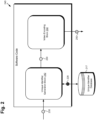
- FIG. 2 shows a diagram of exemplary software code 240 suitable for use by system 100, in Figure 1 , according to one implementation.
- software code 240 includes unique identifier generation block 242 and video encoding block 244.
- software code 240 receives plurality of video frames 230 as input, generates unique identifier 228 for association with plurality of video frames 230, and communicates with unique identifier database 217 of a media asset management system to determine whether unique identifier 228 is stored by the media asset management system.
- software code 240 identifies encoded media file 250 associated with unique identifier 228, where encoded media file 250 includes a plurality of encoded video frames corresponding respectively to plurality of video frames 230.
- software code 240 encodes plurality of video frames 230 to provide encoded media file 250 and stores unique identifier 228 associated with encoded media file 250 to unique identifier database 217 of the media asset management system.
- software code 240 may provide encoded media file 250 as an output.
- Software code 240, plurality of video frames 230, unique identifier 228, encoded media file 250, and unique identifier database 217 correspond respectively in general to software code 140, plurality of video frames 130, unique identifier 128, encoded media file 150, and unique identifier database 117, in Figure 1 . Consequently, software code 140, plurality of video frames 130, unique identifier 128, encoded media file 150, and unique identifier database 117 may share any of the characteristics attributed to respective software code 240, plurality of video frames 230, unique identifier 228, encoded media file 250, and unique identifier database 217 by the present disclosure, and vice versa. That is to say, like software code 240, software code 140 may include features corresponding respectively to unique identifier generation block 242 and video encoding block 244.
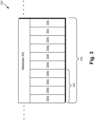
- Figure 3 shows a more detailed diagram of a portion of encoded media file 350 in the form of a MXF video track file, according to one implementation.
- encoded media file 350 may include media in other formats.
- encoded media file may include a plurality of Tag Image File Format (TIFF) images.
- Encoded media file 350 corresponds in general to encoded media file 150/250 in Figures 1 and 2 . Consequently, encoded media file 150/250 may share any of the characteristics attributed to encoded media file 350 by the present disclosure, and vice versa.
- encoded media file 150/250 may be or include a MXF video track file, or may include a plurality of TIFF images.
- encoded media file 350 includes metadata 352 and a sequence of encoded video frames 354a, 354b, 354c, 354d, 354e, 354f, 354g, 354h, 354i, and 354j (hereinafter "encoded video frames 354a-354j").
- a MXF video track file is a well-defined file format for allowing the bundling and sequencing of arbitrarily long sequences of video frames, such as encoded video frames 354a-554j, along with metadata 352 describing the video content included in those video frames, into single encoded media file 350.
- MXF video track files may contain sequences of reference uncompressed video frames, or they may contain sequences of irreversibly compressed (lossy) video frames.
- encoded media file 350 may include encoded video frames 354a, 354b, 354c and 354d of a single shot 356 of video, while in other implementations, encoded media file 350 may include encoded video frames 354a-354j of a single scene 358 of video.
- shots refers to a sequence of video frames that are captured from a unique camera perspective without cuts or other cinematic transitions.
- scene of video refers to one or more shots of video that, together, deliver a single, complete and unified dramatic element of film narration, or block of storytelling within a film.
- FIG. 4 shows flowchart 460 presenting an exemplary method for use by a system to automate avoidance of media file encoding redundancies, according to one implementation.
- flowchart 460 presenting an exemplary method for use by a system to automate avoidance of media file encoding redundancies, according to one implementation.
- flowchart 460 includes receiving plurality of video frames 130/230 (action 461).
- Plurality of video frames 130/230 may be received from client system 120, utilized by user 124 of system 100, via communication network 112 and network communication links 114 in action 461, by software code 140/240 of system 100, executed by hardware processor 104.
- the media content contained by plurality of video frames 130/230 may include AV content having both audio and video components, audio unaccompanied by video, and video unaccompanied by audio.
- the media content contained by plurality of video frames 130/230 may be or include digital representations of persons, fictional characters, locations, objects, and identifiers such as brands and logos, for example, which populate a VR, AR, or MR environment.
- media content may depict virtual worlds that can be experienced by any number of users synchronously and persistently, while providing continuity of data such as personal identity, user history, entitlements, possessions, payments, and the like.
- unique identifier 128/228 may include content that is a hybrid of traditional audio-video and fully immersive VR/AR/MR experiences, such as interactive video.
- flowchart 460 further includes generating unique identifier 128/228 for association with plurality of video frames 130/230 (action 462).
- generating unique identifier 128/228 for plurality of video frames 130/230, in action 462 may include computing a hash, such as a raster hash for example, using plurality of video frames 130/230.
- a hash may take the form of a Secure Hash Algorithm 256 (SHA-256) hash, for instance.
- SHA-256 Secure Hash Algorithm 256
- Unique identifier 128/228 for plurality of video frames 130/230 may be generated in action 462 by software code 140/240 of system 100, executed by hardware processor 104, and using unique identifier generation block 242.
- HASH( ) represents the application of a cryptographic hashing algorithm (e.g. SHA-256) to the elements included within the brackets ( )
- OUTPUT_PROFILE is a token representing all parameters associated with a desired output encoding of encoded media file 150/250
- each of the M i represent the canonical media identifier of a respective one of
- the method outlined by flowchart 460 further includes determining whether unique identifier 128/228 generated in action 462 is stored in media asset management system 116 (action 463).
- Action 463 may be performed by software code 140/240 of system 100, executed by hardware processor 104, through comparison of unique identifier 128/228 to the contents of unique identifier database 117/217 of media asset management system 116.
- the method outlined by flowchart 460 further includes, when the determining performed in action 463 determines that unique identifier 128/228 is stored in media asset management system 116, identifying encoded media file 150/250/350 associated with unique identifier 128/228, where encoded media file 150/250/350 includes a plurality of encoded video frames (e.g., encoded video frames 354a-354j) corresponding respectively to plurality of video frames 130/230 (action 464).
- encoded media file 150/250/350 may take the form of a MXF video track file, or may include a plurality of TIFF images.
- unique identifier 128/228 in unique identifier database 117/217 of media asset management system 116 indicates that the desired encoding of plurality of video frames 130/230 has previously been performed to produce encoded media file 150/250/350, which may be reused rather than reproduced/re-encoded, thereby advantageously avoiding the cost and inefficiency flowing from a redundant encoding of plurality of video frames 130/230.
- Action 464 may be performed by software code 140/240 of system 100, executed by hardware processor 104, by reference to media asset management system 116.
- unique identifier 128/228 previously stored in media asset management system 116 may be cross-referenced to encoded media file 150/250/350 by the entry for unique identifier 128/228 stored in unique identifier database 217, thereby enabling system 100 to identify encoded media content 150/250/350 contemporaneously with determining that unique identifier 128/228 is stored in media asset management system 116. That is to say, although flowchart 460 lists action 464 as following action 463, that representation is merely exemplary, and in some implementations actions 463 and 464 may be performed in parallel.
- the method outlined by flowchart 460 further includes, when the determining performed in action 463 determines that unique identifier 128/228 is not stored in media asset management system 116, encoding plurality of video frames 130/230 to produce encoded media file 150/250/350 (action 465). It is noted that the omission of unique identifier 128/228 from unique identifier database 117/217 of media asset management system 116 indicates that encoded media file 150/250/350 has not previously been produced and is therefore not available for reuse. Consequently, encoding of plurality of video frames 130/230 is necessary and is advantageously not wastefully redundant. Action 465 may be performed by software code 140/240 of system 100, executed by hardware processor 104, and using video encoding block 244.
- plurality of video frames 130/230 may be encoded to produce encoded media file 150/250/350 as a MXF video track file, for inclusion in a media package such as an IMF package for example.
- a media package such as an IMF package for example.
- encoded media file 350 may include encoded video frames 354a, 354b, 354c and 354d of a single shot 356 of video, while in other implementations, encoded media file 350 may include encoded video frames 354a-354j of a single scene 358 of video, as the terms shot and scene are defined above.
- the method outlined by flowchart 460 further includes, when the determining performed in action 463 determines that unique identifier 128/228 is not stored in media asset management system 116, storing unique identifier 128/228 associated with encoded media file 150/250/350 in media asset management system 116 (action 466).
- Action 466 may be performed by software code 140/240 of system 100, executed by hardware processor 104.
- flowchart 460 lists action 466 as following action 465, that representation is merely exemplary. Because unique identifier 128/228 is associated with plurality of video frames 130/230, as well as with encoded media file 150/250/350, unique identifier 128/228 associated with encoded media file 150/250/350 is known prior to the encoding performed in action 465 and can be stored, in action 466, before the performance of action 466. In other words, in various implementations of the method outlined by flowchart 460, action 466 may precede action 465, may follow action 465, or may be performed in parallel with action 465, i.e., actions 465 and 466 may be performed contemporaneously.
- the method outlined by flowchart 460 further includes, providing encoded media file 150/250/350 to user 124 of system 100 (action 467).
- action 467 may follow directly from action 463.
- hardware processor 104 of system 100 may execute software code 140/240 to obtain encoded media file 150/250 from media asset management system 116 in order to provide encoded media file 150/250/350 to client system 120 utilized by user 124, via communication network 112 and network communication links 114.
- hardware processor 104 of system 100 may execute software code 140/240 to instruct media asset management system 116 to deliver encoded media file 150/250/350 to client system 120 utilized by user 124.
- action 467 may follow directly from action 465, or may follow action 466 subsequent to the performance of action 465.
- hardware processor 104 of system 100 may execute software code 140/240 to provide encoded media file 150/250/350 to client system 120 utilized by user 124, via communication network 112 and network communication links 114. It is noted that, in various implementations, action 467 may precede action 466, may follow action 466, or may be performed in parallel with action 466, i.e., actions 466 and 467 may be performed contemporaneously.
- actions 461, 462, 463, 464 and 467, or actions 461, 462, 463, 465, 466, and 467 may be performed in an automated process from which human involvement may be omitted.
- the present application discloses systems and methods for automating avoidance of media file encoding redundancies.
- the automated solution disclosed by the present application advances the state-of-the-art by providing a media file focused approach to identifying redundant content for inclusion in a media package, thereby advantageously enabling the cost reductions and efficiencies resulting from reuse of existing media file encodings.
Landscapes
- Engineering & Computer Science (AREA)
- Signal Processing (AREA)
- Multimedia (AREA)
- Computer Security & Cryptography (AREA)
- Computer Networks & Wireless Communication (AREA)
- Two-Way Televisions, Distribution Of Moving Picture Or The Like (AREA)
Abstract
A system includes a hardware processor and a memory storing software code. The hardware processor executes the software code to receive video frames, generate a unique identifier for association with the video frames, and determine whether the unique identifier is stored. If the unique identifier is stored, the software code is further executed to identify an encoded media file associated with the unique identifier, the encoded media file including encoded video frames corresponding respectively to the received video frames. If the unique identifier is not stored, the software code is further executed to encode the video frames to produce the encoded media file, and store the unique identifier.
Description
- The present invention relates to a method and system for automated avoidance of media file encoding redundancies.
- Media packages for audio-video (AV) content include collections of media files. In order to distribute numerous localized versions of the AV content that are variously compliant with local censorship requirements, consistent with localized imagery for a given geographical region, or both, each media package may differ slightly in the makeup of the collection of media files it contains. The same is true of audio content, where dubbed audio may be used. Analogously, timed text may be added or changed depending on the requirements in each locale.
- However, media files can be very large and time consuming to encode. Due to the typically high degree of redundant underlying media content in each localized version of a media package, systems that build media packages representing all localized versions of a feature are faced with the challenge of identifying media files that can be reused across the set of localized versions, in order to avoid the costs and inefficiencies resulting from the unnecessary encoding of media files that are already available. Thus, there is a need in the art for a solution enabling identification of existing media files suitable for reuse, in order to avoid media file encoding redundancies.
- The present invention is defined by the features of the independent claims. The dependent claims describe preferred embodiments.
- According to an embodiment of the invention, a method comprises:
- receiving a plurality of video frames;
- generating a unique identifier for association with the plurality of video frames;
- determining whether the unique identifier is stored;
- when determining determines that the unique identifier is stored:
identifying an encoded media file associated with the unique identifier, the encoded media file including a plurality of encoded video frames corresponding respectively to the plurality of video frames; - when determining determines that the unique identifier is not stored:
- encoding the plurality of video frames to produce the encoded media file; and
- storing the unique identifier associated with the encoded media file.
- According to a preferred embodiment the method, wherein generating the unique identifier for association with the plurality of video frames comprises computing a hash using the plurality of video frames.
- According to a preferred embodiment the method, wherein the hash comprises a Secure Hash Algorithm 256 (SHA-256) hash.
- According to a preferred embodiment the method, wherein the hash is paired with a unique title identification of a video.
- According to a preferred embodiment the method, wherein the encoded media file comprises a Media Exchange Format (MXF) video track file.
- According to a preferred embodiment the method, wherein the encoded media file comprises a single shot or a single scene of a video.
- According to a preferred embodiment the method, wherein the encoded media file comprises a sequence of video frames having a predetermined time duration.
- According to an embodiment of the invention, a system comprises a hardware processor and a system memory storing a software code, the hardware processor being adapted to execute the software to perform the method as disclosed herein.
- According to an embodiment of the invention, a system comprises:
- a hardware processor; and
- a system memory storing a software code;
- the hardware processor configured to execute the software code to:
- receive a plurality of video frames;
- generate a unique identifier for association with the plurality of video frames;
- determine whether the unique identifier is stored;
- when determining determines that the unique identifier is stored:
identify an encoded media file associated with the unique identifier, the encoded media file including a plurality of encoded video frames corresponding respectively to the plurality of video frames; - when determining determines that the unique identifier is not stored:
- encode the plurality of video frames to produce the encoded media file; and
- store the unique identifier associated with the encoded media file.
- According to a preferred embodiment the system, wherein generating the unique identifier for association with the plurality of video frames comprises computing a hash using the plurality of video frames.
- According to a preferred embodiment the system, wherein the hash comprises a Secure Hash Algorithm 256 (SHA-256) hash.
- According to a preferred embodiment the system, wherein the hash is paired with a unique title identification of a video.
- According to a preferred embodiment the system, wherein the encoded media file comprises a Media Exchange Format (MXF) video track file.
- According to a preferred embodiment the system, wherein the encoded media file comprises a single shot or a single scene of a video.
- According to a preferred embodiment the system, wherein the encoded media file comprises a sequence of video frames having a predetermined time duration.
- According to an embodiment of the invention, a method for use by a system including a hardware processor and a system memory storing a software code, the method comprising:
- receiving, by the software code executed by the hardware processor, a plurality of video frames;
- generating, by the software code executed by the hardware processor, a unique identifier for association with the plurality of video frames;
- determining, by the software code executed by the hardware processor, whether the unique identifier is stored;
- when determining determines that the unique identifier is stored:
identifying an encoded media file associated with the unique identifier, the encoded media file including a plurality of encoded video frames corresponding respectively to the plurality of video frames; - when determining determines that the unique identifier is not stored:
- encoding the plurality of video frames, by the software code executed by the hardware processor provide, to produce the encoded media file; and
- storing, by the software code executed by the hardware processor, the unique identifier associated with the encoded media file.
- According to a preferred embodiment the method, wherein generating the unique identifier for association with the plurality of video frames comprises computing a hash using the plurality of video frames.
- According to a preferred embodiment the method, wherein the hash comprises a Secure Hash Algorithm 256 (SHA-256) hash.
- According to a preferred embodiment the method, wherein the hash is paired with a unique title identification of a video.
- According to a preferred embodiment the method, wherein the encoded media file comprises a Media Exchange Format (MXF) video track file.
- According to a preferred embodiment the method, wherein the encoded media file comprises a single shot or a single scene of a video.
- According to a preferred embodiment the method, wherein the encoded media file comprise a sequence of video frames having a predetermined time duration.
- According to an embodiment of the invention, a computer-readable non-transitory storage medium having stored thereon a software code, which when executed by a system including a hardware processor, instantiates a method comprising:
- receiving a plurality of video frames;
- generating a unique identifier for association with the plurality of video frames;
- determining whether the unique identifier is stored;
- when determining determines that the unique identifier is stored:
identifying an encoded media file associated with the unique identifier, the encoded media file including a plurality of encoded video frames corresponding respectively to the plurality of video frames; - when determining determines that the unique identifier is not stored:
- encoding the plurality of video frames to produce the encoded media file; and
- storing the unique identifier associated with the encoded media file.
- According to a preferred embodiment the computer-readable non-transitory storage medium, wherein generating the unique identifier for association with the plurality of video frames comprises computing a hash using the plurality of video frames.
- According to a preferred embodiment the computer-readable non-transitory storage medium, wherein the hash comprises a Secure Hash Algorithm 256 (SHA-256) hash.
- According to a preferred embodiment the computer-readable non-transitory storage medium, wherein the hash is paired with a unique title identification of a video.
- According to a preferred embodiment the computer-readable non-transitory storage medium, wherein the encoded media file comprises a single shot of video or a single scene of a video.
- According to a preferred embodiment the computer-readable non-transitory storage medium, wherein the encoded media file comprises a sequence of video frames having a predetermined time duration.
-
-
Figure 1 shows an exemplary system for automating avoidance of media file encoding redundancies, according to one implementation; -
Figure 2 shows a block diagram of an exemplary software code suitable for use by the system shown inFigure 1 , according to one implementation; -
Figure 3 shows a more detailed diagram of a portion of an encoded media file, according to one implementation; and -
Figure 4 shows a flowchart presenting an exemplary method for use by a system to automate avoidance of media file encoding redundancies, according to one implementation. - The following description contains specific information pertaining to implementations in the present disclosure. One skilled in the art will recognize that the present disclosure may be implemented in a manner different from that specifically discussed herein. The drawings in the present application and their accompanying detailed description are directed to merely exemplary implementations. Unless noted otherwise, like or corresponding elements among the figures may be indicated by like or corresponding reference numerals. Moreover, the drawings and illustrations in the present application are generally not to scale, and are not intended to correspond to actual relative dimensions.
- Media packages for audio-video (AV) content, such as Interoperable Master Format (IMF) packages for example, include collections of media files, such as Media Exchange Format (MXF) video track files for instance. As stated above, in order to distribute numerous localized versions of AV content that are variously compliant with local censorship requirements, consistent with localized imagery for a given geographical region, or both, each media package may differ slightly in the makeup of the collection of media files it contains. The same is true of audio content, where dubbed audio may be used. Analogously, timed text may be added or changed depending on the requirements in each locale.
- However, media files such as MXF video track files, can be very large and time consuming to encode. Accordingly, and due to the typically high degree of redundant underlying media content in each localized version of a media package, systems that build media packages representing all localized versions of a feature face the challenge of identifying media files that can be reused across the set of localized versions, in order to avoid the costs and inefficiencies resulting from the unnecessary encoding of media files that are already available.
- The present application discloses systems and methods that address and overcome the challenge described above by automating avoidance of media file encoding redundancies. The automated solution disclosed by the present application advances the state-of-the-art by providing a media file focused approach to identifying redundant content for inclusion in a media package, thereby advantageously enabling the cost reductions and efficiencies resulting from reuse of existing media file encodings. Various implementations of the present application may be utilized in co-pending
U.S. Application Serial No. 18/123,644, filed March 20, 2023 - It is noted that, as defined for the purposes of the present application, the terms "automation," "automated," and "automating" refer to systems and processes that do not require the participation of a human system administrator. Although in some implementations the media file redundancy determinations made by the systems and methods disclosed herein may be reviewed or even modified by a human system administrator, that human involvement is optional. Thus, the methods described in the present application may be performed under the control of hardware processing components of the disclosed systems.
- It is also noted that the types of media content to which the present automated solution may be applied include AV content having both audio and video components, audio unaccompanied by video, and video unaccompanied by audio. In addition, or alternatively, in some implementations, the type of media content to which the present novel and inventive solution can be applied may be or include digital representations of persons, fictional characters, locations, objects, and identifiers such as brands and logos, for example, which populate a virtual reality (VR), augmented reality (AR), or mixed reality (MR) environment. Moreover, that content may depict virtual worlds that can be experienced by any number of users synchronously and persistently, while providing continuity of data such as personal identity, user history, entitlements, possessions, payments, and the like. It is noted that the solution disclosed by the present application may also be applied to content that is a hybrid of traditional audio-video and fully immersive VR/AR/MR experiences, such as interactive video.
-
Figure 1 showsexemplary system 100 for automating avoidance of media file encoding redundancies, according to one implementation. As shown inFigure 1 ,system 100 includescomputing platform 102 havinghardware processor 104, andsystem memory 106 implemented as a computer-readable non-transitory storage medium. According to the present exemplary implementation,system memory 106stores software code 140. - As further shown in
Figure 1 ,system 100 may be implemented in a use environment including mediaasset management system 116 havingunique identifier database 117,communication network 112, anduser 124 utilizingclient system 120 includingdisplay 122 to interact withsystem 100. That is to say,user 124 is a user ofsystem 100 as well as ofclient system 120. In addition,Figure 1 showsnetwork communication links 114 communicatively coupling mediaasset management system 116 andclient system 120 withsystem 100 viacommunication network 112. Also shown inFigure 1 are plurality of video frames 130 received bysystem 100 fromclient system 120, encoded media file 150 including a plurality of encoded video frames corresponding respectively to plurality of video frames 130, andunique identifier 128 associated with plurality of video frames 130 and also associated with encodedmedia file 150. - It is noted that although
system 100 may be communicatively coupled to mediaasset management system 116 viacommunication network 112 andnetwork communication links 114, in some implementations, mediaasset management system 116 includingunique identifier database 117 may be integrated withcomputing platform 102 ofsystem 100, or may be in direct communication withsystem 100, as shown by dashedcommunication link 118. - Although the present application refers to
software code 140 as being stored insystem memory 106 for conceptual clarity, more generally,system memory 106 may take the form of any computer-readable non-transitory storage medium. The expression "computer-readable non-transitory storage medium," as defined in the present application, refers to any medium, excluding a carrier wave or other transitory signal that provides instructions tohardware processor 104 ofcomputing platform 102. Thus, a computer-readable non-transitory medium may correspond to various types of media, such as volatile media and non-volatile media, for example. Volatile media may include dynamic memory, such as dynamic random access memory (dynamic RAM), while non-volatile memory may include optical, magnetic, or electrostatic storage devices. Common forms of computer-readable non-transitory storage media include, for example, optical discs, RAM, programmable read-only memory (PROM), erasable PROM (EPROM), and FLASH memory. - It is further noted that although
Figure 1 depictssoftware code 140 as being located in a single instance ofsystem memory 106 that representation is also merely provided as an aid to conceptual clarity. More generally,system 100 may include one or more computing platforms, such as computer servers for example, which may be co-located, or may form an interactively linked but distributed system, such as a cloud-based system, for instance. As a result,hardware processor 104 andsystem memory 106 may correspond to distributed processor and memory resources withinsystem 100. Thus, it is to be understood that software modules included insoftware code 140 and described in greater detail below by reference toFigure 2 may be stored remotely from one another within the distributed memory resources ofsystem 100. -
Hardware processor 104 may include multiple hardware processing units, such as one or more central processing units, one or more graphics processing units, and one or more tensor processing units, one or more field-programmable gate arrays (FPGAs), custom hardware for machine-learning training or, and an application programming interface (API) server, for example. By way of definition, as used in the present application, the terms "central processing unit" (CPU), "graphics processing unit" (GPU), and "tensor processing unit" (TPU) have their customary meaning in the art. That is to say, a CPU includes an Arithmetic Logic Unit (ALU) for carrying out the arithmetic and logical operations ofcomputing platform 102, as well as a Control Unit (CU) for retrieving programs, such assoftware code 140, fromsystem memory 106, while a GPU may be implemented to reduce the processing overhead of the CPU by performing computationally intensive graphics or other processing tasks. A TPU is an application-specific integrated circuit (ASIC) configured specifically for artificial intelligence applications such as machine learning modeling. - In some implementations,
computing platform 102 may correspond to one or more web servers, accessible over a packet-switched network such as the Internet, for example. Alternatively,computing platform 102 may correspond to one or more computer servers supporting a private wide area network (WAN), local area network (LAN), or included in another type of limited distribution or private network. In addition, or alternatively, in some implementations,system 100 may utilize a local area broadcast method, such as User Datagram Protocol (UDP) or Bluetooth, for instance. Furthermore, in some implementations,system 100 may be implemented virtually, such as in a data center. For example, in some implementations,system 100 may be implemented in software, or as virtual machines. Moreover, in some implementations,communication network 112 may be a high-speed network suitable for high performance computing (HPC), for example a 10 GigE network or an Infiniband network. - Although
client system 120 is shown as a desktop computer inFigure 1 , that representation is provided merely as an example as well. More generally,client system 120 may be any suitable mobile or stationary computing device or system that implements data processing capabilities sufficient to provide a user interface, support connections tocommunication network 112, and implement the functionality ascribed toclient system 120 herein. For example, in other implementations,client system 120 and may take the form of a laptop computer, tablet computer, or smartphone. In still other implementations,client system 120 may be peripheral device ofsystem 100 in the form of a dumb terminal. In those implementations,client system 120 may be controlled byhardware processor 104 ofcomputing platform 102. - With respect to display 122 of
client system 120,display 122 may be physically integrated withclient system 120, or may be communicatively coupled to but physically separate fromclient system 120. For example, whereclient system 120 is implemented as a smartphone, laptop computer, or tablet computer,display 122 will typically be integrated withclient system 120. By contrast, whereclient system 120 is implemented as a desktop computer,display 122 may take the form of a monitor separate fromclient system 120 in the form of a computer tower. Furthermore, display 122 ofclient system 120 may be implemented as a liquid crystal display (LCD), a light-emitting diode (LED) display, an organic light-emitting diode (OLED) display, a quantum dot (QD) display, or any other suitable display screen that performs a physical transformation of signals to light. -
Figure 2 shows a diagram ofexemplary software code 240 suitable for use bysystem 100, inFigure 1 , according to one implementation. As shown inFigure 2 ,software code 240 includes uniqueidentifier generation block 242 andvideo encoding block 244. As further shown inFigure 2 ,software code 240 receives plurality of video frames 230 as input, generatesunique identifier 228 for association with plurality of video frames 230, and communicates withunique identifier database 217 of a media asset management system to determine whetherunique identifier 228 is stored by the media asset management system. In use cases in which it is determined thatunique identifier 228 is stored by the media asset management system (i.e., is already present in unique identifier database 217),software code 240 identifies encoded media file 250 associated withunique identifier 228, where encoded media file 250 includes a plurality of encoded video frames corresponding respectively to plurality of video frames 230. In use cases in which it is determined thatunique identifier 228 is not stored by the media asset management system (i.e., is not present in unique identifier database 217),software code 240 encodes plurality of video frames 230 to provide encodedmedia file 250 and storesunique identifier 228 associated with encoded media file 250 tounique identifier database 217 of the media asset management system. As also shown inFigure 2 ,software code 240 may provide encoded media file 250 as an output. -
Software code 240, plurality of video frames 230,unique identifier 228, encodedmedia file 250, andunique identifier database 217 correspond respectively in general tosoftware code 140, plurality of video frames 130,unique identifier 128, encodedmedia file 150, andunique identifier database 117, inFigure 1 . Consequently,software code 140, plurality of video frames 130,unique identifier 128, encodedmedia file 150, andunique identifier database 117 may share any of the characteristics attributed torespective software code 240, plurality of video frames 230,unique identifier 228, encodedmedia file 250, andunique identifier database 217 by the present disclosure, and vice versa. That is to say, likesoftware code 240,software code 140 may include features corresponding respectively to uniqueidentifier generation block 242 andvideo encoding block 244. -
Figure 3 shows a more detailed diagram of a portion of encoded media file 350 in the form of a MXF video track file, according to one implementation. However, in other implementations encoded media file 350 may include media in other formats. For example, in one alternative implementation encoded media file may include a plurality of Tag Image File Format (TIFF) images. Encoded media file 350 corresponds in general to encoded media file 150/250 inFigures 1 and2 . Consequently, encoded media file 150/250 may share any of the characteristics attributed to encoded media file 350 by the present disclosure, and vice versa. In other words, in some implementations, encoded media file 150/250 may be or include a MXF video track file, or may include a plurality of TIFF images. - As shown in
Figure 3 , encoded media file 350 includesmetadata 352 and a sequence of encodedvideo frames metadata 352 describing the video content included in those video frames, into single encodedmedia file 350. MXF video track files may contain sequences of reference uncompressed video frames, or they may contain sequences of irreversibly compressed (lossy) video frames. - Depending upon the particular implementation, there may be advantages to constraining encoded media file 350 to include a predetermined creative interval of media content, to have a predetermined number of video frames, or to include a sequence of video frames having a predetermined time duration. In some implementations, for example encoded media file 350 may include encoded
video frames single shot 356 of video, while in other implementations, encoded media file 350 may include encoded video frames 354a-354j of asingle scene 358 of video. It is noted that, as defined for the purposes of the present application, the expression "shot" of video refers to a sequence of video frames that are captured from a unique camera perspective without cuts or other cinematic transitions. It is further noted that as defined for the purposes of the present application, the expression "scene" of video refers to one or more shots of video that, together, deliver a single, complete and unified dramatic element of film narration, or block of storytelling within a film. - The functionality of
software code 140/240 will be further described by reference toFigure 4. Figure 4 showsflowchart 460 presenting an exemplary method for use by a system to automate avoidance of media file encoding redundancies, according to one implementation. With respect to the method outlined inFigure 4 , it is noted that certain details and features have been left out offlowchart 460 in order not to obscure the discussion of the inventive features in the present application. - Referring to
Figure 4 , with further reference toFigures 1 and2 ,flowchart 460 includes receiving plurality of video frames 130/230 (action 461). Plurality of video frames 130/230 may be received fromclient system 120, utilized byuser 124 ofsystem 100, viacommunication network 112 andnetwork communication links 114 inaction 461, bysoftware code 140/240 ofsystem 100, executed byhardware processor 104. - It is noted that the media content contained by plurality of video frames 130/230 may include AV content having both audio and video components, audio unaccompanied by video, and video unaccompanied by audio. In addition, or alternatively, in some implementations, the media content contained by plurality of video frames 130/230 may be or include digital representations of persons, fictional characters, locations, objects, and identifiers such as brands and logos, for example, which populate a VR, AR, or MR environment. Moreover, that media content may depict virtual worlds that can be experienced by any number of users synchronously and persistently, while providing continuity of data such as personal identity, user history, entitlements, possessions, payments, and the like. It is noted that
unique identifier 128/228 may include content that is a hybrid of traditional audio-video and fully immersive VR/AR/MR experiences, such as interactive video. - Continuing to refer to
Figure 4 in combination withFigures 1 and2 ,flowchart 460 further includes generatingunique identifier 128/228 for association with plurality of video frames 130/230 (action 462). In some implementations, generatingunique identifier 128/228 for plurality of video frames 130/230, inaction 462, may include computing a hash, such as a raster hash for example, using plurality of video frames 130/230. For instance, in some of those implementations, such a hash may take the form of a Secure Hash Algorithm 256 (SHA-256) hash, for instance. Alternatively, it is noted that in some use cases a faster hashing algorithm may be used at the expense of a higher chance of collision, i.e., hash replication. To increase security when a faster and typically weaker hashing algorithm is used, that algorithm could be paired with a unique title identification of the media content contained by plurality of video frames 130/230, where the unique title identification may be obtained from an entity such as the Entertainment Identifier Registry (EIDR) for example.Unique identifier 128/228 for plurality of video frames 130/230 may be generated inaction 462 bysoftware code 140/240 ofsystem 100, executed byhardware processor 104, and using uniqueidentifier generation block 242. - By way of example, where plurality of video frames 130/230 includes an integer number "N" of video frames,
unique identifier 128/228 may be computed as follows:
Unique identifier 128/228 = HASH( OUTPUT_PROFILE + M 1 + M 2 + ··· M N ), Where HASH( ) represents the application of a cryptographic hashing algorithm (e.g. SHA-256) to the elements included within the brackets ( ), OUTPUT_PROFILE is a token representing all parameters associated with a desired output encoding of encoded media file 150/250, each of the Mi represent the canonical media identifier of a respective one of the N video frames, and the + operator denotes string concatenation. - Continuing to refer to
Figure 4 in combination withFigures 1 and2 , the method outlined byflowchart 460 further includes determining whetherunique identifier 128/228 generated inaction 462 is stored in media asset management system 116 (action 463).Action 463 may be performed bysoftware code 140/240 ofsystem 100, executed byhardware processor 104, through comparison ofunique identifier 128/228 to the contents ofunique identifier database 117/217 of mediaasset management system 116. - Referring to
Figure 4 in combination withFigures 1 ,2 , and3 , the method outlined byflowchart 460 further includes, when the determining performed inaction 463 determines thatunique identifier 128/228 is stored in mediaasset management system 116, identifying encoded media file 150/250/350 associated withunique identifier 128/228, where encoded media file 150/250/350 includes a plurality of encoded video frames (e.g., encoded video frames 354a-354j) corresponding respectively to plurality of video frames 130/230 (action 464). As noted above, in some implementations, encoded media file 150/250/350 may take the form of a MXF video track file, or may include a plurality of TIFF images. The presence ofunique identifier 128/228 inunique identifier database 117/217 of mediaasset management system 116 indicates that the desired encoding of plurality of video frames 130/230 has previously been performed to produce encoded media file 150/250/350, which may be reused rather than reproduced/re-encoded, thereby advantageously avoiding the cost and inefficiency flowing from a redundant encoding of plurality of video frames 130/230. -
Action 464 may be performed bysoftware code 140/240 ofsystem 100, executed byhardware processor 104, by reference to mediaasset management system 116. For example, in some instances,unique identifier 128/228 previously stored in mediaasset management system 116 may be cross-referenced to encoded media file 150/250/350 by the entry forunique identifier 128/228 stored inunique identifier database 217, thereby enablingsystem 100 to identify encodedmedia content 150/250/350 contemporaneously with determining thatunique identifier 128/228 is stored in mediaasset management system 116. That is to say, althoughflowchart 460 listsaction 464 as followingaction 463, that representation is merely exemplary, and in someimplementations actions - Continuing to refer to
Figure 4 in combination withFigures 1 ,2 , and3 , as an alternative toaction 464 described above, the method outlined byflowchart 460 further includes, when the determining performed inaction 463 determines thatunique identifier 128/228 is not stored in mediaasset management system 116, encoding plurality of video frames 130/230 to produce encoded media file 150/250/350 (action 465). It is noted that the omission ofunique identifier 128/228 fromunique identifier database 117/217 of mediaasset management system 116 indicates that encoded media file 150/250/350 has not previously been produced and is therefore not available for reuse. Consequently, encoding of plurality of video frames 130/230 is necessary and is advantageously not wastefully redundant.Action 465 may be performed bysoftware code 140/240 ofsystem 100, executed byhardware processor 104, and usingvideo encoding block 244. - As noted above, in some implementations, plurality of video frames 130/230 may be encoded to produce encoded media file 150/250/350 as a MXF video track file, for inclusion in a media package such as an IMF package for example. As further noted above, depending upon the particular implementation, there may be advantages to constraining encoded media file 150/250/350 to include a predetermined creative interval of content, to have a predetermined number of video frames, or to include a sequence of video frames having a predetermined time duration. Referring specifically to
Figure 3 , in some implementations encoded media file 350 may include encodedvideo frames single shot 356 of video, while in other implementations, encoded media file 350 may include encoded video frames 354a-354j of asingle scene 358 of video, as the terms shot and scene are defined above. - Continuing to refer to
Figure 4 in combination withFigures 1 ,2 , and3 , as an additional alternative toaction 464 described above, the method outlined byflowchart 460 further includes, when the determining performed inaction 463 determines thatunique identifier 128/228 is not stored in mediaasset management system 116, storingunique identifier 128/228 associated with encoded media file 150/250/350 in media asset management system 116 (action 466).Action 466 may be performed bysoftware code 140/240 ofsystem 100, executed byhardware processor 104. - It is noted that although
flowchart 460 listsaction 466 as followingaction 465, that representation is merely exemplary. Becauseunique identifier 128/228 is associated with plurality of video frames 130/230, as well as with encoded media file 150/250/350,unique identifier 128/228 associated with encoded media file 150/250/350 is known prior to the encoding performed inaction 465 and can be stored, inaction 466, before the performance ofaction 466. In other words, in various implementations of the method outlined byflowchart 460,action 466 may precedeaction 465, may followaction 465, or may be performed in parallel withaction 465, i.e.,actions - Referring to
Figure 4 in combination withFigures 1 ,2 , and3 , the method outlined byflowchart 460 further includes, providing encoded media file 150/250/350 touser 124 of system 100 (action 467). In some use cases,action 467 may follow directly fromaction 463. In some implementations in whichaction 467 follows directly fromaction 463,hardware processor 104 ofsystem 100 may executesoftware code 140/240 to obtain encoded media file 150/250 from mediaasset management system 116 in order to provide encoded media file 150/250/350 toclient system 120 utilized byuser 124, viacommunication network 112 and network communication links 114. However, in other implementations in whichaction 467 follows directly fromaction 463,hardware processor 104 ofsystem 100 may executesoftware code 140/240 to instruct mediaasset management system 116 to deliver encoded media file 150/250/350 toclient system 120 utilized byuser 124. - In other use cases,
action 467 may follow directly fromaction 465, or may followaction 466 subsequent to the performance ofaction 465. In those implementations,hardware processor 104 ofsystem 100 may executesoftware code 140/240 to provide encoded media file 150/250/350 toclient system 120 utilized byuser 124, viacommunication network 112 and network communication links 114. It is noted that, in various implementations,action 467 may precedeaction 466, may followaction 466, or may be performed in parallel withaction 466, i.e.,actions - With respect to the method outlined by
flowchart 460, it is emphasized thatactions actions - Thus, the present application discloses systems and methods for automating avoidance of media file encoding redundancies. The automated solution disclosed by the present application advances the state-of-the-art by providing a media file focused approach to identifying redundant content for inclusion in a media package, thereby advantageously enabling the cost reductions and efficiencies resulting from reuse of existing media file encodings.
- From the above description it is manifest that various techniques can be used for implementing the concepts described in the present application without departing from the scope of those concepts. Moreover, while the concepts have been described with specific reference to certain implementations, a person of ordinary skill in the art would recognize that changes can be made in form and detail without departing from the scope of those concepts. As such, the described implementations are to be considered in all respects as illustrative and not restrictive. It should also be understood that the present application is not limited to the particular implementations described herein, but many rearrangements, modifications, and substitutions are possible without departing from the scope of the present claims.
Claims (8)
- A method comprising:receiving a plurality of video frames;generating a unique identifier for association with the plurality of video frames;determining whether the unique identifier is stored;when determining determines that the unique identifier is stored:
identifying an encoded media file associated with the unique identifier, the encoded media file including a plurality of encoded video frames corresponding respectively to the plurality of video frames;when determining determines that the unique identifier is not stored:encoding the plurality of video frames to produce the encoded media file; andstoring the unique identifier associated with the encoded media file. - The method of claim 1, wherein generating the unique identifier for association with the plurality of video frames comprises computing a hash using the plurality of video frames.
- The method of claim 1 or 2, wherein the hash comprises a Secure Hash Algorithm 256 (SHA-256) hash.
- The method of at least one of claims 1 to 3, wherein the hash is paired with a unique title identification of a video.
- The method of at least one of claims 1 to 4, wherein the encoded media file comprises a Media Exchange Format (MXF) video track file.
- The method of at least one of claims 1 to 5, wherein the encoded media file comprises a single shot or a single scene of a video.
- The method of at least one of claims 1 to 5, wherein the encoded media file comprises a sequence of video frames having a predetermined time duration.
- A system comprising a hardware processor and a system memory storing a software code, the hardware processor being adapted to execute the software to perform the method of any of claims 1-7.
Applications Claiming Priority (1)
| Application Number | Priority Date | Filing Date | Title |
|---|---|---|---|
| US18/217,307 US20250008109A1 (en) | 2023-06-30 | 2023-06-30 | Automated Avoidance of Media File Encoding Redundancies |
Publications (1)
| Publication Number | Publication Date |
|---|---|
| EP4485941A1 true EP4485941A1 (en) | 2025-01-01 |
Family
ID=91193315
Family Applications (1)
| Application Number | Title | Priority Date | Filing Date |
|---|---|---|---|
| EP24177013.0A Pending EP4485941A1 (en) | 2023-06-30 | 2024-05-21 | Automated avoidance of media file encoding redundancies |
Country Status (2)
| Country | Link |
|---|---|
| US (1) | US20250008109A1 (en) |
| EP (1) | EP4485941A1 (en) |
Families Citing this family (1)
| Publication number | Priority date | Publication date | Assignee | Title |
|---|---|---|---|---|
| US20260122120A1 (en) * | 2024-10-24 | 2026-04-30 | Microsoft Technology Licensing, Llc | Routing of encapsulated video streams in one-way transfer systems |
Citations (4)
| Publication number | Priority date | Publication date | Assignee | Title |
|---|---|---|---|---|
| US20120030209A1 (en) * | 2010-07-30 | 2012-02-02 | Nbc Universal, Inc. | Metadata/content re-association system and method |
| US20160219310A1 (en) * | 2013-09-12 | 2016-07-28 | Soliton Systems K.K. | Terminal device, server device, data management system, and recording medium on which program is recorded |
| US20200044855A1 (en) * | 2018-08-06 | 2020-02-06 | Tyson York Winarski | Material exchange format mxf file augmented with blockchain hashing technology |
| US20220020397A1 (en) * | 2020-07-17 | 2022-01-20 | Idomoo Ltd | System and Method for Generating Dynamic Media |
Family Cites Families (2)
| Publication number | Priority date | Publication date | Assignee | Title |
|---|---|---|---|---|
| JP5649303B2 (en) * | 2006-03-30 | 2015-01-07 | エスアールアイ インターナショナルSRI International | Method and apparatus for annotating media streams |
| US20130326352A1 (en) * | 2012-05-30 | 2013-12-05 | Kyle Douglas Morton | System For Creating And Viewing Augmented Video Experiences |
-
2023
- 2023-06-30 US US18/217,307 patent/US20250008109A1/en active Pending
-
2024
- 2024-05-21 EP EP24177013.0A patent/EP4485941A1/en active Pending
Patent Citations (4)
| Publication number | Priority date | Publication date | Assignee | Title |
|---|---|---|---|---|
| US20120030209A1 (en) * | 2010-07-30 | 2012-02-02 | Nbc Universal, Inc. | Metadata/content re-association system and method |
| US20160219310A1 (en) * | 2013-09-12 | 2016-07-28 | Soliton Systems K.K. | Terminal device, server device, data management system, and recording medium on which program is recorded |
| US20200044855A1 (en) * | 2018-08-06 | 2020-02-06 | Tyson York Winarski | Material exchange format mxf file augmented with blockchain hashing technology |
| US20220020397A1 (en) * | 2020-07-17 | 2022-01-20 | Idomoo Ltd | System and Method for Generating Dynamic Media |
Also Published As
| Publication number | Publication date |
|---|---|
| US20250008109A1 (en) | 2025-01-02 |
Similar Documents
| Publication | Publication Date | Title |
|---|---|---|
| US10650570B2 (en) | Dynamic local temporal-consistent textured mesh compression | |
| US10699471B2 (en) | Methods and systems for rendering frames based on a virtual entity description frame of a virtual scene | |
| US9374552B2 (en) | Streaming game server video recorder | |
| EP4091167B1 (en) | Classifying audio scene using synthetic image features | |
| JP2020524866A (en) | Content trading agreement system and method | |
| EP3632118A1 (en) | Methods and systems for generating a merged reality scene based on a virtual object and on a real-world object represented from different vantage points in different video data streams | |
| JP7748215B2 (en) | Systems and methods for generating dynamic media | |
| KR102907883B1 (en) | Companion animal 3d modeling service server for operating companion animal 3d modeling service, which generates and provides a 3d model based on photographed images of a companion animal, and the operating method thereof | |
| US20250008109A1 (en) | Automated Avoidance of Media File Encoding Redundancies | |
| KR20200100259A (en) | Cloud based augmented reality platform device with multi-user participation | |
| US10970906B2 (en) | Filling in an entity within a video | |
| KR102709174B1 (en) | A computing apparatus and a method of converting image | |
| US20250037354A1 (en) | Generalizable novel view synthesis guided by local attention mechanism | |
| US20250379989A1 (en) | Concatenation of video data with selective transcoding | |
| WO2024088336A1 (en) | Multimodal machine learning for generating three-dimensional audio | |
| US20200020147A1 (en) | Filling in an entity within an image | |
| US20230215099A1 (en) | Creating effects based on facial features | |
| US12292924B2 (en) | Automation of differential media uploading | |
| KR20240158066A (en) | Method and apparatus for generating image reconstruction model and method and apparatus for reconstructing image using image reconstruction model | |
| KR20230006078A (en) | Recording medium for recording a program for operating an apparatus providing a face image conversion processing service | |
| CN114207640A (en) | High resolution movie creation and management system | |
| CN120296366B (en) | Sequence processing method based on MLA, related device, system and storage medium | |
| US12587723B1 (en) | Video creation system for mass production and distribution of custom videos | |
| KR102896518B1 (en) | The system and Method for generating the Metabus | |
| US20250004991A1 (en) | Block-level, bit-mapped binary data access for parallel processing |
Legal Events
| Date | Code | Title | Description |
|---|---|---|---|
| PUAI | Public reference made under article 153(3) epc to a published international application that has entered the european phase |
Free format text: ORIGINAL CODE: 0009012 |
|
| STAA | Information on the status of an ep patent application or granted ep patent |
Free format text: STATUS: THE APPLICATION HAS BEEN PUBLISHED |
|
| AK | Designated contracting states |
Kind code of ref document: A1 Designated state(s): AL AT BE BG CH CY CZ DE DK EE ES FI FR GB GR HR HU IE IS IT LI LT LU LV MC ME MK MT NL NO PL PT RO RS SE SI SK SM TR |
|
| STAA | Information on the status of an ep patent application or granted ep patent |
Free format text: STATUS: REQUEST FOR EXAMINATION WAS MADE |
|
| 17P | Request for examination filed |
Effective date: 20250520 |