EP4485862A1 - Counter adversary large language models - Google Patents
Counter adversary large language models Download PDFInfo
- Publication number
- EP4485862A1 EP4485862A1 EP24183711.1A EP24183711A EP4485862A1 EP 4485862 A1 EP4485862 A1 EP 4485862A1 EP 24183711 A EP24183711 A EP 24183711A EP 4485862 A1 EP4485862 A1 EP 4485862A1
- Authority
- EP
- European Patent Office
- Prior art keywords
- malicious
- message
- initial message
- attacking
- model
- Prior art date
- Legal status (The legal status is an assumption and is not a legal conclusion. Google has not performed a legal analysis and makes no representation as to the accuracy of the status listed.)
- Pending
Links
Images



Classifications
-
- H—ELECTRICITY
- H04—ELECTRIC COMMUNICATION TECHNIQUE
- H04L—TRANSMISSION OF DIGITAL INFORMATION, e.g. TELEGRAPHIC COMMUNICATION
- H04L63/00—Network architectures or network communication protocols for network security
- H04L63/14—Network architectures or network communication protocols for network security for detecting or protecting against malicious traffic
- H04L63/1441—Countermeasures against malicious traffic
- H04L63/1483—Countermeasures against malicious traffic service impersonation, e.g. phishing, pharming or web spoofing
-
- G—PHYSICS
- G06—COMPUTING OR CALCULATING; COUNTING
- G06F—ELECTRIC DIGITAL DATA PROCESSING
- G06F40/00—Handling natural language data
- G06F40/30—Semantic analysis
-
- G—PHYSICS
- G06—COMPUTING OR CALCULATING; COUNTING
- G06F—ELECTRIC DIGITAL DATA PROCESSING
- G06F40/00—Handling natural language data
- G06F40/40—Processing or translation of natural language
- G06F40/55—Rule-based translation
- G06F40/56—Natural language generation
-
- G—PHYSICS
- G06—COMPUTING OR CALCULATING; COUNTING
- G06N—COMPUTING ARRANGEMENTS BASED ON SPECIFIC COMPUTATIONAL MODELS
- G06N20/00—Machine learning
-
- G—PHYSICS
- G06—COMPUTING OR CALCULATING; COUNTING
- G06N—COMPUTING ARRANGEMENTS BASED ON SPECIFIC COMPUTATIONAL MODELS
- G06N3/00—Computing arrangements based on biological models
- G06N3/02—Neural networks
- G06N3/04—Architecture, e.g. interconnection topology
- G06N3/044—Recurrent networks, e.g. Hopfield networks
-
- G—PHYSICS
- G06—COMPUTING OR CALCULATING; COUNTING
- G06N—COMPUTING ARRANGEMENTS BASED ON SPECIFIC COMPUTATIONAL MODELS
- G06N3/00—Computing arrangements based on biological models
- G06N3/02—Neural networks
- G06N3/08—Learning methods
-
- H—ELECTRICITY
- H04—ELECTRIC COMMUNICATION TECHNIQUE
- H04L—TRANSMISSION OF DIGITAL INFORMATION, e.g. TELEGRAPHIC COMMUNICATION
- H04L63/00—Network architectures or network communication protocols for network security
- H04L63/14—Network architectures or network communication protocols for network security for detecting or protecting against malicious traffic
-
- H—ELECTRICITY
- H04—ELECTRIC COMMUNICATION TECHNIQUE
- H04L—TRANSMISSION OF DIGITAL INFORMATION, e.g. TELEGRAPHIC COMMUNICATION
- H04L63/00—Network architectures or network communication protocols for network security
- H04L63/14—Network architectures or network communication protocols for network security for detecting or protecting against malicious traffic
- H04L63/1408—Network architectures or network communication protocols for network security for detecting or protecting against malicious traffic by monitoring network traffic
-
- H—ELECTRICITY
- H04—ELECTRIC COMMUNICATION TECHNIQUE
- H04L—TRANSMISSION OF DIGITAL INFORMATION, e.g. TELEGRAPHIC COMMUNICATION
- H04L63/00—Network architectures or network communication protocols for network security
- H04L63/14—Network architectures or network communication protocols for network security for detecting or protecting against malicious traffic
- H04L63/1408—Network architectures or network communication protocols for network security for detecting or protecting against malicious traffic by monitoring network traffic
- H04L63/1416—Event detection, e.g. attack signature detection
-
- G—PHYSICS
- G06—COMPUTING OR CALCULATING; COUNTING
- G06F—ELECTRIC DIGITAL DATA PROCESSING
- G06F21/00—Security arrangements for protecting computers, components thereof, programs or data against unauthorised activity
- G06F21/50—Monitoring users, programs or devices to maintain the integrity of platforms, e.g. of processors, firmware or operating systems
- G06F21/55—Detecting local intrusion or implementing counter-measures
- G06F21/552—Detecting local intrusion or implementing counter-measures involving long-term monitoring or reporting
-
- G—PHYSICS
- G06—COMPUTING OR CALCULATING; COUNTING
- G06F—ELECTRIC DIGITAL DATA PROCESSING
- G06F21/00—Security arrangements for protecting computers, components thereof, programs or data against unauthorised activity
- G06F21/50—Monitoring users, programs or devices to maintain the integrity of platforms, e.g. of processors, firmware or operating systems
- G06F21/55—Detecting local intrusion or implementing counter-measures
- G06F21/554—Detecting local intrusion or implementing counter-measures involving event detection and direct action
-
- G—PHYSICS
- G06—COMPUTING OR CALCULATING; COUNTING
- G06F—ELECTRIC DIGITAL DATA PROCESSING
- G06F40/00—Handling natural language data
- G06F40/30—Semantic analysis
- G06F40/35—Discourse or dialogue representation
-
- H—ELECTRICITY
- H04—ELECTRIC COMMUNICATION TECHNIQUE
- H04L—TRANSMISSION OF DIGITAL INFORMATION, e.g. TELEGRAPHIC COMMUNICATION
- H04L63/00—Network architectures or network communication protocols for network security
- H04L63/14—Network architectures or network communication protocols for network security for detecting or protecting against malicious traffic
- H04L63/1408—Network architectures or network communication protocols for network security for detecting or protecting against malicious traffic by monitoring network traffic
- H04L63/1425—Traffic logging, e.g. anomaly detection
-
- H—ELECTRICITY
- H04—ELECTRIC COMMUNICATION TECHNIQUE
- H04L—TRANSMISSION OF DIGITAL INFORMATION, e.g. TELEGRAPHIC COMMUNICATION
- H04L63/00—Network architectures or network communication protocols for network security
- H04L63/14—Network architectures or network communication protocols for network security for detecting or protecting against malicious traffic
- H04L63/1441—Countermeasures against malicious traffic
-
- H—ELECTRICITY
- H04—ELECTRIC COMMUNICATION TECHNIQUE
- H04L—TRANSMISSION OF DIGITAL INFORMATION, e.g. TELEGRAPHIC COMMUNICATION
- H04L63/00—Network architectures or network communication protocols for network security
- H04L63/14—Network architectures or network communication protocols for network security for detecting or protecting against malicious traffic
- H04L63/1441—Countermeasures against malicious traffic
- H04L63/145—Countermeasures against malicious traffic the attack involving the propagation of malware through the network, e.g. viruses, trojans or worms
Definitions
- the present disclosure relates generally to cyber security, and more particularly, to systems and methods of using generative artificial intelligence (AI), such as Large Language Models (LLMs), to maintain conversations with malicious devices to discover their adversary techniques and/or tactics.
- AI generative artificial intelligence
- LLMs Large Language Models
- Cybersecurity is the practice of protecting critical systems and sensitive information from digital attacks. Cybersecurity techniques are designed to combat threats against networked systems and applications, whether those threats originate from inside or outside of an organization.
- the sensitive information may include, for example, personal identifiable information (PII), financial information, health-related data, proprietary corporate information, and/or the like.
- PII personal identifiable information
- Attackers seeking to exploit this sensitive information have devised mischievous ways (e.g., smishing, phishing, and/or pharming campaigns) to gain access to the sensitive information stored on these computing devices by using application programming interface (API) access or self-hosting techniques.
- API application programming interface
- the conventional solution to prevent an attacker (via an attacking/malicious device) from accessing the sensitive information has been to implement security guardrails within the computing devices and computing network.
- these guardrails have failed to completely stop attackers because they do not prevent a user from being tricked into divulging the sensitive information to the attacker.
- aspects of the present disclosure address the above-noted and other deficiencies by using generative artificial intelligence (e.g., LLM, Recurrent Neural Network, text generating model based on diffusion techniques, a model with multimodal capacities - image + text) to maintain conversations with malicious devices to discover their adversary techniques and/or tactics of their malicious attacks.
- generative artificial intelligence e.g., LLM, Recurrent Neural Network, text generating model based on diffusion techniques, a model with multimodal capacities - image + text
- the defending device is able to prevent currently existing types of attacks, as well as potentially new types of attacks.
- a cyberattack communication management (CCM) system receives an initial message originating from (e.g., sent from) an attacking device and intended for (e.g., directed to per a destination address) a target device.
- the CCM system provides the initial message to one or more classification models trained to generate maliciousness scores each indicating whether messages are associated with one or more types of malicious activity.
- the CCM system generates, using the one or more classification models, a maliciousness score for the initial message indicating that the initial message is associated with the one or more types of malicious activity.
- the CCM system provides the initial message to a predictive model trained to maintain conversations with attacking devices by predicting responses to malicious messages.
- the CCM system generates, using the predictive model, a plurality of responses based on the initial message and a plurality of subsequent messages. Each response of the plurality of responses causes the attacking device to send a respective subsequent message of the plurality of subsequent messages to the predictive model.
- the CCM system disrupts the attacker's operations, making the attacker focus the attacker's valuable resources (e.g., computing, memory, networking, and/or the like) into endless expensive conversations and/or make the attacker disclose important details about the attacker's past illegal actions.
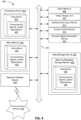
- FIG. 1A is a block diagram depicting an example environment for using generative artificial intelligence to maintain conversations with malicious devices to discover their adversary techniques and/or tactics, according to some embodiments.
- the environment 100A includes and/or executes a cyberattack communication management (CCM) system 104, an attacking device 101 (e.g., sometimes referred to as a malicious device), target device 102, and a downstream computing device 118 that are communicably coupled together via a communication network 120.
- the CCM system 104 includes and/or executes a CCM agent 105, a classification pipeline 106, and a counter adversary model (CAM) 110.
- the predictive models of the classification pipeline 106 and/or the CAM 110 may be a large language model (LLM).
- the classification pipelines 106 includes and/or executes a plurality of predictive models (e.g., large language models (LLMs)) for classifying a message.
- the classification pipeline 106 includes a phishing model 107 that is trained, using a first set of training data, to generate a maliciousness score indicating a likelihood that a message (e.g., initial message, subsequent message) is associated with a first type of malicious activity corresponding to a phishing attack.
- the classification pipeline 106 also includes a smishing model 108 that is trained, using a second set of training data, to generate a maliciousness score indicating a likelihood that a message is associated with a second type of malicious activity corresponding to a smishing attack.
- the classification pipeline 106 also includes a pharming model 109 that is trained, using a third set of training data, to generate a maliciousness score indicating a likelihood that a message is associated with a third type of malicious activity corresponding to a pharming attack.
- the CCM system 104 also includes a historical conversations database 112 that the CCM system 104 uses to store historical conversation associated with attacker devices (e.g., attacking device 101) and target devices (e.g., target device 102).
- the CCM system 104 also includes a historical adversary tactics database 113 that the CCM system 104 uses to store historical adversary tactics associated with the historical conversations.
- the target device 102 may receive an initial message from the attacking device 101.
- the target device 102 may send a request to the CCM system 104 for information indicating whether the initial message is malicious or non-malicious, and where the request includes the initial message.
- the CCM system 104 may provide the initial message to one or more of its predictive models to classify the initial message. For example, the CCM system 104 may use the phishing model 107 to generate a maliciousness score for the initial message indicating that the initial message is associated with a phishing attack, use the smishing model 108 to generate a maliciousness score for the initial message indicating that the initial message is associated with a smishing attack, and/or use the pharming model 109 to generate a maliciousness score for the initial message indicating that the initial message is associated with a pharming attack.
- the CCM system 104 may send an alert message indicating that the initial message is associated with the one or more of the several types of malicious activity.
- a phishing attack may be, for example, when attackers attempt to trick users into doing the wrong thing, such as clicking a bad link that will download malware, or direct them to an untrustworthy (e.g., dodgy) website.
- a smishing attack may be, for example, when an attacker uses fake mobile text messages to trick people into downloading malware, sharing sensitive information, or sending money to cybercriminals.
- a pharming attack may be, for example, online fraud that involves the use of malicious code to direct victims to spoofed websites in an attempt to steal their credentials and data.
- the CCM system 104 may proceed to provide the initial message and its corresponding maliciousness score to the CAM 110, which is trained to maintain conversations with the attacking device 101 by predicting a response to the initial message, where the response is likely to cause the attacking device 101 to send a subsequent message that responds to the initial message.
- the CCM agent 105 then provides the subsequent message to one or more of its predictive models to classify the subsequent message and to generate a maliciousness score for the subsequent message.
- the CCM agent 105 repeats this process for each of the subsequent messages that the attacking device 101 sends to the CCM system 104.
- the CAM 110 predicts a response to the initial message as well as responses to subsequent messages that are sent from attacking device 101 to the CCM system 104.
- the CAM 110 may generate a plurality of responses based on the content of the initial message and the content of each of the subsequent messages.
- the CCM system 104 sends each of the responses of the plurality of responses to the attacking device 101, where each response causes the attacking device 101 to send a respective subsequent message of the plurality of subsequent messages to the CAM 110 of the CCM system 104 instead of the target device 102.
- the CAM 110 may generate a first response to the initial message, a second response to a first subsequent message, a third response to a second subsequent message, and/or so on.
- the attacking device 101 sends, in chronological order, the initial message to the target device 102, the first second subsequent message to the CCM system 104, and the second subsequent message to the CCM system 104.
- the CAM 110 may configure each of the responses of the plurality of responses to include information (e.g., header info) that tricks (e.g., spoofs) the attacking device 101 into believing that the plurality of responses are by the target device 102, even though they are sent by the CAM 110 of the CCM system 104.
- the CAM 110 is able to redirect a conversation that initially took place between the attacking device 101 and the target device 102 to instead take place between the attacking device 101 and the CAM 110 of the CCM system 104.
- the CAM 110 may generate the plurality of responses based on the content of the initial message and a plurality of subsequent messages. For example, the CAM 110 may generate a response based on the subject matter of the message (e.g., initial message, subsequent message). As another example, the CAM 110 may generate a response based on whether the content of the message includes scripts, a web address (e.g., Uniform Resource Locator (URL)), and/or web domains, etc.
- a web address e.g., Uniform Resource Locator (URL)
- URL Uniform Resource Locator
- the CCM system 104 may generate a conversation (sometimes referred to as conversation thread) that includes all the messages and responses (e.g., initial response, subsequent response) that took place between the attacking device 101, the target device 102, and the CCM system 104 during a particular conversation session (e.g., moment in time).
- the CCM system 104 stores the conversation in the historical conversations database 112.
- the CCM system 104 maintains, in the historical conversations database 112, a plurality of historical conversations, where each historical conversation includes a plurality of historical responses generated by the CAM 110 based on the plurality of malicious messages sent by the attacking device 101.
- the CCM system 104 may identify a plurality of adversary tactics based on the plurality of historical conversations.
- an adversary tactic may include information that is indicative of one or more historical illegal actions associated with the attacking device 101, contact information associated with the attacking device 101, personal identifying information associated with a user of the attacking device 101, and/or techniques/tactics employed by the attacking device 101 to extract private information from the target device 102.
- the CCM system 104 may cause a message (e.g., initial message, subsequent message) to bypass the classification pipeline.
- the CCM system 104 may receive a label and a message, wherein the label indicates that the message is associated with the one or more types of malicious activity.
- the CCM system 104 may determine, based on the label, that the message is associated with the one or more types of malicious activity.
- the CCM system 104 may prevent the predictive models (e.g., phishing model 107, smishing model 108, pharming model 109) of the classification pipeline 106 from receiving and ingesting the message. Instead, the CCM system 104 may provide the message and the label to the CAM 110 for processing.
- the historical conversations database 112 and the historical adversary tactics database 113 may be used to improve a system's capability to detect and/or prevent malicious attacks.
- the CCM system 104 may provide the plurality of adversary tactics and/or the plurality of historical conversations to a computing device to be used to train predictive models of the computing device to detect and/or prevent malicious attacks.
- the CCM system 104 may use the plurality of adversary tactics and/or the plurality of historical conversations to re-train its own models (e.g., classification pipeline 106) to improve their ability detect and/or prevent malicious attacks.
- the CCM system 104 receives an initial message originating from the attacking device 101 and intended for a target device 102.
- the CCM system 104 provides the initial message to one or more classification models (e.g., phishing model 107, smishing model 108, and/or pharming model 109) trained to generate maliciousness scores each indicating whether messages are associated with one or more types of malicious activity.
- the CCM system 104 generates, using the one or more classification models and responsive to generating the maliciousness score, a maliciousness score for the initial message indicating that the initial message is associated with the one or more types of malicious activity.
- the CCM system 104 provides the initial message to CAM 110 (e.g., a predictive model) trained to maintain conversations with attacking devices by predicting responses to malicious messages.
- the CCM system 104 generates, using the CAM 110, a plurality of responses based on the initial message and a plurality of subsequent messages. Each response of the plurality of responses causes the attacking device 101 to send a respective subsequent message of the plurality of subsequent messages to the CAM 110.
- FIG. 1A shows only a select number of computing devices (e.g., CCM system 104, attacking device 101, target device 102, downstream computing device 118); the environment 100A may include any number of computing devices that are interconnected in any arrangement to facilitate the exchange of data between the computing devices.
- computing devices e.g., CCM system 104, attacking device 101, target device 102, downstream computing device 118
- the environment 100A may include any number of computing devices that are interconnected in any arrangement to facilitate the exchange of data between the computing devices.
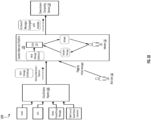
- FIG. 1B is a block diagram depicting an example environment for using generative artificial intelligence to maintain conversations with malicious devices to discover their adversary techniques and tactics, according to some embodiments.
- Each of the components in FIG. 1B may be included in the CCM system 104 in FIG. 1A .
- the environment 100B includes the classification pipeline 106, a counter adversary pipeline 130, and the downstream computing device 118.
- the classification pipeline 106 is configured to detect phishing attacks, smishing attacks, and pharming attacks from a message (e.g., initial message, subsequent message) sent by an attacker 132 by generating a maliciousness score indicating whether the message is associated with one or more types of malicious activity.
- the classification pipeline 106 is configured to send the message to the counter adversary pipeline 130 if the maliciousness score for the message exceeds a threshold value.
- the counter adversary pipeline 130 includes the CAM 110, which is configured to receive the message from the classification pipeline 106 and continue the conversation with the attacker 132 by generating AI replies based on the initial message and/or one or more attacker messages.
- the counter adversary pipeline 130 sends an archive of the message exchanges between the CAM 110 and the attacker 132 to a downstream computing device 118, which may be used for model training. By maintaining the conversation, the counter adversary pipeline 130 forces the attacker 132 to disclose their tactics, techniques, and procedures (TPPs).
- TPPs tactics, techniques, and procedures
- Campaigns designed to steal credentials or trick users into downloading malicious software or accessing unreputable websites can be identified automatically using machine learning.
- the attackers include malicious URLs or malicious files which can be classified (by the CCM system 104) through various means such as deep learning-based classifiers (e.g., LLMs) or through other classical machine learning algorithms which are feature vector based.
- LLMs deep learning-based classifiers
- the intent and general sentiment of these messages can be also classified by the CCM system 104.
- These messages present a sense of urgency and may include various persuasion techniques. For example, an attacker may design a message to induce fear or unrest to the end user 130 of the target device 102 such that they are compelled to act impulsively.
- the CCM system 104 classifies the input as suspicious, it passes it to its generative model such as an LLM (or some other text generating model based on diffusion techniques or even a model with multimodal capacities - image + text) which is designed to take this input as context and craft a convincing reply, initiating an endless back and forth conversation.
- LLM or some other text generating model based on diffusion techniques or even a model with multimodal capacities - image + text
- All responses originating from this conversation thread can be stored and indexed in a database and classified in order to identify MITRE adversary tactics, techniques, and procedures (TTPs) from them and also searched for various clues which would help describe the attacker's operations (e.g., classifying additional domains included in the thread as being malicious).
- TTPs MITRE adversary tactics, techniques, and procedures
- the present disclosure describes a machine learning model which is trained on various conversations (e.g., such as e-mails, SMS, online private/group chat messages or conversations happening in forum threads).
- This model is Transformer-based, also called a Large Language Model, but the embodiments of the present disclosure could also be implemented using a Recurrent Neural Network (RNN) or a diffusion model for text generation among others.
- RNN Recurrent Neural Network
- the initial training maybe conducted by a computing device (e.g., CCM system 104 in FIG. 1A ) in a self-supervised fashion, so at this first stage the computing device does not care about these messages being malicious or benign (e.g., they do not need to have any labels at this stage).
- the computing device provides the raw text to the model.
- Self-supervised training is a procedure in which one can employ a masking or a contrastive learning objective in order for the model to learn the semantics of the text (e.g., in natural language processing (NLP), a popular objective is Masked Language Modelling (MLM)).
- NLP natural language processing
- MLM Masked Language Modelling
- the resulting model is fine-tuned using demonstrations. These demonstrations may come from a human and/or from another AI model, sometimes referred to as distilling knowledge from an AI model.
- This training is conducted in a supervised fashion where the model is fine-tuned using the following input / output pairs:
- the input to the model is a clean or malicious message the computing device obtains from its corpus (e.g., from a dataset the computing device already has which is used to train a model which detects spam messages) and instructions.
- the instructions may include one or more sentences describing what the model should generate with some additional context around the message. For example, it is known from the classification pipeline 106 that "we should generate a response for this phishing message which contains a malicious URL and a clean attachment and request more details to be provided about how to fill in details at the URL page we've been redirected to").
- the instructions could also include taking in a persona (e.g., "pretend you are an anxious citizen which is very stressed about their banking terms being suddenly changed").
- the output of the model is a ground truth response which represents a demonstration of the desired text the computing device wants the ML model to generate. For example, a response to the message that was given as input to the model, where the message indicated a request for the aforementioned details and using the tone of an anxious citizen.
- the main goal during the supervised training process is to have the model learn to generate text which closely matches the ground-truth demonstration.
- This learning process can be seen as minimizing cross-entropy between our prediction and the ground-truth or as trying to maximize a score measuring the similarity between the predicted text and the ground-truth text (e.g., BiLingual Evaluation Understudy (BLEU) score, Recall-Oriented Understudy for Gisting Evaluation (ROUGE) score, Bidirectional Encoder Representations (BERT) score, etc.).
- BLEU BiLingual Evaluation Understudy
- ROUGE Recall-Oriented Understudy for Gisting Evaluation
- BERT Bidirectional Encoder Representations
- This self-supervised training step can either entail learning better weights across the entire network, or a computing device could conduct this training step through parameter efficient techniques (e.g., only training a few layers of the network called adapters and keeping the rest of the network frozen during supervised training; use prefix tuning/prompt tuning; use low rank adaptation).
- parameter efficient techniques can be followed by a subsequent quantization step in which the computing device learns a small version of the model by learning an equivalent function with fewer parameters. Such a version is better suited for deployment (given that a small model is a faster model - because the computing device needs to compute fewer operations).
- Quantization represents a set of known mathematical transformations the computing device applies in order to make the model smaller, they do not need to be necessarily learned.
- prompting is a process in which the computing device achieves the end goal without explicitly modifying the model weights in the process. This is possible because text generation models assign a probability to each next token (e.g., word) in a sequence while they sequentially generate an output. Each new token is conditioned by the one which came before it (and these probabilities have been learned through self-supervision). Giving a particular input (e.g., a prompt) to the network can force the model to generate the desired output, given this output is very likely to be generated due to the probabilities for each token in the sequence the model already learned during self-supervision.
- FIG. 2A is a block diagram depicting an example of the cyberattack communication management (CCM) system in FIG. 1 , according to some embodiments. While various devices, interfaces, and logic with particular functionality are shown, it should be understood that the CCM system 104 includes any number of devices and/or components, interfaces, and logic for facilitating the functions described herein. For example, the activities of multiple devices may be combined as a single device and implemented on the same processing device (e.g., processing device 202a), as additional devices and/or components with additional functionality are included.
- processing device 202a e.g., processing device 202a
- the CCM system 104 includes a processing device 202a (e.g., general purpose processor, a PLD, etc.), which may be composed of one or more processors, and a memory 204a (e.g., synchronous dynamic random-access memory (DRAM), read-only memory (ROM)), which may communicate with each other via a bus (not shown).
- a processing device 202a e.g., general purpose processor, a PLD, etc.
- a memory 204a e.g., synchronous dynamic random-access memory (DRAM), read-only memory (ROM)
- DRAM synchronous dynamic random-access memory
- ROM read-only memory
- the processing device 202a may be provided by one or more general-purpose processing devices such as a microprocessor, central processing unit, graphic processing unit (GPU), or the like.
- processing device 202a may include a complex instruction set computing (CISC) microprocessor, reduced instruction set computing (RISC) microprocessor, very long instruction word (VLIW) microprocessor, or a processor implementing other instruction sets or processors implementing a combination of instruction sets.
- the processing device 202a may include one or more special-purpose processing devices such as an application specific integrated circuit (ASIC), a field programmable gate array (FPGA), a digital signal processor (DSP), network processor, or the like.
- ASIC application specific integrated circuit
- FPGA field programmable gate array
- DSP digital signal processor
- the processing device 202a may be configured to execute the operations described herein, in accordance with one or more aspects of the present disclosure, for performing the operations and steps discussed herein.
- the memory 204a (e.g., Random Access Memory (RAM), Read-Only Memory (ROM), Non-volatile RAM (NVRAM), Flash Memory, hard disk storage, optical media, etc.) of processing device 202a stores data and/or computer instructions/code for facilitating at least some of the various processes described herein.
- the memory 204a includes tangible, non-transient volatile memory, or non-volatile memory.
- the memory 204a stores programming logic (e.g., instructions/code) that, when executed by the processing device 202a, controls the operations of the CCM system 104.
- the processing device 202a and the memory 204a form various processing devices and/or circuits described with respect to the CCM system 104.
- the instructions include code from any suitable computer programming language such as, but not limited to, C, C++, C#, Java, JavaScript, VBScript, Perl, HTML, XML, Python, TCL, and Basic.
- the processing device 202a executes a CCM agent 105, a classification pipeline 106, and a counter adversary model (CAM) 110.
- the classification pipeline 106 includes a phishing model 107, a smishing model 108, and a pharming model 109.
- the CCM system 104 includes a historical conversations database 112 and a historical adversary tactics database 113.
- any of the CCM agent 105, the classification pipeline 106 (including one or more of its models), and the CAM 110 may be combined into a single entity that includes all the functions and features of its individual parts.
- the CCM agent 105 may be configured to receive an initial message originating from the attacking device 101 and intended for the target device 102.
- the initial message may be the first message that an attacking device 101 sends to a target device 102 in a particular communication session or the initial message may be any number of messages that the attacking device 101 sends to the target device 102 during the particular communication session and after the first message.
- the CCM agent 105 may be configured to provide the initial message to one or more classification models (e.g., phishing model 107, smishing model 108, pharming model 109) of the classification pipeline 106, where each classification model is trained to generate one or more maliciousness scores each indicating whether messages (e.g., initial message, subsequent messages, etc.) are associated with one or more types of malicious activity.
- the one or more types of malicious activity may include at least one of a phishing attack, a smishing attack, or a pharming attack.
- the CCM agent 105 may be configured to generate, using the one or more classification models, a maliciousness score for the initial message indicating that the initial message is associated with the one or more types of malicious activity.
- the CCM agent 105 may be configured to provide the initial message to the CAM 110, which is a predictive model that is trained to maintain conversations with attacking devices 101 by predicting responses to malicious messages.
- the CCM agent 105 may be configured to generate, using the CAM 110, a plurality of responses based on the initial message and a plurality of subsequent messages. Each response of the plurality of responses causes the attacking device 101 to send a respective subsequent message of the plurality of subsequent messages to the CAM 110.
- At least the initial message or one or more subsequent messages of the plurality of subsequent messages includes at least one of a malicious file, a malicious web address, or a query seeking sensitive information associated with a user of the target device 102.
- any of the models may be any type of generative artificial intelligence (e.g., an LLM, Recurrent Neural Network, text generating model based on diffusion techniques, a model with multimodal capacities - image + text).
- generative artificial intelligence e.g., an LLM, Recurrent Neural Network, text generating model based on diffusion techniques, a model with multimodal capacities - image + text.
- the CCM agent 105 may be configured to receive a label and a malicious message, wherein the label indicates that the malicious message is associated with the one or more types of malicious activity.
- the CCM agent 105 may be configured to determine, based on the label, that the malicious message is associated with the one or more types of malicious activity.
- the CCM agent 105 may be configured to prevent the one or more classification models from receiving the malicious message responsive to determining that the malicious message is associated with the one or more types of malicious activity.
- the CCM agent 105 may be configured to provide the malicious message to the CAM 110.
- the CCM agent 105 may be configured to maintain, in the historical conversations database 112, a plurality of historical conversations. Each historical conversation includes a plurality of historical responses that are generated by the CAM 110 based on a plurality of malicious messages.
- the CCM agent 105 may be configured to identify a plurality of adversary tactics based on the plurality of historical conversations.
- the plurality of historical conversations do not explicitly state the type of adversary tactic that is being used/applied by an attacking device 101 during the historical conversation.
- an adversary tactic may correspond to MITRE ATT&CK, which is a globally-accessible knowledge base of adversary tactics and techniques that are based on real-world observations.
- the plurality of adversary tactics include information indicative of at least one or more of one or more historical illegal actions associated with the attacking device 101; contact information associated with the attacking device 101; or personal identifying information associated with a user of the attacking device 101.
- the CCM agent 105 may be configured to provide at least one of the plurality of adversary tactics or the plurality of historical conversations to a computing device (e.g., downstream computing device 118) to be used to train another predictive model to prevent malicious attacks.
- the CCM agent 105 may be configured to re-train (e.g., refine), using at least one of the plurality of adversary tactics or the plurality of historical conversations, the one or more classification models to improve an ability of the one or more classification models to detect the one or more types of malicious activity.
- the CCM system 104 includes a network interface 206a configured to establish a communication session with a computing device for sending and receiving data over the communication network 120 to the computing device.
- the network interface 206a includes a cellular transceiver (supporting cellular standards), a local wireless network transceiver (supporting 802.11X, ZigBee, Bluetooth, Wi-Fi, or the like), a wired network interface, a combination thereof (e.g., both a cellular transceiver and a Bluetooth transceiver), and/or the like.
- the CCM system 104 includes a plurality of network interfaces 206a of different types, allowing for connections to a variety of networks, such as local area networks (public or private) or wide area networks including the Internet, via different sub-networks.
- the CCM system 104 includes an input/output device 205a configured to receive user input from and provide information to a user.
- the input/output device 205a is structured to exchange data, communications, instructions, etc. with an input/output component of the CCM system 104.
- input/output device 205a may be any electronic device that conveys data to a user by generating sensory information (e.g., a visualization on a display, one or more sounds, tactile feedback, etc.) and/or converts received sensory information from a user into electronic signals (e.g., a keyboard, a mouse, a pointing device, a touch screen display, a microphone, etc.).
- the one or more user interfaces may be internal to the housing of the CCM system 104, such as a built-in display, touch screen, microphone, etc., or external to the housing of the CCM system 104, such as a monitor connected to the CCM system 104, a speaker connected to the CCM system 104, etc., according to various embodiments.
- the CCM system 104 includes communication circuitry for facilitating the exchange of data, values, messages, and the like between the input/output device 205a and the components of the CCM system 104.
- the input/output device 205a includes machine-readable media for facilitating the exchange of information between the input/output device 205a and the components of the CCM system 104.
- the input/output device 205a includes any combination of hardware components (e.g., a touchscreen), communication circuitry, and machine-readable media.
- the CCM system 104 includes a device identification component 207a (shown in FIG. 2A as device ID component 207a) configured to generate and/or manage a device identifier associated with the CCM system 104.
- the device identifier may include any type and form of identification used to distinguish the CCM system 104 from other computing devices.
- the device identifier may be cryptographically generated, encrypted, or otherwise obfuscated by any device and/or component of the CCM system 104.
- the CCM system 104 may include the device identifier in any communication (e.g., classifier performance data, input message, parameter message, etc.) that the CCM system 104 sends to a computing device.
- the CCM system 104 includes a bus (not shown), such as an address/data bus or other communication mechanism for communicating information, which interconnects the devices and/or components of the CCM system 104, such as processing device 202a, network interface 206a, input/output device 205a, and device ID component 207a.
- a bus such as an address/data bus or other communication mechanism for communicating information, which interconnects the devices and/or components of the CCM system 104, such as processing device 202a, network interface 206a, input/output device 205a, and device ID component 207a.
- CCM system 104 may be implemented with the processing device 202a.
- the CCM system 104 may be implemented as a software application stored within the memory 204a and executed by the processing device 202a. Accordingly, such embodiment can be implemented with minimal or no additional hardware costs.
- any of these above-recited devices and/or components rely on dedicated hardware specifically configured for performing operations of the devices and/or components.
- FIG. 2B is a block diagram depicting an example of the target device 102 in FIG. 1 , according to some embodiments. While various devices, interfaces, and logic with particular functionality are shown, it should be understood that the target device 102 includes any number of devices and/or components, interfaces, and logic for facilitating the functions described herein. For example, the activities of multiple devices may be combined as a single device and implemented on a same processing device (e.g., processing device 202b), as additional devices and/or components with additional functionality are included.
- processing device 202b e.g., processing device 202b
- the target device 102 includes a processing device 202b (e.g., general purpose processor, a PLD, etc.), which may be composed of one or more processors, and a memory 204b (e.g., synchronous dynamic random-access memory (DRAM), read-only memory (ROM)), which may communicate with each other via a bus (not shown).
- the processing device 202b includes identical or nearly identical functionality as processing device 202a in FIG. 2A , but with respect to devices and/or components of the target device 102 instead of devices and/or components of the CCM system 104.
- the memory 204b of processing device 202b stores data and/or computer instructions/code for facilitating at least some of the various processes described herein.
- the memory 204b includes identical or nearly identical functionality as memory 204a in FIG. 2A , but with respect to devices and/or components of the target device 102 instead of devices and/or components of the CCM system 104.
- the processing device 202b executes a target device management (TDM) agent 215 that may be configured to establish a communication session with an attacking device 101.
- the TDM agent 215 may be configured to receive, during the communication session, an initial message from the attacking device 101.
- the TDM agent 215 may send a request to the CCM system 104 for the CCM system 104 to determine whether the initial message is associated with one or more of the several types of malicious activity (e.g., a phishing attack, a smishing attack, and/or pharming attack).
- the TDM agent 215 may receive an alert message from the CCM system 104, where the alert message indicates whether the initial message is associated with the one or more of the several types of malicious activity.
- the target device 102 includes a network interface 206b configured to establish a communication session with a computing device for sending and receiving data over a network to the computing device. Accordingly, the network interface 206b includes identical or nearly identical functionality as network interface 206a in FIG. 2A , but with respect to devices and/or components of the target device 102 instead of devices and/or components of the CCM system 104.
- the target device 102 includes an input/output device 205b configured to receive user input from and provide information to a user.
- the input/output device 205b is structured to exchange data, communications, instructions, etc. with an input/output component of the target device 102.
- the input/output device 205b includes identical or nearly identical functionality as input/output device 205a in FIG. 2A , but with respect to devices and/or components of the target device 102 instead of devices and/or components of the CCM system 104.
- the target device 102 includes a device identification component 207b (shown in FIG. 2B as device ID component 207b) configured to generate and/or manage a device identifier associated with the target device 102.
- the device ID component 207b includes identical or nearly identical functionality as device ID component 207a in FIG. 2A , but with respect to devices and/or components of the target device 102 instead of devices and/or components of the CCM system 104.
- the target device 102 includes a bus (not shown), such as an address/data bus or other communication mechanism for communicating information, which interconnects the devices and/or components of the target device 102, such as processing device 202b, network interface 206b, input/output device 205b, and device ID component 207b.
- a bus such as an address/data bus or other communication mechanism for communicating information, which interconnects the devices and/or components of the target device 102, such as processing device 202b, network interface 206b, input/output device 205b, and device ID component 207b.
- the devices and/or components of the target device 102 may be implemented with the processing device 202b.
- the target device 102 may be implemented as a software application stored within the memory 204b and executed by the processing device 202b. Accordingly, such an embodiment can be implemented with minimal or no additional hardware costs.
- any of these above-recited devices and/or components rely on dedicated hardware specifically configured for performing operations of the devices and/or components.
- FIG. 2C is a block diagram depicting an example environment for using a CCM system, according to some embodiments.
- the environment 200c includes a CCM system 204c, such as CCM system 104 in FIG. 1 .
- the CCM system 204c includes a memory 205c and a processing device 202c that is operatively coupled to the memory 205c.
- the processing device 202c receives an initial message 207c originating from an attacking device 201c and intended for a target device 203c.
- the processing device 202c provides the initial message 207c to one or more classification models 206c trained to generate maliciousness scores each indicating whether messages are associated with one or more types of malicious activity.
- the processing device 302c generates, using the one or more classification models 206c, a maliciousness score 209c for the initial message 207c indicating that the initial message 207c is associated with the one or more types of malicious activity 211c.
- the processing device 202c provides, responsive to generating the maliciousness score, the initial message 207c to a predictive model 210c trained to maintain conversations with attacking devices by predicting responses to malicious messages.
- the processing device 202c generates, using the predictive model 210c, a plurality of responses 213c based on the initial message 207c and a plurality of subsequent messages 215c. Each response of the plurality of responses 213c causes the attacking device 201c to send a respective subsequent message of the plurality of subsequent messages to the predictive model.
- FIG. 3 is a flow diagram depicting a method of using generative artificial intelligence to maintain conversations with malicious devices to discover their adversary techniques and tactics, according to some embodiments.
- Method 300 may be performed by processing logic that may include hardware (e.g., circuitry, dedicated logic, programmable logic, a processor, a processing device, a central processing unit (CPU), a system-on-chip (SoC), etc.), software (e.g., instructions running/executing on a processing device), firmware (e.g., microcode), or a combination thereof.
- method 300 may be performed by a cyberattack communication management (CCM) system, such as the CCM system 104 in FIG. 1A .
- CCM cyberattack communication management
- method 300 illustrates example functions used by various embodiments. Although specific function blocks (“blocks") are disclosed in method 300, such blocks are examples. That is, embodiments are well suited to performing various other blocks or variations of the blocks recited in method 300. It is appreciated that the blocks in method 300 may be performed in an order different than presented, and that not all of the blocks in method 300 may be performed.
- blocks specific function blocks
- the method 300 includes the block 302 of receiving an initial message originating from an attacking device and directed to a target device.
- the method 300 includes the block 304 of generating, using one or more classification models, a maliciousness score for the initial message indicating that the initial message is associated with one or more types of malicious activity .
- the method 300 includes the block 306 of providing, by a processing device, the initial message to a predictive model trained to maintain conversations with attacking devices by predicting responses to malicious messages.
- the method 300 includes the block 308 of generating, using the predictive model, two or more responses based on the initial message and at least one subsequent message, wherein each response of the two or more responses causes the attacking device to send a respective subsequent message to the predictive model.
- a computing device may implement method 300 to disrupt the attacker's operations by making the attacker focus the attacker's valuable resources (e.g., computing, memory, networking, and/or the like) into endless expensive conversations and/or make the attacker disclose important details about the attacker's past illegal actions.
- valuable resources e.g., computing, memory, networking, and/or the like
- FIG. 4 is a block diagram of an example computing device 400 that may perform one or more of the operations described herein, in accordance with some embodiments.
- Computing device 400 may be connected to other computing devices in a LAN, an intranet, an extranet, and/or the Internet.
- the computing device may operate in the capacity of a server machine in client-server network environment or in the capacity of a client in a peer-to-peer network environment.
- the computing device may be provided by a personal computer (PC), a set-top box (STB), a server, a network router, switch or bridge, or any machine capable of executing a set of instructions (sequential or otherwise) that specify actions to be taken by that machine.
- PC personal computer
- STB set-top box
- server a server
- network router switch or bridge
- the example computing device 400 may include a processing device (e.g., a general-purpose processor, a PLD, etc.) 402, a main memory 404 (e.g., synchronous dynamic random-access memory (DRAM), read-only memory (ROM)), a static memory 406 (e.g., flash memory and a data storage device 418), which may communicate with each other via a bus 430.
- a processing device e.g., a general-purpose processor, a PLD, etc.
- main memory 404 e.g., synchronous dynamic random-access memory (DRAM), read-only memory (ROM)
- static memory 406 e.g., flash memory and a data storage device 418
- Processing device 402 may be provided by one or more general-purpose processing devices such as a microprocessor, central processing unit, or the like.
- processing device 402 may include a complex instruction set computing (CISC) microprocessor, reduced instruction set computing (RISC) microprocessor, very long instruction word (VLIW) microprocessor, or a processor implementing other instruction sets or processors implementing a combination of instruction sets.
- processing device 402 may also include one or more special-purpose processing devices such as an application specific integrated circuit (ASIC), a field programmable gate array (FPGA), a digital signal processor (DSP), network processor, or the like.
- ASIC application specific integrated circuit
- FPGA field programmable gate array
- DSP digital signal processor
- the processing device 402 may be configured to execute the operations described herein, in accordance with one or more aspects of the present disclosure, for performing the operations and steps discussed herein.
- Computing device 400 may further include a network interface device 408 which may communicate with a communication network 420.
- the computing device 400 also may include a video display unit 410 (e.g., a liquid crystal display (LCD) or a cathode ray tube (CRT)), an alphanumeric input device 412 (e.g., a keyboard), a cursor control device 414 (e.g., a mouse) and an acoustic signal generation device 416 (e.g., a speaker).
- video display unit 410, alphanumeric input device 412, and cursor control device 414 may be combined into a single component or device (e.g., an LCD touch screen).
- Data storage device 418 may include a computer-readable storage medium 428 on which may be stored one or more sets of instructions 425 that may include instructions for one or more components/programs/applications 442 (e.g., CCM agent 105, classification pipeline 106, phishing model 107, smishing model 108, pharming model 109, CAM 110 in FIG. 1A , etc.) for carrying out the operations described herein, in accordance with one or more aspects of the present disclosure.
- Instructions 425 may also reside, completely or at least partially, within main memory 404 and/or within processing device 402 during execution thereof by computing device 400, main memory 404 and processing device 402 also constituting computer-readable media.
- the instructions 425 may further be transmitted or received over a communication network 420 via network interface device 408.
- While computer-readable storage medium 428 is shown in an illustrative example to be a single medium, the term “computer-readable storage medium” should be taken to include a single medium or multiple media (e.g., a centralized or distributed database and/or associated caches and servers) that store the one or more sets of instructions.
- the term “computer-readable storage medium” shall also be taken to include any medium that is capable of storing, encoding or carrying a set of instructions for execution by the machine and that cause the machine to perform the methods described herein.
- the term “computer-readable storage medium” shall accordingly be taken to include, but not be limited to, solid-state memories, optical media and magnetic media.
- terms such as “receiving,” “maintaining,” “identifying,” “selecting,” “generating,” “providing,” “training,” “retraining,” “preventing,” or the like refer to actions and processes performed or implemented by computing devices that manipulates and transforms data represented as physical (electronic) quantities within the computing device's registers and memories into other data similarly represented as physical quantities within the computing device memories or registers or other such information storage, transmission or display devices.
- the terms “first,” “second,” “third,” “fourth,” etc., as used herein are meant as labels to distinguish among different elements and may not necessarily have an ordinal meaning according to their numerical designation.
- Examples described herein also relate to an apparatus for performing the operations described herein.
- This apparatus may be specially constructed for the required purposes, or it may include a general-purpose computing device selectively programmed by a computer program stored in the computing device.
- a computer program may be stored in a computer-readable non-transitory storage medium.
- Various units, circuits, or other components may be described or claimed as “configured to” or “configurable to” perform a task or tasks.
- the phrase “configured to” or “configurable to” is used to connote structure by indicating that the units/circuits/components include structure (e.g., circuitry) that performs the task or tasks during operation.
- the unit/circuit/component can be said to be configured to perform the task, or configurable to perform the task, even when the specified unit/circuit/component is not currently operational (e.g., is not on).
- the units/circuits/components used with the "configured to” or “configurable to” language include hardware--for example, circuits, memory storing program instructions executable to implement the operation, etc. Reciting that a unit/circuit/component is “configured to” perform one or more tasks, or is “configurable to” perform one or more tasks, is expressly intended not to invoke 35 U.S.C. 112(f), for that unit/circuit/component. Additionally, "configured to” or “configurable to” can include generic structure (e.g., generic circuitry) that is manipulated by software and/or firmware (e.g., an FPGA or a general-purpose processor executing software) to operate in manner that is capable of performing the task(s) at issue.
- generic structure e.g., generic circuitry
- firmware e.g., an FPGA or a general-purpose processor executing software
- Configured to may also include adapting a manufacturing process (e.g., a semiconductor fabrication facility) to fabricate devices (e.g., integrated circuits) that are adapted to implement or perform one or more tasks.
- a manufacturing process e.g., a semiconductor fabrication facility
- devices e.g., integrated circuits
- Configurable to is expressly intended not to apply to blank media, an unprogrammed processor or unprogrammed generic computer, or an unprogrammed programmable logic device, programmable gate array, or other unprogrammed device, unless accompanied by programmed media that confers the ability to the unprogrammed device to be configured to perform the disclosed function(s).
Landscapes
- Engineering & Computer Science (AREA)
- Computer Security & Cryptography (AREA)
- General Engineering & Computer Science (AREA)
- Theoretical Computer Science (AREA)
- Computing Systems (AREA)
- Physics & Mathematics (AREA)
- Signal Processing (AREA)
- Computer Networks & Wireless Communication (AREA)
- Computer Hardware Design (AREA)
- Artificial Intelligence (AREA)
- General Physics & Mathematics (AREA)
- Software Systems (AREA)
- General Health & Medical Sciences (AREA)
- Computational Linguistics (AREA)
- Health & Medical Sciences (AREA)
- Mathematical Physics (AREA)
- Data Mining & Analysis (AREA)
- Evolutionary Computation (AREA)
- Biomedical Technology (AREA)
- Biophysics (AREA)
- Molecular Biology (AREA)
- Life Sciences & Earth Sciences (AREA)
- Audiology, Speech & Language Pathology (AREA)
- Computer Vision & Pattern Recognition (AREA)
- Medical Informatics (AREA)
- Computer And Data Communications (AREA)
- Data Exchanges In Wide-Area Networks (AREA)
Abstract
A system and method of using generative AI to maintain conversations with attacking devices to discover their adversary techniques and tactics. The method includes receiving an initial message originating from an attacking device and directed to a target device. The method includes generating, using one or more classification models, a maliciousness score for the initial message indicating that the initial message is associated with one or more types of malicious activity. The method includes providing, by a processing device, the initial message to a predictive model trained to maintain conversations with attacking devices by predicting responses to malicious messages. The method includes generating, using the predictive model, two or more responses based on the initial message and at least one subsequent message, wherein each response of the two or more responses causes the attacking device to send a respective subsequent message to the predictive model.
Description
- This application claims the benefit of
U.S. Provisional Application Serial No. 63/511,560 entitled "COUNTER ADVERSARY LARGE LANGUAGE MODELS," filed June 30, 2023 - The present disclosure relates generally to cyber security, and more particularly, to systems and methods of using generative artificial intelligence (AI), such as Large Language Models (LLMs), to maintain conversations with malicious devices to discover their adversary techniques and/or tactics.
- Cybersecurity is the practice of protecting critical systems and sensitive information from digital attacks. Cybersecurity techniques are designed to combat threats against networked systems and applications, whether those threats originate from inside or outside of an organization.
- Accordingly there is provided a method as detailed in
claim 1. Advantageous features are in the dependent claims. A system and a computer program are also provided. - The described embodiments and the advantages thereof may best be understood by reference to the following description taken in conjunction with the accompanying drawings. These drawings in no way limit any changes in form and detail that may be made to the described embodiments by one skilled in the art without departing from the spirit and scope of the described embodiments.
-
FIG. 1A is a block diagram depicting an example environment for using generative artificial intelligence to maintain conversations with malicious devices to discover their adversary techniques and tactics, according to some embodiments; -
FIG. 1B is a block diagram depicting an example environment for using generative artificial intelligence to maintain conversations with malicious devices to discover their adversary techniques and tactics, according to some embodiments; -
FIG. 2A is a block diagram depicting an example of the cyberattack communication management (CCM) system inFIG. 1 , according to some embodiments; -
FIG. 2B is a block diagram depicting an example of thetarget device 102 inFIG. 1 , according to some embodiments; -
FIG. 2C is a block diagram depicting an example environment for using a CCM system, according to some embodiments; -
FIG. 3 is a flow diagram depicting a method of using generative artificial intelligence to maintain conversations with malicious devices to discover their adversary techniques and tactics, according to some embodiments; and -
FIG. 4 is a block diagram of anexample computing device 400 that may perform one or more of the operations described herein, in accordance with some embodiments. - Users of computing devices (e.g., smartphones, laptops, desktops, and/or the like) often share sensitive information with their computing devices, and if a computing device is connected to a computing network (e.g., a private network, a public network, the Internet, and/or the like), then that sensitive information could also be shared with and/or exposed to the other computing devices that are also connected to the computing network. The sensitive information may include, for example, personal identifiable information (PII), financial information, health-related data, proprietary corporate information, and/or the like. Attackers seeking to exploit this sensitive information have devised mischievous ways (e.g., smishing, phishing, and/or pharming campaigns) to gain access to the sensitive information stored on these computing devices by using application programming interface (API) access or self-hosting techniques. The conventional solution to prevent an attacker (via an attacking/malicious device) from accessing the sensitive information has been to implement security guardrails within the computing devices and computing network. However, these guardrails have failed to completely stop attackers because they do not prevent a user from being tricked into divulging the sensitive information to the attacker.
- Furthermore, there are inherent flaws in the conventional system that cause it to be more susceptible to malicious attacks, which in turn, could allow an attacker to steal sensitive data from the conventional system and/or excessively use the computing resources (e.g., memory resources, power resources, processing resources, networking resources) of the conventional system, the computing network that is coupled to the conventional system, and/or other computers that are on the same computing network as the conventional system. Thus, there is a long-felt but unsolved need to solve the problems of discovering the adversary techniques and tactics behind malicious attacks so to improve the ability for a computing system to detect and prevent the malicious attacks.
- Aspects of the present disclosure address the above-noted and other deficiencies by using generative artificial intelligence (e.g., LLM, Recurrent Neural Network, text generating model based on diffusion techniques, a model with multimodal capacities - image + text) to maintain conversations with malicious devices to discover their adversary techniques and/or tactics of their malicious attacks. By providing a mechanism for the defending device to determine the extent of the malicious device's capabilities, the defending device is able to prevent currently existing types of attacks, as well as potentially new types of attacks. In addition, engaging with the attacker can disrupt their operations, making them focus their valuable resources (e.g., computing, memory, networking, and/or the like) into endless expensive conversations or even make them disclose important details about their past illegal actions and also share various means of contacting them which could help defenders get to the brains behind the operations.
- In an illustrative embodiment, a cyberattack communication management (CCM) system receives an initial message originating from (e.g., sent from) an attacking device and intended for (e.g., directed to per a destination address) a target device. The CCM system provides the initial message to one or more classification models trained to generate maliciousness scores each indicating whether messages are associated with one or more types of malicious activity. The CCM system generates, using the one or more classification models, a maliciousness score for the initial message indicating that the initial message is associated with the one or more types of malicious activity. The CCM system provides the initial message to a predictive model trained to maintain conversations with attacking devices by predicting responses to malicious messages. The CCM system generates, using the predictive model, a plurality of responses based on the initial message and a plurality of subsequent messages. Each response of the plurality of responses causes the attacking device to send a respective subsequent message of the plurality of subsequent messages to the predictive model. Thus, the CCM system disrupts the attacker's operations, making the attacker focus the attacker's valuable resources (e.g., computing, memory, networking, and/or the like) into endless expensive conversations and/or make the attacker disclose important details about the attacker's past illegal actions.
-
FIG. 1A is a block diagram depicting an example environment for using generative artificial intelligence to maintain conversations with malicious devices to discover their adversary techniques and/or tactics, according to some embodiments. Theenvironment 100A includes and/or executes a cyberattack communication management (CCM)system 104, an attacking device 101 (e.g., sometimes referred to as a malicious device),target device 102, and adownstream computing device 118 that are communicably coupled together via acommunication network 120. TheCCM system 104 includes and/or executes aCCM agent 105, aclassification pipeline 106, and a counter adversary model (CAM) 110. In some embodiments, the predictive models of theclassification pipeline 106 and/or theCAM 110 may be a large language model (LLM). - The
classification pipelines 106 includes and/or executes a plurality of predictive models (e.g., large language models (LLMs)) for classifying a message. Specifically, theclassification pipeline 106 includes aphishing model 107 that is trained, using a first set of training data, to generate a maliciousness score indicating a likelihood that a message (e.g., initial message, subsequent message) is associated with a first type of malicious activity corresponding to a phishing attack. Theclassification pipeline 106 also includes asmishing model 108 that is trained, using a second set of training data, to generate a maliciousness score indicating a likelihood that a message is associated with a second type of malicious activity corresponding to a smishing attack. Theclassification pipeline 106 also includes apharming model 109 that is trained, using a third set of training data, to generate a maliciousness score indicating a likelihood that a message is associated with a third type of malicious activity corresponding to a pharming attack. - The
CCM system 104 also includes ahistorical conversations database 112 that theCCM system 104 uses to store historical conversation associated with attacker devices (e.g., attacking device 101) and target devices (e.g., target device 102). The CCMsystem 104 also includes a historicaladversary tactics database 113 that the CCMsystem 104 uses to store historical adversary tactics associated with the historical conversations. - The
target device 102 may receive an initial message from theattacking device 101. Thetarget device 102 may send a request to theCCM system 104 for information indicating whether the initial message is malicious or non-malicious, and where the request includes the initial message. - The
CCM system 104 may provide the initial message to one or more of its predictive models to classify the initial message. For example, theCCM system 104 may use thephishing model 107 to generate a maliciousness score for the initial message indicating that the initial message is associated with a phishing attack, use thesmishing model 108 to generate a maliciousness score for the initial message indicating that the initial message is associated with a smishing attack, and/or use thepharming model 109 to generate a maliciousness score for the initial message indicating that the initial message is associated with a pharming attack. - If the
CCM system 104 determines that the initial message is associated with one or more of the several types of malicious activity (e.g., a phishing attack, a smishing attack, and/or pharming attack), then theCCM system 104 may send an alert message indicating that the initial message is associated with the one or more of the several types of malicious activity. A phishing attack may be, for example, when attackers attempt to trick users into doing the wrong thing, such as clicking a bad link that will download malware, or direct them to an untrustworthy (e.g., dodgy) website. A smishing attack may be, for example, when an attacker uses fake mobile text messages to trick people into downloading malware, sharing sensitive information, or sending money to cybercriminals. A pharming attack may be, for example, online fraud that involves the use of malicious code to direct victims to spoofed websites in an attempt to steal their credentials and data. - Furthermore, responsive to determining that the initial message is associated with one or more of the several types of malicious activity, the
CCM system 104 may proceed to provide the initial message and its corresponding maliciousness score to theCAM 110, which is trained to maintain conversations with theattacking device 101 by predicting a response to the initial message, where the response is likely to cause theattacking device 101 to send a subsequent message that responds to the initial message. TheCCM agent 105 then provides the subsequent message to one or more of its predictive models to classify the subsequent message and to generate a maliciousness score for the subsequent message. TheCCM agent 105 repeats this process for each of the subsequent messages that the attackingdevice 101 sends to theCCM system 104. - Thus, the
CAM 110 predicts a response to the initial message as well as responses to subsequent messages that are sent from attackingdevice 101 to theCCM system 104. For example, theCAM 110 may generate a plurality of responses based on the content of the initial message and the content of each of the subsequent messages. TheCCM system 104 sends each of the responses of the plurality of responses to the attackingdevice 101, where each response causes the attackingdevice 101 to send a respective subsequent message of the plurality of subsequent messages to theCAM 110 of theCCM system 104 instead of thetarget device 102. For example, theCAM 110 may generate a first response to the initial message, a second response to a first subsequent message, a third response to a second subsequent message, and/or so on. The attackingdevice 101 sends, in chronological order, the initial message to thetarget device 102, the first second subsequent message to theCCM system 104, and the second subsequent message to theCCM system 104. - The
CAM 110 may configure each of the responses of the plurality of responses to include information (e.g., header info) that tricks (e.g., spoofs) the attackingdevice 101 into believing that the plurality of responses are by thetarget device 102, even though they are sent by theCAM 110 of theCCM system 104. Thus, theCAM 110 is able to redirect a conversation that initially took place between the attackingdevice 101 and thetarget device 102 to instead take place between the attackingdevice 101 and theCAM 110 of theCCM system 104. - As discussed, the
CAM 110 may generate the plurality of responses based on the content of the initial message and a plurality of subsequent messages. For example, theCAM 110 may generate a response based on the subject matter of the message (e.g., initial message, subsequent message). As another example, theCAM 110 may generate a response based on whether the content of the message includes scripts, a web address (e.g., Uniform Resource Locator (URL)), and/or web domains, etc. - The
CCM system 104 may generate a conversation (sometimes referred to as conversation thread) that includes all the messages and responses (e.g., initial response, subsequent response) that took place between the attackingdevice 101, thetarget device 102, and theCCM system 104 during a particular conversation session (e.g., moment in time). TheCCM system 104 stores the conversation in thehistorical conversations database 112. Thus, theCCM system 104 maintains, in thehistorical conversations database 112, a plurality of historical conversations, where each historical conversation includes a plurality of historical responses generated by theCAM 110 based on the plurality of malicious messages sent by the attackingdevice 101. - The
CCM system 104 may identify a plurality of adversary tactics based on the plurality of historical conversations. In some embodiments, an adversary tactic may include information that is indicative of one or more historical illegal actions associated with the attackingdevice 101, contact information associated with the attackingdevice 101, personal identifying information associated with a user of the attackingdevice 101, and/or techniques/tactics employed by the attackingdevice 101 to extract private information from thetarget device 102. - The
CCM system 104 may cause a message (e.g., initial message, subsequent message) to bypass the classification pipeline. For example, theCCM system 104 may receive a label and a message, wherein the label indicates that the message is associated with the one or more types of malicious activity. TheCCM system 104 may determine, based on the label, that the message is associated with the one or more types of malicious activity. TheCCM system 104 may prevent the predictive models (e.g.,phishing model 107,smishing model 108, pharming model 109) of theclassification pipeline 106 from receiving and ingesting the message. Instead, theCCM system 104 may provide the message and the label to theCAM 110 for processing. - The
historical conversations database 112 and the historicaladversary tactics database 113 may be used to improve a system's capability to detect and/or prevent malicious attacks. For example, theCCM system 104 may provide the plurality of adversary tactics and/or the plurality of historical conversations to a computing device to be used to train predictive models of the computing device to detect and/or prevent malicious attacks. As another example, theCCM system 104 may use the plurality of adversary tactics and/or the plurality of historical conversations to re-train its own models (e.g., classification pipeline 106) to improve their ability detect and/or prevent malicious attacks. - Still referring to
FIG. 1A , theCCM system 104 receives an initial message originating from the attackingdevice 101 and intended for atarget device 102. TheCCM system 104 provides the initial message to one or more classification models (e.g.,phishing model 107,smishing model 108, and/or pharming model 109) trained to generate maliciousness scores each indicating whether messages are associated with one or more types of malicious activity. TheCCM system 104 generates, using the one or more classification models and responsive to generating the maliciousness score, a maliciousness score for the initial message indicating that the initial message is associated with the one or more types of malicious activity. TheCCM system 104 provides the initial message to CAM 110 (e.g., a predictive model) trained to maintain conversations with attacking devices by predicting responses to malicious messages. TheCCM system 104 generates, using theCAM 110, a plurality of responses based on the initial message and a plurality of subsequent messages. Each response of the plurality of responses causes the attackingdevice 101 to send a respective subsequent message of the plurality of subsequent messages to theCAM 110. - Although
FIG. 1A shows only a select number of computing devices (e.g.,CCM system 104, attackingdevice 101,target device 102, downstream computing device 118); theenvironment 100A may include any number of computing devices that are interconnected in any arrangement to facilitate the exchange of data between the computing devices. -
FIG. 1B is a block diagram depicting an example environment for using generative artificial intelligence to maintain conversations with malicious devices to discover their adversary techniques and tactics, according to some embodiments. Each of the components inFIG. 1B may be included in theCCM system 104 inFIG. 1A . Theenvironment 100B includes theclassification pipeline 106, acounter adversary pipeline 130, and thedownstream computing device 118. - The
classification pipeline 106 is configured to detect phishing attacks, smishing attacks, and pharming attacks from a message (e.g., initial message, subsequent message) sent by anattacker 132 by generating a maliciousness score indicating whether the message is associated with one or more types of malicious activity. Theclassification pipeline 106 is configured to send the message to thecounter adversary pipeline 130 if the maliciousness score for the message exceeds a threshold value. Thecounter adversary pipeline 130 includes theCAM 110, which is configured to receive the message from theclassification pipeline 106 and continue the conversation with theattacker 132 by generating AI replies based on the initial message and/or one or more attacker messages. Thecounter adversary pipeline 130 sends an archive of the message exchanges between theCAM 110 and theattacker 132 to adownstream computing device 118, which may be used for model training. By maintaining the conversation, thecounter adversary pipeline 130 forces theattacker 132 to disclose their tactics, techniques, and procedures (TPPs). - Campaigns designed to steal credentials or trick users into downloading malicious software or accessing unreputable websites can be identified automatically using machine learning. During these campaigns the attackers include malicious URLs or malicious files which can be classified (by the CCM system 104) through various means such as deep learning-based classifiers (e.g., LLMs) or through other classical machine learning algorithms which are feature vector based. Moreover, the intent and general sentiment of these messages can be also classified by the
CCM system 104. These messages present a sense of urgency and may include various persuasion techniques. For example, an attacker may design a message to induce fear or unrest to theend user 130 of thetarget device 102 such that they are compelled to act impulsively. Other techniques may exploit various personal details which could groom theend user 130 of thetarget device 102 into becoming an insider threat and leak proprietary information. All of these components can be considered as input to an ensemble of classifiers (of the CCM system 104) trained to detect such characteristics. The indication that a particular message is suspicious can also come from a human reporting a particular message as such even if the message had bypassed the initial automated filter described above. - After the
CCM system 104 classifies the input as suspicious, it passes it to its generative model such as an LLM (or some other text generating model based on diffusion techniques or even a model with multimodal capacities - image + text) which is designed to take this input as context and craft a convincing reply, initiating an endless back and forth conversation. All responses originating from this conversation thread can be stored and indexed in a database and classified in order to identify MITRE adversary tactics, techniques, and procedures (TTPs) from them and also searched for various clues which would help describe the attacker's operations (e.g., classifying additional domains included in the thread as being malicious). Using a model with conversational abilities which are obtained either via instruction tuning or some other policy optimization method learned as a reinforcement learning problem can make this agent convincing enough that it can engage the attacker long enough in order to tire and exhaust their operation centre (e.g., resources). In cases where the attacker is also an LLM-based system, techniques such as prompt injection can also be used to extract information or disrupt the attack. - Thus, the present disclosure describes a machine learning model which is trained on various conversations (e.g., such as e-mails, SMS, online private/group chat messages or conversations happening in forum threads). This model is Transformer-based, also called a Large Language Model, but the embodiments of the present disclosure could also be implemented using a Recurrent Neural Network (RNN) or a diffusion model for text generation among others.
- The initial training maybe conducted by a computing device (e.g.,
CCM system 104 inFIG. 1A ) in a self-supervised fashion, so at this first stage the computing device does not care about these messages being malicious or benign (e.g., they do not need to have any labels at this stage). The computing device provides the raw text to the model. Self-supervised training is a procedure in which one can employ a masking or a contrastive learning objective in order for the model to learn the semantics of the text (e.g., in natural language processing (NLP), a popular objective is Masked Language Modelling (MLM)). - After the self-supervised training (also called pre-training) is concluded the resulting model is fine-tuned using demonstrations. These demonstrations may come from a human and/or from another AI model, sometimes referred to as distilling knowledge from an AI model. This training is conducted in a supervised fashion where the model is fine-tuned using the following input / output pairs:
- The input to the model is a clean or malicious message the computing device obtains from its corpus (e.g., from a dataset the computing device already has which is used to train a model which detects spam messages) and instructions. In some embodiments, the instructions may include one or more sentences describing what the model should generate with some additional context around the message. For example, it is known from the
classification pipeline 106 that "we should generate a response for this phishing message which contains a malicious URL and a clean attachment and request more details to be provided about how to fill in details at the URL page we've been redirected to"). In some embodiments, the instructions could also include taking in a persona (e.g., "pretend you are an anxious citizen which is very stressed about their banking terms being suddenly changed"). - The output of the model is a ground truth response which represents a demonstration of the desired text the computing device wants the ML model to generate. For example, a response to the message that was given as input to the model, where the message indicated a request for the aforementioned details and using the tone of an anxious citizen.
- Here, the main goal during the supervised training process is to have the model learn to generate text which closely matches the ground-truth demonstration. This learning process can be seen as minimizing cross-entropy between our prediction and the ground-truth or as trying to maximize a score measuring the similarity between the predicted text and the ground-truth text (e.g., BiLingual Evaluation Understudy (BLEU) score, Recall-Oriented Understudy for Gisting Evaluation (ROUGE) score, Bidirectional Encoder Representations (BERT) score, etc.).
- This self-supervised training step can either entail learning better weights across the entire network, or a computing device could conduct this training step through parameter efficient techniques (e.g., only training a few layers of the network called adapters and keeping the rest of the network frozen during supervised training; use prefix tuning/prompt tuning; use low rank adaptation). These parameter efficient techniques can be followed by a subsequent quantization step in which the computing device learns a small version of the model by learning an equivalent function with fewer parameters. Such a version is better suited for deployment (given that a small model is a faster model - because the computing device needs to compute fewer operations). Quantization represents a set of known mathematical transformations the computing device applies in order to make the model smaller, they do not need to be necessarily learned.
- Alternatively, once the computing device has access to a pre-trained model (the one from step one for example, or another off the shelf model, be it commercially licensed or open source) the computing device could just use prompting instead of explicitly training the model to follow the instructions (e.g., explicitly training a model = learning new weights for the model). So prompting is a process in which the computing device achieves the end goal without explicitly modifying the model weights in the process. This is possible because text generation models assign a probability to each next token (e.g., word) in a sequence while they sequentially generate an output. Each new token is conditioned by the one which came before it (and these probabilities have been learned through self-supervision). Giving a particular input (e.g., a prompt) to the network can force the model to generate the desired output, given this output is very likely to be generated due to the probabilities for each token in the sequence the model already learned during self-supervision.
-
FIG. 2A is a block diagram depicting an example of the cyberattack communication management (CCM) system inFIG. 1 , according to some embodiments. While various devices, interfaces, and logic with particular functionality are shown, it should be understood that theCCM system 104 includes any number of devices and/or components, interfaces, and logic for facilitating the functions described herein. For example, the activities of multiple devices may be combined as a single device and implemented on the same processing device (e.g.,processing device 202a), as additional devices and/or components with additional functionality are included. - The
CCM system 104 includes aprocessing device 202a (e.g., general purpose processor, a PLD, etc.), which may be composed of one or more processors, and amemory 204a (e.g., synchronous dynamic random-access memory (DRAM), read-only memory (ROM)), which may communicate with each other via a bus (not shown). - The
processing device 202a may be provided by one or more general-purpose processing devices such as a microprocessor, central processing unit, graphic processing unit (GPU), or the like. In some embodiments,processing device 202a may include a complex instruction set computing (CISC) microprocessor, reduced instruction set computing (RISC) microprocessor, very long instruction word (VLIW) microprocessor, or a processor implementing other instruction sets or processors implementing a combination of instruction sets. In some embodiments, theprocessing device 202a may include one or more special-purpose processing devices such as an application specific integrated circuit (ASIC), a field programmable gate array (FPGA), a digital signal processor (DSP), network processor, or the like. Theprocessing device 202a may be configured to execute the operations described herein, in accordance with one or more aspects of the present disclosure, for performing the operations and steps discussed herein. - The
memory 204a (e.g., Random Access Memory (RAM), Read-Only Memory (ROM), Non-volatile RAM (NVRAM), Flash Memory, hard disk storage, optical media, etc.) ofprocessing device 202a stores data and/or computer instructions/code for facilitating at least some of the various processes described herein. Thememory 204a includes tangible, non-transient volatile memory, or non-volatile memory. Thememory 204a stores programming logic (e.g., instructions/code) that, when executed by theprocessing device 202a, controls the operations of theCCM system 104. In some embodiments, theprocessing device 202a and thememory 204a form various processing devices and/or circuits described with respect to theCCM system 104. The instructions include code from any suitable computer programming language such as, but not limited to, C, C++, C#, Java, JavaScript, VBScript, Perl, HTML, XML, Python, TCL, and Basic. - The
processing device 202a executes aCCM agent 105, aclassification pipeline 106, and a counter adversary model (CAM) 110. Theclassification pipeline 106 includes aphishing model 107, asmishing model 108, and apharming model 109. TheCCM system 104 includes ahistorical conversations database 112 and a historicaladversary tactics database 113. In some embodiments, any of theCCM agent 105, the classification pipeline 106 (including one or more of its models), and theCAM 110 may be combined into a single entity that includes all the functions and features of its individual parts. - The
CCM agent 105 may be configured to receive an initial message originating from the attackingdevice 101 and intended for thetarget device 102. In some embodiments, the initial message may be the first message that an attackingdevice 101 sends to atarget device 102 in a particular communication session or the initial message may be any number of messages that the attackingdevice 101 sends to thetarget device 102 during the particular communication session and after the first message. TheCCM agent 105 may be configured to provide the initial message to one or more classification models (e.g.,phishing model 107,smishing model 108, pharming model 109) of theclassification pipeline 106, where each classification model is trained to generate one or more maliciousness scores each indicating whether messages (e.g., initial message, subsequent messages, etc.) are associated with one or more types of malicious activity. The one or more types of malicious activity may include at least one of a phishing attack, a smishing attack, or a pharming attack. - The
CCM agent 105 may be configured to generate, using the one or more classification models, a maliciousness score for the initial message indicating that the initial message is associated with the one or more types of malicious activity. TheCCM agent 105 may be configured to provide the initial message to theCAM 110, which is a predictive model that is trained to maintain conversations with attackingdevices 101 by predicting responses to malicious messages. TheCCM agent 105 may be configured to generate, using theCAM 110, a plurality of responses based on the initial message and a plurality of subsequent messages. Each response of the plurality of responses causes the attackingdevice 101 to send a respective subsequent message of the plurality of subsequent messages to theCAM 110. - In some embodiments, at least the initial message or one or more subsequent messages of the plurality of subsequent messages includes at least one of a malicious file, a malicious web address, or a query seeking sensitive information associated with a user of the
target device 102. - In some embodiments, any of the models (e.g.,
phishing model 107,smishing model 108,pharming model 109, and CAM 110) may be any type of generative artificial intelligence (e.g., an LLM, Recurrent Neural Network, text generating model based on diffusion techniques, a model with multimodal capacities - image + text). - The
CCM agent 105 may be configured to receive a label and a malicious message, wherein the label indicates that the malicious message is associated with the one or more types of malicious activity. TheCCM agent 105 may be configured to determine, based on the label, that the malicious message is associated with the one or more types of malicious activity. TheCCM agent 105 may be configured to prevent the one or more classification models from receiving the malicious message responsive to determining that the malicious message is associated with the one or more types of malicious activity. TheCCM agent 105 may be configured to provide the malicious message to theCAM 110. - The
CCM agent 105 may be configured to maintain, in thehistorical conversations database 112, a plurality of historical conversations. Each historical conversation includes a plurality of historical responses that are generated by theCAM 110 based on a plurality of malicious messages. TheCCM agent 105 may be configured to identify a plurality of adversary tactics based on the plurality of historical conversations. In some embodiments, the plurality of historical conversations do not explicitly state the type of adversary tactic that is being used/applied by an attackingdevice 101 during the historical conversation. In some embodiments, an adversary tactic may correspond to MITRE ATT&CK, which is a globally-accessible knowledge base of adversary tactics and techniques that are based on real-world observations. - The plurality of adversary tactics include information indicative of at least one or more of one or more historical illegal actions associated with the attacking
device 101; contact information associated with the attackingdevice 101; or personal identifying information associated with a user of the attackingdevice 101. - The
CCM agent 105 may be configured to provide at least one of the plurality of adversary tactics or the plurality of historical conversations to a computing device (e.g., downstream computing device 118) to be used to train another predictive model to prevent malicious attacks. TheCCM agent 105 may be configured to re-train (e.g., refine), using at least one of the plurality of adversary tactics or the plurality of historical conversations, the one or more classification models to improve an ability of the one or more classification models to detect the one or more types of malicious activity. - The
CCM system 104 includes anetwork interface 206a configured to establish a communication session with a computing device for sending and receiving data over thecommunication network 120 to the computing device. Accordingly, thenetwork interface 206a includes a cellular transceiver (supporting cellular standards), a local wireless network transceiver (supporting 802.11X, ZigBee, Bluetooth, Wi-Fi, or the like), a wired network interface, a combination thereof (e.g., both a cellular transceiver and a Bluetooth transceiver), and/or the like. In some embodiments, theCCM system 104 includes a plurality ofnetwork interfaces 206a of different types, allowing for connections to a variety of networks, such as local area networks (public or private) or wide area networks including the Internet, via different sub-networks. - The
CCM system 104 includes an input/output device 205a configured to receive user input from and provide information to a user. In this regard, the input/output device 205a is structured to exchange data, communications, instructions, etc. with an input/output component of theCCM system 104. Accordingly, input/output device 205a may be any electronic device that conveys data to a user by generating sensory information (e.g., a visualization on a display, one or more sounds, tactile feedback, etc.) and/or converts received sensory information from a user into electronic signals (e.g., a keyboard, a mouse, a pointing device, a touch screen display, a microphone, etc.). The one or more user interfaces may be internal to the housing of theCCM system 104, such as a built-in display, touch screen, microphone, etc., or external to the housing of theCCM system 104, such as a monitor connected to theCCM system 104, a speaker connected to theCCM system 104, etc., according to various embodiments. In some embodiments, theCCM system 104 includes communication circuitry for facilitating the exchange of data, values, messages, and the like between the input/output device 205a and the components of theCCM system 104. In some embodiments, the input/output device 205a includes machine-readable media for facilitating the exchange of information between the input/output device 205a and the components of theCCM system 104. In still another embodiment, the input/output device 205a includes any combination of hardware components (e.g., a touchscreen), communication circuitry, and machine-readable media. - The
CCM system 104 includes adevice identification component 207a (shown inFIG. 2A asdevice ID component 207a) configured to generate and/or manage a device identifier associated with theCCM system 104. The device identifier may include any type and form of identification used to distinguish theCCM system 104 from other computing devices. In some embodiments, to preserve privacy, the device identifier may be cryptographically generated, encrypted, or otherwise obfuscated by any device and/or component of theCCM system 104. In some embodiments, theCCM system 104 may include the device identifier in any communication (e.g., classifier performance data, input message, parameter message, etc.) that theCCM system 104 sends to a computing device. - The
CCM system 104 includes a bus (not shown), such as an address/data bus or other communication mechanism for communicating information, which interconnects the devices and/or components of theCCM system 104, such asprocessing device 202a,network interface 206a, input/output device 205a, anddevice ID component 207a. - In some embodiments, some or all of the devices and/or components of
CCM system 104 may be implemented with theprocessing device 202a. For example, theCCM system 104 may be implemented as a software application stored within thememory 204a and executed by theprocessing device 202a. Accordingly, such embodiment can be implemented with minimal or no additional hardware costs. In some embodiments, any of these above-recited devices and/or components rely on dedicated hardware specifically configured for performing operations of the devices and/or components. -
FIG. 2B is a block diagram depicting an example of thetarget device 102 inFIG. 1 , according to some embodiments. While various devices, interfaces, and logic with particular functionality are shown, it should be understood that thetarget device 102 includes any number of devices and/or components, interfaces, and logic for facilitating the functions described herein. For example, the activities of multiple devices may be combined as a single device and implemented on a same processing device (e.g.,processing device 202b), as additional devices and/or components with additional functionality are included. - The
target device 102 includes aprocessing device 202b (e.g., general purpose processor, a PLD, etc.), which may be composed of one or more processors, and amemory 204b (e.g., synchronous dynamic random-access memory (DRAM), read-only memory (ROM)), which may communicate with each other via a bus (not shown). Theprocessing device 202b includes identical or nearly identical functionality asprocessing device 202a inFIG. 2A , but with respect to devices and/or components of thetarget device 102 instead of devices and/or components of theCCM system 104. - The
memory 204b ofprocessing device 202b stores data and/or computer instructions/code for facilitating at least some of the various processes described herein. Thememory 204b includes identical or nearly identical functionality asmemory 204a inFIG. 2A , but with respect to devices and/or components of thetarget device 102 instead of devices and/or components of theCCM system 104. - The
processing device 202b executes a target device management (TDM)agent 215 that may be configured to establish a communication session with an attackingdevice 101. TheTDM agent 215 may be configured to receive, during the communication session, an initial message from the attackingdevice 101. TheTDM agent 215 may send a request to theCCM system 104 for theCCM system 104 to determine whether the initial message is associated with one or more of the several types of malicious activity (e.g., a phishing attack, a smishing attack, and/or pharming attack). In response, theTDM agent 215 may receive an alert message from theCCM system 104, where the alert message indicates whether the initial message is associated with the one or more of the several types of malicious activity. - The
target device 102 includes anetwork interface 206b configured to establish a communication session with a computing device for sending and receiving data over a network to the computing device. Accordingly, thenetwork interface 206b includes identical or nearly identical functionality asnetwork interface 206a inFIG. 2A , but with respect to devices and/or components of thetarget device 102 instead of devices and/or components of theCCM system 104. - The
target device 102 includes an input/output device 205b configured to receive user input from and provide information to a user. In this regard, the input/output device 205b is structured to exchange data, communications, instructions, etc. with an input/output component of thetarget device 102. The input/output device 205b includes identical or nearly identical functionality as input/output device 205a inFIG. 2A , but with respect to devices and/or components of thetarget device 102 instead of devices and/or components of theCCM system 104. - The
target device 102 includes adevice identification component 207b (shown inFIG. 2B asdevice ID component 207b) configured to generate and/or manage a device identifier associated with thetarget device 102. Thedevice ID component 207b includes identical or nearly identical functionality asdevice ID component 207a inFIG. 2A , but with respect to devices and/or components of thetarget device 102 instead of devices and/or components of theCCM system 104. - The
target device 102 includes a bus (not shown), such as an address/data bus or other communication mechanism for communicating information, which interconnects the devices and/or components of thetarget device 102, such asprocessing device 202b,network interface 206b, input/output device 205b, anddevice ID component 207b. - In some embodiments, some or all of the devices and/or components of the
target device 102 may be implemented with theprocessing device 202b. For example, thetarget device 102 may be implemented as a software application stored within thememory 204b and executed by theprocessing device 202b. Accordingly, such an embodiment can be implemented with minimal or no additional hardware costs. In some embodiments, any of these above-recited devices and/or components rely on dedicated hardware specifically configured for performing operations of the devices and/or components. -
FIG. 2C is a block diagram depicting an example environment for using a CCM system, according to some embodiments. The environment 200c includes aCCM system 204c, such asCCM system 104 inFIG. 1 . TheCCM system 204c includes amemory 205c and aprocessing device 202c that is operatively coupled to thememory 205c. Theprocessing device 202c receives aninitial message 207c originating from an attackingdevice 201c and intended for atarget device 203c. Theprocessing device 202c provides theinitial message 207c to one ormore classification models 206c trained to generate maliciousness scores each indicating whether messages are associated with one or more types of malicious activity. The processing device 302c generates, using the one ormore classification models 206c, a maliciousness score 209c for theinitial message 207c indicating that theinitial message 207c is associated with the one or more types of malicious activity 211c. Theprocessing device 202c provides, responsive to generating the maliciousness score, theinitial message 207c to apredictive model 210c trained to maintain conversations with attacking devices by predicting responses to malicious messages. Theprocessing device 202c generates, using thepredictive model 210c, a plurality of responses 213c based on theinitial message 207c and a plurality ofsubsequent messages 215c. Each response of the plurality of responses 213c causes the attackingdevice 201c to send a respective subsequent message of the plurality of subsequent messages to the predictive model. -
FIG. 3 is a flow diagram depicting a method of using generative artificial intelligence to maintain conversations with malicious devices to discover their adversary techniques and tactics, according to some embodiments.Method 300 may be performed by processing logic that may include hardware (e.g., circuitry, dedicated logic, programmable logic, a processor, a processing device, a central processing unit (CPU), a system-on-chip (SoC), etc.), software (e.g., instructions running/executing on a processing device), firmware (e.g., microcode), or a combination thereof. In some embodiments,method 300 may be performed by a cyberattack communication management (CCM) system, such as theCCM system 104 inFIG. 1A . - With reference to
FIG. 3 ,method 300 illustrates example functions used by various embodiments. Although specific function blocks ("blocks") are disclosed inmethod 300, such blocks are examples. That is, embodiments are well suited to performing various other blocks or variations of the blocks recited inmethod 300. It is appreciated that the blocks inmethod 300 may be performed in an order different than presented, and that not all of the blocks inmethod 300 may be performed. - As shown in
FIG. 3 , themethod 300 includes theblock 302 of receiving an initial message originating from an attacking device and directed to a target device. Themethod 300 includes the block 304 of generating, using one or more classification models, a maliciousness score for the initial message indicating that the initial message is associated with one or more types of malicious activity . Themethod 300 includes theblock 306 of providing, by a processing device, the initial message to a predictive model trained to maintain conversations with attacking devices by predicting responses to malicious messages. Themethod 300 includes the block 308 of generating, using the predictive model, two or more responses based on the initial message and at least one subsequent message, wherein each response of the two or more responses causes the attacking device to send a respective subsequent message to the predictive model. Thus, a computing device may implementmethod 300 to disrupt the attacker's operations by making the attacker focus the attacker's valuable resources (e.g., computing, memory, networking, and/or the like) into endless expensive conversations and/or make the attacker disclose important details about the attacker's past illegal actions. -
FIG. 4 is a block diagram of anexample computing device 400 that may perform one or more of the operations described herein, in accordance with some embodiments.Computing device 400 may be connected to other computing devices in a LAN, an intranet, an extranet, and/or the Internet. The computing device may operate in the capacity of a server machine in client-server network environment or in the capacity of a client in a peer-to-peer network environment. The computing device may be provided by a personal computer (PC), a set-top box (STB), a server, a network router, switch or bridge, or any machine capable of executing a set of instructions (sequential or otherwise) that specify actions to be taken by that machine. Further, while only a single computing device is illustrated, the term "computing device" shall also be taken to include any collection of computing devices that individually or jointly execute a set (or multiple sets) of instructions to perform the methods discussed herein. - The
example computing device 400 may include a processing device (e.g., a general-purpose processor, a PLD, etc.) 402, a main memory 404 (e.g., synchronous dynamic random-access memory (DRAM), read-only memory (ROM)), a static memory 406 (e.g., flash memory and a data storage device 418), which may communicate with each other via abus 430. -
Processing device 402 may be provided by one or more general-purpose processing devices such as a microprocessor, central processing unit, or the like. In an illustrative example,processing device 402 may include a complex instruction set computing (CISC) microprocessor, reduced instruction set computing (RISC) microprocessor, very long instruction word (VLIW) microprocessor, or a processor implementing other instruction sets or processors implementing a combination of instruction sets.Processing device 402 may also include one or more special-purpose processing devices such as an application specific integrated circuit (ASIC), a field programmable gate array (FPGA), a digital signal processor (DSP), network processor, or the like. Theprocessing device 402 may be configured to execute the operations described herein, in accordance with one or more aspects of the present disclosure, for performing the operations and steps discussed herein. -
Computing device 400 may further include anetwork interface device 408 which may communicate with acommunication network 420. Thecomputing device 400 also may include a video display unit 410 (e.g., a liquid crystal display (LCD) or a cathode ray tube (CRT)), an alphanumeric input device 412 (e.g., a keyboard), a cursor control device 414 (e.g., a mouse) and an acoustic signal generation device 416 (e.g., a speaker). In one embodiment,video display unit 410,alphanumeric input device 412, andcursor control device 414 may be combined into a single component or device (e.g., an LCD touch screen). -
Data storage device 418 may include a computer-readable storage medium 428 on which may be stored one or more sets ofinstructions 425 that may include instructions for one or more components/programs/applications 442 (e.g.,CCM agent 105,classification pipeline 106,phishing model 107,smishing model 108,pharming model 109,CAM 110 inFIG. 1A , etc.) for carrying out the operations described herein, in accordance with one or more aspects of the present disclosure.Instructions 425 may also reside, completely or at least partially, withinmain memory 404 and/or withinprocessing device 402 during execution thereof by computingdevice 400,main memory 404 andprocessing device 402 also constituting computer-readable media. Theinstructions 425 may further be transmitted or received over acommunication network 420 vianetwork interface device 408. - While computer-
readable storage medium 428 is shown in an illustrative example to be a single medium, the term "computer-readable storage medium" should be taken to include a single medium or multiple media (e.g., a centralized or distributed database and/or associated caches and servers) that store the one or more sets of instructions. The term "computer-readable storage medium" shall also be taken to include any medium that is capable of storing, encoding or carrying a set of instructions for execution by the machine and that cause the machine to perform the methods described herein. The term "computer-readable storage medium" shall accordingly be taken to include, but not be limited to, solid-state memories, optical media and magnetic media. - Unless specifically stated otherwise, terms such as "receiving," "maintaining," "identifying," "selecting," "generating," "providing," "training," "retraining," "preventing," or the like, refer to actions and processes performed or implemented by computing devices that manipulates and transforms data represented as physical (electronic) quantities within the computing device's registers and memories into other data similarly represented as physical quantities within the computing device memories or registers or other such information storage, transmission or display devices. Also, the terms "first," "second," "third," "fourth," etc., as used herein are meant as labels to distinguish among different elements and may not necessarily have an ordinal meaning according to their numerical designation.
- Examples described herein also relate to an apparatus for performing the operations described herein. This apparatus may be specially constructed for the required purposes, or it may include a general-purpose computing device selectively programmed by a computer program stored in the computing device. Such a computer program may be stored in a computer-readable non-transitory storage medium.
- The methods and illustrative examples described herein are not inherently related to any particular computer or other apparatus. Various general-purpose systems may be used in accordance with the teachings described herein, or it may prove convenient to construct more specialized apparatus to perform the required method steps. The required structure for a variety of these systems will appear as set forth in the description above.
- The above description is intended to be illustrative, and not restrictive. Although the present disclosure has been described with references to specific illustrative examples, it will be recognized that the present disclosure is not limited to the examples described. The scope of the disclosure should be determined with reference to the following claims, along with the full scope of equivalents to which the claims are entitled.
- As used herein, the singular forms "a", "an" and "the" are intended to include the plural forms as well, unless the context clearly indicates otherwise. It will be further understood that the terms "comprises", "comprising", "includes", and/or "including", when used herein, specify the presence of stated features, integers, steps, operations, elements, and/or components, but do not preclude the presence or addition of one or more other features, integers, steps, operations, elements, components, and/or groups thereof. Therefore, the terminology used herein is for the purpose of describing particular embodiments only and is not intended to be limiting.
- It should also be noted that in some alternative implementations, the functions/acts noted may occur out of the order noted in the figures. For example, two figures shown in succession may in fact be executed substantially concurrently or may sometimes be executed in the reverse order, depending upon the functionality/acts involved.
- Although the method operations were described in a specific order, it should be understood that other operations may be performed in between described operations, described operations may be adjusted so that they occur at slightly different times or the described operations may be distributed in a system which allows the occurrence of the processing operations at various intervals associated with the processing.
- Various units, circuits, or other components may be described or claimed as "configured to" or "configurable to" perform a task or tasks. In such contexts, the phrase "configured to" or "configurable to" is used to connote structure by indicating that the units/circuits/components include structure (e.g., circuitry) that performs the task or tasks during operation. As such, the unit/circuit/component can be said to be configured to perform the task, or configurable to perform the task, even when the specified unit/circuit/component is not currently operational (e.g., is not on). The units/circuits/components used with the "configured to" or "configurable to" language include hardware--for example, circuits, memory storing program instructions executable to implement the operation, etc. Reciting that a unit/circuit/component is "configured to" perform one or more tasks, or is "configurable to" perform one or more tasks, is expressly intended not to invoke 35 U.S.C. 112(f), for that unit/circuit/component. Additionally, "configured to" or "configurable to" can include generic structure (e.g., generic circuitry) that is manipulated by software and/or firmware (e.g., an FPGA or a general-purpose processor executing software) to operate in manner that is capable of performing the task(s) at issue. "Configured to" may also include adapting a manufacturing process (e.g., a semiconductor fabrication facility) to fabricate devices (e.g., integrated circuits) that are adapted to implement or perform one or more tasks. "Configurable to" is expressly intended not to apply to blank media, an unprogrammed processor or unprogrammed generic computer, or an unprogrammed programmable logic device, programmable gate array, or other unprogrammed device, unless accompanied by programmed media that confers the ability to the unprogrammed device to be configured to perform the disclosed function(s).
- The foregoing description, for the purpose of explanation, has been described with reference to specific embodiments. However, the illustrative discussions above are not intended to be exhaustive or to limit the present embodiments to the precise forms disclosed. Many modifications and variations are possible in view of the above teachings. The embodiments were chosen and described in order to best explain the principles of the embodiments and its practical applications, to thereby enable others skilled in the art to best utilize the embodiments and various modifications as may be suited to the particular use contemplated. Accordingly, the present embodiments are to be considered as illustrative and not restrictive, and the present embodiments are not to be limited to the details given herein, but may be modified within the scope and equivalents of the appended claims.
Claims (12)
- A method comprising:receiving an initial message originating from an attacking device and directed to a target device;generating, using one or more classification models, a maliciousness score for the initial message indicating that the initial message is associated with one or more types of malicious activity;providing, by a processing device, the initial message to a predictive model trained to maintain conversations with attacking devices by predicting responses to malicious messages; andgenerating, using the predictive model, two or more responses based on the initial message and at least one subsequent message, wherein each response of the two or more responses causes the attacking device to send a respective subsequent message to the predictive model.
- The method of claim 1, wherein the one or more types of malicious activity comprises at least one of a phishing attack, a smishing attack, or a pharming attack.
- The method of claim 2, wherein the one or more classification models comprises a plurality of classifications models each uniquely trained to detect a respective type of malicious activity of the one or more types of malicious activity.
- The method of any preceding claim, wherein at least the initial message or the at least one subsequent message comprises at least one of:a malicious file,a malicious web address, ora query seeking sensitive information associated with a user of the target device.
- The method of any preceding claim, wherein at least one of the predictive model or each classification model of the one or more classification models correspond to a large language model, LLM.
- The method of any preceding claim, further comprising:receiving a label and a malicious message, wherein the label indicates that the malicious message is associated with the one or more types of malicious activity;determining, based on the label, that the malicious message is associated with the one or more types of malicious activity;preventing the one or more classification models from receiving the malicious message responsive to determining that the malicious message is associated with the one or more types of malicious activity; andproviding the malicious message to the predictive model.
- The method of any preceding claim, further comprising:maintaining, in a database, a plurality of historical conversations, each historical conversation comprising a plurality of historical responses generated by the predictive model based on a plurality of malicious messages; andidentifying a plurality of adversary tactics based on the plurality of historical conversations.
- The method of claim 7, wherein the plurality of adversary tactics comprises information indicative of at least one or more of:one or more historical illegal actions associated with the attacking device;contact information associated with the attacking device; orpersonal identifying information associated with a user of the attacking device.
- The method of claim 7, further comprising:
providing at least one of the plurality of adversary tactics or the plurality of historical conversations to a computing device to be used to train another predictive model to prevent malicious attacks. - The method of claim 7, further comprising:
re-training, using at least one of the plurality of adversary tactics or the plurality of historical conversations, the one or more classification models to improve an ability of the one or more classification models to detect the one or more types of malicious activity. - A system comprising:a memory; anda processing device, operatively coupled to the memory, configured to carry out the method of any preceding claim
- A computer program storing instructions that, when executed by a processing device, cause the processing device to carry out the method of any one of claims 1 to 10.
Applications Claiming Priority (2)
| Application Number | Priority Date | Filing Date | Title |
|---|---|---|---|
| US202363511560P | 2023-06-30 | 2023-06-30 | |
| US18/397,820 US12580959B2 (en) | 2023-06-30 | 2023-12-27 | Counter adversary large language models |
Publications (1)
| Publication Number | Publication Date |
|---|---|
| EP4485862A1 true EP4485862A1 (en) | 2025-01-01 |
Family
ID=91663846
Family Applications (1)
| Application Number | Title | Priority Date | Filing Date |
|---|---|---|---|
| EP24183711.1A Pending EP4485862A1 (en) | 2023-06-30 | 2024-06-21 | Counter adversary large language models |
Country Status (2)
| Country | Link |
|---|---|
| US (1) | US12580959B2 (en) |
| EP (1) | EP4485862A1 (en) |
Families Citing this family (3)
| Publication number | Priority date | Publication date | Assignee | Title |
|---|---|---|---|---|
| US20250165601A1 (en) * | 2023-11-16 | 2025-05-22 | Wells Fargo Bank, N.A. | Machine learning techniques to generate negotiation data during computing system attacks |
| US12524544B2 (en) * | 2023-12-22 | 2026-01-13 | Microsoft Technology Licensing, Llc | Detecting and preventing harmful generative image outputs using digital signatures |
| US20250392605A1 (en) * | 2024-06-24 | 2025-12-25 | Palo Alto Networks, Inc. | Inline detection of prompt induced generative ai application data leakage |
Citations (2)
| Publication number | Priority date | Publication date | Assignee | Title |
|---|---|---|---|---|
| US20230179628A1 (en) * | 2021-12-08 | 2023-06-08 | Sri International | Conversation-depth social engineering attack detection using attributes from automated dialog engagement |
| US12015641B1 (en) * | 2023-01-26 | 2024-06-18 | Intuit Inc. | Malicious message classification using machine learning models |
Family Cites Families (10)
| Publication number | Priority date | Publication date | Assignee | Title |
|---|---|---|---|---|
| WO2017131963A1 (en) * | 2016-01-29 | 2017-08-03 | Acalvio Technologies, Inc. | Using high-interaction networks for targeted threat intelligence |
| US10880322B1 (en) * | 2016-09-26 | 2020-12-29 | Agari Data, Inc. | Automated tracking of interaction with a resource of a message |
| US11354406B2 (en) * | 2018-06-28 | 2022-06-07 | Intel Corporation | Physics-based approach for attack detection and localization in closed-loop controls for autonomous vehicles |
| US11010469B2 (en) * | 2018-09-13 | 2021-05-18 | Palo Alto Networks, Inc. | Preventing ransomware from encrypting files on a target machine |
| US11431738B2 (en) * | 2018-12-19 | 2022-08-30 | Abnormal Security Corporation | Multistage analysis of emails to identify security threats |
| US11824870B2 (en) * | 2018-12-19 | 2023-11-21 | Abnormal Security Corporation | Threat detection platforms for detecting, characterizing, and remediating email-based threats in real time |
| US11546375B2 (en) * | 2019-09-23 | 2023-01-03 | Barracuda Networks, Inc. | Detection of external messaging attacks using trust relationships |
| US11316875B2 (en) * | 2020-01-31 | 2022-04-26 | Threatology, Inc. | Method and system for analyzing cybersecurity threats and improving defensive intelligence |
| US20220094713A1 (en) * | 2020-09-21 | 2022-03-24 | Sophos Limited | Malicious message detection |
| US11588843B1 (en) * | 2022-04-08 | 2023-02-21 | Morgan Stanley Services Group Inc. | Multi-level log analysis to detect software use anomalies |
-
2023
- 2023-12-27 US US18/397,820 patent/US12580959B2/en active Active
-
2024
- 2024-06-21 EP EP24183711.1A patent/EP4485862A1/en active Pending
Patent Citations (2)
| Publication number | Priority date | Publication date | Assignee | Title |
|---|---|---|---|---|
| US20230179628A1 (en) * | 2021-12-08 | 2023-06-08 | Sri International | Conversation-depth social engineering attack detection using attributes from automated dialog engagement |
| US12015641B1 (en) * | 2023-01-26 | 2024-06-18 | Intuit Inc. | Malicious message classification using machine learning models |
Non-Patent Citations (3)
| Title |
|---|
| ASLAM SIDRA ET AL: "Phish-identifier: Machine Learning based classification of Phishing attacks", 2023 ADVANCES IN SCIENCE AND ENGINEERING TECHNOLOGY INTERNATIONAL CONFERENCES (ASET), IEEE, 20 February 2023 (2023-02-20), pages 1 - 6, XP034381561, DOI: 10.1109/ASET56582.2023.10180869 * |
| LIN AI ET AL: "Defending Against Social Engineering Attacks in the Age of LLMs", ARXIV.ORG, CORNELL UNIVERSITY LIBRARY, 201 OLIN LIBRARY CORNELL UNIVERSITY ITHACA, NY 14853, 18 June 2024 (2024-06-18), XP091792258 * |
| SUBASH NEUPANE ET AL: "Impacts and Risk of Generative AI Technology on Cyber Defense", ARXIV.ORG, CORNELL UNIVERSITY LIBRARY, 201 OLIN LIBRARY CORNELL UNIVERSITY ITHACA, NY 14853, 22 June 2023 (2023-06-22), XP091545103 * |
Also Published As
| Publication number | Publication date |
|---|---|
| US20250039234A1 (en) | 2025-01-30 |
| US12580959B2 (en) | 2026-03-17 |
Similar Documents
| Publication | Publication Date | Title |
|---|---|---|
| ALDabbas et al. | Artificial intelligence-driven method for the discovery and prevention of distributed denial of service attacks | |
| Anthi et al. | Hardening machine learning denial of service (DoS) defences against adversarial attacks in IoT smart home networks | |
| Thakur et al. | An intelligent algorithmically generated domain detection system | |
| US12423441B2 (en) | Method for using generative large language models (LLM) for cybersecurity deception and honeypots | |
| US12580959B2 (en) | Counter adversary large language models | |
| EP3815330B1 (en) | Enhanced techniques for generating and deploying dynamic false user accounts | |
| Bahnsen et al. | Classifying phishing URLs using recurrent neural networks | |
| Krishnapriya et al. | A Comprehensive Survey on Advanced Persistent Threat (APT) Detection Techniques. | |
| Egele et al. | Towards detecting compromised accounts on social networks | |
| US11368478B2 (en) | System for detecting and preventing malware execution in a target system | |
| Yuan et al. | A novel approach for malicious URL detection based on the joint model | |
| Aun et al. | Social engineering attack classifications on social media using deep learning | |
| Arnob et al. | An enhanced lstm approach for detecting iot-based ddos attacks using honeypot data | |
| Rajasekaran et al. | Malicious attacks detection using GRU-BWFA classifier in pervasive computing | |
| Mosleh et al. | An efficient cloud-integrated distributed deep neural network framework for IoT malware classification | |
| El Ksimi et al. | Icmpv6-based ddos flooding-attack detection using machine and deep learning techniques | |
| Ali et al. | Machine learning for internet of things (IoT) security: a comprehensive survey | |
| EP4579502A1 (en) | Using large language models to generate natural language descriptions of code for enhanced threat analysis and malware detection | |
| Manhas et al. | Deep Q learning-based mitigation of man in the middle attack over secure sockets layer websites | |
| Khansadurai et al. | Crime Rate Prediction using Cyber Security and Artificial Intelligent | |
| Ghosh et al. | Using auxiliary inputs in deep learning models for detecting DGA-based domain names | |
| Balusa et al. | An effective intrusion detection system for edge computing using ConvNeXt and ResNet152V2 | |
| Kiran Singh Nayak et al. | Multilayered SDN security with MAC authentication and GAN-based intrusion detection | |
| CN116595519A (en) | Malicious activity detection in memory of data processing unit | |
| Mohammadi et al. | Mobile botnet attacks detection using supervised learning algorithms |
Legal Events
| Date | Code | Title | Description |
|---|---|---|---|
| PUAI | Public reference made under article 153(3) epc to a published international application that has entered the european phase |
Free format text: ORIGINAL CODE: 0009012 |
|
| STAA | Information on the status of an ep patent application or granted ep patent |
Free format text: STATUS: THE APPLICATION HAS BEEN PUBLISHED |
|
| AK | Designated contracting states |
Kind code of ref document: A1 Designated state(s): AL AT BE BG CH CY CZ DE DK EE ES FI FR GB GR HR HU IE IS IT LI LT LU LV MC ME MK MT NL NO PL PT RO RS SE SI SK SM TR |
|
| STAA | Information on the status of an ep patent application or granted ep patent |
Free format text: STATUS: REQUEST FOR EXAMINATION WAS MADE |
|
| 17P | Request for examination filed |
Effective date: 20250630 |
|
| STAA | Information on the status of an ep patent application or granted ep patent |
Free format text: STATUS: EXAMINATION IS IN PROGRESS |