EP4485248A1 - Machine learned malicious predictions - Google Patents
Machine learned malicious predictions Download PDFInfo
- Publication number
- EP4485248A1 EP4485248A1 EP24183705.3A EP24183705A EP4485248A1 EP 4485248 A1 EP4485248 A1 EP 4485248A1 EP 24183705 A EP24183705 A EP 24183705A EP 4485248 A1 EP4485248 A1 EP 4485248A1
- Authority
- EP
- European Patent Office
- Prior art keywords
- cyber security
- detection
- cyber
- cloud
- assessments
- Prior art date
- Legal status (The legal status is an assumption and is not a legal conclusion. Google has not performed a legal analysis and makes no representation as to the accuracy of the status listed.)
- Pending
Links
Images





Classifications
-
- G—PHYSICS
- G06—COMPUTING OR CALCULATING; COUNTING
- G06F—ELECTRIC DIGITAL DATA PROCESSING
- G06F21/00—Security arrangements for protecting computers, components thereof, programs or data against unauthorised activity
- G06F21/50—Monitoring users, programs or devices to maintain the integrity of platforms, e.g. of processors, firmware or operating systems
- G06F21/55—Detecting local intrusion or implementing counter-measures
- G06F21/552—Detecting local intrusion or implementing counter-measures involving long-term monitoring or reporting
-
- G—PHYSICS
- G06—COMPUTING OR CALCULATING; COUNTING
- G06F—ELECTRIC DIGITAL DATA PROCESSING
- G06F21/00—Security arrangements for protecting computers, components thereof, programs or data against unauthorised activity
- G06F21/50—Monitoring users, programs or devices to maintain the integrity of platforms, e.g. of processors, firmware or operating systems
- G06F21/57—Certifying or maintaining trusted computer platforms, e.g. secure boots or power-downs, version controls, system software checks, secure updates or assessing vulnerabilities
- G06F21/577—Assessing vulnerabilities and evaluating computer system security
-
- G—PHYSICS
- G06—COMPUTING OR CALCULATING; COUNTING
- G06F—ELECTRIC DIGITAL DATA PROCESSING
- G06F21/00—Security arrangements for protecting computers, components thereof, programs or data against unauthorised activity
- G06F21/50—Monitoring users, programs or devices to maintain the integrity of platforms, e.g. of processors, firmware or operating systems
- G06F21/55—Detecting local intrusion or implementing counter-measures
- G06F21/554—Detecting local intrusion or implementing counter-measures involving event detection and direct action
-
- H—ELECTRICITY
- H04—ELECTRIC COMMUNICATION TECHNIQUE
- H04L—TRANSMISSION OF DIGITAL INFORMATION, e.g. TELEGRAPHIC COMMUNICATION
- H04L41/00—Arrangements for maintenance, administration or management of data switching networks, e.g. of packet switching networks
- H04L41/16—Arrangements for maintenance, administration or management of data switching networks, e.g. of packet switching networks using machine learning or artificial intelligence
-
- H—ELECTRICITY
- H04—ELECTRIC COMMUNICATION TECHNIQUE
- H04L—TRANSMISSION OF DIGITAL INFORMATION, e.g. TELEGRAPHIC COMMUNICATION
- H04L63/00—Network architectures or network communication protocols for network security
- H04L63/14—Network architectures or network communication protocols for network security for detecting or protecting against malicious traffic
- H04L63/1433—Vulnerability analysis
-
- H—ELECTRICITY
- H04—ELECTRIC COMMUNICATION TECHNIQUE
- H04L—TRANSMISSION OF DIGITAL INFORMATION, e.g. TELEGRAPHIC COMMUNICATION
- H04L63/00—Network architectures or network communication protocols for network security
- H04L63/14—Network architectures or network communication protocols for network security for detecting or protecting against malicious traffic
- H04L63/1441—Countermeasures against malicious traffic
- H04L63/1491—Countermeasures against malicious traffic using deception as countermeasure, e.g. honeypots, honeynets, decoys or entrapment
-
- G—PHYSICS
- G06—COMPUTING OR CALCULATING; COUNTING
- G06F—ELECTRIC DIGITAL DATA PROCESSING
- G06F2221/00—Indexing scheme relating to security arrangements for protecting computers, components thereof, programs or data against unauthorised activity
- G06F2221/03—Indexing scheme relating to G06F21/50, monitoring users, programs or devices to maintain the integrity of platforms
- G06F2221/034—Test or assess a computer or a system
Definitions
- the subject matter described herein generally relates to computers and to computer security and, more particularly, the subject matter relates to a cloud-service detection maliciousness predictor.
- Cyber security threats are always increasing. Every week, a cyber security service provider may receive thousands of reports of viruses, hacks, and other malicious software (or malware). Each cyber security detection purportedly describes suspicious behavior, identity, location, or other data that may indicate malicious activity that could be impacting a device, and this malicious activity could be through the use of malware or other tools. These cyber security detections are manually inspected and assessed by human expert analysts. The human expert analysts scrutinize each cyber security detection for malware, for malicious user activity, and/or for malicious use of legitimate software. The human expert analysts confirm whether the cyber security detection is truly suspicious (a true positive report) or harmless activity (a false positive report). Needless to say, human inspection and assessment requires great skill and much time. As the volume of cyber security detections is always increasing, the human expert analysts struggle to manage the volume.
- a cloud-based cyber security detection prediction service detects and pre-screens cyber security detections.
- the cloud-based cyber security detection prediction service monitors the cyber security detections reported to a cloud-computing environment.
- the cyber security detections may be reported by cyber security sensory agents executed by client devices.
- the cloud-based cyber security detection prediction service compares the cyber security detections to a cyber security assessment profile generated by a machine learning model.
- the machine learning model is trained using cyber security assessments conducted by human expert cyber security analysts. These human expert cyber security analysts scrutinize the thousands of weekly cyber security detections.
- the human expert cyber security analysts are specially-trained, subject matter experts in detecting malicious behavior, malicious usage, and malware infecting client devices.
- the cloud-based cyber security detection prediction service comprehensively stores and logs the details of each cyber security assessment conducted by the human expert cyber security analysts.
- the cloud-based cyber security detection prediction service may thus train the machine learning model using these human expert cyber security assessments that were historically collected over time and over millions of cyber security detections. By comparing any current cyber security detection to a cyber security detection assessment profile generated by the machine learning model, the cloud-based cyber security detection prediction service generates quick and accurate detection predictions.
- the cloud-based cyber security detection prediction service predicts whether any cyber security detection is truly suspicious (a true positive report) or is harmless activity (a false positive report).
- the cloud-based cyber security detection prediction service enables an elegantly simple and fast pre-screening of the cyber security detections.
- the cloud-based cyber security detection prediction service thus provides much faster detection and assessment that easily manages the ever-increasing reports of suspiciousness from the client devices.
- a cloud-based cyber security detection prediction service monitors cyber security detections reported to a cloud-computing environment.
- the cyber security detections are reported by cyber security sensory agents downloaded to smartphones, computers, servers, and other endpoint devices. Each cyber security sensory agent monitors its endpoint device for viruses, hacks, suspicious usage, and malicious software (or malware). Should the cyber security sensory agent detect suspicious behavior, identity, location, or other data, the cyber security sensory agent sends a cyber security detection to the cloud-computing environment.
- the cloud-based cyber security detection prediction service receives the cyber security detection, the cloud-based cyber security detection prediction service submits the cyber security detection to a cyber security assessment profile generated by a machine learning model.
- the cyber security assessment profile statistically reflects thousands or even millions of cyber security assessments conducted by human expert cyber security analysts. These human expert cyber security analysts scrutinize the thousands of cyber security detections reported each week. The human expert cyber security analysts are thus subject matter experts in detecting malicious behavior, identity, location, and coding.
- the cloud-based cyber security detection prediction service trains the machine learning model using human expert cyber security assessments that were historically collected over time and over millions of cyber security detections. Because the machine learning model is trained using these human expert cyber security assessments, the cyber security assessment profile (generated by the machine learning model) reflects the very accurate, deep-dive analyses performed by the human expert cyber security analysts.
- the cyber security assessment profile in other words, may describe normal or harmless behaviors, identities, locations, or other data as determined by the human expert cyber security analysts.
- the cyber security assessment profile may additionally or alternatively describe abnormal or unexpected behaviors, identities, locations, or other data as also determined by the human expert cyber security analysts. So, by comparing the cyber security detections to the cyber security assessment profile, the cloud-based cyber security detection prediction service quickly and accurately predicts whether any cyber security detection is truly malicious (a true positive report) or is harmless activity (a false positive report). The cloud-based cyber security detection prediction service thus provides much faster cyber security assessment and easily manages the ever-increasing reports of maliciousness from the client devices.
- Cloud services cyber security detection prediction will now be described more fully hereinafter with reference to the accompanying drawings.
- Cloud services cyber security detection prediction may be embodied in many different forms and should not be construed as limited to the examples set forth herein. These examples are provided so that this disclosure will be thorough and complete and fully convey cloud services malware assessment to those of ordinary skill in the art. Moreover, all the examples of cloud services malware assessment are intended to encompass both structural and functional equivalents thereof. Additionally, it is intended that such equivalents include both currently known equivalents as well as equivalents developed in the future ( i.e ., any elements developed that perform the same function, regardless of structure).
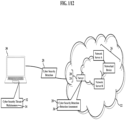
- FIGs. 1-3 illustrate some examples of assessing detections reported by clients.
- a computer 20 operates in a cloud-computing environment 22.
- FIG. 1 illustrates the computer 20 as a server 24.
- the computer 20, though, may be any processor-controlled device, as later paragraphs will explain.
- the server 24 communicates via the cloud-computing environment 22 (e.g ., public Internet, private network, and/or hybrid network) with other servers, devices, computers, or other networked members 26 operating within, or affiliated with, the cloud-computing environment 22.
- the server 24 is programmed to pre-screen or assess cyber security detections 28 reported by a client device 30.
- the client device 30 when the client device 30 detects suspicious behavior, unusual login/location context, or other potential cyber security threat 32 (as later paragraphs will explain in greater detail), the client device 30 sends the cyber security detection 28 to the cloud-computing environment 22.
- the cyber security detection 28 alerts or notifies the cloud-computing environment 22 that the client device 30 has detected the potential cyber security threat 32.
- the client device 30, in other words, has detected a program, process, communication, behavior, location, or some other evidence that may indicate maliciousness 34 (such as malicious behavior, usage, or software/malware).
- the client device 30 may then notify the cloud-computing environment 22 for a fuller, more detailed detection assessment 36.
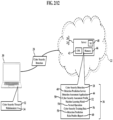
- FIGs. 2-3 illustrate some examples of the detection assessment 36.
- the cloud-computing environment 22 may route the cyber security detection 28 to the server 24 for the detection assessment 36.
- the server 24 may thus provide a cloud-based cyber security detection prediction service 40 to the networked members 26 operating within, or affiliated with, the cloud-computing environment 22.
- the server 24 may also provide the cloud-based cyber security detection prediction service 40 to other clients (such as the client device 30).
- the server 24 has at least one hardware processor 42 (illustrated as "CPU") that executes a detection assessment application 44 stored in a memory device 46.
- CPU hardware processor
- the server 24 also has network interfaces (illustrated as "NI") 48 to multiple communications networks (such as the cloud-computing environment 22 illustrated in FIG. 1 ), thus allowing bi-directional communications with networked devices.
- NI network interfaces
- the detection assessment application 44 may be a computer program, instruction(s), or code that instructs or causes the server 24 to preliminarily assess the cyber security detection 28.
- the server 24 performs the fast and effective cyber security detection prediction service 40.
- the server 24 executes the detection assessment application 44 as a predictor engine.
- the server 24 may ingest the cyber security detection 28 as an input, and the detection assessment application 44 instructs the server 24 to compare the cyber security detection 28 to a cyber security assessment profile 50 generated by a machine learning model 52.
- the cyber security assessment profile 50 may statistically define or specify process events, communications, activities, behaviors, data values, patterns, contextual login/location, or other electronic content that have been humanly assessed as safe or normal operation 54.
- the cyber security assessment profile 50 in other words, may describe normal or harmless behaviors, identities, locations, or other data as determined by human cyber security subject matter experts in detecting the maliciousness 34.
- the cyber security assessment profile 50 may thus represent historical human analysts' confirmations or observations of information, data, bits/bytes, and/or other electronic content that is/are known to indicate normal operation 54. Whatever information or data is described by, or included with, the cyber security detection 28, that information or data may be compared to the cyber security assessment profile 50. If the electronic content represented by the cyber security detection 28 equals, matches, satisfies, lies within, or conforms to the cyber security assessment profile 50, then the detection assessment application 44 may determine that the cyber security detection 28 is safe or normal operation 54.
- the cyber security assessment profile 50 reveals that the cyber security detection 28 is actually normal or harmless behaviors, identities, locations, or other data, as determined by the human subject matter experts in detecting the maliciousness 34.
- the cyber security detection 28, in other words, is a false alarm and lacks electronic content determined by the human cyber security expert analysts to be the maliciousness 34, as defined or specified by the cyber security assessment profile 50.
- the server 24 may thus statistically identify the safe or normal operation 54. Because the machine learning model 52 builds the cyber security assessment profile 50, the machine learning model 52 may statistically predict a range of the safe or normal operation 54.
- the cyber security assessment profile 50 in other words, may specify names, processes, and/or values that describe ranges of the safe or normal operation 54, such as terms defining normal or expected process events, communications, activities, behaviors, data values, patterns, contextual login/location, or other electronic content. These terms, associated with the safe or normal operation 54, derive from the human cyber security subject matter experts scrutinizing thousands or millions of historical cyber security detections 28.
- the machine learning model 52 may generate the cyber security assessment profile 50 using Gaussian probability distributions based on cyber security training data 56 derived from the human cyber security subject matter experts. One or more standard deviations and confidence intervals may then be calculated to predict ranges of the safe or normal operation 54. As the detection assessment application 44 inspects the current cyber security detection 28, the statistical models may be used to predict that the cyber security detection 28 lies within, or deviates or differs from, the cyber security assessment profile 50.
- the server 24 may generate a detection prediction 58.
- the detection assessment application 44 may thus instruct the server 24 to determine the cyber security detection 28 is the safe or normal operation 54.
- the server 24 may thus generate the detection prediction 58 as an output, and the detection prediction 58 determines, or predicts, that the cyber security detection 28 is actually the safe or normal operation 54. That is, even though the client device 30 reported the cyber security detection 28 as the possible maliciousness 34, the cyber security assessment profile 50 actually reveals the cyber security detection 28 to be normal or harmless processes, behaviors, identities, locations, or other data, as determined by the human cyber security subject matter experts.
- the detection assessment application 44 may instruct the server 24 to label, sort, or classify the cyber security detection 28 as a false positive report 60.
- the detection assessment application 44 may further label, sort, or classify the cyber security detection 28 as benign, low priority, and/or not requiring further malware investigation. Urgent resources may thus be allocated to other, higher-priority detections.
- the cyber security detection 28 may be a true positive report 70.
- the server 24 compares the cyber security detection 28 to the cyber security assessment profile 50 (as instructed by the detection assessment application 44)
- the cyber security detection 28 may not conform to the cyber security assessment profile 50.
- the data or electronic content associated with the cyber security detection 28, in other words, fails to equal, match, satisfy, or lie within the normal operation 54, as statistically defined or specified by the cyber security assessment profile 50.
- the detection assessment application 44 may determine that the cyber security detection 28 is an outlier or anomaly detection 72.
- the cyber security detection 28 may thus describe abnormal, anomalous, or perhaps even harmful processes, behaviors, identities, locations, or other data.
- the detection assessment application 44 instructs the server 24 to generate the detection prediction 58 as an output, and the detection prediction 58 identifies the cyber security detection 28 as the outlier or anomaly detection 72.
- the detection assessment application 44 may further instruct the server 24 to label, sort, or classify the cyber security detection 28 as the true positive report 70 of the maliciousness 34.
- the detection assessment application 44 may further instruct the client device 30 to implement notification/quarantine/isolation/halt or other urgent threat procedures 74.
- the detection assessment application 44 may also hand-off and queue the cyber security detection 28 for a human analyst review 76 by the cyber security subject matter experts. Because the cyber security detection 28 has been screened and preliminarily assessed as the true positive report 70, the detection assessment application 44 may route the cyber security detection 28 to a human expert or group of human experts for an urgent, deep-dive analysis.
- the server 24 must quickly identify the maliciousness 34 to minimize damage to the client computers 30. Because the detection assessment application 44 utilizes the machine learning model 52, the cloud-based cyber security detection prediction service 40 is very fast and very simple to execute. The server 24 need merely compare the cyber security detection 28 to the ranges referenced by the cyber security assessment profile 50. The cyber security assessment profile 50 consumes little space (in bits/bytes) in the memory device 46. Moreover, because comparisons may be simple logical statements, the hardware processor 42 requires less cycles and less time to classify the cyber security detection 28. Computer resources are reduced, and less electrical power is required to test for presence of the maliciousness 34.
- the cloud-based cyber security detection prediction service 40 is thus very fast and very simple, allowing the server 24 to quickly assess the thousands of cyber security detections 28 reported each week.
- the cloud-based cyber security detection prediction service 40 thus greatly improves computer functioning of the server 24 when detecting the maliciousness 34.
- FIG. 4 illustrates more examples of the cyber security detection prediction service 40.
- the cyber security assessment profile 50 may be created to statistically define the outlier or anomaly detection 72.
- the machine learning model 52 in other words, may be trained to build a statistical model that predicts evidence of the maliciousness 34, as again derived from the human cyber security subject matter experts.
- the cyber security assessment profile 50 may thus statistically specify names, processes, and/or values that describe the range of the outlier or anomaly detection 72, such as terms defining known, suspicious, or unexpected process events, communications, activities, behaviors, data values, patterns, contextual login/location, or other electronic content. These terms associated with the outlier or anomaly detection 72 derive from the human cyber security subject matter experts scrutinizing thousands/millions of malware detections.
- the detection assessment application 44 may instruct the server 24 to generate the detection prediction 58 and to label, sort, or classify the cyber security detection 28 as the true positive report 70 of the maliciousness 34. If, however, the cyber security detection 28 fails to conform to the cyber security assessment profile 50, then the detection assessment application 44 may instruct the server 24 to generate the detection prediction 58 and to label, sort, or classify the cyber security detection 28 as the normal operation 54.
- FIGs. 5-6 illustrate examples of historical cyber security expertise.
- the cloud-based cyber security detection prediction service 40 leverages this rich and extensive cyber security knowledge developed by the best cyber security threat hunters.
- the cyber security detection prediction service 40 may thus retain records of these human expert cyber security assessments 80. As the human cyber security expert analysts scrutinize the thousands of weekly cyber security detections 28, the cloud-based cyber security detection prediction service 40 comprehensively stores and logs the details of each human expert cyber security assessment 80 conducted by the human cyber security expert analysts. The cloud-based cyber security detection prediction service 40 may thus retain vast amounts of institutional cyber security knowledge developed over months/years by the subject matter experts in detecting the maliciousness 34. While any architecture or component may represent this historical cyber security expertise, FIGs. 5-6 illustrate an electronic database 82 of cyber security detections. The electronic database 82 of cyber security detections stores an electronic record of each cyber security detection 28 and the corresponding human expert cyber security assessment 80 conducted by the human cyber security expert analyst(s).
- the cyber security detection prediction service 40 thus maintains a rich repository of historical cyber security knowledge.
- the cloud-computing environment 22 may collect and store the cyber security detections 28 to the electronic database 82 of cyber security detections.
- the electronic database 82 may be remotely stored and accessed/queried from any networked location, for simplicity FIG. 5 illustrates the electronic database 82 as being locally stored in the memory device 46 of the server 24. Even though the electronic database 82 may have any logical structure, a relational database is perhaps easiest to understand.
- FIG. 5 illustrates the electronic database 82 as being locally stored in the memory device 46 of the server 24. Even though the electronic database 82 may have any logical structure, a relational database is perhaps easiest to understand.
- the electronic database 82 thus illustrates the electronic database 82 as a table 84 having row and columnar database entries that map, relate, convert, or associate different cyber security detections 28 to their corresponding electronic data 86 and to their corresponding human expert cyber security assessment 80.
- the detection assessment application 44 may add database entries that log each cyber security detection 28, its corresponding date/time stamp 88, and its corresponding electronic data 86 (such as process event, communication address, activity, behavior, data value, bit pattern, and/or contextual login/location).
- the electronic database 82 may further log and identify the names/identifiers of the human expert analyst(s) and his/her/their human expert cyber security assessment 80.
- the human expert cyber security assessment 80 may thus also include any classification or label(s) 90 applied by the human cyber security expert analyst(s), such as whether the cyber security detection 28 was finally assessed to be the maliciousness 34.
- the human expert cyber security assessment 80 may also include notes or analysis used/applied by the human cyber security expert analyst(s) to assess the cyber security detection 28. So, when the cloud-based cyber security detection prediction service 40 receives and evaluates any new or current cyber security detection 28, the cloud-based cyber security detection prediction service 40 may query the electronic database 82 of cyber security detections and identify and/or retrieve any historically-assessed cyber security detection 28 that was previously logged. If a matching database entry is determined, then the detection assessment application 44 may identify and/or retrieve any corresponding columnar/row entries.
- the cloud-based cyber security detection prediction service 40 leverages this rich and extensive malware knowledge developed by the best cyber security threat hunters.
- the electronic database 82 of cyber security detections may be tapped to train the machine learning model 52.
- the detection assessment application 44 may retrieve any of the database entries (e.g., the cyber security detection 28, the date/time stamp 88, the electronic data 86, the human expert analyst(s), the human expert cyber security assessment 80, the classification or label(s) 90, and notes or analysis).
- the detection assessment application 44 may then use the database entries as the cyber security training data 56 to the machine learning model 52.
- the machine learning model 52 may thus generate the cyber security assessment profile 50 that statistically describes the safe or normal operation 54 (and/or the outlier or anomaly detection 72), as derived from the cyber security expert analysts.
- the database entries associated with the human expert cyber security assessments 80 may be exclusively or solely used to train the machine learning model 52, thus generating the cyber security assessment profile 50 to reflect only the human expert cyber security assessments 80 performed or conducted by the human cyber security analyst experts. So, when the detection assessment application 44 inspects the cyber security detection 28, the machine learning model 52 generates the detection prediction 58 that far more precisely distinguishes the false positive reports 60 from the true positive reports 70, based on the deep-dive analyses that only the human cyber security expert analyst(s) can provide. The machine learning model 52 thus accurately predicts whether a detection or activity is malicious or not, but the machine learning model 52 may additionally predict what the required actions could be on the detection.
- the cloud-based cyber security detection prediction service 40 may thus automates the processing and handling of the cyber security detections 28 and also reveals and highlights important detections related to particular threat actors.
- the cloud-based cyber security detection prediction service 40 reflects vast amounts of institutional cyber security knowledge developed by the human cyber security expert analysts in detecting the maliciousness 34.
- the cloud-based cyber security detection prediction service 40 is highly accurate.
- the cloud-based cyber security detection prediction service 40 generates the detection prediction 58 as the false positive report 60 or as the true positive report 70.
- the detection prediction 58 is based on deep level machine analysis of thousands of similar detections and the historical human expert cyber security assessments 80 made by subject matter experts in detecting the maliciousness 34.
- the human cyber security expert analysts are available around the clock to assess any cyber security detection 28 and to remediate as required.
- the cyber security detections 28 often report innocuous activity.
- a significant part of the cloud-based cyber security detection prediction service 40 is dealing with incorrect detections quickly and accurately.
- the cloud-based cyber security detection prediction service 40 may thus capture and retain the human expert cyber security assessments 80 made by the human cyber security expert analysts. Over time, then, millions of cyber security detections 28 are assessed by the human cyber security expert analysts. These human expert cyber security assessments 80 represent a vast institutional knowledge of detecting and stopping cyber security attacks. As a result, cloud-based cyber security detection prediction service 40 sits on top of an incredibly large set of accurately labeled, expertly-analyzed detection data from real-world detections within well maintained customer and client environments.
- the cloud-based cyber security detection prediction service 40 leverages machine learning and the human expert cyber security assessments 80.
- the cloud-based cyber security detection prediction service 40 pulls any or all data details for a detection reported by the cyber security detection 28.
- the cloud-based cyber security detection prediction service 40 compares the detailed data 86 (associated with the cyber security detection 28) to the cyber security assessment profile 50 generated by the machine learning model 52.
- the cloud-based cyber security detection prediction service 40 generates the detection prediction 58, based on historical observations or historical artifacts that relate to whether the cyber security detection 28 is the True positive report 70 or the False positive report 60 with a high level of confidence.
- the cloud-based cyber security detection prediction service 40 provides many improvements to computer functioning.
- the cyber security assessment profile 50 for example, is autonomously and automatically generated by the machine learning model 52.
- Conventional malware detection solutions use manually-generated profiles that are exceptionally laborious to create and slow to implement. Manually-generated profiles, in plain words, are simply too complicated to humanly complete, as hundreds or even thousands of rules must be coded. In practice, then, manually-generated profiles are too simple and incomplete, thus causing conventional malware detection products to under catch, or over catch, the maliciousness 34.
- conventional detection schemes train machine learning models with threat data. That is, conventional schemes train machine learning models to identity or predict malware using known, previously discovered vulnerability traits.
- FIG. 7 illustrates more detailed examples of the cyber security detections 28. While the detection assessment application 44 may monitor any desired data, in these examples the detection assessment application 44 monitors the cyber security detections 28 reported by the client devices 30. Again, for simplicity, FIG. 7 only illustrates several client devices 30a- N . In actual practice, though, there may be thousands, or even millions, of the client devices 30 operating throughout the world. Each client device 30 downloads, stores, and executes a cyber security sensory agent 90. The cyber security sensory agent 90 is installed on the corresponding client device 30.
- the cyber security sensory agent 90 thus includes computer program, code, or instructions that scan and monitor its corresponding client device 30 for events, communications, processes, activities, behaviors, data values, usernames/logins, locations, contexts, and/or patterns that indicate evidence of the maliciousness 34. Should any cyber security sensory agent 90 detect evidence of the maliciousness 34 at the corresponding client device 30, the cyber security sensory agent 90 instructs its client device 30 to generate and to report the cyber security detection 28 to the cloud-computing environment 22.
- the cyber security detection 28 is routed via access/communications networks 92 to a network address (e.g ., IP address) associated with the cloud-computing environment 22.
- the cloud-computing environment 22 may then route the cyber security detection 28 to the network address (e.g.
- the server 24 logs each cyber security detection 28 in the electronic database 82 of cyber security detections.
- the cyber security detection 28 may include a detailed description of the client device 30 (e.g ., make, model, software and hardware inventory) and the events, communications, activities, behaviors, data values, and/or patterns that triggered reporting.
- the server 24 executes the detection assessment application 44 and compares the cyber security detection 28 to the cyber security assessment profile 50 generated by the machine learning model 52 (as this disclosure explains).
- the cyber security sensory agent 90 may monitor identity domains and sensory agent domains.
- the cyber security sensory agent 90 monitors endpoint processes conducted by the client device 30.
- the client device 30, in simple words, may be performing/executing an unusual/suspicious process or attempting an unusual/suspicious event, communication, activity, behavior, command line, or data value.
- the cyber security sensory agent 90 may also monitor identity and contextual indicators, such as login attempts (usernames, passwords, dates/times), webpage domains/requests, locations, IP addresses, and usage of software applications.
- the cyber security sensory agent 90 may monitor and report any unusual or suspicious usage context for the cyber security detection prediction service 40.
- the cyber security detection 28 may thus include a contextual detection that describes any current, unusual, or suspicious identity or context.
- the server 24 When the server 24 receives the cyber security detection 28, the server 24 logs and stores the cyber security detection 28 to the electronic database 82 of cyber security detections.
- the detection assessment application 44 may instruct the server 24 to add database entries that log the contextual detection in association with the corresponding columnar/row entries.
- the human expert cyber security assessments 80 may thus include contextual usage/identity/location as determined by the human cyber security analyst experts.
- the cyber security sensory agent 90 monitors the client device 30.
- the cyber security sensory agent 90 interfaces with an operating system executed by the client device 30.
- the cyber security sensory agent 90 is a software application or program code stored in a memory device of the client device 30 and executed by a hardware processor operating within the client device 30.
- the cyber security sensory agent 90 may thus have permissions to monitor any kernel-level activity and/or any user-mode activity conducted by the client device 30 (such as any smartphone, laptop, tablet, server, switch, or other computer). Should the cyber security sensory agent 90 detect any suspicious activity, the cyber security sensory agent 90 cooperates with the operating system to generate and send the cyber security detection 28 to the cloud-computing environment 22.
- Each week the server 24 may receive thousands of cyber security detections 28 reported by the millions of the malware sensory agents 90.
- the server 24 must very quickly assess each cyber security detection 28 to prevent the maliciousness 34 from damaging the client devices 30.
- the server 24 must further quickly assess each cyber security detection 28 to stop the maliciousness 34 from spreading and infecting other machines.
- the server 24 executes the detection assessment application 44 providing the machine-learned cyber security detection prediction service 40, the server 40 need only compare the cyber security detection 28 to the cyber security assessment profile 50 using logical statements.
- the logical statements are quick and easy to execute (requiring reduced hardware resources and electrical power).
- the server 24 requires less time and resources to detect the maliciousness 34.
- the analyst's computer 102 has a hardware processor 108 that executes a client-side version 44a of the detection assessment application stored in a memory device 110.
- the detection assessment application 44 and the client-side version 44a may cooperate in a client-server relationship to facilitate the human analyst review 76 of the cyber security detection 28.
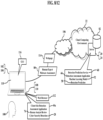
- FIG. 8 illustrates examples using web pages.
- the analyst's computer 102 stores and executes a web browser 112 that interfaces with the client-side version 44a of the detection assessment application.
- the human cyber security analyst expert 100 conducts the human analyst review 76, the user commands the client-side version 44a of the detection assessment application to establish communication with the server 24 and to access the electronic database 82 logging the cyber security detection 28.
- the web browser 112 and the client-side version 44a cooperate to request and to receive a webpage 114 having content representing the cyber security detection 28 retrieved from the electronic database 82.
- the analyst's computer 102 processes and displays the webpage 114 as a graphical user interface (GUI) 116 via a display device 118.
- GUI graphical user interface
- the human cyber security analyst expert 100 may thus scrutinize the cyber security detection 28 and type or enter the human expert cyber security assessment 80.
- the web browser 112 and the client-side version 44a cooperate to send the human expert cyber security assessment 80 via the communications network 106 and the cloud-computing environment 22 to the server 24.
- the detection assessment application 44 adds a database entry to the electronic database 82 that associates the human expert cyber security assessment 80 to the cyber security detection 28.
- the human expert cyber security assessment 80 may thus be used to train the machine learning model 52.
- the machine-learned cyber security detection prediction service 40 may thus rely on the human cyber security analyst experts 100. While the detection assessment application 44 may autonomously and automatically generate the detection prediction 58 (using the machine learning model 52), the cyber security detection prediction service 40 is improved by training using the human expert cyber security assessments 80. While some analysts may merely rely on the detection prediction 58 as a fast-track determination and response, ongoing involvement of the human cyber security analyst experts 100 continuously improves the strength of the detection prediction 58. As the maliciousness 34 (illustrated in FIG. 7 ) continuously evolves and obfuscates, the guidance, training, and experience provided by the human cyber security analyst experts 100 curates the dataset from which the detection prediction 58 is developed.
- FIG. 9 illustrates examples of containerized architectures.
- FIG. 9 again illustrates the server 24 communicating with the other servers, devices, computers, or other network members 26 operating within, or affiliated with, the cloud-computing environment 22 (e.g ., public Internet, private network, and/or hybrid network).
- the server 24 is programmed to provide the cyber security detection prediction service 40 as one or more cloud services 130 associated with the cloud-computing environment 22.
- the detection assessment application 44 may thus instruct or cause the server 24 to provide the cloud service 130, perhaps on demand, on behalf of a service provider 132.
- the detection assessment application 44 may be executed by, or associated with, a virtual machine 134.
- the detection assessment application 44 in particular, may be packaged as an isolated container 136 that contains all of the necessary elements to provide the cloud service 130.
- the detection assessment application 44 for simplicity, is thus known as a containerized service 136 and 130.
- the cloud-computing environment 22 delivers hosted cloud-native services, like storage, servers, and application services (such as the cyber security detection prediction service 40), via the cloud-computing environment 22.
- hosted cloud-native services like storage, servers, and application services (such as the cyber security detection prediction service 40)
- application services such as the cyber security detection prediction service 40
- the detection assessment application 44 instructs the server 24 to provide the malware containerized service 136 and 130 and assess the cyber security detection 28, as this disclosure above explains.
- the detection prediction 58 speeds human review.
- the human expert cyber security assessments 80 provide a thorough cyber security assessment of the cyber security detection 28 and its detailed data 86. Because the machine learning model (illustrated as reference numeral 52 in FIGs. 2-8 ) is trained using the human expert cyber security assessments 80, the cyber security detection prediction service 40 (illustrated in FIGs. 2-8 ) generates better predictive decisions about what customer detections are true positive reports 70 and false positive reports 60 (illustrated in FIGs. 2-7 ). As the human cyber security analyst expert 100 performs the human analyst review 76 and scrutinizes the cyber security detection 28, the web browser 112 and the client-side version 44a may cooperate to send and display the detection prediction 58 via the graphical user interface (GUI) 116 (all illustrated in FIG. 8 ).
- GUI graphical user interface
- the human cyber security analyst expert 100 may also consider the detection prediction 58.
- the detection prediction 58 may aid in diagnosing a customer detection.
- the detection assessment application 44 may further provide a list of any classification 90 that the machine learning model 52 disagrees with the most in order to seed an escalation for more investigation.
- the cloud-based cyber security detection prediction service 40 thus reveals what aspects of an incoming detection make it a likely false positive report 60 or a true positive report 70.
- the machine learning model 52 is trained using the human expert cyber security assessments 80 associated with the cyber security detections 28 (illustrated in FIG. 8 ).
- Each human expert cyber security assessment 80 may thus include or reference the detailed data 86 associated with the corresponding cyber security detection 28. While the detailed data 86 may include hundreds or even thousands of parameters, current testing reveals that only some features need be extracted.
- the detection assessment application 44 may extract a best feature set that includes features from a couple of categories: direct, behavior categories and hash features.
- the direct features are a severity and confidence fields directly from the documentation describing the cyber security detection 28.
- the behavior categories are, for example, behavior_id, pattern_disposition, template_instance_id, and user_type fields from each of first ten (10) behaviors.
- the cloud-based cyber security detection prediction service 40 may capture any information from large detections.
- the hash features may include information from VIRUSTOTAL ® about the hashes involved in each behavior.
- the feature vector length is currently 138.
- the features may further include information from the command line already available in the data 86 and from outside, data sources (such as CROWDSTRIKE THREAT GRAPH° and CROWDSTRIKE CROWDSCORE°) that add more context.
- the machine learning model 52 is trained using the extracted features. During experimental testing, the machine learning model 52 was trained using the XGBOOST ® library. Categorical features were used to better reflect what the incoming data is and to improve performance. The machine learning model 52 may be preferably kept lighter so that retraining may be performed multiple times per day as it learns from analysts' decisions in real time.
- the detection assessment application 44 may utilize application programming interfaces to interact with the machine learning model 52. Moreover, the detection assessment application 44 may further generate and provide the machine learning model's top disagreements with analysts' decisions.
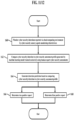
- FIG. 10 illustrates examples of a method or operations executed by the computer 20 that assess and resolve the cyber security detection 28.
- the computer 20 compares the cyber security detection 28 to the cyber security assessment profile 50 generated by the machine learning model 52 trained using the human expert cyber security assessments 80 (Block 150).
- the computer 20 generates the detection prediction 58 based on the comparing of the cyber security detection 28 to the cyber security assessment profile 50 (Block 152).
- the computer 20 may determine the detection prediction 58 to be the true positive report 70 (Block 154) or the false positive report 60 (Block 156).
- FIG. 11 illustrates examples of another method or operations executed by the computer 20 that assess and resolve the cyber security detection 28.
- the computer 20 monitors the cyber security detections 28 reported via the cloud-computing environment 22 by the cyber security sensory agents 90 monitoring the client devices 30 for the maliciousness 34 (Block 160).
- the computer 20 compares the cyber security detections 28 to the cyber security assessment profile 50 generated by the machine learning model 52 trained exclusively using the human expert cyber security assessments 80 (Block 162).
- the computer 20 generates the malware predictions 58 based on the comparing of the cyber security detections 28 to the cyber security assessment profile 50 (Block 164).
- the computer 20 may determine the detection prediction 58 to be the true positive report 70 (Block 166) or the false positive report 60 (Block 168).
- FIG. 12 illustrates a more detailed example of the operating environment.
- FIG. 12 is a more detailed block diagram illustrating the computer 20 (and thus the server 24 and the network member 26).
- the detection assessment application 44 is stored in the memory subsystem or device 46.
- One or more of the hardware processors 42 communicate with the memory subsystem or device 46 and execute the detection assessment application 44.
- Examples of the memory subsystem or device 46 may include Dual In-Line Memory Modules (DIMMs), Dynamic Random Access Memory (DRAM) DIMMs, Static Random Access Memory (SRAM) DIMMs, non-volatile DIMMs (NV-DIMMs), storage class memory devices, Read-Only Memory (ROM) devices, compact disks, solid-state, and any other read/write memory technology. Because the computer 20 is known to those of ordinary skill in the art, no detailed explanation is needed.
- DIMMs Dual In-Line Memory Modules
- DRAM Dynamic Random Access Memory
- SRAM Static Random Access Memory
- NV-DIMMs non-vola
- the computer 20 may have any embodiment. This disclosure mostly discusses the computer 20 as the server 24.
- the cloud-based cyber security detection prediction service 40 may be easily adapted to mobile computing, wherein the computer 20 may be a smartphone, a laptop computer, a tablet computer, or a smartwatch.
- the cloud-based cyber security detection prediction service 40 may also be easily adapted to other embodiments of smart devices, such as a television, an audio device, a remote control, and a recorder.
- the cloud-based cyber security detection prediction service 40 may also be easily adapted to still more smart appliances, such as washers, dryers, and refrigerators. Indeed, as cars, trucks, and other vehicles grow in electronic usage and in processing power, the cloud-based cyber security detection prediction service 40 may be easily incorporated into any vehicular controller.
- the above examples of the cloud-based cyber security detection prediction service 40 may be applied regardless of the networking environment.
- the cloud-based cyber security detection prediction service 40 may be easily adapted to stationary or mobile devices having wide-area networking (e.g ., 4G/LTE/5G cellular), wireless local area networking (WI-FI ® ), near field, and/or BLUETOOTH ® capability.
- the cloud-based cyber security detection prediction service 40 may be applied to stationary or mobile devices utilizing any portion of the electromagnetic spectrum and any signaling standard (such as the IEEE 802 family of standards, GSM/CDMA/TDMA or any cellular standard, and/or the ISM band).
- the cloud-based cyber security detection prediction service 40 may be applied to any processor-controlled device operating in the radio-frequency domain and/or the Internet Protocol (IP) domain.
- IP Internet Protocol
- the cloud-based cyber security detection prediction service 40 may be applied to any processor-controlled device utilizing a distributed computing network, such as the Internet (sometimes alternatively known as the "World Wide Web"), an intranet, a local-area network (LAN), and/or a wide-area network (WAN).
- the cloud-based cyber security detection prediction service 40 may be applied to any processor-controlled device utilizing power line technologies, in which signals are communicated via electrical wiring. Indeed, the many examples may be applied regardless of physical componentry, physical configuration, or communications standard(s).
- the computer 20 and the network members 26 may utilize any processing component, configuration, or system.
- the cloud-based cyber security detection prediction service 40 may be easily adapted to any desktop, mobile, or server central processing unit or chipset offered by INTEL ® , ADVANCED MICRO DEVICES ® , ARM ® , APPLE ® , TAIWAN SEMICONDUCTOR MANUFACTURING ® , QUALCOMM ® , or any other manufacturer.
- the computer 20 may even use multiple central processing units or chipsets, which could include distributed processors or parallel processors in a single machine or multiple machines.
- the central processing unit or chipset can be used in supporting a virtual processing environment.
- the central processing unit or chipset could include a state machine or logic controller. When any of the central processing units or chipsets execute instructions to perform "operations," this could include the central processing unit or chipset performing the operations directly and/or facilitating, directing, or cooperating with another device or component to perform the operations.
- the cloud-based cyber security detection prediction service 40 may use packetized communications.
- information may be collected, sent, and retrieved.
- the information may be formatted or generated as packets of data according to a packet protocol (such as the Internet Protocol).
- the packets of data contain bits or bytes of data describing the contents, or payload, of a message.
- a header of each packet of data may be read or inspected and contain routing information identifying an origination address and/or a destination address.
- the cloud-computing environment 22 may utilize any signaling standard.
- the cloud-computing environment 22 may mostly use wired networks to interconnect the network members 26.
- the cloud-based cyber security detection prediction service 40 may utilize any communications device using the Global System for Mobile (GSM) communications signaling standard, the Time Division Multiple Access (TDMA) signaling standard, the Code Division Multiple Access (CDMA) signaling standard, the "dual-mode" GSM-ANSI Interoperability Team (GAIT) signaling standard, or any variant of the GSM/CDMA/TDMA signaling standard.
- GSM Global System for Mobile
- TDMA Time Division Multiple Access
- CDMA Code Division Multiple Access
- GIT GSM-mode Interoperability Team
- the cloud-based cyber security detection prediction service 40 may also utilize other standards, such as the I.E.E.E. 802 family of standards, the Industrial, Scientific, and Medical band of the electromagnetic spectrum, BLUETOOTH ® , low-power or near-field, and any other standard or value.
- the cloud-based cyber security detection prediction service 40 may be physically embodied on or in a computer-readable storage medium.
- This computer-readable medium may include CD-ROM, DVD, tape, cassette, floppy disk, optical disk, USB flash memory drive, memory card, memory drive, and large-capacity disks.
- This computer-readable medium, or media could be distributed to end-subscribers, licensees, and assignees.
- a computer program product comprises processor-executable instructions for providing the cloud-based cyber security detection prediction service 40, as the above paragraphs explain.
- first, second, and so on may be used herein to describe various elements, these elements should not be limited by these terms. These terms are only used to distinguish one element from another.
- a first computer or container could be termed a second computer or container and, similarly, a second device could be termed a first device without departing from the teachings of the disclosure.
Landscapes
- Engineering & Computer Science (AREA)
- Computer Security & Cryptography (AREA)
- General Engineering & Computer Science (AREA)
- Computer Hardware Design (AREA)
- Software Systems (AREA)
- Theoretical Computer Science (AREA)
- Computing Systems (AREA)
- Signal Processing (AREA)
- Computer Networks & Wireless Communication (AREA)
- General Physics & Mathematics (AREA)
- Physics & Mathematics (AREA)
- Computer Vision & Pattern Recognition (AREA)
- Medical Informatics (AREA)
- Evolutionary Computation (AREA)
- Databases & Information Systems (AREA)
- Artificial Intelligence (AREA)
- Data Exchanges In Wide-Area Networks (AREA)
- Computer And Data Communications (AREA)
Abstract
Description
- The subject matter described herein generally relates to computers and to computer security and, more particularly, the subject matter relates to a cloud-service detection maliciousness predictor.
- Cyber security threats are always increasing. Every week, a cyber security service provider may receive thousands of reports of viruses, hacks, and other malicious software (or malware). Each cyber security detection purportedly describes suspicious behavior, identity, location, or other data that may indicate malicious activity that could be impacting a device, and this malicious activity could be through the use of malware or other tools. These cyber security detections are manually inspected and assessed by human expert analysts. The human expert analysts scrutinize each cyber security detection for malware, for malicious user activity, and/or for malicious use of legitimate software. The human expert analysts confirm whether the cyber security detection is truly suspicious (a true positive report) or harmless activity (a false positive report). Needless to say, human inspection and assessment requires great skill and much time. As the volume of cyber security detections is always increasing, the human expert analysts struggle to manage the volume.
- A cloud-based cyber security detection prediction service detects and pre-screens cyber security detections. The cloud-based cyber security detection prediction service monitors the cyber security detections reported to a cloud-computing environment. The cyber security detections may be reported by cyber security sensory agents executed by client devices. The cloud-based cyber security detection prediction service compares the cyber security detections to a cyber security assessment profile generated by a machine learning model. The machine learning model is trained using cyber security assessments conducted by human expert cyber security analysts. These human expert cyber security analysts scrutinize the thousands of weekly cyber security detections. The human expert cyber security analysts are specially-trained, subject matter experts in detecting malicious behavior, malicious usage, and malware infecting client devices. As the human expert cyber security analysts scrutinize the thousands of weekly cyber security detections, the cloud-based cyber security detection prediction service comprehensively stores and logs the details of each cyber security assessment conducted by the human expert cyber security analysts. The cloud-based cyber security detection prediction service may thus train the machine learning model using these human expert cyber security assessments that were historically collected over time and over millions of cyber security detections. By comparing any current cyber security detection to a cyber security detection assessment profile generated by the machine learning model, the cloud-based cyber security detection prediction service generates quick and accurate detection predictions. The cloud-based cyber security detection prediction service predicts whether any cyber security detection is truly suspicious (a true positive report) or is harmless activity (a false positive report). The cloud-based cyber security detection prediction service enables an elegantly simple and fast pre-screening of the cyber security detections. The cloud-based cyber security detection prediction service thus provides much faster detection and assessment that easily manages the ever-increasing reports of suspiciousness from the client devices.
- Accordingly there is provided a method as detailed in
claim 1. Advantageous features are provided in the dependent claims. A computing device is also provided. A computer program per the independent claim is also provided, with advantageous features detailed in the claims dependent thereon. - The features, aspects, and advantages of malicious prediction are understood when the following Detailed Description is read with reference to the accompanying drawings, wherein:
-
FIGs. 1-3 illustrate some examples of assessing malware detections reported by clients; -
FIG. 4 illustrates examples of malware assessment services; -
FIGs. 5-6 illustrate examples of historical malware expertise; -
FIG. 7 illustrates detailed examples of cyber security detections; -
FIG. 8 illustrates examples of remote access; -
FIG. 9 illustrates examples of containerized malware assessment services; -
FIGs. 10-11 illustrate examples of methods or operations that assess and resolve the cyber security detections; and -
FIG. 12 illustrates a more detailed example of an operating environment. - Some examples relate to detection and assessment of malicious computer activities, behaviors, and usage. A cloud-based cyber security detection prediction service monitors cyber security detections reported to a cloud-computing environment. The cyber security detections are reported by cyber security sensory agents downloaded to smartphones, computers, servers, and other endpoint devices. Each cyber security sensory agent monitors its endpoint device for viruses, hacks, suspicious usage, and malicious software (or malware). Should the cyber security sensory agent detect suspicious behavior, identity, location, or other data, the cyber security sensory agent sends a cyber security detection to the cloud-computing environment. When the cloud-based cyber security detection prediction service receives the cyber security detection, the cloud-based cyber security detection prediction service submits the cyber security detection to a cyber security assessment profile generated by a machine learning model. The cyber security assessment profile statistically reflects thousands or even millions of cyber security assessments conducted by human expert cyber security analysts. These human expert cyber security analysts scrutinize the thousands of cyber security detections reported each week. The human expert cyber security analysts are thus subject matter experts in detecting malicious behavior, identity, location, and coding. The cloud-based cyber security detection prediction service trains the machine learning model using human expert cyber security assessments that were historically collected over time and over millions of cyber security detections. Because the machine learning model is trained using these human expert cyber security assessments, the cyber security assessment profile (generated by the machine learning model) reflects the very accurate, deep-dive analyses performed by the human expert cyber security analysts. The cyber security assessment profile, in other words, may describe normal or harmless behaviors, identities, locations, or other data as determined by the human expert cyber security analysts. The cyber security assessment profile, however, may additionally or alternatively describe abnormal or unexpected behaviors, identities, locations, or other data as also determined by the human expert cyber security analysts. So, by comparing the cyber security detections to the cyber security assessment profile, the cloud-based cyber security detection prediction service quickly and accurately predicts whether any cyber security detection is truly malicious (a true positive report) or is harmless activity (a false positive report). The cloud-based cyber security detection prediction service thus provides much faster cyber security assessment and easily manages the ever-increasing reports of maliciousness from the client devices.
- Cloud services cyber security detection prediction will now be described more fully hereinafter with reference to the accompanying drawings. Cloud services cyber security detection prediction, however, may be embodied in many different forms and should not be construed as limited to the examples set forth herein. These examples are provided so that this disclosure will be thorough and complete and fully convey cloud services malware assessment to those of ordinary skill in the art. Moreover, all the examples of cloud services malware assessment are intended to encompass both structural and functional equivalents thereof. Additionally, it is intended that such equivalents include both currently known equivalents as well as equivalents developed in the future (i.e., any elements developed that perform the same function, regardless of structure).
-
FIGs. 1-3 illustrate some examples of assessing detections reported by clients. Acomputer 20 operates in a cloud-computing environment 22.FIG. 1 illustrates thecomputer 20 as aserver 24. Thecomputer 20, though, may be any processor-controlled device, as later paragraphs will explain. In this example, theserver 24 communicates via the cloud-computing environment 22 (e.g., public Internet, private network, and/or hybrid network) with other servers, devices, computers, or other networkedmembers 26 operating within, or affiliated with, the cloud-computing environment 22. Theserver 24 is programmed to pre-screen or assesscyber security detections 28 reported by aclient device 30. That is, when theclient device 30 detects suspicious behavior, unusual login/location context, or other potential cyber security threat 32 (as later paragraphs will explain in greater detail), theclient device 30 sends thecyber security detection 28 to the cloud-computing environment 22. Thecyber security detection 28 alerts or notifies the cloud-computing environment 22 that theclient device 30 has detected the potentialcyber security threat 32. Theclient device 30, in other words, has detected a program, process, communication, behavior, location, or some other evidence that may indicate maliciousness 34 (such as malicious behavior, usage, or software/malware). Theclient device 30 may then notify the cloud-computing environment 22 for a fuller, moredetailed detection assessment 36. -
FIGs. 2-3 illustrate some examples of thedetection assessment 36. When the cloud-computing environment 22 receives thecyber security detection 28, the cloud-computing environment 22 may route thecyber security detection 28 to theserver 24 for thedetection assessment 36. Theserver 24 may thus provide a cloud-based cyber securitydetection prediction service 40 to thenetworked members 26 operating within, or affiliated with, the cloud-computing environment 22. Theserver 24 may also provide the cloud-based cyber securitydetection prediction service 40 to other clients (such as the client device 30). Theserver 24 has at least one hardware processor 42 (illustrated as "CPU") that executes adetection assessment application 44 stored in amemory device 46. Theserver 24 also has network interfaces (illustrated as "NI") 48 to multiple communications networks (such as the cloud-computing environment 22 illustrated inFIG. 1 ), thus allowing bi-directional communications with networked devices. When theserver 24 receives thecyber security detection 28, thedetection assessment application 44 may be a computer program, instruction(s), or code that instructs or causes theserver 24 to preliminarily assess thecyber security detection 28. - The
server 24 performs the fast and effective cyber securitydetection prediction service 40. When theserver 24 receives thecyber security detection 28, theserver 24 executes thedetection assessment application 44 as a predictor engine. Theserver 24 may ingest thecyber security detection 28 as an input, and thedetection assessment application 44 instructs theserver 24 to compare thecyber security detection 28 to a cybersecurity assessment profile 50 generated by amachine learning model 52. The cybersecurity assessment profile 50 may statistically define or specify process events, communications, activities, behaviors, data values, patterns, contextual login/location, or other electronic content that have been humanly assessed as safe ornormal operation 54. The cybersecurity assessment profile 50, in other words, may describe normal or harmless behaviors, identities, locations, or other data as determined by human cyber security subject matter experts in detecting themaliciousness 34. The cybersecurity assessment profile 50 may thus represent historical human analysts' confirmations or observations of information, data, bits/bytes, and/or other electronic content that is/are known to indicatenormal operation 54. Whatever information or data is described by, or included with, thecyber security detection 28, that information or data may be compared to the cybersecurity assessment profile 50. If the electronic content represented by thecyber security detection 28 equals, matches, satisfies, lies within, or conforms to the cybersecurity assessment profile 50, then thedetection assessment application 44 may determine that thecyber security detection 28 is safe ornormal operation 54. That is, even though theclient device 30 reported thecyber security detection 28 as thepossible maliciousness 34, the cybersecurity assessment profile 50 reveals that thecyber security detection 28 is actually normal or harmless behaviors, identities, locations, or other data, as determined by the human subject matter experts in detecting themaliciousness 34. Thecyber security detection 28, in other words, is a false alarm and lacks electronic content determined by the human cyber security expert analysts to be themaliciousness 34, as defined or specified by the cybersecurity assessment profile 50. - The
server 24 may thus statistically identify the safe ornormal operation 54. Because themachine learning model 52 builds the cybersecurity assessment profile 50, themachine learning model 52 may statistically predict a range of the safe ornormal operation 54. The cybersecurity assessment profile 50, in other words, may specify names, processes, and/or values that describe ranges of the safe ornormal operation 54, such as terms defining normal or expected process events, communications, activities, behaviors, data values, patterns, contextual login/location, or other electronic content. These terms, associated with the safe ornormal operation 54, derive from the human cyber security subject matter experts scrutinizing thousands or millions of historicalcyber security detections 28. As a simple example, themachine learning model 52 may generate the cybersecurity assessment profile 50 using Gaussian probability distributions based on cybersecurity training data 56 derived from the human cyber security subject matter experts. One or more standard deviations and confidence intervals may then be calculated to predict ranges of the safe ornormal operation 54. As thedetection assessment application 44 inspects the currentcyber security detection 28, the statistical models may be used to predict that thecyber security detection 28 lies within, or deviates or differs from, the cybersecurity assessment profile 50. - The
server 24 may generate adetection prediction 58. When any data associated with the currentcyber security detection 28 conforms to the cybersecurity assessment profile 50, thedetection assessment application 44 may thus instruct theserver 24 to determine thecyber security detection 28 is the safe ornormal operation 54. Theserver 24 may thus generate thedetection prediction 58 as an output, and thedetection prediction 58 determines, or predicts, that thecyber security detection 28 is actually the safe ornormal operation 54. That is, even though theclient device 30 reported thecyber security detection 28 as thepossible maliciousness 34, the cybersecurity assessment profile 50 actually reveals thecyber security detection 28 to be normal or harmless processes, behaviors, identities, locations, or other data, as determined by the human cyber security subject matter experts. Because thecyber security detection 28 may be statistically described as thenormal operation 54, thedetection assessment application 44 may instruct theserver 24 to label, sort, or classify thecyber security detection 28 as a falsepositive report 60. Thecyber security detection 28, in simple words, is a false alarm. Thedetection assessment application 44 may further label, sort, or classify thecyber security detection 28 as benign, low priority, and/or not requiring further malware investigation. Urgent resources may thus be allocated to other, higher-priority detections. - As
FIG. 3 illustrates, though, thecyber security detection 28 may be a truepositive report 70. When theserver 24 compares thecyber security detection 28 to the cyber security assessment profile 50 (as instructed by the detection assessment application 44), thecyber security detection 28 may not conform to the cybersecurity assessment profile 50. The data or electronic content associated with thecyber security detection 28, in other words, fails to equal, match, satisfy, or lie within thenormal operation 54, as statistically defined or specified by the cybersecurity assessment profile 50. Because thecyber security detection 28 cannot be characterized asnormal operation 54, thedetection assessment application 44 may determine that thecyber security detection 28 is an outlier oranomaly detection 72. Thecyber security detection 28 may thus describe abnormal, anomalous, or perhaps even harmful processes, behaviors, identities, locations, or other data. Thedetection assessment application 44 instructs theserver 24 to generate thedetection prediction 58 as an output, and thedetection prediction 58 identifies thecyber security detection 28 as the outlier oranomaly detection 72. Thedetection assessment application 44 may further instruct theserver 24 to label, sort, or classify thecyber security detection 28 as the truepositive report 70 of themaliciousness 34. Thedetection assessment application 44 may further instruct theclient device 30 to implement notification/quarantine/isolation/halt or otherurgent threat procedures 74. Thedetection assessment application 44 may also hand-off and queue thecyber security detection 28 for ahuman analyst review 76 by the cyber security subject matter experts. Because thecyber security detection 28 has been screened and preliminarily assessed as the truepositive report 70, thedetection assessment application 44 may route thecyber security detection 28 to a human expert or group of human experts for an urgent, deep-dive analysis. - Computer functioning is greatly improved. Malicious software can ruin computer operations. The
server 24 must quickly identify themaliciousness 34 to minimize damage to theclient computers 30. Because thedetection assessment application 44 utilizes themachine learning model 52, the cloud-based cyber securitydetection prediction service 40 is very fast and very simple to execute. Theserver 24 need merely compare thecyber security detection 28 to the ranges referenced by the cybersecurity assessment profile 50. The cybersecurity assessment profile 50 consumes little space (in bits/bytes) in thememory device 46. Moreover, because comparisons may be simple logical statements, thehardware processor 42 requires less cycles and less time to classify thecyber security detection 28. Computer resources are reduced, and less electrical power is required to test for presence of themaliciousness 34. The cloud-based cyber securitydetection prediction service 40 is thus very fast and very simple, allowing theserver 24 to quickly assess the thousands ofcyber security detections 28 reported each week. The cloud-based cyber securitydetection prediction service 40 thus greatly improves computer functioning of theserver 24 when detecting themaliciousness 34. -
FIG. 4 illustrates more examples of the cyber securitydetection prediction service 40. Here the cybersecurity assessment profile 50 may be created to statistically define the outlier oranomaly detection 72. Themachine learning model 52, in other words, may be trained to build a statistical model that predicts evidence of themaliciousness 34, as again derived from the human cyber security subject matter experts. The cybersecurity assessment profile 50 may thus statistically specify names, processes, and/or values that describe the range of the outlier oranomaly detection 72, such as terms defining known, suspicious, or unexpected process events, communications, activities, behaviors, data values, patterns, contextual login/location, or other electronic content. These terms associated with the outlier oranomaly detection 72 derive from the human cyber security subject matter experts scrutinizing thousands/millions of malware detections. If thecyber security detection 28 conforms to the cybersecurity assessment profile 50, then thedetection assessment application 44 may instruct theserver 24 to generate thedetection prediction 58 and to label, sort, or classify thecyber security detection 28 as the truepositive report 70 of themaliciousness 34. If, however, thecyber security detection 28 fails to conform to the cybersecurity assessment profile 50, then thedetection assessment application 44 may instruct theserver 24 to generate thedetection prediction 58 and to label, sort, or classify thecyber security detection 28 as thenormal operation 54. -
FIGs. 5-6 illustrate examples of historical cyber security expertise. As this disclosure above explained, every week the cloud-computing environment 22 may receive thousands of thecyber security detections 28. Thecyber security detections 28 are sent by theclient devices 30. While this disclosure only illustrates afew client devices 30, in actual practice there may be millions ofclient devices 30 reporting thousands ofcyber security detections 28 each week. Eachcyber security detection 28 may then be scrutinized by human cyber security expert analysts. These human cyber security expert analysts work 24/7/365 to manually review thecyber security detections 28. These human cyber security expert analysts ensure that no malicious detections are missed. The human cyber security expert analysts are specially-trained, subject matter experts in detecting themaliciousness 34. Over time, then, the human cyber security expert analysts have precisely labeled and classified millions of thecyber security detections 28. The cloud-based cyber securitydetection prediction service 40 thus leverages this rich and extensive cyber security knowledge developed by the best cyber security threat hunters. - The cyber security
detection prediction service 40 may thus retain records of these human expertcyber security assessments 80. As the human cyber security expert analysts scrutinize the thousands of weeklycyber security detections 28, the cloud-based cyber securitydetection prediction service 40 comprehensively stores and logs the details of each human expertcyber security assessment 80 conducted by the human cyber security expert analysts. The cloud-based cyber securitydetection prediction service 40 may thus retain vast amounts of institutional cyber security knowledge developed over months/years by the subject matter experts in detecting themaliciousness 34. While any architecture or component may represent this historical cyber security expertise,FIGs. 5-6 illustrate anelectronic database 82 of cyber security detections. Theelectronic database 82 of cyber security detections stores an electronic record of eachcyber security detection 28 and the corresponding human expertcyber security assessment 80 conducted by the human cyber security expert analyst(s). - The cyber security
detection prediction service 40 thus maintains a rich repository of historical cyber security knowledge. As the cloud-computing environment 22 receives and assesses thecyber security detections 28, the cloud-computing environment 22 may collect and store thecyber security detections 28 to theelectronic database 82 of cyber security detections. While theelectronic database 82 may be remotely stored and accessed/queried from any networked location, for simplicityFIG. 5 illustrates theelectronic database 82 as being locally stored in thememory device 46 of theserver 24. Even though theelectronic database 82 may have any logical structure, a relational database is perhaps easiest to understand.FIG. 6 thus illustrates theelectronic database 82 as a table 84 having row and columnar database entries that map, relate, convert, or associate differentcyber security detections 28 to their corresponding electronic data 86 and to their corresponding human expertcyber security assessment 80. As the manycyber security detections 28 are routed to theserver 24, thedetection assessment application 44 may add database entries that log eachcyber security detection 28, its corresponding date/time stamp 88, and its corresponding electronic data 86 (such as process event, communication address, activity, behavior, data value, bit pattern, and/or contextual login/location). Moreover, if thecyber security detection 28 was scrutinized during thehuman analyst review 76, theelectronic database 82 may further log and identify the names/identifiers of the human expert analyst(s) and his/her/their human expertcyber security assessment 80. The human expertcyber security assessment 80 may thus also include any classification or label(s) 90 applied by the human cyber security expert analyst(s), such as whether thecyber security detection 28 was finally assessed to be themaliciousness 34. The human expertcyber security assessment 80 may also include notes or analysis used/applied by the human cyber security expert analyst(s) to assess thecyber security detection 28. So, when the cloud-based cyber securitydetection prediction service 40 receives and evaluates any new or currentcyber security detection 28, the cloud-based cyber securitydetection prediction service 40 may query theelectronic database 82 of cyber security detections and identify and/or retrieve any historically-assessedcyber security detection 28 that was previously logged. If a matching database entry is determined, then thedetection assessment application 44 may identify and/or retrieve any corresponding columnar/row entries. - The cloud-based cyber security
detection prediction service 40 thus leverages this rich and extensive malware knowledge developed by the best cyber security threat hunters. Theelectronic database 82 of cyber security detections may be tapped to train themachine learning model 52. Thedetection assessment application 44, for example, may retrieve any of the database entries (e.g., thecyber security detection 28, the date/time stamp 88, the electronic data 86, the human expert analyst(s), the human expertcyber security assessment 80, the classification or label(s) 90, and notes or analysis). Thedetection assessment application 44 may then use the database entries as the cybersecurity training data 56 to themachine learning model 52. Themachine learning model 52 may thus generate the cybersecurity assessment profile 50 that statistically describes the safe or normal operation 54 (and/or the outlier or anomaly detection 72), as derived from the cyber security expert analysts. Indeed, the database entries associated with the human expertcyber security assessments 80 may be exclusively or solely used to train themachine learning model 52, thus generating the cybersecurity assessment profile 50 to reflect only the human expertcyber security assessments 80 performed or conducted by the human cyber security analyst experts. So, when thedetection assessment application 44 inspects thecyber security detection 28, themachine learning model 52 generates thedetection prediction 58 that far more precisely distinguishes the falsepositive reports 60 from the truepositive reports 70, based on the deep-dive analyses that only the human cyber security expert analyst(s) can provide. Themachine learning model 52 thus accurately predicts whether a detection or activity is malicious or not, but themachine learning model 52 may additionally predict what the required actions could be on the detection. The cloud-based cyber securitydetection prediction service 40 may thus automates the processing and handling of thecyber security detections 28 and also reveals and highlights important detections related to particular threat actors. The cloud-based cyber securitydetection prediction service 40 reflects vast amounts of institutional cyber security knowledge developed by the human cyber security expert analysts in detecting themaliciousness 34. - The cloud-based cyber security
detection prediction service 40 is highly accurate. The cloud-based cyber securitydetection prediction service 40 generates thedetection prediction 58 as the falsepositive report 60 or as the truepositive report 70. Thedetection prediction 58 is based on deep level machine analysis of thousands of similar detections and the historical human expertcyber security assessments 80 made by subject matter experts in detecting themaliciousness 34. The human cyber security expert analysts are available around the clock to assess anycyber security detection 28 and to remediate as required. However, to ensure that no maliciousness goes undetected, thecyber security detections 28 often report innocuous activity. As a result, a significant part of the cloud-based cyber securitydetection prediction service 40 is dealing with incorrect detections quickly and accurately. The cloud-based cyber securitydetection prediction service 40 may thus capture and retain the human expertcyber security assessments 80 made by the human cyber security expert analysts. Over time, then, millions ofcyber security detections 28 are assessed by the human cyber security expert analysts. These human expertcyber security assessments 80 represent a vast institutional knowledge of detecting and stopping cyber security attacks. As a result, cloud-based cyber securitydetection prediction service 40 sits on top of an incredibly large set of accurately labeled, expertly-analyzed detection data from real-world detections within well maintained customer and client environments. - The cloud-based cyber security
detection prediction service 40 leverages machine learning and the human expertcyber security assessments 80. The cloud-based cyber securitydetection prediction service 40 pulls any or all data details for a detection reported by thecyber security detection 28. The cloud-based cyber securitydetection prediction service 40 compares the detailed data 86 (associated with the cyber security detection 28) to the cybersecurity assessment profile 50 generated by themachine learning model 52. The cloud-based cyber securitydetection prediction service 40 generates thedetection prediction 58, based on historical observations or historical artifacts that relate to whether thecyber security detection 28 is the Truepositive report 70 or the Falsepositive report 60 with a high level of confidence. - The cloud-based cyber security
detection prediction service 40 provides many improvements to computer functioning. The cybersecurity assessment profile 50, for example, is autonomously and automatically generated by themachine learning model 52. Conventional malware detection solutions use manually-generated profiles that are exceptionally laborious to create and slow to implement. Manually-generated profiles, in plain words, are simply too complicated to humanly complete, as hundreds or even thousands of rules must be coded. In practice, then, manually-generated profiles are too simple and incomplete, thus causing conventional malware detection products to under catch, or over catch, themaliciousness 34. Moreover, conventional detection schemes train machine learning models with threat data. That is, conventional schemes train machine learning models to identity or predict malware using known, previously discovered vulnerability traits. These conventional schemes, in other words, fail to detect new or unknown vulnerabilities that can wreak havoc on theclient devices 30. The conventional schemes must also repeatedly retrain the machine learning models to recognize the latest-discovered threat. The cloud-based cyber securitydetection prediction service 40, in contradistinction, trains themachine learning model 52 with the human expertcyber security assessments 80 determined by the human cyber security analyst experts. These historical human expertcyber security assessments 80 are much more accurate and nuanced in describing and differentiating the falsepositive reports 60 from the true positive reports 70. Because theserver 24 implements themachine leaning model 52 trained using the historical human expertcyber security assessments 80 determined by the human cyber security analyst experts, theserver 24 more accurately recognizes the falsepositive reports 60 and the truepositive reports 70 in much less time. -
FIG. 7 illustrates more detailed examples of thecyber security detections 28. While thedetection assessment application 44 may monitor any desired data, in these examples thedetection assessment application 44 monitors thecyber security detections 28 reported by theclient devices 30. Again, for simplicity,FIG. 7 only illustratesseveral client devices 30a-N. In actual practice, though, there may be thousands, or even millions, of theclient devices 30 operating throughout the world. Eachclient device 30 downloads, stores, and executes a cyber securitysensory agent 90. The cyber securitysensory agent 90 is installed on thecorresponding client device 30. The cyber securitysensory agent 90 thus includes computer program, code, or instructions that scan and monitor itscorresponding client device 30 for events, communications, processes, activities, behaviors, data values, usernames/logins, locations, contexts, and/or patterns that indicate evidence of themaliciousness 34. Should any cyber securitysensory agent 90 detect evidence of themaliciousness 34 at thecorresponding client device 30, the cyber securitysensory agent 90 instructs itsclient device 30 to generate and to report thecyber security detection 28 to the cloud-computing environment 22. Thecyber security detection 28 is routed via access/communications networks 92 to a network address (e.g., IP address) associated with the cloud-computing environment 22. The cloud-computing environment 22 may then route thecyber security detection 28 to the network address (e.g., IP address) associated with theserver 24 hosting or providing the cyber securitydetection prediction service 40. Theserver 24 logs eachcyber security detection 28 in theelectronic database 82 of cyber security detections. Thecyber security detection 28 may include a detailed description of the client device 30 (e.g., make, model, software and hardware inventory) and the events, communications, activities, behaviors, data values, and/or patterns that triggered reporting. Theserver 24 executes thedetection assessment application 44 and compares thecyber security detection 28 to the cybersecurity assessment profile 50 generated by the machine learning model 52 (as this disclosure explains). - The cyber security
sensory agent 90 may monitor identity domains and sensory agent domains. The cyber securitysensory agent 90 monitors endpoint processes conducted by theclient device 30. Theclient device 30, in simple words, may be performing/executing an unusual/suspicious process or attempting an unusual/suspicious event, communication, activity, behavior, command line, or data value. The cyber securitysensory agent 90, however, may also monitor identity and contextual indicators, such as login attempts (usernames, passwords, dates/times), webpage domains/requests, locations, IP addresses, and usage of software applications. The cyber securitysensory agent 90 may monitor and report any unusual or suspicious usage context for the cyber securitydetection prediction service 40. Thecyber security detection 28 may thus include a contextual detection that describes any current, unusual, or suspicious identity or context. When theserver 24 receives thecyber security detection 28, theserver 24 logs and stores thecyber security detection 28 to theelectronic database 82 of cyber security detections. Thedetection assessment application 44, in particular, may instruct theserver 24 to add database entries that log the contextual detection in association with the corresponding columnar/row entries. The human expertcyber security assessments 80 may thus include contextual usage/identity/location as determined by the human cyber security analyst experts. - Computer functioning is improved. The
detection assessment application 44 caues theserver 24 to monitor both the identity domains and sensory agent domains. Thedetection assessment application 44 may thus correlate data points across disparate streams and across a period of time. Thedetection assessment application 44 may correlate identity based detections with related sensory agent based detections, and look for patterns that can be used to improve operation efficiency across the two domains. Thedetection assessment application 44 thus more quickly and efficiently detects themaliciousness 34. - The cyber security
sensory agent 90 monitors theclient device 30. The cyber securitysensory agent 90 interfaces with an operating system executed by theclient device 30. The cyber securitysensory agent 90 is a software application or program code stored in a memory device of theclient device 30 and executed by a hardware processor operating within theclient device 30. The cyber securitysensory agent 90 may thus have permissions to monitor any kernel-level activity and/or any user-mode activity conducted by the client device 30 (such as any smartphone, laptop, tablet, server, switch, or other computer). Should the cyber securitysensory agent 90 detect any suspicious activity, the cyber securitysensory agent 90 cooperates with the operating system to generate and send thecyber security detection 28 to the cloud-computing environment 22. - Computer functioning is further improved. Each week the
server 24 may receive thousands ofcyber security detections 28 reported by the millions of the malwaresensory agents 90. Theserver 24 must very quickly assess eachcyber security detection 28 to prevent themaliciousness 34 from damaging theclient devices 30. Theserver 24 must further quickly assess eachcyber security detection 28 to stop themaliciousness 34 from spreading and infecting other machines. However, because theserver 24 executes thedetection assessment application 44 providing the machine-learned cyber securitydetection prediction service 40, theserver 40 need only compare thecyber security detection 28 to the cybersecurity assessment profile 50 using logical statements. The logical statements are quick and easy to execute (requiring reduced hardware resources and electrical power). Theserver 24 requires less time and resources to detect themaliciousness 34. -
FIG. 8 illustrates examples of remote access. When a user (such as the human cyber security analyst expert 100) scrutinizes thecyber security detection 28 and performs thehuman analyst review 76, the analyst'scomputer 102 may interface with theserver 24.FIG. 8 illustrates the analyst'scomputer 102 as aremote laptop computer 104, but the analyst'scomputer 102 may be any smartphone, tablet, server, or other computer. The analyst'scomputer 102 has a network interface to an access network orother communications network 106, thus allowing the analyst'scomputer 102 to establish network communications with the cloud-computing environment 22 and/or with theserver 24. The analyst'scomputer 102 may thus have access permissions to the cloud-computing environment 22 and/or to theserver 24. The analyst'scomputer 102 has ahardware processor 108 that executes a client-side version 44a of the detection assessment application stored in amemory device 110. Thedetection assessment application 44 and the client-side version 44a may cooperate in a client-server relationship to facilitate thehuman analyst review 76 of thecyber security detection 28. - While any mechanism may be used,
FIG. 8 illustrates examples using web pages. The analyst'scomputer 102 stores and executes aweb browser 112 that interfaces with the client-side version 44a of the detection assessment application. When the human cybersecurity analyst expert 100 conducts thehuman analyst review 76, the user commands the client-side version 44a of the detection assessment application to establish communication with theserver 24 and to access theelectronic database 82 logging thecyber security detection 28. Theweb browser 112 and the client-side version 44a cooperate to request and to receive awebpage 114 having content representing thecyber security detection 28 retrieved from theelectronic database 82. The analyst'scomputer 102 processes and displays thewebpage 114 as a graphical user interface (GUI) 116 via adisplay device 118. The human cybersecurity analyst expert 100 may thus scrutinize thecyber security detection 28 and type or enter the human expertcyber security assessment 80. Theweb browser 112 and the client-side version 44a cooperate to send the human expertcyber security assessment 80 via thecommunications network 106 and the cloud-computing environment 22 to theserver 24. When theserver 24 receives the human expertcyber security assessment 80, thedetection assessment application 44 adds a database entry to theelectronic database 82 that associates the human expertcyber security assessment 80 to thecyber security detection 28. The human expertcyber security assessment 80 may thus be used to train themachine learning model 52. - The machine-learned cyber security
detection prediction service 40 may thus rely on the human cybersecurity analyst experts 100. While thedetection assessment application 44 may autonomously and automatically generate the detection prediction 58 (using the machine learning model 52), the cyber securitydetection prediction service 40 is improved by training using the human expertcyber security assessments 80. While some analysts may merely rely on thedetection prediction 58 as a fast-track determination and response, ongoing involvement of the human cybersecurity analyst experts 100 continuously improves the strength of thedetection prediction 58. As the maliciousness 34 (illustrated inFIG. 7 ) continuously evolves and obfuscates, the guidance, training, and experience provided by the human cybersecurity analyst experts 100 curates the dataset from which thedetection prediction 58 is developed. -
FIG. 9 illustrates examples of containerized architectures.FIG. 9 again illustrates theserver 24 communicating with the other servers, devices, computers, orother network members 26 operating within, or affiliated with, the cloud-computing environment 22 (e.g., public Internet, private network, and/or hybrid network). Theserver 24 is programmed to provide the cyber securitydetection prediction service 40 as one ormore cloud services 130 associated with the cloud-computing environment 22. Thedetection assessment application 44 may thus instruct or cause theserver 24 to provide thecloud service 130, perhaps on demand, on behalf of aservice provider 132. Thedetection assessment application 44 may be executed by, or associated with, avirtual machine 134. Thedetection assessment application 44, in particular, may be packaged as anisolated container 136 that contains all of the necessary elements to provide thecloud service 130. Thedetection assessment application 44, for simplicity, is thus known as acontainerized service computing environment 22 delivers hosted cloud-native services, like storage, servers, and application services (such as the cyber security detection prediction service 40), via the cloud-computing environment 22. Various implementations of the cloud-computing environment 22 are possible and could be used in the examples herein described. When theserver 24 receives thecyber security detection 28, thedetection assessment application 44 instructs theserver 24 to provide the malware containerizedservice cyber security detection 28, as this disclosure above explains. - The
detection prediction 58 speeds human review. The human expertcyber security assessments 80 provide a thorough cyber security assessment of thecyber security detection 28 and its detailed data 86. Because the machine learning model (illustrated asreference numeral 52 inFIGs. 2-8 ) is trained using the human expertcyber security assessments 80, the cyber security detection prediction service 40 (illustrated inFIGs. 2-8 ) generates better predictive decisions about what customer detections are truepositive reports 70 and false positive reports 60 (illustrated inFIGs. 2-7 ). As the human cybersecurity analyst expert 100 performs thehuman analyst review 76 and scrutinizes thecyber security detection 28, theweb browser 112 and the client-side version 44a may cooperate to send and display thedetection prediction 58 via the graphical user interface (GUI) 116 (all illustrated inFIG. 8 ). So, as the human cybersecurity analyst expert 100 performs thehuman analyst review 76, the human cybersecurity analyst expert 100 may also consider thedetection prediction 58. Thedetection prediction 58 may aid in diagnosing a customer detection. Moreover, thedetection assessment application 44 may further provide a list of anyclassification 90 that themachine learning model 52 disagrees with the most in order to seed an escalation for more investigation. The cloud-based cyber securitydetection prediction service 40 thus reveals what aspects of an incoming detection make it a likely falsepositive report 60 or a truepositive report 70. - Machine learning is improved. The
machine learning model 52 is trained using the human expertcyber security assessments 80 associated with the cyber security detections 28 (illustrated inFIG. 8 ). Each human expertcyber security assessment 80 may thus include or reference the detailed data 86 associated with the correspondingcyber security detection 28. While the detailed data 86 may include hundreds or even thousands of parameters, current testing reveals that only some features need be extracted. For example, thedetection assessment application 44 may extract a best feature set that includes features from a couple of categories: direct, behavior categories and hash features. The direct features are a severity and confidence fields directly from the documentation describing thecyber security detection 28. The behavior categories are, for example, behavior_id, pattern_disposition, template_instance_id, and user_type fields from each of first ten (10) behaviors. Most detections only have one or two behaviors, but the cloud-based cyber securitydetection prediction service 40 may capture any information from large detections. The hash features may include information from VIRUSTOTAL® about the hashes involved in each behavior. The feature vector length is currently 138. The features may further include information from the command line already available in the data 86 and from outside, data sources (such as CROWDSTRIKE THREAT GRAPH° and CROWDSTRIKE CROWDSCORE°) that add more context. - The
machine learning model 52 is trained using the extracted features. During experimental testing, themachine learning model 52 was trained using the XGBOOST® library. Categorical features were used to better reflect what the incoming data is and to improve performance. Themachine learning model 52 may be preferably kept lighter so that retraining may be performed multiple times per day as it learns from analysts' decisions in real time. Thedetection assessment application 44 may utilize application programming interfaces to interact with themachine learning model 52. Moreover, thedetection assessment application 44 may further generate and provide the machine learning model's top disagreements with analysts' decisions. - Experimental testing was performed. First experiments were conducted using the cyber
security training data 56 of 120,600 1 (true positive) labels and 158,481 0 (false positive) labels (illustrated asreference numeral 90 inFIG. 6 ). Subsequent validation data included 504,94 1 (true positive) labels and 664,71 0 (false positive) labels. The experiments were conducted locally with PYTHON® 3.9 (XGBOOST® 1.6.1). Second experiments were conducted using months of the detailed data 86 associated with thecyber security detections 28. Models are searched with grid search and trained with cross-validation. Best setup is trained again on the entire data to obtain the deliveredmodel 52. For comparing different experiments, the parameters from the best model are used again to train a model with 9-fold cross validation. Experiments are done on AWS° with PYTHON® 3.6.9 (XGBOOST® 1.5.2). -
FIG. 10 illustrates examples of a method or operations executed by thecomputer 20 that assess and resolve thecyber security detection 28. Thecomputer 20 compares thecyber security detection 28 to the cybersecurity assessment profile 50 generated by themachine learning model 52 trained using the human expert cyber security assessments 80 (Block 150). Thecomputer 20 generates thedetection prediction 58 based on the comparing of thecyber security detection 28 to the cyber security assessment profile 50 (Block 152). Thecomputer 20 may determine thedetection prediction 58 to be the true positive report 70 (Block 154) or the false positive report 60 (Block 156). -
FIG. 11 illustrates examples of another method or operations executed by thecomputer 20 that assess and resolve thecyber security detection 28. Thecomputer 20 monitors thecyber security detections 28 reported via the cloud-computing environment 22 by the cyber securitysensory agents 90 monitoring theclient devices 30 for the maliciousness 34 (Block 160). Thecomputer 20 compares thecyber security detections 28 to the cybersecurity assessment profile 50 generated by themachine learning model 52 trained exclusively using the human expert cyber security assessments 80 (Block 162). Thecomputer 20 generates themalware predictions 58 based on the comparing of thecyber security detections 28 to the cyber security assessment profile 50 (Block 164). Thecomputer 20 may determine thedetection prediction 58 to be the true positive report 70 (Block 166) or the false positive report 60 (Block 168). -
FIG. 12 illustrates a more detailed example of the operating environment.FIG. 12 is a more detailed block diagram illustrating the computer 20 (and thus theserver 24 and the network member 26). Thedetection assessment application 44 is stored in the memory subsystem ordevice 46. One or more of thehardware processors 42 communicate with the memory subsystem ordevice 46 and execute thedetection assessment application 44. Examples of the memory subsystem ordevice 46 may include Dual In-Line Memory Modules (DIMMs), Dynamic Random Access Memory (DRAM) DIMMs, Static Random Access Memory (SRAM) DIMMs, non-volatile DIMMs (NV-DIMMs), storage class memory devices, Read-Only Memory (ROM) devices, compact disks, solid-state, and any other read/write memory technology. Because thecomputer 20 is known to those of ordinary skill in the art, no detailed explanation is needed. - The
computer 20 may have any embodiment. This disclosure mostly discusses thecomputer 20 as theserver 24. The cloud-based cyber securitydetection prediction service 40, however, may be easily adapted to mobile computing, wherein thecomputer 20 may be a smartphone, a laptop computer, a tablet computer, or a smartwatch. The cloud-based cyber securitydetection prediction service 40 may also be easily adapted to other embodiments of smart devices, such as a television, an audio device, a remote control, and a recorder. The cloud-based cyber securitydetection prediction service 40 may also be easily adapted to still more smart appliances, such as washers, dryers, and refrigerators. Indeed, as cars, trucks, and other vehicles grow in electronic usage and in processing power, the cloud-based cyber securitydetection prediction service 40 may be easily incorporated into any vehicular controller. - The above examples of the cloud-based cyber security
detection prediction service 40 may be applied regardless of the networking environment. The cloud-based cyber securitydetection prediction service 40 may be easily adapted to stationary or mobile devices having wide-area networking (e.g., 4G/LTE/5G cellular), wireless local area networking (WI-FI®), near field, and/or BLUETOOTH® capability. The cloud-based cyber securitydetection prediction service 40 may be applied to stationary or mobile devices utilizing any portion of the electromagnetic spectrum and any signaling standard (such as the IEEE 802 family of standards, GSM/CDMA/TDMA or any cellular standard, and/or the ISM band). The cloud-based cyber securitydetection prediction service 40, however, may be applied to any processor-controlled device operating in the radio-frequency domain and/or the Internet Protocol (IP) domain. The cloud-based cyber securitydetection prediction service 40 may be applied to any processor-controlled device utilizing a distributed computing network, such as the Internet (sometimes alternatively known as the "World Wide Web"), an intranet, a local-area network (LAN), and/or a wide-area network (WAN). The cloud-based cyber securitydetection prediction service 40 may be applied to any processor-controlled device utilizing power line technologies, in which signals are communicated via electrical wiring. Indeed, the many examples may be applied regardless of physical componentry, physical configuration, or communications standard(s). - The
computer 20 and thenetwork members 26 may utilize any processing component, configuration, or system. For example, the cloud-based cyber securitydetection prediction service 40 may be easily adapted to any desktop, mobile, or server central processing unit or chipset offered by INTEL®, ADVANCED MICRO DEVICES®, ARM®, APPLE®, TAIWAN SEMICONDUCTOR MANUFACTURING®, QUALCOMM®, or any other manufacturer. Thecomputer 20 may even use multiple central processing units or chipsets, which could include distributed processors or parallel processors in a single machine or multiple machines. The central processing unit or chipset can be used in supporting a virtual processing environment. The central processing unit or chipset could include a state machine or logic controller. When any of the central processing units or chipsets execute instructions to perform "operations," this could include the central processing unit or chipset performing the operations directly and/or facilitating, directing, or cooperating with another device or component to perform the operations. - The cloud-based cyber security
detection prediction service 40 may use packetized communications. When thecomputer 20, theserver 24, or anynetwork member 26 communicates via the cloud-computing environment 22, information may be collected, sent, and retrieved. The information may be formatted or generated as packets of data according to a packet protocol (such as the Internet Protocol). The packets of data contain bits or bytes of data describing the contents, or payload, of a message. A header of each packet of data may be read or inspected and contain routing information identifying an origination address and/or a destination address. - The cloud-
computing environment 22 may utilize any signaling standard. The cloud-computing environment 22 may mostly use wired networks to interconnect thenetwork members 26. However, the cloud-based cyber securitydetection prediction service 40 may utilize any communications device using the Global System for Mobile (GSM) communications signaling standard, the Time Division Multiple Access (TDMA) signaling standard, the Code Division Multiple Access (CDMA) signaling standard, the "dual-mode" GSM-ANSI Interoperability Team (GAIT) signaling standard, or any variant of the GSM/CDMA/TDMA signaling standard. The cloud-based cyber securitydetection prediction service 40 may also utilize other standards, such as the I.E.E.E. 802 family of standards, the Industrial, Scientific, and Medical band of the electromagnetic spectrum, BLUETOOTH®, low-power or near-field, and any other standard or value. - The cloud-based cyber security
detection prediction service 40 may be physically embodied on or in a computer-readable storage medium. This computer-readable medium, for example, may include CD-ROM, DVD, tape, cassette, floppy disk, optical disk, USB flash memory drive, memory card, memory drive, and large-capacity disks. This computer-readable medium, or media, could be distributed to end-subscribers, licensees, and assignees. A computer program product comprises processor-executable instructions for providing the cloud-based cyber securitydetection prediction service 40, as the above paragraphs explain. - The diagrams, schematics, illustrations, and the like represent conceptual views or processes illustrating examples of cloud services malware detection. The functions of the various elements shown in the figures may be provided through the use of dedicated hardware as well as hardware capable of executing instructions. The hardware, processes, methods, and/or operating systems described herein are for illustrative purposes and, thus, are not intended to be limited to any particular named manufacturer or service provider.
- As used herein, the singular forms "a," "an," and "the" are intended to include the plural forms as well, unless expressly stated otherwise. It will be further understood that the terms "includes," "comprises," "including," and/or "comprising," when used in this Specification, specify the presence of stated features, integers, steps, operations, elements, and/or components, but do not preclude the presence or addition of one or more other features, integers, steps, operations, elements, components, and/or groups thereof. It will be understood that when an element is referred to as being "connected" or "coupled" to another element, it can be directly connected or coupled to the other element or intervening elements may be present. Furthermore, "connected" or "coupled" as used herein may include wirelessly connected or coupled. As used herein, the term "and/or" includes any and all combinations of one or more of the associated listed items.
- It will also be understood that, although the terms first, second, and so on, may be used herein to describe various elements, these elements should not be limited by these terms. These terms are only used to distinguish one element from another. For example, a first computer or container could be termed a second computer or container and, similarly, a second device could be termed a first device without departing from the teachings of the disclosure.
Claims (13)
- A method executed by a computer that assesses a cyber security detection, comprising:comparing, by the computer, the cyber security detection to a cyber security assessment profile generated by a machine learning model trained using human expert cyber security assessments; andgenerating, by the computer, a detection prediction associated with the cyber security detection based on the comparing of the cyber security detection to the cyber security assessment profile generated by the machine learning model trained using the human expert cyber security assessments.
- The method of claim 1, further comprising determining a false positive report associated with the cyber security detection based on the comparing of the cyber security detection to the cyber security assessment profile generated by the machine learning model trained using the human expert cyber security assessments.
- The method of claim 1, further comprising determining a true positive report associated with the cyber security detection based on the comparing of the cyber security detection to the cyber security assessment profile generated by the machine learning model trained using the human expert cyber security assessments.
- The method of any preceding claim, further comprising determining that the cyber security detection conforms to the cyber security assessment profile generated by the machine learning model.
- The method of any one of claims 1 to 3, further comprising determining that the cyber security detection fails to conform to the cyber security assessment profile generated by the machine learning model.
- The method of any preceding claim, further comprising extracting at least one of:cyber security classification labels from the human expert cyber security assessments;behavioral features from the human expert cyber security assessments;hash features from the human expert cyber security assessments;command line features from the human expert cyber security assessments.
- The method of any preceding claim further comprising receiving the cyber security detection reported via a cloud-computing environment by a cyber security sensory agent.
- The method of claim 6 comprising extracting cyber security classification labels from the human expert cyber security assessments, and training the machine learning model using the cyber security classification labels extracted from the human expert cyber security assessments.
- A computer that assesses a cyber security detection, comprising:a central processing unit; anda memory device storing instructions that, when executed by the central processing unit, perform the method of any preceding claim.
- A computer program that, when executed by a central processing unit, performs operations, comprising:monitoring cyber security detections reported via a cloud-computing environment by cyber security sensory agents monitoring client devices for maliciousness;comparing the cyber security detections to a cyber security assessment profile generated by a machine learning model trained exclusively using human expert cyber security assessments; andgenerating detection predictions associated with the cyber security detections based on the comparing of the cyber security detections to the cyber security assessment profile generated by the machine learning model trained exclusively using the human expert cyber security assessments.
- The computer program of claim 10, wherein the operations further comprise predicting a false positive report associated with a cyber security detection of the cyber security detections.
- The computer program of claim 10, wherein the operations further comprise predicting a true positive report associated with a cyber security detection of the cyber security detections.
- The computer program of claim 10, wherein the operations further comprise:extracting humanly-assessed cyber security classification labels from the human expert cyber security assessments; andtraining the machine learning model using the humanly-assessed cyber security classification labels extracted from the human expert cyber security assessments.
Applications Claiming Priority (1)
| Application Number | Priority Date | Filing Date | Title |
|---|---|---|---|
| US18/343,697 US12541602B2 (en) | 2023-06-28 | 2023-06-28 | Machine learned malicious predictions |
Publications (1)
| Publication Number | Publication Date |
|---|---|
| EP4485248A1 true EP4485248A1 (en) | 2025-01-01 |
Family
ID=91663993
Family Applications (1)
| Application Number | Title | Priority Date | Filing Date |
|---|---|---|---|
| EP24183705.3A Pending EP4485248A1 (en) | 2023-06-28 | 2024-06-21 | Machine learned malicious predictions |
Country Status (2)
| Country | Link |
|---|---|
| US (1) | US12541602B2 (en) |
| EP (1) | EP4485248A1 (en) |
Citations (2)
| Publication number | Priority date | Publication date | Assignee | Title |
|---|---|---|---|---|
| US20180248905A1 (en) * | 2017-02-24 | 2018-08-30 | Ciena Corporation | Systems and methods to detect abnormal behavior in networks |
| US20220225101A1 (en) * | 2021-01-08 | 2022-07-14 | Darktrace Holdings Limited | Ai cybersecurity system monitoring wireless data transmissions |
Family Cites Families (13)
| Publication number | Priority date | Publication date | Assignee | Title |
|---|---|---|---|---|
| US20150047032A1 (en) * | 2013-08-07 | 2015-02-12 | Front Porch Communications, Inc. | System and method for computer security |
| US9699205B2 (en) | 2015-08-31 | 2017-07-04 | Splunk Inc. | Network security system |
| US10372913B2 (en) | 2016-06-08 | 2019-08-06 | Cylance Inc. | Deployment of machine learning models for discernment of threats |
| US10366233B1 (en) | 2016-11-18 | 2019-07-30 | Symantec Corporation | Systems and methods for trichotomous malware classification |
| US20190108470A1 (en) | 2017-10-10 | 2019-04-11 | Microsoft Technology Licensing, Llc | Automated orchestration of incident triage workflows |
| WO2019099929A1 (en) | 2017-11-17 | 2019-05-23 | AVAST Software s.r.o. | Using a machine learning model in quantized steps for malware detection |
| US10841333B2 (en) | 2018-01-08 | 2020-11-17 | Sophos Limited | Malware detection using machine learning |
| US10642719B1 (en) | 2019-06-27 | 2020-05-05 | Capital One Services, Llc | Intelligent services for application dependency discovery, reporting, and management tool |
| US20210256401A1 (en) | 2020-02-18 | 2021-08-19 | Crowdstrike, Inc. | Embedding networks to extract malware family information |
| US20210297427A1 (en) | 2020-03-18 | 2021-09-23 | Fortinet, Inc. | Facilitating security orchestration, automation and response (soar) threat investigation using a machine-learning driven mind map approach |
| EP4275153A4 (en) * | 2021-01-08 | 2024-06-05 | Darktrace Holdings Limited | ARTIFICIAL INTELLIGENCE BASED ANALYST AS EVALUATOR |
| US12141760B2 (en) | 2022-02-14 | 2024-11-12 | Capital One Services, Llc | Systems and methods for optimizing incident resolution |
| US11816223B1 (en) * | 2022-10-11 | 2023-11-14 | Second Sight Data Discovery, Inc. | Apparatus and method for updating cyber security support based on real-time changes |
-
2023
- 2023-06-28 US US18/343,697 patent/US12541602B2/en active Active
-
2024
- 2024-06-21 EP EP24183705.3A patent/EP4485248A1/en active Pending
Patent Citations (2)
| Publication number | Priority date | Publication date | Assignee | Title |
|---|---|---|---|---|
| US20180248905A1 (en) * | 2017-02-24 | 2018-08-30 | Ciena Corporation | Systems and methods to detect abnormal behavior in networks |
| US20220225101A1 (en) * | 2021-01-08 | 2022-07-14 | Darktrace Holdings Limited | Ai cybersecurity system monitoring wireless data transmissions |
Also Published As
| Publication number | Publication date |
|---|---|
| US20250007941A1 (en) | 2025-01-02 |
| US12541602B2 (en) | 2026-02-03 |
Similar Documents
| Publication | Publication Date | Title |
|---|---|---|
| US11438362B2 (en) | Method and system for prioritizing and remediating security vulnerabilities based on adaptive scoring | |
| Derhab et al. | Intrusion detection system for internet of things based on temporal convolution neural network and efficient feature engineering | |
| Saini et al. | A hybrid ensemble machine learning model for detecting APT attacks based on network behavior anomaly detection | |
| US11522877B2 (en) | Systems and methods for identifying malicious actors or activities | |
| US20240275817A1 (en) | Using categorization tags for rule generation and update in a rules-based security system | |
| US20210160257A1 (en) | System and method for determining a file-access pattern and detecting ransomware attacks in at least one computer network | |
| Dasari et al. | An Intelligent Intrusion Detection System in IoV Using Machine Learning and Deep Learning Models | |
| EP4481601A1 (en) | Rules-based malware resolution suggestions | |
| Dharani et al. | Detection of ARP Spoofing with Optimized False Alarm Using Deep Learning Based Absolute Thresholding | |
| Üstebay | Enhancing zero-day attack detection in IoT networks via isolation forest and ensemble tree models | |
| US12541602B2 (en) | Machine learned malicious predictions | |
| EP4369657B1 (en) | Adaptive profiling of cloud services using machine learning for malware detection | |
| Priambodo et al. | Collaborative intrusion detection system with snort machine learning plugin | |
| US12475225B2 (en) | Aggressive embedding dropout in embedding-based malware detection | |
| US20250233875A1 (en) | Operational Prediction on User-Based Contextual Sessions | |
| Prajapati et al. | Detection of DDoS Attacks in Cloud Computing Environments Using Machine Learning Techniques | |
| Sreelatha et al. | Ensuring anomaly-aware security model for dynamic cloud environment using transfer learning | |
| Zhumay et al. | FORECASTING ANOMALIES IN NETWORK TRAFFIC. | |
| US20250335582A1 (en) | Machine Learned Contextual Cybersecurity Threat Prioritization | |
| Da Silva et al. | A Deep Learning-Based Intrusion Detection System for Safeguarding ROS 2-Powered Unmanned Ground Vehicles Against DoS Attacks | |
| Amogh et al. | Classifying Memory Based Injections using Machine Learning | |
| US20250317455A1 (en) | Machine-Learned Suspicious Query Detection | |
| US20240281352A1 (en) | Artificial Intelligence Monitoring | |
| Anand et al. | Evaluating the Impact of SMOTE on C&C Attack Detection in IoT Networks | |
| Bassey et al. | Intrusion detection in a controlled computer network environment using hybridized random forest and long short-term memory algorithms |
Legal Events
| Date | Code | Title | Description |
|---|---|---|---|
| PUAI | Public reference made under article 153(3) epc to a published international application that has entered the european phase |
Free format text: ORIGINAL CODE: 0009012 |
|
| STAA | Information on the status of an ep patent application or granted ep patent |
Free format text: STATUS: THE APPLICATION HAS BEEN PUBLISHED |
|
| AK | Designated contracting states |
Kind code of ref document: A1 Designated state(s): AL AT BE BG CH CY CZ DE DK EE ES FI FR GB GR HR HU IE IS IT LI LT LU LV MC ME MK MT NL NO PL PT RO RS SE SI SK SM TR |
|
| STAA | Information on the status of an ep patent application or granted ep patent |
Free format text: STATUS: REQUEST FOR EXAMINATION WAS MADE |
|
| 17P | Request for examination filed |
Effective date: 20250630 |
|
| STAA | Information on the status of an ep patent application or granted ep patent |
Free format text: STATUS: EXAMINATION IS IN PROGRESS |
|
| 17Q | First examination report despatched |
Effective date: 20260331 |