EP4485148A1 - Pupil dynamics, physiology, and context for estimating affect and workload - Google Patents
Pupil dynamics, physiology, and context for estimating affect and workload Download PDFInfo
- Publication number
- EP4485148A1 EP4485148A1 EP24185807.5A EP24185807A EP4485148A1 EP 4485148 A1 EP4485148 A1 EP 4485148A1 EP 24185807 A EP24185807 A EP 24185807A EP 4485148 A1 EP4485148 A1 EP 4485148A1
- Authority
- EP
- European Patent Office
- Prior art keywords
- physiological data
- task
- emotional state
- processor
- workload
- Prior art date
- Legal status (The legal status is an assumption and is not a legal conclusion. Google has not performed a legal analysis and makes no representation as to the accuracy of the status listed.)
- Pending
Links
Images

Classifications
-
- A—HUMAN NECESSITIES
- A61—MEDICAL OR VETERINARY SCIENCE; HYGIENE
- A61B—DIAGNOSIS; SURGERY; IDENTIFICATION
- A61B5/00—Measuring for diagnostic purposes; Identification of persons
- A61B5/16—Devices for psychotechnics; Testing reaction times ; Devices for evaluating the psychological state
- A61B5/165—Evaluating the state of mind, e.g. depression, anxiety
-
- G—PHYSICS
- G06—COMPUTING OR CALCULATING; COUNTING
- G06F—ELECTRIC DIGITAL DATA PROCESSING
- G06F3/00—Input arrangements for transferring data to be processed into a form capable of being handled by the computer; Output arrangements for transferring data from processing unit to output unit, e.g. interface arrangements
- G06F3/01—Input arrangements or combined input and output arrangements for interaction between user and computer
- G06F3/011—Arrangements for interaction with the human body, e.g. for user immersion in virtual reality
- G06F3/013—Eye tracking input arrangements
-
- A—HUMAN NECESSITIES
- A61—MEDICAL OR VETERINARY SCIENCE; HYGIENE
- A61B—DIAGNOSIS; SURGERY; IDENTIFICATION
- A61B5/00—Measuring for diagnostic purposes; Identification of persons
- A61B5/0059—Measuring for diagnostic purposes; Identification of persons using light, e.g. diagnosis by transillumination, diascopy, fluorescence
- A61B5/0075—Measuring for diagnostic purposes; Identification of persons using light, e.g. diagnosis by transillumination, diascopy, fluorescence by spectroscopy, i.e. measuring spectra, e.g. Raman spectroscopy, infrared absorption spectroscopy
-
- A—HUMAN NECESSITIES
- A61—MEDICAL OR VETERINARY SCIENCE; HYGIENE
- A61B—DIAGNOSIS; SURGERY; IDENTIFICATION
- A61B5/00—Measuring for diagnostic purposes; Identification of persons
- A61B5/02—Detecting, measuring or recording for evaluating the cardiovascular system, e.g. pulse, heart rate, blood pressure or blood flow
- A61B5/0205—Simultaneously evaluating both cardiovascular conditions and different types of body conditions, e.g. heart and respiratory condition
-
- A—HUMAN NECESSITIES
- A61—MEDICAL OR VETERINARY SCIENCE; HYGIENE
- A61B—DIAGNOSIS; SURGERY; IDENTIFICATION
- A61B5/00—Measuring for diagnostic purposes; Identification of persons
- A61B5/16—Devices for psychotechnics; Testing reaction times ; Devices for evaluating the psychological state
- A61B5/163—Devices for psychotechnics; Testing reaction times ; Devices for evaluating the psychological state by tracking eye movement, gaze, or pupil change
-
- A—HUMAN NECESSITIES
- A61—MEDICAL OR VETERINARY SCIENCE; HYGIENE
- A61B—DIAGNOSIS; SURGERY; IDENTIFICATION
- A61B5/00—Measuring for diagnostic purposes; Identification of persons
- A61B5/16—Devices for psychotechnics; Testing reaction times ; Devices for evaluating the psychological state
- A61B5/168—Evaluating attention deficit, hyperactivity
-
- A—HUMAN NECESSITIES
- A61—MEDICAL OR VETERINARY SCIENCE; HYGIENE
- A61B—DIAGNOSIS; SURGERY; IDENTIFICATION
- A61B5/00—Measuring for diagnostic purposes; Identification of persons
- A61B5/16—Devices for psychotechnics; Testing reaction times ; Devices for evaluating the psychological state
- A61B5/18—Devices for psychotechnics; Testing reaction times ; Devices for evaluating the psychological state for vehicle drivers or machine operators
-
- A—HUMAN NECESSITIES
- A61—MEDICAL OR VETERINARY SCIENCE; HYGIENE
- A61B—DIAGNOSIS; SURGERY; IDENTIFICATION
- A61B5/00—Measuring for diagnostic purposes; Identification of persons
- A61B5/72—Signal processing specially adapted for physiological signals or for diagnostic purposes
- A61B5/7235—Details of waveform analysis
- A61B5/7264—Classification of physiological signals or data, e.g. using neural networks, statistical classifiers, expert systems or fuzzy systems
- A61B5/7267—Classification of physiological signals or data, e.g. using neural networks, statistical classifiers, expert systems or fuzzy systems involving training the classification device
-
- G—PHYSICS
- G06—COMPUTING OR CALCULATING; COUNTING
- G06F—ELECTRIC DIGITAL DATA PROCESSING
- G06F3/00—Input arrangements for transferring data to be processed into a form capable of being handled by the computer; Output arrangements for transferring data from processing unit to output unit, e.g. interface arrangements
- G06F3/01—Input arrangements or combined input and output arrangements for interaction between user and computer
- G06F3/011—Arrangements for interaction with the human body, e.g. for user immersion in virtual reality
- G06F3/015—Input arrangements based on nervous system activity detection, e.g. brain waves [EEG] detection, electromyograms [EMG] detection, electrodermal response detection
-
- G—PHYSICS
- G06—COMPUTING OR CALCULATING; COUNTING
- G06T—IMAGE DATA PROCESSING OR GENERATION, IN GENERAL
- G06T7/00—Image analysis
- G06T7/70—Determining position or orientation of objects or cameras
-
- G—PHYSICS
- G06—COMPUTING OR CALCULATING; COUNTING
- G06V—IMAGE OR VIDEO RECOGNITION OR UNDERSTANDING
- G06V40/00—Recognition of biometric, human-related or animal-related patterns in image or video data
- G06V40/10—Human or animal bodies, e.g. vehicle occupants or pedestrians; Body parts, e.g. hands
- G06V40/18—Eye characteristics, e.g. of the iris
-
- A—HUMAN NECESSITIES
- A61—MEDICAL OR VETERINARY SCIENCE; HYGIENE
- A61B—DIAGNOSIS; SURGERY; IDENTIFICATION
- A61B2503/00—Evaluating a particular growth phase or type of persons or animals
- A61B2503/20—Workers
- A61B2503/22—Motor vehicles operators, e.g. drivers, pilots, captains
-
- G—PHYSICS
- G06—COMPUTING OR CALCULATING; COUNTING
- G06F—ELECTRIC DIGITAL DATA PROCESSING
- G06F2203/00—Indexing scheme relating to G06F3/00 - G06F3/048
- G06F2203/01—Indexing scheme relating to G06F3/01
- G06F2203/011—Emotion or mood input determined on the basis of sensed human body parameters such as pulse, heart rate or beat, temperature of skin, facial expressions, iris, voice pitch, brain activity patterns
-
- G—PHYSICS
- G06—COMPUTING OR CALCULATING; COUNTING
- G06T—IMAGE DATA PROCESSING OR GENERATION, IN GENERAL
- G06T2207/00—Indexing scheme for image analysis or image enhancement
- G06T2207/10—Image acquisition modality
- G06T2207/10016—Video; Image sequence
-
- G—PHYSICS
- G06—COMPUTING OR CALCULATING; COUNTING
- G06T—IMAGE DATA PROCESSING OR GENERATION, IN GENERAL
- G06T2207/00—Indexing scheme for image analysis or image enhancement
- G06T2207/20—Special algorithmic details
- G06T2207/20084—Artificial neural networks [ANN]
-
- G—PHYSICS
- G06—COMPUTING OR CALCULATING; COUNTING
- G06T—IMAGE DATA PROCESSING OR GENERATION, IN GENERAL
- G06T2207/00—Indexing scheme for image analysis or image enhancement
- G06T2207/30—Subject of image; Context of image processing
- G06T2207/30196—Human being; Person
- G06T2207/30201—Face
Definitions
- Cognitive workload is difficult to measure. Cognitive workload is generally measured via self-report surveys. This process is time consuming, can take a trainee out of a simulation, affecting the realism of the experience, and can itself add to the cognitive workload. Furthermore, emotion (or affect) is known to influence cognitive workload, but is rarely taken into account during self-reports. Negative emotions can increase the self-report workload, which in turn inflates the workload measurement.
- a computer system that records eye tracking data.
- the system identifies movements in the eye tracking data to determine gaze and pupil dynamics.
- the system also records physiological data such as heart rate, electroencephalogram (EEG), and functional near-infrared spectroscopy (fNIRs), and used the physiological data to determine an emotional state.
- Eye tracking data is correlated with a current task; the system determines a performance metric based on eye tracking data, and applies a positive or negative emotional weighting.
- inventive concepts are not limited in their application to the details of construction and the arrangement of the components or steps or methodologies set forth in the following description or illustrated in the drawings.
- inventive concepts disclosed herein may be practiced without these specific details.
- well-known features may not be described in detail to avoid unnecessarily complicating the instant disclosure.
- inventive concepts disclosed herein are capable of other embodiments or of being practiced or carried out in various ways within the scope of the claims. Also, it is to be understood that the phraseology and terminology employed herein is for the purpose of description and should not be regarded as limiting.
- a letter following a reference numeral is intended to reference an embodiment of the feature or element that may be similar, but not necessarily identical, to a previously described element or feature bearing the same reference numeral (e.g., 1, 1a, 1b).
- reference numeral e.g. 1, 1a, 1b
- Such shorthand notations are used for purposes of convenience only, and should not be construed to limit the inventive concepts disclosed herein in any way unless expressly stated to the contrary.
- any reference to "one embodiment,” or “some embodiments” means that a particular element, feature, structure, or characteristic described in connection with the embodiment is included in at least one embodiment of the inventive concepts disclosed herein.
- the appearances of the phrase “in some embodiments” in various places in the specification are not necessarily all referring to the same embodiment, and embodiments of the inventive concepts disclosed may include one or more of the features expressly described or inherently present herein, or any combination of sub-combination of two or more such features, along with any other features which may not necessarily be expressly described or inherently present in the instant disclosure.
- embodiments of the inventive concepts disclosed herein are directed to a computer system that records eye tracking data.
- the system identifies movements in the eye tracking data to determine gaze and pupil dynamics.
- the system also records physiological data such as heart rate, electroencephalogram (EEG), and functional near-infrared spectroscopy (fNIRs), and used the physiological data to determine an emotional state.
- Eye tracking data is correlated with a current task; the system determines a performance metric based on eye tracking data, and applies a positive or negative emotional weighting.
- This invention uses data of a pilot's eyes to detect their gaze and pupil dynamics, coupled with knowledge about their current task to differentiate between a pilot exhibiting task appropriate vigilance as opposed to dangerous attention tunneling or fixation.
- a task flow diagram represents the operator tasks. Interactions between the pilot and the instrumentation are used to estimate the probability distribution of the task the pilot is currently conducting, and physiological measures including electroencephalogram (EEG) and functional near-infrared spectroscopy (fNIRs) are used to determine neuroactivity to reduce the probability of false positives and increase the accuracy of the pilot vigilance monitoring system.
- EEG electroencephalogram
- fNIRs functional near-infrared spectroscopy
- the system 100 includes a processor 102, memory 104 in data communication with the processor 102 for storing processor executable code, one or more eye tracking sensors / cameras 108 for receiving eye tracking data stream, and one or more physiological sensors 110.
- Physiological sensors 110 may include devices such as a heart rate sensor, an electroencephalograph (EEG), functional near-infrared spectroscopy (fNIRs), or any other such biometric data sensing device.
- EEG electroencephalograph
- fNIRs functional near-infrared spectroscopy
- the eye tracking sensors 108 record eye movement / gaze of a pilot and eye lid position.
- the processor executable code configures the processor 102 to continuously log the eye tracking data in a data storage element 106.
- the processor 102 analyzes the eye tracking data to identify gaze and pupil dynamics (e.g., pupil response and changes overtime).
- Eye tracking data are correlated with discreet portions of a training scenario or task, and / or specific stimuli such as instrument readings, alerts, or the like.
- the processor 102 characterizes the eye tracking data with respect to the scenario or task; for example, the processor 102 may retrieve scenario or task specific actions and / or metrics from a data storage device 106; the actions and / or metrics may include optimized instrument scan patterns and durations.
- the processor 102 may determine via the eye tracking data if the user conformed to the optimized instrument scan pattern and duration within some threshold. The degree of conformity may generally correspond to a measure of the user's workload.
- the processor 102 may analyze the eye tracking data separate from any specific scenario or task to characterize the user's workload. It may be appreciated that scan patterns and pupil dynamics may be correlated with user workload.
- the processor 102 determines whether the eye tracking data indicates attention to certain instrumentation within bounds of acceptable attention. In some instances, specific limitations to the amount of time a user spends observing an instrument may indicate "fixation” or "attention tunneling". Attention tunneling may indicate user workload.
- the processor 102 also receives physiological data from one or more physiological sensors 110.
- the processor 102 correlates eye tracking data (including at least gaze and pupil dynamics) with the physiological data and determines an emotional state (positive or negative) based on the physiological data.
- the processor 102 weights the workload characterization according to the emotional state. For example, where a user exhibits a negative emotional state, the characterized workload may be greater than if the user exhibited a positive emotional state.
- the processor 102 may compare the eye tracking and physiological data to stored profiles. Such profiles may be specific to the user, including weightings defined by emotional state; for examples, specific users may be more prone to emotion-based workload adjustment. Furthermore, the processor 102 may compare physiological data to stored profiles defining emotional states for the specific user with respect to the physiological data. For example, heightened heart rate and increased hemodynamic activity may be correlated with a positive emotional state in some users but a negative emotional state in others.
- the processor 102 may alert a remote party such as ground control personnel via a wireless communication device 112. Alternatively, or in addition, the processor 102 may render the determination of excessive workload on a display 114. For example, in a training scenario, an instructor may continuously monitor workload on the display 114.
- the processor 102 transfers the stored eye tracking data and other correlated system and task data to an offline storage device for later analysis and correlation to historic data and other outside factors such as crew rest, crew sleet rhythms, flight schedules, etc. Such transfer may be in real time via the wireless communication device 112.
- a computer system implementing embodiments of the inventive concepts disclosed herein receives 200 an image stream corresponding to eye tracking data from one or more vision-based sensors, and continuously logs the eye tracking data. Gaze, pupil dynamics, and eye lid position are used to determine 206 user workload, either absolutely or in relation to a training scenario or task. In at least one embodiment, determining 206 workload may also comprise receiving 208 physiological data. Such analysis may include processing via machine learning, neural network algorithms.
- Scenarios and tasks may define specific scan patterns and gaze durations for certain instruments or locations. Such specific scan patterns and gaze durations may be further defined by other stimuli or inputs; for example, when observing a radar, the number of targets presented may impact the amount of time reasonably necessary to absorb the information presented.
- the physiological data is produced via one or more physiological sensors such as a heart rate monitor, an EEG, and / or an fNIRs. Such physiological data is used to determine 202 an emotional state of the user. Emotional states may be characterized as either "positive” or “negative”, or defined along some multi-dimensional spectrum. Emotional states provide a weighting factor for the determined workload.
Landscapes
- Health & Medical Sciences (AREA)
- Engineering & Computer Science (AREA)
- Life Sciences & Earth Sciences (AREA)
- Physics & Mathematics (AREA)
- General Health & Medical Sciences (AREA)
- Biomedical Technology (AREA)
- Surgery (AREA)
- Animal Behavior & Ethology (AREA)
- Medical Informatics (AREA)
- Psychiatry (AREA)
- Molecular Biology (AREA)
- Public Health (AREA)
- Biophysics (AREA)
- Pathology (AREA)
- Veterinary Medicine (AREA)
- Heart & Thoracic Surgery (AREA)
- Developmental Disabilities (AREA)
- Psychology (AREA)
- Child & Adolescent Psychology (AREA)
- Theoretical Computer Science (AREA)
- Educational Technology (AREA)
- Hospice & Palliative Care (AREA)
- Social Psychology (AREA)
- General Physics & Mathematics (AREA)
- Artificial Intelligence (AREA)
- General Engineering & Computer Science (AREA)
- Human Computer Interaction (AREA)
- Physiology (AREA)
- Computer Vision & Pattern Recognition (AREA)
- Cardiology (AREA)
- Spectroscopy & Molecular Physics (AREA)
- Multimedia (AREA)
- Ophthalmology & Optometry (AREA)
- Signal Processing (AREA)
- Evolutionary Computation (AREA)
- Fuzzy Systems (AREA)
- Mathematical Physics (AREA)
- Dermatology (AREA)
- Neurology (AREA)
- Neurosurgery (AREA)
Abstract
A computer system records eye tracking data and identifies movements in the eye tracking data to determine gaze and pupil dynamics. The system also records physiological data such as heart rate, electroencephalogram (EEG), and functional near-infrared spectroscopy (fNIRs), and used the physiological data to determine an emotional state. Eye tracking data is correlated with a current task; the system determines a performance metric based on eye tracking data, and applies a positive or negative emotional weighting.
Description
- Cognitive workload is difficult to measure. Cognitive workload is generally measured via self-report surveys. This process is time consuming, can take a trainee out of a simulation, affecting the realism of the experience, and can itself add to the cognitive workload. Furthermore, emotion (or affect) is known to influence cognitive workload, but is rarely taken into account during self-reports. Negative emotions can increase the self-report workload, which in turn inflates the workload measurement.
- Consequently, it would be advantageous if an apparatus existed that is suitable for monitoring pilot workload in light of the pilot's emotional state.
- In one aspect, there is provided a computer system that records eye tracking data. The system identifies movements in the eye tracking data to determine gaze and pupil dynamics. The system also records physiological data such as heart rate, electroencephalogram (EEG), and functional near-infrared spectroscopy (fNIRs), and used the physiological data to determine an emotional state. Eye tracking data is correlated with a current task; the system determines a performance metric based on eye tracking data, and applies a positive or negative emotional weighting.
- It is to be understood that both the foregoing general description and the following detailed description are exemplary and explanatory only and should not restrict the scope of the invention which is defined by the claims. The accompanying drawings, which are incorporated in and constitute a part of the specification, illustrate exemplary embodiments of the inventive concepts disclosed herein and together with the general description, serve to explain the principles.
- The numerous advantages of the embodiments of the inventive concepts disclosed herein may be better understood by those skilled in the art by reference to the accompanying figures in which:
-
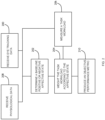
FIG. 1 shows a block diagram of a system suitable for implementing embodiments of the incentive concepts disclosed herein; -
FIG. 2 shows a flowchart of an exemplary embodiment of the inventive concepts disclosed herein; -
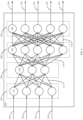
FIG. 3 shows a block diagram of a neural network according an exemplary embodiment of the inventive concepts disclosed herein. - Before explaining at least one embodiment of the inventive concepts disclosed herein in detail, it is to be understood that the inventive concepts are not limited in their application to the details of construction and the arrangement of the components or steps or methodologies set forth in the following description or illustrated in the drawings. In the following detailed description of embodiments of the instant inventive concepts, numerous specific details are set forth in order to provide a more thorough understanding of the inventive concepts. However, it will be apparent to one of ordinary skill in the art having the benefit of the instant disclosure that the inventive concepts disclosed herein may be practiced without these specific details. In other instances, well-known features may not be described in detail to avoid unnecessarily complicating the instant disclosure. The inventive concepts disclosed herein are capable of other embodiments or of being practiced or carried out in various ways within the scope of the claims. Also, it is to be understood that the phraseology and terminology employed herein is for the purpose of description and should not be regarded as limiting.
- As used herein a letter following a reference numeral is intended to reference an embodiment of the feature or element that may be similar, but not necessarily identical, to a previously described element or feature bearing the same reference numeral (e.g., 1, 1a, 1b). Such shorthand notations are used for purposes of convenience only, and should not be construed to limit the inventive concepts disclosed herein in any way unless expressly stated to the contrary.
- Further, unless expressly stated to the contrary, "or" refers to an inclusive or and not to an exclusive or. For example, a condition A or B is satisfied by anyone of the following: A is true (or present) and B is false (or not present), A is false (or not present) and B is true (or present), and both A and B are true (or present).
- In addition, use of the "a" or "an" are employed to describe elements and components of embodiments of the instant inventive concepts. This is done merely for convenience and to give a general sense of the inventive concepts, and "a' and "an" are intended to include one or at least one and the singular also includes the plural unless it is obvious that it is meant otherwise.
- Finally, as used herein any reference to "one embodiment," or "some embodiments" means that a particular element, feature, structure, or characteristic described in connection with the embodiment is included in at least one embodiment of the inventive concepts disclosed herein. The appearances of the phrase "in some embodiments" in various places in the specification are not necessarily all referring to the same embodiment, and embodiments of the inventive concepts disclosed may include one or more of the features expressly described or inherently present herein, or any combination of sub-combination of two or more such features, along with any other features which may not necessarily be expressly described or inherently present in the instant disclosure.
- Broadly, embodiments of the inventive concepts disclosed herein are directed to a computer system that records eye tracking data. The system identifies movements in the eye tracking data to determine gaze and pupil dynamics. The system also records physiological data such as heart rate, electroencephalogram (EEG), and functional near-infrared spectroscopy (fNIRs), and used the physiological data to determine an emotional state. Eye tracking data is correlated with a current task; the system determines a performance metric based on eye tracking data, and applies a positive or negative emotional weighting.
- This invention uses data of a pilot's eyes to detect their gaze and pupil dynamics, coupled with knowledge about their current task to differentiate between a pilot exhibiting task appropriate vigilance as opposed to dangerous attention tunneling or fixation. A task flow diagram represents the operator tasks. Interactions between the pilot and the instrumentation are used to estimate the probability distribution of the task the pilot is currently conducting, and physiological measures including electroencephalogram (EEG) and functional near-infrared spectroscopy (fNIRs) are used to determine neuroactivity to reduce the probability of false positives and increase the accuracy of the pilot vigilance monitoring system.
- Referring to
FIG. 1 , a block diagram of asystem 100 suitable for implementing embodiments of the incentive concepts disclosed herein is shown. Thesystem 100 includes aprocessor 102,memory 104 in data communication with theprocessor 102 for storing processor executable code, one or more eye tracking sensors /cameras 108 for receiving eye tracking data stream, and one or morephysiological sensors 110.Physiological sensors 110 may include devices such as a heart rate sensor, an electroencephalograph (EEG), functional near-infrared spectroscopy (fNIRs), or any other such biometric data sensing device. - In at least one embodiment, the
eye tracking sensors 108 record eye movement / gaze of a pilot and eye lid position. The processor executable code configures theprocessor 102 to continuously log the eye tracking data in adata storage element 106. Theprocessor 102 analyzes the eye tracking data to identify gaze and pupil dynamics (e.g., pupil response and changes overtime). - Eye tracking data are correlated with discreet portions of a training scenario or task, and / or specific stimuli such as instrument readings, alerts, or the like. The
processor 102 characterizes the eye tracking data with respect to the scenario or task; for example, theprocessor 102 may retrieve scenario or task specific actions and / or metrics from adata storage device 106; the actions and / or metrics may include optimized instrument scan patterns and durations. Theprocessor 102 may determine via the eye tracking data if the user conformed to the optimized instrument scan pattern and duration within some threshold. The degree of conformity may generally correspond to a measure of the user's workload. Alternatively, or in addition, theprocessor 102 may analyze the eye tracking data separate from any specific scenario or task to characterize the user's workload. It may be appreciated that scan patterns and pupil dynamics may be correlated with user workload. - In at least one embodiment, the
processor 102 determines whether the eye tracking data indicates attention to certain instrumentation within bounds of acceptable attention. In some instances, specific limitations to the amount of time a user spends observing an instrument may indicate "fixation" or "attention tunneling". Attention tunneling may indicate user workload. - The
processor 102 also receives physiological data from one or morephysiological sensors 110. In at least one embodiment, theprocessor 102 correlates eye tracking data (including at least gaze and pupil dynamics) with the physiological data and determines an emotional state (positive or negative) based on the physiological data. Theprocessor 102 weights the workload characterization according to the emotional state. For example, where a user exhibits a negative emotional state, the characterized workload may be greater than if the user exhibited a positive emotional state. - The
processor 102 may compare the eye tracking and physiological data to stored profiles. Such profiles may be specific to the user, including weightings defined by emotional state; for examples, specific users may be more prone to emotion-based workload adjustment. Furthermore, theprocessor 102 may compare physiological data to stored profiles defining emotional states for the specific user with respect to the physiological data. For example, heightened heart rate and increased hemodynamic activity may be correlated with a positive emotional state in some users but a negative emotional state in others. - In at least one embodiment, the
processor 102 may alert a remote party such as ground control personnel via awireless communication device 112. Alternatively, or in addition, theprocessor 102 may render the determination of excessive workload on adisplay 114. For example, in a training scenario, an instructor may continuously monitor workload on thedisplay 114. - In at least one embodiment, the
processor 102 transfers the stored eye tracking data and other correlated system and task data to an offline storage device for later analysis and correlation to historic data and other outside factors such as crew rest, crew sleet rhythms, flight schedules, etc. Such transfer may be in real time via thewireless communication device 112. - Referring to
FIG. 2 , a flowchart of an exemplary embodiment of the inventive concepts disclosed herein is shown. A computer system implementing embodiments of the inventive concepts disclosed herein receives 200 an image stream corresponding to eye tracking data from one or more vision-based sensors, and continuously logs the eye tracking data. Gaze, pupil dynamics, and eye lid position are used to determine 206 user workload, either absolutely or in relation to a training scenario or task. In at least one embodiment, determining 206 workload may also comprise receiving 208 physiological data. Such analysis may include processing via machine learning, neural network algorithms. - Scenarios and tasks may define specific scan patterns and gaze durations for certain instruments or locations. Such specific scan patterns and gaze durations may be further defined by other stimuli or inputs; for example, when observing a radar, the number of targets presented may impact the amount of time reasonably necessary to absorb the information presented.
- In at least one embodiment, the physiological data is produced via one or more physiological sensors such as a heart rate monitor, an EEG, and / or an fNIRs. Such physiological data is used to determine 202 an emotional state of the user. Emotional states may be characterized as either "positive" or "negative", or defined along some multi-dimensional spectrum. Emotional states provide a weighting factor for the determined workload.
- In at least one embodiment, the determined workload is weighted 204 according to the emotional state to further characterize the workload (a high measured workload during a negative emotional state is normalized to a lower absolute level). Alternatively, or in addition, the determined workload is weighted 204 according to the emotional state to predict the user's response (a given workload may be characterized as more stressful during a negative emotional state).
- In at least one embodiment, the system may produce an objective performance metric for the user corresponding to the given scenario / task, and stimuli. Furthermore, the system may initiate remedial action where the weighted workload exceeds some threshold. For example, the system may render warning messages to the user or contact a third party. Alternatively, or in addition, where an automation system exists, the monitoring system may automatically increase levels of automation to reduce user workload.
- Referring to
FIG. 3 , a block diagram of aneural network 300 according an exemplary embodiment of the inventive concepts disclosed herein is shown. Theneural network 300 comprises aninput layer 302 that receives external inputs (including physiological signals, such as, heart rate, EEG, and fNIRs, eye tracking data, and potentially user or task specific profiles), andoutput layer 304, and a plurality ofinternal layers nodes input layer 302, eachnode 310 receives one ormore inputs output 312 based on an activation function unique to eachnode 310 in theinput layer 302. An activation function may be a Hyperbolic tangent function, a linear output function, and / or a logistic function, or some combination thereof, anddifferent nodes output 312 may comprise a real value with a defined range or a Boolean value if the activation function surpasses a defined threshold. Such ranges and thresholds may be defined during a training process. Furthermore, the synaptic weights are determined during the training process. -
Outputs 312 from each of thenodes 310 in theinput layer 302 are passed to eachnode 336 in a firstintermediate layer 306. The process continues through any number ofintermediate layers intermediate layer node input intermediate layer intermediate layer nodes layer nodes intermediate layer nodes inputs - An
output layer 304 including one ormore output nodes 340 receives theoutputs 316 from each of thenodes 338 in the previousintermediate layer 308. Eachoutput node 340 produces afinal output previous layer inputs 316, thefinal output - In at least one embodiment, each
node layer node node subsequent layers node input more nodes initial input - In at least one embodiment, the number of
processing layers nodes -
Layers nodes previous layer subsequent layer - Embodiments of the inventive concepts disclosed herein are critical to enabling reduced crew or single pilot operations, and will provide independent measures necessary to facilitate reduced crew in the cockpit by providing a means to identify when crew members are unable to continue safe flight and notify relief crew or activate automation. Furthermore, a training application may utilize embodiments of the inventive concepts to compare the small involuntary eye movements of a pilot-in-training to previously characterized professional pilot data patterns and emotional states. Improved methods of assessing an operator's ability to acquire and maintain situation awareness is important for training. As such, it can serve as enabling technologies for single pilot operations or reduced crew operations.
- It is believed that the inventive concepts disclosed herein and many of their attendant advantages will be understood by the foregoing description of embodiments of the inventive concepts disclosed, and it will be apparent that various changes may be made in the form, construction, and arrangement of the components thereof without departing from the broad scope of the inventive concepts disclosed herein or without sacrificing all of their material advantages; and individual features from various embodiments may be combined to arrive at other embodiments. The form herein before described being merely an explanatory embodiment thereof, it is the intention of the following claims to encompass and include such changes. Furthermore, any of the features disclosed in relation to any of the individual embodiments may be incorporated into any other embodiment.
Claims (14)
- A computer apparatus comprising:at least one eye tracking camera (108);one or more physiological data recording devices (110); andat least one processor (102) in data communication with a memory (104) storing processor executable code, wherein the processor executable code configures the at least one processor to:receive an image stream from the at least one eye tracking camera;identify gaze, pupil dynamics, and eye lid position from the image stream;determine a workload metric based on the gaze, pupil dynamics, and eye lid position;receive physiological data from the one or more physiological data recording devices;determine an emotional state based on the physiological data; andweight the determined workload metric according to the emotional state.
- The computer apparatus of Claim 1, wherein determining the workload metric is further based on the physiological data.
- The computer apparatus of Claim 2, wherein:the processor executable code further configures the at least one processor to receive a task or user specific profile of gaze, pupil dynamics, and physiological data; anddetermining the workload metric includes reference to the task or user specific profile.
- The computer apparatus of Claim 3, wherein determining the emotional state includes reference to the task or user specific profile.
- The computer apparatus of any preceding Claim, wherein at least one of the one or more physiological data recording devices comprises a functional near-infrared spectroscope, fNIRs.
- The computer apparatus of any preceding Claim, wherein the processor executable code further configures the at least one processor to execute a remedial action if the weighted workload metric exceeds some threshold.
- The computer apparatus of any preceding Claim, wherein the at least one processor embodies a trained neural network.
- A method comprising:receiving an image stream from at least one eye tracking camera (108);identifying gaze, pupil dynamics, and eye lid position from the image stream;determining a workload metric based on the gaze, pupil dynamics, and eye lid position;receiving physiological data from one or more physiological data recording devices;determining an emotional state based on the physiological data; andweighting the determined workload metric according to the emotional state.
- The method of Claim 8, wherein determining the workload metric is further based on the physiological data.
- The method of Claim 9, further comprising receiving a task or user specific profile of gaze, pupil dynamics, and physiological data, wherein determining the workload metric includes reference to the task or user specific profile.
- The method of Claim 10, wherein determining the emotional state includes reference to the task or user specific profile.
- The method of Claim 11, wherein weighting the determined workload metric comprises predicting a user response to the workload metric based on the emotional state and task or user specific profile.
- The method of any of Claims 8 to 12, further comprising executing a remedial action if the weighted workload metric exceeds some threshold.
- A pilot monitoring system comprising a computer apparatus as claimed in any of claims 1 to 7.
Applications Claiming Priority (1)
| Application Number | Priority Date | Filing Date | Title |
|---|---|---|---|
| US18/216,995 US20250000412A1 (en) | 2023-06-30 | 2023-06-30 | Pupil dynamics, physiology, and context for estimating affect and workload |
Publications (1)
| Publication Number | Publication Date |
|---|---|
| EP4485148A1 true EP4485148A1 (en) | 2025-01-01 |
Family
ID=91759576
Family Applications (1)
| Application Number | Title | Priority Date | Filing Date |
|---|---|---|---|
| EP24185807.5A Pending EP4485148A1 (en) | 2023-06-30 | 2024-07-01 | Pupil dynamics, physiology, and context for estimating affect and workload |
Country Status (2)
| Country | Link |
|---|---|
| US (1) | US20250000412A1 (en) |
| EP (1) | EP4485148A1 (en) |
Citations (1)
| Publication number | Priority date | Publication date | Assignee | Title |
|---|---|---|---|---|
| US10376198B1 (en) * | 2017-11-10 | 2019-08-13 | Rockwell Collins, Inc. | Pilot fatigue and attention tunneling using biometric monitoring |
Family Cites Families (3)
| Publication number | Priority date | Publication date | Assignee | Title |
|---|---|---|---|---|
| US11803399B2 (en) * | 2017-05-18 | 2023-10-31 | Happy Money, Inc. | Interactive virtual assistant system |
| EP4100961A2 (en) * | 2020-02-07 | 2022-12-14 | Eyetracking LLC | Evaluation of a person or system through measurement of physiological data |
| US20230114135A1 (en) * | 2021-10-07 | 2023-04-13 | Hill-Rom Services, Inc. | Systems and methods for monitoring caregiver burnout risk |
-
2023
- 2023-06-30 US US18/216,995 patent/US20250000412A1/en active Pending
-
2024
- 2024-07-01 EP EP24185807.5A patent/EP4485148A1/en active Pending
Patent Citations (1)
| Publication number | Priority date | Publication date | Assignee | Title |
|---|---|---|---|---|
| US10376198B1 (en) * | 2017-11-10 | 2019-08-13 | Rockwell Collins, Inc. | Pilot fatigue and attention tunneling using biometric monitoring |
Non-Patent Citations (1)
| Title |
|---|
| GHADERI MARYAM ET AL: "Estimation of Piloting Attention Level Based on the Correlation of Pupil Dilation and EEG", 22 May 2023, AUGMENTED INTELLIGENCE AND INTELLIGENT TUTORING SYSTEMS; [LECTURE NOTES IN COMPUTER SCIENCE; LECT.NOTES COMPUTER], SPRINGER NATURE SWITZERLAND, CHAM, PAGE(S) 381 - 390, ISBN: 978-3-031-32882-4, ISSN: 0302-9743, XP047659823 * |
Also Published As
| Publication number | Publication date |
|---|---|
| US20250000412A1 (en) | 2025-01-02 |
Similar Documents
| Publication | Publication Date | Title |
|---|---|---|
| JP7670483B2 (en) | Continuous monitoring of user health using mobile devices | |
| US10376198B1 (en) | Pilot fatigue and attention tunneling using biometric monitoring | |
| US12322494B2 (en) | System and method for cognitive training and monitoring | |
| CN113164057B (en) | Machine learning health analysis with mobile device | |
| KR102528032B1 (en) | Method and system for checking fatigue of pilot before flying | |
| KR20220064699A (en) | Method for detecting driver fatigue based multimodal, recording medium and system for performing the method | |
| Mukherjee et al. | Detection of stress in human brain | |
| US20220386915A1 (en) | Physiological and behavioural methods to assess pilot readiness | |
| EP4483788A1 (en) | Pupil dynamics, physiology, and context for estimating vigilance | |
| EP4485149A1 (en) | Pupil dynamics, physiology, and performance for estimating competency in situational awareness | |
| US11813077B2 (en) | Arrhythmic heartbeat resilient sleep apnea detection | |
| US20250000412A1 (en) | Pupil dynamics, physiology, and context for estimating affect and workload | |
| EP4485147A1 (en) | Pupil dynamics, physiology, and performance for estimating competency in situational awareness | |
| EP4485146A1 (en) | Physiology based bio-kinematics modeling for segmentation model unsupervised feedback | |
| US12567253B2 (en) | Eye tracking, physiology for shared situational awareness | |
| US20220189181A1 (en) | Determining a relative cognitive capability of a subject | |
| US20250005469A1 (en) | Eye tracking, physiology, and speech analysis for individual stress and individual engagement | |
| US20250013964A1 (en) | Eye tracking, facial expressions, speech, and intonation for collective engagement assessment | |
| EP4485384A1 (en) | Eye tracking, physiology, facial expression, and posture to modulate expression | |
| US20250200094A1 (en) | Pupil dynamics entropy and task context for automatic prediction of confidence in data | |
| US20250013294A1 (en) | Pupil dynamics, pose, and performance for inferring intent | |
| Borghetti et al. | Introduction to real-time state assessment | |
| Nartey et al. | Exploring the role of cardiac activity in forecasting cognitive fatigue with machine learning | |
| EP4699518A1 (en) | Generating physiological information | |
| Monteiro et al. | Mental Fatigue Assessment Sensor Framework |
Legal Events
| Date | Code | Title | Description |
|---|---|---|---|
| PUAI | Public reference made under article 153(3) epc to a published international application that has entered the european phase |
Free format text: ORIGINAL CODE: 0009012 |
|
| STAA | Information on the status of an ep patent application or granted ep patent |
Free format text: STATUS: THE APPLICATION HAS BEEN PUBLISHED |
|
| AK | Designated contracting states |
Kind code of ref document: A1 Designated state(s): AL AT BE BG CH CY CZ DE DK EE ES FI FR GB GR HR HU IE IS IT LI LT LU LV MC ME MK MT NL NO PL PT RO RS SE SI SK SM TR |
|
| STAA | Information on the status of an ep patent application or granted ep patent |
Free format text: STATUS: REQUEST FOR EXAMINATION WAS MADE |
|
| 17P | Request for examination filed |
Effective date: 20250701 |