EP4484454A1 - Benzophenone derivative, method for preparing same, and use thereof - Google Patents
Benzophenone derivative, method for preparing same, and use thereof Download PDFInfo
- Publication number
- EP4484454A1 EP4484454A1 EP23765930.5A EP23765930A EP4484454A1 EP 4484454 A1 EP4484454 A1 EP 4484454A1 EP 23765930 A EP23765930 A EP 23765930A EP 4484454 A1 EP4484454 A1 EP 4484454A1
- Authority
- EP
- European Patent Office
- Prior art keywords
- formula
- compound represented
- photocurable composition
- reaction
- benzophenone derivative
- Prior art date
- Legal status (The legal status is an assumption and is not a legal conclusion. Google has not performed a legal analysis and makes no representation as to the accuracy of the status listed.)
- Granted
Links
Classifications
-
- C—CHEMISTRY; METALLURGY
- C07—ORGANIC CHEMISTRY
- C07C—ACYCLIC OR CARBOCYCLIC COMPOUNDS
- C07C229/00—Compounds containing amino and carboxyl groups bound to the same carbon skeleton
- C07C229/40—Compounds containing amino and carboxyl groups bound to the same carbon skeleton having amino groups bound to carbon atoms of at least one six-membered aromatic ring and carboxyl groups bound to acyclic carbon atoms of the same carbon skeleton
-
- C—CHEMISTRY; METALLURGY
- C07—ORGANIC CHEMISTRY
- C07C—ACYCLIC OR CARBOCYCLIC COMPOUNDS
- C07C225/00—Compounds containing amino groups and doubly—bound oxygen atoms bound to the same carbon skeleton, at least one of the doubly—bound oxygen atoms not being part of a —CHO group, e.g. amino ketones
- C07C225/22—Compounds containing amino groups and doubly—bound oxygen atoms bound to the same carbon skeleton, at least one of the doubly—bound oxygen atoms not being part of a —CHO group, e.g. amino ketones having amino groups bound to carbon atoms of six-membered aromatic rings of the carbon skeleton
-
- C—CHEMISTRY; METALLURGY
- C07—ORGANIC CHEMISTRY
- C07C—ACYCLIC OR CARBOCYCLIC COMPOUNDS
- C07C221/00—Preparation of compounds containing amino groups and doubly-bound oxygen atoms bound to the same carbon skeleton
-
- C—CHEMISTRY; METALLURGY
- C08—ORGANIC MACROMOLECULAR COMPOUNDS; THEIR PREPARATION OR CHEMICAL WORKING-UP; COMPOSITIONS BASED THEREON
- C08F—MACROMOLECULAR COMPOUNDS OBTAINED BY REACTIONS ONLY INVOLVING CARBON-TO-CARBON UNSATURATED BONDS
- C08F120/00—Homopolymers of compounds having one or more unsaturated aliphatic radicals, each having only one carbon-to-carbon double bond, and only one being terminated by only one carboxyl radical or a salt, anhydride, ester, amide, imide or nitrile thereof
- C08F120/02—Monocarboxylic acids having less than ten carbon atoms; Derivatives thereof
- C08F120/10—Esters
- C08F120/26—Esters containing oxygen in addition to the carboxy oxygen
- C08F120/32—Esters containing oxygen in addition to the carboxy oxygen containing epoxy radicals
-
- C—CHEMISTRY; METALLURGY
- C08—ORGANIC MACROMOLECULAR COMPOUNDS; THEIR PREPARATION OR CHEMICAL WORKING-UP; COMPOSITIONS BASED THEREON
- C08F—MACROMOLECULAR COMPOUNDS OBTAINED BY REACTIONS ONLY INVOLVING CARBON-TO-CARBON UNSATURATED BONDS
- C08F122/00—Homopolymers of compounds having one or more unsaturated aliphatic radicals each having only one carbon-to-carbon double bond, and at least one being terminated by a carboxyl radical and containing at least one other carboxyl radical in the molecule; Salts, anhydrides, esters, amides, imides or nitriles thereof
- C08F122/10—Esters
- C08F122/1006—Esters of polyhydric alcohols or polyhydric phenols, e.g. ethylene glycol dimethacrylate
-
- C—CHEMISTRY; METALLURGY
- C08—ORGANIC MACROMOLECULAR COMPOUNDS; THEIR PREPARATION OR CHEMICAL WORKING-UP; COMPOSITIONS BASED THEREON
- C08F—MACROMOLECULAR COMPOUNDS OBTAINED BY REACTIONS ONLY INVOLVING CARBON-TO-CARBON UNSATURATED BONDS
- C08F2/00—Processes of polymerisation
- C08F2/46—Polymerisation initiated by wave energy or particle radiation
- C08F2/48—Polymerisation initiated by wave energy or particle radiation by ultraviolet or visible light
- C08F2/50—Polymerisation initiated by wave energy or particle radiation by ultraviolet or visible light with sensitising agents
-
- C—CHEMISTRY; METALLURGY
- C08—ORGANIC MACROMOLECULAR COMPOUNDS; THEIR PREPARATION OR CHEMICAL WORKING-UP; COMPOSITIONS BASED THEREON
- C08F—MACROMOLECULAR COMPOUNDS OBTAINED BY REACTIONS ONLY INVOLVING CARBON-TO-CARBON UNSATURATED BONDS
- C08F20/00—Homopolymers and copolymers of compounds having one or more unsaturated aliphatic radicals, each having only one carbon-to-carbon double bond, and only one being terminated by only one carboxyl radical or a salt, anhydride, ester, amide, imide or nitrile thereof
- C08F20/02—Monocarboxylic acids having less than ten carbon atoms, Derivatives thereof
- C08F20/10—Esters
- C08F20/34—Esters containing nitrogen, e.g. N,N-dimethylaminoethyl (meth)acrylate
- C08F20/36—Esters containing nitrogen, e.g. N,N-dimethylaminoethyl (meth)acrylate containing oxygen in addition to the carboxy oxygen, e.g. 2-N-morpholinoethyl (meth)acrylate or 2-isocyanatoethyl (meth)acrylate
-
- C—CHEMISTRY; METALLURGY
- C08—ORGANIC MACROMOLECULAR COMPOUNDS; THEIR PREPARATION OR CHEMICAL WORKING-UP; COMPOSITIONS BASED THEREON
- C08F—MACROMOLECULAR COMPOUNDS OBTAINED BY REACTIONS ONLY INVOLVING CARBON-TO-CARBON UNSATURATED BONDS
- C08F22/00—Homopolymers and copolymers of compounds having one or more unsaturated aliphatic radicals each having only one carbon-to-carbon double bond, and at least one being terminated by a carboxyl radical and containing at least one other carboxyl radical in the molecule; Salts, anhydrides, esters, amides, imides or nitriles thereof
- C08F22/10—Esters
-
- C—CHEMISTRY; METALLURGY
- C08—ORGANIC MACROMOLECULAR COMPOUNDS; THEIR PREPARATION OR CHEMICAL WORKING-UP; COMPOSITIONS BASED THEREON
- C08F—MACROMOLECULAR COMPOUNDS OBTAINED BY REACTIONS ONLY INVOLVING CARBON-TO-CARBON UNSATURATED BONDS
- C08F222/00—Copolymers of compounds having one or more unsaturated aliphatic radicals, each having only one carbon-to-carbon double bond, and at least one being terminated by a carboxyl radical and containing at least one other carboxyl radical in the molecule; Salts, anhydrides, esters, amides, imides, or nitriles thereof
- C08F222/10—Esters
- C08F222/1006—Esters of polyhydric alcohols or polyhydric phenols
- C08F222/106—Esters of polycondensation macromers
- C08F222/1063—Esters of polycondensation macromers of alcohol terminated polyethers
-
- C—CHEMISTRY; METALLURGY
- C09—DYES; PAINTS; POLISHES; NATURAL RESINS; ADHESIVES; COMPOSITIONS NOT OTHERWISE PROVIDED FOR; APPLICATIONS OF MATERIALS NOT OTHERWISE PROVIDED FOR
- C09D—COATING COMPOSITIONS, e.g. PAINTS, VARNISHES OR LACQUERS; FILLING PASTES; CHEMICAL PAINT OR INK REMOVERS; INKS; CORRECTING FLUIDS; WOODSTAINS; PASTES OR SOLIDS FOR COLOURING OR PRINTING; USE OF MATERIALS THEREFOR
- C09D11/00—Inks
- C09D11/02—Printing inks
- C09D11/10—Printing inks based on artificial resins
- C09D11/101—Inks specially adapted for printing processes involving curing by wave energy or particle radiation, e.g. with UV-curing following the printing
-
- C—CHEMISTRY; METALLURGY
- C09—DYES; PAINTS; POLISHES; NATURAL RESINS; ADHESIVES; COMPOSITIONS NOT OTHERWISE PROVIDED FOR; APPLICATIONS OF MATERIALS NOT OTHERWISE PROVIDED FOR
- C09D—COATING COMPOSITIONS, e.g. PAINTS, VARNISHES OR LACQUERS; FILLING PASTES; CHEMICAL PAINT OR INK REMOVERS; INKS; CORRECTING FLUIDS; WOODSTAINS; PASTES OR SOLIDS FOR COLOURING OR PRINTING; USE OF MATERIALS THEREFOR
- C09D11/00—Inks
- C09D11/02—Printing inks
- C09D11/10—Printing inks based on artificial resins
- C09D11/106—Printing inks based on artificial resins containing macromolecular compounds obtained by reactions only involving carbon-to-carbon unsaturated bonds
- C09D11/107—Printing inks based on artificial resins containing macromolecular compounds obtained by reactions only involving carbon-to-carbon unsaturated bonds from unsaturated acids or derivatives thereof
-
- C—CHEMISTRY; METALLURGY
- C09—DYES; PAINTS; POLISHES; NATURAL RESINS; ADHESIVES; COMPOSITIONS NOT OTHERWISE PROVIDED FOR; APPLICATIONS OF MATERIALS NOT OTHERWISE PROVIDED FOR
- C09D—COATING COMPOSITIONS, e.g. PAINTS, VARNISHES OR LACQUERS; FILLING PASTES; CHEMICAL PAINT OR INK REMOVERS; INKS; CORRECTING FLUIDS; WOODSTAINS; PASTES OR SOLIDS FOR COLOURING OR PRINTING; USE OF MATERIALS THEREFOR
- C09D11/00—Inks
- C09D11/30—Inkjet printing inks
- C09D11/38—Inkjet printing inks characterised by non-macromolecular additives other than solvents, pigments or dyes
-
- C—CHEMISTRY; METALLURGY
- C09—DYES; PAINTS; POLISHES; NATURAL RESINS; ADHESIVES; COMPOSITIONS NOT OTHERWISE PROVIDED FOR; APPLICATIONS OF MATERIALS NOT OTHERWISE PROVIDED FOR
- C09D—COATING COMPOSITIONS, e.g. PAINTS, VARNISHES OR LACQUERS; FILLING PASTES; CHEMICAL PAINT OR INK REMOVERS; INKS; CORRECTING FLUIDS; WOODSTAINS; PASTES OR SOLIDS FOR COLOURING OR PRINTING; USE OF MATERIALS THEREFOR
- C09D133/00—Coating compositions based on homopolymers or copolymers of compounds having one or more unsaturated aliphatic radicals, each having only one carbon-to-carbon double bond, and at least one being terminated by only one carboxyl radical, or of salts, anhydrides, esters, amides, imides, or nitriles thereof; Coating compositions based on derivatives of such polymers
- C09D133/04—Homopolymers or copolymers of esters
- C09D133/14—Homopolymers or copolymers of esters of esters containing halogen, nitrogen, sulfur or oxygen atoms in addition to the carboxy oxygen
-
- C—CHEMISTRY; METALLURGY
- C09—DYES; PAINTS; POLISHES; NATURAL RESINS; ADHESIVES; COMPOSITIONS NOT OTHERWISE PROVIDED FOR; APPLICATIONS OF MATERIALS NOT OTHERWISE PROVIDED FOR
- C09D—COATING COMPOSITIONS, e.g. PAINTS, VARNISHES OR LACQUERS; FILLING PASTES; CHEMICAL PAINT OR INK REMOVERS; INKS; CORRECTING FLUIDS; WOODSTAINS; PASTES OR SOLIDS FOR COLOURING OR PRINTING; USE OF MATERIALS THEREFOR
- C09D135/00—Coating compositions based on homopolymers or copolymers of compounds having one or more unsaturated aliphatic radicals, each having only one carbon-to-carbon double bond, and at least one being terminated by a carboxyl radical, and containing at least another carboxyl radical in the molecule, or of salts, anhydrides, esters, amides, imides or nitriles thereof; Coating compositions based on derivatives of such polymers
- C09D135/02—Homopolymers or copolymers of esters
-
- C—CHEMISTRY; METALLURGY
- C09—DYES; PAINTS; POLISHES; NATURAL RESINS; ADHESIVES; COMPOSITIONS NOT OTHERWISE PROVIDED FOR; APPLICATIONS OF MATERIALS NOT OTHERWISE PROVIDED FOR
- C09D—COATING COMPOSITIONS, e.g. PAINTS, VARNISHES OR LACQUERS; FILLING PASTES; CHEMICAL PAINT OR INK REMOVERS; INKS; CORRECTING FLUIDS; WOODSTAINS; PASTES OR SOLIDS FOR COLOURING OR PRINTING; USE OF MATERIALS THEREFOR
- C09D4/00—Coating compositions, e.g. paints, varnishes or lacquers, based on organic non-macromolecular compounds having at least one polymerisable carbon-to-carbon unsaturated bond ; Coating compositions, based on monomers of macromolecular compounds of groups C09D183/00 - C09D183/16
-
- G—PHYSICS
- G03—PHOTOGRAPHY; CINEMATOGRAPHY; ANALOGOUS TECHNIQUES USING WAVES OTHER THAN OPTICAL WAVES; ELECTROGRAPHY; HOLOGRAPHY
- G03F—PHOTOMECHANICAL PRODUCTION OF TEXTURED OR PATTERNED SURFACES, e.g. FOR PRINTING, FOR PROCESSING OF SEMICONDUCTOR DEVICES; MATERIALS THEREFOR; ORIGINALS THEREFOR; APPARATUS SPECIALLY ADAPTED THEREFOR
- G03F7/00—Photomechanical, e.g. photolithographic, production of textured or patterned surfaces, e.g. printing surfaces; Materials therefor, e.g. comprising photoresists; Apparatus specially adapted therefor
- G03F7/004—Photosensitive materials
- G03F7/027—Non-macromolecular photopolymerisable compounds having carbon-to-carbon double bonds, e.g. ethylenic compounds
-
- G—PHYSICS
- G03—PHOTOGRAPHY; CINEMATOGRAPHY; ANALOGOUS TECHNIQUES USING WAVES OTHER THAN OPTICAL WAVES; ELECTROGRAPHY; HOLOGRAPHY
- G03F—PHOTOMECHANICAL PRODUCTION OF TEXTURED OR PATTERNED SURFACES, e.g. FOR PRINTING, FOR PROCESSING OF SEMICONDUCTOR DEVICES; MATERIALS THEREFOR; ORIGINALS THEREFOR; APPARATUS SPECIALLY ADAPTED THEREFOR
- G03F7/00—Photomechanical, e.g. photolithographic, production of textured or patterned surfaces, e.g. printing surfaces; Materials therefor, e.g. comprising photoresists; Apparatus specially adapted therefor
- G03F7/004—Photosensitive materials
- G03F7/027—Non-macromolecular photopolymerisable compounds having carbon-to-carbon double bonds, e.g. ethylenic compounds
- G03F7/028—Non-macromolecular photopolymerisable compounds having carbon-to-carbon double bonds, e.g. ethylenic compounds with photosensitivity-increasing substances, e.g. photoinitiators
-
- G—PHYSICS
- G03—PHOTOGRAPHY; CINEMATOGRAPHY; ANALOGOUS TECHNIQUES USING WAVES OTHER THAN OPTICAL WAVES; ELECTROGRAPHY; HOLOGRAPHY
- G03F—PHOTOMECHANICAL PRODUCTION OF TEXTURED OR PATTERNED SURFACES, e.g. FOR PRINTING, FOR PROCESSING OF SEMICONDUCTOR DEVICES; MATERIALS THEREFOR; ORIGINALS THEREFOR; APPARATUS SPECIALLY ADAPTED THEREFOR
- G03F7/00—Photomechanical, e.g. photolithographic, production of textured or patterned surfaces, e.g. printing surfaces; Materials therefor, e.g. comprising photoresists; Apparatus specially adapted therefor
- G03F7/004—Photosensitive materials
- G03F7/027—Non-macromolecular photopolymerisable compounds having carbon-to-carbon double bonds, e.g. ethylenic compounds
- G03F7/028—Non-macromolecular photopolymerisable compounds having carbon-to-carbon double bonds, e.g. ethylenic compounds with photosensitivity-increasing substances, e.g. photoinitiators
- G03F7/029—Inorganic compounds; Onium compounds; Organic compounds having hetero atoms other than oxygen, nitrogen or sulfur
-
- G—PHYSICS
- G03—PHOTOGRAPHY; CINEMATOGRAPHY; ANALOGOUS TECHNIQUES USING WAVES OTHER THAN OPTICAL WAVES; ELECTROGRAPHY; HOLOGRAPHY
- G03F—PHOTOMECHANICAL PRODUCTION OF TEXTURED OR PATTERNED SURFACES, e.g. FOR PRINTING, FOR PROCESSING OF SEMICONDUCTOR DEVICES; MATERIALS THEREFOR; ORIGINALS THEREFOR; APPARATUS SPECIALLY ADAPTED THEREFOR
- G03F7/00—Photomechanical, e.g. photolithographic, production of textured or patterned surfaces, e.g. printing surfaces; Materials therefor, e.g. comprising photoresists; Apparatus specially adapted therefor
- G03F7/004—Photosensitive materials
- G03F7/027—Non-macromolecular photopolymerisable compounds having carbon-to-carbon double bonds, e.g. ethylenic compounds
- G03F7/028—Non-macromolecular photopolymerisable compounds having carbon-to-carbon double bonds, e.g. ethylenic compounds with photosensitivity-increasing substances, e.g. photoinitiators
- G03F7/031—Organic compounds not covered by group G03F7/029
-
- B—PERFORMING OPERATIONS; TRANSPORTING
- B33—ADDITIVE MANUFACTURING TECHNOLOGY
- B33Y—ADDITIVE MANUFACTURING, i.e. MANUFACTURING OF THREE-DIMENSIONAL [3D] OBJECTS BY ADDITIVE DEPOSITION, ADDITIVE AGGLOMERATION OR ADDITIVE LAYERING, e.g. BY 3D PRINTING, STEREOLITHOGRAPHY OR SELECTIVE LASER SINTERING
- B33Y70/00—Materials specially adapted for additive manufacturing
-
- B—PERFORMING OPERATIONS; TRANSPORTING
- B41—PRINTING; LINING MACHINES; TYPEWRITERS; STAMPS
- B41M—PRINTING, DUPLICATING, MARKING, OR COPYING PROCESSES; COLOUR PRINTING
- B41M7/00—After-treatment of prints, e.g. heating, irradiating, setting of the ink, protection of the printed stock
- B41M7/0081—After-treatment of prints, e.g. heating, irradiating, setting of the ink, protection of the printed stock using electromagnetic radiation or waves, e.g. ultraviolet radiation, electron beams
-
- C—CHEMISTRY; METALLURGY
- C07—ORGANIC CHEMISTRY
- C07C—ACYCLIC OR CARBOCYCLIC COMPOUNDS
- C07C2601/00—Systems containing only non-condensed rings
- C07C2601/12—Systems containing only non-condensed rings with a six-membered ring
- C07C2601/16—Systems containing only non-condensed rings with a six-membered ring the ring being unsaturated
Definitions
- the present application relates to the technical field of photocuring technique, in particular to a benzophenone derivative, a method for preparing same, and use thereof.
- N,N,N,N-tetraethyl-4,4'-diaminobenzophenone referred to as EMK
- EMK is a commonly used high-efficiency auxiliary photoinitiator, which is very important in inks, especially UV-LED curing inks.
- the synthesis methods of the compounds are reported in patent documents such as CN107686450A , CN112707830A , DE2226039A1 and DE44077C .
- EP1078598A1 US2010081071A1 , CN105974736A , CN104749882A , CN104710843A , etc.
- EMK is used as an auxiliary photoinitiator and in combination with a hydrogen abstraction photoinitiator in various combinations to achieve photopolymerization.
- its disadvantages are that it has a small molecular weight and a certain degree of toxicity, and it is easy to migrate out of the cured material, affecting the stability and safety of the product properties.
- patent CN101796015A an acrylate-based derivatized aniline compound is reported as a polymerizable ammonia additive for use in radiation-curable liquid compositions for inkjet printing. Its disadvantages are small molecular weight, complex preparation process and high manufacturing cost.
- patent CN102212151A a 4-acrylamido-4'-dialkylaminobenzophenone compound is reported. It is reported that it can be used alone as a photoinitiator. The disadvantage is that the photoinitiation efficiency is not high and the preparation process is complicated.
- the technical problem to be solved by the present application is to overcome the defect of high mobility amount of photoinitiator or auxiliary photoinitiator in the prior art, thereby providing a benzophenone derivative, a method for preparing same, and use thereof.
- a benzophenone derivative wherein the benzophenone derivative has a structure represented by formula (1): wherein:
- substituted means that any one or more hydrogen atoms on a specified atom are replaced by a substituent, as long as the substituted compound is stable.
- optionally substituted means that it may or may not be substituted. Unless otherwise specified, the type and number of substituents may be arbitrary on the basis that they can be chemically realized.
- the alkyl may be a linear alkyl or a branched alkyl.
- n 1 is an integer from 1 to 10, such as 1, 2, 3, 4, 5, 6, 7, 8, 9 or 10. In an optional embodiment of the present application, n 1 is an integer from 1 to 4.
- examples of C1-C8 alkyls include but are not limited to methyl, ethyl, n-propyl, isopropyl, 2-methyl-1-propyl, 2-methyl-2-propyl, 2-methyl-1-butyl, 3-methyl-1-butyl, 2-methyl-3-butyl, 2,2-dimethyl-1-propyl, 2,2-dimethyl- 1-butyl, 3,3-dimethyl-1-butyl, 2-ethyl-1-butyl, n-butyl, isobutyl, sec-butyl, tert-butyl, n-pentyl, isopentyl, neopentyl, etc.
- alkyl is C1-C8 alkyl, C1-C7 alkyl, C1-C6 alkyl, C1-C5 alkyl, C1-C4 alkyl, C1-C3 alkyl, C1-C2 alkyl or C1 alkyl.
- R 1 is a C1-C4 alkyl, further preferably -CH 2 CH 3 .
- R 2 is H
- R 3 is R 2 and G 1 have the same definitions as those in formula (1).
- examples of C1-C12 alkylene include but are not limited to, methylene, ethylene, propylene, butylene, pentylene and 3-methylpentylene.
- G 1 is -CH 2 CH 2 -, -CH 2 CH 2 CH 2 CH 2 -, or -CH 2 CH 2 OCH 2 CH 2 -.
- the present application also provides a benzophenone derivative, wherein the benzophenone derivative has a structure represented by formula (2): wherein:
- n 2 is an integer from 1 to 10, such as 1, 2, 3, 4, 5, 6, 7, 8, 9 or 10. In an optional embodiment of the present application, n 2 is an integer from 1 to 6.
- examples of C1-C8 alkyls include but are not limited to methyl, ethyl, n-propyl, isopropyl, 2-methyl-1-propyl, 2-methyl-2-propyl, 2-methyl-1-butyl, 3-methyl-1-butyl, 2-methyl-3-butyl, 2,2-dimethyl-1-propyl, 2,2-dimethyl-1-butyl, 3,3-dimethyl-1-butyl, 2-ethyl-1-butyl, n-butyl, isobutyl, sec-butyl, tert-butyl, n-pentyl, isopentyl, neopentyl, etc.
- alkyl is C1-C8 alkyl, C1-C7 alkyl, C1-C6 alkyl, C1-C5 alkyl, C1-C4 alkyl, C1-C3 alkyl, C1-C2 alkyl or C1 alkyl.
- R 1 is a C1-C4 alkyl, further preferably -CH 2 CH 3 .
- R 2 is H; In an optional embodiment of the present application, R 4 is R 2 and G 2 have the same definitions as those in formula (2).
- examples of C1-C12 alkylene include, but are not limited to, methylene, ethylene, propylene, butylene, pentylene and 3-methylpentylene.
- the present application also provides a benzophenone derivative, wherein the benzophenone derivative has a structure represented by formula (3): wherein:
- n 3 is an integer from 1 to 10, such as 1, 2, 3, 4, 5, 6, 7, 8, 9 or 10. In an optional embodiment of the present application, n 3 is an integer from 1 to 6.
- examples of C1-C8 alkyls include but are not limited to methyl, ethyl, n-propyl, isopropyl, 2-methyl-1-propyl, 2-methyl-2-propyl, 2-methyl-1-butyl, 3-methyl-1-butyl, 2-methyl-3-butyl, 2,2-dimethyl-1-propyl, 2,2-dimethyl-1-butyl, 3,3-dimethyl-1-butyl, 2-ethyl-1-butyl, n-butyl, isobutyl, sec-butyl, tert-butyl, n-pentyl, isopentyl, neopentyl, etc.
- alkyl is C1-C8 alkyl, C1-C7 alkyl, C1-C6 alkyl, C1-C5 alkyl, C1-C4 alkyl, C1-C3 alkyl, C1-C2 alkyl or C1 alkyl.
- R 1 is a C1-C4 alkyl, further preferably -CH 2 CH 3 .
- R 2 is H;
- R 5 is R 2 , G 2 and G 3 have the same definitions as those in formula (3).
- examples of C1-C12 alkylene include but are not limited to, methylene, ethylene, propylene, butylene, pentylene and 3-methylpentylene.
- G 2 and G 3 are each independently -CH 2 CH 2 -, -CH 2 CH 2 CH 2 CH 2 -, -CH 2 CH 2 OCH 2 CH 2 - or -CH 2 CH 2 OCH 2 CH 2 OCH 2 CH 2 -.
- the present application also provides a method for preparing the benzophenone derivative having the structure of formula (1) as described above, comprising:
- the reaction temperature is in a range from 40°C to 120°C and the reaction time is in a range from 10h to 100h.
- reaction when at least one of the hydroxyl groups at both ends of the compound represented by formula (4) is fully added, the reaction is completed.
- the reaction can be carried out under stirring conditions.
- the obtained reaction liquid is washed and the solvent is recovered to obtain a benzophenone derivative with the structure of formula (1).
- An exemplary washing method is: first washing with 1-5% dilute weak alkaline aqueous solution, and then washing with water.
- the weak alkaline aqueous solution can be an aqueous solution of sodium bicarbonate or sodium carbonate or ammonium carbonate.
- An exemplary method for recovering the solvent is distillation to recover the solvent.
- the method for preparing the benzophenone derivative with the above formula (1) structure comprises the following steps:
- reaction temperature is in a range from 40°C to 120°C and the reaction time is in a range from 10h to 100h.
- it can be detected by HPLC until the compound represented by formula (4) reacts completely and the monoaddition product reacts completely.
- the polymerization inhibitor is at least one selected from the group consisting of polyphenols, substituted phenol polymerization inhibitors, quinone polymerization inhibitors and diarylamine polymerization inhibitors.
- the polymerization inhibitor is at least one of hydroquinone, p-methoxyphenol, 2,6-di-tert-butylphenol, p-benzoquinone, phenothiazine, or hindered amine oxide, more preferably hydroquinone and/or phenothiazine.
- the amount of the polymerization inhibitor is 0.001% to 10% of the mass of the compound represented by formula (5), such as 1%, 2%, 3%, 4%, 5%, 6%, 7%, 8 %, 9% or 10%.
- the catalyst is one or more of organic sulfonic acid, strongly acidic cation exchange resin or organic sulfonates, preferably p-aminobenzene sulfonic acid or poly-4-vinylpyridine p-toluenesulfonic acid salt.
- the amount of the catalyst is 0.1% to 20% of the mass of the compound represented by formula (4).
- the solvent is an organic solvent immiscible with water, preferably toluene.
- the amount of the solvent can be added according to actual needs to ensure that the raw materials are dissolved.
- the amount of the solvent is 0.5-100 times the mass of the compound represented by formula (4).
- the amount of the alkaline solution added can be 1-100 times the amount of catalyst.
- the alkaline solution may be a sodium carbonate solution, and the mass concentration of the sodium carbonate solution is 1% to 10%.
- the temperature is lowered to 20°C to 40°C.
- the content of effective groups in the benzophenone derivative of formula (1) is 30% to 60%, where the effective group refers to the molecular group
- the present application also provides a method for preparing a benzophenone derivative having a structure of formula (2) as described above, comprising:
- the reaction temperature is in a range from 40°C to 120°C and the reaction time is in a range from 10h to 100h.
- the reaction can be carried out under stirring conditions.
- An exemplary washing method is: first washing with a dilute weak alkaline aqueous solution, and then washing with water.
- An exemplary method of recovering the solvent is distillation to recover the solvent.
- the method for preparing the benzophenone derivative with the structure of formula (2) comprises the following steps: mixing the compound represented by formula (6), the compound represented by formula (7), a polymerization inhibitor, a catalyst and a solvent to obtain a mixture, performing a heating reaction under nitrogen or an inert atmosphere; after the reaction is completed, adding the compound represented by formula (8), continuing to carry out the reaction under heat preservation until the content of the compound represented by formula (8) no longer decreasing, stopping the reaction, lowing the temperature, and then adding an alkaline solution for washing, then washing with water until neutral, removing the solvent to obtain the benzophenone derivative with the structure of formula (2); wherein a molar ratio of the compound represented by formula (6) to the compound represented by formula (7) is in a range from 1:1 to 1:2, and a molar ratio of the compound represented by formula (6) to the compound represented by formula (8) is in a range from 1:0.5 to 1:3, and R 1 , R 2 and G 2 have the same definitions as those in formula (2).
- the heating reaction temperature is 40-120°C, and the heating reaction time is 10-100h.
- it can be detected by HPLC until the compound represented by formula (6) reacts completely and the monoaddition product reacts completely.
- the polymerization inhibitor is at least one selected from the group consisting of polyphenols, substituted phenol polymerization inhibitors, quinone polymerization inhibitors and diarylamine polymerization inhibitors.
- the polymerization inhibitor is at least one of hydroquinone, p-methoxyphenol, 2,6-di-tert-butylphenol, p-benzoquinone, phenothiazine, or hindered amine oxide, more preferably hydroquinone and/or phenothiazine.
- the amount of polymerization inhibitor is 0.001% to 10% of the mass of the compound represented by formula (7), such as 1%, 2%, 3%, 4%, 5%, 6%, 7%, 8 %, 9% or 10%.
- the catalyst is one or more of organic sulfonic acid, strongly acidic cation exchange resin or organic sulfonates, preferably p-aminobenzene sulfonic acid or poly-4-vinylpyridine p-toluenesulfonic acid salt.
- the amount of catalyst is 0.1% to 20% of the mass of the compound represented by formula (6).
- the solvent is an organic solvent immiscible with water, preferably toluene.
- the amount of solvent can be added according to actual needs to ensure that the raw materials are dissolved.
- the amount of solvent is 0.5-100 times the mass of the compound shown in formula (6).
- the amount of alkaline solution added can be 1-100 times the amount of catalyst.
- the alkaline solution may be a sodium carbonate solution, and the mass concentration of the sodium carbonate solution is 1% to 10%.
- the temperature is lowered to 20°C to 40°C.
- the content of effective groups in the benzophenone derivative of formula (2) is 30% to 60%, where the effective group refers to the molecular group
- the present application also provides a method for preparing a benzophenone derivative having a structure represented by formula (3) as described above, comprising:
- the reaction can be carried out under stirring conditions.
- the reaction temperature is in a range from 40°C to 120°C and the reaction time is in a range from 10h to 100h.
- An exemplary washing method is: first washing with a dilute weak alkaline aqueous solution, and then washing with water.
- An exemplary method of recovering the solvent is distillation to recover the solvent.
- the method for preparing the benzophenone derivative with the structure of formula (3) comprises the following steps: mixing the compound represented by formula (9), the compound represented by formula (10), a polymerization inhibitor, a catalyst and a solvent, and performing a heating reaction under nitrogen or an inert atmosphere; after the reaction is completed, adding the compound represented by formula (11),continuing to carry out the reaction under heat preservation until the content of the compound represented by formula (11) no longer decreasing, stopping the reaction, lowing the temperature, adding an alkaline solution for washing, then washing with water until neutral, removing the solvent to obtain the benzophenone derivative with the structure of formula (2); wherein a molar ratio of the compound represented by formula (9) and the compound represented by formula (10) is 1:1 to 1:2, and the molar ratio of the compound represented by formula (9) and the compound represented by formula (11) is 1:1 to 1:3, and R 1 , R 2 , G 2 and G 3 have the same definitions as those in formula (3).
- reaction temperature is in a range from 40°C to 120°C and the reaction time is in a range from 10h to 100h.
- it can be detected by HPLC until the compound represented by formula (9) reacts completely and the monoaddition product reacts completely.
- the polymerization inhibitor is at least one selected from the group consisting of polyphenols, substituted phenol polymerization inhibitors, quinone polymerization inhibitors and diarylamine polymerization inhibitors.
- the polymerization inhibitor is at least one of hydroquinone, p-methoxyphenol, 2,6-di-tert-butylphenol, p-benzoquinone, phenothiazine, or hindered amine oxide, more preferably hydroquinone and/or phenothiazine.
- the amount of the polymerization inhibitor is 0.001% to 10% of the mass of the compound represented by formula (10), such as 1%, 2%, 3%, 4%, 5%, 6%, 7%, 8 %, 9% or 10%.
- the catalyst is one or more of organic sulfonic acid, strongly acidic cation exchange resin or organic sulfonates, preferably p-aminobenzene sulfonic acid or poly-4-vinylpyridine p-toluenesulfonic acid salt.
- the amount of the catalyst is 0.1% to 20% of the mass of the compound represented by formula (9).
- the solvent is an organic solvent immiscible with water, preferably toluene.
- the amount of solvent can be added according to actual needs to ensure that the raw materials are dissolved.
- the amount of the solvent is 0.5-100 times the mass of the compound shown in formula (9).
- the amount of the alkaline solution added can be 1-100 times the amount of catalyst.
- the alkaline solution may be a sodium carbonate solution, and the mass concentration of the sodium carbonate solution is 1% to 10%.
- the temperature is lowered to 20°C to 40°C.
- the content of effective groups in the benzophenone derivative of formula (3) is 30% to 60%, where the effective group refers to the molecular group
- the preparation of the compound represented by formula (1), formula (2) or formula (3) of the present application is preferably carried out in the presence of a polymerization inhibitor, a catalyst and a solvent.
- the polymerization inhibitor is at least one selected from the group consisting of polyphenols, substituted phenol polymerization inhibitors, quinone polymerization inhibitors and diarylamine polymerization inhibitors.
- the polymerization inhibitor is at least one of hydroquinone, p-methoxyphenol, 2,6-di-tert-butylphenol, p-benzoquinone, phenothiazine, or hindered amine oxide, more preferably hydroquinone and/or phenothiazine.
- the amount of the polymerization inhibitor is 0.001% to 10% of the mass of the compound represented by formula (5), formula (8) or formula (11), such as 1%, 2%, 3%, 4%, 5%, 6%, 7%, 8 %, 9% or 10%.
- the catalyst is one or more of organic sulfonic acid, strongly acidic cation exchange resin or organic sulfonates, preferably p-aminobenzene sulfonic acid or poly-4-vinylpyridine p-toluenesulfonic acid salt.
- the amount of the catalyst is 0.1% to 20% of the mass of the compound represented by formula (4), formula (6) or formula (9).
- the solvent is an organic solvent immiscible with water, preferably toluene.
- a photoinitiator composition comprising a photoinitiator for free radical polymerization and the benzophenone derivative as described above.
- a photocurable composition comprising a photoinitiator component and a radically polymerizable ethylenically unsaturated compound, wherein the photoinitiator component comprises the photoinitiator composition as described above.
- the photocurable composition comprises: (a) the benzophenone derivative as described above; (b) a photoinitiator for free radical polymerization; and (c) a free-radically polymerizable ethylenically unsaturated compound.
- the photocurable composition including the aforementioned photoinitiator composition has low mobility.
- the component (a) is added in an amount ranging from from 0.1% to 20% of the total weight of the photocurable composition, such as 1%, 5%, 10%, 15% or 20%.
- the component (b) is a commonly used compound in the industry that is commercially or laboratory-available, and is selected from the group consisting of benzophenones (except benzophenones and derivatives other than those in the present application), thioxanthone compounds, ⁇ -hydroxyketone compounds, ⁇ -aminoketones compounds, acyl phosphine oxide compounds, oxime lipid compounds, and any combination thereof; preferably, at least one of benzophenone, 2-isopropylthiaxanthone, 2-dimethylamino-2-(4-methyl benzyl)-1-(4-morpholinylphenyl)-1-butanone, 2,4,6-trimethylbenzoyl-diphenylphosphine oxide, photoinitiator Omnipol TX, photoinitiator Omnipol 910 and photoinitiator Omnipol TP.
- benzophenones except benzophenones and derivatives other than those in the present application
- thioxanthone compounds ⁇
- the photoinitiator Omnipol TX, photoinitiator Omnipol 910 or photoinitiator Omnipol TP is selected from the macromolecular photoinitiator series products Omnipol TX, Omnipol 910 or Omnipol TP of IGM Resin Company.
- the component (b) is added in an amount ranging from 0.1% to 10% of the total weight of the photocurable composition, such as 0.1%, 2%, 4%, 6%, 8% or 10%.
- Ethylenically unsaturated compounds represent ethylenically unsaturated monomers, oligomers, prepolymers and mixtures thereof, which are capable of free radical polymerization.
- the component (c) is at least one selected from the group consisting of epoxy acrylate resin, polyurethane acrylate resin, polyester acrylate resin, polyether acrylate resin, and acrylate resin, polyacrylate, epoxy methacrylate resin, polyurethane methacrylate resin, polyester methacrylate resin, polyether methacrylate resin, acrylated polymethacrylate, allyl ether compound, acrylate monomer and methacrylate monomer.
- the acrylate monomer or methacrylate monomer is independently monofunctional, difunctional or polyfunctional.
- the photocurable composition may also contain other additives to meet performance requirements, such as pigments, fillers, leveling aids, polymerization inhibitors, solvents, etc.
- a photocurable product which is formed by photocuring a photocurable composition, wherein the photocurable composition is the photocurable composition as described above, preferably, the photocurable product is selected from any one of coatings, adhesives, and printing inks.
- a method for curing a photocurable composition comprising coating the photocurable composition as described above on a substrate; and curing the photocurable composition by using a light source with an emission band in the UV-visible light region.
- the substrate is selected from the group consisting of wood, paper, plastic, coating and metal.
- the coating method is selected from the group consisting of offset printing, gravure printing, flexographic printing, inkjet printing and 3D printing.
- the photocurable composition is cured by irradiating with UV-visible light having a wavelength ranging from 200 nm to 425 nm, preferably the photocurable composition is cured by irradiating with UV-visible light having a wavelength ranging from 365 nm to 405 nm.
- the bis(dialkylamino) benzophenone compound with an acrylate group side chain provided by the present application has a remarkably increased molecular weight and contains a polymerizable double bond, showing remarkably lower mobility.
- the benzophenone derivative can be used as an important co-initiator in UV light-curing formulas to initiate photopolymerization of unsaturated carbon-carbon double bond compounds together with other photoinitiators.
- the compound has very low mobility due to its large molecular weight and is suitable to replace N,N,N,N-tetraethyl-4,4'-diaminobenzophenone in the fields of food packaging, printing formulations, and the like.
- Reagents Name Reagent specifications and content Reagent source HEMK* >98% Self made, reference: CN107434773A Butyl glycidyl ether >98% Shanghai Aladdin Bio-Chem Technology Co., LTD Ethyl glycidyl ether >98% Shanghai Aladdin Bio-Chem Technology Co., LTD Ethylene oxide >98% Shanghai Aladdin Bio-Chem Technology Co., LTD Propylene oxide >98% Shanghai Aladdin Bio-Chem Technology Co., LTD Potassium hydroxide AR Shanghai Aladdin Bio-Chem Technology Co., LTD Sodium hydroxide AR Shanghai Aladdin Bio-Chem Technology Co., LTD Anhydrous sodium carbonate AR Shanghai Aladdin Bio-Chem Technology Co., LTD Triethylamine AR Shanghai Aladdin Bio-Chem Technology Co., LTD Acetic Anhydride >98% Shanghai Aladdin Bio-Chem Technology Co., LTD Acryloyl chloride >98% Shanghai Aladdin Bio-Chem Technology Co., LTD But
- the temperature was lowered to 30°C, 3.0g sodium carbonate aqueous solution with a mass concentration of 5% (1.4mmol sodium carbonate) was added, and then washed until neutral.
- the solvent was distilled off under reduced pressure to obtain 3.44g of the product of formula IX, with an effective group content of 55%.
- the effective group refers to the remaining residue in the HEMK structure after removing the hydrogen on the two hydroxyl groups.
- This Example provided a photocurable composition, comprising the following components: 4.57g of Photomer 4072, 4.57g of Photomer 3316, 0.36g of the product of Formula IX of Example 1, and 0.5g of Omnipol TX.
- the method for preparing the above-mentioned photocurable composition comprised the following steps: the above-mentioned components were stirred and dissolved at 60°C, and then cooled to room temperature to prepare a photocurable composition.
- This Example provided a photocurable composition, comprising the following components: 4.57g of Photomer 4072, 4.57g of Photomer 3316, 0.36g of the product of Formula XI of Example 4, and 0.5g of Omnipol TX.
- the method for preparing the above-mentioned photocurable composition comprised the following steps: the above-mentioned components were stirred and dissolved at 60°C, and then cooled to room temperature to prepare a photocurable composition.
- This Example provided a photocurable composition, comprising the following components: 4.5g of Photomer 4072, 4.5g of Photomer 3316, 0.5g of the product of Formula XIII of Example 7, and 0.5g of Omnipol TX.
- the method for preparing the above-mentioned photocurable composition comprised the following steps: the above-mentioned components were stirred and dissolved at 60°C, and then cooled to room temperature to prepare a photocurable composition.
- This Example provided a photocurable composition, comprising the following components: 4.5g of Photomer 4072, 4.5g of Photomer 3316, 0.5g of the product of Formula XIV of Example 9, and 0.5g of Omnipol TX.
- the method for preparing the above-mentioned photocurable composition comprised the following steps: the above-mentioned components were stirred and dissolved at 60°C, and then cooled to room temperature to prepare a photocurable composition.
- This Example provided a photocurable composition, comprising the following components: 4.5g of Photomer 4072, 4.5g of Photomer 3316, 0.5g of the product of Formula XV of Example 11, and 0.5g of Omnipol TX.
- the method for preparing the above-mentioned photocurable composition comprised the following steps: the above-mentioned components were stirred and dissolved at 60°C, and then cooled to room temperature to prepare a photocurable composition.
- This comparative example provided a photocurable composition, comprising the following components: 4.65g of Photomer 4072, 4.65g of Photomer 3316, 0.2g of the Omnirad EMK, and 0.5g of Omnipol TX.
- the method for preparing the above-mentioned photocurable composition comprised the following steps: the above-mentioned components were stirred and dissolved at 60°C, and then cooled to room temperature to prepare a photocurable composition.
- Pendulum hardness test a 25 ⁇ m wire rod was used to cure the above-mentioned photocurable compositions on a coated glass plate (under a 395nm LED light) at a speed of 10m/min, and the pendulum hardness after curing was tested.
- Mobility test a 25 ⁇ m wire rod was used to cure the above-mentioned photocurable composition on a paper with a coating length and width of 5 ⁇ 20cm under a 395nm LED lamp at a speed of 10m/min.
- the 100cm 2 of cured paper was put into 100g of acetic acid aqueous solution with a mass content of 3%, then it was placed at 40°C for 10 days.
- the photoinitiator component refers to the product component of the formula IX of Example 1, the product component of Formula XI of Example 4, the product component of Formula XIII of Example 7, the product component of Formula XIV of Example 9, the product component of Formula XV of Example 11 or the component of Omnirad EMK) that migrates into the acetic acid aqueous solution.
- the EU model was used for calculation of the results, assuming that 1kg of food is packaged in a 600cm 2 printing area, so the results can be converted into ⁇ g/kg, that is, ⁇ g of analyte per kg of food (the analyte refers to the product of formula IX of Example 1, the product of formula XI of Example 4, the product of formula XIII of Example 7, the product of formula XIV of Example 9, the product of formula XV of Example 11 or Omnirad EMK).
- the experimental results of hardness and mobility analysis were shown in Table 14. Table 14 Example 14 Example 15 Example 16 Example 17 Example 18 Comparative Example 1 Pendulum hardness 0.76 0.75 0.75 0.79 0.80 0.77 Mobility ( ⁇ g/kg) 25 23 27 11 6 2180
Landscapes
- Chemical & Material Sciences (AREA)
- Organic Chemistry (AREA)
- Engineering & Computer Science (AREA)
- Materials Engineering (AREA)
- Life Sciences & Earth Sciences (AREA)
- Wood Science & Technology (AREA)
- Chemical Kinetics & Catalysis (AREA)
- Physics & Mathematics (AREA)
- Health & Medical Sciences (AREA)
- Medicinal Chemistry (AREA)
- Polymers & Plastics (AREA)
- Spectroscopy & Molecular Physics (AREA)
- General Physics & Mathematics (AREA)
- Manufacturing & Machinery (AREA)
- Inorganic Chemistry (AREA)
- Organic Low-Molecular-Weight Compounds And Preparation Thereof (AREA)
- Inks, Pencil-Leads, Or Crayons (AREA)
- Addition Polymer Or Copolymer, Post-Treatments, Or Chemical Modifications (AREA)
- Ink Jet Recording Methods And Recording Media Thereof (AREA)
- Exposure And Positioning Against Photoresist Photosensitive Materials (AREA)
- Polymerisation Methods In General (AREA)
- Paints Or Removers (AREA)
Abstract
Description
- The present application claims priority to
Chinese Patent Application No. 202210217084.9, entitled "BENZOPHENONE DERIVATIVE, METHOD FOR PREPARING SAME, AND USE THEREOF", and filed to the China National Intellectual Property Administration on March 7, 2022 - The present application relates to the technical field of photocuring technique, in particular to a benzophenone derivative, a method for preparing same, and use thereof.
- N,N,N,N-tetraethyl-4,4'-diaminobenzophenone, referred to as EMK, is a commonly used high-efficiency auxiliary photoinitiator, which is very important in inks, especially UV-LED curing inks. The synthesis methods of the compounds are reported in patent documents such as
CN107686450A ,CN112707830A ,DE2226039A1 andDE44077C . In patentsEP1078598A1 ,US2010081071A1 ,CN105974736A ,CN104749882A ,CN104710843A , etc., EMK is used as an auxiliary photoinitiator and in combination with a hydrogen abstraction photoinitiator in various combinations to achieve photopolymerization. However, its disadvantages are that it has a small molecular weight and a certain degree of toxicity, and it is easy to migrate out of the cured material, affecting the stability and safety of the product properties. - In patent
CN101796015A , an acrylate-based derivatized aniline compound is reported as a polymerizable ammonia additive for use in radiation-curable liquid compositions for inkjet printing. Its disadvantages are small molecular weight, complex preparation process and high manufacturing cost. In patentCN102212151A , a 4-acrylamido-4'-dialkylaminobenzophenone compound is reported. It is reported that it can be used alone as a photoinitiator. The disadvantage is that the photoinitiation efficiency is not high and the preparation process is complicated. - In the actual use of photocurable inks, after people noticed the pollution problems of small molecular weight photoinitiators, the demand for low volatility and low mobility photoinitiators continued to increase with the expansion of the amount of coatings, such as requirements for low odor and low mobility inks are widely used in civilian fields such as paper and flooring, especially for food and drug packaging materials, more stringent testing standards limit the amount of substance that can migrate. Therefore, it is difficult to meet the strict mobility standard requirements and is not included in the list of allowed uses. It also makes many users lose efficient formula combinations. It is difficult to find alternative technologies that meet the standards for a while, which has become a problem for those skilled in the art.
- The technical problem to be solved by the present application is to overcome the defect of high mobility amount of photoinitiator or auxiliary photoinitiator in the prior art, thereby providing a benzophenone derivative, a method for preparing same, and use thereof.
- In order to solve the above technical problems, the present application adopts the following technical solutions:
A benzophenone derivative, wherein the benzophenone derivative has a structure represented by formula (1):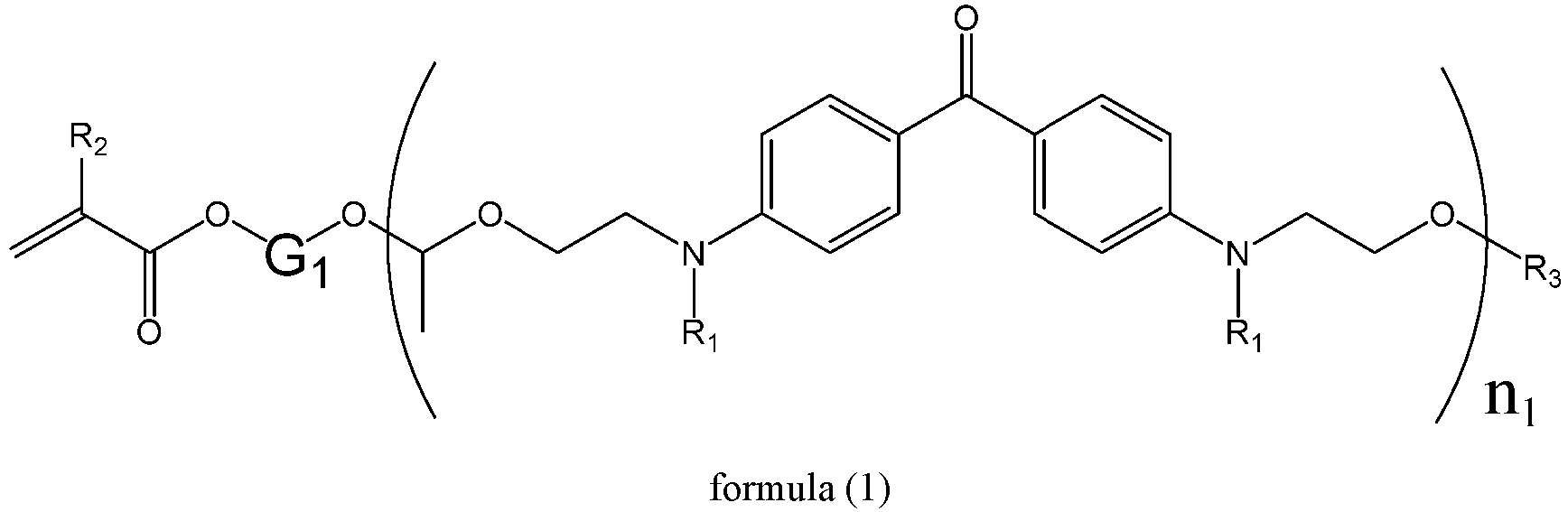
- n1 is an integer from 1 to 10, R1 is an optionally substituted C1-C8 alkyl, R2 is H or -CH3,
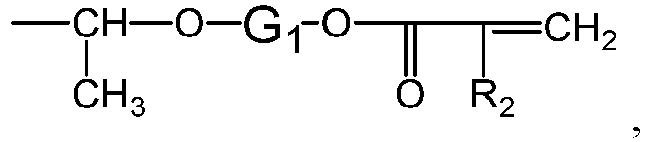
- R3 is H or


- The term "substituted" means that any one or more hydrogen atoms on a specified atom are replaced by a substituent, as long as the substituted compound is stable. The term "optionally substituted" means that it may or may not be substituted. Unless otherwise specified, the type and number of substituents may be arbitrary on the basis that they can be chemically realized.
- In the present application, the alkyl may be a linear alkyl or a branched alkyl.
- In the present application, n1 is an integer from 1 to 10, such as 1, 2, 3, 4, 5, 6, 7, 8, 9 or 10. In an optional embodiment of the present application, n1 is an integer from 1 to 4.
- In R1, examples of C1-C8 alkyls include but are not limited to methyl, ethyl, n-propyl, isopropyl, 2-methyl-1-propyl, 2-methyl-2-propyl, 2-methyl-1-butyl, 3-methyl-1-butyl, 2-methyl-3-butyl, 2,2-dimethyl-1-propyl, 2,2-dimethyl- 1-butyl, 3,3-dimethyl-1-butyl, 2-ethyl-1-butyl, n-butyl, isobutyl, sec-butyl, tert-butyl, n-pentyl, isopentyl, neopentyl, etc. In some embodiments, alkyl is C1-C8 alkyl, C1-C7 alkyl, C1-C6 alkyl, C1-C5 alkyl, C1-C4 alkyl, C1-C3 alkyl, C1-C2 alkyl or C1 alkyl. Preferably, R1 is a C1-C4 alkyl, further preferably -CH2CH3.
- In an optional embodiment of the present application, R2 is H;
- In an optional embodiment of the present application, R3 is
- The present application also provides a benzophenone derivative, wherein the benzophenone derivative has a structure represented by formula (2):

- n2 is an integer from 1 to 10, R1 is an optionally substituted C1-C8 alkyl, R2 is H or -CH3,
- R4 is H or

- G2 is an optionally substituted C1-C12 alkylene or

- In the present application, n2 is an integer from 1 to 10, such as 1, 2, 3, 4, 5, 6, 7, 8, 9 or 10. In an optional embodiment of the present application, n2 is an integer from 1 to 6.
- In R1, examples of C1-C8 alkyls include but are not limited to methyl, ethyl, n-propyl, isopropyl, 2-methyl-1-propyl, 2-methyl-2-propyl, 2-methyl-1-butyl, 3-methyl-1-butyl, 2-methyl-3-butyl, 2,2-dimethyl-1-propyl, 2,2-dimethyl-1-butyl, 3,3-dimethyl-1-butyl, 2-ethyl-1-butyl, n-butyl, isobutyl, sec-butyl, tert-butyl, n-pentyl, isopentyl, neopentyl, etc. In some embodiments, alkyl is C1-C8 alkyl, C1-C7 alkyl, C1-C6 alkyl, C1-C5 alkyl, C1-C4 alkyl, C1-C3 alkyl, C1-C2 alkyl or C1 alkyl. Preferably, R1 is a C1-C4 alkyl, further preferably -CH2CH3.
- In an optional embodiment of the present application, R2 is H;
In an optional embodiment of the present application, R4 is
- In G2, examples of C1-C12 alkylene include, but are not limited to, methylene, ethylene, propylene, butylene, pentylene and 3-methylpentylene.
- The present application also provides a benzophenone derivative, wherein the benzophenone derivative has a structure represented by formula (3):

- n3 is an integer from 1 to 10, R1 is an optionally substituted C1-C8 alkyl, R2 is H or -CH3, R5 is H or

- G2 is an optionally substituted C1-C12 alkylene or

- G3 is an optionally substituted C1-C12 alkylene,


- In the present application, n3 is an integer from 1 to 10, such as 1, 2, 3, 4, 5, 6, 7, 8, 9 or 10. In an optional embodiment of the present application, n3 is an integer from 1 to 6.
- In R1, examples of C1-C8 alkyls include but are not limited to methyl, ethyl, n-propyl, isopropyl, 2-methyl-1-propyl, 2-methyl-2-propyl, 2-methyl-1-butyl, 3-methyl-1-butyl, 2-methyl-3-butyl, 2,2-dimethyl-1-propyl, 2,2-dimethyl-1-butyl, 3,3-dimethyl-1-butyl, 2-ethyl-1-butyl, n-butyl, isobutyl, sec-butyl, tert-butyl, n-pentyl, isopentyl, neopentyl, etc. In some embodiments, alkyl is C1-C8 alkyl, C1-C7 alkyl, C1-C6 alkyl, C1-C5 alkyl, C1-C4 alkyl, C1-C3 alkyl, C1-C2 alkyl or C1 alkyl. Preferably, R1 is a C1-C4 alkyl, further preferably -CH2CH3.
- In an optional embodiment of the present application, R2 is H;
In an optional embodiment of the present application, R5 is
- In an optional embodiment of the present application, G2 and G3 are each independently -CH2CH2-, -CH2CH2CH2CH2-, -CH2CH2OCH2CH2- or -CH2CH2OCH2CH2OCH2CH2-.
- The present application also provides a method for preparing the benzophenone derivative having the structure of formula (1) as described above, comprising:
- performing a reaction between the compound represented by formula (4) and the compound represented by formula (5) until at least one of the hydroxyl groups at both ends of the compound represented by formula (4) is fully added, and then ending the reaction to obtain a benzophenone derivative with the structure of formula (1);

- wherein a molar ratio of the compound represented by formula (4) to the compound represented by formula (5) is in a range from 1:1 to 1:2, and R1, R2 and G1 have the same definitions as those in formula (1).
- In an optional embodiment of the present application, the reaction temperature is in a range from 40°C to 120°C and the reaction time is in a range from 10h to 100h.
- In the above reaction, when at least one of the hydroxyl groups at both ends of the compound represented by formula (4) is fully added, the reaction is completed. The reaction can be carried out under stirring conditions.
- In an optional embodiment of the present application, after the reaction is completed, the obtained reaction liquid is washed and the solvent is recovered to obtain a benzophenone derivative with the structure of formula (1).
- An exemplary washing method is: first washing with 1-5% dilute weak alkaline aqueous solution, and then washing with water. The weak alkaline aqueous solution can be an aqueous solution of sodium bicarbonate or sodium carbonate or ammonium carbonate.
- An exemplary method for recovering the solvent is distillation to recover the solvent.
- Optionally, the method for preparing the benzophenone derivative with the above formula (1) structure comprises the following steps:
- mixing the compound represented by formula (4), the compound represented by formula (5), a polymerization inhibitor, a catalyst and a solvent to obtain a mixture, heating the mixture under nitrogen or an inert atmosphere for a reaction; lowing the temperature at the end of the reaction, adding an alkaline solution for washing, and then washing with water until neutral; removing the solvent to obtain the benzophenone derivative with the structure of formula (1);

- wherein a molar ratio of the compound represented by formula (4) to the compound represented by formula (5) is in a range from 1:1 to 1:2, and R1, R2 and G1 have the same definitions as those in formula (1).
- Optionally, the reaction temperature is in a range from 40°C to 120°C and the reaction time is in a range from 10h to 100h. Optionally, it can be detected by HPLC until the compound represented by formula (4) reacts completely and the monoaddition product reacts completely.
- Optionally, the polymerization inhibitor is at least one selected from the group consisting of polyphenols, substituted phenol polymerization inhibitors, quinone polymerization inhibitors and diarylamine polymerization inhibitors. Preferably, the polymerization inhibitor is at least one of hydroquinone, p-methoxyphenol, 2,6-di-tert-butylphenol, p-benzoquinone, phenothiazine, or hindered amine oxide, more preferably hydroquinone and/or phenothiazine.
- Optionally, the amount of the polymerization inhibitor is 0.001% to 10% of the mass of the compound represented by formula (5), such as 1%, 2%, 3%, 4%, 5%, 6%, 7%, 8 %, 9% or 10%.
- Optionally, the catalyst is one or more of organic sulfonic acid, strongly acidic cation exchange resin or organic sulfonates, preferably p-aminobenzene sulfonic acid or poly-4-vinylpyridine p-toluenesulfonic acid salt. The amount of the catalyst is 0.1% to 20% of the mass of the compound represented by formula (4).
- Optionally, the solvent is an organic solvent immiscible with water, preferably toluene. The amount of the solvent can be added according to actual needs to ensure that the raw materials are dissolved. Optionally, the amount of the solvent is 0.5-100 times the mass of the compound represented by formula (4).
- Optionally, the amount of the alkaline solution added can be 1-100 times the amount of catalyst. The alkaline solution may be a sodium carbonate solution, and the mass concentration of the sodium carbonate solution is 1% to 10%.
- Optionally, after the reaction is completed, the temperature is lowered to 20°C to 40°C.
- Optionally, the content of effective groups in the benzophenone derivative of formula (1) is 30% to 60%, where the effective group refers to the molecular group

- The present application also provides a method for preparing a benzophenone derivative having a structure of formula (2) as described above, comprising:
- performing a reaction between the compound represented by formula (6) and the compound represented by formula (7) until at least one of the hydroxyl groups at both ends of the compound represented by formula (6) is fully added, adding the compound represented by formula (8) and continuing to react until the content of the compound represented by equation (8) no longer decreases, and stopping the reaction;

- wherein a molar ratio of the compound represented by formula (6) to the compound represented by formula (7) is in a range from 1:1 to 1:2, and a molar ratio of the compound represented by formula (6) to the compound represented by formula (8) is in a range from 1:0.5 to 1:3, and R1, R2 and G2 have the same definitions as those in formula (2).
- In an optional embodiment of the present application, the reaction temperature is in a range from 40°C to 120°C and the reaction time is in a range from 10h to 100h.
- The reaction can be carried out under stirring conditions.
- In an optional embodiment of the present application, after all the double bonds in the vinyl group in the compound represented by formula (8) are added, the reaction is completed, and the resulting reaction liquid is washed and the solvent is recovered to obtain a benzophenone derivatives with the structure of formula (2).
- An exemplary washing method is: first washing with a dilute weak alkaline aqueous solution, and then washing with water.
- An exemplary method of recovering the solvent is distillation to recover the solvent.
- Optionally, the method for preparing the benzophenone derivative with the structure of formula (2) comprises the following steps: mixing the compound represented by formula (6), the compound represented by formula (7), a polymerization inhibitor, a catalyst and a solvent to obtain a mixture, performing a heating reaction under nitrogen or an inert atmosphere; after the reaction is completed, adding the compound represented by formula (8), continuing to carry out the reaction under heat preservation until the content of the compound represented by formula (8) no longer decreasing, stopping the reaction, lowing the temperature, and then adding an alkaline solution for washing, then washing with water until neutral, removing the solvent to obtain the benzophenone derivative with the structure of formula (2);

- Optionally, the heating reaction temperature is 40-120°C, and the heating reaction time is 10-100h. Optionally, it can be detected by HPLC until the compound represented by formula (6) reacts completely and the monoaddition product reacts completely.
- Optionally, the polymerization inhibitor is at least one selected from the group consisting of polyphenols, substituted phenol polymerization inhibitors, quinone polymerization inhibitors and diarylamine polymerization inhibitors. Preferably, the polymerization inhibitor is at least one of hydroquinone, p-methoxyphenol, 2,6-di-tert-butylphenol, p-benzoquinone, phenothiazine, or hindered amine oxide, more preferably hydroquinone and/or phenothiazine.
- Optionally, the amount of polymerization inhibitor is 0.001% to 10% of the mass of the compound represented by formula (7), such as 1%, 2%, 3%, 4%, 5%, 6%, 7%, 8 %, 9% or 10%.
- Optionally, the catalyst is one or more of organic sulfonic acid, strongly acidic cation exchange resin or organic sulfonates, preferably p-aminobenzene sulfonic acid or poly-4-vinylpyridine p-toluenesulfonic acid salt. The amount of catalyst is 0.1% to 20% of the mass of the compound represented by formula (6).
- Optionally, the solvent is an organic solvent immiscible with water, preferably toluene. The amount of solvent can be added according to actual needs to ensure that the raw materials are dissolved. Optionally, the amount of solvent is 0.5-100 times the mass of the compound shown in formula (6).
- Optionally, the amount of alkaline solution added can be 1-100 times the amount of catalyst. The alkaline solution may be a sodium carbonate solution, and the mass concentration of the sodium carbonate solution is 1% to 10%.
- Optionally, after the reaction is completed, the temperature is lowered to 20°C to 40°C.
- Optionally, the content of effective groups in the benzophenone derivative of formula (2) is 30% to 60%, where the effective group refers to the molecular group

- The present application also provides a method for preparing a benzophenone derivative having a structure represented by formula (3) as described above, comprising:
- performing a reaction between the compound represented by formula (9) and the compound represented by formula (10) until at least one of the hydroxyl groups at both ends of the compound represented by formula (9) is fully added, then adding the compound represented by formula (11), and continuing to react until all double bonds in the vinyl of the compound represented by formula (11) are added;

- wherein a molar ratio of the compound represented by formula (9) and the compound represented by formula (10) is 1:1 to 1:2, and the molar ratio of the compound represented by formula (9) and the compound represented by formula (11) is 1:1 to 1:3, and R1, R2, G2 and G3 have the same definitions as those in formula (3).
- The reaction can be carried out under stirring conditions.
- In an optional embodiment of the present application, the reaction temperature is in a range from 40°C to 120°C and the reaction time is in a range from 10h to 100h.
- In an optional embodiment of the present application, after all the double bonds in the vinyl group in the compound represented by formula (11) are added, the reaction is completed, and the resulting reaction liquid is washed and the solvent is recovered to obtain a benzophenone derivatives with the structure of formula (3).
- An exemplary washing method is: first washing with a dilute weak alkaline aqueous solution, and then washing with water.
- An exemplary method of recovering the solvent is distillation to recover the solvent.
- Optionally, the method for preparing the benzophenone derivative with the structure of formula (3) comprises the following steps: mixing the compound represented by formula (9), the compound represented by formula (10), a polymerization inhibitor, a catalyst and a solvent, and performing a heating reaction under nitrogen or an inert atmosphere; after the reaction is completed, adding the compound represented by formula (11),continuing to carry out the reaction under heat preservation until the content of the compound represented by formula (11) no longer decreasing, stopping the reaction, lowing the temperature, adding an alkaline solution for washing, then washing with water until neutral, removing the solvent to obtain the benzophenone derivative with the structure of formula (2);

- Optionally, the reaction temperature is in a range from 40°C to 120°C and the reaction time is in a range from 10h to 100h. Optionally, it can be detected by HPLC until the compound represented by formula (9) reacts completely and the monoaddition product reacts completely.
- Optionally, the polymerization inhibitor is at least one selected from the group consisting of polyphenols, substituted phenol polymerization inhibitors, quinone polymerization inhibitors and diarylamine polymerization inhibitors. Preferably, the polymerization inhibitor is at least one of hydroquinone, p-methoxyphenol, 2,6-di-tert-butylphenol, p-benzoquinone, phenothiazine, or hindered amine oxide, more preferably hydroquinone and/or phenothiazine. Optionally, the amount of the polymerization inhibitor is 0.001% to 10% of the mass of the compound represented by formula (10), such as 1%, 2%, 3%, 4%, 5%, 6%, 7%, 8 %, 9% or 10%.
- Optionally, the catalyst is one or more of organic sulfonic acid, strongly acidic cation exchange resin or organic sulfonates, preferably p-aminobenzene sulfonic acid or poly-4-vinylpyridine p-toluenesulfonic acid salt. The amount of the catalyst is 0.1% to 20% of the mass of the compound represented by formula (9).
- Optionally, the solvent is an organic solvent immiscible with water, preferably toluene. The amount of solvent can be added according to actual needs to ensure that the raw materials are dissolved. Optionally, the amount of the solvent is 0.5-100 times the mass of the compound shown in formula (9).
- Optionally, the amount of the alkaline solution added can be 1-100 times the amount of catalyst. The alkaline solution may be a sodium carbonate solution, and the mass concentration of the sodium carbonate solution is 1% to 10%. Optionally, after the reaction is completed, the temperature is lowered to 20°C to 40°C.
- Optionally, the content of effective groups in the benzophenone derivative of formula (3) is 30% to 60%, where the effective group refers to the molecular group

- The preparation of the compound represented by formula (1), formula (2) or formula (3) of the present application is preferably carried out in the presence of a polymerization inhibitor, a catalyst and a solvent.
- Optionally, the polymerization inhibitor is at least one selected from the group consisting of polyphenols, substituted phenol polymerization inhibitors, quinone polymerization inhibitors and diarylamine polymerization inhibitors. Preferably, the polymerization inhibitor is at least one of hydroquinone, p-methoxyphenol, 2,6-di-tert-butylphenol, p-benzoquinone, phenothiazine, or hindered amine oxide, more preferably hydroquinone and/or phenothiazine. Optionally, the amount of the polymerization inhibitor is 0.001% to 10% of the mass of the compound represented by formula (5), formula (8) or formula (11), such as 1%, 2%, 3%, 4%, 5%, 6%, 7%, 8 %, 9% or 10%.
- Optionally, the catalyst is one or more of organic sulfonic acid, strongly acidic cation exchange resin or organic sulfonates, preferably p-aminobenzene sulfonic acid or poly-4-vinylpyridine p-toluenesulfonic acid salt. The amount of the catalyst is 0.1% to 20% of the mass of the compound represented by formula (4), formula (6) or formula (9).
- Optionally, the solvent is an organic solvent immiscible with water, preferably toluene.
- According to another aspect of the present application, a photoinitiator composition is provided, wherein the photoinitiator composition comprises a photoinitiator for free radical polymerization and the benzophenone derivative as described above.
- According to another aspect of the present application, a photocurable composition is provided, wherein the photocurable composition comprises a photoinitiator component and a radically polymerizable ethylenically unsaturated compound, wherein the photoinitiator component comprises the photoinitiator composition as described above.
- In an optional embodiment of the present application, the photocurable composition comprises: (a) the benzophenone derivative as described above; (b) a photoinitiator for free radical polymerization; and (c) a free-radically polymerizable ethylenically unsaturated compound.
- The photocurable composition including the aforementioned photoinitiator composition has low mobility.
- In an optional embodiment of the present application, the component (a) is added in an amount ranging from from 0.1% to 20% of the total weight of the photocurable composition, such as 1%, 5%, 10%, 15% or 20%.
- In an optional embodiment of the present application, the component (b) is a commonly used compound in the industry that is commercially or laboratory-available, and is selected from the group consisting of benzophenones (except benzophenones and derivatives other than those in the present application), thioxanthone compounds, α-hydroxyketone compounds, α-aminoketones compounds, acyl phosphine oxide compounds, oxime lipid compounds, and any combination thereof; preferably, at least one of benzophenone, 2-isopropylthiaxanthone, 2-dimethylamino-2-(4-methyl benzyl)-1-(4-morpholinylphenyl)-1-butanone, 2,4,6-trimethylbenzoyl-diphenylphosphine oxide, photoinitiator Omnipol TX, photoinitiator Omnipol 910 and photoinitiator Omnipol TP. Optionally, the photoinitiator Omnipol TX, photoinitiator Omnipol 910 or photoinitiator Omnipol TP is selected from the macromolecular photoinitiator series products Omnipol TX, Omnipol 910 or Omnipol TP of IGM Resin Company.
- In an optional embodiment of the present application, the component (b) is added in an amount ranging from 0.1% to 10% of the total weight of the photocurable composition, such as 0.1%, 2%, 4%, 6%, 8% or 10%.
- Ethylenically unsaturated compounds represent ethylenically unsaturated monomers, oligomers, prepolymers and mixtures thereof, which are capable of free radical polymerization.
- In an optional embodiment of the present application, the component (c) is at least one selected from the group consisting of epoxy acrylate resin, polyurethane acrylate resin, polyester acrylate resin, polyether acrylate resin, and acrylate resin, polyacrylate, epoxy methacrylate resin, polyurethane methacrylate resin, polyester methacrylate resin, polyether methacrylate resin, acrylated polymethacrylate, allyl ether compound, acrylate monomer and methacrylate monomer. The acrylate monomer or methacrylate monomer is independently monofunctional, difunctional or polyfunctional. These free-radically polymerizable ethylenically unsaturated compounds are readily available commercially or in the laboratory to those skilled in the art.
- The photocurable composition may also contain other additives to meet performance requirements, such as pigments, fillers, leveling aids, polymerization inhibitors, solvents, etc.
- According to another aspect of the present application, there is provided a use of the photocurable composition as described above in food packaging printing, pharmaceutical packaging printing, furniture coating, book printing and advertising printing.
- According to another aspect of the present application, a photocurable product is provided, which is formed by photocuring a photocurable composition, wherein the photocurable composition is the photocurable composition as described above, preferably, the photocurable product is selected from any one of coatings, adhesives, and printing inks.
- According to another aspect of the present application, a method for curing a photocurable composition is provided, comprising coating the photocurable composition as described above on a substrate; and curing the photocurable composition by using a light source with an emission band in the UV-visible light region.
- The substrate is selected from the group consisting of wood, paper, plastic, coating and metal. The coating method is selected from the group consisting of offset printing, gravure printing, flexographic printing, inkjet printing and 3D printing.
- Optionally, after coating on the substrate, the photocurable composition is cured by irradiating with UV-visible light having a wavelength ranging from 200 nm to 425 nm, preferably the photocurable composition is cured by irradiating with UV-visible light having a wavelength ranging from 365 nm to 405 nm.
- Compared with EMK, the bis(dialkylamino) benzophenone compound with an acrylate group side chain provided by the present application has a remarkably increased molecular weight and contains a polymerizable double bond, showing remarkably lower mobility.
- The benzophenone derivative can be used as an important co-initiator in UV light-curing formulas to initiate photopolymerization of unsaturated carbon-carbon double bond compounds together with other photoinitiators. The compound has very low mobility due to its large molecular weight and is suitable to replace N,N,N,N-tetraethyl-4,4'-diaminobenzophenone in the fields of food packaging, printing formulations, and the like.
-
Reagents Name Reagent specifications and content Reagent source HEMK* >98% Self made, reference: CN107434773A Butyl glycidyl ether >98% Shanghai Aladdin Bio-Chem Technology Co., LTD Ethyl glycidyl ether >98% Shanghai Aladdin Bio-Chem Technology Co., LTD Ethylene oxide >98% Shanghai Aladdin Bio-Chem Technology Co., LTD Propylene oxide >98% Shanghai Aladdin Bio-Chem Technology Co., LTD Potassium hydroxide AR Shanghai Aladdin Bio-Chem Technology Co., LTD Sodium hydroxide AR Shanghai Aladdin Bio-Chem Technology Co., LTD Anhydrous sodium carbonate AR Shanghai Aladdin Bio-Chem Technology Co., LTD Triethylamine AR Shanghai Aladdin Bio-Chem Technology Co., LTD Acetic Anhydride >98% Shanghai Aladdin Bio-Chem Technology Co., LTD Acryloyl chloride >98% Shanghai Aladdin Bio-Chem Technology Co., LTD Butyl isocyanate >98% Shanghai Aladdin Bio-Chem Technology Co., LTD 2-acryloyloxyethyl isocyanate >98% Shanghai CAB New Materials Technology Co., Ltd *The structure of HEMK is 
- Omnipol TX is a photoinitiator of polybutylene glycol 250-bis(2-carboxymethoxythioxanthone) ester, a product of IGM RESINS;
- Omnirad EMK is 4,4'-bis(diethylamino)benzophenone, a product of IGM RESINS;
- Photomer 4072 is trimethylolpropane propoxy (3) triacrylate, a product of IGM RESINS;
- Photomer 3316 is a low viscosity modified epoxy acrylate, a product of IGM RESINS.
- To a 100mL three-necked flask with mechanical stirrer, 1.78g (5mmol) of HEMK, 1.86g (10mmol) of 2-vinyloxyethoxyethyl acrylate (VEEA), 0.022g (0.2mmol) of hydroquinone, 0.086g (0.5mmol) of p-aminobenzenesulfonic acid and 12.0g of toluene were added in sequence. After sufficient nitrogen replacement under room temperature with stirring, the mixture was heated and stirred for reaction under the nitrogen balloon sealing. The reaction temperature was 55°C and the reaction time was 48 hours. A sample was taken for HPLC detection and the reaction was stopped until HEMK was complete reacted and the reaction of monoaddition product was completed. The temperature was lowered to 30°C, 3.0g sodium carbonate aqueous solution with a mass concentration of 5% (1.4mmol sodium carbonate) was added, and then washed until neutral. The solvent was distilled off under reduced pressure to obtain 3.44g of the product of formula IX, with an effective group content of 55%. The effective group refers to the remaining residue in the HEMK structure after removing the hydrogen on the two hydroxyl groups.

Table 1 Analysis results of the product of Example 1 by liquid chromatography-mass spectrometry Number Retention time (min) Content (%) Molecular mass Value of n1 in formula IX R3 in formula IX 1 3.16 1.87 542.67 1 H 2 5.87 40.36 728.88 1 
3 7.07 3.34 925.18 2 H 4 10.19 24.27 1111.38 2 
5 10.94 2.05 1307.68 3 H 6 13.08 15.08 1493.89 3 
7 13.56 1.20 1690.19 4 H 8 14.99 6.25 1876.39 4 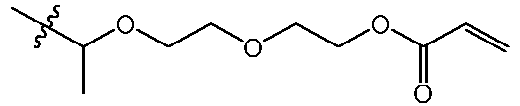
9 15.49 0.37 2072.7 5 H 10 16.94 3.26 2258.89 5 
11 19.52 1.31 2455.21 6 H 12 23.14 0.54 2641.39 6 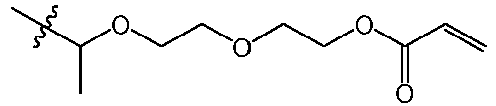
- To a 100mL three-necked flask with mechanical stirrer, 1.78g (5mmol) of HEMK, 1.86g (10mmol) of 2-vinyloxyethoxyethyl acrylate (VEEA), 0.022g (0.2mmol) of hydroquinone, 0.086g (0.11mmol) of poly(4-vinylpyridine-p-toluenesulfonate) and 12.0g of toluene were added in sequence. After sufficient nitrogen replacement under room temperature with stirring, the mixture was heated and stirred for reaction under the nitrogen balloon sealing. The reaction temperature was 55°C and the reaction time was 48 hours. A sample was taken for HPLC detection and the reaction was stopped until HEMK was complete reacted and the reaction of monoaddition product was completed. The temperature was lowered to 30°C, 3.0g sodium carbonate aqueous solution with a mass concentration of 5% (1.4mmol sodium carbonate) was added, and then washed until neutral. The solvent was distilled off under reduced pressure to obtain 3.40g of the product of formula IX.
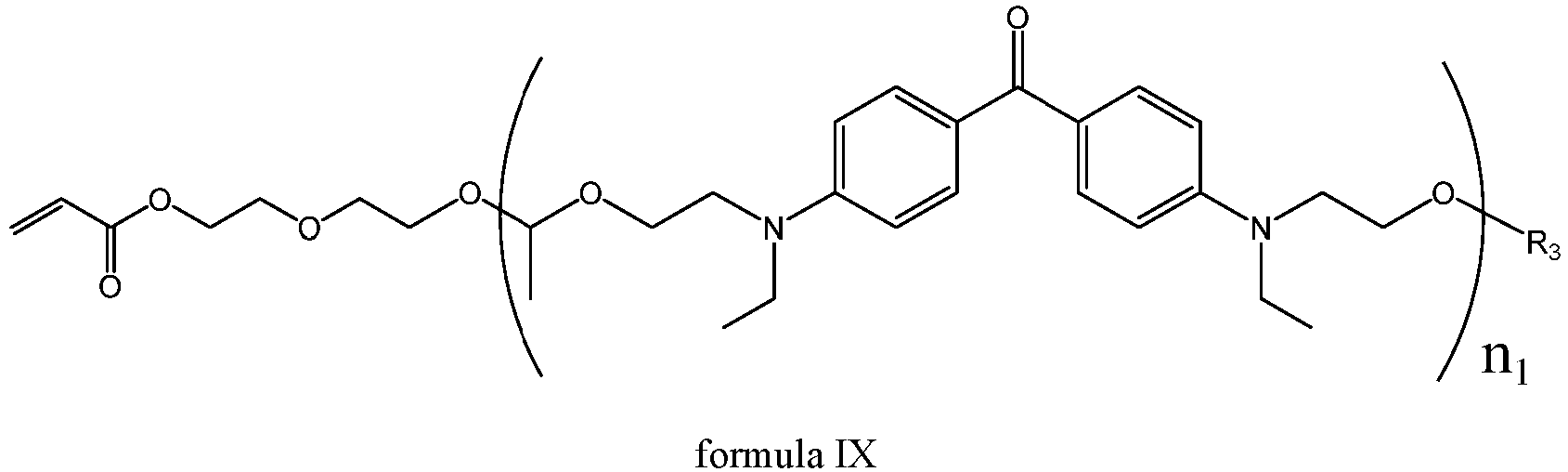
Table 2 Analysis results of the product of Example 2 by liquid chromatography-mass spectrometry Number Retention time (min) Content (%) Molecular mass Value of n1 in formula IX R3 in formula IX 1 3.16 7.29 542.67 1 H 2 5.87 28.74 728.88 1 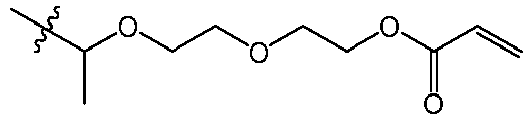
3 7.07 5.32 925.18 2 H 4 10.19 24.57 1111.38 2 
5 10.94 2.85 1307.68 3 H 6 13.08 15.92 1493.89 3 
7 13.56 1.38 1690.19 4 H 8 14.99 7.75 1876.39 4 
9 15.49 0.42 2072.7 5 H 10 16.94 3.87 2258.89 5 
11 19.52 1.00 2455.21 6 H 12 23.14 0.88 2641.39 6 
- To a 100mL three-necked flask with mechanical stirrer, 1.78g (5mmol) of HEMK, 2.00g (10mmol) of 2-vinyloxyethoxyethyl methacrylate (VEEM), 0.022g (0.2mmol) of hydroquinone, 0.086g (0.5mmol) of p-aminobenzenesulfonic acid and 12.0g of toluene were added in sequence. After sufficient nitrogen replacement under room temperature with stirring, the mixture was heated and stirred for reaction under the nitrogen balloon sealing. The reaction temperature was 55°C and the reaction time was 48 hours. A sample was taken for HPLC detection and the reaction was stopped until HEMK was complete reacted and the reaction of monoaddition product was completed. The temperature was lowered to 30°C, 3.0g sodium carbonate aqueous solution with a mass concentration of 5% (1.4mmol sodium carbonate) was added, and then washed until neutral. The solvent was distilled off under reduced pressure to obtain 3.51g of the product of formula X.

Table 3 Analysis results of the product of Example 3 by liquid chromatography-mass spectrometry Number Retention time (min) Content (%) Molecular mass Value of n1 in formula X R3 in formula X 1 3.12 2.58 556.69 1 H 2 5.80 38.69 756.92 1 
3 6.92 3.6 939.20 2 H 4 10.03 25.21 1139.42 2 
5 10.88 2.39 1321.70 3 H 6 12.99 16.23 1521.93 3 
7 13.32 1.27 1704.21 4 H 8 14.58 5.34 1904.43 4 
9 15.31 0.38 2086.72 5 H 10 16.72 2.85 2286.93 5 
11 18.98 1.03 2469.23 6 H 12 22.34 0.40 2669.43 6 
- To a 100mL three-necked flask with mechanical stirrer, 1.78g (5mmol) of HEMK, 1.42g (10mmol) of 2-vinyloxyethyl acrylate (VEA), 0.022g (0.2mmol) of hydroquinone, 0.086g (0.5mmol) of p-aminobenzenesulfonic acid and 12.0g of toluene were added in sequence. After sufficient nitrogen replacement under room temperature with stirring, the mixture was heated and stirred for reaction under the nitrogen balloon sealing. The reaction temperature was 55°C and the reaction time was 48 hours. A sample was taken for HPLC detection and the reaction was stopped until HEMK was complete reacted and the reaction of monoaddition product was completed. The temperature was lowered to 30°C, 3.0g sodium carbonate aqueous solution with a mass concentration of 5% (1.4mmol sodium carbonate) was added, and then washed until neutral. The solvent was distilled off under reduced pressure to obtain 2.91g of the product of formula XI, with an effective group content of 55%.

Table 4 Analysis results of the product of Example 4 by liquid chromatography-mass spectrometry Number Retention time (min) Content (%) Molecular mass Value of n1 in formula XI R3 in formulaXI 1 3.02 1.0 6 498.62 1 H 2 5.44 40. 58 640.77 1 
3 6.85 1.5 8 881.12 2 H 4 9.76 25. 84 1023.27 2 
5 10.14 1.3 6 1264.62 3 H 6 12.56 15. 21 1406.77 3 
7 13.01 0.9 8 1647.12 4 H 8 14.25 7.6 5 1789.27 4 
9 14.93 0.3 8 2029.72 5 H 10 15.19 2.8 5 2171.77 5 
11 17.32 1.6 7 2412.22 6 H 12 20.87 0.8 2 2554.27 6 
- To a 100mL three-necked flask with mechanical stirrer, 1.78g (5mmol) of HEMK, 1.42g (10mmol) of 2-vinyloxyethyl acrylate (VEA), 0.022g (0.2mmol) of hydroquinone, 0.086g (0.5mmol) of p-toluenesulfonic acid and 12.0g of dichloroethane were added in sequence. After sufficient nitrogen replacement under room temperature with stirring, the mixture was heated and stirred for reaction under the nitrogen balloon sealing. The reaction temperature was 55°C and the reaction time was 48 hours. A sample was taken for HPLC detection and the reaction was stopped until HEMK was complete reacted and the reaction of monoaddition product was completed. The temperature was lowered to 30°C, 3.0g sodium carbonate aqueous solution with a mass concentration of 5% (1.4mmol sodium carbonate) was added, and then washed until neutral. The solvent was distilled off under reduced pressure to obtain 2.88g of the product of formula XI.

Table 5 Analysis results of the product of Example 5 by liquid chromatography-mass spectrometry Number Retention time (min) Content (%) Molecular mass Value of n1 in formula XI R3 in formula XI 1 3.02 0.98 498.62 1 H 2 5.44 36.8 6 640.77 1 
3 6.85 2.41 881.12 2 H 4 9.76 24.8 0 1023.27 2 
5 10.14 1.60 1264.62 3 H 6 12.56 12.8 7 1406.77 3 
7 13.01 1.28 1647.12 4 H 8 14.25 11.5 9 1789.27 4 
9 14.93 0.88 2029.72 5 H 10 15.19 3.81 2171.77 5 
11 17.32 1.59 2412.22 6 H 12 20.87 1.32 2554.27 6 
- To a 100mL three-necked flask with mechanical stirrer, 1.78g (5mmol) of HEMK, 1.56g (12mmol) of 2-vinyloxyethyl methacrylate (VEM), 0.022g (0.2mmol) of hydroquinone, 0.086g (0.5mmol) of p-aminobenzenesulfonic acid and 12.0g of toluene were added in sequence. After sufficient nitrogen replacement under room temperature with stirring, the mixture was heated and stirred for reaction under the nitrogen balloon sealing. The reaction temperature was 55°C and the reaction time was 48 hours. A sample was taken for HPLC detection and the reaction was stopped until HEMK was complete reacted and the reaction of monoaddition product was completed. The temperature was lowered to 30°C, 3.0g sodium carbonate aqueous solution with a mass concentration of 5% (1.4mmol sodium carbonate) was added, and then washed until neutral. The solvent was distilled off under reduced pressure to obtain 3.07g of the product of formula XII.

Table 6 Analysis results of the product of Example 6 by liquid chromatography-mass spectrometry Number Retention time (min) Content (%) Molecul ar mass Value of n1 in formula XII R3 in formula XII 1 3.15 1.38 512.64 1 H 2 5.94 39.89 654.79 1 
3 7.26 1.20 895.14 2 H 4 10.55 26.66 1037.29 2 
5 10.94 1.28 1278.64 3 H 6 13.20 16.38 1420.79 3 
7 14.32 0.70 1661.14 4 H 8 15.00 7.49 1803.29 4 
9 15.93 0.78 2043.64 5 H 10 17.49 2.42 2185.79 5 
11 19.32 1.32 2426.14 6 H 12 21.87 0.49 2568.29 6 
- To a 100mL three-necked flask with mechanical stirrer, 1.78g (5mmol) of HEMK, 1.58g (10mmol) of diethylene glycol divinyl ether, 0.022g (0.2mmol) of hydroquinone, 0.086g (0.5mmol) of p-aminobenzenesulfonic acid and 12.0g of toluene were added in sequence. After sufficient nitrogen replacement under room temperature with stirring, the mixture was heated and stirred for reaction under the nitrogen balloon sealing. The reaction temperature was 55°C and the reaction time was 48 hours. A sample was taken for HPLC detection and the reaction was stopped until HEMK was complete reacted and the reaction of monoaddition product was completed. Then 0.86g (12mmol) of acrylic acid was added, and continue to stir for reaction under heat preservation. A sample was taken for testing every 4 hours of reaction time. The reaction was stopped until the acrylic acid content no longer decreases. The temperature was lowered to 30°C, 6.4g sodium carbonate aqueous solution with a mass concentration of 5% (3.0mmol sodium carbonate) was added, and then washed until neutral. The solvent was distilled off under reduced pressure to obtain 3.91g of the product of formula XIII, with an effective group content of 40%.

Table 7 Analysis results of the product of Example 7 by liquid chromatography-mass spectrometry Number Retention time (min) Content (%) Molecular mass Value of n2 in formula XIII 1 7.20 19.44 816.99 1 2 11.17 20.86 1331.66 2 3 13.92 16.51 1846.24 3 4 15.67 12.89 2360.91 4 5 17.88 9.03 2875.58 5 6 19.76 8.24 3390.25 6 7 22.80 5.33 3904.92 7 8 25.93 3.66 4419.59 8 9 27.62 2.58 4934.26 9 10 30.77 1.55 5448.93 10 - To a 100mL three-necked flask with mechanical stirrer, 1.78g (5mmol) of HEMK, 0.99g (6.25mmol) of diethylene glycol divinyl ether, 0.022g (0.2mmol) of hydroquinone, 0.086g (0.5mmol) of p-aminobenzenesulfonic acid and 12.0g of toluene were added in sequence. After sufficient nitrogen replacement under room temperature with stirring, the mixture was heated and stirred for reaction under the nitrogen balloon sealing. The reaction temperature was 55°C and the reaction time was 72 hours. A sample was taken for HPLC detection and the reaction was stopped until HEMK was complete reacted and the reaction of monoaddition product was completed. Then 0.22g (3mmol) of acrylic acid was added, and continued to stir for reaction under heat preservation. A sample was taken for testing every 4 hours of reaction time. The reaction was stopped until the acrylic acid content no longer decreases. The temperature was lowered to 30°C, 6.4g sodium carbonate aqueous solution with a mass concentration of 5% (3.0mmol sodium carbonate) was added, and then washed until neutral. The solvent was distilled off under reduced pressure to obtain 2.58g of the product of formula XIII.


Table 8 Analysis results of the product of Example 8 by liquid chromatography-mass spectrometry Number Retention time (min) Content (%) Molecular mass Value of n2 in formula XIII 1 7.20 17.15 816.99 1 2 11.17 8.06 1331.66 2 3 13.92 14.51 1846.24 3 4 15.67 14.40 2360.91 4 5 17.88 16.04 2875.58 5 6 19.76 13.04 3390.25 6 7 22.80 8.82 3904.92 7 8 25.93 5.30 4419.59 8 9 27.62 2.05 4934.26 9 10 30.77 0.62 5448.93 10 - To a 100mL three-necked flask with mechanical stirrer, 1.78g (5mmol) of HEMK, 1.58g (10mmol) of diethylene glycol divinyl ether, 0.022g (0.2mmol) of hydroquinone, 0.086g (0.5mmol) of p-aminobenzenesulfonic acid and 12.0g of toluene were added in sequence. After sufficient nitrogen replacement under room temperature with stirring, the mixture was heated and stirred for reaction under the nitrogen balloon sealing. The reaction temperature was 55°C and the reaction time was 48 hours. A sample was taken for HPLC detection and the reaction was stopped until HEMK was complete reacted and the reaction of monoaddition product was completed. Then 1.39g (12mmol) of hydroxyethyl acrylate was added, and continued to stir for reaction under heat preservation. A sample was taken for testing every 4 hours of reaction time. The reaction was stopped until the hydroxyethyl acrylate content no longer decreases. The temperature was lowered to 30°C, 6.4g sodium carbonate aqueous solution with a mass concentration of 5% (3.0mmol sodium carbonate) was added, and then washed until neutral. The solvent was distilled off under reduced pressure to obtain 4.15g of the product of formula XIV, with an effective group content of 40%.

Table 9 Analysis results of the product of Example 9 by liquid chromatography-mass spectrometry Number Retention time (min) Content (%) Molecular mass Value of n3 in formula XIV 1 7.28 20.54 905.09 1 2 11.38 21.85 1419.76 2 3 14.00 17.06 1934.43 3 4 15.96 12.44 2449.10 4 5 18.04 9.06 2963.77 5 6 20.39 7.92 3478.44 6 7 23.09 4.83 3993.11 7 8 26.60 3.55 4507.78 8 9 28.51 2.18 5022.45 9 10 31.63 1.55 5537.12 10 - To a 100mL three-necked flask with mechanical stirrer, 1.78g (5mmol) of HEMK, 0.99g (6.25mmol) of diethylene glycol divinyl ether, 0.022g (0.2mmol) of hydroquinone, 0.086g (0.5mmol) of p-aminobenzenesulfonic acid and 12.0g of toluene were added in sequence. After sufficient nitrogen replacement under room temperature with stirring, the mixture was heated and stirred for reaction under the nitrogen balloon sealing. The reaction temperature was 55°C and the reaction time was 72 hours. A sample was taken for HPLC detection and the reaction was stopped until HEMK was complete reacted and the reaction of monoaddition product was completed. Then 0.35g (3mmol) of hydroxyethyl acrylate was added, and continued to stir for reaction under heat preservation. A sample was taken for testing every 4 hours of reaction time. The reaction was stopped until the hydroxyethyl acrylate content no longer decreases. The temperature was lowered to 30°C, 6.4g sodium carbonate aqueous solution with a mass concentration of 5% (3.0mmol sodium carbonate) was added, and then washed until neutral. The solvent was distilled off under reduced pressure to obtain 2.74g of the product of formula XIV.

Table 10 Analysis results of the product of Example 10 by liquid chromatography-mass spectrometry Number Retention time (min) Content (%) Molecular mass Value of n3 in formula XIV 1 7.28 17.15 905.09 1 2 11.38 8.06 1419.76 2 3 14.00 14.51 1934.43 3 4 15.96 14.43 2449.10 4 5 18.04 16.24 2963.77 5 6 20.39 11.79 3478.44 6 7 23.09 7.76 3993.11 7 8 26.60 5.34 4507.78 8 9 28.51 3.19 5022.45 9 10 31.63 1.51 5537.12 10 - To a 100mL three-necked flask with mechanical stirrer, 1.78g (5mmol) of HEMK, 2.02g (10mmol) of triethylene glycol divinyl ether, 0.022g (0.2mmol) of hydroquinone, 0.086g (0.5mmol) of p-aminobenzenesulfonic acid and 12.0g of toluene were added in sequence. After sufficient nitrogen replacement under room temperature with stirring, the mixture was heated and stirred for reaction under the nitrogen balloon sealing. The reaction temperature was 55°C and the reaction time was 48 hours. A sample was taken for HPLC detection and the reaction was stopped until HEMK was complete reacted and the reaction of monoaddition product was completed. Then 1.39g (12mmol) of hydroxyethyl acrylate was added, and continued to stir for reaction under heat preservation. A sample was taken for testing every 4 hours of reaction time. The reaction was stopped until the hydroxyethyl acrylate content no longer decreases. The temperature was lowered to 30°C, 6.4g sodium carbonate aqueous solution with a mass concentration of 5% (3.0mmol sodium carbonate) was added, and then washed until neutral. The solvent was distilled off under reduced pressure to obtain 4.66g of the product of formula XV, with an effective group content of 40%.

Table 11 Analysis results of the product of Example 11 by liquid chromatography-mass spectrometry Number Retention time (min) Content (%) Molecular mass Value of n3 in formula XV 1 7.45 21.42 993.20 1 2 11.83 22.03 1551.91 2 3 15.52 17.45 2110.63 3 4 1677 12.33 2669.35 4 5 18.91 8.60 3228.07 5 6 21.16 7.61 3786.79 6 7 24.42 4.38 4345.51 7 8 27.88 3.11 4904.23 8 9 29.33 2.08 5462.95 9 10 33.55 0.98 6021.67 10 - To a 100mL three-necked flask with mechanical stirrer, 1.78g (5mmol) of HEMK, 1.26g (6.25mmol) of triethylene glycol divinyl ether, 0.022g (0.2mmol) of hydroquinone, 0.086g (0.5mmol) of p-aminobenzenesulfonic acid and 12.0g of toluene were added in sequence. After sufficient nitrogen replacement under room temperature with stirring, the mixture was heated and stirred for reaction under the nitrogen balloon sealing. The reaction temperature was 55°C and the reaction time was 96 hours. A sample was taken for HPLC detection and the reaction was stopped until HEMK was complete reacted and the reaction of monoaddition product was completed. Then 0.35g (3mmol) of hydroxyethyl acrylate was added, and continued to stir for reaction under heat preservation. A sample was taken for testing every 4 hours of reaction time. The reaction was stopped until the hydroxyethyl acrylate content no longer decreases. The temperature was lowered to 30°C, 6.4g sodium carbonate aqueous solution with a mass concentration of 5% (3.0mmol sodium carbonate) was added, and then washed until neutral. The solvent was distilled off under reduced pressure to obtain 3.06g of the product of formula XV.

Table 12 Analysis results of the product of Example 12 by liquid chromatography-mass spectrometry Number Retention time (min) Content (%) Molecular mass Value of n3 in formula XV 1 7.45 18.67 993.20 1 2 11.83 19.63 1551.91 2 3 15.52 20.13 2110.63 3 4 1677 15.53 2669.35 4 5 18.91 8.80 3228.07 5 6 21.16 6.61 3786.79 6 7 24.42 4.38 4345.51 7 8 27.88 3.11 4904.23 8 9 29.33 1.99 5462.95 9 10 33.55 1.14 6021.67 10 - To a 100mL three-necked flask with mechanical stirrer, 1.78g (5mmol) of HEMK, 1.42g (10mmol) of 1,4-butanediol divinyl ether, 0.022g (0.2mmol) of hydroquinone, 0.086g (0.5mmol) of p-aminobenzenesulfonic acid and 12.0g of toluene were added in sequence. After sufficient nitrogen replacement under room temperature with stirring, the mixture was heated and stirred for reaction under the nitrogen balloon sealing. The reaction temperature was 55°C and the reaction time was 48 hours. A sample was taken for HPLC detection and the reaction was stopped until HEMK was complete reacted and the reaction of monoaddition product was completed. Then 1.39g (12mmol) of hydroxyethyl acrylate was added, and continued to stir for reaction under heat preservation. A sample was taken for testing every 4 hours of reaction time. The reaction was stopped until the hydroxyethyl acrylate content no longer decreases. The temperature was lowered to 30°C, 6.4g sodium carbonate aqueous solution with a mass concentration of 5% (3.0mmol sodium carbonate) was added, and then washed until neutral. The solvent was distilled off under reduced pressure to obtain 4.09g of the product of formula XVI.

Table 13 Analysis results of the product of Example 13 by liquid chromatography-mass spectrometry Number Retention time (min) Content (%) Molecular mass Value of n3 in formula XVI 1 7.29 13.60 873.09 1 2 11.55 21.38 1371.76 2 3 16.04 17.89 1870.43 3 4 17.36 9.96 2369.10 4 5 20.64 15.08 2867.77 5 6 22.42 6.90 3366.44 6 7 23.34 5.46 3865.11 7 8 26.87 4.98 4363.78 8 9 28.91 3.22 4862.45 9 10 32.03 1.51 5361.12 10 - This Example provided a photocurable composition, comprising the following components: 4.57g of Photomer 4072, 4.57g of Photomer 3316, 0.36g of the product of Formula IX of Example 1, and 0.5g of Omnipol TX.
- The method for preparing the above-mentioned photocurable composition comprised the following steps: the above-mentioned components were stirred and dissolved at 60°C, and then cooled to room temperature to prepare a photocurable composition.
- This Example provided a photocurable composition, comprising the following components: 4.57g of Photomer 4072, 4.57g of Photomer 3316, 0.36g of the product of Formula XI of Example 4, and 0.5g of Omnipol TX.
- The method for preparing the above-mentioned photocurable composition comprised the following steps: the above-mentioned components were stirred and dissolved at 60°C, and then cooled to room temperature to prepare a photocurable composition.
- This Example provided a photocurable composition, comprising the following components: 4.5g of Photomer 4072, 4.5g of Photomer 3316, 0.5g of the product of Formula XIII of Example 7, and 0.5g of Omnipol TX.
- The method for preparing the above-mentioned photocurable composition comprised the following steps: the above-mentioned components were stirred and dissolved at 60°C, and then cooled to room temperature to prepare a photocurable composition.
- This Example provided a photocurable composition, comprising the following components: 4.5g of Photomer 4072, 4.5g of Photomer 3316, 0.5g of the product of Formula XIV of Example 9, and 0.5g of Omnipol TX.
- The method for preparing the above-mentioned photocurable composition comprised the following steps: the above-mentioned components were stirred and dissolved at 60°C, and then cooled to room temperature to prepare a photocurable composition.
- This Example provided a photocurable composition, comprising the following components: 4.5g of Photomer 4072, 4.5g of Photomer 3316, 0.5g of the product of Formula XV of Example 11, and 0.5g of Omnipol TX.
- The method for preparing the above-mentioned photocurable composition comprised the following steps: the above-mentioned components were stirred and dissolved at 60°C, and then cooled to room temperature to prepare a photocurable composition.
- This comparative example provided a photocurable composition, comprising the following components: 4.65g of Photomer 4072, 4.65g of Photomer 3316, 0.2g of the Omnirad EMK, and 0.5g of Omnipol TX.
- The method for preparing the above-mentioned photocurable composition comprised the following steps: the above-mentioned components were stirred and dissolved at 60°C, and then cooled to room temperature to prepare a photocurable composition.
- The hardness and curing mobility properties of the photocurable compositions prepared of Examples 14-18 and Comparative Example 1 were tested respectively:
Pendulum hardness test: a 25µm wire rod was used to cure the above-mentioned photocurable compositions on a coated glass plate (under a 395nm LED light) at a speed of 10m/min, and the pendulum hardness after curing was tested. - Mobility test: a 25µm wire rod was used to cure the above-mentioned photocurable composition on a paper with a coating length and width of 5×20cm under a 395nm LED lamp at a speed of 10m/min. The 100cm2 of cured paper was put into 100g of acetic acid aqueous solution with a mass content of 3%, then it was placed at 40°C for 10 days. Then HPLC was used to detect the photoinitiator component (the photoinitiator component refers to the product component of the formula IX of Example 1, the product component of Formula XI of Example 4, the product component of Formula XIII of Example 7, the product component of Formula XIV of Example 9, the product component of Formula XV of Example 11 or the component of Omnirad EMK) that migrates into the acetic acid aqueous solution. The EU model was used for calculation of the results, assuming that 1kg of food is packaged in a 600cm2 printing area, so the results can be converted into µg/kg, that is, µg of analyte per kg of food (the analyte refers to the product of formula IX of Example 1, the product of formula XI of Example 4, the product of formula XIII of Example 7, the product of formula XIV of Example 9, the product of formula XV of Example 11 or Omnirad EMK). The experimental results of hardness and mobility analysis were shown in Table 14.
Table 14 Example 14 Example 15 Example 16 Example 17 Example 18 Comparative Example 1 Pendulum hardness 0.76 0.75 0.75 0.79 0.80 0.77 Mobility (µg/kg) 25 23 27 11 6 2180 - It can be seen from the test data that using the bis(dialkylamino)benzophenone compound with an acrylate alkoxy side chain provided by the present application as a co-initiator of the photocurable composition, compared with the commonly used EMK as a co-initiator for photocurable compositions on the market, the hardness of the compounds provided in the present application after curing is similar to that of the control, indicating that they have a similar curing rate. However, because the compound provided by the application has a larger molecular weight and contains polymerizable double bonds, the mobility is significantly reduced. Therefore, the compounds provided in the present application are more suitable for use in food and drug packaging, children's toys and other applications that have strict requirements on substance mobility.
- Obviously, the above examples are merely examples made for clear description, rather limiting the implementations. For those of ordinary skill in the art, other different forms of variations or modifications can also be made on the basis of the above-mentioned description. All embodiments are not necessary to be and cannot be exhaustively listed herein. In addition, obvious variations or modifications derived therefrom all fall within the scope of protection of the present invention.
Claims (26)
- A benzophenone derivative, wherein the benzophenone derivative has a structure represented by formula (1):
 n1 is an integer from 1 to 10, R1 is an optionally substituted C1-C8 alkyl, R2 is H or -CH3,R3 is H or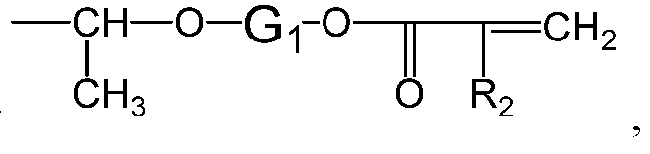

- The benzophenone derivative of claim 1, wherein n1 is an integer from 1 to 4; preferably, R1 is a C1-C4 alkyl, further preferably -CH2CH3; preferably, R2 is H;preferably, R3 is
 preferably, G1 is -CH2CH2-, -CH2CH2CH2CH2-, or -CH2CH2OCH2CH2-.
 - A benzophenone derivative, wherein the benzophenone derivative has a structure represented by formula (2):
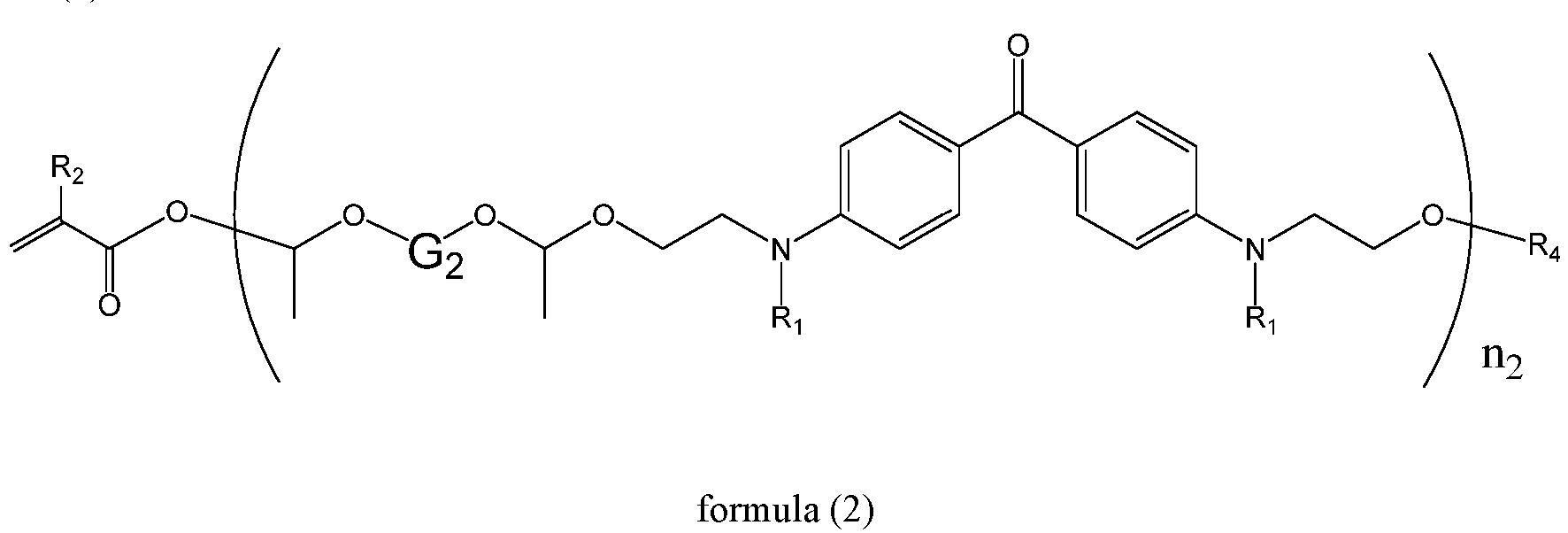 n2 is an integer from 1 to 10, R1 is an optionally substituted C1-C8 alkyl, R2 is H or -CH3,R4 is H or
 G2 is an optionally substituted C1-C12 alkylene or
- The benzophenone derivative of claim 3, wherein n2 is an integer from 1 to 6;
preferably, R1 is preferably a C1-C4 alkyl, further preferably -CH2CH3; preferably, R2 is H; preferably, R4 is
- A benzophenone derivative, wherein the benzophenone derivative has a structure represented by formula (3):

n3 is an integer from 1 to 10, R1 is an optionally substituted C1-C8 alkyl, R2 is H or -CH3, R5 is H or
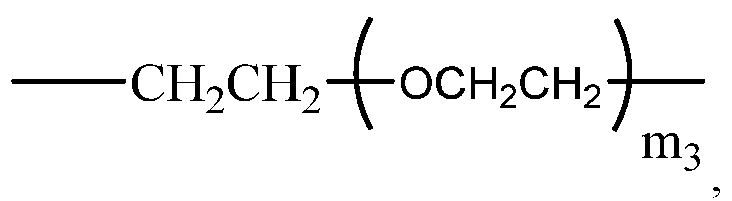


- The benzophenone derivative of claim 5, wherein n3 is an integer from 1 to 6; preferably, R1 is a C1-C4 alkyl, further preferably -CH2CH3; preferably, R2 is H;preferably, R5 is
 preferably, G2 and G3 are each independently -CH2CH2-, -CH2CH2CH2CH2-, -CH2CH2OCH2CH2- or -CH2CH2OCH2CH2OCH2CH2-.
 - A method for preparing the benzophenone derivative of claim 1 or 2, comprising:performing a reaction between the compound represented by formula (4) and the compound represented by formula (5) until at least one of the hydroxyl groups at both ends of the compound represented by formula (4) is fully added, and then ending the reaction to obtain a benzophenone derivative with the structure of formula (1);
 wherein a molar ratio of the compound represented by formula (4) to the compound represented by formula (5) is in a range from 1:1 to 1:2, and R1, R2 and G1 have the same definitions as those in formula (1).
 - The method of claim 7, wherein the reaction temperature is in a range from 40°C to 120°C and the reaction time is in a range from 10h to 100h.
- The method for preparing the benzophenone derivative of claim 3 or 4, comprising:performing a reaction between the compound represented by formula (6) and the compound represented by formula (7) until at least one of the hydroxyl groups at both ends of the compound represented by formula (6) is fully added, adding the compound represented by formula (8) and continuing to react until the content of the compound represented by equation (8) no longer decreases, and stopping the reaction;
 wherein a molar ratio of the compound represented by formula (6) to the compound represented by formula (7) is in a range from 1:1 to 1:2, and a molar ratio of the compound represented by formula (6) to the compound represented by formula (8) is in a range from 1:0.5 to 1:3, and R1, R2 and G2 have the same definitions as those in formula (2).
 - The method of claim 9, wherein the reaction temperature is in a range from 40°C to 120°C and the reaction time is in a range from 10h to 100h.
- A method for preparing benzophenone derivatives of claim 5 or 6, comprising:performing a reaction the compound represented by formula (9) with the compound represented by formula (10) until at least one of the hydroxyl groups at both ends of the compound represented by formula (9) is fully added, then adding the compound represented by formula (11), and continuing to react until all double bonds in the vinyl of the compound represented by formula (11) are added;
 wherein a molar ratio of the compound represented by formula (9) and the compound represented by formula (10) is 1:1 to 1:2, and the molar ratio of the compound represented by formula (9) and the compound represented by formula (11) is 1:1 to 1:3, and R1, R2, G2 and G3 have the same definitions as those in formula (3).
 - The method of claim 11, wherein the reaction temperature is in a range from 40°C to 120°C and the reaction time is in a range from 10h to 100h.
- A photoinitiator composition, wherein the photoinitiator composition comprises a photoinitiator for free radical polymerization and the benzophenone derivative of any one of claims 1 to 6.
- A photocurable composition, wherein the photocurable composition comprises a photoinitiator component and a radically polymerizable ethylenically unsaturated compound, and the photoinitiator component comprises the photoinitiator composition of claim 13.
- The photocurable composition of claim 14, wherein the photocurable composition comprises:(a) the benzophenone derivative of any one of claims 1 to 6;(b) a photoinitiator for free radical polymerization; and(c) a free-radically polymerizable ethylenically unsaturated compound.
- The photocurable composition of claim 15, wherein the component (a) is added in an amount ranging from from 0.1% to 20% of the total weight of the photocurable composition.
- The photocurable composition of claim 15, wherein the component (b) is selected from the group consisting of benzophenones, thioxanthone compounds, α-hydroxyketone compounds, α-aminoketones compounds, acyl phosphine oxide compounds, oxime lipid compounds, and any combination thereof; preferably, at least one of benzophenone, 2-isopropylthiaxanthone, 2-dimethylamino-2-(4-methyl benzyl)-1-(4-morpholinylphenyl)-1-butanone, 2,4,6-trimethylbenzoyl-diphenylphosphine oxide, photoinitiator Omnipol TX, photoinitiator Omnipol 910 and photoinitiator Omnipol TP.
- The photocurable composition of claim 15, wherein the component (b) is added in an amount ranging from 0.1% to 10% of the total weight of the photocurable composition.
- The photocurable composition of claim 15, wherein the component (c) is at least one selected from the group consisting of epoxy acrylate resin, polyurethane acrylate resin, polyester acrylate resin, polyether acrylate resin, and acrylate resin, polyacrylate, epoxy methacrylate resin, polyurethane methacrylate resin, polyester methacrylate resin, polyether methacrylate resin, acrylated polymethacrylate, allyl ether compound, acrylate monomer and methacrylate monomer.
- Use of the photocurable composition of any one of claims 14 to 19 in food packaging printing, pharmaceutical packaging printing, furniture coating, book printing and advertising printing.
- A photocurable product, wherein the photocurable product is formed by photocuring a photocurable composition, wherein the photocurable composition is the photocurable composition of any one of claims 14-19.
- A method for curing a photocurable composition, comprising
coating the photocurable composition of any one of claims 14 to 19 on a substrate; and curing the photocurable composition by using a light source with an emission band in the UV-visible light region. - The method of claim 22, wherein the substrate is selected from the group consisting of wood, paper, plastic, coating and metal.
- The method of claim 22, wherein the coating method is selected from the group consisting of offset printing, gravure printing, flexographic printing, inkjet printing and 3D printing.
- The method of claim 22, wherein after coating on the substrate, the photocurable composition is cured by irradiating with UV-visible light having a wavelength ranging from 200 nm to 425 nm.
- The method of claim 25, wherein the photocurable composition is cured by irradiating with UV-visible light having a wavelength ranging from 365 nm to 405 nm.
Applications Claiming Priority (2)
| Application Number | Priority Date | Filing Date | Title |
|---|---|---|---|
| CN202210217084.9A CN116768742B (en) | 2022-03-07 | 2022-03-07 | Benzophenone derivative, preparation method and application thereof |
| PCT/CN2023/079796 WO2023169352A1 (en) | 2022-03-07 | 2023-03-06 | Benzophenone derivative, method for preparing same, and use thereof |
Publications (3)
| Publication Number | Publication Date |
|---|---|
| EP4484454A1 true EP4484454A1 (en) | 2025-01-01 |
| EP4484454A4 EP4484454A4 (en) | 2025-06-25 |
| EP4484454B1 EP4484454B1 (en) | 2026-02-11 |
Family
ID=87937253
Family Applications (1)
| Application Number | Title | Priority Date | Filing Date |
|---|---|---|---|
| EP23765930.5A Active EP4484454B1 (en) | 2022-03-07 | 2023-03-06 | Benzophenone derivative, method for preparing same, and use thereof |
Country Status (6)
| Country | Link |
|---|---|
| US (1) | US20250179006A1 (en) |
| EP (1) | EP4484454B1 (en) |
| JP (1) | JP7822582B2 (en) |
| KR (1) | KR20250006001A (en) |
| CN (2) | CN116768742B (en) |
| WO (1) | WO2023169352A1 (en) |
Family Cites Families (22)
| Publication number | Priority date | Publication date | Assignee | Title |
|---|---|---|---|---|
| DE44077C (en) | farbwerke, vorm. meister, lucius & brüning in Höchst a. M | Process for the preparation of tetraalkylated diamidobenzophenones | ||
| US4507497A (en) * | 1983-03-03 | 1985-03-26 | Minnesota Mining And Manufacturing Company | Water soluble michlers ketone analogs |
| GB2298209B (en) * | 1992-01-21 | 1996-11-06 | Du Pont | Improvements in or relating to photopolymerisable components of radiation sensitive compositions |
| JPH06211758A (en) * | 1993-01-18 | 1994-08-02 | Fuji Photo Film Co Ltd | Benzophenone derivative |
| JPH06211759A (en) * | 1993-01-18 | 1994-08-02 | Fuji Photo Film Co Ltd | 4-4'-diaminobenzophenone derivative |
| DE19940895A1 (en) | 1999-08-27 | 2001-04-19 | Inst Neurosimultion Und Bildte | Method and device for classifying skin abnormalities, in particular melanomas and melanoma-like symptoms |
| CN100427461C (en) * | 2006-03-30 | 2008-10-22 | 上海交通大学 | Polymerisable benzophenone photoinitiator and its preparing method |
| CN100551935C (en) * | 2007-02-13 | 2009-10-21 | 武汉大学 | One-component hydrogen abstraction type photoinitiator and its preparation method and application |
| EP2033949B1 (en) | 2007-09-04 | 2017-04-19 | Agfa Graphics N.V. | Radiation curable compositions for food applications |
| JP5388530B2 (en) | 2008-09-30 | 2014-01-15 | 富士フイルム株式会社 | Colored cured composition, fluorine-containing dipyrromethene compound and its tautomer, fluorine-containing dipyrromethene metal complex compound and its tautomer, color filter and method for producing the same |
| DK2638077T3 (en) * | 2010-11-12 | 2015-04-20 | Coloplast As | HOWEVER UNKNOWN POLYMER PHOTO INITIATORS |
| CN102212151B (en) * | 2011-04-26 | 2013-03-20 | 盐城工学院 | Polymerizable benzophenone photoinitiator containing amine used as auxiliary initiator and preparation method thereof |
| CN103703030B (en) * | 2013-09-06 | 2015-06-10 | 北京英力科技发展有限公司 | Low mobility photoinitiator |
| KR101972613B1 (en) | 2013-12-17 | 2019-04-25 | 동우 화인켐 주식회사 | Dyes and colored curable resin composition |
| JP6459477B2 (en) | 2013-12-25 | 2019-01-30 | Jsr株式会社 | Colored composition, colored cured film, and display element |
| KR102375638B1 (en) * | 2014-07-29 | 2022-03-17 | 스미또모 가가꾸 가부시키가이샤 | Colored curable resin composition |
| JP6592257B2 (en) | 2015-03-12 | 2019-10-16 | 東友ファインケム株式会社Dongwoo Fine−Chem Co., Ltd. | Colored curable resin composition |
| CN107686450A (en) | 2017-10-27 | 2018-02-13 | 天津久日新材料股份有限公司 | The preparation method of tetraethyl michaelis ketone |
| CN110407719A (en) * | 2018-04-27 | 2019-11-05 | 北京化工大学常州先进材料研究院 | A kind of polymerizable single-component hydrogen abstraction type photoinitiator and preparation method thereof |
| CN110467692A (en) * | 2018-05-11 | 2019-11-19 | 北京英力科技发展有限公司 | A kind of polyacrylate macromolecular photoinitiator and its synthetic method and application |
| CN112707830B (en) | 2020-12-28 | 2023-09-29 | 天津久日新材料股份有限公司 | Preparation method of tetraethyl ketone |
| CN112940242B (en) * | 2021-01-20 | 2022-08-16 | 东华大学 | High-molecular photoinitiator and preparation method thereof |
-
2022
- 2022-03-07 CN CN202210217084.9A patent/CN116768742B/en active Active
-
2023
- 2023-03-06 KR KR1020247033116A patent/KR20250006001A/en active Pending
- 2023-03-06 JP JP2024553596A patent/JP7822582B2/en active Active
- 2023-03-06 US US18/844,559 patent/US20250179006A1/en active Pending
- 2023-03-06 EP EP23765930.5A patent/EP4484454B1/en active Active
- 2023-03-06 CN CN202380025026.9A patent/CN118829662A/en active Pending
- 2023-03-06 WO PCT/CN2023/079796 patent/WO2023169352A1/en not_active Ceased
Also Published As
| Publication number | Publication date |
|---|---|
| EP4484454B1 (en) | 2026-02-11 |
| CN116768742A (en) | 2023-09-19 |
| US20250179006A1 (en) | 2025-06-05 |
| EP4484454A4 (en) | 2025-06-25 |
| JP7822582B2 (en) | 2026-03-03 |
| CN118829662A (en) | 2024-10-22 |
| CN116768742B (en) | 2025-07-29 |
| KR20250006001A (en) | 2025-01-10 |
| JP2025509358A (en) | 2025-04-11 |
| WO2023169352A1 (en) | 2023-09-14 |
Similar Documents
| Publication | Publication Date | Title |
|---|---|---|
| KR101389872B1 (en) | Low extractable radiation curable compositions containing aminoacrylates | |
| EP1438282B1 (en) | Multi-functional photoinitiators | |
| CN103703030B (en) | Low mobility photoinitiator | |
| EP1147098B1 (en) | Compounds comprising acrylate and cyclic sec.-amine functionalities | |
| EP3514135A1 (en) | Fluorene photoinitiator, preparation method therefor, photocurable composition having same, and use of same in photocuring field | |
| EP2592074A1 (en) | Thioxanthone-4-carboxylates, their preparation methods, photoinitiator compositions and uses thereof | |
| EP3715381B1 (en) | Dibutylfluorene derivative and application thereof as photoinitiator | |
| TW201343609A (en) | Amino photo-reactive binder | |
| WO2019214121A1 (en) | Polyacrylate macromolecular photoinitiator, synthesis method therefor and use thereof | |
| CN104910131A (en) | New thioxanthone carboxylic ester photoinitiator and preparation method thereof | |
| EP4484454B1 (en) | Benzophenone derivative, method for preparing same, and use thereof | |
| CN114805296B (en) | Thioxanthone derivative, preparation method and application thereof | |
| CN116730854B (en) | A benzophenone derivative, preparation method and use thereof | |
| EP4244281B1 (en) | Photoinitiator resins with dibenzoylmethane substructure | |
| KR20250033279A (en) | Photopolymerization initiator composition, photocurable composition, photocurable composition kit and photocurable resin composition | |
| JPS5938938B2 (en) | Ester diol alkoxylate acrylate | |
| CN106565865B (en) | A kind of low VOC releases photoinitiator, preparation method and application | |
| EP4301725B1 (en) | Amine synergists with uv-a absorption | |
| CN120818301B (en) | Aqueous visible light curing composition containing anthracene methyl sulfate sodium salt photoinitiator and application thereof | |
| CN116496503B (en) | Macromolecular photoinitiator containing polysiloxane groups, preparation method and application thereof | |
| EP2989107B1 (en) | Acrylic compund with tetraoxaspiro backbone for radiation curable compositions | |
| TW202440539A (en) | Method of preparing a monomeric photoinitiator | |
| KR20140039077A (en) | Low extractable radiation curable compositions containing aminoacrylates | |
| JP2004067879A (en) | Composition comprising unsaturated carboxylic ester group-containing compound |
Legal Events
| Date | Code | Title | Description |
|---|---|---|---|
| STAA | Information on the status of an ep patent application or granted ep patent |
Free format text: STATUS: THE INTERNATIONAL PUBLICATION HAS BEEN MADE |
|
| PUAI | Public reference made under article 153(3) epc to a published international application that has entered the european phase |
Free format text: ORIGINAL CODE: 0009012 |
|
| STAA | Information on the status of an ep patent application or granted ep patent |
Free format text: STATUS: REQUEST FOR EXAMINATION WAS MADE |
|
| 17P | Request for examination filed |
Effective date: 20240927 |
|
| AK | Designated contracting states |
Kind code of ref document: A1 Designated state(s): AL AT BE BG CH CY CZ DE DK EE ES FI FR GB GR HR HU IE IS IT LI LT LU LV MC ME MK MT NL NO PL PT RO RS SE SI SK SM TR |
|
| DAV | Request for validation of the european patent (deleted) | ||
| DAX | Request for extension of the european patent (deleted) | ||
| A4 | Supplementary search report drawn up and despatched |
Effective date: 20250527 |
|
| RIC1 | Information provided on ipc code assigned before grant |
Ipc: C07C 225/22 20060101ALI20250521BHEP Ipc: G03F 7/028 20060101ALI20250521BHEP Ipc: C09D 4/00 20060101ALI20250521BHEP Ipc: C08F 20/10 20060101ALI20250521BHEP Ipc: C08F 2/48 20060101AFI20250521BHEP |
|
| GRAP | Despatch of communication of intention to grant a patent |
Free format text: ORIGINAL CODE: EPIDOSNIGR1 |
|
| STAA | Information on the status of an ep patent application or granted ep patent |
Free format text: STATUS: GRANT OF PATENT IS INTENDED |
|
| RIC1 | Information provided on ipc code assigned before grant |
Ipc: C08F 2/48 20060101AFI20251007BHEP Ipc: C08F 20/10 20060101ALI20251007BHEP Ipc: C09D 4/00 20060101ALI20251007BHEP Ipc: G03F 7/028 20060101ALI20251007BHEP Ipc: C07C 225/22 20060101ALI20251007BHEP |
|
| INTG | Intention to grant announced |
Effective date: 20251028 |
|
| GRAS | Grant fee paid |
Free format text: ORIGINAL CODE: EPIDOSNIGR3 |
|
| GRAA | (expected) grant |
Free format text: ORIGINAL CODE: 0009210 |
|
| STAA | Information on the status of an ep patent application or granted ep patent |
Free format text: STATUS: THE PATENT HAS BEEN GRANTED |
|
| AK | Designated contracting states |
Kind code of ref document: B1 Designated state(s): AL AT BE BG CH CY CZ DE DK EE ES FI FR GB GR HR HU IE IS IT LI LT LU LV MC ME MK MT NL NO PL PT RO RS SE SI SK SM TR |
|
| REG | Reference to a national code |
Ref country code: CH Ref legal event code: F10 Free format text: ST27 STATUS EVENT CODE: U-0-0-F10-F00 (AS PROVIDED BY THE NATIONAL OFFICE) Effective date: 20260211 Ref country code: GB Ref legal event code: FG4D |
|
| REG | Reference to a national code |
Ref country code: DE Ref legal event code: R096 Ref document number: 602023011973 Country of ref document: DE |
|
| REG | Reference to a national code |
Ref country code: IE Ref legal event code: FG4D |
|
| PGFP | Annual fee paid to national office [announced via postgrant information from national office to epo] |
Ref country code: AT Payment date: 20260301 Year of fee payment: 4 |