EP4484434A1 - Fused bicyclic compound containing pyrrolinone - Google Patents
Fused bicyclic compound containing pyrrolinone Download PDFInfo
- Publication number
- EP4484434A1 EP4484434A1 EP23759202.7A EP23759202A EP4484434A1 EP 4484434 A1 EP4484434 A1 EP 4484434A1 EP 23759202 A EP23759202 A EP 23759202A EP 4484434 A1 EP4484434 A1 EP 4484434A1
- Authority
- EP
- European Patent Office
- Prior art keywords
- group
- compound
- alkyl
- membered
- esi
- Prior art date
- Legal status (The legal status is an assumption and is not a legal conclusion. Google has not performed a legal analysis and makes no representation as to the accuracy of the status listed.)
- Pending
Links
Classifications
-
- C—CHEMISTRY; METALLURGY
- C07—ORGANIC CHEMISTRY
- C07D—HETEROCYCLIC COMPOUNDS
- C07D471/00—Heterocyclic compounds containing nitrogen atoms as the only ring hetero atoms in the condensed system, at least one ring being a six-membered ring with one nitrogen atom, not provided for by groups C07D451/00 - C07D463/00
- C07D471/02—Heterocyclic compounds containing nitrogen atoms as the only ring hetero atoms in the condensed system, at least one ring being a six-membered ring with one nitrogen atom, not provided for by groups C07D451/00 - C07D463/00 in which the condensed system contains two hetero rings
- C07D471/04—Ortho-condensed systems
-
- A—HUMAN NECESSITIES
- A61—MEDICAL OR VETERINARY SCIENCE; HYGIENE
- A61K—PREPARATIONS FOR MEDICAL, DENTAL OR TOILETRY PURPOSES
- A61K31/00—Medicinal preparations containing organic active ingredients
- A61K31/33—Heterocyclic compounds
- A61K31/395—Heterocyclic compounds having nitrogen as a ring hetero atom, e.g. guanethidine or rifamycins
- A61K31/435—Heterocyclic compounds having nitrogen as a ring hetero atom, e.g. guanethidine or rifamycins having six-membered rings with one nitrogen as the only ring hetero atom
- A61K31/4353—Heterocyclic compounds having nitrogen as a ring hetero atom, e.g. guanethidine or rifamycins having six-membered rings with one nitrogen as the only ring hetero atom ortho- or peri-condensed with heterocyclic ring systems
- A61K31/437—Heterocyclic compounds having nitrogen as a ring hetero atom, e.g. guanethidine or rifamycins having six-membered rings with one nitrogen as the only ring hetero atom ortho- or peri-condensed with heterocyclic ring systems the heterocyclic ring system containing a five-membered ring having nitrogen as a ring hetero atom, e.g. indolizine, beta-carboline
-
- A—HUMAN NECESSITIES
- A61—MEDICAL OR VETERINARY SCIENCE; HYGIENE
- A61K—PREPARATIONS FOR MEDICAL, DENTAL OR TOILETRY PURPOSES
- A61K31/00—Medicinal preparations containing organic active ingredients
- A61K31/33—Heterocyclic compounds
- A61K31/395—Heterocyclic compounds having nitrogen as a ring hetero atom, e.g. guanethidine or rifamycins
- A61K31/435—Heterocyclic compounds having nitrogen as a ring hetero atom, e.g. guanethidine or rifamycins having six-membered rings with one nitrogen as the only ring hetero atom
- A61K31/44—Non condensed pyridines; Hydrogenated derivatives thereof
- A61K31/4427—Non condensed pyridines; Hydrogenated derivatives thereof containing further heterocyclic ring systems
- A61K31/4439—Non condensed pyridines; Hydrogenated derivatives thereof containing further heterocyclic ring systems containing a five-membered ring with nitrogen as a ring hetero atom, e.g. omeprazole
-
- A—HUMAN NECESSITIES
- A61—MEDICAL OR VETERINARY SCIENCE; HYGIENE
- A61K—PREPARATIONS FOR MEDICAL, DENTAL OR TOILETRY PURPOSES
- A61K31/00—Medicinal preparations containing organic active ingredients
- A61K31/33—Heterocyclic compounds
- A61K31/395—Heterocyclic compounds having nitrogen as a ring hetero atom, e.g. guanethidine or rifamycins
- A61K31/435—Heterocyclic compounds having nitrogen as a ring hetero atom, e.g. guanethidine or rifamycins having six-membered rings with one nitrogen as the only ring hetero atom
- A61K31/44—Non condensed pyridines; Hydrogenated derivatives thereof
- A61K31/4427—Non condensed pyridines; Hydrogenated derivatives thereof containing further heterocyclic ring systems
- A61K31/444—Non condensed pyridines; Hydrogenated derivatives thereof containing further heterocyclic ring systems containing a six-membered ring with nitrogen as a ring heteroatom, e.g. amrinone
-
- A—HUMAN NECESSITIES
- A61—MEDICAL OR VETERINARY SCIENCE; HYGIENE
- A61K—PREPARATIONS FOR MEDICAL, DENTAL OR TOILETRY PURPOSES
- A61K31/00—Medicinal preparations containing organic active ingredients
- A61K31/33—Heterocyclic compounds
- A61K31/395—Heterocyclic compounds having nitrogen as a ring hetero atom, e.g. guanethidine or rifamycins
- A61K31/435—Heterocyclic compounds having nitrogen as a ring hetero atom, e.g. guanethidine or rifamycins having six-membered rings with one nitrogen as the only ring hetero atom
- A61K31/44—Non condensed pyridines; Hydrogenated derivatives thereof
- A61K31/445—Non condensed piperidines, e.g. piperocaine
- A61K31/4523—Non condensed piperidines, e.g. piperocaine containing further heterocyclic ring systems
- A61K31/4545—Non condensed piperidines, e.g. piperocaine containing further heterocyclic ring systems containing a six-membered ring with nitrogen as a ring hetero atom, e.g. pipamperone, anabasine
-
- A—HUMAN NECESSITIES
- A61—MEDICAL OR VETERINARY SCIENCE; HYGIENE
- A61K—PREPARATIONS FOR MEDICAL, DENTAL OR TOILETRY PURPOSES
- A61K31/00—Medicinal preparations containing organic active ingredients
- A61K31/33—Heterocyclic compounds
- A61K31/395—Heterocyclic compounds having nitrogen as a ring hetero atom, e.g. guanethidine or rifamycins
- A61K31/495—Heterocyclic compounds having nitrogen as a ring hetero atom, e.g. guanethidine or rifamycins having six-membered rings with two or more nitrogen atoms as the only ring heteroatoms, e.g. piperazine or tetrazines
- A61K31/496—Non-condensed piperazines containing further heterocyclic rings, e.g. rifampin, thiothixene or sparfloxacin
-
- A—HUMAN NECESSITIES
- A61—MEDICAL OR VETERINARY SCIENCE; HYGIENE
- A61K—PREPARATIONS FOR MEDICAL, DENTAL OR TOILETRY PURPOSES
- A61K31/00—Medicinal preparations containing organic active ingredients
- A61K31/33—Heterocyclic compounds
- A61K31/395—Heterocyclic compounds having nitrogen as a ring hetero atom, e.g. guanethidine or rifamycins
- A61K31/495—Heterocyclic compounds having nitrogen as a ring hetero atom, e.g. guanethidine or rifamycins having six-membered rings with two or more nitrogen atoms as the only ring heteroatoms, e.g. piperazine or tetrazines
- A61K31/4985—Pyrazines or piperazines ortho- or peri-condensed with heterocyclic ring systems
-
- A—HUMAN NECESSITIES
- A61—MEDICAL OR VETERINARY SCIENCE; HYGIENE
- A61K—PREPARATIONS FOR MEDICAL, DENTAL OR TOILETRY PURPOSES
- A61K31/00—Medicinal preparations containing organic active ingredients
- A61K31/33—Heterocyclic compounds
- A61K31/395—Heterocyclic compounds having nitrogen as a ring hetero atom, e.g. guanethidine or rifamycins
- A61K31/495—Heterocyclic compounds having nitrogen as a ring hetero atom, e.g. guanethidine or rifamycins having six-membered rings with two or more nitrogen atoms as the only ring heteroatoms, e.g. piperazine or tetrazines
- A61K31/50—Pyridazines; Hydrogenated pyridazines
- A61K31/5025—Pyridazines; Hydrogenated pyridazines ortho- or peri-condensed with heterocyclic ring systems
-
- A—HUMAN NECESSITIES
- A61—MEDICAL OR VETERINARY SCIENCE; HYGIENE
- A61K—PREPARATIONS FOR MEDICAL, DENTAL OR TOILETRY PURPOSES
- A61K31/00—Medicinal preparations containing organic active ingredients
- A61K31/33—Heterocyclic compounds
- A61K31/395—Heterocyclic compounds having nitrogen as a ring hetero atom, e.g. guanethidine or rifamycins
- A61K31/495—Heterocyclic compounds having nitrogen as a ring hetero atom, e.g. guanethidine or rifamycins having six-membered rings with two or more nitrogen atoms as the only ring heteroatoms, e.g. piperazine or tetrazines
- A61K31/505—Pyrimidines; Hydrogenated pyrimidines, e.g. trimethoprim
- A61K31/519—Pyrimidines; Hydrogenated pyrimidines, e.g. trimethoprim ortho- or peri-condensed with heterocyclic rings
-
- A—HUMAN NECESSITIES
- A61—MEDICAL OR VETERINARY SCIENCE; HYGIENE
- A61K—PREPARATIONS FOR MEDICAL, DENTAL OR TOILETRY PURPOSES
- A61K31/00—Medicinal preparations containing organic active ingredients
- A61K31/33—Heterocyclic compounds
- A61K31/395—Heterocyclic compounds having nitrogen as a ring hetero atom, e.g. guanethidine or rifamycins
- A61K31/535—Heterocyclic compounds having nitrogen as a ring hetero atom, e.g. guanethidine or rifamycins having six-membered rings with at least one nitrogen and one oxygen as the ring hetero atoms, e.g. 1,2-oxazines
- A61K31/5375—1,4-Oxazines, e.g. morpholine
- A61K31/5377—1,4-Oxazines, e.g. morpholine not condensed and containing further heterocyclic rings, e.g. timolol
-
- A—HUMAN NECESSITIES
- A61—MEDICAL OR VETERINARY SCIENCE; HYGIENE
- A61K—PREPARATIONS FOR MEDICAL, DENTAL OR TOILETRY PURPOSES
- A61K31/00—Medicinal preparations containing organic active ingredients
- A61K31/33—Heterocyclic compounds
- A61K31/395—Heterocyclic compounds having nitrogen as a ring hetero atom, e.g. guanethidine or rifamycins
- A61K31/535—Heterocyclic compounds having nitrogen as a ring hetero atom, e.g. guanethidine or rifamycins having six-membered rings with at least one nitrogen and one oxygen as the ring hetero atoms, e.g. 1,2-oxazines
- A61K31/5375—1,4-Oxazines, e.g. morpholine
- A61K31/5383—1,4-Oxazines, e.g. morpholine ortho- or peri-condensed with heterocyclic ring systems
-
- A—HUMAN NECESSITIES
- A61—MEDICAL OR VETERINARY SCIENCE; HYGIENE
- A61P—SPECIFIC THERAPEUTIC ACTIVITY OF CHEMICAL COMPOUNDS OR MEDICINAL PREPARATIONS
- A61P35/00—Antineoplastic agents
-
- A—HUMAN NECESSITIES
- A61—MEDICAL OR VETERINARY SCIENCE; HYGIENE
- A61P—SPECIFIC THERAPEUTIC ACTIVITY OF CHEMICAL COMPOUNDS OR MEDICINAL PREPARATIONS
- A61P35/00—Antineoplastic agents
- A61P35/02—Antineoplastic agents specific for leukemia
-
- C—CHEMISTRY; METALLURGY
- C07—ORGANIC CHEMISTRY
- C07D—HETEROCYCLIC COMPOUNDS
- C07D405/00—Heterocyclic compounds containing both one or more hetero rings having oxygen atoms as the only ring hetero atoms, and one or more rings having nitrogen as the only ring hetero atom
- C07D405/14—Heterocyclic compounds containing both one or more hetero rings having oxygen atoms as the only ring hetero atoms, and one or more rings having nitrogen as the only ring hetero atom containing three or more hetero rings
-
- C—CHEMISTRY; METALLURGY
- C07—ORGANIC CHEMISTRY
- C07D—HETEROCYCLIC COMPOUNDS
- C07D471/00—Heterocyclic compounds containing nitrogen atoms as the only ring hetero atoms in the condensed system, at least one ring being a six-membered ring with one nitrogen atom, not provided for by groups C07D451/00 - C07D463/00
- C07D471/02—Heterocyclic compounds containing nitrogen atoms as the only ring hetero atoms in the condensed system, at least one ring being a six-membered ring with one nitrogen atom, not provided for by groups C07D451/00 - C07D463/00 in which the condensed system contains two hetero rings
- C07D471/10—Spiro-condensed systems
-
- C—CHEMISTRY; METALLURGY
- C07—ORGANIC CHEMISTRY
- C07D—HETEROCYCLIC COMPOUNDS
- C07D471/00—Heterocyclic compounds containing nitrogen atoms as the only ring hetero atoms in the condensed system, at least one ring being a six-membered ring with one nitrogen atom, not provided for by groups C07D451/00 - C07D463/00
- C07D471/12—Heterocyclic compounds containing nitrogen atoms as the only ring hetero atoms in the condensed system, at least one ring being a six-membered ring with one nitrogen atom, not provided for by groups C07D451/00 - C07D463/00 in which the condensed system contains three hetero rings
- C07D471/14—Ortho-condensed systems
-
- C—CHEMISTRY; METALLURGY
- C07—ORGANIC CHEMISTRY
- C07D—HETEROCYCLIC COMPOUNDS
- C07D487/00—Heterocyclic compounds containing nitrogen atoms as the only ring hetero atoms in the condensed system, not provided for by groups C07D451/00 - C07D477/00
- C07D487/02—Heterocyclic compounds containing nitrogen atoms as the only ring hetero atoms in the condensed system, not provided for by groups C07D451/00 - C07D477/00 in which the condensed system contains two hetero rings
- C07D487/04—Ortho-condensed systems
-
- C—CHEMISTRY; METALLURGY
- C07—ORGANIC CHEMISTRY
- C07D—HETEROCYCLIC COMPOUNDS
- C07D487/00—Heterocyclic compounds containing nitrogen atoms as the only ring hetero atoms in the condensed system, not provided for by groups C07D451/00 - C07D477/00
- C07D487/12—Heterocyclic compounds containing nitrogen atoms as the only ring hetero atoms in the condensed system, not provided for by groups C07D451/00 - C07D477/00 in which the condensed system contains three hetero rings
- C07D487/14—Ortho-condensed systems
-
- C—CHEMISTRY; METALLURGY
- C07—ORGANIC CHEMISTRY
- C07D—HETEROCYCLIC COMPOUNDS
- C07D491/00—Heterocyclic compounds containing in the condensed ring system both one or more rings having oxygen atoms as the only ring hetero atoms and one or more rings having nitrogen atoms as the only ring hetero atoms, not provided for by groups C07D451/00 - C07D459/00, C07D463/00, C07D477/00 or C07D489/00
- C07D491/02—Heterocyclic compounds containing in the condensed ring system both one or more rings having oxygen atoms as the only ring hetero atoms and one or more rings having nitrogen atoms as the only ring hetero atoms, not provided for by groups C07D451/00 - C07D459/00, C07D463/00, C07D477/00 or C07D489/00 in which the condensed system contains two hetero rings
- C07D491/10—Spiro-condensed systems
- C07D491/107—Spiro-condensed systems with only one oxygen atom as ring hetero atom in the oxygen-containing ring
-
- C—CHEMISTRY; METALLURGY
- C07—ORGANIC CHEMISTRY
- C07D—HETEROCYCLIC COMPOUNDS
- C07D491/00—Heterocyclic compounds containing in the condensed ring system both one or more rings having oxygen atoms as the only ring hetero atoms and one or more rings having nitrogen atoms as the only ring hetero atoms, not provided for by groups C07D451/00 - C07D459/00, C07D463/00, C07D477/00 or C07D489/00
- C07D491/12—Heterocyclic compounds containing in the condensed ring system both one or more rings having oxygen atoms as the only ring hetero atoms and one or more rings having nitrogen atoms as the only ring hetero atoms, not provided for by groups C07D451/00 - C07D459/00, C07D463/00, C07D477/00 or C07D489/00 in which the condensed system contains three hetero rings
- C07D491/14—Ortho-condensed systems
- C07D491/147—Ortho-condensed systems the condensed system containing one ring with oxygen as ring hetero atom and two rings with nitrogen as ring hetero atom
-
- C—CHEMISTRY; METALLURGY
- C07—ORGANIC CHEMISTRY
- C07D—HETEROCYCLIC COMPOUNDS
- C07D495/00—Heterocyclic compounds containing in the condensed system at least one hetero ring having sulfur atoms as the only ring hetero atoms
- C07D495/12—Heterocyclic compounds containing in the condensed system at least one hetero ring having sulfur atoms as the only ring hetero atoms in which the condensed system contains three hetero rings
- C07D495/14—Ortho-condensed systems
-
- C—CHEMISTRY; METALLURGY
- C07—ORGANIC CHEMISTRY
- C07D—HETEROCYCLIC COMPOUNDS
- C07D498/00—Heterocyclic compounds containing in the condensed system at least one hetero ring having nitrogen and oxygen atoms as the only ring hetero atoms
- C07D498/02—Heterocyclic compounds containing in the condensed system at least one hetero ring having nitrogen and oxygen atoms as the only ring hetero atoms in which the condensed system contains two hetero rings
- C07D498/04—Ortho-condensed systems
-
- C—CHEMISTRY; METALLURGY
- C07—ORGANIC CHEMISTRY
- C07D—HETEROCYCLIC COMPOUNDS
- C07D498/00—Heterocyclic compounds containing in the condensed system at least one hetero ring having nitrogen and oxygen atoms as the only ring hetero atoms
- C07D498/12—Heterocyclic compounds containing in the condensed system at least one hetero ring having nitrogen and oxygen atoms as the only ring hetero atoms in which the condensed system contains three hetero rings
- C07D498/14—Ortho-condensed systems
-
- C—CHEMISTRY; METALLURGY
- C07—ORGANIC CHEMISTRY
- C07D—HETEROCYCLIC COMPOUNDS
- C07D519/00—Heterocyclic compounds containing more than one system of two or more relevant hetero rings condensed among themselves or condensed with a common carbocyclic ring system not provided for in groups C07D453/00 or C07D455/00
Definitions
- the present application relates to a fused bicyclic compound containing pyrrolinone, a preparation method therefor, a pharmaceutical composition containing the compound, and use thereof for treating a disease, e.g., cancer.
- Hematopoietic progenitor kinase 1 also known as mitogen-activated protein kinase 1 (MAP4K1)
- MAP4K1 mitogen-activated protein kinase 1
- the MAP4K family also includes five substypes: GCK/MAP4K2, GLK/MAP4K3, HGK/MAP4K4, KHS1/MAP4K5, and MINK1/MAP4K6.
- HPK1 is only expressed in hematopoietic histiocytes and can be involved in regulating the signaling of the hematopoietic system including lymphocytes by mediating multiple cell signaling pathways (including MAPK signaling, antigen receptor signaling, and cytokine signaling, etc.).
- HPK1 functions mainly through the c-Jun N-terminal kinase (JNK) and extracellular regulated protein kinases (ERK) signaling pathways, inhibiting immune cell responses.
- JNK c-Jun N-terminal kinase
- ERK extracellular regulated protein kinases
- B cells In B cells, a similar negative feedback mechanism also exists.
- B cell receptor (BCR) signals are transmitted through HPK1-mediated phosphorylation and activated B cell linker protein (BLNK), so that downstream signal transmission is blocked and B cell proliferation is inhibited.
- HPK1 also has a negative feedback regulatory effect on NK (natural killer) cells and dendritic cells (DCs).
- the present application relates to a compound of formula (II), a stereoisomer thereof, or a pharmaceutically acceptable salt thereof, wherein,
- the present application relates to a compound of formula (I), a stereoisomer thereof, or a pharmaceutically acceptable salt thereof, wherein wherein,
- the present application relates to a compound of formula (II), a stereoisomer thereof, or a pharmaceutically acceptable salt thereof, wherein,
- Y is selected from the group consisting of a bond, -O-, -S-, and -NR a -;
- ring A is selected from the group consisting of C 5-10 aryl and 5- to 10-membered heteroaryl;
- R 1 are each independently selected from the group consisting of -NH 2 , -NHR d , -N(R d ) 2 , -OH, -OR d , -CN, halogen, -COOR d , -OCOR d , -N(R d )C(O)(R d ), - CONH(R d ), -CON(R d ) 2 , -NHSO 2 (R d ), -SO 2 NH(R d ), -SO 2 N(R d ) 2 , -PO(R d ) 2 , C 1-6 alkyl, and 3- to 10-membered heterocycloalkyl, wherein the C
- the heteroaryl and heterocycloalkyl contain 1, 2, 3, or 4 heteroatoms selected from the group consisting of N, O, S, and P, with the remaining ring atoms selected from carbon. In some embodiments, the heteroaryl and heterocycloalkyl contain 1, 2, or 3 heteroatoms selected from the group consisting of N, O, and S, with the remaining ring atoms selected from carbon. In some embodiments, the heteroaryl and heterocycloalkyl contain 1, 2, or 3 heteroatoms selected from the group consisting of N and O, with the remaining ring atoms selected from carbon. In some embodiments, the heteroaryl and heterocycloalkyl contain 1 or 2 heteroatoms selected from the group consisting of N and O, with the remaining ring atoms selected from carbon.
- X is CH. In some embodiments, X is N.
- R a is hydrogen
- Y is selected from the group consisting of a bond, -O-, -S-, and -NR a -.
- Y is selected from -NR a -. In some embodiments, Y is -NH-.
- ring A is selected from the group consisting of C 5-10 aryl and 5- to 10-membered heteroaryl.
- ring A is selected from the group consisting of 3- to 10-membered heterocycloalkyl, 5- to 8-membered heterocycloalkyl, and 5- to 6-membered heterocycloalkyl.
- ring A is selected from the group consisting of phenyl or 5-to 6-membered heteroaryl containing 1 or 2 heteroatoms selected from the group consisting of N, O, and S.
- ring A is selected from the group consisting of phenyl or 6-membered heteroaryl containing 1 or 2 N atoms.
- ring A is selected from the group consisting of phenyl, pyridinyl, pyrimidinyl, pyridazinyl, pyrazinyl, thiazolyl, imidazolyl, or oxazolyl.
- ring A is selected from the group consisting of phenyl, pyridinyl, pyrimidinyl, pyridazinyl, or pyrazinyl.
- ring A is selected from the group consisting of phenyl, pyridinyl, or thiazolyl.
- ring A is selected from the group consisting of phenyl or pyridinyl.
- ring A is pyridinyl
- ring A is thiazolyl
- R 1 are each independently selected from the group consisting of -NH 2 , -NH(R d ), - N(R d ) 2 , halogen, -N(R d )C(O)(R d ), -NHSO 2 (R d ), -SO 2 NH(R d ), PO(R d ) 2 , C 1-6 alkyl, 5- to 8-membered heteroaryl, and 3- to 10-membered heterocyclyl containing a heteroatom selected from the group consisting of N, O, S, and P, wherein the C 1-6 alkyl, 5- to 8-membered heteroaryl, or 3- to 10-membered heterocyclyl containing a heteroatom selected from the group consisting of N, O, S, and P is optionally substituted with one or more R b .
- R 1 are each independently selected from the group consisting of -NH 2 , -NH(R d ), - N(R d ) 2 , halogen, -N(R d )C(O)(R d ), -NHSO 2 (R d ), -SO 2 NH(R d ), PO(R d ) 2 , C 1-6 alkyl, 3- to 10-membered heterocycloalkyl, 5- to 6-membered heteroaryl, and 5- to 10-membered heterocycloalkenyl, wherein the C 1-6 alkyl, 3- to 10-membered heterocycloalkyl, 5- to 6-membered heteroaryl, or 5- to 10-membered heterocycloalkenyl is optionally substituted with one or more R b .
- R 1 are each independently selected from the group consisting of -NH 2 , -NHR d , -N(R d ) 2 , - OH, -OR d , -CN, halogen, -COOR d , -OCOR d , -N(R d )C(O)(R d ), -CONH(R d ), -CON(R d ) 2 , -NHSOz(R d ), -SO 2 NH(R d ), -SO 2 N(R d ) 2 , -PO(R d ) 2 , C 1-6 alkyl, and 3- to 10-membered heterocycloalkyl, wherein the C 1-6 alkyl and 3-to 10-membered heterocycloalkyl are optionally substituted with one or more R b .
- R 1 are each independently selected from the group consisting of -NH 2 , -NH(R d ), -N(R d ) 2 , halogen, -N(R d )C(O)(R d ), -NHSO 2 (R d ), -SO 2 NH(R d ), PO(R d ) 2 , C 1-6 alkyl, and 3- to 10-membered heterocycloalkyl, wherein the C 1-6 alkyl and 3- to 10-membered heterocycloalkyl are optionally substituted with one or more R b .
- R 1 are each independently selected from the group consisting of -NH 2 , -NH(R d ), - N(R d ) 2 , F, Cl, Br, -N(R d )C(O)(R d ), -NHSO 2 (R d ), -SO 2 NH(R d ), -PO(R d ) 2 , C 1-4 alkyl, 5- to 10-membered heterocycloalkyl, and 5- to 8-membered heterocycloalkenyl, wherein the C 1-4 alkyl, 5- to 10-membered heterocycloalkyl, or 5- to 8-membered heterocycloalkenyl is optionally substituted with one or more R b .
- R 1 are each independently selected from the group consisting of -NH 2 , -NH(R d ), -N(R d ) 2 , F, Cl, Br, -N(R d )C(O)(R d ), -NHSO 2 (R d ), -SO 2 NH(R d ), -PO(R d ) 2 , C 1-4 alkyl, and 5- to 10-membered heterocycloalkyl, wherein the C 1-4 alkyl and 5- to 10-membered heterocycloalkyl are optionally substituted with one or more R b .
- R 1 are each independently selected from the group consisting of -NH 2 , -NH(R d ), - N(R d ) 2 , -N(R d )C(O)(R d ), -NHSO 2 (R d ), -SO 2 NH(R d ), -PO(R d ) 2 , C 1-3 alkyl, 5- to 9-membered heterocycloalkyl, and 5- to 6-membered heterocycloalkenyl, wherein the C 1-3 alkyl, 5- to 9-membered heterocycloalkyl, or 5- to 6-membered heterocycloalkenyl is optionally substituted with one or more R b .
- R 1 are each independently selected from the group consisting of -NH 2 , -NH(R d ), -N(R d ) 2 , - N(R d )C(O)(R d ), -NHSO 2 (R d ), -SO 2 NH(R d ), -PO(R d ) 2 , C 1-3 alkyl, and 5- to 9-membered heterocycloalkyl, wherein the C 1-3 alkyl and 5- to 9-membered heterocycloalkyl are optionally substituted with one or more R b .
- the heteroatom in the heterocyclyl, heterocycloalkyl, or heterocycloalkenyl of R 1 is selected from the group consisting of N, O, S, and P, or the group consisting of N, O, and S.
- R 1 are each independently selected from the group consisting of -NH 2 , -NHCH 3 , - N(CH 3 ) 2 , F, Cl, Br, methyl, ethyl, n-propyl, isopropyl, n-butyl, isobutyl, tert-butyl, tetrahydropyrrolyl, tetrahydropyranyl, tetrahydrofuranyl, tetrahydrothienyl, morpholinyl, piperidinyl, piperazinyl, tetrahydroimidazolyl, azoxybicycloheptyl, azoxyspirononanyl, azoxyspiroheptyl, -N(CH 3 )C(O)CH 3 , - NHSO 2 (CH 3 ), -SO 2 NH(CH 3 ), -PO(CH 3 ) 2 , oxazolidinyl,
- R 1 are each independently selected from the group consisting of -NH 2 , -NHCH 3 , -N(CH 3 ) 2 , F, Cl, Br, methyl, ethyl, n-propyl, isopropyl, n-butyl, isobutyl, tert-butyl, tetrahydropyrrolyl, tetrahydropyranyl, tetrahydrofuranyl, tetrahydrothienyl, morpholinyl, piperidinyl, piperazinyl, tetrahydroimidazolyl, azoxybicycloheptyl, azoxyspirononanyl, azoxyspiroheptyl, -N(CH 3 )C(O)CH 3 , -NHSO 2 (CH 3 ), -SO 2 NH(CH 3 ), - PO(CH 3 ) 2 , oxazolidinyl,
- R 1 are each independently selected from the group consisting of -NH 2 , F, methyl, ethyl, tetrahydropyrrolyl, tetrahydrofuranyl, tetrahydropyranyl, piperidinyl, morpholinyl, tetrahydroimidazolyl, - N(CH 3 )C(O)CH 3 , azoxybicycloheptyl, azoxyspirononanyl, azoxyspiroheptyl, phosphoxycyclohexyl, azoxycyclohexyl, phosphazacyclohexyl, oxazolidinyl, -NHSO 2 (CH 3 ), -SO 2 NH(CH 3 ), -PO(CH 3 ) 2 , wherein the methyl, ethyl, tetrahydropyrrolyl, tetrahydrofuranyl, tetrahydropyranyl, pipe
- R 1 are each independently selected from the group consisting of -NH 2 , F, methyl, ethyl, wherein the methyl, ethyl, is optionally substituted with 1, 2, or 3 R b .
- R 1 are each independently selected from the group consisting of -NH 2 , -NH(C 1-4 alkyl), - N(C 1-4 alkyl) 2 , halogen, C 1-6 alkyl, and 3- to 10-membered heterocycloalkyl, wherein the C 1-6 alkyl and 3- to 10-membered heterocycloalkyl are optionally substituted with one or more R b .
- R 1 are each independently selected from the group consisting of -NH 2 , -NH(C 1-2 alkyl), - N(C 1-2 alkyl) 2 , halogen, C 1-4 alkyl, and 5- to 6-membered heterocycloalkyl, wherein the C 1-4 alkyl and 5- to 6-membered heterocycloalkyl are optionally substituted with one or more R b .
- R 1 are each independently selected from the group consisting of -NH 2 , -NHCH 3 , -N(CH 3 ) 2 , F, Cl, Br, methyl, ethyl, n-propyl, isopropyl, n-butyl, isobutyl, tert-butyl, tetrahydropyrrolyl, tetrahydrofuranyl, tetrahydrothienyl, tetrahydropyranyl, piperidinyl, piperazinyl, and morpholinyl, wherein the methyl, ethyl, n-propyl, isopropyl, n-butyl, isobutyl, tert-butyl, tetrahydropyrrolyl, tetrahydrofuranyl, tetrahydrothienyl, tetrahydropyranyl, piperidinyl, piperazinyl, or morpholinyl, where
- R 1 are each independently selected from the group consisting of -NH 2 , F, methyl, tetrahydropyrrolyl, tetrahydrofuranyl, tetrahydropyranyl, piperidinyl, and morpholinyl, wherein the methyl, tetrahydropyrrolyl, tetrahydrofuranyl, tetrahydropyranyl, piperidinyl, and morpholinyl are optionally substituted with 1, 2, or 3 R b .
- R 1 are each independently selected from the group consisting of -NH 2 , F, methyl, wherein the methyl, are optionally substituted with 1, 2, or 3 R b .
- R d are each independently selected from the group consisting of C 1-4 alkyl and C 3-6 cycloalkyl.
- R d are each independently selected from the group consisting of C 1-2 alkyl and C 3-4 cycloalkyl.
- R d are each independently selected from C 1-2 alkyl. In some embodiments, R d are each independently selected from C 3-4 cycloalkyl.
- R b are each independently selected from the group consisting of deuterium, -OH, C 1-4 alkyl, halogen, -N(C 1-4 alkyl) 2 , and 3- to 6-membered heterocycloalkyl, wherein the -N(C 1-4 alkyl) 2 and 3- to 6-membered heterocycloalkyl are optionally substituted with one or more deuterium, halogen, or substituents.
- R b are each independently selected from the group consisting of deuterium, -OH, C 1-3 alkyl, F, Cl, Br, -N(C 1-4 alkyl) 2 , and 5-membered heterocycloalkyl, wherein the -N(C 1-4 alkyl) 2 and 5-membered heterocycloalkyl are optionally substituted with one or more deuterium, F, Cl, Br, or substituents.
- R b are each independently selected from the group consisting of deuterium, -OH, CH 3 , F, -N(CH 3 ) 2 , -N(CH 3 CH 2 ) 2 , -N(CH 3 CH 2 CH 2 ) 2 , -N(CH 3 )CH 2 CH 3 , -N(CH 3 )C(CH 3 ) 2 , tetrahydropyrrolyl, tetrahydrofuranyl, and tetrahydrothienyl, wherein the -N(CH 3 ) 2 , -N(CH 3 CH 2 ) 2 , -N(CH 3 CH 2 CH 2 ) 2 , - N(CH 3 )CH 2 CH 3 , -N(CH 3 )C(CH 3 ) 2 , tetrahydropyrrolyl, tetrahydrofuranyl, and tetrahydrothienyl are optionally substituted with one or more deuterium, F,
- R b are each independently selected from the group consisting of deuterium, -OH, CH 3 , F, -N(CH 3 ) 2 , -N(CH 3 )CH 2 CH 3 , -N(CH 3 )C(CH 3 ) 2 , and tetrahydropyrrolyl, wherein the -N(CH 3 ) 2 , tetrahydropyrrolyl, or -N(CH 3 )CH 2 CH 3 is optionally substituted with one or more deuterium, F, Cl, Br, or substituents.
- R b are each independently selected from the group consisting of deuterium, -OH, CH 3 , F, -N(CH 3 ) 2 , -N(CH 3 )CH 2 CH 3 , -N(CH 3 )C(CH 3 ) 2 , and tetrahydropyrrolyl, wherein the -N(CH 3 ) 2 is optionally substituted with 6 deuterium, and the tetrahydropyrrolyl or -N(CH 3 )CH 2 CH 3 is optionally substituted with 2 F or 1 substituent.
- R b are each independently selected from the group consisting of deuterium, -OH, CH 3 , F, -N(CH 3 ) 2 , -N(CD 3 ) 2 ,
- R b are each independently selected from the group consisting of -OH, halogen, 4 alkyl) 2 , and 3- to 6-membered heterocycloalkyl, wherein the -N(C 1-4 alkyl) 2 and 3- to 6-membered heterocycloalkyl are optionally substituted with one or more deuterium, halogen, or substituents.
- R b are each independently selected from the group consisting of -OH, F, Cl, Br, N(C 1-4 alkyl) 2 , and 5-membered heterocycloalkyl, wherein the -N(C 1-4 alkyl) 2 and 5-membered heterocycloalkyl are optionally substituted with one or more deuterium, halogen, or substituents.
- R b are each independently selected from the group consisting of -OH, F, -N(CH 3 ) 2 , - N(CH 3 CH 2 ) 2 , -N(CH 3 CH 2 CH 2 ) 2 , tetrahydropyrrolyl, tetrahydrofuranyl, and tetrahydrothienyl, wherein the - N(CH 3 ) 2 , -N(CH 3 CH 2 ) 2 , -N(CH 3 CH 2 CH 2 ) 2 , tetrahydropyrrolyl, tetrahydrofuranyl, and tetrahydrothienyl are optionally substituted with one or more deuterium, halogen, or substituents.
- R b are each independently selected from the group consisting of -OH, F, -N(CH 3 ) 2 , and tetrahydropyrrolyl, wherein the -N(CH 3 ) 2 and tetrahydropyrrolyl are optionally substituted with one or more deuterium, halogen, or substituents.
- R b are each independently selected from the group consisting of -OH, F, -N(CH 3 ) 2 , and tetrahydropyrrolyl, wherein the -N(CH 3 ) 2 is optionally substituted with 3 deuterium, and the tetrahydropyrrolyl is optionally substituted with 2 F or 1
- R b are each independently selected from the group consisting of -OH, F, -N(CH 3 ) 2 , - N(CD 3 ) 2 ,
- R 1 are each independently selected from the group consisting of -NH 2 , F,
- R 1 are each independently selected from the group consisting of -NH 2 , F,
- R 1 are each independently selected from the group consisting of -NH 2 , F,
- n is selected from the group consisting of 1, 2, and 3.
- n is 2.
- m is selected from the group consisting of 0, 1, and 2.
- m is selected from the group consisting of 0 and 1.
- m is 0.
- R 3 is selected from the group consisting of halogen, C 1-3 alkyl, and halogenated C 1-3 alkoxy.
- R 3 is selected from the group consisting of F, Cl, Br, and C 1-3 alkyl.
- R 3 is selected from the group consisting of F and methyl.
- one, two, or three rings in the tricyclic ring are aromatic rings.
- one or two rings in the tricyclic ring are aromatic rings.
- the monocyclic ring in the tricyclic ring to which the moiety of formula (I) is attached is an aromatic ring.
- the monocyclic ring in the tricyclic ring to which the moiety of formula ( I ) or the moiety of formula (II) is attached is an aromatic ring.
- the monocyclic ring in the tricyclic ring to which the moiety of formula (I) or the moiety of formula (II) is attached is an aromatic ring containing an N atom.
- any two adjacent rings in the tricyclic ring optionally form a fused, bridged, or spiro ring.
- the monocyclic ring in the tricyclic ring to which the moiety of formula (I) is attached and the ring adjacent thereto form a fused ring.
- R 2 is selected from the group consisting of 6-membered monocyclic heteroaryl and a 9- to 14-membered saturated, partially saturated, or aromatic tricyclic ring, wherein the tricyclic ring contains 0-6 heteroatoms independently selected from the group consisting of N, O, and S, and the R 2 is optionally substituted with one or more R c .
- R 2 is selected from a 9- to 14-membered saturated, partially saturated, or aromatic tricyclic ring, wherein the tricyclic ring contains 0-6 heteroatoms independently selected from the group consisting of N, O, and S, and the R 2 is optionally substituted with one or more R c .
- R 2 is selected from the group consisting of 6-membered monocyclic heteroaryl containing 1 or 2 N atoms, and a 9- to 14-membered saturated, partially saturated, or aromatic tricyclic ring, wherein the tricyclic ring contains 1-6 heteroatoms independently selected from the group consisting of N, O, and S, and the R 2 is optionally substituted with one or more R c .
- R 2 is selected from a 9- to 14-membered saturated, partially saturated, or aromatic tricyclic ring, wherein the tricyclic ring contains 1-6 heteroatoms independently selected from the group consisting of N, O, and S, and the R 2 is optionally substituted with one or more R c .
- the heteroatom in the tricyclic ring of R 2 is selected from the group consisting of N and O.
- the heteroatom in the tricyclic ring of R 2 is N.
- R 2 is selected from the group consisting of 6-membered monocyclic heteroaryl containing 1 or 2 N atoms, and a 9- to 14-membered saturated, partially saturated, or aromatic tricyclic ring, wherein the tricyclic ring contains 1-6 heteroatoms independently selected from the group consisting of N and O, and the R 2 is optionally substituted with one or more R c .
- R 2 is selected from a 9- to 14-membered saturated, partially saturated, or aromatic tricyclic ring, wherein the tricyclic ring contains 1-6 heteroatoms independently selected from the group consisting of N and O, and the R 2 is optionally substituted with one or more R c .
- R 2 is selected from the group consisting of 6-membered monocyclic heteroaryl containing 1 or 2 N atoms, and a 9- to 14-membered partially saturated tricyclic ring, wherein the tricyclic ring contains 1-6 heteroatoms independently selected from the group consisting of N and O, and the R 2 is optionally substituted with one or more R c .
- R 2 is selected from a 9- to 14-membered partially saturated or aromatic tricyclic ring, wherein the tricyclic ring contains 1-6 heteroatoms independently selected from the group consisting of N and O, and the R 2 is optionally substituted with one or more R c .
- R 2 is selected from the group consisting of 6-membered monocyclic heteroaryl containing 1 N atom, and a 9- to 14-membered partially saturated or aromatic tricyclic ring, wherein the tricyclic ring contains 1-6 heteroatoms independently selected from the group consisting of N and O, and the R 2 is optionally substituted with one or more R c .
- R 2 is selected from the group consisting of 6-membered monocyclic heteroaryl containing 1 N atom, and a 9-, 11-, 12-, 13-, or 14-membered partially saturated tricyclic ring, wherein the tricyclic ring contains 1-6 heteroatoms independently selected from the group consisting of N and O, and the R 2 is optionally substituted with one or more R c .
- R 2 is selected from a 9-, 11-, 12-, 13-, or 14-membered partially saturated or aromatic tricyclic ring, wherein the tricyclic ring contains 1-4 heteroatoms independently selected from the group consisting of N and O, and the R 2 is optionally substituted with one or more R c .
- the heteroatom in the tricyclic ring of R 2 is selected from the group consisting of N, O, and S.
- R 2 is selected from the group consisting of 6-membered monocyclic heteroaryl containing 1 or 2 N atoms, and a 9- to 14-membered saturated, partially saturated, aromatic tricyclic ring, wherein the tricyclic ring contains 1-6 heteroatoms independently being S, and the R 2 is optionally substituted with one or more R c .
- R 2 is selected from the group consisting of 6-membered monocyclic heteroaryl containing 1 or 2 N atoms, and a 9- to 14-membered partially saturated tricyclic ring, wherein the tricyclic ring contains 1-6 heteroatoms independently being S, and the R 2 is optionally substituted with one or more R c .
- R 2 is selected from the group consisting of a 9- to 14-membered partially saturated or aromatic tricyclic ring, wherein the tricyclic ring contains 1-6 heteroatoms independently being S, and the R 2 is optionally substituted with one or more R c .
- R 2 is selected from the group consisting of 6-membered monocyclic heteroaryl containing 1 N atom, and a 9- to 14-membered partially saturated or aromatic tricyclic ring, wherein the tricyclic ring contains 1-6 heteroatoms independently being S, and the R 2 is optionally substituted with one or more R c .
- R 2 is selected from the group consisting of 6-membered monocyclic heteroaryl containing 1 N atom, and a 9-, 11-, 12-, 13-, or 14-membered partially saturated tricyclic ring, wherein the tricyclic ring contains 1-6 heteroatoms independently being S, and the R 2 is optionally substituted with one or more R c .
- R 2 is selected from the group consisting of a 9-, 10-, 11-, 12-, 13-, or 14-membered partially saturated or aromatic tricyclic ring, wherein the tricyclic ring contains 1-4 heteroatoms independently being S, and the R 2 is optionally substituted with one or more R c .
- R 2 is selected from the group consisting of wherein the R 2 is optionally substituted with one or more R c .
- R 2 is selected from the group consisting of wherein the R 2 is optionally substituted with one or more R c .
- R 2 is selected from the group consisting of wherein the R 2 is optionally substituted with one or more R c .
- R 2 is selected from the group consisting of wherein the R 2 is optionally substituted with one or more R c .
- R 2 is selected from the group consisting of and
- R 2 is selected from the group consisting of wherein the R 2 is optionally substituted with one or more R c .
- R 2 is selected from the group consisting of wherein the R 2 is optionally substituted with one or more R c .
- R 2 is selected from the group consisting of wherein the R 2 is optionally substituted with one or more R c .
- R c are each independently selected from the group consisting of and C 1-6 alkyl optionally substituted with one or more deuterium.
- R c are each independently selected from the group consisting of and C 1-4 alkyl optionally substituted with one or more deuterium.
- R c are each independently selected from the group consisting of and methyl, ethyl, n-propyl, isopropyl, n-butyl, isobutyl, or tert-butyl optionally substituted with one or more deuterium.
- R c are each independently selected from the group consisting of and methyl optionally substituted with one or more deuterium.
- R c are each independently selected from the group consisting of methyl, and -CD 3 .
- the compound of formula (II), the stereoisomer thereof, or the pharmaceutically acceptable salt thereof, and the compound of formula (I), the stereoisomer thereof, or the pharmaceutically acceptable salt thereof of the present application are selected from the group consisting of the following compounds of formula (Ia), formula (Ib), formula (Ic), and formula (Id), stereoisomers thereof, or pharmaceutically acceptable salts thereof: wherein, X, ring A, R 1 , R 2 , and n are as described herein.
- the present application encompasses the variables defined above and embodiments thereof, as well as any combination thereof.
- any embodiment of the compounds of the present application as described above, and any specific substituents set forth herein with respect to particular X, Y, ring A, R 1 , R 2 , and R 3 substituents in the compounds of the present disclosure as described above, may be independently combined with other embodiments of the present invention and/or substituents of the compounds to form embodiments of the present invention not specifically set forth above.
- substituents when a range of substituents are disclosed in the detailed description and/or claims with respect to any particular X, Y, ring A, R 1 , R 2 , and R 3 substituents, it should be understood that one or more substituents may be deleted from the range and the remaining range of substituents should also be considered an embodiment of the application.
- the compound of formula (II), the stereoisomer thereof, or the pharmaceutically acceptable salt thereof, and the compound of formula (I), the stereoisomer thereof, or the pharmaceutically acceptable salt thereof of the present application are selected from the group consisting of the following compounds, stereoisomers thereof, or pharmaceutically acceptable salts thereof:
- the present application provides a pharmaceutical composition comprising the compound, the stereoisomer thereof, or the pharmaceutically acceptable salt thereof of the present application.
- the pharmaceutical composition of the present application further comprises a pharmaceutically acceptable excipient.
- the present application provides a method for treating a disease related to HPK1 kinase in a mammal, which comprises administering to a mammal, preferably a human, in need of such treatment a therapeutically effective amount of the compound, the stereoisomer thereof, or the pharmaceutically acceptable salt thereof, or the pharmaceutical composition thereof described above.
- the present application provides use of the compound, the stereoisomer, or the pharmaceutically acceptable salt thereof, or the pharmaceutical composition thereof described above for preparing a medicament for treating a disease related to HPK1 kinase.
- the present application provides the compound, the stereoisomer thereof, or the pharmaceutically acceptable salt thereof, or the pharmaceutical composition thereof described above for treating a disease related to HPK1 kinase.
- the compound of the present application has at least one of the following effects: improved or excellent inhibitory activity against HPK1 kinase and inhibitory activity against p-SLP76 phosphorylation of Jurkat cells, improved or excellent in vivo drug effect, and good in vitro and in vivo pharmacokinetic properties, for example, stable liver microsome metabolism in mice and humans.
- substituted includes all substituents mentioned in the text, for example, the terms “halogen”, “deuterium”, “”, “-NH 2 ", “-NH(C 1-4 alkyl)”, “-N(C 1-4 alkyl) 2 ", “-OH”, “-OC 1-4 alkyl”, “-CN”, “C 1-4 alkyl”, “3-to 6-membered heterocycloalkyl”, and the like, and the corresponding non-limiting or exemplary groups mentioned below, wherein some non-limiting examples of the "substituent” include sulfydryl, nitro, nitroso, cyano, an azide group, a sulfoxide group, a sulfone group, a sulfonamide group, carboxyl, an aldehyde group, an imine group, alkyl, halogenated alkyl, cycloalkyl, halogenated cycloalkyl, alkenyl, halogenated alken
- the substituent is selected from the group consisting of deuterium, tritium, hydroxyl, sulfydryl, halogen, amino, nitro, nitroso, cyano, azido, a sulfoxide group, a sulfone group, a sulfonamide group, carboxyl, an aldehyde group, an imine group, C 1-12 alkyl, halogenated C 1-12 alkyl, 3- to 12-membered cycloalkyl, halogenated 3- to 12-membered cycloalkyl, C 2-12 alkenyl, halogenated C 2-12 alkenyl, 3- to 12-membered cycloalkenyl, halogenated 3- to 12-membered cycloalkenyl, C 2-12 alkynyl, halogenated C 2-12 alkynyl, 8- to 12-membered cycloalkynyl, halogenated 8- to 12-membered
- C m-n used herein means that the moiety has an integer number of carbon atoms in the given range.
- C 1-6 means that the group may have 1 carbon atom, 2 carbon atoms, 3 carbon atoms, 4 carbon atoms, 5 carbon atoms or 6 carbon atoms;
- C 1-3 means that the group may have 1 carbon atom, 2 carbon atoms or 3 carbon atoms.
- One or more used herein refers to an integer ranging from one to ten.
- one or more refers to one, two, three, four, five, six, seven, eight, nine, or ten; or "one or more” refers to one, two, three, four, five, or six; or “one or more” refers to one, two, or three.
- variable e.g., R
- the definition of the variable in each case is independent. Therefore, for example, if a group is substituted with 2 R, the definition of each R is independent.
- substituent When a bond of a substituent is cross-linked to two atoms on a ring, the substituent can be bonded to any atom on the ring.
- structural unit represents that substitution may occur at any one position of cyclohexyl or cyclohexadienyl.
- halo- or halogen refers to fluorine, chlorine, bromine, and iodine.
- amino refers to -NH 2 group.
- nitro refers to -NO 2 group.
- cyano refers to -CN group.
- alkyl refers to hydrocarbyl with a general formula of C n H 2n+1 .
- the alkyl may be linear or branched.
- C 1-6 alkyl refers to alkyl containing 1 to 6 carbon atoms (for example, methyl, ethyl, n-propyl, isopropyl, n-butyl, isobutyl, sec-butyl, tert-butyl, n-pentyl, 1-methylbutyl, 2-methylbutyl, 3-methylbutyl, neopentyl, hexyl, 2-methylpentyl, and the like).
- the alkyl moieties (i.e., alkyl) of alkoxy, alkylamino, dialkylamino, alkylsulfonyl, and alkylthio are similar as defined above.
- alkoxy refers to -O- alkyl
- monocyclic refers to a cyclic group containing one ring, which may be fully saturated, partially saturated, or aromatic.
- the monocyclic ring may consist entirely of C atoms or may contain one or more heteroatoms, for example, selected from the group consisting of N, O, S, and P.
- bicyclic refers to a cyclic group containing two rings, which may be fully saturated, partially saturated, or aromatic.
- the bicyclic ring may consist entirely of C atoms or may contain one or more heteroatoms, for example, selected from the group consisting of N, O, S, and P.
- the bicyclic ring may be a fused, bridged, or spiro ring.
- tricyclic refers to a cyclic group containing three rings, which may be fully saturated, partially saturated, or aromatic.
- the tricyclic ring may consist entirely of C atoms or may contain one or more heteroatoms, for example, selected from the group consisting of N, O, S, and P. Any two adjacent monocyclic rings in the tricyclic ring can form a fused, bridged, or spiro ring.
- cycloalkyl refers to a fully saturated carbocyclic ring. Unless otherwise specified, the carbocyclic ring is usually a 3- to 10-membered ring. Unless otherwise specified, the cycloalkyl may be monocyclic, bicyclic, or tricyclic. Non-limiting examples of the cycloalkyl include, but are not limited to, cyclopropyl, cyclobutyl, cyclopentyl, cyclohexyl, norbomyl (bicyclo[2.2.1]heptyl), bicyclo[2.2.2]octyl, adamantyl, and the like.
- heterocyclyl refers to a fully saturated or partially unsaturated (but not a fully unsaturated heteroaromatic group) nonaromatic ring that may exist in the form of a monocyclic, bridged cyclic, fused cyclic, or spiro cyclic structure.
- the heterocyclic ring is usually a 3- to 20-membered ring, a 3- to 15-membered ring, a 3- to 12-membered ring, a 3- to 10-membered ring (e.g., a 3-, 4-, 5-, 6-, 7-, 8-, 9-, or 10-membered ring), a 4- to 8-membered ring, a 5- to 8-membered ring, or a 5- to 6-membered ring containing 1 to 3 heteroatoms (preferably 1 or 2 heteroatoms) independently selected from the group consisting of sulfur, oxygen, nitrogen, phosphorus, silicon, and/or boron.
- 1 to 3 heteroatoms preferably 1 or 2 heteroatoms
- heterocyclyl examples include, but are not limited to, oxiranyl, tetrahydrofuranyl, dihydrofuranyl, pyrrolidinyl, N-methylpyrrolidinyl, dihydropyrrolyl, piperidinyl, piperazinyl, pyrazolidinyl, tetrahydropyranyl, morpholinyl, sulfomorpholinyl, tetrahydrothienyl, and the like.
- cycloalkenyl refers to a non-aromatic carbocyclic ring that is not fully saturated and may exist as a monocyclic, bicyclic bridged cyclic, or spiro cyclic structure.
- the carbocyclic ring is usually a 4- to 16-membered ring, a 4- to 12-membered ring, a 4- to 10-membered ring, or a 4- to 8-membered ring (specifically, a 5-, 6-, 7-, 8-, 9-, 10-, or 11-membered ring).
- Non-limiting examples of cycloalkenyl include, but are not limited to, cyclopentenyl, cyclopentadienyl, cyclohexenyl, cyclohexadienyl, cycloheptenyl, cycloheptadienyl, and the like.
- monocycloalkyl refers to a cycloalkyl group that exists as a single ring.
- spiro ring refers to a fully saturated or partially unsaturated polycyclic ring system in which monocyclic rings share one carbon atom (referred to as a spiro atom), including carbocyclic rings and heterocyclic rings. Unless otherwise specified, the spiro ring is 5- to 20-membered, preferably 6- to 14- membered, and more preferably 9- to 14-membered.
- one or more ring atoms in the polycyclic ring are heteroatoms (preferably 1 or 2 heteroatoms) selected from the group consisting of N, O, S(O) n , and P(O) n (wherein n is 0, 1, or 2), and the remaining ring atoms are carbon atoms.
- spirocycloalkyl refers to a fully saturated all-carbon polycyclic ring in which monocyclic rings share one carbon atom (referred to as a spiro atom). Unless otherwise specified, the spirocycloalkyl is 5- to 20-membered, preferably 6- to 14-membered, and more preferably 9- to 14-membered.
- the spirocycloalkyl is monospirocycloalkyl, bispirocycloalkyl, or polyspirocycloalkyl, preferably monospirocycloalkyl or bispirocycloalkyl, and more preferably 4 membered/4 membered, 4 membered/5-membered, 4 membered/6-membered, 5-membered/5-membered, or 5-membered/6-membered monospirocycloalkyl.
- Non-limiting examples of the spirocycloalkyl include
- spiro-heterocycloalkyl refers to a fully saturated polycyclic ring in which monocyclic rings share one carbon atom (referred to as a spiro atom), wherein one or more ring atoms in the polycyclic ring are heteroatoms (preferably 1 or 2 heteroatoms) selected from the group consisting of N, O, S(O) n , and P(O) n (wherein n is 0, 1, or 2), and the remaining ring atoms are carbon atoms.
- the spiro-heterocycloalkyl is 5- to 20-membered, preferably 6- to 14-membered, and more preferably 6- to 10-membered.
- the spiro heterocyclic ring is a monospiro heterocyclic ring, a bispiro heterocyclic ring, or a polyspiro heterocyclic ring, preferably a monospiro heterocyclic ring or a bispiro heterocyclic ring, and more preferably a 4-membered/4-membered, 4-membered/5-membered, 4-membered/6-membered, 5-membered/5-membered, or 5-membered/6-membered monospiro heterocyclic ring.
- Non-limiting examples of the spiro-heterocycloalkyl include or the like.
- bridged ring refers to a fully saturated or partially unsaturated polycyclic ring system in which two rings share three or more atoms, including carbocyclic rings and heterocyclic rings. Unless otherwise specified, the bridged ring is 5- to 14-membered, preferably 6- to 14-membered, and more preferably 6- to 10-membered. According to the number of the formed rings, the bridged ring may be a bicyclic, tricyclic, tetracyclic, or polycyclic bridged heterocyclic ring, preferably a bicyclic or tricyclic bridged heterocyclic ring, and more preferably a bicyclic bridged heterocyclic ring.
- one or more ring atoms in the polycyclic ring are heteroatoms (preferably 1 or 2 heteroatoms) selected from the group consisting of N, O, S(O) n , and P(O) n (wherein n is 0, 1, or 2), and the remaining ring atoms are carbon atoms.
- bridged cycloalkyl refers to a fully saturated all-carbon polycyclic ring in which two rings share three or more atoms. Unless otherwise specified, the bridged cycloalkyl is 5- to 14-membered, preferably 6- to 14-membered, and more preferably 6- to 10-membered. According to the number of the formed rings, the bridged cycloalkyl may be a bicyclic, tricyclic, tetracyclic, or polycyclic bridged heterocyclic ring, preferably a bicyclic or tricyclic bridged heterocyclic ring, and more preferably a bicyclic bridged heterocyclic ring. Non-limiting examples of the bridged cycloalkyl include: or the like.
- bridged heterocycloalkyl is a fully saturated polycyclic ring in which two rings share three or more atoms, wherein one or more ring atoms are heteroatoms selected from the group consisting of N, O, and S(O) n , P(O) n (wherein n is 0, 1, or 2), and the remaining ring atoms are carbon atoms.
- the bridged heterocycloalkyl is 5- to 14-membered, preferably 6- to 14-membered, and more preferably 6- to 10-membered.
- the bridged heterocycloalkyl may be a bicyclic, tricyclic, tetracyclic, or polycyclic bridged heterocyclic ring, preferably a bicyclic or tricyclic bridged heterocyclic ring, and more preferably a bicyclic bridged heterocyclic ring.
- the bridged heterocycloalkyl include: or the like.
- heterocycloalkyl refers to a fully saturated cyclic group containing heteroatoms. Unless otherwise specified, the heterocycloalkyl is usually a ring containing 1-3 heteroatoms (preferably 1 or 2 heteroatoms) independently selected from the group consisting of N, O, S(O) n , and P(O) n (wherein n is 0, 1 or 2). Unless otherwise specified, the heterocycloalkyl may be a monocyclic, bicyclic, or tricyclic group. Unless otherwise specified, the heterocycloalkyl includes, but is not limited to, a 3- to 12-membered ring, a 3- to 8-membered ring, or a 5- to 8-membered ring.
- 3-membered heterocycloalkyl examples include, but are not limited to, oxiranyl, thiiranyl, and aziranyl.
- Non-limiting examples of 4-membered heterocycloalkyl include, but are not limited to, azetidinyl, oxetanyl, and thietanyl.
- Examples of 5-membered heterocycloalkyl include, but are not limited to, tetrahydrofuranyl, tetrahydrothienyl, pyrrolidinyl, isoxazolidinyl, oxazolidinyl, isothiazolidinyl, thiazolidinyl, imidazolidinyl, and tetrahydropyrazolyl.
- 6-membered heterocycloalkyl examples include, but are not limited to, piperidinyl, tetrahydropyranyl, tetrahydrothiopyranyl, morpholinyl, piperazinyl, 1,4-oxathianyl, 1,4-dioxanyl, thiomorpholinyl, 1,3-dithianyl, or 1,4-dithianyl.
- 7-membered heterocycloalkyl include, but are not limited to, azepanyl, oxepanyl, and thiepanyl.
- Monocyclic heterocycloalkyl having 5 or 6 ring atoms is preferred.
- heterocycloalkenyl includes cycloalkenyl in which one or more carbon atoms are substituted with a heteroatom, specifically, for example, cycloalkenyl in which up to 3 carbon atoms, up to 2 carbon atoms, and in one embodiment 1 carbon atom, are each independently replaced by N, O, or S(O), provided that at least one cycloalkenyl carbon-carbon double bond is preserved.
- the heterocycloalkenyl that may exist in the form of a monocyclic, bridged cyclic, or spiro cyclic structure may be a 3-to 16-membered ring (for example, a 3-to 12-membered or 5-to 8-membered ring, specifically, for example, a 5-membered, 6-membered, 7-membered, 8-membered, 9-membered, 10-membered, or 11-membered ring).
- Examples of the heterocycloalkenyl include, but are not limited to, dihydropyridinyl, dihydropyrrolyl, tetrahydropyridinyl, tetrahydroazepinyl, or azaspirooctene.
- heterocycloalkyl refers to a heterocycloalkyl group that exists as a single ring.
- fused ring refers to polycyclic compounds formed when two or more carbocyclic or heterocyclic rings are parallelized through two atoms shared thereby, including fully saturated, partially saturated, and aromatic rings. Unless otherwise specified, the fused rings are 5- to 20-membered, preferably 6- to 14-membered, and more preferably 9- to 14-membered. Non-limiting examples of the fused ring include, but are not limited to, naphthalene, anthracene, phenanthrene, or the like.
- the "monocyclic ring” in “the monocyclic ring in the tricyclic ring to which the moiety of formula (I) is attached is an aromatic ring” refers to the pyridinyl in the tricyclic ring Taking as another example, the “monocyclic ring” in “the monocyclic ring of in tricyclic ring to which the moiety of formula (I) is attached is an aromatic ring” refers to the 1,2,4-triazolyl group in the tricyclic ring
- the monocyclic ring in the tricyclic ring to which the moiety of formula (I) is attached and the ring adjacent thereto form a fused ring means that the pyridinyl and the pyrrolyl in the tricyclic ring form a fused ring
- the monocyclic ring in the tricyclic ring to which the moiety of formula (I) is attached and the ring adjacent thereto form a fused ring means that the pyridinyl and the tetrahydropyrrolyl in the tricyclic ring form a fused ring
- aryl refers to an all-carbon aromatic monocyclic or fused polycyclic group having a conjugated ⁇ -electron system. Unless otherwise specified, aryl may have 6-20 carbon atoms, 6-14 carbon atoms, or 6-12 carbon atoms. Non-limiting examples of the aryl include, but are not limited to, phenyl, naphthyl, anthryl, 1,2,3,4-tetrahydronaphthalene, and the like.
- heteroaryl refers to a monocyclic or polycyclic ring system that contains at least one ring atom selected from the group consisting of N, O, S(O) n , and P(O) n (wherein n is 0, 1, or 2), with the remaining ring atoms being C, and that has at least one aromatic ring.
- the heteroaryl may be monocyclic, bicyclic, or tricyclic.
- the heteroaryl may have a single 5- to 8-membered ring, or multiple fused rings containing 6 to 14, especially 6 to 10 ring atoms.
- treat refers to administering the compound or formulation described herein to ameliorate or eliminate a disease or one or more symptoms related to the disease, including:
- terapéuticaally effective amount refers to an amount of the compound described herein for (i) treating the specific disease, condition or disorder described herein; (ii) alleviating, ameliorating, or eliminating one or more symptoms of the specific disease, condition or disorder described herein, or (iii) preventing or delaying onset of one or more symptoms of the specific disease, condition or disorder described herein.
- the amount of the compound of the present application composing the “therapeutically effective amount” varies depending on the compound, the disease state and its severity, the mode of administration, and the age of the mammal to be treated, but can be determined routinely by those skilled in the art in accordance with their knowledge and the present disclosure.
- pharmaceutically acceptable is used herein for those compounds, materials, compositions, and/or dosage forms that are, within the scope of sound medical judgment, suitable for use in contact with the tissues of human beings and animals without excessive toxicity, irritation, allergic response, or other problems or complications, and commensurate with a reasonable benefit/risk ratio.
- a pharmaceutically acceptable salt may be a metal salt, an ammonium salt, a salt formed with an organic base, a salt formed with an inorganic acid, a salt formed with an organic acid, a salt formed with a basic or acidic amino acid, and the like.
- pharmaceutical composition refers to a mixture consisting of one or more of the compounds or the salts thereof of the present application and a pharmaceutically acceptable excipient.
- the pharmaceutical composition is intended to facilitate the administration of the compound of the present application to an organic entity.
- pharmaceutically acceptable excipient refers to those that do not have a significant irritating effect on an organic entity and do not impair the biological activity and properties of the active compound. Suitable excipients are well known to those skilled in the art, for example, carbohydrate, wax, water-soluble and/or water-swellable polymers, hydrophilic or hydrophobic material, gelatin, oil, solvent, or water.
- the compounds of the present invention may exist in the form of a specific geometric isomer or stereoisomer. All such compounds are contemplated herein, including cis and trans isomers, (-)- and (+)-enantiomers, ( R )- and (5)-enantiomers, diastereoisomers, (D)-isomers, (L)-isomers, and racemic mixtures and other mixtures thereof, such as an enantiomer or diastereoisomer enriched mixture, all of which are encompassed within the scope of the present invention.
- the substituents such as alkyl may have an additional asymmetric carbon atom. All these isomers and mixtures thereof are encompassed within the scope of the present invention.
- Optically active ( R )- and (S)-isomers and D and L isomers can be prepared by chiral synthesis or chiral reagents or other conventional techniques. If one enantiomer of a certain compound of the present invention is to be obtained, the desired pure enantiomer can be prepared by asymmetric synthesis or derivatization using a chiral additive, wherein the resulting diastereoisomeric mixture is separated and the auxiliary group is cleaved.
- the compound when the molecule contains a basic functional group (for example, amino) or an acidic functional group (for example, carboxyl), the compound reacts with an appropriate optically active acid or base to form a salt of the diastereoisomer, which is then subjected to diastereoisomeric resolution through conventional methods well known in the art to give the pure enantiomer.
- the enantiomer and the diastereoisomer are generally isolated through chromatography using a chiral stationary phase, optionally in combination with chemical derivatization (e.g., carbamate generated from amines).
- the present application also comprises isotopically labeled compounds of the present application which are identical to those recited herein but have one or more atoms replaced by an atom having an atomic mass or mass number different from the atomic mass or mass number generally found in nature.
- isotopes that can be incorporated into the compounds of the present application include isotopes of hydrogen, carbon, nitrogen, oxygen, phosphorus, sulfur, fluorine, iodine, and chlorine, such as 2 H, 3 H, 11 C, 13 C, 14 C, 13 N, 15 N, 15 O, 17 O, 18 O, 31 P, 32 P, 35 S, 18 F, 123 I, 125 I, 36 Cl, and the like.
- Certain isotopically labeled compounds of the present application can be used to analyze compounds and/or substrate tissue distribution.
- Tritium (i.e., 3 H) and carbon-14 (i.e., 14 C) isotopes are particularly preferred for their ease of preparation and detectability.
- Positron emitting isotopes, such as 15 O, 13 N, 11 C, and 18 F, can be used in positron emission tomography (PET) studies to determine substrate occupancy.
- Isotopically labeled compounds of the present application can generally be prepared by following procedures analogous to those disclosed in the schemes and/or examples below while substituting a non-isotopically labeled reagent with an isotopically labeled reagent.
- tautomer or tautomeric form refers to structural isomers of different energies that can interconvert via a low energy barrier.
- a proton tautomer also referred to as prototropic tautomer
- proton transfer such as keto-enol isomerism and imine-enamine isomerization.
- a specific example of a proton tautomer may be an imidazole moiety where a proton can transfer between two ring nitrogen atoms.
- the pharmaceutical composition of the present application may be prepared by combining the compound of the present application with a suitable pharmaceutically acceptable excipient.
- Typical routes of administration of the compound or the pharmaceutically acceptable salt thereof or the pharmaceutical composition thereof of the present application include, but are not limited to, oral, local, inhalation, parenteral, intranasal, intraocular, intramuscular, subcutaneous, and intravenous administration.
- composition of the present application can be manufactured using methods well known in the art, such as conventional mixing, dissolving, granulating, dragee-making, levigating, emulsifying, lyophilizing, and the like.
- the daily dose administered is from 0.001 mg/kg body weight to 2000 mg/kg body weight, given in individual or separated doses.
- the compounds of the present application can be prepared by a variety of synthetic methods well known to those skilled in the art, including the specific embodiments listed below, embodiments formed by combinations thereof with other chemical synthetic methods, and equivalents thereof known to those skilled in the art.
- the preferred embodiments include, but are not limited to, the examples of the present application.
- the compound of formula II of the present application can be prepared by those skilled in the art of organic synthesis according to the following routes:
- the compounds of the present application can be obtained by similar preparation methods to those in the examples, including but not limited to, adjustment of structurally similar starting materials, reagents, or process parameters.
- the structural characterization of the compounds of the present application can be obtained by MS or 1 H NMR.
- the results for the compounds of the present application can also be obtained by the same effect test method.
- intermediate 1A-1 85 g
- tetrahydrofuran 300 mL
- lithium borohydride 6.2 g
- the mixture was stirred at room temperature.
- a saturated ammonium chloride solution was added to the reaction solution to quench the reaction, and the resulting mixture was extracted with dichloromethane, washed with saturated brine, dried, and concentrated to give intermediate 1A-2 (60.0 g).
- intermediate 1A-2 (54.2 g), N,N- diisopropylethylamine, dichloromethane (200 mL), and methanesulfonic anhydride (78 g) in sequence. After the addition, the mixture was stirred at -15 °C. After the reaction was completed, the reaction solution was directly used in the next step without treatment.
- intermediate 1A-4 38.2 g
- potassium carbonate 36.0 g
- tetrakis(triphenylphosphine)palladium 15.0 g
- 3,6-dihydro-2 H -pyran-4-boronic acid pinacol ester 23.7 g
- water 80 mL
- dioxane 400 mL
- intermediate 1A-5 (24.5 g), 10 wt% palladium hydroxide on carbon (24.5 g), and methanol (100 mL) in sequence. After the addition, the mixture was stirred at 35 °C under hydrogen atmosphere. After the reaction was completed, the reaction solution was filtered and concentrated to give intermediate 1A-6 (22.0 g).
- intermediate 1A-6 (22.0 g) and a solution of hydrochloric acid in 1,4-dioxane (164 mL, 4 M) in sequence. After the addition, the mixture was stirred at room temperature. After the reaction was completed, the reaction solution was adjusted to alkalinity (about pH 10) with a saturated sodium bicarbonate solution, extracted with dichloromethane, and concentrated to give intermediate 1A-7 (13.0 g).
- intermediate 1A-8 (41.2 g), N -bromosuccinimide (42.0 g), dibenzoylmethane peroxide (0.6 g), and 1,2-dichloroethane (500 mL) in sequence. After the addition, the mixture was stirred at 90 °C. After the reaction was completed, a saturated sodium sulfite solution (100 mL) was added to the reaction solution to quench the reaction, and the resulting mixture was extracted with dichloromethane, washed with saturated brine, dried, and concentrated to give intermediate 1A-9 (54.5 g).
- intermediate 1A-9 (54.5 g), a solution of ammonia in methanol (60 mL, 7 M), and methanol (500 mL) in sequence. After the addition, the mixture was stirred at 75 °C. After the reaction was completed, the reaction solution was filtered and dried to give intermediate 1A-10 (29.2 g).
- intermediate 1A-10 29.2 g
- N,N -dimethylpyridin-4-amine 1.5 g
- di- tert -butyl dicarbonate 28.0 g
- dioxane(200 mL) dioxane(200 mL)
- intermediate 1A-7 1.2 g
- 4,5-bis-diphenylphosphino-9,9-dimethylxanthene 244.6 mg
- tris(dibenzylideneacetone)dipalladium(0) 258.3 mg
- cesium carbonate 1.8 g
- intermediate 1A-11 1.1 g
- 1,4-dioxane 100 mL
- the mixture was purged with nitrogen and stirred at 100 °C.
- intermediate 1A-2 112.2 g
- dichloromethane 450 mL
- N,N- diisopropylethylamine 162.0 mL
- methanesulfonic anhydride 162.0 g
- the mixture was stirred at - 15 °C.
- 3,3-difluoropyrrolidine 118.5 g was added to the reaction solution in batches. After the addition, the mixture was stirred at room temperature.
- intermediate 2A-1 (30.0 g), potassium carbonate (31.5 g), tetrakis(triphenylphosphine)palladium (10.5 g), 2,5-dihydrofuran-3-boronic acid pinacol ester (19.5 g), water (100 mL), and dioxane (500 mL) in sequence.
- the mixture was purged with nitrogen and stirred at 100 °C.
- intermediate 2A-2 (15.0 g), 10 wt% palladium hydroxide on carbon (15.0 g), and methanol (225 mL) in sequence. After the addition, the mixture was stirred at 35 °C under hydrogen atmosphere. After the reaction was completed, the reaction solution was filtered and concentrated to give intermediate 2A-3 (14.5 g).
- intermediate 2A-3 (14.5 g) and a solution of hydrochloric acid in 1,4-dioxane (122.4 mL, 4 M) in sequence. After the addition, the mixture was stirred at room temperature. After the reaction was completed, the reaction solution was adjusted to alkalinity (about pH 10) with a saturated sodium bicarbonate solution, extracted with dichloromethane, and concentrated to give intermediate 2A-4 (7.5 g).
- intermediate 2A-4 1.0 g
- 4,5-bis-diphenylphosphino-9,9-dimethylxanthene 244.6 mg
- tris(dibenzylideneacetone)dipalladium(0) 258.3 mg
- cesium carbonate 1.8 g
- intermediate 1A-11 1.1 g
- 1,4-dioxane 100 mL
- intermediate 3A-1 (8.5 g), tetrahydrofuran (150 mL), 4-dimethylaminopyridine (1.0 g), and di- tert -butyl dicarbonate (11.2 g) in sequence. After the addition, the mixture was stirred at room temperature. After the reaction was completed, 10% citric acid aqueous solution (200 mL, w/w) was added to the reaction solution to quench the reaction, and the resulting mixture was extracted with dichloromethane, washed with saturated brine, dried, and concentrated to give intermediate 3A-2 (9.6 g).
- intermediate 3A-2 (2.5 g), 4,5-bis-diphenylphosphino-9,9-dimethylxanthene (612 mg), tris(dibenzylideneacetone)dipalladium(0) (645.3 mg), cesium carbonate (5.8 g), intermediate 2A-4 (4.6 g), and 1,4-dioxane (100 mL) in sequence.
- the mixture was purged with nitrogen and stirred at 100 °C.
- intermediate 1A-4 (25.2 g), potassium carbonate (31.5 g), tetrakis(triphenylphosphine)palladium (10.5 g), 2,5-dihydrofuran-3-boronic acid pinacol ester (19.6 g), water (100 mL), and 1,4-dioxane (500 mL) in sequence.
- the mixture was purged with nitrogen and stirred at 100 °C.
- intermediate 4A-1 (15.0 g), 10 wt% palladium hydroxide on carbon (15.0 g), and methanol (225 mL) in sequence. After the addition, the mixture was stirred at 35 °C under hydrogen atmosphere. After the reaction was completed, the reaction solution was filtered and concentrated to give intermediate 4A-2 (14.8 g).
- intermediate 4A-2 (14.8 g) and a solution of hydrochloric acid in 1,4-dioxane (122.4 mL, 4 M) in sequence. After the addition, the mixture was stirred at room temperature. After the reaction was completed, the reaction solution was adjusted to alkalinity (about pH 10) with a saturated sodium bicarbonate solution, extracted with dichloromethane, and concentrated to give intermediate 4A-3 (8.2 g).
- intermediate 3A-2 (2.5 g), 4,5-bis-diphenylphosphino-9,9-dimethylxanthene (612 mg), tris(dibenzylideneacetone)dipalladium(0) (645.3 mg), cesium carbonate (5.8 g), intermediate 4A-3 (3.6 g), and 1,4-dioxane (100 mL) in sequence.
- the mixture was purged with nitrogen and stirred at 100 °C.
- intermediate 3A-2 (2.5 g), 4,5-bis-diphenylphosphino-9,9-dimethylxanthene (612 mg), tris(dibenzylideneacetone)dipalladium(0) (645.3 mg), cesium carbonate (5.8 g), intermediate 1A-7 (3.8 g), and 1,4-dioxane (100 mL) in sequence.
- the mixture was purged with nitrogen and stirred at 100 °C.
- intermediate 7A-1 (5 g), acetonitrile (50.0 mL), and 2,4-dinitrophenylhydroxylamine (8.5 g) in sequence. After the addition, the mixture was stirred at 40 °C. After the reaction was completed, the reaction solution was filtered and washed. The residue was dried to give intermediate 7A-2 (9.8 g), which was directly used in the next step.
- intermediate 7A-2 5 g
- potassium carbonate 3 g
- ethyl propiolate 3.2 g
- N,N -dimethylformamide 60 mL
- the mixture was stirred at room temperature.
- water was added to the reaction solution to quench the reaction, and the resulting mixture was extracted with ethyl acetate.
- intermediate 8A-1 (10.00 g), a solution of hydrochloric acid in dioxane (4 M, 20 mL), and dichloromethane (100 mL) in sequence. After the addition, the mixture was stirred at room temperature. After the reaction was completed, the reaction solution was filtered and dried to give intermediate 8A-2 (11.53 g). MS (ESI, [M+H] + ) m / z : 177.1 .
- intermediate 8A-3 (8.4 g), copper(I) iodide (0.56 g), bis(triphenylphosphine)palladium(II) dichloride (2.07 g), trimethylsilylacetylene (5.50 g), triethylamine (24 mL), and N,N -dimethylformamide (24 mL) in sequence.
- the mixture was purged with nitrogen and stirred at 80 °C.
- a saturated ammonium chloride solution was added to the reaction solution to quench the reaction, and the resulting mixture was extracted with dichloromethane.
- intermediate 8A-6 (0.57 g), benzophenone imine (0.80 g), sodium tert -butoxide (0.71 g), tris(dibenzylideneacetone)dipalladium(0) (0.17 g), 1,1'-binaphthyl-2,2'-bisdiphenylphosphine (0.11 g), and 1,4-dioxane (30 mL) in sequence.
- the mixture was purged with nitrogen and stirred at 80 °C.
- intermediate 1A-4 (12 g) and tetrahydrofuran (150 mL). After the addition, a solution of n -butyllithium in tetrahydrofuran (55 mL, 2 M) was slowly added dropwise at -78 °C under nitrogen atmosphere.
- intermediate 1A-1 (8.00 g), 3,6-dihydro-2 H -pyran-4-boronic acid pinacol ester (6.60 g), potassium carbonate (10.02 g), tetrakis(triphenylphosphine)palladium (5.58 g), 1,4-dioxane (100 mL), and water (15 mL) in sequence under nitrogen atmosphere.
- the mixture was stirred at 100 °C.
- intermediate 1A (0.22 g)
- compound 21d 0.3 g
- chloro(2-dicyclohexylphosphino-2',4',6'-triisopropyl-1,1'-biphenyl)[2-(2'-amino-1,1'-biphenyl)]palladium (II) 0.3 g
- tripotassium phosphate (0.28 g)
- 1,4-dioxane 10 mL
- water 2 mL
- intermediate 1A 0.5 g
- hexamethylditin 0.46 g
- bis(triphenylphosphine)palladium(II) dichloride 0.07 g
- toluene 30 mL
- the reaction solution was extracted with dichloromethane.
- intermediate 5A 230 mg
- intermediate 6A 110 mg
- chloro(2-dicyclohexylphosphino-2',4',6'-triisopropyl-1,1'-biphenyl)[2-(2'-atnino-1,1'-biphenyl)]palladium (II) 31 mg
- 2-dicyclohexylphosphine-2',4',6'-triisopropylbiphenyl (19 mg)
- tripotassium phosphate 165 mg
- 1,4-dioxane 3.5 mL
- water 0.5 mL
- intermediate 9A 0.7 g
- intermediate 5A 0.9 g
- potassium phosphate 0.2 g
- chloro(2-dicyclohexylphosphino-2',4',6'-triisopropyl-1,1'-biphenyl)[2-(2'-amino-1,1'-biphenyl)]palladium (II) (0.15 g)
- 1,4-dioxane (20 mL) 20 mL
- water 1 mL
Landscapes
- Chemical & Material Sciences (AREA)
- Organic Chemistry (AREA)
- Health & Medical Sciences (AREA)
- General Health & Medical Sciences (AREA)
- Veterinary Medicine (AREA)
- Pharmacology & Pharmacy (AREA)
- Life Sciences & Earth Sciences (AREA)
- Animal Behavior & Ethology (AREA)
- Medicinal Chemistry (AREA)
- Public Health (AREA)
- Epidemiology (AREA)
- Chemical Kinetics & Catalysis (AREA)
- General Chemical & Material Sciences (AREA)
- Nuclear Medicine, Radiotherapy & Molecular Imaging (AREA)
- Hematology (AREA)
- Oncology (AREA)
- Pharmaceuticals Containing Other Organic And Inorganic Compounds (AREA)
Abstract
Description
- The present application claims priority and benefits to the following Chinese patent applications filed with the China National Intellectual Property Administration, the contents of which are incorporated herein by reference in their entireties:
-
Chinese Patent Application No. 202210166821.7, filed on February 23, 2022 -
Chinese Patent Application No. 202211272746.9, filed on October 18, 2022 -
Chinese Patent Application No. 202310115154.4, filed on February 14, 2023 - The present application relates to a fused bicyclic compound containing pyrrolinone, a preparation method therefor, a pharmaceutical composition containing the compound, and use thereof for treating a disease, e.g., cancer.
- Hematopoietic progenitor kinase 1(HPK1), also known as mitogen-activated protein kinase 1 (MAP4K1), is a mammalian Ste20-related serine/threonine protein kinase, which is a microtubule-associated protein and is a member of the mitogen-activated protein kinase (MAP4K) family. The MAP4K family also includes five substypes: GCK/MAP4K2, GLK/MAP4K3, HGK/MAP4K4, KHS1/MAP4K5, and MINK1/MAP4K6. Unlike the other five MAP4K subtypes that are extensively expressed in histiocytes, HPK1 is only expressed in hematopoietic histiocytes and can be involved in regulating the signaling of the hematopoietic system including lymphocytes by mediating multiple cell signaling pathways (including MAPK signaling, antigen receptor signaling, and cytokine signaling, etc.).
- Research shows that HPK1 functions mainly through the c-Jun N-terminal kinase (JNK) and extracellular regulated protein kinases (ERK) signaling pathways, inhibiting immune cell responses. In T cells, after T cell receptor (TCR) proteins are activated, HPK1 interacts with a large number of TCRs and is phosphorylated by tyrosine kinases Lck and Zap70, and the activated HPK1 further phosphorylates T cell receptor adaptor protein SLP-76 to establish a docking site for negative regulatory factor 14-3-3 and finally undermines the stability of the TCR signaling complex (lato-gads-SLP76) and blocks the transmission of downstream mitogen-activated protein (MAP) kinase signals, negatively regulating TCR signaling and further inhibiting T cell proliferation. In B cells, a similar negative feedback mechanism also exists. B cell receptor (BCR) signals are transmitted through HPK1-mediated phosphorylation and activated B cell linker protein (BLNK), so that downstream signal transmission is blocked and B cell proliferation is inhibited. In addition, HPK1 also has a negative feedback regulatory effect on NK (natural killer) cells and dendritic cells (DCs).
- There have now been no HPK1-targeted drugs available on the market. There remains a need in the art to develop compounds with selective inhibitory activity, better pharmacodynamics, or better pharmacokinetics.
- In one aspect, the present application relates to a compound of formula (II), a stereoisomer thereof, or a pharmaceutically acceptable salt thereof,

- X is selected from the group consisting of N and CH;
- Y is selected from the group consisting of a bond, -O-, -S-, -NRa-, -C(Ra)2-, -S(O)2-, -S(O)2NRa-, -S(O)-, -S(O)NRa-, -C(O)-, -C(O)O-, -C(O)NRa-, -C(O)N(Ra)O-, -OC(O)-, -OC(O)NRa-, -N(Ra)C(O)O-, -N(Ra)C(O)-, and - N(Ra)S(O)2-;
- ring A is selected from the group consisting of 3- to 10-membered heterocyclyl, C5-10 aryl, and 5- to 10-membered heteroaryl;
- R1 are each independently selected from the group consisting of -NH2, -NHRd, -N(Rd)2, -OH, -ORd, -CN, halogen, -COORd, -OCORd, -N(Rd)C(O)(Rd), -CONH(Rd), -CON(Rd)2, -NHSO2(Rd), -SO2NH(Rd), -SO2N(Rd)2, -PO(Rd)2,

- Rd are each independently selected from the group consisting of C1-4 alkyl and C3-7 cycloalkyl;
- R2 is selected from the group consisting of 5- to 6-membered monocyclic heteroaryl and a 9- to 14-membered saturated, partially saturated, or aromatic tricyclic ring, wherein the tricyclic ring contains 0-6 heteroatoms independently selected from the group consisting of N, O, and S, and R2 is optionally substituted with one or more Rc;
- R3 are each independently selected from the group consisting of halogen, C1-4 alkyl, and halogenated C1-4 alkyl;
- Ra are each independently selected from the group consisting of hydrogen and C1-4 alkyl;
- Rb are each independently selected from the group consisting of deuterium, -NH2, -NH(C1-4 alkyl), -N(C1-4 alkyl)2, -OH, -OC1-4 alkyl, -CN, halogen,


- Rc are each independently selected from the group consisting of -NH2, -NH(C1-4 alkyl), -N(C1-4 alkyl)2, -OH, -OC1-4 alkyl, halogen,

- n is selected from the group consisting of 1, 2, 3, and 4;
- m is selected from the group consisting of 0, 1, and 2;
- each X, Y, ring A, R1, Rd, R2, R3, Ra, Rb, or Rc is independently optionally substituted with one or more substituents.
- In another aspect, the present application relates to a compound of formula (I), a stereoisomer thereof, or a pharmaceutically acceptable salt thereof, wherein

- X is selected from the group consisting of N and CH;
- Y is selected from the group consisting of a bond, -O-, -S-, and -NRa-;
- ring A is selected from the group consisting of C5-10 aryl and 5- to 10-membered heteroaryl;
- R1 are each independently selected from the group consisting of -NH2, -NH(C1-4 alkyl), -N(C1-4 alkyl)2, -OH, -OC1-4 alkyl, -CN, halogen, C1-6 alkyl, and 3- to 10-membered heterocycloalkyl, wherein the C1-6 alkyl and 3- to 10-membered heterocycloalkyl are optionally substituted with one or more Rb;
- R2 is selected from the group consisting of 5- to 6-membered monocyclic heteroaryl and a 9- to 14-membered saturated, partially saturated, aromatic tricyclic ring, wherein the tricyclic ring contains 0-6 heteroatoms independently selected from the group consisting of N, O, and S, and R2 is optionally substituted with one or more Rc;
- Ra is selected from the group consisting of hydrogen and C1-4 alkyl;
- Rb are each independently selected from the group consisting of -NH2, -NH(C1-4 alkyl), -N(C1-4 alkyl)2, -OH, -OC1-4 alkyl, -CN, halogen,


- Rc are each independently selected from the group consisting of -NH2, -NH(C1-4 alkyl), -N(C1-4 alkyl)2, -OH, -OC1-4 alkyl, halogen,

- n is selected from the group consisting of 1, 2, 3, and 4.
- In some embodiments, the present application relates to a compound of formula (II), a stereoisomer thereof, or a pharmaceutically acceptable salt thereof, wherein,
- X is selected from the group consisting of N and CH;
- Y is selected from the group consisting of a bond, -O-, -S-, and -NRa-;
- ring A is selected from the group consisting of C5-10 aryl and 5- to 10-membered heteroaryl;
- R1 are each independently selected from the group consisting of -NH2, -NHRd, -N(Rd)2, -OH, -ORd, -CN, halogen, -COORd, -OCORd, -N(Rd)C(O)(Rd), -CONH(Rd), -CON(Rd)2, -NHSO2(Rd), -SO2NH(Rd), -SO2N(Rd)2, -PO(Rd)2,
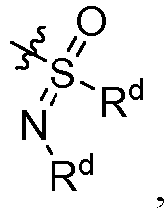
- Rd are each independently selected from the group consisting of C1-4 alkyl and C3-7 cycloalkyl;
- R2 is selected from the group consisting of 5- to 6-membered monocyclic heteroaryl and a 9- to 14-membered saturated, partially saturated, or aromatic tricyclic ring, wherein the tricyclic ring contains 0-6 heteroatoms independently selected from the group consisting of N, O, and S, and R2 is optionally substituted with one or more Rc;
- R3 is selected from the group consisting of halogen, C1-4 alkyl, and halogenated C1-4 alkyl;
- Ra is selected from the group consisting of hydrogen and C1-4 alkyl;
- Rb are each independently selected from the group consisting of deuterium, -NH2, -NH(C1-4 alkyl), -N(C1-4 alkyl)2, -OH, -OC1-4 alkyl, -CN, halogen,
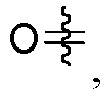

- Rc are each independently selected from the group consisting of -NH2, -NH(C1-4 alkyl), -N(C1-4 alkyl)2, -OH, -OC1-4 alkyl, halogen,

- n is selected from the group consisting of 1, 2, 3, and 4;
- m is selected from the group consisting of 0, 1, and 2.
- In some embodiments, Y is selected from the group consisting of a bond, -O-, -S-, and -NRa-; ring A is selected from the group consisting of C5-10 aryl and 5- to 10-membered heteroaryl; R1 are each independently selected from the group consisting of -NH2, -NHRd, -N(Rd)2, -OH, -ORd, -CN, halogen, -COORd, -OCORd, -N(Rd)C(O)(Rd), - CONH(Rd), -CON(Rd)2, -NHSO2(Rd), -SO2NH(Rd), -SO2N(Rd)2, -PO(Rd)2,

- In some embodiments, the heteroaryl and heterocycloalkyl contain 1, 2, 3, or 4 heteroatoms selected from the group consisting of N, O, S, and P, with the remaining ring atoms selected from carbon. In some embodiments, the heteroaryl and heterocycloalkyl contain 1, 2, or 3 heteroatoms selected from the group consisting of N, O, and S, with the remaining ring atoms selected from carbon. In some embodiments, the heteroaryl and heterocycloalkyl contain 1, 2, or 3 heteroatoms selected from the group consisting of N and O, with the remaining ring atoms selected from carbon. In some embodiments, the heteroaryl and heterocycloalkyl contain 1 or 2 heteroatoms selected from the group consisting of N and O, with the remaining ring atoms selected from carbon.
- In some embodiments, X is CH. In some embodiments, X is N.
- In some embodiments, Ra is hydrogen.
- In some embodiments, Y is selected from the group consisting of a bond, -O-, -S-, and -NRa-.
- In some embodiments, Y is selected from -NRa-. In some embodiments, Y is -NH-.
- In some embodiments, ring A is selected from the group consisting of C5-10 aryl and 5- to 10-membered heteroaryl.
- In some embodiments, ring A is selected from the group consisting of C5-8 aryl and 5- to 8-membered heteroaryl.
- In some embodiments, ring A is selected from the group consisting of C5-6 aryl and 5- to 6-membered heteroaryl.
- In some other embodiments, ring A is selected from the group consisting of 3- to 10-membered heterocycloalkyl, 5- to 8-membered heterocycloalkyl, and 5- to 6-membered heterocycloalkyl.
- In some other embodiments, ring A is selected from the group consisting of phenyl or 5-to 6-membered heteroaryl containing 1 or 2 heteroatoms selected from the group consisting of N, O, and S.
- In some embodiments, ring A is selected from the group consisting of phenyl or 6-membered heteroaryl containing 1 or 2 N atoms.
- In some other embodiments, ring A is selected from the group consisting of phenyl, pyridinyl, pyrimidinyl, pyridazinyl, pyrazinyl, thiazolyl, imidazolyl, or oxazolyl.
- In some embodiments, ring A is selected from the group consisting of phenyl, pyridinyl, pyrimidinyl, pyridazinyl, or pyrazinyl.
- In some other embodiments, ring A is selected from the group consisting of phenyl, pyridinyl, or thiazolyl.
- In some embodiments, ring A is selected from the group consisting of phenyl or pyridinyl.
- In some embodiments, ring A is pyridinyl.
- In some other embodiments, ring A is thiazolyl.
- In some other embodiments, R1 are each independently selected from the group consisting of -NH2, -NH(Rd), - N(Rd)2, halogen, -N(Rd)C(O)(Rd), -NHSO2(Rd), -SO2NH(Rd), PO(Rd)2,


- In some embodiments, R1 are each independently selected from the group consisting of -NH2, -NHRd, -N(Rd)2, - OH, -ORd, -CN, halogen, -COORd, -OCORd, -N(Rd)C(O)(Rd), -CONH(Rd), -CON(Rd)2, -NHSOz(Rd), -SO2NH(Rd), -SO2N(Rd)2, -PO(Rd)2,

- In some embodiments, R1 are each independently selected from the group consisting of -NH2, -NH(Rd), -N(Rd)2, halogen, -N(Rd)C(O)(Rd), -NHSO2(Rd), -SO2NH(Rd), PO(Rd)2,

- In some other embodiments, R1 are each independently selected from the group consisting of -NH2, -NH(Rd), - N(Rd)2, F, Cl, Br, -N(Rd)C(O)(Rd), -NHSO2(Rd), -SO2NH(Rd), -PO(Rd)2,

- In some embodiments, R1 are each independently selected from the group consisting of -NH2, -NH(Rd), -N(Rd)2, F, Cl, Br, -N(Rd)C(O)(Rd), -NHSO2(Rd), -SO2NH(Rd), -PO(Rd)2,

- In some other embodiments, R1 are each independently selected from the group consisting of -NH2, -NH(Rd), - N(Rd)2, -N(Rd)C(O)(Rd), -NHSO2(Rd), -SO2NH(Rd), -PO(Rd)2,

- In some embodiments, R1 are each independently selected from the group consisting of -NH2, -NH(Rd), -N(Rd)2, - N(Rd)C(O)(Rd), -NHSO2(Rd), -SO2NH(Rd), -PO(Rd)2,

- In some other embodiments, the heteroatom in the heterocyclyl, heterocycloalkyl, or heterocycloalkenyl of R1 is selected from the group consisting of N, O, S, and P, or the group consisting of N, O, and S.
- In some other embodiments, R1 are each independently selected from the group consisting of -NH2, -NHCH3, - N(CH3)2, F, Cl, Br, methyl, ethyl, n-propyl, isopropyl, n-butyl, isobutyl, tert-butyl, tetrahydropyrrolyl, tetrahydropyranyl, tetrahydrofuranyl, tetrahydrothienyl, morpholinyl, piperidinyl, piperazinyl, tetrahydroimidazolyl, azoxybicycloheptyl, azoxyspirononanyl, azoxyspiroheptyl, -N(CH3)C(O)CH3, - NHSO2(CH3), -SO2NH(CH3), -PO(CH3)2,

- In some embodiments, R1 are each independently selected from the group consisting of -NH2, -NHCH3, -N(CH3)2, F, Cl, Br, methyl, ethyl, n-propyl, isopropyl, n-butyl, isobutyl, tert-butyl, tetrahydropyrrolyl, tetrahydropyranyl, tetrahydrofuranyl, tetrahydrothienyl, morpholinyl, piperidinyl, piperazinyl, tetrahydroimidazolyl, azoxybicycloheptyl, azoxyspirononanyl, azoxyspiroheptyl, -N(CH3)C(O)CH3, -NHSO2(CH3), -SO2NH(CH3), - PO(CH3)2,

- In some embodiments, R1 are each independently selected from the group consisting of -NH2, F, methyl, ethyl, tetrahydropyrrolyl, tetrahydrofuranyl, tetrahydropyranyl, piperidinyl, morpholinyl, tetrahydroimidazolyl, - N(CH3)C(O)CH3, azoxybicycloheptyl, azoxyspirononanyl, azoxyspiroheptyl, phosphoxycyclohexyl, azoxycyclohexyl, phosphazacyclohexyl, oxazolidinyl, -NHSO2(CH3), -SO2NH(CH3), -PO(CH3)2,
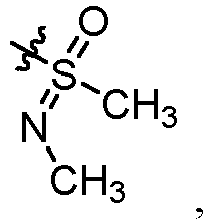

- In some other embodiments, R1 are each independently selected from the group consisting of -NH2, F, methyl, ethyl,





- In some embodiments, R1 are each independently selected from the group consisting of -NH2, F, methyl, ethyl,




- In some embodiments, R1 are each independently selected from the group consisting of -NH2, -NH(C1-4 alkyl), - N(C1-4 alkyl)2, halogen, C1-6 alkyl, and 3- to 10-membered heterocycloalkyl, wherein the C1-6 alkyl and 3- to 10-membered heterocycloalkyl are optionally substituted with one or more Rb.
- In some embodiments, R1 are each independently selected from the group consisting of -NH2, -NH(C1-2 alkyl), - N(C1-2 alkyl)2, halogen, C1-4 alkyl, and 5- to 6-membered heterocycloalkyl, wherein the C1-4 alkyl and 5- to 6-membered heterocycloalkyl are optionally substituted with one or more Rb.
- In some embodiments, R1 are each independently selected from the group consisting of -NH2, -NHCH3, -N(CH3)2, F, Cl, Br, methyl, ethyl, n-propyl, isopropyl, n-butyl, isobutyl, tert-butyl, tetrahydropyrrolyl, tetrahydrofuranyl, tetrahydrothienyl, tetrahydropyranyl, piperidinyl, piperazinyl, and morpholinyl, wherein the methyl, ethyl, n-propyl, isopropyl, n-butyl, isobutyl, tert-butyl, tetrahydropyrrolyl, tetrahydrofuranyl, tetrahydrothienyl, tetrahydropyranyl, piperidinyl, piperazinyl, or morpholinyl is optionally substituted with one or more Rb.
- In some embodiments, R1 are each independently selected from the group consisting of -NH2, F, methyl, tetrahydropyrrolyl, tetrahydrofuranyl, tetrahydropyranyl, piperidinyl, and morpholinyl, wherein the methyl, tetrahydropyrrolyl, tetrahydrofuranyl, tetrahydropyranyl, piperidinyl, and morpholinyl are optionally substituted with one or more Rb.
- In some embodiments, R1 are each independently selected from the group consisting of -NH2, F, methyl, tetrahydropyrrolyl, tetrahydrofuranyl, tetrahydropyranyl, piperidinyl, and morpholinyl, wherein the methyl, tetrahydropyrrolyl, tetrahydrofuranyl, tetrahydropyranyl, piperidinyl, and morpholinyl are optionally substituted with 1, 2, or 3 Rb.
- In some embodiments, R1 are each independently selected from the group consisting of -NH2, F, methyl,


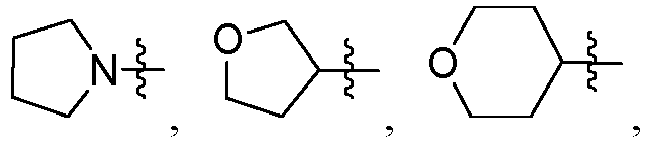

- In some embodiments, Rd are each independently selected from the group consisting of C1-4 alkyl and C3-6 cycloalkyl.
- In some embodiments, Rd are each independently selected from the group consisting of C1-2 alkyl and C3-4 cycloalkyl.
- In some embodiments, Rd are each independently selected from C1-2 alkyl. In some embodiments, Rd are each independently selected from C3-4 cycloalkyl.
- In some embodiments, Rb are each independently selected from the group consisting of deuterium, -OH, C1-4 alkyl, halogen,


- In some embodiments, Rb are each independently selected from the group consisting of deuterium, -OH, C1-3 alkyl, F, Cl, Br,


- In some embodiments, Rb are each independently selected from the group consisting of deuterium, -OH, CH3, F,


- In some embodiments, Rb are each independently selected from the group consisting of deuterium, -OH, CH3, F,

- In some embodiments, Rb are each independently selected from the group consisting of deuterium, -OH, CH3, F,


- In some embodiments, Rb are each independently selected from the group consisting of deuterium, -OH, CH3, F,


- In some embodiments, Rb are each independently selected from the group consisting of -OH, halogen,


- In some embodiments, Rb are each independently selected from the group consisting of -OH, F, Cl, Br,
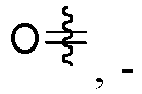

- In some embodiments, Rb are each independently selected from the group consisting of -OH, F,


- In some embodiments, Rb are each independently selected from the group consisting of -OH, F,


- In some embodiments, Rb are each independently selected from the group consisting of -OH, F,


- In some embodiments, Rb are each independently selected from the group consisting of -OH, F,

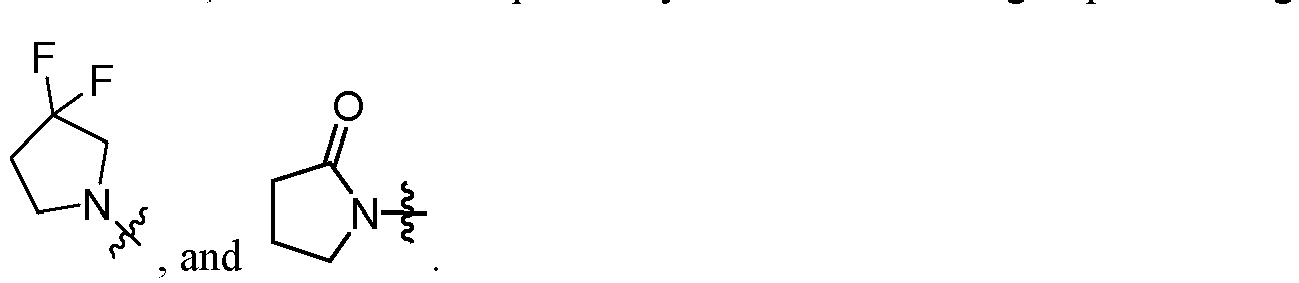
- In some embodiments, R1 are each independently selected from the group consisting of -NH2, F,


- In some embodiments, R1 are each independently selected from the group consisting of -NH2, F,





- In some embodiments, R1 are each independently selected from the group consisting of -NH2, F,


- In some embodiments, n is selected from the group consisting of 1, 2, and 3.
- In some embodiments, n is 2.
- In some embodiments, m is selected from the group consisting of 0, 1, and 2.
- In some embodiments, m is selected from the group consisting of 0 and 1.
- In some embodiments, m is 0.
- In some embodiments, R3 is selected from the group consisting of halogen, C1-3 alkyl, and halogenated C1-3 alkoxy.
- In some embodiments, R3 is selected from the group consisting of F, Cl, Br, and C1-3 alkyl.
- In some embodiments, R3 is selected from the group consisting of F and methyl.
- In some other embodiments, one, two, or three rings in the tricyclic ring are aromatic rings.
- In some embodiments, one or two rings in the tricyclic ring are aromatic rings.
- In some embodiments, the monocyclic ring in the tricyclic ring to which the

- In some embodiments, the monocyclic ring in the tricyclic ring to which the


- In some embodiments, the monocyclic ring in the tricyclic ring to which the


- In some embodiments, any two adjacent rings in the tricyclic ring optionally form a fused, bridged, or spiro ring.
- In some embodiments, the monocyclic ring in the tricyclic ring to which the

- In some embodiments, the monocyclic ring in the tricyclic ring to which the


- In some embodiments, R2 is selected from the group consisting of 6-membered monocyclic heteroaryl and a 9- to 14-membered saturated, partially saturated, or aromatic tricyclic ring, wherein the tricyclic ring contains 0-6 heteroatoms independently selected from the group consisting of N, O, and S, and the R2 is optionally substituted with one or more Rc.
- In some embodiments, R2 is selected from a 9- to 14-membered saturated, partially saturated, or aromatic tricyclic ring, wherein the tricyclic ring contains 0-6 heteroatoms independently selected from the group consisting of N, O, and S, and the R2 is optionally substituted with one or more Rc.
- In some embodiments, R2 is selected from the group consisting of 6-membered monocyclic heteroaryl containing 1 or 2 N atoms, and a 9- to 14-membered saturated, partially saturated, or aromatic tricyclic ring, wherein the tricyclic ring contains 1-6 heteroatoms independently selected from the group consisting of N, O, and S, and the R2 is optionally substituted with one or more Rc.
- In some embodiments, R2 is selected from a 9- to 14-membered saturated, partially saturated, or aromatic tricyclic ring, wherein the tricyclic ring contains 1-6 heteroatoms independently selected from the group consisting of N, O, and S, and the R2 is optionally substituted with one or more Rc.
- In some other embodiments, the heteroatom in the tricyclic ring of R2 is selected from the group consisting of N and O.
- In some other embodiments, the heteroatom in the tricyclic ring of R2 is N.
- In some embodiments, R2 is selected from the group consisting of 6-membered monocyclic heteroaryl containing 1 or 2 N atoms, and a 9- to 14-membered saturated, partially saturated, or aromatic tricyclic ring, wherein the tricyclic ring contains 1-6 heteroatoms independently selected from the group consisting of N and O, and the R2 is optionally substituted with one or more Rc. In some embodiments, R2 is selected from a 9- to 14-membered saturated, partially saturated, or aromatic tricyclic ring, wherein the tricyclic ring contains 1-6 heteroatoms independently selected from the group consisting of N and O, and the R2 is optionally substituted with one or more Rc.
- In some embodiments, R2 is selected from the group consisting of 6-membered monocyclic heteroaryl containing 1 or 2 N atoms, and a 9- to 14-membered partially saturated tricyclic ring, wherein the tricyclic ring contains 1-6 heteroatoms independently selected from the group consisting of N and O, and the R2 is optionally substituted with one or more Rc.
- In some embodiments, R2 is selected from a 9- to 14-membered partially saturated or aromatic tricyclic ring, wherein the tricyclic ring contains 1-6 heteroatoms independently selected from the group consisting of N and O, and the R2 is optionally substituted with one or more Rc.
- In some embodiments, R2 is selected from the group consisting of 6-membered monocyclic heteroaryl containing 1 N atom, and a 9- to 14-membered partially saturated or aromatic tricyclic ring, wherein the tricyclic ring contains 1-6 heteroatoms independently selected from the group consisting of N and O, and the R2 is optionally substituted with one or more Rc.
- In some embodiments, R2 is selected from the group consisting of 6-membered monocyclic heteroaryl containing 1 N atom, and a 9-, 11-, 12-, 13-, or 14-membered partially saturated tricyclic ring, wherein the tricyclic ring contains 1-6 heteroatoms independently selected from the group consisting of N and O, and the R2 is optionally substituted with one or more Rc.
- In some embodiments, R2 is selected from a 9-, 10-, 11-, 12-, 13-, or 14-membered partially saturated or aromatic tricyclic ring, wherein the tricyclic ring contains 1-4 heteroatoms independently selected from the group consisting of N and O, and the R2 is optionally substituted with one or more Rc.
- In some embodiments, R2 is selected from a 9-, 11-, 12-, 13-, or 14-membered partially saturated or aromatic tricyclic ring, wherein the tricyclic ring contains 1-4 heteroatoms independently selected from the group consisting of N and O, and the R2 is optionally substituted with one or more Rc.
- In some other embodiments, the heteroatom in the tricyclic ring of R2 is selected from the group consisting of N, O, and S.
- In some other embodiments, the heteroatom in the tricyclic ring of R2 is selected from the group consisting of N and S.
- In some other embodiments, R2 is selected from the group consisting of 6-membered monocyclic heteroaryl containing 1 or 2 N atoms, and a 9- to 14-membered saturated, partially saturated, aromatic tricyclic ring, wherein the tricyclic ring contains 1-6 heteroatoms independently being S, and the R2 is optionally substituted with one or more Rc.
- In some other embodiments, R2 is selected from the group consisting of 6-membered monocyclic heteroaryl containing 1 or 2 N atoms, and a 9- to 14-membered partially saturated tricyclic ring, wherein the tricyclic ring contains 1-6 heteroatoms independently being S, and the R2 is optionally substituted with one or more Rc.
- In some other embodiments, R2 is selected from the group consisting of a 9- to 14-membered partially saturated or aromatic tricyclic ring, wherein the tricyclic ring contains 1-6 heteroatoms independently being S, and the R2 is optionally substituted with one or more Rc.
- In some other embodiments, R2 is selected from the group consisting of 6-membered monocyclic heteroaryl containing 1 N atom, and a 9- to 14-membered partially saturated or aromatic tricyclic ring, wherein the tricyclic ring contains 1-6 heteroatoms independently being S, and the R2 is optionally substituted with one or more Rc.
- In some other embodiments, R2 is selected from the group consisting of 6-membered monocyclic heteroaryl containing 1 N atom, and a 9-, 11-, 12-, 13-, or 14-membered partially saturated tricyclic ring, wherein the tricyclic ring contains 1-6 heteroatoms independently being S, and the R2 is optionally substituted with one or more Rc.
- In some other embodiments, R2 is selected from the group consisting of a 9-, 10-, 11-, 12-, 13-, or 14-membered partially saturated or aromatic tricyclic ring, wherein the tricyclic ring contains 1-4 heteroatoms independently being S, and the R2 is optionally substituted with one or more Rc.
- In some other embodiments, R2 is selected from the group consisting of


- In some embodiments, R2 is selected from the group consisting of


- In some other embodiments, R2 is selected from the group consisting of
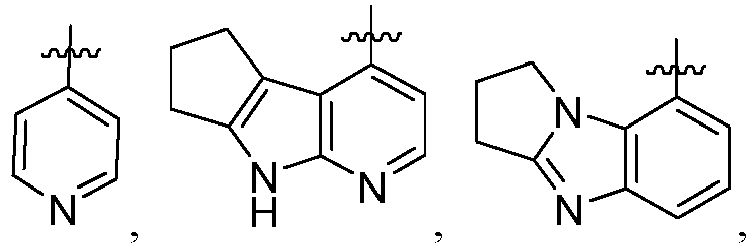





- In some embodiments, R2 is selected from the group consisting of





- In some other embodiments, R2 is selected from the group consisting of






- In some embodiments, R2 is selected from the group consisting of


- In some embodiments, R2 is selected from the group consisting of


- In some embodiments, R2 is selected from the group consisting of


- In some embodiments, R2 is selected from the group consisting of


- In some embodiments, Rc are each independently selected from the group consisting of

- In some embodiments, Rc are each independently selected from the group consisting of

- In some embodiments, Rc are each independently selected from the group consisting of

- In some embodiments, Rc are each independently selected from the group consisting of

- In some embodiments, Rc are each independently selected from the group consisting of

- In some embodiments, R2 is selected from the group consisting of


- In some embodiments, the compound of formula (II), the stereoisomer thereof, or the pharmaceutically acceptable salt thereof, and the compound of formula (I), the stereoisomer thereof, or the pharmaceutically acceptable salt thereof of the present application are selected from the group consisting of the following compounds of formula (Ia), formula (Ib), formula (Ic), and formula (Id), stereoisomers thereof, or pharmaceutically acceptable salts thereof:

- In some embodiments, the present application encompasses the variables defined above and embodiments thereof, as well as any combination thereof.
- [1] In another aspect, the present application provides a compound of formula (I), a stereoisomer thereof, or a pharmaceutically acceptable salt thereof,

- X is selected from the group consisting of N and CH;
- Y is selected from the group consisting of a bond, -O-, -S-, and -NRa-;
- ring A is selected from the group consisting of C5-10 aryl and 5- to 10-membered heteroaryl;
- R1 are each independently selected from the group consisting of -NH2, -NH(C1-4 alkyl), -N(C1-4 alkyl)2, -OH, -OC1-4 alkyl, -CN, halogen, C1-6 alkyl, and 3- to 10-membered heterocycloalkyl, wherein the C1-6 alkyl and 3- to 10-membered heterocycloalkyl are optionally substituted with one or more Rb;
- R2 is selected from the group consisting of 5- to 6-membered monocyclic heteroaryl and a 9- to 14-membered saturated, partially saturated, aromatic tricyclic ring, wherein the tricyclic ring contains 0-6 heteroatoms independently selected from the group consisting of N, O, and S, and R2 is optionally substituted with one or more Rc;
- Ra is selected from the group consisting of hydrogen and C1-4 alkyl;
- Rb are each independently selected from the group consisting of -NH2, -NH(C1-4 alkyl), -N(C1-4 alkyl)2, -OH, -OC1-4 alkyl, -CN, halogen,


- Rc are each independently selected from the group consisting of -NH2, -NH(C1-4 alkyl), -N(C1-4 alkyl)2, -OH, -OC1-4 alkyl, halogen,

- n is selected from the group consisting of 1, 2, 3, and 4.
- [2] In some embodiments, provided is the compound of formula (I), the stereoisomer thereof, or the pharmaceutically acceptable salt thereof as described in the preceding paragraph [1], wherein X is CH; or, X is N.
- [3] In some embodiments, provided is the compound of formula (I), the stereoisomer thereof, or the pharmaceutically acceptable salt thereof as described in the preceding paragraph [1] or [2], wherein Ra is hydrogen.
- [4] In some embodiments, provided is the compound of formula (I), the stereoisomer thereof, or the pharmaceutically acceptable salt thereof as described in any of the preceding paragraphs [1] to [3], wherein Y is selected from -NRa-; or, Y is -NH-.
- [5] In some embodiments, provided is the compound of formula (I), the stereoisomer thereof, or the pharmaceutically acceptable salt thereof as described in any of the preceding paragraphs [1] to [4], wherein ring A is selected from the group consisting of C5-8 aryl and 5- to 8-membered heteroaryl; or, ring A is selected from the group consisting of C5-6 aryl and 5- to 6-membered heteroaryl; or, ring A is selected from the group consisting of phenyl or 6-membered heteroaryl containing 1 or 2 N atoms; or, ring A is selected from the group consisting of phenyl, pyridinyl, pyrimidinyl, pyridazinyl, or pyrazinyl; or, ring A is selected from the group consisting of phenyl or pyridinyl.
- [6] In some embodiments, provided is the compound of formula (I), the stereoisomer thereof, or the pharmaceutically acceptable salt thereof as described in any of the preceding paragraphs [1] to [5], wherein R1 are each independently selected from the group consisting of -NH2, -NH(C1-4 alkyl), -N(C1-4 alkyl)2, halogen, C1-6 alkyl, and 3- to 10-membered heterocycloalkyl, wherein the C1-6 alkyl and 3- to 10-membered heterocycloalkyl are optionally substituted with one or more Rb; or, R1 are each independently selected from the group consisting of - NH2, -NH(C1-2 alkyl), -N(C1-2 alkyl)2, halogen, C1-4 alkyl, and 5- to 6-membered heterocycloalkyl, wherein the C1-4 alkyl and 5- to 6-membered heterocycloalkyl are optionally substituted with one or more Rb; or, R1 are each independently selected from the group consisting of -NH2, -NHCH3, -N(CH3)2, F, Cl, Br, methyl, ethyl, n-propyl, isopropyl, n-butyl, isobutyl, tert-butyl, tetrahydropyrrolyl, tetrahydrofuranyl, tetrahydrothienyl, tetrahydropyranyl, piperidinyl, piperazinyl, and morpholinyl, wherein the methyl, ethyl, n-propyl, isopropyl, n-butyl, isobutyl, tert-butyl, tetrahydropyrrolyl, tetrahydrofuranyl, tetrahydrothienyl, tetrahydropyranyl, piperidinyl, piperazinyl, or morpholinyl is optionally substituted with one or more Rb; or, R1 are each independently selected from the group consisting of -NH2, F, methyl, tetrahydropyrrolyl, tetrahydrofuranyl, tetrahydropyranyl, piperidinyl, and morpholinyl, wherein the methyl, tetrahydropyrrolyl, tetrahydrofuranyl, tetrahydropyranyl, piperidinyl, and morpholinyl are optionally substituted with one or more Rb; or, R1 are each independently selected from the group consisting of -NH2, F, methyl,


- [7] In some embodiments, provided is the compound of formula (I), the stereoisomer thereof, or the pharmaceutically acceptable salt thereof as described in any of the preceding paragraphs [1] to [6], wherein n is selected from the group consisting of 1, 2, and 3; or, n is 2.
- [8] In some embodiments, provided is the compound of formula (I), the stereoisomer thereof, or the pharmaceutically acceptable salt thereof as described in any of the preceding paragraphs [1] to [7], wherein Rb are each independently selected from the group consisting of -OH, halogen,


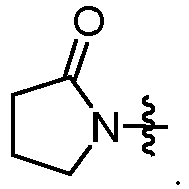
- [9] In some embodiments, provided is the compound of formula (I), the stereoisomer thereof, or the pharmaceutically acceptable salt thereof as described in any of the preceding paragraphs [1] to [8], wherein one or two rings in the tricyclic ring are aromatic rings; or, the monocyclic ring in the tricyclic ring to which the


- [10] In some embodiments, provided is the compound of formula (I), the stereoisomer thereof or the pharmaceutically acceptable salt thereof as described in any of the preceding paragraphs [1] to [9], wherein R2 is selected from the group consisting of 6-membered monocyclic heteroaryl and a 9- to 14-membered saturated, partially saturated, aromatic tricyclic ring, wherein the tricyclic ring contains 0-6 heteroatoms independently selected from the group consisting of N, O, and S, and the R2 is optionally substituted with one or more Rc; or, R2 is selected from the group consisting of 6-membered monocyclic heteroaryl containing 1 or 2 N atoms, and a 9- to 14-membered saturated, partially saturated, aromatic tricyclic ring, wherein the tricyclic ring contains 1-6 heteroatoms independently selected from the group consisting of N, O, and S, and the R2 is optionally substituted with one or more Rc; or, R2 is selected from the group consisting of 6-membered monocyclic heteroaryl containing 1 or 2 N atoms, and a 9- to 14-membered saturated, partially saturated, aromatic tricyclic ring, wherein the tricyclic ring contains 1-6 heteroatoms independently selected from the group consisting of N and O, and the R2 is optionally substituted with one or more Rc; or, R2 is selected from the group consisting of 6-membered monocyclic heteroaryl containing 1 or 2 N atoms, and a 9- to 14-membered partially saturated tricyclic ring, wherein the tricyclic ring contains 1-6 heteroatoms independently selected from the group consisting of N and O, and the R2 is optionally substituted with one or more Rc; or, R2 is selected from the group consisting of
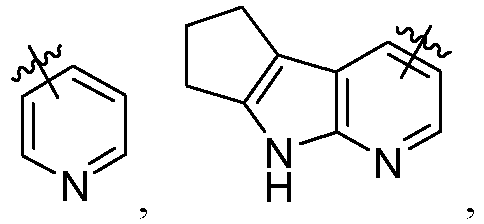


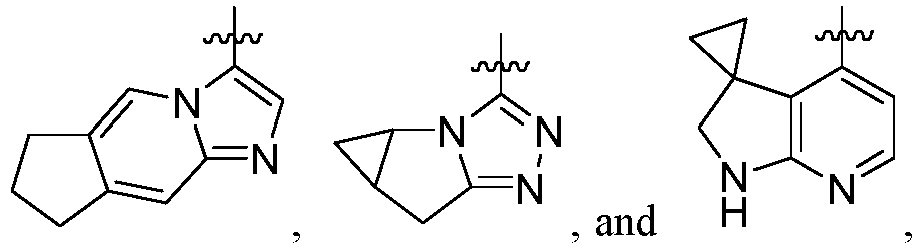


- [11] In some embodiments, provided is the compound of formula (I), the stereoisomer thereof, or the pharmaceutically acceptable salt thereof as described in any of the preceding paragraphs [1] to [10], wherein Rc are each independently selected from the group consisting of


- [12] In some embodiments, provided is the compound of formula (I), the stereoisomer thereof, or the pharmaceutically acceptable salt thereof as described in any of the preceding paragraphs [1] to [10], being selected from the group consisting of the following compounds of formula (Ia), formula (Ib), formula (Ic), and formula (Id), stereoisomers thereof, or pharmaceutically acceptable salts thereof:

- It should be understood that any embodiment of the compounds of the present application as described above, and any specific substituents set forth herein with respect to particular X, Y, ring A, R1, R2, and R3 substituents in the compounds of the present disclosure as described above, may be independently combined with other embodiments of the present invention and/or substituents of the compounds to form embodiments of the present invention not specifically set forth above. Further, when a range of substituents are disclosed in the detailed description and/or claims with respect to any particular X, Y, ring A, R1, R2, and R3 substituents, it should be understood that one or more substituents may be deleted from the range and the remaining range of substituents should also be considered an embodiment of the application.
- In some embodiments, the heteroatom in the heterocycloalkenyl, heterocycloalkyl, heterocyclyl, or heteroaryl is selected from the group consisting of N, O, S, and P, and the number of heteroatoms is selected from the group consisting of 1, 2, 3, 4, and 5; or, the number of heteroatoms is selected from the group consisting of 1, 2, 3, and 4; or, the number of heteroatoms is selected from the group consisting of 1, 2, and 3; or, the number of heteroatoms is selected from the group consisting of 1 and 2.
- In some embodiments, the compound of formula (II), the stereoisomer thereof, or the pharmaceutically acceptable salt thereof, and the compound of formula (I), the stereoisomer thereof, or the pharmaceutically acceptable salt thereof of the present application are selected from the group consisting of the following compounds, stereoisomers thereof, or pharmaceutically acceptable salts thereof:


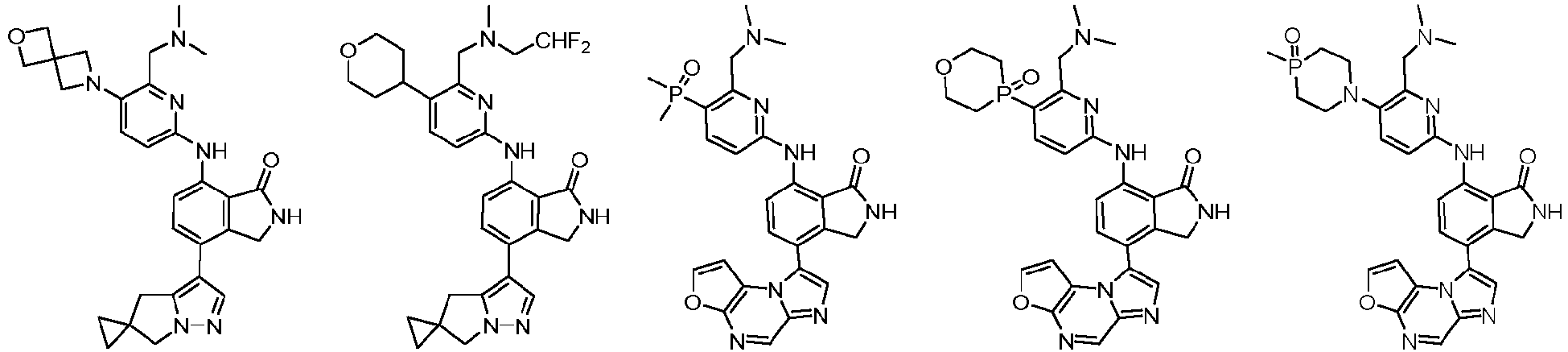


- In another aspect, the present application provides a pharmaceutical composition comprising the compound, the stereoisomer thereof, or the pharmaceutically acceptable salt thereof of the present application. In some embodiments, the pharmaceutical composition of the present application further comprises a pharmaceutically acceptable excipient.
- In another aspect, the present application provides a method for treating a disease related to HPK1 kinase in a mammal, which comprises administering to a mammal, preferably a human, in need of such treatment a therapeutically effective amount of the compound, the stereoisomer thereof, or the pharmaceutically acceptable salt thereof, or the pharmaceutical composition thereof described above.
- In another aspect, the present application provides use of the compound, the stereoisomer, or the pharmaceutically acceptable salt thereof, or the pharmaceutical composition thereof described above for preparing a medicament for treating a disease related to HPK1 kinase.
- In another aspect, the present application provides use of the compound, the stereoisomer thereof, or the pharmaceutically acceptable salt thereof, or the pharmaceutical composition thereof described above for treating a disease related to HPK1 kinase.
- In another aspect, the present application provides the compound, the stereoisomer thereof, or the pharmaceutically acceptable salt thereof, or the pharmaceutical composition thereof described above for treating a disease related to HPK1 kinase.
- In some embodiments, the disease related to HPK1 kinase is selected from cancer. Preferably, the cancer is selected from the group consisting of a solid tumor, leukemia, lymphoma, and the like.
- The compound of the present application has at least one of the following effects: improved or excellent inhibitory activity against HPK1 kinase and inhibitory activity against p-SLP76 phosphorylation of Jurkat cells, improved or excellent in vivo drug effect, and good in vitro and in vivo pharmacokinetic properties, for example, stable liver microsome metabolism in mice and humans.
- Unless otherwise stated, the following terms used in the present application shall have the following meanings. A certain term, unless otherwise specifically defined, should not be considered uncertain or unclear, but construed according to its common meaning in the art. When referring to a trade name, it is intended to refer to its corresponding commercial product or its active ingredient.
- The term "substituted" means that any one or more hydrogen atoms on a specific atom are substituted with substituents, as long as the valence of the specific atom is normal and the resulting compound is stable. When the substituent is oxo (i.e., =O), it means that two hydrogen atoms are substituted and oxo is not possible in an aromatic group.
- The "substituent" described herein includes all substituents mentioned in the text, for example, the terms "halogen", "deuterium", "", "-NH2", "-NH(C1-4 alkyl)", "-N(C1-4 alkyl)2", "-OH", "-OC1-4 alkyl", "-CN", "C1-4 alkyl", "3-to 6-membered heterocycloalkyl", and the like, and the corresponding non-limiting or exemplary groups mentioned below, wherein some non-limiting examples of the "substituent" include sulfydryl, nitro, nitroso, cyano, an azide group, a sulfoxide group, a sulfone group, a sulfonamide group, carboxyl, an aldehyde group, an imine group, alkyl, halogenated alkyl, cycloalkyl, halogenated cycloalkyl, alkenyl, halogenated alkenyl, cycloalkenyl, halogenated cycloalkenyl, alkynyl, halogenated alkynyl, cycloalkynyl, halogenated cycloalkynyl, heteroalkyl, halogenated heteroalkyl, alkoxy, alkylthio, aryl, aryloxy, arylthio, arylalkylene, arylalkoxy, arylalkylthio, heteroaryl, heteroaryloxy, heteroarylthio, heteroarylalkylene, heteroarylalkoxy, heteroarylalkylthio, heterocyclyl, heterocyclyloxy, heterocyclylthio, heterocyclylalkylene, heterocyclylalkoxy, heterocyclylalkylthio, acyl, acyloxy, a carbamate group, amido, ureido, an epoxy group, an ester group, oxo, and the like, wherein these substituents are optionally substituted with one or more substituents selected from the group consisting of the following substituents: oxo, hydroxy, amino, nitro, halogen, cyano, alkyl, alkenyl, alkynyl, alkoxy, halogenated alkoxy, alkylamino, dialkylamino, halogenated alkylamino, halogenated dialkylamino, carboxy, -C(O)O-alkyl, -OC(O)-alkyl, - C(O)NH2, -C(O)NH-alkyl, -C(O)N(alkyl)2, -NHC(O)-alkyl, -C(O)-alkyl, -S(O)-alkyl, -S(O)2- alkyl, -S(O)2NH2, - S(O)zNH-alkyl, -S(O)2N(alkyl)2, cycloalkyl, cycloalkylalkylene, cycloalkyloxy, heterocyclyl, heterocyclylalkylene, heterocyclyloxy, heterocycloalkyl, heterocycloalkylalkylene, heterocycloalkyloxy, heteroaryl, heteroarylalkylene, heteroaryloxy, aryl, arylalkylene, and aryloxy.
- In some embodiments herein, the substituent is selected from the group consisting of deuterium, tritium, hydroxyl, sulfydryl, halogen, amino, nitro, nitroso, cyano, azido, a sulfoxide group, a sulfone group, a sulfonamide group, carboxyl, an aldehyde group, an imine group, C1-12 alkyl, halogenated C1-12 alkyl, 3- to 12-membered cycloalkyl, halogenated 3- to 12-membered cycloalkyl, C2-12 alkenyl, halogenated C2-12 alkenyl, 3- to 12-membered cycloalkenyl, halogenated 3- to 12-membered cycloalkenyl, C2-12 alkynyl, halogenated C2-12 alkynyl, 8- to 12-membered cycloalkynyl, halogenated 8- to 12-membered cycloalkynyl, C1-12 heteroalkyl, halogenated C1-12 heteroalkyl, C1-12 alkoxy, C1-12 alkylthio, 6- to 10-membered aryl, 6- to 10-membered aryloxy, 6- to 10-membered arylthio, 6- to 10-membered aryl C1-12 alkylene, 6- to 10-membered aryl C1-12 alkoxy, 6- to 10-membered aryl C1-12 alkylthio, 5- to 10-membered heteroaryl, 5- to 10-membered heteroaryloxy, 5- to 10-membered heteroarylthio, 5-to 10-membered heteroarylalkylene, 5- to 10-membered heteroarylalkoxy, 5- to 10-membered heteroarylalkylthio, 3- to 12-membered heterocyclyl, 3- to 12-membered heterocyclyloxy, 3- to 12-membered heterocyclylthio, 3- to 12-membered heterocyclyl C1-12 alkylene, 3-to 12-membered heterocyclyl C1-12 alkoxy, 3- to 12-membered heterocyclyl C1-12 alkylthio, C1-12 acyl, C1-12 acyloxy, a carbamate group, C1-12 amido, ureido, an epoxy group, a C2-12 ester group, and oxo, wherein these substituents are optionally substituted with one or more substituents selected from the group consisting of the following substituents: oxo, hydroxyl, amino, nitro, halogen, cyano, C1-12 alkyl, C2-12 alkenyl, C2-12 alkynyl, C1-12 alkoxy, halogenated C1-12 alkoxy, C1-12 alkylamino, di-C1-12 alkylamino, halogenated C1-12 alkylamino, halogenated di-C1-12 alkylamino, carboxyl, -C(O)O-C1-12 alkyl, -OC(O)-C1-12 alkyl, - C(O)NH2, -C(O)NH-C1-12 alkyl, -C(O)N(C1-12 alkyl)2, -NHC(O)-C1-12 alkyl, -C(O)-C1-12 alkyl, -S(O)-C1-12 alkyl, - S(O)2-C1-12 alkyl, -S(O)2NH2, -S(O)2NH-C1-12 alkyl, -S(O)2N(C1-12 alkyl)2, 3- to 12-membered cycloalkyl, 3- to 12-membered cycloalkyl C1-12 alkylene, 3- to 12-membered cycloalkyloxy, 3- to 12-membered heterocyclyl, 3- to 12-membered heterocyclyl C1-12 alkylene, 3- to 12-membered heterocyclyloxy, 3- to 12-membered heterocycloalkyl, 3- to 12-membered heterocycloalkyl C1-12 alkylene, 3- to 12-membered heterocycloalkyloxy, 5- to 10-membered heteroaryl, 5- to 10-membered heteroaryl C1-12 alkylene, 5- to 10-membered heteroaryloxy, 6- to 10-membered aryl, 6- to 10-membered aryl C1-12 alkylene, and 6- to 10-membered aryloxy.
- The term "optional" or "optionally" means that the subsequently described event or circumstance may, but does not necessarily, occur. The description includes instances where the event or circumstance occurs and instances where it does not. For example, ethyl being "optionally" substituted with halogen means that the ethyl may be unsubstituted (-CH2CH3), monosubstituted (for example, -CH2CH2F), polysubstituted (for example, -CHFCH2F, -CH2CHF2, and the like), or fully substituted (-CF2CF3). It can be understood by those skilled in the art that for any groups comprising one or more substituents, no substitutions or substitution modes that are impossible to spatially exist and/or synthesize will be introduced.
- Cm-n used herein means that the moiety has an integer number of carbon atoms in the given range. For example, "C1-6" means that the group may have 1 carbon atom, 2 carbon atoms, 3 carbon atoms, 4 carbon atoms, 5 carbon atoms or 6 carbon atoms; "C1-3" means that the group may have 1 carbon atom, 2 carbon atoms or 3 carbon atoms. "One or more" used herein refers to an integer ranging from one to ten. For example, "one or more" refers to one, two, three, four, five, six, seven, eight, nine, or ten; or "one or more" refers to one, two, three, four, five, or six; or "one or more" refers to one, two, or three.
- When any variable (e.g., R) occurs once or more times in the constitution or structure of a compound, the definition of the variable in each case is independent. Therefore, for example, if a group is substituted with 2 R, the definition of each R is independent.
- When a bond of a substituent is cross-linked to two atoms on a ring, the substituent can be bonded to any atom on the ring. For example, structural unit

- The term "halo-" or "halogen" refers to fluorine, chlorine, bromine, and iodine.
- The term "hydroxy" refers to -OH group.
- The term "amino" refers to -NH2 group.
- The term "nitro" refers to -NO2 group.
- The term "cyano" refers to -CN group.
- The term "alkyl" refers to hydrocarbyl with a general formula of CnH2n+1. The alkyl may be linear or branched. For example, the term "C1-6 alkyl" refers to alkyl containing 1 to 6 carbon atoms (for example, methyl, ethyl, n-propyl, isopropyl, n-butyl, isobutyl, sec-butyl, tert-butyl, n-pentyl, 1-methylbutyl, 2-methylbutyl, 3-methylbutyl, neopentyl, hexyl, 2-methylpentyl, and the like). The alkyl moieties (i.e., alkyl) of alkoxy, alkylamino, dialkylamino, alkylsulfonyl, and alkylthio are similar as defined above.
- The term "alkoxy" refers to -O- alkyl.
- The term "monocyclic" refers to a cyclic group containing one ring, which may be fully saturated, partially saturated, or aromatic. The monocyclic ring may consist entirely of C atoms or may contain one or more heteroatoms, for example, selected from the group consisting of N, O, S, and P.
- The term "bicyclic" refers to a cyclic group containing two rings, which may be fully saturated, partially saturated, or aromatic. The bicyclic ring may consist entirely of C atoms or may contain one or more heteroatoms, for example, selected from the group consisting of N, O, S, and P. The bicyclic ring may be a fused, bridged, or spiro ring.
- The term "tricyclic" refers to a cyclic group containing three rings, which may be fully saturated, partially saturated, or aromatic. The tricyclic ring may consist entirely of C atoms or may contain one or more heteroatoms, for example, selected from the group consisting of N, O, S, and P. Any two adjacent monocyclic rings in the tricyclic ring can form a fused, bridged, or spiro ring.
- The term "cycloalkyl" refers to a fully saturated carbocyclic ring. Unless otherwise specified, the carbocyclic ring is usually a 3- to 10-membered ring. Unless otherwise specified, the cycloalkyl may be monocyclic, bicyclic, or tricyclic. Non-limiting examples of the cycloalkyl include, but are not limited to, cyclopropyl, cyclobutyl, cyclopentyl, cyclohexyl, norbomyl (bicyclo[2.2.1]heptyl), bicyclo[2.2.2]octyl, adamantyl, and the like.
- The term "heterocyclyl" refers to a fully saturated or partially unsaturated (but not a fully unsaturated heteroaromatic group) nonaromatic ring that may exist in the form of a monocyclic, bridged cyclic, fused cyclic, or spiro cyclic structure. Unless otherwise specified, the heterocyclic ring is usually a 3- to 20-membered ring, a 3- to 15-membered ring, a 3- to 12-membered ring, a 3- to 10-membered ring (e.g., a 3-, 4-, 5-, 6-, 7-, 8-, 9-, or 10-membered ring), a 4- to 8-membered ring, a 5- to 8-membered ring, or a 5- to 6-membered ring containing 1 to 3 heteroatoms (preferably 1 or 2 heteroatoms) independently selected from the group consisting of sulfur, oxygen, nitrogen, phosphorus, silicon, and/or boron. Non-limiting examples of the heterocyclyl include, but are not limited to, oxiranyl, tetrahydrofuranyl, dihydrofuranyl, pyrrolidinyl, N-methylpyrrolidinyl, dihydropyrrolyl, piperidinyl, piperazinyl, pyrazolidinyl, tetrahydropyranyl, morpholinyl, sulfomorpholinyl, tetrahydrothienyl, and the like.
- The term "cycloalkenyl" refers to a non-aromatic carbocyclic ring that is not fully saturated and may exist as a monocyclic, bicyclic bridged cyclic, or spiro cyclic structure. Unless otherwise specified, the carbocyclic ring is usually a 4- to 16-membered ring, a 4- to 12-membered ring, a 4- to 10-membered ring, or a 4- to 8-membered ring (specifically, a 5-, 6-, 7-, 8-, 9-, 10-, or 11-membered ring). Non-limiting examples of cycloalkenyl include, but are not limited to, cyclopentenyl, cyclopentadienyl, cyclohexenyl, cyclohexadienyl, cycloheptenyl, cycloheptadienyl, and the like.
- The term "monocycloalkyl" refers to a cycloalkyl group that exists as a single ring.
- The term "spiro ring" refers to a fully saturated or partially unsaturated polycyclic ring system in which monocyclic rings share one carbon atom (referred to as a spiro atom), including carbocyclic rings and heterocyclic rings. Unless otherwise specified, the spiro ring is 5- to 20-membered, preferably 6- to 14- membered, and more preferably 9- to 14-membered. When the spiro ring is a heterocyclic ring, one or more ring atoms in the polycyclic ring are heteroatoms (preferably 1 or 2 heteroatoms) selected from the group consisting of N, O, S(O)n, and P(O)n (wherein n is 0, 1, or 2), and the remaining ring atoms are carbon atoms.
- The term "spirocycloalkyl" refers to a fully saturated all-carbon polycyclic ring in which monocyclic rings share one carbon atom (referred to as a spiro atom). Unless otherwise specified, the spirocycloalkyl is 5- to 20-membered, preferably 6- to 14-membered, and more preferably 9- to 14-membered. According to the number of spiro atoms shared among the rings, the spirocycloalkyl is monospirocycloalkyl, bispirocycloalkyl, or polyspirocycloalkyl, preferably monospirocycloalkyl or bispirocycloalkyl, and more preferably 4 membered/4 membered, 4 membered/5-membered, 4 membered/6-membered, 5-membered/5-membered, or 5-membered/6-membered monospirocycloalkyl. Non-limiting examples of the spirocycloalkyl include


- The term "spiro-heterocycloalkyl" refers to a fully saturated polycyclic ring in which monocyclic rings share one carbon atom (referred to as a spiro atom), wherein one or more ring atoms in the polycyclic ring are heteroatoms (preferably 1 or 2 heteroatoms) selected from the group consisting of N, O, S(O)n, and P(O)n (wherein n is 0, 1, or 2), and the remaining ring atoms are carbon atoms. Unless otherwise specified, the spiro-heterocycloalkyl is 5- to 20-membered, preferably 6- to 14-membered, and more preferably 6- to 10-membered. According to the number of spiro atoms shared among the rings, the spiro heterocyclic ring is a monospiro heterocyclic ring, a bispiro heterocyclic ring, or a polyspiro heterocyclic ring, preferably a monospiro heterocyclic ring or a bispiro heterocyclic ring, and more preferably a 4-membered/4-membered, 4-membered/5-membered, 4-membered/6-membered, 5-membered/5-membered, or 5-membered/6-membered monospiro heterocyclic ring. Non-limiting examples of the spiro-heterocycloalkyl include

- The term "bridged ring" refers to a fully saturated or partially unsaturated polycyclic ring system in which two rings share three or more atoms, including carbocyclic rings and heterocyclic rings. Unless otherwise specified, the bridged ring is 5- to 14-membered, preferably 6- to 14-membered, and more preferably 6- to 10-membered. According to the number of the formed rings, the bridged ring may be a bicyclic, tricyclic, tetracyclic, or polycyclic bridged heterocyclic ring, preferably a bicyclic or tricyclic bridged heterocyclic ring, and more preferably a bicyclic bridged heterocyclic ring. When the bridged ring is a heterocyclic ring, one or more ring atoms in the polycyclic ring are heteroatoms (preferably 1 or 2 heteroatoms) selected from the group consisting of N, O, S(O)n, and P(O)n (wherein n is 0, 1, or 2), and the remaining ring atoms are carbon atoms.
- The term "bridged cycloalkyl" refers to a fully saturated all-carbon polycyclic ring in which two rings share three or more atoms. Unless otherwise specified, the bridged cycloalkyl is 5- to 14-membered, preferably 6- to 14-membered, and more preferably 6- to 10-membered. According to the number of the formed rings, the bridged cycloalkyl may be a bicyclic, tricyclic, tetracyclic, or polycyclic bridged heterocyclic ring, preferably a bicyclic or tricyclic bridged heterocyclic ring, and more preferably a bicyclic bridged heterocyclic ring. Non-limiting examples of the bridged cycloalkyl include:

- The term "bridged heterocycloalkyl" is a fully saturated polycyclic ring in which two rings share three or more atoms, wherein one or more ring atoms are heteroatoms selected from the group consisting of N, O, and S(O)n, P(O)n (wherein n is 0, 1, or 2), and the remaining ring atoms are carbon atoms. Unless otherwise specified, the bridged heterocycloalkyl is 5- to 14-membered, preferably 6- to 14-membered, and more preferably 6- to 10-membered. According to the number of the formed rings, the bridged heterocycloalkyl may be a bicyclic, tricyclic, tetracyclic, or polycyclic bridged heterocyclic ring, preferably a bicyclic or tricyclic bridged heterocyclic ring, and more preferably a bicyclic bridged heterocyclic ring. Non-limiting examples of the bridged heterocycloalkyl include:

- The term "heterocycloalkyl" refers to a fully saturated cyclic group containing heteroatoms. Unless otherwise specified, the heterocycloalkyl is usually a ring containing 1-3 heteroatoms (preferably 1 or 2 heteroatoms) independently selected from the group consisting of N, O, S(O)n, and P(O)n (wherein n is 0, 1 or 2). Unless otherwise specified, the heterocycloalkyl may be a monocyclic, bicyclic, or tricyclic group. Unless otherwise specified, the heterocycloalkyl includes, but is not limited to, a 3- to 12-membered ring, a 3- to 8-membered ring, or a 5- to 8-membered ring. Examples of 3-membered heterocycloalkyl include, but are not limited to, oxiranyl, thiiranyl, and aziranyl. Non-limiting examples of 4-membered heterocycloalkyl include, but are not limited to, azetidinyl, oxetanyl, and thietanyl. Examples of 5-membered heterocycloalkyl include, but are not limited to, tetrahydrofuranyl, tetrahydrothienyl, pyrrolidinyl, isoxazolidinyl, oxazolidinyl, isothiazolidinyl, thiazolidinyl, imidazolidinyl, and tetrahydropyrazolyl. Examples of 6-membered heterocycloalkyl include, but are not limited to, piperidinyl, tetrahydropyranyl, tetrahydrothiopyranyl, morpholinyl, piperazinyl, 1,4-oxathianyl, 1,4-dioxanyl, thiomorpholinyl, 1,3-dithianyl, or 1,4-dithianyl. Examples of 7-membered heterocycloalkyl include, but are not limited to, azepanyl, oxepanyl, and thiepanyl. Monocyclic heterocycloalkyl having 5 or 6 ring atoms is preferred. The term "heterocycloalkenyl" includes cycloalkenyl in which one or more carbon atoms are substituted with a heteroatom, specifically, for example, cycloalkenyl in which up to 3 carbon atoms, up to 2 carbon atoms, and in one embodiment 1 carbon atom, are each independently replaced by N, O, or S(O), provided that at least one cycloalkenyl carbon-carbon double bond is preserved. The heterocycloalkenyl that may exist in the form of a monocyclic, bridged cyclic, or spiro cyclic structure may be a 3-to 16-membered ring (for example, a 3-to 12-membered or 5-to 8-membered ring, specifically, for example, a 5-membered, 6-membered, 7-membered, 8-membered, 9-membered, 10-membered, or 11-membered ring). Examples of the heterocycloalkenyl include, but are not limited to, dihydropyridinyl, dihydropyrrolyl, tetrahydropyridinyl, tetrahydroazepinyl, or azaspirooctene.
- The term "monoheterocycloalkyl" refers to a heterocycloalkyl group that exists as a single ring.
- The term "fused ring" refers to polycyclic compounds formed when two or more carbocyclic or heterocyclic rings are parallelized through two atoms shared thereby, including fully saturated, partially saturated, and aromatic rings. Unless otherwise specified, the fused rings are 5- to 20-membered, preferably 6- to 14-membered, and more preferably 9- to 14-membered. Non-limiting examples of the fused ring include, but are not limited to, naphthalene, anthracene, phenanthrene,

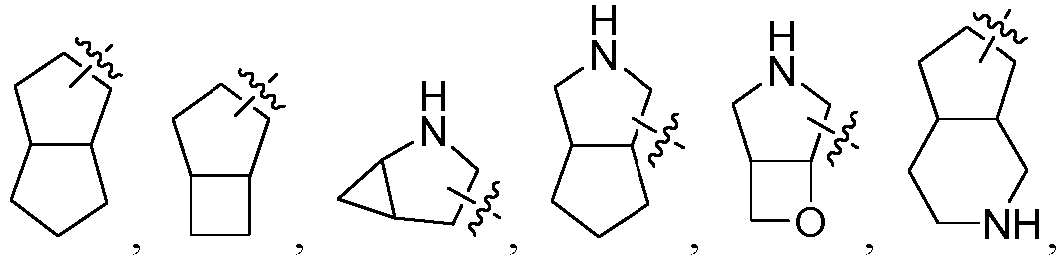
- As used herein, taking


- As used herein, the taking


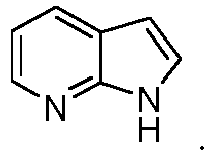


- The term "aryl" refers to an all-carbon aromatic monocyclic or fused polycyclic group having a conjugated π-electron system. Unless otherwise specified, aryl may have 6-20 carbon atoms, 6-14 carbon atoms, or 6-12 carbon atoms. Non-limiting examples of the aryl include, but are not limited to, phenyl, naphthyl, anthryl, 1,2,3,4-tetrahydronaphthalene, and the like.
- The term "heteroaryl" refers to a monocyclic or polycyclic ring system that contains at least one ring atom selected from the group consisting of N, O, S(O)n, and P(O)n (wherein n is 0, 1, or 2), with the remaining ring atoms being C, and that has at least one aromatic ring. Unless otherwise specified, the heteroaryl may be monocyclic, bicyclic, or tricyclic. Unless otherwise specified, the heteroaryl may have a single 5- to 8-membered ring, or multiple fused rings containing 6 to 14, especially 6 to 10 ring atoms. Non-limiting examples of the heteroaryl include, but are not limited to, pyrrolyl, furanyl, thienyl, imidazolyl, oxazolyl, pyrazolyl, pyridinyl, pyrimidinyl, pyrazinyl, quinolyl, isoquinolyl, tetrazolyl, triazolyl, triazinyl, benzofuranyl, benzothienyl, indolyl, isoindolyl, and the like.
- The term "treat", "treating", or "treatment" refers to administering the compound or formulation described herein to ameliorate or eliminate a disease or one or more symptoms related to the disease, including:
- (i) inhibiting a disease or disease state, i.e., arresting its progression; and
- (ii) alleviating a disease or disease state, i.e., causing its regression.
- The term "therapeutically effective amount" refers to an amount of the compound described herein for (i) treating the specific disease, condition or disorder described herein; (ii) alleviating, ameliorating, or eliminating one or more symptoms of the specific disease, condition or disorder described herein, or (iii) preventing or delaying onset of one or more symptoms of the specific disease, condition or disorder described herein. The amount of the compound of the present application composing the "therapeutically effective amount" varies depending on the compound, the disease state and its severity, the mode of administration, and the age of the mammal to be treated, but can be determined routinely by those skilled in the art in accordance with their knowledge and the present disclosure.
- The term "pharmaceutically acceptable" is used herein for those compounds, materials, compositions, and/or dosage forms that are, within the scope of sound medical judgment, suitable for use in contact with the tissues of human beings and animals without excessive toxicity, irritation, allergic response, or other problems or complications, and commensurate with a reasonable benefit/risk ratio.
- A pharmaceutically acceptable salt, for example, may be a metal salt, an ammonium salt, a salt formed with an organic base, a salt formed with an inorganic acid, a salt formed with an organic acid, a salt formed with a basic or acidic amino acid, and the like.
- The term "pharmaceutical composition" refers to a mixture consisting of one or more of the compounds or the salts thereof of the present application and a pharmaceutically acceptable excipient. The pharmaceutical composition is intended to facilitate the administration of the compound of the present application to an organic entity.
- The term "pharmaceutically acceptable excipient" refers to those that do not have a significant irritating effect on an organic entity and do not impair the biological activity and properties of the active compound. Suitable excipients are well known to those skilled in the art, for example, carbohydrate, wax, water-soluble and/or water-swellable polymers, hydrophilic or hydrophobic material, gelatin, oil, solvent, or water.
- The word "comprise" and variations thereof such as "comprises" or "comprising" will be understood in an open, non-exclusive sense, i.e., "including but not limited to".
- Unless otherwise specified, terms in the singular shall be deemed to include the plural and vice versa. Unless otherwise specified, the word "a" or "an" refers to "at least one". Unless otherwise stated, "or" is used to mean "and/or".
- The compounds of the present invention may exist in the form of a specific geometric isomer or stereoisomer. All such compounds are contemplated herein, including cis and trans isomers, (-)- and (+)-enantiomers, (R)- and (5)-enantiomers, diastereoisomers, (D)-isomers, (L)-isomers, and racemic mixtures and other mixtures thereof, such as an enantiomer or diastereoisomer enriched mixture, all of which are encompassed within the scope of the present invention. The substituents such as alkyl may have an additional asymmetric carbon atom. All these isomers and mixtures thereof are encompassed within the scope of the present invention.
- Unless otherwise stated, "(D)" or "(+)" stands for dextrorotation, "(L)" or "(-)" stands for levorotation, and "(DL)" or "(±)" stands for racemization.
- Unless otherwise stated, the absolute configuration of a stereogenic center is represented by a wedged solid bond


- Optically active (R)- and (S)-isomers and D and L isomers can be prepared by chiral synthesis or chiral reagents or other conventional techniques. If one enantiomer of a certain compound of the present invention is to be obtained, the desired pure enantiomer can be prepared by asymmetric synthesis or derivatization using a chiral additive, wherein the resulting diastereoisomeric mixture is separated and the auxiliary group is cleaved. Alternatively, when the molecule contains a basic functional group (for example, amino) or an acidic functional group (for example, carboxyl), the compound reacts with an appropriate optically active acid or base to form a salt of the diastereoisomer, which is then subjected to diastereoisomeric resolution through conventional methods well known in the art to give the pure enantiomer. Furthermore, the enantiomer and the diastereoisomer are generally isolated through chromatography using a chiral stationary phase, optionally in combination with chemical derivatization (e.g., carbamate generated from amines).
- The present application also comprises isotopically labeled compounds of the present application which are identical to those recited herein but have one or more atoms replaced by an atom having an atomic mass or mass number different from the atomic mass or mass number generally found in nature. Examples of isotopes that can be incorporated into the compounds of the present application include isotopes of hydrogen, carbon, nitrogen, oxygen, phosphorus, sulfur, fluorine, iodine, and chlorine, such as 2H, 3H, 11C, 13C, 14C, 13N, 15N, 15O, 17O, 18O, 31P, 32P, 35S, 18F, 123I, 125I, 36Cl, and the like.
- Certain isotopically labeled compounds of the present application (e.g., those labeled with 3H and 14C) can be used to analyze compounds and/or substrate tissue distribution. Tritium (i.e., 3H) and carbon-14 (i.e., 14C) isotopes are particularly preferred for their ease of preparation and detectability. Positron emitting isotopes, such as 15O, 13N, 11C, and 18F, can be used in positron emission tomography (PET) studies to determine substrate occupancy. Isotopically labeled compounds of the present application can generally be prepared by following procedures analogous to those disclosed in the schemes and/or examples below while substituting a non-isotopically labeled reagent with an isotopically labeled reagent.
- Furthermore, substitution with heavier isotopes such as deuterium (i.e., 2H or D) may afford certain therapeutic advantages resulting from greater metabolic stability (for example, increased in vivo half-life or reduced dosage requirements) and hence may be preferred in some circumstances in which deuterium substitution may be partial or complete. Partial deuterium substitution refers to substitution of at least one hydrogen with at least one deuterium, and complete deuterium substitution refers to substitution of all hydrogens of the group with deuterium, for example, methyl (-CH3) completely substituted with deuterium is -CD3.
- The compounds of the present application may also exist in different tautomeric forms, and all such forms are included within the scope of the present application. The term "tautomer" or "tautomeric form" refers to structural isomers of different energies that can interconvert via a low energy barrier. For example, a proton tautomer (also referred to as prototropic tautomer) includes interconversion via proton transfer, such as keto-enol isomerism and imine-enamine isomerization. A specific example of a proton tautomer may be an imidazole moiety where a proton can transfer between two ring nitrogen atoms.
- The pharmaceutical composition of the present application may be prepared by combining the compound of the present application with a suitable pharmaceutically acceptable excipient.
- Typical routes of administration of the compound or the pharmaceutically acceptable salt thereof or the pharmaceutical composition thereof of the present application include, but are not limited to, oral, local, inhalation, parenteral, intranasal, intraocular, intramuscular, subcutaneous, and intravenous administration.
- The pharmaceutical composition of the present application can be manufactured using methods well known in the art, such as conventional mixing, dissolving, granulating, dragee-making, levigating, emulsifying, lyophilizing, and the like.
- In all of the administration methods of the compound of general formula II described herein, the daily dose administered is from 0.001 mg/kg body weight to 2000 mg/kg body weight, given in individual or separated doses. The compounds of the present application can be prepared by a variety of synthetic methods well known to those skilled in the art, including the specific embodiments listed below, embodiments formed by combinations thereof with other chemical synthetic methods, and equivalents thereof known to those skilled in the art. The preferred embodiments include, but are not limited to, the examples of the present application.
- The chemical reactions of the specific embodiments of the present application are conducted in a proper solvent that must be suitable for the chemical changes in the present application and the reagents and materials required. In order to obtain the compounds of the present application, it is sometimes necessary for those skilled in the art to modify or select a synthesis procedure or a reaction process based on the existing embodiments.
- An important consideration in synthetic route planning in the art is the selection of suitable protecting groups for reactive functional groups (e.g., amino in the present application). For example, reference may be made to Greene's Protective Groups in Organic Synthesis (4th Ed.) Hoboken, New Jersey: John Wiley & Sons, Inc. All references cited herein are incorporated by reference in their entirety.
- In some embodiments, the compound of formula II of the present application can be prepared by those skilled in the art of organic synthesis according to the following routes:
- Route 1:

- Route 2:

- wherein, Z is selected from the group consisting of halogen, OH, NH2, NH(C1-6 alkyl), and other groups; Re is selected from the group consisting of halogen, NH2, boric acid, borate, and other groups;
- Rf is selected from the group consisting of halogen, boric acid, borate, and other groups.
- wherein ring A, R1, X, Y, R2, R3, m, and n are as defined herein.
- All patents, patent applications and other identified publications are explicitly incorporated herein by reference for the purpose of description and disclosure. These publications are provided solely because they were disclosed prior to the filing date of the present application. All statements as to the dates of these documents or descriptions as to the contents of these documents are based on the information available to the applicant and do not constitute any admission as to the correctness of the dates or the content of these documents. Moreover, in any country or region, any reference to these publications herein shall not be construed as an admission that the publications form part of the common knowledge in the art.
- Specific compounds of the present application, which can be prepared by the preparation method of the present application, are listed in the following table:
Structural formula Mass spectrometric data Structural formula Mass spectrometric data 
HRMS (ESI, [M-H]-) 
HRMS (ESI, [M+H]+) m/z: 583.2640 m/z: 550.2933 or 550.2928 
HRMS (ESI, [M-H]-) 
HRMS (ESI, [M+H]+) m/z: 583.2642 or 583.2641 m/z: 550.2933 or 550.2928 
HRMS (ESI, [M-H]-) 
HRMS (ESI, [M+H]+) m/z: 583.2642 or 583.2641 m/z: 536.2775 
HRMS (ESI, [M+H]+) 
HRMS (ESI, [M+H]+) m/z: 559.2629 m/z: 564.3084 
HRMS (ESI, [M+H]+) 
HRMS (ESI, [M+H]+) m/z: 559.2631 or 559.2633 m/z: 564.3088 or 564.3079 
HRMS (ESI, [M+H]+) 
HRMS (ESI, [M+H]+) m/z: 559.2631 or 559.2633 m/z: 564.3088 or 564.3079 
HRMS (ESI, [M+H]+) 
HRMS (ESI, [M+H]+) m/z: 560.2588 m/z: 515.1871 
HRMS (ESI, [M+H]+) 
HRMS (ESI, [M+H]+) m/z: 560.2589 or 560.2590 m/z: 511.2235 
HRMS (ESI, [M+H]+) 
HRMS (ESI, [M+H]+) m/z: 560.2589 or 560.2590 m/z: 511.2246 or 511.2232 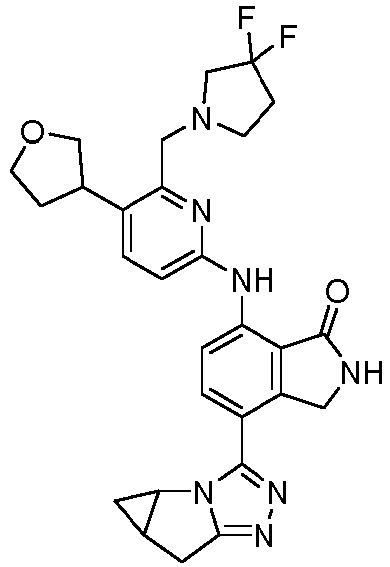
HRMS (ESI, [M+H]+) 
HRMS (ESI, [M+H]+) m/z: 534.2424 m/z: 511.2246 or 511.2232 
HRMS (ESI, [M+H]+) 
HRMS (ESI, [M+H]+) m/z: 534.2428 or 534.2427 m/z: 552.2465 
HRMS (ESI, [M+H]+) 
HRMS (ESI, [M+H]+) m/z: 534.2428 or 534.2427 m/z: 552.2486 or 552.2476 
HRMS (ESI, [M+H]+) 
HRMS (ESI, [M+H]+) m/z: 539.2762 m/z: 552.2486 or 552.2476 
HRMS (ESI, [M+H]+) 
HRMS (ESI, [M+H]+) m/z: 538.2923 m/z: 551.2532 
HRMS (ESI, [M+H]+) 
HRMS (ESI, [M+H]+) m/z: 525.2609 m/z: 551.2545 or 551.2538 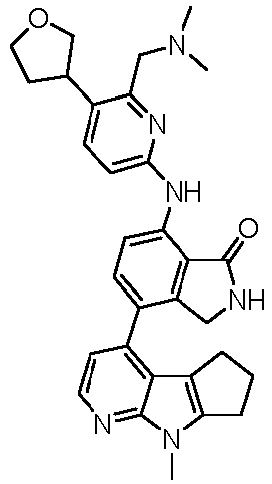
HRMS (ESI, [M+H]+) 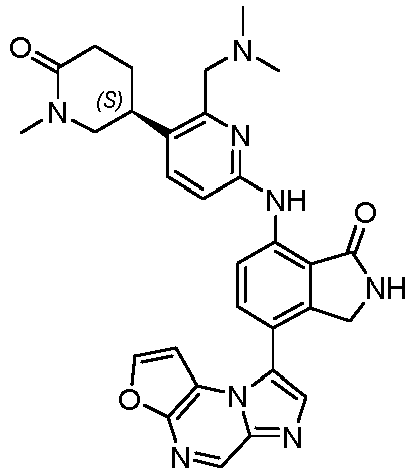
HRMS (ESI, [M+H]+) m/z: 523.2814 m/z: 551.2545 or 551.2538 
HRMS (ESI, [M+H]+) 
HRMS (ESI, [M+H]+) m/z: 523.2810 or 523.2818 m/z: 550.2585 
HRMS (ESI, [M+H]+) 
HRMS (ESI, [M+H]+) m/z: 523.2810 or 523.2818 m/z: 550.2575 or 550.2580 
HRMS (ESI, [M+H]+) 
HRMS (ESI, [M+H]+) m/z: 444.2396 m/z: 550.2575 or 550.2580 
HRMS (ESI, [M+H]+) 
HRMS (ESI, [M+H]+) m/z: 444.2398 or 444.2395 m/z: 550.2578 
HRMS (ESI, [M+H]+) 
HRMS (ESI, [M+H]+) m/z: 444.2398 or 444.2395 m/z: 550.2584 or 550.2574 
HRMS (ESI, [M+H]+) 
HRMS (ESI, [M+H]+) 554.2880 m/z: 550.2584 or 550.2574 
HRMS (ESI, [M+H]+) 
HRMS (ESI, [M+H]+) m/z: 523.2455 m/z: 509.2325 
HRMS (ESI, [M+H]+) 
HRMS (ESI, [M+H]+) m/z: 538.2923 m/z: 509.2335 or 509.2331 
HRMS (ESI, [M+H]+) 
HRMS (ESI, [M+H]+) m/z: 539.2878 m/z: 509.2335 or 509.2331 
HRMS (ESI, [M+H]+) 
HRMS (ESI, [M+H]+) m/z: 544.3300 m/z: 537.2415 
HRMS (ESI, [M+H]+) 
HRMS (ESI, [M+H]+) m/z: 547.3490 m/z: 537.2411 or 537.2404 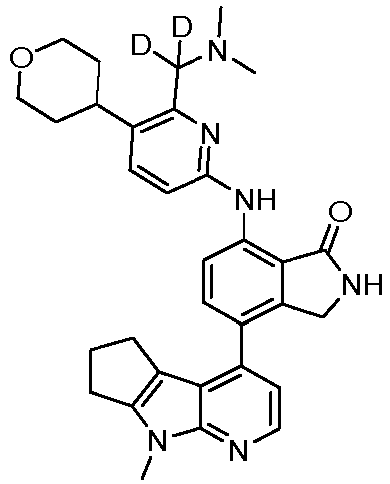
HRMS (ESI, [M+H]+) 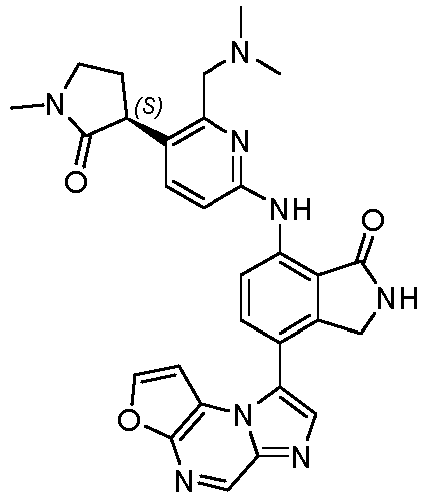
HRMS (ESI, [M+H]+) m/z: 539.3097 m/z: 537.2411 or 537.2404 
HRMS (ESI, [M+H]+) 
HRMS (ESI, [M+H]+) m/z: 540.3049 m/z: 536.2420 
HRMS (ESI, [M+H]+) 
HRMS (ESI, [M+H]+) m/z: 524.2768 m/z: 536.2417 or 536.2405 
HRMS (ESI, [M+H]+) 
HRMS (ESI, [M+H]+) m/z: 523.2818 m/z: 536.2417 or 536.2405 
HRMS (ESI, [M+H]+) 
HRMS (ESI, [M+H]+) m/z: 538.2919 m/z: 536.2411 
HRMS (ESI, [M+H]+) 
HRMS (ESI, [M+H]+) m/z: 524.2767 m/z: 536.2405 or 536.2419 
HRMS (ESI, [M+H]+) 
HRMS (ESI, [M+H]+) m/z: 534.2617 m/z: 536.2405 or 536.2419 
HRMS (ESI, [M+H]+) 
HRMS (ESI, [M+H]+) m/z: 486.2614 m/z: 511.2035 
HRMS (ESI, [M+H]+) 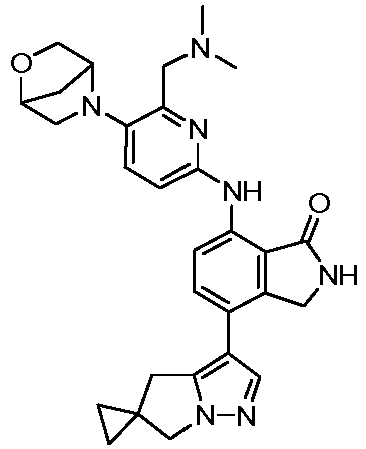
HRMS (ESI, [M+H]+) m/z: 524.2770 m/z: 512.2801 
HRMS (ESI, [M+H]+) 
HRMS (ESI, [M+H]+) m/z: 525.2721 m/z: 513.3024 
HRMS (ESI, [M+H]+) 
HRMS (ESI, [M+H]+) m/z: 525.2725 m/z: 527.3124 
HRMS (ESI, [M+H]+) 
HRMS (ESI, [M+H]+) m/z: 524.2754 m/z: 513.3012 
HRMS (ESI, [M+H]+) 
HRMS (ESI, [M+H]+) m/z: 523.2457 m/z: 540.3125 
HRMS (ESI, [M+H]+) 
HRMS (ESI, [M+H]+) m/z: 523.2984 m/z: 524.2389 
HRMS (ESI, [M+H]+) 
HRMS (ESI, [M+H]+) m/z: 524.2754 m/z: 524.2405 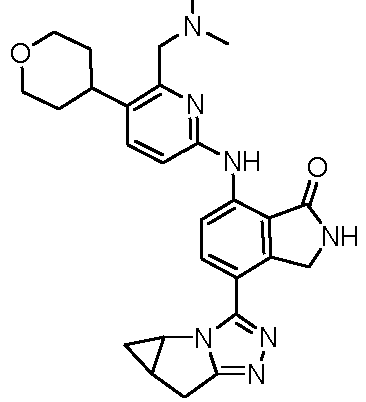
HRMS (ESI, [M+H]+) 
HRMS (ESI, [M+H]+) m/z: 486.2615 m/z: 524.2400 
HRMS (ESI, [M+H]+) 
HRMS (ESI, [M+H]+) m/z: 536.2776 m/z: 533.1710 
HRMS (ESI, [M+H]+) 
HRMS (ESI, [M+H]+) m/z: 524.2407 m/z: 533.1716 
HRMS (ESI, [M+H]+) 
HRMS (ESI, [M+H]+) m/z: 499.2818 m/z: 533.1727 
HRMS (ESI, [M+H]+) 
HRMS (ESI, [M+H]+) m/z: 525.2621 m/z: 524.2409 
HRMS (ESI, [M+H]+) 
HRMS (ESI, [M+H]+) m/z: 526.2566 m/z: 524.2413 
HRMS (ESI, [M+H]+) 
HRMS (ESI, [M+H]+) m/z: 522.2616 m/z: 522.2619 
HRMS (ESI, [M+H]+) 
HRMS (ESI, [M+H]+) m/z: 523.2455 m/z: 559.1880 
HRMS (ESI, [M+H]+) 
HRMS (ESI, [M+H]+) m/z: 525.2606 m/z: 559.1882 
HRMS (ESI, [M+H]+) 
HRMS (ESI, [M+H]+) m/z: 500.2767 m/z: 571.2239 
HRMS (ESI, [M+H]+) 
HRMS (ESI, [M+H]+) m/z: 540.2182 m/z: 557.2080 
HRMS (ESI, [M+H]+) 
HRMS (ESI, [M+H]+) m/z: 535.2570 m/z: 524.2411 
HRMS (ESI, [M+H]+) 
HRMS (ESI, [M+H]+) m/z: 485.2662 m/z: 522.2616 
HRMS (ESI, [M+H]+) 
HRMS (ESI, [M+H]+) m/z: 525.2630 m/z: 522.2619 or 522.2610 
HRMS (ESI, [M+H]+) 
HRMS (ESI, [M+H]+) m/z: 539.2407 m/z: 522.2619 or 522.2610 
HRMS (ESI, [M+H]+) 
HRMS (ESI, [M+H]+) m/z: 524.2407 m/z: 524.2038 
HRMS (ESI, [M+H]+) 
HRMS (ESI, [M+H]+) m/z: 525.2359 m/z: 522.2044 HRMS (ESI, [M+H]+) 
HRMS (ESI, [M+H]+) 
m/z: 524.2398 m/z: 525.1999 
HRMS (ESI, [M+H]+) 
HRMS (ESI, [M+H]+) m/z: 537.2365 m/z: 510.2163 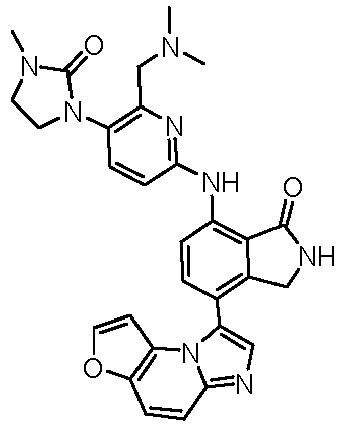
HRMS (ESI, [M+H]+) 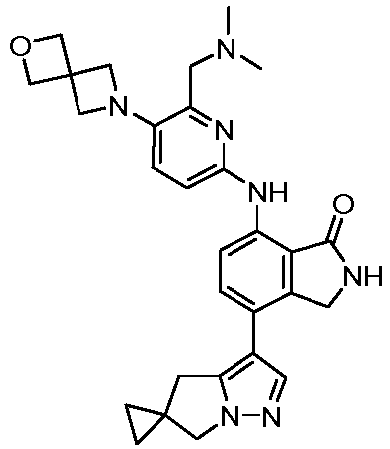
HRMS (ESI, [M+H]+) m/z: 537.2365 m/z: 512.2681 
HRMS (ESI, [M+H]+) 
HRMS (ESI, [M+H]+) m/z: 522.2254 m/z: 549.2723 
HRMS (ESI, [M+H]+) 
HRMS (ESI, [M+H]+) m/z: 522.2254 m/z: 516.1819 
HRMS (ESI, [M+H]+) 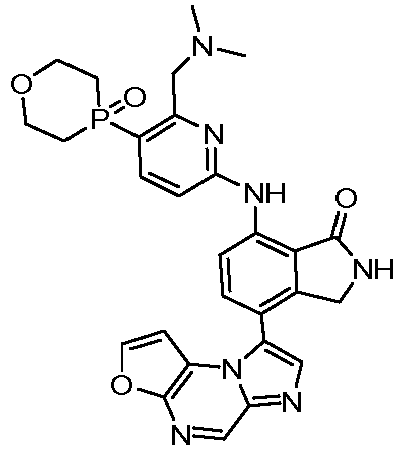
HRMS (ESI, [M+H]+) m/z: 501.2944 m/z: 558.1951 
HRMS (ESI, [M+H]+) 
HRMS (ESI, [M+H]+) m/z: 510.2242 m/z: 571.2273 
HRMS (ESI, [M+H]+) 
HRMS (ESI, [M+H]+) m/z: 510.2240 or 510.2241 m/z: 538.2476 
HRMS (ESI, [M+H]+) 
HRMS (ESI, [M+H]+) m/z: 510.2240 or 510.2241 m/z: 538.2149 
HRMS (ESI, [M+H]+) 
HRMS (ESI, [M+H]+) m/z: 500.2768 m/z: 538.2146 
HRMS (ESI, [M+H]+) 
HRMS (ESI, [M+H]+) m/z: 512.2766 m/z: 539.2065 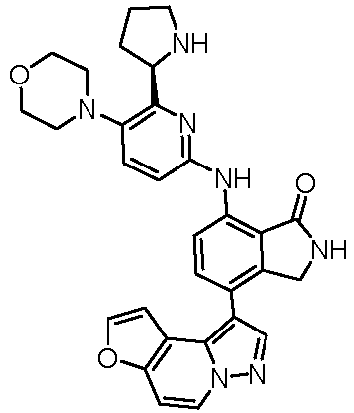
HRMS (ESI, [M+H]+) 
HRMS (ESI, [M+H]+) m/z: 536.2407 m/z: 551.2431 
HRMS (ESI, [M+H]+) 
HRMS (ESI, [M+H]+) m/z: 537.2354 m/z: 551.2456 
HRMS (ESI, [M+H]+) 
HRMS (ESI, [M+H]+) m/z: 537.2359 or 537.2350 m/z: 552.2379 
HRMS (ESI, [M+H]+) 
HRMS (ESI, [M+H]+) m/z: 537.2359 or 537.2350 m/z: 536.2349 
HRMS (ESI, [M+H]+) 
HRMS (ESI, [M+H]+) m/z: 536.2408 m/z: 536.2325 
HRMS (ESI, [M+H]+) 
HRMS (ESI, [M+H]+) m/z: 536.2410 or 536.2405 m/z: 536.2341 
HRMS (ESI, [M+H]+) 
HRMS (ESI, [M+H]+) m/z: 536.2410 or 536.2405 m/z: 571.2269 
HRMS (ESI, [M+H]+) 
HRMS (ESI, [M+H]+) m/z: 550.2567 m/z: 524.2400 
HRMS (ESI, [M+H]+) 
HRMS (ESI, [M+H]+) m/z: 550.2565 or 550.2562 m/z: 524.2313 
HRMS (ESI, [M+H]+) 
HRMS (ESI, [M+H]+) m/z: 550.2565 or 550.2562 m/z: 524.2340 or 524.2355 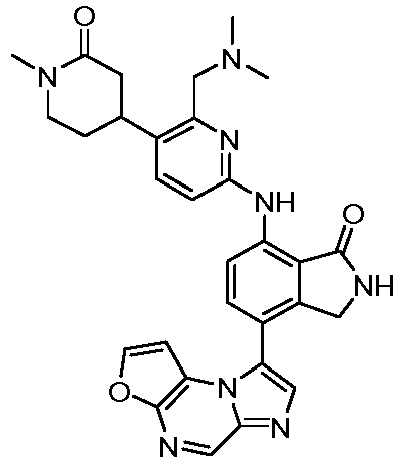
HRMS (ESI, [M+H]+) 
HRMS (ESI, [M+H]+) m/z: 551.2505 m/z: 524.2340 or 524.2355 
HRMS (ESI, [M+H]+) 
HRMS (ESI, [M+H]+) m/z: 551.2501 or 551.2506 m/z: 524.2421 
HRMS (ESI, [M+H]+) 
HRMS (ESI, [M+H]+) m/z: 551.2501 or 551.2506 m/z: 524.2436 or 524.2412 
HRMS (ESI, [M+H]+) 
HRMS (ESI, [M+H]+) m/z: 538.2311 m/z: 524.2436 or 524.2412 
HRMS (ESI, [M+H]+) 
HRMS (ESI, [M+H]+) m/z: 538.2313 m/z: 527.2212 
HRMS (ESI, [M+H]+) 
HRMS (ESI, [M+H]+) m/z: 527.2210 m/z: 527.2223 or 527.2203 
HRMS (ESI, [M+H]+) 
HRMS (ESI, [M+H]+) m/z: 509.2311 m/z: 527.2223 or 527.2203 
HRMS (ESI, [M+H]+) 
HRMS (ESI, [M+H]+) m/z: 509.2314 or 509.2309 m/z: 527.2203 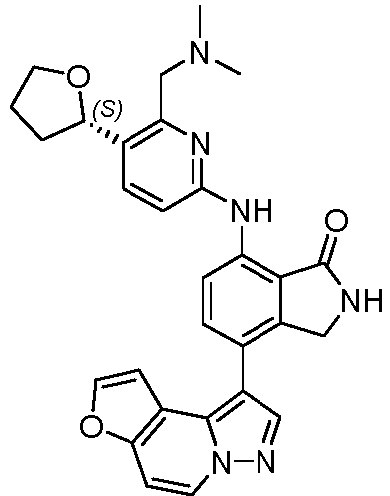
HRMS (ESI, [M+H]+) 
HRMS (ESI, [M+H]+) m/z: 509.2314 or 509.2309 m/z: 527.2195 or 527.2186 
HRMS (ESI, [M+H]+) 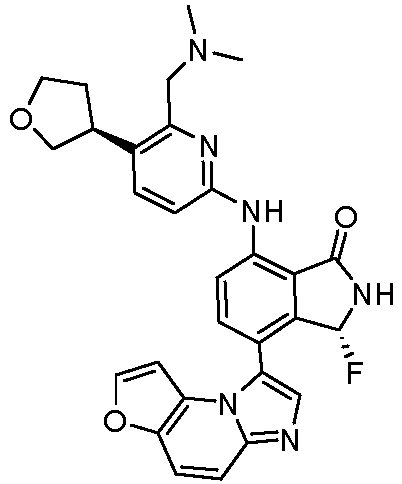
HRMS (ESI, [M+H]+) m/z: 510.2246 m/z: 527.2195 or 527.2186 
HRMS (ESI, [M+H]+) 
HRMS (ESI, [M+H]+) m/z: 510.2248 or 510.2244 m/z: 513.2625 
HRMS (ESI, [M+H]+) 
HRMS (ESI, [M+H]+) m/z: 510.2248 or 510.2244 m/z: 510.2242 
HRMS (ESI, [M+H]+) 
HRMS (ESI, [M+H]+) m/z: 550.2546 m/z: 510.2256 or 510.2235 
HRMS (ESI, [M+H]+) 
HRMS (ESI, [M+H]+) m/z: 526.2932 m/z: 510.2256 or 510.2235 
HRMS (ESI, [M+H]+) 
HRMS (ESI, [M+H]+) m/z: 551.2515 or 551.2518 m/z: 538.2191 
HRMS (ESI, [M+H]+) 
HRMS (ESI, [M+H]+) m/z: 551.2515 or 551.2518 m/z: 538.2185 or 538.2223 
HRMS (ESI, [M+H]+) 
HRMS (ESI, [M+H]+) m/z: 510.2255 m/z: 538.2185 or 538.2223 
HRMS (ESI, [M+H]+) 
HRMS (ESI, [M+H]+) m/z: 526.2926 or 526.2935 m/z: 538.2176 or 538.2201 
HRMS (ESI, [M+H]+) 
HRMS (ESI, [M+H]+) m/z: 526.2926 or 526.2935 m/z: 538.2176 or 538.2201 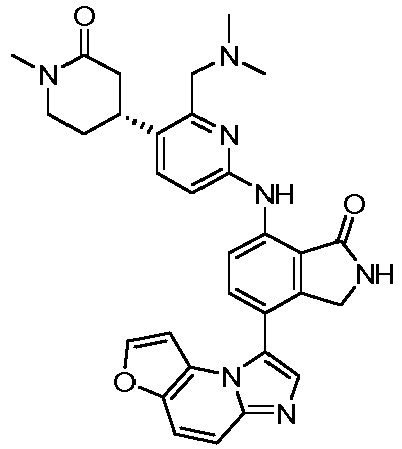
HRMS (ESI, [M+H]+) 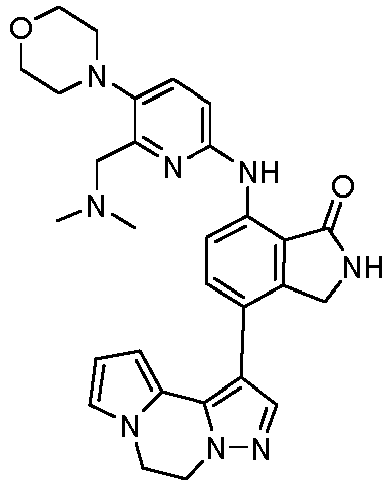
HRMS (ESI, [M+H]+) m/z: 550.2558 or 550.2547 m/z: 525.2765 
HRMS (ESI, [M+H]+) 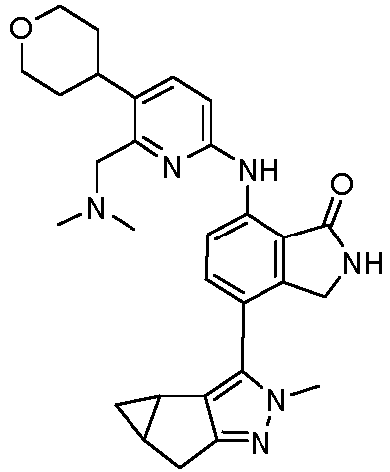
HRMS (ESI, [M+H]+) m/z: 550.2558 or 550.2547 m/z: 499.2816 
HRMS (ESI, [M+H]+) 
HRMS (ESI, [M+H]+) m/z: 552.2725 m/z: 525.2369 
HRMS (ESI, [M+H]+) 
HRMS (ESI, [M+H]+) m/z: 552.2729 or 552.2728 m/z: 538.2952 
HRMS (ESI, [M+H]+) 
HRMS (ESI, [M+H]+) m/z: 552.2729 or 552.2728 m/z: 538.2943 or 538.2941 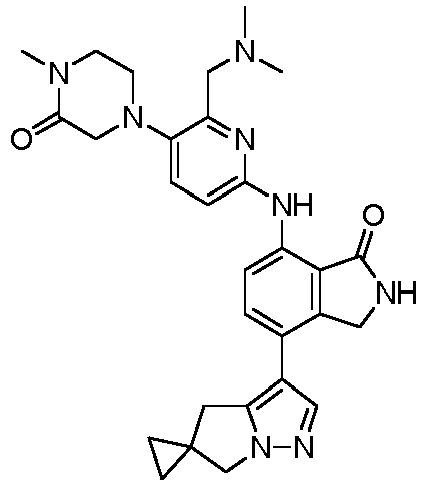
HRMS (ESI, [M+H]+) 
HRMS (ESI, [M+H]+) m/z: 527.2887 m/z: 538.2943 or 538.2941 
HRMS (ESI, [M+H]+) 
HRMS (ESI, [M+H]+) m/z: 551.2519 m/z: 563.2842 
HRMS (ESI, [M+H]+) 
HRMS (ESI, [M+H]+) m/z: 546.2251 m/z: 499.2243 
HRMS (ESI, [M+H]+) 
HRMS (ESI, [M+H]+) m/z: 512.3127 m/z: 538.2942 
HRMS (ESI, [M+H]+) 
HRMS (ESI, [M+H]+) m/z: 495.2142 m/z: 524.2796 
HRMS (ESI, [M+H]+) 
HRMS (ESI, [M+H]+) m/z: 495.2140 or 495.2144 m/z: 523.2842 
HRMS (ESI, [M+H]+) 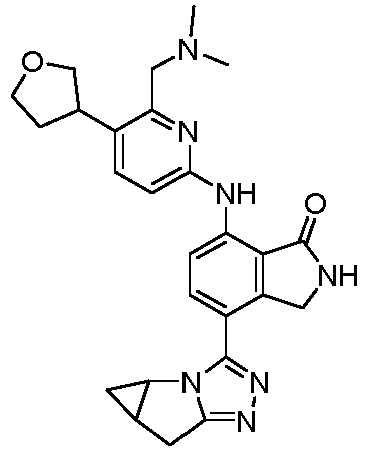
HRMS (ESI, [M+H]+) m/z: 495.2140 or 495.2144 m/z: 472.2446 
HRMS (ESI, [M+H]+) 
HRMS (ESI, [M+H]+) m/z: 537.2718 m/z: 472.2455 or 472.2448 
HRMS (ESI, [M+H]+) 
HRMS (ESI, [M+H]+) m/z: 546.2261 m/z: 472.2455 or 472.2448 
HRMS (ESI, [M+H]+) 
HRMS (ESI, [M+H]+) m/z: 550.2931 m/z: 566.1972 
HRMS (ESI, [M+H]+) 
m/z: 505.2054 - The following abbreviations are used in the present application:
- DMSO: dimethyl sulfoxide; THF: tetrahydrofuran; NCS: N-chlorosuccinimide; NBS: N-bromosuccinimide; CCl4: carbon tetrachloride; DMF: N,N-dimethylformamide; HOVEYDA-GRUBBS: (1,3-bis (2,4,6-trimethylphenyl)-2-imidazolidinylidene)dichloro(o-isopropoxybenzylidene)ruthenium; Boc: tert-butyloxycarbonyl; Ms: methanesulfonyl;
- Ts: p-toluenesulfonyl; and Cbz: benzyloxycarbonyl.
- For clarity, the present invention is further described with the following examples, which are, however, not intended to limit the scope of the present application. It will be apparent to those skilled in the art that various changes and modifications can be made to the specific embodiments of the present invention without departing from the spirit and scope of the present invention. All reagents used in the present application are commercially available and can be used without further purification.
- The compounds of the present application can be obtained by similar preparation methods to those in the examples, including but not limited to, adjustment of structurally similar starting materials, reagents, or process parameters. The structural characterization of the compounds of the present application can be obtained by MS or 1H NMR. The results for the compounds of the present application can also be obtained by the same effect test method.
-

- To a reaction flask were added the compounds methyl 6-amino-3-bromopicolinate (100 g), N,N-dimethylpyridin-4-amine (10.6 g), di-tert-butyl dicarbonate (170 g), and tetrahydrofuran (600 mL) in sequence. After the addition, the mixture was stirred at room temperature. After the reaction was completed, 10% citric acid aqueous solution (200 mL, w/w) was added to the reaction solution to quench the reaction, and the resulting mixture was extracted with dichloromethane, washed with saturated brine, dried, and concentrated to give intermediate 1A-1 (120.1 g).
- MS (ESI, [M+H]+) m/z: 331.1.
- To a reaction flask were added intermediate 1A-1 (85 g), tetrahydrofuran (300 mL), and lithium borohydride (6.2 g) in sequence. After the addition, the mixture was stirred at room temperature. After the reaction was completed, a saturated ammonium chloride solution was added to the reaction solution to quench the reaction, and the resulting mixture was extracted with dichloromethane, washed with saturated brine, dried, and concentrated to give intermediate 1A-2 (60.0 g).
- MS (ESI, [M+H]+) m/z: 303.1.
- To a reaction flask were added intermediate 1A-2 (54.2 g), N,N-diisopropylethylamine, dichloromethane (200 mL), and methanesulfonic anhydride (78 g) in sequence. After the addition, the mixture was stirred at -15 °C. After the reaction was completed, the reaction solution was directly used in the next step without treatment.
- To a reaction flask were added a solution of dimethylamine in tetrahydrofuran (446 mL, 2 M), dichloromethane (200 mL), and the reaction solution of intermediate 1A-3 in sequence. The mixture was stirred at room temperature. After the reaction was completed, the reaction solution was extracted with dichloromethane, washed with saturated brine, dried, concentrated, and subjected to column chromatography (dichloromethane/methanol = 5/1) to give intermediate 1A-4 (38.2 g).
- MS (ESI, [M+H]+) m/z: 330.1.
- To a reaction flask were added intermediate 1A-4 (38.2 g), potassium carbonate (36.0 g), tetrakis(triphenylphosphine)palladium (15.0 g), 3,6-dihydro-2H-pyran-4-boronic acid pinacol ester (23.7 g), water (80 mL), and dioxane (400 mL) in sequence. After the addition, the mixture was purged with nitrogen and stirred at 100°C. After the reaction was completed, the reaction solution was filtered, concentrated, and subjected to column chromatography (petroleum ether/ethyl acetate = 5/1) to give intermediate 1A-5 (24.5 g).
- MS (ESI, [M+H]+) m/z: 334.0.
- To a reaction flask were added intermediate 1A-5 (24.5 g), 10 wt% palladium hydroxide on carbon (24.5 g), and methanol (100 mL) in sequence. After the addition, the mixture was stirred at 35 °C under hydrogen atmosphere. After the reaction was completed, the reaction solution was filtered and concentrated to give intermediate 1A-6 (22.0 g).
- MS (ESI, [M+H]+) m/z: 336.0.
- To a reaction flask were added intermediate 1A-6 (22.0 g) and a solution of hydrochloric acid in 1,4-dioxane (164 mL, 4 M) in sequence. After the addition, the mixture was stirred at room temperature. After the reaction was completed, the reaction solution was adjusted to alkalinity (about pH 10) with a saturated sodium bicarbonate solution, extracted with dichloromethane, and concentrated to give intermediate 1A-7 (13.0 g).
- MS (ESI, [M+H]+) m/z: 236.3.
- To a reaction flask were added the compounds 5-bromo-2-chloro-3-methylpyridine-4-carboxylic acid (50.0 g), potassium carbonate (54.2 g), iodomethane (14.0 mL), and N,N-dimethylformamide (500 mL) in sequence. After the addition, the mixture was stirred at room temperature. After the reaction was completed, water (1000 mL) was added to the reaction solution, and the resulting mixture was extracted with ethyl acetate and concentrated to give intermediate 1A-8 (41.2 g).
- MS (ESI, [M+H]+) m/z: 264.2.
- To a reaction flask were added intermediate 1A-8 (41.2 g), N-bromosuccinimide (42.0 g), dibenzoylmethane peroxide (0.6 g), and 1,2-dichloroethane (500 mL) in sequence. After the addition, the mixture was stirred at 90 °C. After the reaction was completed, a saturated sodium sulfite solution (100 mL) was added to the reaction solution to quench the reaction, and the resulting mixture was extracted with dichloromethane, washed with saturated brine, dried, and concentrated to give intermediate 1A-9 (54.5 g).
- 1H NMR (500 MHz, CDCl3) δ 8.51 (s, 1H), 4.53 (s, 2H), 4.05 (s, 3H).
- To a reaction flask were added intermediate 1A-9 (54.5 g), a solution of ammonia in methanol (60 mL, 7 M), and methanol (500 mL) in sequence. After the addition, the mixture was stirred at 75 °C. After the reaction was completed, the reaction solution was filtered and dried to give intermediate 1A-10 (29.2 g).
- 1H NMR (500 MHz, DMSO-d 6) δ 9.30 (s, 1H), 8.67 (d, J= 2.7 Hz, 1H), 4.41 (s, 2H).
- To a reaction flask were added intermediate 1A-10 (29.2 g), N,N-dimethylpyridin-4-amine (1.5 g), di-tert-butyl dicarbonate (28.0 g), and dioxane(200 mL) in sequence. After the addition, the mixture was stirred at room temperature. After the reaction was completed, the reaction solution was concentrated and subjected to column chromatography (petroleum ether/ethyl acetate = 10/1) to give intermediate 1A-11 (35.3 g).
- 1H NMR (500 MHz, DMSO-d 6) δ 8.75 (s, 1H), 4.73 (s, 2H), 1.54 (s, 9H).
- To a reaction flask were sequentially added intermediate 1A-7 (1.2 g), 4,5-bis-diphenylphosphino-9,9-dimethylxanthene (244.6 mg), tris(dibenzylideneacetone)dipalladium(0) (258.3 mg), cesium carbonate (1.8 g), intermediate 1A-11 (1.1 g), and 1,4-dioxane (100 mL) in sequence. After the addition, the mixture was purged with nitrogen and stirred at 100 °C. After the reaction was completed, the reaction solution was filtered and concentrated to give a crude product, which was subjected to column chromatography (dichloromethane/methanol = 20/1) to give intermediate 1A (1.2 g).
- MS (ESI, [M+H]+) m/z: 502.3.
-

- To a reaction flask were added intermediate 1A-2 (112.2 g), dichloromethane (450 mL), N,N-diisopropylethylamine (162.0 mL), and methanesulfonic anhydride (162.0 g) in sequence. After the addition, the mixture was stirred at - 15 °C. After the reaction was completed, 3,3-difluoropyrrolidine (118.5 g) was added to the reaction solution in batches. After the addition, the mixture was stirred at room temperature. After the reaction was completed, the reaction solution was extracted with dichloromethane, washed with saturated brine, dried, concentrated, and subjected to column chromatography (dichloromethane/methanol = 30/1) to give intermediate 2A-1 (95.0 g).
- MS (ESI, [M+H]+) m/z: 392.3.
- To a reaction flask were added intermediate 2A-1 (30.0 g), potassium carbonate (31.5 g), tetrakis(triphenylphosphine)palladium (10.5 g), 2,5-dihydrofuran-3-boronic acid pinacol ester (19.5 g), water (100 mL), and dioxane (500 mL) in sequence. After the addition, the mixture was purged with nitrogen and stirred at 100 °C. After the reaction was completed, the reaction solution was filtered, concentrated, and subjected to column chromatography (petroleum ether/ethyl acetate = 5/1) to give intermediate 2A-2 (23.2 g).
- MS (ESI, [M+H]+) m/z: 382.5.
- To a reaction flask were added intermediate 2A-2 (15.0 g), 10 wt% palladium hydroxide on carbon (15.0 g), and methanol (225 mL) in sequence. After the addition, the mixture was stirred at 35 °C under hydrogen atmosphere. After the reaction was completed, the reaction solution was filtered and concentrated to give intermediate 2A-3 (14.5 g).
- MS (ESI, [M+H]+) m/z: 384.8.
- To a reaction flask were added intermediate 2A-3 (14.5 g) and a solution of hydrochloric acid in 1,4-dioxane (122.4 mL, 4 M) in sequence. After the addition, the mixture was stirred at room temperature. After the reaction was completed, the reaction solution was adjusted to alkalinity (about pH 10) with a saturated sodium bicarbonate solution, extracted with dichloromethane, and concentrated to give intermediate 2A-4 (7.5 g).
- MS (ESI, [M+H]+) m/z: 284.1.
- To a reaction flask were added intermediate 2A-4 (1.0 g), 4,5-bis-diphenylphosphino-9,9-dimethylxanthene (244.6 mg), tris(dibenzylideneacetone)dipalladium(0) (258.3 mg), cesium carbonate (1.8 g), intermediate 1A-11 (1.1 g), and 1,4-dioxane (100 mL) in sequence. After the addition, the mixture was purged with nitrogen and stirred at 100 °C. After the reaction was completed, the reaction solution was filtered and concentrated to give a crude product, which was subjected to column chromatography (dichloromethane/methanol = 20/1) to give intermediate 2A (1.0 g).
- MS (ESI, [M+H]+) m/z: 550.3.
-

- To a reaction flask were added 7-amino-4-chloroisoindol-1-one (10 g) and a solution of 48% hydrogen bromide in methanol (90 mL, w/w) in sequence at -10 °C. After the addition was completed, an aqueous solution (7.6 g, 65 mL) in which sodium nitrite was dissolved was slowly added dropwise to the reaction solution. After the addition, the reaction solution was stirred for 1 h. A 48% aqueous hydrogen bromide solution (8.6 g, 90 mL) in which cuprous bromide was dissolved was slowly added dropwise to the reaction solution. After the addition was completed, the reaction solution was stirred at 80 °C. After the reaction was completed, the reaction solution was poured into ice water, and the resulting mixture was stirred sufficiently and filtered. The filter cake was washed and dried to give intermediate 3A-1 (8.5 g).
- MS (ESI, [M+H]+) m/z: 245.9.
- To a reaction flask were added intermediate 3A-1 (8.5 g), tetrahydrofuran (150 mL), 4-dimethylaminopyridine (1.0 g), and di-tert-butyl dicarbonate (11.2 g) in sequence. After the addition, the mixture was stirred at room temperature. After the reaction was completed, 10% citric acid aqueous solution (200 mL, w/w) was added to the reaction solution to quench the reaction, and the resulting mixture was extracted with dichloromethane, washed with saturated brine, dried, and concentrated to give intermediate 3A-2 (9.6 g).
- MS (ESI, [M+H]+) m/z: 345.9.
- To a reaction flask were added intermediate 3A-2 (2.5 g), 4,5-bis-diphenylphosphino-9,9-dimethylxanthene (612 mg), tris(dibenzylideneacetone)dipalladium(0) (645.3 mg), cesium carbonate (5.8 g), intermediate 2A-4 (4.6 g), and 1,4-dioxane (100 mL) in sequence. After the addition, the mixture was purged with nitrogen and stirred at 100 °C. After the reaction was completed, the reaction solution was filtered and concentrated to give a crude product, which was subjected to column chromatography (dichloromethane/methanol = 20/1) to give intermediate 3A-3 (4.2 g).
- MS (ESI, [M+H]+) m/z: 549.3.
- To a microwave tube were added intermediate 3A-3 (2.0 g), chloro(2-dicyclohexylphosphine-2',4',6'-triisopropyl-1,1'-biphenyl)[2-(2'-amino-1,1'-biphenyl)]palladium (II) (573.0 mg), bis(pinacolato)diboron (1.9 g), potassium carbonate (1.0 g), and 1,4-dioxane (60 mL) in sequence. After the addition, the mixture was purged with nitrogen and reacted at 90 °C under microwave irradiation. After the reaction was completed, the reaction solution was filtered, concentrated, and subjected to column chromatography (dichloromethane/methanol = 20/1) to give intermediate 3A (2.4 g).
- MS (ESI, [M+H]+) m/z: 641.5.
-


- To a reaction flask were added intermediate 1A-4 (25.2 g), potassium carbonate (31.5 g), tetrakis(triphenylphosphine)palladium (10.5 g), 2,5-dihydrofuran-3-boronic acid pinacol ester (19.6 g), water (100 mL), and 1,4-dioxane (500 mL) in sequence. After the addition, the mixture was purged with nitrogen and stirred at 100 °C. After the reaction was completed, the reaction solution was filtered, concentrated, and subjected to column chromatography (petroleum ether/ethyl acetate = 5/1) to give intermediate 4A-1 (20.8 g).
- MS (ESI, [M+H]+) m/z: 320.5.
- To a reaction flask were added intermediate 4A-1 (15.0 g), 10 wt% palladium hydroxide on carbon (15.0 g), and methanol (225 mL) in sequence. After the addition, the mixture was stirred at 35 °C under hydrogen atmosphere. After the reaction was completed, the reaction solution was filtered and concentrated to give intermediate 4A-2 (14.8 g).
- MS (ESI, [M+H]+) m/z: 322.8.
- To a reaction flask were added intermediate 4A-2 (14.8 g) and a solution of hydrochloric acid in 1,4-dioxane (122.4 mL, 4 M) in sequence. After the addition, the mixture was stirred at room temperature. After the reaction was completed, the reaction solution was adjusted to alkalinity (about pH 10) with a saturated sodium bicarbonate solution, extracted with dichloromethane, and concentrated to give intermediate 4A-3 (8.2 g).
- MS (ESI, [M+H]+) m/z: 222.1.
- To a reaction flask were added intermediate 3A-2 (2.5 g), 4,5-bis-diphenylphosphino-9,9-dimethylxanthene (612 mg), tris(dibenzylideneacetone)dipalladium(0) (645.3 mg), cesium carbonate (5.8 g), intermediate 4A-3 (3.6 g), and 1,4-dioxane (100 mL) in sequence. After the addition, the mixture was purged with nitrogen and stirred at 100 °C. After the reaction was completed, the reaction solution was filtered and concentrated to give a crude product, which was subjected to column chromatography (dichloromethane/methanol = 20/1) to give intermediate 4A-4 (4.0 g).
- MS (ESI, [M+H]+) m/z: 487.4.
- To a microwave tube were added intermediate 4A-4 (2.0 g), chloro(2-dicyclohexylphosphine-2',4',6'-triisopropyl-1,1'-biphenyl)[2-(2'-amino-1,1'-biphenyl)]palladium (II) (585.0 mg), bis(pinacolato)diboron (2.1 g), potassium carbonate (1.2 g), and 1,4-dioxane (60 mL) in sequence. After the addition, the mixture was purged with nitrogen and reacted at 90 °C under microwave irradiation. After the reaction was completed, the reaction solution was filtered, concentrated, and subjected to column chromatography (dichloromethane/methanol = 20/1) to give intermediate 4A (2.6 g).
- MS (ESI, [M+H]+) m/z: 579.5.
-

- To a reaction flask were added intermediate 3A-2 (2.5 g), 4,5-bis-diphenylphosphino-9,9-dimethylxanthene (612 mg), tris(dibenzylideneacetone)dipalladium(0) (645.3 mg), cesium carbonate (5.8 g), intermediate 1A-7 (3.8 g), and 1,4-dioxane (100 mL) in sequence. After the addition, the mixture was purged with nitrogen and stirred at 100 °C. After the reaction was completed, the reaction solution was filtered and concentrated to give a crude product, which was subjected to column chromatography (dichloromethane/methanol = 20/1) to give intermediate 5A-1 (4.4 g).
- MS (ESI, [M+H]+) m/z: 501.3.
- To a microwave tube were added intermediate 5A-1 (2.1 g), chloro(2-dicyclohexylphosphine-2',4',6'-triisopropyl-1,1'-biphenyl)[2-(2'-amino-1,1'-biphenyl)]palladium (II) (585.0 mg), bis(pinacolato)diboron (2.1 g), potassium carbonate (1.2 g), and 1,4-dioxane (60 mL) in sequence. After the addition, the mixture was purged with nitrogen and reacted at 90 °C under microwave irradiation. After the reaction was completed, the reaction solution was filtered, concentrated, and subjected to column chromatography (dichloromethane/methanol = 20/1) to give intermediate 5A (2.8 g).
- MS (ESI, [M+H]+) m/z: 593.3.
-

- To a reaction flask were added the compounds 5-chlorofuro[3,2-b]pyridine (9.5 g), toluene (150.0 mL), benzophenone imine (13.5 g), sodium tert-butoxide (11.9 g), tris(dibenzylideneadone) (2.8 g), and 1,1-binaphthyl-2,2-bis-diphenylphosphine (1.9 g) in sequence. After the addition, the mixture was stirred at 100 °C. After the reaction was completed, the reaction solution was extracted with dichloromethane. The organic phase was washed with saturated brine, dried, concentrated, and subjected to column chromatography (dichloromethane/methanol = 30/1) to give intermediate 6A-1 (15.2 g).
- MS (ESI, [M+H]+) m/z: 299.12.
- To a reaction flask were added intermediate 6A-1 (15.2 g), dichloromethane (20.0 mL), and a solution of hydrochloric acid in 1,4-dioxane (4 M, 191.0 mL) in sequence. After the addition, the mixture was stirred at 100 °C. After the reaction was completed, the reaction solution was filtered, concentrated, and subjected to column chromatography (petroleum ether/ethyl acetate = 5/1) to give intermediate 6A-2 (5.1 g).
- MS (ESI, [M+H]+) m/z: 135.2.
- To a reaction flask were added intermediate 6A-2 (5.1 g), bromoacetaldehyde diethyl acetal (36.7 g), methanol (10.0 mL), and hydrochloric acid (3 M, 12.2 mL) in sequence. After the addition, the mixture was stirred at 35 °C. After the reaction was completed, the reaction solution was filtered, concentrated, and subjected to column chromatography (petroleum ether/ethyl acetate = 5/1) to give intermediate 6A-3 (5.3 g).
- MS (ESI, [M+H]+) m/z: 159.1.
- To a reaction flask were sequentially added intermediate 6A-3 (5.3 g), dimethyl sulfoxide (30.0 mL), 2,5-dibromo-4,4-dimethylcyclopentane-1,3-dione (3.8 g), and sodium carbonate (2.8 g) in sequence. After the addition, the mixture was stirred at room temperature under nitrogen atmosphere. After the reaction was completed, the reaction solution was extracted with water and dichloromethane. The organic phase was isolated, concentrated, and subjected to column chromatography (petroleum ether/ethyl acetate = 5/1) to give intermediate 6A-4 (4.3 g).
- MS (ESI, [M+H]+) m/z: 237.4.
-

- To a reaction flask were added compound 4-chlorofuranylpyridine (10 g), acetic acid (130 mL), and zinc powder (10.0 g) in sequence. After the addition, the mixture was stirred at 100 °C. After the reaction was completed, the reaction solution was adjusted to alkalinity (about pH 10) with a saturated sodium bicarbonate solution and extracted with ethyl acetate. The organic phase was isolated, washed, dried, concentrated, and subjected to column chromatography (petroleum ether/ethyl acetate = 9/1)to give intermediate 7A-1 (5.2 g).
- MS (ESI, [M+H]+) m/z: 120.0.
- To a reaction flask were sequentially added intermediate 7A-1 (5 g), acetonitrile (50.0 mL), and 2,4-dinitrophenylhydroxylamine (8.5 g) in sequence. After the addition, the mixture was stirred at 40 °C. After the reaction was completed, the reaction solution was filtered and washed. The residue was dried to give intermediate 7A-2 (9.8 g), which was directly used in the next step.
- To a reaction flask were sequentially added intermediate 7A-2 (5 g), potassium carbonate (3 g), ethyl propiolate (3.2 g), and N,N-dimethylformamide (60 mL) in sequence. After the addition, the mixture was stirred at room temperature. After the reaction was completed, water was added to the reaction solution to quench the reaction, and the resulting mixture was extracted with ethyl acetate. The organic phase was isolated, dried, filtered, concentrated, and subjected to column chromatography (petroleum ether/ethyl acetate = 6/1) to give intermediate 7A-3 (3.4 g).
- MS (ESI, [M+H]+) m/z: 231.0.
- To a reaction flask were added intermediate 7A-3 (3.4 g), lithium hydroxide monohydrate (6 g), methanol (60 mL), and water (6 mL) in sequence. After the addition, the mixture was stirred at 60 °C. After the reaction was completed, the reaction solution was adjusted to acidity (about pH 5) with 1 M diluted hydrochloric acid and extracted with ethyl acetate. The organic phase was isolated, dried, filtered, concentrated, and subjected to column chromatography (petroleum ether/ethyl acetate = 3/1) to give intermediate 7A-4 (2.9 g).
- MS (ESI, [M+H]+) m/z: 203.2.
- To a reaction flask were added intermediate 7A-4 (2.9 g), N-bromosuccinimide (2.56 g), sodium bicarbonate (3.6 g), and N,N-dimethylformamide (40 mL) in sequence. After the addition, the mixture was reacted at room temperature. After the reaction was completed, the reaction solution was extracted with water and ethyl acetate. The organic phase was isolated, dried, filtered, concentrated, and subjected to column chromatography (petroleum ether/ethyl acetate = 6/1) to give intermediate 7A (3.08 g).
- MS (ESI, [M+H]+) m/z: 237.0.
-

- To a reaction flask were added 4-methoxybenzylamine (10.00 g), 3,6-dihydro-2H-pyran-4-boronic acid pinacol ester (6.60 g), potassium carbonate (20.15 g), chloroacetonitrile (6.05 g), and acetonitrile (100 mL) in sequence. After the addition, the mixture was stirred at 60 °C. After the reaction was completed, the reaction solution was concentrated and subjected to column chromatography (petroleum ether/ethyl acetate = 10/1) to give intermediate 8A-1 (10.72 g).
- MS (ESI, [M+H]+) m/z: 177.1.
- To a reaction flask were added intermediate 8A-1 (10.00 g), a solution of hydrochloric acid in dioxane (4 M, 20 mL), and dichloromethane (100 mL) in sequence. After the addition, the mixture was stirred at room temperature. After the reaction was completed, the reaction solution was filtered and dried to give intermediate 8A-2 (11.53 g). MS (ESI, [M+H]+) m/z: 177.1.
- To a reaction flask were added intermediate 8A-2 (10.00 g), chlorobenzene (75 mL), and oxalyl chloride (17.90 g) in sequence at 0 °C. After the addition, the mixture was reacted at room temperature for 0.5 h. Triethylamine hydrochloride (32.40 g) was added to the reaction solution. After the addition, the mixture was stirred at room temperature. After the reaction was completed, the reaction solution was concentrated and extracted with water and dichloromethane. The organic phase was isolated, dried, filtered, concentrated, and subjected to column chromatography (petroleum ether/ethyl acetate = 4/1) to give intermediate 8A-3 (10.60 g).
- MS (ESI, [M+H]+) m/z: 285.2.
- To a reaction flask were added intermediate 8A-3 (8.4 g), copper(I) iodide (0.56 g), bis(triphenylphosphine)palladium(II) dichloride (2.07 g), trimethylsilylacetylene (5.50 g), triethylamine (24 mL), and N,N-dimethylformamide (24 mL) in sequence. After the addition, the mixture was purged with nitrogen and stirred at 80 °C. After the reaction was completed, a saturated ammonium chloride solution was added to the reaction solution to quench the reaction, and the resulting mixture was extracted with dichloromethane. The organic phase was isolated, dried, filtered, concentrated, and subjected to column chromatography (petroleum ether/ethyl acetate = 5/1) to give intermediate 8A-4 (9.10 g).
- MS (ESI, [M+H]+) m/z: 347.1.
- To the reaction flask were added intermediate 8A-4 (9.10 g), dichloromethane (150 mL), silver trifluoromethanesulfonate (0.40 g), and trifluoroacetic acid (9.75 mL) in sequence. After the addition, the mixture was stirred at room temperature. After the reaction was completed, the reaction solution was concentrated and subjected to column chromatography (petroleum ether/ethyl acetate = 10/1) to give intermediate 8A-5 (4.26 g).
- MS (ESI, [M+H]+) m/z: 227.4.
- To a reaction flask were added intermediate 8A-5 (1.42 g), tetrahydrofuran (25 mL), and a solution of tetrabutylammonium fluoride in tetrahydrofuran (1 M, 7.52 mL) in sequence at -78 °C. After the addition, the mixture was stirred at -78 °C. After the reaction was completed, a saturated ammonium chloride solution was added to the reaction solution to quench the reaction, and the resulting mixture was extracted with dichloromethane. The organic phase was isolated, dried, filtered, concentrated, and subjected to column chromatography (petroleum ether/ethyl acetate = 10/1) to give intermediate 8A-6 (0.89 g).
- MS (ESI, [M+H]+) m/z: 155.1.
- To a reaction flask were added intermediate 8A-6 (0.57 g), benzophenone imine (0.80 g), sodium tert-butoxide (0.71 g), tris(dibenzylideneacetone)dipalladium(0) (0.17 g), 1,1'-binaphthyl-2,2'-bisdiphenylphosphine (0.11 g), and 1,4-dioxane (30 mL) in sequence. After the addition, the mixture was purged with nitrogen and stirred at 80 °C. After the reaction was completed, the reaction solution was filtered, concentrated, and subjected to column chromatography (petroleum ether/ethyl acetate = 5/1) to give intermediate 8A-7 (0.46 g).
- MS (ESI, [M+H]+) m/z: 300.1.
- To a reaction flask were added intermediate 8A-7 (0.46 g), a solution of hydrochloric acid in dioxane (4 M, 5.76 mL), and dichloromethane (10 mL) in sequence. After the addition, the mixture was stirred at room temperature. After the reaction was completed, the reaction solution was concentrated and subjected to column chromatography (petroleum ether/ethyl acetate = 1/1) to give intermediate 8A-8 (0.17 g).
- MS (ESI, [M+H]+) m/z: 136.0.
- To a reaction flask were added bromoacetaldehyde diethyl acetal (2.47 g), methanol (2 mL), and hydrochloric acid (3 M, 4 mL) in sequence. After the addition, the mixture was reacted at 80 °C for 1 h. Then the reaction solution was adjusted to pH 8 with a saturated sodium bicarbonate solution. Intermediate 8A-8 (0.11 g) was added to the reaction solution, and the resulting mixture was stirred at room temperature. After the reaction was completed, the reaction solution was concentrated and subjected to column chromatography (dichloromethane/methanol = 20/1) to give intermediate 8A-9 (0.12 g).
- MS (ESI, [M+H]+) m/z: 160.2.
- To a reaction flask were added dibromohydantoin (108 mg), dimethyl sulfoxide (2 mL), sodium carbonate (160 mg), and intermediate 8A-9 (120 mg) in sequence. After the addition, the mixture was stirred at 60 °C. After the reaction was completed, the reaction solution was extracted with water and dichloromethane. The organic phase was isolated, dried, filtered, concentrated, and subjected to column chromatography (dichloromethane/methanol = 20/1) to give intermediate 8A (178 mg).
- MS (ESI, [M+H]+) m/z: 238.0.
-

- To a reaction flask were added pyrazole (10.0 g), 60 wt% sodium hydride (11 g), and N,N-dimethylformamide (120 mL), and 1,1-bis-bromomethylcyclopropane (10.0 g) was slowly added at 0 °C. After the addition, the mixture was reacted at room temperature. After the reaction was completed, the reaction solution was adjusted to neutrality with 1 M diluted hydrochloric acid (about pH 7), and the resulting mixture was extracted with ethyl acetate. The organic phase was isolated, dried, filtered, concentrated, and subjected to column chromatography (petroleum ether/ethyl acetate = 6/1) to give intermediate 9A-1 (8.6 g).
- MS (ESI, [M+H]+) m/z: 215.1.
- To a reaction flask containing intermediate 9A-1 (8.6 g) and tetrahydrofuran (100 mL) was slowly added dropwise a solution of lithium diisopropylamide in tetrahydrofuran (2 M, 41 mL) at -78 °C. After the addition, the mixture was reacted at room temperature. After the reaction was completed, the reaction was quenched, and the reaction solution was extracted with ethyl acetate. The organic phase was isolated, dried, filtered, concentrated, and subjected to column chromatography (petroleum ether/ethyl acetate = 9/1) to give intermediate 9A-2 (2.6 g).
- MS (ESI, [M+H]+) m/z: 135.1.
- To a reaction flask were added intermediate 9A-2 (2.6 g), N-bromosuccinimide (4 g), and dichloromethane (40 mL) under an ice-water bath. After the addition, the mixture was reacted at room temperature. After the reaction was completed, the reaction was quenched, and the reaction solution was extracted with ethyl acetate. The organic phase was isolated, dried, filtered, concentrated, and subjected to column chromatography (petroleum ether/ethyl acetate = 9/1) to give intermediate 9A (2.5 g).
- MS (ESI, [M+H]+) m/z: 213.1.
-

- To a reaction flask were added the compounds 4-bromo-2-fluoropyridine (23.3 g), acetonitrile (300 mL), N,N-diisopropylethylamine (70 mL), and methylhydrazine sulfate (19 g) in sequence. After the addition, the mixture was stirred at 90 °C. After the reaction was completed, the reaction solution was concentrated, and then the residue was dissolved in ethyl acetate, washed with water, dried, concentrated, and subjected to column chromatography (petroleum ether/ethyl acetate = 2/1) to give compound 1a (12.09 g).
- MS (ESI, [M+H]+) m/z: 201.8.
- 1H NMR (500 MHz, CDCl3) δ 7.93 (d, J = 5.4 Hz, 1H), 7.22 (d, J = 1.4 Hz, 1H), 6.72 (dd, J = 5.4, 1.6 Hz, 1H), 3.98 (s, 2H), 3.27 (s, 3H).
- To a reaction flask were added compound 1a (6.28 g), cyclopentanone (3.02 mL), and methanol (20 mL) in sequence. After the addition, the mixture was stirred at 60 °C. After the reaction was completed, the reaction solution was directly concentrated to give compound 1b (6.34 g).
- MS (ESI, [M+H]+) m/z: 268.3.
- To a 35 mL microwave tube were added compound 1b (3 g) and diethylene glycol (18 mL) in sequence. The mixture was stirred at 245 °C for 0.5 h under microwave irradiation. After the reaction was completed, the reaction solution was poured into water, and the resulting mixture was filtered to give compound 1c (1.5 g).
- MS (ESI, [M+H]+) m/z: 251.1.
- 1H NMR (500 MHz, CDCl3) δ 7.95 (d, J = 5.2 Hz, 1H), 7.15 (d, J = 5.2 Hz, 1H), 3.76 (s, 3H), 3.11-3.02 (m, 2H), 2.95-2.84 (m, 2H), 2.49 (dt, J = 10.2, 7.1 Hz, 2H).
- To a microwave tube were added compound 1c (0.075 g), intermediate 3A (0.200 g), 2-dicyclohexylphosphine-2',4',6'-triisopropylbiphenyl (0.012 g), chloro(2-dicyclohexylphosphino-2',4',6'-triisopropyl-1,1'-biphenyl)[2-(2'-amino-1,1'-biphenyl)]palladium (II) (0.020 g), tripotassium phosphate (0.212 g), 1,4-dioxane (5 mL), and water (1 mL) in sequence. The mixture was reacted at 100 °C for 3 h. After the reaction was completed, the reaction solution was filtered, concentrated, and subjected to column chromatography (dichloromethane/methanol = 20/1) to give compound 1d (0.082 g).
- MS (ESI, [M+H]+) m/z: 685.45.
- To a reaction flask were added compound 1d (0.082 g), dichloromethane (4 mL), and a solution of hydrochloric acid in 1,4-dioxane (2 mL, 4 M) in sequence. The mixture was stirred at room temperature. After the reaction was completed, the reaction solution was adjusted to pH 13 with 10% aqueous sodium hydroxide solution (w/w), extracted with water and dichloromethane, washed, dried, filtered, concentrated, and subjected to column chromatography (dichloromethane/methanol = 10/1) to give compound 1-1 (0.035 g).
- HRMS (ESI, [M-H]-) m/z: 583.26408.
- 1H NMR (500 MHz, CDCl3) δ 9.84 (s, 1H), 8.86 (d, J = 8.5 Hz, 1H), 8.22 (d, J = 4.9 Hz, 1H), 7.57 (dd, J = 16.2, 8.5 Hz, 2H), 6.99 (d, J = 4.9 Hz, 1H), 6.83 (d, J = 8.5 Hz, 1H), 6.38 (s, 1H), 4.38 (s, 2H), 4.08 (dt, J = 8.3, 6.5 Hz, 2H), 3.96 - 3.80 (m, 6H), 3.73 (ddd, J = 22.7, 14.5, 6.8 Hz, 2H), 3.01 (dd, J = 13.2, 11.5 Hz, 2H), 2.95 - 2.82 (m, 4H), 2.55 (t, J = 6.7 Hz, 2H), 2.38 (ddd, J = 12.7, 11.7, 6.0 Hz, 3H), 2.32 - 2.20 (m, 2H), 1.93 (dd, J = 12.4, 7.5 Hz, 1H).
-

- To a reaction flask were added the compounds 4-bromo-1H-pyrrolo[2,3-b]pyrimidin-2(3H)-one (1 g), diphenyl(vinyl)sulfonium trifluoromethanesulfonate (2 g), 1,8-diazabicyclo[5.4.0]undec-7-ene (2.14 g), and zinc trifluoromethanesulfonate (1.71 g) in sequence. After the addition, the mixture was stirred at room temperature. After the reaction was completed, the reaction was quenched with saturated ammonium chloride solution, and the reaction solution was extracted with ethyl acetate, subjected to liquid separation phase, dried, filtered, concentrated, and subjected to column chromatography (petroleum ether/ethyl acetate = 2/1) to give compound 2a (0.65 g).
- MS (ESI, [M+H]+) m/z: 239.0.
- To a reaction flask were added compound 2a (0.55 g), dichloromethane (40 mL), and diisobutylaluminum hydride (21 mL, 1.5 M) in sequence. After the addition, the mixture was stirred at room temperature. After the reaction was completed, the reaction was quenched with methanol, and the reaction solution was filtered. The filtrate was extracted with dichloromethane, dried, filtered, concentrated, and subjected to column chromatography (dichloromethane/methanol = 49/1) to give compound 2b (0.26 g).
- MS (ESI, [M+H]+) m/z: 225.0.
- To a microwave tube were added compound 2b (0.26 g), bis(triphenylphosphine)palladium(II) dichloride (100 mg), bis(neopentyl glycolato)diboron (385 mg), potassium acetate (403 mg), and 1,4-dioxane (10 mL) in sequence. The mixture was reacted at 90 °C under microwave irradiation under nitrogen atmosphere. After the reaction was completed, the reaction solution was filtered, concentrated, and subjected to column chromatography (dichloromethane/methanol = 20/1) to give compound 2c (203 mg).
- MS (ESI, [M+H]+) m/z: 191.1.
- To a reaction flask were added intermediate 3A-3 (221 mg), compound 2c (102 mg), chloro(2-dicyclohexylphosphino-2',4',6'-triisopropyl-1,1 '-biphenyl)[2-(2'-amino-1,1 '-biphenyl)]palladium (II) (40 mg), potassium phosphate (214 mg), 1,4-dioxane (5 mL), and water (1 mL) in sequence. After the addition, the mixture was stirred at 80 °C under nitrogen atmosphere. After the reaction was completed, the reaction solution was filtered, concentrated, and subjected to column chromatography (dichloromethane/methanol = 19/1) to give compound 2d (85 mg).
- MS (ESI, [M+H]+) m/z: 659.43.
- To a reaction flask were added compound 2d (85 mg), dichloromethane (10 mL), and a solution of hydrochloric acid in 1,4-dioxane (2 mL, 4 M) in sequence. The mixture was stirred at room temperature. After the reaction was completed, the reaction solution was adjusted to alkalinity with a saturated sodium bicarbonate solution, extracted with dichloromethane, concentrated, and subjected to column chromatography (dichloromethane/methanol = 10/1) to give compound I-2 (22 mg).
- HRMS (ESI, [M+H]+) m/z: 559.26292.
- 1H NMR (500 MHz, DMSO-d 6) δ 9.75(d, 1H), 8.80(m, 1H), 7.52-7.57(m, 1H), 6.91(s, 1H), 6.80(q, 1H), 6.28(t, 1H), 4.19(d, 2H), 3.84-3.94(m, 6H), 3.68-3.75(m, 4H), 2.96-3.02(m, 2H), 2.25-2.38(m, 3H), 1.88-1.95(m, 1H),0.56-1.25(m, 5H).
-

- To a reaction flask were added compound 2c (68 mg), intermediate 2A (185 mg), chloro(2-dicyclohexylphosphino-2',4',6'-triisopropyl-1,1'-biphenyl)[2-(2'-amino-1,1'-biphenyl)]palladium (II) (27 mg), 2-dicyclohexylphosphine-2',4',6'-triisopropylbiphenyl (16 mg), potassium phosphate (142 mg), 1,4-dioxane (5 mL), and water (1 mL) in sequence. After the addition, the mixture was reacted at 85 °C under microwave irradiation under nitrogen atmosphere. After the reaction was completed, the reaction solution was filtered, concentrated, and subjected to column chromatography (dichloromethane/methanol = 20/1) to give compound 3a (98 mg).
- MS (ESI, [M+H]+) m/z: 660.44.
- To a reaction flask were added compound 3a (98 mg), dichloromethane (10 mL), and a solution of hydrochloric acid in 1,4-dioxane (2 mL, 4 M) in sequence. The mixture was stirred at room temperature. After the reaction was completed, the reaction solution was adjusted to alkalinity (about pH 10) with a saturated sodium bicarbonate solution, extracted with dichloromethane, concentrated, and subjected to column chromatography (dichloromethane/methanol = 10/1) to give compound I-3 (50 mg).
- HRMS (ESI, [M+H]+) m/z: 560.25881.
- 1H NMR (500 MHz, DMSO-d 6) δ 8.25(s, 1H), 7.56(d, 1H), 7.38(t, 1H), 6.80(d, 1H), 6.36(d, 1H), 4.27(s, 2H), 3.63-3.87(m, 10H), 2.81-2.94(m, 2H), 2.18-2.35(m, 3H), 1.85-1.89(m, 1H), 1.18(s, 3H), 0.82(s, 2H).
-

- To a reaction flask were added the compounds N-benzyloxycarbonyl-L-proline (20.0 g), iodobenzenediacetic acid (51.7 g), iodine (10.2 g), and dichloromethane (200 mL) in sequence. After the addition, the mixture was stirred at room temperature under nitrogen atmosphere. After the reaction was completed, the reaction solution was concentrated and subjected to column chromatography (petroleum ether/ethyl acetate = 20/1) to give compound 4a (14.8 g).
- MS (ESI, [M+H]+) m/z: 236.4.
- To a reaction flask were added compound 4a (14.8 g), dichloromethane (200 mL), N,N-diisopropylethylamine (14.0 mL), and trimethylsilyl trifluoromethanesulfonate (14.8 g) in sequence. After the addition, the mixture was stirred at room temperature under nitrogen atmosphere. After the reaction was completed, the reaction solution was concentrated and subjected to column chromatography (petroleum ether/ethyl acetate = 20/1) to give compound 4b (10.6 g).
- MS (ESI, [M+H]+) m/z: 204.1.
- To a reaction flask were added compound 4b (10.6 g), diethyl ether (300 mL), chloroiodomethane (7.86 mL), and diethyl zinc (51.2 mL) in sequence. After the addition, the mixture was stirred at 0 °C under nitrogen atmosphere. After the reaction was completed, the reaction solution was concentrated and subjected to column chromatography (petroleum ether/ethyl acetate = 10/1) to give compound 4c (5.00 g).
- MS (ESI, [M+H]+) m/z: 218.3.
- To a reaction flask were added compound 4c (5.00 g), ethanol (100 mL), 10 wt% palladium on carbon (2.00 g), and a solution of hydrochloric acid in 1,4-dioxane (2.30 mL, 4 M) in sequence. After the addition, the mixture was stirred at room temperature under hydrogen atmosphere. After the reaction was completed, the reaction solution was filtered, washed, and concentrated to give compound 4d (2.31 g).
- MS (ESI, [M+H]+) m/z: 84.1.
- To a reaction flask were added compound 4d (2.31 g), tetrahydrofuran (30.0 mL), sodium carbonate (6.64 g), and di-tert-butyl dicarbonate (7.61 mL) in sequence. After the addition, the mixture was stirred at room temperature. After the reaction was completed, the reaction solution was concentrated and subjected to column chromatography (petroleum ether/ethyl acetate = 10/1) to give compound 4e (3.00 g).
- MS (ESI, [M+H]+) m/z: 184.1.
- To a reaction flask were added compound 4e (2.31 g), ruthenium dioxide (0.300 g), sodium periodate (23.3 g), ethyl acetate (30.0 mL), and water (30.0 mL) in sequence. After the addition, the mixture was stirred at room temperature. After the reaction was completed, the reaction solution was concentrated and subjected to column chromatography (petroleum ether/ethyl acetate = 5/1) to give compound 4f (1.47 g).
- MS (ESI, [M+H]+) m/z: 198.1.
- To a reaction flask were added compound 4f (1.47 g), a solution of hydrochloric acid in 1,4-dioxane (5.00 mL, 4 M), and dichloromethane (30.0 mL) in sequence. After the addition, the mixture was stirred at room temperature. After the reaction was completed, the reaction solution was concentrated to give compound 4g (1.25 g).
- MS (ESI, [M+H]+) m/z: 98.1.
- To a reaction flask were added compound 4g (2.31 g), dichloromethane (20.0 mL), and trimethyloxonium tetrafluoroborate (3.20 g) in sequence. After the addition, the mixture was stirred at room temperature. After the reaction was completed, the reaction solution was concentrated and subjected to column chromatography (dichloromethane/methanol = 10/1) to give compound 4h (0.71 g).
- MS (ESI, [M+H]+) m/z: 112.3.
- To a microwave tube were added compound 4h (0.71 g), n-butanol (20.0 mL), formylhydrazine (0.36 g), and acetic acid (0.18 g) in sequence. After the addition, the mixture was stirred at 120 °C under nitrogen atmosphere. After the reaction was completed, the reaction solution was concentrated and subjected to column chromatography (dichloromethane/methanol = 2/1) to give compound 4i (0.15 g).
- MS (ESI, [M+H]+) m/z: 122.0.
- To a reaction flask were added compound 4i (0.15 g), N-bromosuccinimide (0.18 g), carbon tetrachloride (5.00 mL), and acetic acid (5.00 mL) in sequence. After the addition, the mixture was stirred at 80 °C under nitrogen atmosphere. After the reaction was completed, the reaction solution was concentrated and subjected to column chromatography (dichloromethane/methanol = 10/1) to give compound 4j (0.11 g).
- MS (ESI, [M+H]+) m/z: 200.0.
- To a reaction flask were added compound 4j (0.15 g), intermediate 3A (0.18 g), 2-dicyclohexylphosphine-2',4',6'-triisopropylbiphenyl (0.02 g), chloro(2-dicyclohexylphosphino-2',4',6'-triisopropyl-1,1'-biphenyl)[2-(2'-amino-1,1'-biphenyl)]palladium (II) (0.03 g), potassium phosphate (0.09 g), water (2.00 mL), and dioxane (8.00 mL) in sequence. After the addition, the mixture was stirred at 85 °C under nitrogen atmosphere. After the reaction was completed, the reaction solution was concentrated and subjected to column chromatography (dichloromethane/methanol = 10/1) to give compound 4k (0.07 g).
- MS (ESI, [M+H]+) m/z: 634.4.
- To a reaction flask were added compound 4k (0.07 g), dichloromethane (10.0 mL), and a solution of hydrochloric acid in 1,4-dioxane (2.00 mL, 4 M) in sequence. After the addition, the mixture was stirred at room temperature. After the reaction was completed, the reaction solution was adjusted to alkalinity (about pH 10) with a saturated sodium bicarbonate solution, extracted with dichloromethane, concentrated, and subjected to column chromatography (dichloromethane/methanol = 10/1) to give compound I-4 (0.036 g).
- HRMS (ESI, [M+H]+) m/z: 534.24245.
- 1H NMR (500 MHz, CDCl3)δ10.05 (s, 1H), 8.93 (d, J = 8.7 Hz, 1H), 7.92 (d, J = 8.7 Hz, 1H), 7.57 (d, J = 8.5 Hz, 1H), 6.84 (d,J= 8.5 Hz, 1H), 6.65 (s, 1H), 4.95 (d, J = 19.1 Hz, 1H), 4.76 (d, J = 19.1 Hz, 1H), 4.17 - 3.99 (m, 3H), 3.97-3.80 (m, 3H), 3.72 (dq, J = 14.7, 7.0 Hz, 2H), 3.27 (dd, J= 17.3, 6.8 Hz, 1H), 3.16-2.96 (m, 3H), 2.86 (m, 2H), 2.34 (dtt, J = 43.8, 14.4, 6.3 Hz, 4H), 1.93 (dq, J = 14.8, 7.7 Hz, 1H), 1.42 (q, J = 6.7 Hz, 1H), 0.80 (d, J = 6.2 Hz, 1H).
-

- To a reaction flask were added morpholine-3-one (0.965 g), N,N-dimethylformamide (40 mL), and sodium hydride (0.51 g) in sequence at 0 °C under nitrogen atmosphere. After the addition, the mixture was stirred at room temperature for 1 h. 1-Bromo-2-fluoro-3-nitrobenzene (2 g) was added. After the addition, the mixture was stirred at room temperature. After the reaction was completed, the reaction solution was concentrated and subjected to column chromatography (petroleum ether/ethyl acetate = 3/1) to give compound 5a (0.39 g).
- MS (ESI, [M+H]+) m/z: 301.0.
- To a reaction flask were added compound 5a (0.39 g), iron powder (0.36 g), ammonium chloride (0.035 g), ethanol (12 mL), and water (3 mL) in sequence. After the addition, the mixture was stirred at 80 °C. After the reaction was completed, the reaction solution was filtered and concentrated to give compound 5b (0.32 g).
- MS (ESI, [M+H]+) m/z: 271.0.
- To a reaction flask were added compound 5b (0.32 g) and acetic acid (10 mL) in sequence. After the addition, the mixture was stirred at 110 °C. After the reaction was completed, the reaction solution was concentrated to give compound 5c (0.11 g).
- MS (ESI, [M+H]+) m/z: 253.0.
- To a microwave tube were added compound 5c (0.11 g), intermediate 5A (0.33 g), 2-dicyclohexylphosphine-2',4',6'-triisopropylbiphenyl (0.041 g), chloro(2-dicyclohexylphosphino-2',4',6'-triisopropyl-1,1'-biphenyl) [2-(2'-amino-1,1'-biphenyl)]palladium (II) (0.068 g), tripotassium phosphate (0.15 g), 1,4-dioxane (12 mL), and water (3 mL) in sequence. After the addition, the mixture was reacted at 85 °C under microwave irradiation under nitrogen atmosphere. After the reaction was completed, the reaction solution was filtered, concentrated, and subjected to column chromatography (dichloromethane/methanol = 20/1) to give compound 5d (0.20 g).
- To a reaction flask were added compound 5d (0.20 g), dichloromethane (10 mL), and a solution of hydrochloric acid in 1,4-dioxane (2 mL, 4 M) in sequence. The mixture was stirred at room temperature. After the reaction was completed, the reaction solution was adjusted to alkalinity with a saturated sodium bicarbonate solution, extracted with dichloromethane, concentrated, and subjected to column chromatography (dichloromethane/methanol = 20/1) to give compound I-5 (0.035 g).
- HRMS (ESI, [M+H]+) m/z: 539.2762.
- 1H NMR (500 MHz, CDCl3) δ 9.72 (s, 1H), 8.88 (d, J= 8.5 Hz, 1H), 7.78-7.69 (m, 1H), 7.49 (dd, J= 22.7, 8.5 Hz, 2H), 7.32-7.27 (m, 1H), 7.13-7.08 (m, 1H), 6.82 (d, J = 8.4 Hz, 1H), 6.53 (s, 1H), 5.06-4.99 (m, 2H), 4.30 (d, J = 17.6 Hz, 1H), 4.12-4.01 (m, 3H), 3.98-3.87 (m, 2H), 3.78-3.71 (m, 1H), 3.64 (t, J= 11.5 Hz, 1H), 3.56 (dd, J = 22.5, 11.8 Hz, 3H), 3.44-3.37 (m, 1H), 3.24-3.15 (m, 1H), 2.31 (d, J= 6.3 Hz, 6H), 1.80-1.67 (m, 4H).
-

- To a reaction flask were added compound 1c (0.95 g), chloro(2-dicyclohexylphosphino-2',4',6'-triisopropyl-1,1'-biphenyl)[2-(2'-amino-1,1'-biphenyl)]palladium (II) (309 mg), bis(pinacolato)diboron (1.921 g), potassium acetate (743 mg), and 1,4-dioxane (50 mL) in sequence. The mixture was stirred at 100 °C under nitrogen atmosphere. After the reaction was completed, the reaction solution was filtered, concentrated, and subjected to column chromatography (petroleum ether/ethyl acetate = 10/1) to give compound 6a (1.1 g).
- MS (ESI, [M+H]+) m/z: 299.19.
- To a reaction flask were added compound 6a (101 mg), intermediate 1A (210 mg), chloro(2-dicyclohexylphosphino-2',4',6'-triisopropyl-1,1'-biphenyl)[2-(2'-amino-1,1'-biphenyl)]palladium (II) (28 mg), potassium phosphate (216 mg), 1,4-dioxane (15 mL), and water (3 mL) in sequence. After the addition, the mixture was stirred at 85 °C under nitrogen atmosphere. After the reaction was completed, the reaction solution was filtered, concentrated, and subjected to column chromatography (dichloromethane/methanol = 18/1) to give compound 6b (110 mg).
- MS (ESI, [M+H]+) m/z: 638.45.
- To a reaction flask were added compound 6b (0.11 g), dichloromethane (10 mL), and a solution of hydrochloric acid in 1,4-dioxane (2 mL) in sequence. The mixture was stirred at room temperature. After the reaction was completed, the reaction solution was adjusted to alkalinity (about pH 10) with a saturated sodium bicarbonate solution, extracted with dichloromethane, concentrated, and subjected to column chromatography (dichloromethane/methanol = 15/1) to give compound I-6 (23 mg).
- HRMS (ESI, [M+H]+) m/z: 538.2923.
- 1H NMR (500 MHz, CDCl3) δ 10.23(s, 1H), 8.22(d, 1H), 7.58(d, 1H), 7.31(s, 1H), 7.11(s, 1H), 6.88(d, 1H), 4.53(s, 2H), 4.09(dd, 2H), 3.78-3.82(m, 5H), 3.57-3.62(m, 5H), 2.66(t, 2H), 2.45(s, 6H), 1.72-1.83(m, 4H).
-

- To a reaction flask were added compound 2a (488 mg), intermediate 5A(500 mg), chloro(2-dicyclohexylphosphino-2',4',6'-triisopropyl-1,1'-biphenyl)[2-(2'-amino-1,1'-biphenyl)]palladium (II) (103 mg), 2-dicyclohexylphosphine-2',4',6'-triisopropylbiphenyl (63 mg), potassium phosphate (553 mg), 1,4-dioxane (50 mL), and water (5 mL) in sequence. After the addition, the mixture was stirred at 85 °C under nitrogen atmosphere. After the reaction was completed, the reaction solution was filtered, concentrated, and subjected to column chromatography (dichloromethane/methanol = 18/1) to give compound 7a (156 mg).
- MS (ESI, [M+H]+) m/z: 625.41.
- To a reaction flask were added compound 7a (0.156 g), dichloromethane (10 mL), and a solution of hydrochloric acid in 1,4-dioxane (0.65 mL, 4 M) in sequence. The mixture was stirred at room temperature. After the reaction was completed, the reaction solution was adjusted to alkalinity (about pH 10) with a saturated sodium bicarbonate solution, extracted with dichloromethane, concentrated, and subjected to column chromatography (dichloromethane/methanol = 5/1) to give compound I-7 (30 mg).
- HRMS (ESI, [M+H]+) m/z: 525.2609.
- 1H NMR (500 MHz, DMSO-d6 ) δ 11.32(s, 1H), 9.89(s, 1H), 8.73(s, 1H), 8.60(d, 1H), 8.06(d, 1H), 7.64(d, 1H), 7.36(d, 1H), 6.91(d, 1H), 6.85(d, 1H), 4.10(s, 2H), 3.94-3.97(m, 2H), 3.56(s, 2H), 3.40-3.45(m, 2H), 3.15-3.21(m, 1H), 2.21(s, 6H), 1.61-1.71(m, 4H), 1.23-1.33(m, 4H).
-

- To a microwave tube were added compound 1c (0.115 g), intermediate 4A (0.300 g), 2-dicyclohexylphosphine-2',4',6'-triisopropylbiphenyl (0.020 g), chloro(2-dicyclohexylphosphino-2',4',6'-triisopropyl-1,1'-biphenyl)[2-(2'-amino-1,1'-biphenyl)]palladium (II) (0.033 g), tripotassium phosphate (0.176 g), 1,4-dioxane (5 mL), and water (1mL) in sequence. The mixture was reacted at 100 °C for 3 h. After the reaction was completed, the reaction solution was filtered, concentrated, and subjected to column chromatography (dichloromethane/methanol = 20/1) to give compound 8a (0.125g).
- MS (ESI, [M+H]+) m/z: 623.41.
- To a reaction flask were added compound 8a (0.125 g), dichloromethane (4 mL), and a solution of hydrochloric acid in 1,4-dioxane (1 mL, 4 M) in sequence. The mixture was stirred at room temperature. After the reaction was completed, the reaction solution was adjusted to pH 13 with 10% aqueous sodium hydroxide solution (v/v), extracted with water and dichloromethane, washed, dried, filtered, concentrated, and subjected to column chromatography (dichloromethane/methanol = 10/1) to give compound I-8 (0.045 g).
- HRMS (ESI, [M+H]+) m/z: 523.2814.
- 1H NMR (500 MHz, CDCl3) δ 9.78 (s, 1H), 8.86 (d, J = 8.5 Hz, 1H), 8.22 (d, J= 4.9 Hz, 1H), 7.56 (t, J= 8.8 Hz, 2H), 6.98 (d, J= 4.9 Hz, 1H), 6.82 (d, J= 8.5 Hz, 1H), 6.30 (s, 1H), 4.37 (s, 2H), 4.14-4.04 (m, 2H), 3.97-3.87 (m, 2H), 3.84 (d, J= 9.7 Hz, 3H), 3.68 (dd, J = 13.5, 6.4 Hz, 2H), 3.58 (d, J = 12.3 Hz, 1H), 2.91 (t, J= 7.1 Hz, 2H), 2.54 (t, J= 6.8 Hz, 2H), 2.43-2.35 (m, 3H), 2.32 (d, J= 16.9 Hz, 6H), 1.93 (dq, J= 12.5, 7.6 Hz, 1H).
-

- To a microwave tube were added intermediate 4A-4 (0.127 g), 2-methyl-4-pyridineboronic acid (0.300 g), chloro(2-dicyclohexylphosphino-2',4',6'-triisopropyl-1,1 '-biphenyl)[2-(2'-amino-1,1 '-biphenyl)]palladium(II) (0.048 g), tripotassium phosphate (0.523 g), 1,4-dioxane (5 mL), and water (1 mL) in sequence. The mixture was reacted at 100 °C for 3 h. After the reaction was completed, the reaction solution was filtered, concentrated, and subjected to column chromatography (dichloromethane/methanol = 20/1) to give compound 9a (0.132g).
- MS (ESI, [M+H]+) m/z: 544.34.
- To a reaction flask were added compound 9a (0.132 g), dichloromethane (4 mL), and a solution of hydrochloric acid in 1,4-dioxane (1 mL, 4 mol/L) in sequence. The mixture was stirred at room temperature. After the reaction was completed, the reaction solution was adjusted to pH 13 with 10% aqueous sodium hydroxide solution (v/v), extracted with water and dichloromethane, washed, dried, filtered, concentrated, and subjected to column chromatography (dichloromethane/methanol = 10/1) to give compound I-9 (0.043 g).
- HRMS (ESI, [M+H]+) m/z: 444.2396.
- 1H NMR (500 MHz, CDCl3)δ 9.86 (s, 1H), 8.90 (d, J = 8.7 Hz, 1H), 8.54 (d, J = 5.2 Hz, 1H), 7.58 (dd, J = 24.4, 8.6 Hz, 2H), 7.23 (s, 1H), 7.17 (d, J= 5.1 Hz, 1H), 6.81 (d, J= 8.4 Hz, 1H), 6.52 (s, 1H), 4.55 (s, 2H), 4.08 (ddd, J = 13.3, 12.1, 6.4 Hz, 2H), 3.98-3.83 (m, 2H), 3.72-3.64 (m, 2H), 3.57 (d, J= 12.3 Hz, 1H), 2.61 (s, 3H), 2.42-2.33 (m, 1H), 2.30 (s, 6H), 1.98-1.89 (m, 1H).
-

- To a reaction flask were added intermediate 1A-4 (12 g) and tetrahydrofuran (150 mL). After the addition, a solution of n-butyllithium in tetrahydrofuran (55 mL, 2 M) was slowly added dropwise at -78 °C under nitrogen atmosphere.
- The mixture was stirred for 2 h, and then tetrahydro-4H-pyran-4-one (4.73 g) was slowly added. After the addition, the mixture was stirred at room temperature. After the reaction was completed, the reaction was quenched with a saturated ammonium chloride solution, and the reaction solution was extracted with dichloromethane, washed, dried, filtered, and concentrated to give compound 10a (11.75 g).
- MS (ESI, [M+H]+) m/z: 352.21.
- To a reaction flask were added compound 10a (1 g), dichloromethane (10 mL), and a solution of hydrochloric acid in 1,4-dioxane (2 mL, 4 M) in sequence. After the addition, the mixture was stirred at room temperature. After the reaction was completed, the reaction solution was adjusted to alkalinity (about pH 10) with a saturated sodium bicarbonate solution, extracted with dichloromethane, and concentrated to give compound 10b (0.626 g).
- MS (ESI, [M+H]+) m/z: 252.22.
- To a reaction flask were added compound 10b (0.400 g), intermediate 1A-11 (0.553 g), tris(dibenzylideneacetone) dipalladium(0) (0.146 g), 4,5-bis-diphenylphosphino-9,9-dimethylxanthene (0.111 g), potassium carbonate (0.660 g), and toluene (10 mL) in sequence. The mixture was reacted at 100 °C for 3 h. After the reaction was completed, the reaction solution was filtered, concentrated, and subjected to column chromatography (dichloromethane/methanol = 25/1) to give compound 10c (0.165 g).
- MS (ESI, [M+H]+) m/z: 518.30.
- To a microwave tube were added compound 10c (0.165 g), compound 6a (0.114 g), chloro(2-dicyclohexylphosphino-2',4',6'-triisopropyl-1,1'-biphenyl)[2-(2'-amino-1,1'-biphenyl)]palladium(II) (0.025 g), tripotassium phosphate (0.203 g), 1,4-dioxane (5 mL), and water (1 mL) in sequence. The mixture was reacted at 100 °C. After the reaction was completed, the reaction solution was filtered, concentrated, and subjected to column chromatography (dichloromethane/methanol = 20/1) to give compound 10d (0.123 g).
- MS (ESI, [M+H]+) m/z: 654.39.
- To a reaction flask were added compound 10d (0.123 g), dichloromethane (4 mL), and a solution of hydrochloric acid in 1,4-dioxane (1 mL, 4 mol/L) in sequence. The mixture was stirred at room temperature. After the reaction was completed, the reaction solution was adjusted to alkalinity (about pH 10) with a saturated sodium bicarbonate solution, extracted with dichloromethane, concentrated, and subjected to column chromatography (dichloromethane/methanol = 10/1) to give compound 1-10 (0.023 g).
- HRMS (ESI, [M+H]+) m/z: 554.2880.
- 1H NMR (500 MHz, CDCl3) δ 10.32 (s, 1H), 9.39 (s, 1H), 8.26 (d, J = 4.9 Hz, 1H), 7.62 (d, J = 8.6 Hz, 1H), 7.09 (d, J= 4.9 Hz, 1H), 6.86 (d, J= 8.6 Hz, 1H), 6.58 (s, 1H), 4.57 (s, 2H), 4.05 (t, J= 11.0 Hz, 2H), 3.94 (s, 2H), 3.86 (dd, J = 10.9, 4.3 Hz, 2H), 3.83 (s, 3H), 2.93 (t, J = 7.1 Hz, 2H), 2.70 (t, J = 6.9 Hz, 2H), 2.43 (dd, J = 14.0, 7.1 Hz, 2H), 2.29 (s, 6H), 2.07 (td, J = 12.8, 4.9 Hz, 2H), 1.81 (d, J = 12.6 Hz, 2H).
-

- To a reaction flask were added the compounds furan[2,3-c]pyridine (5 g), acetonitrile (50.0 mL), and 2,4-dinitrophenylhydroxylamine (8.5 g) in sequence. After the addition, the mixture was stirred at 40 °C. After the reaction was completed, the reaction solution was filtered and washed to give compound 11a (9.8 g), which was directly used in the next step.
- To a reaction flask were added compound 11a (5 g), potassium carbonate (3 g), ethyl propiolate (3.2 g), and N,N-dimethylformamide (60mL) in sequence. After the addition, the mixture was stirred at room temperature. After the reaction was completed, a saturated aqueous sodium chloride solution was added to the reaction solution to quench the reaction, and the resulting mixture was extracted with ethyl acetate. The organic phase was dried, filtered, concentrated, and subjected to column chromatography (petroleum ether/ethyl acetate = 6/1) to give compound 11b (3.4 g).
- MS (ESI, [M+H]+) m/z: 231.0.
- To a reaction flask were added compound 11b (3.4 g), lithium hydroxide monohydrate (6 g), methanol (60 mL), and water (6 mL) in sequence. After the addition, the mixture was stirred at 60 °C. After the reaction was completed, the reaction solution was adjusted to acidity (about pH 5) with diluted hydrochloric acid and extracted with ethyl acetate. The organic phase was dried, filtered, concentrated, and subjected to column chromatography (petroleum ether/ethyl acetate = 3/1) to give compound 11c (2.9 g).
- MS (ESI, [M+H]+) m/z: 203.2.
- To a reaction flask were added compound 11c (2.9 g), N-bromosuccinimide (2.56 g), sodium bicarbonate (3.6 g), and N,N-dimethylformamide (40 mL) in sequence. After the addition, the mixture was stirred at room temperature. After the reaction was completed, the reaction solution was extracted with ethyl acetate. The organic phase was dried, filtered, concentrated, and subjected to column chromatography (petroleum ether/ethyl acetate = 6/1) to give intermediate 11d (3.08 g).
- MS (ESI, [M+H]+) m/z: 237.0.
- To a reaction flask were added compound 11d (0.2 g), intermediate 5A (0.3 g), potassium phosphate (0.1 g), chloro(2-dicyclohexylphosphino-2',4',6'-triisopropyl-1,1'-biphenyl)[2-(2'-amino-1,1'-biphenyl)]palladium(II) (0.04 g), 1,4-dioxane (10 mL), and water (0.5 mL) in sequence. After the addition, the mixture was stirred at 100 °C under nitrogen atmosphere. After the reaction was completed, the reaction solution was concentrated and subjected to column chromatography (dichloromethane/methanol = 20/1) to give compound 11e (0.11 g).
- MS (ESI, [M+H]+) m/z: 623.1.
- To a reaction flask were added compound 11e (0.11 g), a solution of hydrochloric acid in 1,4-dioxane (4 M, 1 mL), and dichloromethane (10 mL) in sequence. After the addition, the mixture was stirred at room temperature. After the reaction was completed, the reaction solution was adjusted to alkalinity (about pH 9) with a saturated aqueous sodium bicarbonate solution and extracted with dichloromethane. The organic phase was dried, filtered, concentrated, and subjected to column chromatography (dichloromethane/methanol = 9/1) to give compound 1-11 (0.01 g).
- HRMS (ESI, [M+H]+) m/z: 523.2455.
- 1H NMR (500 MHz, CD3Cl:CD3OD=10:1) δ 8.83 (d, J = 8.6 Hz, 1H), 8.36 (d, J = 7.2 Hz, 1H), 8.00 (s, 1H), 7.81 (d, J= 8.6 Hz, 1H), 7.69 (d, J= 2.0 Hz, 1H), 7.52 (d, J= 8.4 Hz, 1H), 7.04 (d, J= 7.2 Hz, 1H), 6.89 - 6.81 (m, 2H), 4.47 (s, 2H), 4.17 - 4.03 (m, 2H), 3.69 (s, 2H), 3.57 (td, J = 11.6, 2.2 Hz, 2H), 3.19 (s, 1H), 2.38 (s, 6H), 1.85 - 1.67 (m, 4H).
-

- To a reaction flask were added 2-chloro-5-fluoropyridine-6-carbaldehyde (5.00 g), potassium carbonate (21.66 g), N,N-dimethylformamide (100 mL), (R)-3-pyrrolidinol (5.46 g), and tetrabutylammonium iodide (2.32 g) in sequence. After the addition, the mixture was stirred at room temperature. After the reaction was completed, the reaction solution was extracted with ethyl acetate. The organic phase was dried, filtered, concentrated, and subjected to column chromatography (petroleum ether/ethyl acetate = 1/1) to give compound 12a (2.56 g).
- MS (ESI, [M+H]+) m/z: 227. 11.
- To a reaction flask were added compound 12a (2.54 g), methanol (40 mL), acetic acid (0.34 g), and a solution of dimethylamine in tetrahydrofuran (2 M, 8.41 mL) in sequence. After the addition, the mixture was reacted at 0 °C for 0.5 h. Sodium cyanoborohydride (1.41 g) was added to the reaction solution. After the addition, the mixture was stirred at room temperature. After the reaction was completed, the reaction solution was concentrated and subjected to column chromatography (dichloromethane/methanol = 20/1) to give compound 12b (1.57 g).
- MS (ESI, [M+H]+) m/z: 256.13.
- To a reaction flask were added 4-chloro-7-nitroisoindolin-1-one (5.00 g), 4-dimethylaminopyridine (3.45 g), di-tert-butyl dicarbonate (7.70 g), and tetrahydrofuran (100 mL) in sequence. After the addition, the mixture was stirred at room temperature. After the reaction was completed, the reaction solution was extracted with ethyl acetate. The organic phase was dried, filtered, concentrated, and subjected to column chromatography (petroleum ether/ethyl acetate = 5/1) to give compound 12c (2.57 g).
- MS (ESI, [M+Na]+) m/z: 335.07.
- To a reaction flask were added compound 12c (2.00 g), zinc powder (2.09 g), ammonium chloride (2.05 g), ethanol (30 mL), and water (6 mL) in sequence. After the addition, the mixture was stirred at 70 °C. After the reaction was completed, the reaction solution was filtered, concentrated, and subjected to column chromatography (petroleum ether/ethyl acetate = 5/1) to give compound 12d (1.77 g).
- MS (ESI, [M+Na]+) m/z: 305.09.
- To a reaction flask were added compound 12d (0.27 g), compound 6a (0.30 g), chloro(2-dicyclohexylphosphino-2',4',6'-triisopropyl-1,1'-biphenyl)[2-(2'-amino-1,1'-biphenyl)]palladium (II) (0.08 g), tripotassium phosphate (0.61 mg), 1,4-dioxane (12.0 mL), and water (2.5 mL) in sequence. The mixture was stirred at 85 °C under nitrogen atmosphere. After the reaction was completed, the reaction solution was concentrated and subjected to column chromatography (dichloromethane/methanol = 20/1) to give compound 12e (0.37 g).
- MS (ESI, [M+H]+) m/z: 419.32.
- To a reaction flask were added compound 12e (150 mg), compound 12b (110 mg), chloro(2-dicyclohexylphosphino-2',4',6'-triisopropyl-1,1'-biphenyl)[2-(2'-amino-1,1'-biphenyl)]palladium (II) (56 mg), 2-dicyclohexylphosphine-2',4',6'-triisopropylbiphenyl (43 mg), potassium carbonate (149 mg) and 1,4-dioxane (15 mL) in sequence. The mixture was stirred at 100 °C under nitrogen atmosphere. After the reaction was completed, the reaction solution was concentrated and subjected to column chromatography (dichloromethane/methanol = 20/1) to give compound 12f (87 mg).
- MS (ESI, [M+H]+) m/z: 638.44.
- To a reaction flask were added compound 12f (87 mg), dichloromethane (10 mL), and a solution of hydrochloric acid in 1,4-dioxane (4 M, 2 mL) in sequence. The mixture was stirred at room temperature. After the reaction was completed, the reaction solution was adjusted to alkalinity (about pH 10) with a saturated sodium bicarbonate solution and extracted with dichloromethane. The organic phase was dried, filtered, concentrated, and subjected to column chromatography (dichloromethane/methanol = 10/1) to give compound I-12 (15 mg).
- HRMS (ESI, [M+H]+) m/z: 538.2923.
- 1H NMR (500 MHz, CDCl3) δ 9.66 (s, 1H), 8.73 (d, J = 8.5 Hz, 1H), 8.22 (d, J = 4.9 Hz, 1H), 7.55 (d, J = 8.5 Hz, 1H), 7.30 (d, J = 8.7 Hz, 1H), 6.98 (d, J = 4.9 Hz, 1H), 6.81 (d, J = 8.6 Hz, 1H), 6.13 (s, 1H), 4.43 (t, J = 3.8 Hz, 1H), 4.37 (s, 2H), 3.83 (s, 3H), 3.74 (s, 2H), 3.43 (d, J = 7.5 Hz, 1H), 3.28 (d, J = 9.9 Hz, 1H), 3.20 (dd, J = 9.9, 3.9 Hz, 1H), 3.07 (q, J = 4.1 Hz, 1H), 2.91 (t, J = 7.0 Hz, 2H), 2.55 (t, J = 7.0 Hz, 2H), 2.40 (q, J = 7.0 Hz, 2H), 2.33 (s, 6H), 2.20 (tt, J = 8.9, 5.2 Hz, 2H).
-

- To a reaction flask were added 2-chloro-5-fluoropyridine-6-carboxylic acid (2 g), ethanol (20 mL), and 2 drops of concentrated sulfuric acid in sequence. After the addition, the mixture was reacted at 80 °C under nitrogen atmosphere. After the reaction was completed, the reaction solution was concentrated and subjected to column chromatography (petroleum ether/ethyl acetate = 9/1) to give compound 13a (2.1 g).
- MS (ESI, [M+H]+) m/z: 204.6.
- To a reaction flask were added compound 13a (2.1 g), morpholine (1.72 g), potassium carbonate (4.0 g), and N,N-dimethylformamide (20 mL) in sequence. After the addition, the mixture was reacted at 80 °C under nitrogen atmosphere. After the reaction was completed, the reaction solution was concentrated and subjected to column chromatography (petroleum ether/ethyl acetate = 9/1) to give compound 13b (2.2 g).
- MS (ESI, [M+H]+) m/z: 271.4.
- To a reaction flask were added compound 13b (2.2 g), sodium borohydride (400 mg), and methanol (40 mL) at 0 °C in sequence. After the addition, the mixture was reacted at 70 °C. After the reaction was completed, a saturated aqueous ammonium chloride solution was added to quench the reaction, and the resulting mixture was extracted with ethyl acetate. The organic phase was dried, filtered, concentrated, and subjected to column chromatography (petroleum ether/ethyl acetate = 4/1) to give compound 13c (1.8 g).
- MS (ESI, [M+H]+) m/z: 229.2.
- To a reaction flask were added compound 13c (1.8 g), methanesulfonic anhydride (2.8 g), N,N-diisopropylethylamine (3.1 g), and dichloromethane (40 mL) in sequence under an ice-water bath. After the addition, the mixture was reacted under an ice-water bath. After the reaction was completed, a solution of dimethylamine in tetrahydrofuran (2 M, 30 mL) was added to the reaction solution. After the addition, the mixture was reacted at room temperature. After the reaction was completed, the reaction solution was concentrated and subjected to column chromatography (petroleum ether/ethyl acetate = 3/1) to give compound 13d (1.6 g).
- MS (ESI, [M+H]+) m/z: 256.2.
- To a reaction flask were added compound 13d (1.6 g), cyclopropylformamide (1.2 g), cesium carbonate (3.8 g), tris(dibenzylideneacetone)dipalladium(0) (0.2 g), 4,5-bis-diphenylphosphino-9,9-dimethylxanthene (0.2 g), and 1,4-dioxane (15 mL) in sequence. After the addition, the mixture was reacted at 100 °C under nitrogen atmosphere. After the reaction was completed, the reaction solution was concentrated and subjected to column chromatography (petroleum ether/ethyl acetate = 4/1) to give compound 13e (1.3 g).
- MS (ESI, [M+H]+) m/z: 277.1.
- To a reaction flask were added compound 13e (1.3 g), lithium hydroxide monohydrate (1.9 g), methanol (20 mL), and water (2 mL) in sequence under an ice-water bath. After the addition, the mixture was reacted at 60 °C under nitrogen atmosphere. After the reaction was completed, the reaction solution was adjusted to acidity (about pH 6) with 1 M diluted hydrochloric acid and extracted with ethyl acetate. The organic phase was dried, filtered, concentrated, and subjected to column chromatography (petroleum ether/ethyl acetate = 4/1) to give compound 13f (1.1 g).
- MS (ESI, [M+H]+) m/z: 237.4.
- To a reaction flask were added compound 13f (1.1 g), tert-butyl 7-bromo-4-chloro-1-oxa-1,3-dihydro-2H-pyrrolyl[3,4-c]pyridine-2-carbamate (0.8 g), cesium carbonate (2.1 g), tris(dibenzylideneacetone)dipalladium(0) (0.3 g), 4,5-bis-diphenylphosphino-9,9-dimethylxanthene (0.3 g), and 1,4-dioxane (20 mL) in sequence. After the addition, the mixture was reacted at 100 °C under nitrogen atmosphere. After the reaction was completed, the organic phase was concentrated and subjected to column chromatography (petroleum ether/ethyl acetate = 4/1) to give compound 13g (0.6 g).
- MS (ESI, [M+H]+) m/z: 503.1.
- To a reaction flask were added compound 13g (0.4 g), compound 6a (0.8 g), potassium phosphate (0.3 g), chloro(2-dicyclohexylphosphino-2',4',6'-triisopropyl-1,1'-biphenyl)[2-(2'-atnino-1,1'-biphenyl)]palladium (II) (0.08 g), and 1,4-dioxane (20 mL) in sequence. After the addition, the mixture was reacted at 100 °C under nitrogen atmosphere. After the reaction was completed, the organic phase was concentrated and subjected to column chromatography (dichloromethane/methanol = 20/1) to give compound 13h (0.12g).
- MS (ESI, [M+H]+) m/z: 639.4.
- To a reaction flask were added compound 13h (0.12 g), a solution of hydrochloric acid in 1,4-dioxane (4 M, 1 mL), and dichloromethane (10 mL) in sequence. After the addition, the mixture was reacted at room temperature. After the reaction was completed, the reaction solution was adjusted to alkalinity (about pH 9) with a saturated aqueous sodium bicarbonate solution and extracted with dichloromethane. The organic phase was dried, filtered, concentrated, and subjected to column chromatography (dichloromethane/methanol = 9/1) to give compound I-13 (0.042 g).
- HRMS (ESI, [M+H]+) m/z: 539.2878.
- 1H NMR (500 MHz, CDCl3:CD3OD=10:1) δ 10.17 (s, 1H), 8.21 (d, J= 5.6 Hz, 1H), 7.52 (d, J= 8.6 Hz, 1H), 7.10 (d, J= 5.5 Hz, 1H), 6.91 (d, J = 8.6 Hz, 1H), 4.54 (s, 2H), 3.88 (s, 5H), 3.82 (s, 4H), 2.95 (d, J = 14.0 Hz, 8H), 2.79 (s, 3H), 2.68 (t, J = 6.9 Hz, 3H), 2.45 - 2.38 (m, 3H), 1.24 (d, J = 17.1 Hz, 1H).
-


- To a reaction flask were added intermediate 1A-2 (5 g), N,N-diisopropylethylamine (4 g), dichloromethane (30 mL), and methanesulfonic anhydride (7.2 g) in sequence. After the addition, the mixture was stirred at -15 °C. After the reaction was completed, dimethyl-d6-amine (10 g) was slowly added to the reaction flask. After the addition, the mixture was stirred at room temperature. After the reaction was completed, the reaction solution was extracted with dichloromethane. The organic phase was washed with a saturated aqueous sodium chloride solution, dried, concentrated, and subjected to column chromatography (dichloromethane/methanol = 5/1) to give compound 14a (3.8 g).
- MS (ESI, [M+H]+) m/z: 336.1.
- To a reaction flask were added compound 14a (3.8 g), potassium carbonate (3.6 g), tetrakis(triphenylphosphine)palladium (1.5 g), 3,6-dihydro-2H-pyran-4-boronic acid pinacol ester (2.3 g), water (8 mL), and 1,4-dioxane (40 mL) in sequence. After the addition, the mixture was purged with nitrogen and stirred at 100 °C. After the reaction was completed, the reaction solution was filtered, concentrated, and subjected to column chromatography (petroleum ether/ethyl acetate = 5/1) to give compound 14b (2.6 g).
- MS (ESI, [M+H]+) m/z: 340.0.
- To a reaction flask were added compound 14b (2.6 g), 10 wt% palladium hydroxide on carbon (2.6 g), and methanol (12 mL) in sequence. After the addition, the mixture was stirred at room temperature under hydrogen atmosphere. After the reaction was completed, the reaction solution was filtered and concentrated to give compound 14c (2.2 g).
- MS (ESI, [M+H]+) m/z: 342.0.
- To a reaction flask were added compound 14c (2.2 g) and a solution of hydrochloric acid in 1,4-dioxane (16.4 mL, 4 M) in sequence. After the addition, the mixture was stirred at room temperature. After the reaction was completed, the reaction solution was adjusted to alkalinity (about pH 10) with a saturated sodium bicarbonate solution and extracted with dichloromethane. The organic phase was dried, filtered, and concentrated to give compound 14d (1.4 g).
- MS (ESI, [M+H]+) m/z: 242.3.
- To a reaction flask were added compound 14d (1.4 g), 4,5-bis-diphenylphosphino-9,9-dimethylxanthene (246 mg), tris(dibenzylideneacetone)dipalladium(0) (258 mg), cesium carbonate (1.8 g), intermediate 1A-11 (1.3 g), and 1,4-dioxane (100 mL) in sequence. After the addition, the mixture was purged with nitrogen and stirred at 100 °C. After the reaction was completed, the reaction solution was filtered and concentrated to give a crude product, which was subjected to column chromatography (dichloromethane/methanol = 20/1) to give compound 14e (1.3 g).
- MS (ESI, [M+H]+) m/z: 508.3.
- To a reaction flask were added compound 6a (101 mg), compound 14e (211 mg), chloro(2-dicyclohexylphosphino-2',4',6'-triisopropyl-1,1'-biphenyl)[2-(2'-amino-1,1'-biphenyl)]palladium (II) (29 mg), potassium phosphate (219 mg), 1,4-dioxane (15 mL), and water (3 mL) in sequence. After the addition, the mixture was stirred at 85 °C under nitrogen atmosphere. After the reaction was completed, the reaction solution was filtered, concentrated, and subjected to column chromatography (dichloromethane/methanol = 18/1) to give compound 14f (101 mg).
- MS (ESI, [M+H]+) m/z: 644.4.
- To a reaction flask were added compound 14f (0.101 g), dichloromethane (10 mL), and a solution of hydrochloric acid in 1,4-dioxane (2 mL) in sequence. The mixture was stirred at room temperature. After the reaction was completed, the reaction solution was adjusted to alkalinity (about pH 10) with a saturated sodium bicarbonate solution and extracted with dichloromethane. The organic phase was dried, filtered, concentrated, and subjected to column chromatography (dichloromethane/methanol = 15/1) to give compound I-14 (40 mg).
- HRMS (ESI, [M+H]+) m/z: 544.3300.
- 1H NMR (500 MHz, CDCl3): δ 10.36 (brs, 1H), 9.81 (s, 1H), 6.60 (s, 2H), 5.20 (s, 1H), 4.81 (s, 1H), 4.25-4.23 (m, 2H), 3.80-3.76 (m, 1H), 3.67 (s, 2H), 3.23-3.16 (m, 1H), 2.93-2.91 (m, 2H), 2.50 (s, 3H), 2.52-2.44 (m, 1H), 2.13-2.09 (m, 1H), 1.94-1.87 (m, 4H), 1.13-1.11 (m, 6H).
-

- To a reaction flask were added the compounds 4-bromo-2-hydrazinopyridine (0.92 g), cyclopentanone (0.412 ), and methanol (5 mL) in sequence. The mixture was stirred at room temperature. After the reaction was completed, the reaction solution was concentrated to give compound 15a (1.3 g).
- MS (ESI, [M+H]+) m/z: 254.1.
- To a microwave tube were added compound 15a (1.3 g) and diethylene glycol (10 mL) in sequence. After the addition, the mixture was stirred at 245 °C under microwave irradiation. After the reaction was completed, the reaction solution was poured into water, and the resulting mixture was filtered. The residue was subjected to column chromatography (dichloromethane/methanol = 20/1) to give compound 15b (0.17 g).
- MS (ESI, [M+H]+) m/z: 237.06.
- To a reaction flask containing compound 15b (0.17 g) and DMF (5 mL) was added 60 wt% sodium hydride (0.215 g) at 0 °C. After the addition, the mixture was stirred for 0.5 h. Deuterated iodomethane (1.039 g) was then added dropwise to the reaction flask. After the addition, the mixture was stirred at room temperature overnight. After the reaction was completed, the reaction was quenched, and the reaction solution was extracted with ethyl acetate. The organic phase was washed with saturated brine, dried, concentrated, and subjected to column chromatography (petroleum ether/ethyl acetate = 4/1) to give compound 15c (0.12 g).
- MS (ESI, [M+H]+) m/z: 254.1.
- To a reaction flask were added [1,1'-bis(diphenylphosphino)ferrocene]palladium(II) dichloride (0.039 g), compound 15c (0.12 g), bis(pinacolato)diboron (0.24 g), potassium acetate (0.093g), and 1,4-dioxane (5 mL) in sequence. After the addition, the mixture was purged with nitrogen and stirred at 100 °C. After the reaction was completed, the reaction solution was filtered, concentrated, and subjected to column chromatography (dichloromethane/methanol = 20/1) to give compound 15d (0.107 g).
- MS (ESI, [M+H]+) m/z: 302.39.
- To a reaction flask were added compound 14e (0.15 g), compound 15d (0.107 g), chloro(2-dicyclohexylphosphino-2',4',6'-triisopropyl-1,1'-biphenyl)[2-(2'-amino-1,1'-biphenyl)]palladium (II) (0.023 g), tripotassium phosphate (0.188 g), 1,4-dioxane (5 mL), and water (1 mL) in sequence. After the addition, the mixture was purged with nitrogen and stirred at 105 °C. After the reaction was completed, the reaction solution was filtered and concentrated to give a crude product, which was subjected to column chromatography (dichloromethane/methanol = 20/1) to give compound 15e (0.103 g).
- MS (ESI, [M+H]+) m/z: 647.51.
- To a reaction flask were added compound 15e (0.103 g), dichloromethane (1 mL), and a solution of hydrochloric acid in 1,4-dioxane (0.5 mL, 4 M) in sequence. After the addition, the mixture was stirred at room temperature. After the reaction was completed, the reaction solution was adjusted to alkalinity (about pH 10) with a saturated sodium bicarbonate solution and extracted with dichloromethane. The organic phase was dried, filtered, concentrated, and subjected to column chromatography (dichloromethane/methanol = 10/1) to give compound 1-15 (0.035 g).
- HRMS (ESI, [M+H]+) m/z: 547.3490.
- 1H NMR (500 MHz, CDCl3) δ 10.34 (s, 1H), 9.34 (s, 1H), 8.25 (d, J = 4.9 Hz, 1H), 7.54 (d, J = 8.3 Hz, 1H), 7.08 (d, J = 4.9 Hz, 1H), 6.84 (d, J= 8.3 Hz, 1H), 6.51 (s, 1H), 4.57 (s, 2H), 4.09 (dd, J = 11.3, 2.9 Hz, 2H), 3.56 (t, J = 10.7 Hz, 2H), 3.22 (d, J = 5.9 Hz, 1H), 3.04 (d, J = 7.0 Hz, 2H), 2.93 (t, J = 7.0 Hz, 2H), 2.72 (t, J = 6.9 Hz, 2H), 2.42 (dd, J = 14.0, 7.1 Hz, 2H), 1.78 (dd, J = 12.5, 3.2 Hz, 2H), 1.37 (s, 2H).
-

- To a reaction flask were added intermediate 1A-1 (8.00 g), 3,6-dihydro-2H-pyran-4-boronic acid pinacol ester (6.60 g), potassium carbonate (10.02 g), tetrakis(triphenylphosphine)palladium (5.58 g), 1,4-dioxane (100 mL), and water (15 mL) in sequence under nitrogen atmosphere. After the addition, the mixture was stirred at 100 °C. After the reaction was completed, the reaction solution was concentrated and subjected to column chromatography (petroleum ether/ethyl acetate = 5/1) to give compound 16a (7.06 g).
- MS (ESI, [M+H]+) m/z: 335.11.
- To a reaction flask were added compound 16a (7.06 g), methanol (50 mL), and 10 wt% palladium hydroxide on carbon (7.41 g) in sequence. After the addition, the mixture was stirred at room temperature under hydrogen atmosphere. After the reaction was completed, the reaction solution was filtered and concentrated to give compound 16b (5.19 g).
- MS (ESI, [M+H]+) m/z: 337.12.
- To a reaction flask were added compound 16b (5.14 g), tetrahydrofuran (100 mL), and deuterated lithium aluminum hydride (1.60 g) in sequence at 0 °C. After the addition, the mixture was stirred at room temperature. After the reaction was completed, water was added to quench the reaction, and the resulting mixture was filtered and extracted with ethyl acetate. The organic phase was dried, filtered, and concentrated to give compound 16c (2.76 g).
- MS (ESI, [M+H]+) m/z: 311.17.
- To a reaction flask were added compound 16c (2.76 g), dichloromethane (60 mL), triethylamine (1.80 g), and methanesulfonic anhydride (3.10 g) in sequence at -10 °C. After the addition, the mixture was stirred at 0 °C. After the reaction was completed, the reaction solution was added dropwise to a 40% aqueous dimethylamine solution (20.04 g) at -10 °C. After the addition, the mixture was stirred at room temperature. After the reaction was completed, the reaction solution was concentrated. The crude product was subjected to column chromatography (dichloromethane:methanol = 20: 1) to give compound 16d (1.17 g).
- MS (ESI, [M+H]+) m/z: 336.26.
- To a reaction flask were added compound 16d (1.17 g), dichloromethane (10 mL), and a solution of hydrochloric acid in 1,4-dioxane (4 M, 20 mL) in sequence. After the addition, the mixture was stirred at room temperature. After the reaction was completed, the reaction solution was concentrated, adjusted to alkalinity (about pH 10) with a saturated sodium bicarbonate solution, and extracted with dichloromethane. The organic phase was dried, filtered, and dried under reduced pressure to remove the solvent to give compound 16e (1.13 g).
- MS (ESI, [M+H]+) m/z: 238.25.
- To a reaction flask were added compound 16e (1.00 g), intermediate 1A-11 (0.86 g), tris(dibenzylideneacetone)dipalladium(0) (0.26 g), 4,5-bis-diphenylphosphino-9,9-dimethylxanthene (0.20 g), cesium carbonate (2.82 g), and 1,4-dioxane (30 mL) under nitrogen atmosphere. The mixture was stirred at 110 °C. After the reaction was completed, the reaction solution was filtered, concentrated, and subjected to column chromatography (dichloromethane/methanol = 20/1) to give compound 16f (0.85 g).
- MS (ESI, [M+H]+) m/z: 503.33.
- To a microwave tube were added compound 16f (150 mg), compound 6a (107 mg), chloro(2-dicyclohexylphosphino-2',4',6'-triisopropyl-1,1'-biphenyl)[2-(2'-amino-1,1'-biphenyl)]palladium (II) (24 mg), tripotassium phosphate (190 mg), 1,4-dioxane (3.0 mL), and water (0.5 mL) in sequence. The mixture was stirred at 85 °C under microwave irradiation under nitrogen atmosphere. After the reaction was completed, the reaction solution was concentrated and subjected to column chromatography (dichloromethane/methanol = 20/1) to give compound 16g (167 mg).
- MS (ESI, [M+H]+) m/z: 639.52.
- To a reaction flask were added compound 16g (167 mg), dichloromethane (10.00 mL), and a solution of hydrochloric acid in 1,4-dioxane (1.00 mL, 4 M) in sequence. After the addition, the mixture was stirred at room temperature. After the reaction was completed, the reaction solution was adjusted to alkalinity (about pH 10) with a saturated sodium bicarbonate solution and extracted with dichloromethane. The organic phase was dried, filtered, and concentrated. The resulted crude product was subjected to column chromatography (dichloromethane/methanol = 10/1) to give compound I-16 (35 mg).
- HRMS (ESI, [M+H]+) m/z: 539.3097.
- 1H NMR (500 MHz, CDC13) δ 9.77 (s, 1H), 8.86 (d, J = 8.6 Hz, 1H), 8.23 (d, J = 4.9 Hz, 1H), 7.57 (d, J = 8.6 Hz, 1H), 7.51 (d, J = 8.4 Hz, 1H), 6.98 (d, J = 5.0 Hz, 1H), 6.83 (d, J = 8.4 Hz, 1H), 6.08 (s, 1H), 4.37 (s, 2H), 4.14 - 4.06 (m, 2H), 3.83 (s, 3H), 3.58 - 3.53 (m, 2H), 3.22 - 3.18 (m, 1H), 2.96 - 2.87 (m, 2H), 2.54 (dd, J = 8.1, 5.8 Hz, 2H), 2.40 (q, J = 7.1 Hz, 2H), 2.33 (s, 6H), 1.85 - 1.70 (m, 4H).
-

- To a reaction flask were added compound 16e (879 mg), intermediate 1A-11 (500 mg), tris(dibenzylideneacetone) dipalladium(0) (193 mg), 4,5-bis-diphenylphosphino-9,9-dimethylxanthene (146 mg), potassium carbonate (873 mg), and toluene (20 mL) in sequence under nitrogen atmosphere. The mixture was stirred at 100°C. After the reaction was completed, the reaction solution was filtered, concentrated, and subjected to column chromatography (dichloromethane/methanol = 20/1) to give compound 17a (237 mg).
- MS (ESI, [M+H]+) m/z: 504.27.
- To a microwave tube were added compound 17a (150 mg), compound 6a (106 mg), chloro(2-dicyclohexylphosphino-2',4',6'-triisopropyl-1,1'-biphenyl)[2-(2'-amino-1,1'-biphenyl)]palladium (II) (23 mg), tripotassium phosphate (190 mg), 1,4-dioxane (8.0 mL), and water (1.5 mL) in sequence. The mixture was stirred at 85 °C under microwave irradiation under nitrogen atmosphere. After the reaction was completed, the reaction solution was concentrated and subjected to column chromatography (dichloromethane/methanol = 20/1) to give compound 17b (103 mg).
- MS (ESI, [M+H]+) m/z: 640.40.
- To a reaction flask were added compound 17b (103 mg), dichloromethane (10.00 mL), and a solution of hydrochloric acid in 1,4-dioxane (1.00 mL, 4 M) in sequence. After the addition, the mixture was stirred at room temperature. After the reaction was completed, the reaction solution was adjusted to alkalinity (about pH 10) with a saturated sodium bicarbonate solution and extracted with dichloromethane. The organic phase was dried, filtered, concentrated, and subjected to column chromatography (dichloromethane/methanol = 10/1) to give compound 1-17 (25 mg).
- HRMS (ESI, [M+H]+) m/z: 540.3049.
- 1H NMR (500 MHz, CDCl3) δ 10.35 (s, 1H), 9.34 (s, 1H), 8.25 (d, J = 4.9 Hz, 1H), 7.54 (d, J = 8.4 Hz, 1H), 7.08 (d, J = 4.9 Hz, 1H), 6.84 (d, J = 8.4 Hz, 1H), 6.52 (s, 1H), 4.57 (s, 2H), 4.15 - 4.05 (m, 2H), 3.83 (s, 3H), 3.60 - 3.52 (m, 2H), 3.25 - 3.19 (m, 1H), 2.93 (t, J = 7.1 Hz, 2H), 2.72 (t, J = 7.0 Hz, 2H), 2.42 (p, J = 7.3 Hz, 2H), 2.33 (s, 6H), 1.84 - 1.71 (m, 4H).
-

- To a reaction flask were added 2-chloro-6,7-dihydro-5H-2,3-cyclopentenopyridine (5.5 g) and 85% hydrazine hydrate (10 mL) in sequence. After the addition, the mixture was stirred at 120 °C. After the reaction was completed, the reaction solution was extracted with dichloromethane. The organic phase was dried, filtered, and concentrated to give compound 18a (5.2 g).
- MS (ESI, [M+H]+) m/z: 150.2.
- To a reaction flask were added compound 18a (5.2 g), N,N-dimethylformamide (25 mL), and imidazole hydrochloride (0.4 g) in sequence. After the addition, the mixture was stirred at 170 °C. After the reaction was completed, the reaction solution was concentrated and subjected to column chromatography (dichloromethane/methanol = 10/1) to give compound 18b (4.9 g).
- MS (ESI, [M+H]+) m/z: 160.0.
- To a reaction flask were added compound 18b (4.9 g), NBS (6.1 g), and carbon tetrachloride (50 mL) in sequence. After the addition, the mixture was stirred at 60 °C. After the reaction was completed, the reaction was quenched, and the reaction solution was extracted with dichloromethane. The organic phase was dried, filtered, concentrated, and subjected to column chromatography (dichloromethane/methanol = 10/1) to give compound 18c (5.2 g).
- MS (ESI, [M+H]+) m/z: 238.4.
- To a reaction flask were added compound 18c (0.18 g), intermediate 5A (0.17 g), 2-dicyclohexylphosphine-2',4',6'-triisopropylbiphenyl (0.02 g), chloro(2-dicyclohexylphosphino-2',4',6'-triisopropyl-1,1'-biphenyl)[2-(2'-amino-1,1'-biphenyl)]palladium (II) (0.03 g), potassium phosphate (0.09 g), water (2.00 mL), and 1,4-dioxane (15 mL) in sequence. After the addition, the mixture was stirred at 85 °C under nitrogen atmosphere. After the reaction was completed, the reaction solution was concentrated and subjected to column chromatography (dichloromethane/methanol = 10/1) to give compound 18d (0.12g).
- MS (ESI, [M+H]+) m/z: 624.4.
- To a reaction flask were added compound 18d (0.12 g), dichloromethane (10 mL), and a solution of hydrochloric acid in 1,4-dioxane (2 mL, 4 M) in sequence. The mixture was stirred at room temperature. After the reaction was completed, the reaction solution was adjusted to alkalinity (about pH 10) with a saturated sodium bicarbonate solution and extracted with dichloromethane. The organic phase was dried, filtered, concentrated, and subjected to column chromatography (dichloromethane/methanol = 20/1) to give compound 1-18 (40 mg).
- HRMS (ESI, [M+H]+) m/z: 524.2768.
- 1H NMR (500 MHz, DMSO-d 6) δ 10.02 (s, 1H), 8.75 (s, 1H), 8.71 (d, J = 8.5 Hz, 1H), 7.67 (dt, J = 8.5, 3.1 Hz, 3H), 7.39 (d, J = 9.3 Hz, 1H), 6.95 (d, J = 8.4 Hz, 1H), 4.30 (s, 2H), 3.97 (dd, J = 10.6, 4.1 Hz, 2H), 3.59 (s, 2H), 3.44 (td, J = 11.4, 2.6 Hz, 2H), 3.25 - 3.14 (m, 1H), 2.87 (t, J = 7.4 Hz, 2H), 2.69 (t, J = 7.6 Hz, 2H), 2.23 (s, 6H), 2.11 - 1.99 (m, 2H), 1.66 (dt, J= 15.5, 11.6 Hz, 4H).
-


- To a reaction flask were added the compounds 1H-pyrrolo[2,3-b]pyridine-2-carbaldehyde (4 g), cesium carbonate (13.38 g), N,N-dimethylformamide (50.0 mL), and 3-bromopropene (4.30 g) in sequence. After the addition, the mixture was stirred at room temperature. After the reaction was completed, 100 mL of water was added, and the resulting mixture was extracted with ethyl acetate. The organic phase was dried, filtered, concentrated, and subjected to column chromatography (petroleum ether/ethyl acetate = 17/3) to give compound 19a (3.4 g).
- MS (ESI, [M+H]+) m/z: 187.15.
- To a reaction flask containing methyltriphenylphosphine bromide (7.3 g) and tetrahydrofuran (100 mL) was slowly added dropwise potassium bis(trimethylsilyl)amide (5.0 g) under nitrogen atmosphere. After the addition, the mixture was stirred at room temperature for 30 min. After the reaction was completed, compound 19a (3.4 g) was added. The mixture was stirred at room temperature. After the reaction was completed, 100 mL of water was added, and the resulting mixture was extracted with ethyl acetate. The organic phase was dried, filtered, concentrated, and subjected to column chromatography (petroleum ether/ethyl acetate = 10/1) to give compound 19b (2.85 g).
- MS (ESI, [M+H]+) m/z: 185.14.
- To a reaction flask were added compound 19b (2.35 g), HOVEYDA-GRUBBS catalyst (1.42 g), and dichloromethane (40 mL) in sequence. After the addition, the mixture was stirred at 40°C under nitrogen atmosphere. After the reaction was completed, the reaction solution was filtered, concentrated, and subjected to column chromatography (dichloromethane/methanol = 99/1) to give compound 19c (0.56 g).
- MS (ESI, [M+H]+) m/z: 157.13.
- To a reaction flask were added compound 19c (0.56 g), 10 wt% palladium on carbon (0.38 g), ammonium formate (6.6 g), and ethanol (20 mL) in sequence. After the addition, the mixture was stirred at 70°C under nitrogen atmosphere. After the reaction was completed, the reaction solution was filtered, concentrated, and subjected to column chromatography (dichloromethane/methanol = 99/1) to give compound 19d (0.392 g).
- MS (ESI, [M+H]+) m/z: 159.1.
- To a reaction flask were added compound 19d (0.392 g), N-bromosuccinimide (0.485 g), and dichloromethane (20 mL) in sequence under an ice bath. After the addition, the mixture was stirred under nitrogen atmosphere. After the reaction was completed, 50 mL of water was added, and the resulting mixture was extracted with dichloromethane. The organic phase was dried, filtered, and concentrated to give compound 19e (0.307 g).
- MS (ESI, [M+H]+) m/z: 237.1.
- To a reaction flask were added compound 19e (0.17 g), 2-dicyclohexylphosphine-2',4',6'-triisopropylbiphenyl (16 mg), chloro(2-dicyclohexylphosphino-2',4',6'-trilsopropyl-1,1'-biphenyl)[2-(2'-amino-1,1'-biphenyl)]palladium (II) (27 mg), tripotassium phosphate (0.143 g), intermediate 5A (0.25 g), 1,4-dioxane (20 mL), and water (4 mL) in sequence. After the addition, the mixture was purged with nitrogen and stirred at 85 °C under microwave irradiation. After the reaction was completed, the reaction solution was filtered, concentrated, and subjected to column chromatography (dichloromethane/methanol = 3/7) to give compound 19f (0.185 g).
- MS (ESI, [M+H]+) m/z: 623.44.
- To a reaction flask were added compound 19f (0.185 g), dichloromethane (10 mL), and a solution of hydrochloric acid in 1,4-dioxane (1 mL, 4 M) in sequence. The mixture was stirred at room temperature. After the reaction was completed, the reaction solution was adjusted to alkalinity (about pH 10) with a saturated sodium bicarbonate solution and extracted with dichloromethane. The organic phase was dried, filtered, concentrated, and subjected to column chromatography (dichloromethane/methanol = 3/2) to give compound I-19 (50 mg).
- HRMS (ESI, [M+H]+) m/z: 523.2818.
- 1H NMR (500 MHz, DMSO-d 6) δ 9.72 (s, 1H), 8.82 (d, J = 8.5 Hz, 1H), 8.27 (dd, J = 4.8, 1.5 Hz, 1H), 7.71 (dd, J = 7.9, 1.6 Hz, 1H), 7.51 (dd, J = 16.0, 8.4 Hz, 2H), 7.04 (dd, J = 7.9, 4.8 Hz, 1H), 6.83 (d, J = 8.4 Hz, 1H), 6.33 (s, 1H), 4.36 - 4.26 (m, 4H), 4.09 (dd, J = 11.1, 4.1 Hz, 2H), 3.64 (s, 2H), 3.56 (td, J = 11.6, 2.3 Hz, 2H), 3.20 (tt, J = 11.8, 4.0 Hz, 1H), 3.04 (t, J = 7.3 Hz, 2H), 2.69 (p, J = 7.2 Hz, 2H), 2.34 (s, 6H), 1.78 - 1.71 (m, 4H).
-

- To a reaction flask were added the compounds 4-hydrazino-6-hydroxypyrimidine (5.0 g), cyclopentanone (3.33 g), and methanol (25 mL) in sequence. The mixture was stirred at room temperature. After the reaction was completed, the reaction solution was concentrated to give compound 20a (8.3 g).
- MS (ESI, [M+H]+) m/z: 193.16.
- To a microwave tube were added compound 20a (8.3 g) and diethylene glycol (50 mL) in sequence. After the addition, the mixture was stirred at 245 °C under microwave irradiation. After the reaction was completed, the reaction solution was poured into water, and the resulting mixture was filtered. The residue was subjected to column chromatography (dichloromethane/methanol = 20/1) to give compound 20b (2.3 g).
- MS (ESI, [M+H]+) m/z: 176.10.
- To a reaction flask were added compound 20b (1.0 g), DMF (8 mL), and phosphorus oxybromide (3.48 mL) in sequence. After the addition, the mixture was stirred at 80 °C. After the reaction was completed, the reaction solution was adjusted to alkalinity (about pH 10) with a saturated sodium bicarbonate solution and extracted with ethyl acetate. The organic phase was dried, filtered, concentrated, and subjected to column chromatography (dichloromethane/methanol = 25/1) to give compound 20c (0.54 g).
- MS (ESI, [M+H]+) m/z: 238.0.
- To a reaction flask containing compound 20c (0.50 g) and DMF (5 mL) was slowly added 60 wt% sodium hydride (0.126g) at 0 °C. After the addition, the mixture was stirred for 0.5 h. Iodomethane (0.328 g) was then added dropwise to the reaction solution. After the addition, the mixture was stirred at room temperature. After the reaction was completed, the reaction was quenched. The reaction solution was extracted with ethyl acetate. The organic phase was dried, filtered, concentrated, and subjected to column chromatography (petroleum ether/ethyl acetate = 4/1) to give compound 20d (0.203 g).
- MS (ESI, [M+H]+) m/z: 252.02.
- To a microwave tube were added 2-dicyclohexylphosphine-2',4',6'-triisopropylbiphenyl (0.020 g), chloro(2-dicyclohexylphosphino-2',4',6'-triisopropyl-1,1 '-biphenyl)[2-(2'-amino-1,1 '-biphenyl)]palladium (II) (0.033 g), tripotassium phosphate (0.179 g), compound 20d (0.117 g), intermediate 5A (0.250 g), 1,4-dioxane (20 mL), and water (4 mL) in sequence. After the addition, the mixture was purged with nitrogen and stirred at 85 °C under microwave irradiation. After the reaction was completed, the reaction solution was filtered and concentrated to give a crude product, which was subjected to column chromatography (dichloromethane/methanol = 20/1) to give compound 20e (0.106 g).
- MS (ESI, [M+H]+) m/z: 638.47.
- To a reaction flask were added compound 20e (0.106 g), dichloromethane (2 mL), and a solution of hydrochloric acid in 1,4-dioxane (0.5 mL, 4 M) in sequence. After the addition, the mixture was stirred at room temperature. After the reaction was completed, the reaction solution was adjusted to alkalinity (about pH 10) with a saturated sodium bicarbonate solution and extracted with dichloromethane. The organic phase was dried, filtered, concentrated, and subjected to column chromatography (dichloromethane/methanol = 10/1) to give compound I-20 (40 mg).
- HRMS (ESI, [M+H]+) m/z: 538.2919.
-

- To a reaction flask were added pyrrolidine-2-one (0.85 g), N,N-dimethylformamide (40 mL), and 60 wt% sodium hydride (0.55 g) in sequence at 0 °C under nitrogen atmosphere. After the addition, the mixture was stirred at 0 °C for 1 h. 1-Bromo-3-fluoro-2-nitrobenzene (2.0 g) was added to the reaction flask. After the addition, the mixture was stirred at 0 °C. After the reaction was completed, water was added to quench the reaction, and the resulting mixture was extracted with ethyl acetate. The organic phase was dried, filtered, concentrated, and subjected to column chromatography (petroleum ether/ethyl acetate = 3/1) to give compound 21a (1.0 g).
- MS (ESI, [M+H]+) m/z: 285.0.
- To a reaction flask were added compound 21a (1.0 g), reduced iron powder (0.9 g), ammonium chloride (0.9 g), ethanol (12 mL), and water (3 mL) in sequence. After the addition, the mixture was stirred at 80 °C. After the reaction was completed, the reaction solution was filtered and concentrated to give compound 21b (0.8 g).
- MS (ESI, [M+H]+) m/z: 255.0.
- To a reaction flask were added compound 21b (0.8 g) and acetic acid (20 mL) in sequence. After the addition, the mixture was stirred at 110 °C. After the reaction was completed, the reaction solution was concentrated, adjusted to pH 8-9 with a saturated aqueous sodium bicarbonate solution, and extracted with dichloromethane. The organic phase was dried, filtered, and concentrated to give compound 21c (0.7 g).
- MS (ESI, [M+H]+) m/z: 237.1.
- To a microwave tube were added compound 21c (0.4 g), 5,5,5',5'-tetramethyl-2,2'-bis(1,3,2-dioxetane) (0.57 g), [1,1'-bis(diphenylphosphino)ferrocene]palladium(II) dichloride (0.24 g), potassium acetate (0.33 g), and 1,4-dioxane (15 mL) in sequence. After the addition, the mixture was stirred at 125 °C under microwave irradiation. After the reaction was completed, the reaction solution was filtered and concentrated to give compound 21d (0.3 g). MS (ESI, [M+H]+) m/z: 203.2.
- To a reaction flask were added intermediate 1A (0.22 g), compound 21d (0.3 g), chloro(2-dicyclohexylphosphino-2',4',6'-triisopropyl-1,1'-biphenyl)[2-(2'-amino-1,1'-biphenyl)]palladium (II) (0.3 g), tripotassium phosphate (0.28 g), 1,4-dioxane (10 mL), and water (2 mL) in sequence. After the addition, the mixture was stirred at 100 °C. After the reaction was completed, the reaction solution was filtered, concentrated, and subjected to column chromatography (dichloromethane/methanol = 40/1) to give compound 21e (120 mg).
- MS (ESI, [M+H]+) m/z: 624.4.
- To a reaction flask were added compound 21e (120 mg), dichloromethane (10 mL), and a solution of hydrochloric acid in 1,4-dioxane (2 mL, 4 M) in sequence. The mixture was stirred at room temperature. After the reaction was completed, the reaction solution was adjusted to alkalinity (about pH 10) with a saturated sodium bicarbonate solution and extracted with dichloromethane. The organic phase was dried, filtered, concentrated, and subjected to column chromatography (dichloromethane/methanol = 20/1) to give compound I-21 (8 mg).
- HRMS (ESI, [M+H]+) m/z: 524.2767.
- 1H NMR (500 MHz, CDCl3) δ 10.29 (d, J = 16.1 Hz, 1H), 9.34 (d, J = 14.7 Hz, 1H), 7.52 (s, 2H), 7.34 (s, 1H), 7.23 (s, 1H), 6.80 (s, 1H), 6.36 (d, J = 14.1 Hz, 1H), 4.73 (d, J = 16.2 Hz, 2H), 4.12 (d, J = 46.4 Hz, 4H), 3.59 (d, J = 42.9 Hz, 4H), 3.22 (s, 1H), 3.07 (s, 2H), 2.74 (s, 2H), 2.29 (s, 6H), 1.25 (s, 3H), 0.84 (s, 1H).
-


- To a reaction flask were added compound 2-iodoaniline (25.0 g), dichloromethane (500.0 mL), triethylamine (17.3 g), and trifluoroacetic anhydride (28.8 g) in sequence. After the addition, the mixture was stirred at room temperature. After the reaction was completed, the reaction solution was extracted with dichloromethane. The organic phase was dried, filtered, concentrated, and subjected to column chromatography (dichloromethane/methanol = 30/1) to give compound 22a (34.2 g).
- MS (ESI, [M+H]+) m/z: 316.2.
- To a reaction flask were added compound 22a (34.2 g), dimethyl sulfoxide (500.0 mL), potassium carbonate (29.8 mL), L-proline (2.4 mL), malononitrile (8.6 mL), and copper(I) iodide (2.0 mL) in sequence. After the addition, the mixture was purged with nitrogen and stirred at 60 °C. After the reaction was completed, the reaction solution was filtered, concentrated, and subjected to column chromatography (petroleum ether/ethyl acetate = 5/1) to give compound 22b (15.9 g).
- MS (ESI, [M+H]+) m/z: 158.2.
- To a reaction flask were added compound 22b (15.9 g), triethyl orthoformate (105.0 g), and acetonitrile (150.0 mL) in sequence. After the addition, the mixture was stirred at 95 °C. After the reaction was completed, the reaction solution was filtered, concentrated, and subjected to column chromatography (petroleum ether/ethyl acetate = 5/1) to give compound 22c (14.4 g).
- MS (ESI, [M+H]+) m/z: 214.2.
- To a reaction flask were added compound 22c (14.4 g), a solution of ammonia in methanol (96.0 mL, 7 M), and methanol (10 mL) in sequence. After the addition, the mixture was stirred at 105 °C. After the reaction was completed, the reaction solution was extracted with dichloromethane. The organic phase was dried, filtered, concentrated, and subjected to column chromatography (petroleum ether/ethyl acetate = 5/1) to give compound 22d (14.4 g).
- MS (ESI, [M+H]+) m/z: 185.2.
- To a reaction flask were added compound 22d (14.4 g), water (500.0 mL), acetic acid (150.0 mL), and sodium nitrite (26.9 g) in sequence. After the addition, the mixture was stirred at 60 °C. After the reaction was completed, the reaction solution was extracted with dichloromethane. The organic phase was dried, filtered, concentrated, and subjected to column chromatography (dichloromethane/methanol = 30/1) to give compound 22e (12.0 g).
- MS (ESI, [M+H]+) m/z: 186.3.
- To a reaction flask were added compound 22e (12.0 g) and phosphorus oxychloride (150.0 mL) in sequence. After the addition, the mixture was stirred at 120 °C. After the reaction was completed, the reaction solution was concentrated under reduced pressure and extracted with dichloromethane. The organic phase was dried, filtered, concentrated, and subjected to column chromatography (petroleum ether/ethyl acetate = 5/1) to give compound 22f (6.8 g).
- MS (ESI, [M+H]+) m/z: 204.2.
- To a reaction flask were added compound 22f (0.16 g), 2-dicyclohexylphosphine-2',4',6'-triisopropylbiphenyl (0.02 g), potassium phosphate (0.3 g), chloro(2-dicyclohexylphosphino-2',4',6'-trilsopropyl-1,1'-biphenyl)[2-(2'-amino-1,1'-biphenyl)]palladium (II) (0.07 g), intermediate 5A (0.4 g), water (3.0 mL), and 1,4-dioxane (12.0 mL) in sequence. After the addition, the mixture was stirred at 85 °C. After the reaction was completed, the reaction solution was filtered, concentrated, and subjected to column chromatography (petroleum ether/ethyl acetate = 5/1) to give compound 22g (0.08 g).
- MS (ESI, [M+H]+) m/z: 634.4.
- To a reaction flask were added compound 22g (0.08 g), dichloromethane (10 mL), and a solution of hydrochloric acid in 1,4-dioxane (2 mL, 4 M) in sequence. The mixture was stirred at room temperature. After the reaction was completed, the reaction solution was adjusted to alkalinity (about pH 10) with a saturated sodium bicarbonate solution and extracted with dichloromethane. The organic phase was dried, filtered, concentrated, and subjected to column chromatography (dichloromethane/methanol = 20/1) to give compound I-22 (0.013 g).
- HRMS (ESI, [M+H]+) m/z: 534.2617.
- 1H NMR (500 MHz, CDCl3) δ 9.00 - 8.85 (m, 2H), 8.04 (d, J = 8.6 Hz, 1H), 7.85 (d, J = 8.0 Hz, 1H), 7.61 - 7.56 (m, 2H), 7.53 (t, J = 7.7 Hz, 1H), 7.35 (s, 2H), 7.22 (t, J = 7.6 Hz, 1H), 6.91 (d, J = 8.4 Hz, 1H), 4.65 (s, 2H), 4.11 (dd, J = 11.6, 3.9 Hz, 2H), 3.67 (s, 2H), 3.60 (d, J = 11.6 Hz, 2H), 3.38 (s, 1H), 3.26 - 3.13 (m, 1H), 2.37 (s, 6H), 2.02 (t, J = 6.6 Hz, 1H), 0.87 (dd, J = 15.8, 8.7 Hz, 2H).
-

- To a reaction flask were added 3-azabicyclo[3.1.0]hexane hydrochloride (20 g), triethylamine (30 g), di-tert-butyl dicarbonate (52 g), and dichloromethane (300 mL) in sequence. After the addition, the mixture was reacted at room temperature. After the reaction was completed, the reaction solution was adjusted to alkalinity (about pH 9) with a saturated aqueous sodium bicarbonate solution and extracted with dichloromethane. The organic phase was dried, filtered, concentrated, and subjected to column chromatography (petroleum ether/ethyl acetate = 45/1) to give compound 23a (32 g).
- MS (ESI, [M+H]+) m/z: 184.3.
- To a reaction flask were added compound 23a (15 g), ruthenium dioxide (2.5 g), sodium periodate (90 g), ethyl acetate (300 mL), and water (100 mL) in sequence. After the addition, the mixture was stirred at room temperature. After the reaction was completed, the reaction solution was filtered and extracted with ethyl acetate. The organic phase was dried, filtered, concentrated, and subjected to column chromatography (petroleum ether/ethyl acetate = 45/1) to give compound 23b (12 g).
- MS (ESI, [M+H]+) m/z: 198.2.
- To a reaction flask were added compound 23b (10 g), a solution of hydrochloric acid in 1,4-dioxane (4 M, 10 mL), and dichloromethane (100 mL) in sequence. After the addition, the mixture was reacted at room temperature. After the reaction was completed, the reaction solution was adjusted to alkalinity (about pH 9) with a saturated aqueous sodium bicarbonate solution and extracted with dichloromethane. The organic phase was dried, filtered, and concentrated to give compound 23c (6 g).
- MS (ESI, [M+H]+) m/z: 98.3.
- To a reaction flask were added compound 23c (6 g), trimethyloxonium tetrafluoroborate (12 g), dichloromethane (80 mL) in sequence under an ice-water bath. After the addition, the mixture was stirred at room temperature. After the reaction was completed, water was added to the reaction solution to quench the reaction, and the resulting mixture was extracted with dichloromethane. The organic phase was dried, filtered, and concentrated to give compound 23d (5.9 g). The crude product was concentrated and directly used in the next step.
- To a reaction flask were added compound 23d (5 g), hydrazine formate (2.7 g), acetic acid (0.6 mL), and n-butanol (25 mL) in sequence. After the addition, the mixture was stirred at 120 °C under nitrogen atmosphere. After the reaction was completed, the reaction solution was concentrated and subjected to column chromatography (dichloromethane/methanol = 45/1) to give compound 23e (2.1 g).
- MS (ESI, [M+H]+) m/z: 122.3.
- To a reaction flask were added compound 23e (2 g), N-bromosuccinimide (3.2 g), sodium carbonate (1.8 g), and chloroform (30 mL) in sequence. After the addition, the mixture was stirred at room temperature. After the reaction was completed, the reaction solution was concentrated and extracted with dichloromethane. The organic phase was dried, filtered, and concentrated to give compound 23f (1.2 g).
- MS (ESI, [M+H]+) m/z: 200.0.
- To a reaction flask were added compound 23f (0.5 g), intermediate 5A (1.2 g), potassium phosphate (0.4 g), chloro(2-dicyclohexylphosphino-2',4',6'-triisopropyl-1,1'-biphenyl)[2-(2'-amino-1,1'-biphenyl)]palladium (II) (0.22 g), and 1,4-dioxane (20 mL) in sequence. After the addition, the mixture was stirred at 100 °C under nitrogen atmosphere. After the reaction was completed, the reaction solution was filtered, concentrated, and subjected to column chromatography (dichloromethane/methanol = 20/1) to give compound 23g (0.6 g).
- MS (ESI, [M+H]+) m/z: 586.3.
- To a reaction flask were added compound 23g (0.6 g), a solution of hydrochloric acid in 1,4-dioxane (4 M, 2 mL), and dichloromethane (10 mL) in sequence. After the addition, the mixture was stirred at room temperature. After the reaction was completed, the reaction solution was adjusted to alkalinity (about pH 9) with a saturated aqueous sodium bicarbonate solution and extracted with dichloromethane. The organic phase was dried, filtered, concentrated, and subjected to column chromatography (dichloromethane/methanol = 9/1) to give compound I-23 (0.24 g).
- HRMS (ESI, [M+H]+) m/z: 486.2614.
- 1H NMR (500 MHz, CDCl3:CD3OD=10:1) δ 8.85 (d, J = 8.7 Hz, 1H), 7.60 (d, J = 8.7 Hz, 1H), 7.54 (d, J = 8.5 Hz, 1H), 6.84 (d, J = 8.4 Hz, 1H), 4.85 - 4.68 (m, 2H), 4.45 - 4.31 (m, 2H), 4.10 (dd, J = 11.3, 4.0 Hz, 2H), 3.69 (s, 1H), 3.61 - 3.54 (m, 4H), 3.29 (s, 1H), 3.21 - 3.12 (m, 1H), 2.70 - 2.55 (m, 2H), 2.39 (s, 6H), 1.79 (dd, J = 12.7, 4.3 Hz, 2H), 1.75 - 1.65 (m, 2H), 1.53 - 1.43 (m, 1H), 0.88 (d, J = 4.8 Hz, 1H).
-

- To a reaction flask were added compound 20b (0.6 g) and phosphorus oxychloride (9.58 mL) in sequence. The mixture was stirred at 100 °C. After the reaction was completed, the reaction solution was concentrated and diluted with dichloromethane. The reaction was quenched, and the reaction solution was extracted with dichloromethane. The organic phase was dried, filtered, concentrated, and subjected to column chromatography (petroleum ether/ethyl acetate = 4/1) to give compound 24a (0.623 g).
- MS (ESI, [M+H]+) m/z: 194.04.
- To a reaction flask were added compound 24a (0.2 g), 4-dimethylaminopyridine (0.025 g), DMF (5 mL), and di-tert-butyl dicarbonate (0.2 g) in sequence. The mixture was stirred at room temperature. After the reaction was completed, the reaction solution was concentrated and subjected to column chromatography (petroleum ether/ethyl acetate = 4/1) to give compound 24b (0.24 g).
- MS (ESI, [M+H]+) m/z: 294.4.
- To a reaction flask were added compound 24b (0.099 g), intermediate 5A (0.2 g), 2-dicyclohexylphosphine-2',4',6'-triisopropylbiphenyl (0.016 g), chloro(2-dicyclohexylphosphino-2',4',6'-triisopropyl-1,1'-biphenyl)[2-(2'-amino-1,1'-biphenyl)]palladium (II) (0.027 g), tripotassium phosphate (0.143 g), 1,4-dioxane (5 mL), and water (1 mL) in sequence. The mixture was purged with nitrogen and reacted at 85 °C under microwave irradiation. After the reaction was completed, the reaction solution was filtered and concentrated to give a crude product, which was subjected to column chromatography (dichloromethane/methanol = 20/1) to give compound 24c (0.250 g).
- MS (ESI, [M+H]+) m/z: 724.45.
- To a reaction flask were added compound 24c (0.250 g), dichloromethane (2 mL), and a solution of hydrochloric acid in 1,4-dioxane (0.5 mL, 4 M) in sequence. After the addition, the mixture was stirred at room temperature. After the reaction was completed, the reaction solution was adjusted to alkalinity (about pH 10) with a saturated sodium bicarbonate solution and extracted with dichloromethane. The organic phase was dried, filtered, concentrated, and subjected to column chromatography (dichloromethane/methanol = 10/1) to give compound 24d (0.020 g).
- MS (ESI, [M+H]+) m/z: 524.30.
- To a reaction flask were added compound 24d (0.020 g), dichloromethane (5 mL), and a solution of hydrochloric acid in 1,4-dioxane (0.4 mL, 0.1 M) in sequence. After the addition, the mixture was stirred at room temperature. After the reaction was completed, the reaction solution was concentrated, slurried with methanol, and purified to give compound I-24 (0.008 g).
- HRMS (ESI, [M+H]+) m/z: 524.2770.
-

- To a reaction flask were added intermediate 1A (0.5 g), hexamethylditin (0.46 g), bis(triphenylphosphine)palladium(II) dichloride (0.07 g), and toluene (30 mL) in sequence. After the addition, the mixture was stirred at 110 °C under nitrogen atmosphere. After the reaction was completed, the reaction solution was extracted with dichloromethane. The organic phase was dried, filtered, concentrated, and subjected to column chromatography (dichloromethane/methanol = 20/1) to give compound 25a (0.32 g).
- MS (ESI, [M+H]+) m/z: 632.4.
- To a reaction flask were added compound 25a (0.20 g), compound 18c (0.10 g), copper(I) iodide (0.2 mg), tetrakis(triphenylphosphine)palladium (0.01 g), and 1,4-dioxane (45 mL) in sequence. After the addition, the mixture was stirred at 100 °C under nitrogen atmosphere. After the reaction was completed, the reaction solution was extracted with dichloromethane. The organic phase was dried, filtered, concentrated, and subjected to column chromatography (dichloromethane/methanol = 10/1) to give compound 25b (0.06 g).
- MS (ESI, [M+H]+) m/z: 625.1.
- To a reaction flask were added compound 25b (0.06 g), dichloromethane (10 mL), and a solution of hydrochloric acid in 1,4-dioxane (2 mL, 4 M) in sequence. The mixture was stirred at room temperature. After the reaction was completed, the reaction solution was adjusted to alkalinity (about pH 10) with a saturated sodium bicarbonate solution and extracted with dichloromethane. The organic phase was dried, filtered, concentrated, and subjected to column chromatography (dichloromethane/methanol = 20/1) to give compound I-25 (10 mg).
- HRMS (ESI, [M+H]+) m/z: 525.2721.
- 1H NMR (500 MHz, CDCl3) δ 10.31 (s, 1H), 9.46 (s, 1H), 7.68 (d, J = 9.1 Hz, 1H), 7.56 (d, J = 8.5 Hz, 1H), 7.30 (d, J = 9.2 Hz, 1H), 6.86 (d, J = 8.4 Hz, 1H), 6.65 (s, 1H), 4.88 (s, 2H), 4.10 (dd, J = 10.9, 4.4 Hz, 2H), 3.65 (s, 2H), 3.56 (td, J = 11.7, 2.4 Hz, 2H), 3.27 (t, J = 7.7 Hz, 2H), 2.98 (t, J = 7.5 Hz, 2H), 2.32 (s, 6H), 2.25 - 2.14 (m, 2H), 1.80 - 1.69 (m, 5H).
-

- To a reaction flask were added tetrahydrofuran (40 mL) and 60 wt% sodium hydride (7.13 g) in sequence at room temperature, and a solution of cyclohexanone (6 g) in tetrahydrofuran (15 mL) was added dropwise. After the addition, the mixture was left to stand at 0 °C, and a solution of ethyl formate in ethanol (0.75mL) was added dropwise. After the addition, the mixture was reacted at 0 °C. After the reaction was completed, the reaction was quenched, water and ethyl acetate were added, and the resulting mixture was subjected to liquid separation. The aqueous phase was taken, adjusted to pH 3 with hydrochloric acid, and extracted with ethyl acetate. The organic phase was dried, filtered, concentrated, and subjected to column chromatography (petroleum ether/ethyl acetate = 9/1) to give compound 26a (4.1 g).
- MS (ESI, [M-H]-) m/z: 111.01.
- To a reaction flask were added compound 26a (1.5 g), ethanol (15 mL), trifluoroacetic acid (0.5 mL), and 4-amino-1,2,4-triazole (1.125 g) in sequence at 0 °C. After the addition, the mixture was stirred at 0 °C for 1 h, and then reacted at 100 °C under microwave irradiation. After the reaction was completed, the reaction solution was concentrated and subjected to column chromatography (dichloromethane/methanol = 20/1) to give compound 26b (1.2 g).
- MS (ESI, [M+H]+) m/z: 161.04.
- To a reaction flask were added compound 26b (0.2 g), dichloromethane (5 mL), and N-bromosuccinimide (0.333 g) in sequence. After the addition, the mixture was stirred at room temperature. After the reaction was completed, the reaction solution was concentrated and subjected to column chromatography (dichloromethane/methanol = 20/1) to give compound 26c (0.195 g).
- MS (ESI, [M+H]+) m/z: 239.0.
- To a reaction flask were added compound 26c (0.089 g), intermediate 5A (0.22 g), 2-dicyclohexylphosphine-2',4',6'-triisopropylbiphenyl (0.018 g), chloro(2-dicyclohexylphosphino-2',4',6'-triisopropyl-1,1'-biphenyl)[2-(2'-amino-1,1'-biphenyl)]palladium (II) (0.029 g), tripotassium phosphate (0.158g), 1,4-dioxane (20 mL), and water (4 mL) in sequence. The mixture was purged with nitrogen and stirred at 85 °C under microwave irradiation. After the reaction was completed, the reaction solution was filtered and concentrated to give a crude product, which was subjected to column chromatography (dichloromethane/methanol = 20/1) to give compound 26d (0.106 g).
- MS (ESI, [M+H]+) m/z: 625.39.
- To a reaction flask were added compound 26d (0.106 g), dichloromethane (2 mL), and a solution of hydrochloric acid in 1,4-dioxane (0.4 mL, 4 M) in sequence. After the addition, the mixture was stirred at room temperature. After the reaction was completed, the reaction solution was adjusted to alkalinity (about pH 10) with a saturated sodium bicarbonate solution and extracted with dichloromethane. The organic phase was dried, filtered, concentrated, and subjected to column chromatography (dichloromethane/methanol = 10/1) to give compound I-26 (0.023 g).
- HRMS (ESI, [M+H]+) m/z: 525.2725.
- 1H NMR (500 MHz, DMSO-d 6) δ 10.16 (s, 1H), 8.90 (s, 1H), 8.71 (dd, J = 22.4, 8.8 Hz, 2H), 8.10 (s, 1H), 7.66 (d, J = 8.4 Hz, 1H), 6.94 (d, J = 8.4 Hz, 1H), 4.70 (s, 2H), 3.96 (d, J = 10.3 Hz, 2H), 3.59 (s, 2H), 3.44 (dd, J = 11.3, 9.2 Hz, 2H), 3.20 (dd, J = 13.2, 9.1 Hz, 1H), 3.07 (t, J = 7.4 Hz, 2H), 2.99 (t, J = 7.1 Hz, 2H), 2.24 (s, 6H), 2.20 - 2.12 (m, 2H), 1.74 - 1.59 (m, 4H).
-

- To a reaction flask were added the compounds 2-chloro-5-chloromethylpyridine (15.0 g), acetone (120.0 mL), and potassium ethylxanthate (14.8 g) in sequence. After the addition, the mixture was stirred at room temperature. After the reaction was completed, the reaction solution was extracted with dichloromethane. The organic phase was dried, filtered, concentrated, and subjected to column chromatography (dichloromethane/methanol = 30/1) to give compound 27a (23.1 g).
- MS (ESI, [M+H]+) m/z: 248.0.
- To a reaction flask were added compound 27a (23.1 g), 1,2-dichloroethane (50.0 mL), vinyltrimethylsilane (54.4 mL), and dilauroyl peroxide (16.3 mL) in sequence. After the addition, the mixture was purged with nitrogen and stirred at 40 °C. After the reaction was completed, the reaction solution was filtered, concentrated, and subjected to column chromatography (petroleum ether/ethyl acetate = 5/1) to give compound 27b (13.0 g).
- MS (ESI, [M+H]+) m/z: 348.1.
- To a reaction flask were added compound 27b (13.0 g), dilauroyl peroxide (2.9 g), acetonitrile (80.0 mL), and trifluoroacetic acid (3.1 mL) in sequence. After the addition, the mixture was stirred at 80 °C. After the reaction was completed, the reaction solution was filtered, concentrated, and subjected to column chromatography (petroleum ether/ethyl acetate = 5/1) to give compound 27c (2.1 g).
- MS (ESI, [M+H]+) m/z: 154.2.
- To a reaction flask were added compound 27c (2.1 g) and hydrazine hydrate (1.9 mL) in sequence. After the addition, the mixture was stirred at 120 °C. After the reaction was completed, the reaction solution was extracted with dichloromethane. The organic phase was dried, filtered, concentrated, and subjected to column chromatography (petroleum ether/ethyl acetate = 5/1) to give compound 27d (1.3 g).
- MS (ESI, [M+H]+) m/z: 150.0.
- To a reaction flask were added compound 27d (1.2 g), imidazole hydrochloride (1.2 g), and N,N-dimethylformamide (50.0 mL) in sequence. After the addition, the mixture was stirred at 160 °C. After the reaction was completed, the reaction solution was extracted with dichloromethane. The organic phase was dried, filtered, concentrated, and subjected to column chromatography (dichloromethane/methanol = 30/1) to give compound 27e (0.8 g).
- MS (ESI, [M+H]+) m/z: 160.0.
- To a reaction flask were added compound 27e (0.8 g), dichloromethane (20.0 mL), and N-bromosuccinimide (0.59 mL) in sequence. After the addition, the mixture was stirred at 45 °C. After the reaction was completed, the reaction solution was concentrated and subjected to column chromatography (petroleum ether/ethyl acetate = 5/1) to give compound 27f (0.09 g).
- MS (ESI, [M+H]+) m/z: 238.1.
- To a reaction flask were added compound 27f (0.09 g), 2-dicyclohexylphosphine-2',4',6'-triisopropylbiphenyl (0.02 g), potassium phosphate (0.3 g), chloro(2-dicyclohexylphosphino-2',4',6'-trilsopropyl-1,1'-biphenyl)[2-(2'-amino-1,1'-biphenyl)]palladium (II) (0.07 g), intermediate 5A (0.4 g), water (3.0 mL), and 1,4-dioxane (12.0 mL) in sequence. After the addition, the mixture was stirred at 85 °C. After the reaction was completed, the reaction solution was filtered, concentrated, and subjected to column chromatography (petroleum ether/ethyl acetate = 5/1) to give compound 27g (0.13 g).
- MS (ESI, [M+H]+) m/z: 624.3.
- To a reaction flask were added compound 27g (0.13 g), dichloromethane (2 mL), and a solution of hydrochloric acid in 1,4-dioxane (0.4 mL, 4 M) in sequence. After the addition, the mixture was stirred at room temperature. After the reaction was completed, the reaction solution was adjusted to alkalinity (about pH 10) with a saturated sodium bicarbonate solution and extracted with dichloromethane. The organic phase was dried, filtered, concentrated, and subjected to column chromatography (dichloromethane/methanol = 10/1) to give compound I-27 (0.03 g).
- HRMS (ESI, [M+H]+) m/z: 524.2754.
- 1H NMR (500 MHz, CDCl3) δ 9.95 (s, 1H), 8.99 (d, J = 8.7 Hz, 1H), 8.15 - 8.10 (m, 1H), 7.77 (d, J = 8.6 Hz, 1H), 7.59 - 7.55 (m, 1H), 7.53 (d, J = 8.5 Hz, 1H), 6.84 (d, J = 8.4 Hz, 1H), 6.40 (s, 1H), 4.73 (s, 2H), 4.09 (dd, J = 11.1, 4.1 Hz, 2H), 3.64 (s, 2H), 3.55 (td, J = 11.7, 2.2 Hz, 2H), 3.21 (m, 1H), 2.93 (td, J = 7.3, 1.7 Hz, 2H), 2.33 (s, 6H), 2.22 - 2.13 (m, 2H), 1.76 - 1.68 (m, 4H).
-

- To a microwave tube were added intermediate 5A (230 mg), intermediate 6A (110 mg), chloro(2-dicyclohexylphosphino-2',4',6'-triisopropyl-1,1'-biphenyl)[2-(2'-atnino-1,1'-biphenyl)]palladium (II) (31 mg), 2-dicyclohexylphosphine-2',4',6'-triisopropylbiphenyl (19 mg), tripotassium phosphate (165 mg), 1,4-dioxane (3.5 mL), and water (0.5 mL) in sequence. The mixture was stirred at 85 °C under microwave irradiation under nitrogen atmosphere. After the reaction was completed, the reaction solution was filtered, concentrated, and subjected to column chromatography (dichloromethane/methanol = 20/1) to give compound 28a (72 mg).
- MS (ESI, [M+H]+) m/z: 623.34.
- To a reaction flask were added compound 28a (99 mg), dichloromethane (5.00 mL), and methanesulfonic acid (0.1 mL) in sequence. After the addition, the mixture was reacted at room temperature. After the reaction was completed, the reaction solution was adjusted to alkalinity (about pH 10) with a saturated sodium bicarbonate solution and extracted with dichloromethane. The organic phase was dried, filtered, concentrated, and subjected to column chromatography (dichloromethane/methanol = 10/1) to give compound I-28 (20 mg).
- HRMS (ESI, [M+H]+) m/z: 523.2457.
- 1H NMR (500 MHz, CDCl3) δ 9.83 (s, 1H), 8.96 (d, J = 8.5 Hz, 1H), 7.66 (s, 1H), 7.62 - 7.51 (m, 5H), 6.86 (d, J = 8.4 Hz, 1H), 6.34 - 6.27 (m, 2H), 4.24 (s, 2H), 4.13 - 4.06 (m, 2H), 3.64 (s, 2H), 3.58 - 3.53 (m, 2H), 3.24 - 3.19 (m, 1H), 2.33 (s, 6H), 1.80 - 1.69 (m, 4H).
-

- To a reaction flask were added 2-chloro-6,7-dihydro-5H-2,3-cyclopentenopyridine (5.0 g), tris(dibenzylideneacetone)dipalladium(0) (0.6 g), benzophenone imine (2.83 g), sodium tert-butoxide (6.25 g), 1,1'-binaphthyl-2,2'-bisdiphenylphosphine (0.4 g), and toluene (80 mL) in sequence. After the addition, the mixture was stirred at 80 °C. After the reaction was completed, the reaction solution was extracted with dichloromethane. The organic phase was dried, filtered, concentrated, and subjected to column chromatography (dichloromethane/methanol = 10/1) to give compound 29a (4.1 g).
- MS (ESI, [M+H]+) m/z: 301.2.
- To a reaction flask were added compound 29a (4.1 g), dichloromethane (50 mL), and concentrated hydrochloric acid (20 mL) in sequence. After the addition, the mixture was stirred at room temperature. After the reaction was completed, the reaction solution was adjusted to alkalinity (about pH 10) with a saturated sodium bicarbonate solution and extracted with dichloromethane. The organic phase was dried, filtered, concentrated, and subjected to column chromatography (dichloromethane/methanol = 20/1) to give compound 29b (1.6 g).
- MS (ESI, [M+H]+) m/z: 135.3.
- To a reaction flask were added compound 29b (1.6 g), ethanol (30 mL), and 2-chloroacetaldehyde (10.6 g) in sequence. After the addition, the mixture was stirred at 80 °C. After the reaction was completed, the reaction solution was concentrated, adjusted to alkalinity (about pH 10) with a saturated sodium bicarbonate solution, and extracted with dichloromethane. The organic phase was dried, filtered, concentrated, and subjected to column chromatography (dichloromethane/methanol = 20/1) to give compound 29c (1.3 g).
- MS (ESI, [M+H]+) m/z: 159.4.
- To a reaction flask were added compound 29c (1.3 g), CCla (30 mL), and NBS (0.4 g) in sequence. After the addition, the mixture was stirred at room temperature. After the reaction was completed, a saturated sodium thiosulfate solution was added to quench the reaction, and the resulting mixture was extracted with dichloromethane. The organic phase was dried, filtered, concentrated, and subjected to column chromatography (dichloromethane/methanol = 20/1) to give compound 29d (1.6 g).
- MS (ESI, [M+H]+) m/z: 237.0.
- To a reaction flask were added compound 29d (0.17 g), intermediate 5A (0.17 g), 2-dicyclohexylphosphine-2',4',6'-triisopropylbiphenyl (0.02 g), chloro(2-dicyclohexylphosphino-2',4',6'-triisopropyl-1,1'-biphenyl)[2-(2'-amino-1,1'-biphenyl)]palladium (II) (0.03 g), potassium phosphate (0.09 g), water (2.00 mL), and 1,4-dioxane (15 mL) in sequence. After the addition, the mixture was stirred at 85 °C under nitrogen atmosphere. After the reaction was completed, the reaction solution was concentrated and subjected to column chromatography (dichloromethane/methanol = 10/1) to give compound 29e (0.11 g).
- MS (ESI, [M+H]+) m/z: 623.4.
- To a reaction flask were added compound 29e (0.11 g), dichloromethane (10 mL), and a solution of hydrochloric acid in 1,4-dioxane (2 mL, 4 M) in sequence. The mixture was stirred at room temperature. After the reaction was completed, the reaction solution was adjusted to alkalinity (about pH 10) with a saturated sodium bicarbonate solution and extracted with dichloromethane. The organic phase was dried, filtered, concentrated, and subjected to column chromatography (dichloromethane/methanol = 20/1) to give compound I-29 (52 mg).
- HRMS (ESI, [M+H]+) m/z: 523.2984.
- 1H NMR (500 MHz, CDCl3) δ 9.75 (s, 1H), 8.86 (d, J = 8.5 Hz, 1H), 7.55 (s, 1H), 7.52 (dd, J = 8.8, 4.2 Hz, 2H), 7.46 (d, J = 8.5 Hz, 1H), 7.16 (d, J = 9.0 Hz, 1H), 6.83 (d, J = 8.5 Hz, 1H), 6.27 (s, 1H), 4.13 - 4.05 (m, 2H), 3.61 (d, J = 9.3 Hz, 2H), 3.55 (td, J = 11.6, 2.4 Hz, 2H), 3.20 (tt, J = 11.7, 3.9 Hz, 1H), 2.88 (t, J = 7.5 Hz, 2H), 2.31 (s, 6H), 2.05 (s, 3H), 1.83 - 1.68 (m, 7H).
-

- To a reaction flask were added the compounds cyclopentanone (6.0 g), 60 wt% sodium hydride (7.2 g), and ethyl formate (21.1 g) in sequence. After the addition, the mixture was stirred at 0 °C. After the reaction was completed, water was added to the reaction solution to quench the reaction, and the resulting mixture was extracted with dichloromethane. The organic phase was dried, filtered, concentrated, and subjected to column chromatography (dichloromethane/methanol = 30/1) to give compound 30a (2.0 g).
- MS (ESI, [M+H]+) m/z: 113.0.
- To a reaction flask were added compound 30a (2.0 g), trifluoroacetic acid (1.1 mL), 5-amino-1H-pyrazole (1.2 g), and ethanol (20.0 mL) in sequence at 0 °C. After the addition, the mixture was stirred at 0 °C. After the reaction was completed, the reaction solution was filtered, concentrated, and subjected to column chromatography (petroleum ether/ethyl acetate = 5/1) to give compound 30b (1.6 g).
- MS (ESI, [M+H]+) m/z: 160.0.
- To a reaction flask were added compound 30b (1.6 g), N-bromosuccinimide (1.3 g), and acetonitrile (40.0 mL) in sequence at 0 °C. After the addition, the mixture was stirred at 0 °C. After the reaction was completed, the reaction solution was filtered, concentrated, and subjected to column chromatography (petroleum ether/ethyl acetate = 5/1) to give compound 30c (1.2 g).
- MS (ESI, [M+H]+) m/z: 238.0.
- To a reaction flask were added compound 30c (0.2 g), 2-dicyclohexylphosphine-2',4',6'-triisopropylbiphenyl (0.03 g), potassium phosphate (1.2 g), chloro(2-dicyclohexylphosphino-2',4',6'-trilsopropyl-1,1'-biphenyl)[2-(2'-amino-1,1'-biphenyl)]palladium (II) (0.07 g), intermediate 5A (0.4 g), water (3.0 mL), and 1,4-dioxane (12.0 mL) in sequence. After the addition, the mixture was purged with nitrogen and stirred at 85 °C. After the reaction was completed, the reaction solution was filtered, concentrated, and subjected to column chromatography (petroleum ether/ethyl acetate = 5/1) to give compound 30d (0.2 g).
- MS (ESI, [M+H]+) m/z: 624.7.
- To a reaction flask were added compound 30d (0.2 g), dichloromethane (10 mL), and a solution of hydrochloric acid in 1,4-dioxane (2 mL, 4 M) in sequence. The mixture was stirred at room temperature. After the reaction was completed, the reaction solution was adjusted to alkalinity (about pH 10) with a saturated sodium bicarbonate solution and extracted with dichloromethane. The organic phase was concentrated and subjected to column chromatography (dichloromethane/methanol = 20/1) to give compound I-30 (0.05 g).
- HRMS (ESI, [M+H]+) m/z: 524.2754.
- 1H NMR (500 MHz, CDCl3) δ 9.75 (s, 1H), 8.80 (d, J = 8.6 Hz, 1H), 8.45 (d, J = 1.5 Hz, 1H), 8.12 (s, 1H), 7.96 (d, J = 8.6 Hz, 1H), 7.49 (d, J = 8.5 Hz, 1H), 6.83 (d, J = 8.5 Hz, 1H), 6.41 (s, 1H), 4.62 (s, 2H), 4.14 - 4.03 (m, 2H), 3.66 (s, 2H), 3.56 (td, J = 11.6, 2.3 Hz, 2H), 3.20 (td, J = 12.0, 6.2 Hz, 1H), 3.11 - 2.96 (m, 4H), 2.35 (s, 6H), 2.26 (p, J = 7.5 Hz, 2H), 1.83 - 1.75 (m, 2H), 1.74 - 1.67 (m, 2H).
-

- To a reaction flask were added compound 4j (0.15 g), intermediate 5A (0.17 g), 2-dicyclohexylphosphine-2',4',6'-triisopropylbiphenyl (0.02 g), chloro(2-dicyclohexylphosphino-2',4',6'-triisopropyl-1,1'-biphenyl)[2-(2'-amino-1,1'-biphenyl)]palladium (II) (0.03 g), potassium phosphate (0.09 g), water (2.00 mL), and 1,4-dioxane (15 mL) in sequence. After the addition, the mixture was stirred at 85 °C under nitrogen atmosphere. After the reaction was completed, the reaction solution was concentrated and subjected to column chromatography (dichloromethane/methanol = 10/1) to give compound 31a (0.11 g).
- MS (ESI, [M+H]+) m/z: 586.4.
- To a reaction flask were added compound 31a (0.11 g), dichloromethane (10 mL), and a solution of hydrochloric acid in 1,4-dioxane (2 mL, 4 M) in sequence. The mixture was stirred at room temperature. After the reaction was completed, the reaction solution was adjusted to alkalinity (about pH 10) with a saturated sodium bicarbonate solution and extracted with dichloromethane. The organic phase was concentrated and subjected to column chromatography (dichloromethane/methanol = 20/1) to give compound I-31 (36 mg).
- HRMS (ESI, [M+H]+) m/z: 486.2615.
- 1H NMR (500 MHz, CDCl3) δ 9.99 (s, 1H), 8.92 (d, J = 8.7 Hz, 1H), 7.89 (d, J = 8.7 Hz, 1H), 7.52 (d, J = 8.4 Hz, 1H), 6.83 (d, J= 8.4 Hz, 1H), 6.30 (s, 1H), 4.93 (d, J= 19.0 Hz, 1H), 4.73 (d, J= 19.1 Hz, 1H), 4.09 (dd, J = 10.9, 4.4 Hz, 2H), 4.03 (td, J = 5.9, 2.2 Hz, 1H), 3.69 - 3.58 (m, 2H), 3.55 (td, J = 11.6, 2.3 Hz, 2H), 3.33 - 3.16 (m, 2H), 3.10 (d, J = 17.3 Hz, 1H), 2.39 (dq, J = 12.1, 6.2 Hz, 1H), 2.31 (s, 5H), 1.88 - 1.67 (m, 4H), 1.42 (dt, J = 8.8, 6.1 Hz, 1H), 1.25 (s, 1H).
-

- To a reaction flask were added 5-chloro-1H-pyrrolo[3,2-b]pyridine (6 g), cesium carbonate (12.81 g), DMF (120 mL), and iodomethane (5.58 g) in sequence. After the addition, the mixture was stirred at 60 °C. After the reaction was completed, water and ethyl acetate were added to the reaction solution, and the resulting mixture was extracted and subjected to liquid separation. The organic phase was collected, dried, filtered, concentrated, and subjected to column chromatography (petroleum ether/ethyl acetate = 5/1) to give compound 32a (4.4 g).
- MS (ESI, [M-H]-) m/z: 167.19.
- To a reaction flask were added sodium tert-butoxide (4.33 g), 1,1'-binaphthyl-2,2'-bisdiphenylphosphine (2.242 g), tris(dibenzylideneacetone)dipalladium(0) (2.473 g), benzophenone imine (4.90 g), compound 32a (3.0 g), and toluene (50 mL) in sequence. After the addition, the mixture was purged with nitrogen and stirred at 80 °C. After the reaction was completed, the reaction solution was filtered, concentrated, and subjected to column chromatography (petroleum ether/ethyl acetate = 1/4) to give compound 32b (2.0 g).
- MS (ESI, [M-H]-) m/z: 312.36.
- To a reaction flask were added compound 32b (2.0 g), dichloromethane (20 mL), and a solution of hydrochloric acid in 1,4-dioxane (8 mL, 4 M) in sequence. After the addition, the mixture was stirred at room temperature. After the reaction was completed, the reaction solution was adjusted to alkalinity (about pH 10) with a saturated sodium bicarbonate solution and extracted with dichloromethane. The organic phase was dried, filtered, concentrated, and subjected to column chromatography (dichloromethane/methanol = 10/1) to give compound 32c (0.70 g).
- MS (ESI, [M-H]-) m/z: 148.11.
- To a reaction flask were added compound 32c (0.7 g), ethanol (20 mL), potassium carbonate (1.315 g), and chloroacetaldehyde (1.12 g) in sequence. After the addition, the mixture was stirred at 90 °C. After the reaction was completed, the reaction solution was concentrated and subjected to column chromatography (dichloromethane/methanol = 20/1) to give compound 32d (0.68 g).
- MS (ESI, [M-H]-) m/z: 172.27.
- To a reaction flask were added compound 32d (0.25 g), DMSO (5 mL), sodium carbonate (0.310 g), and dibromohydantoin (0.209 g) in sequence. After the addition, the mixture was stirred at room temperature. After the reaction was completed, the reaction solution was extracted with water and ethyl acetate. The organic phase was dried, filtered, and concentrated. The residue was subjected to column chromatography (dichloromethane/methanol = 20/1) to give compound 32e (0.223 g).
- MS (ESI, [M+H]+) m/z: 250.05.
- To a reaction flask were added compound 32e (0.106 g), intermediate 5A (0.25 g), 2-dicyclohexylphosphine-2',4',6'-triisopropylbiphenyl (0.02 g), chloro(2-dicyclohexylphosphino-2',4',6'-triisopropyl-1,1'-biphenyl)[2-(2'-amino-1,1'-biphenyl)]palladium (II) (0.033 g), tripotassium phosphate (0.179 g), 1,4-dioxane (5 mL), and water (1 mL) in sequence. The mixture was purged with nitrogen and stirred at 85 °C under microwave irradiation. After the reaction was completed, the reaction solution was filtered and concentrated to give a crude product, which was subjected to column chromatography (dichloromethane/methanol = 20/1) to give compound 32f (0.106 g).
- MS (ESI, [M+H]+) m/z: 636.44.
- To a reaction flask were added compound 32f (0.106 g), dichloromethane (2 mL), and a solution of hydrochloric acid in 1,4-dioxane (0.4 mL, 4 M) in sequence. After the addition, the mixture was stirred at room temperature. After the reaction was completed, the reaction solution was adjusted to alkalinity (about pH 10) with a saturated sodium bicarbonate solution and extracted with dichloromethane. The organic phase was dried, filtered, concentrated, and subjected to column chromatography (dichloromethane/methanol = 10/1) to give compound I-32 (0.025 g).
- HRMS (ESI, [M+H]+) m/z: 536.2776.
- 1H NMR (500 MHz, DMSO-d 6) δ 9.98 (s, 1H), 8.70 (d, J = 6.3 Hz, 2H), 7.71 - 7.54 (m, 4H), 7.34 (d, J = 9.5 Hz, 1H), 7.17 (d, J = 3.0 Hz, 1H), 6.96 (d, J = 8.4 Hz, 1H), 5.70 (d, J = 3.0 Hz, 1H), 4.18 (s, 2H), 4.00 - 3.92 (m, 2H), 3.84 (s, 3H), 3.61 (s, 2H), 3.44 (dd, J = 11.4, 9.4 Hz, 2H), 3.18 (dd, J = 13.3, 9.4 Hz, 1H), 2.25 (s, 6H), 1.72 - 1.59 (m, 4H).
-

- To a reaction flask were added 5-chlorofuro[3,2-b]pyridine (1.5 g), tert-butyl carbazate (1.6 g), cesium carbonate (4.4 g), tris(dibenzylideneacetone)dipalladium(0) (0.92 g), 1,1'-bis(diphenylphosphino)ferrocene (1.10 g), and toluene (20 mL) in sequence. After the addition, the mixture was stirred at 100 °C under nitrogen atmosphere. After the reaction was completed, the reaction solution was concentrated, and subjected to column chromatography (dichloromethane/methanol = 6/1) to give compound 33a (1.6 g).
- MS (ESI, [M+H]+) m/z: 250.2.
- To a reaction flask were added compound 33a (1.6 g), a solution of hydrochloric acid in 1,4-dioxane (4 M, 2 mL), and dichloromethane (10 mL) in sequence. After the addition, the mixture was stirred at room temperature. After the reaction was completed, the reaction solution was adjusted to alkalinity (about pH 9) with a saturated aqueous sodium bicarbonate solution and extracted with dichloromethane. The organic phase was dried, filtered, concentrated, and subjected to column chromatography (dichloromethane/methanol = 9/1) to give compound 33b (1.2 g).
- MS (ESI, [M+H]+) m/z: 150.2.
- To a reaction flask were added compound 33b (1.2 g), imidazole (80 mg), and N,N-dimethylformamide (10 mL) in sequence. After the addition, the mixture was stirred at 170 °C under nitrogen atmosphere. After the reaction was completed, a saturated aqueous ammonium chloride solution was added to the reaction solution to quench the reaction, and the resulting mixture was extracted with ethyl acetate. The organic phase was dried, filtered, concentrated, and subjected to column chromatography (petroleum ether/ethyl acetate = 4/1) to give compound 33c (0.8 g).
- MS (ESI, [M+H]+) m/z: 160.2.
- To a reaction flask were added compound 33c (0.8 g), N-bromosuccinimide (0.75 g), and dichloromethane (10 mL) in sequence. After the addition, the mixture was stirred at room temperature. After the reaction was completed, an aqueous sodium bicarbonate solution was added to the reaction solution to quench the reaction, and the resulting mixture was extracted with dichloromethane. The organic phase was dried, filtered, concentrated, and subjected to column chromatography (petroleum ether/ethyl acetate = 4/1) to give compound 33d (0.7 g).
- MS (ESI, [M+H]+) m/z: 238.1.
- To a reaction flask were added compound 33d (0.7 g), intermediate 5A (0.9 g), potassium phosphate (0.2 g), chloro(2-dicyclohexylphosphino-2',4',6'-triisopropyl-1,1'-biphenyl)[2-(2'-amino-1,1'-biphenyl)]palladium (II) (0.15 g), 1,4-dioxane (20 mL), and water (1 mL) in sequence. After the addition, the mixture was stirred at 100 °C under nitrogen atmosphere. After the reaction was completed, the reaction solution was concentrated and subjected to column chromatography (dichloromethane/methanol = 15/1) to give compound 33e (0.2 g).
- MS (ESI, [M+H]+) m/z: 624.5.
- To a reaction flask were added compound 33e (0.2 g), a solution of hydrochloric acid in 1,4-dioxane (4 M, 1 mL), and dichloromethane (10 mL) in sequence. After the addition, the mixture was stirred at room temperature. After the reaction was completed, the reaction solution was adjusted to alkalinity (about pH 9) with a saturated aqueous sodium bicarbonate solution and extracted with dichloromethane. The organic phase was dried, filtered, concentrated, and subjected to column chromatography (dichloromethane/methanol = 9/1) to give compound I-33 (0.11 g).
- HRMS (ESI, [M+H]+) m/z: 524.2407.
- 1H NMR (500 MHz, CDCl3:CD3OD=10:1) δ 9.00(s, 1H) 7.76 (d, J = 8.6 Hz, 1H), 7.70 (d, J= 6.3 Hz, 3H), 7.57 (d, J = 8.5 Hz, 1H), 6.90 (d, J = 8.5 Hz, 1H), 6.77 (d, J = 2.2 Hz, 1H), 4.58 (s, 2H), 4.11 (dd, J = 11.4, 4.0 Hz, 2H), 3.68 (s, 2H), 3.58 (t, J = 11.5 Hz, 2H), 3.28 - 3.08 (m, 1H), 2.36 (s, 6H), 1.80 (dd, J = 12.6, 4.1 Hz, 2H), 1.74(dd, J = 12.6, 4.1 Hz, 2H).
-

- To a reaction flask were added intermediate 9A (0.7 g), intermediate 5A (0.9 g), potassium phosphate (0.2 g), chloro(2-dicyclohexylphosphino-2',4',6'-triisopropyl-1,1'-biphenyl)[2-(2'-amino-1,1'-biphenyl)]palladium (II) (0.15 g), 1,4-dioxane (20 mL), and water (1 mL) in sequence. After the addition, the mixture was stirred at 100 °C under nitrogen atmosphere. After the reaction was completed, the reaction solution was concentrated and subjected to column chromatography (dichloromethane/methanol = 15/1) to give compound 34a (0.2 g).
- MS (ESI, [M+H]+) m/z: 599.5.
- To a reaction flask were added compound 34a (0.2 g), a solution of hydrochloric acid in dioxane (4 M, 1 mL), and dichloromethane (10 mL) in sequence. After the addition, the mixture was reacted at room temperature. After the reaction was completed, the reaction solution was adjusted to alkalinity (about pH 9) with a saturated aqueous sodium bicarbonate solution and extracted with dichloromethane. The organic phase was dried, filtered, concentrated, and subjected to column chromatography (dichloromethane/methanol = 9/1) to give compound I-34 (0.08 g).
- HRMS (ESI, [M+H]+) m/z: 499.2818.
- 1H NMR (500 MHz, CDCl3:CD3OD=10:1) δ 8.72 (dd, J = 8.6, 2.5 Hz, 1H), 7.64 (d, J= 2.4 Hz, 1H), 7.47 (ddd, J = 26.6, 8.6, 2.4 Hz, 2H), 6.81 (dd, J = 8.5, 2.2 Hz, 1H), 4.51 (d, J = 2.2 Hz, 2H), 4.16 - 4.05 (m, 4H), 3.63 (s, 2H), 3.56 (t, J = 11.8 Hz, 2H), 3.20(t, J = 2.5Hz, 2H), 3.10 (d, J = 2.3 Hz, 2H), 2.36(s, 6H), 1.83 - 1.74 (m, 2H), 1.72 (s, 2H), 0.89 (d, J = 10.0 Hz, 4H).
-

- To a reaction flask were added the compounds 2,3-dihydrofuro[3,2-b]pyridin-5-amine (0.7 g), ethanol (20 mL), potassium carbonate (1.766 g), and chloroacetaldehyde (2.018 g) in sequence. After the addition, the mixture was stirred at 90 °C. After the reaction was completed, the reaction solution was concentrated and subjected to column chromatography (dichloromethane/methanol = 20/1) to give compound 35a (0.60 g).
- MS (ESI, [M+H]+) m/z: 161.23.
- To a reaction flask were added compound 35a (0.30 g), DMSO (5 mL), sodium carbonate (0.199 g), and dibromohydantoin (0.268 g) in sequence. After the addition, the mixture was stirred at room temperature. After the reaction was completed, the reaction solution was extracted with water and ethyl acetate. The organic phase was dried, filtered, concentrated, and subjected to column chromatography (dichloromethane/methanol = 20/1) to give compound 35b (0.340 g).
- MS (ESI, [M+H]+) m/z: 239.21.
- To a reaction flask were added compound 35b (0.101 g), intermediate 5A (0.25 g), 2-dicyclohexylphosphine-2',4',6'-triisopropylbiphenyl (0.02 g), chloro(2-dicyclohexylphosphino-2',4',6'-triisopropyl-1,1'-biphenyl)[2-(2'-amino-1,1'-biphenyl)]palladium (II) (0.033 g), tripotassium phosphate (0.179 g), 1,4-dioxane (5 mL), and water (1 mL) in sequence. The mixture was purged with nitrogen and stirred at 85 °C under microwave irradiation. After the reaction was completed, the reaction solution was filtered and concentrated to give a crude product, which was subjected to column chromatography (dichloromethane/methanol = 20/1) to give compound 35c (0.156 g).
- MS (ESI, [M+H]+) m/z: 625.49.
- To a reaction flask were added compound 35c (0.106 g), dichloromethane (2 mL), and a solution of hydrochloric acid in 1,4-dioxane (0.4 mL, 4 M) in sequence. After the addition, the mixture was stirred at room temperature. After the reaction was completed, the reaction solution was adjusted to alkalinity (about pH 10) with a saturated sodium bicarbonate solution and extracted with dichloromethane. The organic phase was dried, filtered, concentrated, and subjected to column chromatography (dichloromethane/methanol = 10/1) to give compound I-35 (0.012 g).
- HRMS (ESI, [M+H]+) m/z: 525.2621.
- 1H NMR (500 MHz, CDCl3) δ 8.81 (d,J = 8.4 Hz, 1H), 7.54 - 7.39 (m, 4H), 7.00 (d, J = 9.6 Hz, 1H), 6.81 (d, J = 8.3 Hz, 1H), 4.52 (t, J = 8.7 Hz, 2H), 4.18 (s, 2H), 4.06 (d, J = 9.3 Hz, 2H), 3.60 (s, 2H), 3.53 (t, J = 11.2 Hz, 2H), 3.14 (t, J= 11.5 Hz, 1H), 2.88 (s, 2H), 2.30 (s, 6H), 1.72 (dt, J = 27.0, 11.4 Hz, 4H).
-

- To a reaction flask were added 4-chloro-2-methanesulfonylpyrimidine (6 g), THF (120 mL), 3-butyn-1-ol (2.2 g), and 60 wt% sodium hydride (1.246 g) in sequence. After the addition, the mixture was stirred at room temperature. After the reaction was completed, water was added to the reaction solution to quench the reaction, and the resulting mixture was extracted with water and ethyl acetate. The organic phase was dried, filtered, concentrated, and subjected to column chromatography (petroleum ether/ethyl acetate = 9/1) to give compound 36a (2.0 g).
- MS (ESI, [M+H]+) m/z: 183.0.
- To a reaction flask were added compound 36a (2 g) and diphenyl ether (20 mL) in sequence. After the addition, the mixture was stirred at 240 °C under microwave irradiation. After the reaction was completed, the reaction solution was concentrated and subjected to column chromatography (petroleum ether/ethyl acetate = 9/1) to give compound 36b (1.03 g).
- MS (ESI, [M+H]+) m/z: 156.03.
- To a reaction flask were added compound 36b (0.884 g), di-tert-butyl azidodicarboxylate (1.2 g), cesium carbonate (2.52 g), tris(dibenzylideneacetone)dipalladium(0) (0.473 g), 1,1'-bis(diphenylphosphino)ferrocene (0.573 g), and toluene (5 mL) in sequence. After the addition, the mixture was purged with nitrogen and stirred at 110 °C. After the reaction was completed, the reaction solution was concentrated and subjected to column chromatography (petroleum ether/ethyl acetate = 4/1) to give compound 36c (1.4 g).
- MS (ESI, [M+H]+) m/z: 352.2.
- To a reaction flask were added compound 36c (0.5 g), dichloromethane (5 mL), and methanesulfonic acid (0.6 g) in sequence. After the addition, the mixture was stirred at room temperature. After the reaction was completed, the reaction solution was adjusted to alkalinity (about pH 10) with a saturated sodium bicarbonate solution and extracted with dichloromethane. The organic phase was dried, filtered, and concentrated to give crude compound 36d (1.0 g). MS (ESI, [M+H]+) m/z: 152.0.
- To a reaction flask were added compound 36d (1.0 g) and triethyl orthoformate (10 mL) in sequence. After the addition, the mixture was stirred at 80 °C. After the reaction was completed, the reaction solution was concentrated to give crude compound 36e (1.1 g).
- MS (ESI, [M+H]+) m/z: 162.07.
- To a reaction flask were added compound 36e (1.1 g), DMSO (5 mL), sodium carbonate (2.1 g), and dibromohydantoin (0.6 g) in sequence. After the addition, the mixture was stirred at room temperature. After the reaction was completed, the reaction solution was extracted with water and ethyl acetate. The organic phase was dried, filtered, concentrated, and subjected to column chromatography (dichloromethane/methanol = 20/1) to give compound 36f (0.150 g).
- MS (ESI, [M+H]+) m/z: 240.05.
- To a reaction flask were added compound 36f (0.101 g), intermediate 5A (0.25 g), 2-dicyclohexylphosphine-2',4',6'-triisopropylbiphenyl (0.02 g), chloro(2-dicyclohexylphosphino-2',4',6'-triisopropyl-1,1'-biphenyl)[2-(2'-amino-1,1'-biphenyl)]palladium (II) (0.033 g), tripotassium phosphate (0.179 g), 1,4-dioxane (5 mL), and water (1 mL) in sequence. The mixture was purged with nitrogen and stirred at 85 °C under microwave irradiation. After the reaction was completed, the reaction solution was concentrated to give a crude product, which was subjected to column chromatography (dichloromethane/methanol = 20/1) to give compound 36g (0.106 g).
- MS (ESI, [M+H]+) m/z: 626.62.
- To a reaction flask were added compound 36g (0.106 g), dichloromethane (2 mL), and a solution of hydrochloric acid in 1,4-dioxane (0.4 mL, 4 M) in sequence. After the addition, the mixture was stirred at room temperature. After the reaction was completed, the reaction solution was adjusted to alkalinity (about pH 10) with a saturated sodium bicarbonate solution and extracted with dichloromethane. The organic phase was dried, filtered, concentrated, and subjected to column chromatography (dichloromethane/methanol = 10/1) to give compound I-36 (0.008 g).
- HRMS (ESI, [M+H]+) m/z: 526.2566.
-

- To a reaction flask were added 1 -isoindolinone (1 g), trimethyloxonium tetrafluoroborate (2 g), and dichloromethane (30 mL) in sequence under an ice-water bath. After the addition, the mixture was stirred at room temperature. After the reaction was completed, a saturated aqueous sodium bicarbonate solution was added to the reaction solution to quench the reaction, and the resulting mixture was extracted with dichloromethane. The organic phase was dried, filtered, and concentrated to give compound 37a (1.1 g).
- MS (ESI, [M+H]+) m/z: 148.2.
- To a reaction flask were added compound 37a (1.1 g), hydrazine formate (0.6 g), acetic acid (0.1 mL), and n-butanol (12 mL) in sequence. After the addition, the mixture was stirred at 120 °C under nitrogen atmosphere. After the reaction was completed, the reaction solution was concentrated and subjected to column chromatography (dichloromethane/methanol = 45/1) to give compound 37b (0.8 g).
- MS (ESI, [M+H]+) m/z: 158.2.
- To a reaction flask were added compound 37b (0.8 g), N-bromosuccinimide (0.75 g), and dichloromethane (10 mL) in sequence. After the addition, the mixture was stirred at room temperature. After the reaction was completed, the reaction solution was extracted with dichloromethane and water. The organic phase was dried, filtered, concentrated, and subjected to column chromatography (petroleum ether/ethyl acetate = 4/1) to give compound 37c (0.6 g).
- MS (ESI, [M+H]+) m/z: 236.0.
- To a reaction flask were added compound 37c (0.5 g), intermediate 5A (0.7g), potassium phosphate (0.12g), chloro(2-dicyclohexylphosphino-2',4',6'-triisopropyl-1,1'-biphenyl)[2-(2'-amino-1,1'-biphenyl)]palladium (II) (0.08g), 1,4-dioxane (10 mL), and water (0.5 mL) in sequence. After the addition, the mixture was stirred at 100 °C under nitrogen atmosphere. After the reaction was completed, the reaction solution was concentrated and subjected to column chromatography (dichloromethane/methanol = 15/1) to give compound 37d (0.11 g).
- MS (ESI, [M+H]+) m/z: 622.7.
- To a reaction flask were added compound 37d (0.11 g), a solution of hydrochloric acid in dioxane (4 M, 0.6 mL), and dichloromethane (10 mL) in sequence. After the addition, the mixture was stirred at room temperature. After the reaction was completed, the reaction solution was adjusted to alkalinity (about pH 9) with a saturated aqueous sodium bicarbonate solution and extracted with dichloromethane. The organic phase was dried, filtered, concentrated, and subjected to column chromatography (dichloromethane/methanol = 9/1) to give compound I-37 (0.02 g).
- HRMS (ESI, [M+H]+) m/z: 522.2616.
-

- To a reaction flask were added intermediate 7A (0.4 g), intermediate 5A (0.6 g), potassium phosphate (0.18 g), chloro(2-dicyclohexylphosphino-2',4',6'-triisopropyl-1,1'-biphenyl)[2-(2'-amino-1,1'-biphenyl)]palladium (II) (0.06 g), 1,4-dioxane (10 mL), and water (0.5 mL) in sequence. After the addition, the mixture was stirred at 100 °C under nitrogen atmosphere. After the reaction was completed, the reaction solution was concentrated and subjected to column chromatography (dichloromethane/methanol = 15/1) to give compound 38a (0.21 g).
- MS (ESI, [M+H]+) m/z: 623.4.
- To a reaction flask were added compound 38a (0.21 g), a solution of hydrochloric acid in 1,4-dioxane (4 M, 0.9 mL), and dichloromethane (10 mL) in sequence. After the addition, the mixture was stirred at room temperature. After the reaction was completed, the reaction solution was adjusted to alkalinity (about pH 9) with a saturated aqueous sodium bicarbonate solution and extracted with dichloromethane. The organic phase was dried, filtered, concentrated, and subjected to column chromatography (dichloromethane/methanol = 9/1) to give compound I-38 (0.10 g).
- HRMS (ESI, [M+H]+) m/z: 523.2455.
- 1H NMR (500 MHz, CDCl3:CD3OD=10:1) δ 8.81 (t, J = 6.7 Hz, 1H), 8.38 (s, 1H), 7.99 (dd, J = 6.3, 2.2 Hz, 1H), 7.63 (t, J = 7.3 Hz, 2H), 7.57 - 7.49 (m, 1H), 7.32 - 7.27 (m, 1H), 7.11 (s, 1H), 6.86 (s, 1H), 6.72 (d, J = 6.1 Hz, 1H), 4.36 (dd, J = 6.2, 2.2 Hz, 2H), 4.09 (p, J = 4.8 Hz, 2H), 3.69 (d, J = 5.9 Hz, 2H), 3.58 (tt, J = 11.3, 4.2 Hz, 2H), 3.20 - 3.14 (m, 1H), 2.39 (d, J = 6.0 Hz, 6H), 1.85 - 1.67 (m, 4H).
-

- To a reaction flask were added intermediate 7A-1 (5 g), methanol (50.0 mL), and 10 wt% wet palladium on carbon (0.8 g) in sequence. After the addition, the mixture was stirred at room temperature under hydrogen atmosphere. After the reaction was completed, the reaction solution was filtered and concentrated to give compound 39a (4.2 g). MS (ESI, [M+H]+) m/z: 122.2.
- To a reaction flask were added compound 39a (4.2 g), acetonitrile (50 mL), and 2,4-dinitrophenylhydroxylamine (8 g) in sequence. After the addition, the mixture was stirred at 40 °C under nitrogen atmosphere. After the reaction was completed, the reaction solution was filtered and washed to give compound 39b (4 g), which was directly used in the next step.
- To a reaction flask were added compound 39b (4 g), potassium carbonate (3 g), ethyl propiolate (3.2 g), and DMF (60 mL) in sequence. After the addition, the mixture was stirred at room temperature under nitrogen atmosphere. After the reaction was completed, the reaction solution was extracted with ethyl acetate and water. The organic phase was dried, filtered, concentrated, and subjected to column chromatography (petroleum ether/ethyl acetate = 6/1) to give compound 39c (2 g).
- MS (ESI, [M+H]+) m/z: 233.2.
- To a reaction flask were added compound 39c (2 g), lithium hydroxide monohydrate (4 g), methanol (60 mL), and water (6 mL) in sequence. After the addition, the mixture was stirred at 60 °C under nitrogen atmosphere. After the reaction was completed, the reaction solution was adjusted to acidity (about pH 5) with diluted hydrochloric acid and extracted with ethyl acetate. The organic phase was dried, filtered, concentrated, and subjected to column chromatography (petroleum ether/ethyl acetate = 3/1) to give compound 39d (1.4 g).
- MS (ESI, [M+H]+) m/z: 205.2.
- To a reaction flask were added compound 39d (1.4 g), N-bromosuccinimide (1.2 g), sodium bicarbonate (1.6 g), and N,N-dimethylformamide (40 mL) in sequence. After the addition, the mixture was stirred at room temperature. After the reaction was completed, the reaction solution was extracted with ethyl acetate and water. The organic phase was dried, filtered, concentrated, and subjected to column chromatography (petroleum ether/ethyl acetate = 6/1) to give compound 39e (1.0 g).
- MS (ESI, [M+H]+) m/z: 239.0.
- To a reaction flask were added compound 39e (0.4 g), intermediate 5A (0.6g), potassium phosphate (0.18g), chloro(2-dicyclohexylphosphino-2',4',6'-triisopropyl-1,1'-biphenyl)[2-(2'-amino-1,1'-biphenyl)]palladium (II) (0.06g), 1,4-dioxane (10 mL), and water (0.5 mL) in sequence. After the addition, the mixture was stirred at 100 °C under nitrogen atmosphere. After the reaction was completed, the reaction solution was concentrated and subjected to column chromatography (dichloromethane/methanol = 20/1) to give compound 39f (0.15 g).
- MS (ESI, [M+H]+) m/z: 625.8.
- To a reaction flask were added compound 39f (0.15 g), a solution of hydrochloric acid in dioxane (4 M, 0.9 mL), and dichloromethane (10 mL) in sequence. After the addition, the mixture was stirred at room temperature. After the reaction was completed, the reaction solution was adjusted to alkalinity (about pH 9) with a saturated aqueous sodium bicarbonate solution and extracted with dichloromethane. The organic phase was dried, filtered, concentrated, and subjected to column chromatography (dichloromethane/methanol = 9/1) to give compound I-39 (0.04 g).
- HRMS (ESI, [M+H]+) m/z: 525.2606.
- 1H NMR (500 MHz, CDCl3:CD3OD=10:1) δ 8.74 (dd, J = 8.5, 3.2 Hz, 1H), 8.29 (s, 1H), 7.88(s, 1H), 7.55 (ddd, J = 24.3, 8.5, 3.1 Hz, 2H), 6.90 - 6.80 (m, 2H), 4.71 (td, J = 8.2, 3.2 Hz, 2H), 4.42 (d, J = 3.1 Hz, 2H), 4.17 - 4.06 (m, 2H), 3.76 - 3.66 (m, 2H), 3.59 (t, J= 11.6 Hz, 2H), 3.38 (s, 1H), 3.32 (t, J= 8.3 Hz, 2H), 3.17 (ddq, J = 11.7, 7.9, 4.0 Hz, 1H), 2.39 (d, J = 3.1 Hz, 6H), 1.85 - 1.69 (m, 4H).
-

- To a reaction flask were added the compounds 4-azaspiro[2.4]heptan-5-one (1.0 g), trimethyloxonium tetrafluoroborate (7.2 g), and dichloromethane (20.0 g) in sequence. After the addition, the mixture was stirred at room temperature. After the reaction was completed, the reaction solution was extracted with dichloromethane and water. The organic phase was dried, filtered, concentrated, and subjected to column chromatography (dichloromethane/methanol = 30/1) to give compound 40a (1.2 g).
- MS (ESI, [M+H]+) m/z: 126.3.
- To a reaction flask were added compound 40a (1.2 g), acetic acid (0.3 mL), 5-amino-1H-pyrazole (1.2 g), formylhydrazine (0.5 mL), and n-butanol (20 mL) in sequence. After the addition, the mixture was stirred at 120 °C. After the reaction was completed, the reaction solution was filtered, concentrated, and subjected to column chromatography (petroleum ether/ethyl acetate = 5/1) to give compound 40b (0.3 g).
- MS (ESI, [M+H]+) m/z: 136.1.
- To a reaction flask were added compound 40b (0.3 g), N-bromosuccinimide (0.3 g), deuterated chloroform (10.0 mL), and sodium carbonate (0.1 g) in sequence at 0 °C. After the addition, the mixture was stirred at 0 °C. After the reaction was completed, the reaction solution was filtered, concentrated, and subjected to column chromatography (petroleum ether/ethyl acetate = 5/1) to give compound 40c (0.2 g).
- MS (ESI, [M+H]+) m/z: 214.2.
- To a reaction flask were added compound 40c (0.2 g), 2-dicyclohexylphosphine-2',4',6'-triisopropylbiphenyl (0.04 g), potassium phosphate (0.3 g), chloro(2-dicyclohexylphosphino-2',4',6'-trilsopropyl-1,1'-biphenyl)[2-(2'-amino-1,1'-biphenyl)]palladium (II) (0.07 g), intermediate 5A (0.4 g), water (3.0 mL), and 1,4-dioxane (12.0 mL) in sequence. After the addition, the mixture was stirred at 85 °C. After the reaction was completed, the reaction solution was filtered, concentrated, and subjected to column chromatography (petroleum ether/ethyl acetate = 5/1) to give compound 40d (0.1 g).
- MS (ESI, [M+H]+) m/z: 600.6.
- To a reaction flask were added compound 40d (0.1 g), a solution of hydrochloric acid in dioxane (4 M, 0.9 mL), and dichloromethane (10 mL) in sequence. After the addition, the mixture was stirred at room temperature. After the reaction was completed, the reaction solution was adjusted to alkalinity (about pH 9) with a saturated aqueous sodium bicarbonate solution. The organic phase was dried, filtered, concentrated, and subjected to column chromatography (dichloromethane/methanol = 5/1) to give compound I-40 (0.05 g).
- HRMS (ESI, [M+H]+) m/z: 500.2767.
- 1H NMR (500 MHz, DMSO-d 6) δ 10.00 (s, 1H), 8.78 (s, 1H), 8.63 (d, J = 8.6 Hz, 1H), 7.66 (d, J = 8.4 Hz, 1H), 7.45 (d, J = 8.5 Hz, 1H), 6.93 (d, J = 8.4 Hz, 1H), 4.33 (s, 2H), 3.96 (dd, J = 10.5, 3.9 Hz, 2H), 3.58 (s, 2H), 3.43 (td, J = 11.4, 2.6 Hz, 2H), 3.19 (s, 1H), 3.02 (t, J = 7.5 Hz, 2H), 2.70 (t, J = 7.5 Hz, 2H), 2.22 (s, 6H), 1.66 (dt, J = 24.1, 8.1 Hz, 4H), 1.07 (d, J = 6.3 Hz, 2H), 0.92 (d, J = 6.3 Hz, 2H).
-

- To a reaction flask were added the compounds 5-chlorothieno[3,2-b]pyridine (2.5 g), toluene (150.0 mL), benzophenone imine (4.5 g), sodium tert-butoxide (2.9 g), tris(dibenzylideneadone) (0.8 g), 1,1-binaphthyl-2,2-bis-diphenylphosphine (0.9 g) in sequence. After the addition, the mixture was stirred at 110 °C under nitrogen atmosphere. After the reaction was completed, concentrated hydrochloric acid was added to the reaction solution, and the resulting mixture was stirred for 1 h. After the reaction was completed, the reaction solution was adjusted to alkalinity (about pH 9) with a saturated aqueous sodium carbonate solution and extracted with dichloromethane. The organic phase was dried, filtered, concentrated, and subjected to column chromatography (dichloromethane/methanol = 30/1) to give compound 41a (1.3 g).
- MS (ESI, [M+H]+) m/z: 151.2.
- To a reaction flask were added compound 41a (1.3 g), potassium carbonate (4.0 g), chloroacetaldehyde (2.9 g), and ethanol (25 mL) in sequence. After the addition, the mixture was stirred at 120 °C. After the reaction was completed, the reaction solution was filtered, concentrated, and subjected to column chromatography (petroleum ether/ethyl acetate = 5/1) to give compound 41b (1.2 g).
- MS (ESI, [M+H]+) m/z: 175.2.
- To a reaction flask were added compound 41b (1.2 g), N-bromosuccinimide (1.3 g), and acetonitrile (20.0 mL) in sequence. After the addition, the mixture was stirred at room temperature. After the reaction was completed, the reaction solution was filtered, concentrated, and subjected to column chromatography (petroleum ether/ethyl acetate = 5/1) to give compound 41c (0.8 g).
- MS (ESI, [M+H]+) m/z: 253.1.
- To a reaction flask were added compound 41c (0.2 g), compound 25a (0.5 g), tetrakis(triphenylphosphine)palladium (0.2 g), copper(I) iodide (0.07 g), and toluene (12.0 mL) in sequence. After the addition, the mixture was purged with nitrogen and stirred at 110 °C. After the reaction was completed, the reaction solution was filtered, concentrated, and subjected to column chromatography (petroleum ether/ethyl acetate = 5/1) to give compound 41d (0.2 g).
- MS (ESI, [M+H]+) m/z: 640.4.
- To a reaction flask were added compound 40d (0.2 g), a solution of hydrochloric acid in dioxane (4 M, 0.9 mL), and dichloromethane (10 mL) in sequence. After the addition, the mixture was stirred at room temperature. After the reaction was completed, the reaction solution was adjusted to alkalinity (about pH 9) with a saturated aqueous sodium bicarbonate solution and extracted with dichloromethane. The organic phase was dried, filtered, concentrated, and subjected to column chromatography (dichloromethane/methanol = 5/1) to give compound I-41 (0.05 g).
- HRMS (ESI, [M+H]+) m/z: 540.2182.
- 1H NMR (500 MHz, CDCl3) δ 10.36 (s, 1H), 8.08 (dd, J = 5.7, 2.5 Hz, 1H),7.82 (dd, J = 9.5, 2.5 Hz, 1H), 7.72 (dd, J = 9.6, 2.5 Hz, 1H), 7.62 (ddd, J = 16.8, 7.1, 2.5 Hz, 2H), 7.32 (d, J = 2.5 Hz, 2H), 6.91 (d, J = 8.4 Hz, 1H), 4.88 (d, J = 2.4 Hz, 2H), 4.18 - 4.04 (m, 2H), 3.69 (s, 2H), 3.59 (td, J = 11.5, 5.6 Hz, 2H), 3.39 (dd, J = 3.4,1.9 Hz, 1H), 2.35 (d, J = 2.4 Hz, 6H), 1.81 (dd, J = 12.5, 3.6 Hz, 2H), 1.76 (d, J = 11.1Hz, 2H).
-

- To a reaction flask were added compound 22e (1.2 g), phosphorus oxybromide (7.7 g), and toluene (50.0 mL) in sequence. After the addition, the mixture was stirred at room temperature. After the reaction was completed, the reaction solution was extracted with dichloromethane and water. The organic phase was dried, filtered, concentrated, and subjected to column chromatography (dichloromethane/methanol = 30/1) to give compound 42a (1.3 g).
- MS (ESI, [M+H]+) m/z: 248.2.
- To a reaction flask were added compound 42a (1.2 g), tetrahydrofuran (30 mL), N,N-diisopropylethylamine (2 g), di-tert-butyl dicarbonate (1.3 g), and 4-dimethylaminopyridine (0.05 g) in sequence. After the addition, the mixture was stirred at room temperature. After the reaction was completed, the reaction solution was concentrated and subjected to column chromatography (petroleum ether/ethyl acetate = 5/1) to give compound 42b (0.6 g).
- MS (ESI, [M+H]+) m/z: 348.2.
- To a reaction flask were added compound 42b (0.6 g), compound 25a (0.7 g), tetrakis(triphenylphosphine) palladium (0.2 g), copper(I) iodide (0.07 g), and toluene (12.0 mL) in sequence. After the addition, the mixture was stirred at 110 °C. After the reaction was completed, the reaction solution was filtered, concentrated, and subjected to column chromatography (petroleum ether/ethyl acetate = 5/1) to give compound 42c (0.3 g).
- MS (ESI, [M+H]+) m/z: 735.7.
- To a reaction flask were added compound 42c (0.1 g), a solution of hydrochloric acid in dioxane (4 M, 0.9 mL), and dichloromethane (10 mL) in sequence. After the addition, the mixture was stirred at room temperature. After the reaction was completed, the reaction solution was adjusted to alkalinity (about pH 9) with a saturated aqueous sodium bicarbonate solution and extracted with dichloromethane. The organic phase was dried, filtered, concentrated, and subjected to column chromatography (dichloromethane/methanol = 5/1) to give compound I-42 (0.007 g).
- HRMS (ESI, [M+H]+) m/z: 535.2570.
-

- To a reaction flask were added compound 4h (3.5 g), 2,2-dimethoxyethylamine (4.9 g), and toluene (80 mL) in sequence. After the addition, the mixture was stirred at 120 °C. After the reaction was completed, the reaction solution was extracted with dichloromethane and water. The organic phase was dried, filtered, concentrated, and subjected to column chromatography (dichloromethane/methanol = 20/1) to give compound 43a (3.9 g).
- MS (ESI, [M+H]+) m/z: 185.2.
- To a reaction flask were added compound 43a (3.9 g), concentrated hydrochloric acid (15 mL), and water (10 mL) in sequence. After the addition, the mixture was stirred at 100 °C. After the reaction was completed, the reaction solution was adjusted to alkalinity (about pH 9) with a saturated sodium carbonate solution and extracted with dichloromethane. The organic phase was dried, filtered, concentrated, and subjected to column chromatography (dichloromethane/methanol = 20/1) to give compound 43b (3.3 g).
- MS (ESI, [M+H]+) m/z: 121.2.
- To a reaction flask were added compound 43b (3.3 g), dichloromethane (50 mL), and NCS (9.7 g) in sequence. After the addition, the mixture was stirred at room temperature. After the reaction was completed, a saturated sodium thiosulfate solution was added to the reaction solution to quench the reaction, and the resulting mixture was extracted with dichloromethane. The organic phase was dried, filtered, concentrated, and subjected to column chromatography (dichloromethane/methanol = 20/1) to give compound 43c (3.0 g).
- MS (ESI, [M+H]+) m/z: 155.0.
- To a reaction flask were added compound 43c (0.11 g), intermediate 5A (0.17 g), 2-dicyclohexylphosphine-2',4',6'-triisopropylbiphenyl (0.02 g), chloro(2-dicyclohexylphosphino-2',4',6'-triisopropyl-1,1'-biphenyl)[2-(2'-amino-1,1'-biphenyl)]palladium (II) (0.03 g), potassium phosphate (0.09 g), water (2.00 mL), and 1,4-dioxane (15 mL) in sequence. After the addition, the mixture was stirred at 85 °C under nitrogen atmosphere. After the reaction was completed, the reaction solution was concentrated and subjected to column chromatography (dichloromethane/methanol = 10/1) to give compound 43d (0.12 g).
- MS (ESI, [M+H]+) m/z: 585.4.
- To a reaction flask were added compound 43d (0.12 g), dichloromethane (10 mL), and a solution of hydrochloric acid in 1,4-dioxane (2 mL, 4 M) in sequence. The mixture was stirred at room temperature. After the reaction was completed, the reaction solution was adjusted to alkalinity (about pH 10) with a saturated sodium bicarbonate solution and extracted with dichloromethane. The organic phase was dried, filtered, concentrated, and subjected to column chromatography (dichloromethane/methanol = 10/1) to give compound I-43 (30 mg).
- HRMS (ESI, [M+H]+) m/z: 485.2662.
-

- To a reaction flask were added sodium tert-butoxide (0.556 g), 1,1'-binaphthyl-2,2'-bisdiphenylphosphine (0.288 g), tris(dibenzylideneacetone)dipalladium(0) (0.318 g), benzophenone imine (0.629 g), compound 36b (0.36 g), and toluene (10 mL) in sequence. After the addition, the mixture was purged with nitrogen and stirred at 80 °C. After the reaction was completed, the reaction solution was filtered, concentrated, and subjected to column chromatography (petroleum ether/ethyl acetate = 1/4) to give compound 44a (0.5 g).
- MS (ESI, [M+H]+) m/z: 301.35.
- To a reaction flask were added compound 44a (0.5 g), dichloromethane (5 mL), and a solution of hydrochloric acid in 1,4-dioxane (2 mL, 4 M) in sequence. After the addition, the mixture was stirred at room temperature. After the reaction was completed, the reaction solution was adjusted to alkalinity (about pH 8) with a saturated sodium bicarbonate solution and extracted with dichloromethane. The organic phase was dried, filtered, concentrated, and subjected to column chromatography (dichloromethane/methanol = 10/1) to give compound 44b (0.15 g).
- MS (ESI, [M+H]+) m/z: 137.00.
- To a reaction flask were added compound 44b (0.15 g), ethanol (5 mL), potassium carbonate (0.305 g), and chloroacetaldehyde (0.324 g) in sequence. After the addition, the mixture was stirred at 90 °C. After the reaction was completed, the reaction solution was concentrated and subjected to column chromatography (dichloromethane/methanol = 20/1) to give compound 44c (0.12 g).
- MS (ESI, [M+H]+) m/z: 161.01.
- To a reaction flask were added compound 44c (0.12 g), DMSO (3 mL), sodium carbonate (0. 11g), and dibromohydantoin (0.075 g) in sequence. After the addition, the mixture was stirred at room temperature. After the reaction was completed, the reaction solution was extracted with water and ethyl acetate. The organic phase was dried, filtered, concentrated, and subjected to column chromatography (dichloromethane/methanol = 20/1) to give compound 44d (0.105 g).
- MS (ESI, [M+H]+) m/z: 239.07.
- To a reaction flask were added compound 44d (0.101 g), intermediate 5A (0.25 g), 2-dicyclohexylphosphine-2',4',6'-triisopropylbiphenyl (0.02 g), chloro(2-dicyclohexylphosphino-2',4',6'-triisopropyl-1,1'-biphenyl)[2-(2'-amino-1,1'-biphenyl)]palladium (II) (0.033 g), tripotassium phosphate (0.179 g), 1,4-dioxane (5 mL), and water (1 mL) in sequence. After the addition, the mixture was purged with nitrogen and stirred at 85 °C under microwave irradiation. After the reaction was completed, the reaction solution was filtered and concentrated to give a crude product, which was subjected to column chromatography (dichloromethane/methanol = 20/1) to give compound 44e (0.101 g).
- MS (ESI, [M+H]+) m/z: 625.47.
- To a reaction flask were added compound 44e (0.101 g), dichloromethane (2 mL), and a solution of hydrochloric acid in 1,4-dioxane (0.4 mL, 4 M) in sequence. After the addition, the mixture was stirred at room temperature. After the reaction was completed, the reaction solution was adjusted to alkalinity (about pH 10) with a saturated sodium bicarbonate solution and extracted with dichloromethane. The organic phase was dried, filtered, concentrated, and subjected to column chromatography (dichloromethane/methanol = 5/1) to give compound I-44 (0.012 g).
- HRMS (ESI, [M+H]+) m/z: 525.2630.
- 1H NMR (500 MHz, CDCl3) δ 8.65 (d, J = 8.4 Hz, 1H), 7.46 (d, J = 8.5 Hz, 1H), 7.41 (dd, J = 5.9, 2.1 Hz, 2H), 7.26 (d, J= 2.1 Hz, 1H), 7.16 (dd, J = 24.5, 8.7 Hz, 2H), 6.79 (d, J= 8.4 Hz, 1H), 4.66 (t, J= 8.8 Hz, 2H), 4.22 (s, 2H), 4.02 (d, J = 8.7 Hz, 2H), 3.59 (s, 2H), 3.50 (t, J = 11.6 Hz, 2H), 3.23 (t, J = 8.8 Hz, 2H), 3.09 (t, J = 11.4 Hz, 1H), 2.29 (s, 6H), 1.74 - 1.62 (m, 4H).
-

- To a reaction flask were added intermediate 3A-2 (1.3 g), compound 10b (1.1 g), 1,4-dioxane (50.0 mL), 4,5-bis-diphenylphosphino-9,9-dimethylxanthene (0.4 g), cesium carbonate (2.2 g), and tris(dibenzylideneadone) (0.4 g) in sequence. After the addition, the mixture was stirred at 110 °C under nitrogen atmosphere. After the reaction was completed, the reaction solution was filtered, concentrated, and subjected to column chromatography (dichloromethane/methanol = 30/1) to give compound 45a (0.7 g).
- MS (ESI, [M+H]+) m/z: 517.3.
- To a reaction flask were added compound 45a (0.7 g), potassium acetate (0.4 g), bis(pinacolato)diboron (0.6 g), chloro(2-dicyclohexylphosphino-2',4',6'-triisopropyl-1,1'-biphenyl)[2-(2'-amino-1,1'-biphenyl)]palladium (II) (0.2 g), and 1,4-dioxane (20.0 mL) in sequence. After the addition, the mixture was purged with nitrogen and stirred at 90 °C. After the reaction was completed, the reaction solution was filtered, concentrated, and subjected to column chromatography (petroleum ether/ethyl acetate = 5/1) to give compound 45b (0.4 g).
- MS (ESI, [M+H]+) m/z: 609.4.
- To a reaction flask were added compound 45b (0.4 g), 2-dicyclohexylphosphine-2',4',6'-triisopropylbiphenyl (0.05 g), potassium phosphate (0.3 g), chloro(2-dicyclohexylphosphino-2',4',6'-triisopropyl-1,1'-biphenyl)[2-(2'-amino-1,1'-biphenyl)]palladium (II) (0.07 g), intermediate 6A (0.3 g), water (3.0 mL), and 1,4-dioxane (12.0 mL) in sequence. After the addition, the mixture was purged with nitrogen and stirred at 85 °C. After the reaction was completed, the reaction solution was filtered, concentrated, and subjected to column chromatography (petroleum ether/ethyl acetate = 5/1) to give compound 45c (0.2 g).
- MS (ESI, [M+H]+) m/z: 639.4.
- To a reaction flask were added compound 45c (0.1 g), dichloromethane (2 mL), and a solution of hydrochloric acid in 1,4-dioxane (0.4 mL, 4 M) in sequence. After the addition, the mixture was stirred at room temperature. After the reaction was completed, the reaction solution was adjusted to alkalinity (about pH 10) with a saturated sodium bicarbonate solution and extracted with dichloromethane. The organic phase was dried, filtered, concentrated, and subjected to column chromatography (dichloromethane/methanol = 10/1) to give compound I-45 (0.05 g).
- HRMS (ESI, [M+H]+) m/z: 539.2407.
- 1H NMR (500 MHz, CDCl3) δ 9.90 (s, 1H), 8.90 (d, J = 8.5 Hz, 1H), 7.67 (s, 1H), 7.62 (t, J = 8.1 Hz, 2H), 7.59 - 7.52 (m, 3H), 6.89 (d, J = 8.5 Hz, 1H), 6.49 (s, 1H), 6.28 (d, J = 2.2 Hz, 1H), 4.91 - 4.49 (m, 1H), 4.25 (s, 2H), 4.05 (t, J = 11.5 Hz, 2H), 3.95 (s, 2H), 3.87 (dd, J = 11.1, 4.7 Hz, 2H), 2.33 (s, 6H), 2.08 (td, J = 12.7, 4.9 Hz, 3H).
-

- To a reaction flask were added intermediate 7A (1 g), bis(pinacolato)diboron (1.6 g), potassium carbonate (0.8 g), palladium acetate (0.1 g), tricyclohexylphosphine (0.18 g), diethylene glycol dimethyl ether (15 mL), and water (1 mL) in sequence. After the addition, the mixture was stirred at 100 °C under nitrogen atmosphere. After the reaction was completed, the reaction solution was concentrated and subjected to column chromatography (petroleum ether/ethyl acetate = 20/1) to give compound 46a (0.8 g).
- MS (ESI, [M+H]+) m/z: 285.3.
- To a reaction flask were added compound 46a (0.1 g), intermediate 1A (0.2 g), potassium phosphate (0.2 g), chloro(2-dicyclohexylphosphino-2',4',6'-triisopropyl-1,1'-biphenyl)[2-(2'-amino-1,1'-biphenyl)]palladium (II) (0.03 g), 1,4-dioxane (10 mL), and water (0.5 mL) in sequence. After the addition, the mixture was stirred at 100 °C under nitrogen atmosphere. After the reaction was completed, the reaction solution was concentrated and subjected to column chromatography (dichloromethane/methanol = 20/1) to give compound 46b (0.12 g).
- MS (ESI, [M+H]+) m/z: 624.7.
- To a reaction flask were added compound 46b (0.12 g), a solution of hydrochloric acid in 1,4-dioxane (4 M, 9 mL), and dichloromethane (10 mL) in sequence. After the addition, the mixture was reacted at room temperature. After the reaction was completed, the reaction solution was adjusted to alkalinity (about pH 9) with a saturated aqueous sodium bicarbonate solution and extracted with dichloromethane. The organic phase was dried, filtered, concentrated, and subjected to column chromatography (dichloromethane/methanol = 9/1) to give compound I-46 (0.03 g).
- HRMS (ESI, [M+H]+) m/z: 524.2407.
- 1H NMR(500 MHz, CDCl3:CD3OD=10:1) δ 8.32 (dd, J = 11.4, 7.2 Hz, 1H), 8.07 (d, J = 11.1 Hz, 1H), 7.64 (d, J = 10.1 Hz, 1H), 7.48 (s, 2H), 7.11 (dd, J = 11.4, 7.2 Hz, 1H), 6.83 - 6.77 (m, 1H), 4.57 (d, J = 10.8 Hz, 2H), 4.02 (dt, J = 11.5, 5.6 Hz, 2H), 3.64 (d, J = 9.9 Hz, 2H), 3.51 (q, J = 11.1 Hz, 2H), 3.29 (d, J = 10.1 Hz, 1H), 3.10 (dd, J = 10.2, 5.8 Hz, 1H), 2.33 (d, J = 10.3 Hz, 6H), 1.76 - 1.61 (m, 4H).
-

- To a reaction flask were added compound 46a (0.1 g), compound 13g (0.2 g), potassium phosphate (0.2 g), chloro(2-dicyclohexylphosphino-2',4',6'-triisopropyl-1,1'-biphenyl)[2-(2'-atnino-1,1'-biphenyl)]palladium (II) (0.03 g), 1,4-dioxane (10 mL), and water (0.5 mL) in sequence. After the addition, the mixture was stirred at 100 °C under nitrogen atmosphere. After the reaction was completed, the reaction solution was concentrated and subjected to column chromatography (dichloromethane/methanol = 15:1) to give compound 47a (0.1 g).
- MS (ESI, [M+H]+) m/z: 625.7.
- To a reaction flask were added compound 47a (0.1 g), a solution of hydrochloric acid in 1,4-dioxane (4 M, 1.9 mL), and dichloromethane (10 mL) in sequence. After the addition, the mixture was reacted at room temperature. After the reaction was completed, the reaction solution was adjusted to alkalinity (about pH 9) with a saturated aqueous sodium bicarbonate solution and extracted with dichloromethane. The organic phase was dried, filtered, concentrated, and subjected to column chromatography (dichloromethane/methanol = 9/1) to give compound I-47 (0.02 g).
- HRMS (ESI, [M+H]+) m/z: 525.2359.
- 1H NMR (500 MHz, CDCl3:CD3OD=10:1) δ 10.03(s, 1H), 8.32 (d, J = 7.3 Hz, 1H), 7.65 (s, 1H), 7.52 (s, 1H), 7.44 (d, J = 8.6 Hz, 1H), 7.12 (d, J = 7.3 Hz, 1H), 6.82 (d, J = 8.5 Hz, 1H), 4.58 (s, 1H), 4.40(s, 2H), 3.88 - 3.71 (m, 6H), 2.91 - 2.76 (m, 4H), 2.50 - 2.33 (m, 6H).
-

- To a microwave tube were added intermediate 5A (205 mg), intermediate 8A (91 mg), chloro(2-dicyclohexylphosphino-2',4',6'-triisopropyl-1,1'-biphenyl)[2-(2'-atnino-1,1'-biphenyl)]palladium (II) (27 mg), 2-dicyclohexylphosphine-2',4',6'-triisopropylbiphenyl (17 mg), tripotassium phosphate (147 mg), 1,4-dioxane (3 mL), and water (0.5 mL) in sequence. After the addition, the mixture was stirred at 85 °C under microwave irradiation under nitrogen atmosphere. After the reaction was completed, the reaction solution was filtered, concentrated, and subjected to column chromatography (dichloromethane/methanol = 20/1) to give compound 48a (72 mg).
- MS (ESI, [M+H]+) m/z: 624.61.
- To a reaction flask were added compound 48a (72 mg), a solution of hydrochloric acid in 1,4-dioxane (4 M, 1.9 mL), and dichloromethane (10 mL) in sequence. After the addition, the mixture was reacted at room temperature. After the reaction was completed, the reaction solution was adjusted to alkalinity (about pH 9) with a saturated aqueous sodium bicarbonate solution and extracted with dichloromethane. The organic phase was dried, filtered, concentrated, and subjected to column chromatography (dichloromethane/methanol = 10/1) to give compound I-48 (35 mg).
- HRMS (ESI, [M+H]+) m/z: 524.2398.
- 1H NMR (500 MHz, CDCl3) δ 9.86 (s, 1H), 9.01 (d, J = 8.6 Hz, 1H), 8.83 (s, 1H), 7.87 (s, 1H), 7.65 - 7.59 (m, 2H), 7.55 (d, J = 8.4 Hz, 1H), 6.86 (d, J = 8.4 Hz, 1H), 6.47 (d, J = 2.4 Hz, 1H), 6.41 (s, 1H), 4.30 (s, 2H), 4.10 (dd, J = 11.3, 4.1 Hz, 2H), 3.63 (s, 2H), 3.58 - 3.53 (m, 2H), 3.25 - 3.19 (m, 1H), 2.32 (s, 6H), 1.84 - 1.72 (m, 4H).
-

- To a reaction flask were added intermediate 1A-1 (6.0 g), 1,4-dioxane (50.0 mL), 4,5-bis-diphenylphosphino-9,9-dimethylxanthene (1.6 g), cesium carbonate (11.81 g), tris(dibenzylideneadone) (1.6 g), and 1-methyl-2-imidazolidinone (2.2 g) in sequence. After the addition, the mixture was purged with nitrogen and stirred at 110 °C. After the reaction was completed, the reaction solution was filtered, concentrated, and subjected to column chromatography (dichloromethane/methanol = 30/1) to give compound 49a (4.3 g).
- MS (ESI, [M+H]+) m/z: 351.1.
- To a reaction flask were added compound 49a (4.3 g), tetrahydrofuran (50.0 mL), and lithium borohydride (0.5 g) in sequence. After the addition, the mixture was stirred at room temperature. After the reaction was completed, a saturated aqueous ammonium chloride solution was added to the reaction solution to quench the reaction, and the resulting mixture was extracted with dichloromethane. The organic phase was dried, filtered, concentrated, and subjected to column chromatography (petroleum ether/ethyl acetate = 5/1) to give compound 49b (2.1 g).
- MS (ESI, [M+H]+) m/z: 323.2.
- To a reaction flask were added compound 49b (2.1 g), dichloromethane (30.0 mL), N,N-diisopropylethylamine (3.45 mL), and methanesulfonic anhydride (4.5 mL) in sequence under an ice-water bath. After the addition, the mixture was reacted under an ice-water bath. After the reaction was completed, a solution of dimethylamine in tetrahydrofuran (2 M, 30 mL). After the addition, the mixture was reacted at room temperature. After the reaction was completed, the reaction solution was concentrated and subjected to column chromatography (petroleum ether/ethyl acetate = 5/1) to give compound 49c (1.5 g).
- MS (ESI, [M+H]+) m/z: 350.0.
- To a reaction flask were added compound 49c (1.5 g), dichloromethane (30.0 mL), and a solution of hydrochloric acid in 1,4-dioxane (4 M, 11 mL) in sequence. After the addition, the mixture was stirred at room temperature. The reaction solution was adjusted to alkalinity (about pH 10) with a saturated sodium bicarbonate solution and extracted with dichloromethane. The organic phase was dried, filtered, concentrated, and subjected to column chromatography (dichloromethane/methanol = 5/1) to give compound 49d (1.0 g).
- MS (ESI, [M+H]+) m/z: 250.0.
- To a reaction flask were added intermediate 3A-2 (3.0 g), compound 49d (1.0 g), 1,4-dioxane (50.0 mL), 4,5-bis-diphenylphosphino-9,9-dimethylxanthene (0.9 g), cesium carbonate (6.6 g), and tris(dibenzylideneadone) (1.2 g) in sequence. After the addition, the mixture was stirred at 110 °C. After the reaction was completed, the reaction solution was filtered, concentrated, and subjected to column chromatography (dichloromethane/methanol = 30/1) to give compound 49e (0.7 g).
- MS (ESI, [M+H]+) m/z: 515.0.
- To a reaction flask were added compound 49e (0.7 g), potassium acetate (0.8 g), bis(pinacolato)diboron (0.5 g), chloro(2-dicyclohexylphosphino-2',4',6'-triisopropyl-1,1'-biphenyl)[2-(2'-amino-1,1'-biphenyl)]palladium (II) (0.1 g), and 1,4-dioxane (30.0 mL) in sequence. After the addition, the mixture was purged with nitrogen and stirred at 90 °C. After the reaction was completed, the reaction solution was filtered, concentrated, and subjected to column chromatography (petroleum ether/ethyl acetate = 5/1) to give compound 49f (0.7 g).
- MS (ESI, [M+H]+) m/z: 607.4.
- To a reaction flask were added compound 49f (0.3 g), 2-dicyclohexylphosphine-2',4',6'-triisopropylbiphenyl (0.07 g), potassium phosphate (0.5 g), chloro(2-dicyclohexylphosphino-2',4',6'-triisopropyl-1,1'-biphenyl)[2-(2'-amino-1,1'-biphenyl)]palladium (II) (0.1 g), intermediate 7A (0.4 g), water (3.0 mL), and 1,4-dioxane (12.0 mL) in sequence. After the addition, the mixture was stirred at 85 °C. After the reaction was completed, the reaction solution was filtered, concentrated, and subjected to column chromatography (petroleum ether/ethyl acetate = 5/1) to give compound 49g (0.2 g).
- MS (ESI, [M+H]+) m/z: 637.4.
- To a reaction flask were added compound 49g (0.2 g), a solution of hydrochloric acid in 1,4-dioxane (4 M, 1.9 mL), and dichloromethane (10 mL) in sequence. After the addition, the mixture was reacted at room temperature. After the reaction was completed, the reaction solution was adjusted to alkalinity (about pH 9) with a saturated aqueous sodium bicarbonate solution and extracted with dichloromethane. The organic phase was dried, filtered, concentrated, and subjected to column chromatography (dichloromethane/methanol = 5/1) to give compound I-49 (0.07 g).
- HRMS (ESI, [M+H]+) m/z: 537.2365.
- 1H NMR (500 MHz, CDCl3) δ 8.85 (dd, J = 8.6, 3.0 Hz, 1H), 8.39 (d, J = 7.5 Hz, 1H), 8.00 (d, J = 3.5 Hz, 1H), 7.69 - 7.62 (m, 2H), 7.44 (d, J = 8.6 Hz, 1H), 7.12 (d, J = 7.5 Hz, 1H), 6.88 (d, J = 8.6 Hz, 1H), 6.74 (d, J= 2.1 Hz, 1H), 4.37 (s, 2H), 3.77 (dd, J = 9.1, 6.7 Hz, 2H), 3.70 (s, 2H), 3.53 (dd, J = 9.1, 6.7 Hz, 2H), 2.90 (s, 3H), 2.42 (s, 6H).
-

- To a reaction flask were added compound 49f (0.3 g), 2-dicyclohexylphosphine-2',4',6'-triisopropylbiphenyl (0.07 g), potassium phosphate (1.4 g), chloro(2-dicyclohexylphosphino-2',4',6'-trilsopropyl-1,1'-biphenyl)[2-(2'-amino-1,1'-biphenyl)]palladium (II) (0.1 g), intermediate 6A (0.1 g), water (3.0 mL), and 1,4-dioxane (12.0 mL) in sequence. After the addition, the mixture was stirred at 85 °C. After the reaction was completed, the reaction solution was filtered, concentrated, and subjected to column chromatography (petroleum ether/ethyl acetate = 5/1) to give compound 50a (0.2 g).
- MS (ESI, [M+H]+) m/z: 637.4.
- To a reaction flask were added compound 50a (0.1 g), a solution of hydrochloric acid in 1,4-dioxane (4 M, 1.9 mL), and dichloromethane (10 mL) in sequence. After the addition, the mixture was reacted at room temperature. After the reaction was completed, the reaction solution was adjusted to alkalinity (about pH 9) with a saturated aqueous sodium bicarbonate solution and extracted with dichloromethane. The organic phase was dried, filtered, concentrated, and subjected to column chromatography (dichloromethane/methanol = 5/1) to give compound I-50 (0.1 g).
- HRMS (ESI, [M+H]+) m/z: 537.2365.
- 1H NMR (500 MHz, CDCl3) δ 9.97 (s, 1H), 8.95 (d, J = 8.5 Hz, 1H), 7.65 (s, 1H), 7.58 (d, J = 8.6 Hz, 1H), 7.54 (dd, J = 6.6, 2.9 Hz, 3H), 7.45 (d, J = 8.5 Hz, 1H), 6.86 (d, J = 8.6 Hz, 1H), 6.64 (s, 1H), 6.29 (d, J = 2.3 Hz, 1H), 4.22 (s, 2H), 3.77 (dd, J = 8.9, 6.8 Hz, 2H), 3.64 (s, 2H), 3.49 (dd, J = 8.7, 6.9 Hz, 2H), 2.90 (s, 3H), 2.36 (s, 6H).
-

- To a reaction flask were added intermediate 1A-1 (10.0 g), 1,4-dioxane (150.0 mL), 4,5-bis-diphenylphosphino-9,9-dimethylxanthene (2.6 g), cesium carbonate (19.6 g), tris(dibenzylideneadone) (2.7 g), and 2-pyrrolidone (3.0 g) in sequence. After the addition, the mixture was purged with nitrogen and stirred at 110 °C. After the reaction was completed, the reaction solution was filtered, concentrated, and subjected to column chromatography (dichloromethane/methanol = 30/1) to give compound 51a (10.5 g).
- MS (ESI, [M+H]+) m/z: 336.1.
- To a reaction flask were added compound 51a (10.5 g), tetrahydrofuran (50.0 mL), and lithium borohydride (1.3 mL) in sequence. After the addition, the mixture was stirred at room temperature. After the reaction was completed, water was added to the reaction solution to quench the reaction, and the resulting mixture was extracted with water and dichloromethane. The organic phase was dried, filtered, concentrated, and subjected to column chromatography (petroleum ether/ethyl acetate = 5/1) to give compound 51b (5.0 g).
- MS (ESI, [M+H]+) m/z: 308.2.
- To a reaction flask were added compound 51b (5.0 g), dichloromethane (30.0 mL), N,N-diisopropylethylamine (3.45 mL), and methanesulfonic anhydride (4.5 mL) in sequence under an ice-water bath. After the addition, the mixture was reacted under an ice-water bath. After the reaction was completed, a solution of dimethylamine in tetrahydrofuran (2 M, 30 mL). After the addition, the mixture was reacted at room temperature. After the reaction was completed, the reaction solution was concentrated and subjected to column chromatography (petroleum ether/ethyl acetate = 5/1) to give compound 51c (4.0 g).
- MS (ESI, [M+H]+) m/z: 335.2.
- To a reaction flask were added compound 51c (4 g), dichloromethane (30.0 mL), and a solution of hydrochloric acid in 1,4-dioxane (4 M, 15 mL) in sequence. After the addition, the mixture was stirred at room temperature. The reaction solution was adjusted to alkalinity (about pH 10) with a saturated sodium bicarbonate solution and extracted with dichloromethane. The organic phase was dried, filtered, concentrated, and subjected to column chromatography (dichloromethane/methanol = 5/1) to give compound 51d (1.5 g).
- MS (ESI, [M+H]+) m/z: 235.0.
- To a reaction flask were added intermediate 3A-2 (2.9 g), compound 51d (1.4 g), 1,4-dioxane (80.0 mL), 4,5-bis-diphenylphosphino-9,9-dimethylxanthene (0.9 g), cesium carbonate (6.3 g), and tris(dibenzylideneadone) (1.1 g) in sequence. After the addition, the mixture was purged with nitrogen and stirred at 110 °C. After the reaction was completed, the reaction solution was filtered, concentrated, and subjected to column chromatography (dichloromethane/methanol = 30/1) to give compound 51e (1.1 g).
- MS (ESI, [M+H]+) m/z: 500.0.
- To a reaction flask were added compound 51e (1.1 g), potassium acetate (0.5 g), bis(pinacolato)diboron (1.2 g), chloro(2-dicyclohexylphosphino-2',4',6'-triisopropyl-1,1'-biphenyl)[2-(2'-amino-1,1'-biphenyl)]palladium (II) (0.2 g), and 1,4-dioxane (30.0 mL) in sequence. After the addition, the mixture was purged with nitrogen and stirred at 90 °C. After the reaction was completed, the reaction solution was filtered, concentrated, and subjected to column chromatography (dichloromethane/methanol = 20/1) to give compound 51f (0.7 g).
- MS (ESI, [M+H]+) m/z: 592.4.
- To a reaction flask were added compound 51f (0.3 g), 2-dicyclohexylphosphine-2',4',6'-triisopropylbiphenyl (0.04 g), potassium phosphate (0.3 g), chloro(2-dicyclohexylphosphino-2',4',6'-trilsopropyl-1,1'-biphenyl)[2-(2'-amino-1,1'-biphenyl)]palladium (II) (0.1 g), intermediate 7A (0.4 g), water (3.0 mL), and 1,4-dioxane (12.0 mL) in sequence. After the addition, the mixture was stirred at 85 °C. After the reaction was completed, the reaction solution was filtered, concentrated, and subjected to column chromatography (dichloromethane/methanol = 10/1) to give compound 51g (0.2 g).
- MS (ESI, [M+H]+) m/z: 622.1.
- To a reaction flask were added compound 51g (0.2 g), a solution of hydrochloric acid in 1,4-dioxane (4 M, 1.9 mL), and dichloromethane (10 mL) in sequence. After the addition, the mixture was reacted at room temperature. After the reaction was completed, the reaction solution was adjusted to alkalinity (about pH 9) with a saturated aqueous sodium bicarbonate solution and extracted with dichloromethane. The organic phase was dried, filtered, concentrated, and subjected to column chromatography (dichloromethane/methanol = 5/1) to give compound I-51 (0.09 g).
- HRMS (ESI, [M+H]+) m/z: 522.2254.
- 1H NMR (500 MHz, CDCl3) δ 8.87 (dd, J = 8.7, 1.9 Hz, 1H), 8.42 - 8.35 (m, 1H), 8.00 (s, 1H), 7.69 - 7.62 (m, 2H), 7.40 (dd, J = 8.6, 1.9 Hz, 1H), 7.13 (d, J = 7.6 Hz, 1H), 6.87 (d, J = 8.6 Hz, 1H), 6.74 (d, J = 2.2 Hz, 1H), 4.38 (d, J = 2.0 Hz, 2H), 3.81 (t, J = 7.0 Hz, 2H), 3.60 (d, J = 1.8 Hz, 2H), 2.58 (td, J = 8.1, 1.9 Hz, 2H), 2.35 (d, J = 2.0 Hz, 6H), 2.24 (p, J = 8.0, 7.6 Hz, 2H).
-

- To a reaction flask were added compound 51f (0.3 g), 2-dicyclohexylphosphine-2',4',6'-triisopropylbiphenyl (0.04 g), potassium phosphate (0.9 g), chloro(2-dicyclohexylphosphino-2',4',6'-trilsopropyl-1,1'-biphenyl)[2-(2'-amino-1,1'-biphenyl)]palladium (II) (0.1 g), intermediate 6A (0.1 g), water (3.0 mL), and 1,4-dioxane (12.0 mL) in sequence. After the addition, the mixture was stirred at 85 °C. After the reaction was completed, the reaction solution was filtered, concentrated, and subjected to column chromatography (petroleum ether/ethyl acetate = 5/1) to give compound 52a (0.2 g).
- MS (ESI, [M+H]+) m/z: 622.4.
- To a reaction flask were added compound 52a (0.2 g), a solution of hydrochloric acid in 1,4-dioxane (4 M, 1.9 mL), and dichloromethane (10 mL) in sequence. After the addition, the mixture was reacted at room temperature. After the reaction was completed, the reaction solution was adjusted to alkalinity (about pH 9) with a saturated aqueous sodium bicarbonate solution and extracted with dichloromethane. The organic phase was dried, filtered, concentrated, and subjected to column chromatography (dichloromethane/methanol = 5/1) to give compound I-52 (0.1 g).
- HRMS (ESI, [M+H]+) m/z: 522.2254.
- 1H NMR (500 MHz, CDCl3) δ 8.92 (dd, J = 8.6, 3.7 Hz, 1H), 7.69 - 7.55 (m, 4H), 7.53 (dd, J = 9.8, 3.9 Hz, 1H), 7.43 (dd, J = 8.6, 3.8 Hz, 1H), 7.37 - 7.29 (m, 1H), 6.91 (dd, J = 8.6, 3.8 Hz, 1H), 6.29 (t, J = 3.0 Hz, 1H), 4.24 (s, 2H), 3.88 - 3.75 (m, 2H), 3.62 (d, J = 3.9 Hz, 2H), 2.37 (d, J = 3.9 Hz, 6H), 2.30 - 2.19 (m, 2H), 1.56 (q, J = 5.2 Hz, 1H), 1.32 - 1.20 (m, 1H).
-

- To a microwave tube were added compound 16f (0.85 g), bis(pinacolato)diboron (0.86 g), chloro(2-dicyclohexylphosphino-2',4',6'-triisopropyl-1,1 '-biphenyl)[2-(2'-amino-1,1 '-biphenyl)]palladium (II) (0.27 g), potassium acetate (0.50 g), and 1,4-dioxane (20 mL) in sequence. After the addition, the mixture was stirred at 90 °C under microwave irradiation under nitrogen atmosphere. After the reaction was completed, the reaction solution was filtered, concentrated, and subjected to column chromatography (dichloromethane/methanol = 20/1) to give compound 53a (0.54 g).
- MS (ESI, [M+H]+) m/z: 595.43.
- To a microwave tube were added compound 53a (110 mg), intermediate 9A (51 mg), chloro(2-dicyclohexylphosphino-2',4',6'-triisopropyl-1,1'-biphenyl)[2-(2'-atnino-1,1'-biphenyl)]palladium (II) (14 mg), 2-dicyclohexylphosphine-2',4',6'-triisopropylbiphenyl (9 mg), tripotassium phosphate (79 mg), 1,4-dioxane (3 mL), and water (0.5 mL) in sequence. After the addition, the mixture was stirred at 85 °C under microwave irradiation under nitrogen atmosphere. After the reaction was completed, the reaction solution was filtered, concentrated, and subjected to column chromatography (dichloromethane/methanol = 20/1) to give compound 53b (44 mg).
- MS (ESI, [M+H]+) m/z: 601.56.
- To a reaction flask were added compound 53b (44 mg), a solution of hydrochloric acid in 1,4-dioxane (4 M, 1.9 mL), and dichloromethane (10 mL) in sequence. After the addition, the mixture was reacted at room temperature.
- After the reaction was completed, the reaction solution was adjusted to alkalinity (about pH 9) with a saturated aqueous sodium bicarbonate solution and extracted with dichloromethane. The organic phase was dried, filtered, concentrated, and subjected to column chromatography (dichloromethane/methanol = 5/1) to give compound I-53 (10 mg).
- HRMS (ESI, [M+H]+) m/z: 501.2944.
- 1H NMR (500 MHz, CDCl3) δ 9.74 (s, 1H), 8.73 (d, J = 8.6 Hz, 1H), 7.64 (s, 1H), 7.47 (dd, J = 24.5, 8.6 Hz, 2H), 6.81 (d, J = 8.5 Hz, 1H), 6.12 (s, 1H), 4.53 (s, 2H), 4.14 (s, 2H), 4.08 (dd, J = 11.2, 4.1 Hz, 2H), 3.61 - 3.50 (m, 2H), 3.23 - 3.13 (m, 1H), 3.10 (s, 2H), 2.41 (s, 6H), 1.80 - 1.70 (m, 2H), 0.90 - 0.87 (m, 4H).
-

- To a microwave tube were added intermediate 4A (205 mg), intermediate 8A (51 mg), chloro(2-dicyclohexylphosphino-2',4',6'-triisopropyl-1,1'-biphenyl)[2-(2'-atnino-1,1'-biphenyl)]palladium (II) (28 mg), 2-dicyclohexylphosphine-2',4',6'-triisopropylbiphenyl (17 mg), tripotassium phosphate (150 mg), 1,4-dioxane (3 mL), and water (0.5 mL) in sequence. After the addition, the mixture was stirred at 85 °C under microwave irradiation under nitrogen atmosphere. After the reaction was completed, the reaction solution was filtered, concentrated, and subjected to column chromatography (dichloromethane/methanol = 20/1) to give compound 54a (162 mg).
- MS (ESI, [M+H]+) m/z: 610.43.
- To a reaction flask were added compound 54a (162 mg), a solution of hydrochloric acid in 1,4-dioxane (4 M, 1.9 mL), and dichloromethane (10 mL) in sequence. After the addition, the mixture was reacted at room temperature. After the reaction was completed, the reaction solution was adjusted to alkalinity (about pH 9) with a saturated aqueous sodium bicarbonate solution and extracted with dichloromethane. The organic phase was dried, filtered, concentrated, and subjected to column chromatography (dichloromethane/methanol = 5/1) to give compound I-54 (70 mg).
- HRMS (ESI, [M+H]+) m/z: 510.2242.
- 1H NMR (500 MHz, CDCl3) δ 9.88 (s, 1H), 9.01 (d, J = 8.6 Hz, 1H), 8.83 (s, 1H), 7.87 (s, 1H), 7.68 - 7.58 (m, 3H), 6.86 (d, J = 8.4 Hz, 1H), 6.47 (d, J = 2.5 Hz, 1H), 6.33 (s, 1H), 4.30 (s, 2H), 4.14 - 4.04 (m, 2H), 3.96 - 3.86 (m, 2H), 3.73 - 3.66 (m, 2H), 3.60 (d, J = 12.4 Hz, 1H), 2.42 - 2.36 (m, 1H), 2.31 (s, 6H), 1.97 - 1.90 (m, 1H).
-

- To a reaction flask containing intermediate 9A (0.25 g) and tetrahydrofuran (20 mL) was slowly added dropwise a solution of n-butyllithium in n-hexane (0.8 mL, 2 M) at -78 °C. After the addition, the mixture was stirred for 1 h. Isopropanol pinacol borate (0.6 g) was slowly added. After the addition, the mixture was heated to room temperature and stirred. After the reaction was completed, a saturated aqueous ammonium chloride solution was added to the reaction solution to quench the reaction, and the resulting mixture was extracted with ethyl acetate. The organic phase was dried, filtered, concentrated, and subjected to column chromatography (petroleum ether/ethyl acetate = 7/3) to give compound 55a (0.1 g).
- MS (ESI, [M+H]+) m/z: 261.2.
- To a reaction flask were added compound 55a (0.1 g), intermediate 1A (0.12 g), potassium phosphate (0.2 g), chloro(2-dicyclohexylphosphino-2',4',6'-triisopropyl-1,1'-biphenyl)[2-(2'-amino-1,1'-biphenyl)]palladium (II) (0.15 g), 1,4-dioxane (20 mL), and water (1 mL) in sequence. After the addition, the mixture was stirred at 100 °C under nitrogen atmosphere. After the reaction was completed, the reaction solution was concentrated and subjected to column chromatography (dichloromethane/methanol = 15/1) to give compound 55b (0.1 g).
- MS (ESI, [M+H]+) m/z: 600.4.
- To a reaction flask were added compound 55b (0.2 g), a solution of hydrochloric acid in 1,4-dioxane (4 M, 1.9 mL), and dichloromethane (10 mL) in sequence. After the addition, the mixture was reacted at room temperature. After the reaction was completed, the reaction solution was adjusted to alkalinity (about pH 9) with a saturated aqueous sodium bicarbonate solution and extracted with dichloromethane. The organic phase was dried, filtered, concentrated, and subjected to column chromatography (dichloromethane/methanol = 5/1) to give compound I-55 (0.08 g).
- HRMS (ESI, [M+H]+) m/z: 500.2768.
-
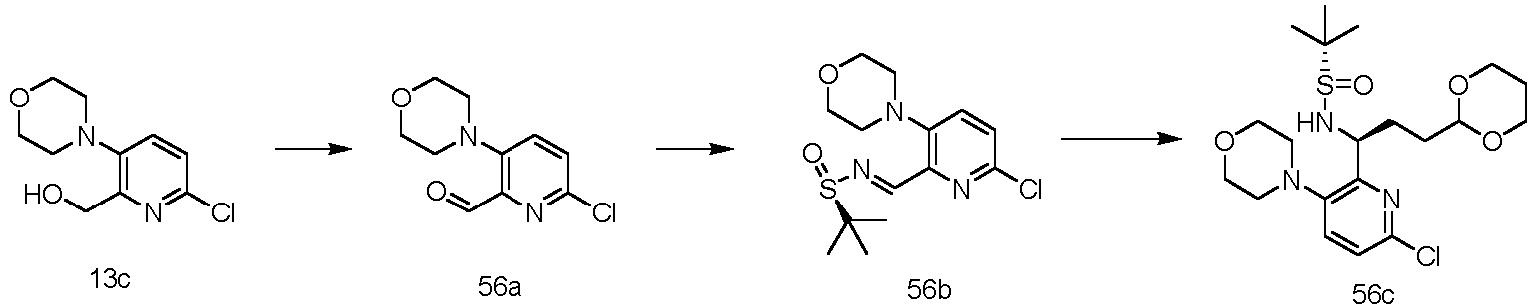

- To a reaction flask were added compound 13c (1.98 g), Dess-Martin periodinane (5.5 g), and dichloromethane (20 mL) in sequence. After the addition, the mixture was stirred at room temperature. After the reaction was completed, a saturated aqueous ammonium chloride solution was added to the reaction solution to quench the reaction, and the resulting mixture was extracted with ethyl acetate. The organic phase was dried, filtered, concentrated, and subjected to column chromatography (petroleum ether/ethyl acetate = 6/1) to give compound 56a (1.5 g).
- MS (ESI, [M+H]+) m/z: 227.6.
- To a reaction flask were added 56a (1.5 g), (R)-tert-butylsulfinylimine (0.98 g), tetraethyl titanate (5.8 g), and tetrahydrofuran (30 mL) in sequence. After the addition, the mixture was stirred at room temperature. After the reaction was completed, a saturated aqueous ammonium chloride solution was added to the reaction solution to quench the reaction, and the resulting mixture was extracted with ethyl acetate. The organic phase was dried, filtered, concentrated, and subjected to column chromatography (petroleum ether/ethyl acetate = 9/1) to give compound 56b (1.82 g).
- MS (ESI, [M+H]+) m/z: 330.1.
- To a reaction flask containing compound 56b (1.8 g) and tetrahydrofuran (30 mL) were slowly added dropwise (1,3-dioxane-2-ethyl)magnesium bromide (20 mL, 1 M) at -78 °C. After the addition, the mixture was stirred at room temperature. After the reaction was completed, a saturated aqueous ammonium chloride solution was added to the reaction solution to quench the reaction, and the resulting mixture was extracted with ethyl acetate. The organic phase was dried, filtered, concentrated, and subjected to column chromatography (petroleum ether/ethyl acetate = 4/1) to give compound 56c (1.2 g).
- MS (ESI, [M+H]+) m/z: 446.2.
- To a reaction flask were added compound 56c (1.2 g), trifluoroacetic acid (10 mL), and water (0.5 mL) in sequence. After the addition, the mixture was stirred at room temperature. After the reaction was completed, the reaction solution was adjusted to alkalinity (about pH 8) with a saturated aqueous sodium bicarbonate solution and extracted with dichloromethane. The organic phase was dried, filtered, and concentrated to give compound 56d (1.82 g), which was directly used in the next step.
- To a reaction flask containing compound 56d (1.82 g) and trifluoroacetic acid (10 mL) was slowly added dropwise triethylsilane (2.8 g) under an ice-water bath. After the addition, the mixture was stirred at room temperature. After the reaction was completed, the reaction solution was concentrated and subjected to column chromatography (dichloromethane/methanol = 100/1) to give compound 56e (0.8 g).
- MS (ESI, [M+H]+) m/z: 268.1.
- To a reaction flask were added compound 56e (1.2 g), di-tert-butyl dicarbonate (3.2 g), 4-dimethylaminopyridine (0.3 g), and dichloromethane (15 mL) in sequence. After the addition, the mixture was stirred at room temperature. After the reaction was completed, the reaction solution was extracted with ethyl acetate and water. The organic phase was dried, filtered, concentrated, and subjected to column chromatography (petroleum ether/ethyl acetate = 20:1) to give compound 56f (1.1 g).
- MS (ESI, [M+H]+) m/z: 368.1.
- To a reaction flask were added 7-amino-4-chloro-1-oxyisoindole-2-tert-butyl carbamate (1.2 g), tetrahydroxydiboron (0.95 g), chloro(2-dicyclohexylphosphino-2',4',6'-triisopropyl-1,1'-biphenyl)[2-(2'-amino-1,1'-biphenyl)]palladium (II) (0.35 g), 2-dicyclohexylphosphine-2',4',6'-triisopropylbiphenyl (0.45 g), potassium phosphate (2.2 g), ethylene glycol (0.8 g), and ethanol (20 mL) in sequence. After the addition, the mixture was stirred at 100 °C under nitrogen atmosphere. After the reaction was completed, the reaction solution was concentrated and subjected to column chromatography (dichloromethane/methanol = 15/1) to give compound 56g (0.8 g).
- MS (ESI, [M+H]+) m/z: 293.2.
- To a reaction flask were added compound 56g (0.8 g), intermediate 9A (0.9 g), chloro(2-dicyclohexylphosphino-2',4',6'-triisopropyl-1,1'-biphenyl)[2-(2'-amino-1,1'-biphenyl)]palladium (II) (0.24 g), potassium phosphate (0.8 g), 1,4-dioxane (15 mL), and water (0.5 mL) in sequence. After the addition, the mixture was stirred at 100 °C under nitrogen atmosphere. After the reaction was completed, the reaction solution was concentrated and subjected to column chromatography (petroleum ether/ethyl acetate = 6/1) to give compound 56h (0.8 g).
- MS (ESI, [M+H]+) m/z: 381.4.
- To a reaction flask were added compound 56f (0.4 g), compound 56h (0.5 g), cesium carbonate (2.1 g), tris(dibenzylideneacetone)dipalladium(0) (0.1 g), 4,5-bis-diphenylphosphino-9,9-dimethylxanthene (0.15 g), and 1,4-dioxane (20 mL) in sequence. After the addition, the mixture was stirred at 100 °C under nitrogen atmosphere. After the reaction was completed, the reaction solution was concentrated and subjected to column chromatography (petroleum ether/ethyl acetate = 4/1) to give compound 56i (0.24 g).
- MS (ESI, [M+H]+) m/z: 712.1.
- To a reaction flask were added compound 56i (0.2 g), a solution of hydrochloric acid in 1,4-dioxane (4 M, 1.5 mL), and dichloromethane (15 mL) in sequence. After the addition, the mixture was stirred at room temperature. After the reaction was completed, the reaction solution was adjusted to alkalinity (about pH 9) with a saturated aqueous sodium bicarbonate solution and extracted with dichloromethane. The organic phase was dried, filtered, concentrated, and subjected to column chromatography (dichloromethane/methanol = 15/1) to give compound I-56 (0.10 g).
- HRMS (ESI, [M+H]+) m/z: 512.2766.
- 1H NMR (500 MHz, CDCl3:CD3OD=10:1) δ 9.57(s, 1H), 7.87 (d, J= 8.1 Hz, 1H), 7.52 - 7.44 (m, 2H), 7.34 (d, J = 8.2 Hz, 1H), 6.78 (d, J = 8.6 Hz, 1H), 4.36 (s, 2H), 4.05 (s, 2H), 3.81 (q, J = 9.1, 7.4 Hz, 4H), 3.67 (s, 1H), 3.49 (s, 1H), 3.02 (s, 2H), 2.96 - 2.89 (m, 2H), 2.69 (t, J = 7.9 Hz, 2H), 2.63 - 2.55 (m, 1H), 2.20 - 2.13 (m, 1H), 2.10 (s, 1H), 1.95 (dt, J = 14.0, 4.6 Hz, 1H), 1.24 - 1.14 (m, 3H), 0.83 (s, 4H).
-

- To a reaction flask were added compound 56g (0.8 g), intermediate 7A (0.9 g), chloro(2-dicyclohexylphosphino-2',4',6'-triisopropyl-1,1'-biphenyl)[2-(2'-amino-1,1'-biphenyl)]palladium (II) (0.24 g), potassium phosphate (0.8 g), 1,4-dioxane (15 mL), and water (0.5 mL) in sequence. After the addition, the mixture was stirred at 100 °C under nitrogen atmosphere. After the reaction was completed, the reaction solution was concentrated and subjected to column chromatography (petroleum ether/ethyl acetate = 6/1) to give compound 57a (0.9 g).
- MS (ESI, [M+H]+) m/z: 405.4.
- To a reaction flask were added compound 57a (0.4 g), compound 56f (0.5 g), cesium carbonate (2.1 g), tris(dibenzylideneacetone)dipalladium(0) (0.1 g), 4,5-bis-diphenylphosphino-9,9-dimethylxanthene (0.1 g), and 1,4-dioxane (20 mL) in sequence. After the addition, the mixture was stirred at 100 °C under nitrogen atmosphere. After the reaction was completed, the reaction solution was concentrated and subjected to column chromatography (petroleum ether/ethyl acetate = 4/1) to give 57b (0.32 g).
- MS (ESI, [M+H]+) m/z: 736.1.
- To a reaction flask were added compound 57b (0.2 g), a solution of hydrochloric acid in 1,4-dioxane (4 M, 1.5 mL), and dichloromethane (15 mL) in sequence. After the addition, the mixture was stirred at room temperature. After the reaction was completed, the reaction solution was adjusted to alkalinity (about pH 9) with a saturated aqueous sodium bicarbonate solution and extracted with dichloromethane. The organic phase was dried, filtered, concentrated, and subjected to column chromatography (dichloromethane/methanol = 6/1) to give compound I-57 (0.11 g).
- HRMS (ESI, [M+H]+) m/z: 536.2407.
- 1H NMR (500 MHz, CD3Cl:CD3OD=10:1) δ 8.37 (d, J= 7.5 Hz, 1H), 8.03 (d, J = 8.0 Hz, 1H), 7.99 (s, 1H), 7.70 - 7.56 (m, 3H), 7.12 (d, J = 7.4 Hz, 1H), 7.04 (d, J = 8.2 Hz, 1H), 6.70 (s, 1H), 4.40 (s, 2H), 3.88 (q, J = 8.9, 7.8 Hz, 4H), 3.74 (s, 1H), 3.53 (s, 1H), 3.01 (t, J = 7.8 Hz, 2H), 2.78 (t, J = 8.3 Hz, 2H), 2.67 (s, 1H), 2.26 (s, 1H), 2.18 (s, 1H), 2.04 (s, 2H), 1.27 (d, J= 15.2 Hz, 2H).
-

- To a reaction flask were added intermediate 1A-1 (12 g), bis(pinacolato)diboron (13.8 g), [1,1'-bis(diphenylphosphino)ferrocene]palladium(II) dichloride dichloromethane complex (2.96 g), potassium acetate (10.67 g), and 1,4-dioxane (200 mL) in sequence. The mixture was heated and stirred at 90 °C. After the reaction was completed, the reaction solution was filtered, concentrated, and subjected to column chromatography (dichloromethane/methanol = 20/1) to give compound 58a (9.0 g).
- MS (ESI, [M+H]+) m/z: 379.5.
- To a reaction flask were added the compounds 4-methoxy-3-pyrrolin-2-one (10 g), potassium hydroxide (7.44 g), tetrabutylammonium hydrogen sulfate (1.50 g), potassium acetate (10.67 g), tetrahydrofuran (150 mL), and iodomethane (18.82 g) in sequence. The mixture was stirred at room temperature. After the reaction was completed, the reaction solution was filtered, concentrated, and subjected to column chromatography (dichloromethane/methanol = 40/1) to give compound 58b (9.1 g).
- MS (ESI, [M+H]+) m/z: 128.0.
- To a reaction flask were added compound 58b (9.1 g), dichloromethane (10 mL), and trifluoroacetic acid (35 g) in sequence. The mixture was stirred at room temperature. After the reaction was completed, the reaction solution was concentrated to give compound 58c (8.0 g).
- MS (ESI, [M+H]+) m/z: 114.0.
- To a reaction flask were added compound 58c (8.0 g), dichloromethane (100 mL),p-toluenesulfonyl chloride (13.48 g), and N,N-diisopropylethylamine (13.71 g) in sequence. The mixture was stirred at room temperature. After the reaction was completed, the reaction solution was extracted with water and dichloromethane. The organic phase was isolated, dried, filtered, concentrated, and subjected to column chromatography (petroleum ether/ethyl acetate = 4/1) to give compound 58d (5.2 g).
- MS (ESI, [M+H]+) m/z: 268.3.
- To a microwave reaction flask were added compound 58a (12.75 g), compound 58d (5.0 g), palladium acetate (0.42 g), tricyclohexylphosphine fluoroborate (1.38 g), tripotassium phosphate (11.92 g), water (38mL), and 1,4-dioxane (150 mL) in sequence. The mixture was reacted at 85 °C under microwave irradiation. After the reaction was completed, the reaction solution was filtered, concentrated, and subjected to column chromatography (dichloromethane/methanol = 20/1) to give compound 58e (5.0 g).
- MS (ESI, [M+H]+) m/z: 348.3.
- To a reaction flask were added compound 58e (5.0 g), methanol (70 mL), and 10 wt% palladium hydroxide on carbon (5.49 g) in sequence. The mixture was stirred at room temperature under hydrogen atmosphere. After the reaction was completed, the reaction solution was filtered, concentrated, and subjected to column chromatography (dichloromethane/methanol = 40/1) to give compound 58f (3.1 g).
- MS (ESI, [M+Na]+) m/z: 372.4.
- To a reaction flask were added compound 58f (3.1 g), tetrahydrofuran (30 mL), and a 2 M solution of lithium borohydride in tetrahydrofuran (8.87 mL) in sequence at 0 °C. After the addition, the mixture was stirred at 0 °C. After the reaction was completed, a saturated ammonium chloride solution was added to the reaction solution to quench the reaction, and the resulting mixture was extracted with dichloromethane. The organic phase was isolated, dried, filtered, concentrated, and subjected to column chromatography (dichloromethane/methanol = 20/1) to give compound 58g (1.5 g).
- MS (ESI, [M+H]+) m/z: 322.4.
- To a reaction flask were added compound 58g (1.5 g), dichloromethane (20.0 mL), N,N-diisopropylethylamine (1.63 mL), and methanesulfonic anhydride (2.44 g) in sequence at -10 °C. After the addition, the mixture was stirred at - 10 °C. After the reaction was completed, the reaction solution was added to a solution of dimethylamine in tetrahydrofuran (2 M, 45 mL). After the addition, the mixture was stirred at room temperature. After the reaction was completed, the reaction solution was concentrated and subjected to column chromatography (petroleum ether/ethyl acetate = 5/1) to give compound 58h (0.90 g).
- MS (ESI, [M+H]+) m/z: 349.4.
- To a reaction flask were added compound 58h (0.9 g), dichloromethane (5.0 mL), and a solution of hydrochloric acid in 1,4-dioxane (4 M, 11 mL) in sequence. After the addition, the mixture was stirred at room temperature. After the reaction was completed, the reaction solution was adjusted to alkalinity (about pH 10) with a saturated sodium bicarbonate solution and extracted with dichloromethane. The organic phase was isolated, dried, filtered, concentrated, and subjected to column chromatography (dichloromethane/methanol = 5/1) to give compound 58i (0.48 g).
- MS (ESI, [M+H]+) m/z: 249.4.
- To a reaction flask were added intermediate 3A-2 (0.804 g), compound 58i (0.48 g), 1,4-dioxane (3 mL), 4,5-bis-diphenylphosphino-9,9-dimethylxanthene (0.224 g), cesium carbonate (1.88 g), and tris(dibenzylideneadone) (0.266 g) in sequence. After the addition, the mixture was stirred at 110 °C. After the reaction was completed, the reaction solution was filtered, concentrated, and subjected to column chromatography (dichloromethane/methanol = 30/1) to give compound 58j (0.55 g).
- MS (ESI, [M+H]+) m/z: 514.4.
- To a reaction flask were added compound 58j (0.5 g), potassium acetate (0.29 g), bis(pinacolato)diboron (0.45 g), chloro(2-dicyclohexylphosphino-2',4',6'-triisopropyl-1,1'-biphenyl)[2-(2'-amino-1,1'-biphenyl)]palladium (II) (0.15 g), and 1,4-dioxane (8.0 mL) in sequence. After the addition, the mixture was purged with nitrogen and stirred at 90 °C. After the reaction was completed, the reaction solution was filtered, concentrated, and subjected to column chromatography (dichloromethane/methanol = 30/1) to give compound 58k (0.50 g).
- MS (ESI, [M+H]+) m/z: 606.6.
- To a reaction flask were added compound 58k (0.25 g), 2-dicyclohexylphosphine-2',4',6'-triisopropylbiphenyl (0.19 g), potassium phosphate (0.18 g), chloro(2-dicyclohexylphosphino-2',4',6'-triisopropyl-1,1'-biphenyl)[2-(2'-amino-1,1'-biphenyl)]palladium (II) (0.32 g), intermediate 8A (0.1 g), water (3.0 mL), and 1,4-dioxane (12.0 mL) in sequence. After the addition, the mixture was stirred at 85 °C. After the reaction was completed, the reaction solution was filtered, concentrated, and subjected to column chromatography (dichloromethane/methanol = 20/1) to give compound 58l (0.1 g).
- MS (ESI, [M+H]+) m/z: 637.4.
- To a reaction flask were added compound 58l (0.1 g), a solution of hydrochloric acid in 1,4-dioxane (4 M, 1.9 mL), and dichloromethane (2 mL) in sequence. After the addition, the mixture was reacted at room temperature. After the reaction was completed, the reaction solution was adjusted to alkalinity (about pH 9) with a saturated aqueous sodium bicarbonate solution and extracted with dichloromethane. The organic phase was isolated, dried, filtered, concentrated, and subjected to column chromatography (dichloromethane/methanol = 5/1) to give compound I-58 (0.03 g).
- HRMS (ESI, [M+H]+) m/z: 537.2354.
- 1H NMR (500 MHz, CDCl3) δ 9.93 (s, 1H), 8.99 (d, J = 8.6 Hz, 1H), 8.83 (s, 1H), 7.86 (s, 1H), 7.62 (t, J = 5.5 Hz, 2H), 7.54 (d, J = 8.5 Hz, 1H), 6.87 (d, J = 8.5 Hz, 1H), 6.54 - 6.44 (m, 2H), 4.30 (s, 2H), 4.11 - 4.04 (m, 1H), 3.78 (dd, J = 9.6, 8.6 Hz, 1H), 3.68 (d, J = 12.4 Hz, 1H), 3.56 (d, J = 12.4 Hz, 1H), 3.31 (dd, J = 9.9, 6.1 Hz, 1H), 2.92 (s, 3H), 2.84 (dd, J = 17.0, 9.4 Hz, 1H), 2.45 (dd, J = 17.0, 7.2 Hz, 1H), 2.27 (s, 6H).
-

- To a reaction flask were added compound 58k (0.25 g), 2-dicyclohexylphosphine-2',4',6'-triisopropylbiphenyl (0.19 g), potassium phosphate (0.18 g), chloro(2-dicyclohexylphosphino-2',4',6'-triisopropyl-1,1'-biphenyl)[2-(2'-amino-1,1'-biphenyl)]palladium (II) (0.32 g), intermediate 7A (0.1 g), water (3.0 mL), and 1,4-dioxane (12.0 mL) in sequence. After the addition, the mixture was stirred at 85 °C. After the reaction was completed, the reaction solution was filtered, concentrated, and subjected to column chromatography (dichloromethane/methanol = 20/1) to give compound 59a (0.1 g).
- MS (ESI, [M+H]+) m/z: 636.40.
- To a reaction flask were added compound 59a (0.1 g), a solution of hydrochloric acid in 1,4-dioxane (4 M, 3 mL), and dichloromethane (5 mL) in sequence. After the addition, the mixture was reacted at room temperature. After the reaction was completed, the reaction solution was adjusted to alkalinity (about pH 9) with a saturated aqueous sodium bicarbonate solution and extracted with dichloromethane. The organic phase was isolated, dried, filtered, concentrated, and subjected to column chromatography (dichloromethane/methanol = 5/1) to give compound I-59 (0.03 g).
- HRMS (ESI, [M+H]+) m/z: 536.2408.
- 1H NMR (500 MHz, CDCl3) δ 9.81 (s, 1H), 8.88 (d, J = 8.5 Hz, 1H), 8.39 (d, J = 7.6 Hz, 1H), 8.00 (s, 1H), 7.63 (dd, J = 6.8, 5.4 Hz, 2H), 7.49 (d, J = 8.5 Hz, 1H), 7.09 (d, J = 7.6 Hz, 1H), 6.84 (d, J = 8.5 Hz, 1H), 6.72 (d, J = 1.4 Hz, 1H), 6.36 (s, 1H), 4.38 (s, 2H), 4.12 - 4.01 (m, 1H), 3.76 (dd, J = 9.7, 8.6 Hz, 1H), 3.68 (d, J = 12.3 Hz, 1H), 3.56 (d, J = 12.3 Hz, 1H), 3.31 (dd, J = 9.9, 6.2 Hz, 1H), 2.92 (s, 3H), 2.83 (dd, J = 17.1, 9.4 Hz, 1H), 2.45 (dd, J = 17.0, 7.3 Hz, 1H), 2.27 (s, 6H).
-

- To a reaction flask were added intermediate 1A-1 (7.22 g), 1-methyl-2-oxo-1,2-dihydropyridine-4-boronic acid (5.00 g), sodium carbonate (4.62 g), [1,1'-bis(diphenylphosphino)ferrocene]palladium(II) dichloride dichloromethane complex (1.78 g), 1,4-dioxane (90 mL), and water (15 mL) in sequence under nitrogen atmosphere. After the addition, the mixture was stirred at 100 °C. After the reaction was completed, the reaction solution was concentrated and subjected to column chromatography (petroleum ether/ethyl acetate = 1/3) to give compound 60a (4.92 g).
- MS (ESI, [M+H]+) m/z: 360.45.
- To a reaction flask were added compound 60a (4.92 g), ammonium formate (3.45 g), methanol (25 mL), tetrahydrofuran (20 mL), 10wt% palladium hydroxide on carbon (5.41 g), and acetic acid (3.45 mL) in sequence. After the addition, the mixture was stirred at room temperature under hydrogen atmosphere. After the reaction was completed, the reaction solution was filtered and concentrated to give compound 60b (4.30 g).
- MS (ESI, [M+H]+) m/z: 364.26.
- To a reaction flask were added compound 60b (5.14 g), tetrahydrofuran (100 mL), and a solution of lithium borohydride in tetrahydrofuran (14.79 mL, 2 M) in sequence at 0 °C. After the addition, the mixture was stirred at room temperature. After the reaction was completed, the reaction was quenched with a saturated ammonium chloride solution, and the reaction solution was extracted with ethyl acetate. The organic phase was isolated, dried, filtered, and concentrated to give compound 60c (3.68 g).
- MS (ESI, [M+H]+) m/z: 336.38.
- To a reaction flask were added compound 60c (2.43 g), dichloromethane (30 mL), N,N-diisopropylethylamine (1.87 g), and methanesulfonic anhydride (2.52 g) in sequence at -10 °C. After the addition, the mixture was stirred at 0 °C.
- After the reaction was completed, the reaction solution was added dropwise to a solution of dimethylamine in tetrahydrofuran (2 M, 36.20 mL) at -10 °C. After the addition, the mixture was stirred at room temperature. After the reaction was completed, the reaction solution was concentrated and subjected to column chromatography (dichloromethane:methanol = 20:1) to give compound 60d (2.58 g).
- MS (ESI, [M+H]+) m/z: 363.50.
- To a reaction flask were added compound 60d (2.58 g), dichloromethane (40 mL), and a solution of hydrochloric acid in 1,4-dioxane (17.80 mL, 2 M) in sequence. After the addition, the mixture was stirred at room temperature. After the reaction was completed, the reaction solution was concentrated, adjusted to alkalinity (about pH 10) with a saturated sodium bicarbonate solution, and extracted with dichloromethane. The organic phase was isolated, dried, filtered, and concentrated to give compound 60e (1.85 g).
- MS (ESI, [M+H]+) m/z: 263.19.
- To a reaction flask were added compound 60e (1.17 g), intermediate 3A-2 (1.55 g), tris(dibenzylideneacetone) dipalladium(0) (0.41 g), 4,5-bis-diphenylphosphino-9,9-dimethylxanthene (0.31 g), cesium carbonate (4.37 g), and 1,4-dioxane (50 mL) under nitrogen atmosphere. The mixture was stirred at 110 °C. After the reaction was completed, the reaction solution was filtered, concentrated, and subjected to column chromatography (dichloromethane/methanol = 20/1) to give compound 60f (1.13 g).
- MS (ESI, [M+H]+) m/z: 528.29.
- To a microwave reaction flask were added compound 60f (1.13 g), bis(pinacolato)diboron (0.97 g), chloro(2-dicyclohexylphosphino-2',4',6'-triisopropyl-1,1 '-biphenyl)[2-(2'-amino-1,1 '-biphenyl)]palladium (II) (0.34 g), potassium acetate (0.63 g), and 1,4-dioxane (15 mL) in sequence. The mixture was purged with nitrogen and stirred at 90 °C under microwave irradiation. After the reaction was completed, the reaction solution was filtered, concentrated, and subjected to column chromatography (dichloromethane/methanol = 20/1) to give compound 60g (0.54 g).
- MS (ESI, [M+H]+) m/z: 620.72.
- To a microwave reaction flask were added compound 60g (284 mg), intermediate 7A (109 mg), chloro(2-dicyclohexylphosphino-2',4',6'-triisopropyl-1,1 '-biphenyl)[2-(2'-amino-1,1 '-biphenyl)]palladium (II) (36 mg), tripotassium phosphate (195 mg), 1,4-dioxane (7.0 mL), and water (1.0 mL) in sequence. The mixture was stirred at 85 °C under microwave irradiation under nitrogen atmosphere. After the reaction was completed, the reaction solution was concentrated and subjected to column chromatography (dichloromethane/methanol = 20/1) to give compound 60h (94 mg).
- MS (ESI, [M+H]+) m/z: 650.49.
- To a reaction flask were added compound 60h (94 mg), a solution of hydrochloric acid in 1,4-dioxane (4 M, 1.9 mL), and dichloromethane (2 mL) in sequence. After the addition, the mixture was reacted at room temperature. After the reaction was completed, the reaction solution was adjusted to alkalinity (about pH 9) with a saturated aqueous sodium bicarbonate solution and extracted with dichloromethane. The organic phase was dried, filtered, concentrated, and subjected to column chromatography (dichloromethane/methanol = 5/1) to give compound I-60 (38 mg).
- HRMS (ESI, [M+H]+) m/z: 550.2567.
- 1H NMR (500 MHz, CDCl3) δ 9.79 (s, 1H), 8.90 (d, J = 8.5 Hz, 1H), 8.39 (d, J = 7.5 Hz, 1H), 8.00 (s, 1H), 7.66 - 7.60 (m, 2H), 7.44 (d, J = 8.4 Hz, 1H), 7.10 (d, J = 7.5 Hz, 1H), 6.84 (d, J = 8.5 Hz, 1H), 6.73 (d, J = 2.0 Hz, 1H), 6.09 (s, 1H), 4.38 (s, 2H), 3.66 (d, J = 12.3 Hz, 1H), 3.60 - 3.53 (m, 2H), 3.49 - 3.43 (m, 1H), 3.38 - 3.34 (m, 1H), 3.02 (s, 3H), 2.75 - 2.70 (m, 1H), 2.40 (dd, J = 17.4, 11.6 Hz, 1H), 2.28 (s, 6H), 2.07 - 1.94 (m, 2H).
-

- To a microwave reaction flask were added compound 60g (300 mg), intermediate 8A (115 mg), chloro(2-dicyclohexylphosphino-2',4',6'-triisopropyl-1,1 '-biphenyl)[2-(2'-amino-1,1 '-biphenyl)]palladium (II) (38 mg), tripotassium phosphate (206 mg), 1,4-dioxane (7.0 mL), and water (1.0 mL) in sequence. The mixture was stirred at 85 °C under microwave irradiation under nitrogen atmosphere. After the reaction was completed, the reaction solution was concentrated and subjected to column chromatography (dichloromethane/methanol = 20/1) to give compound 61a (124 mg).
- MS (ESI, [M+H]+) m/z: 651.42.
- To a reaction flask were added compound 61a (124 mg), a solution of hydrochloric acid in 1,4-dioxane (4 M, 1.9 mL), and dichloromethane (2 mL) in sequence. After the addition, the mixture was reacted at room temperature. After the reaction was completed, the reaction solution was adjusted to alkalinity (about pH 9) with a saturated aqueous sodium bicarbonate solution and extracted with dichloromethane. The organic phase was dried, filtered, concentrated, and subjected to column chromatography (dichloromethane/methanol = 5/1) to give compound I-61 (60 mg).
- HRMS (ESI, [M+H]+) m/z: 551.2505.
- 1H NMR (500 MHz, CDCl3) δ 9.91 (s, 1H), 9.02 (d, J = 8.6 Hz, 1H), 8.84 (s, 1H), 7.87 (s, 1H), 7.65 - 7.58 (m, 2H), 7.48 (d, J = 8.5 Hz, 1H), 6.87 (d, J = 8.5 Hz, 1H), 6.46 (d, J = 2.4 Hz, 1H), 6.19 (s, 1H), 4.30 (s, 2H), 3.66 (d, J = 12.3 Hz, 1H), 3.61 - 3.53 (m, 2H), 3.50 - 3.44 (m, 1H), 3.39 - 3.35 (m, 1H), 3.02 (s, 3H), 2.76 - 2.71 (m, 1H), 2.43 - 2.38 (m, 1H), 2.28 (s, 6H), 2.08 - 1.93 (m, 2H).
-

- To a microwave tube were added compound 49f (140 mg), intermediate 8A (50 mg), chloro(2-dicyclohexylphosphino-2',4',6'-triisopropyl-1,1'-biphenyl)[2-(2'-atnino-1,1'-biphenyl)]palladium (II) (25 mg), 2-dicyclohexylphosphine-2',4',6'-triisopropylbiphenyl (15 mg), tripotassium phosphate (134 mg), 1,4-dioxane (3 mL), and water (0.5 mL) in sequence. After the addition, the mixture was stirred at 85 °C under microwave irradiation under nitrogen atmosphere. After the reaction was completed, the reaction solution was filtered, concentrated, and subjected to column chromatography (dichloromethane/methanol = 20/1) to give compound 62a (138 mg).
- MS (ESI, [M+H]+) m/z: 638.3.
- To a reaction flask were added compound 62a (138 mg), a solution of hydrochloric acid in 1,4-dioxane (4 M, 1.9 mL), and dichloromethane (2 mL) in sequence. After the addition, the mixture was reacted at room temperature. After the reaction was completed, the reaction solution was adjusted to alkalinity (about pH 9) with a saturated aqueous sodium bicarbonate solution and extracted with dichloromethane. The organic phase was dried, filtered, concentrated, and subjected to column chromatography (dichloromethane/methanol = 5/1) to give compound I-62 (32 mg).
- HRMS (ESI, [M+H]+) m/z: 538.2311.
- 1H NMR (500 MHz, CDCl3) δ 8.99 (dd, J = 8.5, 1.7 Hz, 1H), 8.82 (d, J = 1.5 Hz, 1H), 7.87 (d, J = 1.6 Hz, 1H), 7.69 - 7.61 (m, 2H), 7.48 (dd, J = 8.6, 1.6 Hz, 1H), 7.30 (d, J = 1.6 Hz, 1H), 6.90 (dd, J = 8.5, 1.6 Hz, 1H), 6.49 (t, J = 2.0 Hz, 1H), 4.29 (s, 2H), 3.78 (ddd, J = 8.3, 6.8, 1.5 Hz, 2H), 3.71 (s, 2H), 3.57 - 3.49 (m, 2H), 2.91 (d, J= 1.6 Hz, 3H), 2.36 (s, 6H).
-

- To a reaction flask were added intermediate 1A-11 (2.9 g), compound 49d (1.9 g), 1,4-dioxane (50.0 mL), 4,5-bis-diphenylphosphino-9,9-dimethylxanthene (1.3 g), cesium carbonate (3.1 g), and tris(dibenzylideneadone) (0.7 g) in sequence. After the addition, the mixture was stirred at 110 °C. After the reaction was completed, the reaction solution was filtered, concentrated, and subjected to column chromatography (dichloromethane/methanol = 30/1) to give compound 63a (3.1 g).
- MS (ESI, [M+H]+) m/z: 516.0.
- To a microwave tube were added compound 63a (250 mg), compound 46a (125 mg), chloro(2-dicyclohexylphosphino-2',4',6'-triisopropyl-1,1'-biphenyl)[2-(2'-atnino-1,1'-biphenyl)]palladium (II) (31 mg), 2-dicyclohexylphosphine-2',4',6'-triisopropylbiphenyl (52 mg), tripotassium phosphate (280 mg), 1,4-dioxane (6 mL), and water (1 mL) in sequence. After the addition, the mixture was stirred at 85 °C under microwave irradiation under nitrogen atmosphere. After the reaction was completed, the reaction solution was filtered, concentrated, and subjected to column chromatography (dichloromethane/methanol = 20/1) to give compound 63b (138 mg).
- MS (ESI, [M+H]+) m/z: 638.3.
- To a reaction flask were added compound 63b (138 mg), a solution of hydrochloric acid in 1,4-dioxane (4 M, 2.1 mL), and dichloromethane (2 mL) in sequence. After the addition, the mixture was reacted at room temperature. After the reaction was completed, the reaction solution was adjusted to alkalinity (about pH 9) with a saturated aqueous sodium bicarbonate solution and extracted with dichloromethane. The organic phase was dried, filtered, concentrated, and subjected to column chromatography (dichloromethane/methanol = 5/1) to give compound I-63 (48 mg).
- HRMS (ESI, [M+H]+) m/z: 538.2313.
- 1H NMR (500 MHz, CDCl3) δ 10.15 (s, 1H), 8.32 (d, J = 7.5 Hz, 1H), 8.07 (s, 1H), 7.72 - 7.62 (m, 2H), 7.45 (d, J = 8.6 Hz, 1H), 7.30 (s, 1H), 7.11 (d, J = 7.5 Hz, 1H), 6.84 (d, J = 8.6 Hz, 1H), 4.59 (s, 2H), 3.79 (t, J = 7.8 Hz, 2H), 3.73 (s, 2H), 3.53 (t, J = 7.8 Hz, 2H), 2.92 (s, 3H), 2.45 (s, 6H).
-


- To a reaction flask were added the compounds methyl 3-bromo-6-((tert-butoxycarbonyl)amino)picolinate (10.0 g), 1,4-dioxane (150.0 mL), water (30.0 mL), 4,5-bis-diphenylphosphino-9,9-dimethylxanthene (3.5 g), potassium carbonate (12.5 g), and furan-2-boronic acid pinacol ester (7.0 g) in sequence. After the addition, the mixture was purged with nitrogen and stirred at 90 °C. After the reaction was completed, the reaction solution was filtered, concentrated, and subjected to column chromatography (dichloromethane/methanol = 30/1) to give compound 64a (8.2 g).
- MS (ESI, [M+H]+) m/z: 319.2.
- To a reaction flask were added compound 64a (8.2 g), tetrahydrofuran (50.0 mL), methanol (50.0 mL), 10 wt% palladium hydroxide on carbon (8.6 g), acetic acid (5.5 mL), and ammonium formate (5.0 g) in sequence. After the addition, the mixture was purged with hydrogen and stirred at room temperature. After the reaction was completed, the reaction solution was filtered and concentrated. The residue was adjusted to alkalinity (about pH 8) with a saturated aqueous sodium bicarbonate solution and extracted with dichloromethane. The organic phase was dried, filtered, and concentrated to give compound 64b (7.0 g).
- MS (ESI, [M+H]+) m/z: 323.2.
- To a reaction flask were added compound 64b (6.0 g), tetrahydrofuran (50.0 mL), and lithium borohydride (1.0 g) in sequence at 0 °C. After the addition, the mixture was purged with nitrogen and stirred at 0 °C. After the reaction was completed, water was added to the reaction solution to quench the reaction, and the resulting mixture was extracted with dichloromethane. The organic phase was isolated, dried, filtered, concentrated, and subjected to column chromatography (petroleum ether/ethyl acetate = 5/1) to give compound 64c (5.0 g).
- MS (ESI, [M+H]+) m/z: 295.2.
- To a reaction flask were added compound 64c (5.0 g), dichloromethane (30.0 mL), N,N-diisopropylethylamine (2.97 mL), and methanesulfonic anhydride (5.2 mL) in sequence at 0 °C. After the addition, the mixture was stirred at 0 °C. After the reaction was completed, the reaction solution was slowly added to a solution of dimethylamine in tetrahydrofuran (2 M, 15 mL) at 0 °C. After the addition, the mixture was stirred at 0 °C. After the reaction was completed, the reaction solution was concentrated and subjected to column chromatography (petroleum ether/ethyl acetate = 5/1) to give compound 64d (4.9 g).
- MS (ESI, [M+H]+) m/z: 322.2.
- To a reaction flask were added compound 64d (4.9 g), dichloromethane (30.0 mL), and a solution of hydrochloric acid in 1,4-dioxane (4 M, 38 mL) in sequence. After the addition, the mixture was stirred at room temperature. After the reaction was completed, the reaction solution was adjusted to alkalinity (about pH 10) with a saturated sodium bicarbonate solution and extracted with dichloromethane. The organic phase was isolated, dried, filtered, concentrated, and subjected to column chromatography (dichloromethane/methanol = 5/1) to give compound 64e (1.4 g).
- MS (ESI, [M+H]+) m/z: 222.4.
- To a reaction flask were added intermediate 3A-2 (1.2 g), compound 64e (0.7 g), 1,4-dioxane (30.0 mL), 4,5-bis-diphenylphosphino-9,9-dimethylxanthene (0.4 g), cesium carbonate (2.9 g), and tris(dibenzylideneadone) (0.5 g) in sequence. After the addition, the mixture was purged with nitrogen and stirred at 110 °C. After the reaction was completed, the reaction solution was filtered, concentrated, and subjected to column chromatography (dichloromethane/methanol = 30/1) to give compound 64f (1.3 g).
- MS (ESI, [M+H]+) m/z: 487.2.
- To a reaction flask were added compound 64f (1.3 g), potassium acetate (0.7 g), bis(pinacolato)diboron (0.8 g), chloro(2-dicyclohexylphosphino-2',4',6'-triisopropyl-1,1'-biphenyl)[2-(2'-amino-1,1'-biphenyl)]palladium (II) (0.2 g), and 1,4-dioxane (50.0 mL) in sequence. After the addition, the mixture was purged with nitrogen and stirred at 90 °C. After the reaction was completed, the reaction solution was filtered, concentrated, and subjected to column chromatography (dichloromethane/methanol = 20/1) to give compound 64g (435 mg).
- MS (ESI, [M+H]+) m/z: 579.6.
- To a reaction flask were added compound 64g (215 mg), 2-dicyclohexylphosphine-2',4',6'-triisopropylbiphenyl (43 mg), potassium phosphate (314 mg), chloro(2-dicyclohexylphosphino-2',4',6'-triisopropyl-1,1'-biphenyl)[2-(2'-amino-1,1'-biphenyl)]palladium (II) (72 mg), intermediate 7A (105 mg), water (3.0 mL), and 1,4-dioxane (12.0 mL) in sequence. After the addition, the mixture was stirred at 85 °C. After the reaction was completed, the reaction solution was filtered, concentrated, and subjected to column chromatography (dichloromethane/methanol = 10/1) to give compound 64h (132 mg).
- MS (ESI, [M+H]+) m/z: 609.1.
- To a reaction flask were added compound 64h (132 mg), a solution of hydrochloric acid in 1,4-dioxane (4 M, 2.1 mL), and dichloromethane (3 mL) in sequence. After the addition, the mixture was reacted at room temperature. After the reaction was completed, the reaction solution was adjusted to alkalinity (about pH 9) with a saturated aqueous sodium bicarbonate solution and extracted with dichloromethane. The organic phase was dried, filtered, concentrated, and subjected to column chromatography (dichloromethane/methanol = 5/1) to give compound I-64 (18 mg).
- HRMS (ESI, [M+H]+) m/z: 509.2311.
- 1H NMR (500 MHz, CDCl3) δ 8.85 (dd, J = 8.4, 3.2 Hz, 1H), 8.39 (dd, J = 7.4, 2.8 Hz, 1H), 8.00 (d, J = 2.6 Hz, 1H), 7.71 (dd, J = 8.2, 2.8 Hz, 1H), 7.67 - 7.61 (m, 2H), 7.32 (d, J = 2.5 Hz, 1H), 7.12 (dd, J = 7.4, 2.8 Hz, 1H), 6.87 (d, J = 8.5 Hz, 1H), 6.74 (d, J = 2.3 Hz, 1H), 5.27 - 5.18 (m, 1H), 4.37 (s, 2H), 4.14 (td, J = 7.8, 7.1, 5.4 Hz, 1H), 3.94 (td, J = 7.8, 4.8 Hz, 1H), 3.73 (d, J = 12.6 Hz, 1H), 3.62 - 3.53 (m, 1H), 2.45 - 2.37 (m, 1H), 2.34 (d, J = 2.7 Hz, 6H), 2.07 (qd, J = 6.8, 3.7 Hz, 2H), 1.79 - 1.65 (m, 1H).
-

- To a microwave tube were added compound 64g (153 mg), intermediate 8A (60 mg), chloro(2-dicyclohexylphosphino-2',4',6'-triisopropyl-1,1'-biphenyl)[2-(2'-atnino-1,1'-biphenyl)]palladium (II) (29 mg), 2-dicyclohexylphosphine-2',4',6'-triisopropylbiphenyl (19 mg), tripotassium phosphate (161 mg), 1,4-dioxane (6 mL), and water (1 mL) in sequence. After the addition, the mixture was stirred at 85 °C under microwave irradiation under nitrogen atmosphere. After the reaction was completed, the reaction solution was filtered, concentrated, and subjected to column chromatography (dichloromethane/methanol = 20/1) to give compound 65a (200 mg).
- MS (ESI, [M+H]+) m/z: 610.1.
- To a reaction flask were added compound 65a (200 mg), a solution of hydrochloric acid in 1,4-dioxane (4 M, 1.9 mL), and dichloromethane (2 mL) in sequence. After the addition, the mixture was reacted at room temperature. After the reaction was completed, the reaction solution was adjusted to alkalinity (about pH 9) with a saturated aqueous sodium bicarbonate solution and extracted with dichloromethane. The organic phase was dried, filtered, concentrated, and subjected to column chromatography (dichloromethane/methanol = 5/1) to give compound I-65 (9 mg).
- HRMS (ESI, [M+H]+) m/z: 510.2246.
- 1H NMR (500 MHz, CDCl3) δ 8.99 (dd, J = 8.5, 1.7 Hz, 1H), 8.82 (d, J = 1.5 Hz, 1H), 7.87 (d, J = 1.6 Hz, 1H), 7.69 - 7.61 (m, 2H), 7.48 (dd, J = 8.6, 1.6 Hz, 1H), 7.30 (d, J = 1.6 Hz, 1H), 6.90 (dd, J = 8.5, 1.6 Hz, 1H), 6.49 (t, J = 2.0 Hz, 1H), 4.29 (s, 2H), 3.78 (ddd, J = 8.3, 6.8, 1.5 Hz, 2H), 3.71 (s, 2H), 3.57 - 3.49 (m, 2H), 2.91 (d, J = 1.6 Hz, 3H), 2.36 (s, 6H).
-

- To a reaction flask were added compound 60g (300 mg), intermediate 6A (115 mg), chloro(2-dicyclohexylphosphino-2',4',6'-triisopropyl-1,1 '-biphenyl)[2-(2'-amino-1,1 '-biphenyl)]palladium (II) (38 mg), tripotassium phosphate (206 mg), 1,4-dioxane (7.0 mL), and water (1.0 mL) in sequence. The mixture was purged with nitrogen and stirred at 85 °C under microwave irradiation. After the reaction was completed, the reaction solution was concentrated and purified by silica gel column chromatography (dichloromethane/methanol = 20/1) to give compound 66a (127 mg).
- MS (ESI, [M+H]+) m/z: 650.43.
- To a reaction flask were added compound 66a (127 mg), dichloromethane (2 mL), and a solution of hydrochloric acid in 1,4-dioxane (0.4 mL, 4 M) in sequence. After the addition, the mixture was stirred at room temperature. After the reaction was completed, the reaction solution was adjusted to alkalinity (about pH 10) with a saturated sodium bicarbonate solution and extracted with dichloromethane. The organic phase was dried, filtered, concentrated, and purified by silica gel column chromatography (dichloromethane/methanol = 10/1) to give compound I-66 (58 mg).
- HRMS (ESI, [M+H]+) m/z: 550.2546.
- 1H NMR (500 MHz, CDCl3) δ 9.87 (s, 1H), 8.97 (d, J = 8.5 Hz, 1H), 7.66 (s, 1H), 7.60 (d, J = 8.6 Hz, 1H), 7.58 - 7.51 (m, 3H), 7.47 (d, J = 8.5 Hz, 1H), 6.87 (d, J = 8.5 Hz, 1H), 6.29 (d, J = 2.2 Hz, 1H), 6.11 (s, 1H), 4.24 (s, 2H), 3.65 (d, J = 12.3 Hz, 1H), 3.61 - 3.52 (m, 2H), 3.47 (td, J = 11.7, 4.8 Hz, 1H), 3.38 - 3.34 (m, 1H), 3.02 (s, 3H), 2.76 - 2.71 (m, 1H), 2.40 (dd, J = 17.3, 11.7 Hz, 1H), 2.28 (s, 6H), 2.07 - 1.94 (m, 2H).
-

- To a reaction flask were added compound 60g (250 mg), intermediate 9A (86 mg), chloro(2-dicyclohexylphosphino-2',4',6'-triisopropyl-1,1'-biphenyl)[2-(2'-amino-1,1'-biphenyl)]palladium (II) (32 mg), tripotassium phosphate (171 mg), 1,4-dioxane (7.0 mL), and water (1.0 mL) in sequence. The mixture was stirred at 85 °C under microwave irradiation under nitrogen atmosphere. After the reaction was completed, the reaction solution was concentrated and purified by silica gel column chromatography (dichloromethane/methanol = 20/1) to give compound 67a (72 mg). MS (ESI, [M+H]+) m/z: 626.51.
- To a reaction flask were added compound 67a (72 mg), methanesulfonic acid (0.10 mL), and dichloromethane (2 mL) in sequence. After the addition, the mixture was reacted at room temperature. After the reaction was completed, the reaction solution was adjusted to alkalinity (about pH 9) with a saturated aqueous sodium bicarbonate solution and extracted with dichloromethane. The organic phase was dried, filtered, concentrated, and purified by silica gel column chromatography (dichloromethane/methanol = 5/1) to give compound I-67 (30 mg).
- HRMS (ESI, [M+H]+) m/z: 526.2932.
- 1H NMR (500 MHz, CDCl3) δ 9.76 (s, 1H), 8.77 (d, J = 8.6 Hz, 1H), 7.64 (s, 1H), 7.43 (dd, J = 19.1, 8.5 Hz, 2H), 6.80 (d, J = 8.4 Hz, 1H), 6.42 (s, 1H), 4.53 (s, 2H), 4.14 (s, 2H), 3.63 (d, J = 12.2 Hz, 1H), 3.60 - 3.50 (m, 2H), 3.48 - 3.42 (m, 1H), 3.37 - 3.33 (m, 1H), 3.10 (s, 2H), 3.01 (s, 3H), 2.74 -2.69 (m, 1H), 2.39 (dd, J = 17.4, 11.6 Hz, 1H), 2.27 (s, 6H), 2.05 - 1.91 (m, 2H), 0.94 - 0.84 (m, 4H).
-

- Compound I-61 (40 mg) was subjected to chiral preparation using YMC high-pressure preparative chromatograph on CHIRALART Amylose-SA (specification: 30 × 250 mm, 5 µm) column (mobile phase A: 0.1% ethanol:dichloromethane (1:1), mobile phase B: n-hexane, isocratic elution at a flow rate of 40 mL/min with 60% mobile phase B over 20 min) to give compound I-68 (prepeak: 18 mg) and compound I-69 (postpeak: 18 mg) in sequence.
- I-68: HRMS (ESI, [M+H]+) m/z: 551.2515.
- I-69: HRMS (ESI, [M+H]+) m/z: 551.2518.
-

- To a reaction flask were added intermediate 1A-4 (5.0 g), cuprous oxide (0.6 mL), and an aqueous methylamine solution (7.4 g) in sequence. After the addition, the mixture was purged with nitrogen and stirred at 80 °C. After the reaction was completed, the reaction solution was filtered, concentrated, and purified by silica gel column chromatography (dichloromethane/methanol = 30/1) to give compound 70a (4.0 g).
- MS (ESI, [M+H]+) m/z: 281.0.
- To a reaction flask were added compound 70a (4.0 g), dichloromethane (50.0 mL), triethylamine (19.8 mL), and acetic anhydride (2.2 g) in sequence. After the addition, the mixture was stirred at room temperature. After the reaction was completed, the reaction solution was extracted with a saturated aqueous ammonium chloride solution and dichloromethane. The organic phase was dried, filtered, concentrated, and purified by silica gel column chromatography (dichloromethane/methanol = 20/1) to give compound 70b (2.5 g).
- MS (ESI, [M+H]+) m/z: 323.1.
- To a reaction flask were added compound 70b (2.5 g), dichloromethane (10.0 mL), and a solution of hydrochloric acid in 1,4-dioxane (4 M, 19.0 mL) in sequence. After the addition, the mixture was stirred at room temperature. After the reaction was completed, the reaction solution was adjusted to alkalinity (about pH 10) with a saturated sodium bicarbonate solution and extracted with dichloromethane. The organic phase was dried, filtered, and concentrated to give compound 70c (1.2 g).
- MS (ESI, [M+H]+) m/z: 223.4.
- To a reaction flask were added intermediate 3A-2 (1.3 g), compound 70c (0.7 g), 1,4-dioxane (50.0 mL), 4,5-bis-diphenylphosphino-9,9-dimethylxanthene (0.4 g), cesium carbonate (2.9 g), and tris(dibenzylideneadone) (0.5 g) in sequence. After the addition, the mixture was purged with nitrogen and stirred at 110 °C. After the reaction was completed, the reaction solution was filtered, concentrated, and purified by silica gel column chromatography (dichloromethane/methanol = 30/1) to give compound 70d (0.7 g).
- MS (ESI, [M+H]+) m/z: 488.3.
- To a reaction flask were added compound 70d (0.7 g), potassium acetate (0.4 g), bis(pinacolato)diboron (0.5 g), chloro(2-dicyclohexylphosphino-2',4',6'-triisopropyl-1,1'-biphenyl)[2-(2'-amino-1,1'-biphenyl)]palladium (II) (0.2 g), and 1,4-dioxane (30.0 mL) in sequence. After the addition, the mixture was purged with nitrogen and stirred at 90 °C. After the reaction was completed, the reaction solution was filtered, concentrated, and purified by silica gel column chromatography (petroleum ether/ethyl acetate = 5/1) to give compound 70e (0.3 g).
- MS (ESI, [M+H]+) m/z: 580.2.
- To a reaction flask were added compound 70e (0.2 g), 2-dicyclohexylphosphine-2',4',6'-triisopropylbiphenyl (0.03 g), potassium phosphate (0.2 g), chloro(2-dicyclohexylphosphino-2',4',6'-trilsopropyl-1,1'-biphenyl)[2-(2'-amino-1,1'-biphenyl)]palladium (II) (0.1 g), intermediate 7A (0.07 g), water (3.0 mL), and 1,4-dioxane (12.0 mL) in sequence. After the addition, the mixture was stirred at 85 °C. After the reaction was completed, the reaction solution was filtered, concentrated, and purified by silica gel column chromatography (petroleum ether/ethyl acetate = 5/1) to give compound 70f (0.2 g).
- MS (ESI, [M+H]+) m/z: 610.3.
- To a reaction flask were added compound 70f (0.2 g), methanesulfonic acid (0.3 mL), and dichloromethane (10 mL) in sequence. After the addition, the mixture was reacted at room temperature. After the reaction was completed, the reaction solution was adjusted to alkalinity (about pH 9) with a saturated aqueous sodium bicarbonate solution and extracted with dichloromethane. The organic phase was dried, filtered, concentrated, and purified by silica gel column chromatography (dichloromethane/methanol = 5/1) to give compound I-70 (0.04 g).
- HRMS (ESI, [M+H]+) m/z: 510.2255.
- 1HNMR (500 MHz, CDCl3) δ 10.02 (s, 1H), 8.94 (d, J = 8.5 Hz, 1H), 8.40 (d, J = 7.5 Hz, 1H), 8.01 (s, 1H), 7.67 (d, J = 8.5 Hz, 1H), 7.63 (d, J = 2.1 Hz, 1H), 7.35 (d, J = 8.5 Hz, 1H), 7.11 (dd, J = 7.6, 0.9 Hz, 1H), 6.87 (d, J = 8.5 Hz, 1H), 6.72 (dd, J = 2.1, 0.9 Hz, 1H), 6.37 (s, 1H), 4.41 (s, 2H), 3.49 (d, J = 2.3 Hz, 2H), 3.24 (s, 3H), 2.37 (s, 6H), 1.86 (s, 3H).
-

- Compound I-67 (43 mg) was subjected to chiral resolution and preparation. Compound I-67 (43 mg) was subjected to chiral preparation using YMC high-pressure preparative chromatograph on CHIRALART Amylose-SA (specification: 30 × 250 mm, 5 µm) column (mobile phase A: 0.1% ethanol:dichloromethane (1:1), mobile phase B: n-hexane, isocratic elution at a flow rate of 40 mL/min with 60% mobile phase B over 20 min) to give compound I-71a (prepeak: 20 mg) and compound I-71b (postpeak: 22 mg) in sequence.
- I-71a: HRMS (ESI, [M+H]+) m/z: 526.2935.
- I-71b: HRMS (ESI, [M+H]+) m/z: 526.2926.
-

- Compound I-66 (46 mg) was subjected to chiral resolution and preparation to give compound I-72 (23 mg) and compound I-73 (21 mg) in sequence. Compound I-66 (46 mg) was subjected to chiral preparation using YMC high-pressure preparative chromatograph on CHIRALART Amylose-SA (specification: 30 × 250 mm, 5 µm) column (mobile phase A: 0.1% ethanol:dichloromethane (1:1), mobile phase B: n-hexane, isocratic elution at a flow rate of 40 mL/min with 60% mobile phase B over 20 min) to give compound I-72 (prepeak: 23 mg) and compound I-73 (postpeak: 21 mg) in sequence.
- I-72: HRMS (ESI, [M+H]+) m/z: 550.2558.
- I-73: HRMS (ESI, [M+H]+) m/z: 550.2547.
-

- To a microwave reaction flask were added compound 60g (300 mg), compound 39e (150 mg), chloro(2-dicyclohexylphosphino-2',4',6'-triisopropyl-1,1 '-biphenyl)[2-(2'-amino-1,1 '-biphenyl)]palladium (II) (38 mg), tripotassium phosphate (308 mg), 1,4-dioxane (10.0 mL), and water (1.0 mL) in sequence. The mixture was stirred at 110 °C under nitrogen atmosphere. After the reaction was completed, the reaction solution was concentrated and purified by silica gel column chromatography (dichloromethane/methanol = 20/1) to give compound 74a (102 mg). MS (ESI, [M+H]+) m/z: 652.43.
- To a reaction flask were added compound 74a (0.1 g), a solution of hydrochloric acid in 1,4-dioxane (4 M, 1 mL), and dichloromethane (10 mL) in sequence. After the addition, the mixture was stirred at room temperature. After the reaction was completed, the reaction solution was adjusted to alkalinity (about pH 9) with a saturated aqueous sodium bicarbonate solution and extracted with dichloromethane. The organic phase was dried, filtered, concentrated, and purified by silica gel column chromatography (dichloromethane/methanol = 6/1) to give compound I-74 (0.046 g).
- HRMS (ESI, [M+H]+) m/z: 552.2725.
- 1H NMR (500 MHz, CDCl3:CD3OD=10:1) δ 8.80 (d, J = 8.6 Hz, 1H), 8.29 (s, 1H), 7.88 (s, 1H), 7.58 (d, J = 8.5 Hz, 1H), 7.42 (d, J = 8.5 Hz, 1H), 6.86 - 6.79 (m, 2H), 4.69 (t, J = 8.1 Hz, 2H), 4.42 (s, 2H), 3.68 (d, J = 12.3 Hz, 1H), 3.58 - 3.44 (m, 2H), 3.40 - 3.33 (m, 1H), 3.31 (td, J = 8.2, 1.7 Hz, 2H), 3.02 (s, 3H), 2.70 (dd, J = 17.5, 11.6 Hz, 1H), 2.39 (dd, J = 17.5, 11.6 Hz, 1H), 2.32 (s, 6H), 2.08 - 1.95 (m, 4H).
-

- To a reaction flask were added 1-methylpiperazin-2-one (7.76 g), intermediate 1A-1 (15 g), tris(dibenzylideneacetone)dipalladium(0) (4.15 g), 4,5-bis-diphenylphosphino-9,9-dimethylxanthene (5.24 g), cesium carbonate (44.3 g), and 1,4-dioxane (300 mL) in sequence. After the addition, the mixture was heated and stirred at 110 °C under nitrogen atmosphere. After the reaction was completed, the reaction solution was filtered, concentrated, and purified by silica gel column chromatography (dichloromethane/methanol = 20/1) to give compound 75a (4.0 g).
- MS (ESI, [M+H]+) m/z: 365.2.
- To a reaction flask were added compound 75a (4.0 g), tetrahydrofuran (100 mL), and a solution of lithium borohydride in tetrahydrofuran (11 mL, 2 M) in sequence at 0 °C. After the addition, the mixture was stirred at room temperature. After the reaction was completed, the reaction was quenched with a saturated ammonium chloride solution, and the reaction solution was extracted with ethyl acetate. The organic phase was isolated, dried, filtered, and concentrated to give compound 75b (1.71 g).
- MS (ESI, [M+H]+) m/z: 337.2.
- To a reaction flask were added compound 75b (1.71 g), dichloromethane (30 mL), N,N-diisopropylethylamine (1.26 g), and methanesulfonic anhydride (2.20 g) in sequence at -10 °C. After the addition, the mixture was stirred at 0 °C. After the reaction was completed, the reaction solution was added dropwise to a solution of dimethylamine in tetrahydrofuran (2 M, 51.50 mL) at -10 °C. After the addition, the mixture was stirred at room temperature. After the reaction was completed, the reaction solution was concentrated and purified by silica gel column chromatography (dichloromethane:methanol = 20:1) to give compound 75c (1.30 g).
- MS (ESI, [M+H]+) m/z: 364.29.
- To a reaction flask were added compound 75c (1.00 g), dichloromethane (40 mL), and a solution of hydrochloric acid in 1,4-dioxane (10.32 mL, 4 M) in sequence. After the addition, the mixture was stirred at room temperature. After the reaction was completed, the reaction solution was concentrated, adjusted to alkalinity (about pH 10) with a saturated sodium bicarbonate solution, and extracted with dichloromethane. The organic phase was isolated, dried, filtered, and concentrated to give compound 70d (0.70 g).
- MS (ESI, [M+H]+) m/z: 264.16.
- To a reaction flask were added compound 75d (0.52 g), intermediate 3A-2 (0.68 g), tris(dibenzylideneacetone)dipalladium(0) (0.18 g), 4,5-bis-diphenylphosphino-9,9-dimethylxanthene (0.14 g), cesium carbonate (1.92 g) and 1,4-dioxane (50 mL) in sequence. The mixture was purged with nitrogen and was stirred at 110 °C. After the reaction was completed, the reaction solution was filtered, concentrated, and purified by silica gel column chromatography (dichloromethane/methanol = 20/1) to give compound 75e (0.90 g).
- MS (ESI, [M+H]+) m/z: 529.28.
- To a microwave reaction flask were added compound 75e (0.90 g), bis(pinacolato)diboron (0.78 g), chloro(2-dicyclohexylphosphino-2',4',6'-triisopropyl-1,1 '-biphenyl)[2-(2'-amino-1,1 '-biphenyl)]palladium (II) (0.27 g), potassium acetate (0.50 g), and 1,4-dioxane (15 mL) in sequence. The mixture was purged with nitrogen and stirred at 90 °C under microwave irradiation. After the reaction was completed, the reaction solution was filtered, concentrated, and purified by silica gel column chromatography (dichloromethane/methanol = 20/1) to give compound 75f (0.75 g).
- MS (ESI, [M+H]+) m/z: 621.42.
- To a microwave reaction flask were added compound 75f (300 mg), intermediate 9A (103 mg), chloro(2-dicyclohexylphosphino-2',4',6'-triisopropyl-1,1'-biphenyl)[2-(2'-atnino-1,1'-biphenyl)]palladium (II) (38 mg), 2-dicyclohexylphosphine-2',4',6'-triisopropylbiphenyl (23 mg), tripotassium phosphate (205 mg), 1,4-dioxane (7.0 mL), and water (1.0 mL) in sequence. The mixture was stirred at 85 °C under microwave irradiation under nitrogen atmosphere. After the reaction was completed, the reaction solution was concentrated and purified by silica gel column chromatography (dichloromethane/methanol = 20/1) to give compound 75g (94 mg).
- MS (ESI, [M+H]+) m/z: 627.48.
- To a reaction flask were added compound 75g (94 mg), a solution of hydrochloric acid in 1,4-dioxane (4 M, 1.0 mL), and dichloromethane (4 mL) in sequence. After the addition, the mixture was reacted at room temperature. After the reaction was completed, the reaction solution was adjusted to alkalinity (about pH 9) with a saturated aqueous sodium bicarbonate solution and extracted with dichloromethane. The organic phase was dried, filtered, concentrated, and subjected to column chromatography (dichloromethane/methanol = 5/1) to give compound I-75 (35 mg).
- HRMS (ESI, [M+H]+) m/z: 527.2887.
- 1H NMR (500 MHz, CDCl3) δ 9.76 (s, 1H), 8.74 (d, J = 8.6 Hz, 1H), 7.63 (s, 1H), 7.42 (d, J = 8.6 Hz, 1H), 7.33 (d, J = 8.6 Hz, 1H), 6.79 (d, J = 8.6 Hz, 1H), 6.40 (s, 1H), 4.51 (s, 2H), 4.13 (s, 2H), 3.65 (d, J = 23.1 Hz, 4H), 3.37 (dt, J = 10.5, 4.9 Hz, 4H), 3.06 (d, J = 18.5 Hz, 5H), 2.37 (s, 6H), 0.88 (d, J = 7.6 Hz, 4H).
-

- To a microwave reaction flask were added compound 75f (250 mg), intermediate 7A (96 mg), chloro(2-dicyclohexylphosphino-2',4',6'-triisopropyl-1,1'-biphenyl)[2-(2'-atnino-1,1'-biphenyl)]palladium (II) (32 mg), 2-dicyclohexylphosphine-2',4',6'-triisopropylbiphenyl (19 mg), tripotassium phosphate (171 mg), 1,4-dioxane (7.0 mL), and water (1.0 mL) in sequence. The mixture was stirred at 85 °C under microwave irradiation under nitrogen atmosphere. After the reaction was completed, the reaction solution was concentrated and purified by silica gel column chromatography (dichloromethane/methanol = 20/1) to give compound 76a (92 mg).
- MS (ESI, [M+H]+) m/z: 651.39.
- To a reaction flask were added compound 76a (92 mg), a solution of hydrochloric acid in 1,4-dioxane (4 M, 1.0 mL), and dichloromethane (4 mL) in sequence. After the addition, the mixture was reacted at room temperature. After the reaction was completed, the reaction solution was adjusted to alkalinity (about pH 9) with a saturated aqueous sodium bicarbonate solution and extracted with dichloromethane. The organic phase was dried, filtered, concentrated, and purified by silica gel column chromatography (dichloromethane/methanol = 5/1) to give compound I-76 (30 mg).
- HRMS (ESI, [M+H]+) m/z: 551.2519.
- 1H NMR (500 MHz, CDCl3) δ 9.78 (s, 1H), 8.87 (d, J = 8.5 Hz, 1H), 8.38 (d, J = 7.6 Hz, 1H), 7.99 (s, 1H), 7.62 (dd, J = 5.3, 3.2 Hz, 2H), 7.36 (d, J = 8.7 Hz, 1H), 7.09 (d, J = 7.6 Hz, 1H), 6.83 (d, J = 8.6 Hz, 1H), 6.72 (d, J = 1.5 Hz, 1H), 6.29 (s, 1H), 4.37 (s, 2H), 3.67 (d, J = 16.4 Hz, 4H), 3.39 (dt, J = 10.5, 4.9 Hz, 4H), 3.05 (s, 3H), 2.39 (s, 6H).
-

- To a reaction flask were added compound 60a (2.00 g), tetrahydrofuran (25 mL), and a solution of lithium borohydride in tetrahydrofuran (6.96 mL, 2 M) in sequence at 0 °C. After the addition, the mixture was stirred at room temperature. After the reaction was completed, the reaction was quenched with a saturated ammonium chloride solution, and the reaction solution was extracted with ethyl acetate. The organic phase was isolated, dried, filtered, and concentrated to give compound 77a (1.21 g).
- MS (ESI, [M+H]+) m/z: 332.10.
- To a reaction flask were added compound 77a (1.21 g), dichloromethane (15 mL), N,N-diisopropylethylamine (0.94 g), and methanesulfonic anhydride (1.27 g) in sequence at -10 °C. After the addition, the mixture was stirred at 0 °C. After the reaction was completed, the reaction solution was added dropwise to a solution of dimethylamine in tetrahydrofuran (2 M, 18.25 mL) at -10 °C. After the addition, the mixture was stirred at room temperature. After the reaction was completed, the reaction solution was concentrated and purified by silica gel column chromatography (dichloromethane:methanol = 20:1) to give compound 77b (1.00 g).
- MS (ESI, [M+H]+) m/z: 359.28.
- To a reaction flask were added compound 77b (0.90 g), dichloromethane (10 mL), and a solution of hydrochloric acid in 1,4-dioxane (6.28 mL, 2 M) in sequence. After the addition, the mixture was stirred at room temperature. After the reaction was completed, the reaction solution was concentrated, adjusted to alkalinity (about pH 10) with a saturated sodium bicarbonate solution, and extracted with dichloromethane. The organic phase was isolated, dried, filtered, and concentrated to give compound 77c (0.67 g).
- MS (ESI, [M+H]+) m/z: 259.15.
- To a reaction flask were added compound 77c (0.67 g), intermediate 3A-2 (0.90 g), tris(dibenzylideneacetone)dipalladium(0) (0.24 g), 4,5-bis-diphenylphosphino-9,9-dimethylxanthene (0.18 g), cesium carbonate (2.54 g), and 1,4-dioxane (30 mL) under nitrogen atmosphere. The mixture was stirred at 110 °C. After the reaction was completed, the reaction solution was filtered, concentrated, and purified by silica gel column chromatography (dichloromethane/methanol = 20/1) to give compound 77d (0.97 g).
- MS (ESI, [M+H]+) m/z: 524.13.
- To a microwave reaction flask were added compound 77d (0.97 g), bis(pinacolato)diboron (0.85 g), chloro(2-dicyclohexylphosphino-2',4',6'-triisopropyl-1,1 '-biphenyl)[2-(2'-amino-1,1 '-biphenyl)]palladium (II) (0.29 g), potassium acetate (0.55 g), and 1,4-dioxane (15 mL) in sequence. The mixture was purged with nitrogen and stirred at 90 °C under microwave irradiation. After the reaction was completed, the reaction solution was filtered, concentrated, and purified by silica gel column chromatography (dichloromethane/methanol = 20/1) to give compound 77e (0.65 g).
- MS (ESI, [M+H]+) m/z: 616.37.
- To a reaction flask were added compound 77e (300 mg), intermediate 6A (117 mg), chloro(2-dicyclohexylphosphino-2',4',6'-triisopropyl-1,1 '-biphenyl)[2-(2'-amino-1,1 '-biphenyl)]palladium (II) (38 mg), tripotassium phosphate (207 mg), 1,4-dioxane (7.0 mL), and water (1.0 mL) in sequence. The mixture was stirred at 85 °C under microwave irradiation under nitrogen atmosphere. After the reaction was completed, the reaction solution was concentrated and purified by silica gel column chromatography (dichloromethane/methanol = 20/1) to give compound 77f (163 mg).
- MS (ESI, [M+H]+) m/z: 646.38.
- To a reaction flask were added compound 77f (163 mg), methanesulfonic acid (0.16 mL), and dichloromethane (5 mL) in sequence. After the addition, the mixture was reacted at room temperature. After the reaction was completed, the reaction solution was adjusted to alkalinity (about pH 9) with a saturated aqueous sodium bicarbonate solution and extracted with dichloromethane. The organic phase was dried, filtered, concentrated, and purified by silica gel column chromatography (dichloromethane/methanol = 5/1) to give compound I-77 (64 mg).
- HRMS (ESI, [M+H]+) m/z: 546.2251.
- 1H NMR (500 MHz, CDCl3) δ 10.07 (s, 1H), 9.06 (d, J = 8.5 Hz, 1H), 7.72 - 7.61 (m, 2H), 7.58 - 7.50 (m, 4H), 7.31 (d, J = 7.0 Hz, 1H), 6.89 (d, J = 8.5 Hz, 1H), 6.72 (d, J = 1.9 Hz, 1H), 6.51 (dd, J = 7.0, 2.0 Hz, 1H), 6.38 (s, 1H), 6.29 (d, J = 2.3 Hz, 1H), 4.27 (s, 2H), 3.61 (s, 3H), 3.54 (s, 2H), 2.33 (s, 6H).
-


- To a reaction flask were added intermediate 1A-4 (2.5 g), tripotassium phosphate (4.82 g), chloro(2-dicyclohexylphosphino-2',4',6'-triisopropyl-1,1'-biphenyl)[2-(2'-atnino-1,1'-biphenyl)]palladium (II) (0.6 g), 1-methyl-1,2,3,6-tetrahydropyridine-4-boronic acid pinacol ester (1.69 g), water (5 mL), and 1,4-dioxane (50 mL) in sequence. After the addition, the mixture was purged with nitrogen and stirred at 100 °C. After the reaction was completed, the reaction solution was filtered, concentrated, and purified by silica gel column chromatography (dichloromethane/methanol = 9/1) to give compound 78a (1.8 g).
- MS (ESI, [M+H]+) m/z: 347.27.
- To a reaction flask were added compound 78a (1.8 g), 10 wt% palladium hydroxide on carbon (1.8 g), and methanol (60 mL) in sequence. After the addition, the mixture was stirred at 35 °C under hydrogen atmosphere. After the reaction was completed, the reaction solution was filtered and concentrated to give compound 78b (1.37 g).
- MS (ESI, [M+H]+) m/z: 349.29.
- To a reaction flask were added compound 78b (1.37 g) and a solution of hydrochloric acid in 1,4-dioxane (4 mL, 4 M) in sequence. After the addition, the mixture was stirred at room temperature. After the reaction was completed, the reaction solution was adjusted to alkalinity (about pH 10) with a saturated sodium bicarbonate solution, extracted with dichloromethane, and concentrated to give compound 78c (1.5 g).
- MS (ESI, [M+H]+) m/z: 249.24.
- To a reaction flask were added compound 78c (1.29 g), 4,5-bis-diphenylphosphino-9,9-dimethylxanthene (0.3 g), tris(dibenzylideneacetone)dipalladium(0) (0.32 g), cesium carbonate (2.8 g), intermediate 3A-2 (1.2 g), and 1,4-dioxane (30 mL) in sequence. After the addition, the mixture was purged with nitrogen and stirred at 100 °C. After the reaction was completed, the reaction solution was filtered and concentrated to give a crude product, which was purified by silica gel column chromatography (dichloromethane/methanol = 20/1) to give compound 78d (1.4 g).
- MS (ESI, [M+H]+) m/z: 514.33.
- To a microwave reaction flask were added compound 78d (1.4 g), chloro(2-dicyclohexylphosphino-2',4',6'-triisopropyl-1,1'-biphenyl)[2-(2'-amino-1,1'-biphenyl)]palladium (II) (0.38 g), bis(pinacolato)diboron (1.2 g), potassium carbonate (1.1 g), and 1,4-dioxane (30 mL) in sequence. After the addition, the mixture was purged with nitrogen and reacted at 90 °C under microwave irradiation. After the reaction was completed, the reaction solution was filtered, concentrated, and purified by silica gel column chromatography (dichloromethane/methanol = 20/1) to give compound 78e (0.54 g).
- MS (ESI, [M+H]+) m/z: 606.41.
- To a microwave reaction flask were added compound 78e (0.2 g), intermediate 9A (55 mg), chloro(2-dicyclohexylphosphino-2',4',6'-triisopropyl-1,1 '-biphenyl)[2-(2'-amino-1,1 '-biphenyl)]palladium (II) (16 mg), tripotassium phosphate (120 mg), 1,4-dioxane (10.0 mL), and water (1.0 mL) in sequence. The mixture was stirred at 110 °C under nitrogen atmosphere. After the reaction was completed, the reaction solution was concentrated and purified by silica gel column chromatography (dichloromethane/methanol = 10/1) to give compound 78f (95 mg). MS (ESI, [M+H]+) m/z: 612.47.
- To a reaction flask were added compound 78f (95 mg), a solution of hydrochloric acid in 1,4-dioxane (4 M, 1 mL), and dichloromethane (10 mL) in sequence. After the addition, the mixture was stirred at room temperature. After the reaction was completed, the reaction solution was adjusted to alkalinity (about pH 9) with a saturated aqueous sodium bicarbonate solution and extracted with dichloromethane. The organic phase was dried, filtered, concentrated, and purified by silica gel column chromatography (dichloromethane/methanol = 6/1) to give compound I-78 (32 mg).
- HRMS (ESI, [M+H]+) m/z: 512.3127.
- 1H NMR (500 MHz, CDCl3:CD3OD=10:1) δ 8.69 (d, J = 8.7 Hz, 1H), 7.64 (s, 1H), 7.52 (d, J = 8.5 Hz, 1H), 7.44 (d, J = 8.8 Hz, 1H), 6.80 (d, J = 8.5 Hz, 1H), 4.50 (s, 2H), 4.13 (s, 2H), 3.60 (s, 2H), 3.08 (d, J = 13.5 Hz, 10H), 3.00 (d, J = 11.3 Hz, 3H), 2.12 (s, 3H), 1.28 (d, J = 23.5 Hz, 5H), 0.89 (d, J = 9.8 Hz, 5H).
-

- To a reaction flask were added the compounds methyl 6-amino-3-bromopicolinate (20 g), triethylamine (26.3 g), cyclopropanecarbonyl chloride (36.2 g), and dichloromethane (200 mL) in sequence. After the addition, the mixture was stirred at room temperature. After the reaction was completed, the reaction solution was extracted with a saturated aqueous sodium bicarbonate solution and dichloromethane. The organic phase was dried, filtered, and concentrated to give compound 79a (25.1 g).
- MS (ESI, [M+H]+) m/z: 299.0.
- To a reaction flask were added compound 79a (10.0 g), tetrahydrofuran (100.0 mL), and lithium borohydride (0.88 g) in sequence at 0 °C. After the addition, the mixture was purged with nitrogen and stirred at 0 °C. After the reaction was completed, water was added to the reaction solution to quench the reaction, and the resulting mixture was extracted with dichloromethane. The organic phase was isolated, dried, filtered, concentrated, and purified by silica gel column chromatography (petroleum ether/ethyl acetate = 5/1) to give compound 79b (7.0 g).
- MS (ESI, [M+H]+) m/z: 271.0.
- To a reaction flask were added compound 79b (7.0 g), dichloromethane (50.0 mL), N,N-diisopropylethylatmine (8.34 mL), and methanesulfonic anhydride (11.24 g) in sequence at 0 °C. After the addition, the mixture was stirred at 0 °C. After the reaction was completed, the reaction solution was slowly added to an aqueous methylamine solution (7 M, 10 mL) at 0 °C. After the addition, the mixture was stirred at 0 °C. After the reaction was completed, the reaction solution was concentrated and purified by silica gel column chromatography (petroleum ether/ethyl acetate = 5/1) to give compound 79c (2.8 g).
- MS (ESI, [M+H]+) m/z: 283.9.
- To a reaction flask were added compound 79c (2.8 g), N,N-dimethylpyridin-4-amine (0.24 g), di-tert-butyl dicarbonate (2.58 g), and tetrahydrofuran (20 mL) in sequence. After the addition, the mixture was stirred at room temperature. After the reaction was completed, the reaction solution was extracted with 10% aqueous citric acid solution (80 mL, w/w) and dichloromethane. The organic phase was isolated, washed, dried, and concentrated to give compound 79d (3.1 g).
- MS (ESI, [M+H]+) m/z: 384.3.
- To a reaction flask were added compound 79d (2.0 g), 1,4-dioxane (20.0 mL), water (5.0 mL), potassium phosphate (3.31 g), chloro(2-dicyclohexylphosphino-2',4',6'-triisopropyl-1,1'-biphenyl)[2-(2'-amino-1,1'-biphenyl)] palladium (II) (0.40 g), and 3-furanboronic acid (0.70 g) in sequence. After the addition, the mixture was purged with nitrogen and stirred at 110 °C. After the reaction was completed, the reaction solution was filtered, concentrated, and purified by silica gel column chromatography (dichloromethane/methanol = 30/1) to give compound 79e (1.83 g).
- MS (ESI, [M+H]+) m/z: 372.4.
- To a reaction flask were added compound 79e (1.8 g), tetrahydrofuran (15.0 mL), methanol (15.0 mL), 10 wt% palladium hydroxide on carbon (3.4 g), acetic acid (0.6 mL), and ammonium formate (1.22 g) in sequence. After the addition, the mixture was purged with hydrogen and stirred at room temperature. After the reaction was completed, the reaction solution was filtered and concentrated. The residue was extracted with water and dichloromethane. The organic phase was isolated, dried, filtered, and concentrated to give compound 79f (1.75 g). MS (ESI, [M+H]+) m/z: 376.5.
- To a reaction flask were added compound 79f (1.75 g), water (32.0 mL), methanol (4.0 mL), and sodium hydroxide (3.2 g) in sequence. After the addition, the mixture was stirred at 70 °C. After the reaction was completed, the reaction solution was diluted with water and extracted with dichloromethane. The organic phase was dried, filtered, and concentrated to give compound 79g (1.1 g).
- MS (ESI, [M+H]+) m/z: 308.5.
- To a reaction flask were added intermediate 3A-2 (0.54 g), compound 79g (0.7 g), 1,4-dioxane (10.0 mL), 4,5-bis-diphenylphosphino-9,9-dimethylxanthene (0.15 g), cesium carbonate (1.27 g), and tris(dibenzylideneadone) (0.18 g) in sequence. After the addition, the mixture was purged with nitrogen and stirred at 110 °C. After the reaction was completed, the reaction solution was filtered, concentrated, and purified by silica gel column chromatography (dichloromethane/methanol = 30/1) to give compound 79h (0.65 g).
- MS (ESI, [M+H]+) m/z: 573.0.
- To a reaction flask were added compound 79h (0.65 g), potassium acetate (0.26 g), bis(pinacolato)diboron (0.4 g), chloro(2-dicyclohexylphosphino-2',4',6'-triisopropyl-1,1'-biphenyl)[2-(2'-amino-1,1'-biphenyl)]palladium (II) (0.14 g), and 1,4-dioxane (20.0 mL) in sequence. After the addition, the mixture was purged with nitrogen and stirred at 90 °C. After the reaction was completed, the reaction solution was filtered, concentrated, and purified by silica gel column chromatography (dichloromethane/methanol = 30/1) to give compound 79i (521 mg).
- MS (ESI, [M+H]+) m/z: 665.2.
- To a reaction flask were added compound 79i (500 mg), potassium phosphate (534 mg), chloro(2-dicyclohexylphosphino-2',4',6'-triisopropyl-1,1 '-biphenyl)[2-(2'-amino-1,1 '-biphenyl)]palladium (II) (66 mg), intermediate 7A (199 mg), water (3.0 mL), and 1,4-dioxane (12.0 mL) in sequence. After the addition, the mixture was stirred at 110 °C. After the reaction was completed, the reaction solution was filtered, concentrated, and purified by silica gel column chromatography (dichloromethane/methanol = 30/1) to give compound 79j (231 mg).
- MS (ESI, [M+H]+) m/z: 695.8.
- To a reaction flask were added compound 79j (230 mg), a solution of hydrochloric acid in 1,4-dioxane (4 M, 2 mL), and dichloromethane (3 mL) in sequence. After the addition, the mixture was reacted at room temperature. After the reaction was completed, the reaction solution was adjusted to alkalinity (about pH 9) with a saturated aqueous sodium bicarbonate solution and extracted with dichloromethane. The organic phase was dried, filtered, concentrated, and purified by silica gel column chromatography (dichloromethane/methanol = 5/1) to give compound I-79 (90 mg).
- HRMS (ESI, [M+H]+) m/z: 495.2142.
- 1H NMR (500 MHz, DMSO) δ 9.93 (s, 1H), 8.75 (s, 1H), 8.63 (d, J = 5.2 Hz, 1H), 8.61 (d, J = 6.1 Hz, 1H), 8.32 (s, 1H), 8.07 (d, J = 2.1 Hz, 1H), 7.64 (d, J = 8.5 Hz, 1H), 7.61 (d, J = 8.5 Hz, 1H), 7.37 (d, J = 7.6 Hz, 1H), 6.91 (d, J = 8.5 Hz, 1H), 6.83 (d, J = 1.5 Hz, 1H), 4.43 (s, 2H), 3.98 (t, J = 7.7 Hz, 1H), 3.94 (td, J = 8.2, 4.9 Hz, 1H), 3.81 (d, J = 1.7 Hz, 2H), 3.80 (d, J = 8.2 Hz, 1H), 3.68 - 3.64 (m, 1H), 3.54 (dd, J = 8.0, 7.0 Hz, 1H), 2.37 (s, 3H), 2.30 - 2.26 (m, 1H), 1.89 - 1.83 (m, 1H).
-

- To a microwave reaction flask were added compound 78e (0.2 g), intermediate 8A (70 mg), chloro(2-dicyclohexylphosphino-2',4',6'-triisopropyl-1,1 '-biphenyl)[2-(2'-amino-1,1 '-biphenyl)]palladium (II) (16 mg), tripotassium phosphate (150 mg), 1,4-dioxane (10.0 mL), and water (1.0 mL) in sequence. The mixture was stirred at 110 °C under nitrogen atmosphere. After the reaction was completed, the reaction solution was concentrated and purified by silica gel column chromatography (dichloromethane/methanol = 10/1) to give compound 80a (90 mg). MS (ESI, [M+H]+) m/z: 637.45.
- To a reaction flask were added compound 80a (90 mg), a solution of hydrochloric acid in 1,4-dioxane (4 M, 1 mL), and dichloromethane (10 mL) in sequence. After the addition, the mixture was stirred at room temperature. After the reaction was completed, the reaction solution was adjusted to alkalinity (about pH 9) with a saturated aqueous sodium bicarbonate solution and extracted with dichloromethane. The organic phase was dried, filtered, concentrated, and purified by silica gel column chromatography (dichloromethane/methanol = 5/1) to give compound I-80 (35 mg).
- HRMS (ESI, [M+H]+) m/z: 537.2718.
- 1H NMR (500 MHz, CDCl3:CD3OD=10:1) δ 9.84 (s, 1H), 9.00 (d, J = 8.6 Hz, 1H), 8.83 (s, 1H), 7.86 (s, 1H), 7.64 - 7.59 (m, 2H), 7.57 (d, J = 8.4 Hz, 1H), 6.85 (d, J = 8.4 Hz, 1H), 6.47 (d, J = 2.5 Hz, 1H), 6.26 (s, 1H), 4.28 (s, 2H), 3.62 (s, 2H), 3.05 - 2.99 (m, 2H), 2.36 (s, 3H), 2.32 (s, 6H), 2.10 (dd, J = 8.1, 4.2 Hz, 2H), 1.79 (h, J = 3.7 Hz, 5H).
-

- To a reaction flask were added compound 77e (200 mg), intermediate 7A (77 mg), chloro(2-dicyclohexylphosphino-2',4',6'-triisopropyl-1,1'-biphenyl)[2-(2'-amino-1,1'-biphenyl)]palladium (II) (26 mg), tripotassium phosphate (138 mg), 1,4-dioxane (7.0 mL), and water (1.0 mL) in sequence. The mixture was stirred at 85 °C under microwave irradiation under nitrogen atmosphere. After the reaction was completed, the reaction solution was concentrated and purified by silica gel column chromatography (dichloromethane/methanol = 20/1) to give compound 81a (152 mg). MS (ESI, [M+H]+) m/z: 646.60.
- To a reaction flask were added compound 81a (152 mg), methanesulfonic acid (0.15 mL), and dichloromethane (5 mL) in sequence. After the addition, the mixture was reacted at room temperature. After the reaction was completed, the reaction solution was adjusted to alkalinity (about pH 9) with a saturated aqueous sodium bicarbonate solution and extracted with dichloromethane. The organic phase was dried, filtered, concentrated, and purified by silica gel column chromatography (dichloromethane/methanol = 5/1) to give compound I-81 (68 mg).
- HRMS (ESI, [M+H]+) m/z: 546.2261.
- 1H NMR (500 MHz, CDCl3) δ 9.99 (s, 1H), 8.99 (d, J = 8.5 Hz, 1H), 8.40 (d, J = 7.5 Hz, 1H), 8.01 (s, 1H), 7.70 - 7.61 (m, 2H), 7.51 (d, J = 8.4 Hz, 1H), 7.30 (d, J = 7.0 Hz, 1H), 7.10 (d, J = 7.6 Hz, 1H), 6.87 (d, J = 8.4 Hz, 1H), 6.77 - 6.70 (m, 2H), 6.52 (dd, J = 6.9, 2.0 Hz, 1H), 6.30 (s, 1H), 4.40 (s, 2H), 3.61 (s, 3H), 3.54 (s, 2H), 2.34 (s, 6H).
-


- To a reaction flask were added 4-chloro-3-iodopyridin-2-ylamine (5.00 g), 5-chloropent-1-yne (2.22 g), copper(I) iodide (0.37 g), bis(triphenylphosphine)palladium(II) dichloride (0.69 g), and triethylamine (30 mL) in sequence. After the addition, the mixture was heated and stirred at 80 °C under nitrogen atmosphere. After the reaction was completed, the reaction solution was filtered, concentrated, and purified by silica gel column chromatography (petroleum ether/ethyl acetate = 5/1) to give compound 82a (3.0 g).
- MS (ESI, [M+Na]+) m/z: 229.07.
- To a reaction flask were added compound 82a (3.00 g), acetonitrile (30 mL), and trifluoroacetic acid (5.50 g) in sequence at 0 °C. After the addition, the mixture was stirred at 0 °C. After reacting for 2 h, the reaction solution was concentrated under reduced pressure to remove the solvent. Acetonitrile (30 mL) and palladium dichloride (0.35 g) were added to the residue in sequence. After the addition, the mixture was heated and stirred at 80 °C under nitrogen atmosphere. After the reaction was completed, the reaction solution was filtered, concentrated, and purified by silica gel column chromatography (petroleum ether/ethyl acetate = 5/1) to give compound 82b (1.50 g).
- MS (ESI, [M+H]+) m/z: 229.05.
- To a reaction flask were added compound 82b (3.00 g), tetrahydrofuran (30 mL), 60 wt% sodium hydride (1.05 g), and potassium iodide (1.36 g) in sequence at 0 °C. After the addition, the mixture was stirred at room temperature. After the reaction was completed, the reaction was quenched with a saturated ammonium chloride solution, and the reaction solution was extracted with dichloromethane. The organic phase was dried, filtered, concentrated, and purified by silica gel column chromatography (petroleum ether/ethyl acetate = 4/1) to give compound 82c (0.80 g). MS (ESI, [M+H]+) m/z: 193.27.
- To a microwave reaction flask were added compound 60g (180 mg), compound 82c (56 mg), chloro(2-dicyclohexylphosphino-2',4',6'-triisopropyl-1,1'-biphenyl)[2-(2'-atnino-1,1'-biphenyl)]palladium (II) (23 mg), 2-dicyclohexylphosphine-2',4',6'-triisopropylbiphenyl (14 mg), tripotassium phosphate (123 mg), 1,4-dioxane (7.0 mL), and water (1.0 mL) in sequence. The mixture was stirred at 85 °C under microwave irradiation under nitrogen atmosphere. After the reaction was completed, the reaction solution was concentrated and purified by silica gel column chromatography (dichloromethane/methanol = 20/1) to give compound 82d (92 mg).
- MS (ESI, [M+H]+) m/z: 650.20.
- To a reaction flask were added compound 82d (92 mg), a solution of hydrochloric acid in 1,4-dioxane (4 M, 1.0 mL), and dichloromethane (4 mL) in sequence. After the addition, the mixture was reacted at room temperature. After the reaction was completed, the reaction solution was adjusted to alkalinity (about pH 9) with a saturated aqueous sodium bicarbonate solution and extracted with dichloromethane. The organic phase was dried, filtered, concentrated, and purified by silica gel column chromatography (dichloromethane/methanol = 5/1) to give compound I-82 (30 mg).
- HRMS (ESI, [M+H]+) m/z: 550.2931.
- 1H NMR (500 MHz, MeOD) δ 8.77 (d, J = 8.6 Hz, 1H), 8.13 (d, J = 5.1 Hz, 1H), 7.68 (d, J = 8.6 Hz, 1H), 7.61 (d, J = 8.5 Hz, 1H), 7.10 (d, J = 5.1 Hz, 1H), 6.89 (d, J = 8.5 Hz, 1H), 6.11 (s, 1H), 4.40 (s, 2H), 4.21 (t, J = 7.0 Hz, 2H), 3.70 - 3.61 (m, 2H), 3.57 - 3.46 (m, 2H), 3.45 - 3.38 (m, 1H), 3.05 (t, J = 7.3 Hz, 2H), 2.99 (s, 3H), 2.69 - 2.60 (m, 3H), 2.46 - 2.37 (m, 1H), 2.32 (s, 6H), 2.09 - 1.97 (m, 2H).
-

- To a microwave reaction flask were added compound 78e (0.2 g), intermediate 7A (80mg), chloro(2-dicyclohexylphosphino-2',4',6'-triisopropyl-1,1 '-biphenyl)[2-(2'-amino-1,1 '-biphenyl)]palladium (II) (18 mg), tripotassium phosphate (160 mg), 1,4-dioxane (10.0 mL), and water (1.0 mL) in sequence. The mixture was stirred at 110 °C under nitrogen atmosphere. After the reaction was completed, the reaction solution was concentrated and purified by silica gel column chromatography (dichloromethane/methanol = 10/1) to give compound 83a (99 mg). MS (ESI, [M+H]+) m/z: 636.41.
- To a reaction flask were added compound 83a (99 mg), a solution of hydrochloric acid in 1,4-dioxane (4 M, 1 mL), and dichloromethane (10 mL) in sequence. After the addition, the mixture was stirred at room temperature. After the reaction was completed, the reaction solution was adjusted to alkalinity (about pH 9) with a saturated aqueous sodium bicarbonate solution and extracted with dichloromethane. The organic phase was dried, filtered, concentrated, and purified by silica gel column chromatography (dichloromethane/methanol = 4/1) to give compound I-83 (46 mg).
- HRMS (ESI, [M+H]+) m/z: 536.2775.
- 1H NMR (500 MHz, CDCl3:CD3OD=10:1) δ 8.80 (d, J = 8.5 Hz, 1H), 8.39 (d, J = 7.6 Hz, 1H), 8.00 (s, 1H), 7.69 - 7.55 (m, 3H), 7.30 (s, 2H), 6.87 (d, J = 8.5 Hz, 1H), 6.72 (s, 1H), 4.36 (s, 2H), 3.68 (s, 2H), 3.18 (s, 1H),2.48(s,3H), 2.29 (s, 6H), 1.95 (s, 1H), 1.85 (d, J = 12.9 Hz, 2H), 1.37 (s, 1H), 1.29 (s, 2H), 1.26 (s, 2H).
-

- To a reaction flask were added compound 60g (250 mg), potassium phosphate (257 mg), chloro(2-dicyclohexylphosphino-2',4',6'-triisopropyl-1,1 '-biphenyl)[2-(2'-amino-1,1 '-biphenyl)]palladium (II) (37 mg), compound 1c (101 mg), water (3.0 mL), and 1,4-dioxane (12.0 mL) in sequence. After the addition, the mixture was stirred at 110 °C. After the reaction was completed, the reaction solution was filtered, concentrated, and purified by silica gel column chromatography (dichloromethane/methanol = 30/1) to give compound 84a (201 mg).
- MS (ESI, [M+H]+) m/z: 664.4.
- To a reaction flask were added compound 84g (200 mg), a solution of hydrochloric acid in 1,4-dioxane (4 M, 2 mL), and dichloromethane (3 mL) in sequence. After the addition, the mixture was reacted at room temperature. After the reaction was completed, the reaction solution was adjusted to alkalinity (about pH 9) with a saturated aqueous sodium bicarbonate solution and extracted with dichloromethane. The organic phase was dried, filtered, concentrated, and purified by silica gel column chromatography (dichloromethane/methanol = 5/1) to give compound I-84 (40 mg).
- HRMS (ESI, [M+H]+) m/z: 564.3084.
- 1H NMR (500 MHz, CDCl3) δ 9.81 (s, 1H), 8.86 (d, J = 8.5 Hz, 1H), 8.22 (d, J = 4.9 Hz, 1H), 7.57 (d, J = 8.5 Hz, 1H), 7.43 (d, J = 8.5 Hz, 1H), 6.98 (d, J = 4.9 Hz, 1H), 6.83 (d, J = 8.5 Hz, 1H), 6.42 (s, 1H), 4.37 (s, 2H), 3.83 (s, 3H), 3.64 (d, J = 12.3 Hz, 1H), 3.59 - 3.52 (m, 2H), 3.44 (dd, J = 11.5, 4.7 Hz, 1H), 3.37 - 3.32 (m, 1H), 3.01 (s, 3H), 2.91 (t, J = 7.0 Hz, 2H), 2.72 (dd, J = 17.3, 3.5 Hz, 1H), 2.53 (t, J = 6.6 Hz, 2H), 2.43 - 2.35 (m, 2H), 2.27 (s, 6H), 2.06 - 1.99 (m, 1H), 1.96 (dd, J = 12.2, 4.9 Hz, 1H), 1.85 (s, 1H).
-

- To a reaction flask were added the compounds methyl 2-amino-5-bromothiazole-4-carboxylate (25.0 g), tetrahydrofuran (500.0 mL), triethylamine (44.1 g), di-tert-butyl dicarbonate (36.4 g), and 4-dimethylaminopyridine (2.6 g) in sequence. After the addition, the mixture was stirred at room temperature. After the reaction was completed, the reaction solution was concentrated and purified by silica gel column chromatography (petroleum ether/ethyl acetate = 5/1) to give compound 85a (36.0 g).
- MS (ESI, [M+H]+) m/z: 337.4.
- To a reaction flask were added compound 85a (36.0 g), 3,6-dihydro-2H-pyran-4-boronic acid pinacol ester (33.6 g), [1,1'-bis(diphenylphosphino)ferrocene]palladium(II) dichloride (8.72 g), sodium carbonate (22.6 g), water (100.0 mL), and 1,4-dioxane (400.0 mL) in sequence. After the addition, the mixture was stirred at 90 °C. After the reaction was completed, the reaction solution was filtered, concentrated, and purified by silica gel column chromatography (petroleum ether/ethyl acetate = 5/1) to give compound 85b (15.0 g).
- MS (ESI, [M+H]+) m/z: 341.3.
- To a reaction flask were added compound 85b (15.0 g), 10 wt% palladium hydroxide on carbon (15.0 g), and methanol (50.0 mL) in sequence. After the addition, the mixture was stirred at 90 °C. After the reaction was completed, the reaction solution was filtered, concentrated, and purified by silica gel column chromatography (petroleum ether/ethyl acetate = 5/1) to give compound 85c (14.72 g).
- MS (ESI, [M+H]+) m/z: 343.1.
- To a reaction flask were added compound 85c (10.0 g), dichloromethane (10.0 mL), and trifluoroacetic acid (33.8 mL) in sequence. After the addition, the mixture was stirred at room temperature. After the reaction was completed, the reaction solution was adjusted to alkalinity (about pH 10) with a saturated sodium bicarbonate solution and extracted with dichloromethane. The organic phase was dried, filtered, concentrated, and purified by silica gel column chromatography (dichloromethane/methanol = 5/1) to give compound 85d (6.59 g).
- MS (ESI, [M+H]+) m/z: 243.0.
- To a reaction flask were added compound 85d (6.59 g), acetonitrile (50.0 mL), tert-butyl nitrite (2.0 g), and copper bromide (5.68 g) in sequence. After the addition, the mixture was stirred at 60 °C. After the reaction was completed, the reaction solution was adjusted to alkalinity (about pH 10) with a saturated sodium bicarbonate solution and extracted with ethyl acetate. The organic phase was dried, filtered, concentrated, and purified by silica gel column chromatography (dichloromethane/methanol = 2/1) to give compound 85e (3.7 g).
- MS (ESI, [M+H]+) m/z: 306.1.
- To a reaction flask were added compound 85e (3.7 g), tetrahydrofuran (50.0 mL), and lithium borohydride (0.6 g) in sequence at 0 °C. After the addition, the mixture was purged with nitrogen and stirred at 0 °C. After the reaction was completed, a saturated ammonium chloride solution was added to the reaction solution to quench the reaction, and the resulting mixture was extracted with dichloromethane. The organic phase was isolated, dried, filtered, concentrated, and purified by silica gel column chromatography (petroleum ether/ethyl acetate = 5/1) to give compound 85f (3.4 g).
- MS (ESI, [M+H]+) m/z: 278.2.
- To a reaction flask were added compound 85f (3.4 g), dichloromethane (100.0 mL), and Dess-Martin periodinane (6.4 g) in sequence at 0 °C. After the addition, the mixture was purged with nitrogen and stirred at 0 °C. After the reaction was completed, the reaction solution was adjusted to alkalinity (about pH 10) with a saturated sodium bicarbonate solution and extracted with ethyl acetate. The organic phase was dried, filtered, concentrated, and purified by silica gel column chromatography (petroleum ether/ethyl acetate = 1/1) to give compound 85g (1.3 g). MS (ESI, [M+H]+) m/z: 276.0.
- To a reaction flask were added compound 85g (1.3 g), acetonitrile (100.0 mL), sodium triacetoxyborohydride (2.0 g), and methylamine hydrochloride (1.6 g) in sequence at 0 °C. After the addition, the mixture was purged with nitrogen and stirred at 0 °C. After the reaction was completed, the reaction solution was adjusted to alkalinity (about pH 10) with a saturated sodium bicarbonate solution and extracted with ethyl acetate. The organic phase was dried, filtered, concentrated, and purified by silica gel column chromatography (petroleum ether/ethyl acetate = 1/1) to give compound 85h (1.3 g).
- MS (ESI, [M+H]+) m/z: 291.2.
- To a reaction flask were added compound 85h (1.3 g), dichloromethane (100.0 mL), triethylamine (0.7 g), and di-tert-butyl dicarbonate (1.3 g) in sequence. After the addition, the mixture was stirred at room temperature. After the reaction was completed, the reaction solution was concentrated and purified by silica gel column chromatography (petroleum ether/ethyl acetate = 3/1) to give compound 85i (1.5 g).
- MS (ESI, [M+H]+) m/z: 391.3.
- To a reaction flask were added the compounds tert-butyl-7-amino-4-chloro-1-oxoisoindoline-2-carboxylate (3.1 g), ethanol (50.0 mL), ethylene glycol (2.0 g), 2-dicyclohexylphosphine-2',4',6'-triisopropylbiphenyl (1.1 g), tetrahydroxydiboron (3.0 g), chloro(2-dicyclohexylphosphino-2',4',6'-triisopropyl-1,1'-biphenyl)[2-(2'-amino-1,1'-biphenyl)]palladium (II) (0.8 g), and potassium phosphate (7.1 g) in sequence. After the addition, the mixture was stirred at 100 °C. After the reaction was completed, the reaction solution was concentrated and purified by silica gel column chromatography (petroleum ether/ethyl acetate = 2/1) to give compound 85j (1.7 g).
- MS (ESI, [M+H]+) m/z: 293.2.
- To a reaction flask were added compound 85j (1.7 g), chloro(2-dicyclohexylphosphino-2',4',6'-triisopropyl-1,1'-biphenyl)[2-(2'-amino-1,1'-biphenyl)]palladium (II) (0.1 g), potassium phosphate (0.9 g), intermediate 7A (0.07 g), water (4.0 mL), and 1,4-dioxane (16.0 mL) in sequence. After the addition, the mixture was stirred at 85 °C. After the reaction was completed, the reaction solution was concentrated and purified by silica gel column chromatography (petroleum ether/ethyl acetate = 1/1) to give compound 85k (0.3 g).
- MS (ESI, [M+H]+) m/z: 405.2.
- To a reaction flask were added compound 85k (0.3 g), compound 85i (0.3 g), 1,4-dioxane (20.0 mL), 4,5-bis-diphenylphosphino-9,9-dimethylxanthene (0.1 g), cesium carbonate (0.9 g), and tris(dibenzylideneadone) (0.1 g) in sequence. After the addition, the mixture was stirred at 110 °C. After the reaction was completed, the reaction solution was filtered, concentrated, and purified by silica gel column chromatography (dichloromethane/methanol = 30/1) to give compound 851 (0.4 g).
- MS (ESI, [M+H]+) m/z: 715.1.
- To a reaction flask were added compound 851 (0.4 g), methanesulfonic acid (0.7 mL), and dichloromethane (10 mL) in sequence. After the addition, the mixture was reacted at room temperature. After the reaction was completed, the reaction solution was adjusted to alkalinity (about pH 9) with a saturated aqueous sodium bicarbonate solution and extracted with dichloromethane. The organic phase was dried, filtered, concentrated, and purified by silica gel column chromatography (dichloromethane/methanol = 5/1) to give compound I-85 (0.08 g).
- HRMS (ESI, [M+H]+) m/z: 515.1871.
- 1HNMR (500 MHz, CDCl3) δ 8.40 (d, J = 7.6 Hz, 1H), 8.32 (d, J = 8.4 Hz, 1H), 8.01 (s, 1H), 7.70 - 7.62 (m, 2H), 7.14 (d, J = 7.5 Hz, 1H), 6.73 (d, J = 2.2 Hz, 1H), 4.40 (s, 2H), 4.06 (dd, J = 11.3, 4.2 Hz, 2H), 3.69 (d, J = 3.3 Hz, 2H), 3.54 (td, J = 11.8, 2.2 Hz, 2H), 3.16 - 3.05 (m, 1H), 2.45 (s, 3H), 1.91 - 1.82 (m, 2H), 1.82 - 1.71 (m, 2H).
- A kinase buffer (Enzymatic buffer 5×) was diluted to 1×, and 10 mM MgCl2, 1 mM DTT, and 0.005% Tween 20 were added. A 100 ng/µL HPK1 (Life technology) stock solution was diluted with the kinase buffer to obtain a 1.67×, 1.67 ng/µL working solution (final concentration: 1 ng/µL), and the working solution was seeded in a 384-well plate at 6 µL/well. Different compounds dissolved in DMSO were added to the wells using a nanoliter pipettor to obtain final concentrations of the compounds of 1000 nM to 0.244 nM (4-fold serial dilution, 7 concentrations in total), and blank control wells (without enzyme) and negative control wells (with enzyme, plus vehicle DMSO) were set; the wells were set in duplicate. After the enzyme and the compounds were incubated at room temperature for 1 h, a 5×, 5 mM ATP dilution (final concentration: 1 mM) in the kinase buffer was mixed with a 5x, 2.5 µM substrate (Cisbio, STK Substrate 1-biotin; final concentration: 500 nM) in equal volume, and the mixture was added to the plate at 4 µL/well. The plate was sealed with a film and then incubated at room temperature for 2 h. An assay antibody solution was prepared by mixing the antibody STK Antibody-cryptate (Cisbio, 5 µL/test) and a 4×, 500 nM Streptavidin-XL665 (Cisbio; final concentration: 125 nM) in equal volume and added to the plate at 10 µL/well. The plate was incubated at room temperature for 1 h. The signal values (excitation: 665 nm, emission: 620 nm) were measured using a PE Envision multimode microplate reader, and IC50 was calculated by four-parameter fitting. The results are shown in Table 1 below:
Table 1. Results for in vitro inhibitory activity of the compounds against enzyme Compound No. IC50 (nM) for in vitro inhibitory activity against HPK1 kinase Compound No. IC50 (nM) for in vitro inhibitory activity against HPK1 kinase I-6 2.5 I-49 6.1 I-8 3.1 I-50 29 I-10 5.6 I-51 5.8 I-11 1.6 I-52 36 I-12 5.1 I-53 2.7 I-13 3.5 I-54 6.6 I-14 1.4 I-55 15 I-15 1.6 I-57 17 I-16 2.1 I-58 5.6 I-17 1.7 I-59 2.3 I-18 9.8 I-60 2.8 I-20 3.2 I-61 3.7 I-22 7.5 I-64 2.9 I-24 11 I-65 21 I-25 32 I-66 2.5 I-26 16 I-67 4.6 I-27 23 I-68 7.7 I-28 2 I-69 3.7 I-29 3.4 I-70 7.5 I-30 3.6 I-71 3.6 I-32 4.4 I-72 3.7 I-33 2.9 I-73 2.9 I-34 2.1 I-74 3.4 I-35 6.4 I-75 3.4 I-36 5.3 I-76 1.8 I-38 1.7 I-77 2.9 I-39 1.8 I-78 2.3 I-41 18 I-79 2.3 I-43 16 I-80 2.8 I-44 3.5 I-81 2 I-45 3.4 I-82 3 I-46 2.1 I-83 2 I-47 4.7 I-84 2.6 I-48 2.6 I-85 3.8 - According to the above results, the compounds of the present invention had an improved or excellent inhibitory effect on HPK1 kinase.
- Jurkat cells in a good growth state were added to a centrifuge tube, centrifuged, and resuspended. The cell density was adjusted to 6.25 × 10⁶ cells/mL, and the cells were seeded in a 384-well small-volume white plate at 8 µL/well. Different compounds dissolved in DMSO were added to the wells using a nanoliter pipettor to obtain final concentrations of the compounds of 2500 nM to 10.29 nM, and a control was set; the wells were set in duplicate. After 1 h of cell culture, the stimulator CD3CD28 (manufacturer: stem cell, 4 µL) was added and the cells were incubated at 37 °C for 30 min. 3 µL of lysis buffer (manufacturer: BioAuxilium) was added to each well, and the plate was shaken at room temperature for 30 min. After the lysate was well mixed, 5 µL of pre-mixed antibody (manufacturer: BioAuxilium) in assay buffer was added and the plate was incubated overnight at room temperature. The signal values were measured on a PerkinElmer Envision multimode microplate reader (excitation: 320 nm, emission: 615 nm/665 nm), and IC50 was calculated by four-parameter fitting. The results are shown in Table 2.
Table 2. Results for in vitro inhibitory activity of the compounds against cells Compound No. IC50 (nM) for inhibition of p-SLP76 phosphorylation of Jurkat cells Compound No. IC50 (nM) for inhibition of p-SLP76 phosphorylation of Jurkat cells I-6 A I-51 A I-8 A I-52 A I-10 B I-53 A I-16 B I-54 A I-17 A I-59 A I-22 B I-60 A I-24 B I-61 B I-28 A I-64 A I-29 A I-66 A I-30 B I-67 A I-32 A I-69 A I-33 A I-70 A I-34 A I-71 A I-35 B I-72 A I-36 B I-73 A I-38 A I-74 A I-39 A I-75 B I-44 A I-76 A I-45 A I-77 A I-46 A I-78 B I-47 A I-79 A I-48 A I-80 A I-49 A I-81 A I-85 A - A represents that IC50 < 50 nM and B represents that 50 nM ≤ IC50 < 100 nM.
- According to the above results, the compounds of the present invention had improved or excellent inhibitory activity against p-SLP76 phosphorylation of Jurkat cells.
- Liver microsome incubation samples were prepared by mixing a PBS buffer (pH 7.4), a liver microsome solution (0.5 mg/mL), a test compound, and an NADPH + MgCl2 solution and incubated at 37 °C and 300 rpm for 1 h. Zero-hour samples were prepared by mixing a PBS buffer (pH 7.4), a liver microsome solution (0.5 mg/mL), and a test compound. An acetonitrile solution containing an internal standard was added to the samples, and supernatants were prepared by protein precipitation, diluted, and then assayed by LC/MS/MS.
- The experimental results showed that the test compounds of the present invention exhibit stable in vitro metabolism (e.g., large residual content at 60 min).
- ICR mice, weighing 21-23 g, were randomly divided into groups after 3-5 days of acclimatization, with 9 mice in each group, and then subjected to intragastrical administration with the solution of the compounds of the present application at a dose of 10 mg/kg (vehicle of intragastrical administration group: DMSO:HS15:0.5 mg/mL citrate-dextrose solution = 5:20:75).
- Blood sampling time points for intravenous injection were 0.083 h (5 min), 0.167 h (10 min), 0.5 h (30 min), 1 h, 2 h, 6 h, 8 h, 10 h, and 24 h, and blood sampling time points for intragastrical administration were 0.25 h (15 min), 0.5 h (30 min), 1 h, 2 h, 4 h, 6 h, 8 h, 10 h, and 24 h. Plasma samples to be tested were prepared by collecting blood from the orbit.
- 30 µL of each of the plasma samples to be tested and a standard curve sample were taken, and an acetonitrile solution containing an internal standard was added. Supernatants were obtained by protein precipitation, diluted, and then assayed by LC/MS/MS.
- The experimental results showed that the compounds had good in vivo pharmacokinetic properties.
Claims (20)
- A compound of formula (II), a stereoisomer thereof, or a pharmaceutically acceptable salt thereof,
 X is selected from the group consisting of N and CH;Y is selected from the group consisting of a bond, -O-, -S-, -NRa-, -C(Ra)2-, -S(O)2-, -S(O)2NRa-, -S(O)-, -S(O)NRa-, -C(O)-, -C(O)O-, -C(O)NRa-, -C(O)N(Ra)O-, -OC(O)-, -OC(O)NRa-, -N(Ra)C(O)O-, -N(Ra)C(O)-, and - N(Ra)S(O)2-;ring A is selected from the group consisting of 3- to 10-membered heterocyclyl, C5-10 aryl, and 5- to 10-membered heteroaryl;R1 are each independently selected from the group consisting of -NH2, -NHRd, -N(Rd)2, -OH, -ORd, -CN, halogen, -COORd, -OCORd, -N(Rd)C(O)(Rd), -CONH(Rd), -CON(Rd)2, -NHSO2(Rd), -SO2NH(Rd), -SO2N(Rd)2, -PO(Rd)2,
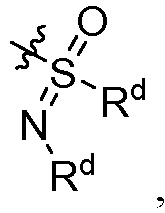 Rd are each independently selected from the group consisting of C1-4 alkyl and C3-7 cycloalkyl;R2 is selected from the group consisting of 5- to 6-membered monocyclic heteroaryl and a 9- to 14-membered saturated, partially saturated, or aromatic tricyclic ring, wherein the tricyclic ring contains 0-6 heteroatoms independently selected from the group consisting of N, O, and S, and R2 is optionally substituted with one or more Rc;R3 are each independently selected from the group consisting of halogen, C1-4 alkyl, and halogenated C1-4 alkyl;Ra are each independently selected from the group consisting of hydrogen and C1-4 alkyl;Rb are each independently selected from the group consisting of deuterium, -NH2, -NH(C1-4 alkyl), -N(C1-4 alkyl)2, -OH, -OC1-4 alkyl, -CN, halogen,
 with one or more deuterium, halogen, or
 Rc are each independently selected from the group consisting of -NH2, -NH(C1-4 alkyl), -N(C1-4 alkyl)2, -OH, -OC1-4 alkyl, halogen,
 n is selected from the group consisting of 1, 2, 3, and 4;m is selected from the group consisting of 0, 1, and 2;each X, Y, ring A, R1, Rd, R2, R3, Ra, Rb, or Rc is independently optionally substituted with one or more substituents.
 - The compound of formula (II), the stereoisomer thereof, or the pharmaceutically acceptable salt thereof according to claim 1,wherein, Y is selected from the group consisting of a bond, -O-, -S-, and -NRa-;ring A is selected from the group consisting of C5-10 aryl and 5- to 10-membered heteroaryl;R1 are each independently selected from the group consisting of -NH2, -NHRd, -N(Rd)2, -OH, -ORd, -CN, halogen, -COORd, -OCORd, -N(Rd)C(O)(Rd), -CONH(Rd), -CON(Rd)2, -NHSO2(Rd), -SO2NH(Rd), -SO2N(Rd)2, -PO(Rd)2,
 R3 is selected from the group consisting of halogen, C1-4 alkyl, and halogenated C1-4 alkyl;Ra is selected from the group consisting of hydrogen and C1-4 alkyl.
 - The compound, the stereoisomer thereof, or the pharmaceutically acceptable salt thereof according to claim 1 or 2, being selected from a compound of formula (I), a stereoisomer thereof, or a pharmaceutically acceptable salt thereof,
 wherein, Y is selected from the group consisting of a bond, -O-, -S-, and -NRa-;ring A is selected from the group consisting of C5-10 aryl and 5- to 10-membered heteroaryl;R1 are each independently selected from the group consisting of -NH2, -NH(C1-4 alkyl), -N(C1-4 alkyl)2, -OH, -OC1-4 alkyl, -CN, halogen, C1-6 alkyl, and 3- to 10-membered heterocycloalkyl, wherein the C1-6 alkyl and 3- to 10-membered heterocycloalkyl are optionally substituted with one or more Rb;Rb are each independently selected from the group consisting of -NH2, -NH(C1-4 alkyl), -N(C1-4 alkyl)2, -OH, -OC1-4 alkyl, -CN, halogen,

- The compound, the stereoisomer thereof, or the pharmaceutically acceptable salt thereof according to any one of claims 1-3, wherein X is CH; or, X is N.
- The compound, the stereoisomer thereof, or the pharmaceutically acceptable salt thereof according to any one of claims 1-4, wherein Ra is hydrogen.
- The compound, the stereoisomer thereof, or the pharmaceutically acceptable salt thereof according to any one of claims 1-5, wherein Y is selected from the group consisting of a bond, -O-, -S-, and -NRa-; or, Y is selected from - NRa-; or, Y is -NH-.
- The compound, the stereoisomer thereof, or the pharmaceutically acceptable salt thereof according to any one of claims 1-6, wherein ring A is selected from the group consisting of C5-8 aryl and 5- to 8-membered heteroaryl;or, ring A is selected from the group consisting of C5-6 aryl and 5- to 6-membered heteroaryl;or, ring A is selected from 3- to 10-membered heterocycloalkyl;or, ring A is selected from the group consisting of phenyl or 5- to 6-membered heteroaryl containing 1 or 2 heteroatoms selected from the group consisting of N, O, and S;or, ring A is selected from the group consisting of phenyl or 6-membered heteroaryl containing 1 or 2 N atoms;or, ring A is selected from the group consisting of phenyl, pyridinyl, pyrimidinyl, pyridazinyl, pyrazinyl, thiazolyl, imidazolyl, or oxazolyl;or, ring A is selected from the group consisting of phenyl or pyridinyl;or, ring A is pyridinyl.
- The compound, the stereoisomer thereof, or the pharmaceutically acceptable salt thereof according to any one of claims 1-7, wherein R1 are each independently selected from the group consisting of -NH2, -NH(Rd), -N(Rd)2, halogen, -N(Rd)C(O)(Rd), -NHSO2(Rd), -SO2NH(Rd), PO(Rd)2,
 or, R1 are each independently selected from the group consisting of -NH2, -NH(Rd), -N(Rd)2, halogen, - N(Rd)C(O)(Rd), -NHSO2(Rd), -SO2NH(Rd), PO(Rd)2,
 or, R1 are each independently selected from the group consisting of -NH2, -NH(Rd), -N(Rd)2, F, Cl, Br, - N(Rd)C(O)(Rd), -NHSO2(Rd), -SO2NH(Rd), -PO(Rd)2,
 or, R1 are each independently selected from the group consisting of -NH2, -NH(Rd), -N(Rd)2, -N(Rd)C(O)(Rd), - NHSO2(Rd), -SO2NH(Rd), -PO(Rd)2,
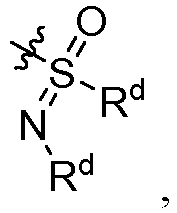 or, R1 are each independently selected from the group consisting of -NH2, -NHCH3, -N(CH3)2, F, Cl, Br, methyl, ethyl, n-propyl, isopropyl, n-butyl, isobutyl, tert-butyl, tetrahydropyrrolyl, tetrahydropyranyl, tetrahydrofuranyl, tetrahydrothienyl, morpholinyl, piperidinyl, piperazinyl, tetrahydroimidazolyl, azoxycycloheptyl, azoxyspirononanyl, azoxyspiroheptyl, -N(CH3)C(O)CH3, -NHSO2(CH3), -SO2NH(CH3), -PO(CH3)2,
 or, R1 are each independently selected from the group consisting of -NH2, F, methyl, ethyl, tetrahydropyrrolyl, tetrahydrofuranyl, tetrahydropyranyl, piperidinyl, morpholinyl, tetrahydroimidazolyl, -N(CH3)C(O)CH3, azoxycycloheptyl, azoxyspirononanyl, azoxyspiroheptyl, phosphoxycyclohexyl, azoxycyclohexyl, phosphazacyclohexyl, oxazolidinyl, -NHSO2(CH3), -SO2NH(CH3), -PO(CH3)2,
 or, R1 are each independently selected from the group consisting of -NH2, F, methyl, ethyl,





- The compound, the stereoisomer thereof, or the pharmaceutically acceptable salt thereof according to any one of claims 1-8, wherein n is selected from the group consisting of 1, 2, and 3; or, n is 2.
- The compound, the stereoisomer thereof, or the pharmaceutically acceptable salt thereof according to claim 1 or 2, wherein m is selected from the group consisting of 0, 1, and 2; or, m is selected the group consisting of 0 and 1; or, m is 0.
- The compound, the stereoisomer thereof, or the pharmaceutically acceptable salt thereof according to claim 1 or 2, wherein R3 is selected from the group consisting of halogen, C1-3 alkyl, and halogenated C1-3 alkyl;or, R3 is selected from the group consisting of F, Cl, Br, and C1-3 alkyl;or, R3 is selected from the group consisting of F and methyl.
- The compound, the stereoisomer thereof, or the pharmaceutically acceptable salt thereof according to any one of claims 1-11, wherein Rb are each independently selected from the group consisting of deuterium, -OH, C1-4 alkyl, halogen,
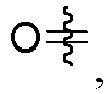
 or, Rb are each independently selected from the group consisting of deuterium, -OH, C1-3 alkyl, F, Cl, Br,
 or, Rb are each independently selected from the group consisting of deuterium, -OH, CH3, F,
 or, Rb are each independently selected from the group consisting of deuterium, -OH, CH3, F,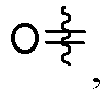
 or, Rb are each independently selected from the group consisting of deuterium, -OH, CH3, F,

- The compound, the stereoisomer thereof, or the pharmaceutically acceptable salt thereof according to any one of claims 1-12, wherein one, two, or three rings in the tricyclic rings are aromatic rings;or, the monocyclic ring in the tricyclic ring to which the

 or, the monocyclic ring in the tricyclic ring to which the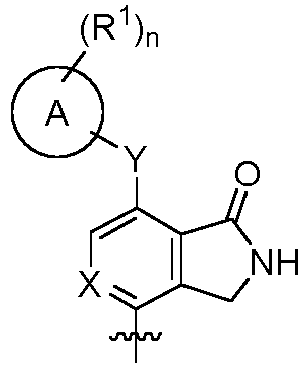
 or, any two adjacent rings in the tricyclic ring optionally form a fused, bridged, or spiro ring;or, the monocyclic ring in the tricyclic ring to which the

- The compound, the stereoisomer thereof, or the pharmaceutically acceptable salt thereof according to any one of claims 1-13, wherein R2 is selected from the group consisting of 6-membered monocyclic heteroaryl and a 9- to 14-membered saturated, partially saturated, or aromatic tricyclic ring, wherein the tricyclic ring contains 0-6 heteroatoms independently selected from the group consisting of N, O, and S, and the R2 is optionally substituted with one or more Rc;or, R2 is selected from the group consisting of 6-membered monocyclic heteroaryl containing 1 or 2 N atoms and a 9- to 14-membered saturated, partially saturated, or aromatic tricyclic ring, wherein the tricyclic ring contains 1-6 heteroatoms independently selected from the group consisting of N, O, and S, and the R2 is optionally substituted with one or more Rc;or, R2 is selected from the group consisting of 6-membered monocyclic heteroaryl containing 1 or 2 N atoms and a 9- to 14-membered saturated, partially saturated, or aromatic tricyclic ring, wherein the tricyclic ring contains 1-6 heteroatoms independently selected from the group consisting of N and O, and the R2 is optionally substituted with one or more Rc;or, R2 is selected from the group consisting of 6-membered monocyclic heteroaryl containing 1 or 2 N atoms and a 9- to 14-membered partially saturated or aromatic tricyclic ring, wherein the tricyclic ring contains 1-6 heteroatoms independently selected from the group consisting of N and O, and the R2 is optionally substituted with one or more Rc;or, R2 is selected from the group consisting of




 or, R2 is selected from the group consisting of


- The compound, the stereoisomer thereof, or the pharmaceutically acceptable salt thereof according to any one of claims 1-14, wherein R2 is selected from a 9- to 14-membered saturated, partially saturated, or aromatic tricyclic ring, wherein the tricyclic ring contains 0-6 heteroatoms independently selected from the group consisting of N, O, and S, and the R2 is optionally substituted with one or more Rc;or, R2 is selected from a 9- to 14-membered saturated, partially saturated, or aromatic tricyclic ring, wherein the tricyclic ring contains 1-6 heteroatoms independently selected from the group consisting of N, O, and S, and the R2 is optionally substituted with one or more Rc;or, R2 is selected from a 9- to 14-membered saturated, partially saturated, or aromatic tricyclic ring, wherein the tricyclic ring contains 1-6 heteroatoms independently selected from the group consisting of N and O, and the R2 is optionally substituted with one or more Rc;or, R2 is selected from a 9- to 14-membered partially saturated or aromatic tricyclic ring, wherein the tricyclic ring contains 1-6 heteroatoms independently selected from the group consisting of N and O, and the R2 is optionally substituted with one or more Rc.
- The compound, the stereoisomer thereof, or the pharmaceutically acceptable salt thereof according to any oneof claims 1-15, wherein Rc are each independently selected from the group consisting of
 or, Rc are each independently selected from the group consisting of
 or, Rc are each independently selected from the group consisting of
 or, Rc are each independently selected from the group consisting of
 or, Rc are each independently selected from the group consisting of
- The compound, the stereoisomer thereof, or the pharmaceutically acceptable salt thereof according to any one of claims 1-16, wherein Rd are each independently selected from the group consisting of C1-4 alkyl and C3-6 cycloalkyl;or, Rd are each independently selected from the group consisting of C1-2 alkyl and C3-4 cycloalkyl;or, Rd are each independently selected from C1-2 alkyl;or, Rd are each independently selected from C3-4 cycloalkyl.
- The compound, the stereoisomer thereof, or the pharmaceutically acceptable salt thereof according to any one of claims 1-3, being selected from the group consisting of the following compounds of formula (Ia), formula (Ib), formula (Ic), and formula (Id), stereoisomers thereof, or pharmaceutically acceptable salts thereof:

- The compound, the stereoisomer thereof, or the pharmaceutically acceptable salt thereof according to any one of claims 1-18, being selected from the group consisting of the following compounds, stereoisomers thereof, or pharmaceutically acceptable salts thereof:


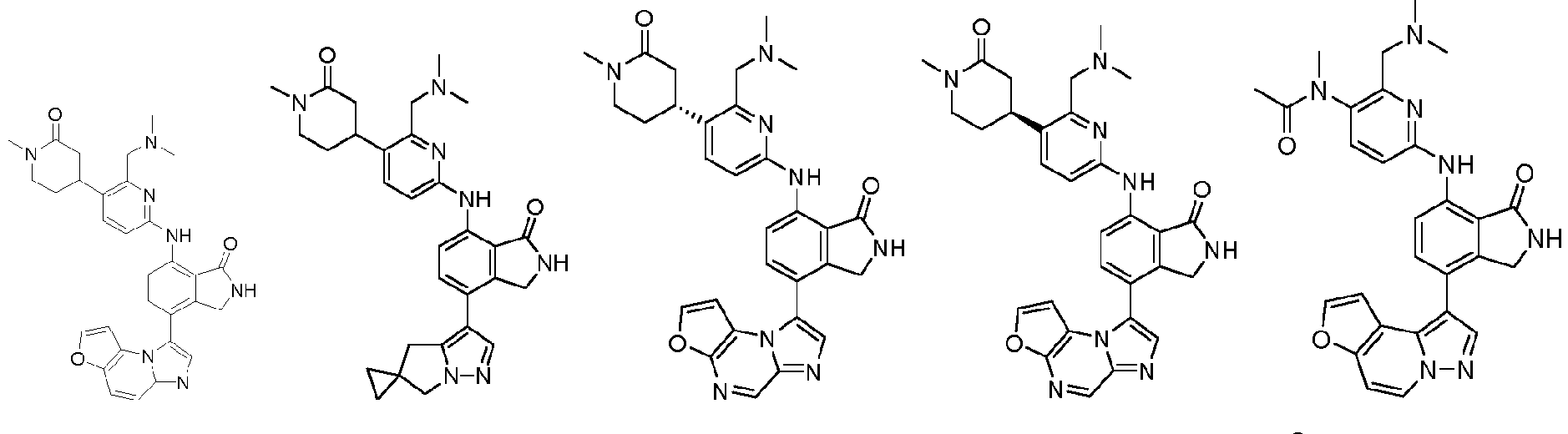


- Use of the compound, the stereoisomer thereof, or the pharmaceutically acceptable salt thereof according to any one of claims 1-19 for preparing a medicament for treating a disease, wherein optionally, the disease is selected from cancer; optionally, the cancer is selected from the group consisting of a solid tumor, leukemia, and lymphoma.
Applications Claiming Priority (4)
| Application Number | Priority Date | Filing Date | Title |
|---|---|---|---|
| CN202210166821 | 2022-02-23 | ||
| CN202211272746 | 2022-10-18 | ||
| CN202310115154 | 2023-02-14 | ||
| PCT/CN2023/077638 WO2023160577A1 (en) | 2022-02-23 | 2023-02-22 | Fused bicyclic compound containing pyrrolinone |
Publications (2)
| Publication Number | Publication Date |
|---|---|
| EP4484434A1 true EP4484434A1 (en) | 2025-01-01 |
| EP4484434A4 EP4484434A4 (en) | 2026-04-08 |
Family
ID=87764786
Family Applications (1)
| Application Number | Title | Priority Date | Filing Date |
|---|---|---|---|
| EP23759202.7A Pending EP4484434A4 (en) | 2022-02-23 | 2023-02-22 | Condensed bicyclic compound with pyrrolinone |
Country Status (9)
| Country | Link |
|---|---|
| US (1) | US20250236619A1 (en) |
| EP (1) | EP4484434A4 (en) |
| JP (1) | JP2025508437A (en) |
| KR (1) | KR20240153578A (en) |
| CN (1) | CN118451083A (en) |
| AU (1) | AU2023225842A1 (en) |
| MX (1) | MX2024010104A (en) |
| TW (1) | TW202342476A (en) |
| WO (1) | WO2023160577A1 (en) |
Families Citing this family (2)
| Publication number | Priority date | Publication date | Assignee | Title |
|---|---|---|---|---|
| WO2024078448A1 (en) * | 2022-10-10 | 2024-04-18 | 珠海宇繁生物科技有限责任公司 | Hpk1 kinase inhibitor as well as preparation method therefor and use thereof |
| TW202519527A (en) * | 2023-07-26 | 2025-05-16 | 大陸商正大天晴藥業集團股份有限公司 | Substituted pyrrolidone compounds |
Family Cites Families (7)
| Publication number | Priority date | Publication date | Assignee | Title |
|---|---|---|---|---|
| US20190119236A1 (en) * | 2016-02-23 | 2019-04-25 | Portola Pharmaceuticals, Inc. | Compounds for binding proprotein convertase subtilisin/kexin type 9 (pcsk9) |
| BR112019015075A2 (en) * | 2017-01-23 | 2020-03-10 | Revolution Medicines, Inc. | BICYCLIC COMPOUNDS AS ALLOSTIC SHP2 INHIBITORS |
| PH12022550605A1 (en) * | 2019-09-13 | 2023-09-25 | Nimbus Saturn Inc | Hpk1 antagonists and uses thereof |
| CN117295737A (en) * | 2021-03-05 | 2023-12-26 | 林伯士萨顿公司 | HPK1 antagonists and their uses |
| CN115536656A (en) * | 2021-04-26 | 2022-12-30 | 杭州英创医药科技有限公司 | Heterocyclic compounds as HPK1 inhibitors |
| CN115611925B (en) * | 2021-07-14 | 2025-04-08 | 轩竹生物科技股份有限公司 | HPK1 inhibitors and uses thereof |
| US20250011331A1 (en) * | 2021-08-03 | 2025-01-09 | Nimbus Saturn, Inc. | Hpk1 antagonists and uses thereof |
-
2023
- 2023-02-22 KR KR1020247030889A patent/KR20240153578A/en active Pending
- 2023-02-22 AU AU2023225842A patent/AU2023225842A1/en active Pending
- 2023-02-22 CN CN202380015686.9A patent/CN118451083A/en active Pending
- 2023-02-22 US US18/839,293 patent/US20250236619A1/en active Pending
- 2023-02-22 JP JP2024548770A patent/JP2025508437A/en active Pending
- 2023-02-22 WO PCT/CN2023/077638 patent/WO2023160577A1/en not_active Ceased
- 2023-02-22 EP EP23759202.7A patent/EP4484434A4/en active Pending
- 2023-02-23 TW TW112106669A patent/TW202342476A/en unknown
-
2024
- 2024-08-16 MX MX2024010104A patent/MX2024010104A/en unknown
Also Published As
| Publication number | Publication date |
|---|---|
| AU2023225842A1 (en) | 2024-09-26 |
| TW202342476A (en) | 2023-11-01 |
| MX2024010104A (en) | 2024-12-06 |
| KR20240153578A (en) | 2024-10-23 |
| EP4484434A4 (en) | 2026-04-08 |
| CN118451083A (en) | 2024-08-06 |
| JP2025508437A (en) | 2025-03-26 |
| WO2023160577A1 (en) | 2023-08-31 |
| US20250236619A1 (en) | 2025-07-24 |
Similar Documents
| Publication | Publication Date | Title |
|---|---|---|
| EP3788042B1 (en) | Bcl-2 inhibitors | |
| EP3978496B1 (en) | Btk inhibitor ring derivative, preparation method therefor and pharmaceutical application thereof | |
| EP3752510B1 (en) | Macrocycles as modulators of cystic fibrosis transmembrane conductance regulator, pharmaceutical compositions thereof, their use in the treatment of cycstic fibrosis, and process for making them | |
| EP3986896B1 (en) | Egfr inhibitors for the treatment of cancer | |
| EP4442686A1 (en) | Kras inhibitors, preparation method therefor, and pharmaceutical use thereof | |
| EP4606803A1 (en) | Kras g12d degradation agent, and preparation method and use therefor | |
| EP3921320B1 (en) | Imidazo [2, 1-f] [1, 2, 4] triazin-4-amine derivatives as tlr7 agonist | |
| EP3121175B1 (en) | 1,3-benzodioxole derivatives as ezh1 and/or ezh2 inhibitors | |
| EP2468748B1 (en) | Pyrazoloquinolones are potent parp inhibitors | |
| EP3129376B1 (en) | Substituted 4,5,6,7-tetrahydro-pyrazolo[1,5-a]pyrazine derivatives and 5,6,7,8-tetrahydro-4h-pyrazolo[1,5-a][1,4]diazepine derivatives as ros1 inhibitors | |
| EP2727920B1 (en) | 1,5-naphthyridine derivative or salt thereof | |
| EP3652178B1 (en) | Bicyclic ketone compounds and methods of use thereof | |
| EP4471033A1 (en) | Cereblon e3 ubiquitin ligase inhibitor | |
| EP4678638A1 (en) | New e3 ubiquitin ligase ligand, protein degradation agent and use thereof | |
| EP3943496A1 (en) | Wee1 inhibitor and preparation and use thereof | |
| CN110386944B (en) | Di(hetero)aryl macrocycles for inhibiting protein kinase activity | |
| EP4108663A1 (en) | Substituted aryl compound | |
| EP4288426B1 (en) | Quinoxaline derivatives and uses thereof | |
| EP4373817B1 (en) | Substituted pyrazine-2-carboxamides as hpk1 inhibitors for the treatment of cancer | |
| EP4495110A1 (en) | Nitrogen-containing heterocyclic derivative inhibitor, preparation method therefor and use thereof | |
| EP4667469A1 (en) | Compound containing trifluoromethylsulfonyl | |
| US20250236619A1 (en) | Fused bicyclic compound containing pyrrolinone | |
| WO2022237747A1 (en) | Small molecular cd73 antagonist and use thereof | |
| EP4617272A1 (en) | Fused bicyclic compound | |
| EP3712157A1 (en) | Pyridopyrimidine compounds acting as mtorc 1/2 double-kinase inhibitors |
Legal Events
| Date | Code | Title | Description |
|---|---|---|---|
| STAA | Information on the status of an ep patent application or granted ep patent |
Free format text: STATUS: THE INTERNATIONAL PUBLICATION HAS BEEN MADE |
|
| PUAI | Public reference made under article 153(3) epc to a published international application that has entered the european phase |
Free format text: ORIGINAL CODE: 0009012 |
|
| STAA | Information on the status of an ep patent application or granted ep patent |
Free format text: STATUS: REQUEST FOR EXAMINATION WAS MADE |
|
| 17P | Request for examination filed |
Effective date: 20240916 |
|
| AK | Designated contracting states |
Kind code of ref document: A1 Designated state(s): AL AT BE BG CH CY CZ DE DK EE ES FI FR GB GR HR HU IE IS IT LI LT LU LV MC ME MK MT NL NO PL PT RO RS SE SI SK SM TR |
|
| DAV | Request for validation of the european patent (deleted) | ||
| DAX | Request for extension of the european patent (deleted) | ||
| RIC1 | Information provided on ipc code assigned before grant |
Ipc: C07D 519/00 20060101AFI20251209BHEP Ipc: C07D 471/04 20060101ALI20251209BHEP Ipc: A61K 31/4035 20060101ALI20251209BHEP Ipc: A61K 31/407 20060101ALI20251209BHEP Ipc: A61K 31/4164 20060101ALI20251209BHEP Ipc: A61K 31/4188 20060101ALI20251209BHEP Ipc: A61K 31/4355 20060101ALI20251209BHEP Ipc: A61K 31/437 20060101ALI20251209BHEP Ipc: A61K 31/4985 20060101ALI20251209BHEP Ipc: A61K 31/5025 20060101ALI20251209BHEP Ipc: A61P 35/00 20060101ALI20251209BHEP Ipc: A61P 35/02 20060101ALI20251209BHEP |
|
| A4 | Supplementary search report drawn up and despatched |
Effective date: 20260309 |
|
| RIC1 | Information provided on ipc code assigned before grant |
Ipc: C07D 519/00 20060101AFI20260303BHEP Ipc: C07D 471/04 20060101ALI20260303BHEP Ipc: A61K 31/4035 20060101ALI20260303BHEP Ipc: A61K 31/407 20060101ALI20260303BHEP Ipc: A61K 31/4164 20060101ALI20260303BHEP Ipc: A61K 31/4188 20060101ALI20260303BHEP Ipc: A61K 31/4355 20060101ALI20260303BHEP Ipc: A61K 31/437 20060101ALI20260303BHEP Ipc: A61K 31/4985 20060101ALI20260303BHEP Ipc: A61K 31/5025 20060101ALI20260303BHEP Ipc: A61P 35/00 20060101ALI20260303BHEP Ipc: A61P 35/02 20060101ALI20260303BHEP |