EP4481605A1 - Automated identification of vulnerable software components - Google Patents
Automated identification of vulnerable software components Download PDFInfo
- Publication number
- EP4481605A1 EP4481605A1 EP24177306.8A EP24177306A EP4481605A1 EP 4481605 A1 EP4481605 A1 EP 4481605A1 EP 24177306 A EP24177306 A EP 24177306A EP 4481605 A1 EP4481605 A1 EP 4481605A1
- Authority
- EP
- European Patent Office
- Prior art keywords
- software component
- given software
- vulnerability
- source code
- code repository
- Prior art date
- Legal status (The legal status is an assumption and is not a legal conclusion. Google has not performed a legal analysis and makes no representation as to the accuracy of the status listed.)
- Granted
Links
Images




Classifications
-
- G—PHYSICS
- G06—COMPUTING OR CALCULATING; COUNTING
- G06F—ELECTRIC DIGITAL DATA PROCESSING
- G06F21/00—Security arrangements for protecting computers, components thereof, programs or data against unauthorised activity
- G06F21/50—Monitoring users, programs or devices to maintain the integrity of platforms, e.g. of processors, firmware or operating systems
- G06F21/57—Certifying or maintaining trusted computer platforms, e.g. secure boots or power-downs, version controls, system software checks, secure updates or assessing vulnerabilities
- G06F21/577—Assessing vulnerabilities and evaluating computer system security
-
- G—PHYSICS
- G06—COMPUTING OR CALCULATING; COUNTING
- G06F—ELECTRIC DIGITAL DATA PROCESSING
- G06F21/00—Security arrangements for protecting computers, components thereof, programs or data against unauthorised activity
- G06F21/50—Monitoring users, programs or devices to maintain the integrity of platforms, e.g. of processors, firmware or operating systems
- G06F21/55—Detecting local intrusion or implementing counter-measures
- G06F21/56—Computer malware detection or handling, e.g. anti-virus arrangements
- G06F21/562—Static detection
- G06F21/563—Static detection by source code analysis
-
- G—PHYSICS
- G06—COMPUTING OR CALCULATING; COUNTING
- G06F—ELECTRIC DIGITAL DATA PROCESSING
- G06F40/00—Handling natural language data
- G06F40/20—Natural language analysis
- G06F40/279—Recognition of textual entities
- G06F40/289—Phrasal analysis, e.g. finite state techniques or chunking
- G06F40/295—Named entity recognition
-
- G—PHYSICS
- G06—COMPUTING OR CALCULATING; COUNTING
- G06F—ELECTRIC DIGITAL DATA PROCESSING
- G06F8/00—Arrangements for software engineering
- G06F8/60—Software deployment
- G06F8/65—Updates
Definitions
- the disclosure concerns the field of information technology.
- the disclosure concerns the automated identification of vulnerable software components, e.g. one or multiple functions, or one or multiple classes, where each class comprises at least one function, through source-code or bytecode parsing and text analysis.
- the identified software components shall be considered to be affected by one or more Common Vulnerabilities and Exposures, short CVE.
- a Large Language Model, short LLM is used to perform code parsing and text analysis.
- LLMs are OpenAI's GPT 3, GPT 3.5, or GPT 4 models (as for example used in ChatGPT), Google's LaMDA or Bard models, or the LLaMA model from Meta Al. Multiple other models exist, and it is assumed that many more will become available in future. All of these models provide artificial intelligence (short Al) functionality based on transformer architecture-based models, such as Generative pre-trained transformer (short GPT) models.
- CVE affected software code In the prior art, the extraction of CVE affected software code is done manually. In case a new vulnerability of a software component is detected, the vulnerability is added to a vulnerability database.
- a vulner ⁇ ability database is the NATIONAL VULNERABILITY DATABASE (NVD) provided by the National Institute of Standards and Technology (NIST).
- NDV National Institute of Standards and Technology
- the software component causing the vulnerability needs to be identified.
- an end-user of software cannot identify the vulnerable software component for lack of technical competency and due to the fact that the end-user can access the machine- or bytecode of the software only.
- the source-code of the vulnerable software component In order to find the root cause of a vulnerability, the source-code of the vulnerable software component needs to be analyzed.
- open-source software components such as packages, classes, functions/methods or software libraries.
- the advantages of open-source software are widely acknow ⁇ ledged due to the broad availability of different software components in many different programming languages for many different use cases.
- advanced functionalities exist, such as references from a vulnerability database to a source-code repository hosting the source-code, such as GitHub, Bitbucket etc.
- developers of the vulnerable software component identify the cause of the vulnerability. In some cases, the developers are supported by security researchers. After identifying the vulnerability, efforts are made to remedy the vulnerability.
- the above process of extracting vulnerable software components is sometimes performed by specialized companies providing security information to interested parties, such as software develop ⁇ ers. Such companies provide security feeds to interested parties listing detailed information about vulnerable software components, such as names of packages, classes, functions, affected versions etc. These security feeds are compiled for one or few of the most widely used programming lang ⁇ uages, e.g. Java and JavaScript, such that there is a need to cover addition ⁇ al languages, such as Go, C#, .NET, Rust, PHP etc. In addition, there is a need to shorten the process of extracting vulnerable software components and to improve the quality of the data output.
- Java and JavaScript such that there is a need to cover addition ⁇ al languages, such as Go, C#, .NET, Rust, PHP etc.
- the objective of the disclosure is to find a process for the automatic identification of vulnerable software components through source-code or bytecode parsing and text analysis.
- manual work shall be reduced to a minimum.
- the quality of identified CVE affected software components shall be increased by combining results from multiple, independent sources. Note that one single data-source cannot assumed to be correct, as function names in CVEs might be misspelled or simply be wrong, a commit to a source-code repository, such as GitHub, patching a vulnerability may contain not only code changes related to the CVE but also unrelated changes etc.
- this objective is solved by a computer-implemented method for identifying vulnerable software from a computer system, comprising: identifying name of a given software component in a vulnerability database by analyzing text of an entry in the vulnerability database using a large language model, where entries in the vulnerability database have known vulnerabilities; identifying a patch for the given software component in a source code repository by analyzing text of the entry in the vulnerability database using the large language model; identifying the patch for the given software component in the source code repository by analyzing text in the source code repository using the large language model; and reporting the given software component as being vulnerable in response to identifying the patch for the given software component in the source code repository.
- a large language model is used to identify i) the name of a given software component in a vulnerability database, ii) identify a patch for the software component in a source-code repository by analyzing the text in the entry for the respective CVE in the vulnerability database, and iii) identify the patch in the source-code repository.
- the patch mentioned in the vulnerability database is found in the source code repository, the given software component is considered to be a vulnerable software component. In such case, the software component is reported as a vulnerable software component to the method customer (step iv).
- the large language model is e.g., a transformer architecture-based model, such as a generative pre-trained transformer (short GPT) model.
- the LLM is a pre-trained model, and the pre-trained model is preferably further adapted by at least one of fine-tuning the model and few-shot learning.
- the adaptation can use at least one of the following prompting techniques: Standard Prompting, Chain-of-Thought Prompting, Least-to-Most Prompting, and Reasoning-and-Acting Prompting.
- the name of the software component affected by the CVE is identified by analyzing the entry in a vulnerability database, such https://nvd.nist.org , using the LLM. It is noted that the vulnerability database comprises many entries for different software components and different vulnerabilities.
- a patch for the given software component is identified in a source-code repository, such as https://github.com.
- the patch is identified by analyzing the entry in the vulnerability database using the LLM.
- the subsequent step it is checked whether the patch mentioned in the vulnerability database is actually present in the source-code repository.
- the link from the vulnerability database to the source-code repository is followed.
- the names of the software components amended by the patch are extracted.
- the software component is reported as a vulnerable software component to the method customer.
- the patch for the given software component may be advantageous to identify the patch for the given software component by matching the name of the given software component in the vulnerability database to the name of the given software component in the source code repository.
- the method may further comprise at least one of the steps of: identifying the type of vulnerability associated with the given software component by analyzing text in the vulnerability database using the large language model; identifying the type of vulnerability associated with the given software component by analyzing text of the unpatched code of the software component in the source code repository using the large language model; and reporting the given software component as being vulnerable in response to the name of the given software component in the vulnerability database matching the name of the given software component in the source code repository, and the type of vulnerability associated with the given software component in the vulnerability database matching the type of vulnerability associated with the given software component in the source code repository.
- the method may further comprise increasing probability that the given software component is vulnerable in response to identifying the patch for the given software component in the source code repository.
- the method may further comprise patching for the given software component in response to identifying the patch for the given software component in the source code repository.
- the method may further comprise adapting the large language model using at least one of standard prompting, chain-of-thought prompting, least-to-most prompting or reasoning-and-acting prompting.
- the method may further comprise at least one of: retrieving topology entities from a topology model based on the given software component, where the retrieved topology entities are affected by the vulnerability of the given software component, and the topology model is a graph with nodes in the graph representing topology entities in a distributed computer system and edges of the graph representing relationships between the topology entities; and reporting the retrieved topology entities along with the given software component.
- the method may further comprise changing the topology of the computer system in response to reporting topology entities as vulnerable such that the level of risk associated with the vulnerability is reduced by changing the topology.
- the type of vulnerability can be analyzed by text analysis of the unpatched file or by text analysis of the unpatched and the patched file.
- the patched file may be taken into account, which may preferably increase the probability that the right type of vulnerability is identified. For both cases, the probability of having identified a vulnerable software component may be increased further.
- the vulnerability may preferably be removed by patching the software component on the computer system.
- the LLM may be adapted using one of standard prompting, chain-of-thought prompting, least-to-most prompting or reasoning-and-acting prompting.
- topology entities from a topology model e.g. a graph with nodes in the graph representing topology entities in a distributed computer system and edges of the graph representing relationships between the topology entities, may be retrieved for the vulnerable software component, and the retrieved topology entities are reported along with the given software component.
- the aforementioned embodiment may allow the identification of applications, hosts, data centers or network regions containing the vulnerable software component.
- the method may further comprise changing the network topology of the computer system in response to reporting topology entities as vulnerable such that the level of risk associated with the vulnerability is reduced by after changing the topology.
- the risk of exploiting a vulnerability can be reduced/mitigated by changing the network topology of the computer system such that e.g., vulnerable components are no longer exposed to the internet. Doing so generally does not take away the need to patch vulnerabilities but reduces the risk in the meantime.
- a vulnerable software component that can be reached from the internet via port 8080. Let us further assume that the vulnerability cannot be fixed right away or that currently no patch exists to fix the vulnerability. By changing the network topology such that the vulnerable software component can no longer be reached directly from the internet, the risk of exploiting the vulnerability can be reduced.
- a firewall can be placed before the vulnerable software component such that in order to access the vulnerable software component, the firewall is accessed first and only legit requests are forwarded to the vulnerable software component.
- a computer-implemented method for identifying vulnerable software from a computer system comprising: identifying name of a given software component in a vulnerability database by analyzing text of an entry in the vulnerability database using a large language model, where entries in the vulnerability database have known vulnerabilities; extracting a link to a patch for the given software component in a source code repository by analyzing text of the entry in the vulnerability database using the large language model; identifying name of the given software component in the source code repository by analyzing text of the patch in the source code repository using the large language model; comparing name of the given software component in the vulnerability database to the name of the given software component in the source code repository; and reporting the given software component as being vulnerable in response to the name of the given software component in the vulnerability database matching the name of the given software component in the source code repository.
- the method may further comprise linking to the patch for the given software component in the source code repository, preferably using the link for the patch extracted from the entry in the vulnerability database.
- the method may further comprise at least one of: identifying type of vulnerability associated with the given software component by analyzing text of the entry in the vulnerability database using the large language model; identifying type of vulnerability associated with the given software component by analyzing source code for the given software component in the source code repository using the large language model, where the source code does not include the patch for the given software component; and reporting the given software component as being vulnerable in response to the name of the given software component in the vulnerability database matching the name of the given software component in the source code repository, and the type of vulnerability associated with the given software component in the vulnerability database matching the type of vulnerability associated with the given software component in the source code repository.
- the method may further comprise increasing probability that the given software component is vulnerable, preferably in response to the name of the given software component in the vulnerability database matching the name of the given software component in the source code repository.
- the method may further comprise patching for the given software component, preferably in response to the name of the given software component in the vulnerability database matching the name of the given software component in the source code repository.
- the method may further comprise adapting the large language model using at least one of standard prompting, chain-of-thought prompting, least-to-most prompting, and reasoning-and-acting prompting.
- the method may further comprise at least one of: retrieving topology entities from a topology model based on the given software component, where the retrieved topology entities are affected by the vulnerability of the given software component, and the topology model is a graph with nodes in the graph representing topology entities in a distributed computer system and edges of the graph representing relationships between the topology entities; and reporting the retrieved topology entities along with the given software component.
- the method may further comprise changing the topology of the computer system in response to reporting topology entities as vulnerable such that the level of risk associated with the vulnerability is reduced by changing the topology.
- Reporting the given software component may further comprise at least one of: compiling, by the client computer, a list of vulnerable software components; for each entry in the list of vulnerable software components, adding identity data to each entry in the list of vulnerable software components; sending, by the client computer, the list of vulnerable software components to a monitoring server; for each entry in the list of vulnerable software components, searching for a given entry in a server-side vulnerability database and preferably storing the given entry, along with the identity data for the given entry, in the server-side vulnerability database in response to the absence of the given entry in the server-side vulnerability database.
- the identity data for an entry in the list of vulnerable software components may be a hash value of the entry in the list of vulnerable software components.
- the method may further comprise at least one of: identifying execution of the given software component by a client-side application on the client computer; sending, by the client computer, identity data for the client-side application and identity data for the given software component the monitoring server; searching for the given software component in the server-side vulnerability database; and issuing a vulnerability report in response to the presence of the given software component in the server-side vulnerability database, where the vulnerability report includes the identity data for the given software component and the identity data for the client-side application.
- the execution of the given software component may be identified by one of an in-process agent instructed in the client-side application or an OS agent instrumented in an operating system of the client computer.
- a link to a patch for the given software component in a source code repository is identified by the large language model through text analysis of the entry in the vulnerability database.
- the name of the given software component in the source code repository is identified by the large language model by analyzing text of the patch in the source code repository.
- the text to be analyzed is source code.
- decompiling i.e. the reverse process to compiling
- the bytecode produces source code. In this case, the analysis is based on source code produced by decompiling.
- the name of the software component in the vulnerability database is compared to the name of the software component in the source code repository. Finally, the software component is reported as being vulnerable if the name of the given software component in the vulnerability database matches the name of the given software component in the source code repository.
- the accuracy of identifying vulnerable software components can be increased further by additionally identifying the type of vulnerability associated with the given software component by the large language model through text analysis of the entry in the vulnerability database.
- the type of vulnerability of the software component is identified by the large language model through analyzing the unpatched source code of the software component in the source code repository.
- the software component is reported as being vulnerable in response to the name of the given software component in the vulnerability database matching the name of the given software component in the source code repository, and the type of vulnerability associated with the given software component in the vulnerability database matching the type of vulnerability associated with the given software component in the source code repository.
- the identification of the type of vulnerability can be improved further by analyzing the source code of the patched software component in addition to the unpatched software component.
- the likelihood for having identified a vulnerable software component can be improved further.
- the affected software configuration i.e. a specific version of the vulnerable software component or a range of versions of the vulnerable software component
- the severity level of the CVE can be identified. By taking into account the severity level of the CVE, the customer of the computer-implemented method or the person/entity operating a computer system can judge whether immediate measures need to be taken, i.e. to shut down specific functions or classes, or a more relaxed path of action can be taken.
- the vulnerability is preferably removed by patching the software component on the computer system.
- the accuracy of the large language model to come up with the asked information can be improved by adapting the large language model using one of standard prompting, chain-of-thought prompting, least-to-most prompting or reasoning-and-acting prompting.
- pre-trained LLMs By using pre-trained LLMs, it is possible to train them further for specific tasks. This can be done by fine-tuning the model, using few-shot learning, or by combining both methods. Fine-tuning refers to using a pre-trained LLM that was initially trained on a large dataset and adjusting the model weights by training it again on a different dataset (usually a smaller dataset than the initial dataset). In comparison, few-shot learning uses a pre-trained LLM where the model is shown a few target examples (1 to N target examples are given) that train the model to the desired target task. Zero-shot learning is a type of few-shot learning in which the model is tested on data that was not included in training.
- the extraction of function information from a CVE description can e.g. be done by few-shot learning of an LLM using different prompt engineering techniques.
- Each prompt engineering technique follows a different strategy to extract the function information (Standard prompting, Chain-of-Thought prompting, Least-to-Most prompting, Reasoning-and-Acting prompting).
- Standard prompting the model is given CVE descriptions and ideal function extraction answers as examples ( ⁇ Description>; ⁇ Answer>).
- Chain-of-Thought prompting ( ⁇ Description>; ⁇ Chain-of-Thought>; ⁇ Answer>) uses multiple reasoning steps.
- Least-to-Most prompting follows the same strategy as Chain-of-Thought, with the difference that Least-to-Most contains multiple reasoning steps and intermediate answers ( ⁇ Description>; ⁇ Chain-of-Thought>; ⁇ Intermediate-Answer>; ⁇ Chain-of-Thought>; ⁇ Answer>).
- Reasoning-and-Acting prompting include the same reasoning information as Chain-of-Thought with the addition of acting ( ⁇ Description>; ⁇ Reasoning>; ⁇ Acting>; ⁇ Answer>).
- topology entities from a topology model e.g. a graph with nodes in the graph representing topology entities in a distributed computer system and edges of the graph representing relationships between the topology entities
- a topology model e.g. a graph with nodes in the graph representing topology entities in a distributed computer system and edges of the graph representing relationships between the topology entities
- the network topology of the computer system is changed in response to reporting topology entities as vulnerable such that the level of risk associated with the vulnerability is reduced by after changing the topology.
- NVD NVD
- https://cve.mitre.org/ https://www.cvedetails.com/ are used as primary sources and further data sources, such as source-code repositories, are added.
- Preferably reporting the given software component according to the first or second aspect of the disclosure further comprises: compiling, by the client computer, a list of vulnerable software components; for each entry in the list of vulnerable software components, adding identity data to each entry in the list of vulnerable software components; sending, by the client computer, the list of vulnerable software components to a monitoring server; and for each entry in the list of vulnerable software components, searching for a given entry in a server-side vulnerability database and storing the given entry, along with the identity data for the given entry, in the server-side vulnerability database in response to the absence of the given entry in the server-side vulnerability database.
- the disclosed methods compile a list of vulnerable software components.
- Identity data e.g. hash values
- the list is sent to a monitoring server.
- Compiling the list of vulnerable software components and adding identity data, e.g. by hashing, are typically done as a background task.
- the list of vulnerable software components can be sent to at least one monitoring server.
- the monitoring server used the list to update the entries in a server-side, i.e. located on the monitoring server, vulnerability database.
- hash values are typically small, e.g. 128-bit values
- using hash values as identity data for the entry in the list of vulnerable software components, or identity data for the loaded/executed software component, or even the identity of the application significantly reduces the amount of data being sent between the domains and enables accessing the server-side vulnerability database in order O(n). This allows the process for the detection of vulnerable software components to be executed in real-time.
- the real-time monitoring of loading/executing vulnerable software component on a client-side application is done by: identifying execution of the given software component by a client-side application on the client computer; sending, by the client computer, identity data for the client-side application and identity data for the given software component the monitoring server; searching for the given software component in the server-side vulnerability database; and issuing a vulnerability report in response to the presence of the given software component in the server-side vulnerability database, where the vulnerability report includes the identity data for the given software component and the identity data for the client-side application.
- the execution of the given software component may be detected by one of an in-process agent instrumented in the client-side application or an OS agent instrumented in an operating system of the client computer.
- agents are used to instrument code that loads libraries for execution into monitored processes with loading sensors. Loading sensors detect and report the loading of libraries by monitored processes, extract data describing loaded libraries and send this data to a monitoring server for analysis.
- In-process agents may in addition place sensors to application programmable interfaces (APIs) provided by those libraries to execute provided library specific functionality.
- Operating system (OS) agents run as separate processes on monitored operating system. Those OS agents may provide additional topology monitoring data for processes that are not or cannot be instrumented with in-process-agents.
- the OS agents may monitor file access and loading activities of such processes and report this data to a monitoring server.
- a computer program comprising instructions which, when the program is executed by a computer, cause the computer to carry out the steps of the method.
- the objective technical problem is solved by a non-transitory computer-readable medium having computer-executable instructions that, upon execution of the instructions by a processor of a computer, cause the computer to: identify name of a given software component in a vulnerability database by analyzing text of an entry in the vulnerability database using a large language model, where entries in the vulnerability database have known vulnerabilities; extract a link to a patch for the given software component in a source code repository by analyzing text of the entry in the vulnerability database using the large language model; identify name of the given software component in the source code repository by analyzing text of the patch in the source code repository using the large language model; compare name of the given software component in the vulnerability database to the name of the given software component in the source code repository; and report the given software component as being vulnerable in response to the name of the given software component in the vulnerability database matching the name of the given software component in the source code repository.
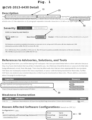
- the name of the vulnerable software component is contained in field 10
- the path to the Java class containing the vulnerable software component is contained in field 20
- the link from the NVD to the GitHub code repository is given in field 30
- the type of vulnerability is contained in field 40
- the severity level in field 45 is stated in field 50.
- the name of the class "JavaScriptUtils” is contained in field 10 before the dot and the name of the vulnerable function "javaScriptEscape" after the dot.
- the LLM After parsing and text analysis of the entry for CVE-2013-6430, the LLM identifies the "javaScriptEscape" method in the JavaScriptUtils framework as the name of the software component affected by the CVE.
- the link to the code repository is identified as https://github.com/spring-projects/spring-framework/commit/7a7df6637478607bef0277bf52a4e0a03e20a248.
- the type of vulnerability identified is a cross-site scripting (XSS) vulnerability
- the affected software versions are from (and including version) 3.0.0 up to version 3.2.2
- the base score for the severity of the CVE is 5.4. This information is extracted by the aforementioned LLM.
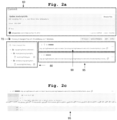
- Fig. 2a shows the top part of the webpage with collapsed view of the changed files
- Fig. 2b shows the file JavaScriptUtils.java
- Fig. 2c shows the file JavaScriptUtilsTest.java.
- the LLM identifies that the commit referenced from the NVD webpage amended two files, namely i) the file JavaScriptUtils.java containing the amended javaScriptEscape function (see Fig. 2b , lines 40 ff.), and the file JavaScriptUtilsTest.java (see Fig. 2c ).
- This information can be derived from field 70, the so-called file-tree 80, or by parsing the amended files 90, 95.
- Java classes ending with "Test.java” are for test purposes only and thus do not contribute to a vulnerability. Thus, it would have been to remove these files from further analysis.
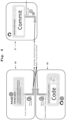
- Fig. 3 schematically shows that the LLM extracts the function name "javaScriptEscape” from the entry on the NVD website (field 96) and the function name "javaScriptEscape” from parsing the GitHub code repository (field 97).
- the level of confidence is even higher if a) the name of the code extracted from the vulnerability database matches the name of the affected source-code extracted from the code repository, b) the name of the code was amended by a commit operation in order to remedy the CVE, and c) the source-code before the amendment, i.e. the unpatched source code or software component, is found to being vulnerable to the vulnerability stated in the vulnerability database.
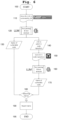
- Fig. 4 the entry in the vulnerability database refers to the function javaScriptEscape (field 96) and indicates the type of vulnerability, ii) the changed source-code in the code repository refers to the same function (field 97), and iii) a source-code analysis of the code before patching the function javaScriptEscape indicates a XSS vulnerability as stated in the vulnerability database (field 98).
- Fig. 4 the text analysis of the entry in the vulnerability database NVD by the LLM of OpenAI running on Azure platform is depicted in field 96. This analysis yields two results: First, the vulnerable software component is the javaScriptEscape method, and second, the vulnerable software component is vulnerable to Cross site scripting attacks.
- the analysis of the source-code of the vulnerable software component, i.e. the javaScriptEscape method, in the GitHub source code repository is contained in field 98. This analysis yields that the vulnerable software component before patching is indeed vulnerable to Cross site scripting attacks.
- the text analysis of the patched software component, i.e. the javaScriptEscape method patched by a commit operation in the source-code repository GitHub is contained in field 97. This analysis yields that the javaScriptEscape method was indeed modified by a commit operation.
- the identified type of vulnerable software component is a function, and two potential vulnerable functions were identified, namely 'allSelectors' and 'getSelectorsBySpecificity'.
- the first three prompts above are used to fine-tune the model
- the fourth prompt "D: Sabberworm" formulates the actual question
- the fifth and the sixth prompts "E: The vulnerability description
- A: [ ⁇ 'T':" are the outputs from the LLM for CVE-2020-13756.
- the identified type of vulnerable software component is a function, and two potential vulnerable functions were identified, namely 'allSelectors' and 'getSelectorsBySpecificity'.
- the identified type of vulnerable software component is a function, and two potential vulnerable functions were identified, namely 'allSelectors' and 'getSelectorsBySpecificity'.
- the identified type of vulnerable software component is a function, and two potential vulnerable functions were identified, namely 'allSelectors' and 'getSelectorsBySpecificity'.
- the essential outputs which is the name of vulnerable function, are the same irrespective of the prompting technique used. Note, however, that for other cases, one or more prompting technique may be better suited than other prompting techniques. Note that the disclosure is not limited to the specific prompting techniques mentioned in the disclosure.
- the disclosure is not limited to https://nvd.nist.gov/ as the vulnerability database, as multiple other such databases exist, e.g. https://cve.mitre.org/ , https://www.cvedetails.com/, https://osv.dev/ etc.
- the disclosure is not limited to the GitHub code repository hosting open-source software code, as many other alternatives are available, such as Bitbucket, SourceForge...
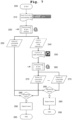
- Fig. 5 The main steps in identifying vulnerable software according to the first aspect of the disclosure are shown in Fig. 5 .
- the entry for the CVE on a vulnerability database is accessed in step 710.
- the entry is located on the NVD at NIST.
- the content of the entry typically a website, is parsed and in step 720 the name of the software component is identified by a Large Language Model, such as OpenAl's GPT 3.5.
- the name of the vulnerable software component is present in step 730.
- a patch is identified by parsing and text analysis of the content of the entry on the CVE DB by the LLM.
- the identified patch in most cases a link from the CVE DB to a source-code repository, is present in step 750.
- the LLM By accessing the patch on the code repository, e.g. by following the link, in step 760 the LLM identifies the patch on GitHub.
- step 770 it is checked whether the patch noted in the CVE database was identified in the code repository. If the patch was found on the code repository, the name of the software component 730 is reported to the method customer in step 780.
- the computer-implemented method ends in step 790. It is evident that the method can be executed for multiple entries on the vulnerability database, e.g. by first creating a list of newly identified or amended vulnerabilities within a certain period of time, and then to identify the vulnerable software components.
- step 100 After starting the process in step 100 for one CVE, the entry for the CVE is accessed in step 110.
- the content is parsed and text analysis is performed in step 120 by a Large Language Model.
- step 140 the link from the vulnerability database to a patch on a source-code repository is extracted and the link is followed.
- the patched source code here referred to as commit in step 150 remedying the vulnerability, is again parsed and a text analysis is performed in step 160 by the Large Language Model.
- the name of the amended software component e.g. a function
- Step 180 compares the name extracted from the vulnerability database to the name of the function extracted from the source-code repository. If these names match, the name is reported to the method customer in step 190.
- the method ends in step 195.
- Fig. 7 shows a variant of the main steps in extracting vulnerable software code displayed in Fig. 6 .
- step 280 it is checked whether the name of the vulnerable function identified in step 230 matches one of the names of the functions identified in step 280. In case the names match, the matching name of the code is reported to the customer of the method in step 290. The method ends in step 295.
- Fig. 8 shows a second variant of the main steps in identifying vulnerable software code.
- the entry for the CVE is accessed in step 310.
- the content of this entry is parsed, and text analysis is performed in step 320 by a Large Language Model.
- the name of the vulnerable software code is extracted in step 330.
- the type of vulnerability as specified in the vulnerability database is extracted in step 390.
- the link from the vulnerability database to a patch on a source-code repository is extracted and the link is followed.
- the patched source code here referred to as commit in step 350 remedying the vulnerability, is again parsed and a text analysis is performed in step 360 by the Large Language Model.
- step 380 it is checked whether the name extracted from the vulnerability database matches the name of the amended function extracted from the source-code repository.
- the unpatched source-code is parsed and a text analysis is performed by the Large Language Model. By doing so, the type of vulnerability is extracted in step 410.
- step 420 it is checked whether the type of vulnerability specified in the vulnerability database matches the type of vulnerability of the unpatched source-code.
- step 430 an AND operation is performed on the outputs of step 380 (matching names) and step 420 (matching types). If both outputs are TRUE, the name of the vulnerable code is reported to the method customer in step 440.
- step 450 the computer-implemented method ends.
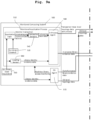
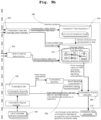
- Figs. 9a and 9b show a scheme of a monitored computing system 500, on which the application 510 runs, and the monitoring server 580.
- the vulnerability database 590 on the monitoring server 580 holds a list of vulnerable software components.
- the database 590 holds identity data for each software component.
- After having run the disclosed methods for the identification of vulnerable software components multiple times, a list of vulnerable software components is generated.
- the name of each vulnerable software component is hashed such that the hash value acts as identity data for the SW component.
- the list of vulnerable software components and the identity data are sent to the monitoring server 580.
- the monitoring server 580 checks for each software component if it is already contained in the vulnerability database 590.
- the software component and its identity data are added to the database.
- the real-time monitoring of software components is described next: It is assumed that the software making up the application logic has loaded the third-party library 520 and has requested to load another third-party library 530.
- the loading of the third-party library 520 is detected by a transaction sensor 540, the request to load the other third-party library 530 is detected by a loading sensor 550.
- the information about loading of libraries 520, 530 by the application 510 is transmitted to the monitoring server 580 via the in-process agent 560 or the OS agent 570.
- the monitoring server 580 can monitor multiple computing systems 500, where each computing system typically comprises multiple applications 510.
- the information about the applications 510 is sent via a transaction trace and topology data processor 630 to a transaction trace repository 640.
- the information about the loading/execution of libraries 520, 530 is sent via a library evidence data collector 610 to a topology model 620.
- the monitoring server is aware of both the application loading a library and the software component loaded.
- the monitoring server 580 features a vulnerability database 590 in order to detect vulnerabilities of software components, such as functions or methods in libraries.
- the vulnerability database 590 is queried for the identity data of each loaded software component. If the software component is contained in the database 590, a vulnerability report 670 is issued.
- combining the information from the topology model comprising the loaded/executed libraries or functions and the list of vulnerability issues 650 allows the monitoring server 580 to issue vulnerability issues 670.
- a calculation of vulnerability priority is done by the vulnerability priority calculator 660 allowing sorting of multiple vulnerability issues 670 according to priority.
- the techniques described herein may be implemented by one or more computer programs executed by one or more processors.
- the computer programs include processor-executable instructions that are stored on a non-transitory tangible computer readable medium.
- the computer programs may also include stored data.
- Non-limiting examples of the non-transitory tangible computer readable medium are nonvolatile memory, magnetic storage, and optical storage.
- the present disclosure also relates to an apparatus for performing the operations herein.
- This apparatus may be specially constructed for the required purposes, or it may comprise a computer selectively activated or reconfigured by a computer program stored on a computer readable medium that can be accessed by the computer.
- a computer program may be stored in a tangible computer readable storage medium, such as, but is not limited to, any type of disk including floppy disks, optical disks, CD-ROMs, magnetic-optical disks, read-only memories (ROMs), random access memories (RAMs), EPROMs, EEPROMs, magnetic or optical cards, application specific integrated circuits (ASICs), or any type of media suitable for storing electronic instructions, and each coupled to a computer system bus.
- the computers referred to in the specification may include a single processor or may be architectures employing multiple processor designs for increased computing capability.
Landscapes
- Engineering & Computer Science (AREA)
- General Engineering & Computer Science (AREA)
- Theoretical Computer Science (AREA)
- Computer Security & Cryptography (AREA)
- Software Systems (AREA)
- Computer Hardware Design (AREA)
- Physics & Mathematics (AREA)
- General Physics & Mathematics (AREA)
- Health & Medical Sciences (AREA)
- General Health & Medical Sciences (AREA)
- Computing Systems (AREA)
- Virology (AREA)
- Artificial Intelligence (AREA)
- Audiology, Speech & Language Pathology (AREA)
- Computational Linguistics (AREA)
- Stored Programmes (AREA)
Abstract
Description
- The disclosure concerns the field of information technology. In particular, the disclosure concerns the automated identification of vulnerable software components, e.g. one or multiple functions, or one or multiple classes, where each class comprises at least one function, through source-code or bytecode parsing and text analysis. The identified software components shall be considered to be affected by one or more Common Vulnerabilities and Exposures, short CVE. A Large Language Model, short LLM, is used to perform code parsing and text analysis. Examples of LLMs are OpenAI's GPT 3, GPT 3.5, or
GPT 4 models (as for example used in ChatGPT), Google's LaMDA or Bard models, or the LLaMA model from Meta Al. Multiple other models exist, and it is assumed that many more will become available in future. All of these models provide artificial intelligence (short Al) functionality based on transformer architecture-based models, such as Generative pre-trained transformer (short GPT) models. - In the prior art, the extraction of CVE affected software code is done manually. In case a new vulnerability of a software component is detected, the vulnerability is added to a vulnerability database. One well known vulner¬ability database is the NATIONAL VULNERABILITY DATABASE (NVD) provided by the National Institute of Standards and Technology (NIST). Many other vulnerability databases, also called CVE databases, hosted by different institutions in different countries, exist. After detecting the vulnerability, the software component causing the vulnerability needs to be identified. Typically, an end-user of software cannot identify the vulnerable software component for lack of technical competency and due to the fact that the end-user can access the machine- or bytecode of the software only. In order to find the root cause of a vulnerability, the source-code of the vulnerable software component needs to be analyzed. Currently, many software products are at least partially based on open-source software components, such as packages, classes, functions/methods or software libraries. The advantages of open-source software are widely acknow¬ledged due to the broad availability of different software components in many different programming languages for many different use cases. In addition to the readily availability of such components, advanced functionalities exist, such as references from a vulnerability database to a source-code repository hosting the source-code, such as GitHub, Bitbucket etc. Typically, developers of the vulnerable software component identify the cause of the vulnerability. In some cases, the developers are supported by security researchers. After identifying the vulnerability, efforts are made to remedy the vulnerability. In most cases, an updated version of the affected software component is published at the source-code repository (called "commit"), and in addition, a link to the CVE identifying the vulnerability is posted. As can be seen from the above, this process involves many different manual steps, involves different stakeholders (software developers, security researchers, database providers, source-code repositories....), and is based on information from different sources.
- The above process of extracting vulnerable software components is sometimes performed by specialized companies providing security information to interested parties, such as software develop¬ers. Such companies provide security feeds to interested parties listing detailed information about vulnerable software components, such as names of packages, classes, functions, affected versions etc. These security feeds are compiled for one or few of the most widely used programming lang¬uages, e.g. Java and JavaScript, such that there is a need to cover addition¬al languages, such as Go, C#, .NET, Rust, PHP etc. In addition, there is a need to shorten the process of extracting vulnerable software components and to improve the quality of the data output.
- How this process can be automated and how the quality of the identified vulnerable software components can be improved is not known in the prior art. In particular, the time from detecting a new vulnerability to patching of affected software components or mitigating the risk shall be reduced and/or the quality of the information shall be improved.
- This section provides background information related to the present disclosure which is not necessarily prior art.
- The objective of the disclosure is to find a process for the automatic identification of vulnerable software components through source-code or bytecode parsing and text analysis. By automating the process of vulnerable function extraction, manual work shall be reduced to a minimum. The quality of identified CVE affected software components shall be increased by combining results from multiple, independent sources. Note that one single data-source cannot assumed to be correct, as function names in CVEs might be misspelled or simply be wrong, a commit to a source-code repository, such as GitHub, patching a vulnerability may contain not only code changes related to the CVE but also unrelated changes etc.
- According to a first aspect of the disclosure, this objective is solved by a computer-implemented method for identifying vulnerable software from a computer system, comprising: identifying name of a given software component in a vulnerability database by analyzing text of an entry in the vulnerability database using a large language model, where entries in the vulnerability database have known vulnerabilities; identifying a patch for the given software component in a source code repository by analyzing text of the entry in the vulnerability database using the large language model; identifying the patch for the given software component in the source code repository by analyzing text in the source code repository using the large language model; and reporting the given software component as being vulnerable in response to identifying the patch for the given software component in the source code repository.
- According to this aspect of the disclosure, a large language model (LLM) is used to identify i) the name of a given software component in a vulnerability database, ii) identify a patch for the software component in a source-code repository by analyzing the text in the entry for the respective CVE in the vulnerability database, and iii) identify the patch in the source-code repository. In case the patch mentioned in the vulnerability database is found in the source code repository, the given software component is considered to be a vulnerable software component. In such case, the software component is reported as a vulnerable software component to the method customer (step iv).
- The large language model (short LLM) is e.g., a transformer architecture-based model, such as a generative pre-trained transformer (short GPT) model. In order to improve the quality of the outputs provided by the LLM, the LLM is a pre-trained model, and the pre-trained model is preferably further adapted by at least one of fine-tuning the model and few-shot learning. The adaptation can use at least one of the following prompting techniques: Standard Prompting, Chain-of-Thought Prompting, Least-to-Most Prompting, and Reasoning-and-Acting Prompting.
- In the first step, the name of the software component affected by the CVE is identified by analyzing the entry in a vulnerability database, such https://nvd.nist.org, using the LLM. It is noted that the vulnerability database comprises many entries for different software components and different vulnerabilities.
- In the next step, a patch for the given software component is identified in a source-code repository, such as https://github.com. The patch is identified by analyzing the entry in the vulnerability database using the LLM.
- In the subsequent step, it is checked whether the patch mentioned in the vulnerability database is actually present in the source-code repository. E.g., the link from the vulnerability database to the source-code repository is followed. In many cases, the names of the software components amended by the patch are extracted.
- In case the patch mentioned on the vulnerability database is actually present on the source code repository, the software component is reported as a vulnerable software component to the method customer.
- As already mentioned, it may be advantageous to identify the patch for the given software component by matching the name of the given software component in the vulnerability database to the name of the given software component in the source code repository. In this case, it is not just checked that the patch mentioned in the vulnerability database is present in the source code repository, but to additionally check whether the name of the software component in the vulnerability database matches the name of the software component in the source code repository. By doing this, the quality of identified vulnerable software components is increased.
- According to another advantageous embodiment of the disclosure, the method may further comprise at least one of the steps of: identifying the type of vulnerability associated with the given software component by analyzing text in the vulnerability database using the large language model; identifying the type of vulnerability associated with the given software component by analyzing text of the unpatched code of the software component in the source code repository using the large language model; and reporting the given software component as being vulnerable in response to the name of the given software component in the vulnerability database matching the name of the given software component in the source code repository, and the type of vulnerability associated with the given software component in the vulnerability database matching the type of vulnerability associated with the given software component in the source code repository.
- The method may further comprise increasing probability that the given software component is vulnerable in response to identifying the patch for the given software component in the source code repository.
- The method may further comprise patching for the given software component in response to identifying the patch for the given software component in the source code repository.
- The method may further comprise adapting the large language model using at least one of standard prompting, chain-of-thought prompting, least-to-most prompting or reasoning-and-acting prompting.
- The method may further comprise at least one of: retrieving topology entities from a topology model based on the given software component, where the retrieved topology entities are affected by the vulnerability of the given software component, and the topology model is a graph with nodes in the graph representing topology entities in a distributed computer system and edges of the graph representing relationships between the topology entities; and reporting the retrieved topology entities along with the given software component.
- The method may further comprise changing the topology of the computer system in response to reporting topology entities as vulnerable such that the level of risk associated with the vulnerability is reduced by changing the topology.
- The type of vulnerability can be analyzed by text analysis of the unpatched file or by text analysis of the unpatched and the patched file. In the first case, the may LLM analyze the vulnerable file and identifies the type of vulnerability. In the latter case, additionally the patched file may be taken into account, which may preferably increase the probability that the right type of vulnerability is identified. For both cases, the probability of having identified a vulnerable software component may be increased further.
- In response to having identified a vulnerable software component on a computer system, the vulnerability may preferably be removed by patching the software component on the computer system.
- In order to increase the quality of outputs provided by the large language model (LLM), the LLM may be adapted using one of standard prompting, chain-of-thought prompting, least-to-most prompting or reasoning-and-acting prompting.
- According to another preferred embodiment, topology entities from a topology model, e.g. a graph with nodes in the graph representing topology entities in a distributed computer system and edges of the graph representing relationships between the topology entities, may be retrieved for the vulnerable software component, and the retrieved topology entities are reported along with the given software component.
- The aforementioned embodiment may allow the identification of applications, hosts, data centers or network regions containing the vulnerable software component.
- According to another preferred embodiment, the method may further comprise changing the network topology of the computer system in response to reporting topology entities as vulnerable such that the level of risk associated with the vulnerability is reduced by after changing the topology.
- As it is not always possible to patch vulnerabilities right away, the risk of exploiting a vulnerability can be reduced/mitigated by changing the network topology of the computer system such that e.g., vulnerable components are no longer exposed to the internet. Doing so generally does not take away the need to patch vulnerabilities but reduces the risk in the meantime. Consider one vulnerable software component that can be reached from the internet via port 8080. Let us further assume that the vulnerability cannot be fixed right away or that currently no patch exists to fix the vulnerability. By changing the network topology such that the vulnerable software component can no longer be reached directly from the internet, the risk of exploiting the vulnerability can be reduced. E.g., a firewall can be placed before the vulnerable software component such that in order to access the vulnerable software component, the firewall is accessed first and only legit requests are forwarded to the vulnerable software component.
- According to another example, a computer-implemented method for identifying vulnerable software from a computer system may be provided, comprising: identifying name of a given software component in a vulnerability database by analyzing text of an entry in the vulnerability database using a large language model, where entries in the vulnerability database have known vulnerabilities; extracting a link to a patch for the given software component in a source code repository by analyzing text of the entry in the vulnerability database using the large language model; identifying name of the given software component in the source code repository by analyzing text of the patch in the source code repository using the large language model; comparing name of the given software component in the vulnerability database to the name of the given software component in the source code repository; and reporting the given software component as being vulnerable in response to the name of the given software component in the vulnerability database matching the name of the given software component in the source code repository.
- The method may further comprise linking to the patch for the given software component in the source code repository, preferably using the link for the patch extracted from the entry in the vulnerability database.
- The method may further comprise at least one of: identifying type of vulnerability associated with the given software component by analyzing text of the entry in the vulnerability database using the large language model; identifying type of vulnerability associated with the given software component by analyzing source code for the given software component in the source code repository using the large language model, where the source code does not include the patch for the given software component; and reporting the given software component as being vulnerable in response to the name of the given software component in the vulnerability database matching the name of the given software component in the source code repository, and the type of vulnerability associated with the given software component in the vulnerability database matching the type of vulnerability associated with the given software component in the source code repository.
- The method may further comprise increasing probability that the given software component is vulnerable, preferably in response to the name of the given software component in the vulnerability database matching the name of the given software component in the source code repository.
- The method may further comprise patching for the given software component, preferably in response to the name of the given software component in the vulnerability database matching the name of the given software component in the source code repository.
- The method may further comprise adapting the large language model using at least one of standard prompting, chain-of-thought prompting, least-to-most prompting, and reasoning-and-acting prompting.
- The method may further comprise at least one of: retrieving topology entities from a topology model based on the given software component, where the retrieved topology entities are affected by the vulnerability of the given software component, and the topology model is a graph with nodes in the graph representing topology entities in a distributed computer system and edges of the graph representing relationships between the topology entities; and reporting the retrieved topology entities along with the given software component.
- The method may further comprise changing the topology of the computer system in response to reporting topology entities as vulnerable such that the level of risk associated with the vulnerability is reduced by changing the topology.
- Reporting the given software component may further comprise at least one of: compiling, by the client computer, a list of vulnerable software components; for each entry in the list of vulnerable software components, adding identity data to each entry in the list of vulnerable software components; sending, by the client computer, the list of vulnerable software components to a monitoring server; for each entry in the list of vulnerable software components, searching for a given entry in a server-side vulnerability database and preferably storing the given entry, along with the identity data for the given entry, in the server-side vulnerability database in response to the absence of the given entry in the server-side vulnerability database.
- The identity data for an entry in the list of vulnerable software components may be a hash value of the entry in the list of vulnerable software components.
- The method may further comprise at least one of: identifying execution of the given software component by a client-side application on the client computer; sending, by the client computer, identity data for the client-side application and identity data for the given software component the monitoring server; searching for the given software component in the server-side vulnerability database; and issuing a vulnerability report in response to the presence of the given software component in the server-side vulnerability database, where the vulnerability report includes the identity data for the given software component and the identity data for the client-side application.
- The execution of the given software component may be identified by one of an in-process agent instructed in the client-side application or an OS agent instrumented in an operating system of the client computer.
- As the first step in the first and second embodiments are equal, no extra description is needed. In the second step, a link to a patch for the given software component in a source code repository is identified by the large language model through text analysis of the entry in the vulnerability database. After this, the name of the given software component in the source code repository is identified by the large language model by analyzing text of the patch in the source code repository. Typically, the text to be analyzed is source code. In case source-code is not available, decompiling, i.e. the reverse process to compiling, the bytecode produces source code. In this case, the analysis is based on source code produced by decompiling. After the third step, the name of the software component in the vulnerability database is compared to the name of the software component in the source code repository. Finally, the software component is reported as being vulnerable if the name of the given software component in the vulnerability database matches the name of the given software component in the source code repository.
- The accuracy of identifying vulnerable software components can be increased further by additionally identifying the type of vulnerability associated with the given software component by the large language model through text analysis of the entry in the vulnerability database. After this, the type of vulnerability of the software component is identified by the large language model through analyzing the unpatched source code of the software component in the source code repository. Following these analysis steps, the software component is reported as being vulnerable in response to the name of the given software component in the vulnerability database matching the name of the given software component in the source code repository, and the type of vulnerability associated with the given software component in the vulnerability database matching the type of vulnerability associated with the given software component in the source code repository. As mentioned above, the identification of the type of vulnerability can be improved further by analyzing the source code of the patched software component in addition to the unpatched software component.
- By identifying the type of vulnerability, the likelihood for having identified a vulnerable software component can be improved further. Instead or in addition to identifying and matching the type of vulnerability, the affected software configuration, i.e. a specific version of the vulnerable software component or a range of versions of the vulnerable software component, can be considered. Generally, the higher the number of matching conditions, the higher is the likelihood for having identified a vulnerable software component. In addition to identifying and matching the above conditions, the severity level of the CVE can be identified. By taking into account the severity level of the CVE, the customer of the computer-implemented method or the person/entity operating a computer system can judge whether immediate measures need to be taken, i.e. to shut down specific functions or classes, or a more relaxed path of action can be taken. In response to the identification of vulnerable software components, e.g., the network configuration of the computer system can be changed in order to disallow external access to the vulnerable software component. Doing so reduces the risk that the vulnerability is exploited and the computer system is illegally accessed by rouge parties.
- In response to having identified a vulnerable software component on a computer system, the vulnerability is preferably removed by patching the software component on the computer system.
- The accuracy of the large language model to come up with the asked information can be improved by adapting the large language model using one of standard prompting, chain-of-thought prompting, least-to-most prompting or reasoning-and-acting prompting.
- By using pre-trained LLMs, it is possible to train them further for specific tasks. This can be done by fine-tuning the model, using few-shot learning, or by combining both methods. Fine-tuning refers to using a pre-trained LLM that was initially trained on a large dataset and adjusting the model weights by training it again on a different dataset (usually a smaller dataset than the initial dataset). In comparison, few-shot learning uses a pre-trained LLM where the model is shown a few target examples (1 to N target examples are given) that train the model to the desired target task. Zero-shot learning is a type of few-shot learning in which the model is tested on data that was not included in training.
- The extraction of function information from a CVE description can e.g. be done by few-shot learning of an LLM using different prompt engineering techniques. Each prompt engineering technique follows a different strategy to extract the function information (Standard prompting, Chain-of-Thought prompting, Least-to-Most prompting, Reasoning-and-Acting prompting). With Standard prompting, the model is given CVE descriptions and ideal function extraction answers as examples (<Description>; <Answer>). In comparison, Chain-of-Thought prompting (<Description>; <Chain-of-Thought>; <Answer>) uses multiple reasoning steps. Least-to-Most prompting follows the same strategy as Chain-of-Thought, with the difference that Least-to-Most contains multiple reasoning steps and intermediate answers (<Description>; <Chain-of-Thought>; <Intermediate-Answer>; <Chain-of-Thought>; <Answer>). Reasoning-and-Acting prompting include the same reasoning information as Chain-of-Thought with the addition of acting (<Description>; <Reasoning>; <Acting>; <Answer>).
- According to another preferred embodiment, topology entities from a topology model, e.g. a graph with nodes in the graph representing topology entities in a distributed computer system and edges of the graph representing relationships between the topology entities, are retrieved for the vulnerable software component, and the retrieved topology entities are reported along with the given software component. By doing so, applications, hosts, data centers or network regions are identified containing the vulnerable software component.
- Instead of patching vulnerable software components right away, the network topology of the computer system is changed in response to reporting topology entities as vulnerable such that the level of risk associated with the vulnerability is reduced by after changing the topology.
- Preferably, different vulnerability databases, such as NVD, https://cve.mitre.org/, https://www.cvedetails.com/ are used as primary sources and further data sources, such as source-code repositories, are added.
- Preferably reporting the given software component according to the first or second aspect of the disclosure further comprises: compiling, by the client computer, a list of vulnerable software components; for each entry in the list of vulnerable software components, adding identity data to each entry in the list of vulnerable software components; sending, by the client computer, the list of vulnerable software components to a monitoring server; and for each entry in the list of vulnerable software components, searching for a given entry in a server-side vulnerability database and storing the given entry, along with the identity data for the given entry, in the server-side vulnerability database in response to the absence of the given entry in the server-side vulnerability database.
- By doing so, the disclosed methods compile a list of vulnerable software components. Identity data, e.g. hash values, are added to each entry in the list of vulnerable software components, and the list is sent to a monitoring server. Compiling the list of vulnerable software components and adding identity data, e.g. by hashing, are typically done as a background task. The list of vulnerable software components can be sent to at least one monitoring server. The monitoring server used the list to update the entries in a server-side, i.e. located on the monitoring server, vulnerability database.
- Since hash values are typically small, e.g. 128-bit values, using hash values as identity data for the entry in the list of vulnerable software components, or identity data for the loaded/executed software component, or even the identity of the application, significantly reduces the amount of data being sent between the domains and enables accessing the server-side vulnerability database in order O(n). This allows the process for the detection of vulnerable software components to be executed in real-time.
- After having updated server-side vulnerability database, the real-time monitoring of loading/executing vulnerable software component on a client-side application is done by: identifying execution of the given software component by a client-side application on the client computer; sending, by the client computer, identity data for the client-side application and identity data for the given software component the monitoring server; searching for the given software component in the server-side vulnerability database; and issuing a vulnerability report in response to the presence of the given software component in the server-side vulnerability database, where the vulnerability report includes the identity data for the given software component and the identity data for the client-side application.
- According to a typical embodiment, the execution of the given software component may be detected by one of an in-process agent instrumented in the client-side application or an OS agent instrumented in an operating system of the client computer. Generally, agents are used to instrument code that loads libraries for execution into monitored processes with loading sensors. Loading sensors detect and report the loading of libraries by monitored processes, extract data describing loaded libraries and send this data to a monitoring server for analysis. In-process agents may in addition place sensors to application programmable interfaces (APIs) provided by those libraries to execute provided library specific functionality. Operating system (OS) agents, on the other hand, run as separate processes on monitored operating system. Those OS agents may provide additional topology monitoring data for processes that are not or cannot be instrumented with in-process-agents. In addition, the OS agents may monitor file access and loading activities of such processes and report this data to a monitoring server.
- Further, a computer program may be provided, comprising instructions which, when the program is executed by a computer, cause the computer to carry out the steps of the method.
- According to another aspect of the disclosure, the objective technical problem is solved by a non-transitory computer-readable medium having computer-executable instructions that, upon execution of the instructions by a processor of a computer, cause the computer to: identify name of a given software component in a vulnerability database by analyzing text of an entry in the vulnerability database using a large language model, where entries in the vulnerability database have known vulnerabilities; extract a link to a patch for the given software component in a source code repository by analyzing text of the entry in the vulnerability database using the large language model; identify name of the given software component in the source code repository by analyzing text of the patch in the source code repository using the large language model; compare name of the given software component in the vulnerability database to the name of the given software component in the source code repository; and report the given software component as being vulnerable in response to the name of the given software component in the vulnerability database matching the name of the given software component in the source code repository.
- The previously described embodiments in connection with the (computer-implemented) method may be correspondingly provided for the non-transitory computer-readable medium and/or the computer program.
- Further areas of applicability will become apparent from the description provided herein. The description and specific examples in this summary are intended for purposes of illustration only and are not intended to limit the scope of the present disclosure.
- The accompanying drawings, which are incorporated in and constitute part of this specification, illustrate embodiments of the disclosure and together with the description, serve to explain the principles of the disclosure. The embodiments illustrated herein are presently preferred, it being understood, however, that the disclosure is not limited to the precise arrangements and instrumentalities shown, wherein:
- FIG. 1
- shows the content of the entry CVE-2013-6430 on the NVD vulnerability database,
- FIGs. 2a, 2b and 2c
- partially show the content of the GitHub source-code repository for the patch linked to CVE-2013-6430,
- FIG. 3
- conceptually shows steps for the identification of vulnerable code based on an entry in a vulnerability database and code amendment in a code repository,
- FIG. 4
- shows steps for the identification of vulnerable code based on an entry in a vulnerability database, a code amendment in a code repository, and the analysis of the source-code before amendment,
- FIG. 5
- shows a schematic with the main steps in the identification of vulnerable code according to the 1st aspect of the disclosure,
- FIG. 6
- shows a schematic with the main steps in the identification of vulnerable code according to the 2nd aspect of the disclosure,
- FIG. 7
- shows a first variant of the method according to
Fig. 6 , - FIG. 8
- shows a second variant of the method according to
Fig. 6 , - FIGs. 9a and 9b
- show a schematic for the real-time detection of vulnerable software components on a client.
- Corresponding reference numerals indicate corresponding parts throughout the several views of the drawings.
- Example embodiments will now be described more fully with reference to the accompanying drawings.
- A first example showing one embodiment of the disclosed method for the automatic identification of CVE affected source-code is described below:
This example is based on CVE-2013-6430 listed in the National Vulnerability Database https://nvd.nist.gov/vuln/detail/CVE-2013-6430 hosted at the National Institute of Standard and Technology, seeFig. 1 . From this textual information a LLM, such as ChatGPT 3.5, can extract: - i) the name of the software component affected by the CVE,
- ii) the link from the website to a code repository, and optionally at least one of the following
- iii) the type of vulnerability,
- iv) the affected software configuration, and
- v) the severity level of the CVE.
- In
Fig. 1 , the name of the vulnerable software component is contained infield 10, the path to the Java class containing the vulnerable software component is contained infield 20, the link from the NVD to the GitHub code repository is given infield 30, the type of vulnerability is contained infield 40, the severity level infield 45 and the affected versions of the software package are stated infield 50. It is noted that the name of the class "JavaScriptUtils" is contained infield 10 before the dot and the name of the vulnerable function "javaScriptEscape" after the dot. - After parsing and text analysis of the entry for CVE-2013-6430, the LLM identifies the "javaScriptEscape" method in the JavaScriptUtils framework as the name of the software component affected by the CVE. The link to the code repository is identified as https://github.com/spring-projects/spring-framework/commit/7a7df6637478607bef0277bf52a4e0a03e20a248. According to NVD, the type of vulnerability identified is a cross-site scripting (XSS) vulnerability, the affected software versions are from (and including version) 3.0.0 up to version 3.2.2, and finally, the base score for the severity of the CVE is 5.4. This information is extracted by the aforementioned LLM.
- By following the link from entry CVE-2013-6430 at NVD to the GitHub source-code repository, the information in
Figs. 2a ,2b and2c is provided.Fig. 2a shows the top part of the webpage with collapsed view of the changed files,Fig. 2b shows the file JavaScriptUtils.java, andFig. 2c shows the file JavaScriptUtilsTest.java. - The LLM identifies that the commit referenced from the NVD webpage amended two files, namely i) the file JavaScriptUtils.java containing the amended javaScriptEscape function (see
Fig. 2b ,lines 40 ff.), and the file JavaScriptUtilsTest.java (seeFig. 2c ). This information can be derived fromfield 70, the so-called file-tree 80, or by parsing the amended files 90, 95. - It is noted that Java classes ending with "Test.java" (see 2nd file above) are for test purposes only and thus do not contribute to a vulnerability. Thus, it would have been to remove these files from further analysis.
- Merging the information from the NVD vulnerability database and the information from the GitHub repository yields that the name of the software component for function "javaScriptEscape" matches on both sources, i.e. the NVD vulnerability database and GitHub. Hence, there is a high likelihood that the function "javaScriptEscape" was affected by the CVE-2013-6430 and that the commit linked to CVE-2013-6430 remedies the vulnerability (see
Fig. 3 ). -
Fig. 3 schematically shows that the LLM extracts the function name "javaScriptEscape" from the entry on the NVD website (field 96) and the function name "javaScriptEscape" from parsing the GitHub code repository (field 97). - As an additional step, it is possible to analyze the source-code of the software component likely to be affected by the CVE by the LLM. The level of confidence is even higher if a) the name of the code extracted from the vulnerability database matches the name of the affected source-code extracted from the code repository, b) the name of the code was amended by a commit operation in order to remedy the CVE, and c) the source-code before the amendment, i.e. the unpatched source code or software component, is found to being vulnerable to the vulnerability stated in the vulnerability database.
- These three steps are shown in
Fig. 4 , where i) the entry in the vulnerability database refers to the function javaScriptEscape (field 96) and indicates the type of vulnerability, ii) the changed source-code in the code repository refers to the same function (field 97), and iii) a source-code analysis of the code before patching the function javaScriptEscape indicates a XSS vulnerability as stated in the vulnerability database (field 98). InFig. 4 , the text analysis of the entry in the vulnerability database NVD by the LLM of OpenAI running on Azure platform is depicted infield 96. This analysis yields two results: First, the vulnerable software component is the javaScriptEscape method, and second, the vulnerable software component is vulnerable to Cross site scripting attacks. The analysis of the source-code of the vulnerable software component, i.e. the javaScriptEscape method, in the GitHub source code repository is contained infield 98. This analysis yields that the vulnerable software component before patching is indeed vulnerable to Cross site scripting attacks. Finally, the text analysis of the patched software component, i.e. the javaScriptEscape method patched by a commit operation in the source-code repository GitHub, is contained infield 97. This analysis yields that the javaScriptEscape method was indeed modified by a commit operation. Since there is a match between the names of the vulnerable software component in the vulnerability database NVD and the source code repository GitHub, and there is a match of the type of vulnerability between the entry in the vulnerability database NVD and the result of the source code analysis of the unpatched source code for the software component, there is a very high likelihood that the vulnerability was indeed removed by the patch in the source code repository. - In the following paragraphs, examples for inputs to and the respective outputs from a LLM are given to demonstrate how the claimed computer-implemented method can be executed in a real-world context. For brevity, the following abbreviations are used in the inputs/outputs (called prompts):
Table 1: Abbreviations used in the prompts Abbreviation Name Description Appearance D Description Contextual vulnerability information (e.g. CVE Description). Standard, Chain-of-Thought, Least-to-Most, Reasoning-and-Acting (ReAct) E Explanation Reasoning step that explains how an answer can be achieved. Chain-of-Thought Q Question Question that explains a new task or problem description. Chain-of-Thought A Answer Final answer that contains the extracted function information. Standard, Chain-of-Thought, Least-to-Most IA Intermediate Answer Intermediate solution that is associated with a question. Least-to-Most Tho # Thought <Number> Intermediate reasoning step that is associated with a description. Reasoning-and-Acting (ReAct) Act # Action <Number> Intermediate action that is associated with a thought. Reasoning-and-Acting (ReAct) Obs # Observation <Number> Intermediate solution / answer that is associated with an action. The last observation provides the final answer (like answer). Reasoning-and-Acting (ReAct) - With respect to CVE-2013-6430 mentioned above, the following prompts are used to fine-tune the LLM applying Standard Prompting technique:
- D: The JavaScriptUtils.javaScriptEscape method in web/util/JavaScriptUtils.java in Spring MVC in Spring Framework before 3.2.2 does not properly escape certain characters, which allows remote attackers to conduct cross-site scripting (XSS) attacks via a (1) line separator or (2) paragraph separator Unicode character or (3) left or (4) right angle bracket.
- E: The vulnerability description contains information about an affected function. The affected function is described as javaScriptEscape. Therefore, the answer is 'javaScriptEscape'.
- A: [{'T': 'function', 'E': 'javaScriptEscape'}]
- Applying Standard Prompting based on CVE-2013-6430 to CVE-2020-13756 renders the following output on OpenAl's GPT-4 Model:
- D: The JavaScriptUtils.javaScriptEscape method in web/util/JavaScriptUtils.java in Spring MVC in Spring Framework before 3.2.2 does not properly escape certain characters, which allows remote attackers to conduct cross-site scripting (XSS) attacks via a (1) line separator or (2) paragraph separator Unicode character or (3) left or (4) right angle bracket.
- A: [{'T': 'function', 'E': 'javaScriptEscape'}]
- D: Sabberworm PHP CSS Parser before 8.3.1 calls eval on uncontrolled data, possibly leading to remote code execution if the function allSelectors() or getSelectorsBySpecificity() is called with input from an attacker.
- A: [{'T': 'function', 'E': 'allSelectors'}, { 'T' : 'function', 'E': 'getSelectorsBySpecificity'}]
- Note that the first two prompts above are used to fine-tune the model, the third prompt "D: Sabberworm..." formulates the actual question, and the last prompt "A: [{'T':..." is the output from the LLM for CVE-2020-13756. As stated above, the identified type of vulnerable software component is a function, and two potential vulnerable functions were identified, namely 'allSelectors' and 'getSelectorsBySpecificity'.
- With respect to CVE-2013-6430, the following prompts are used to fine-tune the LLM applying Chain-of-Thought Prompting technique:
- D: The JavaScriptUtils.javaScriptEscape method in web/util/JavaScriptUtils.java in Spring MVC in Spring Framework before 3.2.2 does not properly escape certain characters, which allows remote attackers to conduct cross-site scripting (XSS) attacks via a (1) line separator or (2) paragraph separator Unicode character or (3) left or (4) right angle bracket.
- E: The vulnerability description contains information about an affected function. The affected function is described as javaScriptEscape. Therefore, the answer is 'javaScriptEscape'.
- A: [{'T': 'function', 'E': 'javaScriptEscape'}]
- Applying Chain-of-Thought Prompting based on CVE-2013-6430 to CVE-2020-13756 renders the following output on OpenAl's GPT-4 Model:
- D: The JavaScriptUtils.javaScriptEscape method in web/util/JavaScriptUtils.java in Spring MVC in Spring Framework before 3.2.2 does not properly escape certain characters, which allows remote attackers to conduct cross-site scripting (XSS) attacks via a (1) line separator or (2) paragraph separator Unicode character or (3) left or (4) right angle bracket.
- E: The vulnerability description contains information about an affected function. The affected function is described as javaScriptEscape. Therefore, the answer is 'javaScriptEscape'.
- A: [{'T': 'function', 'E': 'javaScriptEscape'}]
- D: Sabberworm PHP CSS Parser before 8.3.1 calls eval on uncontrolled data, possibly leading to remote code execution if the function allSelectors() or getSelectorsBySpecificity() is called with input from an attacker.
- E: The vulnerability description contains information about affected functions. The affected functions are described as allSelectors() and getSelectorsBySpecificity(). Therefore, the answer is 'allSelectors and getSelectorsBySpecificity' .
- A: [{'T': 'function', 'E': 'allSelectors'}, {'T': 'function', 'E': 'getSelectorsBySpecificity'}]
- Note that the first three prompts above are used to fine-tune the model, the fourth prompt "D: Sabberworm..." formulates the actual question, and the fifth and the sixth prompts "E: The vulnerability description..." and "A: [{'T':..." are the outputs from the LLM for CVE-2020-13756. As stated above, the identified type of vulnerable software component is a function, and two potential vulnerable functions were identified, namely 'allSelectors' and 'getSelectorsBySpecificity'.
- With respect to CVE-2013-6430, the following prompts are used to fine-tune the LLM applying Least-to-Most Prompting technique:
- D: The JavaScriptUtils.javaScriptEscape method in web/util/JavaScriptUtils.java in Spring MVC in Spring Framework before 3.2.2 does not properly escape certain characters, which allows remote attackers to conduct cross-site scripting (XSS) attacks via a (1) line separator or (2) paragraph separator Unicode character or (3) left or (4) right angle bracket.
- Q: Does the description contain information about and affected function?
- IA: The vulnerability description contains information about an affected function.
- Q: Since the vulnerability description includes information about an affected function, what function is affected in the description?
- IA: The affected function is described as javaScriptEscape. Therefore, the answer is 'javaScriptEscape'.
- A: [{'T': 'function', 'E': 'javaScriptEscape'}]
- Applying Least-to-Most Prompting based on CVE-2013-6430 to CVE-2020-13756 renders the following output on OpenAl's GPT-4 Model:
- D: The JavaScriptUtils.javaScriptEscape method in web/util/JavaScriptUtils.java in Spring MVC in Spring Framework before 3.2.2 does not properly escape certain characters, which allows remote attackers to conduct cross-site scripting (XSS) attacks via a (1) line separator or (2) paragraph separator Unicode character or (3) left or (4) right angle bracket.
- Q: Does the description contain information about and affected function?
- IA: The vulnerability description contains information about an affected function.
- Q: Since the vulnerability description includes information about an affected function, what function is affected in the description?
- IA: The affected function is described as javaScriptEscape. Therefore, the answer is 'javaScriptEscape'.
- A: [{'T': 'function', 'E': 'javaScriptEscape'}]
- D: Sabberworm PHP CSS Parser before 8.3.1 calls eval on uncontrolled data, possibly leading to remote code execution if the function allSelectors() or getSelectorsBySpecificity() is called with input from an attacker.
- Q: Does the description contain information about and affected function?
- IA: Yes, the vulnerability description contains information about affected functions.
- Q: Since the vulnerability description includes information about an affected function, what function(s) is/are affected in the description?
- IA: The affected functions are allSelectors() and getSelectorsBySpecificity() .
- A: [{'T': 'function', 'E': 'allSelectors'}, { 'T' : 'function', 'E': 'getSelectorsBySpecificity'}]
- Note that the first six prompts above are used to fine-tune the model, the seventh prompt "D: Sabberworm..." introduces the new case to the LLM, and the last five prompts "Q: Does..." to "A: [{'T':..." are the outputs from the LLM for CVE-2020-13756. As stated above, the identified type of vulnerable software component is a function, and two potential vulnerable functions were identified, namely 'allSelectors' and 'getSelectorsBySpecificity'.
- With respect to CVE-2013-6430, the following prompts are used to fine-tune the LLM applying Reasoning and Acting (ReAct) technique:
- D: The JavaScriptUtils.javaScriptEscape method in web/util/JavaScriptUtils.java in Spring MVC in Spring Framework before 3.2.2 does not properly escape certain characters, which allows remote attackers to conduct cross-site scripting (XSS) attacks via a (1) line separator or (2) paragraph separator Unicode character or (3) left or (4) right angle bracket.
- Tho 1: I need to find the affected function names from the vulnerability description.
- Act 1: Search[The JavaScriptUtils.javaScriptEscape method]
- Obs 1: The vulnerability description contains information about "The JavaScriptUtils.javaScriptEscape method". I need to extract the correct information and return it.
- Act 2: Extraction[javaScriptEscape]
- Obs 2: I am done and ready to return the extracted information in the defined format.
- Act 3: Format[javaScriptEscape]
- Obs 3: [{'T': 'function', 'E': 'javaScriptEscape'}]
- Applying Reasoning and Acting (ReAct) Prompting based on CVE-2013-6430 to CVE-2020-13756 renders the following output on OpenAl's GPT-4 Model:
- D: The JavaScriptUtils.javaScriptEscape method in web/util/JavaScriptUtils.java in Spring MVC in Spring Framework before 3.2.2 does not properly escape certain characters, which allows remote attackers to conduct cross-site scripting (XSS) attacks via a (1) line separator or (2) paragraph separator Unicode character or (3) left or (4) right angle bracket.
- Tho 1: I need to find the affected function names from the vulnerability description.
- Act 1: Search[The JavaScriptUtils.javaScriptEscape method ]
- Obs 1: The vulnerability description contains information about "The JavaScriptUtils.javaScriptEscape method ". I need to extract the correct information and return it.
- Act 2: Extraction[javaScriptEscape]
- Obs 2: I am done and ready to return the extracted information in the defined format.
- Act 3: Format[javaScriptEscape]
- Obs 3: [{'T': 'function', 'E': 'javaScriptEscape'}]
- D: Sabberworm PHP CSS Parser before 8.3.1 calls eval on uncontrolled data, possibly leading to remote code execution if the function allSelectors() or getSelectorsBySpecificity() is called with input from an attacker.
- Tho 1: I need to find the affected function names from the vulnerability description.
- Act 1: Search[the function allSelectors() or getSelectorsBySpecificity()]
- Obs 1: The vulnerability description contains information about "the function allSelectors() or getSelectorsBySpecificity()". I need to extract the correct information and return it.
- Act 2: Extraction[allSelectors, getSelectorsBySpecificity]
- Obs 2: I am done and ready to return the extracted information in the defined format.
- Act 3: Format[allSelectors, getSelectorsBySpecificity]
- Obs 3: [{'T': 'function', 'E': 'allSelectors'}, {'T': 'function', 'E': 'getSelectorsBySpecificity'}]
- Note that the first 8 prompts above are used to fine-tune the model, the 9th prompt "D: Sabberworm..." introduces the new case to the LLM, and the last 7 prompts "Tho 1 ..." to "
Obs 3..." are the outputs from the LLM for CVE-2020-13756. As stated above, the identified type of vulnerable software component is a function, and two potential vulnerable functions were identified, namely 'allSelectors' and 'getSelectorsBySpecificity'. - As can be seen from the different prompting techniques above, the essential outputs, which is the name of vulnerable function, are the same irrespective of the prompting technique used. Note, however, that for other cases, one or more prompting technique may be better suited than other prompting techniques. Note that the disclosure is not limited to the specific prompting techniques mentioned in the disclosure.
- It is noted that the disclosure is not limited to https://nvd.nist.gov/ as the vulnerability database, as multiple other such databases exist, e.g. https://cve.mitre.org/, https://www.cvedetails.com/, https://osv.dev/ etc. Furthermore, the disclosure is not limited to the GitHub code repository hosting open-source software code, as many other alternatives are available, such as Bitbucket, SourceForge...
- The main steps in identifying vulnerable software according to the first aspect of the disclosure are shown in
Fig. 5 . After starting the process instep 700 for one CVE, the entry for the CVE on a vulnerability database is accessed instep 710. In this case, the entry is located on the NVD at NIST. The content of the entry, typically a website, is parsed and instep 720 the name of the software component is identified by a Large Language Model, such as OpenAl's GPT 3.5. The name of the vulnerable software component is present instep 730. Additionally to the name, in step 740 a patch is identified by parsing and text analysis of the content of the entry on the CVE DB by the LLM. The identified patch, in most cases a link from the CVE DB to a source-code repository, is present instep 750. By accessing the patch on the code repository, e.g. by following the link, instep 760 the LLM identifies the patch on GitHub. Instep 770 it is checked whether the patch noted in the CVE database was identified in the code repository. If the patch was found on the code repository, the name of thesoftware component 730 is reported to the method customer in step 780.The computer-implemented method ends instep 790. It is evident that the method can be executed for multiple entries on the vulnerability database, e.g. by first creating a list of newly identified or amended vulnerabilities within a certain period of time, and then to identify the vulnerable software components. - The main steps in identifying vulnerable software components according to the second aspect of the disclosure are shown in
Fig. 6 . After starting the process instep 100 for one CVE, the entry for the CVE is accessed instep 110. The content is parsed and text analysis is performed instep 120 by a Large Language Model. By parsing and text analysis the name of the vulnerable software code is identified instep 130. Instep 140, the link from the vulnerability database to a patch on a source-code repository is extracted and the link is followed. The patched source code, here referred to as commit instep 150 remedying the vulnerability, is again parsed and a text analysis is performed in step 160 by the Large Language Model. By doing so, the name of the amended software component, e.g. a function, is identified instep 170. Step 180 compares the name extracted from the vulnerability database to the name of the function extracted from the source-code repository. If these names match, the name is reported to the method customer instep 190. The method ends instep 195. -
Fig. 7 shows a variant of the main steps in extracting vulnerable software code displayed inFig. 6 . Here it is assumed that by parsing and text analysis of the commit in the source-code repository not one (as inFig. 6 ) but multiple, here an integer number i, amended functions are identified. Instep 280 it is checked whether the name of the vulnerable function identified instep 230 matches one of the names of the functions identified instep 280. In case the names match, the matching name of the code is reported to the customer of the method instep 290. The method ends instep 295. -
Fig. 8 shows a second variant of the main steps in identifying vulnerable software code. After starting the process instep 300 for one CVE, the entry for the CVE is accessed instep 310. The content of this entry is parsed, and text analysis is performed instep 320 by a Large Language Model. By parsing and text analysis the name of the vulnerable software code is extracted instep 330. In addition, the type of vulnerability as specified in the vulnerability database is extracted instep 390. Instep 340, the link from the vulnerability database to a patch on a source-code repository is extracted and the link is followed. The patched source code, here referred to as commit instep 350 remedying the vulnerability, is again parsed and a text analysis is performed instep 360 by the Large Language Model. By doing so, the name of the amended function is extracted instep 370. Instep 380, it is checked whether the name extracted from the vulnerability database matches the name of the amended function extracted from the source-code repository. Instep 400, the unpatched source-code is parsed and a text analysis is performed by the Large Language Model. By doing so, the type of vulnerability is extracted instep 410. Instep 420 it is checked whether the type of vulnerability specified in the vulnerability database matches the type of vulnerability of the unpatched source-code. Instep 430, an AND operation is performed on the outputs of step 380 (matching names) and step 420 (matching types). If both outputs are TRUE, the name of the vulnerable code is reported to the method customer instep 440. Instep 450, the computer-implemented method ends. -
Figs. 9a and9b show a scheme of a monitoredcomputing system 500, on which theapplication 510 runs, and themonitoring server 580. Thevulnerability database 590 on themonitoring server 580 holds a list of vulnerable software components. In addition, thedatabase 590 holds identity data for each software component. After having run the disclosed methods for the identification of vulnerable software components multiple times, a list of vulnerable software components is generated. The name of each vulnerable software component is hashed such that the hash value acts as identity data for the SW component. The list of vulnerable software components and the identity data are sent to themonitoring server 580. Themonitoring server 580 checks for each software component if it is already contained in thevulnerability database 590. In case the identity data is not yet contained in thedatabase 590, the software component and its identity data are added to the database. The real-time monitoring of software components is described next: It is assumed that the software making up the application logic has loaded the third-party library 520 and has requested to load another third-party library 530. The loading of the third-party library 520 is detected by atransaction sensor 540, the request to load the other third-party library 530 is detected by aloading sensor 550. The information about loading of libraries 520, 530 by theapplication 510 is transmitted to themonitoring server 580 via the in-process agent 560 or the OS agent 570. Themonitoring server 580 can monitormultiple computing systems 500, where each computing system typically comprisesmultiple applications 510. The information about theapplications 510 is sent via a transaction trace and topology data processor 630 to a transaction trace repository 640. The information about the loading/execution of libraries 520, 530 is sent via a libraryevidence data collector 610 to a topology model 620. As a result, the monitoring server is aware of both the application loading a library and the software component loaded. As stated above, themonitoring server 580 features avulnerability database 590 in order to detect vulnerabilities of software components, such as functions or methods in libraries. Thevulnerability database 590 is queried for the identity data of each loaded software component. If the software component is contained in thedatabase 590, a vulnerability report 670 is issued. In other words, combining the information from the topology model comprising the loaded/executed libraries or functions and the list of vulnerability issues 650 allows themonitoring server 580 to issue vulnerability issues 670. Preferably, before issuing a vulnerability issue, a calculation of vulnerability priority is done by the vulnerability priority calculator 660 allowing sorting of multiple vulnerability issues 670 according to priority. - The techniques described herein may be implemented by one or more computer programs executed by one or more processors. The computer programs include processor-executable instructions that are stored on a non-transitory tangible computer readable medium. The computer programs may also include stored data. Non-limiting examples of the non-transitory tangible computer readable medium are nonvolatile memory, magnetic storage, and optical storage.
- Some portions of the above description present the techniques described herein in terms of algorithms and symbolic representations of operations on information. These algorithmic descriptions and representations are the means used by those skilled in the data processing arts to most effectively convey the substance of their work to others skilled in the art. These operations, while described functionally or logically, are understood to be implemented by computer programs. Furthermore, it has also proven convenient at times to refer to these arrangements of operations as modules or by functional names, without loss of generality.
- Unless specifically stated otherwise as apparent from the above discussion, it is appreciated that throughout the description, discussions utilizing terms such as "processing" or "computing" or "calculating" or "determining" or "displaying" or the like, refer to the action and processes of a computer system, or similar electronic computing device, that manipulates and transforms data represented as physical (electronic) quantities within the computer system memories or registers or other such information storage, transmission or display devices.
- Certain aspects of the described techniques include process steps and instructions described herein in the form of an algorithm. It should be noted that the described process steps and instructions could be embodied in software, firmware or hardware, and when embodied in software, could be downloaded to reside on and be operated from different platforms used by real time network operating systems.
- The present disclosure also relates to an apparatus for performing the operations herein. This apparatus may be specially constructed for the required purposes, or it may comprise a computer selectively activated or reconfigured by a computer program stored on a computer readable medium that can be accessed by the computer. Such a computer program may be stored in a tangible computer readable storage medium, such as, but is not limited to, any type of disk including floppy disks, optical disks, CD-ROMs, magnetic-optical disks, read-only memories (ROMs), random access memories (RAMs), EPROMs, EEPROMs, magnetic or optical cards, application specific integrated circuits (ASICs), or any type of media suitable for storing electronic instructions, and each coupled to a computer system bus. Furthermore, the computers referred to in the specification may include a single processor or may be architectures employing multiple processor designs for increased computing capability.
- The algorithms and operations presented herein are not inherently related to any particular computer or other apparatus. Various systems may also be used with programs in accordance with the teachings herein, or it may prove convenient to construct more specialized apparatuses to perform the required method steps. The required structure for a variety of these systems will be apparent to those of skill in the art, along with equivalent variations. In addition, the present disclosure is not described with reference to any particular programming language. It is appreciated that a variety of programming languages may be used to implement the teachings of the present disclosure as described herein.
- The foregoing description of the embodiments has been provided for purposes of illustration and description. It is not intended to be exhaustive or to limit the disclosure. Individual elements or features of a particular embodiment are generally not limited to that particular embodiment, but, where applicable, are interchangeable and can be used in a selected embodiment, even if not specifically shown or described. The same may also be varied in many ways. Such variations are not to be regarded as a departure from the disclosure, and all such modifications are intended to be included within the scope of the disclosure.
Claims (9)
- A computer-implemented method for identifying vulnerable software from a computer system, comprising:- identifying name of a given software component in a vulnerability database by analyzing text of an entry in the vulnerability database using a large language model, where entries in the vulnerability database have known vulnerabilities;- identifying a patch for the given software component in a source code repository by analyzing text of the entry in the vulnerability database using the large language model;- identifying the patch for the given software component in the source code repository by analyzing text in the source code repository using the large language model; and- reporting the given software component as being vulnerable in response to identifying the patch for the given software component in the source code repository.
- The method of claim 1, wherein the patch for the given software component is identified by matching the name of the given software component in the vulnerability database to the name of the given software component in the source code repository.
- The method of claim 1 or 2, further comprising:- identifying type of vulnerability associated with the given software component by analyzing text in the vulnerability database using the large language model;- identifying type of vulnerability associated with the given software component by analyzing text in the source code repository using the large language model; and- reporting the given software component as being vulnerable in response to the name of the given software component in the vulnerability database matching the name of the given software component in the source code repository, and the type of vulnerability associated with the given software component in the vulnerability database matching the type of vulnerability associated with the given software component in the source code repository.
- The method of any of the preceding claims, further comprising increasing probability that the given software component is vulnerable in response to identifying the patch for the given software component in the source code repository.
- The method of any of the preceding claims, further comprising patching for the given software component in response to identifying the patch for the given software component in the source code repository.
- The method of any of the preceding claims, further comprising adapting the large language model using one of standard prompting, chain-of-thought prompting, least-to-most prompting or reasoning-and-acting prompting.
- The method of any of the preceding claims, further comprising:- retrieving topology entities from a topology model based on the given software component, where the retrieved topology entities are affected by the vulnerability of the given software component, and the topology model is a graph with nodes in the graph representing topology entities in a distributed computer system and edges of the graph representing relationships between the topology entities; and- reporting the retrieved topology entities along with the given software component.
- The method of claim 7, further comprising changing the topology of the computer system in response to reporting topology entities as vulnerable such that the level of risk associated with the vulnerability is reduced by changing the topology.
- A non-transitory computer-readable medium having computer-executable instructions that, upon execution of the instructions by a processor of a computer, cause the computer to:- identify name of a given software component in a vulnerability database by analyzing text of an entry in the vulnerability database using a large language model, where entries in the vulnerability database have known vulnerabilities;- extract a link to a patch for the given software component in a source code repository by analyzing text of the entry in the vulnerability database using the large language model;- identify name of the given software component in the source code repository by analyzing text of the patch in the source code repository using the large language model;- compare name of the given software component in the vulnerability database to the name of the given software component in the source code repository; and- report the given software component as being vulnerable in response to the name of the given software component in the vulnerability database matching the name of the given software component in the source code repository.
Applications Claiming Priority (2)
| Application Number | Priority Date | Filing Date | Title |
|---|---|---|---|
| US202363521964P | 2023-06-20 | 2023-06-20 | |
| US18/603,333 US20240427902A1 (en) | 2023-06-20 | 2024-03-13 | Automated Identification Of Vulnerable Software Components |
Publications (3)
| Publication Number | Publication Date |
|---|---|
| EP4481605A1 true EP4481605A1 (en) | 2024-12-25 |
| EP4481605B1 EP4481605B1 (en) | 2025-09-17 |
| EP4481605C0 EP4481605C0 (en) | 2025-09-17 |
Family
ID=91226707
Family Applications (1)
| Application Number | Title | Priority Date | Filing Date |
|---|---|---|---|
| EP24177306.8A Active EP4481605B1 (en) | 2023-06-20 | 2024-05-22 | Automated identification of vulnerable software components |
Country Status (2)
| Country | Link |
|---|---|
| US (1) | US20240427902A1 (en) |
| EP (1) | EP4481605B1 (en) |
Families Citing this family (2)
| Publication number | Priority date | Publication date | Assignee | Title |
|---|---|---|---|---|
| US20250021657A1 (en) * | 2023-07-11 | 2025-01-16 | Cloudblue Llc | Systems and methodologies for auto labeling vulnerabilities |
| CN120030553B (en) * | 2025-02-19 | 2025-10-10 | 天津大学 | Web application program vulnerability PoC generating method based on large language model |
Citations (1)
| Publication number | Priority date | Publication date | Assignee | Title |
|---|---|---|---|---|
| US20200242254A1 (en) * | 2019-01-28 | 2020-07-30 | Visa International Service Association | Continuous vulnerability management for modern applications |
-
2024
- 2024-03-13 US US18/603,333 patent/US20240427902A1/en active Pending
- 2024-05-22 EP EP24177306.8A patent/EP4481605B1/en active Active
Patent Citations (1)
| Publication number | Priority date | Publication date | Assignee | Title |
|---|---|---|---|---|
| US20200242254A1 (en) * | 2019-01-28 | 2020-07-30 | Visa International Service Association | Continuous vulnerability management for modern applications |
Non-Patent Citations (1)
| Title |
|---|
| BHANDARI GURU GURU@SIMULA NO ET AL: "CVEfixes: automated collection of vulnerabilities and their fixes from open-source software", MULTIMEDIA UNDERSTANDING WITH LESS LABELING ON MULTIMEDIA UNDERSTANDING WITH LESS LABELING, ACMPUB27, NEW YORK, NY, USA, 19 August 2021 (2021-08-19), pages 30 - 39, XP058769217, ISBN: 978-1-4503-8699-9, DOI: 10.1145/3475960.3475985 * |
Also Published As
| Publication number | Publication date |
|---|---|
| EP4481605B1 (en) | 2025-09-17 |
| EP4481605C0 (en) | 2025-09-17 |
| US20240427902A1 (en) | 2024-12-26 |
Similar Documents
| Publication | Publication Date | Title |
|---|---|---|
| EP4481605B1 (en) | Automated identification of vulnerable software components | |
| US11138317B2 (en) | System and method for locating and correcting vulnerabilities in a target computer system | |
| WO2020244307A1 (en) | Vulnerability detection method and apparatus | |
| JP6708794B2 (en) | Judgment device, judgment method, and judgment program | |
| US11301221B2 (en) | Rapid code compiling system | |
| US11977872B2 (en) | Method and system for code maintenance | |
| CN112579476B (en) | Method and device for aligning vulnerability and software and storage medium | |
| Alqahtani et al. | Sv-af—a security vulnerability analysis framework | |
| US20220014542A1 (en) | Security Threat Detection by Converting Scripts Using Validation Graphs | |
| US20240054210A1 (en) | Cyber threat information processing apparatus, cyber threat information processing method, and storage medium storing cyber threat information processing program | |
| CN107103237A (en) | A kind of detection method and device of malicious file | |
| US20240054215A1 (en) | Cyber threat information processing apparatus, cyber threat information processing method, and storage medium storing cyber threat information processing program | |
| Canfora et al. | Patchworking: Exploring the code changes induced by vulnerability fixing activities | |
| Atoum et al. | A hybrid technique for SQL injection attacks detection and prevention | |
| Zhao et al. | Knowledge-based version incompatibility detection for deep learning | |
| US12118090B2 (en) | Zero-day patching within an entity's secure network | |
| EP4614370A1 (en) | Automated identification of vulnerable software components | |
| US11615338B2 (en) | System and method for generating a file execution record of address tuples | |
| US20240411897A1 (en) | Identifying and addressing potential vulnerabilities in third-party code | |
| US12373570B2 (en) | Artificial intelligence based security requirements identification and testing | |
| Chu et al. | SGDL: Smart contract vulnerability generation via deep learning | |
| Arakawa et al. | Towards the Identification of Vulnerability-Fixing Code Lines in OSS Security Patches Using Lexical Code Segmentation and LLMs | |
| Wang et al. | An empirical study of test case prioritization on the Linux Kernel | |
| Hassanshahi et al. | Unlocking Reproducibility: Automating re-Build Process for Open-Source Software | |
| Lins et al. | Unveiling the Critical Attack Path for Implanting Backdoors in Supply Chains: Practical Experience from XZ |
Legal Events
| Date | Code | Title | Description |
|---|---|---|---|
| PUAI | Public reference made under article 153(3) epc to a published international application that has entered the european phase |
Free format text: ORIGINAL CODE: 0009012 |
|
| STAA | Information on the status of an ep patent application or granted ep patent |
Free format text: STATUS: THE APPLICATION HAS BEEN PUBLISHED |
|
| STAA | Information on the status of an ep patent application or granted ep patent |
Free format text: STATUS: REQUEST FOR EXAMINATION WAS MADE |
|
| AK | Designated contracting states |
Kind code of ref document: A1 Designated state(s): AL AT BE BG CH CY CZ DE DK EE ES FI FR GB GR HR HU IE IS IT LI LT LU LV MC ME MK MT NL NO PL PT RO RS SE SI SK SM TR |
|
| 17P | Request for examination filed |
Effective date: 20241216 |
|
| GRAP | Despatch of communication of intention to grant a patent |
Free format text: ORIGINAL CODE: EPIDOSNIGR1 |
|
| STAA | Information on the status of an ep patent application or granted ep patent |
Free format text: STATUS: GRANT OF PATENT IS INTENDED |
|
| RIC1 | Information provided on ipc code assigned before grant |
Ipc: G06F 21/57 20130101AFI20250425BHEP |
|
| INTG | Intention to grant announced |
Effective date: 20250512 |
|
| GRAS | Grant fee paid |
Free format text: ORIGINAL CODE: EPIDOSNIGR3 |
|
| GRAA | (expected) grant |
Free format text: ORIGINAL CODE: 0009210 |
|
| STAA | Information on the status of an ep patent application or granted ep patent |
Free format text: STATUS: THE PATENT HAS BEEN GRANTED |
|
| AK | Designated contracting states |
Kind code of ref document: B1 Designated state(s): AL AT BE BG CH CY CZ DE DK EE ES FI FR GB GR HR HU IE IS IT LI LT LU LV MC ME MK MT NL NO PL PT RO RS SE SI SK SM TR |
|
| REG | Reference to a national code |
Ref country code: GB Ref legal event code: FG4D |
|
| REG | Reference to a national code |
Ref country code: CH Ref legal event code: EP |
|
| REG | Reference to a national code |
Ref country code: IE Ref legal event code: FG4D |
|
| U01 | Request for unitary effect filed |
Effective date: 20250917 |
|
| U07 | Unitary effect registered |
Designated state(s): AT BE BG DE DK EE FI FR IT LT LU LV MT NL PT RO SE SI Effective date: 20250923 |
|
| REG | Reference to a national code |
Ref country code: CH Ref legal event code: W10 Free format text: ST27 STATUS EVENT CODE: U-0-0-W10-W00 (AS PROVIDED BY THE NATIONAL OFFICE) Effective date: 20251112 |
|
| RAP4 | Party data changed (patent owner data changed or rights of a patent transferred) |
Owner name: DYNATRACE LLC |
|
| U1H | Name or address of the proprietor changed after the registration of the unitary effect |
Owner name: DYNATRACE LLC; US |