EP4478433A1 - Negative electrode sheet, secondary battery and electrical device - Google Patents
Negative electrode sheet, secondary battery and electrical device Download PDFInfo
- Publication number
- EP4478433A1 EP4478433A1 EP24174266.7A EP24174266A EP4478433A1 EP 4478433 A1 EP4478433 A1 EP 4478433A1 EP 24174266 A EP24174266 A EP 24174266A EP 4478433 A1 EP4478433 A1 EP 4478433A1
- Authority
- EP
- European Patent Office
- Prior art keywords
- negative electrode
- electrode sheet
- active material
- range
- disclosure
- Prior art date
- Legal status (The legal status is an assumption and is not a legal conclusion. Google has not performed a legal analysis and makes no representation as to the accuracy of the status listed.)
- Pending
Links
Images
Classifications
-
- H—ELECTRICITY
- H01—ELECTRIC ELEMENTS
- H01M—PROCESSES OR MEANS, e.g. BATTERIES, FOR THE DIRECT CONVERSION OF CHEMICAL ENERGY INTO ELECTRICAL ENERGY
- H01M4/00—Electrodes
- H01M4/02—Electrodes composed of, or comprising, active material
- H01M4/36—Selection of substances as active materials, active masses, active liquids
- H01M4/58—Selection of substances as active materials, active masses, active liquids of inorganic compounds other than oxides or hydroxides, e.g. sulfides, selenides, tellurides, halogenides or LiCoFy; of polyanionic structures, e.g. phosphates, silicates or borates
- H01M4/583—Carbonaceous material, e.g. graphite-intercalation compounds or CFx
- H01M4/587—Carbonaceous material, e.g. graphite-intercalation compounds or CFx for inserting or intercalating light metals
-
- H—ELECTRICITY
- H01—ELECTRIC ELEMENTS
- H01M—PROCESSES OR MEANS, e.g. BATTERIES, FOR THE DIRECT CONVERSION OF CHEMICAL ENERGY INTO ELECTRICAL ENERGY
- H01M4/00—Electrodes
- H01M4/02—Electrodes composed of, or comprising, active material
- H01M4/13—Electrodes for accumulators with non-aqueous electrolyte, e.g. for lithium-accumulators; Processes of manufacture thereof
- H01M4/133—Electrodes based on carbonaceous material, e.g. graphite-intercalation compounds or CFx
-
- H—ELECTRICITY
- H01—ELECTRIC ELEMENTS
- H01M—PROCESSES OR MEANS, e.g. BATTERIES, FOR THE DIRECT CONVERSION OF CHEMICAL ENERGY INTO ELECTRICAL ENERGY
- H01M10/00—Secondary cells; Manufacture thereof
- H01M10/05—Accumulators with non-aqueous electrolyte
- H01M10/052—Li-accumulators
- H01M10/0525—Rocking-chair batteries, i.e. batteries with lithium insertion or intercalation in both electrodes; Lithium-ion batteries
-
- H—ELECTRICITY
- H01—ELECTRIC ELEMENTS
- H01M—PROCESSES OR MEANS, e.g. BATTERIES, FOR THE DIRECT CONVERSION OF CHEMICAL ENERGY INTO ELECTRICAL ENERGY
- H01M4/00—Electrodes
- H01M4/02—Electrodes composed of, or comprising, active material
- H01M4/36—Selection of substances as active materials, active masses, active liquids
- H01M4/58—Selection of substances as active materials, active masses, active liquids of inorganic compounds other than oxides or hydroxides, e.g. sulfides, selenides, tellurides, halogenides or LiCoFy; of polyanionic structures, e.g. phosphates, silicates or borates
- H01M4/583—Carbonaceous material, e.g. graphite-intercalation compounds or CFx
-
- H—ELECTRICITY
- H01—ELECTRIC ELEMENTS
- H01M—PROCESSES OR MEANS, e.g. BATTERIES, FOR THE DIRECT CONVERSION OF CHEMICAL ENERGY INTO ELECTRICAL ENERGY
- H01M4/00—Electrodes
- H01M4/02—Electrodes composed of, or comprising, active material
- H01M2004/021—Physical characteristics, e.g. porosity, surface area
-
- H—ELECTRICITY
- H01—ELECTRIC ELEMENTS
- H01M—PROCESSES OR MEANS, e.g. BATTERIES, FOR THE DIRECT CONVERSION OF CHEMICAL ENERGY INTO ELECTRICAL ENERGY
- H01M4/00—Electrodes
- H01M4/02—Electrodes composed of, or comprising, active material
- H01M2004/026—Electrodes composed of, or comprising, active material characterised by the polarity
- H01M2004/027—Negative electrodes
-
- H—ELECTRICITY
- H01—ELECTRIC ELEMENTS
- H01M—PROCESSES OR MEANS, e.g. BATTERIES, FOR THE DIRECT CONVERSION OF CHEMICAL ENERGY INTO ELECTRICAL ENERGY
- H01M2220/00—Batteries for particular applications
- H01M2220/20—Batteries in motive systems, e.g. vehicle, ship, plane
-
- Y—GENERAL TAGGING OF NEW TECHNOLOGICAL DEVELOPMENTS; GENERAL TAGGING OF CROSS-SECTIONAL TECHNOLOGIES SPANNING OVER SEVERAL SECTIONS OF THE IPC; TECHNICAL SUBJECTS COVERED BY FORMER USPC CROSS-REFERENCE ART COLLECTIONS [XRACs] AND DIGESTS
- Y02—TECHNOLOGIES OR APPLICATIONS FOR MITIGATION OR ADAPTATION AGAINST CLIMATE CHANGE
- Y02E—REDUCTION OF GREENHOUSE GAS [GHG] EMISSIONS, RELATED TO ENERGY GENERATION, TRANSMISSION OR DISTRIBUTION
- Y02E60/00—Enabling technologies; Technologies with a potential or indirect contribution to GHG emissions mitigation
- Y02E60/10—Energy storage using batteries
Definitions
- the disclosure relates to the technical field of batteries, and in particular to a negative electrode sheet, a secondary battery and an electrical device.
- Lithium ion batteries have the advantages of high energy density, long cycle life, and environmental friendliness, and are widely used in the field of electric vehicles.
- the improvement of the fast charging performance of lithium ion batteries mainly depends on the development and improvement of negative electrode materials.
- graphite negative electrode materials are currently the mainstream negative electrode materials for power batteries because of good cycle performance and rate performance, and good selectivity for electrolyte.
- conventional graphite-based negative electrode materials have a limited diffusion rate for lithium ions and are prone to cause the precipitation of metallic lithium within a very short number of cycles, resulting in a short cycle life, thereby it is difficult to meet the demands for fast charging and cycle life of power batteries.
- the purpose of the disclosure is to overcome the shortcomings of the related art and provide a negative electrode sheet, a secondary battery and an electrical device, the disclosure promotes lithium ions to rapid insert and extract from the negative electrode sheet by reasonably limiting the crystal size and orientation value of the negative electrode sheet and the particle size of the negative electrode active material, so that the battery containing the negative electrode sheet has excellent fast charging performance and cycle life.
- the disclosure provides a negative electrode sheet, which includes:
- the negative electrode sheet satisfies an equation as follows: 1.2 ⁇ 10 -3 ⁇ (
- the range of La1 is 30 to 70 nm.
- the range of La2 is 50 to 80 nm.
- the range of La1 is 45 to 60 nm, and the range of La2 is 65 to 75 nm.
- the range of Voi is 10 to 35.
- the range of Voi is 11 to 15.
- the range of Dv50 is 5 to 20 ⁇ m.
- the range of Dv50 is 8 to 15 ⁇ m.
- the porosity P of the negative electrode sheet is 20 to 45%.
- the porosity P of the negative electrode sheet is 30 to 40%.
- the disclosure provides a secondary battery, which includes a positive electrode sheet, a negative electrode sheet, and an electrolyte, in which the negative electrode sheet is the negative electrode sheet mentioned above.
- the disclosure provides an electrical device, which includes the secondary battery mentioned above.
- the disclosure promotes lithium ions to rapid insert and extract from the negative electrode sheet by reasonably limiting the crystal size and orientation value of the negative electrode sheet and the particle size of the negative electrode active material, so that the battery containing the negative electrode sheet has excellent fast charging performance and cycle life.
- the technical features described in an open manner include closed technical solutions composed of the listed features, and also include open technical solutions comprising the listed features.
- the numerical range is deemed to be continuous and includes the minimum and maximum values of the range, and every value between the minimum and maximum values. Furthermore, when range refers to an integer, every integer between the minimum value and the maximum value of the range is included. Additionally, when multiple ranges are provided to describe a feature or characteristic, the ranges may be merged. In other words, unless otherwise indicated, all ranges disclosed herein should be understood to encompass any and all sub-ranges subsumed therein.
- the reagents or instruments used in the disclosure without indicating the manufacturer are all conventional products that may be obtained through commercial purchase.
- An embodiment of the disclosure provides a negative electrode sheet, which includes the following.
- a negative electrode current collector and a negative electrode active material layer disposed on at least one surface of the negative electrode current collector are provided, in which the negative electrode active material layer includes a negative electrode active material, and the negative electrode active material includes graphite.
- the negative electrode sheet satisfies the following equation.
- La1 is the average crystal size in the a-axis direction of the negative electrode sheet obtained by XRD measurement, and the unit is nm.
- La2 is the average crystal size in the a-axis direction of the negative electrode sheet obtained by Raman spectroscopy measurement, and the unit is nm.
- Lax is the larger value of La1 and La2.
- Voi is the ratio of the peak intensity I 004 of the (004) crystal plane to the peak intensity I 110 of the (110) crystal plane of the negative electrode sheet obtained by XRD measurement.
- Dv50 is the particle size corresponding to when the cumulative volume distribution percentage of the negative electrode active material reaches 50%, and the unit is ⁇ m.
- the La1 value of the negative electrode sheet may be obtained by adopting an X-ray diffraction (XRD) test and calculating using the Scherrer formula; in which the XRD test conditions may adopt methods known in the art.
- the change in the average crystal size La is affected by the graphitization degree.
- the average crystal size La is changed. Since the graphitization process is a nonlinear continuous and jump process, the physical and chemical structure of graphite is not uniform. When conditions such as pretreatment temperature and pressure are varied, new components with different graphitization degrees may coexist. When the components with different graphitization degrees reach a certain content, the Raman parameters for evaluating the degree of ordering may be different from the evolution trajectory of the XRD parameters. Therefore, there are certain differences between the La1 value and La2 value of the same negative electrode sheet.
- the difference between La1 measured by XRD and La2 measured by Raman spectroscopy may be used to comprehensively evaluate the graphitization degree of the negative electrode sheet and the degree to which graphite is affected by heteroatoms.
- the difference rate between La1 and La2 is expressed by the ratio of
- the difference rate between La1 and La2 affects the fast charging performance of the battery on the one hand, and the high temperature resistance of the battery on the other.
- the inventors have found that when the difference rate between La1 and La2 is within a suitable range so that the negative electrode sheet satisfies the equation mentioned above, the battery has both excellent fast charging performance and high temperature performance, and has a high cycle life under fast charging or high temperature conditions.
- the Voi of the negative electrode sheet represents the orientation index of the material. Voi may be detected by a method as follows.
- the negative electrode sheet prepared is directly placed into an X-ray diffractometer, the peak intensity I 004 of the (004) crystal plane diffraction peak and the peak intensity I 110 of the (110) crystal plane diffraction peak of the negative electrode active material in the negative electrode sheet are obtained by X-ray diffraction analysis.
- the Voi of the negative electrode sheet is I 004 /I 110 .
- Dv50 is the particle size corresponding to when the cumulative volume distribution percentage of the negative electrode active material reaches 50%.
- the disclosure does not limit the detection method of D V 50.
- Persons skilled in the art may detect the D V 50 of the negative electrode active material according to conventional technical means.
- the D V 50 is detected by laser particle sizer.
- V OI ⁇ D V 50 can comprehensively judge the morphological characteristics of the negative electrode active materials, such as orientation and particle size, by further combining the ratio of
- the negative electrode sheet satisfies an equation as follows: 1.2 ⁇ 10 -3 ⁇ (
- the overall performance of the negative electrode sheet is relatively better, so that the fast charging performance and cycle life of the lithium ion battery are relatively more balanced.
- /Lax)/(V OI ⁇ D V 50) of the negative electrode sheet is 1.2 ⁇ 10 -3 , 1.3 ⁇ 10 -3 , 1.5 ⁇ 10 -3 , 1.8 ⁇ 10 -3 , 2.0 ⁇ 10 -3 , 2.3 ⁇ 10 -3 , 2.5 ⁇ 10 -3 .
- the range of La1 is 30 to 70 nm, for example, 32 nm, 37 nm, 41 nm, 45 nm, 52 nm, 58 nm, 60 nm, 67 nm.
- the range of La2 is 50 to 80 nm, for example, 55 nm, 59 nm, 65 nm, 67 nm, 69 nm, 72 nm, 75 nm, 79 nm.
- the range of La1 is 45 to 60 nm, and the range of La2 is 65 to 75 nm.
- La1 and La2 of the negative electrode sheet may be controlled by graphitizing the negative electrode active material under different conditions such as temperature, time, and pressure.
- the value of La1 or La2 of the negative electrode sheet is too small, the crystallinity of the negative electrode active material is relatively low and the capacity is small, which limits the improvement of the energy density of the lithium ion battery.
- the value of La1 or La2 of the negative electrode sheet is too large, the diffusion distance of lithium ions after being inserted in the negative electrode active material layer is lengthened, resulting in an increase in diffusion resistance, and lithium precipitation is prone to occur during high-rate charging and discharging, thereby the cycle life of the battery is reduced.
- the range of Voi is 10 to 35, for example, 10.5, 11.4, 12.7, 13.5, 15.9, 17.1, 24.4, 27.5, 33.9.
- the range of V OI is 11 to 15.
- the Voi of the negative electrode sheet may be controlled by methods such as adjusting the compaction density of the negative electrode sheet or adjusting the Voi value of the negative electrode active material.
- the Voi value of the negative electrode sheet is small, the negative electrode active material more likely presents as being perpendicular to the current collector direction, the said direction is conducive to the insertion and extraction of lithium ions and then the fast charging performance of the battery can be significantly improved; when the Voi value is too small, the negative electrode sheet is prone to wrinkle during charging, thereby the cycle performance of the battery is degraded.
- the range of D V 50 is 5 to 20 ⁇ m, for example, 7 ⁇ m, 8 ⁇ m, 10 ⁇ m, 11 ⁇ m, 13 ⁇ m, 15 ⁇ m, 18 ⁇ m.
- the range of D V 50 is 8 to 15 ⁇ m.
- the distance path of lithium ion solid phase transmission is relatively shorter, which helps improve the fast charging performance of the battery.
- D V 50 should not be too small, which makes the processing of the negative electrode active material layer difficult, resulting in low compaction density of the negative electrode material and deterioration of the electrochemical performance of the battery.
- the porosity P of the negative electrode sheet is in a range of 20 to 45%, for example, 20%, 25%, 30%, 35%, 40%, 45%.
- the porosity P of the negative electrode sheet is in a range of 30 to 40%.
- the porosity of the negative electrode sheet indirectly reflects the liquid-phase diffusion resistance of lithium ions inside the pores of the negative porous electrode.
- the larger the porosity the smaller the liquid-phase diffusion resistance, which helps improve the fast charging performance of the battery.
- the porosity is too high, the electronic conductivity of the negative electrode is decreased, thereby the electrochemical performance of the battery is affected.
- the inventors have found that, on the basis that the equation above is satisfied, when the porosity of the negative electrode sheet of the disclosure is in a range of 20 to 45%, especially in a range of 30 to 40%, the fast charging performance and cycle life of the battery containing the negative electrode sheet are relatively better.
- the graphite in the negative electrode active material of the disclosure may include natural graphite and/or artificial graphite.
- the negative electrode active material of the disclosure may be prepared by adopting at least one of needle coke, pitch coke, or petroleum coke as a raw material.
- the disclosure has no particular limitation on the negative electrode current collector, as long as the current collector has high conductivity and does not cause adverse chemical changes in the battery.
- the following may be used: copper, stainless steel, aluminum, nickel, titanium, fired carbon; copper or stainless steel surface-treated with one of carbon, nickel, titanium, or silver; or an aluminum-cadmium alloy.
- the negative electrode active material layer of the negative electrode sheet may include a conductive agent and a binder in addition to the negative electrode active material.
- the conductive agent plays a role in improving the conductivity of the negative electrode active material layer.
- the disclosure has no particular limitation on the conductive agent.
- the following may be used: carbon powders such as carbon black, acetylene black, Ketjen black, channel black, furnace black, lamp black, or thermal carbon black; graphite powders such as natural graphite or artificial graphite; conductive fibers such as carbon fibers or metal fibers; or conductive whiskers such as zinc oxide whiskers or potassium titanate whiskers.
- the binder plays a role in enhancing the adhesion among the conductive agent, the negative electrode active material, and the negative electrode current collector.
- the disclosure has no particular limitation on the binder.
- the following may be used: polymer materials such as fluororesin binders, rubber binders, cellulose binders, polyol binders, polyolefin binders, polyimide binders, polyester binders, or silane binders.
- the negative electrode active material layer may further include a thickener, and carboxymethyl cellulose may be used as the thickener.
- the method for preparing the negative electrode sheet is not particularly limited in the disclosure, and persons skilled in the art may prepare a negative electrode sheet according to conventional methods.
- the method for preparing the negative electrode sheet is as follows.
- the negative electrode current collector may be coated with a negative electrode slurry prepared by dissolving or dispersing the negative electrode active material and optionally a binder and a conductive agent in a solvent, followed by rolling or drying.
- the method for preparing the negative electrode sheet may be as follows.
- the negative electrode slurry is casted on a separate carrier, and then the film layer separated from the carrier is laminated on the negative electrode current collector.
- An embodiment of the disclosure provides a secondary battery, including a positive electrode sheet, a negative electrode sheet, and an electrolyte, in which the negative electrode sheet is the negative electrode sheet mentioned above.
- the positive electrode sheet of the disclosure includes a positive electrode current collector and a positive electrode active material layer disposed on at least one surface of the positive electrode current collector.
- the positive electrode active material layer includes a positive electrode active material, and may further include a conductive agent and/or a binder.
- the disclosure has no particular limitation on the positive electrode current collector, as long as the current collector has high conductivity and does not cause adverse chemical changes in the battery.
- the following may be used: copper, stainless steel, aluminum, nickel, titanium, fired carbon; copper or stainless steel surface-treated with one of carbon, nickel, titanium, or silver; or an aluminum-cadmium alloy.
- the positive electrode current collector may be the same as or different from the negative electrode current collector of the disclosure.
- the positive electrode active material is a compound capable of reversibly inserting and deinserting lithium.
- the positive electrode active material may include a lithium composite metal oxide, and the lithium composite metal oxide includes lithium and at least one metal selected from the group consisting of nickel (Ni), cobalt (Co), manganese (Mn), iron (Fe), and aluminum (Al).
- the positive electrode active material may include at least one of Li(Ni 0.6 Mn 0.2 Co 0.2 )O 2 , Li(Ni 0.7 Mn 0.2 Co 0.10 )O 2 , Li(Ni 0.8 Mn 0.1 Co 0.1 )O 2 , Li(Ni 0.8 Co 0.15 Al 0.05 )O 2 , Li(Ni 0.86 Mn 0.07 Co 0.05 Al 0.02 )O 2 , and Li(Ni 0.9 Mn 0.05 Co 0.05 )O 2 .
- the conductive agent plays a role in improving the conductivity of the positive electrode active material layer, and the disclosure has no particular limitation on the conductive agent.
- the conductive agent in the positive electrode sheet may be the same as or different from the conductive agent in the negative electrode sheet of the disclosure.
- the binder plays a role in enhancing the adhesion among the conductive agent, the positive electrode active material, and the positive electrode current collector.
- the disclosure has no particular limitation on the binder.
- the binder in the positive electrode sheet may be the same as or different from the binder in the negative electrode sheet of the disclosure.
- the method for preparing the positive electrode sheet is not particularly limited in the disclosure, and persons skilled in the art may prepare a positive electrode sheet according to conventional methods.
- the method for preparing the positive electrode sheet is as follows.
- the positive electrode current collector may be coated with a positive electrode slurry prepared by dissolving or dispersing the positive electrode active material and optionally a binder and a conductive agent in a solvent, followed by rolling or drying.
- the method for preparing the positive electrode sheet may be as follows.
- the positive electrode slurry is casted on a separate carrier, and then the film layer separated from the carrier is laminated on the positive electrode current collector.
- the electrolyte solution of the disclosure may be any electrolyte solution suitable for electrochemical energy storage devices in the art.
- the electrolyte solution includes an electrolyte and a solvent.
- the electrolyte may generally include a lithium salt. More specifically, the lithium salt may be an inorganic lithium salt and/or an organic lithium salt.
- the solvent in the electrolyte solution is usually a non-aqueous solvent. Specifically, the solvent includes at least one of ethylene carbonate, propylene carbonate, butylene carbonate, pentyl carbonate, dimethyl carbonate, diethyl carbonate, dipropyl carbonate, ethyl methyl carbonate, or halogenated derivatives thereof.
- the secondary battery may further include a separator.
- the separator is located between the positive electrode sheet and the negative electrode sheet and is used to separate the positive electrode sheet and the negative electrode sheet to prevent the positive electrode sheet and the negative electrode sheet from contacting and short-circuiting.
- the separator may be made of any material suitable for use as a separator for electrochemical energy storage devices in the art. Specifically, the separator includes at least one of polyethylene, polypropylene, polyvinylidene fluoride, aramid, polyethylene terephthalate, polytetrafluoroethylene, polyacrylonitrile, polyimide, polyamide, polyester, and natural fiber.
- An embodiment of the disclosure provides an electrical device, including the secondary battery mentioned above.
- the secondary battery serves as a power supply for the electrical device.
- This embodiment provided a lithium ion battery, and the specific preparation method was as follows.
- the needle coke raw material was crushed and sieved to obtain graphite powder; then graphitization was performed on the graphite powder at 2650°C for 6 hours under an inert atmosphere; and after cooling, crushing, and sieving, an active negative electrode material with a D V 50 of 10.5 ⁇ m was obtained.
- the active negative electrode material, binder (sodium carboxymethyl cellulose), and conductive agent (acetylene black) were mixed in a mass ratio of 98:1.5:0.5, made into slurry by wet process, and the slurry was coated on the upper and lower surfaces of the negative electrode current collector (copper foil), and then the negative electrode sheet was obtained after drying (at temperature 85°C, for 5h), rolling, and slitting.
- the positive electrode active material Li(Ni 0.8 Mn 0.1 Co 0.1 )O 2 , binder (polyvinylidene fluoride), and conductive agent (acetylene black) were mixed in a mass ratio of 98:1:1, added with N-methylpyrrolidone (NMP), stirred under the action of a vacuum stirrer until the mixed system becomes a positive electrode slurry with uniform fluidity; the positive electrode slurry is evenly coated on the positive electrode current collector (aluminum foil) with a thickness of 9-12 ⁇ m; and then the positive electrode sheet is obtained after drying (at temperature 120°C, for 8h), rolling, and slitting.
- NMP N-methylpyrrolidone
- the electrolyte solution was a 1 mol/L LiPF 6 solution, and the solvent was a mixed solvent of ethylene carbonate (EC), ethyl methyl carbonate (EMC), and diethyl carbonate (DEC), with the volume ratio of EC, EMC, and DEC being 1:1:1.
- EC ethylene carbonate
- EMC ethyl methyl carbonate
- DEC diethyl carbonate
- Polyethylene (PE) separator coated with ceramic and polyvinylidene fluoride was adopted.
- the positive electrode sheet, separator, and negative electrode sheet prepared above were wound to obtain a bare battery core without liquid injection; the bare battery core was placed in an outer packaging foil, the electrolyte solution prepared was injected into the dried bare battery core, and a lithium ion battery was obtained after processes such as vacuum packaging, standing, formation, shaping, and sorting.
- This embodiment provided a lithium ion battery, the specific preparation method was basically the same as Example 1, while the difference was as follows.
- the needle coke raw material was crushed and sieved to obtain graphite powder; then, graphitization was performed on the graphite powder at 2500°C for 6 hours under an inert atmosphere. After cooling, crushing, and sieving, the active negative electrode material with a Dv50 of 10 ⁇ m was obtained.
- This embodiment provided a lithium ion battery, the specific preparation method was basically the same as Example 1, while the difference was as follows.
- the petroleum coke raw material was crushed and sieved to obtain graphite powder; then, graphitization was performed on the graphite powder at 3100°C for 8 hours under an inert atmosphere. After cooling, crushing, and sieving, the active negative electrode material with a Dv50 of 10.7 ⁇ m was obtained.
- This embodiment provided a lithium ion battery, the specific preparation method was basically the same as Example 1, while the difference was as follows.
- the petroleum coke raw material was crushed and sieved to obtain graphite powder; then, graphitization was performed on the graphite powder at 2900°C for 6 hours under an inert atmosphere. After cooling, crushing, and sieving, the active negative electrode material with a Dv50 of 15.1 ⁇ m was obtained.
- This embodiment provided a lithium ion battery, the specific preparation method was basically the same as Example 4, while the difference was as follows.
- the rolling pressure was adjusted so that the porosity of the negative electrode sheet prepared was 45%.
- This embodiment provided a lithium ion battery, the specific preparation method was basically the same as Example 4, while the difference was as follows.
- the rolling pressure was adjusted so that the porosity of the negative electrode sheet prepared was 22%.
- This embodiment provided a lithium ion battery, the specific preparation method was basically the same as Example 1, while the difference was as follows.
- the petroleum coke raw material was crushed and sieved to obtain graphite powder; then, graphitization was performed on the graphite powder at 2800°C for 6 hours under an inert atmosphere. After cooling, crushing, and sieving, the active negative electrode material with a Dv50 of 8.2 ⁇ m was obtained.
- This embodiment provided a lithium ion battery, the specific preparation method was basically the same as Example 1, while the difference was as follows.
- the needle coke raw material was crushed and sieved to obtain graphite powder; then, graphitization was performed on the graphite powder at 3000°C for 6 h under an inert atmosphere. After cooling, crushing, and sieving, the active negative electrode material with a Dv50 of 11.2 ⁇ m was obtained.
- This embodiment provided a lithium ion battery, the specific preparation method was basically the same as Example 1, while the difference was as follows.
- the needle coke raw material was crushed and sieved to obtain graphite powder; then, graphitization was performed on the graphite powder at 3100°C for 10 hours under an inert atmosphere. After cooling, crushing, and sieving, the active negative electrode material with a Dv50 of 5 ⁇ m was obtained.
- This embodiment provided a lithium ion battery, the specific preparation method was basically the same as Example 1, while the difference was as follows.
- the petroleum coke raw material was crushed and sieved to obtain graphite powder; then, graphitization was performed on the graphite powder at 2500°C for 6 hours under an inert atmosphere. After cooling, crushing, and sieving, the active negative electrode material with a Dv50 of 19.6 ⁇ m was obtained.
- This embodiment provided a lithium ion battery, the specific preparation method was basically the same as Example 1, while the difference was as follows.
- the asphalt coke raw material was crushed and sieved to obtain graphite powder; then, graphitization was performed on the graphite powder at 2800°C for 6 hours under an inert atmosphere. After cooling, crushing, and sieving, the active negative electrode material with a Dv50 of 10.2 ⁇ m was obtained.
- This embodiment provided a lithium ion battery, the specific preparation method was basically the same as Example 1, while the difference was as follows.
- the needle coke raw material was crushed and sieved to obtain graphite powder; then, graphitization was performed on the graphite powder at 3300°C for 10 hours under an inert atmosphere. After cooling, crushing, and sieving, the active negative electrode material with a Dv50 of 9.1 ⁇ m was obtained.
- This embodiment provided a lithium ion battery, the specific preparation method was basically the same as Example 1, while the difference was as follows.
- the asphalt coke raw material was crushed and sieved to obtain graphite powder; then, graphitization was performed on the graphite powder at 2500°C for 6 hours under an inert atmosphere. After cooling, crushing, and sieving, the active negative electrode material with a Dv50 of 18.2 ⁇ m was obtained.
- This comparative example provided a lithium ion battery
- the specific preparation method was basically the same as Example 1, while the difference was as follows.
- the needle coke raw material was crushed and sieved to obtain graphite powder; then, graphitization was performed on the graphite powder at 2800°C for 4 hours under an inert atmosphere. After cooling, crushing, and sieving, the active negative electrode material with a Dv50 of 17.3 ⁇ m was obtained.
- This comparative example provided a lithium ion battery
- the specific preparation method was basically the same as Example 1, while the difference was as follows.
- the asphalt coke raw material was crushed and sieved to obtain graphite powder; then, graphitization was performed on the graphite powder at 3000°C for 6 hours under an inert atmosphere. After cooling, crushing, and sieving, the active negative electrode material with a Dv50 of 6.1 ⁇ m was obtained.
- This comparative example provided a lithium ion battery
- the specific preparation method was basically the same as Example 1, while the difference was as follows.
- the petroleum coke raw material was crushed and sieved to obtain graphite powder; then, graphitization was performed on the graphite powder at 3300°C for 6 hours under an inert atmosphere. After cooling, crushing, and sieving, the active negative electrode material with a Dv50 of 15.6 ⁇ m was obtained.
- This comparative example provided a lithium ion battery
- the specific preparation method was basically the same as Example 1, while the difference was as follows.
- the petroleum coke raw material was crushed and sieved to obtain graphite powder; then, graphitization was performed on the graphite powder at 2650°C for 6 h under an inert atmosphere. After cooling, crushing, and sieving, the active negative electrode material with a Dv50 of 6.8 ⁇ m was obtained.
- the negative electrode active materials, the negative electrode sheets, and the lithium ion batteries prepared in the Examples and Comparative Examples were tested respectively, and the specific test items and methods were as follows.
- the La1 of the negative electrode sheet was obtained by testing and analyzing through the Rigku Ultima IV X-ray diffractometer of Rigaku Corporation of Japan.
- the XRD was calibrated by the silicon internal standard method, and the La1 was calculated by the Scherrer formula.
- the XRD test analysis conditions were: Cu target, scanning voltage of 40KV, current of 40mA, and scanning range of 5° to 90°. In order to reduce the error of spectrum fitting, the instrument measurement step size was 0.02° and the scanning speed was 5°/min.
- the La2 of the negative electrode sheet was obtained by testing and analyzing through the Thermo Fisher Raman spectrometer.
- the Raman spectroscopy test analysis conditions were: at room temperature and normal atmospheric pressure, using a laser with a wavelength of 785 nm and a spot size of less than 1 ⁇ m 2 .
- the Voi of the negative electrode sheet may be obtained by using an X-ray diffractometer.
- the X-ray diffraction spectrum of the negative electrode sheet was obtained.
- the XRD test analysis conditions were: Cu target, scanning voltage of 40KV, current of 40mA, and scanning range of 5° to 90°. In order to reduce the error of spectrum fitting, the instrument measurement step size was 0.02° and the scanning speed was 5°/min.
- the D V 50 of the negative electrode active material was measured by adopting the laser particle size test method, and using the Malvern particle size tester.
- the test steps were as follows.
- the sample to be tested was dispersed in deionized water containing a dispersant (such as 0.03 wt% nonylphenol polyoxyethylene ether) to form a mixture.
- the mixture was ultrasonicated for 2 minutes, and then placed in a particle size tester for testing.
- the test used the BTSDA test system, the test temperature was 25°C, and the cycle test was performed as follows.
- the battery was charged to 4.45V at 3C constant current, and was charged to 0.05C at a constant voltage, stood for 10min, and then was discharged to 2.8V at 1C, stood for 10min, and this charge and discharge procedure was repeated for 200 cycles.
- the battery of 200th cycle was taken and disassembled, whether there was lithium precipitation on the negative electrode sheet was observed, and the ratio of the lithium precipitation area to the entire negative electrode sheet area was estimated. If the ratio of the lithium precipitation area to the entire electrode sheet area was less than 20%, then the situation was slight lithium precipitation; and if the ratio of the lithium precipitation area to the entire electrode sheet area was 20% or more, then the situation was severe lithium precipitation.
- Fast charging cycle life was tested as follows.
- a battery charge and discharge tester was used to perform the charge and discharge cycle test on the lithium ion battery at 25°C.
- the charge and discharge system was: the battery was charged at 3C constant current to 4.25V, and was charged at constant voltage until the current drops to 0.02C, stood for 5 minutes, and then was discharged at 1C constant current to 2.5V, and this was one cycle.
- the battery capacity continued to decay.
- the capacity decayed to 80% of the initial discharge capacity the number of cycles experienced was recorded as the fast charging cycle life of the battery.
- High temperature cycle life was tested as follows.
- a battery charge and discharge tester was used to test the lithium ion battery at 60°C.
- the charge and discharge system was: the battery was charged at 1C constant current to 4.25V, and was charged at constant voltage until the current drops to 0.02C, stood for 5 minutes, and then was discharged at 1C constant current to 2.5V, and this was one cycle.
- the battery capacity continued to decay.
- the capacity decayed to 80% of the initial discharge capacity the number of cycles experienced was recorded as the high temperature cycle life of the battery.
- the inventors further studied and found that when the porosity of the negative electrode sheet is in a range of 30% to 40%, the lithium ion battery prepared has better fast charging performance and cycle life.
Landscapes
- Chemical & Material Sciences (AREA)
- Chemical Kinetics & Catalysis (AREA)
- Electrochemistry (AREA)
- General Chemical & Material Sciences (AREA)
- Engineering & Computer Science (AREA)
- Materials Engineering (AREA)
- Inorganic Chemistry (AREA)
- Manufacturing & Machinery (AREA)
- Battery Electrode And Active Subsutance (AREA)
- Secondary Cells (AREA)
Abstract
The disclosure discloses a negative electrode sheet and applications thereof, belonging to the technical field of batteries. The negative electrode sheet of the disclosure includes a negative electrode current collector and a negative electrode active material layer disposed on at least one surface of the negative electrode current collector, in which the negative electrode active material layer includes a negative electrode active material, the negative electrode active material includes graphite, and the negative electrode sheet satisfies an equation as follows: 1.0×10⁻³≤(|La1-La2|/Lax)/(VOI×DV50)≤3.0×10-3. The disclosure promotes the rapid insertion and extraction of lithium ions by reasonably limiting the crystal size and orientation value of the negative electrode sheet and the particle size of the negative electrode active material, so that the battery containing the negative electrode sheet has excellent fast charging performance and cycle life.
Description
- The disclosure relates to the technical field of batteries, and in particular to a negative electrode sheet, a secondary battery and an electrical device.
- In recent years, with the continuous development of electric vehicles replacing fuel vehicles, people have higher and higher demands on the performance of electric vehicle batteries: not only higher energy density is required to improve the driving range, but also faster charging speed is required to improve the charging time. Therefore, how to improve the charging speed of the battery becomes one of the problems to be solved urgently.
- Lithium ion batteries have the advantages of high energy density, long cycle life, and environmental friendliness, and are widely used in the field of electric vehicles. At present, the improvement of the fast charging performance of lithium ion batteries mainly depends on the development and improvement of negative electrode materials. Among the materials, graphite negative electrode materials are currently the mainstream negative electrode materials for power batteries because of good cycle performance and rate performance, and good selectivity for electrolyte. However, conventional graphite-based negative electrode materials have a limited diffusion rate for lithium ions and are prone to cause the precipitation of metallic lithium within a very short number of cycles, resulting in a short cycle life, thereby it is difficult to meet the demands for fast charging and cycle life of power batteries.
- Therefore, how to improve the charging rate and cycle life of the battery has become a technical problem that needs to be solved urgently by persons skilled in the art.
- The purpose of the disclosure is to overcome the shortcomings of the related art and provide a negative electrode sheet, a secondary battery and an electrical device, the disclosure promotes lithium ions to rapid insert and extract from the negative electrode sheet by reasonably limiting the crystal size and orientation value of the negative electrode sheet and the particle size of the negative electrode active material, so that the battery containing the negative electrode sheet has excellent fast charging performance and cycle life.
- To achieve the above purpose, in the first aspect of the disclosure, the disclosure provides a negative electrode sheet, which includes:
- a negative electrode current collector and a negative electrode active material layer disposed on at least one surface of the negative electrode current collector,
- the negative electrode active material layer including a negative electrode active material;
- the negative electrode active material including graphite;
- the negative electrode sheet satisfying an equation as follows:

- wherein La1 is the average crystal size in the a-axis direction of the negative electrode sheet obtained by XRD measurement, and the unit is nm,
- La2 is the average crystal size in the a-axis direction of the negative electrode sheet obtained by Raman spectroscopy measurement, and the unit is nm,
- Lax is the larger value of La1 and La2,
- Voi is the ratio of the peak intensity I004 of the (004) crystal plane to the peak intensity I110 of the (110) crystal plane of the negative electrode sheet obtained by XRD measurement,
- Dv50 is the particle size corresponding to when the cumulative volume distribution percentage of the negative electrode active material reaches 50%, and the unit is µm.
- As an alternative embodiment of the disclosure, the negative electrode sheet satisfies an equation as follows: 1.2×10⁻³≤(|La1-La2|/Lax)/(VOI×DV50)≤2.5×10-3.
- As an alternative embodiment of the disclosure, the range of La1 is 30 to 70 nm.
- As an alternative embodiment of the disclosure, the range of La2 is 50 to 80 nm.
- As an alternative embodiment of the disclosure, the range of La1 is 45 to 60 nm, and the range of La2 is 65 to 75 nm.
- As an alternative embodiment of the disclosure, the range of Voi is 10 to 35.
- As an alternative embodiment of the disclosure, the range of Voi is 11 to 15.
- As an alternative embodiment of the disclosure, the range of Dv50 is 5 to 20 µm.
- As an alternative embodiment of the disclosure, the range of Dv50 is 8 to 15 µm.
- As an alternative embodiment of the disclosure, the porosity P of the negative electrode sheet is 20 to 45%.
- As an alternative embodiment of the disclosure, the porosity P of the negative electrode sheet is 30 to 40%.
- In the second aspect of the disclosure, the disclosure provides a secondary battery, which includes a positive electrode sheet, a negative electrode sheet, and an electrolyte, in which the negative electrode sheet is the negative electrode sheet mentioned above.
- In the third aspect of the disclosure, the disclosure provides an electrical device, which includes the secondary battery mentioned above.
- The beneficial effects of the disclosure are as follows.
- The disclosure promotes lithium ions to rapid insert and extract from the negative electrode sheet by reasonably limiting the crystal size and orientation value of the negative electrode sheet and the particle size of the negative electrode active material, so that the battery containing the negative electrode sheet has excellent fast charging performance and cycle life.
- For a better understanding of the invention, reference may be made to exemplary embodiments shown in the following drawings. The components in the drawings are not necessarily to scale and related elements may be omitted, or in some instances proportions may have been exaggerated, so as to emphasize and clearly illustrate the features described herein. In addition, related elements or components can be variously arranged, as known in the art. Further, in the drawings, like reference numerals designate corresponding parts throughout the several views. For a better understanding of the invention, reference may be made to exemplary embodiments shown in the following drawings. The components in the drawings are not necessarily to scale and related elements may be omitted, or in some instances proportions may have been exaggerated.
-
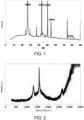
FIG1 is an XRD pattern of a negative electrode sheet prepared in Example 2 of the disclosure. -
FIG. 2 is a Raman spectrum of the negative electrode sheet prepared in Example 2 of the disclosure. - In order to make the purpose, technical solutions, and advantages of the embodiments of the disclosure clearer, the technical solutions in the embodiments of the disclosure will be clearly and completely described below. Certainly, the described embodiments are only part of the embodiments of the disclosure, rather than all embodiments. Based on the embodiments of the disclosure, all other embodiments obtained by persons of ordinary skill in this field without making any creative work are within the scope of protection of the disclosure.
- In the disclosure, the technical features described in an open manner include closed technical solutions composed of the listed features, and also include open technical solutions comprising the listed features.
- In the disclosure, when it comes to numerical ranges, unless otherwise specified, the numerical range is deemed to be continuous and includes the minimum and maximum values of the range, and every value between the minimum and maximum values. Furthermore, when range refers to an integer, every integer between the minimum value and the maximum value of the range is included. Additionally, when multiple ranges are provided to describe a feature or characteristic, the ranges may be merged. In other words, unless otherwise indicated, all ranges disclosed herein should be understood to encompass any and all sub-ranges subsumed therein.
- In the disclosure, there is no particular limitation on the specific dispersion and stirring methods.
- The reagents or instruments used in the disclosure without indicating the manufacturer are all conventional products that may be obtained through commercial purchase.
- An embodiment of the disclosure provides a negative electrode sheet, which includes the following.
- A negative electrode current collector and a negative electrode active material layer disposed on at least one surface of the negative electrode current collector are provided, in which the negative electrode active material layer includes a negative electrode active material, and the negative electrode active material includes graphite.
- The negative electrode sheet satisfies the following equation.
- 1.0×10⁻³≤(|La1-La2|/Lax)/(VOI×DV50)≤3.0×10-3, and a description of the equation is as follows.
- La1 is the average crystal size in the a-axis direction of the negative electrode sheet obtained by XRD measurement, and the unit is nm.
- La2 is the average crystal size in the a-axis direction of the negative electrode sheet obtained by Raman spectroscopy measurement, and the unit is nm.
- Lax is the larger value of La1 and La2.
- Voi is the ratio of the peak intensity I004 of the (004) crystal plane to the peak intensity I110 of the (110) crystal plane of the negative electrode sheet obtained by XRD measurement.
- Dv50 is the particle size corresponding to when the cumulative volume distribution percentage of the negative electrode active material reaches 50%, and the unit is µm.
- The La1 value of the negative electrode sheet may be obtained by adopting an X-ray diffraction (XRD) test and calculating using the Scherrer formula; in which the XRD test conditions may adopt methods known in the art. The La2 value of the negative electrode is tested by Raman spectroscopy and calculated by the following formula: La2=2.4×10⁻¹⁰×λ4×(AD/AG)-1, in which λ is the incident laser wavelength of the Raman spectrum, AD is the peak area of the D peak (located in the 1320 to 1380cm-1 wave band area) in the Raman spectrum, and AG is the peak area of the G peak (located in the 1560 to 1600cm-1 wave band area) in the Raman spectrum.
- For negative electrode active materials containing graphite, the change in the average crystal size La is affected by the graphitization degree. When heteroatoms or molecules are inserted between the surface layers of graphite, the average crystal size La is changed. Since the graphitization process is a nonlinear continuous and jump process, the physical and chemical structure of graphite is not uniform. When conditions such as pretreatment temperature and pressure are varied, new components with different graphitization degrees may coexist. When the components with different graphitization degrees reach a certain content, the Raman parameters for evaluating the degree of ordering may be different from the evolution trajectory of the XRD parameters. Therefore, there are certain differences between the La1 value and La2 value of the same negative electrode sheet.
- The inventors have found that the difference between La1 measured by XRD and La2 measured by Raman spectroscopy may be used to comprehensively evaluate the graphitization degree of the negative electrode sheet and the degree to which graphite is affected by heteroatoms. In the disclosure, the difference rate between La1 and La2 is expressed by the ratio of |La1-La2| to Lax. The greater the difference between the two values, the more internal defects there are in the graphite. The difference rate between La1 and La2 affects the fast charging performance of the battery on the one hand, and the high temperature resistance of the battery on the other. The inventors have found that when the difference rate between La1 and La2 is within a suitable range so that the negative electrode sheet satisfies the equation mentioned above, the battery has both excellent fast charging performance and high temperature performance, and has a high cycle life under fast charging or high temperature conditions.
- The Voi of the negative electrode sheet represents the orientation index of the material. Voi may be detected by a method as follows. The negative electrode sheet prepared is directly placed into an X-ray diffractometer, the peak intensity I004 of the (004) crystal plane diffraction peak and the peak intensity I110 of the (110) crystal plane diffraction peak of the negative electrode active material in the negative electrode sheet are obtained by X-ray diffraction analysis. The Voi of the negative electrode sheet is I004/I110.
- Dv50 is the particle size corresponding to when the cumulative volume distribution percentage of the negative electrode active material reaches 50%. The disclosure does not limit the detection method of
D V50. Persons skilled in the art may detect theD V50 of the negative electrode active material according to conventional technical means. For example, theD V50 is detected by laser particle sizer. - The inventors of the disclosure have found through extensive research that, for negative electrode sheets containing negative electrode active materials, VOI×
D V50 can comprehensively judge the morphological characteristics of the negative electrode active materials, such as orientation and particle size, by further combining the ratio of |La1-La2| to Lax, the grain size of the negative electrode sheet and the morphology characteristics of the negative electrode active material are reasonably controlled, thereby the fast charging performance and cycle life of the lithium ion battery are improved. - In an embodiment, the negative electrode sheet satisfies an equation as follows: 1.2×10⁻³≤(|La1-La2|/Lax)/(VOI×DV50)≤2.5×10-3. When the negative electrode sheet satisfies the range of the equation, the overall performance of the negative electrode sheet is relatively better, so that the fast charging performance and cycle life of the lithium ion battery are relatively more balanced. For example, in some embodiments, the value of (|La1-La2|/Lax)/(VOI×DV50) of the negative electrode sheet is 1.2×10⁻³, 1.3×10⁻³, 1.5×10⁻³, 1.8×10⁻³, 2.0×10⁻³, 2.3×10⁻³, 2.5×10⁻³.
- In an embodiment, the range of La1 is 30 to 70 nm, for example, 32 nm, 37 nm, 41 nm, 45 nm, 52 nm, 58 nm, 60 nm, 67 nm.
- In an embodiment, the range of La2 is 50 to 80 nm, for example, 55 nm, 59 nm, 65 nm, 67 nm, 69 nm, 72 nm, 75 nm, 79 nm.
- In an embodiment, the range of La1 is 45 to 60 nm, and the range of La2 is 65 to 75 nm.
- La1 and La2 of the negative electrode sheet may be controlled by graphitizing the negative electrode active material under different conditions such as temperature, time, and pressure. When the value of La1 or La2 of the negative electrode sheet is too small, the crystallinity of the negative electrode active material is relatively low and the capacity is small, which limits the improvement of the energy density of the lithium ion battery. When the value of La1 or La2 of the negative electrode sheet is too large, the diffusion distance of lithium ions after being inserted in the negative electrode active material layer is lengthened, resulting in an increase in diffusion resistance, and lithium precipitation is prone to occur during high-rate charging and discharging, thereby the cycle life of the battery is reduced.
- In an embodiment, the range of Voi is 10 to 35, for example, 10.5, 11.4, 12.7, 13.5, 15.9, 17.1, 24.4, 27.5, 33.9.
- In an alternative embodiment, the range of VOI is 11 to 15.
- The Voi of the negative electrode sheet may be controlled by methods such as adjusting the compaction density of the negative electrode sheet or adjusting the Voi value of the negative electrode active material. When the Voi value of the negative electrode sheet is small, the negative electrode active material more likely presents as being perpendicular to the current collector direction, the said direction is conducive to the insertion and extraction of lithium ions and then the fast charging performance of the battery can be significantly improved; when the Voi value is too small, the negative electrode sheet is prone to wrinkle during charging, thereby the cycle performance of the battery is degraded.
- In an embodiment, the range of
D V50 is 5 to 20 µm, for example, 7 µm, 8 µm, 10 µm, 11 µm, 13 µm, 15 µm, 18 µm. - In an alternative embodiment, the range of
D V50 is 8 to 15 µm. - When the Dv50 of the negative electrode active material is small, the distance path of lithium ion solid phase transmission is relatively shorter, which helps improve the fast charging performance of the battery. However,
D V50 should not be too small, which makes the processing of the negative electrode active material layer difficult, resulting in low compaction density of the negative electrode material and deterioration of the electrochemical performance of the battery. - In an embodiment, the porosity P of the negative electrode sheet is in a range of 20 to 45%, for example, 20%, 25%, 30%, 35%, 40%, 45%.
- In an alternative embodiment, the porosity P of the negative electrode sheet is in a range of 30 to 40%.
- Generally speaking, the porosity of the negative electrode sheet indirectly reflects the liquid-phase diffusion resistance of lithium ions inside the pores of the negative porous electrode. The larger the porosity, the smaller the liquid-phase diffusion resistance, which helps improve the fast charging performance of the battery. However, when the porosity is too high, the electronic conductivity of the negative electrode is decreased, thereby the electrochemical performance of the battery is affected. The inventors have found that, on the basis that the equation above is satisfied, when the porosity of the negative electrode sheet of the disclosure is in a range of 20 to 45%, especially in a range of 30 to 40%, the fast charging performance and cycle life of the battery containing the negative electrode sheet are relatively better.
- The graphite in the negative electrode active material of the disclosure may include natural graphite and/or artificial graphite. The negative electrode active material of the disclosure may be prepared by adopting at least one of needle coke, pitch coke, or petroleum coke as a raw material.
- As for the negative electrode sheet, the disclosure has no particular limitation on the negative electrode current collector, as long as the current collector has high conductivity and does not cause adverse chemical changes in the battery. For example, the following may be used: copper, stainless steel, aluminum, nickel, titanium, fired carbon; copper or stainless steel surface-treated with one of carbon, nickel, titanium, or silver; or an aluminum-cadmium alloy.
- The negative electrode active material layer of the negative electrode sheet may include a conductive agent and a binder in addition to the negative electrode active material.
- The conductive agent plays a role in improving the conductivity of the negative electrode active material layer. The disclosure has no particular limitation on the conductive agent. For example, the following may be used: carbon powders such as carbon black, acetylene black, Ketjen black, channel black, furnace black, lamp black, or thermal carbon black; graphite powders such as natural graphite or artificial graphite; conductive fibers such as carbon fibers or metal fibers; or conductive whiskers such as zinc oxide whiskers or potassium titanate whiskers.
- The binder plays a role in enhancing the adhesion among the conductive agent, the negative electrode active material, and the negative electrode current collector. The disclosure has no particular limitation on the binder. For example, the following may be used: polymer materials such as fluororesin binders, rubber binders, cellulose binders, polyol binders, polyolefin binders, polyimide binders, polyester binders, or silane binders.
- In addition, the negative electrode active material layer may further include a thickener, and carboxymethyl cellulose may be used as the thickener.
- It should be noted that the method for preparing the negative electrode sheet is not particularly limited in the disclosure, and persons skilled in the art may prepare a negative electrode sheet according to conventional methods.
- Exemplarily, the method for preparing the negative electrode sheet is as follows.
- The negative electrode current collector may be coated with a negative electrode slurry prepared by dissolving or dispersing the negative electrode active material and optionally a binder and a conductive agent in a solvent, followed by rolling or drying.
- Alternatively, the method for preparing the negative electrode sheet may be as follows. The negative electrode slurry is casted on a separate carrier, and then the film layer separated from the carrier is laminated on the negative electrode current collector.
- An embodiment of the disclosure provides a secondary battery, including a positive electrode sheet, a negative electrode sheet, and an electrolyte, in which the negative electrode sheet is the negative electrode sheet mentioned above.
- The positive electrode sheet of the disclosure includes a positive electrode current collector and a positive electrode active material layer disposed on at least one surface of the positive electrode current collector. The positive electrode active material layer includes a positive electrode active material, and may further include a conductive agent and/or a binder.
- The disclosure has no particular limitation on the positive electrode current collector, as long as the current collector has high conductivity and does not cause adverse chemical changes in the battery. For example, the following may be used: copper, stainless steel, aluminum, nickel, titanium, fired carbon; copper or stainless steel surface-treated with one of carbon, nickel, titanium, or silver; or an aluminum-cadmium alloy. The positive electrode current collector may be the same as or different from the negative electrode current collector of the disclosure.
- The positive electrode active material is a compound capable of reversibly inserting and deinserting lithium. For example, the positive electrode active material may include a lithium composite metal oxide, and the lithium composite metal oxide includes lithium and at least one metal selected from the group consisting of nickel (Ni), cobalt (Co), manganese (Mn), iron (Fe), and aluminum (Al). Specifically, the positive electrode active material may include at least one of Li(Ni0.6Mn0.2Co0.2)O2, Li(Ni0.7Mn0.2Co0.10)O2, Li(Ni0.8Mn0.1Co0.1)O2, Li(Ni0.8Co0.15Al0.05)O2, Li(Ni0.86Mn0.07Co0.05Al0.02)O2, and Li(Ni0.9Mn0.05Co0.05)O2.
- The conductive agent plays a role in improving the conductivity of the positive electrode active material layer, and the disclosure has no particular limitation on the conductive agent. The conductive agent in the positive electrode sheet may be the same as or different from the conductive agent in the negative electrode sheet of the disclosure.
- The binder plays a role in enhancing the adhesion among the conductive agent, the positive electrode active material, and the positive electrode current collector. The disclosure has no particular limitation on the binder. The binder in the positive electrode sheet may be the same as or different from the binder in the negative electrode sheet of the disclosure.
- It should be noted that the method for preparing the positive electrode sheet is not particularly limited in the disclosure, and persons skilled in the art may prepare a positive electrode sheet according to conventional methods.
- Exemplarily, the method for preparing the positive electrode sheet is as follows.
- The positive electrode current collector may be coated with a positive electrode slurry prepared by dissolving or dispersing the positive electrode active material and optionally a binder and a conductive agent in a solvent, followed by rolling or drying.
- Alternatively, the method for preparing the positive electrode sheet may be as follows. The positive electrode slurry is casted on a separate carrier, and then the film layer separated from the carrier is laminated on the positive electrode current collector.
- The electrolyte solution of the disclosure may be any electrolyte solution suitable for electrochemical energy storage devices in the art. The electrolyte solution includes an electrolyte and a solvent. The electrolyte may generally include a lithium salt. More specifically, the lithium salt may be an inorganic lithium salt and/or an organic lithium salt. The solvent in the electrolyte solution is usually a non-aqueous solvent. Specifically, the solvent includes at least one of ethylene carbonate, propylene carbonate, butylene carbonate, pentyl carbonate, dimethyl carbonate, diethyl carbonate, dipropyl carbonate, ethyl methyl carbonate, or halogenated derivatives thereof.
- The secondary battery may further include a separator. The separator is located between the positive electrode sheet and the negative electrode sheet and is used to separate the positive electrode sheet and the negative electrode sheet to prevent the positive electrode sheet and the negative electrode sheet from contacting and short-circuiting. The separator may be made of any material suitable for use as a separator for electrochemical energy storage devices in the art. Specifically, the separator includes at least one of polyethylene, polypropylene, polyvinylidene fluoride, aramid, polyethylene terephthalate, polytetrafluoroethylene, polyacrylonitrile, polyimide, polyamide, polyester, and natural fiber.
- An embodiment of the disclosure provides an electrical device, including the secondary battery mentioned above. The secondary battery serves as a power supply for the electrical device.
- The disclosure is further described below with specific embodiments as follows.
- This embodiment provided a lithium ion battery, and the specific preparation method was as follows.
- The needle coke raw material was crushed and sieved to obtain graphite powder; then graphitization was performed on the graphite powder at 2650°C for 6 hours under an inert atmosphere; and after cooling, crushing, and sieving, an active negative electrode material with a
D V50 of 10.5 µm was obtained. - The active negative electrode material, binder (sodium carboxymethyl cellulose), and conductive agent (acetylene black) were mixed in a mass ratio of 98:1.5:0.5, made into slurry by wet process, and the slurry was coated on the upper and lower surfaces of the negative electrode current collector (copper foil), and then the negative electrode sheet was obtained after drying (at temperature 85°C, for 5h), rolling, and slitting.
- The positive electrode active material Li(Ni0.8Mn0.1Co0.1)O2, binder (polyvinylidene fluoride), and conductive agent (acetylene black) were mixed in a mass ratio of 98:1:1, added with N-methylpyrrolidone (NMP), stirred under the action of a vacuum stirrer until the mixed system becomes a positive electrode slurry with uniform fluidity; the positive electrode slurry is evenly coated on the positive electrode current collector (aluminum foil) with a thickness of 9-12 µm; and then the positive electrode sheet is obtained after drying (at temperature 120°C, for 8h), rolling, and slitting.
- The electrolyte solution was a 1 mol/L LiPF6 solution, and the solvent was a mixed solvent of ethylene carbonate (EC), ethyl methyl carbonate (EMC), and diethyl carbonate (DEC), with the volume ratio of EC, EMC, and DEC being 1:1:1.
- Polyethylene (PE) separator coated with ceramic and polyvinylidene fluoride was adopted.
- The positive electrode sheet, separator, and negative electrode sheet prepared above were wound to obtain a bare battery core without liquid injection; the bare battery core was placed in an outer packaging foil, the electrolyte solution prepared was injected into the dried bare battery core, and a lithium ion battery was obtained after processes such as vacuum packaging, standing, formation, shaping, and sorting.
- This embodiment provided a lithium ion battery, the specific preparation method was basically the same as Example 1, while the difference was as follows.
- In the preparation of the negative electrode sheet, the needle coke raw material was crushed and sieved to obtain graphite powder; then, graphitization was performed on the graphite powder at 2500°C for 6 hours under an inert atmosphere. After cooling, crushing, and sieving, the active negative electrode material with a Dv50 of 10 µm was obtained.
- This embodiment provided a lithium ion battery, the specific preparation method was basically the same as Example 1, while the difference was as follows.
- In the preparation of the negative electrode sheet, the petroleum coke raw material was crushed and sieved to obtain graphite powder; then, graphitization was performed on the graphite powder at 3100°C for 8 hours under an inert atmosphere. After cooling, crushing, and sieving, the active negative electrode material with a Dv50 of 10.7 µm was obtained.
- This embodiment provided a lithium ion battery, the specific preparation method was basically the same as Example 1, while the difference was as follows.
- In the preparation of the negative electrode sheet, the petroleum coke raw material was crushed and sieved to obtain graphite powder; then, graphitization was performed on the graphite powder at 2900°C for 6 hours under an inert atmosphere. After cooling, crushing, and sieving, the active negative electrode material with a Dv50 of 15.1 µm was obtained.
- This embodiment provided a lithium ion battery, the specific preparation method was basically the same as Example 4, while the difference was as follows.
- In the preparation of the negative electrode sheet, the rolling pressure was adjusted so that the porosity of the negative electrode sheet prepared was 45%.
- This embodiment provided a lithium ion battery, the specific preparation method was basically the same as Example 4, while the difference was as follows.
- In the preparation of the negative electrode sheet, the rolling pressure was adjusted so that the porosity of the negative electrode sheet prepared was 22%.
- This embodiment provided a lithium ion battery, the specific preparation method was basically the same as Example 1, while the difference was as follows.
- In the preparation of the negative electrode sheet, the petroleum coke raw material was crushed and sieved to obtain graphite powder; then, graphitization was performed on the graphite powder at 2800°C for 6 hours under an inert atmosphere. After cooling, crushing, and sieving, the active negative electrode material with a Dv50 of 8.2 µm was obtained.
- This embodiment provided a lithium ion battery, the specific preparation method was basically the same as Example 1, while the difference was as follows.
- In the preparation of the negative electrode sheet, the needle coke raw material was crushed and sieved to obtain graphite powder; then, graphitization was performed on the graphite powder at 3000°C for 6 h under an inert atmosphere. After cooling, crushing, and sieving, the active negative electrode material with a Dv50 of 11.2 µm was obtained.
- This embodiment provided a lithium ion battery, the specific preparation method was basically the same as Example 1, while the difference was as follows.
- In the preparation of the negative electrode sheet, the needle coke raw material was crushed and sieved to obtain graphite powder; then, graphitization was performed on the graphite powder at 3100°C for 10 hours under an inert atmosphere. After cooling, crushing, and sieving, the active negative electrode material with a Dv50 of 5 µm was obtained.
- This embodiment provided a lithium ion battery, the specific preparation method was basically the same as Example 1, while the difference was as follows.
- In the preparation of the negative electrode sheet, the petroleum coke raw material was crushed and sieved to obtain graphite powder; then, graphitization was performed on the graphite powder at 2500°C for 6 hours under an inert atmosphere. After cooling, crushing, and sieving, the active negative electrode material with a Dv50 of 19.6 µm was obtained.
- This embodiment provided a lithium ion battery, the specific preparation method was basically the same as Example 1, while the difference was as follows.
- In the preparation of the negative electrode sheet, the asphalt coke raw material was crushed and sieved to obtain graphite powder; then, graphitization was performed on the graphite powder at 2800°C for 6 hours under an inert atmosphere. After cooling, crushing, and sieving, the active negative electrode material with a Dv50 of 10.2 µm was obtained.
- This embodiment provided a lithium ion battery, the specific preparation method was basically the same as Example 1, while the difference was as follows.
- In the preparation of the negative electrode sheet, the needle coke raw material was crushed and sieved to obtain graphite powder; then, graphitization was performed on the graphite powder at 3300°C for 10 hours under an inert atmosphere. After cooling, crushing, and sieving, the active negative electrode material with a Dv50 of 9.1 µm was obtained.
- This embodiment provided a lithium ion battery, the specific preparation method was basically the same as Example 1, while the difference was as follows.
- In the preparation of the negative electrode sheet, the asphalt coke raw material was crushed and sieved to obtain graphite powder; then, graphitization was performed on the graphite powder at 2500°C for 6 hours under an inert atmosphere. After cooling, crushing, and sieving, the active negative electrode material with a Dv50 of 18.2 µm was obtained.
- This comparative example provided a lithium ion battery, the specific preparation method was basically the same as Example 1, while the difference was as follows.
- In the preparation of the negative electrode sheet, the needle coke raw material was crushed and sieved to obtain graphite powder; then, graphitization was performed on the graphite powder at 2800°C for 4 hours under an inert atmosphere. After cooling, crushing, and sieving, the active negative electrode material with a Dv50 of 17.3 µm was obtained.
- This comparative example provided a lithium ion battery, the specific preparation method was basically the same as Example 1, while the difference was as follows.
- In the preparation of the negative electrode sheet, the asphalt coke raw material was crushed and sieved to obtain graphite powder; then, graphitization was performed on the graphite powder at 3000°C for 6 hours under an inert atmosphere. After cooling, crushing, and sieving, the active negative electrode material with a Dv50 of 6.1 µm was obtained.
- This comparative example provided a lithium ion battery, the specific preparation method was basically the same as Example 1, while the difference was as follows.
- In the preparation of the negative electrode sheet, the petroleum coke raw material was crushed and sieved to obtain graphite powder; then, graphitization was performed on the graphite powder at 3300°C for 6 hours under an inert atmosphere. After cooling, crushing, and sieving, the active negative electrode material with a Dv50 of 15.6 µm was obtained.
- This comparative example provided a lithium ion battery, the specific preparation method was basically the same as Example 1, while the difference was as follows.
- In the preparation of the negative electrode sheet, the petroleum coke raw material was crushed and sieved to obtain graphite powder; then, graphitization was performed on the graphite powder at 2650°C for 6 h under an inert atmosphere. After cooling, crushing, and sieving, the active negative electrode material with a Dv50 of 6.8 µm was obtained.
- The negative electrode active materials, the negative electrode sheets, and the lithium ion batteries prepared in the Examples and Comparative Examples were tested respectively, and the specific test items and methods were as follows.
- The La1 of the negative electrode sheet was obtained by testing and analyzing through the Rigku Ultima IV X-ray diffractometer of Rigaku Corporation of Japan. The XRD was calibrated by the silicon internal standard method, and the La1 was calculated by the Scherrer formula. The XRD test analysis conditions were: Cu target, scanning voltage of 40KV, current of 40mA, and scanning range of 5° to 90°. In order to reduce the error of spectrum fitting, the instrument measurement step size was 0.02° and the scanning speed was 5°/min.
- The La2 of the negative electrode sheet was obtained by testing and analyzing through the Thermo Fisher Raman spectrometer. La2 was calculated using the following formula: La2=2.4×10⁻¹⁰×λ4×(AD/AG)-1, in which λ was the incident laser wavelength of the Raman spectrum, AD was the peak area of the D peak (located in the 1320 to 1380cm-1 wave band area) in the Raman spectrum, and AG is the peak area of the G peak (located in the 1560 to 1600cm-1 wave band area) in the Raman spectrum. The Raman spectroscopy test analysis conditions were: at room temperature and normal atmospheric pressure, using a laser with a wavelength of 785 nm and a spot size of less than 1 µm2.
- The Voi of the negative electrode sheet may be obtained by using an X-ray diffractometer. According to the general rules of X-ray diffraction analysis and the method for determining the lattice parameters of graphite JIS K 0131-1996 and JB/T4220-2011, the X-ray diffraction spectrum of the negative electrode sheet was obtained. According to the formula VOI=I004/I110, the OI value of the negative electrode sheet was calculated, in which I004 is the peak intensity of the 004 characteristic diffraction peak, and I110 is the peak intensity of the 110 characteristic diffraction peak. The XRD test analysis conditions were: Cu target, scanning voltage of 40KV, current of 40mA, and scanning range of 5° to 90°. In order to reduce the error of spectrum fitting, the instrument measurement step size was 0.02° and the scanning speed was 5°/min.
- The
D V50 of the negative electrode active material was measured by adopting the laser particle size test method, and using the Malvern particle size tester. The test steps were as follows. The sample to be tested was dispersed in deionized water containing a dispersant (such as 0.03 wt% nonylphenol polyoxyethylene ether) to form a mixture. The mixture was ultrasonicated for 2 minutes, and then placed in a particle size tester for testing. - The porosity of the negative electrode sheet was measured by adopting a vacuum density meter. Specifically, a ten-thousandth micrometer (accuracy: 0.0001mm) was used to measure the apparent volume of the electrode sheet. Apparent volume = sample thickness × sample length × sample width. The true volume of the sample was measured by a vacuum density meter, and the porosity = (apparent volume - true volume) / apparent volume.
- The test used the BTSDA test system, the test temperature was 25°C, and the cycle test was performed as follows. The battery was charged to 4.45V at 3C constant current, and was charged to 0.05C at a constant voltage, stood for 10min, and then was discharged to 2.8V at 1C, stood for 10min, and this charge and discharge procedure was repeated for 200 cycles. The battery of 200th cycle was taken and disassembled, whether there was lithium precipitation on the negative electrode sheet was observed, and the ratio of the lithium precipitation area to the entire negative electrode sheet area was estimated. If the ratio of the lithium precipitation area to the entire electrode sheet area was less than 20%, then the situation was slight lithium precipitation; and if the ratio of the lithium precipitation area to the entire electrode sheet area was 20% or more, then the situation was severe lithium precipitation.
- Fast charging cycle life was tested as follows. A battery charge and discharge tester was used to perform the charge and discharge cycle test on the lithium ion battery at 25°C. The charge and discharge system was: the battery was charged at 3C constant current to 4.25V, and was charged at constant voltage until the current drops to 0.02C, stood for 5 minutes, and then was discharged at 1C constant current to 2.5V, and this was one cycle. As the battery cycles, the battery capacity continued to decay. When the capacity decayed to 80% of the initial discharge capacity, the number of cycles experienced was recorded as the fast charging cycle life of the battery.
- High temperature cycle life was tested as follows. A battery charge and discharge tester was used to test the lithium ion battery at 60°C. The charge and discharge system was: the battery was charged at 1C constant current to 4.25V, and was charged at constant voltage until the current drops to 0.02C, stood for 5 minutes, and then was discharged at 1C constant current to 2.5V, and this was one cycle. As the battery cycles, the battery capacity continued to decay. When the capacity decayed to 80% of the initial discharge capacity, the number of cycles experienced was recorded as the high temperature cycle life of the battery.
- The XRD spectrum and Raman spectrum of the negative electrode sheet prepared in Example 2 are shown in
FIG. 1 and FIG. 2 respectively, and other specific test results are shown in Table 1.Table 1 La1 (nm) La2 (nm) Von DV50 (µm) (|La1-La2|/Lax)/ (VOI*DV50) Porosity (%)) Lithium precipitation performance Fast charging cycle life High temperature cycle life Example 1 60 74.6 11.2 10.5 1.66E-03 38 No lithium precipitation 3950 1980 Example 2 58.9 69.4 12.6 10 1.20E-03 35 No lithium precipitation 3820 2050 Example 3 53.9 67 15 10.7 1.22E-03 38 No lithium precipitation 3970 1970 Example 4 48 63.1 11.4 15.1 1.39E-03 38 No lithium precipitation 3915 1960 Example 5 48.5 63.3 12.5 15.1 1.24E-03 45 No lithium precipitation 3620 1905 Example 6 48.2 63.2 11 15.1 1.43E-03 22 No lithium precipitation 3685 1920 Example 7 45.4 60.2 12.1 8.2 2.48E-03 31 No lithium precipitation 3840 1985 Example 8 63 77 15.2 11.2 1.07E-03 33 No lithium precipitation 3520 1810 Example 9 69.5 80 10.1 5 2.60E-03 31 No lithium precipitation 3550 1835 Example 10 40 56 12.9 19.6 1.13E-03 38 No lithium precipitation 3520 1850 Example 11 31.8 50.2 34.6 10.2 1.04E-03 39 No lithium precipitation 3505 1830 Example 12 73.2 85.5 15.2 9.1 1.04E-03 35 No lithium precipitation 3500 1800 Example 13 27.5 45.3 20 18.2 1.08E-03 38 No lithium precipitation 3490 1805 Comparative Example 1 61.1 76 18 17.3 0.63E-03 32 Slight lithium precipitation 2980 1560 Comparative Example 2 35.2 54.9 10.5 6.1 5.60E-03 35 No lithium precipitation 2970 1320 Comparative Example 3 55.7 68.1 14 15.6 8.34E-04 35 No lithium precipitation 2930 1580 Comparative Example 4 42.1 57.6 11.3 6.8 3.50E-03 35 Slight lithium precipitation 2940 1420 - According to the test results in Table 1, it can be seen that when the negative electrode sheet satisfies the equation: 1.0×10⁻³≤(|La1-La2|/Lax)/(VOI×DV50)≤3.0×10-3, the lithium ion batteries prepared have good fast charging cycle life and high temperature cycle life, and no lithium precipitation occurs under fast charging conditions. Particularly, when the negative electrode sheet satisfies the equation: 1.2×10⁻³≤(|La1-La2|/Lax)/(VOI×DV50)≤2.5×10-3, the fast charging cycle life and high temperature cycle life of the lithium ion batteries prepared are relatively higher. At the same time, according to the test results of Comparative Examples 1 to 4, when the calculated value of (|La1-La2|/Lax)/(VOI×DV50) of the negative electrode sheet is less than 1.0×10⁻³ or greater than 3.0×10⁻³, the cycle life and fast charging performance of the lithium ion batteries containing the negative electrode sheet are significantly reduced.
- On the basis that the negative electrode sheet satisfies that the calculated value of (|La1-La2|/Lax)/(VOI×DV50) is in a range of 1.0×10⁻³ to 3.0×10⁻³, the inventors further studied and found that when the porosity of the negative electrode sheet is in a range of 30% to 40%, the lithium ion battery prepared has better fast charging performance and cycle life.
Claims (13)
- A negative electrode sheet, comprising: a negative electrode current collector and a negative electrode active material layer disposed on at least one surface of the negative electrode current collector, the negative electrode active material layer comprising a negative electrode active material, wherein the negative electrode active material comprises graphite, the negative electrode sheet satisfies an equation as follows: 1.0×10⁻³≤(|La1-La2|/Lax)/(VOI×DV50)≤3.0×10-3;in the equation, La1 is an average crystal size in an a-axis direction of the negative electrode sheet obtained by XRD measurement, and a unit is nm,La2 is an average crystal size in the a-axis direction of the negative electrode sheet obtained by Raman spectroscopy measurement, and a unit is nm,Lax is a larger value of La1 and La2,Voi is a ratio of a peak intensity I004 of a (004) crystal plane to a peak intensity I110 of a (110) crystal plane of the negative electrode sheet obtained by XRD measurement, andDV50 is a particle size corresponding to when a cumulative volume distribution percentage of the negative electrode active material reaches 50%, and a unit is µm.
- The negative electrode sheet according to claim 1, wherein the negative electrode sheet satisfies an equation as follows: 1.2×10⁻³≤(|La1-La2|/Lax)/(VOI×DV50)≤2.5×10-3.
- The negative electrode sheet according to claim 1, wherein a range of La1 is 30 to 70 nm.
- The negative electrode sheet according to claim 1, wherein a range of La2 is 50 to 80 nm.
- The negative electrode sheet according to claim 3 or claim 4, wherein the range of La1 is 45 to 60 nm, and a range of La2 is 65 to 75 nm.
- The negative electrode sheet according to claim 1, wherein a range of VOI is 10 to 35.
- The negative electrode sheet according to claim 1, wherein a range of VOI is 11 to 15.
- The negative electrode sheet according to claim 1, wherein a range of DV50 is 5 to 20 µm.
- The negative electrode sheet according to claim 1, wherein a range of DV50 is 8 to 15 µm.
- The negative electrode sheet according to claim 1, wherein a porosity of the negative electrode sheet is 20 to 45%.
- The negative electrode sheet according to claim 1, wherein a porosity of the negative electrode sheet is 30 to 40%.
- A secondary battery, comprising: a positive electrode sheet, a negative electrode sheet, and an electrolyte, wherein the negative electrode sheet is the negative electrode sheet according to any one of claims 1 to 11.
- An electrical device, comprising the secondary battery according to claim 12.
Applications Claiming Priority (1)
| Application Number | Priority Date | Filing Date | Title |
|---|---|---|---|
| CN202310529702.8A CN116314612B (en) | 2023-05-11 | 2023-05-11 | Negative electrode plate and application thereof |
Publications (1)
| Publication Number | Publication Date |
|---|---|
| EP4478433A1 true EP4478433A1 (en) | 2024-12-18 |
Family
ID=86790871
Family Applications (1)
| Application Number | Title | Priority Date | Filing Date |
|---|---|---|---|
| EP24174266.7A Pending EP4478433A1 (en) | 2023-05-11 | 2024-05-06 | Negative electrode sheet, secondary battery and electrical device |
Country Status (4)
| Country | Link |
|---|---|
| US (1) | US20240379939A1 (en) |
| EP (1) | EP4478433A1 (en) |
| CN (1) | CN116314612B (en) |
| DE (1) | DE202024106829U1 (en) |
Citations (5)
| Publication number | Priority date | Publication date | Assignee | Title |
|---|---|---|---|---|
| US7906240B2 (en) * | 2004-01-16 | 2011-03-15 | Hitachi Chemical Co., Ltd. | Negative electrode for lithium secondary battery and lithium secondary battery |
| EP3565034A1 (en) * | 2018-05-04 | 2019-11-06 | Contemporary Amperex Technology Co., Limited | Negative electrode plate and battery |
| WO2020187106A1 (en) * | 2019-03-21 | 2020-09-24 | Ningde Amperex Technology Limited | Anode material, anode and electrochemical device comprising anode material |
| US20220336844A1 (en) * | 2020-07-31 | 2022-10-20 | Contemporary Amperex Technology Co., Limited | Secondary battery and preparation method thereof, and battery module, battery pack, and apparatus containing such secondary battery |
| US20230100932A1 (en) * | 2020-06-04 | 2023-03-30 | Ningde Amperex Technology Limited | Negative active material, electrochemical device that uses same, and electronic device |
Family Cites Families (11)
| Publication number | Priority date | Publication date | Assignee | Title |
|---|---|---|---|---|
| JP5064728B2 (en) * | 2005-06-27 | 2012-10-31 | 三菱化学株式会社 | Graphite composite particles for non-aqueous secondary battery, negative electrode active material containing the same, negative electrode and non-aqueous secondary battery |
| KR101348226B1 (en) * | 2005-12-05 | 2014-01-07 | 쇼와 덴코 가부시키가이샤 | Graphite material, carbon material for battery electrode and battery |
| JP5754098B2 (en) * | 2009-09-15 | 2015-07-22 | 三菱化学株式会社 | Carbon material for lithium ion secondary battery |
| JP5724199B2 (en) * | 2010-03-29 | 2015-05-27 | 三菱化学株式会社 | Anode material for non-aqueous electrolyte secondary battery, method for producing the same, and non-aqueous electrolyte secondary battery |
| JP2013222641A (en) * | 2012-04-18 | 2013-10-28 | Showa Denko Kk | Negative electrode material for lithium ion battery and application thereof |
| JP2021068491A (en) * | 2018-01-30 | 2021-04-30 | 昭和電工株式会社 | Graphite material, manufacturing method thereof, and application thereof |
| CN110010851B (en) * | 2018-04-28 | 2020-08-28 | 宁德时代新能源科技股份有限公司 | Lithium Ion Battery |
| CN108808068B (en) * | 2018-05-10 | 2019-09-27 | 宁德时代新能源科技股份有限公司 | Secondary battery |
| CN111960410A (en) * | 2020-08-11 | 2020-11-20 | 内蒙古恒胜新能源科技有限公司 | Preparation method of composite artificial graphite negative electrode material and lithium ion battery |
| CN115472827B (en) * | 2021-06-10 | 2025-07-08 | 国家能源投资集团有限责任公司 | Coal-based graphite anode material and preparation method and application thereof |
| CN115472829B (en) * | 2021-06-10 | 2025-05-06 | 国家能源投资集团有限责任公司 | Negative electrode material and its preparation method and application, negative electrode sheet and application |
-
2023
- 2023-05-11 CN CN202310529702.8A patent/CN116314612B/en active Active
-
2024
- 2024-04-30 US US18/650,126 patent/US20240379939A1/en active Pending
- 2024-05-06 DE DE202024106829.7U patent/DE202024106829U1/en active Active
- 2024-05-06 EP EP24174266.7A patent/EP4478433A1/en active Pending
Patent Citations (5)
| Publication number | Priority date | Publication date | Assignee | Title |
|---|---|---|---|---|
| US7906240B2 (en) * | 2004-01-16 | 2011-03-15 | Hitachi Chemical Co., Ltd. | Negative electrode for lithium secondary battery and lithium secondary battery |
| EP3565034A1 (en) * | 2018-05-04 | 2019-11-06 | Contemporary Amperex Technology Co., Limited | Negative electrode plate and battery |
| WO2020187106A1 (en) * | 2019-03-21 | 2020-09-24 | Ningde Amperex Technology Limited | Anode material, anode and electrochemical device comprising anode material |
| US20230100932A1 (en) * | 2020-06-04 | 2023-03-30 | Ningde Amperex Technology Limited | Negative active material, electrochemical device that uses same, and electronic device |
| US20220336844A1 (en) * | 2020-07-31 | 2022-10-20 | Contemporary Amperex Technology Co., Limited | Secondary battery and preparation method thereof, and battery module, battery pack, and apparatus containing such secondary battery |
Also Published As
| Publication number | Publication date |
|---|---|
| CN116314612B (en) | 2023-08-18 |
| DE202024106829U1 (en) | 2025-04-14 |
| US20240379939A1 (en) | 2024-11-14 |
| CN116314612A (en) | 2023-06-23 |
Similar Documents
| Publication | Publication Date | Title |
|---|---|---|
| EP4037015B1 (en) | Negative electrode for lithium ion secondary battery, and lithium ion secondary battery | |
| EP4170755A1 (en) | Positive electrode material, positive electrode pole piece, lithium secondary battery, battery module, battery pack, and apparatus | |
| EP2400586B1 (en) | Carbon material for lithium ion secondary batteries | |
| US8697285B2 (en) | Negative electrode material for nonaqueous secondary battery | |
| KR20220122714A (en) | Anode active material, manufacturing method thereof, secondary battery and battery module including secondary battery, battery pack and device | |
| CN103907225B (en) | Nonaqueous electrolytic solution secondary battery, its manufacture method and evaluation method | |
| EP4465380A1 (en) | Anode for lithium secondary battery and method for manufacturing same | |
| EP2610949A1 (en) | Powder for negative electrode material of lithium ion secondary battery, negative electrode for lithium ion secondary battery and negative electrode for capacitor using same, and lithium ion secondary battery and capacitor | |
| US20100003602A1 (en) | Electrode material for non-aqueous secondary battery | |
| EP4350809A1 (en) | Composite particles, negative electrode mixture layer and lithium ion seconary battery | |
| EP3226331A1 (en) | Positive electrode active material for non-aqueous electrolyte secondary battery and producing method therefor, and non-aqueous electrolyte secondary battery using said positive electrode active material | |
| Qie et al. | Cu-doped Li2 ZnTi3 O8 anode material with improved electrochemical performance for lithium-ion batteries | |
| US20240421304A1 (en) | Negative plate, secondary battery and electrical device | |
| EP4131484A1 (en) | Negative electrode material, negative electrode plate, electrochemical device comprising negative electrode plate and electronic device | |
| EP4362134A1 (en) | Anode active material, method for preparing same, and lithium secondary battery comprising same | |
| Zhang et al. | A simple method for industrialization to enhance the tap density of LiNi 0.5 Co 0.2 Mn 0.3 O 2 cathode material for high-specific volumetric energy lithium-ion batteries | |
| EP4228030A1 (en) | Cathode active material and lithium secondary battery using same | |
| EP4507023A2 (en) | Negative electrode sheet, secondary battery including the negative electrode sheet, and electric device | |
| EP4148832A1 (en) | Negative electrode material for lithium-ion secondary battery, negative electrode for lithium-ion secondary battery, and lithium-ion secondary battery | |
| KR102588919B1 (en) | Negative electrode for lithium secondary battery and lithium secondary battery containing the same | |
| EP4557403A1 (en) | Lithium secondary battery | |
| US20240379939A1 (en) | Negative electrode sheet, secondary battery and electrical device | |
| EP4447157A1 (en) | Cathode active material and manufacturing method therefor | |
| EP4447149A1 (en) | Magnetism alignment apparatus for negative electrodes and method for manufacturing negative electrodes using same | |
| EP4625590A1 (en) | Electrolyte, secondary battery, and electrical apparatus |
Legal Events
| Date | Code | Title | Description |
|---|---|---|---|
| PUAI | Public reference made under article 153(3) epc to a published international application that has entered the european phase |
Free format text: ORIGINAL CODE: 0009012 |
|
| STAA | Information on the status of an ep patent application or granted ep patent |
Free format text: STATUS: REQUEST FOR EXAMINATION WAS MADE |
|
| 17P | Request for examination filed |
Effective date: 20240506 |
|
| AK | Designated contracting states |
Kind code of ref document: A1 Designated state(s): AL AT BE BG CH CY CZ DE DK EE ES FI FR GB GR HR HU IE IS IT LI LT LU LV MC ME MK MT NL NO PL PT RO RS SE SI SK SM TR |