EP4477481A1 - Redundant brake system - Google Patents
Redundant brake system Download PDFInfo
- Publication number
- EP4477481A1 EP4477481A1 EP24150275.6A EP24150275A EP4477481A1 EP 4477481 A1 EP4477481 A1 EP 4477481A1 EP 24150275 A EP24150275 A EP 24150275A EP 4477481 A1 EP4477481 A1 EP 4477481A1
- Authority
- EP
- European Patent Office
- Prior art keywords
- controller
- hydraulic pressure
- current
- processor
- switch
- Prior art date
- Legal status (The legal status is an assumption and is not a legal conclusion. Google has not performed a legal analysis and makes no representation as to the accuracy of the status listed.)
- Pending
Links
Images




Classifications
-
- B—PERFORMING OPERATIONS; TRANSPORTING
- B60—VEHICLES IN GENERAL
- B60T—VEHICLE BRAKE CONTROL SYSTEMS OR PARTS THEREOF; BRAKE CONTROL SYSTEMS OR PARTS THEREOF, IN GENERAL; ARRANGEMENT OF BRAKING ELEMENTS ON VEHICLES IN GENERAL; PORTABLE DEVICES FOR PREVENTING UNWANTED MOVEMENT OF VEHICLES; VEHICLE MODIFICATIONS TO FACILITATE COOLING OF BRAKES
- B60T13/00—Transmitting braking action from initiating means to ultimate brake actuator with power assistance or drive; Brake systems incorporating such transmitting means, e.g. air-pressure brake systems
- B60T13/10—Transmitting braking action from initiating means to ultimate brake actuator with power assistance or drive; Brake systems incorporating such transmitting means, e.g. air-pressure brake systems with fluid assistance, drive, or release
- B60T13/66—Electrical control in fluid-pressure brake systems
-
- B—PERFORMING OPERATIONS; TRANSPORTING
- B60—VEHICLES IN GENERAL
- B60T—VEHICLE BRAKE CONTROL SYSTEMS OR PARTS THEREOF; BRAKE CONTROL SYSTEMS OR PARTS THEREOF, IN GENERAL; ARRANGEMENT OF BRAKING ELEMENTS ON VEHICLES IN GENERAL; PORTABLE DEVICES FOR PREVENTING UNWANTED MOVEMENT OF VEHICLES; VEHICLE MODIFICATIONS TO FACILITATE COOLING OF BRAKES
- B60T13/00—Transmitting braking action from initiating means to ultimate brake actuator with power assistance or drive; Brake systems incorporating such transmitting means, e.g. air-pressure brake systems
- B60T13/10—Transmitting braking action from initiating means to ultimate brake actuator with power assistance or drive; Brake systems incorporating such transmitting means, e.g. air-pressure brake systems with fluid assistance, drive, or release
- B60T13/12—Transmitting braking action from initiating means to ultimate brake actuator with power assistance or drive; Brake systems incorporating such transmitting means, e.g. air-pressure brake systems with fluid assistance, drive, or release the fluid being liquid
- B60T13/14—Transmitting braking action from initiating means to ultimate brake actuator with power assistance or drive; Brake systems incorporating such transmitting means, e.g. air-pressure brake systems with fluid assistance, drive, or release the fluid being liquid using accumulators or reservoirs fed by pumps
-
- B—PERFORMING OPERATIONS; TRANSPORTING
- B60—VEHICLES IN GENERAL
- B60T—VEHICLE BRAKE CONTROL SYSTEMS OR PARTS THEREOF; BRAKE CONTROL SYSTEMS OR PARTS THEREOF, IN GENERAL; ARRANGEMENT OF BRAKING ELEMENTS ON VEHICLES IN GENERAL; PORTABLE DEVICES FOR PREVENTING UNWANTED MOVEMENT OF VEHICLES; VEHICLE MODIFICATIONS TO FACILITATE COOLING OF BRAKES
- B60T8/00—Arrangements for adjusting wheel-braking force to meet varying vehicular or ground-surface conditions, e.g. limiting or varying distribution of braking force
- B60T8/32—Arrangements for adjusting wheel-braking force to meet varying vehicular or ground-surface conditions, e.g. limiting or varying distribution of braking force responsive to a speed condition, e.g. acceleration or deceleration
- B60T8/88—Arrangements for adjusting wheel-braking force to meet varying vehicular or ground-surface conditions, e.g. limiting or varying distribution of braking force responsive to a speed condition, e.g. acceleration or deceleration with failure responsive means, i.e. means for detecting and indicating faulty operation of the speed responsive control means
- B60T8/885—Arrangements for adjusting wheel-braking force to meet varying vehicular or ground-surface conditions, e.g. limiting or varying distribution of braking force responsive to a speed condition, e.g. acceleration or deceleration with failure responsive means, i.e. means for detecting and indicating faulty operation of the speed responsive control means using electrical circuitry
-
- B—PERFORMING OPERATIONS; TRANSPORTING
- B60—VEHICLES IN GENERAL
- B60T—VEHICLE BRAKE CONTROL SYSTEMS OR PARTS THEREOF; BRAKE CONTROL SYSTEMS OR PARTS THEREOF, IN GENERAL; ARRANGEMENT OF BRAKING ELEMENTS ON VEHICLES IN GENERAL; PORTABLE DEVICES FOR PREVENTING UNWANTED MOVEMENT OF VEHICLES; VEHICLE MODIFICATIONS TO FACILITATE COOLING OF BRAKES
- B60T13/00—Transmitting braking action from initiating means to ultimate brake actuator with power assistance or drive; Brake systems incorporating such transmitting means, e.g. air-pressure brake systems
- B60T13/74—Transmitting braking action from initiating means to ultimate brake actuator with power assistance or drive; Brake systems incorporating such transmitting means, e.g. air-pressure brake systems with electrical assistance or drive
-
- B—PERFORMING OPERATIONS; TRANSPORTING
- B60—VEHICLES IN GENERAL
- B60T—VEHICLE BRAKE CONTROL SYSTEMS OR PARTS THEREOF; BRAKE CONTROL SYSTEMS OR PARTS THEREOF, IN GENERAL; ARRANGEMENT OF BRAKING ELEMENTS ON VEHICLES IN GENERAL; PORTABLE DEVICES FOR PREVENTING UNWANTED MOVEMENT OF VEHICLES; VEHICLE MODIFICATIONS TO FACILITATE COOLING OF BRAKES
- B60T17/00—Component parts, details, or accessories of power brake systems not covered by groups B60T8/00, B60T13/00 or B60T15/00, or presenting other characteristic features
- B60T17/18—Safety devices; Monitoring
- B60T17/22—Devices for monitoring or checking brake systems; Signal devices
-
- B—PERFORMING OPERATIONS; TRANSPORTING
- B60—VEHICLES IN GENERAL
- B60T—VEHICLE BRAKE CONTROL SYSTEMS OR PARTS THEREOF; BRAKE CONTROL SYSTEMS OR PARTS THEREOF, IN GENERAL; ARRANGEMENT OF BRAKING ELEMENTS ON VEHICLES IN GENERAL; PORTABLE DEVICES FOR PREVENTING UNWANTED MOVEMENT OF VEHICLES; VEHICLE MODIFICATIONS TO FACILITATE COOLING OF BRAKES
- B60T17/00—Component parts, details, or accessories of power brake systems not covered by groups B60T8/00, B60T13/00 or B60T15/00, or presenting other characteristic features
- B60T17/18—Safety devices; Monitoring
- B60T17/22—Devices for monitoring or checking brake systems; Signal devices
- B60T17/221—Procedure or apparatus for checking or keeping in a correct functioning condition of brake systems
- B60T17/222—Procedure or apparatus for checking or keeping in a correct functioning condition of brake systems by filling or bleeding of hydraulic systems
-
- B—PERFORMING OPERATIONS; TRANSPORTING
- B60—VEHICLES IN GENERAL
- B60T—VEHICLE BRAKE CONTROL SYSTEMS OR PARTS THEREOF; BRAKE CONTROL SYSTEMS OR PARTS THEREOF, IN GENERAL; ARRANGEMENT OF BRAKING ELEMENTS ON VEHICLES IN GENERAL; PORTABLE DEVICES FOR PREVENTING UNWANTED MOVEMENT OF VEHICLES; VEHICLE MODIFICATIONS TO FACILITATE COOLING OF BRAKES
- B60T7/00—Brake-action initiating means
- B60T7/02—Brake-action initiating means for personal initiation
- B60T7/04—Brake-action initiating means for personal initiation foot actuated
-
- B—PERFORMING OPERATIONS; TRANSPORTING
- B60—VEHICLES IN GENERAL
- B60T—VEHICLE BRAKE CONTROL SYSTEMS OR PARTS THEREOF; BRAKE CONTROL SYSTEMS OR PARTS THEREOF, IN GENERAL; ARRANGEMENT OF BRAKING ELEMENTS ON VEHICLES IN GENERAL; PORTABLE DEVICES FOR PREVENTING UNWANTED MOVEMENT OF VEHICLES; VEHICLE MODIFICATIONS TO FACILITATE COOLING OF BRAKES
- B60T7/00—Brake-action initiating means
- B60T7/02—Brake-action initiating means for personal initiation
- B60T7/04—Brake-action initiating means for personal initiation foot actuated
- B60T7/042—Brake-action initiating means for personal initiation foot actuated by electrical means, e.g. using travel or force sensors
-
- B—PERFORMING OPERATIONS; TRANSPORTING
- B60—VEHICLES IN GENERAL
- B60T—VEHICLE BRAKE CONTROL SYSTEMS OR PARTS THEREOF; BRAKE CONTROL SYSTEMS OR PARTS THEREOF, IN GENERAL; ARRANGEMENT OF BRAKING ELEMENTS ON VEHICLES IN GENERAL; PORTABLE DEVICES FOR PREVENTING UNWANTED MOVEMENT OF VEHICLES; VEHICLE MODIFICATIONS TO FACILITATE COOLING OF BRAKES
- B60T8/00—Arrangements for adjusting wheel-braking force to meet varying vehicular or ground-surface conditions, e.g. limiting or varying distribution of braking force
- B60T8/17—Using electrical or electronic regulation means to control braking
- B60T8/172—Determining control parameters used in the regulation, e.g. by calculations involving measured or detected parameters
-
- B—PERFORMING OPERATIONS; TRANSPORTING
- B60—VEHICLES IN GENERAL
- B60T—VEHICLE BRAKE CONTROL SYSTEMS OR PARTS THEREOF; BRAKE CONTROL SYSTEMS OR PARTS THEREOF, IN GENERAL; ARRANGEMENT OF BRAKING ELEMENTS ON VEHICLES IN GENERAL; PORTABLE DEVICES FOR PREVENTING UNWANTED MOVEMENT OF VEHICLES; VEHICLE MODIFICATIONS TO FACILITATE COOLING OF BRAKES
- B60T8/00—Arrangements for adjusting wheel-braking force to meet varying vehicular or ground-surface conditions, e.g. limiting or varying distribution of braking force
- B60T8/32—Arrangements for adjusting wheel-braking force to meet varying vehicular or ground-surface conditions, e.g. limiting or varying distribution of braking force responsive to a speed condition, e.g. acceleration or deceleration
- B60T8/34—Arrangements for adjusting wheel-braking force to meet varying vehicular or ground-surface conditions, e.g. limiting or varying distribution of braking force responsive to a speed condition, e.g. acceleration or deceleration having a fluid pressure regulator responsive to a speed condition
- B60T8/40—Arrangements for adjusting wheel-braking force to meet varying vehicular or ground-surface conditions, e.g. limiting or varying distribution of braking force responsive to a speed condition, e.g. acceleration or deceleration having a fluid pressure regulator responsive to a speed condition comprising an additional fluid circuit including fluid pressurising means for modifying the pressure of the braking fluid, e.g. including wheel driven pumps for detecting a speed condition, or pumps which are controlled by means independent of the braking system
-
- B—PERFORMING OPERATIONS; TRANSPORTING
- B60—VEHICLES IN GENERAL
- B60T—VEHICLE BRAKE CONTROL SYSTEMS OR PARTS THEREOF; BRAKE CONTROL SYSTEMS OR PARTS THEREOF, IN GENERAL; ARRANGEMENT OF BRAKING ELEMENTS ON VEHICLES IN GENERAL; PORTABLE DEVICES FOR PREVENTING UNWANTED MOVEMENT OF VEHICLES; VEHICLE MODIFICATIONS TO FACILITATE COOLING OF BRAKES
- B60T8/00—Arrangements for adjusting wheel-braking force to meet varying vehicular or ground-surface conditions, e.g. limiting or varying distribution of braking force
- B60T8/32—Arrangements for adjusting wheel-braking force to meet varying vehicular or ground-surface conditions, e.g. limiting or varying distribution of braking force responsive to a speed condition, e.g. acceleration or deceleration
- B60T8/88—Arrangements for adjusting wheel-braking force to meet varying vehicular or ground-surface conditions, e.g. limiting or varying distribution of braking force responsive to a speed condition, e.g. acceleration or deceleration with failure responsive means, i.e. means for detecting and indicating faulty operation of the speed responsive control means
-
- B—PERFORMING OPERATIONS; TRANSPORTING
- B60—VEHICLES IN GENERAL
- B60T—VEHICLE BRAKE CONTROL SYSTEMS OR PARTS THEREOF; BRAKE CONTROL SYSTEMS OR PARTS THEREOF, IN GENERAL; ARRANGEMENT OF BRAKING ELEMENTS ON VEHICLES IN GENERAL; PORTABLE DEVICES FOR PREVENTING UNWANTED MOVEMENT OF VEHICLES; VEHICLE MODIFICATIONS TO FACILITATE COOLING OF BRAKES
- B60T8/00—Arrangements for adjusting wheel-braking force to meet varying vehicular or ground-surface conditions, e.g. limiting or varying distribution of braking force
- B60T8/32—Arrangements for adjusting wheel-braking force to meet varying vehicular or ground-surface conditions, e.g. limiting or varying distribution of braking force responsive to a speed condition, e.g. acceleration or deceleration
- B60T8/88—Arrangements for adjusting wheel-braking force to meet varying vehicular or ground-surface conditions, e.g. limiting or varying distribution of braking force responsive to a speed condition, e.g. acceleration or deceleration with failure responsive means, i.e. means for detecting and indicating faulty operation of the speed responsive control means
- B60T8/92—Arrangements for adjusting wheel-braking force to meet varying vehicular or ground-surface conditions, e.g. limiting or varying distribution of braking force responsive to a speed condition, e.g. acceleration or deceleration with failure responsive means, i.e. means for detecting and indicating faulty operation of the speed responsive control means automatically taking corrective action
- B60T8/94—Arrangements for adjusting wheel-braking force to meet varying vehicular or ground-surface conditions, e.g. limiting or varying distribution of braking force responsive to a speed condition, e.g. acceleration or deceleration with failure responsive means, i.e. means for detecting and indicating faulty operation of the speed responsive control means automatically taking corrective action on a fluid pressure regulator
-
- B—PERFORMING OPERATIONS; TRANSPORTING
- B60—VEHICLES IN GENERAL
- B60T—VEHICLE BRAKE CONTROL SYSTEMS OR PARTS THEREOF; BRAKE CONTROL SYSTEMS OR PARTS THEREOF, IN GENERAL; ARRANGEMENT OF BRAKING ELEMENTS ON VEHICLES IN GENERAL; PORTABLE DEVICES FOR PREVENTING UNWANTED MOVEMENT OF VEHICLES; VEHICLE MODIFICATIONS TO FACILITATE COOLING OF BRAKES
- B60T2240/00—Monitoring, detecting wheel/tyre behaviour; counteracting thereof
-
- B—PERFORMING OPERATIONS; TRANSPORTING
- B60—VEHICLES IN GENERAL
- B60T—VEHICLE BRAKE CONTROL SYSTEMS OR PARTS THEREOF; BRAKE CONTROL SYSTEMS OR PARTS THEREOF, IN GENERAL; ARRANGEMENT OF BRAKING ELEMENTS ON VEHICLES IN GENERAL; PORTABLE DEVICES FOR PREVENTING UNWANTED MOVEMENT OF VEHICLES; VEHICLE MODIFICATIONS TO FACILITATE COOLING OF BRAKES
- B60T2270/00—Further aspects of brake control systems not otherwise provided for
- B60T2270/40—Failsafe aspects of brake control systems
- B60T2270/402—Back-up
-
- B—PERFORMING OPERATIONS; TRANSPORTING
- B60—VEHICLES IN GENERAL
- B60T—VEHICLE BRAKE CONTROL SYSTEMS OR PARTS THEREOF; BRAKE CONTROL SYSTEMS OR PARTS THEREOF, IN GENERAL; ARRANGEMENT OF BRAKING ELEMENTS ON VEHICLES IN GENERAL; PORTABLE DEVICES FOR PREVENTING UNWANTED MOVEMENT OF VEHICLES; VEHICLE MODIFICATIONS TO FACILITATE COOLING OF BRAKES
- B60T2270/00—Further aspects of brake control systems not otherwise provided for
- B60T2270/40—Failsafe aspects of brake control systems
- B60T2270/403—Brake circuit failure
-
- B—PERFORMING OPERATIONS; TRANSPORTING
- B60—VEHICLES IN GENERAL
- B60T—VEHICLE BRAKE CONTROL SYSTEMS OR PARTS THEREOF; BRAKE CONTROL SYSTEMS OR PARTS THEREOF, IN GENERAL; ARRANGEMENT OF BRAKING ELEMENTS ON VEHICLES IN GENERAL; PORTABLE DEVICES FOR PREVENTING UNWANTED MOVEMENT OF VEHICLES; VEHICLE MODIFICATIONS TO FACILITATE COOLING OF BRAKES
- B60T2270/00—Further aspects of brake control systems not otherwise provided for
- B60T2270/40—Failsafe aspects of brake control systems
- B60T2270/404—Brake-by-wire or X-by-wire failsafe
-
- B—PERFORMING OPERATIONS; TRANSPORTING
- B60—VEHICLES IN GENERAL
- B60T—VEHICLE BRAKE CONTROL SYSTEMS OR PARTS THEREOF; BRAKE CONTROL SYSTEMS OR PARTS THEREOF, IN GENERAL; ARRANGEMENT OF BRAKING ELEMENTS ON VEHICLES IN GENERAL; PORTABLE DEVICES FOR PREVENTING UNWANTED MOVEMENT OF VEHICLES; VEHICLE MODIFICATIONS TO FACILITATE COOLING OF BRAKES
- B60T2270/00—Further aspects of brake control systems not otherwise provided for
- B60T2270/40—Failsafe aspects of brake control systems
- B60T2270/413—Plausibility monitoring, cross check, redundancy
-
- B—PERFORMING OPERATIONS; TRANSPORTING
- B60—VEHICLES IN GENERAL
- B60T—VEHICLE BRAKE CONTROL SYSTEMS OR PARTS THEREOF; BRAKE CONTROL SYSTEMS OR PARTS THEREOF, IN GENERAL; ARRANGEMENT OF BRAKING ELEMENTS ON VEHICLES IN GENERAL; PORTABLE DEVICES FOR PREVENTING UNWANTED MOVEMENT OF VEHICLES; VEHICLE MODIFICATIONS TO FACILITATE COOLING OF BRAKES
- B60T2270/00—Further aspects of brake control systems not otherwise provided for
- B60T2270/82—Brake-by-Wire, EHB
-
- B—PERFORMING OPERATIONS; TRANSPORTING
- B60—VEHICLES IN GENERAL
- B60Y—INDEXING SCHEME RELATING TO ASPECTS CROSS-CUTTING VEHICLE TECHNOLOGY
- B60Y2400/00—Special features of vehicle units
- B60Y2400/30—Sensors
- B60Y2400/303—Speed sensors
- B60Y2400/3032—Wheel speed sensors
-
- B—PERFORMING OPERATIONS; TRANSPORTING
- B60—VEHICLES IN GENERAL
- B60Y—INDEXING SCHEME RELATING TO ASPECTS CROSS-CUTTING VEHICLE TECHNOLOGY
- B60Y2400/00—Special features of vehicle units
- B60Y2400/81—Braking systems
Definitions
- the disclosure generally relates to an electro-hydraulic brake system.
- Brake systems for brake are essential to vehicles, and various types of brake systems for braking vehicles are proposed for the safety of drivers and passengers.
- an electric brake system including a cylinder-piston type hydraulic pressure supply device that receives the driver's intention to brake as an electrical signal when a driver steps on the brake pedal and supplies hydraulic pressure for brake to the wheel cylinder is becoming increasingly widespread. Furthermore, an electric brake system further including an auxiliary supply device against failures (for example, a failure of an Electronic Control Unit (ECU), a failure of a motor, cut-off of power supply, etc.) of a hydraulic pressure supply device that is electrically controlled is being developed.
- ECU Electronic Control Unit
- a brake system includes: a first hydraulic pressure supplier connected to a wheel cylinder of a vehicle; a second hydraulic pressure supplier connected to the wheel cylinder; a first controller configured to control the first hydraulic pressure supplier to provide first hydraulic pressure to the wheel cylinder; and a second controller configured to control the second hydraulic pressure supplier to provide second hydraulic pressure to the wheel cylinder.
- the first controller may be connected to a first power source of the vehicle and a wheel speed sensor of the vehicle, and configured to control a first current of the first power source to the wheel speed sensor via the second controller.
- the second controller may be connected to a second power source of the vehicle and the wheel speed sensor, and configured to allow or block the first current of the first power source to the wheel speed sensor and allow or block a second current of the second power source to the wheel speed sensor.
- the first controller may include a first current sensor configured to output a first current signal corresponding to the first current, and a first processor configured to identify wheel speed of the vehicle based on the first current signal.
- the second controller may include a first switch configured to allow or block the first current of the first power source to the wheel speed sensor, a second switch configured to allow or block the second current of the second power source to the wheel speed sensor, a second current sensor configured to output a second current signal corresponding to the second current, and a second processor configured to control the first switch and the second switch and identify wheel speed of the vehicle based on the second current signal.
- the first processor may provide a periodic signal to the second processor based on identification that the first hydraulic pressure supplier is in a normal state.
- the second processor may control the second switch to allow the first current to the wheel speed sensor and control the second switch to block the second current to the wheel speed sensor, based on reception of the periodic signal from the first processor.
- the first processor may provide no periodic signal to the second processor based on identification that the first hydraulic pressure supplier is in a failure state.
- the second processor may control the first switch to block the first current to the wheel speed sensor and control the second switch to allow the second current to the wheel speed sensor, based on identification that no periodic signal is received from the first processor.
- the first processor may provide a periodic signal to the second processor and control the first hydraulic pressure supplier according to an output signal from a pedal sensor of the vehicle, based on identification that the first hydraulic pressure supplier is in a normal state.
- the second processor may control the second hydraulic pressure supplier according to an output signal from the pedal sensor of the vehicle, based on identification that no periodic signal is received from the first processor.
- the second controller may further include a diode provided between a ground of the second controller and the first controller and configured to block current flowing from the first controller to the ground of the second controller.
- a brake system includes: a first hydraulic pressure supplier connected to a wheel cylinder of a vehicle; a second hydraulic pressure supplier connected to the wheel cylinder; a first controller configured to control the first hydraulic pressure supplier to provide first hydraulic pressure to the wheel cylinder; and a second controller configured to control the second hydraulic pressure supplier to provide second hydraulic pressure to the wheel cylinder.
- the first controller may be connected to a first power source of the vehicle and a wheel speed sensor of the vehicle, and configured to allow or block a first current of the first power source to the wheel speed sensor via the second controller.
- the second controller may be connected to a second power source of the vehicle and the wheel speed sensor, and configured to allow or block a second current of the second power source to the wheel speed sensor.
- the first controller may include a first switch configured to allow or block the first current of the first power source to the wheel speed sensor via the second controller, a first current sensor configured to output a first current signal corresponding to the first current, and a first processor configured to control the first switch and identify wheel speed of the vehicle based on the first current signal.
- the second controller may include a second switch configured to allow or block the second current of the second power source to the wheel speed sensor, a second current sensor configured to output a second current signal corresponding to the second current, and a second processor configured to identify wheel speed of the vehicle based on the second current signal.
- the first switch may be connected in series to the first current sensor between the first power source and the second controller.
- the second switch may be connected in series to the second current sensor between the second power source and the wheel speed sensor.
- the first processor may control the first switch to provide a periodic signal to the second processor and allow the first current to the wheel speed sensor, based on identification that the first hydraulic pressure supplier is in a normal state.
- the second processor may control the second switch to block the second current to the wheel speed sensor, based on reception of a periodic signal from the first processor.
- the first processor may control the first switch to provide no periodic signal to the second processor and block the first current to the wheel speed sensor, based on identification that the first hydraulic pressure supplier is in a failure state.
- the second processor may control the second switch to allow the second current to the wheel speed sensor, based on identification that no periodic signal is received from the first processor.
- the first processor may provide a periodic signal to the second processor and control the first hydraulic pressure supplier according to an output signal from a pedal sensor of the vehicle, based on identification that the first hydraulic pressure supplier is in a normal state.
- the second processor may control the second hydraulic pressure supplier according to an output signal from the pedal sensor of the vehicle, based on identification that no periodic signal is received from the first processor.
- the second controller may further include a diode provided between a ground of the second controller and the first controller, and configured to block current flowing form the first controller to the ground of the second controller.
- a brake system includes: a first hydraulic pressure supplier connected to a wheel cylinder of a vehicle; a second hydraulic pressure supplier connected to the wheel cylinder; a first controller configured to control the first hydraulic pressure supplier to provide first hydraulic pressure to the wheel cylinder; and a second controller configured to control the second hydraulic pressure supplier to provide second hydraulic pressure to the wheel cylinder.
- the first controller may be connected to a first power source of the vehicle and a wheel speed sensor of the vehicle, and configured to allow or block a first current of the first power source to the wheel speed sensor.
- the second controller may be connected to a second power source of the vehicle and the wheel speed sensor, and configured to allow or block a second current of the second power source to the wheel speed sensor.
- the first controller may include a first switch configured to allow or block the first current of the first power source to the wheel speed sensor, a first current sensor configured to output a first current signal corresponding to the first current, and a first processor configured to control the first switch and identify wheel speed of the vehicle based on the first current signal.
- the second controller includes a second switch configured to allow or block the second current of the second power source to the wheel speed sensor, a second current sensor configured to output a second current signal corresponding to the second current, and a second processor configured to identify wheel speed of the vehicle based on the second current signal.
- the first switch may be connected in series to the first current sensor between the first power source and the wheel speed sensor.
- the second switch may be connected in series to the second current sensor between the second power source and the wheel speed sensor.
- the first processor may provide a periodic signal to the second processor and control the first switch to allow the first current to the wheel speed sensor, based on that identification that the first hydraulic pressure supplier is in a normal state.
- the second processor may control the second switch to block the second current to the wheel speed sensor, based on reception of a periodic signal from the first processor.
- the first processor may provide no periodic signal to the second processor and control the first switch to block the first current to the wheel speed sensor, based on identification that the first hydraulic pressure supplier is in a failure state.
- the second processor may control the second switch to allow the second current to the wheel speed sensor, based on identification that no periodic signal is received from the first processor.
- the first processor may provide a periodic signal to the second processor and control the first hydraulic pressure supplier according to an output signal from a pedal sensor of the vehicle, based on identification that the first hydraulic pressure supplier is in a normal state.
- the second processor may control the second hydraulic pressure supplier according to an output signal from the pedal sensor of the vehicle, based on identification that no periodic signal is received from the first processor.
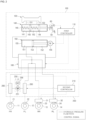
- FIG. 1 is a conceptual diagram showing a configuration of a vehicle according to an embodiment of the present disclosure.
- a vehicle 1 may include a body forming an appearance and accommodating a driver and/or baggage therein, a chassis including components of the vehicle 1 except for the body, and wheels 11, 12, 13, and 14 rotating to move the vehicle 1.
- the vehicle 1 may include, for example, a first wheel 11 provided in a front and right side of the vehicle 1, a second wheel 12 provided in a front and left side of the vehicle 1, a third wheel 13 provided in a rear and right side of the vehicle 1, and/or a fourth wheel 14 provided in a rear and left side of the vehicle 1.
- a number of the wheels 11, 12, 13, and 14 is not limited to four, and the vehicle 1 can have two, three or more than four wheels.
- Each of the wheels 11, 12, 13, and 14 may be provided with a disc coupled to the corresponding wheel 11, 12, 13, or 14 and rotating together with the wheel 11, 12, 13, or 14. Also, each of the wheels 11, 12, 13, and 14 may be provided with a brake caliper that interferes with a rotation of the disc by using friction. Due to the friction between the disc and brake pads included in the brake caliper, the wheels 11, 12, 13, and 14 and the disc may be braked or stop rotating.
- wheel cylinders 21, 22, 23, and 24 accommodating a pressurizing medium such as brake oil to move the brake pads such that the brake pads press the disc using pressure of the pressurizing medium (hereinafter, referred to as 'hydraulic pressure') may be provided.
- a pressurizing medium such as brake oil to move the brake pads such that the brake pads press the disc using pressure of the pressurizing medium (hereinafter, referred to as 'hydraulic pressure')
- a first wheel cylinder 21 is installed in the first wheel 11
- a second wheel cylinder 22 is installed in the second wheel 12
- a third wheel cylinder 23 is installed in the third wheel 13
- a fourth wheel cylinder 24 is installed in the fourth wheel 14.
- a number of the wheel cylinders 21, 22, 23, and 24 is not limited to four, and the vehicle 1 can have two, three or more than four wheel cylinders.
- the brake caliper may include parking brakes 31 and 32 for moving the brake pads by using an electrical-mechanical force without any hydraulic pressure such that the brake pads press the disc.
- brake calipers associated with the third wheel 13 and the fourth wheel 14 provided in a rear portion of the vehicle 1 may be respectively provided with a first parking brake 31 and a second parking brake 32.
- Each of the first and second parking brakes 31 and 32 may include a motor having a rotatable shaft, and a spindle configured to be linearly movable according to a rotation of the rotatable shaft of the motor. By the linear movement of the spindle, the brake pads may move linearly to press the disc.
- Each of the first and second parking brakes 31 and 32 may move the brake pads toward the disc in response to a parking brake application signal. Also, each of the first and second parking brakes 31 and 32 may separate or move the brake pads away from the disc in response to a parking brake release signal.
- the vehicle 1 may further include a brake pedal 50 for obtaining a driver's intention to brake, and a first hydraulic pressure supply device 100 and a second hydraulic pressure supply device 200 for providing the pressurized medium to the wheel cylinders 21, 22, 23, and 24 to brake the wheels 11, 12, 13, and 14.
- a brake pedal 50 for obtaining a driver's intention to brake
- a first hydraulic pressure supply device 100 and a second hydraulic pressure supply device 200 for providing the pressurized medium to the wheel cylinders 21, 22, 23, and 24 to brake the wheels 11, 12, 13, and 14.
- the first hydraulic pressure supply device 100 may generate pressure of the pressurized medium (hereinafter, referred to as 'hydraulic pressure') for braking the wheels 11, 12, 13, and 14.
- the first hydraulic pressure supply device 100 may generate hydraulic pressure based on the driver's intention to brake through the brake pedal 50 or a control signal for controlling brakes, and distribute the generated hydraulic pressure to the wheel cylinders 21, 22, 23, and 24.
- Internal pressure of the wheel cylinders 21, 22, 23, and 24 may depend on the hydraulic pressure provided from the first hydraulic pressure supply device 100.
- the wheels 11, 12, 13, and 14 may be respectively braked depending on the internal pressure of the wheel cylinders 21, 22, 23, and 24.
- the first hydraulic pressure supply device 100 may include a first hydraulic pressure supplier 150 configured to provide hydraulic pressure to the wheel cylinders 21, 22, 23, and 24, and a first controller 110 configured to control the first hydraulic pressure supplier 150.
- the first controller 110 may control the first hydraulic pressure supplier 150 to provide and/or distribute hydraulic pressure to the wheel cylinders 21, 22, 23, and 24 based on the driver's intention to brake through the brake pedal 50 or the control signal for controlling the brakes.
- the first controller 110 may be implemented with one or more memories configured to store computer executable instructions and/or one or more processors configured to execute the computer executable instructions stored in the memory.
- the second hydraulic pressure supply device 200 may be provided on a connection flow path connecting the first hydraulic pressure supply device 100 to some of the wheel cylinders 21, 22, 23, and 24, and generate hydraulic pressure for braking some of the wheels 11, 12, 13, and 14.
- the second hydraulic pressure supply device 200 may be provided on a connection flow path connecting the first hydraulic pressure supply device 100 to the first and second wheel cylinders 21 and 22, and generate hydraulic pressure for braking the first and second wheels 11 and 12.
- the second hydraulic pressure supply device 200 may be provided preliminarily or additionally with respect to the first hydraulic pressure supply device 100.
- the second hydraulic pressure supply device 200 may be deactivated while the first hydraulic pressure supply device 100 normally operates.
- the second hydraulic pressure supply device 200 may generate hydraulic pressure, instead of the first hydraulic pressure supply device 100, when the operation of the first hydraulic pressure supply device 100 is in an abnormal or failure state (e.g. power supply to the first hydraulic pressure supply device 100 is cut off or the first hydraulic pressure supply device 100 breaks down).
- the second hydraulic pressure supply device 200 may generate hydraulic pressure based on the driver's intention to brake through the brake pedal 50 or a control signal for controlling brakes, and distribute the generated hydraulic pressure to some of the wheel cylinders 21, 22, 23, and 24.
- the second hydraulic pressure supply device 200 may provide hydraulic pressure to the first and second wheel cylinders 21 and 22.
- the second hydraulic pressure supply device 200 may include a second hydraulic pressure supplier 250 configured to provide hydraulic pressure to the first and second wheel cylinders 21 and 22, and a second controller 210 configured to control the second hydraulic pressure supplier 250.
- the second controller 210 may control the second hydraulic pressure supplier 250 to provide and/or distribute hydraulic pressure to some of the wheel cylinders 21, 22, 23, and 24 based on the driver's intention to brake through the brake pedal 50.
- the second controller 210 may be implemented with one or more memories configured to store computer executable instructions and/or one or more processors configured to execute the computer executable instructions stored in the memory.
- the second hydraulic pressure supply device 200 may supply power from a power network that is different or separate from another power network of the first hydraulic pressure supply device 100.
- the second hydraulic pressure supply device 200 may receive power from a power source that is different or separate from another power network of the first hydraulic pressure supply device 100.
- the first hydraulic pressure supply device 100 may receive power from a first battery B1
- the second hydraulic pressure supply device 200 may receive power from a second battery B2 that is different or separate from the first battery B1.
- the second hydraulic pressure supply device 200 may receive power from a power network that is different from another power network of the first hydraulic pressure supply device 100.
- the first hydraulic pressure supply device 100 may receive power from a first power network
- the second hydraulic pressure supply device 200 may receive power from a second power network that is different from the first power network.
- the first hydraulic pressure supply device 100 may supply hydraulic pressure to all of the first, second, third, and fourth wheel cylinders 21, 22, 23, and 24 to brake the first, second, third, and fourth wheels 11, 12, 13, and 14.
- the second hydraulic pressure supply device 200 may supply hydraulic pressure to some wheel cylinders such as the first and second wheel cylinders 21 and 22 to brake the first and second wheels 11 and 12.
- the first and second parking brakes 31 and 32 may brake the third and fourth wheels 13 and 14.
- the second hydraulic pressure supply device 200 and the parking brakes 31 and 33 may be provided preliminarily or additionally against a failure of the first hydraulic pressure supply device 100.
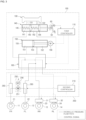
- FIGS. 2 and 3 are conceptual diagrams for showing configurations of a brake system according to embodiments of the present disclosure.
- the first hydraulic pressure supply device 100 may include a reservoir 130, a master cylinder 140, the first hydraulic pressure supplier 150, a first hydraulic pressure controller 160, and the first controller 110.
- One or more of the reservoir 130, the master cylinder 140, the first hydraulic pressure supplier 150, the first hydraulic pressure controller 160, and the first controller 110 of FIGS. 2 and 3 may be not essential components of the first hydraulic pressure supply device 100, and may be omitted from the first hydraulic pressure supply device 100.
- the reservoir 130 may store a medium such as brake oil.
- the reservoir 130 may be connected to components to supply or receive the medium.
- the reservoir 130 may be hydraulically connected to the master cylinder 140 through reservoir flow paths 131 and 132.
- the master cylinder 140 may compress and discharge the pressurized medium accommodated therein according to a force generated by the movement of the brake pedal 50.
- the master cylinder 140 may include a first master chamber 141 and a second master chamber 142 formed by a cylinder block 145.
- the first master chamber 141 and the second master chamber 142 may be provided with, or divided by, a first master piston 143 and a second master piston 144, respectively.
- the first hydraulic pressure supplier 150 may provide hydraulic pressure of the pressurized medium in response to a control signal from the first controller 110.
- the first hydraulic pressure supplier 150 may include a cylinder block 155 accommodating the medium, a hydraulic piston 153 configured to move back and forth inside the cylinder block 155, and hydraulic chambers 151 and 152 partitioned by the hydraulic piston 153.
- One or more of the cylinder block 155, the hydraulic piston 153, and the hydraulic chambers 151 and 152 may be not essential components of the first hydraulic pressure supplier 150, and may be omitted from the first hydraulic pressure supplier 150.
- hydraulic pressure may be generated in the hydraulic chambers 151 and 152.
- the hydraulic pressure of the hydraulic chambers 151 and 152 may be transferred to the wheel cylinders 21, 22, 23, and 24 via the first hydraulic pressure controller 160.
- the first hydraulic pressure supplier 150 may include a first hydraulic chamber 151 located in front of the hydraulic piston 153 (e.g. a left side of the hydraulic piston 153 in FIG. 2 ), and a second hydraulic chamber 152 located behind the hydraulic piston 153 (e.g. a right side of the hydraulic piston 153 in FIG. 2 ).
- the first hydraulic chamber 151 may be defined by the cylinder block 155 and one surface (for example, a front surface) of the hydraulic piston 153, and a volume of the first hydraulic chamber 151 may be changed according to a movement of the hydraulic piston 153.
- the second hydraulic chamber 152 may be defined by the cylinder block 155 and another surface (for instance, a rear surface) of the hydraulic piston 153, and a volume of the second hydraulic chamber 152 may be changed according to a movement of the hydraulic piston 153.
- the first hydraulic chamber 151 and the second hydraulic chamber 152 may be hydraulically connected to the first hydraulic pressure controller 160 by hydraulic pressure flow paths.
- the first hydraulic pressure supplier 150 may include a first motor 156 configured to generate or provide torque for moving the hydraulic piston 153. Also, the first hydraulic pressure supplier 150 may further include a power conversion unit that converts rotary torque of the first motor 156 into a translational movement of the hydraulic piston 153.
- the first hydraulic pressure contr"Iler'160 may be provided between the first hydraulic pressure supplier 150 and the wheel cylinders 21, 22, 23, and 24.
- the first hydraulic pressure controller 160 may include, for example, a plurality of hydraulic pressure flow paths or hydraulic connections extending from the first hydraulic pressure supplier 150 to the wheel cylinders 21, 22, 23, and 24, and a first valve block in which a plurality of valves configured to selectively allow or block a flow of the pressurized medium through the plurality of hydraulic pressure flow paths are provided.
- the first hydraulic pressure controller 160 may control the hydraulic pressure flow paths to guide hydraulic pressure generated by the first hydraulic pressure supplier 150 to the wheel cylinders 21, 22, 23, and 24 or to retrieve hydraulic pressure of the wheel cylinders 21, 22, 23, and 24 to the first hydraulic pressure supplier 150.
- the first hydraulic pressure controller 160 may control the hydraulic pressure flow paths to guide hydraulic pressure generated by the first hydraulic chamber 151 to the wheel cylinders 21, 22, 23, and 24 while the hydraulic piston 153 moves forward, in response to an increase of a stroke of the brake pedal 50. Also, the first hydraulic pressure controller 160 may control the hydraulic pressure flow paths to guide hydraulic pressure generated by the second hydraulic chamber 151 to the wheel cylinders 21, 22, 23, and 24 while the hydraulic piston 153 moves forward and then moves backward.
- the first hydraulic pressure controller 160 may control the hydraulic pressure flow paths to retrieve hydraulic pressure of the wheel cylinders 21, 22, 23, and 24 to the first hydraulic chamber 151 while the hydraulic piston 153 moves backward, in response to a decrease of a stroke of the brake pedal 50. Also, the first hydraulic pressure controller 160 may control the hydraulic pressure flow paths to retrieve hydraulic pressure of the wheel cylinders 21, 22, 23, and 24 to the second hydraulic pressure chamber 152 while the hydraulic piston 153 moves forward and then moves backward.
- the first hydraulic pressure controller 160 may control the hydraulic pressure flow paths to guide hydraulic pressure generated by the master cylinder 140 to the wheel cylinders 21, 22, 23, and 24 or to retrieve hydraulic pressure of the wheel cylinders 21, 22, 23, and 24 to the master cylinder 140.
- the first hydraulic pressure controller 160 may control the hydraulic pressure flow paths to guide hydraulic pressure generated in the first master chamber 141 to the first and second wheel cylinders 21 and 22 while the first master piston 143 moves forward, and to guide hydraulic pressure generated in the second master chamber 142 to the third and fourth wheel cylinders 23 and 24 while the second master piston 144 moves forward.
- a failure state e.g. a disabled state
- the first hydraulic pressure controller 160 may control the hydraulic pressure flow paths to guide hydraulic pressure generated in the first master chamber 141 to the first and second wheel cylinders 21 and 22 while the first master piston 143 moves forward, and to guide hydraulic pressure generated in the second master chamber 142 to the third and fourth wheel cylinders 23 and 24 while the second master piston 144 moves forward.
- a state in which the master cylinder 140 is hydraulically connected to the wheel cylinders 11, 21, 31, and 41 due to occurrence of a failure or abnormality in the first hydraulic pressure supplier 150 is referred to as a fallback mode.
- a flow path for guiding hydraulic pressure generated by the master cylinder 140 to the wheel cylinders 21, 22, 23, and 24 may be formed in or by the first hydraulic pressure controller 160.
- the brake system may operate in the fallback mode.
- the first controller 110 may include a plurality of semiconductor devices, and may be, for instance, an Electronic Control Unit (ECU).
- the first controller 110 may include, for example, a plurality of processors and/or a plurality of memories as described above.
- the first controller 110 may receive a pedal signal representing a user's intention to brake from a pedal sensor 60.
- the pedal sensor 60 may detect a movement of the brake pedal 50 configured to be movable by a user's intention to brake by pressing the brake pedal 50 by the driver, and output an electrical signal (e.g. the pedal signal) depending on a movement distance and/or movement velocity of the brake pedal 50.
- the first controller 110 may provide an electrical signal for supplying hydraulic pressure to the wheel cylinders 21, 22, 23, and 24 or retrieving hydraulic pressure from the wheel cylinders 21, 22, 23, and 24 to the first hydraulic pressure supplier 150 and the first hydraulic pressure controller 160, in response to the pedal signal.
- the first controller 110 may transmit and receive data to and from the second controller 210.
- the first controller 110 may transmit and receive data to and from the second controller 210 through an in-vehicle communication network or through a data line directly connected to the second controller 210.
- the first controller 110 may transmit an electrical signal to the second controller 210 periodically. However, in a failure state, the first controller 110 cannot transmit a periodic signal to the second controller 210 or the second controller 210 may not receive the periodic signal from the first controll23 110.
- the second hydraulic pressure supply device 200 may be provided on flow paths between the first and second wheel cylinders 21 and 22 and the first hydraulic pressure supply device 100.
- the second hydraulic pressure supply device 200 may include a second hydraulic pressure supplier 250, a second hydraulic pressure controller 260, and the second controller 210.
- One or more of the second hydraulic pressure supplier 250, the second hydraulic pressure controller 260, and the second controller 210, as shown in FIGS. 2 and 3 , may be not essential components of the second hydraulic pressure supply device 200, and may be omitted from the second hydraulic pressure supply device 200.
- the second hydraulic pressure supplier 250 may provide hydraulic pressure of the pressurized medium in response to a control signal from the second controller 210.
- the second hydraulic pressure supplier 250 may include a pump 251 configured to rotate and pump the pressurized medium, and a second motor 256 configured to generate or provide torque for driving the pump 251.
- the second hydraulic pressure controller 260 may be provided between the first and second hydraulic pressure suppliers 150 and 250 and the first and second wheel cylinders 21 and 22.
- the second hydraulic pressure controller 260 may include, for example, a plurality of hydraulic pressure flow paths extending from the second hydraulic pressure controller 260 to the first and second wheel cylinders 21 and 22, and a second valve block in which a plurality of valves configured to selectively allow or block a flow of the pressurized medium through the plurality of hydraulic pressure flow paths are provided.
- the second hydraulic pressure controller 260 may selectively open or close a hydraulic pressure flow path between the first hydraulic pressure supplier 150 and the first and second wheel cylinders 21 and 22. For example, while the first hydraulic pressure supplier 150 is in a normal state, the second hydraulic pressure controller 260 may open the hydraulic pressure flow path between the first hydraulic pressure supplier 150 and the first and second wheel cylinders 21 and 22 to hydraulically connect between the first hydraulic pressure supplier 150 and the first and second wheel cylinders 21 and 22, as shown in FIG. 2 .
- the second hydraulic pressure controller 260 may close the hydraulic pressure flow path between the first hydraulic pressure supplier 150 and the first and second wheel cylinders 21 and 22 to block the hydraulic connection between the first hydraulic pressure supplier 150 and the first and second wheel cylinders 21 and 22, as shown in FIG. 3 .
- the second hydraulic pressure controller 260 may control the hydraulic pressure flow path to guide hydraulic pressure generated by the second hydraulic pressure supplier 250 to the first and second wheel cylinders 21 and 22 or to retrieve hydraulic pressure of the first and second wheel cylinders 21 and 22 to the reservoir 130, as shown in FIG. 3 .
- the second hydraulic pressure controller 260 may control or form the hydraulic pressure flow path to guide hydraulic pressure provided from the pump 251 to the first and second wheel cylinders 21 and 22. Also, in response to a decrease of a stroke of the brake pedal 50, the second hydraulic pressure controller 160 may control or form the hydraulic pressure flow path to retrieve hydraulic pressure of the first and second wheel cylinders 21 and 22 to the reservoir 130.
- the second controller 210 may include a plurality of semiconductor devices, and may be, for example, but not limited to, an ECU.
- the second controller 210 may include, for example, a plurality of processors and/or a plurality of memories as described above.
- the second controller 210 may transmit and receive data to and from the first controller 110.
- the second controller 210 may transmit and receive data to and from the first controller 110 through an in-vehicle communication network or through a data line directly connected to the first controller 110.
- the second controller 210 may receive an electrical signal periodically from the first controller 110 while the first controller 110 is in the normal state.
- the second controller 210 may identify the normal state of the first controller 110 based on a periodic signal from the first controller 110. Meanwhile, the second controller 210 may identify a failure state of the first controller 110 based on identification that no electrical signal has been received from the first controller 110 for a predetermined time period.
- the second controller 210 may receive a pedal signal representing a user's intention to brake from the pedal sensor 60.
- the second controller 210 may provide an electrical signal for controlling to supply hydraulic pressure to the first and second wheel cylinders 21 and 22 to the second hydraulic pressure supplier 250 and the second hydraulic pressure controller 260 to brake the first and second wheels 11 and 12, in response to the pedal signal.
- the second controller 210 may provide an electrical signal for braking the third and fourth wheels 13 and 14 to the first and second parking brakes 31 and 32 to brake the third and fourth wheels 13 and 14, in response to the pedal signal.
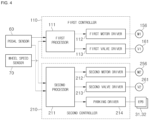
- FIG. 4 is a block diagram for showing a configuration of first and second controllers included in a brake system according to an embodiment of the present disclosure.
- the vehicle 1 may include the pedal sensor 60, a wheel speed sensor 70, the parking brakes 31 and 32, the first hydraulic pressure supply device 100, and the second hydraulic pressure supply device 200.
- the first hydraulic pressure supply device 100 may include the first motor 156, a first valve block 161, and the first controller 110.
- the second hydraulic pressure supply device 200 may include the second motor 256, a second valve block 261, and the second controller 210.
- one or more of the first motor 156, the first valve block 161, and the first controller 110 may be not essential components of the first hydraulic pressure supply device 100, and may be omitted from the first hydraulic pressure supply device 100.
- one or more of the second motor 256, the second valve block 261, and the second controller 210 may be not essential components of the second hydraulic pressure supply device 200, and may be omitted from the second hydraulic pressure supply device 200.
- the pedal sensor 60 may detect a movement of the brake pedal 50 configured to be movable by a user's intention to brake by pressing the brake pedal 50 by the driver, and output an electrical signal (i.e. a pedal signal) representing a movement distance and/or movement velocity of the brake pedal 50 to the first controller 110 and the second controller 210.
- an electrical signal i.e. a pedal signal
- the pedal sensor 60 may include a first pedal sensor and a second pedal sensor. Each of the first pedal sensor and the second pedal sensor may detect a movement distance and/or movement velocity of the brake pedal 50, and provide electrical signals (i.e. a first pedal signal and a second pedal signal) representing the detected movement distance and/or movement velocity to the first controller 110 and the second controller 210.
- the power for the first pedal sensor may be supplied from a different power source (for example, a different battery or a different power network) from power source of the second pedal sensor.
- the first pedal sensor may obtain power from a first battery or a first power network through the first hydraulic pressure supply device 100
- the second pedal sensor may obtain power from a second battery or a second power network through the second hydraulic pressure supply device 200.
- the first controller 110 and the second controller 210 may obtain a pedal signal from the other remaining pedal sensor, and be capable of identifying a driver's intention to brake.
- the wheel speed sensor 70 may detect rotations of the wheels 11, 12, 13, and 14 according to driving of the vehicle 1, and provide an electrical signal (i.e., an wheel speed signal) corresponding to rotation speed of the wheels 11, 12, 13, and 14 to the first controller 110 and the second controller 210.
- the wheel speed sensor 70 may be provided in each of the wheels 11, 12, 13, and 14, unlike the pedal sensor 60.
- each of four wheel speed sensors respectively provided in the four wheels 11, 12, 13, and 14 may provide a wheel speed signal to the first controller 110 and the second controller 210.
- the wheel speed sensor 70 may obtain power from the second hydraulic pressure supply device 200 and provide a wheel speed signal to the second controller 210 of the second hydraulic pressure supply device 200.
- the wheel speed sensor 70 may obtain power from the first hydraulic pressure supply device 100 and provide a wheel speed signal to the first controller 110 of the first hydraulic pressure supply device 100.
- the parking brakes 31 and 32 may be provided in some of the wheels 11, 12, 13, and 14 and brake rotations of the wheels 11, 12, 13, and 14.
- the parking brakes 31 and 32 may be provided in the third wheel 13 and the fourth wheel 14 and brake rotations of the third wheel 13 and the fourth wheel 14.
- Each of the parking brakes 31 and 32 may include a motor, and rotary torque provided by the motor provided in each of the parking brakes 31 and 32 may be converted into a translational movement by the spindle to move the brake pads toward the disc.
- the first motor 156 may provide power (e.g. torque) for generating hydraulic pressure of the pressurized medium to the cylinder block 155 and the hydraulic piston 153.
- the hydraulic piston 153 may be moved translationally according to the torque provided by the first motor 156.
- the first valve block 161 may control the flow path of the medium, extending from the first hydraulic pressure supplier 150 to the wheel cylinders 21, 22, 23, and 24.
- the first valve block 161 may include, for example, but not limited to, a plurality of solenoid valves provided on the flow path of the medium.
- the first controller 110 may provide an electrical signal for providing hydraulic pressure of the pressurized medium to the wheel cylinders 21, 22, 23, and 24 in response to the user's intention to brake by the brake pedal 50 and the rotation speed of the wheels 11, 12, 13, and 14.
- the first controller 110 may include a first motor driver 112, a first valve driver 113, and a first processor 111.
- One or more of the first motor driver 112, the first valve driver 113, and the first processor 111 may be not essential components of the first controller 110, and may be omitted from the first controller 110.
- the first motor driver 112 may receive a control signal from the first processor 111, and provide driving current for driving the first motor 156 of the first hydraulic pressure supplier 150 in response to the control signal from the first processor 111.
- the first motor driver 112 may provide, in response to the control signal from the first processor 111, driving current for moving the hydraulic piston 153 in a forward direction to the first motor 156 or driving current for moving the hydraulic piston 153 in a backward direction to the first motor 156.
- the first motor driver 112 may include, for instance, but not limited to, an inverter circuit for controlling the driving current of the first motor 156, a gate driver for driving an input terminal of the inverter circuit, etc.
- the first valve driver 113 may receive a control signal from the first processor 111, and provide driving current for driving the first valve block 161 of the first hydraulic pressure controller 160 in response to the control signal from the first processor 111.
- the first valve driver 113 may provide, in response to the control signal from the first processor 111, driving current to the valves to form flow paths from the first hydraulic chamber 151 of the first hydraulic pressure supplier 150 to the wheel cylinders 21, 22, 23, and 24, or the first valve driver 113 may provide, in response to the control signal from the first processor 111, driving current to the valves to form flow paths from the second hydraulic chamber 152 of the first hydraulic pressure supplier 150 to the wheel cylinders 21, 22, 23, and 24.
- the first processor 111 may process output signals of the pedal sensor 60 and the wheel speed sensor 70 and control the first hydraulic pressure supply device 100 based on the processed results of the output signals of the pedal sensor 60 and the wheel speed sensor 70.
- the first processor 111 may control the first motor driver 112 and/or the first valve driver 113 to drive the first motor 156 and/or the first valve block 161, based on the pedal signal from the pedal sensor 60.
- the first processor 210 may receive the pedal signal representing an increase or decrease of the stroke of the brake pedal 50 from the pedal sensor 60, and provide a control signal for controlling the first motor 156 and/or the first valve block 161 to the first motor driver 112 and/or the first valve driver 113 based on the received pedal signal.
- the first hydraulic pressure supply device 100 may be implemented for performing operations of a service brake.
- the first processor 111 may control the first motor driver 112 and/or the first valve driver 113 to drive the first motor 156 and/or the first valve block 161 based on a wheel speed signal of the wheel speed sensor 70.
- the first processor 111 may receive a wheel speed signal representing the rotation speed of the wheels 11, 12, 13, and 14 from the wheel speed sensor 70, and provide a control signal for controlling the first motor 156 and/or the first valve block 161 to the first motor driver 112 and/or the first valve driver 113, based on the wheel speed signal.
- the first hydraulic pressure supply device 100 may be implemented for performing operations of an Anti-lock Brake System (ABS).
- ABS Anti-lock Brake System
- the first processor 111 may include a semiconductor device or a plurality of semiconductors.
- the first processor 111 may include a core or a plurality of cores inside the semiconductor device.
- the first processor 111 may be for example, but not limited to, a Micro Controller Unit (MCU).
- MCU Micro Controller Unit
- the first processor 111 may include a memory configured to memorize and/or store programs and data for performing operations of braking the vehicle based on the driver's intention to brake and/or the rotation speed of the wheels 11, 12, 13, and 14.
- the memory may provide the programs and data to the first processor 111, and memorize temporary data generated during calculation operations of the first processor 111.
- the memory may include, for example, but not limited to, a volatile memory, such as Static Random Access Memory (S-RAM) and Dynamic Random Access Memory (D-RAM), and a non-volatile memory, such as Erasable Programmable Read Only Memory (EPROM) and flash memory.
- S-RAM Static Random Access Memory
- D-RAM Dynamic Random Access Memory
- EPROM Erasable Programmable Read Only Memory
- the second motor 256 may provide power (e.g. torque) for generating hydraulic pressure of the pressurized medium to the pump 251.
- the pump 251 may pump the pressurized medium by the torque provided by the second motor 256.
- the second valve block 261 may control the flow path of the pressurizing medium, extending from the first hydraulic pressure supplier 150 to the first and second wheel cylinders 21 and 22, and the flow path of the medium, extending from the second hydraulic pressure supplier 250 to the first and second wheel cylinders 21 and 22.
- the second valve block 261 may include, for example, but not limited to, a plurality of solenoid valves provided on the flow paths of the pressurizing medium.
- the second controller 210 may provide, in response to the user's intention to brake by the brake pedal 50 and the rotation speed of the wheels 11, 12, 13, and 14, an electrical signal for providing (or retrieving) hydraulic pressure of the pressurizing medium or an electrical signal for applying (or releasing) the parking brakes 31 and 32 to the first and second wheel cylinders 21 and 22.
- the second controller 210 may include a second motor driver 212, a second valve driver 213, a parking driver 214, and a second processor 211.
- One or more of the second motor driver 212, the second valve driver 213, the parking driver 214, and the second processor 211 may be not essential components of the second controller 210, and may be omitted from the second controller 210.
- the second motor driver 212 may receive a control signal from the second processor 211, and provide driving current for driving the second motor 256 of the second hydraulic pressure supplier 250 in response to the control signal from the second processor 211.
- the second motor driver 212 may provide driving current for causing the pump 251 to pump the pressurized medium to the second motor 256, in response to the control signal from the second processor 211.
- the second motor driver 212 may include, for example, but not limited to, a H bridge circuit for controlling driving current of the second motor 256 and a gate driver for driving an input terminal of the H bridge circuit.
- the second valve driver 213 may receive a control signal from the second processor 211, and provide driving current for driving the second valve block 261 of the second hydraulic pressure controller 260 in response to the control signal from the second processor 211.
- the second valve driver 213 may provide driving current to valves to form a flow path from the pump 251 of the second hydraulic pressure supplier 250 to the first and second wheel cylinders 21 and 22, or the second valve driver 213 may provide driving current to the valves to block the flow path from the hydraulic pressure supplier 150 to the first and second wheel cylinders 21 and 22.
- the parking driver 214 may receive a parking brake applying or releasing signal from the second processor 211, and provide driving current for applying the parking brakes 31 and 32 to the parking brakes 31 and 32 in response to the parking brake applying signal.
- the parking driver 214 may provide, in response to a control signal, driving current for restricting or releasing rotations of the third and fourth wheels 13 and 14 to the parking brakes 31 and 32.
- the parking driver 214 may include, for instance, but not limited to, a H bridge circuit for controlling driving current of the parking brakes 31 and 32 and a gate driver for driving an input terminal of the H bridge circuit.
- the second processor 211 may process output signals of the pedal sensor 60 and the wheel speed sensor 70, and control the second hydraulic pressure supplier 200 and the parking brakes 31 and 32 based on the processed results of the output signals of the pedal sensor 60 and the wheel speed sensor 70.
- the second processor 211 may transmit and receive data and/or signals to and from the first processor 111 through various communication paths.
- the second processor 211 may transmit and receive data and/or signals to and from the first processor 111 through a signal line connected to the first processor 111, or transmit and receive data and/or signals to and from the first processor 111 through an in-vehicle communication network.
- the second processor 211 may transmit and receive data and/or signals to/ and rom the first processor 111.
- the first processor 111 may transmit an electrical signal (for example, a pulse signal) periodically to the second processor 211.
- the second processor 211 may receive a periodic signal (for example, a pulse signal) from the first processor 111, and control to deactivate the second hydraulic pressure supply device 200 while receiving the periodic signal from the first processor 111. For example, while the second processor 211 receives the periodic signal from the first processor 111, the second processor 211 may control the second motor driver 212 not to drive the second motor 256 or to deactivate the second motor 256. While the second processor 211 receives the periodic signal from the first processor 111, the second processor 211 may control the second valve driver 213 to enable the second valve block 261 to allow or form the flow path between the first hydraulic pressure supply device 100 and the first and second wheel cylinders 21 and 22.
- a periodic signal for example, a pulse signal
- the second processor 211 may be activated based on identification that no periodic signal (e.g. a pulse signal) has been received from the first processor 11 for a predetermined time period. While no periodic signal is received by the second processor 211 from the first processor 111, the second processor 211 may identify that the first processor 111 is not in the normal state (in other words, the first processor 111 is in a failure state), and be activated to perform or take over at least some of functions of the first processor 111.
- no periodic signal e.g. a pulse signal
- the second processor 211 may control the second motor 256, the second valve block 261 and/or the parking brakes 31 and 32 to drive the second motor 256, the second valve block 261 and/or the parking brakes 31 and 32.
- the second processor 211 may receive a pedal signal representing an increase or decrease of the stroke of the brake pedal 50 from the pedal sensor 60, and transmit or provide a control signal for controlling the second motor 256, the second valve block 261 and/or the parking brakes 31 and 32 to the second motor driver 212, the second valve driver 213 and/or the parking driver 214 based on the pedal signal.
- the second hydraulic pressure supply device 200 may be implemented for performing operations of a service brake while the first hydraulic pressure supply device 100 is in the failure state.
- the second processor 211 may control the second motor driver 212, the first valve driver 113, and/or the parking driver 214 to drive the second motor 256, the second valve block 261 and/or the parking brakes 31 and 32, based on the wheel speed signal from the wheel speed sensor 70, while the first hydraulic pressure supply device 100 is in the failure state.
- the second processor 211 may receive a wheel speed signal representing rotation speed of the wheels 11, 12, 13, and 14 from the wheel speed sensor 70, and provide a control signal for controlling the second motor 256, the second valve block 261 and/or the parking brakes 31 and 32 to the second motor driver 212, the second valve driver 213 and/or the parking driver 214, based on the wheel speed signal.
- the first hydraulic pressure supply device 100 may be implemented for performing operations of the ABS while the first hydraulic pressure supply device 100 is in the failure state.
- the second processor 211 may transmit a periodic signal (for example, a pulse signal) to the first processor 111.
- the first processor 111 may identify whether or not the second processor 211 is in the normal state based on the identification of whether or not a periodic signal of the second processor 211 is received.
- the second processor 211 may include a semiconductor device or a plurality of semiconductors.
- the second processor 211 may include a core or a plurality of cores inside the semiconductor device.
- the second processor 211 may be , for example, but not limited to, MCU.
- the second processor 211 may include a memory configured to memorize and/or store programs and data for braking the vehicle based on the user's intention to brake and/or the rotation speed of the wheels 11, 12, 13, and 14.
- the memory may provide the programs and data to the second processor 211, and memorize temporary data generated during calculation operations of the second processor 211.
- the memory may include, for example, but not limited to, a volatile memory, such as S-RAM and D-RAM, and a non-volatile memory, such as EPROM and flash memory.
- the brake system of the vehicle 1 may include the first hydraulic pressure supply device 100, and the first hydraulic pressure supply device 100 may brake the vehicle 1 in response to the driver's intention to brake and the driver's intention to park. Also, the brake system of the vehicle 1 may further include the second hydraulic pressure supply device 200 to provide redundancy. While the first hydraulic pressure supply device 100 is in a failure state, the second hydraulic pressure supply device 100 may brake the vehicle 1 in response to the driver's intention to brake and/or the driver's parking command. Thereby, the brake system may brake the vehicle 1 by an operation of the second hydraulic pressure supply device 200 even when the first hydraulic pressure supply device 100 does not operate normally.
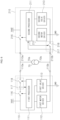
- FIG. 5 is a block diagram for showing connections between a first controller, a second controller, and a wheel speed sensor included in a brake system according to an embodiment of the present disclosure.
- the brake system of the vehicle 1 may include the wheel speed sensor 70, the first controller 110, and the second controller 210. As shown in FIG. 5 , the first controller 110 and the second controller 210 may be connected in parallel to each other with respect to the wheel speed sensor 70.
- the wheel speed sensor 70 may provide a wheel speed signal corresponding to the rotation speed of the wheels 11, 12, 13, and 14 to the first controller 110 and the second controller 210, as described above with reference to FIG. 4 .
- the wheel speed sensor 70 may include a hall sensor of which current changes according to a magnetic field.
- the hall sensor may be provided around a tone wheel (e.g. a pulse ring) rotating together with the wheels 11, 12, 13, and 14, and current of the hall sensor may change depending on a change of a magnetic field according to a rotation of the tone wheel (e.g. a pulse ring).
- a distance between the tone wheel (e.g. a pulse ring) and the hall sensor may change periodically according to the rotation of the tone wheel (e.g. a pulse ring).
- the current of the hall sensor may become maximum at a minimum distance between the tone wheel (e.g.
- a current value of the hall sensor may change periodically according to a rotation of the tone wheel (e.g. a pulse ring).
- the first controller 110 may include the first motor driver 112, the first valve driver 113, a first switch 116, a first current sensor 117, a third switch 118, and the first processor 111.
- One or more of the first motor driver 112, the first valve driver 113, the first switch 116, the first current sensor 117, the third switch 118, and the first processor 111 may be not essential components of the first controller 110, and may be omitted from the first controller 110.
- the first controller 110 may obtain power from a first power source Vdd1. Current provided from the first power source Vdd1 may flow to a common ground GND via the first controller 110.
- the first controller 110 may include a pair of first terminals 110a and 110b respectively connected to both terminals of the wheel speed sensor 70.
- a positive first terminal 110a of the first controller 110 may be connected to a power terminal 70a of the wheel speed sensor 70.
- a negative first terminal 110b of the first controller 110 may be connected to a signal terminal 70b of the wheel speed sensor 70.
- the positive first terminal 110a may be connected to the first power source Vdd1, and a first switch 116, a first current sensor 117, and a third switch 118 may be provided on a line connecting the positive first terminal 110a to the first power source Vdd1.
- the negative first terminal 110b may be connected to the common ground GND.
- the first switch 116, the first current sensor 117, the third switch 118, and the wheel speed sensor 70 may be connected in series to each other between the first power source Vdd1 and the common ground GND. Also, current provided from the first power source Vdd1 may be supplied to the wheel speed sensor 70 via the first switch 116, the first current sensor 117, and the third switch 118.
- the first switch 116 may be provided on a conductive line between the first power source Vdd1 and the wheel speed sensor 70, and may be configured to selectively allow or block an electrical connection between the first power source Vdd1 and the wheel speed sensor 70 in response to a control signal from the first processor 111.
- the first processor 111 may provide a signal (e.g. an on signal) for maintaining an closed state (e.g. an on state) of the first switch 116 to the first switch 116 while the first hydraulic pressure supply device 100 is in the normal state. Accordingly, the first switch 116 may be maintained in the closed state (e.g. an on state) while the first hydraulic pressure supply device 100 is in the normal state, and allow current supply from the first power source Vdd1 to the wheel speed sensor 70.
- a signal e.g. an on signal
- an closed state e.g. an on state
- the first switch 116 may be maintained in the closed state (e.g. an on state) while the first hydraulic pressure supply device 100 is in the normal state, and allow current supply from the first power source Vdd1 to the wheel speed sensor 70.
- the first processor 111 may provide a signal (e.g. an off signal) for opening (e.g. turning off) the first switch 116 to the first switch 116 while the first hydraulic pressure supply device 100 is in a failure state. Accordingly, the first switch 116 may be maintained in the open state (e.g. an off state) while the first hydraulic pressure supply device 100 is in the failure state, and block current supply from the first power source Vdd1 to the wheel speed sensor 70. Also, the first switch 116 may be open (e.g. turned off) while no control signal is received from the first processor 111, for instance, due to a failure of the first processor 111.
- a signal e.g. an off signal
- opening e.g. turning off
- the first switch 116 may be maintained in the open state (e.g. an off state) while the first hydraulic pressure supply device 100 is in the failure state, and block current supply from the first power source Vdd1 to the wheel speed sensor 70.
- the first switch 116 may be open (e.g.
- the first current sensor 117 may detect current provided from the first power source Vdd1 to the wheel speed sensor 70, and provide an electrical signal (hereinafter, referred to as a 'first current signal') corresponding to a value of the detected current to the first processor 110.
- the current of the wheel speed sensor 70 may change depending on rotations of the tone wheel (pulse ring), that is, rotations of the wheels 11, 12, 13, and 14. Accordingly, the current provided from the first power source Vdd1 to the wheel speed sensor 70 may change depending on the rotations of the wheels 11, 12, 13, and 14.
- the first current sensor 117 may detect the current of the wheel speed sensor 70 which is changed depending on the rotations of the wheels 11, 12, 13, and 14 while the first switch 116 is closed (e.g. turned on), and provide a first current signal to the first processor 111.
- the first processor 111 may identify or calculate the rotations of the wheels 11, 12, 13, and 14 and the rotation speed of the wheels 11, 12, 13, and 14 based on the first current signal of the first current sensor 117.
- the third switch 118 may be provided on the conductive line between the first power source Vdd1 and the wheel speed sensor 70, and be configured to selectively allow or block an electrical connection between the first power source Vdd1 and the wheel speed sensor 70 in response to a control signal from the first processor 111.
- the first processor 111 may provide a signal (e.g. an on signal) for maintaining a closed state (e.g. an on state) of the third switch 118 to the third switch 118 while the first hydraulic pressure supply device 100 is in the normal state, and provide a signal (e.g. an off signal) for opening (e.g. turning off) the third switch 118 to the third switch 118 while the first hydraulic pressure supply device 100 is in the failure state.
- the third switch 118 may be integrated into the first current sensor 117.
- the third switch 118 may be implemented as a power transistor, and the first current sensor 117 may measure a value of a current of the third switch 118, copied by a current mirror circuit.
- the second controller 210 may include the second motor driver 212, the second valve driver 213, a second switch 216, a second current sensor 217, a fourth switch 218, and the second processor 211.
- One or more of the second motor driver 212, the second valve driver 213, the second switch 216, the second current sensor 217, the fourth switch 218, and the second processor 211 may be not essential components of the second controller 210, and may be omitted from the second controller 210.
- the second controller 210 may obtain power from a second power source Vdd2. Current provided from the second power source Vdd2 may flow to the common ground GND via the second controller 210.
- the second controller 210 may include a pair of second terminals 210a and 210b respectively connected to both terminals of the wheel speed sensor 70.
- a positive second terminal 210a of the second controller 210 may be connected to the power terminal 70a of the wheel speed sensor 70.
- a negative second terminal 210b of the second controller 210 may be connected to the signal terminal 70b of the wheel speed sensor 70.
- the positive second terminal 210a may be connected to the second power source Vdd2, and the second switch 216, the second current sensor 217, and the fourth switch 218 may be provided on a line connecting the positive second terminal 210a to the second power source Vdd2.
- the negative second terminal 210b may be connected to the common ground GND.
- the second switch 216, the second current sensor 217, the fourth switch 218, and the wheel speed sensor 70 may be connected in series to each other between the second power source Vdd2 and the common ground GND. Also, current provided from the second power source Vdd2 may be supplied to the wheel speed sensor 70 via the second switch 216, the second current sensor 217, and the fourth switch 218.
- the second switch 216 may be provid"d on'a conductive line between the second power source Vdd2 and the wheel speed sensor 70, and may be configured to selectively allow or block an electrical connection between the second power source Vdd2 and the wheel speed sensor 70 in response to a control signal from the second processor 211.
- the second processor 211 may provide a signal (e.g. an on signal) for maintaining a closed state (e.g. an on state) of the second switch 216 to the second switch 216 while the first hydraulic pressure supply device 100 is in a failure state. Accordingly, the second switch 216 may be maintained in the closed state (e.g. an on state) while the first hydraulic pressure supply device 100 is in the failure state, and allow current supply from the second power source Vdd2 to the wheel speed sensor 70.
- a signal e.g. an on signal
- a closed state e.g. an on state
- the second processor 211 may provide a signal (e.g. an off signal) for opening (e.g. turning off) the second switch 216 to the second switch 216 while the first hydraulic pressure supply device 100 is in the normal state. Accordingly, the second switch 216 may be maintained in the open state (e.g. an off state) while the first hydraulic pressure supply device 100 is in the normal state, and block current supply from the second power source Vdd2 to the wheel speed sensor 70. Also, the second switch 216 may be open (e.g. turned off) while no control signal is received from the second processor 211, for example, due to a failure of the second processor 211.
- a signal e.g. an off signal
- the second current sensor 217 may detect current provided from the second power source Vdd2 to the wheel speed sensor 70, and provide an electrical signal (hereinafter, referred to as a 'second current signal') corresponding to a value of the detected current to the second processor 211.
- the second current sensor 217 may detect the current of the wheel speed sensor 70 changing depending on rotations of the wheels 11, 12, 13, and 14 while the second switch 216 is in the closed state (e.g. an on state), and provide a second current signal to the second processor 211.
- the second processor 211 may identify or calculate rotations of the wheels 11, 12, 13, and 14 and rotation speed of the wheels 11, 12, 13, and 14 based on the second current signal from the second current sensor 217.
- the fourth switch 218 may be provided on the conductive line between the second power source Vdd2 and the wheel speed sensor 70, and may be configured to selectively allow or block an electrical connection between the second power source Vdd2 and the wheel speed sensor 70 in response to a control signal from the second processor 211.
- the second processor 211 may provide a signal (e.g. an on signal) for maintaining a closed state (e.g. an on state) of the fourth switch 218 to the fourth switch 218 while the first hydraulic pressure supply device 100 is in a failure state, and provide a signal (e.g. an off signal) for opening (e.g. turning off) the fourth switch 218 to the fourth switch 218 while the first hydraulic pressure supply device 100 is in the normal state.
- the fourth switch 218 may be integrated into the second current sensor 217.
- the fourth switch 218 may be implemented as a power transistor, and the second current sensor 217 may measure a value of a current of the fourth switch 218, copied by a current mirror circuit.
- the first hydraulic pressure supply device 100 may share the wheel speed sensor 70 provided in each of the wheels 11, 12, 13, and 14 with the second hydraulic pressure supply device 200. While the first hydraulic pressure supply device 100 is in the normal state, the wheel speed sensor 70 may obtain power from the first power source Vdd1 via the first hydraulic pressure supply device 100, and provide a wheel speed signal to the first processor 111 of the first hydraulic pressure supply device 100. However, while the first hydraulic pressure supply device 100 is in a failure state, the wheel speed sensor 70 may obtain power from the second power source Vdd2 via the second hydraulic pressure supply device 200, and provide a wheel speed signal to the second processor 211 of the second hydraulic pressure supply device 200.
- FIG. 6 is a block diagram for showing connections between a first controller, a second controller, and a wheel speed sensor included in a brake system according to an embodiment of the present disclosure.
- a brake system may include the wheel speed sensor 70, the first controller 110, and the second controller 210. As shown in FIG. 6 , the first controller 110 and the second controller 210 may be connected in parallel to each other with respect to the wheel speed sensor 70.
- the first controller 110 may include the first motor driver 112, the first valve driver 113, the first switch 116, the first current sensor 117, the third switch 118, and the first processor 111.
- One or more of the first motor driver 112, the first valve driver 113, the first switch 116, the first current sensor 117, the third switch 118, and the first processor 111 may be not essential components of the first controller 110, and may be omitted from the first controller 110.
- the above descriptions about the first motor driver, the first valve driver, the first switch, the first current sensor, the third switch, and the first processor, and the wheel speed sensor, given together with FIG. 5 may substitute for descriptions about the first motor driver 112, the first valve driver 113, the first switch 116, the first current sensor 117, the third switch 118, and the first processor 111.
- the second controller 210 may include the second motor driver 212, the second valve driver 213, the second switch 216, the second current sensor 217, the fourth switch 218, and the second processor 211.
- One or more of the second motor driver 212, the second valve driver 213, the second switch 216, the second current sensor 217, the fourth switch 218, and the second processor 211 may be not essential components of the second controller 210, and may be omitted from the second controller 210.
- the second controller 210 may obtain power from the second power source Vdd2.
- the current provided from the second power source Vdd2 may flow to the common ground GND via the second controller 210.
- the second controller 210 may include a pair of second terminals 210a and 210b respectively connected to both terminals of the wheel speed sensor 70.
- the positive second terminal 210a of the second controller 210 may be connected to the power terminal 70a of the wheel speed sensor 70.
- the negative second terminal 210b of the second controller 210 may be connected to the signal terminal 70b of the wheel speed sensor 70.
- the positive second terminal 210a may be connected to the second power source Vdd2, and the second switch 216 may be provided on the line connecting the positive second terminal 210a to the second power source Vdd2.
- the negative second terminal 210b may be connected to the common ground GND, and the second current sensor 217 and the fourth switch 218 may be provided on a line connecting the negative second terminal 210b to the common ground GND.
- the second switch 216, the wheel speed sensor 70, the second current sensor 217, and the fourth switch 218 may be connected in series to each other between the second power source Vdd2 and the common ground GND. Also, the current provided from the second power source Vdd2 may be supplied to the wheel speed sensor 70 via the second switch 216, and flow to the common ground GND via the second current sensor 217 and the fourth switch 218.
- the second switch 216 may be provided on the conductive line between the second power source Vdd2 and the wheel speed sensor 70, and be configured to selectively allow or block an electrical connection between the second power source Vdd2 and the wheel speed sensor 70 in response to a control signal from the second processor 211.
- the second processor 211 may provide a signal (e.g. an on signal) for maintaining a closed state (e.g. an on state) of the second switch 216 to the second switch 216 while the first hydraulic pressure supply device 100 is in a failure state, and provide a signal (e.g. an off signal) for opening (e.g. turning off) the second switch 216 to the second switch 216 while the first hydraulic pressure supply device 100 is in the normal state.
- a signal e.g. an on signal
- a closed state e.g. an on state
- an off signal for opening (e.g. turning off) the second switch 216 to the second switch 216 while the first hydraulic pressure supply device 100 is in the normal state.
- the second current sensor 217 may be provided between the negative second terminal 210b of the second controller 210 and the common ground GND.
- the second current sensor 217 may detect current provided from the second power source Vdd2 to the wheel speed sensor 70, and provide an electrical signal (hereinafter, referred to as a 'second current signal') corresponding to a value of the detected current to the second processor 211.
- the fourth switch 218 may be connected in series to the second current sensor 217 between the negative second terminal 210b of the second controller 210 and the common ground GND, and be configured to selectively allow or block an electrical connection between the wheel speed sensor 70 and the common ground GND in response to a control signal from the second processor 211.
- the second processor 211 may provide a signal (e.g. an on signal) for maintaining a closed state (e.g. an on state) of the fourth switch 218 to the fourth switch 218 while the first hydraulic pressure supply device 100 is in a failure state, and provide a signal (e.g. an off signal) for opening (e.g. turning off) the fourth switch 218 to the fourth switch 218 while the first hydraulic pressure supply device 100 is in the normal state.
- the negative first terminal 110b of the first controller 110 may be connected to the signal terminal 70b of the wheel speed sensor 70 and the negative second terminal 210b of the second controller 210, and the fourth switch 218 may be provided between the negative second terminal 210b and the common ground GND.
- the stability of the first controller 110 and the second controller 210 may be improved.
- the first motor driver 112 may supply a large amount of current to the first motor 156, and the large amount of current supplied to the first motor 156 may flow to the common ground GND via the first motor driver 112.
- the line between the first controller 110 and the common ground GND may be disconnected.
- the line between the first controller 110 and the common ground GND is disconnected, a large amount of current flowing to the common ground GND through a line between the negative first terminal 110b and the negative second terminal 210b can be prevented because the fourth switch 218 is in a turned-off state.
- FIG. 7 is a block diagram for showing connections between a first controller, a second controller, and a wheel speed sensor included in a brake system according to an embodiment of the present disclosure.
- a brake system may include the wheel speed sensor 70, the first controller 110, and the second controller 210. As shown in FIG. 7 , the first controller 110 may be connected in series to the second controller 210, and the first and second controllers 110 and 210 may be connected in series to the wheel speed sensor 70. The second controller 210 may be connected to the wheel speed sensor 70 via the first controller 110.
- the first controller 110 may include the first motor driver 112, the first valve driver 113, the first switch 116, the first current sensor 117, the third switch 118, and the first processor 111.
- One or more of the first motor driver 112, the first valve driver 113, the first switch 116, the first current sensor 117, the third switch 118, and the first processor 111 may be not essential components of the first controller 110, and may be omitted from the first controller 110.
- the first controller 110 may obtain power from the first power source Vdd1.
- the current provided from the first power source Vdd1 may flow to the common ground GND via the first controller 110.
- the first controller 110 may include the pair of first terminals 110a and 110b respectively connected to both terminals of the wheel speed sensor 70, and a pair of third terminals 110c and 110d respectively connected to a pair of terminals of the second controller 210.
- the positive first terminal 110a of the first controller 110 may be connected to the power terminal 70a of the wheel speed sensor 70, and the negative first terminal 110b of the first controller 110 may be connected to the signal terminal 70b of the wheel speed sensor 70.
- a positive third terminal 110c of the first controller 110 may be connected to a positive terminal of the second controller 210, and a negative third terminal 110d of the first controller 110 may be connected to a negative terminal of the second controller 210.
- the positive first and third terminals 110a and 110c may be connected to the first power source Vdd1, and the first switch 116, the first current sensor 117, and the third switch 118 may be provided on a line connecting the positive first and third terminals 110a and 110c to the first power source Vdd1.
- the negative first and third terminals 110b and 110d may be connected to the common ground GND.
- the first switch 116, the first current sensor 117, the third switch 118, and the wheel speed sensor 70 may be connected in series to each other between the first power source Vdd1 and the common ground GND. Also, the current provided from the first power source Vdd1 may be supplied to the wheel speed sensor 70 via the first switch 116, the first current sensor 117, and the third switch 118.
- the above descriptions about the first switch, the first current sensor, the third switch, and the first processor, given together with FIG. 5 may substitute for descriptions about the first switch 116, the first current sensor 117, the third switch 118, and the first processor 111.
- the second controller 210 may include the second motor driver 212, the second valve driver 213, the second switch 216, the second current sensor 217, the fourth switch 218, and the second processor 211.
- the second motor driver 212, the second valve driver 213, the second switch 216, the second current sensor 217, the fourth switch 218, and the second processor 211 may be not essential components of the first controller 110, and at least some of these may be omitted.
- the second controller 210 may obtain power from the second power source Vdd2. Current provided from the second power source Vdd2 may flow to the common ground GND via the second controller 210.
- the second controller 210 may include the pair of second terminals 210a and 210b respectively connected to the pair of third terminals 110c and 110d of the first controller 110.
- the positive second terminal 210a of the second controller 210 may be connected to the positive third terminal 110c of the first controller 110, and the negative second terminal 210b of the second controller 210 may be connected to the negative third terminal 110d of the first controller 110.
- the positive second terminal 210a may be connected to the second power source Vdd2, and the second switch 216, the second current 217, and the fourth switch 218 may be provided on the line connecting the positive second terminal 210a to the second power source Vdd2.
- the negative second terminal 210b may be connected to the common ground GND.
- the second switch 216, the second current sensor 217, the fourth switch 218, the wheel speed sensor 70, and the first controller 110 may be connected in series to each other between the second power source Vdd2 and the common ground GND. Also, the current provided from the second power source Vdd2 may be supplied to the wheel speed sensor 70 via the second switch 216, the second current sensor 217, the fourth switch 218, and the first controller 110.
- FIG. 8 is a block diagram for showing connections between a first controller, a second controller, and a wheel speed sensor included in a brake system according to an embodiment of the present disclosure.
- a brake system may include the wheel speed sensor 70, the first controller 110, and the second controller 210. As shown in FIG. 8 , the first controller 110 may be connected in series to the second controller 210, and the first and second controllers 110 and 210 may be connected in series to the wheel speed sensor 70. The first controller 110 may be connected to the wheel speed sensor 70 via the second controller 210.
- the first controller 110 may include the first motor driver 112, the first valve driver 113, the first switch 116, the first current sensor 117, the third switch 118, and the first processor 111.
- One or more of the first motor driver 112, the first valve driver 113, the first switch 116, the first current sensor 117, the third switch 118, and the first processor 111 may be not essential components of the first controller 110, and may be omitted from the first controller 110.
- the first controller 110 may obtain power from the first power source Vdd1.
- the current provided from the first power source Vdd1 may flow to the common ground GND via the first controller 110.
- the first controller 110 may include the pair of first terminals 110a and 110b respectively connected to the pair of terminals of the second controller 210.
- the positive first terminal of the first controller 110 may be connected to the positive terminal of the second controller 210, and the negative first terminal 110b of the first controller 110 may be connected to the negative terminal of the second controller 210.
- the positive first terminal 110a may be connected to the first power source Vdd1, and the first switch 116, the first current sensor 117, and the third switch 118 may be provided on the line connecting the positive first terminal 110a to the first power source Vdd1.
- the negative first terminal 110b may be connected to the common ground GND.
- the first switch 116, the first current sensor 117, the third switch 118, the wheel speed sensor 70, and the second controller 210 may be connected in series to each other between the first power source Vdd1 and the common ground GND. Also, the current provided from the first power source Vdd1 may be supplied to the wheel speed sensor 70 via the first switch 116, the first current sensor 117, the third switch 118, and the second controller 210.
- the above descriptions about the first switch, the first current sensor, the third switch, and the first processor, given together with FIG. 5 may substitute for descriptions about the first switch 116, the first current sensor 117, the third switch 118, and the first processor 111.
- the second controller 210 may include the second motor driver 212, the second valve driver 213, the second switch 216, the second current sensor 217, the fourth switch 218, and the second processor 211.
- One or more of the second motor driver 212, the second valve driver 213, the second switch 216, the second current sensor 217, the fourth switch 218, and the second processor 211 may be not essential components of the second controller 210, and may be omitted from the second controller 210.
- the second controller 210 may obtain power from the second power source Vdd2.
- the current provided from the second power source Vdd2 may flow to the common ground GND via the second controller 210.
- the second controller 210 may include the pair of second terminals 210a and 210b respectively connected to both terminals of the wheel speed sensor 70, and a pair of fourth terminals 210c and 210d respectively connected to the pair of first terminals 110a and 110b of the first controller 110.
- the positive second terminal 210a of the second controller 210 may be connected to the power terminal 70a of the wheel speed sensor 70, and the negative second terminal 210b of the second controller 210 may be connected to the signal terminal 70b of the wheel speed sensor 70.
- a positive fourth terminal 210c of the second controller 210 may be connected to the positive first terminal 110a of the first controller 110, and a negative fourth terminal 210d of the second controller 210 may be connected to the negative first terminal 110b of the first controller 110.
- the positive second terminal 210a may be connected to the positive fourth terminal 210c, and the positive second and fourth terminals 210a and 210c may be connected to the second power source Vdd2.
- the second switch 216, the second current sensor 217, and the fourth switch 218 may be provided on a line connecting the positive second and fourth terminals 210a and 210c to the second power source Vdd2.
- the negative second terminal 210b may be connected to the negative fourth terminal 210d, and the negative second and fourth terminals 210b and 210d may be connected to the common ground GND.
- the second switch 216, the second current sensor 217, the fourth switch 218, and the wheel speed sensor 70 may be connected in series to each other between the second power source Vdd2 and the common ground GND. Also, the current provided from the second power source Vdd2 may be supplied to the wheel speed sensor 70 via the second switch 216, the second current sensor 217, and the fourth switch 218.
- a diode D may be provided between the negative fourth terminal 210d of the second controller 210 and the common ground GND or the wheel speed sensor 70.
- the diode D may block current flowing in one direction from the negative fourth terminal 210d to the common ground GND, and allow current flowing in the other direction from the signal terminal 70b of the wheel speed sensor 70 to the negative fourth terminal 210d.
- the diode D may block the current flowing from the first motor driver 112 and the first valve driver 113 of the first controller 110 to the common ground GND, and allow the current flowing from the wheel speed sensor 70 to the first controller 110.
- FIG. 9 is a block diagram for showing connections between a first controller, a second controller, and a wheel speed sensor included in a brake system according to an embodiment of the present disclosure.
- a brake system may include the wheel speed sensor 70, the first controller 110, and the second controller 210. As shown in FIG. 9 , the first controller 110 may be connected in series to the second controller 210, and the first and second controllers 110 and 210 may be connected in series to the wheel speed sensor 70. The first controller 110 may be connected to the wheel speed sensor 70 via the second controller 210.
- the first controller 110 may include the first motor driver 112, the first valve driver 113, the first current sensor 117, the third switch 118, and the first processor 111.
- One or more of the first motor driver 112, the first valve driver 113, the first current sensor 117, the third switch 118, and the first processor 111 may be not essential components of the first controller 110, and may be omitted from the first controller 110.
- the first controller 110 may obtain power from the first power source Vdd1.
- the current provided from the first power source Vdd1 may flow to the common ground GND via the first controller 110.
- the first controller 110 may include the pair of first terminals 110a and 110b respectively connected to the pair of terminals of the second controller 210.
- the positive first terminal 110a of the first controller 110 may be connected to the positive terminal of the second controller 210, and the negative first terminal 110b of the first controller 110 may be connected to the negative terminal of the second controller 210.
- the positive first terminal 110a may be connected to the first power source Vdd1, and the first current sensor 117 and the third switch 118 may be provided on the line connecting the positive first terminal 110a to the first power source Vdd1.
- the negative first terminal 110b may be connected to the common ground GND.
- the first current sensor 117, the third switch 118, the wheel speed sensor 70, and the second controller 210 may be connected in series to each other between the first power source Vdd1 and the common ground GND. Also, the current provided from the first power source Vdd1 may be supplied to the wheel speed sensor 70 via the first current sensor 117, the third switch 118, and the second controller 210.
- the second controller 210 may include the second motor driver 212, the second valve driver 213, the second valve driver 213, the second switch 216, the second current sensor 217, the fourth switch 218, a fifth switch 219, and the second processor 211.
- One or more of the second motor driver 212, the second valve driver 213, the second switch 216, the second current sensor 217, the fourth switch 218, the fifth switch 219, and the second processor 211 may not be essential components of the second controller 210, and may be omitted from the second controller 210.
- the second controller 210 may obtain power from the second power source Vdd2.
- the current provided from the second power source Vdd2 may flow to the common ground GND via the second controller 210.
- the second controller 210 may include the pair of second terminals 210a and 210b respectively connected to both terminals of the wheel speed sensor 70, and the pair of fourth terminals 210c and 210d respectively connected to the pair of first terminals 110a and 110b of the first controller 110.
- the positive second terminal 210a of the second controller 210 may be connected to the power terminal 70a of the wheel speed sensor 70, and the negative second terminal 210b of the second controller 210 may be connected to the signal terminal 70b of the wheel speed sensor 70.
- the positive fourth terminal 210c of the second controller 210 may be connected to the positive first terminal 110a of the first controller 110, and the negative fourth terminal 210d of the second controller 210 may be connected to the negative first terminal 110b of the first controller 110.
- the positive second terminal 210a may be connected to the positive fourth terminal 210c, and the positive second and fourth terminals 210a and 210c may be connected to the second power source Vdd2.
- the fifth switch 219 may be provided on a line connecting the positive second terminal 210a to the positive fourth terminal 210c.
- the second switch 216, the second current sensor 217, and the fourth switch 218 may be provided on the line connecting the positive second and fourth terminals 210a and 210c to the second power source Vdd2.
- the negative second terminal 210b may be connected to the negative fourth terminal 21 0d, and the negative second and fourth terminals 210b and 210d may be connected to the common ground GND.
- the second switch 216, the second current sensor 217, the fourth switch 218, and the wheel speed sensor 70 may be connected in series to each other between the second power source Vdd2 and the common ground GND. Also, the current provided from the second power source Vdd2 may be supplied to the wheel speed sensor 70 via the second switch 216, the second current sensor 217, and the fourth switch 218.
- first current sensor 117, the third switch 118, the fifth switch 219, and the wheel speed sensor 70 may be connected in series to each other between the first power source Vdd1 and the common ground GND. Also, the current provided from the first power source Vdd1 may be supplied to the wheel speed sensor 70 via the first current sensor 117, the third switch 118, and the fifth switch 219.
- the above description about the second switch, the second current sensor, the fourth switch, and the second processor, given together with FIG. 5 may substrate for descriptions about the second switch 216, the second current sensor 217, the fourth switch 218, and the second processor 211.
- the fifth switch 219 may be provided on a conductive line between the positive second terminal 210a and the positive fourth terminal 210c.
- the fifth switch 219 may be provided between the first power source Vdd1 and the wheel speed sensor 70, and be configured to selectively allow or block an electrical connection between the first power source Vdd1 and the wheel speed sensor 70 in response to a control signal from the second processor 211.
- the second processor 211 may provide a signal (e.g. an on signal) for maintaining a closed state (e.g. an on state) of the fifth switch 219 to the fifth switch 219 while the first hydraulic pressure supply device 100 is in the normal state. Accordingly, the fifth switch 219 may be maintained in the closed state (e.g. an on state) while the first hydraulic pressure supply device 100 is in the normal state, and allow current supply from the first power source Vdd1 to the wheel speed sensor 70.
- a signal e.g. an on signal
- a closed state e.g. an on state
- the fifth switch 219 may be maintained in the closed state (e.g. an on state) while the first hydraulic pressure supply device 100 is in the normal state, and allow current supply from the first power source Vdd1 to the wheel speed sensor 70.
- the second processor 211 may provide a signal (e.g. an off signal) for opening (e.g. turning off) the fifth switch 219 to the fifth switch 219 while the first hydraulic pressure supply device 100 is in a failure state. Accordingly, the fifth switch 219 may be maintained in the open state (e.g. an off state) while the first hydraulic pressure supply device 100 is in the failure state, and block the current supply from the first power source Vdd1 to the wheel speed sensor 70. However, the fifth switch 219 may be closed (e.g. turned on) while no control signal is received from the second processor 211, for example, due to a failure of the second processor 211.
- a signal e.g. an off signal
- opening e.g. turning off
- the fifth switch 219 may be maintained in the open state (e.g. an off state) while the first hydraulic pressure supply device 100 is in the failure state, and block the current supply from the first power source Vdd1 to the wheel speed sensor 70.
- the fifth switch 219 may be closed (e.
- a diode D may be provided between the negative fourth terminal 210d of the second controller 210 and the common ground GND or the wheel speed sensor 70.
- a brake system including a hydraulic pressure supply device and an auxiliary supply device, which are capable of obtaining sensing information from a single sensor.
- a brake system capable of stably obtaining sensing information even when an electrical failure occurs in a hydraulic pressure supply device or an auxiliary supply device.
- modules may be implemented as a "module".
- the term 'module' means, but is not limited to, a software and/or hardware component, such as a Field Programmable Gate Array (FPGA) or Application Specific Integrated Circuit (ASIC), which performs certain tasks.
- FPGA Field Programmable Gate Array
- ASIC Application Specific Integrated Circuit
- a module may advantageously be configured to reside on the addressable storage medium and configured to execute on one or more processors.
- a module may include, by way of example, components, such as software components, object-oriented software components, class components and task components, processes, functions, attributes, procedures, subroutines, segments of program code, drivers, firmware, microcode, circuitry, data, databases, data structures, tables, arrays, and variables.
- components such as software components, object-oriented software components, class components and task components, processes, functions, attributes, procedures, subroutines, segments of program code, drivers, firmware, microcode, circuitry, data, databases, data structures, tables, arrays, and variables.
- the operations provided for in the components and modules may be combined into fewer components and modules or further separated into additional components and modules.
- the components and modules may be implemented such that they execute one or more CPUs in a device.
- embodiments can thus be implemented through computer readable code/instructions in/on a medium, e.g., a computer readable medium, to control at least one processing element to implement any above described exemplary embodiment.
- a medium e.g., a computer readable medium
- the medium can correspond to any medium/media permitting the storing and/or transmission of the computer readable code.
- the computer-readable code can be recorded on a medium or transmitted through the Internet.
- the medium may include Read Only Memory (ROM), Random Access Memory (RAM), Compact Disk-Read Only Memories (CD-ROMs), magnetic tapes, floppy disks, and optical recording medium.
- ROM Read Only Memory
- RAM Random Access Memory
- CD-ROMs Compact Disk-Read Only Memories
- the medium may be a non-transitory computer-readable medium.
- the media may also be a distributed network, so that the computer readable code is stored or transferred and executed in a distributed fashion.
- the processing element could include at least one processor or at least one computer processor, and processing elements may be distributed and/or included in a single device.
Landscapes
- Engineering & Computer Science (AREA)
- Transportation (AREA)
- Mechanical Engineering (AREA)
- Physics & Mathematics (AREA)
- Fluid Mechanics (AREA)
- Regulating Braking Force (AREA)
- Valves And Accessory Devices For Braking Systems (AREA)
Abstract
Description
- The disclosure generally relates to an electro-hydraulic brake system.
- Brake systems for brake are essential to vehicles, and various types of brake systems for braking vehicles are proposed for the safety of drivers and passengers.
- Existing brake systems have generally used a method of supplying hydraulic pressure for brake to a wheel cylinder through a booster mechanically connected to a brake pedal when a driver steps on the brake pedal.
- However, the market's needs for embodying various braking functions by delicately responding to the operational environments of vehicles are increasing. Accordingly, lately, an electric brake system including a cylinder-piston type hydraulic pressure supply device that receives the driver's intention to brake as an electrical signal when a driver steps on the brake pedal and supplies hydraulic pressure for brake to the wheel cylinder is becoming increasingly widespread. Furthermore, an electric brake system further including an auxiliary supply device against failures (for example, a failure of an Electronic Control Unit (ECU), a failure of a motor, cut-off of power supply, etc.) of a hydraulic pressure supply device that is electrically controlled is being developed.
- It is an aspect of the present disclosure to provide a brake system including a hydraulic pressure supply device and an auxiliary supply device, which are capable of obtaining sensing information from a single sensor.
- It is an aspect of the present disclosure to provide a brake system capable of stably obtaining sensing information even when an electrical failure occurs in a hydraulic pressure supply device or an auxiliary supply device.
- Additional aspects of the disclosure will be set forth in part in the description which follows and, in part, will be obvious from the description, or may be learned by practice of the disclosure.
- In accordance with an aspect of the disclosure, a brake system includes: a first hydraulic pressure supplier connected to a wheel cylinder of a vehicle; a second hydraulic pressure supplier connected to the wheel cylinder; a first controller configured to control the first hydraulic pressure supplier to provide first hydraulic pressure to the wheel cylinder; and a second controller configured to control the second hydraulic pressure supplier to provide second hydraulic pressure to the wheel cylinder. The first controller may be connected to a first power source of the vehicle and a wheel speed sensor of the vehicle, and configured to control a first current of the first power source to the wheel speed sensor via the second controller. The second controller may be connected to a second power source of the vehicle and the wheel speed sensor, and configured to allow or block the first current of the first power source to the wheel speed sensor and allow or block a second current of the second power source to the wheel speed sensor.
- The first controller may include a first current sensor configured to output a first current signal corresponding to the first current, and a first processor configured to identify wheel speed of the vehicle based on the first current signal. The second controller may include a first switch configured to allow or block the first current of the first power source to the wheel speed sensor, a second switch configured to allow or block the second current of the second power source to the wheel speed sensor, a second current sensor configured to output a second current signal corresponding to the second current, and a second processor configured to control the first switch and the second switch and identify wheel speed of the vehicle based on the second current signal.
- The first switch may be connected in series to the first current sensor between the first controller and the wheel speed sensor. The second switch may be connected in series to the second current sensor between the second power source and the wheel speed sensor.
- The first processor may provide a periodic signal to the second processor based on identification that the first hydraulic pressure supplier is in a normal state. The second processor may control the second switch to allow the first current to the wheel speed sensor and control the second switch to block the second current to the wheel speed sensor, based on reception of the periodic signal from the first processor.
- The first processor may provide no periodic signal to the second processor based on identification that the first hydraulic pressure supplier is in a failure state. The second processor may control the first switch to block the first current to the wheel speed sensor and control the second switch to allow the second current to the wheel speed sensor, based on identification that no periodic signal is received from the first processor.
- The first processor may provide a periodic signal to the second processor and control the first hydraulic pressure supplier according to an output signal from a pedal sensor of the vehicle, based on identification that the first hydraulic pressure supplier is in a normal state. The second processor may control the second hydraulic pressure supplier according to an output signal from the pedal sensor of the vehicle, based on identification that no periodic signal is received from the first processor.
- The second controller may further include a diode provided between a ground of the second controller and the first controller and configured to block current flowing from the first controller to the ground of the second controller.
- In accordance with an aspect of the disclosure, a brake system includes: a first hydraulic pressure supplier connected to a wheel cylinder of a vehicle; a second hydraulic pressure supplier connected to the wheel cylinder; a first controller configured to control the first hydraulic pressure supplier to provide first hydraulic pressure to the wheel cylinder; and a second controller configured to control the second hydraulic pressure supplier to provide second hydraulic pressure to the wheel cylinder. The first controller may be connected to a first power source of the vehicle and a wheel speed sensor of the vehicle, and configured to allow or block a first current of the first power source to the wheel speed sensor via the second controller. The second controller may be connected to a second power source of the vehicle and the wheel speed sensor, and configured to allow or block a second current of the second power source to the wheel speed sensor.
- The first controller may include a first switch configured to allow or block the first current of the first power source to the wheel speed sensor via the second controller, a first current sensor configured to output a first current signal corresponding to the first current, and a first processor configured to control the first switch and identify wheel speed of the vehicle based on the first current signal. The second controller may include a second switch configured to allow or block the second current of the second power source to the wheel speed sensor, a second current sensor configured to output a second current signal corresponding to the second current, and a second processor configured to identify wheel speed of the vehicle based on the second current signal.
- The first switch may be connected in series to the first current sensor between the first power source and the second controller. The second switch may be connected in series to the second current sensor between the second power source and the wheel speed sensor.
- The first processor may control the first switch to provide a periodic signal to the second processor and allow the first current to the wheel speed sensor, based on identification that the first hydraulic pressure supplier is in a normal state. The second processor may control the second switch to block the second current to the wheel speed sensor, based on reception of a periodic signal from the first processor.
- The first processor may control the first switch to provide no periodic signal to the second processor and block the first current to the wheel speed sensor, based on identification that the first hydraulic pressure supplier is in a failure state. The second processor may control the second switch to allow the second current to the wheel speed sensor, based on identification that no periodic signal is received from the first processor.
- The first processor may provide a periodic signal to the second processor and control the first hydraulic pressure supplier according to an output signal from a pedal sensor of the vehicle, based on identification that the first hydraulic pressure supplier is in a normal state. The second processor may control the second hydraulic pressure supplier according to an output signal from the pedal sensor of the vehicle, based on identification that no periodic signal is received from the first processor.
- The second controller may further include a diode provided between a ground of the second controller and the first controller, and configured to block current flowing form the first controller to the ground of the second controller.
- In accordance with an aspect of the disclosure, a brake system includes: a first hydraulic pressure supplier connected to a wheel cylinder of a vehicle; a second hydraulic pressure supplier connected to the wheel cylinder; a first controller configured to control the first hydraulic pressure supplier to provide first hydraulic pressure to the wheel cylinder; and a second controller configured to control the second hydraulic pressure supplier to provide second hydraulic pressure to the wheel cylinder. The first controller may be connected to a first power source of the vehicle and a wheel speed sensor of the vehicle, and configured to allow or block a first current of the first power source to the wheel speed sensor. The second controller may be connected to a second power source of the vehicle and the wheel speed sensor, and configured to allow or block a second current of the second power source to the wheel speed sensor.
- The first controller may include a first switch configured to allow or block the first current of the first power source to the wheel speed sensor, a first current sensor configured to output a first current signal corresponding to the first current, and a first processor configured to control the first switch and identify wheel speed of the vehicle based on the first current signal. The second controller includes a second switch configured to allow or block the second current of the second power source to the wheel speed sensor, a second current sensor configured to output a second current signal corresponding to the second current, and a second processor configured to identify wheel speed of the vehicle based on the second current signal.
- The first switch may be connected in series to the first current sensor between the first power source and the wheel speed sensor. The second switch may be connected in series to the second current sensor between the second power source and the wheel speed sensor.
- The first processor may provide a periodic signal to the second processor and control the first switch to allow the first current to the wheel speed sensor, based on that identification that the first hydraulic pressure supplier is in a normal state. The second processor may control the second switch to block the second current to the wheel speed sensor, based on reception of a periodic signal from the first processor.
- The first processor may provide no periodic signal to the second processor and control the first switch to block the first current to the wheel speed sensor, based on identification that the first hydraulic pressure supplier is in a failure state. The second processor may control the second switch to allow the second current to the wheel speed sensor, based on identification that no periodic signal is received from the first processor.
- The first processor may provide a periodic signal to the second processor and control the first hydraulic pressure supplier according to an output signal from a pedal sensor of the vehicle, based on identification that the first hydraulic pressure supplier is in a normal state. The second processor may control the second hydraulic pressure supplier according to an output signal from the pedal sensor of the vehicle, based on identification that no periodic signal is received from the first processor.
- These and/or other aspects of the disclosure will become apparent and more readily appreciated from the following description of the embodiments, taken in conjunction with the accompanying drawings of which:
-
FIG. 1 is a conceptual diagram showing a configuration of a vehicle according to an embodiment of the present disclosure; -
FIG. 2 is a conceptual diagram for showing a configuration of a brake system according to another embodiment of the present disclosure; -
FIG. 3 is a conceptual diagram for showing a configuration of a brake system according to still another embodiment of the present disclosure; -
FIG. 4 is a block diagram for showing a configuration of first and second controllers included in a brake system according to an embodiment of the present disclosure; -
FIG. 5 is a block diagram for showing connections between a first controller, a second controller, and a wheel speed sensor included in a brake system according to an embodiment of the present disclosure; -
FIG. 6 is a block diagram for showing connections between a first controller, a second controller, and a wheel speed sensor included in a brake system according to an embodiment of the present disclosure; -
FIG. 7 is a block diagram for showing connections between a first controller, a second controller, and a wheel speed sensor included in a brake system according to an embodiment of the present disclosure; -
FIG. 8 is a block diagram for showing connections between a first controller, a second controller, and a wheel speed sensor included in a brake system according to an embodiment of the present disclosure; and -
FIG. 9 is a block diagram for showing connections between a first controller, a second controller, and a wheel speed sensor included in a brake system according to an embodiment of the present disclosure. - The following detailed description is provided to assist the reader in gaining a comprehensive understanding of the methods, apparatuses, and/or systems described herein. Accordingly, various changes, modifications, and equivalents of the methods, apparatuses, and/or systems described herein will be suggested to those of ordinary skill in the art. The progression of processing operations described is an example; however, the sequence of and/or operations is not limited to that set forth herein and may be changed as is known in the art, with the exception of operations necessarily occurring in a particular order. In addition, respective descriptions of well-known functions and constructions may be omitted for increased clarity and conciseness.
- Additionally, exemplary embodiments will now be described more fully hereinafter with reference to the accompanying drawings. The exemplary embodiments may, however, be embodied in many different forms and should not be construed as being limited to the embodiments set forth herein. These embodiments are provided so that this disclosure will be thorough and complete and will fully convey the exemplary embodiments to those of ordinary skill in the art. Like numerals denote like elements throughout.
- It will be understood that, although the terms first, second, etc. may be used herein to describe various elements, these elements should not be limited by these terms. These terms are only used to distinguish one element from another. As used herein, the term "and/or," includes any and all combinations of one or more of the associated listed items.
- It will be understood that when an element is referred to as being "connected," or "coupled," to another element, it can be directly connected or coupled to the other element or intervening elements may be present. In contrast, when an element is referred to as being "directly connected," or "directly coupled," to another element, there are no intervening elements present.
- The terminology used herein is for the purpose of describing particular embodiments only and is not intended to be limiting. As used herein, the singular forms "a," "an," and "the," are intended to include the plural forms as well, unless the context clearly indicates otherwise.
- The expression, "at least one of a, b, and c," should be understood as including only a, only b, only c, both a and b, both a and c, both b and c, or all of a, b, and c.
- Reference will now be made in detail to the exemplary embodiments of the present disclosure, examples of which are illustrated in the accompanying drawings, wherein like reference numerals refer to like elements throughout.
-
FIG. 1 is a conceptual diagram showing a configuration of a vehicle according to an embodiment of the present disclosure. - A
vehicle 1 may include a body forming an appearance and accommodating a driver and/or baggage therein, a chassis including components of thevehicle 1 except for the body, andwheels vehicle 1. - As shown in
FIG. 1 , thevehicle 1 may include, for example, afirst wheel 11 provided in a front and right side of thevehicle 1, asecond wheel 12 provided in a front and left side of thevehicle 1, athird wheel 13 provided in a rear and right side of thevehicle 1, and/or afourth wheel 14 provided in a rear and left side of thevehicle 1. A number of thewheels vehicle 1 can have two, three or more than four wheels. - Each of the
wheels corresponding wheel wheel wheels wheels - In the brake caliper,
wheel cylinders - For example, a
first wheel cylinder 21 is installed in thefirst wheel 11, asecond wheel cylinder 22 is installed in thesecond wheel 12, athird wheel cylinder 23 is installed in thethird wheel 13, and afourth wheel cylinder 24 is installed in thefourth wheel 14. A number of thewheel cylinders vehicle 1 can have two, three or more than four wheel cylinders. - The brake caliper may include
parking brakes third wheel 13 and thefourth wheel 14 provided in a rear portion of thevehicle 1 may be respectively provided with afirst parking brake 31 and asecond parking brake 32. - Each of the first and
second parking brakes - Each of the first and
second parking brakes second parking brakes - Also, the
vehicle 1 may further include abrake pedal 50 for obtaining a driver's intention to brake, and a first hydraulicpressure supply device 100 and a second hydraulicpressure supply device 200 for providing the pressurized medium to thewheel cylinders wheels - The first hydraulic
pressure supply device 100 may generate pressure of the pressurized medium (hereinafter, referred to as 'hydraulic pressure') for braking thewheels pressure supply device 100 may generate hydraulic pressure based on the driver's intention to brake through thebrake pedal 50 or a control signal for controlling brakes, and distribute the generated hydraulic pressure to thewheel cylinders wheel cylinders pressure supply device 100. Thewheels wheel cylinders - The first hydraulic
pressure supply device 100 may include a firsthydraulic pressure supplier 150 configured to provide hydraulic pressure to thewheel cylinders first controller 110 configured to control the firsthydraulic pressure supplier 150. Thefirst controller 110 may control the firsthydraulic pressure supplier 150 to provide and/or distribute hydraulic pressure to thewheel cylinders brake pedal 50 or the control signal for controlling the brakes. For example, thefirst controller 110 may be implemented with one or more memories configured to store computer executable instructions and/or one or more processors configured to execute the computer executable instructions stored in the memory. - The second hydraulic
pressure supply device 200 may be provided on a connection flow path connecting the first hydraulicpressure supply device 100 to some of thewheel cylinders wheels FIG. 1 , the second hydraulicpressure supply device 200 may be provided on a connection flow path connecting the first hydraulicpressure supply device 100 to the first andsecond wheel cylinders second wheels - The second hydraulic
pressure supply device 200 may be provided preliminarily or additionally with respect to the first hydraulicpressure supply device 100. For example, the second hydraulicpressure supply device 200 may be deactivated while the first hydraulicpressure supply device 100 normally operates. Also, the second hydraulicpressure supply device 200 may generate hydraulic pressure, instead of the first hydraulicpressure supply device 100, when the operation of the first hydraulicpressure supply device 100 is in an abnormal or failure state (e.g. power supply to the first hydraulicpressure supply device 100 is cut off or the first hydraulicpressure supply device 100 breaks down). - The second hydraulic
pressure supply device 200 may generate hydraulic pressure based on the driver's intention to brake through thebrake pedal 50 or a control signal for controlling brakes, and distribute the generated hydraulic pressure to some of thewheel cylinders pressure supply device 200 may provide hydraulic pressure to the first andsecond wheel cylinders - The second hydraulic
pressure supply device 200 may include a secondhydraulic pressure supplier 250 configured to provide hydraulic pressure to the first andsecond wheel cylinders second controller 210 configured to control the secondhydraulic pressure supplier 250. Thesecond controller 210 may control the secondhydraulic pressure supplier 250 to provide and/or distribute hydraulic pressure to some of thewheel cylinders brake pedal 50. For example, thesecond controller 210 may be implemented with one or more memories configured to store computer executable instructions and/or one or more processors configured to execute the computer executable instructions stored in the memory. - The second hydraulic
pressure supply device 200 may supply power from a power network that is different or separate from another power network of the first hydraulicpressure supply device 100. For example, the second hydraulicpressure supply device 200 may receive power from a power source that is different or separate from another power network of the first hydraulicpressure supply device 100. As shown inFIG. 1 , the first hydraulicpressure supply device 100 may receive power from a first battery B1, and the second hydraulicpressure supply device 200 may receive power from a second battery B2 that is different or separate from the first battery B1. As another example, the second hydraulicpressure supply device 200 may receive power from a power network that is different from another power network of the first hydraulicpressure supply device 100. The first hydraulicpressure supply device 100 may receive power from a first power network, and the second hydraulicpressure supply device 200 may receive power from a second power network that is different from the first power network. - As such, the first hydraulic
pressure supply device 100 may supply hydraulic pressure to all of the first, second, third, andfourth wheel cylinders fourth wheels pressure supply device 200 may supply hydraulic pressure to some wheel cylinders such as the first andsecond wheel cylinders second wheels second parking brakes fourth wheels - As described above, the second hydraulic
pressure supply device 200 and theparking brakes 31 and 33 may be provided preliminarily or additionally against a failure of the first hydraulicpressure supply device 100. -
FIGS. 2 and3 are conceptual diagrams for showing configurations of a brake system according to embodiments of the present disclosure. - The first hydraulic
pressure supply device 100 may include areservoir 130, amaster cylinder 140, the firsthydraulic pressure supplier 150, a firsthydraulic pressure controller 160, and thefirst controller 110. One or more of thereservoir 130, themaster cylinder 140, the firsthydraulic pressure supplier 150, the firsthydraulic pressure controller 160, and thefirst controller 110 ofFIGS. 2 and3 may be not essential components of the first hydraulicpressure supply device 100, and may be omitted from the first hydraulicpressure supply device 100. - The
reservoir 130 may store a medium such as brake oil. Thereservoir 130 may be connected to components to supply or receive the medium. Thereservoir 130 may be hydraulically connected to themaster cylinder 140 throughreservoir flow paths - The
master cylinder 140 may compress and discharge the pressurized medium accommodated therein according to a force generated by the movement of thebrake pedal 50. Themaster cylinder 140 may include afirst master chamber 141 and asecond master chamber 142 formed by acylinder block 145. Thefirst master chamber 141 and thesecond master chamber 142 may be provided with, or divided by, afirst master piston 143 and asecond master piston 144, respectively. - The first
hydraulic pressure supplier 150 may provide hydraulic pressure of the pressurized medium in response to a control signal from thefirst controller 110. - The first
hydraulic pressure supplier 150 may include acylinder block 155 accommodating the medium, ahydraulic piston 153 configured to move back and forth inside thecylinder block 155, andhydraulic chambers hydraulic piston 153. One or more of thecylinder block 155, thehydraulic piston 153, and thehydraulic chambers hydraulic pressure supplier 150, and may be omitted from the firsthydraulic pressure supplier 150. - While the
hydraulic piston 153 moves back and forth, hydraulic pressure may be generated in thehydraulic chambers hydraulic chambers wheel cylinders hydraulic pressure controller 160. - The first
hydraulic pressure supplier 150 may include a firsthydraulic chamber 151 located in front of the hydraulic piston 153 (e.g. a left side of thehydraulic piston 153 inFIG. 2 ), and a secondhydraulic chamber 152 located behind the hydraulic piston 153 (e.g. a right side of thehydraulic piston 153 inFIG. 2 ). - The first
hydraulic chamber 151 may be defined by thecylinder block 155 and one surface (for example, a front surface) of thehydraulic piston 153, and a volume of the firsthydraulic chamber 151 may be changed according to a movement of thehydraulic piston 153. Also, the secondhydraulic chamber 152 may be defined by thecylinder block 155 and another surface (for instance, a rear surface) of thehydraulic piston 153, and a volume of the secondhydraulic chamber 152 may be changed according to a movement of thehydraulic piston 153. The firsthydraulic chamber 151 and the secondhydraulic chamber 152 may be hydraulically connected to the firsthydraulic pressure controller 160 by hydraulic pressure flow paths. - The first
hydraulic pressure supplier 150 may include afirst motor 156 configured to generate or provide torque for moving thehydraulic piston 153. Also, the firsthydraulic pressure supplier 150 may further include a power conversion unit that converts rotary torque of thefirst motor 156 into a translational movement of thehydraulic piston 153. - The first hydraulic pressure contr"Iler'160 may be provided between the first
hydraulic pressure supplier 150 and thewheel cylinders hydraulic pressure controller 160 may include, for example, a plurality of hydraulic pressure flow paths or hydraulic connections extending from the firsthydraulic pressure supplier 150 to thewheel cylinders - As shown in
FIG. 2 , the firsthydraulic pressure controller 160 may control the hydraulic pressure flow paths to guide hydraulic pressure generated by the firsthydraulic pressure supplier 150 to thewheel cylinders wheel cylinders hydraulic pressure supplier 150. - For example, the first
hydraulic pressure controller 160 may control the hydraulic pressure flow paths to guide hydraulic pressure generated by the firsthydraulic chamber 151 to thewheel cylinders hydraulic piston 153 moves forward, in response to an increase of a stroke of thebrake pedal 50. Also, the firsthydraulic pressure controller 160 may control the hydraulic pressure flow paths to guide hydraulic pressure generated by the secondhydraulic chamber 151 to thewheel cylinders hydraulic piston 153 moves forward and then moves backward. - Also, the first
hydraulic pressure controller 160 may control the hydraulic pressure flow paths to retrieve hydraulic pressure of thewheel cylinders hydraulic chamber 151 while thehydraulic piston 153 moves backward, in response to a decrease of a stroke of thebrake pedal 50. Also, the firsthydraulic pressure controller 160 may control the hydraulic pressure flow paths to retrieve hydraulic pressure of thewheel cylinders hydraulic pressure chamber 152 while thehydraulic piston 153 moves forward and then moves backward. - As shown in
FIG. 3 , when a failure in the firsthydraulic pressure supplier 150, such as a disabled state of the firsthydraulic pressure supplier 150, occurs, the firsthydraulic pressure controller 160 may control the hydraulic pressure flow paths to guide hydraulic pressure generated by themaster cylinder 140 to thewheel cylinders wheel cylinders master cylinder 140. - For example, in response to a failure state (e.g. a disabled state) of the first
hydraulic pressure supplier 150, the firsthydraulic pressure controller 160 may control the hydraulic pressure flow paths to guide hydraulic pressure generated in thefirst master chamber 141 to the first andsecond wheel cylinders first master piston 143 moves forward, and to guide hydraulic pressure generated in thesecond master chamber 142 to the third andfourth wheel cylinders second master piston 144 moves forward. - Hereinafter, a state in which the
master cylinder 140 is hydraulically connected to thewheel cylinders hydraulic pressure supplier 150 is referred to as a fallback mode. - Also, when no power is supplied to the first hydraulic
pressure supply device 100 or when a failure or abnormality (e.g. a disabled state) of the first hydraulicpressure supply device 100 occurs, a flow path for guiding hydraulic pressure generated by themaster cylinder 140 to thewheel cylinders hydraulic pressure controller 160. - As such, in both a case in which a failure is generated in the first
hydraulic pressure supplier 150 and a case in which a failure is generated in the first hydraulicpressure supply device 100, the brake system may operate in the fallback mode. - The
first controller 110 may include a plurality of semiconductor devices, and may be, for instance, an Electronic Control Unit (ECU). Thefirst controller 110 may include, for example, a plurality of processors and/or a plurality of memories as described above. - The
first controller 110 may receive a pedal signal representing a user's intention to brake from apedal sensor 60. Thepedal sensor 60 may detect a movement of thebrake pedal 50 configured to be movable by a user's intention to brake by pressing thebrake pedal 50 by the driver, and output an electrical signal (e.g. the pedal signal) depending on a movement distance and/or movement velocity of thebrake pedal 50. Thefirst controller 110 may provide an electrical signal for supplying hydraulic pressure to thewheel cylinders wheel cylinders hydraulic pressure supplier 150 and the firsthydraulic pressure controller 160, in response to the pedal signal. - The
first controller 110 may transmit and receive data to and from thesecond controller 210. For example, thefirst controller 110 may transmit and receive data to and from thesecond controller 210 through an in-vehicle communication network or through a data line directly connected to thesecond controller 210. - In a normal state, the
first controller 110 may transmit an electrical signal to thesecond controller 210 periodically. However, in a failure state, thefirst controller 110 cannot transmit a periodic signal to thesecond controller 210 or thesecond controller 210 may not receive the periodic signal from thefirst controll23 110. - The second hydraulic
pressure supply device 200 may be provided on flow paths between the first andsecond wheel cylinders pressure supply device 100. - The second hydraulic
pressure supply device 200 may include a secondhydraulic pressure supplier 250, a secondhydraulic pressure controller 260, and thesecond controller 210. One or more of the secondhydraulic pressure supplier 250, the secondhydraulic pressure controller 260, and thesecond controller 210, as shown inFIGS. 2 and3 , may be not essential components of the second hydraulicpressure supply device 200, and may be omitted from the second hydraulicpressure supply device 200. - The second
hydraulic pressure supplier 250 may provide hydraulic pressure of the pressurized medium in response to a control signal from thesecond controller 210. - The second
hydraulic pressure supplier 250 may include apump 251 configured to rotate and pump the pressurized medium, and asecond motor 256 configured to generate or provide torque for driving thepump 251. - The second
hydraulic pressure controller 260 may be provided between the first and secondhydraulic pressure suppliers second wheel cylinders hydraulic pressure controller 260 may include, for example, a plurality of hydraulic pressure flow paths extending from the secondhydraulic pressure controller 260 to the first andsecond wheel cylinders - The second
hydraulic pressure controller 260 may selectively open or close a hydraulic pressure flow path between the firsthydraulic pressure supplier 150 and the first andsecond wheel cylinders hydraulic pressure supplier 150 is in a normal state, the secondhydraulic pressure controller 260 may open the hydraulic pressure flow path between the firsthydraulic pressure supplier 150 and the first andsecond wheel cylinders hydraulic pressure supplier 150 and the first andsecond wheel cylinders FIG. 2 . Also, while the firsthydraulic pressure supplier 150 is in a failure state, the secondhydraulic pressure controller 260 may close the hydraulic pressure flow path between the firsthydraulic pressure supplier 150 and the first andsecond wheel cylinders hydraulic pressure supplier 150 and the first andsecond wheel cylinders FIG. 3 . - Also, while the first
hydraulic pressure supplier 150 is in the failure state, the secondhydraulic pressure controller 260 may control the hydraulic pressure flow path to guide hydraulic pressure generated by the secondhydraulic pressure supplier 250 to the first andsecond wheel cylinders second wheel cylinders reservoir 130, as shown inFIG. 3 . - For example, in response to an increase of a stroke of the
brake pedal 50, the secondhydraulic pressure controller 260 may control or form the hydraulic pressure flow path to guide hydraulic pressure provided from thepump 251 to the first andsecond wheel cylinders brake pedal 50, the secondhydraulic pressure controller 160 may control or form the hydraulic pressure flow path to retrieve hydraulic pressure of the first andsecond wheel cylinders reservoir 130. - The
second controller 210 may include a plurality of semiconductor devices, and may be, for example, but not limited to, an ECU. Thesecond controller 210 may include, for example, a plurality of processors and/or a plurality of memories as described above. - The
second controller 210 may transmit and receive data to and from thefirst controller 110. For example, thesecond controller 210 may transmit and receive data to and from thefirst controller 110 through an in-vehicle communication network or through a data line directly connected to thefirst controller 110. - The
second controller 210 may receive an electrical signal periodically from thefirst controller 110 while thefirst controller 110 is in the normal state. Thesecond controller 210 may identify the normal state of thefirst controller 110 based on a periodic signal from thefirst controller 110. Meanwhile, thesecond controller 210 may identify a failure state of thefirst controller 110 based on identification that no electrical signal has been received from thefirst controller 110 for a predetermined time period. - While the
first controller 110 is in a failure state, thesecond controller 210 may receive a pedal signal representing a user's intention to brake from thepedal sensor 60. Thesecond controller 210 may provide an electrical signal for controlling to supply hydraulic pressure to the first andsecond wheel cylinders hydraulic pressure supplier 250 and the secondhydraulic pressure controller 260 to brake the first andsecond wheels second controller 210 may provide an electrical signal for braking the third andfourth wheels second parking brakes fourth wheels -
FIG. 4 is a block diagram for showing a configuration of first and second controllers included in a brake system according to an embodiment of the present disclosure. - Referring to
FIG. 4 , thevehicle 1 may include thepedal sensor 60, awheel speed sensor 70, theparking brakes pressure supply device 100, and the second hydraulicpressure supply device 200. The first hydraulicpressure supply device 100 may include thefirst motor 156, afirst valve block 161, and thefirst controller 110. Also, the second hydraulicpressure supply device 200 may include thesecond motor 256, asecond valve block 261, and thesecond controller 210. Herein, one or more of thefirst motor 156, thefirst valve block 161, and thefirst controller 110 may be not essential components of the first hydraulicpressure supply device 100, and may be omitted from the first hydraulicpressure supply device 100. Also, one or more of thesecond motor 256, thesecond valve block 261, and thesecond controller 210 may be not essential components of the second hydraulicpressure supply device 200, and may be omitted from the second hydraulicpressure supply device 200. - The
pedal sensor 60 may detect a movement of thebrake pedal 50 configured to be movable by a user's intention to brake by pressing thebrake pedal 50 by the driver, and output an electrical signal (i.e. a pedal signal) representing a movement distance and/or movement velocity of thebrake pedal 50 to thefirst controller 110 and thesecond controller 210. - The
pedal sensor 60 may include a first pedal sensor and a second pedal sensor. Each of the first pedal sensor and the second pedal sensor may detect a movement distance and/or movement velocity of thebrake pedal 50, and provide electrical signals (i.e. a first pedal signal and a second pedal signal) representing the detected movement distance and/or movement velocity to thefirst controller 110 and thesecond controller 210. The power for the first pedal sensor may be supplied from a different power source (for example, a different battery or a different power network) from power source of the second pedal sensor. For example, the first pedal sensor may obtain power from a first battery or a first power network through the first hydraulicpressure supply device 100, and the second pedal sensor may obtain power from a second battery or a second power network through the second hydraulicpressure supply device 200. Thereby, although a failure, such as power cut-off or a disabled state, occurs in any one pedal sensor of the first pedal sensor and the second pedal sensor, thefirst controller 110 and thesecond controller 210 may obtain a pedal signal from the other remaining pedal sensor, and be capable of identifying a driver's intention to brake. - The
wheel speed sensor 70 may detect rotations of thewheels vehicle 1, and provide an electrical signal (i.e., an wheel speed signal) corresponding to rotation speed of thewheels first controller 110 and thesecond controller 210. - The
wheel speed sensor 70 may be provided in each of thewheels pedal sensor 60. For example, each of four wheel speed sensors respectively provided in the fourwheels first controller 110 and thesecond controller 210. For example, while the first hydraulicpressure supply device 100 is in a failure state, thewheel speed sensor 70 may obtain power from the second hydraulicpressure supply device 200 and provide a wheel speed signal to thesecond controller 210 of the second hydraulicpressure supply device 200. Also, while the first hydraulicpressure supply device 100 is in the normal state, thewheel speed sensor 70 may obtain power from the first hydraulicpressure supply device 100 and provide a wheel speed signal to thefirst controller 110 of the first hydraulicpressure supply device 100. - The
parking brakes wheels wheels parking brakes third wheel 13 and thefourth wheel 14 and brake rotations of thethird wheel 13 and thefourth wheel 14. Each of theparking brakes parking brakes - The
first motor 156 may provide power (e.g. torque) for generating hydraulic pressure of the pressurized medium to thecylinder block 155 and thehydraulic piston 153. Thehydraulic piston 153 may be moved translationally according to the torque provided by thefirst motor 156. - The
first valve block 161 may control the flow path of the medium, extending from the firsthydraulic pressure supplier 150 to thewheel cylinders first valve block 161 may include, for example, but not limited to, a plurality of solenoid valves provided on the flow path of the medium. - The
first controller 110 may provide an electrical signal for providing hydraulic pressure of the pressurized medium to thewheel cylinders brake pedal 50 and the rotation speed of thewheels - The
first controller 110 may include afirst motor driver 112, afirst valve driver 113, and afirst processor 111. One or more of thefirst motor driver 112, thefirst valve driver 113, and thefirst processor 111 may be not essential components of thefirst controller 110, and may be omitted from thefirst controller 110. - The
first motor driver 112 may receive a control signal from thefirst processor 111, and provide driving current for driving thefirst motor 156 of the firsthydraulic pressure supplier 150 in response to the control signal from thefirst processor 111. For example, thefirst motor driver 112 may provide, in response to the control signal from thefirst processor 111, driving current for moving thehydraulic piston 153 in a forward direction to thefirst motor 156 or driving current for moving thehydraulic piston 153 in a backward direction to thefirst motor 156. Thefirst motor driver 112 may include, for instance, but not limited to, an inverter circuit for controlling the driving current of thefirst motor 156, a gate driver for driving an input terminal of the inverter circuit, etc. - The
first valve driver 113 may receive a control signal from thefirst processor 111, and provide driving current for driving thefirst valve block 161 of the firsthydraulic pressure controller 160 in response to the control signal from thefirst processor 111. For example, thefirst valve driver 113 may provide, in response to the control signal from thefirst processor 111, driving current to the valves to form flow paths from the firsthydraulic chamber 151 of the firsthydraulic pressure supplier 150 to thewheel cylinders first valve driver 113 may provide, in response to the control signal from thefirst processor 111, driving current to the valves to form flow paths from the secondhydraulic chamber 152 of the firsthydraulic pressure supplier 150 to thewheel cylinders - The
first processor 111 may process output signals of thepedal sensor 60 and thewheel speed sensor 70 and control the first hydraulicpressure supply device 100 based on the processed results of the output signals of thepedal sensor 60 and thewheel speed sensor 70. - The
first processor 111 may control thefirst motor driver 112 and/or thefirst valve driver 113 to drive thefirst motor 156 and/or thefirst valve block 161, based on the pedal signal from thepedal sensor 60. For example, thefirst processor 210 may receive the pedal signal representing an increase or decrease of the stroke of thebrake pedal 50 from thepedal sensor 60, and provide a control signal for controlling thefirst motor 156 and/or thefirst valve block 161 to thefirst motor driver 112 and/or thefirst valve driver 113 based on the received pedal signal. Accordingly, the first hydraulicpressure supply device 100 may be implemented for performing operations of a service brake. - The
first processor 111 may control thefirst motor driver 112 and/or thefirst valve driver 113 to drive thefirst motor 156 and/or thefirst valve block 161 based on a wheel speed signal of thewheel speed sensor 70. For example, thefirst processor 111 may receive a wheel speed signal representing the rotation speed of thewheels wheel speed sensor 70, and provide a control signal for controlling thefirst motor 156 and/or thefirst valve block 161 to thefirst motor driver 112 and/or thefirst valve driver 113, based on the wheel speed signal. Thereby, the first hydraulicpressure supply device 100 may be implemented for performing operations of an Anti-lock Brake System (ABS). - The
first processor 111 may include a semiconductor device or a plurality of semiconductors. Thefirst processor 111 may include a core or a plurality of cores inside the semiconductor device. Also, thefirst processor 111 may be for example, but not limited to, a Micro Controller Unit (MCU). - Also, the
first processor 111 may include a memory configured to memorize and/or store programs and data for performing operations of braking the vehicle based on the driver's intention to brake and/or the rotation speed of thewheels first processor 111, and memorize temporary data generated during calculation operations of thefirst processor 111. The memory may include, for example, but not limited to, a volatile memory, such as Static Random Access Memory (S-RAM) and Dynamic Random Access Memory (D-RAM), and a non-volatile memory, such as Erasable Programmable Read Only Memory (EPROM) and flash memory. - The
second motor 256 may provide power (e.g. torque) for generating hydraulic pressure of the pressurized medium to thepump 251. Thepump 251 may pump the pressurized medium by the torque provided by thesecond motor 256. - The
second valve block 261 may control the flow path of the pressurizing medium, extending from the firsthydraulic pressure supplier 150 to the first andsecond wheel cylinders hydraulic pressure supplier 250 to the first andsecond wheel cylinders second valve block 261 may include, for example, but not limited to, a plurality of solenoid valves provided on the flow paths of the pressurizing medium. - The
second controller 210 may provide, in response to the user's intention to brake by thebrake pedal 50 and the rotation speed of thewheels parking brakes second wheel cylinders - The
second controller 210 may include asecond motor driver 212, asecond valve driver 213, aparking driver 214, and asecond processor 211. One or more of thesecond motor driver 212, thesecond valve driver 213, theparking driver 214, and thesecond processor 211 may be not essential components of thesecond controller 210, and may be omitted from thesecond controller 210. - The
second motor driver 212 may receive a control signal from thesecond processor 211, and provide driving current for driving thesecond motor 256 of the secondhydraulic pressure supplier 250 in response to the control signal from thesecond processor 211. For example, thesecond motor driver 212 may provide driving current for causing thepump 251 to pump the pressurized medium to thesecond motor 256, in response to the control signal from thesecond processor 211. Thesecond motor driver 212 may include, for example, but not limited to, a H bridge circuit for controlling driving current of thesecond motor 256 and a gate driver for driving an input terminal of the H bridge circuit. - The
second valve driver 213 may receive a control signal from thesecond processor 211, and provide driving current for driving thesecond valve block 261 of the secondhydraulic pressure controller 260 in response to the control signal from thesecond processor 211. For example, in response to the control signal from thesecond processor 211, thesecond valve driver 213 may provide driving current to valves to form a flow path from thepump 251 of the secondhydraulic pressure supplier 250 to the first andsecond wheel cylinders second valve driver 213 may provide driving current to the valves to block the flow path from thehydraulic pressure supplier 150 to the first andsecond wheel cylinders - The
parking driver 214 may receive a parking brake applying or releasing signal from thesecond processor 211, and provide driving current for applying theparking brakes parking brakes parking driver 214 may provide, in response to a control signal, driving current for restricting or releasing rotations of the third andfourth wheels parking brakes parking driver 214 may include, for instance, but not limited to, a H bridge circuit for controlling driving current of theparking brakes - The
second processor 211 may process output signals of thepedal sensor 60 and thewheel speed sensor 70, and control the secondhydraulic pressure supplier 200 and theparking brakes pedal sensor 60 and thewheel speed sensor 70. - The
second processor 211 may transmit and receive data and/or signals to and from thefirst processor 111 through various communication paths. For example, thesecond processor 211 may transmit and receive data and/or signals to and from thefirst processor 111 through a signal line connected to thefirst processor 111, or transmit and receive data and/or signals to and from thefirst processor 111 through an in-vehicle communication network. - The
second processor 211 may transmit and receive data and/or signals to/ and rom thefirst processor 111. For example, in the normal state, thefirst processor 111 may transmit an electrical signal (for example, a pulse signal) periodically to thesecond processor 211. - The
second processor 211 may receive a periodic signal (for example, a pulse signal) from thefirst processor 111, and control to deactivate the second hydraulicpressure supply device 200 while receiving the periodic signal from thefirst processor 111. For example, while thesecond processor 211 receives the periodic signal from thefirst processor 111, thesecond processor 211 may control thesecond motor driver 212 not to drive thesecond motor 256 or to deactivate thesecond motor 256. While thesecond processor 211 receives the periodic signal from thefirst processor 111, thesecond processor 211 may control thesecond valve driver 213 to enable thesecond valve block 261 to allow or form the flow path between the first hydraulicpressure supply device 100 and the first andsecond wheel cylinders - The
second processor 211 may be activated based on identification that no periodic signal (e.g. a pulse signal) has been received from thefirst processor 11 for a predetermined time period. While no periodic signal is received by thesecond processor 211 from thefirst processor 111, thesecond processor 211 may identify that thefirst processor 111 is not in the normal state (in other words, thefirst processor 111 is in a failure state), and be activated to perform or take over at least some of functions of thefirst processor 111. - While the first hydraulic
pressure supply device 100 is in a failure state, based on the pedal signal from thepedal sensor 60, thesecond processor 211 may control thesecond motor 256, thesecond valve block 261 and/or theparking brakes second motor 256, thesecond valve block 261 and/or theparking brakes second processor 211 may receive a pedal signal representing an increase or decrease of the stroke of thebrake pedal 50 from thepedal sensor 60, and transmit or provide a control signal for controlling thesecond motor 256, thesecond valve block 261 and/or theparking brakes second motor driver 212, thesecond valve driver 213 and/or theparking driver 214 based on the pedal signal. Thereby, the second hydraulicpressure supply device 200 may be implemented for performing operations of a service brake while the first hydraulicpressure supply device 100 is in the failure state. - The
second processor 211 may control thesecond motor driver 212, thefirst valve driver 113, and/or theparking driver 214 to drive thesecond motor 256, thesecond valve block 261 and/or theparking brakes wheel speed sensor 70, while the first hydraulicpressure supply device 100 is in the failure state. For example, thesecond processor 211 may receive a wheel speed signal representing rotation speed of thewheels wheel speed sensor 70, and provide a control signal for controlling thesecond motor 256, thesecond valve block 261 and/or theparking brakes second motor driver 212, thesecond valve driver 213 and/or theparking driver 214, based on the wheel speed signal. Thereby, the first hydraulicpressure supply device 100 may be implemented for performing operations of the ABS while the first hydraulicpressure supply device 100 is in the failure state. - When the
second processor 211 is in a normal operation, thesecond processor 211 may transmit a periodic signal (for example, a pulse signal) to thefirst processor 111. Thefirst processor 111 may identify whether or not thesecond processor 211 is in the normal state based on the identification of whether or not a periodic signal of thesecond processor 211 is received. - The
second processor 211 may include a semiconductor device or a plurality of semiconductors. Thesecond processor 211 may include a core or a plurality of cores inside the semiconductor device. Also, thesecond processor 211 may be , for example, but not limited to, MCU. - Also, the
second processor 211 may include a memory configured to memorize and/or store programs and data for braking the vehicle based on the user's intention to brake and/or the rotation speed of thewheels second processor 211, and memorize temporary data generated during calculation operations of thesecond processor 211. The memory may include, for example, but not limited to, a volatile memory, such as S-RAM and D-RAM, and a non-volatile memory, such as EPROM and flash memory. - As described above, the brake system of the
vehicle 1 may include the first hydraulicpressure supply device 100, and the first hydraulicpressure supply device 100 may brake thevehicle 1 in response to the driver's intention to brake and the driver's intention to park. Also, the brake system of thevehicle 1 may further include the second hydraulicpressure supply device 200 to provide redundancy. While the first hydraulicpressure supply device 100 is in a failure state, the second hydraulicpressure supply device 100 may brake thevehicle 1 in response to the driver's intention to brake and/or the driver's parking command. Thereby, the brake system may brake thevehicle 1 by an operation of the second hydraulicpressure supply device 200 even when the first hydraulicpressure supply device 100 does not operate normally. -
FIG. 5 is a block diagram for showing connections between a first controller, a second controller, and a wheel speed sensor included in a brake system according to an embodiment of the present disclosure. - The brake system of the
vehicle 1 may include thewheel speed sensor 70, thefirst controller 110, and thesecond controller 210. As shown inFIG. 5 , thefirst controller 110 and thesecond controller 210 may be connected in parallel to each other with respect to thewheel speed sensor 70. - The
wheel speed sensor 70 may provide a wheel speed signal corresponding to the rotation speed of thewheels first controller 110 and thesecond controller 210, as described above with reference toFIG. 4 . - For example, the
wheel speed sensor 70 may include a hall sensor of which current changes according to a magnetic field. The hall sensor may be provided around a tone wheel (e.g. a pulse ring) rotating together with thewheels - The
first controller 110 may include thefirst motor driver 112, thefirst valve driver 113, afirst switch 116, a firstcurrent sensor 117, athird switch 118, and thefirst processor 111. One or more of thefirst motor driver 112, thefirst valve driver 113, thefirst switch 116, the firstcurrent sensor 117, thethird switch 118, and thefirst processor 111 may be not essential components of thefirst controller 110, and may be omitted from thefirst controller 110. - The above descriptions about the first motor driver and the first valve driver, given together with
FIG. 4 may substitute for descriptions about thefirst motor driver 112 and thefirst valve driver 113. - The
first controller 110 may obtain power from a first power source Vdd1. Current provided from the first power source Vdd1 may flow to a common ground GND via thefirst controller 110. - The
first controller 110 may include a pair offirst terminals wheel speed sensor 70. A positive first terminal 110a of thefirst controller 110 may be connected to apower terminal 70a of thewheel speed sensor 70. A negative first terminal 110b of thefirst controller 110 may be connected to asignal terminal 70b of thewheel speed sensor 70. The positive first terminal 110a may be connected to the first power source Vdd1, and afirst switch 116, a firstcurrent sensor 117, and athird switch 118 may be provided on a line connecting the positive first terminal 110a to the first power source Vdd1. The negative first terminal 110b may be connected to the common ground GND. - In other words, the
first switch 116, the firstcurrent sensor 117, thethird switch 118, and thewheel speed sensor 70 may be connected in series to each other between the first power source Vdd1 and the common ground GND. Also, current provided from the first power source Vdd1 may be supplied to thewheel speed sensor 70 via thefirst switch 116, the firstcurrent sensor 117, and thethird switch 118. - The
first switch 116 may be provided on a conductive line between the first power source Vdd1 and thewheel speed sensor 70, and may be configured to selectively allow or block an electrical connection between the first power source Vdd1 and thewheel speed sensor 70 in response to a control signal from thefirst processor 111. - The
first processor 111 may provide a signal (e.g. an on signal) for maintaining an closed state (e.g. an on state) of thefirst switch 116 to thefirst switch 116 while the first hydraulicpressure supply device 100 is in the normal state. Accordingly, thefirst switch 116 may be maintained in the closed state (e.g. an on state) while the first hydraulicpressure supply device 100 is in the normal state, and allow current supply from the first power source Vdd1 to thewheel speed sensor 70. - The
first processor 111 may provide a signal (e.g. an off signal) for opening (e.g. turning off) thefirst switch 116 to thefirst switch 116 while the first hydraulicpressure supply device 100 is in a failure state. Accordingly, thefirst switch 116 may be maintained in the open state (e.g. an off state) while the first hydraulicpressure supply device 100 is in the failure state, and block current supply from the first power source Vdd1 to thewheel speed sensor 70. Also, thefirst switch 116 may be open (e.g. turned off) while no control signal is received from thefirst processor 111, for instance, due to a failure of thefirst processor 111. - The first
current sensor 117 may detect current provided from the first power source Vdd1 to thewheel speed sensor 70, and provide an electrical signal (hereinafter, referred to as a 'first current signal') corresponding to a value of the detected current to thefirst processor 110. - As described above, the current of the
wheel speed sensor 70 may change depending on rotations of the tone wheel (pulse ring), that is, rotations of thewheels wheel speed sensor 70 may change depending on the rotations of thewheels - Thereby, the first
current sensor 117 may detect the current of thewheel speed sensor 70 which is changed depending on the rotations of thewheels first switch 116 is closed (e.g. turned on), and provide a first current signal to thefirst processor 111. Thefirst processor 111 may identify or calculate the rotations of thewheels wheels current sensor 117. - The
third switch 118 may be provided on the conductive line between the first power source Vdd1 and thewheel speed sensor 70, and be configured to selectively allow or block an electrical connection between the first power source Vdd1 and thewheel speed sensor 70 in response to a control signal from thefirst processor 111. Thefirst processor 111 may provide a signal (e.g. an on signal) for maintaining a closed state (e.g. an on state) of thethird switch 118 to thethird switch 118 while the first hydraulicpressure supply device 100 is in the normal state, and provide a signal (e.g. an off signal) for opening (e.g. turning off) thethird switch 118 to thethird switch 118 while the first hydraulicpressure supply device 100 is in the failure state. - The
third switch 118 may be integrated into the firstcurrent sensor 117. For example, thethird switch 118 may be implemented as a power transistor, and the firstcurrent sensor 117 may measure a value of a current of thethird switch 118, copied by a current mirror circuit. - The
second controller 210 may include thesecond motor driver 212, thesecond valve driver 213, asecond switch 216, a secondcurrent sensor 217, afourth switch 218, and thesecond processor 211. One or more of thesecond motor driver 212, thesecond valve driver 213, thesecond switch 216, the secondcurrent sensor 217, thefourth switch 218, and thesecond processor 211 may be not essential components of thesecond controller 210, and may be omitted from thesecond controller 210. - The above descriptions about the second motor driver and the second valve driver, given together with
FIG. 4 may substitute for descriptions about thesecond motor driver 212 and thesecond valve driver 213. - The
second controller 210 may obtain power from a second power source Vdd2. Current provided from the second power source Vdd2 may flow to the common ground GND via thesecond controller 210. - The
second controller 210 may include a pair ofsecond terminals wheel speed sensor 70. A positive second terminal 210a of thesecond controller 210 may be connected to thepower terminal 70a of thewheel speed sensor 70. A negative second terminal 210b of thesecond controller 210 may be connected to thesignal terminal 70b of thewheel speed sensor 70. The positive second terminal 210a may be connected to the second power source Vdd2, and thesecond switch 216, the secondcurrent sensor 217, and thefourth switch 218 may be provided on a line connecting the positive second terminal 210a to the second power source Vdd2. The negative second terminal 210b may be connected to the common ground GND. - In other words, the
second switch 216, the secondcurrent sensor 217, thefourth switch 218, and thewheel speed sensor 70 may be connected in series to each other between the second power source Vdd2 and the common ground GND. Also, current provided from the second power source Vdd2 may be supplied to thewheel speed sensor 70 via thesecond switch 216, the secondcurrent sensor 217, and thefourth switch 218. - The
second switch 216 may be provid"d on'a conductive line between the second power source Vdd2 and thewheel speed sensor 70, and may be configured to selectively allow or block an electrical connection between the second power source Vdd2 and thewheel speed sensor 70 in response to a control signal from thesecond processor 211. - The
second processor 211 may provide a signal (e.g. an on signal) for maintaining a closed state (e.g. an on state) of thesecond switch 216 to thesecond switch 216 while the first hydraulicpressure supply device 100 is in a failure state. Accordingly, thesecond switch 216 may be maintained in the closed state (e.g. an on state) while the first hydraulicpressure supply device 100 is in the failure state, and allow current supply from the second power source Vdd2 to thewheel speed sensor 70. - The
second processor 211 may provide a signal (e.g. an off signal) for opening (e.g. turning off) thesecond switch 216 to thesecond switch 216 while the first hydraulicpressure supply device 100 is in the normal state. Accordingly, thesecond switch 216 may be maintained in the open state (e.g. an off state) while the first hydraulicpressure supply device 100 is in the normal state, and block current supply from the second power source Vdd2 to thewheel speed sensor 70. Also, thesecond switch 216 may be open (e.g. turned off) while no control signal is received from thesecond processor 211, for example, due to a failure of thesecond processor 211. - The second
current sensor 217 may detect current provided from the second power source Vdd2 to thewheel speed sensor 70, and provide an electrical signal (hereinafter, referred to as a 'second current signal') corresponding to a value of the detected current to thesecond processor 211. - The second
current sensor 217 may detect the current of thewheel speed sensor 70 changing depending on rotations of thewheels second switch 216 is in the closed state (e.g. an on state), and provide a second current signal to thesecond processor 211. Thesecond processor 211 may identify or calculate rotations of thewheels wheels current sensor 217. - The
fourth switch 218 may be provided on the conductive line between the second power source Vdd2 and thewheel speed sensor 70, and may be configured to selectively allow or block an electrical connection between the second power source Vdd2 and thewheel speed sensor 70 in response to a control signal from thesecond processor 211. Thesecond processor 211 may provide a signal (e.g. an on signal) for maintaining a closed state (e.g. an on state) of thefourth switch 218 to thefourth switch 218 while the first hydraulicpressure supply device 100 is in a failure state, and provide a signal (e.g. an off signal) for opening (e.g. turning off) thefourth switch 218 to thefourth switch 218 while the first hydraulicpressure supply device 100 is in the normal state. - The
fourth switch 218 may be integrated into the secondcurrent sensor 217. For example, thefourth switch 218 may be implemented as a power transistor, and the secondcurrent sensor 217 may measure a value of a current of thefourth switch 218, copied by a current mirror circuit. - As described above, the first hydraulic
pressure supply device 100 may share thewheel speed sensor 70 provided in each of thewheels pressure supply device 200. While the first hydraulicpressure supply device 100 is in the normal state, thewheel speed sensor 70 may obtain power from the first power source Vdd1 via the first hydraulicpressure supply device 100, and provide a wheel speed signal to thefirst processor 111 of the first hydraulicpressure supply device 100. However, while the first hydraulicpressure supply device 100 is in a failure state, thewheel speed sensor 70 may obtain power from the second power source Vdd2 via the second hydraulicpressure supply device 200, and provide a wheel speed signal to thesecond processor 211 of the second hydraulicpressure supply device 200. -
FIG. 6 is a block diagram for showing connections between a first controller, a second controller, and a wheel speed sensor included in a brake system according to an embodiment of the present disclosure. - A brake system may include the
wheel speed sensor 70, thefirst controller 110, and thesecond controller 210. As shown inFIG. 6 , thefirst controller 110 and thesecond controller 210 may be connected in parallel to each other with respect to thewheel speed sensor 70. - The above descriptions about the wheel speed sensor, given together with
FIG. 5 may substitute for descriptions about thewheel speed sensor 70. - The
first controller 110 may include thefirst motor driver 112, thefirst valve driver 113, thefirst switch 116, the firstcurrent sensor 117, thethird switch 118, and thefirst processor 111. One or more of thefirst motor driver 112, thefirst valve driver 113, thefirst switch 116, the firstcurrent sensor 117, thethird switch 118, and thefirst processor 111 may be not essential components of thefirst controller 110, and may be omitted from thefirst controller 110. - The above descriptions about the first motor driver, the first valve driver, the first switch, the first current sensor, the third switch, and the first processor, and the wheel speed sensor, given together with
FIG. 5 may substitute for descriptions about thefirst motor driver 112, thefirst valve driver 113, thefirst switch 116, the firstcurrent sensor 117, thethird switch 118, and thefirst processor 111. - The
second controller 210 may include thesecond motor driver 212, thesecond valve driver 213, thesecond switch 216, the secondcurrent sensor 217, thefourth switch 218, and thesecond processor 211. One or more of thesecond motor driver 212, thesecond valve driver 213, thesecond switch 216, the secondcurrent sensor 217, thefourth switch 218, and thesecond processor 211 may be not essential components of thesecond controller 210, and may be omitted from thesecond controller 210. - The above descriptions about the second motor driver and the second valve driver, given together with
FIG. 4 may substitute for descriptions about thesecond motor driver 212 and thesecond valve driver 213. - The
second controller 210 may obtain power from the second power source Vdd2. The current provided from the second power source Vdd2 may flow to the common ground GND via thesecond controller 210. - The
second controller 210 may include a pair ofsecond terminals wheel speed sensor 70. The positive second terminal 210a of thesecond controller 210 may be connected to thepower terminal 70a of thewheel speed sensor 70. The negative second terminal 210b of thesecond controller 210 may be connected to thesignal terminal 70b of thewheel speed sensor 70. The positive second terminal 210a may be connected to the second power source Vdd2, and thesecond switch 216 may be provided on the line connecting the positive second terminal 210a to the second power source Vdd2. The negative second terminal 210b may be connected to the common ground GND, and the secondcurrent sensor 217 and thefourth switch 218 may be provided on a line connecting the negative second terminal 210b to the common ground GND. - In other words, the
second switch 216, thewheel speed sensor 70, the secondcurrent sensor 217, and thefourth switch 218 may be connected in series to each other between the second power source Vdd2 and the common ground GND. Also, the current provided from the second power source Vdd2 may be supplied to thewheel speed sensor 70 via thesecond switch 216, and flow to the common ground GND via the secondcurrent sensor 217 and thefourth switch 218. - The
second switch 216 may be provided on the conductive line between the second power source Vdd2 and thewheel speed sensor 70, and be configured to selectively allow or block an electrical connection between the second power source Vdd2 and thewheel speed sensor 70 in response to a control signal from thesecond processor 211. - The
second processor 211 may provide a signal (e.g. an on signal) for maintaining a closed state (e.g. an on state) of thesecond switch 216 to thesecond switch 216 while the first hydraulicpressure supply device 100 is in a failure state, and provide a signal (e.g. an off signal) for opening (e.g. turning off) thesecond switch 216 to thesecond switch 216 while the first hydraulicpressure supply device 100 is in the normal state. - The second
current sensor 217 may be provided between the negative second terminal 210b of thesecond controller 210 and the common ground GND. The secondcurrent sensor 217 may detect current provided from the second power source Vdd2 to thewheel speed sensor 70, and provide an electrical signal (hereinafter, referred to as a 'second current signal') corresponding to a value of the detected current to thesecond processor 211. - The
fourth switch 218 may be connected in series to the secondcurrent sensor 217 between the negative second terminal 210b of thesecond controller 210 and the common ground GND, and be configured to selectively allow or block an electrical connection between thewheel speed sensor 70 and the common ground GND in response to a control signal from thesecond processor 211. Thesecond processor 211 may provide a signal (e.g. an on signal) for maintaining a closed state (e.g. an on state) of thefourth switch 218 to thefourth switch 218 while the first hydraulicpressure supply device 100 is in a failure state, and provide a signal (e.g. an off signal) for opening (e.g. turning off) thefourth switch 218 to thefourth switch 218 while the first hydraulicpressure supply device 100 is in the normal state. - As described above, the negative first terminal 110b of the
first controller 110 may be connected to thesignal terminal 70b of thewheel speed sensor 70 and the negative second terminal 210b of thesecond controller 210, and thefourth switch 218 may be provided between the negative second terminal 210b and the common ground GND. - Thereby, the stability of the
first controller 110 and thesecond controller 210 may be improved. For example, to drive thefirst motor 156, thefirst motor driver 112 may supply a large amount of current to thefirst motor 156, and the large amount of current supplied to thefirst motor 156 may flow to the common ground GND via thefirst motor driver 112. At this time, due to the heat emission of the line between thefirst controller 110 and the common ground GND, the line between thefirst controller 110 and the common ground GND may be disconnected. Although the line between thefirst controller 110 and the common ground GND is disconnected, a large amount of current flowing to the common ground GND through a line between the negative first terminal 110b and the negative second terminal 210b can be prevented because thefourth switch 218 is in a turned-off state. -
FIG. 7 is a block diagram for showing connections between a first controller, a second controller, and a wheel speed sensor included in a brake system according to an embodiment of the present disclosure. - A brake system may include the
wheel speed sensor 70, thefirst controller 110, and thesecond controller 210. As shown inFIG. 7 , thefirst controller 110 may be connected in series to thesecond controller 210, and the first andsecond controllers wheel speed sensor 70. Thesecond controller 210 may be connected to thewheel speed sensor 70 via thefirst controller 110. - The
first controller 110 may include thefirst motor driver 112, thefirst valve driver 113, thefirst switch 116, the firstcurrent sensor 117, thethird switch 118, and thefirst processor 111. One or more of thefirst motor driver 112, thefirst valve driver 113, thefirst switch 116, the firstcurrent sensor 117, thethird switch 118, and thefirst processor 111 may be not essential components of thefirst controller 110, and may be omitted from thefirst controller 110. - The above descriptions about the first motor driver and the first valve driver, given together with
FIG. 4 may substitute for descriptions about thefirst motor driver 112 and thefirst valve driver 113. - The
first controller 110 may obtain power from the first power source Vdd1. The current provided from the first power source Vdd1 may flow to the common ground GND via thefirst controller 110. - The
first controller 110 may include the pair offirst terminals wheel speed sensor 70, and a pair ofthird terminals second controller 210. The positive first terminal 110a of thefirst controller 110 may be connected to thepower terminal 70a of thewheel speed sensor 70, and the negative first terminal 110b of thefirst controller 110 may be connected to thesignal terminal 70b of thewheel speed sensor 70. A positive third terminal 110c of thefirst controller 110 may be connected to a positive terminal of thesecond controller 210, and a negative third terminal 110d of thefirst controller 110 may be connected to a negative terminal of thesecond controller 210. The positive first andthird terminals first switch 116, the firstcurrent sensor 117, and thethird switch 118 may be provided on a line connecting the positive first andthird terminals third terminals - In other words, the
first switch 116, the firstcurrent sensor 117, thethird switch 118, and thewheel speed sensor 70 may be connected in series to each other between the first power source Vdd1 and the common ground GND. Also, the current provided from the first power source Vdd1 may be supplied to thewheel speed sensor 70 via thefirst switch 116, the firstcurrent sensor 117, and thethird switch 118. - The above descriptions about the first switch, the first current sensor, the third switch, and the first processor, given together with
FIG. 5 may substitute for descriptions about thefirst switch 116, the firstcurrent sensor 117, thethird switch 118, and thefirst processor 111. - The
second controller 210 may include thesecond motor driver 212, thesecond valve driver 213, thesecond switch 216, the secondcurrent sensor 217, thefourth switch 218, and thesecond processor 211. Thesecond motor driver 212, thesecond valve driver 213, thesecond switch 216, the secondcurrent sensor 217, thefourth switch 218, and thesecond processor 211 may be not essential components of thefirst controller 110, and at least some of these may be omitted. - The above descriptions about the second motor driver and the second valve driver, given together with
FIG. 4 may substitute for descriptions about thesecond motor driver 212 and thesecond valve driver 213. - The
second controller 210 may obtain power from the second power source Vdd2. Current provided from the second power source Vdd2 may flow to the common ground GND via thesecond controller 210. - The
second controller 210 may include the pair ofsecond terminals third terminals first controller 110. The positive second terminal 210a of thesecond controller 210 may be connected to the positive third terminal 110c of thefirst controller 110, and the negative second terminal 210b of thesecond controller 210 may be connected to the negative third terminal 110d of thefirst controller 110. The positive second terminal 210a may be connected to the second power source Vdd2, and thesecond switch 216, the second current 217, and thefourth switch 218 may be provided on the line connecting the positive second terminal 210a to the second power source Vdd2. The negative second terminal 210b may be connected to the common ground GND. - In other words, the
second switch 216, the secondcurrent sensor 217, thefourth switch 218, thewheel speed sensor 70, and thefirst controller 110 may be connected in series to each other between the second power source Vdd2 and the common ground GND. Also, the current provided from the second power source Vdd2 may be supplied to thewheel speed sensor 70 via thesecond switch 216, the secondcurrent sensor 217, thefourth switch 218, and thefirst controller 110. - The above descriptions about the second switch, the second current sensor, the fourth switch, and the second processor, given together with
FIG. 5 may substitute for descriptions about thesecond switch 216, the secondcurrent sensor 217, thefourth switch 218, and thesecond processor 211. -
FIG. 8 is a block diagram for showing connections between a first controller, a second controller, and a wheel speed sensor included in a brake system according to an embodiment of the present disclosure. - A brake system may include the
wheel speed sensor 70, thefirst controller 110, and thesecond controller 210. As shown inFIG. 8 , thefirst controller 110 may be connected in series to thesecond controller 210, and the first andsecond controllers wheel speed sensor 70. Thefirst controller 110 may be connected to thewheel speed sensor 70 via thesecond controller 210. - The
first controller 110 may include thefirst motor driver 112, thefirst valve driver 113, thefirst switch 116, the firstcurrent sensor 117, thethird switch 118, and thefirst processor 111. One or more of thefirst motor driver 112, thefirst valve driver 113, thefirst switch 116, the firstcurrent sensor 117, thethird switch 118, and thefirst processor 111 may be not essential components of thefirst controller 110, and may be omitted from thefirst controller 110. - The above descriptions about the first motor driver and the first valve driver, given together with
FIG. 4 may substitute for descriptions about thefirst motor driver 112 and thefirst valve driver 113. - The
first controller 110 may obtain power from the first power source Vdd1. The current provided from the first power source Vdd1 may flow to the common ground GND via thefirst controller 110. - The
first controller 110 may include the pair offirst terminals second controller 210. The positive first terminal of thefirst controller 110 may be connected to the positive terminal of thesecond controller 210, and the negative first terminal 110b of thefirst controller 110 may be connected to the negative terminal of thesecond controller 210. The positive first terminal 110a may be connected to the first power source Vdd1, and thefirst switch 116, the firstcurrent sensor 117, and thethird switch 118 may be provided on the line connecting the positive first terminal 110a to the first power source Vdd1. The negative first terminal 110b may be connected to the common ground GND. - In other words, the
first switch 116, the firstcurrent sensor 117, thethird switch 118, thewheel speed sensor 70, and thesecond controller 210 may be connected in series to each other between the first power source Vdd1 and the common ground GND. Also, the current provided from the first power source Vdd1 may be supplied to thewheel speed sensor 70 via thefirst switch 116, the firstcurrent sensor 117, thethird switch 118, and thesecond controller 210. - The above descriptions about the first switch, the first current sensor, the third switch, and the first processor, given together with
FIG. 5 may substitute for descriptions about thefirst switch 116, the firstcurrent sensor 117, thethird switch 118, and thefirst processor 111. - The
second controller 210 may include thesecond motor driver 212, thesecond valve driver 213, thesecond switch 216, the secondcurrent sensor 217, thefourth switch 218, and thesecond processor 211. One or more of thesecond motor driver 212, thesecond valve driver 213, thesecond switch 216, the secondcurrent sensor 217, thefourth switch 218, and thesecond processor 211 may be not essential components of thesecond controller 210, and may be omitted from thesecond controller 210. - The above descriptions about the second motor driver and the second valve driver, given together with
FIG. 4 may substitute for descriptions about thesecond motor driver 212 and thesecond valve driver 113. - The
second controller 210 may obtain power from the second power source Vdd2. The current provided from the second power source Vdd2 may flow to the common ground GND via thesecond controller 210. - The
second controller 210 may include the pair ofsecond terminals wheel speed sensor 70, and a pair offourth terminals first terminals first controller 110. The positive second terminal 210a of thesecond controller 210 may be connected to thepower terminal 70a of thewheel speed sensor 70, and the negative second terminal 210b of thesecond controller 210 may be connected to thesignal terminal 70b of thewheel speed sensor 70. A positive fourth terminal 210c of thesecond controller 210 may be connected to the positive first terminal 110a of thefirst controller 110, and a negative fourth terminal 210d of thesecond controller 210 may be connected to the negative first terminal 110b of thefirst controller 110. The positive second terminal 210a may be connected to the positive fourth terminal 210c, and the positive second andfourth terminals second switch 216, the secondcurrent sensor 217, and thefourth switch 218 may be provided on a line connecting the positive second andfourth terminals fourth terminals - In other words, the
second switch 216, the secondcurrent sensor 217, thefourth switch 218, and thewheel speed sensor 70 may be connected in series to each other between the second power source Vdd2 and the common ground GND. Also, the current provided from the second power source Vdd2 may be supplied to thewheel speed sensor 70 via thesecond switch 216, the secondcurrent sensor 217, and thefourth switch 218. - The above descriptions about the second switch, the second current sensor, the fourth switch, and the second processor, given together with
FIG. 5 may substitute for descriptions about thesecond switch 216, the secondcurrent sensor 217, thefourth switch 218, and thesecond processor 211. - Selectively or optionally, a diode D may be provided between the negative fourth terminal 210d of the
second controller 210 and the common ground GND or thewheel speed sensor 70. - The diode D may block current flowing in one direction from the negative fourth terminal 210d to the common ground GND, and allow current flowing in the other direction from the
signal terminal 70b of thewheel speed sensor 70 to the negative fourth terminal 210d. In other words, the diode D may block the current flowing from thefirst motor driver 112 and thefirst valve driver 113 of thefirst controller 110 to the common ground GND, and allow the current flowing from thewheel speed sensor 70 to thefirst controller 110. - Thereby, although the line between the
first controller 110 and the common ground GND is disconnected, a large amount of current of thefirst motor driver 112 and thefirst valve driver 113 of thefirst controller 110 flowing to the common ground GND through a line between the negative first terminal 110b and the negative fourth terminal 210d may be prevented. -
FIG. 9 is a block diagram for showing connections between a first controller, a second controller, and a wheel speed sensor included in a brake system according to an embodiment of the present disclosure. - A brake system may include the
wheel speed sensor 70, thefirst controller 110, and thesecond controller 210. As shown inFIG. 9 , thefirst controller 110 may be connected in series to thesecond controller 210, and the first andsecond controllers wheel speed sensor 70. Thefirst controller 110 may be connected to thewheel speed sensor 70 via thesecond controller 210. - The
first controller 110 may include thefirst motor driver 112, thefirst valve driver 113, the firstcurrent sensor 117, thethird switch 118, and thefirst processor 111. One or more of thefirst motor driver 112, thefirst valve driver 113, the firstcurrent sensor 117, thethird switch 118, and thefirst processor 111 may be not essential components of thefirst controller 110, and may be omitted from thefirst controller 110. - The above descriptions about the first motor driver and the first valve driver, given together with
FIG. 4 may substitute for descriptions about thefirst motor driver 112 and thefirst valve driver 113. - The
first controller 110 may obtain power from the first power source Vdd1. The current provided from the first power source Vdd1 may flow to the common ground GND via thefirst controller 110. - The
first controller 110 may include the pair offirst terminals second controller 210. The positive first terminal 110a of thefirst controller 110 may be connected to the positive terminal of thesecond controller 210, and the negative first terminal 110b of thefirst controller 110 may be connected to the negative terminal of thesecond controller 210. The positive first terminal 110a may be connected to the first power source Vdd1, and the firstcurrent sensor 117 and thethird switch 118 may be provided on the line connecting the positive first terminal 110a to the first power source Vdd1. The negative first terminal 110b may be connected to the common ground GND. - In other words, the first
current sensor 117, thethird switch 118, thewheel speed sensor 70, and thesecond controller 210 may be connected in series to each other between the first power source Vdd1 and the common ground GND. Also, the current provided from the first power source Vdd1 may be supplied to thewheel speed sensor 70 via the firstcurrent sensor 117, thethird switch 118, and thesecond controller 210. - The above descriptions about the first current sensor, the third switch, and the first processor, given together with
FIG. 5 may substitute for descriptions about the firstcurrent sensor 117, thethird switch 118, and thefirst processor 111. - The
second controller 210 may include thesecond motor driver 212, thesecond valve driver 213, thesecond valve driver 213, thesecond switch 216, the secondcurrent sensor 217, thefourth switch 218, afifth switch 219, and thesecond processor 211. One or more of thesecond motor driver 212, thesecond valve driver 213, thesecond switch 216, the secondcurrent sensor 217, thefourth switch 218, thefifth switch 219, and thesecond processor 211 may not be essential components of thesecond controller 210, and may be omitted from thesecond controller 210. - The above descriptions about the second motor driver and the second valve driver, given together with
FIG. 4 may substitute for descriptions about thesecond motor driver 212 and thesecond valve driver 213. - The
second controller 210 may obtain power from the second power source Vdd2. The current provided from the second power source Vdd2 may flow to the common ground GND via thesecond controller 210. - The
second controller 210 may include the pair ofsecond terminals wheel speed sensor 70, and the pair offourth terminals first terminals first controller 110. The positive second terminal 210a of thesecond controller 210 may be connected to thepower terminal 70a of thewheel speed sensor 70, and the negative second terminal 210b of thesecond controller 210 may be connected to thesignal terminal 70b of thewheel speed sensor 70. The positive fourth terminal 210c of thesecond controller 210 may be connected to the positive first terminal 110a of thefirst controller 110, and the negative fourth terminal 210d of thesecond controller 210 may be connected to the negative first terminal 110b of thefirst controller 110. The positive second terminal 210a may be connected to the positive fourth terminal 210c, and the positive second andfourth terminals fifth switch 219 may be provided on a line connecting the positive second terminal 210a to the positive fourth terminal 210c. Thesecond switch 216, the secondcurrent sensor 217, and thefourth switch 218 may be provided on the line connecting the positive second andfourth terminals fourth terminals - In other words, the
second switch 216, the secondcurrent sensor 217, thefourth switch 218, and thewheel speed sensor 70 may be connected in series to each other between the second power source Vdd2 and the common ground GND. Also, the current provided from the second power source Vdd2 may be supplied to thewheel speed sensor 70 via thesecond switch 216, the secondcurrent sensor 217, and thefourth switch 218. - Also, the first
current sensor 117, thethird switch 118, thefifth switch 219, and thewheel speed sensor 70 may be connected in series to each other between the first power source Vdd1 and the common ground GND. Also, the current provided from the first power source Vdd1 may be supplied to thewheel speed sensor 70 via the firstcurrent sensor 117, thethird switch 118, and thefifth switch 219. - The above description about the second switch, the second current sensor, the fourth switch, and the second processor, given together with
FIG. 5 may substrate for descriptions about thesecond switch 216, the secondcurrent sensor 217, thefourth switch 218, and thesecond processor 211. - The
fifth switch 219 may be provided on a conductive line between the positive second terminal 210a and the positive fourth terminal 210c. In other words, thefifth switch 219 may be provided between the first power source Vdd1 and thewheel speed sensor 70, and be configured to selectively allow or block an electrical connection between the first power source Vdd1 and thewheel speed sensor 70 in response to a control signal from thesecond processor 211. - The
second processor 211 may provide a signal (e.g. an on signal) for maintaining a closed state (e.g. an on state) of thefifth switch 219 to thefifth switch 219 while the first hydraulicpressure supply device 100 is in the normal state. Accordingly, thefifth switch 219 may be maintained in the closed state (e.g. an on state) while the first hydraulicpressure supply device 100 is in the normal state, and allow current supply from the first power source Vdd1 to thewheel speed sensor 70. - The
second processor 211 may provide a signal (e.g. an off signal) for opening (e.g. turning off) thefifth switch 219 to thefifth switch 219 while the first hydraulicpressure supply device 100 is in a failure state. Accordingly, thefifth switch 219 may be maintained in the open state (e.g. an off state) while the first hydraulicpressure supply device 100 is in the failure state, and block the current supply from the first power source Vdd1 to thewheel speed sensor 70. However, thefifth switch 219 may be closed (e.g. turned on) while no control signal is received from thesecond processor 211, for example, due to a failure of thesecond processor 211. - Selectively or optionally, a diode D may be provided between the negative fourth terminal 210d of the
second controller 210 and the common ground GND or thewheel speed sensor 70. - The above descriptions about the diode, given together with
FIG. 8 may substitute for descriptions about the diode D. - According to an aspect of the present disclosure, there may be provided a brake system including a hydraulic pressure supply device and an auxiliary supply device, which are capable of obtaining sensing information from a single sensor.
- According to another aspect of the present disclosure, there may be provided a brake system capable of stably obtaining sensing information even when an electrical failure occurs in a hydraulic pressure supply device or an auxiliary supply device.
- Exemplary embodiments of the present disclosure have been described above. In the exemplary embodiments described above, some components may be implemented as a "module". Here, the term 'module' means, but is not limited to, a software and/or hardware component, such as a Field Programmable Gate Array (FPGA) or Application Specific Integrated Circuit (ASIC), which performs certain tasks. A module may advantageously be configured to reside on the addressable storage medium and configured to execute on one or more processors.
- Thus, a module may include, by way of example, components, such as software components, object-oriented software components, class components and task components, processes, functions, attributes, procedures, subroutines, segments of program code, drivers, firmware, microcode, circuitry, data, databases, data structures, tables, arrays, and variables. The operations provided for in the components and modules may be combined into fewer components and modules or further separated into additional components and modules. In addition, the components and modules may be implemented such that they execute one or more CPUs in a device.
- With that being said, and in addition to the above described exemplary embodiments, embodiments can thus be implemented through computer readable code/instructions in/on a medium, e.g., a computer readable medium, to control at least one processing element to implement any above described exemplary embodiment. The medium can correspond to any medium/media permitting the storing and/or transmission of the computer readable code.
- The computer-readable code can be recorded on a medium or transmitted through the Internet. The medium may include Read Only Memory (ROM), Random Access Memory (RAM), Compact Disk-Read Only Memories (CD-ROMs), magnetic tapes, floppy disks, and optical recording medium. Also, the medium may be a non-transitory computer-readable medium. The media may also be a distributed network, so that the computer readable code is stored or transferred and executed in a distributed fashion. Still further, as only an example, the processing element could include at least one processor or at least one computer processor, and processing elements may be distributed and/or included in a single device.
- While exemplary embodiments have been described with respect to a limited number of embodiments, those skilled in the art, having the benefit of this disclosure, will appreciate that other embodiments can be devised which do not depart from the scope as disclosed herein. Accordingly, the scope should be limited only by the attached claims.
Claims (15)
- A brake system comprising:a first hydraulic pressure supplier (150) hydraulically connected to one or more of wheel cylinders (21, 22, 23, 24) of a vehicle (1);a second hydraulic pressure supplier (250) hydraulically connected to one or more of the wheel cylinders (21, 22, 23, 24);a first controller (110) configured to control the first hydraulic pressure supplier (150) to provide a first hydraulic pressure to one or more of the wheel cylinders (21, 22, 23, 24); anda second controller (210) configured to control the second hydraulic pressure supplier (250) to provide a second hydraulic pressure to one or more of the wheel cylinders (21, 22, 23, 24),wherein:the first controller (110) is connected to a first power source of the vehicle (1) and a wheel speed sensor (70) of the vehicle (1), the first controller (110) configured to control a first current of the first power source provided to the wheel speed sensor (70) via the second controller (210), andthe second controller (210) is connected to a second power source of the vehicle (1) and the wheel speed sensor (70), the second controller (210) configured to selectively allow or block a flow of the first current of the first power source to the wheel speed sensor (70) and selectively allow or block a flow of a second current of the second power source to the wheel speed sensor (70).
- The brake system of claim 1, whereinthe first controller (110) includes:a first current sensor (117) configured to output a first current signal associated with the first current of the first power source, anda first processor (111) configured to identify a wheel speed of the vehicle (1) based on the first current signal associated with the first current of the first power source, andthe second controller (210) includes:a first switch (116) configured to selectively allow or block the flow of the first current of the first power source to the wheel speed sensor (70),a second switch (216) configured to selectively allow or block the flow of the second current of the second power source to the wheel speed sensor (70),a second current sensor (217) configured to output a second current signal associated with the second current of the second power source, anda second processor (211) configured to control the first switch (116) and the second switch (216) and identify a wheel speed of the vehicle (1) based on the second current signal associated with the second current of the second power source.
- The brake system of claim 2, whereinthe first switch (116) is connected in series to the first current sensor (117) between the first controller (110) and the wheel speed sensor (70), andthe second switch (216) is connected in series to the second current sensor (217) between the second power source and the wheel speed sensor (70).
- The brake system of any of claims 2 or 3, whereinthe first processor (111) is configured to, in response to identification that the first hydraulic pressure supplier (150) is in a normal state, provide a periodic signal to the second processor (211), andthe second processor (211) is configured to, in response to the periodic signal from the first processor (111), control the second switch (216) to allow the flow of the first current of the first power source to the wheel speed sensor (70) and control the second switch (216) to block the flow of the second current of the second power source to the wheel speed sensor (70).
- The brake system of claim 4, whereinthe first processor (111) is configured, in response to identification that the first hydraulic pressure supplier (150) is in a failure state, not to provide the periodic signal to the second processor (211),the second processor (211) is configured, in response to identification that the second processor (211) does not receive the periodic signal from the first processor (111), to control the first switch (116) to block the flow of the first current of the first power source to the wheel speed sensor (70) and control the second switch (216) to allow the flow of the second current of the second power source to the wheel speed sensor (70).
- The brake system of any of claims 2 to 5, whereinthe first processor (111) is configured to, in response to identification that the first hydraulic pressure supplier (150) is in a normal state, provide a periodic signal to the second processor (211) and control the first hydraulic pressure supplier (150) according to an output signal from a pedal sensor (60) of the vehicle (1), andthe second processor (211) is configured to, in response to identification that the second processor (211) does not receive the periodic signal from the first processor (111), control the second hydraulic pressure supplier (250) according to an output signal from the pedal sensor (60) of the vehicle (1).
- The brake system of any of claims 1 to 6, wherein the second controller (210) further includes a diode (D) connected between a ground of the second controller (210) and the first controller (110), the diode (D) configured to block current flowing from the first controller (110) to the ground of the second controller (210).
- A brake system comprising:a first hydraulic pressure supplier (150) hydraulically connected to one or more of wheel cylinders (21, 22, 23, 24) of a vehicle (1);a second hydraulic pressure supplier (250) hydraulically connected to one or more of the wheel cylinders (21, 22, 23, 24);a first controller (110) configured to control the first hydraulic pressure supplier (150) to provide a first hydraulic pressure to one or more of the wheel cylinders (21, 22, 23, 24); anda second controller (210) configured to control the second hydraulic pressure supplier (250) to provide a second hydraulic pressure to one or more of the wheel cylinders (21, 22, 23, 24),wherein:the first controller (110) is connected to a first power source of the vehicle (1) and a wheel speed sensor (70) of the vehicle (1), the first controller (110) configured to selectively allow or block a flow of a first current of the first power source to the wheel speed sensor (70) via the second controller (210), andthe second controller (210) is connected to a second power source of the vehicle (1) and the wheel speed sensor (70), the second controller (210) configured to selectively allow or block a flow of a second current of the second power source to the wheel speed sensor (70).
- The brake system of claim 8, whereinthe first controller (110) includes:a first switch (116) configured to selectively allow or block the flow of the first current of the first power source to the wheel speed sensor (70) via the second controller (210),a first current sensor (117) configured to output a first current signal associated with the first current of the first power source, anda first processor (111) configured to control the first switch (116) and identify a wheel speed of the vehicle (1) based on the first current signal associated with the first current of the first power source, andthe second controller (210) includes:a second switch (216) configured to selectively allow or block the flow of the second current of the second power source to the wheel speed sensor (70),a second current sensor (217) configured to output a second current signal associated with the second current of the second power source, anda second processor (211) configured to identify the wheel speed of the vehicle (1) based on the second current signal associated with the second current of the second power source.
- The brake system of claim 9, whereinthe first switch (116) is connected in series to the first current sensor (117) between the first power source and the second controller (210), andthe second switch (216) is connected in series to the second current sensor (217) between the second power source and the wheel speed sensor (70).
- The brake system of any of claims 9 or 10, whereinthe first processor (111) is configured to, in response to identification that the first hydraulic pressure supplier (150) is in a normal state, control the first switch (116) of the first controller (110) to provide a periodic signal to the second processor (211) and allow the flow of the first current of the first power source to the wheel speed sensor (70), andthe second processor (211) is configured to, in response to the periodic signal from the first processor (111), control the second switch (216) of the second controller (210) to block the flow of the second current of the second power source to the wheel speed sensor (70).
- The brake system of claim 11, whereinthe first processor (111) is configured to, in response to identification that the first hydraulic pressure supplier (150) is in a failure state, control the first switch (116) of the first controller (110) not to provide the periodic signal to the second processor (211) and block the flow of the first current of the first power source to the wheel speed sensor (70), andthe second processor (211) is configured to, in response to identification that the second processor (211) does not receive the periodic signal from the first processor (111), control the second switch (216) of the second controller (210) to allow the flow of the second current of the second power source to the wheel speed sensor (70).
- The brake system of any of claims 9 to 12, whereinthe first processor (111) is configured to, in response to identification that the first hydraulic pressure supplier (150) is in a normal state, provide a periodic signal to the second processor (211) and control the first hydraulic pressure supplier (150) according to an output signal from a pedal sensor (60) of the vehicle (1), andthe second processor (211) is configured to, in response to identification that the second processor (211) does not receive the periodic signal from the first processor (111), control the second hydraulic pressure supplier (250) according to the output signal from the pedal sensor (70) of the vehicle (1).
- The brake system of any of claims 9 to 13, wherein the second controller (210) further includes a diode (D) connected between a ground of the second controller (210) and the first controller (110), the diode (D) configured to block current flowing from the first controller (110) to the ground of the second controller (210).
- A brake system comprising:a first hydraulic pressure supplier (150) hydraulically connected to one or more of wheel cylinders (21, 22, 23, 24) of a vehicle (1);a second hydraulic pressure supplier (250) hydraulically connected to one or more of the wheel cylinders (21, 22, 23, 24);a first controller (110) configured to control the first hydraulic pressure supplier (150) to provide a first hydraulic pressure to one or more of the wheel cylinders (21, 22, 23, 24); anda second controller (210) configured to control the second hydraulic pressure supplier (250) to provide a second hydraulic pressure to one or more of the wheel cylinders (21, 22, 23, 24),wherein:the first controller (110) is connected to a first power source of the vehicle (1) and a wheel speed sensor (70) of the vehicle (1), the first controller configured to selectively allow or block a flow of a first current of the first power source to the wheel speed sensor (70), andthe second controller (210) is connected to a second power source of the vehicle (1) and the wheel speed sensor (70), the second controller (210) configured to selectively allow or block a flow of a second current of the second power source to the wheel speed sensor (70).
Applications Claiming Priority (1)
| Application Number | Priority Date | Filing Date | Title |
|---|---|---|---|
| KR1020230077347A KR102961208B1 (en) | 2023-06-16 | Brake apparatus |
Publications (1)
| Publication Number | Publication Date |
|---|---|
| EP4477481A1 true EP4477481A1 (en) | 2024-12-18 |
Family
ID=89474717
Family Applications (1)
| Application Number | Title | Priority Date | Filing Date |
|---|---|---|---|
| EP24150275.6A Pending EP4477481A1 (en) | 2023-06-16 | 2024-01-03 | Redundant brake system |
Country Status (3)
| Country | Link |
|---|---|
| US (1) | US20240416882A1 (en) |
| EP (1) | EP4477481A1 (en) |
| CN (1) | CN119142309A (en) |
Families Citing this family (1)
| Publication number | Priority date | Publication date | Assignee | Title |
|---|---|---|---|---|
| US10946841B2 (en) * | 2016-09-16 | 2021-03-16 | Horizon Global Americas Inc. | Driver and diagnostic system for a brake controller |
Citations (3)
| Publication number | Priority date | Publication date | Assignee | Title |
|---|---|---|---|---|
| DE102018002990A1 (en) * | 2018-04-12 | 2019-10-17 | Lucas Automotive Gmbh | Hydraulic vehicle brake system and method for operating the same |
| CN113646217A (en) * | 2019-03-29 | 2021-11-12 | 株式会社万都 | Electronic braking system and control method thereof |
| US11305747B1 (en) * | 2019-11-27 | 2022-04-19 | Zoox, Inc. | Control for brake system of vehicle |
Family Cites Families (4)
| Publication number | Priority date | Publication date | Assignee | Title |
|---|---|---|---|---|
| JP5014916B2 (en) * | 2007-08-10 | 2012-08-29 | 日立オートモティブシステムズ株式会社 | Brake control device |
| DE102014218704A1 (en) * | 2014-09-17 | 2016-03-17 | Continental Teves Ag & Co. Ohg | wheel speed sensor |
| JP7211330B2 (en) * | 2019-10-23 | 2023-01-24 | トヨタ自動車株式会社 | Braking control device |
| JP7711656B2 (en) * | 2022-08-04 | 2025-07-23 | トヨタ自動車株式会社 | Vehicle and computer program |
-
2023
- 2023-11-30 US US18/525,819 patent/US20240416882A1/en active Pending
-
2024
- 2024-01-03 EP EP24150275.6A patent/EP4477481A1/en active Pending
- 2024-01-12 CN CN202410054566.6A patent/CN119142309A/en active Pending
Patent Citations (3)
| Publication number | Priority date | Publication date | Assignee | Title |
|---|---|---|---|---|
| DE102018002990A1 (en) * | 2018-04-12 | 2019-10-17 | Lucas Automotive Gmbh | Hydraulic vehicle brake system and method for operating the same |
| CN113646217A (en) * | 2019-03-29 | 2021-11-12 | 株式会社万都 | Electronic braking system and control method thereof |
| US11305747B1 (en) * | 2019-11-27 | 2022-04-19 | Zoox, Inc. | Control for brake system of vehicle |
Also Published As
| Publication number | Publication date |
|---|---|
| KR20240176549A (en) | 2024-12-24 |
| CN119142309A (en) | 2024-12-17 |
| US20240416882A1 (en) | 2024-12-19 |
Similar Documents
| Publication | Publication Date | Title |
|---|---|---|
| US10391994B2 (en) | Brake system for motor vehicles | |
| US10351110B2 (en) | Brake system for motor vehicles | |
| KR102247401B1 (en) | Brake actuation unit | |
| US12358479B2 (en) | Brake system of vehicle, vehicle, and control method for brake system | |
| US10065622B2 (en) | Vehicle control apparatus and brake control apparatus | |
| CN106240542B (en) | Back-off by-wire braking mode for brake-by-wire systems in vehicles | |
| KR102728076B1 (en) | Control unit for electronic parking brake system | |
| US7976109B2 (en) | Failsafe operation of a hybrid brake system for a vehicle | |
| CN113966290B (en) | Brake system and control method of brake system | |
| US11458937B2 (en) | Braking apparatus for vehicle and method of controlling the same | |
| CN111655556B (en) | Vehicle brake system and method of detecting piston positioning of a plunger assembly | |
| US20020050739A1 (en) | Method and device for controlling wheel brakes | |
| US10029658B2 (en) | Method and assembly for boosting the brake force of an electrohydraulic motor vehicle brake system | |
| KR20170020824A (en) | Braking system for a motor vehicle | |
| KR20160108349A (en) | Brake system for vehicles | |
| US12172615B2 (en) | Brake system with a pressure supply device and a safety gate for the brake circuit | |
| EP4477481A1 (en) | Redundant brake system | |
| US20240140381A1 (en) | Brake apparutus | |
| US20230278534A1 (en) | Brake system, vehicle and method for operating a brake system | |
| KR20220018135A (en) | Method And Apparatus for Vehicle Braking | |
| US20250100524A1 (en) | Brake apparatus and method of controlling the same | |
| US20250145128A1 (en) | Brake device and control method therefor | |
| EP4470857A1 (en) | Brake device and control method therefor | |
| US12351155B2 (en) | Method for fault detection in a vehicle dynamics control | |
| KR102961208B1 (en) | Brake apparatus |
Legal Events
| Date | Code | Title | Description |
|---|---|---|---|
| PUAI | Public reference made under article 153(3) epc to a published international application that has entered the european phase |
Free format text: ORIGINAL CODE: 0009012 |
|
| STAA | Information on the status of an ep patent application or granted ep patent |
Free format text: STATUS: REQUEST FOR EXAMINATION WAS MADE |
|
| 17P | Request for examination filed |
Effective date: 20240103 |
|
| AK | Designated contracting states |
Kind code of ref document: A1 Designated state(s): AL AT BE BG CH CY CZ DE DK EE ES FI FR GB GR HR HU IE IS IT LI LT LU LV MC ME MK MT NL NO PL PT RO RS SE SI SK SM TR |
|
| STAA | Information on the status of an ep patent application or granted ep patent |
Free format text: STATUS: EXAMINATION IS IN PROGRESS |
|
| 17Q | First examination report despatched |
Effective date: 20260109 |
|
| GRAP | Despatch of communication of intention to grant a patent |
Free format text: ORIGINAL CODE: EPIDOSNIGR1 |
|
| STAA | Information on the status of an ep patent application or granted ep patent |
Free format text: STATUS: GRANT OF PATENT IS INTENDED |