EP4477431A1 - Sensor data retrieval from radio frequency identification (rfid) device - Google Patents
Sensor data retrieval from radio frequency identification (rfid) device Download PDFInfo
- Publication number
- EP4477431A1 EP4477431A1 EP24181536.4A EP24181536A EP4477431A1 EP 4477431 A1 EP4477431 A1 EP 4477431A1 EP 24181536 A EP24181536 A EP 24181536A EP 4477431 A1 EP4477431 A1 EP 4477431A1
- Authority
- EP
- European Patent Office
- Prior art keywords
- tire
- sensor
- identification
- mount
- tag
- Prior art date
- Legal status (The legal status is an assumption and is not a legal conclusion. Google has not performed a legal analysis and makes no representation as to the accuracy of the status listed.)
- Granted
Links
Images

Classifications
-
- B—PERFORMING OPERATIONS; TRANSPORTING
- B60—VEHICLES IN GENERAL
- B60C—VEHICLE TYRES; TYRE INFLATION; TYRE CHANGING; CONNECTING VALVES TO INFLATABLE ELASTIC BODIES IN GENERAL; DEVICES OR ARRANGEMENTS RELATED TO TYRES
- B60C23/00—Devices for measuring, signalling, controlling, or distributing tyre pressure or temperature, specially adapted for mounting on vehicles; Arrangement of tyre inflating devices on vehicles, e.g. of pumps or of tanks; Tyre cooling arrangements
- B60C23/02—Signalling devices actuated by tyre pressure
- B60C23/04—Signalling devices actuated by tyre pressure mounted on the wheel or tyre
- B60C23/0408—Signalling devices actuated by tyre pressure mounted on the wheel or tyre transmitting the signals by non-mechanical means from the wheel or tyre to a vehicle body mounted receiver
- B60C23/041—Means for supplying power to the signal- transmitting means on the wheel
- B60C23/0413—Wireless charging of active radio frequency circuits
-
- B—PERFORMING OPERATIONS; TRANSPORTING
- B60—VEHICLES IN GENERAL
- B60C—VEHICLE TYRES; TYRE INFLATION; TYRE CHANGING; CONNECTING VALVES TO INFLATABLE ELASTIC BODIES IN GENERAL; DEVICES OR ARRANGEMENTS RELATED TO TYRES
- B60C23/00—Devices for measuring, signalling, controlling, or distributing tyre pressure or temperature, specially adapted for mounting on vehicles; Arrangement of tyre inflating devices on vehicles, e.g. of pumps or of tanks; Tyre cooling arrangements
- B60C23/02—Signalling devices actuated by tyre pressure
- B60C23/04—Signalling devices actuated by tyre pressure mounted on the wheel or tyre
- B60C23/0408—Signalling devices actuated by tyre pressure mounted on the wheel or tyre transmitting the signals by non-mechanical means from the wheel or tyre to a vehicle body mounted receiver
- B60C23/0422—Signalling devices actuated by tyre pressure mounted on the wheel or tyre transmitting the signals by non-mechanical means from the wheel or tyre to a vehicle body mounted receiver characterised by the type of signal transmission means
- B60C23/0433—Radio signals
- B60C23/0447—Wheel or tyre mounted circuits
- B60C23/0452—Antenna structure, control or arrangement
-
- B—PERFORMING OPERATIONS; TRANSPORTING
- B60—VEHICLES IN GENERAL
- B60C—VEHICLE TYRES; TYRE INFLATION; TYRE CHANGING; CONNECTING VALVES TO INFLATABLE ELASTIC BODIES IN GENERAL; DEVICES OR ARRANGEMENTS RELATED TO TYRES
- B60C23/00—Devices for measuring, signalling, controlling, or distributing tyre pressure or temperature, specially adapted for mounting on vehicles; Arrangement of tyre inflating devices on vehicles, e.g. of pumps or of tanks; Tyre cooling arrangements
- B60C23/02—Signalling devices actuated by tyre pressure
- B60C23/04—Signalling devices actuated by tyre pressure mounted on the wheel or tyre
- B60C23/0408—Signalling devices actuated by tyre pressure mounted on the wheel or tyre transmitting the signals by non-mechanical means from the wheel or tyre to a vehicle body mounted receiver
- B60C23/0415—Automatically identifying wheel mounted units, e.g. after replacement or exchange of wheels
-
- B—PERFORMING OPERATIONS; TRANSPORTING
- B60—VEHICLES IN GENERAL
- B60C—VEHICLE TYRES; TYRE INFLATION; TYRE CHANGING; CONNECTING VALVES TO INFLATABLE ELASTIC BODIES IN GENERAL; DEVICES OR ARRANGEMENTS RELATED TO TYRES
- B60C23/00—Devices for measuring, signalling, controlling, or distributing tyre pressure or temperature, specially adapted for mounting on vehicles; Arrangement of tyre inflating devices on vehicles, e.g. of pumps or of tanks; Tyre cooling arrangements
- B60C23/02—Signalling devices actuated by tyre pressure
- B60C23/04—Signalling devices actuated by tyre pressure mounted on the wheel or tyre
- B60C23/0408—Signalling devices actuated by tyre pressure mounted on the wheel or tyre transmitting the signals by non-mechanical means from the wheel or tyre to a vehicle body mounted receiver
- B60C23/0418—Sharing hardware components like housing, antenna, receiver or signal transmission line with other vehicle systems like keyless entry or brake control units
-
- B—PERFORMING OPERATIONS; TRANSPORTING
- B60—VEHICLES IN GENERAL
- B60C—VEHICLE TYRES; TYRE INFLATION; TYRE CHANGING; CONNECTING VALVES TO INFLATABLE ELASTIC BODIES IN GENERAL; DEVICES OR ARRANGEMENTS RELATED TO TYRES
- B60C23/00—Devices for measuring, signalling, controlling, or distributing tyre pressure or temperature, specially adapted for mounting on vehicles; Arrangement of tyre inflating devices on vehicles, e.g. of pumps or of tanks; Tyre cooling arrangements
- B60C23/02—Signalling devices actuated by tyre pressure
- B60C23/04—Signalling devices actuated by tyre pressure mounted on the wheel or tyre
- B60C23/0408—Signalling devices actuated by tyre pressure mounted on the wheel or tyre transmitting the signals by non-mechanical means from the wheel or tyre to a vehicle body mounted receiver
- B60C23/0471—System initialisation, e.g. upload or calibration of operating parameters
-
- G—PHYSICS
- G06—COMPUTING OR CALCULATING; COUNTING
- G06K—GRAPHICAL DATA READING; PRESENTATION OF DATA; RECORD CARRIERS; HANDLING RECORD CARRIERS
- G06K19/00—Record carriers for use with machines and with at least a part designed to carry digital markings
- G06K19/06—Record carriers for use with machines and with at least a part designed to carry digital markings characterised by the kind of the digital marking, e.g. shape, nature, code
- G06K19/067—Record carriers with conductive marks, printed circuits or semiconductor circuit elements, e.g. credit or identity cards also with resonating or responding marks without active components
- G06K19/07—Record carriers with conductive marks, printed circuits or semiconductor circuit elements, e.g. credit or identity cards also with resonating or responding marks without active components with integrated circuit chips
- G06K19/0723—Record carriers with conductive marks, printed circuits or semiconductor circuit elements, e.g. credit or identity cards also with resonating or responding marks without active components with integrated circuit chips the record carrier comprising an arrangement for non-contact communication, e.g. wireless communication circuits on transponder cards, non-contact smart cards or RFIDs
-
- G—PHYSICS
- G06—COMPUTING OR CALCULATING; COUNTING
- G06K—GRAPHICAL DATA READING; PRESENTATION OF DATA; RECORD CARRIERS; HANDLING RECORD CARRIERS
- G06K19/00—Record carriers for use with machines and with at least a part designed to carry digital markings
- G06K19/06—Record carriers for use with machines and with at least a part designed to carry digital markings characterised by the kind of the digital marking, e.g. shape, nature, code
- G06K19/067—Record carriers with conductive marks, printed circuits or semiconductor circuit elements, e.g. credit or identity cards also with resonating or responding marks without active components
- G06K19/07—Record carriers with conductive marks, printed circuits or semiconductor circuit elements, e.g. credit or identity cards also with resonating or responding marks without active components with integrated circuit chips
- G06K19/077—Constructional details, e.g. mounting of circuits in the carrier
- G06K19/07749—Constructional details, e.g. mounting of circuits in the carrier the record carrier being capable of non-contact communication, e.g. constructional details of the antenna of a non-contact smart card
- G06K19/07758—Constructional details, e.g. mounting of circuits in the carrier the record carrier being capable of non-contact communication, e.g. constructional details of the antenna of a non-contact smart card arrangements for adhering the record carrier to further objects or living beings, functioning as an identification tag
- G06K19/07764—Constructional details, e.g. mounting of circuits in the carrier the record carrier being capable of non-contact communication, e.g. constructional details of the antenna of a non-contact smart card arrangements for adhering the record carrier to further objects or living beings, functioning as an identification tag the adhering arrangement making the record carrier attachable to a tyre
-
- B—PERFORMING OPERATIONS; TRANSPORTING
- B60—VEHICLES IN GENERAL
- B60C—VEHICLE TYRES; TYRE INFLATION; TYRE CHANGING; CONNECTING VALVES TO INFLATABLE ELASTIC BODIES IN GENERAL; DEVICES OR ARRANGEMENTS RELATED TO TYRES
- B60C19/00—Tyre parts or constructions not otherwise provided for
-
- B—PERFORMING OPERATIONS; TRANSPORTING
- B60—VEHICLES IN GENERAL
- B60C—VEHICLE TYRES; TYRE INFLATION; TYRE CHANGING; CONNECTING VALVES TO INFLATABLE ELASTIC BODIES IN GENERAL; DEVICES OR ARRANGEMENTS RELATED TO TYRES
- B60C23/00—Devices for measuring, signalling, controlling, or distributing tyre pressure or temperature, specially adapted for mounting on vehicles; Arrangement of tyre inflating devices on vehicles, e.g. of pumps or of tanks; Tyre cooling arrangements
- B60C23/02—Signalling devices actuated by tyre pressure
- B60C23/04—Signalling devices actuated by tyre pressure mounted on the wheel or tyre
- B60C23/0408—Signalling devices actuated by tyre pressure mounted on the wheel or tyre transmitting the signals by non-mechanical means from the wheel or tyre to a vehicle body mounted receiver
- B60C23/0481—System diagnostic, e.g. monitoring battery voltage, detecting hardware detachments or identifying wireless transmission failures
-
- B—PERFORMING OPERATIONS; TRANSPORTING
- B60—VEHICLES IN GENERAL
- B60C—VEHICLE TYRES; TYRE INFLATION; TYRE CHANGING; CONNECTING VALVES TO INFLATABLE ELASTIC BODIES IN GENERAL; DEVICES OR ARRANGEMENTS RELATED TO TYRES
- B60C23/00—Devices for measuring, signalling, controlling, or distributing tyre pressure or temperature, specially adapted for mounting on vehicles; Arrangement of tyre inflating devices on vehicles, e.g. of pumps or of tanks; Tyre cooling arrangements
- B60C23/02—Signalling devices actuated by tyre pressure
- B60C23/04—Signalling devices actuated by tyre pressure mounted on the wheel or tyre
- B60C23/0491—Constructional details of means for attaching the control device
- B60C23/0493—Constructional details of means for attaching the control device for attachment on the tyre
Definitions
- FIGS. 2 and 3 shown are cross-sectional views of a tire 103, where a sensor mount assembly is mounted on the inside of the tire 103.
- FIG. 2 illustrates a cross-sectional view of a tire 103 on a wheel 203, where a sensor mount assembly 206 is mounted on the inside of the tire 103.
- FIG. 3 illustrates a cross-sectional view of a tire 103 without the wheel 203, where a sensor mount assembly 206 is mounted on the inside of the tire 103.
- the tires 103 are of conventional construction, and each tire is mounted on a respective wheel 203 as known to those skilled in the art.
- the tire ID tag 224 can store tire information that is unique to the tire 103 on which the tire ID tag 224 is mounted.
- the tire information can include a tire identifier (ID), manufacturing information for the tire 103 (e.g., model number, manufacturer name, etc.), size information (e.g., rim size, width, and outer diameter), manufacturing location, manufacturing date, a treadcap code that includes or correlates to a compound identification, a mold code that includes or correlates to a tread structure identification, and/or other information.
- the vehicle tire information may also include a service history or other information to identify specific features and parameters of each tire 103.
- the tire ID tag 224 is operable to wirelessly transmit the tire identification data to the sensor 106 and/or other remote receiver.
- the senor 106 is mounted on a tire 103 for the purpose of detecting certain real-time parameters of the tire 103, such as tire pressure and tire temperature.
- the sensor 106 can comprise at least one of a pressure sensor to sense the inflation pressure within a cavity of the tire, a temperature sensor to measure a temperature of the tire, an accelerometer for measuring acceleration of a wheel on which the tire 103 is mounted, a revolution counter to measure a revolution time of the wheel, and/or other types of sensors.
- the sensor 106 comprises a processor and memory to store vehicle tire information for each specific tire 103.
- the tire vehicle tire information can include a tire identifier (ID), manufacturing information for the tire 103 (e.g., model number, manufacturer name, etc.), size information (e.g., rim size, width, and outer diameter), manufacturing location, manufacturing date, a treadcap code that includes or correlates to a compound identification, a mold code that includes or correlates to a tread structure identification, and/or other information.
- the vehicle tire information may also include a service history or other information to identify specific features and parameters of each tire 103.
- the sensor 106 is configured to wirelessly communicate with the tire ID tag 224 to receive the tire identification data from the tire ID tag 224.
- the sensor 106 further includes an antenna for wirelessly transmitting measured parameters and tire information data to a remote processor for analysis, such as a processor integrated into a vehicle computing device, a Controller Area Network (CAN) bus associated with the vehicle 100, and/or a cloud computing device.
- a remote processor for analysis such as a processor integrated into a vehicle computing device, a Controller Area Network (CAN) bus associated with the vehicle 100, and/or a cloud computing device.
- CAN Controller Area Network
- each one of the tires 103 on the vehicle 100 may include one or more of the sensors 106.
- the networked environment 400 includes a sensor 106 and a tire ID tag 224 which are in data communication with each other via a network 403.
- the network 309 can include a local area network (LAN) and can include wired or wireless components or a combination thereof.
- Wireless networks can include Institute of Electrical and Electronic Engineers (IEEE) 802.11 wireless networks (i.e., WI-FI ® ), BLUETOOTH ® networks, radio transmission networks, microwave transmission networks, as well as other networks relying on radio broadcasts.
- IEEE Institute of Electrical and Electronic Engineers
- the network 403 can also include a combination of two or more networks 403.
- the memory 406 can comprise tire ID data 415, sensor data 418, and/or other data.
- the tire ID data 415 can include a tire identifier (ID), manufacturing information for the tire 103 (e.g., model number, manufacturer name, etc.), size information (e.g., rim size, width, and outer diameter), manufacturing location, manufacturing date, a treadcap code that includes or correlates to a compound identification, a mold code that includes or correlates to a tread structure identification, and/or other information.
- the vehicle tire information may also include a service history or other information to identify specific features and parameters of each tire 103.
- the sensor data 418 can include data that has been collected by a sensor 106 that is no longer in communication with the tire ID tag 224. For example, if a sensor 106 becomes defective during a life service of a given tire 103, the sensor 106 can be replaced with a replacement sensor 106.
- the sensor data 418 stored in the tire ID tag 224 can correspond to events or collected data associated with the prior sensor 106 prior to its malfunction and can be transmitted to the replacement sensor 106 or other remote receiver, as can be appreciated.
- the memory 406 and communication circuitry 409 can be implemented on an RFID chip.
- a portion of the tire ID tag 224 (e.g., RFID chip) comprising the communication circuitry 409 and/or memory 406 can be contacted to the coupling element 412 or it may have an on-chip coil, which can be inductively coupled to yet another coil, to one or more antennas tuned to an operating RF-frequency or to possible RF-frequencies of the sensor 106, or the coupling element 412.
- the coupling element 412 can be tuned to an operating frequency of the sensor 106, for example, to one of the Industrial, Scientific and Medical bands (ISM) as, for example, 315 MHz, 434 MHz, etc.
- ISM Industrial, Scientific and Medical bands
- the communication interface for the communication circuitry 409 comprises an I2C or SPI commercially available for integrated circuit (IC) incorporation and use.
- I2C or "SPI” as used herein represents the inter-integrated circuit (I2C) developed by Philips (now NXP) Semiconductor, Eindhoven, Netherlands, or serial peripheral interface (SPI) developed by Motorola, Schaumberg, Ill., respectfully.
- the communication circuitry 409 of the tire ID tag 224 is coupled to a power module 410, which is further coupled to the tag coupling element 412 of the tire ID tag 224.
- the power module 410 is configured to power the tire ID tag 224 by receiving energy through the sensor coupling element 421 from the sensor 106. That is to say the tire ID tag 224 comprises a contact to the coupling element 412 or it may comprise an on-chip coil inductively coupled to the coupling element 412.
- the sensor 106 is configured to detect certain real-time parameters of the tire 103, such as tire pressure and tire temperature.
- the sensor 106 can comprise at least one of a pressure sensor to sense the inflation pressure within a cavity of the tire, a temperature sensor to measure a temperature of the tire, an accelerometer for measuring acceleration of a wheel on which the tire 103 is mounted, a revolution counter to measure a revolution time of the wheel, and/or other types of sensors.
- the sensor 106 comprises a processor, sensor communication circuitry 424, memory 428, a sensor coupling element 421, and/or other components.
- the sensor communication circuitry 424 can comprise a transmitter, receiver, transceiver, and/or other type of communication component that allows the sensor to communicate with the tire ID tag 224 and/or other devices.
- the sensor communication circuitry 424 can comprise an antenna for wirelessly transmitting measured parameters and tire information data to a remote processor for analysis, such as a processor integrated into a vehicle computing device, a Controller Area Network (CAN) bus associated with the vehicle 100, and/or a cloud computing device.
- the sensor memory 428 stores tire ID data 415, sensor data 418, and/or other data that is specific to a given tire 103.
- the sensor coupling element 421 (e.g., an antenna, a coil, etc.) is configured to provide power (e.g., RF power) to the tire ID tag 224 to enable provision of tire ID data 415.
- the sensor 106 can comprise a dedicated output to provide power to the tire ID tag 224, where the sensor coupling element 421 can also be dedicated or used for multiple purposes among which is the provision of the power to the tire ID tag 224.
- the communication circuitry 424 of the sensor 106 can be coupled to the sensor coupling element 421 (e.g., the same or another antenna or coil) and which is configured to transmit information related to a tire pressure to a receiver device of a vehicle 100, the tire ID tag 224, and/or other device.
- sequence diagram 500 that provides an example of the operation of the components of the network environment 400. It is understood that the sequence diagram 500 of FIG. 5 provides merely an example of the many different types of functional arrangements that can be employed to implement the operation of the depicted portion of the network environment 400. As an alternative, the sequence diagram 500 of FIG. 5 can be viewed as depicting an example of elements of a method implemented within the network environment 400. In particular, the sequence diagram 500 of FIG. 5 depicts the functionality associated with the establishment and exchange of information between a sensor 106 and a tire identification tag 224. For example, the tire identification tag 224 includes tire ID data 415 stored in a memory 406.
- the sensor 106 can power the tire identification tag 224 that is contained within or coupled to the tire integrated mount 221 and receive tire ID data 415, sensor data 418, and/or other data that is stored on the tire ID tag 224 from the tire ID tag 224.
- the sensor 106 provides power to the tire ID tag 224.
- the sensor coupling element 421 e.g., an antenna, a coil, etc.
- the sensor 106 provides power (e.g., RF power) to the tire ID tag 224 to enable provision of tire ID data 415.
- the sensor 106 can comprise a dedicated output to provide power to the tire ID tag 224, where the sensor coupling element 421 can also be dedicated or used for multiple purposes among which is the provision of the power to the tire ID tag 224.
- the tire ID tag 224 detects the communication with the sensor 106.
- the coupling element 412 of the tire ID tag 224 can be coupled to the sensor coupling element 421 upon placement of the sensor 106 in operational proximity to the tire ID tag 224.
- the tag coupling element 412 can receive energy (e.g., power) from the sensor coupling element 421.
- the power module 410 of the tire ID tag 224 that is coupled to the sensor coupling element 421 can power the tire ID tag 224 using the energy received from the sensor coupling element 421, thereby detecting the sensor 106.
- the tire ID tag 224 transmits the tire ID data 415, sensor data 418, and/or other data stored in the tag memory 406 to the sensor memory 428.
- the communication circuitry 409 of the tire ID tag 224 is configured to transmit the data in the tag memory 406 to communication circuitry 424 of the sensor 106.
- the sensor 106 stores the received data in the sensor memory 428.
- the sensor 106 can associate the collected data using the tire ID data 415 obtained from the tire ID tag 224. Thereafter, this portion of the process proceeds to completion.
Landscapes
- Engineering & Computer Science (AREA)
- Mechanical Engineering (AREA)
- Computer Hardware Design (AREA)
- Microelectronics & Electronic Packaging (AREA)
- Physics & Mathematics (AREA)
- General Physics & Mathematics (AREA)
- Theoretical Computer Science (AREA)
- Computer Networks & Wireless Communication (AREA)
- Measuring Fluid Pressure (AREA)
- Arrangements For Transmission Of Measured Signals (AREA)
Abstract
Description
- Vehicles can be equipped with tire sensors mounted on a tire for each wheel on the vehicle to obtain information regarding physical parameters of the tire, such as, for example, tire pressure, temperature, and the like. The information obtained from the sensors can be used to detect potential issues with the tires that may result in unsafe driving conditions. For example, data obtained from a tire sensor may be used to detect an underinflated tire. Upon detection, the user of the vehicle can be notified of the underinflated tire through an indicator light in the dashboard of the vehicle. In various examples, the data obtained from the tire sensor may be associated with tire identification data and/or other information that is specific to a given tire.
- The invention relates to a tire in accordance with claim 1, and to a method in accordance with claim 11.
- Dependent claims refer to preferred embodiments of the invention.
- Many aspects of the present disclosure can be better understood with reference to the following drawings. The components in the drawings are not necessarily to scale, with emphasis instead being placed upon clearly illustrating the principles of the disclosure. Moreover, in the drawings, like reference numerals designate corresponding parts throughout the several views.
-
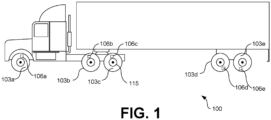
FIG. 1 is a drawing of a vehicle with one or more tires that a sensor according to various embodiments of the present disclosure. -
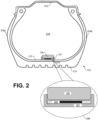
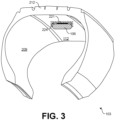
FIGS. 2 and3 are perspective cross-sectional views of a tire shown inFIG. 1 , where a sensor mount assembly is mounted on the inside of thetire 103 according to various embodiments of the present disclosure. -
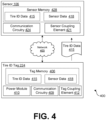
FIG. 4 is an example of a networked environment including a sensor and tire identification (ID) tag that are in communication with each other according to various embodiments of the present disclosure. -
FIG. 5 is a sequence diagram illustrating an example of functionality in the network environment ofFIG. 4 according to various embodiments of the present disclosure. - "Innerliner" means the layer or layers of elastomer or other material that form the inside surface of a tubeless tire and that contain the inflating gas within the tire.
- "TPMS" means a tire pressure monitoring system, which is an electronic system that measures the internal pressure of a tire and is capable of communicating the pressure to a processor that is mounted on the vehicle and/or is in electronic communication with electronic systems of the vehicle.
- The present disclosure relates to programming tire sensors according to various embodiments. Tire sensors can be programed with tire identification data, which can be unique to the tire in which the tire sensor is attached. However, if a tire sensor becomes defective during the service life of the tire, a replacement sensor may be required. Traditionally, a tire sensor is externally programmed with the unique tire identification data and/or other pertinent data before entering service. Externally programing a replacement sensor is an inherently manual, error prone process, which can raise data integrity and safety concerns. Therefore, it would be beneficial to be able to automatically program a sensor with the tire identification data and/or other pertinent data.
- In various examples, an identification tag device (e.g., radio frequency identification (RFID) tag) stores tire information data and/or other data that is unique to a given tire. In various examples, the identification tag device can be attached to or otherwise contained within a tire-integrated sensor mount configured to support a sensor. In various examples, the identification tag device is configured to transmit tire identification data and/or other data stored by the identification tag device to a sensor when the sensor is attached to or otherwise supported by the tire-integrated sensor mount. Accordingly, the sensor can obtain the tire identification data associated with the tire on which the sensor is mounted, thereby allowing the sensor to associate collected sensor data (e.g., pressure, temperature, etc.) with the tire identification data that is unique to the tire. It should be noted that although the discussion of the disclosure relates to pneumatic tires, the disclosure is not limited to pneumatic tires and can apply to all types of tires, including pneumatic and non-pneumatic tires.
- With reference to
FIG. 1 , avehicle 100 is shown with one or more tires 103 (e.g., 103a, 103b, 103c, 103d, 103e). Although illustrated and described as pneumatic tires, it is noted that thetires 103 are not limited to pneumatic tires and can apply to all types of tires, including pneumatic and non-pneumatic tires Eachtire 103 includes a sensor 106 (e.g., 106a, 106b, 106c, 106d, 106e). In various examples, thesensor 106 is mounted on eachtire 103 for the purpose of detecting certain real-time parameters of thetire 103, such as tire pressure and tire temperature. In various examples, thesensor 106 can comprise at least one of a pressure sensor to sense the inflation pressure within a cavity of the tire, a temperature sensor to measure a temperature of the tire, an accelerometer for measuring acceleration of a wheel on which thetire 103 is mounted, a revolution counter to measure a revolution time of the wheel, and/or other types of sensors. - In some embodiments, the
sensor 106 is a component of or comprises a tire pressure monitoring system (TPMS) module or sensing unit. In some aspects, each one of thetires 103 on thevehicle 100 includes one or more of thesensors 106. While thevehicle 100 is depicted as a commercial truck, thevehicle 100 may comprise any type of vehicle that employs tires where the commercial truck is presented as an example. To this end, thevehicle 100 may comprise other vehicles falling into various categories such as passenger vehicles, off-road vehicles, and the like, in which such vehicles include a greater or lesser number oftires 103 than are shown inFIG. 1 . - Turning now to
FIGS. 2 and3 , shown are cross-sectional views of atire 103, where a sensor mount assembly is mounted on the inside of thetire 103. In particular,FIG. 2 illustrates a cross-sectional view of atire 103 on awheel 203, where asensor mount assembly 206 is mounted on the inside of thetire 103.FIG. 3 illustrates a cross-sectional view of atire 103 without thewheel 203, where asensor mount assembly 206 is mounted on the inside of thetire 103. Thetires 103 are of conventional construction, and each tire is mounted on arespective wheel 203 as known to those skilled in the art. Eachtire 103 includes a pair of sidewalls 209 (e.g., 209a, 209b) that extend to acircumferential tread 212. Aninnerliner 215 is disposed on the inner surface of thetire 103, and when the tire is mounted on thewheel 203, aninternal cavity 218 is formed, which is filled with a pressurized medium, such as air. - In various examples, the
sensor mount assembly 206 comprises asensor mount 221, a tire identification (ID)tag 224, and asensor 106. In some examples, thesensor 106 can be detachably attached from thesensor mount 221. For example, if asensor 106 becomes defective during a service life (e.g., life of a tire 103), thesensor 106 may need to be replaced. As such, thesensor 106 can be detached or otherwise removed from thesensor mount 221 to allow for the placement of areplacement sensor 106. Accordingly, in some examples, thesensor mount assembly 206 can comprise thesensor mount 221 and thetire ID tag 224 without thesensor 106. - As shown in
FIG. 2 , thesensor mount assembly 206 comprises thetire ID tag 224 affixed to or otherwise integrated or contained within thesensor mount 221. In various examples, thesensor 106 can be attached to or mounted on thesensor mount 221 such that thesensor 106 engages with or abuts an inner surface of thesensor mount 221. In some examples, thesensor 106 is mechanically mounted to thesensor mount 221. In other examples, thesensor 106 is attached to thesensor mount 221 via an adhesive or other suitable form of attachment. It should be noted that the positioning of thetire ID tag 224 and thesensor 106 within thesensor mount assembly 206 are such that thesensor 106 can communicate with thetire ID tag 224 in accordance to the embodiments of the disclosure. - The
sensor mount 221 is designed and configured to support asensor 106 that detects certain real-time parameters of thetire 103, such as tire pressure and tire temperature. It should be noted that the size and shape of thesensor mount 221 is not limited to the size and shape of thesensor mount 221 ofFIG. 2 and can be of any suitable size and shape such that asensor 106 can be attached to and supported by thesensor mount 221. In various examples, thesensor mount 221 is attached to or integrated within theinnerliner 215 and/or other components of thetire 103. For example, thesensor mount 221 can be attached to thetire 103 via an adhesive or other suitable type of attachment means. In other examples, thesensor mount 221 is integrated within one or more components of the tire 109. In some examples, thesensor mount 221 can be molded into the one or more components of the tire 109 during the manufacturing of the tire 109. In some examples, thesensor mount 221 can be formed from a material that is similar to and/or the same of that of theinnerliner 215 and/or other tire components. In other examples, the sensor mount can be formed from plastic and/or other suitable types of materials so long as thesensor mount 221 can support thesensor 106 during the operation of thetire 103. - In various examples, the
tire ID tag 224 comprises a conventional radio frequency identification (RFID) tag device. In some examples, thetire ID tag 224 is in a dipole configuration although other tag configurations may be employed if so desired. Thetire ID tag 224 is of a general type including a substrate supporting an IC (integrated circuit) package and having conductive coiled antenna arms. Such a tag is shown and described inU.S. Pat. No. 8,441,355 hereby incorporated herein in its entirety by reference. - In various examples, the
tire ID tag 224 can store tire information that is unique to thetire 103 on which thetire ID tag 224 is mounted. The tire information can include a tire identifier (ID), manufacturing information for the tire 103 (e.g., model number, manufacturer name, etc.), size information (e.g., rim size, width, and outer diameter), manufacturing location, manufacturing date, a treadcap code that includes or correlates to a compound identification, a mold code that includes or correlates to a tread structure identification, and/or other information. The vehicle tire information may also include a service history or other information to identify specific features and parameters of eachtire 103. In various examples, thetire ID tag 224 is operable to wirelessly transmit the tire identification data to thesensor 106 and/or other remote receiver. - In various examples, the
sensor 106 is mounted on atire 103 for the purpose of detecting certain real-time parameters of thetire 103, such as tire pressure and tire temperature. In various examples, thesensor 106 can comprise at least one of a pressure sensor to sense the inflation pressure within a cavity of the tire, a temperature sensor to measure a temperature of the tire, an accelerometer for measuring acceleration of a wheel on which thetire 103 is mounted, a revolution counter to measure a revolution time of the wheel, and/or other types of sensors. - In various examples, the
sensor 106 comprises a processor and memory to store vehicle tire information for eachspecific tire 103. For example, the tire vehicle tire information can include a tire identifier (ID), manufacturing information for the tire 103 (e.g., model number, manufacturer name, etc.), size information (e.g., rim size, width, and outer diameter), manufacturing location, manufacturing date, a treadcap code that includes or correlates to a compound identification, a mold code that includes or correlates to a tread structure identification, and/or other information. The vehicle tire information may also include a service history or other information to identify specific features and parameters of eachtire 103. In various examples, thesensor 106 is configured to wirelessly communicate with thetire ID tag 224 to receive the tire identification data from thetire ID tag 224. - The
sensor 106 further includes an antenna for wirelessly transmitting measured parameters and tire information data to a remote processor for analysis, such as a processor integrated into a vehicle computing device, a Controller Area Network (CAN) bus associated with thevehicle 100, and/or a cloud computing device. According to various embodiments, each one of thetires 103 on thevehicle 100 may include one or more of thesensors 106. - Turning now to
FIG. 4 , shown is anetworked environment 400 according to various embodiments. Thenetworked environment 400 includes asensor 106 and atire ID tag 224 which are in data communication with each other via anetwork 403. - In various examples, the network 309 can include a local area network (LAN) and can include wired or wireless components or a combination thereof. Wireless networks can include Institute of Electrical and Electronic Engineers (IEEE) 802.11 wireless networks (i.e., WI-FI®), BLUETOOTH® networks, radio transmission networks, microwave transmission networks, as well as other networks relying on radio broadcasts. The
network 403 can also include a combination of two ormore networks 403. - In various examples, the
tire ID tag 224 comprises a conventional radio frequency identification (RFID) tag device. For example, thetire ID tag 224 can comprise amemory 406, communication circuitry 409 (e.g., transmitter, receiver, transceiver, etc.), apower module 410, and a coupling element 412 (e.g., antenna or coil). - The
memory 406 can comprisetire ID data 415,sensor data 418, and/or other data. Thetire ID data 415 can include a tire identifier (ID), manufacturing information for the tire 103 (e.g., model number, manufacturer name, etc.), size information (e.g., rim size, width, and outer diameter), manufacturing location, manufacturing date, a treadcap code that includes or correlates to a compound identification, a mold code that includes or correlates to a tread structure identification, and/or other information. The vehicle tire information may also include a service history or other information to identify specific features and parameters of eachtire 103. - The
sensor data 418 can include information collected by thesensor 106. For example, thesensor 106 can collect real-time parameters of thetire 103, such as tire pressure, tire temperature, acceleration, revolutions, and/or other parameter associated with the tire. In various examples, thesensor 106 can comprise at least one of a pressure sensor to sense the inflation pressure within a cavity of the tire, a temperature sensor to measure a temperature of the tire, an accelerometer for measuring acceleration of a wheel on which thetire 103 is mounted, a revolution counter to measure a revolution time of the wheel, and/or other types of sensors. - In various examples, the
sensor data 418 can include data that has been collected by asensor 106 that is no longer in communication with thetire ID tag 224. For example, if asensor 106 becomes defective during a life service of a giventire 103, thesensor 106 can be replaced with areplacement sensor 106. In some examples, thesensor data 418 stored in thetire ID tag 224 can correspond to events or collected data associated with theprior sensor 106 prior to its malfunction and can be transmitted to thereplacement sensor 106 or other remote receiver, as can be appreciated. - In the example of an RFID tag, the
memory 406 andcommunication circuitry 409 can be implemented on an RFID chip. In various examples, a portion of the tire ID tag 224 (e.g., RFID chip) comprising thecommunication circuitry 409 and/ormemory 406 can be contacted to thecoupling element 412 or it may have an on-chip coil, which can be inductively coupled to yet another coil, to one or more antennas tuned to an operating RF-frequency or to possible RF-frequencies of thesensor 106, or thecoupling element 412. For example, thecoupling element 412 can be tuned to an operating frequency of thesensor 106, for example, to one of the Industrial, Scientific and Medical bands (ISM) as, for example, 315 MHz, 434 MHz, etc. - In various examples, the communication interface for the
communication circuitry 409 comprises an I2C or SPI commercially available for integrated circuit (IC) incorporation and use. "I2C" or "SPI" as used herein represents the inter-integrated circuit (I2C) developed by Philips (now NXP) Semiconductor, Eindhoven, Netherlands, or serial peripheral interface (SPI) developed by Motorola, Schaumberg, Ill., respectfully. In various examples, thecommunication circuitry 409 of thetire ID tag 224 is coupled to apower module 410, which is further coupled to thetag coupling element 412 of thetire ID tag 224. Thepower module 410 is configured to power thetire ID tag 224 by receiving energy through thesensor coupling element 421 from thesensor 106. That is to say thetire ID tag 224 comprises a contact to thecoupling element 412 or it may comprise an on-chip coil inductively coupled to thecoupling element 412. - In various examples, the
sensor 106 is configured to detect certain real-time parameters of thetire 103, such as tire pressure and tire temperature. In various examples, thesensor 106 can comprise at least one of a pressure sensor to sense the inflation pressure within a cavity of the tire, a temperature sensor to measure a temperature of the tire, an accelerometer for measuring acceleration of a wheel on which thetire 103 is mounted, a revolution counter to measure a revolution time of the wheel, and/or other types of sensors. - In various examples, the
sensor 106 comprises a processor,sensor communication circuitry 424,memory 428, asensor coupling element 421, and/or other components. Thesensor communication circuitry 424 can comprise a transmitter, receiver, transceiver, and/or other type of communication component that allows the sensor to communicate with thetire ID tag 224 and/or other devices. For example, thesensor communication circuitry 424 can comprise an antenna for wirelessly transmitting measured parameters and tire information data to a remote processor for analysis, such as a processor integrated into a vehicle computing device, a Controller Area Network (CAN) bus associated with thevehicle 100, and/or a cloud computing device. Thesensor memory 428 stores tireID data 415,sensor data 418, and/or other data that is specific to a giventire 103. - The sensor coupling element 421 (e.g., an antenna, a coil, etc.) is configured to provide power (e.g., RF power) to the
tire ID tag 224 to enable provision oftire ID data 415. For example, thesensor 106 can comprise a dedicated output to provide power to thetire ID tag 224, where thesensor coupling element 421 can also be dedicated or used for multiple purposes among which is the provision of the power to thetire ID tag 224. In some examples, thecommunication circuitry 424 of thesensor 106 can be coupled to the sensor coupling element 421 (e.g., the same or another antenna or coil) and which is configured to transmit information related to a tire pressure to a receiver device of avehicle 100, thetire ID tag 224, and/or other device. - Moving on to
FIG. 5 , shown is an example sequence diagram 500 that provides an example of the operation of the components of thenetwork environment 400. It is understood that the sequence diagram 500 ofFIG. 5 provides merely an example of the many different types of functional arrangements that can be employed to implement the operation of the depicted portion of thenetwork environment 400. As an alternative, the sequence diagram 500 ofFIG. 5 can be viewed as depicting an example of elements of a method implemented within thenetwork environment 400. In particular, the sequence diagram 500 ofFIG. 5 depicts the functionality associated with the establishment and exchange of information between asensor 106 and atire identification tag 224. For example, thetire identification tag 224 includestire ID data 415 stored in amemory 406. When a sensor 106 (e.g., original or replacement) is attached to the tire integratedmount 221 of atire 103, thesensor 106 can power thetire identification tag 224 that is contained within or coupled to the tire integratedmount 221 and receivetire ID data 415,sensor data 418, and/or other data that is stored on thetire ID tag 224 from thetire ID tag 224. - Beginning with
box 503, thesensor 106 provides power to thetire ID tag 224. For example, when thesensor 106 is supported by the tire integratedtire mount 221 of the tire, the sensor coupling element 421 (e.g., an antenna, a coil, etc.) of thesensor 106 provides power (e.g., RF power) to thetire ID tag 224 to enable provision oftire ID data 415. For example, thesensor 106 can comprise a dedicated output to provide power to thetire ID tag 224, where thesensor coupling element 421 can also be dedicated or used for multiple purposes among which is the provision of the power to thetire ID tag 224. - At
box 506, thetire ID tag 224 detects the communication with thesensor 106. For example, thecoupling element 412 of thetire ID tag 224 can be coupled to thesensor coupling element 421 upon placement of thesensor 106 in operational proximity to thetire ID tag 224. Accordingly, thetag coupling element 412 can receive energy (e.g., power) from thesensor coupling element 421. As such, thepower module 410 of thetire ID tag 224 that is coupled to thesensor coupling element 421 can power thetire ID tag 224 using the energy received from thesensor coupling element 421, thereby detecting thesensor 106. - At
box 509, thetire ID tag 224 transmits thetire ID data 415,sensor data 418, and/or other data stored in thetag memory 406 to thesensor memory 428. In various examples, thecommunication circuitry 409 of thetire ID tag 224 is configured to transmit the data in thetag memory 406 tocommunication circuitry 424 of thesensor 106. - At
box 512, thesensor 106 stores the received data in thesensor memory 428. In various examples, as thesensor 106 collects parameter data associated with the tire and transmits the parameter data to a remote device, thesensor 106 can associate the collected data using thetire ID data 415 obtained from thetire ID tag 224. Thereafter, this portion of the process proceeds to completion.
Claims (15)
- A tire comprising a sensor mount affixed to the tire or being integrated within the tire, the sensor mount being configured to support a sensor; and an identification tag, preferably a radio frequency identification (RFID) tag, affixed to an inner wall of the sensor mount, the identification tag comprising tire identification data and/or being configured to transmit tire identification data associated with the tire to the sensor.
- The tire of claim 1 wherein the sensor is configured to measure one or more tire parameters of the tire; and/or wherein the identification tag is in data communication with the sensor.
- The tire of claim 1 or 2, wherein the sensor is detachably attached to the sensor mount.
- The tire of at least one of the previous claims, wherein the sensor comprises a sensor coupling element configured to power the identification tag when the sensor is attached to the sensor mount, the sensor coupling element preferably comprising an antenna or a coil.
- The tire of at least one of the previous claims, wherein the tire identification data comprises at least one of a tire identifier (ID), manufacturing information for the tire, size information of the tire, manufacturing location, manufacturing date, a treadcap code that correlates to a compound identification, or a mold code that correlates to a tread structure identification.
- The tire of at least one of the previous claims, wherein the sensor mount is integrated or at least partially integrated within an innerliner of the tire.
- The tire of at least one of the previous claims, wherein the sensor comprises a replacement sensor, and wherein the tire identification data comprises sensor data associated with a defective sensor previously attached to the sensor mount and in communication with the identification tag.
- The tire of at least one of the previous claims, wherein the sensor comprises a first coupling element and the identification tag comprises a second coupling element, and the first coupling element being configured to provide power to the second coupling element based at least in part on a proximity between the first coupling element and the second coupling element.
- The tire of at least one of the previous claims, wherein the identification tag is configured to transmit the tire identification data to a sensor in response to the sensor being attached to the sensor mount.
- The tire of at least one of the previous claims, wherein the identification tag is contained within the sensor mount.
- A method comprising:initiating communication between a sensor and an identification tag affixed to a mount supporting the sensor, the identification tag comprising tire identification data of a tire; andtransmitting the tire identification data from the identification tag to the sensor.
- The method of claim 11, further comprising storing the tire identification in a memory of the sensor.
- The method of claim 11 or 12, wherein the sensor collects parameter data associated with the tire and associates the parameter data with the tire based at least in part on the tire identification data; and/or wherein the tire identification data comprises at least one of a tire identifier (ID), manufacturing information for the tire, size information of the tire, manufacturing location, manufacturing date, a treadcap code that correlates to a compound identification, or a mold code that correlates to a tread structure identification.
- The method of claim 11, 12 or 13, wherein the sensor is detachably attached to the mount, and the identification tag is contained within or affixed to the mount.
- The method of at least one of the claims 110 to 14, wherein the sensor is a replacement sensor, and further comprising transmitting, by the identification tag, sensor data associated with another sensor previously attached to the mount.
Applications Claiming Priority (2)
| Application Number | Priority Date | Filing Date | Title |
|---|---|---|---|
| US202363508002P | 2023-06-14 | 2023-06-14 | |
| US18/642,904 US20240416690A1 (en) | 2023-06-14 | 2024-04-23 | Sensor data retrieval from radio frequency identification (rfid) device |
Publications (2)
| Publication Number | Publication Date |
|---|---|
| EP4477431A1 true EP4477431A1 (en) | 2024-12-18 |
| EP4477431B1 EP4477431B1 (en) | 2026-02-04 |
Family
ID=91481684
Family Applications (1)
| Application Number | Title | Priority Date | Filing Date |
|---|---|---|---|
| EP24181536.4A Active EP4477431B1 (en) | 2023-06-14 | 2024-06-11 | Sensor data retrieval from radio frequency identification (rfid) device |
Country Status (2)
| Country | Link |
|---|---|
| US (1) | US20240416690A1 (en) |
| EP (1) | EP4477431B1 (en) |
Citations (8)
| Publication number | Priority date | Publication date | Assignee | Title |
|---|---|---|---|---|
| US20090058667A1 (en) * | 2008-09-24 | 2009-03-05 | Bryn James Dixon | Tire pressure monitoring system sensor patch |
| US8441355B2 (en) | 2009-10-23 | 2013-05-14 | The Goodyear Tire & Rubber Company | Product and electronic tag assembly |
| US9248709B2 (en) * | 2013-06-13 | 2016-02-02 | Infineon Technologies Ag | RFID-tag, a TPMS device, a tire, a receiver device and a method for providing information related to identification of a tire |
| US20170174014A1 (en) * | 2015-12-22 | 2017-06-22 | Schrader Electronics Limited | Advanced Tire Monitoring System |
| US20170174013A1 (en) * | 2015-12-21 | 2017-06-22 | The Goodyear Tire & Rubber Company | Integrated tpms module and rfid tag data sharing system in a tire |
| US9764605B2 (en) * | 2012-09-17 | 2017-09-19 | Bayerische Motoren Werke Aktiengesellschaft | Storing of tire information in a tire sensor |
| US9950575B2 (en) * | 2014-03-21 | 2018-04-24 | Compagnie Generale Des Etablissements Michelin | Mounting patch for a tire |
| US10414217B2 (en) * | 2014-12-15 | 2019-09-17 | Compagnie Generale Des Establissments Michelin | Patch for an electronic module of a tire |
Family Cites Families (1)
| Publication number | Priority date | Publication date | Assignee | Title |
|---|---|---|---|---|
| JP6617666B2 (en) * | 2016-09-07 | 2019-12-11 | 株式会社デンソー | Tire mount sensor |
-
2024
- 2024-04-23 US US18/642,904 patent/US20240416690A1/en active Pending
- 2024-06-11 EP EP24181536.4A patent/EP4477431B1/en active Active
Patent Citations (8)
| Publication number | Priority date | Publication date | Assignee | Title |
|---|---|---|---|---|
| US20090058667A1 (en) * | 2008-09-24 | 2009-03-05 | Bryn James Dixon | Tire pressure monitoring system sensor patch |
| US8441355B2 (en) | 2009-10-23 | 2013-05-14 | The Goodyear Tire & Rubber Company | Product and electronic tag assembly |
| US9764605B2 (en) * | 2012-09-17 | 2017-09-19 | Bayerische Motoren Werke Aktiengesellschaft | Storing of tire information in a tire sensor |
| US9248709B2 (en) * | 2013-06-13 | 2016-02-02 | Infineon Technologies Ag | RFID-tag, a TPMS device, a tire, a receiver device and a method for providing information related to identification of a tire |
| US9950575B2 (en) * | 2014-03-21 | 2018-04-24 | Compagnie Generale Des Etablissements Michelin | Mounting patch for a tire |
| US10414217B2 (en) * | 2014-12-15 | 2019-09-17 | Compagnie Generale Des Establissments Michelin | Patch for an electronic module of a tire |
| US20170174013A1 (en) * | 2015-12-21 | 2017-06-22 | The Goodyear Tire & Rubber Company | Integrated tpms module and rfid tag data sharing system in a tire |
| US20170174014A1 (en) * | 2015-12-22 | 2017-06-22 | Schrader Electronics Limited | Advanced Tire Monitoring System |
Also Published As
| Publication number | Publication date |
|---|---|
| US20240416690A1 (en) | 2024-12-19 |
| EP4477431B1 (en) | 2026-02-04 |
Similar Documents
| Publication | Publication Date | Title |
|---|---|---|
| US7021132B2 (en) | Measuring system for wheel parameters and measuring detector for such a system | |
| US10935466B2 (en) | Integrated tire sensor and reader system | |
| EP3184329B1 (en) | Integrated tpms module and rfid tag data sharing system in a tire | |
| JP4630035B2 (en) | Method for integrating tire identification data and OEM vehicle identification data | |
| EP2237978B1 (en) | Method and system for managing data transmission from a plurality of sensor devices included in a tyre | |
| EP1309460B1 (en) | Electronic tire management system | |
| EP3838631B1 (en) | Flexible tire sensor unit and tire | |
| CN101164195B (en) | Radio frequency identification device transmitter for tires and manufacturing method thereof | |
| EP3505336B1 (en) | Article with electronic component inclusion and method of manufacturing | |
| EP1681660A1 (en) | Tire sensor device and tire information transmission method | |
| US20210021015A1 (en) | Reader system for tire with an integrated rfid and tpms sensor | |
| CA2646758A1 (en) | Method and apparatus for transmitting stored data and engineering conditions of a tire to a remote location | |
| AU2001280823A1 (en) | Electronic tire management system | |
| US20210016614A1 (en) | Tire with an integrated rfid and tpms sensor | |
| EP3670213A1 (en) | Control system for an air maintenance tire system | |
| WO2004068769A2 (en) | Wireless communications device for use in tires | |
| US20250367985A1 (en) | Antenna connection for integrated rfid tag and tpms sensor | |
| EP4477431B1 (en) | Sensor data retrieval from radio frequency identification (rfid) device | |
| CN108698457B (en) | Wheel unit, system and method for transmitting data from a wheel unit | |
| CN119142071A (en) | Sensor data retrieval from Radio Frequency Identification (RFID) devices | |
| CN110023113B (en) | Electronic wheel unit and control device for wheel monitoring system, wheel monitoring system, and method for monitoring wheels in a vehicle | |
| EP3663110B1 (en) | Integrated tire sensor and reader system | |
| CN103477354B (en) | The method of the management data between the RFID marker carried by tire and the sensor carried by wheel rim |
Legal Events
| Date | Code | Title | Description |
|---|---|---|---|
| PUAI | Public reference made under article 153(3) epc to a published international application that has entered the european phase |
Free format text: ORIGINAL CODE: 0009012 |
|
| STAA | Information on the status of an ep patent application or granted ep patent |
Free format text: STATUS: THE APPLICATION HAS BEEN PUBLISHED |
|
| AK | Designated contracting states |
Kind code of ref document: A1 Designated state(s): AL AT BE BG CH CY CZ DE DK EE ES FI FR GB GR HR HU IE IS IT LI LT LU LV MC ME MK MT NL NO PL PT RO RS SE SI SK SM TR |
|
| STAA | Information on the status of an ep patent application or granted ep patent |
Free format text: STATUS: REQUEST FOR EXAMINATION WAS MADE |
|
| 17P | Request for examination filed |
Effective date: 20250429 |
|
| GRAP | Despatch of communication of intention to grant a patent |
Free format text: ORIGINAL CODE: EPIDOSNIGR1 |
|
| STAA | Information on the status of an ep patent application or granted ep patent |
Free format text: STATUS: GRANT OF PATENT IS INTENDED |
|
| RIC1 | Information provided on ipc code assigned before grant |
Ipc: B60C 23/04 20060101AFI20250819BHEP Ipc: B60C 19/00 20060101ALN20250819BHEP |
|
| INTG | Intention to grant announced |
Effective date: 20250911 |
|
| GRAS | Grant fee paid |
Free format text: ORIGINAL CODE: EPIDOSNIGR3 |
|
| GRAA | (expected) grant |
Free format text: ORIGINAL CODE: 0009210 |
|
| STAA | Information on the status of an ep patent application or granted ep patent |
Free format text: STATUS: THE PATENT HAS BEEN GRANTED |
|
| AK | Designated contracting states |
Kind code of ref document: B1 Designated state(s): AL AT BE BG CH CY CZ DE DK EE ES FI FR GB GR HR HU IE IS IT LI LT LU LV MC ME MK MT NL NO PL PT RO RS SE SI SK SM TR |
|
| REG | Reference to a national code |
Ref country code: CH Ref legal event code: F10 Free format text: ST27 STATUS EVENT CODE: U-0-0-F10-F00 (AS PROVIDED BY THE NATIONAL OFFICE) Effective date: 20260204 Ref country code: GB Ref legal event code: FG4D |
|
| REG | Reference to a national code |
Ref country code: IE Ref legal event code: FG4D |
|
| REG | Reference to a national code |
Ref country code: DE Ref legal event code: R096 Ref document number: 602024002376 Country of ref document: DE |