EP4475076A1 - System and method for background modelling for a video stream - Google Patents
System and method for background modelling for a video stream Download PDFInfo
- Publication number
- EP4475076A1 EP4475076A1 EP23177277.3A EP23177277A EP4475076A1 EP 4475076 A1 EP4475076 A1 EP 4475076A1 EP 23177277 A EP23177277 A EP 23177277A EP 4475076 A1 EP4475076 A1 EP 4475076A1
- Authority
- EP
- European Patent Office
- Prior art keywords
- background
- image
- video stream
- image frames
- background model
- Prior art date
- Legal status (The legal status is an assumption and is not a legal conclusion. Google has not performed a legal analysis and makes no representation as to the accuracy of the status listed.)
- Granted
Links
Images




Classifications
-
- H—ELECTRICITY
- H04—ELECTRIC COMMUNICATION TECHNIQUE
- H04N—PICTORIAL COMMUNICATION, e.g. TELEVISION
- H04N5/00—Details of television systems
- H04N5/14—Picture signal circuitry for video frequency region
- H04N5/144—Movement detection
-
- H—ELECTRICITY
- H04—ELECTRIC COMMUNICATION TECHNIQUE
- H04N—PICTORIAL COMMUNICATION, e.g. TELEVISION
- H04N5/00—Details of television systems
- H04N5/222—Studio circuitry; Studio devices; Studio equipment
- H04N5/262—Studio circuits, e.g. for mixing, switching-over, change of character of image, other special effects ; Cameras specially adapted for the electronic generation of special effects
- H04N5/272—Means for inserting a foreground image in a background image, i.e. inlay, outlay
-
- G—PHYSICS
- G06—COMPUTING OR CALCULATING; COUNTING
- G06T—IMAGE DATA PROCESSING OR GENERATION, IN GENERAL
- G06T5/00—Image enhancement or restoration
- G06T5/50—Image enhancement or restoration using two or more images, e.g. averaging or subtraction
-
- G—PHYSICS
- G06—COMPUTING OR CALCULATING; COUNTING
- G06T—IMAGE DATA PROCESSING OR GENERATION, IN GENERAL
- G06T7/00—Image analysis
- G06T7/20—Analysis of motion
- G06T7/254—Analysis of motion involving subtraction of images
-
- G—PHYSICS
- G06—COMPUTING OR CALCULATING; COUNTING
- G06T—IMAGE DATA PROCESSING OR GENERATION, IN GENERAL
- G06T7/00—Image analysis
- G06T7/10—Segmentation; Edge detection
- G06T7/11—Region-based segmentation
-
- G—PHYSICS
- G06—COMPUTING OR CALCULATING; COUNTING
- G06T—IMAGE DATA PROCESSING OR GENERATION, IN GENERAL
- G06T7/00—Image analysis
- G06T7/10—Segmentation; Edge detection
- G06T7/13—Edge detection
-
- G—PHYSICS
- G06—COMPUTING OR CALCULATING; COUNTING
- G06T—IMAGE DATA PROCESSING OR GENERATION, IN GENERAL
- G06T7/00—Image analysis
- G06T7/10—Segmentation; Edge detection
- G06T7/194—Segmentation; Edge detection involving foreground-background segmentation
-
- G—PHYSICS
- G06—COMPUTING OR CALCULATING; COUNTING
- G06T—IMAGE DATA PROCESSING OR GENERATION, IN GENERAL
- G06T7/00—Image analysis
- G06T7/20—Analysis of motion
-
- G—PHYSICS
- G06—COMPUTING OR CALCULATING; COUNTING
- G06T—IMAGE DATA PROCESSING OR GENERATION, IN GENERAL
- G06T7/00—Image analysis
- G06T7/20—Analysis of motion
- G06T7/215—Motion-based segmentation
-
- G—PHYSICS
- G06—COMPUTING OR CALCULATING; COUNTING
- G06T—IMAGE DATA PROCESSING OR GENERATION, IN GENERAL
- G06T7/00—Image analysis
- G06T7/20—Analysis of motion
- G06T7/246—Analysis of motion using feature-based methods, e.g. the tracking of corners or segments
-
- G—PHYSICS
- G06—COMPUTING OR CALCULATING; COUNTING
- G06T—IMAGE DATA PROCESSING OR GENERATION, IN GENERAL
- G06T7/00—Image analysis
- G06T7/20—Analysis of motion
- G06T7/292—Multi-camera tracking
-
- G—PHYSICS
- G06—COMPUTING OR CALCULATING; COUNTING
- G06V—IMAGE OR VIDEO RECOGNITION OR UNDERSTANDING
- G06V10/00—Arrangements for image or video recognition or understanding
- G06V10/70—Arrangements for image or video recognition or understanding using pattern recognition or machine learning
- G06V10/762—Arrangements for image or video recognition or understanding using pattern recognition or machine learning using clustering, e.g. of similar faces in social networks
-
- G—PHYSICS
- G06—COMPUTING OR CALCULATING; COUNTING
- G06V—IMAGE OR VIDEO RECOGNITION OR UNDERSTANDING
- G06V20/00—Scenes; Scene-specific elements
- G06V20/40—Scenes; Scene-specific elements in video content
- G06V20/41—Higher-level, semantic clustering, classification or understanding of video scenes, e.g. detection, labelling or Markovian modelling of sport events or news items
-
- G—PHYSICS
- G06—COMPUTING OR CALCULATING; COUNTING
- G06V—IMAGE OR VIDEO RECOGNITION OR UNDERSTANDING
- G06V20/00—Scenes; Scene-specific elements
- G06V20/40—Scenes; Scene-specific elements in video content
- G06V20/46—Extracting features or characteristics from the video content, e.g. video fingerprints, representative shots or key frames
-
- G—PHYSICS
- G06—COMPUTING OR CALCULATING; COUNTING
- G06V—IMAGE OR VIDEO RECOGNITION OR UNDERSTANDING
- G06V20/00—Scenes; Scene-specific elements
- G06V20/40—Scenes; Scene-specific elements in video content
- G06V20/49—Segmenting video sequences, i.e. computational techniques such as parsing or cutting the sequence, low-level clustering or determining units such as shots or scenes
-
- G—PHYSICS
- G06—COMPUTING OR CALCULATING; COUNTING
- G06V—IMAGE OR VIDEO RECOGNITION OR UNDERSTANDING
- G06V20/00—Scenes; Scene-specific elements
- G06V20/50—Context or environment of the image
- G06V20/52—Surveillance or monitoring of activities, e.g. for recognising suspicious objects
-
- H—ELECTRICITY
- H04—ELECTRIC COMMUNICATION TECHNIQUE
- H04N—PICTORIAL COMMUNICATION, e.g. TELEVISION
- H04N23/00—Cameras or camera modules comprising electronic image sensors; Control thereof
- H04N23/58—Means for changing the camera field of view without moving the camera body, e.g. nutating or panning of optics or image sensors
-
- H—ELECTRICITY
- H04—ELECTRIC COMMUNICATION TECHNIQUE
- H04N—PICTORIAL COMMUNICATION, e.g. TELEVISION
- H04N23/00—Cameras or camera modules comprising electronic image sensors; Control thereof
- H04N23/60—Control of cameras or camera modules
- H04N23/61—Control of cameras or camera modules based on recognised objects
-
- H—ELECTRICITY
- H04—ELECTRIC COMMUNICATION TECHNIQUE
- H04N—PICTORIAL COMMUNICATION, e.g. TELEVISION
- H04N5/00—Details of television systems
- H04N5/14—Picture signal circuitry for video frequency region
- H04N5/147—Scene change detection
-
- G—PHYSICS
- G06—COMPUTING OR CALCULATING; COUNTING
- G06T—IMAGE DATA PROCESSING OR GENERATION, IN GENERAL
- G06T2207/00—Indexing scheme for image analysis or image enhancement
- G06T2207/10—Image acquisition modality
- G06T2207/10016—Video; Image sequence
-
- G—PHYSICS
- G06—COMPUTING OR CALCULATING; COUNTING
- G06T—IMAGE DATA PROCESSING OR GENERATION, IN GENERAL
- G06T2207/00—Indexing scheme for image analysis or image enhancement
- G06T2207/20—Special algorithmic details
- G06T2207/20081—Training; Learning
-
- G—PHYSICS
- G06—COMPUTING OR CALCULATING; COUNTING
- G06T—IMAGE DATA PROCESSING OR GENERATION, IN GENERAL
- G06T2207/00—Indexing scheme for image analysis or image enhancement
- G06T2207/20—Special algorithmic details
- G06T2207/20084—Artificial neural networks [ANN]
-
- G—PHYSICS
- G06—COMPUTING OR CALCULATING; COUNTING
- G06T—IMAGE DATA PROCESSING OR GENERATION, IN GENERAL
- G06T2207/00—Indexing scheme for image analysis or image enhancement
- G06T2207/20—Special algorithmic details
- G06T2207/20212—Image combination
- G06T2207/20221—Image fusion; Image merging
-
- G—PHYSICS
- G06—COMPUTING OR CALCULATING; COUNTING
- G06T—IMAGE DATA PROCESSING OR GENERATION, IN GENERAL
- G06T2207/00—Indexing scheme for image analysis or image enhancement
- G06T2207/30—Subject of image; Context of image processing
- G06T2207/30232—Surveillance
-
- G—PHYSICS
- G06—COMPUTING OR CALCULATING; COUNTING
- G06V—IMAGE OR VIDEO RECOGNITION OR UNDERSTANDING
- G06V10/00—Arrangements for image or video recognition or understanding
- G06V10/20—Image preprocessing
- G06V10/255—Detecting or recognising potential candidate objects based on visual cues, e.g. shapes
-
- G—PHYSICS
- G06—COMPUTING OR CALCULATING; COUNTING
- G06V—IMAGE OR VIDEO RECOGNITION OR UNDERSTANDING
- G06V2201/00—Indexing scheme relating to image or video recognition or understanding
- G06V2201/07—Target detection
Definitions
- the present disclosure relates to a method of background modelling for a video stream acquired by a camera having movement capabilities.
- the disclosure further relates to an image processing system, which implements the method.
- Video processing is a particular case of signal processing.
- Video processing uses hardware, software or a combination for processing a sequence of images representing a video.
- a number of processing tasks require preprocessing.
- One commonly applied step in such a process is defining and applying a background model to a video sequence.
- the background modelling can be said to divide the image frames into parts or areas that are either categorized as background or as foreground.
- the resulting split into background and foreground may allow further video processing to focus on the parts of the image frames that are relevant for certain processing tasks.
- Some processing tasks may, for example, only be necessary to perform for the foreground while other processing tasks are only relevant to perform for the background.
- One type of background modelling is based on analysis of motion in the video stream. If a part of the image does not change significantly, it can be considered to belong to the background.
- Such background modelling is an affordable and efficient way of offering a background model that is useful for a number of applications. It can be used in, for example, background overlay applications and dynamic privacy masking applications.
- the conventional background modelling based on motion in the video stream used with, for example, a configurable background merge time can generally be considered to be a solution that works reasonably well.
- a PTZ camera is a camera that is capable of directional and zoom control. Since such cameras can move with fast changes in the scene, the conventional background modelling may have challenges in identifying the background and foreground in the video stream correctly by analyzing changes since the background modelling based on analysis of motion cannot distinguish between changes caused by the movement of the camera and changes caused by objects moving in the scene. Consequently, when using such modelling there is a risk that some or all parts of the scene that do not move are incorrectly categorized as foreground when the camera moves.
- the present disclosure relates to a method of background modelling for a video stream acquired by a camera having movement capabilities, the method comprising:
- the inventors have realized that by combining two ways of modelling the background for a camera having movement capabilities as described, a robust and power efficient background modelling can be achieved.
- the background modelling can quickly get a valid background and start further processing of the image frames, which need the background model.
- the step of repeatedly updating a background model by analyzing changes in the sequence of image frames and categorizing image areas in the image frames which do not change over time as background is a continuous process, whereas the reset of the background model is a single event.
- the image segmentation and/or object detection algorithm that is used for performing the reset of the background model may typically involve the use of a neural network or other suitable artificial intelligence (AI) based method.
- AI artificial intelligence
- An image segmentation may be, for example, an object segmentation, instance segmentation, semantic segmentation or a panoptic segmentation. All of these examples of image segmentations do not include analysis of motion over time, i.e. changes between several image frames to categorize image areas in the image frames which do not change over time as background. They can therefore be applied instantly on one, or a limited number of, image frames.
- a frame rate of a camera may be, for example, 30 frames per second (fps), 50 fps, 60 fps or 120 fps.
- the conventional algorithm for updating a background model by analyzing changes in the sequence of image frames and categorizing image areas in the image frames which do not change over time as background may take, for example 2 seconds. In other words, upon a camera movement stop or the camera movement going below a movement threshold, it may take a few seconds until the conventional background modelling can produce a background model as intended.
- the background model reset described in the present disclosure may be performed significantly faster, such as in less than 300 milliseconds, preferably in less than 200 milliseconds, even more preferably in less than 100 milliseconds.
- the image segmentation and/or object detection algorithm can therefore be applied on a single image frame, which will provide a background model significantly faster than the conventional background modelling can produce a background model.
- the image segmentation and/or object detection algorithm can be applied on additional image frames, such as less than 3 image frames, less than 5 image frames or less than 8 image frames.
- the image segmentation and/or object detection algorithm can be used repeatedly until the conventional background modelling is ready to produce a background model.
- the step of applying an image segmentation on the one or more image frames to identify at least foreground objects comprises image segmentation performed on a single image frame, or on a number of independent image frames without analyzing motion to identify foreground and background.
- object detection in the context of the present disclosure refers to detecting one or more objects in an image and return their positions, usually in the form of coordinates. In some of the most common object detection applications, bounding boxes indicate the detected objects.
- an image segmentation and/or object detection algorithm is applied on the one or more image frames to identify at least foreground objects.
- the method can be trained to know which type of objects will typically be foreground objects. This may typically be objects that are known to be capable of moving in a video stream, for example, people, vehicles, animals etc.
- the method may additionally have knowledge about which objects are to be regarded as background. This may typically be objects that are known to be still in a video stream, for example, buildings.
- the classification identifier is compared to the ground truth using, for example, a loss function.
- the result from the loss function is then transferred to a weight adjustment function that is configured to adjust the weights used in the classifier.
- a process may then scan images by using the neural network to detect and classify objects in the images.
- Fig. 6 shows an example of a conceptual framework 300 for object detection using a neural network.
- Some building blocks of CNNs are convolution layers, pooling layers, flattened layers, and fully connected layers.
- An input of a CNN is a tensor.
- Convolutional layers convolve the input and pass its result to the next layer. This is similar to the response of a neuron in the visual cortex to a specific stimulus.
- Convolutional networks may further include pooling layers. The pooling layers reduce the dimensions of data by combining the outputs of neuron clusters at one layer into a single neuron in the next layer.
- a CNN may further comprise fully connected layers which connect every neuron in one layer to every neuron in another layer. A flattened matrix may thereby go through a fully connected layer to classify the images.
- Fig. 5 shows an example of an image frame 200 in which a number of objects 208 have been detected and wherein bounding boxes 207 have been added.
- the objects 208 are cars, but the object may be any item that would be considered to belong to a foreground or a background.
- Fig. 7 shows a schematic view of an embodiment of the presently disclosed image processing system 400.
- the disclosed image processing system 400 comprises a camera 401, a display 403, and a processing unit 402.
- the system may, but does not necessarily have to, include a display for displaying the sequence of image frames.
- the background modelling may be useful in a number of applications that are visualized on a display, including overlay and dynamic masking applications. However, in further applications the background model is not necessarily displayed but used in additional applications.
- the additional application may include, for example, extracting statistics or further analysis of the video.
- the system may further comprise peripheral components, such as one or more memories, which may be used for storing instructions that can be executed by the processing unit.
- peripheral components such as one or more memories, which may be used for storing instructions that can be executed by the processing unit.
- the system may further comprise any of: internal and external network interfaces, input and/or output ports, a keyboard or mouse etc.
- a processing unit also may be a single processor in a multi-core/multiprocessor system. Both the computing hardware accelerator and the central processing unit may be connected to a data communication infrastructure.
- the system may include a memory, such as a random access memory (RAM) and/or a read-only memory (ROM), or any suitable type of memory.
- the system may further comprise a communication interface that allows software and/or data to be transferred between the system and external devices.
- Software and/or data transferred via the communications interface may be in any suitable form of electric, optical or RF signals.
- the communications interface may comprise, for example, a cable or a wireless interface.
- the present disclosure further relates to a computer program having instructions which, when executed by a computing device or computing system, cause the computing device or computing system to carry out any embodiment of the presently disclosed method of background modelling for a video stream.
- the computer program may be stored on any suitable type of storage media, such as non-transitory storage media.
Landscapes
- Engineering & Computer Science (AREA)
- Theoretical Computer Science (AREA)
- Multimedia (AREA)
- Physics & Mathematics (AREA)
- General Physics & Mathematics (AREA)
- Computer Vision & Pattern Recognition (AREA)
- Signal Processing (AREA)
- Computing Systems (AREA)
- Software Systems (AREA)
- Artificial Intelligence (AREA)
- Databases & Information Systems (AREA)
- Evolutionary Computation (AREA)
- General Health & Medical Sciences (AREA)
- Medical Informatics (AREA)
- Health & Medical Sciences (AREA)
- Computational Linguistics (AREA)
- Image Analysis (AREA)
Abstract
Description
- The present disclosure relates to a method of background modelling for a video stream acquired by a camera having movement capabilities. The disclosure further relates to an image processing system, which implements the method.
- Video processing is a particular case of signal processing. Video processing uses hardware, software or a combination for processing a sequence of images representing a video. In video processing a number of processing tasks require preprocessing. One commonly applied step in such a process is defining and applying a background model to a video sequence. The background modelling can be said to divide the image frames into parts or areas that are either categorized as background or as foreground. The resulting split into background and foreground may allow further video processing to focus on the parts of the image frames that are relevant for certain processing tasks. Some processing tasks may, for example, only be necessary to perform for the foreground while other processing tasks are only relevant to perform for the background.
- One type of background modelling is based on analysis of motion in the video stream. If a part of the image does not change significantly, it can be considered to belong to the background. Such background modelling is an affordable and efficient way of offering a background model that is useful for a number of applications. It can be used in, for example, background overlay applications and dynamic privacy masking applications. For fixed cameras the conventional background modelling based on motion in the video stream used with, for example, a configurable background merge time, can generally be considered to be a solution that works reasonably well.
- For cameras having movement capabilities, such as Pan Tilt Zoom (PTZ) cameras, the background modelling is, however, typically more challenging. A PTZ camera is a camera that is capable of directional and zoom control. Since such cameras can move with fast changes in the scene, the conventional background modelling may have challenges in identifying the background and foreground in the video stream correctly by analyzing changes since the background modelling based on analysis of motion cannot distinguish between changes caused by the movement of the camera and changes caused by objects moving in the scene. Consequently, when using such modelling there is a risk that some or all parts of the scene that do not move are incorrectly categorized as foreground when the camera moves.
- In addition to the mentioned challenge with background modelling for cameras having movement capabilities, there are typically other requirements or limitations present for such cameras. For example, there may only be limited processing power, in particular when there is camera movement, which make possible alternatives impossible or ill-suited. There is thus a need for improvements of background modelling for video streams acquired by cameras with movement capabilities.
- The present disclosure relates to a method of background modelling for a video stream acquired by a camera having movement capabilities, the method comprising:
- acquiring a video stream comprising a sequence of image frames;
- repeatedly updating a background model for the video stream by analyzing changes in the sequence of image frames and categorizing image areas in the image frames which do not change over time as background;
- detecting camera movement, and, optionally, stopping repeatedly updating the background model;
- upon detecting a camera movement stop or the camera movement going below a movement threshold, performing a reset of the background model by:
- acquiring one or more image frames;
- applying an image segmentation and/or object detection algorithm on the one or more image frames to identify at least foreground objects;
- categorizing areas outside the identified foreground objects as background;
- after having performed the reset of the background model, returning to repeatedly updating the background model for the video stream by analyzing changes in the sequence of image frames and categorizing image areas in the image frames which do not change over time as background.
- The inventors have realized that by combining two ways of modelling the background for a camera having movement capabilities as described, a robust and power efficient background modelling can be achieved. By using a quick reset of the background model when the camera stops moving, the background modelling can quickly get a valid background and start further processing of the image frames, which need the background model. Preferably, the step of repeatedly updating a background model by analyzing changes in the sequence of image frames and categorizing image areas in the image frames which do not change over time as background is a continuous process, whereas the reset of the background model is a single event. The image segmentation and/or object detection algorithm that is used for performing the reset of the background model may typically involve the use of a neural network or other suitable artificial intelligence (AI) based method. While AI based methods are good at determining background and foreground objects, these methods may also require more processing power. In the example of a moving PTZ camera, the motor can cause significant power peaks during movement. Also when the camera does not move there are typically also power limitations depending on how the camera is powered.
- The inventors have found a hybrid solution that can address the aforementioned challenges. In this solution a background model for a video stream is repeatedly updated using a conventional modelling as long as there is no or limited movement, whereas a quick reset using an image segmentation and/or object detection algorithm is performed upon a camera stop.
- During the quick movement there are several options available. One is to stop maintaining the background model during the quick movement. In case of an application involving, for example, static background overlay where a static position-based overlay is applied to only background areas and not foreground areas, it is possible to make the overlay visible unconditionally, i.e., for both background and foreground. In case of dynamic masking, it is possible to apply full screen masking temporarily during the quick movement. As soon as the camera stops, the single quick reset of the background can be performed to quickly get a background again.
- The present disclosure further relates to an image processing system comprising:
- at least one camera, such as a pan-tilt-zoom camera; and
- a processing unit configured to:
- acquire a video stream comprising a sequence of image frames;
- repeatedly update a background model for the video stream by analyzing changes in the sequence of image frames and categorizing image areas in the image frames which do not change over time as background;
- detect camera movement, and, optionally, stop repeatedly updating the background model;
- upon detecting a camera movement stop or the camera movement going below a movement threshold, perform a reset of the background model by:
- acquiring one or more image frames;
- applying an image segmentation and/or object detection algorithm on the one or more image frames to identify foreground objects;
- categorizing areas outside the identified foreground objects as background;
- after having performed the reset of the background model, return to repeatedly updating the background model for the video stream by analyzing changes in the sequence of image frames and categorizing image areas in the image frames which do not change over time as background.
- The system may further comprise a display for displaying the sequence of image frames of the video stream. Typically, further processing, such as dynamic privacy masking, overlaying or any kind of image/video processing will also be applied in the video stream that is displayed. Dynamic privacy masking may include masking one or more foreground areas, i.e. moving objects of the scene. In contrast, static privacy masking is a position-fixed mask, for example masking of user-defined image areas in the scene. Position-fixed masks may be used for masking, e.g., windows of a building. The term 'overlay' refers to content or information added, usually superimposed on the image frames. An overlay may be restricted to cover only background areas. The content or information of an overlay can include, but is not limited to, text, images, symbols, graphics, graphs, statistics, boxes etc. The image processing system may be used in, for example, a camera-based surveillance system.
- A person skilled in the art will recognize that the presently disclosed method of background modelling for a video stream acquired by a camera having movement capabilities may be performed using any embodiment of the presently disclosed image processing system, and vice versa.
- Various embodiments are described hereinafter with reference to the drawings. The drawings are examples of embodiments and are intended to illustrate some of the features of the presently disclosed method and system for background modelling for a video stream, and are not limiting to the presently disclosed method and system.
-
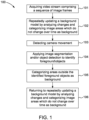
Fig. 1 . shows a flow chart of a method according to an embodiment of the presently disclosed method of background modelling for a video stream. -
Figs. 2A-B are schematic illustrations of an image frame in a video sequence that has a background defining whether spatial areas in the image frame belong to a background or a foreground. -
Fig. 3 is a schematic illustration of image frames in a video sequence of a foreground object transitioning to a background object. -
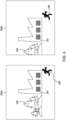
Fig. 4 shows an example of image frames in a video sequence with camera movement. -
Fig. 5 shows an image frame in which a number of objects have been detected and wherein bounding boxes have been added. -
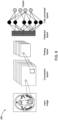
Fig. 6 shows an example of a conceptual framework for object detection using a neural network. -
Fig. 7 shows a schematic view of an embodiment of the presently disclosed image processing system. - The present disclosure relates to method of background modelling for a video stream acquired by a camera having movement capabilities.
Fig. 1 . shows a flow chart of a method according to an embodiment of the presently disclosedmethod 100 of background modelling for a video stream acquired by a camera having movement capabilities. Themethod 100 comprises the steps of: - acquiring a video stream comprising a sequence of image frames (101);
- repeatedly updating a background model for the video stream by analyzing changes in the sequence of image frames and categorizing image areas in the image frames which do not change over time as background (102);
- detecting camera movement (103), and, optionally, stopping repeatedly updating the background model;
- upon detecting a camera movement stop or the camera movement going below a movement threshold, performing a reset of the background model by:
- acquiring one or more image frames;
- applying an image segmentation and/or object detection algorithm on the one or more image frames to identify at least foreground objects (104);
- categorizing areas outside the identified foreground objects as background (105);
- after having performed the reset of the background model, returning to repeatedly updating the background model for the video stream by analyzing changes in the sequence of image frames and categorizing image areas in the image frames which do not change over time as background (106).
- A `background model' can generally be considered to be a term that a person skilled in the art would understand within the context of the present disclosure. 'Background model' shall, within the context of this disclosure, be construed as a data model that determines, for each spatial area in the video sequence, whether that spatial area belongs to a background or a foreground in the video sequence. The data model may store this information or process it in any suitable way. A 'background' may include any area of an image frame which image data is sufficiently similar, for example, with respect to pixel data, to a corresponding area in a previous image frame. As an example, it is possible to compare brightness and/or color intensity for pixels or groups of pixels between image frames in the video stream. Typically, the background is intended to correspond to areas in a monitored scene which are not particularly relevant from an image analysis perspective. Similarly, a 'foreground' may include any area of an image frame which image data is sufficiently dissimilar to a corresponding area in a previous image frame. Foreground objects are typically in motion. In a practical and simplified context, the foreground may correspond to monitored objects, such as people, cars, goods, etc. A 'spatial area' may, within the context of this disclosure, be construed as any number of pixels or subpixels in an image frame that may further be grouped according to, for example, a shape or belonging to an object.
- The step of detecting camera movement may comprise detecting that the camera movement is greater than a predetermined limit. If there is only slow movement, the conventional background modelling may still work properly.
- When camera movement, or camera movement greater than a predetermined limit, is detected, the step of repeatedly updating the background model may be paused. When the camera is under quick movement, it may stop maintaining the background model during the movement. One embodiment of the presently disclosed method of background modelling further comprises the step of, upon having detected camera movement, but before having detected a camera movement stop or the camera movement going below a movement threshold, making a background overlay visible for an image area covering the entire image frame and/or applying full masking and/or pixelation over an image area covering the entire image frame. In other words, in case of background overlay, one option is to make the whole overlay visible. In case of dynamic privacy masking, it is possible to switch to full screen masking. Once the camera movement has ended, the reset of the background model is performed and the process can return to repeatedly updating the background model for the video stream by analyzing changes in the sequence of image frames and categorizing image areas in the image frames which do not change over time as background.
- The steps of repeatedly updating a background model; detecting camera movement; detecting camera movement stop or the camera movement going below a movement threshold; and performing a reset of the background model may be sequential.
- The step of repeatedly updating a background model for the video stream by analyzing changes in the sequence of image frames and categorizing image areas in the image frames which do not change over time as background may comprise analyzing sub-areas of the sequence of image frames, wherein, if no significant change occurs between the image frames in a sub-area during a predetermined period of time, the sub-area is categorized as a background sub-area.
-
Figs 2 and3 illustrate examples of how the conventional background modelling of the presently disclosed method can be done. -
Fig. 2A illustrates animage frame 200 in a video sequence. The video sequence comprises a background model defining whether spatial areas in theimage frame 200 belong to abackground 201 or aforeground 202. In this embodiment, any significant change in thebackground 201 transitions the corresponding spatial area to theforeground 202. Spatial areas comprising image data that are substantially unchanged for a sufficiently prolonged time may be transitioned to the background - The
image frame 200 can, for example be divided into a number ofspatial areas 203, where eachspatial area 203 is evaluated to be either background or foreground depending on if there are changes in the spatial area.Fig. 2B illustrates theimage frame 200 ofFig. 3A overlapped with a schematic illustration of an example of a first algorithm comprising a plurality oftimers 204. Eachtimer 204 is associated with aspatial area 203 of a plurality ofspatial areas 203 in theimage frame 200. If no significant change has occurred in image data of aspatial area 203 of animage frame 200 relative image data of saidspatial area 200 of apreceding image frame 200 before a predetermined time limit, saidspatial area 203 is defined as anidle area 201 in the background model. - If significant change is detected in image data of a
spatial area 203 of animage frame 200 relative image data of saidspatial area 203 of apreceding image frame 200, aspatial area 203 of thebackground 201 may transition toforeground 202. - The
timers 204, which represent one way of implementing the repeated updating of the background model, are beneficial in that they are simple and computationally efficient. It is easy to implement thresholds and/or to manipulate the result compared to similar algorithms. This is partly becausetimers 204 are numbers and numbers are simple. For example, by simply adding a number of seconds to atimer 204, thetimer 204 will reach its threshold faster without needing to change the threshold. As another example, atimer 204 may be prevented from ever reaching its threshold by resetting it with a predictable periodicity. - The
timers 204 may further count up and/or down without significant computational complexity. Upon determining that theidle area 201 is not to be transitioned, thetimer 204 associated with thatidle area 201 may be reset or paused, or the time limit of thetimer 204 associated with thatidle area 201 may be increased. Manipulating thetimers 204 is a simple and efficient way to maintain theidle area 201 as aforeground area 202 in the background model. Anidle area 201 may be indicated to be transitioned fromforeground 202 tobackground 201 when atimer 204 of the algorithm associated with theidle area 201 reaches an indication threshold being lower than the predetermined time limit. -
Fig. 3 shows an example of a foreground object transitioning to a background object. In this example thelower foreground object 202a becomes idle in themiddle image frame 200b. Therefore, thespatial areas 203 comprising theobject 202a becomeidle areas 201, whereas they were not in theleftmost image frame 200a when theobject 202a was in motion. Theidle areas 201 of themiddle image frame 200b are indicated to be transitioned from the foreground to the background. In therightmost image frame 200c, theobject 202a has thus been transitioned to the background. Thespatial areas 203 are depicted in the figures as being nine areas perimage frame 200a-c. There may be substantially more or fewer than depicted. As an example, each pixel or each square of four pixels of theimage frame 200a-b may be aspatial area 203. - As a person skilled in the art would understand the embodiment described in
Figs. 2-3 are not the only way of repeatedly updating a background model for the video stream by analyzing changes in the sequence of image frames and categorizing image areas in the image frames which do not change over time as background. - As described above, by using a quick reset of the background model when the camera stops moving, the background modelling can quickly generate a valid background and start further processing of the image frames, which may need the background model.
- Preferably, the step of performing the reset of the background model is performed substantially immediately after the camera movement stop or the camera movement going below a movement threshold has been detected. There are several methods for determining camera movement and a degree of how much camera movement there is, which would be readily available to the person skilled in the art. A straightforward way is to use the control signal(s) that controls the movement of the camera for this purpose, but it is also possible to use, for example, measured physical data from the camera or by analyzing the captured images, for example by studying how reference points in the images move.
- The conventional repeated step of updating a background model is typically a continuous process. As explained in the previous section, in this process changes in the sequence of image frames are analyzed over time. In contrast, the step of resetting the background model may be a, preferably quick, single event. The step of applying an image segmentation and/or object detection algorithm, preferably, does not involve analysis of changes over time but is performed for a limited number of images, possibly even on a single image. When the camera movement stops it may be useful to generate a quick first background model rather than using the conventional background modelling, which will typically require some time to produce a background model. It can be noted that a short power peak may be acceptable at this point since the movement, which otherwise can use significant power, has stopped, or is at least relatively low. Once the quick reset of the background model has been done the process can return to the process of repeatedly updating the background model for the video stream by analyzing changes in the sequence of image frames and categorizing image areas in the image frames which do not change over time as background.
- An image segmentation may be, for example, an object segmentation, instance segmentation, semantic segmentation or a panoptic segmentation. All of these examples of image segmentations do not include analysis of motion over time, i.e. changes between several image frames to categorize image areas in the image frames which do not change over time as background. They can therefore be applied instantly on one, or a limited number of, image frames. The advantage of resetting the background model described in the present disclosure can be illustrated by the following example. A frame rate of a camera may be, for example, 30 frames per second (fps), 50 fps, 60 fps or 120 fps. The conventional algorithm for updating a background model by analyzing changes in the sequence of image frames and categorizing image areas in the image frames which do not change over time as background may take, for example 2 seconds. In other words, upon a camera movement stop or the camera movement going below a movement threshold, it may take a few seconds until the conventional background modelling can produce a background model as intended. The background model reset described in the present disclosure may be performed significantly faster, such as in less than 300 milliseconds, preferably in less than 200 milliseconds, even more preferably in less than 100 milliseconds. The image segmentation and/or object detection algorithm can therefore be applied on a single image frame, which will provide a background model significantly faster than the conventional background modelling can produce a background model. The image segmentation and/or object detection algorithm can be applied on additional image frames, such as less than 3 image frames, less than 5 image frames or less than 8 image frames. In principle the image segmentation and/or object detection algorithm can be used repeatedly until the conventional background modelling is ready to produce a background model. In one embodiment of the presently disclosed method of background modelling for a video stream acquired by a camera having movement capabilities, the step of applying an image segmentation on the one or more image frames to identify at least foreground objects comprises image segmentation performed on a single image frame, or on a number of independent image frames without analyzing motion to identify foreground and background.
- The term 'object detection' in the context of the present disclosure refers to detecting one or more objects in an image and return their positions, usually in the form of coordinates. In some of the most common object detection applications, bounding boxes indicate the detected objects.
- In the present disclosure an image segmentation and/or object detection algorithm is applied on the one or more image frames to identify at least foreground objects. The method can be trained to know which type of objects will typically be foreground objects. This may typically be objects that are known to be capable of moving in a video stream, for example, people, vehicles, animals etc. The method may additionally have knowledge about which objects are to be regarded as background. This may typically be objects that are known to be still in a video stream, for example, buildings.
- The step of identifying at least foreground objects by an image segmentation and/or object detection algorithm may comprise applying a machine learning model, such as a neural network, trained to recognize objects, such as the abovementioned objects. The neural network may comprise, for example, a deep learning model. There are a number of neural network algorithms/technologies that may be used for detecting objects, for example, Convolutional Neural Networks (CNN), Recurrent Neural Networks (RNN), etc. Generally, a person skilled in the art would be in the position to carry out such an object detection by means of neural network.
- According to a non-limiting example of a setup for object detection using a neural network, a neural network is fed with labelled data. The labelled data is, for example, an image of an object, wherein the image is labelled with the correct type of object, i.e. the labelled data includes a ground truth of the image data and the image data itself. The image data is inputted to a classifier and the ground truth is sent to a loss function calculator. A classifier processes the data representing an object to be classified and generates a classification identifier. The processing in the classifier may include applying weights to values as the data is fed through the classifier. The classification identifier may be a feature vector, a classification vector, or a single value identifying a class. In the loss function the classification identifier is compared to the ground truth using, for example, a loss function. The result from the loss function is then transferred to a weight adjustment function that is configured to adjust the weights used in the classifier. A process may then scan images by using the neural network to detect and classify objects in the images.
-
Fig. 6 shows an example of aconceptual framework 300 for object detection using a neural network. Some building blocks of CNNs are convolution layers, pooling layers, flattened layers, and fully connected layers. An input of a CNN is a tensor. - Convolutional layers convolve the input and pass its result to the next layer. This is similar to the response of a neuron in the visual cortex to a specific stimulus. Convolutional networks may further include pooling layers. The pooling layers reduce the dimensions of data by combining the outputs of neuron clusters at one layer into a single neuron in the next layer. A CNN may further comprise fully connected layers which connect every neuron in one layer to every neuron in another layer. A flattened matrix may thereby go through a fully connected layer to classify the images.
- There are other object detection algorithms that do not rely on CNN or machine learning.
- In one embodiment of the presently disclosed method of background modelling for a video stream acquired by a camera having movement capabilities the image segmentation and/or object detection algorithm on the one or more image frames to identify foreground objects comprises thresholding and/or clustering and/or histogram-based segmentation and/or edge detection.
- One example of an object detection algorithm is the Viola-Jones detection framework. In this method the image frames are scanned with a sliding window, where each region is classified as containing or not containing an object. The method uses Haar features and a cascaded classifier to detect objects. There are various types of such object detection methods known in the art where cascades of identifiers are used to detect objects, e.g. as described in Viola, Paul, and Michael Jones. "Rapid object detection using a boosted cascade of simple features." Computer Vision and Pattern Recognition, 2001. CVPR 2001. Proceedings of the 2001 IEEE Computer Society Conference on. Vol. 1. IEEE, 2001. Since it is the visual features that are important for these algorithms groups of objects that share similar visual features may be detected, examples of such groups are faces, vehicles, humans etc. Any of these methods may be used separately or in combination to detect an object in image data. Several objects may also be detected in the same set of image data. When an object has been detected, a set of identification characteristics may be created to describe the visual appearance of the detected object.
-
Fig. 5 shows an example of animage frame 200 in which a number ofobjects 208 have been detected and wherein boundingboxes 207 have been added. In the example offig. 5 theobjects 208 are cars, but the object may be any item that would be considered to belong to a foreground or a background. -
Fig. 4 shows an example ofimage frames 200a/200b in a video sequence with camera movement. In this example of camera movement, it can be seen that there is camera panning between the left and right image frames. The fixed background objects (trees 205 and building 207) do not have the same positions in the twoimage frames object 206, which has different positions relative to the background objects 205 and 207 in the twoimage frames -
Fig. 7 shows a schematic view of an embodiment of the presently disclosedimage processing system 400. The disclosedimage processing system 400 comprises acamera 401, adisplay 403, and aprocessing unit 402. - The system may, but does not necessarily have to, include a display for displaying the sequence of image frames. The background modelling may be useful in a number of applications that are visualized on a display, including overlay and dynamic masking applications. However, in further applications the background model is not necessarily displayed but used in additional applications. The additional application may include, for example, extracting statistics or further analysis of the video.
- The system may further comprise peripheral components, such as one or more memories, which may be used for storing instructions that can be executed by the processing unit. The system may further comprise any of: internal and external network interfaces, input and/or output ports, a keyboard or mouse etc.
- As would be understood by a person skilled in the art, a processing unit also may be a single processor in a multi-core/multiprocessor system. Both the computing hardware accelerator and the central processing unit may be connected to a data communication infrastructure.
- The system may include a memory, such as a random access memory (RAM) and/or a read-only memory (ROM), or any suitable type of memory. The system may further comprise a communication interface that allows software and/or data to be transferred between the system and external devices. Software and/or data transferred via the communications interface may be in any suitable form of electric, optical or RF signals. The communications interface may comprise, for example, a cable or a wireless interface.
- The present disclosure further relates to a computer program having instructions which, when executed by a computing device or computing system, cause the computing device or computing system to carry out any embodiment of the presently disclosed method of background modelling for a video stream. The computer program may be stored on any suitable type of storage media, such as non-transitory storage media.
Claims (15)
- A method of background modelling for a video stream acquired by a camera having movement capabilities (100), the method comprising:acquiring (101) a video stream comprising a sequence of image frames (200);repeatedly updating (102) a background model for the video stream by analyzing changes in the sequence of image frames (200) and categorizing image areas (203) in the image frames (200) which do not change over time as background;detecting (103) camera movement, and, optionally, stopping repeatedly updating the background model;upon detecting a camera movement stop or the camera movement going below a movement threshold, performing a reset of the background model by:acquiring one or more image frames (200);applying (104) an image segmentation and/or object detection algorithm on the one or more image frames (200) to identify at least foreground objects (208);categorizing (105) areas outside the identified foreground objects (208) as background;after having performed the reset of the background model, returning (106) to repeatedly updating (102) the background model for the video stream by analyzing changes in the sequence of image frames (200) and categorizing image areas in the image frames (200) which do not change over time as background.
- The method of background modelling for a video stream (100) according to claim 1, wherein the step of repeatedly updating (102) the background model is paused during the step of performing the reset of the background model.
- The method of background modelling for a video stream (100) according to any one of the preceding claims, wherein the step of performing the reset of the background model is performed substantially immediately after the camera movement stop or the camera movement going below a movement threshold has been detected.
- The method of background modelling for a video stream (100) according to any one of the preceding claims, wherein the camera movement comprises panning and/or tilting and/or zooming.
- The method of background modelling for a video stream (100) according to any one of the preceding claims, further comprising the step of performing background overlaying and/or masking based on the background model.
- The method of background modelling for a video stream (100) according to any one of the preceding claims, further comprising the step of, upon having detected camera movement, but before having detected a camera movement stop or the camera movement going below a movement threshold, making a background overlay visible for an image area covering the entire image frame (200) and/or applying full masking and/or pixelation over an image area covering the entire image frame (200).
- The method of background modelling for a video stream (100) according to any one of the preceding claims, wherein the step of repeatedly updating (102) a background model is a continuous process, and wherein the reset of the background model is a single event.
- The method of background modelling for a video stream (100) according to any one of the preceding claims, wherein the step of applying (104) an image segmentation and/or object detection algorithm on the one or more image frames (200) to identify foreground objects is performed for a limited number of image frames.
- The method of background modelling for a video stream (100) according to any one of the preceding claims, wherein the step of applying (104) an image segmentation and/or object detection algorithm does not involve analysis of changes over time.
- The method of background modelling for a video stream (100) according to any one of the preceding claims, wherein the step of repeatedly updating (102) a background model comprises analyzing sub-areas of the sequence of image frames (200), wherein, if no significant change occurs between the image frames (200) in a sub-area during a predetermined period of time, the sub-area is categorized as a background sub-area.
- The method of background modelling for a video stream (100) according to any one of the preceding claims, wherein the step of applying (104) an image segmentation and/or object detection algorithm on the one or more image frames (200) to identify foreground objects comprises thresholding and/or clustering and/or histogram-based segmentation and/or edge detection.
- The method of background modelling for a video stream (100) according to any one of the preceding claims, wherein the steps of repeatedly updating (102) a background model; detecting (103) camera movement; detecting camera movement stop or the camera movement going below a movement threshold; and performing a reset of the background model are sequential.
- The method of background modelling for a video stream (100) according to any one of the preceding claims, further comprising displaying the sequence of image frames (200) on a display (403).
- A computer program having instructions which, when executed by a computing device or computing system, cause the computing device or computing system to carry out the method of background modelling for a video stream according to any one of the preceding claims.
- An image processing system (400) comprising:at least one camera (401), such as a pan-tilt-zoom camera; anda processing unit (402) configured to:acquire (101) a video stream comprising a sequence of image frames (200);repeatedly update (102) a background model for the video stream by analyzing changes in the sequence of image frames (200) and categorizing image areas in the image frames (200) which do not change over time as background;detect (103) camera movement, and, optionally, stop repeatedly updating the background model;upon detecting a camera movement stop or the camera movement going below a movement threshold, perform a reset of the background model by:acquiring one or more image frames (200);applying (104) an image segmentation and/or object detection algorithm on the one or more image frames (200) to identify foreground objects;categorizing (105) areas outside the identified foreground objects as background;after having performed the reset of the background model, return (107) to repeatedly updating the background model for the video stream by analyzing changes in the sequence of image frames (200) and categorizing image areas in the image frames (200) which do not change over time as background.
Priority Applications (4)
| Application Number | Priority Date | Filing Date | Title |
|---|---|---|---|
| EP23177277.3A EP4475076B1 (en) | 2023-06-05 | 2023-06-05 | SYSTEM AND METHOD FOR BACKGROUND MODELING FOR A VIDEO STREAM |
| CN202410636706.0A CN119090913B (en) | 2023-06-05 | 2024-05-22 | System and method for background modeling of video streams |
| US18/678,551 US12602746B2 (en) | 2023-06-05 | 2024-05-30 | System and method for background modelling for a video stream |
| KR1020240071509A KR20240173609A (en) | 2023-06-05 | 2024-05-31 | System and method for background modelling for a video stream |
Applications Claiming Priority (1)
| Application Number | Priority Date | Filing Date | Title |
|---|---|---|---|
| EP23177277.3A EP4475076B1 (en) | 2023-06-05 | 2023-06-05 | SYSTEM AND METHOD FOR BACKGROUND MODELING FOR A VIDEO STREAM |
Publications (3)
| Publication Number | Publication Date |
|---|---|
| EP4475076A1 true EP4475076A1 (en) | 2024-12-11 |
| EP4475076C0 EP4475076C0 (en) | 2025-12-31 |
| EP4475076B1 EP4475076B1 (en) | 2025-12-31 |
Family
ID=86692658
Family Applications (1)
| Application Number | Title | Priority Date | Filing Date |
|---|---|---|---|
| EP23177277.3A Active EP4475076B1 (en) | 2023-06-05 | 2023-06-05 | SYSTEM AND METHOD FOR BACKGROUND MODELING FOR A VIDEO STREAM |
Country Status (4)
| Country | Link |
|---|---|
| US (1) | US12602746B2 (en) |
| EP (1) | EP4475076B1 (en) |
| KR (1) | KR20240173609A (en) |
| CN (1) | CN119090913B (en) |
Families Citing this family (2)
| Publication number | Priority date | Publication date | Assignee | Title |
|---|---|---|---|---|
| CN113259698B (en) * | 2021-05-12 | 2022-11-15 | 北京字节跳动网络技术有限公司 | Method, apparatus, storage medium, and program product for replacing background in picture |
| EP4456008B1 (en) * | 2023-04-25 | 2025-09-17 | Axis AB | Methods, systems and non-transitory computer-readable storage mediums for detecting an object of a first object type in a video sequence |
Citations (1)
| Publication number | Priority date | Publication date | Assignee | Title |
|---|---|---|---|---|
| US9183716B2 (en) * | 2007-03-20 | 2015-11-10 | International Business Machines Corporation | System and method for managing moving surveillance cameras |
Family Cites Families (19)
| Publication number | Priority date | Publication date | Assignee | Title |
|---|---|---|---|---|
| KR100799412B1 (en) * | 2001-10-17 | 2008-01-30 | 마쯔시다덴기산교 가부시키가이샤 | Video coding method and video decoding method |
| US20050104964A1 (en) | 2001-10-22 | 2005-05-19 | Bovyrin Alexandr V. | Method and apparatus for background segmentation based on motion localization |
| US6999600B2 (en) | 2003-01-30 | 2006-02-14 | Objectvideo, Inc. | Video scene background maintenance using change detection and classification |
| AU2006252252B2 (en) | 2006-12-22 | 2009-10-01 | Canon Kabushiki Kaisha | Image processing method and apparatus |
| KR101375665B1 (en) * | 2007-08-08 | 2014-03-18 | 삼성전자주식회사 | Method and apparatus for estimating a background change, and method and apparatus for detecting a motion |
| RU2484531C2 (en) * | 2009-01-22 | 2013-06-10 | Государственное научное учреждение центральный научно-исследовательский и опытно-конструкторский институт робототехники и технической кибернетики (ЦНИИ РТК) | Apparatus for processing video information of security alarm system |
| TWI393074B (en) * | 2009-12-10 | 2013-04-11 | Ind Tech Res Inst | Apparatus and method for moving object detection |
| KR101153481B1 (en) | 2010-05-11 | 2012-06-11 | 아주대학교산학협력단 | Pan-tilt-zoom camera and object detection method thereof |
| AU2010241260B2 (en) | 2010-10-29 | 2013-12-19 | Canon Kabushiki Kaisha | Foreground background separation in a scene with unstable textures |
| CN103996189B (en) | 2014-05-05 | 2017-10-03 | 小米科技有限责任公司 | Image partition method and device |
| US9774793B2 (en) * | 2014-08-01 | 2017-09-26 | Adobe Systems Incorporated | Image segmentation for a live camera feed |
| US9460522B2 (en) * | 2014-10-29 | 2016-10-04 | Behavioral Recognition Systems, Inc. | Incremental update for background model thresholds |
| US9672632B2 (en) * | 2015-10-21 | 2017-06-06 | Disney Enterprises, Inc. | Device and method for camera driven background subtraction |
| KR101731243B1 (en) * | 2015-12-15 | 2017-04-28 | 군산대학교 산학협력단 | A video surveillance apparatus for identification and tracking multiple moving objects with similar colors and method thereof |
| CA3017027C (en) * | 2016-03-17 | 2024-06-25 | Avigilon Corporation | System and method for training object classifier by machine learning |
| US10839573B2 (en) * | 2016-03-22 | 2020-11-17 | Adobe Inc. | Apparatus, systems, and methods for integrating digital media content into other digital media content |
| US10789470B2 (en) | 2017-07-12 | 2020-09-29 | Electronics And Telecommunications Research Institute | System and method for detecting dynamic object |
| JP7614743B2 (en) * | 2020-06-08 | 2025-01-16 | キヤノン株式会社 | Image processing device, image processing method, and program |
| KR20220093860A (en) * | 2020-12-28 | 2022-07-05 | 삼성전자주식회사 | Method for processing image frame and electronic device supporting the same |
-
2023
- 2023-06-05 EP EP23177277.3A patent/EP4475076B1/en active Active
-
2024
- 2024-05-22 CN CN202410636706.0A patent/CN119090913B/en active Active
- 2024-05-30 US US18/678,551 patent/US12602746B2/en active Active
- 2024-05-31 KR KR1020240071509A patent/KR20240173609A/en active Pending
Patent Citations (1)
| Publication number | Priority date | Publication date | Assignee | Title |
|---|---|---|---|---|
| US9183716B2 (en) * | 2007-03-20 | 2015-11-10 | International Business Machines Corporation | System and method for managing moving surveillance cameras |
Non-Patent Citations (4)
| Title |
|---|
| KIM JAE-YEUL ET AL: "Visual Surveillance using Background Model Image Generated by GAN", 2020 20TH INTERNATIONAL CONFERENCE ON CONTROL, AUTOMATION AND SYSTEMS (ICCAS), INSTITUTE OF CONTROL, ROBOTICS, AND SYSTEMS - ICROS, 13 October 2020 (2020-10-13), pages 292 - 295, XP033867295, DOI: 10.23919/ICCAS50221.2020.9268373 * |
| LONG ANG LIM ET AL: "Learning Multi-scale Features for Foreground Segmentation", ARXIV.ORG, CORNELL UNIVERSITY LIBRARY, 201 OLIN LIBRARY CORNELL UNIVERSITY ITHACA, NY 14853, 4 August 2018 (2018-08-04), XP080904966 * |
| VIOLAPAULMICHAEL JONES: "Rapid object detection using a boosted cascade of simple features.", vol. 1, 2001, COMPUTER VISION AND PATTERN RECOGNITION |
| YUN KIMIN ET AL: "Unsupervised Moving Object Detection through Background Models for PTZ Camera", 2020 25TH INTERNATIONAL CONFERENCE ON PATTERN RECOGNITION (ICPR), IEEE, 10 January 2021 (2021-01-10), pages 3201 - 3208, XP033909355, DOI: 10.1109/ICPR48806.2021.9413085 * |
Also Published As
| Publication number | Publication date |
|---|---|
| US20240404014A1 (en) | 2024-12-05 |
| KR20240173609A (en) | 2024-12-12 |
| US12602746B2 (en) | 2026-04-14 |
| EP4475076C0 (en) | 2025-12-31 |
| CN119090913A (en) | 2024-12-06 |
| EP4475076B1 (en) | 2025-12-31 |
| CN119090913B (en) | 2026-06-19 |
Similar Documents
| Publication | Publication Date | Title |
|---|---|---|
| US12602746B2 (en) | System and method for background modelling for a video stream | |
| Babaee et al. | A deep convolutional neural network for background subtraction | |
| US11023707B2 (en) | System and method for selecting a part of a video image for a face detection operation | |
| KR20260005183A (en) | Video frame segmentation using reduced resolution neural network and masks from previous frames | |
| TWI759286B (en) | System and method for training object classifier by machine learning | |
| JP2021520530A (en) | Biological detection methods and devices, electronic devices and storage media | |
| US10037599B2 (en) | Automatic gain control filter in a video analysis system | |
| EP3690736A1 (en) | Method of processing information from an event-based sensor | |
| KR101983684B1 (en) | A People Counting Method on Embedded Platform by using Convolutional Neural Network | |
| WO2019114145A1 (en) | Head count detection method and device in surveillance video | |
| KR20140095333A (en) | Method and apparratus of tracing object on image | |
| KR20230166840A (en) | Method for tracking object movement path based on artificial intelligence | |
| US20190371144A1 (en) | Method and system for object motion and activity detection | |
| Singh et al. | Tracking movements of humans in a real-time surveillance scene | |
| Chetverikov et al. | Dynamic texture as foreground and background | |
| KR20230166865A (en) | Statistical model-based false detection removal algorithm from images | |
| Yachi et al. | Human head tracking using adaptive appearance models with a fixed-viewpoint pan-tilt-zoom camera | |
| Senthilkumar et al. | Suspicious human activity detection in classroom examination | |
| Kandukuru et al. | Computer vision based algorithms for detecting and classification of activities for fall recognition on real time video | |
| Molina-Cabello et al. | Neural controller for PTZ cameras based on nonpanoramic foreground detection | |
| AU2013263838A1 (en) | Method, apparatus and system for classifying visual elements | |
| Kanáliková et al. | Parking system with image processing | |
| Sehairi et al. | A Real-Time Implementation of Moving Object Action Recognition System Based on Motion Analysis | |
| CN111860229A (en) | Intelligent abnormal behavior identification method and device and storage medium | |
| Benito-Picazo et al. | Deep learning-based security system powered by low cost hardware and panoramic cameras |
Legal Events
| Date | Code | Title | Description |
|---|---|---|---|
| PUAI | Public reference made under article 153(3) epc to a published international application that has entered the european phase |
Free format text: ORIGINAL CODE: 0009012 |
|
| STAA | Information on the status of an ep patent application or granted ep patent |
Free format text: STATUS: REQUEST FOR EXAMINATION WAS MADE |
|
| 17P | Request for examination filed |
Effective date: 20240213 |
|
| AK | Designated contracting states |
Kind code of ref document: A1 Designated state(s): AL AT BE BG CH CY CZ DE DK EE ES FI FR GB GR HR HU IE IS IT LI LT LU LV MC ME MK MT NL NO PL PT RO RS SE SI SK SM TR |
|
| GRAP | Despatch of communication of intention to grant a patent |
Free format text: ORIGINAL CODE: EPIDOSNIGR1 |
|
| STAA | Information on the status of an ep patent application or granted ep patent |
Free format text: STATUS: GRANT OF PATENT IS INTENDED |
|
| INTG | Intention to grant announced |
Effective date: 20250708 |
|
| GRAS | Grant fee paid |
Free format text: ORIGINAL CODE: EPIDOSNIGR3 |
|
| GRAA | (expected) grant |
Free format text: ORIGINAL CODE: 0009210 |
|
| STAA | Information on the status of an ep patent application or granted ep patent |
Free format text: STATUS: THE PATENT HAS BEEN GRANTED |
|
| AK | Designated contracting states |
Kind code of ref document: B1 Designated state(s): AL AT BE BG CH CY CZ DE DK EE ES FI FR GB GR HR HU IE IS IT LI LT LU LV MC ME MK MT NL NO PL PT RO RS SE SI SK SM TR |
|
| REG | Reference to a national code |
Ref country code: CH Ref legal event code: F10 Free format text: ST27 STATUS EVENT CODE: U-0-0-F10-F00 (AS PROVIDED BY THE NATIONAL OFFICE) Effective date: 20251231 Ref country code: GB Ref legal event code: FG4D |
|
| REG | Reference to a national code |
Ref country code: DE Ref legal event code: R096 Ref document number: 602023010277 Country of ref document: DE |
|
| REG | Reference to a national code |
Ref country code: IE Ref legal event code: FG4D |
|
| U01 | Request for unitary effect filed |
Effective date: 20251231 |
|
| U07 | Unitary effect registered |
Designated state(s): AT BE BG DE DK EE FI FR IT LT LU LV MT NL PT RO SE SI Effective date: 20260109 |
|
| PG25 | Lapsed in a contracting state [announced via postgrant information from national office to epo] |
Ref country code: NO Free format text: LAPSE BECAUSE OF FAILURE TO SUBMIT A TRANSLATION OF THE DESCRIPTION OR TO PAY THE FEE WITHIN THE PRESCRIBED TIME-LIMIT Effective date: 20260331 |
|
| PG25 | Lapsed in a contracting state [announced via postgrant information from national office to epo] |
Ref country code: HR Free format text: LAPSE BECAUSE OF FAILURE TO SUBMIT A TRANSLATION OF THE DESCRIPTION OR TO PAY THE FEE WITHIN THE PRESCRIBED TIME-LIMIT Effective date: 20251231 |
|
| PG25 | Lapsed in a contracting state [announced via postgrant information from national office to epo] |
Ref country code: RS Free format text: LAPSE BECAUSE OF FAILURE TO SUBMIT A TRANSLATION OF THE DESCRIPTION OR TO PAY THE FEE WITHIN THE PRESCRIBED TIME-LIMIT Effective date: 20260331 |
|
| U20 | Renewal fee for the european patent with unitary effect paid |
Year of fee payment: 4 Effective date: 20260520 |
|
| PG25 | Lapsed in a contracting state [announced via postgrant information from national office to epo] |
Ref country code: SM Free format text: LAPSE BECAUSE OF FAILURE TO SUBMIT A TRANSLATION OF THE DESCRIPTION OR TO PAY THE FEE WITHIN THE PRESCRIBED TIME-LIMIT Effective date: 20251231 |
|
| PG25 | Lapsed in a contracting state [announced via postgrant information from national office to epo] |
Ref country code: ES Free format text: LAPSE BECAUSE OF FAILURE TO SUBMIT A TRANSLATION OF THE DESCRIPTION OR TO PAY THE FEE WITHIN THE PRESCRIBED TIME-LIMIT Effective date: 20251231 |
|
| PG25 | Lapsed in a contracting state [announced via postgrant information from national office to epo] |
Ref country code: PL Free format text: LAPSE BECAUSE OF FAILURE TO SUBMIT A TRANSLATION OF THE DESCRIPTION OR TO PAY THE FEE WITHIN THE PRESCRIBED TIME-LIMIT Effective date: 20251231 |
|
| PG25 | Lapsed in a contracting state [announced via postgrant information from national office to epo] |
Ref country code: IS Free format text: LAPSE BECAUSE OF FAILURE TO SUBMIT A TRANSLATION OF THE DESCRIPTION OR TO PAY THE FEE WITHIN THE PRESCRIBED TIME-LIMIT Effective date: 20260430 |
|
| PG25 | Lapsed in a contracting state [announced via postgrant information from national office to epo] |
Ref country code: CZ Free format text: LAPSE BECAUSE OF FAILURE TO SUBMIT A TRANSLATION OF THE DESCRIPTION OR TO PAY THE FEE WITHIN THE PRESCRIBED TIME-LIMIT Effective date: 20251231 |
|
| PG25 | Lapsed in a contracting state [announced via postgrant information from national office to epo] |
Ref country code: SK Free format text: LAPSE BECAUSE OF FAILURE TO SUBMIT A TRANSLATION OF THE DESCRIPTION OR TO PAY THE FEE WITHIN THE PRESCRIBED TIME-LIMIT Effective date: 20251231 |