EP4474722A1 - System and method for determining and maintaining a humidity level in an area of interest - Google Patents
System and method for determining and maintaining a humidity level in an area of interest Download PDFInfo
- Publication number
- EP4474722A1 EP4474722A1 EP24179431.2A EP24179431A EP4474722A1 EP 4474722 A1 EP4474722 A1 EP 4474722A1 EP 24179431 A EP24179431 A EP 24179431A EP 4474722 A1 EP4474722 A1 EP 4474722A1
- Authority
- EP
- European Patent Office
- Prior art keywords
- aoi
- humidity level
- processing device
- dew point
- sensor
- Prior art date
- Legal status (The legal status is an assumption and is not a legal conclusion. Google has not performed a legal analysis and makes no representation as to the accuracy of the status listed.)
- Pending
Links
Images


Classifications
-
- F—MECHANICAL ENGINEERING; LIGHTING; HEATING; WEAPONS; BLASTING
- F24—HEATING; RANGES; VENTILATING
- F24F—AIR-CONDITIONING; AIR-HUMIDIFICATION; VENTILATION; USE OF AIR CURRENTS FOR SCREENING
- F24F11/00—Control or safety arrangements
- F24F11/0008—Control or safety arrangements for air-humidification
-
- F—MECHANICAL ENGINEERING; LIGHTING; HEATING; WEAPONS; BLASTING
- F24—HEATING; RANGES; VENTILATING
- F24F—AIR-CONDITIONING; AIR-HUMIDIFICATION; VENTILATION; USE OF AIR CURRENTS FOR SCREENING
- F24F11/00—Control or safety arrangements
- F24F11/70—Control systems characterised by their outputs; Constructional details thereof
- F24F11/72—Control systems characterised by their outputs; Constructional details thereof for controlling the supply of treated air, e.g. its pressure
-
- F—MECHANICAL ENGINEERING; LIGHTING; HEATING; WEAPONS; BLASTING
- F24—HEATING; RANGES; VENTILATING
- F24F—AIR-CONDITIONING; AIR-HUMIDIFICATION; VENTILATION; USE OF AIR CURRENTS FOR SCREENING
- F24F11/00—Control or safety arrangements
- F24F11/50—Control or safety arrangements characterised by user interfaces or communication
- F24F11/54—Control or safety arrangements characterised by user interfaces or communication using one central controller connected to several sub-controllers
-
- F—MECHANICAL ENGINEERING; LIGHTING; HEATING; WEAPONS; BLASTING
- F24—HEATING; RANGES; VENTILATING
- F24F—AIR-CONDITIONING; AIR-HUMIDIFICATION; VENTILATION; USE OF AIR CURRENTS FOR SCREENING
- F24F11/00—Control or safety arrangements
- F24F11/62—Control or safety arrangements characterised by the type of control or by internal processing, e.g. using fuzzy logic, adaptive control or estimation of values
- F24F11/63—Electronic processing
- F24F11/64—Electronic processing using pre-stored data
-
- F—MECHANICAL ENGINEERING; LIGHTING; HEATING; WEAPONS; BLASTING
- F24—HEATING; RANGES; VENTILATING
- F24F—AIR-CONDITIONING; AIR-HUMIDIFICATION; VENTILATION; USE OF AIR CURRENTS FOR SCREENING
- F24F2110/00—Control inputs relating to air properties
- F24F2110/10—Temperature
-
- F—MECHANICAL ENGINEERING; LIGHTING; HEATING; WEAPONS; BLASTING
- F24—HEATING; RANGES; VENTILATING
- F24F—AIR-CONDITIONING; AIR-HUMIDIFICATION; VENTILATION; USE OF AIR CURRENTS FOR SCREENING
- F24F2110/00—Control inputs relating to air properties
- F24F2110/10—Temperature
- F24F2110/12—Temperature of the outside air
-
- F—MECHANICAL ENGINEERING; LIGHTING; HEATING; WEAPONS; BLASTING
- F24—HEATING; RANGES; VENTILATING
- F24F—AIR-CONDITIONING; AIR-HUMIDIFICATION; VENTILATION; USE OF AIR CURRENTS FOR SCREENING
- F24F2110/00—Control inputs relating to air properties
- F24F2110/20—Humidity
Definitions
- This invention relates to the field of indoor air quality management systems, and more particularly, a system and method for determining a humidity level for an area of interest (AOI) or environment and further maintaining the determined humidity level within the AOI.
- AOI area of interest
- maintaining an optimum indoor humidity level may be important to provide comfort to occupants.
- Such an environment may be equipped with an HVAC system or a humidifier to maintain a user-defined humidity level as set by the occupants based on their comfort.
- the occupants may be unaware of the optimum humidity level which may provide comfort to them as well as save energy and optimize the HVAC system or humidifier.
- a system for determining a humidity level for an area of interest comprises a first sensor operable to monitor ambient air temperature outside the AOI, a second sensor operable to monitor dew point temperature within the AOI, and a processing device in communication with the first sensor and the second sensor, wherein the processing device comprises one or more processors coupled to a memory storing instructions executable by the one or more processors, wherein the processing device is configured to receive, from the first sensor, the ambient air temperature being monitored outside the AOI, receive, from the second sensor, the dew point temperature being monitored within the AOI, and determine a humidity level to be maintained within the AOI based on the received ambient air temperature and the received dew point temperature.
- the processing device is configured to map the received ambient air temperature and the received dew point temperature with a database comprising one or more known outdoor air temperatures, one or more known dew point temperatures, and a corresponding predetermined humidity level, to determine the humidity level to be maintained within the AOI.
- the processing device is operatively connected to an HVAC system associated with the AOI, wherein the processing device is configured to transmit data comprising the determined humidity level for the AOI to a control unit of the HVAC.
- the processing device is in communication with an air humidification system associated with the AOI, wherein the processing device is configured to transmit data comprising the determined humidity level for the AOI to a control unit of the humidification system.
- the first sensor is positioned outside the AOI, and the second sensor is positioned inside the AOI.
- the processing device is a thermostat associated with an HVAC system of the AOI.
- the processing device is in communication with a thermostat associated with an HVAC system of the AOI.
- a system for maintaining a humidity level within an area of interest comprises a first sensor operable to monitor ambient air temperature outside the AOI, a second sensor operable to monitor dew point temperature within the AOI, and a processing device in communication with the HVAC system, the first sensor and the second sensor, wherein the processing device comprises one or more processors coupled to a memory storing instructions executable by the one or more processors, wherein the processing device is configured to receive, from the first sensor, the ambient air temperature being monitored outside the AOI, receive, from the second sensor, the dew point temperature being monitored within the AOI, determine a humidity level to be maintained within the AOI based on the received ambient air temperature and the received dew point temperature, and operate one or more of an HVAC system and an air humidification system associated with the AOI to maintain the determined humidity level within the AOI.
- the processing device comprises one or more processors coupled to a memory storing instructions executable by the one or more processors, wherein the processing device is configured to receive, from the first sensor, the ambient
- the processing device is configured to map the received ambient air temperature and the received dew point temperature with a database comprising one or more known outdoor air temperatures, one or more known dew point temperatures, and a corresponding predetermined humidity level, to determine the humidity level to be maintained within the AOI.
- the first sensor is configured with an outdoor unit associated with the HVAC system of the AOI, and the second sensor is positioned inside the AOI.
- the processing device is a thermostat associated with the HVAC system of the AOI.
- the processing device is in communication with a thermostat associated with an HVAC system of the AOI.
- the processing device is in communication with a control unit associated with the HVAC system or the air humidification system associated with the AOI.
- a method for determining a humidity level for an area of interest comprises the steps of monitoring and receiving an ambient air temperature value outside the AOI, monitoring and receiving a dew point temperature value within the AOI, and determining a humidity level to be maintained within the AOI based on the received ambient air temperature and the received dew point temperature.
- the method comprises the steps of mapping the received ambient air temperature value and the received dew point temperature value with a database comprising one or more known outdoor air temperatures, one or more known dew point temperatures, and a corresponding predetermined humidity level, to determine the humidity level to be maintained within the AOI.
- the method comprises the steps of operating an HVAC system associated with the AOI to maintain the determined humidity level within the AOI.
- the method comprises the steps of operating an air humidification system associated with the AOI to maintain the determined humidity level within the AOI.
- maintaining an optimum indoor humidity level may be important to provide comfort to occupants.
- Such an environment may be equipped with an HVAC system or a humidifier to maintain a user-defined humidity level as set by the occupants based on their comfort.
- the user may set the humidity level using a thermostat associated with the HVAC system or humidifier.
- the occupants may be unaware of the optimum humidity level which may provide comfort to them as well as save energy and optimize the HVAC system or humidifier.
- the optimum humidity level may vary based on regions as well as the outdoor temperature and dew point temperature within the environment, which the existing solution fails to consider, thereby making the existing solutions ineffective and unreliable. This also makes it difficult for the occupants to manually set the humidity level based on their comfort. For instance, in an example, an outdoor temperature of 30°F (-1°C) and a dew point temperature of 30°F (-1°C) may have a relative humidity of 100%, but a temperature of 80°F (27°C) and a dew point of 60°F (16°C) may produce a relative humidity of 50%.
- This invention provides a simple, improved, efficient, and cost-effective system and method for determining an optimum humidity level for an environment/area of interest (AOI) based on the outdoor temperature and dew point temperature within the environment/AOI and further maintaining the determined optimum humidity level within the environment/AOI.
- AOI environment/area of interest
- a system 100 for determining an optimum humidity level for an area of interest (AOI) 102 (also referred to as environment 102, herein) and further maintaining the determined optimum humidity level within the AOI 102 is disclosed.
- the space outside or the ambient is designated as 104, herein.
- the AOI 102 may be a building, a container or trailer associated with a vehicle, or any other enclosed space, but not limited to the like.
- the system 100 may include a first sensor 106 such as an outdoor air temperature (OAT) sensor 106 that may be operable to monitor ambient air temperature (or outside air temperature) outside 104 of the AOI 102.
- OAT outdoor air temperature
- the system 100 may further include a second sensor 108 including a dew point temperature sensor 108 that may be operable to monitor dew point temperature within the AOI 102.
- the system 100 may include a processing device 110 in communication with the first sensor 106 and the second sensor 108.
- the processing device 110 may include one or more processors 110-1 coupled to a memory 110-2 storing instructions executable by the one or more processors 110-1 to enable the processing device 110 to perform one or more designated operations.
- the processing device 110 may be configured to receive, from the first sensor 106, the ambient/outdoor air temperature being monitored outside of the AOI 102 and further receive, from the second sensor 108, the dew point temperature being monitored within the AOI 102.
- the processing device 110 may also receive the ambient/outdoor air temperature outside of the AOI 102 and the dew point temperature being monitored within the AOI 102 from other sensors.
- the processing device 110 may accordingly determine the current humidity level and the apparent temperature (heat index) felt within the AOI 102 based on the received ambient air temperature and the received dew point temperature.
- the processing device 110 accordingly determines and maintains an optimum (comfortable) humidity level within the AOI 102.
- the comfortable or recommended dew point temperature for any environment/AOI may be between 32 to 59°F (0 to 15°C).
- the dew point temperature may determine the combinations of outside air temperature and the relative humidity. For instance, at a constant dew point, when the temperature goes up, the relative humidity may go down and when the temperature goes down, the relative humidity may go up. Therefore, the dew point may be responsible for determining which temperature setting may give a specific relative humidity.
- RH The recommended optimum humidity level or optimum relative humidity percentage (RH) for any environment/AOI is calculated using the below equation 1.
- RH 100*(Exp((17.625*TD)/(243.04+TD))/Exp((17.625*T)/(243.04+T))) (Equation 1) where RH is relative humidity %, TD is the dew point temperature (in °F), T is the outside air temperature (in °F), and Exp is the exponential function.
- the processing device 110 may map the received ambient air temperature and the received dew point temperature with a database 116 comprising one or more known air temperatures, one or more known dew point temperatures, and a corresponding predetermined humidity level, to determine the humidity level to be maintained within the AOI 102.
- Table 1 shows predetermined optimum humidity level for the AOI 102 for different known outdoor air temperatures, known dew point temperatures, which may be determined using the above Equation 1.
- Table 1 further shows the actual humidity level and heat index felt within the AOI 102 for different values of known outdoor air temperatures, and known dew point temperatures.
- Table 1 provides specific optimum humidity levels for a limited range of outside air temperatures and dew point temperatures.
- the processing device 110 is configured to determine and maintain the optimal humidity level for a wide range of values that extend beyond those mentioned in Table 1. This capability is achieved through the utilization of Equation 1, which allows for precise calculations based on different combinations of outside air temperatures and dew point temperatures. Therefore, it should be understood that the scope of this invention encompasses all possible values and examples of outside air temperatures and dew point temperatures, regardless of whether they are explicitly listed in Table 1 or not. There are no limitations imposed on the system's ability to adapt and respond to various conditions, as long as the calculations are performed using Equation 1. This flexibility ensures that the system can effectively maintain optimum humidity levels in.
- the actual humidity level and temperature (heat index) felt by occupants within the AOI 102 may be 72% and 42°F (6°C), respectively. Accordingly, to provide a comfortable environment within the AOI 102, the corresponding optimum humidity level for the AOI 102 may be set and maintained at 72%.
- the actual humidity level and temperature (heat index) felt by occupants within the AOI 102 may be 42% and 91°F (33°C), respectively. Accordingly, to provide a comfortable environment within the AOI 102, the corresponding optimum humidity level for the AOI 102 may be set and maintained at 27%.
- the heat index also known as the apparent temperature
- the heat index may be the temperature that the occupants may feel within the AOI 102 when the relative humidity is combined with the air temperature. This may have an important consideration for the occupant's/human body's comfort. Accordingly, the humidity level of the AOI 102 may be maintained at the determined optimum humidity level based on Table-1 to provide comfort to the occupants.
- the processing device 110 may be configured to allow one or more registered users to manually enter or set, upon authorization by an admin, specific values of optimum humidity level to be maintained for different combinations of the outside air temperature and the dew point temperature.
- the processing device 110 may be operatively connected to or in communication with a control unit of an HVAC system 112 associated with the AOI 102. Further, the processing device 110 may be configured to transmit data comprising the determined optimum humidity level for the AOI to the control unit of the HVAC system 112. The control unit may accordingly operate the HVAC system to automatically maintain the determined optimum humidity level within the AOI 102.
- the first sensor or OAT sensor 106 may be associated with and configured within an outdoor unit associated with the existing HVAC system 112 of the AOI 102, such that the first sensor 106 may remain either outside 104 or in a supply air channel of the outdoor unit/HVAC system 112 to monitor the outdoor air temperature. Further, the second sensor 108 may be additionally positioned inside the AOI 102.
- the second sensor 108 may be installed on the walls or roof within the AOI 102.
- the first sensor or OAT sensor 106 may not be associated with the outdoor unit of the HVAC system 112 and may either be additionally positioned outside 104 or in the supply air channel of the HVAC system to monitor the outdoor air temperature.
- the processing device 110 may be operatively coupled to or in communication with a control unit of an air humidification system 114 (also referred to as humidification/dehumidification system, herein) associated with the AOI 102.
- the processing device 110 may be configured to transmit data comprising the determined optimum humidity level for the AOI to the dehumidification system 114.
- the control unit may accordingly operate the air humidification system 114 to automatically maintain the determined optimum humidity level within the AOI 102.
- the processing device 110 may be a thermostat associated with the HVAC system 112 or the humidification system 114 of the AOI 102. Further, in other embodiments, the processing device 110 may be in communication with the thermostat associated with the HVAC system 112 or humidification system 114 of the AOI 102. Furthermore, in some embodiments, the processing device 110 may be in direct communication with a control unit or a central server associated with the HVAC system 112 or the air humidification system 114 associated with the AOI 102, such that based on instructions or data pertaining to determined optimum humidity level being received from the processing device 110, the control unit of the HVAC system 112 or the air humidification system 114 may operate the HVAC system 112 or the air humidification system 114 to maintain the determined humidity level within the AOI 102.
- the processing device 110, the first (OAT) sensor 106, the second (dew point) sensor 108, the HVAC system 112, the humidification system 114, and the thermostat of the AOI 102 may include a transceiver or a communication module to communicatively connect the processing device 110 to one or more of the first sensor 106, the second sensor 108, the HVAC system 112, the humidification system 114, and the thermostat of the AOI 102, through a network via wired and/or wireless media.
- the system 100 or processing device 110, and mobile devices associated with the occupants of the AOI 102 or registered users or the admin may be operatively coupled to a website and so be operable from any Internet-enabled user device.
- the mobile devices may allow the occupants, the users, and the admin to monitor and control the operation of the system 100. Examples of mobile devices may include but are not limited to, a portable computer, a personal digital assistant, a handheld device, and a workstation.
- the network can be a wireless network, a wired network or a combination thereof.
- Network can be implemented as one of the different types of networks, such as intranet, local area network (LAN), wide area network (WAN), the internet, and the like.
- the network may either be a dedicated network or a shared network.
- the shared network represents an association of the different types of networks that use a variety of protocols, for example, Hypertext Transfer Protocol (HTTP), Transmission Control Protocol/Internet Protocol (TCP/IP), Wireless Application Protocol (WAP), and the like, to communicate with one another.
- network can include a variety of network devices, including transceivers, routers, bridges, servers, computing devices, storage devices, and the like.
- the network can be a cellular network or mobile communication network based on various technologies, including but not limited to, Global System 100 for Mobile (GSM), General Packet Radio Service (GPRS), Code Division Multiple Access (CDMA), Long Term Evolution (LTE), WiMAX, 5G or 6G network protocols, and the like.
- GSM Global System 100 for Mobile
- GPRS General Packet Radio Service
- CDMA Code Division Multiple Access
- LTE Long Term Evolution
- WiMAX 5G or 6G network protocols, and the like.
- Method 300 for determining an optimum humidity level for an area of interest (AOI is disclosed.
- Method 300 may involve the processing device 110, the first sensor (outdoor air temperature sensor) 106, the second sensor (dew point temperature sensor) 108, the HVAC system 112, the humidification system 114, and the thermostat and other components associated with the system 100 of FIGs. 1 and 2 .
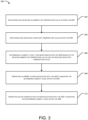
- Method 300 may include step 302 monitoring and receiving an ambient air temperature value outside the AOI and another step 304 of monitoring and receiving a dew point temperature value within the AOI. Further, method 300 may include step 306 of determining a humidity level to be maintained within the AOI based on the received ambient air temperature and the received dew point temperature.
- Step 306 may involve mapping the received ambient air temperature value and the received dew point temperature value with a database comprising one or more known outdoor air temperatures, one or more known dew point temperatures, and a corresponding predetermined humidity level, to determine the humidity level to be maintained within the AOI.
- Table 1 already shows different known outdoor air temperatures, known dew point temperatures, and corresponding predetermined optimum humidity levels, which may facilitate in determining the optimum humidity level for the AOI.
- Method 300 may include step 308 of operating an HVAC system associated with the AOI to maintain the determined humidity level within the AOI. Further, in other embodiments, method 300 may include step 310 of operating an air humidification/dehumidification system associated with the AOI to maintain the determined humidity level within the AOI.
- the humidification/dehumidification system may be a standalone device such as a humidifier and a dehumidifier, however, the humidifier and dehumidifier may also be integrated with the HVAC system of the AOI.
- the HVAC system 112 or humidification/dehumidification system 114 may maintain the determined optimum humidity level at the AOI 102 by one or more of enabling dehumidification of the supply air, humidification of the supply air, controlling the speed of fan associated with the HVAC system 112, adjusting the temperature of the supply air, and the like.
- the HVAC system 112 may remove excess moisture from the air. This may be done using a dehumidifier, which can be a standalone unit or integrated into the HVAC system 112. Dehumidifier may work by pulling in moist air and passing it over a cooling coil, which may condense the moisture and allow it to be drained away. In addition, the HVAC system 112 may add moisture to the air using a humidifier. This may be especially useful in dry climates or during the winter when indoor heating can dry out the air. Humidifier may work by evaporating water into the air, typically using a wick or steam. Further, the HVAC system 112 may be operated to adjust the airflow in the AOI to regulate the humidity levels.
- the HVAC system 112 may indirectly control humidity at the AOI 102 by adjusting the temperature of the AOI 102. As warmer air may hold more moisture, so increasing the temperature of the AOI 102 may help reduce relative humidity. Conversely, lowering the temperature of the AOI 102 may increase relative humidity within the AOI 102.
- the invention provides a simple, improved, efficient, and cost-effective system and method for determining an optimum humidity level for an environment/area of interest (AOI) based on the outdoor temperature and dew point temperature within the environment/AOI and further maintaining the determined optimum humidity level within the environment/AOI.
- AOI environment/area of interest
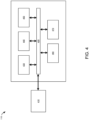
- FIG. 4 is an exemplary schematic block diagram of a hardware system used for implementing the processing device.
- the processing device can include an external storage device 410, a bus 420, a main memory 430, a read only memory 440, a mass storage device 450, communication port 460, and a processor 470.
- processor 470 include, but are not limited to, an Intel ® Itanium ® or Itanium 2 processor(s), or AMD ® Opteron ® or Athlon MP ® processor(s), Motorola ® lines of processors, FortiSOC TM system on chip processors or other future processors.
- Processor 470 may include various modules.
- Communication port 460 can be any of an RS-232 port for use with a modem-based dialup connection, a 10/100 Ethernet port, a Gigabit or 10 Gigabit port using copper or fibre, a serial port, a parallel port, or other existing or future ports. Communication port 460 may be chosen depending on a network, such a Local Area Network (LAN), Wide Area Network (WAN), or any network to which processing device connects.
- Memory 430 can be Random Access Memory (RAM), or any other dynamic storage device commonly known in the art.
- Read-only memory 440 can be any static storage device(s) e.g., but not limited to, a Programmable Read Only Memory (PROM) chips for storing static information e.g., start-up or BIOS instructions for processor 470.
- PROM Programmable Read Only Memory
- Mass storage 450 may be any current or future mass storage solution, which can be used to store information and/or instructions.
- Exemplary mass storage solutions include, but are not limited to, Parallel Advanced Technology Attachment (PATA) or Serial Advanced Technology Attachment (SATA) hard disk drives or solid-state drives (internal or external, e.g., having Universal Serial Bus (USB) and/or Firewire interfaces), e.g. those available from Seagate (e.g., the Seagate Barracuda 7102 family) or Hitachi (e.g., the Hitachi Deskstar 7K1000), one or more optical discs, Redundant Array of Independent Disks (RAID) storage, e.g. an array of disks (e.g., SATA arrays), available from various vendors including Dot Hill Systems Corp., LaCie, Nexsan Technologies, Inc. and Enhance Technology, Inc.
- PATA Parallel Advanced Technology Attachment
- SATA Serial Advanced Technology Attachment
- SSD Universal Serial Bus
- Firewire interfaces e.g.,
- Bus 420 communicatively couples processor(s) 470 with the other memory, storage, and communication blocks.
- Bus 420 can be, e.g., a Peripheral Component Interconnect (PCI) / PCI Extended (PCI-X) bus, Small Computer System Interface (SCSI), USB or the like, for connecting expansion cards, drives and other subsystems as well as other buses, such a front side bus (FSB), which connects processor 470 to software system.
- PCI Peripheral Component Interconnect
- PCI-X PCI Extended
- SCSI Small Computer System Interface
- FFB front side bus
- operator and administrative interfaces e.g., a display, keyboard, and a cursor control device
- bus 420 may also be coupled to bus 420 to support direct operator interaction with processing device.
- Other operator and administrative interfaces can be provided through network connections connected through communication port 460.
- the external storage device 410 can be any kind of external hard-drives, floppy drives, IOMEGA ® Zip Drives, Compact Disc - Read Only Memory (CD-ROM), Compact Disc-Re-Writable (CD-RW), Digital Video Disk-Read Only Memory (DVD-ROM).
- CD-ROM Compact Disc - Read Only Memory
- CD-RW Compact Disc-Re-Writable
- DVD-ROM Digital Video Disk-Read Only Memory
Landscapes
- Engineering & Computer Science (AREA)
- Chemical & Material Sciences (AREA)
- Combustion & Propulsion (AREA)
- Mechanical Engineering (AREA)
- General Engineering & Computer Science (AREA)
- Signal Processing (AREA)
- Physics & Mathematics (AREA)
- Fuzzy Systems (AREA)
- Mathematical Physics (AREA)
- Human Computer Interaction (AREA)
- Air Conditioning Control Device (AREA)
Abstract
A system (100) for determining a humidity level for an area of interest (AOI) (102) is disclosed. The system (100) comprises a first sensor (106) operable to monitor ambient air temperature outside (104) the AOI (102), a second sensor (108) operable to monitor dew point temperature within the AOI (102), and a processing device (110) in communication with the first sensor (106) and the second sensor (108). The processing device (110) comprises one or more processors (110-1) coupled to a memory (110-2) storing instructions executable by the one or more processors (110-1), wherein the processing device (110) is configured to receive, from the first sensor (106), the ambient air temperature being monitored outside (104) the AOI (102), receive, from the second sensor (108), the dew point temperature being monitored within the AOI (102), and determine a humidity level to be maintained within the AOI (102) based on the received ambient air temperature and the received dew point temperature.
Description
- This patent application claims the benefit of
US Provisional Patent Application No. 63/506,089, filed on Jun 04, 2023 - This invention relates to the field of indoor air quality management systems, and more particularly, a system and method for determining a humidity level for an area of interest (AOI) or environment and further maintaining the determined humidity level within the AOI.
- In an environment such as a building or enclosed space, maintaining an optimum indoor humidity level may be important to provide comfort to occupants. Such an environment may be equipped with an HVAC system or a humidifier to maintain a user-defined humidity level as set by the occupants based on their comfort. However, the occupants may be unaware of the optimum humidity level which may provide comfort to them as well as save energy and optimize the HVAC system or humidifier.
- According to a first aspect of the invention there is provided a system for determining a humidity level for an area of interest (AOI). The system comprises a first sensor operable to monitor ambient air temperature outside the AOI, a second sensor operable to monitor dew point temperature within the AOI, and a processing device in communication with the first sensor and the second sensor, wherein the processing device comprises one or more processors coupled to a memory storing instructions executable by the one or more processors, wherein the processing device is configured to receive, from the first sensor, the ambient air temperature being monitored outside the AOI, receive, from the second sensor, the dew point temperature being monitored within the AOI, and determine a humidity level to be maintained within the AOI based on the received ambient air temperature and the received dew point temperature.
- Optionally, the processing device is configured to map the received ambient air temperature and the received dew point temperature with a database comprising one or more known outdoor air temperatures, one or more known dew point temperatures, and a corresponding predetermined humidity level, to determine the humidity level to be maintained within the AOI.
- Optionally, the processing device is operatively connected to an HVAC system associated with the AOI, wherein the processing device is configured to transmit data comprising the determined humidity level for the AOI to a control unit of the HVAC.
- Optionally, the processing device is in communication with an air humidification system associated with the AOI, wherein the processing device is configured to transmit data comprising the determined humidity level for the AOI to a control unit of the humidification system.
- Optionally, the first sensor is positioned outside the AOI, and the second sensor is positioned inside the AOI.
- Optionally, the processing device is a thermostat associated with an HVAC system of the AOI.
- Optionally, the processing device is in communication with a thermostat associated with an HVAC system of the AOI.
- According to a second aspect of the invention there is provided a system for maintaining a humidity level within an area of interest (AOI). The system comprises a first sensor operable to monitor ambient air temperature outside the AOI, a second sensor operable to monitor dew point temperature within the AOI, and a processing device in communication with the HVAC system, the first sensor and the second sensor, wherein the processing device comprises one or more processors coupled to a memory storing instructions executable by the one or more processors, wherein the processing device is configured to receive, from the first sensor, the ambient air temperature being monitored outside the AOI, receive, from the second sensor, the dew point temperature being monitored within the AOI, determine a humidity level to be maintained within the AOI based on the received ambient air temperature and the received dew point temperature, and operate one or more of an HVAC system and an air humidification system associated with the AOI to maintain the determined humidity level within the AOI.
- Optionally, the processing device is configured to map the received ambient air temperature and the received dew point temperature with a database comprising one or more known outdoor air temperatures, one or more known dew point temperatures, and a corresponding predetermined humidity level, to determine the humidity level to be maintained within the AOI.
- Optionally, the first sensor is configured with an outdoor unit associated with the HVAC system of the AOI, and the second sensor is positioned inside the AOI.
- Optionally, the processing device is a thermostat associated with the HVAC system of the AOI.
- Optionally, the processing device is in communication with a thermostat associated with an HVAC system of the AOI.
- Optionally, the processing device is in communication with a control unit associated with the HVAC system or the air humidification system associated with the AOI.
- According to a third aspect of the invention there is provided a method for determining a humidity level for an area of interest (AOI). The method comprises the steps of monitoring and receiving an ambient air temperature value outside the AOI, monitoring and receiving a dew point temperature value within the AOI, and determining a humidity level to be maintained within the AOI based on the received ambient air temperature and the received dew point temperature.
- Optionally, the method comprises the steps of mapping the received ambient air temperature value and the received dew point temperature value with a database comprising one or more known outdoor air temperatures, one or more known dew point temperatures, and a corresponding predetermined humidity level, to determine the humidity level to be maintained within the AOI.
- Optionally, the method comprises the steps of operating an HVAC system associated with the AOI to maintain the determined humidity level within the AOI.
- Optionally, the method comprises the steps of operating an air humidification system associated with the AOI to maintain the determined humidity level within the AOI.
- The foregoing summary is illustrative only and is not intended to be in any way limiting. In addition to the illustrative aspects, embodiments, and features described above, further embodiments, features, and techniques of the invention will become more apparent from the following description taken in conjunction with the drawings.
- The accompanying drawings are included to provide a further understanding of the invention by way of example only and are incorporated in and constitute a part of this specification. The drawings illustrate exemplary embodiments of the invention and, together with the description, serve to explain the principles of the invention.
- In the drawings, similar components and/or features may have the same reference label. Further, various components of the same type may be distinguished by following the reference label with a second label that distinguishes among the similar components. If only the first reference label is used in the specification, the description is applicable to any one of the similar components having the same first reference label irrespective of the second reference label.
-
FIG. 1 shows a system for determining an optimum humidity level for an area of interest (AOI) and further maintaining the determined optimum humidity level within the AOI. -
FIG. 2 shows a block diagram of the system ofFIG. 1 . -
FIG. 3 shows a flow diagram of a method for determining an optimum humidity level for an area of interest (AOI) and further maintaining the determined optimum humidity level within the AOI. -
FIG. 4 shows a schematic block diagram of a hardware system used for implementing the processing device ofFIG. 1 . - The following is a detailed description of embodiments of the invention depicted in the accompanying drawings. The embodiments are in such detail as to clearly communicate the invention. However, the amount of detail offered is not intended to limit the anticipated variations of embodiments; on the contrary, the intention is to cover all modifications, equivalents, and alternatives falling within the scope of the invention as set out in the appended claims.
- Various terms are used herein. To the extent a term used in a claim is not defined below, it should be given the broadest definition persons in the pertinent art have given that term as reflected in printed publications and issued patents at the time of filing.
- In the specification, reference may be made to the spatial relationships between various components and to the spatial orientation of various aspects of components as the devices are depicted in the attached drawings. However, as will be recognized by those skilled in the art after a complete reading of the disclosure, the components of this invention. described herein may be positioned in any desired orientation. Thus, the use of terms such as "above," "below," "upper," "lower," "first", "second" or other like terms to describe a spatial relationship between various components or to describe the spatial orientation of aspects of such components should be understood to describe a relative relationship between the components or a spatial orientation of aspects of such components, respectively, described herein may be oriented in any desired direction.
- In an environment such as a building or enclosed space, maintaining an optimum indoor humidity level may be important to provide comfort to occupants. Such an environment may be equipped with an HVAC system or a humidifier to maintain a user-defined humidity level as set by the occupants based on their comfort. The user may set the humidity level using a thermostat associated with the HVAC system or humidifier. However, the occupants may be unaware of the optimum humidity level which may provide comfort to them as well as save energy and optimize the HVAC system or humidifier.
- Moreover, the optimum humidity level may vary based on regions as well as the outdoor temperature and dew point temperature within the environment, which the existing solution fails to consider, thereby making the existing solutions ineffective and unreliable. This also makes it difficult for the occupants to manually set the humidity level based on their comfort. For instance, in an example, an outdoor temperature of 30°F (-1°C) and a dew point temperature of 30°F (-1°C) may have a relative humidity of 100%, but a temperature of 80°F (27°C) and a dew point of 60°F (16°C) may produce a relative humidity of 50%. As a result, it may feel much more "humid" on the 80°F (27°C) day with 50% relative humidity than on the 30°F (-1°C) day with 100% relative humidity, which is because of the higher dew point temperature. However, the existing solutions fail to consider both outdoor air temperature and dew point temperature of the environment while adjusting or maintaining the optimum humidity level within the environment, which may create an uncomfortable environment for the occupants. There is therefore a need to determine an optimum humidity level for the environment and further automatically maintain the determined optimum humidity level within the environment without any human intervention.
- This invention provides a simple, improved, efficient, and cost-effective system and method for determining an optimum humidity level for an environment/area of interest (AOI) based on the outdoor temperature and dew point temperature within the environment/AOI and further maintaining the determined optimum humidity level within the environment/AOI.
- Referring to
FIGs. 1 and2 , asystem 100 for determining an optimum humidity level for an area of interest (AOI) 102 (also referred to asenvironment 102, herein) and further maintaining the determined optimum humidity level within theAOI 102 is disclosed. The space outside or the ambient is designated as 104, herein. The AOI 102 may be a building, a container or trailer associated with a vehicle, or any other enclosed space, but not limited to the like. Thesystem 100 may include afirst sensor 106 such as an outdoor air temperature (OAT)sensor 106 that may be operable to monitor ambient air temperature (or outside air temperature) outside 104 of the AOI 102. Thesystem 100 may further include asecond sensor 108 including a dewpoint temperature sensor 108 that may be operable to monitor dew point temperature within theAOI 102. Further, thesystem 100 may include aprocessing device 110 in communication with thefirst sensor 106 and thesecond sensor 108. Theprocessing device 110 may include one or more processors 110-1 coupled to a memory 110-2 storing instructions executable by the one or more processors 110-1 to enable theprocessing device 110 to perform one or more designated operations. Theprocessing device 110 may be configured to receive, from thefirst sensor 106, the ambient/outdoor air temperature being monitored outside of theAOI 102 and further receive, from thesecond sensor 108, the dew point temperature being monitored within theAOI 102. However, theprocessing device 110 may also receive the ambient/outdoor air temperature outside of theAOI 102 and the dew point temperature being monitored within theAOI 102 from other sensors. Theprocessing device 110 may accordingly determine the current humidity level and the apparent temperature (heat index) felt within theAOI 102 based on the received ambient air temperature and the received dew point temperature. Theprocessing device 110 accordingly determines and maintains an optimum (comfortable) humidity level within theAOI 102. The comfortable or recommended dew point temperature for any environment/AOI may be between 32 to 59°F (0 to 15°C). The dew point temperature may determine the combinations of outside air temperature and the relative humidity. For instance, at a constant dew point, when the temperature goes up, the relative humidity may go down and when the temperature goes down, the relative humidity may go up. Therefore, the dew point may be responsible for determining which temperature setting may give a specific relative humidity. - The recommended optimum humidity level or optimum relative humidity percentage (RH) for any environment/AOI is calculated using the below equation 1. RH=100*(Exp((17.625*TD)/(243.04+TD))/Exp((17.625*T)/(243.04+T))) (Equation 1) where RH is relative humidity %, TD is the dew point temperature (in °F), T is the outside air temperature (in °F), and Exp is the exponential function.
- The
processing device 110 may map the received ambient air temperature and the received dew point temperature with a database 116 comprising one or more known air temperatures, one or more known dew point temperatures, and a corresponding predetermined humidity level, to determine the humidity level to be maintained within theAOI 102. Table 1 below shows predetermined optimum humidity level for theAOI 102 for different known outdoor air temperatures, known dew point temperatures, which may be determined using the above Equation 1. Table 1 further shows the actual humidity level and heat index felt within theAOI 102 for different values of known outdoor air temperatures, and known dew point temperatures. A person skilled in the art would appreciate that Table 1 provides specific optimum humidity levels for a limited range of outside air temperatures and dew point temperatures. However, it is important to note that theprocessing device 110 is configured to determine and maintain the optimal humidity level for a wide range of values that extend beyond those mentioned in Table 1. This capability is achieved through the utilization of Equation 1, which allows for precise calculations based on different combinations of outside air temperatures and dew point temperatures. Therefore, it should be understood that the scope of this invention encompasses all possible values and examples of outside air temperatures and dew point temperatures, regardless of whether they are explicitly listed in Table 1 or not. There are no limitations imposed on the system's ability to adapt and respond to various conditions, as long as the calculations are performed using Equation 1. This flexibility ensures that the system can effectively maintain optimum humidity levels in.TABLE 1 Outside Temperature (°F) Outside Temperature (°C) Dew Point temperature (°F) Dew Point temperature (°C) Humidity (%) within the AOI Heat Index (real feel) within the AOI Recommended /comfortable Humidity Level (%) for the AOI 40 4 32 0 72 40 72 100 38 32 0 49 47 100 60 16 32 0 34 57 74 70 21 32 0 24 68 52 80 27 32 0 17 79 37 90 32 32 0 12 86 27 100 38 32 0 9 94 20 110 43 32 0 7 102 15 60 16 49 9 66 59 74 70 21 49 9 47 69 52 80 27 49 9 33 79 37 90 32 49 9 24 87 27 100 38 49 9 18 97 20 110 43 49 9 13 107 15 60 16 54 12 80 59 74 70 21 54 12 56 69 52 80 27 54 12 40 80 37 90 32 54 12 29 88 27 100 38 54 12 21 98 20 110 43 54 12 16 109 15 60 16 59 15 96 60 74 70 21 59 15 68 70 52 80 27 59 15 48 81 37 90 32 59 15 35 89 27 100 38 59 15 26 100 20 110 43 59 15 19 112 15 70 21 64 18 81 71 52 80 27 64 18 58 82 37 90 32 64 18 42 91 27 100 38 64 18 31 103 20 110 43 64 18 23 115 15 70 21 69 21 96 71 52 80 27 69 21 69 83 37 90 32 69 21 50 95 27 100 38 69 21 36 107 20 110 43 69 21 28 120 15 80 27 74 23 81 85 37 90 32 74 23 59 99 27 100 38 74 23 43 112 20 110 43 74 23 33 126 15 90 32 80 27 72 108 27 100 38 80 27 53 122 20 110 43 80 27 40 135 15 - For instance, when the ambient air temperature outside 104 is 40°F (4°C) and the dew point temperature within the
AOI 102 is 40°F (4°C), the actual humidity level and temperature (heat index) felt by occupants within theAOI 102 may be 72% and 42°F (6°C), respectively. Accordingly, to provide a comfortable environment within theAOI 102, the corresponding optimum humidity level for theAOI 102 may be set and maintained at 72%. Further, when the ambient air temperature outside 104 is 90°F (32°C) and the dew point temperature within theAOI 102 is 64°F (18°C), the actual humidity level and temperature (heat index) felt by occupants within theAOI 102 may be 42% and 91°F (33°C), respectively. Accordingly, to provide a comfortable environment within theAOI 102, the corresponding optimum humidity level for theAOI 102 may be set and maintained at 27%. The heat index (also known as the apparent temperature) may be the temperature that the occupants may feel within theAOI 102 when the relative humidity is combined with the air temperature. This may have an important consideration for the occupant's/human body's comfort. Accordingly, the humidity level of theAOI 102 may be maintained at the determined optimum humidity level based on Table-1 to provide comfort to the occupants. - The
processing device 110 may be configured to allow one or more registered users to manually enter or set, upon authorization by an admin, specific values of optimum humidity level to be maintained for different combinations of the outside air temperature and the dew point temperature. - The
processing device 110 may be operatively connected to or in communication with a control unit of anHVAC system 112 associated with theAOI 102. Further, theprocessing device 110 may be configured to transmit data comprising the determined optimum humidity level for the AOI to the control unit of theHVAC system 112. The control unit may accordingly operate the HVAC system to automatically maintain the determined optimum humidity level within theAOI 102. The first sensor orOAT sensor 106 may be associated with and configured within an outdoor unit associated with the existingHVAC system 112 of theAOI 102, such that thefirst sensor 106 may remain either outside 104 or in a supply air channel of the outdoor unit/HVAC system 112 to monitor the outdoor air temperature. Further, thesecond sensor 108 may be additionally positioned inside theAOI 102. For instance, thesecond sensor 108 may be installed on the walls or roof within theAOI 102. However, in other embodiments, the first sensor orOAT sensor 106 may not be associated with the outdoor unit of theHVAC system 112 and may either be additionally positioned outside 104 or in the supply air channel of the HVAC system to monitor the outdoor air temperature. - The
processing device 110 may be operatively coupled to or in communication with a control unit of an air humidification system 114 (also referred to as humidification/dehumidification system, herein) associated with theAOI 102. Theprocessing device 110 may be configured to transmit data comprising the determined optimum humidity level for the AOI to thedehumidification system 114. The control unit may accordingly operate theair humidification system 114 to automatically maintain the determined optimum humidity level within theAOI 102. - The
processing device 110 may be a thermostat associated with theHVAC system 112 or thehumidification system 114 of theAOI 102. Further, in other embodiments, theprocessing device 110 may be in communication with the thermostat associated with theHVAC system 112 orhumidification system 114 of theAOI 102. Furthermore, in some embodiments, theprocessing device 110 may be in direct communication with a control unit or a central server associated with theHVAC system 112 or theair humidification system 114 associated with theAOI 102, such that based on instructions or data pertaining to determined optimum humidity level being received from theprocessing device 110, the control unit of theHVAC system 112 or theair humidification system 114 may operate theHVAC system 112 or theair humidification system 114 to maintain the determined humidity level within theAOI 102. - The
processing device 110, the first (OAT)sensor 106, the second (dew point)sensor 108, theHVAC system 112, thehumidification system 114, and the thermostat of theAOI 102 may include a transceiver or a communication module to communicatively connect theprocessing device 110 to one or more of thefirst sensor 106, thesecond sensor 108, theHVAC system 112, thehumidification system 114, and the thermostat of theAOI 102, through a network via wired and/or wireless media. Thesystem 100 orprocessing device 110, and mobile devices associated with the occupants of theAOI 102 or registered users or the admin may be operatively coupled to a website and so be operable from any Internet-enabled user device. The mobile devices may allow the occupants, the users, and the admin to monitor and control the operation of thesystem 100. Examples of mobile devices may include but are not limited to, a portable computer, a personal digital assistant, a handheld device, and a workstation. - The network can be a wireless network, a wired network or a combination thereof. Network can be implemented as one of the different types of networks, such as intranet, local area network (LAN), wide area network (WAN), the internet, and the like. Further, the network may either be a dedicated network or a shared network. The shared network represents an association of the different types of networks that use a variety of protocols, for example, Hypertext Transfer Protocol (HTTP), Transmission Control Protocol/Internet Protocol (TCP/IP), Wireless Application Protocol (WAP), and the like, to communicate with one another. Further, network can include a variety of network devices, including transceivers, routers, bridges, servers, computing devices, storage devices, and the like. In another implementation the network can be a cellular network or mobile communication network based on various technologies, including but not limited to,
Global System 100 for Mobile (GSM), General Packet Radio Service (GPRS), Code Division Multiple Access (CDMA), Long Term Evolution (LTE), WiMAX, 5G or 6G network protocols, and the like. - Referring to
FIGs. 3 ,method 300 for determining an optimum humidity level for an area of interest (AOI is disclosed.Method 300 may involve theprocessing device 110, the first sensor (outdoor air temperature sensor) 106, the second sensor (dew point temperature sensor) 108, theHVAC system 112, thehumidification system 114, and the thermostat and other components associated with thesystem 100 ofFIGs. 1 and2 .Method 300 may include step 302 monitoring and receiving an ambient air temperature value outside the AOI and anotherstep 304 of monitoring and receiving a dew point temperature value within the AOI. Further,method 300 may include step 306 of determining a humidity level to be maintained within the AOI based on the received ambient air temperature and the received dew point temperature. - Step 306 may involve mapping the received ambient air temperature value and the received dew point temperature value with a database comprising one or more known outdoor air temperatures, one or more known dew point temperatures, and a corresponding predetermined humidity level, to determine the humidity level to be maintained within the AOI. Table 1 already shows different known outdoor air temperatures, known dew point temperatures, and corresponding predetermined optimum humidity levels, which may facilitate in determining the optimum humidity level for the AOI.
-
Method 300 may include step 308 of operating an HVAC system associated with the AOI to maintain the determined humidity level within the AOI. Further, in other embodiments,method 300 may include step 310 of operating an air humidification/dehumidification system associated with the AOI to maintain the determined humidity level within the AOI. - The humidification/dehumidification system may be a standalone device such as a humidifier and a dehumidifier, however, the humidifier and dehumidifier may also be integrated with the HVAC system of the AOI.
- The
HVAC system 112 or humidification/dehumidification system 114 may maintain the determined optimum humidity level at theAOI 102 by one or more of enabling dehumidification of the supply air, humidification of the supply air, controlling the speed of fan associated with theHVAC system 112, adjusting the temperature of the supply air, and the like. - The
HVAC system 112 may remove excess moisture from the air. This may be done using a dehumidifier, which can be a standalone unit or integrated into theHVAC system 112. Dehumidifier may work by pulling in moist air and passing it over a cooling coil, which may condense the moisture and allow it to be drained away. In addition, theHVAC system 112 may add moisture to the air using a humidifier. This may be especially useful in dry climates or during the winter when indoor heating can dry out the air. Humidifier may work by evaporating water into the air, typically using a wick or steam. Further, theHVAC system 112 may be operated to adjust the airflow in the AOI to regulate the humidity levels. This may be done by controlling the speed of fans or adjusting dampers to allow more or less outside air to enter theAOI 102. Furthermore, theHVAC system 112 may indirectly control humidity at theAOI 102 by adjusting the temperature of theAOI 102. As warmer air may hold more moisture, so increasing the temperature of theAOI 102 may help reduce relative humidity. Conversely, lowering the temperature of theAOI 102 may increase relative humidity within theAOI 102. - Thus, the invention provides a simple, improved, efficient, and cost-effective system and method for determining an optimum humidity level for an environment/area of interest (AOI) based on the outdoor temperature and dew point temperature within the environment/AOI and further maintaining the determined optimum humidity level within the environment/AOI.
-
FIG. 4 is an exemplary schematic block diagram of a hardware system used for implementing the processing device. As shown inFIG. 4 , the processing device can include anexternal storage device 410, abus 420, amain memory 430, a read onlymemory 440, amass storage device 450,communication port 460, and aprocessor 470. A person skilled in the art will appreciate that the processing device may include more than one processor and communication ports. Examples ofprocessor 470 include, but are not limited to, an Intel® Itanium® or Itanium 2 processor(s), or AMD® Opteron® or Athlon MP® processor(s), Motorola® lines of processors, FortiSOC™ system on chip processors or other future processors.Processor 470 may include various modules.Communication port 460 can be any of an RS-232 port for use with a modem-based dialup connection, a 10/100 Ethernet port, a Gigabit or 10 Gigabit port using copper or fibre, a serial port, a parallel port, or other existing or future ports.Communication port 460 may be chosen depending on a network, such a Local Area Network (LAN), Wide Area Network (WAN), or any network to which processing device connects.Memory 430 can be Random Access Memory (RAM), or any other dynamic storage device commonly known in the art. Read-onlymemory 440 can be any static storage device(s) e.g., but not limited to, a Programmable Read Only Memory (PROM) chips for storing static information e.g., start-up or BIOS instructions forprocessor 470.Mass storage 450 may be any current or future mass storage solution, which can be used to store information and/or instructions. Exemplary mass storage solutions include, but are not limited to, Parallel Advanced Technology Attachment (PATA) or Serial Advanced Technology Attachment (SATA) hard disk drives or solid-state drives (internal or external, e.g., having Universal Serial Bus (USB) and/or Firewire interfaces), e.g. those available from Seagate (e.g., the Seagate Barracuda 7102 family) or Hitachi (e.g., the Hitachi Deskstar 7K1000), one or more optical discs, Redundant Array of Independent Disks (RAID) storage, e.g. an array of disks (e.g., SATA arrays), available from various vendors including Dot Hill Systems Corp., LaCie, Nexsan Technologies, Inc. and Enhance Technology, Inc. -
Bus 420 communicatively couples processor(s) 470 with the other memory, storage, and communication blocks.Bus 420 can be, e.g., a Peripheral Component Interconnect (PCI) / PCI Extended (PCI-X) bus, Small Computer System Interface (SCSI), USB or the like, for connecting expansion cards, drives and other subsystems as well as other buses, such a front side bus (FSB), which connectsprocessor 470 to software system. - Optionally, operator and administrative interfaces, e.g., a display, keyboard, and a cursor control device, may also be coupled to
bus 420 to support direct operator interaction with processing device. Other operator and administrative interfaces can be provided through network connections connected throughcommunication port 460. Theexternal storage device 410 can be any kind of external hard-drives, floppy drives, IOMEGA® Zip Drives, Compact Disc - Read Only Memory (CD-ROM), Compact Disc-Re-Writable (CD-RW), Digital Video Disk-Read Only Memory (DVD-ROM). Components described above are meant only to exemplify various possibilities. In no way should the aforementioned exemplary processing device limit the scope of the invention as set out in the appended claims. - While the invention has been described with reference to exemplary embodiments, it will be understood by those skilled in the art that various changes may be made and equivalents may be substituted for elements thereof without departing from the scope of the invention as set out in the appended claims. Modifications may be made to adopt a particular situation or material to the teachings of the invention without departing from the scope thereof. Therefore, it is intended that the invention not be limited to the particular embodiment disclosed, but that the invention includes all embodiments falling within the scope of the invention as set out in the appended claims.
- In interpreting the specification, all terms should be interpreted in the broadest possible manner consistent with the context. In particular, the terms "comprises" and "comprising" should be interpreted as referring to elements, components, or steps in a non-exclusive manner, indicating that the referenced elements, components, or steps may be present, or utilized, or combined with other elements, components, or steps that are not expressly referenced. Where the specification claims refer to at least one of something selected from the group consisting of A, B, C ....and N, the text should be interpreted as requiring only one element from the group, not A plus N, or B plus N, etc.
Claims (15)
- A system (100) for determining a humidity level for an area of interest, AOI, (102), the system comprising:a first sensor (106) operable to monitor ambient air temperature outside (104) the AOI;a second sensor (108) operable to monitor dew point temperature within the AOI; anda processing device (110) in communication with the first sensor and the second sensor, wherein the processing device comprises one or more processors (110-1) coupled to a memory (110-2) storing instructions executable by the one or more processors, wherein the processing device is configured to:receive, from the first sensor, the ambient air temperature being monitored outside the AOI;receive, from the second sensor, the dew point temperature being monitored within the AOI; anddetermine a humidity level to be maintained within the AOI based on the received ambient air temperature and the received dew point temperature.
- The system (100) of claim 1, wherein the processing device (110) is configured to map the received ambient air temperature and the received dew point temperature with a database (116) comprising one or more known outdoor air temperatures, one or more known dew point temperatures, and a corresponding predetermined humidity level, to determine the humidity level to be maintained within the AOI (102).
- The system (100) of any of claims 1 and 2, wherein the processing device (110) is operatively connected to an HVAC system (112) associated with the AOI (102), wherein the processing device is configured to transmit data comprising the determined humidity level for the AOI to a control unit of the HVAC system.
- The system (100) of any of claims 1 and 2, wherein the processing device (110) is in communication with an air humidification system (114) associated with the AOI (102), wherein the processing device is configured to transmit data comprising the determined humidity level for the AOI to a control unit of the humidification system.
- The system (100) of any of claims 1 to 3, wherein the processing device (110) is a thermostat associated with an HVAC system (112) of the AOI (102); and/or
wherein the processing device (110) is in communication with a thermostat associated with an HVAC system (112) of the AOI (102). - The system (100) of any of claims 1 to 5, wherein the first sensor (106) is positioned outside the AOI (102) and the second sensor (108) is positioned inside the AOI.
- The system (100) of claim 1 for maintaining a humidity level within the AOI, wherein the processing device is (110) is configured to operate one or more of an HVAC system (112) and an air humidification system (114) associated with the AOI to maintain the determined humidity level within the AOI.
- The system (100) of claim 7, wherein the processing device (110) is configured to map the received ambient air temperature and the received dew point temperature with a database (116) comprising one or more known outdoor air temperatures, one or more known dew point temperatures, and a corresponding predetermined humidity level, to determine the humidity level to be maintained within the AOI (102).
- The system (100) of any of claims 7 and 8, wherein the first sensor (106) is configured with an outdoor unit associated with the HVAC system (112) of the AOI (102), and the second sensor (108) is positioned inside the AOI.
- The system (100) of any of claims 7 to 9, wherein the processing device (110) is a thermostat associated with the HVAC system (112) of the AOI (102); and/or
wherein the processing device (110) is in communication with a thermostat associated with an HVAC system (112) of the AOI (102). - The system (100) of any of claims 7 to 10, wherein the processing device (110) is in communication with a control unit associated with the HVAC system (112) or the air humidification system (114) associated with the AOI (102).
- A method for determining a humidity level for an area of interest (AOI) (102), the method comprising the steps of:monitoring and receiving an ambient air temperature value outside the AOI;monitoring and receiving a dew point temperature value within the AOI; anddetermining a humidity level to be maintained within the AOI based on the received ambient air temperature and the received dew point temperature.
- The method of claim 12, wherein the method comprises the steps of mapping the received ambient air temperature value and the received dew point temperature value with a database comprising one or more known outdoor air temperatures, one or more known dew point temperatures, and a corresponding predetermined humidity level, to determine the humidity level to be maintained within the AOI (102).
- The method of any of claims 12 and 13, wherein the method comprises the steps of operating an HVAC system associated with the AOI (102) to maintain the determined humidity level within the AOI (102).
- The method of any of claims 12 and 13, wherein the method comprises the steps of operating an air humidification system associated with the AOI (102) to maintain the determined humidity level within the AOI (102).
Applications Claiming Priority (1)
| Application Number | Priority Date | Filing Date | Title |
|---|---|---|---|
| US202363506089P | 2023-06-04 | 2023-06-04 |
Publications (1)
| Publication Number | Publication Date |
|---|---|
| EP4474722A1 true EP4474722A1 (en) | 2024-12-11 |
Family
ID=91374969
Family Applications (1)
| Application Number | Title | Priority Date | Filing Date |
|---|---|---|---|
| EP24179431.2A Pending EP4474722A1 (en) | 2023-06-04 | 2024-05-31 | System and method for determining and maintaining a humidity level in an area of interest |
Country Status (3)
| Country | Link |
|---|---|
| US (1) | US20240401826A1 (en) |
| EP (1) | EP4474722A1 (en) |
| CN (1) | CN119085096A (en) |
Citations (3)
| Publication number | Priority date | Publication date | Assignee | Title |
|---|---|---|---|---|
| DE102014107119A1 (en) * | 2014-05-20 | 2015-11-26 | Schwille Elektronik Produktions- Und Vertriebs Gmbh | Method for ventilating a room and ventilation system therefor |
| US20180059695A1 (en) * | 2016-08-31 | 2018-03-01 | Rick Carignan | Environmental control system |
| US11662108B2 (en) * | 2019-08-13 | 2023-05-30 | Trane International Inc. | Demand control ventilation with predictive humidity control |
-
2024
- 2024-05-31 EP EP24179431.2A patent/EP4474722A1/en active Pending
- 2024-05-31 CN CN202410697759.3A patent/CN119085096A/en active Pending
- 2024-05-31 US US18/731,219 patent/US20240401826A1/en active Pending
Patent Citations (3)
| Publication number | Priority date | Publication date | Assignee | Title |
|---|---|---|---|---|
| DE102014107119A1 (en) * | 2014-05-20 | 2015-11-26 | Schwille Elektronik Produktions- Und Vertriebs Gmbh | Method for ventilating a room and ventilation system therefor |
| US20180059695A1 (en) * | 2016-08-31 | 2018-03-01 | Rick Carignan | Environmental control system |
| US11662108B2 (en) * | 2019-08-13 | 2023-05-30 | Trane International Inc. | Demand control ventilation with predictive humidity control |
Also Published As
| Publication number | Publication date |
|---|---|
| US20240401826A1 (en) | 2024-12-05 |
| CN119085096A (en) | 2024-12-06 |
Similar Documents
| Publication | Publication Date | Title |
|---|---|---|
| US9538690B2 (en) | Data center cooling method with critical device prioritization | |
| JP6797204B2 (en) | Air quality management systems and methods, as well as analysis servers | |
| RU2648254C2 (en) | Atmospheric cooling of servers in data center | |
| EP3657086B1 (en) | Apparatus control method and device | |
| US20160066471A1 (en) | Cooling control of information technology equipment | |
| EP2445327A2 (en) | Air conditioner and air conditioning system | |
| JP7182117B2 (en) | air conditioning system | |
| US20190024926A1 (en) | Electronic device and air-conditioning control method therefor | |
| EP3243028B1 (en) | Environment-controlled cooling for a data center based on detection of contaminants and particulates in outside air | |
| EP1747408B1 (en) | Air conditioner and method for controlling the same | |
| JPWO2020121370A1 (en) | Air conditioners, control devices, air conditioning systems, air conditioning control methods and programs | |
| WO2020048407A1 (en) | System and method using mobile device for automatic control on heating, ventilation and air conditioning | |
| US20250075931A1 (en) | System and method for controlling operation of a heat pump configured with an electric heater | |
| US20240401826A1 (en) | System and method for determining and maintaining a humidity level in an area of interest | |
| CN114935208A (en) | Method and device for controlling constant temperature and humidity box, constant temperature and humidity box and storage medium | |
| CN113915754A (en) | Method and device for controlling air conditioner and air conditioner | |
| CN110454928B (en) | Control method of air conditioner and air conditioner | |
| CN108692433B (en) | Heating control method and device for variable frequency air conditioner and variable frequency air conditioner | |
| EP4484840A1 (en) | System and method to control operation of an hvac system for conditioning indoor air quality | |
| EP4478048A1 (en) | System and method for calibrating indoor air quality sensors of a multi-zone environment | |
| JP2005042993A (en) | Air conditioning system | |
| CN107300278A (en) | The system and method used for the compressor minimized in HVAC system | |
| CN119436370A (en) | System and method for enabling planned ventilation of an environment | |
| CN114274734A (en) | Air conditioner adjustment method, device, equipment, and working machine | |
| CN108260332A (en) | Thermal management control device and method |
Legal Events
| Date | Code | Title | Description |
|---|---|---|---|
| PUAI | Public reference made under article 153(3) epc to a published international application that has entered the european phase |
Free format text: ORIGINAL CODE: 0009012 |
|
| STAA | Information on the status of an ep patent application or granted ep patent |
Free format text: STATUS: THE APPLICATION HAS BEEN PUBLISHED |
|
| AK | Designated contracting states |
Kind code of ref document: A1 Designated state(s): AL AT BE BG CH CY CZ DE DK EE ES FI FR GB GR HR HU IE IS IT LI LT LU LV MC ME MK MT NL NO PL PT RO RS SE SI SK SM TR |
|
| STAA | Information on the status of an ep patent application or granted ep patent |
Free format text: STATUS: REQUEST FOR EXAMINATION WAS MADE |
|
| 17P | Request for examination filed |
Effective date: 20250609 |
|
| STAA | Information on the status of an ep patent application or granted ep patent |
Free format text: STATUS: EXAMINATION IS IN PROGRESS |