EP4474415A1 - Depolymerization of polyurethanes by hydrolysis via a combination of catalysis and mechanochemistry - Google Patents
Depolymerization of polyurethanes by hydrolysis via a combination of catalysis and mechanochemistry Download PDFInfo
- Publication number
- EP4474415A1 EP4474415A1 EP23178044.6A EP23178044A EP4474415A1 EP 4474415 A1 EP4474415 A1 EP 4474415A1 EP 23178044 A EP23178044 A EP 23178044A EP 4474415 A1 EP4474415 A1 EP 4474415A1
- Authority
- EP
- European Patent Office
- Prior art keywords
- mixture
- process according
- grinding
- independently
- range
- Prior art date
- Legal status (The legal status is an assumption and is not a legal conclusion. Google has not performed a legal analysis and makes no representation as to the accuracy of the status listed.)
- Withdrawn
Links
- 239000004814 polyurethane Substances 0.000 title claims abstract description 59
- 229920002635 polyurethane Polymers 0.000 title claims abstract description 57
- 230000007062 hydrolysis Effects 0.000 title description 5
- 238000006460 hydrolysis reaction Methods 0.000 title description 5
- 238000006555 catalytic reaction Methods 0.000 title 1
- 239000000203 mixture Substances 0.000 claims abstract description 93
- 238000000034 method Methods 0.000 claims abstract description 59
- 238000000227 grinding Methods 0.000 claims abstract description 49
- 229920005862 polyol Polymers 0.000 claims abstract description 48
- 150000003077 polyols Chemical class 0.000 claims abstract description 48
- 239000003341 Bronsted base Substances 0.000 claims abstract description 35
- 239000003153 chemical reaction reagent Substances 0.000 claims abstract description 28
- 238000003776 cleavage reaction Methods 0.000 claims abstract description 27
- 230000007017 scission Effects 0.000 claims abstract description 27
- 239000003586 protic polar solvent Substances 0.000 claims abstract description 24
- 239000000463 material Substances 0.000 claims abstract description 23
- OKKJLVBELUTLKV-UHFFFAOYSA-N Methanol Chemical compound OC OKKJLVBELUTLKV-UHFFFAOYSA-N 0.000 claims description 117
- 238000003801 milling Methods 0.000 claims description 43
- IMNIMPAHZVJRPE-UHFFFAOYSA-N triethylenediamine Chemical compound C1CN2CCN1CC2 IMNIMPAHZVJRPE-UHFFFAOYSA-N 0.000 claims description 34
- 239000012973 diazabicyclooctane Substances 0.000 claims description 32
- LFQSCWFLJHTTHZ-UHFFFAOYSA-N Ethanol Chemical compound CCO LFQSCWFLJHTTHZ-UHFFFAOYSA-N 0.000 claims description 22
- XLYOFNOQVPJJNP-UHFFFAOYSA-N water Substances O XLYOFNOQVPJJNP-UHFFFAOYSA-N 0.000 claims description 20
- 239000002904 solvent Substances 0.000 claims description 18
- KFZMGEQAYNKOFK-UHFFFAOYSA-N Isopropanol Chemical compound CC(C)O KFZMGEQAYNKOFK-UHFFFAOYSA-N 0.000 claims description 13
- QTBSBXVTEAMEQO-UHFFFAOYSA-N Acetic acid Chemical compound CC(O)=O QTBSBXVTEAMEQO-UHFFFAOYSA-N 0.000 claims description 9
- LRHPLDYGYMQRHN-UHFFFAOYSA-N N-Butanol Chemical compound CCCCO LRHPLDYGYMQRHN-UHFFFAOYSA-N 0.000 claims description 6
- BDAGIHXWWSANSR-UHFFFAOYSA-N methanoic acid Natural products OC=O BDAGIHXWWSANSR-UHFFFAOYSA-N 0.000 claims description 6
- CPLXHLVBOLITMK-UHFFFAOYSA-N magnesium oxide Inorganic materials [Mg]=O CPLXHLVBOLITMK-UHFFFAOYSA-N 0.000 claims description 5
- 238000002156 mixing Methods 0.000 claims description 5
- 239000007787 solid Substances 0.000 claims description 5
- OSWFIVFLDKOXQC-UHFFFAOYSA-N 4-(3-methoxyphenyl)aniline Chemical compound COC1=CC=CC(C=2C=CC(N)=CC=2)=C1 OSWFIVFLDKOXQC-UHFFFAOYSA-N 0.000 claims description 3
- 238000011049 filling Methods 0.000 claims description 3
- 235000019253 formic acid Nutrition 0.000 claims description 3
- 229910052748 manganese Inorganic materials 0.000 claims description 3
- LYGJENNIWJXYER-UHFFFAOYSA-N nitromethane Chemical compound C[N+]([O-])=O LYGJENNIWJXYER-UHFFFAOYSA-N 0.000 claims description 3
- 229910052763 palladium Inorganic materials 0.000 claims description 3
- HEMHJVSKTPXQMS-UHFFFAOYSA-M Sodium hydroxide Chemical compound [OH-].[Na+] HEMHJVSKTPXQMS-UHFFFAOYSA-M 0.000 description 93
- 239000000395 magnesium oxide Substances 0.000 description 21
- 229910052802 copper Inorganic materials 0.000 description 16
- 229910001220 stainless steel Inorganic materials 0.000 description 16
- 239000010935 stainless steel Substances 0.000 description 16
- 239000000843 powder Substances 0.000 description 15
- GQHTUMJGOHRCHB-UHFFFAOYSA-N 2,3,4,6,7,8,9,10-octahydropyrimido[1,2-a]azepine Chemical compound C1CCCCN2CCCN=C21 GQHTUMJGOHRCHB-UHFFFAOYSA-N 0.000 description 14
- 239000003054 catalyst Substances 0.000 description 14
- 238000006243 chemical reaction Methods 0.000 description 13
- 238000000425 proton nuclear magnetic resonance spectrum Methods 0.000 description 11
- 239000000243 solution Substances 0.000 description 11
- CDBYLPFSWZWCQE-UHFFFAOYSA-L Sodium Carbonate Chemical compound [Na+].[Na+].[O-]C([O-])=O CDBYLPFSWZWCQE-UHFFFAOYSA-L 0.000 description 10
- 239000000047 product Substances 0.000 description 10
- 239000002585 base Substances 0.000 description 9
- 230000000052 comparative effect Effects 0.000 description 9
- 238000004064 recycling Methods 0.000 description 9
- XKRFYHLGVUSROY-UHFFFAOYSA-N Argon Chemical compound [Ar] XKRFYHLGVUSROY-UHFFFAOYSA-N 0.000 description 8
- KWYUFKZDYYNOTN-UHFFFAOYSA-M Potassium hydroxide Chemical compound [OH-].[K+] KWYUFKZDYYNOTN-UHFFFAOYSA-M 0.000 description 8
- HEDRZPFGACZZDS-MICDWDOJSA-N Trichloro(2H)methane Chemical compound [2H]C(Cl)(Cl)Cl HEDRZPFGACZZDS-MICDWDOJSA-N 0.000 description 8
- 238000000498 ball milling Methods 0.000 description 8
- 238000010494 dissociation reaction Methods 0.000 description 8
- 238000010438 heat treatment Methods 0.000 description 8
- 239000002253 acid Substances 0.000 description 7
- 239000000919 ceramic Substances 0.000 description 7
- 125000004435 hydrogen atom Chemical group [H]* 0.000 description 7
- PEDCQBHIVMGVHV-UHFFFAOYSA-N Glycerine Chemical compound OCC(O)CO PEDCQBHIVMGVHV-UHFFFAOYSA-N 0.000 description 6
- 230000003197 catalytic effect Effects 0.000 description 6
- 230000005593 dissociations Effects 0.000 description 6
- 229920003023 plastic Polymers 0.000 description 6
- 239000004033 plastic Substances 0.000 description 6
- 239000000126 substance Substances 0.000 description 6
- 238000006140 methanolysis reaction Methods 0.000 description 5
- 229910000029 sodium carbonate Inorganic materials 0.000 description 5
- 238000012360 testing method Methods 0.000 description 5
- IJGRMHOSHXDMSA-UHFFFAOYSA-N Atomic nitrogen Chemical compound N#N IJGRMHOSHXDMSA-UHFFFAOYSA-N 0.000 description 4
- VTYYLEPIZMXCLO-UHFFFAOYSA-L Calcium carbonate Chemical compound [Ca+2].[O-]C([O-])=O VTYYLEPIZMXCLO-UHFFFAOYSA-L 0.000 description 4
- LYCAIKOWRPUZTN-UHFFFAOYSA-N Ethylene glycol Chemical compound OCCO LYCAIKOWRPUZTN-UHFFFAOYSA-N 0.000 description 4
- WMFOQBRAJBCJND-UHFFFAOYSA-M Lithium hydroxide Chemical compound [Li+].[OH-] WMFOQBRAJBCJND-UHFFFAOYSA-M 0.000 description 4
- 229910052786 argon Inorganic materials 0.000 description 4
- AYJRCSIUFZENHW-UHFFFAOYSA-L barium carbonate Chemical compound [Ba+2].[O-]C([O-])=O AYJRCSIUFZENHW-UHFFFAOYSA-L 0.000 description 4
- 230000034659 glycolysis Effects 0.000 description 4
- 230000037361 pathway Effects 0.000 description 4
- 229920000642 polymer Polymers 0.000 description 4
- BWHMMNNQKKPAPP-UHFFFAOYSA-L potassium carbonate Chemical compound [K+].[K+].[O-]C([O-])=O BWHMMNNQKKPAPP-UHFFFAOYSA-L 0.000 description 4
- 238000000926 separation method Methods 0.000 description 4
- XEKOWRVHYACXOJ-UHFFFAOYSA-N Ethyl acetate Chemical compound CCOC(C)=O XEKOWRVHYACXOJ-UHFFFAOYSA-N 0.000 description 3
- -1 Polyethylene Polymers 0.000 description 3
- 239000004793 Polystyrene Substances 0.000 description 3
- 238000007098 aminolysis reaction Methods 0.000 description 3
- 230000003247 decreasing effect Effects 0.000 description 3
- 229920001971 elastomer Polymers 0.000 description 3
- 238000002474 experimental method Methods 0.000 description 3
- 239000006260 foam Substances 0.000 description 3
- 238000011068 loading method Methods 0.000 description 3
- 238000004519 manufacturing process Methods 0.000 description 3
- 239000000178 monomer Substances 0.000 description 3
- YWDUZLFWHVQCHY-UHFFFAOYSA-N 1,3,5-tribromobenzene Chemical compound BrC1=CC(Br)=CC(Br)=C1 YWDUZLFWHVQCHY-UHFFFAOYSA-N 0.000 description 2
- 239000004696 Poly ether ether ketone Substances 0.000 description 2
- 229920005830 Polyurethane Foam Polymers 0.000 description 2
- XSQUKJJJFZCRTK-UHFFFAOYSA-N Urea Chemical compound NC(N)=O XSQUKJJJFZCRTK-UHFFFAOYSA-N 0.000 description 2
- 150000001412 amines Chemical class 0.000 description 2
- 239000007864 aqueous solution Substances 0.000 description 2
- 239000012298 atmosphere Substances 0.000 description 2
- RQPZNWPYLFFXCP-UHFFFAOYSA-L barium dihydroxide Chemical compound [OH-].[OH-].[Ba+2] RQPZNWPYLFFXCP-UHFFFAOYSA-L 0.000 description 2
- 229910000019 calcium carbonate Inorganic materials 0.000 description 2
- AXCZMVOFGPJBDE-UHFFFAOYSA-L calcium dihydroxide Chemical compound [OH-].[OH-].[Ca+2] AXCZMVOFGPJBDE-UHFFFAOYSA-L 0.000 description 2
- 239000000920 calcium hydroxide Substances 0.000 description 2
- 229910001861 calcium hydroxide Inorganic materials 0.000 description 2
- OVFCVRIJCCDFNQ-UHFFFAOYSA-N carbonic acid;copper Chemical compound [Cu].OC(O)=O OVFCVRIJCCDFNQ-UHFFFAOYSA-N 0.000 description 2
- 238000000576 coating method Methods 0.000 description 2
- 150000001875 compounds Chemical class 0.000 description 2
- 238000001816 cooling Methods 0.000 description 2
- 239000010949 copper Substances 0.000 description 2
- 229910000009 copper(II) carbonate Inorganic materials 0.000 description 2
- JJLJMEJHUUYSSY-UHFFFAOYSA-L copper(II) hydroxide Inorganic materials [OH-].[OH-].[Cu+2] JJLJMEJHUUYSSY-UHFFFAOYSA-L 0.000 description 2
- AEJIMXVJZFYIHN-UHFFFAOYSA-N copper;dihydrate Chemical compound O.O.[Cu] AEJIMXVJZFYIHN-UHFFFAOYSA-N 0.000 description 2
- 239000011646 cupric carbonate Substances 0.000 description 2
- 230000001419 dependent effect Effects 0.000 description 2
- 208000018459 dissociative disease Diseases 0.000 description 2
- 238000005265 energy consumption Methods 0.000 description 2
- 230000007613 environmental effect Effects 0.000 description 2
- 238000001704 evaporation Methods 0.000 description 2
- 230000008020 evaporation Effects 0.000 description 2
- 239000007789 gas Substances 0.000 description 2
- GPRLSGONYQIRFK-UHFFFAOYSA-N hydron Chemical compound [H+] GPRLSGONYQIRFK-UHFFFAOYSA-N 0.000 description 2
- WGCNASOHLSPBMP-UHFFFAOYSA-N hydroxyacetaldehyde Natural products OCC=O WGCNASOHLSPBMP-UHFFFAOYSA-N 0.000 description 2
- 239000011261 inert gas Substances 0.000 description 2
- FLTRNWIFKITPIO-UHFFFAOYSA-N iron;trihydrate Chemical compound O.O.O.[Fe] FLTRNWIFKITPIO-UHFFFAOYSA-N 0.000 description 2
- 239000007788 liquid Substances 0.000 description 2
- XGZVUEUWXADBQD-UHFFFAOYSA-L lithium carbonate Chemical compound [Li+].[Li+].[O-]C([O-])=O XGZVUEUWXADBQD-UHFFFAOYSA-L 0.000 description 2
- 229910052808 lithium carbonate Inorganic materials 0.000 description 2
- 239000001095 magnesium carbonate Substances 0.000 description 2
- ZLNQQNXFFQJAID-UHFFFAOYSA-L magnesium carbonate Chemical compound [Mg+2].[O-]C([O-])=O ZLNQQNXFFQJAID-UHFFFAOYSA-L 0.000 description 2
- 229910000021 magnesium carbonate Inorganic materials 0.000 description 2
- VTHJTEIRLNZDEV-UHFFFAOYSA-L magnesium dihydroxide Chemical compound [OH-].[OH-].[Mg+2] VTHJTEIRLNZDEV-UHFFFAOYSA-L 0.000 description 2
- 239000000347 magnesium hydroxide Substances 0.000 description 2
- 229910001862 magnesium hydroxide Inorganic materials 0.000 description 2
- 125000002496 methyl group Chemical group [H]C([H])([H])* 0.000 description 2
- 229910052757 nitrogen Inorganic materials 0.000 description 2
- 125000001997 phenyl group Chemical group [H]C1=C([H])C([H])=C(*)C([H])=C1[H] 0.000 description 2
- 229920002530 polyetherether ketone Polymers 0.000 description 2
- 239000011496 polyurethane foam Substances 0.000 description 2
- 229910000027 potassium carbonate Inorganic materials 0.000 description 2
- 238000011002 quantification Methods 0.000 description 2
- 239000000376 reactant Substances 0.000 description 2
- 230000035484 reaction time Effects 0.000 description 2
- 238000011084 recovery Methods 0.000 description 2
- 239000005060 rubber Substances 0.000 description 2
- 239000002002 slurry Substances 0.000 description 2
- 239000008247 solid mixture Substances 0.000 description 2
- 238000003797 solvolysis reaction Methods 0.000 description 2
- 229910000018 strontium carbonate Inorganic materials 0.000 description 2
- LEDMRZGFZIAGGB-UHFFFAOYSA-L strontium carbonate Chemical compound [Sr+2].[O-]C([O-])=O LEDMRZGFZIAGGB-UHFFFAOYSA-L 0.000 description 2
- UUCCCPNEFXQJEL-UHFFFAOYSA-L strontium dihydroxide Chemical compound [OH-].[OH-].[Sr+2] UUCCCPNEFXQJEL-UHFFFAOYSA-L 0.000 description 2
- 229910001866 strontium hydroxide Inorganic materials 0.000 description 2
- RPNUMPOLZDHAAY-UHFFFAOYSA-N Diethylenetriamine Chemical compound NCCNCCN RPNUMPOLZDHAAY-UHFFFAOYSA-N 0.000 description 1
- 229910003023 Mg-Al Inorganic materials 0.000 description 1
- VCUFZILGIRCDQQ-KRWDZBQOSA-N N-[[(5S)-2-oxo-3-(2-oxo-3H-1,3-benzoxazol-6-yl)-1,3-oxazolidin-5-yl]methyl]-2-[[3-(trifluoromethoxy)phenyl]methylamino]pyrimidine-5-carboxamide Chemical compound O=C1O[C@H](CN1C1=CC2=C(NC(O2)=O)C=C1)CNC(=O)C=1C=NC(=NC=1)NCC1=CC(=CC=C1)OC(F)(F)F VCUFZILGIRCDQQ-KRWDZBQOSA-N 0.000 description 1
- 238000005481 NMR spectroscopy Methods 0.000 description 1
- 229910019142 PO4 Inorganic materials 0.000 description 1
- 239000004698 Polyethylene Substances 0.000 description 1
- 239000004743 Polypropylene Substances 0.000 description 1
- 238000010521 absorption reaction Methods 0.000 description 1
- 230000004913 activation Effects 0.000 description 1
- 239000000853 adhesive Substances 0.000 description 1
- 230000001070 adhesive effect Effects 0.000 description 1
- 238000004458 analytical method Methods 0.000 description 1
- 230000005540 biological transmission Effects 0.000 description 1
- 239000004202 carbamide Substances 0.000 description 1
- 210000000080 chela (arthropods) Anatomy 0.000 description 1
- 239000003795 chemical substances by application Substances 0.000 description 1
- 230000002860 competitive effect Effects 0.000 description 1
- 239000002131 composite material Substances 0.000 description 1
- 238000006482 condensation reaction Methods 0.000 description 1
- 230000000593 degrading effect Effects 0.000 description 1
- 238000011161 development Methods 0.000 description 1
- 239000006185 dispersion Substances 0.000 description 1
- 238000009826 distribution Methods 0.000 description 1
- 239000000806 elastomer Substances 0.000 description 1
- 239000000835 fiber Substances 0.000 description 1
- 125000003827 glycol group Chemical group 0.000 description 1
- 210000003709 heart valve Anatomy 0.000 description 1
- 239000002815 homogeneous catalyst Substances 0.000 description 1
- 239000001257 hydrogen Substances 0.000 description 1
- 229910052739 hydrogen Inorganic materials 0.000 description 1
- 238000005984 hydrogenation reaction Methods 0.000 description 1
- 238000007327 hydrogenolysis reaction Methods 0.000 description 1
- 239000007943 implant Substances 0.000 description 1
- 238000002513 implantation Methods 0.000 description 1
- 238000005470 impregnation Methods 0.000 description 1
- 239000000976 ink Substances 0.000 description 1
- 238000009413 insulation Methods 0.000 description 1
- 230000010354 integration Effects 0.000 description 1
- 229910052751 metal Inorganic materials 0.000 description 1
- 239000002184 metal Substances 0.000 description 1
- 150000002739 metals Chemical class 0.000 description 1
- 239000004745 nonwoven fabric Substances 0.000 description 1
- 238000006053 organic reaction Methods 0.000 description 1
- 238000004806 packaging method and process Methods 0.000 description 1
- 239000003973 paint Substances 0.000 description 1
- 239000002245 particle Substances 0.000 description 1
- 230000035515 penetration Effects 0.000 description 1
- NBIIXXVUZAFLBC-UHFFFAOYSA-K phosphate Chemical compound [O-]P([O-])([O-])=O NBIIXXVUZAFLBC-UHFFFAOYSA-K 0.000 description 1
- 239000010452 phosphate Substances 0.000 description 1
- 239000013502 plastic waste Substances 0.000 description 1
- 229920000573 polyethylene Polymers 0.000 description 1
- 229920001155 polypropylene Polymers 0.000 description 1
- 229920002223 polystyrene Polymers 0.000 description 1
- 229920000915 polyvinyl chloride Polymers 0.000 description 1
- 239000004800 polyvinyl chloride Substances 0.000 description 1
- 238000002360 preparation method Methods 0.000 description 1
- 238000012545 processing Methods 0.000 description 1
- 230000002035 prolonged effect Effects 0.000 description 1
- 238000005057 refrigeration Methods 0.000 description 1
- 239000002990 reinforced plastic Substances 0.000 description 1
- 239000000565 sealant Substances 0.000 description 1
- 239000012265 solid product Substances 0.000 description 1
- 239000000758 substrate Substances 0.000 description 1
- 239000000725 suspension Substances 0.000 description 1
- 239000004753 textile Substances 0.000 description 1
- 238000005809 transesterification reaction Methods 0.000 description 1
- 238000012546 transfer Methods 0.000 description 1
- 230000009466 transformation Effects 0.000 description 1
- 229920002554 vinyl polymer Polymers 0.000 description 1
- 239000002699 waste material Substances 0.000 description 1
Images


Classifications
-
- C—CHEMISTRY; METALLURGY
- C08—ORGANIC MACROMOLECULAR COMPOUNDS; THEIR PREPARATION OR CHEMICAL WORKING-UP; COMPOSITIONS BASED THEREON
- C08J—WORKING-UP; GENERAL PROCESSES OF COMPOUNDING; AFTER-TREATMENT NOT COVERED BY SUBCLASSES C08B, C08C, C08F, C08G or C08H
- C08J11/00—Recovery or working-up of waste materials
- C08J11/04—Recovery or working-up of waste materials of polymers
- C08J11/10—Recovery or working-up of waste materials of polymers by chemically breaking down the molecular chains of polymers or breaking of crosslinks, e.g. devulcanisation
- C08J11/14—Recovery or working-up of waste materials of polymers by chemically breaking down the molecular chains of polymers or breaking of crosslinks, e.g. devulcanisation by treatment with steam or water
-
- C—CHEMISTRY; METALLURGY
- C08—ORGANIC MACROMOLECULAR COMPOUNDS; THEIR PREPARATION OR CHEMICAL WORKING-UP; COMPOSITIONS BASED THEREON
- C08J—WORKING-UP; GENERAL PROCESSES OF COMPOUNDING; AFTER-TREATMENT NOT COVERED BY SUBCLASSES C08B, C08C, C08F, C08G or C08H
- C08J11/00—Recovery or working-up of waste materials
- C08J11/04—Recovery or working-up of waste materials of polymers
- C08J11/10—Recovery or working-up of waste materials of polymers by chemically breaking down the molecular chains of polymers or breaking of crosslinks, e.g. devulcanisation
- C08J11/16—Recovery or working-up of waste materials of polymers by chemically breaking down the molecular chains of polymers or breaking of crosslinks, e.g. devulcanisation by treatment with inorganic material
-
- C—CHEMISTRY; METALLURGY
- C08—ORGANIC MACROMOLECULAR COMPOUNDS; THEIR PREPARATION OR CHEMICAL WORKING-UP; COMPOSITIONS BASED THEREON
- C08J—WORKING-UP; GENERAL PROCESSES OF COMPOUNDING; AFTER-TREATMENT NOT COVERED BY SUBCLASSES C08B, C08C, C08F, C08G or C08H
- C08J11/00—Recovery or working-up of waste materials
- C08J11/04—Recovery or working-up of waste materials of polymers
- C08J11/10—Recovery or working-up of waste materials of polymers by chemically breaking down the molecular chains of polymers or breaking of crosslinks, e.g. devulcanisation
- C08J11/18—Recovery or working-up of waste materials of polymers by chemically breaking down the molecular chains of polymers or breaking of crosslinks, e.g. devulcanisation by treatment with organic material
- C08J11/22—Recovery or working-up of waste materials of polymers by chemically breaking down the molecular chains of polymers or breaking of crosslinks, e.g. devulcanisation by treatment with organic material by treatment with organic oxygen-containing compounds
- C08J11/24—Recovery or working-up of waste materials of polymers by chemically breaking down the molecular chains of polymers or breaking of crosslinks, e.g. devulcanisation by treatment with organic material by treatment with organic oxygen-containing compounds containing hydroxyl groups
-
- C—CHEMISTRY; METALLURGY
- C08—ORGANIC MACROMOLECULAR COMPOUNDS; THEIR PREPARATION OR CHEMICAL WORKING-UP; COMPOSITIONS BASED THEREON
- C08J—WORKING-UP; GENERAL PROCESSES OF COMPOUNDING; AFTER-TREATMENT NOT COVERED BY SUBCLASSES C08B, C08C, C08F, C08G or C08H
- C08J11/00—Recovery or working-up of waste materials
- C08J11/04—Recovery or working-up of waste materials of polymers
- C08J11/10—Recovery or working-up of waste materials of polymers by chemically breaking down the molecular chains of polymers or breaking of crosslinks, e.g. devulcanisation
- C08J11/18—Recovery or working-up of waste materials of polymers by chemically breaking down the molecular chains of polymers or breaking of crosslinks, e.g. devulcanisation by treatment with organic material
- C08J11/22—Recovery or working-up of waste materials of polymers by chemically breaking down the molecular chains of polymers or breaking of crosslinks, e.g. devulcanisation by treatment with organic material by treatment with organic oxygen-containing compounds
- C08J11/26—Recovery or working-up of waste materials of polymers by chemically breaking down the molecular chains of polymers or breaking of crosslinks, e.g. devulcanisation by treatment with organic material by treatment with organic oxygen-containing compounds containing carboxylic acid groups, their anhydrides or esters
-
- C—CHEMISTRY; METALLURGY
- C08—ORGANIC MACROMOLECULAR COMPOUNDS; THEIR PREPARATION OR CHEMICAL WORKING-UP; COMPOSITIONS BASED THEREON
- C08J—WORKING-UP; GENERAL PROCESSES OF COMPOUNDING; AFTER-TREATMENT NOT COVERED BY SUBCLASSES C08B, C08C, C08F, C08G or C08H
- C08J2375/00—Characterised by the use of polyureas or polyurethanes; Derivatives of such polymers
- C08J2375/04—Polyurethanes
-
- Y—GENERAL TAGGING OF NEW TECHNOLOGICAL DEVELOPMENTS; GENERAL TAGGING OF CROSS-SECTIONAL TECHNOLOGIES SPANNING OVER SEVERAL SECTIONS OF THE IPC; TECHNICAL SUBJECTS COVERED BY FORMER USPC CROSS-REFERENCE ART COLLECTIONS [XRACs] AND DIGESTS
- Y02—TECHNOLOGIES OR APPLICATIONS FOR MITIGATION OR ADAPTATION AGAINST CLIMATE CHANGE
- Y02W—CLIMATE CHANGE MITIGATION TECHNOLOGIES RELATED TO WASTEWATER TREATMENT OR WASTE MANAGEMENT
- Y02W30/00—Technologies for solid waste management
- Y02W30/50—Reuse, recycling or recovery technologies
- Y02W30/62—Plastics recycling; Rubber recycling
Definitions
- the present invention relates to a process for the mechanochemical depolymerization of polyurethanes.
- the ongoing development of chemical recycling pathways for PU include hydrogenolysis, hydrolysis, aminolysis, phosphorolysis and glycolysis.
- carbamate bond in PU will be broken and yield polyol with amine and urea.
- the pincer complexes of transitional metals can be efficiently promote the hydrogenation of carbamate bond but the homogeneous catalysts may not be easily recovered from the resulting products.
- the break of carbamate bond can be facilitated by transesterification using amine, phosphate or glycol as cleavage reagents.
- the glycolysis of PU is considered as the most promising pathway towards the industrial implantation from an environmental, technical and economic point of view.
- the energy consumption during the process, the cost of the excess glycol to PU, and the potentially reduced quality of polyol products resulted from the glycol residue still limit the market competitiveness of PU chemical recycling processes.
- H. R. Van der Wal (New Chemical Recycling Process for Polyurethanes, Journal of Reinforced Plastics and Composites, 1994, Vol. 13, p. 87-96 ) discloses a chemical recycling process to produce relatively high performance polyols from the recycling of polyurethanes.
- H. R. Van der Wal (New Chemical Recycling Process for Polyurethanes, Journal of Reinforced Plastics and Composites, 1994, Vol. 13, p. 87-96 ) discloses a chemical recycling process to produce relatively high performance polyols from the recycling of polyurethanes.
- the specific mechano-catalytic treatment of a mixture of reactants results in a recovery of 50 wt.-% or more of one or more dissoluble polyols.
- the mechano-catalytic activation route requires a lower reaction temperature and a lower volume of solvent, thus substantially reducing the environmental impact.
- the separation of the one or more polyol products is more efficient and requires lower energy consumption than when employing conventional solvolysis pathways.
- the present invention relates to a process for the depolymerization of polyurethanes, comprising
- polyurethane compounds which, in turn, may be employed for uses including, but not limited to:
- the mixture M1 prepared in (2) has a solid content in the range of from 40 to 99 wt.-%, more preferably from 45 to 98 wt.-%, more preferably from 50 to 97 wt.-%, more preferably from 55 to 95 wt.-%, more preferably from 60 to 90 wt.-%, more preferably from 70 to 85 wt.-%, based on the total weight of M1.
- the Bronsted base in (2) is an inorganic Bronsted base, more preferably a Bronsted base selected from the group consisting of NaOH, KOH, LiOH, Ca(OH) 2 , Mg(OH) 2 , Ba(OH) 2 , Cu(OH) 2 , Fe(OH) 3 , Sr(OH) 2 , Na 2 CO 3 , K 2 CO 3 , Li 2 CO 3 , CaCO 3 , MgCO 3 , BaCO 3 , CuCO 3 , Fe 2 (CO 3 ) 3 , and SrCO 3 , and a mixture of two or more thereof, wherein more preferably the Bronsted base is NaOH and/or KOH, more preferably wherein the Bronsted base is NaOH.
- a Bronsted base selected from the group consisting of NaOH, KOH, LiOH, Ca(OH) 2 , Mg(OH) 2 , Ba(OH) 2 , Cu(OH) 2 , Fe(OH) 3 , Sr(OH) 2 , Na
- from 0.1 to 20 wt.-%, more preferably from 1 to 19 wt.-%, more preferably from 3 to 17 wt.-%, more preferably from 5 to 15 wt.-%, more preferably from 7 to 13 wt.-%, more preferably from 9 to 11 wt.-% of the mixture M1 prepared in (2) consists of the Bronsted base, based on the weight of the material provided in (1).
- the Bronsted base has a pK b value of 2 or lower, more preferably 1.5 or lower, more preferably 1 or lower, more preferably 0.5 or lower, more preferably 0 or lower, more preferably -1 or lower.
- BH + is a base which dissociates in the conjugate acid of the base B and a hydrogen ion which reacts with OH- to form H 2 O.
- K b c B ⁇ c H 2 O c BH + ⁇ c OH ⁇
- grinding according to (3) is carried out at a temperature in the range of from 170°C or less, more preferably from 10 to 170 °C, more preferably from 20 to 170 °C, more preferably from 40 to 150 °C, more preferably from 60 to 125 °C, more preferably from 85 to 95 °C.
- the Bronsted base is dissolved in a solvent and wherein the concentration of the Bronsted base in the solvent ranges of from 0.01 to 10 wt.-%, more preferably from 0.1 to 8 wt.-%, more preferably from 0.3 to 5 wt.-%, more preferably from 0.5 to 3 wt.-%, based on the total weight of the solution.
- (2) comprises
- grinding according to (2.2) is carried out at a temperature in the range of from 10 to 50 °C, more preferably from 12 to 40 °C, more preferably from 14 to 30 °C, more preferably from 16 to 25 °C, more preferably from 18 to 22 °C.
- each other grinding in (2.2) or (3) is carried out in a mixing device, more preferably a milling device, more preferably a milling device with a heating function.
- the mixing device is selected from the group consisting of a stirred media mill, a planetary ball mill, a ball mill, a roller mill, a kneader, a shaker mill, a high shear mixer, and a mix muller, wherein more preferably grinding in (2.2) or (3) is carried out in a stirred media mill, a ball mill, a roller mill, a planetary ball mill, and/or a high shear mixer.
- each other grinding in (2.2) is carried out in a planetary ball mill, and wherein the planetary ball mill is operated at a speed in the range of from 100 rpm to 1000 rpm, more preferably from 250 rpm to 850 rpm, more preferably from 400 to 700 rpm, more preferably from 500 rpm to 600 rpm.
- each other grinding in (2.2) or (3) is carried out in a ball mill using balls made of a material selected from the group consisting of stainless steel, ceramic, and rubber, preferably from the group consisting of stainless steel and ceramic, wherein more preferably the balls of the ball mill are made of stainless steel.
- grinding in (3) is operated at a frequency in the range of from 5 Hz to 50 Hz, more preferably from 10 to 40 Hz, more preferably from 15 to 30 Hz, more preferably from 20 to 25 Hz.
- each other grinding in (2.2) or (3) is carried out in an inert gas atmosphere, more preferably in nitrogen, argon or mixtures thereof, more preferably wherein grinding is carried out in argon.
- each other grinding in (2.2) or (3) is carried out in a milling device using grinding media, more preferably grinding balls, having a diameter in the range of from 5 to 200 mm, more preferably from 7 to 150 mm, more preferably from 8 to 100 mm, more preferably from 9 to 50mm, more preferably from 10 to 20 mm.
- grinding media more preferably grinding balls, having a diameter in the range of from 5 to 200 mm, more preferably from 7 to 150 mm, more preferably from 8 to 100 mm, more preferably from 9 to 50mm, more preferably from 10 to 20 mm.
- the filling degree of the grinding media in the milling device is in the range of from 10 % to 60%.
- each other the mixture prepared in (2) or (2.3) comprises one or more cleavage reagents selected from the group consisting of DABCO, DBU, MgO, Cu/MgO, Ru, Ag, Pd, and Mn, and a mixture of two or more thereof, more preferably DABCO and Cu/MgO.
- each other the mixture M1 prepared in (2) or (2.3) comprises one or more cleavage reagents in the range of from 1 to 30 wt.-%, more preferably from 10 to 25 wt.-%, more preferably from 13 to 23 wt.-%, more preferably from 15 to 21 wt.-%, more preferably from 17 to 19 wt.-%, based on the weight of mixture M1.
- each other the mixture M1 prepared in (2) or (2.3) comprises a protic solvent selected from the group consisting of formic acid, n-butanol, isopropanol, nitromethane, ethanol, methanol, acetic acid and water, and a mixture of two or more thereof, wherein more preferably the protic solvent is methanol and/or water, more preferably wherein the protic solvent is water.
- a protic solvent selected from the group consisting of formic acid, n-butanol, isopropanol, nitromethane, ethanol, methanol, acetic acid and water, and a mixture of two or more thereof, wherein more preferably the protic solvent is methanol and/or water, more preferably wherein the protic solvent is water.
- the protic solvent has a pK a value of 15.9 or lower, more preferably 15.9 or lower, more preferably 15.8 or lower, more preferably 15,75 or lower, more preferably 15.7 or lower, more preferably 15.6 or lower.
- HA is an acid which dissociates in the conjugate base of the acid A - and a hydrogen ion which reacts with water to form H 3 O + .
- the mixture M1 prepared in (2) or (2.3) comprises a protic solvent in the range of from 20 to 70 wt.-%, more preferably from 25 to 60 wt.-%, more preferably from 30 to 55 wt.-%, more preferably from 35 to 50 wt.-%, more preferably from 40 to 46 wt.-%, based on the weight of mixture M1.
- the protic solvent is water and wherein the mixture M1 prepared in (2) or (2.3) comprises water in the range of from 10 to 50 wt.-%, more preferably from 12 to 40 wt.-%, more preferably from 13 to 35 wt.-%, more preferably from 14 to 25 wt.-%, more preferably from 15 to 20 wt.-%, based on the weight of mixture M1.
- each other grinding in (2.2) or (3) is carried out for a duration in the range of from 0.1 to 6 h, more preferably from 0.3 to 3 h, more preferably from 0.5 to 1.5 h, more preferably from 0.8 to 1.2 h.
- the milling jar containing the PU sponge and milling balls was then mounted to the Fritsch Pulverisette 6 for milling.
- each batch was milled in periods of milling for 60 minutes at 600 rpm, followed by a pause of 10 min to allow cooling, vefore milling continued for another period of 60 minutes in a reversed direction.
- the PU sponge was completely crushed into fine PU powders for the following study of depolymerization.
- the PU powders are prepared under Ar to avoid the influence from O 2 and moisture during the milling.
- PU powder In a 50 mL flask, 1 g of PU powder was mixed with 10 g (for PUiNaOH-10) of a 1 wt.-% NaOH aqueous solution or 10 g (for PUiNaOH-100) of a 10wt.-% NaOH aqueous solution. The mixture was stirred with a magnetic bar in the close flask at room temperature for 2 hours. The water in the flask was then removed by a rotation evaporation at 50 °C in 2 hours.
- the impregnated PU powder (10 wt.-% NaOH loading, labeled as PUiNaOH-10, or 100 wt.-% NaOH loading, labeled as PUiNaOH-100) was dried in a vacuum oven at 50 °C overnight then kept in Ar to avoid the absorption of water and CO 2 from air.
- Reference Example 3 The depolymerization of PU by planetary ball mill at room temperature
- PU powder 0.2 g was added into the stainless steel milling jar, the cleavage reagents were then added together with the Bronsted base with a certain amount of proton source. Seven 10 mm and two 12 mm stainless steel milling balls (in total ca. 40 g) were placed at the bottom of the milling jar. After the liquid was added to the mixture dropwise, the powder got wet but did not form a slurry. The milling chamber was then covered with Teflon-lid and sealed by its own stainless steel lid. The milling jar was then mounted to the Fritsch Pulverisette 6 for milling.
- the mixture was milled in periods of milling for 60 minutes at 600 rpm, followed by a pause of 5 min to allow cooling, before milling continued for another period of 60 minutes in reversed direction. After 5 hours of milling, the solid mixture of products from depolymerization was collected for analysis.
- Reference Example 4 The depolymerization of PU by shaker mill with ceramic heating box
- PUiNaOH-10 powder 0.22 g was added into a home-built stainless steel milling jar, the cleavage reagents were then added with a certain amount of proton source. Three 10 mm stainless steel balls (in total ca. 12 g) were placed at the bottom of the milling jar. After the liquid was added to the mixture dropwise, the powder got wet but did not form a slurry. The milling chamber was then sealed by its stainless steel lid with a Polyether ether ketone (PEEK) flat O-ring. The milling jar was then mounted to a modified Retsch MM400 shaker mill with home-built ceramic heating box covering the milling jar.
- PEEK Polyether ether ketone
- the heating box is connected to a temperature-controlling unit which can adjust the box temperature according to the target temperature set for the thermal couple attached to the milling jar.
- the shaker mill was started at 25 Hz frequency together with the temperature ramping of the heating box.
- the temperature for the heating box was set as 240°C. It usually took less than 15 minutes to reach 60 °C and roughly 30 min to reach 90 °C after the milling jar being heated in the box.
- the milling jar was taken off and opened immediately. The solid products was transferred to a 50 mL centrifuge tube with 30 mL ethyl acetate before the milling jar was allowed to cool down.
- the centrifuge tube was placed in an ultrasonic bath at room temperature for 5 min to completely extract the soluble products.
- the dissoluble products were then separated from the solid residue by a centrifuge at 9000 rpm for 10 minutes, leading to a clear yellow solution.
- the solvent was then removed by a rotation evaporation at 45 °C in 30 minutes to obtain dissoluble polyol (PL).
- the residual solid (PS) from the reaction was dried together with PL in a vacuum oven at 50 °C overnight.
- Example 1 Catalytic testing - influence of cleavage reagents
- the PU sample was prepared according to Reference Example 1 and the depolymerization was performed according to Reference Example 3 wherein 100 wt.-% of protic solvent based on the weight of initial PU powder were added.
- the yield of dissoluble polyol from the depolymerization was quantified by their 1 H NMR spectra according to Reference Example 5. Table 1 shows an overview of the compositions of the tested samples.
- Example Bronsted base Cleavage reagent Solvents Example 1.1 10 wt.-% NaOH 10 wt.-% DABCO H 2 O:MeOH (1:2.8)
- Example 2 Catalytic testing - influence of proton source
- the impregnated PU sample PUiNaOH-100 was prepared according to Reference Example 2 to improve the distribution of NaOH on PU powder and the depolymerization was performed according to Reference Example 3, wherein 67 wt.-% of alcohol based on the weight of initial PU powder were added.
- the yield of dissoluble polyol from the depolymerization was quantified by their 1 H NMR spectra according to Reference Example 5.
- Table 2 shows an overview of the compositions of the tested samples.
- Example Cleavage reagent Solvents Example 2.1 10 wt.-% DABCO MeOH
- the obtained PUiNaOH-100 was mixed with DABCO and methanol (MeOH), ethanol (EtOH) or isopropanol (iPrOH).
- MeOH methanol
- EtOH ethanol
- iPrOH isopropanol
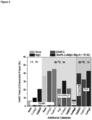
- methanolysis resulted in a significant increase of polyol yield while EtOH and iPrOH could not further depolymerize PU at these conditions (see Fig. 3 ).
- the pKa values of these proton sources in water are similar (H 2 O: 14, MeOH: 15.5, EtOH: 16, iPrOH: 17.3), their proton affinity is highly solvent dependent.
- MeOH and glycerol have lower pK a values than H 2 O when they are dissolved in iPrOH.
- Example 3 Catalytic testing - influence of temperature and proton source
- the impregnated PU sample PUiNaOH-10 was prepared according to Reference Example 2 and the depolymerization was performed according to Reference Example 4.
- the yield of dissoluble polyol from the depolymerization was quantified by their 1 H NMR spectra according to Reference Example 5.
- Table 3 shows an overview of the compositions of the tested samples.
- a modified shaker mill with a home-built ceramic heating box to increase the reaction temperature during ball milling was used.
- 0.2 g PU roughly contains 0.1-0.2 mmol carbamate bond
- 10 wt.-% NaOH (20 mg, 0.5 mmol) can provide enough Bronsted base.
- the PUiNaOH-10 was depolymerized with MeOH, H 2 O or MeOH/H 2 O (1:1) at room temperature ( ⁇ 20 °C), 60 °C or 90 °C in the modified shaker mill.
- Both the Cu catalyst and DABCO can further promote the depolymerization of PU in the presence of NaOH.
- DABCO was more efficient than the Cu catalyst, leading to 21 % and 45 % of polyol yield after 1 hour of ball milling at room temperature and 60 °C respectively, wherein the yield was significantly increased compared to the yield from NaOH alone (see Fig. 4 ).
- the reaction temperature was further increased to 90 °C.
- the yield increased from 22 % to 40 %, and slightly decreased to 32 % when pure H 2 O was used.
- the 30 wt.-% Cu catalyst with H 2 O led to a higher yield of 43 % compared to when DABCO was used.
- Example 4 Catalytic testing - Influence of Cu loading
- the impregnated PU sample PUiNaOH-10 was prepared according to Reference Example 2 and the depolymerization was performed according to Reference Example 4.
- the yield of dissoluble polyol from the depolymerization was quantified by their 1 H NMR spectra according to Reference Example 5.
- Table 4 shows an overview of the compositions of the tested samples.
- H 2 O (2.8 mmol) can provide enough hydrogen atoms for the hydrolysis of the 0.1-0.2 mmol carbamate bond in 0.22 g PUiNaOH, the amount of H 2 O was further reduced to 50 ⁇ L.
- all three tested Cu catalysts showed an increased yield of polyol by 20 % compared to using NaOH alone (see Fig. 5).
- the 30 wt.-% Cu catalyst led to slightly lower yield possibly due to the larger particle size of Cu with lower dispersion and smaller interface with support.
- Example 5 Catalytic testing - depolymerization conducted in solution vs. shaker mill
- the impregnated PU sample PUiNaOH-10 was prepared according to Reference Example 2 and the depolymerization was performed according to Reference Example 4.
- the yield of dissoluble polyol from the depolymerization was quantified by their 1 H NMR spectra according to Reference Example 5.
- Table 5 shows an overview of the compositions and conditions of the tested samples. Experiment Vessel Reagents Conditions Yield Comparative Example 5 Pressure Vessel 1g PU, 10mL 1wt.-% aq.
Landscapes
- Chemical & Material Sciences (AREA)
- Life Sciences & Earth Sciences (AREA)
- Sustainable Development (AREA)
- Health & Medical Sciences (AREA)
- Chemical Kinetics & Catalysis (AREA)
- Medicinal Chemistry (AREA)
- Polymers & Plastics (AREA)
- Organic Chemistry (AREA)
- Organic Low-Molecular-Weight Compounds And Preparation Thereof (AREA)
Abstract
The present invention relates to a process for the depolymerization of polyurethanes, comprising (1) providing a material comprising one or more polyurethanes; (2) preparing a mixture M1 comprising the material provided in (1), a Bronsted base, a protic solvent, and optionally a cleavage reagent; (3) grinding the mixture M1 prepared in (2), obtaining a mixture M2 comprising one or more polyols; (4) optionally separating the one or more polyols from the mixture M2 obtained in (3).
Description
- The present invention relates to a process for the mechanochemical depolymerization of polyurethanes.
- In the last three decades, there has been an enormous increase in worldwide plastics demand. For example, in the last 10 years, the amount of plastics produced worldwide has increased by almost 50%. Within 30 years, it has even almost quadrupled reaching an amount of 359 million metric tons in 2018. From these facts, it becomes clear that production of said huge amounts of plastics is followed by a need to dispose or recycle spent plastics. Preference should be given to recycling as thereby valuable materials, e.g. compounds which can act as monomers, can be added back to the value chain, e.g. by direct re-use in plastics production.
- In order to reduce the waste and reduce the negative impact on the environment, there is a need to develop processing techniques to recover materials from plastic waste. The recycling process should lead to the recovery of monomers, or at least oligomers, which can be employed for the production of virgin polymer. Typically, such depolymerization processes are difficult to be realized at mild conditions for the vinyl polymers like Polyethylene, Polypropylene, Polystyrene and Polyvinyl chloride due to the similarly stable covalent bonds inside and outside their repeat units. Unlike the other most common polymerized plastics, Polyurethane (PU) is a polymer fabricated by a condensation reaction and features a carbamate bond in the final polymer. Therefore, it can be possible to selectively recover monomers if the carbamate bond can be broken compared to other bonds inside the polymer.
- The ongoing development of chemical recycling pathways for PU include hydrogenolysis, hydrolysis, aminolysis, phosphorolysis and glycolysis. In general, after being attacked by the active hydrogen atoms at mild temperature (130-200°C), the carbamate bond in PU will be broken and yield polyol with amine and urea. The pincer complexes of transitional metals can be efficiently promote the hydrogenation of carbamate bond but the homogeneous catalysts may not be easily recovered from the resulting products. In analogy to hydrolysis, the break of carbamate bond can be facilitated by transesterification using amine, phosphate or glycol as cleavage reagents. Among these methods, the glycolysis of PU, especially the split-phase glycolysis process with crude glycerol, is considered as the most promising pathway towards the industrial implantation from an environmental, technical and economic point of view. However, the energy consumption during the process, the cost of the excess glycol to PU, and the potentially reduced quality of polyol products resulted from the glycol residue still limit the market competitiveness of PU chemical recycling processes.
- S. Chuayjuljit et al. (Chemical recycling of rigid polyurethane foam scrap via base catalyzed aminolysis, J. Met. Mater. Min., 2002, Vol. 12, p. 19-22) discloses rigid polyurethane foam depolymerized by aminolysis using diethylenetriamine as a degrading agent and sodium hydroxide as both a reactant and catalyst in solution.
- H. R. Van der Wal (New Chemical Recycling Process for Polyurethanes, Journal of Reinforced Plastics and Composites, 1994, Vol. 13, p. 87-96) discloses a chemical recycling process to produce relatively high performance polyols from the recycling of polyurethanes.
Despite the advances made in the field of the depolymerization of polyurethanes their remains the need for improved processes which are more efficient and better for the environment. - It was therefore an object of the present invention to provide an improved process for the industrial scale depolymerization of polyurethanes. Further, it was an object of the present invention to lower the reaction temperature, to lower the volume of solvent and to make the separation of products easier. Thus, it has been surprisingly found that the specific mechano-catalytic treatment of a mixture of reactants results in a recovery of 50 wt.-% or more of one or more dissoluble polyols. Further, it has quite unexpectedly been found that the mechano-catalytic activation route requires a lower reaction temperature and a lower volume of solvent, thus substantially reducing the environmental impact. Furthermore, the separation of the one or more polyol products is more efficient and requires lower energy consumption than when employing conventional solvolysis pathways.
- Therefore, the present invention relates to a process for the depolymerization of polyurethanes, comprising
- (1) providing a material comprising one or more polyurethanes;
- (2) preparing a mixture M1 comprising the material provided in (1), a Bronsted base, a protic solvent, and optionally a cleavage reagent;
- (3) grinding the mixture M1 prepared in (2), obtaining a mixture M2 comprising one or more polyols;
- (4) optionally separating the one or more polyols from the mixture M2 obtained in (3).
- The polyols obtained as described above may be employed for every conceivable use in industrial and consumer applications, including, but not limited to, polyurethane compounds which, in turn, may be employed for uses including, but not limited to:
- Foam cushioning, for example for furniture, bedding, and packaging,
- Rigid foam insulation, for example for building and refrigeration,
- Flexible foam, for example for upholstery, mattresses, footwear, and seals,
- Elastomers, for example for automotive and industrial parts, such as suspension bushings, gaskets, and seals,
- Adhesives, sealants, and coatings,
- Roller and drive belts, for example for conveyors, power transmissions, and agricultural equipment,
- Medical devices and implants, such as prosthetics and artificial heart valves
- Fibers, non-woven fabrics, and textiles,
- Paints, coatings, and inks,
- Electronic components, such as casings, gaskets, and vibration dampers.
- It is preferred that from 30 to 100 wt.-%, more preferably from 35 to 98 wt.-%, more preferably from 40 to 97 wt.-%, more preferably from 45 to 96 wt.-%, more preferably from 50 to 95 wt.-% of the material provided in (1) consists of the one or more polyurethanes.
- It is preferred that the mixture M1 prepared in (2) has a solid content in the range of from 40 to 99 wt.-%, more preferably from 45 to 98 wt.-%, more preferably from 50 to 97 wt.-%, more preferably from 55 to 95 wt.-%, more preferably from 60 to 90 wt.-%, more preferably from 70 to 85 wt.-%, based on the total weight of M1.
- It is preferred that the Bronsted base in (2) is an inorganic Bronsted base, more preferably a Bronsted base selected from the group consisting of NaOH, KOH, LiOH, Ca(OH)2, Mg(OH)2, Ba(OH)2, Cu(OH)2, Fe(OH)3, Sr(OH)2, Na2CO3, K2CO3, Li2CO3, CaCO3, MgCO3, BaCO3, CuCO3, Fe2(CO3)3, and SrCO3, and a mixture of two or more thereof, wherein more preferably the Bronsted base is NaOH and/or KOH, more preferably wherein the Bronsted base is NaOH.
- It is preferred that from 0.1 to 20 wt.-%, more preferably from 1 to 19 wt.-%, more preferably from 3 to 17 wt.-%, more preferably from 5 to 15 wt.-%, more preferably from 7 to 13 wt.-%, more preferably from 9 to 11 wt.-% of the mixture M1 prepared in (2) consists of the Bronsted base, based on the weight of the material provided in (1).
- It is preferred that the Bronsted base has a pKb value of 2 or lower, more preferably 1.5 or lower, more preferably 1 or lower, more preferably 0.5 or lower, more preferably 0 or lower, more preferably -1 or lower.
- The pKb value is the negative logarithm of the base dissociation constant Kb:


- BH+ is a base which dissociates in the conjugate acid of the base B and a hydrogen ion which reacts with OH- to form H2O. When the reaction reaches an equilibrium, the base dissociation constant Kb may be calculated:

- It is preferred that grinding according to (3) is carried out at a temperature in the range of from 170°C or less, more preferably from 10 to 170 °C, more preferably from 20 to 170 °C, more preferably from 40 to 150 °C, more preferably from 60 to 125 °C, more preferably from 85 to 95 °C.
- It is preferred that (2) comprises
- (2.1) preparing a mixture M3 comprising the material provided in (1) and a Bronsted base;
- (2.2) optionally grinding the mixture M3 obtained in (2.1);
- (2.3) preparing a mixture M1 comprising the mixture obtained in (2.1) or (2.2), a protic solvent, and an optional cleavage reagent.
- In the case where (2) comprises steps (2.1) to (2.3), it is preferred that the Bronsted base is dissolved in a solvent and wherein the concentration of the Bronsted base in the solvent ranges of from 0.01 to 10 wt.-%, more preferably from 0.1 to 8 wt.-%, more preferably from 0.3 to 5 wt.-%, more preferably from 0.5 to 3 wt.-%, based on the total weight of the solution.
- Yet further, it is preferred that (2) comprises
- (2.1) preparing a mixture M3 comprising the material provided in (1) and a Bronsted base;
- (2.2) grinding the mixture M3 obtained in (2.1);
- (2.2.1) separating the solvent from the mixture obtained in (2.2)
- (2.3) preparing a mixture M1 comprising the mixture obtained in (2.2.1), a protic solvent, and optionally a cleavage reagent.
- Yet further, it is preferred that grinding according to (2.2) is carried out at a temperature in the range of from 10 to 50 °C, more preferably from 12 to 40 °C, more preferably from 14 to 30 °C, more preferably from 16 to 25 °C, more preferably from 18 to 22 °C.
- It is preferred that independently from each other grinding in (2.2) or (3) is carried out in a mixing device, more preferably a milling device, more preferably a milling device with a heating function.
- It is preferred that the mixing device is selected from the group consisting of a stirred media mill, a planetary ball mill, a ball mill, a roller mill, a kneader, a shaker mill, a high shear mixer, and a mix muller, wherein more preferably grinding in (2.2) or (3) is carried out in a stirred media mill, a ball mill, a roller mill, a planetary ball mill, and/or a high shear mixer.
- Yet further, it is preferred that independently from each other grinding in (2.2) is carried out in a planetary ball mill, and wherein the planetary ball mill is operated at a speed in the range of from 100 rpm to 1000 rpm, more preferably from 250 rpm to 850 rpm, more preferably from 400 to 700 rpm, more preferably from 500 rpm to 600 rpm.
- Yet further, it is preferred that independently from each other grinding in (2.2) or (3) is carried out in a ball mill using balls made of a material selected from the group consisting of stainless steel, ceramic, and rubber, preferably from the group consisting of stainless steel and ceramic, wherein more preferably the balls of the ball mill are made of stainless steel.
- Alternatively, it is preferred that independently from each other grinding in (2.2) or (3) is carried out in a shaker mill, and grinding in (3) is operated at a frequency in the range of from 5 Hz to 50 Hz, more preferably from 10 to 40 Hz, more preferably from 15 to 30 Hz, more preferably from 20 to 25 Hz.
- It is preferred that independently from each other grinding in (2.2) or (3) is carried out in an inert gas atmosphere, more preferably in nitrogen, argon or mixtures thereof, more preferably wherein grinding is carried out in argon.
- It is preferred that independently from each other grinding in (2.2) or (3) is carried out in a milling device using grinding media, more preferably grinding balls, having a diameter in the range of from 5 to 200 mm, more preferably from 7 to 150 mm, more preferably from 8 to 100 mm, more preferably from 9 to 50mm, more preferably from 10 to 20 mm.
- In the case where independently from each other grinding in (2.2) or (3) is carried out in a milling device, it is preferred that the filling degree of the grinding media in the milling device is in the range of from 10 % to 60%.
- It is preferred that independently from each other the mixture prepared in (2) or (2.3) comprises one or more cleavage reagents selected from the group consisting of DABCO, DBU, MgO, Cu/MgO, Ru, Ag, Pd, and Mn, and a mixture of two or more thereof, more preferably DABCO and Cu/MgO.
- It is preferred that independently from each other the mixture M1 prepared in (2) or (2.3) comprises one or more cleavage reagents in the range of from 1 to 30 wt.-%, more preferably from 10 to 25 wt.-%, more preferably from 13 to 23 wt.-%, more preferably from 15 to 21 wt.-%, more preferably from 17 to 19 wt.-%, based on the weight of mixture M1.
- It is preferred that independently from each other the mixture M1 prepared in (2) or (2.3) comprises a protic solvent selected from the group consisting of formic acid, n-butanol, isopropanol, nitromethane, ethanol, methanol, acetic acid and water, and a mixture of two or more thereof, wherein more preferably the protic solvent is methanol and/or water, more preferably wherein the protic solvent is water.
- It is preferred that the protic solvent has a pKa value of 15.9 or lower, more preferably 15.9 or lower, more preferably 15.8 or lower, more preferably 15,75 or lower, more preferably 15.7 or lower, more preferably 15.6 or lower.
- The pKa value is the negative logarithm of the acid dissociation constant Ka:


- HA is an acid which dissociates in the conjugate base of the acid A - and a hydrogen ion which reacts with water to form H 3 O + . When the reaction reaches an equilibrium, the acid dissociation constant Ka may be calculated:

- It is preferred that the mixture M1 prepared in (2) or (2.3) comprises a protic solvent in the range of from 20 to 70 wt.-%, more preferably from 25 to 60 wt.-%, more preferably from 30 to 55 wt.-%, more preferably from 35 to 50 wt.-%, more preferably from 40 to 46 wt.-%, based on the weight of mixture M1.
- It is preferred that the protic solvent is water and wherein the mixture M1 prepared in (2) or (2.3) comprises water in the range of from 10 to 50 wt.-%, more preferably from 12 to 40 wt.-%, more preferably from 13 to 35 wt.-%, more preferably from 14 to 25 wt.-%, more preferably from 15 to 20 wt.-%, based on the weight of mixture M1.
- It is preferred that independently from each other grinding in (2.2) or (3) is carried out for a duration in the range of from 0.1 to 6 h, more preferably from 0.3 to 3 h, more preferably from 0.5 to 1.5 h, more preferably from 0.8 to 1.2 h.
- The present invention is further illustrated by the following set of embodiments and combinations of embodiments resulting from the dependencies and back-references as indicated. In particular, it is noted that in each instance where a range of embodiments is mentioned, for example in the context of a term such as "The process of any one of
embodiments 1 to 4", every embodiment in this range is meant to be explicitly disclosed for the skilled person, i.e. the wording of this term is to be understood by the skilled person as being synonymous to "The process of any one ofembodiments - 1. A process for the depolymerization of polyurethanes, comprising
- (1) providing a material comprising one or more polyurethanes;
- (2) preparing a mixture M1 comprising the material provided in (1), a Bronsted base, a protic solvent, and optionally a cleavage reagent;
- (3) grinding the mixture M1 prepared in (2), obtaining a mixture M2 comprising one or more polyols;
- (4) optionally separating the one or more polyols from the mixture M2 obtained in (3).
- 2. The process according to
embodiment 1, wherein from 30 to 100 wt.-%, preferably from 35 to 98 wt.-%, more preferably from 40 to 97 wt.-%, more preferably from 45 to 96 wt.-%, more preferably from 50 to 95 wt.-% of the material provided in (1) consists of the one or more polyurethanes. - 3. The process according to
embodiment - 4. The process according to any of
embodiments 1 to 3, wherein the Bronsted base in (2) is an inorganic Bronsted base, preferably a Bronsted base selected from the group consisting of NaOH, KOH, LiOH, Ca(OH)2, Mg(OH)2, Ba(OH)2, Cu(OH)2, Fe(OH)3, Sr(OH)2, Na2CO3, K2CO3, Li2CO3, CaCO3, MgCO3, BaCO3, CuCO3, Fe2(CO3)3, and SrCO3, and a mixture of two or more thereof, wherein more preferably the Bronsted base is NaOH and/or KOH, more preferably wherein the Bronsted base is NaOH. - 5. The process according to any of
embodiments 1 to 4, wherein from 0.1 to 20 wt.-%, preferably from 1 to 19 wt.-%, more preferably from 3 to 17 wt.-%, more preferably from 5 to 15 wt.-%, more preferably from 7 to 13 wt.-%, more preferably from 9 to 11 wt.-% of the mixture M1 prepared in (2) consists of the Bronsted base, based on the weight of the material provided in (1). - 6. The process according to any of
embodiments 1 to 5, wherein the Bronsted base has a pKb value of 2 or lower, preferably 1.5 or lower, more preferably 1 or lower, more preferably 0.5 or lower, more preferably 0 or lower, more preferably -1 or lower. - 7. The process according to any of
embodiments 1 to 6, wherein grinding according to (3) is carried out at a temperature in the range of from 170°C or less, preferably from 10 to 170 °C, more preferably from 20 to 170 °C, more preferably from 40 to 150 °C, more preferably from 60 to 125 °C, more preferably from 85 to 95 °C. - 8. The process according to any of
embodiments 1 to 7, wherein (2) comprises- (2.1) preparing a mixture M3 comprising the material provided in (1) and a Bronsted base;
- (2.2) optionally grinding the mixture M3 obtained in (2.1);
- (2.3) preparing a mixture M1 comprising the mixture obtained in (2.1) or (2.2), a protic solvent, and an optional cleavage reagent.
- 9. The process according to
embodiment 8, wherein the Bronsted base is dissolved in a solvent and wherein the concentration of the Bronsted base in the solvent ranges of from 0.01 to 10 wt.-%, preferably from 0.1 to 8 wt.-%, more preferably from 0.3 to 5 wt.-%, more preferably from 0.5 to 3 wt.-%, based on the total weight of the solution. - 10. The process according to
embodiment 8 or 9, wherein (2) comprises- (2.1) preparing a mixture M3 comprising the material provided in (1) and a Bronsted base;
- (2.2) grinding the mixture M3 obtained in (2.1);
- (2.2.1) separating the solvent from the mixture obtained in (2.2)
- (2.3) preparing a mixture M1 comprising the mixture obtained in (2.2.1), a protic solvent, and optionally a cleavage reagent.
- 11. The process according to any one of
embodiments 8 to 10, wherein grinding according to (2.2) is carried out at a temperature in the range of from 10 to 50 °C, preferably from 12 to 40 °C, more preferably from 14 to 30 °C, more preferably from 16 to 25 °C, more preferably from 18 to 22 °C. - 12. The process according to any one of
embodiments 1 to 11, wherein independently from each other grinding in (2.2) or (3) is carried out in a mixing device, preferably in a milling device, more preferably in a milling device with a heating function. - 13. The process according to embodiment 12, wherein the mixing device is selected from the group consisting of a stirred media mill, a planetary ball mill, a ball mill, a roller mill, a kneader, a shaker mill, a high shear mixer, and a mix muller, wherein more preferably grinding in (2.2) or (3) is carried out in a stirred media mill, a ball mill, a riller mill, a planetary ball mill, and/or a high shear mixer.
- 14. The process according to embodiment 12 or 13, wherein independently from each other grinding in (2.2) or (3) is carried out in a planetary ball mill, and wherein the planetary ball mill is operated at a speed in the range of from 100 rpm to 1000 rpm, preferably from 250 rpm to 850 rpm, more preferably from 400 to 700 rpm, more preferably from 500 rpm to 600 rpm.
- 15. The process according to any one of embodiments 12 to 14, wherein independently from each other grinding in (2.2) or (3) is carried out in a ball mill using balls made of a material selected from the group consisting of stainless steel, ceramic, and rubber, preferably from the group consisting of stainless steel and ceramic, wherein more preferably the balls of the ball mill are made of stainless steel.
- 16. The process according to embodiment 12 or 13, wherein independently from each other grinding in (2.2) or (3) is carried out in a shaker mill, and wherein grinding in (3) is operated at a frequency in the range of from 5 Hz to 50 Hz, preferably from 10 to 40 Hz, more preferably from 15 to 30 Hz, more preferably from 20 to 25 Hz.
- 17. The process according to any of
embodiments 1 to 16, wherein independently from each other grinding in (2.2) or (3) is carried out in an inert gas atmosphere, preferably in nitrogen, argon or mixtures thereof, more preferably wherein grinding is carried out in argon. - 18. The process according to any of embodiments 12 to 17, wherein independently from each other grinding in (2.2) or (3) is carried out in a milling device using grinding media, preferably grinding balls, having a diameter in the range of from 5 to 200 mm, preferably from 7 to 150 mm, more preferably from 8 to 100 mm, more preferably from 9 to 50mm, more preferably from 10 to 20 mm.
- 19. The process according to embodiment 18, wherein the filling degree of the grinding media in the milling device is in the range of from 10 % to 60%.
- 20. The process according to any of
embodiments 1 to 19, wherein independently from each other the mixture prepared in (2) or (2.3) comprises one or more cleavage reagents selected from the group consisting of DABCO, DBU, MgO, Cu/MgO, Ru, Ag, Pd, and Mn, and a mixture of two or more thereof, preferably DABCO and Cu/MgO. - 21. The process according to any of
embodiments 1 to 20, wherein independently from each other the mixture M1 prepared in (2) or (2.3) comprises one or more cleavage reagents in the range of from 1 to 30 wt.-%, preferably from 10 to 25 wt.-%, more preferably from 13 to 23 wt.-%, more preferably from 15 to 21 wt.-%, more preferably from 17 to 19 wt.-%, based on the weight of mixture M1. - 22. The process according to any of
embodiments 1 to 21, wherein independently from each other the mixture M1 prepared in (2) or (2.3) comprises a protic solvent selected from the group consisting of formic acid, n-butanol, isopropanol, nitromethane, ethanol, methanol, acetic acid and water, and a mixture of two or more thereof, wherein preferably the protic solvent is methanol and/or water, more preferably wherein the protic solvent is water. - 23. The process according to any of
embodiments 1 to 22, wherein the protic solvent has a pKa value of 15.9 or lower, preferably 15.85 or lower, more preferably 15.8 or lower, more preferably 15,75 or lower, more preferably 15.7 or lower, more preferably 15.6 or lower. - 24. The process according to any of
embodiments 1 to 23, wherein the mixture M1 prepared in (2) or (2.3) comprises a protic solvent in the range of from 20 to 70 wt.-%, preferably from 25 to 60 wt.-%, more preferably from 30 to 55 wt.-%, more preferably from 35 to 50 wt.-%, more preferably from 40 to 46 wt.-%, based on the weight of mixture M1. - 25. The process according to any of
embodiments 1 to 24, wherein the protic solvent is water and wherein the mixture M1 prepared in (2) or (2.3) comprises water in the range of from 10 to 50 wt.-%, preferably from 12 to 40 wt.-%, more preferably from 13 to 35 wt.-%, more preferably from 14 to 25 wt.-%, more preferably from 15 to 20 wt.-%, based on the weight of mixture M1. - 26. The process according to any of
embodiments 1 to 25, wherein independently from each other grinding in (2.2) or (3) is carried out for a duration in the range of from 0.1 to 6 h, preferably from 0.3 to 3 h, more preferably from 0.5 to 1.5 h, more preferably from 0.8 to 1.2 h. - 1.4 g of a commercial PU sponge (Spontex, the yellow soft part) was cut into ca. 8 cm3 cubes, then transferred into a home-built stainless steel milling jar (see
Figure 1 ) for the planetary ball milling in aFritsch Pulverisette 6. Seven 10 mm and two 12 mm stainless steel milling balls (in total ca. 40 g) were placed at the bottom of the milling jar. The milling chamber was then covered with a Teflon-lid with stainless steel filter, which only allows the penetration of gases, then the stainless steel jar was sealed by its own lid with six tightened screws by a torque wench (20 Nm). After being properly sealed, the air inside the milling chamber was replaced with Ar at ambient pressure by connecting the gas valve to a Schlenk line. The milling jar containing the PU sponge and milling balls was then mounted to theFritsch Pulverisette 6 for milling. At room temperature, each batch was milled in periods of milling for 60 minutes at 600 rpm, followed by a pause of 10 min to allow cooling, vefore milling continued for another period of 60 minutes in a reversed direction. After total of 6 hours milling, the PU sponge was completely crushed into fine PU powders for the following study of depolymerization. The PU powders are prepared under Ar to avoid the influence from O2 and moisture during the milling. - In a 50 mL flask, 1 g of PU powder was mixed with 10 g (for PUiNaOH-10) of a 1 wt.-% NaOH aqueous solution or 10 g (for PUiNaOH-100) of a 10wt.-% NaOH aqueous solution. The mixture was stirred with a magnetic bar in the close flask at room temperature for 2 hours. The water in the flask was then removed by a rotation evaporation at 50 °C in 2 hours. The impregnated PU powder (10 wt.-% NaOH loading, labeled as PUiNaOH-10, or 100 wt.-% NaOH loading, labeled as PUiNaOH-100) was dried in a vacuum oven at 50 °C overnight then kept in Ar to avoid the absorption of water and CO2 from air.
- 0.2 g of PU powder was added into the stainless steel milling jar, the cleavage reagents were then added together with the Bronsted base with a certain amount of proton source. Seven 10 mm and two 12 mm stainless steel milling balls (in total ca. 40 g) were placed at the bottom of the milling jar. After the liquid was added to the mixture dropwise, the powder got wet but did not form a slurry. The milling chamber was then covered with Teflon-lid and sealed by its own stainless steel lid. The milling jar was then mounted to the
Fritsch Pulverisette 6 for milling. At room temperature, the mixture was milled in periods of milling for 60 minutes at 600 rpm, followed by a pause of 5 min to allow cooling, before milling continued for another period of 60 minutes in reversed direction. After 5 hours of milling, the solid mixture of products from depolymerization was collected for analysis. - 0.22 g of PUiNaOH-10 powder was added into a home-built stainless steel milling jar, the cleavage reagents were then added with a certain amount of proton source. Three 10 mm stainless steel balls (in total ca. 12 g) were placed at the bottom of the milling jar. After the liquid was added to the mixture dropwise, the powder got wet but did not form a slurry. The milling chamber was then sealed by its stainless steel lid with a Polyether ether ketone (PEEK) flat O-ring. The milling jar was then mounted to a modified Retsch MM400 shaker mill with home-built ceramic heating box covering the milling jar. The heating box is connected to a temperature-controlling unit which can adjust the box temperature according to the target temperature set for the thermal couple attached to the milling jar. The shaker mill was started at 25 Hz frequency together with the temperature ramping of the heating box. In order to heat the milling jar up to 90°C in short time, the temperature for the heating box was set as 240°C. It usually took less than 15 minutes to reach 60 °C and roughly 30 min to reach 90 °C after the milling jar being heated in the box. When the milling was finished, the milling jar was taken off and opened immediately. The solid products was transferred to a 50 mL centrifuge tube with 30 mL ethyl acetate before the milling jar was allowed to cool down. The centrifuge tube was placed in an ultrasonic bath at room temperature for 5 min to completely extract the soluble products. The dissoluble products were then separated from the solid residue by a centrifuge at 9000 rpm for 10 minutes, leading to a clear yellow solution. The solvent was then removed by a rotation evaporation at 45 °C in 30 minutes to obtain dissoluble polyol (PL). The residual solid (PS) from the reaction was dried together with PL in a vacuum oven at 50 °C overnight.
- The weight of dry PL and PS were measured before the further quantification of PL. 40 mg (20wt.-%) 1,3,5-Tribromobenzene (Fw: 315) was added to the flask containing PL as an internal standard for the 1H NMR spectra. The mixture of standard and PL was dissolved in 2 mL CDCl3 and 1H NMR spectra were measured using a Bruker Advance-III 300 MHz. The ratio a between the features of the nine hydrogen atoms from the three methyl groups in the repeat unit of polyol (
Peak 1, red shade) and the three hydrogen atoms on the benzene rings of standard (Peak 2, blue shade) can be calculated from their integration areas (Figure 1 ). Then the weight percentage (wt.-%) of the dissoluble polyol (Fw: 6015, n= 33) to the parent PU can be calculated from the transformation of the following equation.

- The PU sample was prepared according to Reference Example 1 and the depolymerization was performed according to Reference Example 3 wherein 100 wt.-% of protic solvent based on the weight of initial PU powder were added. The yield of dissoluble polyol from the depolymerization was quantified by their 1H NMR spectra according to Reference Example 5.
Table 1 shows an overview of the compositions of the tested samples. Example Bronsted base Cleavage reagent Solvents Example 1.1 10 wt.- % NaOH 10 wt.-% DABCO H2O:MeOH (1:2.8) Example 1.2 10 wt.- % NaOH 10 wt.-% DBU H2O:MeOH (1:2.8) Example 1.3 10 wt.-% NaOH - H2O:MeOH (1:2.8) Comparative Example 1 - 10 wt.-% (DABCO + Na2CO3) H2O:MeOH (1:2.8) Comparative Example 2 - 10 wt.-% DABCO H2O:MeOH (1:2.8) Comparative Example 3 - 10 wt.-% DABCO MeOH Comparative Example 4 - 10 wt.-% DBU MeOH - Firstly, different compositions with NaOH as Bronsted base, Triethylenediamine (DABCO) and 1,8-Diazabicyclo[5.4.0]undec-7-ene (DBU) as cleavage reagents and MeOH and H2O:MeOH mixtures as proton source were tested for the depolymerization of PU powders. The 1H NMR spectra of CDCl3 solutions extracted from the solid mixture recovered from ball milling (see
Fig. 2 ) showed that the cleavage reagents alone could not catalyze the methanolysis of PU, so that the content of dissoluble polyol was barely increased compared to the original PU powder after the treatment (see Comparative Examples 1-4). When Na2CO3 was used together with DABCO (see Comparative Example 1), the increased yield of polyol was still much lower than the yield obtained from 10 wt.-% NaOH alone (see Example 4). A significant increase of polyol was achieved when the NaOH and cleavage reagent were used together. Considering the pKb values of the tested bases in water (NaOH: -2.4, DBU: 2.5, Na2CO3: 3,6, DABCO: 5.2), the results suggest that methanolysis of PU requires a certain basicity to break the carbamate bond. - The impregnated PU sample PUiNaOH-100 was prepared according to Reference Example 2 to improve the distribution of NaOH on PU powder and the depolymerization was performed according to Reference Example 3, wherein 67 wt.-% of alcohol based on the weight of initial PU powder were added. The yield of dissoluble polyol from the depolymerization was quantified by their 1H NMR spectra according to Reference Example 5.
Table 2 shows an overview of the compositions of the tested samples. Example Cleavage reagent Solvents Example 2.1 10 wt.-% DABCO MeOH Example 2.2 10 wt.-% DABCO iPrOH Example 2.3 10 wt.-% DABCO EtOH - The obtained PUiNaOH-100 was mixed with DABCO and methanol (MeOH), ethanol (EtOH) or isopropanol (iPrOH). Surprisingly, only methanolysis resulted in a significant increase of polyol yield while EtOH and iPrOH could not further depolymerize PU at these conditions (see
Fig. 3 ). Although the pKa values of these proton sources in water are similar (H2O: 14, MeOH: 15.5, EtOH: 16, iPrOH: 17.3), their proton affinity is highly solvent dependent. For example, MeOH and glycerol have lower pKa values than H2O when they are dissolved in iPrOH. - The impregnated PU sample PUiNaOH-10 was prepared according to Reference Example 2 and the depolymerization was performed according to Reference Example 4. The yield of dissoluble polyol from the depolymerization was quantified by their 1H NMR spectra according to Reference Example 5.
Table 3 shows an overview of the compositions of the tested samples. Cleavage reagents Solvents Temperature Example 3.1 - 80 wt.- % MeOH 20°C Example 3.2 25 wt.-% Cu/MgO 80 wt.- % MeOH 20°C Example 3.3 10 wt.-% DABCO 80 wt.- % MeOH 20°C Example 3.4 - 80 wt.- % MeOH 60°C Example 3.5 25 wt.-% Cu/MgO 80 wt.- % MeOH 60°C Example 3.6 10 wt.-% DABCO 80 wt.- % MeOH 60°C Example 3.7 25 wt.-% MgO 90 wt.-% MeOH/H2O 60°C Example 3.8 25 wt.-% Cu/MgO 90 wt.-% MeOH/H2O 60°C Example 3.9 10 wt.-% DABCO 90 wt.-% MeOH/H2O 60°C Example 3.10 25 wt.-% Cu/ MgO 50 wt.-% H2O 60°C Example 3.11 10 wt.-% DABCO 90 wt.-% MeOH/H2O 90°C Example 3.12 10 wt.- % DABCO 50 wt.-% H2O 90°C Example 3.13 25 wt.-% Cu/ MgO 50 wt.-% H2O 90°C - In order to shorten the reaction time, a modified shaker mill with a home-built ceramic heating box to increase the reaction temperature during ball milling was used. Considering 0.2 g PU roughly contains 0.1-0.2 mmol carbamate bond, 10 wt.-% NaOH (20 mg, 0.5 mmol) can provide enough Bronsted base. The PUiNaOH-10 was depolymerized with MeOH, H2O or MeOH/H2O (1:1) at room temperature (~20 °C), 60 °C or 90 °C in the modified shaker mill. Besides DABCO, Cu supported on Mg-Al oxides (Mg:AI = 70:30) and MgO were tested.
- Both the Cu catalyst and DABCO can further promote the depolymerization of PU in the presence of NaOH. When pure MeOH was used as proton source, DABCO was more efficient than the Cu catalyst, leading to 21 % and 45 % of polyol yield after 1 hour of ball milling at room temperature and 60 °C respectively, wherein the yield was significantly increased compared to the yield from NaOH alone (see
Fig. 4 ). - Compared to glycolysis, methanolysis is cheaper and easier in regard of separation of the polyol product and the use of water as proton source would be even cheaper. However, when the same weight of H2O was mixed with MeOH, the yield of polyol significantly decreased at the same temperatures compared to when only MeOH was used. With the MeOH/H2O mixture, the 30 wt.-% Cu catalyst showed higher polyol yields than DABCO. Therefore, pure H2O was tested with the Cu catalyst, showing a significantly decreased yield.
- As the pKa value is temperature dependent, the reaction temperature was further increased to 90 °C. When the mixture MeOH:H2O (1:1) was used with DABCO at 90 °C, the yield increased from 22 % to 40 %, and slightly decreased to 32 % when pure H2O was used. The 30 wt.-% Cu catalyst with H2O led to a higher yield of 43 % compared to when DABCO was used.
- The impregnated PU sample PUiNaOH-10 was prepared according to Reference Example 2 and the depolymerization was performed according to Reference Example 4. The yield of dissoluble polyol from the depolymerization was quantified by their 1H NMR spectra according to Reference Example 5.
Table 4 shows an overview of the compositions of the tested samples. Experiment Cleavage reagents solvent Temperature Time Example 4.1 - 50 µL H2O 90 °C 45 min Example 4.2 150 mg 10wt% Cu/ MgO 50 µL H2O 90 °C 45 min Example 4.3 75 mg 20wt% Cu/ MgO 50 µL H2O 90 °C 45 min Example 4.4 50 mg 30wt% Cu/ MgO 50 µL H2O 90 °C 45 min Example 4.5 - 50 µL H2O 90 °C 90 min Example 4.6 60 mg MgO 50 µL H2O 90 °C 90 min Example 4.7 150 mg 10wt% Cu/ MgO 50 µL H2O 90 °C 90 min Example 4.8 75 mg 20wt% Cu/ MgO 50 µL H2O 90 °C 90 min Example 4.9 50 mg 30wt% Cu/ MgO 50 µL H2O 90 °C 90 min - Considering 50 mg of H2O (2.8 mmol) can provide enough hydrogen atoms for the hydrolysis of the 0.1-0.2 mmol carbamate bond in 0.22 g PUiNaOH, the amount of H2O was further reduced to 50 µL. After the depolymerization in a shaker mill at 90 °C for 45 minutes, all three tested Cu catalysts showed an increased yield of polyol by 20 % compared to using NaOH alone (see Fig. 5). The 30 wt.-% Cu catalyst led to slightly lower yield possibly due to the larger particle size of Cu with lower dispersion and smaller interface with support. When the reaction time was prolonged to 90 minutes, the yield obtained with Cu catalysts was only slightly increased, indicating that the depolymerization rate was pre-dominantly limited by the low content of residual carbamate bond after 45 minutes. The best yield of polyol (54%) was obtained from the depolymerization of PUiNaOH-10 at 90 °C for 90 minutes co-catalyzed by the 20 wt.-% Cu catalyst, which was 10% and 20 % higher than the yield obtained with additional commercial MgO and only NaOH respectively.
- Due to the high conversion of carbamate bond at 90 °C, the differences in the catalytic performance cannot actually be compared on a rate basis, as they have not been recorded in the kinetic regime. In order to assess pure rates better, the temperature of ball milling was reduced to 75 °C. The results confirmed that 20 wt.-% Cu catalyst was superior to the other two Cu catalysts, leading to 43% dissoluble polyol in 45 minutes (see Fig. 6). This yield is almost four times higher compared to the polyol amount obtained with NaOH alone (11%), suggesting that Cu catalyst did play an important role in the NaOH catalyzed hydrolysis of PU.
- The impregnated PU sample PUiNaOH-10 was prepared according to Reference Example 2 and the depolymerization was performed according to Reference Example 4. The yield of dissoluble polyol from the depolymerization was quantified by their 1H NMR spectra according to Reference Example 5.
Table 5 shows an overview of the compositions and conditions of the tested samples. Experiment Vessel Reagents Conditions Yield Comparative Example 5 Pressure Vessel 1g PU, 10mL 1wt.-% aq. NaOH RT, 2h 4% Comparative Example 6 Pressure Vessel 0.22g PuiNaOH-10, 40mg DABCO, 20mL MeOH 60°C, 1h 14% Comparative Example 7 Pressure Vessel 0.2g PU, 40mg DABCO, 20mL 1wt.-% aq. NaOH 90°C, 1h 5% Example 5.1 Shaker mill 0.22g PuiNaOH-10, 0.2 mL MeOH 60°C, 1h 37% Example 5.2 Shaker mill 0.22g PuiNaOH-10, 40mg DABCO, 0.2 mL MeOH 60°C, 1h 45% Example 5.3 Shaker mill 0.22g PuiNaOH-10, 40mg DABCO, 0.1mL H2O 90°C, 1h 32% - It is clear, that increasing reaction temperature can significantly promote the depolymerization of PU performed under ball milling conditions. As a comparison: the depolymerization in solution at the same temperature showed much lower yield of dissoluble polyol (see table 5). One obvious reason is that the reaction in the shaker mill has a much higher concentration of the Bronsted base (NaOH) and cleavage reagent (DABCO) compared to the reaction in solution. It is comparable to the solvent-free organic reaction without compromising mass transfer. Another possible reason is that the capability of providing hydrogen atoms may be reduced when a large amount of solvent is used because the solvent itself can also serve as the hydrogen bond acceptor. Therefore, satisfactory yield of dissoluble polyol can be recovered via a mechano-catalytic process at a lower temperature compared to the reaction in solution. The lower energy cost, lesser volume of solvent and easier separation of products potentially make this novel chemical recycling methodology more competitive than the conventional solvolysis pathways.
-
- Figure 1
- relates to the 1H NMR spectra of 1,3,5-Tribromobenzene standard (upper curve) and the dissoluble polyol recovered from the methanolysis of PUiNaOH-10 (lower curve). The signals of the nine hydrogen atoms from the three methyl groups in the repeat unit of polyol (Peak 1) and the signals of the three hydrogen atoms on the benzene ring of the standard (Peak 2) were marked.
- Figure 2
- relates to the 1H NMR spectra of Example 1, wherein 0.7 mL CDCl3 solution was mixed with 10 mg extracted from the sample after ball milling. The marked regions label the signal area of dissoluble polyol.
- Figure 3
- relates to the 1H NMR spectra of Example 2, wherein 0.7 mL CDCl3 solution was mixed with 10 mg extracted from the sample after ball milling, wherein the influence of alcohol as proton source on the depolymerization of PU was tested.
- Figure 4
- relates to the NMR yield of dissoluble polyol obtained according to Reference Example 5 of Example 3, wherein the influence of temperature and proton source on the depolymerization of PU in a shaker mill was tested. Each column shows the yield of dissoluble polyol extracted by 30 mL EA after the reaction. All the experiments used PUiNaOH-10 as the substrate. "None" means there is no additional catalyst used in addition to NaOH.
-
- S. Chuayjuljit et al. in J. Met. Mater. Min., 2002, 12, 19-22
- H. R. Van der Wal in J. Reinf. Plast., 1994, 13, 87-96
Claims (15)
- A process for the depolymerization of polyurethanes, comprising(1) providing a material comprising one or more polyurethanes;(2) preparing a mixture M1 comprising the material provided in (1), a Bronsted base, a protic solvent, and optionally a cleavage reagent;(3) grinding the mixture M1 prepared in (2), obtaining a mixture M2 comprising one or more polyols;(4) optionally separating the one or more polyols from the mixture M2 obtained in (3).
- The process according to claim 1, wherein from 30 to 100 wt.-%, of the material provided in (1) consists of the one or more polyurethanes.
- The process according to claim 1 or 2, wherein the mixture M1 prepared in (2) has a solid content in the range of from 40 to 99 wt.-%, based on the total weight of M1.
- The process according to any of claims 1 to 3, wherein the Bronsted base in (2) is an inorganic Bronsted base.
- The process according to any of claims 1 to 4, wherein grinding according to (3) is operated at a temperature in the range of from 170°C or less.
- The process according to any of claims 1 to 5, wherein (2) comprises(2.1) preparing a mixture M3 comprising the material provided in (1) and a Bronsted base;(2.2) optionally grinding the mixture M3 obtained in (2.1);(2.3) preparing a mixture M1 comprising the mixture obtained in (2.1) or (2.2), a protic solvent, and an optional cleavage reagent.
- The process according to claim 6, wherein (2) comprises(2.1) preparing a mixture M3 comprising the material provided in (1) and a Bronsted base;(2.2) grinding the mixture M3 obtained in (2.1);(2.2.1) separating the solvent from the mixture obtained in (2.2)(2.3) preparing a mixture M1 comprising the mixture obtained in (2.2.1), a protic solvent, and optionally a cleavage reagent.
- The process according to claim 6 or 7, wherein grinding according to (2.2) is carried out at a temperature in the range of from 10 to 50 °C.
- The process according to any of claims 6 to 8, wherein independently from each other grinding in (2.2) is carried out in a mill, wherein the mill is operated at a speed in the range of from 300 to 900 rpm.
- The process according to any one of claims 1 to 9, wherein independently from each other grinding in (2.2) or (3) is carried out in a mixing device.
- The process according to claim 10, wherein independently from each other grinding in (2.2) or (3) is carried out in a milling device using grinding media.
- The process according to claim 11, wherein the filling degree of the grinding media in the milling device is in the range of from 10 % to 60%.
- The process according to any of claims 1 to 12, wherein independently from each other the mixture prepared in (2) or (2.3) comprises one or more cleavage reagents selected from the group consisting of DABCO, DBU, MgO, Cu/MgO, Ru, Ag, Pd, and Mn, and a mixture of two or more thereof.
- The process according to any of claims 1 to 13, wherein independently from each other the mixture M1 prepared in (2) or (2.3) comprises a protic solvent selected from the group consisting of formic acid, n-butanol, isopropanol, nitromethane, ethanol, methanol, acetic acid and water, and a mixture of two or more thereof.
- The process according to any of claims 1 to 14, wherein independently from each other grinding in (2.2) or (3) is carried out for a duration in the range of from 0.1 to 6 h.
Priority Applications (1)
| Application Number | Priority Date | Filing Date | Title |
|---|---|---|---|
| EP23178044.6A EP4474415A1 (en) | 2023-06-07 | 2023-06-07 | Depolymerization of polyurethanes by hydrolysis via a combination of catalysis and mechanochemistry |
Applications Claiming Priority (1)
| Application Number | Priority Date | Filing Date | Title |
|---|---|---|---|
| EP23178044.6A EP4474415A1 (en) | 2023-06-07 | 2023-06-07 | Depolymerization of polyurethanes by hydrolysis via a combination of catalysis and mechanochemistry |
Publications (1)
| Publication Number | Publication Date |
|---|---|
| EP4474415A1 true EP4474415A1 (en) | 2024-12-11 |
Family
ID=86732510
Family Applications (1)
| Application Number | Title | Priority Date | Filing Date |
|---|---|---|---|
| EP23178044.6A Withdrawn EP4474415A1 (en) | 2023-06-07 | 2023-06-07 | Depolymerization of polyurethanes by hydrolysis via a combination of catalysis and mechanochemistry |
Country Status (1)
| Country | Link |
|---|---|
| EP (1) | EP4474415A1 (en) |
Citations (3)
| Publication number | Priority date | Publication date | Assignee | Title |
|---|---|---|---|---|
| US20160347927A1 (en) * | 2013-08-27 | 2016-12-01 | Polymer Research Technologies Ltd. | Process to Improve the Yield of Chemical Polyurethane Foam Recycling |
| US11339268B2 (en) * | 2019-07-30 | 2022-05-24 | Case Western Reserve University | One-step, solvent-free method for recycling and reprocessing thermoset polymers with tunable properties |
| CN115260580A (en) * | 2022-08-31 | 2022-11-01 | 浙江工业大学 | Method and device for degrading and recycling waste polyurethane foam |
-
2023
- 2023-06-07 EP EP23178044.6A patent/EP4474415A1/en not_active Withdrawn
Patent Citations (3)
| Publication number | Priority date | Publication date | Assignee | Title |
|---|---|---|---|---|
| US20160347927A1 (en) * | 2013-08-27 | 2016-12-01 | Polymer Research Technologies Ltd. | Process to Improve the Yield of Chemical Polyurethane Foam Recycling |
| US11339268B2 (en) * | 2019-07-30 | 2022-05-24 | Case Western Reserve University | One-step, solvent-free method for recycling and reprocessing thermoset polymers with tunable properties |
| CN115260580A (en) * | 2022-08-31 | 2022-11-01 | 浙江工业大学 | Method and device for degrading and recycling waste polyurethane foam |
Non-Patent Citations (4)
| Title |
|---|
| H. R. VAN DER WAL, J. REINF. PLAST., vol. 13, 1994, pages 87 - 96 |
| H. R. VAN DER WAL: "New Chemical Recycling Process for Polyurethanes", JOURNAL OF REINFORCED PLASTICS AND COMPOSITES, vol. 13, 1994, pages 87 - 96 |
| S. CHUAYJULJIT ET AL., J. MET. MATER. MIN., vol. 12, 2002, pages 19 - 22 |
| S. CHUAYJULJIT ET AL.: "Chemical recycling of rigid polyurethane foam scrap via base catalyzed aminolysis", J. MET. MATER. MIN., vol. 12, 2002, pages 19 - 22 |
Similar Documents
| Publication | Publication Date | Title |
|---|---|---|
| Rossignolo et al. | Recycling of polyurethanes: where we are and where we are going | |
| JP7745626B2 (en) | A new method for depolymerizing polyurethanes. | |
| CN116113652B (en) | Depolymerization of polyurethanes under mild conditions | |
| US5763692A (en) | Process for the preparation of recyclate polyols having a low amine content | |
| JP7802928B2 (en) | A new method for regenerating polyurethanes. | |
| EP3794065A1 (en) | Improved method of recycling polyurethane materials | |
| CN1130414C (en) | Weak Bronsted acid derivatives for improving the dimensional stability of polyurethane flexible foams | |
| US20240101783A1 (en) | Process for recovering raw materials from polyurethane foams | |
| Alavi Nikje et al. | Microwave assisted “split-phase” glycolysis of polyurethane flexible foam wastes | |
| US4267078A (en) | Process for easily degrading waste consisting of the reaction products of organic compounds containing isocyanate groups with alcohols and/or water | |
| EP4474415A1 (en) | Depolymerization of polyurethanes by hydrolysis via a combination of catalysis and mechanochemistry | |
| US20250313659A1 (en) | Method for recovering raw materials from isocyanurate-containing polyurethane products | |
| KR101447247B1 (en) | Preparation method of recycled polyol using specific catalyst, production method of polyurethane foam using the recycled polyol | |
| EP2816052A1 (en) | Method for production of heat-insulating materials | |
| CN116217914A (en) | Method for preparing polyether polyol for spraying by aminolysis of waste polyurethane foam | |
| GB2062660A (en) | Method of recovering and reproducing raw materials from polyurethanes | |
| JP4505780B2 (en) | Decomposition and recovery method of polyurethane resin | |
| JP5349760B2 (en) | Method for producing release agent | |
| Molero et al. | Chemical recovery of flexible polyurethane | |
| JP2001348457A (en) | Decomposition method of polyurethane | |
| KR20250158746A (en) | Method for obtaining a regenerated polyol and polyol obtained thereby | |
| WO2024133871A1 (en) | Pir chemical recycling by alkaline cleavage |
Legal Events
| Date | Code | Title | Description |
|---|---|---|---|
| PUAI | Public reference made under article 153(3) epc to a published international application that has entered the european phase |
Free format text: ORIGINAL CODE: 0009012 |
|
| STAA | Information on the status of an ep patent application or granted ep patent |
Free format text: STATUS: THE APPLICATION HAS BEEN PUBLISHED |
|
| AK | Designated contracting states |
Kind code of ref document: A1 Designated state(s): AL AT BE BG CH CY CZ DE DK EE ES FI FR GB GR HR HU IE IS IT LI LT LU LV MC ME MK MT NL NO PL PT RO RS SE SI SK SM TR |
|
| STAA | Information on the status of an ep patent application or granted ep patent |
Free format text: STATUS: THE APPLICATION HAS BEEN WITHDRAWN |
|
| 18W | Application withdrawn |
Effective date: 20241217 |