EP4474403A1 - Polyester copolymer production method - Google Patents
Polyester copolymer production method Download PDFInfo
- Publication number
- EP4474403A1 EP4474403A1 EP23749726.8A EP23749726A EP4474403A1 EP 4474403 A1 EP4474403 A1 EP 4474403A1 EP 23749726 A EP23749726 A EP 23749726A EP 4474403 A1 EP4474403 A1 EP 4474403A1
- Authority
- EP
- European Patent Office
- Prior art keywords
- chemical reactor
- mass
- polyester
- water
- manufacturing
- Prior art date
- Legal status (The legal status is an assumption and is not a legal conclusion. Google has not performed a legal analysis and makes no representation as to the accuracy of the status listed.)
- Pending
Links
Images


Classifications
-
- C—CHEMISTRY; METALLURGY
- C08—ORGANIC MACROMOLECULAR COMPOUNDS; THEIR PREPARATION OR CHEMICAL WORKING-UP; COMPOSITIONS BASED THEREON
- C08G—MACROMOLECULAR COMPOUNDS OBTAINED OTHERWISE THAN BY REACTIONS ONLY INVOLVING UNSATURATED CARBON-TO-CARBON BONDS
- C08G63/00—Macromolecular compounds obtained by reactions forming a carboxylic ester link in the main chain of the macromolecule
- C08G63/91—Polymers modified by chemical after-treatment
- C08G63/912—Polymers modified by chemical after-treatment derived from hydroxycarboxylic acids
-
- C—CHEMISTRY; METALLURGY
- C08—ORGANIC MACROMOLECULAR COMPOUNDS; THEIR PREPARATION OR CHEMICAL WORKING-UP; COMPOSITIONS BASED THEREON
- C08L—COMPOSITIONS OF MACROMOLECULAR COMPOUNDS
- C08L67/00—Compositions of polyesters obtained by reactions forming a carboxylic ester link in the main chain; Compositions of derivatives of such polymers
- C08L67/02—Polyesters derived from dicarboxylic acids and dihydroxy compounds
- C08L67/025—Polyesters derived from dicarboxylic acids and dihydroxy compounds containing polyether sequences
-
- C—CHEMISTRY; METALLURGY
- C08—ORGANIC MACROMOLECULAR COMPOUNDS; THEIR PREPARATION OR CHEMICAL WORKING-UP; COMPOSITIONS BASED THEREON
- C08G—MACROMOLECULAR COMPOUNDS OBTAINED OTHERWISE THAN BY REACTIONS ONLY INVOLVING UNSATURATED CARBON-TO-CARBON BONDS
- C08G63/00—Macromolecular compounds obtained by reactions forming a carboxylic ester link in the main chain of the macromolecule
- C08G63/78—Preparation processes
-
- C—CHEMISTRY; METALLURGY
- C08—ORGANIC MACROMOLECULAR COMPOUNDS; THEIR PREPARATION OR CHEMICAL WORKING-UP; COMPOSITIONS BASED THEREON
- C08G—MACROMOLECULAR COMPOUNDS OBTAINED OTHERWISE THAN BY REACTIONS ONLY INVOLVING UNSATURATED CARBON-TO-CARBON BONDS
- C08G63/00—Macromolecular compounds obtained by reactions forming a carboxylic ester link in the main chain of the macromolecule
- C08G63/91—Polymers modified by chemical after-treatment
- C08G63/914—Polymers modified by chemical after-treatment derived from polycarboxylic acids and polyhydroxy compounds
- C08G63/916—Dicarboxylic acids and dihydroxy compounds
-
- C—CHEMISTRY; METALLURGY
- C08—ORGANIC MACROMOLECULAR COMPOUNDS; THEIR PREPARATION OR CHEMICAL WORKING-UP; COMPOSITIONS BASED THEREON
- C08J—WORKING-UP; GENERAL PROCESSES OF COMPOUNDING; AFTER-TREATMENT NOT COVERED BY SUBCLASSES C08B, C08C, C08F, C08G or C08H
- C08J11/00—Recovery or working-up of waste materials
- C08J11/04—Recovery or working-up of waste materials of polymers
- C08J11/10—Recovery or working-up of waste materials of polymers by chemically breaking down the molecular chains of polymers or breaking of crosslinks, e.g. devulcanisation
- C08J11/14—Recovery or working-up of waste materials of polymers by chemically breaking down the molecular chains of polymers or breaking of crosslinks, e.g. devulcanisation by treatment with steam or water
-
- C—CHEMISTRY; METALLURGY
- C08—ORGANIC MACROMOLECULAR COMPOUNDS; THEIR PREPARATION OR CHEMICAL WORKING-UP; COMPOSITIONS BASED THEREON
- C08L—COMPOSITIONS OF MACROMOLECULAR COMPOUNDS
- C08L67/00—Compositions of polyesters obtained by reactions forming a carboxylic ester link in the main chain; Compositions of derivatives of such polymers
- C08L67/02—Polyesters derived from dicarboxylic acids and dihydroxy compounds
-
- C—CHEMISTRY; METALLURGY
- C08—ORGANIC MACROMOLECULAR COMPOUNDS; THEIR PREPARATION OR CHEMICAL WORKING-UP; COMPOSITIONS BASED THEREON
- C08L—COMPOSITIONS OF MACROMOLECULAR COMPOUNDS
- C08L67/00—Compositions of polyesters obtained by reactions forming a carboxylic ester link in the main chain; Compositions of derivatives of such polymers
- C08L67/04—Polyesters derived from hydroxycarboxylic acids, e.g. lactones
-
- C—CHEMISTRY; METALLURGY
- C08—ORGANIC MACROMOLECULAR COMPOUNDS; THEIR PREPARATION OR CHEMICAL WORKING-UP; COMPOSITIONS BASED THEREON
- C08J—WORKING-UP; GENERAL PROCESSES OF COMPOUNDING; AFTER-TREATMENT NOT COVERED BY SUBCLASSES C08B, C08C, C08F, C08G or C08H
- C08J2367/00—Characterised by the use of polyesters obtained by reactions forming a carboxylic ester link in the main chain; Derivatives of such polymers
- C08J2367/02—Polyesters derived from dicarboxylic acids and dihydroxy compounds
-
- C—CHEMISTRY; METALLURGY
- C08—ORGANIC MACROMOLECULAR COMPOUNDS; THEIR PREPARATION OR CHEMICAL WORKING-UP; COMPOSITIONS BASED THEREON
- C08J—WORKING-UP; GENERAL PROCESSES OF COMPOUNDING; AFTER-TREATMENT NOT COVERED BY SUBCLASSES C08B, C08C, C08F, C08G or C08H
- C08J2367/00—Characterised by the use of polyesters obtained by reactions forming a carboxylic ester link in the main chain; Derivatives of such polymers
- C08J2367/04—Polyesters derived from hydroxy carboxylic acids, e.g. lactones
-
- C—CHEMISTRY; METALLURGY
- C08—ORGANIC MACROMOLECULAR COMPOUNDS; THEIR PREPARATION OR CHEMICAL WORKING-UP; COMPOSITIONS BASED THEREON
- C08K—Use of inorganic or non-macromolecular organic substances as compounding ingredients
- C08K3/00—Use of inorganic substances as compounding ingredients
- C08K3/18—Oxygen-containing compounds, e.g. metal carbonyls
- C08K3/24—Acids; Salts thereof
- C08K3/26—Carbonates; Bicarbonates
- C08K2003/262—Alkali metal carbonates
Definitions
- the present invention relates to a method of manufacturing a polyester copolymer.
- Polyester is a generic term for polymers, obtained by condensation polymerization of carboxylic acids with two or more carboxylic groups and alcohols with two or more hydroxyl groups, and is widely used for various applications due to its excellent properties.
- Non-Patent Document 1 describes synthesizing copolymers of polybutylene succinate (PBS) and polylactic acid (PLA) with varying block lengths, and evaluating the performance of PBS/PLA composites as compatibilizers.
- PBS polybutylene succinate
- PLA polylactic acid
- Japanese Patent No. 3444870 describes a method of depolymerizing polyethylene terephthalate.
- JP 2017-52892 A and JP 2017-52890 A each describe a method of producing a reclaimed oligomer by decomposing a matter being processed that contains a polyester-based resin to obtain a reclaimed oligomer.
- Japanese Patent No. 4174580 describes a method of producing a polyester macromonomer by chemically decomposing polyethylene terephthalate resin with glycol.
- Non-Patent Document 1 Wei Zhang, et. al., "Copolymer P(BS-co-LA) Enhanced Compatibility of PBS/PLA Composite", Journal of Polymers and the Environment, 26, pp. 3060-3068, 2018
- a polyester copolymer is produced by esterifying various monomers to produce an oligomer that is a copolymer, and polymerizing this oligomer to achieve high molecular weight.
- producing a polyester copolymer from monomers requires a prolonged period of time.
- a problem to be solved by the present invention is to provide a method of manufacturing a polyester copolymer that is capable of producing a polyester copolymer in a shorter period of time than a method starting with monomers.
- a method of manufacturing a polyester copolymer according to one embodiment of the present invention includes: loading a chemical reactor with a material containing a first polyester resin and a second polyester resin, the second polyester resin being a polyester resin different from the first polyester resin; and heating the material to a temperature not lower than a melting point of that one of the polyester resins contained in the material which has the lowest melting point, and stirring the material.
- the present invention enables producing a polyester copolymer in a shorter period of time than a method starting with from monomers.
- the present inventors found that heating two or more polyester resins and stirring them causes simultaneous decomposition and formation of ester bonds, thus providing a polyester copolymer.
- the present invention was made based on this finding. Now, embodiments of the present invention will be described in detail with reference to the drawings.
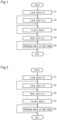
- FIG. 1 is a flow chart of a method of manufacturing a polyester copolymer according to a first embodiment of the present invention.
- the manufacturing method includes: the step of loading a chemical reactor with a material constituted by two or more polyester resins (step S1); the step of loading an additive into the chemical reactor (step S2); the step of injecting water into the chemical reactor (step S3); the step of heating and stirring the material (hereinafter referred to as "decomposition step”) (step S4); and the step of discharging water in the chemical reactor at a temperature not lower than 100 °C (step S5).
- step S2 the step of loading an additive into the chemical reactor (step S2), the step of injecting water into the chemical reactor (step S3) and the step of discharging water in the chemical reactor at a temperature not lower than 100 °C (step S5) are optional steps, and may be omitted under some conditions.
- step S1 the step of loading the chemical reactor with a material constituted by two or more polyester resins
- step S2 the step of loading an additive into the chemical reactor
- step S3 the step of injecting water into the chemical reactor
- any chemical reactor capable of stirring a material in a heated state may be used for the method of manufacturing a polyester copolymer according to the present embodiment. It is preferable that the chemical reactor is capable of controlling the atmosphere within the reactor. Specifically, it is preferable that the chemical reactor has a construction that allows its interior to be hermetically sealed except for the loading port and the discharge port for material, the inlet port and the outlet port for gas (i.e., vent port), and the injection port for water, for example.
- the chemical reactor is preferably made of metal, glass or ceramic, and particularly preferably made of metal. As discussed further below, the chemical reactor may be a batch-type reactor or may be a continuous-type reactor.
- the chemical reactor is loaded with a material constituted by two or more polyester resins (step S1). Specifically, the chemical reactor is loaded with a material containing a first polyester resin and a second polyester resin, the second polyester resin being a polyester resin different from the first polyester resin. It is preferable that the polyester resins constituting the material are pre-processed into powder or pellets. Alternatively, a pulverizer may be provided at the material-loading port of the chemical reactor such that the material is pulverized at the same time as the loading.
- the two or more polyester resins may be successively loaded, one at a time, or may be mixed in advance and loaded all at once.
- Each of the polyester resins constituting the material may be any resin that includes an ester bond, and is not limited to any particular resin.
- Each of the polyester resins constituting the material preferably has a weight average molecular weight not less than 10,000, and more preferably not less than 50,000.
- each of the polyester resins may be a polyester resin where the ester bond and aromatic ring constituting the main chain of the polyester have no resonance structure (hereinafter referred to as "aliphatic polyester”).
- the aliphatic polyester may be polylactic acid (PLA), polybutylene succinate (PBS), polybutylene succinate adipate (PBSA), polycaprolactone (PCL), polyhydroxybutyric acid (PHB), polyhydroxyalkanoate (PHA), polyglycolic acid (PGA), or 3-hydroxybutyrate-co-3-hydroxyhexanoate polymer (PHBH), for example.
- Preferable aliphatic polyesters are polylactic acid (PLA), polybutylene succinate (PBS), polybutylene succinate adipate (PBSA), and polycaprolactone (PCL).
- Each of the polyester resins may be polyester resin where the ester bond and aromatic ring constituting the main chain of the polyester have a resonance structure (hereinafter referred to as "aromatic polyester”).
- aromatic polyester may be polyethylene terephthalate (PET), polybutylene terephthalate (PBT), polyethylene naphthalate (PEN), or polybutylene adipate naphthalate (PBAT), for example.
- At least one of the two or more polyester resins is an aliphatic polyester.
- the proportion of the aliphatic polyester in the two or more polyester resins is not lower than 50 mass %, and yet more preferably not lower than 70 mass %.
- another one of the two or more polyester resins may be an aromatic polyester.
- An additive is loaded into the chemical reactor (step S2).
- the additive is an additive that promotes decomposition of the polyester resins constituting the material.
- the step of loading an additive is an optional step; under some conditions, a polyester copolymer may be produced without adding an additive.
- the additive is preferably one or more selected from the group consisting of an alkali metal salt, an alkaline earth metal salt, an oxide of an alkali metal, an oxide of an alkaline earth metal, Zn, Sn, Fe, Al, Ti, a Zn oxide, an Sn oxide, an Fe oxide, an Al oxide, a Ti oxide, an organometallic salt of Zn, an organometallic salt of Sn, an organometallic salt of Fe, an organometallic salt of Al, an organometallic salt of Ti, and a compound containing a hydroxyl group.
- Examples of compounds containing a hydroxyl group include methanol, trimethylolpropane, glycerin, erythritol, pentaerythritol, glucose, alcohols with two or more hydroxyl groups, acrylic polyols, polyester polyols, polyether polyols, epoxy polyols, polyolefin-based polyols, fluorine-containing polyols, and polyvinyl alcohols (PVA).
- Additives are classified into two categories: additives containing either an alkali metal or an alkaline earth metal, and others, i.e., additives containing neither an alkali metal nor an alkaline earth metal.
- Preferable additives containing either an alkali metal or an alkaline earth metal are sodium bicarbonate (i.e., baking soda), sodium carbonate, potassium carbonate, and magnesium oxide.
- Preferable additives containing neither an alkali metal nor an alkaline earth metal are Zn, Sn, zinc octylate, and tin octylate.
- step S4 use of an additive containing either an alkali metal or an alkaline earth metal leads to saponification, making it difficult to achieve high molecular weight.
- an alkali metal such as Na carbonate requires the step of removing Na ions of the polyester using a stronger acid than the acid of a monomer.
- an additive that contains neither an alkali metal nor an alkaline earth metal.
- the amount of the additive is preferably 0.2 to 100 parts by mass with respect to 100 parts by mass of the material.
- the mass of the material refers to the sum of the masses of the two or more polyester resins loaded as the material. Further, the mass of the material is inclusive of the mass of water adsorbed on the material, and the mass of the additive is inclusive of the mass of water adsorbed on the additive.
- the value of (mass of additive (inclusive of mass of adsorbed water)) / (mass of material (inclusive of mass of adsorbed water)) ⁇ 100 will be hereinafter referred to as "additive concentration".
- a lower limit of the additive concentration is more preferably 0.50 parts by mass, yet more preferably 1.0 parts by mass, and still more preferably 2.0 parts by mass.
- An upper limit of the additive concentration is more preferably 50 parts by mass, yet more preferably 20 parts by mass, and still more preferably 15 parts by mass.
- Water is injected into the chemical reactor (step S3).
- the step of injecting water is an optional step; under some conditions, a polyester copolymer may be produced without adding water.
- small amounts of water adsorbed on the material and/or additive cause decomposition of the polyester resins to progress.
- a polyester copolymer can be produced without intentionally adding water into the chemical reactor. This reduces the amount of energy required to heat water. Preferable ranges of the amount of water in the chemical reactor will be specified further below.
- step S3 the step of injecting water into the chemical reactor (step S3) may be replaced by the step of adjusting the water content of at least one of the material and additive. This enables adjusting the amount of water in the chemical reactor at the decomposition step (step S4), discussed further below.
- Specific methods for adjusting water content include drying the material and additive using a drier, holding them in a thermo-hygrostat for a predetermined period of time, and wetting them using a spray, for example.
- the humidity at the loading port of the chemical reactor may be controlled to adjust the water content of the material and/or additive.
- Devices for controlling the humidity at the loading port of the chemical reactor include air conditioners and sprayers.
- the material is heated and stirred (step S4; decomposition step).
- the heating temperature is to be not lower than the melting point of that one of the two or more polyester resins constituting the material which has the lowest melting point. The higher the heating temperature, the more easily the reaction progresses.
- a lower limit of the heating temperature is preferably 150 °C, and more preferably 200 °C (it is presupposed that the temperature is not lower than the melting point of that one of the two or more polyester resins which has the lowest melting point).
- the heating temperature may be not lower than the melting point of that one of the two or more polyester resins constituting the material which has the highest melting point. On the other hand, if the heating temperature is too high, bond other than the ester bonds may be cut off.
- An upper limit of the heating temperature is preferably 300 °C, more preferably 280 °C, and yet more preferably 270 °C.
- the shear rate for the decomposition step is preferably 50 to 1,000,000/s. A uniform product may not be obtained if stirring is not performed or if stirring is performed but the shear rate is too low. On the other hand, if the shear rate is too high, bonds other than the ester bond may be cut off.
- a lower limit of the shear rate is more preferably 100/s, yet more preferably 1,000/s, and still more preferably 10,000/s.
- An upper limit of shear rate is more preferably 500,000/s, and yet more preferably 300,000/s.
- the decomposition time is not limited to any length, and may be not shorter than 1 second and not longer than 12 hours, for example. With a short decomposition period, there is a tendency that a block copolymer with long blocks is obtained; with a long decomposition time, there is a tendency that a block copolymer with short blocks or a random copolymer is obtained.
- a lower limit of the decomposition time is preferably 3 minutes, more preferably 60 minutes, and yet more preferably 90 minutes.
- An upper limit of the decomposition time is preferably 8 hours, more preferably 6 hours, and yet more preferably 3 hours.
- “decomposition time” means the sum of the heat-up time and the holding time.
- the decomposition step is preferably performed by pressurizing the interior of the chemical reactor.
- the pressure (gauge pressure) inside the chemical reactor during the decomposition step is preferably 0.15 to 20.0 MPa.
- a lower limit of the pressure in the chemical reactor is more preferably 0.5 MPa, yet more preferably 1.0 MPa, and still more preferably 3.0 MPa.
- An upper limit of the pressure in the chemical reactor is more preferably 15.0 MPa, yet more preferably 10.0 MPa, and still more preferably 5.0 MPa.
- water content mass of water in chemical reactor/(mass of material + mass of additive + mass of water added from outside) It is to be noted that the mass of water in the chemical reactor is inclusive of the masses of water adsorbed on the material and the additive and the mass of water added from outside, the mass of the material is inclusive of the mass of water adsorbed on the material, and the mass of the additive is inclusive of the mass of water adsorbed on the additive.
- water content during the decomposition step is too low, decomposition of the polyester resins may not progress even if an additive is used, in which case a polyester copolymer may not be obtained.
- a lower limit of water content is preferably 0.20 %, and more preferably 0.30 %.
- water content is too high, large amounts of energy are required for heating, in which case the advantage of a reduction in water is less significant.
- preferable amounts of water for the decomposition step vary depending on the chemical reactor and reaction conditions.
- ⁇ (mass of water in chemical reactor) ⁇ (volume of material in chemical reactor) / (internal volume of chemical reactor) ⁇ / (mass of material) is not lower than 1.5 %.
- (mass of water in chemical reactor) / (mass of material) is not lower than 1.5 %.
- the mass of the material is inclusive of the mass of water adsorbed on the material.
- ⁇ (mass of water in chemical reactor) ⁇ (volume of material in chemical reactor) / (internal volume of chemical reactor) ⁇ approximates the mass of that portion of the water in the chemical reactor which is in contact with the material.
- (volume of material in chemical reactor) / (internal volume of chemical reactor) is approximately 1.
- ⁇ (mass of water in chemical reactor) ⁇ (volume of material in chemical reactor) / (internal volume of chemical reactor) ⁇ / (mass of material) or (mass of water in chemical reactor) / (mass of material) may be not lower than 1.5 %.
- step S5 water in the chemical reactor is discharged at a temperature not lower than 100 °C (step S5). Specifically, for example, water vapor is discharged through a gas outlet port (i.e., vent port) of the chemical reactor.
- the temperature at which water is discharged is to be not lower than 100 °C, and preferably not lower than (heating temperature - 100 °C), more preferably not lower than (heating temperature - 50 °C), and yet more preferably not lower than (heating temperature - 20 °C).
- step S5 The step of discharging water in the chemical reactor at a temperature not lower than 100 °C (step S5) is an optional step, and a polyester copolymer may be obtained without this step. It should be noted, however, that the yield of polyester copolymer may decrease if the step of discharging water in the chemical reactor is not performed. Further, as discussed further below, if the polyester copolymer resulting from the decomposition step (step S4) is polymerized to achieve high molecular weight, water must be removed from the decomposition product at some point prior to the high molecular weight process. In view of this, in order to improve efficiency, it is preferable to perform the step of discharging water in the chemical reactor at a temperature not lower than 100 °C (step S5).
- a polyester copolymer is produced from the above-described steps. Specifically, a block copolymer or a random copolymer is obtained that has the structural units of the two or more polyester resins loaded as the material.
- the chemical reactor used for the method of manufacturing a polyester copolymer according to the present embodiment may be a batch-type reactor, or may be a continuous-type reactor.
- a batch-type reactor for example, a material etc. is loaded into the chemical reactor and, while the material is stirred, the temperature in the chemical reactor is raised to heat the material.
- the decomposition product in the chemical reactor i.e., polyester copolymer
- a continuous-type chemical reactor includes a loading port and a discharge port for the material and is capable of continuously processing the material.
- An example of a continuous-type chemical reactor is an extruder.
- the material etc. loaded through the material-loading port is transported through the chemical reactor, which has a predetermined temperature distribution, while receiving a shearing force by a screw, for example. If the step of discharging water in the chemical reactor at a temperature not lower than 100 °C (step S5) is to be performed, the chemical reactor may be divided into a plurality of zones and water may be discharged at the zone directly before the discharge port.
- the method of manufacturing a polyester copolymer according to the first embodiment of the present invention has been described.
- the method of manufacturing a polyester copolymer according to the present embodiment utilizes the simultaneous decomposition and copolymerization of two or more polyester resins to produce a polyester copolymer.
- the present embodiment enables producing a polyester copolymer in a shorter period of time than cases where a polyester copolymer is produced from a monomers.
- the method of manufacturing a polyester copolymer according to the present embodiment enables producing a copolymer by combining various polyesters.
- any combination of an aliphatic polyester and an aromatic polyester which are generally thought to have different reactivities, may be used to produce a copolymer.
- a combination of an aliphatic and an aliphatic polyester, or a combination of an aliphatic and an aromatic polyester, or a combination of an aromatic and an aromatic polyester may be used to produce a copolymer.
- any combination of a crude oil-derived polyester, a plant-derived polyester, and a half crude oil-derived and a half plant-derived polyester may be used to produce a copolymer.
- the method of manufacturing a polyester copolymer according to the present embodiment may enable producing various copolymers, from block copolymers to random copolymers, by varying the decomposition time. Further, the abundance ratio of various structural units in the copolymer may be controlled by varying the ratio between the two or more polyester resins loaded as the material and varying the resins. This enables producing polyester copolymers with a wide range of physical properties. Specifically, glass transition temperature and/or degree of crystallinity may be controlled. Degree of crystallinity may be evaluated based on heat of fusion.
- FIG. 2 is a flow chart of a method of manufacturing a polyester copolymer according to a second embodiment of the present invention.
- This manufacturing method is different from the method of manufacturing a polyester copolymer according to the first embodiment ( FIG. 1 ) in the timing of the step of injecting water into the chemical reactor (step S3). While the first embodiment involves injecting water into the chemical reactor before the decomposition step (step S4), the present embodiment involves injecting water into the chemical reactor after initiation of the decomposition step (step S4).
- the amount of water in the chemical reactor may be measured and the amount of water to be injected may be varied based on the measured amount of water. Further, if the amount of water in the chemical reactor is too much, some of the water may be discharged, or a dried gas may be introduced.
- the present embodiment too, enables producing a polyester copolymer in a shorter period of time than in cases where a polyester copolymer is produced from monomers.
- water may be injected into the chemical reactor before the decomposition step (step S4) and, in addition, water may be injected into the chemical reactor after initiation of the decomposition step (step S4).
- FIG. 3 is a flow chart of a method of manufacturing a polyester copolymer according to a third embodiment of the present invention.
- the present manufacturing method further includes the step of removing water from the decomposition product resulting from the decomposition step (step S4), step S6, and the step of achieving high molecular weight in the decomposition product resulting from the decomposition step (step S4), step S7 (hereinafter referred to as "high molecular weight step").
- the decomposition product resulting from the decomposition step (step S4) is a polyester copolymer; further polymerizing this provides a polyester copolymer with high molecular weight.
- step S6 Water in the decomposition product resulting from the decomposition step (step S4) is removed (step S6). Specifically, for example, water is removed from the decomposition product through filtering or drying. In implementations where the step of discharging water at high temperature (step S5) is performed, the step of removing water from the decomposition product (step S6) may be omitted. In other words, according to the present embodiment, it suffices to perform at least one of the step of discharging water at high temperature (step S5) and the step of removing water from the decomposition product (step S6). In order to improve efficiency, it is preferable to perform the step of discharging water at high temperature (step S5) and omit the step of removing water from the decomposition product (step S6).
- the high molecular weight step (step S7) may use any polyester polymerization method.
- the high molecular weight step may include, for example, the sub-step of reducing the pressure in the polymerization environment and the sub-step of stirring the matter being processed at a predetermined temperature.
- the high molecular weight step (step S7) may include the sub-step of adding a catalyst as necessary.
- the catalyst may be, for example, one or more selected from the group consisting of Zn, Sn, Fe, Al, Ti, a Zn oxide, an Sn oxide, an Fe oxide, an Al oxide, a Ti oxide, an organometallic salt of Zn, an organometallic salt of Sn, an organometallic salt of Fe, an organometallic salt of Al, an organometallic salt of Ti, and a compound containing a hydroxyl group.
- Preferable catalysts are Sn, Ti, Zn, and organometallic salts thereof.
- the decomposition step (step S4) uses, as an additive or additives, one or more selected from the group consisting of Zn, Sn, Fe, Al, Ti, a Zn oxide, an Sn oxide, an Fe oxide, an Al oxide, a Ti oxide, an organometallic salt of Zn, an organometallic salt of Sn, an organometallic salt of Fe, an organometallic salt of Al, an organometallic salt of Ti, and a compound containing a hydroxyl group
- the sub-step of adding a catalyst may be omitted from the high molecular weight step (step S7).
- the polymerization temperature may be 150 to 300 °C, for example.
- the degree of vacuum may be not higher than 10.0 Pa, for example, more preferably not higher than 5.0 Pa, and yet more preferably not higher than 2.0 Pa.
- the high molecular weight step (step S7) may further include the sub-step of adding a polymerization initiator to increase molecular weight.
- the polymerization initiator may be, for example, a monovalent alcohol or a monovalent carboxylic acid.
- the high molecular weight step (step S7) may be performed by the chemical reactor used for the decomposition step (step S4), or may be performed by another chemical reactor, different from the one used for the decomposition step (step S4). In order to improve efficiency, it is preferable to use the chemical reactor used for the decomposition step (step S4). Furthermore, it is preferable to continuously perform the decomposition step (step S4) and the high molecule weight step (step S7), without allowing the temperature in the chemical reactor to drop from the heating temperature at the decomposition step to room temperature. Moreover, if the chemical reactor is a continuous-type reactor, it is preferable that the device is constructed to perform the step of loading the material (step S1) to the high molecular weight step (step S7) in a continuous manner.
- step S4 Use of an additive containing either an alkali metal or an alkaline earth metal at in the decomposition step (step S4) leads to saponification, making it difficult to achieve high molecular weight.
- step S7 the high molecular weight step (step S7) is performed and if an additive is used at the decomposition step (step S4), it is preferable to use an additive containing neither an alkali metal nor an alkaline earth metal.
- the method of manufacturing a polyester copolymer according to the third embodiment of the present invention has been described.
- the present embodiment enables achieving high molecular weight in the polyester copolymer obtained from the first embodiment.
- FIG. 4 is a flow chart of a method of manufacturing a polyester copolymer according to a fourth embodiment of the present invention.
- the present manufacturing method further includes the step of removing water from the decomposition product resulting from the decomposition step (step S4), step S6, and the step of achieving high molecular weight in the decomposition product resulting from the decomposed step (step S4), step S7.
- the decomposition product resulting from the decomposition step (step S4) is a polyester copolymer; further polymerizing this provides a polyester copolymer with high molecular weight.
- the present embodiment achieves high molecular weight in a polyester copolymer. It is to be understood that a combination of the third and fourth embodiments may be carried out. Specifically, water may be injected into the chemical reactor before the decomposition step (step S4) and, in addition, water may be injected into the chemical reactor after initiation of the decomposition step (step S4).
- Polyester resins were decomposed under the conditions shown in Tables 1 to 3.
- Tg glass transition temperature
- Mn number average molecular weight
- Mw weight average molecular weight
- the chemical reactor used was a batch-type reactor where the internal volume of the reactor was larger than the volume of the material.
- inventive examples 1 to 9, 11, 12 and 15 to 21 as well as comparative examples 1 to 3 the temperature was raised to the decomposition temperature in 60 minutes and then held at the decomposition temperature for 30 minutes.
- inventive example 14 the temperature was raised to the decomposition temperature in 60 minutes and, immediately thereafter, water was discharged.
- a small chemical reactor was immersed in a salt bath at 250 °C to raise the temperature to 250 °C in a short period of time and was held for 90 minutes.
- inventive example 13 a small chemical reactor was immersed in a salt bath at 250 °C to raise the temperature to 250 °C in a short period of time and was held for 3 minutes. Except for inventive examples 10 and 13, the vent port was opened at the decomposition temperature to discharge water.
- the decomposition product was analyzed by liquid chromatography-mass spectrometry (LCMS) and nuclear magnetic resonance (NMR) to determine the presence/absence of a copolymer.
- LCMS liquid chromatography-mass spectrometry
- NMR nuclear magnetic resonance
- the number average molecular weight was measured by gel permeation chromatography (GPC).
- the resin materials for inventive example 1 were PLA (aliphatic polyester) and PBSA (aliphatic polyester); the resin materials for inventive example 2 were PLA (aliphatic polyester) and PBT (aromatic polyester); and the resin materials for inventive example 3 were PBT (aromatic polyester) and PEN (aromatic polyester). It was determined that copolymers can be obtained from all of these combinations. It was also determined that copolymers can be obtained from three or more polyester resins, as shown by inventive examples 4 and 5.
- inventive example 6 Sn was used as an additive.
- no additive was used.
- inventive example 8 sodium carbonate was used as an additive, where no water was intentionally injected and decomposition occurred only with water adsorbed on the material, for example.
- inventive example 9 Zn was used as an additive, where no water was intentionally injected and decomposition occurred only with water adsorbed on the material, for example.
- inventive example 10 the step of discharging at high temperature was not performed.
- Inventive example 11 is an example for a low shear rate.
- Inventive example 12 is an example for a high shear rate. It was determined that copolymers can be obtained from all of these examples.
- Inventive example 13 is an example for a short decomposition reaction time. A block copolymer with a relatively high molecular weight was obtained from this example. On the other hand, a random copolymer with a relatively low molecular weight was obtained from inventive example 14.
- the resin materials were PLA and PCL; for inventive example 21, the resin materials were PLA and PBAT. It was determined that copolymers can be obtained from all of these examples.
- Polyester resins were decomposed and polymerized (to achieve high molecular weight) under the conditions shown in Table 5.
- inventive examples 9 and 10 decomposition and polymerization were continuously performed. In other words, water was discharged at the decomposition temperature and, thereafter, a catalyst was loaded and the pressure in the chemical reactor was reduced before the temperature was changed to the polymerization temperature (i.e., 230 °C) without allowing the temperature to drop from the decomposition temperature (250 °C) to room temperature, thus performing polymerization.
- the temperature was allowed to drop to room temperature and the decomposition product was removed before polymerization. Further, for inventive example 10, polymerization was performed without creating a vacuum.
- the product was analyzed by LCMS and NMR to determine whether a copolymeric structure was maintained after polymerization. Further, the number average molecular weight was measured by GPC. For a product with high molecular weight, the glass transition temperature was measured by differential scanning calorimetry (DSC).
- the resin materials for inventive example 5 were PLA (aliphatic polyester) and PBSA (aliphatic polyester); the resin materials for inventive example 6 were PBT (aromatic polyester) and PEN (aromatic polyester); the resin materials for inventive example 8 were PLA (aliphatic polyester) and PBT (aromatic polyester); and the resin materials for inventive example 11 were PLA (aliphatic polyester) and PCL (aliphatic polyester). It was determined that copolymers with high molecular weight can be obtained from all of these combinations. Further, as shown by inventive example 7, it was determined that a copolymer with high molecular weight can be obtained from three or more polyester resins. Furthermore, it was determined that the glass transition temperature can be varied across a wide range.
- the heat of fusion of the product of inventive example 9 was measured by DSC.
- the degree of crystallinity can be evaluated by using the heat of fusion as an indicator.
- the heat of fusion of PLA is 30.669 J/g, while the heat of fusion of PBS is 38.025 J/g.
- the heat of fusion of the product obtained through polymerization was 1.155 J/g, which demonstrates that the degree of crystallinity can be controlled through copolymerization.
Landscapes
- Chemical & Material Sciences (AREA)
- Health & Medical Sciences (AREA)
- Chemical Kinetics & Catalysis (AREA)
- Medicinal Chemistry (AREA)
- Polymers & Plastics (AREA)
- Organic Chemistry (AREA)
- General Chemical & Material Sciences (AREA)
- Life Sciences & Earth Sciences (AREA)
- Sustainable Development (AREA)
- Polyesters Or Polycarbonates (AREA)
- Separation, Recovery Or Treatment Of Waste Materials Containing Plastics (AREA)
Abstract
Description
- The present invention relates to a method of manufacturing a polyester copolymer.
- Polyester is a generic term for polymers, obtained by condensation polymerization of carboxylic acids with two or more carboxylic groups and alcohols with two or more hydroxyl groups, and is widely used for various applications due to its excellent properties.
-
Non-Patent Document 1 describes synthesizing copolymers of polybutylene succinate (PBS) and polylactic acid (PLA) with varying block lengths, and evaluating the performance of PBS/PLA composites as compatibilizers. - Further, a method of producing oligomers and/or macromonomers by decomposing polyester resin is known. For example,
Japanese Patent No. 3444870 JP 2017-52892 A JP 2017-52890 A Japanese Patent No. 4174580 -
- [Patent Document 1]
Japanese Patent No. 3444870 - [Patent Document 2]
JP 2017-52892 A - [Patent Document 3]
JP 2017-52890 A - [Patent Document 4]
Japanese Patent No. 4174580 - [Non-Patent Document 1] Wei Zhang, et. al., "Copolymer P(BS-co-LA) Enhanced Compatibility of PBS/PLA Composite", Journal of Polymers and the Environment, 26, pp. 3060-3068, 2018
- Typically, a polyester copolymer is produced by esterifying various monomers to produce an oligomer that is a copolymer, and polymerizing this oligomer to achieve high molecular weight. However, producing a polyester copolymer from monomers requires a prolonged period of time.
- A problem to be solved by the present invention is to provide a method of manufacturing a polyester copolymer that is capable of producing a polyester copolymer in a shorter period of time than a method starting with monomers.
- A method of manufacturing a polyester copolymer according to one embodiment of the present invention includes: loading a chemical reactor with a material containing a first polyester resin and a second polyester resin, the second polyester resin being a polyester resin different from the first polyester resin; and heating the material to a temperature not lower than a melting point of that one of the polyester resins contained in the material which has the lowest melting point, and stirring the material.
- The present invention enables producing a polyester copolymer in a shorter period of time than a method starting with from monomers.
-
- [
FIG. 1] FIG. 1 is a flow chart of a method of manufacturing a polyester copolymer according to a first embodiment of the present invention. - [
FIG. 2] FIG. 2 is a flow chart of a method of manufacturing a polyester copolymer according to a second embodiment of the present invention. - [
FIG. 3] FIG. 3 is a flow chart of a method of manufacturing a polyester copolymer according to a third embodiment of the present invention. - [
FIG. 4] FIG. 4 is a flow chart of a method of manufacturing a polyester copolymer according to a fourth embodiment of the present invention. - The present inventors found that heating two or more polyester resins and stirring them causes simultaneous decomposition and formation of ester bonds, thus providing a polyester copolymer. The present invention was made based on this finding. Now, embodiments of the present invention will be described in detail with reference to the drawings.
-
FIG. 1 is a flow chart of a method of manufacturing a polyester copolymer according to a first embodiment of the present invention. The manufacturing method includes: the step of loading a chemical reactor with a material constituted by two or more polyester resins (step S1); the step of loading an additive into the chemical reactor (step S2); the step of injecting water into the chemical reactor (step S3); the step of heating and stirring the material (hereinafter referred to as "decomposition step") (step S4); and the step of discharging water in the chemical reactor at a temperature not lower than 100 °C (step S5). - Of these steps, the step of loading an additive into the chemical reactor (step S2), the step of injecting water into the chemical reactor (step S3) and the step of discharging water in the chemical reactor at a temperature not lower than 100 °C (step S5) are optional steps, and may be omitted under some conditions.
- Further, the step of loading the chemical reactor with a material constituted by two or more polyester resins (step S1), the step of loading an additive into the chemical reactor (step S2) and the step of injecting water into the chemical reactor (step 3) may be performed in any order. Although the method will be described below in the order of steps S1, S2 and S3, this is not intended to indicate the timeline of the steps. Further, two or more of these steps may be performed simultaneously. For example, the material and additive may be mixed in advance and then loaded in the chemical reactor.
- Any chemical reactor capable of stirring a material in a heated state may be used for the method of manufacturing a polyester copolymer according to the present embodiment. It is preferable that the chemical reactor is capable of controlling the atmosphere within the reactor. Specifically, it is preferable that the chemical reactor has a construction that allows its interior to be hermetically sealed except for the loading port and the discharge port for material, the inlet port and the outlet port for gas (i.e., vent port), and the injection port for water, for example. The chemical reactor is preferably made of metal, glass or ceramic, and particularly preferably made of metal. As discussed further below, the chemical reactor may be a batch-type reactor or may be a continuous-type reactor.
- The chemical reactor is loaded with a material constituted by two or more polyester resins (step S1). Specifically, the chemical reactor is loaded with a material containing a first polyester resin and a second polyester resin, the second polyester resin being a polyester resin different from the first polyester resin. It is preferable that the polyester resins constituting the material are pre-processed into powder or pellets. Alternatively, a pulverizer may be provided at the material-loading port of the chemical reactor such that the material is pulverized at the same time as the loading. The two or more polyester resins may be successively loaded, one at a time, or may be mixed in advance and loaded all at once.
- Each of the polyester resins constituting the material (i.e., first and second polyester resins) may be any resin that includes an ester bond, and is not limited to any particular resin. Each of the polyester resins constituting the material preferably has a weight average molecular weight not less than 10,000, and more preferably not less than 50,000.
- Each of the polyester resins may be a polyester resin where the ester bond and aromatic ring constituting the main chain of the polyester have no resonance structure (hereinafter referred to as "aliphatic polyester"). Although not limiting, the aliphatic polyester may be polylactic acid (PLA), polybutylene succinate (PBS), polybutylene succinate adipate (PBSA), polycaprolactone (PCL), polyhydroxybutyric acid (PHB), polyhydroxyalkanoate (PHA), polyglycolic acid (PGA), or 3-hydroxybutyrate-co-3-hydroxyhexanoate polymer (PHBH), for example. Preferable aliphatic polyesters are polylactic acid (PLA), polybutylene succinate (PBS), polybutylene succinate adipate (PBSA), and polycaprolactone (PCL).
- Each of the polyester resins may be polyester resin where the ester bond and aromatic ring constituting the main chain of the polyester have a resonance structure (hereinafter referred to as "aromatic polyester"). Although not limiting, the aromatic polyester may be polyethylene terephthalate (PET), polybutylene terephthalate (PBT), polyethylene naphthalate (PEN), or polybutylene adipate naphthalate (PBAT), for example.
- According to the present embodiment, it is preferable that at least one of the two or more polyester resins (e.g., the first polyester resin) is an aliphatic polyester. In such implementations, more preferably, the proportion of the aliphatic polyester in the two or more polyester resins is not lower than 50 mass %, and yet more preferably not lower than 70 mass %. In such implementations, another one of the two or more polyester resins (e.g., the second polyester resin) may be an aromatic polyester.
- An additive is loaded into the chemical reactor (step S2). The additive is an additive that promotes decomposition of the polyester resins constituting the material. The step of loading an additive is an optional step; under some conditions, a polyester copolymer may be produced without adding an additive.
- The additive is preferably one or more selected from the group consisting of an alkali metal salt, an alkaline earth metal salt, an oxide of an alkali metal, an oxide of an alkaline earth metal, Zn, Sn, Fe, Al, Ti, a Zn oxide, an Sn oxide, an Fe oxide, an Al oxide, a Ti oxide, an organometallic salt of Zn, an organometallic salt of Sn, an organometallic salt of Fe, an organometallic salt of Al, an organometallic salt of Ti, and a compound containing a hydroxyl group.
- Examples of compounds containing a hydroxyl group include methanol, trimethylolpropane, glycerin, erythritol, pentaerythritol, glucose, alcohols with two or more hydroxyl groups, acrylic polyols, polyester polyols, polyether polyols, epoxy polyols, polyolefin-based polyols, fluorine-containing polyols, and polyvinyl alcohols (PVA).
- Additives are classified into two categories: additives containing either an alkali metal or an alkaline earth metal, and others, i.e., additives containing neither an alkali metal nor an alkaline earth metal. Preferable additives containing either an alkali metal or an alkaline earth metal are sodium bicarbonate (i.e., baking soda), sodium carbonate, potassium carbonate, and magnesium oxide. Preferable additives containing neither an alkali metal nor an alkaline earth metal are Zn, Sn, zinc octylate, and tin octylate.
- As discussed further below, in implementations where the polyester copolymer resulting from the decomposition step (step S4) is polymerized to achieve high molecular weight, use of an additive containing either an alkali metal or an alkaline earth metal leads to saponification, making it difficult to achieve high molecular weight. Specifically, use of an alkali metal such as Na carbonate requires the step of removing Na ions of the polyester using a stronger acid than the acid of a monomer. In view of this, if high molecular weight is to be achieved, it is preferable to use an additive that contains neither an alkali metal nor an alkaline earth metal.
- The amount of the additive is preferably 0.2 to 100 parts by mass with respect to 100 parts by mass of the material. As used herein, the mass of the material refers to the sum of the masses of the two or more polyester resins loaded as the material. Further, the mass of the material is inclusive of the mass of water adsorbed on the material, and the mass of the additive is inclusive of the mass of water adsorbed on the additive. The value of (mass of additive (inclusive of mass of adsorbed water)) / (mass of material (inclusive of mass of adsorbed water)) × 100 will be hereinafter referred to as "additive concentration".
- If the additive concentration is too low, the additive's effect of promoting decomposition is produced insufficiently. A lower limit of the additive concentration is more preferably 0.50 parts by mass, yet more preferably 1.0 parts by mass, and still more preferably 2.0 parts by mass. On the other hand, if the additive concentration is too high, large amounts of energy are required for heating. An upper limit of the additive concentration is more preferably 50 parts by mass, yet more preferably 20 parts by mass, and still more preferably 15 parts by mass.
- Water is injected into the chemical reactor (step S3). The step of injecting water is an optional step; under some conditions, a polyester copolymer may be produced without adding water. Specifically, in implementations where an additive is used, small amounts of water adsorbed on the material and/or additive cause decomposition of the polyester resins to progress. As such, if an additive is used, a polyester copolymer can be produced without intentionally adding water into the chemical reactor. This reduces the amount of energy required to heat water. Preferable ranges of the amount of water in the chemical reactor will be specified further below.
- In implementations where an additive is used and the polyester resins are to be decomposed using water adsorbed on the material and/or additive, the step of injecting water into the chemical reactor (step S3) may be replaced by the step of adjusting the water content of at least one of the material and additive. This enables adjusting the amount of water in the chemical reactor at the decomposition step (step S4), discussed further below.
- Specific methods for adjusting water content include drying the material and additive using a drier, holding them in a thermo-hygrostat for a predetermined period of time, and wetting them using a spray, for example. Alternatively, the humidity at the loading port of the chemical reactor may be controlled to adjust the water content of the material and/or additive. Devices for controlling the humidity at the loading port of the chemical reactor include air conditioners and sprayers.
- The material is heated and stirred (step S4; decomposition step). The heating temperature is to be not lower than the melting point of that one of the two or more polyester resins constituting the material which has the lowest melting point. The higher the heating temperature, the more easily the reaction progresses. A lower limit of the heating temperature is preferably 150 °C, and more preferably 200 °C (it is presupposed that the temperature is not lower than the melting point of that one of the two or more polyester resins which has the lowest melting point). The heating temperature may be not lower than the melting point of that one of the two or more polyester resins constituting the material which has the highest melting point. On the other hand, if the heating temperature is too high, bond other than the ester bonds may be cut off. An upper limit of the heating temperature is preferably 300 °C, more preferably 280 °C, and yet more preferably 270 °C.
- The shear rate for the decomposition step is preferably 50 to 1,000,000/s. A uniform product may not be obtained if stirring is not performed or if stirring is performed but the shear rate is too low. On the other hand, if the shear rate is too high, bonds other than the ester bond may be cut off. A lower limit of the shear rate is more preferably 100/s, yet more preferably 1,000/s, and still more preferably 10,000/s. An upper limit of shear rate is more preferably 500,000/s, and yet more preferably 300,000/s.
- The decomposition time is not limited to any length, and may be not shorter than 1 second and not longer than 12 hours, for example. With a short decomposition period, there is a tendency that a block copolymer with long blocks is obtained; with a long decomposition time, there is a tendency that a block copolymer with short blocks or a random copolymer is obtained. A lower limit of the decomposition time is preferably 3 minutes, more preferably 60 minutes, and yet more preferably 90 minutes. An upper limit of the decomposition time is preferably 8 hours, more preferably 6 hours, and yet more preferably 3 hours. As used herein, "decomposition time" means the sum of the heat-up time and the holding time.
- The decomposition step is preferably performed by pressurizing the interior of the chemical reactor. The pressure (gauge pressure) inside the chemical reactor during the decomposition step is preferably 0.15 to 20.0 MPa. A lower limit of the pressure in the chemical reactor is more preferably 0.5 MPa, yet more preferably 1.0 MPa, and still more preferably 3.0 MPa. An upper limit of the pressure in the chemical reactor is more preferably 15.0 MPa, yet more preferably 10.0 MPa, and still more preferably 5.0 MPa.
- As discussed above, if an additive is used, small amounts of water adsorbed on the material and/or additive cause decomposition of the polyester resins to progress. If an additive is to be used, it is preferable that the water content represented by the following equation during the decomposition step is not lower than 0.15 % and not higher than 2.0 %:
water content = mass of water in chemical reactor/(mass of material + mass of additive + mass of water added from outside) - If the water content during the decomposition step is too low, decomposition of the polyester resins may not progress even if an additive is used, in which case a polyester copolymer may not be obtained. A lower limit of water content is preferably 0.20 %, and more preferably 0.30 %. On the other hand, if water content is too high, large amounts of energy are required for heating, in which case the advantage of a reduction in water is less significant.
- If no additive is used, preferable amounts of water for the decomposition step vary depending on the chemical reactor and reaction conditions. In the case of a chemical reactor where internal volume of chemical reactor > volume of material, it is preferable that, during the decomposition step, {(mass of water in chemical reactor) × (volume of material in chemical reactor) / (internal volume of chemical reactor)} / (mass of material) is not lower than 1.5 %. In the case of a chemical reactor where internal volume of chemical reactor = volume of material (e.g., extruder used as a chemical reactor), it is preferable that, during the decomposition step, (mass of water in chemical reactor) / (mass of material) is not lower than 1.5 %. In each of these cases, the mass of the material is inclusive of the mass of water adsorbed on the material. Here, {(mass of water in chemical reactor) × (volume of material in chemical reactor) / (internal volume of chemical reactor)} approximates the mass of that portion of the water in the chemical reactor which is in contact with the material. In cases where pressure is applied to the material and water is then injected, such as with an extruder, (volume of material in chemical reactor) / (internal volume of chemical reactor) is approximately 1. On the other hand, in cases where the material is placed in the chemical reactor before sealing and water is then injected, or in the case of continuous processing where a mixture of water and the material is injected into a large chemical reactor and the product is removed using a valve, (volume of material in chemical reactor) / (internal volume of chemical reactor) is smaller than 1.
- Even in implementations where an additive is used, during the decomposition step, {(mass of water in chemical reactor) × (volume of material in chemical reactor) / (internal volume of chemical reactor)} / (mass of material) or (mass of water in chemical reactor) / (mass of material) may be not lower than 1.5 %.
- After the decomposition step (step S4), water in the chemical reactor is discharged at a temperature not lower than 100 °C (step S5). Specifically, for example, water vapor is discharged through a gas outlet port (i.e., vent port) of the chemical reactor. The temperature at which water is discharged is to be not lower than 100 °C, and preferably not lower than (heating temperature - 100 °C), more preferably not lower than (heating temperature - 50 °C), and yet more preferably not lower than (heating temperature - 20 °C).
- The step of discharging water in the chemical reactor at a temperature not lower than 100 °C (step S5) is an optional step, and a polyester copolymer may be obtained without this step. It should be noted, however, that the yield of polyester copolymer may decrease if the step of discharging water in the chemical reactor is not performed. Further, as discussed further below, if the polyester copolymer resulting from the decomposition step (step S4) is polymerized to achieve high molecular weight, water must be removed from the decomposition product at some point prior to the high molecular weight process. In view of this, in order to improve efficiency, it is preferable to perform the step of discharging water in the chemical reactor at a temperature not lower than 100 °C (step S5).
- A polyester copolymer is produced from the above-described steps. Specifically, a block copolymer or a random copolymer is obtained that has the structural units of the two or more polyester resins loaded as the material.
- The chemical reactor used for the method of manufacturing a polyester copolymer according to the present embodiment may be a batch-type reactor, or may be a continuous-type reactor.
- If a batch-type reactor is to be used, for example, a material etc. is loaded into the chemical reactor and, while the material is stirred, the temperature in the chemical reactor is raised to heat the material. After completion of the decomposition step (step S4), or after completion of the step of discharging water in the chemical reactor at a temperature not lower than 100 °C (step S5), the decomposition product in the chemical reactor (i.e., polyester copolymer) is retrieved.
- A continuous-type chemical reactor includes a loading port and a discharge port for the material and is capable of continuously processing the material. An example of a continuous-type chemical reactor is an extruder. The material etc. loaded through the material-loading port is transported through the chemical reactor, which has a predetermined temperature distribution, while receiving a shearing force by a screw, for example. If the step of discharging water in the chemical reactor at a temperature not lower than 100 °C (step S5) is to be performed, the chemical reactor may be divided into a plurality of zones and water may be discharged at the zone directly before the discharge port.
- The method of manufacturing a polyester copolymer according to the first embodiment of the present invention has been described. The method of manufacturing a polyester copolymer according to the present embodiment utilizes the simultaneous decomposition and copolymerization of two or more polyester resins to produce a polyester copolymer. The present embodiment enables producing a polyester copolymer in a shorter period of time than cases where a polyester copolymer is produced from a monomers.
- The method of manufacturing a polyester copolymer according to the present embodiment enables producing a copolymer by combining various polyesters. For example, any combination of an aliphatic polyester and an aromatic polyester, which are generally thought to have different reactivities, may be used to produce a copolymer. More specifically, a combination of an aliphatic and an aliphatic polyester, or a combination of an aliphatic and an aromatic polyester, or a combination of an aromatic and an aromatic polyester may be used to produce a copolymer. Further, any combination of a crude oil-derived polyester, a plant-derived polyester, and a half crude oil-derived and a half plant-derived polyester may be used to produce a copolymer.
- The method of manufacturing a polyester copolymer according to the present embodiment may enable producing various copolymers, from block copolymers to random copolymers, by varying the decomposition time. Further, the abundance ratio of various structural units in the copolymer may be controlled by varying the ratio between the two or more polyester resins loaded as the material and varying the resins. This enables producing polyester copolymers with a wide range of physical properties. Specifically, glass transition temperature and/or degree of crystallinity may be controlled. Degree of crystallinity may be evaluated based on heat of fusion.
-
FIG. 2 is a flow chart of a method of manufacturing a polyester copolymer according to a second embodiment of the present invention. This manufacturing method is different from the method of manufacturing a polyester copolymer according to the first embodiment (FIG. 1 ) in the timing of the step of injecting water into the chemical reactor (step S3). While the first embodiment involves injecting water into the chemical reactor before the decomposition step (step S4), the present embodiment involves injecting water into the chemical reactor after initiation of the decomposition step (step S4). - For injection, the amount of water in the chemical reactor may be measured and the amount of water to be injected may be varied based on the measured amount of water. Further, if the amount of water in the chemical reactor is too much, some of the water may be discharged, or a dried gas may be introduced.
- The present embodiment, too, enables producing a polyester copolymer in a shorter period of time than in cases where a polyester copolymer is produced from monomers.
- It is to be understood that a combination of the first and second embodiments may be carried out. Specifically, water may be injected into the chemical reactor before the decomposition step (step S4) and, in addition, water may be injected into the chemical reactor after initiation of the decomposition step (step S4).
-
FIG. 3 is a flow chart of a method of manufacturing a polyester copolymer according to a third embodiment of the present invention. In addition to the steps included in the method of manufacturing a polyester copolymer according to the first embodiment (FIG. 1 ), the present manufacturing method further includes the step of removing water from the decomposition product resulting from the decomposition step (step S4), step S6, and the step of achieving high molecular weight in the decomposition product resulting from the decomposition step (step S4), step S7 (hereinafter referred to as "high molecular weight step"). As discussed above, the decomposition product resulting from the decomposition step (step S4) is a polyester copolymer; further polymerizing this provides a polyester copolymer with high molecular weight. - Water in the decomposition product resulting from the decomposition step (step S4) is removed (step S6). Specifically, for example, water is removed from the decomposition product through filtering or drying. In implementations where the step of discharging water at high temperature (step S5) is performed, the step of removing water from the decomposition product (step S6) may be omitted. In other words, according to the present embodiment, it suffices to perform at least one of the step of discharging water at high temperature (step S5) and the step of removing water from the decomposition product (step S6). In order to improve efficiency, it is preferable to perform the step of discharging water at high temperature (step S5) and omit the step of removing water from the decomposition product (step S6).
- The high molecular weight step (step S7) may use any polyester polymerization method. The high molecular weight step may include, for example, the sub-step of reducing the pressure in the polymerization environment and the sub-step of stirring the matter being processed at a predetermined temperature.
- The high molecular weight step (step S7) may include the sub-step of adding a catalyst as necessary. The catalyst may be, for example, one or more selected from the group consisting of Zn, Sn, Fe, Al, Ti, a Zn oxide, an Sn oxide, an Fe oxide, an Al oxide, a Ti oxide, an organometallic salt of Zn, an organometallic salt of Sn, an organometallic salt of Fe, an organometallic salt of Al, an organometallic salt of Ti, and a compound containing a hydroxyl group. Preferable catalysts are Sn, Ti, Zn, and organometallic salts thereof. In implementations where the decomposition step (step S4) uses, as an additive or additives, one or more selected from the group consisting of Zn, Sn, Fe, Al, Ti, a Zn oxide, an Sn oxide, an Fe oxide, an Al oxide, a Ti oxide, an organometallic salt of Zn, an organometallic salt of Sn, an organometallic salt of Fe, an organometallic salt of Al, an organometallic salt of Ti, and a compound containing a hydroxyl group, the sub-step of adding a catalyst may be omitted from the high molecular weight step (step S7). The polymerization temperature may be 150 to 300 °C, for example. The degree of vacuum may be not higher than 10.0 Pa, for example, more preferably not higher than 5.0 Pa, and yet more preferably not higher than 2.0 Pa. The high molecular weight step (step S7) may further include the sub-step of adding a polymerization initiator to increase molecular weight. The polymerization initiator may be, for example, a monovalent alcohol or a monovalent carboxylic acid.
- The high molecular weight step (step S7) may be performed by the chemical reactor used for the decomposition step (step S4), or may be performed by another chemical reactor, different from the one used for the decomposition step (step S4). In order to improve efficiency, it is preferable to use the chemical reactor used for the decomposition step (step S4). Furthermore, it is preferable to continuously perform the decomposition step (step S4) and the high molecule weight step (step S7), without allowing the temperature in the chemical reactor to drop from the heating temperature at the decomposition step to room temperature. Moreover, if the chemical reactor is a continuous-type reactor, it is preferable that the device is constructed to perform the step of loading the material (step S1) to the high molecular weight step (step S7) in a continuous manner.
- Use of an additive containing either an alkali metal or an alkaline earth metal at in the decomposition step (step S4) leads to saponification, making it difficult to achieve high molecular weight. In view of this, in implementations where the high molecular weight step (step S7) is performed and if an additive is used at the decomposition step (step S4), it is preferable to use an additive containing neither an alkali metal nor an alkaline earth metal. Specifically, it is preferable to use one or more selected from the group consisting of Zn, Sn, Fe, Al, Ti, a Zn oxide, an Sn oxide, an Fe oxide, an Al oxide, a Ti oxide, an organometallic salt of Zn, an organometallic salt of Sn, an organometallic salt of Fe, an organometallic salt of Al, an organometallic salt of Ti, and a compound containing a hydroxyl group.
- The method of manufacturing a polyester copolymer according to the third embodiment of the present invention has been described. The present embodiment enables achieving high molecular weight in the polyester copolymer obtained from the first embodiment.
-
FIG. 4 is a flow chart of a method of manufacturing a polyester copolymer according to a fourth embodiment of the present invention. In addition to the steps included in the method of manufacturing a polyester copolymer according to the second embodiment (FIG. 2 ), the present manufacturing method further includes the step of removing water from the decomposition product resulting from the decomposition step (step S4), step S6, and the step of achieving high molecular weight in the decomposition product resulting from the decomposed step (step S4), step S7. As discussed above, the decomposition product resulting from the decomposition step (step S4) is a polyester copolymer; further polymerizing this provides a polyester copolymer with high molecular weight. - The present embodiment, too, achieves high molecular weight in a polyester copolymer. It is to be understood that a combination of the third and fourth embodiments may be carried out. Specifically, water may be injected into the chemical reactor before the decomposition step (step S4) and, in addition, water may be injected into the chemical reactor after initiation of the decomposition step (step S4).
- The present invention will now be described more specifically using examples. The present invention is not limited to these examples.
- Polyester resins were decomposed under the conditions shown in Tables 1 to 3.
-
TABLE 1 Inv. ex. 1 Inv. ex. 2 Inv. ex. 3 Inv. ex. 4 Inv. ex. 5 Inv. ex. 6 Inv. ex. 7 Inv. ex. 8 Inv. ex. 9 Resin to be mixed 1 PLA PLA PBT PLA PLA PLA PLA PLA PLA Resin to be mixed 2 PBSA PBT PEN PBS PBS PBSA PBSA PBSA PBSA Resin to be mixed 3 - - - PEN PEN - - - - Resin to be mixed 4 - - - PBT PBT - - - - Additive Na carbonate Na carbonate Na carbonate Na carbonate Na carbonate Sn - Na carbonate Zn Decomposition conditions Amount of additive / phr 10 10 10 10 11 10 - 10 10 Inject water yes yes yes yes yes yes yes no no Water / % 1.9 1.9 1.9 1.9 1.9 1.9 1.9 0.35 0.35 Decomposition temp. / °C 250 250 250 250 200 250 250 250 250 Decomposition reaction time / min 90 90 90 90 90 90 90 90 90 Shear rate γ (1/s) 25133 25133 25133 25133 25133 25133 25133 25133 25133 Discharge at high temp. yes yes yes yes yes yes yes yes yes Results Copolymer yes yes yes yes yes yes yes yes yes Molecular weight (Mn) 512 523 534 543 576 596 523 3474 4621 -
TABLE 2 Inv. ex. 10 Inv. ex. 11 Inv. ex. 12 Inv. ex. 13 Inv. ex. 14 Inv. ex. 15 Inv. ex. 16 Inv. ex. 17 Resin to be mixed 1 PLA PLA PLA PLA PLA PLA PLA PLA Resin to be mixed 2 PBSA PBSA PBSA PBSA PBSA PCL PCL PCL Resin to be mixed 3 - - - - - - - - Resin to be mixed 4 - - - - - - - - Additive Na carbonate Na carbonate Na carbonate Na carbonate Na carbonate Na carbonate - Sn octylate Decomposition conditions Amount of additive / phr 10 10 11 11 12 10 - 10 Inject water yes yes yes yes yes yes yes yes Water / % 1.8 1.9 1.9 1.9 1.9 1.9 1.9 1.90 Decomposition temp. / °C 250 250 250 250 250 250 250 250 Decomposition reaction time / min 90 90 90 3 60 90 90 90 Shear rate γ (1/s) 25,133 100 200,000 25,133 25,133 25,133 25,133 25,133 Discharge at high temp. no yes yes no yes yes yes yes Results Copolymer yes yes yes yes yes yes yes yes Molecular weight (Mn) 563 512 634 4,235 514 460 644 435 -
TABLE 8 Inv. ex. 18 Inv. ex. 19 Inv. ex. 20 Inv. ex. 21 Comp. ex. 1 Comp. ex. 2 Comp. ex. 3 Resin to be mixed 1 PLA PLA PLA PLA PLA PLA PLA Resin to be mixed 2 PCL PCL PCL PBAT PBSA PBSA PBSA Resin to be mixed 3 - - - - - - - Resin to be mixed 4 - - - - - - - Additive Sn pentaerythritol PVA Na carbonate Na carbonate Na carbonate - Decomposition conditions Amount of additive / phr 10 10 10 10 10 10 - Inject water yes yes yes yes yes yes no Water / % 1.9 1.9 1.9 1.9 1.9 1.9 0.35 Decomposition temp. / °C 250 250 250 250 250 90 250 Decomposition reaction time / min 90 90 90 90 90 90 90 Shear rate γ (1/s) 25,133 25,133 25,133 25,133 2,500,000 25,133 25,133 Discharge at high temp. yes yes yes yes yes yes yes Results Copolymer yes yes yes yes no no no Molecular weight (Mn) 643 462 865 521 - - - - For each of the inventive and comparative examples, a plurality of resins was loaded in an equal mass (i.e., 50:50 or 25:25:25:25). The physical properties of the various resins are shown in Table 4. "Tg" means glass transition temperature, Mn means number average molecular weight, and Mw means weight average molecular weight.
-
TABLE 4 PLA PBS PBSA PEN PBT PCL PBAT Melting point / °C 170 120 90 265 203 60 130 Tg / °C 60 -20 -40 120 50 -60 110 Mn 78,000 38,000 40,000 50,000 25,000 15,000 44,000 Mw 120,000 110,000 123,000 70,000 45,000 25,000 53,000 - The chemical reactor used was a batch-type reactor where the internal volume of the reactor was larger than the volume of the material. For inventive examples 1 to 9, 11, 12 and 15 to 21 as well as comparative examples 1 to 3, the temperature was raised to the decomposition temperature in 60 minutes and then held at the decomposition temperature for 30 minutes. For inventive example 14, the temperature was raised to the decomposition temperature in 60 minutes and, immediately thereafter, water was discharged. For inventive example 10, a small chemical reactor was immersed in a salt bath at 250 °C to raise the temperature to 250 °C in a short period of time and was held for 90 minutes. For inventive example 13, a small chemical reactor was immersed in a salt bath at 250 °C to raise the temperature to 250 °C in a short period of time and was held for 3 minutes. Except for inventive examples 10 and 13, the vent port was opened at the decomposition temperature to discharge water.
- In Tables 1 to 3, the value in an entry in the "Water" row for an inventive or comparative example with "yes" for water injection indicates {(mass of water in chemical reactor) × (volume of material in chemical reactor) / (internal volume of chemical reactor)} / (mass of material), and the value in an entry in the "Water" row for an inventive or comparative example with "no" for water injection indicates (mass of water in chemical reactor) / (mass of material + mass of additive + mass of water added from outside).
- After completion of the decomposition, the decomposition product was analyzed by liquid chromatography-mass spectrometry (LCMS) and nuclear magnetic resonance (NMR) to determine the presence/absence of a copolymer. For a decomposition product having a copolymer, the number average molecular weight was measured by gel permeation chromatography (GPC).
- The resin materials for inventive example 1 were PLA (aliphatic polyester) and PBSA (aliphatic polyester); the resin materials for inventive example 2 were PLA (aliphatic polyester) and PBT (aromatic polyester); and the resin materials for inventive example 3 were PBT (aromatic polyester) and PEN (aromatic polyester). It was determined that copolymers can be obtained from all of these combinations. It was also determined that copolymers can be obtained from three or more polyester resins, as shown by inventive examples 4 and 5.
- For inventive example 6, Sn was used as an additive. For inventive example 7, no additive was used. For inventive example 8, sodium carbonate was used as an additive, where no water was intentionally injected and decomposition occurred only with water adsorbed on the material, for example. For inventive example 9, Zn was used as an additive, where no water was intentionally injected and decomposition occurred only with water adsorbed on the material, for example. For inventive example 10, the step of discharging at high temperature was not performed. Inventive example 11 is an example for a low shear rate. Inventive example 12 is an example for a high shear rate. It was determined that copolymers can be obtained from all of these examples.
- Inventive example 13 is an example for a short decomposition reaction time. A block copolymer with a relatively high molecular weight was obtained from this example. On the other hand, a random copolymer with a relatively low molecular weight was obtained from inventive example 14.
- For inventive examples 15 to 20, the resin materials were PLA and PCL; for inventive example 21, the resin materials were PLA and PBAT. It was determined that copolymers can be obtained from all of these examples.
- No copolymers were obtained from comparative examples 1 to 3. This is presumably because, for comparative example 1, the shear rate was too high; for comparative example 2, the decomposition temperature was too low; and for comparative example 3, no additive was used and the amount of water was too small.
- Polyester resins were decomposed and polymerized (to achieve high molecular weight) under the conditions shown in Table 5.
-
TABLE 5 Inv. ex. 1 Inv. ex. 2 Inv. ex. 3 Inv. ex. 4 Inv. ex. 5 Inv. ex. 6 Inv. ex. 7 Inv. ex. 8 Inv. ex. 9 Inv. ex. 10 Inv. ex. 11 Resin to be mixed 1 PLA PLA PLA PLA PLA PBT PLA PLA PLA PLA PLA Resin to be mixed 2 PBSA PBSA PBSA PBSA PBSA PEN PBS PBT PBSA PBSA PCL Resin to be mixed 3 - - - - - - PEN - - - - Resin to be mixed 4 - - - - - - PBT - - - - Decomposition conditions Additive Na carbonate Sn Zn Na carbonate - - - - - - - Amount of additive / phr 10 10 10 10 - - - - - - - Inject water yes yes no no yes yes yes yes yes yes yes Water / % 1.9 1.9 0.35 0.35 1.9 1.9 1.9 1.9 1.9 1.9 1.9 Decomposition temp. / °C 250 250 250 250 250 250 250 250 250 250 250 Decomposition reaction time /min 90 90 90 90 90 90 90 90 3 90 90 Shear rate γ (1/s) 25,133 25,133 25,133 25,133 25,133 25,133 25,133 25,133 25,133 25,133 25,133 Discharge at high temp. yes yes yes yes yes yes yes yes no no yes Polymerization conditions Catalyst Sn octylate Sn octylate Sn octylate Sn octylate Sn octylate Sn octylate Sn octylate Sn octylate Sn octylate Sn octylate Sn octylate Amount of catalyst / phr 1 1 1 1 1 1 1 1 1 1 1 Polymerization temp. / °C 230 230 230 230 230 230 230 230 230 230 230 Polymerization time / min 360 360 360 360 360 360 360 360 360 360 360 Degree of vacuum / MPa -0.1 -0.1 -0.1 -0.1 -0.1 -0.1 -0.1 -0.1 -0.1 0.0 0.0 Shear rate γ (1/s) 25,133 25,133 25,133 25,133 25,133 25,133 25,133 25,133 25,133 25,133 25,133 Results Copolymer yes yes yes yes yes yes yes yes yes yes yes Molecular weight (Mn) 576 11,463 16,435 734 14,424 13,524 16,424 13,524 15,324 2,132 12,421 Tg - 1.17 1.17 - 1.17 78.70 43.40 54.92 1.17 1.17 -13.00 Heat of fusion (J/g) - - - - - - - - 1.155 - - - Except for inventive examples 9 and 10, decomposition and polymerization were continuously performed. In other words, water was discharged at the decomposition temperature and, thereafter, a catalyst was loaded and the pressure in the chemical reactor was reduced before the temperature was changed to the polymerization temperature (i.e., 230 °C) without allowing the temperature to drop from the decomposition temperature (250 °C) to room temperature, thus performing polymerization. For inventive examples 9 and 10, after decomposition, the temperature was allowed to drop to room temperature and the decomposition product was removed before polymerization. Further, for inventive example 10, polymerization was performed without creating a vacuum.
- After completion of the polymerization, the product was analyzed by LCMS and NMR to determine whether a copolymeric structure was maintained after polymerization. Further, the number average molecular weight was measured by GPC. For a product with high molecular weight, the glass transition temperature was measured by differential scanning calorimetry (DSC).
- For each of inventive examples 1 and 4, a copolymer was present but the molecular weight was not significantly higher. This is presumably because an additive containing an alkali metal had been used. In contrast, a copolymer with high molecular weight was obtained from each of inventive examples 2 and 3, for which an additive containing neither an alkali metal nor an alkaline earth metal had been used.
- The resin materials for inventive example 5 were PLA (aliphatic polyester) and PBSA (aliphatic polyester); the resin materials for inventive example 6 were PBT (aromatic polyester) and PEN (aromatic polyester); the resin materials for inventive example 8 were PLA (aliphatic polyester) and PBT (aromatic polyester); and the resin materials for inventive example 11 were PLA (aliphatic polyester) and PCL (aliphatic polyester). It was determined that copolymers with high molecular weight can be obtained from all of these combinations. Further, as shown by inventive example 7, it was determined that a copolymer with high molecular weight can be obtained from three or more polyester resins. Furthermore, it was determined that the glass transition temperature can be varied across a wide range.
- The heat of fusion of the product of inventive example 9 was measured by DSC. The degree of crystallinity can be evaluated by using the heat of fusion as an indicator. The heat of fusion of PLA is 30.669 J/g, while the heat of fusion of PBS is 38.025 J/g. The heat of fusion of the product obtained through polymerization was 1.155 J/g, which demonstrates that the degree of crystallinity can be controlled through copolymerization.
- For inventive example 10, a copolymer was present but the molecular weight was not significantly higher. This is presumably because no vacuum was created and water in the system was not sufficiently removed such that condensation reaction was not predominant during the equilibrium reaction.
- Although embodiments of the present invention have been described, the present invention is not limited to the above-described embodiments only, and various modifications are possible within the scope of the invention.
Claims (19)
- A method of manufacturing a polyester copolymer, comprising:loading a chemical reactor with a material containing a first polyester resin and a second polyester resin, the second polyester resin being a polyester resin different from the first polyester resin; andheating the material to a temperature not lower than a melting point of that one of the polyester resins contained in the material which has the lowest melting point, and stirring the material.
- The method of manufacturing a polyester copolymer according to claim 1, further comprising:
loading the chemical reactor with an additive for promoting decomposition of a polyester resin. - The method of manufacturing a polyester copolymer according to claim 1, wherein:if the chemical reactor is a chemical reactor where internal volume of chemical reactor > volume of material, then, during the stirring, {(mass of water in chemical reactor) × (volume of material in chemical reactor) / (internal volume of chemical reactor)} / (mass of material) is not lower than 1.5 %; andif the chemical reactor is a chemical reactor where internal volume of chemical reactor = volume of material, then, during the stirring, (mass of water in chemical reactor) / (mass of material) is not lower than 1.5 %,where the mass of the material is inclusive of a mass of water adsorbed on the material.
- The method of manufacturing a polyester copolymer according to claim 2, wherein:if the chemical reactor is a chemical reactor where internal volume of chemical reactor > volume of material, then, during the stirring, {(mass of water in chemical reactor) × (volume of material in chemical reactor) / (internal volume of chemical reactor)} / (mass of material) is not lower than 1.5 %; andif the chemical reactor is a chemical reactor where internal volume of chemical reactor = volume of material, then, during the stirring, (mass of water in chemical reactor) / (mass of material) is not lower than 1.5 %,where the mass of the material is inclusive of a mass of water adsorbed on the material.
- The method of manufacturing a polyester copolymer according to claim 2, wherein, during the stirring, a water content represented by the following equation is not lower than 0.15 % and not higher than 2.0 %:
water content = mass of water in chemical reactor/ (mass of material + mass of additive + mass of water added from outside), - The method of manufacturing a polyester copolymer according to any one of claims 1 to 5, wherein a shear rate for the stirring is 50 to 1,000,000/s.
- The method of manufacturing a polyester copolymer according to any one of claims 1 to 5, further comprising:
after the stirring, discharging water in the chemical reactor at a temperature not lower than 100 °C. - The method of manufacturing a polyester copolymer according to any one of claims 1 to 5, wherein the first polyester resin is a polyester resin where an ester bond and an aromatic ring constituting a main chain of the polyester have no resonance structure.
- The method of manufacturing a polyester copolymer according to claim 8, wherein the first polyester resin is polylactic acid (PLA), polybutylene succinate (PBS), polybutylene succinate adipate (PBSA), polycaprolactone (PCL), polyhydroxybutyric acid (PHB), polyhydroxyalkanoate (PHA), polyglycolic acid (PGA), or 3-hydroxybutyrate-co-3-hydroxyhexanoate polymer (PHBH).
- The method of manufacturing a polyester copolymer according to claim 8, wherein the first polyester resin is polylactic acid (PLA), polybutylene succinate (PBS), polybutylene succinate adipate (PBSA), or polycaprolactone (PCL).
- The method of manufacturing a polyester copolymer according to claim 8, wherein the second polyester resin is a polyester resin where an ester bond and an aromatic ring constituting a main chain of the polyester have a resonance structure.
- The method of manufacturing a polyester copolymer according to claim 11, wherein the second polyester resin is polyethylene terephthalate (PET), polybutylene terephthalate (PBT), polyethylene naphthalate (PEN), or polybutylene adipate naphthalate (PBAT).
- The method of manufacturing a polyester copolymer according to claim 2, 4 or 5, wherein the additive is one or two selected from the group consisting of an alkali metal salt, an alkaline earth metal salt, an oxide of an alkali metal, an oxide of an alkaline earth metal, Zn, Sn, Fe, Al, Ti, a Zn oxide, an Sn oxide, an Fe oxide, an Al oxide, a Ti oxide, an organometallic salt of Zn, an organometallic salt of Sn, an organometallic salt of Fe, an organometallic salt of Al, an organometallic salt of Ti, and a compound containing a hydroxyl group.
- The method of manufacturing a polyester copolymer according to claim 13, wherein the additive is one or more selected from the group consisting of Zn, Sn, Fe, Al, Ti, a Zn oxide, an Sn oxide, an Fe oxide, an Al oxide, a Ti oxide, an organometallic salt of Zn, an organometallic salt of Sn, an organometallic salt of Fe, an organometallic salt of Al, an organometallic salt of Ti, and a compound containing a hydroxyl group.
- The method of manufacturing a polyester copolymer according to claim 14, wherein the additive is one or more selected of the group consisting of Zn, Sn, Fe, Al, Ti, a Zn oxide, an Sn oxide, an Fe oxide, an Al oxide, a Ti oxide, an organometallic salt of Zn, an organometallic salt of Sn, an organometallic salt of Fe, an organometallic salt of Al, and an organometallic salt of Ti.
- The method of manufacturing a polyester copolymer according to any one of claims 1 to 5, further comprising:removing water from a decomposition product resulting from the stirring; andachieving high molecular weight in the decomposition product resulting from the stirring.
- The method of manufacturing a polyester copolymer according to claim 16, wherein:
the achieving of high molecular weight includes:reducing a pressure in a polymerization environment; andstirring a matter being processed at a predetermined temperature. - The method of manufacturing a polyester copolymer according to claim 7, further comprising:
achieving high molecular weight in the decomposition product resulting from the stirring. - The method of manufacturing a polyester copolymer according to claim 18, wherein:
the achieving of high molecular weight includes:reducing a pressure in a polymerization environment; andstirring a matter being processed at a predetermined temperature.
Applications Claiming Priority (2)
| Application Number | Priority Date | Filing Date | Title |
|---|---|---|---|
| JP2022015231 | 2022-02-02 | ||
| PCT/JP2023/002986 WO2023149410A1 (en) | 2022-02-02 | 2023-01-31 | Polyester copolymer production method |
Publications (2)
| Publication Number | Publication Date |
|---|---|
| EP4474403A1 true EP4474403A1 (en) | 2024-12-11 |
| EP4474403A4 EP4474403A4 (en) | 2025-06-18 |
Family
ID=87552385
Family Applications (1)
| Application Number | Title | Priority Date | Filing Date |
|---|---|---|---|
| EP23749726.8A Pending EP4474403A4 (en) | 2022-02-02 | 2023-01-31 | PROCESS FOR PRODUCING A POLYESTER COPOLYMER |
Country Status (5)
| Country | Link |
|---|---|
| US (1) | US20250163263A1 (en) |
| EP (1) | EP4474403A4 (en) |
| JP (1) | JPWO2023149410A1 (en) |
| CN (1) | CN118647644A (en) |
| WO (1) | WO2023149410A1 (en) |
Family Cites Families (14)
| Publication number | Priority date | Publication date | Assignee | Title |
|---|---|---|---|---|
| JP3385434B2 (en) * | 1993-12-08 | 2003-03-10 | 独立行政法人産業技術総合研究所 | Method for producing biodegradable polyester copolymer |
| EP0765913B1 (en) * | 1995-09-29 | 2002-08-28 | Dainippon Ink And Chemicals, Inc. | Process for the preparation of lactic acid-based polyester compositions |
| JP2000178353A (en) * | 1998-12-18 | 2000-06-27 | Nippon Ester Co Ltd | Production of polyester resin for coating material |
| JP2001151881A (en) * | 1999-11-26 | 2001-06-05 | Teijin Ltd | Recycling method of recovered polyester |
| JP2002226565A (en) * | 2001-02-01 | 2002-08-14 | Nippon Ester Co Ltd | Method for producing alkylene naphthalate copolyester |
| JP3444870B2 (en) | 2001-03-09 | 2003-09-08 | 株式会社クボタ | Depolymerization method of polyethylene terephthalate |
| JP3894426B2 (en) * | 2001-11-22 | 2007-03-22 | トヨタ自動車株式会社 | Reuse method of recovered polyester |
| JP4174580B2 (en) | 2002-03-19 | 2008-11-05 | 和歌山県 | Polyester macromonomer and method for producing the same |
| JP2005206760A (en) * | 2004-01-26 | 2005-08-04 | Nippon Ester Co Ltd | Method for producing polyester resin |
| JP2007023176A (en) * | 2005-07-19 | 2007-02-01 | Teijin Fibers Ltd | Depolymerization method of biodegradable polyester |
| KR101360777B1 (en) * | 2006-03-07 | 2014-02-11 | 닛토덴코 가부시키가이샤 | Process for the decomposition and reclamation of synthetic resins having ester-linkage structures |
| WO2011129390A1 (en) * | 2010-04-15 | 2011-10-20 | 太陽ホールディングス株式会社 | Processes for producing polyester and modification product thereof |
| JP2017052890A (en) | 2015-09-10 | 2017-03-16 | 日東電工株式会社 | Oligomer regenerated product and manufacturing method thereof |
| JP2017052892A (en) | 2015-09-10 | 2017-03-16 | 日東電工株式会社 | Method for producing oligomer regenerated product |
-
2023
- 2023-01-31 WO PCT/JP2023/002986 patent/WO2023149410A1/en not_active Ceased
- 2023-01-31 CN CN202380019669.2A patent/CN118647644A/en active Pending
- 2023-01-31 JP JP2023578550A patent/JPWO2023149410A1/ja active Pending
- 2023-01-31 EP EP23749726.8A patent/EP4474403A4/en active Pending
- 2023-01-31 US US18/835,188 patent/US20250163263A1/en active Pending
Also Published As
| Publication number | Publication date |
|---|---|
| EP4474403A4 (en) | 2025-06-18 |
| CN118647644A (en) | 2024-09-13 |
| US20250163263A1 (en) | 2025-05-22 |
| JPWO2023149410A1 (en) | 2023-08-10 |
| WO2023149410A1 (en) | 2023-08-10 |
Similar Documents
| Publication | Publication Date | Title |
|---|---|---|
| US5633342A (en) | Method for the synthesis of environmentally degradable block copolymers | |
| JP4231781B2 (en) | Polyglycolic acid and method for producing the same | |
| EP2039714B1 (en) | Bio-degradable/absorbable polymer having reduced metal catalyst content, and process for production thereof | |
| EP0627453B1 (en) | Method for making polymers of alpha-hydroxy acids | |
| WO1997015609A9 (en) | Method for the synthesis of environmentally degradable block copolymers | |
| JP5030585B2 (en) | Process for producing aliphatic polyester with less residual cyclic ester | |
| EP3983399B1 (en) | Fast-hydrolyzing polylactide resin compositions | |
| JP4062622B2 (en) | Copolymer of monocyclic ester and carbonate and method for producing the same | |
| CN103732649A (en) | Polymer product, polymer compact, polymer compact for medical use, toner, and polymer composition | |
| US20100280218A1 (en) | Polymeric materials from renewable resources | |
| EP2152807B1 (en) | Method for stabilizing polymers containing repeating lactic acid units, and stabilized polymers so made | |
| EP2842583A1 (en) | Biodegradable and bioerodible polyurethanes, method of preparation thereof and use thereof | |
| EP3873968B1 (en) | Controlled production of polyglycolic acid and glycolide | |
| JP2009249508A (en) | Method for oligomerizing polylactic acid product efficiently | |
| EP2746318A1 (en) | Process for preparing PLA stereocomplex | |
| US20250163263A1 (en) | Method of manufacturing polyester copolymer | |
| CN1167122A (en) | Process for producing absorbable segmented copolymers with substantially uniform sequence distribution | |
| CN115612074A (en) | Preparation method of biodegradable polyester | |
| KR101368775B1 (en) | Polylactide block-coplymerized lactide with polyalkylene glycol having high molecular weight | |
| JPH09143239A (en) | Method for producing lactic acid-based polyether ester | |
| US11046810B2 (en) | Process for preparing biodegradable polymers of high molecular weight | |
| JP3590385B2 (en) | Polyester-based polymer processing method and polyester-based polymer with low content of low boiling components | |
| JP2676229B2 (en) | Method for producing lactone-modified unsaturated compound | |
| JP3515053B2 (en) | Method for producing polyester block copolymer | |
| CN116606423B (en) | Preparation method of polylactic acid and copolymer thereof for in vivo degradation control |
Legal Events
| Date | Code | Title | Description |
|---|---|---|---|
| STAA | Information on the status of an ep patent application or granted ep patent |
Free format text: STATUS: THE INTERNATIONAL PUBLICATION HAS BEEN MADE |
|
| PUAI | Public reference made under article 153(3) epc to a published international application that has entered the european phase |
Free format text: ORIGINAL CODE: 0009012 |
|
| STAA | Information on the status of an ep patent application or granted ep patent |
Free format text: STATUS: REQUEST FOR EXAMINATION WAS MADE |
|
| 17P | Request for examination filed |
Effective date: 20240731 |
|
| AK | Designated contracting states |
Kind code of ref document: A1 Designated state(s): AL AT BE BG CH CY CZ DE DK EE ES FI FR GB GR HR HU IE IS IT LI LT LU LV MC ME MK MT NL NO PL PT RO RS SE SI SK SM TR |
|
| DAV | Request for validation of the european patent (deleted) | ||
| DAX | Request for extension of the european patent (deleted) | ||
| A4 | Supplementary search report drawn up and despatched |
Effective date: 20250519 |
|
| RIC1 | Information provided on ipc code assigned before grant |
Ipc: C08K 3/105 20180101ALN20250514BHEP Ipc: C08K 3/26 20060101ALN20250514BHEP Ipc: C08L 67/02 20060101ALI20250514BHEP Ipc: C08L 67/04 20060101ALI20250514BHEP Ipc: C08J 11/14 20060101ALI20250514BHEP Ipc: C08G 63/91 20060101ALI20250514BHEP Ipc: C08G 63/78 20060101AFI20250514BHEP Ipc: C08K 3/11 20180101ALN20250514BHEP |