EP4473895A1 - Medical assistance device, endoscope device, medical assistance method, and program - Google Patents
Medical assistance device, endoscope device, medical assistance method, and program Download PDFInfo
- Publication number
- EP4473895A1 EP4473895A1 EP22924918.0A EP22924918A EP4473895A1 EP 4473895 A1 EP4473895 A1 EP 4473895A1 EP 22924918 A EP22924918 A EP 22924918A EP 4473895 A1 EP4473895 A1 EP 4473895A1
- Authority
- EP
- European Patent Office
- Prior art keywords
- treatment tool
- treatment
- endoscopic image
- identification result
- name
- Prior art date
- Legal status (The legal status is an assumption and is not a legal conclusion. Google has not performed a legal analysis and makes no representation as to the accuracy of the status listed.)
- Pending
Links
Images







Classifications
-
- A—HUMAN NECESSITIES
- A61—MEDICAL OR VETERINARY SCIENCE; HYGIENE
- A61B—DIAGNOSIS; SURGERY; IDENTIFICATION
- A61B34/00—Computer-aided surgery; Manipulators or robots specially adapted for use in surgery
- A61B34/30—Surgical robots
-
- A—HUMAN NECESSITIES
- A61—MEDICAL OR VETERINARY SCIENCE; HYGIENE
- A61B—DIAGNOSIS; SURGERY; IDENTIFICATION
- A61B1/00—Instruments for performing medical examinations of the interior of cavities or tubes of the body by visual or photographical inspection, e.g. endoscopes; Illuminating arrangements therefor
-
- A—HUMAN NECESSITIES
- A61—MEDICAL OR VETERINARY SCIENCE; HYGIENE
- A61B—DIAGNOSIS; SURGERY; IDENTIFICATION
- A61B1/00—Instruments for performing medical examinations of the interior of cavities or tubes of the body by visual or photographical inspection, e.g. endoscopes; Illuminating arrangements therefor
- A61B1/00002—Operational features of endoscopes
- A61B1/00004—Operational features of endoscopes characterised by electronic signal processing
- A61B1/00009—Operational features of endoscopes characterised by electronic signal processing of image signals during a use of endoscope
-
- A—HUMAN NECESSITIES
- A61—MEDICAL OR VETERINARY SCIENCE; HYGIENE
- A61B—DIAGNOSIS; SURGERY; IDENTIFICATION
- A61B1/00—Instruments for performing medical examinations of the interior of cavities or tubes of the body by visual or photographical inspection, e.g. endoscopes; Illuminating arrangements therefor
- A61B1/00002—Operational features of endoscopes
- A61B1/00004—Operational features of endoscopes characterised by electronic signal processing
- A61B1/00009—Operational features of endoscopes characterised by electronic signal processing of image signals during a use of endoscope
- A61B1/000094—Operational features of endoscopes characterised by electronic signal processing of image signals during a use of endoscope extracting biological structures
-
- A—HUMAN NECESSITIES
- A61—MEDICAL OR VETERINARY SCIENCE; HYGIENE
- A61B—DIAGNOSIS; SURGERY; IDENTIFICATION
- A61B1/00—Instruments for performing medical examinations of the interior of cavities or tubes of the body by visual or photographical inspection, e.g. endoscopes; Illuminating arrangements therefor
- A61B1/00002—Operational features of endoscopes
- A61B1/00004—Operational features of endoscopes characterised by electronic signal processing
- A61B1/00009—Operational features of endoscopes characterised by electronic signal processing of image signals during a use of endoscope
- A61B1/000096—Operational features of endoscopes characterised by electronic signal processing of image signals during a use of endoscope using artificial intelligence
-
- A—HUMAN NECESSITIES
- A61—MEDICAL OR VETERINARY SCIENCE; HYGIENE
- A61B—DIAGNOSIS; SURGERY; IDENTIFICATION
- A61B1/00—Instruments for performing medical examinations of the interior of cavities or tubes of the body by visual or photographical inspection, e.g. endoscopes; Illuminating arrangements therefor
- A61B1/00002—Operational features of endoscopes
- A61B1/00059—Operational features of endoscopes provided with identification means for the endoscope
-
- A—HUMAN NECESSITIES
- A61—MEDICAL OR VETERINARY SCIENCE; HYGIENE
- A61B—DIAGNOSIS; SURGERY; IDENTIFICATION
- A61B1/00—Instruments for performing medical examinations of the interior of cavities or tubes of the body by visual or photographical inspection, e.g. endoscopes; Illuminating arrangements therefor
- A61B1/04—Instruments for performing medical examinations of the interior of cavities or tubes of the body by visual or photographical inspection, e.g. endoscopes; Illuminating arrangements therefor combined with photographic or television appliances
- A61B1/045—Control thereof
-
- G—PHYSICS
- G06—COMPUTING OR CALCULATING; COUNTING
- G06T—IMAGE DATA PROCESSING OR GENERATION, IN GENERAL
- G06T7/00—Image analysis
- G06T7/0002—Inspection of images, e.g. flaw detection
- G06T7/0012—Biomedical image inspection
-
- A—HUMAN NECESSITIES
- A61—MEDICAL OR VETERINARY SCIENCE; HYGIENE
- A61B—DIAGNOSIS; SURGERY; IDENTIFICATION
- A61B34/00—Computer-aided surgery; Manipulators or robots specially adapted for use in surgery
- A61B34/30—Surgical robots
- A61B2034/301—Surgical robots for introducing or steering flexible instruments inserted into the body, e.g. catheters or endoscopes
-
- G—PHYSICS
- G06—COMPUTING OR CALCULATING; COUNTING
- G06T—IMAGE DATA PROCESSING OR GENERATION, IN GENERAL
- G06T2207/00—Indexing scheme for image analysis or image enhancement
- G06T2207/10—Image acquisition modality
- G06T2207/10068—Endoscopic image
-
- G—PHYSICS
- G06—COMPUTING OR CALCULATING; COUNTING
- G06T—IMAGE DATA PROCESSING OR GENERATION, IN GENERAL
- G06T2207/00—Indexing scheme for image analysis or image enhancement
- G06T2207/30—Subject of image; Context of image processing
- G06T2207/30004—Biomedical image processing
- G06T2207/30096—Tumor; Lesion
Definitions
- the technique of the present disclosure relates to a medical assistance device, an endoscope apparatus, a medical assistance method, and a program.
- WO2021/140616A discloses a treatment system including a treatment tool that applies treatment energy to living tissue from an end effector in accordance with supplied electric power to incise the living tissue, an imaging device that generates a captured image showing a state in which the treatment energy is being applied to the living tissue from the end effector, and a control device having a processor that controls an operation of the treatment tool.
- the processor acquires the captured image, determines, based on the captured image, whether incision of the living tissue has been completed, and stops supply of electric power to the treatment tool in response to determining that incision of the living tissue has been completed.
- One embodiment according to the technique of the present disclosure provides a medical assistance device, an endoscope apparatus, a medical assistance method, and a program that are capable of realizing output of a treatment name with higher accuracy than in a case where a treatment name is output based on only the type of a first treatment tool.
- a first aspect according to the technique of the present disclosure is a medical assistance device including a processor.
- the processor is configured to acquire a plurality of endoscopic images acquired by capturing images in time series by an endoscope; identify, based on a first endoscopic image of the plurality of endoscopic images, a type of a first treatment tool included in the first endoscopic image; identify a type of a second treatment tool included in a second endoscopic image of the plurality of endoscopic images or a first internal aspect included in the second endoscopic image; and output information indicating a treatment name that is related to a first identification result and a second identification result, the first identification result being a result of identifying the type of the first treatment tool, the second identification result being a result of identifying the type of the second treatment tool or the first internal aspect.
- a second aspect according to the technique of the present disclosure is the medical assistance device according to the first aspect, in which the second endoscopic image is an image acquired after the first endoscopic image by the endoscope.
- a third aspect according to the technique of the present disclosure is the medical assistance device according to the first aspect or the second aspect, in which the processor is configured to identify, based on the first identification result and the second endoscopic image, the first internal aspect.
- a fourth aspect according to the technique of the present disclosure is the medical assistance device according to any one of the first aspect to the third aspect, in which the processor is configured to, in a case where the type of the first treatment tool is not identified in a plurality of frames after the type of the first treatment tool is identified, identify the type of the second treatment tool or the first internal aspect within a time period determined in accordance with the type of the first treatment tool.
- a fifth aspect according to the technique of the present disclosure is the medical assistance device according to any one of the first aspect to the fourth aspect, in which the processor is configured to output an output image associated with the treatment name, and the output image is an image acquired between the first endoscopic image and the second endoscopic image of the plurality of images.
- a sixth aspect according to the technique of the present disclosure is the medical assistance device according to any one of the first aspect to the fifth aspect, in which the processor is configured to further identify a type of a third treatment tool included in a third endoscopic image or a second internal aspect included in the third endoscopic image, and the information indicating the treatment name is information that is related to the first identification result, the second identification result, and a third identification result, the third identification result being a result of identifying the type of the third treatment tool or the second internal aspect.
- a seventh aspect according to the technique of the present disclosure is the medical assistance device according to the sixth aspect, in which the second identification result is a result of identifying the type of the second treatment tool.
- An eighth aspect according to the technique of the present disclosure is the medical assistance device according to the sixth aspect, in which the second identification result is a result of identifying the first internal aspect.
- a ninth aspect according to the technique of the present disclosure is the medical assistance device according to any one of the sixth aspect to the eighth aspect, in which the third endoscopic image is an image acquired after the second endoscopic image by the endoscope.
- a tenth aspect according to the technique of the present disclosure is the medical assistance device according to the first aspect, in which the first endoscopic image is an image acquired after the second endoscopic image by the endoscope.
- An eleventh aspect according to the technique of the present disclosure is the medical assistance device according to the tenth aspect, in which the first internal aspect is a treatment target region.
- a twelfth aspect according to the technique of the present disclosure is the medical assistance device according to any one of the first aspect to the eleventh aspect, in which the first internal aspect includes a lesion region, a burn scar, a resection region, a change in the resection region, a hump region, and/or a marked region.
- a thirteenth aspect according to the technique of the present disclosure is the medical assistance device according to any one of the first aspect to the twelfth aspect, in which the first internal aspect includes a lesion region, and the information indicating the treatment name is information that is based on a size of the first treatment tool and a size of the lesion region.
- a fourteenth aspect according to the technique of the present disclosure is an endoscope apparatus including the medical assistance device according to any one of the first aspect to the thirteenth aspect and the endoscope.
- a fifteenth aspect according to the technique of the present disclosure is a medical assistance method including acquiring a plurality of endoscopic images acquired by capturing images in time series by an endoscope; identifying, based on a first endoscopic image of the plurality of endoscopic images, a type of a first treatment tool included in the first endoscopic image; identifying a type of a second treatment tool included in a second endoscopic image of the plurality of endoscopic images or a first internal aspect included in the second endoscopic image; and outputting information indicating a treatment name that is related to a first identification result and a second identification result, the first identification result being a result of identifying the type of the first treatment tool, the second identification result being a result of identifying the type of the second treatment tool or the first internal aspect.
- a sixteenth aspect according to the technique of the present disclosure is a program for causing a computer to execute a process including acquiring a plurality of endoscopic images acquired by capturing images in time series by an endoscope; identifying, based on a first endoscopic image of the plurality of endoscopic images, a type of a first treatment tool included in the first endoscopic image; identifying a type of a second treatment tool included in a second endoscopic image of the plurality of endoscopic images or a first internal aspect included in the second endoscopic image; and outputting information indicating a treatment name that is related to a first identification result and a second identification result, the first identification result being a result of identifying the type of the first treatment tool, the second identification result being a result of identifying the type of the second treatment tool or the first internal aspect.
- CPU is an abbreviation of "Central Processing Unit”.
- GPU is an abbreviation of "Graphics Processing Unit”.
- RAM is an abbreviation of "Random Access Memory”.
- EEPROM is an abbreviation of "Electrically Erasable Programmable Read-Only Memory”.
- ASIC is an abbreviation of "Application Specific Integrated Circuit”.
- PLD is an abbreviation of "Programmable Logic Device”.
- FPGA is an abbreviation of "Field-Programmable Gate Array”.
- SoC is an abbreviation of "System-on-a-chip”.
- SSD is an abbreviation of "Solid State Drive”.
- USB is an abbreviation of "Universal Serial Bus”.
- HDD is an abbreviation of "Hard Disk Drive”.
- EL is an abbreviation of "Electro-Luminescence”.
- I/F is an abbreviation of "Interface”.
- CMOS is an abbreviation of "Complementary Metal Oxide Semiconductor”.
- CCD is an abbreviation of "Charge Coupled Device”.
- NN is an abbreviation of "Neural Network”.
- EMR is an abbreviation of "Endoscopic Mucosal Resection”.
- ESD is an abbreviation of "Endoscopic Submucosal Dissection”.
- AI is an abbreviation of "Artificial Intelligence”.
- PIP is an abbreviation of "Picture-In-Picture”.
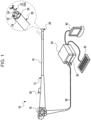
- an endoscope apparatus 10 includes an endoscope unit 12.
- the endoscope apparatus 10 is an apparatus for performing diagnosis and treatment on the inside of a body (for example, the stomach, large intestine, or the like) via the endoscope unit 12.
- the endoscope unit 12 includes an operation section 16 and an insertion section 18.
- the insertion section 18 is partially bent as a result of the operation section 16 being operated.
- the insertion section 18 is inserted while being bent in accordance with the shape of the inside of the body (for example, the shape of the large intestine tube).
- the endoscope apparatus 10 is an example of an "endoscope apparatus" according to the technique of the present disclosure.
- a distal end portion 20 of the insertion section 18 is provided with an endoscope 22, an illumination device 24, and a treatment tool opening 26.
- the endoscope 22 is a device that captures an image of the inside of a body.
- An example of the endoscope 22 is a CMOS camera. However, this is merely an example, and another type of camera, such as a CCD camera, may be used.
- the illumination device 24 is a device that irradiates the inside of a body with illumination light.
- the treatment tool opening 26 is an opening for causing a treatment tool 58 to protrude from the distal end portion 20.
- the treatment tool 58 is inserted into the insertion section 18 through a treatment tool insertion port 30.
- the treatment tool 58 passes through the insertion section 18 and is protruded into the body from the treatment tool opening 26.
- forceps 32 protrude, as the treatment tool 58, from the treatment tool opening 26.
- the endoscope 22 is an example of an "endoscope" according to the technique of the present disclosure.
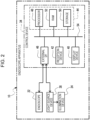
- the endoscope apparatus 10 includes a control device 34.
- the endoscope unit 12 is electrically connected to the control device 34 via a cable 36.
- the endoscope unit 12 is optically connected to a light source device 38 via the cable 36.
- a display device 40 and a reception device 42 are connected to the control device 34.
- the control device 34 includes a computer 44 and an external I/F 46.
- the computer 44 has a processor 48, a storage 50, and a RAM 52.
- the processor 48, the storage 50, the RAM 52, the external I/F 46, the display device 40, and the reception device 42 are connected to a bus 54.
- the control device 34 is an example of a "medical assistance device" according to the technique of the present disclosure.
- the computer 44 is an example of a "computer” according to the technique of the present disclosure.
- the processor 48 is an example of a "processor" according to the technique of the present disclosure.
- the processor 48 has, for example, a CPU and a GPU, and controls the entire control device 34.
- the GPU operates under control by the CPU and executes screen display, image processing, and/or the like.
- the processor 48 may be one or more CPUs having a GPU function integrated thereto, or may be one or more CPUs not having a GPU function integrated thereto.
- the storage 50 is a nonvolatile storage device that stores various programs, various parameters, and the like.
- An example of the storage 50 is a flash memory (for example, an EEPROM and/or an SSD).
- the flash memory is merely an example.
- Another nonvolatile storage device such as an HDD, or a combination of two or more types of nonvolatile storage devices may be used.
- the RAM 52 is a memory that temporarily stores information and is used as a work memory by the processor 48.
- the external I/F 46 manages communication between the control device 34 and the endoscope 22.
- the external I/F 46 outputs a signal from the processor 48 to the endoscope 22, and outputs a signal from the endoscope 22 to the processor 48.
- the processor 48 acquires, via the external I/F 46, images acquired by capturing images of the inside of a body by the endoscope 22 (hereinafter simply referred to as "endoscopic images").
- the endoscopic images may be moving images (for example, live view images, moving images for recording, or the like). However, this is merely an example, and endoscopic images 56 may be, for example, still images or the like acquired through continuous shooting.
- the external I/F 46 manages communication between the control device 34 and the light source device 38.
- the processor 48 controls the light source device 38 via the external I/F 46.
- the light source device 38 supplies illumination light to the illumination device 24 in accordance with an instruction from the processor 48.
- the display device 40 displays various pieces of information (for example, images, characters, and the like) under control by the processor 48.
- the display device 40 is, for example, an EL display, a liquid crystal display, or the like.
- the reception device 42 receives an instruction from a user of the endoscope apparatus 10.
- the user of the endoscope apparatus 10 is, for example, a medical practitioner (for example, a doctor, a nurse, a technician, and/or the like).
- the instruction received by the reception device 42 is acquired by the processor 48.
- the reception device 42 is, for example, a keyboard and/or a mouse.
- the keyboard and/or the mouse is merely an example.
- At least one of a proximity input device that receives a proximity input, a sound input device that receives a sound input, or a gesture input device that receives a gesture input may be applied as the reception device 42 instead of the keyboard and/or the mouse or together with the keyboard and/or the mouse.
- the proximity input device is, for example, a touch panel, a tablet, or the like.
- the reception device 42 and the endoscope apparatus 10 may be connected to each other in a wired manner or a wireless manner.
- the processor 48 performs a treatment name identification process as illustrated as an example in Fig. 3 .
- the storage 50 stores a treatment name identification process program 50A.
- the processor 48 reads out the treatment name identification process program 50A from the storage 50 and executes the read treatment name identification process program 50A on the RAM 52, thereby performing a treatment name identification process.
- the treatment name identification process is implemented by the processor 48 operating as a treatment tool identification unit 48A, an internal aspect identification unit 48B, a treatment name identification unit 48C, and an output unit 48D.
- the treatment name identification process program 50A is an example of a "program" according to the technique of the present disclosure.
- the storage 50 also stores a treatment tool identifying NN 50B, an internal aspect identifying NN 50C, and a treatment name derivation table 50D.
- the treatment tool identifying NN 50B and the internal aspect identifying NN 50C are trained models generated by optimizing an NN 11 and an NN 19 through machine learning.
- the treatment tool identifying NN 50B is acquired by causing the NN 11 to perform machine learning.
- the machine learning that the NN 11 is caused to perform is machine learning using a plurality of treatment tool images 13.
- An example of the treatment tool image 13 is an endoscopic image including a treatment tool 15.
- the treatment tool 15 refers to a treatment tool (for example, forceps, a snare, a knife, and/or the like) that is used while being protruded from a distal end portion (for example, the distal end portion 20) of an endoscope.
- forceps are illustrated as the treatment tool 15.
- the processor 48 uses the treatment tool identifying NN 50B to identify a treatment tool included in an endoscopic image, that is, a treatment tool corresponding to the treatment tool 15.
- a treatment tool included in an endoscopic image refers to a treatment tool included as an image in the endoscopic image.
- the internal aspect identifying NN 50C is a trained model generated by optimizing the NN 19 through machine learning.
- the internal aspect identifying NN 50C is acquired by causing the NN 19 to perform machine learning.
- the machine learning that the NN 19 is caused to perform is machine learning using a plurality of internal aspect images 23.
- An example of the internal aspect image 23 is an endoscopic image including an internal aspect 21.
- the internal aspect 21 refers to an aspect indicating a scar (for example, a resection scar and/a burn scar) resulting from a treatment performed in the body using a treatment tool protruded from a distal end portion (for example, the distal end portion 20) of an endoscope.
- a burn scar is illustrated as the internal aspect 21.
- the processor 48 uses the internal aspect identifying NN 50C to identify an internal aspect included in an endoscopic image, that is, an internal aspect corresponding to the internal aspect 21.
- the treatment name derivation table 50D is a table for deriving a treatment name.
- the treatment name derivation table 50D is a table having, as input values, the type of a treatment tool included in an endoscopic image and an internal aspect included in the endoscopic image, and having, as an output value, a treatment name.
- an arithmetic expression may be used in which a value indicating the type of a treatment tool and an internal aspect is an independent variable and a value indicating a treatment name is a dependent variable.
- an endoscopic image group 55 is acquired.
- the endoscopic image group 55 includes a plurality of endoscopic images 56.
- the endoscopic image group 55 is temporarily stored in the RAM 52.
- the treatment tool identification unit 48A acquires the endoscopic image group 55 from the RAM 52.
- the treatment tool identification unit 48A may acquire several frames (for example, three frames) of endoscopic images 56 included in the endoscopic image group 55 at one time, or may consecutively acquire the endoscopic images 56 frame by frame.
- the endoscopic image group 55 includes an endoscopic image 56A in which the treatment tool 58 is seen.
- the treatment tool identification unit 48A identifies, based on the endoscopic image 56A, the type of the treatment tool 58 included in the endoscopic image 56A. For example, the treatment tool identification unit 48A performs an image recognition process using AI to identify the type of the treatment tool 58.
- the endoscopic image group 55 is an example of "a plurality of endoscopic images" according to the technique of the present disclosure
- the endoscopic image 56A is an example of a "first endoscopic image” according to the technique of the present disclosure.
- the treatment tool identification unit 48A first acquires the treatment tool identifying NN 50B from the storage 50.
- the treatment tool identification unit 48A inputs the endoscopic images 56 to the treatment tool identifying NN 50B.
- the treatment tool identifying NN 50B performs identification of the type of the treatment tool 58 on the endoscopic images 56.
- the treatment tool identifying NN 50B outputs the type of the treatment tool 58 as a treatment tool identification result 60.
- Fig. 4 illustrates an example in which the type of the treatment tool 58 is identified to be forceps 32 as the treatment tool identification result 60.
- the treatment name identification unit 48C acquires the treatment tool identification result 60, which is a result of identifying the type of the treatment tool 58, from the treatment tool identification unit 48A.
- the treatment tool 58 is an example of a "first treatment tool” according to the technique of the present disclosure
- the treatment tool identification result 60 is an example of a "first identification result” according to the technique of the present disclosure.
- the predetermined condition is a case where the type of the treatment tool 58 is not identified in a plurality of frames (for example, two to three frames) after the type of the treatment tool 58 is identified (i.e., a case where the treatment tool 58 is not seen in the endoscopic images 56).
- the internal aspect identification process refers to a process of identifying an internal aspect.
- the identification of the internal aspect 62 by the internal aspect identification unit 48B is performed within a time period determined in accordance with the type of the treatment tool 58.
- the internal aspect identification unit 48B derives a time period for identifying the internal aspect 62 by using an aspect identification time computing expression (not illustrated).
- the aspect identification time computing expression is a computing expression having, as an independent variable, a numerical value indicating the treatment tool identification result 60, and having, as a dependent variable, a numerical value indicating a time period for identifying the internal aspect 62.
- the identification of the internal aspect 62 is performed within 30 seconds from the start of the identification of the internal aspect 62.
- the internal aspect identification unit 48B acquires the endoscopic image group 55 from the RAM 52.
- the endoscopic image group 55 includes an endoscopic image 56B in which the internal aspect 62 (for example, a scar resulting from a treatment with the treatment tool 58) is seen.
- the internal aspect 62 is generated after the treatment with the treatment tool 58.
- the endoscopic image 56B is an image acquired after the endoscopic image 56A.
- the internal aspect identification unit 48B identifies, based on the endoscopic image 56B, the internal aspect 62 included in the endoscopic image 56B. For example, the internal aspect identification unit 48B performs an image recognition process using AI to identify the internal aspect 62.
- the endoscopic image 56B is an example of a "second endoscopic image” according to the technique of the present disclosure
- the internal aspect 62 is an example of an "internal aspect” according to the technique of the present disclosure
- an aspect identification result 64 is an example of a "second identification result" according to the technique of the present disclosure.
- the internal aspect identification unit 48B acquires the internal aspect identifying NN 50C from the storage 50.
- the internal aspect identification unit 48B inputs the endoscopic images 56 to the internal aspect identifying NN 50C.
- the internal aspect identifying NN 50C performs identification of the internal aspect 62 on the endoscopic images 56.
- the internal aspect identifying NN 50C outputs the aspect identification result 64.
- Fig. 6 illustrates an example in which the internal aspect 62 is identified to be a burn scar 62A (i.e., a scar of a part of the inside of the body burned off by the treatment tool 58) as the aspect identification result 64.
- the burn scar 62A as the internal aspect 62 is merely an example, and may be, for example, smoke or the like generated when a part of the inside of the body is burned off.
- the treatment name identification unit 48C acquires the aspect identification result 64, which is a result of identifying the internal aspect, from the internal aspect identification unit 48B.
- the treatment name identification unit 48C acquires the treatment tool identification result 60 from the treatment tool identification unit 48A.
- the treatment name identification unit 48C also acquires the aspect identification result 64 from the internal aspect identification unit 48B.
- the treatment name identification unit 48C identifies a treatment name 66 that is related to the treatment tool identification result 60 and the aspect identification result 64.
- the treatment name identification unit 48C acquires the treatment name derivation table 50D from the storage 50.
- the treatment name derivation table 50D is a table having the treatment tool identification result 60 and the aspect identification result 64 as input values and having the treatment name 66 as an output value.
- the treatment name identification unit 48C derives the treatment name 66 that is related to the treatment tool identification result 60 and the aspect identification result 64 from the treatment name derivation table 50D.
- “forceps” are identified as the treatment tool identification result 60
- "burn scar” is identified as the aspect identification result 64.
- the treatment name identification unit 48C derives, from the treatment name derivation table 50D, "hot biopsy” as the treatment name 66 that is related to "forceps", which is the treatment tool identification result 60, and "burn scar", which is the aspect identification result 64.
- the treatment name 66 is an example of a "treatment name” according to the technique of the present disclosure.
- the output unit 48D acquires information indicating the treatment name 66 from the treatment name identification unit 48C.
- the output unit 48D also receives designation of an endoscopic image 56 by a user 43 via the reception device 42.
- the output unit 48D acquires the endoscopic image 56 designated by the user 43 from the RAM 52.
- the output unit 48D regards the acquired endoscopic image 56 as an output image 57.
- the output image 57 is the endoscopic image 56 that is included in the endoscopic image group 55 and that is acquired during a period in which the endoscopic image 56A including the treatment tool 58 and the endoscopic image 56B including the internal aspect 62 are acquired.
- the output image 57 is an example of an "output image" according to the technique of the present disclosure.
- the output unit 48D associates the treatment name 66 acquired from the treatment name identification unit 48C with the output image 57. For example, the output unit 48D adds information indicating the treatment name 66 as accessory information of the output image 57.
- the output unit 48D outputs the information indicating the treatment name 66 to the display device 40.
- the information indicating the treatment name 66 is output as a screen 68 to the display device 40.
- the output unit 48D causes the display device 40 to display the screen 68.
- the treatment name 66 and the output image 57 are displayed together. In the example illustrated in Fig. 8 , a state is illustrated in which the treatment name 66 and the output image 57 are arranged and displayed within the screen 68.
- the treatment name 66 may be displayed in a PIP manner or a pop-up manner with respect to the output image 57.
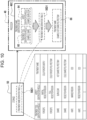
- Fig. 9 illustrates an example of a flow of a treatment name identification process performed by the processor 48 of the endoscope apparatus 10.
- the treatment name identification process illustrated in Fig. 9 is an example of a "medical assistance method" according to the technique of the present disclosure.
- step ST10 the treatment tool identification unit 48A determines whether a timing to acquire the endoscopic images 56 has come. If the timing to acquire the endoscopic images 56 has not come in step ST10, a negative determination is made and a determination in step ST10 is made again. If the timing to acquire the endoscopic images 56 has come in step ST10, an affirmative determination is made and the treatment name identification process proceeds to step ST12.
- step ST12 the treatment tool identification unit 48A transmits an imaging signal to the endoscope 22. After the process of step ST12 is executed, the treatment name identification process proceeds to step ST14.
- step ST 14 the treatment tool identification unit 48A acquires the endoscopic image group 55 captured by the endoscope 22 from the RAM 52. After the process of step ST14 is executed, the treatment name identification process proceeds to step ST16.
- step ST16 the treatment tool identification unit 48A starts identification of the type of the treatment tool 58 included in the endoscopic image 56A by using the treatment tool identifying NN 50B for the endoscopic images 56 acquired in step ST14. After the process of step ST16 is executed, the treatment name identification process proceeds to step ST18.
- step ST 18 the treatment tool identification unit 48A determines whether identification of the type of the treatment tool 58 has finished. If identification of the type of the treatment tool 58 has not finished in step ST18, a negative determination is made and a determination in step ST18 is made again. If identification of the type of the treatment tool 58 has finished in step ST18, an affirmative determination is made and the treatment name identification process proceeds to step ST19.
- step ST19 the internal aspect identification unit 48B determines whether a predetermined condition is satisfied.
- a timing to identify an internal aspect is a timing at which three frames have passed after the treatment tool 58 is not seen in the endoscopic images 56 any longer as a result of the process of step ST16 and the process of step ST18. If the predetermined condition is not satisfied in step ST19, a negative determination is made and a determination in step ST19 is made again. If the predetermined condition is satisfied in step ST19, an affirmative determination is made and the process name identification process proceeds to step ST20.
- step ST20 the internal aspect identification unit 48B starts identification of the internal aspect 62 included in the endoscopic image 56B by using the internal aspect identifying NN 50C for the endoscopic images 56 acquired in step ST14.
- the treatment name identification process proceeds to step ST22.
- step ST22 the internal aspect identification unit 48B determines whether identification of the internal aspect 62 has finished. If identification of the internal aspect 62 has not finished in step ST22, a negative determination is made and a determination in step ST22 is made again. If identification of the internal aspect 62 has finished in step ST22, an affirmative determination is made and the treatment name identification process proceeds to step ST24.
- step ST24 the treatment name identification unit 48C acquires the treatment tool identification result 60 from the treatment tool identification unit 48A.
- the treatment name identification unit 48C also acquires the aspect identification result 64 from the internal aspect identification unit 48B.
- the treatment name identification treatment proceeds to step ST26.
- step ST26 the treatment name identification unit 48C derives, from the treatment name derivation table 50D, the treatment name 66 that is related to the treatment tool identification result 60 and the aspect identification result 64. After the process of step ST26 is executed, the treatment name identification process proceeds to step ST28.
- step ST28 the output unit 48D associates the treatment name 66 acquired from the treatment name identification unit 48C with the output image 57 designated by the user 43 via the reception device 42.
- the treatment name identification process proceeds to step ST30.
- step ST30 the output unit 48D outputs, as information indicating the treatment name 66, the screen 68 including the treatment name 66 and the output image 57 to the display device 40. Accordingly, the treatment name 66 and the output image 57 are arranged and displayed on the display device 40.
- the treatment name identification process proceeds to step ST32.
- step ST32 the output unit 48D determines whether a condition for ending the treatment name identification process (hereinafter referred to as an "end condition") is satisfied.
- An example of the end condition is a condition that an instruction to end the treatment name identification process has been received by the reception device 42. If the end condition is not satisfied in step ST32, a negative determination is made and the treatment name identification process returns to step ST10. If the end condition is satisfied in step ST32, an affirmative determination is made and the treatment name identification process ends.
- information indicating the treatment name 66 is output based on the treatment tool identification result 60, which is a result of identifying the type of the treatment tool 58, and the aspect identification result 64, which is a result of identifying the internal aspect 62.
- the treatment tool identification result 60 which is a result of identifying the type of the treatment tool 58
- the aspect identification result 64 which is a result of identifying the internal aspect 62.
- the endoscopic image 56B including the internal aspect 62 is acquired by the endoscope 22 after the endoscopic image 56A including the treatment tool 58 is acquired.
- the endoscopic image 56B including the internal aspect 62 is acquired by the endoscope 22 after the endoscopic image 56A including the treatment tool 58 is acquired.
- the endoscope apparatus 10 in a case where the type of the treatment tool 58 is not identified in a plurality of frames (for example, two to three frames) after the type of the treatment tool 58 is identified, a shift from the treatment tool identification process by the treatment tool identification unit 48A to the internal aspect identification process by the internal aspect identification unit 48B occurs.
- the identification of the internal aspect 62 by the internal aspect identification unit 48B is performed within a time period determined in accordance with the type of the treatment tool 58.
- the subsequent identification of the internal aspect 62 is performed. This makes it easy to estimate that the treatment with the treatment tool 58 and the internal aspect 62 as a result thereof are included in a series of treatment actions, and the treatment name 66 can be accurately identified.
- the treatment name 66 is associated with the output image 57, and the output image 57 is an image acquired while the endoscopic image 56A and the endoscopic image 56B are acquired.
- the treatment name 66 and the output image 57 are associated with each other, but the technique of the present disclosure is not limited thereto.
- the treatment name 66 may be associated with the endoscopic image 56B including the internal aspect 62, or may be associated with a plurality of frames of endoscopic images including the endoscopic image 56B.
- the technique of the present disclosure is not limited thereto.
- an image identifying NN (not illustrated) may be used instead of the treatment tool identifying NN 50B and the internal aspect identifying NN 50C.
- the image identifying NN is an NN for identifying the treatment tool 58 and the internal aspect 62 included in the endoscopic image 56A, and is a trained model generated by optimizing an NN through machine learning.
- the treatment tool identification unit 48A identifies the type of the treatment tool 58 included in the endoscopic image 56A by using the image identifying NN.
- the internal aspect identification unit 48B identifies the internal aspect 62 included in the endoscopic image 56B by using the image identifying NN.
- the treatment name derivation table 50D is a table having, as the treatment tool identification result 60, forceps as an input value, having, as the aspect identification result 64, burn scar or resection region as an input value, and having, as the treatment name 66, hot biopsy or biopsy as an output value.
- a treatment name derivation table 50D1 includes, as input values, the treatment tool identification result 60 other than forceps and the aspect identification result 64 other than burn scar.
- the treatment name derivation table 50D1 has, as an output value, the treatment name 66 other than hot biopsy or biopsy.
- the treatment name derivation table 50D1 has, as the treatment tool identification result 60, forceps as an input value, and further has, as the aspect identification result 64, a region in which a target portion in the body has been partially resected (i.e., a partial resection region) as an input value.
- the treatment name derivation table 50D1 has, as the treatment name 66, cold forceps biopsy as an output value.
- the treatment name derivation table 50D1 has, as the treatment tool identification result 60, forceps as an input value, and further has, as the aspect identification result 64, a region in which a target portion in the body has been fully resected (i.e., a full resection region) as an input value.
- the treatment name derivation table 50D 1 has, as the treatment name 66, cold forceps polypectomy as an output value.
- the treatment name derivation table 50D1 has, as the treatment tool identification result 60, snare as an input value, and further has, as the aspect identification result 64, burn scar as an input value.
- the treatment name derivation table 50D1 has, as the treatment name 66, hot snare polypectomy as an output value.
- the treatment name derivation table 50D1 has, as the treatment tool identification result 60, snare as an input value, and further has, as the aspect identification result 64, resection region as an input value.
- the treatment name derivation table 50D1 has, as the treatment name 66, cold snare polypectomy as an output value.
- the treatment name derivation table 50D1 has, as the treatment tool identification result 60, knife as an input value, and further has, as the aspect identification result 64, marked region as an input value.
- the treatment name derivation table 50D1 has, as the treatment name 66, ESD as an output value.
- the treatment name derivation table 50D1 has, as the treatment tool identification result 60, knife as an input value, and further has, as the aspect identification result 64, resection region (for example, a submucosal layer after a lesion region has been peeled off) as an input value.
- the treatment name derivation table 50D1 has, as the treatment name 66, ESD as an output value.
- the treatment name 66 is derived from the treatment name derivation table 50D1.
- the internal aspect 62 as input values include burn scar, resection region, change in resection region, and marked region.
- a treatment name derivation table 50D is a table having the type of the treatment tool 58 (see Fig. 4 ) included in the endoscopic image 56 (see Fig. 4 ) and the internal aspect 62 (see Fig. 6 ) included in the endoscopic image 56 as input values and having the treatment name 66 (see Fig. 7 ) as an output value, but the technique of the present disclosure is not limited thereto.
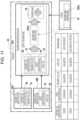
- a treatment name derivation table 50D2 has a treatment tool size 61 and an aspect size 65 as input values in addition to the treatment tool identification result 60 and the aspect identification result 64.
- the treatment tool size 61 is the size of the treatment tool 58
- the aspect size 65 is the size of the internal aspect 62.
- the treatment name derivation table 50D2 has the treatment tool identification result 60, the aspect identification result 64, the treatment tool size 61, and the aspect size 65 as input values.
- the treatment tool size 61 is derived by using the treatment tool identifying NN 50B at the time of identifying the type of the treatment tool 58 included in the endoscopic image 56 by the treatment tool identification unit 48A.
- the aspect size 65 is derived by using the internal aspect identifying NN 50C at the time of identifying the internal aspect 62 included in the endoscopic image 56 by the internal aspect identification unit 48B.
- the treatment name derivation table 50D2 has, as an output value, the treatment name 66 that is related to the treatment tool identification result 60, the aspect identification result 64, the treatment tool size 61, and the aspect size 65.
- the treatment name derivation table 50D2 has, as the treatment tool identification result 60, forceps as an input value, and has, as the aspect identification result 64, lesion region as an input value.
- the treatment name derivation table 50D2 has, as input values, the size of forceps, which is the treatment tool 58, and the size of a lesion region, which is the internal aspect 62.
- the treatment name derivation table 50D2 has, as the treatment name 66, cold forceps biopsy as an output value.
- the treatment name derivation table 50D2 has, as the treatment name 66, cold forceps polypectomy as an output value.
- the internal aspect 62 includes a lesion region.
- the information indicating the treatment name 66 is information that is based on the treatment tool size 61 and the aspect size 65.
- the treatment name derivation table 50D3 has, as input values, the treatment tool identification result 60, the aspect identification result 64, and the ratio of the treatment tool size 61 to the aspect size 65.
- the ratio of the treatment tool size 61 to the aspect size 65 is calculated by the treatment name identification unit 48C, based on the treatment tool size 61 and the aspect size 65.
- the treatment name derivation table 50D2 has, as an output value, the treatment name 66 that is related to the treatment tool identification result 60, the aspect identification result 64, and the ratio of the treatment tool size 61 to the aspect size 65.
- the treatment name derivation table 50D3 has, as the treatment tool identification result 60, forceps as an input value, and has, as the aspect identification result 64, lesion region as an input value.
- the treatment name derivation table 50D3 has, as an input value, the ratio between the size of forceps, which is the treatment tool 58, and the size of a lesion region, which is the internal aspect 62.
- the treatment name derivation table 50D3 has, as the treatment name 66, cold forceps biopsy as an output value.
- the treatment name derivation table 50D3 has, as the treatment name 66, cold forceps polypectomy as an output value.
- the internal aspect 62 is identified based on the endoscopic image 56B including the internal aspect 62, but the technique of the present disclosure is not limited thereto.
- the internal aspect 62 may be identified based on an identification result of the treatment tool 58 together with the endoscopic image 56B.
- the internal aspect identification unit 48B acquires the endoscopic image group 55 from the RAM 52.
- the endoscopic image group 55 includes the endoscopic image 56B in which the internal aspect 62 is seen.
- the internal aspect identification unit 48B also acquires the treatment tool identification result 60 from the treatment tool identification unit 48A.
- Fig. 13 illustrates an example in which the forceps 32 are identified as the treatment tool 58.
- the internal aspect identification unit 48B acquires, based on the treatment tool identification result 60, the internal aspect identifying NN 50C1 from the storage 50.
- the internal aspect identification unit 48B identifies the internal aspect 62 by using the internal aspect identifying NN 50C.
- the treatment name identification unit 48C acquires the aspect identification result 64 from the internal aspect identification unit 48B.
- the internal aspect 62 is identified based on the endoscopic image 56B including the internal aspect 62 and the treatment tool identification result 60.
- the treatment name 66 it is possible to realize output of the treatment name 66 with higher accuracy than in a case where the internal aspect 62 is identified based on only the endoscopic image 56B.
- the treatment name 66 is identified in accordance with the treatment tool identification result 60 and the aspect identification result 64, but the technique of the present disclosure is not limited thereto.
- the treatment name 66 is identified in accordance with the identification results of two types of treatment tools 58.
- the treatment tool identification unit 48A acquires the endoscopic image group 55 from the RAM 52.
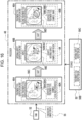
- the endoscopic image group 55 includes an endoscopic image 56C including a first treatment tool 58A and an endoscopic image 56D including a second treatment tool 58B.
- the treatment tool identification unit 48A identifies the type of the first treatment tool 58A included in the endoscopic image 56C by using the treatment tool identifying NN 50B.
- Fig. 14 illustrates an example in which the type of the first treatment tool 58A is identified to be a local injection needle 59A as a first treatment tool identification result 60A.
- the endoscopic image 56C is an example of a "first endoscopic image" according to the technique of the present disclosure
- the first treatment tool 58A is an example of a "first treatment tool” according to the technique of the present disclosure
- the first treatment tool identification result 60A is an example of a "first identification result” according to the technique of the present disclosure.
- the treatment tool identification unit 48A performs the subsequent identification of the type of the second treatment tool 58B.
- the predetermined condition is that the second treatment tool 58B is seen in the endoscopic image 56D.
- the treatment tool identification unit 48A identifies the type of the second treatment tool 58B included in the endoscopic image 56 by using the treatment tool identifying NN 50B.
- Fig. 14 illustrates an example in which the type of the second treatment tool 58B is identified to be a snare 59B as a second treatment tool identification result 60B.
- the endoscopic image 56D is an example of a "second endoscopic image" according to the technique of the present disclosure
- the second treatment tool identification result 60B is an example of a "second identification result” according to the technique of the present disclosure
- the second treatment tool 58B is an example of a "second treatment tool” according to the technique of the present disclosure.
- the treatment name identification unit 48C derives, from the treatment name derivation table 50D4, "EMR" as the treatment name 66 that is related to "local injection needle”, which is the first treatment tool identification result 60A, and "snare", which is the second treatment tool identification result 60B.
- information indicating the treatment name 66 is output based on the first treatment tool identification result 60A, which is a result of identifying the type of the first treatment tool 58A, and the second treatment tool identification result 60B, which is a result of identifying the type of the second treatment tool 58B.
- the first treatment tool identification result 60A which is a result of identifying the type of the first treatment tool 58A
- the second treatment tool identification result 60B which is a result of identifying the type of the second treatment tool 58B.
- the treatment name 66 is identified in accordance with the treatment tool identification result 60 and the aspect identification result 64, but the technique of the present disclosure is not limited thereto.
- the treatment name 66 is identified in accordance with the identification results of the two types of treatment tools 58 and the identification result of the internal aspect 62.
- the treatment tool identification unit 48A acquires the endoscopic image group 55 from the RAM 52.
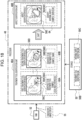
- the endoscopic image group 55 includes the endoscopic image 56C including the first treatment tool 58A and the endoscopic image 56D including the second treatment tool 58B.
- the treatment tool identification unit 48A identifies the type of the first treatment tool 58A included in the endoscopic image 56 by using the treatment tool identifying NN 50B.
- Fig. 16 illustrates an example in which the type of the first treatment tool 58A is identified to be the local injection needle 59A as the first treatment tool identification result 60A.
- the endoscopic image 56C is an example of a "first endoscopic image" according to the technique of the present disclosure
- the first treatment tool 58A is an example of a "first treatment tool” according to the technique of the present disclosure
- the first treatment tool identification result 60A is an example of a "first identification result” according to the technique of the present disclosure.
- the predetermined condition is that the type of the first treatment tool 58A is not identified in a plurality of frames (for example, two to three frames) after the type of the first treatment tool 58A is identified.
- the internal aspect identification unit 48B acquires the endoscopic image group 55 from the RAM 52.
- the endoscopic image group 55 includes an endoscopic image 56E including the internal aspect 62.
- the internal aspect 62 is generated after the treatment with the first treatment tool 58A.
- the endoscopic image 56E is an image acquired after the endoscopic image 56C.
- the internal aspect identification unit 48B identifies the internal aspect 62 included in the endoscopic image 56E by using the internal aspect identifying NN 50C. Fig.
- the internal aspect 62 is identified to be a hump region 62B (i.e., a region in which a part of the inside of the body is humped as a result of a liquid (for example, normal saline solution) being injected through the local injection needle 59A) as the aspect identification result 64.
- the endoscopic image 56E is an example of a "second endoscopic image" according to the technique of the present disclosure
- the internal aspect 62 is an example of a "first internal aspect” according to the technique of the present disclosure
- the aspect identification result 64 is an example of a "second identification result" according to the technique of the present disclosure.
- a shift from the internal aspect identification process by the internal aspect identification unit 48B to the second treatment tool identification process by the treatment tool identification unit 48A occurs.
- the predetermined condition is that the second treatment tool 58B is seen in the endoscopic image 56D.
- the treatment tool identification unit 48A identifies the type of the second treatment tool 58B included in the endoscopic image 56D by using the treatment tool identifying NN 50B.
- the internal aspect 62 is generated after the treatment with the first treatment tool 58A, and the second treatment tool 58B is used for the internal aspect 62.
- the endoscopic image 56D is an image acquired after the endoscopic image 56E.
- Fig. 16 illustrates an example in which the type of the second treatment tool 58B is identified to be the snare 59B as the second treatment tool identification result 60B.
- the endoscopic image 56E is an example of a "third endoscopic image” according to the technique of the present disclosure
- the second treatment tool 58B is an example of a "third treatment tool” according to the technique of the present disclosure
- the second treatment tool identification result 60B is an example of a "third identification result” according to the technique of the present disclosure.
- the treatment name identification unit 48C acquires the first treatment tool identification result 60A and the second treatment tool identification result 60B from the treatment tool identification unit 48A.
- the treatment name identification unit 48C also acquires the aspect identification result 64 from the internal aspect identification unit 48B.
- the treatment name identification unit 48C derives, from a treatment name derivation table 50D5, the treatment name 66 that is related to the first treatment tool identification result 60A and the second treatment tool identification result 60B.
- "local injection needle" is identified as the first treatment tool identification result 60A
- "snare” is identified as the second treatment tool identification result 60B.
- "hump region” is identified as the aspect identification result 64.
- the treatment name identification unit 48C derives, from the treatment name derivation table 50D4, "EMR" as the treatment name 66 that is related to the first treatment tool identification result 60A, the second treatment tool identification result 60B, and the aspect identification result 64.
- the treatment name derivation table 50D5 has, as the first treatment tool identification result 60, local injection needle as an input value.
- the treatment name derivation table 50D5 has, as the aspect identification result 64, hump region as an input value. Furthermore, the treatment name derivation table 50D5 has, as the second treatment tool identification result 60B, knife as an input value.
- the treatment name derivation table 50D4 has, as the treatment name 66, ESD as an output value.
- the information indicating the treatment name 66 is information that is related to the first treatment tool identification result 60A, which is a result of identifying the type of the first treatment tool 58A, the aspect identification result 64, which is a result of identifying the internal aspect 62, and the second treatment tool identification result 60B, which is a result of identifying the type of the second treatment tool 58B.
- the first treatment tool identification result 60A which is a result of identifying the type of the first treatment tool 58A
- the aspect identification result 64 which is a result of identifying the internal aspect 62
- the second treatment tool identification result 60B which is a result of identifying the type of the second treatment tool 58B.
- the endoscopic image 56D including the second treatment tool 58B is acquired by the endoscope 22 after the endoscopic image 56E including the internal aspect 62 is acquired.
- identification is performed in the order of the first treatment tool 58A (for example, the local injection needle 59A), the internal aspect 62 (for example, the hump region 62B), and the second treatment tool 58B (for example, the snare 59B), but the technique of the present disclosure is not limited thereto.
- identification is performed in the order of the first treatment tool 58A, the second treatment tool 58B, and the internal aspect 62.
- the treatment tool identification unit 48A acquires the endoscopic image group 55 from the RAM 52.
- the endoscopic image group 55 includes the endoscopic image 56C including the first treatment tool 58A and the endoscopic image 56D including the second treatment tool 58B.
- the second treatment tool 58B is used after the treatment with the first treatment tool 58A.
- the endoscopic image 56D is an image acquired after the endoscopic image 56C.
- the treatment tool identification unit 48A identifies the type of the first treatment tool 58A included in the endoscopic image 56C by using the treatment tool identifying NN 50B.
- the endoscopic image 56C is an example of a "first endoscopic image” according to the technique of the present disclosure
- the first treatment tool 58A is an example of a "first treatment tool” according to the technique of the present disclosure
- the first treatment tool identification result 60A is an example of a "first identification result” according to the technique of the present disclosure.
- the treatment tool identification unit 48A identifies the type of the second treatment tool 58B included in the endoscopic image 56D by using the treatment tool identifying NN 50B.
- the endoscopic image 56D is an example of a "second endoscopic image” according to the technique of the present disclosure
- the second treatment tool 58B is an example of a "second treatment tool” according to the technique of the present disclosure
- the second treatment tool identification result 60B is an example of a "second identification result” according to the technique of the present disclosure.
- the predetermined condition is that the type of the second treatment tool 58B is not identified in a plurality of frames (for example, two to three frames) after the type of the second treatment tool 58B is identified.
- the internal aspect identification unit 48B acquires the endoscopic image group 55 from the RAM 52.
- the endoscopic image group 55 includes the endoscopic image 56E including the internal aspect 62.
- the internal aspect 62 is generated after the treatment with the second treatment tool 58B.
- the endoscopic image 56E is an image acquired after the endoscopic image 56D.
- the internal aspect identification unit 48B identifies the internal aspect 62 included in the endoscopic image 56 by using the internal aspect identifying NN 50C.
- the endoscopic image 56E is an example of a "third endoscopic image” according to the technique of the present disclosure
- the internal aspect 62 is an example of a "second internal aspect” according to the technique of the present disclosure
- the aspect identification result 64 is an example of a "third identification result” according to the technique of the present disclosure.
- the treatment name identification unit 48C derives, from a treatment name derivation table 50D6, the treatment name 66 that is related to the first treatment tool identification result 60A and the second treatment tool identification result 60B.
- “local injection needle” is identified as the first treatment tool identification result 60A
- "snare” is identified as the second treatment tool identification result 60B.
- "burn scar” is identified as the aspect identification result 64.
- the treatment name identification unit 48C derives, from the treatment name derivation table 50D6, "EMR" as the treatment name 66 that is related to the first treatment tool identification result 60A, the second treatment tool identification result 60B, and the aspect identification result 64.
- the information indicating the treatment name 66 is information that is related to the first treatment tool identification result 60A, which is a result of identifying the type of the first treatment tool 58A, the second treatment tool identification result 60B, which is a result of identifying the type of the second treatment tool 58B, and the aspect identification result 64, which is a result of identifying the internal aspect 62.
- the endoscopic image 56E including the internal aspect 62 is acquired by the endoscope 22 after the endoscopic image 56D including the second treatment tool 58B is acquired.
- the endoscopic image 56E including the internal aspect 62 is acquired by the endoscope 22 after the endoscopic image 56D including the second treatment tool 58B is acquired.
- identification is performed in the order of the treatment tool 58 and the internal aspect 62, but the technique of the present disclosure is not limited thereto.
- identification is performed in the order of the internal aspect 62 and the treatment tool 58.
- the internal aspect identification unit 48B acquires the endoscopic image group 55 from the RAM 52.
- the endoscopic image group 55 includes the endoscopic image 56E including the internal aspect 62.
- the internal aspect identification unit 48B identifies the internal aspect 62 included in the endoscopic image 56 by using the internal aspect identifying NN 50C.
- Fig. 20 illustrates an example in which the internal aspect 62 is identified to be a marked region 62C as a treatment target region (for example, a region in which a target portion in the body is marked with a pigment) as the aspect identification result 64.
- the marked region 62C is an example of a "treatment target region" according to the technique of the present disclosure.
- a shift from the internal aspect identification process by the internal aspect identification unit 48B to the treatment tool identification process by the treatment tool identification unit 48A occurs.
- the predetermined condition is that the treatment tool 58 is seen in the endoscopic image 56D.
- the internal aspect identification unit 48B acquires the endoscopic image group 55 from the RAM 52.
- the endoscopic image group 55 includes an endoscopic image 56F including the treatment tool 58.
- a treatment with the treatment tool 58 for example, resection of the treatment target region
- the endoscopic image 56F is an image acquired after the endoscopic image 56E.
- the treatment tool identification unit 48A identifies the type of the treatment tool 58 included in the endoscopic image 56F by using the treatment tool identifying NN 50B.
- Fig. 20 illustrates an example in which the treatment tool 58 is identified to be a knife 59C as the treatment tool identification result 60.
- the treatment name identification unit 48C derives, from a treatment name derivation table 50D7, the treatment name 66 that is related to the aspect identification result 64 and the treatment tool identification result 60.
- “knife” is identified as the treatment tool identification result 60
- "marked region” is identified as the aspect identification result 64.
- a marked region is a region in which a resection target portion is marked in the body by using a knife.
- the treatment name identification unit 48C derives, from the treatment name derivation table 50D7, "ESD" as the treatment name 66 that is related to the treatment tool identification result 60 and the aspect identification result 64.
- information indicating the treatment name 66 is output based on the aspect identification result 64, which is a result of identifying the internal aspect 62, and the treatment tool identification result 60, which is a result of identifying the type of the treatment tool 58.
- the aspect identification result 64 which is a result of identifying the internal aspect 62
- the treatment tool identification result 60 which is a result of identifying the type of the treatment tool 58.
- the endoscopic image 56F including the treatment tool 58 is acquired by the endoscope 22 after the endoscopic image 56E including the internal aspect 62 is acquired.
- the endoscopic image 56F including the treatment tool 58 is acquired by the endoscope 22 after the endoscopic image 56E including the internal aspect 62 is acquired.
- the marked region 62C which is a treatment target region, is identified as the internal aspect 62.
- treatment name derivation tables 50D and 50D1 to 50D7 are different tables, but the technique of the present disclosure is not limited thereto.
- the treatment name derivation tables 50D and 50D1 to 50D7 may be combined into one table.
- an image recognition process is performed on the endoscopic images 56 acquired during an examination or remedy to identify the treatment name 66, but the technique of the present disclosure is not limited thereto.
- an image recognition process may be performed on the endoscopic images 56 acquired in a past examination or remedy to identify the treatment name 66.
- a device that performs a treatment name identification process may be provided outside the endoscope apparatus 10.
- an endoscope system 100 may be used as illustrated as an example in Fig. 22 .
- the endoscope system 100 includes the endoscope apparatus 10 and an external device 110.
- the external device 110 is, for example, a server.
- the server is implemented by, for example, cloud computing.
- cloud computing is illustrated, but this is merely an example.
- the server may be implemented by a mainframe, or may be implemented by network computing such as fog computing, edge computing, or grid computing.
- a server is given as an example of the external device 110, but this is merely an example. At least one personal computer or the like may be used as the external device 110 instead of the server.
- the external device 110 includes a processor 112, a storage 114, a RAM 116, and a communication I/F 118.
- the processor 112, the storage 114, the RAM 116, and the communication I/F 118 are connected to each other by a bus 120.
- the communication I/F 118 is connected to the endoscope apparatus 10 via a network 122.
- the network 122 is, for example, the Internet.
- the network 122 is not limited to the Internet, and may be a WAN and/or a LAN such as an intranet.
- the storage 114 stores the treatment name identification process program 50A, the treatment tool identifying NN 50B, the internal aspect identifying NN 50C, and the treatment name derivation table 50D.
- the processor 112 executes the treatment name identification process program 50Ain the RAM 116.
- the processor 112 performs the above-described treatment name identification process in accordance with the treatment name identification process program 50A executed on the RAM 116.
- the processor 112 processes the endoscopic images 56 by using the treatment tool identifying NN 50B and the internal aspect identifying NN 50C as described in each of the above-described examples.
- the endoscopic image group 55 including a plurality of endoscopic images 56 is transmitted, for example, from the endoscope apparatus 10 to the external device 110 via the network 122.
- the communication I/F 118 of the external device 110 receives the endoscopic image group 55.
- the processor 112 performs a treatment name identification process, based on the endoscopic images 56 received by the communication I/F 118.
- the processor 112 performs the treatment name identification process to generate information indicating the treatment name 66, and transmits the information indicating the treatment name 66 to the endoscope apparatus 10.
- the endoscope apparatus 10 receives the information indicating the treatment name 66 transmitted from the external device 110.
- the external device 110 is an example of a "medical assistance device” according to the technique of the present disclosure
- the processor 112 is an example of a "processor” according to the technique of the present disclosure.
- the treatment name identification process may be performed in a distributed manner by a plurality of apparatuses including the endoscope apparatus 10 and the external device 110.
- the treatment name identification process program 50A may be stored in a portable storage medium such as an SSD or a USB memory.
- the storage medium is a non-transitory computer-readable storage medium.
- the treatment name identification process program 50A stored in the storage medium is installed into the computer 44 of the control device 34.
- the processor 48 executes a treatment name identification process in accordance with the treatment name identification process program 50A.
- the computer 44 is illustrated in the above-described embodiments, the technique of the present disclosure is not limited thereto.
- a device including an ASIC, an FPGA, and/or a PLD may be applied instead of the computer 44.
- a combination of a hardware configuration and a software configuration may be used instead of the computer 44.
- the processors include, for example, a processor which is a general-purpose processor that executes software, that is, a program, to function as hardware resources for executing the treatment name identification process.
- the processors include, for example, a dedicated electronic circuit, which is a processor having a circuit configuration designed specifically for performing specific processing, such as an FPGA, a PLD, or an ASIC.
- a memory is built in or connected to each of the processors, and each of the processors executes the treatment name identification process by using the memory.
- the hardware resources that execute the treatment name identification process may be constituted by one of these various types of processors or may be constituted by a combination of two or more processors of the same type or different types (for example, a combination of a plurality of FPGAs, or a combination of a processor and an FPGA).
- the hardware resources that execute the treatment name identification process may be one processor.
- a combination of one or more processors and software constitute one processor, and the processor functions as hardware resources for executing the treatment name identification process.
- the processor functions as hardware resources for executing the treatment name identification process.
- SoC SoC or the like
- a processor in which a single IC chip implements the function of an entire system including a plurality of hardware resources for executing the treatment name identification process is used. In this way, the treatment name identification process is implemented by using one or more of the above-described various types of processors as hardware resources.
- an electronic circuit formed by combining circuit elements such as semiconductor elements may be used.
- the above-described estimation process is merely an example. Thus, it goes without saying that an unnecessary step may be deleted, a new step may be added, or the processing order may be changed without departing from the gist.
- a and/or B is synonymous with “at least one of A or B”. That is, “A and/or B” means only A, only B, or a combination of A and B. In this specification, a concept similar to “A and/or B” is applied to three or more things connected by “and/or”.
- JP2022-014192 filed on February 1, 2022 is incorporated herein by reference in its entirety.
Landscapes
- Health & Medical Sciences (AREA)
- Life Sciences & Earth Sciences (AREA)
- Engineering & Computer Science (AREA)
- Surgery (AREA)
- Medical Informatics (AREA)
- General Health & Medical Sciences (AREA)
- Nuclear Medicine, Radiotherapy & Molecular Imaging (AREA)
- Heart & Thoracic Surgery (AREA)
- Animal Behavior & Ethology (AREA)
- Veterinary Medicine (AREA)
- Public Health (AREA)
- Biomedical Technology (AREA)
- Molecular Biology (AREA)
- Physics & Mathematics (AREA)
- Radiology & Medical Imaging (AREA)
- Biophysics (AREA)
- Optics & Photonics (AREA)
- Pathology (AREA)
- Signal Processing (AREA)
- Robotics (AREA)
- Computer Vision & Pattern Recognition (AREA)
- Quality & Reliability (AREA)
- Theoretical Computer Science (AREA)
- Artificial Intelligence (AREA)
- Evolutionary Computation (AREA)
- General Physics & Mathematics (AREA)
- Endoscopes (AREA)
Abstract
Description
- The technique of the present disclosure relates to a medical assistance device, an endoscope apparatus, a medical assistance method, and a program.
-
WO2021/140616A discloses a treatment system including a treatment tool that applies treatment energy to living tissue from an end effector in accordance with supplied electric power to incise the living tissue, an imaging device that generates a captured image showing a state in which the treatment energy is being applied to the living tissue from the end effector, and a control device having a processor that controls an operation of the treatment tool. The processor acquires the captured image, determines, based on the captured image, whether incision of the living tissue has been completed, and stops supply of electric power to the treatment tool in response to determining that incision of the living tissue has been completed. - One embodiment according to the technique of the present disclosure provides a medical assistance device, an endoscope apparatus, a medical assistance method, and a program that are capable of realizing output of a treatment name with higher accuracy than in a case where a treatment name is output based on only the type of a first treatment tool. Solution to Problem
- A first aspect according to the technique of the present disclosure is a medical assistance device including a processor. The processor is configured to acquire a plurality of endoscopic images acquired by capturing images in time series by an endoscope; identify, based on a first endoscopic image of the plurality of endoscopic images, a type of a first treatment tool included in the first endoscopic image; identify a type of a second treatment tool included in a second endoscopic image of the plurality of endoscopic images or a first internal aspect included in the second endoscopic image; and output information indicating a treatment name that is related to a first identification result and a second identification result, the first identification result being a result of identifying the type of the first treatment tool, the second identification result being a result of identifying the type of the second treatment tool or the first internal aspect.
- A second aspect according to the technique of the present disclosure is the medical assistance device according to the first aspect, in which the second endoscopic image is an image acquired after the first endoscopic image by the endoscope.
- A third aspect according to the technique of the present disclosure is the medical assistance device according to the first aspect or the second aspect, in which the processor is configured to identify, based on the first identification result and the second endoscopic image, the first internal aspect.
- A fourth aspect according to the technique of the present disclosure is the medical assistance device according to any one of the first aspect to the third aspect, in which the processor is configured to, in a case where the type of the first treatment tool is not identified in a plurality of frames after the type of the first treatment tool is identified, identify the type of the second treatment tool or the first internal aspect within a time period determined in accordance with the type of the first treatment tool.
- A fifth aspect according to the technique of the present disclosure is the medical assistance device according to any one of the first aspect to the fourth aspect, in which the processor is configured to output an output image associated with the treatment name, and the output image is an image acquired between the first endoscopic image and the second endoscopic image of the plurality of images.
- A sixth aspect according to the technique of the present disclosure is the medical assistance device according to any one of the first aspect to the fifth aspect, in which the processor is configured to further identify a type of a third treatment tool included in a third endoscopic image or a second internal aspect included in the third endoscopic image, and the information indicating the treatment name is information that is related to the first identification result, the second identification result, and a third identification result, the third identification result being a result of identifying the type of the third treatment tool or the second internal aspect.
- A seventh aspect according to the technique of the present disclosure is the medical assistance device according to the sixth aspect, in which the second identification result is a result of identifying the type of the second treatment tool.
- An eighth aspect according to the technique of the present disclosure is the medical assistance device according to the sixth aspect, in which the second identification result is a result of identifying the first internal aspect.
- A ninth aspect according to the technique of the present disclosure is the medical assistance device according to any one of the sixth aspect to the eighth aspect, in which the third endoscopic image is an image acquired after the second endoscopic image by the endoscope.
- A tenth aspect according to the technique of the present disclosure is the medical assistance device according to the first aspect, in which the first endoscopic image is an image acquired after the second endoscopic image by the endoscope.
- An eleventh aspect according to the technique of the present disclosure is the medical assistance device according to the tenth aspect, in which the first internal aspect is a treatment target region.
- A twelfth aspect according to the technique of the present disclosure is the medical assistance device according to any one of the first aspect to the eleventh aspect, in which the first internal aspect includes a lesion region, a burn scar, a resection region, a change in the resection region, a hump region, and/or a marked region.
- A thirteenth aspect according to the technique of the present disclosure is the medical assistance device according to any one of the first aspect to the twelfth aspect, in which the first internal aspect includes a lesion region, and the information indicating the treatment name is information that is based on a size of the first treatment tool and a size of the lesion region.
- A fourteenth aspect according to the technique of the present disclosure is an endoscope apparatus including the medical assistance device according to any one of the first aspect to the thirteenth aspect and the endoscope.
- A fifteenth aspect according to the technique of the present disclosure is a medical assistance method including acquiring a plurality of endoscopic images acquired by capturing images in time series by an endoscope; identifying, based on a first endoscopic image of the plurality of endoscopic images, a type of a first treatment tool included in the first endoscopic image; identifying a type of a second treatment tool included in a second endoscopic image of the plurality of endoscopic images or a first internal aspect included in the second endoscopic image; and outputting information indicating a treatment name that is related to a first identification result and a second identification result, the first identification result being a result of identifying the type of the first treatment tool, the second identification result being a result of identifying the type of the second treatment tool or the first internal aspect.
- A sixteenth aspect according to the technique of the present disclosure is a program for causing a computer to execute a process including acquiring a plurality of endoscopic images acquired by capturing images in time series by an endoscope; identifying, based on a first endoscopic image of the plurality of endoscopic images, a type of a first treatment tool included in the first endoscopic image; identifying a type of a second treatment tool included in a second endoscopic image of the plurality of endoscopic images or a first internal aspect included in the second endoscopic image; and outputting information indicating a treatment name that is related to a first identification result and a second identification result, the first identification result being a result of identifying the type of the first treatment tool, the second identification result being a result of identifying the type of the second treatment tool or the first internal aspect.
-
-
Fig. 1 is a conceptual diagram illustrating an example of the overall configuration of an endoscope apparatus; -
Fig. 2 is a block diagram illustrating an example of the hardware configuration of the endoscope apparatus; -
Fig. 3 is a block diagram illustrating an example of the functions of a main part of a processor; -
Fig. 4 is a conceptual diagram illustrating an example of the details of a process performed by a treatment tool identification unit; -
Fig. 5 is a conceptual diagram illustrating an example of the details of a process performed by the treatment tool identification unit and an internal aspect identification unit; -
Fig. 6 is a conceptual diagram illustrating an example of the details of a process performed by the internal aspect identification unit; -
Fig. 7 is a conceptual diagram illustrating an example of the details of a process performed by a treatment name identification unit; -
Fig. 8 is a conceptual diagram illustrating an example of the details of a process performed by an output unit; -
Fig. 9 is a flowchart illustrating an example of the flow of a treatment name identification process; -
Fig. 10 is a conceptual diagram illustrating an example of the details of a process performed by the treatment name identification unit; -
Fig. 11 is a conceptual diagram illustrating an example of the details of a process performed by the treatment name identification unit; -
Fig. 12 is a conceptual diagram illustrating an example of the details of a process performed by the treatment name identification unit; -
Fig. 13 is a conceptual diagram illustrating an example of the details of a process performed by the internal aspect identification unit; -
Fig. 14 is a conceptual diagram illustrating an example of the details of a process performed by the treatment tool identification unit; -
Fig. 15 is a conceptual diagram illustrating an example of the details of a process performed by the treatment name identification unit; -
Fig. 16 is a conceptual diagram illustrating an example of the details of a process performed by the treatment tool identification unit and the internal aspect identification unit; -
Fig. 17 is a conceptual diagram illustrating an example of the details of a process performed by the treatment name identification unit; -
Fig. 18 is a conceptual diagram illustrating an example of the details of a process performed by the treatment tool identification unit and the internal aspect identification unit; -
Fig. 19 is a conceptual diagram illustrating an example of the details of a process performed by the treatment name identification unit; -
Fig. 20 is a conceptual diagram illustrating an example of the details of a process performed by the treatment tool identification unit and the internal aspect identification unit; -
Fig. 21 is a conceptual diagram illustrating an example of the details of a process performed by the treatment name identification unit; and -
Fig. 22 is a conceptual diagram illustrating an example of the overall configuration of an endoscope system. - Hereinafter, an example of embodiments of a medical assistance device, an endoscope apparatus, a medical assistance method, and a program according to the technique of the present disclosure will be described with reference to the accompanying drawings.
- First, terms used in the following description will be described.
- CPU is an abbreviation of "Central Processing Unit". GPU is an abbreviation of "Graphics Processing Unit". RAM is an abbreviation of "Random Access Memory". EEPROM is an abbreviation of "Electrically Erasable Programmable Read-Only Memory". ASIC is an abbreviation of "Application Specific Integrated Circuit". PLD is an abbreviation of "Programmable Logic Device". FPGA is an abbreviation of "Field-Programmable Gate Array". SoC is an abbreviation of "System-on-a-chip". SSD is an abbreviation of "Solid State Drive". USB is an abbreviation of "Universal Serial Bus". HDD is an abbreviation of "Hard Disk Drive". EL is an abbreviation of "Electro-Luminescence". I/F is an abbreviation of "Interface". CMOS is an abbreviation of "Complementary Metal Oxide Semiconductor". CCD is an abbreviation of "Charge Coupled Device". NN is an abbreviation of "Neural Network". EMR is an abbreviation of "Endoscopic Mucosal Resection". ESD is an abbreviation of "Endoscopic Submucosal Dissection". AI is an abbreviation of "Artificial Intelligence". PIP is an abbreviation of "Picture-In-Picture".
- As illustrated as an example in
Fig. 1 , anendoscope apparatus 10 includes anendoscope unit 12. Theendoscope apparatus 10 is an apparatus for performing diagnosis and treatment on the inside of a body (for example, the stomach, large intestine, or the like) via theendoscope unit 12. Theendoscope unit 12 includes anoperation section 16 and aninsertion section 18. Theinsertion section 18 is partially bent as a result of theoperation section 16 being operated. As a result, theinsertion section 18 is inserted while being bent in accordance with the shape of the inside of the body (for example, the shape of the large intestine tube). Theendoscope apparatus 10 is an example of an "endoscope apparatus" according to the technique of the present disclosure. - A
distal end portion 20 of theinsertion section 18 is provided with anendoscope 22, anillumination device 24, and atreatment tool opening 26. Theendoscope 22 is a device that captures an image of the inside of a body. An example of theendoscope 22 is a CMOS camera. However, this is merely an example, and another type of camera, such as a CCD camera, may be used. Theillumination device 24 is a device that irradiates the inside of a body with illumination light. Thetreatment tool opening 26 is an opening for causing atreatment tool 58 to protrude from thedistal end portion 20. Thetreatment tool 58 is inserted into theinsertion section 18 through a treatmenttool insertion port 30. Thetreatment tool 58 passes through theinsertion section 18 and is protruded into the body from thetreatment tool opening 26. In the example illustrated inFig. 1 ,forceps 32 protrude, as thetreatment tool 58, from thetreatment tool opening 26. Theendoscope 22 is an example of an "endoscope" according to the technique of the present disclosure. - The
endoscope apparatus 10 includes acontrol device 34. Theendoscope unit 12 is electrically connected to thecontrol device 34 via acable 36. Theendoscope unit 12 is optically connected to alight source device 38 via thecable 36. Adisplay device 40 and areception device 42 are connected to thecontrol device 34. - As illustrated as an example in
Fig. 2 , thecontrol device 34 includes acomputer 44 and an external I/F 46. Thecomputer 44 has aprocessor 48, astorage 50, and aRAM 52. Theprocessor 48, thestorage 50, theRAM 52, the external I/F 46, thedisplay device 40, and thereception device 42 are connected to abus 54. Thecontrol device 34 is an example of a "medical assistance device" according to the technique of the present disclosure. Thecomputer 44 is an example of a "computer" according to the technique of the present disclosure. Theprocessor 48 is an example of a "processor" according to the technique of the present disclosure. - The
processor 48 has, for example, a CPU and a GPU, and controls theentire control device 34. The GPU operates under control by the CPU and executes screen display, image processing, and/or the like. Theprocessor 48 may be one or more CPUs having a GPU function integrated thereto, or may be one or more CPUs not having a GPU function integrated thereto. - The
storage 50 is a nonvolatile storage device that stores various programs, various parameters, and the like. An example of thestorage 50 is a flash memory (for example, an EEPROM and/or an SSD). The flash memory is merely an example. Another nonvolatile storage device such as an HDD, or a combination of two or more types of nonvolatile storage devices may be used. TheRAM 52 is a memory that temporarily stores information and is used as a work memory by theprocessor 48. - The external I/
F 46 manages communication between thecontrol device 34 and theendoscope 22. For example, the external I/F 46 outputs a signal from theprocessor 48 to theendoscope 22, and outputs a signal from theendoscope 22 to theprocessor 48. Theprocessor 48 acquires, via the external I/F 46, images acquired by capturing images of the inside of a body by the endoscope 22 (hereinafter simply referred to as "endoscopic images"). The endoscopic images according to the present embodiment may be moving images (for example, live view images, moving images for recording, or the like). However, this is merely an example, andendoscopic images 56 may be, for example, still images or the like acquired through continuous shooting. The external I/F 46 manages communication between thecontrol device 34 and thelight source device 38. Theprocessor 48 controls thelight source device 38 via the external I/F 46. Thelight source device 38 supplies illumination light to theillumination device 24 in accordance with an instruction from theprocessor 48. - The
display device 40 displays various pieces of information (for example, images, characters, and the like) under control by theprocessor 48. Thedisplay device 40 is, for example, an EL display, a liquid crystal display, or the like. - The
reception device 42 receives an instruction from a user of theendoscope apparatus 10. The user of theendoscope apparatus 10 is, for example, a medical practitioner (for example, a doctor, a nurse, a technician, and/or the like). The instruction received by thereception device 42 is acquired by theprocessor 48. Thereception device 42 is, for example, a keyboard and/or a mouse. The keyboard and/or the mouse is merely an example. At least one of a proximity input device that receives a proximity input, a sound input device that receives a sound input, or a gesture input device that receives a gesture input may be applied as thereception device 42 instead of the keyboard and/or the mouse or together with the keyboard and/or the mouse. The proximity input device is, for example, a touch panel, a tablet, or the like. Thereception device 42 and theendoscope apparatus 10 may be connected to each other in a wired manner or a wireless manner. - In the case of performing a treatment (for example, examination, remedy, or the like) using the
endoscope apparatus 10, it is a great operation burden for a medical practitioner to record a treatment name on a medical record or the like every time he/she performs a treatment on a lesion. In particular, when treatments are performed on a plurality of lesions, it is predicted that the operation burden on the medical practitioner will be further increased. On the other hand, an image recognition process may be performed on an endoscopic image during a treatment to specify a treatment name. However, there are various types of treatments, and there is room for improvement in accurately identifying a treatment name. - In view of these circumstances, in the present embodiment, the
processor 48 performs a treatment name identification process as illustrated as an example inFig. 3 . Thestorage 50 stores a treatment nameidentification process program 50A. Theprocessor 48 reads out the treatment nameidentification process program 50A from thestorage 50 and executes the read treatment nameidentification process program 50A on theRAM 52, thereby performing a treatment name identification process. The treatment name identification process is implemented by theprocessor 48 operating as a treatmenttool identification unit 48A, an internalaspect identification unit 48B, a treatmentname identification unit 48C, and anoutput unit 48D. The treatment nameidentification process program 50A is an example of a "program" according to the technique of the present disclosure. - The
storage 50 also stores a treatmenttool identifying NN 50B, an internalaspect identifying NN 50C, and a treatment name derivation table 50D. The treatmenttool identifying NN 50B and the internalaspect identifying NN 50C are trained models generated by optimizing an NN 11 and anNN 19 through machine learning. The treatmenttool identifying NN 50B is acquired by causing the NN 11 to perform machine learning. The machine learning that the NN 11 is caused to perform is machine learning using a plurality oftreatment tool images 13. An example of thetreatment tool image 13 is an endoscopic image including atreatment tool 15. For example, thetreatment tool 15 refers to a treatment tool (for example, forceps, a snare, a knife, and/or the like) that is used while being protruded from a distal end portion (for example, the distal end portion 20) of an endoscope. In the example illustrated inFig. 3 , forceps are illustrated as thetreatment tool 15. In the present embodiment, theprocessor 48 uses the treatmenttool identifying NN 50B to identify a treatment tool included in an endoscopic image, that is, a treatment tool corresponding to thetreatment tool 15. In the present embodiment, a treatment tool included in an endoscopic image refers to a treatment tool included as an image in the endoscopic image. - The internal
aspect identifying NN 50C is a trained model generated by optimizing theNN 19 through machine learning. The internalaspect identifying NN 50C is acquired by causing theNN 19 to perform machine learning. The machine learning that theNN 19 is caused to perform is machine learning using a plurality ofinternal aspect images 23. An example of theinternal aspect image 23 is an endoscopic image including aninternal aspect 21. Theinternal aspect 21 refers to an aspect indicating a scar (for example, a resection scar and/a burn scar) resulting from a treatment performed in the body using a treatment tool protruded from a distal end portion (for example, the distal end portion 20) of an endoscope. In the example illustrated inFig. 3 , a burn scar is illustrated as theinternal aspect 21. In the present embodiment, theprocessor 48 uses the internalaspect identifying NN 50C to identify an internal aspect included in an endoscopic image, that is, an internal aspect corresponding to theinternal aspect 21. - The treatment name derivation table 50D is a table for deriving a treatment name. The treatment name derivation table 50D is a table having, as input values, the type of a treatment tool included in an endoscopic image and an internal aspect included in the endoscopic image, and having, as an output value, a treatment name. Instead of the table, an arithmetic expression may be used in which a value indicating the type of a treatment tool and an internal aspect is an independent variable and a value indicating a treatment name is a dependent variable.
- As illustrated as an example in
Fig. 4 , first, images of the inside of a body is captured in time series by theendoscope 22, and thereby anendoscopic image group 55 is acquired. Theendoscopic image group 55 includes a plurality ofendoscopic images 56. In thecontrol device 34, theendoscopic image group 55 is temporarily stored in theRAM 52. The treatmenttool identification unit 48A acquires theendoscopic image group 55 from theRAM 52. In this case, the treatmenttool identification unit 48A may acquire several frames (for example, three frames) ofendoscopic images 56 included in theendoscopic image group 55 at one time, or may consecutively acquire theendoscopic images 56 frame by frame. - The
endoscopic image group 55 includes anendoscopic image 56A in which thetreatment tool 58 is seen. The treatmenttool identification unit 48A identifies, based on theendoscopic image 56A, the type of thetreatment tool 58 included in theendoscopic image 56A. For example, the treatmenttool identification unit 48A performs an image recognition process using AI to identify the type of thetreatment tool 58. Theendoscopic image group 55 is an example of "a plurality of endoscopic images" according to the technique of the present disclosure, and theendoscopic image 56A is an example of a "first endoscopic image" according to the technique of the present disclosure. - In a case where the treatment
tool identification unit 48A performs an image recognition process using AI, the treatmenttool identification unit 48A first acquires the treatmenttool identifying NN 50B from thestorage 50. The treatmenttool identification unit 48A inputs theendoscopic images 56 to the treatmenttool identifying NN 50B. Upon theendoscopic images 56 being input, the treatmenttool identifying NN 50B performs identification of the type of thetreatment tool 58 on theendoscopic images 56. The treatmenttool identifying NN 50B outputs the type of thetreatment tool 58 as a treatmenttool identification result 60.Fig. 4 illustrates an example in which the type of thetreatment tool 58 is identified to be forceps 32 as the treatmenttool identification result 60. The treatmentname identification unit 48C acquires the treatmenttool identification result 60, which is a result of identifying the type of thetreatment tool 58, from the treatmenttool identification unit 48A. Thetreatment tool 58 is an example of a "first treatment tool" according to the technique of the present disclosure, and the treatmenttool identification result 60 is an example of a "first identification result" according to the technique of the present disclosure. - As illustrated as an example in
Fig. 5 , in a case where a predetermined condition is satisfied after a treatment tool identification process is performed by the treatmenttool identification unit 48A, a shift from the treatment tool identification process by the treatmenttool identification unit 48A to an identification process for an internal aspect 62 (seeFig. 6 ) by the internalaspect identification unit 48B occurs. For example, the predetermined condition is a case where the type of thetreatment tool 58 is not identified in a plurality of frames (for example, two to three frames) after the type of thetreatment tool 58 is identified (i.e., a case where thetreatment tool 58 is not seen in the endoscopic images 56).Fig. 5 illustrates an example in which a shift to an internal aspect identification process occurs when three frames have passed from when theforceps 32 serving as thetreatment tool 58 are no longer seen in theendoscopic images 56, as the predetermined condition. The internal aspect identification process refers to a process of identifying an internal aspect. - The identification of the
internal aspect 62 by the internalaspect identification unit 48B is performed within a time period determined in accordance with the type of thetreatment tool 58. For example, the internalaspect identification unit 48B derives a time period for identifying theinternal aspect 62 by using an aspect identification time computing expression (not illustrated). The aspect identification time computing expression is a computing expression having, as an independent variable, a numerical value indicating the treatmenttool identification result 60, and having, as a dependent variable, a numerical value indicating a time period for identifying theinternal aspect 62. For example, in a case where theforceps 32 are identified as thetreatment tool 58, the identification of theinternal aspect 62 is performed within 30 seconds from the start of the identification of theinternal aspect 62. - As illustrated as an example in
Fig. 6 , the internalaspect identification unit 48B acquires theendoscopic image group 55 from theRAM 52. Theendoscopic image group 55 includes anendoscopic image 56B in which the internal aspect 62 (for example, a scar resulting from a treatment with the treatment tool 58) is seen. Here, theinternal aspect 62 is generated after the treatment with thetreatment tool 58. Thus, theendoscopic image 56B is an image acquired after theendoscopic image 56A. - The internal
aspect identification unit 48B identifies, based on theendoscopic image 56B, theinternal aspect 62 included in theendoscopic image 56B. For example, the internalaspect identification unit 48B performs an image recognition process using AI to identify theinternal aspect 62. Theendoscopic image 56B is an example of a "second endoscopic image" according to the technique of the present disclosure, theinternal aspect 62 is an example of an "internal aspect" according to the technique of the present disclosure, and anaspect identification result 64 is an example of a "second identification result" according to the technique of the present disclosure. - In a case where the internal
aspect identification unit 48B performs an image recognition process using AI, the internalaspect identification unit 48B acquires the internalaspect identifying NN 50C from thestorage 50. The internalaspect identification unit 48B inputs theendoscopic images 56 to the internalaspect identifying NN 50C. Upon theendoscopic images 56 being input, the internalaspect identifying NN 50C performs identification of theinternal aspect 62 on theendoscopic images 56. The internalaspect identifying NN 50C outputs theaspect identification result 64.Fig. 6 illustrates an example in which theinternal aspect 62 is identified to be aburn scar 62A (i.e., a scar of a part of the inside of the body burned off by the treatment tool 58) as theaspect identification result 64. Theburn scar 62A as theinternal aspect 62 is merely an example, and may be, for example, smoke or the like generated when a part of the inside of the body is burned off. The treatmentname identification unit 48C acquires theaspect identification result 64, which is a result of identifying the internal aspect, from the internalaspect identification unit 48B. - As illustrated as an example in
Fig. 7 , the treatmentname identification unit 48C acquires the treatment tool identification result 60 from the treatmenttool identification unit 48A. The treatmentname identification unit 48C also acquires the aspect identification result 64 from the internalaspect identification unit 48B. The treatmentname identification unit 48C identifies atreatment name 66 that is related to the treatmenttool identification result 60 and theaspect identification result 64. The treatmentname identification unit 48C acquires the treatment name derivation table 50D from thestorage 50. The treatment name derivation table 50D is a table having the treatmenttool identification result 60 and the aspect identification result 64 as input values and having thetreatment name 66 as an output value. The treatmentname identification unit 48C derives thetreatment name 66 that is related to the treatmenttool identification result 60 and the aspect identification result 64 from the treatment name derivation table 50D. In the example illustrated inFig. 7 , "forceps" are identified as the treatmenttool identification result 60, and "burn scar" is identified as theaspect identification result 64. The treatmentname identification unit 48C derives, from the treatment name derivation table 50D, "hot biopsy" as thetreatment name 66 that is related to "forceps", which is the treatmenttool identification result 60, and "burn scar", which is theaspect identification result 64. Thetreatment name 66 is an example of a "treatment name" according to the technique of the present disclosure. - As illustrated as an example in
Fig. 8 , theoutput unit 48D acquires information indicating thetreatment name 66 from the treatmentname identification unit 48C. Theoutput unit 48D also receives designation of anendoscopic image 56 by auser 43 via thereception device 42. Theoutput unit 48D acquires theendoscopic image 56 designated by theuser 43 from theRAM 52. Theoutput unit 48D regards the acquiredendoscopic image 56 as anoutput image 57. For example, theoutput image 57 is theendoscopic image 56 that is included in theendoscopic image group 55 and that is acquired during a period in which theendoscopic image 56A including thetreatment tool 58 and theendoscopic image 56B including theinternal aspect 62 are acquired. Theoutput image 57 is an example of an "output image" according to the technique of the present disclosure. - The
output unit 48D associates thetreatment name 66 acquired from the treatmentname identification unit 48C with theoutput image 57. For example, theoutput unit 48D adds information indicating thetreatment name 66 as accessory information of theoutput image 57. Theoutput unit 48D outputs the information indicating thetreatment name 66 to thedisplay device 40. For example, the information indicating thetreatment name 66 is output as ascreen 68 to thedisplay device 40. In this case, theoutput unit 48D causes thedisplay device 40 to display thescreen 68. On thescreen 68, thetreatment name 66 and theoutput image 57 are displayed together. In the example illustrated inFig. 8 , a state is illustrated in which thetreatment name 66 and theoutput image 57 are arranged and displayed within thescreen 68. Thetreatment name 66 may be displayed in a PIP manner or a pop-up manner with respect to theoutput image 57. - Next, the operation of the
endoscope apparatus 10 will be described with reference toFig. 9. Fig. 9 illustrates an example of a flow of a treatment name identification process performed by theprocessor 48 of theendoscope apparatus 10. The treatment name identification process illustrated inFig. 9 is an example of a "medical assistance method" according to the technique of the present disclosure. - In the treatment name identification process illustrated in
Fig. 9 , first, in step ST10, the treatmenttool identification unit 48A determines whether a timing to acquire theendoscopic images 56 has come. If the timing to acquire theendoscopic images 56 has not come in step ST10, a negative determination is made and a determination in step ST10 is made again. If the timing to acquire theendoscopic images 56 has come in step ST10, an affirmative determination is made and the treatment name identification process proceeds to step ST12. - In step ST12, the treatment
tool identification unit 48A transmits an imaging signal to theendoscope 22. After the process of step ST12 is executed, the treatment name identification process proceeds to step ST14. - In step ST 14, the treatment
tool identification unit 48A acquires theendoscopic image group 55 captured by theendoscope 22 from theRAM 52. After the process of step ST14 is executed, the treatment name identification process proceeds to step ST16. - In step ST16, the treatment
tool identification unit 48A starts identification of the type of thetreatment tool 58 included in theendoscopic image 56A by using the treatmenttool identifying NN 50B for theendoscopic images 56 acquired in step ST14. After the process of step ST16 is executed, the treatment name identification process proceeds to step ST18. - In
step ST 18, the treatmenttool identification unit 48A determines whether identification of the type of thetreatment tool 58 has finished. If identification of the type of thetreatment tool 58 has not finished in step ST18, a negative determination is made and a determination in step ST18 is made again. If identification of the type of thetreatment tool 58 has finished in step ST18, an affirmative determination is made and the treatment name identification process proceeds to step ST19. - In step ST19, the internal
aspect identification unit 48B determines whether a predetermined condition is satisfied. An example of a timing to identify an internal aspect is a timing at which three frames have passed after thetreatment tool 58 is not seen in theendoscopic images 56 any longer as a result of the process of step ST16 and the process of step ST18. If the predetermined condition is not satisfied in step ST19, a negative determination is made and a determination in step ST19 is made again. If the predetermined condition is satisfied in step ST19, an affirmative determination is made and the process name identification process proceeds to step ST20. - In step ST20, the internal
aspect identification unit 48B starts identification of theinternal aspect 62 included in theendoscopic image 56B by using the internalaspect identifying NN 50C for theendoscopic images 56 acquired in step ST14. After the process of step ST20 is executed, the treatment name identification process proceeds to step ST22. - In step ST22, the internal
aspect identification unit 48B determines whether identification of theinternal aspect 62 has finished. If identification of theinternal aspect 62 has not finished in step ST22, a negative determination is made and a determination in step ST22 is made again. If identification of theinternal aspect 62 has finished in step ST22, an affirmative determination is made and the treatment name identification process proceeds to step ST24. - In step ST24, the treatment
name identification unit 48C acquires the treatment tool identification result 60 from the treatmenttool identification unit 48A. The treatmentname identification unit 48C also acquires the aspect identification result 64 from the internalaspect identification unit 48B. After the process of step ST24 is executed, the treatment name identification treatment proceeds to step ST26. - In step ST26, the treatment
name identification unit 48C derives, from the treatment name derivation table 50D, thetreatment name 66 that is related to the treatmenttool identification result 60 and theaspect identification result 64. After the process of step ST26 is executed, the treatment name identification process proceeds to step ST28. - In step ST28, the
output unit 48D associates thetreatment name 66 acquired from the treatmentname identification unit 48C with theoutput image 57 designated by theuser 43 via thereception device 42. After the process of step ST28 is executed, the treatment name identification process proceeds to step ST30. - In step ST30, the
output unit 48D outputs, as information indicating thetreatment name 66, thescreen 68 including thetreatment name 66 and theoutput image 57 to thedisplay device 40. Accordingly, thetreatment name 66 and theoutput image 57 are arranged and displayed on thedisplay device 40. After the process of step ST30 is executed, the treatment name identification process proceeds to step ST32. - In step ST32, the
output unit 48D determines whether a condition for ending the treatment name identification process (hereinafter referred to as an "end condition") is satisfied. An example of the end condition is a condition that an instruction to end the treatment name identification process has been received by thereception device 42. If the end condition is not satisfied in step ST32, a negative determination is made and the treatment name identification process returns to step ST10. If the end condition is satisfied in step ST32, an affirmative determination is made and the treatment name identification process ends. - As described above, in the
endoscope apparatus 10 according to the first embodiment, information indicating thetreatment name 66 is output based on the treatmenttool identification result 60, which is a result of identifying the type of thetreatment tool 58, and theaspect identification result 64, which is a result of identifying theinternal aspect 62. Thus, according to this configuration, it is possible to realize output of thetreatment name 66 with higher accuracy than in a case where thetreatment name 66 is output based on only a result of identifying the type of thetreatment tool 58. - In the
endoscope apparatus 10 according to the first embodiment, theendoscopic image 56B including theinternal aspect 62 is acquired by theendoscope 22 after theendoscopic image 56A including thetreatment tool 58 is acquired. Thus, according to this configuration, it is possible to realize output of thetreatment name 66 with higher accuracy than in a case where the order in which theendoscopic image 56A and theendoscopic image 56B are acquired is not taken into consideration in the case of identifying thetreatment name 66. - In the
endoscope apparatus 10 according to the first embodiment, in a case where the type of thetreatment tool 58 is not identified in a plurality of frames (for example, two to three frames) after the type of thetreatment tool 58 is identified, a shift from the treatment tool identification process by the treatmenttool identification unit 48A to the internal aspect identification process by the internalaspect identification unit 48B occurs. The identification of theinternal aspect 62 by the internalaspect identification unit 48B is performed within a time period determined in accordance with the type of thetreatment tool 58. Thus, according to this configuration, it is possible to realize output of thetreatment name 66 with higher accuracy than in a case where the time period from when the type of thetreatment tool 58 is identified to when theinternal aspect 62 is identified is not taken into consideration. - For example, after the
treatment tool 58 is identified, within a predetermined time period from when thetreatment tool 58 is not seen in theendoscopic image 56A any longer, the subsequent identification of theinternal aspect 62 is performed. This makes it easy to estimate that the treatment with thetreatment tool 58 and theinternal aspect 62 as a result thereof are included in a series of treatment actions, and thetreatment name 66 can be accurately identified. - In the
endoscope apparatus 10 according to the first embodiment, thetreatment name 66 is associated with theoutput image 57, and theoutput image 57 is an image acquired while theendoscopic image 56A and theendoscopic image 56B are acquired. Thus, according to this configuration, it is possible to realize an improvement in the relevance between thetreatment name 66 and theendoscopic image 56 as compared with a case where thetreatment name 66 is associated with theendoscopic image 56 that does not include thetreatment tool 58 or theinternal aspect 62. - In the above-described embodiment, a description has been given of an example in which the
treatment name 66 and theoutput image 57 are associated with each other, but the technique of the present disclosure is not limited thereto. For example, thetreatment name 66 may be associated with theendoscopic image 56B including theinternal aspect 62, or may be associated with a plurality of frames of endoscopic images including theendoscopic image 56B. - In the above-described embodiment, an example has been given in which information indicating the
screen 68 having thetreatment name 66 and theoutput image 57 displayed together thereon is output to thedisplay device 40, but this is merely an example. Instead of or together with the visible display of thescreen 68 in thedisplay device 40, audible indication using a speaker or permanent visible display using a paper medium or the like may be performed. In addition, for example, information indicating thetreatment name 66 and output from theoutput unit 48D may be stored in thestorage 50. - In the above-described embodiment, a description has been given of an example in which the type of the
treatment tool 58 is identified by using the treatmenttool identifying NN 50B and theinternal aspect 62 is identified by using the internalaspect identifying NN 50C, but the technique of the present disclosure is not limited thereto. For example, an image identifying NN (not illustrated) may be used instead of the treatmenttool identifying NN 50B and the internalaspect identifying NN 50C. The image identifying NN is an NN for identifying thetreatment tool 58 and theinternal aspect 62 included in theendoscopic image 56A, and is a trained model generated by optimizing an NN through machine learning. The treatmenttool identification unit 48A identifies the type of thetreatment tool 58 included in theendoscopic image 56A by using the image identifying NN. The internalaspect identification unit 48B identifies theinternal aspect 62 included in theendoscopic image 56B by using the image identifying NN. - In the above-described embodiment, a description has been given of an example in which the treatment name derivation table 50D is a table having, as the treatment
tool identification result 60, forceps as an input value, having, as theaspect identification result 64, burn scar or resection region as an input value, and having, as thetreatment name 66, hot biopsy or biopsy as an output value. However, the technique of the present disclosure is not limited thereto. In the present modification, a treatment name derivation table 50D1 includes, as input values, the treatment tool identification result 60 other than forceps and the aspect identification result 64 other than burn scar. The treatment name derivation table 50D1 has, as an output value, thetreatment name 66 other than hot biopsy or biopsy. - As illustrated as an example in
Fig. 10 , the treatment name derivation table 50D1 has, as the treatmenttool identification result 60, forceps as an input value, and further has, as theaspect identification result 64, a region in which a target portion in the body has been partially resected (i.e., a partial resection region) as an input value. In this case, the treatment name derivation table 50D1 has, as thetreatment name 66, cold forceps biopsy as an output value. The treatment name derivation table 50D1 has, as the treatmenttool identification result 60, forceps as an input value, and further has, as theaspect identification result 64, a region in which a target portion in the body has been fully resected (i.e., a full resection region) as an input value. In this case, the treatment namederivation table 50D 1 has, as thetreatment name 66, cold forceps polypectomy as an output value. - The treatment name derivation table 50D1 has, as the treatment
tool identification result 60, snare as an input value, and further has, as theaspect identification result 64, burn scar as an input value. In this case, the treatment name derivation table 50D1 has, as thetreatment name 66, hot snare polypectomy as an output value. The treatment name derivation table 50D1 has, as the treatmenttool identification result 60, snare as an input value, and further has, as theaspect identification result 64, resection region as an input value. In this case, the treatment name derivation table 50D1 has, as thetreatment name 66, cold snare polypectomy as an output value. - The treatment name derivation table 50D1 has, as the treatment
tool identification result 60, knife as an input value, and further has, as theaspect identification result 64, marked region as an input value. In this case, the treatment name derivation table 50D1 has, as thetreatment name 66, ESD as an output value. The treatment name derivation table 50D1 has, as the treatmenttool identification result 60, knife as an input value, and further has, as theaspect identification result 64, resection region (for example, a submucosal layer after a lesion region has been peeled off) as an input value. In this case, the treatment name derivation table 50D1 has, as thetreatment name 66, ESD as an output value. - As described above, in the
endoscope apparatus 10 according to the present modification, thetreatment name 66 is derived from the treatment name derivation table 50D1. In the treatment name derivation table 50D1, theinternal aspect 62 as input values include burn scar, resection region, change in resection region, and marked region. Thus, according to this configuration, it is possible to realize output of thetreatment name 66 with higher accuracy than in a case where thetreatment name 66 is identified based on only the presence or absence of theinternal aspect 62. - In the above-described embodiment, a description has been given of an example in which the treatment name derivation table 50D is a table having the type of the treatment tool 58 (see
Fig. 4 ) included in the endoscopic image 56 (seeFig. 4 ) and the internal aspect 62 (seeFig. 6 ) included in theendoscopic image 56 as input values and having the treatment name 66 (seeFig. 7 ) as an output value, but the technique of the present disclosure is not limited thereto. In the present modification, a treatment name derivation table 50D2 has atreatment tool size 61 and anaspect size 65 as input values in addition to the treatmenttool identification result 60 and theaspect identification result 64. Thetreatment tool size 61 is the size of thetreatment tool 58, and theaspect size 65 is the size of theinternal aspect 62. - As illustrated as an example in
Fig. 11 , the treatment name derivation table 50D2 has the treatmenttool identification result 60, theaspect identification result 64, thetreatment tool size 61, and theaspect size 65 as input values. Thetreatment tool size 61 is derived by using the treatmenttool identifying NN 50B at the time of identifying the type of thetreatment tool 58 included in theendoscopic image 56 by the treatmenttool identification unit 48A. Theaspect size 65 is derived by using the internalaspect identifying NN 50C at the time of identifying theinternal aspect 62 included in theendoscopic image 56 by the internalaspect identification unit 48B. The treatment name derivation table 50D2 has, as an output value, thetreatment name 66 that is related to the treatmenttool identification result 60, theaspect identification result 64, thetreatment tool size 61, and theaspect size 65. - The treatment name derivation table 50D2 has, as the treatment
tool identification result 60, forceps as an input value, and has, as theaspect identification result 64, lesion region as an input value. In this case, the treatment name derivation table 50D2 has, as input values, the size of forceps, which is thetreatment tool 58, and the size of a lesion region, which is theinternal aspect 62. In a case where the size of the forceps is smaller than the size of the lesion region (for example, in a case where X < Y holds when the size of the forceps is X millimeters and the size of the lesion region is Y millimeters), the treatment name derivation table 50D2 has, as thetreatment name 66, cold forceps biopsy as an output value. In a case where the size of the forceps is larger than the size of the lesion region (for example, in a case where X > Z holds when the size of the forceps is X millimeters and the size of the lesion region is Z millimeters), the treatment name derivation table 50D2 has, as thetreatment name 66, cold forceps polypectomy as an output value. - As described above, in the
endoscope apparatus 10 according to the present modification, theinternal aspect 62 includes a lesion region. The information indicating thetreatment name 66 is information that is based on thetreatment tool size 61 and theaspect size 65. Thus, according to this configuration, it is possible to realize output of thetreatment name 66 with higher accuracy than in a case where thetreatment name 66 is output based on only a result of identifying the type of thetreatment tool 58. - In the above-described embodiment, a description has been given of an example in which the treatment name derivation table 50D is a table having the type of the treatment tool 58 (see
Fig. 4 ) included in the endoscopic image 56 (seeFig. 4 ) and the internal aspect 62 (seeFig. 6 ) included in theendoscopic image 56 as input values and having the treatment name 66 (seeFig. 7 ) as an output value, but the technique of the present disclosure is not limited thereto. In the present modification, a treatment name derivation table 50D3 has, as an input value, the ratio of thetreatment tool size 61 to theaspect size 65, in addition to the treatmenttool identification result 60 and theaspect identification result 64. - As illustrated as an example in
Fig. 12 , the treatment name derivation table 50D3 has, as input values, the treatmenttool identification result 60, theaspect identification result 64, and the ratio of thetreatment tool size 61 to theaspect size 65. The ratio of thetreatment tool size 61 to theaspect size 65 is calculated by the treatmentname identification unit 48C, based on thetreatment tool size 61 and theaspect size 65. The treatment name derivation table 50D2 has, as an output value, thetreatment name 66 that is related to the treatmenttool identification result 60, theaspect identification result 64, and the ratio of thetreatment tool size 61 to theaspect size 65. - The treatment name derivation table 50D3 has, as the treatment
tool identification result 60, forceps as an input value, and has, as theaspect identification result 64, lesion region as an input value. In this case, the treatment name derivation table 50D3 has, as an input value, the ratio between the size of forceps, which is thetreatment tool 58, and the size of a lesion region, which is theinternal aspect 62. In a case where the size of the forceps is smaller than the size of the lesion region (for example, in a case where (treatment tool size/aspect size) × 100 = V(%) and V < 100 holds), the treatment name derivation table 50D3 has, as thetreatment name 66, cold forceps biopsy as an output value. In a case where the size of the forceps is larger than the size of the lesion region (for example, in a case where (treatment tool size/aspect size) × 100 = W(%) and W ≥ 100 holds), the treatment name derivation table 50D3 has, as thetreatment name 66, cold forceps polypectomy as an output value. - As described above, in the
endoscope apparatus 10 according to the present modification, theinternal aspect 62 includes a lesion region, and the information indicating thetreatment name 66 is information that is based on the ratio of thetreatment tool size 61 to theaspect size 65. Thus, according to this configuration, it is possible to realize output of thetreatment name 66 with higher accuracy than in a case where thetreatment name 66 is output based on only a result of identifying the type of thetreatment tool 58. - In the above-described first embodiment, a description has been given of an example in which, in the case of identifying the
internal aspect 62, theinternal aspect 62 is identified based on theendoscopic image 56B including theinternal aspect 62, but the technique of the present disclosure is not limited thereto. In the present modification, theinternal aspect 62 may be identified based on an identification result of thetreatment tool 58 together with theendoscopic image 56B. - As illustrated as an example in
Fig. 13 , the internalaspect identification unit 48B acquires theendoscopic image group 55 from theRAM 52. Theendoscopic image group 55 includes theendoscopic image 56B in which theinternal aspect 62 is seen. The internalaspect identification unit 48B also acquires the treatment tool identification result 60 from the treatmenttool identification unit 48A.Fig. 13 illustrates an example in which theforceps 32 are identified as thetreatment tool 58. - The internal
aspect identification unit 48B identifies, based on theendoscopic image 56B and the treatmenttool identification result 60, the type of theinternal aspect 62 included in theendoscopic image 56B. For example, the internalaspect identification unit 48B performs an image recognition process using AI to identify theinternal aspect 62. - The
storage 50 stores an internal aspect identifying NN 50C1. The internal aspect identifying NN 50C1 is an NN for identifying theinternal aspect 62 included in theendoscopic image 56 in accordance with the type of thetreatment tool 58, and is a trained model generated by optimizing an NN through machine learning. The internal aspect identifying NN 50C1 is, for example, a trained model optimized for identifying theinternal aspect 62 related to theforceps 32. - The internal
aspect identification unit 48B acquires, based on the treatmenttool identification result 60, the internal aspect identifying NN 50C1 from thestorage 50. The internalaspect identification unit 48B identifies theinternal aspect 62 by using the internalaspect identifying NN 50C. The treatmentname identification unit 48C acquires the aspect identification result 64 from the internalaspect identification unit 48B. - As described above, in the
endoscope apparatus 10 according to the present modification, theinternal aspect 62 is identified based on theendoscopic image 56B including theinternal aspect 62 and the treatmenttool identification result 60. Thus, according to this configuration, it is possible to realize output of thetreatment name 66 with higher accuracy than in a case where theinternal aspect 62 is identified based on only theendoscopic image 56B. - In the above-described first embodiment, a description has been given of an example in which the
treatment name 66 is identified in accordance with the treatmenttool identification result 60 and theaspect identification result 64, but the technique of the present disclosure is not limited thereto. In a second embodiment, thetreatment name 66 is identified in accordance with the identification results of two types oftreatment tools 58. - As illustrated as an example in
Fig. 14 , the treatmenttool identification unit 48A acquires theendoscopic image group 55 from theRAM 52. Theendoscopic image group 55 includes anendoscopic image 56C including afirst treatment tool 58A and anendoscopic image 56D including asecond treatment tool 58B. The treatmenttool identification unit 48A identifies the type of thefirst treatment tool 58A included in theendoscopic image 56C by using the treatmenttool identifying NN 50B.Fig. 14 illustrates an example in which the type of thefirst treatment tool 58A is identified to be alocal injection needle 59A as a first treatment tool identification result 60A. Theendoscopic image 56C is an example of a "first endoscopic image" according to the technique of the present disclosure, thefirst treatment tool 58A is an example of a "first treatment tool" according to the technique of the present disclosure, and the first treatment tool identification result 60A is an example of a "first identification result" according to the technique of the present disclosure. - In a case where a predetermined condition is satisfied after the type of the
first treatment tool 58A is identified as the first treatment tool identification result 60A, the treatmenttool identification unit 48A performs the subsequent identification of the type of thesecond treatment tool 58B. For example, the predetermined condition is that thesecond treatment tool 58B is seen in theendoscopic image 56D. The treatmenttool identification unit 48A identifies the type of thesecond treatment tool 58B included in theendoscopic image 56 by using the treatmenttool identifying NN 50B.Fig. 14 illustrates an example in which the type of thesecond treatment tool 58B is identified to be asnare 59B as a second treatmenttool identification result 60B. Theendoscopic image 56D is an example of a "second endoscopic image" according to the technique of the present disclosure, the second treatment tool identification result 60B is an example of a "second identification result" according to the technique of the present disclosure, and thesecond treatment tool 58B is an example of a "second treatment tool" according to the technique of the present disclosure. - As illustrated as an example in
Fig. 15 , the treatmentname identification unit 48C acquires the first treatment tool identification result 60A and the second treatment tool identification result 60B from the treatmenttool identification unit 48A. The treatmentname identification unit 48C derives, from a treatment name derivation table 50D4, thetreatment name 66 that is related to the first treatment tool identification result 60A and the second treatmenttool identification result 60B. In the example illustrated inFig. 15 , "local injection needle" is identified as the first treatment tool identification result 60A, and "snare" is identified as the second treatmenttool identification result 60B. The treatmentname identification unit 48C derives, from the treatment name derivation table 50D4, "EMR" as thetreatment name 66 that is related to "local injection needle", which is the first treatment tool identification result 60A, and "snare", which is the second treatmenttool identification result 60B. - The treatment name derivation table 50D4 has, as the first treatment
tool identification result 60, local injection needle as an input value, and further has, as the second treatmenttool identification result 60B, knife as an input value. In this case, the treatment name derivation table 50D4 has, as thetreatment name 66, ESD as an output value. - As described above, in the
endoscope apparatus 10 according to the second embodiment, information indicating thetreatment name 66 is output based on the first treatment tool identification result 60A, which is a result of identifying the type of thefirst treatment tool 58A, and the second treatmenttool identification result 60B, which is a result of identifying the type of thesecond treatment tool 58B. Thus, according to this configuration, it is possible to realize output of thetreatment name 66 with higher accuracy than in a case where thetreatment name 66 is output based on only a result of identifying the type of thefirst treatment tool 58A. - In the above-described first embodiment, a description has been given of an example in which the
treatment name 66 is identified in accordance with the treatmenttool identification result 60 and theaspect identification result 64, but the technique of the present disclosure is not limited thereto. In a third embodiment, thetreatment name 66 is identified in accordance with the identification results of the two types oftreatment tools 58 and the identification result of theinternal aspect 62. - As illustrated as an example in
Fig. 16 , the treatmenttool identification unit 48A acquires theendoscopic image group 55 from theRAM 52. Theendoscopic image group 55 includes theendoscopic image 56C including thefirst treatment tool 58A and theendoscopic image 56D including thesecond treatment tool 58B. The treatmenttool identification unit 48A identifies the type of thefirst treatment tool 58A included in theendoscopic image 56 by using the treatmenttool identifying NN 50B.Fig. 16 illustrates an example in which the type of thefirst treatment tool 58A is identified to be thelocal injection needle 59A as the first treatment tool identification result 60A. Theendoscopic image 56C is an example of a "first endoscopic image" according to the technique of the present disclosure, thefirst treatment tool 58A is an example of a "first treatment tool" according to the technique of the present disclosure, and the first treatment tool identification result 60A is an example of a "first identification result" according to the technique of the present disclosure. - In a case where a predetermined condition is satisfied after the type of the
first treatment tool 58A is identified as the first treatment tool identification result 60A, a shift from the first treatment tool identification process by the treatmenttool identification unit 48A to the internal aspect identification process by the internalaspect identification unit 48B occurs. For example, the predetermined condition is that the type of thefirst treatment tool 58A is not identified in a plurality of frames (for example, two to three frames) after the type of thefirst treatment tool 58A is identified. - The internal
aspect identification unit 48B acquires theendoscopic image group 55 from theRAM 52. Theendoscopic image group 55 includes anendoscopic image 56E including theinternal aspect 62. Here, theinternal aspect 62 is generated after the treatment with thefirst treatment tool 58A. Thus, theendoscopic image 56E is an image acquired after theendoscopic image 56C. The internalaspect identification unit 48B identifies theinternal aspect 62 included in theendoscopic image 56E by using the internalaspect identifying NN 50C.Fig. 16 illustrates an example in which theinternal aspect 62 is identified to be ahump region 62B (i.e., a region in which a part of the inside of the body is humped as a result of a liquid (for example, normal saline solution) being injected through thelocal injection needle 59A) as theaspect identification result 64. Theendoscopic image 56E is an example of a "second endoscopic image" according to the technique of the present disclosure, theinternal aspect 62 is an example of a "first internal aspect" according to the technique of the present disclosure, and theaspect identification result 64 is an example of a "second identification result" according to the technique of the present disclosure. - In a case where a predetermined condition is satisfied after the
internal aspect 62 is identified as theaspect identification result 64, a shift from the internal aspect identification process by the internalaspect identification unit 48B to the second treatment tool identification process by the treatmenttool identification unit 48A occurs. For example, the predetermined condition is that thesecond treatment tool 58B is seen in theendoscopic image 56D. - The treatment
tool identification unit 48A identifies the type of thesecond treatment tool 58B included in theendoscopic image 56D by using the treatmenttool identifying NN 50B. Here, theinternal aspect 62 is generated after the treatment with thefirst treatment tool 58A, and thesecond treatment tool 58B is used for theinternal aspect 62. Thus, theendoscopic image 56D is an image acquired after theendoscopic image 56E. -
Fig. 16 illustrates an example in which the type of thesecond treatment tool 58B is identified to be thesnare 59B as the second treatmenttool identification result 60B. Theendoscopic image 56E is an example of a "third endoscopic image" according to the technique of the present disclosure, thesecond treatment tool 58B is an example of a "third treatment tool" according to the technique of the present disclosure, and the second treatment tool identification result 60B is an example of a "third identification result" according to the technique of the present disclosure. - As illustrated as an example in
Fig. 17 , the treatmentname identification unit 48C acquires the first treatment tool identification result 60A and the second treatment tool identification result 60B from the treatmenttool identification unit 48A. The treatmentname identification unit 48C also acquires the aspect identification result 64 from the internalaspect identification unit 48B. The treatmentname identification unit 48C derives, from a treatment name derivation table 50D5, thetreatment name 66 that is related to the first treatment tool identification result 60A and the second treatmenttool identification result 60B. In the example illustrated inFig. 17 , "local injection needle" is identified as the first treatment tool identification result 60A, and "snare" is identified as the second treatmenttool identification result 60B. In addition, "hump region" is identified as theaspect identification result 64. The treatmentname identification unit 48C derives, from the treatment name derivation table 50D4, "EMR" as thetreatment name 66 that is related to the first treatment tool identification result 60A, the second treatmenttool identification result 60B, and theaspect identification result 64. - The treatment name derivation table 50D5 has, as the first treatment
tool identification result 60, local injection needle as an input value. The treatment name derivation table 50D5 has, as theaspect identification result 64, hump region as an input value. Furthermore, the treatment name derivation table 50D5 has, as the second treatmenttool identification result 60B, knife as an input value. In this case, the treatment name derivation table 50D4 has, as thetreatment name 66, ESD as an output value. - As described above, in the
endoscope apparatus 10 according to the third embodiment, the information indicating thetreatment name 66 is information that is related to the first treatment tool identification result 60A, which is a result of identifying the type of thefirst treatment tool 58A, theaspect identification result 64, which is a result of identifying theinternal aspect 62, and the second treatmenttool identification result 60B, which is a result of identifying the type of thesecond treatment tool 58B. Thus, according to this configuration, it is possible to realize output of thetreatment name 66 with higher accuracy than in a case where thetreatment name 66 is output based on only a result of identifying the type of thefirst treatment tool 58A. - In the
endoscope apparatus 10 according to the third embodiment, theendoscopic image 56D including thesecond treatment tool 58B is acquired by theendoscope 22 after theendoscopic image 56E including theinternal aspect 62 is acquired. Thus, according to this configuration, it is possible to realize output of thetreatment name 66 with higher accuracy than in a case where the order in which theendoscopic image 56D and theendoscopic image 56E are acquired is not taken into consideration in the case of identifying thetreatment name 66. - In the above-described third embodiment, a description has been given of an example in which identification is performed in the order of the
first treatment tool 58A (for example, thelocal injection needle 59A), the internal aspect 62 (for example, thehump region 62B), and thesecond treatment tool 58B (for example, thesnare 59B), but the technique of the present disclosure is not limited thereto. In the present modification, identification is performed in the order of thefirst treatment tool 58A, thesecond treatment tool 58B, and theinternal aspect 62. - As illustrated as an example in
Fig. 18 , the treatmenttool identification unit 48A acquires theendoscopic image group 55 from theRAM 52. Theendoscopic image group 55 includes theendoscopic image 56C including thefirst treatment tool 58A and theendoscopic image 56D including thesecond treatment tool 58B. Here, thesecond treatment tool 58B is used after the treatment with thefirst treatment tool 58A. Thus, theendoscopic image 56D is an image acquired after theendoscopic image 56C. - The treatment
tool identification unit 48A identifies the type of thefirst treatment tool 58A included in theendoscopic image 56C by using the treatmenttool identifying NN 50B. Theendoscopic image 56C is an example of a "first endoscopic image" according to the technique of the present disclosure, thefirst treatment tool 58A is an example of a "first treatment tool" according to the technique of the present disclosure, and the first treatment tool identification result 60A is an example of a "first identification result" according to the technique of the present disclosure. - In a case where a predetermined condition (for example, the
second treatment tool 58B is seen in theendoscopic image 56D) is satisfied after the type of thefirst treatment tool 58A is identified as the first treatment tool identification result 60A, the treatmenttool identification unit 48A identifies the type of thesecond treatment tool 58B included in theendoscopic image 56D by using the treatmenttool identifying NN 50B. Theendoscopic image 56D is an example of a "second endoscopic image" according to the technique of the present disclosure, thesecond treatment tool 58B is an example of a "second treatment tool" according to the technique of the present disclosure, and the second treatment tool identification result 60B is an example of a "second identification result" according to the technique of the present disclosure. - In a case where a predetermined condition is satisfied after the type of the
second treatment tool 58B is identified, a shift from the treatment tool identification process by the treatmenttool identification unit 48A to the internal aspect identification process by the internalaspect identification unit 48B occurs. For example, the predetermined condition is that the type of thesecond treatment tool 58B is not identified in a plurality of frames (for example, two to three frames) after the type of thesecond treatment tool 58B is identified. - The internal
aspect identification unit 48B acquires theendoscopic image group 55 from theRAM 52. Theendoscopic image group 55 includes theendoscopic image 56E including theinternal aspect 62. Here, theinternal aspect 62 is generated after the treatment with thesecond treatment tool 58B. Thus, theendoscopic image 56E is an image acquired after theendoscopic image 56D. - The internal
aspect identification unit 48B identifies theinternal aspect 62 included in theendoscopic image 56 by using the internalaspect identifying NN 50C. Theendoscopic image 56E is an example of a "third endoscopic image" according to the technique of the present disclosure, theinternal aspect 62 is an example of a "second internal aspect" according to the technique of the present disclosure, and theaspect identification result 64 is an example of a "third identification result" according to the technique of the present disclosure. - As illustrated as an example in
Fig. 19 , the treatmentname identification unit 48C derives, from a treatment name derivation table 50D6, thetreatment name 66 that is related to the first treatment tool identification result 60A and the second treatmenttool identification result 60B. In the example illustrated inFig. 19 , "local injection needle" is identified as the first treatment tool identification result 60A, and "snare" is identified as the second treatmenttool identification result 60B. In addition, "burn scar" is identified as theaspect identification result 64. The treatmentname identification unit 48C derives, from the treatment name derivation table 50D6, "EMR" as thetreatment name 66 that is related to the first treatment tool identification result 60A, the second treatmenttool identification result 60B, and theaspect identification result 64. - As described above, in the
endoscope apparatus 10 according to the present modification, the information indicating thetreatment name 66 is information that is related to the first treatment tool identification result 60A, which is a result of identifying the type of thefirst treatment tool 58A, the second treatmenttool identification result 60B, which is a result of identifying the type of thesecond treatment tool 58B, and theaspect identification result 64, which is a result of identifying theinternal aspect 62. Thus, according to this configuration, it is possible to realize output of thetreatment name 66 with higher accuracy than in a case where thetreatment name 66 is output based on only a result of identifying the type of thefirst treatment tool 58A. - In the
endoscope apparatus 10 according to the present modification, theendoscopic image 56E including theinternal aspect 62 is acquired by theendoscope 22 after theendoscopic image 56D including thesecond treatment tool 58B is acquired. Thus, according to this configuration, it is possible to realize output of thetreatment name 66 with higher accuracy than in a case where the order in which theendoscopic image 56D and theendoscopic image 56E are acquired is not taken into consideration in the case of identifying thetreatment name 66. - In the above-described first embodiment, a description has been given of an example in which identification is performed in the order of the
treatment tool 58 and theinternal aspect 62, but the technique of the present disclosure is not limited thereto. In a fourth embodiment, identification is performed in the order of theinternal aspect 62 and thetreatment tool 58. - As illustrated as an example in
Fig. 20 , the internalaspect identification unit 48B acquires theendoscopic image group 55 from theRAM 52. Theendoscopic image group 55 includes theendoscopic image 56E including theinternal aspect 62. The internalaspect identification unit 48B identifies theinternal aspect 62 included in theendoscopic image 56 by using the internalaspect identifying NN 50C.Fig. 20 illustrates an example in which theinternal aspect 62 is identified to be a marked region 62C as a treatment target region (for example, a region in which a target portion in the body is marked with a pigment) as theaspect identification result 64. The marked region 62C is an example of a "treatment target region" according to the technique of the present disclosure. - In a case where a predetermined condition is satisfied after the
internal aspect 62 is identified as theaspect identification result 64, a shift from the internal aspect identification process by the internalaspect identification unit 48B to the treatment tool identification process by the treatmenttool identification unit 48A occurs. For example, the predetermined condition is that thetreatment tool 58 is seen in theendoscopic image 56D. - The internal
aspect identification unit 48B acquires theendoscopic image group 55 from theRAM 52. Theendoscopic image group 55 includes anendoscopic image 56F including thetreatment tool 58. Here, after a treatment target region is determined, a treatment with the treatment tool 58 (for example, resection of the treatment target region) is performed. Thus, theendoscopic image 56F is an image acquired after theendoscopic image 56E. The treatmenttool identification unit 48A identifies the type of thetreatment tool 58 included in theendoscopic image 56F by using the treatmenttool identifying NN 50B.Fig. 20 illustrates an example in which thetreatment tool 58 is identified to be aknife 59C as the treatmenttool identification result 60. - As illustrated as an example in
Fig. 21 , the treatmentname identification unit 48C derives, from a treatment name derivation table 50D7, thetreatment name 66 that is related to theaspect identification result 64 and the treatmenttool identification result 60. In the example illustrated inFig. 21 , "knife" is identified as the treatmenttool identification result 60, and "marked region" is identified as theaspect identification result 64. For example, a marked region is a region in which a resection target portion is marked in the body by using a knife. The treatmentname identification unit 48C derives, from the treatment name derivation table 50D7, "ESD" as thetreatment name 66 that is related to the treatmenttool identification result 60 and theaspect identification result 64. - As described above, in the
endoscope apparatus 10 according to the fourth embodiment, information indicating thetreatment name 66 is output based on theaspect identification result 64, which is a result of identifying theinternal aspect 62, and the treatmenttool identification result 60, which is a result of identifying the type of thetreatment tool 58. Thus, according to this configuration, it is possible to realize output of thetreatment name 66 with higher accuracy than in a case where thetreatment name 66 is output based on only a result of identifying the type of thetreatment tool 58. - In the
endoscope apparatus 10 according to the fourth embodiment, theendoscopic image 56F including thetreatment tool 58 is acquired by theendoscope 22 after theendoscopic image 56E including theinternal aspect 62 is acquired. Thus, according to this configuration, it is possible to realize output of thetreatment name 66 with higher accuracy than in a case where the order in which theendoscopic image 56E and theendoscopic image 56F are acquired is not taken into consideration in the case of identifying thetreatment name 66. - In the
endoscope apparatus 10 according to the fourth embodiment, the marked region 62C, which is a treatment target region, is identified as theinternal aspect 62. Thus, according to this configuration, it is possible to realize output of thetreatment name 66 with higher accuracy than in a case where thetreatment name 66 is identified based on only the presence or absence of theinternal aspect 62. - In each of the above-described embodiments, a description has been given of an example in which the type of the
treatment tool 58 is identified or theinternal aspect 62 is identified by an image recognition process using the AI method, but the technique of the present disclosure is not limited thereto. For example, an image recognition process using a pattern matching method may be performed. - In each of the above-described embodiments and each of the above-described modifications, a description has been given of an example in which the treatment name derivation tables 50D and 50D1 to 50D7 are different tables, but the technique of the present disclosure is not limited thereto. The treatment name derivation tables 50D and 50D1 to 50D7 may be combined into one table.
- In each of the above-described embodiments, a description has been given of an example in which one treatment is performed and the
treatment name 66 is identified in one examination or remedy, but the technique of the present disclosure is not limited thereto. For example, in one examination or remedy, a plurality of treatments may be performed on a plurality of portions in the body, and thetreatment name 66 may be identified for each of the plurality of treatments. - In each of the above-described embodiments, a description has been given of an example in which an image recognition process is performed on the
endoscopic images 56 acquired during an examination or remedy to identify thetreatment name 66, but the technique of the present disclosure is not limited thereto. For example, an image recognition process may be performed on theendoscopic images 56 acquired in a past examination or remedy to identify thetreatment name 66. - In each of the above-described embodiments, a description has been given of an example in which a treatment name identification process is performed by the
processor 48 of thecontrol device 34 included in theendoscope apparatus 10, but the technique of the present disclosure is not limited thereto. A device that performs a treatment name identification process may be provided outside theendoscope apparatus 10. In this case, anendoscope system 100 may be used as illustrated as an example inFig. 22 . Theendoscope system 100 includes theendoscope apparatus 10 and anexternal device 110. Theexternal device 110 is, for example, a server. The server is implemented by, for example, cloud computing. Here, cloud computing is illustrated, but this is merely an example. For example, the server may be implemented by a mainframe, or may be implemented by network computing such as fog computing, edge computing, or grid computing. Here, a server is given as an example of theexternal device 110, but this is merely an example. At least one personal computer or the like may be used as theexternal device 110 instead of the server. - The
external device 110 includes aprocessor 112, astorage 114, aRAM 116, and a communication I/F 118. Theprocessor 112, thestorage 114, theRAM 116, and the communication I/F 118 are connected to each other by abus 120. The communication I/F 118 is connected to theendoscope apparatus 10 via anetwork 122. Thenetwork 122 is, for example, the Internet. Thenetwork 122 is not limited to the Internet, and may be a WAN and/or a LAN such as an intranet. - The
storage 114 stores the treatment nameidentification process program 50A, the treatmenttool identifying NN 50B, the internalaspect identifying NN 50C, and the treatment name derivation table 50D. Theprocessor 112 executes the treatment name identification process program 50Ain theRAM 116. Theprocessor 112 performs the above-described treatment name identification process in accordance with the treatment nameidentification process program 50A executed on theRAM 116. In the case of performing the treatment name identification process, theprocessor 112 processes theendoscopic images 56 by using the treatmenttool identifying NN 50B and the internalaspect identifying NN 50C as described in each of the above-described examples. Theendoscopic image group 55 including a plurality ofendoscopic images 56 is transmitted, for example, from theendoscope apparatus 10 to theexternal device 110 via thenetwork 122. The communication I/F 118 of theexternal device 110 receives theendoscopic image group 55. Theprocessor 112 performs a treatment name identification process, based on theendoscopic images 56 received by the communication I/F 118. Theprocessor 112 performs the treatment name identification process to generate information indicating thetreatment name 66, and transmits the information indicating thetreatment name 66 to theendoscope apparatus 10. Theendoscope apparatus 10 receives the information indicating thetreatment name 66 transmitted from theexternal device 110. - In the example illustrated in
Fig. 22 , theexternal device 110 is an example of a "medical assistance device" according to the technique of the present disclosure, and theprocessor 112 is an example of a "processor" according to the technique of the present disclosure. - The treatment name identification process may be performed in a distributed manner by a plurality of apparatuses including the
endoscope apparatus 10 and theexternal device 110. - In the above-described embodiments, a description has been given of an example in which the treatment name
identification process program 50A is stored in thestorage 50, but the technique of the present disclosure is not limited thereto. For example, the treatment name identification process program 50Amay be stored in a portable storage medium such as an SSD or a USB memory. The storage medium is a non-transitory computer-readable storage medium. The treatment nameidentification process program 50A stored in the storage medium is installed into thecomputer 44 of thecontrol device 34. Theprocessor 48 executes a treatment name identification process in accordance with the treatment nameidentification process program 50A. - Although the
computer 44 is illustrated in the above-described embodiments, the technique of the present disclosure is not limited thereto. A device including an ASIC, an FPGA, and/or a PLD may be applied instead of thecomputer 44. Alternatively, a combination of a hardware configuration and a software configuration may be used instead of thecomputer 44. - In addition, as hardware resources that execute the treatment name identification process described in the above-described embodiments, the following various types of processors can be used. The processors include, for example, a processor which is a general-purpose processor that executes software, that is, a program, to function as hardware resources for executing the treatment name identification process. The processors include, for example, a dedicated electronic circuit, which is a processor having a circuit configuration designed specifically for performing specific processing, such as an FPGA, a PLD, or an ASIC. A memory is built in or connected to each of the processors, and each of the processors executes the treatment name identification process by using the memory.
- The hardware resources that execute the treatment name identification process may be constituted by one of these various types of processors or may be constituted by a combination of two or more processors of the same type or different types (for example, a combination of a plurality of FPGAs, or a combination of a processor and an FPGA). The hardware resources that execute the treatment name identification process may be one processor.
- In a first example of the configuration using one processor, a combination of one or more processors and software constitute one processor, and the processor functions as hardware resources for executing the treatment name identification process. In a second example, as represented by SoC or the like, a processor in which a single IC chip implements the function of an entire system including a plurality of hardware resources for executing the treatment name identification process is used. In this way, the treatment name identification process is implemented by using one or more of the above-described various types of processors as hardware resources.
- Furthermore, as the hardware structure of the various types of processors, more specifically, an electronic circuit formed by combining circuit elements such as semiconductor elements may be used. The above-described estimation process is merely an example. Thus, it goes without saying that an unnecessary step may be deleted, a new step may be added, or the processing order may be changed without departing from the gist.
- The description given above and the illustration in the drawings are detailed description of the part according to the technique of the present disclosure and are merely examples of the technique of the present disclosure. For example, the description about the configurations, functions, operations, and effects given above is the description about an example of the configurations, functions, operations, and effects of the part according to the technique of the present disclosure. Thus, it goes without saying that an unnecessary part may be deleted from, a new element may be added to, or replacement may be performed on the description given above and the illustration in the drawings without departing from the gist of the technique of the present disclosure. To avoid complexity and facilitate understanding of the part according to the technique of the present disclosure, description of common technical knowledge or the like that is not particularly necessary to implement the technique of the present disclosure is omitted in the description given above and the illustration in the drawings.
- In this specification, "A and/or B" is synonymous with "at least one of A or B". That is, "A and/or B" means only A, only B, or a combination of A and B. In this specification, a concept similar to "A and/or B" is applied to three or more things connected by "and/or".
- All documents, patent applications, and technical standards described in this specification are incorporated in this specification by reference to such a degree that each document, patent application, and technical standard are specifically and individually described as being incorporated by reference.
- The disclosure of
JP2022-014192 filed on February 1, 2022
Claims (16)
- A medical assistance device comprising:
a processor configured to:acquire a plurality of endoscopic images acquired by capturing images in time series by an endoscope;identify, based on a first endoscopic image of the plurality of endoscopic images, a type of a first treatment tool included in the first endoscopic image;identify a type of a second treatment tool included in a second endoscopic image of the plurality of endoscopic images or a first internal aspect included in the second endoscopic image; andoutput information indicating a treatment name that is related to a first identification result and a second identification result, the first identification result being a result of identifying the type of the first treatment tool, the second identification result being a result of identifying the type of the second treatment tool or the first internal aspect. - The medical assistance device according to claim 1, wherein the second endoscopic image is an image acquired after the first endoscopic image by the endoscope.
- The medical assistance device according to claim 1 or 2, wherein the processor is configured to identify, based on the first identification result and the second endoscopic image, the first internal aspect.
- The medical assistance device according to any one of claims 1 to 3, wherein the processor is configured to, in a case where the type of the first treatment tool is not identified in a plurality of frames after the type of the first treatment tool is identified, identify the type of the second treatment tool or the first internal aspect within a time period determined in accordance with the type of the first treatment tool.
- The medical assistance device according to any one of claims 1 to 4, whereinthe processor is configured to output an output image associated with the treatment name, andthe output image is an image acquired between the first endoscopic image and the second endoscopic image of the plurality of images.
- The medical assistance device according to any one of claims 1 to 5, whereinthe processor is configured to further identify a type of a third treatment tool included in a third endoscopic image or a second internal aspect included in the third endoscopic image, andthe information indicating the treatment name is information that is related to the first identification result, the second identification result, and a third identification result, the third identification result being a result of identifying the type of the third treatment tool or the second internal aspect.
- The medical assistance device according to claim 6, wherein the second identification result is a result of identifying the type of the second treatment tool.
- The medical assistance device according to claim 6, wherein the second identification result is a result of identifying the first internal aspect.
- The medical assistance device according to any one of claims 6 to 8, wherein the third endoscopic image is an image acquired after the second endoscopic image by the endoscope.
- The medical assistance device according to claim 1, wherein the first endoscopic image is an image acquired after the second endoscopic image by the endoscope.
- The medical assistance device according to claim 10, wherein the first internal aspect is a treatment target region.
- The medical assistance device according to any one of claims 1 to 11, wherein the first internal aspect includes a lesion region, a burn scar, a resection region, a change in the resection region, a hump region, and/or a marked region.
- The medical assistance device according to any one of claims 1 to 12, whereinthe first internal aspect includes a lesion region, andthe information indicating the treatment name is information that is based on a size of the first treatment tool and a size of the lesion region.
- An endoscope apparatus comprising:the medical assistance device according to any one of claims 1 to 13; andthe endoscope.
- A medical assistance method comprising:acquiring a plurality of endoscopic images acquired by capturing images in time series by an endoscope;identifying, based on a first endoscopic image of the plurality of endoscopic images, a type of a first treatment tool included in the first endoscopic image;identifying a type of a second treatment tool included in a second endoscopic image of the plurality of endoscopic images or a first internal aspect included in the second endoscopic image; andoutputting information indicating a treatment name that is related to a first identification result and a second identification result, the first identification result being a result of identifying the type of the first treatment tool, the second identification result being a result of identifying the type of the second treatment tool or the first internal aspect.
- A program for causing a computer to execute a process comprising:acquiring a plurality of endoscopic images acquired by capturing images in time series by an endoscope;identifying, based on a first endoscopic image of the plurality of endoscopic images, a type of a first treatment tool included in the first endoscopic image;identifying a type of a second treatment tool included in a second endoscopic image of the plurality of endoscopic images or a first internal aspect included in the second endoscopic image; andoutputting information indicating a treatment name that is related to a first identification result and a second identification result, the first identification result being a result of identifying the type of the first treatment tool, the second identification result being a result of identifying the type of the second treatment tool or the first internal aspect.
Applications Claiming Priority (2)
| Application Number | Priority Date | Filing Date | Title |
|---|---|---|---|
| JP2022014192 | 2022-02-01 | ||
| PCT/JP2022/036862 WO2023149013A1 (en) | 2022-02-01 | 2022-09-30 | Medical assistance device, endoscope device, medical assistance method, and program |
Publications (2)
| Publication Number | Publication Date |
|---|---|
| EP4473895A1 true EP4473895A1 (en) | 2024-12-11 |
| EP4473895A4 EP4473895A4 (en) | 2025-06-11 |
Family
ID=87553291
Family Applications (1)
| Application Number | Title | Priority Date | Filing Date |
|---|---|---|---|
| EP22924918.0A Pending EP4473895A4 (en) | 2022-02-01 | 2022-09-30 | MEDICAL ASSISTANCE DEVICE, ENDOSCOPE DEVICE, MEDICAL ASSISTANCE METHOD AND PROGRAM |
Country Status (5)
| Country | Link |
|---|---|
| US (1) | US20240366324A1 (en) |
| EP (1) | EP4473895A4 (en) |
| JP (1) | JPWO2023149013A1 (en) |
| CN (1) | CN118742249A (en) |
| WO (1) | WO2023149013A1 (en) |
Family Cites Families (7)
| Publication number | Priority date | Publication date | Assignee | Title |
|---|---|---|---|---|
| WO2018198255A1 (en) * | 2017-04-26 | 2018-11-01 | オリンパス株式会社 | Image processing device, operation method for image processing device, and program |
| JP6899903B2 (en) * | 2017-07-03 | 2021-07-07 | 富士フイルム株式会社 | Medical image processing equipment, endoscopy equipment, diagnostic support equipment, medical work support equipment, and report creation support equipment |
| CN111065314B (en) * | 2017-09-07 | 2022-06-07 | 富士胶片株式会社 | Diagnosis support system, endoscope system, processor, and diagnosis support method |
| EP3838109A4 (en) * | 2018-08-17 | 2021-10-06 | FUJIFILM Corporation | Endoscope system |
| WO2021140616A1 (en) | 2020-01-09 | 2021-07-15 | オリンパス株式会社 | Treatment system, control device, and control method |
| JP6777917B1 (en) * | 2020-02-28 | 2020-10-28 | 国立大学法人大阪大学 | Estimator, estimation system, estimation method, and estimation program |
| JP7502775B2 (en) | 2020-07-06 | 2024-06-19 | 株式会社麻場 | Spray nozzle |
-
2022
- 2022-09-30 EP EP22924918.0A patent/EP4473895A4/en active Pending
- 2022-09-30 JP JP2023578368A patent/JPWO2023149013A1/ja active Pending
- 2022-09-30 CN CN202280090363.1A patent/CN118742249A/en active Pending
- 2022-09-30 WO PCT/JP2022/036862 patent/WO2023149013A1/en not_active Ceased
-
2024
- 2024-07-19 US US18/777,571 patent/US20240366324A1/en active Pending
Also Published As
| Publication number | Publication date |
|---|---|
| CN118742249A (en) | 2024-10-01 |
| JPWO2023149013A1 (en) | 2023-08-10 |
| US20240366324A1 (en) | 2024-11-07 |
| WO2023149013A1 (en) | 2023-08-10 |
| EP4473895A4 (en) | 2025-06-11 |
Similar Documents
| Publication | Publication Date | Title |
|---|---|---|
| US11867896B2 (en) | Endoscope system and medical image processing system | |
| US20260007302A1 (en) | Medical support device, endoscope system, medical support method, and program | |
| EP4473895A1 (en) | Medical assistance device, endoscope device, medical assistance method, and program | |
| US20250268578A1 (en) | Medical support device, endoscope system, and medical support method | |
| US20250086838A1 (en) | Medical support device, endoscope apparatus, medical support method, and program | |
| US20250078267A1 (en) | Medical support device, endoscope apparatus, medical support method, and program | |
| US20240382067A1 (en) | Medical assistance system and medical assistance method | |
| US20240148236A1 (en) | Medical support device, endoscope apparatus, medical support method, and program | |
| EP4302681A1 (en) | Medical image processing device, medical image processing method, and program | |
| US20250086799A1 (en) | Information processing apparatus, endoscope apparatus, information processing method, and program | |
| US20250387009A1 (en) | Medical support device, endoscope system, medical support method, and program | |
| US20250169676A1 (en) | Medical support device, endoscope, medical support method, and program | |
| US20250022127A1 (en) | Medical support device, endoscope apparatus, medical support method, and program | |
| US20240420827A1 (en) | Image processing apparatus, endoscope apparatus, image processing method, and program | |
| US20250104242A1 (en) | Medical support device, endoscope apparatus, medical support system, medical support method, and program | |
| US20250387008A1 (en) | Medical support device, endoscope system, medical support method, and program | |
| US20240079100A1 (en) | Medical support device, medical support method, and program | |
| US20250352027A1 (en) | Medical support device, endoscope, medical support method, and program | |
| US20250380851A1 (en) | Medical support device, endoscope system, medical support method, and program | |
| US20250111509A1 (en) | Image processing apparatus, endoscope, image processing method, and program | |
| WO2025022718A1 (en) | Medical assistance device, endoscope device, medical assistance method, and program | |
| US20250366701A1 (en) | Medical support device, endoscope, medical support method, and program | |
| US20240335093A1 (en) | Medical support device, endoscope system, medical support method, and program | |
| US20240188798A1 (en) | Endoscope system, medical information processing apparatus, medical information processing method, medical information processing program, and recording medium | |
| WO2024018713A1 (en) | Image processing device, display device, endoscope device, image processing method, image processing program, trained model, trained model generation method, and trained model generation program |
Legal Events
| Date | Code | Title | Description |
|---|---|---|---|
| STAA | Information on the status of an ep patent application or granted ep patent |
Free format text: STATUS: THE INTERNATIONAL PUBLICATION HAS BEEN MADE |
|
| PUAI | Public reference made under article 153(3) epc to a published international application that has entered the european phase |
Free format text: ORIGINAL CODE: 0009012 |
|
| STAA | Information on the status of an ep patent application or granted ep patent |
Free format text: STATUS: REQUEST FOR EXAMINATION WAS MADE |
|
| 17P | Request for examination filed |
Effective date: 20240726 |
|
| AK | Designated contracting states |
Kind code of ref document: A1 Designated state(s): AL AT BE BG CH CY CZ DE DK EE ES FI FR GB GR HR HU IE IS IT LI LT LU LV MC MK MT NL NO PL PT RO RS SE SI SK SM TR |
|
| DAV | Request for validation of the european patent (deleted) | ||
| DAX | Request for extension of the european patent (deleted) | ||
| A4 | Supplementary search report drawn up and despatched |
Effective date: 20250509 |
|
| RIC1 | Information provided on ipc code assigned before grant |
Ipc: A61B 34/30 20160101ALI20250502BHEP Ipc: A61B 1/00 20060101ALI20250502BHEP Ipc: G06T 7/00 20170101ALI20250502BHEP Ipc: A61B 1/045 20060101AFI20250502BHEP |