EP4472249A2 - Mobile system for dispensing medication - Google Patents
Mobile system for dispensing medication Download PDFInfo
- Publication number
- EP4472249A2 EP4472249A2 EP24208098.4A EP24208098A EP4472249A2 EP 4472249 A2 EP4472249 A2 EP 4472249A2 EP 24208098 A EP24208098 A EP 24208098A EP 4472249 A2 EP4472249 A2 EP 4472249A2
- Authority
- EP
- European Patent Office
- Prior art keywords
- medication
- dispensing device
- mobile device
- medication dispensing
- information
- Prior art date
- Legal status (The legal status is an assumption and is not a legal conclusion. Google has not performed a legal analysis and makes no representation as to the accuracy of the status listed.)
- Pending
Links
Images
Classifications
-
- G—PHYSICS
- G07—CHECKING-DEVICES
- G07F—COIN-FREED OR LIKE APPARATUS
- G07F17/00—Coin-freed apparatus for hiring articles; Coin-freed facilities or services
- G07F17/0092—Coin-freed apparatus for hiring articles; Coin-freed facilities or services for assembling and dispensing of pharmaceutical articles
-
- G—PHYSICS
- G06—COMPUTING OR CALCULATING; COUNTING
- G06Q—INFORMATION AND COMMUNICATION TECHNOLOGY [ICT] SPECIALLY ADAPTED FOR ADMINISTRATIVE, COMMERCIAL, FINANCIAL, MANAGERIAL OR SUPERVISORY PURPOSES; SYSTEMS OR METHODS SPECIALLY ADAPTED FOR ADMINISTRATIVE, COMMERCIAL, FINANCIAL, MANAGERIAL OR SUPERVISORY PURPOSES, NOT OTHERWISE PROVIDED FOR
- G06Q20/00—Payment architectures, schemes or protocols
- G06Q20/30—Payment architectures, schemes or protocols characterised by the use of specific devices or networks
- G06Q20/32—Payment architectures, schemes or protocols characterised by the use of specific devices or networks using wireless devices
- G06Q20/322—Aspects of commerce using mobile devices [M-devices]
-
- G—PHYSICS
- G06—COMPUTING OR CALCULATING; COUNTING
- G06Q—INFORMATION AND COMMUNICATION TECHNOLOGY [ICT] SPECIALLY ADAPTED FOR ADMINISTRATIVE, COMMERCIAL, FINANCIAL, MANAGERIAL OR SUPERVISORY PURPOSES; SYSTEMS OR METHODS SPECIALLY ADAPTED FOR ADMINISTRATIVE, COMMERCIAL, FINANCIAL, MANAGERIAL OR SUPERVISORY PURPOSES, NOT OTHERWISE PROVIDED FOR
- G06Q20/00—Payment architectures, schemes or protocols
- G06Q20/30—Payment architectures, schemes or protocols characterised by the use of specific devices or networks
- G06Q20/32—Payment architectures, schemes or protocols characterised by the use of specific devices or networks using wireless devices
- G06Q20/327—Short range or proximity payments by means of M-devices
- G06Q20/3278—RFID or NFC payments by means of M-devices
-
- G—PHYSICS
- G07—CHECKING-DEVICES
- G07F—COIN-FREED OR LIKE APPARATUS
- G07F9/00—Details other than those peculiar to special kinds or types of apparatus
- G07F9/001—Interfacing with vending machines using mobile or wearable devices
-
- G—PHYSICS
- G16—INFORMATION AND COMMUNICATION TECHNOLOGY [ICT] SPECIALLY ADAPTED FOR SPECIFIC APPLICATION FIELDS
- G16H—HEALTHCARE INFORMATICS, i.e. INFORMATION AND COMMUNICATION TECHNOLOGY [ICT] SPECIALLY ADAPTED FOR THE HANDLING OR PROCESSING OF MEDICAL OR HEALTHCARE DATA
- G16H20/00—ICT specially adapted for therapies or health-improving plans, e.g. for handling prescriptions, for steering therapy or for monitoring patient compliance
- G16H20/10—ICT specially adapted for therapies or health-improving plans, e.g. for handling prescriptions, for steering therapy or for monitoring patient compliance relating to drugs or medications, e.g. for ensuring correct administration to patients
- G16H20/13—ICT specially adapted for therapies or health-improving plans, e.g. for handling prescriptions, for steering therapy or for monitoring patient compliance relating to drugs or medications, e.g. for ensuring correct administration to patients delivered from dispensers
-
- H—ELECTRICITY
- H04—ELECTRIC COMMUNICATION TECHNIQUE
- H04W—WIRELESS COMMUNICATION NETWORKS
- H04W4/00—Services specially adapted for wireless communication networks; Facilities therefor
- H04W4/80—Services using short range communication, e.g. near-field communication [NFC], radio-frequency identification [RFID] or low energy communication
-
- H—ELECTRICITY
- H04—ELECTRIC COMMUNICATION TECHNIQUE
- H04W—WIRELESS COMMUNICATION NETWORKS
- H04W76/00—Connection management
- H04W76/10—Connection setup
Definitions
- not all of the depicted components in each figure may be required, and one or more implementations may include additional components not shown in a figure. Variations in the arrangement and type of the components may be made without departing from the scope of the subject disclosure. Additional components, different components, or fewer components may be utilized within the scope of the subject disclosure.
- the medication dispensing device 120 locks the container from which the medication was dispensed and retrieved by the user.
- the container can, for example, lock upon the mobile device 130 closing the transaction and sending a command or other communication to the medication dispensing device 120 indicating that the dispense transaction has been completed. Additionally or alternatively, the container can lock again automatically, e.g., after a fixed period of time for security.
- Instructions may also be implemented in computer languages such as array languages, aspect-oriented languages, assembly languages, authoring languages, command line interface languages, compiled languages, concurrent languages, curly-bracket languages, dataflow languages, data-structured languages, declarative languages, esoteric languages, extension languages, fourth-generation languages, functional languages, interactive mode languages, interpreted languages, iterative languages, list-based languages, little languages, logic-based languages, machine languages, macro languages, metaprogramming languages, multiparadigm languages, numerical analysis, non-English-based languages, object-oriented class-based languages, object-oriented prototype-based languages, off-side rule languages, procedural languages, reflective languages, rule-based languages, scripting languages, stack-based languages, synchronous languages, syntax handling languages, visual languages, wirth languages, and xml-based languages.
- Memory 404 may also be used for storing temporary variable or other intermediate information during execution of instructions to be executed by processor 402.
Landscapes
- Engineering & Computer Science (AREA)
- Computer Networks & Wireless Communication (AREA)
- Physics & Mathematics (AREA)
- General Physics & Mathematics (AREA)
- Health & Medical Sciences (AREA)
- Business, Economics & Management (AREA)
- Signal Processing (AREA)
- General Health & Medical Sciences (AREA)
- Medicinal Chemistry (AREA)
- Epidemiology (AREA)
- Bioinformatics & Cheminformatics (AREA)
- Medical Informatics (AREA)
- Primary Health Care (AREA)
- Public Health (AREA)
- Chemical & Material Sciences (AREA)
- Accounting & Taxation (AREA)
- Strategic Management (AREA)
- General Business, Economics & Management (AREA)
- Theoretical Computer Science (AREA)
- Medical Treatment And Welfare Office Work (AREA)
Abstract
Description
- The present application claims the benefit of
U.S. Provisional Patent Application Serial No. 62/716,302, entitled "MOBILE SYSTEM FOR DISPENSING MEDICATION," filed August 8, 2018 -
-
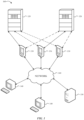
FIG. 1 is a schematic diagram of an example of a medication management system. -
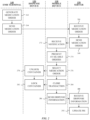
FIG. 2 is a flow diagram of an example method of managing medication. -
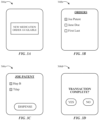
FIGS. 3A-3D are examples of user interfaces that may be employed in a medication management system. -
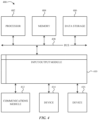
FIG. 4 is a block diagram of an example of a computer system that may be implemented in a medication management system. - In one or more implementations, not all of the depicted components in each figure may be required, and one or more implementations may include additional components not shown in a figure. Variations in the arrangement and type of the components may be made without departing from the scope of the subject disclosure. Additional components, different components, or fewer components may be utilized within the scope of the subject disclosure.
- The detailed description set forth below is intended as a description of various implementations and is not intended to represent the only implementations in which the subject technology may be practiced. As those skilled in the art would realize, the described implementations may be modified in various different ways, all without departing from the scope of the present disclosure. Accordingly, the drawings and description are to be regarded as illustrative in nature and not restrictive.
- Automated medication dispensing systems can be used to support decentralized medication management with various features to enhance safety and efficiency. By way of example, such systems may help clinicians accurately dispense medications and may support pharmacy workflows through use of secure authentication and automated tracking of medication inventory and access.
- One example of an automated medication dispensing system can employ a computer coupled locally to a medication dispensing device, such as a refrigerator or dispensing cabinet providing a locked container for storing a medication. The local computer can provide a user interface for nurses or other practitioners to access the medication locked in the dispensing device, as well as provide functionality for communicating with a remote server to receive medication orders from the server or provide dispense information to the server to update a database. However, space constraints may make the implementation of a local computer in an automated medication dispensing system impractical, and moreover, the use of a local computer can lead to inefficient queues in cases where multiple nurses need to access the same medication dispensing device to treat multiple patients in a common facility.
-
FIG. 1 is a schematic diagram illustrating an examplemedication management system 100. Themedication management system 100 includes or otherwise involves medication dispensingdevices 120,mobile devices 130, electronic medical record (EMR)terminals 140, aserver 150, and anetwork 160. Each of themedication dispensing devices 120 can include a container configured to hold medication, which can be unlocked or otherwise accessed via local or short range communication withmobile devices 130. Each of themobile devices 130 can be configured to communicate with aremote server 150 overnetwork 160 to receive medication order information and/or to send dispense information to theserver 150 to allow theserver 150 to update data. - Each of the
mobile devices 130 can, for example, be implemented as a smart phone, tablet computer, a wearable device (e.g., a smart watch), or any other appropriate portable communication device capable of running an application (e.g., a mobile app) and communicating with the medication dispensingdevices 120 via Bluetooth®, near-field communication (NFC), Wi-Fi, or other appropriate short range wireless interface. InFIG. 1 , a plurality ofmobile devices 130 and a plurality of medication dispensingdevices 120 are included in which eachmobile device 130 is configured to communicate with multiplemedication dispensing devices 120, and likewise eachmedication dispensing device 120 is configured to communicate with multiplemedical devices 130. This may allow for a flexible framework in which computing devices associated with receiving medication orders and/or unlocking the medication dispensingdevices 120 can travel with a nurse or other practitioner, rather than being tied to individual medication dispensingdevices 120. This can also, for example, allow a nurse or other practitioner to queue medication orders in themobile device 130, without having to queue up at a local terminal to enter the orders. However, while multiple medication dispensingdevices 120 and multiplemobile devices 130 are included in the examplemedication management system 100 and can be configured to communicate as described above, other implementations are possible. For example, in some implementations only onemobile device 130 or any other suitable number of mobile devices can be included. Additionally or alternatively, only one medication dispensingdevice 120 or any other suitable number of dispensing devices can be included. Additionally or alternatively, eachmobile device 130 can be configured to communicate with only one or any other suitable subset of medication dispensingdevices 120. Additionally or alternatively, eachmedication dispensing device 120 can be configured to communicate with only one or any other suitable subset of themobile devices 130. - When a particular
mobile device 130 andmedication dispensing device 120 are in sufficiently close proximity to one another, communication between themobile device 130 and themedication dispensing device 120 may be established through the short range wireless interface so that themobile device 130 can provide commands to themedication dispensing device 120 to unlock or access medication stored therein. Additionally or alternatively, the communication can allow themobile device 130 to obtain medication dispensing or inventory information from themedication dispensing device 120. The use of short range or local communication between themobile device 130 andmedication dispensing device 120 may enhance security and safety by constraining themobile devices 130 to only be capable of unlocking or accessing the medication dispensingdevice 120 when in sufficiently close proximity to each other. - In some implementations, the subject technology enables automatic pairing (e.g., when the short range wireless interface is a Bluetooth interface) of a particular
mobile device 130 to a particularmedication dispensing device 120, facilitated by an NFC link established by NFC circuitry provided by the particularmobile device 130, or a badge associated with a clinician. According to various implementations, both themobile device 130 and themedication dispensing device 120 may include NFC circuitry such that when within range of each other a connection (e.g., an NFC link) is triggered between the two devices. For example, communication between the two NFC supported devices can occur when the particularmobile device 130 is brought in close proximity (e.g., within NFC range corresponding to no more than 91 centimeters) with the particularmedication dispensing device 120, which activates the respective NFC circuitry on each device allowing for an automated establishment the NFC link. This link is used to quickly provide pairing information so that a secondary wireless connection between the devices may be automatically established using a peer-to-peer pairing process without the need to prompt the clinician to manually select (e.g., from a list) the medication dispensing device, or the need for access credentials to complete the pairing process. The link may be used to transmit other parameters related to the particularmedication dispensing device 120. Such other parameters may include, for example, hash information, randomized information, Bluetooth local name, service class identifier, class of device information, etc., that can be utilized as part of an authentication process. - The particular
medication dispensing device 120 may include active or passive NFC circuitry to enable NFC-related communication between the two devices, and to transmit the pairing information and/or related parameters. When themobile device 130 includes active NFC circuitry, the mobile device may directly receive the pairing information and/or parameters from themedication dispensing device 120. In some implementations, the clinician's badge may be used to initiate the NFC communication. Passive NFC circuitry in the badge may transmit to the medication dispensing device an identifier of the clinician. The medication dispensing device may then send the pairing information (including any related parameters) to a centralizedserver 150 with the identifier, and the server may push the information to the mobile device. In this regard, themobile device 130 receives the information and may automatically initiate and complete the secondary wireless connection using the received information. The server may also perform a check on the clinician's authorization to access the medication dispensing device before providing the information to the mobile device, and/or may provide authentication information to the mobile device which may then be passed over the secondary wireless connection to the medication dispensing device for authentication at the medication dispensing device. - The secondary wireless connection may be a Bluetooth connection. Each of the medication dispensing
devices 120 may include a Bluetooth low energy (BLE) beacon, or other appropriate wireless transmitter or transceiver, beacon, or interface capable of communicating with the mobile device(s) 130. When the NFC connection is established, themedication dispensing device 120 may send over the NFC connection, to themobile device 130, an address (e.g., a MAC address) of the BLE beacon associated with themedication dispensing device 120. Themobile device 130 may then use this address to automatically connect to the BLE beacon of themedication dispensing device 120, automatically, and to begin communications. In some implementations, a pairing PIN code may also be sent over the NFC connection so that the pairing may be securely established between the two devices, without the need to prompt the clinician to manually confirm the PIN code when the pairing process is initiated. After completing the authentication process, the particularmobile device 130 and the particularmedication dispensing device 120 may then be automatically paired, via Bluetooth, based at least in part on the device address of the particularmedication dispensing device 120 and the other parameters related to the particularmedication dispensing device 120. - The foregoing solution speeds up the pairing and connection process by establishing a fast connection between two devices. The NFC link facilitates a pairing process (e.g., via Bluetooth) between the two devices that provides a different communication link (e.g., a Bluetooth connection) which advantageously provides higher network bandwidth, throughput and/or range capabilities to support more sophisticated functionality than the NFC link.
- In some implementations, multiple
medication dispensing devices 120 may be linked, and each dispensing device may be configured to, receive a request or order for a medication, and locate the medication in another linked device. In this regard, the particularmobile device 120 of clinician may automatically connect to onemedication dispensing device 120 to enter an order for one or more medications, irrespective of where those medications may be stored, and without the need to queue up with other clinicians at a single terminal. In some implementations, the pairing process at a particularmedication dispensing device 120 may prevent, or lock out, other clinicians from pairing to or accessing medication in the device while the particularmobile device 130 of the clinician is paired to the particularmedication dispensing device 120. In some implementations, the particularmedication dispensing device 120 may be configured for multiple pairings, but may restrict access to medication in a single device based on a software queue. - For example, multiple clinicians may connect to a first
medication dispensing device 120 using the previously-described wireless pairing process, and enter orders simultaneously for various medications. A first and second requested medication may be available at the first medication dispensing device, while a third requested medication is available at a second medication dispensing device. The system may require a second clinician who placed an order for the second requested medication to wait for a first clinician who placed an order for the first requested medication to retrieve the first requested medication before the second clinician is provided access to the first medication dispensing device. However, a third clinician may be able to place an order for the third medication and the second medication dispensing device while the others access the first medication dispensing device. - Each
mobile device 130 can, for example, employ secure authentication such as biometric authentication, passcode authentication, and/or other credentials to avoid unauthorized access, for example, by somebody other than an authorized nurse or other practitioner in possession of themobile device 130. Some examples of biometric authentication include fingerprint authentication, facial recognition, and iris authentication. Some examples of passcode authentication include pincodes, passwords, and other knowledge based authentication factors. As described previously, this information may be passed by the NFC link, or over the Bluetooth connection during the pairing process to authenticate the clinician to the respectivemedication dispensing device 120. - Each
medication dispensing device 120 may, for example, be implemented as a refrigerator, automated dispensing cabinet, or a combination thereof, which contains one or more containers configured to store a medication therein. The dispensing device(s) 120 may also, for example, include a locking mechanism or other appropriate access control mechanism for allowing access to the container or dispensing of the medication only when appropriate commands are received from themobile devices 130 via the BLE beacon or other local communication interface. - The mobile device(s) 130 can each also include a network interface for communicating with a
remote server 150 over anetwork 160, such as the internet or another appropriate data network. The mobile device(s) 130 can include an application or other appropriate programming that configures the mobile device(s) 130 to receive medication order information from theserver 150 associated with medications to be accessed from the dispensingdevices 120. Additionally or alternatively, the mobile device(s) 130 can be configured to provide commands to the medication dispensing device(s) 120 to unlock a container to access a medication stored therein. Additionally or alternatively, the mobile device(s) 130 can be configured to provide medication dispensing information to theserver 150, in which the medication dispensing information is associated with medication dispensing event(s) involving themedication dispensing device 120. - The mobile device(s) 130 can, for example, include one or more input devices and/or output devices, which can provide a user interface for receiving inputs from a user and/or providing outputs to a user associated with medication. For example, the user interface can output a notification upon receipt of a new medication order from the server 150 (e.g., a push notification), and/or the user interface provide for input to select particular patients or medication, or to initiate unlocking or access of a container in the
medication dispensing device 120. Examples of input devices include touchscreens, touchpads, microphones, buttons, and any other devices that allow for interaction from a user to input information or provide commands through the mobile device. Examples of output devices include display, speakers, haptic vibrations, and other appropriate devices that allow for interaction with a user to communicate information to the user. Examples of user interfaces that can be provided in themobile devices 130 are shown inFIGS. 3A-3D below. - The
server 150 may, for example, be implemented as a physical and/or cloud based server operated on one or several computing devices that can coordinate with themobile devices 130 to provide medication order information and/or receive medication dispensing information. Additionally or alternatively, theserver 150 can coordinate withEMR terminals 140 other appropriate devices to receive medication orders from a doctor or other medical practitioner capable of prescribing medications. Theserver 150 can be configured to receive a medication order input into a patient's EMR or other electronic record through the EMR terminal(s) 140, and coordinate with an application running on themobile devices 130 to provide the medication order information to the appropriate nurses or practitioners. Additionally or alternatively, theserver 150 can be configured to update or maintain a pharmacy information system (PIS) or other medication related data based on dispense information received from themobile devices 130. -
FIG. 2 is flow diagram illustrating an example method 200 for medication management. The method 200 may, for example, be implemented using themedication management system 100 shown inFIG. 1 .FIGS. 3A-3D are examples ofuser interfaces 300a-300d that may, for example, be implemented in a mobile device in connection with the method 200. - As shown in
FIG. 2 , at 262, a new medication order can be generated at anEMR terminal 140 based on a doctor or other appropriate medical professional (e.g., an MD) ordering medication for a patient in an EMR or other appropriate electronic record. The medication order can include information identifying a medication (or drug) to be provided to a particular patient. At 264, theEMR terminal 140 sends the medication order otherwise sends information regarding the medication order toserver 150 over a network (e.g., network 160). - At 266, the
server 150 receives the medication order or otherwise receives information regarding medication order. At 268, theserver 150 sends the medication order or otherwise sends information regarding the medication order to amobile device 130 over a network, e.g., through a mobile application running on the mobile device. - At 272, the mobile device receives a notification of the new medical order from the
server 150. At this stage, themobile device 130, can, for example, present a notification (e.g., a push notification) of the new medication order through a user interface, such as is shown in theexample display interface 300a shown inFIG. 3A . Alternatively, the notification need not be presented, and the user can simply see the medication order information when the user chooses to open or otherwise access the application on themobile device 130. - At 274, upon a user (e.g., a nurse or practitioner) accessing the application, the
mobile device 130 can present all available medication orders, or patients having outstanding medication orders, or otherwise present information regarding the same through an appropriate user interface. An example of adisplay interface 300b showing a listing of several patients having corresponding medication orders is shown inFIG. 3B . The user interface can also provide for the user to select the desired patient and/or medication for a patient, e.g., through user input to an appropriate input device. Examples ofdisplay interfaces 300b and 300c showing selection of a patient, and medications for a particular patient, are shown inFIGS. 3B and 3C respectively. - At 276, the
mobile device 130 selects a medication corresponding to the medication order based on received user input. For example, the medication may be selected upon the user selecting the appropriate patients and their appropriate medication(s), and selecting "dispense" as shown in the display interface 300c inFIG. 3C . Upon selection of the medication, themobile device 130 can automatically connect, as described above, to amedication dispensing device 120 within sufficiently close proximity to themobile device 130, and communicate the selection to themedication dispensing device 120 or otherwise communicate an indication of the medication order, and send a command or otherwise initiate dispensing of the medication from themedication dispensing device 120. Although not shown inFIG. 2 , as described above, themobile device 130 can establish a connection to an appropriatemedication dispensing device 120, e.g., via a Bluetooth pairing, before or after the medication order is received or selected. If the connected medication dispensing device does not currently store the requested medication corresponding to the medication order then the connected medication dispensing device may inform the mobile device (and the clinician) of the location of another medication dispensing device where the medication can be retrieved. - At 278, the medication dispensing device 120 (identified as containing the medication) unlocks an appropriate container containing the medication corresponding to the medication order, or otherwise dispenses the medication housed within the
medication dispensing device 120. Themedication dispensing device 120 may be configured to only unlock the container or otherwise dispense the medication when themobile device 130 is identified as being within a range of or paired with the medication dispensing device 120 (e.g., as described above), and the clinician appropriately authenticated to the device. The dispensedevice 120 can be configured to unlock the container or otherwise dispense the medication upon receipt of a command or other appropriate communication from themobile device 130 over the short range wireless interface. If themedication dispensing device 120 contains multiple containers or compartments corresponding to multiple medications, themedication dispensing device 120 can, for example, be configured to unlock only the container or containers containing the selected medication or medications corresponding to the medication order. - At 284, the
mobile device 130 can close the medication dispensing transaction, for example, based on confirmation or other user input from the user. An example of adisplay interface 300d providing for a user to close the transaction after the desired medication is retrieved is shown inFIG. 3D . - At 282, after unlocking the container the
medication dispensing device 120 locks the container from which the medication was dispensed and retrieved by the user. The container can, for example, lock upon themobile device 130 closing the transaction and sending a command or other communication to themedication dispensing device 120 indicating that the dispense transaction has been completed. Additionally or alternatively, the container can lock again automatically, e.g., after a fixed period of time for security. - At 286, the
mobile device 130 sends dispense information to theserver 150 over the network. The dispense information can, for example, be sent upon closing the transaction (e.g., upon a nurse selecting "yes" in thedisplay interface 300d shown inFIG. 3D ). The dispense information can, for example, include an amount and/or type of medication dispensed, a time of the dispense event, or other information associated with the medication dispense event. The dispense information can, for example, be based on monitoring performed automatically by themedication dispensing device 120. - At 288, the
server 150 receives the dispense information from themobile device 130. At 292, theserver 150 updates a pharmacy information system (PIS) included in or otherwise coupled to theserver 150, based on the dispense information associated with the dispense event. -
FIG. 4 is a block diagram illustrating anexample computer system 400 with which any one or more of the mobile device(s) 130, the EMR terminal(s) 140, or the server(s) 150 may be implemented. -
Computer system 400 includes abus 408 or other communication mechanism for communicating information, and aprocessor 402 coupled withbus 408 for processing information. By way of example, thecomputer system 400 may be implemented with one ormore processors 402.Processor 402 may be a general-purpose microprocessor, a micro control module, a Digital Signal Processor (DSP), an Application Specific Integrated Circuit (ASIC), a Field Programmable Gate Array (FPGA), a Programmable Logic Device (PLD), a control module, a state machine, gated logic, discrete hardware components, or any other suitable entity that can perform calculations or other manipulations of information. -
Computer system 400 can include, in addition to hardware, a code that creates an execution environment for the computer program in question, e.g., code that constitutes processor firmware, a protocol stack, a database management system, an operating system, or a combination of one or more of them stored in an includedmemory 404, such as a Random Access Memory (RAM), a flash memory, a Read Only Memory (ROM), a Programmable Read-Only Memory (PROM), an Erasable PROM (EPROM), registers, a hard disk, a removable disk, a CD-ROM, a DVD, or any other suitable storage device, coupled tobus 408 for storing information and instructions to be executed byprocessor 402. Theprocessor 402 and thememory 404 can be supplemented by, or incorporated in, a special purpose logic circuitry. - The instructions may be stored in the
memory 404 and implemented in one or more computer program products, i.e., one or more modules of computer program instructions encoded on a computer readable medium for execution by, or to control the operation of, thecomputer system 400, and according to any method well known to those skilled in the art, including, but not limited to, computer languages such as data-oriented languages (e.g., SQL, dBase), system languages (e.g., C, Objective-C, C++, Assembly), architectural languages (e.g., Java, .NET), and application languages (e.g., PHP, Ruby, Perl, Python). Instructions may also be implemented in computer languages such as array languages, aspect-oriented languages, assembly languages, authoring languages, command line interface languages, compiled languages, concurrent languages, curly-bracket languages, dataflow languages, data-structured languages, declarative languages, esoteric languages, extension languages, fourth-generation languages, functional languages, interactive mode languages, interpreted languages, iterative languages, list-based languages, little languages, logic-based languages, machine languages, macro languages, metaprogramming languages, multiparadigm languages, numerical analysis, non-English-based languages, object-oriented class-based languages, object-oriented prototype-based languages, off-side rule languages, procedural languages, reflective languages, rule-based languages, scripting languages, stack-based languages, synchronous languages, syntax handling languages, visual languages, wirth languages, and xml-based languages.Memory 404 may also be used for storing temporary variable or other intermediate information during execution of instructions to be executed byprocessor 402. - A computer program as discussed herein does not necessarily correspond to a file in a file system. A program can be stored in a portion of a file that holds other programs or data (e.g., one or more scripts stored in a markup language document), in a single file dedicated to the program in question, or in multiple coordinated files (e.g., files that store one or more modules, subprograms, or portions of code). A computer program can be deployed to be executed on one computer or on multiple computers that are located at one site or distributed across multiple sites and interconnected by a communication network. The processes and logic flows described in this specification can be performed by one or more programmable processors executing one or more computer programs to perform functions by operating on input data and generating output.
-
Computer system 400 further includes adata storage device 406, such as a magnetic disk or optical disk, coupled tobus 408 for storing information and instructions.Computer system 400 may be coupled via input/output module 410 to various devices. Input/output module 410 can be any input/output module. Exemplary input/output modules 410 include data ports such as USB ports. Input/output module 410 is configured to connect to acommunications module 412.Exemplary communications modules 412 include networking interface cards, such as Ethernet cards and modems. In certain aspects, input/output module 410 is configured to connect to a plurality of devices, such as aninput device 414 and/or anoutput device 416. Examples ofinput devices 414 include a keyboard and a pointing device, e.g., a mouse or a trackball, by which a user can provide input to thecomputer system 400. Other kinds ofinput devices 414 can be used to provide for interaction with a user as well, such as a tactile input device, visual input device, audio input device, or brain-computer interface device. For example, feedback provided to the user can be any form of sensory feedback, e.g., visual feedback, auditory feedback, or tactile feedback; and input from the user can be received in any form, including acoustic, speech, tactile, or brain wave input. Examples ofoutput devices 416 include display devices, such as an LCD (liquid crystal display) monitor, for displaying information to the user. - According to one aspect of the present disclosure, method 200 or any portion thereof can be implemented using a
computer system 400 in response toprocessor 402 executing one or more sequences of one or more instructions contained inmemory 404. Such instructions may be read intomemory 404 from another machine-readable medium, such asdata storage device 406. Execution of the sequences of instructions contained inmain memory 404 causesprocessor 402 to perform the process steps described herein. One or more processors in a multi-processing arrangement may also be employed to execute the sequences of instructions contained inmemory 404. In alternative aspects, hard-wired circuitry may be used in place of or in combination with software instructions to implement various aspects of the present disclosure. Thus, aspects of the present disclosure are not limited to any specific combination of hardware circuitry and software. - Various aspects of the subject matter described in this specification can be implemented in a computing system that includes a back-end component, e.g., as a data server, or that includes a middleware component, e.g., an application server, or that includes a front-end component, e.g., a client computer having a graphical user interface or a Web browser through which a user can interact with an implementation of the subject matter described in this specification, or any combination of one or more such back-end, middleware, or front-end components. The components of the system can be interconnected by any form or medium of digital data communication, e.g., a communication network. The communication network (e.g., network 160) can include, for example, any one or more of a LAN, a WAN, the Internet, and the like. Further, the communication network can include, but is not limited to, for example, any one or more of the following network topologies, including a bus network, a star network, a ring network, a mesh network, a star-bus network, tree or hierarchical network, or the like. The communications modules can be, for example, modems or Ethernet cards.
-
Computer system 400 can include clients and servers. Any one or more of themobile devices 130 and/orEMR terminals 140 can, for example, be configured as a client to theserver 150. A client and server are generally remote from each other and typically interact through a communication network. The relationship of client and server arises by virtue of computer programs running on the respective computers and having a client-server relationship with each other.Computer system 400 can be, for example, and without limitation, a desktop computer, laptop computer, or tablet computer.Computer system 400 can also be embedded in another device, for example, and without limitation, a mobile telephone, a PDA, a mobile audio player, a Global Positioning System (GPS) receiver, a video game console, and/or a television set top box. - The term "machine-readable storage medium" or "computer readable medium" as used herein refers to any medium or media that participates in providing instructions to
processor 402 for execution. Such a medium may take many forms, including, but not limited to, non-volatile media, volatile media, and transmission media. Non-volatile media include, for example, optical or magnetic disks, such asdata storage device 406. Volatile media include dynamic memory, such asmemory 404. Transmission media include coaxial cables, copper wire, and fiber optics, including the wires that includebus 408. Common forms of machine-readable media include, for example, floppy disk, flexible disk, hard disk, magnetic tape, any other magnetic medium, CD-ROM, DVD, any other optical medium, punch cards, paper tape, any other physical medium with patterns of holes, a RAM, a PROM, an EPROM, a FLASH EPROM, any other memory chip or cartridge, or any other medium from which a computer can read. The machine-readable storage medium can be a machine-readable storage device, a machine-readable storage substrate, a memory device, a composition of matter affecting a machine-readable propagated signal, or a combination of one or more of them. The computer readable medium can be non-transitory. - A reference to an element in the singular is not intended to mean one and only one unless specifically so stated, but rather one or more. For example, "a" module may refer to one or more modules. An element proceeded by "a," "an," "the," or "said" does not, without further constraints, preclude the existence of additional same elements.
- Headings and subheadings, if any, are used for convenience only and do not limit the invention. The word exemplary is used to mean serving as an example or illustration. To the extent that the term include, have, or the like is used, such term is intended to be inclusive in a manner similar to the term comprise as comprise is interpreted when employed as a transitional word in a claim. Relational terms such as first and second and the like may be used to distinguish one entity or action from another without necessarily requiring or implying any actual such relationship or order between such entities or actions.
- Phrases such as an aspect, the aspect, another aspect, some aspects, one or more aspects, an implementation, the implementation, another implementation, some implementations, one or more implementations, an embodiment, the embodiment, another embodiment, some embodiments, one or more embodiments, a configuration, the configuration, another configuration, some configurations, one or more configurations, the subject technology, the disclosure, the present disclosure, other variations thereof and alike are for convenience and do not imply that a disclosure relating to such phrase(s) is essential to the subject technology or that such disclosure applies to all configurations of the subject technology. A disclosure relating to such phrase(s) may apply to all configurations, or one or more configurations. A disclosure relating to such phrase(s) may provide one or more examples. A phrase such as an aspect or some aspects may refer to one or more aspects and vice versa, and this applies similarly to other foregoing phrases.
- A phrase "at least one of' preceding a series of items, with the terms "and" or "or" to separate any of the items, modifies the list as a whole, rather than each member of the list. The phrase "at least one of" does not require selection of at least one item; rather, the phrase allows a meaning that includes at least one of any one of the items, and/or at least one of any combination of the items, and/or at least one of each of the items. By way of example, each of the phrases "at least one of A, B, and C" or "at least one of A, B, or C" refers to only A, only B, or only C; any combination of A, B, and C; and/or at least one of each of A, B, and C.
- It is understood that the specific order or hierarchy of steps, operations, or processes disclosed is an illustration of exemplary approaches. Unless explicitly stated otherwise, it is understood that the specific order or hierarchy of steps, operations, or processes may be performed in different order. Some of the steps, operations, or processes may be performed simultaneously. The accompanying method claims, if any, present elements of the various steps, operations or processes in a sample order, and are not meant to be limited to the specific order or hierarchy presented. These may be performed in serial, linearly, in parallel or in different order. It should be understood that the described instructions, operations, and systems can generally be integrated together in a single software/hardware product or packaged into multiple software/hardware products.
- The disclosure is provided to enable any person skilled in the art to practice the various aspects described herein. In some instances, well-known structures and components are shown in block diagram form in order to avoid obscuring the concepts of the subject technology. The disclosure provides various examples of the subject technology, and the subject technology is not limited to these examples. Various modifications to these aspects will be readily apparent to those skilled in the art, and the principles described herein may be applied to other aspects. Various examples of these aspects are described as numbered concepts or clauses (1, 2, 3, etc.) for convenience. These concepts or clauses are provided as examples and do not limit the subject technology. It is noted that any of the dependent concepts may be combined in any combination with each other or one or more other independent concepts, to form an independent concept. The following is a non-limiting summary of some concepts presented herein:
- Concept 1. A method of medication management, the method comprising:
- receiving, at a mobile device, via a network interface from a server, information regarding a medication order;
- automatically connecting the mobile device to a medication dispensing device via a short range wireless interface;
- sending, from the mobile device via the short range wireless interface, a medication request including the medication order to the medication dispensing device, the medication request causing the medication dispensing device to provide access to a medication corresponding to the medication order; and
- sending, with the mobile device via the network interface, dispense information to the server, the dispense information corresponding to the medication provided by the medication dispensing device.
- Concept 2. The method of Concept 1, wherein automatically connecting the mobile device to a medication dispensing device comprises:
- detecting, using a near-field communication (NFC) circuitry provided by the mobile device, that the mobile device is within a particular range of the medication dispensing device;
- establishing an NFC link with the medication dispensing device;
- determining, using the NFC link, a device address of the medication dispensing device; and
- pairing the mobile device and the medication dispensing device based at least in part on the device address of the medication dispensing device.
- Concept 3. The method of Concept 2, wherein pairing the mobile device and the medication dispensing device comprises:
establishing, based on the determined device address, a Bluetooth connection between the mobile device and the medication dispensing device. - Concept 4. The method of Concept 3, wherein the Bluetooth connection causes the medication dispensing device to lock out other users from accessing the medication dispensing device while the Bluetooth connection is active.
- Concept 5. The method of Concept 3, wherein the device address is a Bluetooth device address, and wherein the method further comprises:
- determining a pairing code in connection with determining the device address; and
- sending, by the mobile device to the medication dispensing device, over the Bluetooth connection, the pairing code to pair the mobile device and the medication dispensing device based on the device address and the pairing code.
- Concept 6. The method of Concept 5, further comprising:
sending, by the mobile device to the medication dispensing device, over the Bluetooth connection, authentication information associated with a user of the mobile device to pair the mobile device and the medication dispensing device. - Concept 7. The method of Concept 1, wherein the medication order is received from an electronic medical record (EMR) terminal, and the medication order includes information identifying a medication to be provided to a particular patient.
- Concept 8. The method of Concept 1, wherein the medication dispensing device is a first dispensing device, and and medication request is sent to the first dispensing device, and wherein causing the medication dispensing device to provide access to the medication comprises:
- receiving an indication, from the first dispensing device, that the medication is stored in a second dispensing device; and
- connecting, by the mobile device, to the second dispensing device based on the medication request sent to the first dispensing device,
- wherein the dispense information includes an indication of the second dispensing device.
- Concept 9. The method of Concept 1, wherein the dispense information is sent in response to closing a transaction corresponding to a selection of an element in a user interface of the mobile device.
- Concept 10. The method of Concept 9, wherein the dispense information includes an amount or type of medication dispensed, or a time of an event corresponding to a dispensing of the medication.
- Concept 11. A medication dispensing device, comprising:
- a short range wireless interface;
- a processor; and
- a memory storing instructions that, when executed by the processor, cause the medication dispensing device to perform operations, comprising:
- automatically establishing a near-field communication (NFC) connection with a first device;
- providing, based on the NFC connection, pairing information to a second device;
- automatically establishing a short range wireless connection with the second device based on the the pairing information being received from the second device;
- receiving, from the second device via the short range wireless connection, a medication request for a medication;
- providing, responsive to receiving the medication request, access to the medication corresponding to the medication order; and
- sending, via a network, dispense information to a server, dispense information corresponding to a dispense of the medication.
- Concept 12. The medication dispensing device of Concept 11, wherein the second device is a mobile device, and the pairing information comprises a device address of the medication dispensing device, and wherein automatically establishing the short range wireless connection comprises:
pairing the mobile device and the medication dispensing device based at least in part on the device address. - Concept 13. The medication dispensing device of Concept 12, wherein pairing the mobile device and the medication dispensing device comprises:
establishing, based on the determined device address, a Bluetooth connection between the mobile device and the medication dispensing device. - Concept 14. The medication dispensing device of Concept 13, wherein the operations further comprise:
preventing other users from accessing the medication dispensing device while the Bluetooth connection is active. - Concept 15. The medication dispensing device of Concept 13, wherein the device address is a Bluetooth device address, and wherein the operations further comprise:
- providing, to the mobile device, a pairing code in connection with providing the device address; and
- receiving, from the mobile device, over the Bluetooth connection, the pairing code,
- wherein the mobile device and the medication dispensing device are paired based on the device address and the pairing code.
- Concept 16. The medication dispensing device of Concept 15, further comprising:
- receiving, from the mobile device, over the Bluetooth connection, authentication information associated with a user of the mobile device; and
- providing, responsive to receiving the authentication information over the Bluetooth connection, access to the medication corresponding to the medication order.
- Concept 17. The medication dispensing device of Concept 11, wherein causing the medication dispensing device to provide access to the medication comprises:
- determining that the medication is not stored in the medication dispensing device; and
- identifying a second dispensing device that is storing the medication,
- wherein the dispense information includes an indication of the second dispensing device.
- Concept 18. The medication dispensing device of Concept 17, wherein the dispense information includes an amount or type of medication dispensed, or a time of an event corresponding to a dispensing of the medication by the second dispensing device.
- Concept 19. A non-transitory computer-readable storage medium storing instructions that, when executed by one or more processors, cause one or more processors to perform a method of medication management, the method comprising:
- receiving, at a mobile device, via a network interface from a server, information regarding a medication order;
- automatically connecting the mobile device to a medication dispensing device via a short range wireless interface;
- sending, from the mobile device via the short range wireless interface, a medication request including the medication order to the medication dispensing device, the medication request causing the medication dispensing device to provide access to a medication corresponding to the medication order; and
- sending, with the mobile device via the network interface, dispense information to the server, the dispense information corresponding to the medication provided by the medication dispensing device.
- Concept 20. The transitory computer-readable storage medium of Concept 19, wherein automatically connecting the mobile device to a medication dispensing device comprises:
- detecting, using a near-field communication (NFC) circuitry provided by the mobile device, that the mobile device is within a particular range of the medication dispensing device;
- establishing an NFC link with the medication dispensing device;
- determining, using the NFC link, a device address of the medication dispensing device; and
- pairing the mobile device and the medication dispensing device based at least in part on the device address of the medication dispensing device.
- All structural and functional equivalents to the elements of the various aspects described throughout the disclosure that are known or later come to be known to those of ordinary skill in the art are expressly incorporated herein by reference and are intended to be encompassed by the claims. Moreover, nothing disclosed herein is intended to be dedicated to the public regardless of whether such disclosure is explicitly recited in the claims. No claim element is to be construed under the provisions of 35 U.S.C. §112(f) or §112, sixth paragraph, unless the element is expressly recited using the phrase "means for" or, in the case of a method claim, the element is recited using the phrase "step for".
- The title, background, brief description of the drawings, abstract, and drawings are hereby incorporated into the disclosure and are provided as illustrative examples of the disclosure, not as restrictive descriptions. It is submitted with the understanding that they will not be used to limit the scope or meaning of the claims. In addition, in the detailed description, it can be seen that the description provides illustrative examples and the various features are grouped together in various implementations for the purpose of streamlining the disclosure. The method of disclosure is not to be interpreted as reflecting an intention that the claimed subject matter requires more features than are expressly recited in each claim. Rather, as the claims reflect, inventive subject matter lies in less than all features of a single disclosed configuration or operation. The claims are hereby incorporated into the detailed description, with each claim standing on its own as a separately claimed subject matter.
- The claims are not intended to be limited to the aspects described herein, but are to be accorded the full scope consistent with the language of the claims and to encompass all legal equivalents. Notwithstanding, none of the claims are intended to embrace subject matter that fails to satisfy the requirements of the applicable patent law, nor should they be interpreted in such a way.
Claims (15)
- A method of accessing a medication, the method comprising:establishing a near-field communication (NFC) connection between a medication dispensing device and NFC circuitry associated with a mobile device or a badge associated with a user when the mobile device or badge is within a NFC range of the medication dispensing device;determining, based on information obtained from the NFC connection, pairing information for the mobile device to connect to the medication dispensing device;providing the pairing information to the mobile device, wherein the pairing information is sent from the medication dispensing device via the NFC connection when the NFC connection involves the mobile device or sent from a server when the NFC connection involves the badge;automatically establishing a short range wireless connection between the medication dispensing device and the mobile device based on the pairing information using a peer-to-peer pairing process without prompting the user or receiving credentials to complete the pairing process.
- The method of Claim 1,presenting, to the mobile device, information regarding one or more medication orders or patients having one or more medication orders;receiving, via the mobile device, a selection of the medication, the medication corresponding to a respective medication order; andcommunicating, via the short range wireless connection, between the medication dispensing device and the mobile device, the selection or an indication of the respective medication order, or a command for the medication dispensing device.
- The method of Claim 2, further comprising:
communicating, via the short range wireless connection, the command to unlock a container or otherwise dispense the medication. - The method of Claim 2 or Claim 3, wherein the medication dispensing device comprises a plurality of lockable containers, the method further comprising:authorizing the user to receive the medication for a patient; andunlocking only a container of the plurality of locking containers that stores the medication based on the authorizing.
- The method of Claim 4, further comprising:communicating biometric authentication information between the mobile device and the medication dispensing device via the short range wireless connection,wherein the authorizing is based on the biometric authentication information.
- The method of any one of Claims 1-5, wherein multiple medication dispensing devices are linked, the method further comprising:receiving a request to initiate dispensing of a medication;determining that the medication dispensing device does not currently store the medication;locating the medication in another medication dispensing device; andinforming the mobile device of a location of the another medication dispensing device where the medication can be retrieved.
- The method of any one of Claims 1-6, wherein the short range wireless connection comprises a Bluetooth connection, wherein the pairing information comprises a device address of the medication dispensing device, and wherein pairing the mobile device and the medication dispensing device comprises:
establishing, based on the device address, the Bluetooth connection between the mobile device and the medication dispensing device. - The method of claim 7, wherein the Bluetooth connection causes the medication dispensing device to lock out other users from accessing the medication dispensing device while the Bluetooth connection is active.
- The method of claim 7, wherein the device address is a Bluetooth device address, and wherein the method further comprises:determining a pairing code in connection with determining the device address; andcommunicating, over the Bluetooth connection, the pairing code to pair the mobile device and the medication dispensing device based on the device address and the pairing code.
- The method of any one of Claims 1-9, further comprising:receiving, via a user interface operating on the mobile device, a selection of a patient of the one or more patients or of a medication order corresponding to the medication; andcommunicating the selection between the mobile device the medication dispensing device.
- The method of any one of Claims 1-10, wherein the NFC connection is established between the NFC circuitry of the mobile device and the medication dispensing device, the method further comprising:
transmitting the pairing information from the medication dispensing device to the mobile device via the NFC connection. - The method of any one of Claims 1-10, wherein the NFC connection is established between the NFC circuitry in the badge and the medication dispensing device, the method further comprising:transmitting an identifier of the user to the medication dispensing device via the NFC connection, wherein the medication dispensing devices sends pairing information to the server with the identifier and the server pushes the pairing information to the mobile device;receiving, at the mobile device, the pairing information from the server.
- The method any one of Claims 1, further comprising:providing, via the server, information regarding the respective medication order; andsending, from the mobile device, dispense information to the server, the dispense information corresponding to the medication provided by the medication dispensing device.
- The method of Claim 13, further comprising:
providing, to the mobile device, a notification for a new medication order for a patient associated with the user. - A medication dispensing system, comprising:the medication dispensing device; andnon-transitory computer-readable medium storing instructions that, when executed, cause a processor associated with the medication dispensing device to perform any one of Claims 1-11.
Applications Claiming Priority (3)
| Application Number | Priority Date | Filing Date | Title |
|---|---|---|---|
| US201862716302P | 2018-08-08 | 2018-08-08 | |
| PCT/US2019/045336 WO2020033429A1 (en) | 2018-08-08 | 2019-08-06 | Mobile system for dispensing medication |
| EP19756072.5A EP3834205B1 (en) | 2018-08-08 | 2019-08-06 | Mobile system for dispensing medication |
Related Parent Applications (1)
| Application Number | Title | Priority Date | Filing Date |
|---|---|---|---|
| EP19756072.5A Division EP3834205B1 (en) | 2018-08-08 | 2019-08-06 | Mobile system for dispensing medication |
Publications (2)
| Publication Number | Publication Date |
|---|---|
| EP4472249A2 true EP4472249A2 (en) | 2024-12-04 |
| EP4472249A3 EP4472249A3 (en) | 2025-01-22 |
Family
ID=67667935
Family Applications (2)
| Application Number | Title | Priority Date | Filing Date |
|---|---|---|---|
| EP19756072.5A Active EP3834205B1 (en) | 2018-08-08 | 2019-08-06 | Mobile system for dispensing medication |
| EP24208098.4A Pending EP4472249A3 (en) | 2018-08-08 | 2019-08-06 | Mobile system for dispensing medication |
Family Applications Before (1)
| Application Number | Title | Priority Date | Filing Date |
|---|---|---|---|
| EP19756072.5A Active EP3834205B1 (en) | 2018-08-08 | 2019-08-06 | Mobile system for dispensing medication |
Country Status (6)
| Country | Link |
|---|---|
| US (3) | US11094158B2 (en) |
| EP (2) | EP3834205B1 (en) |
| CN (2) | CN121662270A (en) |
| CA (1) | CA3106705C (en) |
| ES (1) | ES3013628T3 (en) |
| WO (1) | WO2020033429A1 (en) |
Families Citing this family (8)
| Publication number | Priority date | Publication date | Assignee | Title |
|---|---|---|---|---|
| US20200286610A1 (en) * | 2012-08-30 | 2020-09-10 | Koninklijke Philips N.V. | Method and a device for use in a patient monitoring system to assist a patient in completing a task |
| US20170032101A1 (en) * | 2015-05-01 | 2017-02-02 | Ahkeo Ventures LLC | Systems and methods for managing a medical supply chain |
| US11222721B2 (en) | 2018-05-04 | 2022-01-11 | Carefusion 303, Inc. | Peer community based anomalous behavior detection |
| US11094158B2 (en) * | 2018-08-08 | 2021-08-17 | Carefusion 303, Inc. | Mobile system for dispensing medication |
| WO2021016381A1 (en) * | 2019-07-24 | 2021-01-28 | Carefusion 303, Inc. | Smart wasting station for medications |
| US12482554B2 (en) | 2021-02-26 | 2025-11-25 | Carefusion 303, Inc. | Dosage normalization for detection of anomalous behavior |
| CN117136268A (en) * | 2021-03-31 | 2023-11-28 | 金伯利-克拉克环球有限公司 | Wireless handheld beacon devices for building management |
| CA3233078A1 (en) * | 2021-09-23 | 2023-03-30 | Opio Connect, Inc. | Automated systems and methods for assembling doses of a medication |
Family Cites Families (27)
| Publication number | Priority date | Publication date | Assignee | Title |
|---|---|---|---|---|
| WO2010044088A1 (en) | 2008-10-16 | 2010-04-22 | Medingo Ltd. | Method and system for adaptive communication transmission |
| EP2355769A1 (en) * | 2008-12-12 | 2011-08-17 | CSP Technologies, Inc. | Dispenser |
| US20180248981A1 (en) | 2013-11-14 | 2018-08-30 | Mores, Inc. | Enhanced personal care system employing blockchain functionality |
| US10453157B2 (en) * | 2010-01-22 | 2019-10-22 | Deka Products Limited Partnership | System, method, and apparatus for electronic patient care |
| US20120165975A1 (en) * | 2010-09-13 | 2012-06-28 | Ipcomm Llc | Medication Compliance Monitor - Method and Apparatus |
| US10892044B2 (en) * | 2011-02-14 | 2021-01-12 | Michelle Fisher | Connected medical devices |
| US10181013B2 (en) * | 2011-08-05 | 2019-01-15 | Nathaniel G. Portney | Cartridge-based medication dispensing |
| US20130262155A1 (en) * | 2012-04-03 | 2013-10-03 | Thomas J. HinKamp | System and method for collection and distibution of medical information |
| CN109549400A (en) * | 2012-04-18 | 2019-04-02 | Jvm有限公司 | Drug administration system and its control method |
| US9996681B2 (en) * | 2012-05-18 | 2018-06-12 | Carefusion 303, Inc. | Mobile device access for medical devices |
| US20170337157A1 (en) * | 2012-08-23 | 2017-11-23 | Reagan Inventions, Llc | System and method for monitoring and dispensing doses of medication |
| CN103838192A (en) * | 2012-11-22 | 2014-06-04 | 斯必达股份有限公司 | Medicine cabinet management system |
| US20140277705A1 (en) * | 2013-03-14 | 2014-09-18 | Ipcomm Llc | Medication Compliance Monitor - Method and Apparatus |
| US9211498B2 (en) * | 2013-03-15 | 2015-12-15 | Makefield Llc | Functional desiccants |
| CN103699777A (en) * | 2013-11-29 | 2014-04-02 | 深圳市瑞驰智能系统有限公司 | Medicine taking method for outpatient department and pharmacy system |
| EP3084653B1 (en) * | 2013-12-20 | 2022-02-09 | Koninklijke Philips N.V. | Mask wear-out assessment system |
| WO2015131038A2 (en) | 2014-02-28 | 2015-09-03 | Mullen Stephen J | System and method for dispensing pills |
| US20160188840A1 (en) | 2014-12-29 | 2016-06-30 | Ebay Inc. | Proper dispensing of items through proximity detected devices with users |
| KR20160098719A (en) * | 2015-02-11 | 2016-08-19 | 엘지전자 주식회사 | Digital cap for medician container and method for controlling mobile device |
| US20170061784A1 (en) * | 2015-08-27 | 2017-03-02 | Altorr Corporation | Sip-and-puff Controller of Electrical Devices for Paraplegic or Quadriplegic Humans |
| US9775780B2 (en) * | 2015-10-06 | 2017-10-03 | Kali Care, Inc. | Smart medication container |
| US10964419B2 (en) * | 2015-10-19 | 2021-03-30 | International Business Machines Corporation | Intelligent container and method for medicine dispensing control |
| EP3358867A1 (en) * | 2017-02-03 | 2018-08-08 | Gemalto Sa | Method for managing communication between a server and a user equipment |
| US10943163B2 (en) * | 2017-12-29 | 2021-03-09 | Intel Corporation | Methods and systems for securing, delivering, and monitoring use of an active agent |
| US11626197B2 (en) * | 2018-06-26 | 2023-04-11 | Medsense Health, Inc. | System and process for monitoring medication dosage |
| US11094158B2 (en) * | 2018-08-08 | 2021-08-17 | Carefusion 303, Inc. | Mobile system for dispensing medication |
| US20200335193A1 (en) * | 2019-04-22 | 2020-10-22 | Intellimed AI | Pill Organization Utilizing A Voice-Based Virtual Assistant |
-
2019
- 2019-08-02 US US16/530,911 patent/US11094158B2/en active Active
- 2019-08-06 EP EP19756072.5A patent/EP3834205B1/en active Active
- 2019-08-06 WO PCT/US2019/045336 patent/WO2020033429A1/en not_active Ceased
- 2019-08-06 CN CN202511741259.6A patent/CN121662270A/en active Pending
- 2019-08-06 ES ES19756072T patent/ES3013628T3/en active Active
- 2019-08-06 CA CA3106705A patent/CA3106705C/en active Active
- 2019-08-06 CN CN201980053818.0A patent/CN112639993A/en active Pending
- 2019-08-06 EP EP24208098.4A patent/EP4472249A3/en active Pending
-
2021
- 2021-08-13 US US17/402,403 patent/US11676441B2/en active Active
-
2023
- 2023-06-12 US US18/208,835 patent/US12087122B2/en active Active
Also Published As
| Publication number | Publication date |
|---|---|
| CA3106705A1 (en) | 2020-02-13 |
| US20210375088A1 (en) | 2021-12-02 |
| ES3013628T3 (en) | 2025-04-14 |
| US20200051363A1 (en) | 2020-02-13 |
| CA3106705C (en) | 2024-05-28 |
| EP3834205B1 (en) | 2024-11-20 |
| US12087122B2 (en) | 2024-09-10 |
| WO2020033429A1 (en) | 2020-02-13 |
| EP3834205C0 (en) | 2024-11-20 |
| CN112639993A (en) | 2021-04-09 |
| EP3834205A1 (en) | 2021-06-16 |
| US11676441B2 (en) | 2023-06-13 |
| US11094158B2 (en) | 2021-08-17 |
| EP4472249A3 (en) | 2025-01-22 |
| CN121662270A (en) | 2026-03-13 |
| US20230326283A1 (en) | 2023-10-12 |
Similar Documents
| Publication | Publication Date | Title |
|---|---|---|
| US12087122B2 (en) | Mobile system for dispensing medication | |
| AU2018222989B2 (en) | Mobile device access for medical devices | |
| US12033735B2 (en) | System and method for distributed medication management | |
| US20160180045A1 (en) | Wireless beacon devices used to track medical information at a hospital | |
| US20150269369A1 (en) | Methods and systems for data entry | |
| US20160188840A1 (en) | Proper dispensing of items through proximity detected devices with users | |
| US12548663B2 (en) | Systems and methods for dispensing medications based on proximity to an electronic medication storage cabinet | |
| US9906524B2 (en) | Server, provision device, and one-time password generation device | |
| KR20120036488A (en) | User device and electronic prescription transmitting method using the same, electronic prescription transmitting system | |
| US20190303808A1 (en) | Ticket Verification | |
| US9331964B2 (en) | System, method, and apparatus for using a virtual bucket to transfer electronic data | |
| CN116097367A (en) | Hands-free drug tracking | |
| Baytar | Secure mobile impatient identification in hospital |
Legal Events
| Date | Code | Title | Description |
|---|---|---|---|
| PUAI | Public reference made under article 153(3) epc to a published international application that has entered the european phase |
Free format text: ORIGINAL CODE: 0009012 |
|
| STAA | Information on the status of an ep patent application or granted ep patent |
Free format text: STATUS: THE APPLICATION HAS BEEN PUBLISHED |
|
| AC | Divisional application: reference to earlier application |
Ref document number: 3834205 Country of ref document: EP Kind code of ref document: P |
|
| AK | Designated contracting states |
Kind code of ref document: A2 Designated state(s): AL AT BE BG CH CY CZ DE DK EE ES FI FR GB GR HR HU IE IS IT LI LT LU LV MC MK MT NL NO PL PT RO RS SE SI SK SM TR |
|
| REG | Reference to a national code |
Ref country code: DE Ref legal event code: R079 Free format text: PREVIOUS MAIN CLASS: H04W0004300000 Ipc: G16H0020130000 |
|
| PUAL | Search report despatched |
Free format text: ORIGINAL CODE: 0009013 |
|
| AK | Designated contracting states |
Kind code of ref document: A3 Designated state(s): AL AT BE BG CH CY CZ DE DK EE ES FI FR GB GR HR HU IE IS IT LI LT LU LV MC MK MT NL NO PL PT RO RS SE SI SK SM TR |
|
| RIC1 | Information provided on ipc code assigned before grant |
Ipc: H04W 4/80 20180101ALI20241219BHEP Ipc: G16H 20/13 20180101AFI20241219BHEP |
|
| RAP3 | Party data changed (applicant data changed or rights of an application transferred) |
Owner name: CAREFUSION 303, INC. |
|
| STAA | Information on the status of an ep patent application or granted ep patent |
Free format text: STATUS: REQUEST FOR EXAMINATION WAS MADE |
|
| 17P | Request for examination filed |
Effective date: 20250722 |