EP4471711A1 - Image classifying device, image classifying method, and image classifying program, and image feature learning device, image feature learning method, and image feature learning program - Google Patents
Image classifying device, image classifying method, and image classifying program, and image feature learning device, image feature learning method, and image feature learning program Download PDFInfo
- Publication number
- EP4471711A1 EP4471711A1 EP23747028.1A EP23747028A EP4471711A1 EP 4471711 A1 EP4471711 A1 EP 4471711A1 EP 23747028 A EP23747028 A EP 23747028A EP 4471711 A1 EP4471711 A1 EP 4471711A1
- Authority
- EP
- European Patent Office
- Prior art keywords
- vector
- feature
- detailed
- general
- class
- Prior art date
- Legal status (The legal status is an assumption and is not a legal conclusion. Google has not performed a legal analysis and makes no representation as to the accuracy of the status listed.)
- Pending
Links
Images









Classifications
-
- G—PHYSICS
- G06—COMPUTING OR CALCULATING; COUNTING
- G06V—IMAGE OR VIDEO RECOGNITION OR UNDERSTANDING
- G06V10/00—Arrangements for image or video recognition or understanding
- G06V10/70—Arrangements for image or video recognition or understanding using pattern recognition or machine learning
- G06V10/764—Arrangements for image or video recognition or understanding using pattern recognition or machine learning using classification, e.g. of video objects
-
- G—PHYSICS
- G06—COMPUTING OR CALCULATING; COUNTING
- G06V—IMAGE OR VIDEO RECOGNITION OR UNDERSTANDING
- G06V10/00—Arrangements for image or video recognition or understanding
- G06V10/40—Extraction of image or video features
- G06V10/44—Local feature extraction by analysis of parts of the pattern, e.g. by detecting edges, contours, loops, corners, strokes or intersections; Connectivity analysis, e.g. of connected components
- G06V10/443—Local feature extraction by analysis of parts of the pattern, e.g. by detecting edges, contours, loops, corners, strokes or intersections; Connectivity analysis, e.g. of connected components by matching or filtering
- G06V10/449—Biologically inspired filters, e.g. difference of Gaussians [DoG] or Gabor filters
- G06V10/451—Biologically inspired filters, e.g. difference of Gaussians [DoG] or Gabor filters with interaction between the filter responses, e.g. cortical complex cells
- G06V10/454—Integrating the filters into a hierarchical structure, e.g. convolutional neural networks [CNN]
-
- G—PHYSICS
- G06—COMPUTING OR CALCULATING; COUNTING
- G06N—COMPUTING ARRANGEMENTS BASED ON SPECIFIC COMPUTATIONAL MODELS
- G06N20/00—Machine learning
-
- G—PHYSICS
- G06—COMPUTING OR CALCULATING; COUNTING
- G06N—COMPUTING ARRANGEMENTS BASED ON SPECIFIC COMPUTATIONAL MODELS
- G06N20/00—Machine learning
- G06N20/10—Machine learning using kernel methods, e.g. support vector machines [SVM]
-
- G—PHYSICS
- G06—COMPUTING OR CALCULATING; COUNTING
- G06N—COMPUTING ARRANGEMENTS BASED ON SPECIFIC COMPUTATIONAL MODELS
- G06N3/00—Computing arrangements based on biological models
- G06N3/02—Neural networks
- G06N3/04—Architecture, e.g. interconnection topology
- G06N3/045—Combinations of networks
-
- G—PHYSICS
- G06—COMPUTING OR CALCULATING; COUNTING
- G06N—COMPUTING ARRANGEMENTS BASED ON SPECIFIC COMPUTATIONAL MODELS
- G06N3/00—Computing arrangements based on biological models
- G06N3/02—Neural networks
- G06N3/08—Learning methods
-
- G—PHYSICS
- G06—COMPUTING OR CALCULATING; COUNTING
- G06N—COMPUTING ARRANGEMENTS BASED ON SPECIFIC COMPUTATIONAL MODELS
- G06N3/00—Computing arrangements based on biological models
- G06N3/02—Neural networks
- G06N3/08—Learning methods
- G06N3/084—Backpropagation, e.g. using gradient descent
-
- G—PHYSICS
- G06—COMPUTING OR CALCULATING; COUNTING
- G06V—IMAGE OR VIDEO RECOGNITION OR UNDERSTANDING
- G06V10/00—Arrangements for image or video recognition or understanding
- G06V10/40—Extraction of image or video features
- G06V10/44—Local feature extraction by analysis of parts of the pattern, e.g. by detecting edges, contours, loops, corners, strokes or intersections; Connectivity analysis, e.g. of connected components
-
- G—PHYSICS
- G06—COMPUTING OR CALCULATING; COUNTING
- G06V—IMAGE OR VIDEO RECOGNITION OR UNDERSTANDING
- G06V10/00—Arrangements for image or video recognition or understanding
- G06V10/70—Arrangements for image or video recognition or understanding using pattern recognition or machine learning
- G06V10/74—Image or video pattern matching; Proximity measures in feature spaces
- G06V10/761—Proximity, similarity or dissimilarity measures
-
- G—PHYSICS
- G06—COMPUTING OR CALCULATING; COUNTING
- G06V—IMAGE OR VIDEO RECOGNITION OR UNDERSTANDING
- G06V10/00—Arrangements for image or video recognition or understanding
- G06V10/70—Arrangements for image or video recognition or understanding using pattern recognition or machine learning
- G06V10/82—Arrangements for image or video recognition or understanding using pattern recognition or machine learning using neural networks
Definitions
- Incremental learning or continual learning is proposed as a scheme to avoid catastrophic forgetting.
- Continual learning is a learning method that improves a current trained model to learn new tasks and new data as they occur, instead of training the model from scratch.
- Few shot learning has been proposed as a method to avoid overfitting. Few shot learning is a learning method that uses big data in a base task to learn basic knowledge, and then uses the basic knowledge to learn new knowledge from a small number of images in a new task.
- Non Patent Literature 1 Few shot class incremental learning is known as a method for solving the problems of both continuous learning and few shot learning.
- Technology as one scheme of few shot learning is also known that uses a cosine distance between a feature vector and a weight vector (Non Patent Literature 2) .
- Non Patent Literature 1 Tao, Xiaoyu, et al. "Few-shot class-incremental learning.” Proceedings of the IEEE/CVF Conference on Computer Vision and Pattern Recognition. 2020
- Non Patent Literature 2 Chen, Wei-Yu, et al. "A closer look at few-shot classification.” arXiv preprint arXiv: 1904.04232 (2019 )
- the present invention addresses the issue described above, and a purpose thereof is to provide an image classification technology and an image feature learning technology capable of improving the accuracy of classification of images in incremental learning or learning of a small number of images.
- the apparatus includes: a feature extraction unit that extracts a feature vector of an input image; a feature frequency transform unit that transforms the feature vector into a frequency domain and generates a low-frequency feature vector and a high-frequency feature vector; a low-frequency feature distance measurement unit that maintains a low-frequency weight vector of each class and calculates a low-frequency distance vector from the low-frequency feature vector and the low-frequency weight vector; a high-frequency feature distance measurement unit that maintains a high-frequency weight vector of each class and calculates a high-frequency distance vector from the high-frequency feature vector and the high-frequency weight vector; a feature distance synthesis unit that calculates a synthesized distance vector by synthesizing the low-frequency distance vector and the high-frequency distance vector; and a classification unit that determines a class of the input image based on the synthesized distance vector.
- Still another embodiment also relates to an image classification apparatus.
- the apparatus includes: a filter unit that transforms an input image into a frequency domain and divides the input image into a low-frequency component and a high-frequency component; a low-frequency feature extraction unit that extracts a low-frequency feature vector from the low-frequency component; a high-frequency feature extraction unit that extracts a high-frequency feature vector from the high-frequency component; a low-frequency feature distance measurement unit that maintains a low-frequency weight vector of each class and calculates a low-frequency distance vector from the low-frequency feature vector and the low-frequency weight vector; a high-frequency feature distance measurement unit that maintains a high-frequency weight vector of each class and calculates a high-frequency distance vector from the high-frequency feature vector and the high-frequency weight vector; a feature distance synthesis unit that calculates a synthesized distance vector by synthesizing the low-frequency distance vector and the high-frequency distance vector; and a classification unit that determines a class of the input image based on the synth
- Still another embodiment relates to an image classification method.
- the method includes: extracting a low-resolution general feature vector of an input image and a high-resolution detailed feature vector of the input image; maintaining a general weight vector of each class and calculating a general distance vector from the general feature vector and the general weight vector; maintaining a detailed weight vector of each class and calculating a detailed distance vector from the detailed feature vector and the detailed weight vector; calculating a synthesized distance vector by synthesizing the general distance vector and the detailed distance vector; and determining a class of the input image based on the synthesized distance vector.
- An image classification apparatus includes: a feature extraction unit that extracts a feature vector of an input image; a base class feature distance measurement unit that maintains a weight vector of a base class and calculates a distance vector of the base class from the feature vector and the weight vector of the base class; an incremental class feature distance measurement unit that maintains a weight vector of an incremental class and calculates a distance vector of the incremental class from the feature vector and the weight vector of the incremental class; a scaling unit that scales the distance vector of the incremental class by using a scaling value calculated based on the distance vector of the base class and the distance vector of the incremental class; and a classification unit that determines a class of the input image based on the distance vector of the base class and the scaled distance vector of the incremental class.
- the feature extraction unit may extract a low-resolution general feature vector of the input image and a high-resolution detailed feature vector of the input image.
- the feature distance measurement unit of each class includes a general feature distance measurement unit that maintains a general weight vector of each class and calculates a general distance vector from the general feature vector and the general weight vector and a detailed feature distance measurement unit that maintains a detailed weight vector of each class and calculates a detailed distance vector from the detailed feature vector and the detailed weight vector.
- the image classification apparatus may further include a learning unit that trains the feature extraction unit and the base class feature distance measurement unit in response to an input image of a base class and trains the incremental class feature distance measurement unit in response to an input image of an incremental class in such a manner as to minimize a loss calculated from the distance vector and a correct class of the input image.
- a learning unit that trains the feature extraction unit and the base class feature distance measurement unit in response to an input image of a base class and trains the incremental class feature distance measurement unit in response to an input image of an incremental class in such a manner as to minimize a loss calculated from the distance vector and a correct class of the input image.
- Another embodiment relates to an image classification method.
- the method includes: extracting a feature vector of an input image; maintaining a weight vector of a base class and calculating a distance vector of the base class from the feature vector and the weight vector of the base class; maintaining a weight vector of an incremental class and calculating a distance vector of the incremental class from the feature vector and the weight vector of the incremental class; scaling the distance vector of the incremental class by using a scaling value calculated based on the distance vector of the base class and the distance vector of the incremental class; and determining a class of the input image based on the distance vector of the base class and the scaled distance vector of the incremental class.
- Another embodiment relates to an image feature learning method.
- the method includes: extracting a low-resolution general feature vector of an input image and a high-resolution detailed feature vector of the input image; maintaining a general weight vector of each class and calculating a general distance vector from the general feature vector and the general weight vector of each class; maintaining a detailed weight vector of each class and calculating a detailed distance vector from the detailed feature vector and the detailed weight vector of each class; calculating a general loss from the general distance vector and a correct label of the input image; calculating a detailed loss from the detailed distance vector and a correct label of the input image; configuring a weight of the general loss to be greater than a weight of the detailed loss when weighting the general loss and the detailed loss and calculating a total loss by adding a weighted general loss and a weighted detailed loss; and training parameters in the extracting, the maintaining of the general weight vector and calculating of the general distance vector, and the maintaining of the detailed weight vector and calculating of the detailed distance vector, based on the total loss.
- an image classification technology capable of improving the accuracy of classification of images in incremental learning or learning of a small number of images can be provided.
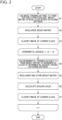
- Fig. 2 is a flowchart illustrating an overall flow of learning by the image classification apparatus 100. The configuration and operation of the image classification apparatus 100 will be described with reference to Figs. 1 and 2 .
- the basic training dataset is a supervised dataset including a large number of base classes (e.g., about 100 to 1000 classes), wherein each class is comprised of a large number of images (e.g., 3000 images).
- the basic training dataset is assumed to have a sufficient amount of data to allow learning a general classification task alone.
- the weight matrix of the base class is regularized (S2).
- S2 the feature extraction unit 10 and the weight matrix of the base class that have been trained for actual use is obtained.
- the weight matrix of the feature extraction unit 10 and the base class that has been learned is not updated at the time of incremental learning.
- This normalization step may be provided at the end of base class learning shown in Fig. 4 .
- the incremental training data set is used to train the weight matrix of the incremental class of the incremental session i, based on the cosine distance (S4).
- the trained weight matrix is regularized and stored (S5).
- the scaling value of the incremental class of session i is calculated using the weight matrix of the base class of session 0 and the weight matrix of the incremental class of session i that are regularized (S6).
- Learning is performed N times in batch size units.
- the batch size is 128, and learning (backpropagation) is repeated as many times as necessary for 400 epochs.
- the feature extraction unit 10 includes CONV1 to CONV5, which are convolutional layers of ResNet-18, and GAP1 (Global Average Pooling). GAP converts the feature map output from the convolutional layer into a feature vector. A 7x7 512-channel feature map is input to GAP1, and a 512-dimension feature vector is output (S10).
- the feature extraction unit 10 may be a deep learning network other than ResNet-18 such as VGG16 and ResNet-34, and the dimension of the feature vector may be other than 512 dimensions.
- the feature vector output from GAP1 of the feature extraction unit 10 is input to the feature distance measurement unit 22B of the base class local classification unit 20B.
- Fig. 5 is a configuration diagram of the feature distance measurement unit 22.
- the feature distance measurement unit 22 includes a regularizing unit 24 and a weight matrix unit 26.
- the regularizing unit 24 normalizes the input feature vector by L2 regularization.
- the weight matrix unit 26 has the weight of a linear layer (fully-connected layer). Each class in classification has a weight vector of 512 dimensions and a weight matrix of (512xNC) dimensions, where NC denotes the number of classes. NC may be a number equal to or greater than the number of classes.
- the weight matrix is regularized (L2 regularized) by the Euclidean norm (S12).
- the input feature vector is input to the regularizing unit 24 and is normalized, and the normalized feature vector is input to the weight matrix unit 26.
- the weight matrix unit 26 calculates and outputs a cosine distance vector of NC dimensions, which is a cosine distance (cosine similarity) between the feature vector and the weight vector of each class in classification (S14).
- cosine distance is interchangeable with cosine similarity.
- the learning unit 70 calculates a cross-entropy loss, which is a loss defined between the cosine distance vector and the correct class (class to which a label is assigned) of the input image.
- the feature extraction unit 10 and the weight matrix of the linear layer of the feature distance measurement unit 22B are trained by backpropagation using an optimization method such as stochastic gradient descent (SGD) and Adam (S16) in such a manner as to minimize the cross-entropy loss.
- SGD stochastic gradient descent
- S16 Adam
- Fig. 6 is a diagram illustrating a detailed configuration of the image classification apparatus 100 in incremental class learning.
- the base class of session 0 and the incremental class of session 1 have been learned, and a case of learning the incremental class of session 2 will be described.
- the feature extraction unit 10 is not trained. Further, when the incremental class of session 2 is learned, the base class local classification unit 20B of session 0 and the incremental class local classification unit 20N1 of session 1 are not trained. When the incremental class of session 2 is learned, only the incremental class local classification unit 20N2 of session 2 is trained.
- each part of the image classification apparatus 100 in incremental class learning are substantially the same as the detailed configuration and operation of each part in base class learning except for the fact that the feature extraction unit 10 is not trained and the scaling value is calculated by using the output of the base class local classification unit 20B in session 0. Therefore, the difference will mainly be described.
- an incremental training dataset which includes a small number of images in a small number of classes. It is commonly referred to as few shot learning, and N-way/K-shot learning is performed, where N denotes the number of classes, and K denotes the number of images.
- N denotes the number of classes
- K denotes the number of images.
- 5-way/5-shot, 5-way/1 shot, 10-way/5-shot, etc. are available.
- the batch size in incremental class learning is smaller than that of base class learning.
- the feature distance measurement unit 22N2 of the incremental class local classification unit 20N2 of session 2 maintains a weight matrix of the incremental class as the weight matrix, and the number of classes is the number of incremental classes.
- the scaling unit 28N2 of the incremental class local classification unit 20N2 of session 2 maintains the scaling value input from the scaling setting unit 80.
- the accuracy of classification by the local classification unit 20N2 in the local classification space of the incremental class is sufficient as far as the incremental class is concerned, but the accuracy of classification by the global classification unit 60 in the composite classification space combining the base class and the incremental class is insufficient.
- Fig. 7 is a flowchart showing steps of calculating the scaling value of an incremental class by the scaling setting unit 80. Using the regularized weight matrix of the base class of session 0 and the regularized weight matrix of the incremental class of session 2, the scaling value ⁇ of the incremental class of session 2 is calculated.
- the feature extraction unit 10 outputs a feature vector (S20).
- the scaling setting unit 80 selects and stores the largest cosine distance among all base classes (S24).
- the scaling setting unit 80 selects and stores the largest cosine distance among all incremental classes (S28) .
- the scaling setting unit 80 calculates an average value of the selected maximum cosine distance, for each of the base class and the incremental class (S30).
- the scaling setting unit 80 calculates the scaling value of the cosine distance of the incremental class from the average value of the cosine distance of the base class and the average value of the cosine distance of the incremental class (S32).
- the steps of Fig. 7 are performed for all images included in the incremental training dataset of session 2.
- the calculation need not be limited to the steps of Fig. 7 provided that the average value of the cosine distance output by the base class local classification unit 20B of session 0 and the incremental class local classification unit 20N2 of session 2 can be calculated for all images included in the incremental training dataset of session 2.
- the scaling value calculated from the average value of the cosine distance of the base class and the average value of the cosine distance of the incremental class is determined and used in each session.
- inconsistency between the cosine distance of the base class learned by using big data and that of the incremental class learned by using a small number of data items can be resolved, and the output level of the local classification unit can be adjusted.
- variation of the cosine distance between incremental sessions, in which variability of features tends to increase can be suppressed by scaling the cosine distance of each incremental class with reference to the cosine distance of the base class.
- the average value of the cosine distance is used in this case, but other amounts of statistics that can show the characteristics of the cosine distance, such as median, maximum, minimum, and total values, may also be used.
- the scaling value calculated from the average value of the cosine distance of the base class and the average value of the cosine distance of the incremental class is used, but the scaling value may be a predetermined value.
- the predetermined value is weighted according to the level of training of the weight matrix of the base class and the level of training of the weight matrix of the incremental class.
- the level of training is a ratio between the total number of images used to train the weight matrix of the base class and the total number of images used to train the weight matrix of the incremental class. The larger the total number of images used to train the weight matrix of the base class as compared to the total number of images used to train the weight matrix of the incremental class, the larger the predetermined value is configured to be.
- Fig. 8 is a diagram illustrating a detailed configuration of the image classification apparatus 100 that makes a classification by predicting a class of an image included in the test data set.
- a description will be given of a case in which the base class of session 0, the incremental class of session 1, and the incremental class of session 2 have been learned.
- a scaling unit is not provided in the base class local classification unit 20B in this case to simplify the explanation, but a scaling unit may be provided in the local classification unit 20B as well.
- the image input to the feature extraction unit 10 is processed by each convolutional layer, and the feature vector output from GAP1 is input to the feature distance measurement unit 22B of the base class local classification unit 20B, and the feature distance measurement units 22N1, 22N2 of the incremental class local classification units 20N1, 20N2.
- the feature distance measurement units 22B, 22N1, 22N2 calculate the cosine distance between the weight vector and the feature vector input from GAP1, and calculate the cosine distance vector of a dimension determined by the number of classes.
- the base class feature distance measurement unit 22B of session 0 outputs the cosine distance vector to the global classification unit 60.
- the incremental class feature distance measurement units 22N1, 22N2 of session 1, session 2 output the cosine distance vectors calculated respectively to the scaling units 28N1, 28N2.
- the incremental class scaling units 28N1, 28N2 of session 1, session 2 scale the cosine distance input from the feature distance measurement units 22N1, 22N2 according to the respective scaling value and output the result to the global classification unit 60.
- the global classification unit 60 selects a class having the largest cosine similarity (that is, the shortest cosine distance) by referring to the cosine distance vectors of the base class of session 0, the incremental class of session 1, and the incremental class of session 2, and outputs the determined class.
- the class learned in the past is prevented from being forgotten by storing the regularized weight matrix of all classes in the base class and the incremental classes.
- images can be easily classified simply by comparing the feature vector of the input image with the weight vector of each class.
- the scaling value calculated from the average value of the cosine distance of the base class and the average value of the cosine distance of the incremental class is applied to the cosine distance of the incremental class.
- the level of the cosine distance of the base class learned by using big data and that of the incremental class learned by using a small number of data items can be adjusted to each other. This makes it possible to make accurate base class and incremental class classification in the synthetic classification space.
- Fig. 9 is a configuration diagram of an image classification apparatus 200 according to the second embodiment. A description of the configuration and operation common to those of the first embodiment will be omitted as appropriate.
- the image classification apparatus 200 includes a feature extraction unit 210, a local classification unit 220, a global classification unit 260, a learning unit 270, and a scaling setting unit 280.
- Feature vectors of a plurality of resolutions are output from the feature extraction unit 210.
- a low-resolution general feature vector and a high-resolution detailed feature vector are mentioned as examples of feature vectors of a plurality of resolutions.
- the local classification unit 20 includes a base class local classification unit 220B of session 0 and an incremental class local classification unit 220N1 of session 1.
- the base class local classification unit 220B of session 0 includes a general feature distance measurement unit 222Ba, a detailed feature distance measurement unit 222Bb, and a feature distance synthesis unit 230B.
- the incremental class local classification unit 220N1 of session 1 includes a general feature distance measurement unit 222N1a, a detailed feature distance measurement unit 222N1b, a general feature scaling unit 228N1a, a detailed feature scaling unit 228N1b, and a feature distance synthesis unit 230N1.
- the learning unit 270 includes a general feature learning unit 270a and a detailed feature learning unit 270b.
- the scaling setting unit 280 includes a general scaling setting unit 280a and a detailed scaling setting unit 280b.
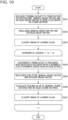
- Fig. 10 is a flowchart illustrating an overall flow of learning by the image classification apparatus 200. The configuration and operation of the image classification apparatus 200 will be described with reference to Figs. 9 and 10 .
- the basic training data set is used to train the feature extraction unit 210 and the general weight matrix and the detailed weight matrix of the base class based on the cosine distance (S201).
- the general weight matrix and the detailed weight matrix of the base class are regularized (S202).
- the feature extraction unit 210 and the general weight matrix and detailed weight matrix of the base class that have been trained for actual use are obtained.
- the feature extraction unit 10 and the general weight matrix and detailed weight matrix of the base class that have been learned are not updated at the time of incremental learning. This normalization step may be provided at the end of base class learning shown in Fig. 12 .
- Images of the base class that are included in the test dataset and that have been learned are classified (S203). If the test dataset cannot be made available, the image data of classes that are included in the training dataset and that have been learned is classified.
- the incremental training data set is used to train the general weight matrix and the detailed weight matrix of the incremental class of the incremental session i, based on the cosine distance (S204).
- the scaling value of the general cosine distance and the detailed cosine distance is calculated (S206).
- the base class and the incremental classes that are included in the test dataset and that have been learned are classified (S207).
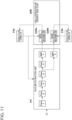
- Fig. 11 is a diagram illustrating a detailed configuration of the image classification apparatus 200 in base class learning.
- Fig. 12 is a flowchart illustrating a detailed operation of the image classification apparatus 200 in base class learning. Base class learning in session 0 by the image classification apparatus 200 will be described with reference to Figs. 11 and 12 .
- the basic operation is the same as that of the first embodiment.
- the second embodiment differs from the first embodiment in that GAP2 is added to the feature extraction unit 210, a detailed feature distance measurement unit 222Bb is added to the base class local classification unit 220B, and a detailed feature learning unit 270b is added to the learning unit 270.
- the detailed feature learning unit 270b trains only the detailed feature distance measurement unit 222Bb.
- the general feature learning unit 270a is caused to train the feature extraction unit 210 and the general feature distance measurement unit 222Ba
- the detailed feature learning unit 270b is caused to train the detailed feature distance measurement unit 222Bb.
- the general feature learning unit 270a may be caused to train the general feature distance measurement unit 222Ba, and the detailed feature learning unit 270b may be caused to train the feature extraction unit 210 and the detailed feature distance measurement unit 222Bb.
- the general feature learning unit 270a may be caused to train the feature extraction unit 210 and the general feature distance measurement unit 222Ba, and the detailed feature learning unit 270b may be caused to train the feature extraction unit 210 and the detailed feature distance measurement unit 222Bb.
- the feature extraction unit 10 includes CONV1 to CONV5, which are convolutional layers of ResNet-18, and GAP1 and GAP2.
- GAP converts the feature map output from the convolutional layer into a feature vector.
- a 7 ⁇ 7 512-channel feature map is input to GAP1, and a 512-dimension feature vector is output.
- the output of CONV4 is input to GAP2.
- a 14 ⁇ 14 256-channel feature map is input to GAP2, and a 256-dimension detailed feature vector is output (S210).
- the general feature vector output from GAP1 of the feature extraction unit 210 is output to the general feature distance measurement unit 222Ba of the base class local classification unit 220B, and the detailed feature vector output from GAP2 of the feature extraction unit 210 is output to the detailed feature distance measurement unit 222Bb of the base class local classification unit 220B.
- the general feature distance measurement unit 222Ba of the base class local classification unit 220B and the general feature distance measurement units 222N1a, 222N2a of the incremental class local classification units 220N1, 220N2 have the same configuration, they are collectively referred to as the general feature distance measurement unit 222a for the purpose of description.
- the detailed feature distance measurement unit 222Bb of the base class local classification unit 220B and the detailed feature distance measurement units 222N1b, 222N2b of the incremental class local classification units 220N1, 220N2 have the same configuration, they are collectively referred to as the detailed feature distance measurement unit 222b for the purpose of description.
- the normalizing unit of the general feature distance measurement unit 222a normalizes the input general feature vector by L2 regularization.
- the weight matrix unit of the general feature distance measurement unit 222a includes a linear layer, has a 512-dimension general weight vector for each class, and has a (512 ⁇ NC)-dimension general weight matrix (NC is the number of classes).
- the general weight matrix is regularized (L2 regularized) by the Euclidean norm (S212).
- the normalizing unit of the detailed feature distance measurement unit 222b normalizes the input detailed feature vector by L2 regularization.
- the weight matrix unit of the detailed feature distance measurement unit 222b includes a linear layer, has a 512-dimension detailed weight vector for each class, and has a (512 ⁇ NC)-dimension detailed weight matrix.
- the detailed weight matrix is regularized (L2 regularized) in the Euclidean norm (S212).
- the input general feature vector is input to the regularizing unit of the general feature distance measurement unit 222a and is normalized, and the normalized general feature vector is input to the weight matrix unit of the general feature distance measurement unit 222a.
- the weight matrix unit of the general feature distance measurement unit 222a calculates and outputs a general cosine distance vector of NC dimensions, which is a cosine distance (cosine similarity) between the general feature vector and the general weight vector of each class (S214).
- the input detailed feature vector is input to the regularizing unit of the detailed feature distance measurement unit 222b and is normalized, and the normalized detailed feature vector is input to the weight matrix unit of the detailed feature distance measurement unit 222b.
- the weight matrix unit of the detailed feature distance measurement unit 222b calculates and outputs a detailed cosine distance vector of NC dimensions, which is a cosine distance (cosine similarity) between the detailed feature vector and the detail weight vector of each class (S216).
- the general feature learning unit 270a calculates a cross-entropy loss, which is a loss defined between the general cosine distance vector and the correct class (class to which a label is assigned) of the input image, and optimizes the feature extraction unit 210 and the general weight matrix in such a manner as to minimize the cross-entropy loss (S218).
- a cross-entropy loss which is a loss defined between the general cosine distance vector and the correct class (class to which a label is assigned) of the input image
- the detailed feature learning unit 270b calculates a cross-entropy loss, which is a loss defined between the detailed cosine distance vector and the correct class (class to which a label is assigned) of the input image, and optimizes the detailed weight matrix in such a manner as to minimize the cross-entropy loss (S220).
- a cross-entropy loss which is a loss defined between the detailed cosine distance vector and the correct class (class to which a label is assigned) of the input image
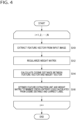
- Fig. 13 is a diagram illustrating a detailed configuration of the image classification apparatus 200 in base class classification.
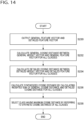
- Fig. 14 is a flowchart illustrating a detailed operation of the image classification apparatus 200 in base class classification. Base class classification by the image classification apparatus 200 will be described with reference to Figs. 13 and 14 .
- a general feature vector is output from GAP1 of the feature extraction unit 210, and a detailed feature vector is output from GAP2 (S230).
- the general feature distance measurement unit 222Ba calculates and outputs a general cosine distance of NC dimensions, which is a cosine distance between the general feature vector and the general weight vector of each class (S232).
- the detailed feature distance measurement unit 222Bb calculates and outputs a detailed cosine distance of NC dimensions, which is a cosine distance between the detailed feature vector and the detail weight vector of each class (S234).
- the feature distance synthesis unit 230B calculates a synthesized cosine distance vector of NC dimensions by adding the general cosine distance vector Da and the detailed cosine distance vector Db (S236).
- the feature distance synthesis unit 230B outputs the synthesized cosine distance vector to the global classification unit 260.
- the weighting parameter ⁇ can also be changed according to the position of the feature map that serves as the input to GAP2. For example, the closer to GAP1 the position of the feature map input to GAP2, the smaller ⁇ is configured to be, and the farther from GAP1 the position of the feature map input to GAP2, the larger ⁇ is configured to be.
- the global classification unit 260 selects a class having the shortest cosine distance by referring to the synthetic cosine distances of the respective classes, and outputs the determined class (S238).
- the feature extraction unit 210 is not trained. Further, when the incremental class of session 1 is learned, the base class local classification unit 220B of session 0 is not trained. When the incremental class of session 1 is learned, only the incremental class local classification unit 220N1 of session 1 is trained.
- the general scaling setting unit 280a calculates the scaling value of the general cosine distance of the incremental class of session 1 from the average value of the general cosine distance of the base class output from the base class general feature distance measurement unit 222Ba of session 0 and the average value of the general cosine distance of the incremental class output from the incremental class general feature distance measurement unit 222N1a of session 1.
- the general scaling setting unit 280a outputs the calculated scaling value to the incremental class general feature scaling unit 228N1a of session 1.
- the detailed scaling setting unit 280b calculates the scaling value of the detailed cosine distance of the incremental class of session 1 from the average value of the detailed cosine distance of the base class output from the base class detailed feature distance measurement unit 222Bb of session 0 and the average value of the detailed cosine distance of the incremental class output from the incremental class detailed feature distance measurement unit 222N1b of session 1.
- the detailed scaling setting unit 280b outputs the calculated scaling value to the incremental class detailed feature scaling unit 228N1b of session 1.
- the scaling value of the general cosine distance of the incremental class, the scaling value of the detailed cosine distance of the incremental class are given by the following expression.
- (the scaling value of the general cosine distance of the incremental class) (the average value of the general cosine distance of the base class)/(the average value of the general cosine distance of the incremental class) ⁇ ⁇ a
- (the scaling value of the detailed cosine distance of the incremental class) (the average value of the detailed cosine distance of the base class)/(the average value of the detailed cosine distance of the incremental class) ⁇ ⁇ b
- ⁇ a and ⁇ b are predetermined values.
- ⁇ a and ⁇ b may be the same value or different values.
- Fig. 16 is a diagram illustrating a detailed configuration of the image classification apparatus 200 that makes a classification by predicting a class of an image included in a test data set.
- a description will be given of a case in which in which the base class of session 0, the incremental class of session 1, and the incremental class of session 2 have been learned.
- the image input to the feature extraction unit 210 is processed by each convolutional layer, and the general feature vector output from GAP1 is input to the general feature distance measurement unit 222B of the base class local classification unit 220B of session 0, and the general feature distance measurement units 222N1a, 222N2a of the incremental class local classification units 220N1, 220N2 of session 1, session 2.
- the detailed feature vector output from GAP2 is input to the detailed feature distance measurement unit 222Bb of the base class local classification unit 220B of session 0, and the detailed feature distance measurement units 222N1b, 222N2b of the incremental class local classification units 220N1, 220N2 of session 1, session 2.
- the general feature distance measurement units 222Ba, 222N1a, 222N2a calculate the general cosine distance between the general weight vector and the general feature vector input from GAP1, and calculate the cosine distance vector of NC dimensions.
- the detailed feature distance measurement units 222Bb, 222N1b, 222N2b calculate the detailed cosine distance between the detailed weight vector and the detailed feature vector input from GAP2, and calculate the cosine distance vector of NC dimensions.
- the base class feature distance synthesis unit 230B of session 0 calculates a synthesized cosine distance vector by calculating a sum or a weighted sum of the general cosine distance vector and the detailed cosine distance vector, and outputs the synthesized cosine distance vector to the global classification unit 260.
- the incremental class general feature distance measurement units 222N1a, 222N2a of session 1, session 2 output the general cosine distance vectors calculated respectively to the general feature scaling units 228N1a, 228N2a.
- the incremental class detailed feature distance measurement units 222N1b, 222N2b of session 1, session 2 output the detailed cosine distance vectors calculated respectively to the detailed feature scaling units 228N1b, 228N2b.
- the incremental class general feature scaling units 228N1a, 228N2a of session 1, session 2 scale the general cosine distance input from the general feature distance measurement units 222N1a, 222N2a according to the respective scaling values and output the result to the feature distance synthesis units 230N1, 230N2.
- the incremental class detailed feature scaling units 228N1b, 228N2b of session 1, session 2 scale the detailed cosine distance input from the detailed feature distance measurement units 222N1b, 222N2b according to the respective scaling values and output the result to the feature distance synthesis units 230N1, 230N2.
- the additional class feature distance synthesis unit 230N1, 230N2 of session 1, session 2 calculate a synthesized cosine distance vector by respectively calculating a sum or a weighted sum of the general cosine distance vector and the detailed cosine distance vector, and output the synthesized cosine distance vector to the global classification unit 260.
- the global classification unit 260 selects a class having the largest cosine similarity (that is, the shortest cosine distance) by referring to the synthesized cosine distance vectors of the base class of session 0, the incremental class of session 1, and the incremental class of session 2, and outputs the determined class.
- the class learned in the past is prevented from being forgotten by storing the regularized general weight matrix and the regularized detailed weight matrix of all classes in the base class and the incremental classes.
- images can be easily classified simply by comparing the feature vector of the input image with the weight vector of each class.
- both the general feature (idealized feature) and the detailed feature (specific feature) of the input image can be individually evaluated and classified according to the cosine distance by using both the general weight matrix and the detailed weight matrix. It is thus possible to perform more accurate classification in the incremental session i. In some classes, the accuracy is improved by using a more idealized feature. In others, the accuracy is improved by using a more specific feature. The benefit is particularly enjoyed by using the detailed feature when it is difficult to perform classification merely by using the general feature.
- intraclass variance is suppressed more successfully even in the incremental class comprised of a small number of data items and characterized by a large variance of the feature, by calculating, for the general feature and the detailed feature individually, the scaling value from the average value of the cosine distance of the base class and the average value of the cosine distance of the incremental class. This makes it possible to make accurate base class and incremental class classification in the synthetic classification space.
- the general feature distance measurement unit stores all general weight matrices of the base class and the incremental class
- the detailed feature distance measurement unit stores all the detailed weight matrices of the base class and the incremental class to support few shot class incremental learning.
- the general feature distance measurement unit and the detailed feature distance measurement unit need not store the weight matrices of the base class and incremental class and need only maintain the feature extraction unit for the next learning session. It is also possible for the feature distance synthesis unit to set the scaling value ⁇ of the base class and the scaling value ⁇ of the incremental class to different values.
- the general feature distance measurement unit and the detailed feature distance measurement unit may store the weight matrix of the base class and may not store the weight matrix of the incremental class to support a technology called generalized few shot learning that extends few shot class learning.
- the scaling value which is calculated from the average value of the cosine distance of the base class and the average value of the cosine distance of the incremental class, is calculated and used in each session to resolve inconsistency between the cosine distance of the base class learned by using big data and that of the incremental class learned by using a small number of data items. Thereby, the output level of the local classification unit is adjusted.
- the configuration for scaling may be omitted from the second embodiment.
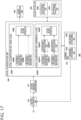
- Fig. 17 is a configuration diagram of an image classification apparatus 300 according to the third embodiment. A description of the configuration common to that of the second embodiment will be omitted as appropriate.
- the image classification apparatus 300 includes a feature extraction unit 310, a feature frequency transform unit 312, a local classification unit 320, a global classification unit 360, a learning unit 370, and a scaling setting unit 380.
- the feature extraction unit 210 generates the general feature vector and the detailed feature vector as examples of feature vectors of a plurality of resolutions.
- the third embodiment differs in that the feature frequency transform unit 312 subjects the feature vector output by the feature extraction unit 310 to frequency transform to generate a low-frequency feature vector and a high-frequency feature vector.
- the local classification unit 320 includes a base class local classification unit 320B of session 0 and an incremental class local classification unit 320N1 of session 1.
- the base class local classification unit 320B of session 0 includes a low-frequency feature distance measurement unit 322Ba, a high-frequency feature distance measurement unit 322Bb, and a feature distance synthesis unit 330B.
- the incremental class local classification unit 320N1 of session 1 includes a low-frequency feature distance measurement unit 322N1a, a high-frequency feature distance measurement unit 322N1b, a low-frequency feature scaling unit 328N1a, a high-frequency feature scaling unit 328N1b, and a feature distance synthesis unit 330N1.
- the learning unit 370 includes a low-frequency feature learning unit 370a and a high-frequency feature learning unit 370b.
- the scaling setting unit 380 includes a low frequency scaling setting unit 380a and a high frequency scaling setting unit 380b.
- the configuration of the feature extraction unit 310 is the same as the configuration of the feature extraction unit 10 of the first embodiment.
- the feature frequency transform unit 312 applies two-dimension DCT (discrete cosine transform) to each 7 ⁇ 7 feature map, transforms the feature amount into the frequency domain to divide the feature amount into two frequency ranges, i.e., the low frequency range and the high frequency range, unidimensionalizes the low-frequency feature amount to generate a low-frequency feature vector, and unidimensionalizes the high-frequency feature amount to generate a high-frequency feature vector.
- DCT discrete cosine transform
- Figs. 18A and 18B are diagrams illustrating examples of division into two frequency ranges, i.e., the low-frequency range and the high-frequency range.
- the low-frequency range is the filled area
- the high-frequency range is the area with diagonal lines.
- the feature frequency transform unit 312 generates a 2048-dimension low-frequency feature vector by unidimensionalizing the low-frequency feature amount, and generates a 25088-dimension high-frequency feature vector by unidimensionalizing the high-frequency amount.
- the low-frequency range may be the DC component, and it is not necessary to include all frequency components in the low-frequency range and the high-frequency range. Further, the low-frequency range may be extended toward the high-frequency side. Further, two-dimension FFT (Fourier transform) may be used instead of two-dimension DCTs so long as division into the low-frequency range and the high-frequency range can be made.
- FFT Frier transform
- the feature frequency transform unit 312 supplies the low-frequency feature vector to the low-frequency feature distance measurement unit 322a of the local classification unit 320, and supplies the high-frequency feature vector to the high-frequency feature distance measurement unit 322b of the local classification unit 320.
- the low frequency feature distance measurement unit 322a includes a linear layer having a weight determined by the number of classes NC.
- the linear layer has, by way of example, a low-frequency weight vector of 2048 dimensions for each class and a low-frequency weight matrix of (2048 ⁇ NC) dimensions.
- the low-frequency feature distance measurement unit 322a inputs the low-frequency feature vector normalized by L2 regularization to the linear layer, and calculates a low-frequency cosine distance vector of NC dimensions, which is a cosine distance (cosine similarity) between the low-frequency feature vector and the low-frequency weight vector of each class.
- the high-frequency feature distance measurement unit 322b includes a linear layer having a weight determined by the number of classes.
- the linear layer has, by way of example, a 25088-dimension high-frequency weight vector for each class and a (25088 ⁇ NC)-dimension high-frequency weight matrix.
- the high-frequency feature distance measurement unit 322b inputs a high-frequency feature vector normalized by L2 regularization to the linear layer, and calculates a high-frequency cosine distance vector of NC dimensions, which is a cosine distance (cosine similarity) between the high-frequency feature vector and the high-frequency weight vector of each class.
- the cosine distance (cosine similarity) of the feature vector of a plurality of frequency components output from the feature frequency transform unit 312 to the weight vector of the class that has been learned is calculated, and the cosine distances at respective resolutions with suppressed intraclass variance are synthesized.
- evaluation can be made according to the similarity in both the low-the frequency component and the high-frequency component so that classification can be made with higher accuracy than in the case of using the cosine distance calculated from the single feature vector and the weight vector of the class that has been learned.
- the low-frequency component and the high-frequency component are also interpreted as a feature average component and a feature edge component, respectively.
- using the features of both the low-frequency component and high-frequency component makes more accurate classification possible by using both the average feature and the geometric feature of the input image for classification.
- the class learned in the past is prevented from being forgotten by storing the regularized low-frequency matrix and high-frequency weight of all classes in the base class and the incremental classes.
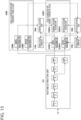
- Fig. 19 is a configuration diagram of an image classification apparatus 400 according to the fourth embodiment.
- the features common to those of the third embodiment are denoted by the same symbols as those of the third embodiment, and a description thereof is omitted.
- the image classification apparatus 400 includes a low-pass filter 402, a high-pass filter 404, a feature extraction unit 410, a local classification unit 320, a global classification unit 360, a learning unit 370, and a scaling setting unit 380.
- the feature frequency transform unit 312 subjects the feature vector output by the feature extraction unit 310 to frequency transform to generate the low-frequency feature vector and the high-frequency feature vector.
- the fourth embodiment differs in that the low-pass filter 402 and the high-pass filter 404 transform the input image into a low-frequency image and a high-frequency image, respectively, and supply the images to the feature extraction unit 410.
- the low-pass filter 402 transforms the input image into the frequency domain by FFT to remove frequency components higher than a predetermined frequency, transforming the input image into a low-frequency image that is an image comprised of components equal to or lower than a predetermined frequency by inverse FFT.
- the low-pass filter 402 outputs the low-frequency image to the low-frequency feature extraction unit 410a of the feature extraction unit 410.
- the low-frequency feature extraction unit 410a has the same configuration as the feature extraction unit 10, and, by way of example, outputs a 512-dimension low-frequency feature vector to the low-frequency feature distance measurement unit 322a of the local classification unit 320.
- the high-pass filter 404 transforms the input image into the frequency domain by FFT to remove frequency components lower than a predetermined frequency, transforming the input image into a high-frequency image that is an image comprised of components equal to or higher than a predetermined frequency by inverse FFT.
- the high-pass filter 404 outputs the high-frequency image to the high-frequency feature extraction unit 410b of the feature extraction unit 410.
- the high-frequency feature extraction unit 410b has the same configuration as the feature extraction unit 10, and, by way of example, outputs a 512-dimension high-frequency feature vector to the high-frequency feature distance measurement unit 322b of the local classification unit 320.
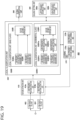
- Fig. 20 is a configuration diagram of an image classification apparatus 500 according to the fifth embodiment.
- Fig. 21 is a flowchart illustrating a detailed operation of the image classification apparatus 500 according to the fifth embodiment.
- the configuration and operation common to those of the second embodiment will be omitted as appropriate.
- the feature distance synthesis unit 223 of Fig. 20 need not be available.
- this embodiment is described based on the difference from the second embodiment, this embodiment can also be applied to the third embodiment or the fourth embodiment as well as to the second embodiment.
- “low frequency", “high frequency” of the third embodiment and the fourth embodiment need only be replaced with "general", “detail", respectively, in this embodiment.
- the image classification apparatus 500 may be referred to as "image feature learning apparatus" when the configuration and operation at the time of learning is referred to.
- the general feature distance measurement unit 222Ba of the base class local classification unit 220B and the general feature distance measurement units 222N1a, 222N2a of the incremental class local classification units 222N1, 220N2 have the same configuration, they are collectively referred to as the general feature distance measurement unit 222a for the purpose of description.
- the detailed feature distance measurement unit 222Bb of the base class local classification unit 220B and the detailed feature distance measurement units 222N1b, 222N2b of the incremental class local classification units 220N1, 220N2 have the same configuration, they are collectively referred to as the detailed feature distance measurement unit 222b for the purpose of description.
- the feature extraction unit 210 and the general feature distance measurement unit 222a are trained by the general feature learning unit 270a, and the detailed feature distance measurement unit 222b is trained by the detailed feature learning unit 270b.
- the feature extraction unit 210, the general feature distance measurement unit 222a, and the detailed feature distance measurement unit 222b are trained by a learning unit 550.
- the learning unit 550 includes a general loss calculation unit 552a, a detailed loss calculation unit 552b, a loss weighting addition unit 554, and an optimization unit 556.
- the feature extraction unit 210 extracts a general feature vector and a detailed feature vector from the input image (S510).
- the general feature vector output from GAP1 of the feature extraction unit 210 is output to the general feature distance measurement unit 222a of the local classification unit 220, and the detailed feature vector output from GAP2 of the feature extraction unit 210 is output to the detailed feature distance measurement unit 222b of the local classification unit 220.
- the general feature distance measurement unit 222a and the detailed feature distance measurement unit 222b include a regularizing unit and a weight matrix unit.
- the normalizing unit of the general feature distance measurement unit 222a normalizes the input general feature vector by L2 regularization
- normalizing unit of the detailed feature distance measurement unit 222b normalizes the input detailed feature vector by L2 regularization (S511).
- the input general feature vector is input to the regularizing unit of the general feature distance measurement unit 222a and is normalized, and the normalized general feature vector is input to the weight matrix unit of the general feature distance measurement unit 222a.
- the weight matrix unit of the general feature distance measurement unit 222a calculates and outputs a general cosine distance vector of NC dimensions, which is a cosine distance (cosine similarity) between the general feature vector and the general weight vector of each class (S512a).
- the input detailed feature vector is input to the regularizing unit of the detailed feature distance measurement unit 222b and is normalized, and the normalized detailed feature vector is input to the weight matrix unit of the detailed feature distance measurement unit 222b.
- the weight matrix unit of the detailed feature distance measurement unit 222b calculates and outputs a detailed cosine distance vector of NC dimensions, which is a cosine distance (cosine similarity) between the detailed feature vector and the detail weight vector of each class (S512b).
- the general loss calculation unit 552a calculates a general cross-entropy loss, which is a loss defined between the general cosine distance vector and the correct label (correct class) of the input image (S513a).
- the detailed loss calculation unit 552b calculates a detailed cross-entropy loss, which is a loss defined between the detailed cosine distance vector and the correct label (correct class) of the input image (S513b).
- the loss weighting addition unit 554 calculates a weighted sum of the general cross-entropy loss Ld and the detailed cross-entropy loss Ls to determine a total cross-entropy loss L (S514).
- ⁇ is a predetermined value from 0 to 1 and is, for example, 0.2.
- ⁇ of 0.2 is used here, but a determination as to which value from 0 to 1 should be used may be, for example, made in the initial session. For example, all values of X from 0 to 1 in increments of 0.05 may be learned in the initial session to measure accuracy, and the value that produces the optimum classification result may be selected.
- the initial session may be performed in an offline process, and the incremental session may be performed in an online process.
- L (1- ⁇ )*Ld+ ⁇ *Ls
- the optimization unit 556 optimizes the feature extraction unit 10, and the weight matrix of the general feature distance measurement unit 222a and the detailed feature distance measurement unit 222b by backpropagation by using an optimization method such as stochastic gradient descent (SGD) and Adam in such a manner as to minimize the total cross-entropy loss (S515).
- SGD stochastic gradient descent
- Adam Adam in such a manner as to minimize the total cross-entropy loss
- the general cross-entropy loss that convolves the entire object is prioritized over the detailed cross-entropy loss that convolves a partial area of the object.
- a value of ⁇ described above less than 0.5 is used. That is, when the general cross-entropy loss and the detailed cross-entropy loss are weighted, the weighting coefficient of the general cross-entropy loss is configured to be greater than the weighting coefficient of the detailed cross-entropy loss, and the weighted general cross-entropy loss and the weighted detailed cross-entropy loss are added.
- learning can be performed in such a manner as to consider a partial area of the object as well while giving priority to the entire object. More specifically, a plurality of objects in an image which have a similar overall feature but in which features of partial areas differ between objects can be suitably learned.
- the above-described various processes in the image classification apparatuses 100, 200, 300, 400, 500 can of course be implemented by an apparatus that uses hardware such as a CPU and a memory but can also be implemented by firmware stored in a ROM (read-only memory), a flash memory, etc., or by software on a computer, etc.
- the firmware program or the software program may be made available on, for example, a computer readable recording medium.
- the program may be transmitted and received to and from a server via a wired or wireless network.
- the program may be transmitted and received in the form of data broadcast over terrestrial or satellite digital broadcast systems.
- the present invention can be applied to image classification technology.
Landscapes
- Engineering & Computer Science (AREA)
- Theoretical Computer Science (AREA)
- Physics & Mathematics (AREA)
- General Physics & Mathematics (AREA)
- Evolutionary Computation (AREA)
- Software Systems (AREA)
- Artificial Intelligence (AREA)
- Computer Vision & Pattern Recognition (AREA)
- Computing Systems (AREA)
- Health & Medical Sciences (AREA)
- General Health & Medical Sciences (AREA)
- Multimedia (AREA)
- Medical Informatics (AREA)
- Mathematical Physics (AREA)
- Data Mining & Analysis (AREA)
- General Engineering & Computer Science (AREA)
- Biomedical Technology (AREA)
- Life Sciences & Earth Sciences (AREA)
- Molecular Biology (AREA)
- Databases & Information Systems (AREA)
- Biophysics (AREA)
- Computational Linguistics (AREA)
- Biodiversity & Conservation Biology (AREA)
- Image Analysis (AREA)
Abstract
Description
- The present invention relates to image classification technology and image feature learning technology.
- Human beings can learn new knowledge through experiences over a long period of time and can maintain old knowledge without forgetting it. Meanwhile, the knowledge of a convolutional neutral network (CNN) depends on the dataset used in learning. To adapt to a change in data distribution, it is necessary to re-learn CNN parameters in response to the entirety of the dataset. In CNN, the precision estimation for old tasks will be decreased as new tasks are learned. Thus, catastrophic forgetting cannot be avoided in CNN. Namely, the result of learning old tasks is forgotten as new tasks are being learned in continual learning.
- Incremental learning or continual learning is proposed as a scheme to avoid catastrophic forgetting. Continual learning is a learning method that improves a current trained model to learn new tasks and new data as they occur, instead of training the model from scratch.
- Human beings can also learn new knowledge from a small number of images. On the other hand, artificial intelligence using deep learning that uses a convolutional neural network, etc., relies on big data (a large number of images) used for learning. It is known that, when artificial intelligence using deep learning is trained on a small number of images, it falls into overfitting characterized by good local performance but poor generalization performance.
- Few shot learning has been proposed as a method to avoid overfitting. Few shot learning is a learning method that uses big data in a base task to learn basic knowledge, and then uses the basic knowledge to learn new knowledge from a small number of images in a new task.
- Few shot class incremental learning is known as a method for solving the problems of both continuous learning and few shot learning (Non Patent Literature 1). Technology as one scheme of few shot learning is also known that uses a cosine distance between a feature vector and a weight vector (Non Patent Literature 2) .
- Non Patent Literature 1: Tao, Xiaoyu, et al. "Few-shot class-incremental learning." Proceedings of the IEEE/CVF Conference on Computer Vision and Pattern Recognition. 2020
- Non Patent Literature 2: Chen, Wei-Yu, et al. "A closer look at few-shot classification." arXiv preprint arXiv: 1904.04232 (2019)
- In the related art, there is a problem in that image classification accuracy is not sufficiently high in incremental learning or learning of a small number of images.
- The present invention addresses the issue described above, and a purpose thereof is to provide an image classification technology and an image feature learning technology capable of improving the accuracy of classification of images in incremental learning or learning of a small number of images.
- In order to solve the aforementioned problems, an image classification apparatus according to an embodiment includes: a feature extraction unit that extracts a low-resolution general feature vector of an input image and a high-resolution detailed feature vector of the input image; a general feature distance measurement unit that maintains a general weight vector of each class and calculates a general distance vector from the general feature vector and the general weight vector; a detailed feature distance measurement unit that maintains a detailed weight vector of each class and calculates a detailed distance vector from the detailed feature vector and the detailed weight vector; a feature distance synthesis unit that calculates a synthesized distance vector by synthesizing the general distance vector and the detailed distance vector; and a classification unit that determines a class of the input image based on the synthesized distance vector.
- Another embodiment also relates to an image classification apparatus. The apparatus includes: a feature extraction unit that extracts a feature vector of an input image; a feature frequency transform unit that transforms the feature vector into a frequency domain and generates a low-frequency feature vector and a high-frequency feature vector; a low-frequency feature distance measurement unit that maintains a low-frequency weight vector of each class and calculates a low-frequency distance vector from the low-frequency feature vector and the low-frequency weight vector; a high-frequency feature distance measurement unit that maintains a high-frequency weight vector of each class and calculates a high-frequency distance vector from the high-frequency feature vector and the high-frequency weight vector; a feature distance synthesis unit that calculates a synthesized distance vector by synthesizing the low-frequency distance vector and the high-frequency distance vector; and a classification unit that determines a class of the input image based on the synthesized distance vector.
- Still another embodiment also relates to an image classification apparatus. The apparatus includes: a filter unit that transforms an input image into a frequency domain and divides the input image into a low-frequency component and a high-frequency component; a low-frequency feature extraction unit that extracts a low-frequency feature vector from the low-frequency component; a high-frequency feature extraction unit that extracts a high-frequency feature vector from the high-frequency component; a low-frequency feature distance measurement unit that maintains a low-frequency weight vector of each class and calculates a low-frequency distance vector from the low-frequency feature vector and the low-frequency weight vector; a high-frequency feature distance measurement unit that maintains a high-frequency weight vector of each class and calculates a high-frequency distance vector from the high-frequency feature vector and the high-frequency weight vector; a feature distance synthesis unit that calculates a synthesized distance vector by synthesizing the low-frequency distance vector and the high-frequency distance vector; and a classification unit that determines a class of the input image based on the synthesized distance vector.
- Still another embodiment relates to an image classification method. The method includes: extracting a low-resolution general feature vector of an input image and a high-resolution detailed feature vector of the input image; maintaining a general weight vector of each class and calculating a general distance vector from the general feature vector and the general weight vector; maintaining a detailed weight vector of each class and calculating a detailed distance vector from the detailed feature vector and the detailed weight vector; calculating a synthesized distance vector by synthesizing the general distance vector and the detailed distance vector; and determining a class of the input image based on the synthesized distance vector.
- An image classification apparatus according to an embodiment includes: a feature extraction unit that extracts a feature vector of an input image; a base class feature distance measurement unit that maintains a weight vector of a base class and calculates a distance vector of the base class from the feature vector and the weight vector of the base class; an incremental class feature distance measurement unit that maintains a weight vector of an incremental class and calculates a distance vector of the incremental class from the feature vector and the weight vector of the incremental class; a scaling unit that scales the distance vector of the incremental class by using a scaling value calculated based on the distance vector of the base class and the distance vector of the incremental class; and a classification unit that determines a class of the input image based on the distance vector of the base class and the scaled distance vector of the incremental class.
- The feature extraction unit may extract a low-resolution general feature vector of the input image and a high-resolution detailed feature vector of the input image. The feature distance measurement unit of each class includes a general feature distance measurement unit that maintains a general weight vector of each class and calculates a general distance vector from the general feature vector and the general weight vector and a detailed feature distance measurement unit that maintains a detailed weight vector of each class and calculates a detailed distance vector from the detailed feature vector and the detailed weight vector.
- The image classification apparatus may further include a feature frequency transform unit that transforms the feature vector into a frequency domain and generates a low-frequency feature vector and a high-frequency feature vector. The feature distance measurement unit of each class may include a low-frequency feature distance measurement unit that maintains a low-frequency weight vector of each class and calculates a low-frequency distance vector from the low-frequency feature vector and the low-frequency weight vector and a high-frequency feature distance measurement unit that maintains a high-frequency weight vector of each class and calculates a high-frequency distance vector from the high-frequency feature vector and the high-frequency weight vector.
- The image classification apparatus may further include a filter unit that transforms the input image into a frequency domain and divides the input image into a low-frequency component and a high-frequency component. The feature extraction unit may include a low-frequency feature extraction unit that extracts a low-frequency feature vector from the low-frequency component and a high-frequency feature extraction unit that extracts a high-frequency feature vector from the high-frequency component, and the feature distance measurement unit of each class includes a low-frequency feature distance measurement unit that maintains a low-frequency weight vector of each class and calculates a low-frequency distance vector from the low-frequency feature vector and the low-frequency weight vector, and a high-frequency feature distance measurement unit that maintains a high-frequency weight vector of each class and calculates a high-frequency distance vector from the high-frequency feature vector and the high-frequency weight vector.
- The image classification apparatus may further include a learning unit that trains the feature extraction unit and the base class feature distance measurement unit in response to an input image of a base class and trains the incremental class feature distance measurement unit in response to an input image of an incremental class in such a manner as to minimize a loss calculated from the distance vector and a correct class of the input image.
- Another embodiment relates to an image classification method. The method includes: extracting a feature vector of an input image; maintaining a weight vector of a base class and calculating a distance vector of the base class from the feature vector and the weight vector of the base class; maintaining a weight vector of an incremental class and calculating a distance vector of the incremental class from the feature vector and the weight vector of the incremental class; scaling the distance vector of the incremental class by using a scaling value calculated based on the distance vector of the base class and the distance vector of the incremental class; and determining a class of the input image based on the distance vector of the base class and the scaled distance vector of the incremental class.
- An image feature learning apparatus according to an embodiment includes: a feature extraction unit that extracts a low-resolution general feature vector of an input image and a high-resolution detailed feature vector of the input image; a general feature distance measurement unit that maintains a general weight vector of each class and calculates a general distance vector from the general feature vector and the general weight vector of each class; a detailed feature distance measurement unit that maintains a detailed weight vector of each class and calculates a detailed distance vector from the detailed feature vector and the detailed weight vector of each class; a general loss calculation unit that calculates a general loss from the general distance vector and a correct label of the input image; a detailed loss calculation unit that calculates a detailed loss from the detailed distance vector and a correct label of the input image; a loss weighting addition unit that configures a weight of the general loss to be greater than a weight of the detailed loss when weighting the general loss and the detailed loss and calculates a total loss by adding a weighted general loss and a weighted detailed loss; and an optimization unit that trains the feature extraction unit, the general feature distance measurement unit, and the detailed feature distance measurement unit based on the total loss.
- Another embodiment relates to an image feature learning method. The method includes: extracting a low-resolution general feature vector of an input image and a high-resolution detailed feature vector of the input image; maintaining a general weight vector of each class and calculating a general distance vector from the general feature vector and the general weight vector of each class; maintaining a detailed weight vector of each class and calculating a detailed distance vector from the detailed feature vector and the detailed weight vector of each class; calculating a general loss from the general distance vector and a correct label of the input image; calculating a detailed loss from the detailed distance vector and a correct label of the input image; configuring a weight of the general loss to be greater than a weight of the detailed loss when weighting the general loss and the detailed loss and calculating a total loss by adding a weighted general loss and a weighted detailed loss; and training parameters in the extracting, the maintaining of the general weight vector and calculating of the general distance vector, and the maintaining of the detailed weight vector and calculating of the detailed distance vector, based on the total loss.
- Optional combinations of the aforementioned constituting elements, and implementations of the embodiments in the form of methods, apparatuses, systems, recording mediums, and computer programs may also be practiced as incremental modes of the embodiments.
- According to the embodiment, an image classification technology capable of improving the accuracy of classification of images in incremental learning or learning of a small number of images can be provided.
-
- [
Fig. 1] Fig. 1 is a configuration diagram of an image classification apparatus according to the first embodiment. - [
Fig. 2] Fig. 2 is a flowchart illustrating an overall flow of learning by the image classification apparatus. - [
Fig. 3] Fig. 3 is a diagram illustrating a detailed configuration of the image classification apparatus in base class learning. - [
Fig. 4] Fig. 4 is a flowchart illustrating a detailed operation of the image classification apparatus in base class learning. - [
Fig. 5] Fig. 5 is a configuration diagram of the feature distance measurement unit. - [
Fig. 6] Fig. 6 is a diagram illustrating a detailed configuration of the image classification apparatus in incremental class learning. - [
Fig. 7] Fig. 7 is a flowchart showing steps of calculating the scaling value of an incremental class by the scaling setting unit. - [
Fig. 8] Fig. 8 is a diagram illustrating a detailed configuration of the image classification apparatus that makes a classification by predicting a class of an image included in the test data set. - [
Fig. 9] Fig. 9 is a configuration diagram of an image classification apparatus according to the second embodiment. - [
Fig. 10] Fig. 10 is a flowchart illustrating an overall flow of learning by the image classification apparatus. - [
Fig. 11] Fig. 11 is a diagram illustrating a detailed configuration of the image classification apparatus in base class learning. - [
Fig. 12] Fig. 12 is a flowchart illustrating a detailed operation of the image classification apparatus in base class learning. - [
Fig. 13] Fig. 13 is a diagram illustrating a detailed configuration of the image classification apparatus in base class classification. - [
Fig. 14] Fig. 14 is a flowchart illustrating a detailed operation of the image classification apparatus in base class classification. - [
Fig. 15] Fig. 15 is a diagram illustrating a detailed configuration and operation of the image classification apparatus in incremental class learning. - [
Fig. 16] Fig. 16 is a diagram illustrating a detailed configuration of the image classification apparatus that makes a classification by predicting a class of an image included in a test data set. - [
Fig. 17] Fig. 17 is a configuration diagram of an image classification apparatus according to the third embodiment. - [
Fig. 18] Figs. 18A and 18B are diagrams illustrating an example of division into two frequency ranges, i.e., the low-frequency range and the high-frequency range. - [
Fig. 19] Fig. 19 is a configuration diagram of an image classification apparatus according to the fourth embodiment. - [
Fig. 20] Fig. 20 is a configuration diagram of an image classification apparatus according to the fifth embodiment. - [
Fig. 21] Fig. 21 is a flowchart illustrating a detailed operation of the image classification apparatus according to the fifth embodiment. -
Fig. 1 is a configuration diagram of animage classification apparatus 100 according to the first embodiment. Theimage classification apparatus 100 performs few shot class incremental learning that continually learns an incremental class comprised of a small number of training data items after leaning a base class comprised of a large number of training data items. - The
image classification apparatus 100 includes afeature extraction unit 10, alocal classification unit 20, aglobal classification unit 60, alearning unit 70, and ascaling setting unit 80. - The
local classification unit 20 includes a base classlocal classification unit 20B forsession 0 and incremental class local classification units 20N1, 20N2 forsession 1,session 2. - The base class
local classification unit 20B forsession 0 includes a featuredistance measurement unit 22B. The incremental class local classification units 20N1, 20N2 forsession 1,session 2 include feature distance measurement units 22N1, 22N2 and scaling units 28N1, 28N2. - A description will be given here of a case in which the incremental class of
session 1 and the incremental class ofsession 2 are learned after the base class ofsession 0 is learned, but the number of incremental classes is arbitrary. -
Fig. 2 is a flowchart illustrating an overall flow of learning by theimage classification apparatus 100. The configuration and operation of theimage classification apparatus 100 will be described with reference toFigs. 1 and2 . - The basic training dataset is a supervised dataset including a large number of base classes (e.g., about 100 to 1000 classes), wherein each class is comprised of a large number of images (e.g., 3000 images). The basic training dataset is assumed to have a sufficient amount of data to allow learning a general classification task alone.
- On the other hand, the incremental training dataset is a supervised dataset including a small number of incremental classes (e.g., about 2 to 10 classes), wherein each incremental class is comprised of a small number of images (e.g., about 1 to 10 images). It is assumed here that the set includes a small number of images but may include a large number of images provided that the number of classes is small.
- The test data set can include all classes in the base class and the incremental classes learned up to the incremental learning session, and can include images that are not included in the basic training data set and the incremental training data set. In addition, the test dataset is an unsupervised dataset in which each class is comprised of about 100 images. It is assumed here that each class is comprised of about 100 images, but each class may be comprised of any number of images. The test data set is a dataset to examine generalization performance and is also so-called production data.
- In this case, the test data set is assumed to include all classes in the base class and the incremental classes learned up to the incremental learning session i, but the test data set may include only some of the base class and the incremental classes learned up to the incremental learning session.
- The basic training data set is used to train the
feature extraction unit 10 and the weight matrix of the base class based on the cosine distance (S1). The learning session i, where i=0, is assumed. This is also called the initial session. - When the
feature extraction unit 10 and the weight matrix of the base class has been trained, the weight matrix of the base class is regularized (S2). As a result, thefeature extraction unit 10 and the weight matrix of the base class that have been trained for actual use is obtained. The weight matrix of thefeature extraction unit 10 and the base class that has been learned is not updated at the time of incremental learning. This normalization step may be provided at the end of base class learning shown inFig. 4 . - Images of the base class that are included in the test dataset and that have been learned are classified (S3). If the test dataset cannot be made available, the image data of classes that are included in the training dataset and that have been learned is classified. In the case base class classification is not necessary, this step need not be performed.
- The continuous learning session i is repeated N times (i=1, 2, ..., N).
- The incremental training data set is used to train the weight matrix of the incremental class of the incremental session i, based on the cosine distance (S4).
- When the training is completed, the trained weight matrix is regularized and stored (S5).
- The scaling value of the incremental class of session i is calculated using the weight matrix of the base class of
session 0 and the weight matrix of the incremental class of session i that are regularized (S6). - The base class and the incremental class that are included in the test dataset and that have been learned are classified (S7).
- The
image classification apparatus 100 increments i by 1, returns to step S4, repeats steps S4-S7 until i=N, and terminates the process when i exceeds N. - The configuration and operation of the
image classification apparatus 100 in base class learning shown in step S1 ofFig. 2 will be described in detail.Fig. 3 is a diagram illustrating a detailed configuration of theimage classification apparatus 100 in base class learning.Fig. 4 is a flowchart illustrating a detailed operation of theimage classification apparatus 100 in base class learning. Base class learning insession 0 by theimage classification apparatus 100 will be described with reference toFigs. 3 and4 . - Learning is performed N times in batch size units. For example, the batch size is 128, and learning (backpropagation) is repeated as many times as necessary for 400 epochs.
- The
feature extraction unit 10 includes CONV1 to CONV5, which are convolutional layers of ResNet-18, and GAP1 (Global Average Pooling). GAP converts the feature map output from the convolutional layer into a feature vector. A 7x7 512-channel feature map is input to GAP1, and a 512-dimension feature vector is output (S10). - The
feature extraction unit 10 may be a deep learning network other than ResNet-18 such as VGG16 and ResNet-34, and the dimension of the feature vector may be other than 512 dimensions. - The feature vector output from GAP1 of the
feature extraction unit 10 is input to the featuredistance measurement unit 22B of the base classlocal classification unit 20B. - Since the feature
distance measurement unit 22B of the base classlocal classification unit 20B and the feature distance measurement units 22N1, 22N2 of the incremental class local classification units 20N1, 20N2 have the same configuration, they are collectively referred to as the featuredistance measurement unit 22 for the purpose of description. -
Fig. 5 is a configuration diagram of the featuredistance measurement unit 22. The featuredistance measurement unit 22 includes a regularizingunit 24 and aweight matrix unit 26. - The regularizing
unit 24 normalizes the input feature vector by L2 regularization. - The
weight matrix unit 26 has the weight of a linear layer (fully-connected layer). Each class in classification has a weight vector of 512 dimensions and a weight matrix of (512xNC) dimensions, where NC denotes the number of classes. NC may be a number equal to or greater than the number of classes. - The weight matrix is regularized (L2 regularized) by the Euclidean norm (S12).
- The input feature vector is input to the regularizing
unit 24 and is normalized, and the normalized feature vector is input to theweight matrix unit 26. Theweight matrix unit 26 calculates and outputs a cosine distance vector of NC dimensions, which is a cosine distance (cosine similarity) between the feature vector and the weight vector of each class in classification (S14). Hereinafter, cosine distance is interchangeable with cosine similarity. By normalizing the feature vector and calculating a cosine distance, intraclass variance is suppressed and classification accuracy is improved. - For regularization of the weight, the method described in the following paper is used. Salimans, Tim, and Durk P. Kingma. "Weight normalization: A simple reparameterization to accelerate training of deep neural networks." Advances in neural information processing systems 29 (2016): 901-909.
- The
learning unit 70 calculates a cross-entropy loss, which is a loss defined between the cosine distance vector and the correct class (class to which a label is assigned) of the input image. Thefeature extraction unit 10 and the weight matrix of the linear layer of the featuredistance measurement unit 22B are trained by backpropagation using an optimization method such as stochastic gradient descent (SGD) and Adam (S16) in such a manner as to minimize the cross-entropy loss. -
Fig. 6 is a diagram illustrating a detailed configuration of theimage classification apparatus 100 in incremental class learning. For convenience of explanation, it is assumed that the base class ofsession 0 and the incremental class ofsession 1 have been learned, and a case of learning the incremental class ofsession 2 will be described. However, the description also applies to learning of the incremental class in any session i=1, 2, ..., N. - In incremental class learning, the
feature extraction unit 10 is not trained. Further, when the incremental class ofsession 2 is learned, the base classlocal classification unit 20B ofsession 0 and the incremental class local classification unit 20N1 ofsession 1 are not trained. When the incremental class ofsession 2 is learned, only the incremental class local classification unit 20N2 ofsession 2 is trained. - Referring to
Fig. 6 , the detailed configuration and operation of each part of theimage classification apparatus 100 in incremental class learning are substantially the same as the detailed configuration and operation of each part in base class learning except for the fact that thefeature extraction unit 10 is not trained and the scaling value is calculated by using the output of the base classlocal classification unit 20B insession 0. Therefore, the difference will mainly be described. - The difference is that an incremental training dataset, which includes a small number of images in a small number of classes, is used. It is commonly referred to as few shot learning, and N-way/K-shot learning is performed, where N denotes the number of classes, and K denotes the number of images. In general, 5-way/5-shot, 5-way/1 shot, 10-way/5-shot, etc. are available.
- Due to a small number of data items, the batch size in incremental class learning is smaller than that of base class learning. For example, the batch size in the incremental class is about N-way×M(M=1-K). The small number of data items is expanded by L times (for example, L=10) before learning.
- The feature distance measurement unit 22N2 of the incremental class local classification unit 20N2 of
session 2 maintains a weight matrix of the incremental class as the weight matrix, and the number of classes is the number of incremental classes. - The scaling unit 28N2 of the incremental class local classification unit 20N2 of
session 2 maintains the scaling value input from thescaling setting unit 80. - At this point, however, the accuracy of classification by the local classification unit 20N2 in the local classification space of the incremental class is sufficient as far as the incremental class is concerned, but the accuracy of classification by the
global classification unit 60 in the composite classification space combining the base class and the incremental class is insufficient. -
Fig. 7 is a flowchart showing steps of calculating the scaling value of an incremental class by thescaling setting unit 80. Using the regularized weight matrix of the base class ofsession 0 and the regularized weight matrix of the incremental class ofsession 2, the scaling value α of the incremental class ofsession 2 is calculated. - The following definition is given.
- N: Number of all images included in the incremental training dataset of
session 2 - Nb: Number of classes in the base class set
- Nn: Number of incremental classes in
session 2 - Steps S20-S28 are performed in response to the i-th image (i=1, 2, ..., N).
- The
feature extraction unit 10 outputs a feature vector (S20). - The base class feature
distance measurement unit 22B ofsession 0 calculates the cosine distance between the weight vector of all base classes b (b=1, 2, ..., Nb) and the feature vector (S22). - The
scaling setting unit 80 selects and stores the largest cosine distance among all base classes (S24). - The incremental class feature distance measurement unit 22N2 of
session 2 calculates the cosine distance between the weight vector of all incremental classes n (n=1, 2, ..., Nn) and the feature vector (S26). - The
scaling setting unit 80 selects and stores the largest cosine distance among all incremental classes (S28) . - The
image classification apparatus 100 increments i by 1, returns to step S20, repeats steps S20-S28 until i=N, and proceeds to step S30 when i exceeds N. - The
scaling setting unit 80 calculates an average value of the selected maximum cosine distance, for each of the base class and the incremental class (S30). - The
scaling setting unit 80 calculates the scaling value of the cosine distance of the incremental class from the average value of the cosine distance of the base class and the average value of the cosine distance of the incremental class (S32). - The steps of
Fig. 7 are performed for all images included in the incremental training dataset ofsession 2. The calculation need not be limited to the steps ofFig. 7 provided that the average value of the cosine distance output by the base classlocal classification unit 20B ofsession 0 and the incremental class local classification unit 20N2 ofsession 2 can be calculated for all images included in the incremental training dataset ofsession 2. - The scaling value of the cosine distance of the incremental class is obtained by the following expression.
(the scaling value of the cosine distance of the incremental class) = (the average value of the cosine distance of the base class)/(the average value of the cosine distance of the incremental class) × γ - where γ is a predetermined value. For example, γ=1.0 in this case. Increasing γ makes it more likely that the incremental class is selected, and decreasing γ makes it less likely the incremental class is selected. In this way, γ can be set according to the importance of the base class and the incremental class.
- As described above, according to the
image classification apparatus 100 of this embodiment, the scaling value calculated from the average value of the cosine distance of the base class and the average value of the cosine distance of the incremental class is determined and used in each session. Thereby, inconsistency between the cosine distance of the base class learned by using big data and that of the incremental class learned by using a small number of data items can be resolved, and the output level of the local classification unit can be adjusted. In addition, variation of the cosine distance between incremental sessions, in which variability of features tends to increase, can be suppressed by scaling the cosine distance of each incremental class with reference to the cosine distance of the base class. As a result, it is possible to make classification into the base class and the incremental class with high accuracy in the composite classification space without depending on the number of data items or learning condition of the base class and the incremental class. The average value of the cosine distance is used in this case, but other amounts of statistics that can show the characteristics of the cosine distance, such as median, maximum, minimum, and total values, may also be used. - In this embodiment, the scaling value calculated from the average value of the cosine distance of the base class and the average value of the cosine distance of the incremental class is used, but the scaling value may be a predetermined value. For example, the predetermined value is weighted according to the level of training of the weight matrix of the base class and the level of training of the weight matrix of the incremental class. The level of training is a ratio between the total number of images used to train the weight matrix of the base class and the total number of images used to train the weight matrix of the incremental class. The larger the total number of images used to train the weight matrix of the base class as compared to the total number of images used to train the weight matrix of the incremental class, the larger the predetermined value is configured to be.
-
Fig. 8 is a diagram illustrating a detailed configuration of theimage classification apparatus 100 that makes a classification by predicting a class of an image included in the test data set. In this case, a description will be given of a case in which the base class ofsession 0, the incremental class ofsession 1, and the incremental class ofsession 2 have been learned. A scaling unit is not provided in the base classlocal classification unit 20B in this case to simplify the explanation, but a scaling unit may be provided in thelocal classification unit 20B as well. - The image input to the
feature extraction unit 10 is processed by each convolutional layer, and the feature vector output from GAP1 is input to the featuredistance measurement unit 22B of the base classlocal classification unit 20B, and the feature distance measurement units 22N1, 22N2 of the incremental class local classification units 20N1, 20N2. - The feature
distance measurement units 22B, 22N1, 22N2 calculate the cosine distance between the weight vector and the feature vector input from GAP1, and calculate the cosine distance vector of a dimension determined by the number of classes. - The base class feature
distance measurement unit 22B ofsession 0 outputs the cosine distance vector to theglobal classification unit 60. - The incremental class feature distance measurement units 22N1, 22N2 of
session 1,session 2 output the cosine distance vectors calculated respectively to the scaling units 28N1, 28N2. - The incremental class scaling units 28N1, 28N2 of
session 1,session 2 scale the cosine distance input from the feature distance measurement units 22N1, 22N2 according to the respective scaling value and output the result to theglobal classification unit 60. - The
global classification unit 60 selects a class having the largest cosine similarity (that is, the shortest cosine distance) by referring to the cosine distance vectors of the base class ofsession 0, the incremental class ofsession 1, and the incremental class ofsession 2, and outputs the determined class. - As described above, according to the
image classification apparatus 100 of this embodiment, the class learned in the past is prevented from being forgotten by storing the regularized weight matrix of all classes in the base class and the incremental classes. - In addition, images can be easily classified simply by comparing the feature vector of the input image with the weight vector of each class.
- Further, the scaling value calculated from the average value of the cosine distance of the base class and the average value of the cosine distance of the incremental class is applied to the cosine distance of the incremental class. Thereby, the level of the cosine distance of the base class learned by using big data and that of the incremental class learned by using a small number of data items can be adjusted to each other. This makes it possible to make accurate base class and incremental class classification in the synthetic classification space.
-
Fig. 9 is a configuration diagram of animage classification apparatus 200 according to the second embodiment. A description of the configuration and operation common to those of the first embodiment will be omitted as appropriate. - The
image classification apparatus 200 includes afeature extraction unit 210, alocal classification unit 220, aglobal classification unit 260, alearning unit 270, and ascaling setting unit 280. - Feature vectors of a plurality of resolutions are output from the
feature extraction unit 210. In this case, a low-resolution general feature vector and a high-resolution detailed feature vector are mentioned as examples of feature vectors of a plurality of resolutions. - The
local classification unit 20 includes a base classlocal classification unit 220B ofsession 0 and an incremental class local classification unit 220N1 ofsession 1. - The base class
local classification unit 220B ofsession 0 includes a general feature distance measurement unit 222Ba, a detailed feature distance measurement unit 222Bb, and a featuredistance synthesis unit 230B. The incremental class local classification unit 220N1 ofsession 1 includes a general feature distance measurement unit 222N1a, a detailed feature distance measurement unit 222N1b, a general feature scaling unit 228N1a, a detailed feature scaling unit 228N1b, and a feature distance synthesis unit 230N1. - A description will be given here of a case in which the incremental class of
session 1 is learned after the base class ofsession 0 is learned, but the number of incremental classes is arbitrary. - The
learning unit 270 includes a generalfeature learning unit 270a and a detailedfeature learning unit 270b. - The
scaling setting unit 280 includes a generalscaling setting unit 280a and a detailedscaling setting unit 280b. -
Fig. 10 is a flowchart illustrating an overall flow of learning by theimage classification apparatus 200. The configuration and operation of theimage classification apparatus 200 will be described with reference toFigs. 9 and10 . - The basic training data set is used to train the
feature extraction unit 210 and the general weight matrix and the detailed weight matrix of the base class based on the cosine distance (S201). The learning session i, where i=0 is assumed. This is also called the initial session. - When the
feature extraction unit 10 and the general weight matrix and the detailed weight matrix of the base class have been learned, the general weight matrix and the detailed weight matrix of the base class are regularized (S202). As a result, thefeature extraction unit 210 and the general weight matrix and detailed weight matrix of the base class that have been trained for actual use are obtained. Thefeature extraction unit 10 and the general weight matrix and detailed weight matrix of the base class that have been learned are not updated at the time of incremental learning. This normalization step may be provided at the end of base class learning shown inFig. 12 . - Images of the base class that are included in the test dataset and that have been learned are classified (S203). If the test dataset cannot be made available, the image data of classes that are included in the training dataset and that have been learned is classified.
- The continuous learning session i is then repeated N times (i=1, 2, ..., N).
- The incremental training data set is used to train the general weight matrix and the detailed weight matrix of the incremental class of the incremental session i, based on the cosine distance (S204).
- When the training is completed, the general weight matrix and the detailed weight matrix that have been trained are regularized and stored (S205).
- The scaling value of the general cosine distance and the detailed cosine distance is calculated (S206).
- The base class and the incremental classes that are included in the test dataset and that have been learned are classified (S207).
- The
image classification apparatus 200 increments i by 1, returns to step S14, repeats steps S24-S27 until i=N, and terminates the process when i exceeds N. - The configuration and operation of the
image classification apparatus 200 in base class learning shown in step S201 ofFig. 10 will be described in detail.Fig. 11 is a diagram illustrating a detailed configuration of theimage classification apparatus 200 in base class learning.Fig. 12 is a flowchart illustrating a detailed operation of theimage classification apparatus 200 in base class learning. Base class learning insession 0 by theimage classification apparatus 200 will be described with reference toFigs. 11 and12 . - The basic operation is the same as that of the first embodiment. The second embodiment differs from the first embodiment in that GAP2 is added to the
feature extraction unit 210, a detailed feature distance measurement unit 222Bb is added to the base classlocal classification unit 220B, and a detailedfeature learning unit 270b is added to thelearning unit 270. The detailedfeature learning unit 270b trains only the detailed feature distance measurement unit 222Bb. In this case, the generalfeature learning unit 270a is caused to train thefeature extraction unit 210 and the general feature distance measurement unit 222Ba, and the detailedfeature learning unit 270b is caused to train the detailed feature distance measurement unit 222Bb. Alternatively, the generalfeature learning unit 270a may be caused to train the general feature distance measurement unit 222Ba, and the detailedfeature learning unit 270b may be caused to train thefeature extraction unit 210 and the detailed feature distance measurement unit 222Bb. Alternatively, the generalfeature learning unit 270a may be caused to train thefeature extraction unit 210 and the general feature distance measurement unit 222Ba, and the detailedfeature learning unit 270b may be caused to train thefeature extraction unit 210 and the detailed feature distance measurement unit 222Bb. - The
feature extraction unit 10 includes CONV1 to CONV5, which are convolutional layers of ResNet-18, and GAP1 and GAP2. GAP converts the feature map output from the convolutional layer into a feature vector. A 7×7 512-channel feature map is input to GAP1, and a 512-dimension feature vector is output. The output of CONV4 is input to GAP2. A 14×14 256-channel feature map is input to GAP2, and a 256-dimension detailed feature vector is output (S210). - The
feature extraction unit 210 may be a deep learning network other than ResNet-18 such as VGG16 and ResNet-34, and the dimensions of the feature vector may be comprised a combination other than 512 dimensions and 256 dimensions. Further, the feature map input to GAP2 may be from a convolutional layer other than CONV4 such as CONV3 and CONV2. There may be three or more GAPs. - The general feature vector output from GAP1 of the
feature extraction unit 210 is output to the general feature distance measurement unit 222Ba of the base classlocal classification unit 220B, and the detailed feature vector output from GAP2 of thefeature extraction unit 210 is output to the detailed feature distance measurement unit 222Bb of the base classlocal classification unit 220B. - Since the general feature distance measurement unit 222Ba of the base class
local classification unit 220B and the general feature distance measurement units 222N1a, 222N2a of the incremental class local classification units 220N1, 220N2 have the same configuration, they are collectively referred to as the general featuredistance measurement unit 222a for the purpose of description. Since the detailed feature distance measurement unit 222Bb of the base classlocal classification unit 220B and the detailed feature distance measurement units 222N1b, 222N2b of the incremental class local classification units 220N1, 220N2 have the same configuration, they are collectively referred to as the detailed featuredistance measurement unit 222b for the purpose of description. - The configuration of the general feature
distance measurement unit 222a and the detailed featuredistance measurement unit 222b is the same as the configuration of the featuredistance measurement unit 22 of the first embodiment shown inFig. 5 and includes a regularizing unit and a weight matrix unit. - The normalizing unit of the general feature
distance measurement unit 222a normalizes the input general feature vector by L2 regularization. The weight matrix unit of the general featuredistance measurement unit 222a includes a linear layer, has a 512-dimension general weight vector for each class, and has a (512×NC)-dimension general weight matrix (NC is the number of classes). The general weight matrix is regularized (L2 regularized) by the Euclidean norm (S212). - The normalizing unit of the detailed feature
distance measurement unit 222b normalizes the input detailed feature vector by L2 regularization. The weight matrix unit of the detailed featuredistance measurement unit 222b includes a linear layer, has a 512-dimension detailed weight vector for each class, and has a (512×NC)-dimension detailed weight matrix. The detailed weight matrix is regularized (L2 regularized) in the Euclidean norm (S212). - The input general feature vector is input to the regularizing unit of the general feature
distance measurement unit 222a and is normalized, and the normalized general feature vector is input to the weight matrix unit of the general featuredistance measurement unit 222a. The weight matrix unit of the general featuredistance measurement unit 222a calculates and outputs a general cosine distance vector of NC dimensions, which is a cosine distance (cosine similarity) between the general feature vector and the general weight vector of each class (S214). - The input detailed feature vector is input to the regularizing unit of the detailed feature
distance measurement unit 222b and is normalized, and the normalized detailed feature vector is input to the weight matrix unit of the detailed featuredistance measurement unit 222b. The weight matrix unit of the detailed featuredistance measurement unit 222b calculates and outputs a detailed cosine distance vector of NC dimensions, which is a cosine distance (cosine similarity) between the detailed feature vector and the detail weight vector of each class (S216). - The general
feature learning unit 270a calculates a cross-entropy loss, which is a loss defined between the general cosine distance vector and the correct class (class to which a label is assigned) of the input image, and optimizes thefeature extraction unit 210 and the general weight matrix in such a manner as to minimize the cross-entropy loss (S218). - The detailed
feature learning unit 270b calculates a cross-entropy loss, which is a loss defined between the detailed cosine distance vector and the correct class (class to which a label is assigned) of the input image, and optimizes the detailed weight matrix in such a manner as to minimize the cross-entropy loss (S220). -
Fig. 13 is a diagram illustrating a detailed configuration of theimage classification apparatus 200 in base class classification.Fig. 14 is a flowchart illustrating a detailed operation of theimage classification apparatus 200 in base class classification. Base class classification by theimage classification apparatus 200 will be described with reference toFigs. 13 and14 . - A general feature vector is output from GAP1 of the
feature extraction unit 210, and a detailed feature vector is output from GAP2 (S230). - The general feature distance measurement unit 222Ba calculates and outputs a general cosine distance of NC dimensions, which is a cosine distance between the general feature vector and the general weight vector of each class (S232).
- The detailed feature distance measurement unit 222Bb calculates and outputs a detailed cosine distance of NC dimensions, which is a cosine distance between the detailed feature vector and the detail weight vector of each class (S234).
- The feature
distance synthesis unit 230B calculates a synthesized cosine distance vector of NC dimensions by adding the general cosine distance vector Da and the detailed cosine distance vector Db (S236). The featuredistance synthesis unit 230B outputs the synthesized cosine distance vector to theglobal classification unit 260. - In this case, the general cosine distance vector Da and the detailed cosine distance vector Db are simply added, but a weighted sum thereof may be determined as given by the following expression. It is assumed that a weighting parameter α is a predetermined value from 0 to 1. In this case, α is assumed to be 0.7.
Dc = αDa + (1-α) Db. - The weighting parameter α can also be changed according to the position of the feature map that serves as the input to GAP2. For example, the closer to GAP1 the position of the feature map input to GAP2, the smaller α is configured to be, and the farther from GAP1 the position of the feature map input to GAP2, the larger α is configured to be.
- The
global classification unit 260 selects a class having the shortest cosine distance by referring to the synthetic cosine distances of the respective classes, and outputs the determined class (S238). -
Fig. 15 is a diagram illustrating a detailed configuration and operation of theimage classification apparatus 200 in incremental class learning. For convenience of explanation, it is assumed that the base class ofsession 0 has been learned, and a case of learning the incremental class ofsession 1 will be described. However, the description also applies to learning of the incremental class in any session i=1, 2, ..., N. - In incremental class training, the
feature extraction unit 210 is not trained. Further, when the incremental class ofsession 1 is learned, the base classlocal classification unit 220B ofsession 0 is not trained. When the incremental class ofsession 1 is learned, only the incremental class local classification unit 220N1 ofsession 1 is trained. - Except for the fact that the
feature extraction unit 210 is not trained, the detailed configuration and operation of incremental class learning are the same as the detailed configuration and operation of base class learning. Further, the basic configuration and operation of incremental class learning of the second embodiment are the same as those of the first embodiment except for a division into general and detailed. Only the differences will be described here. - The general
scaling setting unit 280a calculates the scaling value of the general cosine distance of the incremental class ofsession 1 from the average value of the general cosine distance of the base class output from the base class general feature distance measurement unit 222Ba ofsession 0 and the average value of the general cosine distance of the incremental class output from the incremental class general feature distance measurement unit 222N1a ofsession 1. The generalscaling setting unit 280a outputs the calculated scaling value to the incremental class general feature scaling unit 228N1a ofsession 1. - The detailed
scaling setting unit 280b calculates the scaling value of the detailed cosine distance of the incremental class ofsession 1 from the average value of the detailed cosine distance of the base class output from the base class detailed feature distance measurement unit 222Bb ofsession 0 and the average value of the detailed cosine distance of the incremental class output from the incremental class detailed feature distance measurement unit 222N1b ofsession 1. The detailedscaling setting unit 280b outputs the calculated scaling value to the incremental class detailed feature scaling unit 228N1b ofsession 1. - The scaling value of the general cosine distance of the incremental class, the scaling value of the detailed cosine distance of the incremental class are given by the following expression.
(the scaling value of the general cosine distance of the incremental class) = (the average value of the general cosine distance of the base class)/(the average value of the general cosine distance of the incremental class) × γa (the scaling value of the detailed cosine distance of the incremental class) = (the average value of the detailed cosine distance of the base class)/(the average value of the detailed cosine distance of the incremental class) × γb
where γa and γb are predetermined values. γa and γb may be the same value or different values. When γb is larger than γa, the incremental class is selected to prioritize the detailed feature, and, when γb is smaller than γa, the incremental class is selected to prioritize the general featur. For example, the incremental class is selected to prioritize the detailed feature by setting γa=1.0, γb=1.1, and the incremental class is selected to prioritize the general feature by setting γa=1.1, γb=1.0. Further, the general feature and the detailed feature can be handled equally by setting γa=γb=1.0. -
Fig. 16 is a diagram illustrating a detailed configuration of theimage classification apparatus 200 that makes a classification by predicting a class of an image included in a test data set. In this case, a description will be given of a case in which in which the base class ofsession 0, the incremental class ofsession 1, and the incremental class ofsession 2 have been learned. - The image input to the
feature extraction unit 210 is processed by each convolutional layer, and the general feature vector output from GAP1 is input to the general feature distance measurement unit 222B of the base classlocal classification unit 220B ofsession 0, and the general feature distance measurement units 222N1a, 222N2a of the incremental class local classification units 220N1, 220N2 ofsession 1,session 2. - The detailed feature vector output from GAP2 is input to the detailed feature distance measurement unit 222Bb of the base class
local classification unit 220B ofsession 0, and the detailed feature distance measurement units 222N1b, 222N2b of the incremental class local classification units 220N1, 220N2 ofsession 1,session 2. - The general feature distance measurement units 222Ba, 222N1a, 222N2a calculate the general cosine distance between the general weight vector and the general feature vector input from GAP1, and calculate the cosine distance vector of NC dimensions.
- The detailed feature distance measurement units 222Bb, 222N1b, 222N2b calculate the detailed cosine distance between the detailed weight vector and the detailed feature vector input from GAP2, and calculate the cosine distance vector of NC dimensions.
- The base class feature
distance synthesis unit 230B ofsession 0 calculates a synthesized cosine distance vector by calculating a sum or a weighted sum of the general cosine distance vector and the detailed cosine distance vector, and outputs the synthesized cosine distance vector to theglobal classification unit 260. - The incremental class general feature distance measurement units 222N1a, 222N2a of
session 1,session 2 output the general cosine distance vectors calculated respectively to the general feature scaling units 228N1a, 228N2a. - The incremental class detailed feature distance measurement units 222N1b, 222N2b of
session 1,session 2 output the detailed cosine distance vectors calculated respectively to the detailed feature scaling units 228N1b, 228N2b. - The incremental class general feature scaling units 228N1a, 228N2a of
session 1,session 2 scale the general cosine distance input from the general feature distance measurement units 222N1a, 222N2a according to the respective scaling values and output the result to the feature distance synthesis units 230N1, 230N2. - The incremental class detailed feature scaling units 228N1b, 228N2b of
session 1,session 2 scale the detailed cosine distance input from the detailed feature distance measurement units 222N1b, 222N2b according to the respective scaling values and output the result to the feature distance synthesis units 230N1, 230N2. - The additional class feature distance synthesis unit 230N1, 230N2 of
session 1,session 2 calculate a synthesized cosine distance vector by respectively calculating a sum or a weighted sum of the general cosine distance vector and the detailed cosine distance vector, and output the synthesized cosine distance vector to theglobal classification unit 260. - The
global classification unit 260 selects a class having the largest cosine similarity (that is, the shortest cosine distance) by referring to the synthesized cosine distance vectors of the base class ofsession 0, the incremental class ofsession 1, and the incremental class ofsession 2, and outputs the determined class. - As described above, according to the
image classification apparatus 200 of this embodiment, the class learned in the past is prevented from being forgotten by storing the regularized general weight matrix and the regularized detailed weight matrix of all classes in the base class and the incremental classes. - In addition, images can be easily classified simply by comparing the feature vector of the input image with the weight vector of each class.
- Further, both the general feature (idealized feature) and the detailed feature (specific feature) of the input image can be individually evaluated and classified according to the cosine distance by using both the general weight matrix and the detailed weight matrix. It is thus possible to perform more accurate classification in the incremental session i. In some classes, the accuracy is improved by using a more idealized feature. In others, the accuracy is improved by using a more specific feature. The benefit is particularly enjoyed by using the detailed feature when it is difficult to perform classification merely by using the general feature.
- Further, intraclass variance is suppressed more successfully even in the incremental class comprised of a small number of data items and characterized by a large variance of the feature, by calculating, for the general feature and the detailed feature individually, the scaling value from the average value of the cosine distance of the base class and the average value of the cosine distance of the incremental class. This makes it possible to make accurate base class and incremental class classification in the synthetic classification space.
- In this embodiment, the general feature distance measurement unit stores all general weight matrices of the base class and the incremental class, and the detailed feature distance measurement unit stores all the detailed weight matrices of the base class and the incremental class to support few shot class incremental learning.
- In few-shot learning, the general feature distance measurement unit and the detailed feature distance measurement unit need not store the weight matrices of the base class and incremental class and need only maintain the feature extraction unit for the next learning session. It is also possible for the feature distance synthesis unit to set the scaling value α of the base class and the scaling value α of the incremental class to different values.
- Further, the general feature distance measurement unit and the detailed feature distance measurement unit may store the weight matrix of the base class and may not store the weight matrix of the incremental class to support a technology called generalized few shot learning that extends few shot class learning.
- In the second embodiment, the scaling value, which is calculated from the average value of the cosine distance of the base class and the average value of the cosine distance of the incremental class, is calculated and used in each session to resolve inconsistency between the cosine distance of the base class learned by using big data and that of the incremental class learned by using a small number of data items. Thereby, the output level of the local classification unit is adjusted. In a variation of the second embodiment, the configuration for scaling may be omitted from the second embodiment.
-
Fig. 17 is a configuration diagram of animage classification apparatus 300 according to the third embodiment. A description of the configuration common to that of the second embodiment will be omitted as appropriate. - The
image classification apparatus 300 includes afeature extraction unit 310, a featurefrequency transform unit 312, alocal classification unit 320, aglobal classification unit 360, alearning unit 370, and ascaling setting unit 380. - In the second embodiment, the
feature extraction unit 210 generates the general feature vector and the detailed feature vector as examples of feature vectors of a plurality of resolutions. The third embodiment differs in that the featurefrequency transform unit 312 subjects the feature vector output by thefeature extraction unit 310 to frequency transform to generate a low-frequency feature vector and a high-frequency feature vector. - The
local classification unit 320 includes a base classlocal classification unit 320B ofsession 0 and an incremental class local classification unit 320N1 ofsession 1. - The base class
local classification unit 320B ofsession 0 includes a low-frequency feature distance measurement unit 322Ba, a high-frequency feature distance measurement unit 322Bb, and a featuredistance synthesis unit 330B. The incremental class local classification unit 320N1 ofsession 1 includes a low-frequency feature distance measurement unit 322N1a, a high-frequency feature distance measurement unit 322N1b, a low-frequency feature scaling unit 328N1a, a high-frequency feature scaling unit 328N1b, and a feature distance synthesis unit 330N1. - The
learning unit 370 includes a low-frequencyfeature learning unit 370a and a high-frequencyfeature learning unit 370b. - The
scaling setting unit 380 includes a low frequency scalingsetting unit 380a and a high frequency scalingsetting unit 380b. - Hereinafter, the symbol "B" indicating the base class of
session 0, the symbols "N1", "N2" indicating the incremental class ofsession 1,session 2 are omitted in order to describe the configuration without distinguishing between the base class and the incremental class. - The configuration of the
feature extraction unit 310 is the same as the configuration of thefeature extraction unit 10 of the first embodiment. - The feature
frequency transform unit 312 applies two-dimension DCT (discrete cosine transform) to each 7×7 feature map, transforms the feature amount into the frequency domain to divide the feature amount into two frequency ranges, i.e., the low frequency range and the high frequency range, unidimensionalizes the low-frequency feature amount to generate a low-frequency feature vector, and unidimensionalizes the high-frequency feature amount to generate a high-frequency feature vector. -
Figs. 18A and 18B are diagrams illustrating examples of division into two frequency ranges, i.e., the low-frequency range and the high-frequency range. The low-frequency range is the filled area, and the high-frequency range is the area with diagonal lines. In the case ofFig. 18A , the featurefrequency transform unit 312 generates a 2048-dimension low-frequency feature vector by unidimensionalizing the low-frequency feature amount, and generates a 25088-dimension high-frequency feature vector by unidimensionalizing the high-frequency amount. - As shown in
Fig. 18B , the low-frequency range may be the DC component, and it is not necessary to include all frequency components in the low-frequency range and the high-frequency range. Further, the low-frequency range may be extended toward the high-frequency side. Further, two-dimension FFT (Fourier transform) may be used instead of two-dimension DCTs so long as division into the low-frequency range and the high-frequency range can be made. - The feature
frequency transform unit 312 supplies the low-frequency feature vector to the low-frequency feature distance measurement unit 322a of thelocal classification unit 320, and supplies the high-frequency feature vector to the high-frequency feature distance measurement unit 322b of thelocal classification unit 320. - The low frequency feature distance measurement unit 322a includes a linear layer having a weight determined by the number of classes NC. The linear layer has, by way of example, a low-frequency weight vector of 2048 dimensions for each class and a low-frequency weight matrix of (2048×NC) dimensions. The low-frequency feature distance measurement unit 322a inputs the low-frequency feature vector normalized by L2 regularization to the linear layer, and calculates a low-frequency cosine distance vector of NC dimensions, which is a cosine distance (cosine similarity) between the low-frequency feature vector and the low-frequency weight vector of each class.
- The high-frequency feature distance measurement unit 322b includes a linear layer having a weight determined by the number of classes. The linear layer has, by way of example, a 25088-dimension high-frequency weight vector for each class and a (25088×NC)-dimension high-frequency weight matrix. The high-frequency feature distance measurement unit 322b inputs a high-frequency feature vector normalized by L2 regularization to the linear layer, and calculates a high-frequency cosine distance vector of NC dimensions, which is a cosine distance (cosine similarity) between the high-frequency feature vector and the high-frequency weight vector of each class.
- A description of the remaining features and of the subsequent process will be omitted because "general feature vector" and "detailed feature vector" of the second embodiment are merely replaced by "low frequency feature vector" and "high frequency feature vector" in the third embodiment.
- As described above, according to the
image classification apparatus 300 of this embodiment, the cosine distance (cosine similarity) of the feature vector of a plurality of frequency components output from the featurefrequency transform unit 312 to the weight vector of the class that has been learned is calculated, and the cosine distances at respective resolutions with suppressed intraclass variance are synthesized. Thereby, evaluation can be made according to the similarity in both the low-the frequency component and the high-frequency component so that classification can be made with higher accuracy than in the case of using the cosine distance calculated from the single feature vector and the weight vector of the class that has been learned. - Further, the low-frequency component and the high-frequency component are also interpreted as a feature average component and a feature edge component, respectively. In other words, using the features of both the low-frequency component and high-frequency component makes more accurate classification possible by using both the average feature and the geometric feature of the input image for classification.
- Further, the class learned in the past is prevented from being forgotten by storing the regularized low-frequency matrix and high-frequency weight of all classes in the base class and the incremental classes.
- Further, using both the low-frequency weight matrix and the high-frequency weight matrix makes more accurate classification possible in the incremental session as well by evaluating both the average feature and the geometric feature of the input image for classification.
-
Fig. 19 is a configuration diagram of animage classification apparatus 400 according to the fourth embodiment. The features common to those of the third embodiment are denoted by the same symbols as those of the third embodiment, and a description thereof is omitted. - The
image classification apparatus 400 includes a low-pass filter 402, a high-pass filter 404, afeature extraction unit 410, alocal classification unit 320, aglobal classification unit 360, alearning unit 370, and ascaling setting unit 380. - In the third embodiment, the feature
frequency transform unit 312 subjects the feature vector output by thefeature extraction unit 310 to frequency transform to generate the low-frequency feature vector and the high-frequency feature vector. The fourth embodiment differs in that the low-pass filter 402 and the high-pass filter 404 transform the input image into a low-frequency image and a high-frequency image, respectively, and supply the images to thefeature extraction unit 410. - Hereinafter, the symbol "B" indicating the base class of
session 0, the symbols "N1", "N2" indicating the incremental class ofsession 1,session 2 are omitted in order to describe the configuration without distinguishing between the base class and the incremental class. - The low-
pass filter 402 transforms the input image into the frequency domain by FFT to remove frequency components higher than a predetermined frequency, transforming the input image into a low-frequency image that is an image comprised of components equal to or lower than a predetermined frequency by inverse FFT. The low-pass filter 402 outputs the low-frequency image to the low-frequencyfeature extraction unit 410a of thefeature extraction unit 410. - The low-frequency
feature extraction unit 410a has the same configuration as thefeature extraction unit 10, and, by way of example, outputs a 512-dimension low-frequency feature vector to the low-frequency feature distance measurement unit 322a of thelocal classification unit 320. - The high-
pass filter 404 transforms the input image into the frequency domain by FFT to remove frequency components lower than a predetermined frequency, transforming the input image into a high-frequency image that is an image comprised of components equal to or higher than a predetermined frequency by inverse FFT. The high-pass filter 404 outputs the high-frequency image to the high-frequencyfeature extraction unit 410b of thefeature extraction unit 410. - The high-frequency
feature extraction unit 410b has the same configuration as thefeature extraction unit 10, and, by way of example, outputs a 512-dimension high-frequency feature vector to the high-frequency feature distance measurement unit 322b of thelocal classification unit 320. - A description of the remaining features and of the subsequent process will be omitted because "general feature vector" and "detailed feature vector" of the second embodiment are merely replaced by "low frequency feature vector" and "high frequency feature vector" in the fourth embodiment.
-
Fig. 20 is a configuration diagram of animage classification apparatus 500 according to the fifth embodiment.Fig. 21 is a flowchart illustrating a detailed operation of theimage classification apparatus 500 according to the fifth embodiment. The configuration and operation common to those of the second embodiment will be omitted as appropriate. At the time of learning, the featuredistance synthesis unit 223 ofFig. 20 need not be available.
Further, although this embodiment is described based on the difference from the second embodiment, this embodiment can also be applied to the third embodiment or the fourth embodiment as well as to the second embodiment. When this embodiment is applied to the third embodiment or the fourth embodiment, "low frequency", "high frequency" of the third embodiment and the fourth embodiment need only be replaced with "general", "detail", respectively, in this embodiment. Theimage classification apparatus 500 may be referred to as "image feature learning apparatus" when the configuration and operation at the time of learning is referred to. - Since the general feature distance measurement unit 222Ba of the base class
local classification unit 220B and the general feature distance measurement units 222N1a, 222N2a of the incremental class local classification units 222N1, 220N2 have the same configuration, they are collectively referred to as the general featuredistance measurement unit 222a for the purpose of description. Since the detailed feature distance measurement unit 222Bb of the base classlocal classification unit 220B and the detailed feature distance measurement units 222N1b, 222N2b of the incremental class local classification units 220N1, 220N2 have the same configuration, they are collectively referred to as the detailed featuredistance measurement unit 222b for the purpose of description. - In the second embodiment, the
feature extraction unit 210 and the general featuredistance measurement unit 222a are trained by the generalfeature learning unit 270a, and the detailed featuredistance measurement unit 222b is trained by the detailedfeature learning unit 270b. In the fifth embodiment, thefeature extraction unit 210, the general featuredistance measurement unit 222a, and the detailed featuredistance measurement unit 222b are trained by alearning unit 550. - The
learning unit 550 includes a generalloss calculation unit 552a, a detailedloss calculation unit 552b, a lossweighting addition unit 554, and anoptimization unit 556. - The
feature extraction unit 210 extracts a general feature vector and a detailed feature vector from the input image (S510). - The general feature vector output from GAP1 of the
feature extraction unit 210 is output to the general featuredistance measurement unit 222a of thelocal classification unit 220, and the detailed feature vector output from GAP2 of thefeature extraction unit 210 is output to the detailed featuredistance measurement unit 222b of thelocal classification unit 220. - The general feature
distance measurement unit 222a and the detailed featuredistance measurement unit 222b include a regularizing unit and a weight matrix unit. The normalizing unit of the general featuredistance measurement unit 222a normalizes the input general feature vector by L2 regularization, and normalizing unit of the detailed featuredistance measurement unit 222b normalizes the input detailed feature vector by L2 regularization (S511). - The input general feature vector is input to the regularizing unit of the general feature
distance measurement unit 222a and is normalized, and the normalized general feature vector is input to the weight matrix unit of the general featuredistance measurement unit 222a. The weight matrix unit of the general featuredistance measurement unit 222a calculates and outputs a general cosine distance vector of NC dimensions, which is a cosine distance (cosine similarity) between the general feature vector and the general weight vector of each class (S512a). - The input detailed feature vector is input to the regularizing unit of the detailed feature
distance measurement unit 222b and is normalized, and the normalized detailed feature vector is input to the weight matrix unit of the detailed featuredistance measurement unit 222b. The weight matrix unit of the detailed featuredistance measurement unit 222b calculates and outputs a detailed cosine distance vector of NC dimensions, which is a cosine distance (cosine similarity) between the detailed feature vector and the detail weight vector of each class (S512b). - The general
loss calculation unit 552a calculates a general cross-entropy loss, which is a loss defined between the general cosine distance vector and the correct label (correct class) of the input image (S513a). - The detailed
loss calculation unit 552b calculates a detailed cross-entropy loss, which is a loss defined between the detailed cosine distance vector and the correct label (correct class) of the input image (S513b). - The loss
weighting addition unit 554 calculates a weighted sum of the general cross-entropy loss Ld and the detailed cross-entropy loss Ls to determine a total cross-entropy loss L (S514). In this case, λ is a predetermined value from 0 to 1 and is, for example, 0.2. λ of 0.2 is used here, but a determination as to which value from 0 to 1 should be used may be, for example, made in the initial session. For example, all values of X from 0 to 1 in increments of 0.05 may be learned in the initial session to measure accuracy, and the value that produces the optimum classification result may be selected. In such a configuration, the initial session may be performed in an offline process, and the incremental session may be performed in an online process. L= (1-λ)*Ld+λ*Ls - The
optimization unit 556 optimizes thefeature extraction unit 10, and the weight matrix of the general featuredistance measurement unit 222a and the detailed featuredistance measurement unit 222b by backpropagation by using an optimization method such as stochastic gradient descent (SGD) and Adam in such a manner as to minimize the total cross-entropy loss (S515). - When calculating the total cross-entropy loss, the general cross-entropy loss that convolves the entire object is prioritized over the detailed cross-entropy loss that convolves a partial area of the object. When prioritizing general cross-entropy loss, a value of À described above less than 0.5 is used. That is, when the general cross-entropy loss and the detailed cross-entropy loss are weighted, the weighting coefficient of the general cross-entropy loss is configured to be greater than the weighting coefficient of the detailed cross-entropy loss, and the weighted general cross-entropy loss and the weighted detailed cross-entropy loss are added. As a result, learning can be performed in such a manner as to consider a partial area of the object as well while giving priority to the entire object. More specifically, a plurality of objects in an image which have a similar overall feature but in which features of partial areas differ between objects can be suitably learned.
- The above-described various processes in the
image classification apparatuses - Described above is an explanation based on an exemplary embodiment. The embodiment is intended to be illustrative only and it will be understood by those skilled in the art that various modifications to combinations of constituting elements and processes are possible and that such modifications are also within the scope of the present invention.
- The present invention can be applied to image classification technology.
- 10 feature extraction unit, 20, 20B, 20N1, 20N2 local classification unit, 22, 22B, 22N1, 22N2 feature distance measurement unit, 24 regularizing unit, 26 weight matrix unit, 28N1, 28N2 scaling unit, 60 global classification unit, 70 learning unit, 80 scaling setting unit, 100 image classification apparatus, 200 image classification apparatus, 210 feature extraction unit, 220, 220B, 220N1, 220N2 local classification unit, 222Ba, 222N1a, 222N2a general feature distance measurement unit, 222Bb, 222N1b, 222N2b detailed feature distance measurement unit, 228N1a, 228N2a general feature scaling unit, 228N1b, 228N2b detailed feature scaling unit, 230B, 230N1, 230N2 feature distance synthesis unit, 260 global classification unit, 270 learning unit, 270a general feature learning unit, 270b detailed feature learning unit, 280 scaling setting unit, 280a general scaling setting unit, 280b detailed scaling setting unit, 300 image classification apparatus, 310 feature extraction unit, 312 feature frequency transform unit, 320 local classification unit, 322a low-frequency feature distance measurement unit, 322b high-frequency feature distance measurement unit, 360 global classification unit, 370 learning unit, 380 scaling setting unit, 400 image classification apparatus, 402 low-pass filter, 404 high-pass filter, 410 feature extraction unit, 410a low-frequency feature extraction unit, 410b high-frequency feature extraction unit, 500 image classification apparatus, 550 learning unit, 552a general loss calculation unit, 552b detailed loss calculation unit, 554 loss weight addition unit, 556 optimization unit
Claims (19)
- An image classification apparatus comprising:a feature extraction unit that extracts a low-resolution general feature vector of an input image and a high-resolution detailed feature vector of the input image;a general feature distance measurement unit that maintains a general weight vector of each class and calculates a general distance vector from the general feature vector and the general weight vector;a detailed feature distance measurement unit that maintains a detailed weight vector of each class and calculates a detailed distance vector from the detailed feature vector and the detailed weight vector;a feature distance synthesis unit that calculates a synthesized distance vector by synthesizing the general distance vector and the detailed distance vector; anda classification unit that determines a class of the input image based on the synthesized distance vector.
- An image classification apparatus comprising:a feature extraction unit that extracts a feature vector of an input image;a feature frequency transform unit that transforms the feature vector into a frequency domain and generates a low-frequency feature vector and a high-frequency feature vector;a low-frequency feature distance measurement unit that maintains a low-frequency weight vector of each class and calculates a low-frequency distance vector from the low-frequency feature vector and the low-frequency weight vector;a high-frequency feature distance measurement unit that maintains a high-frequency weight vector of each class and calculates a high-frequency distance vector from the high-frequency feature vector and the high-frequency weight vector;a feature distance synthesis unit that calculates a synthesized distance vector by synthesizing the low-frequency distance vector and the high-frequency distance vector; anda classification unit that determines a class of the input image based on the synthesized distance vector.
- An image classification apparatus comprising:a filter unit that transforms an input image into a frequency domain and divides the input image into a low-frequency component and a high-frequency component;a low-frequency feature extraction unit that extracts a low-frequency feature vector from the low-frequency component;a high-frequency feature extraction unit that extracts a high-frequency feature vector from the high-frequency component;a low-frequency feature distance measurement unit that maintains a low-frequency weight vector of each class and calculates a low-frequency distance vector from the low-frequency feature vector and the low-frequency weight vector;a high-frequency feature distance measurement unit that maintains a high-frequency weight vector of each class and calculates a high-frequency distance vector from the high-frequency feature vector and the high-frequency weight vector;a feature distance synthesis unit that calculates a synthesized distance vector by synthesizing the low-frequency distance vector and the high-frequency distance vector; anda classification unit that determines a class of the input image based on the synthesized distance vector.
- The image classification apparatus according to any one of claims 1 to 3, further comprising:a learning unit that trains the feature extraction unit, the general feature distance measurement unit, and the detailed feature distance measurement unit in response to an input image of a base class and trains the general feature distance measurement unit and the detailed feature distance measurement unit in response to an input image of an addition class in such a manner as to minimize a loss calculated from the synthesized distance vector and a correct class of the input image.
- An image classification method comprising:extracting a low-resolution general feature vector of an input image and a high-resolution detailed feature vector of the input image;maintaining a general weight vector of each class and calculating a general distance vector from the general feature vector and the general weight vector;maintaining a detailed weight vector of each class and calculating a detailed distance vector from the detailed feature vector and the detailed weight vector;calculating a synthesized distance vector by synthesizing the general distance vector and the detailed distance vector; anddetermining a class of the input image based on the synthesized distance vector.
- An image classification program comprising computer-implemented modules including:a feature extraction module that extracts a low-resolution general feature vector of an input image and a high-resolution detailed feature vector of the input image;a general feature distance measurement module that maintains a general weight vector of each class and calculates a general distance vector from the general feature vector and the general weight vector;a detailed feature distance measurement module that maintains a detailed weight vector of each class and calculates a detailed distance vector from the detailed feature vector and the detailed weight vector;a feature distance synthesis module that calculates a synthesized distance vector by synthesizing the general distance vector and the detailed distance vector; anda classification module that determines a class of the input image based on the synthesized distance vector.
- An image classification apparatus comprising:a feature extraction unit that extracts a feature vector of an input image;a base class feature distance measurement unit that maintains a weight vector of a base class and calculates a distance vector of the base class from the feature vector and the weight vector of the base class;an incremental class feature distance measurement unit that maintains a weight vector of an incremental class and calculates a distance vector of the incremental class from the feature vector and the weight vector of the incremental class;a scaling unit that scales the distance vector of the incremental class by using a scaling value calculated based on the distance vector of the base class and the distance vector of the incremental class; anda classification unit that determines a class of the input image based on the distance vector of the base class and the scaled distance vector of the incremental class.
- The image classification apparatus according to claim 7,wherein the feature extraction unit extracts a low-resolution general feature vector of the input image and a high-resolution detailed feature vector of the input image, andwherein the feature distance measurement unit of each class includes a general feature distance measurement unit that maintains a general weight vector of each class and calculates a general distance vector from the general feature vector and the general weight vector and a detailed feature distance measurement unit that maintains a detailed weight vector of each class and calculates a detailed distance vector from the detailed feature vector and the detailed weight vector.
- The image classification apparatus according to claim 7, further comprising:a feature frequency transform unit that transforms the feature vector into a frequency domain and generates a low-frequency feature vector and a high-frequency feature vector,wherein the feature distance measurement unit of each class includes a low-frequency feature distance measurement unit that maintains a low-frequency weight vector of each class and calculates a low-frequency distance vector from the low-frequency feature vector and the low-frequency weight vector and a high-frequency feature distance measurement unit that maintains a high-frequency weight vector of each class and calculates a high-frequency distance vector from the high-frequency feature vector and the high-frequency weight vector.
- The image classification apparatus according to claim 7, further comprising:a filter unit that transforms the input image into a frequency domain and divides the input image into a low-frequency component and a high-frequency component,wherein the feature extraction unit includes a low-frequency feature extraction unit that extracts a low-frequency feature vector from the low-frequency component and a high-frequency feature extraction unit that extracts a high-frequency feature vector from the high-frequency component, andwherein the feature distance measurement unit of each class includes a low-frequency feature distance measurement unit that maintains a low-frequency weight vector of each class and calculates a low-frequency distance vector from the low-frequency feature vector and the low-frequency weight vector, and a high-frequency feature distance measurement unit that maintains a high-frequency weight vector of each class and calculates a high-frequency distance vector from the high-frequency feature vector and the high-frequency weight vector.
- The image classification apparatus according to any one of claims 7 to 10, further comprising:
a learning unit that trains the feature extraction unit and the base class feature distance measurement unit in response to an input image of a base class and trains the incremental class feature distance measurement unit in response to an input image of an incremental class in such a manner as to minimize a loss calculated from the distance vector and a correct class of the input image. - An image classification method comprising:extracting a feature vector of an input image;maintaining a weight vector of a base class and calculating a distance vector of the base class from the feature vector and the weight vector of the base class;maintaining a weight vector of an incremental class and calculating a distance vector of the incremental class from the feature vector and the weight vector of the incremental class;scaling the distance vector of the incremental class by using a scaling value calculated based on the distance vector of the base class and the distance vector of the incremental class; anddetermining a class of the input image based on the distance vector of the base class and the scaled distance vector of the incremental class.
- An image classification program comprising computer-implemented modules including:a feature extraction module that extracts a feature vector of an input image;a base class feature distance measurement module that maintains a weight vector of a base class and calculates a distance vector of the base class from the feature vector and the weight vector of the base class;an incremental class feature distance measurement module that maintains a weight vector of an incremental class and calculates a distance vector of the incremental class from the feature vector and the weight vector of the incremental class;a scaling module that scales the distance vector of the incremental class by using a scaling value calculated based on the distance vector of the base class and the distance vector of the incremental class; anda classification module that determines a class of the input image based on the distance vector of the base class and the scaled distance vector of the incremental class.
- An image feature learning apparatus comprising:a feature extraction unit that extracts a low-resolution general feature vector of an input image and a high-resolution detailed feature vector of the input image;a general feature distance measurement unit that maintains a general weight vector of each class and calculates a general distance vector from the general feature vector and the general weight vector of each class;a detailed feature distance measurement unit that maintains a detailed weight vector of each class and calculates a detailed distance vector from the detailed feature vector and the detailed weight vector of each class;a general loss calculation unit that calculates a general loss from the general distance vector and a correct label of the input image;a detailed loss calculation unit that calculates a detailed loss from the detailed distance vector and a correct label of the input image;a loss weighting addition unit that configures a weight of the general loss to be greater than a weight of the detailed loss when weighting the general loss and the detailed loss and calculates a total loss by adding a weighted general loss and a weighted detailed loss; andan optimization unit that trains the feature extraction unit, the general feature distance measurement unit, and the detailed feature distance measurement unit based on the total loss.
- An image feature learning apparatus comprising:a feature extraction unit that extracts a feature vector of an input image;a feature frequency transform unit that transforms the feature vector into a frequency domain and generates a general feature vector and a detailed feature vector;a general feature distance measurement unit that maintains a general weight vector of each class and calculates a general distance vector from the general feature vector and the general weight vector;a detailed feature distance measurement unit that maintains a detailed weight vector of each class and calculates a detailed distance vector from the detailed feature vector and the detailed weight vector;a general loss calculation unit that calculates a general loss from the general distance vector and a correct label of the input image;a detailed loss calculation unit that calculates a detailed loss from the detailed distance vector and a correct label of the input image;a loss weighting addition unit that configures a weight of the general loss to be greater than a weight of the detailed loss when weighting the general loss and the detailed loss and calculates a total loss by adding a weighted general loss and a weighted detailed loss; andan optimization unit that trains the feature extraction unit, the general feature distance measurement unit, and the detailed feature distance measurement unit based on the total loss.
- An image feature learning apparatus comprising:a filter unit that transforms an input image into a frequency domain and divides the input image into a general component and a detailed component;a general feature extraction unit that extracts a general feature vector from the general component;a detailed feature extraction unit that extracts a detailed feature vector from the detailed component;a general feature distance measurement unit that maintains a general weight vector of each class and calculates a general distance vector from the general feature vector and the general weight vector;a detailed feature distance measurement unit that maintains a detailed weight vector of each class and calculates a detailed distance vector from the detailed feature vector and the detailed weight vector;a general loss calculation unit that calculates a general loss from the general distance vector and a correct label of the input image;a detailed loss calculation unit that calculates a detailed loss from the detailed distance vector and a correct label of the input image;a loss weighting addition unit that configures a weight of the general loss to be greater than a weight of the detailed loss when weighting the general loss and the detailed loss and calculates a total loss by adding a weighted general loss and a weighted detailed loss; andan optimization unit that trains the feature extraction unit, the general feature distance measurement unit, and the detailed feature distance measurement unit based on the total loss.
- The image learning apparatus according to any one of claims 14 to 16,wherein the general feature distance measurement unit calculates a general cosine distance vector from the general feature vector and the general weight vector of each class,wherein the detailed feature distance measurement unit calculates detailed cosine distance vector from the detailed feature vector and the detailed weight vector of each class,wherein the general loss calculation unit calculates a general cross-entropy loss from the general cosine distance vector and a correct label of the input image,wherein the detailed loss calculation unit calculates a detailed cross-entropy loss from the detailed cosine distance vector and a correct label of the input image;wherein the loss weighting addition unit configures a weight of the general cross-entropy loss to be greater than a weight of the detailed cross-entropy loss when weighting the general cross-entropy loss and the detailed cross-entropy loss and calculates a total cross-entropy loss by adding a weighted general cross-entropy loss and a weighted detailed cross-entropy loss; andwherein the optimization unit trains the feature extraction unit, the general feature distance measurement unit, and the detailed feature distance measurement unit based on the total cross-entropy loss.
- An image feature learning method comprising:extracting a low-resolution general feature vector of an input image and a high-resolution detailed feature vector of the input image;maintaining a general weight vector of each class and calculating a general distance vector from the general feature vector and the general weight vector of each class;maintaining a detailed weight vector of each class and calculating a detailed distance vector from the detailed feature vector and the detailed weight vector of each class;calculating a general loss from the general distance vector and a correct label of the input image;calculating a detailed loss from the detailed distance vector and a correct label of the input image;configuring a weight of the general loss to be greater than a weight of the detailed loss when weighting the general loss and the detailed loss and calculating a total loss by adding a weighted general loss and a weighted detailed loss; andtraining parameters in the extracting, the maintaining of the general weight vector and calculating of the general distance vector, and the maintaining of the detailed weight vector and calculating of the detailed distance vector, based on the total loss.
- An image feature learning program comprising computer-implemented modules including:a feature extraction module that extracts a low-resolution general feature vector of an input image and a high-resolution detailed feature vector of the input image;a general feature distance measurement module that maintains a general weight vector of each class and calculates a general distance vector from the general feature vector and the general weight vector of each class;a detailed feature distance measurement module that maintains a detailed weight vector of each class and calculates a detailed distance vector from the detailed feature vector and the detailed weight vector of each class;a general loss calculation module that calculates a general loss from the general distance vector and a correct label of the input image;a detailed loss calculation module that calculates a detailed loss from the detailed distance vector and a correct label of the input image;a loss addition module that configures a weight of the general loss to be greater than a weight of the detailed loss when weighting the general loss and the detailed loss and calculates a total loss by adding a weighted general loss and a weighted detailed loss; andan optimization module that trains parameters in the feature extraction module, the general feature distance measurement module, and the detailed feature distance measurement module, based on the total loss.
Applications Claiming Priority (3)
| Application Number | Priority Date | Filing Date | Title |
|---|---|---|---|
| JP2022011989 | 2022-01-28 | ||
| JP2022011990 | 2022-01-28 | ||
| PCT/JP2023/002421 WO2023145818A1 (en) | 2022-01-28 | 2023-01-26 | Image classifying device, image classifying method, and image classifying program, and image feature learning device, image feature learning method, and image feature learning program |
Publications (2)
| Publication Number | Publication Date |
|---|---|
| EP4471711A1 true EP4471711A1 (en) | 2024-12-04 |
| EP4471711A4 EP4471711A4 (en) | 2025-06-11 |
Family
ID=87471091
Family Applications (1)
| Application Number | Title | Priority Date | Filing Date |
|---|---|---|---|
| EP23747028.1A Pending EP4471711A4 (en) | 2022-01-28 | 2023-01-26 | IMAGE CLASSIFICATION DEVICE, IMAGE CLASSIFICATION METHOD AND IMAGE CLASSIFICATION PROGRAM, AND IMAGE FEATURE LEARNING DEVICE, IMAGE FEATURE LEARNING METHOD AND IMAGE FEATURE LEARNING PROGRAM |
Country Status (4)
| Country | Link |
|---|---|
| US (1) | US20240378860A1 (en) |
| EP (1) | EP4471711A4 (en) |
| JP (1) | JPWO2023145818A1 (en) |
| WO (2) | WO2023145164A1 (en) |
Family Cites Families (7)
| Publication number | Priority date | Publication date | Assignee | Title |
|---|---|---|---|---|
| JPH11328422A (en) * | 1998-03-13 | 1999-11-30 | Matsushita Electric Ind Co Ltd | Image recognition device |
| JP4082043B2 (en) * | 2002-02-27 | 2008-04-30 | 富士ゼロックス株式会社 | Image search device |
| JP5113653B2 (en) * | 2007-09-19 | 2013-01-09 | 株式会社リコー | Data processing apparatus, program, and data processing method |
| JP5872980B2 (en) * | 2012-08-02 | 2016-03-01 | オリンパス株式会社 | Image processing device |
| US10482639B2 (en) * | 2017-02-21 | 2019-11-19 | Adobe Inc. | Deep high-resolution style synthesis |
| JP6933164B2 (en) * | 2018-03-08 | 2021-09-08 | 株式会社Jvcケンウッド | Learning data creation device, learning model creation system, learning data creation method, and program |
| EP3764284B1 (en) * | 2019-07-08 | 2024-10-16 | Robert Bosch GmbH | Adapting a base classifier to novel classes |
-
2022
- 2022-10-24 WO PCT/JP2022/039460 patent/WO2023145164A1/en not_active Ceased
-
2023
- 2023-01-26 EP EP23747028.1A patent/EP4471711A4/en active Pending
- 2023-01-26 WO PCT/JP2023/002421 patent/WO2023145818A1/en not_active Ceased
- 2023-01-26 JP JP2023576977A patent/JPWO2023145818A1/ja active Pending
-
2024
- 2024-07-25 US US18/783,510 patent/US20240378860A1/en active Pending
Also Published As
| Publication number | Publication date |
|---|---|
| WO2023145164A1 (en) | 2023-08-03 |
| EP4471711A4 (en) | 2025-06-11 |
| US20240378860A1 (en) | 2024-11-14 |
| WO2023145818A1 (en) | 2023-08-03 |
| JPWO2023145818A1 (en) | 2023-08-03 |
Similar Documents
| Publication | Publication Date | Title |
|---|---|---|
| US12205037B2 (en) | Clustering autoencoder | |
| Patanè et al. | The enhanced LBG algorithm | |
| CN109754078B (en) | Methods for optimizing neural networks | |
| US12141238B2 (en) | Deep neural network hardener | |
| Gil et al. | Quantization-aware pruning criterion for industrial applications | |
| CN108921342B (en) | Logistics customer loss prediction method, medium and system | |
| US20250307319A1 (en) | Systems and Methods for Weighted Quantization | |
| CN111291827A (en) | Image clustering method, device, equipment and storage medium | |
| JPWO2019171416A1 (en) | Image classification system, image classification method and image classification program | |
| CN113406623A (en) | Target identification method, device and medium based on radar high-resolution range profile | |
| EP4594942A1 (en) | Adapting machine learning models for domain-shifted data | |
| CN115413345A (en) | Lifting and matrix decomposition | |
| CN116206337A (en) | Regularized continuous learning method based on Bayesian parameter updating and weight memorizing | |
| JP7413528B2 (en) | Trained model generation system, trained model generation method, information processing device, program, and estimation device | |
| CN116883815B (en) | Training methods, devices, equipment, and media for remote sensing incremental semantic segmentation models | |
| WO2023107908A1 (en) | System and methods for low-complexity deep learning networks with augmented residual features | |
| US20240378860A1 (en) | Image classification apparatus, image classification method, and non-transitory computer-readable medium having image classification program | |
| CN115169692A (en) | Time series prediction method and related device | |
| Shimoji et al. | Data clustering with entropical scheduling | |
| CN118690201B (en) | Features between models are backward compatible with learning methods, electronic devices and storage media | |
| JP7728233B2 (en) | Information processing device, information processing method, and program | |
| CN118298236A (en) | Domain incremental object detection method and device based on knowledge space topology preservation and alignment | |
| CN117786566A (en) | Load prediction model training method, server load prediction method and device | |
| CN116776119A (en) | Method, device and related medium for inhibiting catastrophic forgetfulness | |
| CN118613841A (en) | Image classification device, image classification method and image classification program, and image feature learning device, image feature learning method and image feature learning program |
Legal Events
| Date | Code | Title | Description |
|---|---|---|---|
| STAA | Information on the status of an ep patent application or granted ep patent |
Free format text: STATUS: THE INTERNATIONAL PUBLICATION HAS BEEN MADE |
|
| PUAI | Public reference made under article 153(3) epc to a published international application that has entered the european phase |
Free format text: ORIGINAL CODE: 0009012 |
|
| STAA | Information on the status of an ep patent application or granted ep patent |
Free format text: STATUS: REQUEST FOR EXAMINATION WAS MADE |
|
| 17P | Request for examination filed |
Effective date: 20240801 |
|
| AK | Designated contracting states |
Kind code of ref document: A1 Designated state(s): AL AT BE BG CH CY CZ DE DK EE ES FI FR GB GR HR HU IE IS IT LI LT LU LV MC ME MK MT NL NO PL PT RO RS SE SI SK SM TR |
|
| REG | Reference to a national code |
Ref country code: DE Ref legal event code: R079 Free format text: PREVIOUS MAIN CLASS: G06T0007000000 Ipc: G06V0010440000 |
|
| DAV | Request for validation of the european patent (deleted) | ||
| DAX | Request for extension of the european patent (deleted) | ||
| A4 | Supplementary search report drawn up and despatched |
Effective date: 20250509 |
|
| RIC1 | Information provided on ipc code assigned before grant |
Ipc: G06N 20/10 20190101ALI20250502BHEP Ipc: G06N 20/00 20190101ALI20250502BHEP Ipc: G06T 7/00 20170101ALI20250502BHEP Ipc: G06V 10/74 20220101ALI20250502BHEP Ipc: G06V 10/82 20220101ALI20250502BHEP Ipc: G06V 10/44 20220101AFI20250502BHEP |
|
| GRAP | Despatch of communication of intention to grant a patent |
Free format text: ORIGINAL CODE: EPIDOSNIGR1 |
|
| STAA | Information on the status of an ep patent application or granted ep patent |
Free format text: STATUS: GRANT OF PATENT IS INTENDED |
|
| INTG | Intention to grant announced |
Effective date: 20260205 |