EP4471624A1 - Page display method and apparatus, electronic device, storage medium, and program product - Google Patents
Page display method and apparatus, electronic device, storage medium, and program product Download PDFInfo
- Publication number
- EP4471624A1 EP4471624A1 EP23755731.9A EP23755731A EP4471624A1 EP 4471624 A1 EP4471624 A1 EP 4471624A1 EP 23755731 A EP23755731 A EP 23755731A EP 4471624 A1 EP4471624 A1 EP 4471624A1
- Authority
- EP
- European Patent Office
- Prior art keywords
- page
- identifier
- area
- displayed
- displaying
- Prior art date
- Legal status (The legal status is an assumption and is not a legal conclusion. Google has not performed a legal analysis and makes no representation as to the accuracy of the status listed.)
- Pending
Links
Images



Classifications
-
- G—PHYSICS
- G06—COMPUTING OR CALCULATING; COUNTING
- G06F—ELECTRIC DIGITAL DATA PROCESSING
- G06F3/00—Input arrangements for transferring data to be processed into a form capable of being handled by the computer; Output arrangements for transferring data from processing unit to output unit, e.g. interface arrangements
- G06F3/01—Input arrangements or combined input and output arrangements for interaction between user and computer
- G06F3/048—Interaction techniques based on graphical user interfaces [GUI]
- G06F3/0484—Interaction techniques based on graphical user interfaces [GUI] for the control of specific functions or operations, e.g. selecting or manipulating an object, an image or a displayed text element, setting a parameter value or selecting a range
-
- G—PHYSICS
- G06—COMPUTING OR CALCULATING; COUNTING
- G06F—ELECTRIC DIGITAL DATA PROCESSING
- G06F9/00—Arrangements for program control, e.g. control units
- G06F9/06—Arrangements for program control, e.g. control units using stored programs, i.e. using an internal store of processing equipment to receive or retain programs
- G06F9/44—Arrangements for executing specific programs
- G06F9/451—Execution arrangements for user interfaces
-
- G—PHYSICS
- G06—COMPUTING OR CALCULATING; COUNTING
- G06F—ELECTRIC DIGITAL DATA PROCESSING
- G06F16/00—Information retrieval; Database structures therefor; File system structures therefor
- G06F16/90—Details of database functions independent of the retrieved data types
- G06F16/95—Retrieval from the web
- G06F16/957—Browsing optimisation, e.g. caching or content distillation
-
- G—PHYSICS
- G06—COMPUTING OR CALCULATING; COUNTING
- G06F—ELECTRIC DIGITAL DATA PROCESSING
- G06F3/00—Input arrangements for transferring data to be processed into a form capable of being handled by the computer; Output arrangements for transferring data from processing unit to output unit, e.g. interface arrangements
- G06F3/01—Input arrangements or combined input and output arrangements for interaction between user and computer
- G06F3/048—Interaction techniques based on graphical user interfaces [GUI]
- G06F3/0481—Interaction techniques based on graphical user interfaces [GUI] based on specific properties of the displayed interaction object or a metaphor-based environment, e.g. interaction with desktop elements like windows or icons, or assisted by a cursor's changing behaviour or appearance
-
- G—PHYSICS
- G06—COMPUTING OR CALCULATING; COUNTING
- G06F—ELECTRIC DIGITAL DATA PROCESSING
- G06F3/00—Input arrangements for transferring data to be processed into a form capable of being handled by the computer; Output arrangements for transferring data from processing unit to output unit, e.g. interface arrangements
- G06F3/01—Input arrangements or combined input and output arrangements for interaction between user and computer
- G06F3/048—Interaction techniques based on graphical user interfaces [GUI]
- G06F3/0481—Interaction techniques based on graphical user interfaces [GUI] based on specific properties of the displayed interaction object or a metaphor-based environment, e.g. interaction with desktop elements like windows or icons, or assisted by a cursor's changing behaviour or appearance
- G06F3/0483—Interaction with page-structured environments, e.g. book metaphor
-
- G—PHYSICS
- G06—COMPUTING OR CALCULATING; COUNTING
- G06F—ELECTRIC DIGITAL DATA PROCESSING
- G06F3/00—Input arrangements for transferring data to be processed into a form capable of being handled by the computer; Output arrangements for transferring data from processing unit to output unit, e.g. interface arrangements
- G06F3/01—Input arrangements or combined input and output arrangements for interaction between user and computer
- G06F3/048—Interaction techniques based on graphical user interfaces [GUI]
- G06F3/0484—Interaction techniques based on graphical user interfaces [GUI] for the control of specific functions or operations, e.g. selecting or manipulating an object, an image or a displayed text element, setting a parameter value or selecting a range
- G06F3/04842—Selection of displayed objects or displayed text elements
-
- G—PHYSICS
- G06—COMPUTING OR CALCULATING; COUNTING
- G06F—ELECTRIC DIGITAL DATA PROCESSING
- G06F3/00—Input arrangements for transferring data to be processed into a form capable of being handled by the computer; Output arrangements for transferring data from processing unit to output unit, e.g. interface arrangements
- G06F3/01—Input arrangements or combined input and output arrangements for interaction between user and computer
- G06F3/048—Interaction techniques based on graphical user interfaces [GUI]
- G06F3/0484—Interaction techniques based on graphical user interfaces [GUI] for the control of specific functions or operations, e.g. selecting or manipulating an object, an image or a displayed text element, setting a parameter value or selecting a range
- G06F3/0485—Scrolling or panning
-
- G—PHYSICS
- G06—COMPUTING OR CALCULATING; COUNTING
- G06F—ELECTRIC DIGITAL DATA PROCESSING
- G06F3/00—Input arrangements for transferring data to be processed into a form capable of being handled by the computer; Output arrangements for transferring data from processing unit to output unit, e.g. interface arrangements
- G06F3/01—Input arrangements or combined input and output arrangements for interaction between user and computer
- G06F3/048—Interaction techniques based on graphical user interfaces [GUI]
- G06F3/0484—Interaction techniques based on graphical user interfaces [GUI] for the control of specific functions or operations, e.g. selecting or manipulating an object, an image or a displayed text element, setting a parameter value or selecting a range
- G06F3/0485—Scrolling or panning
- G06F3/04855—Interaction with scrollbars
-
- G—PHYSICS
- G06—COMPUTING OR CALCULATING; COUNTING
- G06F—ELECTRIC DIGITAL DATA PROCESSING
- G06F3/00—Input arrangements for transferring data to be processed into a form capable of being handled by the computer; Output arrangements for transferring data from processing unit to output unit, e.g. interface arrangements
- G06F3/01—Input arrangements or combined input and output arrangements for interaction between user and computer
- G06F3/048—Interaction techniques based on graphical user interfaces [GUI]
- G06F3/0487—Interaction techniques based on graphical user interfaces [GUI] using specific features provided by the input device, e.g. functions controlled by the rotation of a mouse with dual sensing arrangements, or of the nature of the input device, e.g. tap gestures based on pressure sensed by a digitiser
- G06F3/0488—Interaction techniques based on graphical user interfaces [GUI] using specific features provided by the input device, e.g. functions controlled by the rotation of a mouse with dual sensing arrangements, or of the nature of the input device, e.g. tap gestures based on pressure sensed by a digitiser using a touch-screen or digitiser, e.g. input of commands through traced gestures
-
- G—PHYSICS
- G06—COMPUTING OR CALCULATING; COUNTING
- G06F—ELECTRIC DIGITAL DATA PROCESSING
- G06F3/00—Input arrangements for transferring data to be processed into a form capable of being handled by the computer; Output arrangements for transferring data from processing unit to output unit, e.g. interface arrangements
- G06F3/01—Input arrangements or combined input and output arrangements for interaction between user and computer
- G06F3/048—Interaction techniques based on graphical user interfaces [GUI]
- G06F3/0487—Interaction techniques based on graphical user interfaces [GUI] using specific features provided by the input device, e.g. functions controlled by the rotation of a mouse with dual sensing arrangements, or of the nature of the input device, e.g. tap gestures based on pressure sensed by a digitiser
- G06F3/0488—Interaction techniques based on graphical user interfaces [GUI] using specific features provided by the input device, e.g. functions controlled by the rotation of a mouse with dual sensing arrangements, or of the nature of the input device, e.g. tap gestures based on pressure sensed by a digitiser using a touch-screen or digitiser, e.g. input of commands through traced gestures
- G06F3/04883—Interaction techniques based on graphical user interfaces [GUI] using specific features provided by the input device, e.g. functions controlled by the rotation of a mouse with dual sensing arrangements, or of the nature of the input device, e.g. tap gestures based on pressure sensed by a digitiser using a touch-screen or digitiser, e.g. input of commands through traced gestures for inputting data by handwriting, e.g. gesture or text
-
- G—PHYSICS
- G06—COMPUTING OR CALCULATING; COUNTING
- G06F—ELECTRIC DIGITAL DATA PROCESSING
- G06F3/00—Input arrangements for transferring data to be processed into a form capable of being handled by the computer; Output arrangements for transferring data from processing unit to output unit, e.g. interface arrangements
- G06F3/01—Input arrangements or combined input and output arrangements for interaction between user and computer
- G06F3/048—Interaction techniques based on graphical user interfaces [GUI]
- G06F3/0487—Interaction techniques based on graphical user interfaces [GUI] using specific features provided by the input device, e.g. functions controlled by the rotation of a mouse with dual sensing arrangements, or of the nature of the input device, e.g. tap gestures based on pressure sensed by a digitiser
- G06F3/0488—Interaction techniques based on graphical user interfaces [GUI] using specific features provided by the input device, e.g. functions controlled by the rotation of a mouse with dual sensing arrangements, or of the nature of the input device, e.g. tap gestures based on pressure sensed by a digitiser using a touch-screen or digitiser, e.g. input of commands through traced gestures
- G06F3/04886—Interaction techniques based on graphical user interfaces [GUI] using specific features provided by the input device, e.g. functions controlled by the rotation of a mouse with dual sensing arrangements, or of the nature of the input device, e.g. tap gestures based on pressure sensed by a digitiser using a touch-screen or digitiser, e.g. input of commands through traced gestures by partitioning the display area of the touch-screen or the surface of the digitising tablet into independently controllable areas, e.g. virtual keyboards or menus
Definitions
- Embodiments of the present disclosure generally relate to the field of computers, and more specifically, to a page display method and apparatus, an electronic device, a storage medium, and a program product.
- Embodiments of the present disclosure provide a page display method and apparatus, an electronic device, a storage medium and a program product, to provide more available page tag displaying methods.
- the present disclosure provides a page display method, comprising:
- the present disclosure provides a page displaying apparatus, comprising:
- the present disclosure provides an electronic device, comprising:
- the present disclosure further provides a computer readable storage medium having computer programs stored thereon, wherein the computer programs, when executed by a processor, implement the page display method.
- the present disclosure further provides a computer program product which, when executed by a computer, causes the computer to implement the page display method.
- the term “includes” and its variants are to be read as open-ended terms that mean “includes, but is not limited to.”
- the term “based on” is to be read as “based at least in part on.”
- the term “an embodiment” is to be read as “at least one embodiment;” the term “another embodiment” is to be read as “at least one further embodiment;” the term “some embodiments” is to be read as “at least some embodiments.”
- Related definitions of other terms will be provided in the description below.
- Names of messages or information interacted between a plurality of apparatuses in the embodiments of the present disclosure are illustrative rather than limit the scope of the message or information.
- Fig. 1 illustrates a flowchart of a page display method provided by embodiments of the present disclosure.
- the method can be performed by a page displaying apparatus, where the apparatus can be implemented by software and/or hardware and configured in an electronic device, for example, a cellphone or tablet.
- the page display method provided by an embodiment of the present disclosure is applicable to a scenario of displaying page identifiers in a preset page.
- the page display method provided by the embodiment may include:
- S101 displaying at least one first page identifier in a first area of a preset page, wherein the first page identifier is a page identifier corresponding to a first page, and the first page is for presenting a media content.
- the preset image may be a page that displays a page identifier corresponding to an inner page for displaying a media content, and may include a first page and/or a second page.
- the first page may be a page for presenting a media content (i.e., a media content presenting page), where the media content includes images and/or words, etc.
- the first page may be a page for presenting a content posted by a user on a platform in the form of video, article or the like, or a page for presenting media content information of a commodity presented on a platform.
- a video play page will be taken as the example of the first page.
- the first page identifier may be a page identifier corresponding to the first page.
- a page identifier of a page (e.g. a first or a second page, or the like) may be used to identify information of the page, for example, a page name thereof or the like.
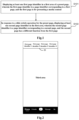
- the electronic device when displaying a preset page, can display in a first area 20 of the preset page at least one first page identifier, for example, a page identifier corresponding to the page presenting a media content of at least one corresponding type (e.g., video, article or the like), or display a page identifier corresponding to a page presenting a media content of at least one type in preset types of media contents, for example, a page identifier corresponding to at least one video play page.
- a page identifier corresponding to the page presenting a media content of at least one corresponding type e.g., video, article or the like
- the video play page may include, for example, a recommended video play page for playing a recommended video, a followed video play page for playing a video posted by other user that the user follows, a teaching video play page for playing a knowledge popularization video, a live video play page for playing a live video, or the like.
- the video play page is taken as the example of the first page for illustration.
- only at least one first page identifier can be displayed in the first area of the preset page, without the second page identifier, as shown in Fig. 2 ; or at least one first page identifier and at least one second page identifier can be simultaneously displayed in the first area of the preset page, where displaying at least one first page identifier in the first area of the preset page includes: displaying at least one first page identifier and at least one second page identifier in the first area of the preset page.
- whether a second page identifier is displayed in the first area of the preset page can be set in advance by a developer or a user. Alternatively, it may be determined depending on a total number of first page identifiers to be displayed. For example, the first page identifiers are prioritized for displaying in the first area. If the total number of the first page identifiers to be displayed is greater than or equal to a preset identifier display number of the first area, only the first page identifiers are displayed in the first area; if the total number of the first page identifiers to be displayed is less than the preset identifier display number of the first area, the first page identifiers and the second page identifiers are displayed simultaneously in the first area. This is not limited in the present embodiment.
- the preset identifier display number of the first area may be a maximum number of page identifiers that can be displayed simultaneously in the first area, which can be set in advance by a user or a developer.
- S102 in response to a slide switch operation for the preset page, displaying at least one second page identifier in the first area, wherein the second page identifier is a page identifier corresponding to a second page, and the second page has a different function from the first page.
- the slide switch operation for the preset page may be an operation of switching the page identifier displayed in the first area, which is triggered by sliding.
- the slide switch operation for the preset page includes: a slide switch operation for the first area or a slide switch operation for a third area for presenting an image.
- the third area may be a primary display area of the preset page.
- the third area may be an area for presenting an image in the preset page.
- the first area is located within or outside the third area.
- the sliding direction of the slide switch operation can be set flexibly as required. For example, the sliding direction of the slide switch operation may be set to horizontal or vertical slide, or the like.
- the second page may be a page having a different function than that of the first page in a preset dimension, where the preset dimension may be a usage dimension in content display, and different function types may include different usages in content display, for example, providing users with consumable media content information, or providing users with configurable function options or operable preset function pages.
- the first page is a media content display page
- the second page may be a page for implementing other functions than the media content display function provided in the application, for example, a configuration page for providing users with a configuration function, a search page for providing users with a search function, a scan page for providing users with a QR code scanning function, and the like.
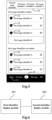
- the electronic device can display at least one second page identifier (as shown in Fig. 3 ) in the first area 20 (e.g. updating in batches the page identifiers displayed in the first area 20) in response to the slide switch operation, so as to display the at least one second page identifier in the first area 20, or can control the second page identifier located outside of the first area 20 (i.e., the second page identifier not displayed in the first area) to move into the first area 20 for displaying.
- the electronic device can display at least one second page identifier (as shown in Fig. 3 ) in the first area 20 (e.g. updating in batches the page identifiers displayed in the first area 20) in response to the slide switch operation, so as to display the at least one second page identifier in the first area 20, or can control the second page identifier located outside of the first area 20 (i.e., the second page identifier not displayed in the first area) to move into the first area 20 for displaying.
- the number of times the slide switch operations is executed is not displayed.
- the user can instruct the electronic device to display the at least one second page identifier in the first area by performing the switch slide operation only once, or by performing the slide switch operations multiple times.
- the page identifiers corresponding to pages having different functions in the preset dimension for example, a page identifier corresponding to a page having a media content display function, and a page identifier corresponding to a page having a function other than the media content display function, rather than just page identifiers corresponding to pages with the same function in the preset dimension. If only page identifiers corresponding to different pages with the media content display function are displayed, users can review and use different functions of the current application through a simple slide switch operation. Accordingly, the embodiment can make the page-identifier presenting manner diversified, simplify the operations required for users to use different functions of the current application, and improve the user experience.
- a display of the page identifier (e.g. the first page identifier) originally displayed in the first area can be directly switched to a display of the second page identifier to be displayed; or, the at least one page identifier originally displayed in the first area can be controlled to move in the same direction, to move the at least one page identifier originally displayed in the first area out of the first area while moving the at least one second page identifier to be displayed into the first area for displaying.
- displaying at least one second page identifier in the first area may include: controlling the second page identifier, together with the first page identifier displayed in the first area, to move in the same direction, to move the second page identifier into the first area for displaying.
- the movement direction of the first page identifier can be set flexibly as required. For example, when the slide switch operation is a horizontal slide operation and the at least one page identifier in the first area is arranged horizontally, the at least one page identifier displayed in the first area can be controlled to move along the sliding direction of the slide operation.
- the page display method provided by the embodiment may further include: in response to the switch operation for the preset page, displaying a page to be displayed, where the page to be displayed is a page corresponding to the switch operation.
- the switch operation for the preset page may be a trigger operation of instructing the electronic device to switch the preset page being displayed currently to a first or a second page, for example, a slide switch operation or a click switch operation effected in the preset page.
- the switch operation for the preset page includes: a slide switch operation for the preset page or a click switch operation for any page identifier, where the page identifier includes the first page identifier.
- the click switch operation may be an operation of switching the page identifier displayed in the first area in a click-triggering manner, for example, a click operation effected on any first page identifier displayed in the first area.
- the click switch operation may also be a click operation effected on any second page identifier displayed in the first area.
- a page to be displayed corresponding to the switch operation can be determined, the current page is switched from the preset page to the page to be displayed, and the at least one second page identifier can be displayed in the first area.
- the page to be displayed corresponding to the slide switch operation is determined (for example, the switch operation is a slide switch operation)
- the page to be displayed can be determined based on the switch direction of the slide switch operation and the arrangement order of the at least one page identifier in the first area; when the switch operation is a click switch operation effected in the first area, the page corresponding to the page identifier upon which the click operation is effected is determined as the page to be displayed.
- the page display method provided by this embodiment includes: displaying at least one first page identifier in a first area of a preset page, where the first page identifier is a page identifier corresponding to a first page, and the first page is for presenting a media content; in response to a slide switch operation for the preset page, displaying at least one second page identifier in the first area, where the second page identifier is a page identifier corresponding to a second page, and the second page has a different function from the first page.
- this embodiment can enable page identifiers corresponding to pages with different functions in a preset dimension to be displayed in a display area of page identifiers. Therefore, the embodiment can make the page-identifier presenting manner diversified, simplify the operations required for users to use different functions, and improve the user experience.
- Fig. 4 is a flowchart of a further page display method provided by an embodiment of the present disclosure.
- the solution in the present embodiment can be combined with one or more solutions in the above embodiments.
- the second page includes a configuration page, and displaying the at least one second page identifier in the first area includes: displaying at least one configuration page identifier in the first area.
- Displaying the page to be displayed includes: in the event that the page to be displayed is a target page, displaying the page to be displayed; in the event that the page to be displayed is not the target page, displaying the page to be displayed, and displaying a return control in the page to be displayed, wherein the return control is for triggering displaying of the target page.
- the page display method provided by this embodiment includes:
- S201 displaying at least one first page identifier in a first area of a preset page, where the first page identifier is a page identifier corresponding to a first page, and the first page is for presenting a media content.
- S202 in response to the switch operation for the preset page, determining whether the page to be displayed is a target page; if the page to be displayed is the target page, performing S203; if the page to be displayed in not the target page, performing S204, where the page to be displayed is a page corresponding to the switch operation.
- the target page may be a set page in the first page and the second page, i.e., the target page may be the first page, or may be the second page.
- a first page is taken as the example of the target page for illustration.
- the electronic device can determine the page to be displayed corresponding to the switch operation, and determine, based on whether the page to be displayed is the target page, whether a return control is displayed in the page to be displayed.
- S203 displaying the page to be displayed, and displaying at least one configuration page identifier in the first area, where the configuration page identifier is a page identifier corresponding to the configuration page.
- the configuration page may be a page that configures the current application, for example, a configuration page of the current application.
- the configuration page includes a configuration page of the first page identifier, to enable a user to configure the first page identifier displayed in the first area.
- the second page is taken as the example of the configuration page.
- the page to be displayed is the target page
- the page to be displayed can be displayed, and the configuration page identifier of the at least one configuration page can be displayed in the first area, to enable a user to perform the corresponding configuration operation.
- S204 displaying the page to be displayed, displaying a return control in the page to be displayed, and displaying at least one configuration page identifier in the first area, where the return control is for triggering displaying of the target page, and the configuration page identifier is a page identifier corresponding to the configuration page.
- the second page is taken as the example of the configuration page.
- the page to be displayed is not the target page
- the page to be displayed can be displayed, a configuration page identifier of at least one configuration page can be displayed in the first area, and a return control 21 can be displayed in the page to be displayed, as shown in Figs. 3 and 5 (in Fig. 5 , the page corresponding to the first page identifier 4 is taken as the example of the target page). Therefore, the user can quickly return to the target page by triggering the return control 21, omitting the slide switch operation or the operation of clicking on the page identifier corresponding to the target page to switch the current page to the target page, which can provide convenience for the user to enter the target page.
- the display manner of the return control can be set flexibly as required.
- the return control 21 can be additionally displayed in the first area or the third area in the page to be displayed.
- an existing control in the page to be displayed can be switched to and displayed as the return control 21.
- a preset control displayed in the second area 22 of the page to be displayed is switched to and displayed as the return control 21, as shown in Figs. 3 and 5 (in the figures, the preset control is the example of the homepage control), to prevent the display of the return control 21 from forming extra occlusion for the content displayed in the page to be displayed.
- displaying the return control 21 in the page to be displayed may include: displaying the return control 21 in the first area 20 of the page to be displayed; or switching and displaying the preset control displayed in the second area 22 of the page to be displayed to and as the return control 21.
- the second area 22 may be a control display area of the page to be displayed, which may be located outside of the first area 20 and the third area of the page to be displayed, for example, located in an area at the bottom of the page to be displayed.
- the present page in response to the slide switch operation for the preset page, is switched from the first page to the configuration page; the method further includes: in response to the configuration operation effected in the configuration page, updating the first page identifier displayed in the first area.
- the user when the current page to be displayed is the configuration page, the user can configure the first page identifier displayed in the first area in the configuration page.
- the page identifier corresponding to the target page can be displayed in the configuration page as non-deletable from the first area.
- the add cancel control corresponding to the page identifier corresponding to the target page may not be displayed in the configuration page, to prevent the user from deleting the page identifier corresponding to the target page from the first area by triggering the add cancel control.
- Fig. 6 is a structural block diagram of a page displaying apparatus provided by an embodiment of the present disclosure.
- the apparatus can be implemented by software and/or hardware, and can be configured in an electronic device, for example, a cellphone or a tablet, which can display page identifiers corresponding to pages with different functions by performing the page display method.
- the page displaying apparatus provided by the embodiment may include: a first identifier display module 601 and a second identifier display module 602.
- the first identifier display module 601 is configured to display at least one first page identifier in a first area of a preset page, where the first page identifier is a page identifier corresponding to a first page, and the first page is for presenting a media content; and the second identifier display module 602 is configured to display at least one second page identifier in the first area in response to a slide switch operation for the preset page, where the second page identifier is a page identifier corresponding to a second page, and the second page has a different function from the first page.
- the page displaying apparatus can display, by the first identifier display module, at least one first page identifier in a first area of a preset page, where the first page identifier is a page identifier corresponding to a first page, and the first page is for presenting a media content, and display, by the second identifier display module, at least one second page identifier in the first area in response to a slide switch operation for the preset page, where the second page identifier is a page identifier corresponding to a second page, and the second page has a different function from the first page.
- this embodiment can enable page identifiers corresponding to pages with different functions in a preset dimension to be displayed in a display area of page identifiers. Therefore, the embodiment can make the page-identifier presenting manner diversified, simplify the operations required for users to use different functions, and improve the user experience.
- the second page comprises a configuration page
- the second identifier display module 602 may be configured to display at least one configuration page identifier in the first area.
- the configuration page includes a configuration page of the first page identifier.
- the second identifier display module 602 may be further configured to: display a page to be displayed in response to a switch operation for the preset page, where the page to be displayed is a page corresponding to the switch operation.
- the second identifier display module 602 may be further configured to: in the event that the page to be displayed is a target page, display the page to be displayed; in the event that the page to be displayed is not the target page, display the page to be displayed, and displaying a return control in the page to be displayed, where the return control is for triggering displaying of the target page.
- the switch operation for the preset page may include: a slide switch operation for the preset page or a click switch operation for a page identifier, where the page identifier includes the first page identifier.
- the slide switch operation for the preset page may include: a slide switch operation for the first area or a slide switch operation for a third area for presenting an image.
- the second identifier display module 602 may be further configured to: control the second page identifier and the first page identifier displayed in the first area to move in a same direction to move the second page into the first area for displaying.
- the page displaying apparatus can perform the page display method provided by any of the embodiments of the present disclosure, which has corresponding functional modules for performing the page display method and can achieve corresponding effects.
- the page display method provided by any of the embodiments of the present disclosure.
- Fig. 7 illustrates a structural schematic diagram of an electronic device 700 adapted to implement embodiments of the present disclosure.
- the electronic device according to the embodiments of the present disclosure may include, but is not limited to, a mobile terminal such as a mobile phone, a laptop computer, a digital broadcast receiver, a Personal Digital Assistant (PDA), a Portable Android Device (PAD), a Portable Media Player (PMP), an on-vehicle terminal (e.g. an on-vehicle navigation terminal) or the like, or a fixed terminal such as a digital TV, a desktop computer or the like.
- PDA Personal Digital Assistant
- PAD Portable Android Device
- PMP Portable Media Player
- an on-vehicle terminal e.g. an on-vehicle navigation terminal
- a fixed terminal such as a digital TV, a desktop computer or the like.
- the electronic device as shown in Fig. 7 is provided merely as an example, without suggesting any limitation to the functions and the application range of the embodiments of the present disclosure.
- the electronic device 700 may include a processor (e.g. a central processor, a graphics processor or the like) 701, which can execute various acts and processing based on programs stored in a Read Only Memory (ROM) 702 or a program loaded from a storage unit 708 to a Random Access Memory (RAM) 703.
- RAM 703 stores therein various programs and data required for operations of the electronic device 700.
- the processor 701, the ROM 702 and the RAM 703 are connected to one another via a bus 704.
- An input/output (I/O) interface 705 is also connected to the bus 704.
- the following units may be connected to the I/O interface 705: an input unit 706 including, for example, a touchscreen, a touch pad, a keyboard, a mouse, a camera, a microphone, an accelerometer, a gyroscope and the like; an output unit 707 including, for example, a Liquid Crystal Display (LCD), a loudspeaker, a vibrator and the like; a storage unit 708 including, for example, a tape, a hard drive and the like; and a communication unit 709.
- the communication unit 709 can allow wireless or wired communication of the electronic device 700 with other devices to exchange data.
- Fig. 7 shows the electronic device 700 including various units, it would be appreciated that not all of the units as shown are required to be implemented or provided. Alternatively, more or fewer units may be implemented or provided.
- embodiments of the present disclosure include a computer program product comprising a computer program carried on a computer readable medium, the computer program containing program code for performing the methods as in the flowcharts.
- the computer program may be downloaded and installed from a network via the communication unit 709, or may be installed from the storage unit 708, or may be installed from the ROM 702.
- the computer program when executed by the processor 701, performs the above-described functions defined in the method according to the embodiments of the present disclosure.
- the computer readable medium may be a computer readable signal medium or a computer readable storage medium or any combination of the two.
- the computer readable storage medium may be, for example, but not limited to, an electronic, magnetic, optical, electromagnetic, infrared, or semiconductor system, apparatus, or device, or any combination of the foregoing.
- the computer readable storage medium may include, but are not limited to: an electrical connection having one or more wires, a portable computer diskette, a hard disk, an RAM, an ROM, an erasable programmable read-only memory (EPROM or flash memory), an optical fiber, a portable compact disc read-only memory (CD-ROM), an optical storage device, a magnetic storage device, or any suitable combination of the foregoing.
- a computer readable storage medium may be any tangible medium that can contain, or store, a program for use by or in connection with an instruction execution system, apparatus, or device.
- a computer readable signal medium may include a propagated data signal with computer readable program code embodied therein, either in baseband or as part of a carrier wave. Such propagated data signal may take many forms, including, but not limited to, an electro-magnetic signal, an optical signal, or any suitable combination thereof.
- a computer readable signal medium may also be any computer readable medium that is not a computer readable storage medium and that can communicate, propagate, or transmit a program for use by or in connection with an instruction execution system, apparatus, or device.
- Program code embodied on a computer readable medium may be transmitted using any appropriate medium, including but not limited to: electrical wires, optical cables, RF (radio frequency), etc., or any suitable combination of the foregoing.
- the client and the server may perform communication by using any known network protocol such as Hyper Text Transfer Protocol (HTTP) or any network protocol to be developed, and may connect with digital data in any form or carried in any medium (for example, a communication network).
- HTTP Hyper Text Transfer Protocol
- the communication network includes a local area network (LAN), a wide area network (WAN), an international network (for example the internet), a peer-to-peer network (e.g. ad hoc peer-to-peer network), and any known network or network to be developed.
- the computer-readable medium may be the one included in the electronic device, or may be provided separately, rather than assembled in the electronic device.
- the computer-readable medium carries one or more programs which, when executed by the electronic device, cause the electronic device to: display at least one first page identifier in a first area of a preset page, where the first page identifier is a page identifier corresponding to a first page, and the first page is for presenting a media content; in response to a slide switch operation for the preset page, display at least one second page identifier in the first area, where the second page identifier is a page identifier corresponding to a second page, and the second page has a different function from the first page.
- Computer program codes for performing operations of the present disclosure may be written by using one or more program design language or any combination.
- the program design language includes, but is not limited to, object oriented program design language such as Java, Smalltalk and C++, and further includes conventional process-type program design language such as "C" or similar program design language.
- the program codes may be completely or partially executed on a user computer, performed as an independent software packet, partially executed on the user computer and partially executed on a remote computer, or completely executed on the remote computer or a server.
- the remote computer may connect to the user computer via any type of network such as a local area network (LAN) and a wide area network (WAN).
- the remote computer may connect to an external computer (such as achieving internet connection by services provided by the internet network service provider).
- each block in the flowchart or block diagrams may represent a module, segment, or portion of code, which comprises one or more executable instructions for implementing the specified logical function(s).
- the functions noted in the block may occur out of the order noted in the figures. For example, two blocks shown in succession may, in fact, be executed substantially concurrently, or the blocks may sometimes be executed in the reverse order, depending upon the functionality involved.
- the units described in the embodiments of the present disclosure may be implemented by software or hardware. Wherein, the designation of a module or unit does not in some cases constitute a limitation to the unit itself.
- FPGAs Field Programmable Gate Arrays
- ASICs Application Specific Integrated Circuits
- ASSPs Application Specific Standard Products
- SOCs Systems on Chip
- CPLDs Complex Programmable Logic Devices
- a machine-readable medium may be a tangible medium that can contain or store a program for use by or in connection with an instruction execution system, apparatus, or device.
- the machine-readable medium may be a machine-readable signal medium or a machine-readable storage medium.
- a machine-readable medium may include, but is not limited to, an electronic, magnetic, optical, electromagnetic, infrared, or semiconductor system, apparatus, or device, or any suitable combination of the foregoing.
- a computer-readable storage medium includes an electrical connection based on one or more wires, a portable computer diskette, a hard disk, an RAM, an ROM, an EPROM or flash memory, an optical fiber, a CD-ROM, an optical storage device, a magnetic storage device, or any suitable combination of the foregoing.
- Example 1 provides a page display method, comprising:
- Example 2 further defines the method of Example 1, where the second page comprises a configuration page, and displaying the at least one second page identifier in the first area comprises: displaying at least one configuration page identifier in the first area.
- Example 3 further defines the method of Example 2, where the configuration page comprises a configuration page of the first page identifier.
- Example 4 further defines the method of Example 3, where, in response to the slide switch operation for the preset page, the preset page is switched from the first page to the configuration page, and the method further comprises: in response to a configuration operation performed in the configuration page, updating the first page identifier displayed in the first area.
- Example 5 further defines the method of Example 1, further comprising: in response to a switch operation for the preset page, displaying a page to be displayed, wherein the page to be displayed is a page corresponding to the switch operation.
- Example 6 further defines the method of Example 5, where displaying the page to be displayed comprises:
- Example 7 further defines the method of Example 6, where displaying the return control in the page to be displayed comprises:
- Example 8 further defines the method of any of Examples 5-7, where the switch operation for the preset page comprises: a slide switch operation for the preset page or a click switch operation for a page identifier, where the page identifier comprises the first page identifier.
- Example 9 further defines the method of Example 8, where the slide switch operation for the preset page comprises: a slide switch operation for the first area or a slide switch operation for a third area for presenting an image.
- Example 10 further defines the method of any of Examples 1-7, where displaying the at least one second page identifier in the first area comprises: controlling the second page identifier and the first page identifier displayed in the first area to move in a same direction to move the second page into the first area for displaying.
- Example 11 further defines the method of any of Examples 1-7, where displaying the at least one page identifier in the first area of the preset page comprises: displaying the at least one first page identifier and the at least one second page identifier in the first area of the preset page.
- Example 12 provides a page displaying apparatus, comprising:
- Example 13 provides an electronic device, comprising:
- Example 14 provides a computer readable storage medium having computer programs stored thereon, wherein the computer programs, when executed by a processor, implement the page display method of any of Examples 1-11.
- Example 15 provides a computer program product which, when executed by a computer, causes the computer to implement the page display method of any of Examples 1-11.
Landscapes
- Engineering & Computer Science (AREA)
- Theoretical Computer Science (AREA)
- General Engineering & Computer Science (AREA)
- Physics & Mathematics (AREA)
- General Physics & Mathematics (AREA)
- Human Computer Interaction (AREA)
- Databases & Information Systems (AREA)
- Software Systems (AREA)
- Data Mining & Analysis (AREA)
- User Interface Of Digital Computer (AREA)
Abstract
Description
- The present disclosure claims the priority to the CN patent application No. 202210137766.9 filed in the China National Intellectual Property Administration on February 15, 2022, the contents of which are hereby incorporated by reference in their entirety.
- Embodiments of the present disclosure generally relate to the field of computers, and more specifically, to a page display method and apparatus, an electronic device, a storage medium, and a program product.
- When displaying a set page, page tags of other pages can be displayed in the set page, to allow users to switch pages. However, the methods of displaying page tags in the related technologies are too simple to meet the users' needs.
- Embodiments of the present disclosure provide a page display method and apparatus, an electronic device, a storage medium and a program product, to provide more available page tag displaying methods.
- In a first aspect, the present disclosure provides a page display method, comprising:
- displaying at least one first page identifier in a first area of a preset page, wherein the first page identifier is a page identifier corresponding to a first page, and the first page is for presenting a media content;
- in response to a slide switch operation for the preset page, displaying at least one second page identifier in the first area, wherein the second page identifier is a page identifier corresponding to a second page, and the second page has a different function from the first page.
- In a second aspect, the present disclosure provides a page displaying apparatus, comprising:
- a first identifier display module configured to display at least one first page identifier in a first area of a preset page, wherein the first page identifier is a page identifier corresponding to a first page, and the first page is for presenting a media content; and
- a second identifier display module configured to display at least one second page identifier in the first area in response to a slide switch operation for the preset page, wherein the second page identifier is a page identifier corresponding to a second page, and the second page has a different function from the first page.
- In a third aspect, the present disclosure provides an electronic device, comprising:
- at least one processor;
- a memory storing at least one computer program;
- wherein the at least one computer program, when executed by the at least one processor, causes the at least one processor to implement the page display method.
- In a fourth aspect, the present disclosure further provides a computer readable storage medium having computer programs stored thereon, wherein the computer programs, when executed by a processor, implement the page display method.
- In a fifth aspect, the present disclosure further provides a computer program product which, when executed by a computer, causes the computer to implement the page display method.
-
-
Fig. 1 illustrates a flowchart of a page display method provided by an embodiment of the present disclosure; -
Fig. 2 illustrates a schematic diagram of displaying a first page identifier provided by an embodiment of the present disclosure; -
Fig. 3 illustrates a schematic diagram of displaying a second page identifier provided by an embodiment of the present disclosure; -
Fig. 4 illustrates a flowchart of a further page display method provided by an embodiment of the present disclosure; -
Fig. 5 is a schematic diagram of a configuration page provided by an embodiment of the present disclosure; -
Fig. 6 is a structural block diagram of a page displaying apparatus provided by an embodiment of the present disclosure; and -
Fig. 7 is a structural schematic diagram of an electronic device provided by an embodiment of the present disclosure. - Reference now will be made to the drawings to describe in detail the embodiments of the present disclosure. Although the drawings illustrate some embodiments of the present disclosure, the present disclosure can be implemented in various forms, and those embodiments are provided for an understanding of the present disclosure. The drawings and embodiments of the present disclosure are provided exemplarily.
- It would be appreciated that respective steps in the implementations of the method according to the present disclosure may be performed in different orders and/or performed in parallel. In addition, the method implementations may include additional steps and/or steps omitted. The scope of the present disclosure is not limited thereto.
- As used herein, the term "includes" and its variants are to be read as open-ended terms that mean "includes, but is not limited to." The term "based on" is to be read as "based at least in part on." The term "an embodiment" is to be read as "at least one embodiment;" the term "another embodiment" is to be read as "at least one further embodiment;" the term "some embodiments" is to be read as "at least some embodiments." Related definitions of other terms will be provided in the description below.
- It should be noted that, the terms "first," "second" and the like mentioned in the present disclosure are only used to distinguish different apparatuses, modules or units, rather than limit an order of functions performed by the apparatus, module or unit or limit interdependence.
- It should be noted that, the terms "one" and "a plurality of' mentioned in the present disclosure are illustrative, not restrictive, and should be understood as "at least one" by those skilled in the art, unless explicitly specified otherwise in the context.
- Names of messages or information interacted between a plurality of apparatuses in the embodiments of the present disclosure are illustrative rather than limit the scope of the message or information.
-
Fig. 1 illustrates a flowchart of a page display method provided by embodiments of the present disclosure. The method can be performed by a page displaying apparatus, where the apparatus can be implemented by software and/or hardware and configured in an electronic device, for example, a cellphone or tablet. The page display method provided by an embodiment of the present disclosure is applicable to a scenario of displaying page identifiers in a preset page. As shown therein, the page display method provided by the embodiment may include: - S101: displaying at least one first page identifier in a first area of a preset page, wherein the first page identifier is a page identifier corresponding to a first page, and the first page is for presenting a media content.
- The preset image may be a page that displays a page identifier corresponding to an inner page for displaying a media content, and may include a first page and/or a second page. By way of example, the first page may be a page for presenting a media content (i.e., a media content presenting page), where the media content includes images and/or words, etc. For example, the first page may be a page for presenting a content posted by a user on a platform in the form of video, article or the like, or a page for presenting media content information of a commodity presented on a platform. Hereinafter, a video play page will be taken as the example of the first page. The first page identifier may be a page identifier corresponding to the first page. A page identifier of a page (e.g. a first or a second page, or the like) may be used to identify information of the page, for example, a page name thereof or the like.
- As shown in
Fig. 2 , when displaying a preset page, the electronic device can display in afirst area 20 of the preset page at least one first page identifier, for example, a page identifier corresponding to the page presenting a media content of at least one corresponding type (e.g., video, article or the like), or display a page identifier corresponding to a page presenting a media content of at least one type in preset types of media contents, for example, a page identifier corresponding to at least one video play page. The video play page may include, for example, a recommended video play page for playing a recommended video, a followed video play page for playing a video posted by other user that the user follows, a teaching video play page for playing a knowledge popularization video, a live video play page for playing a live video, or the like. Hereinafter, the video play page is taken as the example of the first page for illustration. - In the embodiment, when initially displaying the preset page (for example, when entering the homepage of the current application), only at least one first page identifier can be displayed in the first area of the preset page, without the second page identifier, as shown in
Fig. 2 ; or at least one first page identifier and at least one second page identifier can be simultaneously displayed in the first area of the preset page, where displaying at least one first page identifier in the first area of the preset page includes: displaying at least one first page identifier and at least one second page identifier in the first area of the preset page. - When initially displaying the preset page, whether a second page identifier is displayed in the first area of the preset page can be set in advance by a developer or a user. Alternatively, it may be determined depending on a total number of first page identifiers to be displayed. For example, the first page identifiers are prioritized for displaying in the first area. If the total number of the first page identifiers to be displayed is greater than or equal to a preset identifier display number of the first area, only the first page identifiers are displayed in the first area; if the total number of the first page identifiers to be displayed is less than the preset identifier display number of the first area, the first page identifiers and the second page identifiers are displayed simultaneously in the first area. This is not limited in the present embodiment. The preset identifier display number of the first area may be a maximum number of page identifiers that can be displayed simultaneously in the first area, which can be set in advance by a user or a developer.
- S102: in response to a slide switch operation for the preset page, displaying at least one second page identifier in the first area, wherein the second page identifier is a page identifier corresponding to a second page, and the second page has a different function from the first page.
- The slide switch operation for the preset page may be an operation of switching the page identifier displayed in the first area, which is triggered by sliding. In an embodiment, the slide switch operation for the preset page includes: a slide switch operation for the first area or a slide switch operation for a third area for presenting an image. The third area may be a primary display area of the preset page. When the preset page is a video play page, the third area may be an area for presenting an image in the preset page. The first area is located within or outside the third area. The sliding direction of the slide switch operation can be set flexibly as required. For example, the sliding direction of the slide switch operation may be set to horizontal or vertical slide, or the like.
- The second page may be a page having a different function than that of the first page in a preset dimension, where the preset dimension may be a usage dimension in content display, and different function types may include different usages in content display, for example, providing users with consumable media content information, or providing users with configurable function options or operable preset function pages. By way of example, when the first page is a media content display page, the second page may be a page for implementing other functions than the media content display function provided in the application, for example, a configuration page for providing users with a configuration function, a search page for providing users with a search function, a scan page for providing users with a QR code scanning function, and the like.
- When expecting to instruct the electronic device to display at least one second page identifier in the
first area 20, a user may perform a slide switch operation on the preset page. Therefore, upon receiving the slide switch operation of the user, the electronic device can display at least one second page identifier (as shown inFig. 3 ) in the first area 20 (e.g. updating in batches the page identifiers displayed in the first area 20) in response to the slide switch operation, so as to display the at least one second page identifier in thefirst area 20, or can control the second page identifier located outside of the first area 20 (i.e., the second page identifier not displayed in the first area) to move into thefirst area 20 for displaying. - In the embodiment, the number of times the slide switch operations is executed is not displayed. For example, the user can instruct the electronic device to display the at least one second page identifier in the first area by performing the switch slide operation only once, or by performing the slide switch operations multiple times.
- In this embodiment, in the display area (i.e., the first area) of the page identifier are displayed page identifiers corresponding to pages having different functions in the preset dimension, for example, a page identifier corresponding to a page having a media content display function, and a page identifier corresponding to a page having a function other than the media content display function, rather than just page identifiers corresponding to pages with the same function in the preset dimension. If only page identifiers corresponding to different pages with the media content display function are displayed, users can review and use different functions of the current application through a simple slide switch operation. Accordingly, the embodiment can make the page-identifier presenting manner diversified, simplify the operations required for users to use different functions of the current application, and improve the user experience.
- In this embodiment, when the second page identifier is displayed in the first area in response to the slide switch operation for the preset page, a display of the page identifier (e.g. the first page identifier) originally displayed in the first area can be directly switched to a display of the second page identifier to be displayed; or, the at least one page identifier originally displayed in the first area can be controlled to move in the same direction, to move the at least one page identifier originally displayed in the first area out of the first area while moving the at least one second page identifier to be displayed into the first area for displaying. At this time, displaying at least one second page identifier in the first area may include: controlling the second page identifier, together with the first page identifier displayed in the first area, to move in the same direction, to move the second page identifier into the first area for displaying. The movement direction of the first page identifier can be set flexibly as required. For example, when the slide switch operation is a horizontal slide operation and the at least one page identifier in the first area is arranged horizontally, the at least one page identifier displayed in the first area can be controlled to move along the sliding direction of the slide operation.
- In an implementation, the page display method provided by the embodiment may further include: in response to the switch operation for the preset page, displaying a page to be displayed, where the page to be displayed is a page corresponding to the switch operation.
- In the above implementation, the switch operation for the preset page may be a trigger operation of instructing the electronic device to switch the preset page being displayed currently to a first or a second page, for example, a slide switch operation or a click switch operation effected in the preset page. In an embodiment, the switch operation for the preset page includes: a slide switch operation for the preset page or a click switch operation for any page identifier, where the page identifier includes the first page identifier. Wherein, the click switch operation may be an operation of switching the page identifier displayed in the first area in a click-triggering manner, for example, a click operation effected on any first page identifier displayed in the first area. When the second page identifier is displayed in the first area, the click switch operation may also be a click operation effected on any second page identifier displayed in the first area.
- Upon receiving the switch operation effected in the preset page, a page to be displayed corresponding to the switch operation can be determined, the current page is switched from the preset page to the page to be displayed, and the at least one second page identifier can be displayed in the first area. When the page to be displayed corresponding to the slide switch operation is determined (for example, the switch operation is a slide switch operation), the page to be displayed can be determined based on the switch direction of the slide switch operation and the arrangement order of the at least one page identifier in the first area; when the switch operation is a click switch operation effected in the first area, the page corresponding to the page identifier upon which the click operation is effected is determined as the page to be displayed.
- The page display method provided by this embodiment includes: displaying at least one first page identifier in a first area of a preset page, where the first page identifier is a page identifier corresponding to a first page, and the first page is for presenting a media content; in response to a slide switch operation for the preset page, displaying at least one second page identifier in the first area, where the second page identifier is a page identifier corresponding to a second page, and the second page has a different function from the first page. With the above technical solution, this embodiment can enable page identifiers corresponding to pages with different functions in a preset dimension to be displayed in a display area of page identifiers. Therefore, the embodiment can make the page-identifier presenting manner diversified, simplify the operations required for users to use different functions, and improve the user experience.
-
Fig. 4 is a flowchart of a further page display method provided by an embodiment of the present disclosure. The solution in the present embodiment can be combined with one or more solutions in the above embodiments. The second page includes a configuration page, and displaying the at least one second page identifier in the first area includes: displaying at least one configuration page identifier in the first area. - Displaying the page to be displayed includes: in the event that the page to be displayed is a target page, displaying the page to be displayed; in the event that the page to be displayed is not the target page, displaying the page to be displayed, and displaying a return control in the page to be displayed, wherein the return control is for triggering displaying of the target page.
- Correspondingly, as shown in
Fig. 4 , the page display method provided by this embodiment includes: - S201: displaying at least one first page identifier in a first area of a preset page, where the first page identifier is a page identifier corresponding to a first page, and the first page is for presenting a media content.
- S202: in response to the switch operation for the preset page, determining whether the page to be displayed is a target page; if the page to be displayed is the target page, performing S203; if the page to be displayed in not the target page, performing S204, where the page to be displayed is a page corresponding to the switch operation.
- The target page may be a set page in the first page and the second page, i.e., the target page may be the first page, or may be the second page. Hereinafter, a first page is taken as the example of the target page for illustration.
- Upon receiving the switch operation for the preset page, the electronic device can determine the page to be displayed corresponding to the switch operation, and determine, based on whether the page to be displayed is the target page, whether a return control is displayed in the page to be displayed.
- S203: displaying the page to be displayed, and displaying at least one configuration page identifier in the first area, where the configuration page identifier is a page identifier corresponding to the configuration page.
- The configuration page may be a page that configures the current application, for example, a configuration page of the current application. In an embodiment, the configuration page includes a configuration page of the first page identifier, to enable a user to configure the first page identifier displayed in the first area.
- The second page is taken as the example of the configuration page. When the page to be displayed is the target page, the page to be displayed can be displayed, and the configuration page identifier of the at least one configuration page can be displayed in the first area, to enable a user to perform the corresponding configuration operation.
- S204: displaying the page to be displayed, displaying a return control in the page to be displayed, and displaying at least one configuration page identifier in the first area, where the return control is for triggering displaying of the target page, and the configuration page identifier is a page identifier corresponding to the configuration page.
- Here, the second page is taken as the example of the configuration page. When the page to be displayed is not the target page, the page to be displayed can be displayed, a configuration page identifier of at least one configuration page can be displayed in the first area, and a
return control 21 can be displayed in the page to be displayed, as shown inFigs. 3 and5 (inFig. 5 , the page corresponding to thefirst page identifier 4 is taken as the example of the target page). Therefore, the user can quickly return to the target page by triggering thereturn control 21, omitting the slide switch operation or the operation of clicking on the page identifier corresponding to the target page to switch the current page to the target page, which can provide convenience for the user to enter the target page. - In the present embodiment, the display manner of the return control can be set flexibly as required. For example, the
return control 21 can be additionally displayed in the first area or the third area in the page to be displayed. Alternatively, an existing control in the page to be displayed can be switched to and displayed as thereturn control 21. For example, a preset control displayed in thesecond area 22 of the page to be displayed is switched to and displayed as thereturn control 21, as shown inFigs. 3 and5 (in the figures, the preset control is the example of the homepage control), to prevent the display of thereturn control 21 from forming extra occlusion for the content displayed in the page to be displayed. At this time, displaying thereturn control 21 in the page to be displayed may include: displaying thereturn control 21 in thefirst area 20 of the page to be displayed; or switching and displaying the preset control displayed in thesecond area 22 of the page to be displayed to and as thereturn control 21. Wherein, thesecond area 22 may be a control display area of the page to be displayed, which may be located outside of thefirst area 20 and the third area of the page to be displayed, for example, located in an area at the bottom of the page to be displayed. - In an implementation, in response to the slide switch operation for the preset page, the present page is switched from the first page to the configuration page; the method further includes: in response to the configuration operation effected in the configuration page, updating the first page identifier displayed in the first area.
- In the above implementation, when the current page to be displayed is the configuration page, the user can configure the first page identifier displayed in the first area in the configuration page.
- As shown in
Fig. 5 , the first page identifier added in the first area 20 (i.e., the first page identifier that can be displayed in the first area 20) and the first page identifier having not been added in the first area 20 (i.e., the first page identifier that cannot be displayed in thefirst area 20 yet) can be displayed in the primary display area (i.e., the third area) of the configuration page such that the user can: delete the first page identifier from thefirst area 20 by triggering an add cancelcontrol 23 corresponding to an added first page identifier; add the first page identifier to thefirst area 20 by triggering anadd control 24 corresponding to a first page identifier having not been added; and change an arrangement order of at least one added page identifier in the configuration page through a dragging operation, to thus update the display order of the at least one first page identifier in thefirst area 20. - In addition, continuing with
Fig. 5 (inFig. 5 , the page corresponding to thefirst page identifier 4 is taken as the example of the target page), the page identifier corresponding to the target page can be displayed in the configuration page as non-deletable from the first area. For example, the add cancel control corresponding to the page identifier corresponding to the target page may not be displayed in the configuration page, to prevent the user from deleting the page identifier corresponding to the target page from the first area by triggering the add cancel control. - The page display method provided by this embodiment includes: displaying the configuration page identifier in the first area, and displaying a return control of the target page in the page to be displayed in the event that the page to be displayed is not the target page, to configure the current application for users, in particular the first page identifier displayed in the first area. As such, this embodiment can provide convenience, simplify the operations required for users to enter the target page, and improve the user experience.
-
Fig. 6 is a structural block diagram of a page displaying apparatus provided by an embodiment of the present disclosure. The apparatus can be implemented by software and/or hardware, and can be configured in an electronic device, for example, a cellphone or a tablet, which can display page identifiers corresponding to pages with different functions by performing the page display method. As shown therein, the page displaying apparatus provided by the embodiment may include: a firstidentifier display module 601 and a secondidentifier display module 602. - The first
identifier display module 601 is configured to display at least one first page identifier in a first area of a preset page, where the first page identifier is a page identifier corresponding to a first page, and the first page is for presenting a media content; and the secondidentifier display module 602 is configured to display at least one second page identifier in the first area in response to a slide switch operation for the preset page, where the second page identifier is a page identifier corresponding to a second page, and the second page has a different function from the first page. - The page displaying apparatus provided by the embodiment can display, by the first identifier display module, at least one first page identifier in a first area of a preset page, where the first page identifier is a page identifier corresponding to a first page, and the first page is for presenting a media content, and display, by the second identifier display module, at least one second page identifier in the first area in response to a slide switch operation for the preset page, where the second page identifier is a page identifier corresponding to a second page, and the second page has a different function from the first page. With the above technical solution, this embodiment can enable page identifiers corresponding to pages with different functions in a preset dimension to be displayed in a display area of page identifiers. Therefore, the embodiment can make the page-identifier presenting manner diversified, simplify the operations required for users to use different functions, and improve the user experience.
- In the above solution, the second page comprises a configuration page, and the second
identifier display module 602 may be configured to display at least one configuration page identifier in the first area. - In the above solution, the configuration page includes a configuration page of the first page identifier.
- In the above solution, in response to the slide switch operation for the preset page, the preset page is switched from the first page to the configuration page, and the page displaying apparatus provided by this embodiment may further include: an identifier update module configured to update the first page identifier displayed in the first area in response to a configuration operation performed in the configuration page.
- In the above solution, the second
identifier display module 602 may be further configured to: display a page to be displayed in response to a switch operation for the preset page, where the page to be displayed is a page corresponding to the switch operation. - In the above solution, the second
identifier display module 602 may be further configured to: in the event that the page to be displayed is a target page, display the page to be displayed; in the event that the page to be displayed is not the target page, display the page to be displayed, and displaying a return control in the page to be displayed, where the return control is for triggering displaying of the target page. - In the above solution, the second
identifier display module 602 may be further configured to: display the return control in a first area of the page to be displayed; or switch a display of a preset control displayed in a second area of the page to be a display of the return control. - In the above solution, the switch operation for the preset page may include: a slide switch operation for the preset page or a click switch operation for a page identifier, where the page identifier includes the first page identifier.
- In the above solution, the slide switch operation for the preset page may include: a slide switch operation for the first area or a slide switch operation for a third area for presenting an image.
- In the above solution, the second
identifier display module 602 may be further configured to: control the second page identifier and the first page identifier displayed in the first area to move in a same direction to move the second page into the first area for displaying. - In the above solution, the first
identifier display module 601 may be further configured to: display the at least one first page identifier and the at least one second page identifier in the first area of the preset page. - The page displaying apparatus can perform the page display method provided by any of the embodiments of the present disclosure, which has corresponding functional modules for performing the page display method and can achieve corresponding effects. For the technical details not exhausted here, see the description about the page display method provided by any of the embodiments of the present disclosure.
- Reference below will be made to
Fig. 7 which illustrates a structural schematic diagram of anelectronic device 700 adapted to implement embodiments of the present disclosure. The electronic device according to the embodiments of the present disclosure may include, but is not limited to, a mobile terminal such as a mobile phone, a laptop computer, a digital broadcast receiver, a Personal Digital Assistant (PDA), a Portable Android Device (PAD), a Portable Media Player (PMP), an on-vehicle terminal (e.g. an on-vehicle navigation terminal) or the like, or a fixed terminal such as a digital TV, a desktop computer or the like. The electronic device as shown inFig. 7 is provided merely as an example, without suggesting any limitation to the functions and the application range of the embodiments of the present disclosure. - As shown therein, the
electronic device 700 may include a processor (e.g. a central processor, a graphics processor or the like) 701, which can execute various acts and processing based on programs stored in a Read Only Memory (ROM) 702 or a program loaded from astorage unit 708 to a Random Access Memory (RAM) 703.RAM 703 stores therein various programs and data required for operations of theelectronic device 700. Theprocessor 701, theROM 702 and theRAM 703 are connected to one another via abus 704. An input/output (I/O)interface 705 is also connected to thebus 704. - Typically, the following units may be connected to the I/O interface 705: an
input unit 706 including, for example, a touchscreen, a touch pad, a keyboard, a mouse, a camera, a microphone, an accelerometer, a gyroscope and the like; anoutput unit 707 including, for example, a Liquid Crystal Display (LCD), a loudspeaker, a vibrator and the like; astorage unit 708 including, for example, a tape, a hard drive and the like; and acommunication unit 709. Thecommunication unit 709 can allow wireless or wired communication of theelectronic device 700 with other devices to exchange data. AlthoughFig. 7 shows theelectronic device 700 including various units, it would be appreciated that not all of the units as shown are required to be implemented or provided. Alternatively, more or fewer units may be implemented or provided. - According to embodiments of the present disclosure, the processes described above with reference to the flowcharts may be implemented as computer software programs. For example, embodiments of the present disclosure include a computer program product comprising a computer program carried on a computer readable medium, the computer program containing program code for performing the methods as in the flowcharts. In those embodiments, the computer program may be downloaded and installed from a network via the
communication unit 709, or may be installed from thestorage unit 708, or may be installed from theROM 702. The computer program, when executed by theprocessor 701, performs the above-described functions defined in the method according to the embodiments of the present disclosure. - It should be noted that the computer readable medium according to the present disclosure may be a computer readable signal medium or a computer readable storage medium or any combination of the two. The computer readable storage medium may be, for example, but not limited to, an electronic, magnetic, optical, electromagnetic, infrared, or semiconductor system, apparatus, or device, or any combination of the foregoing. More specific examples of the computer readable storage medium may include, but are not limited to: an electrical connection having one or more wires, a portable computer diskette, a hard disk, an RAM, an ROM, an erasable programmable read-only memory (EPROM or flash memory), an optical fiber, a portable compact disc read-only memory (CD-ROM), an optical storage device, a magnetic storage device, or any suitable combination of the foregoing. In the present disclosure, a computer readable storage medium may be any tangible medium that can contain, or store, a program for use by or in connection with an instruction execution system, apparatus, or device. In contrast, in the present disclosure, a computer readable signal medium may include a propagated data signal with computer readable program code embodied therein, either in baseband or as part of a carrier wave. Such propagated data signal may take many forms, including, but not limited to, an electro-magnetic signal, an optical signal, or any suitable combination thereof. A computer readable signal medium may also be any computer readable medium that is not a computer readable storage medium and that can communicate, propagate, or transmit a program for use by or in connection with an instruction execution system, apparatus, or device. Program code embodied on a computer readable medium may be transmitted using any appropriate medium, including but not limited to: electrical wires, optical cables, RF (radio frequency), etc., or any suitable combination of the foregoing.
- In some embodiments, the client and the server may perform communication by using any known network protocol such as Hyper Text Transfer Protocol (HTTP) or any network protocol to be developed, and may connect with digital data in any form or carried in any medium (for example, a communication network). The communication network includes a local area network (LAN), a wide area network (WAN), an international network (for example the internet), a peer-to-peer network (e.g. ad hoc peer-to-peer network), and any known network or network to be developed.
- The computer-readable medium may be the one included in the electronic device, or may be provided separately, rather than assembled in the electronic device.
- The computer-readable medium carries one or more programs which, when executed by the electronic device, cause the electronic device to: display at least one first page identifier in a first area of a preset page, where the first page identifier is a page identifier corresponding to a first page, and the first page is for presenting a media content; in response to a slide switch operation for the preset page, display at least one second page identifier in the first area, where the second page identifier is a page identifier corresponding to a second page, and the second page has a different function from the first page.
- Computer program codes for performing operations of the present disclosure may be written by using one or more program design language or any combination. The program design language includes, but is not limited to, object oriented program design language such as Java, Smalltalk and C++, and further includes conventional process-type program design language such as "C" or similar program design language. The program codes may be completely or partially executed on a user computer, performed as an independent software packet, partially executed on the user computer and partially executed on a remote computer, or completely executed on the remote computer or a server. In a case of involving the remote computer, the remote computer may connect to the user computer via any type of network such as a local area network (LAN) and a wide area network (WAN). Alternatively, the remote computer may connect to an external computer (such as achieving internet connection by services provided by the internet network service provider).
- The flowchart and block diagrams in the drawings illustrate the functionality and operation of possible implementations of methods, apparatus and computer program products according to various embodiments of the present disclosure. In this regard, each block in the flowchart or block diagrams may represent a module, segment, or portion of code, which comprises one or more executable instructions for implementing the specified logical function(s). It should also be noted that, in some alternative implementations, the functions noted in the block may occur out of the order noted in the figures. For example, two blocks shown in succession may, in fact, be executed substantially concurrently, or the blocks may sometimes be executed in the reverse order, depending upon the functionality involved. It will also be noted that each block of the block diagrams and/or flowcharts, and combinations of blocks in the block diagrams and/or flowcharts, can be implemented by special purpose hardware-based systems which perform the specified functions or acts, or combinations of special purpose hardware and computer instructions.
- The units described in the embodiments of the present disclosure may be implemented by software or hardware. Wherein, the designation of a module or unit does not in some cases constitute a limitation to the unit itself.
- The functions described above may be performed, at least in part, by one or more hardware logic components. For example, without limitation, exemplary types of hardware logic components that may be used include: Field Programmable Gate Arrays (FPGAs), Application Specific Integrated Circuits (ASICs), Application Specific Standard Products (ASSPs), Systems on Chip (SOCs), Complex Programmable Logic Devices (CPLDs), and the like.
- In the context of this disclosure, a machine-readable medium may be a tangible medium that can contain or store a program for use by or in connection with an instruction execution system, apparatus, or device. The machine-readable medium may be a machine-readable signal medium or a machine-readable storage medium. A machine-readable medium may include, but is not limited to, an electronic, magnetic, optical, electromagnetic, infrared, or semiconductor system, apparatus, or device, or any suitable combination of the foregoing. More specific examples of a computer-readable storage medium would include an electrical connection based on one or more wires, a portable computer diskette, a hard disk, an RAM, an ROM, an EPROM or flash memory, an optical fiber, a CD-ROM, an optical storage device, a magnetic storage device, or any suitable combination of the foregoing.
- According to one or more embodiments of the present disclosure, Example 1 provides a page display method, comprising:
- displaying at least one first page identifier in a first area of a preset page, where the first page identifier is a page identifier corresponding to a first page, and the first page is for presenting a media content;
- in response to a slide switch operation for the preset page, displaying at least one second page identifier in the first area, where the second page identifier is a page identifier corresponding to a second page, and the second page has a different function from the first page.
- According to one or more embodiments of the present disclosure, Example 2 further defines the method of Example 1, where the second page comprises a configuration page, and displaying the at least one second page identifier in the first area comprises:
displaying at least one configuration page identifier in the first area. - According to one or more embodiments of the present disclosure, Example 3 further defines the method of Example 2, where the configuration page comprises a configuration page of the first page identifier.
- According to one or more embodiments of the present disclosure, Example 4 further defines the method of Example 3, where, in response to the slide switch operation for the preset page, the preset page is switched from the first page to the configuration page, and the method further comprises:
in response to a configuration operation performed in the configuration page, updating the first page identifier displayed in the first area. - According to one or more embodiments of the present disclosure, Example 5 further defines the method of Example 1, further comprising:
in response to a switch operation for the preset page, displaying a page to be displayed, wherein the page to be displayed is a page corresponding to the switch operation. - According to one or more embodiments of the present disclosure, Example 6 further defines the method of Example 5, where displaying the page to be displayed comprises:
- in the event that the page to be displayed is a target page, displaying the page to be displayed;
- in the event that the page to be displayed is not the target page, displaying the page to be displayed, and displaying a return control in the page to be displayed, wherein the return control is for triggering displaying of the target page.
- According to one or more embodiments of the present disclosure, Example 7 further defines the method of Example 6, where displaying the return control in the page to be displayed comprises:
- displaying the return control in a first area of the page to be displayed; or
- switching a display of a preset control displayed in a second area of the page to be a display of the return control.
- According to one or more embodiments of the present disclosure, Example 8 further defines the method of any of Examples 5-7, where the switch operation for the preset page comprises: a slide switch operation for the preset page or a click switch operation for a page identifier, where the page identifier comprises the first page identifier.
- According to one or more embodiments of the present disclosure, Example 9 further defines the method of Example 8, where the slide switch operation for the preset page comprises: a slide switch operation for the first area or a slide switch operation for a third area for presenting an image.
- According to one or more embodiments of the present disclosure, Example 10 further defines the method of any of Examples 1-7, where displaying the at least one second page identifier in the first area comprises:
controlling the second page identifier and the first page identifier displayed in the first area to move in a same direction to move the second page into the first area for displaying. - According to one or more embodiments of the present disclosure, Example 11 further defines the method of any of Examples 1-7, where displaying the at least one page identifier in the first area of the preset page comprises:
displaying the at least one first page identifier and the at least one second page identifier in the first area of the preset page. - According to one or more embodiments of the present disclosure, Example 12 provides a page displaying apparatus, comprising:
- a first identifier display module configured to display at least one first page identifier in a first area of a preset page, where the first page identifier is a page identifier corresponding to a first page, and the first page is for presenting a media content;
- a second identifier display module configured to display at least one second page identifier in the first area in response to a slide switch operation for the preset page, where the second page identifier is a page identifier corresponding to a second page, and the second page has a different function from the first page.
- According to one or more embodiments of the present disclosure, Example 13 provides an electronic device, comprising:
- at least one processor;
- a memory storing at least one computer program;
- wherein the at least one computer program, when executed by the at least one processor, causes the at least one processor to implement the page display method of any of Examples 1-11.
- According to one or more embodiments of the present disclosure, Example 14 provides a computer readable storage medium having computer programs stored thereon, wherein the computer programs, when executed by a processor, implement the page display method of any of Examples 1-11.
- According to one or more embodiments of the present disclosure, Example 15 provides a computer program product which, when executed by a computer, causes the computer to implement the page display method of any of Examples 1-11.
- Further, while operations are depicted in a particular order, this should not be understood as requiring that such operations be performed in the particular order shown or in sequential order, or that all illustrated operations be performed, to achieve desirable results. In certain circumstances, multitasking and parallel processing may be advantageous. Likewise, while several specific implementation details are contained in the above discussions, these should not be construed as limitations on the scope of the present disclosure, but rather as descriptions of features that may be specific to particular implementations. Certain features that are described in the context of separate embodiments may also be implemented in combination in a single embodiment. Conversely, various features that are described in the context of a single implementation may also be implemented in multiple embodiments separately or in any suitable sub-combination.
Claims (15)
- A page display method, comprising:displaying at least one first page identifier in a first area of a preset page, wherein the first page identifier is a page identifier corresponding to a first page, and the first page is for presenting a media content;in response to a slide switch operation for the preset page, displaying at least one second page identifier in the first area, wherein the second page identifier is a page identifier corresponding to a second page, and the second page has a different function from the first page.
- The method of claim 1, wherein the second page comprises a configuration page, and displaying the at least one second page identifier in the first area comprises:
displaying at least one configuration page identifier in the first area. - The method of claim 2, wherein the configuration page comprises a configuration page of the first page identifier.
- The method of claim 3, wherein, in response to the slide switch operation for the preset page, the preset page is switched from the first page to the configuration page, and the method further comprises:
in response to a configuration operation performed in the configuration page, updating the first page identifier displayed in the first area. - The method of claim 1, further comprising:
in response to a switch operation for the preset page, displaying a page to be displayed, wherein the page to be displayed is a page corresponding to the switch operation. - The method of claim 5, wherein displaying the page to be displayed comprises:in the event that the page to be displayed is a target page, displaying the page to be displayed;in the event that the page to be displayed is not the target page, displaying the page to be displayed, and displaying a return control in the page to be displayed, wherein the return control is for triggering displaying of the target page.
- The method of claim 6, wherein displaying the return control in the page to be displayed comprises:displaying the return control in a first area of the page to be displayed; orswitching a display of a preset control displayed in a second area of the page to be a display of the return control.
- The method of any of claims 5-7, wherein the switch operation for the preset page comprises: a slide switch operation for the preset page or a click switch operation for a page identifier, wherein the page identifier comprises the first page identifier.
- The method of claim 8, wherein the slide switch operation for the preset page comprises: a slide switch operation for the first area or a slide switch operation for a third area for presenting an image.
- The method of any of claims 1-7, wherein displaying the at least one second page identifier in the first area comprises:
controlling the second page identifier and the first page identifier displayed in the first area to move in a same direction to move the second page into the first area for displaying. - The method of any of claims 1-7, wherein displaying the at least one page identifier in the first area of the preset page comprises:
displaying the at least one first page identifier and the at least one second page identifier in the first area of the preset page. - A page displaying apparatus, comprising:a first identifier display module configured to display at least one first page identifier in a first area of a preset page, wherein the first page identifier is a page identifier corresponding to a first page, and the first page is for presenting a media content;a second identifier display module configured to display at least one second page identifier in the first area in response to a slide switch operation for the preset page, wherein the second page identifier is a page identifier corresponding to a second page, and the second page has a different function from the first page.
- An electronic device, comprising:at least one processor;a memory storing at least one computer program;wherein the at least one computer program, when executed by the at least one processor, causes the at least one processor to implement the page display method of any of claims 1-11.
- A computer readable storage medium having computer programs stored thereon, wherein the computer programs, when executed by a processor, implement the page display method of any of claims 1-11.
- A computer program product which, when executed by a computer, causes the computer to implement the page display method of any of claims 1-11.
Applications Claiming Priority (2)
| Application Number | Priority Date | Filing Date | Title |
|---|---|---|---|
| CN202210137766.9A CN114491349B (en) | 2022-02-15 | 2022-02-15 | Page display method, page display device, electronic device, storage medium and program product |
| PCT/CN2023/075130 WO2023155728A1 (en) | 2022-02-15 | 2023-02-09 | Page display method and apparatus, electronic device, storage medium, and program product |
Publications (2)
| Publication Number | Publication Date |
|---|---|
| EP4471624A1 true EP4471624A1 (en) | 2024-12-04 |
| EP4471624A4 EP4471624A4 (en) | 2025-06-25 |
Family
ID=81479932
Family Applications (1)
| Application Number | Title | Priority Date | Filing Date |
|---|---|---|---|
| EP23755731.9A Pending EP4471624A4 (en) | 2022-02-15 | 2023-02-09 | PAGE DISPLAY METHOD AND DEVICE, ELECTRONIC DEVICE, STORAGE MEDIUM AND PROGRAM PRODUCT |
Country Status (7)
| Country | Link |
|---|---|
| US (1) | US12367053B2 (en) |
| EP (1) | EP4471624A4 (en) |
| JP (1) | JP7778953B2 (en) |
| KR (1) | KR20240144413A (en) |
| CN (1) | CN114491349B (en) |
| AU (1) | AU2023220199A1 (en) |
| WO (1) | WO2023155728A1 (en) |
Families Citing this family (5)
| Publication number | Priority date | Publication date | Assignee | Title |
|---|---|---|---|---|
| CN114491349B (en) | 2022-02-15 | 2023-09-19 | 北京字跳网络技术有限公司 | Page display method, page display device, electronic device, storage medium and program product |
| CN114969593A (en) * | 2022-05-30 | 2022-08-30 | 北京字跳网络技术有限公司 | Media content presentation method, device, equipment, storage medium and program product |
| CN114880606B (en) * | 2022-06-01 | 2025-09-23 | 北京字跳网络技术有限公司 | Page display method, device, equipment, medium and program product |
| CN115061602B (en) | 2022-06-07 | 2024-10-15 | 北京字跳网络技术有限公司 | Page display method, device, equipment, computer readable storage medium and product |
| CN116248910A (en) * | 2023-03-03 | 2023-06-09 | 北京字跳网络技术有限公司 | Display method, device, equipment, storage medium and program product of live page |
Family Cites Families (30)
| Publication number | Priority date | Publication date | Assignee | Title |
|---|---|---|---|---|
| JPH0736651A (en) * | 1993-07-16 | 1995-02-07 | Mitsubishi Electric Corp | How to customize command shortcut buttons |
| US5559946A (en) * | 1994-08-30 | 1996-09-24 | Intel Corporation | Method and apparatus for adding a new tab to a tab bar window |
| CN101996018A (en) * | 2009-08-17 | 2011-03-30 | 张学志 | Novel vertical ribbon graphic user interface |
| US20110138313A1 (en) * | 2009-12-03 | 2011-06-09 | Kevin Decker | Visually rich tab representation in user interface |
| GB201005835D0 (en) * | 2010-04-08 | 2010-05-26 | Psycho Social Interventions Ltd | Interactive system for use in management of psychological problems |
| US8856688B2 (en) * | 2010-10-11 | 2014-10-07 | Facebook, Inc. | Pinch gesture to navigate application layers |
| US8650509B2 (en) * | 2011-08-19 | 2014-02-11 | International Business Machines Corporation | Touchscreen gestures for virtual bookmarking of pages |
| US9779457B1 (en) * | 2012-03-15 | 2017-10-03 | United Services Automobile Association (Usaa) | Personalized navigation control items for an application |
| US9645705B2 (en) * | 2012-12-31 | 2017-05-09 | Verizon Patent And Licensing Inc. | Application user interface systems and methods |
| CN103488398A (en) * | 2013-09-16 | 2014-01-01 | 深圳市同洲电子股份有限公司 | Page display method, page display device and intelligent terminal |
| CN104516884A (en) * | 2013-09-26 | 2015-04-15 | 联想(北京)有限公司 | Information processing method and electronic equipment |
| US20150324068A1 (en) * | 2014-05-08 | 2015-11-12 | Rolta India Ltd | User interface structure (uis) for geographic information system applications |
| US9569062B2 (en) * | 2014-05-21 | 2017-02-14 | Facebook, Inc. | Asynchronous execution of animation tasks for a GUI |
| US20150363048A1 (en) * | 2014-06-14 | 2015-12-17 | Siemens Product Lifecycle Management Software Inc. | System and method for touch ribbon interaction |
| CN105786294A (en) * | 2014-12-19 | 2016-07-20 | 阿里巴巴集团控股有限公司 | Page access path return method and apparatus |
| US10261666B2 (en) * | 2016-05-31 | 2019-04-16 | Microsoft Technology Licensing, Llc | Context-independent navigation of electronic content |
| CN107066258B (en) * | 2017-03-06 | 2020-10-16 | 武汉斗鱼网络科技有限公司 | A method and system for updating a page logo image |
| US20180300028A1 (en) * | 2017-04-17 | 2018-10-18 | Facebook, Inc. | Systems and methods for dynamically determining actions associated with a page in a social networking system |
| US20190220164A1 (en) * | 2018-01-18 | 2019-07-18 | Parkimon Inc. | Method and system for facilitating an infinite navigation menu on a touch screen device |
| CN112241498B (en) * | 2019-07-18 | 2023-12-29 | 腾讯科技(深圳)有限公司 | Page content display method, device, readable storage medium and computer equipment |
| CN110764671B (en) * | 2019-11-06 | 2022-07-12 | 北京字节跳动网络技术有限公司 | Information display method and device, electronic equipment and computer readable medium |
| US11455085B2 (en) * | 2020-03-10 | 2022-09-27 | Apple Inc. | Devices, methods, and graphical user interfaces for interacting with user interface objects corresponding to applications |
| CN111580718A (en) * | 2020-04-30 | 2020-08-25 | 北京字节跳动网络技术有限公司 | Application program page switching method, device, electronic device and storage medium |
| CN112346612B (en) * | 2020-10-27 | 2022-09-06 | 上海连尚网络科技有限公司 | Page display method and device |
| CN112433654B (en) * | 2020-12-02 | 2022-08-09 | 五八同城信息技术有限公司 | Page display method and device, electronic equipment and computer readable medium |
| CN112732957A (en) * | 2021-01-13 | 2021-04-30 | 北京字节跳动网络技术有限公司 | Interaction method, interaction device, electronic equipment and computer-readable storage medium |
| CN112988006B (en) * | 2021-03-05 | 2023-06-23 | 维沃移动通信有限公司 | Display method, device, electronic device and storage medium |
| CN113867579A (en) * | 2021-08-05 | 2021-12-31 | 北京字跳网络技术有限公司 | Horizontal screen interaction method, device, electronic device and storage medium |
| CN113760150B (en) * | 2021-09-22 | 2023-05-30 | 北京字跳网络技术有限公司 | Page processing method, device, equipment and storage medium |
| CN114491349B (en) * | 2022-02-15 | 2023-09-19 | 北京字跳网络技术有限公司 | Page display method, page display device, electronic device, storage medium and program product |
-
2022
- 2022-02-15 CN CN202210137766.9A patent/CN114491349B/en active Active
-
2023
- 2023-02-09 KR KR1020247030460A patent/KR20240144413A/en active Pending
- 2023-02-09 AU AU2023220199A patent/AU2023220199A1/en active Pending
- 2023-02-09 WO PCT/CN2023/075130 patent/WO2023155728A1/en not_active Ceased
- 2023-02-09 EP EP23755731.9A patent/EP4471624A4/en active Pending
- 2023-02-09 JP JP2024548475A patent/JP7778953B2/en active Active
-
2024
- 2024-08-15 US US18/806,583 patent/US12367053B2/en active Active
Also Published As
| Publication number | Publication date |
|---|---|
| EP4471624A4 (en) | 2025-06-25 |
| JP2025508731A (en) | 2025-04-10 |
| CN114491349B (en) | 2023-09-19 |
| KR20240144413A (en) | 2024-10-02 |
| CN114491349A (en) | 2022-05-13 |
| AU2023220199A1 (en) | 2024-09-26 |
| JP7778953B2 (en) | 2025-12-02 |
| WO2023155728A1 (en) | 2023-08-24 |
| US12367053B2 (en) | 2025-07-22 |
| US20240411570A1 (en) | 2024-12-12 |
Similar Documents
| Publication | Publication Date | Title |
|---|---|---|
| US12367053B2 (en) | Interface display method for displaying interface identifiers in an interface | |
| CN112306340B (en) | Information display method, information sending method, device, electronic device and medium | |
| US20250358483A1 (en) | Comment information publishing method and apparatus, electronic device and storage medium | |
| JP2025500903A (en) | SHARING METHOD, DEVICE, ELECTRONIC DEVICE, STORAGE MEDIUM, AND COMPUTER | |
| WO2023202460A1 (en) | Page display method and apparatus, electronic device, storage medium and program product | |
| EP4528458A1 (en) | Interaction method and apparatus, and electronic device and storage medium | |
| EP4535200A1 (en) | Media content display method and apparatus, device, storage medium, and program product | |
| JP2025533459A (en) | Interaction method, device, electronic device, storage medium and computer program | |
| CN111309415A (en) | UI (user interface) information processing method and device of application program and electronic equipment | |
| US20250123729A1 (en) | Work display method and apparatus, electronic device, storage medium, and program product | |
| WO2025119039A1 (en) | Media content information display method and apparatus, electronic device and storage medium | |
| JP2026504132A (en) | Interaction method and device, electronic device and storage medium | |
| CN112019898A (en) | Screen projection method and device, electronic equipment and computer readable medium | |
| EP4592835A1 (en) | Display method and apparatus for conversation list, electronic device, and storage medium | |
| JP7697764B2 (en) | Information processing method, device and equipment | |
| JP2025520110A (en) | Information display method, device, electronic device, storage medium, and program | |
| CN112333462A (en) | Page jumping method, returning method, device and electronic device in live broadcast room | |
| WO2024255850A1 (en) | Interaction method and apparatus, and electronic device and storage medium | |
| CN112068742A (en) | Method, device, terminal and storage medium for controlling application window | |
| JP2025533430A (en) | Method and device for adding media content to favorites, electronic device, storage medium, and computer program | |
| WO2024222271A1 (en) | Page rendering method and apparatus, and medium and electronic device | |
| JP2024519288A (en) | Information interaction method, device and electronic device | |
| CN114419201A (en) | Display methods, apparatus, electronic equipment, media and program products for animation | |
| US20250267211A1 (en) | Media content sharing method, apparatus, electronic device and storage medium | |
| WO2025020779A1 (en) | Session information sending method and apparatus, and electronic device and storage medium |
Legal Events
| Date | Code | Title | Description |
|---|---|---|---|
| STAA | Information on the status of an ep patent application or granted ep patent |
Free format text: STATUS: THE INTERNATIONAL PUBLICATION HAS BEEN MADE |
|
| PUAI | Public reference made under article 153(3) epc to a published international application that has entered the european phase |
Free format text: ORIGINAL CODE: 0009012 |
|
| STAA | Information on the status of an ep patent application or granted ep patent |
Free format text: STATUS: REQUEST FOR EXAMINATION WAS MADE |
|
| 17P | Request for examination filed |
Effective date: 20240829 |
|
| AK | Designated contracting states |
Kind code of ref document: A1 Designated state(s): AL AT BE BG CH CY CZ DE DK EE ES FI FR GB GR HR HU IE IS IT LI LT LU LV MC ME MK MT NL NO PL PT RO RS SE SI SK SM TR |
|
| DAV | Request for validation of the european patent (deleted) | ||
| DAX | Request for extension of the european patent (deleted) | ||
| A4 | Supplementary search report drawn up and despatched |
Effective date: 20250526 |
|
| RIC1 | Information provided on ipc code assigned before grant |
Ipc: G06F 3/04886 20220101ALI20250520BHEP Ipc: G06F 3/04883 20220101ALI20250520BHEP Ipc: G06F 3/0488 20220101ALI20250520BHEP Ipc: G06F 3/04855 20220101ALI20250520BHEP Ipc: G06F 3/0485 20220101ALI20250520BHEP Ipc: G06F 3/04842 20220101ALI20250520BHEP Ipc: G06F 3/0483 20130101ALI20250520BHEP Ipc: G06F 3/0481 20220101ALI20250520BHEP Ipc: G06F 3/0484 20220101ALI20250520BHEP Ipc: G06F 16/957 20190101AFI20250520BHEP |