EP4471557A1 - Display method, electronic device and readable storage medium - Google Patents
Display method, electronic device and readable storage medium Download PDFInfo
- Publication number
- EP4471557A1 EP4471557A1 EP23755812.7A EP23755812A EP4471557A1 EP 4471557 A1 EP4471557 A1 EP 4471557A1 EP 23755812 A EP23755812 A EP 23755812A EP 4471557 A1 EP4471557 A1 EP 4471557A1
- Authority
- EP
- European Patent Office
- Prior art keywords
- interface
- display
- floating control
- interfaces
- input
- Prior art date
- Legal status (The legal status is an assumption and is not a legal conclusion. Google has not performed a legal analysis and makes no representation as to the accuracy of the status listed.)
- Pending
Links
Images

Classifications
-
- G—PHYSICS
- G06—COMPUTING OR CALCULATING; COUNTING
- G06F—ELECTRIC DIGITAL DATA PROCESSING
- G06F3/00—Input arrangements for transferring data to be processed into a form capable of being handled by the computer; Output arrangements for transferring data from processing unit to output unit, e.g. interface arrangements
- G06F3/01—Input arrangements or combined input and output arrangements for interaction between user and computer
- G06F3/048—Interaction techniques based on graphical user interfaces [GUI]
- G06F3/0481—Interaction techniques based on graphical user interfaces [GUI] based on specific properties of the displayed interaction object or a metaphor-based environment, e.g. interaction with desktop elements like windows or icons, or assisted by a cursor's changing behaviour or appearance
-
- G—PHYSICS
- G06—COMPUTING OR CALCULATING; COUNTING
- G06F—ELECTRIC DIGITAL DATA PROCESSING
- G06F1/00—Details not covered by groups G06F3/00 - G06F13/00 and G06F21/00
- G06F1/16—Constructional details or arrangements
- G06F1/1613—Constructional details or arrangements for portable computers
- G06F1/1615—Constructional details or arrangements for portable computers with several enclosures having relative motions, each enclosure supporting at least one I/O or computing function
- G06F1/1616—Constructional details or arrangements for portable computers with several enclosures having relative motions, each enclosure supporting at least one I/O or computing function with folding flat displays, e.g. laptop computers or notebooks having a clamshell configuration, with body parts pivoting to an open position around an axis parallel to the plane they define in closed position
-
- G—PHYSICS
- G06—COMPUTING OR CALCULATING; COUNTING
- G06F—ELECTRIC DIGITAL DATA PROCESSING
- G06F1/00—Details not covered by groups G06F3/00 - G06F13/00 and G06F21/00
- G06F1/16—Constructional details or arrangements
- G06F1/1613—Constructional details or arrangements for portable computers
- G06F1/1633—Constructional details or arrangements of portable computers not specific to the type of enclosures covered by groups G06F1/1615 - G06F1/1626
- G06F1/1637—Details related to the display arrangement, including those related to the mounting of the display in the housing
- G06F1/1652—Details related to the display arrangement, including those related to the mounting of the display in the housing the display being flexible, e.g. mimicking a sheet of paper, or rollable
-
- G—PHYSICS
- G06—COMPUTING OR CALCULATING; COUNTING
- G06F—ELECTRIC DIGITAL DATA PROCESSING
- G06F3/00—Input arrangements for transferring data to be processed into a form capable of being handled by the computer; Output arrangements for transferring data from processing unit to output unit, e.g. interface arrangements
- G06F3/01—Input arrangements or combined input and output arrangements for interaction between user and computer
- G06F3/048—Interaction techniques based on graphical user interfaces [GUI]
- G06F3/0481—Interaction techniques based on graphical user interfaces [GUI] based on specific properties of the displayed interaction object or a metaphor-based environment, e.g. interaction with desktop elements like windows or icons, or assisted by a cursor's changing behaviour or appearance
- G06F3/0482—Interaction with lists of selectable items, e.g. menus
-
- G—PHYSICS
- G06—COMPUTING OR CALCULATING; COUNTING
- G06F—ELECTRIC DIGITAL DATA PROCESSING
- G06F3/00—Input arrangements for transferring data to be processed into a form capable of being handled by the computer; Output arrangements for transferring data from processing unit to output unit, e.g. interface arrangements
- G06F3/01—Input arrangements or combined input and output arrangements for interaction between user and computer
- G06F3/048—Interaction techniques based on graphical user interfaces [GUI]
- G06F3/0484—Interaction techniques based on graphical user interfaces [GUI] for the control of specific functions or operations, e.g. selecting or manipulating an object, an image or a displayed text element, setting a parameter value or selecting a range
-
- G—PHYSICS
- G06—COMPUTING OR CALCULATING; COUNTING
- G06F—ELECTRIC DIGITAL DATA PROCESSING
- G06F3/00—Input arrangements for transferring data to be processed into a form capable of being handled by the computer; Output arrangements for transferring data from processing unit to output unit, e.g. interface arrangements
- G06F3/01—Input arrangements or combined input and output arrangements for interaction between user and computer
- G06F3/048—Interaction techniques based on graphical user interfaces [GUI]
- G06F3/0487—Interaction techniques based on graphical user interfaces [GUI] using specific features provided by the input device, e.g. functions controlled by the rotation of a mouse with dual sensing arrangements, or of the nature of the input device, e.g. tap gestures based on pressure sensed by a digitiser
- G06F3/0488—Interaction techniques based on graphical user interfaces [GUI] using specific features provided by the input device, e.g. functions controlled by the rotation of a mouse with dual sensing arrangements, or of the nature of the input device, e.g. tap gestures based on pressure sensed by a digitiser using a touch-screen or digitiser, e.g. input of commands through traced gestures
-
- G—PHYSICS
- G06—COMPUTING OR CALCULATING; COUNTING
- G06F—ELECTRIC DIGITAL DATA PROCESSING
- G06F3/00—Input arrangements for transferring data to be processed into a form capable of being handled by the computer; Output arrangements for transferring data from processing unit to output unit, e.g. interface arrangements
- G06F3/01—Input arrangements or combined input and output arrangements for interaction between user and computer
- G06F3/048—Interaction techniques based on graphical user interfaces [GUI]
- G06F3/0487—Interaction techniques based on graphical user interfaces [GUI] using specific features provided by the input device, e.g. functions controlled by the rotation of a mouse with dual sensing arrangements, or of the nature of the input device, e.g. tap gestures based on pressure sensed by a digitiser
- G06F3/0488—Interaction techniques based on graphical user interfaces [GUI] using specific features provided by the input device, e.g. functions controlled by the rotation of a mouse with dual sensing arrangements, or of the nature of the input device, e.g. tap gestures based on pressure sensed by a digitiser using a touch-screen or digitiser, e.g. input of commands through traced gestures
- G06F3/04886—Interaction techniques based on graphical user interfaces [GUI] using specific features provided by the input device, e.g. functions controlled by the rotation of a mouse with dual sensing arrangements, or of the nature of the input device, e.g. tap gestures based on pressure sensed by a digitiser using a touch-screen or digitiser, e.g. input of commands through traced gestures by partitioning the display area of the touch-screen or the surface of the digitising tablet into independently controllable areas, e.g. virtual keyboards or menus
-
- G—PHYSICS
- G06—COMPUTING OR CALCULATING; COUNTING
- G06F—ELECTRIC DIGITAL DATA PROCESSING
- G06F3/00—Input arrangements for transferring data to be processed into a form capable of being handled by the computer; Output arrangements for transferring data from processing unit to output unit, e.g. interface arrangements
- G06F3/14—Digital output to display device ; Cooperation and interconnection of the display device with other functional units
-
- G—PHYSICS
- G06—COMPUTING OR CALCULATING; COUNTING
- G06F—ELECTRIC DIGITAL DATA PROCESSING
- G06F2203/00—Indexing scheme relating to G06F3/00 - G06F3/048
- G06F2203/048—Indexing scheme relating to G06F3/048
- G06F2203/04803—Split screen, i.e. subdividing the display area or the window area into separate subareas
Definitions
- This application relates to the field of communication technologies, and specifically, to a display method, an electronic device, and a readable storage medium.
- the electronic device may unfold a foldable screen, and display an interface in an unfolded region of the foldable screen.
- the electronic device when the foldable screen of the electronic device is in an unfolded state, the electronic device can display one interface in full screen, or can respectively display two different interfaces in two screen regions of the foldable screen, which is convenient for the user to use.
- An objective of embodiments of this application is to provide a display method, an electronic device, and a readable storage medium, to resolve a problem that an interface of the electronic device is displayed in a single way.
- an embodiment of this application provides a display method, applied to an electronic device.
- the electronic device includes a foldable screen.
- the method includes: displaying a first interface in full screen on the foldable screen in an unfolded state; receiving a first input performed by a user; and displaying the first interface in a first region of the foldable screen, and displaying at least one floating control in a second region of the foldable screen in response to the first input, where each floating control is used for displaying a second interface associated with the first interface.
- an embodiment of this application provides an electronic device, including a foldable screen.
- the electronic device includes a display module and a receiving module.
- the display module is configured to display a first interface in full screen on the foldable screen in an unfolded state;
- the receiving module is configured to receive a first input performed by a user; and
- the display module is further configured to: display the first interface in a first region of the foldable screen, and display at least one floating control in a second region of the foldable screen in response to the first input received by the receiving module, where each floating control is used for displaying a second interface associated with the first interface.
- an embodiment of this application provides a readable storage medium, storing a program or instructions.
- the program or the instructions are executed by a processor, steps of the method according to the first aspect are implemented.
- an embodiment of this application provides a chip, including a processor and a communication interface.
- the communication interface is coupled to the processor, and the processor is configured to run a program or instructions, to implement the method according to the first aspect.
- an embodiment of this application provides a computer program product.
- the computer program product is stored in a storage medium and executed by at least one processor to implement the method according to the first aspect.
- a first interface may be displayed in full screen on a foldable screen in an unfolded state; a first input performed by a user is received; and the first interface is displayed in a first region of the foldable screen, and at least one floating control is displayed in a second region of the foldable screen in response to the first input, where each floating control is used for displaying a second interface associated with the first interface.
- an electronic device with a foldable screen may display a first interface displayed in full screen on the foldable screen in an unfolded state in a first region of the foldable screen through an input performed by a user, and display at least one floating control in a second region of the foldable screen.
- each floating control may be used for displaying a second interface associated with the first interface, that is, the electronic device may display, through the at least one floating control, at least one second interface associated with the first interface. Therefore, the way the electronic device displays the interface can be enriched.
- first and second are used to distinguish similar objects, but are unnecessarily used to describe a specific sequence or order. It should be understood that the data in such a way are interchangeable in proper circumstances, so that the embodiments of this application can be implemented in other orders than the order illustrated or described herein.
- Objects distinguished by “first”, “second”, and the like are usually one type, and the number of objects is not limited.
- the first object may be one or more than one.
- “and/or” represents at least one of the connected objects, and the character “/” generally represents an "or” relationship between the associated objects.
- a foldable screen is a featured product launched by manufacturers, and more and more users are starting to use a foldable screen phone. Since a screen of the foldable screen has a special property of being able to be unfolded and folded, it is possible to bring a user a brand new operation and use experience.
- the electronic device may display one interface in full screen for the user to operate or use.
- the electronic device may respectively display one interface on two screen regions of the foldable screen.
- the method improves display efficiency of the electronic device by using a limited screen region to a certain extent, characteristics of the foldable screen are not fully used, and a display mode is simple. For a user who needs to read and browse a large amount of text information, there is a certain shortcoming in operation and efficiency.
- a first interface may be displayed in full screen on a foldable screen in an unfolded state; a first input performed by a user is received; and the first interface is displayed in a first region of the foldable screen, and at least one floating control is displayed in a second region of the foldable screen in response to the first input, where each floating control is used for displaying a second interface associated with the first interface.
- an electronic device with a foldable screen may display a first interface displayed in full screen on the foldable screen in an unfolded state in a first region of the foldable screen through an input performed by a user, and display at least one floating control in a second region of the foldable screen.
- each floating control may be used for displaying a second interface associated with the first interface, that is, the electronic device may display, through the at least one floating control, at least one second interface associated with the first interface. Therefore, the way the electronic device displays the interface can be enriched.
- an embodiment of this application provides a display method, and the method may include the following step 101 to step 103.
- a description is made below by using an example in which an electronic device with a foldable screen performs the method.
- Step 101 An electronic device displays a first interface in full screen on a foldable screen in an unfolded state.
- the foldable screen in the unfolded state may be: an angle between two screen regions of the foldable screen is greater than or equal to a preset angle.
- the preset angle may be set by system default, or may be set by the user based on an actual use requirement.
- an electronic device displays a first interface in full screen may be: The electronic device displays the first interface on the foregoing two screen regions.
- Step 102 The electronic device receives a first input performed by a user.
- the first input may be any possible input such as a touch-control input, a floating input, a physical key input, or a voice input.
- the first input is the touch-control input.
- the first input may be a long press input, a double click input, a slide input, or the like of the user on the foldable screen.
- Step 103 The electronic device displays the first interface in a first region of the foldable screen, and displays at least one floating control in a second region of the foldable screen in response to the first input.
- each floating control may be used for displaying a second interface associated with the first interface.
- a first region and a second region may be the foregoing two screen regions.
- the electronic device may display the first interface displayed in full screen on the foldable screen in the unfolded state in the first region, and display the foregoing at least one floating control in the second region. Since each floating control may be used for displaying the second interface associated with the first interface, the electronic device may display more interfaces through the at least one floating control by fully using the characteristics of the foldable screen, thereby enriching the way the electronic device displays the interface and improving user experience.
- the electronic device may display a prompt message to prompt the user whether to enable a floating control mode.
- the electronic device displays the first interface in the first region, and displays the foregoing at least one floating control in the second region.
- the first interface may be a contact list interface (a possible implementation), or the first interface may be one interface in a plurality of continuous interfaces (another possible implementation).
- the first interface is the contact list interface
- each second interface may be a session interface associated with a contact identifier in the contact list interface.
- the contact list interface may be any interface that includes at least one contact identifier.
- the contact list interface may be an address book interface in a chat application, or may be a contact session list interface in a chat application.
- each contact identifier may indicate a contact and may associate a session interface corresponding to the contact.
- the contact identifier may be any possible identifier such as a contact name or a contact image.
- the first input may include a first sub-input and a second sub-input.
- the foregoing step 103 may be specifically implemented through the following step 103a and step 103b.
- Step 103a The electronic device displays a contact list interface in the first region in response to a first sub-input.
- the first sub-input may be any possible input such as a touch-control input, a floating input, a physical key input, or a voice input.
- Step 103b The electronic device displays at least one floating control in a second region in response to a second sub-input of at least one contact identifier in the contact list interface.
- each floating control may display a session interface associated with one contact identifier in the foregoing at least one contact identifier.
- the second sub-input may be any possible input such as a touch-control input, a floating input, or a voice input.
- the electronic device may display P floating controls respectively corresponding to the P contact identifiers in the second region.
- P is a positive integer
- each floating control may display a session interface associated with one contact identifier in the P contact identifiers. Therefore, the user may communicate with a contact corresponding to the session interface through the session interface displayed in one of the floating controls.
- the user may communicate with P contacts corresponding to P session interfaces through the P session interfaces displayed in the foregoing P floating controls to improve communication efficiency.
- the electronic device when the user operates a session interface, the electronic device always displays the foregoing contact list interface in the first region to help the user view the contact list interface in real time.
- the electronic device may display the foregoing contact list interface in the floating control through an input performed by the user for the floating control, and display the target session interface in the first region, to help the user amplify viewing/use of the session interface in any one of the floating controls.
- the electronic device may display the contact list interface in the first region through the input performed by the user, and display a same number of floating controls as contact identifiers selected by the user in the second region based on a selection of contact identifiers in the contact list interface performed by the user, the electronic device may display the session interface associated with a corresponding contact identifier through the floating controls in the second region, so that the flexibility of the electronic device to display the interface may be improved to facilitate user communication.
- the first region of the foldable screen in the unfolded state is a region 21, the second region is a region 22, an angle ⁇ between the region 21 and the region 22 is greater than or equal to the foregoing preset angle, and the first interface is the contact list interface.
- the electronic device may display the contact list interface in the region 21. If the electronic device receives second sub-inputs of the user for a contact 1, a contact 2, and a contact 3 (that is, at least one contact identifier) in the contact list interface, as shown in (b) of FIG.
- the electronic device may display a floating control 23, a floating control 24, and a floating control 25 (that is, at least one floating control) in the region 22.
- the floating control 23 may be used for displaying a session interface associated with the contact 1
- the floating control 24 may be used for displaying a session interface associated with the contact 2
- the floating control 25 may be used for displaying a session interface associated with the contact 3. In this way, the flexibility of the electronic device to display the interface may be improved to facilitate user communication.
- the electronic device may display the contact list interface in the first region, and display a session interface associated with a contact identifier in each floating control displayed in the second region, to improve communication efficiency of the user.
- the first interface is one interface in a plurality of continuous interfaces
- M second interfaces in the plurality of interfaces may be displayed in M floating controls in the at least one floating control
- the first interface and the M second interfaces are continuous (M+1) interfaces in the plurality of interfaces
- M is a positive integer.
- the plurality of continuous interfaces may be any possible plurality of interfaces such as a plurality of continuous text reading interfaces, a plurality of continuous picture browsing interfaces, or a plurality of continuous teletext interfaces.
- the (M+1) interfaces may be at least some interfaces in the plurality of interfaces.
- M is a positive integer less than or equal to Q.
- the M second interfaces are M continuous interfaces in the plurality of interfaces, and the M second interfaces may be M interfaces before/after the first interface and continuous with the first interface.
- M may be determined by the electronic device based on a number of the plurality of interfaces.
- a number of the at least one floating control may be set by system default, or may be set by the user based on an actual use requirement.
- a second interface may be displayed in each floating control in the at least one floating control; or if the number of the plurality of interfaces is less than or equal to the number of the at least one floating control, the second interface may be displayed in some floating controls in the at least one floating control.
- the display method provided in this embodiment of this application may further include the following step 104 and step 105.
- Step 104 The electronic device receives a second input performed by the user for a first floating control in the at least one floating control.
- a third interface may be displayed in the first floating control.
- the third interface may be one interface in the M second interfaces.
- the second input may be any possible input such as a touch-control input, a floating input, or a voice input.
- Step 105 The electronic device displays a third interface in the first region, and displays N fourth interfaces in a plurality of interfaces in N floating controls in the at least one floating control in response to the second input.
- the third interface and the N fourth interfaces are (N+1) continuous interfaces in the plurality of interfaces, and N is an integer greater than or equal to 0.
- the (N+1) interfaces may be some interfaces in the plurality of interfaces.
- the N fourth interfaces are N continuous interfaces in the plurality of interfaces, and the N fourth interfaces may be N interfaces before/after the third interface and continuous with the third interface.
- N may be determined by the electronic device based on the number of the plurality of interfaces.
- the at least one floating control may include a floating control that does not display an interface, and if the electronic device receives a second input performed by the user for a floating control that does not display an interface, the electronic device may not display the interface in the first region, nor display the interface in the at least one floating control.
- the electronic device may display the third interface in the first region through an input performed by the user for a floating control displaying the third interface in the at least one floating control, and update the interface displayed in the at least one floating control based on the plurality of continuous interfaces, the flexibility of the electronic device to display the interface may be further improved to help the user browse the plurality of interfaces.
- the first region of the foldable screen in the unfolded state is a region 31, the second region is a region 32, an angle ⁇ between the region 31 and the region 32 is greater than or equal to the foregoing preset angle, and the first interface is an interface 0 in the plurality of continuous interfaces.
- the electronic device may display the interface 0 in the region 31, and display a floating control 33, a floating control 34, a floating control 35, and a floating control 36 (that is, at least one floating control) in the region 32.
- the floating control 33 may be used for displaying the interface 1
- the floating control 34 may be used for displaying the interface 2
- the floating control 35 may be used for displaying the interface 3
- the floating control 36 may be used for displaying the interface 4.
- the interface 3, the interface 4, an interface 5, and an interface 6 are interfaces in the plurality of interfaces and that are located after the interface 2 and continuous with the interface 2 (that is, a third interface).
- the electronic device may display the interface 2 in the region 31, the interface 3 in the floating control 33, the interface 4 in the floating control 34, the interface 5 in the floating control 35, and the interface 6 in the floating control 36. This can further improve the flexibility of the electronic device to display the interface to help the user browse the foregoing plurality of interfaces.
- the electronic device may simultaneously display (M+1) continuous interfaces in the plurality of interfaces to improve browsing efficiency of the user.
- the electronic device with the foldable screen may display the first interface displayed in full screen on the foldable screen in the unfolded state in the first region of the foldable screen through an input performed by the user, and display at least one floating control in the second region of the foldable screen.
- each floating control may be used for displaying a second interface associated with the first interface, that is, the electronic device may display at least one second interface associated with the first interface through the at least one floating control. Therefore, the way the electronic device displays the interface can be enriched.
- the display method provided in this embodiment of this application may further include the following step 106 and step 107.
- Step 106 The electronic device receives a third input performed by the user for a second floating control in the at least one floating control.
- the third input may be any possible input such as a touch-control input, a floating input, or a voice input.
- Step 107 The electronic device adjusts a display parameter of the second floating control in response to the third input.
- the display parameter may include at least one of the following: display position information, display size information, background picture information, and font style information.
- the display position information of the second floating control may indicate any position in the second region; the display size information of the second floating control may indicate a display size of the second floating control, and the display size information of the second floating control is less than or equal to size information of the second region; the background picture information of the second floating control may indicate a background picture displayed in the second floating control; and the font style information of the second floating control may indicate a font style of a content of the second interface displayed in the second floating control.
- the display parameter may be preset by a system, or may be randomly set by the user.
- the electronic device may adjust display parameters of at least some floating controls through an input performed by the user for the at least some floating controls in the at least one floating control, so that at least one floating control displayed in the second region meets a use requirement of the user, thereby further improving the user experience.
- the display parameter is not limited, that is, the electronic device may adjust any possible display parameter of the floating control through an input performed by the user for the floating control.
- the electronic device may adjust at least one of display position information, display size information, background picture information, and font style information of one floating control displayed in the second region through the input performed by the user for the floating control, the way the electronic device displays the interface may be further enriched.
- an embodiment of this application provides an electronic device 40, including a foldable screen.
- the electronic device 40 may include a display module 41 and a receiving module 42.
- the display module 41 may be configured to display a first interface in full screen on the foldable screen in an unfolded state.
- the receiving module 42 may be configured to receive a first input performed by a user.
- the display module 41 may be further configured to: display the first interface in a first region of the foldable screen, and display at least one floating control in a second region of the foldable screen in response to the first input received by the receiving module 42, where each floating control is used for displaying a second interface associated with the first interface.
- the first interface may be a contact list interface
- each second interface may be a session interface associated with a contact identifier in the contact list interface.
- the first input may include a first sub-input and a second sub-input.
- the display module 41 may be further configured to display the contact list interface in the first region in response to the first sub-input received by the receiving module 42.
- the display module 41 may be further configured to display the at least one floating control in the second region in response to the second sub-input of at least one contact identifier in the contact list interface received by the receiving module 42, where each floating control displays a session interface associated with one contact identifier in the at least one contact identifier.
- the first interface may be one interface in a plurality of continuous interfaces, where M second interfaces in the plurality of interfaces are displayed in M floating controls in the at least one floating control, the first interface and the M second interfaces are continuous (M+1) interfaces in the plurality of interfaces, and M is a positive integer.
- the receiving module 42 may be further configured to receive, after the display module 41 displays the at least one floating control in the second region, a second input performed by the user for a first floating control in the at least one floating control, where a third interface is displayed in the first floating control.
- the display module 41 may be further configured to: display the third interface in the first region, and display N fourth interfaces in the plurality of interfaces in N floating controls in the at least one floating control in response to the second input received by the receiving module 42, where the third interface and the N fourth interfaces are (N+1) continuous interfaces in the plurality of interfaces, and N is an integer greater than or equal to 0.
- the electronic device 40 may further include an adjustment module.
- the receiving module 42 may further be configured to receive, after the display module 41 displays the at least one floating control in the second region, a third input performed by the user for a second floating control in the at least one floating control.
- the adjustment module may be configured to adjust a display parameter of the second floating control in response to the third input received by the receiving module 42, where the display parameter includes at least one of the following: display position information, display size information, background picture information, and font style information.
- the electronic device since the electronic device may display the first interface displayed in full screen on the foldable screen in the unfolded state in the first region of the foldable screen through an input performed by a user, and display at least one floating control in the second region of the foldable screen.
- each floating control may be used for displaying the second interface associated with the first interface, that is, the display apparatus may display at least one second interface associated with the first interface through the at least one floating control. Therefore, the way the display apparatus displays the interface can be enriched.
- the electronic device may be a terminal or may be another device other than a terminal.
- the electronic device may be a mobile phone, a tablet computer, a laptop computer, a handheld computer, an in-vehicle electronic device, a mobile Internet device (Mobile Internet Device, MID), an augmented reality (augmented reality, AR)/virtual reality (virtual reality, VR) device, a robot, a wearable device, an ultra-mobile personal computer (ultra-mobile personal computer, UMPC), a netbook, or a personal digital assistant (personal digital assistant, PDA), and the electronic device may further be a server, a network attached storage (Network Attached Storage, NAS), a personal computer (personal computer, PC), a television (television, TV), a teller machine, or a self-service machine. This is not specifically limited in the embodiments of this application.
- An embodiment of this application further provides a readable storage medium, storing a program or instructions.
- the program or the instructions are executed by a processor, all processes of the foregoing display method embodiments are implemented, and the same technical effects can be achieved. To avoid repetition, details are not described herein again.
- the foregoing processor is a processor in the electronic device in the foregoing embodiments.
- the foregoing readable storage medium includes a computer-readable storage medium, for example, a computer read-only memory (Read-Only Memory, ROM), a random access memory (Random Access Memory, RAM), a magnetic disk, or an optical disc.
- An embodiment of this application further provides a chip, including a processor and a communication interface, where the communication interface is coupled to the processor, and the processor is configured to run a program or instructions, to implement all processes of the foregoing display method embodiments, and can achieve the same technical effects. To avoid repetition, details are not described herein again.
- the chip mentioned in the embodiments of this application may also be referred to as a system-level chip, a system chip, a chip system, a system on chip, or the like.
- the term “include”, “comprise” or any other variation thereof in this specification is intended to cover a non-exclusive inclusion, which specifies the presence of stated processes, methods, objects, or apparatuses, but does not preclude the presence or addition of one or more other processes, methods, objects, or apparatuses. Without more limitations, elements defined by the sentence “including one” does not exclude that there are still other same elements in the processes, methods, objects, or apparatuses.
- the scope of the method and apparatus in the embodiments of this application is not limited to performing functions in the order shown or discussed, and it may further include performing the functions in a substantially simultaneous manner or in reverse order according to the functions involved. For example, the described method may be performed in a different order than described, and various steps may also be added, omitted, or combined.
- features described with reference to some examples may be combined in other examples.
- the method according to the foregoing embodiments may be implemented by means of software and a necessary general hardware platform, and certainly, may alternatively be implemented by hardware, but in many cases, the former manner is a better implementation.
- the technical solutions in this application essentially or a part that contributes to the conventional technologies may be implemented in the form of a computer software product.
- the computer software product is stored in a storage medium (for example, a ROM/RAM, a magnetic disk, or an optical disc), and includes several instructions for instructing a terminal (which may be a mobile phone, a computer, a server, a network device, or the like) to perform the method described in the embodiments of this application.
Landscapes
- Engineering & Computer Science (AREA)
- Theoretical Computer Science (AREA)
- General Engineering & Computer Science (AREA)
- Physics & Mathematics (AREA)
- Human Computer Interaction (AREA)
- General Physics & Mathematics (AREA)
- Computer Hardware Design (AREA)
- Mathematical Physics (AREA)
- User Interface Of Digital Computer (AREA)
Abstract
Description
- This application claims the priority of
Chinese Patent Application No. 202210153566.2, filed in China on February 18, 2022 - This application relates to the field of communication technologies, and specifically, to a display method, an electronic device, and a readable storage medium.
- With the continuous development of screen technologies, flexible screens have been widely applied in electronic devices, bringing entirely new operation and use experience for users. For example, the electronic device may unfold a foldable screen, and display an interface in an unfolded region of the foldable screen.
- At present, when the foldable screen of the electronic device is in an unfolded state, the electronic device can display one interface in full screen, or can respectively display two different interfaces in two screen regions of the foldable screen, which is convenient for the user to use.
- However, based on the foregoing method, since the electronic device displays one interface in full screen or respectively displays two interfaces in the two screen regions of the foldable screen, an advantage of the foldable screen cannot be fully used to display the interface, resulting in a single way of displaying the interface on the electronic device.
- An objective of embodiments of this application is to provide a display method, an electronic device, and a readable storage medium, to resolve a problem that an interface of the electronic device is displayed in a single way.
- According to a first aspect, an embodiment of this application provides a display method, applied to an electronic device. The electronic device includes a foldable screen. The method includes: displaying a first interface in full screen on the foldable screen in an unfolded state; receiving a first input performed by a user; and displaying the first interface in a first region of the foldable screen, and displaying at least one floating control in a second region of the foldable screen in response to the first input, where each floating control is used for displaying a second interface associated with the first interface.
- According to a second aspect, an embodiment of this application provides an electronic device, including a foldable screen. The electronic device includes a display module and a receiving module. The display module is configured to display a first interface in full screen on the foldable screen in an unfolded state; the receiving module is configured to receive a first input performed by a user; and the display module is further configured to: display the first interface in a first region of the foldable screen, and display at least one floating control in a second region of the foldable screen in response to the first input received by the receiving module, where each floating control is used for displaying a second interface associated with the first interface.
- According to a third aspect, an embodiment of this application provides a readable storage medium, storing a program or instructions. When the program or the instructions are executed by a processor, steps of the method according to the first aspect are implemented.
- According to a fourth aspect, an embodiment of this application provides a chip, including a processor and a communication interface. The communication interface is coupled to the processor, and the processor is configured to run a program or instructions, to implement the method according to the first aspect.
- According to a fifth aspect, an embodiment of this application provides a computer program product. The computer program product is stored in a storage medium and executed by at least one processor to implement the method according to the first aspect.
- In this embodiment of this application, a first interface may be displayed in full screen on a foldable screen in an unfolded state; a first input performed by a user is received; and the first interface is displayed in a first region of the foldable screen, and at least one floating control is displayed in a second region of the foldable screen in response to the first input, where each floating control is used for displaying a second interface associated with the first interface. According to this solution, since an electronic device with a foldable screen may display a first interface displayed in full screen on the foldable screen in an unfolded state in a first region of the foldable screen through an input performed by a user, and display at least one floating control in a second region of the foldable screen. However, each floating control may be used for displaying a second interface associated with the first interface, that is, the electronic device may display, through the at least one floating control, at least one second interface associated with the first interface. Therefore, the way the electronic device displays the interface can be enriched.
-
-
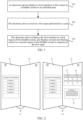
FIG. 1 is a flowchart of a display method according to an embodiment of this application; -
FIG. 2 is a schematic diagram 1 of a display method according to an embodiment of this application; -
FIG. 3 is a schematic diagram 2 of a display method according to an embodiment of this application; and -
FIG. 4 is a schematic diagram of an electronic device according to an embodiment of this application. - The following clearly and completely describes the technical solutions in the embodiments of this application with reference to the accompanying drawings in the embodiments of this application. Apparently, the described embodiments are some of the embodiments of this application rather than all of the embodiments. All other embodiments obtained by a person of ordinary skill in the art based on the embodiments of this application without creative efforts shall fall within the protection scope of this application.
- The specification and claims of this application, and terms "first" and "second" are used to distinguish similar objects, but are unnecessarily used to describe a specific sequence or order. It should be understood that the data in such a way are interchangeable in proper circumstances, so that the embodiments of this application can be implemented in other orders than the order illustrated or described herein. Objects distinguished by "first", "second", and the like are usually one type, and the number of objects is not limited. For example, the first object may be one or more than one. In addition, in the specification and the claims, "and/or" represents at least one of the connected objects, and the character "/" generally represents an "or" relationship between the associated objects.
- A display method, an electronic device, and a readable storage medium provided in the embodiments of this application are described below through specific embodiments and application scenarios thereof with reference to the accompanying drawings.
- Currently, a foldable screen is a featured product launched by manufacturers, and more and more users are starting to use a foldable screen phone. Since a screen of the foldable screen has a special property of being able to be unfolded and folded, it is possible to bring a user a brand new operation and use experience. When the screen of the foldable screen is in an unfolded state, the electronic device may display one interface in full screen for the user to operate or use. However, in this case, since a screen of the electronic device is large, the user can only operate with one hand, so that operation efficiency of the user is low. Alternatively, the electronic device may respectively display one interface on two screen regions of the foldable screen. Although the method improves display efficiency of the electronic device by using a limited screen region to a certain extent, characteristics of the foldable screen are not fully used, and a display mode is simple. For a user who needs to read and browse a large amount of text information, there is a certain shortcoming in operation and efficiency.
- To resolve the foregoing problem, in the embodiments of this application, a first interface may be displayed in full screen on a foldable screen in an unfolded state; a first input performed by a user is received; and the first interface is displayed in a first region of the foldable screen, and at least one floating control is displayed in a second region of the foldable screen in response to the first input, where each floating control is used for displaying a second interface associated with the first interface. According to this solution, since an electronic device with a foldable screen may display a first interface displayed in full screen on the foldable screen in an unfolded state in a first region of the foldable screen through an input performed by a user, and display at least one floating control in a second region of the foldable screen. However, each floating control may be used for displaying a second interface associated with the first interface, that is, the electronic device may display, through the at least one floating control, at least one second interface associated with the first interface. Therefore, the way the electronic device displays the interface can be enriched.
- With reference to
FIG. 1 , an embodiment of this application provides a display method, and the method may include the followingstep 101 tostep 103. A description is made below by using an example in which an electronic device with a foldable screen performs the method. - Step 101: An electronic device displays a first interface in full screen on a foldable screen in an unfolded state.
- Optionally, in the embodiments of this application, the foldable screen in the unfolded state may be: an angle between two screen regions of the foldable screen is greater than or equal to a preset angle.
- Optionally, in the embodiments of this application, the preset angle may be set by system default, or may be set by the user based on an actual use requirement.
- Optionally, in the embodiments of this application, that an electronic device displays a first interface in full screen may be: The electronic device displays the first interface on the foregoing two screen regions.
- It may be understood that, when the angle between the two screen regions is greater than or equal to the preset angle, the user may easily view or use the first interface.
- Step 102: The electronic device receives a first input performed by a user.
- Optionally, in the embodiments of this application, the first input may be any possible input such as a touch-control input, a floating input, a physical key input, or a voice input.
- For example, the first input is the touch-control input. The first input may be a long press input, a double click input, a slide input, or the like of the user on the foldable screen.
- Step 103: The electronic device displays the first interface in a first region of the foldable screen, and displays at least one floating control in a second region of the foldable screen in response to the first input.
- In the embodiments of this application, each floating control may be used for displaying a second interface associated with the first interface.
- Optionally, in this embodiment of this application, a first region and a second region may be the foregoing two screen regions.
- It may be understood that, after receiving the first input, the electronic device may display the first interface displayed in full screen on the foldable screen in the unfolded state in the first region, and display the foregoing at least one floating control in the second region. Since each floating control may be used for displaying the second interface associated with the first interface, the electronic device may display more interfaces through the at least one floating control by fully using the characteristics of the foldable screen, thereby enriching the way the electronic device displays the interface and improving user experience.
- Optionally, in this embodiment of this application, after receiving the first input, the electronic device may display a prompt message to prompt the user whether to enable a floating control mode. After receiving a confirmation operation of the user, the electronic device displays the first interface in the first region, and displays the foregoing at least one floating control in the second region.
- The description of the second interface associated with the first interface is described in detail in the following embodiments. To avoid repetition, details are not described herein again.
- Optionally, in this embodiment of this application, the first interface may be a contact list interface (a possible implementation), or the first interface may be one interface in a plurality of continuous interfaces (another possible implementation).
- In a possible implementation,
optionally, in this embodiment of this application, the first interface is the contact list interface, and each second interface may be a session interface associated with a contact identifier in the contact list interface. - Optionally, in this embodiment of this application, the contact list interface may be any interface that includes at least one contact identifier. For example, the contact list interface may be an address book interface in a chat application, or may be a contact session list interface in a chat application.
- Optionally, in this embodiment of this application, each contact identifier may indicate a contact and may associate a session interface corresponding to the contact.
- Optionally, in this embodiment of this application, the contact identifier may be any possible identifier such as a contact name or a contact image.
- Optionally, in this embodiment of this application, the first input may include a first sub-input and a second sub-input. The foregoing
step 103 may be specifically implemented through the following step 103a and step 103b. - Step 103a: The electronic device displays a contact list interface in the first region in response to a first sub-input.
- Optionally, in the embodiments of this application, the first sub-input may be any possible input such as a touch-control input, a floating input, a physical key input, or a voice input.
- Step 103b: The electronic device displays at least one floating control in a second region in response to a second sub-input of at least one contact identifier in the contact list interface.
- In the embodiments of this application, each floating control may display a session interface associated with one contact identifier in the foregoing at least one contact identifier.
- Optionally, in this embodiment of this application, the second sub-input may be any possible input such as a touch-control input, a floating input, or a voice input.
- Optionally, in this embodiment of this application, after receiving the second sub-input of P contact identifiers in the foregoing contact list interface from the user, the electronic device may display P floating controls respectively corresponding to the P contact identifiers in the second region. P is a positive integer, and each floating control may display a session interface associated with one contact identifier in the P contact identifiers. Therefore, the user may communicate with a contact corresponding to the session interface through the session interface displayed in one of the floating controls.
- Further, the user may communicate with P contacts corresponding to P session interfaces through the P session interfaces displayed in the foregoing P floating controls to improve communication efficiency.
- It may be understood that, when the user operates a session interface, the electronic device always displays the foregoing contact list interface in the first region to help the user view the contact list interface in real time.
- Optionally, in this embodiment of this application, after the electronic device displays the foregoing at least one floating control in the second region, if a target session interface is displayed in one of the floating controls, the electronic device may display the foregoing contact list interface in the floating control through an input performed by the user for the floating control, and display the target session interface in the first region, to help the user amplify viewing/use of the session interface in any one of the floating controls.
- In this embodiment of this application, since the electronic device may display the contact list interface in the first region through the input performed by the user, and display a same number of floating controls as contact identifiers selected by the user in the second region based on a selection of contact identifiers in the contact list interface performed by the user, the electronic device may display the session interface associated with a corresponding contact identifier through the floating controls in the second region, so that the flexibility of the electronic device to display the interface may be improved to facilitate user communication.
- The following exemplarily describes the display method provided in this embodiment of this application with reference to the accompanying drawings.
- For example, as shown in (a) of
FIG. 2 , the first region of the foldable screen in the unfolded state is aregion 21, the second region is aregion 22, an angle θ between theregion 21 and theregion 22 is greater than or equal to the foregoing preset angle, and the first interface is the contact list interface. If the electronic device receives a first sub-input performed by the user, the electronic device may display the contact list interface in theregion 21. If the electronic device receives second sub-inputs of the user for acontact 1, acontact 2, and a contact 3 (that is, at least one contact identifier) in the contact list interface, as shown in (b) ofFIG. 2 , the electronic device may display a floatingcontrol 23, a floatingcontrol 24, and a floating control 25 (that is, at least one floating control) in theregion 22. In addition, the floatingcontrol 23 may be used for displaying a session interface associated with thecontact 1, the floatingcontrol 24 may be used for displaying a session interface associated with thecontact 2, and the floatingcontrol 25 may be used for displaying a session interface associated with thecontact 3. In this way, the flexibility of the electronic device to display the interface may be improved to facilitate user communication. - In this embodiment of this application, since the first interface may be the contact list interface, and each second interface may be the session interface associated with the contact identifier in the contact list interface, the electronic device may display the contact list interface in the first region, and display a session interface associated with a contact identifier in each floating control displayed in the second region, to improve communication efficiency of the user.
- In another possible implementation,
optionally, in this embodiment of this application, the first interface is one interface in a plurality of continuous interfaces, M second interfaces in the plurality of interfaces may be displayed in M floating controls in the at least one floating control, the first interface and the M second interfaces are continuous (M+1) interfaces in the plurality of interfaces, and M is a positive integer. - Optionally, in this embodiment of this application, the plurality of continuous interfaces may be any possible plurality of interfaces such as a plurality of continuous text reading interfaces, a plurality of continuous picture browsing interfaces, or a plurality of continuous teletext interfaces.
- Optionally, in this embodiment of this application, the (M+1) interfaces may be at least some interfaces in the plurality of interfaces.
- For example, if the plurality of interfaces is Q+1 interfaces, M is a positive integer less than or equal to Q.
- Optionally, in this embodiment of this application, the M second interfaces are M continuous interfaces in the plurality of interfaces, and the M second interfaces may be M interfaces before/after the first interface and continuous with the first interface.
- Optionally, in this embodiment of this application, M may be determined by the electronic device based on a number of the plurality of interfaces.
- Optionally, in this embodiment of this application, a number of the at least one floating control may be set by system default, or may be set by the user based on an actual use requirement.
- It may be understood that, if the number of the plurality of interfaces is greater than the number of the at least one floating control, a second interface may be displayed in each floating control in the at least one floating control; or if the number of the plurality of interfaces is less than or equal to the number of the at least one floating control, the second interface may be displayed in some floating controls in the at least one floating control.
- Optionally, in this embodiment of this application, after
step 103, the display method provided in this embodiment of this application may further include the following step 104 and step 105. - Step 104: The electronic device receives a second input performed by the user for a first floating control in the at least one floating control.
- In this embodiment of this application, a third interface may be displayed in the first floating control.
- Optionally, in this embodiment of this application, the third interface may be one interface in the M second interfaces.
- Optionally, in this embodiment of this application, the second input may be any possible input such as a touch-control input, a floating input, or a voice input.
- Step 105: The electronic device displays a third interface in the first region, and displays N fourth interfaces in a plurality of interfaces in N floating controls in the at least one floating control in response to the second input.
- In this embodiment of this application, the third interface and the N fourth interfaces are (N+1) continuous interfaces in the plurality of interfaces, and N is an integer greater than or equal to 0.
- Optionally, in this embodiment of this application, the (N+1) interfaces may be some interfaces in the plurality of interfaces.
- Optionally, in this embodiment of this application, the N fourth interfaces are N continuous interfaces in the plurality of interfaces, and the N fourth interfaces may be N interfaces before/after the third interface and continuous with the third interface.
- Optionally, in this embodiment of this application, N may be determined by the electronic device based on the number of the plurality of interfaces.
- It should be noted that, during actual implementation, the at least one floating control may include a floating control that does not display an interface, and if the electronic device receives a second input performed by the user for a floating control that does not display an interface, the electronic device may not display the interface in the first region, nor display the interface in the at least one floating control.
- In this embodiment of this application, since the electronic device may display the third interface in the first region through an input performed by the user for a floating control displaying the third interface in the at least one floating control, and update the interface displayed in the at least one floating control based on the plurality of continuous interfaces, the flexibility of the electronic device to display the interface may be further improved to help the user browse the plurality of interfaces.
- The following exemplarily describes the display method provided in this embodiment of this application with reference to the accompanying drawings.
- For example, as shown in (a) of
FIG. 3 , the first region of the foldable screen in the unfolded state is aregion 31, the second region is aregion 32, an angle θ between theregion 31 and theregion 32 is greater than or equal to the foregoing preset angle, and the first interface is aninterface 0 in the plurality of continuous interfaces. After receiving the first input performed by the user, the electronic device may display theinterface 0 in theregion 31, and display a floatingcontrol 33, a floatingcontrol 34, a floatingcontrol 35, and a floating control 36 (that is, at least one floating control) in theregion 32. Assuming that aninterface 1, aninterface 2, aninterface 3, and an interface 4 (that is, M second interfaces) are interfaces in the plurality of interfaces and that are located after theinterface 0 and continuous with theinterface 0, the floatingcontrol 33 may be used for displaying theinterface 1, the floatingcontrol 34 may be used for displaying theinterface 2, the floatingcontrol 35 may be used for displaying theinterface 3, and the floatingcontrol 36 may be used for displaying theinterface 4. - Further, assuming that the
interface 3, theinterface 4, aninterface 5, and an interface 6 (that is, N fourth interfaces) are interfaces in the plurality of interfaces and that are located after theinterface 2 and continuous with the interface 2 (that is, a third interface). After the electronic device receives the input (that is, the second input) of the user for the floating control 34 (that is, the first floating control), as shown in (b) ofFIG. 3 , the electronic device may display theinterface 2 in theregion 31, theinterface 3 in the floatingcontrol 33, theinterface 4 in the floatingcontrol 34, theinterface 5 in the floatingcontrol 35, and theinterface 6 in the floatingcontrol 36. This can further improve the flexibility of the electronic device to display the interface to help the user browse the foregoing plurality of interfaces. - In the embodiments of this application, since the first interface may be one interface in the plurality of continuous interfaces, and M second interfaces in the plurality of interfaces and that are continuous with the first interface may be displayed in the M floating controls in the floating controls displayed in the second region, the electronic device may simultaneously display (M+1) continuous interfaces in the plurality of interfaces to improve browsing efficiency of the user.
- According to the display method provided in this embodiment of this application, since the electronic device with the foldable screen may display the first interface displayed in full screen on the foldable screen in the unfolded state in the first region of the foldable screen through an input performed by the user, and display at least one floating control in the second region of the foldable screen. However, each floating control may be used for displaying a second interface associated with the first interface, that is, the electronic device may display at least one second interface associated with the first interface through the at least one floating control. Therefore, the way the electronic device displays the interface can be enriched.
- Optionally, in this embodiment of this application, after
step 103, the display method provided in this embodiment of this application may further include the following step 106 and step 107. - Step 106: The electronic device receives a third input performed by the user for a second floating control in the at least one floating control.
- Optionally, in this embodiment of this application, the third input may be any possible input such as a touch-control input, a floating input, or a voice input.
- Step 107: The electronic device adjusts a display parameter of the second floating control in response to the third input.
- Optionally, in this embodiment of this application, the display parameter may include at least one of the following: display position information, display size information, background picture information, and font style information.
- Optionally, in this embodiment of this application, the display position information of the second floating control may indicate any position in the second region; the display size information of the second floating control may indicate a display size of the second floating control, and the display size information of the second floating control is less than or equal to size information of the second region; the background picture information of the second floating control may indicate a background picture displayed in the second floating control; and the font style information of the second floating control may indicate a font style of a content of the second interface displayed in the second floating control.
- Optionally, in this embodiment of this application, the display parameter may be preset by a system, or may be randomly set by the user.
- Optionally, in this embodiment of this application, the electronic device may adjust display parameters of at least some floating controls through an input performed by the user for the at least some floating controls in the at least one floating control, so that at least one floating control displayed in the second region meets a use requirement of the user, thereby further improving the user experience.
- It should be noted that, during actual implementation, the display parameter is not limited, that is, the electronic device may adjust any possible display parameter of the floating control through an input performed by the user for the floating control.
- In this embodiment of this application, since the electronic device may adjust at least one of display position information, display size information, background picture information, and font style information of one floating control displayed in the second region through the input performed by the user for the floating control, the way the electronic device displays the interface may be further enriched.
- With reference to
FIG. 4 , an embodiment of this application provides anelectronic device 40, including a foldable screen. Theelectronic device 40 may include adisplay module 41 and a receivingmodule 42. Thedisplay module 41 may be configured to display a first interface in full screen on the foldable screen in an unfolded state. The receivingmodule 42 may be configured to receive a first input performed by a user. Thedisplay module 41 may be further configured to: display the first interface in a first region of the foldable screen, and display at least one floating control in a second region of the foldable screen in response to the first input received by the receivingmodule 42, where each floating control is used for displaying a second interface associated with the first interface. - In a possible implementation, the first interface may be a contact list interface, and each second interface may be a session interface associated with a contact identifier in the contact list interface.
- In a possible implementation, the first input may include a first sub-input and a second sub-input. The
display module 41 may be further configured to display the contact list interface in the first region in response to the first sub-input received by the receivingmodule 42. Thedisplay module 41 may be further configured to display the at least one floating control in the second region in response to the second sub-input of at least one contact identifier in the contact list interface received by the receivingmodule 42, where each floating control displays a session interface associated with one contact identifier in the at least one contact identifier. - In a possible implementation, the first interface may be one interface in a plurality of continuous interfaces, where M second interfaces in the plurality of interfaces are displayed in M floating controls in the at least one floating control, the first interface and the M second interfaces are continuous (M+1) interfaces in the plurality of interfaces, and M is a positive integer.
- In a possible implementation, the receiving
module 42 may be further configured to receive, after thedisplay module 41 displays the at least one floating control in the second region, a second input performed by the user for a first floating control in the at least one floating control, where a third interface is displayed in the first floating control. Thedisplay module 41 may be further configured to: display the third interface in the first region, and display N fourth interfaces in the plurality of interfaces in N floating controls in the at least one floating control in response to the second input received by the receivingmodule 42, where the third interface and the N fourth interfaces are (N+1) continuous interfaces in the plurality of interfaces, and N is an integer greater than or equal to 0. - In a possible implementation, the
electronic device 40 may further include an adjustment module. The receivingmodule 42 may further be configured to receive, after thedisplay module 41 displays the at least one floating control in the second region, a third input performed by the user for a second floating control in the at least one floating control. The adjustment module may be configured to adjust a display parameter of the second floating control in response to the third input received by the receivingmodule 42, where the display parameter includes at least one of the following: display position information, display size information, background picture information, and font style information. - According to the electronic device provided in this embodiment of this application, since the electronic device may display the first interface displayed in full screen on the foldable screen in the unfolded state in the first region of the foldable screen through an input performed by a user, and display at least one floating control in the second region of the foldable screen. However, each floating control may be used for displaying the second interface associated with the first interface, that is, the display apparatus may display at least one second interface associated with the first interface through the at least one floating control. Therefore, the way the display apparatus displays the interface can be enriched.
- For the beneficial effects of various implementations in the embodiments, reference may be made to the beneficial effects of corresponding implementations in the foregoing method embodiment. To avoid repetition, details are not described herein again.
- It should be noted that, in the embodiments of this application, the electronic device may be a terminal or may be another device other than a terminal. For example, the electronic device may be a mobile phone, a tablet computer, a laptop computer, a handheld computer, an in-vehicle electronic device, a mobile Internet device (Mobile Internet Device, MID), an augmented reality (augmented reality, AR)/virtual reality (virtual reality, VR) device, a robot, a wearable device, an ultra-mobile personal computer (ultra-mobile personal computer, UMPC), a netbook, or a personal digital assistant (personal digital assistant, PDA), and the electronic device may further be a server, a network attached storage (Network Attached Storage, NAS), a personal computer (personal computer, PC), a television (television, TV), a teller machine, or a self-service machine. This is not specifically limited in the embodiments of this application.
- An embodiment of this application further provides a readable storage medium, storing a program or instructions. When the program or the instructions are executed by a processor, all processes of the foregoing display method embodiments are implemented, and the same technical effects can be achieved. To avoid repetition, details are not described herein again.
- The foregoing processor is a processor in the electronic device in the foregoing embodiments. The foregoing readable storage medium includes a computer-readable storage medium, for example, a computer read-only memory (Read-Only Memory, ROM), a random access memory (Random Access Memory, RAM), a magnetic disk, or an optical disc.
- An embodiment of this application further provides a chip, including a processor and a communication interface, where the communication interface is coupled to the processor, and the processor is configured to run a program or instructions, to implement all processes of the foregoing display method embodiments, and can achieve the same technical effects. To avoid repetition, details are not described herein again.
- It should be understood that, the chip mentioned in the embodiments of this application may also be referred to as a system-level chip, a system chip, a chip system, a system on chip, or the like.
- It should be noted that, the term "include", "comprise" or any other variation thereof in this specification is intended to cover a non-exclusive inclusion, which specifies the presence of stated processes, methods, objects, or apparatuses, but does not preclude the presence or addition of one or more other processes, methods, objects, or apparatuses. Without more limitations, elements defined by the sentence "including one" does not exclude that there are still other same elements in the processes, methods, objects, or apparatuses. In addition, it should be noted that, the scope of the method and apparatus in the embodiments of this application is not limited to performing functions in the order shown or discussed, and it may further include performing the functions in a substantially simultaneous manner or in reverse order according to the functions involved. For example, the described method may be performed in a different order than described, and various steps may also be added, omitted, or combined. In addition, features described with reference to some examples may be combined in other examples.
- Through the descriptions of the foregoing implementations, a person skilled in the art may clearly understand that the method according to the foregoing embodiments may be implemented by means of software and a necessary general hardware platform, and certainly, may alternatively be implemented by hardware, but in many cases, the former manner is a better implementation. Based on such an understanding, the technical solutions in this application essentially or a part that contributes to the conventional technologies may be implemented in the form of a computer software product. The computer software product is stored in a storage medium (for example, a ROM/RAM, a magnetic disk, or an optical disc), and includes several instructions for instructing a terminal (which may be a mobile phone, a computer, a server, a network device, or the like) to perform the method described in the embodiments of this application.
- The embodiments of this application are described above with reference to the accompanying drawings, but this application is not limited to the foregoing specific embodiments, which are merely illustrative rather than limited. Under the inspiration of this application, a person of ordinary skill in the art may make various variations without departing from the scope of this application and the protection of the claims, and such variations shall fall within the protection of this application.
Claims (16)
- A display method, applied to an electronic device, the electronic device comprising a foldable screen, the method comprising:displaying a first interface in full screen on the foldable screen in an unfolded state;receiving a first input performed by a user; anddisplaying the first interface in a first region of the foldable screen, and displaying at least one floating control in a second region of the foldable screen in response to the first input, wherein each floating control is used for displaying a second interface associated with the first interface.
- The method according to claim 1, wherein the first interface is a contact list interface, and each second interface is a session interface associated with a contact identifier in the contact list interface.
- The method according to claim 2, wherein the first input comprises a first sub-input and a second sub-input; and
the displaying the first interface in a first region of the foldable screen, and displaying at least one floating control in a second region of the foldable screen in response to the first input comprises:displaying the contact list interface in the first region in response to the first sub-input; anddisplaying the at least one floating control in the second region in response to the second sub-input of at least one contact identifier in the contact list interface, whereineach floating control displays a session interface associated with one contact identifier in the at least one contact identifier. - The method according to claim 1, wherein the first interface is one interface in a plurality of continuous interfaces, wherein
M second interfaces in the plurality of interfaces are displayed in M floating controls in the at least one floating control, the first interface and the M second interfaces are continuous (M+1) interfaces in the plurality of interfaces, and M is a positive integer. - The method according to claim 4, wherein after the displaying at least one floating control in a second region of the foldable screen, the method further comprises:receiving a second input performed by the user for a first floating control in the at least one floating control, wherein a third interface is displayed in the first floating control; anddisplaying the third interface in the first region, and displaying N fourth interfaces in the plurality of interfaces in N floating controls in the at least one floating control in response to the second input, whereinthe third interface and the N fourth interfaces are (N+1) continuous interfaces in the plurality of interfaces, and N is an integer greater than or equal to 0.
- The method according to claim 1, wherein after the displaying at least one floating control in a second region of the foldable screen, the method further comprises:receiving a third input performed by the user for a second floating control in the at least one floating control; andadjusting a display parameter of the second floating control in response to the third input, whereinthe display parameter comprises at least one of the following: display position information, display size information, background picture information, and font style information.
- An electronic device, comprising a foldable screen, wherein the electronic device comprises a display module and a receiving module;the display module is configured to display a first interface in full screen on the foldable screen in an unfolded state;the receiving module is configured to receive a first input performed by a user; andthe display module is further configured to: display the first interface in a first region of the foldable screen, and display at least one floating control in a second region of the foldable screen in response to the first input received by the receiving module, wherein each floating control is used for displaying a second interface associated with the first interface.
- The electronic device according to claim 7, wherein the first interface is a contact list interface, and each second interface is a session interface associated with a contact identifier in the contact list interface.
- The electronic device according to claim 8, wherein the first input comprises a first sub-input and a second sub-input;the display module is further configured to display the contact list interface in the first region in response to the first sub-input received by the receiving module; andthe display module is further configured to display the at least one floating control in the second region in response to the second sub-input of at least one contact identifier in the contact list interface received by the receiving module, whereineach floating control displays a session interface associated with one contact identifier in the at least one contact identifier.
- The electronic device according to claim 7, wherein the first interface is one interface in a plurality of continuous interfaces, wherein
M second interfaces in the plurality of interfaces are displayed in M floating controls in the at least one floating control, the first interface and the M second interfaces are continuous (M+1) interfaces in the plurality of interfaces, and M is a positive integer. - The electronic device according to claim 10, whereinthe receiving module is further configured to receive, after the display module displays the at least one floating control in the second region, a second input performed by the user for a first floating control in the at least one floating control, wherein a third interface is displayed in the first floating control; andthe display module is further configured to: display the third interface in the first region, and display N fourth interfaces in the plurality of interfaces in N floating controls in the at least one floating control in response to the second input received by the receiving module, whereinthe third interface and the N fourth interfaces are (N+1) continuous interfaces in the plurality of interfaces, and N is an integer greater than or equal to 0.
- The electronic device according to claim 7, wherein the electronic device further comprises an adjustment module;the receiving module is further configured to receive, after the display module displays the at least one floating control in the second region, a third input performed by the user for a second floating control in the at least one floating control; andthe adjustment module is configured to adjust a display parameter of the second floating control in response to the third input received by the receiving module, whereinthe display parameter comprises at least one of the following: display position information, display size information, background picture information, and font style information.
- A readable storage medium, storing a program or instructions, wherein when the program or the instructions are executed by a processor, steps of the display method according to any one of claims 1 to 6 are implemented.
- A computer software product, when executed by at least one processor, implementing the display method according to any one of claims 1 to 6.
- An electronic device, configured to perform the display method according to any one of claims 1 to 6.
- A chip, comprising a processor and a communication interface, wherein the communication interface is coupled to the processor, and the processor is configured to run a program or instructions, to implement the display method according to any one of claims 1 to 6.
Applications Claiming Priority (2)
| Application Number | Priority Date | Filing Date | Title |
|---|---|---|---|
| CN202210153566.2A CN114578898B (en) | 2022-02-18 | 2022-02-18 | Display method, electronic device and readable storage medium |
| PCT/CN2023/076245 WO2023155810A1 (en) | 2022-02-18 | 2023-02-15 | Display method, electronic device and readable storage medium |
Publications (2)
| Publication Number | Publication Date |
|---|---|
| EP4471557A1 true EP4471557A1 (en) | 2024-12-04 |
| EP4471557A4 EP4471557A4 (en) | 2025-05-07 |
Family
ID=81773365
Family Applications (1)
| Application Number | Title | Priority Date | Filing Date |
|---|---|---|---|
| EP23755812.7A Pending EP4471557A4 (en) | 2022-02-18 | 2023-02-15 | DISPLAY METHOD, ELECTRONIC DEVICE AND READABLE RECORDING MEDIUM |
Country Status (4)
| Country | Link |
|---|---|
| US (1) | US12393319B2 (en) |
| EP (1) | EP4471557A4 (en) |
| CN (1) | CN114578898B (en) |
| WO (1) | WO2023155810A1 (en) |
Families Citing this family (3)
| Publication number | Priority date | Publication date | Assignee | Title |
|---|---|---|---|---|
| CN114578898B (en) | 2022-02-18 | 2024-07-16 | 维沃移动通信有限公司 | Display method, electronic device and readable storage medium |
| CN115576514A (en) * | 2022-10-25 | 2023-01-06 | 维沃移动通信有限公司 | Content display method, device, electronic device and readable storage medium |
| US20250306830A1 (en) * | 2024-03-27 | 2025-10-02 | Lenovo (United States) Inc. | Physically separated display zones on a display |
Family Cites Families (43)
| Publication number | Priority date | Publication date | Assignee | Title |
|---|---|---|---|---|
| US9213365B2 (en) * | 2010-10-01 | 2015-12-15 | Z124 | Method and system for viewing stacked screen displays using gestures |
| US9030418B2 (en) * | 2008-06-24 | 2015-05-12 | Lg Electronics Inc. | Mobile terminal capable of sensing proximity touch |
| US8866840B2 (en) * | 2008-09-08 | 2014-10-21 | Qualcomm Incorporated | Sending a parameter based on screen size or screen resolution of a multi-panel electronic device to a server |
| KR20100065418A (en) * | 2008-12-08 | 2010-06-17 | 삼성전자주식회사 | Flexible display device and data output method thereof |
| KR101569776B1 (en) * | 2009-01-09 | 2015-11-19 | 삼성전자주식회사 | Foldable Display Device And Operation Method thereof |
| US8677284B2 (en) * | 2009-11-04 | 2014-03-18 | Alpine Electronics, Inc. | Method and apparatus for controlling and displaying contents in a user interface |
| US8462106B2 (en) * | 2010-11-09 | 2013-06-11 | Research In Motion Limited | Image magnification based on display flexing |
| US20130104051A1 (en) * | 2011-09-27 | 2013-04-25 | Z124 | Unified desktop big brother application pools |
| KR20130040547A (en) * | 2011-10-14 | 2013-04-24 | 삼성전자주식회사 | Device and method for controlling screen in wireless terminal |
| KR20130080937A (en) * | 2012-01-06 | 2013-07-16 | 삼성전자주식회사 | Apparatus and method for dislplaying a screen of portable device having a flexible display |
| US9672796B2 (en) * | 2012-02-17 | 2017-06-06 | Lg Electronics Inc. | Electronic device including flexible display |
| KR102013587B1 (en) * | 2012-05-03 | 2019-08-23 | 엘지전자 주식회사 | Mobile terminal and control method for the mobile terminal |
| KR101916416B1 (en) * | 2012-07-30 | 2018-11-08 | 삼성전자주식회사 | Flexible display apparatus and display method thereof |
| KR102043810B1 (en) * | 2012-08-20 | 2019-11-12 | 삼성전자주식회사 | Flexible display apparatus and controlling method thereof |
| KR102004409B1 (en) * | 2012-08-23 | 2019-07-29 | 삼성전자주식회사 | Flexible display apparatus and contorlling method thereof |
| EP3690624B1 (en) * | 2012-12-06 | 2023-02-01 | Samsung Electronics Co., Ltd. | Display device and method of controlling the same |
| EP2741176A3 (en) * | 2012-12-10 | 2017-03-08 | Samsung Electronics Co., Ltd | Mobile device of bangle type, control method thereof, and UI display method |
| US20140351722A1 (en) * | 2013-05-23 | 2014-11-27 | Microsoft | User interface elements for multiple displays |
| CN103324435B (en) * | 2013-05-24 | 2017-02-08 | 华为技术有限公司 | Multi-screen display method and device and electronic device thereof |
| KR20150076955A (en) * | 2013-12-27 | 2015-07-07 | 삼성전자주식회사 | Method for displaying and an electronic device thereof |
| EP2908236A1 (en) * | 2014-02-13 | 2015-08-19 | Samsung Electronics Co., Ltd | Electronic device and index display method thereof |
| KR20150139214A (en) * | 2014-06-03 | 2015-12-11 | 삼성전자주식회사 | Method and apparatus for processing image |
| KR102210632B1 (en) * | 2014-06-09 | 2021-02-02 | 엘지전자 주식회사 | The Apparatus and Method for Display Device executing bending operation without physical bending |
| KR20160001602A (en) * | 2014-06-26 | 2016-01-06 | 삼성전자주식회사 | Foldable electronic apparatus and method for performing interfacing thereof |
| KR101659032B1 (en) * | 2014-07-25 | 2016-09-23 | 엘지전자 주식회사 | Mobile terminal and control method thereof |
| KR20160120143A (en) * | 2015-04-07 | 2016-10-17 | 삼성전자주식회사 | Display apparatus and control method thereof |
| US10937393B2 (en) * | 2015-04-15 | 2021-03-02 | Samsung Electronics Co., Ltd. | Electronic device including flexible display and content display method thereof |
| CN107203261B (en) * | 2016-03-16 | 2022-05-24 | Lg电子株式会社 | Watch type mobile terminal and control method thereof |
| KR102649254B1 (en) * | 2016-08-03 | 2024-03-20 | 삼성전자주식회사 | Display control method, storage medium and electronic device |
| KR20180039342A (en) * | 2016-10-10 | 2018-04-18 | 삼성전자주식회사 | the Electronic Device including the Flexible Display |
| CN107678661A (en) * | 2017-10-19 | 2018-02-09 | 广东欧珀移动通信有限公司 | Method and device for displaying data content |
| CN109710132B (en) * | 2018-12-28 | 2021-10-01 | 维沃移动通信有限公司 | Operation control method and terminal |
| CN109766053B (en) * | 2019-01-15 | 2020-12-22 | Oppo广东移动通信有限公司 | User interface display method, device, terminal and storage medium |
| KR102809530B1 (en) * | 2019-04-18 | 2025-05-22 | 삼성전자주식회사 | Electronic device, method, and computer readable medium for providing split screen |
| CN110286972A (en) * | 2019-05-14 | 2019-09-27 | 华为技术有限公司 | A method and electronic device for a folding screen display application |
| US11138912B2 (en) * | 2019-10-01 | 2021-10-05 | Microsoft Technology Licensing, Llc | Dynamic screen modes on a bendable computing device |
| CN111078091A (en) * | 2019-11-29 | 2020-04-28 | 华为技术有限公司 | Processing method, device and electronic device for split-screen display |
| CN111124225B (en) * | 2019-12-16 | 2021-09-10 | 维沃移动通信有限公司 | Display control method and electronic equipment |
| CN111666023B (en) * | 2020-05-20 | 2022-02-08 | 维沃移动通信有限公司 | Interface display method and device, electronic equipment and readable storage medium |
| CN111651116B (en) * | 2020-06-04 | 2022-06-14 | 京东方科技集团股份有限公司 | Split screen interaction method, electronic equipment and computer storage medium |
| CN112130728B (en) * | 2020-09-30 | 2022-08-16 | 努比亚技术有限公司 | Icon display method of folding screen and related device |
| CN114578898B (en) * | 2022-02-18 | 2024-07-16 | 维沃移动通信有限公司 | Display method, electronic device and readable storage medium |
| CN114564263A (en) * | 2022-02-18 | 2022-05-31 | 维沃移动通信有限公司 | Page layout adjusting method and device |
-
2022
- 2022-02-18 CN CN202210153566.2A patent/CN114578898B/en active Active
-
2023
- 2023-02-15 EP EP23755812.7A patent/EP4471557A4/en active Pending
- 2023-02-15 WO PCT/CN2023/076245 patent/WO2023155810A1/en not_active Ceased
-
2024
- 2024-08-16 US US18/807,388 patent/US12393319B2/en active Active
Also Published As
| Publication number | Publication date |
|---|---|
| US12393319B2 (en) | 2025-08-19 |
| US20240402884A1 (en) | 2024-12-05 |
| CN114578898A (en) | 2022-06-03 |
| WO2023155810A1 (en) | 2023-08-24 |
| EP4471557A4 (en) | 2025-05-07 |
| CN114578898B (en) | 2024-07-16 |
Similar Documents
| Publication | Publication Date | Title |
|---|---|---|
| US12393319B2 (en) | Display method, non-transitory readable storage medium, and chip | |
| EP3907595A1 (en) | User interface display method and apparatus, terminal and storage medium | |
| CN106708452A (en) | Information sharing method and terminal | |
| US8633895B2 (en) | Apparatus and method for improving character input function in mobile terminal | |
| US12379829B2 (en) | Interaction method and apparatus for video call | |
| EP3242197A1 (en) | Desktop sharing method and mobile terminal | |
| US20230244363A1 (en) | Screen capture method and apparatus, and electronic device | |
| EP4318238A1 (en) | Image sharing methods and apparatuses, and electronic device | |
| CN112099678B (en) | A text processing method, device and computer readable storage medium | |
| CN116264603A (en) | Live information processing method, device, equipment and storage medium | |
| CN112905091A (en) | Application program starting method and device and electronic equipment | |
| US20210191580A1 (en) | Method and Apparatus for Displaying Application Program, Terminal Device, and Storage Medium | |
| CN114422461A (en) | Message reference method and device | |
| CN117009020A (en) | Wallpaper setting method, device, electronic device and readable storage medium | |
| CN114599020B (en) | Bluetooth connection method, Bluetooth connection device, electronic device and readable storage medium | |
| CN110737380B (en) | Mind map display method, device, storage medium and electronic device | |
| CN112181165A (en) | Input method and device and electronic equipment | |
| CN113126845B (en) | Display method, terminal, equipment and storage medium | |
| EP4228243A1 (en) | Photographing method and apparatus, and electronic device and readable storage medium | |
| JP2025107342A5 (en) | ||
| CN113031781A (en) | Augmented reality resource display method and device, electronic equipment and storage medium | |
| CN112637411A (en) | Image searching method and device and electronic equipment | |
| CN115202524B (en) | Display method and device | |
| CN113261397A (en) | Interaction method, flexible electronic device and readable storage medium | |
| WO2024114571A1 (en) | Information display method and apparatus, electronic device, and storage medium |
Legal Events
| Date | Code | Title | Description |
|---|---|---|---|
| STAA | Information on the status of an ep patent application or granted ep patent |
Free format text: STATUS: THE INTERNATIONAL PUBLICATION HAS BEEN MADE |
|
| PUAI | Public reference made under article 153(3) epc to a published international application that has entered the european phase |
Free format text: ORIGINAL CODE: 0009012 |
|
| STAA | Information on the status of an ep patent application or granted ep patent |
Free format text: STATUS: REQUEST FOR EXAMINATION WAS MADE |
|
| 17P | Request for examination filed |
Effective date: 20240829 |
|
| AK | Designated contracting states |
Kind code of ref document: A1 Designated state(s): AL AT BE BG CH CY CZ DE DK EE ES FI FR GB GR HR HU IE IS IT LI LT LU LV MC ME MK MT NL NO PL PT RO RS SE SI SK SM TR |
|
| A4 | Supplementary search report drawn up and despatched |
Effective date: 20250408 |
|
| RIC1 | Information provided on ipc code assigned before grant |
Ipc: G06F 1/16 20060101ALI20250402BHEP Ipc: G06F 3/04886 20220101ALI20250402BHEP Ipc: G06F 3/0481 20220101AFI20250402BHEP |
|
| DAV | Request for validation of the european patent (deleted) | ||
| DAX | Request for extension of the european patent (deleted) |