EP4468798A2 - Channel detection method and device, and computer storage medium - Google Patents
Channel detection method and device, and computer storage medium Download PDFInfo
- Publication number
- EP4468798A2 EP4468798A2 EP24206414.5A EP24206414A EP4468798A2 EP 4468798 A2 EP4468798 A2 EP 4468798A2 EP 24206414 A EP24206414 A EP 24206414A EP 4468798 A2 EP4468798 A2 EP 4468798A2
- Authority
- EP
- European Patent Office
- Prior art keywords
- bwps
- control resource
- search space
- sets
- indication information
- Prior art date
- Legal status (The legal status is an assumption and is not a legal conclusion. Google has not performed a legal analysis and makes no representation as to the accuracy of the status listed.)
- Pending
Links
Images




Classifications
-
- H—ELECTRICITY
- H04—ELECTRIC COMMUNICATION TECHNIQUE
- H04W—WIRELESS COMMUNICATION NETWORKS
- H04W48/00—Access restriction; Network selection; Access point selection
- H04W48/16—Discovering, processing access restriction or access information
-
- H—ELECTRICITY
- H04—ELECTRIC COMMUNICATION TECHNIQUE
- H04L—TRANSMISSION OF DIGITAL INFORMATION, e.g. TELEGRAPHIC COMMUNICATION
- H04L5/00—Arrangements affording multiple use of the transmission path
- H04L5/0001—Arrangements for dividing the transmission path
- H04L5/0003—Two-dimensional division
- H04L5/0005—Time-frequency
- H04L5/0007—Time-frequency the frequencies being orthogonal, e.g. OFDM(A) or DMT
- H04L5/001—Time-frequency the frequencies being orthogonal, e.g. OFDM(A) or DMT the frequencies being arranged in component carriers
-
- H—ELECTRICITY
- H04—ELECTRIC COMMUNICATION TECHNIQUE
- H04L—TRANSMISSION OF DIGITAL INFORMATION, e.g. TELEGRAPHIC COMMUNICATION
- H04L5/00—Arrangements affording multiple use of the transmission path
- H04L5/003—Arrangements for allocating sub-channels of the transmission path
- H04L5/0042—Intra-user or intra-terminal allocation
-
- H—ELECTRICITY
- H04—ELECTRIC COMMUNICATION TECHNIQUE
- H04L—TRANSMISSION OF DIGITAL INFORMATION, e.g. TELEGRAPHIC COMMUNICATION
- H04L5/00—Arrangements affording multiple use of the transmission path
- H04L5/003—Arrangements for allocating sub-channels of the transmission path
- H04L5/0053—Allocation of signalling, i.e. of overhead other than pilot signals
-
- H—ELECTRICITY
- H04—ELECTRIC COMMUNICATION TECHNIQUE
- H04L—TRANSMISSION OF DIGITAL INFORMATION, e.g. TELEGRAPHIC COMMUNICATION
- H04L5/00—Arrangements affording multiple use of the transmission path
- H04L5/0091—Signalling for the administration of the divided path, e.g. signalling of configuration information
- H04L5/0094—Indication of how sub-channels of the path are allocated
-
- H—ELECTRICITY
- H04—ELECTRIC COMMUNICATION TECHNIQUE
- H04W—WIRELESS COMMUNICATION NETWORKS
- H04W72/00—Local resource management
- H04W72/04—Wireless resource allocation
- H04W72/044—Wireless resource allocation based on the type of the allocated resource
-
- H—ELECTRICITY
- H04—ELECTRIC COMMUNICATION TECHNIQUE
- H04W—WIRELESS COMMUNICATION NETWORKS
- H04W72/00—Local resource management
- H04W72/04—Wireless resource allocation
- H04W72/044—Wireless resource allocation based on the type of the allocated resource
- H04W72/0453—Resources in frequency domain, e.g. a carrier in FDMA
-
- H—ELECTRICITY
- H04—ELECTRIC COMMUNICATION TECHNIQUE
- H04W—WIRELESS COMMUNICATION NETWORKS
- H04W72/00—Local resource management
- H04W72/20—Control channels or signalling for resource management
- H04W72/23—Control channels or signalling for resource management in the downlink direction of a wireless link, i.e. towards a terminal
-
- H—ELECTRICITY
- H04—ELECTRIC COMMUNICATION TECHNIQUE
- H04L—TRANSMISSION OF DIGITAL INFORMATION, e.g. TELEGRAPHIC COMMUNICATION
- H04L1/00—Arrangements for detecting or preventing errors in the information received
- H04L1/0001—Systems modifying transmission characteristics according to link quality, e.g. power backoff
- H04L1/0036—Systems modifying transmission characteristics according to link quality, e.g. power backoff arrangements specific to the receiver
- H04L1/0038—Blind format detection
-
- H—ELECTRICITY
- H04—ELECTRIC COMMUNICATION TECHNIQUE
- H04L—TRANSMISSION OF DIGITAL INFORMATION, e.g. TELEGRAPHIC COMMUNICATION
- H04L27/00—Modulated-carrier systems
- H04L27/26—Systems using multi-frequency codes
- H04L27/2601—Multicarrier modulation systems
- H04L27/2602—Signal structure
- H04L27/26025—Numerology, i.e. varying one or more of symbol duration, subcarrier spacing, Fourier transform size, sampling rate or down-clocking
-
- H—ELECTRICITY
- H04—ELECTRIC COMMUNICATION TECHNIQUE
- H04L—TRANSMISSION OF DIGITAL INFORMATION, e.g. TELEGRAPHIC COMMUNICATION
- H04L5/00—Arrangements affording multiple use of the transmission path
- H04L5/0001—Arrangements for dividing the transmission path
- H04L5/0003—Two-dimensional division
- H04L5/0005—Time-frequency
- H04L5/0007—Time-frequency the frequencies being orthogonal, e.g. OFDM(A) or DMT
-
- H—ELECTRICITY
- H04—ELECTRIC COMMUNICATION TECHNIQUE
- H04L—TRANSMISSION OF DIGITAL INFORMATION, e.g. TELEGRAPHIC COMMUNICATION
- H04L5/00—Arrangements affording multiple use of the transmission path
- H04L5/0091—Signalling for the administration of the divided path, e.g. signalling of configuration information
- H04L5/0096—Indication of changes in allocation
- H04L5/0098—Signalling of the activation or deactivation of component carriers, subcarriers or frequency bands
Definitions
- the invention relates to the technical field of wireless communication, in particular, to a channel detection method and device, and a computer storage medium.
- LTE Long Term Evolution
- NR New Radio
- a base station may configure a plurality of BWPs through Radio Resource Control (RRC) signaling, and then dynamically activate a BWP in Downlink Control Information (DCI).
- RRC Radio Resource Control
- DCI Downlink Control Information
- Each BWP is based on a numerology, wherein the numerology includes subcarrier spacing and Cyclic Prefix (CP).
- CP Cyclic Prefix
- Each BWP is provided with a Control Resource Set (CORESET) and a Search Space (SS) of a Physical Downlink Control Channel (PDCCH), and when a certain BWP is activated, a terminal performs blind detection on the PDCCH according to a configuration of CORESET/SS corresponding to this BWP.
- CORESET Control Resource Set
- SS Search Space
- a subcarrier spacing of the BWP1 15 kHz
- a subcarrier spacing of the BWP2 30 kHz.
- the search space set in the BWP1 and the search space in the BWP2 partially overlap in a time domain, so that at certain moments, the terminal has to simultaneously detect the PDCCH on both BWPs, resulting in additional control signaling and higher terminal complexity and power consumption.
- embodiments of the present invention provide a channel detection method and device, and a computer storage medium.
- the preset rule includes at least one of the following:
- the indication information of the network device includes at least one of the following: indication information of a BWP, indication information of a control resource set, and indication information of a search space set.
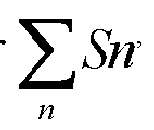
- the terminal performing detection on the downlink control channel in the K BWPs and/or the ⁇ n Cn ′ control resource sets and/or the ⁇ n Sn ′ search space sets includes:
- the indication information of the network device is DCI, or RRC signaling, or System Information (SI).
- SI System Information
- the method further includes: the terminal determining resources scheduled by the downlink control channel in the K BWPs, wherein the resources scheduled by the downlink control channel include resources in the K BWPs, and/or resources in other BWPs in the N BWPs other than the K BWPs.
- a channel detection method provided by an embodiment of the present invention includes: a network device sending indication information to a terminal, so that the terminal performs detection on a downlink control channel in K BWPs and/or ⁇ n Cn ′ control resource sets and/or ⁇ n Sn ′ search space sets according to the indication information of the network device, wherein, N BWPs corresponding to the terminal is in an activated state, and an nth BWP in the N BWPs is provided with Cn control resource sets and Sn search space sets, N ⁇ 2, 1 ⁇ n ⁇ N, 0 ⁇ K ⁇ N, 0 ⁇ Cn' ⁇ Cn, 0 ⁇ Sn' ⁇ Sn.
- the method further includes: the network device transmitting the downlink control channel in the K BWPs and/or the ⁇ n Cn ′ control resource sets and/or the ⁇ n Sn ′ search space sets according to a preset rule.
- the preset rule includes at least one of the following:
- the indication information of the network device includes at least one of the following: indication information of a BWP, indication information of a control resource set, and indication information of a search space set.
- the indication information of the network device is DCI, or RRC signaling, or System Information (SI).
- SI System Information
- resources scheduled by the downlink control channel include resources in the K BWPs, and/or resources in other BWPs in the N BWPs other than the K BWPs.
- the preset rule includes at least one of the following:
- the indication information of the network device includes at least one of the following: indication information of a BWP, indication information of a control resource set, and indication information of a search space set.
- the detection unit is configured to: perform detection on the downlink control channel in a BWP determined based on the indication information of the BWP; and/or, perform detection on the downlink control channel in a control resource set determined based on the indication information of the control resource set; and/or, the terminal perform detection on the downlink control channel in a search space set determined based on the indication information of the search space set.
- the indication information of the network device is DCI, or RRC signaling, or System Information (SI).
- SI System Information
- the device further includes: a second determination unit, configure to: determine resources scheduled by the downlink control channel in the K BWPs, wherein the resources scheduled by the downlink control channel include resources in the K BWPs, and/or resources in other BWPs in the N BWPs other than the K BWPs.
- a channel detection device includes: a sending unit, configured to: send indication information to a terminal, so that the terminal performs detection on a downlink control channel in K BWPs and/or ⁇ n Cn ′ control resource sets and/or ⁇ n Sn ′ search space sets according to the indication information of the network device, wherein, N BWPs corresponding to the terminal is in an activated state, and an nth BWP in the N BWPs is provided with Cn control resource sets and Sn search space sets, N ⁇ 2, 1 ⁇ n ⁇ N, 0 ⁇ K ⁇ N, 0 ⁇ Cn' ⁇ Cn, 0 ⁇ Sn' ⁇ Sn.
- the device further includes: a transmission unit, configured to: transmit the downlink control channel in the K BWPs and/or ⁇ n Cn ′ control resource sets and/or ⁇ n Sn ′ search space sets according to a preset rule.
- the preset rule includes at least one of the following:
- the indication information of the network device includes at least one of the following: indication information of a BWP, indication information of a control resource set, and indication information of a search space set.
- the indication information of the network device is DCI, or RRC signaling, or System Information (SI).
- SI System Information
- resources scheduled by the downlink control channel include resources in the K BWPs, and/or resources in other BWPs in the N BWPs other than the K BWPs.
- a computer storage medium provided by an embodiment of the present invention has computer executable instructions stored thereon, and when the computer executable instructions are executed by the processor, the above channel detection method is implemented.
- the terminal determines K BWPs and/or ⁇ n Cn ′ control resource sets and/or ⁇ n Sn ′ search space sets according to indication information or a preset rule of a network device, N ⁇ 2, 1 ⁇ n ⁇ N, 0 ⁇ K ⁇ N, 0 ⁇ Cn' ⁇ Cn, 0 ⁇ Sn' ⁇ Sn; and the terminal performs detection on a downlink control channel in the K BWPs and/or the ⁇ n Cn ′ control resource sets and/or the ⁇ n Sn ′ search space sets.
- a part of the BWPs and/or control resource sets and/or search space sets are selected to perform detection on a PDCCH, which may reduce PDCCH detection complexity, reduce signaling overhead, and improve system spectrum efficiency.
- a channel detection method which includes:
- the preset rule includes at least one of:
- the indication information of the network device includes at least one of: indication information of a BWP, indication information of a control resource set, and indication information of a search space set.
- performing, by the terminal, detection on the downlink control channel in the K BWPs and/or the ⁇ n Cn ′ control resource sets and/or they ⁇ n Sn ′ search space sets includes:
- the indication information of the network device is DCI, or RRC signaling, or System Information (SI).
- the method according to any one of the first to the fifth clause further includes: determining, by the terminal, resources scheduled by the downlink control channel in the K BWPs, where the resources scheduled by the downlink control channel include resources in the K BWPs, and/or resources in other BWPs in the N BWPs other than the K BWPs .
- a channel detection method which includes: sending, by a network device, indication information to a terminal, to allow the terminal to perform detection on a downlink control channel in K BWPs and/or ⁇ n Cn ′ control resource sets and/or ⁇ n Sn ′ search space sets according to the indication information of the network device, where, N BWPs corresponding to the terminal is in an activated state, and an nth BWP in the N BWPs is provided with Cn control resource sets and Sn search space sets, N ⁇ 2, 1 ⁇ n ⁇ N, 0 ⁇ K ⁇ N, 0 ⁇ Cn' ⁇ Cn, 0 ⁇ Sn' ⁇ Sn.
- the method according to the seventh clause further includes: transmitting, by the network device, the downlink control channel in the K BWPs and/or the ⁇ n Cn ′ control resource sets and/or the ⁇ n Sn ′ search space sets according to a preset rule.
- the preset rule includes at least one of:
- the indication information of the network device includes at least one of: indication information of a BWP, indication information of a control resource set, and indication information of a search space set.
- the indication information of the network device is DCI, or RRC signaling, or System Information (SI).
- resources scheduled by the downlink control channel include resources in the K BWPs, and/or resources in other BWPs in the N BWPs other than the K BWPs.
- a channel detection device which includes:
- the preset rule includes at least one of:
- the indication information of the network device includes at least one of: indication information of a BWP, indication information of a control resource set, and indication information of a search space set.
- the detection unit is configured to: perform detection on the downlink control channel in a BWP determined based on the indication information of the BWP; and/or, perform detection on the downlink control channel in a control resource set determined based on the indication information of the control resource set; and/or, perform detection on the downlink control channel in a search space set determined based on the indication information of the search space set.
- the indication information of the network device is DCI, or RRC signaling, or System Information (SI).
- the device further includes: a second determination unit, configure to: determine resources scheduled by the downlink control channel in the K BWPs, where the resources scheduled by the downlink control channel include resources in the K BWPs, and/or resources in other BWPs in the N BWPs other than the K BWPs.
- a channel detection device which includes: a sending unit, configured to: send indication information to a terminal, to allow the terminal to perform detection on a downlink control channel in K BWPs and/or ⁇ n Cn ′ control resource sets and/or ⁇ n Sn ′ search space sets according to the indication information of the network device, where, N BWPs corresponding to the terminal is in an activated state, and an nth BWP in the N BWPs is provided with Cn control resource sets and Sn search space sets, N ⁇ 2, 1 ⁇ n ⁇ N, 0 ⁇ K ⁇ N, 0 ⁇ Cn' ⁇ Cn, 0 ⁇ Sn' ⁇ Sn.
- the device further includes: a transmission unit, configured to: transmit the downlink control channel in the K BWPs and/or ⁇ n Cn ′ control resource sets and/or ⁇ n Sn ′ search space sets according to a preset rule.
- the preset rule includes at least one of:
- the indication information of the network device includes at least one of: indication information of a BWP, indication information of a control resource set, and indication information of a search space set.
- the indication information of the network device is DCI, or RRC signaling, or System Information (SI).
- resources scheduled by the downlink control channel include resources in the K BWPs, and/or resources in other BWPs in the N BWPs other than the K BWPs.
- a computer storage medium on which computer-executable instructions are stored, and when the computer-executable instructions are executed by a processor, steps of the method according to any one of the first to the sixth clause, or any one of the seventh to the twelfth clause are implemented.
- FIG. 3 is a schematic flowchart 1 of a channel detection method according to an embodiment of the present invention. As shown in FIG. 3 , the channel detection method includes the following steps:
- Step 301 When N downlink BWPs corresponding to a terminal are in an activated state, where an nth BWP in the N BWPs is provided with Cn control resources sets and Sn search space sets, the terminal determines K BWPs and/or ⁇ n Cn ′ control resource sets and/or ⁇ n Sn ′ search space sets according to indication information or a preset rule of a network device, N ⁇ 2, 1 ⁇ n ⁇ N, 0 ⁇ K ⁇ N, 0 ⁇ Cn' ⁇ Cn, 0 ⁇ Sn' ⁇ Sn.
- the terminal may be any device that may communicate with a network, such as a mobile phone, a tablet computer, a notebook computer, or a desktop computer.
- the network device may be a base station, such as a gNB of a 5G system.
- the N downlink BWPs corresponding to the terminal are in the activated state, and N ⁇ 2, for example: BWP1, BWP2, BWP3, and BWP4 are in the activated state, where the BWP1 is provided with C1 control resource sets and S1 search space sets.
- the BWP1 is provided with C1 control resource sets and S1 search space sets.
- one BWP may include a plurality of control resource sets, and one control resource set may include a plurality of search space sets.
- the BWP2 is provided with C2 control resource sets and S2 search space sets
- the BWP3 is provided with C3 control resource sets and S3 search space sets
- the BWP4 is provided with C4 control resource sets and S4 search space sets.
- the terminal determines the K BWPs and/or the ⁇ n Cn ′ control resource sets and/or the ⁇ n Sn ′ search space sets according to the preset rule, where, the preset rule includes at least one of the following:
- the terminal determines the K BWPs and/or the ⁇ n Cn ′ control resource sets and/or the ⁇ n Sn ′ search space sets according to the indication information of the network device, where, the indication information of the network device includes at least one of the following: indication information of a BWP, indication information of a control resource set, and indication information of a search space set.
- the terminal performs detection on the downlink control channel in a BWP determined based on the indication information of the BWP; and/or, the terminal performs detection on the downlink control channel in a control resource set determined based on the indication information of the control resource set; and/or, the terminal performs detection on the downlink control channel in a search space set determined based on the indication information of the search space set.
- the indication information of the network device is DCI, or RRC signaling, or System Information (SI).
- SI System Information
- Step 302 the terminal performs detection on a downlink control channel in the K BWPs and/or the ⁇ n Cn ′ control resource sets and/or the ⁇ n Sn ′ search space sets.
- BWP1, BWP2, BWP3, and BWP4 corresponding to the terminal are in the activated state, where the BWP1 is provided with C1 control resource sets and S1 search space sets.
- the BWP1 is provided with C1 control resource sets and S1 search space sets.
- one BWP may include a plurality of control resource sets
- one control resource set may include a plurality of search space sets.
- the BWP2 is provided with C2 control resource sets and S2 search space sets
- the BWP3 is provided with C3 control resource sets and S3 search space sets
- the BWP4 is provided with C4 control resource sets and S4 search space sets.
- Example 1 The K BWPs are determined, for example, the BWP1 and the BWP2 are determined. In this case, all of the search space sets included in the BWP1 and all of the search space sets included in the BWP2 need to be performed detection on the downlink control channel; that is, the terminal needs to perform detection on the downlink control channel in the S1 search space sets and the S2 search space sets.
- Example 2 The ⁇ n Cn ′ control resource sets are determined, for example, C1' control resource sets are determined in C1 control resource sets of the BWP1, and C3' control resource sets are determined in C3 control resource sets of the BWP3.
- downlink control channel detection has to be performed on all of the search spaces included in the C1' control resource sets and all of the search space sets included in the C3' control resource sets.
- Example 3 The ⁇ n Sn ′ search space sets are determined, for example, S1' search space sets are determined in S1 search space sets of BWP1, and S4' search space sets are determined in S4 search space sets of BWP4.
- the terminal needs to perform detection on the downlink control channel in the S1' search space sets and the S4' search space sets.
- selecting part of the BWPs, part of the control resource sets, or part of the search space sets to perform detection on the downlink control channel may reduce the number of search space sets compared to performing detection on the downlink control channel in all of the search space sets.
- embodiments of the present invention may also combine any two or three of the BWPs, the control resource sets, and the search space sets to select a final search space set, for example, selecting the BWP1 (that is, all of the search space sets included in the BWP1), C2' control resource set of the BWP2, S3' search space set of the BWP3.
- the final search space set may be flexibly selected in different combinations in the BWPs, the control resource sets, and the search space sets.
- the technical solution of the embodiment of the present invention further includes: the terminal determining resources scheduled by the downlink control channel of the K BWPs, where the resources scheduled by the downlink control channel include the resources of the K BWPs, and/or resources in other BWPs in the N BWPs other than the K BWPs.
- FIG. 4 is a schematic flowchart 2 of a channel detection method according to an embodiment of the present invention. As shown in FIG. 4 , the channel detection method includes the following steps:
- Step 401 a network device sends indication information to a terminal, so that the terminal performs detection on a downlink control channel in K BWPs and/or ⁇ n Cn ′ control resource sets and/or ⁇ n Sn ′ search space sets according to the indication information of the network device, where, N BWPs corresponding to the terminal is in an activated state, and an nth BWP in the N BWPs is provided with Cn control resource sets and Sn search space sets, N ⁇ 2, 1 ⁇ n ⁇ N, 0 ⁇ K ⁇ N, 0 ⁇ Cn' ⁇ Cn, 0 ⁇ Sn' ⁇ Sn.
- the network device transmits the downlink control channel in the K BWPs and/or the ⁇ n Cn ′ control resource sets and/or the ⁇ n Sn ′ search space sets according to a preset rule, where, the preset rule includes at least one of the following:
- the indication information of the network device includes at least one of the following: indication information of a BWP, indication information of a control resource set, and indication information of a search space set.
- the terminal may perform detection on the downlink control channel in a BWP determined based on the indication information of the BWP; and/or, the terminal performs detection on the downlink control channel in a control resource set determined based on the indication information of the control resource set; and/or, the terminal performs detection on the downlink control channel in a search space set determined based on the indication information of the search space set.
- the indication information of the network device is DCI, or RRC signaling, or System Information (SI).
- SI System Information
- resources scheduled by the downlink control channel include resources in the K BWPs, and/or resources in other BWPs in the N BWPs other than the K BWPs
- Example 1 Using a preset rule to determine a BWP for performing detection on a PDCCH.
- the BWP1 and BWP2 there are two search space sets in each time slot. Since the number of search space sets on the BWP2 is twice that of the BWP1 per unit time, a terminal only needs to perform detection on the PDCCH in the search space sets of the BWP2, and no longer perform detection on the PDCCH in the search space sets of the BWP1.
- the resources in the BWP1 are scheduled through the PDCCH in the BWP2.
- the terminal does not need to perform detection on the PDCCH in the search space sets of two BWPs simultaneously, thereby greatly saving control signaling overhead, and reducing the complexity and power consumption for performing detection on the PDCCH by the terminal.
- Example 2 Determine a BWP for performing detection on a PDCCH according to an explicit indication of a network device.
- the BWP1 there are four search space sets in each time slot.
- the BWP2 there are two search space sets in each time slot. Since the number of search space sets on the BWP2 is same as that on the BWP1 per unit time, a terminal only needs to perform detection on the PDCCH in the search space sets of the BWP2, and no longer perform detection on the PDCCH in the search space sets of the BWP1.
- the resources in the BWP1 are scheduled through the PDCCH in the BWP2.
- the terminal does not need to perform detection on the PDCCH in the search space of two BWPs simultaneously, thereby greatly saving control signaling overhead, and reducing the complexity and power consumption for the terminal to perform detection on the PDCCH.
- FIG. 7 is a schematic structural diagram 1 of a channel detection device according to an embodiment of the present invention. As shown in FIG. 7 , the channel detection device includes:
- the preset rule includes at least one of the following:
- the indication information of the network device includes at least one of the following: indication information of a BWP, indication information of a control resource set, and indication information of a search space set.
- the determination unit 702 is configured to: perform detection on the downlink control channel in a BWP determined based on the indication information of the BWP; and/or, perform detection on the downlink control channel in a control resource set determined based on the indication information of the control resource set; and/or, the terminal perform detection on the downlink control channel in a search space set determined based on the indication information of the search space set.
- the indication information of the network device is DCI, or RRC signaling, or System Information (SI).
- SI System Information
- the device further includes: a second determination unit 703, configure to: determine resources scheduled by the downlink control channel in the K BWPs, where the resources scheduled by the downlink control channel include resources in the K BWPs, and/or resources in other BWPs in the N BWPs other than the K BWPs.
- each unit in the channel detection device shown in FIG. 7 may be understood with reference to the related description of the foregoing channel detection method.
- the function of each unit in the channel detection device shown in FIG. 7 may be realized by a program running on a processor, or by a specific logic circuit.
- FIG. 8 is a structural composition diagram 2 of a channel detection device according to an embodiment of the present invention.
- the channel detection device includes: a sending unit 801, configured to: send indication information to a terminal, so that the terminal performs detection on a downlink control channel in K BWPs and/or ⁇ n Cn ′ control resource sets and/or ⁇ n Sn ′ search space sets according to the indication information of the network device, where, N BWPs corresponding to the terminal is in an activated state, and an nth BWP in the NBWPs is provided with Cn control resource sets and Sn search space sets, N ⁇ 2, 1 ⁇ n ⁇ N, 0 ⁇ K ⁇ N, 0 ⁇ Cn' ⁇ Cn, 0 ⁇ Sn' ⁇ Sn.
- the device further includes: a transmission unit 802, configured to: transmit the downlink control channel in the K BWPs and/or ⁇ n Cn ′ control resource sets and/or ⁇ n Sn ′ search space sets according to a preset rule.
- a transmission unit 802 configured to: transmit the downlink control channel in the K BWPs and/or ⁇ n Cn ′ control resource sets and/or ⁇ n Sn ′ search space sets according to a preset rule.
- the preset rule includes at least one of the following:
- the indication information of the network device includes at least one of the following: indication information of a BWP, indication information of a control resource set, and indication information of a search space set.
- the indication information of the network device is DCI, or RRC signaling, or System Information (SI).
- SI System Information
- resources scheduled by the downlink control channel include resources in the K BWPs, and/or resources in other BWPs in the N BWPs other than the K BWPs.
- each unit in the channel detection device shown in FIG. 8 may be understood by referring to the related description of the foregoing channel detection method.
- the function of each unit in the channel detection device shown in FIG. 8 may be realized by a program running on a processor, or by a specific logic circuit.
- the channel detection device in the embodiment of the present invention is implemented in the form of a software function module and sold or used as an independent product, it may also be stored in a computer-readable storage medium.
- the computer software product is stored in a storage medium and includes several instructions for a computer device (which may be a personal computer, a server, or a network device, etc.) executes all or part of the methods described in the embodiments of the present invention.
- the foregoing storage media include various media that can store program codes, such as a U disk, a mobile hard disk, a Read Only Memory (ROM), a magnetic disk, or an optical disk. In this way, the embodiments of the present invention are not limited to any specific combination of hardware and software.
- an embodiment of the present invention also provides a computer storage medium in which computer-executable instructions are stored.
- the computer-executable instructions are executed by a processor, the above-mentioned channel detection method of the embodiment of the present invention is implemented.
- FIG. 9 is a schematic structural diagram of a computer device according to an embodiment of the present invention.
- the computer device may be a terminal or a network device.
- the computer device 100 may include one or more (only one is shown in the figure) processor 1002 (the processor 1002 may include but is not limited to a Micro Controller Unit (MCU) or a processing device such as a Field Programmable Gate Array (FPGA)), a memory 1004 for storing data, and a transmission device 1006 for communication functions.
- MCU Micro Controller Unit
- FPGA Field Programmable Gate Array
- FIG. 9 is merely an illustration, which does not limit the structure of the above electronic device.
- the computer device 100 may also include more or fewer components than that shown in FIG. 9 or have a different configuration from that shown in FIG. 9 .
- the memory 1004 may be used to store software programs and modules of application software, such as program instructions/modules corresponding to the methods in the embodiments of the present invention.
- the processor 1002 executes various functional applications and data processing by running software programs and modules stored in the memory 1004, that is, implementing the above method.
- the memory 1004 may include a high-speed random access memory, and may also include a non-volatile memory, such as one or more magnetic storage devices, flash memory, or other non-volatile solid-state memory.
- the memory 1004 may further include memories remotely provided with respect to the processor 1002, and these remote memories may be connected to the computer device 100 through a network. Examples of the above network include but are not limited to the Internet, intranet, local area network, mobile communication network, and combinations thereof.
- the transmission device 1006 is used to receive or transmit data via a network.
- the specific example of the network described above may include a wireless network provided by a communication provider of the computer device 100.
- the transmission device 1006 includes a Network Interface Controller (NIC), which may be connected to other network devices through the base station to communicate with the Internet.
- the transmission device 1006 may be a Radio Frequency (RF) module, which is used to communicate with the Internet in a wireless manner.
- RF Radio Frequency
- the disclosed method and smart device may be implemented in other ways.
- the device embodiments described above are only schematic.
- the division of the unit is only a division of logical functions.
- there may be another division manner for example, multiple units or components may be combined, or may be integrated into another system, or some features can be ignored, or not implemented.
- the coupling or direct coupling or communication connection between the displayed or discussed components may be through some interfaces, and the indirect coupling or communication connection of the device or unit may be electrical, mechanical, or other forms of.
- the units described as separate components may or may not be physically separated, and the components displayed as units may or may not be physical units, that is, they may be located in one place or distributed to multiple network units; some or all of the units may be selected according to actual needs to achieve the purpose of the solution of this embodiment.
- the functional units in the embodiments of the present invention may all be integrated into one second processing unit, or each unit may be separately used as a unit, or two or more units may be integrated into one unit; the above integrated unit can be implemented in the form of hardware, or in the form of hardware plus software functional units.
Landscapes
- Engineering & Computer Science (AREA)
- Signal Processing (AREA)
- Computer Networks & Wireless Communication (AREA)
- Computer Security & Cryptography (AREA)
- Mobile Radio Communication Systems (AREA)
- Data Exchanges In Wide-Area Networks (AREA)
- Quality & Reliability (AREA)
Abstract



Description
- The invention relates to the technical field of wireless communication, in particular, to a channel detection method and device, and a computer storage medium.
- In a Long Term Evolution (LTE) system, frequency domain resources of a terminal are allocated in an entire system bandwidth. In a 5th Generation (5G) New Radio (NR) system, as the system bandwidth is greatly increased, a transmission bandwidth of a terminal may only occupy a part of a system bandwidth.
- In current research of the 5G NR, it has been decided to introduce a concept of Band Width Part (BWP) to achieve frequency domain resource allocation in a smaller range than a system bandwidth. A base station may configure a plurality of BWPs through Radio Resource Control (RRC) signaling, and then dynamically activate a BWP in Downlink Control Information (DCI). Each BWP is based on a numerology, wherein the numerology includes subcarrier spacing and Cyclic Prefix (CP). According to a current scheme, only one BWP may be activated for one terminal. When a new BWP is activated, an original BWP is deactivated.
- As shown in
FIG. 1 , when BWP1 is in an activated state, if BWP2 is activated, the BWP1 will be deactivated, and if the BWP1 is activated again, the BWP2 will be deactivated. Each BWP is provided with a Control Resource Set (CORESET) and a Search Space (SS) of a Physical Downlink Control Channel (PDCCH), and when a certain BWP is activated, a terminal performs blind detection on the PDCCH according to a configuration of CORESET/SS corresponding to this BWP. - Existing technical solutions cannot support simultaneous activation of a plurality of BWPs, and therefore cannot support simultaneous use of a plurality of numerologies, nor can they optimize their numerologies for different services when a plurality of types of services are transmitted in parallel. And switching between the two numerologies will cause switching between the two BWPs, causing the terminal's RF bandwidth to be converted, and the conversion of the RF bandwidth will cause the terminal to be unable to receive or send data for a period of time, resulting in a waste of spectrum resources.
- However, if the plurality of BWPs are activated simultaneously, it will cause the terminal to simultaneously detect the PDCCH on the plurality of BWPs, resulting in a waste of signaling overhead and an increase in terminal complexity and power consumption. As shown in
FIG. 2 , a subcarrier spacing of the BWP1 = 15 kHz, and a subcarrier spacing of the BWP2 = 30 kHz. In the BWP1 and BWP2, there are two search space sets in each time slot. It can be seen that the search space set in the BWP1 and the search space in the BWP2 partially overlap in a time domain, so that at certain moments, the terminal has to simultaneously detect the PDCCH on both BWPs, resulting in additional control signaling and higher terminal complexity and power consumption. - To solve the above technical problems, embodiments of the present invention provide a channel detection method and device, and a computer storage medium.
- A channel detection method provided by an embodiment of the present invention includes:
- when N downlink bandwidth parts (BWPs) corresponding to a terminal are in an activated state, wherein an nth BWP in the N BWPs is provided with Cn control resource sets and Sn search space sets, the terminal determining K BWPs and/or

- the terminal performing detection on a downlink control channel in the K BWPs and/or the


- In an embodiment of the present invention, the preset rule includes at least one of the following:
- K BWPs with a largest or smallest subcarrier spacing in the N BWPs;
- K BWPs with a largest or smallest bandwidth in the N BWPs;
- K BWPs with a largest or smallest frequency domain range of the control resource sets in the N BWPs;
- all of the control resource sets in the N BWPs include

- all of the control resource sets of the N BWPs include

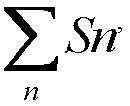
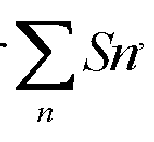
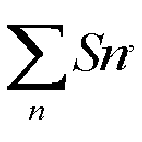
- all of the search space sets of the N BWPs include

- In an embodiment of the present invention, the indication information of the network device includes at least one of the following:
indication information of a BWP, indication information of a control resource set, and indication information of a search space set. - In an embodiment of the present invention, the terminal performing detection on the downlink control channel in the K BWPs and/or the


- the terminal performing detection on the downlink control channel in a BWP determined based on the indication information of the BWP; and/or,
- the terminal performing detection on the downlink control channel in a control resource set determined based on the indication information of the control resource set; and/or,
- the terminal performing detection on the downlink control channel in a search space set determined based on the indication information of the search space set.
- In an embodiment of the present invention, the indication information of the network device is DCI, or RRC signaling, or System Information (SI).
- In an embodiment of the present invention, the method further includes:
the terminal determining resources scheduled by the downlink control channel in the K BWPs, wherein the resources scheduled by the downlink control channel include resources in the K BWPs, and/or resources in other BWPs in the N BWPs other than the K BWPs. - A channel detection method provided by an embodiment of the present invention includes:
a network device sending indication information to a terminal, so that the terminal performs detection on a downlink control channel in K BWPs and/or

- In an embodiment of the present invention, the method further includes:
the network device transmitting the downlink control channel in the K BWPs and/or the

- In an embodiment of the present invention, the preset rule includes at least one of the following:
- K BWPs with a largest or smallest subcarrier spacing in the N BWPs;
- K BWPs with a largest or smallest bandwidth in the N BWPs;
- K BWPs with a largest or smallest frequency domain range of the control resource sets in the N BWPs;
- all of the control resource sets in the N BWPs include

- all of the control resource sets of the N BWPs include

- all of the search space sets of the N BWPs include

- In an embodiment of the present invention, the indication information of the network device includes at least one of the following:
indication information of a BWP, indication information of a control resource set, and indication information of a search space set. - In an embodiment of the present invention, the indication information of the network device is DCI, or RRC signaling, or System Information (SI).
- In an embodiment of the present invention, resources scheduled by the downlink control channel include resources in the K BWPs, and/or resources in other BWPs in the N BWPs other than the K BWPs.
- A channel detection device provided by an embodiment of the present invention includes:
- a first determination unit, configured to: when N downlink bandwidth parts (BWPs) corresponding to a terminal are in an activated state, wherein an nth BWP in the N BWPs is provided with Cn control resource sets and Sn search space sets, determine K BWPs and/or


- a detection unit, configured to: perform detection on a downlink control channel in the K BWPs and/or the


- In an embodiment of the present invention, the preset rule includes at least one of the following:
- K BWPs with a largest or smallest subcarrier spacing in the N BWPs;
- K BWPs with a largest or smallest bandwidth in the N BWPs;
- K BWPs with a largest or smallest frequency domain range of the control resource sets in the N BWPs;
- all of the control resource sets in the N BWPs include

- all of the control resource sets of the N BWPs include

- all of the search space sets of the N BWPs included

- In an embodiment of the present invention, the indication information of the network device includes at least one of the following:
indication information of a BWP, indication information of a control resource set, and indication information of a search space set. - In an embodiment of the present invention, the detection unit is configured to: perform detection on the downlink control channel in a BWP determined based on the indication information of the BWP; and/or, perform detection on the downlink control channel in a control resource set determined based on the indication information of the control resource set; and/or, the terminal perform detection on the downlink control channel in a search space set determined based on the indication information of the search space set.
- In an embodiment of the present invention, the indication information of the network device is DCI, or RRC signaling, or System Information (SI).
- In an embodiment of the present invention, the device further includes:
a second determination unit, configure to: determine resources scheduled by the downlink control channel in the K BWPs, wherein the resources scheduled by the downlink control channel include resources in the K BWPs, and/or resources in other BWPs in the N BWPs other than the K BWPs. - A channel detection device provided by an embodiment of the present invention includes:
a sending unit, configured to: send indication information to a terminal, so that the terminal performs detection on a downlink control channel in K BWPs and/or

- In an embodiment of the present invention, the device further includes:
a transmission unit, configured to: transmit the downlink control channel in the K BWPs and/or

- In an embodiment of the present invention, the preset rule includes at least one of the following:
- K BWPs with a largest or smallest subcarrier spacing in the N BWPs;
- K BWPs with a largest or smallest bandwidth in the N BWPs;
- K BWPs with a largest or smallest frequency domain range of the control resource sets in the N BWPs;
- all of the control resource sets in the N BWPs include

- all of the control resource sets of the N BWPs include

- all of the search space sets of the N BWPs include

- In an embodiment of the present invention, the indication information of the network device includes at least one of the following:
indication information of a BWP, indication information of a control resource set, and indication information of a search space set. - In an embodiment of the present invention, the indication information of the network device is DCI, or RRC signaling, or System Information (SI).
- In an embodiment of the present invention, resources scheduled by the downlink control channel include resources in the K BWPs, and/or resources in other BWPs in the N BWPs other than the K BWPs.
- A computer storage medium provided by an embodiment of the present invention has computer executable instructions stored thereon, and when the computer executable instructions are executed by the processor, the above channel detection method is implemented.
- In the technical solutions of the embodiments of the present invention, when N downlink bandwidth parts (BWPs) corresponding to a terminal are in an activated state, wherein an nth BWP in the N BWPs is provided with Cn control resource sets and Sn search space sets, the terminal determines K BWPs and/or


- The drawings described herein are used to provide a further understanding of the present invention and form a part of the present application. The schematic embodiments of the present invention and their descriptions are used to explain the present invention and do not constitute an undue limitation on the present invention. In the drawings:
-
FIG. 1 is a schematic diagram of only one BWP capable of an activated state; -
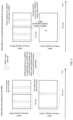
FIG. 2 is a schematic diagram of performing detection on a PDCCH in all search spaces in the case of a plurality of BWPs; -
FIG. 3 is aschematic flowchart 1 of a channel detection method according to an embodiment of the present invention; -
FIG. 4 is aschematic flowchart 2 of a channel detection method according to an embodiment of the present invention; -
FIG. 5 is a schematic diagram of determining a BWP for performing detection on a PDCCH using a preset rule according to an embodiment of the present invention; -
FIG. 6 is a schematic diagram of determining a BWP for performing detection on a PDCCH according to an explicit indication of a network device according to an embodiment of the invention; -
FIG. 7 is a schematic structural diagram 1 of a channel detection device according to an embodiment of the present invention; -
FIG. 8 is a schematic structural diagram 2 of a channel detection device according to an embodiment of the present invention; -
FIG. 9 is a schematic structural diagram of a computer device according to an embodiment of the present invention. - In order to understand the features and technical contents of the embodiments of the present invention in more detail, the following describes the implementation of the embodiments of the present invention in detail with reference to the drawings. The accompanying drawings are for reference only and are not intended to limit the embodiments of the present invention.
- In a first clause, a channel detection method is provided, which includes:
- when N downlink bandwidth parts (BWPs) corresponding to a terminal are in an activated state, where an nth BWP in the N BWPs is provided with Cn control resource sets and Sn search space sets, determining, by the terminal, K BWPs and/or


- performing, by the terminal, detection on a downlink control channel in the K BWPs and/or the


- In a second clause, in the method according to the first clause, the preset rule includes at least one of:
- K BWPs with a largest or smallest subcarrier spacing in the N BWPs;
- K BWPs with a largest or smallest bandwidth in the N BWPs;
- K BWPs with a largest or smallest frequency domain range of the control resource sets in the N BWPs;
- all of the control resource sets in the N BWPs include

- all of the control resource sets of the N BWPs include

- all of the search space sets of the N BWPs include

- In a third clause, in the method according to the first clause, the indication information of the network device includes at least one of:
indication information of a BWP, indication information of a control resource set, and indication information of a search space set. - In a fourth clause, in the method according to the third clause, performing, by the terminal, detection on the downlink control channel in the K BWPs and/or the

- performing, by the terminal, detection on the downlink control channel in a BWP determined based on the indication information of the BWP; and/or,
- performing, by the terminal, detection on the downlink control channel in a control resource set determined based on the indication information of the control resource set; and/or,
- performing, by the terminal, detection on the downlink control channel in a search space set determined based on the indication information of the search space set.
- In a fifth clause, in the method according to any one of the first to the fourth clause, the indication information of the network device is DCI, or RRC signaling, or System Information (SI).
- In a sixth clause, the method according to any one of the first to the fifth clause further includes:
determining, by the terminal, resources scheduled by the downlink control channel in the K BWPs, where the resources scheduled by the downlink control channel include resources in the K BWPs, and/or resources in other BWPs in the N BWPs other than the K BWPs. - In a seventh clause, a channel detection method is provided, which includes:
sending, by a network device, indication information to a terminal, to allow the terminal to perform detection on a downlink control channel in K BWPs and/or

- In an eighth clause, the method according to the seventh clause further includes:
transmitting, by the network device, the downlink control channel in the K BWPs and/or the

- In a ninth clause, in the method according to the eighth clause, the preset rule includes at least one of:
- K BWPs with a largest or smallest subcarrier spacing in the N BWPs;
- K BWPs with a largest or smallest bandwidth in the N BWPs;
- K BWPs with a largest or smallest frequency domain range of the control resource sets in the N BWPs;
- all of the control resource sets in the N BWPs include

- all of the control resource sets of the N BWPs include

- all of the search space sets of the N BWPs include

- In a tenth clause, in the method according to any one of the seventh to the ninth clause, the indication information of the network device includes at least one of:
indication information of a BWP, indication information of a control resource set, and indication information of a search space set. - In an eleventh clause, in the method according to any one of the seventh to the tenth clause, the indication information of the network device is DCI, or RRC signaling, or System Information (SI).
- In a twelfth clause, in the method according to any one of the seventh to the eleventh clause, resources scheduled by the downlink control channel include resources in the K BWPs, and/or resources in other BWPs in the N BWPs other than the K BWPs.
- In a thirteenth clause, a channel detection device is provided, which includes:
- a first determination unit, configured to: when N downlink bandwidth parts (BWPs) corresponding to a terminal are in an activated state, where an nth BWP in the N BWPs is provided with Cn control resource sets and Sn search space sets, determine K BWPs and/or


- a detection unit, configured to: perform detection on a downlink control channel in the K BWPs and/or the


- In a fourteenth clause, for the device according to the thirteenth clause, the preset rule includes at least one of:
- K BWPs with a largest or smallest subcarrier spacing in the N BWPs;
- K BWPs with a largest or smallest bandwidth in the N BWPs;
- K BWPs with a largest or smallest frequency domain range of the control resource sets in the N BWPs;
- all of the control resource sets in the N BWPs include

- all of the control resource sets of the N BWPs include

- all of the search space sets of the N BWPs include

- In a fifteenth clause, for the device according to the thirteenth clause, the indication information of the network device includes at least one of:
indication information of a BWP, indication information of a control resource set, and indication information of a search space set. - In a sixteenth clause, for the device according to the fifteenth clause, the detection unit is configured to: perform detection on the downlink control channel in a BWP determined based on the indication information of the BWP; and/or, perform detection on the downlink control channel in a control resource set determined based on the indication information of the control resource set; and/or, perform detection on the downlink control channel in a search space set determined based on the indication information of the search space set.
- In a seventeenth clause, for the device according to any one of the thirteenth to the sixteenth clause, the indication information of the network device is DCI, or RRC signaling, or System Information (SI).
- In an eighteenth clause, the device according to any one of the thirteenth to the seventh clause further includes:
a second determination unit, configure to: determine resources scheduled by the downlink control channel in the K BWPs, where the resources scheduled by the downlink control channel include resources in the K BWPs, and/or resources in other BWPs in the N BWPs other than the K BWPs. - In a nineteenth clause, a channel detection device is provided, which includes:
a sending unit, configured to: send indication information to a terminal, to allow the terminal to perform detection on a downlink control channel in K BWPs and/or

- In a twentieth clause, the device according to the nineteenth clause further includes:
a transmission unit, configured to: transmit the downlink control channel in the K BWPs and/or

- In a twenty-second clause, for the device according to the twentieth clause, the preset rule includes at least one of:
- K BWPs with a largest or smallest subcarrier spacing in the N BWPs;
- K BWPs with a largest or smallest bandwidth in the N BWPs;
- K BWPs with a largest or smallest frequency domain range of the control resource sets in the N BWPs;
- all of the control resource sets in the N BWPs include

- all of the control resource sets of the N BWPs include

- all of the search space sets of the N BWPs include

- In a twenty-second clause, for the device according to any one of the nineteenth to the twenty-first clause, the indication information of the network device includes at least one of:
indication information of a BWP, indication information of a control resource set, and indication information of a search space set. - In a twenty-third clause, for the device according to any one of the nineteenth to the twenty-second clause, the indication information of the network device is DCI, or RRC signaling, or System Information (SI).
- In a twenty-fourth clause, for the device according to any one of the nineteenth to the twenty-third clause, resources scheduled by the downlink control channel include resources in the K BWPs, and/or resources in other BWPs in the N BWPs other than the K BWPs.
- In a twenty-fifth clause, a computer storage medium is provided, on which computer-executable instructions are stored, and when the computer-executable instructions are executed by a processor, steps of the method according to any one of the first to the sixth clause, or any one of the seventh to the twelfth clause are implemented.
-
FIG. 3 is aschematic flowchart 1 of a channel detection method according to an embodiment of the present invention. As shown inFIG. 3 , the channel detection method includes the following steps: -
Step 301, When N downlink BWPs corresponding to a terminal are in an activated state, where an nth BWP in the N BWPs is provided with Cn control resources sets and Sn search space sets, the terminal determines K BWPs and/or

- In an embodiment of the present invention, the terminal may be any device that may communicate with a network, such as a mobile phone, a tablet computer, a notebook computer, or a desktop computer.
- In an embodiment of the present invention, the network device may be a base station, such as a gNB of a 5G system.
- In an embodiment of the present invention, the N downlink BWPs corresponding to the terminal are in the activated state, and N ≥ 2, for example: BWP1, BWP2, BWP3, and BWP4 are in the activated state, where the BWP1 is provided with C1 control resource sets and S1 search space sets. It should be understood that one BWP may include a plurality of control resource sets, and one control resource set may include a plurality of search space sets. Similarly, the BWP2 is provided with C2 control resource sets and S2 search space sets, the BWP3 is provided with C3 control resource sets and S3 search space sets, and the BWP4 is provided with C4 control resource sets and S4 search space sets.
- In an embodiment, the terminal determines the K BWPs and/or the


- K BWPs with a largest or smallest subcarrier spacing in the N BWPs;
- K BWPs with a largest or smallest bandwidth in the N BWPs;
- K BWPs with a largest or smallest frequency domain range of the control resource sets in the N BWPs;
- all of the control resource sets in the N BWPs include

- all of the control resource sets of the N BWPs include

- all of the search space sets of the N BWPs include

- In another embodiment, the terminal determines the K BWPs and/or the


indication information of a BWP, indication information of a control resource set, and indication information of a search space set. - Based on this, the terminal performs detection on the downlink control channel in a BWP determined based on the indication information of the BWP; and/or, the terminal performs detection on the downlink control channel in a control resource set determined based on the indication information of the control resource set; and/or, the terminal performs detection on the downlink control channel in a search space set determined based on the indication information of the search space set.
- In an embodiment, the indication information of the network device is DCI, or RRC signaling, or System Information (SI).
-
Step 302, the terminal performs detection on a downlink control channel in the K BWPs and/or the

- Assuming: BWP1, BWP2, BWP3, and BWP4 corresponding to the terminal are in the activated state, where the BWP1 is provided with C1 control resource sets and S1 search space sets. It should be understood that one BWP may include a plurality of control resource sets, and one control resource set may include a plurality of search space sets. Similarly, the BWP2 is provided with C2 control resource sets and S2 search space sets, the BWP3 is provided with C3 control resource sets and S3 search space sets, and the BWP4 is provided with C4 control resource sets and S4 search space sets.
- Example 1: The K BWPs are determined, for example, the BWP1 and the BWP2 are determined. In this case, all of the search space sets included in the BWP1 and all of the search space sets included in the BWP2 need to be performed detection on the downlink control channel; that is, the terminal needs to perform detection on the downlink control channel in the S1 search space sets and the S2 search space sets.
- Example 2: The

- Example 3: The

- In the above example, selecting part of the BWPs, part of the control resource sets, or part of the search space sets to perform detection on the downlink control channel may reduce the number of search space sets compared to performing detection on the downlink control channel in all of the search space sets. Not limited to this, embodiments of the present invention may also combine any two or three of the BWPs, the control resource sets, and the search space sets to select a final search space set, for example, selecting the BWP1 (that is, all of the search space sets included in the BWP1), C2' control resource set of the BWP2, S3' search space set of the BWP3.
- In the technical solution of the embodiment of the present invention, the final search space set may be flexibly selected in different combinations in the BWPs, the control resource sets, and the search space sets.
- In addition, the technical solution of the embodiment of the present invention further includes: the terminal determining resources scheduled by the downlink control channel of the K BWPs, where the resources scheduled by the downlink control channel include the resources of the K BWPs, and/or resources in other BWPs in the N BWPs other than the K BWPs.
-
FIG. 4 is aschematic flowchart 2 of a channel detection method according to an embodiment of the present invention. As shown inFIG. 4 , the channel detection method includes the following steps: -
Step 401, a network device sends indication information to a terminal, so that the terminal performs detection on a downlink control channel in K BWPs and/or

- In an embodiment, the network device transmits the downlink control channel in the K BWPs and/or the


- K BWPs with a largest or smallest subcarrier spacing in the N BWPs;
- K BWPs with a largest or smallest bandwidth in the N BWPs;
- K BWPs with a largest or smallest frequency domain range of the control resource sets in the N BWPs;
- all of the control resource sets in the N BWPs include

- all of the control resource sets of the N BWPs include

- all of the search space sets of the N BWPs include

- In an embodiment of the present invention, the indication information of the network device includes at least one of the following:
indication information of a BWP, indication information of a control resource set, and indication information of a search space set. - In this way, the terminal may perform detection on the downlink control channel in a BWP determined based on the indication information of the BWP; and/or, the terminal performs detection on the downlink control channel in a control resource set determined based on the indication information of the control resource set; and/or, the terminal performs detection on the downlink control channel in a search space set determined based on the indication information of the search space set.
- In an embodiment of the present invention, the indication information of the network device is DCI, or RRC signaling, or System Information (SI).
- In an embodiment of the present invention, resources scheduled by the downlink control channel include resources in the K BWPs, and/or resources in other BWPs in the N BWPs other than the K BWPs
- The technical solutions of the embodiments of the present invention will be further described below in conjunction with specific application examples.
- Example 1: Using a preset rule to determine a BWP for performing detection on a PDCCH.
- As shown in
FIG. 5 , a subcarrier spacing of the BWP1 = 15 kHz and a subcarrier spacing of the BWP2 = 30 kHz. In the BWP1 and BWP2, there are two search space sets in each time slot. Since the number of search space sets on the BWP2 is twice that of the BWP1 per unit time, a terminal only needs to perform detection on the PDCCH in the search space sets of the BWP2, and no longer perform detection on the PDCCH in the search space sets of the BWP1. The resources in the BWP1 are scheduled through the PDCCH in the BWP2. - In this way, the terminal does not need to perform detection on the PDCCH in the search space sets of two BWPs simultaneously, thereby greatly saving control signaling overhead, and reducing the complexity and power consumption for performing detection on the PDCCH by the terminal.
- Example 2: Determine a BWP for performing detection on a PDCCH according to an explicit indication of a network device.
- As shown in
FIG. 6 , a subcarrier spacing of BWP1 = 15 kHz, and a subcarrier spacing of BWP2 = 30 kHz. In the BWP1, there are four search space sets in each time slot. In the BWP2, there are two search space sets in each time slot. Since the number of search space sets on the BWP2 is same as that on the BWP1 per unit time, a terminal only needs to perform detection on the PDCCH in the search space sets of the BWP2, and no longer perform detection on the PDCCH in the search space sets of the BWP1. The resources in the BWP1 are scheduled through the PDCCH in the BWP2. - In this way, the terminal does not need to perform detection on the PDCCH in the search space of two BWPs simultaneously, thereby greatly saving control signaling overhead, and reducing the complexity and power consumption for the terminal to perform detection on the PDCCH.
-
FIG. 7 is a schematic structural diagram 1 of a channel detection device according to an embodiment of the present invention. As shown inFIG. 7 , the channel detection device includes: - a
first determination unit 701, configured to: when N downlink bandwidth parts (BWPs) corresponding to a terminal are in an activated state, where an nth BWP in the N BWPs is provided with Cn control resource sets and Sn search space sets, determine K BWPs and/or
- a
detection unit 702, configured to: perform detection on a downlink control channel in the K BWPs and/or the

- In an embodiment, the preset rule includes at least one of the following:
- K BWPs with a largest or smallest subcarrier spacing in the N BWPs;
- K BWPs with a largest or smallest bandwidth in the N BWPs;
- K BWPs with a largest or smallest frequency domain range of the control resource sets in the N BWPs;
- all of the control resource sets in the N BWPs include

- all of the control resource sets of the N BWPs include

- all of the search space sets of the N BWPs included

- In an embodiment, the indication information of the network device includes at least one of the following:
indication information of a BWP, indication information of a control resource set, and indication information of a search space set. - In an embodiment, the
determination unit 702 is configured to: perform detection on the downlink control channel in a BWP determined based on the indication information of the BWP; and/or, perform detection on the downlink control channel in a control resource set determined based on the indication information of the control resource set; and/or, the terminal perform detection on the downlink control channel in a search space set determined based on the indication information of the search space set. - In an embodiment, the indication information of the network device is DCI, or RRC signaling, or System Information (SI).
- In an embodiment, the device further includes:
a second determination unit 703, configure to: determine resources scheduled by the downlink control channel in the K BWPs, where the resources scheduled by the downlink control channel include resources in the K BWPs, and/or resources in other BWPs in the N BWPs other than the K BWPs. - Those skilled in the art should understand that the implementation function of each unit in the channel detection device shown in
FIG. 7 may be understood with reference to the related description of the foregoing channel detection method. The function of each unit in the channel detection device shown inFIG. 7 may be realized by a program running on a processor, or by a specific logic circuit. -
FIG. 8 is a structural composition diagram 2 of a channel detection device according to an embodiment of the present invention. As shown inFIG. 8 , the channel detection device includes:
a sendingunit 801, configured to: send indication information to a terminal, so that the terminal performs detection on a downlink control channel in K BWPs and/or

- In an embodiment, the device further includes:
atransmission unit 802, configured to: transmit the downlink control channel in the K BWPs and/or

- In an embodiment, the preset rule includes at least one of the following:
- K BWPs with a largest or smallest subcarrier spacing in the N BWPs;
- K BWPs with a largest or smallest bandwidth in the N BWPs;
- K BWPs with a largest or smallest frequency domain range of the control resource sets in the N BWPs;
- all of the control resource sets in the N BWPs include

- all of the control resource sets of the N BWPs include

- all of the search space sets of the N BWPs include

- In an embodiment, the indication information of the network device includes at least one of the following:
indication information of a BWP, indication information of a control resource set, and indication information of a search space set. - In an embodiment, the indication information of the network device is DCI, or RRC signaling, or System Information (SI).
- In an embodiment, resources scheduled by the downlink control channel include resources in the K BWPs, and/or resources in other BWPs in the N BWPs other than the K BWPs.
- Those skilled in the art should understand that the implementation function of each unit in the channel detection device shown in
FIG. 8 may be understood by referring to the related description of the foregoing channel detection method. The function of each unit in the channel detection device shown inFIG. 8 may be realized by a program running on a processor, or by a specific logic circuit. - If the channel detection device in the embodiment of the present invention is implemented in the form of a software function module and sold or used as an independent product, it may also be stored in a computer-readable storage medium. Based on this understanding, the technical solutions of the embodiments of the present invention can be embodied in the form of software products in essence or part of contributions to the prior art. The computer software product is stored in a storage medium and includes several instructions for a computer device (which may be a personal computer, a server, or a network device, etc.) executes all or part of the methods described in the embodiments of the present invention. The foregoing storage media include various media that can store program codes, such as a U disk, a mobile hard disk, a Read Only Memory (ROM), a magnetic disk, or an optical disk. In this way, the embodiments of the present invention are not limited to any specific combination of hardware and software.
- Correspondingly, an embodiment of the present invention also provides a computer storage medium in which computer-executable instructions are stored. When the computer-executable instructions are executed by a processor, the above-mentioned channel detection method of the embodiment of the present invention is implemented.
-
FIG. 9 is a schematic structural diagram of a computer device according to an embodiment of the present invention. The computer device may be a terminal or a network device. As shown inFIG. 9 , thecomputer device 100 may include one or more (only one is shown in the figure) processor 1002 (theprocessor 1002 may include but is not limited to a Micro Controller Unit (MCU) or a processing device such as a Field Programmable Gate Array (FPGA)), amemory 1004 for storing data, and atransmission device 1006 for communication functions. A person of ordinary skill in the art may understand that the structure shown inFIG. 9 is merely an illustration, which does not limit the structure of the above electronic device. For example, thecomputer device 100 may also include more or fewer components than that shown inFIG. 9 or have a different configuration from that shown inFIG. 9 . - The
memory 1004 may be used to store software programs and modules of application software, such as program instructions/modules corresponding to the methods in the embodiments of the present invention. Theprocessor 1002 executes various functional applications and data processing by running software programs and modules stored in thememory 1004, that is, implementing the above method. Thememory 1004 may include a high-speed random access memory, and may also include a non-volatile memory, such as one or more magnetic storage devices, flash memory, or other non-volatile solid-state memory. In some examples, thememory 1004 may further include memories remotely provided with respect to theprocessor 1002, and these remote memories may be connected to thecomputer device 100 through a network. Examples of the above network include but are not limited to the Internet, intranet, local area network, mobile communication network, and combinations thereof. - The
transmission device 1006 is used to receive or transmit data via a network. The specific example of the network described above may include a wireless network provided by a communication provider of thecomputer device 100. In one example, thetransmission device 1006 includes a Network Interface Controller (NIC), which may be connected to other network devices through the base station to communicate with the Internet. In one example, thetransmission device 1006 may be a Radio Frequency (RF) module, which is used to communicate with the Internet in a wireless manner. - The technical solutions described in the embodiments of the present invention can be arbitrarily combined without conflict.
- In the several embodiments provided by the present invention, it should be understood that the disclosed method and smart device may be implemented in other ways. The device embodiments described above are only schematic. For example, the division of the unit is only a division of logical functions. In actual implementation, there may be another division manner, for example, multiple units or components may be combined, or may be integrated into another system, or some features can be ignored, or not implemented. In addition, the coupling or direct coupling or communication connection between the displayed or discussed components may be through some interfaces, and the indirect coupling or communication connection of the device or unit may be electrical, mechanical, or other forms of.
- The units described as separate components may or may not be physically separated, and the components displayed as units may or may not be physical units, that is, they may be located in one place or distributed to multiple network units; some or all of the units may be selected according to actual needs to achieve the purpose of the solution of this embodiment.
- In addition, the functional units in the embodiments of the present invention may all be integrated into one second processing unit, or each unit may be separately used as a unit, or two or more units may be integrated into one unit; the above integrated unit can be implemented in the form of hardware, or in the form of hardware plus software functional units.
- The above are only specific embodiments of the present invention, but the scope of protection of the present invention is not limited to this. Any person skilled in the art may easily think of changes or replacements within the technical scope disclosed by the present invention, and they should be covered by the protection scope of the present invention.
Claims (15)
- A channel detection method, comprising:when N downlink bandwidth parts (BWPs) corresponding to a terminal are in an activated state, wherein an nth BWP in the N BWPs is provided with Cn control resource sets and Sn search space sets, determining, by the terminal, K BWPs and/or

 performing, by the terminal, detection on a downlink control channel in the K BWPs and/or the

- The method according to claim 1, wherein, the preset rule comprises at least one of:K BWPs with a largest or smallest subcarrier spacing in the N BWPs;K BWPs with a largest or smallest bandwidth in the N BWPs;K BWPs with a largest or smallest frequency domain range of the control resource sets in the NBWPs;all of the control resource sets in the N BWPs comprise
 all of the control resource sets of the N BWPs comprise
 all of the search space sets of the N BWPs comprise
- The method according to claim 1, wherein, the indication information of the network device comprises at least one of:
indication information of a BWP, indication information of a control resource set, and indication information of a search space set. - The method according to claim 3, wherein, performing, by the terminal, detection on the downlink control channel in the K BWPs and/or the
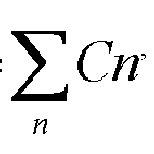
 performing, by the terminal, detection on the downlink control channel in a BWP determined based on the indication information of the BWP; and/or,performing, by the terminal, detection on the downlink control channel in a control resource set determined based on the indication information of the control resource set; and/or,performing, by the terminal, detection on the downlink control channel in a search space set determined based on the indication information of the search space set.
 - The method according to any one of claims 1 to 4, wherein, the indication information of the network device is DCI, or RRC signaling, or System Information (SI).
- The method according to any one of claims 1 to 5, wherein, the method further comprises:
determining, by the terminal, resources scheduled by the downlink control channel in the K BWPs, wherein the resources scheduled by the downlink control channel comprise resources in the K BWPs, and/or resources in other BWPs in the N BWPs other than the K BWPs. - A channel detection method, comprising:
sending, by a network device, indication information to a terminal, to allow the terminal to perform detection on a downlink control channel in K BWPs and/or

- The method according to claim 7, wherein, the method further comprises:
transmitting, by the network device, the downlink control channel in the K BWPs and/or the
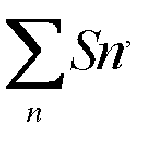
- The method according to claim 8, wherein, the preset rule comprises at least one of:K BWPs with a largest or smallest subcarrier spacing in the N BWPs;K BWPs with a largest or smallest bandwidth in the N BWPs;K BWPs with a largest or smallest frequency domain range of the control resource sets in the N BWPs;all of the control resource sets in the N BWPs comprise
 all of the control resource sets of the N BWPs comprise
 all of the search space sets of the N BWPs comprise
- The method according to any one of claims 7 to 9, wherein, the indication information of the network device comprises at least one of:
indication information of a BWP, indication information of a control resource set, and indication information of a search space set. - The method according to any one of claims 7 to 10, wherein, the indication information of the network device is DCI, or RRC signaling, or System Information (SI).
- The method according to any one of claims 7 to 11, wherein, resources scheduled by the downlink control channel comprise resources in the K BWPs, and/or resources in other BWPs in the N BWPs other than the K BWPs.
- A channel detection device, adapted to perform steps of the method according any one of claims 1 to 6.
- A channel detection device, adapted to perform steps of the method according any one of claims 7 to 12.
- A computer storage medium, on which computer-executable instructions are stored, and when the computer-executable instructions are executed by a processor, steps of the method according to any one of claims 1 to 6, or any one of claims 7 to 12 are implemented.
Priority Applications (1)
| Application Number | Priority Date | Filing Date | Title |
|---|---|---|---|
| EP24206414.5A EP4468798A3 (en) | 2018-02-08 | 2018-02-08 | Channel detection method and device, and computer storage medium |
Applications Claiming Priority (3)
| Application Number | Priority Date | Filing Date | Title |
|---|---|---|---|
| EP18905750.8A EP3742651B1 (en) | 2018-02-08 | 2018-02-08 | Channel detection method and device, and computer storage medium |
| PCT/CN2018/075852 WO2019153201A1 (en) | 2018-02-08 | 2018-02-08 | Channel detection method and device, and computer storage medium |
| EP24206414.5A EP4468798A3 (en) | 2018-02-08 | 2018-02-08 | Channel detection method and device, and computer storage medium |
Related Parent Applications (1)
| Application Number | Title | Priority Date | Filing Date |
|---|---|---|---|
| EP18905750.8A Division EP3742651B1 (en) | 2018-02-08 | 2018-02-08 | Channel detection method and device, and computer storage medium |
Publications (2)
| Publication Number | Publication Date |
|---|---|
| EP4468798A2 true EP4468798A2 (en) | 2024-11-27 |
| EP4468798A3 EP4468798A3 (en) | 2025-02-19 |
Family
ID=67548676
Family Applications (2)
| Application Number | Title | Priority Date | Filing Date |
|---|---|---|---|
| EP24206414.5A Pending EP4468798A3 (en) | 2018-02-08 | 2018-02-08 | Channel detection method and device, and computer storage medium |
| EP18905750.8A Active EP3742651B1 (en) | 2018-02-08 | 2018-02-08 | Channel detection method and device, and computer storage medium |
Family Applications After (1)
| Application Number | Title | Priority Date | Filing Date |
|---|---|---|---|
| EP18905750.8A Active EP3742651B1 (en) | 2018-02-08 | 2018-02-08 | Channel detection method and device, and computer storage medium |
Country Status (7)
| Country | Link |
|---|---|
| US (1) | US11716676B2 (en) |
| EP (2) | EP4468798A3 (en) |
| JP (1) | JP2021516888A (en) |
| KR (1) | KR20200118829A (en) |
| CN (1) | CN111819808A (en) |
| AU (1) | AU2018407188A1 (en) |
| WO (1) | WO2019153201A1 (en) |
Families Citing this family (6)
| Publication number | Priority date | Publication date | Assignee | Title |
|---|---|---|---|---|
| CN117939649A (en) * | 2018-05-11 | 2024-04-26 | 中兴通讯股份有限公司 | Information acquisition method, terminal and storage medium |
| US20210112529A1 (en) * | 2019-10-10 | 2021-04-15 | Huawei Technologies Co., Ltd. | Methods and systems for control resource set and search space set management |
| CN114747278B (en) * | 2020-02-24 | 2024-07-30 | Oppo广东移动通信有限公司 | Downlink control channel detection method and related device |
| WO2021168628A1 (en) * | 2020-02-24 | 2021-09-02 | Oppo广东移动通信有限公司 | Search space group switching method, terminal device and network device |
| US20220225300A1 (en) * | 2021-01-13 | 2022-07-14 | Acer Incorporated | Device of Handling Detection of a PDCCH |
| CN115189838B (en) * | 2021-04-02 | 2024-07-30 | 维沃移动通信有限公司 | Physical downlink control channel repeated transmission method, device and user equipment |
Citations (1)
| Publication number | Priority date | Publication date | Assignee | Title |
|---|---|---|---|---|
| EP3487110A1 (en) * | 2017-11-16 | 2019-05-22 | Nokia Technologies Oy | Managing control channel blind searches between search spaces in new radio |
Family Cites Families (9)
| Publication number | Priority date | Publication date | Assignee | Title |
|---|---|---|---|---|
| CN104081709B (en) * | 2012-01-27 | 2017-09-08 | 交互数字专利控股公司 | Apparatus and/or method for providing ePDCCH in multi-carrier based and/or quasi-calibration network |
| KR102190939B1 (en) * | 2015-12-24 | 2020-12-15 | 한국조선해양 주식회사 | Ship |
| CN107294897B9 (en) * | 2016-04-01 | 2022-09-09 | 中兴通讯股份有限公司 | Downlink information sending and receiving method and device |
| CN107453840B (en) * | 2016-05-30 | 2021-08-10 | 北京三星通信技术研究有限公司 | Resource scheduling method and equipment |
| US11115868B2 (en) * | 2017-05-15 | 2021-09-07 | Samsung Electronics Co., Ltd. | Method and apparatus for control resource set configuration and monitoring of downlink control channel in wireless communication system |
| FI4221057T3 (en) * | 2017-06-16 | 2025-11-28 | Wilus Inst Standards & Tech Inc | Method, apparatus, and system for transmitting or receiving control channel and data channel in wireless communication system |
| KR102573235B1 (en) * | 2017-08-11 | 2023-09-01 | 한국전자통신연구원 | Method for transmitting and receiving downlink control channels, and apparatus using the same |
| CN109699054B (en) * | 2017-10-24 | 2020-11-06 | 华为技术有限公司 | A method, terminal device and network device for detecting downlink control information |
| JP2021510969A (en) * | 2018-01-11 | 2021-04-30 | ノキア テクノロジーズ オサケユイチア | Equipment and methods for managing blind searches |
-
2018
- 2018-02-08 CN CN201880088827.9A patent/CN111819808A/en active Pending
- 2018-02-08 KR KR1020207025202A patent/KR20200118829A/en not_active Withdrawn
- 2018-02-08 EP EP24206414.5A patent/EP4468798A3/en active Pending
- 2018-02-08 EP EP18905750.8A patent/EP3742651B1/en active Active
- 2018-02-08 JP JP2020542731A patent/JP2021516888A/en not_active Withdrawn
- 2018-02-08 AU AU2018407188A patent/AU2018407188A1/en not_active Abandoned
- 2018-02-08 US US16/968,589 patent/US11716676B2/en active Active
- 2018-02-08 WO PCT/CN2018/075852 patent/WO2019153201A1/en not_active Ceased
Patent Citations (1)
| Publication number | Priority date | Publication date | Assignee | Title |
|---|---|---|---|---|
| EP3487110A1 (en) * | 2017-11-16 | 2019-05-22 | Nokia Technologies Oy | Managing control channel blind searches between search spaces in new radio |
Also Published As
| Publication number | Publication date |
|---|---|
| EP3742651A4 (en) | 2021-01-27 |
| AU2018407188A1 (en) | 2020-09-17 |
| EP3742651A1 (en) | 2020-11-25 |
| WO2019153201A1 (en) | 2019-08-15 |
| EP4468798A3 (en) | 2025-02-19 |
| EP3742651B1 (en) | 2024-11-06 |
| US20210050937A1 (en) | 2021-02-18 |
| KR20200118829A (en) | 2020-10-16 |
| JP2021516888A (en) | 2021-07-08 |
| CN111819808A (en) | 2020-10-23 |
| US11716676B2 (en) | 2023-08-01 |
Similar Documents
| Publication | Publication Date | Title |
|---|---|---|
| US11553498B2 (en) | PDCCH resource configuration method, PDCCH resource determining method, network device and user equipment | |
| EP4468798A2 (en) | Channel detection method and device, and computer storage medium | |
| EP3777284A1 (en) | Wideband pdcch for unlicensed band useful for new radio | |
| US11589266B2 (en) | Resource configuration method and device, and computer storage medium | |
| JP2023513549A (en) | SEARCH SPACE MONITORING METHOD AND DEVICE | |
| EP4460128A1 (en) | Pdcch monitoring method and apparatus, terminal, and storage medium | |
| US20200351875A1 (en) | Time-domain resource determination method and apparatus, and computer storage medium | |
| EP3751926A1 (en) | Resource configuration method and device, and computer storage medium | |
| US11356230B2 (en) | Channel transmission methods and device | |
| US20200366454A1 (en) | Resource configuration method and device, and computer storage medium | |
| WO2019153192A1 (en) | Resource configuration method and device, and computer storage medium | |
| CN116471692A (en) | Resource determination method, device, terminal, network side equipment and readable storage medium | |
| CN116489792A (en) | Downlink transmission method, terminal and network side equipment | |
| JP2021518066A (en) | Resource configuration method and equipment, computer storage medium | |
| CN116471684A (en) | Resource determination method, device, terminal, network side equipment and storage medium | |
| CN114554575A (en) | IFFT/FFT point number determining method, device and storage medium |
Legal Events
| Date | Code | Title | Description |
|---|---|---|---|
| PUAI | Public reference made under article 153(3) epc to a published international application that has entered the european phase |
Free format text: ORIGINAL CODE: 0009012 |
|
| STAA | Information on the status of an ep patent application or granted ep patent |
Free format text: STATUS: THE APPLICATION HAS BEEN PUBLISHED |
|
| AC | Divisional application: reference to earlier application |
Ref document number: 3742651 Country of ref document: EP Kind code of ref document: P |
|
| AK | Designated contracting states |
Kind code of ref document: A2 Designated state(s): AL AT BE BG CH CY CZ DE DK EE ES FI FR GB GR HR HU IE IS IT LI LT LU LV MC MK MT NL NO PL PT RO RS SE SI SK SM TR |
|
| REG | Reference to a national code |
Ref country code: DE Ref legal event code: R079 Free format text: PREVIOUS MAIN CLASS: H04W0072000000 Ipc: H04L0005000000 |
|
| PUAL | Search report despatched |
Free format text: ORIGINAL CODE: 0009013 |
|
| AK | Designated contracting states |
Kind code of ref document: A3 Designated state(s): AL AT BE BG CH CY CZ DE DK EE ES FI FR GB GR HR HU IE IS IT LI LT LU LV MC MK MT NL NO PL PT RO RS SE SI SK SM TR |
|
| RIC1 | Information provided on ipc code assigned before grant |
Ipc: H04W 72/00 20230101ALI20250116BHEP Ipc: H04L 27/26 20060101ALI20250116BHEP Ipc: H04L 5/00 20060101AFI20250116BHEP |
|
| STAA | Information on the status of an ep patent application or granted ep patent |
Free format text: STATUS: REQUEST FOR EXAMINATION WAS MADE |
|
| 17P | Request for examination filed |
Effective date: 20250818 |
|
| STAA | Information on the status of an ep patent application or granted ep patent |
Free format text: STATUS: EXAMINATION IS IN PROGRESS |
|
| 17Q | First examination report despatched |
Effective date: 20260312 |