EP4468386A1 - Electrochemical device, and electronic device comprising same - Google Patents
Electrochemical device, and electronic device comprising same Download PDFInfo
- Publication number
- EP4468386A1 EP4468386A1 EP22921144.6A EP22921144A EP4468386A1 EP 4468386 A1 EP4468386 A1 EP 4468386A1 EP 22921144 A EP22921144 A EP 22921144A EP 4468386 A1 EP4468386 A1 EP 4468386A1
- Authority
- EP
- European Patent Office
- Prior art keywords
- electrochemical device
- electrolyte solution
- mass percent
- active material
- positive active
- Prior art date
- Legal status (The legal status is an assumption and is not a legal conclusion. Google has not performed a legal analysis and makes no representation as to the accuracy of the status listed.)
- Pending
Links
Classifications
-
- H—ELECTRICITY
- H01—ELECTRIC ELEMENTS
- H01M—PROCESSES OR MEANS, e.g. BATTERIES, FOR THE DIRECT CONVERSION OF CHEMICAL ENERGY INTO ELECTRICAL ENERGY
- H01M10/00—Secondary cells; Manufacture thereof
- H01M10/05—Accumulators with non-aqueous electrolyte
- H01M10/056—Accumulators with non-aqueous electrolyte characterised by the materials used as electrolytes, e.g. mixed inorganic/organic electrolytes
- H01M10/0564—Accumulators with non-aqueous electrolyte characterised by the materials used as electrolytes, e.g. mixed inorganic/organic electrolytes the electrolyte being constituted of organic materials only
- H01M10/0566—Liquid materials
- H01M10/0567—Liquid materials characterised by the additives
-
- H—ELECTRICITY
- H01—ELECTRIC ELEMENTS
- H01M—PROCESSES OR MEANS, e.g. BATTERIES, FOR THE DIRECT CONVERSION OF CHEMICAL ENERGY INTO ELECTRICAL ENERGY
- H01M10/00—Secondary cells; Manufacture thereof
- H01M10/05—Accumulators with non-aqueous electrolyte
- H01M10/052—Li-accumulators
- H01M10/0525—Rocking-chair batteries, i.e. batteries with lithium insertion or intercalation in both electrodes; Lithium-ion batteries
-
- H—ELECTRICITY
- H01—ELECTRIC ELEMENTS
- H01M—PROCESSES OR MEANS, e.g. BATTERIES, FOR THE DIRECT CONVERSION OF CHEMICAL ENERGY INTO ELECTRICAL ENERGY
- H01M10/00—Secondary cells; Manufacture thereof
- H01M10/05—Accumulators with non-aqueous electrolyte
- H01M10/056—Accumulators with non-aqueous electrolyte characterised by the materials used as electrolytes, e.g. mixed inorganic/organic electrolytes
- H01M10/0564—Accumulators with non-aqueous electrolyte characterised by the materials used as electrolytes, e.g. mixed inorganic/organic electrolytes the electrolyte being constituted of organic materials only
- H01M10/0566—Liquid materials
- H01M10/0568—Liquid materials characterised by the solutes
-
- H—ELECTRICITY
- H01—ELECTRIC ELEMENTS
- H01M—PROCESSES OR MEANS, e.g. BATTERIES, FOR THE DIRECT CONVERSION OF CHEMICAL ENERGY INTO ELECTRICAL ENERGY
- H01M10/00—Secondary cells; Manufacture thereof
- H01M10/05—Accumulators with non-aqueous electrolyte
- H01M10/056—Accumulators with non-aqueous electrolyte characterised by the materials used as electrolytes, e.g. mixed inorganic/organic electrolytes
- H01M10/0564—Accumulators with non-aqueous electrolyte characterised by the materials used as electrolytes, e.g. mixed inorganic/organic electrolytes the electrolyte being constituted of organic materials only
- H01M10/0566—Liquid materials
- H01M10/0569—Liquid materials characterised by the solvents
-
- H—ELECTRICITY
- H01—ELECTRIC ELEMENTS
- H01M—PROCESSES OR MEANS, e.g. BATTERIES, FOR THE DIRECT CONVERSION OF CHEMICAL ENERGY INTO ELECTRICAL ENERGY
- H01M4/00—Electrodes
- H01M4/02—Electrodes composed of, or comprising, active material
- H01M4/13—Electrodes for accumulators with non-aqueous electrolyte, e.g. for lithium-accumulators; Processes of manufacture thereof
- H01M4/131—Electrodes based on mixed oxides or hydroxides, or on mixtures of oxides or hydroxides, e.g. LiCoOx
-
- H—ELECTRICITY
- H01—ELECTRIC ELEMENTS
- H01M—PROCESSES OR MEANS, e.g. BATTERIES, FOR THE DIRECT CONVERSION OF CHEMICAL ENERGY INTO ELECTRICAL ENERGY
- H01M4/00—Electrodes
- H01M4/02—Electrodes composed of, or comprising, active material
- H01M4/36—Selection of substances as active materials, active masses, active liquids
- H01M4/48—Selection of substances as active materials, active masses, active liquids of inorganic oxides or hydroxides
- H01M4/52—Selection of substances as active materials, active masses, active liquids of inorganic oxides or hydroxides of nickel, cobalt or iron
- H01M4/525—Selection of substances as active materials, active masses, active liquids of inorganic oxides or hydroxides of nickel, cobalt or iron of mixed oxides or hydroxides containing iron, cobalt or nickel for inserting or intercalating light metals, e.g. LiNiO2, LiCoO2 or LiCoOxFy
-
- H—ELECTRICITY
- H01—ELECTRIC ELEMENTS
- H01M—PROCESSES OR MEANS, e.g. BATTERIES, FOR THE DIRECT CONVERSION OF CHEMICAL ENERGY INTO ELECTRICAL ENERGY
- H01M4/00—Electrodes
- H01M4/02—Electrodes composed of, or comprising, active material
- H01M2004/026—Electrodes composed of, or comprising, active material characterised by the polarity
- H01M2004/028—Positive electrodes
-
- H—ELECTRICITY
- H01—ELECTRIC ELEMENTS
- H01M—PROCESSES OR MEANS, e.g. BATTERIES, FOR THE DIRECT CONVERSION OF CHEMICAL ENERGY INTO ELECTRICAL ENERGY
- H01M2300/00—Electrolytes
- H01M2300/0017—Non-aqueous electrolytes
- H01M2300/0025—Organic electrolyte
-
- H—ELECTRICITY
- H01—ELECTRIC ELEMENTS
- H01M—PROCESSES OR MEANS, e.g. BATTERIES, FOR THE DIRECT CONVERSION OF CHEMICAL ENERGY INTO ELECTRICAL ENERGY
- H01M2300/00—Electrolytes
- H01M2300/0017—Non-aqueous electrolytes
- H01M2300/0025—Organic electrolyte
- H01M2300/0028—Organic electrolyte characterised by the solvent
- H01M2300/0034—Fluorinated solvents
-
- H—ELECTRICITY
- H01—ELECTRIC ELEMENTS
- H01M—PROCESSES OR MEANS, e.g. BATTERIES, FOR THE DIRECT CONVERSION OF CHEMICAL ENERGY INTO ELECTRICAL ENERGY
- H01M2300/00—Electrolytes
- H01M2300/0017—Non-aqueous electrolytes
- H01M2300/0025—Organic electrolyte
- H01M2300/0028—Organic electrolyte characterised by the solvent
- H01M2300/0037—Mixture of solvents
-
- Y—GENERAL TAGGING OF NEW TECHNOLOGICAL DEVELOPMENTS; GENERAL TAGGING OF CROSS-SECTIONAL TECHNOLOGIES SPANNING OVER SEVERAL SECTIONS OF THE IPC; TECHNICAL SUBJECTS COVERED BY FORMER USPC CROSS-REFERENCE ART COLLECTIONS [XRACs] AND DIGESTS
- Y02—TECHNOLOGIES OR APPLICATIONS FOR MITIGATION OR ADAPTATION AGAINST CLIMATE CHANGE
- Y02E—REDUCTION OF GREENHOUSE GAS [GHG] EMISSIONS, RELATED TO ENERGY GENERATION, TRANSMISSION OR DISTRIBUTION
- Y02E60/00—Enabling technologies; Technologies with a potential or indirect contribution to GHG emissions mitigation
- Y02E60/10—Energy storage using batteries
Definitions
- This application relates to the technical field of energy storage, and in particular, to an electrochemical device and an electronic device containing same.
- Rechargeable lithium-ion batteries are considered to be one of the most attractive energy storage systems by virtue of a high energy density, a relatively simple reaction mechanism, a high operating voltage, a long lifespan, and environment-friendliness.
- lithium-ion batteries have been widely used in various fields, ranging from small electronic products (such as cameras, mobile phones, and other 3C consumer electronics) to large fixed energy storage systems and transportation tools (such as hybrid electric vehicle (HEV), plug-in hybrid electric vehicles (PHEV), and battery electric vehicle (BEV)).
- HEV hybrid electric vehicle
- PHEV plug-in hybrid electric vehicles
- BEV battery electric vehicle
- this application adjusts constituents of an electrolyte solution, constituents of a positive active material, and coordination between the electrolyte solution and a positive electrode, so as to improve the high-temperature cycle performance, suppress swelling, and reduce the impedance of the electrochemical device on the premise of ensuring a high energy density.
- this application provides an electrochemical device.
- the electrochemical device includes a positive electrode, a negative electrode, and an electrolyte solution.
- the electrolyte solution includes a fluorine-substituted linear carboxylate ester. Based on a total mass of the electrolyte solution, a mass percent of the fluorine-substituted linear carboxylate ester is a%, satisfying: 10 ⁇ a ⁇ 70.
- the positive electrode includes a positive current collector and a positive active material layer applied onto at least one surface of the positive current collector.
- the positive active material layer includes a nickel-containing positive active material.
- a mass percent of nickel is x%, satisfying: 33 ⁇ x ⁇ 55.
- a coating weight of the positive active material applied on the positive current collector is w (mg/cm 2 ), satisfying: 6.5 ⁇ w ⁇ 19.5, and 1.0 ⁇ a/w ⁇ 8.2.
- the fluorine-substituted linear carboxylate ester includes at least one of compounds represented by the following Formula I:
- R 1 and R 2 each independently are an unsubstituted or fluorine-substituted C 1 to C 3 alkyl, and at least one of R 1 or R 2 is a fluorine-substituted C 1 to C 3 alkyl.
- the fluorine-substituted linear carboxylate ester includes at least one of compounds represented by the following formulas:
- the electrolyte solution includes a compound of Formula I-1 and a compound of Formula 1-2. Based on the total mass of the electrolyte solution, a mass percent of the compound of Formula I-1 is a 1 %, and a mass percent of the compound of Formula I-2 is a 2 %, satisfying: 10 ⁇ a 1 + a 2 ⁇ 70.
- the electrolyte solution further includes lithium bis(fluorosulfonyl)imide (LiFSI) as a lithium salt.
- LiFSI lithium bis(fluorosulfonyl)imide
- a concentration of the LiFSI is c mol/L, satisfying: 0.3 ⁇ c ⁇ 1.2.
- a concentration of the LiFSI denoted as c mol/L and a coating weight of the positive active material denoted as w mg/cm 2 satisfy: 0.04 ⁇ c/w ⁇ 0.18.
- the electrolyte solution further includes a non-fluorinated cyclic carbonate ester.
- the non-fluorinated cyclic carbonate ester includes at least one of ethylene carbonate (EC) or propylene carbonate (PC).
- a mass percent of the EC is b 1 %
- a mass percent of the PC is b 2 %, satisfying: 5 ⁇ b 1 + b 2 ⁇ 40, and 0.2 ⁇ b 1 /b 2 ⁇ 5.
- a mass percent b 1 % of the EC and a mass percent x% of nickel satisfy 0.1 ⁇ b 1 /x ⁇ 1.0.
- a mass percent of the PC denoted as b 2 % and a coating weight of the positive active material denoted as w mg/cm 2 satisfy: 0.3 ⁇ b 2 /w ⁇ 5.4.
- the electrolyte solution further includes at least one of an unsaturated cyclic carbonate ester, a fluorinated carbonate ester, a cyclic sultone, a cyclic sulfate lactone, or a nitrile compound.
- a mass percent of the unsaturated cyclic carbonate ester is 0.1% to 5%
- a mass percent of the fluorinated carbonate ester is 0.1% to 5%
- a mass percent of the cyclic sultone is 0.1% to 5%
- a mass percent of the cyclic sulfate lactone is 0.1% ⁇ 5%
- a mass percent of the nitrile compound is 0.1% to 5%.
- the unsaturated cyclic carbonate ester includes at least one of vinylene carbonate (VC) or vinyl ethylene carbonate (VEC), and the fluorinated carbonate ester includes fluoroethylene carbonate (FEC).
- the cyclic sultone includes at least one of 1,3-propane sultone (PS), 1,4-butane sultone (BS), or 1,3-propene sultone (PST).
- the cyclic sulfate lactone includes at least one of ethylene sulfate (DTD), propylene sulfate, or 4-methylethylene sulfate.
- the nitrile compound includes at least one of succinonitrile (SN), glutaronitrile, adiponitrile (ADN), 2-methyleneglutaronitrile, dipropylmalononitrile, 1,3,6-hexanetricarbonitrile (HTCN), 1,2,6-hexanetricarbonitrile, 1,3,5-pentanetricarbonitrile, or 1,2-bis(cyanoethoxy)ethane (EDPN).
- succinonitrile SN
- glutaronitrile glutaronitrile
- ADN adiponitrile
- 2-methyleneglutaronitrile 2-methyleneglutaronitrile
- dipropylmalononitrile 1,3,6-hexanetricarbonitrile
- HTCN 1,2,6-hexanetricarbonitrile
- 1,3,5-pentanetricarbonitrile 1,2-bis(cyanoethoxy)ethane
- the electrochemical device further satisfies at least one of the following conditions: (1) 40 ⁇ a 1 + a 2 ⁇ 70; (2) 0.5 ⁇ c ⁇ 1.2; (3) 0.05 ⁇ c/w ⁇ 0.16; (4) 10 ⁇ b 1 + b 2 ⁇ 40 and 0.5 ⁇ b 1 /b 2 ⁇ 5; (5) 0.2 ⁇ b 1 /x ⁇ 0.8; or (6) 0.5 ⁇ b 2 /w ⁇ 5.0.
- this application further provides an electronic device.
- the electronic device includes the electrochemical device disclosed in the above embodiment of this application.
- a quantity, a ratio, or another numerical value herein is sometimes expressed in the format of a range. Understandably, such a range format is set out for convenience and brevity, and needs to be flexibly understood to include not only the numerical values explicitly specified and defined by the range, but also all individual numerical values or sub-ranges covered in the range as if each individual numerical value and each sub-range were explicitly specified.
- a list of items referred to by using the terms such as “one or more of”, “one or more thereof", “at least one of” or other similar terms may mean any combination of the listed items.
- the phrases “at least one of A and B” and “at least one of A or B” mean: A alone; B alone; or both A and B.
- the phrase "at least one of A, B, or C” means: A alone; B alone; C alone; A and B (excluding C); A and C (excluding B); B and C (excluding A); or all of A, B, and C.
- the item A may include a single element or a plurality of elements.
- the item B may include a single element or a plurality of elements.
- the item C may include a single element or a plurality of elements.
- this application uses a nickel-containing material as a positive active material of the electrochemical device.
- the nickel can provide a higher energy density. Therefore, with the increase of the content of nickel in the positive active material, the energy density of the resulting electrochemical device also increases.
- the high content of nickel also brings adverse effects. For example, in practical applications, particles of the nickel-containing material are prone to break during high-voltage charge-discharge cycles, and are prone to be oxidized by an electrolyte solution to aggravate gas production, thereby making it difficult to maintain the cycle stability and safety of the electrochemical device. Especially, under high-temperature conditions, such side reactions are intensified, and the capacity of the electrochemical device fades rapidly, and gas is produced drastically.
- the electrolyte solution is configured to transfer lithium ions or sodium ions between a positive electrode and a negative electrode to implement continuous intercalation and deintercalation of the lithium ions or sodium ions in the positive and negative electrode materials, thereby playing the role in charging and discharging. Therefore, the electrolyte solution is crucial for the electrochemical device to achieve excellent electrochemical performance (for example, a high energy density, high C-rate performance, high cycle stability, and high safety performance).
- the electrolyte solution typically includes an organic solvent, a lithium salt, and an additive. In the prior art, specific electrochemical performance metric (for example, cycle stability) is improved usually by adjusting the type and content of the additive.
- this application adjusts constituents of an electrolyte solution, constituents of a positive active material, and coordination between the electrolyte solution and a positive electrode, so as to improve the high-temperature cycle performance, suppress swelling, and reduce the impedance of the electrochemical device on the premise of ensuring a high energy density.
- this application provides an electrochemical device.
- the electrochemical device includes a positive electrode, a negative electrode, and an electrolyte solution.
- the electrolyte solution includes a fluorine-substituted linear carboxylate ester. Based on a total mass of the electrolyte solution, a mass percent of the fluorine-substituted linear carboxylate ester is a%, satisfying: 10 ⁇ a ⁇ 70.
- the positive electrode includes a positive current collector and a positive active material layer applied onto at least one surface of the positive current collector.
- the positive active material layer includes a nickel-containing positive active material.
- a mass percent of nickel is x%, satisfying: 33 ⁇ x ⁇ 55.
- a coating weight of the positive active material applied on the positive current collector is w (mg/cm 2 ), satisfying: 6.5 ⁇ w ⁇ 19.5, and 1.0 ⁇ a/w ⁇ 8.2.
- the electrochemical device In the presence of the combined effect of the nickel content, the coating weight of the positive active material, and the content of fluorine-substituted linear carboxylate ester in the electrolyte solution, the electrochemical device, on the premise of ensuring a high energy density, not only exhibits a high cycle capacity retention rate at high temperature, but also exhibits a low impedance and excellent high-temperature performance and kinetic performance. A main reason is that the fluorine-substituted linear carboxylate ester is well resistant to oxidation, thereby improving the chemical stability of the electrolyte solution.
- the fluorine-substituted linear carboxylate ester can slowly form a film on the surface of the electrode plate, thereby reducing the impedance on the one hand, and on the other hand, forming interface protection between the positive active material and the electrolyte solution, alleviating the occurrence of side reactions.
- this application can further optimize the high-temperature cycle performance and kinetic performance of the electrochemical device, and further suppress gas production.
- the fluorine-substituted linear carboxylate ester includes at least one of, or is at least one selected from, the compounds represented by the following Formula I:
- R 1 and R 2 each independently are an unsubstituted or fluorine-substituted C 1 to C 5 alkyl, and at least one of R 1 or R 2 is a fluorine-substituted C 1 to C 5 alkyl.
- R 1 and R 2 each independently are an unsubstituted or fluorine-substituted C 1 to C 3 alkyl, and at least one of R 1 or R 2 is a fluorine-substituted C 1 to C 3 alkyl.
- the fluorine-substituted linear carboxylate ester includes at least one of, or is at least one selected from, the compounds represented by the following formulas:
- the electrochemical performance of the resulting electrochemical device varies slightly depending on the structure of the fluorine-substituted linear carboxylate ester.
- the coating weight is the same, and other constituents in the electrolyte solution remain the same.
- the electrolyte solution includes both a compound of Formula I-1 and a compound of Formula I-2. Based on the total mass of the electrolyte solution, a mass percent of the compound of Formula I-1 is a 1 %, and a mass percent of the compound of Formula I-2 is a 2 %, satisfying: 10 ⁇ a 1 + a 2 ⁇ 70.
- the sum of a 1 and a 2 may be any one of 10, 20, 30, 40, 50, 60, 70, or a value falling within a range formed by any two thereof.
- the a 1 and a 2 satisfy: 40 ⁇ a 1 + a 2 ⁇ 70.
- LiFSI lithium bis(fluorosulfonyl)imide
- LiPF 6 lithium hexafluorophosphate
- the kinetic performance of the nickel-containing system can be further improved.
- aluminum foil is used as a positive current collector, the presence of the LiFSI in the electrolyte solution corrodes the aluminum foil to some extent.
- the fluorine-substituted linear carboxylate ester in the electrolyte solution passivates the surface of the aluminum foil, and forms a firm passivation layer on the surface of the aluminum foil, thereby suppressing the corrosion of the aluminum foil by the LiFSI, and in turn, improving the cycle life and high-temperature performance of the electrochemical device on the basis of achieving high kinetic performance.
- the cycle stability of the electrochemical device at high temperature can be effectively improved, and the gas production and swelling can be effectively alleviated.
- a concentration of the LiFSI in the electrolyte solution is c mol/L, satisfying: 0.2 ⁇ c ⁇ 1.5. In some embodiments, c satisfies: 0.3 ⁇ c ⁇ 1.2. In some embodiments, c satisfies: 0.5 ⁇ c ⁇ 1.2.
- c/w satisfies: 0.02 ⁇ c/w ⁇ 0.2. In some embodiments, c/w satisfies: 0.04 ⁇ c/w ⁇ 0.18. In some embodiments, c/w satisfies: 0.05 ⁇ c/w ⁇ 0.16.
- the electrolyte solution further includes a non-fluorinated cyclic carbonate ester.
- the non-fluorinated cyclic carbonate ester includes at least one of, or is at least one selected from, ethylene carbonate (EC) or propylene carbonate (PC).
- EC ethylene carbonate
- PC propylene carbonate
- the propylene carbonate and the ethylene carbonate is well capable of dissociating the lithium salt, thereby greatly accelerating the dissolution of the lithium salt.
- the ethylene carbonate is much more capable of dissociating the lithium salt than the propylene carbonate.
- the ethylene carbonate is solid at room temperature, thereby increasing the viscosity of the electrolyte solution.
- the liquid range of propylene carbonate (the temperature range in which the propylene carbonate is in a liquid phase) is much wider. Therefore, the ethylene carbonate used in conjunction with the propylene carbonate at a specified ratio can not only increase the degree of dissociation of the lithium salt, but also widen the liquid range of the electrolyte solution, thereby improving the high-temperature performance and impedance characteristics of the electrochemical device.
- a mass percent of the EC is b 1 %
- a mass percent of the PC is b 2 %, satisfying: 5 ⁇ b 1 + b 2 ⁇ 40, and 0.2 ⁇ b 1 /b 2 ⁇ 5.
- b 1 and b 2 satisfy: 10 ⁇ b 1 + b 2 ⁇ 40, and 0.5 ⁇ b 1 /b 2 ⁇ 5.
- the b 1 /x ratio satisfies: 0.05 ⁇ b 1 /x ⁇ 1.2. In some embodiments, the b 1 /x ratio satisfies: 0.1 ⁇ b 1 /x ⁇ 1.0. In some embodiments, the b 1 /x ratio satisfies: 0.2 ⁇ b 1 /x ⁇ 0.8.
- the b 2 /w ratio satisfies: 0.2 ⁇ b 2 /w ⁇ 6.0. In some embodiments, the b 2 /w ratio satisfies: 0.3 ⁇ b 2 /w ⁇ 5.4. In some embodiments, the b 2 /w ratio satisfies: 0.5 ⁇ b 2 /w ⁇ 5.0.
- the electrolyte solution may further include other additives.
- the other additives may include, but are not limited to, at least one of an unsaturated cyclic carbonate ester, a fluorinated carbonate ester, a cyclic sultone, a cyclic sulfate lactone, or a nitrile compound.
- Such other additives can further modify a solid electrolyte interface (SEI) film during the film formation on the surfaces of the positive electrode and the negative electrode, thereby building more excellent interface protection, and further alleviating side reactions of the electrolyte solution on the surfaces of the positive and negative electrodes.
- SEI solid electrolyte interface
- the electrochemical performance of the electrochemical device can be further optimized.
- a mass percent of the unsaturated cyclic carbonate ester is 0.1% to 5%
- a mass percent of the fluorinated carbonate ester is 0.1% to 5%
- a mass percent of the cyclic sultone is 0.1% to 5%
- a mass percent of the cyclic sulfate lactone is 0.1% ⁇ 5%
- a mass percent of the nitrile compound is 0.1% to 5%.
- the unsaturated cyclic carbonate ester includes at least one of, or is at least one selected from, vinylene carbonate (VC) or vinyl ethylene carbonate (VEC).
- VC vinylene carbonate
- VEC vinyl ethylene carbonate
- the fluorinated carbonate ester includes fluoroethylene carbonate (FEC).
- the cyclic sultone includes at least one of, or is at least one selected from, 1,3-propane sultone (PS), 1,4-butane sultone (BS), or 1,3-propene sultone (PST).
- PS 1,3-propane sultone
- BS 1,4-butane sultone
- PST 1,3-propene sultone
- the cyclic sulfate lactone includes at least one of, or is at least one selected from, ethylene sulfate (DTD), propylene sulfate, or 4-methylethylene sulfate.
- DTD ethylene sulfate
- propylene sulfate propylene sulfate
- 4-methylethylene sulfate 4-methylethylene sulfate.
- the nitrile compound includes at least one of, or is at least one selected from, succinonitrile (SN), glutaronitrile, adiponitrile (ADN), 2-methyleneglutaronitrile, dipropylmalononitrile, 1,3,6-hexanetricarbonitrile (HTCN), 1,2,6-hexanetricarbonitrile, 1,3,5-pentanetricarbonitrile, or 1,2-bis(cyanoethoxy)ethane (EDPN).
- succinonitrile SN
- glutaronitrile glutaronitrile
- ADN adiponitrile
- 2-methyleneglutaronitrile 2-methyleneglutaronitrile
- dipropylmalononitrile 1,3,6-hexanetricarbonitrile
- HTCN 1,2,6-hexanetricarbonitrile
- 1,3,5-pentanetricarbonitrile 1,2-bis(cyanoethoxy)ethane
- the nickel-containing positive active material of this application includes a nickel-containing compound that enables reversible intercalation and deintercalation of lithium ions. Specific types of the positive active material are not limited, and may be selected as required.
- the positive active material may include lithium, nickel, and at least one type of other active metal.
- Other active metal elements may include at least one of, or may be at least one selected from, the following elements: zinc (Zn), titanium (Ti), aluminum (Al), tungsten (W), zirconium (Zr), niobium (Nb), yttrium (Y), antimony (Sb), cobalt (Co), manganese (Mn), magnesium (Mg), boron (B), vanadium (V), chromium (Cr), iron (Fe), copper (Cu), molybdenum (Mo), tin (Sn), calcium (Ca), strontium (Sr), or lanthanum (La).
- the positive active material may include, but is not limited to, at least one of lithium nickel oxide, lithium nickel cobalt manganese oxide, or a lithium-rich nickel-based material, or lithium nickel cobalt aluminum oxide. Alternatively, a plurality of the above compounds may be used in combination as the positive active material.
- the positive active material layer further includes a binder.
- the binder improves bonding between particles of the positive active material and bonding between the positive active material and a current collector.
- the binder include, but are not limited to, polyvinyl alcohol, hydroxypropyl cellulose, diacetyl cellulose, polyvinyl chloride, carboxylated polyvinyl chloride, polyvinyl fluoride, a polymer containing ethylene oxide, polyvinylpyrrolidone, polyurethane, polytetrafluoroethylene, poly (1,1-difluoroethylene), polyethylene, polypropylene, styrene-butadiene rubber, acrylic styrene-butadiene rubber, epoxy resin, and nylon.
- the positive active material layer optionally further includes a conductive material, thereby further improving conductivity of the electrode.
- the conductive material may be any conductive material as long as the material does not cause a chemical change.
- Examples of the conductive material include but without limitation: a carbon-based material (for example, natural graphite, artificial graphite, carbon black, acetylene black, Ketjen black, and carbon fiber), a metal-based material (for example, metal powder or metal fiber containing copper, nickel, aluminum, silver, and the like), a conductive polymer (for example, a polyphenylene derivative), and any mixture thereof.
- the positive current collector may be a positive current collector commonly used in the art, and, in some embodiments, may include but is not limited to an aluminum foil or a nickel foil.
- the electrochemical device of this application further includes a negative electrode.
- the negative electrode includes a negative current collector and a negative active material layer disposed on at least one surface of the negative current collector.
- the negative active material layer includes a negative active material.
- the negative active material of this application includes any material that enables reversible intercalation and deintercalation of lithium ions.
- the specific type of the negative active material is not limited, and may be selected as required.
- the negative active material may include or be selected from at least one of the following materials: a carbonaceous material, a siliceous material, an alloy material, and a composite oxide material containing lithium metal.
- the carbonaceous material may include but is not limited to crystalline carbon, non-crystalline carbon, and a mixture thereof.
- the crystalline carbon may be amorphous or flake-shaped, mini-flake-shaped, spherical or fibrous natural graphite or artificial graphite.
- the non-crystalline carbon may be soft carbon, hard carbon, mesophase pitch carbide, calcined coke, and the like.
- the negative active material may include, but is not limited to, at least one of natural graphite, artificial graphite, mesocarbon microbeads (MCMB for short), hard carbon, soft carbon, silicon, a silicon-carbon composite, a Li-Sn alloy, a Li-Sn-O alloy, Sn, SnO, SnO 2 , spinel-structured lithiated TiO 2 -Li 4 Ti 5 O 12 , or a Li-Al alloy.
- natural graphite natural graphite
- artificial graphite mesocarbon microbeads
- the negative current collector may be a negative current collector commonly used in the art.
- the negative current collector includes but is not limited to a copper foil, a nickel foil, a stainless steel foil, a titanium foil, foamed nickel, foamed copper, a polymer substrate coated with a conductive metal, or any combination thereof.
- the negative active material layer may further include a binder and/or a conductive agent.
- the binder and the conductive agent may be made from the materials disclosed in the foregoing description of the positive electrode, details of which are omitted here.
- the electrochemical device of this application further includes a separator disposed between the positive electrode and the negative electrode to prevent a short circuit.
- the material and the shape of the separator used in the electrochemical device are not particularly limited herein, and may be based on any technology disclosed in the prior art.
- the separator includes a polymer or an inorganic substance or the like formed of a material that is stable to the electrolyte according to this application.
- the separator may include a substrate layer and a surface treatment layer.
- the substrate layer is a non-woven fabric, film or composite film, each having a porous structure.
- the material of the substrate layer includes at least one of: polyethylene, polypropylene, polyethylene terephthalate, and polyimide.
- the material of the substrate layer may be a polypropylene porous film, a polyethylene porous film, a polypropylene non-woven fabric, a polyethylene non-woven fabric, or a polypropylene-polyethylene-polypropylene porous composite film.
- a surface treatment layer is disposed on at least one surface of the substrate layer.
- the surface treatment layer may be a polymer layer or an inorganic compound layer, or a layer compounded of a polymer and an inorganic compound.
- the inorganic compound layer includes inorganic particles and a binder.
- the inorganic particles include one or more of aluminum oxide, silicon oxide, magnesium oxide, titanium oxide, hafnium dioxide, tin oxide, ceria, nickel oxide, zinc oxide, calcium oxide, zirconium oxide, yttrium oxide, silicon carbide, boehmite, aluminum hydroxide, magnesium hydroxide, calcium hydroxide, and barium sulfate.
- the binder includes one or more of polyvinylidene fluoride, poly(vinylidene fluoride-co-hexafluoropropylene), polyamide, polyacrylonitrile, polyacrylate, polyacrylic acid, polyacrylate, polyvinylpyrrolidone, polyvinyl ether, poly methyl methacrylate, polytetrafluoroethylene, and polyhexafluoropropylene.
- the polymer layer includes a polymer, and the material of the polymer includes at least one of: a polyamide, a polyacrylonitrile, an acrylate polymer, a polyacrylic acid, a polyacrylate, a polyvinylpyrrolidone, a polyvinyl ether, a polyvinylidene fluoride, and a poly(vinylidene fluoride-hexafluoropropylene).
- the electrochemical device according to this application may be a lithium-ion battery or any other appropriate electrochemical device.
- the electrochemical device according the embodiments of this application includes any device in which an electrochemical reaction occurs.
- Specific examples of the electrochemical device include all kinds of primary batteries, secondary batteries, solar batteries, or capacitors.
- the electrochemical device is a lithium secondary battery, including a lithium metal secondary battery, a lithium-ion secondary battery, a lithium polymer secondary battery, or a lithium-ion polymer secondary battery.
- the electrochemical device is not particularly limited, and the electrochemical device may be used for any purposes known in the prior art. According to some embodiments of this application, the electrochemical device of this application is applicable to electronic devices.
- the electronic devices include, but are not limited to, a notebook computer, pen-inputting computer, mobile computer, e-book player, portable phone, portable fax machine, portable photocopier, portable printer, stereo headset, video recorder, liquid crystal display television set, handheld cleaner, portable CD player, mini CD-ROM, transceiver, electronic notepad, calculator, memory card, portable voice recorder, radio, backup power supply, motor, automobile, motorcycle, power-assisted bicycle, bicycle, lighting appliance, toy, game console, watch, electric tool, flashlight, camera, large household storage battery, lithium-ion capacitor, and the like.
- the positive electrode materials with different Ni contents are obtained by adjusting the feeding rate of the precursor) as a positive active material lithium, a conductive agent Super P, and a binder polyvinylidene difluoride (PVDF) at a mass ratio of 96.1: 1.9: 2, adding N-methyl-pyrrolidone (NMP), and stirring well with a vacuum mixer to obtain a positive electrode slurry in which the solid content is 72 wt%. Applying the positive electrode slurry evenly onto aluminum foils by different coating weights, where the thickness of each aluminum foil is 10 ⁇ m. Drying the aluminum foils at 85 °C, and then performing cold-pressing, cutting, and slitting, and drying the foils in an 85 °C vacuum environment for 4 hours to obtain positive electrodes coated with the positive active material by different coating weights.
- PVDF binder polyvinylidene difluoride
- EMC ethyl methyl carbonate
- DEC diethyl carbonate
- PE polyethylene
- Stacking the positive electrode, the separator, and the negative electrode sequentially, placing the separator between the positive electrode and the negative electrode to serve a function of separation, and winding the stacked materials to obtain a bare cell.
- Welding tabs putting the bare cell into an outer package foil made of an aluminum laminated film, injecting the above-prepared electrolyte solution into the dried bare cell, and performing steps such as vacuum sealing, standing, chemical formation (charging the battery at a constant current of 0.02C until a voltage of 3.3 V, and then charging the battery at a constant current of 0.1C until a voltage of 3.6 V), shaping, and capacity test to obtain a pouch-type lithium-ion battery (4 mm thick, 72 mm wide, and 100 mm long).
- capacity retention rate (C 600 /C 1 ) ⁇ 100%.
- capacity retention rate (C 600 /C 1 ) ⁇ 100%.
- thickness expansion rate (T 600 - T 1 )/T 1 ⁇ 100%.
- thickness expansion rate (T 600 - T 1 )/T 1 ⁇ 100%.
- Specimen pretreatment Weighing out an appropriate amount of specimen, and putting the specimen into a numbered digestion vessel. Recording the mass of the specimen after the readout of the balance stabilizes, accurate to 0.0001 g. Adding a digestion agent into the digestion vessel slowly and allowing the specimen on the inner wall of the vessel to be washed down to the bottom of the vessel. Shaking the digestion vessel gently, wiping the digestion vessel clean, and then placing the digestion vessel into a microwave digestion instrument to start digesting. Using the resulting digestion solution as a specimen to be tested.
- Test process Startup and preheating ⁇ establishing a method ⁇ ignition ⁇ testing ⁇ shutdown ⁇ data processing
- Test Using a single standard solution of Mn with a concentration of 1 mg/L to align the plasma torch in the ICP instrument. Cleaning the specimen feeding system, and then plotting a calibration curve by using a prepared standard specimen. Testing a control specimen to verify the accuracy of the curve. Entering the specimen information (name, specimen mass, predetermined volume, dilution factor), and testing the specimen.
- Embodiment Variable 45 °C cycle DCR (m ⁇ ) Ni content x (%) Coating weight w (mg/cm 2 ) Content of fluorocarboxylate ester a (%) a/w capacity retention rate Thickness expansion rate Comparative Embodiment 1 30 20 0 0 38.9% 44.4% 49.3 Comparative Embodiment 2 30 20 5 0.25 45.2% 38.8% 48.3 Comparative Embodiment 3 33 7.6 65 8.5 75.3% 220% 24.8 Embodiment 1 33 8.6 30 3.5 76.5% 21.5% 22.6 Embodiment 2 40 8.6 30 3.5 82.5% 16.9% 21.9 Embodiment 3 50 8.6 30 3.5 83.4% 15.7% 21.2 Embodiment 4 40 6.6 30 4.6 81.5% 17.0% 19.1 Embodiment 5 40 9.8 30 3.1 82.3% 16.8% 22.1 Embodiment 6 40 13.3 30 2.3 81.6% 17.6% 23.6 Embodiment 7 40 18.7 30 1.6
- Embodiment 26 when the c/w ratio value of the electrochemical device falls within 0.04 ⁇ c/w ⁇ 0.18, the high-temperature performance of the electrochemical device is further optimized, and the gas production degree is suppressed.
- the concentration of the LiFSI denoted as c mol/L and the coating weight of the positive active material denoted as w mg/cm 2 satisfy 0.04 ⁇ c/w ⁇ 0.18, the high-temperature performance and impedance characteristics of the electrochemical devices are excellent.
- Embodiment 2 versus Embodiments 27 and 28, on the premise of keeping the nickel content constant, the gradual increase in the content of the EC in the electrolyte solution can further optimize the high-temperature cycle performance of the electrochemical device and reduce the gas production degree and the DCR.
- Table 4 when the mass percent b 1 % of the EC and the mass percent x% of nickel satisfy 0.1 ⁇ b 1 /x ⁇ 1.0, the electrochemical device exhibits more excellent electrochemical performance.
- Embodiment Variable 45 °C cycle DCR (m ⁇ ) Other additives Capacity retention rate Thickness expansion rate Embodiment 20 / 84.2% 16.0% 20.8 Embodiment 38 0.5% VC + 2% FEC 85.0% 15.2% 21.3 Embodiment 39 0.5% VC + 1.5% PS + 1% DTD 85.4% 15.0% 21.1 Embodiment 40 0.5% VC + 1.0% PS + 2% HTCN 84.8% 14.8% 21.2 Embodiment 41 2% FEC + 1% DTD + 2% HTCN 84.6% 15.1% 21.0
- references to “embodiments”, “some embodiments”, “an embodiment”, “another example”, “example”, “specific example” or “some examples” throughout the specification mean that specified features, structures, materials, or characteristics described in such embodiment(s) or example(s) are included in at least one embodiment or example in this application. Therefore, descriptions throughout the specification, which make references by using expressions such as “in some embodiments”, “in an embodiment”, “in one embodiment”, “in another example”, “in an example”, “in a specific example”, or “example”, do not necessarily refer to the same embodiment(s) or example(s) in this application. In addition, specific features, structures, materials, or characteristics herein may be combined in one or more embodiments or examples in any appropriate manner.
Landscapes
- Chemical & Material Sciences (AREA)
- General Chemical & Material Sciences (AREA)
- Engineering & Computer Science (AREA)
- Chemical Kinetics & Catalysis (AREA)
- Electrochemistry (AREA)
- Manufacturing & Machinery (AREA)
- Inorganic Chemistry (AREA)
- Physics & Mathematics (AREA)
- Condensed Matter Physics & Semiconductors (AREA)
- General Physics & Mathematics (AREA)
- Materials Engineering (AREA)
- Secondary Cells (AREA)
- Battery Electrode And Active Subsutance (AREA)
Abstract
Description
- This application relates to the technical field of energy storage, and in particular, to an electrochemical device and an electronic device containing same.
- Rechargeable lithium-ion batteries (LIBs) are considered to be one of the most attractive energy storage systems by virtue of a high energy density, a relatively simple reaction mechanism, a high operating voltage, a long lifespan, and environment-friendliness. Nowadays, lithium-ion batteries have been widely used in various fields, ranging from small electronic products (such as cameras, mobile phones, and other 3C consumer electronics) to large fixed energy storage systems and transportation tools (such as hybrid electric vehicle (HEV), plug-in hybrid electric vehicles (PHEV), and battery electric vehicle (BEV)).
- With the continuous widening of the application fields of the lithium-ion batteries, an increasingly higher energy density of the batteries is required in the market. On the premise of ensuring a high energy density, people are also concerned about the battery lifespan, high-temperature cycle stability and safety, and impedance performance of the lithium-ion batteries. However, existing technologies currently are unable to provide an electrochemical device endowed with a high energy density, superior high-temperature cycle stability and safety, and a low resistance concurrently. In view of this situation, it is increasingly urgent to provide an electrochemical device that achieves a high level of such electrochemical performance metrics concurrently to meet people's needs.
- To solve at least the above problems, this application adjusts constituents of an electrolyte solution, constituents of a positive active material, and coordination between the electrolyte solution and a positive electrode, so as to improve the high-temperature cycle performance, suppress swelling, and reduce the impedance of the electrochemical device on the premise of ensuring a high energy density.
- According to an aspect of this application, this application provides an electrochemical device. The electrochemical device includes a positive electrode, a negative electrode, and an electrolyte solution. The electrolyte solution includes a fluorine-substituted linear carboxylate ester. Based on a total mass of the electrolyte solution, a mass percent of the fluorine-substituted linear carboxylate ester is a%, satisfying: 10 ≤ a ≤ 70. The positive electrode includes a positive current collector and a positive active material layer applied onto at least one surface of the positive current collector. The positive active material layer includes a nickel-containing positive active material. Based on a total mass of the positive active material layer, a mass percent of nickel is x%, satisfying: 33 ≤ x ≤ 55. A coating weight of the positive active material applied on the positive current collector is w (mg/cm2), satisfying: 6.5 ≤ w ≤ 19.5, and 1.0 ≤ a/w ≤ 8.2.
- According to an embodiment of this application, the fluorine-substituted linear carboxylate ester includes at least one of compounds represented by the following Formula I:
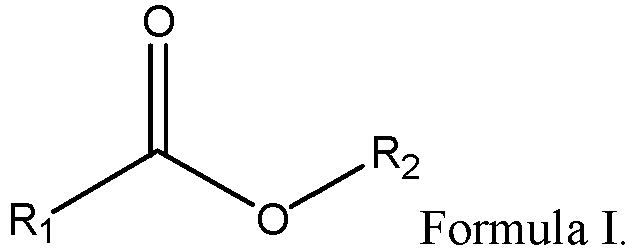
- In Formula I, R1 and R2 each independently are an unsubstituted or fluorine-substituted C1 to C3 alkyl, and at least one of R1 or R2 is a fluorine-substituted C1 to C3 alkyl.
- According to an embodiment of this application, the fluorine-substituted linear carboxylate ester includes at least one of compounds represented by the following formulas:



- According to an embodiment of this application, the electrolyte solution includes a compound of Formula I-1 and a compound of Formula 1-2. Based on the total mass of the electrolyte solution, a mass percent of the compound of Formula I-1 is a1%, and a mass percent of the compound of Formula I-2 is a2%, satisfying: 10 ≤ a1 + a2 ≤ 70.
- According to an embodiment of this application, the electrolyte solution further includes lithium bis(fluorosulfonyl)imide (LiFSI) as a lithium salt.
- According to an embodiment of this application, a concentration of the LiFSI is c mol/L, satisfying: 0.3 ≤ c ≤ 1.2.
- According to an embodiment of this application, a concentration of the LiFSI denoted as c mol/L and a coating weight of the positive active material denoted as w mg/cm2 satisfy: 0.04 ≤ c/w ≤ 0.18.
- According to an embodiment of this application, the electrolyte solution further includes a non-fluorinated cyclic carbonate ester. The non-fluorinated cyclic carbonate ester includes at least one of ethylene carbonate (EC) or propylene carbonate (PC).
- According to an embodiment of this application, based on the total mass of the electrolyte solution, a mass percent of the EC is b1%, and a mass percent of the PC is b2%, satisfying: 5 ≤ b1 + b2 ≤ 40, and 0.2 ≤ b1/b2 ≤ 5.
- According to an embodiment of this application, a mass percent b1% of the EC and a mass percent x% of nickel satisfy 0.1 ≤ b1/x ≤ 1.0.
- According to an embodiment of this application, a mass percent of the PC denoted as b2% and a coating weight of the positive active material denoted as w mg/cm2 satisfy: 0.3 ≤ b2/w ≤ 5.4.
- According to an embodiment of this application, the electrolyte solution further includes at least one of an unsaturated cyclic carbonate ester, a fluorinated carbonate ester, a cyclic sultone, a cyclic sulfate lactone, or a nitrile compound. Based on the total mass of the electrolyte solution, a mass percent of the unsaturated cyclic carbonate ester is 0.1% to 5%, a mass percent of the fluorinated carbonate ester is 0.1% to 5%, a mass percent of the cyclic sultone is 0.1% to 5%, a mass percent of the cyclic sulfate lactone is 0.1%~5%, and a mass percent of the nitrile compound is 0.1% to 5%.
- According to an embodiment of this application, the unsaturated cyclic carbonate ester includes at least one of vinylene carbonate (VC) or vinyl ethylene carbonate (VEC), and the fluorinated carbonate ester includes fluoroethylene carbonate (FEC). The cyclic sultone includes at least one of 1,3-propane sultone (PS), 1,4-butane sultone (BS), or 1,3-propene sultone (PST). The cyclic sulfate lactone includes at least one of ethylene sulfate (DTD), propylene sulfate, or 4-methylethylene sulfate. The nitrile compound includes at least one of succinonitrile (SN), glutaronitrile, adiponitrile (ADN), 2-methyleneglutaronitrile, dipropylmalononitrile, 1,3,6-hexanetricarbonitrile (HTCN), 1,2,6-hexanetricarbonitrile, 1,3,5-pentanetricarbonitrile, or 1,2-bis(cyanoethoxy)ethane (EDPN).
- According to an embodiment of this application, the electrochemical device further satisfies at least one of the following conditions: (1) 40 ≤ a1 + a2 ≤ 70; (2) 0.5 ≤ c ≤ 1.2; (3) 0.05 ≤ c/w ≤ 0.16; (4) 10 ≤ b1 + b2 ≤ 40 and 0.5 ≤ b1/b2 ≤ 5; (5) 0.2 ≤ b1/x ≤ 0.8; or (6) 0.5 ≤ b2/w ≤ 5.0.
- According to another aspect of this application, this application further provides an electronic device. The electronic device includes the electrochemical device disclosed in the above embodiment of this application.
- Some embodiments of this application will be described in detail below. No embodiment of this application is to be construed as a limitation on this application.
- The terms "include", "comprise" and "contain" used herein are open and mean including but without limitation.
- In addition, a quantity, a ratio, or another numerical value herein is sometimes expressed in the format of a range. Understandably, such a range format is set out for convenience and brevity, and needs to be flexibly understood to include not only the numerical values explicitly specified and defined by the range, but also all individual numerical values or sub-ranges covered in the range as if each individual numerical value and each sub-range were explicitly specified.
- In the description of specific embodiments and claims, a list of items referred to by using the terms such as "one or more of", "one or more thereof", "at least one of" or other similar terms may mean any combination of the listed items. For example, if items A and B are listed, the phrases "at least one of A and B" and "at least one of A or B" mean: A alone; B alone; or both A and B. In another example, if items A, B, and C are listed, the phrase "at least one of A, B, or C" means: A alone; B alone; C alone; A and B (excluding C); A and C (excluding B); B and C (excluding A); or all of A, B, and C. The item A may include a single element or a plurality of elements. The item B may include a single element or a plurality of elements. The item C may include a single element or a plurality of elements.
- To increase the energy density of an electrochemical device to meet people's needs, this application uses a nickel-containing material as a positive active material of the electrochemical device. Compared with the cobalt in the typically used lithium cobalt oxide in the prior art, the nickel can provide a higher energy density. Therefore, with the increase of the content of nickel in the positive active material, the energy density of the resulting electrochemical device also increases. However, the high content of nickel also brings adverse effects. For example, in practical applications, particles of the nickel-containing material are prone to break during high-voltage charge-discharge cycles, and are prone to be oxidized by an electrolyte solution to aggravate gas production, thereby making it difficult to maintain the cycle stability and safety of the electrochemical device. Especially, under high-temperature conditions, such side reactions are intensified, and the capacity of the electrochemical device fades rapidly, and gas is produced drastically.
- In addition, as an important component of the electrochemical device, the electrolyte solution is configured to transfer lithium ions or sodium ions between a positive electrode and a negative electrode to implement continuous intercalation and deintercalation of the lithium ions or sodium ions in the positive and negative electrode materials, thereby playing the role in charging and discharging. Therefore, the electrolyte solution is crucial for the electrochemical device to achieve excellent electrochemical performance (for example, a high energy density, high C-rate performance, high cycle stability, and high safety performance). The electrolyte solution typically includes an organic solvent, a lithium salt, and an additive. In the prior art, specific electrochemical performance metric (for example, cycle stability) is improved usually by adjusting the type and content of the additive. In addition, in the prior art currently, a variety of additives are usually added into the electrolyte solution. Compared with a single type of additive, a variety of additives can form a composite interface on the surface of the positive and negative active materials, thereby providing more stable protection. However, the variety of additives added and the increase in the dosage of the additives increase the film-forming impedance, thereby deteriorating the impedance characteristics of the electrochemical device.
- Based on at least the above insights into the prior art, this application adjusts constituents of an electrolyte solution, constituents of a positive active material, and coordination between the electrolyte solution and a positive electrode, so as to improve the high-temperature cycle performance, suppress swelling, and reduce the impedance of the electrochemical device on the premise of ensuring a high energy density.
- According to an aspect of this application, this application provides an electrochemical device. The electrochemical device includes a positive electrode, a negative electrode, and an electrolyte solution. The electrolyte solution includes a fluorine-substituted linear carboxylate ester. Based on a total mass of the electrolyte solution, a mass percent of the fluorine-substituted linear carboxylate ester is a%, satisfying: 10 ≤ a ≤ 70. The positive electrode includes a positive current collector and a positive active material layer applied onto at least one surface of the positive current collector. The positive active material layer includes a nickel-containing positive active material. Based on a total mass of the positive active material layer, a mass percent of nickel is x%, satisfying: 33 ≤ x ≤ 55. A coating weight of the positive active material applied on the positive current collector is w (mg/cm2), satisfying: 6.5 ≤ w ≤ 19.5, and 1.0 ≤ a/w ≤ 8.2.
- In the presence of the combined effect of the nickel content, the coating weight of the positive active material, and the content of fluorine-substituted linear carboxylate ester in the electrolyte solution, the electrochemical device, on the premise of ensuring a high energy density, not only exhibits a high cycle capacity retention rate at high temperature, but also exhibits a low impedance and excellent high-temperature performance and kinetic performance. A main reason is that the fluorine-substituted linear carboxylate ester is well resistant to oxidation, thereby improving the chemical stability of the electrolyte solution. In addition, the fluorine-substituted linear carboxylate ester can slowly form a film on the surface of the electrode plate, thereby reducing the impedance on the one hand, and on the other hand, forming interface protection between the positive active material and the electrolyte solution, alleviating the occurrence of side reactions. Moreover, it is further found herein that, by adjusting the ratio of the mass percent of the fluorine-substituted linear carboxylate ester to the coating weight of the positive active material to fall within the range of 1.0 ≤ a/w ≤ 8.2, this application can further optimize the high-temperature cycle performance and kinetic performance of the electrochemical device, and further suppress gas production.
- In some embodiments, the fluorine-substituted linear carboxylate ester includes at least one of, or is at least one selected from, the compounds represented by the following Formula I:

- In Formula I, R1 and R2 each independently are an unsubstituted or fluorine-substituted C1 to C5 alkyl, and at least one of R1 or R2 is a fluorine-substituted C1 to C5 alkyl. In some embodiments, R1 and R2 each independently are an unsubstituted or fluorine-substituted C1 to C3 alkyl, and at least one of R1 or R2 is a fluorine-substituted C1 to C3 alkyl.
- In some embodiments, the fluorine-substituted linear carboxylate ester includes at least one of, or is at least one selected from, the compounds represented by the following formulas:


- It is further found herein that the electrochemical performance of the resulting electrochemical device varies slightly depending on the structure of the fluorine-substituted linear carboxylate ester. For example, it is found herein that on the premise that other variables are constant (for example, the same nickel-containing positive active material is used, the coating weight is the same, and other constituents in the electrolyte solution remain the same), more excellent high-temperature performance and impedance characteristics can be achieved by using the compound represented by Formula I-1.
- In addition, in some embodiments, the electrolyte solution includes both a compound of Formula I-1 and a compound of Formula I-2. Based on the total mass of the electrolyte solution, a mass percent of the compound of Formula I-1 is a1%, and a mass percent of the compound of Formula I-2 is a2%, satisfying: 10 ≤ a1 + a2 ≤ 70. In some embodiments, the sum of a1 and a2 may be any one of 10, 20, 30, 40, 50, 60, 70, or a value falling within a range formed by any two thereof. For example, in some embodiments, the a1 and a2 satisfy: 40 ≤ a1 + a2 ≤ 70.
- It is further found herein that, when the lithium bis(fluorosulfonyl)imide (LiFSI) is used to completely or partially replace the lithium hexafluorophosphate (LiPF6) as a lithium salt, the kinetic performance of the nickel-containing system can be further improved. In addition, it is further found herein that, when aluminum foil is used as a positive current collector, the presence of the LiFSI in the electrolyte solution corrodes the aluminum foil to some extent. In this case, the fluorine-substituted linear carboxylate ester in the electrolyte solution passivates the surface of the aluminum foil, and forms a firm passivation layer on the surface of the aluminum foil, thereby suppressing the corrosion of the aluminum foil by the LiFSI, and in turn, improving the cycle life and high-temperature performance of the electrochemical device on the basis of achieving high kinetic performance. For example, during continuous charge-discharge cycles, the cycle stability of the electrochemical device at high temperature can be effectively improved, and the gas production and swelling can be effectively alleviated.
- In some embodiments, a concentration of the LiFSI in the electrolyte solution is c mol/L, satisfying: 0.2 ≤ c ≤ 1.5. In some embodiments, c satisfies: 0.3 ≤ c ≤ 1.2. In some embodiments, c satisfies: 0.5 ≤ c ≤ 1.2.
- Moreover, it is further found herein that, by adjusting the ratio of the concentration of the LiFSI denoted as c mol/L to the coating weight of the positive active material denoted as mg/cm2 to fall within the specified range, this application can further optimize the high-temperature performance and impedance characteristics of the electrochemical device. In some embodiments, c/w satisfies: 0.02 ≤ c/w ≤ 0.2. In some embodiments, c/w satisfies: 0.04 ≤ c/w ≤ 0.18. In some embodiments, c/w satisfies: 0.05 ≤ c/w ≤ 0.16.
- In some embodiments, the electrolyte solution further includes a non-fluorinated cyclic carbonate ester. The non-fluorinated cyclic carbonate ester includes at least one of, or is at least one selected from, ethylene carbonate (EC) or propylene carbonate (PC). Compared with other solvents, the propylene carbonate and the ethylene carbonate is well capable of dissociating the lithium salt, thereby greatly accelerating the dissolution of the lithium salt.
- In addition, the ethylene carbonate is much more capable of dissociating the lithium salt than the propylene carbonate. However, the ethylene carbonate is solid at room temperature, thereby increasing the viscosity of the electrolyte solution. In comparison, the liquid range of propylene carbonate (the temperature range in which the propylene carbonate is in a liquid phase) is much wider. Therefore, the ethylene carbonate used in conjunction with the propylene carbonate at a specified ratio can not only increase the degree of dissociation of the lithium salt, but also widen the liquid range of the electrolyte solution, thereby improving the high-temperature performance and impedance characteristics of the electrochemical device. In some embodiments, based on the total mass of the electrolyte solution, a mass percent of the EC is b1%, and a mass percent of the PC is b2%, satisfying: 5 ≤ b1 + b2 ≤ 40, and 0.2 ≤ b1/b2 ≤ 5. In some embodiments, b1 and b2 satisfy: 10 ≤ b1 + b2 ≤ 40, and 0.5 ≤ b1/b2 ≤ 5.
- It is further found herein that, by adjusting the ratio of the mass percent b1% of the EC in the electrolyte solution to the mass percent x% of nickel in the positive active material layer, the EC is facilitated to form a film at the negative electrode, and side reactions are reduced, thereby improving the cycle stability and high-temperature performance of the electrochemical device, and further suppressing the gas production. In some embodiments, the b1/x ratio satisfies: 0.05 ≤ b1/x ≤ 1.2. In some embodiments, the b1/x ratio satisfies: 0.1 ≤ b1/x ≤ 1.0. In some embodiments, the b1/x ratio satisfies: 0.2 ≤ b1/x ≤ 0.8.
- Moreover, it is further found herein that, by adjusting the ratio of the mass percent of the PC in the electrolyte solution denoted as b2% to the coating weight of the positive active material denoted as w mg/cm2, this application can further optimize the performance of the electrochemical device. In some embodiments, the b2/w ratio satisfies: 0.2 ≤ b2/w ≤ 6.0. In some embodiments, the b2/w ratio satisfies: 0.3 ≤ b2/w ≤ 5.4. In some embodiments, the b2/w ratio satisfies: 0.5 ≤ b2/w ≤ 5.0.
- In some embodiments, the electrolyte solution may further include other additives. The other additives may include, but are not limited to, at least one of an unsaturated cyclic carbonate ester, a fluorinated carbonate ester, a cyclic sultone, a cyclic sulfate lactone, or a nitrile compound. Such other additives can further modify a solid electrolyte interface (SEI) film during the film formation on the surfaces of the positive electrode and the negative electrode, thereby building more excellent interface protection, and further alleviating side reactions of the electrolyte solution on the surfaces of the positive and negative electrodes.
- In addition, when the content of one or more of the other additives in the electrolyte solution falls within an appropriate range, the electrochemical performance of the electrochemical device can be further optimized. In some embodiments, based on the total mass of the electrolyte solution, a mass percent of the unsaturated cyclic carbonate ester is 0.1% to 5%, a mass percent of the fluorinated carbonate ester is 0.1% to 5%, a mass percent of the cyclic sultone is 0.1% to 5%, a mass percent of the cyclic sulfate lactone is 0.1%~5%, and a mass percent of the nitrile compound is 0.1% to 5%.
- In some embodiments, the unsaturated cyclic carbonate ester includes at least one of, or is at least one selected from, vinylene carbonate (VC) or vinyl ethylene carbonate (VEC).
- In some embodiments, the fluorinated carbonate ester includes fluoroethylene carbonate (FEC).
- In some embodiments, the cyclic sultone includes at least one of, or is at least one selected from, 1,3-propane sultone (PS), 1,4-butane sultone (BS), or 1,3-propene sultone (PST).
- In some embodiments, the cyclic sulfate lactone includes at least one of, or is at least one selected from, ethylene sulfate (DTD), propylene sulfate, or 4-methylethylene sulfate.
- In some embodiments, the nitrile compound includes at least one of, or is at least one selected from, succinonitrile (SN), glutaronitrile, adiponitrile (ADN), 2-methyleneglutaronitrile, dipropylmalononitrile, 1,3,6-hexanetricarbonitrile (HTCN), 1,2,6-hexanetricarbonitrile, 1,3,5-pentanetricarbonitrile, or 1,2-bis(cyanoethoxy)ethane (EDPN).
- The nickel-containing positive active material of this application includes a nickel-containing compound that enables reversible intercalation and deintercalation of lithium ions. Specific types of the positive active material are not limited, and may be selected as required. The positive active material may include lithium, nickel, and at least one type of other active metal. Other active metal elements may include at least one of, or may be at least one selected from, the following elements: zinc (Zn), titanium (Ti), aluminum (Al), tungsten (W), zirconium (Zr), niobium (Nb), yttrium (Y), antimony (Sb), cobalt (Co), manganese (Mn), magnesium (Mg), boron (B), vanadium (V), chromium (Cr), iron (Fe), copper (Cu), molybdenum (Mo), tin (Sn), calcium (Ca), strontium (Sr), or lanthanum (La).
- In some embodiments, the positive active material may include, but is not limited to, at least one of lithium nickel oxide, lithium nickel cobalt manganese oxide, or a lithium-rich nickel-based material, or lithium nickel cobalt aluminum oxide. Alternatively, a plurality of the above compounds may be used in combination as the positive active material.
- In some embodiments, the positive active material layer further includes a binder. The binder improves bonding between particles of the positive active material and bonding between the positive active material and a current collector. Examples of the binder include, but are not limited to, polyvinyl alcohol, hydroxypropyl cellulose, diacetyl cellulose, polyvinyl chloride, carboxylated polyvinyl chloride, polyvinyl fluoride, a polymer containing ethylene oxide, polyvinylpyrrolidone, polyurethane, polytetrafluoroethylene, poly (1,1-difluoroethylene), polyethylene, polypropylene, styrene-butadiene rubber, acrylic styrene-butadiene rubber, epoxy resin, and nylon.
- In some embodiments, the positive active material layer optionally further includes a conductive material, thereby further improving conductivity of the electrode. The conductive material may be any conductive material as long as the material does not cause a chemical change. Examples of the conductive material include but without limitation: a carbon-based material (for example, natural graphite, artificial graphite, carbon black, acetylene black, Ketjen black, and carbon fiber), a metal-based material (for example, metal powder or metal fiber containing copper, nickel, aluminum, silver, and the like), a conductive polymer (for example, a polyphenylene derivative), and any mixture thereof.
- The positive current collector may be a positive current collector commonly used in the art, and, in some embodiments, may include but is not limited to an aluminum foil or a nickel foil.
- In some embodiments, the electrochemical device of this application further includes a negative electrode. The negative electrode includes a negative current collector and a negative active material layer disposed on at least one surface of the negative current collector. The negative active material layer includes a negative active material.
- The negative active material of this application includes any material that enables reversible intercalation and deintercalation of lithium ions. The specific type of the negative active material is not limited, and may be selected as required. In some embodiments, the negative active material may include or be selected from at least one of the following materials: a carbonaceous material, a siliceous material, an alloy material, and a composite oxide material containing lithium metal. In some embodiments, the carbonaceous material may include but is not limited to crystalline carbon, non-crystalline carbon, and a mixture thereof. The crystalline carbon may be amorphous or flake-shaped, mini-flake-shaped, spherical or fibrous natural graphite or artificial graphite. The non-crystalline carbon may be soft carbon, hard carbon, mesophase pitch carbide, calcined coke, and the like.
- In some embodiments, the negative active material may include, but is not limited to, at least one of natural graphite, artificial graphite, mesocarbon microbeads (MCMB for short), hard carbon, soft carbon, silicon, a silicon-carbon composite, a Li-Sn alloy, a Li-Sn-O alloy, Sn, SnO, SnO2, spinel-structured lithiated TiO2-Li4Ti5O12, or a Li-Al alloy.
- The negative current collector may be a negative current collector commonly used in the art. In some embodiments, the negative current collector includes but is not limited to a copper foil, a nickel foil, a stainless steel foil, a titanium foil, foamed nickel, foamed copper, a polymer substrate coated with a conductive metal, or any combination thereof.
- In some embodiments, the negative active material layer may further include a binder and/or a conductive agent. The binder and the conductive agent may be made from the materials disclosed in the foregoing description of the positive electrode, details of which are omitted here.
- In some embodiments, the electrochemical device of this application further includes a separator disposed between the positive electrode and the negative electrode to prevent a short circuit. The material and the shape of the separator used in the electrochemical device are not particularly limited herein, and may be based on any technology disclosed in the prior art. In some embodiments, the separator includes a polymer or an inorganic substance or the like formed of a material that is stable to the electrolyte according to this application.
- In some embodiments, the separator may include a substrate layer and a surface treatment layer. The substrate layer is a non-woven fabric, film or composite film, each having a porous structure. The material of the substrate layer includes at least one of: polyethylene, polypropylene, polyethylene terephthalate, and polyimide. Specifically, the material of the substrate layer may be a polypropylene porous film, a polyethylene porous film, a polypropylene non-woven fabric, a polyethylene non-woven fabric, or a polypropylene-polyethylene-polypropylene porous composite film.
- In some embodiments, a surface treatment layer is disposed on at least one surface of the substrate layer. The surface treatment layer may be a polymer layer or an inorganic compound layer, or a layer compounded of a polymer and an inorganic compound.
- The inorganic compound layer includes inorganic particles and a binder. The inorganic particles include one or more of aluminum oxide, silicon oxide, magnesium oxide, titanium oxide, hafnium dioxide, tin oxide, ceria, nickel oxide, zinc oxide, calcium oxide, zirconium oxide, yttrium oxide, silicon carbide, boehmite, aluminum hydroxide, magnesium hydroxide, calcium hydroxide, and barium sulfate. The binder includes one or more of polyvinylidene fluoride, poly(vinylidene fluoride-co-hexafluoropropylene), polyamide, polyacrylonitrile, polyacrylate, polyacrylic acid, polyacrylate, polyvinylpyrrolidone, polyvinyl ether, poly methyl methacrylate, polytetrafluoroethylene, and polyhexafluoropropylene.
- The polymer layer includes a polymer, and the material of the polymer includes at least one of: a polyamide, a polyacrylonitrile, an acrylate polymer, a polyacrylic acid, a polyacrylate, a polyvinylpyrrolidone, a polyvinyl ether, a polyvinylidene fluoride, and a poly(vinylidene fluoride-hexafluoropropylene).
- A person skilled in the art understands that the electrochemical device according to this application may be a lithium-ion battery or any other appropriate electrochemical device. To the extent not departing from the content disclosed herein, the electrochemical device according the embodiments of this application includes any device in which an electrochemical reaction occurs. Specific examples of the electrochemical device include all kinds of primary batteries, secondary batteries, solar batteries, or capacitors. Especially, the electrochemical device is a lithium secondary battery, including a lithium metal secondary battery, a lithium-ion secondary battery, a lithium polymer secondary battery, or a lithium-ion polymer secondary battery.
- The use of the electrochemical device according to this application is not particularly limited, and the electrochemical device may be used for any purposes known in the prior art. According to some embodiments of this application, the electrochemical device of this application is applicable to electronic devices. The electronic devices include, but are not limited to, a notebook computer, pen-inputting computer, mobile computer, e-book player, portable phone, portable fax machine, portable photocopier, portable printer, stereo headset, video recorder, liquid crystal display television set, handheld cleaner, portable CD player, mini CD-ROM, transceiver, electronic notepad, calculator, memory card, portable voice recorder, radio, backup power supply, motor, automobile, motorcycle, power-assisted bicycle, bicycle, lighting appliance, toy, game console, watch, electric tool, flashlight, camera, large household storage battery, lithium-ion capacitor, and the like.
- The following describes the technical solutions of this application in more detail with reference to comparative embodiments and specific embodiments, but this application is not limited to such embodiments. A person skilled in the art understands that the preparation method described herein is merely exemplary. Any modification or equivalent replacement made to the technical solutions of this application without departing from the scope of the technical solutions of this application shall fall within the protection scope of this application.
- The following describes methods for preparing lithium-ion batteries and methods for testing performance of the lithium-ion batteries according to the embodiments and comparative embodiments of this application.
- Mixing lithium nickel cobalt manganese oxide LiNixCoyMnzO2 (x + y + z = 1, the positive electrode materials with different Ni contents are obtained by adjusting the feeding rate of the precursor) as a positive active material lithium, a conductive agent Super P, and a binder polyvinylidene difluoride (PVDF) at a mass ratio of 96.1: 1.9: 2, adding N-methyl-pyrrolidone (NMP), and stirring well with a vacuum mixer to obtain a positive electrode slurry in which the solid content is 72 wt%. Applying the positive electrode slurry evenly onto aluminum foils by different coating weights, where the thickness of each aluminum foil is 10 µm. Drying the aluminum foils at 85 °C, and then performing cold-pressing, cutting, and slitting, and drying the foils in an 85 °C vacuum environment for 4 hours to obtain positive electrodes coated with the positive active material by different coating weights.
- Mixing artificial graphite as a negative active material, Super P as a conductive agent, sodium carboxymethyl cellulose (CMC) as a thickener, and styrene-butadiene rubber (SBR) as a binder at a mass ratio of 96.4: 1.5: 0.5: 1.6. Adding deionized water, and mixing well with a vacuum mixer to obtain a negative slurry in which the solid content is 54 wt%. Applying the negative electrode slurry evenly onto a negative current collector copper foil. Drying the copper foil at 85 °C, and then performing cold-pressing, cutting, and slitting, and drying the foil in a 120 °C vacuum environment for 12 hours to obtain a negative electrode.
- Mixing ethyl methyl carbonate (EMC) and diethyl carbonate (DEC) well at a mass ratio of 1: 2 in a dry argon atmosphere glovebox, and then dissolving a well-dried lithium salt LiPF6 and/or LiFSI in the above nonaqueous solvent to obtain a base electrolyte solution in which the concentration of the lithium salt is 1 mol/L. Subsequently, adding a specified amount of ethylene carbonate (EC), propylene carbonate (PC), and fluorine-substituted linear carboxylate ester and/or other additives into the base electrolyte solution at the mass percentages specified in the embodiments and comparative embodiments set out below, so as to obtain an electrolyte solution.
- The abbreviations and full names of constituents in the electrolyte solution are shown in the following table:
Material name Abbreviation Material name Abbreviation Ethylene carbonate EC Vinylene carbonate VC Diethyl carbonate DEC Fluoroethylene carbonate FEC Succinonitrile SN Adiponitrile ADN 1,3-propane sultone PS 1,3,6-hexanetricarbonitrile HTCN Ethylene sulfate DTD - Using a 16 µm-thick polyethylene (PE) film as a separator.
- Stacking the positive electrode, the separator, and the negative electrode sequentially, placing the separator between the positive electrode and the negative electrode to serve a function of separation, and winding the stacked materials to obtain a bare cell. Welding tabs, putting the bare cell into an outer package foil made of an aluminum laminated film, injecting the above-prepared electrolyte solution into the dried bare cell, and performing steps such as vacuum sealing, standing, chemical formation (charging the battery at a constant current of 0.02C until a voltage of 3.3 V, and then charging the battery at a constant current of 0.1C until a voltage of 3.6 V), shaping, and capacity test to obtain a pouch-type lithium-ion battery (4 mm thick, 72 mm wide, and 100 mm long).
- Putting the lithium-ion battery into a 45 °C thermostat, and leaving the battery to stand for 30 minutes so that the temperature of the lithium-ion battery is constant. Charging the constant-temperature lithium-ion battery at a constant current of 2C until the voltage reaches 4.2 V, and then charging the battery at a constant voltage of 4.2 V until the current drops to 0.05C. Subsequently, discharging the battery at a constant current of 10C until the voltage reaches 2.8 V, thereby completing one charge-discharge cycle. Repeating the above charge-discharge process for 600 cycles, and recording a first-cycle discharge capacity C1 and a 600th-cycle discharge capacity C600 of the lithium-ion battery. At the same time, recording the thickness T1 of the lithium-ion battery before the start of the cycling and the thickness T600 of the lithium-ion battery after the battery is charged and discharged for 600 cycles.
- Using the first-cycle discharge capacity C1 as a reference, calculating the 600th-cycle capacity retention rate of the lithium-ion battery as: capacity retention rate = (C600/C1) × 100%. Using the capacity retention rate as an indicator for evaluating the high-temperature cycle performance of the lithium-ion battery.
- Using the thickness T1 of the lithium-ion battery before cycling as a reference, calculating the 600th-cycle thickness expansion rate of the lithium-ion battery as: thickness expansion rate = (T600 - T1)/T1 × 100%. Using the thickness expansion rate as an indicator for evaluating the gas-induced swelling degree of the lithium-ion battery.
- Putting the lithium-ion battery into a 25 °C thermostat, and leaving the battery to stand for 30 minutes so that the temperature of the lithium-ion battery is constant. Charging the battery at a constant current of 2C until the voltage reaches 4.2 V, and then charging the battery at a constant voltage until the current drops to 0.025 C, leaving the battery to stand for 5 minutes, and then discharging the battery at a constant current of 0.2C until the voltage reaches 2.8 V. Recording this discharge capacity as an actual capacity Cactual.
- Leaving the battery to stand for 5 minutes, and then charging the battery at a constant current of 2Cactual until the voltage reaches 4.2 V, and then charging the battery at a constant voltage until the current drops to 0.02Cactual.
- Leaving the battery to stand for 120 minutes, and then discharging the battery at a constant current of 0.1Cactual for 60 minutes, and recording the voltage value at this time as V1. Discharging the battery at a constant current of 1Cactual for 1 second, and recording the voltage value at this time as V2, during which the voltage is sampled at intervals of 100 ms.
- Calculating the impedance in a 50% state of charge (SOC) as: impedance = (V1-V2)/(1Cactual - 0.1Cactual).
- Peeling off the positive active material layer from the positive current collector, and determining the content of nickel by performing an ICP test on the positive active material layer in the following process.
- Specimen pretreatment: Weighing out an appropriate amount of specimen, and putting the specimen into a numbered digestion vessel. Recording the mass of the specimen after the readout of the balance stabilizes, accurate to 0.0001 g. Adding a digestion agent into the digestion vessel slowly and allowing the specimen on the inner wall of the vessel to be washed down to the bottom of the vessel. Shaking the digestion vessel gently, wiping the digestion vessel clean, and then placing the digestion vessel into a microwave digestion instrument to start digesting. Using the resulting digestion solution as a specimen to be tested.
- Test: Using a single standard solution of Mn with a concentration of 1 mg/L to align the plasma torch in the ICP instrument. Cleaning the specimen feeding system, and then plotting a calibration curve by using a prepared standard specimen. Testing a control specimen to verify the accuracy of the curve. Entering the specimen information (name, specimen mass, predetermined volume, dilution factor), and testing the specimen.
- Preparing the lithium-ion batteries of Embodiments 1 to 11 and Comparative Embodiments 1 to 3 based on the above preparation method, where the content of nickel in the positive active material layer, the coating weight, the content of the fluorine-substituted linear carboxylate ester in the electrolyte solution, and the electrochemical test results of the lithium-ion battery are shown in Table 1. The fluorine-substituted linear carboxylate ester used in Table 1 is the compound represented by Formula I-1.
Table 1 Embodiment Variable 45 °C cycle DCR (mΩ) Ni content x (%) Coating weight w (mg/cm2) Content of fluorocarboxylate ester a (%) a/w capacity retention rate Thickness expansion rate Comparative Embodiment 1 30 20 0 0 38.9% 44.4% 49.3 Comparative Embodiment 2 30 20 5 0.25 45.2% 38.8% 48.3 Comparative Embodiment 3 33 7.6 65 8.5 75.3% 220% 24.8 Embodiment 1 33 8.6 30 3.5 76.5% 21.5% 22.6 Embodiment 2 40 8.6 30 3.5 82.5% 16.9% 21.9 Embodiment 3 50 8.6 30 3.5 83.4% 15.7% 21.2 Embodiment 4 40 6.6 30 4.6 81.5% 17.0% 19.1 Embodiment 5 40 9.8 30 3.1 82.3% 16.8% 22.1 Embodiment 6 40 13.3 30 2.3 81.6% 17.6% 23.6 Embodiment 7 40 18.7 30 1.6 80.2% 18.1% 24.6 Embodiment 8 40 8.6 15 1.7 79.9% 19.9% 22.8 Embodiment 9 40 8.6 35 4.1 83.6% 15.4% 21.1 Embodiment 10 40 8.6 50 5.8 84.8% 15.3% 20.3 Embodiment 11 40 8.6 70 8.1 85.2% 15.0% 19.6 - As can be seen from the data in Table 1, in contrast to Comparative Embodiment 1, after the fluorine-substituted linear carboxylate ester is added in Comparative Embodiment 2 and Embodiments 1 to 11, the cycle stability of the electrochemical device at high temperature is improved, and both the gas production degree and the direct-current resistance (DCR) are reduced.
- In addition, in contrast to Comparative Embodiments 2 and 3, when the ratio of the mass percent a% of the fluorine-substituted linear carboxylate ester to the coating weight w of the positive active material is further adjusted to fall within the range of 1.0 ≤ a/w ≤ 8.2, the high-temperature cycle performance, gas production degree, and impedance characteristics of the electrochemical devices in Embodiments 1 to 11 are improved.
Table 2 Embodiment Fluorocarboxylate ester 45 °C cycle DCR (mΩ) Content of Formula 1-1 a1% Content of Formula 1-2 a2% (a1+a2)% Capacity retention rate Thickness expansion rate Embodiment 2 30 0 30 82.5% 16.9% 21.9 Embodiment 12 10 20 30 80.3% 17.2% 22.2 Embodiment 13 15 15 30 80.9% 17.1% 22.1 Embodiment 14 20 10 30 81.5% 17.0% 22.0 Embodiment 15 30 10 40 83.5% 16.2% 20.9 Embodiment 16 30 20 50 83.9% 16.0% 20.6 Embodiment 17 40 20 60 84.9% 15.2% 20.1 Embodiment 18 50 20 70 85.6% 15.0% 19.5 Comparative Embodiment 4 40 40 80 75.1% 22.3% 24.5 - As can be seen from Table 2 above, when the content of the fluorocarboxylate ester in the electrolyte solution is 30%, in contrast to Embodiments 12 to 14 in which both the compound of Formula I-1 and the compound of Formula I-2 are added, the high-temperature performance and impedance characteristics of the electrochemical devices are more excellent in Embodiment 2 in which the compound of Formula I-1 alone is added. In addition, when both the compound of Formula I-1 and the compound of Formula I-2 are added in the electrolyte solution, with the increase of the content of the fluorocarboxylate ester, the high-temperature performance and impedance characteristics of the resulting electrochemical device can be further optimized (referring to Embodiments 15 to 18). However, when the content of the fluorocarboxylate ester reaches 80% excessively, the electrochemical performance of the electrochemical device deteriorates instead (referring to Comparative Embodiment 4).
Table 3 Embodiment Variable 45 °C cycle DCR (mΩ) Content c of LiFSI (mol/L) Coating weight w (mg/cm2) c/w Capacity retention rate Thickness expansion rate Embodiment 2 0 8.6 0 82.5% 16.9% 21.9 Embodiment 19 0.3 8.6 0.04 83.5% 16.4% 21.5 Embodiment 20 0.6 8.6 0.08 84.2% 16.0% 20.8 Embodiment 21 0.9 8.6 0.12 84.9% 15.6% 20 Embodiment 22 1.2 8.6 0.16 85.3% 15.3% 19.2 Embodiment 23 0.6 6.6 0.09 82.9% 16.5% 18.6 Embodiment 24 0.6 9.8 0.06 83.8% 16.3% 21.5 Embodiment 25 0.6 13.3 0.05 83.1% 16.5% 22.9 Embodiment 26 1.2 6.3 0.19 78.1% 17.8% 18.9 - Referring to Embodiment 2 and Embodiments 19 to 22 in Table 3 above, on condition that the coating weight remains constant, with the continuous increase of the content of LiFSI in the electrolyte solution, the DCR of the resulting electrochemical device gradually decreases. At the same time, the cycle performance and gas production degree of the electrochemical device at high temperature are improved.
- In Embodiment 26 versus Embodiment 22, when the c/w ratio value of the electrochemical device falls within 0.04 ≤ c/w ≤ 0.18, the high-temperature performance of the electrochemical device is further optimized, and the gas production degree is suppressed. In addition, referring to Embodiments 23 to 25, when the concentration of the LiFSI denoted as c mol/L and the coating weight of the positive active material denoted as w mg/cm2 satisfy 0.04 ≤ c/w ≤ 0.18, the high-temperature performance and impedance characteristics of the electrochemical devices are excellent.
Table 4 Embodiment Changed 45 °C cycle DCR (mΩ) EC content b1 (%) Ni content x (%) b1/x Capacity retention rate Thickness expansion rate Embodiment 2 3.5 40 0.08 82.5% 16.9% 21.9 Embodiment 27 20 40 0.5 82.9% 16.5% 21.5 Embodiment 28 30 40 0.75 84.3% 16.1% 21.3 Embodiment 29 15 33 0.45 80.1% 17.3% 22.2 Embodiment 30 15 45 0.33 82.0% 17.0% 22.0 Embodiment 31 15 55 0.27 83.0% 16.5% 21.1 Embodiment 32 33.3 33 1.01 78.3% 18.1% 23.5 - As can be seen from Embodiment 2 versus Embodiments 27 and 28, on the premise of keeping the nickel content constant, the gradual increase in the content of the EC in the electrolyte solution can further optimize the high-temperature cycle performance of the electrochemical device and reduce the gas production degree and the DCR. In addition, As can be seen from Table 4, when the mass percent b1% of the EC and the mass percent x% of nickel satisfy 0.1 ≤ b1/x ≤ 1.0, the electrochemical device exhibits more excellent electrochemical performance.
Table 5 Embodiment Changed 45 °C cycle DCR (mΩ) PC content b2 (%) Coating weight w (mg/cm2) b2/w Capacity retention rate Thickness expansion rate Embodiment 2 36 6.6 5.5 82.5% 16.9% 21.9 Embodiment 33 5 8.6 0.6 82.7% 16.2% 21.0 Embodiment 34 30 8.6 3.5 84.3% 16.1% 20.8 Embodiment 35 20 6.6 3.0 82.9% 16.3% 20.3 Embodiment 36 20 9.8 2.0 83.6% 16.0% 21.7 Embodiment 37 20 13.3 1.5 83.1% 16.2% 21.6 - As can be seen from the data in Table 5, when the electrochemical device further satisfies 0.3 ≤ b2/w ≤ 5.4, the high-temperature cycle performance of the electrochemical device is further improved, the gas production is suppressed, and the DCR is reduced to some extent.
Table 6 Embodiment Variable 45 °C cycle DCR (mΩ) Other additives Capacity retention rate Thickness expansion rate Embodiment 20 / 84.2% 16.0% 20.8 Embodiment 38 0.5% VC + 2% FEC 85.0% 15.2% 21.3 Embodiment 39 0.5% VC + 1.5% PS + 1% DTD 85.4% 15.0% 21.1 Embodiment 40 0.5% VC + 1.0% PS + 2% HTCN 84.8% 14.8% 21.2 Embodiment 41 2% FEC + 1% DTD + 2% HTCN 84.6% 15.1% 21.0 - As can be seen from the data in Table 6, when other additives (for example, VC, DTD, PS, FEC, and HTCN) are further added on the basis of Embodiment 20, the cycle stability of the electrochemical device at high temperature can be further improved, and the gas production can be further suppressed. However, due to the addition of a variety of additives and the increase in the content of such additives, the DCR of the electrochemical device increases slightly to a degree that falls within a readily acceptable range in practical applications.
- References to "embodiments", "some embodiments", "an embodiment", "another example", "example", "specific example" or "some examples" throughout the specification mean that specified features, structures, materials, or characteristics described in such embodiment(s) or example(s) are included in at least one embodiment or example in this application. Therefore, descriptions throughout the specification, which make references by using expressions such as "in some embodiments", "in an embodiment", "in one embodiment", "in another example", "in an example", "in a specific example", or "example", do not necessarily refer to the same embodiment(s) or example(s) in this application. In addition, specific features, structures, materials, or characteristics herein may be combined in one or more embodiments or examples in any appropriate manner.
- Although illustrative embodiments have been demonstrated and described above, a person skilled in the art understands that the foregoing embodiments are never to be construed as a limitation on this application, and changes, replacements, and modifications may be made to the embodiments without departing from the spirit, principles, and scope of this application.
Claims (15)
- An electrochemical device, comprising a positive electrode, a negative electrode, and an electrolyte solution, whereinthe electrolyte solution comprises a fluorine-substituted linear carboxylate ester, and, based on a total mass of the electrolyte solution, a mass percent of the fluorine-substituted linear carboxylate ester is a%, satisfying: 10 ≤ a ≤ 70;the positive electrode comprises a positive current collector and a positive active material layer applied onto at least one surface of the positive current collector, the positive active material layer comprises a nickel-containing positive active material, and, based on a total mass of the positive active material layer, a mass percent of nickel is x%, satisfying: 33 ≤ x ≤ 55; anda coating weight of the positive active material applied on the positive current collector is w (mg/cm2), satisfying: 6.5 ≤ w ≤ 19.5, and 1.0 ≤ a/w ≤ 8.2.
- The electrochemical device according to claim 1, wherein the fluorine-substituted linear carboxylate ester comprises at least one of compounds represented by the following Formula I:

in Formula I, R1 and R2 each independently are an unsubstituted or fluorine-substituted C1 to C3 alkyl, and at least one of R1 or R2 is a fluorine-substituted C1 to C3 alkyl. - The electrochemical device according to claim 2, wherein the fluorine-substituted linear carboxylate ester comprises at least one of compounds represented by the following formulas:


- The electrochemical device according to claim 3, wherein the electrolyte solution comprises a compound of Formula I-1 and a compound of Formula I-2, and, based on the total mass of the electrolyte solution, a mass percent of the compound of Formula I-1 is a1%, and a mass percent of the compound of Formula I-2 is a2%, satisfying: 10 ≤ a1 + a2 ≤ 70.
- The electrochemical device according to claim 1, wherein the electrolyte solution further comprises lithium bis(fluorosulfonyl)imide (LiFSI) as a lithium salt.
- The electrochemical device according to claim 5, wherein a concentration of the LiFSI is c mol/L, satisfying: 0.3 ≤ c ≤ 1.2.
- The electrochemical device according to claim 5, wherein a concentration of the LiFSI denoted as c mol/L and a coating weight of the positive active material denoted as w mg/cm2 satisfy: 0.04 ≤ c/w ≤ 0.18.
- The electrochemical device according to claim 1, wherein the electrolyte solution further comprises a non-fluorinated cyclic carbonate ester, and the non-fluorinated cyclic carbonate ester comprises at least one of ethylene carbonate (EC) or propylene carbonate (PC).
- The electrochemical device according to claim 8, wherein, based on the total mass of the electrolyte solution, a mass percent of the EC is b1%, and a mass percent of the PC is b2%, satisfying: 5 ≤ b1 + b2 ≤ 40, and 0.2 ≤ b1/b2 ≤ 5.
- The electrochemical device according to claim 8, wherein a mass percent b1% of the EC and a mass percent x% of nickel satisfy 0.1 ≤ b1/x ≤ 1.0.
- The electrochemical device according to claim 8, wherein a mass percent of the PC denoted as b2% and a coating weight of the positive active material denoted as w mg/cm2 satisfy:

- The electrochemical device according to claim 1, wherein the electrolyte solution further comprises at least one of an unsaturated cyclic carbonate ester, a fluorinated carbonate ester, a cyclic sultone, a cyclic sulfate lactone, or a nitrile compound; and
based on the total mass of the electrolyte solution, a mass percent of the unsaturated cyclic carbonate ester is 0.1% to 5%, a mass percent of the fluorinated carbonate ester is 0.1% to 5%, a mass percent of the cyclic sultone is 0.1% to 5%, a mass percent of the cyclic sulfate lactone is 0. 1%~5%, and a mass percent of the nitrile compound is 0.1% to 5%. - The electrochemical device according to claim 12, wherein the unsaturated cyclic carbonate ester comprises at least one of vinylene carbonate (VC) or vinyl ethylene carbonate (VEC), and the fluorinated carbonate ester comprises fluoroethylene carbonate (FEC);the cyclic sultone comprises at least one of 1,3-propane sultone (PS), 1,4-butane sultone (BS), or 1,3-propene sultone (PST);the cyclic sulfate lactone comprises at least one of ethylene sulfate (DTD), propylene sulfate, or 4-methylethylene sulfate; andthe nitrile compound comprises at least one of succinonitrile (SN), glutaronitrile, adiponitrile (ADN), 2-methyleneglutaronitrile, dipropylmalononitrile, 1,3,6-hexanetricarbonitrile (HTCN), 1,2,6-hexanetricarbonitrile, 1,3,5-pentanetricarbonitrile, or 1,2-bis(cyanoethoxy)ethane (EDPN).
- The electrochemical device according to any one of claims 1 to 13, wherein the electrochemical device further satisfies at least one of the following conditions:(1)
 (2)
(2) (3)
(3) (4)
(4) (5)
(5) (6)
(6)
- An electronic device, wherein the electronic device comprises the electrochemical device according to any one of claims 1 to 14.
Applications Claiming Priority (1)
| Application Number | Priority Date | Filing Date | Title |
|---|---|---|---|
| PCT/CN2022/073179 WO2023137701A1 (en) | 2022-01-21 | 2022-01-21 | Electrochemical device, and electronic device comprising same |
Publications (2)
| Publication Number | Publication Date |
|---|---|
| EP4468386A1 true EP4468386A1 (en) | 2024-11-27 |
| EP4468386A4 EP4468386A4 (en) | 2025-07-09 |
Family
ID=87347702
Family Applications (1)
| Application Number | Title | Priority Date | Filing Date |
|---|---|---|---|
| EP22921144.6A Pending EP4468386A4 (en) | 2022-01-21 | 2022-01-21 | ELECTROCHEMICAL DEVICE AND ELECTRONIC DEVICE THEREOF |
Country Status (5)
| Country | Link |
|---|---|
| US (1) | US20240372092A1 (en) |
| EP (1) | EP4468386A4 (en) |
| KR (1) | KR20240128100A (en) |
| CN (1) | CN116802844A (en) |
| WO (1) | WO2023137701A1 (en) |
Families Citing this family (5)
| Publication number | Priority date | Publication date | Assignee | Title |
|---|---|---|---|---|
| CN117080566A (en) * | 2023-09-28 | 2023-11-17 | 宁德新能源科技有限公司 | Electrolyte and electrochemical devices and electronic devices using the same |
| CN118843949B (en) * | 2023-11-08 | 2025-12-30 | 宁德新能源科技有限公司 | A secondary battery and an electrical device |
| CN117577959A (en) * | 2023-12-22 | 2024-02-20 | 宁德新能源科技有限公司 | An electrochemical device and an electronic device |
| CN118213621A (en) * | 2024-03-12 | 2024-06-18 | 北京理工大学 | An electrolyte and lithium-ion battery for extremely fast charging |
| CN121812747A (en) * | 2026-03-11 | 2026-04-07 | 宁德新能源科技有限公司 | Electrochemical device and electronic device |
Family Cites Families (5)
| Publication number | Priority date | Publication date | Assignee | Title |
|---|---|---|---|---|
| US10916805B2 (en) * | 2013-04-04 | 2021-02-09 | Solvay Sa | Nonaqueous electrolyte compositions |
| JP6456630B2 (en) * | 2013-09-18 | 2019-01-23 | 株式会社東芝 | Non-aqueous electrolyte battery |
| US20160164057A1 (en) * | 2014-12-05 | 2016-06-09 | E I Du Pont De Nemours And Company | Electrochemical cell with polyimide separator and high-voltage positive electrode |
| CN113130995A (en) * | 2019-12-31 | 2021-07-16 | 深圳新宙邦科技股份有限公司 | Lithium ion battery |
| CN112531157A (en) * | 2020-11-30 | 2021-03-19 | 桑顿新能源科技有限公司 | Positive electrode active material, positive electrode, lithium ion battery including the positive electrode, and method for manufacturing the same |
-
2022
- 2022-01-21 CN CN202280007913.9A patent/CN116802844A/en active Pending
- 2022-01-21 KR KR1020247026450A patent/KR20240128100A/en active Pending
- 2022-01-21 WO PCT/CN2022/073179 patent/WO2023137701A1/en not_active Ceased
- 2022-01-21 EP EP22921144.6A patent/EP4468386A4/en active Pending
-
2024
- 2024-07-19 US US18/778,143 patent/US20240372092A1/en active Pending
Also Published As
| Publication number | Publication date |
|---|---|
| EP4468386A4 (en) | 2025-07-09 |
| WO2023137701A1 (en) | 2023-07-27 |
| US20240372092A1 (en) | 2024-11-07 |
| KR20240128100A (en) | 2024-08-23 |
| CN116802844A (en) | 2023-09-22 |
Similar Documents
| Publication | Publication Date | Title |
|---|---|---|
| EP4220759A1 (en) | Lithium metal negative electrode plate, electrochemical apparatus, and electronic device | |
| EP4220754A1 (en) | Lithium metal negative electrode plate, electrochemical apparatus, and electronic device | |
| EP4404320A1 (en) | Electrolyte, electrochemical device comprising same, and electronic device | |
| JP2025041658A (en) | Electrolytes, electrochemical devices, and electronic devices | |
| US20260081227A1 (en) | Electrochemical device and electronic device containing same | |
| US12113169B2 (en) | Electrochemical device and electronic device containing same | |
| US20240372092A1 (en) | Electrochemical device and electronic device containing same | |
| CN118412436B (en) | Secondary batteries and electronic devices | |
| US20240297297A1 (en) | Positive electrode plate, electrochemical device, and electronic device | |
| EP4099469A1 (en) | Electrochemical device and electronic device comprising same | |
| US20220223915A1 (en) | Electrolyte, electrochemical device including same, and electronic device | |
| US20250201804A1 (en) | Electrochemical device and electronic device having same | |
| US20230261264A1 (en) | Electrochemical device and electronic device containing same | |
| JP2024539299A (en) | Electrochemical device and electronic device including same | |
| CN114335685A (en) | Electrochemical device and electronic device comprising same | |
| CN117199535A (en) | An electrolyte, electrochemical device and electronic device | |
| EP4489103A1 (en) | Electrochemical device and electronic device comprising same | |
| EP4675746A1 (en) | Electrochemical device and electronic device | |
| CN113921914B (en) | Electrolyte solution, and electrochemical device and electronic device using same | |
| WO2021184247A1 (en) | Positive electrode active material and electrochemical device containing same | |
| EP4459731A1 (en) | Electrochemical device and electronic device comprising same | |
| JP2015018601A (en) | Non-aqueous electrolyte secondary battery | |
| CN112086682A (en) | Electrolyte solution, electrochemical device, and electronic device | |
| EP4531156A1 (en) | Electrolyte solution, electrochemical device using same and electronic device | |
| JP2021022525A (en) | Non-aqueous electrolyte for battery and lithium secondary battery |
Legal Events
| Date | Code | Title | Description |
|---|---|---|---|
| STAA | Information on the status of an ep patent application or granted ep patent |
Free format text: STATUS: THE INTERNATIONAL PUBLICATION HAS BEEN MADE |
|
| PUAI | Public reference made under article 153(3) epc to a published international application that has entered the european phase |
Free format text: ORIGINAL CODE: 0009012 |
|
| STAA | Information on the status of an ep patent application or granted ep patent |
Free format text: STATUS: REQUEST FOR EXAMINATION WAS MADE |
|
| 17P | Request for examination filed |
Effective date: 20240820 |
|
| AK | Designated contracting states |
Kind code of ref document: A1 Designated state(s): AL AT BE BG CH CY CZ DE DK EE ES FI FR GB GR HR HU IE IS IT LI LT LU LV MC MK MT NL NO PL PT RO RS SE SI SK SM TR |
|
| DAV | Request for validation of the european patent (deleted) | ||
| DAX | Request for extension of the european patent (deleted) | ||
| A4 | Supplementary search report drawn up and despatched |
Effective date: 20250606 |
|
| RIC1 | Information provided on ipc code assigned before grant |
Ipc: H01M 10/0568 20100101ALI20250602BHEP Ipc: H01M 10/0525 20100101ALI20250602BHEP Ipc: H01M 4/131 20100101ALI20250602BHEP Ipc: H01M 10/0569 20100101ALI20250602BHEP Ipc: H01M 10/0567 20100101ALI20250602BHEP Ipc: H01M 4/525 20100101ALI20250602BHEP Ipc: H01M 4/13 20100101AFI20250602BHEP |