EP4468271A1 - Multi-level warning based on driver sentiment - Google Patents
Multi-level warning based on driver sentiment Download PDFInfo
- Publication number
- EP4468271A1 EP4468271A1 EP24174828.4A EP24174828A EP4468271A1 EP 4468271 A1 EP4468271 A1 EP 4468271A1 EP 24174828 A EP24174828 A EP 24174828A EP 4468271 A1 EP4468271 A1 EP 4468271A1
- Authority
- EP
- European Patent Office
- Prior art keywords
- constraint
- signal
- level
- vehicle
- sentiment
- Prior art date
- Legal status (The legal status is an assumption and is not a legal conclusion. Google has not performed a legal analysis and makes no representation as to the accuracy of the status listed.)
- Pending
Links
Images


Classifications
-
- B—PERFORMING OPERATIONS; TRANSPORTING
- B60—VEHICLES IN GENERAL
- B60W—CONJOINT CONTROL OF VEHICLE SUB-UNITS OF DIFFERENT TYPE OR DIFFERENT FUNCTION; CONTROL SYSTEMS SPECIALLY ADAPTED FOR HYBRID VEHICLES; ROAD VEHICLE DRIVE CONTROL SYSTEMS FOR PURPOSES NOT RELATED TO THE CONTROL OF A PARTICULAR SUB-UNIT
- B60W50/00—Details of control systems for road vehicle drive control not related to the control of a particular sub-unit, e.g. process diagnostic or vehicle driver interfaces
- B60W50/08—Interaction between the driver and the control system
- B60W50/14—Means for informing the driver, warning the driver or prompting a driver intervention
-
- G—PHYSICS
- G08—SIGNALLING
- G08G—TRAFFIC CONTROL SYSTEMS
- G08G1/00—Traffic control systems for road vehicles
- G08G1/01—Detecting movement of traffic to be counted or controlled
- G08G1/0104—Measuring and analyzing of parameters relative to traffic conditions
- G08G1/0108—Measuring and analyzing of parameters relative to traffic conditions based on the source of data
- G08G1/0112—Measuring and analyzing of parameters relative to traffic conditions based on the source of data from the vehicle, e.g. floating car data [FCD]
-
- A—HUMAN NECESSITIES
- A61—MEDICAL OR VETERINARY SCIENCE; HYGIENE
- A61B—DIAGNOSIS; SURGERY; IDENTIFICATION
- A61B5/00—Measuring for diagnostic purposes; Identification of persons
- A61B5/16—Devices for psychotechnics; Testing reaction times ; Devices for evaluating the psychological state
- A61B5/18—Devices for psychotechnics; Testing reaction times ; Devices for evaluating the psychological state for vehicle drivers or machine operators
-
- B—PERFORMING OPERATIONS; TRANSPORTING
- B60—VEHICLES IN GENERAL
- B60W—CONJOINT CONTROL OF VEHICLE SUB-UNITS OF DIFFERENT TYPE OR DIFFERENT FUNCTION; CONTROL SYSTEMS SPECIALLY ADAPTED FOR HYBRID VEHICLES; ROAD VEHICLE DRIVE CONTROL SYSTEMS FOR PURPOSES NOT RELATED TO THE CONTROL OF A PARTICULAR SUB-UNIT
- B60W40/00—Estimation or calculation of non-directly measurable driving parameters for road vehicle drive control systems not related to the control of a particular sub unit, e.g. by using mathematical models
- B60W40/08—Estimation or calculation of non-directly measurable driving parameters for road vehicle drive control systems not related to the control of a particular sub unit, e.g. by using mathematical models related to drivers or passengers
-
- B—PERFORMING OPERATIONS; TRANSPORTING
- B60—VEHICLES IN GENERAL
- B60W—CONJOINT CONTROL OF VEHICLE SUB-UNITS OF DIFFERENT TYPE OR DIFFERENT FUNCTION; CONTROL SYSTEMS SPECIALLY ADAPTED FOR HYBRID VEHICLES; ROAD VEHICLE DRIVE CONTROL SYSTEMS FOR PURPOSES NOT RELATED TO THE CONTROL OF A PARTICULAR SUB-UNIT
- B60W50/00—Details of control systems for road vehicle drive control not related to the control of a particular sub-unit, e.g. process diagnostic or vehicle driver interfaces
- B60W50/08—Interaction between the driver and the control system
- B60W50/14—Means for informing the driver, warning the driver or prompting a driver intervention
- B60W50/16—Tactile feedback to the driver, e.g. vibration or force feedback to the driver on the steering wheel or the accelerator pedal
-
- G—PHYSICS
- G06—COMPUTING OR CALCULATING; COUNTING
- G06V—IMAGE OR VIDEO RECOGNITION OR UNDERSTANDING
- G06V20/00—Scenes; Scene-specific elements
- G06V20/50—Context or environment of the image
- G06V20/59—Context or environment of the image inside of a vehicle, e.g. relating to seat occupancy, driver state or inner lighting conditions
- G06V20/597—Recognising the driver's state or behaviour, e.g. attention or drowsiness
-
- G—PHYSICS
- G08—SIGNALLING
- G08G—TRAFFIC CONTROL SYSTEMS
- G08G1/00—Traffic control systems for road vehicles
- G08G1/09—Arrangements for giving variable traffic instructions
- G08G1/0962—Arrangements for giving variable traffic instructions having an indicator mounted inside the vehicle, e.g. giving voice messages
- G08G1/09623—Systems involving the acquisition of information from passive traffic signs by means mounted on the vehicle
-
- G—PHYSICS
- G08—SIGNALLING
- G08G—TRAFFIC CONTROL SYSTEMS
- G08G1/00—Traffic control systems for road vehicles
- G08G1/09—Arrangements for giving variable traffic instructions
- G08G1/0962—Arrangements for giving variable traffic instructions having an indicator mounted inside the vehicle, e.g. giving voice messages
- G08G1/09626—Arrangements for giving variable traffic instructions having an indicator mounted inside the vehicle, e.g. giving voice messages where the origin of the information is within the own vehicle, e.g. a local storage device, digital map
-
- G—PHYSICS
- G10—MUSICAL INSTRUMENTS; ACOUSTICS
- G10L—SPEECH ANALYSIS TECHNIQUES OR SPEECH SYNTHESIS; SPEECH RECOGNITION; SPEECH OR VOICE PROCESSING TECHNIQUES; SPEECH OR AUDIO CODING OR DECODING
- G10L25/00—Speech or voice analysis techniques not restricted to a single one of groups G10L15/00 - G10L21/00
- G10L25/48—Speech or voice analysis techniques not restricted to a single one of groups G10L15/00 - G10L21/00 specially adapted for particular use
- G10L25/51—Speech or voice analysis techniques not restricted to a single one of groups G10L15/00 - G10L21/00 specially adapted for particular use for comparison or discrimination
- G10L25/63—Speech or voice analysis techniques not restricted to a single one of groups G10L15/00 - G10L21/00 specially adapted for particular use for comparison or discrimination for estimating an emotional state
-
- B—PERFORMING OPERATIONS; TRANSPORTING
- B60—VEHICLES IN GENERAL
- B60W—CONJOINT CONTROL OF VEHICLE SUB-UNITS OF DIFFERENT TYPE OR DIFFERENT FUNCTION; CONTROL SYSTEMS SPECIALLY ADAPTED FOR HYBRID VEHICLES; ROAD VEHICLE DRIVE CONTROL SYSTEMS FOR PURPOSES NOT RELATED TO THE CONTROL OF A PARTICULAR SUB-UNIT
- B60W50/00—Details of control systems for road vehicle drive control not related to the control of a particular sub-unit, e.g. process diagnostic or vehicle driver interfaces
- B60W50/08—Interaction between the driver and the control system
- B60W50/14—Means for informing the driver, warning the driver or prompting a driver intervention
- B60W2050/143—Alarm means
-
- B—PERFORMING OPERATIONS; TRANSPORTING
- B60—VEHICLES IN GENERAL
- B60W—CONJOINT CONTROL OF VEHICLE SUB-UNITS OF DIFFERENT TYPE OR DIFFERENT FUNCTION; CONTROL SYSTEMS SPECIALLY ADAPTED FOR HYBRID VEHICLES; ROAD VEHICLE DRIVE CONTROL SYSTEMS FOR PURPOSES NOT RELATED TO THE CONTROL OF A PARTICULAR SUB-UNIT
- B60W50/00—Details of control systems for road vehicle drive control not related to the control of a particular sub-unit, e.g. process diagnostic or vehicle driver interfaces
- B60W50/08—Interaction between the driver and the control system
- B60W50/14—Means for informing the driver, warning the driver or prompting a driver intervention
- B60W2050/146—Display means
-
- B—PERFORMING OPERATIONS; TRANSPORTING
- B60—VEHICLES IN GENERAL
- B60W—CONJOINT CONTROL OF VEHICLE SUB-UNITS OF DIFFERENT TYPE OR DIFFERENT FUNCTION; CONTROL SYSTEMS SPECIALLY ADAPTED FOR HYBRID VEHICLES; ROAD VEHICLE DRIVE CONTROL SYSTEMS FOR PURPOSES NOT RELATED TO THE CONTROL OF A PARTICULAR SUB-UNIT
- B60W2520/00—Input parameters relating to overall vehicle dynamics
- B60W2520/10—Longitudinal speed
-
- B—PERFORMING OPERATIONS; TRANSPORTING
- B60—VEHICLES IN GENERAL
- B60W—CONJOINT CONTROL OF VEHICLE SUB-UNITS OF DIFFERENT TYPE OR DIFFERENT FUNCTION; CONTROL SYSTEMS SPECIALLY ADAPTED FOR HYBRID VEHICLES; ROAD VEHICLE DRIVE CONTROL SYSTEMS FOR PURPOSES NOT RELATED TO THE CONTROL OF A PARTICULAR SUB-UNIT
- B60W2540/00—Input parameters relating to occupants
- B60W2540/30—Driving style
-
- B—PERFORMING OPERATIONS; TRANSPORTING
- B60—VEHICLES IN GENERAL
- B60W—CONJOINT CONTROL OF VEHICLE SUB-UNITS OF DIFFERENT TYPE OR DIFFERENT FUNCTION; CONTROL SYSTEMS SPECIALLY ADAPTED FOR HYBRID VEHICLES; ROAD VEHICLE DRIVE CONTROL SYSTEMS FOR PURPOSES NOT RELATED TO THE CONTROL OF A PARTICULAR SUB-UNIT
- B60W2555/00—Input parameters relating to exterior conditions, not covered by groups B60W2552/00, B60W2554/00
- B60W2555/60—Traffic rules, e.g. speed limits or right of way
-
- B—PERFORMING OPERATIONS; TRANSPORTING
- B60—VEHICLES IN GENERAL
- B60W—CONJOINT CONTROL OF VEHICLE SUB-UNITS OF DIFFERENT TYPE OR DIFFERENT FUNCTION; CONTROL SYSTEMS SPECIALLY ADAPTED FOR HYBRID VEHICLES; ROAD VEHICLE DRIVE CONTROL SYSTEMS FOR PURPOSES NOT RELATED TO THE CONTROL OF A PARTICULAR SUB-UNIT
- B60W40/00—Estimation or calculation of non-directly measurable driving parameters for road vehicle drive control systems not related to the control of a particular sub unit, e.g. by using mathematical models
- B60W40/08—Estimation or calculation of non-directly measurable driving parameters for road vehicle drive control systems not related to the control of a particular sub unit, e.g. by using mathematical models related to drivers or passengers
- B60W40/09—Driving style or behaviour
Definitions
- Different segments of a road often have different speed limits.
- a driver may not be aware of when a speed limit has changed. As a result, a driver may inadvertently drive at a speed higher than that permitted.
- the invention features a method that includes determining that a vehicle is being operated in a manner that fails to comply with a constraint imposed on motion of vehicles on a section of a road, determining that a driver of the vehicle exhibits a non-neutral sentiment, based on having determined that the driver exhibits a non-neutral sentiment, selecting a level of obtrusiveness for the warning message, and outputting the warning message at that level.
- determining that a driver of the vehicle exhibits a non-neutral sentiment comprises making the determination based at least in part on a signal from a camera that is pointing at the driver, based at least in part on a signal from a microphone that is directed towards the driver, or based in part on both the signal from the camera and the signal from the microphone.
- Still other practices include those in which determining the constraint is based at least in part on observations of signage by an external camera and those in which such a determination is based at least in part on a GPS signal.
- the invention features a warning system for a vehicle.
- the warning system includes an escalator and a level selector.
- the level selector receives a constraint signal, which is indicative on a constraint on motion of a vehicle on a section of a road, a motion signal, which is indicative of the vehicle's motion, and a sentiment signal, which is indicative of a sentiment state of the vehicle's driver.
- the level selector is configured to select a level of obtrusiveness of a warning signal based at least in part on the sentiment signal.
- the escalator receives the level from the level selectors and outputs a warning signal based on the level.
- the apparatus further includes a camera, a GPS that maintains a library of constraints that are keyed to vehicle location and that provides a first constraint signal based on the vehicle's location, user preferences that control operation of the warning system, a motion sensor that provides, to the warning system, indicative of the vehicle's speed to the level selector, and a sentiment analyzer that provides, to the level selector, a signal indicative whether the driver is in a neutral state or in a non-neutral state.
- a camera a GPS that maintains a library of constraints that are keyed to vehicle location and that provides a first constraint signal based on the vehicle's location, user preferences that control operation of the warning system, a motion sensor that provides, to the warning system, indicative of the vehicle's speed to the level selector, and a sentiment analyzer that provides, to the level selector, a signal indicative whether the driver is in a neutral state or in a non-neutral state.
- the warning system further includes a feature extractor that extracts constraint information from one or more images provided by the camera and a multiplexer that receives a second constraint signal from the feature extractor and a first constraint signal from the GPS and that chooses which of the first and second constraint signals to provide to the level selector.
- a sentiment analyzer that produces the sentiment signal for the level selector.
- Such a sentiment analyzer receives inputs from a camera that is positioned to acquire an image of the driver and a microphone that is positioned to listen to the driver.
- the sentiment analyzer produces a signal that is indicative of an extent to which the driver has deviated from a neutral sentiment.
- Still other embodiments include user preferences that enable the driver to control and/or configure various aspects of the system, such as to selectively disable a sentiment analyzer, the warning system, or both.
- Embodiments also include those in which the user preferences configure the warning system to output the warning signal only if a time spent in non-compliant driving exceeds a threshold.
- Still other embodiments include an external devices, such as an external camera or a GPS.
- the warning system includes a feature extractor that receives an image from the external camera and determines the constraint signal based on the image.
- Still other embodiments include a multiplexer that selects the constraint signal from among a plurality of sources of constraint signals.
- Embodiments include those in which the level selector is further configured to select the level of obtrusiveness based on the constraint and those in which the level selector is further configured to select the level of obtrusiveness based on an observed pattern in the driver's lack of compliance with one or more constraint, the pattern including two or more instances of lack of compliance with the one or more constraints.
- FIG. 1 shows a vehicle 10 having a passenger cabin 12 in which passengers 14 and a driver 16 sit in seats 18. Each seat 18 has an associated microphone 20, a speaker 22, and an internal camera 24. The internal cameras 24 are directed towards various portions of the cabin 12. The vehicle 10 also includes external cameras 26. The external cameras 26 are directed towards the vehicle's environment.
- the driver 16 faces an instrument panel 28 having a speedometer 30 integrated therein.
- the driver 16 has a steering wheel 32 for use in controlling the vehicle's direction.
- a haptic actuator 34 couples to one or more structures that, when vibrated or otherwise made to move, will attract the driver's attention. In the illustrated embodiment, the haptic actuator 34 couples to the steering wheel 32.
- the vehicle 10 further includes a sentiment analyzer 36 that receives inputs from the particular internal camera 24 and microphone 20 that are best situated to observe the driver 16. Based on features present in those inputs, the sentiment analyzer 36 outputs a sentiment signal 38.
- This sentiment signal 38 indicates whether the driver's sentiment is in a neutral state or a non-neutral state. In some embodiments, the sentiment signal 38 indicates an extent to which the driver's sentiment deviates from the neutral state.
- the sentiment analyzer 36 also receives inputs from internal cameras 24 that face the passengers 14.
- the sentiment signal 38 further includes information indicative of whether any one or more of the passengers 14 is a non-neutral sentiment state. Such information is useful for assessing a driver's potential level of distraction.
- a typical roadway 40 along which a vehicle 10 operates includes a first segment 42 and a second segment 44.
- a first constraint 46 imposes limits on the vehicle's motion within the first segment 42.
- a second constraint 48 imposes limits on the vehicle's motion in the second segment 44.
- a typical constraint 46, 48 is a maximum speed. However, certain roadways 40 also specify minimum speeds for vehicles 10 operating thereon. Thus, further examples of constraints 46, 48 include a minimum speed and a band of speeds between a minimum and maximum speed.
- constraints 46, 48 include those on the vehicle's direction of travel. For example, a vehicle 10 proceeding in the wrong direction on a one-way street may be traveling below the speed limit but still not in compliance with a constraint 46, 48.
- constraints 46, 48 include determining when the vehicle is weaving or is departing from its lane.
- a warning system 50 assists the user in operating within the constraint 46, 48 corresponding to the particular segment 42, 44. It does so by providing a suitable warning signal 64.
- the warning system 50 relies on information concerning the applicable constraint 46, 48.
- the warning system 50 uses input from the external camera 26 to identify signage from which it then extracts information concerning the relevant constraint 46, 48.
- a GPS 52 maintains a library of constraints 46, 48 for specific locations and uses the vehicle's location to choose the relevant constraint 46, 48, which it then provides to the warning system 50.
- the warning system 50 also relies on a motion sensor 54 that provides it with a motion signal 56.
- the motion signal 56 carries information concerning the vehicle's motion. In some embodiments, the motion signal 56 provides information on the vehicle's speed.
- the warning system 50 is further configured to recognize circumstances that require different levels of warning.
- the warning system 50 receives the sentiment signal 38 from the sentiment analyzer 36 and chooses an escalated warning level upon recognizing that the driver 16 is in a non-neutral state.
- the warning system 50 features a level selector 58 that receives the sentiment signal 38, the motion signal 56.
- the level selector 58 receives a constraint signal 60.
- the constraint signal 60 indicates the constraint for the section of roadway that the vehicle 10 is driving on. Based on these three inputs, the level selector 58 causes an escalator 62 to output different levels of the warning signal 64.
- the level of escalation depends at least in part on the extent of the driver's lack of compliance with constraints. In such embodiments, driving at speeds that are only slightly above the speed limit will trigger only a small escalation whereas driving at speeds that are considerably in excess of the speed limit will trigger a larger escalation.
- the nature of the driver's lack of compliance is also relevant to the level of escalation.
- the danger that arises from driving in the wrong direction is significantly greater than that of driving over the speed limit. In such cases, it is useful for the escalator 62 to immediately escalate the warning signal 64 to its most obtrusive level.
- a driver 16 whose judgment is clouded by the effects of road rage will generally not respond well to a stentorian announcement by the warning system 50.
- the warning system 50 switches to a calming voice that speaks with prosody suitable to the situation.
- a warning matrix stores information indicating the properties of each levels of the warning signal 64.
- Each row of the warning matrix maps to a particular warning level. For each row, the columns specify the properties of the warning signal 64 at that level.
- the level selector 58 sets a pointer to a particular row selected is a function of a three-element vector that includes, as elements thereof, information from the constraint signal 60, the motion signal 56, and the sentiment signal 38.
- the different rows are characterized by different levels of obtrusiveness.
- the movement of a pointer to a more obtrusive warning signal 64 is referred to as an "escalation.”
- the movement of a pointer to a less obtrusive warning signal 64 is referred to as “de-escalation.”
- obtrusiveness is a measure of the probability that a driver of ordinary skill in driving would notice the warning signal 64.
- the level selector 58 determines that the vehicle's motion complies with the constraint 46, 48. In such cases, the level selector 58 provides the escalator 62 with a pointer that causes the escalator 62 to output a null warning signal 64.
- a null warning signal 64 is one in which nothing is observable by the driver 16. Accordingly, it is indistinguishable from having no warning signal 64 at all. When the pointer points to the null warning signal 64, only escalation is possible.
- the level selector 58 determines that the vehicle's motion fails to comply with the constraint 46, 48. In such cases, the sentiment signal 38 comes into play.
- the level selector 58 causes the escalator 62 to escalate the warning signal 64 to a first level of obtrusiveness.
- An example of a warning signal 64 at this first level is able a light on the instrument panel 28 similar to that which typically appears when a vehicle 10 is low on fuel.
- the level selector 58 causes the escalator 62 to escalate the warning signal 64 to a second level of obtrusiveness. This second level is more obtrusive than the first level.
- warning signal 64 at this second level is a light on the instrument panel in combination with an audible alert, such as a spoken utterance announcing to the driver 16, and to all passengers 14 who may be in the cabin 12, that the driver 16 is currently operating the vehicle 10 in a non-compliant manner.
- audible alert such as a spoken utterance announcing to the driver 16, and to all passengers 14 who may be in the cabin 12, that the driver 16 is currently operating the vehicle 10 in a non-compliant manner.
- Other examples include those in which the warning signal 64 incorporates a haptic signal.
- An example of such a haptic signal is one in which the haptic actuator 34 vibrates the steering wheel 32.
- the first method comprises receiving the constraint 46, 48 directly from the GPS 52.
- the second method is to use a feature extractor 66 to receive a signal from the external camera 26 and to extract the relevant constraint 46, 48 from that signal.
- Both the signal from the GPS 52 and the signal from the feature extractor 66 are provided to a multiplexer 68.
- the choice of which to use is made by stored user preferences 70 that are set by a user. In other embodiments, only one or the other method is available, in which case no multiplexer 68 is necessary.
- the user preferences 70 also specify other operational details of the warning system 50. For example, by appropriately setting the user preferences 70, it is possible to disable the warning system 50 entirely or to disable the use of the sentiment analyzer 36 to implement the warning system 50. Other settings include the amount of time non-compliant driving is tolerated before a change in the warning signal 64. This is a useful feature to prevent jitter. Such jitter arises when the vehicle 10 is being driven at an average speed that is equal to the speed limit but with minor variances from that average.
Landscapes
- Engineering & Computer Science (AREA)
- Physics & Mathematics (AREA)
- Automation & Control Theory (AREA)
- Health & Medical Sciences (AREA)
- Transportation (AREA)
- Mechanical Engineering (AREA)
- Human Computer Interaction (AREA)
- General Physics & Mathematics (AREA)
- Life Sciences & Earth Sciences (AREA)
- General Health & Medical Sciences (AREA)
- Hospice & Palliative Care (AREA)
- Psychiatry (AREA)
- Multimedia (AREA)
- Child & Adolescent Psychology (AREA)
- Mathematical Physics (AREA)
- Educational Technology (AREA)
- Medical Informatics (AREA)
- Developmental Disabilities (AREA)
- Audiology, Speech & Language Pathology (AREA)
- Psychology (AREA)
- Social Psychology (AREA)
- Signal Processing (AREA)
- Biophysics (AREA)
- Pathology (AREA)
- Biomedical Technology (AREA)
- Heart & Thoracic Surgery (AREA)
- Acoustics & Sound (AREA)
- Molecular Biology (AREA)
- Surgery (AREA)
- Animal Behavior & Ethology (AREA)
- Public Health (AREA)
- Veterinary Medicine (AREA)
- Computational Linguistics (AREA)
- Theoretical Computer Science (AREA)
- Chemical & Material Sciences (AREA)
- Analytical Chemistry (AREA)
- Traffic Control Systems (AREA)
- Emergency Alarm Devices (AREA)
Abstract
Description
- Different segments of a road often have different speed limits. A driver may not be aware of when a speed limit has changed. As a result, a driver may inadvertently drive at a speed higher than that permitted.
- It is useful to provide a warning to the driver who is driving in a manner that does not comply with the speed limit. Known methods of providing such warnings rely on the speed of the vehicle and the speed limit at the vehicle's location.
- In one aspect, the invention features a method that includes determining that a vehicle is being operated in a manner that fails to comply with a constraint imposed on motion of vehicles on a section of a road, determining that a driver of the vehicle exhibits a non-neutral sentiment, based on having determined that the driver exhibits a non-neutral sentiment, selecting a level of obtrusiveness for the warning message, and outputting the warning message at that level.
- Practices of the method include those in which the constraint is a speed limit.
- Other practices of the method include those in which the level is selected based on an extent to which the non-neutral sentiment deviates from a neutral sentiment.
- Among the practices of the method are those in which determining that a driver of the vehicle exhibits a non-neutral sentiment comprises making the determination based at least in part on a signal from a camera that is pointing at the driver, based at least in part on a signal from a microphone that is directed towards the driver, or based in part on both the signal from the camera and the signal from the microphone.
- Still other practices include those in which determining the constraint is based at least in part on observations of signage by an external camera and those in which such a determination is based at least in part on a GPS signal.
- In another aspect, the invention features a warning system for a vehicle. The warning system includes an escalator and a level selector. The level selector receives a constraint signal, which is indicative on a constraint on motion of a vehicle on a section of a road, a motion signal, which is indicative of the vehicle's motion, and a sentiment signal, which is indicative of a sentiment state of the vehicle's driver. The level selector is configured to select a level of obtrusiveness of a warning signal based at least in part on the sentiment signal. The escalator receives the level from the level selectors and outputs a warning signal based on the level.
- As used herein, "sentiment" and "emotion" are to be considered to have the same meaning.
- In some embodiments, the apparatus further includes a camera, a GPS that maintains a library of constraints that are keyed to vehicle location and that provides a first constraint signal based on the vehicle's location, user preferences that control operation of the warning system, a motion sensor that provides, to the warning system, indicative of the vehicle's speed to the level selector, and a sentiment analyzer that provides, to the level selector, a signal indicative whether the driver is in a neutral state or in a non-neutral state. In such embodiments, the warning system further includes a feature extractor that extracts constraint information from one or more images provided by the camera and a multiplexer that receives a second constraint signal from the feature extractor and a first constraint signal from the GPS and that chooses which of the first and second constraint signals to provide to the level selector.
- Also among the embodiments are those that include a sentiment analyzer that produces the sentiment signal for the level selector. Such a sentiment analyzer receives inputs from a camera that is positioned to acquire an image of the driver and a microphone that is positioned to listen to the driver. Among the embodiments that include a sentiment analyzer are those in which the sentiment analyzer produces a signal that is indicative of an extent to which the driver has deviated from a neutral sentiment.
- Still other embodiments include user preferences that enable the driver to control and/or configure various aspects of the system, such as to selectively disable a sentiment analyzer, the warning system, or both. Embodiments also include those in which the user preferences configure the warning system to output the warning signal only if a time spent in non-compliant driving exceeds a threshold.
- Still other embodiments include an external devices, such as an external camera or a GPS. In those embodiments that feature an external camera, the the warning system includes a feature extractor that receives an image from the external camera and determines the constraint signal based on the image. In those embodiments the include the GPS, the GPS that maintains a library of constraints for specific locations, uses the vehicle's location to choose a constraint from the library, and provides the constraint signal that communicates the constraint to the warning system.
- Still other embodiments include a multiplexer that selects the constraint signal from among a plurality of sources of constraint signals.
- Embodiments include those in which the level selector is further configured to select the level of obtrusiveness based on the constraint and those in which the level selector is further configured to select the level of obtrusiveness based on an observed pattern in the driver's lack of compliance with one or more constraint, the pattern including two or more instances of lack of compliance with the one or more constraints.
- These and other features of the invention will be apparent from the following detailed description and the accompanying figures, in which:
-
-
FIG. 1 shows a vehicle having a warning system incorporated therein, -
FIG. 2 shows a road to be traversed by the vehicle shown inFIG. 1 , and -
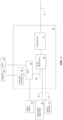
FIG. 3 shows details of a particular embodiment of the warning system shown inFIG. 1 . -
FIG. 1 shows avehicle 10 having apassenger cabin 12 in whichpassengers 14 and adriver 16 sit inseats 18. Eachseat 18 has an associatedmicrophone 20, aspeaker 22, and aninternal camera 24. Theinternal cameras 24 are directed towards various portions of thecabin 12. Thevehicle 10 also includesexternal cameras 26. Theexternal cameras 26 are directed towards the vehicle's environment. - The
driver 16 faces an instrument panel 28 having aspeedometer 30 integrated therein. In addition, thedriver 16 has asteering wheel 32 for use in controlling the vehicle's direction. Ahaptic actuator 34 couples to one or more structures that, when vibrated or otherwise made to move, will attract the driver's attention. In the illustrated embodiment, thehaptic actuator 34 couples to thesteering wheel 32. - The
vehicle 10 further includes asentiment analyzer 36 that receives inputs from the particularinternal camera 24 andmicrophone 20 that are best situated to observe thedriver 16. Based on features present in those inputs, thesentiment analyzer 36 outputs asentiment signal 38. Thissentiment signal 38 indicates whether the driver's sentiment is in a neutral state or a non-neutral state. In some embodiments, thesentiment signal 38 indicates an extent to which the driver's sentiment deviates from the neutral state. - In some embodiments, the
sentiment analyzer 36 also receives inputs frominternal cameras 24 that face thepassengers 14. In such embodiments, thesentiment signal 38 further includes information indicative of whether any one or more of thepassengers 14 is a non-neutral sentiment state. Such information is useful for assessing a driver's potential level of distraction. - Referring to
FIG. 2 , atypical roadway 40 along which avehicle 10 operates includes afirst segment 42 and asecond segment 44. Afirst constraint 46 imposes limits on the vehicle's motion within thefirst segment 42. Similarly, asecond constraint 48 imposes limits on the vehicle's motion in thesecond segment 44. - A
typical constraint certain roadways 40 also specify minimum speeds forvehicles 10 operating thereon. Thus, further examples ofconstraints - Still other examples of
constraints vehicle 10 proceeding in the wrong direction on a one-way street may be traveling below the speed limit but still not in compliance with aconstraint - Yet other examples include a change in the vehicle's direction. For example,
certain roadways 40, particularly in hilly areas, have "no passing" zones. In such cases, aconstraint roadway 40 but not changes that would result in changing lanes. Still another example, ofconstraints - It is preferable that the
driver 16 operate thevehicle 10 in a manner that complies with thevarious constraints FIG. 1 , awarning system 50 assists the user in operating within theconstraint particular segment suitable warning signal 64. - The
warning system 50 relies on information concerning theapplicable constraint warning system 50 uses input from theexternal camera 26 to identify signage from which it then extracts information concerning therelevant constraint GPS 52 maintains a library ofconstraints relevant constraint warning system 50. - The
warning system 50 also relies on amotion sensor 54 that provides it with amotion signal 56. Themotion signal 56 carries information concerning the vehicle's motion. In some embodiments, themotion signal 56 provides information on the vehicle's speed. - The
warning system 50 is further configured to recognize circumstances that require different levels of warning. In particular, thewarning system 50 receives thesentiment signal 38 from thesentiment analyzer 36 and chooses an escalated warning level upon recognizing that thedriver 16 is in a non-neutral state. - Referring now to
FIG. 3 , thewarning system 50 features alevel selector 58 that receives thesentiment signal 38, themotion signal 56. In addition, thelevel selector 58 receives aconstraint signal 60. Theconstraint signal 60 indicates the constraint for the section of roadway that thevehicle 10 is driving on. Based on these three inputs, thelevel selector 58 causes anescalator 62 to output different levels of thewarning signal 64. - In some embodiments, the level of escalation depends at least in part on the extent of the driver's lack of compliance with constraints. In such embodiments, driving at speeds that are only slightly above the speed limit will trigger only a small escalation whereas driving at speeds that are considerably in excess of the speed limit will trigger a larger escalation.
- Similarly, the nature of the driver's lack of compliance is also relevant to the level of escalation. As an example, the danger that arises from driving in the wrong direction is significantly greater than that of driving over the speed limit. In such cases, it is useful for the
escalator 62 to immediately escalate thewarning signal 64 to its most obtrusive level. - In some embodiments, the
warning system 50 relies on observed patterns in the driver's lack of compliance. In such embodiments, thewarning system 50 observes a sequence of rapid lane changes or swerving indicates that the driver may also be impaired in some way. When combined with inferences made by thesentiment analyzer 36 based on one or moreinternal cameras 24 andmicrophones 20, thewarning system 50 is able infer whether the observed pattern has arisen from the driver's intoxication, from distraction bypassengers 14, or from road rage. This, in turn, will inform the level of escalation. - As an example, a
driver 16 whose judgment is clouded by the effects of road rage will generally not respond well to a stentorian announcement by thewarning system 50. Thus, upon inferring, based in part on thesentiment signal 38, that road rage is a likely cause of the driver's lack of compliance, thewarning system 50 switches to a calming voice that speaks with prosody suitable to the situation. - In some embodiments, a warning matrix stores information indicating the properties of each levels of the
warning signal 64. Each row of the warning matrix maps to a particular warning level. For each row, the columns specify the properties of thewarning signal 64 at that level. Thelevel selector 58 sets a pointer to a particular row selected is a function of a three-element vector that includes, as elements thereof, information from theconstraint signal 60, themotion signal 56, and thesentiment signal 38. - The different rows are characterized by different levels of obtrusiveness. The movement of a pointer to a more
obtrusive warning signal 64 is referred to as an "escalation." The movement of a pointer to a lessobtrusive warning signal 64 is referred to as "de-escalation." As used herein, "obtrusiveness" is a measure of the probability that a driver of ordinary skill in driving would notice thewarning signal 64. - In some cases, the
level selector 58 determines that the vehicle's motion complies with theconstraint level selector 58 provides theescalator 62 with a pointer that causes theescalator 62 to output anull warning signal 64. - A
null warning signal 64 is one in which nothing is observable by thedriver 16. Accordingly, it is indistinguishable from having nowarning signal 64 at all. When the pointer points to thenull warning signal 64, only escalation is possible. - In other cases, the
level selector 58 determines that the vehicle's motion fails to comply with theconstraint sentiment signal 38 comes into play. - If the
sentiment signal 38 indicates that the driver's sentiment is neutral, thelevel selector 58 causes theescalator 62 to escalate thewarning signal 64 to a first level of obtrusiveness. An example of awarning signal 64 at this first level is able a light on the instrument panel 28 similar to that which typically appears when avehicle 10 is low on fuel. - If, instead, the
sentiment signal 38 indicates that the driver's sentiment deviates from neutral, thelevel selector 58 causes theescalator 62 to escalate thewarning signal 64 to a second level of obtrusiveness. This second level is more obtrusive than the first level. - An example of a
warning signal 64 at this second level is a light on the instrument panel in combination with an audible alert, such as a spoken utterance announcing to thedriver 16, and to allpassengers 14 who may be in thecabin 12, that thedriver 16 is currently operating thevehicle 10 in a non-compliant manner. Other examples include those in which thewarning signal 64 incorporates a haptic signal. An example of such a haptic signal is one in which thehaptic actuator 34 vibrates thesteering wheel 32. - In the illustrated embodiment, there are two methods for obtaining the
constraint signal 60. The first method comprises receiving theconstraint GPS 52. The second method is to use afeature extractor 66 to receive a signal from theexternal camera 26 and to extract therelevant constraint - Both the signal from the
GPS 52 and the signal from thefeature extractor 66 are provided to amultiplexer 68. The choice of which to use is made by storeduser preferences 70 that are set by a user. In other embodiments, only one or the other method is available, in which case nomultiplexer 68 is necessary. - The
user preferences 70 also specify other operational details of thewarning system 50. For example, by appropriately setting theuser preferences 70, it is possible to disable thewarning system 50 entirely or to disable the use of thesentiment analyzer 36 to implement thewarning system 50. Other settings include the amount of time non-compliant driving is tolerated before a change in thewarning signal 64. This is a useful feature to prevent jitter. Such jitter arises when thevehicle 10 is being driven at an average speed that is equal to the speed limit but with minor variances from that average. - Having described the invention and a preferred embodiment thereof, what is claimed as new and secured by letters patent is:
Claims (15)
- A method comprising determining that a vehicle is being operated in a manner that fails to comply with a constraint imposed on motion of vehicles on a section of a road, determining that a driver of said vehicle exhibits a non-neutral sentiment, based on having determined that said driver exhibits a non-neutral sentiment, selecting a level of obtrusiveness for said warning message, and outputting said warning message at said level.
- The method of claim 1, wherein said constraint is a speed limit.
- The method of claim 1, wherein said level is selected based on an extent to which said non-neutral sentiment deviates from a neutral sentiment.
- The method of claim 1, further comprising determining said constraint based at least in part on a GPS signal.
- An apparatus comprising a warning system (50) for a vehicle, said warning system comprising an escalator (62) and a level selector (58), wherein said level selector receives a constraint signal (60), a motion signal (38), and a sentiment signal (38), wherein said constraint signal is indicative on a constraint on motion of a vehicle on a section of a road, wherein said motion signal is indicative of motion of said vehicle, wherein said sentiment signal is indicative of whether a driver of said vehicle has a non-neutral sentiment, wherein said level selector is configured to select a level of obtrusiveness of a warning signal (64) based at least in part on said sentiment signal, and wherein said escalator receives said level from said level selectors and outputs a warning signal based on said level.
- The apparatus of claim 5, further comprising a camera, a GPS that maintains a library of constraints that are keyed to vehicle location and that provides a first constraint signal based on said vehicle's location, user preferences that control operation of said warning system, a motion sensor that provides, to said warning system, indicative of said vehicle's speed to said level selector, and a sentiment analyzer that provides, to said level selector, a signal indicative whether said driver is in a neutral state or in a non-neutral state, wherein said warning system further comprises a feature extractor that extracts constraint information from one or more images provided by said camera and a multiplexer that receives a second constraint signal from said feature extractor and a first constraint signal from said GPS and that chooses which of said first and second constraint signals to provide to said level selector.
- The apparatus of claim 5, further comprising user preferences that configure said warning system to output said warning signal only if a time spent in non-compliant driving exceeds a threshold.
- The apparatus of claim 5, further comprising an external camera, wherein said warning system comprises a feature extractor that receives an image from said external camera and determines said constraint signal based on said image.
- The apparatus of claim 5, further comprising a GPS that maintains a library of constraints for specific locations, uses said vehicle's location to choose a constraint from said library, and provides said constraint signal that communicates said constraint to said warning system.
- The apparatus of claim 5, wherein said warning system further comprises a multiplexer that selects said constraint signal from among a plurality of sources of constraint signals.
- The apparatus of claim 5, further comprising a sentiment analyzer that produces a signal that is indicative of an extent to which said driver has deviated from a neutral sentiment.
- The apparatus of claim 5, wherein said level selector is further configured to select said level of obtrusiveness based on said constraint.
- The apparatus of claim 5, wherein said level selector is further configured to select said level of obtrusiveness based on an observed pattern in said driver's lack of compliance with said constraint, said pattern comprising two or more instances of lack of compliance with said constraint.
- The apparatus of claim 5, further comprising user preferences to enable said driver to selectively disable said warning system.
- The apparatus of claim 5, wherein said level selector is further configured to select said level of obtrusiveness based on said constraint.
Applications Claiming Priority (1)
| Application Number | Priority Date | Filing Date | Title |
|---|---|---|---|
| US202363467410P | 2023-05-18 | 2023-05-18 |
Publications (1)
| Publication Number | Publication Date |
|---|---|
| EP4468271A1 true EP4468271A1 (en) | 2024-11-27 |
Family
ID=91067269
Family Applications (1)
| Application Number | Title | Priority Date | Filing Date |
|---|---|---|---|
| EP24174828.4A Pending EP4468271A1 (en) | 2023-05-18 | 2024-05-08 | Multi-level warning based on driver sentiment |
Country Status (3)
| Country | Link |
|---|---|
| US (1) | US20240383492A1 (en) |
| EP (1) | EP4468271A1 (en) |
| CN (1) | CN118991810A (en) |
Citations (3)
| Publication number | Priority date | Publication date | Assignee | Title |
|---|---|---|---|---|
| US10322728B1 (en) * | 2018-02-22 | 2019-06-18 | Futurewei Technologies, Inc. | Method for distress and road rage detection |
| US20200034635A1 (en) * | 2016-11-01 | 2020-01-30 | Mitsubishi Electric Corporation | Information presentation method |
| JP2022047580A (en) * | 2020-09-14 | 2022-03-25 | 株式会社Subaru | Information processing equipment |
-
2024
- 2024-05-03 US US18/654,236 patent/US20240383492A1/en active Pending
- 2024-05-08 EP EP24174828.4A patent/EP4468271A1/en active Pending
- 2024-05-17 CN CN202410616020.5A patent/CN118991810A/en active Pending
Patent Citations (3)
| Publication number | Priority date | Publication date | Assignee | Title |
|---|---|---|---|---|
| US20200034635A1 (en) * | 2016-11-01 | 2020-01-30 | Mitsubishi Electric Corporation | Information presentation method |
| US10322728B1 (en) * | 2018-02-22 | 2019-06-18 | Futurewei Technologies, Inc. | Method for distress and road rage detection |
| JP2022047580A (en) * | 2020-09-14 | 2022-03-25 | 株式会社Subaru | Information processing equipment |
Also Published As
| Publication number | Publication date |
|---|---|
| CN118991810A (en) | 2024-11-22 |
| US20240383492A1 (en) | 2024-11-21 |
Similar Documents
| Publication | Publication Date | Title |
|---|---|---|
| US10613531B2 (en) | Vehicle drive assistance system | |
| US10562534B2 (en) | Vehicle drive assistance system and vehicle drive assistance method | |
| US10558215B2 (en) | Vehicle drive assistance system | |
| US10343694B2 (en) | Vehicle drive assistance system | |
| US20160059775A1 (en) | Methods and apparatus for providing direction cues to a driver | |
| US10800425B2 (en) | Method and system for preventing concentration errors when driving a motor vehicle | |
| JP2017045448A (en) | Method and system for warning of vehicle travelling in wrong travel direction | |
| EP2138988A1 (en) | Method for determining a driving demand value | |
| US20250100381A1 (en) | Method for Operating a Driver-Assistance System of a Vehicle With Proactive Suggestion for Deactivating a Speed Warning, Driver-Assistance System and Vehicle | |
| US12600231B2 (en) | Vehicle display system, vehicle display method, and storage medium storing vehicle display program | |
| EP4468271A1 (en) | Multi-level warning based on driver sentiment | |
| JP6555649B2 (en) | Vehicle driving support system and vehicle driving support method | |
| EP4468259A1 (en) | Multi-level warning based on driver gaze | |
| JP4815854B2 (en) | Screen display control device and screen display control method | |
| CN110998688A (en) | Information control device | |
| JP6555651B2 (en) | Vehicle driving support system and vehicle driving support method | |
| US20240140201A1 (en) | Driving assistance device and driving assistance method | |
| CN117985035A (en) | A control method, device and vehicle | |
| JP2016095756A (en) | Sign information display system and sign information display method | |
| US20250042396A1 (en) | Emergent driving assistant based on emotion and gaze | |
| JP2009075856A (en) | Vehicle information presentation device | |
| US20240135812A1 (en) | Information notification system, information notification method, and non-transitory computer-readable recording medium | |
| JP2007513323A (en) | Method and apparatus for indicating direction using screen and vehicle equipped with the apparatus | |
| CN119826857A (en) | Navigation light column data display method, system, electronic equipment and storage medium | |
| JP6555650B2 (en) | Vehicle driving support system and vehicle driving support method |
Legal Events
| Date | Code | Title | Description |
|---|---|---|---|
| PUAI | Public reference made under article 153(3) epc to a published international application that has entered the european phase |
Free format text: ORIGINAL CODE: 0009012 |
|
| STAA | Information on the status of an ep patent application or granted ep patent |
Free format text: STATUS: THE APPLICATION HAS BEEN PUBLISHED |
|
| AK | Designated contracting states |
Kind code of ref document: A1 Designated state(s): AL AT BE BG CH CY CZ DE DK EE ES FI FR GB GR HR HU IE IS IT LI LT LU LV MC ME MK MT NL NO PL PT RO RS SE SI SK SM TR |
|
| STAA | Information on the status of an ep patent application or granted ep patent |
Free format text: STATUS: REQUEST FOR EXAMINATION WAS MADE |
|
| 17P | Request for examination filed |
Effective date: 20250324 |
|
| RAP3 | Party data changed (applicant data changed or rights of an application transferred) |
Owner name: CERENCE OPERATING COMPANY |
|
| STAA | Information on the status of an ep patent application or granted ep patent |
Free format text: STATUS: EXAMINATION IS IN PROGRESS |