EP4468270A1 - Generating an event device optimization analysis in an event system - Google Patents
Generating an event device optimization analysis in an event system Download PDFInfo
- Publication number
- EP4468270A1 EP4468270A1 EP24173652.9A EP24173652A EP4468270A1 EP 4468270 A1 EP4468270 A1 EP 4468270A1 EP 24173652 A EP24173652 A EP 24173652A EP 4468270 A1 EP4468270 A1 EP 4468270A1
- Authority
- EP
- European Patent Office
- Prior art keywords
- event
- event device
- optimization analysis
- detector
- devices
- Prior art date
- Legal status (The legal status is an assumption and is not a legal conclusion. Google has not performed a legal analysis and makes no representation as to the accuracy of the status listed.)
- Pending
Links
Images


Classifications
-
- G—PHYSICS
- G08—SIGNALLING
- G08B—SIGNALLING SYSTEMS, e.g. PERSONAL CALLING SYSTEMS; ORDER TELEGRAPHS; ALARM SYSTEMS
- G08B29/00—Checking or monitoring of signalling or alarm systems; Prevention or correction of operating errors, e.g. preventing unauthorised operation
- G08B29/18—Prevention or correction of operating errors
-
- G—PHYSICS
- G08—SIGNALLING
- G08B—SIGNALLING SYSTEMS, e.g. PERSONAL CALLING SYSTEMS; ORDER TELEGRAPHS; ALARM SYSTEMS
- G08B29/00—Checking or monitoring of signalling or alarm systems; Prevention or correction of operating errors, e.g. preventing unauthorised operation
- G08B29/18—Prevention or correction of operating errors
- G08B29/185—Signal analysis techniques for reducing or preventing false alarms or for enhancing the reliability of the system
-
- G—PHYSICS
- G06—COMPUTING OR CALCULATING; COUNTING
- G06Q—INFORMATION AND COMMUNICATION TECHNOLOGY [ICT] SPECIALLY ADAPTED FOR ADMINISTRATIVE, COMMERCIAL, FINANCIAL, MANAGERIAL OR SUPERVISORY PURPOSES; SYSTEMS OR METHODS SPECIALLY ADAPTED FOR ADMINISTRATIVE, COMMERCIAL, FINANCIAL, MANAGERIAL OR SUPERVISORY PURPOSES, NOT OTHERWISE PROVIDED FOR
- G06Q10/00—Administration; Management
- G06Q10/04—Forecasting or optimisation specially adapted for administrative or management purposes, e.g. linear programming or "cutting stock problem"
-
- G—PHYSICS
- G06—COMPUTING OR CALCULATING; COUNTING
- G06N—COMPUTING ARRANGEMENTS BASED ON SPECIFIC COMPUTATIONAL MODELS
- G06N20/00—Machine learning
-
- G—PHYSICS
- G06—COMPUTING OR CALCULATING; COUNTING
- G06Q—INFORMATION AND COMMUNICATION TECHNOLOGY [ICT] SPECIALLY ADAPTED FOR ADMINISTRATIVE, COMMERCIAL, FINANCIAL, MANAGERIAL OR SUPERVISORY PURPOSES; SYSTEMS OR METHODS SPECIALLY ADAPTED FOR ADMINISTRATIVE, COMMERCIAL, FINANCIAL, MANAGERIAL OR SUPERVISORY PURPOSES, NOT OTHERWISE PROVIDED FOR
- G06Q10/00—Administration; Management
- G06Q10/06—Resources, workflows, human or project management; Enterprise or organisation planning; Enterprise or organisation modelling
- G06Q10/063—Operations research, analysis or management
-
- G—PHYSICS
- G06—COMPUTING OR CALCULATING; COUNTING
- G06Q—INFORMATION AND COMMUNICATION TECHNOLOGY [ICT] SPECIALLY ADAPTED FOR ADMINISTRATIVE, COMMERCIAL, FINANCIAL, MANAGERIAL OR SUPERVISORY PURPOSES; SYSTEMS OR METHODS SPECIALLY ADAPTED FOR ADMINISTRATIVE, COMMERCIAL, FINANCIAL, MANAGERIAL OR SUPERVISORY PURPOSES, NOT OTHERWISE PROVIDED FOR
- G06Q50/00—Information and communication technology [ICT] specially adapted for implementation of business processes of specific business sectors, e.g. utilities or tourism
- G06Q50/08—Construction
-
- G—PHYSICS
- G08—SIGNALLING
- G08B—SIGNALLING SYSTEMS, e.g. PERSONAL CALLING SYSTEMS; ORDER TELEGRAPHS; ALARM SYSTEMS
- G08B29/00—Checking or monitoring of signalling or alarm systems; Prevention or correction of operating errors, e.g. preventing unauthorised operation
- G08B29/18—Prevention or correction of operating errors
- G08B29/185—Signal analysis techniques for reducing or preventing false alarms or for enhancing the reliability of the system
- G08B29/186—Fuzzy logic; neural networks
-
- G—PHYSICS
- G08—SIGNALLING
- G08B—SIGNALLING SYSTEMS, e.g. PERSONAL CALLING SYSTEMS; ORDER TELEGRAPHS; ALARM SYSTEMS
- G08B31/00—Predictive alarm systems characterised by extrapolation or other computation using updated historic data
-
- G—PHYSICS
- G05—CONTROLLING; REGULATING
- G05B—CONTROL OR REGULATING SYSTEMS IN GENERAL; FUNCTIONAL ELEMENTS OF SUCH SYSTEMS; MONITORING OR TESTING ARRANGEMENTS FOR SUCH SYSTEMS OR ELEMENTS
- G05B15/00—Systems controlled by a computer
- G05B15/02—Systems controlled by a computer electric
Definitions
- the present disclosure relates to devices, systems, and methods for generating an event device optimization analysis in an event system.
- Facilities such as commercial facilities, office buildings, hospitals, campuses (e.g., including buildings and outdoor spaces), and the like, may have an event system that can be triggered during an event, such as an emergency situation (e.g., a fire) to warn occupants to evacuate.
- an event system may include an alarm system having a control panel and a number of event devices (e.g., sensors, sounders, pull stations, etc.) located throughout the facility (e.g., on different floors and/or in different rooms of the facility) that can perform an action when an event (e.g., a hazard event, a fault event, etc.) is occurring in the facility.
- the number of event devices may provide a notification of the event to the occupants of the facility via alarms and/or other mechanisms.
- one or more embodiments include a computing device comprising a memory and a processor to execute instructions stored in the memory to receive building system information from a plurality of event devices of the event system in a facility, generate an event device optimization analysis via a machine-learning model using the building system information from the plurality of event devices, and cause the event device optimization analysis to be displayed via a user interface.
- a facility can utilize an event system in order to warn occupants of the facility of an emergency event, such as a fire.
- An event system can be a system of devices that operate to collect information about a facility and provide the collected information for analysis. Such an event system can also take actions based on the collected information, such as providing an audible and/or visible warning in an emergency event.
- the event system can utilize event devices to warn occupants of the emergency event occurring in the space, such as a fire.
- the term "event device” refers to a device that can receive an input relating to an event and/or generate an output relating to an event.
- Such event devices can be a part of the event system of a space in a facility/in the facility at large and can include devices such as fire sensors, smoke detectors, heat detectors, carbon monoxide (CO) detectors, or combinations of these; air quality sensors; interfaces; manual call points (MCPs); pull stations; input/output modules; aspirating units; and/or audio/visual devices (e.g., speakers, sounders, flashers, buzzers, microphones, cameras, video displays, video screens, etc.), relay output modules, among other types of event devices.
- devices such as fire sensors, smoke detectors, heat detectors, carbon monoxide (CO) detectors, or combinations of these; air quality sensors; interfaces; manual call points (MCPs); pull stations; input/output modules; aspirating units; and/or audio/visual devices (e.g., speakers, sounders, flashers, buzzers, microphones, cameras, video displays, video screens, etc.), relay output modules, among other types of event devices.
- devices such as fire sensors, smoke
- Detection states for detectors in the event devices of the event system are generally set when an event system is initially installed and/or commissioned in the facility. However, in some instances, the detectors may not be setup and commissioned with an appreciation for how the facility will operate when occupied by occupants.
- some facilities may have a poor initial event system design.
- alternative event device types and/or alternative engineering configurations may have not been considered in a poorly designed event system.
- a poorly designed event system may not include feedback loops for determination of whether the correct event device types are utilized in the facility.
- the event system may not be able to properly reject potential nuisance events and/or false alarm events, whilst potentially delaying initiating alarms for a real emergency event.
- Generating an event device optimization analysis in an event system can allow for the optimization of detection states for detectors of event devices in the event system, as well as allow for generation of recommendations for alternative event device types and/or alternative engineering configurations for event devices in the facility, all based on real data from the facility.
- Such an approach can provide comprehensive analytical information for more active management of an event system in a facility, promoting safer and less costly event detection processes in the facility, as compared with previous approaches. Additionally, such an approach can reduce unnecessary responses to the facility from local emergency services due to false and/or nuisance events. Further, such an approach can provide occupants of the facility with better confidence in the event system, especially if a real emergency event occurs, as compared with previous approaches.
- a can refer to one or more such things, while “a plurality of” something can refer to more than one such things.
- a number of components can refer to one or more components, while “a plurality of components” can refer to more than one component.
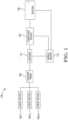
- FIG. 1 is an example of a system 100 for generating an event device optimization analysis in an event system, in accordance with one or more embodiments of the present disclosure.
- the system 100 can include a computing device 102, an environmental monitoring system (EMS) 104, event devices 106-1, 106-2, 106-N, a control panel 108, a gateway 110, and a mobile device 114.
- EMS environmental monitoring system
- the system 100 can be included in a facility, a space in a facility, etc.
- the system 100 can include a device/series of devices in order to detect events and/or process and/or analyze the detected events to determine whether to generate an alarm for occupants of the facility.
- the system 100 can include event devices 106-1, 106-2, 106-N (referred to collectively as event devices 106).
- the event devices 106 can be devices to detect an event and transmit the detected event for processing and/or analysis.
- the event devices 106 can include, for example, cameras, motion sensors, fire sensors, smoke detectors, heat detectors, carbon monoxide (CO) detectors, fixed gas and/or flame detectors, aspirating smoke detectors, beam smoke detectors, or combinations of these; air quality sensors; interfaces; manual call points (MCPs); pull stations; input/output modules; aspirating units; sprinkler controls; and/or audio/visual devices (e.g., speakers, microphones, cameras, video displays, video screens, etc.), relay output modules, among other types of event devices.
- CO carbon monoxide
- Such event devices 106 can include detectors.
- the term “detector” refers to a device to measure events and/or changes in its environment and transmit the detected events and/or changes for processing and/or analysis.
- an event device 106-1 can be a smoke detector and can include a detector that measures amounts of smoke in a sample.
- the system 100 can further include a control panel 108.
- the control panel 108 can be utilized to control the various event devices 106 included in the system 100.
- the control panel 108 can be connected to the event devices 106 and to a gateway 110.
- the gateway 110 can be a device (e.g., a building system gateway) that provides a communication link between the control panel 108 and other devices, such as the computing device 102 and the mobile device 112.
- the gateway 110 may enable transmission of data (e.g., system device data, activation signals, etc.) from the event devices 106 to the computing device 102 and/or the mobile device 112 via the control panel 108 and vice versa.
- data e.g., system device data, activation signals, etc.
- the facility can further include an environmental monitoring system (EMS) 104.
- An environmental monitoring system can include device(s) that monitor and/or detect a condition in an area.
- an environmental monitoring system may include sensors or other devices that can detect an event that occurs (e.g., a door opening, a window being shut, a temperature of a space, a flow rate of an air duct, etc.).
- an environmental monitoring system can include a building management system (BMS).
- BMS building management system
- the term "building management system” refers to a computing-based automation and control system utilized in a facility to monitor, regulate, and/or control the facility's electrical and mechanical equipment, including power, lighting, and ventilation, among other types of equipment in a facility.
- the building management system can utilize a building information model having data associated with a facility (e.g., data associated with components, equipment, and/or properties of the facility).
- building information model data can include data from devices associated with components and/or equipment associated with architectural, mechanical, electrical plumbing, sanitary, and/or any other systems in the facility.
- building information model data can include architectural, mechanical, electrical, plumbing, sanitary, fire, and/or geometrical information associated with a building via various floor plans of the facility, and can be represented in two-dimensional (2D) plans and/or three-dimensional (3D) plans.
- the mobile device 112 can be utilized by an occupant of the facility, such as a building manager, engineer, maintenance personnel, etc.
- the event devices 106 can be connected to the computing device 102 and/or the mobile device 112 (e.g., via the control panel 108 and gateway 110). Additionally, the EMS 104 can be connected to the computing device 102 and/or the mobile device 112. Such devices can be connected via a network relationship.
- Examples of such a network relationship can include a local area network (LAN), wide area network (WAN), personal area network (PAN), a distributed computing environment (e.g., a cloud computing environment), storage area network (SAN), Metropolitan area network (MAN), a cellular communications network, Long Term Evolution (LTE), visible light communication (VLC), Bluetooth, Worldwide Interoperability for Microwave Access (WiMAX), Near Field Communication (NFC), infrared (IR) communication, Public Switched Telephone Network (PSTN), radio waves, and/or the Internet, among other types of network relationships.
- LAN local area network
- WAN wide area network
- PAN personal area network
- a distributed computing environment e.g., a cloud computing environment
- SAN storage area network
- MAN Metropolitan area network
- cellular communications network e.g., Long Term Evolution (LTE), visible light communication (VLC), Bluetooth, Worldwide Interoperability for Microwave Access (WiMAX), Near Field Communication (NFC), infrared (IR) communication, Public
- computing device refers to an electronic system having a processing resource, memory resource, and/or an application-specific integrated circuit (ASIC) that can process information.
- Examples of computing devices can include, for instance, a laptop computer, a notebook computer, a desktop computer, an All-In-One (AIO) computing device, a server, networking equipment (e.g., router, switch, etc.), and/or a mobile device, among other types of computing devices.
- a mobile device can include devices that are (or can be) carried and/or worn by a user.
- a mobile device can be a phone (e.g., a smart phone), a tablet, a personal digital assistant (PDA), smart glasses, and/or a wrist-worn device (e.g., a smart watch), among other types of mobile devices.
- a phone e.g., a smart phone
- a tablet e.g., a personal digital assistant (PDA), smart glasses
- a wrist-worn device e.g., a smart watch
- the computing device 102 can receive building system information from various entities in the system 100.
- building system information refers to data associated with operation of a facility. Building system information can be received from the event devices 106, the EMS 104, and/or from the mobile device 112, as is further described herein.
- the computing device 102 can receive building system information from the event devices 106.
- the event devices 106 can transmit building system information to the computing device via the control panel 108 and the gateway 110.
- the building system information from the event devices 106 can include any data measurable by the event devices 106.
- the data from the event devices 106 can include pre-alarm data prior to an event device 106 detecting an event, alarm data after an event device 106 detects an event, operational data not associated with an event, spike events, etc.
- pre-alarm data can include detector data relative to a detection threshold, A to D values from the event device 106, etc.
- event device 106-1 can be a heat detector and transmit, to the computing device 102, a heat level (e.g., a temperature) relative to a threshold temperature to the computing device 102.
- event device 106-2 can be a smoke detector and transmit a smoke level relative to a threshold smoke amount
- event device 106-3 can be a CO detector and transmit a CO level relative to a threshold amount, etc.
- the event devices 106 can transmit building system information that includes alarm data to the computing device 102 after an event device 106 detects an event.
- the event device 106-1 may detect an event (e.g., a detected temperature exceeds a threshold temperature), and the event device 106-1 can transmit the alarm data (e.g., the detected temperature) to the computing device 102.
- the computing device 102 can additionally receive building system information from the EMS 104 of the facility.
- building system information from the EMS 104 can include environmental information such as information from devices as well as building information model data from devices associated with components and/or equipment associated with architectural, mechanical, electrical plumbing, sanitary, and/or any other systems in the facility, as well as information associated with floor plans of the facility.
- Such building system information from the EMS 104 of the facility can provide environmental data about the facility in addition to information detected by the event devices 106.
- building system information from the EMS 104 can provide contextual information about what was going on in a space prior to and when an event is detected.
- event device 106-2 is an air quality sensor that detects a drop in air quality
- the building system information from the EMS 104 can provide contextual information that a door to the space was left open (e.g., via a door sensor connected to the EMS 104) that may have allowed dirty air to interact with the event device 106-2.
- Such information can allow the computing device 102 to determine steps to take regarding an optimization analysis via a machine-learning model, as is further described herein.
- the building system information can further include classification data about an event detected by event devices 106.
- a query can be transmitted to the mobile device 112 which can allow for a user to provide an input to the mobile device 112 about the event type.
- the classification data can be organized by event type according to the user input.
- event device 106-1 may detect an event and the user of the mobile device 112 can determine that the detected event is an unwanted alarm event or a real event.
- the query provided to the user of the mobile device can allow the user to specify whether the event is an unwanted alarm event or a real event.
- the mobile device 112 can classify that detected event as an unwanted alarm event and transmit such information to the computing device 102 as building system information.
- the event types may include an unwanted alarm event and/or a real event.
- Unwanted alarm events can be events in which an environmental condition is created (intentionally or unintentionally) that an event device is designed to detect but is not an emergency.
- Such unwanted alarm events can be, for example, nuisance events, false alarm events, etc.
- an occupant may burn toast in an office kitchen. While smoke generated by the burned toast is unintentional and may cause an event device 106 to trigger, such an event is not an emergency and may be considered an unwanted alarm event.
- an unwanted alarm event can be a false alarm event.
- an event device 106 may be a heat detector that is located proximate to a steam pipe (e.g., either erroneously or due to poor event system design), where when a temperature of the steam pipe is high enough (e.g., intentionally due to facility operations) such that the event device 106 detects the heat generated by the steam pipe, the event device 106 may erroneously trigger.
- the event device optimization analysis can provide a facility manager or other user options to make various changes in the facility to try and prevent unwanted alarm events, such as nuisance events and false alarm events, using the building system information, as is further described herein.
- the event types may also include a real event.
- the term "real event” refers to an emergency event.
- an event device 106 may be a smoke detector that detects smoke generated by a fire in the facility.
- the event device optimization analysis can provide occupants of the facility confidence that the fire in the facility is properly detected and occupants warned in a timely manner to allow for safe emergency procedures to occur.
- the computing device 102 can receive building system information from the event devices 106 (e.g., including pre-alarm data and alarm data), the mobile device 112 (e.g., including classification data about an event, past events, etc.), and from the EMS 104 (e.g., including environmental information data).
- the computing device 102 can generate an event device optimization analysis via a machine-learning model using the building system information from the event devices 106, the EMS 104, and/or the mobile device 112.
- the machine-learning model can be an algorithm that utilizes sample data (e.g., training data) to generate a rule set that allows the algorithm to make predictions on new data fed to the model.
- the computing device 102 can utilize the received building system information to generate the event device optimization analysis in order to determine optimal detection states for detectors of event devices, whether alternative event device types may be more suitable, whether alternative engineering configurations may be more suitable, whether to unlock detector features that may be locked for use, and/or combinations thereof.
- the computing device 102 (e.g., via the machine-learning model) can select event device 106-1, as the building system information may indicate that event device 106-1 may be optimized by modifying a detection state of the detector of event device 106-1, that an alternative event device type may be more suitable in a location in the facility at which event device 106-1 is located, that an alternative engineering configuration for the event device 106-1 may be more desirable, and/or whether to unlock a detector feature in an event device, as is further described herein.
- the machine-learning model can determine a propensity rating for the event device optimization analysis options for consideration for a user utilizing the building system information, past event device optimization analyses, and/or past inputs in response to the past event device optimization analyses, as is further described herein.
- generating the event device optimization analysis can include determining an optimal detection state for a detector of the event device 106-1 via the machine-learning model.
- event device 106-1 can include multiple operational states, each having sensitivity levels that can vary within each state.
- the event device 106-1 can be a detector that can detect multiple fire phenomena, such as heat and CO (e.g., the event device 106-1 can be a dual optical heat CO detector).
- Such a device type may have a higher sensitivity than, for instance, a device that detects a single fire phenomenon (e.g., a smoke detector).
- the machine-learning model can determine that the event device 106-1 detects too many false alarm events because the event device 106-1 is located too proximate to a steam pipe in a space in the facility with engine exhaust being emitted, allowing the event device 106-1 to detect the heat from the pipe and the exhaust to interact with the event device 106-1.
- the machine-learning model can determine that the detection state of the event device 106-1 may be modified and/or the sensitivity level within the detection state can be modified (e.g., turned down) to prevent the event device 106-1 from activating in an instance when the pipe is hot and exhaust fumes are emitted.
- the event device optimization analysis can include a propensity rating surrounding the proposed detection state and/or optimal sensitivity level.
- the machine-learning model can determine that turning down the sensitivity level for the dual optical heat CO detector device would have a 60% propensity rating for the likelihood of preventing the event device 106-1 from activating in an instance when the pipe is hot and exhaust fumes are emitted.
- the event device 106-1 can be a device that detects a single event phenomenon.
- the machine-learning model can determine that the event device 106-1 detects many false alarm events because the event device 106-1 is an air quality sensor located too proximate to a door that is constantly being utilized (e.g., being opened), allowing unclean air to consistently interact with the event device 106-1.
- the machine-learning model can determine that the detection state of the event device 106-1 may be turned down to prevent the event device 106-1 from activating from so many false alarms.
- the event device optimization analysis can include a propensity rating surrounding the proposed optimal sensitivity level.
- the machine-learning model can determine that turning down the sensitivity level for the air quality sensor would have an 80% propensity rating for the likelihood of preventing the event device 106-1 from activating in an instance when the door is opened and unclean air interacts with the event device 106-1.
- generating the event device optimization analysis can include determining an alternative event device type for event device 106-1 via the machine-learning model.
- the event device 106-1 can be a heat detector which may be located too proximate to a steam pipe (e.g., the temperature of which is provided to the computing device 102 via the building system information), and the machine-learning model can determine that the event device 106-1 detects too many false alarm events because the event device 106-1 unintentionally detects the heat from the steam pipe.
- the machine-learning model can determine that the event device type for event device 106-1 (e.g., a heat device) should be replaced with an alternative event device type, such as a smoke detector event device. Accordingly, the smoke detector event device would provide fire detection capabilities without being triggered by the heat of the proximate steam pipe.
- the event device optimization analysis can include a propensity rating surrounding the proposed alternative event device type.
- the machine-learning model can determine that changing the heat detector to a smoke detector would have a 98% propensity rating for the likelihood of preventing the event device 106-1 from activating in an instance when the pipe is hot.
- generating the event device optimization analysis can include determining an alternative engineering configuration for event device 106-1 via the machine-learning model.
- the event device 106-1 can be a heat detector which may be located too proximate to a steam pipe (e.g., the temperature of which, determined by a sensor, is provided to the computing device 102 via the building system information from the EMS 104), and the machine-learning model can determine that the event device 106-1 detects too many false alarm events because the event device 106-1 unintentionally detects the heat from the steam pipe.
- the machine-learning model can determine that event device 106-1 (e.g., a heat device) should include a co-incidence detection mechanism such that the event device 106-1 does not activate, even when an event is detected (e.g., a temperature is detected that exceeds a threshold temperature), unless event device 106-2 also detects the event.
- event device 106-1 detects the event
- event device 106-2 is also a heat detector that detects the heat and is not located proximate to the steam pipe
- the event devices 106-1 and 106-2 can activate.
- event device 106-2 is a smoke detector that detects smoke
- the event devices 106-1 and 106-2 can activate.
- event device 106-1 detects the event
- event device 106-2 is also a heat detector that does not detect the heat and is not located proximate to the steam pipe, the event devices 106-1 and 106-2 will not activate.
- the event device optimization analysis can include a propensity rating surrounding the proposed alternative engineering configuration.
- the machine-learning model can determine that including co-incidence detection would have a 95% propensity rating for the likelihood of preventing the event device 106-1 from activating in an instance when the pipe is hot.
- alternative engineering configurations can also include day night detection modules, alarm delay processes, etc.
- generating the event device optimization analysis can include determining whether to unlock a detector feature of the event device 106-1 via the machine-learning model.
- the event device 106-1 can be a detector that can detect multiple fire phenomena, such as heat and CO (e.g., the event device 106-1 can be a dual optical heat CO detector).
- the firmware of the event device 106-1 may allow only the heat detector to be utilized.
- the machine-learning model can determine that the event device 106-1 detects too many false alarm events utilizing only the heat detector because the event device 106-1 is located too proximate to a steam pipe, allowing the event device 106-1 to detect the heat from the pipe.
- the machine-learning model can determine that the CO detector feature of the event device 106-1 may be unlocked for use so that in order for the event device 106-1 to activate, the event device 106-1 has to detect both heat and CO.
- Such a feature unlock can prevent the event device 106-1 from activating in an instance when the pipe is hot.
- the event device optimization analysis can include a propensity rating surrounding the proposed feature unlock.
- the machine-learning model can determine that unlocking the locked feature would have a 85% propensity rating for the likelihood of preventing the event device 106-1 from activating in an instance when the pipe is hot.
- generating the event device optimization analysis is described above as including determining an optimal detection state, determining an alternative event device type, and determining an alternative engineering configuration, embodiments of the present disclosure are not so limited.
- generating the event device optimization analysis can further include determining that another event device should be included, the location of the event device in the facility should be changed, etc.
- the event device optimization analysis may include a combination of an optimal detection state, alternative event device type, and alternative engineering configuration.
- the event device optimization analysis may include changing the sensitivity of the detector of the event device 106-1 with a propensity rating of 60%, and an alternative event device type for the event device 106-1 with a propensity rating of 98%. Accordingly, a user reviewing the event device optimization analysis may utilize the propensity rating as a factor in determining which approach to take to reduce false alarm events for the event device 106-1 surrounding the steam pipe.
- the computing device 102 can transmit the event device optimization analysis to another computing device. For example, the computing device 102 can transmit the event device optimization analysis to the mobile device 112 and/or any other computing device to cause the event device optimization analysis to be displayed via a user interface.
- the mobile device 112 can include a user interface that can display the event device optimization analysis received from the computing device 102.
- the event device optimization analysis can be utilized to do various things, as is further described herein.
- the event device optimization analysis can include a report.
- the report can summarize the event device optimization analysis, including event devices 106 of interest, possible recommendations for the event devices 106, etc.
- the report can include a recommendation to change a detection state of the detector of an event device 106 to an optimal detection state.
- the event device 106-1 may be an air quality sensor having a sensitivity level 8.
- the event device optimization analysis can determine an optimum sensitivity level to be 7 based on the event device 106-1 having too many false alarms (e.g., from being exposed to unclean air from a door consistently being left open), and can include a recommendation to change the sensitivity level from sensitivity level 8 to the optimum sensitivity level (e.g., sensitivity level 7).
- the event device optimization analysis can include a propensity rating associated with the recommendation to change the detection state.
- the report can include a recommendation to change the event device 106 to an alternative event device type.
- the event device 106-1 may be a heat detector located too proximate to a steam pipe.
- the event device optimization analysis can determine the heat detector detects too many false alarm events because the event device 106-1 unintentionally detects the heat from the steam pipe, and can determine that the event device type for event device 106-1 should be replaced with a smoke detector event device type.
- the report can accordingly include the recommendation to change the event device 106-1 from a heat detector to a smoke detector.
- the event device optimization analysis can include a propensity rating associated with the recommendation to change the event device 106 to an alternative event device type.
- the report can include a recommendation to change the engineering configuration for the event device 106 to an alternative engineering configuration.
- the event device 106-1 may be a heat detector located too proximate to a steam pipe.
- the event device optimization analysis can determine the heat detector detects too many false alarm events because the event device 106-1 unintentionally detects the heat from the steam pipe, and can determine that the event device 106-1 (e.g., a heat device) should include a co-incidence detection mechanism such that the event device 106-1 does not activate, even when an event is detected (e.g., a temperature is detected that exceeds a threshold temperature), unless event device 106-2 also detects the event.
- the report can accordingly include the recommendation to include an alternative engineering configuration for the event device 106-1.
- the event device optimization analysis can include a propensity rating associated with the recommendation to change the engineering configuration of the event device 106 to an alternative engineering configuration.
- the report can include a recommendation to unlock the detector feature in the event device 106.
- the event device 106-1 may be a combination heat and CO detector with the CO detector being locked in the firmware of the event device 106-1, where the event device 106-1 is located too proximate to a steam pipe.
- the event device optimization analysis can determine the heat detector detects too many false alarm events because the event device 106-1 unintentionally detects the heat from the steam pipe, and can determine that the event device 106-1 (e.g., a heat device) should have the CO detection feature unlocked such that the event device 106-1 does not activate, even when an event is detected by the heat detector (e.g., a temperature is detected that exceeds a threshold temperature), unless the CO detector also detects the event (e.g., CO associated with an event).
- the report can accordingly include the recommendation to unlock the detector feature for the event device 106-1.
- the event device optimization analysis can include a propensity rating associated with unlocking the detector feature of the event device 106.
- the computing device 102 can cause the event device 106-1 to change the detection state.
- the report including the recommendation to change the detection state of the detector of an event device 106 to an optimal detection state can include a query displayed to a user (e.g., via the mobile device 112) as to whether to accept the recommendation or not.
- the computing device 102 can cause the event device 106-1 to change the detection state of the detector to the optimal detection state.
- the computing device 102 can transmit a signal to the event device 106-1 that can modify the firmware of the event device 106-1 causing the detection state of the detector of the event device 106-1 to change.
- the computing device 102 can, in some instances, cause the detector to change the detection state to the optimal detection state automatically based on the event device optimization analysis. For example, based on the event device optimization analysis indicating a change in the detection state of the detector, the computing device 102 can cause the event device 106-1 to change the detection state of the detector to the optimal detection state. For instance, the computing device 102 can transmit a signal automatically to the event device 106-1 that can modify the firmware of the event device 106-1 causing the detection state of the detector of the event device 106-1 to change to the optimal detection state determined by the event device optimization analysis.
- the computing device 102 can cause the event device 106-1 to change the engineering configuration to an alternative engineering configuration.
- the report including the recommendation to change the engineering configuration of the detector of an event device 106 to an alternative engineering configuration can include a query displayed to a user (e.g., via the mobile device 112) as to whether to accept the recommendation or not.
- the computing device 102 can cause the event device 106-1 to change the engineering configuration of the detector to an alternative engineering configuration.
- the computing device 102 can transmit a signal to the event device 106-1 that can modify the firmware of the event device 106-1 causing the engineering configuration of the detector of the event device 106-1 to change.
- the computing device 102 can, in some instances, cause the detector to change the engineering configuration to the alternative engineering configuration automatically based on the event device optimization analysis. For example, based on the event device optimization analysis indicating a change in the engineering configuration of the detector, the computing device 102 can cause the event device 106-1 to change the engineering configuration of the detector to the alternative engineering configuration. For instance, the computing device 102 can transmit a signal automatically to the event device 106-1 that can modify the firmware of the event device 106-1 causing the engineering configuration of the detector of the event device 106-1 to change to the alternative engineering configuration determined by the event device optimization analysis.
- the computing device 102 can cause the event device 106-1 to unlock the detector feature.
- the report including the recommendation to unlock the detector feature in an event device 106 can include a query displayed to a user (e.g., via the mobile device 112) as to whether to accept the recommendation or not.
- the computing device 102 can cause the event device 106-1 to unlock the detector feature.
- the computing device 102 can transmit a signal to the event device 106-1 that can modify the firmware of the event device 106-1 causing the detector feature to be unlocked.
- the computing device 102 can, in some instances, cause the detector to unlock the detector feature automatically based on the event device optimization analysis. For example, based on the event device optimization analysis indicating the detector feature should be unlocked, the computing device 102 can cause the event device 106-1 to unlock the detector feature. For instance, the computing device 102 can transmit a signal automatically to the event device 106-1 that can modify the firmware of the event device 106-1 causing the detector feature of the event device 106-1 to be unlocked.
- the computing device 102 can generate the event device optimization analysis via a machine-learning model using building system information. Such information can be received from various sources, as is additionally described in connection with Figure 2 .
- Figure 2 is an example of a computing device 202 having a machine-learning model 214 for generating an event device optimization analysis in an event system, in accordance with one or more embodiments of the present disclosure.
- the computing device 202 can receive building system information from a BMS 204, event device 206, and a mobile device 212.
- the computing device 202 can utilize the machine-learning model 214 to generate the event device optimization analysis.
- the computing device 202 can further generate the machine-learning model 214 in order to generate such an optimization analysis.
- the computing device 202 can utilize training data comprised of site data from the facility, and/or test data to generate decision rules for generating the event device optimization analysis. Such decision rules can be generated based on the training and test data, and can be utilized when generating the event device optimization analysis.
- the training and test data can inform a decision rule such that under certain circumstances (e.g., if an event device encounters an unwanted alarm event over a threshold number of times under certain environmental conditions, which may be determined based on building system information from the BMS 204), a recommendation with respect to detection state, alternative event device type, alternative engineering configurations, and/or unlocking of detector features can be generated.
- a decision rule such that under certain circumstances (e.g., if an event device encounters an unwanted alarm event over a threshold number of times under certain environmental conditions, which may be determined based on building system information from the BMS 204), a recommendation with respect to detection state, alternative event device type, alternative engineering configurations, and/or unlocking of detector features can be generated.
- the computing device 202 can receive building system information including pre-alarm data and alarm data from an event device 206.
- the pre-alarm data can be data from the event device 206 prior to detecting an event.
- the alarm data can be data from the event device 206 after detecting an event.
- the computing device 202 can receive environmental information data from the EMS 204.
- data from the EMS 204 can include data from devices associated with components and/or equipment associated with architectural, mechanical, electrical plumbing, sanitary, and/or any other systems in the facility, as well as information associated with floor plans of the facility.
- the computing device 202 can receive classification data about an event detected by the event device 206 from the mobile device 212. For example, in response to an event being detected by the event device 206, a query can be transmitted to the mobile device 212 which can allow for a user to provide an input to the mobile device 212 about the event type.
- event types can include an unwanted alarm event and/or a real event.
- the machine-learning model 214 included in the computing device 202 can receive the classification data, environmental information, the pre-alarm data, and/or the alarm data. Accordingly, the computing device 202 can generate the event device optimization analysis via the machine-learning model 214 using the above building system information, as previously described in connection with Figure 1 . Such information can be presented in a report, as previously described in connection with Figure 1 , and as is further illustrated in Figure 3 .
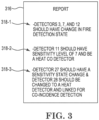
- Figure 3 is an example of a report 316 in an event device optimization analysis, in accordance with one or more embodiments of the present disclosure.
- the report 316 can include various recommendations 318.
- the event device optimization analysis can include a report 316.
- the report 316 can summarize the event device optimization analysis, including event devices of interest, possible recommendations 318 for the event devices, etc.
- the report 316 can include a recommendation 318-1 for an optimal detection state for a detector of an event device.
- the recommendation 318-1 can include detectors 3, 7, and 12 should have a change in fire detection state.
- the report 316 can include a recommendation 318-2 for an alternative event device type for the event device.
- the recommendation 318-2 can include detector 11 should include a sensitivity level change to sensitivity level 7 and be a heat and/or CO detector.
- the report 316 can include a recommendation 318-3 for an alternative engineering configuration for the event device.
- the recommendation 318-3 can include detectors 27 and 28 should be linked for co-incidence detection, and detector 27 should have a sensitivity state change.
- the report 316 and the recommendations 318 can be transmitted to a mobile device of a user.
- the mobile device can provide a query to the user as to whether to accept such recommendations 318.
- the mobile device can provide a query to the user as to whether to accept the recommendation 318-1.
- the computing device can generate a revised report 316.
- the revised report 316 can include a task to change the detection state to the optimal detection state.
- Such revised reports 316 may be generated and displayed to a user when the computing device does not modify the detection state (e.g., in response to a user input or automatically without user input).
- the mobile device can provide a query to the user as to whether to accept the recommendation 318-2.
- the computing device can generate a revised report 316.
- the revised report 316 can include a task to change the type of event device to the alternative event device type.
- the mobile device can provide a query to the user as to whether to accept the recommendation 318-3.
- the computing device can generate a revised report 316.
- the revised report 316 can include a task to link detectors 27 and 28.
- Such revised reports 316 may be generated and displayed to a user when the computing device does not link detectors 27 and 28 (e.g., in response to a user input or automatically without user input).
- an event device optimization analysis in an event system can allow for the optimization of event devices in an event system.
- Such an approach can utilize existing building information to build a machine-learning model that can provide comprehensive analytical information for more active management of an event system in a facility, promoting safer and less costly event detection processes in the facility, as compared with previous approaches.
- Figure 4 is an example of a computing device 402 for generating an event device optimization analysis in an event system, in accordance with one or more embodiments of the present disclosure.
- the computing device 402 can include a memory 430 and a processor 428 for generating an event device optimization analysis in an event system, in accordance with the present disclosure.
- the memory 430 can be any type of storage medium that can be accessed by the processor 428 to perform various examples of the present disclosure.
- the memory 430 can be a non-transitory computer readable medium having computer readable instructions (e.g., executable instructions/computer program instructions) stored thereon that are executable by the processor 428 for generating an event device optimization analysis in an event system in accordance with the present disclosure.
- the memory 430 can be volatile or nonvolatile memory.
- the memory 430 can also be removable (e.g., portable) memory, or non-removable (e.g., internal) memory.
- the memory 430 can be random access memory (RAM) (e.g., dynamic random access memory (DRAM) and/or phase change random access memory (PCRAM)), read-only memory (ROM) (e.g., electrically erasable programmable read-only memory (EEPROM) and/or compact-disc read-only memory (CD-ROM)), flash memory, a laser disc, a digital versatile disc (DVD) or other optical storage, and/or a magnetic medium such as magnetic cassettes, tapes, or disks, among other types of memory.
- RAM random access memory
- DRAM dynamic random access memory
- PCRAM phase change random access memory
- ROM read-only memory
- EEPROM electrically erasable programmable read-only memory
- CD-ROM compact-disc read-only memory
- flash memory a laser disc
- memory 430 is illustrated as being located within computing device 402, embodiments of the present disclosure are not so limited.
- memory 430 can also be located internal to another computing resource (e.g., enabling computer readable instructions to be downloaded over the Internet or another wired or wireless connection).
- the processor 428 may be a central processing unit (CPU), a semiconductor-based microprocessor, and/or other hardware devices suitable for retrieval and execution of machine-readable instructions stored in the memory 430.
- CPU central processing unit
- semiconductor-based microprocessor and/or other hardware devices suitable for retrieval and execution of machine-readable instructions stored in the memory 430.
Landscapes
- Engineering & Computer Science (AREA)
- Business, Economics & Management (AREA)
- Physics & Mathematics (AREA)
- General Physics & Mathematics (AREA)
- Human Resources & Organizations (AREA)
- Strategic Management (AREA)
- Economics (AREA)
- Theoretical Computer Science (AREA)
- Computer Security & Cryptography (AREA)
- Entrepreneurship & Innovation (AREA)
- General Business, Economics & Management (AREA)
- Marketing (AREA)
- Software Systems (AREA)
- Tourism & Hospitality (AREA)
- Computing Systems (AREA)
- Development Economics (AREA)
- Quality & Reliability (AREA)
- Artificial Intelligence (AREA)
- Evolutionary Computation (AREA)
- Game Theory and Decision Science (AREA)
- Operations Research (AREA)
- Mathematical Physics (AREA)
- Emergency Management (AREA)
- Automation & Control Theory (AREA)
- Primary Health Care (AREA)
- General Health & Medical Sciences (AREA)
- Health & Medical Sciences (AREA)
- General Engineering & Computer Science (AREA)
- Educational Administration (AREA)
- Medical Informatics (AREA)
- Data Mining & Analysis (AREA)
- Computer Vision & Pattern Recognition (AREA)
- Fuzzy Systems (AREA)
- Alarm Systems (AREA)
Abstract
Devices, systems, and methods for generating an event device optimization analysis in an event system are described herein. In some examples, one or more embodiments include a computing device comprising a memory and a processor to execute instructions stored in the memory to receive building system information from a plurality of event devices of the event system in a facility, generate an event device optimization analysis via a machine-learning model using the building system information from the plurality of event devices, and cause the event device optimization analysis to be displayed via a user interface.
Description
- The present disclosure relates to devices, systems, and methods for generating an event device optimization analysis in an event system.
- Facilities, such as commercial facilities, office buildings, hospitals, campuses (e.g., including buildings and outdoor spaces), and the like, may have an event system that can be triggered during an event, such as an emergency situation (e.g., a fire) to warn occupants to evacuate. Such an event system may include an alarm system having a control panel and a number of event devices (e.g., sensors, sounders, pull stations, etc.) located throughout the facility (e.g., on different floors and/or in different rooms of the facility) that can perform an action when an event (e.g., a hazard event, a fault event, etc.) is occurring in the facility. In an example of an event, the number of event devices may provide a notification of the event to the occupants of the facility via alarms and/or other mechanisms.
-
-
Figure 1 is an example of a system for generating an event device optimization analysis in an event system, in accordance with one or more embodiments of the present disclosure. -
Figure 2 is an example of a computing device having a machine-learning model for generating an event device optimization analysis in an event system, in accordance with one or more embodiments of the present disclosure. -
Figure 3 is an example of a report in an event device optimization analysis, in accordance with one or more embodiments of the present disclosure. -
Figure 4 is an example of a computing device for generating an event device optimization analysis in an event system, in accordance with one or more embodiments of the present disclosure. - Devices, systems, and methods for generating an event device optimization analysis in an event system are described herein. In some examples, one or more embodiments include a computing device comprising a memory and a processor to execute instructions stored in the memory to receive building system information from a plurality of event devices of the event system in a facility, generate an event device optimization analysis via a machine-learning model using the building system information from the plurality of event devices, and cause the event device optimization analysis to be displayed via a user interface.
- A facility can utilize an event system in order to warn occupants of the facility of an emergency event, such as a fire. An event system can be a system of devices that operate to collect information about a facility and provide the collected information for analysis. Such an event system can also take actions based on the collected information, such as providing an audible and/or visible warning in an emergency event. For example, the event system can utilize event devices to warn occupants of the emergency event occurring in the space, such as a fire. As used herein, the term "event device" refers to a device that can receive an input relating to an event and/or generate an output relating to an event. Such event devices can be a part of the event system of a space in a facility/in the facility at large and can include devices such as fire sensors, smoke detectors, heat detectors, carbon monoxide (CO) detectors, or combinations of these; air quality sensors; interfaces; manual call points (MCPs); pull stations; input/output modules; aspirating units; and/or audio/visual devices (e.g., speakers, sounders, flashers, buzzers, microphones, cameras, video displays, video screens, etc.), relay output modules, among other types of event devices.
- Detection states for detectors in the event devices of the event system are generally set when an event system is initially installed and/or commissioned in the facility. However, in some instances, the detectors may not be setup and commissioned with an appreciation for how the facility will operate when occupied by occupants.
- Additionally, in some examples, some facilities may have a poor initial event system design. For example, alternative event device types and/or alternative engineering configurations may have not been considered in a poorly designed event system. Additionally, a poorly designed event system may not include feedback loops for determination of whether the correct event device types are utilized in the facility.
- When detectors/event devices are not setup properly and/or a poor event system design occurs, various issues can arise. For example, the event system may not be able to properly reject potential nuisance events and/or false alarm events, whilst potentially delaying initiating alarms for a real emergency event.
- The consequences of poor event system design and/or improperly selected and/or setup event devices can undermine occupants' faith in the event system if the event system detects too many unwanted events, such as nuisance events and/or false alarm events. However, incorrectly de-sensitizing the detectors in the event devices in the event system can inhibit the event system's ability to give early warning detection of real emergency events, which is critical for alerting occupants of the facility.
- Generating an event device optimization analysis in an event system, according to the present disclosure, can allow for the optimization of detection states for detectors of event devices in the event system, as well as allow for generation of recommendations for alternative event device types and/or alternative engineering configurations for event devices in the facility, all based on real data from the facility. Such an approach can provide comprehensive analytical information for more active management of an event system in a facility, promoting safer and less costly event detection processes in the facility, as compared with previous approaches. Additionally, such an approach can reduce unnecessary responses to the facility from local emergency services due to false and/or nuisance events. Further, such an approach can provide occupants of the facility with better confidence in the event system, especially if a real emergency event occurs, as compared with previous approaches.
- In the following detailed description, reference is made to the accompanying drawings that form a part hereof. The drawings show by way of illustration how one or more embodiments of the disclosure may be practiced.
- These embodiments are described in sufficient detail to enable those of ordinary skill in the art to practice one or more embodiments of this disclosure. It is to be understood that other embodiments may be utilized and that process, electrical, and/or structural changes may be made without departing from the scope of the present disclosure.
- As will be appreciated, elements shown in the various embodiments herein can be added, exchanged, combined, and/or eliminated so as to provide a number of additional embodiments of the present disclosure. The proportion and the relative scale of the elements provided in the figures are intended to illustrate the embodiments of the present disclosure and should not be taken in a limiting sense.
- The figures herein follow a numbering convention in which the first digit or digits correspond to the drawing figure number and the remaining digits identify an element or component in the drawing. Similar elements or components between different figures may be identified by the use of similar digits. For example, 102 may reference element "02" in
Figure 1 , and a similar element may be referenced as 202 inFigure 2 . - As used herein, "a", "an", or "a number of" something can refer to one or more such things, while "a plurality of" something can refer to more than one such things. For example, "a number of components" can refer to one or more components, while "a plurality of components" can refer to more than one component.
-
Figure 1 is an example of asystem 100 for generating an event device optimization analysis in an event system, in accordance with one or more embodiments of the present disclosure. Thesystem 100 can include acomputing device 102, an environmental monitoring system (EMS) 104, event devices 106-1, 106-2, 106-N, acontrol panel 108, agateway 110, and a mobile device 114. - As mentioned above, the
system 100 can be included in a facility, a space in a facility, etc. Thesystem 100 can include a device/series of devices in order to detect events and/or process and/or analyze the detected events to determine whether to generate an alarm for occupants of the facility. - For example, the
system 100 can include event devices 106-1, 106-2, 106-N (referred to collectively as event devices 106). Theevent devices 106 can be devices to detect an event and transmit the detected event for processing and/or analysis. As mentioned above, theevent devices 106 can include, for example, cameras, motion sensors, fire sensors, smoke detectors, heat detectors, carbon monoxide (CO) detectors, fixed gas and/or flame detectors, aspirating smoke detectors, beam smoke detectors, or combinations of these; air quality sensors; interfaces; manual call points (MCPs); pull stations; input/output modules; aspirating units; sprinkler controls; and/or audio/visual devices (e.g., speakers, microphones, cameras, video displays, video screens, etc.), relay output modules, among other types of event devices. -
Such event devices 106 can include detectors. As used herein, the term "detector" refers to a device to measure events and/or changes in its environment and transmit the detected events and/or changes for processing and/or analysis. For example, an event device 106-1 can be a smoke detector and can include a detector that measures amounts of smoke in a sample. - The
system 100 can further include acontrol panel 108. Thecontrol panel 108 can be utilized to control thevarious event devices 106 included in thesystem 100. - The
control panel 108 can be connected to theevent devices 106 and to agateway 110. Thegateway 110 can be a device (e.g., a building system gateway) that provides a communication link between thecontrol panel 108 and other devices, such as thecomputing device 102 and themobile device 112. For example, thegateway 110 may enable transmission of data (e.g., system device data, activation signals, etc.) from theevent devices 106 to thecomputing device 102 and/or themobile device 112 via thecontrol panel 108 and vice versa. - The facility can further include an environmental monitoring system (EMS) 104. An environmental monitoring system can include device(s) that monitor and/or detect a condition in an area. For example, an environmental monitoring system may include sensors or other devices that can detect an event that occurs (e.g., a door opening, a window being shut, a temperature of a space, a flow rate of an air duct, etc.). In some examples, an environmental monitoring system can include a building management system (BMS). As used herein, the term "building management system" refers to a computing-based automation and control system utilized in a facility to monitor, regulate, and/or control the facility's electrical and mechanical equipment, including power, lighting, and ventilation, among other types of equipment in a facility. The building management system can utilize a building information model having data associated with a facility (e.g., data associated with components, equipment, and/or properties of the facility). For example, building information model data can include data from devices associated with components and/or equipment associated with architectural, mechanical, electrical plumbing, sanitary, and/or any other systems in the facility. Additionally, building information model data can include architectural, mechanical, electrical, plumbing, sanitary, fire, and/or geometrical information associated with a building via various floor plans of the facility, and can be represented in two-dimensional (2D) plans and/or three-dimensional (3D) plans.
- Further included in the
system 100 is themobile device 112. Themobile device 112 can be utilized by an occupant of the facility, such as a building manager, engineer, maintenance personnel, etc. - As illustrated in
Figure 1 , theevent devices 106 can be connected to thecomputing device 102 and/or the mobile device 112 (e.g., via thecontrol panel 108 and gateway 110). Additionally, theEMS 104 can be connected to thecomputing device 102 and/or themobile device 112. Such devices can be connected via a network relationship. Examples of such a network relationship can include a local area network (LAN), wide area network (WAN), personal area network (PAN), a distributed computing environment (e.g., a cloud computing environment), storage area network (SAN), Metropolitan area network (MAN), a cellular communications network, Long Term Evolution (LTE), visible light communication (VLC), Bluetooth, Worldwide Interoperability for Microwave Access (WiMAX), Near Field Communication (NFC), infrared (IR) communication, Public Switched Telephone Network (PSTN), radio waves, and/or the Internet, among other types of network relationships. - As used herein, the term "computing device" refers to an electronic system having a processing resource, memory resource, and/or an application-specific integrated circuit (ASIC) that can process information. Examples of computing devices can include, for instance, a laptop computer, a notebook computer, a desktop computer, an All-In-One (AIO) computing device, a server, networking equipment (e.g., router, switch, etc.), and/or a mobile device, among other types of computing devices. As used herein, a mobile device can include devices that are (or can be) carried and/or worn by a user. For example, a mobile device can be a phone (e.g., a smart phone), a tablet, a personal digital assistant (PDA), smart glasses, and/or a wrist-worn device (e.g., a smart watch), among other types of mobile devices.
- In order to generate an optimization analysis, the
computing device 102 can receive building system information from various entities in thesystem 100. As used herein, the term "building system information" refers to data associated with operation of a facility. Building system information can be received from theevent devices 106, theEMS 104, and/or from themobile device 112, as is further described herein. - The
computing device 102 can receive building system information from theevent devices 106. For example, theevent devices 106 can transmit building system information to the computing device via thecontrol panel 108 and thegateway 110. The building system information from theevent devices 106 can include any data measurable by theevent devices 106. For example, the data from theevent devices 106 can include pre-alarm data prior to anevent device 106 detecting an event, alarm data after anevent device 106 detects an event, operational data not associated with an event, spike events, etc. For example, pre-alarm data can include detector data relative to a detection threshold, A to D values from theevent device 106, etc. For instance, event device 106-1 can be a heat detector and transmit, to thecomputing device 102, a heat level (e.g., a temperature) relative to a threshold temperature to thecomputing device 102. Additionally, event device 106-2 can be a smoke detector and transmit a smoke level relative to a threshold smoke amount, event device 106-3 can be a CO detector and transmit a CO level relative to a threshold amount, etc. - Additionally, in response to an
event device 106 detecting an event, theevent devices 106 can transmit building system information that includes alarm data to thecomputing device 102 after anevent device 106 detects an event. For example, the event device 106-1 may detect an event (e.g., a detected temperature exceeds a threshold temperature), and the event device 106-1 can transmit the alarm data (e.g., the detected temperature) to thecomputing device 102. - The
computing device 102 can additionally receive building system information from theEMS 104 of the facility. As mentioned above, building system information from theEMS 104 can include environmental information such as information from devices as well as building information model data from devices associated with components and/or equipment associated with architectural, mechanical, electrical plumbing, sanitary, and/or any other systems in the facility, as well as information associated with floor plans of the facility. Such building system information from theEMS 104 of the facility can provide environmental data about the facility in addition to information detected by theevent devices 106. For example, building system information from theEMS 104 can provide contextual information about what was going on in a space prior to and when an event is detected. For instance, if event device 106-2 is an air quality sensor that detects a drop in air quality, the building system information from theEMS 104 can provide contextual information that a door to the space was left open (e.g., via a door sensor connected to the EMS 104) that may have allowed dirty air to interact with the event device 106-2. Such information can allow thecomputing device 102 to determine steps to take regarding an optimization analysis via a machine-learning model, as is further described herein. - The building system information can further include classification data about an event detected by
event devices 106. For example, in response to an event being detected by anevent device 106, a query can be transmitted to themobile device 112 which can allow for a user to provide an input to themobile device 112 about the event type. Accordingly, the classification data can be organized by event type according to the user input. For example, event device 106-1 may detect an event and the user of themobile device 112 can determine that the detected event is an unwanted alarm event or a real event. The query provided to the user of the mobile device can allow the user to specify whether the event is an unwanted alarm event or a real event. Upon providing an input to themobile device 112 that the detected event is an unwanted alarm event, themobile device 112 can classify that detected event as an unwanted alarm event and transmit such information to thecomputing device 102 as building system information. - As mentioned above, the event types may include an unwanted alarm event and/or a real event. Unwanted alarm events can be events in which an environmental condition is created (intentionally or unintentionally) that an event device is designed to detect but is not an emergency. Such unwanted alarm events can be, for example, nuisance events, false alarm events, etc. For example, an occupant may burn toast in an office kitchen. While smoke generated by the burned toast is unintentional and may cause an
event device 106 to trigger, such an event is not an emergency and may be considered an unwanted alarm event. - Another example of an unwanted alarm event can be a false alarm event. For example, an
event device 106 may be a heat detector that is located proximate to a steam pipe (e.g., either erroneously or due to poor event system design), where when a temperature of the steam pipe is high enough (e.g., intentionally due to facility operations) such that theevent device 106 detects the heat generated by the steam pipe, theevent device 106 may erroneously trigger. The event device optimization analysis, according to the present disclosure, can provide a facility manager or other user options to make various changes in the facility to try and prevent unwanted alarm events, such as nuisance events and false alarm events, using the building system information, as is further described herein. - Further, the event types may also include a real event. As used herein, the term "real event" refers to an emergency event. For example, an
event device 106 may be a smoke detector that detects smoke generated by a fire in the facility. The event device optimization analysis, as is further described herein, can provide occupants of the facility confidence that the fire in the facility is properly detected and occupants warned in a timely manner to allow for safe emergency procedures to occur. - As described above, the
computing device 102 can receive building system information from the event devices 106 (e.g., including pre-alarm data and alarm data), the mobile device 112 (e.g., including classification data about an event, past events, etc.), and from the EMS 104 (e.g., including environmental information data). Thecomputing device 102 can generate an event device optimization analysis via a machine-learning model using the building system information from theevent devices 106, theEMS 104, and/or themobile device 112. - The machine-learning model can be an algorithm that utilizes sample data (e.g., training data) to generate a rule set that allows the algorithm to make predictions on new data fed to the model. For example, the
computing device 102 can utilize the received building system information to generate the event device optimization analysis in order to determine optimal detection states for detectors of event devices, whether alternative event device types may be more suitable, whether alternative engineering configurations may be more suitable, whether to unlock detector features that may be locked for use, and/or combinations thereof. For example, utilizing building system information, the computing device 102 (e.g., via the machine-learning model) can select event device 106-1, as the building system information may indicate that event device 106-1 may be optimized by modifying a detection state of the detector of event device 106-1, that an alternative event device type may be more suitable in a location in the facility at which event device 106-1 is located, that an alternative engineering configuration for the event device 106-1 may be more desirable, and/or whether to unlock a detector feature in an event device, as is further described herein. Further, the machine-learning model can determine a propensity rating for the event device optimization analysis options for consideration for a user utilizing the building system information, past event device optimization analyses, and/or past inputs in response to the past event device optimization analyses, as is further described herein. - In one example, generating the event device optimization analysis can include determining an optimal detection state for a detector of the event device 106-1 via the machine-learning model. In some examples, event device 106-1 can include multiple operational states, each having sensitivity levels that can vary within each state. For instance, the event device 106-1 can be a detector that can detect multiple fire phenomena, such as heat and CO (e.g., the event device 106-1 can be a dual optical heat CO detector). Such a device type may have a higher sensitivity than, for instance, a device that detects a single fire phenomenon (e.g., a smoke detector). The machine-learning model can determine that the event device 106-1 detects too many false alarm events because the event device 106-1 is located too proximate to a steam pipe in a space in the facility with engine exhaust being emitted, allowing the event device 106-1 to detect the heat from the pipe and the exhaust to interact with the event device 106-1. In such an instance, the machine-learning model can determine that the detection state of the event device 106-1 may be modified and/or the sensitivity level within the detection state can be modified (e.g., turned down) to prevent the event device 106-1 from activating in an instance when the pipe is hot and exhaust fumes are emitted.
- Additionally, the event device optimization analysis can include a propensity rating surrounding the proposed detection state and/or optimal sensitivity level. For example, the machine-learning model can determine that turning down the sensitivity level for the dual optical heat CO detector device would have a 60% propensity rating for the likelihood of preventing the event device 106-1 from activating in an instance when the pipe is hot and exhaust fumes are emitted.
- In another example, the event device 106-1 can be a device that detects a single event phenomenon. the machine-learning model can determine that the event device 106-1 detects many false alarm events because the event device 106-1 is an air quality sensor located too proximate to a door that is constantly being utilized (e.g., being opened), allowing unclean air to consistently interact with the event device 106-1. In such an instance, the machine-learning model can determine that the detection state of the event device 106-1 may be turned down to prevent the event device 106-1 from activating from so many false alarms.
- Additionally, the event device optimization analysis can include a propensity rating surrounding the proposed optimal sensitivity level. For example, the machine-learning model can determine that turning down the sensitivity level for the air quality sensor would have an 80% propensity rating for the likelihood of preventing the event device 106-1 from activating in an instance when the door is opened and unclean air interacts with the event device 106-1.
- In another example, generating the event device optimization analysis can include determining an alternative event device type for event device 106-1 via the machine-learning model. For example, the event device 106-1 can be a heat detector which may be located too proximate to a steam pipe (e.g., the temperature of which is provided to the
computing device 102 via the building system information), and the machine-learning model can determine that the event device 106-1 detects too many false alarm events because the event device 106-1 unintentionally detects the heat from the steam pipe. In such an instance, the machine-learning model can determine that the event device type for event device 106-1 (e.g., a heat device) should be replaced with an alternative event device type, such as a smoke detector event device. Accordingly, the smoke detector event device would provide fire detection capabilities without being triggered by the heat of the proximate steam pipe. - Additionally, the event device optimization analysis can include a propensity rating surrounding the proposed alternative event device type. For example, the machine-learning model can determine that changing the heat detector to a smoke detector would have a 98% propensity rating for the likelihood of preventing the event device 106-1 from activating in an instance when the pipe is hot.
- In a further example, generating the event device optimization analysis can include determining an alternative engineering configuration for event device 106-1 via the machine-learning model. Similar to the previous example, the event device 106-1 can be a heat detector which may be located too proximate to a steam pipe (e.g., the temperature of which, determined by a sensor, is provided to the
computing device 102 via the building system information from the EMS 104), and the machine-learning model can determine that the event device 106-1 detects too many false alarm events because the event device 106-1 unintentionally detects the heat from the steam pipe. In such an instance, the machine-learning model can determine that event device 106-1 (e.g., a heat device) should include a co-incidence detection mechanism such that the event device 106-1 does not activate, even when an event is detected (e.g., a temperature is detected that exceeds a threshold temperature), unless event device 106-2 also detects the event. For example, if event device 106-1 detects the event, and event device 106-2 is also a heat detector that detects the heat and is not located proximate to the steam pipe, the event devices 106-1 and 106-2 can activate. As another example, if event device 106-1 detects the event, and event device 106-2 is a smoke detector that detects smoke, the event devices 106-1 and 106-2 can activate. As a further example, if event device 106-1 detects the event, and event device 106-2 is also a heat detector that does not detect the heat and is not located proximate to the steam pipe, the event devices 106-1 and 106-2 will not activate. - Additionally, the event device optimization analysis can include a propensity rating surrounding the proposed alternative engineering configuration. For example, the machine-learning model can determine that including co-incidence detection would have a 95% propensity rating for the likelihood of preventing the event device 106-1 from activating in an instance when the pipe is hot.
- While determining an alternative engineering configuration is described above as including co-incidence detection, embodiments of the present disclosure are not so limited. For example, alternative engineering configurations can also include day night detection modules, alarm delay processes, etc.
- In a further example, generating the event device optimization analysis can include determining whether to unlock a detector feature of the event device 106-1 via the machine-learning model. For instance, the event device 106-1 can be a detector that can detect multiple fire phenomena, such as heat and CO (e.g., the event device 106-1 can be a dual optical heat CO detector). However, the firmware of the event device 106-1 may allow only the heat detector to be utilized. The machine-learning model can determine that the event device 106-1 detects too many false alarm events utilizing only the heat detector because the event device 106-1 is located too proximate to a steam pipe, allowing the event device 106-1 to detect the heat from the pipe. In such an instance, the machine-learning model can determine that the CO detector feature of the event device 106-1 may be unlocked for use so that in order for the event device 106-1 to activate, the event device 106-1 has to detect both heat and CO. Such a feature unlock can prevent the event device 106-1 from activating in an instance when the pipe is hot.
- Additionally, the event device optimization analysis can include a propensity rating surrounding the proposed feature unlock. For example, the machine-learning model can determine that unlocking the locked feature would have a 85% propensity rating for the likelihood of preventing the event device 106-1 from activating in an instance when the pipe is hot.
- Additionally, while generating the event device optimization analysis is described above as including determining an optimal detection state, determining an alternative event device type, and determining an alternative engineering configuration, embodiments of the present disclosure are not so limited. For example, generating the event device optimization analysis can further include determining that another event device should be included, the location of the event device in the facility should be changed, etc. Further, the event device optimization analysis may include a combination of an optimal detection state, alternative event device type, and alternative engineering configuration. For instance, the event device optimization analysis may include changing the sensitivity of the detector of the event device 106-1 with a propensity rating of 60%, and an alternative event device type for the event device 106-1 with a propensity rating of 98%. Accordingly, a user reviewing the event device optimization analysis may utilize the propensity rating as a factor in determining which approach to take to reduce false alarm events for the event device 106-1 surrounding the steam pipe.
- Upon generating the event device optimization analysis, the
computing device 102 can transmit the event device optimization analysis to another computing device. For example, thecomputing device 102 can transmit the event device optimization analysis to themobile device 112 and/or any other computing device to cause the event device optimization analysis to be displayed via a user interface. - For example, the
mobile device 112 can include a user interface that can display the event device optimization analysis received from thecomputing device 102. The event device optimization analysis can be utilized to do various things, as is further described herein. - The event device optimization analysis can include a report. The report can summarize the event device optimization analysis, including
event devices 106 of interest, possible recommendations for theevent devices 106, etc. - In some examples, the report can include a recommendation to change a detection state of the detector of an
event device 106 to an optimal detection state. For example, the event device 106-1 may be an air quality sensor having a sensitivity level 8. The event device optimization analysis can determine an optimum sensitivity level to be 7 based on the event device 106-1 having too many false alarms (e.g., from being exposed to unclean air from a door consistently being left open), and can include a recommendation to change the sensitivity level from sensitivity level 8 to the optimum sensitivity level (e.g., sensitivity level 7). Additionally, the event device optimization analysis can include a propensity rating associated with the recommendation to change the detection state. - In some examples, the report can include a recommendation to change the
event device 106 to an alternative event device type. For example, the event device 106-1 may be a heat detector located too proximate to a steam pipe. The event device optimization analysis can determine the heat detector detects too many false alarm events because the event device 106-1 unintentionally detects the heat from the steam pipe, and can determine that the event device type for event device 106-1 should be replaced with a smoke detector event device type. The report can accordingly include the recommendation to change the event device 106-1 from a heat detector to a smoke detector. Additionally, the event device optimization analysis can include a propensity rating associated with the recommendation to change theevent device 106 to an alternative event device type. - In some examples, the report can include a recommendation to change the engineering configuration for the
event device 106 to an alternative engineering configuration. For example, the event device 106-1 may be a heat detector located too proximate to a steam pipe. The event device optimization analysis can determine the heat detector detects too many false alarm events because the event device 106-1 unintentionally detects the heat from the steam pipe, and can determine that the event device 106-1 (e.g., a heat device) should include a co-incidence detection mechanism such that the event device 106-1 does not activate, even when an event is detected (e.g., a temperature is detected that exceeds a threshold temperature), unless event device 106-2 also detects the event. The report can accordingly include the recommendation to include an alternative engineering configuration for the event device 106-1. Additionally, the event device optimization analysis can include a propensity rating associated with the recommendation to change the engineering configuration of theevent device 106 to an alternative engineering configuration. - In some examples, the report can include a recommendation to unlock the detector feature in the
event device 106. For example, the event device 106-1 may be a combination heat and CO detector with the CO detector being locked in the firmware of the event device 106-1, where the event device 106-1 is located too proximate to a steam pipe. The event device optimization analysis can determine the heat detector detects too many false alarm events because the event device 106-1 unintentionally detects the heat from the steam pipe, and can determine that the event device 106-1 (e.g., a heat device) should have the CO detection feature unlocked such that the event device 106-1 does not activate, even when an event is detected by the heat detector (e.g., a temperature is detected that exceeds a threshold temperature), unless the CO detector also detects the event (e.g., CO associated with an event). The report can accordingly include the recommendation to unlock the detector feature for the event device 106-1. Additionally, the event device optimization analysis can include a propensity rating associated with unlocking the detector feature of theevent device 106. - In some examples, the
computing device 102 can cause the event device 106-1 to change the detection state. For example, the report including the recommendation to change the detection state of the detector of anevent device 106 to an optimal detection state can include a query displayed to a user (e.g., via the mobile device 112) as to whether to accept the recommendation or not. In response to an input to themobile device 112 accepting the recommendation to change the detection state of the detector, thecomputing device 102 can cause the event device 106-1 to change the detection state of the detector to the optimal detection state. For instance, thecomputing device 102 can transmit a signal to the event device 106-1 that can modify the firmware of the event device 106-1 causing the detection state of the detector of the event device 106-1 to change. - While the
computing device 102 is described above as changing the detection state of the detector of anevent device 106 in response to a user input, embodiments of the present disclosure are not so limited. For example, thecomputing device 102 can, in some instances, cause the detector to change the detection state to the optimal detection state automatically based on the event device optimization analysis. For example, based on the event device optimization analysis indicating a change in the detection state of the detector, thecomputing device 102 can cause the event device 106-1 to change the detection state of the detector to the optimal detection state. For instance, thecomputing device 102 can transmit a signal automatically to the event device 106-1 that can modify the firmware of the event device 106-1 causing the detection state of the detector of the event device 106-1 to change to the optimal detection state determined by the event device optimization analysis. - Additionally, in some examples the
computing device 102 can cause the event device 106-1 to change the engineering configuration to an alternative engineering configuration. For example, the report including the recommendation to change the engineering configuration of the detector of anevent device 106 to an alternative engineering configuration can include a query displayed to a user (e.g., via the mobile device 112) as to whether to accept the recommendation or not. In response to an input to themobile device 112 accepting the recommendation to change the engineering configuration of theevent device 106, thecomputing device 102 can cause the event device 106-1 to change the engineering configuration of the detector to an alternative engineering configuration. For instance, thecomputing device 102 can transmit a signal to the event device 106-1 that can modify the firmware of the event device 106-1 causing the engineering configuration of the detector of the event device 106-1 to change. - Further, while the
computing device 102 is described above as changing the engineering configuration of the detector of anevent device 106 in response to a user input, embodiments of the present disclosure are not so limited. For example, thecomputing device 102 can, in some instances, cause the detector to change the engineering configuration to the alternative engineering configuration automatically based on the event device optimization analysis. For example, based on the event device optimization analysis indicating a change in the engineering configuration of the detector, thecomputing device 102 can cause the event device 106-1 to change the engineering configuration of the detector to the alternative engineering configuration. For instance, thecomputing device 102 can transmit a signal automatically to the event device 106-1 that can modify the firmware of the event device 106-1 causing the engineering configuration of the detector of the event device 106-1 to change to the alternative engineering configuration determined by the event device optimization analysis. - Moreover, in some examples the
computing device 102 can cause the event device 106-1 to unlock the detector feature. For example, the report including the recommendation to unlock the detector feature in anevent device 106 can include a query displayed to a user (e.g., via the mobile device 112) as to whether to accept the recommendation or not. In response to an input to themobile device 112 accepting the recommendation to unlock the detector feature of theevent device 106, thecomputing device 102 can cause the event device 106-1 to unlock the detector feature. For instance, thecomputing device 102 can transmit a signal to the event device 106-1 that can modify the firmware of the event device 106-1 causing the detector feature to be unlocked. - Further, while the
computing device 102 is described above as unlocking the detector feature of the detector of anevent device 106 in response to a user input, embodiments of the present disclosure are not so limited. For example, thecomputing device 102 can, in some instances, cause the detector to unlock the detector feature automatically based on the event device optimization analysis. For example, based on the event device optimization analysis indicating the detector feature should be unlocked, thecomputing device 102 can cause the event device 106-1 to unlock the detector feature. For instance, thecomputing device 102 can transmit a signal automatically to the event device 106-1 that can modify the firmware of the event device 106-1 causing the detector feature of the event device 106-1 to be unlocked. - As mentioned above, the
computing device 102 can generate the event device optimization analysis via a machine-learning model using building system information. Such information can be received from various sources, as is additionally described in connection withFigure 2 . -
Figure 2 is an example of acomputing device 202 having a machine-learning model 214 for generating an event device optimization analysis in an event system, in accordance with one or more embodiments of the present disclosure. Thecomputing device 202 can receive building system information from aBMS 204,event device 206, and amobile device 212. - As previously mentioned in connection with
Figure 1 , thecomputing device 202 can utilize the machine-learning model 214 to generate the event device optimization analysis. Thecomputing device 202 can further generate the machine-learning model 214 in order to generate such an optimization analysis. For example, thecomputing device 202 can utilize training data comprised of site data from the facility, and/or test data to generate decision rules for generating the event device optimization analysis. Such decision rules can be generated based on the training and test data, and can be utilized when generating the event device optimization analysis. For example, the training and test data can inform a decision rule such that under certain circumstances (e.g., if an event device encounters an unwanted alarm event over a threshold number of times under certain environmental conditions, which may be determined based on building system information from the BMS 204), a recommendation with respect to detection state, alternative event device type, alternative engineering configurations, and/or unlocking of detector features can be generated. - As illustrated in
Figure 2 , thecomputing device 202 can receive building system information including pre-alarm data and alarm data from anevent device 206. The pre-alarm data can be data from theevent device 206 prior to detecting an event. Additionally, the alarm data can be data from theevent device 206 after detecting an event. - Additionally, the
computing device 202 can receive environmental information data from theEMS 204. Such data from theEMS 204 can include data from devices associated with components and/or equipment associated with architectural, mechanical, electrical plumbing, sanitary, and/or any other systems in the facility, as well as information associated with floor plans of the facility. - Further, the
computing device 202 can receive classification data about an event detected by theevent device 206 from themobile device 212. For example, in response to an event being detected by theevent device 206, a query can be transmitted to themobile device 212 which can allow for a user to provide an input to themobile device 212 about the event type. Such event types can include an unwanted alarm event and/or a real event. - The machine-
learning model 214 included in thecomputing device 202 can receive the classification data, environmental information, the pre-alarm data, and/or the alarm data. Accordingly, thecomputing device 202 can generate the event device optimization analysis via the machine-learning model 214 using the above building system information, as previously described in connection withFigure 1 . Such information can be presented in a report, as previously described in connection withFigure 1 , and as is further illustrated inFigure 3 . -
Figure 3 is an example of areport 316 in an event device optimization analysis, in accordance with one or more embodiments of the present disclosure. Thereport 316 can include various recommendations 318. - As previously described in connection with
Figure 1 , the event device optimization analysis can include areport 316. Thereport 316 can summarize the event device optimization analysis, including event devices of interest, possible recommendations 318 for the event devices, etc. - For example, the
report 316 can include a recommendation 318-1 for an optimal detection state for a detector of an event device. For instance, the recommendation 318-1 can includedetectors 3, 7, and 12 should have a change in fire detection state. - Additionally, the
report 316 can include a recommendation 318-2 for an alternative event device type for the event device. For instance, the recommendation 318-2 can includedetector 11 should include a sensitivity level change tosensitivity level 7 and be a heat and/or CO detector. - Further, the
report 316 can include a recommendation 318-3 for an alternative engineering configuration for the event device. For instance, the recommendation 318-3 can includedetectors detector 27 should have a sensitivity state change. - As previously mentioned in
Figure 1 , thereport 316 and the recommendations 318 can be transmitted to a mobile device of a user. The mobile device can provide a query to the user as to whether to accept such recommendations 318. - For example, the mobile device can provide a query to the user as to whether to accept the recommendation 318-1. In response to the mobile device receiving the input accepting the recommendation for the optimal detection state, the computing device can generate a revised
report 316. The revisedreport 316 can include a task to change the detection state to the optimal detection state. Such revisedreports 316 may be generated and displayed to a user when the computing device does not modify the detection state (e.g., in response to a user input or automatically without user input). - Similarly, the mobile device can provide a query to the user as to whether to accept the recommendation 318-2. In response to the mobile device receiving the input accepting the recommendation for the change to an alternative event device type, the computing device can generate a revised
report 316. The revisedreport 316 can include a task to change the type of event device to the alternative event device type. - Lastly, the mobile device can provide a query to the user as to whether to accept the recommendation 318-3. In response to the mobile device receiving the input accepting the recommendation to link
detectors report 316. The revisedreport 316 can include a task to linkdetectors reports 316 may be generated and displayed to a user when the computing device does not linkdetectors 27 and 28 (e.g., in response to a user input or automatically without user input). - Accordingly, generating an event device optimization analysis in an event system according to the disclosure can allow for the optimization of event devices in an event system. Such an approach can utilize existing building information to build a machine-learning model that can provide comprehensive analytical information for more active management of an event system in a facility, promoting safer and less costly event detection processes in the facility, as compared with previous approaches.
-
Figure 4 is an example of acomputing device 402 for generating an event device optimization analysis in an event system, in accordance with one or more embodiments of the present disclosure. As illustrated inFigure 4 , thecomputing device 402 can include amemory 430 and aprocessor 428 for generating an event device optimization analysis in an event system, in accordance with the present disclosure. - The
memory 430 can be any type of storage medium that can be accessed by theprocessor 428 to perform various examples of the present disclosure. For example, thememory 430 can be a non-transitory computer readable medium having computer readable instructions (e.g., executable instructions/computer program instructions) stored thereon that are executable by theprocessor 428 for generating an event device optimization analysis in an event system in accordance with the present disclosure. - The
memory 430 can be volatile or nonvolatile memory. Thememory 430 can also be removable (e.g., portable) memory, or non-removable (e.g., internal) memory. For example, thememory 430 can be random access memory (RAM) (e.g., dynamic random access memory (DRAM) and/or phase change random access memory (PCRAM)), read-only memory (ROM) (e.g., electrically erasable programmable read-only memory (EEPROM) and/or compact-disc read-only memory (CD-ROM)), flash memory, a laser disc, a digital versatile disc (DVD) or other optical storage, and/or a magnetic medium such as magnetic cassettes, tapes, or disks, among other types of memory. - Further, although
memory 430 is illustrated as being located withincomputing device 402, embodiments of the present disclosure are not so limited. For example,memory 430 can also be located internal to another computing resource (e.g., enabling computer readable instructions to be downloaded over the Internet or another wired or wireless connection). - The
processor 428 may be a central processing unit (CPU), a semiconductor-based microprocessor, and/or other hardware devices suitable for retrieval and execution of machine-readable instructions stored in thememory 430. - Although specific embodiments have been illustrated and described herein, those of ordinary skill in the art will appreciate that any arrangement calculated to achieve the same techniques can be substituted for the specific embodiments shown. This disclosure is intended to cover any and all adaptations or variations of various embodiments of the disclosure.
- It is to be understood that the above description has been made in an illustrative fashion, and not a restrictive one. Combination of the above embodiments, and other embodiments not specifically described herein will be apparent to those of skill in the art upon reviewing the above description.
- The scope of the various embodiments of the disclosure includes any other applications in which the above structures and methods are used. Therefore, the scope of various embodiments of the disclosure should be determined with reference to the appended claims, along with the full range of equivalents to which such claims are entitled.
- In the foregoing Detailed Description, various features are grouped together in example embodiments illustrated in the figures for the purpose of streamlining the disclosure. This method of disclosure is not to be interpreted as reflecting an intention that the embodiments of the disclosure require more features than are expressly recited in each claim.
- Rather, as the following claims reflect, inventive subject matter lies in less than all features of a single disclosed embodiment. Thus, the following claims are hereby incorporated into the Detailed Description, with each claim standing on its own as a separate embodiment.
Claims (15)
- A computing device (102, 202, 402) for generating an event device (106, 206) optimization analysis in an event system (100), comprising:a memory (430); anda processor (428) configured to execute executable instructions stored in the memory (430) to:receive building system information from a plurality of event devices (106, 206) of the event system (100) in a facility;generate an event device optimization analysis via a machine-learning model (214) using the building system information from the plurality of event devices (106, 206); andcause the event device optimization analysis to be displayed via a user interface.
- The computing device (102, 202, 402) of claim 1, wherein generating the event device optimization analysis includes determining an optimal detection state for a detector of an event device (106, 206) of the plurality of event devices (106, 206) via the machine-learning model (214).
- The computing device (102, 202, 402) of claim 1, wherein generating the event device optimization analysis includes determining an alternative event device (106, 206) type for an event device (106, 206) of the plurality of event devices (106, 206) via the machine-learning model (214).
- The computing device (102, 202, 402) of claim 1, wherein generating the event device optimization analysis includes determining an alternative engineering configuration for an event device (106, 206) of the plurality of event devices (106, 206) via the machine-learning model (214).
- The computing device (102, 202, 402) of claim 1, wherein generating the event device optimization analysis includes determining, via the machine-learning model (214), a detector feature in an event device (106, 206) of the plurality of event devices (106, 206) that should be unlocked.
- The computing device (102, 202, 402) of claim 1, wherein the processor (428) is configured to execute the instructions to generate the machine-learning model (214) utilizing training data comprised of site data in the facility and test data to generate decision rules for generating the event device (106, 206) optimization analysis.
- The computing device (102, 202, 402) of claim 1, wherein the building system information includes data measured by the plurality of event devices (106, 206).
- The computing device (102, 202, 402) of claim 1, wherein the building system information includes classification data about an event detected by an event device (106, 206) of the plurality of event devices (106, 206).
- A non-transitory computer readable medium having computer readable instructions stored thereon that are executable by a processor (428) to:receive building system information from a plurality of event devices (106, 206) of the event system (100) in a facility and an environmental monitoring system (EMS) of the facility;generate an event device optimization analysis via a machine-learning model (214) using the building system information from the plurality of event devices (106, 206) and the BMS (204), wherein the event device optimization analysis includes a report (316) including at least one of:an optimal detection state for a detector of an event device (106, 206) of the plurality of event devices (106, 206);an alternative event device type for the event device (106, 206);an alternative engineering configuration for the event device (106, 206); andwhether a detector feature in the event device (106, 206) should be unlocked; andcause the event device optimization analysis to be displayed via a user interface.
- The computer readable medium of claim 9, wherein generating the event device optimization analysis includes generating a propensity rating for at least one of:the optimal detection state;the alternative event device type;the alternative engineering configuration; andwhether the detector feature should be unlocked.
- The computer readable medium of claim 9, wherein the non-transitory computer readable instructions are executable by the processor (428) to select the event device (106, 206) of the plurality of event devices (106, 206) via the machine-learning model (214).
- The computer readable medium of claim 9, wherein the report (316) includes a recommendation (318) to at least one of:change a detection state of the detector of the event device (106, 206) to the optimal detection state;change the alternative event device type for the event device (106, 206);change the alternative engineering configuration for the event device (106, 206); andunlock the detector feature in the event device (106, 206).
- The computer readable medium of claim 12, wherein in response to receiving an input accepting the recommendation (318) to change the detection state of the detector, the non-transitory computer readable instructions are executable by the processor (428) to cause the detector to change the detection state to the optimal detection state.
- The computer readable medium of claim 9, wherein the non-transitory computer readable instructions are executable by the processor (428) to cause the detector to change the detection state to the optimal detection state based on the event device optimization analysis.
- The computer readable medium of claim 9, wherein the non-transitory computer readable instructions are executable by the processor (428) to cause the detector to change the activation condition for the event device (106, 206) based on the event device optimization analysis.
Applications Claiming Priority (1)
| Application Number | Priority Date | Filing Date | Title |
|---|---|---|---|
| US18/202,515 US12536895B2 (en) | 2023-05-26 | 2023-05-26 | Generating an event device optimization analysis in an event system |
Publications (1)
| Publication Number | Publication Date |
|---|---|
| EP4468270A1 true EP4468270A1 (en) | 2024-11-27 |
Family
ID=90970749
Family Applications (1)
| Application Number | Title | Priority Date | Filing Date |
|---|---|---|---|
| EP24173652.9A Pending EP4468270A1 (en) | 2023-05-26 | 2024-05-01 | Generating an event device optimization analysis in an event system |
Country Status (3)
| Country | Link |
|---|---|
| US (1) | US12536895B2 (en) |
| EP (1) | EP4468270A1 (en) |
| CN (1) | CN119067246A (en) |
Families Citing this family (1)
| Publication number | Priority date | Publication date | Assignee | Title |
|---|---|---|---|---|
| US12554560B2 (en) * | 2023-05-17 | 2026-02-17 | Bae Systems Information And Electronic Systems Integration Inc. | Firmware event stack routing |
Citations (3)
| Publication number | Priority date | Publication date | Assignee | Title |
|---|---|---|---|---|
| US20180075168A1 (en) * | 2015-03-24 | 2018-03-15 | Carrier Corporation | System and method for capturing and analyzing multidimensional building information |
| WO2022174259A1 (en) * | 2021-02-12 | 2022-08-18 | Honeywell International Inc. | Asset behavior modeling |
| US20220315974A1 (en) * | 2021-04-01 | 2022-10-06 | Ensco, Inc. | Indoor biological detection system and method |
Family Cites Families (13)
| Publication number | Priority date | Publication date | Assignee | Title |
|---|---|---|---|---|
| CN2752757Y (en) | 2004-08-17 | 2006-01-18 | 袁大奎 | Photoelectrical sensoring smoke and fire disaster detection device |
| US9103805B2 (en) * | 2013-03-15 | 2015-08-11 | Leeo, Inc. | Environmental measurement display system and method |
| US10997329B2 (en) * | 2016-02-01 | 2021-05-04 | Massachusetts Institute Of Technology | Motion sensing wi-fi sensor networks for continuous 3D modeling and prediction of facility responses to disturbances |
| US10832564B2 (en) | 2017-05-01 | 2020-11-10 | Johnson Controls Technology Company | Building security system with event data analysis for generating false alarm rules for false alarm reduction |
| US10037686B1 (en) | 2017-06-20 | 2018-07-31 | Honeywell International Inc. | Systems and methods for preventing false alarms during alarm sensitivity threshold changes in fire alarm systems |
| CN109068255B (en) * | 2018-08-24 | 2021-03-30 | 歌尔股份有限公司 | Earphone adjusting method, earphone adjusting device and earphone |
| US10553085B1 (en) * | 2019-01-25 | 2020-02-04 | Lghorizon, Llc | Home emergency guidance and advisement system |
| US11113952B2 (en) * | 2019-04-29 | 2021-09-07 | Alarm.Com Incorporated | Machine learning motion sensing with auxiliary sensors |
| US10706323B1 (en) * | 2019-09-04 | 2020-07-07 | SparkCognition, Inc. | Processor and method of weighted feature importance estimation |
| CA3193348A1 (en) * | 2020-08-17 | 2022-02-24 | The Adt Security Corporation | Auto-configuring of battery operated devices in a premises security system |
| DE102021204640A1 (en) | 2021-05-07 | 2022-11-10 | Robert Bosch Gesellschaft mit beschränkter Haftung | Fire control device, method, computer program and storage medium |
| US20240319683A1 (en) * | 2023-03-23 | 2024-09-26 | State Farm Mutual Automobile Insurance Company | Determining optimal water sensor placement using machine learning |
| US20240330741A1 (en) * | 2023-03-30 | 2024-10-03 | International Business Machines Corporation | Machine Learning Using Robust Stochastic Multi-Armed Bandits with Historical Data |
-
2023
- 2023-05-26 US US18/202,515 patent/US12536895B2/en active Active
-
2024
- 2024-04-24 CN CN202410497571.4A patent/CN119067246A/en active Pending
- 2024-05-01 EP EP24173652.9A patent/EP4468270A1/en active Pending
Patent Citations (3)
| Publication number | Priority date | Publication date | Assignee | Title |
|---|---|---|---|---|
| US20180075168A1 (en) * | 2015-03-24 | 2018-03-15 | Carrier Corporation | System and method for capturing and analyzing multidimensional building information |
| WO2022174259A1 (en) * | 2021-02-12 | 2022-08-18 | Honeywell International Inc. | Asset behavior modeling |
| US20220315974A1 (en) * | 2021-04-01 | 2022-10-06 | Ensco, Inc. | Indoor biological detection system and method |
Also Published As
| Publication number | Publication date |
|---|---|
| CN119067246A (en) | 2024-12-03 |
| US12536895B2 (en) | 2026-01-27 |
| US20240395129A1 (en) | 2024-11-28 |
Similar Documents
| Publication | Publication Date | Title |
|---|---|---|
| US11893876B2 (en) | System and method for monitoring a building | |
| US20220044140A1 (en) | Event condition detection | |
| CN109872491B (en) | Fire monitoring method, device, electronic equipment and system | |
| Perilla et al. | Fire safety and alert system using arduino sensors with IoT integration | |
| KR102220328B1 (en) | System and method for predicting damages of building fire | |
| CN112185050B (en) | Security level confirmation method and device and fire fighting system | |
| KR20160085033A (en) | Learning type emergency detection system with multi-sensor and that method | |
| US12293651B2 (en) | Self-testing fire sensing device for confirming a fire | |
| US12536895B2 (en) | Generating an event device optimization analysis in an event system | |
| WO2022093966A1 (en) | Detecting and monitoring gas leaks in an industrial setting | |
| KR102863675B1 (en) | Method, server and computer program for detecting fire based on virtual sensor | |
| EP4502976A1 (en) | An integrated, interdependent system for verifying fire alarms | |
| US12354453B2 (en) | Predicting fire spread in a facility | |
| EP4310810B1 (en) | Performing self-cleaning of a fire detection device | |
| KR102909298B1 (en) | Smart IoT Fire Alarm System | |
| US12106656B2 (en) | Alarm system states | |
| US12609020B2 (en) | System functionality settings based on a person of interest in an event detection system | |
| US12597337B2 (en) | Event sensing device | |
| Lestariningati et al. | Development of a Low-Cost Early Fire Detection System with IoT and Telegram Integration | |
| EP4447013A1 (en) | Adaptive cause and effect rules for emergency evacuation | |
| Fuerte et al. | Fire security systems analysis and internet of things implications | |
| Kannan et al. | AI-Driven Smart Safety Framework for Community Protection | |
| Khan et al. | A Comprehensive IoT Framework for Environmental Monitoring and Evacuation Management | |
| GB2567488A (en) | An audible alarm/sound monitoring system |
Legal Events
| Date | Code | Title | Description |
|---|---|---|---|
| PUAI | Public reference made under article 153(3) epc to a published international application that has entered the european phase |
Free format text: ORIGINAL CODE: 0009012 |
|
| STAA | Information on the status of an ep patent application or granted ep patent |
Free format text: STATUS: REQUEST FOR EXAMINATION WAS MADE |
|
| 17P | Request for examination filed |
Effective date: 20240501 |
|
| AK | Designated contracting states |
Kind code of ref document: A1 Designated state(s): AL AT BE BG CH CY CZ DE DK EE ES FI FR GB GR HR HU IE IS IT LI LT LU LV MC ME MK MT NL NO PL PT RO RS SE SI SK SM TR |
|
| STAA | Information on the status of an ep patent application or granted ep patent |
Free format text: STATUS: EXAMINATION IS IN PROGRESS |