EP4467536A1 - Crystalline form of sulfur-containing isoindoline derivative - Google Patents
Crystalline form of sulfur-containing isoindoline derivative Download PDFInfo
- Publication number
- EP4467536A1 EP4467536A1 EP23742962.6A EP23742962A EP4467536A1 EP 4467536 A1 EP4467536 A1 EP 4467536A1 EP 23742962 A EP23742962 A EP 23742962A EP 4467536 A1 EP4467536 A1 EP 4467536A1
- Authority
- EP
- European Patent Office
- Prior art keywords
- crystal form
- compound
- formula
- ray powder
- represented
- Prior art date
- Legal status (The legal status is an assumption and is not a legal conclusion. Google has not performed a legal analysis and makes no representation as to the accuracy of the status listed.)
- Pending
Links
Images











Classifications
-
- C—CHEMISTRY; METALLURGY
- C07—ORGANIC CHEMISTRY
- C07D—HETEROCYCLIC COMPOUNDS
- C07D401/00—Heterocyclic compounds containing two or more hetero rings, having nitrogen atoms as the only ring hetero atoms, at least one ring being a six-membered ring with only one nitrogen atom
- C07D401/14—Heterocyclic compounds containing two or more hetero rings, having nitrogen atoms as the only ring hetero atoms, at least one ring being a six-membered ring with only one nitrogen atom containing three or more hetero rings
-
- A—HUMAN NECESSITIES
- A61—MEDICAL OR VETERINARY SCIENCE; HYGIENE
- A61K—PREPARATIONS FOR MEDICAL, DENTAL OR TOILETRY PURPOSES
- A61K31/00—Medicinal preparations containing organic active ingredients
- A61K31/33—Heterocyclic compounds
- A61K31/395—Heterocyclic compounds having nitrogen as a ring hetero atom, e.g. guanethidine or rifamycins
- A61K31/435—Heterocyclic compounds having nitrogen as a ring hetero atom, e.g. guanethidine or rifamycins having six-membered rings with one nitrogen as the only ring hetero atom
- A61K31/44—Non condensed pyridines; Hydrogenated derivatives thereof
- A61K31/445—Non condensed piperidines, e.g. piperocaine
- A61K31/4523—Non condensed piperidines, e.g. piperocaine containing further heterocyclic ring systems
- A61K31/454—Non condensed piperidines, e.g. piperocaine containing further heterocyclic ring systems containing a five-membered ring with nitrogen as a ring hetero atom, e.g. pimozide, domperidone
-
- A—HUMAN NECESSITIES
- A61—MEDICAL OR VETERINARY SCIENCE; HYGIENE
- A61K—PREPARATIONS FOR MEDICAL, DENTAL OR TOILETRY PURPOSES
- A61K31/00—Medicinal preparations containing organic active ingredients
- A61K31/33—Heterocyclic compounds
- A61K31/395—Heterocyclic compounds having nitrogen as a ring hetero atom, e.g. guanethidine or rifamycins
- A61K31/435—Heterocyclic compounds having nitrogen as a ring hetero atom, e.g. guanethidine or rifamycins having six-membered rings with one nitrogen as the only ring hetero atom
- A61K31/44—Non condensed pyridines; Hydrogenated derivatives thereof
- A61K31/445—Non condensed piperidines, e.g. piperocaine
- A61K31/4523—Non condensed piperidines, e.g. piperocaine containing further heterocyclic ring systems
- A61K31/4545—Non condensed piperidines, e.g. piperocaine containing further heterocyclic ring systems containing a six-membered ring with nitrogen as a ring hetero atom, e.g. pipamperone, anabasine
-
- A—HUMAN NECESSITIES
- A61—MEDICAL OR VETERINARY SCIENCE; HYGIENE
- A61P—SPECIFIC THERAPEUTIC ACTIVITY OF CHEMICAL COMPOUNDS OR MEDICINAL PREPARATIONS
- A61P25/00—Drugs for disorders of the nervous system
-
- A—HUMAN NECESSITIES
- A61—MEDICAL OR VETERINARY SCIENCE; HYGIENE
- A61P—SPECIFIC THERAPEUTIC ACTIVITY OF CHEMICAL COMPOUNDS OR MEDICINAL PREPARATIONS
- A61P35/00—Antineoplastic agents
-
- C—CHEMISTRY; METALLURGY
- C07—ORGANIC CHEMISTRY
- C07B—GENERAL METHODS OF ORGANIC CHEMISTRY; APPARATUS THEREFOR
- C07B2200/00—Indexing scheme relating to specific properties of organic compounds
- C07B2200/13—Crystalline forms, e.g. polymorphs
Definitions
- the present disclosure relates to a crystal form of a sulfur-containing isoindoline derivative and a preparation method therefor. Specifically, the present disclosure provides a crystal form of a compound of formula I and a preparation method therefor.
- MM Multiple myeloma
- the current treatment methods are mainly drug therapy and autologous stem cell transplantation.
- drugs widely used in clinical practice, which are alidomide immunomodulator, proteasome inhibitors, hormones and monoclonal antibodies.
- the drugs in clinical research stage include diabody, ADC, CAR-T, etc. Those drugs have different mechanisms of action, and they can often achieve better efficacy when used in combination.
- dual, triple or even quadruple therapy is generally adopted, usually a combination therapy of an immunomodulator, a proteasome inhibitor and a hormone, sometimes with an additional antibody.
- Lenalidomide is the most commonly used immunomodulator, and is used in first-line therapy, maintenance therapy after stem cell transplantation, and second-line and third-line therapies after relapse. The drug reached $9.7 billion in sales in 2018/2019.
- the overall MM market is considerable and growing rapidly due to longer patient survival, and correspondingly longer duration of medication after continuous improvements and refinements in the diagnosis and treatment of MM.
- the MM market is expected to reach a scale of $33 billion in 2022, with the largest proportion still being immunomodulators such as lenalidomide.
- IMD immunomodulators
- IMiD drugs can activate the E3 ligase activity of CRBN after binding to Cereblon (CRBN) protein to selectively bind to transcription factors Ikaros (IKZF 1) and Aiolos (IKZF3), thereby resulting in rapid ubiquitination and degradation of Ikaros and Aiolos.
- Ikaros/Aiolos results in downregulation of c-Myc, followed by the downregulation of IRF4, ultimately resulting in inhibition of growth and apoptosis of myeloma cells.
- IKZF3 can also inhibit the transcription of cytokines IL2 and TNF in T/NK cells.
- thalidomide As IMiD drugs that have been approved for marketing include thalidomide, lenalidomide and pomalidomide, all from Celgene (now incorporated by BMS). For those three compounds, the binding forces to CRBN are increased sequentially, so the clinical doses are reduced sequentially.
- the primary indication for the three compounds is MM, and there are other indications for thalidomide and lenalidomide (especially lenalidomide), such as myelodysplastic syndrome (MDS).
- MDS myelodysplastic syndrome
- lenalidomide and pomalidomide are similar in performance, with significant myelosuppressive effect caused by target-related toxicity; thalidomide has some other side effects such as sedation, constipation, and neurological side effects.
- adipimide moiety of all IMiDs binds to a hydrophobic pocket defined by the three tryptophan residues in CRBN (referred to as "thalidomide binding pocket").
- the phthalimide/isoindolone ring is exposed to the solvent and alters the molecular surface of CRBN, thereby modulating substrate recognition.
- Different IMiDs result in significant modification of the surface of CRBN molecules and different preferences for substrate recognition.
- modifications of IMiDs may lead to degradation of other transcription factors, causing unwanted toxic and side effects.
- This mode of action of IMiDs is also known as molecular glue, which vividly expresses the bonding effect of this small molecule on two protein substrates.
- Disclosed patent applications for Cereblon regulators include WO2008115516A2 , WO2011100380A1 , WO2019226770A1 , WO2019014100A1 , WO2020064002A1 , etc.
- the applicant's patent application WO2022017365 discloses a compound of formula I, chemically named ( S )-4-(4-((5-(((2-(2,6-dioxopiperidin-3-yl)-1-oxoisoindolin-4-yl)oxy)methyl)pyridin-2-yl)thio)piperidin-1-yl)-3-fluorobenzonitrile.
- This compound exhibits a relatively good Cereblon modulating activity.
- the crystal forms of the active ingredients of a drug and its salts not only affect the physical and chemical stability of the drug itself, but also affect the difficulty of later drug preparation and production costs. Different crystallization and storage conditions may lead to changes in the crystal forms of the compound and its salts, sometimes resulting in the formation of other forms of crystal forms. Therefore, considering comprehensively from the perspectives of stability, ease of drug preparation process, production costs, etc., it is necessary to conduct an in-depth study of the crystal forms of the compound of formula (I).
- the present disclosure provides a crystal form of a compound of formula (I) and a preparation method therefor, wherein the compound of formula I is chemically named ( S )-4-(4-((5-(((2-(2,6-dioxopiperidin-3-yl)-1-oxoisoindolin-4-yl)oxy)methyl)pyridin-2-yl)thio)piperidin-1-yl)-3-fluorobenzonitrile,
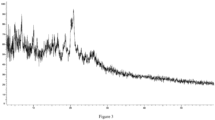
- the present disclosure provides an amorphous form of the compound of formula (I), which has an X-ray powder diffraction pattern comprising no obvious characteristic peaks at a diffraction angle 2 ⁇ in the range of 2 to 48°.
- the present disclosure further provides a method for preparing the amorphous form of the compound of formula (I), comprising method 1: a) mixing the compound of formula (I) with propylene glycol methyl ether, n-heptane, or petroleum ether; b) slurrying for crystallization.
- the volume ( ⁇ l) of the solvent used in the present disclosure can be 1 to 200 times the mass (mg) of the compound of formula (I); in non-limiting embodiments, it can be 1, 5, 10, 15, 20, 25, 30, 35, 40, 45, 50, 55, 60, 65, 70, 75, 80, 85, 90, 95, 100, 105, 110, 115, 120, 125, 130, 135, 140, 145, 150, 155, 160, 165, 170, 175, 180, 185, 190, 200.
- the method for preparing the amorphous form of the compound of formula (I) according to the present disclosure further includes steps of filtering, washing, or drying.
- the present disclosure provides a crystal form A of the compound of formula (I), which has an X-ray powder diffraction pattern, represented by a diffraction angle 2 ⁇ , having characteristic peaks at 5.765, 8.061, 9.925, 16.632, 17.900, 19.469, and 21.115.
- the crystal form A of the compound of formula (I) has characteristic peaks at 5.765, 7.465, 8.061, 9.925, 12.890, 15.085, 16.632, 17.900, 19.469, and 21.115.
- the crystal form A of the compound of formula (I) has characteristic peaks at 5.765, 7.465, 8.061, 9.925, 11.674, 12.890, 14.270, 15.085, 16.632, 17.900, 18.715, 19.469, and 21.115.
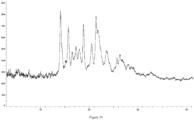
- the crystal form A of the compound of formula (I) has the X-ray powder diffraction pattern represented by the diffraction angle 2 ⁇ as shown in Figure 2 .
- the present disclosure further provides a method for preparing the crystal form A of the compound of formula (I), comprising method 1: a) mixing the compound of formula (I) with tetrahydrofuran and dissolving to clarification; b) adding n -heptane for crystallization;
- the volume ( ⁇ l) of the solvent used in the present disclosure can be 1 to 200 times the mass (mg) of the compound of formula (I); in non-limiting embodiments, it can be 1, 5, 10, 15, 20, 25, 30, 35, 40, 45, 50, 55, 60, 65, 70, 75, 80, 85, 90, 95, 100, 105, 110, 115, 120, 125, 130, 135, 140, 145, 150, 155, 160, 165, 170, 175, 180, 185, 190, 200.
- the method for preparing the crystal form A of the compound of formula (I) according to the present disclosure further includes steps of filtering, washing, drying, etc.
- the present disclosure provides a crystal form B of the compound of formula (I), which has an X-ray powder diffraction pattern, represented by a diffraction angle 2 ⁇ , having characteristic peaks at 4.977, 6.788, 10.047, 14.143, 15.684, 18.547, and 20.840.
- the crystal form B of the compound of formula (I) has characteristic peaks at 4.977, 6.788, 10.047, 14.143, 15.684, 18.547, 20.840, 24.096, and 25.505.
- the crystal form B of the compound of formula (I) has the X-ray powder diffraction pattern represented by the diffraction angle 2 ⁇ as shown in Figure 3 .
- the present disclosure further provides a method for preparing the crystal form B of the compound of formula (I), comprising a) mixing the compound of formula (I) with ethyl acetate or acetonitrile/methanol; b) slurrying for crystallization, and drying at 30°C.
- the volume ( ⁇ l) of the solvent used in the present disclosure can be 1 to 200 times the mass (mg) of the compound of formula (I); in non-limiting embodiments, it can be 1, 5, 10, 15, 20, 25, 30, 35, 40, 45, 50, 55, 60, 65, 70, 75, 80, 85, 90, 95, 100, 105, 110, 115, 120, 125, 130, 135, 140, 145, 150, 155, 160, 165, 170, 175, 180, 185, 190, 200.
- the method for preparing the crystal form B of the compound of formula (I) according to the present disclosure further includes steps of filtering, washing, drying, etc.
- the present disclosure provides a crystal form C of the compound of formula (I), which has an X-ray powder diffraction pattern, represented by a diffraction angle 2 ⁇ , having characteristic peaks at 5.653, 7.974, 9.989, 16.143, 17.860, 18.992, and 20.972.
- the crystal form C of the compound of formula (I) has characteristic peaks at 5.653, 7.974, 9.989, 11.505, 12.798, 14.265, 16.143, 17.860, 18.992, and 20.972.
- the crystal form C of the compound of formula (I) has characteristic peaks at 3.533, 5.653, 7.974, 8.790, 9.989, 11.505, 12.798, 14.265, 15.277, 16.143, 17.860, 18.992, and 20.972.
- the crystal form C of the compound of formula (I) has the X-ray powder diffraction pattern represented by the diffraction angle 2 ⁇ as shown in Figure 4 .
- the present disclosure further provides a method for preparing the crystal form C of the compound of formula (I), comprising method 1: a) mixing the compound of formula I with ethanol, isopropanol, methyl tert -butyl ether, methyl isobutyl ketone, water/ethanol, water/isopropanol, water/methanol (1:1), cyclohexane, or isopropyl ether; b) slurrying for crystallization; or method 2: a) mixing the compound of formula (I) with dichloromethane, water/acetone, or tetrahydrofuran/ethanol, and dissolving to clarification; b) evaporating for crystallization.
- the volume ( ⁇ l) of the solvent used in the present disclosure can be 1 to 200 times the mass (mg) of the compound of formula (I); in non-limiting embodiments, it can be 1, 5, 10, 15, 20, 25, 30, 35, 40, 45, 50, 55, 60, 65, 70, 75, 80, 85, 90, 95, 100, 105, 110, 115, 120, 125, 130, 135, 140, 145, 150, 155, 160, 165, 170, 175, 180, 185, 190, 200.
- the method for preparing the crystal form C of the compound of formula (I) according to the present disclosure further includes steps of filtering, washing, drying, etc.
- the present disclosure provides a crystal form D of the compound of formula (I), which has an X-ray powder diffraction pattern, represented by a diffraction angle 2 ⁇ , having characteristic peaks at 6.831, 9.845, 13.453, 18.225, 20.117, 20.891, and 23.006.
- the crystal form D of the compound of formula (I) has characteristic peaks at 6.831, 9.845, 10.927, 13.453, 16.096, 18.225, 20.117, 20.891, 23.006, and 26.132.
- the crystal form D of the compound of formula (I) has the X-ray powder diffraction pattern represented by the diffraction angle 2 ⁇ as shown in Figure 5 .
- the present disclosure further provides a method for preparing the crystal form D of the compound of formula (I), comprising: method 1: a) mixing the compound of formula (I) with acetonitrile; b) slurrying for crystallization.
- the volume ( ⁇ l) of the solvent used in the present disclosure can be 1 to 200 times the mass (mg) of the compound of formula (I); in non-limiting embodiments, it can be 1, 5, 10, 15, 20, 25, 30, 35, 40, 45, 50, 55, 60, 65, 70, 75, 80, 85, 90, 95, 100, 105, 110, 115, 120, 125, 130, 135, 140, 145, 150, 155, 160, 165, 170, 175, 180, 185, 190, 200.
- the method for preparing the crystal form D of the compound of formula (I) according to the present disclosure further includes steps of filtering, washing, drying, etc.
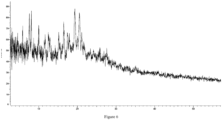
- the present disclosure provides a crystal form E of the compound of formula (I), which has an X-ray powder diffraction pattern, represented by a diffraction angle 2 ⁇ , having characteristic peaks at 5.864, 7.573, 8.087, 10.003, 16.444, 19.349, and 20.553.
- the crystal form E of the compound of formula (I) has characteristic peaks at 5.864, 7.573, 8.087, 10.003, 12.471, 15.165, 16.444, 17.432, 19.349, and 20.553.
- the crystal form E of the compound of formula (I) has characteristic peaks at 5.864, 7.573, 8.087, 10.003, 11.701, 12.471, 15.165, 16.444, 17.432, 19.349, 20.553, 21.067, and 21.709.
- the crystal form E of the compound of formula (I) has the X-ray powder diffraction pattern represented by the diffraction angle 2 ⁇ as shown in Figure 6 .
- the present disclosure further provides a method for preparing the crystal form E of the compound of formula (I), comprising method 1: a) mixing the compound of formula I with 2-butanone or 10% water/methanol; b) slurrying for crystallization; or method 2: a) mixing the compound of formula I with DCM and dissolving to clarification; b) adding n -heptane for crystallization.
- the volume ( ⁇ l) of the solvent used in the present disclosure can be 1 to 200 times the mass (mg) of the compound of formula (I); in non-limiting embodiments, it can be 1, 5, 10, 15, 20, 25, 30, 35, 40, 45, 50, 55, 60, 65, 70, 75, 80, 85, 90, 95, 100, 105, 110, 115, 120, 125, 130, 135, 140, 145, 150, 155, 160, 165, 170, 175, 180, 185, 190, 200.
- the method for preparing the crystal form E of the compound of formula (I) according to the present disclosure further includes steps of filtering, washing, drying, etc.
- the present disclosure provides a crystal form F of the compound of formula (I), which has an X-ray powder diffraction pattern, represented by a diffraction angle 2 ⁇ , having characteristic peaks at 5.062, 7.820, 10.077, 14.231, 16.672, 18.586, and 20.435.
- the crystal form F of the compound of formula (I) has characteristic peaks at 5.062, 7.820, 10.077, 14.231, 15.192, 16.672, 18.586, 20.435, 21.868, and 25.442.
- the crystal form F of the compound of formula (I) has characteristic peaks at 5.062, 7.820, 10.077, 14.231, 15.192, 16.672, 18.586, 20.435, 21.868, 24.193, 25.442, 26.303, and 28.629.
- the crystal form F of the compound of formula (I) has the X-ray powder diffraction pattern represented by the diffraction angle 2 ⁇ as shown in Figure 7 .
- the present disclosure further provides a method for preparing the crystal form F of the compound of formula (I), comprising:
- the volume ( ⁇ l) of the solvent used in the present disclosure can be 1 to 200 times the mass (mg) of the compound of formula (I); in non-limiting embodiments, it can be 1, 5, 10, 15, 20, 25, 30, 35, 40, 45, 50, 55, 60, 65, 70, 75, 80, 85, 90, 95, 100, 105, 110, 115, 120, 125, 130, 135, 140, 145, 150, 155, 160, 165, 170, 175, 180, 185, 190, 200.
- the method for preparing the crystal form F of the compound of formula (I) according to the present disclosure further includes steps of filtering, washing, drying, etc.
- the present disclosure provides a crystal form G of the compound of formula (I), which has an X-ray powder diffraction pattern, represented by a diffraction angle 2 ⁇ , having characteristic peaks at 5.999, 7.972, 9.951, 11.388, 17.812, 20.975, and 25.819.
- the crystal form G of the compound of formula (I) has characteristic peaks at 5.999, 7.396, 7.972, 8.637, 9.951, 11.388, 15.291, 17.812, 20.975, and 25.819.
- the crystal form G of the compound of formula (I) has characteristic peaks at 5.999, 7.396, 7.972, 8.637, 9.951, 11.388, 12.763, 15.291, 17.812, 20.975, 23.408, 25.819, and 27.400.
- the crystal form G of the compound of formula (I) has the X-ray powder diffraction pattern represented by the diffraction angle 2 ⁇ as shown in Figure 8 .
- the present disclosure further provides a method for preparing the crystal form G of the compound of formula (I), comprising:
- the volume ( ⁇ l) of the solvent used in the present disclosure can be 1 to 200 times the mass (mg) of the compound of formula (I); in non-limiting embodiments, it can be 1, 5, 10, 15, 20, 25, 30, 35, 40, 45, 50, 55, 60, 65, 70, 75, 80, 85, 90, 95, 100, 105, 110, 115, 120, 125, 130, 135, 140, 145, 150, 155, 160, 165, 170, 175, 180, 185, 190, 200.
- the method for preparing the crystal form G of the compound of formula (I) according to the present disclosure further includes steps of filtering, washing, drying, etc.
- the present disclosure provides a crystal form H of the compound of formula (I), which has an X-ray powder diffraction pattern, represented by a diffraction angle 2 ⁇ , having characteristic peaks at 5.758, 7.533, 9.901, 14.267, 16.420, 18.103, and 26.356.
- the crystal form H of the compound of formula (I) has characteristic peaks at 5.758, 7.533, 9.901, 14.267, 16.420, 18.103, 18.917, 20.489, 24.049, and 26.356.
- the crystal form H of the compound of formula (I) has characteristic peaks at 5.758, 7.533, 9.901, 14.267, 16.420, 18.103, 18.917, 20.489, 24.049, and 26.356.
- the crystal form H of the compound of formula (I) has the X-ray powder diffraction pattern represented by the diffraction angle 2 ⁇ as shown in Figure 9 .
- the present disclosure further provides a method for preparing the crystal form H of the compound of formula (I), comprising: method 1: a) mixing the compound of formula (I) with n -octane or n -hexane; b) slurrying for crystallization.
- the volume ( ⁇ l) of the solvent used in the present disclosure can be 1 to 200 times the mass (mg) of the compound of formula (I); in non-limiting embodiments, it can be 1, 5, 10, 15, 20, 25, 30, 35, 40, 45, 50, 55, 60, 65, 70, 75, 80, 85, 90, 95, 100, 105, 110, 115, 120, 125, 130, 135, 140, 145, 150, 155, 160, 165, 170, 175, 180, 185, 190, 200.
- the method for preparing the crystal form H of the compound of formula (I) according to the present disclosure further includes steps of filtering, washing, drying, etc.
- the present disclosure provides a crystal form I of the compound of formula (I), which has an X-ray powder diffraction pattern, represented by a diffraction angle 2 ⁇ , having characteristic peaks at 5.294, 6.826, 7.564, 10.739, 13.699, 16.812, and 20.709.
- the crystal form I of the compound of formula (I) has the X-ray powder diffraction pattern represented by the diffraction angle 2 ⁇ as shown in Figure 10 .
- the present disclosure further provides a method for preparing the crystal form I of the compound of formula (I), comprising:
- the volume ( ⁇ l) of the solvent used in the present disclosure can be 1 to 200 times the mass (mg) of the compound of formula (I); in non-limiting embodiments, it can be 1, 5, 10, 15, 20, 25, 30, 35, 40, 45, 50, 55, 60, 65, 70, 75, 80, 85, 90, 95, 100, 105, 110, 115, 120, 125, 130, 135, 140, 145, 150, 155, 160, 165, 170, 175, 180, 185, 190, 200.
- the method for preparing the crystal form I of the compound of formula (I) according to the present disclosure further includes steps of filtering, washing, drying, etc.
- the present disclosure provides a crystal form J of the compound of formula (I), which has an X-ray powder diffraction pattern, represented by a diffraction angle 2 ⁇ , having characteristic peaks at 5.041, 10.068, 16.424, 20.544, 21.190, 24.077, and 25.433.
- the crystal form J of the compound of formula (I) has characteristic peaks at 5.041, 8.212, 10.068, 14.101, 15.167, 16.424, 20.544, 21.190, 24.077, and 25.433.
- the crystal form J of the compound of formula (I) has characteristic peaks at 5.041, 8.212, 10.068, 14.101, 15.167, 16.424, 20.544, 21.190, 22.036, 22.679, 24.077, 25.433, and 26.454.
- the crystal form J of the compound of formula (I) has the X-ray powder diffraction pattern represented by the diffraction angle 2 ⁇ as shown in Figure 11 .
- the present disclosure further provides a method for preparing the crystal form J of the compound of formula (I), comprising: a) mixing the compound of formula (I) with dimethyl sulfoxide and dissolving to clarification; b) adding water, isopropyl acetate, or methyl tert- butyl ether for crystallization.
- the volume ( ⁇ l) of the solvent used in the present disclosure can be 1 to 200 times the mass (mg) of the compound of formula (I); in non-limiting embodiments, it can be 1, 5, 10, 15, 20, 25, 30, 35, 40, 45, 50, 55, 60, 65, 70, 75, 80, 85, 90, 95, 100, 105, 110, 115, 120, 125, 130, 135, 140, 145, 150, 155, 160, 165, 170, 175, 180, 185, 190, 200.
- the method for preparing the crystal form J of the compound of formula (I) according to the present disclosure further includes steps of filtering, washing, drying, etc.
- the present disclosure provides a crystal form K of the compound of formula (I), which has an X-ray powder diffraction pattern, represented by a diffraction angle 2 ⁇ , having characteristic peaks at 5.156, 7.699, 10.339, 14.334, 16.203, 18.327, and 23.418.
- the crystal form K of the compound of formula (I) has characteristic peaks at 5.156, 7.699, 10.339, 14.334, 16.203, 18.327, 23.418, 25.348, 25.919, and 26.446.
- the crystal form K of the compound of formula (I) has the X-ray powder diffraction pattern represented by the diffraction angle 2 ⁇ as shown in Figure 12 .
- the present disclosure further provides a method for preparing the crystal form K of the compound of formula (I), comprising: a) mixing the compound of formula (I) with N- methylpyrrolidone and dissolving to clarification; b) evaporating for crystallization.
- the volume ( ⁇ l) of the solvent used in the present disclosure can be 1 to 200 times the mass (mg) of the compound of formula (I); in non-limiting embodiments, it can be 1, 5, 10, 15, 20, 25, 30, 35, 40, 45, 50, 55, 60, 65, 70, 75, 80, 85, 90, 95, 100, 105, 110, 115, 120, 125, 130, 135, 140, 145, 150, 155, 160, 165, 170, 175, 180, 185, 190, 200.
- the method for preparing the crystal form K of the compound of formula (I) further includes steps of filtering, washing, drying, etc.
- the present disclosure provides a crystal form L of the compound of formula (I), which has an X-ray powder diffraction pattern, represented by a diffraction angle 2 ⁇ , having characteristic peaks at 4.932, 5.360, 9.831, 14.844, 18.244, 20.104, and 24.914.
- the crystal form L of the compound of formula (I) has characteristic peaks at 4.932, 5.360, 9.831, 10.753, 14.844, 16.369, 18.244, 20.104, 23.129, and 24.914.
- the crystal form L of the compound of formula (I) has the X-ray powder diffraction pattern represented by the diffraction angle 2 ⁇ as shown in Figure 13 .
- the present disclosure further provides a method for preparing the crystal form L of the compound of formula (I), comprising: a) mixing the compound of formula (I) with N,N- dimethylacetamide and dissolving to clarification; b) evaporating for crystallization.
- the volume ( ⁇ l) of the solvent used in the present disclosure can be 1 to 200 times the mass (mg) of the compound of formula (I); in non-limiting embodiments, it can be 1, 5, 10, 15, 20, 25, 30, 35, 40, 45, 50, 55, 60, 65, 70, 75, 80, 85, 90, 95, 100, 105, 110, 115, 120, 125, 130, 135, 140, 145, 150, 155, 160, 165, 170, 175, 180, 185, 190, 200.
- the method for preparing the crystal form L of the compound of formula (I) according to the present disclosure further includes steps of filtering, washing, drying, etc.
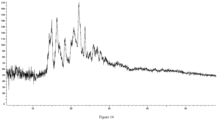
- the present disclosure provides a crystal form M of the compound of formula (I), which has an X-ray powder diffraction pattern, represented by a diffraction angle 2 ⁇ , having characteristic peaks at 14.959, 16.322, 18.410, 20.748, 22.067, 23.670, and 26.863.
- the crystal form M of the compound of formula (I) has characteristic peaks at 14.959, 16.322, 18.410, 20.748, 22.067, 23.670, 24.839, 25.873, 26.863, and 27.811.
- the crystal form M of the compound of formula (I) has characteristic peaks at 14.959, 16.322, 18.410, 20.748, 22.067, 23.670, 24.322, 24.839, 25.873, 26.863, and 27.811.
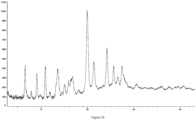
- the crystal form M of the compound of formula (I) has the X-ray powder diffraction pattern represented by the diffraction angle 2 ⁇ as shown in Figure 14 .
- the present disclosure further provides a method for preparing the crystal form M of the compound of formula (I), comprising: a) heating the crystal form A, crystal form B, crystal form C, crystal form E, crystal form H, or crystal form I of the compound of formula (I) to 225°C.
- the volume ( ⁇ l) of the solvent used in the present disclosure can be 1 to 200 times the mass (mg) of the compound of formula (I); in non-limiting embodiments, it can be 1, 5, 10, 15, 20, 25, 30, 35, 40, 45, 50, 55, 60, 65, 70, 75, 80, 85, 90, 95, 100, 105, 110, 115, 120, 125, 130, 135, 140, 145, 150, 155, 160, 165, 170, 175, 180, 185, 190, 200.
- the method for preparing the crystal form M of the compound of formula (I) according to the present disclosure further includes steps of filtering, washing, drying, etc.
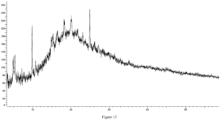
- the present disclosure provides a crystal form N of the compound of formula (I), which has an X-ray powder diffraction pattern, represented by a diffraction angle 2 ⁇ , having characteristic peaks at 5.028, 9.942, 10.900, 15.428, 18.410, 20.274, and 25.252.
- the crystal form N of the compound of formula (I) has characteristic peaks at 5.028, 7.671, 9.942, 10.900, 15.428, 16.560, 18.410, 20.274, 24.036, and 25.252.
- the crystal form N of the compound of formula (I) has characteristic peaks at 5.028, 7.671, 9.942, 10.900, 12.677, 15.428, 16.560, 18.410, 20.274, 24.036, 25.252, and 26.385.
- the crystal form N of the compound of formula (I) has the X-ray powder diffraction pattern represented by the diffraction angle 2 ⁇ as shown in Figure 15 .
- the present disclosure further provides a method for preparing the crystal from N of the compound of formula (I), comprising: a) mixing the compound of formula (I) with ethyl acetate/tetrahydrofuran (1:1), heating and dissolving to clarification; b) cooling for crystallization.
- the volume ( ⁇ l) of the solvent used in the present disclosure can be 1 to 200 times the mass (mg) of the compound of formula (I); in non-limiting embodiments, it can be 1, 5, 10, 15, 20, 25, 30, 35, 40, 45, 50, 55, 60, 65, 70, 75, 80, 85, 90, 95, 100, 105, 110, 115, 120, 125, 130, 135, 140, 145, 150, 155, 160, 165, 170, 175, 180, 185, 190, 200.
- the method for preparing the crystal form N of the compound of formula (I) according to the present disclosure further includes steps of filtering, washing, drying, etc.
- the present disclosure provides a crystal form O of the compound of formula (I), which has an X-ray powder diffraction pattern, represented by a diffraction angle 2 ⁇ , having characteristic peaks at 11.796, 17.423, 18.081, 19.136, 21.707, 22.165, and 25.719.
- the crystal form O of the compound of formula (I) has characteristic peaks at 7.843, 11.796, 17.423, 18.081, 19.136, 21.707, 22.165, 24.412, 25.719, and 28.521.
- the crystal form O of the compound of formula (I) has characteristic peaks at 7.843, 11.796, 15.455, 17.423, 18.081, 19.136, 21.055, 21.707, 22.165, 24.412, 25.719, 27.538, and 28.521.
- the crystal form O of the compound of formula (I) has the X-ray powder diffraction pattern represented by the diffraction angle 2 ⁇ as shown in Figure 16 .
- the present disclosure further provides a method for preparing the crystal from O of the compound of formula (I), comprising: a) mixing the compound of formula I with acetonitrile and benzenesulfonic acid, and heating; b) cooling for crystallization.
- the volume ( ⁇ l) of the solvent used in the present disclosure can be 1 to 200 times the mass (mg) of the compound of formula (I); in non-limiting embodiments, it can be 1, 5, 10, 15, 20, 25, 30, 35, 40, 45, 50, 55, 60, 65, 70, 75, 80, 85, 90, 95, 100, 105, 110, 115, 120, 125, 130, 135, 140, 145, 150, 155, 160, 165, 170, 175, 180, 185, 190, 200.
- the method for preparing the crystal form O of the compound of formula (I) according to the present disclosure further includes steps of filtering, washing, drying, etc.
- the present disclosure provides a crystal form P of the compound of formula (I), which has an X-ray powder diffraction pattern, represented by a diffraction angle 2 ⁇ , having characteristic peaks at 5.359, 7.491, 10.786, 14.249, 16.527, 17.729, and 20.798.
- the crystal form P of the compound of formula (I) has characteristic peaks at 5.359, 7.491, 9.905, 10.786, 13.192, 14.249, 16.527, 17.729, 18.862, and 20.798.
- the crystal form P of the compound of formula (I) has characteristic peaks at 5.359, 7.491, 9.905, 10.786, 13.192, 14.249, 16.527, 17.729, 18.862, 20.798, 23.799, and 26.555.
- the crystal form P of the compound of formula (I) has the X-ray powder diffraction pattern represented by the diffraction angle 2 ⁇ as shown in Figure 17 .
- the present disclosure further provides a method for preparing the crystal form P of the compound of formula (I), comprising: a) mixing the crystal form C of the compound of formula (I) with 1,4-dioxane; b) slurrying for crystallization.
- the volume ( ⁇ l) of the solvent used in the present disclosure can be 1 to 200 times the mass (mg) of the compound of formula (I); in non-limiting embodiments, it can be 1, 5, 10, 15, 20, 25, 30, 35, 40, 45, 50, 55, 60, 65, 70, 75, 80, 85, 90, 95, 100, 105, 110, 115, 120, 125, 130, 135, 140, 145, 150, 155, 160, 165, 170, 175, 180, 185, 190, 200.
- the method for preparing the crystal form P of the compound of formula (I) according to the present disclosure further includes steps of filtering, washing, drying, etc.
- the present disclosure provides a crystal form Q of the compound of formula (I), which has an X-ray powder diffraction pattern, represented by a diffraction angle 2 ⁇ , having characteristic peaks at 5.038, 10.152, 15.850, 16.574, 18.892, 20.760, and 21.835.
- the crystal form Q of the compound of formula (I) has characteristic peaks at 5.038, 10.152, 11.175, 15.850, 16.574, 18.892, 20.760, 21.835, 23.905, and 25.784.
- the crystal form Q of the compound of formula (I) has characteristic peaks at 5.038, 7.682, 10.152, 11.175, 14.218, 15.850, 16.574, 18.892, 20.760, 21.835, 23.905, 25.784, and 26.418.
- the crystal form Q of the compound of formula (I) has the X-ray powder diffraction pattern represented by the diffraction angle 2 ⁇ as shown in Figure 18 .
- the present disclosure further provides a method for preparing the crystal form Q of the compound of formula (I), comprising method 1: a) mixing the compound of formula (I) with ethyl acetate; b) slurrying for crystallization, and drying the solid at 70°C or 130°C.
- the volume ( ⁇ l) of the solvent used in the present disclosure can be 1 to 200 times the mass (mg) of the compound of formula (I); in non-limiting embodiments, it can be 1, 5, 10, 15, 20, 25, 30, 35, 40, 45, 50, 55, 60, 65, 70, 75, 80, 85, 90, 95, 100, 105, 110, 115, 120, 125, 130, 135, 140, 145, 150, 155, 160, 165, 170, 175, 180, 185, 190, 200.
- the method for preparing the crystal form Q of the compound of formula (I) according to the present disclosure further includes steps of filtering, washing, drying, etc.
- the present disclosure provides a crystal form U of the compound of formula (I), which has an X-ray powder diffraction pattern, represented by a diffraction angle 2 ⁇ , having characteristic peaks at 14.155, 15.745, 17.314, 17.997, 18.838, 20.512, and 21.415.
- the crystal form U of the compound of formula (I) has characteristic peaks at 14.155, 15.745, 16.564, 17.314, 17.997, 18.838, 20.512, 21.415, 23.557, and 26.313.
- the crystal form U of the compound of formula (I) has characteristic peaks at 7.657, 14.155, 15.745, 16.564, 17.314, 17.997, 18.838, 20.512, 21.415, 23.557, 25.711, 26.313, and 28.029.
- the crystal form U of the compound of formula (I) has the X-ray powder diffraction pattern represented by the diffraction angle 2 ⁇ as shown in Figure 19 .
- the present disclosure further provides a method for preparing the crystal form U of the compound of formula (I), comprising method 1: a) mixing the crystal form Q of the compound of formula (I) with water; b) slurrying for crystallization; or method 2: a) mixing the compound of formula I with DMSO, heating and dissolving to clarification; b) adding water for crystallization.
- the volume ( ⁇ l) of the solvent used in the present disclosure can be 1 to 200 times the mass (mg) of the compound of formula (I); in non-limiting embodiments, it can be 1, 5, 10, 15, 20, 25, 30, 35, 40, 45, 50, 55, 60, 65, 70, 75, 80, 85, 90, 95, 100, 105, 110, 115, 120, 125, 130, 135, 140, 145, 150, 155, 160, 165, 170, 175, 180, 185, 190, 200.
- the method for preparing the crystal form U of the compound of formula (I) according to the present disclosure further includes steps of filtering, washing, drying, etc.
- the present disclosure provides a crystal form X of the compound of formula (I), which has an X-ray powder diffraction pattern, represented by a diffraction angle 2 ⁇ , having characteristic peaks at 6.864, 9.873, 10.963, 13.801, 16.089, 18.006, and 20.929.
- the crystal form X of the compound of formula (I) has characteristic peaks at 6.864, 9.873, 10.963, 13.801, 16.089, 18.006, 20.929, and 26.203.
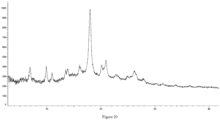
- the crystal form X of the compound of formula (I) has the X-ray powder diffraction pattern represented by the diffraction angle 2 ⁇ as shown in Figure 20 .
- the present disclosure further provides a method for preparing the crystal form X of the compound of formula (I): comprising: method 1: a) mixing the crystal form D of the compound of formula (I) with isopropyl ether or n -heptane; b) slurrying for crystallization.
- the volume ( ⁇ l) of the solvent used in the present disclosure can be 1 to 200 times the mass (mg) of the compound of formula (I); in non-limiting embodiments, it can be 1, 5, 10, 15, 20, 25, 30, 35, 40, 45, 50, 55, 60, 65, 70, 75, 80, 85, 90, 95, 100, 105, 110, 115, 120, 125, 130, 135, 140, 145, 150, 155, 160, 165, 170, 175, 180, 185, 190, 200.
- the method for preparing the crystal form X of the compound of formula (I) according to the present disclosure further includes steps of filtering, washing, drying, etc.
- the present disclosure provides a crystal form Y of the compound of formula (I), which has an X-ray powder diffraction pattern, represented by a diffraction angle 2 ⁇ , having characteristic peaks at 5.676, 7.666, 14.260, 16.562, 18.020, 21.802, and 26.425.
- the crystal form Y of the compound of formula (I) has characteristic peaks at 5.676, 7.666, 9.985, 12.634, 14.260, 16.562, 18.020, 21.802, 26.425, and 26.974.
- the crystal form Y of the compound of formula (I) has characteristic peaks at 5.676, 7.666, 9.985, 12.634, 14.260, 16.562, 18.020, 21.802, 24.051, 25.846, 26.425, and 26.974.
- the crystal form Y of the compound of formula (I) has the X-ray powder diffraction pattern represented by the diffraction angle 2 ⁇ as shown in Figure 21 .
- the present disclosure further provides a method for preparing the crystal form Y of the compound of formula (I): comprising: a) mixing the crystal form Q of the compound of formula (I) with isopropyl ether or n -heptane; b) slurrying for crystallization.
- the volume ( ⁇ l) of the solvent used in the present disclosure can be 1 to 200 times the mass (mg) of the compound of formula (I); in non-limiting embodiments, it can be 1, 5, 10, 15, 20, 25, 30, 35, 40, 45, 50, 55, 60, 65, 70, 75, 80, 85, 90, 95, 100, 105, 110, 115, 120, 125, 130, 135, 140, 145, 150, 155, 160, 165, 170, 175, 180, 185, 190, 200.
- the method for preparing the crystal form Y of the compound of formula (I) according to the present disclosure further includes steps of filtering, washing, drying, etc.
- the present disclosure provides a crystal form V of the compound of formula (I), which has an X-ray powder diffraction pattern, represented by a diffraction angle 2 ⁇ , having characteristic peaks at 5.649, 6.154, 6.720, 11.651, 18.757, 19.813, and 23.948.
- the crystal form V of the compound of formula (I) has characteristic peaks at 5.649, 6.154, 6.720, 9.778, 11.651, 17.570, 18.757, 19.813, 23.948, and 26.995.
- the crystal form V of the compound of formula (I) has characteristic peaks at 5.649, 6.154, 6.720, 9.778, 11.651, 13.576, 17.570, 18.757, 19.813, 21.905, 23.948, 25.825, and 26.995.
- the crystal form V of the compound of formula (I) has the X-ray powder diffraction pattern represented by the diffraction angle 2 ⁇ as shown in Figure 22 .
- the present disclosure further provides a method for preparing the crystal form V of the compound of formula (I), comprising method 1: a) mixing the compound of formula (I) with N,N- dimethylformamide and dissolving to clarification; b) adding acetone or acetonitrile for crystallization; or method 2: a) mixing the compound of formula (I) with X,X-dimethylformamide; b) cooling for crystallization or stirring for crystallization.
- the volume ( ⁇ l) of the solvent used in the present disclosure can be 1 to 200 times the mass (mg) of the compound of formula (I); in non-limiting embodiments, it can be 1, 5, 10, 15, 20, 25, 30, 35, 40, 45, 50, 55, 60, 65, 70, 75, 80, 85, 90, 95, 100, 105, 110, 115, 120, 125, 130, 135, 140, 145, 150, 155, 160, 165, 170, 175, 180, 185, 190, 200.
- the method for preparing the crystal form V of the compound of formula (I) according to the present disclosure further includes steps of filtering, washing, drying, etc.
- the present disclosure provides a crystal form R of the compound of formula (I), which has an X-ray powder diffraction pattern, represented by a diffraction angle 2 ⁇ , having characteristic peaks at 5.534, 7.611, 10.033, 15.782, 17.101, 19.017, and 20.567.
- the crystal form R of the compound of formula (I) has characteristic peaks at 5.534, 7.611, 10.033, 11.857, 12.737, 15.782, 17.101, 19.017, 20.567, and 23.692.
- the crystal form R of the compound of formula (I) has characteristic peaks at 5.534, 7.611, 10.033, 11.148, 11.857, 12.737, 14.179, 15.782, 17.101, 19.017, 20.567, 21.871, and 23.692.
- the crystal form R of the compound of formula (I) has the X-ray powder diffraction pattern represented by the diffraction angle 2 ⁇ as shown in Figure 23 .
- the present disclosure further provides a method for preparing the crystal form R of the compound of formula (I), comprising: a) mixing the compound of formula (I) with tetrahydrofuran and dissolving; b) concentrating for crystallization.
- the volume ( ⁇ l) of the solvent used in the present disclosure can be 1 to 200 times the mass (mg) of the compound of formula (I); in non-limiting embodiments, it can be 1, 5, 10, 15, 20, 25, 30, 35, 40, 45, 50, 55, 60, 65, 70, 75, 80, 85, 90, 95, 100, 105, 110, 115, 120, 125, 130, 135, 140, 145, 150, 155, 160, 165, 170, 175, 180, 185, 190, 200.
- the method for preparing the crystal form R of the compound of formula (I) according to the present disclosure further includes steps of filtering, washing, drying, etc.
- the present disclosure provides a crystal form S of the compound of formula (I), which has an X-ray powder diffraction pattern, represented by a diffraction angle 2 ⁇ , having characteristic peaks at 6.576, 9.082, 10.921, 13.592, 19.965, 21.403, and 24.207.
- the crystal form S of the compound of formula (I) has characteristic peaks at 6.576, 9.082, 10.921, 13.592, 16.805, 19.965, 21.403, 24.207, 25.662, and 27.457.
- the crystal form S of the compound of formula (I) has characteristic peaks at 6.576, 7.890, 9.082, 10.921, 13.592, 15.043, 16.805, 19.965, 21.403, 24.207, 25.662, 26.537, and 27.457.
- the crystal form S of the compound of formula (I) has the X-ray powder diffraction pattern represented by the diffraction angle 2 ⁇ as shown in Figure 24 .
- the present disclosure further provides a method for preparing the crystal form S of the compound of formula (I), comprising method 1: a) mixing the compound of formula (I) with DMF, heating to dissolve, and cooling to precipitate; b) filtering, mixing the filter cake with acetonitrile, and slurrying; c) filtering, mixing the filter cake with water, and slurrying; d) filtering, drying, then slurrying with acetonitrile for crystallization, and drying.
- the volume ( ⁇ l) of the solvent used in the present disclosure can be 1 to 200 times the mass (mg) of the compound of formula (I); in non-limiting embodiments, it can be 1, 5, 10, 15, 20, 25, 30, 35, 40, 45, 50, 55, 60, 65, 70, 75, 80, 85, 90, 95, 100, 105, 110, 115, 120, 125, 130, 135, 140, 145, 150, 155, 160, 165, 170, 175, 180, 185, 190, 200.
- the method for preparing the crystal form S of the compound of formula (I) according to the present disclosure further includes steps of filtering, washing, drying, etc.
- the present disclosure provides a crystal form T of the compound of formula (I), which has an X-ray powder diffraction pattern, represented by a diffraction angle 2 ⁇ , having characteristic peaks at 6.915, 9.177, 9.984, 11.012, 13.595, 16.156, and 20.138.
- the crystal form T of the compound of formula (I) has characteristic peaks at 6.915, 9.177, 9.984, 11.012, 13.595, 15.174, 16.156, 20.138, 24.261, and 26.391.
- the crystal form T of the compound of formula (I) has characteristic peaks at 6.915, 9.177, 9.984, 11.012, 13.595, 15.174, 16.156, 18.509, 20.138, 22.954, 24.261, 26.391, and 27.514.
- the crystal form T of the compound of formula (I) has the X-ray powder diffraction pattern represented by the diffraction angle 2 ⁇ as shown in Figure 25 .
- the present disclosure further provides a method for preparing the crystal form T of the compound of formula (I), comprising method 1: a) mixing the compound of formula (I) with DMF, heating to dissolve, and cooling for crystallization; b) filtering, mixing the filter cake with water and stirring; c) filtering, again mixing the filter cake with water and stirring; d) filtering, drying, then mixing with acetonitrile, stirring for crystallization, and drying.
- the volume ( ⁇ l) of the solvent used in the present disclosure can be 1 to 200 times the mass (mg) of the compound of formula (I); in non-limiting embodiments, it can be 1, 5, 10, 15, 20, 25, 30, 35, 40, 45, 50, 55, 60, 65, 70, 75, 80, 85, 90, 95, 100, 105, 110, 115, 120, 125, 130, 135, 140, 145, 150, 155, 160, 165, 170, 175, 180, 185, 190, 200.
- the method for preparing the crystal form T of the compound of formula (I) according to the present disclosure further includes steps of filtering, washing, drying, etc.
- the present disclosure further provides a pharmaceutical composition prepared from the aforementioned crystal forms of the compound of formula (I).
- the present disclosure further provides a pharmaceutical composition
- a pharmaceutical composition comprising the aforementioned crystal form, and optionally a pharmaceutically acceptable carrier, a diluent, or an excipient.
- the present disclosure further provides a method for preparing a pharmaceutical composition, the method comprising the step of mixing the aforementioned crystal form with a pharmaceutically acceptable carrier, a diluent, or an excipient.
- the present disclosure further provides a use of the aforementioned crystal form, the aforementioned composition, or the composition prepared by the aforementioned method in the manufacture of a medicament for treating and/or preventing a CRBN protein-related disease.
- the present disclosure further provides a use of the aforementioned crystal form, the aforementioned composition, or the composition prepared by the aforementioned method in the manufacture of a medicament for treating and/or preventing a cancer, an angiogenesis-related condition, pain, macular degeneration or related syndrome, a skin disease, a pulmonary disease, an asbestos-related disease, a parasitic disease, an immunodeficiency disease, a CNS disease, a CNS injury, atherosclerosis or related condition, sleep disorder or related condition, an infectious disease, hemoglobinopathy or related condition, or a TNF ⁇ -related condition; preferably, a use in the manufacture of a medicament for treating and/or preventing a cancer or a CNS injury.
- the cancer is selected from the group consisting of leukemia, myeloma, lymphoma, melanoma, skin cancer, liver cancer, kidney cancer, lung cancer, nasopharyngeal cancer, gastric cancer, esophageal cancer, colorectal cancer, gallbladder cancer, bile duct cancer, chorionic epithelioma, pancreatic cancer, polycythemia vera, pediatric tumor, cervical cancer, ovarian cancer, breast cancer, bladder cancer, urothelial cancer, ureteral tumor, prostate cancer, seminoma, testicular tumor, head and neck tumor, head and neck squamous cell carcinoma, endometrial cancer, thyroid cancer, sarcoma, osteoma, neuroblastoma, neuroendocrine cancer, brain tumor, CNS cancer, astrocytoma, and glioma; preferably, the liver cancer is hepatocellular carcinoma; the colorectal cancer is colon cancer or rectal cancer; the
- the myeloma is multiple myeloma (MM) and myelodysplastic syndrome (MDS); preferably, the multiple myeloma is relapsed, refractory, or resistant.
- MM multiple myeloma
- MDS myelodysplastic syndrome
- the multiple myeloma is refractory or resistant to lenalidomide or pomalidomide.
- the "2 ⁇ " or "2 ⁇ angle” in the present disclosure refers to the diffraction angle, where ⁇ represents the Bragg angle with units in ° or degrees.
- the error range of 2 ⁇ for each characteristic peak is ⁇ 0.20 (including cases where numbers exceeding one decimal place are rounded), and may be -0.20, -0.19, -0.18, -0.17, -0.16, -0.15, -0.14, -0.13, -0.12, -0.11, -0.10, - 0.09, -0.08, -0.07, -0.06, -0.05, -0.04, -0.03, -0.02, -0.01, 0.00, 0.01, 0.02, 0.03, 0.04, 0.05, 0.06, 0.07, 0.08, 0.09, 0.10, 0.11, 0.12, 0.13, 0.14, 0.15, 0.16, 0.17, 0.18, 0.19, and 0.20.
- Deliquescent Absorbs sufficient moisture to form a liquid
- Hygroscopic weight gain is no less than 15%
- Hygroscopic weight gain is less than 15% but no less than 2%;
- Hygroscopic weight gain is less than 2% but no less than 0.2%
- Hygroscopic weight gain is less than 0.2%.
- DSC differential scanning calorimetry
- the drying temperature described in the present disclosure generally ranges from 25°C to 150°C, preferably from 40°C to 80°C. Drying can be carried out under atmospheric pressure or under reduced pressure.
- “Pharmaceutical composition” refers to a mixture containing one or more than one compound of formula (I) described herein or a pharmaceutically acceptable salt thereof and other chemical components, and other components, for example, a pharmaceutically acceptable carrier and an excipient.
- the pharmaceutical composition is intended to promote the administration to an organism, so as to facilitate the absorption of the active ingredient, thereby exerting biological activities.
- the crystal forms in the present disclosure include, but are not limited to, solvates of the compound of formula (I).
- the solvents include, but are not limited to, water, methanol, ethanol, isopropanol, acetone, ethyl acetate, acetonitrile, isopropyl acetate, methyl tert- butyl ether, 2-butanone, tetrahydrofuran, dimethyl sulfoxide, N- methylpyrrolidone, methyl isobutyl ketone, dichloromethane, n -heptane, 1,4-dioxane, nitromethane, propylene glycol methyl ether, chloroform, N,N -dimethylformamide, N , N -dimethylacetamide, p -xylene, cyclohexane, dichloroethane, n -hexane, petroleum ether, n -octane,
- solvate described in the present disclosure includes, but is not limited to, a complex formed by combining the compound of formula (I) with a solvent.
- NMR nuclear magnetic resonance
- MS mass spectrometry
- Mass spectra were determined using Agilent 1200/1290 DAD- 6110/6120 Quadrupole MS liquid chromatography-mass spectrometry system (manufacturer: Agilent; MS model: 6110/6120 Quadrupole MS), Waters ACQuity UPLC-QD/SQD (manufacturer: Waters, MS model: Waters ACQuity Qda Detector/Waters SQ Detector), and THERMO Ultimate 3000-Q Exactive (manufacturer: THERMO, MS model: THERMO Q Exactive).
- HPLC High performance liquid chromatography
- HPLC preparation was performed using Waters 2767, Waters 2767-SQ Detecor2, Shimadzu LC-20AP, and Gilson-281 preparative chromatographs.
- TLC thin layer chromatography
- Yantai Huanghai silica gel of 200 to 300-mesh was generally used as a carrier in silica gel column chromatography.
- the mean inhibition of kinase and the IC 50 value were determined using a NovoStar microplate reader (BMG, Germany).
- the reactions can be performed in an argon atmosphere or a nitrogen atmosphere unless otherwise specified.
- the argon atmosphere or nitrogen atmosphere means that the reaction flask is connected to a balloon containing about 1 L of argon or nitrogen.
- a hydrogen atmosphere means that the reaction flask is connected to a balloon containing about 1 L of hydrogen.
- Parr 3916EKX hydrogenator, Qinglan QL-500 hydrogenator, or HC2-SS hydrogenator was used in the pressurized hydrogenation reactions.
- the hydrogenation reactions usually involve 3 cycles of vacuumization and hydrogen purge.
- a CEM Discover-S 908860 microwave reactor was used in the microwave reactions.
- a solution refers to an aqueous solution unless otherwise specified.
- reaction temperature was room temperature, i.e ., 20°C to 30°C, unless otherwise specified.
- the monitoring of the reaction progress in the examples was conducted by thin layer chromatography (TLC).
- TLC thin layer chromatography
- the volume ratio of the solvents was adjusted according to the polarity of the compound, or by adding a small amount of basic or acidic reagents such as triethylamine and acetic acid.
- Test conditions for the instruments used in the experiments described in the present disclosure are as follows:
- the following method was used to determine the inhibitory activity of the compounds of the present disclosure on the proliferation of NCI-H929 cells.
- the experimental method was briefly described as follows.
- NCI-H929 cells (ATCC, CRL-9068) were cultured in a complete medium (RPMI 1640 medium (Hyclone, SH30809.01) containing 10% fetal bovine serum (Corning, 35-076-CV) and 0.05 mM 2-mercaptoethanol (Sigma, M3148)).
- RPMI 1640 medium Hyclone, SH30809.01
- 10% fetal bovine serum Corning, 35-076-CV
- 0.05 mM 2-mercaptoethanol Sigma, M3148
- the compound was firstly dissolved in DMSO, with an initial concentration of 10 mM, and then subjected to serial dilution at a 5-fold concentration gradient for a total of 9 concentration points, with a blank control of 100% DMSO. Another 5 ⁇ L of the compound dissolved in DMSO was added to 95 ⁇ L of complete medium, i.e., the compound was diluted 20-fold with the complete medium. Finally the compound diluted in the complete medium at 10 ⁇ L/well was added to the cell suspension, wherein the final concentrations of the compound were 9 concentration points obtained by 5-fold gradient dilution starting from 50 ⁇ M. A blank control containing 0.5% DMSO was set.
- IC 50 values for the inhibitory activity of the compounds were calculated using Graphpad Prism software, with the results shown in Table I. Table I. IC 50 values for the inhibition of proliferation of NCI-H929 cells by the compounds of the present disclosure Compound IC 50 (nM) 1 0.02
- Compound 1 of the present disclosure has good inhibitory activity for the proliferation of NCI-H929 cells.
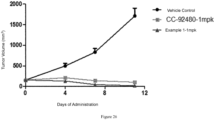
- Solutions of the compound of Example 1 and the control example CC-92480 were prepared with 5% DMSO + 20% PEG400 + 70% (10% TPGS) + 5% (1% HPMC K100LV).
- mice purchased from Beijing Vital River Laboratory Animal Technology Co., Ltd. (certificate No. 20170011006049, SCXK (Shanghai) 2017-0011), weighing about 19 g at the time of purchase, were bred at 5 mice/cage (in a 12/12 hour light/dark cycle, at a constant temperature of 23 ⁇ 1°C and humidity of 50%-60%) and had free access to food and water.
- mice were grouped as follows: Group n Route of administration Vehicle control 7 5% DMSO + 20% PEG400 + 70% (10% TPGS) + 5% (1%HPMC K100LV) (i.g/qd)
- Example 1 7 1 mg/kg (i.g/qd) CC-92480 7 1 mg/kg (i.g/qd)
- qd denotes once a day; i.g. denotes intragastric administration.
- NCI-H929 cells in a logarithmic growth phase were inoculated subcutaneously into the right flank of 30 female CB-17 SCID mice at 5 ⁇ 10 6 cells/mouse/100 ⁇ L (containing 50 ⁇ L of Matrigel).
- vehicle control group CC-92480-1 mpk
- compound of Example 1-1 mpk was administered once a day for 11 days.
- the tumor volume was measured with a vernier caliper and the body weight was measured with a balance twice a week, and the data were recorded.
- the tumor-bearing animals were euthanized as the experimental endpoint when the tumor volume reached 2000 mm 3 or when most tumors showed rupture or when the tumor-bearing animals showed 20% of body weight loss.
- V 1/2 ⁇ a ⁇ b 2 , where a and b represent length and width, respectively.
- T/C (%) (T-T 0 ) / (C-C 0 ) ⁇ 100 (%), where T and C are the tumor volume of animals at the end of the experiment in the treatment group and control group, respectively; T 0 and C 0 are the tumor volume of animals at the beginning of the experiment in the treatment group and control group, respectively.
- Tumor growth inhibition TGI (%) 1 - T/C (%), and when TGI (%) exceeds 100%, no specific value will be shown, and it is expressed only by >100%.
- Tumor regression % T 0 ⁇ T / T 0 ⁇ 100 %
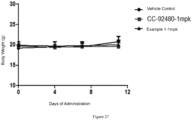
- the compound of Example 1 was administered once a day starting from 10 days after tumor cell transplantation, and significant tumor volume regressions occurred 11 days after administration. Upon calculation, the tumor inhibition rate is > 100%, and the tumor regression rate is 88%. The statistical difference (p ⁇ 0.05) is obtained when compared with an equal dose of CC-92480 at the end point of the experiment, and the administration has no influence on the body weight of mice. Under the same conditions, the tumor regression rate of the control example CC-92480 is 34%.
- the drug concentration in the plasma of the test animals (mice) at different time points after intragastric administration of the compound of Example 1 and the control example CC-92480 was determined by an LC/MS/MS method.
- the pharmacokinetic behavior of the compound of the present disclosure in mice was studied and its pharmacokinetic profile was evaluated.
- mice Female, purchased from Beijing Vital River Laboratory Animal Technology Co., Ltd., with animal production license number of SCXK (Shanghai) 2017-0005.
- Example 1 A certain amount of compound of Example 1 was weighed, dissolved by adding 5% by volume of DMSO and 5% Tween 80 (Shanghai Titan Scientific Co., Ltd.), and then prepared into a 0.1 mg/mL clear solution by adding 90% normal saline.
- control example CC-92480 was weighed, dissolved by adding 5% by volume of DMSO and 5% Tween 80 (Shanghai Titan Scientific Co., Ltd.), and then prepared into a 0.1 mg/mL clear solution by adding 90% normal saline.
- mice Nine mice were intragastrically administered with the compound of Example 1 at a dose of 2 mg/kg and at a volume of 0.2 mL/10 g.
- mice Nine mice were intragastrically administered with the control example CC-92480 at a dose of 2 mg/kg and at a volume of 0.2 mL/10 g.
- mice were intragastrically administered with the compound of Example 1 and the control example CC-92480, and 0.2 mL of blood was collected before the administration and 0.25 h, 0.5 h, 1.0 h, 2.0 h, 4.0 h, 6.0 h, 8.0 h, 11.0 h and 24.0 h after the administration (3 animals at each time point), placed in EDTA-K2 anticoagulation tubes, and centrifuged at 10,000 rpm for 1 min (4°C). Plasma was separated within 1 hour, and stored at -20°C for testing. The process from blood sampling to centrifugation was performed under an ice bath.
- the content of the test compounds at different concentrations in mouse plasma after the administration was determined: 25 ⁇ L of mouse plasma at each time point after the administration was mixed with 50 ⁇ L (100 ng/mL) of internal standard solution camptothecin (National Institutes for Drug Control) and 175 ⁇ L of acetonitrile. The mixture was vortexed for 5 min and centrifuged for 10 min (3700 rpm), and 1 ⁇ L of the supernatant of the plasma sample was taken for LC/MS/MS assay (API4000 triple quadrupole tandem mass spectrometer, Applied Biosystems, USA; Shimadzu, LC-30AD ultra high performance liquid chromatography system, Shimadzu, Japan).
- Pharmacokinetic parameters for the compound of the present disclosure are shown in Table III below.
- Table III Pharmacokinetic parameters of the compound of the present disclosure No. Pharmacokinetic experiment (2 mg/kg) Plasma concentration Area under curve Half-life Residence time Clearance rate Apparent volume of distribution Cmax (ng/mL) AUC (ng /mL * h) T1/2 (h) MRT (h) CL/F (mL/min/kg) Vz/F (ml/kg)
- Example 1 799 4686 2.9 4.6 7.1 1785 CC-92480 692 1937 1.3 2.3 17.2 1961
- the compound of the present disclosure demonstrates good absorption profile and has significant pharmacokinetic advantages.
- Monkey plasma was purchased from Shanghai Medicilon Inc.
- a certain amount of the compound of Example 1 was weighed and prepared with DMSO to obtain a 30 mM stock solution.
- a certain volume of the stock solution was diluted into a solution I at a concentration of 1600 ⁇ M with DMSO; and a certain volume of the solution I at 1600 ⁇ M was diluted with 50% methanol to obtain a working solution II at a concentration of 16 ⁇ M.
- A30 mM stock solution, a 1600 ⁇ M solution I', and a 16 ⁇ M working solution II' of CC-92480 were prepared as described above.
- Table IV Stability data of the compound of the present disclosure in monkey plasma No. T 1/2 (min)/monkey Example 1 806 CC-92480 199
- the compound of the present disclosure has stability advantages in monkey plasma.
- the crystal form A of the compound of formula (I) (10 mg) was heated to 225°C to obtain the product. After X-ray powder diffraction detection, the product was defined as crystal form M.
- the XRPD pattern is shown in Figure 14 , and its characteristic peak positions are shown in Table 13. Table 13 Peak No.
- the crystal form C of the compound of formula (I) (40 mg) was added to dioxane (2.0 mL), slurried at room temperature, and filtered. The solid was dried under vacuum to obtain the product. After X-ray powder diffraction detection, the product was defined as crystal form P.
- the XRPD pattern is shown in Figure 17 . DSC pattern showed endothermic peaks at 127.49°C, 180.10°C, and 249.23°C. TGA pattern showed a weight loss of 8.79% from 40°C to 230°C. Table 16 Peak No.
- the crystal form Q of the compound of formula (I) (10 mg) was added to water (1.0 mL), and slurried at room temperature for 1 day to obtain the product. After X-ray powder diffraction detection, the product was defined as crystal form U.
- the crystal form D of the compound of formula (I) (10 mg) was added to n-heptane (1.0 mL), and the mixture was slurried at room temperature and centrifuged. The solid was dried under vacuum to obtain the product. After X-ray powder diffraction detection, the product was defined as crystal form X.
- the XRPD pattern is shown in Figure 20 , and its characteristic peak positions are shown in Table 19. DSC pattern showed endothermic peaks at 158.81°C, 184.14°C, and 249.04°C. Table 19 Peak No.
- the crystal form Q of the compound of formula (I) (10 mg) was added to n -heptane (1.0 mL), slurried at room temperature, and centrifuged. The solid was dried under vacuum to obtain the product. After X-ray powder diffraction detection, the product was defined as crystal form Y.
- the XRPD pattern is shown in Figure 21 , and its characteristic peak positions are shown in Table 20. DSC pattern showed endothermic peaks at 184.97°C and 248.72°C. Table 20 Peak No.
- the mixture was filtered under reduced pressure, then dried under reduced pressure for 17 hours to obtain the product.
- the product was defined as crystal form T.
- the XRPD pattern is shown in Figure 25 , and its characteristic peak positions are shown in Table 24. DSC pattern showed endothermic peaks at 164.78°C and 247.66°C. Table 24 Peak No.
- Example 39 Stability of Factors Influencing Crystal Forms D, E, Q, and U of Compound of Formula (I)
- Example 40 Long-term/Accelerated Stability of Crystal Forms D, E, Q, and U of Compound of Formula (I)
Landscapes
- Health & Medical Sciences (AREA)
- Chemical & Material Sciences (AREA)
- Organic Chemistry (AREA)
- Medicinal Chemistry (AREA)
- Pharmacology & Pharmacy (AREA)
- Life Sciences & Earth Sciences (AREA)
- Animal Behavior & Ethology (AREA)
- General Health & Medical Sciences (AREA)
- Public Health (AREA)
- Veterinary Medicine (AREA)
- Chemical Kinetics & Catalysis (AREA)
- General Chemical & Material Sciences (AREA)
- Nuclear Medicine, Radiotherapy & Molecular Imaging (AREA)
- Epidemiology (AREA)
- Engineering & Computer Science (AREA)
- Bioinformatics & Cheminformatics (AREA)
- Biomedical Technology (AREA)
- Neurology (AREA)
- Neurosurgery (AREA)
- Pharmaceuticals Containing Other Organic And Inorganic Compounds (AREA)
- Plural Heterocyclic Compounds (AREA)
- Indole Compounds (AREA)
Abstract
Description
- The present application claims the right of the priority of
Chinese patent application 202210060175.6 filed on January 19, 2022 - The present disclosure relates to a crystal form of a sulfur-containing isoindoline derivative and a preparation method therefor. Specifically, the present disclosure provides a crystal form of a compound of formula I and a preparation method therefor.
- Multiple myeloma (MM) is a malignant tumor, the main symptoms of which include hypercalcemia, renal injury, anemia, and bone disease. MM is the second most common hematological malignancy following non-Hodgkin's lymphoma. The current treatment methods are mainly drug therapy and autologous stem cell transplantation.
- At present, there are four main classes of drugs widely used in clinical practice, which are alidomide immunomodulator, proteasome inhibitors, hormones and monoclonal antibodies. The drugs in clinical research stage include diabody, ADC, CAR-T, etc. Those drugs have different mechanisms of action, and they can often achieve better efficacy when used in combination. In clinical practice, dual, triple or even quadruple therapy is generally adopted, usually a combination therapy of an immunomodulator, a proteasome inhibitor and a hormone, sometimes with an additional antibody. Lenalidomide is the most commonly used immunomodulator, and is used in first-line therapy, maintenance therapy after stem cell transplantation, and second-line and third-line therapies after relapse. The drug reached $9.7 billion in sales in 2018/2019. In addition, the overall MM market is considerable and growing rapidly due to longer patient survival, and correspondingly longer duration of medication after continuous improvements and refinements in the diagnosis and treatment of MM. The MM market is expected to reach a scale of $33 billion in 2022, with the largest proportion still being immunomodulators such as lenalidomide.
- The mechanism of action of immunomodulators (IMiD) for treating MM is mainly that IMiD drugs can activate the E3 ligase activity of CRBN after binding to Cereblon (CRBN) protein to selectively bind to transcription factors Ikaros (IKZF 1) and Aiolos (IKZF3), thereby resulting in rapid ubiquitination and degradation of Ikaros and Aiolos. Downregulation of Ikaros/Aiolos results in downregulation of c-Myc, followed by the downregulation of IRF4, ultimately resulting in inhibition of growth and apoptosis of myeloma cells. In addition, IKZF3 can also inhibit the transcription of cytokines IL2 and TNF in T/NK cells. After the degradation of IKZF3, this inhibition can be relieved, and the release of these cytokines is promoted, so that an immunomodulatory effect is achieved. Clinical trials have also shown that the clinical benefit of IMiD drugs correlates with the expression level of CRBN. It was found that the inhibitory activity of lenalidomide for cell growth was lost and drug resistance was developed after CRBN was knocked down in lenalidomide-sensitive cell lines (OPM2 and KMS18), which indicates that the level of CRBN knock-down correlates with the degree of drug resistance. In a cell proliferation experiment, after the expression level of CRBN in cells (U266-CRBN60 and U266-CRBN75) was reduced, the inhibitory activity of both lenalidomide and pomalidomide for cell growth is reduced.
- Currently, the IMiD drugs that have been approved for marketing include thalidomide, lenalidomide and pomalidomide, all from Celgene (now incorporated by BMS). For those three compounds, the binding forces to CRBN are increased sequentially, so the clinical doses are reduced sequentially. The primary indication for the three compounds is MM, and there are other indications for thalidomide and lenalidomide (especially lenalidomide), such as myelodysplastic syndrome (MDS). In terms of side effects, lenalidomide and pomalidomide are similar in performance, with significant myelosuppressive effect caused by target-related toxicity; thalidomide has some other side effects such as sedation, constipation, and neurological side effects.
- The adipimide moiety of all IMiDs binds to a hydrophobic pocket defined by the three tryptophan residues in CRBN (referred to as "thalidomide binding pocket"). In contrast, the phthalimide/isoindolone ring is exposed to the solvent and alters the molecular surface of CRBN, thereby modulating substrate recognition. Different IMiDs result in significant modification of the surface of CRBN molecules and different preferences for substrate recognition. Thus, modifications of IMiDs may lead to degradation of other transcription factors, causing unwanted toxic and side effects. This mode of action of IMiDs is also known as molecular glue, which vividly expresses the bonding effect of this small molecule on two protein substrates.
- Since the median survival for multiple myeloma is now more than five years, the prolonged survival leads to a high proportion of resistance to currently available drugs such as lenalidomide and pomalidomide in most patients, which seriously reduces the therapeutic effect of such drugs. Therefore, it is contemplated to develop more active drug molecules to overcome the problem of drug resistance whilst minimizing the toxic and side effects of such compounds.
- Disclosed patent applications for Cereblon regulators include
WO2008115516A2 ,WO2011100380A1 ,WO2019226770A1 ,WO2019014100A1 ,WO2020064002A1 , etc. - The applicant's patent application
WO2022017365 discloses a compound of formula I, chemically named (S)-4-(4-((5-(((2-(2,6-dioxopiperidin-3-yl)-1-oxoisoindolin-4-yl)oxy)methyl)pyridin-2-yl)thio)piperidin-1-yl)-3-fluorobenzonitrile. This compound exhibits a relatively good Cereblon modulating activity.
- Generally, the crystal forms of the active ingredients of a drug and its salts not only affect the physical and chemical stability of the drug itself, but also affect the difficulty of later drug preparation and production costs. Different crystallization and storage conditions may lead to changes in the crystal forms of the compound and its salts, sometimes resulting in the formation of other forms of crystal forms. Therefore, considering comprehensively from the perspectives of stability, ease of drug preparation process, production costs, etc., it is necessary to conduct an in-depth study of the crystal forms of the compound of formula (I).
- The present disclosure provides a crystal form of a compound of formula (I) and a preparation method therefor, wherein the compound of formula I is chemically named (S)-4-(4-((5-(((2-(2,6-dioxopiperidin-3-yl)-1-oxoisoindolin-4-yl)oxy)methyl)pyridin-2-yl)thio)piperidin-1-yl)-3-fluorobenzonitrile,

- The present disclosure provides an amorphous form of the compound of formula (I), which has an X-ray powder diffraction pattern comprising no obvious characteristic peaks at a diffraction angle 2θ in the range of 2 to 48°.
- The present disclosure further provides a method for preparing the amorphous form of the compound of formula (I), comprising method 1: a) mixing the compound of formula (I) with propylene glycol methyl ether, n-heptane, or petroleum ether; b) slurrying for crystallization.
- In some embodiments, the volume (µl) of the solvent used in the present disclosure can be 1 to 200 times the mass (mg) of the compound of formula (I); in non-limiting embodiments, it can be 1, 5, 10, 15, 20, 25, 30, 35, 40, 45, 50, 55, 60, 65, 70, 75, 80, 85, 90, 95, 100, 105, 110, 115, 120, 125, 130, 135, 140, 145, 150, 155, 160, 165, 170, 175, 180, 185, 190, 200. In some embodiments, the method for preparing the amorphous form of the compound of formula (I) according to the present disclosure further includes steps of filtering, washing, or drying.
- The present disclosure provides a crystal form A of the compound of formula (I), which has an X-ray powder diffraction pattern, represented by a diffraction angle 2θ, having characteristic peaks at 5.765, 8.061, 9.925, 16.632, 17.900, 19.469, and 21.115. In some embodiments, the crystal form A of the compound of formula (I) has characteristic peaks at 5.765, 7.465, 8.061, 9.925, 12.890, 15.085, 16.632, 17.900, 19.469, and 21.115. In some embodiments, the crystal form A of the compound of formula (I) has characteristic peaks at 5.765, 7.465, 8.061, 9.925, 11.674, 12.890, 14.270, 15.085, 16.632, 17.900, 18.715, 19.469, and 21.115. In some embodiments, the crystal form A of the compound of formula (I) has the X-ray powder diffraction pattern represented by the diffraction angle 2θ as shown in
Figure 2 . - The present disclosure further provides a method for preparing the crystal form A of the compound of formula (I), comprising method 1: a) mixing the compound of formula (I) with tetrahydrofuran and dissolving to clarification; b) adding n-heptane for crystallization;
- or method 2: a) mixing the compound of formula (I) with dichloromethane and dissolving to clarification; b) adding ethyl acetate for crystallization;
- or method 3: a) mixing the compound of formula (I) with water, isopropyl acetate, acetone, ethyl acetate/ethanol, or ethyl acetate/n-heptane; b) slurrying for crystallization.
- In some embodiments, the volume (µl) of the solvent used in the present disclosure can be 1 to 200 times the mass (mg) of the compound of formula (I); in non-limiting embodiments, it can be 1, 5, 10, 15, 20, 25, 30, 35, 40, 45, 50, 55, 60, 65, 70, 75, 80, 85, 90, 95, 100, 105, 110, 115, 120, 125, 130, 135, 140, 145, 150, 155, 160, 165, 170, 175, 180, 185, 190, 200. In some embodiments, the method for preparing the crystal form A of the compound of formula (I) according to the present disclosure further includes steps of filtering, washing, drying, etc.
- The present disclosure provides a crystal form B of the compound of formula (I), which has an X-ray powder diffraction pattern, represented by a diffraction angle 2θ, having characteristic peaks at 4.977, 6.788, 10.047, 14.143, 15.684, 18.547, and 20.840. In some embodiments, the crystal form B of the compound of formula (I) has characteristic peaks at 4.977, 6.788, 10.047, 14.143, 15.684, 18.547, 20.840, 24.096, and 25.505. In some embodiments, the crystal form B of the compound of formula (I) has the X-ray powder diffraction pattern represented by the diffraction angle 2θ as shown in
Figure 3 . - The present disclosure further provides a method for preparing the crystal form B of the compound of formula (I), comprising a) mixing the compound of formula (I) with ethyl acetate or acetonitrile/methanol; b) slurrying for crystallization, and drying at 30°C.
- In some embodiments, the volume (µl) of the solvent used in the present disclosure can be 1 to 200 times the mass (mg) of the compound of formula (I); in non-limiting embodiments, it can be 1, 5, 10, 15, 20, 25, 30, 35, 40, 45, 50, 55, 60, 65, 70, 75, 80, 85, 90, 95, 100, 105, 110, 115, 120, 125, 130, 135, 140, 145, 150, 155, 160, 165, 170, 175, 180, 185, 190, 200. In some embodiments, the method for preparing the crystal form B of the compound of formula (I) according to the present disclosure further includes steps of filtering, washing, drying, etc.
- The present disclosure provides a crystal form C of the compound of formula (I), which has an X-ray powder diffraction pattern, represented by a diffraction angle 2θ, having characteristic peaks at 5.653, 7.974, 9.989, 16.143, 17.860, 18.992, and 20.972. In some embodiments, the crystal form C of the compound of formula (I) has characteristic peaks at 5.653, 7.974, 9.989, 11.505, 12.798, 14.265, 16.143, 17.860, 18.992, and 20.972. In some embodiments, the crystal form C of the compound of formula (I) has characteristic peaks at 3.533, 5.653, 7.974, 8.790, 9.989, 11.505, 12.798, 14.265, 15.277, 16.143, 17.860, 18.992, and 20.972. In some embodiments, the crystal form C of the compound of formula (I) has the X-ray powder diffraction pattern represented by the diffraction angle 2θ as shown in
Figure 4 . - The present disclosure further provides a method for preparing the crystal form C of the compound of formula (I), comprising method 1: a) mixing the compound of formula I with ethanol, isopropanol, methyl tert-butyl ether, methyl isobutyl ketone, water/ethanol, water/isopropanol, water/methanol (1:1), cyclohexane, or isopropyl ether; b) slurrying for crystallization;
or method 2: a) mixing the compound of formula (I) with dichloromethane, water/acetone, or tetrahydrofuran/ethanol, and dissolving to clarification; b) evaporating for crystallization. - In some embodiments, the volume (µl) of the solvent used in the present disclosure can be 1 to 200 times the mass (mg) of the compound of formula (I); in non-limiting embodiments, it can be 1, 5, 10, 15, 20, 25, 30, 35, 40, 45, 50, 55, 60, 65, 70, 75, 80, 85, 90, 95, 100, 105, 110, 115, 120, 125, 130, 135, 140, 145, 150, 155, 160, 165, 170, 175, 180, 185, 190, 200. In some embodiments, the method for preparing the crystal form C of the compound of formula (I) according to the present disclosure further includes steps of filtering, washing, drying, etc.
- The present disclosure provides a crystal form D of the compound of formula (I), which has an X-ray powder diffraction pattern, represented by a diffraction angle 2θ, having characteristic peaks at 6.831, 9.845, 13.453, 18.225, 20.117, 20.891, and 23.006. In some embodiments, the crystal form D of the compound of formula (I) has characteristic peaks at 6.831, 9.845, 10.927, 13.453, 16.096, 18.225, 20.117, 20.891, 23.006, and 26.132. In some embodiments, the crystal form D of the compound of formula (I) has the X-ray powder diffraction pattern represented by the diffraction angle 2θ as shown in
Figure 5 . - The present disclosure further provides a method for preparing the crystal form D of the compound of formula (I), comprising:
method 1: a) mixing the compound of formula (I) with acetonitrile; b) slurrying for crystallization. - In some embodiments, the volume (µl) of the solvent used in the present disclosure can be 1 to 200 times the mass (mg) of the compound of formula (I); in non-limiting embodiments, it can be 1, 5, 10, 15, 20, 25, 30, 35, 40, 45, 50, 55, 60, 65, 70, 75, 80, 85, 90, 95, 100, 105, 110, 115, 120, 125, 130, 135, 140, 145, 150, 155, 160, 165, 170, 175, 180, 185, 190, 200. In some embodiments, the method for preparing the crystal form D of the compound of formula (I) according to the present disclosure further includes steps of filtering, washing, drying, etc.
- The present disclosure provides a crystal form E of the compound of formula (I), which has an X-ray powder diffraction pattern, represented by a diffraction angle 2θ, having characteristic peaks at 5.864, 7.573, 8.087, 10.003, 16.444, 19.349, and 20.553. In some embodiments, the crystal form E of the compound of formula (I) has characteristic peaks at 5.864, 7.573, 8.087, 10.003, 12.471, 15.165, 16.444, 17.432, 19.349, and 20.553. In some embodiments, the crystal form E of the compound of formula (I) has characteristic peaks at 5.864, 7.573, 8.087, 10.003, 11.701, 12.471, 15.165, 16.444, 17.432, 19.349, 20.553, 21.067, and 21.709. In some embodiments, the crystal form E of the compound of formula (I) has the X-ray powder diffraction pattern represented by the diffraction angle 2θ as shown in
Figure 6 . - The present disclosure further provides a method for preparing the crystal form E of the compound of formula (I), comprising method 1: a) mixing the compound of formula I with 2-butanone or 10% water/methanol; b) slurrying for crystallization;
or method 2: a) mixing the compound of formula I with DCM and dissolving to clarification; b) adding n-heptane for crystallization. - In some embodiments, the volume (µl) of the solvent used in the present disclosure can be 1 to 200 times the mass (mg) of the compound of formula (I); in non-limiting embodiments, it can be 1, 5, 10, 15, 20, 25, 30, 35, 40, 45, 50, 55, 60, 65, 70, 75, 80, 85, 90, 95, 100, 105, 110, 115, 120, 125, 130, 135, 140, 145, 150, 155, 160, 165, 170, 175, 180, 185, 190, 200. In some embodiments, the method for preparing the crystal form E of the compound of formula (I) according to the present disclosure further includes steps of filtering, washing, drying, etc.
- The present disclosure provides a crystal form F of the compound of formula (I), which has an X-ray powder diffraction pattern, represented by a diffraction angle 2θ, having characteristic peaks at 5.062, 7.820, 10.077, 14.231, 16.672, 18.586, and 20.435. In some embodiments, the crystal form F of the compound of formula (I) has characteristic peaks at 5.062, 7.820, 10.077, 14.231, 15.192, 16.672, 18.586, 20.435, 21.868, and 25.442. In some embodiments, the crystal form F of the compound of formula (I) has characteristic peaks at 5.062, 7.820, 10.077, 14.231, 15.192, 16.672, 18.586, 20.435, 21.868, 24.193, 25.442, 26.303, and 28.629. In some embodiments, the crystal form F of the compound of formula (I) has the X-ray powder diffraction pattern represented by the diffraction angle 2θ as shown in
Figure 7 . - The present disclosure further provides a method for preparing the crystal form F of the compound of formula (I), comprising:
- method 1: a) mixing the compound of formula (I) with a solvent II, wherein the solvent II is selected from p-xylene, methanol, 2-methyltetrahydrofuran, o-xylene, or toluene; b) slurrying for crystallization;
- or method 2: a) mixing the compound of formula (I) with dichloromethane or tetrahydrofuran and dissolving to clarification; b) adding isopropyl acetate, methyl tert-butyl ether, or methyl isobutyl ketone for crystallization;
- or method 3: a) mixing the compound of formula (I) with 1,4-dioxane and dissolving to clarification; b) evaporating for crystallization.
- In some embodiments, the volume (µl) of the solvent used in the present disclosure can be 1 to 200 times the mass (mg) of the compound of formula (I); in non-limiting embodiments, it can be 1, 5, 10, 15, 20, 25, 30, 35, 40, 45, 50, 55, 60, 65, 70, 75, 80, 85, 90, 95, 100, 105, 110, 115, 120, 125, 130, 135, 140, 145, 150, 155, 160, 165, 170, 175, 180, 185, 190, 200. In some embodiments, the method for preparing the crystal form F of the compound of formula (I) according to the present disclosure further includes steps of filtering, washing, drying, etc.
- The present disclosure provides a crystal form G of the compound of formula (I), which has an X-ray powder diffraction pattern, represented by a diffraction angle 2θ, having characteristic peaks at 5.999, 7.972, 9.951, 11.388, 17.812, 20.975, and 25.819. In some embodiments, the crystal form G of the compound of formula (I) has characteristic peaks at 5.999, 7.396, 7.972, 8.637, 9.951, 11.388, 15.291, 17.812, 20.975, and 25.819. In some embodiments, the crystal form G of the compound of formula (I) has characteristic peaks at 5.999, 7.396, 7.972, 8.637, 9.951, 11.388, 12.763, 15.291, 17.812, 20.975, 23.408, 25.819, and 27.400. In some embodiments, the crystal form G of the compound of formula (I) has the X-ray powder diffraction pattern represented by the diffraction angle 2θ as shown in
Figure 8 . - The present disclosure further provides a method for preparing the crystal form G of the compound of formula (I), comprising:
- method 1: a) mixing the compound of formula (I) with chloroform and dissolving to clarification; b) evaporating for crystallization;
- or method 2: a) mixing the compound of formula (I) with 1,2-dichloroethane; b) slurrying for crystallization.
- In some embodiments, the volume (µl) of the solvent used in the present disclosure can be 1 to 200 times the mass (mg) of the compound of formula (I); in non-limiting embodiments, it can be 1, 5, 10, 15, 20, 25, 30, 35, 40, 45, 50, 55, 60, 65, 70, 75, 80, 85, 90, 95, 100, 105, 110, 115, 120, 125, 130, 135, 140, 145, 150, 155, 160, 165, 170, 175, 180, 185, 190, 200. In some embodiments, the method for preparing the crystal form G of the compound of formula (I) according to the present disclosure further includes steps of filtering, washing, drying, etc.
- The present disclosure provides a crystal form H of the compound of formula (I), which has an X-ray powder diffraction pattern, represented by a diffraction angle 2θ, having characteristic peaks at 5.758, 7.533, 9.901, 14.267, 16.420, 18.103, and 26.356. In some embodiments, the crystal form H of the compound of formula (I) has characteristic peaks at 5.758, 7.533, 9.901, 14.267, 16.420, 18.103, 18.917, 20.489, 24.049, and 26.356. In some embodiments, the crystal form H of the compound of formula (I) has characteristic peaks at 5.758, 7.533, 9.901, 14.267, 16.420, 18.103, 18.917, 20.489, 24.049, and 26.356. In some embodiments, the crystal form H of the compound of formula (I) has the X-ray powder diffraction pattern represented by the diffraction angle 2θ as shown in
Figure 9 . - The present disclosure further provides a method for preparing the crystal form H of the compound of formula (I), comprising:
method 1: a) mixing the compound of formula (I) with n-octane or n-hexane; b) slurrying for crystallization. - In some embodiments, the volume (µl) of the solvent used in the present disclosure can be 1 to 200 times the mass (mg) of the compound of formula (I); in non-limiting embodiments, it can be 1, 5, 10, 15, 20, 25, 30, 35, 40, 45, 50, 55, 60, 65, 70, 75, 80, 85, 90, 95, 100, 105, 110, 115, 120, 125, 130, 135, 140, 145, 150, 155, 160, 165, 170, 175, 180, 185, 190, 200. In some embodiments, the method for preparing the crystal form H of the compound of formula (I) according to the present disclosure further includes steps of filtering, washing, drying, etc.
- The present disclosure provides a crystal form I of the compound of formula (I), which has an X-ray powder diffraction pattern, represented by a diffraction angle 2θ, having characteristic peaks at 5.294, 6.826, 7.564, 10.739, 13.699, 16.812, and 20.709. In some embodiments, the crystal form I of the compound of formula (I) has the X-ray powder diffraction pattern represented by the diffraction angle 2θ as shown in
Figure 10 . - The present disclosure further provides a method for preparing the crystal form I of the compound of formula (I), comprising:
- method 1: a) mixing the compound of formula (I) with tetrahydrofuran and dissolving to clarification; b) evaporating for crystallization;
- or method 2: a) mixing the compound of formula (I) with tetrahydrofuran and dissolving to clarification; b) adding water for crystallization.
- In some embodiments, the volume (µl) of the solvent used in the present disclosure can be 1 to 200 times the mass (mg) of the compound of formula (I); in non-limiting embodiments, it can be 1, 5, 10, 15, 20, 25, 30, 35, 40, 45, 50, 55, 60, 65, 70, 75, 80, 85, 90, 95, 100, 105, 110, 115, 120, 125, 130, 135, 140, 145, 150, 155, 160, 165, 170, 175, 180, 185, 190, 200. In some embodiments, the method for preparing the crystal form I of the compound of formula (I) according to the present disclosure further includes steps of filtering, washing, drying, etc.
- The present disclosure provides a crystal form J of the compound of formula (I), which has an X-ray powder diffraction pattern, represented by a diffraction angle 2θ, having characteristic peaks at 5.041, 10.068, 16.424, 20.544, 21.190, 24.077, and 25.433. In some embodiments, the crystal form J of the compound of formula (I) has characteristic peaks at 5.041, 8.212, 10.068, 14.101, 15.167, 16.424, 20.544, 21.190, 24.077, and 25.433. In some embodiments, the crystal form J of the compound of formula (I) has characteristic peaks at 5.041, 8.212, 10.068, 14.101, 15.167, 16.424, 20.544, 21.190, 22.036, 22.679, 24.077, 25.433, and 26.454. In some embodiments, the crystal form J of the compound of formula (I) has the X-ray powder diffraction pattern represented by the diffraction angle 2θ as shown in
Figure 11 . - The present disclosure further provides a method for preparing the crystal form J of the compound of formula (I), comprising: a) mixing the compound of formula (I) with dimethyl sulfoxide and dissolving to clarification; b) adding water, isopropyl acetate, or methyl tert-butyl ether for crystallization.
- In some embodiments, the volume (µl) of the solvent used in the present disclosure can be 1 to 200 times the mass (mg) of the compound of formula (I); in non-limiting embodiments, it can be 1, 5, 10, 15, 20, 25, 30, 35, 40, 45, 50, 55, 60, 65, 70, 75, 80, 85, 90, 95, 100, 105, 110, 115, 120, 125, 130, 135, 140, 145, 150, 155, 160, 165, 170, 175, 180, 185, 190, 200. In some embodiments, the method for preparing the crystal form J of the compound of formula (I) according to the present disclosure further includes steps of filtering, washing, drying, etc.
- The present disclosure provides a crystal form K of the compound of formula (I), which has an X-ray powder diffraction pattern, represented by a diffraction angle 2θ, having characteristic peaks at 5.156, 7.699, 10.339, 14.334, 16.203, 18.327, and 23.418. In some embodiments, the crystal form K of the compound of formula (I) has characteristic peaks at 5.156, 7.699, 10.339, 14.334, 16.203, 18.327, 23.418, 25.348, 25.919, and 26.446. In some embodiments, the crystal form K of the compound of formula (I) has the X-ray powder diffraction pattern represented by the diffraction angle 2θ as shown in
Figure 12 . - The present disclosure further provides a method for preparing the crystal form K of the compound of formula (I), comprising: a) mixing the compound of formula (I) with N-methylpyrrolidone and dissolving to clarification; b) evaporating for crystallization.
- In some embodiments, the volume (µl) of the solvent used in the present disclosure can be 1 to 200 times the mass (mg) of the compound of formula (I); in non-limiting embodiments, it can be 1, 5, 10, 15, 20, 25, 30, 35, 40, 45, 50, 55, 60, 65, 70, 75, 80, 85, 90, 95, 100, 105, 110, 115, 120, 125, 130, 135, 140, 145, 150, 155, 160, 165, 170, 175, 180, 185, 190, 200. In some embodiments, the method for preparing the crystal form K of the compound of formula (I) further includes steps of filtering, washing, drying, etc.
- The present disclosure provides a crystal form L of the compound of formula (I), which has an X-ray powder diffraction pattern, represented by a diffraction angle 2θ, having characteristic peaks at 4.932, 5.360, 9.831, 14.844, 18.244, 20.104, and 24.914. In some embodiments, the crystal form L of the compound of formula (I) has characteristic peaks at 4.932, 5.360, 9.831, 10.753, 14.844, 16.369, 18.244, 20.104, 23.129, and 24.914. In some embodiments, the crystal form L of the compound of formula (I) has the X-ray powder diffraction pattern represented by the diffraction angle 2θ as shown in
Figure 13 . - The present disclosure further provides a method for preparing the crystal form L of the compound of formula (I), comprising: a) mixing the compound of formula (I) with N,N-dimethylacetamide and dissolving to clarification; b) evaporating for crystallization.
- In some embodiments, the volume (µl) of the solvent used in the present disclosure can be 1 to 200 times the mass (mg) of the compound of formula (I); in non-limiting embodiments, it can be 1, 5, 10, 15, 20, 25, 30, 35, 40, 45, 50, 55, 60, 65, 70, 75, 80, 85, 90, 95, 100, 105, 110, 115, 120, 125, 130, 135, 140, 145, 150, 155, 160, 165, 170, 175, 180, 185, 190, 200. In some embodiments, the method for preparing the crystal form L of the compound of formula (I) according to the present disclosure further includes steps of filtering, washing, drying, etc.
- The present disclosure provides a crystal form M of the compound of formula (I), which has an X-ray powder diffraction pattern, represented by a diffraction angle 2θ, having characteristic peaks at 14.959, 16.322, 18.410, 20.748, 22.067, 23.670, and 26.863. In some embodiments, the crystal form M of the compound of formula (I) has characteristic peaks at 14.959, 16.322, 18.410, 20.748, 22.067, 23.670, 24.839, 25.873, 26.863, and 27.811. In some embodiments, the crystal form M of the compound of formula (I) has characteristic peaks at 14.959, 16.322, 18.410, 20.748, 22.067, 23.670, 24.322, 24.839, 25.873, 26.863, and 27.811. In some embodiments, the crystal form M of the compound of formula (I) has the X-ray powder diffraction pattern represented by the diffraction angle 2θ as shown in
Figure 14 . - The present disclosure further provides a method for preparing the crystal form M of the compound of formula (I), comprising: a) heating the crystal form A, crystal form B, crystal form C, crystal form E, crystal form H, or crystal form I of the compound of formula (I) to 225°C.
- In some embodiments, the volume (µl) of the solvent used in the present disclosure can be 1 to 200 times the mass (mg) of the compound of formula (I); in non-limiting embodiments, it can be 1, 5, 10, 15, 20, 25, 30, 35, 40, 45, 50, 55, 60, 65, 70, 75, 80, 85, 90, 95, 100, 105, 110, 115, 120, 125, 130, 135, 140, 145, 150, 155, 160, 165, 170, 175, 180, 185, 190, 200. In some embodiments, the method for preparing the crystal form M of the compound of formula (I) according to the present disclosure further includes steps of filtering, washing, drying, etc.
- The present disclosure provides a crystal form N of the compound of formula (I), which has an X-ray powder diffraction pattern, represented by a diffraction angle 2θ, having characteristic peaks at 5.028, 9.942, 10.900, 15.428, 18.410, 20.274, and 25.252. In some embodiments, the crystal form N of the compound of formula (I) has characteristic peaks at 5.028, 7.671, 9.942, 10.900, 15.428, 16.560, 18.410, 20.274, 24.036, and 25.252. In some embodiments, the crystal form N of the compound of formula (I) has characteristic peaks at 5.028, 7.671, 9.942, 10.900, 12.677, 15.428, 16.560, 18.410, 20.274, 24.036, 25.252, and 26.385. In some embodiments, the crystal form N of the compound of formula (I) has the X-ray powder diffraction pattern represented by the diffraction angle 2θ as shown in
Figure 15 . - The present disclosure further provides a method for preparing the crystal from N of the compound of formula (I), comprising: a) mixing the compound of formula (I) with ethyl acetate/tetrahydrofuran (1:1), heating and dissolving to clarification; b) cooling for crystallization.
- In some embodiments, the volume (µl) of the solvent used in the present disclosure can be 1 to 200 times the mass (mg) of the compound of formula (I); in non-limiting embodiments, it can be 1, 5, 10, 15, 20, 25, 30, 35, 40, 45, 50, 55, 60, 65, 70, 75, 80, 85, 90, 95, 100, 105, 110, 115, 120, 125, 130, 135, 140, 145, 150, 155, 160, 165, 170, 175, 180, 185, 190, 200. In some embodiments, the method for preparing the crystal form N of the compound of formula (I) according to the present disclosure further includes steps of filtering, washing, drying, etc.
- The present disclosure provides a crystal form O of the compound of formula (I), which has an X-ray powder diffraction pattern, represented by a diffraction angle 2θ, having characteristic peaks at 11.796, 17.423, 18.081, 19.136, 21.707, 22.165, and 25.719. In some embodiments, the crystal form O of the compound of formula (I) has characteristic peaks at 7.843, 11.796, 17.423, 18.081, 19.136, 21.707, 22.165, 24.412, 25.719, and 28.521. In some embodiments, the crystal form O of the compound of formula (I) has characteristic peaks at 7.843, 11.796, 15.455, 17.423, 18.081, 19.136, 21.055, 21.707, 22.165, 24.412, 25.719, 27.538, and 28.521. In some embodiments, the crystal form O of the compound of formula (I) has the X-ray powder diffraction pattern represented by the diffraction angle 2θ as shown in
Figure 16 . - The present disclosure further provides a method for preparing the crystal from O of the compound of formula (I), comprising: a) mixing the compound of formula I with acetonitrile and benzenesulfonic acid, and heating; b) cooling for crystallization.
- In some embodiments, the volume (µl) of the solvent used in the present disclosure can be 1 to 200 times the mass (mg) of the compound of formula (I); in non-limiting embodiments, it can be 1, 5, 10, 15, 20, 25, 30, 35, 40, 45, 50, 55, 60, 65, 70, 75, 80, 85, 90, 95, 100, 105, 110, 115, 120, 125, 130, 135, 140, 145, 150, 155, 160, 165, 170, 175, 180, 185, 190, 200. In some embodiments, the method for preparing the crystal form O of the compound of formula (I) according to the present disclosure further includes steps of filtering, washing, drying, etc.
- The present disclosure provides a crystal form P of the compound of formula (I), which has an X-ray powder diffraction pattern, represented by a diffraction angle 2θ, having characteristic peaks at 5.359, 7.491, 10.786, 14.249, 16.527, 17.729, and 20.798. In some embodiments, the crystal form P of the compound of formula (I) has characteristic peaks at 5.359, 7.491, 9.905, 10.786, 13.192, 14.249, 16.527, 17.729, 18.862, and 20.798. In some embodiments, the crystal form P of the compound of formula (I) has characteristic peaks at 5.359, 7.491, 9.905, 10.786, 13.192, 14.249, 16.527, 17.729, 18.862, 20.798, 23.799, and 26.555. In some embodiments, the crystal form P of the compound of formula (I) has the X-ray powder diffraction pattern represented by the diffraction angle 2θ as shown in
Figure 17 . - The present disclosure further provides a method for preparing the crystal form P of the compound of formula (I), comprising: a) mixing the crystal form C of the compound of formula (I) with 1,4-dioxane; b) slurrying for crystallization.
- In some embodiments, the volume (µl) of the solvent used in the present disclosure can be 1 to 200 times the mass (mg) of the compound of formula (I); in non-limiting embodiments, it can be 1, 5, 10, 15, 20, 25, 30, 35, 40, 45, 50, 55, 60, 65, 70, 75, 80, 85, 90, 95, 100, 105, 110, 115, 120, 125, 130, 135, 140, 145, 150, 155, 160, 165, 170, 175, 180, 185, 190, 200. In some embodiments, the method for preparing the crystal form P of the compound of formula (I) according to the present disclosure further includes steps of filtering, washing, drying, etc.
- The present disclosure provides a crystal form Q of the compound of formula (I), which has an X-ray powder diffraction pattern, represented by a diffraction angle 2θ, having characteristic peaks at 5.038, 10.152, 15.850, 16.574, 18.892, 20.760, and 21.835. In some embodiments, the crystal form Q of the compound of formula (I) has characteristic peaks at 5.038, 10.152, 11.175, 15.850, 16.574, 18.892, 20.760, 21.835, 23.905, and 25.784. In some embodiments, the crystal form Q of the compound of formula (I) has characteristic peaks at 5.038, 7.682, 10.152, 11.175, 14.218, 15.850, 16.574, 18.892, 20.760, 21.835, 23.905, 25.784, and 26.418. In some embodiments, the crystal form Q of the compound of formula (I) has the X-ray powder diffraction pattern represented by the diffraction angle 2θ as shown in
Figure 18 . - The present disclosure further provides a method for preparing the crystal form Q of the compound of formula (I), comprising method 1: a) mixing the compound of formula (I) with ethyl acetate; b) slurrying for crystallization, and drying the solid at 70°C or 130°C.
- In some embodiments, the volume (µl) of the solvent used in the present disclosure can be 1 to 200 times the mass (mg) of the compound of formula (I); in non-limiting embodiments, it can be 1, 5, 10, 15, 20, 25, 30, 35, 40, 45, 50, 55, 60, 65, 70, 75, 80, 85, 90, 95, 100, 105, 110, 115, 120, 125, 130, 135, 140, 145, 150, 155, 160, 165, 170, 175, 180, 185, 190, 200. In some embodiments, the method for preparing the crystal form Q of the compound of formula (I) according to the present disclosure further includes steps of filtering, washing, drying, etc.
- The present disclosure provides a crystal form U of the compound of formula (I), which has an X-ray powder diffraction pattern, represented by a diffraction angle 2θ, having characteristic peaks at 14.155, 15.745, 17.314, 17.997, 18.838, 20.512, and 21.415. In some embodiments, the crystal form U of the compound of formula (I) has characteristic peaks at 14.155, 15.745, 16.564, 17.314, 17.997, 18.838, 20.512, 21.415, 23.557, and 26.313. In some embodiments, the crystal form U of the compound of formula (I) has characteristic peaks at 7.657, 14.155, 15.745, 16.564, 17.314, 17.997, 18.838, 20.512, 21.415, 23.557, 25.711, 26.313, and 28.029. In some embodiments, the crystal form U of the compound of formula (I) has the X-ray powder diffraction pattern represented by the diffraction angle 2θ as shown in
Figure 19 . - The present disclosure further provides a method for preparing the crystal form U of the compound of formula (I), comprising method 1: a) mixing the crystal form Q of the compound of formula (I) with water; b) slurrying for crystallization;
or method 2: a) mixing the compound of formula I with DMSO, heating and dissolving to clarification; b) adding water for crystallization. - In some embodiments, the volume (µl) of the solvent used in the present disclosure can be 1 to 200 times the mass (mg) of the compound of formula (I); in non-limiting embodiments, it can be 1, 5, 10, 15, 20, 25, 30, 35, 40, 45, 50, 55, 60, 65, 70, 75, 80, 85, 90, 95, 100, 105, 110, 115, 120, 125, 130, 135, 140, 145, 150, 155, 160, 165, 170, 175, 180, 185, 190, 200. In some embodiments, the method for preparing the crystal form U of the compound of formula (I) according to the present disclosure further includes steps of filtering, washing, drying, etc.
- The present disclosure provides a crystal form X of the compound of formula (I), which has an X-ray powder diffraction pattern, represented by a diffraction angle 2θ, having characteristic peaks at 6.864, 9.873, 10.963, 13.801, 16.089, 18.006, and 20.929. In some embodiments, the crystal form X of the compound of formula (I) has characteristic peaks at 6.864, 9.873, 10.963, 13.801, 16.089, 18.006, 20.929, and 26.203. In some embodiments, the crystal form X of the compound of formula (I) has the X-ray powder diffraction pattern represented by the diffraction angle 2θ as shown in
Figure 20 . - The present disclosure further provides a method for preparing the crystal form X of the compound of formula (I): comprising: method 1: a) mixing the crystal form D of the compound of formula (I) with isopropyl ether or n-heptane; b) slurrying for crystallization.
- In some embodiments, the volume (µl) of the solvent used in the present disclosure can be 1 to 200 times the mass (mg) of the compound of formula (I); in non-limiting embodiments, it can be 1, 5, 10, 15, 20, 25, 30, 35, 40, 45, 50, 55, 60, 65, 70, 75, 80, 85, 90, 95, 100, 105, 110, 115, 120, 125, 130, 135, 140, 145, 150, 155, 160, 165, 170, 175, 180, 185, 190, 200. In some embodiments, the method for preparing the crystal form X of the compound of formula (I) according to the present disclosure further includes steps of filtering, washing, drying, etc.
- The present disclosure provides a crystal form Y of the compound of formula (I), which has an X-ray powder diffraction pattern, represented by a diffraction angle 2θ, having characteristic peaks at 5.676, 7.666, 14.260, 16.562, 18.020, 21.802, and 26.425. In some embodiments, the crystal form Y of the compound of formula (I) has characteristic peaks at 5.676, 7.666, 9.985, 12.634, 14.260, 16.562, 18.020, 21.802, 26.425, and 26.974. In some embodiments, the crystal form Y of the compound of formula (I) has characteristic peaks at 5.676, 7.666, 9.985, 12.634, 14.260, 16.562, 18.020, 21.802, 24.051, 25.846, 26.425, and 26.974. In some embodiments, the crystal form Y of the compound of formula (I) has the X-ray powder diffraction pattern represented by the diffraction angle 2θ as shown in
Figure 21 . - The present disclosure further provides a method for preparing the crystal form Y of the compound of formula (I): comprising: a) mixing the crystal form Q of the compound of formula (I) with isopropyl ether or n-heptane; b) slurrying for crystallization.
- In some embodiments, the volume (µl) of the solvent used in the present disclosure can be 1 to 200 times the mass (mg) of the compound of formula (I); in non-limiting embodiments, it can be 1, 5, 10, 15, 20, 25, 30, 35, 40, 45, 50, 55, 60, 65, 70, 75, 80, 85, 90, 95, 100, 105, 110, 115, 120, 125, 130, 135, 140, 145, 150, 155, 160, 165, 170, 175, 180, 185, 190, 200. In some embodiments, the method for preparing the crystal form Y of the compound of formula (I) according to the present disclosure further includes steps of filtering, washing, drying, etc.
- The present disclosure provides a crystal form V of the compound of formula (I), which has an X-ray powder diffraction pattern, represented by a diffraction angle 2θ, having characteristic peaks at 5.649, 6.154, 6.720, 11.651, 18.757, 19.813, and 23.948. In some embodiments, the crystal form V of the compound of formula (I) has characteristic peaks at 5.649, 6.154, 6.720, 9.778, 11.651, 17.570, 18.757, 19.813, 23.948, and 26.995. In some embodiments, the crystal form V of the compound of formula (I) has characteristic peaks at 5.649, 6.154, 6.720, 9.778, 11.651, 13.576, 17.570, 18.757, 19.813, 21.905, 23.948, 25.825, and 26.995. In some embodiments, the crystal form V of the compound of formula (I) has the X-ray powder diffraction pattern represented by the diffraction angle 2θ as shown in
Figure 22 . - The present disclosure further provides a method for preparing the crystal form V of the compound of formula (I), comprising method 1: a) mixing the compound of formula (I) with N,N-dimethylformamide and dissolving to clarification; b) adding acetone or acetonitrile for crystallization;
or method 2: a) mixing the compound of formula (I) with X,X-dimethylformamide; b) cooling for crystallization or stirring for crystallization. - In some embodiments, the volume (µl) of the solvent used in the present disclosure can be 1 to 200 times the mass (mg) of the compound of formula (I); in non-limiting embodiments, it can be 1, 5, 10, 15, 20, 25, 30, 35, 40, 45, 50, 55, 60, 65, 70, 75, 80, 85, 90, 95, 100, 105, 110, 115, 120, 125, 130, 135, 140, 145, 150, 155, 160, 165, 170, 175, 180, 185, 190, 200. In some embodiments, the method for preparing the crystal form V of the compound of formula (I) according to the present disclosure further includes steps of filtering, washing, drying, etc.
- The present disclosure provides a crystal form R of the compound of formula (I), which has an X-ray powder diffraction pattern, represented by a diffraction angle 2θ, having characteristic peaks at 5.534, 7.611, 10.033, 15.782, 17.101, 19.017, and 20.567. In some embodiments, the crystal form R of the compound of formula (I) has characteristic peaks at 5.534, 7.611, 10.033, 11.857, 12.737, 15.782, 17.101, 19.017, 20.567, and 23.692. In some embodiments, the crystal form R of the compound of formula (I) has characteristic peaks at 5.534, 7.611, 10.033, 11.148, 11.857, 12.737, 14.179, 15.782, 17.101, 19.017, 20.567, 21.871, and 23.692. In some embodiments, the crystal form R of the compound of formula (I) has the X-ray powder diffraction pattern represented by the diffraction angle 2θ as shown in
Figure 23 . - The present disclosure further provides a method for preparing the crystal form R of the compound of formula (I), comprising: a) mixing the compound of formula (I) with tetrahydrofuran and dissolving; b) concentrating for crystallization.
- In some embodiments, the volume (µl) of the solvent used in the present disclosure can be 1 to 200 times the mass (mg) of the compound of formula (I); in non-limiting embodiments, it can be 1, 5, 10, 15, 20, 25, 30, 35, 40, 45, 50, 55, 60, 65, 70, 75, 80, 85, 90, 95, 100, 105, 110, 115, 120, 125, 130, 135, 140, 145, 150, 155, 160, 165, 170, 175, 180, 185, 190, 200. In some embodiments, the method for preparing the crystal form R of the compound of formula (I) according to the present disclosure further includes steps of filtering, washing, drying, etc.
- The present disclosure provides a crystal form S of the compound of formula (I), which has an X-ray powder diffraction pattern, represented by a diffraction angle 2θ, having characteristic peaks at 6.576, 9.082, 10.921, 13.592, 19.965, 21.403, and 24.207. In some embodiments, the crystal form S of the compound of formula (I) has characteristic peaks at 6.576, 9.082, 10.921, 13.592, 16.805, 19.965, 21.403, 24.207, 25.662, and 27.457. In some embodiments, the crystal form S of the compound of formula (I) has characteristic peaks at 6.576, 7.890, 9.082, 10.921, 13.592, 15.043, 16.805, 19.965, 21.403, 24.207, 25.662, 26.537, and 27.457. In some embodiments, the crystal form S of the compound of formula (I) has the X-ray powder diffraction pattern represented by the diffraction angle 2θ as shown in
Figure 24 . The present disclosure further provides a method for preparing the crystal form S of the compound of formula (I), comprising method 1: a) mixing the compound of formula (I) with DMF, heating to dissolve, and cooling to precipitate; b) filtering, mixing the filter cake with acetonitrile, and slurrying; c) filtering, mixing the filter cake with water, and slurrying; d) filtering, drying, then slurrying with acetonitrile for crystallization, and drying. - In some embodiments, the volume (µl) of the solvent used in the present disclosure can be 1 to 200 times the mass (mg) of the compound of formula (I); in non-limiting embodiments, it can be 1, 5, 10, 15, 20, 25, 30, 35, 40, 45, 50, 55, 60, 65, 70, 75, 80, 85, 90, 95, 100, 105, 110, 115, 120, 125, 130, 135, 140, 145, 150, 155, 160, 165, 170, 175, 180, 185, 190, 200. In some embodiments, the method for preparing the crystal form S of the compound of formula (I) according to the present disclosure further includes steps of filtering, washing, drying, etc.
- The present disclosure provides a crystal form T of the compound of formula (I), which has an X-ray powder diffraction pattern, represented by a diffraction angle 2θ, having characteristic peaks at 6.915, 9.177, 9.984, 11.012, 13.595, 16.156, and 20.138. In some embodiments, the crystal form T of the compound of formula (I) has characteristic peaks at 6.915, 9.177, 9.984, 11.012, 13.595, 15.174, 16.156, 20.138, 24.261, and 26.391. In some embodiments, the crystal form T of the compound of formula (I) has characteristic peaks at 6.915, 9.177, 9.984, 11.012, 13.595, 15.174, 16.156, 18.509, 20.138, 22.954, 24.261, 26.391, and 27.514. In some embodiments, the crystal form T of the compound of formula (I) has the X-ray powder diffraction pattern represented by the diffraction angle 2θ as shown in
Figure 25 . - The present disclosure further provides a method for preparing the crystal form T of the compound of formula (I), comprising method 1: a) mixing the compound of formula (I) with DMF, heating to dissolve, and cooling for crystallization; b) filtering, mixing the filter cake with water and stirring; c) filtering, again mixing the filter cake with water and stirring; d) filtering, drying, then mixing with acetonitrile, stirring for crystallization, and drying.
- In some embodiments, the volume (µl) of the solvent used in the present disclosure can be 1 to 200 times the mass (mg) of the compound of formula (I); in non-limiting embodiments, it can be 1, 5, 10, 15, 20, 25, 30, 35, 40, 45, 50, 55, 60, 65, 70, 75, 80, 85, 90, 95, 100, 105, 110, 115, 120, 125, 130, 135, 140, 145, 150, 155, 160, 165, 170, 175, 180, 185, 190, 200. In some embodiments, the method for preparing the crystal form T of the compound of formula (I) according to the present disclosure further includes steps of filtering, washing, drying, etc.
- The present disclosure further provides a pharmaceutical composition prepared from the aforementioned crystal forms of the compound of formula (I).
- The present disclosure further provides a pharmaceutical composition comprising the aforementioned crystal form, and optionally a pharmaceutically acceptable carrier, a diluent, or an excipient.
- The present disclosure further provides a method for preparing a pharmaceutical composition, the method comprising the step of mixing the aforementioned crystal form with a pharmaceutically acceptable carrier, a diluent, or an excipient.
- The present disclosure further provides a use of the aforementioned crystal form, the aforementioned composition, or the composition prepared by the aforementioned method in the manufacture of a medicament for treating and/or preventing a CRBN protein-related disease.
- The present disclosure further provides a use of the aforementioned crystal form, the aforementioned composition, or the composition prepared by the aforementioned method in the manufacture of a medicament for treating and/or preventing a cancer, an angiogenesis-related condition, pain, macular degeneration or related syndrome, a skin disease, a pulmonary disease, an asbestos-related disease, a parasitic disease, an immunodeficiency disease, a CNS disease, a CNS injury, atherosclerosis or related condition, sleep disorder or related condition, an infectious disease, hemoglobinopathy or related condition, or a TNFα-related condition; preferably, a use in the manufacture of a medicament for treating and/or preventing a cancer or a CNS injury.
- In some embodiments, the cancer is selected from the group consisting of leukemia, myeloma, lymphoma, melanoma, skin cancer, liver cancer, kidney cancer, lung cancer, nasopharyngeal cancer, gastric cancer, esophageal cancer, colorectal cancer, gallbladder cancer, bile duct cancer, chorionic epithelioma, pancreatic cancer, polycythemia vera, pediatric tumor, cervical cancer, ovarian cancer, breast cancer, bladder cancer, urothelial cancer, ureteral tumor, prostate cancer, seminoma, testicular tumor, head and neck tumor, head and neck squamous cell carcinoma, endometrial cancer, thyroid cancer, sarcoma, osteoma, neuroblastoma, neuroendocrine cancer, brain tumor, CNS cancer, astrocytoma, and glioma; preferably, the liver cancer is hepatocellular carcinoma; the colorectal cancer is colon cancer or rectal cancer; the sarcoma is osteosarcoma or soft tissue sarcoma; and the glioma is glioblastoma.
- In some embodiments, the myeloma is multiple myeloma (MM) and myelodysplastic syndrome (MDS); preferably, the multiple myeloma is relapsed, refractory, or resistant.
- In some embodiments, the multiple myeloma is refractory or resistant to lenalidomide or pomalidomide.
- The "2θ" or "2θ angle" in the present disclosure refers to the diffraction angle, where θ represents the Bragg angle with units in ° or degrees. The error range of 2θ for each characteristic peak is ± 0.20 (including cases where numbers exceeding one decimal place are rounded), and may be -0.20, -0.19, -0.18, -0.17, -0.16, -0.15, -0.14, -0.13, -0.12, -0.11, -0.10, - 0.09, -0.08, -0.07, -0.06, -0.05, -0.04, -0.03, -0.02, -0.01, 0.00, 0.01, 0.02, 0.03, 0.04, 0.05, 0.06, 0.07, 0.08, 0.09, 0.10, 0.11, 0.12, 0.13, 0.14, 0.15, 0.16, 0.17, 0.18, 0.19, and 0.20.
- According to the "9103 Guideline for Hygroscopicity for Pharmaceuticals" in Part IV of the 2015 edition of the Chinese Pharmacopoeia, descriptions of hygroscopic characteristics and definitions of hygroscopic weight gain are as follows:
- Deliquescent: Absorbs sufficient moisture to form a liquid;
- Extremely hygroscopic: Hygroscopic weight gain is no less than 15%;
- Hygroscopic: Hygroscopic weight gain is less than 15% but no less than 2%;
- Slightly hygroscopic: Hygroscopic weight gain is less than 2% but no less than 0.2%;
- Non-hygroscopic or nearly non-hygroscopic: Hygroscopic weight gain is less than 0.2%.
- The term "differential scanning calorimetry or DSC" described in the present disclosure refers to measuring the temperature difference and heat flow difference between the sample and the reference during the process of heating or constant temperature of the sample, so as to characterize all physical changes and chemical changes related to thermal effects and obtain the phase change information of the sample.
- The drying temperature described in the present disclosure generally ranges from 25°C to 150°C, preferably from 40°C to 80°C. Drying can be carried out under atmospheric pressure or under reduced pressure.
- "Pharmaceutical composition" refers to a mixture containing one or more than one compound of formula (I) described herein or a pharmaceutically acceptable salt thereof and other chemical components, and other components, for example, a pharmaceutically acceptable carrier and an excipient. The pharmaceutical composition is intended to promote the administration to an organism, so as to facilitate the absorption of the active ingredient, thereby exerting biological activities.
- The crystal forms in the present disclosure include, but are not limited to, solvates of the compound of formula (I). The solvents include, but are not limited to, water, methanol, ethanol, isopropanol, acetone, ethyl acetate, acetonitrile, isopropyl acetate, methyl tert-butyl ether, 2-butanone, tetrahydrofuran, dimethyl sulfoxide, N-methylpyrrolidone, methyl isobutyl ketone, dichloromethane, n-heptane, 1,4-dioxane, nitromethane, propylene glycol methyl ether, chloroform, N,N-dimethylformamide, N,N-dimethylacetamide, p-xylene, cyclohexane, dichloroethane, n-hexane, petroleum ether, n-octane, o-xylene, toluene, and isopropyl ether.
- The term "solvate" described in the present disclosure includes, but is not limited to, a complex formed by combining the compound of formula (I) with a solvent.
-
-
Figure 1 is the XRPD pattern of an amorphous form of the compound of formula (I). -
Figure 2 is the XRPD pattern of the crystal form A of the compound of formula (I). -
Figure 3 is the XRPD pattern of the crystal form B of the compound of formula (I). -
Figure 4 is the XRPD pattern of the crystal form C of the compound of formula (I). -
Figure 5 is the XRPD pattern of the crystal form D of the compound of formula (I). -
Figure 6 is the XRPD pattern of the crystal form E of the compound of formula (I). -
Figure 7 is the XRPD pattern of the crystal form F of the compound of formula (I). -
Figure 8 is the XRPD pattern of the crystal form G of the compound of formula (I). -
Figure 9 is the XRPD pattern of the crystal form H of the compound of formula (I). -
Figure 10 is the XRPD pattern of the crystal form I of the compound of formula (I). -
Figure 11 is the XRPD pattern of the crystal form J of the compound of formula (I). -
Figure 12 is the XRPD pattern of the crystal form K of the compound of formula (I). -
Figure 13 is the XRPD pattern of the crystal form L of the compound of formula (I). -
Figure 14 is the XRPD pattern of the crystal form M of the compound of formula (I). -
Figure 15 is the XRPD pattern of the crystal form N of the compound of formula (I). -
Figure 16 is the XRPD pattern of the crystal form O of the compound of formula (I). -
Figure 17 is the XRPD pattern of the crystal form P of the compound of formula (I). -
Figure 18 is the XRPD pattern of the crystal form Q of the compound of formula (I). -
Figure 19 is the XRPD pattern of the crystal form U of the compound of formula (I). -
Figure 20 is the XRPD pattern of the crystal form X of the compound of formula (I). -
Figure 21 is the XRPD pattern of the crystal form Y of the compound of formula (I). -
Figure 22 is the XRPD pattern of the crystal form V of the compound of formula (I). -
Figure 23 is the XRPD pattern of the crystal form R of the compound of formula (I). -
Figure 24 is the XRPD pattern of the crystal form S of the compound of formula (I). -
Figure 25 is the XRPD pattern of the crystal form T of the compound of formula (I). -
Figure 26 : The efficacy data of the compound of Example 1 and the control example CC-92480 on NCI-H929 xenograft tumor in CB-17 SCID mice in vivo. -
Figure 27 : Effects of the compound of Example 1 and the control example CC-92480 on the body weight of CB-17 SCID mice. - The present disclosure will be explained in more detail below with reference to examples or experimental examples. The examples or experimental examples of the present disclosure are only used to illustrate the technical solutions of the present disclosure and do not limit the essence and scope of the present disclosure.
- Experimental methods without specifying specific conditions in the examples of the present disclosure are generally in accordance with conventional conditions, or in accordance with the conditions recommended by the manufacturers of the raw materials or commercial products. Reagents without specifying a particular source are conventional reagents purchased from the market.
- The structure of the compound was determined by nuclear magnetic resonance (NMR) spectroscopy and/or mass spectrometry (MS). NMR shift (δ) is given in a unit of 10-6 (ppm). NMR spectra were determined using a Bruker AVANCE-400 nuclear magnetic resonance instrument, with deuterated dimethyl sulfoxide (DMSO-d6 ), deuterated chloroform (CDCl3), and deuterated methanol (CD3OD) as determination solvents and tetramethylsilane (TMS) as an internal standard.
- Mass spectra were determined using
Agilent 1200/1290 DAD- 6110/6120 Quadrupole MS liquid chromatography-mass spectrometry system (manufacturer: Agilent; MS model: 6110/6120 Quadrupole MS), Waters ACQuity UPLC-QD/SQD (manufacturer: Waters, MS model: Waters ACQuity Qda Detector/Waters SQ Detector), and THERMO Ultimate 3000-Q Exactive (manufacturer: THERMO, MS model: THERMO Q Exactive). - High performance liquid chromatography (HPLC) analysis was performed using Agilent HPLC 1200DAD, Agilent HPLC 1200VWD, and Waters HPLC e2695-2489 high performance liquid chromatographs.
- Chiral HPLC analysis was performed on Agilent 1260 DAD high performance liquid chromatograph.
- HPLC preparation was performed using Waters 2767, Waters 2767-SQ Detecor2, Shimadzu LC-20AP, and Gilson-281 preparative chromatographs.
- Chiral preparation was performed on a Shimadzu LC-20AP preparative chromatograph.
- A CombiFlash rapid preparation instrument used was Combiflash Rf200 (TELEDYNE ISCO).
- Yantai Huanghai HSGF254 or Qingdao GF254 silica gel plates of specifications 0.15 mm to 0.2 mm were adopted for thin layer chromatography (TLC) analysis and 0.4 mm to 0.5 mm for TLC separation and purification.
- Yantai Huanghai silica gel of 200 to 300-mesh was generally used as a carrier in silica gel column chromatography.
- The mean inhibition of kinase and the IC50 value were determined using a NovoStar microplate reader (BMG, Germany).
- Known starting materials described herein may be synthesized using or according to methods known in the art, or may be purchased from ABCR GmbH & Co. KG, Acros Organics, Aldrich Chemical Company, Accela ChemBio Inc., Chembee Chemicals, and other companies.
- In the examples, the reactions can be performed in an argon atmosphere or a nitrogen atmosphere unless otherwise specified.
- The argon atmosphere or nitrogen atmosphere means that the reaction flask is connected to a balloon containing about 1 L of argon or nitrogen.
- A hydrogen atmosphere means that the reaction flask is connected to a balloon containing about 1 L of hydrogen.
- Parr 3916EKX hydrogenator, Qinglan QL-500 hydrogenator, or HC2-SS hydrogenator was used in the pressurized hydrogenation reactions.
- The hydrogenation reactions usually involve 3 cycles of vacuumization and hydrogen purge.
- A CEM Discover-S 908860 microwave reactor was used in the microwave reactions.
- In the examples, a solution refers to an aqueous solution unless otherwise specified.
- In the examples, the reaction temperature was room temperature, i.e., 20°C to 30°C, unless otherwise specified.
- The monitoring of the reaction progress in the examples was conducted by thin layer chromatography (TLC). The developing solvent for reactions, the eluent system for column chromatography purification and the developing solvent system for thin layer chromatography included: A: n-hexane/ethyl acetate system, and B: dichloromethane/methanol system. The volume ratio of the solvents was adjusted according to the polarity of the compound, or by adding a small amount of basic or acidic reagents such as triethylamine and acetic acid.
- Test conditions for the instruments used in the experiments described in the present disclosure are as follows:
- 1. Differential Scanning Calorimeter (DSC)
- Instrument model:
Mettler Toledo DSC 3+ STARe System - Purge gas: Nitrogen; Nitrogen flow rate: 50 mL/min
- Heating rate: 10.0°C/min
- Temperature range: 25 to 350°C
- 2. X-ray Powder Diffraction (XRPD)
- Instrument model: BRUKER D8 Discover X-ray Powder Diffractometer
- Radiation: Monochromatic Cu-Kα radiation (λ = 1.5418 Å)
- Scanning method: θ/2θ, Scanning range (2θ range): 3 to 50°
- Voltage: 40 kV, Current: 40 mA
- 3. Thermogravimetric Analysis (TGA)
- Instrument model: Mettler Toledo TGA2
- Purge gas: Nitrogen; Nitrogen flow rate: 50 mL/min
- Heating rate: 10.0°C/min
- Temperature range: 25 to 350°C
-

- Compound 1-1a (700 mg, 3.22 mmol), 6-fluoropyridine-3-carboxaldehyde 1a (443 mg, 3.54 mmol), and potassium carbonate (1.11 g, 8.05 mmol) were added to N,N-dimethylformamide (10 mL). The reaction mixture was heated to 80°C and reacted for 1 hour. The reaction mixture was diluted with water (30 mL) and extracted with ethyl acetate (40 mL × 3). The organic phases were combined, washed with a saturated sodium chloride solution (100 mL), dried over anhydrous sodium sulfate, and filtered, and the filtrate was concentrated under reduced pressure. The residue was purified by column chromatography with an eluent system B to give the title compound 1b (1.0 g, yield: 96%).
- MS m/z (ESI): 267.1 [M-55].
- Compound 1b (950 mg, 2.95 mmol) was dissolved in dichloromethane (10 mL), and trifluoroacetic acid (2 mL) was slowly added thereto under an ice bath. The reaction mixture was reacted for 1 hour. The reaction mixture was concentrated and dried to give the title compound 1c (, and the crude product was directly used in the next step without purification.
- MS m/z (ESI): 223.1 [M+1].
- Compound 1c (760 mg, 2.94 mmol), 3,4-difluorobenzonitrile (817 mg, 5.87 mmol), and potassium carbonate (1.22 g, 8.81 mmol) were added to N,N-dimethylformamide (15 mL), and the reaction mixture was heated to 80°C and reacted overnight. The reaction mixture was added with water (50 mL) and extracted with ethyl acetate (50 mL × 3). The organic phases were combined, washed with a saturated sodium chloride solution (50 mL × 3), dried over anhydrous sodium sulfate, and filtered, and the filtrate was concentrated under reduced pressure. The resulting residue was purified by column chromatography with an eluent system B to give the title compound 1d (850 mg, yield: 84%).
- MS m/z (ESI): 342.1 [M+1].
- Compound 1d (600 mg, 1.76 mmol) was added to methanol (10 mL) under an ice bath, followed by the slow addition of sodium borohydride (133 mg, 3.51 mmol), and the reaction mixture was reacted for 1 hour. The reaction was quenched with water (10 mL), and the reaction mixture was extracted with ethyl acetate (30 mL × 3). The organic phases were combined, washed with a saturated sodium chloride solution (30 mL), dried over anhydrous sodium sulfate, and filtered, and the filtrate was concentrated under reduced pressure. The residue was purified by column chromatography with an eluent system B to give the title compound 1e (580 mg, yield: 96%).
- MS m/z (ESI): 344.1 [M+1].
- Compound 1e (200 mg, 0.582 mmol) was added to dichloromethane (6 mL), followed by the sequential addition of triphenylphosphine (199 mg, 0.757 mmol) and carbon tetrabromide (251 mg, 0.757 mmol), and the reaction mixture was reacted for 2 hours. The reaction mixture was concentrated. The residue was purified by column chromatography with an eluent system B to give the title compound 1f (190 mg, yield: 80%).
- MS m/z (ESI): 406.0 [M+1]; 408.0 [M+3].
- tert-Butyl (S)-5-amino-4-(4-hydroxy-1-oxoisoindolin-2-yl)-5-oxopentanoate 1-3a (82 mg, 0.246 mmol, prepared using the well-known method described in " Journal of Medicinal Chemistry", 2020, 63 (13), 6648-6676) and anhydrous potassium carbonate (65 mg, 0.468 mmol) were added to N,N-dimethylformamide (3 mL), followed by the addition of compound 1f (95 mg, 0.244 mmol), and the reaction mixture was reacted for 2 hours. The reaction mixture was poured into ice water (10 mL), and the resulting mixture was extracted with ethyl acetate (30 mL × 3). The organic phases were combined, washed with a saturated sodium chloride solution (20 mL × 2), dried over anhydrous sodium sulfate, and filtered, and the filtrate was concentrated under reduced pressure. The residue was purified by column chromatography with an eluent system B to give the title compound 1g (145 mg, yield: 94%).
- MS m/z (ESI): 660.2 [M+1],
- Compound 1g (60 mg, 0.091 mmol) was added to acetonitrile (5 mL), followed by the addition of benzenesulfonic acid (16 mg, 0.091 mmol) at room temperature, and the reaction mixture was reacted at 80°C for 8 hours. The reaction mixture was concentrated under reduced pressure to remove the solvent. The resulting residue was subjected to high performance liquid chromatography (Gilson GX-281, elution system: 10 mmol/L aqueous ammonium bicarbonate solution and acetonitrile, gradient of acetonitrile: 60%-80%, flow rate: 30 mL/min) to give the title compound 1 (42 mg, yield: 78%).
- Upon detection using an X-ray powder diffractometer, the title compound 1 was detected as amorphous.
- MS m/z (ESI): 586.4 [M+1].
- 1H NMR (500 MHz, DMSO-d6): δ 10.98 (s, 1H), 8.60 (s, 1H), 7.78 (dd, 1H), 7.69 (dd, 1H), 7.59-7.48 (m, 2H), 7.38-7.33 (m, 3H), 7.16 (t, 1H), 5.24 (s, 2H), 5.12 (dd, 1H), 4.42 (d, 1H), 4.26 (d, 1H), 4.07-3.99 (m, 1H), 3.56-3.48 (m, 2H), 3.13-3.03 (m, 2H), 2.96-2.87 (m, 1H), 2.63-2.55 (m, 1H), 2.46-2.38 (m, 1H), 2.21-2.12 (m, 2H), 2.02-1.94 (m, 1H), 1.82-1.70 (m, 2H).
- The following method was used to determine the inhibitory activity of the compounds of the present disclosure on the proliferation of NCI-H929 cells. The experimental method was briefly described as follows.
- NCI-H929 cells (ATCC, CRL-9068) were cultured in a complete medium (RPMI 1640 medium (Hyclone, SH30809.01) containing 10% fetal bovine serum (Corning, 35-076-CV) and 0.05 mM 2-mercaptoethanol (Sigma, M3148)). On the first day of the experiment, NCI-H929 cells were seeded in a 96-well plate at a density of 6000 cells/well with a complete medium to form 100 µL of cell suspension per well, and 10 µL of test compound prepared in a complete medium and diluted in a gradient was added to each well. The compound was firstly dissolved in DMSO, with an initial concentration of 10 mM, and then subjected to serial dilution at a 5-fold concentration gradient for a total of 9 concentration points, with a blank control of 100% DMSO. Another 5 µL of the compound dissolved in DMSO was added to 95 µL of complete medium, i.e., the compound was diluted 20-fold with the complete medium. Finally the compound diluted in the complete medium at 10 µL/well was added to the cell suspension, wherein the final concentrations of the compound were 9 concentration points obtained by 5-fold gradient dilution starting from 50 µM. A blank control containing 0.5% DMSO was set. The plate was incubated in a cell incubator at 37°C with 5% CO2 for 5 days. On the sixth day, the 96-well cell culture plate was taken out, added with a CellTiter-Glo® luminescent cell activity detect reagent (Promega, G7573) at 50 µL/well, left to stand at room temperature for 10 min, and read for the luminescence signal values using a multi-mode microplate reader (PerkinElmer, EnVision 2015). IC50 values for the inhibitory activity of the compounds were calculated using Graphpad Prism software, with the results shown in Table I.
Table I. IC50 values for the inhibition of proliferation of NCI-H929 cells by the compounds of the present disclosure Compound IC50 (nM) 1 0.02 - Conclusion: Compound 1 of the present disclosure has good inhibitory activity for the proliferation of NCI-H929 cells.
- This experiment was performed to evaluate the inhibition effect of the compound of Example 1 and the control example CC-92480 on the growth of human multiple myeloma cell NCI-H929 xenograft tumor in CB-17 SCID mice.
- Compound of Example 1;
control example CC-92480 (see compound 2 ofWO2019014100A1 , synthesized according to the method disclosed therein)
- Solutions of the compound of Example 1 and the control example CC-92480 were prepared with 5% DMSO + 20% PEG400 + 70% (10% TPGS) + 5% (1% HPMC K100LV).
- Thirty CB-17 SCID female mice, purchased from Beijing Vital River Laboratory Animal Technology Co., Ltd. (certificate No. 20170011006049, SCXK (Shanghai) 2017-0011), weighing about 19 g at the time of purchase, were bred at 5 mice/cage (in a 12/12 hour light/dark cycle, at a constant temperature of 23 ± 1°C and humidity of 50%-60%) and had free access to food and water.
- After adaptive feeding, the CB-17 SCID mice were grouped as follows:
Group n Route of administration Vehicle control 7 5% DMSO + 20% PEG400 + 70% (10% TPGS) + 5% (1%HPMC K100LV) (i.g/qd) Example 1 7 1 mg/kg (i.g/qd) CC-92480 7 1 mg/kg (i.g/qd) Note: qd denotes once a day; i.g. denotes intragastric administration. - NCI-H929 cells in a logarithmic growth phase were inoculated subcutaneously into the right flank of 30 female CB-17 SCID mice at 5 × 10⁶ cells/mouse/100 µL (containing 50 µL of Matrigel). After 10 days, when the tumor volume of the tumor-bearing mice reached about 200 mm3, the mice were randomly divided into 3 groups according to the tumor volume and body weight: vehicle control group, CC-92480-1 mpk, compound of Example 1-1 mpk, with 7 mice in each group. The day of grouping was set as Day 0 (D0), and intragastric administration was performed once a day for 11 days (Table 2). For the tumor-bearing mice, the tumor volume was measured with a vernier caliper and the body weight was measured with a balance twice a week, and the data were recorded. The tumor-bearing animals were euthanized as the experimental endpoint when the tumor volume reached 2000 mm3 or when most tumors showed rupture or when the tumor-bearing animals showed 20% of body weight loss.
- All data were plotted and statistically analyzed using Excel and GraphPad Prism 5 software.
- The tumor volume (V) was calculated as follows: V = 1/2 × a × b2, where a and b represent length and width, respectively.
- The relative tumor proliferation rate T/C (%) = (T-T0) / (C-C0) × 100 (%), where T and C are the tumor volume of animals at the end of the experiment in the treatment group and control group, respectively; T0 and C0 are the tumor volume of animals at the beginning of the experiment in the treatment group and control group, respectively.
- Tumor growth inhibition TGI (%) = 1 - T/C (%), and when TGI (%) exceeds 100%, no specific value will be shown, and it is expressed only by >100%.

- The data on the efficacy of the compound of Example 1 and the control example CC-92480 on NCI-H929 xenograft tumor in CB-17 SCID mice are shown in Table II below and
Figure 26 . - The effect of the compound of Example 1 and the control example CC-92480 on the body weight of CB-17 SCID mice is shown in
Figure 27 .Table II Efficacy of the compound of the present disclosure on NCI-H929 xenograft tumor in CB-17 SCID mice Group Route of administration Mean tumor volume (mm3) % Tumor regression D11 p Number of remaining animals/ group D0 SEM D11 SEM (v.s. Vehicle control) Vehicle control qd/11d po 156.3 15.9 1711. 7 190.1 / / 7/7 Example 1 qd/11d po 155.4 16.5 18.6 1.8 88 < 0.001 7/7 CC-92480 qd/11d po 157.2 13.6 103.6 27.1 34 < 0.001 7/7 Note: qd denotes once a day; po denotes oral administration. - The compound of Example 1 was administered once a day starting from 10 days after tumor cell transplantation, and significant tumor volume regressions occurred 11 days after administration. Upon calculation, the tumor inhibition rate is > 100%, and the tumor regression rate is 88%. The statistical difference (p < 0.05) is obtained when compared with an equal dose of CC-92480 at the end point of the experiment, and the administration has no influence on the body weight of mice. Under the same conditions, the tumor regression rate of the control example CC-92480 is 34%.
- The drug concentration in the plasma of the test animals (mice) at different time points after intragastric administration of the compound of Example 1 and the control example CC-92480 was determined by an LC/MS/MS method. The pharmacokinetic behavior of the compound of the present disclosure in mice was studied and its pharmacokinetic profile was evaluated.
- Compound of Example 1 and control example CC-92480.
- Eighteen mice, female, purchased from Beijing Vital River Laboratory Animal Technology Co., Ltd., with animal production license number of SCXK (Shanghai) 2017-0005.
- A certain amount of compound of Example 1 was weighed, dissolved by adding 5% by volume of DMSO and 5% Tween 80 (Shanghai Titan Scientific Co., Ltd.), and then prepared into a 0.1 mg/mL clear solution by adding 90% normal saline.
- A certain amount of the control example CC-92480 was weighed, dissolved by adding 5% by volume of DMSO and 5% Tween 80 (Shanghai Titan Scientific Co., Ltd.), and then prepared into a 0.1 mg/mL clear solution by adding 90% normal saline.
- Nine mice were intragastrically administered with the compound of Example 1 at a dose of 2 mg/kg and at a volume of 0.2 mL/10 g.
- Nine mice were intragastrically administered with the control example CC-92480 at a dose of 2 mg/kg and at a volume of 0.2 mL/10 g.
- Mice were intragastrically administered with the compound of Example 1 and the control example CC-92480, and 0.2 mL of blood was collected before the administration and 0.25 h, 0.5 h, 1.0 h, 2.0 h, 4.0 h, 6.0 h, 8.0 h, 11.0 h and 24.0 h after the administration (3 animals at each time point), placed in EDTA-K2 anticoagulation tubes, and centrifuged at 10,000 rpm for 1 min (4°C). Plasma was separated within 1 hour, and stored at -20°C for testing. The process from blood sampling to centrifugation was performed under an ice bath.
- The content of the test compounds at different concentrations in mouse plasma after the administration was determined: 25 µL of mouse plasma at each time point after the administration was mixed with 50 µL (100 ng/mL) of internal standard solution camptothecin (National Institutes for Drug Control) and 175 µL of acetonitrile. The mixture was vortexed for 5 min and centrifuged for 10 min (3700 rpm), and 1 µL of the supernatant of the plasma sample was taken for LC/MS/MS assay (API4000 triple quadrupole tandem mass spectrometer, Applied Biosystems, USA; Shimadzu, LC-30AD ultra high performance liquid chromatography system, Shimadzu, Japan).
- Pharmacokinetic parameters for the compound of the present disclosure are shown in Table III below.
Table III Pharmacokinetic parameters of the compound of the present disclosure No. Pharmacokinetic experiment (2 mg/kg) Plasma concentration Area under curve Half-life Residence time Clearance rate Apparent volume of distribution Cmax (ng/mL) AUC (ng /mL * h) T1/2 (h) MRT (h) CL/F (mL/min/kg) Vz/F (ml/kg) Example 1 799 4686 2.9 4.6 7.1 1785 CC-92480 692 1937 1.3 2.3 17.2 1961 - Conclusion: The compound of the present disclosure demonstrates good absorption profile and has significant pharmacokinetic advantages.
- Test Example 4. Evaluation of Plasma Stability of the Compound of the Present Disclosure
- The stability of the compound of Example 1 and the control example CC-92480 after incubation in cryopreserved monkey plasma at 37°C for 0 min, 15 min, 30 min, 60 min, 120 min, 180 min and 240 min was determined quantitatively by LC-MS/MS.
- Compound of Example 1 and control example CC-92480.
- Monkey plasma was purchased from Shanghai Medicilon Inc.
- A certain amount of the compound of Example 1 was weighed and prepared with DMSO to obtain a 30 mM stock solution. A certain volume of the stock solution was diluted into a solution I at a concentration of 1600 µM with DMSO; and a certain volume of the solution I at 1600 µM was diluted with 50% methanol to obtain a working solution II at a concentration of 16 µM. A30 mM stock solution, a 1600 µM solution I', and a 16 µM working solution II' of CC-92480 were prepared as described above.
- 5 µL of the working solutions at 16 µM of the compound of Example 1 and the control example CC-92480 were each added to 75 µL of plasma to make the final concentration of the compounds of 1 µM. The samples were incubated under a 37°C water bath for 0 min, 15 min, 30 min, 60 min, 90 min, 120 min, and 180 min. After the incubation, 240 µL of acetonitrile containing the internal standard was added, and the plate was shaken on a shaker at 800 rpm for 10 min and centrifuged on a centrifugation at 4°C at 3700 rpm for 20 min. The supernatant was analyzed by LC-MS with a sample injection volume of 2 µL.
- The conversion of the compound of the present disclosure in monkey plasma is shown in Table IV below.
Table IV Stability data of the compound of the present disclosure in monkey plasma No. T1/2 (min)/monkey Example 1 806 CC-92480 199 - Conclusion: the compound of the present disclosure has stability advantages in monkey plasma.
- Compound of formula (I) (10 mg) was added to propylene glycol methyl ether (1.0 mL), slurried at room temperature, and centrifuged. The solid was dried to obtain the product. The product was detected as amorphous form by an X-ray powder diffractometer and its XRPD pattern is shown in
Figure 1 . - Compound of formula (I) (7.3 g) was added to dichloromethane (300 mL), dissolved with methanol (30 mL), and water (300 mL) was added thereto. The reaction mixture was subjected to rotary evaporation to remove the majority of the dichloromethane and to precipitate a large amount of solid, filtered and the solid was obtained and then dried overnight. The solid was dissolved in dichloromethane (500 mL), filtered under reduced pressure to obtain the filtrate (500 mL), which was dried over anhydrous sodium sulfate, filtered, and ethyl acetate (200 mL) was added. The mixture was dried under rotary evaporation to obtain the product. After X-ray powder diffraction detection, the product was defined as crystal form A. The XRPD pattern is shown in
Figure 2 , and its characteristic peak positions are shown in Table 1. DSC pattern showed endothermic peaks at 155.26°C, 183.19°C, and 244.74°C. TGApattern showed a weight loss of 9.48% from 25°C to 220°C.Table 1 Peak No. 2θ value [° or degree] d[Å] Relative intensity% 1 5.765 15.31661 67.0 2 7.465 11.83234 40.7 3 8.061 10.95880 100.0 4 9.925 8.90513 80.2 5 11.674 7.57437 30.1 6 12.890 6.86264 36.5 7 14.270 6.20150 17.7 8 15.085 5.86862 31.7 9 16.632 5.32575 48.4 10 17.900 4.95150 56.1 11 18.715 4.73745 23.5 12 19.469 4.55574 88.1 13 19.860 4.46700 43.8 14 20.696 4.28837 36.6 15 21.115 4.20425 58.4 16 21.708 4.09064 22.9 17 24.393 3.64618 12.3 18 25.669 3.46771 14.1 - Compound of formula (I) (10 mg) was added to water (1 mL), slurried at room temperature, and centrifuged. The solid was dried under vacuum to obtain the product. After X-ray powder diffraction detection, the product was defined as crystal form A.
- Compound of formula (I) (10 mg) was added to acetone (1 mL), slurried, and centrifuged. The solid was dried under vacuum to obtain the product. After X-ray powder diffraction detection, the product was defined as crystal form A.
- Compound of formula (I) (10 mg) was added to THF (300 uL), dissolved to clarification, then n-heptane (450 uL) was added thereto to precipitate a solid. The mixture was slurried at room temperature and centrifuged. The solid was dried under vacuum to obtain the product. After X-ray powder diffraction detection, the product was defined as crystal form A.
- Compound of formula (I) (150 mg) was added to acetonitrile/methanol (1.0 mL, V/V = 1: 1), slurried, and centrifuged. The solid was dried under vacuum to obtain the product. After X-ray powder diffraction detection, the product was defined as crystal form B. The XRPD pattern is shown in
Figure 3 , and its characteristic peak positions are shown in Table 2. DSC pattern showed endothermic peaks at 182.74°C and 245.37°C. TGA pattern showed a weight loss of 4.57% from 25°C to 225°C.Table 2 Peak No. 2θ value [° or degree] d[Å] Relative intensity (%) 1 4.977 17.74069 51.6 2 6.788 13.01194 59.7 3 10.047 8.79717 59.1 4 10.972 8.05760 47.9 5 14.143 6.25730 9.8 6 15.684 5.64563 23.7 7 18.547 4.78018 37.6 8 20.088 4.41673 65.3 9 20.840 4.25906 100.0 10 21.982 4.04031 10.9 11 22.907 3.87923 5.8 12 24.096 3.69042 4.8 13 25.505 3.48961 2.5 - Compound of formula (I) (10 mg) was added to ethanol (1.0 mL), slurried at room temperature, and centrifuged. The solid was dried under vacuum to obtain the product. After X-ray powder diffraction detection, the product was defined as crystal form C. The XRPD pattern is shown in
Figure 4 , and its characteristic peak positions are shown in Table 3. DSC pattern showed endothermic peaks at 153.48°C, 182.76°C, and 244.05°C. TGApattern showed a weight loss of 3.00% from 25°C to 215°C.Table 3 Peak No. 2θ value [° or degree] d[Å] Relative intensity (%) 1 3.533 24.98692 29.6 2 5.653 15.62173 51.4 3 7.608 11.61088 44.3 4 7.974 11.07924 81.3 5 8.790 10.05224 20.9 6 9.989 8.84772 89. 7 11.505 7.68553 45.7 8 12.493 7.07950 18.7 9 12.798 6.91147 37.1 10 14.265 6.20385 38.7 11 15.277 5.79513 32.5 12 16.143 5.48617 54.5 13 17.860 4.96247 57.2 14 18.992 4.66919 100.0 15 19.943 4.44843 17.1 16 20.972 4.23258 50.1 17 21.773 4.07853 19.0 18 23.995 3.70564 8.9 19 25.912 3.43567 12.1 20 26.958 3.30473 8.0 - Compound of formula (I) (10 mg) was added to 10% water/acetone (0.9 mL). The mixture was volatilized and crystallized to obtain the product. After X-ray powder diffraction detection, the product was defined as crystal form C.
- Compound of formula (I) (10 mg) was added to acetonitrile (1.0 mL), slurried, and centrifuged. The solid was dried at 30°C under vacuum to obtain the product. After X-ray powder diffraction detection, the product was defined as crystal form D. The XRPD pattern is shown in
Figure 5 , and its characteristic peak positions are shown in Table 4. DSC pattern showed endothermic peaks at 156.12°C and 245.38°C. TGApattern showed a weight loss of 1.17% from 25°C to 205°C.Table 4 Peak No. 2θ value [° or degree] d[Å] Relative intensity (%) 1 6.831 12.92916 88.1 2 9.845 8.97708 59.0 3 10.927 8.09061 14.6 4 13.453 6.57630 35.9 5 13.861 6.38376 32.7 6 16.096 5.50187 13.2 7 18.225 4.86376 14.8 8 20.117 4.41049 56.5 9 20.891 4.24885 100.0 10 23.006 3.86268 18.4 11 24.829 3.58314 2.0 12 26.132 3.40731 11.4 13 27.001 3.29960 3.5 14 27.913 3.19380 6.2 - Compound of formula (I) (10 mg) was added to 10% water/methanol (1.0 mL), slurried, and centrifuged. The solid was dried under vacuum to obtain the product. After X-ray powder diffraction detection, the product was defined as crystal form E. The XRPD pattern is shown in
Figure 6 , and its characteristic peak positions are shown in Table 5. DSC pattern showed endothermic peaks at 182.71°C and 245.00°C. TGApattern showed a weight loss of 0.68% from 25°C to 235°C.Table 5 Peak No. 2θ value [° or degree] d[Å] Relative intensity (%) 1 5.864 15.05957 59.3 2 7.573 11.66418 100.0 3 8.087 10.92345 81.0 4 10.003 8.83545 56.3 5 11.701 7.55682 37.2 6 12.471 7.09202 56.2 7 12.941 6.83526 44.4 8 15.165 5.83754 52.5 9 16.444 5.38629 68.9 10 17.432 5.08326 40.7 11 17.860 4.96248 17.7 12 19.349 4.58380 95.4 13 19.998 4.43642 18.5 14 20.553 4.31787 86.9 15 21.067 4.21361 22.4 16 21.709 4.09053 17.2 17 23.334 3.80918 6.6 18 24.189 3.67638 3.1 19 25.772 3.45413 12.8 20 27.568 3.23301 13.0 - Compound of formula (I) (10 mg) was added to DCM (300 uL), dissolved to clarification, then n-heptane (300 uL) was added thereto to precipitate a solid. The mixture was slurried at room temperature and centrifuged. The solid was dried under vacuum to obtain the product. After X-ray powder diffraction detection, the product was defined as crystal form E.
- Compound of formula (I) (10 mg) was added to methanol (1.0 mL), slurried at room temperature, and centrifuged. The solid was dried under vacuum to obtain the product. After X-ray powder diffraction detection, the product was defined as crystal form F. The XRPD pattern is shown in
Figure 7 , and its characteristic peak positions are shown in Table 6. DSC pattern showed endothermic peaks at 181.22°C and 245.03°C. TGA pattern showed a weight loss of 8.63% from 25°C to 210°C.Table 6 Peak No. 2θ value [° or degree] d[Å] Relative intensity (%) 1 5.062 17.44355 100.0 2 5.330 16.56617 24.7 3 7.820 11.29642 55.0 4 10.077 8.77126 73.2 5 14.231 6.21867 31.4 6 15.192 5.82720 20.3 7 16.672 5.31317 30.7 8 17.992 4.92636 9.9 9 18.586 4.77014 39.8 10 20.435 4.34261 52.7 11 21.308 4.16658 11.6 12 21.868 4.06116 22.7 13 24.193 3.67579 6.0 14 25.442 3.49811 15.7 15 26.303 3.38548 13.6 16 28.629 3.11554 5.1 - Compound of formula (I) (10 mg) was added to dichloromethane (0.3 mL), dissolved to clarification, then isopropyl acetate (0.9 mL) was added thereto to precipitate a solid. The mixture was slurried at room temperature and centrifuged. The solid was dried under vacuum to obtain the product. After X-ray powder diffraction detection, the product was defined as crystal form F.
- Compound of formula (I) (10 mg) was added to 1,4-dioxane (900 uL) and dissolved to clarification. The mixture was volatilized to obtain the product. After X-ray powder diffraction detection, the product was defined as crystal form F.
- Compound of formula (I) (10 mg) was added to 1,2-dichloroethane (1.0 mL), slurried at room temperature, and centrifuged. The solid was dried under vacuum to obtain the product. After X-ray powder diffraction detection, the product was defined as crystal form G. The XRPD pattern is shown in
Figure 8 , and its characteristic peak positions are shown in Table 7. DSC pattern showed endothermic peaks at 160.43°C, 182.11°C, and 244.42°C. TGA pattern showed a weight loss of 9.97% from 25°C to 235°C.Table 7 Peak No. 2θ value [° or degree] d[Å] Relative intensity (%) 1 5.999 14.72062 53.4 2 7.396 11.94383 11.6 3 7.972 11.08119 18.7 4 8.637 10.22906 8.9 5 9.951 8.88167 100.0 6 11.388 7.76422 19.6 7 12.763 6.93064 5.3 8 15.291 5.78991 16.9 9 17.812 4.97566 66.2 10 18.386 4.82162 41.3 11 19.105 4.64163 4.2 12 20.975 4.23185 31.6 13 22.920 3.87702 3.9 14 23.408 3.79731 7.0 15 25.182 3.53364 5.2 16 25.819 3.44790 34.4 17 27.400 3.25245 6.1 - Compound of formula (I) (10 mg) was added to chloroform (500 uL) and dissolved to clarification. The mixture was volatilized to obtain the product. After X-ray powder diffraction detection, the product was defined as crystal form G.
- Compound of formula (I) (10 mg) was added to n-hexane (1.0 mL), slurried at room temperature, and centrifuged. The solid was dried under vacuum to obtain the product. After X-ray powder diffraction detection, the product was defined as crystal form H. The XRPD pattern is shown in
Figure 9 , and its characteristic peak positions are shown in Table 8. DSC pattern showed endothermic peaks at 184.53°C and 247.90°C. TGA pattern showed a weight loss of 4.13% from 25°C to 215°C.Table 8 Peak No. 2θ value [° or degree] d[Å] Relative intensity (%) 1 5.758 15.33508 86.9 2 7.533 11.72609 48.4 3 9.901 8.92661 88.7 4 14.267 6.20293 87.7 5 16.420 5.39403 62.6 6 18.103 4.89639 100.0 7 18.917 4.68744 29.4 8 20.489 4.33118 25.9 9 21.563 4.11780 2.1 10 24.049 3.69743 23.1 11 26.356 3.37879 46.6 - Compound of formula (I) (10 mg) was added to tetrahydrofuran (0.4 mL) and dissolved to clarification. The mixture was slowly volatilizedat room temperature to obtain the product. After X-ray powder diffraction detection, the product was defined as crystal form I. The XRPD pattern is shown in
Figure 10 , and its characteristic peak positions are shown in Table 9. DSC pattern showed endothermic peaks at 182.58°C and 245.04°C. TGA pattern showed a weight loss of 5.44% from 25°C to 225°C.Table 9 Peak No. 2θ value [° or degree] d[Å] Relative intensity (%) 1 5.294 16.67959 57.7 2 6.826 12.93958 48.2 3 7.564 11.67807 25.1 4 10.070 8.77652 19.4 5 10.739 8.23157 100.0 6 13.699 6.45883 15.2 7 16.110 5.49724 9.7 8 16.812 5.26944 11.9 9 17.601 5.03494 9.7 10 20.709 4.28576 31.4 - Compound of formula (I) (10 mg) was added to tetrahydrofuran (0.3 mL) and dissolved to clarification. The mixture was added with water (0.6 mL) to precipitate a solid, centrifuged, and dried under vacuum to obtain the product. After X-ray powder diffraction detection, the product was defined as crystal form I.
- Compound of formula (I) (10 mg) was added to DMSO (0.2 mL) and dissolved to clarification. The mixture was added with water (0.2 mL) to precipitate a solid, centrifuged, and dried under vacuum to obtain the product. After X-ray powder diffraction detection, the product was defined as crystal form J. The XRPD pattern is shown in
Figure 11 , and its characteristic peak positions are shown in Table 10. DSC pattern showed endothermic peaks at 154.09°C, 165.41°C, and 247.39°C. TGA pattern showed a weight loss of 10.48% from 30°C to 220°C.Table 10 Peak No. 2θ value [° or degree] d[Å] Relative intensity (%) 1 5.041 17.51511 50.4 2 8.212 10.75805 25. 3 10.068 8.77893 100.0 4 12.170 7.26645 6.2 5 14.101 6.27581 25.3 6 15.167 5.83681 23.2 7 16.424 5.39294 58.1 8 16.962 5.22293 50.0 9 18.862 4.70102 5.2 10 19.891 4.45999 4.7 11 20.544 4.31982 40.3 12 21.190 4.18956 27.3 13 22.036 4.03053 9.6 14 22.679 3.91762 12.8 15 24.077 3.69323 27.5 16 25.433 3.49933 36.0 17 26.111 3.41003 14.4 18 26.454 3.36657 14.6 19 28.942 3.08259 6.2 - Compound of formula (I) (10 mg) was added to DMSO (0.2 mL) and dissolved to clarification. The mixture was added with methyl tert-butyl ether (0.4 mL) to precipitate a solid, centrifuged, and dried under vacuum to obtain the product. After X-ray powder diffraction detection, the product was defined as crystal form J.
- Compound of formula (I) (10 mg) was added to N-methylpyrrolidone (50 uL) and dissolved to clarification. The mixture was slowly volatilizedat room temperature to obtain the product. After X-ray powder diffraction detection, the product was defined as crystal form K. The XRPD pattern is shown in
Figure 12 , and its characteristic peak positions are shown in Table 11.Table 11 Peak No. 2θ value [° or degree] d[Å] Relative intensity (%) 1 5.156 17.12608 100.0 2 7.699 11.47378 66.7 3 10.339 8.54876 82.2 4 10.735 8.23452 25.6 5 13.886 6.37246 33.2 6 14.334 6.17431 46.9 7 16.203 5.46577 43.1 8 18.327 4.83696 33.3 9 23.418 3.79575 35.9 10 23.725 3.74729 27.9 11 25.348 3.51082 18.0 12 25.919 3.43482 25.7 13 26.446 3.36761 22.8 - Compound of formula (I) (10 mg) was added to N,N-dimethylacetamide (200 uL). After the mixture turned clear, it was allowed to slowly evaporate under room temperature to obtain the product. After X-ray powder diffraction detection, the product was defined as crystal form L. The XRPD pattern is shown in
Figure 13 , and its characteristic peak positions are shown in Table 12.Table 12 Peak No. 2θ value [° or degree] d[Å] Relative intensity (%) 1 4.932 17.90379 53.0 2 5.360 16.47277 59.3 3 9.831 8.98960 100.0 4 10.753 8.22126 27.2 5 14.844 5.96326 31.7 6 16.369 5.41103 18.0 7 18.244 4.85878 28.9 8 20.104 4.41318 39.6 9 23.129 3.84244 6.8 10 24.914 3.57098 75.6 - The crystal form A of the compound of formula (I) (10 mg) was heated to 225°C to obtain the product. After X-ray powder diffraction detection, the product was defined as crystal form M. The XRPD pattern is shown in
Figure 14 , and its characteristic peak positions are shown in Table 13.Table 13 Peak No. 2θ value [° or degree] d[Å] Relative intensity (%) 1 14.202 6.23131 48.9 2 14.959 5.91770 95.7 3 16.322 5.42636 86.5 4 18.410 4.81529 44.0 5 20.016 4.43252 27.8 6 20.748 4.27773 48.6 7 22.067 4.02498 100.0 8 23.670 3.75578 54.6 9 24.322 3.65655 1.7 10 24.839 3.58163 1.7 11 25.873 3.44085 17.3 12 26.863 3.31618 20.0 13 27.811 3.20532 12.5 - Compound of formula (I) (80 mg) was added to a mixed solvent of ethyl acetate and tetrahydrofuran (4.0 mL, V/V = 1:1). The mixture was heated and dissolved to clarification, recrystallized, and filtered. The resulting solid was dried to obtain the product. After X-ray powder diffraction detection, the product was defined as crystal form N. The XRPD pattern is shown in
Figure 15 , and its characteristic peak positions are shown in Table 14. DSC pattern showed endothermic peaks at 185.49°C and 188.82°C. TGApattern showed a weight loss of 4.86% from 30°C to 225°C.Table 14 Peak No. 2θ value [° or degree] d[Å] Relative intensity (%) 1 5.028 17.56063 74.1 2 7.671 11.51522 35.7 3 9.942 8.88987 100.0 4 10.900 8.11071 37.1 5 12.677 6.97719 17.6 6 15.046 5.88374 68.9 7 15.428 5.73862 74.8 8 16.560 5.34887 35.0 9 18.410 4.81526 56.6 10 20.274 4.37654 90.8 11 21.148 4.19761 24.0 12 21.765 4.08016 25.3 13 24.036 3.69941 18.6 14 25.252 3.52401 51.6 15 26.385 3.37516 17.3 - Compound of formula (I) (60 mg) was added to acetonitrile (5 mL). Then benzenesulfonic acid (16 mg) was added thereto at room temperature, and the reaction mixture was reacted at 80°C for 8 hours. A solid was precipitated out of the reaction mixture, filtered, and then dried at 45°C under vacuum to obtain the product. After X-ray powder diffraction detection, the product was defined as crystal form O. The XRPD pattern is shown in
Figure 16 , and its characteristic peak positions are shown in Table 15.Table 15 Peak No. 2θ value [° or degree] d[Å] Relative intensity (%) 1 7.843 11.26283 31.3 2 8.558 10.32402 23.0 3 11.796 7.49634 92.7 4 14.106 6.27359 15.1 5 15.455 5.72872 24.5 6 16.088 5.50482 11.8 7 17.082 5.18651 67.4 8 17.423 5.08573 100.0 9 18.081 4.90224 67.1 10 19.136 4.63424 58.7 11 19.858 4.46735 23.4 12 20.281 4.37519 13.6 13 21.055 4.21593 29.3 14 21.707 4.09087 46.9 15 22.165 4.00735 81.0 16 23.743 3.74453 17.7 17 24.412 3.64329 33.9 18 25.719 3.46112 98.6 19 25.934 3.43290 57.0 20 27.212 3.27445 21.5 21 27.538 3.23639 24.1 22 28.521 3.12710 30.6 23 30.766 2.90380 21.3 24 31.329 2.85290 27.4 25 31.868 2.80590 21.1 26 34.061 2.63007 8.1 27 36.625 2.45162 8.4 28 39.995 2.25249 13.8 - The crystal form C of the compound of formula (I) (40 mg) was added to dioxane (2.0 mL), slurried at room temperature, and filtered. The solid was dried under vacuum to obtain the product. After X-ray powder diffraction detection, the product was defined as crystal form P. The XRPD pattern is shown in
Figure 17 . DSC pattern showed endothermic peaks at 127.49°C, 180.10°C, and 249.23°C. TGA pattern showed a weight loss of 8.79% from 40°C to 230°C.Table 16 Peak No. 2θ value [° or degree] d[Å] Relative intensity (%) 1 5.359 16.47692 86.4 2 5.629 15.68836 53.7 3 7.491 11.79123 57.4 4 9.905 8.92296 22.1 5 10.786 8.19548 100.0 6 13.192 6.70583 20.4 7 14.249 6.21072 63.1 8 16.527 5.35944 35.1 9 17.729 4.99885 25.8 10 18.862 4.70104 16.6 11 20.798 4.26747 45.3 12 23.799 3.73579 9.8 13 26.555 3.35399 16.6 - Compound of formula (I) (150 mg) was added to ethyl acetate (3 mL), slurried at room temperature, and filtered. The solid was dried at 130°C under vacuum to obtain the product. After X-ray powder diffraction detection, the product was defined as crystal form Q. The XRPD pattern is shown in
Figure 18 , and its characteristic peak positions are shown in Table 17. DSC pattern showed endothermic peaks at 188.58°C and 249.61°C. TGA pattern showed a weight loss of 0.54% from 25°C to 225°C.Table 17 Peak No. 2θ value [° or degree] d[Å] Relative intensity (%) 1 5.038 17.52734 49.1 2 7.682 11.49962 14.1 3 10.152 8.70606 30.2 4 11.175 7.91146 22.0 5 11.902 7.42999 13.2 6 12.461 7.09750 12.0 7 13.544 6.53264 7.0 8 14.218 6.22410 20.4 9 15.246 5.80700 51.2 10 15.850 5.58692 100.0 11 16.574 5.34448 32.9 12 17.012 5.20787 11.5 13 18.124 4.89081 27.5 14 18.892 4.69354 92.2 15 20.760 4.27525 28.5 16 21.835 4.06714 42.5 17 22.440 3.95884 17.6 18 23.905 3.71949 24.8 19 25.784 3.45248 25.2 20 26.418 3.37105 19.2 21 27.295 3.26466 8.1 - Compound of formula (I) (50 mg) was added to DMSO (0.6 mL). The mixture was heated at 50°C and dissolved to clarification, then added with water (1.2 mL) for crystallization, and then centrifuged. The solid was washed with an additional 2 mL of water, centrifuged, and dried under vacuum to obtain the product. After X-ray powder diffraction detection, the product was defined as crystal form U. The XRPD pattern is shown in
Figure 19 , and its characteristic peak positions are shown in Table 18. DSC pattern showed endothermic peaks at 183.28°C and 248.22°C. TGA pattern showed a weight loss of 0.62% from 40°C to 215°C.Table 18 Peak No. 2θ value [° or degree] d[Å] Relative intensity (%) 1 7.657 11.53595 10.5 2 14.155 6.25201 100.0 3 15.745 5.62385 70.6 4 16.564 5.34760 25.9 5 17.314 5.11762 35.7 6 17.997 4.92481 31.1 7 18.838 4.70701 73.5 8 20.512 4.32631 38.7 9 21.415 4.14595 85.4 10 21.768 4.07959 61.7 11 23.557 3.77361 31.0 12 25.711 3.46206 19.3 13 26.313 3.38426 23.5 14 28.029 3.18080 9.9 - The crystal form Q of the compound of formula (I) (10 mg) was added to water (1.0 mL), and slurried at room temperature for 1 day to obtain the product. After X-ray powder diffraction detection, the product was defined as crystal form U.
- The crystal form D of the compound of formula (I) (10 mg) was added to n-heptane (1.0 mL), and the mixture was slurried at room temperature and centrifuged. The solid was dried under vacuum to obtain the product. After X-ray powder diffraction detection, the product was defined as crystal form X. The XRPD pattern is shown in
Figure 20 , and its characteristic peak positions are shown in Table 19. DSC pattern showed endothermic peaks at 158.81°C, 184.14°C, and 249.04°C.Table 19 Peak No. 2θ value [° or degree] d[Å] Relative intensity (%) 1 6.864 12.86741 21.8 2 9.873 8.95188 22.0 3 10.963 8.06358 12.8 4 13.475 6.56575 12.5 5 13.801 6.41151 13.3 6 16.089 5.50446 14.7 7 18.006 4.92253 100.0 8 20.158 4.40145 15.4 9 20.929 4.24113 23.1 10 26.203 3.39818 12.2 - The crystal form Q of the compound of formula (I) (10 mg) was added to n-heptane (1.0 mL), slurried at room temperature, and centrifuged. The solid was dried under vacuum to obtain the product. After X-ray powder diffraction detection, the product was defined as crystal form Y. The XRPD pattern is shown in
Figure 21 , and its characteristic peak positions are shown in Table 20. DSC pattern showed endothermic peaks at 184.97°C and 248.72°C.Table 20 Peak No. 2θ value [° or degree] d[Å] Relative intensity (%) 1 5.676 15.55652 13.3 2 7.666 11.52267 7.1 3 7.875 11.21711 6.2 4 9.985 8.85146 3.5 5 12.634 7.00073 3.9 6 14.260 6.20594 7.5 7 16.114 5.49605 6.8 8 16.562 5.34817 7.8 9 18.020 4.91859 100.0 10 18.874 4.69807 14.9 11 21.802 4.07319 4.5 12 24.051 3.69713 3.1 13 25.846 3.44430 3.2 14 26.425 3.37019 4.9 15 26.974 3.30277 3.6 - Compound of formula (I) (200 mg) was added to N,N-dimethylformamide (0.4 mL). Then acetonitrile (2 mL) was added to the system. The mixture was stirred at 20°C to 30°C, filtered under reduced pressure. The filter cake was dried to obtain the product. After X-ray powder diffraction detection, the product was defined as crystal form V. The XRPD pattern is shown in
Figure 22 , and its characteristic peak positions are shown in Table 21. DSC pattern showed an endothermic peak at 147.78°C. TGA pattern showed a weight loss of 10.73% from 30°C to 210°C.Table 21 Peak No. 2θ value [° or degree] d[Å] Relative intensity (%) 1 5.649 15.63089 90.2 2 6.154 14.34928 100.0 3 6.720 13.14362 77.8 4 9.778 9.03863 23.2 5 10.830 8.16267 12.3 6 11.409 7.74959 38.9 7 11.651 7.58921 96.2 8 12.390 7.13839 12.9 9 13.576 6.51708 17.6 10 13.878 6.37593 12.9 11 14.272 6.20085 17.1 12 14.769 5.99321 4.1 13 16.361 5.41358 11.8 14 16.815 5.26837 8.6 15 17.570 5.04354 20.6 16 18.274 4.85076 9.8 17 18.757 4.72706 45.0 18 19.813 4.47745 51.3 19 20.609 4.30614 13.0 20 20.727 4.28207 12.2 21 21.905 4.05427 15.5 22 22.721 3.91056 5.2 23 22.947 3.87250 6.0 24 23.948 3.71286 33.0 25 24.370 3.64956 9.2 26 25.825 3.44713 20.2 27 26.995 3.30028 20.3 28 27.595 3.22984 9.5 29 28.859 3.09128 7.2 30 29.953 2.98076 5.9 31 31.628 2.82660 3.1 32 33.136 2.70136 5.3 33 34.931 2.56651 10.0 - Compound of formula (I) (200 mg) was added to N,N-dimethylformamide (1 mL). The mixture was heated to 60°C until the compound was dissolved, then cooled naturally to 20°C-30°C, stirred at 20°C-30°C, and filtered under reduced pressure. The filter cake was rinsed with N,N-dimethylformamide (0.2 mL), and dried at 45°C under reduced pressure for 26 hours to obtain the product. After X-ray powder diffraction detection, the product was defined as crystal form V.
- Compound of formula (I) (8 g) was added to tetrahydrofuran (150 mL). The mixture was stirred until the compound was dissolved, and concentrated under reduced pressure until no distillate appeared, thus obtaining the product. After X-ray powder diffraction detection, the product was defined as crystal form R. The XRPD pattern is shown in
Figure 23 , and its characteristic peak positions are shown in Table 22.Table 22 Peak No. 2θ value [° or degree] d[Å] Relative intensity (%) 1 5.132 17.20688 57.2 2 5.534 15.95544 100.0 3 7.232 12.21394 23.7 4 7.611 11.60654 48.8 5 7.831 11.28001 29.7 6 10.033 8.80950 26.8 7 10.437 8.46890 18.1 8 11.148 7.93072 12.0 9 11.857 7.45771 16.1 10 12.737 6.94459 20.8 11 14.179 6.24131 10.5 12 15.782 5.61066 31.9 13 16.575 5.34421 24.6 14 17.101 5.18101 36.3 15 19.017 4.66306 51.1 16 20.073 4.42007 26.4 17 20.567 4.31493 27.9 18 21.871 4.06049 12.5 19 23.692 3.75232 12.7 - Compound of formula (I) was dissolved in N,N-dimethylformamide by heating, then precipitated by cooling. The compound was slurried with acetonitrile, and then filtered. The filter cake was slurried with water once, and filtered. The sample was dried at 60°C, added with acetonitrile (1 L), stirred at 20°C-30°C, filtered, and dried to obtain the product. After X-ray powder diffraction detection, the product was defined as crystal form S. The XRPD pattern is shown in
Figure 24 , and its characteristic peak positions are shown in Table 23.Table 23 Peak No. 2θ value [° or degree] d[Å] Relative intensity (%) 1 6.576 13.42968 41.0 2 7.890 11.19569 8.5 3 9.082 9.72923 31.3 4 10.921 8.09450 39.0 5 11.921 7.41792 7.3 6 13.592 6.50936 31.5 7 14.500 6.10405 4.3 8 15.043 5.88470 12.5 9 15.951 5.55172 16.3 10 16.495 5.36979 18.6 11 16.805 5.27157 20.9 12 19.965 4.44366 100.0 13 21.403 4.14833 34.5 14 24.207 3.67365 46.0 15 25.662 3.46867 23.7 16 26.537 3.35624 9.2 17 27.457 3.24575 21.5 18 30.646 2.91489 4.8 - Compound of formula (I) (70.9 g) was added to N,N-dimethylformamide (200 mL). The mixture was heated to 70°C-80°C until the compound was dissolved, then cooled to 20°C-30°C to precipitate the compound, stirred, and filtered, and the filter cake was added to water (1200 mL) and stirred. After filtering, the filter cake was again added to water (1200 mL) and stirred, followed by filtration. The filter cake was dried at 40°C-45°C. The dried material (45.0 g) was added to acetonitrile (450 mL), and subjected to magnetic stirring at 20°C-30°C for 29 hours. The mixture was filtered under reduced pressure, then dried under reduced pressure for 17 hours to obtain the product. After X-ray powder diffraction detection, the product was defined as crystal form T. The XRPD pattern is shown in
Figure 25 , and its characteristic peak positions are shown in Table 24. DSC pattern showed endothermic peaks at 164.78°C and 247.66°C.Table 24 Peak No. 2θ value [° or degree] d[Å] Relative intensity (%) 1 6.610 13.36086 37.5 2 6.915 12.77296 62.8 3 9.177 9.62879 37.7 4 9.984 8.85256 94.9 5 11.012 8.02791 87.7 6 13.595 6.50797 65.3 7 13.926 6.35399 45.7 8 15.174 5.83405 13.8 9 16.156 5.48189 38.6 10 18.509 4.78977 12.4 11 20.138 4.40594 100.0 12 21.037 4.21952 70.8 13 22.954 3.87131 7.4 14 24.261 3.66563 16.7 15 26.391 3.37441 13.3 16 27.514 3.23919 10.0 - Using the Surface Measurement Systems advantage 2, at a temperature of 25°C, and starting at a humidity of 50%, the humidity range was examined from 0% to 95%, with increments of 10%. The criterion for evaluation was that the mass change dM/dT at each gradient was less than 0.002%, TMAX was 360 min, and the process was cycled twice.
Table 25 Test sample 0.0%RH-95.0 %RH 20%RH-80%RH Crystal form Crystal form D 2.24% 1.26% (slightly hygroscopic) Untransformed Crystal form E 2.24% 0.84% (slightly hygroscopic) Untransformed Crystal form Q 0.67% 0.24% (slightly hygroscopic) Untransformed Crystal form U 2.06% 1.03% (slightly hygroscopic) Untransformed - Each crystal form was spread out in an open exposure setup, and the stability of the samples under conditions of light (4500 Lux), high temperature (40°C, 60°C), and high humidity (RH 75%, RH 92.5%) was examined separately. The sampling inspection period was 30 days.
Table 26 Condition Time (days) Free crystal form D Color and character Purity % Crystal form Onset 0 White solid 97.9 D 40°C 9 White solid 97.3 D 15 White solid 96.7 D 30 White solid 95.8 D 60°C 9 White solid 96.6 D 15 White solid 95.8 D 30 White solid 93.9 D 75% RH 9 White solid 97.8 D 15 White solid 97.7 D 30 White solid 97.9 D 92.5% RH 9 White solid 97.8 D 15 White solid 97.9 D 30 White solid 97.8 D 4500 Lux 9 White solid 97.3 D 15 White solid 96.8 D 30 White solid 95.4 D Condition Time (days) Free crystal form E Color and character Purity % Crystal form Onset 0 White solid 97.9 E 40°C 9 White solid 97.4 E 15 White solid 97.0 E 30 White solid 96.4 E 60°C 9 White solid 96.7 E 15 White solid 95.9 E 30 White solid 94.6 E 75% RH 9 White solid 97.9 E 15 White solid 97.9 E 30 White solid 97.8 E 92.5% RH 9 White solid 97.9 E 15 White solid 97.8 E 30 White solid 97.8 E 4500 Lux 9 White solid 97.7 E 15 White solid 97.4 E 30 White solid 94.9 E Condition Time (days) Free crystal form Q Color and character Purity % Crystal form Onset 0 White solid 99.6 Q 40°C 7 White solid 99.5 Q 14 White solid 99.4 Q 30 White solid 99.1 Q 60°C 7 White solid 99.3 Q 14 White solid 98.9 Q 30 White solid 98.5 Q 75% RH 7 White solid 99.6 Q 14 White solid 99.6 Q 30 White solid 99.6 Q 92.5% RH 7 White solid 99.6 Q 14 White solid 99.6 Q 30 White solid 99.5 Q 4500 Lux 7 White solid 99.5 Q 14 White solid 98.8 Q 30 White solid 93.9 Q Condition Time (days) Free crystal form U Color and character Purity % Crystal form Onset 0 White solid 99.7 U 40°C 7 White solid 99.5 U 14 White solid 99.3 U 30 White solid 98.8 U 60°C 7 White solid 98.9 U 14 White solid 98.5 U 30 White solid 97.5 U 75% RH 7 White solid 99.6 U 14 White solid 99.7 U 30 White solid 99.6 U 92.5% RH 7 White solid 99.7 U 14 White solid 99.7 U 30 White solid 99.6 U 4500 Lux 7 White solid 99.3 U 14 White solid 99.3 U 30 White solid 98.8 U - Conclusion: The influencing factor experiments demonstrate that the crystal forms D, E, Q, and U of the compound of formula (I) exhibit good physicochemical stability under high humidity conditions of 75% and 92.5%. There is a slight decrease in purity under the conditions of 60°C and light, and the crystal forms remain unchanged.
- The crystal forms D, E, Q, and U of the compound of formula (I) were respectively placed under conditions of 25°C with 60% RH and 40°C with 75% RH to evaluate their stability.
Table 27 Sample Placement conditions Purity % Purity % Purity % Purity % Purity % Crystal form Onset 1 month 2 months 3 months 6 months D 25°C, 60%RH 97.9 97.8 97.8 97.8 97.8 D 40°C, 75%RH 97.8 97.8 97.7 97.6 D Table 28 Sample Placement conditions Purity % Purity % Purity % Purity % Purity % Crystal form Onset 1 month 2 months 3 months 6 months E 25°C, 60%RH 97.9 97.9 97.8 97.8 97.8 E 40°C, 75%RH 97.8 97.8 97.8 97.4 E Table 29 Sample Placement conditions Purity % Purity % Purity % Purity % Purity % Crystal form Onset 1 month 2 months 3 months 6 months Q 25°C, 60%RH 99.6 99.5 99.5 99.5 99.4 Q 40°C, 75%RH 99.5 99.4 99.4 99.1 Q Table 30 Sample Placement conditions Purity % Purity % Purity % Purity % Purity % Crystal form Onset 1 month 2 months 3 months 6 months U 25°C, 60%RH 99.7 99.7 99.6 99.6 99.6 U 40°C, 75%RH 99.7 99.6 99.6 99.5 U - Conclusion: The free crystal forms D, E, Q, and U demonstrate good physical and chemical stability when subjected to long-term accelerated stability conditions for a duration of six months.
Claims (33)
- A crystal form A of a compound of formula (I),

- A crystal form B of a compound of formula (I),

- A crystal form C of a compound of formula (I),

- A crystal form D of a compound of formula (I),

- A crystal form E of a compound of formula (I),

- A crystal form F of a compound of formula (I),

- A crystal form G of a compound of formula (I),

- A crystal form H of a compound of formula (I),

- A crystal form I of a compound of formula (I),

- A crystal form J of a compound of formula (I),

- A crystal form K of a compound of formula (I),

- A crystal form L of a compound of formula (I),

- A crystal form M of a compound of formula (I),

- A crystal form N of a compound of formula (I),

- A crystal form O of a compound of formula (I),

- A crystal form P of a compound of formula (I),

- A crystal form Q of a compound of formula (I),

- A crystal form U of a compound of formula (I),

- A crystal form X of a compound of formula (I),
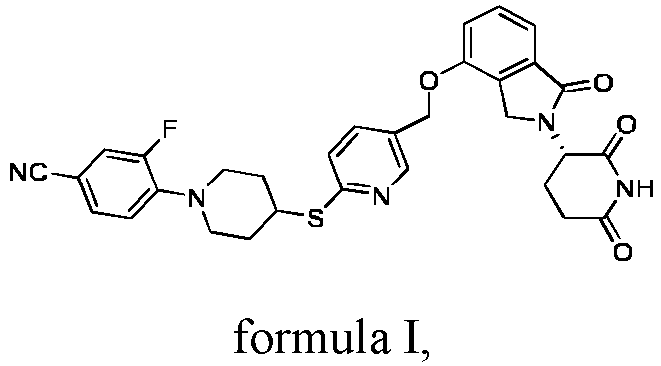
- A crystal form Y of a compound of formula (I),

- A crystal form V of a compound of formula (I),

- A crystal form R of a compound of formula (I),

- A crystal form S of a compound of formula (I),

- A crystal form T of a compound of formula (I),

- The crystal form according to any one of claims 1 to 24, wherein 2θ angle has an error range of ± 0.20.
- A pharmaceutical composition prepared from the crystal form according to any one of claims 1 to 25.
- A pharmaceutical composition comprising the crystal form according to any one of claims 1 to 25, and optionally a pharmaceutically acceptable carrier, a diluent, or an excipient.
- A method for preparing a pharmaceutical composition, comprising the step of mixing the crystal form according to any one of claims 1 to 25 with a pharmaceutically acceptable carrier, a diluent, or an excipient.
- A use of the crystal form according to any one of claims 1 to 25, the composition according to claim 26 or 27, or the composition prepared by the method according to claim 28 in the manufacture of a medicament for treating and/or preventing a CRBN protein-related disease.
- A use of the crystal form according to any one of claims 1 to 25, the composition according to claim 26 or 27, or the composition prepared by the method according to claim 28 in the manufacture of a medicament for treating and/or preventing a cancer, an angiogenesis-related condition, pain, macular degeneration or related syndrome, a skin disease, a pulmonary disease, an asbestos-related disease, a parasitic disease, an immunodeficiency disease, a CNS disease, a CNS injury, atherosclerosis or related condition, sleep disorder or related condition, an infectious disease, hemoglobinopathy or related condition, or a TNFa-related condition; preferably, a use in the manufacture of a medicament for treating and/or preventing a cancer or a CNS injury.
- The use according to claim 30, wherein the cancer is selected from the group consisting of leukemia, myeloma, lymphoma, melanoma, skin cancer, liver cancer, kidney cancer, lung cancer, nasopharyngeal cancer, gastric cancer, esophageal cancer, colorectal cancer, gallbladder cancer, bile duct cancer, chorionic epithelioma, pancreatic cancer, polycythemia vera, pediatric tumor, cervical cancer, ovarian cancer, breast cancer, bladder cancer, urothelial cancer, ureteral tumor, prostate cancer, seminoma, testicular tumor, head and neck tumor, head and neck squamous cell carcinoma, endometrial cancer, thyroid cancer, sarcoma, osteoma, neuroblastoma, neuroendocrine cancer, brain tumor, CNS cancer, astrocytoma, and glioma; preferably, the liver cancer is hepatocellular carcinoma; the colorectal cancer is colon cancer or rectal cancer; the sarcoma is osteosarcoma or soft tissue sarcoma; and the glioma is glioblastoma.
- The use according to claim 30, wherein the myeloma is multiple myeloma (MM) and myelodysplastic syndrome (MDS); preferably, the multiple myeloma is relapsed, refractory, or resistant.
- The use according to claim 32, wherein the multiple myeloma is refractory or resistant to lenalidomide or pomalidomide.
Applications Claiming Priority (2)
| Application Number | Priority Date | Filing Date | Title |
|---|---|---|---|
| CN202210060175 | 2022-01-19 | ||
| PCT/CN2023/073077 WO2023138647A1 (en) | 2022-01-19 | 2023-01-19 | Crystalline form of sulfur-containing isoindoline derivative |
Publications (2)
| Publication Number | Publication Date |
|---|---|
| EP4467536A1 true EP4467536A1 (en) | 2024-11-27 |
| EP4467536A4 EP4467536A4 (en) | 2025-08-06 |
Family
ID=87347885
Family Applications (1)
| Application Number | Title | Priority Date | Filing Date |
|---|---|---|---|
| EP23742962.6A Pending EP4467536A4 (en) | 2022-01-19 | 2023-01-19 | CRYSTALLINE FORM OF A SULFUR-CONTAINING ISOINDOLINE DERIVATIVE |
Country Status (10)
| Country | Link |
|---|---|
| US (1) | US20250154126A1 (en) |
| EP (1) | EP4467536A4 (en) |
| JP (1) | JP2025503063A (en) |
| KR (1) | KR20240136385A (en) |
| CN (1) | CN118510766A (en) |
| AU (1) | AU2023210002A1 (en) |
| CA (1) | CA3248757A1 (en) |
| MX (1) | MX2024008959A (en) |
| TW (1) | TW202340167A (en) |
| WO (1) | WO2023138647A1 (en) |
Family Cites Families (7)
| Publication number | Priority date | Publication date | Assignee | Title |
|---|---|---|---|---|
| MX2009010082A (en) * | 2007-03-20 | 2009-10-19 | Celgene Corp | 4'-o-substituted isoindoline derivatives and compositions comprising and methods of using the same. |
| PL3202460T3 (en) | 2010-02-11 | 2019-12-31 | Celgene Corporation | Arylmethoxy isoindoline derivatives and compositions comprising and methods of using the same |
| EP4467143B1 (en) * | 2017-07-10 | 2026-03-11 | Celgene Corporation | Method for preparing 4-(4-(4-(((2-(2,6-dioxopiperidin-3-yl)-l-oxoisoindolin-4-yl)oxy)methyl)benzyl)piperazin-l-yl)-3-fluorobenzonitrile |
| KR102718800B1 (en) * | 2018-05-23 | 2024-10-18 | 셀진 코포레이션 | Treatment of multiple myeloma and use of biomarkers for 4-(4-(4-(((2-(2,6-dioxopiperidin-3-yl)-1-oxoisoindolin-4-yl)oxy)methyl)benzyl)piperazin-1-yl)-3-fluorobenzonitrile |
| AU2019348094B2 (en) | 2018-09-30 | 2022-12-22 | Shanghai Institute Of Materia Medica, Chinese Academy Of Sciences | Isoindoline compound, preparation method, pharmaceutical composition and use thereof |
| WO2021055756A1 (en) * | 2019-09-19 | 2021-03-25 | The Regents Of The University Of Michigan | Spirocyclic androgen receptor protein degraders |
| BR112023000817A2 (en) * | 2020-07-20 | 2023-02-07 | Jiangsu Hengrui Pharmaceuticals Co Ltd | ISOINDOLINE DERIVATIVE CONTAINING SULFUR, AND METHOD OF PREPARATION OF THE SAME AND MEDICAL USE OF THE SAME |
-
2023
- 2023-01-19 AU AU2023210002A patent/AU2023210002A1/en active Pending
- 2023-01-19 CN CN202380016119.5A patent/CN118510766A/en active Pending
- 2023-01-19 MX MX2024008959A patent/MX2024008959A/en unknown
- 2023-01-19 JP JP2024543229A patent/JP2025503063A/en active Pending
- 2023-01-19 TW TW112102783A patent/TW202340167A/en unknown
- 2023-01-19 KR KR1020247027045A patent/KR20240136385A/en active Pending
- 2023-01-19 CA CA3248757A patent/CA3248757A1/en active Pending
- 2023-01-19 EP EP23742962.6A patent/EP4467536A4/en active Pending
- 2023-01-19 US US18/728,652 patent/US20250154126A1/en active Pending
- 2023-01-19 WO PCT/CN2023/073077 patent/WO2023138647A1/en not_active Ceased
Also Published As
| Publication number | Publication date |
|---|---|
| TW202340167A (en) | 2023-10-16 |
| CA3248757A1 (en) | 2025-07-09 |
| US20250154126A1 (en) | 2025-05-15 |
| EP4467536A4 (en) | 2025-08-06 |
| WO2023138647A1 (en) | 2023-07-27 |
| CN118510766A (en) | 2024-08-16 |
| KR20240136385A (en) | 2024-09-13 |
| AU2023210002A1 (en) | 2024-08-22 |
| MX2024008959A (en) | 2024-07-30 |
| JP2025503063A (en) | 2025-01-30 |
Similar Documents
| Publication | Publication Date | Title |
|---|---|---|
| EP4058151B1 (en) | Novel salt of terphenyl compound | |
| EP4293027A1 (en) | Pyrimidine aromatic ring compounds | |
| EP4640689A1 (en) | Crystal form of kras g12d inhibitor and preparation method therefor | |
| TWI585088B (en) | Imidazo[1,2-b]indole derivatives as kinase inhibitors | |
| WO2021190467A1 (en) | Spiro ring-containing quinazoline compound | |
| JP7749263B2 (en) | Compounds as KAT6 inhibitors | |
| CN115667246A (en) | A kind of crystal form of pyridazine derivative free base and its preparation method and application | |
| CN116390728B (en) | Quinazoline derivatives and their preparation methods and uses | |
| EP4467536A1 (en) | Crystalline form of sulfur-containing isoindoline derivative | |
| AU2024236796A1 (en) | Crystalline form | |
| EP4293021A1 (en) | Salt of nitrogen-containing fused heterocyclic compound or crystal form thereof, and preparation method therefor, pharmaceutical composition thereof, and use thereof | |
| EP3941472B1 (en) | Crystalline and amorphous forms of-(5-((4-ethylpiperazin-1-yl)methyl)pyridine-2-yl)-5-fluoro-4-(3-isopropyl-2-methyl-2 <ns1:i>h</ns1:i>?-indazol-5-yl)pyrimidin-2-amine and its salts, and preparation methods and therapeutic uses thereof | |
| EA052388B1 (en) | CRYSTALLINE FORM OF A SULFUR-CONTAINING ISOINDOLINE DERIVATIVE | |
| EP4596538A1 (en) | Pharmaceutically acceptable salt and crystal form of tetrahydronaphthalene derivative, and preparation method | |
| EP4570800A1 (en) | Crystal form of pyridinopyrimidinone compound, acid salt thereof, crystal form of acid salt thereof, and use | |
| CN116462660A (en) | A kind of salt of isoquinolinone compound and crystal form thereof | |
| TWI914461B (en) | Pharmaceutically acceptable salt, crystal form of indazole derivatives and preparation method thereof | |
| KR20250024987A (en) | Crystalline form of 4-[(5-chloropyridin-2-yl)methoxy]-1-[3-(propan-2-yl)-1H,2H,3H,4H,5H-[1,4]diazepino[1,7-a]indol-9-yl]-1,2-dihydropyridin-2-one and salts thereof, preparation method and use thereof | |
| EP4644374A1 (en) | Naphthylamide compound, and preparation method therefor and use thereof | |
| EP4714947A1 (en) | Crystal form of pyrimido azacyclo compound, and preparation method therefor and use thereof | |
| EP4667467A1 (en) | Protac degraders of mllt1 and/or mllt3 | |
| EP4538268A1 (en) | Pyridazin-3-carboxamide compound as tyk2 inhibitor | |
| HK40079587A (en) | Crystal form of pyridazine derivative free base, and preparation method therefor and use thereof | |
| HK40063209B (en) | Solid state forms |
Legal Events
| Date | Code | Title | Description |
|---|---|---|---|
| STAA | Information on the status of an ep patent application or granted ep patent |
Free format text: STATUS: THE INTERNATIONAL PUBLICATION HAS BEEN MADE |
|
| PUAI | Public reference made under article 153(3) epc to a published international application that has entered the european phase |
Free format text: ORIGINAL CODE: 0009012 |
|
| STAA | Information on the status of an ep patent application or granted ep patent |
Free format text: STATUS: REQUEST FOR EXAMINATION WAS MADE |
|
| 17P | Request for examination filed |
Effective date: 20240730 |
|
| AK | Designated contracting states |
Kind code of ref document: A1 Designated state(s): AL AT BE BG CH CY CZ DE DK EE ES FI FR GB GR HR HU IE IS IT LI LT LU LV MC ME MK MT NL NO PL PT RO RS SE SI SK SM TR |
|
| DAV | Request for validation of the european patent (deleted) | ||
| DAX | Request for extension of the european patent (deleted) | ||
| STAA | Information on the status of an ep patent application or granted ep patent |
Free format text: STATUS: EXAMINATION IS IN PROGRESS |
|
| A4 | Supplementary search report drawn up and despatched |
Effective date: 20250709 |
|
| RIC1 | Information provided on ipc code assigned before grant |
Ipc: C07D 401/14 20060101AFI20250703BHEP Ipc: A61K 31/454 20060101ALI20250703BHEP Ipc: A61P 35/00 20060101ALI20250703BHEP |
|
| 17Q | First examination report despatched |
Effective date: 20250723 |