EP4467129A1 - Liposome composition and liposome-containing pharmaceutical composition - Google Patents
Liposome composition and liposome-containing pharmaceutical composition Download PDFInfo
- Publication number
- EP4467129A1 EP4467129A1 EP23780717.7A EP23780717A EP4467129A1 EP 4467129 A1 EP4467129 A1 EP 4467129A1 EP 23780717 A EP23780717 A EP 23780717A EP 4467129 A1 EP4467129 A1 EP 4467129A1
- Authority
- EP
- European Patent Office
- Prior art keywords
- liposome composition
- liposome
- composition according
- drug
- liposomes
- Prior art date
- Legal status (The legal status is an assumption and is not a legal conclusion. Google has not performed a legal analysis and makes no representation as to the accuracy of the status listed.)
- Pending
Links
Images

Classifications
-
- A—HUMAN NECESSITIES
- A61—MEDICAL OR VETERINARY SCIENCE; HYGIENE
- A61K—PREPARATIONS FOR MEDICAL, DENTAL OR TOILETRY PURPOSES
- A61K9/00—Medicinal preparations characterised by special physical form
- A61K9/10—Dispersions; Emulsions
- A61K9/127—Synthetic bilayered vehicles, e.g. liposomes or liposomes with cholesterol as the only non-phosphatidyl surfactant
- A61K9/1271—Non-conventional liposomes, e.g. PEGylated liposomes or liposomes coated or grafted with polymers
-
- A—HUMAN NECESSITIES
- A61—MEDICAL OR VETERINARY SCIENCE; HYGIENE
- A61K—PREPARATIONS FOR MEDICAL, DENTAL OR TOILETRY PURPOSES
- A61K31/00—Medicinal preparations containing organic active ingredients
- A61K31/33—Heterocyclic compounds
- A61K31/395—Heterocyclic compounds having nitrogen as a ring hetero atom, e.g. guanethidine or rifamycins
- A61K31/435—Heterocyclic compounds having nitrogen as a ring hetero atom, e.g. guanethidine or rifamycins having six-membered rings with one nitrogen as the only ring hetero atom
- A61K31/47—Quinolines; Isoquinolines
-
- A—HUMAN NECESSITIES
- A61—MEDICAL OR VETERINARY SCIENCE; HYGIENE
- A61K—PREPARATIONS FOR MEDICAL, DENTAL OR TOILETRY PURPOSES
- A61K47/00—Medicinal preparations characterised by the non-active ingredients used, e.g. carriers or inert additives; Targeting or modifying agents chemically bound to the active ingredient
- A61K47/02—Inorganic compounds
-
- A—HUMAN NECESSITIES
- A61—MEDICAL OR VETERINARY SCIENCE; HYGIENE
- A61K—PREPARATIONS FOR MEDICAL, DENTAL OR TOILETRY PURPOSES
- A61K47/00—Medicinal preparations characterised by the non-active ingredients used, e.g. carriers or inert additives; Targeting or modifying agents chemically bound to the active ingredient
- A61K47/06—Organic compounds, e.g. natural or synthetic hydrocarbons, polyolefins, mineral oil, petrolatum or ozokerite
- A61K47/08—Organic compounds, e.g. natural or synthetic hydrocarbons, polyolefins, mineral oil, petrolatum or ozokerite containing oxygen, e.g. ethers, acetals, ketones, quinones, aldehydes, peroxides
- A61K47/12—Carboxylic acids; Salts or anhydrides thereof
-
- A—HUMAN NECESSITIES
- A61—MEDICAL OR VETERINARY SCIENCE; HYGIENE
- A61K—PREPARATIONS FOR MEDICAL, DENTAL OR TOILETRY PURPOSES
- A61K47/00—Medicinal preparations characterised by the non-active ingredients used, e.g. carriers or inert additives; Targeting or modifying agents chemically bound to the active ingredient
- A61K47/06—Organic compounds, e.g. natural or synthetic hydrocarbons, polyolefins, mineral oil, petrolatum or ozokerite
- A61K47/08—Organic compounds, e.g. natural or synthetic hydrocarbons, polyolefins, mineral oil, petrolatum or ozokerite containing oxygen, e.g. ethers, acetals, ketones, quinones, aldehydes, peroxides
- A61K47/14—Esters of carboxylic acids, e.g. fatty acid monoglycerides, medium-chain triglycerides, parabens or PEG fatty acid esters
-
- A—HUMAN NECESSITIES
- A61—MEDICAL OR VETERINARY SCIENCE; HYGIENE
- A61K—PREPARATIONS FOR MEDICAL, DENTAL OR TOILETRY PURPOSES
- A61K47/00—Medicinal preparations characterised by the non-active ingredients used, e.g. carriers or inert additives; Targeting or modifying agents chemically bound to the active ingredient
- A61K47/06—Organic compounds, e.g. natural or synthetic hydrocarbons, polyolefins, mineral oil, petrolatum or ozokerite
- A61K47/24—Organic compounds, e.g. natural or synthetic hydrocarbons, polyolefins, mineral oil, petrolatum or ozokerite containing atoms other than carbon, hydrogen, oxygen, halogen, nitrogen or sulfur, e.g. cyclomethicone or phospholipids
-
- A—HUMAN NECESSITIES
- A61—MEDICAL OR VETERINARY SCIENCE; HYGIENE
- A61K—PREPARATIONS FOR MEDICAL, DENTAL OR TOILETRY PURPOSES
- A61K47/00—Medicinal preparations characterised by the non-active ingredients used, e.g. carriers or inert additives; Targeting or modifying agents chemically bound to the active ingredient
- A61K47/06—Organic compounds, e.g. natural or synthetic hydrocarbons, polyolefins, mineral oil, petrolatum or ozokerite
- A61K47/26—Carbohydrates, e.g. sugar alcohols, amino sugars, nucleic acids, mono-, di- or oligo-saccharides; Derivatives thereof, e.g. polysorbates, sorbitan fatty acid esters or glycyrrhizin
-
- A—HUMAN NECESSITIES
- A61—MEDICAL OR VETERINARY SCIENCE; HYGIENE
- A61K—PREPARATIONS FOR MEDICAL, DENTAL OR TOILETRY PURPOSES
- A61K47/00—Medicinal preparations characterised by the non-active ingredients used, e.g. carriers or inert additives; Targeting or modifying agents chemically bound to the active ingredient
- A61K47/06—Organic compounds, e.g. natural or synthetic hydrocarbons, polyolefins, mineral oil, petrolatum or ozokerite
- A61K47/28—Steroids, e.g. cholesterol, bile acids or glycyrrhetinic acid
-
- A—HUMAN NECESSITIES
- A61—MEDICAL OR VETERINARY SCIENCE; HYGIENE
- A61K—PREPARATIONS FOR MEDICAL, DENTAL OR TOILETRY PURPOSES
- A61K9/00—Medicinal preparations characterised by special physical form
- A61K9/10—Dispersions; Emulsions
- A61K9/127—Synthetic bilayered vehicles, e.g. liposomes or liposomes with cholesterol as the only non-phosphatidyl surfactant
-
- A—HUMAN NECESSITIES
- A61—MEDICAL OR VETERINARY SCIENCE; HYGIENE
- A61P—SPECIFIC THERAPEUTIC ACTIVITY OF CHEMICAL COMPOUNDS OR MEDICINAL PREPARATIONS
- A61P35/00—Antineoplastic agents
-
- C—CHEMISTRY; METALLURGY
- C07—ORGANIC CHEMISTRY
- C07D—HETEROCYCLIC COMPOUNDS
- C07D215/00—Heterocyclic compounds containing quinoline or hydrogenated quinoline ring systems
- C07D215/02—Heterocyclic compounds containing quinoline or hydrogenated quinoline ring systems having no bond between the ring nitrogen atom and a non-ring member or having only hydrogen atoms or carbon atoms directly attached to the ring nitrogen atom
- C07D215/16—Heterocyclic compounds containing quinoline or hydrogenated quinoline ring systems having no bond between the ring nitrogen atom and a non-ring member or having only hydrogen atoms or carbon atoms directly attached to the ring nitrogen atom with hetero atoms or with carbon atoms having three bonds to hetero atoms with at the most one bond to halogen, e.g. ester or nitrile radicals, directly attached to ring carbon atoms
- C07D215/48—Carbon atoms having three bonds to hetero atoms with at the most one bond to halogen
Definitions
- the present invention relates to a liposome composition and to a liposome-containing pharmaceutical composition.
- Liposomes are microscopic closed vesicles comprising an inner layer surrounded by one or more lipid bilayers, and they are generally able to hold a water-soluble substance inside the inner phase while holding a fat-soluble substance on the lipid bilayer.
- Research is being conducted on formulations using liposomal techniques, whereby this property of liposomes is used to encapsulate drugs in liposomes for delivery to target tissue.
- Examples of hitherto proposed formulations using liposomal techniques include liposome compositions containing diacylphosphatidylethanolamine, a dihydrosphingomyelin and cholesterols, modified with a hydrophilic polymer (PTL 1).
- Receptor tyrosine kinase inhibitors are known as molecular targeted agents exhibiting antitumor activity via inhibition of tyrosine kinase on cell membranes and inside cells.
- Lenvatinib (chemical name: 4-(3-chloro-4-(cyclopropylaminocarbonyl)aminophenoxy)-7-methoxy-6-quinolinecarboxamide) is a tyrosine kinase inhibitor targeting receptors such as vascular endothelial growth factor receptors (VEGFR)1-3 and fibroblast growth factor receptors (FGFR)1-4 (PTL 2)
- PTL 3 discloses formulations using liposomal technology which contain lenvatinib as a drug.
- PTL 1 also discloses a liposome composition containing sunitinib (a tyrosine kinase inhibitor) as a drug.
- a liposome composition containing liposomes composed of a specific lipid and comprising 4-(3-chloro-4-(ethylaminocarbonyl)aminophenoxy)-7-methoxy-6-quinolinecarboxamide represented by the following formula (I) (hereunder also referred to as "compound (I)”) or its pharmaceutically acceptable salt as a drug with tyrosine kinase inhibiting activity, has high retentivity in the blood.
- the disclosure provides the following [1] to [19].
- Fig. 1 is a graph showing change in drug blood concentrations, with intravenous administration to mice of the liposome compositions of Examples 2, 5 and 8, and an aqueous solution of a methanesulfonic acid salt of compound (I).
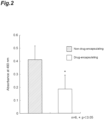
- Fig. 2 is a graph showing the results of an evaluation test for anti-PEG IgM antibody production.
- liposome means a microscopic closed vesicle having an inner phase encapsulated by a lipid bilayer.
- the term “liposome” encompasses small unilamellar vesicles (SUV), large unilamellar vesicles (LUV), giant unilamellar vesicles (GUV), multilamellar vesicles (MLV) as liposomes having multiple concentric membranes, and multivesicular vesicles (MVV) as liposomes having multiple irregular membranes.
- liposome inner phase refers to the region of the liposome encapsulated by the lipid bilayer, and when the region contains water, it is synonymous with “inner aqueous phase” and “liposome inner aqueous phase”.
- liposome outer phase refers to the region of the liposome that is not encapsulated by the lipid bilayer when the liposome is dispersed in a liquid (that is, the region other than the inner phase and lipid bilayer).
- the liposome composition of this embodiment comprises (A) liposomes comprising a dihydrosphingomyelin and diacylglycerol-polyethylene glycol (hereunder also referred to as “component (A)”), (B) a drug (hereunder also referred to as “component (B)”), and (C) a sulfuric acid salt and/or sucrose octasulfate (hereunder also referred to as “component (C)”).
- component (A) dihydrosphingomyelin and diacylglycerol-polyethylene glycol
- component (B) a drug
- component (C) a sulfuric acid salt and/or sucrose octasulfate
- the liposome composition of the embodiment encapsulates component (B) as a drug in the inner phase of the liposomes.
- encapsulates means a form in which the actual membranes of the liposomes encapsulate the drug, a form in which the drug is encapsulated within the closed spaces formed by the liposome membranes, or any combination of these forms.
- the liposome composition of the embodiment comprises (A) liposomes that comprise a dihydrosphingomyelin and diacylglycerol-polyethylene glycol.
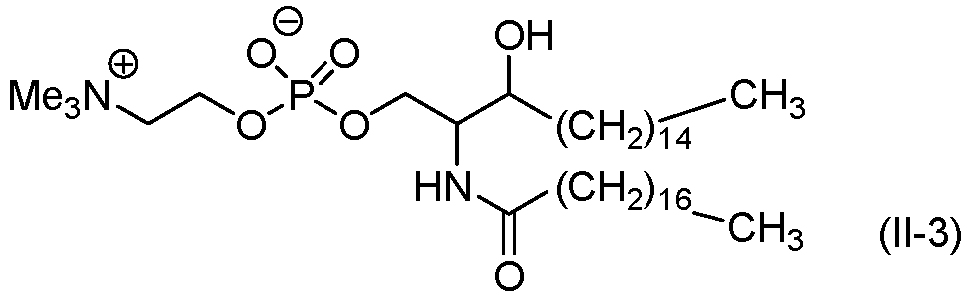
- a dihydrosphingomyelin is a phospholipid having two carbon chains in the molecule, and it is useful as a lipid for further increasing blood retentivity of the drug-encapsulating liposome composition used for the invention. More specifically, it may be a compound represented by formula (II-1), (II-2), (II-3) or (II-4), or their mixture.
- the dihydrosphingomyelin used may be, for example, a dihydrosphingomyelin obtained by reducing a naturally derived sphingomyelin by a common method, or a dihydrosphingomyelin obtained by chemical synthesis (synthetic dihydrosphingomyelin).
- a synthetic dihydrosphingomyelin preferably has a long carbon chain and high purity, so as to exhibit superior retentivity in the blood.
- Dihydrosphingomyelins derived naturally, such as from hen eggs are generally compounds represented by formula (II-1) above whereas chemical synthesis can produce compounds represented by formulas (II-1) to (II-4) at high purity.
- the content of the dihydrosphingomyelin in the total lipid component of the liposomes is not particularly restricted and may be 40 to 99.9 mol%, 45 to 96 mol% or 48 to 64 mol%.
- a diacylglycerol-polyethylene glycol is a compound wherein the hydroxyl group of a diacylglycerol is modified with polyethylene glycol.
- the molecular weight of the polyethylene glycol in the diacylglycerol-polyethylene glycol is not particularly restricted but is preferably 500 to 10,000 daltons, and more preferably 1000 to 5000 daltons.
- Examples of diacylglycerol-polyethylene glycols include dimyristoylglycerol-polyethylene glycol (DMG-PEG), dipalmitoylglycerol-polyethylene glycol (DPG-PEG) and distearoylglycerol-polyethylene glycol (DSG-PEG).
- DMG-PEG dimyristoylglycerol-polyethylene glycol
- DPG-PEG dipalmitoylglycerol-polyethylene glycol
- DSG-PEG distearoylglycerol-polyethylene glycol
- the content of the diacylglycerol-polyethylene glycol in the total lipid component of the liposomes is not particularly restricted and may be 0.1 to 15 mol%, 0.2 to 10 mol% or 0.3 to 6 mol%.
- component (A) may further include a cholesterol. This can further increase the membrane stability of the liposomes.
- cholesterols examples include cholesterol, 3-cholestanone and acylcholesterol.
- component (A) contains a cholesterol for this embodiment, the content of the cholesterol in the total lipid component of the liposomes is not particularly restricted and may be 0.1 to 50 mol%, 10 to 50 mol% or 30 to 48 mol%.
- component (A) contains a cholesterol for this embodiment
- the content ratio of the cholesterol with respect to the dihydrosphingomyelin in component (A) is not particularly restricted, but it may be 15 to 60 parts by mass, 20 to 50 parts by mass or 21 to 35 parts by mass, from the viewpoint of increasing the encapsulation rate of the drug (component (B)).
- the content of component (A) in the liposome composition is not particularly restricted, but it is preferably 0.001 to 50 mass%, more preferably 0.01 to 40 mass% and even more preferably 0.01 to 30 mass%, based on the total mass of the liposome composition.
- the mean particle size of the liposomes is not particularly restricted, but it may be 20 to 500 nm, 50 to 300 nm or 70 to 200 nm, from the viewpoint of reproducibility of production and degree of accumulation at the tumor site.
- the mean particle size of the liposomes can be measured by the dynamic light scattering method.
- the liposome composition of the embodiment comprises (B) compound (I) or its pharmaceutically acceptable salt as a drug.
- Compound (I) ( CAS No. 417719-46-1 ) is a publicly known compound.
- Compound (I) in the liposome composition of the embodiment may be in free form or in the form of a pharmaceutically acceptable salt.
- pharmaceutically acceptable salts include salts of inorganic acids, salts of organic acids, salts of inorganic bases, salts of organic bases, and salts of acidic or basic amino acids.
- inorganic acid salts include salts of hydrochloric acid, hydrobromic acid, sulfuric acid, nitric acid and phosphoric acid.
- salts of organic acids include salts of acetic acid, succinic acid, fumaric acid, maleic acid, tartaric acid, citric acid, lactic acid, stearic acid, benzoic acid, methanesulfonic acid (mesylic acid), ethanesulfonic acid andp-toluenesulfonic acid.
- salts of inorganic bases include alkali metal salts such as sodium salts and potassium salts, alkaline earth metal salts such as calcium salts and magnesium salts, and aluminum salts and ammonium salts.
- salts of organic bases include diethylamine, diethanolamine, meglumine and N,N-dibenzylethylenediamine.
- salts of acidic amino acids include salts of aspartic acid and glutamic acid.
- salts of basic amino acids include salts of arginine, lysine and ornithine.
- Compound (I) or its pharmaceutically acceptable salt to be used for preparation of the liposome composition of the embodiment can be produced by the method described in Example 583 of PTL 1, for example.
- a pharmaceutically acceptable salt of compound (I) used for preparation of the liposome composition of the embodiment is not particularly restricted so long as it is one of the aforementioned salts, and it may be a salt of an organic acid such as maleic acid, for example.
- the content of component (B) in the liposome composition of the embodiment is not particularly restricted, and may be 0.001 to 100 mg/mL, 0.05 to 80 mg/mL, 0.01 to 50 mg/mL or 0.1 to 30 mg/mL. Likewise, the content of component (B) in the liposome composition of the embodiment is not particularly restricted but may be 0.01 to 50 mass%, 0.1 to 40 mass%, 0.5 to 30 mass% or 1 to 20 mass%, based on the total mass of the liposome composition.
- the drug/total lipid weight ratio (D/L ratio) in the liposome composition of the embodiment may be greater than 0.1, for example.
- the D/L ratio in the liposome composition of the embodiment may also be 1.0 or lower, for example.
- the liposome composition of the invention comprises (C) a sulfuric acid salt and/or sucrose octasulfate. If the inner aqueous phase of the liposome includes component (C), it will be possible to increase the encapsulation rate and blood retentivity of the drug (component (B)).
- the content of component (C) in the inner aqueous phase of the liposomes is not particularly restricted, and may be 10 to 1000 mM, for example.
- the sulfuric acid salt may be ammonium sulfate, hydrogen ammonium sulfate or triethylamine sulfate, for example.
- the content of the sulfuric acid salt in the inner aqueous phase of the liposomes is not particularly restricted, and may be 50 to 1000 mM, 100 to 500 mM or 150 to 400 mM, for example.
- Sucrose octasulfate may be sucrose octasulfate-triethylamine (SOS-TEA) or ammonium sucrose octasulfate, for example.
- SOS-TEA sucrose octasulfate-triethylamine
- ammonium sucrose octasulfate for example.
- the content of the sucrose octasulfate in the inner aqueous phase of the liposomes is not particularly restricted, and may be 10 to 200 mM, 20 to 150 mM or 30 to 100 mM, for example.
- component (C) is a sulfuric acid salt.
- Another embodiment of component (C) is ammonium sulfate.
- the liposome composition of the embodiment may further comprise (D) an organic acid (hereunder also referred to as "component (D)"). If the inner aqueous phase of the liposomes further includes component (D), this may be expected to provide an effect of inhibiting decomposition of the constituent components of the liposome.
- organic acids include those with buffer capacity, such as succinic acid, citric acid, maleic acid and salicylic acid.
- One embodiment of the organic acid is succinic acid.
- component (D) in the inner phase of the liposomes is not particularly restricted, and may be 0.1 to 300 mM, 5 to 200 mM or 10 to 100 mM, for example.
- the liposome composition of the embodiment may further comprise a basic compound (hereunder also referred to as "component (E)").
- a basic compound hereunder also referred to as "component (E)”
- Examples of basic compounds include alkali metal hydroxides (such as sodium hydroxide and potassium hydroxide), and amines (such as ammonia and alkylamines).
- alkali metal hydroxides such as sodium hydroxide and potassium hydroxide
- amines such as ammonia and alkylamines
- One embodiment of the basic compound is sodium hydroxide.
- Another embodiment of the basic compound is ammonia.
- the pH of the inner aqueous phase in the liposome composition of the embodiment is not particularly restricted and may be 1 to 6, for example.
- the method for producing the liposome composition of the embodiment is not particularly restricted, and for example, it can be produced by steps of preparing a lipid mixture, preparing an aqueous phase, formation of liposome particles, particle size adjustment, replacement of the outer aqueous phase of the liposomes, encapsulation of a drug into the liposome particles, and removal of the outer aqueous phase drug.
- each component of the liposomes may be mixed with an organic solvent, and the mixture may be heated to dissolve the components, thereby producing an oil phase.
- the organic solvent used for the oil phase is not particularly restricted, and for example, a water-soluble organic solvent that is optionally miscible with water may be used. Alternatively, an organic solvent which is not water-soluble may be used for preparation, mixing and dissolving the components and then removing the organic solvent.
- water-soluble organic solvents examples include alcohols such as methanol, ethanol, n-propanol, isopropanol, n-butanol, isobutanol and t-butanol, glycols such as glycerin, ethylene glycol and propylene glycol, and polyalkylene glycols such as polyethylene glycol. Alcohols are preferred among these. Alcohols are preferably one or more selected from among ethanol, methanol, 2-propanol and t-butanol, more preferably one or more selected from among ethanol, 2-propanol and t-butanol, and even more preferably ethanol.
- alcohols such as methanol, ethanol, n-propanol, isopropanol, n-butanol, isobutanol and t-butanol
- glycols such as glycerin
- polyalkylene glycols such as polyethylene glyco
- the aqueous phase used may be water (such as distilled water or water for injection), physiological saline, a buffering solution or an aqueous solution of a saccharide (such as sucrose), or a mixture (aqueous solvent) of the same.
- an aqueous solution comprising component (C) may be used as the aqueous phase.
- the buffering solution is not limited to either an organic system or inorganic system, and it is preferably a buffering solution having buffering action close to the approximate hydrogen ion concentration of body fluids, examples of which include phosphate buffer, Tris buffer, citrate buffer, acetate buffer, histidine buffering solution or Good's buffer.
- the inner phase of the liposomes may be an aqueous solution that disperses the liposomes during production of the liposomes, or it may be newly added water, physiological saline, a buffering solution or an aqueous solution of a saccharide, or their mixture.
- the water to be used in the outer aqueous phase or inner aqueous phase may be one that does not include impurities (such as dirt or chemical substances).
- Physiological saline is an inorganic salt solution prepared so as to be isotonic with the human body, and it may also have a buffering function.
- the physiological saline may be brine comprising sodium chloride at 0.9 w/v% (weight/volume percent), PBS, or Tris-buffered saline.
- aqueous phase encompasses both the outer aqueous phase and inner aqueous phase.
- outer aqueous phase as used herein means an aqueous solution that disperses the liposomes.
- the outer aqueous phase is the solution occupying the outer sides of the liposomes in the liposome dispersion that has been packaged and stored in a vial or prefilled syringe.
- the outer aqueous phase is the solution occupying the outer sides of the liposomes of the liposome dispersion.
- inner aqueous phase as used herein, means the aqueous phase inside the closed vesicles separated by the lipid bilayer membranes of the liposomes.
- the liposomes are formed by mixing the lipid mixture with the aqueous phase.
- the liquid temperature for formation of the liposome particles may be appropriately adjusted.
- the obtained liposomes may have their particle sizes uniformly adjusted by extrusion treatment.
- Extrusion treatment means applying physical shear force by passing the liposomes through a filter with pores, for atomization.
- the liposome outer aqueous phase liquid may be replaced.
- the replacement liquid may be, but is not limited to, a 0.05 to 5 mass% sodium chloride aqueous solution, a 0.05 to 20 mass% glucose aqueous solution or a 0.05 to 40 mass% sucrose aqueous solution.
- the replacement liquid can be used to remove the aqueous solution comprising component (C) which is present in the outer aqueous phase, by dialysis, ultracentrifugation or ultrafiltration of the liposome solution, to obtain liposomes with the outer aqueous phase replaced by the replacement liquid.
- the drug may be encapsulated into the liposome particles by a remote loading method.
- remote loading method means a method in which liposomes not encapsulating the drug are produced by the method described above, and the drug is added to the outer phase of the liposomes to introduce the drug into the liposomes.
- Component (C) (such as ammonium sulfate) may be used for remote loading.
- the drug added to the outer aqueous phase migrates into the liposomes and becomes incorporated into the liposomes.
- the driving force for this process may be a solubility gradient, ion gradient or pH gradient.
- One example is a method of using an ion gradient formed across the liposome membranes, to introduce the drug into the liposome interiors.
- the temperature during encapsulation of the drug into the liposome particles by remote loading is not particularly restricted, and it may be 20 to 90°C, for example.
- the liposome solution encapsulating the drug may be subjected to dialysis, ultracentrifugation or filtration to remove the drug not included in the liposomes.
- sucrose/histidine buffer at a prescribed concentration may be used as a replacement liquid, with adjustment to the desired drug concentration by ultracentrifugation or ultrafiltration.
- the liposome composition of the embodiment exhibits an effect of excellent retentivity in the blood.
- Retentivity in the blood can be evaluated (when the liposome composition is administered to an animal such as a mouse, for example), using the drug concentration in the blood after 24 hours as the marker.
- the liposome composition of the embodiment has excellent retentivity in the blood, exhibiting a high value of above 800 ng/mL as the drug concentration in the blood of mice after 24 hours (with a drug dose of 2 mg/kg).
- the liposome composition of the embodiment can be used as a pharmaceutical composition.
- the liposome composition of the embodiment may also be used as an angiogenesis inhibitor, or as an antitumor agent.
- the types of cancer to which it may be applied include pancreatic cancer, stomach cancer, colorectal cancer, breast cancer, prostate cancer, lung cancer, renal carcinoma, brain cancer, blood cancer, ovarian cancer, head and neck cancer, thyroid cancer, esophageal cancer, hepatic cancer, biliary tract cancer, pancreatic and gastrointestinal tract or neuroendocrine cancer, malignant melanoma, endometrial cancer, sarcoma and urothelial cancer.
- the pharmaceutical composition of this embodiment can be produced by a known method, such as the method described in General Rules for Preparations of the Japanese Pharmacopoeia, 17th Edition.
- the pharmaceutical composition of the embodiment may be appropriately administered to a patient in a manner suitable for the dosage form.
- the dosage of the pharmaceutical composition of the embodiment will differ depending on the type of target disease, and the age, gender, body weight and severity of symptoms of the patient, but it will usually be about 0.1 to 300 mg per administration for adults, in terms of the free form of compound (1).
- the nuclear magnetic resonance spectra were measured using a JEOL 500 (JMTC-500/54/JJ, ECZ500RS) or a Bruker Ultrashield Plus 600 (BZH102/600/70F, D355/54-6026, PABBO 600S3 BBF-H-D-05 Z SP).
- the chemical shifts in the proton nuclear magnetic resonance spectra are recorded in ⁇ units (ppm) with respect to tetramethylsilane, and the coupling constants are recorded in Hertz (Hz).
- the abbreviations for the splitting patterns are the following. s: singlet, d: doublet, t: triplet, dd: double doublet, m: multiplet, brs: broad singlet, brd: broad doublet, brt: broad triplet.
- HUVEC 2D growth assay Normal human umbilical vein endothelial cells (HUVEC) were isolated by a previously reported method ( Shinseikagaku Jikken Koza, "Cell Culture Technology", p.197-202 ). The cells were cultured overnight in a collagen I-coated flask (IWAKI 4143-010), with EGM-2 culture medium (Lonza Inc CC-3162) containing 10% Fetal Bovine Serum (FBS: Sigma 172012) in a 5% CO 2 incubator (37°C).
- IWAKI 4143-010 collagen I-coated flask
- EGM-2 culture medium Lionza Inc CC-3162
- Fetal Bovine Serum FBS: Sigma 172012
- test substance diluted with 2% FBS-SFM, and VEGF (R&D Systems 293-VE) or bFGF (Gibco 13256-029) prepared with SFM culture medium containing 2% FBS to a final concentration of 20 ng/mL were each added at 50 ⁇ L, and the cells were cultured for 3 days in a 5% CO 2 incubator (37°C). A 100 ⁇ L portion of each culture supernatant was suctioned from each well and discarded, 100 ⁇ L of CellTiter-Glo R 2.0 Assay (Promega G9243) was added to each well, and the mixture was then incubated for 20 minutes at room temperature.
- the luminescence in each well was measured using ENVISION TM (Perkin-Elmer).
- the cell survival rates in the presence of the test substance were determined, with 100% as the value measured with addition of VEGF or bFGF but without addition of the test substance, and 0% as the value measured without addition of the test substance or of VEGF or bFGF.
- the concentration of test substance necessary to produce 50% inhibition of HUVEC proliferation in the presence of VEGF or bFGF (IC 50 ) was calculated based on the cell survival rates.
- the IC 50 values for compound (I) for cell proliferation by VEGF and bFGF stimulation were 1.75 nM and 343 nM, respectively.
- Ethanol was mixed in an equal weight amount to the total lipid weights listed in liposome column of Table 1, and the mixture was dissolved at 80°C to obtain a lipid mixture.
- DSPC represents distearoylphosphatidylcholine
- Egg-SM represents hen egg sphingomyelin
- Egg-DHSM represents hen egg dihydrosphingomyelin
- TS-DHSM represents synthetic dihydrosphingomyelin
- DSG-PEG represents distearoylglycerol-polyethylene glycol
- Chol represents cholesterol.
- TS-DHSM can be synthesized by the method described below.
- the nuclear magnetic resonance spectrum for the synthesized TS-DHSM was as follows.
- each aqueous phase 1 of Examples 1, 2, 10, 11 and 12 and Comparative Examples 1 to 5 was obtained by adding an ammonia water solution to an aqueous solution of sulfuric acid or methanesulfonic acid to adjust the pH to 4, with volume adjustment using water to the concentrations listed in Table 1.
- the aqueous phase 1 of Example 3 was obtained by mixing the aqueous phase 1 prepared in Examples 1 and 2 and Comparative Examples 1 to 4 and the aqueous phase 1 prepared in Comparative Example 5, in a 1:1 ratio.
- Examples 4 and 5 were obtained by passing an aqueous solution of sodium sucrose octasulfate (product of Amadis Chemical) through an ion exchange resin for desalting, adjusting the pH to 4 with triethylamine, and then using water to adjust the volume to the concentrations listed in Table 1.
- Example 6 was obtained by dissolving ammonium sulfate and succinic acid in water, and using water to adjust the volume to the concentration listed in Table 1.
- Examples 7 to 9 and Comparative Example 6 were obtained by dissolving ammonium sulfate and succinic acid in water and adding an aqueous solution of the bases listed in Table 1 to adjust the pH to 4, and then using water to adjust the volume to the listed concentrations.
- the aqueous phases 1 of Examples 7 and 8 were obtained by weighing out 9.25 g of ammonium sulfate and 1.18 g of succinic acid and adding water (160 mL) for dissolution, adding 5.8 mL of a 1 N sodium hydroxide aqueous solution to adjust the pH to 4, and adjusting the volume to 200 mL with water.
- Aqueous phase 1 preheated to 80°C was added to a lipid mixture and the components were mixed by inverting.
- the particle sizes were adjusted by successively passing the mixture through a 100 nm pore size filter (product of Whatman), using an extruder (product of Lipex) while heating at 80°C.
- the adjusted particles were diluted with physiological saline and then ultracentrifuged at about 300,000 g.
- the supernatant was removed and the pellet was suspended in physiological saline, and then again ultracentrifuged at about 300,000 g.
- the supernatant was again removed and the pellet was suspended in physiological saline.
- the suspension was passed through a PES (polyethersulfone) filter (product of Whatman) having a 0.45 ⁇ m pore size, to obtain liposomes.
- PES polyethersulfone
- the drug (a maleic acid salt of compound (I) or a methanesulfonic acid salt of lenvatinib) was dissolved in free form in a 5% glucose/HCl solution to a concentration of 0.75 mg/mL, to prepare a drug solution.
- the liposomes and the drug solution were successively added to aqueous phase 2 that had been preheated to 60°C, and mixed for 60 minutes at 60°C.
- Aqueous phase 2 was prepared so that the mixed drug concentration was 0.2 mg/mL, with the drug solution and liposomes provided for a weight ratio of drug to total lipids of 0.17 to 0.2.
- the liquid mixture After cooling the liquid mixture to 4°C, it was passed through a PES filter (product of Whatman) having a pore size of 0.45 ⁇ m. The filtrate was diluted with physiological saline and ultracentrifuged at about 300,000 g, after which the supernatant was removed. The pellet was resuspended in aqueous phase 3 and passed through a PES filter (product of Pall) having a pore size of 0.22 ⁇ m, to obtain a liposome composition. The mean particle size of the liposome composition was measured by the dynamic light scattering method using a particle size measuring device (Zetasizer NanoZS (Malvern)).
- a particle size measuring device Zetasizer NanoZS (Malvern)
- the cholesterol concentration and drug concentration of the prepared liposome composition were measured by HPLC under the following conditions.
- the prepared liposome composition was intravenously administered to ICR male mice through the caudal vein (with a dose of 2 mg/kg drug, with 4 mice per group), and at 24 hours after administration, whole blood was collected from the inferior vena cava under isoflurane anesthesia. The blood was centrifuged for 10 minutes at about 1200 g, and the plasma was collected. The drug concentration of the harvested plasma was assayed using LC-MS/MS. The blood drug concentrations at 24 hours after administration are shown in Table 1.
- the blood drug concentration was higher with superior blood retentivity using the liposome compositions of Examples 1 and 2 which contained hen egg dihydrosphingomyelin or synthetic dihydrosphingomyelin in the liposomes, as compared to the liposome compositions of Comparative Examples 1 and 2 which contained distearoylphosphatidylcholine or hen egg sphingomyelin in the liposomes.
- the liposome compositions of Comparative Examples 3 and 4 which replaced the drug of Examples 1 and 2 from compound (I) with lenvatinib had notably lower blood drug concentrations compared to the liposome compositions of Examples 1 and 2.
- the liposome compositions of Examples 2, 5 and 8 exhibited satisfactory change in blood drug concentration at 15 minutes, 4 hours and 24 hours after administration, while the aqueous solution of the methanesulfonate of compound (I) had decreased blood drug concentration after administration, being significantly lower after 24 hours. This confirmed that the blood retentivity after administration of the aqueous solution of the methanesulfonic acid salt of compound (I) is notably increased by administration as a liposome composition of the embodiment.
- the dosage of DHSM was measured by the same method as for measurement of the cholesterol concentration described above in paragraph [0073], (3-1).
- Serum was collected from the mice administered the liposome composition encapsulating compound (I) and the mice administered liposomes without encapsulation of compound (I), by sampling whole blood from the inferior vena cava under isoflurane anesthesia at 10 days after administration.
- the collected mouse sera were diluted 100-fold and, following the method reported in Reference A, the absorbance at 490 nm was measured using a spectrophotometer (SpectraMax M2 (product of Molecular Devices)), to evaluate the anti-PEG IgM antibody production level ( Reference A: International Journal of Pharmaceutics 15(2012) 436:636-643 ). The results are shown in Fig. 2 .
- Serum harvested from the mice administered the liposome composition encapsulating compound (I) had significantly lower anti-PEG IgM antibody concentration compared to serum harvested from mice administered the liposomes without encapsulation of compound (I). This confirmed that combination of liposomes of the embodiment with compound (I) has an effect of inhibiting the ABC phenomenon. In other words, combining the liposome composition of the embodiment with compound (I) or its pharmaceutically acceptable salt inhibits the ABC phenomenon, so that high retentivity in the blood can be expected from the second administration onward.
- Maleic acid salts and methanesulfonic acid salts of compound (I) can be produced by the following exemplary methods. However, these specific examples are merely illustrative and are not intended to restrict the invention in any way.
Landscapes
- Health & Medical Sciences (AREA)
- Chemical & Material Sciences (AREA)
- Life Sciences & Earth Sciences (AREA)
- Animal Behavior & Ethology (AREA)
- General Health & Medical Sciences (AREA)
- Veterinary Medicine (AREA)
- Medicinal Chemistry (AREA)
- Pharmacology & Pharmacy (AREA)
- Public Health (AREA)
- Epidemiology (AREA)
- Chemical Kinetics & Catalysis (AREA)
- General Chemical & Material Sciences (AREA)
- Engineering & Computer Science (AREA)
- Oil, Petroleum & Natural Gas (AREA)
- Organic Chemistry (AREA)
- Nuclear Medicine, Radiotherapy & Molecular Imaging (AREA)
- Dispersion Chemistry (AREA)
- Inorganic Chemistry (AREA)
- Molecular Biology (AREA)
- Biochemistry (AREA)
- Biophysics (AREA)
- Medicinal Preparation (AREA)
- Pharmaceuticals Containing Other Organic And Inorganic Compounds (AREA)
Abstract
Description
- The present invention relates to a liposome composition and to a liposome-containing pharmaceutical composition.
- Liposomes are microscopic closed vesicles comprising an inner layer surrounded by one or more lipid bilayers, and they are generally able to hold a water-soluble substance inside the inner phase while holding a fat-soluble substance on the lipid bilayer. Research is being conducted on formulations using liposomal techniques, whereby this property of liposomes is used to encapsulate drugs in liposomes for delivery to target tissue. Examples of hitherto proposed formulations using liposomal techniques include liposome compositions containing diacylphosphatidylethanolamine, a dihydrosphingomyelin and cholesterols, modified with a hydrophilic polymer (PTL 1).
- Receptor tyrosine kinase inhibitors are known as molecular targeted agents exhibiting antitumor activity via inhibition of tyrosine kinase on cell membranes and inside cells. Lenvatinib (chemical name: 4-(3-chloro-4-(cyclopropylaminocarbonyl)aminophenoxy)-7-methoxy-6-quinolinecarboxamide) is a tyrosine kinase inhibitor targeting receptors such as vascular endothelial growth factor receptors (VEGFR)1-3 and fibroblast growth factor receptors (FGFR)1-4 (PTL 2), and PTL 3 discloses formulations using liposomal technology which contain lenvatinib as a drug.
PTL 1 also discloses a liposome composition containing sunitinib (a tyrosine kinase inhibitor) as a drug. -
- [PTL 1] International Patent Publication No.
WO2018/181963 - [PTL 2]
US Patent No. 7253286 - [PTL 3]
Chinese Patent Application Publication No. 112603890 - It is an object of the invention to provide a novel liposome composition with excellent retentivity in the blood, containing a tyrosine kinase inhibitor as a drug.
- The present inventors have completed this invention after finding, unexpectedly, that a liposome composition containing liposomes composed of a specific lipid and comprising 4-(3-chloro-4-(ethylaminocarbonyl)aminophenoxy)-7-methoxy-6-quinolinecarboxamide represented by the following formula (I) (hereunder also referred to as "compound (I)") or its pharmaceutically acceptable salt as a drug with tyrosine kinase inhibiting activity, has high retentivity in the blood.
- Specifically, the disclosure provides the following [1] to [19].
- [1] A liposome composition comprising:
- (A) liposomes comprising a dihydrosphingomyelin and a diacylglycerol-polyethylene glycol,
- (B) a drug, and
- (C) a sulfuric acid salt and/or sucrose octasulfate,
- (A) encapsulates (B),
the diacylglycerol-polyethylene glycol is distearoylglycerol-polyethylene glycol, and - (B) is 4-(3-chloro-4-(ethylaminocarbonyl)aminophenoxy)-7-methoxy-6-quinolinecarboxamide represented by formula (I) or its pharmaceutically acceptable salt.

- [2] The liposome composition according to [1], wherein (C) is a sulfuric acid salt.
- [3] The liposome composition according to [1] or [2], wherein the dihydrosphingomyelin is a compound represented by formula (II-1), (II-2), (II-3) or (II-4), or their mixture.


- [4] The liposome composition according to [1] or [2], wherein the dihydrosphingomyelin is a compound represented by formula (II-3).
- [5] The liposome composition according to any one of [1] to [4], further comprising
(D) an organic acid. - [6] The liposome composition according to [5], wherein (D) is one or more selected from the group consisting of succinic acid, citric acid, maleic acid and salicylic acid.
- [7] The liposome composition according to any one of [1] to [6], wherein (A) further comprises a cholesterol.
- [8] The liposome composition according to any one of [1] to [7], further comprising
(E) a basic compound. - [9] The liposome composition according to any one of [1] to [8], wherein (C) is ammonium sulfate.
- [10] The liposome composition according to any one of [5] to [9], wherein (D) is succinic acid.
- [11] The liposome composition according to any one of [8] to [10], wherein (E) is sodium hydroxide or ammonia.
- [12] The liposome composition according to any one of [1] to [11], wherein (A) further encapsulates (C).
- [13] A pharmaceutical composition comprising a liposome composition according to any one of [1] to [12].
- [14] An angiogenesis inhibitor comprising a liposome composition according to any one of [1] to [12].
- [15] An antitumor agent comprising a liposome composition according to any one of [1] to [12].
- [16] A method for prevention or treatment of a tumor in a subject, the method comprising administration to the subject of a liposome composition according to any one of [1] to [12].
- [17] Use of the liposome composition according to any one of [1] to [12] for production of a drug for prevention or treatment of a tumor.
- [18] A liposome composition according to any one of [1] to [12], to be used for prevention or treatment of a tumor.
- [19] A method for producing a liposome composition according to any one of [1] to [12], the method comprising:
- a step of providing a liposome dispersion, and
- a step of mixing 4-(3-chloro-4-(ethylaminocarbonyl)aminophenoxy)-7-methoxy-6-quinolinecarboxamide represented by formula (I) or its pharmaceutically acceptable salt with the liposome dispersion.

- According to the invention it is possible to provide a novel liposome composition with excellent retentivity in the blood, containing a tyrosine kinase inhibitor as a drug.
-
Fig. 1 is a graph showing change in drug blood concentrations, with intravenous administration to mice of the liposome compositions of Examples 2, 5 and 8, and an aqueous solution of a methanesulfonic acid salt of compound (I).Fig. 2 is a graph showing the results of an evaluation test for anti-PEG IgM antibody production. - As used herein, "liposome" means a microscopic closed vesicle having an inner phase encapsulated by a lipid bilayer. The term "liposome" encompasses small unilamellar vesicles (SUV), large unilamellar vesicles (LUV), giant unilamellar vesicles (GUV), multilamellar vesicles (MLV) as liposomes having multiple concentric membranes, and multivesicular vesicles (MVV) as liposomes having multiple irregular membranes.
- As used herein, "liposome inner phase" refers to the region of the liposome encapsulated by the lipid bilayer, and when the region contains water, it is synonymous with "inner aqueous phase" and "liposome inner aqueous phase". The term "liposome outer phase" refers to the region of the liposome that is not encapsulated by the lipid bilayer when the liposome is dispersed in a liquid (that is, the region other than the inner phase and lipid bilayer).
- The liposome composition of this embodiment comprises (A) liposomes comprising a dihydrosphingomyelin and diacylglycerol-polyethylene glycol (hereunder also referred to as "component (A)"), (B) a drug (hereunder also referred to as "component (B)"), and (C) a sulfuric acid salt and/or sucrose octasulfate (hereunder also referred to as "component (C)").
- The liposome composition of the embodiment encapsulates component (B) as a drug in the inner phase of the liposomes. The term "encapsulates", as used herein, means a form in which the actual membranes of the liposomes encapsulate the drug, a form in which the drug is encapsulated within the closed spaces formed by the liposome membranes, or any combination of these forms.
- The liposome composition of the embodiment comprises (A) liposomes that comprise a dihydrosphingomyelin and diacylglycerol-polyethylene glycol.
- A dihydrosphingomyelin is a phospholipid having two carbon chains in the molecule, and it is useful as a lipid for further increasing blood retentivity of the drug-encapsulating liposome composition used for the invention. More specifically, it may be a compound represented by formula (II-1), (II-2), (II-3) or (II-4), or their mixture.


- The dihydrosphingomyelin used may be, for example, a dihydrosphingomyelin obtained by reducing a naturally derived sphingomyelin by a common method, or a dihydrosphingomyelin obtained by chemical synthesis (synthetic dihydrosphingomyelin). A synthetic dihydrosphingomyelin preferably has a long carbon chain and high purity, so as to exhibit superior retentivity in the blood. Dihydrosphingomyelins derived naturally, such as from hen eggs, are generally compounds represented by formula (II-1) above whereas chemical synthesis can produce compounds represented by formulas (II-1) to (II-4) at high purity.
- The content of the dihydrosphingomyelin in the total lipid component of the liposomes is not particularly restricted and may be 40 to 99.9 mol%, 45 to 96 mol% or 48 to 64 mol%.
- A diacylglycerol-polyethylene glycol is a compound wherein the hydroxyl group of a diacylglycerol is modified with polyethylene glycol. The molecular weight of the polyethylene glycol in the diacylglycerol-polyethylene glycol is not particularly restricted but is preferably 500 to 10,000 daltons, and more preferably 1000 to 5000 daltons. Examples of diacylglycerol-polyethylene glycols include dimyristoylglycerol-polyethylene glycol (DMG-PEG), dipalmitoylglycerol-polyethylene glycol (DPG-PEG) and distearoylglycerol-polyethylene glycol (DSG-PEG). One embodiment of a diacylglycerol-polyethylene glycol is distearoylglycerol-polyethylene glycol (for example, DSG-PEG2000).
- The content of the diacylglycerol-polyethylene glycol in the total lipid component of the liposomes is not particularly restricted and may be 0.1 to 15 mol%, 0.2 to 10 mol% or 0.3 to 6 mol%.
- For this embodiment, component (A) may further include a cholesterol. This can further increase the membrane stability of the liposomes.
- Examples of cholesterols include cholesterol, 3-cholestanone and acylcholesterol.
- When component (A) contains a cholesterol for this embodiment, the content of the cholesterol in the total lipid component of the liposomes is not particularly restricted and may be 0.1 to 50 mol%, 10 to 50 mol% or 30 to 48 mol%.
- When component (A) contains a cholesterol for this embodiment, the content ratio of the cholesterol with respect to the dihydrosphingomyelin in component (A) is not particularly restricted, but it may be 15 to 60 parts by mass, 20 to 50 parts by mass or 21 to 35 parts by mass, from the viewpoint of increasing the encapsulation rate of the drug (component (B)).
- The content of component (A) in the liposome composition is not particularly restricted, but it is preferably 0.001 to 50 mass%, more preferably 0.01 to 40 mass% and even more preferably 0.01 to 30 mass%, based on the total mass of the liposome composition.
- The mean particle size of the liposomes is not particularly restricted, but it may be 20 to 500 nm, 50 to 300 nm or 70 to 200 nm, from the viewpoint of reproducibility of production and degree of accumulation at the tumor site. The mean particle size of the liposomes can be measured by the dynamic light scattering method.
- The liposome composition of the embodiment comprises (B) compound (I) or its pharmaceutically acceptable salt as a drug.
- Compound (I) (CAS No. 417719-46-1) is a publicly known compound.
- Compound (I) in the liposome composition of the embodiment may be in free form or in the form of a pharmaceutically acceptable salt. Examples of pharmaceutically acceptable salts include salts of inorganic acids, salts of organic acids, salts of inorganic bases, salts of organic bases, and salts of acidic or basic amino acids.
- Preferred examples of inorganic acid salts include salts of hydrochloric acid, hydrobromic acid, sulfuric acid, nitric acid and phosphoric acid. Examples of salts of organic acids include salts of acetic acid, succinic acid, fumaric acid, maleic acid, tartaric acid, citric acid, lactic acid, stearic acid, benzoic acid, methanesulfonic acid (mesylic acid), ethanesulfonic acid andp-toluenesulfonic acid.
- Examples of salts of inorganic bases include alkali metal salts such as sodium salts and potassium salts, alkaline earth metal salts such as calcium salts and magnesium salts, and aluminum salts and ammonium salts. Examples of salts of organic bases include diethylamine, diethanolamine, meglumine and N,N-dibenzylethylenediamine.
- Examples of salts of acidic amino acids include salts of aspartic acid and glutamic acid. Examples of salts of basic amino acids include salts of arginine, lysine and ornithine.
- Compound (I) or its pharmaceutically acceptable salt to be used for preparation of the liposome composition of the embodiment can be produced by the method described in Example 583 of
PTL 1, for example. - A pharmaceutically acceptable salt of compound (I) used for preparation of the liposome composition of the embodiment is not particularly restricted so long as it is one of the aforementioned salts, and it may be a salt of an organic acid such as maleic acid, for example.
- The content of component (B) in the liposome composition of the embodiment is not particularly restricted, and may be 0.001 to 100 mg/mL, 0.05 to 80 mg/mL, 0.01 to 50 mg/mL or 0.1 to 30 mg/mL. Likewise, the content of component (B) in the liposome composition of the embodiment is not particularly restricted but may be 0.01 to 50 mass%, 0.1 to 40 mass%, 0.5 to 30 mass% or 1 to 20 mass%, based on the total mass of the liposome composition.
- The drug/total lipid weight ratio (D/L ratio) in the liposome composition of the embodiment may be greater than 0.1, for example. The D/L ratio in the liposome composition of the embodiment may also be 1.0 or lower, for example. The D/L ratio can be determined by calculating the total lipid concentration from the cholesterol concentration of the liposome composition based on the following formula:

- The liposome composition of the invention comprises (C) a sulfuric acid salt and/or sucrose octasulfate. If the inner aqueous phase of the liposome includes component (C), it will be possible to increase the encapsulation rate and blood retentivity of the drug (component (B)).
- The content of component (C) in the inner aqueous phase of the liposomes is not particularly restricted, and may be 10 to 1000 mM, for example.
- The sulfuric acid salt may be ammonium sulfate, hydrogen ammonium sulfate or triethylamine sulfate, for example.
- The content of the sulfuric acid salt in the inner aqueous phase of the liposomes is not particularly restricted, and may be 50 to 1000 mM, 100 to 500 mM or 150 to 400 mM, for example.
- Sucrose octasulfate may be sucrose octasulfate-triethylamine (SOS-TEA) or ammonium sucrose octasulfate, for example.
- The content of the sucrose octasulfate in the inner aqueous phase of the liposomes is not particularly restricted, and may be 10 to 200 mM, 20 to 150 mM or 30 to 100 mM, for example.
- One embodiment of component (C) is a sulfuric acid salt. Another embodiment of component (C) is ammonium sulfate.
- The liposome composition of the embodiment may further comprise (D) an organic acid (hereunder also referred to as "component (D)"). If the inner aqueous phase of the liposomes further includes component (D), this may be expected to provide an effect of inhibiting decomposition of the constituent components of the liposome. Examples of organic acids include those with buffer capacity, such as succinic acid, citric acid, maleic acid and salicylic acid. One embodiment of the organic acid is succinic acid.
- The content of component (D) in the inner phase of the liposomes is not particularly restricted, and may be 0.1 to 300 mM, 5 to 200 mM or 10 to 100 mM, for example.
- The liposome composition of the embodiment may further comprise a basic compound (hereunder also referred to as "component (E)"). Examples of basic compounds include alkali metal hydroxides (such as sodium hydroxide and potassium hydroxide), and amines (such as ammonia and alkylamines). One embodiment of the basic compound is sodium hydroxide. Another embodiment of the basic compound is ammonia.
- The pH of the inner aqueous phase in the liposome composition of the embodiment is not particularly restricted and may be 1 to 6, for example.
- The method for producing the liposome composition of the embodiment is not particularly restricted, and for example, it can be produced by steps of preparing a lipid mixture, preparing an aqueous phase, formation of liposome particles, particle size adjustment, replacement of the outer aqueous phase of the liposomes, encapsulation of a drug into the liposome particles, and removal of the outer aqueous phase drug.
- For preparation of the lipid mixture, each component of the liposomes (the dihydrosphingomyelin, the diacylglycerol-polyethylene glycol, and the cholesterol as necessary) may be mixed with an organic solvent, and the mixture may be heated to dissolve the components, thereby producing an oil phase. The organic solvent used for the oil phase is not particularly restricted, and for example, a water-soluble organic solvent that is optionally miscible with water may be used. Alternatively, an organic solvent which is not water-soluble may be used for preparation, mixing and dissolving the components and then removing the organic solvent.
- Examples of water-soluble organic solvents include alcohols such as methanol, ethanol, n-propanol, isopropanol, n-butanol, isobutanol and t-butanol, glycols such as glycerin, ethylene glycol and propylene glycol, and polyalkylene glycols such as polyethylene glycol. Alcohols are preferred among these. Alcohols are preferably one or more selected from among ethanol, methanol, 2-propanol and t-butanol, more preferably one or more selected from among ethanol, 2-propanol and t-butanol, and even more preferably ethanol.
- The aqueous phase used may be water (such as distilled water or water for injection), physiological saline, a buffering solution or an aqueous solution of a saccharide (such as sucrose), or a mixture (aqueous solvent) of the same. According to the invention, when the drug is to be encapsulated into the liposome particles by the remote loading method described below, an aqueous solution comprising component (C) may be used as the aqueous phase.
- The buffering solution is not limited to either an organic system or inorganic system, and it is preferably a buffering solution having buffering action close to the approximate hydrogen ion concentration of body fluids, examples of which include phosphate buffer, Tris buffer, citrate buffer, acetate buffer, histidine buffering solution or Good's buffer. The inner phase of the liposomes may be an aqueous solution that disperses the liposomes during production of the liposomes, or it may be newly added water, physiological saline, a buffering solution or an aqueous solution of a saccharide, or their mixture. The water to be used in the outer aqueous phase or inner aqueous phase may be one that does not include impurities (such as dirt or chemical substances).
- Physiological saline is an inorganic salt solution prepared so as to be isotonic with the human body, and it may also have a buffering function. The physiological saline may be brine comprising sodium chloride at 0.9 w/v% (weight/volume percent), PBS, or Tris-buffered saline.
- As used herein, the term "aqueous phase" encompasses both the outer aqueous phase and inner aqueous phase. The term "outer aqueous phase" as used herein means an aqueous solution that disperses the liposomes. In the case of an injection, for example, the outer aqueous phase is the solution occupying the outer sides of the liposomes in the liposome dispersion that has been packaged and stored in a vial or prefilled syringe. Likewise, for a prepared solution for dispersion, or a solution to be dispersed at the time of administration using another solution, the outer aqueous phase is the solution occupying the outer sides of the liposomes of the liposome dispersion. The term "inner aqueous phase", as used herein, means the aqueous phase inside the closed vesicles separated by the lipid bilayer membranes of the liposomes.
- The liposomes are formed by mixing the lipid mixture with the aqueous phase. The liquid temperature for formation of the liposome particles may be appropriately adjusted.
- The obtained liposomes may have their particle sizes uniformly adjusted by extrusion treatment. Extrusion treatment means applying physical shear force by passing the liposomes through a filter with pores, for atomization.
- For this embodiment, when the drug is to be encapsulated into liposome particles by the remote loading method described below, the liposome outer aqueous phase liquid may be replaced. The replacement liquid may be, but is not limited to, a 0.05 to 5 mass% sodium chloride aqueous solution, a 0.05 to 20 mass% glucose aqueous solution or a 0.05 to 40 mass% sucrose aqueous solution. The replacement liquid can be used to remove the aqueous solution comprising component (C) which is present in the outer aqueous phase, by dialysis, ultracentrifugation or ultrafiltration of the liposome solution, to obtain liposomes with the outer aqueous phase replaced by the replacement liquid.
- According to this embodiment, the drug may be encapsulated into the liposome particles by a remote loading method. The term "remote loading method" as used herein means a method in which liposomes not encapsulating the drug are produced by the method described above, and the drug is added to the outer phase of the liposomes to introduce the drug into the liposomes. Component (C) (such as ammonium sulfate) may be used for remote loading.
- In remote loading, the drug added to the outer aqueous phase migrates into the liposomes and becomes incorporated into the liposomes. The driving force for this process may be a solubility gradient, ion gradient or pH gradient. One example is a method of using an ion gradient formed across the liposome membranes, to introduce the drug into the liposome interiors. The temperature during encapsulation of the drug into the liposome particles by remote loading is not particularly restricted, and it may be 20 to 90°C, for example.
- The liposome solution encapsulating the drug may be subjected to dialysis, ultracentrifugation or filtration to remove the drug not included in the liposomes. At the same time, sucrose/histidine buffer at a prescribed concentration may be used as a replacement liquid, with adjustment to the desired drug concentration by ultracentrifugation or ultrafiltration.
- The obtained liposome composition may be treated by sterile filtration and/or aseptic filling. Sterile filtration can be carried out using a filter with a sterilizable pore size (for example, a 0.2 µm filtration-sterile filter). The method used for aseptic filling may be any publicly known method.
- The liposome composition of the embodiment exhibits an effect of excellent retentivity in the blood. Retentivity in the blood can be evaluated (when the liposome composition is administered to an animal such as a mouse, for example), using the drug concentration in the blood after 24 hours as the marker. As demonstrated by the Examples described below, the liposome composition of the embodiment has excellent retentivity in the blood, exhibiting a high value of above 800 ng/mL as the drug concentration in the blood of mice after 24 hours (with a drug dose of 2 mg/kg).
- The liposome composition of the embodiment can be used as a pharmaceutical composition. The liposome composition of the embodiment may also be used as an angiogenesis inhibitor, or as an antitumor agent. When the liposome composition of the embodiment is used as an antitumor agent, the types of cancer to which it may be applied include pancreatic cancer, stomach cancer, colorectal cancer, breast cancer, prostate cancer, lung cancer, renal carcinoma, brain cancer, blood cancer, ovarian cancer, head and neck cancer, thyroid cancer, esophageal cancer, hepatic cancer, biliary tract cancer, pancreatic and gastrointestinal tract or neuroendocrine cancer, malignant melanoma, endometrial cancer, sarcoma and urothelial cancer.
- The pharmaceutical composition of this embodiment can be produced by a known method, such as the method described in General Rules for Preparations of the Japanese Pharmacopoeia, 17th Edition. The pharmaceutical composition of the embodiment may be appropriately administered to a patient in a manner suitable for the dosage form.
- The dosage of the pharmaceutical composition of the embodiment will differ depending on the type of target disease, and the age, gender, body weight and severity of symptoms of the patient, but it will usually be about 0.1 to 300 mg per administration for adults, in terms of the free form of compound (1).
- The present invention will now be explained in greater detail by the following examples. However, various other embodiments of the present invention may be implemented, and the invention is not to be interpreted as being limited to the Examples described herein.
- The nuclear magnetic resonance spectra were measured using a JEOL 500 (JMTC-500/54/JJ, ECZ500RS) or a Bruker Ultrashield Plus 600 (BZH102/600/70F, D355/54-6026, PABBO 600S3 BBF-H-D-05 Z SP). The chemical shifts in the proton nuclear magnetic resonance spectra are recorded in δ units (ppm) with respect to tetramethylsilane, and the coupling constants are recorded in Hertz (Hz). The abbreviations for the splitting patterns are the following. s: singlet, d: doublet, t: triplet, dd: double doublet, m: multiplet, brs: broad singlet, brd: broad doublet, brt: broad triplet.
- The inhibiting effect of compound (I) on cell proliferation by VEGF or bFGF stimulation was evaluated by the following procedure based on HUVEC 2D growth assay.
Normal human umbilical vein endothelial cells (HUVEC) were isolated by a previously reported method (Shinseikagaku Jikken Koza, "Cell Culture Technology", p.197-202). The cells were cultured overnight in a collagen I-coated flask (IWAKI 4143-010), with EGM-2 culture medium (Lonza Inc CC-3162) containing 10% Fetal Bovine Serum (FBS: Sigma 172012) in a 5% CO2 incubator (37°C). On the following day, the culture supernatant was discarded and the medium was exchanged with EBM-2 culture medium containing 2% FBS, prior to further culturing overnight. On the following day, 2% FBS, and a HUVEC cell suspension prepared to 1.5 × 10⁴ cells/mL with Human Endothelial Serum Free Medium (SFM: Gibco 11111-044) containing penicillin/streptomycin (FujiFilm-Wako Pure Chemical Industries) (hereunder referred to as "2% FBS-SFM") were each added at 100 µL to each well of a 96-well plate (Corning 3904), and culturing was carried out overnight in a 5% CO2 incubator (37°C). On the following day, the test substance diluted with 2% FBS-SFM, and VEGF (R&D Systems 293-VE) or bFGF (Gibco 13256-029) prepared with SFM culture medium containing 2% FBS to a final concentration of 20 ng/mL were each added at 50 µL, and the cells were cultured for 3 days in a 5% CO2 incubator (37°C). A 100 µL portion of each culture supernatant was suctioned from each well and discarded, 100 µL of CellTiter-GloR 2.0 Assay (Promega G9243) was added to each well, and the mixture was then incubated for 20 minutes at room temperature. The luminescence in each well was measured using ENVISION™ (Perkin-Elmer). The cell survival rates in the presence of the test substance were determined, with 100% as the value measured with addition of VEGF or bFGF but without addition of the test substance, and 0% as the value measured without addition of the test substance or of VEGF or bFGF. The concentration of test substance necessary to produce 50% inhibition of HUVEC proliferation in the presence of VEGF or bFGF (IC50) was calculated based on the cell survival rates.
The IC50 values for compound (I) for cell proliferation by VEGF and bFGF stimulation were 1.75 nM and 343 nM, respectively. - Ethanol was mixed in an equal weight amount to the total lipid weights listed in liposome column of Table 1, and the mixture was dissolved at 80°C to obtain a lipid mixture. In Table 1, DSPC represents distearoylphosphatidylcholine, Egg-SM represents hen egg sphingomyelin, Egg-DHSM represents hen egg dihydrosphingomyelin, TS-DHSM represents synthetic dihydrosphingomyelin, DSG-PEG represents distearoylglycerol-polyethylene glycol and Chol. represents cholesterol. There were used Lipoid PC 18:0/18:0 (product of Lipoid) as DSPC, Lipoid E SM (product of Lipoid) as Egg-SM, hydrogenated Egg-SM starting material as Egg-DHSM and SUNBRIGHT GS-020 (product of NOF Corp.) as DSG-PEG. TS-DHSM can be synthesized by the method described below. The nuclear magnetic resonance spectrum for the synthesized TS-DHSM was as follows.
1H-NMR Spectrum (600 MHz, CD3OD) δ(ppm): 0.92 (6H, t, J=7.1 Hz), 1.17-1.45 (56H, m), 1.53-1.64 (3H, m), 1.67 (1H, brd, J=6.4 Hz), 2.19-2.29 (2H, m), 3.24 (9H, s), 3.59-3.69 (3H, m), 3.86-3.93 (1H, m), 3.93-4.06 (1H, m), 4.10-4.18 (1H, m), 4.23-4.33 (2H, m).

- In Table 1, each
aqueous phase 1 of Examples 1, 2, 10, 11 and 12 and Comparative Examples 1 to 5 was obtained by adding an ammonia water solution to an aqueous solution of sulfuric acid or methanesulfonic acid to adjust the pH to 4, with volume adjustment using water to the concentrations listed in Table 1. Theaqueous phase 1 of Example 3 was obtained by mixing theaqueous phase 1 prepared in Examples 1 and 2 and Comparative Examples 1 to 4 and theaqueous phase 1 prepared in Comparative Example 5, in a 1:1 ratio. Examples 4 and 5 were obtained by passing an aqueous solution of sodium sucrose octasulfate (product of Amadis Chemical) through an ion exchange resin for desalting, adjusting the pH to 4 with triethylamine, and then using water to adjust the volume to the concentrations listed in Table 1. Example 6 was obtained by dissolving ammonium sulfate and succinic acid in water, and using water to adjust the volume to the concentration listed in Table 1. Examples 7 to 9 and Comparative Example 6 were obtained by dissolving ammonium sulfate and succinic acid in water and adding an aqueous solution of the bases listed in Table 1 to adjust the pH to 4, and then using water to adjust the volume to the listed concentrations.
As an example, theaqueous phases 1 of Examples 7 and 8 were obtained by weighing out 9.25 g of ammonium sulfate and 1.18 g of succinic acid and adding water (160 mL) for dissolution, adding 5.8 mL of a 1 N sodium hydroxide aqueous solution to adjust the pH to 4, and adjusting the volume to 200 mL with water. - After dissolving L-histidine (9.3 g) and salt (18 g) in water (1900 mL) and adjusting the pH to 6 with a hydrochloric acid aqueous solution, the volume was adjusted to 2000 mL to obtain aqueous phase 2.
- After dissolving L-histidine (1.55 g) and salt (9 g) in water (900 mL) and adjusting the pH to 7.5 with a hydrochloric acid aqueous solution, the volume was adjusted to 1000 mL to obtain aqueous phase 3.
-
Aqueous phase 1 preheated to 80°C was added to a lipid mixture and the components were mixed by inverting. The particle sizes were adjusted by successively passing the mixture through a 100 nm pore size filter (product of Whatman), using an extruder (product of Lipex) while heating at 80°C. The adjusted particles were diluted with physiological saline and then ultracentrifuged at about 300,000 g. The supernatant was removed and the pellet was suspended in physiological saline, and then again ultracentrifuged at about 300,000 g. The supernatant was again removed and the pellet was suspended in physiological saline. The suspension was passed through a PES (polyethersulfone) filter (product of Whatman) having a 0.45 µm pore size, to obtain liposomes. - The drug (a maleic acid salt of compound (I) or a methanesulfonic acid salt of lenvatinib) was dissolved in free form in a 5% glucose/HCl solution to a concentration of 0.75 mg/mL, to prepare a drug solution. The liposomes and the drug solution were successively added to aqueous phase 2 that had been preheated to 60°C, and mixed for 60 minutes at 60°C. Aqueous phase 2 was prepared so that the mixed drug concentration was 0.2 mg/mL, with the drug solution and liposomes provided for a weight ratio of drug to total lipids of 0.17 to 0.2. After cooling the liquid mixture to 4°C, it was passed through a PES filter (product of Whatman) having a pore size of 0.45 µm. The filtrate was diluted with physiological saline and ultracentrifuged at about 300,000 g, after which the supernatant was removed. The pellet was resuspended in aqueous phase 3 and passed through a PES filter (product of Pall) having a pore size of 0.22 µm, to obtain a liposome composition. The mean particle size of the liposome composition was measured by the dynamic light scattering method using a particle size measuring device (Zetasizer NanoZS (Malvern)).
- The cholesterol concentration and drug concentration of the prepared liposome composition were measured by HPLC under the following conditions.
-
- Detection: UV215 nm
- Column: ODS (C18)
- Mobile phase: Methanol/tetrahydrofuran/0.17 M ammonium acetate = 94/5/1 (v/v/v)
-
- Detection: UV252 nm
- Column: ODS (C18)
- Mobile phase A:
Water/acetonitrile/TFA= 990/10/1 - Mobile phase B:
- Water/acetonitrile/TFA = 100/900/1
- Mobile phase B concentration: 20%
- The D/L ratio of each liposome composition was calculated by the method described in paragraph [0037] above. The calculation results are shown in Table 1.
- The prepared liposome composition was intravenously administered to ICR male mice through the caudal vein (with a dose of 2 mg/kg drug, with 4 mice per group), and at 24 hours after administration, whole blood was collected from the inferior vena cava under isoflurane anesthesia. The blood was centrifuged for 10 minutes at about 1200 g, and the plasma was collected. The drug concentration of the harvested plasma was assayed using LC-MS/MS. The blood drug concentrations at 24 hours after administration are shown in Table 1.
- When compound (I) was used as the drug, the blood drug concentration was higher with superior blood retentivity using the liposome compositions of Examples 1 and 2 which contained hen egg dihydrosphingomyelin or synthetic dihydrosphingomyelin in the liposomes, as compared to the liposome compositions of Comparative Examples 1 and 2 which contained distearoylphosphatidylcholine or hen egg sphingomyelin in the liposomes. The liposome compositions of Comparative Examples 3 and 4 which replaced the drug of Examples 1 and 2 from compound (I) with lenvatinib had notably lower blood drug concentrations compared to the liposome compositions of Examples 1 and 2.
[Table 1] Drug Inner aqueous phase Lipid (mg) D/L ratio Blood drug concentratio n (ng/mL) DSPC Egg-SM Egg-DHSM TS-DHSM DSG-PEG Chol. Example 1 Compound (I) 350 mM ammonium sulfate - - 190.4 - 46.5 82.2 0.14 1308 Example 2 Compound (I) 350 mM ammonium sulfate - - - 197.9 46.5 82.2 0.13 1752 Example 3 Compound (I) 175 mM ammonium sulfate, 175 mM ammonium methanesulfonate - - - 197.9 46.5 82.2 0.18 849 Example 4 Compound (I) 80 mM triethylamine sucrose octasulfate - - 190.4 - 46.5 82.2 0.08 1220 Example 5 Compound (I) 80 mM triethylamine sucrose octasulfate - - - 198.0 46.5 82.2 0.06 1433 Example 6 Compound (I) 350 mM ammonium sulfate, 50 mM succinic acid - - - 197.9 46.5 82.2 0.14 1540 Example 7 Compound (I) 350 mM ammonium sulfate, 50 mM succinic acid, NaOH - - 190.4 - 46.5 82.2 0.18 1180 Example 8 Compound (I) 350 mM ammonium sulfate, 50 mM succinic acid, NaOH - - - 198.0 46.4 82.2 0.14 1498 Example 9 Compound (I) 350 mM ammonium sulfate, 50 mM succinic acid, ammonia - - - 197.9 46.5 82.2 0.19 1307 Example 10 Compound (I) 100 mM ammonium sulfate - - - 197.9 46.5 82.2 0.03 1019 Example 11 Compound (I) 250 mM ammonium sulfate - - - 197.9 46.5 82.2 0.13 1438 Example 12 Compound (I) 400 mM ammonium sulfate - - - 197.9 46.5 82.2 0.19 1423 Comp. Ex. 1 Compound (I) 350 mM ammonium sulfate 213.4 - - - 46.5 82.2 0.07 273 Comp. Ex. Compound 350 mM ammonium sulfate - 189.8 - - 46.5 82.2 0.10 574 2 (I) Comp. Ex. 3 Lenvatinib 350 mM ammonium sulfate - - 190.4 - 46.5 82.2 0.03 30 Comp. Ex. 4 Lenvatinib 350 mM ammonium sulfate - - - 197.9 46.5 82.2 0.03 47 Comp. Ex. 5 Compound (I) 350 mM ammonium methanesulfonate - - - 197.9 46.5 82.2 0.06 328 Comp. Ex. 6 Lenvatinib 350 mM ammonium sulfate, 50 mM succinic acid, NaOH - - - 198.0 46.4 82.2 0.03 51 - The liposome compositions of Examples 2, 5 and 8, and an aqueous solution of methanesulfonic acid salt of compound (I), were administered to mice by the same method as "4. Measurement of blood drug concentration (1)", collecting blood at 15 minutes, 4 hours and 24 hours after administration, and measuring the change in blood drug concentration. The results are shown in
Fig. 1 . - The liposome compositions of Examples 2, 5 and 8 exhibited satisfactory change in blood drug concentration at 15 minutes, 4 hours and 24 hours after administration, while the aqueous solution of the methanesulfonate of compound (I) had decreased blood drug concentration after administration, being significantly lower after 24 hours. This confirmed that the blood retentivity after administration of the aqueous solution of the methanesulfonic acid salt of compound (I) is notably increased by administration as a liposome composition of the embodiment.
- It is known that repeated administration of polyethylene glycol-modified liposomes to a subject produces the phenomenon of Accelerated Blood Clearance (ABC) whereby anti-PEG antibodies are produced and blood retentivity of a drug from the second administration onward is reduced. By comparing amounts of anti-PEG antibody production thought to be due to the ABC phenomenon, it is possible to evaluate the inhibiting effect on the phenomenon. Liposome compositions having compound (I) encapsulated in liposomes of the present embodiment and liposomes without encapsulation of compound (I) were administered to mice, and the level of anti-PEG antibody production in each of the mice was evaluated by the following method.
- A liposome composition encapsulating compound (I) prepared in the same manner as Example 8, and liposomes before encapsulation of compound (I), were intravenously administered to mice through the tail at a dose of 4 mg/kg of DHSM (1 mg/kg as the drug for the liposome composition encapsulating compound (I)), for each BALB/c male mouse. The dosage of DHSM was measured by the same method as for measurement of the cholesterol concentration described above in paragraph [0073], (3-1). Serum was collected from the mice administered the liposome composition encapsulating compound (I) and the mice administered liposomes without encapsulation of compound (I), by sampling whole blood from the inferior vena cava under isoflurane anesthesia at 10 days after administration. The collected mouse sera were diluted 100-fold and, following the method reported in Reference A, the absorbance at 490 nm was measured using a spectrophotometer (SpectraMax M2 (product of Molecular Devices)), to evaluate the anti-PEG IgM antibody production level (Reference A: International Journal of Pharmaceutics 15(2012) 436:636-643). The results are shown in
Fig. 2 . - Serum harvested from the mice administered the liposome composition encapsulating compound (I) had significantly lower anti-PEG IgM antibody concentration compared to serum harvested from mice administered the liposomes without encapsulation of compound (I). This confirmed that combination of liposomes of the embodiment with compound (I) has an effect of inhibiting the ABC phenomenon. In other words, combining the liposome composition of the embodiment with compound (I) or its pharmaceutically acceptable salt inhibits the ABC phenomenon, so that high retentivity in the blood can be expected from the second administration onward.
- Maleic acid salts and methanesulfonic acid salts of compound (I) can be produced by the following exemplary methods. However, these specific examples are merely illustrative and are not intended to restrict the invention in any way.
- Commercial products were used as appropriate for the compounds in the Production Examples. The abbreviations used have the following meanings.
- CD3OD: Deuterated methanol
- DMSO-d6: Deuterated dimethyl sulfoxide
- DMA: N,N-Dimethylacetamide
-
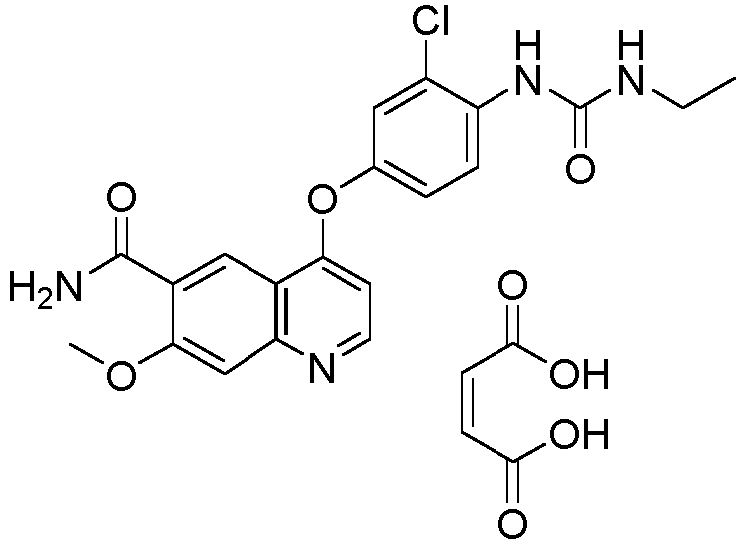
- After adding 4-(3-chloro-4-(ethylaminocarbonyl)aminophenoxy)-7-methoxy-6-quinolinecarboxamide (5.70 g, 13.7 mmol) to a DMA solvent (23 mL), the mixture was dissolved by heated stirring at 80°C, and then a solution of maleic acid (1.91 g, 16.5 mmol) in DMA(5.5 mL) was added and stirring was continued for 5 minutes. After adding 2-butanone (350 mL) dropwise to the reaction mixture over a period of 1 hour, it was stirred for 17 hours at 40°C. The reaction mixture was cooled to room temperature and stirred for 6 hours, after which the precipitated solid was filtered. The obtained solid was further washed with 2-butanone and then subjected to ventilation drying and reduced pressure drying at 70°C to obtain the title compound (6.40 g).
1H-NMR Spectrum (500 MHz, DMSO-d6) δ(ppm): 1.08 (3H, t, J=7.2 Hz), 3.10-3.18 (2H, m), 4.04 (3H, s), 6.23 (2H, s), 6.60 (1H, d, J=5.5 Hz), 7.00 (1H, t, J=5.5 Hz), 7.25 (1H, dd, J=9.0, 2.8 Hz), 7.50 (1H, d, J=2.8 Hz), 7.53 (1H, s), 7.76 (1H, brs), 7.87 (1H, brs), 8.08 (1H, s), 8.28(1H, d, J=9.6 Hz), 8.67 (1H, s), 8.72 (1H, d, J=4.8 Hz). -

- After adding methanesulfonic acid (188 µL, 2.89 mmol) at 70°C to a suspension of 4-(3-chloro-4-(ethylaminocarbonyl)aminophenoxy)-7-methoxy-6-quinolinecarboxamide (1.00 g, 2.41 mmol) in methanol (20 mL), the mixture was stirred for 15 minutes. The reaction mixture was cooled to room temperature and stirred for 16 hours, after which the precipitated solid was filtered. The obtained solid was further washed with methanol and diethyl ether and then dried under reduced pressure to obtain the title compound (1.06 g).
1H-NMR Spectrum (500 MHz, DMSO-d6) δ(ppm): 1.09(3H, t, J=7.1 Hz), 2.34(3H, s), 3.08-3.22(2H, m), 4.09(3H, s), 6.95(1H, d, J=6.3 Hz), 7.06(1H, brt, J=4.9 Hz), 7.34(1H, dd, J=9.0, 2.7 Hz), 7.61-7.66(2H, m), 7.91(1H, brs), 7.97(1H, brs), 8.16(1H, s), 8.36(1H, d, J=9.3 Hz), 8.73(1H, s), 8.97(1H, d, J=6.3 Hz).
Claims (15)
- A liposome composition comprising:(A) liposomes comprising a dihydrosphingomyelin and a diacylglycerol-polyethylene glycol,(B) a drug, and(C) a sulfuric acid salt and/or sucrose octasulfate,wherein(A) encapsulates (B),
the diacylglycerol-polyethylene glycol is distearoylglycerol-polyethylene glycol, and(B) is 4-(3-chloro-4-(ethylaminocarbonyl)aminophenoxy)-7-methoxy-6-quinolinecarboxamide represented by formula (I) or its pharmaceutically acceptable salt.
- The liposome composition according to claim 1, wherein (C) is a sulfuric acid salt.
- The liposome composition according to claim 1 or 2, wherein the dihydrosphingomyelin is a compound represented by formula (II-1), (II-2), (II-3) or (II-4), or their mixture.


- The liposome composition according to claim 1 or 2, wherein the dihydrosphingomyelin is a compound represented by formula (II-3).

- The liposome composition according to any one of claims 1 to 4, further comprising (D) an organic acid.
- The liposome composition according to claim 5, wherein (D) is one or more selected from the group consisting of succinic acid, citric acid, maleic acid and salicylic acid.
- The liposome composition according to any one of claims 1 to 6, wherein (A) further comprises a cholesterol.
- The liposome composition according to any one of claims 1 to 7, further comprising (E) a basic compound.
- The liposome composition according to any one of claims 1 to 8, wherein (C) is ammonium sulfate.
- The liposome composition according to any one of claims 5 to 9, wherein (D) is succinic acid.
- The liposome composition according to any one of claims 8 to 10, wherein (E) is sodium hydroxide or ammonia.
- A pharmaceutical composition comprising a liposome composition according to any one of claims 1 to 11.
- An angiogenesis inhibitor comprising a liposome composition according to any one of claims 1 to 11.
- An antitumor agent comprising a liposome composition according to any one of claims 1 to 11.
- A method for producing a liposome composition according to any one of claims 1 to 11, the method comprising:a step of providing a liposome dispersion, anda step of mixing 4-(3-chloro-4-(ethylaminocarbonyl)aminophenoxy)-7-methoxy-6-quinolinecarboxamide represented by formula (I) or its pharmaceutically acceptable salt with the liposome dispersion.

Applications Claiming Priority (2)
| Application Number | Priority Date | Filing Date | Title |
|---|---|---|---|
| JP2022060823 | 2022-03-31 | ||
| PCT/JP2023/012862 WO2023190709A1 (en) | 2022-03-31 | 2023-03-29 | Liposome composition and liposome-containing pharmaceutical composition |
Publications (2)
| Publication Number | Publication Date |
|---|---|
| EP4467129A1 true EP4467129A1 (en) | 2024-11-27 |
| EP4467129A4 EP4467129A4 (en) | 2025-10-29 |
Family
ID=88202099
Family Applications (1)
| Application Number | Title | Priority Date | Filing Date |
|---|---|---|---|
| EP23780717.7A Pending EP4467129A4 (en) | 2022-03-31 | 2023-03-29 | Liposomal composition and liposomal pharmaceutical composition |
Country Status (10)
| Country | Link |
|---|---|
| US (1) | US20250177302A1 (en) |
| EP (1) | EP4467129A4 (en) |
| JP (1) | JPWO2023190709A1 (en) |
| KR (1) | KR20240160567A (en) |
| CN (1) | CN118742292A (en) |
| AU (1) | AU2023242146A1 (en) |
| CA (1) | CA3244230A1 (en) |
| MX (1) | MX2024010261A (en) |
| TW (1) | TW202345828A (en) |
| WO (1) | WO2023190709A1 (en) |
Family Cites Families (12)
| Publication number | Priority date | Publication date | Assignee | Title |
|---|---|---|---|---|
| EP1415987B1 (en) | 2000-10-20 | 2007-02-28 | Eisai R&D Management Co., Ltd. | Nitrogenous aromatic ring compounds as anti cancer agents |
| US8658203B2 (en) * | 2004-05-03 | 2014-02-25 | Merrimack Pharmaceuticals, Inc. | Liposomes useful for drug delivery to the brain |
| CA2821167C (en) * | 2004-05-03 | 2016-06-28 | Merrimack Pharmaceuticals, Inc. | Drug delivery liposomes containing anionic polyols or anionic sugars |
| EP1797877A4 (en) * | 2004-09-13 | 2010-12-15 | Eisai Co Ltd | Joint use of sulfonamide based compound with angiogenesis inhibitor |
| EP2700403B1 (en) * | 2011-04-18 | 2015-11-25 | Eisai R&D Management Co., Ltd. | Therapeutic agent for tumor |
| WO2016140717A1 (en) * | 2015-03-04 | 2016-09-09 | Merck Sharp & Dohme Corp. | Combination of a pd-1 antagonist and a vegfr/fgfr/ret tyrosine kinase inhibitor for treating cancer |
| WO2017123616A1 (en) * | 2016-01-11 | 2017-07-20 | Merrimack Pharmaceuticals, Inc. | Inhibiting b-cell lymphoma 2 (bcl-2) and related proteins |
| RU2734900C1 (en) | 2017-03-31 | 2020-10-26 | Фуджифилм Корпорэйшн | Liposomal composition and pharmaceutical composition |
| JP7036919B2 (en) * | 2018-06-20 | 2022-03-15 | 富士フイルム株式会社 | Combination drug containing a liposome composition containing a drug and an immune checkpoint inhibitor |
| EP3861987A4 (en) * | 2018-10-01 | 2021-09-15 | FUJIFILM Corporation | Combination medicine comprising drug-encapsulating liposome composition and platinum preparation |
| AR122024A1 (en) * | 2020-05-06 | 2022-08-03 | Nanotech Pharma Inc | LIPOSOME FORMULATIONS FOR TREATMENT OF CANCERS AND DRUG RESISTANCE OF CANCERS |
| CN112603890A (en) | 2020-12-18 | 2021-04-06 | 绍兴文理学院 | Levatinib liposome and pharmaceutical composition thereof, preparation method thereof and prescription process optimization method |
-
2023
- 2023-03-29 MX MX2024010261A patent/MX2024010261A/en unknown
- 2023-03-29 CN CN202380022484.7A patent/CN118742292A/en active Pending
- 2023-03-29 TW TW112111942A patent/TW202345828A/en unknown
- 2023-03-29 WO PCT/JP2023/012862 patent/WO2023190709A1/en not_active Ceased
- 2023-03-29 EP EP23780717.7A patent/EP4467129A4/en active Pending
- 2023-03-29 JP JP2024512693A patent/JPWO2023190709A1/ja active Pending
- 2023-03-29 AU AU2023242146A patent/AU2023242146A1/en active Pending
- 2023-03-29 US US18/840,179 patent/US20250177302A1/en active Pending
- 2023-03-29 KR KR1020247027950A patent/KR20240160567A/en active Pending
- 2023-03-29 CA CA3244230A patent/CA3244230A1/en active Pending
Also Published As
| Publication number | Publication date |
|---|---|
| WO2023190709A1 (en) | 2023-10-05 |
| TW202345828A (en) | 2023-12-01 |
| EP4467129A4 (en) | 2025-10-29 |
| US20250177302A1 (en) | 2025-06-05 |
| CA3244230A1 (en) | 2025-05-06 |
| CN118742292A (en) | 2024-10-01 |
| MX2024010261A (en) | 2024-08-30 |
| AU2023242146A1 (en) | 2024-09-05 |
| KR20240160567A (en) | 2024-11-11 |
| JPWO2023190709A1 (en) | 2023-10-05 |
Similar Documents
| Publication | Publication Date | Title |
|---|---|---|
| US20220370352A1 (en) | Liposome composition and pharmaceutical composition | |
| KR102956244B1 (en) | Stabilization of camptothecin pharmaceutical composition | |
| EP3372232B1 (en) | Tumor therapeutic agent comprising gemcitabine liposome composition and kit | |
| US20100178243A1 (en) | Novel method of stabilizing diagnostic and therapeutic compounds in a cationic carrier system | |
| WO2011066684A1 (en) | Liposome of irinotecan or its hydrochloride and preparation method thereof | |
| US12370214B2 (en) | Combined pharmaceutical formulation comprising drug-containing liposome composition and platinum preparation | |
| CN116848094B (en) | Tertiary amine lipid compounds and their applications | |
| CA2409795A1 (en) | Liposome preparation | |
| EP3811931B1 (en) | Combination medication containing liposome composition encapsulating drug and immune checkpoint inhibitor | |
| JP2023507322A (en) | Formulated and/or co-formulated liposomal compositions containing Toll-like receptor ("TLR") agonist prodrugs useful in the treatment of cancer and methods thereof | |
| AU2003249882A2 (en) | Novel method of stabilizing diagnostic and therapeutic compounds in a cationic carrier system | |
| JP5914418B2 (en) | Lipid particle, nucleic acid delivery carrier, composition for producing nucleic acid delivery carrier, lipid particle production method and gene introduction method | |
| US20250177302A1 (en) | Liposome composition and liposome-containing pharmaceutical composition | |
| JP2023514324A (en) | Formulated and/or co-formulated liposomal compositions containing TFGβ antagonist prodrugs useful in the treatment of cancer and methods thereof | |
| US20220257514A1 (en) | Monosaccharide-tagged nano-liposome drug delivery system, the manufacture and use for drug targeting delivery thereof | |
| KR20240100433A (en) | Formulated and/or co-formulated nanocarrier compositions containing immunogenic cell death (ICD) inducing prodrugs useful for the treatment of cancer and methods thereof | |
| CN110496103B (en) | Docetaxel palmitate liposome and preparation method thereof | |
| CN115844826B (en) | Carbocatinib malate liposome injection and preparation method thereof | |
| EP4623915A1 (en) | Combination medicine comprising liposome composition having topotecan or salt thereof encapsulated therein and dna damage repair inhibitor | |
| TWI500430B (en) | The liposomal preparation of irinotecan or irinotecan hydrochloride and preparation thereof | |
| KR20230158044A (en) | Formulated and/or co-formulated liposomal compositions containing A2aR antagonist prodrugs useful for the treatment of cancer and methods thereof | |
| EP1374864A1 (en) | Amphiphilic taxane compositions | |
| CN119101011A (en) | pH-responsive tertiary amine lipid compounds and their applications | |
| WO2020054851A1 (en) | Optically functional compound and lipid nanoparticle | |
| KR20260061459A (en) | Stabilizing camptothecin pharmaceutical compositions |
Legal Events
| Date | Code | Title | Description |
|---|---|---|---|
| STAA | Information on the status of an ep patent application or granted ep patent |
Free format text: STATUS: THE INTERNATIONAL PUBLICATION HAS BEEN MADE |
|
| PUAI | Public reference made under article 153(3) epc to a published international application that has entered the european phase |
Free format text: ORIGINAL CODE: 0009012 |
|
| STAA | Information on the status of an ep patent application or granted ep patent |
Free format text: STATUS: REQUEST FOR EXAMINATION WAS MADE |
|
| 17P | Request for examination filed |
Effective date: 20240823 |
|
| AK | Designated contracting states |
Kind code of ref document: A1 Designated state(s): AL AT BE BG CH CY CZ DE DK EE ES FI FR GB GR HR HU IE IS IT LI LT LU LV MC ME MK MT NL NO PL PT RO RS SE SI SK SM TR |
|
| DAV | Request for validation of the european patent (deleted) | ||
| DAX | Request for extension of the european patent (deleted) | ||
| A4 | Supplementary search report drawn up and despatched |
Effective date: 20251001 |
|
| RIC1 | Information provided on ipc code assigned before grant |
Ipc: A61K 9/127 20060101AFI20250925BHEP Ipc: A61K 31/47 20060101ALI20250925BHEP Ipc: A61K 47/02 20060101ALI20250925BHEP Ipc: A61K 47/12 20060101ALI20250925BHEP Ipc: A61K 47/14 20170101ALI20250925BHEP Ipc: A61K 47/24 20060101ALI20250925BHEP Ipc: A61K 47/26 20060101ALI20250925BHEP Ipc: A61K 47/28 20060101ALI20250925BHEP Ipc: A61P 35/00 20060101ALI20250925BHEP Ipc: C07D 215/48 20060101ALI20250925BHEP |