EP4467074A1 - Information processing system, detection device, server device, information processing device, control method, and program - Google Patents
Information processing system, detection device, server device, information processing device, control method, and program Download PDFInfo
- Publication number
- EP4467074A1 EP4467074A1 EP23743310.7A EP23743310A EP4467074A1 EP 4467074 A1 EP4467074 A1 EP 4467074A1 EP 23743310 A EP23743310 A EP 23743310A EP 4467074 A1 EP4467074 A1 EP 4467074A1
- Authority
- EP
- European Patent Office
- Prior art keywords
- subject
- signal
- sound signal
- indicates
- information processing
- Prior art date
- Legal status (The legal status is an assumption and is not a legal conclusion. Google has not performed a legal analysis and makes no representation as to the accuracy of the status listed.)
- Pending
Links
Images













Classifications
-
- A—HUMAN NECESSITIES
- A61—MEDICAL OR VETERINARY SCIENCE; HYGIENE
- A61B—DIAGNOSIS; SURGERY; IDENTIFICATION
- A61B5/00—Measuring for diagnostic purposes; Identification of persons
- A61B5/08—Measuring devices for evaluating the respiratory organs
-
- A—HUMAN NECESSITIES
- A61—MEDICAL OR VETERINARY SCIENCE; HYGIENE
- A61B—DIAGNOSIS; SURGERY; IDENTIFICATION
- A61B7/00—Instruments for auscultation
- A61B7/003—Detecting lung or respiration noise
-
- A—HUMAN NECESSITIES
- A61—MEDICAL OR VETERINARY SCIENCE; HYGIENE
- A61B—DIAGNOSIS; SURGERY; IDENTIFICATION
- A61B5/00—Measuring for diagnostic purposes; Identification of persons
-
- A—HUMAN NECESSITIES
- A61—MEDICAL OR VETERINARY SCIENCE; HYGIENE
- A61B—DIAGNOSIS; SURGERY; IDENTIFICATION
- A61B5/00—Measuring for diagnostic purposes; Identification of persons
- A61B5/02—Detecting, measuring or recording for evaluating the cardiovascular system, e.g. pulse, heart rate, blood pressure or blood flow
-
- A—HUMAN NECESSITIES
- A61—MEDICAL OR VETERINARY SCIENCE; HYGIENE
- A61B—DIAGNOSIS; SURGERY; IDENTIFICATION
- A61B5/00—Measuring for diagnostic purposes; Identification of persons
- A61B5/02—Detecting, measuring or recording for evaluating the cardiovascular system, e.g. pulse, heart rate, blood pressure or blood flow
- A61B5/0205—Simultaneously evaluating both cardiovascular conditions and different types of body conditions, e.g. heart and respiratory condition
-
- A—HUMAN NECESSITIES
- A61—MEDICAL OR VETERINARY SCIENCE; HYGIENE
- A61B—DIAGNOSIS; SURGERY; IDENTIFICATION
- A61B5/00—Measuring for diagnostic purposes; Identification of persons
- A61B5/02—Detecting, measuring or recording for evaluating the cardiovascular system, e.g. pulse, heart rate, blood pressure or blood flow
- A61B5/026—Measuring blood flow
-
- A—HUMAN NECESSITIES
- A61—MEDICAL OR VETERINARY SCIENCE; HYGIENE
- A61B—DIAGNOSIS; SURGERY; IDENTIFICATION
- A61B5/00—Measuring for diagnostic purposes; Identification of persons
- A61B5/08—Measuring devices for evaluating the respiratory organs
- A61B5/0816—Measuring devices for examining respiratory frequency
-
- A—HUMAN NECESSITIES
- A61—MEDICAL OR VETERINARY SCIENCE; HYGIENE
- A61B—DIAGNOSIS; SURGERY; IDENTIFICATION
- A61B5/00—Measuring for diagnostic purposes; Identification of persons
- A61B5/103—Measuring devices for testing the shape, pattern, colour, size or movement of the body or parts thereof, for diagnostic purposes
- A61B5/107—Measuring physical dimensions, e.g. size of the entire body or parts thereof
-
- A—HUMAN NECESSITIES
- A61—MEDICAL OR VETERINARY SCIENCE; HYGIENE
- A61B—DIAGNOSIS; SURGERY; IDENTIFICATION
- A61B5/00—Measuring for diagnostic purposes; Identification of persons
- A61B5/103—Measuring devices for testing the shape, pattern, colour, size or movement of the body or parts thereof, for diagnostic purposes
- A61B5/11—Measuring movement of the entire body or parts thereof, e.g. head or hand tremor or mobility of a limb
- A61B5/1116—Determining posture transitions
-
- A—HUMAN NECESSITIES
- A61—MEDICAL OR VETERINARY SCIENCE; HYGIENE
- A61B—DIAGNOSIS; SURGERY; IDENTIFICATION
- A61B5/00—Measuring for diagnostic purposes; Identification of persons
- A61B5/103—Measuring devices for testing the shape, pattern, colour, size or movement of the body or parts thereof, for diagnostic purposes
- A61B5/11—Measuring movement of the entire body or parts thereof, e.g. head or hand tremor or mobility of a limb
- A61B5/113—Measuring movement of the entire body or parts thereof, e.g. head or hand tremor or mobility of a limb occurring during breathing
-
- A—HUMAN NECESSITIES
- A61—MEDICAL OR VETERINARY SCIENCE; HYGIENE
- A61B—DIAGNOSIS; SURGERY; IDENTIFICATION
- A61B5/00—Measuring for diagnostic purposes; Identification of persons
- A61B5/16—Devices for psychotechnics; Testing reaction times ; Devices for evaluating the psychological state
-
- A—HUMAN NECESSITIES
- A61—MEDICAL OR VETERINARY SCIENCE; HYGIENE
- A61B—DIAGNOSIS; SURGERY; IDENTIFICATION
- A61B5/00—Measuring for diagnostic purposes; Identification of persons
- A61B5/48—Other medical applications
- A61B5/4806—Sleep evaluation
- A61B5/4809—Sleep detection, i.e. determining whether a subject is asleep or not
-
- A—HUMAN NECESSITIES
- A61—MEDICAL OR VETERINARY SCIENCE; HYGIENE
- A61B—DIAGNOSIS; SURGERY; IDENTIFICATION
- A61B5/00—Measuring for diagnostic purposes; Identification of persons
- A61B5/68—Arrangements of detecting, measuring or recording means, e.g. sensors, in relation to patient
- A61B5/6887—Arrangements of detecting, measuring or recording means, e.g. sensors, in relation to patient mounted on external non-worn devices, e.g. non-medical devices
- A61B5/6891—Furniture
-
- A—HUMAN NECESSITIES
- A61—MEDICAL OR VETERINARY SCIENCE; HYGIENE
- A61B—DIAGNOSIS; SURGERY; IDENTIFICATION
- A61B5/00—Measuring for diagnostic purposes; Identification of persons
- A61B5/68—Arrangements of detecting, measuring or recording means, e.g. sensors, in relation to patient
- A61B5/6887—Arrangements of detecting, measuring or recording means, e.g. sensors, in relation to patient mounted on external non-worn devices, e.g. non-medical devices
- A61B5/6892—Mats
-
- A—HUMAN NECESSITIES
- A61—MEDICAL OR VETERINARY SCIENCE; HYGIENE
- A61B—DIAGNOSIS; SURGERY; IDENTIFICATION
- A61B5/00—Measuring for diagnostic purposes; Identification of persons
- A61B5/72—Signal processing specially adapted for physiological signals or for diagnostic purposes
- A61B5/7235—Details of waveform analysis
- A61B5/7264—Classification of physiological signals or data, e.g. using neural networks, statistical classifiers, expert systems or fuzzy systems
- A61B5/7267—Classification of physiological signals or data, e.g. using neural networks, statistical classifiers, expert systems or fuzzy systems involving training the classification device
-
- A—HUMAN NECESSITIES
- A61—MEDICAL OR VETERINARY SCIENCE; HYGIENE
- A61B—DIAGNOSIS; SURGERY; IDENTIFICATION
- A61B5/00—Measuring for diagnostic purposes; Identification of persons
- A61B5/72—Signal processing specially adapted for physiological signals or for diagnostic purposes
- A61B5/7271—Specific aspects of physiological measurement analysis
- A61B5/7278—Artificial waveform generation or derivation, e.g. synthesizing signals from measured signals
-
- A—HUMAN NECESSITIES
- A61—MEDICAL OR VETERINARY SCIENCE; HYGIENE
- A61B—DIAGNOSIS; SURGERY; IDENTIFICATION
- A61B5/00—Measuring for diagnostic purposes; Identification of persons
- A61B5/72—Signal processing specially adapted for physiological signals or for diagnostic purposes
- A61B5/7271—Specific aspects of physiological measurement analysis
- A61B5/7282—Event detection, e.g. detecting unique waveforms indicative of a medical condition
-
- A—HUMAN NECESSITIES
- A61—MEDICAL OR VETERINARY SCIENCE; HYGIENE
- A61B—DIAGNOSIS; SURGERY; IDENTIFICATION
- A61B5/00—Measuring for diagnostic purposes; Identification of persons
- A61B5/72—Signal processing specially adapted for physiological signals or for diagnostic purposes
- A61B5/7271—Specific aspects of physiological measurement analysis
- A61B5/7285—Specific aspects of physiological measurement analysis for synchronizing or triggering a physiological measurement or image acquisition with a physiological event or waveform, e.g. an ECG signal
-
- A—HUMAN NECESSITIES
- A61—MEDICAL OR VETERINARY SCIENCE; HYGIENE
- A61B—DIAGNOSIS; SURGERY; IDENTIFICATION
- A61B7/00—Instruments for auscultation
- A61B7/008—Detecting noise of gastric tract, e.g. caused by voiding
-
- A—HUMAN NECESSITIES
- A61—MEDICAL OR VETERINARY SCIENCE; HYGIENE
- A61B—DIAGNOSIS; SURGERY; IDENTIFICATION
- A61B7/00—Instruments for auscultation
- A61B7/02—Stethoscopes
- A61B7/04—Electric stethoscopes
-
- G—PHYSICS
- G16—INFORMATION AND COMMUNICATION TECHNOLOGY [ICT] SPECIALLY ADAPTED FOR SPECIFIC APPLICATION FIELDS
- G16H—HEALTHCARE INFORMATICS, i.e. INFORMATION AND COMMUNICATION TECHNOLOGY [ICT] SPECIALLY ADAPTED FOR THE HANDLING OR PROCESSING OF MEDICAL OR HEALTHCARE DATA
- G16H10/00—ICT specially adapted for the handling or processing of patient-related medical or healthcare data
- G16H10/60—ICT specially adapted for the handling or processing of patient-related medical or healthcare data for patient-specific data, e.g. for electronic patient records
-
- G—PHYSICS
- G16—INFORMATION AND COMMUNICATION TECHNOLOGY [ICT] SPECIALLY ADAPTED FOR SPECIFIC APPLICATION FIELDS
- G16H—HEALTHCARE INFORMATICS, i.e. INFORMATION AND COMMUNICATION TECHNOLOGY [ICT] SPECIALLY ADAPTED FOR THE HANDLING OR PROCESSING OF MEDICAL OR HEALTHCARE DATA
- G16H40/00—ICT specially adapted for the management or administration of healthcare resources or facilities; ICT specially adapted for the management or operation of medical equipment or devices
- G16H40/60—ICT specially adapted for the management or administration of healthcare resources or facilities; ICT specially adapted for the management or operation of medical equipment or devices for the operation of medical equipment or devices
- G16H40/67—ICT specially adapted for the management or administration of healthcare resources or facilities; ICT specially adapted for the management or operation of medical equipment or devices for the operation of medical equipment or devices for remote operation
-
- G—PHYSICS
- G16—INFORMATION AND COMMUNICATION TECHNOLOGY [ICT] SPECIALLY ADAPTED FOR SPECIFIC APPLICATION FIELDS
- G16H—HEALTHCARE INFORMATICS, i.e. INFORMATION AND COMMUNICATION TECHNOLOGY [ICT] SPECIALLY ADAPTED FOR THE HANDLING OR PROCESSING OF MEDICAL OR HEALTHCARE DATA
- G16H50/00—ICT specially adapted for medical diagnosis, medical simulation or medical data mining; ICT specially adapted for detecting, monitoring or modelling epidemics or pandemics
- G16H50/20—ICT specially adapted for medical diagnosis, medical simulation or medical data mining; ICT specially adapted for detecting, monitoring or modelling epidemics or pandemics for computer-aided diagnosis, e.g. based on medical expert systems
-
- G—PHYSICS
- G16—INFORMATION AND COMMUNICATION TECHNOLOGY [ICT] SPECIALLY ADAPTED FOR SPECIFIC APPLICATION FIELDS
- G16H—HEALTHCARE INFORMATICS, i.e. INFORMATION AND COMMUNICATION TECHNOLOGY [ICT] SPECIALLY ADAPTED FOR THE HANDLING OR PROCESSING OF MEDICAL OR HEALTHCARE DATA
- G16H50/00—ICT specially adapted for medical diagnosis, medical simulation or medical data mining; ICT specially adapted for detecting, monitoring or modelling epidemics or pandemics
- G16H50/30—ICT specially adapted for medical diagnosis, medical simulation or medical data mining; ICT specially adapted for detecting, monitoring or modelling epidemics or pandemics for calculating health indices; for individual health risk assessment
-
- G—PHYSICS
- G16—INFORMATION AND COMMUNICATION TECHNOLOGY [ICT] SPECIALLY ADAPTED FOR SPECIFIC APPLICATION FIELDS
- G16H—HEALTHCARE INFORMATICS, i.e. INFORMATION AND COMMUNICATION TECHNOLOGY [ICT] SPECIALLY ADAPTED FOR THE HANDLING OR PROCESSING OF MEDICAL OR HEALTHCARE DATA
- G16H50/00—ICT specially adapted for medical diagnosis, medical simulation or medical data mining; ICT specially adapted for detecting, monitoring or modelling epidemics or pandemics
- G16H50/50—ICT specially adapted for medical diagnosis, medical simulation or medical data mining; ICT specially adapted for detecting, monitoring or modelling epidemics or pandemics for simulation or modelling of medical disorders
-
- G—PHYSICS
- G16—INFORMATION AND COMMUNICATION TECHNOLOGY [ICT] SPECIALLY ADAPTED FOR SPECIFIC APPLICATION FIELDS
- G16H—HEALTHCARE INFORMATICS, i.e. INFORMATION AND COMMUNICATION TECHNOLOGY [ICT] SPECIALLY ADAPTED FOR THE HANDLING OR PROCESSING OF MEDICAL OR HEALTHCARE DATA
- G16H80/00—ICT specially adapted for facilitating communication between medical practitioners or patients, e.g. for collaborative diagnosis, therapy or health monitoring
-
- A—HUMAN NECESSITIES
- A61—MEDICAL OR VETERINARY SCIENCE; HYGIENE
- A61B—DIAGNOSIS; SURGERY; IDENTIFICATION
- A61B2562/00—Details of sensors; Constructional details of sensor housings or probes; Accessories for sensors
- A61B2562/02—Details of sensors specially adapted for in-vivo measurements
- A61B2562/0204—Acoustic sensors
-
- A—HUMAN NECESSITIES
- A61—MEDICAL OR VETERINARY SCIENCE; HYGIENE
- A61B—DIAGNOSIS; SURGERY; IDENTIFICATION
- A61B5/00—Measuring for diagnostic purposes; Identification of persons
- A61B5/02—Detecting, measuring or recording for evaluating the cardiovascular system, e.g. pulse, heart rate, blood pressure or blood flow
- A61B5/024—Measuring pulse rate or heart rate
-
- A—HUMAN NECESSITIES
- A61—MEDICAL OR VETERINARY SCIENCE; HYGIENE
- A61B—DIAGNOSIS; SURGERY; IDENTIFICATION
- A61B5/00—Measuring for diagnostic purposes; Identification of persons
- A61B5/103—Measuring devices for testing the shape, pattern, colour, size or movement of the body or parts thereof, for diagnostic purposes
- A61B5/11—Measuring movement of the entire body or parts thereof, e.g. head or hand tremor or mobility of a limb
-
- A—HUMAN NECESSITIES
- A61—MEDICAL OR VETERINARY SCIENCE; HYGIENE
- A61B—DIAGNOSIS; SURGERY; IDENTIFICATION
- A61B5/00—Measuring for diagnostic purposes; Identification of persons
- A61B5/48—Other medical applications
- A61B5/4806—Sleep evaluation
- A61B5/4812—Detecting sleep stages or cycles
Definitions
- the present disclosure relates to an information processing system, a detecting device, a server device, an information processing device, and a method of controlling an information processing system, each of which is for detecting a vibration generated by a subject.
- Patent Literature 2 discloses a device that (i) detects an abnormal lung sound on the basis of a sound signal which indicates sounds generated by the body of a subject and (ii) detects a disease of the subject.
- Patent Literature 1 discloses a sensor system in which a mat having a number of sensors is disposed so as to cover a mattress.
- a vibration generated by a subject may reflect an abnormality in the body of the subject.
- it is important to improve the accuracy of measuring the vibration generated by the subject.
- the vibration generated by the subject is measured with use of a sensor that is in direct contact with the skin of the subject, the subject may feel a discomfort as to the fact that the sensor is in contact with the skin.
- the vibration measured under a situation where the subject feels a discomfort may not indicate an appropriate value. Therefore, it may not be possible to accurately diagnose the abnormality in the body of the subject by the device disclosed in Patent Literature 1.
- An information processing system in accordance with a first aspect of the present disclosure is an information processing system including: a signal extracting section that extracts, from a detection signal outputted from a sensor, (i) a characteristic signal which includes at least one of a heartbeat signal that indicates a heartbeat of a subject, a breathing vibration signal that indicates a breathing vibration of the subject, and a body motion signal that indicates a body motion of the subject and (ii) a body sound signal which indicates a body sound that is generated from an inside of a body of the subject, the sensor detecting, at a position at which the sensor is not in contact with the subject, vibrations generated by the subject; a sleep determining section that determines that the subject is in a sleep state, on the basis of the characteristic signal that has been extracted; and a first output control section that outputs the body sound signal during a time period during which it has been determined that the subject is in the sleep state, in a case where it has been determined that the subject is in the sleep state.
- An information processing system in accordance with a second aspect of the present disclosure is an information processing system including: a signal extracting section that extracts, from a detection signal outputted from a sensor, (i) a characteristic signal which includes at least one of a heartbeat signal that indicates a heartbeat of a subject, a breathing vibration signal that indicates a breathing vibration of the subject, and a body motion signal that indicates a body motion of the subject and (ii) a body sound signal which indicates a body sound that is generated from an inside of a body of the subject, the sensor detecting, at a position at which the sensor is not in contact with the subject, vibrations generated by the subject; a posture determining section that determines that the subject is in a given posture, on the basis of at least one of the detection signal and the characteristic signal that has been extracted; and a second output control section that outputs the body sound signal during a time period during which it has been determined that the subject is in the given posture, in a case where it has been determined that the subject is in the given posture.
- a detecting device in accordance with a third aspect of the present disclosure is a detecting device including: a sensor that detects, at a position at which the sensor is not in contact with a subject, vibrations generated by the subject; a signal extracting section that extracts, from a detection signal outputted from the sensor, (i) a characteristic signal which includes at least one of a heartbeat signal that indicates a heartbeat of the subject, a breathing vibration signal that indicates a breathing vibration of the subject, and a body motion signal that indicates a body motion of the subject and (ii) a body sound signal which indicates a body sound that is generated from an inside of a body of the subject; a sleep determining section that determines that the subject is in a sleep state, on the basis of the characteristic signal that has been extracted; and a first output control section that outputs the body sound signal during a time period during which it has been determined that the subject is in the sleep state, in a case where it has been determined that the subject is in the sleep state.
- a detecting device in accordance with a fourth aspect of the present disclosure is a detecting device including: a sensor that detects, at a position at which the sensor is not in contact with a subject, vibrations generated by the subject; a signal extracting section that extracts, from a detection signal outputted from the sensor, (i) a characteristic signal which includes at least one of a heartbeat signal that indicates a heartbeat of the subject, a breathing vibration signal that indicates a breathing vibration of the subject, and a body motion signal that indicates a body motion of the subject and (ii) a body sound signal which indicates a body sound that is generated from an inside of a body of the subject; a posture determining section that determines that the subject is in a given posture, on the basis of at least one of the detection signal and the characteristic signal that has been extracted; and a second output control section that outputs the body sound signal during a time period during which it has been determined that the subject is in the given posture, in a case where it has been determined that the subject is in the given posture
- a server device in accordance with a fifth aspect of the present disclosure is a server device including: a health condition determining section that obtains the body sound signal which has been outputted from the detecting device in accordance with the third or fourth aspect and that determines a health condition of the subject by comparing the body sound signal and a given reference body sound signal; and an intervention encouragement outputting section that outputs an intervention encouragement notification which encourages a medical intervention with respect to the subject, in a case where the health condition determining section has determined that the health condition of the subject is an abnormal state.
- An information processing device in accordance with a sixth aspect of the present disclosure is an information processing device including: a signal extracting section that obtains a detection signal outputted from a sensor which detects, at a position at which the sensor is not in contact with a subject, vibrations generated by the subject and that extracts, from the detection signal, (i) a characteristic signal which includes at least one of a heartbeat signal that indicates a heartbeat of the subject, a breathing vibration signal that indicates a breathing vibration of the subject, and a body motion signal that indicates a body motion of the subject and (ii) a body sound signal which indicates a body sound that is generated from an inside of a body of the subject; a sleep determining section that determines that the subject is in a sleep state, on the basis of the characteristic signal that has been extracted; and a first output control section that outputs the body sound signal during a time period during which it has been determined that the subject is in the sleep state, in a case where it has been determined that the subject is in the sleep state.
- An information processing device in accordance with a seventh aspect of the present disclosure is an information processing device including: a signal extracting section that obtains a detection signal outputted from a sensor which detects, at a position at which the sensor is not in contact with a subject, vibrations generated by the subject and that extracts, from the detection signal, (i) a characteristic signal which includes at least one of a heartbeat signal that indicates a heartbeat of the subject, a breathing vibration signal that indicates a breathing vibration of the subject, and a body motion signal that indicates a body motion of the subject and (ii) a body sound signal which indicates a body sound that is generated from an inside of a body of the subject; a posture determining section that determines that the subject is in a given posture, on the basis of at least one of the detection signal and the characteristic signal that has been extracted; and a second output control section that outputs the body sound signal during a time period during which it has been determined that the subject is in the given posture, in a case where it has been determined that the subject is in
- a control method in accordance with an eighth aspect of the present disclosure is a control method which is carried out by one or more information processing devices, including: a signal extracting step of extracting, from a detection signal outputted from a sensor, (i) a characteristic signal which includes at least one of a heartbeat signal that indicates a heartbeat of a subject, a breathing vibration signal that indicates a breathing vibration of the subject, and a body motion signal that indicates a body motion of the subject and (ii) a body sound signal which indicates a body sound that is generated from an inside of a body of the subject, the sensor detecting, at a position at which the sensor is not in contact with the subject, vibrations generated by the subject; a sleep determining step of determining that the subject is in a sleep state, on the basis of the characteristic signal that has been extracted; and a first output controlling step of outputting the body sound signal during a time period during which it has been determined that the subject is in the sleep state, in a case where it has been determined that the subject is in the sleep state
- a control method in accordance with a ninth aspect of the present disclosure is a control method which is carried out by one or more information processing devices, including: a signal extracting step of extracting, from a detection signal outputted from a sensor, (i) a characteristic signal which includes at least one of a heartbeat signal that indicates a heartbeat of a subject, a breathing vibration signal that indicates a breathing vibration of the subject, and a body motion signal that indicates a body motion of the subject and (ii) a body sound signal which indicates a body sound that is generated from an inside of a body of the subject, the sensor detecting, at a position at which the sensor is not in contact with the subject, vibrations generated by the subject; a posture determining step of determining that the subject is in a given posture, on the basis of at least one of the detection signal and the characteristic signal that has been extracted; and a second output controlling step of outputting the body sound signal during a time period during which it has been determined that the subject is in the given posture, in a case where it has been
- a control method in accordance with a tenth aspect of the present disclosure is a control method which is carried out by one or more server devices, including: a health condition determining step of obtaining the body sound signal which has been outputted from the one or more information processing devices each of which carries out the control method in accordance with the eighth or ninth aspect and determining a health condition of the subject by comparing the body sound signal and a given reference body sound signal; and an intervention encouragement outputting step of outputting an intervention encouragement notification which encourages a medical intervention with respect to the subject, in a case where it has been determined, in the health condition determining step, that the health condition of the subject is an abnormal state.
- the information processing systems, the detecting devices, the server device, and the information processing devices in accordance with the aspects of the present disclosure may be each realized by a computer.
- the present disclosure also encompasses, in its scope, (i) a control program for the information processing systems, the detecting devices, the server device, and the information processing devices, the control program causing the computer to realize the information processing systems, the detecting devices, and the server device by causing the computer to operate as each section (software element) of the information processing systems, the detecting devices, the server device, and the information processing devices and (ii) a computer-readable recording medium in which the control program is recorded.
- An information processing system 100 in accordance with Embodiment 1 of the present disclosure is a system that outputs at least one of (i) a body sound signal of a subject while the subject is in a sleep state and (ii) a body sound signal of the subject while the subject is in a given posture, on the basis of a detection signal outputted from a sensor that detects, at a position at which the sensor is not in contact with the subject, vibrations generated by the subject.
- the "subject” is typically a person who needs to be monitored by a medical expert and others, such as a patient who lies down on a bed or the like.
- the “detection signal” is a signal that indicates the vibrations generated by the subject, and is raw data outputted from the sensor or data obtained by subjecting the raw data to an amplification process or a noise removal process.
- the noise removal process can be carried out, for example, by carrying out a filtering process with respect to a region of not less than 2,000 Hz of the raw data.
- the "given posture” is a good posture that is suitable for detection carried out by the sensor, and is, for example, at least one of a right lateral decubitus position, a left lateral decubitus position, a supine position, a prone position, and a sitting position.
- the "body sound signal” is a signal that indicates a body sound generated from the inside of the body of the subject, and is a signal including at least one of a lung sound signal that indicates a lung sound of the subject, a blood flow sound signal that indicates a blood flow sound of the subject, a heart sound signal that indicates a sound of the heart of the subject, a bowel sound signal that indicates a bowel sound of the subject, and a peristaltic sound signal that indicates a peristaltic sound of the subject.
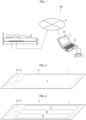
- Fig. 1 is a conceptual diagram illustrating an example of the configuration of the information processing system 100.
- the information processing system 100 may include a detecting device 1 (information processing device) and a communication device 3 (information processing device).
- the information processing system 100 may include a single detecting device 1 or may alternatively include a plurality of detecting devices 1.
- the information processing system 100 may include a single communication device 3 or may alternatively include a plurality of communication devices 3.
- the detecting device 1 analyzes the detection signal outputted from a sensor 11 ( Fig. 2 etc.) that detects, at a position at which the sensor 11 is not in contact with the subject, the vibrations generated by the subject and that indicates the vibrations generated by the subject, and determines that a state of the subject is at least one of (a) the sleep state and (b) the given posture.
- the detecting device 1 outputs, to the outside, the body sound signal that has been extracted from the detection signal detected during a time period during which the above determination is made.
- a destination to which the body sound signal is outputted is typically the communication device 3.
- the communication device 3 is typically a computer, a smartphone, a tablet terminal, or the like that is used by, for example, the medical expert and others, and is set in, for example, a nurses station.
- the detecting device 1 extracts the body sound signal and the like from the detection signal by carrying out a process, such as a frequency analysis, with respect to the detection signal outputted from the sensor 11. This extraction process is carried out independently of a process of determining the above (a) or (b), and is typically carried out prior to this determination process.
- the sensor 11 is set at the position at which the sensor 11 is not in contact with the subject so that the subject does not feel a discomfort.
- the sensor 11 may be set on the bed on which the subject lies down.
- the position at which the sensor 11 is set may be between the bed on which the subject lies down and a mattress on the bed or between the mattress and a bed sheet on the mattress.
- the position at which the sensor 11 is set may be the uppermost surface of the bed.
- the sensor 11 is preferably formed in a thin plate (sheet)-like shape.
- the sensor 11 that is set at the position at which the sensor 11 is not in contact with the subject since, in the information processing system 100, the sensor 11 that is set at the position at which the sensor 11 is not in contact with the subject is used, the subject does not feel a discomfort. Therefore, it is possible to suppress a factor in decreasing detection accuracy, such as the subject's intentionally controlling breathing, and also possible to realize constant monitoring. Moreover, since, under such circumstances, the body sound signal while the subject is in the sleep state or the body sound signal while the subject is in the given posture is outputted in the information processing system 100, it is possible to output the body sound signal that is more accurate than a conventional one. As a result, it is possible to accurately diagnose an abnormality in the body of the subject.
- the detecting device 1 and the communication device 3 may be directly connected to each other or may be alternatively communicably connected to each other with a communication network 9 therebetween as illustrated in Fig. 1
- the communication network 9 is not limited to any form, and may be a local area network (LAN) or the Internet.
- the information processing system 100 may include a server device (information processing device) (not illustrated) that is communicably connected to the detecting device 1 and the communication device 3, in addition to the detecting device 1 and the communication device 3.
- the server device may be configured to store and manage, for each subject, a body sound signal transmitted from each of a plurality of detecting devices 1.
- the medical expert and others may be able to access the server device with use of the communication device 3 and refer to the body sound signal of each subject.
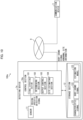
- Fig. 5 is a functional block diagram illustrating an example of the configuration of the information processing system 100.
- a case where a characteristic signal includes a rhonchi signal is described here as an example.
- the characteristic signal is not limited to this example, and may not include the rhonchus signal.
- the detecting device 1 includes the sensor 11, a control section 10, and a storage section 12.
- the sensor 11 is a noncontact (noninvasive) sensor that is capable of detecting, at the position at which the sensor 11 is not in contact with the subject, the vibrations generated by the subject.
- the sensor 11 outputs, for example, the detection signal that indicates the vibrations (i.e., waveform data).
- the noncontact (noninvasive) sensor is not limited to any particular type.
- a piezoelectric sensor, a Doppler sensor, or the like can be applied as the noncontact (noninvasive) sensor.
- the sensor 11 may include one or more detection regions. In a case where the sensor 11 includes a plurality of detection regions, the sensor 11 may output the detection signal that has been detected in each of the plurality of detection regions. In a case where the sensor 11 is formed in a thin plate-like shape, the plurality of detection regions may be arranged side by side on an identical plane.
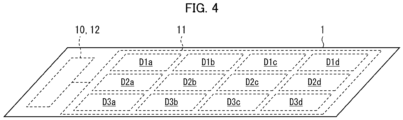
- Figs. 2 to 4 are each a view illustrating an example of the schematic configuration of the detecting device 1.
- the detecting device 1 illustrated in Fig. 2 includes the sensor 11 that includes a single detection region D.
- the detecting device 1 illustrated in Fig. 3 includes the sensor 11 that includes detection regions D1 to D3 arranged in three columns.
- the senor 4 includes the sensor 11 that includes detection regions D1a to D4d arranged in four rows and three columns.
- the detection signal that has been detected in each of the detection regions D1 to D4 is outputted individually.
- the detection signal that has been detected in each of the detection regions D1a to D3d is outputted individually.
- Each of the detection regions D1a to D3d may be, for example, a 10 cm square.
- the configuration in which the sensor 11 includes the plurality of detection regions is employed, it is possible to accurately specify a position in the body of the subject at which position an abnormality occurs, by individually analyzing the detection signal from each of the plurality of detection regions and comparing results of analyses with each other. Moreover, it is possible to accurately specify the posture of the subject on the basis of the signal strength or the like of the detection signal from each of the detection regions.
- the control section 10 may be a central processing unit (CPU) in an example.
- the control section 10 carries out various functions by reading a control program that is software stored in the storage section 12 and loading the control program in a memory such as a random access memory (RAM).
- the control section 10 includes a signal extracting section 101, a determining section 102 (sleep determining section, posture determining section), and an output control section 103 (first output control section, second output control section). Note that, in the storage section 12 illustrated in Fig. 5 , the control program is not illustrated for simplification of description.
- the signal extracting section 101 extracts, from the detection signal outputted from the sensor 11, the characteristic signal of the subject and the body sound signal that indicates the body sound generated from the inside of the body of the subject.
- the characteristic signal includes at least one of a heartbeat signal that indicates a heartbeat of the subject, a breathing vibration signal that indicates a breathing vibration of the subject, and a body motion signal that indicates a body motion of the subject.
- the characteristic signal may further include the rhonchus signal that indicates a rhonchus of the subject.
- the rhonchus is a kind of adventitious sound included in the lung sound, and is a snore-like sound generated from a lung.
- the signal extracting section 101 extracts the characteristic signal and the body sound signal from the detection signal.
- the sensor 11 can detect the vibrations in various frequency ranges which vibrations occur from the subject. Therefore, the detection signal outputted from the sensor 11 is a signal in which a plurality of vibrations having various frequency characteristics overlap with each other.
- the sensor 11 may be capable of obtaining at least one of the body sound signal that has a frequency of not less than 100 Hz, the heartbeat signal that has a frequency of not more than 20 Hz, the breathing vibration signal, and the body motion signal.
- the sensor 11 may be capable of obtaining the rhonchus signal that has a frequency of not less than 100 Hz. Note that it is possible to differentiate the body sound signal that has a frequency of not less than 100 Hz and the rhonchus signal that has a frequency of not less than 100 Hz on the basis of frequency components (spectra).
- the detecting device 1 may include the sensor 11 that can detect the vibrations in various frequency bands. This makes it unnecessary to provide a plurality of differing types of sensors to the detecting device 1, and makes it easy for the medical expert and others who use the information processing system 100 to maintain and manage the detecting device 1. Therefore, the convenience of the detecting device 1 is improved.
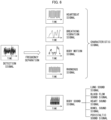
- the signal extracting section 101 may extract the characteristic signal and the body sound signal from the detection signal by applying a well-known technique, such as frequency separation, to the detection signal. This is described with reference to Fig. 6.
- Fig. 6 is a view explaining various signals that are included in the detection signal. As illustrated in Fig. 6 , by carrying out frequency separation, it is possible to separate the detection signal into the heartbeat signal, the breathing vibration signal, the body motion signal, the rhonchus signal, and the body sound signal which differ from each other in frequency characteristic.
- the body sound signal includes at least one of the lung sound signal that indicates the lung sound of the subject, the blood flow sound signal that indicates the blood flow sound of the subject, the heart sound signal that indicates the sound of the heart of the subject, the bowel sound signal that indicates the bowel sound of the subject, and the peristaltic sound signal that indicates the peristaltic sound of the subject.
- the lung sound signal, the blood flow sound signal, the heart sound signal, the bowel sound signal, and the peristaltic sound signal differ from each other in frequency characteristic.
- the signal extracting section 101 stores, in the storage section 12, the characteristic signal and the body sound signal that have been extracted from the detection signal (121 and 122 illustrated in Fig. 5 ).
- the characteristic signal and the body sound signal may be stored together with time information that indicates a time at which the detection signal from which the characteristic signal and the body sound signal are extracted has been detected.
- the determining section 102 determines at least one of the following: the subject is in the sleep state; and the subject is in the given posture. In a case where the determining section 102 determines that the subject is in the sleep state, the determining section 102 uses the characteristic signal that has been extracted. In a case where the determining section 102 determines that the subject is in the given posture, the determining section 102 uses at least one of the detection signal and the characteristic signal that has been extracted. That is, the determining section 102 may use any one of the detection signal, the heartbeat signal, the breathing vibration signal, and the body motion signal so as to determine the given posture of the subject.
- the determining section 102 may use any one of the detection signal, the heartbeat signal, the breathing vibration signal, the body motion signal, and the rhonchus signal so as to determine the given posture of the subject. Note that a rate of contribution of each of the detection signal, the heartbeat signal, the breathing vibration signal, the body motion signal, and the rhonchus signal to the determination of the given posture of the subject may not be the same. Note that the determining section 102 may determine that the subject is in the sleep state and the given posture.
- the determining section 102 may estimate the sleep state by inputting, into an estimation model 123, the characteristic signal that has been extracted by the signal extracting section 101.
- the estimation model 123 has been trained by machine learning with use of training data in which the characteristic signal is an explanatory variable and the sleep state is a response variable.
- the determining section 102 may estimate a probability that the subject is in the given posture by inputting, into the estimation model 123, the detection signal that has been detected by the sensor 11.
- the estimation model 123 has been trained by machine learning with use of training data in which the detection signal is an explanatory variable and the posture of the subject is a response variable.
- the determining section 102 may estimate the probability that the subject is in the given posture by inputting, into the estimation model 123, the characteristic signal that has been extracted by the signal extracting section 101.
- the estimation model 123 has been trained by machine learning with use of training data in which the characteristic signal is an explanatory variable and the posture of the subject is a response variable. In these cases, the determining section 102 determines that the subject is in the given posture, on the basis of the probability obtained as an estimation result.
- a publicly known machine learning algorithm such as a neural network or a support vector machine, can be applied.
- a place at which the estimation model 123 is present is not limited, and may be stored in the storage section 12 as illustrated in Fig. 5 or may be alternatively stored in a device other than the detecting device 1.
- a neural network is used for the estimation model 123 is described here with reference to Figs. 19 and 20 .
- the neural network is constituted, for example, by a processor, a memory, and the like that realize a neural network which mimics a model of a neuron illustrated in Fig. 19.
- Fig. 19 is a schematic view for explaining the model of the neuron.
- Fig. 20 is a view for explaining the neural network.
- the neural network is constituted by, for example, an input layer that includes a plurality of neurons, a hidden layer (intermediate layer) that includes a plurality of neurons, and an output layer that includes a plurality of neurons.
- Each neuron outputs a result y with respect to a plurality of inputs x, as illustrated in Fig. 19 .
- Each of the inputs x is multiplied by a corresponding weighting factor w.
- a weighting factor w For example, in Fig. 19 , an input x 1 is multiplied by a weighting factor w 1 , an input x 2 is multiplied by a weighting factor w 2 , and an input x 3 is multiplied by a weighting factor w 3 .
- the neuron sums up results obtained by multiplying each of the inputs by the weighting factor, and outputs the result y by substituting, into an activation function f, a result obtained by considering a bias B with respect to the summed result
- Fig. 20 is a schematic view illustrating a neural network that has an input layer L1, a hidden layer L2, and an output layer L3.
- a plurality of inputs x are inputted into the input layer L1, and results y are outputted from the output layer L3.
- the neural network may has a plurality of hidden layers.
- each of inputs x 1 to x 3 is multiplied by a corresponding weighting factor w a . Results obtained by such multiplication are each inputted into each of three neurons N1a to N1c.
- Vectors (p 11 , p 12 , and p 13 ) can be respectively regarded as feature vectors obtained by extracting features of input vectors (x 1 , x 2 , and x 3 ). These feature vectors (p 11 , p 12 , and p 13 ) are feature vectors between the input layer L1 and the hidden layer L2.
- Each of p 11 to p 13 is multiplied by a corresponding weighting factor w b .
- Results obtained by such multiplication are each inputted into each of two neurons N2a and Nb.
- the neurons N2a and N2b respectively output p 21 and p 22 .
- These vectors (p 21 and p 22 ) are feature vectors between the hidden layer L2 and the output layer L3.
- Each of p 21 and p 22 is multiplied by a corresponding weighting factor w c .
- Results obtained by such multiplication are each inputted into each of three neurons N3a to N3c.
- the neurons N3a to N3c respectively output results y 1 to y 3 .
- Operations of the neural network include an operation in a training mode and an operation in an estimation mode.
- the neural network trains (adjusts) a parameter that indicates the weighting factor w with use of training data including an explanatory variable and a response variable.
- the neural network outputs a result estimated from inputted data (e.g., characteristic signal) with use of the parameter adjusted by training.
- an error between (i) a result outputted from the output layer L3 in a case where the explanatory variable included in the training data is inputted into the input layer L1 and (ii) the response variable corresponding to the explanatory variable is calculated, and the parameter is adjusted so that this error is reduced.
- any known method can be applied. For example, a backpropagation method may be applied. Until the error falls within a given range or until all explanatory variables included in the training data are inputted, the adjustment of the parameter may be repeated.
- the output control section 103 outputs the body sound signal that has been extracted from the detection signal detected during at least one of a time period during which it has been determined that the subject is in the sleep state and a time period during which it has been determined that the subject is in the given posture. For example, in a case where it has been determined that the subject is in the sleep state, the output control section 103 may output only the body sound signal that has been extracted from the detection signal detected during the time period during which it has been determined that the subject is in the sleep state, among body sound signals stored in the storage section 12.
- the output control section 103 may output only the body sound signal that has been extracted from the detection signal detected during the time period during which it has been determined that the subject is in the given posture, among the body sound signals stored in the storage section 12. For example, in a case where it has been determined that the subject is in the sleep state and the given posture, the output control section 103 may output only the body sound signal that has been extracted from the detection signal detected during a time period during which it has been determined that the subject is in the sleep state and it has been determined that the subject is in the given posture, among the body sound signals 122 stored in the storage section 12.
- the communication device 3 includes an input section 31, a control section 30, a storage section 32, and a display section 33.
- the input section 31 may be a keyboard, a touch panel, a mouse, or the like.
- the control section 30 carries out various functions by reading a control program that is software stored in the storage section 32 and loading the control program in a memory such as a RAM.
- the control section 30 includes a display control section 301 that causes various pieces of information to be displayed on the display section 33.
- the signal extracting section 101 may be capable of further extracting the lung sound signal, the blood flow sound signal, the heart sound signal, the bowel sound signal, the peristaltic sound signal, and the like from the body sound signal that has been extracted from the detection signal detected during at least one of the time period during which it has been determined that the subject is in the sleep state and the time period during which it has been determined that the subject is in the given posture.
- the detecting device 1 may output, together with the body sound signal, the lung sound signal, the blood flow sound signal, the heart sound signal, the bowel sound signal, the peristaltic sound signal, and the like that have been extracted.
- the communication device 3 may have a function of extracting, from the body sound signal that has been outputted by the detecting device 1, the lung sound signal, the blood flow sound signal, the heart sound signal, the bowel sound signal, the peristaltic sound signal, and the like (for example, a function similar to that of the signal extracting section 101 of the detecting device 1).
- the detecting device 1 may extract, from the body sound signal for output, the lung sound signal, the blood flow sound signal, the heart sound signal, the bowel sound signal, and the peristaltic sound signal, and output, together with the body sound signal, the lung sound signal, the blood flow sound signal, the heart sound signal, the bowel sound signal, and the peristaltic sound signal that have been extracted.
- the server device may have a function of extracting, from the body sound signal that has been outputted from the detecting device 1, the lung sound signal, the blood flow sound signal, the heart sound signal, the bowel sound signal, the peristaltic sound signal, and the like.
- the detecting device 1 may be configured to output the detection signal detected during at least one of the time period during which it has been determined that the subject is in the sleep state and the time period during which it has been determined that the subject is in the given posture.
- the communication device 3 or the server device only needs to have a function of extracting the body sound signal from the detection signal obtained from the detecting device 1 (for example, a function similar to that of the signal extracting section 101 of the detecting device 1).
- Fig. 7 is a view explaining (i) various sounds that can be included in the lung sound and (ii) typical cases that correspond to the various sounds.
- the lung sound is a sound included in the body sound.
- the lung sound signal can be extracted from the body sound signal by subjecting the body sound signal to a frequency analysis.
- the lung sound includes a breath sound and an adventitious sound.
- the breath sound of the subject is attenuated and lost as compared with that of a healthy person, it is possible that the subject is affected by a disease such as air bubbles, pleural effusion, and atelectasis.
- a disease such as air bubbles, pleural effusion, and atelectasis.
- COPD chronic obstructive pulmonary disease
- the adventitious sound includes a "rale”, "pleural friction rub”, and the like.
- the "rale” includes a discontinuous rale and a continuous rale.
- the discontinuous rale includes a coarse crackle and a fine crackle.
- the continuous rales include a wheeze, a rhonchus, a stridor, and a squawk. That is, the adventitious sound included in the body sound of the subject includes at least one of the coarse crackle, the fine crackle, the wheeze, the rhonchus, the stridor, the squawk, and the pleural friction rub of the subject.
- the subject is affected by pulmonary emphysema or the like.
- the fine crackle is mixed in the lung sound of the subject, it is possible that the subject is affected by pneumonia or the like.
- the wheeze is mixed in the lung sound of the subject, it is possible that the subject is affected by bronchial asthma or the like.
- the rhonchus is mixed in the lung sound of the subject, it is possible that the subject is affected by chronic bronchitis or the like.
- Fig. 7 explains the lung sound, as an example. It is also possible to estimate and diagnose the health condition of the subject on the basis of the blood flow sound, the heart sound, the bowel sound, and the peristaltic sound. Note, however, that, in order to accurately diagnose the health condition of the subject, it is necessary to accurately measure the body sound signal.
- the information processing system 100 in accordance with the present disclosure, it is possible to accurately measure the body sound signal of the subject, and it is possible to set the body sound signal as an analysis target. Therefore, it is possible for the medical expert and others to highly accurately diagnose the health condition of the subject.
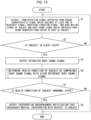
- Figs. 8 and 9 are each a flowchart illustrating an example of the flow of the process carried out by the information processing system 100 (e.g., the detecting device 1).
- Fig. 8 illustrates an example process carried out by the information processing system 100 in a case where the body sound signal that has been extracted from the detection signal detected during the time period during which it has been determined that the subject is in the sleep state is outputted.
- the signal extracting section 101 extracts the characteristic signal and the body sound signal from the detection signal outputted from the sensor 11 (step S1: signal extracting step).
- the determining section 102 determines that the subject is in the sleep state, on the basis of the characteristic signal that has been extracted (step S2: sleep determining step). In a case where it has been determined that the subject is not in the sleep state (NO in the step S2), the process returns to the step S1.
- the output control section 103 (first output control section) outputs the body sound signal that has been extracted from the detection signal detected during the time period during which it has been determined that the subject is in the sleep state (step S3: first output controlling step).
- Fig. 9 illustrates an example process carried out by the information processing system 100 in a case where the body sound signal that has been extracted from the detection signal detected during the time period during which it has been determined that the subject is in the given posture is outputted.
- the signal extracting section 101 extracts the characteristic signal and the body sound signal from the detection signal outputted from the sensor 11 (step S1: signal extracting step).
- the determining section 102 determines that the subject is in the given posture, on the basis of at least one of the detection signal and the characteristic signal that has been extracted (step S2a: posture determining step). In a case where it has been determined that the subject is not in the given posture (NO in the step S2a), the process returns to the step S1.
- the output control section 103 (second output control section) outputs the body sound signal that has been extracted from the detection signal detected during the time period during which it has been determined that the subject is in the given posture (step S3: second output controlling step).
- a timing at which the information processing system 100 carries out the process illustrated in each of Figs. 8 and 9 can be set as desired.
- the information processing system 100 may carry out the process illustrated in each of Figs. 8 and 9 at given intervals (e.g., every hour) or every time the sensor 11 determines that the subject leaves the bed.
- Fig. 10 is a functional block diagram illustrating an example of the configuration of the information processing system 100a.
- the information processing system 100a may include a detecting device 1a (information processing device) and a communication device 3 (information processing device).
- the detecting device 1a includes the sensor 11 that includes the plurality of detection regions, a control section 10a, and a storage section 12.
- the control section 10a includes a site estimating section 104, in addition to a signal extracting section 101, a determining section 102 (sleep determining section, posture determining section), and an output control section 103 (first output control section, second output control section).
- the site estimating section 104 estimates an abnormal sound occurring site in the body of a subject, on the basis of a body sound signal that has been extracted from each of the region-specific detection signals.
- the configuration in which the detecting device 1a includes the site estimating section 104 has been described as an example.
- the information processing system 100a is not limited to this example.
- the communication device 3 or a server device (information processing device) that is not illustrated may have a function similar to that of the site estimating section 104.
- Fig. 11 is a flowchart illustrating an example of the flow of the process carried out by the information processing system 100a.
- a case where the determining section 102 of the information processing system 100a determines that the subject is in a sleep state is described here as an example.
- the information processing system 100a is not limited to this example.
- the determining section 102 of the information processing system 100a may be configured to determine that the subject is in a given posture.
- the signal extracting section 101 obtains the region-specific detection signals outputted from the respective detection regions (e.g., detection regions D1 to D4 illustrated in Fig. 3 ), and extracts a characteristic signal and the body sound signal from each of the region-specific detection signals (step S1a: signal extracting step).
- the determining section 102 determines that the subject is in the sleep state, on the basis of the characteristic signal that has been extracted from each of the region-specific detection signals (step S2: sleep determining step). In a case where it has been determined that the subject is not in the sleep state (NO in the step S2), the process returns to the step S1.
- the output control section 103 (first output control section) outputs the body sound signal that has been extracted from each of the region-specific detection signals detected during a time period during which it has been determined that the subject is in the sleep state (step S3: first output controlling step).
- the site estimating section 104 estimates the abnormal sound occurring site in the body of the subject, on the basis of the body sound signal that has been extracted from each of the region-specific detection signals (step S4).
- the site estimating section 104 may specify the position of the detection region which has outputted the region-specific detection signal from which the body sound signal that includes the largest number of abnormal sounds has been extracted, and estimate, as the abnormal sound occurring site, a site in the body of the subject which site is estimated to be close to the specified position.
- the output control section 103 outputs abnormal site information that indicates the estimated abnormal sound occurring site (step S5).
- the information processing system 100a it is possible for the information processing system 100a to accurately measure the body sound signal of the subject and specify the abnormal sound occurring site associated with a disease of the subject.
- the outputted body sound signal and the outputted abnormal site information are provided to a medical expert and others, it is possible for the medical expert and others to high accurately diagnose at which site in the body of the subject an abnormality occurs, in addition to the health condition of the subject.
- Fig. 12 is a functional block diagram illustrating an example of a configuration of the information processing system 100b.
- Fig. 12 illustrates an example in which a sensor 11 that includes a plurality of detection regions outputs region-specific detection signals.
- the sensor 11 is not limited to this example.
- the sensor 11 may output a single detection signal, as illustrated in Fig. 5 .
- the information processing system 100b may include a detecting device 1b (information processing device) and a communication device 3 (information processing device).
- the detecting device 1b includes the sensor 11, a control section 10b, and a storage section 12b.
- the control section 10b includes a health condition determining section 105, in addition to a signal extracting section 101, a determining section 102 (sleep determining section, posture determining section), and an output control section 103 (first output control section, second output control section).
- the control section 10b may further include an intervention encouragement outputting section 106.
- a reference body sound signal 124 (described later) is stored.
- the health condition determining section 105 determines the health condition of the subject by comparing the body sound signal of the subject with the given reference body sound signal 124 that is stored in the storage section 12b.
- the given reference body sound signal 124 may be a body sound signal that has been extracted in advance from a detection signal detected with regard to a healthy person.
- the given reference body sound signal 124 may be a body sound signal that has been extracted in advance from a detection signal detected with regard to a patient who is affected by a given disease.
- the health condition determining section 105 may determine the health condition of the subject on the basis of a difference between the body sound signal of the subject and the reference body sound signal 124 that has been extracted from the detection signal of the healthy person.
- the health condition determining section 105 may determine the health condition of the subject on the basis of a similarity between the body sound signal of the subject and the reference body sound signal 124 that has been extracted from the detection signal of the patient who is affected by the given disease.
- the health condition determining section 105 may be capable of determining the inhalation segment and the exhalation segment, on the basis of a breathing vibration signal included in the detection signal of the subject. In this case, the health condition determining section 105 may determine the health condition of the subject by comparing the body sound signal of the subject and the given reference body sound signal with regard to each of the inhalation segment and the exhalation segment. By employing this configuration, it is possible to improve the determination accuracy of the information processing system 100b with regard to the health condition of the subject.
- the health condition determining section 105 may determine that the subject is in an abnormal state, in at least one of the following cases (1) to (3).
- the health condition determining section 105 may determine that the subject is affected by at least one of pneumothorax, pleural effusion, and atelectasis. In a case where the abnormal sound signal is mixed in the lung sound signal of the subject, the health condition determining section 105 may determine that the subject is affected by at least one of chronic obstructive pulmonary disease and bronchial asthma.
- the intervention encouragement outputting section 106 outputs an intervention encouragement notification that encourages a medical intervention with respect to the subject, in a case where the health condition determining section 105 has determined that the health condition of the subject is in the abnormal state.
- the intervention encouragement notification may notify (i) whether the medical intervention with respect to the subject is necessary or not and (ii) the greatness of the necessity of the medical intervention.
- the intervention encouragement outputting section 106 may output, to the communication device 3, the intervention encouragement notification so as to encourage the medical intervention with respect to the subject by a medical expert and others.
- the detecting device 1b includes the health condition determining section 105 and the intervention encouragement outputting section 106 has been described here as an example.
- the information processing system 100b is not limited to this configuration.
- the communication device 3 may have functions similar to those of the health condition determining section 105 and the intervention encouragement outputting section 106.
- Fig. 13 is a flowchart illustrating an example of the flow of the process carried out by the information processing system 100b.
- a case where the determining section 102 of the information processing system 100b determines that the subject is in a sleep state is described here as an example.
- the information processing system 100b is not limited to this example.
- the determining section 102 of the information processing system 100b may be configured to determine that the subject is in a given posture.
- the signal extracting section 101 extracts a characteristic signal and the body sound signal of the subject from the detection signal outputted from the sensor 11 (step S1: signal extracting step).
- the signal extracting section 101 may extract the characteristic signal and the body sound signal of the subject from each of the region-specific detection signals.
- the determining section 102 determines that the subject is in the sleep state, on the basis of the characteristic signal (step S2: sleep determining step). In a case where it has been determined that the subject is not in the sleep state (NO in the step S2), the process returns to the step S 1.
- the output control section 103 (first output control section) outputs the body sound signal that has been extracted from each of the region-specific detection signals detected during a time period during which it has been determined that the subject is in the sleep state (step S3: first output controlling step).
- the health condition determining section 105 determines the health condition of the subject by comparing the body sound signal that has been outputted with the given reference body sound signal 124 (step S6: health condition determining step).
- the information processing system 100b may be configured such that the output control section 103 outputs a determination result regarding the health condition of the subject. Note that a process carried out by the health condition determining section 105 in the step S6 will be described later with reference to a specific example.
- the intervention encouragement outputting section 106 outputs the intervention encouragement notification (step S8: intervention encouragement outputting step). In a case where it has not been determined that the health condition of the subject is the abnormal state (NO in the step S7), the intervention encouragement outputting section 106 does not output the intervention encouragement notification.
- Fig. 14 is a flowchart illustrating an example of a flow of a process of determining the health condition of the subject which process is carried out by the information processing system 100b.
- the health condition determining section 105 determines the exhalation segment and the inhalation segment on the basis of the breathing vibration signal that has been extracted from the detection signal (step S601). Next, the health condition determining section 105 separates, into the exhalation segment and the inhalation segment, the body sound signal that has been extracted from the same detection signal and that has been outputted in the step S3 (step S602).
- the health condition determining section 105 subjects the body sound signal to a frequency analysis for each breath (including a pair of the exhalation segment and the inhalation segment), and compares the body sound signal with the given reference body sound signal 124 (step S603).
- the health condition determining section 105 determines whether a ratio of a component that is contained in the lung sound signal of the subject and that has a frequency of not less than 200 Hz is equal to or higher than that in the lung sound signal that has been extracted from the given reference body sound signal (step S604). In the case of YES in the step S604, the health condition determining section 105 determines that there is a possibility that the health condition of the subject is abnormal (step S605).
- the health condition determining section 105 determines whether the lung sound signal of the subject is attenuated or lost as compared with the lung sound signal that has been extracted from the reference body sound signal 124 (step S606).
- the health condition determining section 105 determines that the subject is affected by at least one of pneumothorax, pleural effusion, and atelectasis (step S607). In a case where the lung sound signal of the subject is not attenuated and is also not lost as compared with the lung sound signal that has been extracted from the reference body sound signal 124 (NO in the step S606), the health condition determining section 105 determines that the health condition of the subject is normal (no disease) (step S608).
- the health condition determining section 105 can also carry out the following processes in steps S609 to S616.
- the health condition determining section 105 determines whether a continuous rale is detected in the lung sound signal of the subject whose the health condition has been determined as being abnormal (step S609). In a case where the continuous rale is detected in the lung sound signal of the subject (YES in the step 609) and in a case where the frequency of the continuous rale is not less than 400 Hz (YES in a step 610), the health condition determining section 105 determines that the abnormal sound signal that is mixed in the lung sound of the subject is a wheeze signal (step S611).
- the health condition determining section 105 determines that the abnormal sound signal that is mixed in the lung sound of the subject is a rhonchus signal (step S612).
- the health condition determining section 105 determines that the abnormal sound signal that is mixed in the lung sound of the subject is a coarse crackle signal (step S614). In a case where the discontinuous rale that is detected in the lung sound signal of the subject has a frequency of higher than 200 Hz (NO in the step 613), the health condition determining section 105 determines that the abnormal sound signal that is mixed in the lung sound of the subject is a fine crackle signal (step S615).
- the health condition determining section 105 determines a disease by which the subject is affected, on the basis of the abnormal sound signal mixed in with the lung sound signal (step S616).
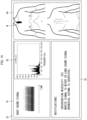
- FIG. 15 is a view illustrating an example of a display screen displayed on the display section 33 of the communication device 3 of the information processing system 100b.
- a region R1 in which waveform data of the body sound signal of the subject is displayed and a region R3 in which the intervention encouragement notification is displayed may be displayed on the display section 33.
- the intervention encouragement notification "Intervention necessity: Yes. Wheeze signal is mixed in lung sound signal. Bronchial asthma is suspected.” is displayed.
- the display section 33 may be configured such that a region R2 in which a graph or the like that shows the frequency characteristic of the body sound signal is displayed is displayed.
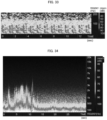
- the graph that shows the frequency characteristic may be, for example, a graph that shows the frequency (Hz) on the horizontal axis and a power value (dB) on the vertical axis, as illustrated in Fig. 15 .
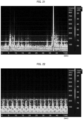
- a sonogram that shows a time (second) on the horizontal axis and the frequency (Hz) on the vertical axis may be, for example, displayed.
- the information processing system 100b may be configured to further include the site estimating section 104 of the information processing system 100a.
- the display screen may further include a region R4 in which abnormal site information regarding the subject can be displayed, as illustrated in Fig. 15 .
- an abnormal sound occurring site is shown as an elliptical mark M, in a figure that is included in the region R4 and that simulates the front and back of the body of the subject.
- the medical expert and others can appropriately determine the health condition of the subject, the type and site of the disease by which the subject is affected, and the necessity of the medical intervention with respect to the subject, with reference to a display displayed on the communication device 3.
- a server device 2 (information processing device) that is communicably connected to a detecting device 1 (information processing device) and a communication device 3 (information processing device) may be configured to have functions similar to those of the health condition determining section 105 and the intervention encouragement outputting section 106 of the information processing system 100b.
- a server device 2 information processing device that is communicably connected to a detecting device 1 (information processing device) and a communication device 3 (information processing device) may be configured to have functions similar to those of the health condition determining section 105 and the intervention encouragement outputting section 106 of the information processing system 100b.
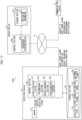
- Fig. 16 is a functional block diagram illustrating an example of a configuration of an information processing system 100c.
- the information processing system 100c may include the detecting device 1, the communication device 3, and the server device 2.
- the information processing system 100c may include a single server device 2 or a plurality of server devices 2.
- the server device 2 may be a server device realized by cloud computing as an example.
- the server device 2 includes a control section 20 and a storage section 21.
- the control section 20 may be a CPU in an example.
- the control section 20 carries out various functions by reading a control program that is software stored in the storage section 21 and loading the control program in a memory such as a RAM.
- the control section 20 includes a health condition determining section 201 and an intervention encouragement outputting section 202.
- a reference body sound signal 211 and notification destination information 212 that indicates a destination to which an intervention encouragement signal is outputted are stored.
- the reference body sound signal 211 may be the same as the reference body sound signal 124 of the information processing system 100b.
- the health condition determining section 201 has a function similar to that of the health condition determining section 105 of the information processing system 100b.
- the intervention encouragement outputting section 202 has a function similar to that of the intervention encouragement outputting section 106 of the information processing system 100b.
- a body sound signal that has been extracted from a detection signal detected during a time period during which the state of a subject is at least one of a sleep state and a given posture is first outputted from the detecting device 1.
- a subject ID that is identification information unique to the subject may be associated with the body sound signal that is outputted.
- Fig. 16 illustrates an example in which a sensor 11 that includes a single detection region outputs the detection signal.
- the sensor 11 is not limited to this example.
- the sensor 11 may output region-specific detection signals, as illustrated in Fig. 10 .
- the server device 2 obtains the body sound signal, determines the health condition of the subject, and outputs an intervention encouragement notification.
- the communication device 3 obtains the body sound signal that has been outputted from the detecting device 1 and the intervention encouragement notification that has been outputted from the server device 2, and displays the body sound signal and the intervention encouragement notification on a display section 33.
- a part of the function of the detecting device 1b included in the information processing system 100b in accordance with Embodiment 3 is shared by a server device.
- Fig. 17 is a view illustrating an example of a configuration of an information processing system 100d in accordance with the present embodiment.
- the information processing system 100d includes a server device 2a (information processing device), a detecting device 1c, and a communication device 3.
- the server device 2a includes a control section 20a and a storage section 21a.
- the control section 20a may be a CPU in an example.
- the control section 20a carries out various functions by reading a control program that is software stored in the storage section 21a and loading the control program in a memory such as a RAM.
- the control section 20a includes an intervention encouragement outputting section 202.
- notification destination information 212 that indicates a destination to which an intervention encouragement signal is outputted is stored.
- the detecting device 1c includes a control section 10c and a storage section 12c.
- the control section 10c may be a CPU in an example.
- the control section 10c carries out various functions by reading a control program that is software stored in the storage section 12c and loading the control program in a memory such as a RAM.
- the control section 10c includes a signal extracting section 101, a determining section 102, an output control section 103, and a health condition determining section 105.
- a characteristic signal 121, a body sound signal 122, an estimation model 123, and a reference body sound signal 124 are stored.
- the detecting device 1c carries out a process of determining the health condition of a subject, and outputs a determination result to the server device 2a.
- the server device 2a obtains the determination result regarding the health condition of the subject from the detecting device 1c.
- the server device 2a outputs an intervention encouragement notification that encourages a medical intervention with respect to the subject.
- the detecting device 1 in accordance with Embodiment 1 has been described as including the sensor 11, the control section 10, and the storage section 12. However, the sensor 11, the control section 10, and the storage section 12 do not need to be configured as an integral device. In the present embodiment, the sensor 11, the control section 10, and the storage section 12 are configured as separate devices.
- Fig. 18 is a functional block diagram illustrating an example of a configuration of an information processing system 100e in accordance with the present embodiment.
- the information processing system 100e includes a sensor 11, a detection signal analyzing device 1d (information processing device), and a communication device 3.
- the detection signal analyzing device 1d includes a control section 10 and a storage section 12.
- the detection signal analyzing device 1d may be a computer that is communicably connected to the sensor 11.
- the sensor 11 and the detection signal analyzing device 1d may be directly connected to each other or may be alternatively communicably connected to each other with a LAN therebetween.
- each of the detecting devices 1a, 1b, and 1c can be separated into the sensor 11 and a detection signal analyzing device (information processing device) that includes a corresponding one of the control sections 10a, 10b, and 10c and a corresponding one of the storage sections 12a, 12b, and 12c.
- each of the detecting devices 1, 1a, 1b, and 1c, the detection signal analyzing device 1d, the server device 2, and the communication device 3 can be realized by a program for causing a computer to function as the device, the program causing the computer to function as each control block (in particular, each section included in the control sections 10, 10a, 10b, 10c, 20, and 30) of the device.
- the device includes, as hardware for executing the program, a computer which includes at least one control device (e.g., processor) and at least one storage device (e.g., memory).
- control device e.g., processor
- storage device e.g., memory
- the program may be recorded in one or more non-transitory computer-readable recording mediums.
- This recording medium may or may not be provided to the device. In the latter case, the program may be made available to the device via any wired or wireless transmission medium.
- each control block can be realized by a logic circuit.
- the present disclosure encompasses, in its scope, an integrated circuit in which the logic circuit that functions as each control block is formed.
- the function of each control block can be realized by, for example, a quantum computer.
- AI artificial intelligence
- the AI may operate in the control device, or may operate in another device (e.g., an edge computer or a cloud server).
- the present disclosure is not limited to the embodiments, but can be altered variously by a skilled person in the art within the scope of the claims.
- the present disclosure also encompasses, in its technical scope, any embodiment derived by appropriately combining technical means disclosed in differing embodiments.
- An information processing system in accordance with a first aspect of the present disclosure is an information processing system including: a signal extracting section that extracts, from a detection signal outputted from a sensor, (i) a characteristic signal which includes at least one of a heartbeat signal that indicates a heartbeat of a subject, a breathing vibration signal that indicates a breathing vibration of the subject, and a body motion signal that indicates a body motion of the subject and (ii) a body sound signal which indicates a body sound that is generated from an inside of a body of the subject, the sensor detecting, at a position at which the sensor is not in contact with the subject, vibrations generated by the subject; a sleep determining section that determines that the subject is in a sleep state, on the basis of the characteristic signal that has been extracted; and a first output control section that outputs the body sound signal during a time period during which it has been determined that the subject is in the sleep state, in a case where it has been determined that the subject is in
- the information processing system in accordance with a second aspect of the present disclosure may be configured such that, in the first aspect, the sleep determining section estimates the sleep state by inputting, into an estimation model, the characteristic signal that has been extracted by the signal extracting section, the estimation model having been trained by machine learning with use of training data in which the characteristic signal is an explanatory variable and the sleep state is a response variable.
- An information processing system in accordance with a third aspect of the present invention is an information processing system including: a signal extracting section that extracts, from a detection signal outputted from a sensor, (i) a characteristic signal which includes at least one of a heartbeat signal that indicates a heartbeat of a subject, a breathing vibration signal that indicates a breathing vibration of the subject, and a body motion signal that indicates a body motion of the subject and (ii) a body sound signal which indicates a body sound that is generated from an inside of a body of the subject, the sensor detecting, at a position at which the sensor is not in contact with the subject, vibrations generated by the subject; a posture determining section that determines that the subject is in a given posture, on the basis of at least one of the detection signal and the characteristic signal that has been extracted; and a second output control section that outputs the body sound signal during a time period during which it has been determined that the subject is in the given posture, in a case where it has been determined that the subject is in the given posture.
- the information processing system in accordance with a fourth aspect of the present disclosure may be configured such that, in the third aspect, the posture determining section estimates a probability that the subject is in the given posture, by inputting, into an estimation model, at least one of the detection signal that has been detected by the sensor and the characteristic signal that has been extracted by the signal extracting section, the estimation model having been trained by machine learning with use of training data in which at least one of the detection signal and the characteristic signal is an explanatory variable and a posture of the subject is a response variable.
- the information processing system in accordance with a fifth aspect of the present disclosure may be such that, in the third or fourth aspect, the given posture is at least one of a right lateral decubitus position, a left lateral decubitus position, a supine position, a prone position, and a sitting position.
- the information processing system in accordance with a sixth aspect of the present disclosure may be such that, in any one of the first through fifth aspects, the sensor includes a plurality of detection regions each of which outputs the detection signal, and the signal extracting section extracts the characteristic signal and the body sound signal from each of region-specific detection signals that are outputted from the respective plurality of detection regions.
- the information processing system in accordance with a seventh aspect of the present disclosure may further include, in the sixth aspect, a site estimating section that estimates an abnormal sound occurring site in the body of the subject, on the basis of the body sound signal that has been extracted from each of the region-specific detection signals.
- the information processing system in accordance with an eighth aspect of the present disclosure may be such that, in any one of the first through seventh aspects, the sensor obtains at least one of the body sound signal that has a frequency of not less than 100 Hz, the heartbeat signal that has a frequency of not more than 20 Hz, the breathing vibration signal, the body motion signal and the rhonchus signal that has a frequency of not less than 100 Hz.
- the information processing system in accordance with a ninth aspect of the present disclosure may be configured such that, in any one of the first through eighth aspects, the sensor has a thin plate-like shape and is set on a bed on which the subject lies down.
- the body sound signal includes at least one of a lung sound signal that indicates a lung sound of the subject, a blood flow sound signal that indicates a blood flow sound of the subject, a heart sound signal that indicates a heart sound of the subject, a bowel sound signal that indicates a bowel sound of the subject, and a peristaltic sound signal that indicates a peristaltic sound of the subject.
- the information processing system in accordance with an eleventh aspect of the present disclosure may further include, in any one of the first through tenth aspects, a health condition determining section that determines a health condition of the subject by comparing the body sound signal and a given reference body sound signal.
- the information processing system in accordance with a twelfth aspect of the present disclosure may be such that, in the eleventh aspect, the health condition determining section is capable of determining an inhalation segment and an exhalation segment on the basis of the breathing vibration signal that is included in the detection signal, and determines the health condition of the subject by comparing the body sound signal and the given reference body sound signal with regard to each of the inhalation segment and the exhalation segment.
- the information processing system in accordance with a thirteenth aspect of the present disclosure may be such that, in the eleventh or twelfth aspect, the health condition determining section determines that the subject is in an abnormal state, in at least one of (1) a case where a lung sound signal that indicates a lung sound of the subject is attenuated or lost as compared with the given reference body sound signal, (2) a case where an abnormal sound signal that indicates an abnormal sound is mixed in the lung sound signal, and (3) a case where an adventitious sound signal that indicates an adventitious sound is mixed in the lung sound signal, and the adventitious sound includes at least one of a coarse crackle, a fine crackle, a wheeze, a rhonchus, a stridor, a squawk, and a pleural friction rub of the subject.
- the information processing system in accordance with a fourteenth aspect of the present disclosure may be such that, in the thirteenth aspect, the health condition determining section determines that the subject is affected by at least one of pneumothorax, pleural effusion, and atelectasis, in a case where the lung sound signal is attenuated or lost as compared with a lung sound signal that has been extracted from the given reference body sound signal, and determines that the subject is affected by at least one of chronic obstructive pulmonary disease and bronchial asthma, in a case where the abnormal sound signal is mixed in the lung sound signal.
- the information processing system in accordance with a fifteenth aspect of the present disclosure may further include, in the thirteenth or fourteenth aspect, an intervention encouragement outputting section that outputs an intervention encouragement notification which encourages a medical intervention with respect to the subject, in a case where the health condition determining section has determined that the health condition of the subject is the abnormal state.
- a detecting device in accordance with a sixteenth aspect of the present disclosure includes: a sensor that detects, at a position at which the sensor is not in contact with a subject, vibrations generated by the subject; a signal extracting section that extracts, from a detection signal outputted from the sensor, (i) a characteristic signal which includes at least one of a heartbeat signal that indicates a heartbeat of the subject, a breathing vibration signal that indicates a breathing vibration of the subject, and a body motion signal that indicates a body motion of the subject and (ii) a body sound signal which indicates a body sound that is generated from an inside of a body of the subject; a sleep determining section that determines that the subject is in a sleep state, on the basis of the characteristic signal that has been extracted; and a first output control section that outputs the body sound signal during a time period during which it has been determined that the subject is in the sleep state, in a case where it has been determined that the subject is in the sleep state.
- a detecting device in accordance with a seventeenth aspect of the present disclosure includes: a sensor that detects, at a position at which the sensor is not in contact with a subject, vibrations generated by the subject; a signal extracting section that extracts, from a detection signal outputted from the sensor, (i) a characteristic signal which includes at least one of a heartbeat signal that indicates a heartbeat of the subject, a breathing vibration signal that indicates a breathing vibration of the subject, and a body motion signal that indicates a body motion of the subject and (ii) a body sound signal which indicates a body sound that is generated from an inside of a body of the subject; a posture determining section that determines that the subject is in a given posture, on the basis of at least one of the detection signal and the characteristic signal that has been extracted; and a second output control section that outputs the body sound signal during a time period during which it has been determined that the subject is in the given posture, in a case where it has been determined that the subject is in the given posture.
- the detecting device in accordance with an eighteenth aspect of the present disclosure may further include, in the sixteenth or seventeenth aspect, a health condition determining section that determines a health condition of the subject by comparing the body sound signal and a given reference body sound signal.
- the detecting device in accordance with a nineteenth aspect of the present disclosure may further include, in the eighteenth aspect, an intervention encouragement outputting section that outputs an intervention encouragement notification which encourages a medical intervention with respect to the subject, in a case where the health condition determining section has determined that the health condition of the subject is an abnormal state.
- a server device in accordance with a twentieth aspect of the present disclosure includes comprising: a health condition determining section that obtains the body sound signal which has been outputted from the detecting device described in the sixteenth or seventeenth aspect and that determines a health condition of the subject by comparing the body sound signal and a given reference body sound signal; and an intervention encouragement outputting section that outputs an intervention encouragement notification which encourages a medical intervention with respect to the subject, in a case where the health condition determining section has determined that the health condition of the subject is an abnormal state.
- a server device in accordance with a twenty-first aspect of the present disclosure includes an intervention encouragement outputting section that obtains a determination result which has been outputted from the detecting device described in the eighteenth aspect and which relates to the health condition and that outputs an intervention encouragement notification which encourages a medical intervention with respect to the subject, in a case where the determination result that has been obtained indicates that the health condition of the subject is an abnormal state.
- An information processing device in accordance with a twenty-second aspect of the present disclosure includes: a signal extracting section that obtains a detection signal outputted from a sensor which detects, at a position at which the sensor is not in contact with a subject, vibrations generated by the subject and that extracts, from the detection signal, (i) a characteristic signal which includes at least one of a heartbeat signal that indicates a heartbeat of the subject, a breathing vibration signal that indicates a breathing vibration of the subject, and a body motion signal that indicates a body motion of the subject and (ii) a body sound signal which indicates a body sound that is generated from an inside of a body of the subject; a sleep determining section that determines that the subject is in a sleep state, on the basis of the characteristic signal that has been extracted; and a first output control section that outputs the body sound signal during a time period during which it has been determined that the subject is in the sleep state, in a case where it has been determined that the subject is in the sleep state.
- An information processing device in accordance with a twenty-third aspect of the present disclosure includes: a signal extracting section that obtains a detection signal outputted from a sensor which detects, at a position at which the sensor is not in contact with a subject, vibrations generated by the subject and that extracts, from the detection signal, (i) a characteristic signal which includes at least one of a heartbeat signal that indicates a heartbeat of the subject, a breathing vibration signal that indicates a breathing vibration of the subject, and a body motion signal that indicates a body motion of the subject and (ii) a body sound signal which indicates a body sound that is generated from an inside of a body of the subject; a posture determining section that determines that the subject is in a given posture, on the basis of at least one of the detection signal and the characteristic signal that has been extracted; and a second output control section that outputs the body sound signal during a time period during which it has been determined that the subject is in the given posture, in a case where it has been determined that the subject is in the given posture
- a control method in accordance with a twenty-fourth aspect of the present disclosure is a control method which is carried out by one or more information processing devices, including: a signal extracting step of extracting, from a detection signal outputted from a sensor, (i) a characteristic signal which includes at least one of a heartbeat signal that indicates a heartbeat of a subject, a breathing vibration signal that indicates a breathing vibration of the subject, and a body motion signal that indicates a body motion of the subject and (ii) a body sound signal which indicates a body sound that is generated from an inside of a body of the subject, the sensor detecting, at a position at which the sensor is not in contact with the subject, vibrations generated by the subject; a sleep determining step of determining that the subject is in a sleep state, on the basis of the characteristic signal that has been extracted; and a first output controlling step of outputting the body sound signal during a time period during which it has been determined that the subject is in the sleep state, in a case where it has been determined that the subject is
- a control method in accordance with a twenty-fifth aspect of the present disclosure is a control method which is carried out by one or more information processing devices, including: a signal extracting step of extracting, from a detection signal outputted from a sensor, (i) a characteristic signal which includes at least one of a heartbeat signal that indicates a heartbeat of a subject, a breathing vibration signal that indicates a breathing vibration of the subject, and a body motion signal that indicates a body motion of the subject and (ii) a body sound signal which indicates a body sound that is generated from an inside of a body of the subject, the sensor detecting, at a position at which the sensor is not in contact with the subject, vibrations generated by the subject; a posture determining step of determining that the subject is in a given posture, on the basis of at least one of the detection signal and the characteristic signal that has been extracted; and a second output controlling step of outputting the body sound signal during a time period during which it has been determined that the subject is in the given posture, in a case
- a control method in accordance with a twenty-sixth aspect of the present disclosure is a control method which is carried out by one or more server devices, including: a health condition determining step of obtaining the body sound signal which has been outputted from the one or more information processing devices each of which carries out the control method described in the twenty-fourth or twenty-fifth aspect and determining a health condition of the subject by comparing the body sound signal and a given reference body sound signal; and an intervention encouragement outputting step of outputting an intervention encouragement notification which encourages a medical intervention with respect to the subject, in a case where it has been determined, in the health condition determining step, that the health condition of the subject is an abnormal state.
- a program in accordance with a twenty-seventh aspect of the present disclosure is a program for causing a computer to function as the information processing system described in the first aspect, the program causing the computer to function as the signal extracting section, the sleep determining section, and the first output control section.
- a program in accordance with a twenty-eighth aspect of the present disclosure is a program for causing a computer to function as the information processing system described in the third aspect, the program causing the computer to function as the signal extracting section, the posture determining section, and the second output control section.
- a program in accordance with a twenty-ninth aspect of the present disclosure is a program for causing a computer to function as the server device described in the twentieth aspect, the program causing the computer to function as the health condition determining section and the intervention encouragement outputting section.
- a program in accordance with a thirtieth aspect of the present disclosure is a program for causing a computer to function as the server device described in the twenty-first aspect, the program causing the computer to function as the intervention encouragement outputting section.
- An information processing system in accordance with a first aspect of the present disclosure is an information processing system including: a signal extracting section that extracts, from a detection signal outputted from a sensor, (i) a characteristic signal which includes at least one of a heartbeat signal that indicates a heartbeat of a subject, a breathing vibration signal that indicates a breathing vibration of the subject, a body motion signal that indicates a body motion of the subject, and a rhonchus signal that indicates a rhonchus of the subject and (ii) a body sound signal which indicates a body sound that is generated from an inside of a body of the subject, the sensor detecting, at a position at which the sensor is not in contact with the subject, vibrations generated by the subject; a sleep determining section that determines that the subject is in a sleep state, on the basis of the characteristic signal that has been extracted; and a first output control section that outputs the body sound signal which has been extracted from the detection signal detected during a time period during which it has been determined that the subject is
- An information processing system in accordance with a second aspect of the present disclosure is an information processing system including: a signal extracting section that extracts, from a detection signal outputted from a sensor, (i) a characteristic signal which includes at least one of a heartbeat signal that indicates a heartbeat of a subject, a breathing vibration signal that indicates a breathing vibration of the subject, a body motion signal that indicates a body motion of the subject, and a rhonchus signal that indicates a rhonchus of the subject and (ii) a body sound signal which indicates a body sound that is generated from an inside of a body of the subject, the sensor detecting, at a position at which the sensor is not in contact with the subject, vibrations generated by the subject; a posture determining section that determines that the subject is in a given posture, on the basis of at least one of the detection signal and the characteristic signal that has been extracted; and a second output control section that outputs the body sound signal which has been extracted from the detection signal detected during a time period during which
- a detecting device in accordance with a third aspect of the present disclosure includes: a sensor that detects, at a position at which the sensor is not in contact with a subject, vibrations generated by the subject; a signal extracting section that extracts, from a detection signal outputted from the sensor, (i) a characteristic signal which includes at least one of a heartbeat signal that indicates a heartbeat of the subject, a breathing vibration signal that indicates a breathing vibration of the subject, a body motion signal that indicates a body motion of the subject, and a rhonchus signal that indicates a rhonchus of the subject and (ii) a body sound signal which indicates a body sound that is generated from an inside of a body of the subject; a sleep determining section that determines that the subject is in a sleep state, on the basis of the characteristic signal that has been extracted; and a first output control section that outputs the body sound signal which has been extracted from the detection signal detected during a time period during which it has been determined that the subject is in the sleep state
- a detecting device in accordance with a fourth aspect of the present disclosure includes: a sensor that detects, at a position at which the sensor is not in contact with a subject, vibrations generated by the subject; a signal extracting section that extracts, from a detection signal outputted from the sensor, (i) a characteristic signal which includes at least one of a heartbeat signal that indicates a heartbeat of the subject, a breathing vibration signal that indicates a breathing vibration of the subject, a body motion signal that indicates a body motion of the subject, and a rhonchus signal that indicates a rhonchus of the subject and (ii) a body sound signal which indicates a body sound that is generated from an inside of a body of the subject; a posture determining section that determines that the subject is in a given posture, on the basis of at least one of the detection signal and the characteristic signal that has been extracted; and a second output control section that outputs the body sound signal which has been extracted from the detection signal detected during a time period during which it has been determined
- a server device in accordance with a fifth aspect of the present disclosure is a server device including: a health condition determining section that obtains the body sound signal which has been outputted from the detecting device in accordance with the third or fourth aspect and that determines a health condition of the subject by comparing the body sound signal and a given reference body sound signal; and an intervention encouragement outputting section that outputs an intervention encouragement notification which encourages a medical intervention with respect to the subject, in a case where the health condition determining section has determined that the health condition of the subject is an abnormal state.
- An information processing device in accordance with a sixth aspect of the present disclosure includes: a signal extracting section that obtains a detection signal outputted from a sensor which detects, at a position at which the sensor is not in contact with a subject, vibrations generated by the subject and that extracts, from the detection signal, (i) a characteristic signal which includes at least one of a heartbeat signal that indicates a heartbeat of the subject, a breathing vibration signal that indicates a breathing vibration of the subject, a body motion signal that indicates a body motion of the subject, and a rhonchus signal that indicates a rhonchus of the subject and (ii) a body sound signal which indicates a body sound that is generated from an inside of a body of the subject; a sleep determining section that determines that the subject is in a sleep state, on the basis of the characteristic signal that has been extracted; and a first output control section that outputs the body sound signal which has been extracted from the detection signal detected during a time period during which it has been determined that the subject is
- An information processing device in accordance with a seventh aspect of the present disclosure includes: a signal extracting section that obtains a detection signal outputted from a sensor which detects, at a position at which the sensor is not in contact with a subject, vibrations generated by the subject and that extracts, from the detection signal, (i) a characteristic signal which includes at least one of a heartbeat signal that indicates a heartbeat of the subject, a breathing vibration signal that indicates a breathing vibration of the subject, a body motion signal that indicates a body motion of the subject, and a rhonchus signal that indicates a rhonchus of the subject and (ii) a body sound signal which indicates a body sound that is generated from an inside of a body of the subject; a posture determining section that determines that the subject is in a given posture, on the basis of at least one of the detection signal and the characteristic signal that has been extracted; and a second output control section that outputs the body sound signal which has been extracted from the detection signal detected during a time period during which
- a control method in accordance with an eighth aspect of the present disclosure is a control method which is carried out by one or more information processing devices, including: a signal extracting step of extracting, from a detection signal outputted from a sensor, (i) a characteristic signal which includes at least one of a heartbeat signal that indicates a heartbeat of a subject, a breathing vibration signal that indicates a breathing vibration of the subject, a body motion signal that indicates a body motion of the subject, and a rhonchus signal that indicates a rhonchus of the subject and (ii) a body sound signal which indicates a body sound that is generated from an inside of a body of the subject, the sensor detecting, at a position at which the sensor is not in contact with the subject, vibrations generated by the subject; a sleep determining step of determining that the subject is in a sleep state, on the basis of the characteristic signal that has been extracted; and a first output controlling step of outputting the body sound signal which has been extracted from the detection signal detected during a time period
- a control method in accordance with a ninth aspect of the present disclosure is a control method which is carried out by one or more information processing devices, including: a signal extracting step of extracting, from a detection signal outputted from a sensor, (i) a characteristic signal which includes at least one of a heartbeat signal that indicates a heartbeat of a subject, a breathing vibration signal that indicates a breathing vibration of the subject, a body motion signal that indicates a body motion of the subject, and a rhonchus signal that indicates a rhonchus of the subject and (ii) a body sound signal which indicates a body sound that is generated from an inside of a body of the subject, the sensor detecting, at a position at which the sensor is not in contact with the subject, vibrations generated by the subject; a posture determining step of determining that the subject is in a given posture, on the basis of at least one of the detection signal and the characteristic signal that has been extracted; and a second output controlling step of outputting the body sound signal which has been extracted from
- a control method in accordance with a tenth aspect of the present disclosure is a control method which is carried out by one or more server devices, including: a health condition determining step of obtaining the body sound signal which has been outputted from the one or more information processing devices each of which carries out the control method in accordance with the eighth or ninth aspect and determining a health condition of the subject by comparing the body sound signal and a given reference body sound signal; and an intervention encouragement outputting step of outputting an intervention encouragement notification which encourages a medical intervention with respect to the subject, in a case where it has been determined, in the health condition determining step, that the health condition of the subject is an abnormal state.
- the information processing systems, the detecting devices, the server devices, and the information processing devices in accordance with the aspects of the present disclosure may be realized by a computer.
- the present disclosure also encompasses, in its scope, (i) a control program for the information processing systems, the detecting devices, the server devices, and the information processing devices, the control program causing the computer to realize the information processing systems, the detecting devices, and the server devices by causing the computer to operate as each section (software element) of the information processing systems, the detecting devices, the server devices, and the information processing devices and (ii) a computer-readable recording medium in which the control program is recorded.
- Figs. 21 to 36 the horizontal axis shows a time (second) and the vertical axis shows a frequency (Hz).
- Figs. 21 and 22 shown is an example of a body sound signal (including a lung sound signal) that is extracted from a detection signal outputted from a sensor 11 which detects, at a position at which the sensor 11 is not in contact with a subject (healthy person), vibrations generated by the subject in an awake state or a sleep state.
- Fig. 21 is a sonogram showing a body sound signal of a healthy person during awaking (immediately after the healthy person went to bed).
- Fig. 22 is a sonogram showing an example of a body sound signal of the healthy person during sleeping.
- breath sounds were louder (i.e., strength was higher) than those during sleeping, breathing rhythm was not steady, and noise derived from body motions was occasionally (e.g., around 39 seconds) detected, as shown in the sonogram shown in Fig. 21 .
- the breath sounds were quiet (the strength was low), and the breathing rhythm was substantially steady, as shown in the sonogram shown in Fig. 22 .
- Fig. 22 peaks detected between 0 second and 2 seconds, 4 seconds and 6 seconds, etc.
- a peak between 0 second and 1 second corresponds to a sound derived from an inhalation segment
- a peak between 1 second and 2 seconds corresponds to a sound derived from an exhalation segment.
- Fig. 23 is a sonogram showing a body sound signal of a healthy person (left lateral decubitus position).
- Fig. 24 is a sonogram showing an example of a body sound signal of the healthy person (supine position). In the sonogram shown in Fig. 24 , a peak seen between approximately 1 second and 3 seconds at approximately 200 Hz (A in Fig.
- a peak seen between approximately 3 seconds and 4 seconds at approximately 200 Hz corresponds to a sound derived from an exhalation segment.
- a peak seen between approximately 1 second and 3 seconds at approximately 200 Hz corresponds to a sound derived from an inhalation segment
- a peak seen between approximately 3 seconds and 4 seconds at approximately 200 Hz corresponds to a sound derived from an exhalation segment.
- Fig. 25 is a sonogram showing an example of a lung sound signal of a non-healthy person which lung sound signal included a fine crackle signal.
- Fig. 26 is a sonogram showing an example of a lung sound signal of a non-healthy person which lung sound signal included a coarse crackle signal.
- the ratio of a component that was contained in the lung sound signal and that had a frequency of not less than 200 Hz was high.
- a signal having high strength (C in Fig. 25 ) was detected in the wavelength range of 200 Hz to 800 Hz.
- a signal having high strength was detected in the wavelength range of 200 Hz to 400 Hz.
- Fig. 27 is a sonogram obtained by extracting only a high-strength portion of a lung sound signal of a healthy person (supine position).
- Fig. 28 is a sonogram obtained by extracting only a high-strength portion of a lung sound signal of a non-healthy person which lung sound signal included a fine crackle signal.
- Fig. 29 is a sonogram obtained by extracting only a high-strength portion of a lung sound signal of a non-healthy person which lung sound signal included a coarse crackle signal.
- Fig. 30 is a view showing an example of a power spectrum of a lung sound signal of a healthy person (supine position).
- the lung sound signal of the healthy person showed the power spectrum in which strength became higher as a frequency became lower and the strength uniformly decreased as the frequency became higher.
- a power spectrum of a lung sound signal of each of non-healthy persons i.e., a lung sound signal in which an adventitious sound signal was mixed
- Fig. 31 is a view showing an example of the power spectrum of the lung sound signal of the non-healthy person which lung sound signal included a fine crackle signal.
- Fig. 30 is a view showing an example of a power spectrum of a lung sound signal of a healthy person (supine position).
- the lung sound signal of the healthy person showed the power spectrum in which strength became higher as a frequency became lower and the strength uniformly decreased as the frequency became higher.
- a power spectrum of a lung sound signal of each of non-healthy persons i.e., a lung sound
- FIG. 32 is a view showing an example of the power spectrum of the lung sound signal of the non-healthy person which lung sound signal included a coarse crackle signal.
- the power spectrum had a peak in the wavelength range of 100 Hz to 600 Hz, as shown in Fig. 31 .
- the coarse crackle signal had a peak in the wavelength range of 50 Hz to 400 Hz, as shown in Fig. 32 .
- Figs. 31 and 32 each show the power spectrum having a clear peak that indicated mixing of an adventitious sound.
- a clear peak that indicates mixing of an adventitious sound is not observed in a power spectrum, depending on, for example, the degree of progress of a disease.
- the power spectrum of the healthy person differed from the power spectrum of each of the non-healthy persons in ratio between a power value in a low frequency region (e.g., not more than 400 Hz) and a power value in a high frequency region (e.g., not less than 600 Hz) in the lung sound signal. That is, it was found possible to determine whether the adventitious sound signal was mixed in the lung sound signal, on the basis of the ratio between the power value of the low frequency region and the power value of the high frequency region in the lung sound signal.
- a low frequency region e.g., not more than 400 Hz
- a power value in a high frequency region e.g., not less than 600 Hz
- Figs. 33 to 36 each show an example of a characteristic signal included in a body sound signal.
- Fig. 33 is a sonogram showing an example of a heartbeat signal of a healthy person.
- Fig. 34 is a sonogram showing an example of a body motion signal of the healthy person.
- Fig. 35 is a sonogram showing an example of a breath sound signal of the healthy person (during awaking).
- Fig. 36 is a sonogram showing an example of a breath sound signal of the healthy person (during sleeping).
- a characteristic signal such as the heartbeat signal, the body motion signal, and the breath sound signal, of a subject could be extracted from a detection signal outputted from a sensor 11 that was located at a position at which the sensor 11 was not in contact with the subject.
Landscapes
- Health & Medical Sciences (AREA)
- Life Sciences & Earth Sciences (AREA)
- Engineering & Computer Science (AREA)
- Medical Informatics (AREA)
- Public Health (AREA)
- Biomedical Technology (AREA)
- General Health & Medical Sciences (AREA)
- Physics & Mathematics (AREA)
- Pathology (AREA)
- Veterinary Medicine (AREA)
- Animal Behavior & Ethology (AREA)
- Surgery (AREA)
- Molecular Biology (AREA)
- Heart & Thoracic Surgery (AREA)
- Biophysics (AREA)
- Physiology (AREA)
- Cardiology (AREA)
- Artificial Intelligence (AREA)
- Pulmonology (AREA)
- Primary Health Care (AREA)
- Epidemiology (AREA)
- Psychiatry (AREA)
- Oral & Maxillofacial Surgery (AREA)
- Dentistry (AREA)
- Computer Vision & Pattern Recognition (AREA)
- Signal Processing (AREA)
- Data Mining & Analysis (AREA)
- Databases & Information Systems (AREA)
- Acoustics & Sound (AREA)
- Anesthesiology (AREA)
- Mathematical Physics (AREA)
- Evolutionary Computation (AREA)
- Fuzzy Systems (AREA)
- Child & Adolescent Psychology (AREA)
- General Business, Economics & Management (AREA)
- Business, Economics & Management (AREA)
- Developmental Disabilities (AREA)
- Educational Technology (AREA)
- Hospice & Palliative Care (AREA)
- Psychology (AREA)
Abstract
Description
- The present disclosure relates to an information processing system, a detecting device, a server device, an information processing device, and a method of controlling an information processing system, each of which is for detecting a vibration generated by a subject.
- A variety of techniques for measuring vibrations (including breath sounds, heartbeat sounds, and the like) generated by a subject have been developed. For example,
Patent Literature 2 discloses a device that (i) detects an abnormal lung sound on the basis of a sound signal which indicates sounds generated by the body of a subject and (ii) detects a disease of the subject. Further,Patent Literature 1 discloses a sensor system in which a mat having a number of sensors is disposed so as to cover a mattress. -
- [Patent Literature 1]
PublishedJapanese Translation of PCT International Application Tokuhyo No. 2018-516616 - [Patent Literature 2]
PublishedJapanese Translation of PCT International Application Tokuhyo No. 2010-528725 - A vibration generated by a subject may reflect an abnormality in the body of the subject. In order to accurately diagnose the abnormality in the body of the subject, it is important to improve the accuracy of measuring the vibration generated by the subject.
- In a case where, as with the device disclosed in
Patent Literature 1, the vibration generated by the subject is measured with use of a sensor that is in direct contact with the skin of the subject, the subject may feel a discomfort as to the fact that the sensor is in contact with the skin. The vibration measured under a situation where the subject feels a discomfort may not indicate an appropriate value. Therefore, it may not be possible to accurately diagnose the abnormality in the body of the subject by the device disclosed inPatent Literature 1. - On the other hand, in a case where, as with the sensor system disclosed in
Patent Literature 2, the vibration generated by the subject is measured with use of a sensor that is not in direct contact with the skin of the subject, detection accuracy can be lowered by turning, a sleeping posture, or the like of the subject. Moreover, the subject who lies down on a mat having a number of sensors recognizes that detection by the sensors is carried out. Therefore, there is a case where the subject intentionally controls the breath and it is not possible to measure the original vibration of the subject. Therefore, it may not be possible to accurately diagnose the abnormality in the body of the subject also by the sensor system disclosed inPatent Literature 1. - Thus, there is room for improvement in order to accurately measure the vibration generated by the subject.
- An information processing system in accordance with a first aspect of the present disclosure is an information processing system including: a signal extracting section that extracts, from a detection signal outputted from a sensor, (i) a characteristic signal which includes at least one of a heartbeat signal that indicates a heartbeat of a subject, a breathing vibration signal that indicates a breathing vibration of the subject, and a body motion signal that indicates a body motion of the subject and (ii) a body sound signal which indicates a body sound that is generated from an inside of a body of the subject, the sensor detecting, at a position at which the sensor is not in contact with the subject, vibrations generated by the subject; a sleep determining section that determines that the subject is in a sleep state, on the basis of the characteristic signal that has been extracted; and a first output control section that outputs the body sound signal during a time period during which it has been determined that the subject is in the sleep state, in a case where it has been determined that the subject is in the sleep state.
- An information processing system in accordance with a second aspect of the present disclosure is an information processing system including: a signal extracting section that extracts, from a detection signal outputted from a sensor, (i) a characteristic signal which includes at least one of a heartbeat signal that indicates a heartbeat of a subject, a breathing vibration signal that indicates a breathing vibration of the subject, and a body motion signal that indicates a body motion of the subject and (ii) a body sound signal which indicates a body sound that is generated from an inside of a body of the subject, the sensor detecting, at a position at which the sensor is not in contact with the subject, vibrations generated by the subject; a posture determining section that determines that the subject is in a given posture, on the basis of at least one of the detection signal and the characteristic signal that has been extracted; and a second output control section that outputs the body sound signal during a time period during which it has been determined that the subject is in the given posture, in a case where it has been determined that the subject is in the given posture.
- A detecting device in accordance with a third aspect of the present disclosure is a detecting device including: a sensor that detects, at a position at which the sensor is not in contact with a subject, vibrations generated by the subject; a signal extracting section that extracts, from a detection signal outputted from the sensor, (i) a characteristic signal which includes at least one of a heartbeat signal that indicates a heartbeat of the subject, a breathing vibration signal that indicates a breathing vibration of the subject, and a body motion signal that indicates a body motion of the subject and (ii) a body sound signal which indicates a body sound that is generated from an inside of a body of the subject; a sleep determining section that determines that the subject is in a sleep state, on the basis of the characteristic signal that has been extracted; and a first output control section that outputs the body sound signal during a time period during which it has been determined that the subject is in the sleep state, in a case where it has been determined that the subject is in the sleep state.
- A detecting device in accordance with a fourth aspect of the present disclosure is a detecting device including: a sensor that detects, at a position at which the sensor is not in contact with a subject, vibrations generated by the subject; a signal extracting section that extracts, from a detection signal outputted from the sensor, (i) a characteristic signal which includes at least one of a heartbeat signal that indicates a heartbeat of the subject, a breathing vibration signal that indicates a breathing vibration of the subject, and a body motion signal that indicates a body motion of the subject and (ii) a body sound signal which indicates a body sound that is generated from an inside of a body of the subject; a posture determining section that determines that the subject is in a given posture, on the basis of at least one of the detection signal and the characteristic signal that has been extracted; and a second output control section that outputs the body sound signal during a time period during which it has been determined that the subject is in the given posture, in a case where it has been determined that the subject is in the given posture.
- A server device in accordance with a fifth aspect of the present disclosure is a server device including: a health condition determining section that obtains the body sound signal which has been outputted from the detecting device in accordance with the third or fourth aspect and that determines a health condition of the subject by comparing the body sound signal and a given reference body sound signal; and an intervention encouragement outputting section that outputs an intervention encouragement notification which encourages a medical intervention with respect to the subject, in a case where the health condition determining section has determined that the health condition of the subject is an abnormal state.
- An information processing device in accordance with a sixth aspect of the present disclosure is an information processing device including: a signal extracting section that obtains a detection signal outputted from a sensor which detects, at a position at which the sensor is not in contact with a subject, vibrations generated by the subject and that extracts, from the detection signal, (i) a characteristic signal which includes at least one of a heartbeat signal that indicates a heartbeat of the subject, a breathing vibration signal that indicates a breathing vibration of the subject, and a body motion signal that indicates a body motion of the subject and (ii) a body sound signal which indicates a body sound that is generated from an inside of a body of the subject; a sleep determining section that determines that the subject is in a sleep state, on the basis of the characteristic signal that has been extracted; and a first output control section that outputs the body sound signal during a time period during which it has been determined that the subject is in the sleep state, in a case where it has been determined that the subject is in the sleep state.
- An information processing device in accordance with a seventh aspect of the present disclosure is an information processing device including: a signal extracting section that obtains a detection signal outputted from a sensor which detects, at a position at which the sensor is not in contact with a subject, vibrations generated by the subject and that extracts, from the detection signal, (i) a characteristic signal which includes at least one of a heartbeat signal that indicates a heartbeat of the subject, a breathing vibration signal that indicates a breathing vibration of the subject, and a body motion signal that indicates a body motion of the subject and (ii) a body sound signal which indicates a body sound that is generated from an inside of a body of the subject; a posture determining section that determines that the subject is in a given posture, on the basis of at least one of the detection signal and the characteristic signal that has been extracted; and a second output control section that outputs the body sound signal during a time period during which it has been determined that the subject is in the given posture, in a case where it has been determined that the subject is in the given posture.
- A control method in accordance with an eighth aspect of the present disclosure is a control method which is carried out by one or more information processing devices, including: a signal extracting step of extracting, from a detection signal outputted from a sensor, (i) a characteristic signal which includes at least one of a heartbeat signal that indicates a heartbeat of a subject, a breathing vibration signal that indicates a breathing vibration of the subject, and a body motion signal that indicates a body motion of the subject and (ii) a body sound signal which indicates a body sound that is generated from an inside of a body of the subject, the sensor detecting, at a position at which the sensor is not in contact with the subject, vibrations generated by the subject; a sleep determining step of determining that the subject is in a sleep state, on the basis of the characteristic signal that has been extracted; and a first output controlling step of outputting the body sound signal during a time period during which it has been determined that the subject is in the sleep state, in a case where it has been determined that the subject is in the sleep state.
- A control method in accordance with a ninth aspect of the present disclosure is a control method which is carried out by one or more information processing devices, including: a signal extracting step of extracting, from a detection signal outputted from a sensor, (i) a characteristic signal which includes at least one of a heartbeat signal that indicates a heartbeat of a subject, a breathing vibration signal that indicates a breathing vibration of the subject, and a body motion signal that indicates a body motion of the subject and (ii) a body sound signal which indicates a body sound that is generated from an inside of a body of the subject, the sensor detecting, at a position at which the sensor is not in contact with the subject, vibrations generated by the subject; a posture determining step of determining that the subject is in a given posture, on the basis of at least one of the detection signal and the characteristic signal that has been extracted; and a second output controlling step of outputting the body sound signal during a time period during which it has been determined that the subject is in the given posture, in a case where it has been determined that the subject is in the given posture.
- A control method in accordance with a tenth aspect of the present disclosure is a control method which is carried out by one or more server devices, including: a health condition determining step of obtaining the body sound signal which has been outputted from the one or more information processing devices each of which carries out the control method in accordance with the eighth or ninth aspect and determining a health condition of the subject by comparing the body sound signal and a given reference body sound signal; and an intervention encouragement outputting step of outputting an intervention encouragement notification which encourages a medical intervention with respect to the subject, in a case where it has been determined, in the health condition determining step, that the health condition of the subject is an abnormal state.
- The information processing systems, the detecting devices, the server device, and the information processing devices in accordance with the aspects of the present disclosure may be each realized by a computer. In this case, the present disclosure also encompasses, in its scope, (i) a control program for the information processing systems, the detecting devices, the server device, and the information processing devices, the control program causing the computer to realize the information processing systems, the detecting devices, and the server device by causing the computer to operate as each section (software element) of the information processing systems, the detecting devices, the server device, and the information processing devices and (ii) a computer-readable recording medium in which the control program is recorded.
- According to an aspect of the present disclosure, it is possible to accurately measure a vibration generated by a subject.
-
-
Fig. 1 is a conceptual diagram illustrating an example of a configuration of an information processing system. -
Fig. 2 is a view illustrating an example of a schematic configuration of a detecting device. -
Fig. 3 is a view illustrating a different example of the schematic configuration of the detecting device. -
Fig. 4 is a view illustrating another example of the schematic configuration of the detecting device. -
Fig. 5 is a functional block diagram illustrating an example of a configuration of an information processing system. -
Fig. 6 is a view explaining various signals that are included in a detection signal. -
Fig. 7 is a view explaining (i) various sounds that can be included in a lung sound and (ii) typical cases that correspond to the various sounds. -
Fig. 8 is a flowchart illustrating an example of a flow of a process carried out by the information processing system. -
Fig. 9 is a flowchart illustrating a different example of the flow of the process carried out by the information processing system. -
Fig. 10 is a functional block diagram illustrating an example of a configuration of an information processing system. -
Fig. 11 is a flowchart illustrating an example of a flow of a process carried out by the information processing system. -
Fig. 12 is a functional block diagram illustrating an example of a configuration of an information processing system. -
Fig. 13 is a flowchart illustrating an example of a flow of a process carried out by the information processing system. -
Fig. 14 is a flowchart illustrating an example of a flow of a process of determining a health condition of a subject which process is carried out by the information processing system. -
Fig. 15 is a view illustrating an example of a display screen displayed on a display section of a communication device. -
Fig. 16 is a functional block diagram illustrating an example of a configuration of an information processing system. -
Fig. 17 is a functional block diagram illustrating an example of a configuration of an information processing system. -
Fig. 18 is a functional block diagram illustrating an example of a configuration of an information processing system. -
Fig. 19 is a schematic view for explaining a model of a neuron. -
Fig. 20 is a view for explaining a neural network. -
Fig. 21 is a sonogram showing a body sound of a healthy person during awaking (immediately after the healthy person went to bed). -
Fig. 22 is a sonogram showing an example of a body sound signal of the healthy person during sleeping. -
Fig. 23 is a sonogram showing an example of a body sound signal of a healthy person (left lateral decubitus position). -
Fig. 24 is a sonogram showing an example of a body sound signal of the healthy person (supine position). -
Fig. 25 is a sonogram showing an example of a lung sound signal of a healthy person which lung sound signal included a fine crackle signal. -
Fig. 26 is a sonogram showing an example of a lung sound signal of a non-healthy person which lung sound signal included a coarse crackle signal. -
Fig. 27 is a sonogram obtained by extracting only a high-strength portion of a lung sound signal of a healthy person (supine position). -
Fig. 28 is a sonogram obtained by extracting only a high-strength portion of a lung sound signal of a non-healthy person which lung sound signal included a fine crackle signal. -
Fig. 29 is a sonogram obtained by extracting only a high-strength portion of a lung sound signal of a non-healthy person which lung sound signal included a coarse crackle signal. -
Fig. 30 is a view showing an example of a power spectrum of a lung sound signal of a healthy person (supine position). -
Fig. 31 is a view showing an example of a power spectrum of a lung sound signal of a non-healthy person which lung sound signal included a fine crackle signal. -
Fig. 32 is a view showing an example of a power spectrum of a lung sound signal of a non-healthy person which lung sound signal included a coarse crackle signal. -
Fig. 33 is a sonogram showing an example of a heartbeat signal of a healthy person. -
Fig. 34 is a sonogram showing an example of a body motion signal of the healthy person. -
Fig. 35 is a sonogram showing an example of a breath sound signal of the healthy person (during awaking). -
Fig. 36 is a sonogram showing an example of a breath sound signal of the healthy person (during sleeping). - The following description will discuss an embodiment of the present disclosure in detail with reference to
Figs. 1 to 9 . - An
information processing system 100 in accordance withEmbodiment 1 of the present disclosure is a system that outputs at least one of (i) a body sound signal of a subject while the subject is in a sleep state and (ii) a body sound signal of the subject while the subject is in a given posture, on the basis of a detection signal outputted from a sensor that detects, at a position at which the sensor is not in contact with the subject, vibrations generated by the subject. - In this specification, the "subject" is typically a person who needs to be monitored by a medical expert and others, such as a patient who lies down on a bed or the like. The "detection signal" is a signal that indicates the vibrations generated by the subject, and is raw data outputted from the sensor or data obtained by subjecting the raw data to an amplification process or a noise removal process. The noise removal process can be carried out, for example, by carrying out a filtering process with respect to a region of not less than 2,000 Hz of the raw data. The "given posture" is a good posture that is suitable for detection carried out by the sensor, and is, for example, at least one of a right lateral decubitus position, a left lateral decubitus position, a supine position, a prone position, and a sitting position. The "body sound signal" is a signal that indicates a body sound generated from the inside of the body of the subject, and is a signal including at least one of a lung sound signal that indicates a lung sound of the subject, a blood flow sound signal that indicates a blood flow sound of the subject, a heart sound signal that indicates a sound of the heart of the subject, a bowel sound signal that indicates a bowel sound of the subject, and a peristaltic sound signal that indicates a peristaltic sound of the subject.
- First, a schematic configuration of the
information processing system 100 in accordance withEmbodiment 1 of the present disclosure is described with reference toFig. 1. Fig. 1 is a conceptual diagram illustrating an example of the configuration of theinformation processing system 100. - As illustrated in
Fig. 1 , theinformation processing system 100 may include a detecting device 1 (information processing device) and a communication device 3 (information processing device). Theinformation processing system 100 may include a single detectingdevice 1 or may alternatively include a plurality of detectingdevices 1. Similarly, theinformation processing system 100 may include asingle communication device 3 or may alternatively include a plurality ofcommunication devices 3. - The detecting
device 1 analyzes the detection signal outputted from a sensor 11 (Fig. 2 etc.) that detects, at a position at which thesensor 11 is not in contact with the subject, the vibrations generated by the subject and that indicates the vibrations generated by the subject, and determines that a state of the subject is at least one of (a) the sleep state and (b) the given posture. - Then, the detecting
device 1 outputs, to the outside, the body sound signal that has been extracted from the detection signal detected during a time period during which the above determination is made. A destination to which the body sound signal is outputted is typically thecommunication device 3. Thecommunication device 3 is typically a computer, a smartphone, a tablet terminal, or the like that is used by, for example, the medical expert and others, and is set in, for example, a nurses station. - Note that the detecting
device 1 extracts the body sound signal and the like from the detection signal by carrying out a process, such as a frequency analysis, with respect to the detection signal outputted from thesensor 11. This extraction process is carried out independently of a process of determining the above (a) or (b), and is typically carried out prior to this determination process. - The
sensor 11 is set at the position at which thesensor 11 is not in contact with the subject so that the subject does not feel a discomfort. Thesensor 11 may be set on the bed on which the subject lies down. The position at which thesensor 11 is set may be between the bed on which the subject lies down and a mattress on the bed or between the mattress and a bed sheet on the mattress. In a case where the subject wears clothes, the position at which thesensor 11 is set may be the uppermost surface of the bed. In a case where thesensor 11 is set at any of these positions, thesensor 11 is preferably formed in a thin plate (sheet)-like shape. - As has been described, since, in the
information processing system 100, thesensor 11 that is set at the position at which thesensor 11 is not in contact with the subject is used, the subject does not feel a discomfort. Therefore, it is possible to suppress a factor in decreasing detection accuracy, such as the subject's intentionally controlling breathing, and also possible to realize constant monitoring. Moreover, since, under such circumstances, the body sound signal while the subject is in the sleep state or the body sound signal while the subject is in the given posture is outputted in theinformation processing system 100, it is possible to output the body sound signal that is more accurate than a conventional one. As a result, it is possible to accurately diagnose an abnormality in the body of the subject. - Note that the detecting
device 1 and thecommunication device 3 may be directly connected to each other or may be alternatively communicably connected to each other with acommunication network 9 therebetween as illustrated inFig. 1 Thecommunication network 9 is not limited to any form, and may be a local area network (LAN) or the Internet. - Note also that the
information processing system 100 may include a server device (information processing device) (not illustrated) that is communicably connected to the detectingdevice 1 and thecommunication device 3, in addition to the detectingdevice 1 and thecommunication device 3. For example, the server device may be configured to store and manage, for each subject, a body sound signal transmitted from each of a plurality of detectingdevices 1. The medical expert and others may be able to access the server device with use of thecommunication device 3 and refer to the body sound signal of each subject. - Next, an appearance and a schematic configuration of the detecting
device 1 are described with use ofFig. 5 with reference toFigs. 2 to 4 andFig. 6 .Fig. 5 is a functional block diagram illustrating an example of the configuration of theinformation processing system 100. A case where a characteristic signal includes a rhonchi signal is described here as an example. However, the characteristic signal is not limited to this example, and may not include the rhonchus signal. - As illustrated in
Fig. 5 , the detectingdevice 1 includes thesensor 11, acontrol section 10, and astorage section 12. - The
sensor 11 is a noncontact (noninvasive) sensor that is capable of detecting, at the position at which thesensor 11 is not in contact with the subject, the vibrations generated by the subject. Thesensor 11 outputs, for example, the detection signal that indicates the vibrations (i.e., waveform data). The noncontact (noninvasive) sensor is not limited to any particular type. For example, as the noncontact (noninvasive) sensor, a piezoelectric sensor, a Doppler sensor, or the like can be applied. - The
sensor 11 may include one or more detection regions. In a case where thesensor 11 includes a plurality of detection regions, thesensor 11 may output the detection signal that has been detected in each of the plurality of detection regions. In a case where thesensor 11 is formed in a thin plate-like shape, the plurality of detection regions may be arranged side by side on an identical plane.Figs. 2 to 4 are each a view illustrating an example of the schematic configuration of the detectingdevice 1. The detectingdevice 1 illustrated inFig. 2 includes thesensor 11 that includes a single detection region D. The detectingdevice 1 illustrated inFig. 3 includes thesensor 11 that includes detection regions D1 to D3 arranged in three columns. The detectingdevice 1 illustrated inFig. 4 includes thesensor 11 that includes detection regions D1a to D4d arranged in four rows and three columns. For example, in the case of the detectingdevice 1 illustrated inFig. 3 , the detection signal that has been detected in each of the detection regions D1 to D4 is outputted individually. Similarly, in the case of the detectingdevice 1 illustrated inFig. 4 , the detection signal that has been detected in each of the detection regions D1a to D3d is outputted individually. Each of the detection regions D1a to D3d may be, for example, a 10 cm square. - In a case where the configuration in which the
sensor 11 includes the plurality of detection regions is employed, it is possible to accurately specify a position in the body of the subject at which position an abnormality occurs, by individually analyzing the detection signal from each of the plurality of detection regions and comparing results of analyses with each other. Moreover, it is possible to accurately specify the posture of the subject on the basis of the signal strength or the like of the detection signal from each of the detection regions. - The
control section 10 may be a central processing unit (CPU) in an example. Thecontrol section 10 carries out various functions by reading a control program that is software stored in thestorage section 12 and loading the control program in a memory such as a random access memory (RAM). As illustrated inFig. 5 , thecontrol section 10 includes asignal extracting section 101, a determining section 102 (sleep determining section, posture determining section), and an output control section 103 (first output control section, second output control section). Note that, in thestorage section 12 illustrated inFig. 5 , the control program is not illustrated for simplification of description. - The
signal extracting section 101 extracts, from the detection signal outputted from thesensor 11, the characteristic signal of the subject and the body sound signal that indicates the body sound generated from the inside of the body of the subject. Note, here, that the characteristic signal includes at least one of a heartbeat signal that indicates a heartbeat of the subject, a breathing vibration signal that indicates a breathing vibration of the subject, and a body motion signal that indicates a body motion of the subject. The characteristic signal may further include the rhonchus signal that indicates a rhonchus of the subject. Note, here, that the rhonchus is a kind of adventitious sound included in the lung sound, and is a snore-like sound generated from a lung. Thesignal extracting section 101 extracts the characteristic signal and the body sound signal from the detection signal. - The
sensor 11 can detect the vibrations in various frequency ranges which vibrations occur from the subject. Therefore, the detection signal outputted from thesensor 11 is a signal in which a plurality of vibrations having various frequency characteristics overlap with each other. In an example, thesensor 11 may be capable of obtaining at least one of the body sound signal that has a frequency of not less than 100 Hz, the heartbeat signal that has a frequency of not more than 20 Hz, the breathing vibration signal, and the body motion signal. Thesensor 11 may be capable of obtaining the rhonchus signal that has a frequency of not less than 100 Hz. Note that it is possible to differentiate the body sound signal that has a frequency of not less than 100 Hz and the rhonchus signal that has a frequency of not less than 100 Hz on the basis of frequency components (spectra). - In this manner, the detecting
device 1 may include thesensor 11 that can detect the vibrations in various frequency bands. This makes it unnecessary to provide a plurality of differing types of sensors to the detectingdevice 1, and makes it easy for the medical expert and others who use theinformation processing system 100 to maintain and manage the detectingdevice 1. Therefore, the convenience of the detectingdevice 1 is improved. - The
signal extracting section 101 may extract the characteristic signal and the body sound signal from the detection signal by applying a well-known technique, such as frequency separation, to the detection signal. This is described with reference toFig. 6. Fig. 6 is a view explaining various signals that are included in the detection signal. As illustrated inFig. 6 , by carrying out frequency separation, it is possible to separate the detection signal into the heartbeat signal, the breathing vibration signal, the body motion signal, the rhonchus signal, and the body sound signal which differ from each other in frequency characteristic. - The body sound signal includes at least one of the lung sound signal that indicates the lung sound of the subject, the blood flow sound signal that indicates the blood flow sound of the subject, the heart sound signal that indicates the sound of the heart of the subject, the bowel sound signal that indicates the bowel sound of the subject, and the peristaltic sound signal that indicates the peristaltic sound of the subject. The lung sound signal, the blood flow sound signal, the heart sound signal, the bowel sound signal, and the peristaltic sound signal differ from each other in frequency characteristic.
- The
signal extracting section 101 stores, in thestorage section 12, the characteristic signal and the body sound signal that have been extracted from the detection signal (121 and 122 illustrated inFig. 5 ). The characteristic signal and the body sound signal may be stored together with time information that indicates a time at which the detection signal from which the characteristic signal and the body sound signal are extracted has been detected. - The determining
section 102 determines at least one of the following: the subject is in the sleep state; and the subject is in the given posture. In a case where the determiningsection 102 determines that the subject is in the sleep state, the determiningsection 102 uses the characteristic signal that has been extracted. In a case where the determiningsection 102 determines that the subject is in the given posture, the determiningsection 102 uses at least one of the detection signal and the characteristic signal that has been extracted. That is, the determiningsection 102 may use any one of the detection signal, the heartbeat signal, the breathing vibration signal, and the body motion signal so as to determine the given posture of the subject. For example, in a case where the characteristic signal further includes the rhonchus signal, the determiningsection 102 may use any one of the detection signal, the heartbeat signal, the breathing vibration signal, the body motion signal, and the rhonchus signal so as to determine the given posture of the subject. Note that a rate of contribution of each of the detection signal, the heartbeat signal, the breathing vibration signal, the body motion signal, and the rhonchus signal to the determination of the given posture of the subject may not be the same. Note that the determiningsection 102 may determine that the subject is in the sleep state and the given posture. - In a case where the determining
section 102 determines the sleep state of the subject, the determiningsection 102 may estimate the sleep state by inputting, into anestimation model 123, the characteristic signal that has been extracted by thesignal extracting section 101. Theestimation model 123 has been trained by machine learning with use of training data in which the characteristic signal is an explanatory variable and the sleep state is a response variable. In a case where the determiningsection 102 determines the posture of the subject, the determiningsection 102 may estimate a probability that the subject is in the given posture by inputting, into theestimation model 123, the detection signal that has been detected by thesensor 11. Theestimation model 123 has been trained by machine learning with use of training data in which the detection signal is an explanatory variable and the posture of the subject is a response variable. Alternatively, in a case where the determiningsection 102 determines the posture of the subject, the determiningsection 102 may estimate the probability that the subject is in the given posture by inputting, into theestimation model 123, the characteristic signal that has been extracted by thesignal extracting section 101. Theestimation model 123 has been trained by machine learning with use of training data in which the characteristic signal is an explanatory variable and the posture of the subject is a response variable. In these cases, the determiningsection 102 determines that the subject is in the given posture, on the basis of the probability obtained as an estimation result. To the machine learning for generating theestimation model 123, a publicly known machine learning algorithm, such as a neural network or a support vector machine, can be applied. - Note that a place at which the
estimation model 123 is present is not limited, and may be stored in thestorage section 12 as illustrated inFig. 5 or may be alternatively stored in a device other than the detectingdevice 1. - A case where a neural network is used for the
estimation model 123 is described here with reference toFigs. 19 and 20 . The neural network is constituted, for example, by a processor, a memory, and the like that realize a neural network which mimics a model of a neuron illustrated inFig. 19. Fig. 19 is a schematic view for explaining the model of the neuron.Fig. 20 is a view for explaining the neural network. - The neural network is constituted by, for example, an input layer that includes a plurality of neurons, a hidden layer (intermediate layer) that includes a plurality of neurons, and an output layer that includes a plurality of neurons. Each neuron outputs a result y with respect to a plurality of inputs x, as illustrated in
Fig. 19 . Each of the inputs x is multiplied by a corresponding weighting factor w. For example, inFig. 19 , an input x1 is multiplied by a weighting factor w1, an input x2 is multiplied by a weighting factor w2, and an input x3 is multiplied by a weighting factor w3. The neuron sums up results obtained by multiplying each of the inputs by the weighting factor, and outputs the result y by substituting, into an activation function f, a result obtained by considering a bias B with respect to the summed result. - Next, the neural network obtained by combining these neurons is described with reference to
Fig. 20. Fig. 20 is a schematic view illustrating a neural network that has an input layer L1, a hidden layer L2, and an output layer L3. In the neural network illustrated inFig. 20 , a plurality of inputs x are inputted into the input layer L1, and results y are outputted from the output layer L3. The neural network may has a plurality of hidden layers. InFig. 20 , for example, each of inputs x1 to x3 is multiplied by a corresponding weighting factor wa. Results obtained by such multiplication are each inputted into each of three neurons N1a to N1c. Note, here, that the neurons N1a to N1c respectively output p11 to p13. Vectors (p11, p12, and p13) can be respectively regarded as feature vectors obtained by extracting features of input vectors (x1, x2, and x3). These feature vectors (p11, p12, and p13) are feature vectors between the input layer L1 and the hidden layer L2. - Each of p11 to p13 is multiplied by a corresponding weighting factor wb. Results obtained by such multiplication are each inputted into each of two neurons N2a and Nb. Note, here, that the neurons N2a and N2b respectively output p21 and p22. These vectors (p21 and p22) are feature vectors between the hidden layer L2 and the output layer L3.
- Each of p21 and p22 is multiplied by a corresponding weighting factor wc. Results obtained by such multiplication are each inputted into each of three neurons N3a to N3c. The neurons N3a to N3c respectively output results y1 to y3.
- Operations of the neural network include an operation in a training mode and an operation in an estimation mode. In the training mode, the neural network trains (adjusts) a parameter that indicates the weighting factor w with use of training data including an explanatory variable and a response variable. In the estimation mode, the neural network outputs a result estimated from inputted data (e.g., characteristic signal) with use of the parameter adjusted by training.
- In the training mode, an error between (i) a result outputted from the output layer L3 in a case where the explanatory variable included in the training data is inputted into the input layer L1 and (ii) the response variable corresponding to the explanatory variable is calculated, and the parameter is adjusted so that this error is reduced.
- To adjustment of the parameter, any known method can be applied. For example, a backpropagation method may be applied. Until the error falls within a given range or until all explanatory variables included in the training data are inputted, the adjustment of the parameter may be repeated.
- Returning to
Fig. 5 , theoutput control section 103 outputs the body sound signal that has been extracted from the detection signal detected during at least one of a time period during which it has been determined that the subject is in the sleep state and a time period during which it has been determined that the subject is in the given posture. For example, in a case where it has been determined that the subject is in the sleep state, theoutput control section 103 may output only the body sound signal that has been extracted from the detection signal detected during the time period during which it has been determined that the subject is in the sleep state, among body sound signals stored in thestorage section 12. For example, in a case where it has been determined that the subject is in the given posture, theoutput control section 103 may output only the body sound signal that has been extracted from the detection signal detected during the time period during which it has been determined that the subject is in the given posture, among the body sound signals stored in thestorage section 12. For example, in a case where it has been determined that the subject is in the sleep state and the given posture, theoutput control section 103 may output only the body sound signal that has been extracted from the detection signal detected during a time period during which it has been determined that the subject is in the sleep state and it has been determined that the subject is in the given posture, among the body sound signals 122 stored in thestorage section 12. - Next, a configuration of the
communication device 3 is described with reference toFig. 5 . Thecommunication device 3 includes aninput section 31, acontrol section 30, astorage section 32, and adisplay section 33. - The
input section 31 may be a keyboard, a touch panel, a mouse, or the like. Thecontrol section 30 carries out various functions by reading a control program that is software stored in thestorage section 32 and loading the control program in a memory such as a RAM. Thecontrol section 30 includes adisplay control section 301 that causes various pieces of information to be displayed on thedisplay section 33. - The
signal extracting section 101 may be capable of further extracting the lung sound signal, the blood flow sound signal, the heart sound signal, the bowel sound signal, the peristaltic sound signal, and the like from the body sound signal that has been extracted from the detection signal detected during at least one of the time period during which it has been determined that the subject is in the sleep state and the time period during which it has been determined that the subject is in the given posture. In this case, the detectingdevice 1 may output, together with the body sound signal, the lung sound signal, the blood flow sound signal, the heart sound signal, the bowel sound signal, the peristaltic sound signal, and the like that have been extracted. - The
communication device 3 may have a function of extracting, from the body sound signal that has been outputted by the detectingdevice 1, the lung sound signal, the blood flow sound signal, the heart sound signal, the bowel sound signal, the peristaltic sound signal, and the like (for example, a function similar to that of thesignal extracting section 101 of the detecting device 1). Alternatively, the detectingdevice 1 may extract, from the body sound signal for output, the lung sound signal, the blood flow sound signal, the heart sound signal, the bowel sound signal, and the peristaltic sound signal, and output, together with the body sound signal, the lung sound signal, the blood flow sound signal, the heart sound signal, the bowel sound signal, and the peristaltic sound signal that have been extracted. In a case where theinformation processing system 100 includes the server device in addition to the detectingdevice 1 and thecommunication device 3, the server device may have a function of extracting, from the body sound signal that has been outputted from the detectingdevice 1, the lung sound signal, the blood flow sound signal, the heart sound signal, the bowel sound signal, the peristaltic sound signal, and the like. - Whichever of these configurations is employed, it is possible to extract a signal important for diagnosing the health condition of the subject, on the basis of the body sound signal that has been accurately measured by the detecting
device 1. - The detecting
device 1 may be configured to output the detection signal detected during at least one of the time period during which it has been determined that the subject is in the sleep state and the time period during which it has been determined that the subject is in the given posture. In this case, for example, thecommunication device 3 or the server device only needs to have a function of extracting the body sound signal from the detection signal obtained from the detecting device 1 (for example, a function similar to that of thesignal extracting section 101 of the detecting device 1). - A reason why accurate measurement of the body sound signal of the subject is important for accurate diagnosis of the health condition of the subject is described with reference to a specific example.
Fig. 7 is a view explaining (i) various sounds that can be included in the lung sound and (ii) typical cases that correspond to the various sounds. - The lung sound is a sound included in the body sound. The lung sound signal can be extracted from the body sound signal by subjecting the body sound signal to a frequency analysis. The lung sound includes a breath sound and an adventitious sound.
- In a case where the breath sound of the subject is attenuated and lost as compared with that of a healthy person, it is possible that the subject is affected by a disease such as air bubbles, pleural effusion, and atelectasis. In a case where an exhalation segment of the subject is prolonged and in a case where an abnormal sound is mixed in the breath sound, it is possible that the subject is affected by chronic obstructive pulmonary disease (COPD) and bronchial asthma.
- On the other hand, the adventitious sound includes a "rale", "pleural friction rub", and the like. The "rale" includes a discontinuous rale and a continuous rale. The discontinuous rale includes a coarse crackle and a fine crackle. The continuous rales include a wheeze, a rhonchus, a stridor, and a squawk. That is, the adventitious sound included in the body sound of the subject includes at least one of the coarse crackle, the fine crackle, the wheeze, the rhonchus, the stridor, the squawk, and the pleural friction rub of the subject.
- In a case where the coarse crackle is mixed in the lung sound of the subject, it is possible that the subject is affected by pulmonary emphysema or the like. In a case where the fine crackle is mixed in the lung sound of the subject, it is possible that the subject is affected by pneumonia or the like. In a case where the wheeze is mixed in the lung sound of the subject, it is possible that the subject is affected by bronchial asthma or the like. In a case where the rhonchus is mixed in the lung sound of the subject, it is possible that the subject is affected by chronic bronchitis or the like.
- In this manner, it is possible to estimate and detect, at an early stage, a disease by which the subject may be affected, on the basis of the lung sound of the subject.
Fig. 7 explains the lung sound, as an example. It is also possible to estimate and diagnose the health condition of the subject on the basis of the blood flow sound, the heart sound, the bowel sound, and the peristaltic sound. Note, however, that, in order to accurately diagnose the health condition of the subject, it is necessary to accurately measure the body sound signal. By employing theinformation processing system 100 in accordance with the present disclosure, it is possible to accurately measure the body sound signal of the subject, and it is possible to set the body sound signal as an analysis target. Therefore, it is possible for the medical expert and others to highly accurately diagnose the health condition of the subject. - Next, a flow of a process carried out by the
information processing system 100 is described with reference toFigs. 8 and 9. Figs. 8 and 9 are each a flowchart illustrating an example of the flow of the process carried out by the information processing system 100 (e.g., the detecting device 1). -
Fig. 8 illustrates an example process carried out by theinformation processing system 100 in a case where the body sound signal that has been extracted from the detection signal detected during the time period during which it has been determined that the subject is in the sleep state is outputted. First, thesignal extracting section 101 extracts the characteristic signal and the body sound signal from the detection signal outputted from the sensor 11 (step S1: signal extracting step). - Next, the determining section 102 (sleep determining section) determines that the subject is in the sleep state, on the basis of the characteristic signal that has been extracted (step S2: sleep determining step). In a case where it has been determined that the subject is not in the sleep state (NO in the step S2), the process returns to the step S1.
- In a case where it has been determined that the subject is in the sleep state (YES in the step S2), the output control section 103 (first output control section) outputs the body sound signal that has been extracted from the detection signal detected during the time period during which it has been determined that the subject is in the sleep state (step S3: first output controlling step).
-
Fig. 9 illustrates an example process carried out by theinformation processing system 100 in a case where the body sound signal that has been extracted from the detection signal detected during the time period during which it has been determined that the subject is in the given posture is outputted. First, thesignal extracting section 101 extracts the characteristic signal and the body sound signal from the detection signal outputted from the sensor 11 (step S1: signal extracting step). - Next, the determining section 102 (posture determining section) determines that the subject is in the given posture, on the basis of at least one of the detection signal and the characteristic signal that has been extracted (step S2a: posture determining step). In a case where it has been determined that the subject is not in the given posture (NO in the step S2a), the process returns to the step S1.
- In a case where it has been determined that the subject is in the given posture (YES in the step S2a), the output control section 103 (second output control section) outputs the body sound signal that has been extracted from the detection signal detected during the time period during which it has been determined that the subject is in the given posture (step S3: second output controlling step).
- Note that a timing at which the
information processing system 100 carries out the process illustrated in each ofFigs. 8 and 9 can be set as desired. For example, theinformation processing system 100 may carry out the process illustrated in each ofFigs. 8 and 9 at given intervals (e.g., every hour) or every time thesensor 11 determines that the subject leaves the bed. - The following description will discuss another embodiment of the present disclosure. Note that, for convenience, members having the same functions as those of the members described in the above embodiment will be given the same reference signs and descriptions thereof will not be repeated.
- With reference to
Fig. 10 , described is aninformation processing system 100a that employs a configuration in which asensor 11 includes a plurality of detection regions and outputs detection signals that have been detected in the respective plurality of detection regions (hereinafter, region-specific detection signals).Fig. 10 is a functional block diagram illustrating an example of the configuration of theinformation processing system 100a. - As illustrated in
Fig. 10 , theinformation processing system 100a may include a detectingdevice 1a (information processing device) and a communication device 3 (information processing device). The detectingdevice 1a includes thesensor 11 that includes the plurality of detection regions, acontrol section 10a, and astorage section 12. Thecontrol section 10a includes asite estimating section 104, in addition to asignal extracting section 101, a determining section 102 (sleep determining section, posture determining section), and an output control section 103 (first output control section, second output control section). - The
site estimating section 104 estimates an abnormal sound occurring site in the body of a subject, on the basis of a body sound signal that has been extracted from each of the region-specific detection signals. - Here, the configuration in which the detecting
device 1a includes thesite estimating section 104 has been described as an example. However, theinformation processing system 100a is not limited to this example. For example, thecommunication device 3 or a server device (information processing device) that is not illustrated may have a function similar to that of thesite estimating section 104. - Next, a flow of a process carried out by the
information processing system 100a is described with reference toFig. 11. Fig. 11 is a flowchart illustrating an example of the flow of the process carried out by theinformation processing system 100a. A case where the determiningsection 102 of theinformation processing system 100a determines that the subject is in a sleep state is described here as an example. However, theinformation processing system 100a is not limited to this example. The determiningsection 102 of theinformation processing system 100a may be configured to determine that the subject is in a given posture. - The
signal extracting section 101 obtains the region-specific detection signals outputted from the respective detection regions (e.g., detection regions D1 to D4 illustrated inFig. 3 ), and extracts a characteristic signal and the body sound signal from each of the region-specific detection signals (step S1a: signal extracting step). - Next, the determining
section 102 determines that the subject is in the sleep state, on the basis of the characteristic signal that has been extracted from each of the region-specific detection signals (step S2: sleep determining step). In a case where it has been determined that the subject is not in the sleep state (NO in the step S2), the process returns to the step S1. - In a case where it has been determined that the subject is in the sleep state (YES in the step S2), the output control section 103 (first output control section) outputs the body sound signal that has been extracted from each of the region-specific detection signals detected during a time period during which it has been determined that the subject is in the sleep state (step S3: first output controlling step).
- The
site estimating section 104 estimates the abnormal sound occurring site in the body of the subject, on the basis of the body sound signal that has been extracted from each of the region-specific detection signals (step S4). For example, thesite estimating section 104 may specify the position of the detection region which has outputted the region-specific detection signal from which the body sound signal that includes the largest number of abnormal sounds has been extracted, and estimate, as the abnormal sound occurring site, a site in the body of the subject which site is estimated to be close to the specified position. - Next, the
output control section 103 outputs abnormal site information that indicates the estimated abnormal sound occurring site (step S5). - In a case where this configuration is employed, it is possible for the
information processing system 100a to accurately measure the body sound signal of the subject and specify the abnormal sound occurring site associated with a disease of the subject. For example, in a case where the outputted body sound signal and the outputted abnormal site information are provided to a medical expert and others, it is possible for the medical expert and others to high accurately diagnose at which site in the body of the subject an abnormality occurs, in addition to the health condition of the subject. - The following description will discuss still another embodiment of the present disclosure. Note that, for convenience, members having the same functions as those of the members described in the above embodiments will be given the same reference signs and descriptions thereof will not be repeated.
- An
information processing system 100b that has a function of estimating the health condition of a subject on the basis of a body sound signal is described with reference toFig. 12. Fig. 12 is a functional block diagram illustrating an example of a configuration of theinformation processing system 100b. Note thatFig. 12 illustrates an example in which asensor 11 that includes a plurality of detection regions outputs region-specific detection signals. However, thesensor 11 is not limited to this example. For example, in a case where thesensor 11 includes a single detection region, thesensor 11 may output a single detection signal, as illustrated inFig. 5 . - As illustrated in
Fig. 12 , theinformation processing system 100b may include a detectingdevice 1b (information processing device) and a communication device 3 (information processing device). The detectingdevice 1b includes thesensor 11, acontrol section 10b, and astorage section 12b. Thecontrol section 10b includes a healthcondition determining section 105, in addition to asignal extracting section 101, a determining section 102 (sleep determining section, posture determining section), and an output control section 103 (first output control section, second output control section). Thecontrol section 10b may further include an interventionencouragement outputting section 106. In thestorage section 12b, a reference body sound signal 124 (described later) is stored. - The health
condition determining section 105 determines the health condition of the subject by comparing the body sound signal of the subject with the given reference body sound signal 124 that is stored in thestorage section 12b. Note, here, that the given referencebody sound signal 124 may be a body sound signal that has been extracted in advance from a detection signal detected with regard to a healthy person. Alternatively, the given referencebody sound signal 124 may be a body sound signal that has been extracted in advance from a detection signal detected with regard to a patient who is affected by a given disease. The healthcondition determining section 105 may determine the health condition of the subject on the basis of a difference between the body sound signal of the subject and the reference body sound signal 124 that has been extracted from the detection signal of the healthy person. Alternatively, the healthcondition determining section 105 may determine the health condition of the subject on the basis of a similarity between the body sound signal of the subject and the reference body sound signal 124 that has been extracted from the detection signal of the patient who is affected by the given disease. - For example, a disease such as chronic obstructive pulmonary disease (COPD) and bronchial asthma often exhibits an abnormality in an exhalation segment. There can be also a disease that exhibits a characteristic abnormality in an inhalation segment. Thus, the health
condition determining section 105 may be capable of determining the inhalation segment and the exhalation segment, on the basis of a breathing vibration signal included in the detection signal of the subject. In this case, the healthcondition determining section 105 may determine the health condition of the subject by comparing the body sound signal of the subject and the given reference body sound signal with regard to each of the inhalation segment and the exhalation segment. By employing this configuration, it is possible to improve the determination accuracy of theinformation processing system 100b with regard to the health condition of the subject. - The health
condition determining section 105 may determine that the subject is in an abnormal state, in at least one of the following cases (1) to (3). - (1) A lung sound signal that indicates a lung sound of the subject is attenuated or lost as compared with the given reference body sound signal.
- (2) An abnormal sound signal that indicates an abnormal sound is mixed in the lung sound signal of the subject.
- (3) An adventitious sound signal that indicates an adventitious sound is mixed in the lung sound signal of the subject.
- In a case where the lung sound signal of the subject is attenuated or lost as compared with a lung sound signal that has been extracted from the given reference
body sound signal 124, the healthcondition determining section 105 may determine that the subject is affected by at least one of pneumothorax, pleural effusion, and atelectasis. In a case where the abnormal sound signal is mixed in the lung sound signal of the subject, the healthcondition determining section 105 may determine that the subject is affected by at least one of chronic obstructive pulmonary disease and bronchial asthma. - The intervention
encouragement outputting section 106 outputs an intervention encouragement notification that encourages a medical intervention with respect to the subject, in a case where the healthcondition determining section 105 has determined that the health condition of the subject is in the abnormal state. The intervention encouragement notification may notify (i) whether the medical intervention with respect to the subject is necessary or not and (ii) the greatness of the necessity of the medical intervention. For example, the interventionencouragement outputting section 106 may output, to thecommunication device 3, the intervention encouragement notification so as to encourage the medical intervention with respect to the subject by a medical expert and others. - A configuration in which the detecting
device 1b includes the healthcondition determining section 105 and the interventionencouragement outputting section 106 has been described here as an example. However, theinformation processing system 100b is not limited to this configuration. For example, thecommunication device 3 may have functions similar to those of the healthcondition determining section 105 and the interventionencouragement outputting section 106. - Next, a flow of a process carried out by the
information processing system 100b is described with reference toFig. 13. Fig. 13 is a flowchart illustrating an example of the flow of the process carried out by theinformation processing system 100b. A case where the determiningsection 102 of theinformation processing system 100b determines that the subject is in a sleep state is described here as an example. However, theinformation processing system 100b is not limited to this example. The determiningsection 102 of theinformation processing system 100b may be configured to determine that the subject is in a given posture. - The
signal extracting section 101 extracts a characteristic signal and the body sound signal of the subject from the detection signal outputted from the sensor 11 (step S1: signal extracting step). Thesignal extracting section 101 may extract the characteristic signal and the body sound signal of the subject from each of the region-specific detection signals. - The determining
section 102 determines that the subject is in the sleep state, on the basis of the characteristic signal (step S2: sleep determining step). In a case where it has been determined that the subject is not in the sleep state (NO in the step S2), the process returns to thestep S 1. - In a case where it has been determined that the subject is in the sleep state (YES in the step S2), the output control section 103 (first output control section) outputs the body sound signal that has been extracted from each of the region-specific detection signals detected during a time period during which it has been determined that the subject is in the sleep state (step S3: first output controlling step).
- The health
condition determining section 105 determines the health condition of the subject by comparing the body sound signal that has been outputted with the given reference body sound signal 124 (step S6: health condition determining step). Note, here, that theinformation processing system 100b may be configured such that theoutput control section 103 outputs a determination result regarding the health condition of the subject. Note that a process carried out by the healthcondition determining section 105 in the step S6 will be described later with reference to a specific example. - In a case where it has been determined that the health condition of the subject is the abnormal state (YES in a step S7), the intervention
encouragement outputting section 106 outputs the intervention encouragement notification (step S8: intervention encouragement outputting step). In a case where it has not been determined that the health condition of the subject is the abnormal state (NO in the step S7), the interventionencouragement outputting section 106 does not output the intervention encouragement notification. - Next, an example of the process carried out by the health
condition determining section 105 is described with reference toFig. 14. Fig. 14 is a flowchart illustrating an example of a flow of a process of determining the health condition of the subject which process is carried out by theinformation processing system 100b. - The health
condition determining section 105 determines the exhalation segment and the inhalation segment on the basis of the breathing vibration signal that has been extracted from the detection signal (step S601). Next, the healthcondition determining section 105 separates, into the exhalation segment and the inhalation segment, the body sound signal that has been extracted from the same detection signal and that has been outputted in the step S3 (step S602). - Next, the health
condition determining section 105 subjects the body sound signal to a frequency analysis for each breath (including a pair of the exhalation segment and the inhalation segment), and compares the body sound signal with the given reference body sound signal 124 (step S603). - Next, the health
condition determining section 105 determines whether a ratio of a component that is contained in the lung sound signal of the subject and that has a frequency of not less than 200 Hz is equal to or higher than that in the lung sound signal that has been extracted from the given reference body sound signal (step S604). In the case of YES in the step S604, the healthcondition determining section 105 determines that there is a possibility that the health condition of the subject is abnormal (step S605). - In the case of NO in the step S604, the health
condition determining section 105 determines whether the lung sound signal of the subject is attenuated or lost as compared with the lung sound signal that has been extracted from the reference body sound signal 124 (step S606). - In a case where the lung sound signal of the subject is attenuated or lost as compared with the lung sound signal that has been extracted from the reference body sound signal 124 (YES in the step S606), the health
condition determining section 105 determines that the subject is affected by at least one of pneumothorax, pleural effusion, and atelectasis (step S607). In a case where the lung sound signal of the subject is not attenuated and is also not lost as compared with the lung sound signal that has been extracted from the reference body sound signal 124 (NO in the step S606), the healthcondition determining section 105 determines that the health condition of the subject is normal (no disease) (step S608). - The health
condition determining section 105 can also carry out the following processes in steps S609 to S616. - The health
condition determining section 105 determines whether a continuous rale is detected in the lung sound signal of the subject whose the health condition has been determined as being abnormal (step S609). In a case where the continuous rale is detected in the lung sound signal of the subject (YES in the step 609) and in a case where the frequency of the continuous rale is not less than 400 Hz (YES in a step 610), the healthcondition determining section 105 determines that the abnormal sound signal that is mixed in the lung sound of the subject is a wheeze signal (step S611). In a case where the continuous rale that is detected in the lung sound signal of the subject has a frequency of less than 400 Hz (NO in the step 610), the healthcondition determining section 105 determines that the abnormal sound signal that is mixed in the lung sound of the subject is a rhonchus signal (step S612). - In a case where the continuous rale is not detected in the lung sound signal of the subject (NO in the step 609) and in a case where the frequency of a discontinuous rale is not more than 200 Hz (YES in a step 613), the health
condition determining section 105 determines that the abnormal sound signal that is mixed in the lung sound of the subject is a coarse crackle signal (step S614). In a case where the discontinuous rale that is detected in the lung sound signal of the subject has a frequency of higher than 200 Hz (NO in the step 613), the healthcondition determining section 105 determines that the abnormal sound signal that is mixed in the lung sound of the subject is a fine crackle signal (step S615). - The health
condition determining section 105 determines a disease by which the subject is affected, on the basis of the abnormal sound signal mixed in with the lung sound signal (step S616). - A screen display that is shown on the
display section 33 in a case where thecommunication device 3 of theinformation processing system 100b has obtained the body sound signal and the intervention encouragement notification is described with reference toFig. 15. Fig. 15 is a view illustrating an example of a display screen displayed on thedisplay section 33 of thecommunication device 3 of theinformation processing system 100b. - As illustrated in
Fig. 15 , a region R1 in which waveform data of the body sound signal of the subject is displayed and a region R3 in which the intervention encouragement notification is displayed may be displayed on thedisplay section 33. In the region R3 illustrated inFig. 15 , the intervention encouragement notification "Intervention necessity: Yes. Wheeze signal is mixed in lung sound signal. Bronchial asthma is suspected." is displayed. - Note that the
display section 33 may be configured such that a region R2 in which a graph or the like that shows the frequency characteristic of the body sound signal is displayed is displayed. The graph that shows the frequency characteristic may be, for example, a graph that shows the frequency (Hz) on the horizontal axis and a power value (dB) on the vertical axis, as illustrated inFig. 15 . Alternatively, as an alternative to the graph that shows the frequency characteristic, a sonogram that shows a time (second) on the horizontal axis and the frequency (Hz) on the vertical axis may be, for example, displayed. - The
information processing system 100b may be configured to further include thesite estimating section 104 of theinformation processing system 100a. In this case, the display screen may further include a region R4 in which abnormal site information regarding the subject can be displayed, as illustrated inFig. 15 . In an example illustrated inFig. 15 , an abnormal sound occurring site is shown as an elliptical mark M, in a figure that is included in the region R4 and that simulates the front and back of the body of the subject. - For example, it is possible for the medical expert and others to appropriately determine the health condition of the subject, the type and site of the disease by which the subject is affected, and the necessity of the medical intervention with respect to the subject, with reference to a display displayed on the
communication device 3. - The following description will discuss another embodiment of the present disclosure. Note that, for convenience, members having the same functions as those of the members described in the above embodiments will be given the same reference signs and descriptions thereof will not be repeated.
- A server device 2 (information processing device) that is communicably connected to a detecting device 1 (information processing device) and a communication device 3 (information processing device) may be configured to have functions similar to those of the health
condition determining section 105 and the interventionencouragement outputting section 106 of theinformation processing system 100b. Such a configuration is described with reference toFig. 16. Fig. 16 is a functional block diagram illustrating an example of a configuration of aninformation processing system 100c. - As illustrated in
Fig. 16 , theinformation processing system 100c may include the detectingdevice 1, thecommunication device 3, and theserver device 2. Theinformation processing system 100c may include asingle server device 2 or a plurality ofserver devices 2. Theserver device 2 may be a server device realized by cloud computing as an example. - The
server device 2 includes acontrol section 20 and astorage section 21. Thecontrol section 20 may be a CPU in an example. Thecontrol section 20 carries out various functions by reading a control program that is software stored in thestorage section 21 and loading the control program in a memory such as a RAM. - As illustrated in
Fig. 16 , thecontrol section 20 includes a healthcondition determining section 201 and an interventionencouragement outputting section 202. In thestorage section 21, a referencebody sound signal 211 andnotification destination information 212 that indicates a destination to which an intervention encouragement signal is outputted are stored. The referencebody sound signal 211 may be the same as the reference body sound signal 124 of theinformation processing system 100b. - The health
condition determining section 201 has a function similar to that of the healthcondition determining section 105 of theinformation processing system 100b. The interventionencouragement outputting section 202 has a function similar to that of the interventionencouragement outputting section 106 of theinformation processing system 100b. - In the
information processing system 100c, a body sound signal that has been extracted from a detection signal detected during a time period during which the state of a subject is at least one of a sleep state and a given posture is first outputted from the detectingdevice 1. At this time, a subject ID that is identification information unique to the subject may be associated with the body sound signal that is outputted. Note thatFig. 16 illustrates an example in which asensor 11 that includes a single detection region outputs the detection signal. However, thesensor 11 is not limited to this example. For example, in a case where thesensor 11 includes a plurality of detection regions, thesensor 11 may output region-specific detection signals, as illustrated inFig. 10 . - Next, the
server device 2 obtains the body sound signal, determines the health condition of the subject, and outputs an intervention encouragement notification. Thecommunication device 3 obtains the body sound signal that has been outputted from the detectingdevice 1 and the intervention encouragement notification that has been outputted from theserver device 2, and displays the body sound signal and the intervention encouragement notification on adisplay section 33. - The following description will discuss another embodiment of the present disclosure. Note that, for convenience, members having the same functions as those of the members described in the above embodiments will be given the same reference signs and descriptions thereof will not be repeated.
- In the present embodiment, a part of the function of the detecting
device 1b included in theinformation processing system 100b in accordance withEmbodiment 3 is shared by a server device. -
Fig. 17 is a view illustrating an example of a configuration of aninformation processing system 100d in accordance with the present embodiment. As illustrated inFig. 17 , theinformation processing system 100d includes aserver device 2a (information processing device), a detectingdevice 1c, and acommunication device 3. - The
server device 2a includes acontrol section 20a and astorage section 21a. Thecontrol section 20a may be a CPU in an example. Thecontrol section 20a carries out various functions by reading a control program that is software stored in thestorage section 21a and loading the control program in a memory such as a RAM. Thecontrol section 20a includes an interventionencouragement outputting section 202. In thestorage section 21a,notification destination information 212 that indicates a destination to which an intervention encouragement signal is outputted is stored. - The detecting
device 1c includes acontrol section 10c and astorage section 12c. Thecontrol section 10c may be a CPU in an example. Thecontrol section 10c carries out various functions by reading a control program that is software stored in thestorage section 12c and loading the control program in a memory such as a RAM. Thecontrol section 10c includes asignal extracting section 101, a determiningsection 102, anoutput control section 103, and a healthcondition determining section 105. In thestorage section 12c, acharacteristic signal 121, abody sound signal 122, anestimation model 123, and a referencebody sound signal 124 are stored. - In a case where this configuration is employed, the detecting
device 1c carries out a process of determining the health condition of a subject, and outputs a determination result to theserver device 2a. Next, theserver device 2a obtains the determination result regarding the health condition of the subject from the detectingdevice 1c. In a case where the determination result thus obtained is a determination result that indicates that the health condition of the subject is an abnormal state, theserver device 2a outputs an intervention encouragement notification that encourages a medical intervention with respect to the subject. - The following description will discuss another embodiment of the present disclosure. Note that, for convenience, members having the same functions as those of the members described in the above embodiments will be given the same reference signs and descriptions thereof will not be repeated.
- The detecting
device 1 in accordance withEmbodiment 1 has been described as including thesensor 11, thecontrol section 10, and thestorage section 12. However, thesensor 11, thecontrol section 10, and thestorage section 12 do not need to be configured as an integral device. In the present embodiment, thesensor 11, thecontrol section 10, and thestorage section 12 are configured as separate devices. -
Fig. 18 is a functional block diagram illustrating an example of a configuration of aninformation processing system 100e in accordance with the present embodiment. Theinformation processing system 100e includes asensor 11, a detectionsignal analyzing device 1d (information processing device), and acommunication device 3. - The detection
signal analyzing device 1d includes acontrol section 10 and astorage section 12. The detectionsignal analyzing device 1d may be a computer that is communicably connected to thesensor 11. Thesensor 11 and the detectionsignal analyzing device 1d may be directly connected to each other or may be alternatively communicably connected to each other with a LAN therebetween. - The configuration of the
information processing system 100e is not limited to the example illustrated inFig. 18 , and each of the detectingdevices sensor 11 and a detection signal analyzing device (information processing device) that includes a corresponding one of thecontrol sections storage sections - The function of each of the detecting
devices signal analyzing device 1d, theserver device 2, and the communication device 3 (hereinafter, referred to as "device") can be realized by a program for causing a computer to function as the device, the program causing the computer to function as each control block (in particular, each section included in thecontrol sections - In this case, the device includes, as hardware for executing the program, a computer which includes at least one control device (e.g., processor) and at least one storage device (e.g., memory). Each function described in each of the foregoing embodiments can be realized by executing the program with use of the control device and the storage device.
- The program may be recorded in one or more non-transitory computer-readable recording mediums. This recording medium may or may not be provided to the device. In the latter case, the program may be made available to the device via any wired or wireless transmission medium.
- Further, a part or all of the function of each control block can be realized by a logic circuit. For example, the present disclosure encompasses, in its scope, an integrated circuit in which the logic circuit that functions as each control block is formed. As another alternative, the function of each control block can be realized by, for example, a quantum computer.
- Each process described in each of the foregoing embodiments may be carried out by artificial intelligence (AI). In this case, the AI may operate in the control device, or may operate in another device (e.g., an edge computer or a cloud server).
- The present disclosure is not limited to the embodiments, but can be altered variously by a skilled person in the art within the scope of the claims. The present disclosure also encompasses, in its technical scope, any embodiment derived by appropriately combining technical means disclosed in differing embodiments.
- Aspects of the present invention can also be expressed as follows:
An information processing system in accordance with a first aspect of the present disclosure is an information processing system including: a signal extracting section that extracts, from a detection signal outputted from a sensor, (i) a characteristic signal which includes at least one of a heartbeat signal that indicates a heartbeat of a subject, a breathing vibration signal that indicates a breathing vibration of the subject, and a body motion signal that indicates a body motion of the subject and (ii) a body sound signal which indicates a body sound that is generated from an inside of a body of the subject, the sensor detecting, at a position at which the sensor is not in contact with the subject, vibrations generated by the subject; a sleep determining section that determines that the subject is in a sleep state, on the basis of the characteristic signal that has been extracted; and a first output control section that outputs the body sound signal during a time period during which it has been determined that the subject is in the sleep state, in a case where it has been determined that the subject is in the sleep state. - The information processing system in accordance with a second aspect of the present disclosure may be configured such that, in the first aspect, the sleep determining section estimates the sleep state by inputting, into an estimation model, the characteristic signal that has been extracted by the signal extracting section, the estimation model having been trained by machine learning with use of training data in which the characteristic signal is an explanatory variable and the sleep state is a response variable.
- An information processing system in accordance with a third aspect of the present invention is an information processing system including: a signal extracting section that extracts, from a detection signal outputted from a sensor, (i) a characteristic signal which includes at least one of a heartbeat signal that indicates a heartbeat of a subject, a breathing vibration signal that indicates a breathing vibration of the subject, and a body motion signal that indicates a body motion of the subject and (ii) a body sound signal which indicates a body sound that is generated from an inside of a body of the subject, the sensor detecting, at a position at which the sensor is not in contact with the subject, vibrations generated by the subject; a posture determining section that determines that the subject is in a given posture, on the basis of at least one of the detection signal and the characteristic signal that has been extracted; and a second output control section that outputs the body sound signal during a time period during which it has been determined that the subject is in the given posture, in a case where it has been determined that the subject is in the given posture.
- The information processing system in accordance with a fourth aspect of the present disclosure may be configured such that, in the third aspect, the posture determining section estimates a probability that the subject is in the given posture, by inputting, into an estimation model, at least one of the detection signal that has been detected by the sensor and the characteristic signal that has been extracted by the signal extracting section, the estimation model having been trained by machine learning with use of training data in which at least one of the detection signal and the characteristic signal is an explanatory variable and a posture of the subject is a response variable.
- The information processing system in accordance with a fifth aspect of the present disclosure may be such that, in the third or fourth aspect, the given posture is at least one of a right lateral decubitus position, a left lateral decubitus position, a supine position, a prone position, and a sitting position.
- The information processing system in accordance with a sixth aspect of the present disclosure may be such that, in any one of the first through fifth aspects, the sensor includes a plurality of detection regions each of which outputs the detection signal, and the signal extracting section extracts the characteristic signal and the body sound signal from each of region-specific detection signals that are outputted from the respective plurality of detection regions.
- The information processing system in accordance with a seventh aspect of the present disclosure may further include, in the sixth aspect, a site estimating section that estimates an abnormal sound occurring site in the body of the subject, on the basis of the body sound signal that has been extracted from each of the region-specific detection signals.
- The information processing system in accordance with an eighth aspect of the present disclosure may be such that, in any one of the first through seventh aspects, the sensor obtains at least one of the body sound signal that has a frequency of not less than 100 Hz, the heartbeat signal that has a frequency of not more than 20 Hz, the breathing vibration signal, the body motion signal and the rhonchus signal that has a frequency of not less than 100 Hz.
- The information processing system in accordance with a ninth aspect of the present disclosure may be configured such that, in any one of the first through eighth aspects, the sensor has a thin plate-like shape and is set on a bed on which the subject lies down.
- The information processing system in accordance with a tenth aspect of the present disclosure may be such that, in any one of the first through ninth aspects, the body sound signal includes at least one of a lung sound signal that indicates a lung sound of the subject, a blood flow sound signal that indicates a blood flow sound of the subject, a heart sound signal that indicates a heart sound of the subject, a bowel sound signal that indicates a bowel sound of the subject, and a peristaltic sound signal that indicates a peristaltic sound of the subject.
- The information processing system in accordance with an eleventh aspect of the present disclosure may further include, in any one of the first through tenth aspects, a health condition determining section that determines a health condition of the subject by comparing the body sound signal and a given reference body sound signal.
- The information processing system in accordance with a twelfth aspect of the present disclosure may be such that, in the eleventh aspect, the health condition determining section is capable of determining an inhalation segment and an exhalation segment on the basis of the breathing vibration signal that is included in the detection signal, and determines the health condition of the subject by comparing the body sound signal and the given reference body sound signal with regard to each of the inhalation segment and the exhalation segment.
- The information processing system in accordance with a thirteenth aspect of the present disclosure may be such that, in the eleventh or twelfth aspect, the health condition determining section determines that the subject is in an abnormal state, in at least one of (1) a case where a lung sound signal that indicates a lung sound of the subject is attenuated or lost as compared with the given reference body sound signal, (2) a case where an abnormal sound signal that indicates an abnormal sound is mixed in the lung sound signal, and (3) a case where an adventitious sound signal that indicates an adventitious sound is mixed in the lung sound signal, and the adventitious sound includes at least one of a coarse crackle, a fine crackle, a wheeze, a rhonchus, a stridor, a squawk, and a pleural friction rub of the subject.
- The information processing system in accordance with a fourteenth aspect of the present disclosure may be such that, in the thirteenth aspect, the health condition determining section determines that the subject is affected by at least one of pneumothorax, pleural effusion, and atelectasis, in a case where the lung sound signal is attenuated or lost as compared with a lung sound signal that has been extracted from the given reference body sound signal, and determines that the subject is affected by at least one of chronic obstructive pulmonary disease and bronchial asthma, in a case where the abnormal sound signal is mixed in the lung sound signal.
- The information processing system in accordance with a fifteenth aspect of the present disclosure may further include, in the thirteenth or fourteenth aspect, an intervention encouragement outputting section that outputs an intervention encouragement notification which encourages a medical intervention with respect to the subject, in a case where the health condition determining section has determined that the health condition of the subject is the abnormal state.
- A detecting device in accordance with a sixteenth aspect of the present disclosure includes: a sensor that detects, at a position at which the sensor is not in contact with a subject, vibrations generated by the subject; a signal extracting section that extracts, from a detection signal outputted from the sensor, (i) a characteristic signal which includes at least one of a heartbeat signal that indicates a heartbeat of the subject, a breathing vibration signal that indicates a breathing vibration of the subject, and a body motion signal that indicates a body motion of the subject and (ii) a body sound signal which indicates a body sound that is generated from an inside of a body of the subject; a sleep determining section that determines that the subject is in a sleep state, on the basis of the characteristic signal that has been extracted; and a first output control section that outputs the body sound signal during a time period during which it has been determined that the subject is in the sleep state, in a case where it has been determined that the subject is in the sleep state.
- A detecting device in accordance with a seventeenth aspect of the present disclosure includes: a sensor that detects, at a position at which the sensor is not in contact with a subject, vibrations generated by the subject; a signal extracting section that extracts, from a detection signal outputted from the sensor, (i) a characteristic signal which includes at least one of a heartbeat signal that indicates a heartbeat of the subject, a breathing vibration signal that indicates a breathing vibration of the subject, and a body motion signal that indicates a body motion of the subject and (ii) a body sound signal which indicates a body sound that is generated from an inside of a body of the subject; a posture determining section that determines that the subject is in a given posture, on the basis of at least one of the detection signal and the characteristic signal that has been extracted; and a second output control section that outputs the body sound signal during a time period during which it has been determined that the subject is in the given posture, in a case where it has been determined that the subject is in the given posture.
- The detecting device in accordance with an eighteenth aspect of the present disclosure may further include, in the sixteenth or seventeenth aspect, a health condition determining section that determines a health condition of the subject by comparing the body sound signal and a given reference body sound signal.
- The detecting device in accordance with a nineteenth aspect of the present disclosure may further include, in the eighteenth aspect, an intervention encouragement outputting section that outputs an intervention encouragement notification which encourages a medical intervention with respect to the subject, in a case where the health condition determining section has determined that the health condition of the subject is an abnormal state.
- A server device in accordance with a twentieth aspect of the present disclosure includes comprising: a health condition determining section that obtains the body sound signal which has been outputted from the detecting device described in the sixteenth or seventeenth aspect and that determines a health condition of the subject by comparing the body sound signal and a given reference body sound signal; and an intervention encouragement outputting section that outputs an intervention encouragement notification which encourages a medical intervention with respect to the subject, in a case where the health condition determining section has determined that the health condition of the subject is an abnormal state.
- A server device in accordance with a twenty-first aspect of the present disclosure includes an intervention encouragement outputting section that obtains a determination result which has been outputted from the detecting device described in the eighteenth aspect and which relates to the health condition and that outputs an intervention encouragement notification which encourages a medical intervention with respect to the subject, in a case where the determination result that has been obtained indicates that the health condition of the subject is an abnormal state.
- An information processing device in accordance with a twenty-second aspect of the present disclosure includes: a signal extracting section that obtains a detection signal outputted from a sensor which detects, at a position at which the sensor is not in contact with a subject, vibrations generated by the subject and that extracts, from the detection signal, (i) a characteristic signal which includes at least one of a heartbeat signal that indicates a heartbeat of the subject, a breathing vibration signal that indicates a breathing vibration of the subject, and a body motion signal that indicates a body motion of the subject and (ii) a body sound signal which indicates a body sound that is generated from an inside of a body of the subject; a sleep determining section that determines that the subject is in a sleep state, on the basis of the characteristic signal that has been extracted; and a first output control section that outputs the body sound signal during a time period during which it has been determined that the subject is in the sleep state, in a case where it has been determined that the subject is in the sleep state.
- An information processing device in accordance with a twenty-third aspect of the present disclosure includes: a signal extracting section that obtains a detection signal outputted from a sensor which detects, at a position at which the sensor is not in contact with a subject, vibrations generated by the subject and that extracts, from the detection signal, (i) a characteristic signal which includes at least one of a heartbeat signal that indicates a heartbeat of the subject, a breathing vibration signal that indicates a breathing vibration of the subject, and a body motion signal that indicates a body motion of the subject and (ii) a body sound signal which indicates a body sound that is generated from an inside of a body of the subject; a posture determining section that determines that the subject is in a given posture, on the basis of at least one of the detection signal and the characteristic signal that has been extracted; and a second output control section that outputs the body sound signal during a time period during which it has been determined that the subject is in the given posture, in a case where it has been determined that the subject is in the given posture.
- A control method in accordance with a twenty-fourth aspect of the present disclosure is a control method which is carried out by one or more information processing devices, including: a signal extracting step of extracting, from a detection signal outputted from a sensor, (i) a characteristic signal which includes at least one of a heartbeat signal that indicates a heartbeat of a subject, a breathing vibration signal that indicates a breathing vibration of the subject, and a body motion signal that indicates a body motion of the subject and (ii) a body sound signal which indicates a body sound that is generated from an inside of a body of the subject, the sensor detecting, at a position at which the sensor is not in contact with the subject, vibrations generated by the subject; a sleep determining step of determining that the subject is in a sleep state, on the basis of the characteristic signal that has been extracted; and a first output controlling step of outputting the body sound signal during a time period during which it has been determined that the subject is in the sleep state, in a case where it has been determined that the subject is in the sleep state.
- A control method in accordance with a twenty-fifth aspect of the present disclosure is a control method which is carried out by one or more information processing devices, including: a signal extracting step of extracting, from a detection signal outputted from a sensor, (i) a characteristic signal which includes at least one of a heartbeat signal that indicates a heartbeat of a subject, a breathing vibration signal that indicates a breathing vibration of the subject, and a body motion signal that indicates a body motion of the subject and (ii) a body sound signal which indicates a body sound that is generated from an inside of a body of the subject, the sensor detecting, at a position at which the sensor is not in contact with the subject, vibrations generated by the subject; a posture determining step of determining that the subject is in a given posture, on the basis of at least one of the detection signal and the characteristic signal that has been extracted; and a second output controlling step of outputting the body sound signal during a time period during which it has been determined that the subject is in the given posture, in a case where it has been determined that the subject is in the given posture.
- A control method in accordance with a twenty-sixth aspect of the present disclosure is a control method which is carried out by one or more server devices, including: a health condition determining step of obtaining the body sound signal which has been outputted from the one or more information processing devices each of which carries out the control method described in the twenty-fourth or twenty-fifth aspect and determining a health condition of the subject by comparing the body sound signal and a given reference body sound signal; and an intervention encouragement outputting step of outputting an intervention encouragement notification which encourages a medical intervention with respect to the subject, in a case where it has been determined, in the health condition determining step, that the health condition of the subject is an abnormal state.
- A program in accordance with a twenty-seventh aspect of the present disclosure is a program for causing a computer to function as the information processing system described in the first aspect, the program causing the computer to function as the signal extracting section, the sleep determining section, and the first output control section.
- A program in accordance with a twenty-eighth aspect of the present disclosure is a program for causing a computer to function as the information processing system described in the third aspect, the program causing the computer to function as the signal extracting section, the posture determining section, and the second output control section.
- A program in accordance with a twenty-ninth aspect of the present disclosure is a program for causing a computer to function as the server device described in the twentieth aspect, the program causing the computer to function as the health condition determining section and the intervention encouragement outputting section.
- A program in accordance with a thirtieth aspect of the present disclosure is a program for causing a computer to function as the server device described in the twenty-first aspect, the program causing the computer to function as the intervention encouragement outputting section.
- An information processing system in accordance with a first aspect of the present disclosure is an information processing system including: a signal extracting section that extracts, from a detection signal outputted from a sensor, (i) a characteristic signal which includes at least one of a heartbeat signal that indicates a heartbeat of a subject, a breathing vibration signal that indicates a breathing vibration of the subject, a body motion signal that indicates a body motion of the subject, and a rhonchus signal that indicates a rhonchus of the subject and (ii) a body sound signal which indicates a body sound that is generated from an inside of a body of the subject, the sensor detecting, at a position at which the sensor is not in contact with the subject, vibrations generated by the subject; a sleep determining section that determines that the subject is in a sleep state, on the basis of the characteristic signal that has been extracted; and a first output control section that outputs the body sound signal which has been extracted from the detection signal detected during a time period during which it has been determined that the subject is in the sleep state, in a case where it has been determined that the subject is in the sleep state.
- An information processing system in accordance with a second aspect of the present disclosure is an information processing system including: a signal extracting section that extracts, from a detection signal outputted from a sensor, (i) a characteristic signal which includes at least one of a heartbeat signal that indicates a heartbeat of a subject, a breathing vibration signal that indicates a breathing vibration of the subject, a body motion signal that indicates a body motion of the subject, and a rhonchus signal that indicates a rhonchus of the subject and (ii) a body sound signal which indicates a body sound that is generated from an inside of a body of the subject, the sensor detecting, at a position at which the sensor is not in contact with the subject, vibrations generated by the subject; a posture determining section that determines that the subject is in a given posture, on the basis of at least one of the detection signal and the characteristic signal that has been extracted; and a second output control section that outputs the body sound signal which has been extracted from the detection signal detected during a time period during which it has been determined that the subject is in the given posture, in a case where it has been determined that the subject is in the given posture.
- A detecting device in accordance with a third aspect of the present disclosure includes: a sensor that detects, at a position at which the sensor is not in contact with a subject, vibrations generated by the subject; a signal extracting section that extracts, from a detection signal outputted from the sensor, (i) a characteristic signal which includes at least one of a heartbeat signal that indicates a heartbeat of the subject, a breathing vibration signal that indicates a breathing vibration of the subject, a body motion signal that indicates a body motion of the subject, and a rhonchus signal that indicates a rhonchus of the subject and (ii) a body sound signal which indicates a body sound that is generated from an inside of a body of the subject; a sleep determining section that determines that the subject is in a sleep state, on the basis of the characteristic signal that has been extracted; and a first output control section that outputs the body sound signal which has been extracted from the detection signal detected during a time period during which it has been determined that the subject is in the sleep state, in a case where it has been determined that the subject is in the sleep state.
- A detecting device in accordance with a fourth aspect of the present disclosure includes: a sensor that detects, at a position at which the sensor is not in contact with a subject, vibrations generated by the subject; a signal extracting section that extracts, from a detection signal outputted from the sensor, (i) a characteristic signal which includes at least one of a heartbeat signal that indicates a heartbeat of the subject, a breathing vibration signal that indicates a breathing vibration of the subject, a body motion signal that indicates a body motion of the subject, and a rhonchus signal that indicates a rhonchus of the subject and (ii) a body sound signal which indicates a body sound that is generated from an inside of a body of the subject; a posture determining section that determines that the subject is in a given posture, on the basis of at least one of the detection signal and the characteristic signal that has been extracted; and a second output control section that outputs the body sound signal which has been extracted from the detection signal detected during a time period during which it has been determined that the subject is in the given posture, in a case where it has been determined that the subject is in the given posture.
- A server device in accordance with a fifth aspect of the present disclosure is a server device including: a health condition determining section that obtains the body sound signal which has been outputted from the detecting device in accordance with the third or fourth aspect and that determines a health condition of the subject by comparing the body sound signal and a given reference body sound signal; and an intervention encouragement outputting section that outputs an intervention encouragement notification which encourages a medical intervention with respect to the subject, in a case where the health condition determining section has determined that the health condition of the subject is an abnormal state.
- An information processing device in accordance with a sixth aspect of the present disclosure includes: a signal extracting section that obtains a detection signal outputted from a sensor which detects, at a position at which the sensor is not in contact with a subject, vibrations generated by the subject and that extracts, from the detection signal, (i) a characteristic signal which includes at least one of a heartbeat signal that indicates a heartbeat of the subject, a breathing vibration signal that indicates a breathing vibration of the subject, a body motion signal that indicates a body motion of the subject, and a rhonchus signal that indicates a rhonchus of the subject and (ii) a body sound signal which indicates a body sound that is generated from an inside of a body of the subject; a sleep determining section that determines that the subject is in a sleep state, on the basis of the characteristic signal that has been extracted; and a first output control section that outputs the body sound signal which has been extracted from the detection signal detected during a time period during which it has been determined that the subject is in the sleep state, in a case where it has been determined that the subject is in the sleep state.
- An information processing device in accordance with a seventh aspect of the present disclosure includes: a signal extracting section that obtains a detection signal outputted from a sensor which detects, at a position at which the sensor is not in contact with a subject, vibrations generated by the subject and that extracts, from the detection signal, (i) a characteristic signal which includes at least one of a heartbeat signal that indicates a heartbeat of the subject, a breathing vibration signal that indicates a breathing vibration of the subject, a body motion signal that indicates a body motion of the subject, and a rhonchus signal that indicates a rhonchus of the subject and (ii) a body sound signal which indicates a body sound that is generated from an inside of a body of the subject; a posture determining section that determines that the subject is in a given posture, on the basis of at least one of the detection signal and the characteristic signal that has been extracted; and a second output control section that outputs the body sound signal which has been extracted from the detection signal detected during a time period during which it has been determined that the subject is in the given posture, in a case where it has been determined that the subject is in the given posture.
- A control method in accordance with an eighth aspect of the present disclosure is a control method which is carried out by one or more information processing devices, including: a signal extracting step of extracting, from a detection signal outputted from a sensor, (i) a characteristic signal which includes at least one of a heartbeat signal that indicates a heartbeat of a subject, a breathing vibration signal that indicates a breathing vibration of the subject, a body motion signal that indicates a body motion of the subject, and a rhonchus signal that indicates a rhonchus of the subject and (ii) a body sound signal which indicates a body sound that is generated from an inside of a body of the subject, the sensor detecting, at a position at which the sensor is not in contact with the subject, vibrations generated by the subject; a sleep determining step of determining that the subject is in a sleep state, on the basis of the characteristic signal that has been extracted; and a first output controlling step of outputting the body sound signal which has been extracted from the detection signal detected during a time period during which it has been determined that the subject is in the sleep state, in a case where it has been determined that the subject is in the sleep state.
- A control method in accordance with a ninth aspect of the present disclosure is a control method which is carried out by one or more information processing devices, including: a signal extracting step of extracting, from a detection signal outputted from a sensor, (i) a characteristic signal which includes at least one of a heartbeat signal that indicates a heartbeat of a subject, a breathing vibration signal that indicates a breathing vibration of the subject, a body motion signal that indicates a body motion of the subject, and a rhonchus signal that indicates a rhonchus of the subject and (ii) a body sound signal which indicates a body sound that is generated from an inside of a body of the subject, the sensor detecting, at a position at which the sensor is not in contact with the subject, vibrations generated by the subject; a posture determining step of determining that the subject is in a given posture, on the basis of at least one of the detection signal and the characteristic signal that has been extracted; and a second output controlling step of outputting the body sound signal which has been extracted from the detection signal detected during a time period during which it has been determined that the subject is in the given posture, in a case where it has been determined that the subject is in the given posture.
- A control method in accordance with a tenth aspect of the present disclosure is a control method which is carried out by one or more server devices, including: a health condition determining step of obtaining the body sound signal which has been outputted from the one or more information processing devices each of which carries out the control method in accordance with the eighth or ninth aspect and determining a health condition of the subject by comparing the body sound signal and a given reference body sound signal; and an intervention encouragement outputting step of outputting an intervention encouragement notification which encourages a medical intervention with respect to the subject, in a case where it has been determined, in the health condition determining step, that the health condition of the subject is an abnormal state.
- The information processing systems, the detecting devices, the server devices, and the information processing devices in accordance with the aspects of the present disclosure may be realized by a computer. In this case, the present disclosure also encompasses, in its scope, (i) a control program for the information processing systems, the detecting devices, the server devices, and the information processing devices, the control program causing the computer to realize the information processing systems, the detecting devices, and the server devices by causing the computer to operate as each section (software element) of the information processing systems, the detecting devices, the server devices, and the information processing devices and (ii) a computer-readable recording medium in which the control program is recorded.
- The following description will discuss examples of the present disclosure with reference to
Figs. 21 to 36 . Note that, in a sonogram shown in each ofFigs. 21 to 29 andFigs. 33 to 36 , the horizontal axis shows a time (second) and the vertical axis shows a frequency (Hz). - In each of
Figs. 21 and 22 , shown is an example of a body sound signal (including a lung sound signal) that is extracted from a detection signal outputted from asensor 11 which detects, at a position at which thesensor 11 is not in contact with a subject (healthy person), vibrations generated by the subject in an awake state or a sleep state.Fig. 21 is a sonogram showing a body sound signal of a healthy person during awaking (immediately after the healthy person went to bed).Fig. 22 is a sonogram showing an example of a body sound signal of the healthy person during sleeping. In a case where the subject was awaking, breath sounds were louder (i.e., strength was higher) than those during sleeping, breathing rhythm was not steady, and noise derived from body motions was occasionally (e.g., around 39 seconds) detected, as shown in the sonogram shown inFig. 21 . In a case where the subject was sleeping, the breath sounds were quiet (the strength was low), and the breathing rhythm was substantially steady, as shown in the sonogram shown inFig. 22 . InFig. 22 , peaks detected between 0 second and 2 seconds, 4 seconds and 6 seconds, etc. each correspond to a single breath, a peak between 0 second and 1 second corresponds to a sound derived from an inhalation segment, and a peak between 1 second and 2 seconds corresponds to a sound derived from an exhalation segment. Thus, it was possible to extract the body sound signal of the subject from a detection signal outputted from thesensor 11. Moreover, it was found possible to determine, on the basis of the extracted body sound signal, whether the subject was in an awake state or a sleep state. - Next, in each of
Figs. 23 and24 , shown is an example of a body sound signal (including a lung sound signal) that is extracted from a detection signal outputted from asensor 11 which detects, at a position at which thesensor 11 is not in contact with a subject (healthy person), vibrations generated by the subject who changes his/her posture.Fig. 23 is a sonogram showing a body sound signal of a healthy person (left lateral decubitus position).Fig. 24 is a sonogram showing an example of a body sound signal of the healthy person (supine position). In the sonogram shown inFig. 24 , a peak seen between approximately 1 second and 3 seconds at approximately 200 Hz (A inFig. 24 ) corresponds to a sound derived from an inhalation segment, and a peak seen between approximately 3 seconds and 4 seconds at approximately 200 Hz (B inFig. 24 ) corresponds to a sound derived from an exhalation segment. In the sonogram shown inFig. 23 , a peak seen between approximately 1 second and 3 seconds at approximately 200 Hz corresponds to a sound derived from an inhalation segment, and a peak seen between approximately 3 seconds and 4 seconds at approximately 200 Hz corresponds to a sound derived from an exhalation segment. A comparison between the sonogram shown inFig. 23 and the sonogram shown inFig. 24 revealed that, in a case where the subject was in the supine position, (i) the strength of a signal corresponding to the sound derived from the inhalation segment and the strength of a signal corresponding to the sound derived from the exhalation segment were high and (ii) the peak corresponding to the sound derived from the inhalation segment and the peak corresponding to the sound derived from the exhalation segment were both clear, as compared with a case where the subject was in the left lateral decubitus position. That is, it was found possible to determine, on the basis of the extracted body sound signal, whether the posture of the subject was the left lateral decubitus position or the supine position. In addition, it was also possible to determine, on the basis of the extracted body sound signal, whether the posture of the subject was a sitting position or a decubitus position. - Next, detection accuracy in a case where an abnormal sound was included in a lung sound signal of a subject was verified.
Fig. 25 is a sonogram showing an example of a lung sound signal of a non-healthy person which lung sound signal included a fine crackle signal.Fig. 26 is a sonogram showing an example of a lung sound signal of a non-healthy person which lung sound signal included a coarse crackle signal. In a case where fine crackles were included in lung sounds, the ratio of a component that was contained in the lung sound signal and that had a frequency of not less than 200 Hz was high. In an example shown inFig. 25 , a signal having high strength (C inFig. 25 ) was detected in the wavelength range of 200 Hz to 800 Hz. In a case where coarse crackles were included in lung sounds, the ratio of a component that was contained in the lung sound signal and that had a frequency of not less than 200 Hz was high. In an example shown inFig. 26 , a signal having high strength (D inFig. 26 ) was detected in the wavelength range of 200 Hz to 400 Hz. - Next, the characteristics (including the presence or absence of discontinuity) of the fine crackle signal and the coarse crackle signal each included in the lung sound signal were verified with reference to
Figs. 27 to 29 .Fig. 27 is a sonogram obtained by extracting only a high-strength portion of a lung sound signal of a healthy person (supine position).Fig. 28 is a sonogram obtained by extracting only a high-strength portion of a lung sound signal of a non-healthy person which lung sound signal included a fine crackle signal.Fig. 29 is a sonogram obtained by extracting only a high-strength portion of a lung sound signal of a non-healthy person which lung sound signal included a coarse crackle signal. First, according to a comparison between (i)Fig. 27 and (ii)Figs. 28 and 29 , in a case where a fine crackle or a coarse crackle was included in a lung sound, the ratio of a component that was contained in the lung sound signal and that had a frequency of not less than 200 Hz was obviously high. InFig. 28 , a signal having a vertical stripelike pattern was observed between 200 Hz and 700 Hz. This vertical stripe pattern results from the fact that a sound signal that was included in the lung sound signal and that had a frequency of not less than 200 Hz had discontinuity. InFig. 29 , such a vertical stripe pattern was not observed in a sound signal that had a frequency of not less than 200 Hz, but was observed in a sound signal that had a frequency of not more than 200 Hz. That is, it was found possible to determine, on the basis of the extracted lung sound signal, that an abnormal sound signal corresponded to any one of the fine crackle signal and the coarse crackle signal, in a case where the following determinations (I) and (II) were satisfied. - (I) The ratio of the component that was contained and that had a frequency of not less than 200 Hz was equal to or higher than that in a given reference body sound signal (e.g., lung sound signal of a healthy person) (YES in S604 of
Fig. 14 ). - (II) A continuous rale was not detected in the lung sound signal (NO in S609 of
Fig. 14 ). - Next, power spectra of lung sound signals were examined.
Fig. 30 is a view showing an example of a power spectrum of a lung sound signal of a healthy person (supine position). The lung sound signal of the healthy person showed the power spectrum in which strength became higher as a frequency became lower and the strength uniformly decreased as the frequency became higher. On the other hand, a power spectrum of a lung sound signal of each of non-healthy persons (i.e., a lung sound signal in which an adventitious sound signal was mixed) had a different shape.Fig. 31 is a view showing an example of the power spectrum of the lung sound signal of the non-healthy person which lung sound signal included a fine crackle signal.Fig. 32 is a view showing an example of the power spectrum of the lung sound signal of the non-healthy person which lung sound signal included a coarse crackle signal. In a case where the fine crackle signal was included, the power spectrum had a peak in the wavelength range of 100 Hz to 600 Hz, as shown inFig. 31 . In a case where the coarse crackle signal was included, the power spectrum had a peak in the wavelength range of 50 Hz to 400 Hz, as shown inFig. 32 . Thus, it was confirmed that mixing of the adventitious sound signal in the lung sound signal caused a change in the waveform of the power spectrum of the lung sound signal. -
Figs. 31 and32 each show the power spectrum having a clear peak that indicated mixing of an adventitious sound. However, there may be a case where a clear peak that indicates mixing of an adventitious sound is not observed in a power spectrum, depending on, for example, the degree of progress of a disease. Even in such a case, in a case where the power spectrum of the healthy person was compared with the power spectrum of each of the non-healthy persons, the power spectrum of the healthy person differed from the power spectrum of each of the non-healthy persons in ratio between a power value in a low frequency region (e.g., not more than 400 Hz) and a power value in a high frequency region (e.g., not less than 600 Hz) in the lung sound signal. That is, it was found possible to determine whether the adventitious sound signal was mixed in the lung sound signal, on the basis of the ratio between the power value of the low frequency region and the power value of the high frequency region in the lung sound signal. -
Figs. 33 to 36 each show an example of a characteristic signal included in a body sound signal.Fig. 33 is a sonogram showing an example of a heartbeat signal of a healthy person.Fig. 34 is a sonogram showing an example of a body motion signal of the healthy person.Fig. 35 is a sonogram showing an example of a breath sound signal of the healthy person (during awaking).Fig. 36 is a sonogram showing an example of a breath sound signal of the healthy person (during sleeping). It was confirmed that a characteristic signal, such as the heartbeat signal, the body motion signal, and the breath sound signal, of a subject could be extracted from a detection signal outputted from asensor 11 that was located at a position at which thesensor 11 was not in contact with the subject. -
- 1, 1a, 1b, 1c Detecting device
- 1d Detection signal analyzing device (information processing device)
- 2 Server device
- 3 Communication device
- 11 Sensor
- 100, 100a, 100b, 100c, 100d, 100e Information processing system
- 101 Signal extracting section
- 102 Determining section (sleep determining section, posture determining section)
- 103 Output control section (first output control section, second output control section)
- 104 Site estimating section
- 105 Health condition determining section
- 106 Intervention
encouragement outputting section 123 Estimation model - S1, S1a Signal extracting step
- S2 Sleep determining step
- S2a Posture determining step
- S3 Output controlling step (first output controlling step, second output controlling step)
- S6 Health condition determining step
- S8 Intervention encouragement outputting step
Claims (30)
- An information processing system comprising:a signal extracting section that extracts, from a detection signal outputted from a sensor, (i) a characteristic signal which includes at least one of a heartbeat signal that indicates a heartbeat of a subject, a breathing vibration signal that indicates a breathing vibration of the subject, and a body motion signal that indicates a body motion of the subject and (ii) a body sound signal which indicates a body sound that is generated from an inside of a body of the subject, the sensor detecting, at a position at which the sensor is not in contact with the subject, vibrations generated by the subject;a sleep determining section that determines that the subject is in a sleep state, on the basis of the characteristic signal that has been extracted; anda first output control section that outputs the body sound signal during a time period during which it has been determined that the subject is in the sleep state, in a case where it has been determined that the subject is in the sleep state.
- The information processing system as set forth in claim 1, wherein
the sleep determining section estimates the sleep state by inputting, into an estimation model, the characteristic signal that has been extracted by the signal extracting section, the estimation model having been trained by machine learning with use of training data in which the characteristic signal is an explanatory variable and the sleep state is a response variable. - An information processing system comprising:a signal extracting section that extracts, from a detection signal outputted from a sensor, (i) a characteristic signal which includes at least one of a heartbeat signal that indicates a heartbeat of a subject, a breathing vibration signal that indicates a breathing vibration of the subject, and a body motion signal that indicates a body motion of the subject and (ii) a body sound signal which indicates a body sound that is generated from an inside of a body of the subject, the sensor detecting, at a position at which the sensor is not in contact with the subject, vibrations generated by the subject;a posture determining section that determines that the subject is in a given posture, on the basis of at least one of the detection signal and the characteristic signal that has been extracted; anda second output control section that outputs the body sound signal during a time period during which it has been determined that the subject is in the given posture, in a case where it has been determined that the subject is in the given posture.
- The information processing system as set forth in claim 3, wherein
the posture determining section estimates a probability that the subject is in the given posture, by inputting, into an estimation model, at least one of the detection signal that has been detected by the sensor and the characteristic signal that has been extracted by the signal extracting section, the estimation model having been trained by machine learning with use of training data in which at least one of the detection signal and the characteristic signal is an explanatory variable and a posture of the subject is a response variable. - The information processing system as set forth in claim 3 or 4, wherein
the given posture is at least one of a right lateral decubitus position, a left lateral decubitus position, a supine position, a prone position, and a sitting position. - The information processing system as set forth in claim 1 or 3, whereinthe sensor includes a plurality of detection regions each of which outputs the detection signal, andthe signal extracting section extracts the characteristic signal and the body sound signal from each of region-specific detection signals that are outputted from the respective plurality of detection regions.
- The information processing system as set forth in claim 6, further comprising
a site estimating section that estimates an abnormal sound occurring site in the body of the subject, on the basis of the body sound signal that has been extracted from each of the region-specific detection signals. - The information processing system as set forth in claim 1 or 3, wherein
the sensor obtains at least one of the body sound signal that has a frequency of not less than 100 Hz, the heartbeat signal that has a frequency of not more than 20 Hz, the breathing vibration signal, and the body motion signal. - The information processing system as set forth in claim 1 or 3, wherein
the sensor has a thin plate-like shape and is set on a bed on which the subject lies down. - The information processing system as set forth in claim 1 or 3, wherein
the body sound signal includes at least one of a lung sound signal that indicates a lung sound of the subject, a blood flow sound signal that indicates a blood flow sound of the subject, a heart sound signal that indicates a heart sound of the subject, a bowel sound signal that indicates a bowel sound of the subject, and a peristaltic sound signal that indicates a peristaltic sound of the subject. - The information processing system as set forth in claim 1 or 3, further comprising
a health condition determining section that determines a health condition of the subject by comparing the body sound signal and a given reference body sound signal. - The information processing system as set forth in claim 11, wherein
the health condition determining sectionis capable of determining an inhalation segment and an exhalation segment on the basis of the breathing vibration signal that is included in the detection signal, anddetermines the health condition of the subject by comparing the body sound signal and the given reference body sound signal with regard to each of the inhalation segment and the exhalation segment. - The information processing system as set forth in claim 11, whereinthe health condition determining section determines that the subject is in an abnormal state, in at least one of (1) a case where a lung sound signal that indicates a lung sound of the subject is attenuated or lost as compared with the given reference body sound signal, (2) a case where an abnormal sound signal that indicates an abnormal sound is mixed in the lung sound signal, and (3) a case where an adventitious sound signal that indicates an adventitious sound is mixed in the lung sound signal, andthe adventitious sound includes at least one of a coarse crackle, a fine crackle, a wheeze, a rhonchus, a stridor, a squawk, and a pleural friction rub of the subject.
- The information processing system as set forth in claim 13, wherein
the health condition determining sectiondetermines that the subject is affected by at least one of pneumothorax, pleural effusion, and atelectasis, in a case where the lung sound signal is attenuated or lost as compared with a lung sound signal that has been extracted from the given reference body sound signal, anddetermines that the subject is affected by at least one of chronic obstructive pulmonary disease and bronchial asthma, in a case where the abnormal sound signal is mixed in the lung sound signal. - The information processing system as set forth in claim 13, further comprising
an intervention encouragement outputting section that outputs an intervention encouragement notification which encourages a medical intervention with respect to the subject, in a case where the health condition determining section has determined that the health condition of the subject is the abnormal state. - A detecting device comprising:a sensor that detects, at a position at which the sensor is not in contact with a subject, vibrations generated by the subject;a signal extracting section that extracts, from a detection signal outputted from the sensor, (i) a characteristic signal which includes at least one of a heartbeat signal that indicates a heartbeat of the subject, a breathing vibration signal that indicates a breathing vibration of the subject, and a body motion signal that indicates a body motion of the subject and (ii) a body sound signal which indicates a body sound that is generated from an inside of a body of the subject;a sleep determining section that determines that the subject is in a sleep state, on the basis of the characteristic signal that has been extracted; anda first output control section that outputs the body sound signal during a time period during which it has been determined that the subject is in the sleep state, in a case where it has been determined that the subject is in the sleep state.
- A detecting device comprising:a sensor that detects, at a position at which the sensor is not in contact with a subject, vibrations generated by the subject;a signal extracting section that extracts, from a detection signal outputted from the sensor, (i) a characteristic signal which includes at least one of a heartbeat signal that indicates a heartbeat of the subject, a breathing vibration signal that indicates a breathing vibration of the subject, and a body motion signal that indicates a body motion of the subject and (ii) a body sound signal which indicates a body sound that is generated from an inside of a body of the subject;a posture determining section that determines that the subject is in a given posture, on the basis of at least one of the detection signal and the characteristic signal that has been extracted; anda second output control section that outputs the body sound signal during a time period during which it has been determined that the subject is in the given posture, in a case where it has been determined that the subject is in the given posture.
- The detecting device as set forth in claim 16 or 17, further comprising
a health condition determining section that determines a health condition of the subject by comparing the body sound signal and a given reference body sound signal. - The detecting device as set forth in claim 18, further comprising
an intervention encouragement outputting section that outputs an intervention encouragement notification which encourages a medical intervention with respect to the subject, in a case where the health condition determining section has determined that the health condition of the subject is an abnormal state. - A server device comprising:a health condition determining section that obtains the body sound signal which has been outputted from the detecting device recited in claim 16 or 17 and that determines a health condition of the subject by comparing the body sound signal and a given reference body sound signal; andan intervention encouragement outputting section that outputs an intervention encouragement notification which encourages a medical intervention with respect to the subject, in a case where the health condition determining section has determined that the health condition of the subject is an abnormal state.
- A server device comprising
an intervention encouragement outputting section that obtains a determination result which has been outputted from the detecting device recited in claim 18 and which relates to the health condition and that outputs an intervention encouragement notification which encourages a medical intervention with respect to the subject, in a case where the determination result that has been obtained indicates that the health condition of the subject is an abnormal state. - An information processing device comprising:a signal extracting section that obtains a detection signal outputted from a sensor which detects, at a position at which the sensor is not in contact with a subject, vibrations generated by the subject and that extracts, from the detection signal, (i) a characteristic signal which includes at least one of a heartbeat signal that indicates a heartbeat of the subject, a breathing vibration signal that indicates a breathing vibration of the subject, and a body motion signal that indicates a body motion of the subject and (ii) a body sound signal which indicates a body sound that is generated from an inside of a body of the subject;a sleep determining section that determines that the subject is in a sleep state, on the basis of the characteristic signal that has been extracted; anda first output control section that outputs the body sound signal during a time period during which it has been determined that the subject is in the sleep state, in a case where it has been determined that the subject is in the sleep state.
- An information processing device comprising:a signal extracting section that obtains a detection signal outputted from a sensor which detects, at a position at which the sensor is not in contact with a subject, vibrations generated by the subject and that extracts, from the detection signal, (i) a characteristic signal which includes at least one of a heartbeat signal that indicates a heartbeat of the subject, a breathing vibration signal that indicates a breathing vibration of the subject, and a body motion signal that indicates a body motion of the subject and (ii) a body sound signal which indicates a body sound that is generated from an inside of a body of the subject;a posture determining section that determines that the subject is in a given posture, on the basis of at least one of the detection signal and the characteristic signal that has been extracted; anda second output control section that outputs the body sound signal during a time period during which it has been determined that the subject is in the given posture, in a case where it has been determined that the subject is in the given posture.
- A control method which is carried out by one or more information processing devices, comprising:a signal extracting step of extracting, from a detection signal outputted from a sensor, (i) a characteristic signal which includes at least one of a heartbeat signal that indicates a heartbeat of a subject, a breathing vibration signal that indicates a breathing vibration of the subject, and a body motion signal that indicates a body motion of the subject and (ii) a body sound signal which indicates a body sound that is generated from an inside of a body of the subject, the sensor detecting, at a position at which the sensor is not in contact with the subject, vibrations generated by the subject;a sleep determining step of determining that the subject is in a sleep state, on the basis of the characteristic signal that has been extracted; anda first output controlling step of outputting the body sound signal during a time period during which it has been determined that the subject is in the sleep state, in a case where it has been determined that the subject is in the sleep state.
- A control method which is carried out by one or more information processing devices, comprising:a signal extracting step of extracting, from a detection signal outputted from a sensor, (i) a characteristic signal which includes at least one of a heartbeat signal that indicates a heartbeat of a subject, a breathing vibration signal that indicates a breathing vibration of the subject, and a body motion signal that indicates a body motion of the subject and (ii) a body sound signal which indicates a body sound that is generated from an inside of a body of the subject, the sensor detecting, at a position at which the sensor is not in contact with the subject, vibrations generated by the subject;a posture determining step of determining that the subject is in a given posture, on the basis of at least one of the detection signal and the characteristic signal that has been extracted; anda second output controlling step of outputting the body sound signal during a time period during which it has been determined that the subject is in the given posture, in a case where it has been determined that the subject is in the given posture.
- A control method which is carried out by one or more server devices, comprising:a health condition determining step of obtaining the body sound signal which has been outputted from the one or more information processing devices each of which carries out the control method recited in claim 24 or 25 and determining a health condition of the subject by comparing the body sound signal and a given reference body sound signal; andan intervention encouragement outputting step of outputting an intervention encouragement notification which encourages a medical intervention with respect to the subject, in a case where it has been determined, in the health condition determining step, that the health condition of the subject is an abnormal state.
- A program for causing a computer to function as the information processing system recited in claim 1, the program causing the computer to function as the signal extracting section, the sleep determining section, and the first output control section.
- A program for causing a computer to function as the information processing system recited in claim 3, the program causing the computer to function as the signal extracting section, the posture determining section, and the second output control section.
- A program for causing a computer to function as the server device recited in claim 20, the program causing the computer to function as the health condition determining section and the intervention encouragement outputting section.
- A program for causing a computer to function as the server device recited in claim 21, the program causing the computer to function as the intervention encouragement outputting section.
Applications Claiming Priority (3)
| Application Number | Priority Date | Filing Date | Title |
|---|---|---|---|
| JP2022007906 | 2022-01-21 | ||
| JP2022085522 | 2022-05-25 | ||
| PCT/JP2023/001494 WO2023140317A1 (en) | 2022-01-21 | 2023-01-19 | Information processing system, detection device, server device, information processing device, control method, and program |
Publications (2)
| Publication Number | Publication Date |
|---|---|
| EP4467074A1 true EP4467074A1 (en) | 2024-11-27 |
| EP4467074A4 EP4467074A4 (en) | 2025-12-03 |
Family
ID=87348284
Family Applications (1)
| Application Number | Title | Priority Date | Filing Date |
|---|---|---|---|
| EP23743310.7A Pending EP4467074A4 (en) | 2022-01-21 | 2023-01-19 | INFORMATION PROCESSING SYSTEM, DETECTION DEVICE, SERVER DEVICE, INFORMATION PROCESSING DEVICE, CONTROL METHOD AND PROGRAM |
Country Status (6)
| Country | Link |
|---|---|
| US (1) | US20250090131A1 (en) |
| EP (1) | EP4467074A4 (en) |
| JP (1) | JPWO2023140317A1 (en) |
| KR (1) | KR20240042112A (en) |
| TW (1) | TW202329883A (en) |
| WO (1) | WO2023140317A1 (en) |
Families Citing this family (1)
| Publication number | Priority date | Publication date | Assignee | Title |
|---|---|---|---|---|
| WO2025079566A1 (en) * | 2023-10-13 | 2025-04-17 | 積水化学工業株式会社 | Information processing system, information processing method, and program |
Family Cites Families (35)
| Publication number | Priority date | Publication date | Assignee | Title |
|---|---|---|---|---|
| US10194810B2 (en) * | 2004-02-05 | 2019-02-05 | Earlysense Ltd. | Monitoring a condition of a subject |
| EP2164388B1 (en) | 2007-06-08 | 2020-10-21 | Sonomedical Pty Ltd. | Passive monitoring sensor system for use with mattress |
| US20240008751A1 (en) * | 2008-05-01 | 2024-01-11 | Hill-Rom Services, Inc. | Monitoring, predicting, and treating clinical episodes |
| US10238351B2 (en) * | 2008-05-12 | 2019-03-26 | Earlysense Ltd. | Monitoring, predicting and treating clinical episodes |
| US20120209131A1 (en) * | 2011-02-11 | 2012-08-16 | AventuSoft, LLC | Method and System of a Cardio-acoustic Classification system for Screening, Diagnosis and Monitoring of Cardiovascular Conditions |
| WO2014185397A1 (en) * | 2013-05-13 | 2014-11-20 | ヘルスセンシング株式会社 | Method for detecting state of health of individual and device for detecting state of health of individual |
| US11298075B2 (en) * | 2013-12-19 | 2022-04-12 | Apple Inc. | Physiological monitoring method and system |
| JP6471419B2 (en) * | 2014-06-25 | 2019-02-20 | Tdk株式会社 | Sleep sensor |
| US20160045154A1 (en) * | 2014-08-13 | 2016-02-18 | Oridion Medical 1987 Ltd. | Sleep apnea |
| WO2016166318A1 (en) | 2015-04-16 | 2016-10-20 | Koninklijke Philips N.V. | Device, system and method for detecting a cardiac and/or respiratory disease of a subject |
| JP6565401B2 (en) * | 2015-07-15 | 2019-08-28 | Tdk株式会社 | Sleeping habit analysis device, sleeping habit analysis method and program thereof |
| GB2562664A (en) * | 2016-02-03 | 2018-11-21 | Univ Nanyang Tech | Methods for detecting a sleep disorder and sleep disorder detection devices |
| EP3487397B1 (en) * | 2016-07-20 | 2025-03-19 | Cardiac Pacemakers, Inc. | System comprising a pressure sensor for detecting pressure and body sounds and an associated method |
| JP6750367B2 (en) * | 2016-07-25 | 2020-09-02 | セイコーエプソン株式会社 | Blood pressure measuring device and blood pressure measuring method |
| US20200196942A1 (en) * | 2017-05-16 | 2020-06-25 | San Diego State University Research Foundation | Method and system for monitoring a subject in a sleep or resting state |
| US20190000375A1 (en) * | 2017-06-29 | 2019-01-03 | Koninklijke Philips N.V. | Method to increase ahi estimation accuracy in home sleep tests |
| JP6829841B2 (en) * | 2018-04-26 | 2021-02-17 | ミネベアミツミ株式会社 | Biological condition monitoring system |
| JP2021523799A (en) * | 2018-05-23 | 2021-09-09 | ユニバーシティ オブ ワシントンUniversity of Washington | Respiratory failure detection system and related methods |
| JP7193080B2 (en) * | 2018-11-26 | 2022-12-20 | エア・ウォーター・バイオデザイン株式会社 | Information processing device, system, information processing method, and program |
| US20220022809A1 (en) * | 2018-12-19 | 2022-01-27 | Northwestern University | Systems and methods to detect and treat obstructive sleep apnea and upper airway obstruction |
| JP7254337B2 (en) * | 2019-02-25 | 2023-04-10 | 株式会社Z-Works | POSTURE CHANGE DETERMINATION SYSTEM, POSTURE CHANGE DETERMINATION METHOD, AND POSTURE CHANGE DETERMINATION PROGRAM |
| KR102212173B1 (en) * | 2019-05-08 | 2021-02-04 | (주)엔플러그 | Sleep monitoring system and method using lighting device based on IoT |
| JP7415615B2 (en) * | 2020-01-31 | 2024-01-17 | 積水ハウス株式会社 | Program and evaluation equipment |
| WO2021225382A1 (en) * | 2020-05-06 | 2021-11-11 | 서울대학교산학협력단 | Device and method for testing respiratory state, and device and method for controlling sleep disorder |
| WO2022155391A1 (en) * | 2021-01-13 | 2022-07-21 | Barnacka Anna | System and method for noninvasive sleep monitoring and reporting |
| TWI773385B (en) * | 2021-04-06 | 2022-08-01 | 光禾感知科技股份有限公司 | Monitoring system and monitoring method for sleep apnea |
| EP4098179A1 (en) * | 2021-06-03 | 2022-12-07 | Hopitaux Universitaires de Genève | Device and method for measuring parameters of a patient |
| TWI771077B (en) * | 2021-06-23 | 2022-07-11 | 矽響先創科技股份有限公司 | Wearable stethoscope and its related monitoring system |
| US20250235160A1 (en) * | 2022-04-19 | 2025-07-24 | Cochlear Limited | Body noise signal processing |
| WO2023205347A1 (en) * | 2022-04-22 | 2023-10-26 | NeuroGeneces Inc. | Sensing system with features for determining physiological metrics of a subject and for predicting electrophysiological events of a subject |
| KR20240130553A (en) * | 2023-02-22 | 2024-08-29 | 연세대학교 원주산학협력단 | Electrocardiogram signal extraction device and extraction method using conductive electrode during sleep |
| US20250134395A1 (en) * | 2023-10-27 | 2025-05-01 | Cardiac Pacemakers, Inc. | Biomarker for pulmonary hypertension detection in heart failure |
| US20250276142A1 (en) * | 2024-03-01 | 2025-09-04 | Halare, Inc. | Sleep diagnoses and therapies |
| CN120000186B (en) * | 2025-04-21 | 2025-06-20 | 安适锐(天津)科技有限公司 | Vital sleep sign monitoring method |
| CN120514983B (en) * | 2025-05-19 | 2026-01-27 | 中国人民解放军联勤保障部队第九六七医院 | A sleep aid method, device, equipment, and medium |
-
2023
- 2023-01-19 EP EP23743310.7A patent/EP4467074A4/en active Pending
- 2023-01-19 KR KR1020247008525A patent/KR20240042112A/en active Pending
- 2023-01-19 WO PCT/JP2023/001494 patent/WO2023140317A1/en not_active Ceased
- 2023-01-19 TW TW112102653A patent/TW202329883A/en unknown
- 2023-01-19 US US18/729,325 patent/US20250090131A1/en active Pending
- 2023-01-19 JP JP2023530944A patent/JPWO2023140317A1/ja active Pending
Also Published As
| Publication number | Publication date |
|---|---|
| KR20240042112A (en) | 2024-04-01 |
| US20250090131A1 (en) | 2025-03-20 |
| JPWO2023140317A1 (en) | 2023-07-27 |
| WO2023140317A1 (en) | 2023-07-27 |
| EP4467074A4 (en) | 2025-12-03 |
| TW202329883A (en) | 2023-08-01 |
Similar Documents
| Publication | Publication Date | Title |
|---|---|---|
| KR100805181B1 (en) | Analysis of Auscultation Sound Using Singular Value Decomposition | |
| EP3381364B1 (en) | Respiratory estimation method and device | |
| CN102551699B (en) | The system that non-invasive cardiac output is determined | |
| US20060198533A1 (en) | Method and system for continuous monitoring and diagnosis of body sounds | |
| Gaiduk et al. | Estimation of sleep stages analyzing respiratory and movement signals | |
| CN109069030A (en) | Estimate and asynchronous detection algorithm via using measurement of central venous pressure method to enhance respiration parameter | |
| JPH1085197A (en) | EEG data evaluation method and apparatus and neural network training method | |
| KR102243012B1 (en) | Estimation method of blood vessel elasticity and arrhythmia using skin image | |
| WO2018106146A2 (en) | Method and system for the non-invasive screening of physiological parameters and pathologies | |
| Yang et al. | Analysis of the radial pulse wave and its clinical applications: A survey | |
| Taebi et al. | An adaptive feature extraction algorithm for classification of seismocardiographic signals | |
| Abbod et al. | Survey on the use of smart and adaptive engineering systems in medicine | |
| Gamage et al. | Clustering of SCG events using unsupervised machine learning | |
| US20250090131A1 (en) | Information processing system, information processing device, and control method | |
| Pal et al. | Automatic breathing phase identification based on the second derivative of the recorded lung sounds | |
| WO2015178439A2 (en) | Device and method for supporting diagnosis of central/obstructive sleep apnea, and computer-readable medium having stored thereon program for supporting diagnosis of central/obstructive sleep apnea | |
| JP6435176B2 (en) | Physical information acquisition apparatus, physical information acquisition method, and program | |
| EP4208236B1 (en) | Estimation of cardiogenic artefacts on ventilator airway pressure and flow for the automated detection and resolution of patient ventilator asynchronies | |
| CN117999029A (en) | Information processing system, detection device, server device, information processing device, control method and program | |
| EP3847662B1 (en) | Method and arrangement for respiratory measurement | |
| WO2022044127A1 (en) | Lung sound analysis system | |
| Singh et al. | Analysis of cardiovascular, cardiorespiratory, and vasculo-respiratory signals using different machine learning techniques | |
| Guyot et al. | A signal demodulation-based method for the early detection of Cheyne-Stokes respiration | |
| WO2023062420A9 (en) | Method and apparatus for smart respiratory monitoring by electrocardiogram, breath acoustics and thoracic acceleration | |
| Gupta et al. | Respiratory rate estimation from multi-channel signals using auto-regulated adaptive extended Kalman filter |
Legal Events
| Date | Code | Title | Description |
|---|---|---|---|
| STAA | Information on the status of an ep patent application or granted ep patent |
Free format text: STATUS: THE INTERNATIONAL PUBLICATION HAS BEEN MADE |
|
| PUAI | Public reference made under article 153(3) epc to a published international application that has entered the european phase |
Free format text: ORIGINAL CODE: 0009012 |
|
| STAA | Information on the status of an ep patent application or granted ep patent |
Free format text: STATUS: REQUEST FOR EXAMINATION WAS MADE |
|
| 17P | Request for examination filed |
Effective date: 20240315 |
|
| AK | Designated contracting states |
Kind code of ref document: A1 Designated state(s): AL AT BE BG CH CY CZ DE DK EE ES FI FR GB GR HR HU IE IS IT LI LT LU LV MC ME MK MT NL NO PL PT RO RS SE SI SK SM TR |
|
| DAV | Request for validation of the european patent (deleted) | ||
| DAX | Request for extension of the european patent (deleted) | ||
| A4 | Supplementary search report drawn up and despatched |
Effective date: 20251104 |
|
| RIC1 | Information provided on ipc code assigned before grant |
Ipc: A61B 5/11 20060101AFI20251029BHEP Ipc: A61B 5/02 20060101ALI20251029BHEP Ipc: A61B 5/026 20060101ALI20251029BHEP Ipc: A61B 5/08 20060101ALI20251029BHEP Ipc: A61B 5/107 20060101ALI20251029BHEP Ipc: A61B 5/113 20060101ALI20251029BHEP Ipc: A61B 5/16 20060101ALI20251029BHEP Ipc: A61B 7/04 20060101ALI20251029BHEP Ipc: G16H 10/60 20180101ALI20251029BHEP |