EP4465594A1 - A virtual function id wallet - Google Patents
A virtual function id wallet Download PDFInfo
- Publication number
- EP4465594A1 EP4465594A1 EP23315201.6A EP23315201A EP4465594A1 EP 4465594 A1 EP4465594 A1 EP 4465594A1 EP 23315201 A EP23315201 A EP 23315201A EP 4465594 A1 EP4465594 A1 EP 4465594A1
- Authority
- EP
- European Patent Office
- Prior art keywords
- identity
- vfidw
- workload
- vid
- trust
- Prior art date
- Legal status (The legal status is an assumption and is not a legal conclusion. Google has not performed a legal analysis and makes no representation as to the accuracy of the status listed.)
- Withdrawn
Links
Images






Classifications
-
- H—ELECTRICITY
- H04—ELECTRIC COMMUNICATION TECHNIQUE
- H04L—TRANSMISSION OF DIGITAL INFORMATION, e.g. TELEGRAPHIC COMMUNICATION
- H04L63/00—Network architectures or network communication protocols for network security
- H04L63/08—Network architectures or network communication protocols for network security for authentication of entities
- H04L63/0823—Network architectures or network communication protocols for network security for authentication of entities using certificates
-
- H—ELECTRICITY
- H04—ELECTRIC COMMUNICATION TECHNIQUE
- H04L—TRANSMISSION OF DIGITAL INFORMATION, e.g. TELEGRAPHIC COMMUNICATION
- H04L63/00—Network architectures or network communication protocols for network security
- H04L63/08—Network architectures or network communication protocols for network security for authentication of entities
-
- H—ELECTRICITY
- H04—ELECTRIC COMMUNICATION TECHNIQUE
- H04L—TRANSMISSION OF DIGITAL INFORMATION, e.g. TELEGRAPHIC COMMUNICATION
- H04L63/00—Network architectures or network communication protocols for network security
- H04L63/08—Network architectures or network communication protocols for network security for authentication of entities
- H04L63/0815—Network architectures or network communication protocols for network security for authentication of entities providing single-sign-on or federations
-
- H—ELECTRICITY
- H04—ELECTRIC COMMUNICATION TECHNIQUE
- H04L—TRANSMISSION OF DIGITAL INFORMATION, e.g. TELEGRAPHIC COMMUNICATION
- H04L63/00—Network architectures or network communication protocols for network security
- H04L63/12—Applying verification of the received information
-
- H—ELECTRICITY
- H04—ELECTRIC COMMUNICATION TECHNIQUE
- H04L—TRANSMISSION OF DIGITAL INFORMATION, e.g. TELEGRAPHIC COMMUNICATION
- H04L63/00—Network architectures or network communication protocols for network security
- H04L63/12—Applying verification of the received information
- H04L63/126—Applying verification of the received information the source of the received data
-
- H—ELECTRICITY
- H04—ELECTRIC COMMUNICATION TECHNIQUE
- H04L—TRANSMISSION OF DIGITAL INFORMATION, e.g. TELEGRAPHIC COMMUNICATION
- H04L63/00—Network architectures or network communication protocols for network security
- H04L63/20—Network architectures or network communication protocols for network security for managing network security; network security policies in general
-
- H—ELECTRICITY
- H04—ELECTRIC COMMUNICATION TECHNIQUE
- H04W—WIRELESS COMMUNICATION NETWORKS
- H04W12/00—Security arrangements; Authentication; Protecting privacy or anonymity
- H04W12/10—Integrity
- H04W12/108—Source integrity
Definitions
- the present invention relates generally to evolution of distributed and service-based architectures in telecommunications networks and in the cloud, and more particularly, to zero trust architecture implementations dealing with workload identities and container trust issues.
- Zero Trust Architecture helps agencies build zero trust principles into industrial and enterprise infrastructure and workflows. Zero trust is an approach to cybersecurity that goes beyond trust but verify, and treats all networks and traffic as potential threats.
- a workload is a running instance of an application.
- Workload identities are how workloads trust and get trusted by each other.
- Workload identities are nonhuman identities that require authentication through an identity provider within a device, such as applications, services, containers, security devices, and data backup services.
- Workloads need to communicate with other workloads to function and, in doing so, need a mechanism to prove their identity to others. At the same time, they often need to be able to validate the identity of callers.
- these workload identities can be both powerful and vulnerable. And, as companies increase their cloud presence, this workload identity population continues to grow. And due to unique characteristics of workload identities, it's much more difficult to manage than companies' user population.
- One way for workloads to identify themselves is with a shared secret. This occurs when configuring a workload to use a secret such as an API token, key or username and password as part of the call. The workload serving the request is then required to look up the token in some way to ensure that it's authorized to perform the operation being carried out in the request. That is, at this time, identities of the workload may be generated automatically by the infrastructure and a key pair, comprising a public key and private key, is associated to the Virtual Function instance.
- a key pair comprising a public key and private key
- Self-sovereign identities are digital identities that are managed in a decentralized manner.
- the SSI technology allows users to self-manage their digital identities without depending on third-party providers to store and centrally manage the data.
- self-sovereign identities in conjunction with Digital ID wallet technologies allows citizens and businesses to benefit from the availability of highly secure and trustworthy digital identity solutions. They can be used across the EU, with different secure and trustable attributes that have been issued by trusted parties, and enable the holder of the wallet to control its identity and the information revealed during the registration to digital services.
- SSI and Digital ID Wallets are applicable to persons and humans, but not for Virtual Function instances and software.
- a method and system for a Virtual Function ID Wallet that combines aspects of the machine identity management technologies with aspects of user identity management principles utilized in Digital Wallet technologies.
- the inventive Virtual Function ID Wallet disclosed herein combines the technology for identification of Virtual Function instances with the technologies used for identification of persons and businesses. It is applicable to the context of elDAS2 regulation, such as the Self-Sovereign Identity, and EU Digital ID wallet, to obtain a standardized trustworthy digital identity solution for Virtual Function instance and controllable by the Virtual Function ID wallet.
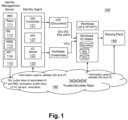
- a system 100 for a Virtual Function Identity (ID) Wallet (VFIDW) 150 for Virtual Functions (VFs) in a distributed and Service-Based Architecture (SBA) comprises and is characterized by: an Identity Management Server (IMS) 110, an Identity Agent 120 and a Trusted Bundle Repository 190.
- the IMS 110 manages and issues identities in a trust domain, and holds information about its identity agents and a workload 151 of a VF.
- the Identity Agent 120 proofs identities of the workload 151, calls the workload, and securely communicates with the IMS 110.
- VID Verifiable Identity Document
- VCs Verifiable Credentials
- VFIDW Virtual Function ID Wallet
- the Trusted Bundle Repository 190 contains a mapping of IDs associated to the VID 131 with all information (e.g.
- the VFIDW 150 with the Identity Agent 120 provides an identity presentation of the workload 151 to the Relying Party 160 to enable trust with the VF , by adding relevant attributes from the VFIDW 150 described in security policies that prove identity and correct instantiation of the workload 151 of the VF instance for.
- the Identity Agent 120 comprises: a VID Controller 121 of the Identity Agent 120 producing the Verifiable Identity Document (VID) 131, and a VC Issuer 122 of the Identity Agent 120 producing the Verifiable Credentials (VCs) 141, wherein the VC Issuer is a trusted party acting providing qualified attestation of attributes in the VFIDW 150
- the Identity Agent 120 comprises an attester 124 that provides attestation reports for identity agent software and for each workload 151 related to VF/VFC instances that are associated to Identity Agent 120 in a CIS Cluster Node; a repository 123 with policies and selector entries for the attestation of the workload 151 related to VF or VF components; and a Verifiable Identity Document (VID) generator 125 to produce the VID 131 by way of an Identity Management Server 110 and an external Certificate Authority (CA) 170.
- attester 124 that provides attestation reports for identity agent software and for each workload 151 related to VF/VFC instances that are associated to Identity Agent 120 in a CIS Cluster Node
- a repository 123 with policies and selector entries for the attestation of the workload 151 related to VF or VF components
- VID Verifiable Identity Document
- CA Certificate Authority
- the VFIDW 150 is paired with a workload 151 that is a virtualization container comprising an identity, and wherein each workload 151 of a VFC 211 includes a VFIDW 150 that provides said identity of the VF instance.
- the workload 151 of the VF instance is software that runs in a virtualization container, and the workload identity ensures that the VF is trustworthy.
- trust is established with micro-services in a zero-trust architecture using the VFIDW 150 as a trustable micro-service identity document issued by the micro-service
- the zero-trust architecture comprises a multiplicity of micro-services virtualized in containers that are individually trusted each by way of a separate VFIDW, wherein trust is established amongst micro-services using the VID 131 issued by the VFIDW 150 for a respective VF.
- a policy is defined by a service provider or an operator of a telecom network, whereby the Relying Party 160 receives an Identity of the Virtual Function (VF) from the VFIDW 150 with relevant information in accordance with the policy.
- VF Virtual Function
- the VFIDW 150 provides an Identity presentation of the VF to the Relying Party 160 with attributes such that the VC 131 is relevant to a context and a trust domain where these identities of the VF are used.
- a Virtual Function Identity (ID) Wallet (VFIDW) 150 is provided for Virtual Functions (VFs) in a distributed and service-based architecture (SBA).
- the VFIDW 150 contains identity information associated to a workload 151 of a VF instance of a VF including, the workload Identifier 161, a Verifiable Identity Document (VID) 131; and Verifiable Credentials (VC) 141 for the VF Instance comprising attributes as verifiable credentials for the VF comprising one among its name, its role, its report of attestation, its certification result, the identity of the orchestrator that instantiated the VF instance and the time of instantiation, and, associated key pairs 171 for the VF Instance, wherein information that are relevant to verify the VID and VC are stored in a Trusted Bundle Repository 190 available to a Relying Party 160.
- the VFIDW can provide to the Relying Party 160 an identity presentation by way of a VID 131 with the attributes as VCs 141 relevant to a domain where identities of the Virtual Function Instances are used, wherein the VFIDW 150 with the Identity Agent 120 provides an identity presentation to the Relying Party 160 to enable trust with the workload 151 of the VF, by adding relevant attributes from the VFIDW 150 described in security policies that prove identity and correct instantiation of the workload 151 of the VF instance.
- separate entries for identities of multiple VF instances of multiple workloads are contained each corresponding to a specific end-point, with attributes and parameters for each entry listing verifiable credentials needed in the VID 131 provided to the Relying Party connected to a respective end-point.
- the VFIDW includes a process to request to the Identity Agent 120, the VID 131 of a third party, other entity, or other VF requesting communication with the VF.
- the VFIDW is partitioned for each component of the VF in a Cluster Node, and an Identity Agent 120 contains a key management system (KMS) with an access control to the VFIDW.
- KMS key management system
- the VFIDW is included in a VF Instance (VFI) or VFC instance (VFCI) in a secure Hardware Mediated Execution Enclave (HMEE).
- the Identity Agent 120 is entirely included in the VF, or a VFC, in a secure Hardware Mediated Execution Enclave (HMEE), and the VFIDW contains only identity information of the VF, or the VFC managed by the Identity Agent 120.
- HMEE Hardware Mediated Execution Enclave
- a method for providing a Relying Party with a trust establishment of micro-services in a zero-trust architecture is provided using a Virtual Function Identity (ID) Wallet (VFIDW) 150 for Virtual Functions (VFs), characterized by: an Identity Management Server (IMS) 110 that manages and issues identities in a trust domain, and to hold information about its identity agents and a workload 151 of the VF; an Identity Agent 120 that proves identities of the workload 151 by way of attestation, calling the workload, and securely communicating with the IMS 110, produces a Verifiable Identity Document (VID) 131 and Verifiable Credentials (VC) 141 for the workload 151 of a VF instance of the VF, and creates a Virtual Function ID Wallet (VFIDW) 150 containing identity information from the Identifier, the VID 131, VCs 141 and key pairs 171 associated with the workload 151 of a VF instance of the VF ; and a Trusted Bundle Repository 190
- IMS Identity
- the VFIDW 150 with the Identity Agent 120 provides an identity presentation to the Relying Party 160 to enable trust with the VF for the workload 151, by adding relevant attributes in the VFIDW 150 described in security policies that prove identity and correct instantiation of the workload 151 of the VF instance.
- the term "Workload” can be broadly defined as executable software of a component virtualized in a cloud infrastructure.
- a workload can be executed in a Virtual machine in a hypervisor-based virtualization environment or in a OS-container in a OS-container-based virtualization, as examples.
- the workload can be the application software of the VF instance, or VF Component Instance. This is essentially the executable software in the VM or OS-Container.
- Virtualization Container can be broadly defined as a partition of a compute node that provides an isolated virtualized computation environment. Examples of virtualization container includes virtual machine and OS container.
- OS Container can be broadly defined as a virtualization container utilizing a shared Operating System (OS) kernel of its host. In some embodiments, the host providing the shared OS kernel can be a physical compute node or another virtualization container (e.g a VM).
- OS Operating System
- Container can be broadly defined as an executable binary that is to be run by the host OS under a set of restrictions that are preset using an application (e.g., Docker) that knows how to tell the OS which restrictions to apply.
- the typical restrictions are process-isolation related, security related, such as using SELinux protection, and system-resource related, for instance related to memory, disk, CPU, and networking.
- Applications can inform the OS which boundaries to apply to a process while it is running, and interact directly with the underlying OS, or kernel components.
- VF Virtual Function
- VA Virtual Application
- VNF Virtual Network Function
- VNFC VNF Components
- VNF can be broadly defined as a Virtual Network Function.
- a "VNF Component” is composed of VNF Components (VNFC). Each VNFC executes a part of the VNF application software. The connection of VNFCs internally of the VNF is done through internal Virtual links. The VNF provides external connection points that enable the connection of the VNF to other VNFs or PNFs (Physical Network Functions) in the network service.
- VNF Instance can be broadly defined as a deployment of the VNF in a virtualization Infrastructure. It uses virtualized resources (e.g. Compute, networking and storage).
- the VNF Instance is composed of VNF Components Instances (VNFCIs) that are instantiated on virtualization Containers (VC) that are Virtual Machines or OS containers.
- VNFCI could use also optional virtual storage.
- Each VNFCI executes a part of the VNF application software.
- the connection of VNFCls internally of the VNF Instance is done through internal Virtual links.
- the VNF Instance provides external connection points that enable the connection of the VNFI to other VNFIs or PNFs in the network service. External VLs are part of the Network Service, not of the VNF.
- VM Virtual Machine
- a VM can be broadly defined as a virtualized computation environment that behaves very much like a physical computer/server.
- a VM has all its elements (e.g., processor, memory/storage, interfaces/ports) of a physical computer/server, and is generated by a Hypervisor, which partitions the underlying physical resources and allocates them to VMs.
- Virtual Machines are capable of hosting a VNF Component (VNFC).
- VNFC VNF Component
- a Hypervisor may be implemented directly on the physical compute node (bare-metal) is termed a hypervisor type 1
- a Hypervisor be implemented on the Host-OS is termed a hypervisor type 2.
- Cloud Native VNF can be broadly defined as a service that performs network duties in software, as opposed to purpose-built hardware. With a VNF, the same software that is used on a hardware-based network appliance is migrated to a virtual machine (VM).
- the cloud native VNF complies to cloud native principles, comprising: resiliency (self-healing), scaling, composition from modular VNF components, location independence, state handling, using published API, working as micro-services preferably using OS-containers, supporting zero-touch installation/configuration/instantiation, and automated resource management
- Micro-service can be broadly defined as an atomic service module, delivered as an all-inclusive software package, that covers a specific and coherent functional scope, is consumable over network interfaces, is managed independently from other micro-services, and runs as a computing process, micro-services would ideally run in containers due to the lightweight characteristics of containers.
- VID means Verifiable Identifier Document, which contains information associated with a VID, and typically expresses verification methods, such as cryptographic keys, and services relevant to interactions with the document.
- a "VID Controller” entity is a person, organization, or autonomous software that has the capability to make changes to a VID document. This capability is typically asserted by the control of a set of cryptographic keys used by software acting on behalf of the controller.
- a system 100 for a Virtual Function ID Wallet (VFIDW) 150 for Virtual Functions (VF) in a distributed and service-based architecture is disclosed in accordance with one embodiment.
- the system 100 comprises an Identity Management Server (IMS) 110 communicatively coupled to an Identity Agent (IA) 120 that produces a Verifiable Identity Document (VID) 131 and Verifiable Credentials (VC) 141 directed to a Virtual Function ID Wallet (VFIDW) 150 associated with a particular Workload 151 (e.g. from a VF or multiple VFCs providing micro-services) which a Relying Party 180 can verify by way of the Trusted Bundles Repository 190.
- IMS Identity Management Server
- IA Identity Agent
- VID Verifiable Credentials
- VC Virtual Function ID Wallet
- the VID 131 is a document that includes an identifier ID, a key certificate and attributes.
- the VFIDW 150 with the IA 120 is able to provide an identity presentation relevant for a communicating party (such as Relying Party 180) to enable trust with this VF, by adding the relevant attributes described in security policies that prove the identity and the correct instantiation.
- an Identity Verifier can verify identity information from the Verifiable Identity Document (VID) 131 of the Relying Party 180 that communicates with the workload associated with a respective VF or VFC.
- the workload can be one application software component of the VF instance, or VF Component Instance.
- a Virtual Function (VF) may have more than one VID 131.
- a VID may be required for each end-point used for communication with external entities. The same relation applies to a Virtual Function Component contained in the VF that may have several identities.
- the IMS 110 manages and issues all identities in a trust domain.
- the IMS 110 uses the data store repository 111 to hold information about its agents and workloads 150.
- identity information consists of IDs, public keys of an associated Identity Agent and IMS, recovation; and, public keys of Verifiable Credential (VC) issuers, and revocation are stored in the trust bundle repository 190.
- the IMS 110 can be managed either via API 114 or commands, and possesses VID signing keys securely handled by the Key Management System 113.
- the IMS 110 also includes a boot strapping service 113 to verify the reports of attestation sent by the Identity Agent 110. These components are discussed ahead in further detail.
- the IMS 110 updates also the trust bundle repository 190 with the public key of Identity Agent 120 and public keys of qualified attestation of attributes providers.
- the Identity Agent 120 includes a VID controller 121 to produce the VID Document 131, and a Verifiable Credentials Issuer 122 to produce Verifiable Credentials (VC) 141.
- the VID Document 131 and Verifiable Credentials (VC) 141 are included within the Virtual Function ID Wallet (VFIDW) 150 and directed to verifying a workload.
- the Identity Agent 120 oversees the running workload 151 having its own VFIDW 150.
- the VID Document 131 includes Identifier, verifiable attributes as Verifiable Credentials (VC) 141 and credential information related to the VFIDW 150, and information (e.g.
- the Trusted Bundles Repository 190 public keys of issuers needed to verify the VID and VCs are stored in the Trusted Bundles Repository 190. Information used by the IA 120 to validate the VID 131 and VC 141 may be retrieved from the trust bundle repository 190.
- the Identity Agent 120 is included in the VFIDW 150 and is just one entity.
- the Trusted Bundles Repository 190 can include various registries, for example, but not limited to, a VID registry and a VC registry among other data sources.
- the VID registry can contain all public keys for verification of the VID, public keys of identity agent and Identity Management Server 110 and VC registry all public keys of Verifiable Credentials (VC) Issuers 122 for verification of the VCs.
- This Repository 190 may be a database, storage, ledger, or blockchain to maintain bindings between an identifier and an identity attribute, and/or maintain bindings between the credentials and the parties, people or organizations involved.
- the blockchain provides for an encrypted decentralized storage system as one component of a decentralized identity architecture of the system 100 for workloads of a VF intance encompassing the decentralized identity wallet (VFIDW 150) in accordance with one embodiment.
- the VC issuer 122 When the VC issuer 122 creates a verifiable credential, it contains information and parameters related to: who has issued (e.g., VID of the Issuer), to whom it is issued (e.g., Instance Identifier, attributes of the credential (e.g., Details of the credential being Issued), when it Issued (e.g., Date of issuance), Credential proof with Issuer signature that makes it tamper evident, and revocation details. Verifiable Credentials (VCs) allow people and organizations to issue statements on behalf of others. These statements are then verifiable even if the original issuer is no longer around.
- verifiable credentials represent statements made by an issuer
- verifiable credentials represent statements made by an issuer in a tamper-evident and privacy-respecting manner.
- the verifiable credential is a tamper-evident credential that has authorship that can be cryptographically verified.
- the Identity Agent 120 is informed of the workloads 150 it manages through the Identity Management Server 110 and stores this information in a repository 123, which may include use of registration entries for assigning IDs to nodes and workloads 150.
- the Identity Agent 120 serves the workload 151 API, and solves some related problems such as proofing the identity of workloads, calling the workload, and securely introducing itself to the IMS 110.
- the IA 120 runs on every node on which an identified workload 151 runs, and it requests VIDs from the IMS 110 and caches them until a workload 151 requests its VID.
- the IA 120 exposes the Workload API to workloads on node and attests the identity of workloads that call it, and ultimately provides the identified workloads 151 with their VIDs. In this arrangement, the Identity Agent 120 performs significant tasks, but does not require active management. Rather, it receives information about the trust domain and the workloads that may inquire it directly from the IMS 110.
- the Relying Party 160 is communicatively coupled to the Trusted Bundles Repository 190 and the Virtual Function ID Wallet (VFIDW) 150 for virtual functions; for instance, execution of workload A 151.
- the Relying Party 160 relies on public keys stored in the Trusted Bundles Repository 190 (e.g. stored in VID registry or VC registry) to verify the validity of VID and the validity of verifiable credential (VC) inside the VIDand establish the identity and status of a workload, role, or system or device.
- the public key of the CA may be included in the trust bundle repository. And, the distribution of such key can be accompished through the trust bundles repository 190. This allows the relying party 160 to ensure the integrity of services related to that workload 151.
- Zero trust is a framework that assumes a complex network's security is always at risk to external and internal threats.
- Zero trust principles establish a governance model for sharing context between security tools to protect users' connections, data and resources. With zero trust, all network traffic is logged and inspected, network controls and access are limited, and network resources are secured and verified.
- this zero trust framework there is no traditional network edge; networks can be local, in the cloud, or a combination or hybrid with resources anywhere as well as workers in any location.
- Edge computing is performance that takes place at or near the physical location of either the user or the source of the data. By placing computing services closer to these locations, with Virtual Function ID Wallet (VFIDW) 150 for virtual functions, users benefit from faster, more reliable services while companies benefit from the flexibility of hybrid cloud computing.
- VFIDW Virtual Function ID Wallet
- VFIDW Virtual Function ID Wallet
- VFIDW Virtual Function ID Wallet
- the VFIDW 150 is seen paired with a workload 151 denoting that it may pair with other workloads (B, C, D ).
- the Virtual Function ID Wallet 150 establishes trust in this new world of micro-services based architectures when considering sovereignty or private networks and other things where a micro-service, a Virtual Function (VF) as it's called in the 5G ecosystem and standards, reside.
- the virtual functions have identities which are treated in this ecosystem as an entity or a sovereign thing onto itself.
- Each VF instance will have identity and each VF component instance will have identity.
- each workload 151 of a virtualization container will have an identity. So it's almost like imagining a sovereign identity for the virtual function itself, and, additionally, it has a digital wallet 150. So each VF will have its digital wallet 150, and that digital wallet 150 provides the identity of the VF.
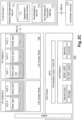
- FIGS 2A-2C are more detailed representations of the system 100 of FIG. 1A, and extend the concept of the VFIDW 150 with a workload of a virtual function to multiple workloads and multiple components constituting VF instances related to a workload in various configurations.
- FIG 2A illustrates an embodiment where the VF Identity Wallet is included in the VF instance (VFI) or VFC instance (VFCI), preferably in a secure execution environment such as HMEE.
- FIG 2B illustrates another embodiment wherein the VF ID Wallet is partitioned (e.g. VFIDW- C1, VFIDW- C2, VFIDW- C3 ...) for each component of VF, in the Cluster Node.
- the Identity agent also contains a key management system with an access control to the VF ID Wallet.
- FIG 2C illustrates another embodiment where the Identity Agent is entirely included in the VF or VFC, preferably in a secure execution environment such as HMEE.
- the ID Wallet contains only the information of the VF or VFC.
- the Identity Agent comprises a Repo 123, Attestor 124, and VID Generator 125.
- each Identity Agent in the CIS Cluster includes similar components with similar operations.
- Identity Agent 120 operates in CIS cluster node 128.
- VFIDW Virtual Function ID Wallet
- VFID Wallet (VFIDW) 150 contains all identity information of the VF. This includes the identifier 161 of the VF, attributes as verifiable credentials 141 for the VF (e.g. its name, its role, its report of attestation, its certification result, etc.), and associated key pairs 171.
- the VFIDW 150 may also contain, for each identity of the VF (corresponding to a specific end-point), parameters such as a default list of verifiable credentials that are needed in the VID provided to the relying party connected on this end-point.
- the VFID Wallet 150 can also include a process to generate the Certificate Signing Request for the verifiable Identity document to be presented to a third party (e.g., other entity, other VF, etc.) communicating with the VF.
- the VFID Wallet 150 may additionally include a process to request to the Identity Agent 120 the verification of Verifiable ID document 131 of the third party (e.g., other entity, other VF, etc.) willing to communicate, or communicating, with the VF. Access to the ID wallet is controlled to ensure that only an authorized party can access the content of the Wallet.
- the VF ID Wallet 150 is a hierarchical digital wallet including a partition for the VF instance comprising, but not limited to, i) Identifier 161 of the VF, ii) attributes as verifiable credentials 141 for the VF (e.g. its name, its role, its report of attestation, its certification result, etc.), and iii) and associated key pairs 171 (or just the certificate) for each external end-point of the VF.
- partitions for each VF component instance constituting the VF instance comprise, but are not limited to: i) Identifier 161 of the VFC, ii) attributes as verifiable credentials 141 for the VFC (e.g. its name, its role, its report of attestation, its certification result, etc.), and iii) associated key pairs 171 (or just the certificate) for each external end-point of the VFC.
- the Identity Management Server 110 includes the Bootstrapping Service 112 to verify the reports of attestation sent by the Identity Agent 120.
- the IMS 110 includes also the repository 111 containing i) information on each workload, ii) policies associated to each workload for the attestation, iii) attributes to be included as verifiable credentials in the Verifiable Identity Document, and iv) golden measurements related to each attestation selectors for the verification of the attestation report.
- the information on each workload can include the number and the type of end-points for the workload (e.g., internal virtual link or external virtual link) that will determine the number of identities needed for each workload. This information may be in an external repository and requested when they are needed.
- the repo 190 includes policies associated to each workload for the attestation, and may further include attestation selectors that are chosen by the service provider or Operator. Attestation selectors may include one or more of but not limited to these ones: a hash of the workload for integrity verification; the trust domain of the workload (namespace); the container ID/identifier where the workload is instantiated; the geo location; the identity of the orchestrator that instantiated the VF instance and/or the time of instantiation. These attestation selectors will be used by the attester to produce measurement and build the attestation report.
- the identity Management Server includes the key manager 111 and ID document signing 113 that will request the signed certificates to the relevant Certificate Authority 170.
- An interface IMS Certificate Authority (IMS-CA) interface may be used for his purpose.
- the IMS 110 includes a registration function for the respective VF/VFC and exposes an associated registration API to external entities (e.g. NFV orchestrator NFV-MANO entity).
- This registration function includes a VF identifiers generator. This registration of the VF is done at the time of instantiation of the VF and the corresponding VFCs.
- the IMS 110 exposes also an API to the Identity Agent and/or Identity wallet (see API 114 in FIG. 1 .) using the interface IMS-IA.
- the Identity Management Server 110 may be split between different servers.
- a server contains the bootstrapping service and the associated repository with selectors, policies and golden measurement, commonly named remote attestation server.
- a server provides the VF identifiers.
- a server signs the identity documents with the optional involvement of a Certificate Authority (CA) also named certificate management server.
- CA Certificate Authority
- the Identity Agent 120 comprises a repository 123, an attester 124 and a VID Generator 125.
- This Identity Agent 120 is instantiated in a Container Infrastructure Service (CIS) Instance of a CIS Cluster node 128. It may be implemented in the VF/VFC in another embodiment.
- the repository 123 includes the policies and entries (e.g. attestation selectors) for the attestation of VF and VF components associated with the workload and corresponding VFIDW.
- the attester 124 provides the attestation reports for the identity agent software, and does so for each software of the VNF/VNFC instances that are associated to this agent in the CIS Cluster Node.
- the attestor 124 may provide similar/additional functionality to the VC Issuer 122 as shown in FIG. 1 .
- the VID (Verifiable ID Document) generator 125 generates the signed Verifiable Identity Document with eventually the involvement of the external certificate authority 170, through a Certificate Signing Request (CSR) sent to the Identity Management Server 110 .
- the Identity Agent 120 exposes an API to the Identity Management Server 110 and to the VF and/or respective VFIDW-C (Identity wallet) 150. See API 127 in FIG. 1 .
- the VID Generator 125 may provide similar/additional functionality to the VID Controller 121 as shown in FIG. 1 for producing the Verifiable Identity Document (see VID 131 in FIG. 1 )
- the Verifiable Identity Document (VID) 131 is signed by an authority within the trust domain and is valid only if the verification of this signature is successful.
- the format of the VID generally contains: i) an identifier, ii) a public key or certificate, iii) optional verifiable attributes, and iv) a valid signature applying to the whole VID.
- the identifier may be in a format of an URI with identification of the scheme and trust domain of the Virtual Function, for example, "scheme://trust-domain-name/path" as defined by RFC 3986.
- the scheme used by the Identity Document 131 specifies the format, where the trust-domain-name is the trust domain of the Virtual Function, which is defined by the operator owner of the Virtual Function (VF) and its path is an unique identification of a given workload (e.g. Virtual function instance or VF component instance).
- a given workload e.g. Virtual function instance or VF component instance.
- An example of such an identifier is "my-scheme://operator.maintenance.com/2bfcc5c-45bd-453".
- VF virtual function
- VFIDW Virtual Function ID Wallet
- a Relying Party exists in a NFV-SBI domain and/or a Relying Party exists in the 3GPP-SBI domain.
- This is a use case for workload verification by way of a Virtual Function ID Wallet 150 exemplifying vertical trust. It ensures that the workload 151 of a virtual function (VF) instance instantiated at lower domain layers (e.g. NFV) is what it claims to be to the upper entity layers (e.g. 3GPP, etc).
- the VFIDW of the workload 151 of a virtual function instance receives an identifier 161 from a VNF Instance ID Generation 301 during the instantiation coming from the NFV platform relative to the workload 151 of a virtual function instance instantiation.
- component 301 is the ID generator, and it is included in the IMS 110 and transmitted to the IDAgent.
- the ID Agent transmits this ID to be included in the VFIDW.
- the Identity Agent 120 is part of the workload ID Wallet and receives the ID from the VNF instance ID generator 301 and VCs from different qualified attestation of attributes providers.
- the ID information and Verifiable Credentials 141 are stored in the digital wallet 150 as shown.
- the VCs could be trust sources for attributes of location 311, container ID 312, Security Domain 313, Integrity Attestation 314 or Run Time attestation 315 as shown in the NFV domain 310 for qualified attestation of attribute providers.
- some verifiable credentials come from the 3GPP domain that are stored in the digital wallet 150.
- these trust attributes may be one of a 3GPP NF name type 331, a 3GPP synonym 332, or a 3GPP role 333 as shown in the 3GPP domain for qualified attestation of attribute providers 330.
- the Relying Party here in each domain is able to receive the Identity of the virtual function (VF) from the VFIDW 150 with relevant information. And there could be additional information from the NFV domain, such as the attestation result, for example, needed by the 3GPP relying party.
- the 3GPP relying party relies on the provided attestation results in view of the VFIDW 150 to trust the Virtual Function associated with the workload 151.
- This reliance can be made dependent on a policy that establishes how the Identity presentation is presented. This policy can be defined by the service provider, or operator, in cases of telecom virtual network functions (VNFs).
- the relying party could also be part of a service based architecture (SBA).
- SBA service based architecture
- the identity presentation may depend on the SBA used to access the service provided. For example in case of 3GPP and NFV domains, the identity presentation will depend if a 3GPP network function access to the virtual function through the 3GPP-SBI or if a NFV-MANO entity (e.g. VNFM) access to the virtual function through the NFV-SBI
- a NFV-MANO entity e.g. VNFM
- the embodiment of system 300 resolves problems associated with the slow evolution of telecom and cloud services towards distributed architecture with a multiplicity of micro-services virtualized in containers, with no inherent trust between services. It provides for not only “Horizontal trust” between cloud services, but also “Vertical trust” needed to allow verification that a Virtual Function (VF) is really what it claims to be in the context where it is used, and with an insurance of the integrity and trustworthiness of the system where it is instantiated. This "Vertical trust” addresses anticipation on the issue of the identification of micro-services cross-layers in the telecom infrastructure. The vertical trust propagates from the bottom domain layer to the top application layer (e.g. see NFV Entity and 3GPP NF) across an orchestration layer.
- NFV Entity e.g. see NFV Entity and 3GPP NF
- the workload 151 is the software that is running in a virtualization container. It may be part of the VF instance or the VF instance itself, for example, if instantiated in a single virtualization container
- the VFs here are enabled with a strong identity in the sense there is knowledge that the VF has been verified with a fit and intended purpose.
- a running instance may have multiple identity presentations depending on the context this identity is used.
- the identity document (VID) of the VF is composed of an Identifier, the VF instance attributes (e.g., the name of the VF for each specific domain, the role of the VF for each specific domain, etc.) as verifiable credentials (VCs) a signed certificate with the public key for the communication.
- VCs verifiable credentials
- Creating identity for the virtual functions as seen here provides a lot of benefit.
- providing VF identity by way of a digital wallet 150 provides an important context for portability, and the ability to be run in a sovereign jurisdiction or cloud, for example.
- These VF ID wallets 150 support runnable VF instances in 5G and private network use cases.
- These virtual functions have an identity that is tied directly to the operator, or alternatively, the owner of the virtual function.
- FIG 4 illustrates a process for creating and using a VF ID Wallet (VFIDW) in a distributed and service-based architecture in accordance with one embodiment, though other architectures and zero-trust frameworks are contemplated.
- Step 450 corresponds to attestation of the Identity Agent and provisioning of an Identity document of the Identity Agent in accordance with one embodiment.
- One implementation of this step is shown as method 500 in FIGS 5A-5B .
- Step 460 corresponds to creating a VF Identity Wallet (VFIDW) in accordance with one embodiment.
- One implementation of this step is shown as method 600 in FIGS 6A-6E .
- step 470 corresponds to adding Verifiable Credentials in the VFIDW in accordance with one embodiment.
- One implementation of this step is shown as method 700 in FIG 7 .
- step 480 corresponds to using the VFIDW and interaction with a Third Party.
- One implementation of this step is shown as method 800 in FIG 8 .
- the components shown in FIGS 5-8 each include one or more hardware processors and hardware memory coupled to the one or more processors, wherein the memory includes computer instructions and data which when executed by the one or more processors causes them to perform the method steps or other operations disclosed. They may be connected over the network to other machines via a network communication device interface. In a networked deployment, they may operate in the capacity of a standalone mobile device, a client user machine in server-client user network environment, or as a peer machine in a peer-to-peer, or distributed, network environment.
- Components disclosed herein with hardware processors include, but are not limited, to Orchestrator 511, VM/CISM 512, NFV 513, Identity Agent 120, Identity Management System (IMS) 110, Certification Body Registrar 516, Certificate Authority (CA) 517, Trust Bundle 518, VC Issuer 701, and Third party 801. These components may include sub-components (VID Controller 121, VC Issuer 122, KMS 113, BS 112) also included a HW processor and memory with computer instructions and data.
- VFC 615 (and any relevant VNF, VNC, VM, VNFC, Workload), CIS Instance 613, VFIDW 150 may all operate in accordance with the principles described herein and execute as running firmware, software or applications on one or more hardware processors with memory in accordance with some embodiments.
- VC 141 and VID 131 information of a VFIDW 150 may be digitally stored in memory and retrieved from a component by way of a hardware processor.
- the VFIDW 150 executes by way of one or more hardware processors with hardware memory coupled to the one or more processors having computer instructions and data which when executed by the one or more processors causes them to perform operations of the VFIDW 150.
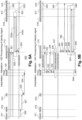
- FIGS 5A-5B depicts one implementation of a method 500 corresponding to step 450 of FIG 4 for attestation of the Identity Agent and provisioning of an Identity document of the Identity Agent in accordance with one embodiment.
- the method 500 is not limited to the steps shown and the order may vary according to various architecture configurations. When discussing the method 500, reference may be made to numbered components shown in previous figures.
- the method in one embodiment is enabled by way of an Orchestrator 511, a VM/CISM 512, a NFV 513, the Identity Agent 120, the Identity Management System (IMS) 110, a Certification Body Registrar 516 and a Certificate Authority (CA) 517.
- the Trust Bundle 518 is stored in the Trusted Bundles Repository (190 see FIG. 1 ).
- Identity Agent 120 is a sensitive application that requires to be implemented in a confidential computing environment.
- the Identity Agent 120 is a process preferably implemented in a Hardware Mediated Execution Enclave (HMEE) as defined in ETSI-NFV or Hardware-based trusted execution environment as defined in Confidential computing Consortium, also named secure enclave or confidential computing environment.
- HMEE Hardware Mediated Execution Enclave
- the identity agent 120 is first verified in integrity running on a system that has been verified as well, which establishes an attestation chain. For this attestation, the bootstrapping (see BS 112 in FIG. 1 ) provided by the confidential computing environment is used.
- the verification of the attestation is done in the Identity Management Server 110.
- a standardized protocol for attestation is used between these two entities. This attestation proves that the identity agent is correctly instantiated in a HMEE and that its integrity is correct.
- the Identity Agent 120 receives from the Identity Management Server 110 i) its VID, ii) the key pair, iii) trust bundles, and iv) identifiers.
- the VID may contain different verifiable credential such as a certification certificate with at least the level of approval delivered and signed by a certification body. This proves that the Identity Agent 120 and the identity wallet implementation (VFIDW 150) is compliant to some certification policies, for example, security policies.
- the Identity Management Server 110 may retrieve the certification as verifiable credential either in the identity agent package used for the instantiation of the Identity Agent 120 or using a request to the certification body registrar 516.
- the Identity Management Server 110 generates this VID and signs it with its private key or requests the signature to the Certificate Authority 517 using a Certificate Signing Request (CSR).
- CSR Certificate Signing Request
- Re ii the Key pair associated to the certificate included in the VID.
- Re iii) the trust bundles information includes the public keys of different issuers of verifiable attributes of the different trust domains and location of this repository. These trust bundles are used for the verification of the VIDs.
- Re iv) the Identifiers of the VF and VFC associated to this Identity agent are included if these are known at this step.
- the method step group 520 is directed to Registration of Identity Agent in the Identity Management Server.
- Step 521 corresponds to a registration request of Identity Agent.
- Step 522 corresponds to transmission of parameters policies for attestation and certification certificate signed by certification body if available in the package of Identity Agent.
- Step 523 is optional.
- Step 523a corresponds to a request signed certification certificate for this Identity Agent.
- the signed certification certificate is sent.
- step 524 all registration parameters in this identity management server repository are stored.
- the method step group 525 is directed to instantiation of the Identity Agent.
- the VF instantiates on request.
- a Container Infrastructure Service (CIS) instance instantiation occurs including the identity Agent.
- the CIS Instance integrity image is verified and launched.
- a configuration of parameters for attesting e.g. license Management Server Public Key is completed.
- FIG 5B is a continuation of method 500.
- the method step group 530 is directed to attestation of Identity Agent.
- a boot is requested.
- attestation is performed on request.
- a key pair is generated for attestation.
- transmission of public Key is performed.
- generation of (golden) measurement occurs.
- attestation on protocol-transmission of the quote by the Identity Agent and verification by Identity Management Server with the golden measurement is done.
- attestation of Identity Agent is deemed successful.
- the method step group 540 is directed to VID Provisioning of Identity Agent.
- a key pair is created for the Identity Agent.
- an Identifier for the Identity Agent is created.
- the ID and public key is stored in the trust bundle.
- the CSR for the Identity document of the Identity Agent is created, including the certification certificate as verifiable attribute and timestamping. Box 545 shows alternate approaches.
- the Identity Management server signs the Certificate with its own private key. Alternatively, for signature with external certificate authority, at step 547 a Certificate Signing Request for the Identity Document occurs, and at step 548 the signed VID for the Identity Agent is returned.
- the VID of the Identity Agent and trust bundles are transmitted.
- FIGS 6A-6E depicts one implementation of a method 600 corresponding to step 460 of FIG 4 for creating a VF Identity Wallet (VFIDW) in accordance with one embodiment.
- the method 600 is not limited to the steps shown and the order may vary according to various architecture configurations. When discussing the method 600, reference will be made to numbered components shown in previous figures.
- the method in one embodiment is enabled by way of an Orchestrator 511, a VM/CISM 512, a NFV 513, the Identity Agent 120, and the Identity Management System (IMS) 110.
- a secure timestamp generator 611 and secure location stamp generator 612 are included.
- the CIS instance 613 and the VFIDW 150 of VNC Instance are introduced.
- the VFC instance 615 is associated with the workload 151 (see previous figures).
- method 600 occurs when an instantiation of the VF is requested by the orchestrator. This step contains several sub-steps as shown in FIGS 6A-6E .
- FIG 6A depicts a method group 620 directed to registration of VF in the IMS 110, where all registration parameters (e.g. policies for attestation (list of selectors for attestation), number of identities for the VF and for each VFC of the VF) are stored in the repository of the Identity management server.
- policies for attestation list of selectors for attestation
- number of identities for the VF and for each VFC of the VF are stored in the repository of the Identity management server.
- an instantiation request of the VF is launched in the orchestrator 511.
- a registration request of VF is performed.
- transmission of parameters e.g., policies for attestation (attestation selectors) occurs. This includes number of identities for VF and for each components (VFC) of VF.
- all registration parameters are stored in the identity management server repository.
- FIG 6B is a continuation of method 600 and depicts a method group 625 directed to instantiation of each VFC of VF in a CIS cluster node.
- This method group includes the instantiation of the identity agent if this Identity agent has not been instantiated before in the CIS cluster node, the generation of Identifiers, transmission of all parameters to the Identity Agent with storage in Identity agent repository. An example implementation of this is shown in the following steps.
- a VF instantiation request occurs.
- a CIS instance is instantiated including the Identity Agent (see sequence for instantiation of Identity Agent).
- generation of Identifiers for VF and each VFC occurs.
- IDs and selectors for VF and each VFC and associated golden measurements are transmitted.
- IDs and selectors for VF and each VFC are transmitted.
- selectors, ID's, and golden measurements are stored in the Identity Agent repository.
- creation of the VFIDW with storage partitions for VF and each VFC occurs.
- a VFC instantiation request is performed.
- step 633 creation of a container and instantiation of the VFC in the container occurs.
- step 634 retrieval of attestation selectors for this VFC in the repository occurs.
- step 635a retrieval of attestation selectors for this VFC and associated golden measurements in the repository occurs.
- step 635b retrieval of attestation selectors for this VFC in the repository occurs.
- FIG 6C is a contuation of method 600 and depicts a method group 636 directed to measurements of each VFC for each attestation selector, where, after retrieval of selectors list, measurement for each selectors is done.
- the measurements are issued from trusted source (e.g., trusted locstamp generator, trusted location generator, etc.). Verification of the measurements against the golden measurements is performed either in the Identity Agent 120 in a first embodiment, or in the Identity management server 110 as a second embodiment. After verification of each measurement a verifiable credential is generated for this attribute. An example implementation of this is shown in the following steps.
- a measurement of VFC according to the selector is made inside the Identity Agent (e.g., integrity check, container ID).
- a retrieval of the location stamp of the infrastructure signed by the secure location stamp generator occurs at step 639.
- verification of the measurement against the golden measurement for the selector occurs.
- retrieval of the current timestamp using a standard protocol e.g. PTP
- creation of the corresponding Verifiable Credential signed with the Identity Agent private key occurs.
- attestation verification request for this VFC/selector occurs.
- step 645 verification of the measurement against the golden measurement for the selector is performed.
- step 646 retrieval of the current timestamp using a standard protocol (e.g. PTP) occurs.
- step 647 creation of the corresponding Verifiable Credential (VC) signed with the Identity Management Server private key occurs.
- step 648 the VC is transmitted, and at step 659, the VC is stored in the VFIDW 150 of the VFC.
- FIG 6D is a continuation of method 600 and depicts a method group 650 directed to an attestation result.
- the verifiable credential for attestation result is created, signed and stored in the VFIDW.
- the measurement and attestation result may be triggered at the end of instantiation and/or when VID is requested by the VFC (see first request of the next sub-step, generation of VID for the VFC, corresponding to 660 of FIG 6E ).
- An example implementation of this is shown in the following steps.
- step 651 all measurements successfully verified.
- an "attestation OK" VC is created and signed by private key of identity agent 120.
- an "attestation OK” VC is created and signed by private key of Identity Management Server 110.
- the "attestation OK” is transmitted.
- the "attestation OK” VC is stored in the VFIDW 150 of the VFC.
- FIG 6E is a continuation of method 600 and depicts a method group 660 directed to generation of VID for each identity of the VFC.
- the CSR of the VID is created with the Identifier, the public key and all Verifiable credentials corresponding to the list of attributes.
- the Certificate is signed either by Identity Agent in one embodiment or by the Identity management server in another embodiment. An example implementation is shown in the following steps.
- request of a VID for a specific endpoint of the VFC instance occurs.
- retrieval of an identifier in the Identity Agent repository occurs.
- generation of a key pair for this identity occurs.
- the Identifier and associated key pair are stored in the VFIDW 150 of the VFC.
- a default list of attributes needed for this endpoint in the Identity Agent repository is retrieved.
- retrieval of VC for the attributes occurs.
- Step 667 corresponds to creation of a Certificate signing request (CSR) for VID containing the Identifier, the verifiable credential for the attributes, the public key for this identifier and optionally the identity document of the Identity Agent.
- CSR Certificate signing request
- the VID is signed by Identity Agent, where at step 669, the VID is signed with Identity Agent's private key.
- it is signed by Identity Management Server, where at step 670 the CSR is transmitted, and the IMS signs the VID with Identity Management Server's private key, optionally involving the Certificate Authority (CA) at step 671.
- CA Certificate Authority
- the signed VID is transmitted, and at step 673 the VID for the VFC is sent.
- FIG 7 depicts one implementation of a method 700 corresponding to step 470 of FIG 4 for adding Verifiable Credentials in the VFIDW in accordance with one embodiment.
- the method 700 is not limited to the steps shown and the order may vary according to various architecture configurations. When discussing the method 700, reference will be made to numbered components shown in previous figures.
- a trusted VC issuer requests to add an attribute in a VFIDW for a specific end-point. This request is transmitted to the Identity Agent of the VF instance. After mutual authentication between the identity agent and the trusted VC issuer, the Verifiable credential for the attribute is transmitted to the Identity Agent, that verifies the verifiable credential using the trust bundles repository, after successful verification the VC for the attribute is stored in the VFIDW. The identity agent notifies the success of the operation to the VC Trusted issuer. An example implementation of this is shown in the following steps.
- a trusted VC issuer may be a virtual function in a domain (e.g. a Virtual Function in the 3GPP domain) the desires to add an attribute to a VFC instance for a specific end-point, attribute that will be requested when another virtual function of this domain will communicate with the VFC (see sequence interaction with a relying party).
- transmission of a request to add an attribute of the VNF instance end-point occurs.
- the request is sent to the Identity Agent 120.
- information of the trust VC issuer in the trust bundle is retrieved.
- a mutual authentication of the "trusted VC issuer" is requested.
- the VC is transmitted.
- verification of the VF with information retrieved in the trust bundles repository occurs.
- the VC is stored in the VCIDW
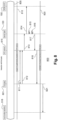
- FIG 8 depicts one implementation of a method 800 corresponding to step 480 of FIG 4 for using the VFIDW and interaction with a Third Party.
- the method 800 is not limited to the steps shown and the order may vary according to various architecture configurations.
- reference will be made to numbered components shown in previous figures.
- a third party may be a virtual function in a domain (e.g. a Virtual function in the 3GPP domain) and desires to communicate with a VFC instance on a specific end-point, and request a verifiable identity document of the VF instance.
- the third party requests some specific attributes (as Verifiable Credentials) to be added in the Identity document.
- the Identity document is a specific identity presentation of the VFC instance.
- the request is transmitted to the identity Agent that retrieves the VC of the attributes in the VFIDW and creates a new VID containing the VFC identifier, the public key and the VCs requested, and signs the document that is transmitted through the VFC instance to the third party.
- the third party verifies the document with the information (public keys and identifier) retrieved in the trust bundles repository. An example implementation of this is shown in the following steps.
- a third party may be a virtual function in a domain (e.g. a Virtual function in the 3GPP domain) that desires to communicate with a VFC instance on a specific end-point, and request a verifiable identity document of the VF instance.
- the third party requests some specific attributes (as Verifiable Credentials) to be added in the identity document.
- a specific Identity presentation to the VFC instance is requested.
- mutual authentication using the default identity document identifier + default attribute + Public key
- an Identity presentation with a list of attributes is requested to the VFC instance end-point.
- the request is sent to the Identity Agent.
- VFIDW VFIDW of the VFC instance.
- creation of the CSR of the corresponding VID occurs.
- the VID is signed.
- the signed VID is transmitted.
- the Identity Presentation by the Third Party is verified.
- the third party verifies the Identity Presentation (VID) received from the VFC instance using the VFC identifier, the public keys of the trusted VC issuer, of the Identity Agent retrieved in the trust bundles repository.
- an HSM and/or Key Management System can be used to service the generation of key pairs.
- the HSM or KMS ensures the key pairs are generated by a device that ensures good quality (cryptographically secure) of key pairs.
- a communication environment comprising an HSM or KMS may communicate with the VFIDW 150 for instance identification of the Virtual Function 151.
- the HSM may provide for cryptographic key management of the keys 319 for the NFV domain 310, and the keys 339 used in the 3GPP domain 320 of trust, as directed to the qualified attestation of attribute providers.
- VFIDW 150 Use of the VFIDW 150 is a unique approach to HSM operations for establishing trust with micro-services in a zero-trust architecture using a trustable identity document issued by a micro-service VFIDW 150 as proposed and described in the previous figures.
- the HSM or KMS is suitable for use with a VFIDW 150 for securely identifying a Virtual Function Instance.
- the HSM is a physical computing device that, among other capabilities, safeguards and manages digital keys, performs encryption and decryption functions for digital signatures, and provides for strong authentication and other cryptographic functions.
- the HSM records tamper evidence, such as visible signs of tampering or logging and alerting, and provides for tamper responsiveness such as deleting keys upon tamper detection.
- the HSM 10 contains one or more secure cryptoprocessor and sensor chips to prevent tampering and bus probing, or a combination of chips in a module that is protected by the tamper evident, tamper resistant, or tamper responsive packaging.
- the HSM comprises one or more processors and memory coupled to the one or more processors, wherein the memory includes computer instructions and data which when executed by the one or more processors causes the one or more processors to perform its operational steps.
Landscapes
- Engineering & Computer Science (AREA)
- Computer Security & Cryptography (AREA)
- Computer Networks & Wireless Communication (AREA)
- Signal Processing (AREA)
- Computer Hardware Design (AREA)
- Computing Systems (AREA)
- General Engineering & Computer Science (AREA)
- Multi Processors (AREA)
- Mobile Radio Communication Systems (AREA)
Abstract
Provided is a Virtual Function ID Wallet (VFIDW) 150 containing a Verifiable Identity Document (VID) 131, an Identifier 161, and Verifiable Credentials (VC) 141 and keys pairs 171 associated with a workload 151 of a Virtual Function (VF) instance of a VF to be executed and trusted. The VFIDW 150 along with an Identity Agent 120 provide an identity presentation by way of a VID presentation to a Relying Party 160 to enable trust with the VF for the workload 151, by adding relevant attributes from the VFIDW 150 described in security policies that prove identity and correct instantiation of the workload 151 of the VF instance. Other embodiments disclosed.
Description
- The present invention relates generally to evolution of distributed and service-based architectures in telecommunications networks and in the cloud, and more particularly, to zero trust architecture implementations dealing with workload identities and container trust issues.
- As organizations drive digital transformation efforts to scale with increased connectivity for 5G, and through increased deployment of Internet of Things (IoT) solutions, they realize current approaches to managing and securing devices must be adapted to distributed and new environments. The telecommunications and cloud services are evolving towards distributed and service-based architecture with collaboration of centralized core and distributed edges, with a multiplicity of micro-services virtualized in containers, with no inherent trust between services.
- Meanwhile there is a migration of services from on premise to public cloud multi-tenant infrastructure, shared by several service providers that do not trust each other. This new configuration will bring high cybersecurity challenges, requiring a zero-trust architecture in a distributed virtualized environment. A Zero Trust Architecture helps agencies build zero trust principles into industrial and enterprise infrastructure and workflows. Zero trust is an approach to cybersecurity that goes beyond trust but verify, and treats all networks and traffic as potential threats.
- One of the essential assets used to ensure zero-trust architecture and secure communication between Virtual Function instances are standardized trustworthy workload identities. A workload is a running instance of an application. Workload identities are how workloads trust and get trusted by each other. Workload identities are nonhuman identities that require authentication through an identity provider within a device, such as applications, services, containers, security devices, and data backup services. Workloads need to communicate with other workloads to function and, in doing so, need a mechanism to prove their identity to others. At the same time, they often need to be able to validate the identity of callers. Like user identities, these workload identities can be both powerful and vulnerable. And, as companies increase their cloud presence, this workload identity population continues to grow. And due to unique characteristics of workload identities, it's much more difficult to manage than companies' user population.
- One way for workloads to identify themselves is with a shared secret. This occurs when configuring a workload to use a secret such as an API token, key or username and password as part of the call. The workload serving the request is then required to look up the token in some way to ensure that it's authorized to perform the operation being carried out in the request. That is, at this time, identities of the workload may be generated automatically by the infrastructure and a key pair, comprising a public key and private key, is associated to the Virtual Function instance. However, certain limitations exist. Bad actors in control of a compromised secret to replay it and impersonate a workload. Once in possession of that secret, it's possible to use that secret anywhere to which there is network access. The use of the secret is unbounded. It's harder to rotate secrets like this as it requires updates to the client and server, where the secret is shared. However, this is difficult to do at scale and is accordingly done infrequently.
- However, a means of provisioning and handling identities as well as a system to control the scope at which the identifiers is valid are still at issue. Accordingly, a need for better management and integration of digital identities for workloads remains..
- Briefly, Self-sovereign identities (SSI) are digital identities that are managed in a decentralized manner. The SSI technology allows users to self-manage their digital identities without depending on third-party providers to store and centrally manage the data. In the domain of identification of person or legal entity, self-sovereign identities (SSI) in conjunction with Digital ID wallet technologies allows citizens and businesses to benefit from the availability of highly secure and trustworthy digital identity solutions. They can be used across the EU, with different secure and trustable attributes that have been issued by trusted parties, and enable the holder of the wallet to control its identity and the information revealed during the registration to digital services.
- However, this kind of control of digital identity offered by SSI and Digital ID Wallets are applicable to persons and humans, but not for Virtual Function instances and software. Accordingly, provided herein is a method and system for a Virtual Function ID Wallet that combines aspects of the machine identity management technologies with aspects of user identity management principles utilized in Digital Wallet technologies. The inventive Virtual Function ID Wallet disclosed herein combines the technology for identification of Virtual Function instances with the technologies used for identification of persons and businesses. It is applicable to the context of elDAS2 regulation, such as the Self-Sovereign Identity, and EU Digital ID wallet, to obtain a standardized trustworthy digital identity solution for Virtual Function instance and controllable by the Virtual Function ID wallet.
- In some embodiments, a
system 100 for a Virtual Function Identity (ID) Wallet (VFIDW) 150 for Virtual Functions (VFs) in a distributed and Service-Based Architecture (SBA) is provided. Thesystem 100 comprises and is characterized by: an Identity Management Server (IMS) 110, anIdentity Agent 120 and aTrusted Bundle Repository 190. The IMS 110 manages and issues identities in a trust domain, and holds information about its identity agents and aworkload 151 of a VF. TheIdentity Agent 120 proofs identities of theworkload 151, calls the workload, and securely communicates with the IMS 110. It produces a Verifiable Identity Document (VID) 131 and Verifiable Credentials (VCs) 141 for theworkload 151 of a VF instance of the VF. It manages, and can create, a Virtual Function ID Wallet (VFIDW) 150 containing identity information from anIdentifier 161, theVID 131,VCs 141 andkey pairs 171 associated with theworkload 151 of a VF instance of the VF. The TrustedBundle Repository 190 contains a mapping of IDs associated to theVID 131 with all information (e.g. public keys) associated to the VID 131 and VC 141 from which the Relying Party 160 communicatively coupled to TrustedBundle Repository 190 verifies theworkload 151 from theVID 131 and VC 141 to trust execution of theworkload 151. The VFIDW 150 with theIdentity Agent 120 provides an identity presentation of theworkload 151 to the Relying Party 160 to enable trust with the VF , by adding relevant attributes from the VFIDW 150 described in security policies that prove identity and correct instantiation of theworkload 151 of the VF instance for. - In some embodiments, the
Identity Agent 120 comprises: aVID Controller 121 of theIdentity Agent 120 producing the Verifiable Identity Document (VID) 131, and aVC Issuer 122 of theIdentity Agent 120 producing the Verifiable Credentials (VCs) 141, wherein the VC Issuer is a trusted party acting providing qualified attestation of attributes in the VFIDW 150 - In some embodiments, the
Identity Agent 120 comprises anattester 124 that provides attestation reports for identity agent software and for eachworkload 151 related to VF/VFC instances that are associated toIdentity Agent 120 in a CIS Cluster Node; arepository 123 with policies and selector entries for the attestation of theworkload 151 related to VF or VF components; and a Verifiable Identity Document (VID)generator 125 to produce theVID 131 by way of anIdentity Management Server 110 and an external Certificate Authority (CA) 170. - In some embodiments, the VFIDW 150 is paired with a
workload 151 that is a virtualization container comprising an identity, and wherein eachworkload 151 of aVFC 211 includes a VFIDW 150 that provides said identity of the VF instance. In some embodiments, theworkload 151 of the VF instanceis software that runs in a virtualization container, and the workload identity ensures that the VF is trustworthy. - In some embodiments, trust is established with micro-services in a zero-trust architecture using the VFIDW 150 as a trustable micro-service identity document issued by the micro-service, and the zero-trust architecture comprises a multiplicity of micro-services virtualized in containers that are individually trusted each by way of a separate VFIDW, wherein trust is established amongst micro-services using the VID 131 issued by the VFIDW 150 for a respective VF.
- In some embodiments, a policy is defined by a service provider or an operator of a telecom network, whereby the Relying Party 160 receives an Identity of the Virtual Function (VF) from the VFIDW 150 with relevant information in accordance with the policy.
- In some embodiments, the VFIDW 150 provides an Identity presentation of the VF to the Relying Party 160 with attributes such that the VC 131 is relevant to a context and a trust domain where these identities of the VF are used.
- In some embodiments, a Virtual Function Identity (ID) Wallet (VFIDW) 150 is provided for Virtual Functions (VFs) in a distributed and service-based architecture (SBA). The VFIDW 150 contains identity information associated to a
workload 151 of a VF instance of a VF including, theworkload Identifier 161, a Verifiable Identity Document (VID) 131; and Verifiable Credentials (VC) 141 for the VF Instance comprising attributes as verifiable credentials for the VF comprising one among its name, its role, its report of attestation, its certification result, the identity of the orchestrator that instantiated the VF instance and the time of instantiation, and, associatedkey pairs 171 for the VF Instance, wherein information that are relevant to verify the VID and VC are stored in a TrustedBundle Repository 190 available to a Relying Party 160. The VFIDW can provide to the Relying Party 160 an identity presentation by way of aVID 131 with the attributes asVCs 141 relevant to a domain where identities of the Virtual Function Instances are used, wherein the VFIDW 150 with theIdentity Agent 120 provides an identity presentation to the Relying Party 160 to enable trust with theworkload 151 of the VF, by adding relevant attributes from the VFIDW 150 described in security policies that prove identity and correct instantiation of theworkload 151 of the VF instance. - In some embodiments, separate entries for identities of multiple VF instances of multiple workloads are contained each corresponding to a specific end-point, with attributes and parameters for each entry listing verifiable credentials needed in the
VID 131 provided to the Relying Party connected to a respective end-point. - In some embodiments, the VFIDW includes a process to request to the
Identity Agent 120, the VID 131 of a third party, other entity, or other VF requesting communication with the VF. In other embodiments the VFIDW is partitioned for each component of the VF in a Cluster Node, and anIdentity Agent 120 contains a key management system (KMS) with an access control to the VFIDW. In other embodiments, the VFIDW is included in a VF Instance (VFI) or VFC instance (VFCI) in a secure Hardware Mediated Execution Enclave (HMEE). - In some embodiments, the
Identity Agent 120 is entirely included in the VF, or a VFC, in a secure Hardware Mediated Execution Enclave (HMEE), and the VFIDW contains only identity information of the VF, or the VFC managed by theIdentity Agent 120. - In some embodiments, a method for providing a Relying Party with a trust establishment of micro-services in a zero-trust architecture is provided using a Virtual Function Identity (ID) Wallet (VFIDW) 150 for Virtual Functions (VFs), characterized by: an Identity Management Server (IMS) 110 that manages and issues identities in a trust domain, and to hold information about its identity agents and a
workload 151 of the VF; anIdentity Agent 120 that proves identities of theworkload 151 by way of attestation, calling the workload, and securely communicating with theIMS 110, produces a Verifiable Identity Document (VID) 131 and Verifiable Credentials (VC) 141 for theworkload 151 of a VF instance of the VF, and creates a Virtual Function ID Wallet (VFIDW) 150 containing identity information from the Identifier, theVID 131,VCs 141 andkey pairs 171 associated with theworkload 151 of a VF instance of the VF ; and a TrustedBundle Repository 190 containing information that are relevant for verifying theVID 131 and VC 141 from which a Relying Party 160 communicatively coupled to TrustedBundle Repository 190 verifies theworkload 151 from its associatedVID 131 and VC 141 to trust execution of theworkload 151. - In some embodiments, the VFIDW 150 with the
Identity Agent 120 provides an identity presentation to the Relying Party 160 to enable trust with the VF for theworkload 151, by adding relevant attributes in the VFIDW 150 described in security policies that prove identity and correct instantiation of theworkload 151 of the VF instance. - The accompanying drawings, which are incorporated in and constitute a part of this description, illustrate embodiments consistent with the invention and, together with the description, serve to explain the principles of the invention.
-
FIG. 1 depicts a system comprising a digital identity wallet and workload for virtual function in a distributed and service-based architecture in accordance with one embodiment; -
FIG 2A illustrates an embodiment where the VF ID Wallet is partitioned; -
FIG 2B illustrates an embodiment where the VF Identity Wallet is included in a VF instance (VFI) or VFC instance (VFCI); -
FIG 2C illustrates an embodiment where the Identity Agent is entirely included in the VF or VFC and the VF ID Wallet contains information of the VF or VFC; -
FIG. 3 depict a system for Verifiable Identity Document (VID) presentation of verifiable credentials in a 3GPP domain and NFV domain in accordance with one embodiment; -
FIG 4 illustrates a process for creating and using a VF ID Wallet in a distributed and service-based architecture in accordance with one embodiment; -
FIGS 5A-5B depicts a method of the process ofFIG 4 for attestation of the Identity Agent, and provisioning of an Identity document of the Identity Agent in accordance with one embodiment; -
FIGS 6A-6E depicts a method of the process ofFIG 4 for creating a VF Identity Wallet (VFIDW) in accordance with one embodiment; -
FIG 7 depicts a method of the process ofFIG 4 for adding Verifiable Credentials in the VFIDW in accordance with one embodiment; and -
FIG 8 depicts a method of the process ofFIG 4 for using the VFIDW and interaction with a Third Party. - Specific embodiments in this invention have been shown by way of example in the foregoing drawings and are hereinafter described in detail. The figures and written description are not intended to limit the scope of the inventive concepts in any manner. Rather, they are provided to illustrate the inventive concepts to a person skilled in the art by reference to particular embodiments.
- Reference will now be made in detail to exemplary embodiments, examples of which are illustrated in the accompanying drawings. The following description refers to the accompanying drawings in which the same numbers in different drawings represent the same or similar elements unless otherwise represented. The implementations set forth in the following description of exemplary embodiments do not represent all implementations consistent with the invention. Instead, they are merely examples of apparatuses and methods consistent with aspects related to the invention as recited in the appended claims.
- The term "Workload" can be broadly defined as executable software of a component virtualized in a cloud infrastructure. A workload can be executed in a Virtual machine in a hypervisor-based virtualization environment or in a OS-container in a OS-container-based virtualization, as examples. The workload can be the application software of the VF instance, or VF Component Instance. This is essentially the executable software in the VM or OS-Container.
- The term "Virtualization Container" (VC) can be broadly defined as a partition of a compute node that provides an isolated virtualized computation environment. Examples of virtualization container includes virtual machine and OS container. The term "OS Container" can be broadly defined as a virtualization container utilizing a shared Operating System (OS) kernel of its host. In some embodiments, the host providing the shared OS kernel can be a physical compute node or another virtualization container (e.g a VM).
- The term "Container" can be broadly defined as an executable binary that is to be run by the host OS under a set of restrictions that are preset using an application (e.g., Docker) that knows how to tell the OS which restrictions to apply. The typical restrictions are process-isolation related, security related, such as using SELinux protection, and system-resource related, for instance related to memory, disk, CPU, and networking. Applications can inform the OS which boundaries to apply to a process while it is running, and interact directly with the underlying OS, or kernel components.
- The term "Virtual Function" (VF) or "Virtual Application" (VA) can be broadly defines as a function designed to be deployed on a virtualized infrastructure. Depending on the virtualization technology used the virtual function/application could be deployed (i.e. instantiated) in Virtual Machines (VM) for hypervisor-based virtualization or in OS-Container for OS-Container-based virtualization. If the virtual function is a network function of a telecom service managed by a Network Function Virtualization (NFV) system, the VA is a VNF (Virtual Network Function). AVNF is one type of VA. AVNF is composed of VNF Components (VNFC).
- The term "VNF" can be broadly defined as a Virtual Network Function. A "VNF Component" is composed of VNF Components (VNFC). Each VNFC executes a part of the VNF application software. The connection of VNFCs internally of the VNF is done through internal Virtual links. The VNF provides external connection points that enable the connection of the VNF to other VNFs or PNFs (Physical Network Functions) in the network service.
- The term "VNF Instance" can be broadly defined as a deployment of the VNF in a virtualization Infrastructure. It uses virtualized resources (e.g. Compute, networking and storage). The VNF Instance is composed of VNF Components Instances (VNFCIs) that are instantiated on virtualization Containers (VC) that are Virtual Machines or OS containers. The VNFCI could use also optional virtual storage. Each VNFCI executes a part of the VNF application software. The connection of VNFCls internally of the VNF Instance is done through internal Virtual links. The VNF Instance provides external connection points that enable the connection of the VNFI to other VNFIs or PNFs in the network service. External VLs are part of the Network Service, not of the VNF.
- The term "Virtual Machine" (VM) can be broadly defined as a virtualized computation environment that behaves very much like a physical computer/server. In some embodiments, a VM has all its elements (e.g., processor, memory/storage, interfaces/ports) of a physical computer/server, and is generated by a Hypervisor, which partitions the underlying physical resources and allocates them to VMs. Virtual Machines are capable of hosting a VNF Component (VNFC). In one arrangement, a Hypervisor may be implemented directly on the physical compute node (bare-metal) is termed a
hypervisor type 1, and a Hypervisor be implemented on the Host-OS is termed ahypervisor type 2. - The term "Cloud Native VNF" can be broadly defined as a service that performs network duties in software, as opposed to purpose-built hardware. With a VNF, the same software that is used on a hardware-based network appliance is migrated to a virtual machine (VM). The cloud native VNF complies to cloud native principles, comprising: resiliency (self-healing), scaling, composition from modular VNF components, location independence, state handling, using published API, working as micro-services preferably using OS-containers, supporting zero-touch installation/configuration/instantiation, and automated resource management
- The term "Micro-service" can be broadly defined as an atomic service module, delivered as an all-inclusive software package, that covers a specific and coherent functional scope, is consumable over network interfaces, is managed independently from other micro-services, and runs as a computing process, micro-services would ideally run in containers due to the lightweight characteristics of containers.
- The term "VID" means Verifiable Identifier Document, which contains information associated with a VID, and typically expresses verification methods, such as cryptographic keys, and services relevant to interactions with the document. A "VID Controller" entity is a person, organization, or autonomous software that has the capability to make changes to a VID document. This capability is typically asserted by the control of a set of cryptographic keys used by software acting on behalf of the controller.
- Referring to
FIG. 1 asystem 100 for a Virtual Function ID Wallet (VFIDW) 150 for Virtual Functions (VF) in a distributed and service-based architecture is disclosed in accordance with one embodiment. Thesystem 100 comprises an Identity Management Server (IMS) 110 communicatively coupled to an Identity Agent (IA) 120 that produces a Verifiable Identity Document (VID) 131 and Verifiable Credentials (VC) 141 directed to a Virtual Function ID Wallet (VFIDW) 150 associated with a particular Workload 151 (e.g. from a VF or multiple VFCs providing micro-services) which a RelyingParty 180 can verify by way of the TrustedBundles Repository 190. TheVID 131 is a document that includes an identifier ID, a key certificate and attributes. TheVFIDW 150 with theIA 120 is able to provide an identity presentation relevant for a communicating party (such as Relying Party 180) to enable trust with this VF, by adding the relevant attributes described in security policies that prove the identity and the correct instantiation. - By way of the workload ID wallet 150 (also referred to as a Virtual Function ID Wallet - VFIDW) and
trust bundles repository 190 , an Identity Verifier, or service therefrom, can verify identity information from the Verifiable Identity Document (VID) 131 of the RelyingParty 180 that communicates with the workload associated with a respective VF or VFC. Recall, the workload can be one application software component of the VF instance, or VF Component Instance. Also, a Virtual Function (VF) may have more than oneVID 131. As an example, a VID may be required for each end-point used for communication with external entities. The same relation applies to a Virtual Function Component contained in the VF that may have several identities. - The
IMS 110 manages and issues all identities in a trust domain. TheIMS 110 uses thedata store repository 111 to hold information about its agents andworkloads 150. For example, such identity information consists of IDs, public keys of an associated Identity Agent and IMS, recovation; and, public keys of Verifiable Credential (VC) issuers, and revocation are stored in thetrust bundle repository 190. TheIMS 110 can be managed either viaAPI 114 or commands, and possesses VID signing keys securely handled by theKey Management System 113. TheIMS 110 also includes aboot strapping service 113 to verify the reports of attestation sent by theIdentity Agent 110. These components are discussed ahead in further detail. In some embodiments, theIMS 110 updates also thetrust bundle repository 190 with the public key ofIdentity Agent 120 and public keys of qualified attestation of attributes providers. - The
Identity Agent 120 includes aVID controller 121 to produce theVID Document 131, and aVerifiable Credentials Issuer 122 to produce Verifiable Credentials (VC) 141. TheVID Document 131 and Verifiable Credentials (VC) 141 are included within the Virtual Function ID Wallet (VFIDW) 150 and directed to verifying a workload. Here, theIdentity Agent 120 oversees the runningworkload 151 having itsown VFIDW 150. TheVID Document 131 includes Identifier, verifiable attributes as Verifiable Credentials (VC) 141 and credential information related to theVFIDW 150, and information (e.g. public keys of issuers) needed to verify the VID and VCs are stored in theTrusted Bundles Repository 190. Information used by theIA 120 to validate theVID 131 andVC 141 may be retrieved from thetrust bundle repository 190. In some embodiments, theIdentity Agent 120 is included in theVFIDW 150 and is just one entity. - The
Trusted Bundles Repository 190 can include various registries, for example, but not limited to, a VID registry and a VC registry among other data sources. The VID registry can contain all public keys for verification of the VID, public keys of identity agent andIdentity Management Server 110 and VC registry all public keys of Verifiable Credentials (VC)Issuers 122 for verification of the VCs. ThisRepository 190 may be a database, storage, ledger, or blockchain to maintain bindings between an identifier and an identity attribute, and/or maintain bindings between the credentials and the parties, people or organizations involved. The blockchain provides for an encrypted decentralized storage system as one component of a decentralized identity architecture of thesystem 100 for workloads of a VF intance encompassing the decentralized identity wallet (VFIDW 150) in accordance with one embodiment. - When the
VC issuer 122 creates a verifiable credential, it contains information and parameters related to: who has issued (e.g., VID of the Issuer), to whom it is issued (e.g., Instance Identifier, attributes of the credential (e.g., Details of the credential being Issued), when it Issued (e.g., Date of issuance), Credential proof with Issuer signature that makes it tamper evident, and revocation details. Verifiable Credentials (VCs) allow people and organizations to issue statements on behalf of others. These statements are then verifiable even if the original issuer is no longer around. Whereas credentials represent statements made by an issuer, verifiable credentials represent statements made by an issuer in a tamper-evident and privacy-respecting manner. The verifiable credential is a tamper-evident credential that has authorship that can be cryptographically verified. - The
Identity Agent 120 is informed of theworkloads 150 it manages through theIdentity Management Server 110 and stores this information in arepository 123, which may include use of registration entries for assigning IDs to nodes andworkloads 150. TheIdentity Agent 120 serves theworkload 151 API, and solves some related problems such as proofing the identity of workloads, calling the workload, and securely introducing itself to theIMS 110. TheIA 120 runs on every node on which an identifiedworkload 151 runs, and it requests VIDs from theIMS 110 and caches them until aworkload 151 requests its VID. TheIA 120 exposes the Workload API to workloads on node and attests the identity of workloads that call it, and ultimately provides the identifiedworkloads 151 with their VIDs. In this arrangement, theIdentity Agent 120 performs significant tasks, but does not require active management. Rather, it receives information about the trust domain and the workloads that may inquire it directly from theIMS 110. - The Relying Party 160 is communicatively coupled to the
Trusted Bundles Repository 190 and the Virtual Function ID Wallet (VFIDW) 150 for virtual functions; for instance, execution ofworkload A 151. The Relying Party 160 relies on public keys stored in the Trusted Bundles Repository 190 (e.g. stored in VID registry or VC registry) to verify the validity of VID and the validity of verifiable credential (VC) inside the VIDand establish the identity and status of a workload, role, or system or device. The public key of the CA may be included in the trust bundle repository. And, the distribution of such key can be accompished through thetrust bundles repository 190. This allows the relying party 160 to ensure the integrity of services related to thatworkload 151. - Zero trust is a framework that assumes a complex network's security is always at risk to external and internal threats. Zero trust principles establish a governance model for sharing context between security tools to protect users' connections, data and resources. With zero trust, all network traffic is logged and inspected, network controls and access are limited, and network resources are secured and verified. In this zero trust framework, there is no traditional network edge; networks can be local, in the cloud, or a combination or hybrid with resources anywhere as well as workers in any location. Edge computing is performance that takes place at or near the physical location of either the user or the source of the data. By placing computing services closer to these locations, with Virtual Function ID Wallet (VFIDW) 150 for virtual functions, users benefit from faster, more reliable services while companies benefit from the flexibility of hybrid cloud computing.
- By way of the zero trust framework of
system 100, a multiplicity of micro-services virtualized in containers can be individually trusted by way of the Virtual Function ID Wallet (VFIDW) 150, which is applicable to cloud services and infrastructures, in the context of core network for telecom or any other services delivered in the cloud (e.g. sovereign cloud). Here theVFIDW 150 is seen paired with aworkload 151 denoting that it may pair with other workloads (B, C, D .....). The VirtualFunction ID Wallet 150 establishes trust in this new world of micro-services based architectures when considering sovereignty or private networks and other things where a micro-service, a Virtual Function (VF) as it's called in the 5G ecosystem and standards, reside. The virtual functions (VFs) have identities which are treated in this ecosystem as an entity or a sovereign thing onto itself. Each VF instance will have identity and each VF component instance will have identity. And, eachworkload 151 of a virtualization container will have an identity. So it's almost like imagining a sovereign identity for the virtual function itself, and, additionally, it has adigital wallet 150. So each VF will have itsdigital wallet 150, and thatdigital wallet 150 provides the identity of the VF. -
FIGS 2A-2C are more detailed representations of thesystem 100 of FIG. 1A, and extend the concept of theVFIDW 150 with a workload of a virtual function to multiple workloads and multiple components constituting VF instances related to a workload in various configurations.FIG 2A illustrates an embodiment where the VF Identity Wallet is included in the VF instance (VFI) or VFC instance (VFCI), preferably in a secure execution environment such as HMEE.FIG 2B illustrates another embodiment wherein the VF ID Wallet is partitioned (e.g. VFIDW- C1, VFIDW- C2, VFIDW- C3 ...) for each component of VF, in the Cluster Node. In this embodiment, the Identity agent also contains a key management system with an access control to the VF ID Wallet.FIG 2C illustrates another embodiment where the Identity Agent is entirely included in the VF or VFC, preferably in a secure execution environment such as HMEE. In this embodiment, the ID Wallet contains only the information of the VF or VFC. For each ofFIGS 2A-2C , the Identity Agent comprises aRepo 123,Attestor 124, andVID Generator 125. And, each Identity Agent in the CIS Cluster includes similar components with similar operations. For example,Identity Agent 120 operates inCIS cluster node 128. - Here, by way of the system architectures shown, trust can be established between, and across, micro-services (e.g. workloads) using a trustable micro-service identity document issued by the micro-service identity wallet; namely, the Virtual Function ID Wallet (VFIDW) 150, which provides for trustworthy and multi-domain digital identification of the Virtual Function (VF) instances in a zero trust architecture. In this zero trust architecture all users, devices and machines, whether in or outside the organization's network, can be authenticated, authorized, and continuously validated before being granted access, or maintaining access, to applications, workloads and data.
- In all embodiments shown in
FIGS 2A-2C , VFID Wallet (VFIDW) 150 contains all identity information of the VF. This includes theidentifier 161 of the VF, attributes asverifiable credentials 141 for the VF (e.g. its name, its role, its report of attestation, its certification result, etc.), and associated key pairs 171. TheVFIDW 150 may also contain, for each identity of the VF (corresponding to a specific end-point), parameters such as a default list of verifiable credentials that are needed in the VID provided to the relying party connected on this end-point. TheVFID Wallet 150 can also include a process to generate the Certificate Signing Request for the verifiable Identity document to be presented to a third party (e.g., other entity, other VF, etc.) communicating with the VF. TheVFID Wallet 150 may additionally include a process to request to theIdentity Agent 120 the verification ofVerifiable ID document 131 of the third party (e.g., other entity, other VF, etc.) willing to communicate, or communicating, with the VF. Access to the ID wallet is controlled to ensure that only an authorized party can access the content of the Wallet. - Briefly, in the embodiment of
FIG 2A , theVF ID Wallet 150 is a hierarchical digital wallet including a partition for the VF instance comprising, but not limited to, i)Identifier 161 of the VF, ii) attributes asverifiable credentials 141 for the VF (e.g. its name, its role, its report of attestation, its certification result, etc.), and iii) and associated key pairs 171 (or just the certificate) for each external end-point of the VF. Also, partitions for each VF component instance constituting the VF instance comprise, but are not limited to: i)Identifier 161 of the VFC, ii) attributes asverifiable credentials 141 for the VFC (e.g. its name, its role, its report of attestation, its certification result, etc.), and iii) associated key pairs 171 (or just the certificate) for each external end-point of the VFC. - For each of
FIGS 2A-2C , theIdentity Management Server 110 includes theBootstrapping Service 112 to verify the reports of attestation sent by theIdentity Agent 120. TheIMS 110 includes also therepository 111 containing i) information on each workload, ii) policies associated to each workload for the attestation, iii) attributes to be included as verifiable credentials in the Verifiable Identity Document, and iv) golden measurements related to each attestation selectors for the verification of the attestation report. Regarding i), the information on each workload can include the number and the type of end-points for the workload (e.g., internal virtual link or external virtual link) that will determine the number of identities needed for each workload. This information may be in an external repository and requested when they are needed. Regarding ii), therepo 190 includes policies associated to each workload for the attestation, and may further include attestation selectors that are chosen by the service provider or Operator. Attestation selectors may include one or more of but not limited to these ones: a hash of the workload for integrity verification; the trust domain of the workload (namespace); the container ID/identifier where the workload is instantiated; the geo location; the identity of the orchestrator that instantiated the VF instance and/or the time of instantiation. These attestation selectors will be used by the attester to produce measurement and build the attestation report. - The identity Management Server includes the
key manager 111 and ID document signing 113 that will request the signed certificates to therelevant Certificate Authority 170. An interface IMS Certificate Authority (IMS-CA) interface may be used for his purpose. TheIMS 110 includes a registration function for the respective VF/VFC and exposes an associated registration API to external entities (e.g. NFV orchestrator NFV-MANO entity). This registration function includes a VF identifiers generator. This registration of the VF is done at the time of instantiation of the VF and the corresponding VFCs. During this registration theIMS 110 exposes also an API to the Identity Agent and/or Identity wallet (seeAPI 114 inFIG. 1 .) using the interface IMS-IA. - The
Identity Management Server 110 may be split between different servers. In a first embodiment, a server contains the bootstrapping service and the associated repository with selectors, policies and golden measurement, commonly named remote attestation server. In a second embodiment, a server provides the VF identifiers. In a third embodiment, a server signs the identity documents with the optional involvement of a Certificate Authority (CA) also named certificate management server. - For each of
FIGS 2A-2C , theIdentity Agent 120 comprises arepository 123, anattester 124 and aVID Generator 125. ThisIdentity Agent 120 is instantiated in a Container Infrastructure Service (CIS) Instance of aCIS Cluster node 128. It may be implemented in the VF/VFC in another embodiment. Therepository 123 includes the policies and entries (e.g. attestation selectors) for the attestation of VF and VF components associated with the workload and corresponding VFIDW. Theattester 124 provides the attestation reports for the identity agent software, and does so for each software of the VNF/VNFC instances that are associated to this agent in the CIS Cluster Node. Theattestor 124 may provide similar/additional functionality to theVC Issuer 122 as shown inFIG. 1 . The VID (Verifiable ID Document)generator 125 generates the signed Verifiable Identity Document with eventually the involvement of theexternal certificate authority 170, through a Certificate Signing Request (CSR) sent to theIdentity Management Server 110 . TheIdentity Agent 120 exposes an API to theIdentity Management Server 110 and to the VF and/or respective VFIDW-C (Identity wallet) 150. SeeAPI 127 inFIG. 1 . TheVID Generator 125 may provide similar/additional functionality to theVID Controller 121 as shown inFIG. 1 for producing the Verifiable Identity Document (seeVID 131 inFIG. 1 ) - The Verifiable Identity Document (VID) 131 is signed by an authority within the trust domain and is valid only if the verification of this signature is successful. The format of the VID generally contains: i) an identifier, ii) a public key or certificate, iii) optional verifiable attributes, and iv) a valid signature applying to the whole VID. The identifier may be in a format of an URI with identification of the scheme and trust domain of the Virtual Function, for example, "scheme://trust-domain-name/path" as defined by RFC 3986. The scheme used by the
Identity Document 131 specifies the format, where the trust-domain-name is the trust domain of the Virtual Function, which is defined by the operator owner of the Virtual Function (VF) and its path is an unique identification of a given workload (e.g. Virtual function instance or VF component instance). An example of such an identifier is "my-scheme://operator.maintenance.com/2bfcc5c-45bd-453". - Referring now to
FIG. 3 , an exemplary depiction of asystem 300 is shown wherein a virtual function (VF) instance 301 (see middle left side) provides to the relying party, a VID presentation of aworkload 151 for a given context. Here, it is a use-case scenario where the Relying Party operates within a NFV or a 3GPP system and verifies aworkload 151 with its corresponding Virtual Function ID Wallet (VFIDW) 150. Other systems are supported and contemplated. - In this example, a Relying Party exists in a NFV-SBI domain and/or a Relying Party exists in the 3GPP-SBI domain. This is a use case for workload verification by way of a Virtual
Function ID Wallet 150 exemplifying vertical trust. It ensures that theworkload 151 of a virtual function (VF) instance instantiated at lower domain layers (e.g. NFV) is what it claims to be to the upper entity layers (e.g. 3GPP, etc). Here, the VFIDW of theworkload 151 of a virtual function instance receives anidentifier 161 from a VNFInstance ID Generation 301 during the instantiation coming from the NFV platform relative to theworkload 151 of a virtual function instance instantiation. Briefly,component 301 is the ID generator, and it is included in theIMS 110 and transmitted to the IDAgent. The ID Agent transmits this ID to be included in the VFIDW. Here, inFIG. 3 , theIdentity Agent 120 is part of the workload ID Wallet and receives the ID from the VNFinstance ID generator 301 and VCs from different qualified attestation of attributes providers. The ID information andVerifiable Credentials 141 are stored in thedigital wallet 150 as shown. - With respect to the
NFV domain 310 for qualified attestation of attribute providers, the VCs, for example, could be trust sources for attributes oflocation 311,container ID 312,Security Domain 313,Integrity Attestation 314 or Run Time attestation 315 as shown in theNFV domain 310 for qualified attestation of attribute providers. And in the same way, with respect to the3GPP domain 330 for qualified attestation of attribute providers, some verifiable credentials (VCs) come from the 3GPP domain that are stored in thedigital wallet 150. There may be another 3GPP name of the virtual function, the synonyms, or the role at the 3GPP layer. Here for example, these trust attributes may be one of a 3GPPNF name type 331, a3GPP synonym 332, or a3GPP role 333 as shown in the 3GPP domain for qualified attestation ofattribute providers 330. - The Relying Party here in each domain (
NFV domain 310 or 3GPP domain 330) is able to receive the Identity of the virtual function (VF) from theVFIDW 150 with relevant information. And there could be additional information from the NFV domain, such as the attestation result, for example, needed by the 3GPP relying party. Here, the 3GPP relying party relies on the provided attestation results in view of theVFIDW 150 to trust the Virtual Function associated with theworkload 151. This reliance can be made dependent on a policy that establishes how the Identity presentation is presented. This policy can be defined by the service provider, or operator, in cases of telecom virtual network functions (VNFs). The relying party could also be part of a service based architecture (SBA). The identity presentation may depend on the SBA used to access the service provided. For example in case of 3GPP and NFV domains, the identity presentation will depend if a 3GPP network function access to the virtual function through the 3GPP-SBI or if a NFV-MANO entity (e.g. VNFM) access to the virtual function through the NFV-SBI - The embodiment of
system 300 resolves problems associated with the slow evolution of telecom and cloud services towards distributed architecture with a multiplicity of micro-services virtualized in containers, with no inherent trust between services. It provides for not only "Horizontal trust" between cloud services, but also "Vertical trust" needed to allow verification that a Virtual Function (VF) is really what it claims to be in the context where it is used, and with an insurance of the integrity and trustworthiness of the system where it is instantiated. This "Vertical trust" addresses anticipation on the issue of the identification of micro-services cross-layers in the telecom infrastructure. The vertical trust propagates from the bottom domain layer to the top application layer (e.g. see NFV Entity and 3GPP NF) across an orchestration layer. On that point, one of the essential assets used to ensure zero-trust architecture and secure communication between Virtual Function instances is standardized trustworthy workload identity that ensure that the virtual functions are really what they claim to be. Here, theworkload 151 is the software that is running in a virtualization container. It may be part of the VF instance or the VF instance itself, for example, if instantiated in a single virtualization container - Accordingly, the VFs here are enabled with a strong identity in the sense there is knowledge that the VF has been verified with a fit and intended purpose.. Here, a running instance may have multiple identity presentations depending on the context this identity is used. The identity document (VID) of the VF is composed of an Identifier, the VF instance attributes (e.g., the name of the VF for each specific domain, the role of the VF for each specific domain, etc.) as verifiable credentials (VCs) a signed certificate with the public key for the communication. There could be multiple identities and public keys for each VF instance or each VF component instance. A public key for communication with internal VF components, and public key for communication with external VFs or entities in specific domain. Creating identity for the virtual functions as seen here provides a lot of benefit. Moreover, providing VF identity by way of a
digital wallet 150 provides an important context for portability, and the ability to be run in a sovereign jurisdiction or cloud, for example. TheseVF ID wallets 150 support runnable VF instances in 5G and private network use cases. These virtual functions have an identity that is tied directly to the operator, or alternatively, the owner of the virtual function. -
FIG 4 illustrates a process for creating and using a VF ID Wallet (VFIDW) in a distributed and service-based architecture in accordance with one embodiment, though other architectures and zero-trust frameworks are contemplated. Step 450 corresponds to attestation of the Identity Agent and provisioning of an Identity document of the Identity Agent in accordance with one embodiment. One implementation of this step is shown asmethod 500 inFIGS 5A-5B . Step 460 corresponds to creating a VF Identity Wallet (VFIDW) in accordance with one embodiment. One implementation of this step is shown asmethod 600 inFIGS 6A-6E . step 470 corresponds to adding Verifiable Credentials in the VFIDW in accordance with one embodiment. One implementation of this step is shown asmethod 700 inFIG 7 . step 480 corresponds to using the VFIDW and interaction with a Third Party. One implementation of this step is shown asmethod 800 inFIG 8 . - The components shown in
FIGS 5-8 each include one or more hardware processors and hardware memory coupled to the one or more processors, wherein the memory includes computer instructions and data which when executed by the one or more processors causes them to perform the method steps or other operations disclosed. They may be connected over the network to other machines via a network communication device interface. In a networked deployment, they may operate in the capacity of a standalone mobile device, a client user machine in server-client user network environment, or as a peer machine in a peer-to-peer, or distributed, network environment. Components disclosed herein with hardware processors include, but are not limited, toOrchestrator 511, VM/CISM 512,NFV 513,Identity Agent 120, Identity Management System (IMS) 110,Certification Body Registrar 516, Certificate Authority (CA) 517,Trust Bundle 518,VC Issuer 701, andThird party 801. These components may include sub-components (VID Controller 121,VC Issuer 122,KMS 113, BS 112) also included a HW processor and memory with computer instructions and data. The VFC 615 (and any relevant VNF, VNC, VM, VNFC, Workload),CIS Instance 613,VFIDW 150 may all operate in accordance with the principles described herein and execute as running firmware, software or applications on one or more hardware processors with memory in accordance with some embodiments. As an example,VC 141 andVID 131 information of aVFIDW 150 may be digitally stored in memory and retrieved from a component by way of a hardware processor. In some embodiments, theVFIDW 150 executes by way of one or more hardware processors with hardware memory coupled to the one or more processors having computer instructions and data which when executed by the one or more processors causes them to perform operations of theVFIDW 150. -
FIGS 5A-5B depicts one implementation of amethod 500 corresponding to step 450 ofFIG 4 for attestation of the Identity Agent and provisioning of an Identity document of the Identity Agent in accordance with one embodiment. Themethod 500 is not limited to the steps shown and the order may vary according to various architecture configurations. When discussing themethod 500, reference may be made to numbered components shown in previous figures. The method in one embodiment is enabled by way of anOrchestrator 511, a VM/CISM 512, aNFV 513, theIdentity Agent 120, the Identity Management System (IMS) 110, aCertification Body Registrar 516 and a Certificate Authority (CA) 517. TheTrust Bundle 518 is stored in the Trusted Bundles Repository (190 seeFIG. 1 ). - Briefly, the series of steps of
method 500 ahead are important to build the trust of the entire system.Identity Agent 120 is a sensitive application that requires to be implemented in a confidential computing environment. TheIdentity Agent 120 is a process preferably implemented in a Hardware Mediated Execution Enclave (HMEE) as defined in ETSI-NFV or Hardware-based trusted execution environment as defined in Confidential computing Consortium, also named secure enclave or confidential computing environment. Theidentity agent 120 is first verified in integrity running on a system that has been verified as well, which establishes an attestation chain. For this attestation, the bootstrapping (seeBS 112 inFIG. 1 ) provided by the confidential computing environment is used. After mutual authentication between theIdentity Agent 120 and theIdentity Management Server 110, the verification of the attestation is done in theIdentity Management Server 110. A standardized protocol for attestation is used between these two entities. This attestation proves that the identity agent is correctly instantiated in a HMEE and that its integrity is correct. - After successful attestation, the
Identity Agent 120 receives from the Identity Management Server 110 i) its VID, ii) the key pair, iii) trust bundles, and iv) identifiers. Re i) the VID may contain different verifiable credential such as a certification certificate with at least the level of approval delivered and signed by a certification body. This proves that theIdentity Agent 120 and the identity wallet implementation (VFIDW 150) is compliant to some certification policies, for example, security policies. TheIdentity Management Server 110 may retrieve the certification as verifiable credential either in the identity agent package used for the instantiation of theIdentity Agent 120 or using a request to thecertification body registrar 516. TheIdentity Management Server 110 generates this VID and signs it with its private key or requests the signature to theCertificate Authority 517 using a Certificate Signing Request (CSR). Re ii), the Key pair associated to the certificate included in the VID. Re iii), the trust bundles information includes the public keys of different issuers of verifiable attributes of the different trust domains and location of this repository. These trust bundles are used for the verification of the VIDs. Re iv) the Identifiers of the VF and VFC associated to this Identity agent are included if these are known at this step. - The
method step group 520 is directed to Registration of Identity Agent in the Identity Management Server. Step 521 corresponds to a registration request of Identity Agent. Step 522 corresponds to transmission of parameters policies for attestation and certification certificate signed by certification body if available in the package of Identity Agent. Step 523 is optional.Step 523a corresponds to a request signed certification certificate for this Identity Agent. Atstep 523b the signed certification certificate is sent. Atstep 524, all registration parameters in this identity management server repository are stored. - The
method step group 525 is directed to instantiation of the Identity Agent. Atstep 526 the VF instantiates on request. At step 527 a Container Infrastructure Service (CIS) instance instantiation occurs including the identity Agent. Atstep 528 the CIS Instance integrity image is verified and launched. At step 529 a configuration of parameters for attesting e.g. license Management Server Public Key is completed. -
FIG 5B is a continuation ofmethod 500. Themethod step group 530 is directed to attestation of Identity Agent. At step 531 a boot is requested. Atstep 532, attestation is performed on request. At step 533 a key pair is generated for attestation. Atstep 534 transmission of public Key is performed. Atstep 535, generation of (golden) measurement occurs. Atstep 536, attestation on protocol-transmission of the quote by the Identity Agent and verification by Identity Management Server with the golden measurement is done. Atstep 537, attestation of Identity Agent is deemed successful. - The
method step group 540 is directed to VID Provisioning of Identity Agent. Atstep 541, a key pair is created for the Identity Agent. Atstep 542, an Identifier for the Identity Agent is created. Atstep 543, the ID and public key is stored in the trust bundle. Atstep 544, the CSR for the Identity document of the Identity Agent is created, including the certification certificate as verifiable attribute and timestamping. Box 545 shows alternate approaches. Atstep 546, for self-signed VID, the Identity Management server signs the Certificate with its own private key. Alternatively, for signature with external certificate authority, at step 547 a Certificate Signing Request for the Identity Document occurs, and atstep 548 the signed VID for the Identity Agent is returned. Atstep 549, the VID of the Identity Agent and trust bundles are transmitted. -
FIGS 6A-6E depicts one implementation of amethod 600 corresponding to step 460 ofFIG 4 for creating a VF Identity Wallet (VFIDW) in accordance with one embodiment. Themethod 600 is not limited to the steps shown and the order may vary according to various architecture configurations. When discussing themethod 600, reference will be made to numbered components shown in previous figures. The method in one embodiment is enabled by way of anOrchestrator 511, a VM/CISM 512, aNFV 513, theIdentity Agent 120, and the Identity Management System (IMS) 110. Asecure timestamp generator 611 and securelocation stamp generator 612 are included. Within the CIS cluster node, theCIS instance 613 and theVFIDW 150 of VNC Instance are introduced. TheVFC instance 615 is associated with the workload 151 (see previous figures). Briefly,method 600 occurs when an instantiation of the VF is requested by the orchestrator. This step contains several sub-steps as shown inFIGS 6A-6E . -
FIG 6A depicts amethod group 620 directed to registration of VF in theIMS 110, where all registration parameters (e.g. policies for attestation (list of selectors for attestation), number of identities for the VF and for each VFC of the VF) are stored in the repository of the Identity management server. An example implementation of this is shown in the following steps. - At
step 621, an instantiation request of the VF is launched in theorchestrator 511. Atstep 622, a registration request of VF is performed. Atstep 623 transmission of parameters e.g., policies for attestation (attestation selectors) occurs. This includes number of identities for VF and for each components (VFC) of VF. Atstep 624, all registration parameters are stored in the identity management server repository. -
FIG 6B is a continuation ofmethod 600 and depicts amethod group 625 directed to instantiation of each VFC of VF in a CIS cluster node. This method group includes the instantiation of the identity agent if this Identity agent has not been instantiated before in the CIS cluster node, the generation of Identifiers, transmission of all parameters to the Identity Agent with storage in Identity agent repository. An example implementation of this is shown in the following steps. - At
step 626, a VF instantiation request occurs. Atstep 627, a CIS instance is instantiated including the Identity Agent (see sequence for instantiation of Identity Agent). Atstep 628, generation of Identifiers for VF and each VFC occurs. In one embodiment, atstep 629a, IDs and selectors for VF and each VFC and associated golden measurements are transmitted. In an alternate embodiment, atstep 629b, IDs and selectors for VF and each VFC are transmitted. Atstep 630 selectors, ID's, and golden measurements are stored in the Identity Agent repository. Atstep 631, creation of the VFIDW with storage partitions for VF and each VFC occurs. Atstep 632, a VFC instantiation request is performed. Atstep 633, creation of a container and instantiation of the VFC in the container occurs. Atstep 634, retrieval of attestation selectors for this VFC in the repository occurs. In one embodiment atstep 635a, retrieval of attestation selectors for this VFC and associated golden measurements in the repository occurs. In an alternate embodiment, atstep 635b, retrieval of attestation selectors for this VFC in the repository occurs. -
FIG 6C is a contuation ofmethod 600 and depicts amethod group 636 directed to measurements of each VFC for each attestation selector, where, after retrieval of selectors list, measurement for each selectors is done. The measurements are issued from trusted source (e.g., trusted locstamp generator, trusted location generator, etc.). Verification of the measurements against the golden measurements is performed either in theIdentity Agent 120 in a first embodiment, or in theIdentity management server 110 as a second embodiment. After verification of each measurement a verifiable credential is generated for this attribute. An example implementation of this is shown in the following steps. - In the first embodiment, inside the Identity Agent (e.g., integrity check, container ID), at step 638 a measurement of VFC according to the selector is made. In the second embodiment, for a measurement outside the Identity Agent (e.g. location), a retrieval of the location stamp of the infrastructure signed by the secure location stamp generator occurs at
step 639. In one embodiment, as shown instep 641, verification of the measurement against the golden measurement for the selector occurs. Atstep 642, retrieval of the current timestamp using a standard protocol (e.g. PTP) occurs. Atstep 643, creation of the corresponding Verifiable Credential signed with the Identity Agent private key occurs. In an alternate embodiment, atstep 644, attestation verification request for this VFC/selector occurs. Atstep 645, verification of the measurement against the golden measurement for the selector is performed. Atstep 646, retrieval of the current timestamp using a standard protocol (e.g. PTP) occurs. Atstep 647, creation of the corresponding Verifiable Credential (VC) signed with the Identity Management Server private key occurs. Atstep 648 the VC is transmitted, and at step 659, the VC is stored in theVFIDW 150 of the VFC. -
FIG 6D is a continuation ofmethod 600 and depicts amethod group 650 directed to an attestation result. Here, when all measurements for all selector are successfully verified, the verifiable credential for attestation result is created, signed and stored in the VFIDW. The measurement and attestation result may be triggered at the end of instantiation and/or when VID is requested by the VFC (see first request of the next sub-step, generation of VID for the VFC, corresponding to 660 ofFIG 6E ). An example implementation of this is shown in the following steps. - At
step 651, all measurements successfully verified. In one embodiment, atstep 652, an "attestation OK" VC is created and signed by private key ofidentity agent 120. In an alternate embodiment, atstep 653, an "attestation OK" VC is created and signed by private key ofIdentity Management Server 110. Atstep 654, the "attestation OK" is transmitted. Atstep 655, the "attestation OK" VC is stored in theVFIDW 150 of the VFC. -
FIG 6E is a continuation ofmethod 600 and depicts amethod group 660 directed to generation of VID for each identity of the VFC. Here, after retrieval of an identifier in the identity Agent repository, and following the generation of a key pair and retrieval of the default list of attributes needed for the endpoint in identity Agent repository, the CSR of the VID is created with the Identifier, the public key and all Verifiable credentials corresponding to the list of attributes. The Certificate is signed either by Identity Agent in one embodiment or by the Identity management server in another embodiment. An example implementation is shown in the following steps. - At
step 661, request of a VID for a specific endpoint of the VFC instance occurs. Atstep 662, retrieval of an identifier in the Identity Agent repository occurs. Atstep 663, generation of a key pair for this identity occurs. Atstep 664 the Identifier and associated key pair are stored in theVFIDW 150 of the VFC. At step 665, a default list of attributes needed for this endpoint in the Identity Agent repository is retrieved. Atstep 666, retrieval of VC for the attributes occurs. Step 667 corresponds to creation of a Certificate signing request (CSR) for VID containing the Identifier, the verifiable credential for the attributes, the public key for this identifier and optionally the identity document of the Identity Agent. In one embodiment, it is signed by Identity Agent, where atstep 669, the VID is signed with Identity Agent's private key. In an alternate embodiment, it is signed by Identity Management Server, where atstep 670 the CSR is transmitted, and the IMS signs the VID with Identity Management Server's private key, optionally involving the Certificate Authority (CA) atstep 671. Atstep 672, the signed VID is transmitted, and atstep 673 the VID for the VFC is sent. -
FIG 7 depicts one implementation of amethod 700 corresponding to step 470 ofFIG 4 for adding Verifiable Credentials in the VFIDW in accordance with one embodiment. Themethod 700 is not limited to the steps shown and the order may vary according to various architecture configurations. When discussing themethod 700, reference will be made to numbered components shown in previous figures. - Here, a trusted VC issuer requests to add an attribute in a VFIDW for a specific end-point. This request is transmitted to the Identity Agent of the VF instance. After mutual authentication between the identity agent and the trusted VC issuer, the Verifiable credential for the attribute is transmitted to the Identity Agent, that verifies the verifiable credential using the trust bundles repository, after successful verification the VC for the attribute is stored in the VFIDW. The identity agent notifies the success of the operation to the VC Trusted issuer. An example implementation of this is shown in the following steps.
- At
step 710, a trusted VC issuer may be a virtual function in a domain (e.g. a Virtual Function in the 3GPP domain) the desires to add an attribute to a VFC instance for a specific end-point, attribute that will be requested when another virtual function of this domain will communicate with the VFC (see sequence interaction with a relying party). Atstep 711 transmission of a request to add an attribute of the VNF instance end-point (e.g. a role) occurs. Atstep 712, the request is sent to theIdentity Agent 120. Atstep 713, information of the trust VC issuer in the trust bundle is retrieved. Atstep 714, a mutual authentication of the "trusted VC issuer" is requested. Atstep 715, after successful mutual authentication, the VC is transmitted. At step 716 verification of the VF with information retrieved in the trust bundles repository occurs. Atstep 717, after successful verification, the VC is stored in the VCIDW -
FIG 8 depicts one implementation of amethod 800 corresponding to step 480 ofFIG 4 for using the VFIDW and interaction with a Third Party. Themethod 800 is not limited to the steps shown and the order may vary according to various architecture configurations. When discussing themethod 800, reference will be made to numbered components shown in previous figures. - Here, A third party may be a virtual function in a domain (e.g. a Virtual function in the 3GPP domain) and desires to communicate with a VFC instance on a specific end-point, and request a verifiable identity document of the VF instance. To add trust on the VF instance, the third party requests some specific attributes (as Verifiable Credentials) to be added in the Identity document. The Identity document is a specific identity presentation of the VFC instance. The request is transmitted to the identity Agent that retrieves the VC of the attributes in the VFIDW and creates a new VID containing the VFC identifier, the public key and the VCs requested, and signs the document that is transmitted through the VFC instance to the third party. The third party verifies the document with the information (public keys and identifier) retrieved in the trust bundles repository. An example implementation of this is shown in the following steps.
- At
step 805, a third party may be a virtual function in a domain (e.g. a Virtual function in the 3GPP domain) that desires to communicate with a VFC instance on a specific end-point, and request a verifiable identity document of the VF instance. To add trust on the VF instance, the third party requests some specific attributes (as Verifiable Credentials) to be added in the identity document. Atstep 810, a specific Identity presentation to the VFC instance is requested. Atstep 811, mutual authentication using the default identity document (identifier + default attribute + Public key) occurs. Atstep 812, an Identity presentation with a list of attributes is requested to the VFC instance end-point. Atstep 813, the request is sent to the Identity Agent. Atstep 814, attributes for this end-point are retrieved in VFIDW of the VFC instance. Atstep 815, creation of the CSR of the corresponding VID occurs. Atstep 816, the VID is signed. Atsteps step 820, the Identity Presentation by the Third Party is verified. Atstep 821, the third party verifies the Identity Presentation (VID) received from the VFC instance using the VFC identifier, the public keys of the trusted VC issuer, of the Identity Agent retrieved in the trust bundles repository. - In other embodiments, an HSM and/or Key Management System (KMS) can be used to service the generation of key pairs. The HSM or KMS ensures the key pairs are generated by a device that ensures good quality (cryptographically secure) of key pairs. In one arrangement, a communication environment comprising an HSM or KMS may communicate with the
VFIDW 150 for instance identification of theVirtual Function 151. Consider for example, the HSM may provide for cryptographic key management of thekeys 319 for theNFV domain 310, and thekeys 339 used in the 3GPP domain 320 of trust, as directed to the qualified attestation of attribute providers. Use of theVFIDW 150 is a unique approach to HSM operations for establishing trust with micro-services in a zero-trust architecture using a trustable identity document issued by amicro-service VFIDW 150 as proposed and described in the previous figures. The HSM or KMS is suitable for use with a VFIDW 150 for securely identifying a Virtual Function Instance. - The HSM is a physical computing device that, among other capabilities, safeguards and manages digital keys, performs encryption and decryption functions for digital signatures, and provides for strong authentication and other cryptographic functions. As a security hardened unit, the HSM records tamper evidence, such as visible signs of tampering or logging and alerting, and provides for tamper responsiveness such as deleting keys upon tamper detection. The HSM 10 contains one or more secure cryptoprocessor and sensor chips to prevent tampering and bus probing, or a combination of chips in a module that is protected by the tamper evident, tamper resistant, or tamper responsive packaging. In operation, the HSM comprises one or more processors and memory coupled to the one or more processors, wherein the memory includes computer instructions and data which when executed by the one or more processors causes the one or more processors to perform its operational steps.
- The illustrations of embodiments described herein are intended to provide a general understanding of the structure of various embodiments, and they are not intended to serve as a complete description of all the elements and features of apparatus and systems that might make use of the structures described herein. Many other embodiments will be apparent to those of skill in the art upon reviewing the above description. Other embodiments may be utilized and derived therefrom, such that structural and logical substitutions and changes may be made without departing from the scope of this disclosure.
Claims (15)
- A system 100 for a Virtual Function Identity (ID) Wallet (VFIDW) 150 for Virtual Functions (VFs) in a distributed and Service-Based Architecture (SBA), the system comprising and characterized by:an Identity Management Server (IMS) 110 that manages and issues identities in a trust domain, and holds information about its identity agents and a workload 151;an Identity Agent 120 forproofing identities of the workload 151, calling the workload, and securely communicating with the IMS 110,
producing a Verifiable Identity Document (VID) 131 and Verifiable Credentials (VCs) 141 for the workload 151 of a VF instance of a VF, andmanaging a Virtual Function ID Wallet (VFIDW) 150 containing identity information from an identifier 161, keypairs 171, the VID 131 and the VCs 141 associated with the workload 151 of the VF instance of the; anda Trusted Bundle Repository 190 containing a mapping of IDs associated to VID 131 with information, such as public keys, associated to the VID 131 and VCs 141 from which a Relying Party 160 communicatively coupled to Trusted Bundle Repository 190 verifies the workload 151 from the VID 131 and VCs 141 to trust execution of the workload 151,wherein the VFIDW 150 with the Identity Agent 120 provides an identity presentation of the workload 151 to the Relying Party 160 to enable trust with the VF, by adding relevant attributes from the VFIDW 150 described in security policies that prove identity and correct instantiation of the workload 151 of the VF instancemwherein the IMS 110, ISA 120, and Trusted Bundle Repository 190 each include one or more hardware processors with hardware memory coupled to the one or more processors having computer instructions and data which when executed by the one or more processors causes them to perform operations of the system 100. - The system of claim 1, wherein the Identity Agent 120 comprises:a VID Controller 121 producing the Verifiable Identity Document (VID) 131, which contains an Identifier, verification verifiable attributes and related document and credential information related to the VFIDW 150; anda VC Issuer 122 producing the VCs 141, wherein the VC Issuer is a trusted party providing qualified attestation of the verification verifiable attributes in the VFIDW 150.
- The system of claim1, wherein the Identity Agent 120 comprises:an attester 124 that provides attestation reports for identity agent software and for each workload 151 related to VF/VFC instances that are associated to Identity Agent 120 in a CIS Cluster Node;a repository 123 with policies and selector entries for the attestation of the workload 151 related to VF or VF components; anda Verifiable Identity Document (VID) generator 125 to produce the VID 131 by way of an Identity Management Server 110 and an external Certificate Authority (CA) 170.
- The system of claim1, wherein the VFIDW 150 is paired with a workload 151 that is a virtualization container comprising an identity, and wherein each workload 151 of a VFC 211 includes a VFIDW 150 that provides said identity of the VF instance.
- The system of claim 3, wherein the workload 151 of the VF instance is software that runs in a virtualization container, and the workload identity ensures that the VF is trustworthy.
- The system of claim 4 establishes trust with micro-services in a zero-trust architecture using the VFIDW 150 as a trustable micro-service identity document issued by the micro-service, and the zero-trust architecture comprises a multiplicity of micro-services virtualized in containers that are individually trusted each by way of a separate VFIDW, wherein trust is established amongst micro-services using the VID 131 issued by the VFIDW 150 for a respective VF.
- The system of claim 1, further comprising a policy defined by a service provider or an operator of a telecom network, whereby the Relying Party 160 receives an Identity of the Virtual Function (VF) from the VFIDW 150 with relevant information in accordance with the policy.
- The system of claim 1, wherein the VFIDW 150 provides an Identity presentation of the VF to the Relying Party 160 with attributes such that the VC 131 is relevant to a context and a trust domain where these identities of the VF are used,
wherein the Relying Party 160 relies on public keys stored in the Trusted Bundles Repository 190 to verify the validity of the VID 131 and the validity of verifiable credential (VC) inside the VID 131 and establish identity and status of the workload 15. - A Virtual Function Identity (ID) Wallet (VFIDW) 150 for Virtual Functions (VFs) in a distributed and service-based architecture (SBA), the VFIDW comprising and characterized by:identity information associated to a workload 151 of a VF instance of a VF, the identity information expressed by way of an Identifier 161, key pairs 171, a Verifiable Identity Document (VID) 131 and Verifiable Credentials (VCs) 141 contained in the VFIDW;wherein information relevant to verify the VID and VC are stored in a Trusted Bundle Repository 190 available to a Relying Party 160,wherein the VFIDW provides to the Relying Party 160 an identity presentation by way of the VID 131 and with the attributes as VCs 141 relevant to a domain where identities of the Virtual Function Instances are used,wherein the VFIDW 150 with the Identity Agent 120 provides an identity presentation to the Relying Party 160 to enable trust with the workload 151 of the VF, by adding relevant attributes from the VFIDW 150 described in security policies that prove an identity and correct instantiation of the workload 151 of the of the VF instancewherein the VFIDW 150 executes by way of one or more hardware processors with hardware memory coupled to the one or more processors having computer instructions and data which when executed by the one or more processors causes them to perform operations of the VFIDW 150.
- The VFIDW of claim 9 contains separate entries for identities of multiple VF instances of multiple workloads each corresponding to a specific end-point, with attributes and parameters for each entry listing verifiable credentials needed in the VID 131 provided to the Relying Party connected to a respective end-point.
- The VFIDW of claim 9 includes a process to request to the Identity Agent 120, the VID 131 of a third party, other entity, or other VF requesting communication with the VF.
- The VFIDW of claim 9 is partitioned for each component of the VF in a Cluster Node, and an Identity Agent 120 contains a key management system (KMS) with an access control to the VFIDW.
- The VFIDW of claim 9, wherein the VFIDW is included in a VF instance (VFI) or VFC instance (VFCI) in a secure Hardware Mediated Execution Enclave (HMEE).
- The VFIDW of claim 9 wherein an Identity Agent 120 is entirely included in the VF, or a VFC, in a secure Hardware Mediated Execution Enclave (HMEE), and the VFIDW contains only identity information of the VF, or the VFC managed by the Identity Agent 120.
- A method for providing a Relying Party with a trust establishment of micro-services in a zero-trust architecture using a Virtual Function Identity (ID) Wallet (VFIDW) 150 for Virtual Functions (VFs), characterized by:an Identity Management Server (IMS) 110 that manages and issues identities in a trust domain, and to hold information about its identity agents and a workload 151 of the VF;an Identity Agent 120 that proves identities of the workload 151 by way of attestation, calling the workload, and securely communicating with the IMS 110, produces a Verifiable Identity Document (VID) 131 and Verifiable Credentials (VCs) 141 for the workload 151 of a VF instance of the VF, and creates a Virtual Function ID Wallet (VFIDW) 150 containing identity information from an Identifier 161, key pairs 171, the VID 131 and VCs 141 associated with the workload 151 of a VF instance of the VF; anda Trusted Bundle Repository 190 containing information relevant for verifying the VID 131 and VCs 141 from which a Relying Party 160 communicatively coupled to Trusted Bundle Repository 190 verifies the workload 151 from its associated VID 131 and VCs 141 to trust execution of the workload 151,wherein the VFIDW 150 with the Identity Agent 120 provides an identity presentation to the Relying Party 160 to enable trust with the VF for the workload 151, by adding relevant attributes in the VFIDW 150 described in security policies that prove identity and correct instantiation of the workload 151 of the VF instance.
Priority Applications (3)
| Application Number | Priority Date | Filing Date | Title |
|---|---|---|---|
| EP23315201.6A EP4465594A1 (en) | 2023-05-16 | 2023-05-16 | A virtual function id wallet |
| EP24726268.6A EP4714070A1 (en) | 2023-05-16 | 2024-05-15 | Digital identity wallet for virtual function |
| PCT/EP2024/063436 WO2024236072A1 (en) | 2023-05-16 | 2024-05-15 | Digital identity wallet for virtual function |
Applications Claiming Priority (1)
| Application Number | Priority Date | Filing Date | Title |
|---|---|---|---|
| EP23315201.6A EP4465594A1 (en) | 2023-05-16 | 2023-05-16 | A virtual function id wallet |
Publications (1)
| Publication Number | Publication Date |
|---|---|
| EP4465594A1 true EP4465594A1 (en) | 2024-11-20 |
Family
ID=88020955
Family Applications (2)
| Application Number | Title | Priority Date | Filing Date |
|---|---|---|---|
| EP23315201.6A Withdrawn EP4465594A1 (en) | 2023-05-16 | 2023-05-16 | A virtual function id wallet |
| EP24726268.6A Pending EP4714070A1 (en) | 2023-05-16 | 2024-05-15 | Digital identity wallet for virtual function |
Family Applications After (1)
| Application Number | Title | Priority Date | Filing Date |
|---|---|---|---|
| EP24726268.6A Pending EP4714070A1 (en) | 2023-05-16 | 2024-05-15 | Digital identity wallet for virtual function |
Country Status (2)
| Country | Link |
|---|---|
| EP (2) | EP4465594A1 (en) |
| WO (1) | WO2024236072A1 (en) |
Families Citing this family (4)
| Publication number | Priority date | Publication date | Assignee | Title |
|---|---|---|---|---|
| US12524518B2 (en) | 2023-10-16 | 2026-01-13 | Akamai Technologies, Inc. | Federated secret management for workload instances in cloud compute platforms |
| US12531853B2 (en) * | 2023-10-16 | 2026-01-20 | Akamai Technologies, Inc. | Secret management infrastructure with audits and credential upgrades |
| US20250365150A1 (en) * | 2024-05-24 | 2025-11-27 | Lenovo (Singapore) Pte Ltd | Attribute-based credentials for resource access |
| CN120856354B (en) * | 2025-09-25 | 2025-12-05 | 济南浪潮数据技术有限公司 | Cross-domain computing task processing method, program product, device and medium |
Citations (1)
| Publication number | Priority date | Publication date | Assignee | Title |
|---|---|---|---|---|
| US20220222098A1 (en) * | 2021-01-13 | 2022-07-14 | Vmware, Inc. | Secure storage of workload attestation reports in a virtualized and clustered computer system |
-
2023
- 2023-05-16 EP EP23315201.6A patent/EP4465594A1/en not_active Withdrawn
-
2024
- 2024-05-15 WO PCT/EP2024/063436 patent/WO2024236072A1/en not_active Ceased
- 2024-05-15 EP EP24726268.6A patent/EP4714070A1/en active Pending
Patent Citations (1)
| Publication number | Priority date | Publication date | Assignee | Title |
|---|---|---|---|---|
| US20220222098A1 (en) * | 2021-01-13 | 2022-07-14 | Vmware, Inc. | Secure storage of workload attestation reports in a virtualized and clustered computer system |
Non-Patent Citations (2)
| Title |
|---|
| FELDMAN DANIEL ET AL: "Solving the Bottom Turtle. A SPIFFE Way to Establish Trust in Your Infrastructure via Universal Identity", 13 November 2020 (2020-11-13), https://www.booksprints.net/book/hpe-spiffe-spire/, XP093091451, Retrieved from the Internet <URL:https://spiffe.io/pdf/Solving-the-bottom-turtle-SPIFFE-SPIRE-Book.pdf> [retrieved on 20231013] * |
| THALES: "SEC025 New baseline after SEC#213 meeting", vol. WG NFV SEC Security, 27 July 2022 (2022-07-27), pages 1 - 58, XP014438996, Retrieved from the Internet <URL:ftp://docbox.etsi.org/ISG/NFV/SEC/05-CONTRIBUTIONS/2022/NFVSEC(22)000064_SEC025_New_baseline_after_SEC_213_meeting.zip NFV_SEC025v0013.zip NFV_SEC025v0013-clean.docx> [retrieved on 20220727] * |
Also Published As
| Publication number | Publication date |
|---|---|
| WO2024236072A1 (en) | 2024-11-21 |
| EP4714070A1 (en) | 2026-03-25 |
Similar Documents
| Publication | Publication Date | Title |
|---|---|---|
| EP4465594A1 (en) | A virtual function id wallet | |
| Zissis et al. | Addressing cloud computing security issues | |
| US10509914B1 (en) | Data policy implementation in a tag-based policy architecture | |
| Chandramouli et al. | Cryptographic key management issues and challenges in cloud services | |
| Ghani et al. | Issues and challenges in cloud storage architecture: a survey | |
| Zhao et al. | A security framework in G-Hadoop for big data computing across distributed Cloud data centres | |
| US9184918B2 (en) | Trusted hardware for attesting to authenticity in a cloud environment | |
| US11522847B2 (en) | Local mapped accounts in virtual desktops | |
| RU2750095C2 (en) | Secure key management | |
| JP2016511610A (en) | Key management method, apparatus, computer program product, and cloud computing infrastructure in a multi-tenant computing infrastructure (key management in a multi-tenant environment) | |
| US20200296089A1 (en) | Validating containers on a microservice framework | |
| US11556364B2 (en) | Method and apparatus for enabling public key infrastructure in the generic cloud environment and the network function | |
| CN115730338A (en) | Zero-trust sensitive big data cross-domain sharing method and device based on privacy calculation | |
| Chandramouli et al. | Attribute-based access control for microservices-based applications using a service mesh | |
| US20250080346A1 (en) | Method, cloud-service method, cloud server, self-sovereign identity method for providing a self-sovereign identity cloud service to a user | |
| CN117879819B (en) | Key management method, device, storage medium, equipment and computing power service system | |
| Chellu | Secure containerized microservices using PKI-based mutual TLS in Google Kubernetes Engine | |
| US20250233758A1 (en) | Cloud based confidential workload provisioning | |
| US20220253330A1 (en) | Method for providing certificates implemented by a virtualized computing platform | |
| Bentajer et al. | Cryptographic key management issues in cloud computing | |
| US12192331B2 (en) | Web browser-based secure cryptographic key management | |
| Nambiar | Multi-cloud Security: Use of multi-cloud strategies is increasing in business. Cybersecurity professionals need to be flexible to adapt to their use. | |
| CN118265976A (en) | Correlate remote attestation references with virtualized network function (VNF) resource allocation events | |
| US12621168B1 (en) | Connector for private certificate authority and directory service | |
| US20260074917A1 (en) | Fine-grained control for client access to network services |
Legal Events
| Date | Code | Title | Description |
|---|---|---|---|
| PUAI | Public reference made under article 153(3) epc to a published international application that has entered the european phase |
Free format text: ORIGINAL CODE: 0009012 |
|
| STAA | Information on the status of an ep patent application or granted ep patent |
Free format text: STATUS: THE APPLICATION HAS BEEN PUBLISHED |
|
| AK | Designated contracting states |
Kind code of ref document: A1 Designated state(s): AL AT BE BG CH CY CZ DE DK EE ES FI FR GB GR HR HU IE IS IT LI LT LU LV MC ME MK MT NL NO PL PT RO RS SE SI SK SM TR |
|
| STAA | Information on the status of an ep patent application or granted ep patent |
Free format text: STATUS: THE APPLICATION IS DEEMED TO BE WITHDRAWN |
|
| 18D | Application deemed to be withdrawn |
Effective date: 20250521 |