EP4465304A1 - Method and system for predicting glucose values and generating hypoglycaemia and hyperglycaemia warnings - Google Patents
Method and system for predicting glucose values and generating hypoglycaemia and hyperglycaemia warnings Download PDFInfo
- Publication number
- EP4465304A1 EP4465304A1 EP22920122.3A EP22920122A EP4465304A1 EP 4465304 A1 EP4465304 A1 EP 4465304A1 EP 22920122 A EP22920122 A EP 22920122A EP 4465304 A1 EP4465304 A1 EP 4465304A1
- Authority
- EP
- European Patent Office
- Prior art keywords
- glucose
- models
- hypoglycemia
- data
- hyperglycemia
- Prior art date
- Legal status (The legal status is an assumption and is not a legal conclusion. Google has not performed a legal analysis and makes no representation as to the accuracy of the status listed.)
- Pending
Links
Images




Classifications
-
- G—PHYSICS
- G16—INFORMATION AND COMMUNICATION TECHNOLOGY [ICT] SPECIALLY ADAPTED FOR SPECIFIC APPLICATION FIELDS
- G16H—HEALTHCARE INFORMATICS, i.e. INFORMATION AND COMMUNICATION TECHNOLOGY [ICT] SPECIALLY ADAPTED FOR THE HANDLING OR PROCESSING OF MEDICAL OR HEALTHCARE DATA
- G16H50/00—ICT specially adapted for medical diagnosis, medical simulation or medical data mining; ICT specially adapted for detecting, monitoring or modelling epidemics or pandemics
-
- G—PHYSICS
- G16—INFORMATION AND COMMUNICATION TECHNOLOGY [ICT] SPECIALLY ADAPTED FOR SPECIFIC APPLICATION FIELDS
- G16H—HEALTHCARE INFORMATICS, i.e. INFORMATION AND COMMUNICATION TECHNOLOGY [ICT] SPECIALLY ADAPTED FOR THE HANDLING OR PROCESSING OF MEDICAL OR HEALTHCARE DATA
- G16H20/00—ICT specially adapted for therapies or health-improving plans, e.g. for handling prescriptions, for steering therapy or for monitoring patient compliance
- G16H20/10—ICT specially adapted for therapies or health-improving plans, e.g. for handling prescriptions, for steering therapy or for monitoring patient compliance relating to drugs or medications, e.g. for ensuring correct administration to patients
- G16H20/17—ICT specially adapted for therapies or health-improving plans, e.g. for handling prescriptions, for steering therapy or for monitoring patient compliance relating to drugs or medications, e.g. for ensuring correct administration to patients delivered via infusion or injection
-
- A—HUMAN NECESSITIES
- A61—MEDICAL OR VETERINARY SCIENCE; HYGIENE
- A61B—DIAGNOSIS; SURGERY; IDENTIFICATION
- A61B5/00—Measuring for diagnostic purposes; Identification of persons
- A61B5/145—Measuring characteristics of blood in vivo, e.g. gas concentration or pH-value ; Measuring characteristics of body fluids or tissues, e.g. interstitial fluid or cerebral tissue
- A61B5/14532—Measuring characteristics of blood in vivo, e.g. gas concentration or pH-value ; Measuring characteristics of body fluids or tissues, e.g. interstitial fluid or cerebral tissue for measuring glucose, e.g. by tissue impedance measurement
-
- A—HUMAN NECESSITIES
- A61—MEDICAL OR VETERINARY SCIENCE; HYGIENE
- A61B—DIAGNOSIS; SURGERY; IDENTIFICATION
- A61B5/00—Measuring for diagnostic purposes; Identification of persons
- A61B5/68—Arrangements of detecting, measuring or recording means, e.g. sensors, in relation to patient
- A61B5/6801—Arrangements of detecting, measuring or recording means, e.g. sensors, in relation to patient specially adapted to be attached to or worn on the body surface
- A61B5/6802—Sensor mounted on worn items
- A61B5/681—Wristwatch-type devices
-
- A—HUMAN NECESSITIES
- A61—MEDICAL OR VETERINARY SCIENCE; HYGIENE
- A61B—DIAGNOSIS; SURGERY; IDENTIFICATION
- A61B5/00—Measuring for diagnostic purposes; Identification of persons
- A61B5/72—Signal processing specially adapted for physiological signals or for diagnostic purposes
- A61B5/7235—Details of waveform analysis
- A61B5/7264—Classification of physiological signals or data, e.g. using neural networks, statistical classifiers, expert systems or fuzzy systems
- A61B5/7267—Classification of physiological signals or data, e.g. using neural networks, statistical classifiers, expert systems or fuzzy systems involving training the classification device
-
- A—HUMAN NECESSITIES
- A61—MEDICAL OR VETERINARY SCIENCE; HYGIENE
- A61B—DIAGNOSIS; SURGERY; IDENTIFICATION
- A61B5/00—Measuring for diagnostic purposes; Identification of persons
- A61B5/72—Signal processing specially adapted for physiological signals or for diagnostic purposes
- A61B5/7271—Specific aspects of physiological measurement analysis
- A61B5/7275—Determining trends in physiological measurement data; Predicting development of a medical condition based on physiological measurements, e.g. determining a risk factor
-
- A—HUMAN NECESSITIES
- A61—MEDICAL OR VETERINARY SCIENCE; HYGIENE
- A61B—DIAGNOSIS; SURGERY; IDENTIFICATION
- A61B5/00—Measuring for diagnostic purposes; Identification of persons
- A61B5/74—Details of notification to user or communication with user or patient; User input means
- A61B5/746—Alarms related to a physiological condition, e.g. details of setting alarm thresholds or avoiding false alarms
-
- G—PHYSICS
- G16—INFORMATION AND COMMUNICATION TECHNOLOGY [ICT] SPECIALLY ADAPTED FOR SPECIFIC APPLICATION FIELDS
- G16H—HEALTHCARE INFORMATICS, i.e. INFORMATION AND COMMUNICATION TECHNOLOGY [ICT] SPECIALLY ADAPTED FOR THE HANDLING OR PROCESSING OF MEDICAL OR HEALTHCARE DATA
- G16H40/00—ICT specially adapted for the management or administration of healthcare resources or facilities; ICT specially adapted for the management or operation of medical equipment or devices
- G16H40/60—ICT specially adapted for the management or administration of healthcare resources or facilities; ICT specially adapted for the management or operation of medical equipment or devices for the operation of medical equipment or devices
- G16H40/63—ICT specially adapted for the management or administration of healthcare resources or facilities; ICT specially adapted for the management or operation of medical equipment or devices for the operation of medical equipment or devices for local operation
-
- G—PHYSICS
- G16—INFORMATION AND COMMUNICATION TECHNOLOGY [ICT] SPECIALLY ADAPTED FOR SPECIFIC APPLICATION FIELDS
- G16H—HEALTHCARE INFORMATICS, i.e. INFORMATION AND COMMUNICATION TECHNOLOGY [ICT] SPECIALLY ADAPTED FOR THE HANDLING OR PROCESSING OF MEDICAL OR HEALTHCARE DATA
- G16H50/00—ICT specially adapted for medical diagnosis, medical simulation or medical data mining; ICT specially adapted for detecting, monitoring or modelling epidemics or pandemics
- G16H50/20—ICT specially adapted for medical diagnosis, medical simulation or medical data mining; ICT specially adapted for detecting, monitoring or modelling epidemics or pandemics for computer-aided diagnosis, e.g. based on medical expert systems
-
- G—PHYSICS
- G16—INFORMATION AND COMMUNICATION TECHNOLOGY [ICT] SPECIALLY ADAPTED FOR SPECIFIC APPLICATION FIELDS
- G16H—HEALTHCARE INFORMATICS, i.e. INFORMATION AND COMMUNICATION TECHNOLOGY [ICT] SPECIALLY ADAPTED FOR THE HANDLING OR PROCESSING OF MEDICAL OR HEALTHCARE DATA
- G16H50/00—ICT specially adapted for medical diagnosis, medical simulation or medical data mining; ICT specially adapted for detecting, monitoring or modelling epidemics or pandemics
- G16H50/70—ICT specially adapted for medical diagnosis, medical simulation or medical data mining; ICT specially adapted for detecting, monitoring or modelling epidemics or pandemics for mining of medical data, e.g. analysing previous cases of other patients
Definitions
- This invention is framed in the field of automatic control of biological systems. More specifically, it describes a device and a method for the personalized prediction of the blood glucose level to prevent hypoglycemia and hyperglycemia being, therefore, of application in Medicine.
- Diabetes is a chronic disease that is irreversible and affects the transformation of sugar into energy. It occurs when the concentration of glucose in the blood (glycemia) is too high due to insufficient insulin production or incorrect use of insulin by the body, so that glucose remains in the bloodstream and does not reach the cells.
- Blood glucose monitoring is a difficult task that people with diabetes often have to perform on their own.
- accurate and timely prediction is vital for making decisions and recommending corrective actions to the patient when the future blood glucose value is out of the target range.
- Events such as hyperglycemia and hypoglycemia can cause severe short-term health damage and potential long-term permanent damage, so it is crucial to prevent such events in order to avoid them.
- glucose levels the diabetic patient usually has a hand-held meter (glucometer) or a continuous monitoring system to make a decision about injecting insulin or eating food. This is a tedious task that is performed daily by the patient or caregiver and causes extra stress. Therefore, other methods of measuring and monitoring glucose levels have been investigated and tested, with those based on glucose level prediction being of particular interest, which may allow patients to anticipate when there is a risk of hypoglycemia or hyperglycemia.
- the glucose-insulin system has a non-linear behavior.
- the amount of glucose in the blood is a dynamic value that depends on a large number of factors such as diet, physical exercise, sleep pattern, etc. Up to 42 factors have been described that influence blood glucose, which, in addition, have an evolutionary variability in glucose. All this makes the prediction of blood glucose levels a very difficult task. Moreover, predictions must be very accurate, since a wrong dose of insulin, calculated by an erroneous prediction, can cause a health problem for the patient. In this sense, the contribution of Data Mining and Machine Learning has been fundamental in recent years, since they allow classifying, analyzing and validating data to extract knowledge and identify patterns autonomously and continuously.
- the present invention describes a method and a system for the prediction of glucose values and generation of hypoglycemia and hyperglycemia alerts, based on the estimation of the interstitial glucose value from variables measured with an activity wristband.
- a method of modeling the blood glucose level using image generation, wavelet transforms and deep learning is also described.
- the system uses variables that are not directly related to glucose to perform glucose level estimation by non-invasive methods.
- a third aspect of the invention refers to the generation of alerts in case of dangerous situations due to alterations in glucose levels.
- the aim of the system is to predict non-invasively and safely whether the patient will suffer a hypoglycemia or hyperglycemia event in the next 24 hours.
- the system ( Figure 1 ) comprises:
- the system collects patient data through a smart bracelet device that collects variables such as heart rate or activity performed, among others, and these data are stored in the database and used by the device to generate predictive models and generate warnings, as well as recommendations to provide solutions to possible inconveniences that the patient may encounter.
- the main objective of the prediction model generator ( Figure 2 ) is to develop "generic" models that are adaptable and usable by users whose data have not been used in the training process. These models are trained in a previous phase using available data previously collected from volunteer users, including interstitial glycemia data. Although these models may use for prediction data collected by a continuous glucose meter, in the present invention the data is collected through an activity wristband worn by the user, in a non-invasive manner.
- the combined use of wavelet Transforms, Deep Learning, Genetic Programming, Evolutionary Grammars and Fuzzy Logic Based Systems confer a predictive potential not available in the systems currently in use, allowing the generation of warning alarms to the user to enable behavioral changes necessary to avoid hypo- and hyperglycemia events.
- the glucose model generator ( Figure 3 ) is a system that, using glucose data measured with a continuous glucose monitor and data from an activity wristband or other devices, generates predictive models to estimate the blood glucose value from these data. Only those models that meet the accuracy thresholds are accepted for inclusion in the set of models available and visible to the user. There are three subsystems for glucose model generation depending on the artificial intelligence technique used:
- the glucose models are trained using two different scenarios: What-if and Agnostic.
- the inputs are values measured by a continuous glucose monitoring system as well as previous carbohydrate intake and insulin injections.
- What-if scenario assumed future values of meals and insulin injections are supported; on the other hand, in the Agnostic system, only information from past and present events is available for prediction.
- the physiological variable model generator ( Figure 4 ) works in a similar way to the glucose models, but using the physiological variables.
- the alarm model generator takes data obtained from the continuous glucose meter and generates a time series to which a wavelet filter is applied to generate images. These images are used to train a deep learning classification system. Images obtained with time series that correspond to situations of hypoglycemia or hyperglycemia in the following 24 hours are detected and generate an alarm signal that is sent to the mobile device or Tablet and it triggers the alarm.
- a data enhancement phase with a rolling window of 1 hour is added and then a wavelet transform is applied with the Mexican Hat function and the Morlet function.
- spectrograms are generated, differentiating between those from data in which there are events classified into five categories: severe hypoglycemia, hypoglycemia, normoglycemia, hyperglycemia and severe hyperglycemia). These levels are adjusted in a personalized way using Fuzzy logic and evolutionary algorithms ( Figure 9 ). This generates four classification models that generate signals over the next 24 hours.
- This example refers to a system for predicting hypoglycemia events using wavelets and convolutional neural networks.
- An activity wristband collects heart rate, physical activity, energy expenditure and electrocardiogram (ECG) data from a subject and these data are stored in a database.
- ECG electrocardiogram
- a continuous glucose monitoring (CGM) system obtains recordings every few minutes (e.g., 5-15 minutes) for 23 real patients with type 1 diabetes ( Figure 6 ).
- a cell phone with internet connection stores the information collected by the activity wristband, interfaces with the database, the rest of the system modules, stores local models and generates alarms in the activity wristband.
- spectrograms (96 records per day/spectrogram) are generated for each patient using Continuous Wavelet Transform (CWT) ( Figure 6 ). Based on 96 glucose records per day for each patient, the spectrograms are classified as:
- the AlexNet neural network is used to train the models using the following training parameters:
- Two types of experiments are performed: (1) training the network with data from all patients; (2) using data from one patient for testing and training the network with the rest of the patients.
- two wavelets are used within the CWT: Mexican Hat and Morlet.
- Figure 7 shows the results for experiment (1) using Mexican Hat wavelet (a) and using Morlet wavelet (b).
- Figure 8 shows the results for experiment (2) using Mexican Hat wavelet (a) and using Morlet wavelet (b).
- the trained models are quite accurate, with hit rates above 95% in the validation phase but the models do not correctly classify images with untrained patient data, so training is required.
Landscapes
- Health & Medical Sciences (AREA)
- Engineering & Computer Science (AREA)
- Life Sciences & Earth Sciences (AREA)
- Medical Informatics (AREA)
- Public Health (AREA)
- Biomedical Technology (AREA)
- General Health & Medical Sciences (AREA)
- Pathology (AREA)
- Physics & Mathematics (AREA)
- Epidemiology (AREA)
- Primary Health Care (AREA)
- Molecular Biology (AREA)
- Animal Behavior & Ethology (AREA)
- Surgery (AREA)
- Veterinary Medicine (AREA)
- Heart & Thoracic Surgery (AREA)
- Biophysics (AREA)
- Data Mining & Analysis (AREA)
- Artificial Intelligence (AREA)
- Databases & Information Systems (AREA)
- Physiology (AREA)
- Psychiatry (AREA)
- Signal Processing (AREA)
- Computer Vision & Pattern Recognition (AREA)
- Emergency Medicine (AREA)
- Fuzzy Systems (AREA)
- Evolutionary Computation (AREA)
- Optics & Photonics (AREA)
- Mathematical Physics (AREA)
- General Business, Economics & Management (AREA)
- Business, Economics & Management (AREA)
- Chemical & Material Sciences (AREA)
- Bioinformatics & Cheminformatics (AREA)
- Medicinal Chemistry (AREA)
- Measurement Of The Respiration, Hearing Ability, Form, And Blood Characteristics Of Living Organisms (AREA)
- Measuring And Recording Apparatus For Diagnosis (AREA)
Abstract
Description
- This invention is framed in the field of automatic control of biological systems. More specifically, it describes a device and a method for the personalized prediction of the blood glucose level to prevent hypoglycemia and hyperglycemia being, therefore, of application in Medicine.
- Diabetes is a chronic disease that is irreversible and affects the transformation of sugar into energy. It occurs when the concentration of glucose in the blood (glycemia) is too high due to insufficient insulin production or incorrect use of insulin by the body, so that glucose remains in the bloodstream and does not reach the cells.
- Blood glucose monitoring is a difficult task that people with diabetes often have to perform on their own. In addition, accurate and timely prediction is vital for making decisions and recommending corrective actions to the patient when the future blood glucose value is out of the target range. Events such as hyperglycemia and hypoglycemia can cause severe short-term health damage and potential long-term permanent damage, so it is crucial to prevent such events in order to avoid them.
- To measure glucose levels, the diabetic patient usually has a hand-held meter (glucometer) or a continuous monitoring system to make a decision about injecting insulin or eating food. This is a tedious task that is performed daily by the patient or caregiver and causes extra stress. Therefore, other methods of measuring and monitoring glucose levels have been investigated and tested, with those based on glucose level prediction being of particular interest, which may allow patients to anticipate when there is a risk of hypoglycemia or hyperglycemia.
- The glucose-insulin system has a non-linear behavior. The amount of glucose in the blood is a dynamic value that depends on a large number of factors such as diet, physical exercise, sleep pattern, etc. Up to 42 factors have been described that influence blood glucose, which, in addition, have an evolutionary variability in glucose. All this makes the prediction of blood glucose levels a very difficult task. Moreover, predictions must be very accurate, since a wrong dose of insulin, calculated by an erroneous prediction, can cause a health problem for the patient. In this sense, the contribution of Data Mining and Machine Learning has been fundamental in recent years, since they allow classifying, analyzing and validating data to extract knowledge and identify patterns autonomously and continuously. These tools are used in glucose prediction, both for the prediction of the glucose profile and in the prediction of the glycemic response to the variables analyzed. This has given rise to glucose predictor applications (DIABITIS, JANUARY Al, QUIN, PredictBGL) that allow reporting the effect on glucose of a given action, such as the ingestion of a particular food or predicting nocturnal hypoglycemia. Each of them has a functionality but all of them have limitations and, in general, little safety data (Patricia Enes Romero, Nuevas Apps predictoras de glucosa, Revista DIABETES N° 69, May-June 2021).
- In this sense, different automation approaches to control diabetes have been tested, such as the development of an "artificial pancreas", which is a closed-loop system comprising a continuous glucose sensor, a control algorithm and an insulin pump, with an advanced prediction system that allows insulin to be injected automatically as a healthy person's pancreas would. Some techniques studied for this prediction model are: Genetic Programming (
WO2015079079 ,ES2845400T3 WO2016110745 ,US7395158 ,US20120120123234 - However, there is still a need to develop methods for the efficient and accurate prediction of blood glucose values that will allow the development of safe blood glucose monitoring systems using simple and patient-friendly devices.
- The present invention describes a method and a system for the prediction of glucose values and generation of hypoglycemia and hyperglycemia alerts, based on the estimation of the interstitial glucose value from variables measured with an activity wristband. A method of modeling the blood glucose level using image generation, wavelet transforms and deep learning is also described. The system uses variables that are not directly related to glucose to perform glucose level estimation by non-invasive methods. A third aspect of the invention refers to the generation of alerts in case of dangerous situations due to alterations in glucose levels.
- The aim of the system is to predict non-invasively and safely whether the patient will suffer a hypoglycemia or hyperglycemia event in the next 24 hours.
- The system (
Figure 1 ) comprises: - An activity wristband that collects heart rate, physical activity, energy expenditure and electrocardiogram (ECG) data,
- A database
- A prediction generator module
- A glucose model generator module
- A physiological variable generator module
- An alarm generator module
- A pattern analyzer
- A web interface
- A mobile device or Tablet with internet connection, which stores the information collected by the activity wristband, interfaces with the database and other blocks of the system; and stores local models and generates alarms in the activity wristband.
- The system collects patient data through a smart bracelet device that collects variables such as heart rate or activity performed, among others, and these data are stored in the database and used by the device to generate predictive models and generate warnings, as well as recommendations to provide solutions to possible inconveniences that the patient may encounter.
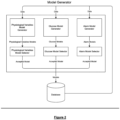
- The main objective of the prediction model generator (
Figure 2 ) is to develop "generic" models that are adaptable and usable by users whose data have not been used in the training process. These models are trained in a previous phase using available data previously collected from volunteer users, including interstitial glycemia data. Although these models may use for prediction data collected by a continuous glucose meter, in the present invention the data is collected through an activity wristband worn by the user, in a non-invasive manner. The combined use of wavelet Transforms, Deep Learning, Genetic Programming, Evolutionary Grammars and Fuzzy Logic Based Systems, confer a predictive potential not available in the systems currently in use, allowing the generation of warning alarms to the user to enable behavioral changes necessary to avoid hypo- and hyperglycemia events. - The glucose model generator (
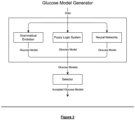
Figure 3 ) is a system that, using glucose data measured with a continuous glucose monitor and data from an activity wristband or other devices, generates predictive models to estimate the blood glucose value from these data. Only those models that meet the accuracy thresholds are accepted for inclusion in the set of models available and visible to the user. There are three subsystems for glucose model generation depending on the artificial intelligence technique used: - Grammatical Evolutio Module. Generates models using genetic programming techniques
- Neural networks module. Generates models using deep learning techniques.
- Module of systems based on fuzzy logic. It performs the prediction of blood glucose values using a system based on Takagi-Sugeno-Kang fuzzy rules in two phases. The first phase is a learning process in which membership functions and rules are optimized using a genetic algorithm. In the second phase of tuning, a genetic algorithm is used to perform rule selection and optimization.
- The glucose models are trained using two different scenarios: What-if and Agnostic. In both, the inputs are values measured by a continuous glucose monitoring system as well as previous carbohydrate intake and insulin injections. In the What-if scenario, assumed future values of meals and insulin injections are supported; on the other hand, in the Agnostic system, only information from past and present events is available for prediction.
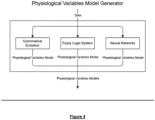
- The physiological variable model generator (
Figure 4 ) works in a similar way to the glucose models, but using the physiological variables. - The alarm model generator (
Figure 5 ) takes data obtained from the continuous glucose meter and generates a time series to which a wavelet filter is applied to generate images. These images are used to train a deep learning classification system. Images obtained with time series that correspond to situations of hypoglycemia or hyperglycemia in the following 24 hours are detected and generate an alarm signal that is sent to the mobile device or Tablet and it triggers the alarm. - To the generation of images from the time series data, a data enhancement phase with a rolling window of 1 hour is added and then a wavelet transform is applied with the Mexican Hat function and the Morlet function. Thus, spectrograms are generated, differentiating between those from data in which there are events classified into five categories: severe hypoglycemia, hypoglycemia, normoglycemia, hyperglycemia and severe hyperglycemia). These levels are adjusted in a personalized way using Fuzzy logic and evolutionary algorithms (
Figure 9 ). This generates four classification models that generate signals over the next 24 hours. - To complement the description being made and for a better understanding of the features of the invention, there is attached as an integral part of said description, a set of drawings wherein, illustratively and non-limitingly, the following has been depicted:
-
Figure 1 . General scheme of the system and method for predicting glucose values and generating hypoglycemia and hyperglycemia alerts. -
Figure 2 . Schematic of the system prediction model generator. -
Figure 3 . Schematic of the glucose model generator of the system. -
Figure 4 . Diagram of the model generator of physiological variables. -
Figure 5 . Schematic of the alarm model generator. -
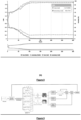
Figure 6 . Glucose monitoring record and spectrogram -
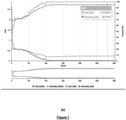
Figure 7 . Neural network training with data from all patients using Mexican Hat wavelet (a) and using Morlet wavelet (b). -
Figure 8 . Training of the neural network (2) using the data of one patient for testing and training the network with the rest of the patients, using Mexican Hat wavelet (a) and using Morlet wavelet (b). -
Figure 9 . Schematic of the adjustment of hypoglycemia, normoglycemia, hyperglycemia and severe hyperglycemia levels using Fuzzy logic and evolutionary algorithms. - The present invention is illustrated by the following example, which is not intended to be limiting in scope.
- This example refers to a system for predicting hypoglycemia events using wavelets and convolutional neural networks.
- An activity wristband collects heart rate, physical activity, energy expenditure and electrocardiogram (ECG) data from a subject and these data are stored in a database.
- A continuous glucose monitoring (CGM) system obtains recordings every few minutes (e.g., 5-15 minutes) for 23 real patients with
type 1 diabetes (Figure 6 ). - A cell phone with internet connection stores the information collected by the activity wristband, interfaces with the database, the rest of the system modules, stores local models and generates alarms in the activity wristband.
- To train the convolutional neural network, spectrograms (96 records per day/spectrogram) are generated for each patient using Continuous Wavelet Transform (CWT) (
Figure 6 ). Based on 96 glucose records per day for each patient, the spectrograms are classified as: - Normal: if glucose values are maintained above 55 mg/dL.
- Hypoglycemia: if glucose values are below 55 mg/dL.
- Using the data augmentation technique, the number of images per patient is increased. Spectrograms are generated by running through all the glucose values using a rolling window of
size 1 day (96 records) with a 1-hour offset. Using the NVIDIA DIGITS framework with TensorFlow, the images are classified (Figure 9 ). - The datasets are organized as follows:
- Training: 85% Training: 85% Training: 85
- Validation:10% Validation:10% Validation:10% Validation:10% Validation:10% Validation:10% Validation
- Test: 5% Test: 5% Test: 5% Test: 5% Test: 5% Test: 5% Test: 5% Test: 5%
- The AlexNet neural network is used to train the models using the following training parameters:
- Learning rate: 0.001
- Number of epochs: 300
- Validation interval (epochs): 10
- Optimization algorithm: stochastic gradient descent
- Image crop size: 227 pixels
- Two types of experiments are performed: (1) training the network with data from all patients; (2) using data from one patient for testing and training the network with the rest of the patients. For each experiment, two wavelets are used within the CWT: Mexican Hat and Morlet.
-
Figure 7 shows the results for experiment (1) using Mexican Hat wavelet (a) and using Morlet wavelet (b).Figure 8 shows the results for experiment (2) using Mexican Hat wavelet (a) and using Morlet wavelet (b). - As a result, the trained models are quite accurate, with hit rates above 95% in the validation phase but the models do not correctly classify images with untrained patient data, so training is required.
Claims (13)
- System for prediction of glucose values and generation of hypoglycemia and hyperglycemia alerts comprising:- An activity wristband that collects heart rate, physical activity, energy expenditure and electrocardiogram (ECG) data,- A database- A prediction generator module- A glucose model generator module- A physiological variable generator module- An alarm generator module- A pattern analyzer- A web interface- A mobile device or Tablet with internet connection, which stores the information collected by the activity wristband, interfaces with the database and other blocks of the system; and stores local models and generates alarms in the activity wristband,characterized in that the alarm model generator takes data obtained from a continuous glucose meter and obtains a time series to generate images corresponding to hypoglycemia or hyperglycemia situations, which are used to train a learning system, to which a data augmentation phase is added with a rolling window and then a wavelet transform is applied with the Mexican Hat function and with the Morlet function.
- System according to claim 1, wherein the prediction models are trained using available data previously collected from volunteers, including interstitial blood glucose data.
- System according to claim 1, wherein the glucose models are generated using different artificial intelligence techniques such as genetic programming, deep learning and Takagi-Sugeno-Kang fuzzy rules.
- System according to claim 3, wherein the glucose models are trained using What-if and Agnostic scenarios.
- System according to claim 1, wherein the spectrograms generated in the alarm models correspond to five categories: severe hypoglycemia, hypoglycemia, normoglycemia, hyperglycemia and severe hyperglycemia.
- System according to claim 5, wherein alarm signals are generated for the four categories other than normoglycemia.
- Non-invasive method for predicting glucose values and generating hypoglycemia and hyperglycemia alerts using the claimed system comprising:- Store a user's physiological variables and interstitial glucose data in the activity wristband.- Generate prediction models by measuring interstitial glucose and physiological variables in volunteer individuals different from the user.- Generate blood glucose models from user interstitial glucose data.- Generate models of user physiological variables.- Generate hypoglycemia and hyperglycemia alarm models.characterized by the alarm model generator which takes data obtained from a continuous glucose meter and obtains a time series to generate images corresponding to hypoglycemia or hyperglycemia situations, which are used to train a learning system, to which a data enhancement phase is added with a rolling window and then a wavelet transform is applied with the Mexican Hat function and with the Morlet function, generating spectrograms.
- Non-invasive method according to claim 7, wherein the physiological variable data is taken using an activity wristband worn by the user.
- Non-invasive method according to claim 7, wherein the prediction models are trained using available data previously collected from volunteers, including interstitial blood glucose data.
- Non-invasive method according to claim 7, wherein the glucose models are generated using different artificial intelligence techniques such as genetic programming, deep learning and Takagi-Sugeno-Kang fuzzy rules.
- Non-invasive method according to claim 10, wherein the glucose models are trained using What-if and Agnostic scenarios.
- Non-invasive method according to claim 7, wherein the spectrograms generated in the alarm models correspond to five categories: severe hypoglycemia, hypoglycemia, normoglycemia, hyperglycemia and severe hyperglycemia.
- Non-invasive method according to claim 12, wherein alarm signals are generated for the four categories other than normoglycemia.
Applications Claiming Priority (2)
| Application Number | Priority Date | Filing Date | Title |
|---|---|---|---|
| ES202230016A ES2900099A1 (en) | 2022-01-12 | 2022-01-12 | Method and system for predicting glucose values and alert generation of hypoglycaemia and hyperglycemia (Machine-translation by Google Translate, not legally binding) |
| PCT/ES2022/070789 WO2023135346A1 (en) | 2022-01-12 | 2022-12-12 | Method and system for predicting glucose values and generating hypoglycaemia and hyperglycaemia warnings |
Publications (2)
| Publication Number | Publication Date |
|---|---|
| EP4465304A1 true EP4465304A1 (en) | 2024-11-20 |
| EP4465304A4 EP4465304A4 (en) | 2026-02-11 |
Family
ID=80678827
Family Applications (1)
| Application Number | Title | Priority Date | Filing Date |
|---|---|---|---|
| EP22920122.3A Pending EP4465304A4 (en) | 2022-01-12 | 2022-12-12 | METHOD AND SYSTEM FOR PREDICTING GLUCOSE VALUES AND GENERATING WARNINGS FOR HYPOGLYCEMIA AND HYPERGLYCEMIA |
Country Status (4)
| Country | Link |
|---|---|
| US (1) | US20250107729A1 (en) |
| EP (1) | EP4465304A4 (en) |
| ES (1) | ES2900099A1 (en) |
| WO (1) | WO2023135346A1 (en) |
Family Cites Families (5)
| Publication number | Priority date | Publication date | Assignee | Title |
|---|---|---|---|---|
| US7395158B2 (en) | 2000-05-30 | 2008-07-01 | Sensys Medical, Inc. | Method of screening for disorders of glucose metabolism |
| JP5209714B2 (en) | 2007-06-27 | 2013-06-12 | エフ ホフマン−ラ ロッシュ アクチェン ゲゼルシャフト | System and method for creating treatments specific to each patient based on patient physiology modeling |
| ES2540159B1 (en) | 2013-11-27 | 2016-03-09 | Universidad Complutense De Madrid | Method for modeling blood glucose level by genetic programming |
| US20170340291A1 (en) | 2015-01-07 | 2017-11-30 | Mohamed Issam AYARI | Non-invasive medical analysis based on ts fuzzy control |
| US12323412B2 (en) | 2022-08-11 | 2025-06-03 | Kyocera Document Solutions Inc. | Identification authentication methods at a device |
-
2022
- 2022-01-12 ES ES202230016A patent/ES2900099A1/en active Pending
- 2022-12-12 EP EP22920122.3A patent/EP4465304A4/en active Pending
- 2022-12-12 WO PCT/ES2022/070789 patent/WO2023135346A1/en not_active Ceased
- 2022-12-12 US US18/728,392 patent/US20250107729A1/en active Pending
Also Published As
| Publication number | Publication date |
|---|---|
| EP4465304A4 (en) | 2026-02-11 |
| WO2023135346A9 (en) | 2023-09-07 |
| WO2023135346A1 (en) | 2023-07-20 |
| ES2900099A1 (en) | 2022-03-15 |
| US20250107729A1 (en) | 2025-04-03 |
Similar Documents
| Publication | Publication Date | Title |
|---|---|---|
| Zhu et al. | Personalized blood glucose prediction for type 1 diabetes using evidential deep learning and meta-learning | |
| Zhu et al. | Enhancing self-management in type 1 diabetes with wearables and deep learning | |
| US10792423B2 (en) | Methods, systems, and computer readable media for physiology parameter-invariant meal detection | |
| Ahmed et al. | Performance of artificial intelligence models in estimating blood glucose level among diabetic patients using non-invasive wearable device data | |
| US20210225510A1 (en) | Human body health assessment method and system based on sleep big data | |
| Zecchin et al. | A new neural network approach for short-term glucose prediction using continuous glucose monitoring time-series and meal information | |
| CN114207737A (en) | System for biological monitoring and blood glucose prediction and associated methods | |
| Zhao et al. | Statistical analysis based online sensor failure detection for continuous glucose monitoring in type I diabetes | |
| CN118645264B (en) | Non-contact non-invasive and non-invasive sugar monitoring and early warning intervention method | |
| Hamdi et al. | Artificial neural network for blood glucose level prediction | |
| Alkalifah et al. | Evaluation of machine learning-based regression techniques for prediction of diabetes levels fluctuations | |
| Huzooree et al. | Glucose prediction data analytics for diabetic patients monitoring | |
| Shuzan et al. | QU-GM: an IoT based glucose monitoring system from photoplethysmography, blood pressure, and demographic data using machine learning | |
| Eissa et al. | Intelligent data-driven model for diabetes diurnal patterns analysis | |
| Georga et al. | Short-term vs. long-term analysis of diabetes data: Application of machine learning and data mining techniques | |
| Swapna et al. | Diabetes detection and sensor-based continuous glucose monitoring–a deep learning approach | |
| CN121354890A (en) | AI-Assisted Ophthalmic Care Risk Early Warning System and Method | |
| US20250107729A1 (en) | Method and system for predicting glucose values and generating hypoglycaemia and hyperglycaemia warnings | |
| Shuvo et al. | Long-Term Predictive Analytics of Continuous Glucose Sensing for Enhanced Glycemic Control | |
| Soumma et al. | GlyRAG: Context-Aware Retrieval-Augmented Framework for Blood Glucose Forecasting | |
| Geetha et al. | The strategies to reduce healthcare costs and increase the quality of healthcare service delivery using hybrid technologies | |
| Obiuwevwi et al. | Toward Affordable and Non-Invasive Detection of Hypoglycemia: A Machine Learning Approach | |
| Mary et al. | Real-time Non-invasive Blood Glucose Monitoring using Advanced Machine Learning Techniques | |
| Kipngetich | Design of a Non-invasive IOT-Based system for prediction and early detection of type 2diabetes using Fuzzy logic | |
| Khan et al. | Methods to predict blood glucose level for type 2 diabetes patients |
Legal Events
| Date | Code | Title | Description |
|---|---|---|---|
| STAA | Information on the status of an ep patent application or granted ep patent |
Free format text: STATUS: THE INTERNATIONAL PUBLICATION HAS BEEN MADE |
|
| PUAI | Public reference made under article 153(3) epc to a published international application that has entered the european phase |
Free format text: ORIGINAL CODE: 0009012 |
|
| STAA | Information on the status of an ep patent application or granted ep patent |
Free format text: STATUS: REQUEST FOR EXAMINATION WAS MADE |
|
| 17P | Request for examination filed |
Effective date: 20240808 |
|
| AK | Designated contracting states |
Kind code of ref document: A1 Designated state(s): AL AT BE BG CH CY CZ DE DK EE ES FI FR GB GR HR HU IE IS IT LI LT LU LV MC ME MK MT NL NO PL PT RO RS SE SI SK SM TR |
|
| DAV | Request for validation of the european patent (deleted) | ||
| DAX | Request for extension of the european patent (deleted) | ||
| A4 | Supplementary search report drawn up and despatched |
Effective date: 20260113 |
|
| RIC1 | Information provided on ipc code assigned before grant |
Ipc: G16H 50/00 20180101AFI20260107BHEP Ipc: A61B 5/15 20060101ALI20260107BHEP Ipc: G16H 50/50 20180101ALI20260107BHEP |