EP4465055A2 - Decentralized false data mitigation for nested microgrids - Google Patents
Decentralized false data mitigation for nested microgrids Download PDFInfo
- Publication number
- EP4465055A2 EP4465055A2 EP24197887.3A EP24197887A EP4465055A2 EP 4465055 A2 EP4465055 A2 EP 4465055A2 EP 24197887 A EP24197887 A EP 24197887A EP 4465055 A2 EP4465055 A2 EP 4465055A2
- Authority
- EP
- European Patent Office
- Prior art keywords
- microgrid
- control system
- state estimation
- false data
- switching command
- Prior art date
- Legal status (The legal status is an assumption and is not a legal conclusion. Google has not performed a legal analysis and makes no representation as to the accuracy of the status listed.)
- Pending
Links
Images

Classifications
-
- H—ELECTRICITY
- H02—GENERATION; CONVERSION OR DISTRIBUTION OF ELECTRIC POWER
- H02J—ELECTRIC POWER NETWORKS; CIRCUIT ARRANGEMENTS OR SYSTEMS FOR SUPPLYING OR DISTRIBUTING ELECTRIC POWER; SYSTEMS FOR STORING ELECTRIC ENERGY
- H02J13/00—Circuit arrangements for providing remote monitoring or remote control of equipment in a power distribution network
- H02J13/12—Monitoring network conditions, e.g. electrical magnitudes or operational status
-
- G—PHYSICS
- G01—MEASURING; TESTING
- G01R—MEASURING ELECTRIC VARIABLES; MEASURING MAGNETIC VARIABLES
- G01R22/00—Arrangements for measuring time integral of electric power or current, e.g. electricity meters
- G01R22/06—Arrangements for measuring time integral of electric power or current, e.g. electricity meters by electronic methods
- G01R22/061—Details of electronic electricity meters
- G01R22/066—Arrangements for avoiding or indicating fraudulent use
-
- G—PHYSICS
- G06—COMPUTING OR CALCULATING; COUNTING
- G06F—ELECTRIC DIGITAL DATA PROCESSING
- G06F30/00—Computer-aided design [CAD]
- G06F30/10—Geometric CAD
- G06F30/18—Network design, e.g. design based on topological or interconnect aspects of utility systems, piping, heating ventilation air conditioning [HVAC] or cabling
-
- G—PHYSICS
- G06—COMPUTING OR CALCULATING; COUNTING
- G06F—ELECTRIC DIGITAL DATA PROCESSING
- G06F30/00—Computer-aided design [CAD]
- G06F30/20—Design optimisation, verification or simulation
-
- H—ELECTRICITY
- H02—GENERATION; CONVERSION OR DISTRIBUTION OF ELECTRIC POWER
- H02J—ELECTRIC POWER NETWORKS; CIRCUIT ARRANGEMENTS OR SYSTEMS FOR SUPPLYING OR DISTRIBUTING ELECTRIC POWER; SYSTEMS FOR STORING ELECTRIC ENERGY
- H02J13/00—Circuit arrangements for providing remote monitoring or remote control of equipment in a power distribution network
- H02J13/13—Circuit arrangements for providing remote monitoring or remote control of equipment in a power distribution network characterised by the transmission of data to equipment in the power network
- H02J13/1321—Circuit arrangements for providing remote monitoring or remote control of equipment in a power distribution network characterised by the transmission of data to equipment in the power network using a wired telecommunication network or a data transmission bus
-
- H—ELECTRICITY
- H02—GENERATION; CONVERSION OR DISTRIBUTION OF ELECTRIC POWER
- H02J—ELECTRIC POWER NETWORKS; CIRCUIT ARRANGEMENTS OR SYSTEMS FOR SUPPLYING OR DISTRIBUTING ELECTRIC POWER; SYSTEMS FOR STORING ELECTRIC ENERGY
- H02J13/00—Circuit arrangements for providing remote monitoring or remote control of equipment in a power distribution network
- H02J13/13—Circuit arrangements for providing remote monitoring or remote control of equipment in a power distribution network characterised by the transmission of data to equipment in the power network
- H02J13/1331—Circuit arrangements for providing remote monitoring or remote control of equipment in a power distribution network characterised by the transmission of data to equipment in the power network using wireless data transmission
-
- H—ELECTRICITY
- H02—GENERATION; CONVERSION OR DISTRIBUTION OF ELECTRIC POWER
- H02J—ELECTRIC POWER NETWORKS; CIRCUIT ARRANGEMENTS OR SYSTEMS FOR SUPPLYING OR DISTRIBUTING ELECTRIC POWER; SYSTEMS FOR STORING ELECTRIC ENERGY
- H02J2103/00—Details of circuit arrangements for mains or AC distribution networks
- H02J2103/30—Simulating, planning, modelling, reliability check or computer assisted design [CAD] of electric power networks
-
- H—ELECTRICITY
- H02—GENERATION; CONVERSION OR DISTRIBUTION OF ELECTRIC POWER
- H02J—ELECTRIC POWER NETWORKS; CIRCUIT ARRANGEMENTS OR SYSTEMS FOR SUPPLYING OR DISTRIBUTING ELECTRIC POWER; SYSTEMS FOR STORING ELECTRIC ENERGY
- H02J2105/00—Networks for supplying or distributing electric power characterised by their spatial reach or by the load
- H02J2105/10—Local stationary networks having a local or delimited stationary reach
-
- Y—GENERAL TAGGING OF NEW TECHNOLOGICAL DEVELOPMENTS; GENERAL TAGGING OF CROSS-SECTIONAL TECHNOLOGIES SPANNING OVER SEVERAL SECTIONS OF THE IPC; TECHNICAL SUBJECTS COVERED BY FORMER USPC CROSS-REFERENCE ART COLLECTIONS [XRACs] AND DIGESTS
- Y02—TECHNOLOGIES OR APPLICATIONS FOR MITIGATION OR ADAPTATION AGAINST CLIMATE CHANGE
- Y02E—REDUCTION OF GREENHOUSE GAS [GHG] EMISSIONS, RELATED TO ENERGY GENERATION, TRANSMISSION OR DISTRIBUTION
- Y02E60/00—Enabling technologies; Technologies with a potential or indirect contribution to GHG emissions mitigation
-
- Y—GENERAL TAGGING OF NEW TECHNOLOGICAL DEVELOPMENTS; GENERAL TAGGING OF CROSS-SECTIONAL TECHNOLOGIES SPANNING OVER SEVERAL SECTIONS OF THE IPC; TECHNICAL SUBJECTS COVERED BY FORMER USPC CROSS-REFERENCE ART COLLECTIONS [XRACs] AND DIGESTS
- Y04—INFORMATION OR COMMUNICATION TECHNOLOGIES HAVING AN IMPACT ON OTHER TECHNOLOGY AREAS
- Y04S—SYSTEMS INTEGRATING TECHNOLOGIES RELATED TO POWER NETWORK OPERATION, COMMUNICATION OR INFORMATION TECHNOLOGIES FOR IMPROVING THE ELECTRICAL POWER GENERATION, TRANSMISSION, DISTRIBUTION, MANAGEMENT OR USAGE, i.e. SMART GRIDS
- Y04S40/00—Systems for electrical power generation, transmission, distribution or end-user application management characterised by the use of communication or information technologies, or communication or information technology specific aspects supporting them
- Y04S40/12—Systems for electrical power generation, transmission, distribution or end-user application management characterised by the use of communication or information technologies, or communication or information technology specific aspects supporting them characterised by data transport means between the monitoring, controlling or managing units and monitored, controlled or operated electrical equipment
- Y04S40/124—Systems for electrical power generation, transmission, distribution or end-user application management characterised by the use of communication or information technologies, or communication or information technology specific aspects supporting them characterised by data transport means between the monitoring, controlling or managing units and monitored, controlled or operated electrical equipment using wired telecommunication networks or data transmission busses
-
- Y—GENERAL TAGGING OF NEW TECHNOLOGICAL DEVELOPMENTS; GENERAL TAGGING OF CROSS-SECTIONAL TECHNOLOGIES SPANNING OVER SEVERAL SECTIONS OF THE IPC; TECHNICAL SUBJECTS COVERED BY FORMER USPC CROSS-REFERENCE ART COLLECTIONS [XRACs] AND DIGESTS
- Y04—INFORMATION OR COMMUNICATION TECHNOLOGIES HAVING AN IMPACT ON OTHER TECHNOLOGY AREAS
- Y04S—SYSTEMS INTEGRATING TECHNOLOGIES RELATED TO POWER NETWORK OPERATION, COMMUNICATION OR INFORMATION TECHNOLOGIES FOR IMPROVING THE ELECTRICAL POWER GENERATION, TRANSMISSION, DISTRIBUTION, MANAGEMENT OR USAGE, i.e. SMART GRIDS
- Y04S40/00—Systems for electrical power generation, transmission, distribution or end-user application management characterised by the use of communication or information technologies, or communication or information technology specific aspects supporting them
- Y04S40/12—Systems for electrical power generation, transmission, distribution or end-user application management characterised by the use of communication or information technologies, or communication or information technology specific aspects supporting them characterised by data transport means between the monitoring, controlling or managing units and monitored, controlled or operated electrical equipment
- Y04S40/126—Systems for electrical power generation, transmission, distribution or end-user application management characterised by the use of communication or information technologies, or communication or information technology specific aspects supporting them characterised by data transport means between the monitoring, controlling or managing units and monitored, controlled or operated electrical equipment using wireless data transmission
Definitions
- the present disclosure relates generally to nested microgrids, which are interconnected portions of a power network including at least one power source and one load capable of operating independently if disconnected from the rest of the power network.
- State estimation in a nested microgrid system enables online monitoring and network awareness. Accurate state estimation in nested microgrids depends on accurate data from field devices. Due to a field device failure or external communication channel interference, microgrid communication channels may communicate false data to a state estimator. When there are too many faulty field devices or false data injection attacks, state estimation will indicate an inaccurate system topology or system status. Detecting false data is necessary to prevent damage to microgrid components or cascading failure of a power network.
- Exemplary embodiments of the disclosure include unique systems, methods, techniques and apparatuses for nested microgrids. Further embodiments, forms, objects, features, advantages, aspects and benefits of the disclosure shall become apparent from the following description and drawings.
- a nested microgrid system 100 structured to detect false data in a microgrid state estimation using multi-layered state estimation executed at both a microgrid and central control system level.
- system 100 may be implemented in a variety of applications, including utility grid distribution systems, industrial plant distribution systems, and vehicular distribution systems, to name but a few examples.
- the topology of system 100 is illustrated for the purpose of explanation and is not intended as a limitation of the present disclosure.
- system 100 may include more or fewer microgrids and the microgrids of system 100 may be arranged in any configuration as long as each microgrid is coupled to at least one other microgrid.
- microgrid 110 may include more or fewer buses, more or fewer power sources, more loads, and more or fewer field devices.
- system 100 is illustrated with a single line diagram, system 100 may be structured to transmit single-phase alternating current (AC) power, multiphase AC power, or direct current (DC) power.
- AC alternating current
- DC direct current
- System 100 includes microgrids 110, 120, 130, and 140 coupled by way of connection lines 161, 163, 165, and 167.
- microgrid 110 is coupled to microgrid 120 by way of connection line 163;
- microgrid 120 is coupled to microgrid 130 by way of connection line 165;
- microgrid 130 is coupled to microgrid 140 by way of connection line 167;
- microgrid 140 is coupled to microgrid 110 by way of connection line 161.
- system 100 is coupled to a portion of a utility grid.
- a tie breaker 162 also known as a circuit breaker, is operatively coupled to connection line 161 and structured to selectively interrupt the flow of current through connection line 161.
- a tie breaker 164 is operatively coupled to connection line 163 and structured to selectively interrupt the flow of current through connection line 163.
- a tie breaker 166 is operatively coupled to connection line 165 and structured to selectively interrupt the flow of current through connection line 165.
- a tie breaker 168 is operatively coupled to connection line 167 and structured to selectively interrupt the flow of current through connection line 167.
- Microgrid 110 is structured to supply power to microgrid loads, such as load 119, whether connected to other nested microgrids or disconnected from the remainder of system 100.
- Microgrid 110 includes a point of interconnection (POI), also known as a point of common connection, bus 111a coupled between connection line 161 and bus 111b, a bus 111c coupled to bus 111b, and a POI bus 111d coupled between bus 111c and connection line 163.
- POI point of interconnection
- Microgrid 110 also includes a plurality of field devices structured to measure electrical or physical characteristics of microgrid 110 including voltage sensor 113a and voltage sensor 113b.
- Voltage sensor 113a is coupled to POI bus 111a and structured to measure the voltage of POI bus 111a.
- Voltage sensor 113b is coupled to POI bus 111d and structured to measure the voltage of POI bus 111d.
- microgrid 110 includes additional voltage sensors or other types of field devices, such as remote terminal units (RTUs), intelligent electronic devices (IEDs), relays, reclosers, phasor measurement units (PMUs), current sensors, voltage transformers, and current transformers, to name but a few examples.
- voltage sensors are structured to measure a voltage magnitude and voltage phase angle and current sensors are structured to measure a current magnitude and current phase angle.
- Microgrid 110 includes power source 115 coupled to bus 111b and power source 117 coupled to bus 111c.
- Power sources 115 and 117 may include a solar panel array, a wind turbine, a natural gas generator, or any other system structured to generate power.
- Power source 115 is coupled to bus 11 1b by way of a circuit breaker 116, also known as a switching device, structured to selectively interrupt current flowing between bus 111b and power source 115.
- Power source 117 is coupled to bus 111c and structured to selectively interrupt current flowing between bus 111c and power source 117.
- Microgrid 110 includes a microgrid control system 114 structured to communicate with the field devices including circuit breakers of microgrid 110, perform state estimation, and perform false data detection and mitigation, as explained in more detail below.
- microgrid control system 114 is structured to control and receive measurements from tie breakers adjacent to microgrid 110. It shall be appreciated that any or all of the foregoing features of microgrid 110 may also be present in the other microgrids of system 100 disclosed herein.
- Microgrid 120 is structured to supply power to coupled loads, such as load 129, whether connected to other microgrids or disconnected from the remainder of system 100.
- Microgrid 120 includes a POI bus 121a coupled between connection line 163 and bus 121b, a bus 121c coupled to bus 121b, and a POI bus 121d coupled between bus 121c and connection line 163.
- Microgrid 120 also includes a plurality of field devices structured to measure electrical or physical characteristics of microgrid 120 including voltage sensor 123a and voltage sensor 123b.
- Voltage sensor 123a is coupled to POI bus 121a and structured to measure the voltage of POI bus 121a.
- Voltage sensor 123b is coupled to POI bus 121d and structured to measure the voltage of POI bus 121d.
- Microgrid 120 includes power source 125 coupled to bus 121b and power source 127 coupled to bus 121c.
- Power source 125 is coupled to bus 121b by way of a circuit breaker 126 structured to selectively interrupt current flowing between bus 121b and power source 125.
- Power source 127 is coupled to bus 121c and structured to selectively interrupt current flowing between bus 121c and power source 127.
- Microgrid 120 includes a microgrid control system 124 structured to communicate with the field devices and circuit breakers of microgrid 120 and conduct false data detection and mitigation, as explained in more detail below.
- Microgrid 130 is structured to supply power to coupled loads, such as load 139, whether connected to other microgrids or disconnected from the remainder of system 100.
- Microgrid 130 includes POI bus 131a coupled between connection line 161 and bus 131b, a bus 131c coupled to bus 131b, and a POI bus 131d coupled between bus 131c and connection line 163.
- Microgrid 130 also includes a plurality of field devices structured to measure electrical or physical characteristics of microgrid 130 including voltage sensor 133a and voltage sensor 133b.
- Voltage sensor 133a is coupled to POI bus 131a and structured to measure the voltage of POI bus 131a.
- Voltage sensor 133b is coupled to POI bus 131d and structured to measure the voltage of POI bus 131d.
- Microgrid 130 includes power source 135 coupled to bus 131b and power source 137 coupled to bus 131c.
- Power source 135 is coupled to bus 131b by way of a circuit breaker 136 structured to selectively interrupt current flowing between bus 131b and power source 135.
- Power source 137 is coupled to bus 131c and structured to selectively interrupt current flowing between bus 131c and power source 137.
- Microgrid 130 includes a microgrid control system 134 structured to communicate with the field devices and circuit breakers of microgrid 130 and conduct false data detection and mitigation, as explained in more detail below.
- Microgrid 140 is structured to supply power to coupled loads, such as load 149, whether connected to other microgrids or disconnected from the remainder of system 100.
- Microgrid 140 includes a POI bus 141a coupled to bus 141b, a bus 141c coupled to bus 141b, and a POI bus 141d coupled between bus 141c and connection line 163.
- Microgrid 140 also includes a plurality of field devices structured to measure electrical or physical characteristics of microgrid 140 including voltage sensor 143a and voltage sensor 143b.
- Voltage sensor 143a is coupled to POI bus 141a and structured to measure the voltage of POI bus 141a.
- Voltage sensor 143b is coupled to POI bus 141d and structured to measure the voltage of POI bus 141d.
- Microgrid 140 includes power source 145 coupled to bus 141b and power source 147 coupled to bus 141c.
- Power source 145 is coupled to bus 141b by way of a circuit breaker 146 structured to selectively interrupt current flowing between bus 141b and power source 145.
- Power source 147 is coupled to bus 141c and structured to selectively interrupt current flowing between bus 141c and power source 147.
- Microgrid 140 includes a microgrid control system 144 structured to communicate with the field devices and circuit breakers of microgrid 140 and conduct false data detection and mitigation, as explained in more detail below.
- System 100 includes a central control system 150 structured to communicate with microgrid control systems 114, 124, 134, and 144, and perform global state estimation for system 100 using both raw measurements from the field devices of system 100 and aggregated local state estimations from each microgrid control system of system 100.
- central control system 150 is a distribution management system (DMS) or a distributed energy resource management system (DERMS).
- DMS distribution management system
- DERMS distributed energy resource management system
- a cyber intruder may gain access to a single field device of a microgrid, causing malicious data to enter microgrid communication channels and adversely affect nested microgrids or the entire power network.
- a cyber intruder may be able to inject false data into a local or central control system which is undetectable by a single state estimator receiving a small number of measurements for state estimation.
- Central control system 150 and microgrid control systems 114, 124, 134, and 144 are structured to work simultaneously and in concert to detect false data entering the communication network of system 100 at any entry point of the communication system: at the field device, at the microgrid control system, or at the central control system.
- any entry point of the communication system at the field device, at the microgrid control system, or at the central control system.
- microgrid control system 114 can detect the false data by comparing its calculated topology to global state estimation calculated by central control system 150.
- central control system 150 generates a switching command based on false data received at central control system 150 in the form of a false data injection.
- the generated switching command would be effective to open circuit breaker 116. If microgrid 110 were operating in islanded mode at the time the switching command was executed, microgrid 110 would experience a blackout. Central control system 150 operating alone would not detect the false data.
- microgrid control system 114 and central control system 150 working concurrently, will simulate the switching command and block the execution of the switching command.
- system 100 is structured to not only remove false data from measurements used in state estimation, but system 100 will also block the data source to prevent further cyberattacks on system 100. It shall be appreciated that any or all of the foregoing features of system 100 may also be present in the other nested microgrid systems disclosed herein.
- microgrid system 200 including microgrids 220, 230, 240, and 250 and a central control system 210.
- Each microgrid includes a microgrid control system structured to communicate with other microgrid control systems by way of communication channels 263, the field devices of the same microgrid by way of communication channels 265, and central control system 210 by way of communication channels 261.
- the communication channels of system 200 may transfer data by way of wired or wireless communication using communication protocols such as GOOSE, OPC UA, Pub-Sub, or DDS, to name but a few examples.
- some or all of the communication channels of system 200 include one or more software defined networking (SDN) devices, such as an Ethernet switch.
- SDN software defined networking
- field devices 251 may each be coupled to a separate port of an SDN device
- microgrid control system 253 may be coupled to a port of the SDN device
- the central control system 210 may be coupled to a port of the SDN device.
- the SDN device In order for each field device to communicate, the SDN device must connect the port for the field device and the port for a control system.
- a microgrid control system or central control system 210 may block a false data injection from a field device by instructing the SDN device to disable the port of the field device.
- central control system 210 may instruct the SDN device to disconnect the port connecting the central control system 210 to the SDN device in order to isolate the affected microgrid control system.
- the SDN device may be used to control a field device before isolation of the field device, such as opening a circuit breaker with an IED.
- Microgrid 220 includes a plurality of field devices 221 and a microgrid control system 222.
- Microgrid control system 222 includes a processing device 226, an input/output device 225, a memory device 223, and a distributed state estimator application 224.
- System 200 may be a stand-alone device, an embedded system, or a plurality of devices structured to perform the functions described with respect to system 222.
- system 222 may be incorporated into a microgrid SCADA gateway.
- Input/output device 225 enables microgrid control system 222 to communicate with the plurality of field devices 221, the other microgrids of system 200, and central control system 210.
- input/output device 225 may include a network adapter, network credential, interface, or a port (e.g., a USB port, serial port, parallel port, an analog port, a digital port, VGA, DVI, HDMI, FireWire, CAT 5, Ethernet, fiber, or any other type of port or interface), to name but a few examples.
- Input/output device 225 may include more than one of these adapters, credentials, or ports, such as a first port for receiving data and a second port for transmitting data.
- Processing device 226 may include one or multiple processors, Arithmetic-Logic Units (ALUs), Central Processing Units (CPUs), Digital Signal Processors (DSPs), or Field-programmable Gate Array (FPGA), to name but a few examples.
- ALUs Arithmetic-Logic Units
- CPUs Central Processing Units
- DSPs Digital Signal Processors
- FPGA Field-programmable Gate Array
- Processing device 226 may be of a programmable variety that executes algorithms and processes data in accordance with distributed state estimator application 224 as defined by programming instructions (such as software or firmware) stored in memory 223.
- distributed state estimator application 224 for processing device 226 is at least partially defined by hardwired logic or other hardware.
- Processing device 226 may comprise one or more components of any type suitable to process the signals received from input/output device 225 or elsewhere, and provide desired output signals. Such components may include digital circuitry, analog circuitry, or a combination of both.
- Memory device 223 may be of one or more types, such as a solid-state variety, electromagnetic variety, optical variety, or a combination of these forms, to name but a few examples. Furthermore, memory device 223 may be volatile, nonvolatile, transitory, non-transitory or a combination of these types, and some or all of memory device 223 may be of a portable variety, such as a disk, tape, memory stick, cartridge, to name but a few examples In addition, memory device 223 may store data that is manipulated by distributed state estimator application 224 of processing device 226, such as data representative of signals received from and/or sent to input/output device 225 in addition to or in lieu of storing programming instructions defining distributed state estimator application 224, just to name one example. It shall be appreciated that any or all of the foregoing features of microgrid control system 222 may also be present in the other control systems disclosed herein.
- Microgrid 230 includes a microgrid control system 232 and a plurality of field devices 231.
- Microgrid control system 232 includes a memory device 233, an input/output device 235, and a processing device 236.
- a distributed state estimator application 234 is stored in memory device 233.
- Microgrid 240 includes a microgrid control system 242 and a plurality of field devices 241.
- Microgrid control system 242 includes a memory device 243, an input/output device 245, and a processing device 246.
- a distributed state estimator application 244 is stored in memory device 243.
- Microgrid 250 includes a microgrid control system 252 and a plurality of field devices 251.
- Microgrid control system 252 includes a memory device 253, an input/output device 255, and a processing device 256.
- a distributed state estimator application 254 is stored in memory device 253.
- Central control system 210 includes a memory device 201, an input/output device 205, and a processing device 207.
- a centralized state estimator application 203 is stored in memory device 201. It shall be appreciated that any or all of the foregoing features of system 200 may also be present in the other nested microgrid systems disclosed herein.
- process 300 includes operations simultaneously executed by microgrid control system 114 and central control system 150. It is to be understood, however, that process 300 may be used in combination with other forms of nested microgrid systems, such as those described above with reference to Fig. 2 . It shall be further appreciated that a number of variations and modifications to process 300 are contemplated including, for example, the omission of one or more aspects of process 300, the addition of further conditionals and operations and/or the reorganization or separation of operations and conditionals into separate processes.
- microgrid control system 114 portion of process 300 begins at start operation 301 and proceeds to operation 303 where microgrid control system 114 receives measurements from the field devices of microgrid 110.
- system 114 also receives calculated connection information from microgrid control systems of an adjacent microgrid, such as microgrid control systems 134 or 124.
- the calculated connection information may include connection line 161 impedance, POI bus 131a voltage, tie breaker 162 switch status, or connection line 161 current, to name but a few examples.
- connection line impedance is known by microgrid control system 114 before process 300 begins.
- Process 300 proceeds to operation 305 where microgrid control system 114 evaluates local topology using adjacent system information and local measurements received from the field devices of microgrid 110.
- Microgrid control system 114 may detect a topology error, such as incorrect switch statuses of tie breakers 162 and 164, as well as circuit breakers 116 and 118.
- microgrid control system 114 uses the following equation to estimate the POI bus voltage of an adjacent microgrid, such as the voltage of bus 131a, where V m POI is the estimated voltage of bus 131a, V n POI is the measured voltage of POI bus 111a, I n-m is the current flowing through connection line 161, and Z n-m is the impedance of line 161 between POI bus 111a and POI bus 131a.
- V m POI V n POI + I n ⁇ m ⁇ Z n ⁇ m
- an estimated voltage may include a magnitude, a phase angle, or both.
- system 114 compares the estimate to an estimated value of bus 131a voltage received from central control system 150, which may be based on aggregated measurements or an estimate calculated by central control system 150.
- Microgrid control system 114 determines there is a topology error if the estimate calculated by microgrid control system 114 and the estimate of bus 131a voltage received from central control system 150 do not match, such as differing by more than 5%, to name one example.
- a topology error may be caused by false data due to a sensor error, communication noise, or cyberattack. False data injection may occur at a field device, at microgrid 110 or at central control system 150. For example, a cyber intruder could close breaker 162 while injecting false data to microgrid control system 114 purporting to be measurements from sensor 113a indicating breaker 162 is still open.
- microgrid control system 114 For detecting internal topology errors, microgrid control system 114 continues to estimate bus voltage for all buses of microgrid 110, such as buses 111b and 111c using equation (1). Microgrid control system 114 compares an estimated value of a bus to the measured value of a bus to determine if there is a topology error in the switch status of circuit breaker 116 or 118.
- microgrid control system 114 In addition to microgrid control system 114 detecting and updating topology, microgrid control system 114 will also receive topology information from central control system 150 to correct topology error. System 114, in response, will replace the false switch status with the correct status received from central control system 150.
- Process 300 proceeds to operation 307 where microgrid control system 114 performs observability analysis to determine whether there are sufficient measurements, including pseudo measurements, to perform state estimation.
- observability analysis includes verifying whether the number and location of measurements from field devices of microgrid 110 will allow a set of state estimated variables to be calculated. Additional pseudo measurements may be calculated using local measurements to increase the accuracy of future operations. Any type of observability analysis may be performed, including topological or numerical techniques, pseudo-measurement determination problems, or Gaussian elimination to calculate the null space of the Jacobian matrix, to name but a few examples.
- Process 300 proceeds to operation 311 where measurements errors, also known as false data, are detected by microgrid control system 114 using the local state estimation from operation 309 and global state estimation performed by central control system 150.
- measurement errors may be caused by sensor errors, communication network errors, or cyber intrusions.
- measurement errors may be caused by instrument transformer errors, communication network failure or unexpected noise, or false data injection attacks, to name but a few examples.
- Microgrid control system 114 compares the local state estimation and the global state estimation to detect false data. Techniques to compare the local state estimation and the global state estimation include, but are not limited to, Chi-square distribution, normalized residuals, or hypothesis testing identification.
- Process 300 proceeds to operation 313 where detected false data is removed from the set of local measurements used by operations 305 to 309.
- microgrid control system 114 may also transmit an alarm in response to detected false data, block future measurements purporting to be from the same purported source as the false data, or isolate the source of the false data using software defined networking techniques, to name but a few examples.
- Process 300 then returns to operation 305 and performs operations 305 through 309 with the false data removed. Once process 300 returns to operation 311, microgrid control system 114 will transmit the updated local state estimation to central control system 150 as long as no additional false data is detected.
- central control system 150 portion of process 300 beings at start operation 321 and proceeds to operation 323 where central control system 150 receives periodically polled data from all microgrids of system 100, including measurements from the field devices of microgrids 110, 120, 130, and 140. Field device measurements may be transmitted directly to central control system 150 or by way of the microgrid control systems. Central control system 150 also receives the local state estimation from each microgrid.
- Process 300 proceeds to operation 325 where central control system 150 detects system topology errors.
- central control system 150 uses equation (1) to calculate a system topology with the periodically polled measurements from the field devices of all microgrids as input variables.
- central control system 150 uses equation (1) to calculate a system topology with the local state estimations as input variables. The two calculated system topologies are compared as in operation 305 to determine whether topology errors exist and need correction. Once the topology is updated, the corrected topology is transmitted to each microgrid.
- Process 300 proceeds to operation 327 where central control system 150 performs observability analysis to determine whether the number and locations of measurements received in operation 323 and pseudo measurements are sufficient to perform state estimation.
- process 300 proceeds to operation 329 where central control system 150 generates two sets of state estimations using equation (2).
- central control system 150 uses all the local state estimations received from each microgrid to perform state-based global state estimation.
- central control system 150 uses the raw measurements received from the field devices to perform measurement-based global state estimation.
- Process 300 proceeds to operation 331 where central control system 150 detects false data by comparing the state based global state estimation and the measurement based global state estimation. Discrepancies between the two global state estimations indicate false data. Techniques to compare the global state estimations include, but are not limited to Chi-square distribution, normalized residuals, or hypothesis testing identification.
- process 300 proceeds to operation 333 where detected false data is removed from the set of measurements used by operations 325 to 329.
- central control system 150 may also transmit an alarm in response to detected false data, block future measurements purporting to be from the same purported source as the false data, or isolate the source of the false data using software defined networking techniques, to name but a few examples.
- Process 300 then returns to operation 325 where the updated global state estimation is used to performs operations 325 through 329 with the false data removed.
- process 300 proceeds to operation 335 where central control system 150 transmits the updated global state estimation to other applications for analysis.
- Central control system 150 may transmit either the global state estimation calculated using the raw measurements, the global state estimation calculated using the local state estimations, or a combination thereof.
- Global state estimation may be used by other applications for market simulations, stability analysis, and demand response, to name but a few examples.
- Process 300 may be repeated every time a new measurement is received from a field device or a set of new measurements are received from a set of field devices.
- Process 300 may also be repeated after a time interval. For example, process 300 may be repeated every 10 seconds for microgrid systems without PMUs, or 50 times per second for microgrid systems including PMUs.
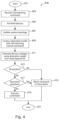
- process 400 for multi-layer predictive analysis of switching commands in a nested microgrid system using multi-layer state estimation.
- process 400 is made with reference to nested microgrid system 100 illustrated in Fig. 1 . It is to be understood, however, that process 400 may be used in combination with other forms of nested microgrid systems. It shall be further appreciated that a number of variations and modifications to process 400 are contemplated including, for example, the omission of one or more aspects of process 400, the addition of further conditionals and operations and the reorganization or separation of operations and conditionals into separate processes.
- Process 400 begins at start operation 401 and proceeds to operation 403 where microgrid control system 114 receives a switching command to operate a circuit breaker in microgrid 110, such as closing circuit breaker 118.
- a switching command may be received from central control system 150, such as a DMS or DERMS, to name but a few examples.
- Process 400 proceeds to operation 405 where microgrid control system 114 polls field devices for data including updated measurements and switch statuses.
- Process 400 proceeds to operation 407 where microgrid control system 114 updates the system topology using the polled data received in operation 405 as described with respect to operation 305 in Fig. 3 .
- Process 400 proceeds to operation 409 where microgrid control system 114 modifies the system topology updated in operation 407 based on the received switching command. For example, if the switching command included closing circuit breaker 118, the system topology is updated to indicate circuit breaker 118 as closed.
- Process 400 proceeds to operation 411 where microgrid control system 114 and central control system 150 perform multi-layer state estimation as described with respect to operations 309 and 329 in Fig. 3 .
- Microgrid control system 114 performs local state estimation and compares the local state estimation to the global state estimation received from central control system 150.
- Process 400 proceeds to conditional 413 where microgrid control system 114 determines whether a solution of the state estimation can be obtained, i.e. whether state estimation produced converged results. If the state estimation cannot converge during the simulation of the new switching command, the simulation indicates system 100 could experience a voltage collapse if the switching command were executed. Therefore, process 400 will proceed to operation 415 if a solution cannot be obtained. At operation 415 the switching command is not executed, an alarm is issued to central control system 150 or a substation operator, or the source of the switching command is identified and isolated using software defined network techniques. Process then proceeds to end operation 421.
- process 400 proceeds to conditional 417 where microgrid control system 114 determines whether the simulation indicates a voltage limit violation. If the simulation indicates the switching command would generate an overvoltage condition on one of the buses of system 100 causing circuit breakers to trip, process 400 proceeds to operation 415. If the simulation indicates the switching command would generate an undervoltage condition on one of the buses of system 100 causing load shedding, process proceeds to operation 415. If microgrid control system 114 cannot detect any problem caused by the switching command using the simulated state estimation, process 400 proceeds to operation 423, where the switching command is executed. Process 400 then proceeds to end operation 421.
- One embodiment is a method for removing false data in a nested microgrid system, the method comprising: calculating, with a first microgrid control system of a first microgrid, a first local state estimation using a first plurality of local measurements; calculating, with a second microgrid control system of a second microgrid, a second local state estimation using a second plurality of local measurements; calculating, with a central control system, a plurality of global state estimations including a first global state estimation using the first plurality of measurements and the second plurality of measurements, and a second global state estimation using the first local state estimation and the second local state estimation; performing, with the first microgrid control system, a first false data detection test using the first local state estimation and one global state estimation of the plurality of global state estimations; performing, with the central control system, a second false data detection test using the first global state estimation and the second global state estimation; detecting false data in response to performing the first false
- the first microgrid includes a first plurality of field devices structured to generate the first plurality of local measurements corresponding to physical or electrical characteristics of the first microgrid
- the second microgrid includes a second plurality of field devices structured to generate the second plurality of local measurements corresponding to physical or electrical characteristics of the second microgrid.
- false data is detected in response to performing the first false data detection test
- updating in response to detecting the false data includes determining, with the first microgrid control system, the first local state estimation includes false data, recalculating, with the first microgrid control system, the local state estimation without the false data, and transmitting the recalculated local state estimation to the central control system.
- false data is detected in response to performing the second false data detection test, and wherein updating in response to detecting the false data includes determining, with the central control system, the first local state estimation includes false data, recalculating, with the central control system, the plurality of global states estimations without the false data, and transmitting one recalculated global state estimation to the central control system.
- the method comprises generating, with the first microgrid control system, a first microgrid topology using the first plurality of measurements; generating, with the central microgrid control system, a system topology using the first plurality of measurements and the second plurality of measurements; detecting, with the first microgrid control system, a topology error in response to comparing the system topology error and the first microgrid topology; and updating the first microgrid topology in response to detecting the topology error.
- the method comprises receiving a switch command with the first microgrid control system; and generating, with the first microgrid control system, a simulated microgrid topology, wherein calculating the local state estimation includes using the simulated microgrid topology, and wherein detecting false data includes determining the received switch command would cause a voltage collapse or a voltage limit violation.
- the method comprises determining a source of the false data; and preventing false data from being introduced into future state estimations.
- preventing false data from being introduced into future state estimations includes transmitting an alarm to a system operation or blocking data received from the determined source of the false data.
- the false data includes data injected by a cyber intruder and the determined source of the false data is a field device, the first microgrid control system, or the central control system.
- a first plurality of field devices and the first microgrid control system are structured to communicate by way of a software defined networking (SDN) controller and wherein preventing false data from being introduced into future state estimations includes transmitting a command to the SDN controller effective to disable communication by the determined source of the false data.
- the first microgrid includes a circuit breaker, and wherein preventing false data from being introduced into future state estimations includes toggling the circuit breaker with the SDN controller before disabling communication by the determined source of false data.
- the first plurality of measurements includes a voltage magnitude and phase angle for a first plurality of buses of the first microgrid and the second plurality of measurements includes a voltage magnitude and phase angle for a second plurality of buses of the second microgrid.
- Another exemplary embodiment is a method for mitigating a false switching command in a nested microgrid system including a first microgrid, the method comprising: receiving, with a first microgrid control system of the first microgrid, a switching command effective to toggle a controllable switch of the first microgrid; generating, with the first microgrid control system, a simulated microgrid topology using a first plurality of measurements; generating, with a central control system, a simulated system topology using a first plurality of measurements and a second plurality of measurements from a second microgrid; calculating, with a first microgrid control system of a first microgrid, a first local state estimation using the simulated microgrid topology; calculating, with the central control system, a plurality of global state estimations including a first global state estimation using simulated system topology, and a second global state estimation using the first local state estimation; performing, with the first microgrid control system, a first false data detection test by comparing the first
- the first microgrid includes a first plurality of field devices structured to generate the first plurality of local measurements corresponding to physical or electrical characteristics of the first microgrid
- the second microgrid includes a second plurality of field devices structured to generate the second plurality of local measurements corresponding to physical or electrical characteristics of the second microgrid.
- determining the switching command includes false data includes determining that execution of the switching command would cause a voltage collapse on the first microgrid. In some examples, determining the switching command includes false data includes determining that execution of the switching command would cause an over voltage condition or and under voltage condition on the first microgrid.
- a first plurality of field devices, the first microgrid control system, and the central control system are structured to communicate by way of a software defined networking (SDN) controller and wherein ignoring the received switch command includes transmitting a command to the SDN controller effective to disable communication from one field device of the first plurality of field devices, the first microgrid, or the central control system.
- the first microgrid includes a circuit breaker, and wherein preventing false data from being introduced into future state estimations includes toggling the circuit breaker with the SDN controller before disabling communication.
- the switching command is received from the central control system, and wherein the central control system generated the switching command using false data cause by a cyber intruder, a faulty sensor, or signal noise.
- ignoring the switching command includes blocking a source of the switching command or alerting a system operator.
Landscapes
- Engineering & Computer Science (AREA)
- Physics & Mathematics (AREA)
- General Physics & Mathematics (AREA)
- Theoretical Computer Science (AREA)
- Geometry (AREA)
- Power Engineering (AREA)
- Evolutionary Computation (AREA)
- General Engineering & Computer Science (AREA)
- Computer Hardware Design (AREA)
- Computer Networks & Wireless Communication (AREA)
- Computational Mathematics (AREA)
- Mathematical Analysis (AREA)
- Mathematical Optimization (AREA)
- Pure & Applied Mathematics (AREA)
- Remote Monitoring And Control Of Power-Distribution Networks (AREA)
- Supply And Distribution Of Alternating Current (AREA)
- Hardware Redundancy (AREA)
- Arrangements For Transmission Of Measured Signals (AREA)
Abstract
Description
- The present disclosure relates generally to nested microgrids, which are interconnected portions of a power network including at least one power source and one load capable of operating independently if disconnected from the rest of the power network. State estimation in a nested microgrid system enables online monitoring and network awareness. Accurate state estimation in nested microgrids depends on accurate data from field devices. Due to a field device failure or external communication channel interference, microgrid communication channels may communicate false data to a state estimator. When there are too many faulty field devices or false data injection attacks, state estimation will indicate an inaccurate system topology or system status. Detecting false data is necessary to prevent damage to microgrid components or cascading failure of a power network.
- This invention was made with U.S. Government support under Contract No. DE-FOA-0001441 awarded by the Department of Energy. The Government has certain rights in this invention.
- Exemplary embodiments of the disclosure include unique systems, methods, techniques and apparatuses for nested microgrids. Further embodiments, forms, objects, features, advantages, aspects and benefits of the disclosure shall become apparent from the following description and drawings.
-
-
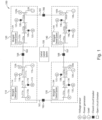
Fig. 1 is a circuit diagram illustrating an exemplary nested microgrid system. -
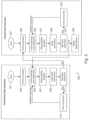
Fig. 2 is a block diagram illustrating an exemplary nested microgrid communication system. -
Fig. 3 is a flowchart illustrating an exemplary false data mitigation process. -
Fig. 4 is a flowchart illustrating an exemplary switch command verification process incorporating the exemplary false data mitigation process ofFig. 3 . - With reference to
Fig. 1 , there is illustrated anested microgrid system 100 structured to detect false data in a microgrid state estimation using multi-layered state estimation executed at both a microgrid and central control system level. It shall be appreciated thatsystem 100 may be implemented in a variety of applications, including utility grid distribution systems, industrial plant distribution systems, and vehicular distribution systems, to name but a few examples. It shall be appreciated that the topology ofsystem 100 is illustrated for the purpose of explanation and is not intended as a limitation of the present disclosure. For example,system 100 may include more or fewer microgrids and the microgrids ofsystem 100 may be arranged in any configuration as long as each microgrid is coupled to at least one other microgrid. Furthermore, it shall be appreciated that the topology of each microgrid is illustrated for the purpose of explanation and is not intended as a limitation of the present disclosure. For example,microgrid 110 may include more or fewer buses, more or fewer power sources, more loads, and more or fewer field devices. Althoughsystem 100 is illustrated with a single line diagram,system 100 may be structured to transmit single-phase alternating current (AC) power, multiphase AC power, or direct current (DC) power. -
System 100 includesmicrogrids connection lines microgrid 110 is coupled to microgrid 120 by way ofconnection line 163; microgrid 120 is coupled tomicrogrid 130 by way ofconnection line 165;microgrid 130 is coupled tomicrogrid 140 by way ofconnection line 167; andmicrogrid 140 is coupled tomicrogrid 110 by way ofconnection line 161. In certain embodiments,system 100 is coupled to a portion of a utility grid. - A
tie breaker 162, also known as a circuit breaker, is operatively coupled toconnection line 161 and structured to selectively interrupt the flow of current throughconnection line 161. Atie breaker 164 is operatively coupled toconnection line 163 and structured to selectively interrupt the flow of current throughconnection line 163. Atie breaker 166 is operatively coupled toconnection line 165 and structured to selectively interrupt the flow of current throughconnection line 165. Atie breaker 168 is operatively coupled toconnection line 167 and structured to selectively interrupt the flow of current throughconnection line 167. - Microgrid 110 is structured to supply power to microgrid loads, such as load 119, whether connected to other nested microgrids or disconnected from the remainder of
system 100. Microgrid 110 includes a point of interconnection (POI), also known as a point of common connection,bus 111a coupled betweenconnection line 161 andbus 111b, a bus 111c coupled tobus 111b, and aPOI bus 111d coupled between bus 111c andconnection line 163.Microgrid 110 also includes a plurality of field devices structured to measure electrical or physical characteristics ofmicrogrid 110 including voltage sensor 113a and voltage sensor 113b. Voltage sensor 113a is coupled toPOI bus 111a and structured to measure the voltage ofPOI bus 111a. Voltage sensor 113b is coupled toPOI bus 111d and structured to measure the voltage ofPOI bus 111d. In certain embodiments,microgrid 110 includes additional voltage sensors or other types of field devices, such as remote terminal units (RTUs), intelligent electronic devices (IEDs), relays, reclosers, phasor measurement units (PMUs), current sensors, voltage transformers, and current transformers, to name but a few examples. In certain embodiments, voltage sensors are structured to measure a voltage magnitude and voltage phase angle and current sensors are structured to measure a current magnitude and current phase angle. - Microgrid 110 includes
power source 115 coupled tobus 111b andpower source 117 coupled to bus111c. Power sources Power source 115 is coupled to bus 11 1b by way of acircuit breaker 116, also known as a switching device, structured to selectively interrupt current flowing betweenbus 111b andpower source 115.Power source 117 is coupled to bus 111c and structured to selectively interrupt current flowing between bus 111c andpower source 117. - Microgrid 110 includes a
microgrid control system 114 structured to communicate with the field devices including circuit breakers ofmicrogrid 110, perform state estimation, and perform false data detection and mitigation, as explained in more detail below. In certain embodiments,microgrid control system 114 is structured to control and receive measurements from tie breakers adjacent tomicrogrid 110. It shall be appreciated that any or all of the foregoing features ofmicrogrid 110 may also be present in the other microgrids ofsystem 100 disclosed herein. - Microgrid 120 is structured to supply power to coupled loads, such as
load 129, whether connected to other microgrids or disconnected from the remainder ofsystem 100. Microgrid 120 includes a POI bus 121a coupled betweenconnection line 163 and bus 121b, a bus 121c coupled to bus 121b, and aPOI bus 121d coupled between bus 121c andconnection line 163. Microgrid 120 also includes a plurality of field devices structured to measure electrical or physical characteristics of microgrid 120 includingvoltage sensor 123a and voltage sensor 123b.Voltage sensor 123a is coupled to POI bus 121a and structured to measure the voltage of POI bus 121a. Voltage sensor 123b is coupled toPOI bus 121d and structured to measure the voltage ofPOI bus 121d. - Microgrid 120 includes
power source 125 coupled to bus 121b andpower source 127 coupled to bus121c. Power source 125 is coupled to bus 121b by way of a circuit breaker 126 structured to selectively interrupt current flowing between bus 121b andpower source 125.Power source 127 is coupled to bus 121c and structured to selectively interrupt current flowing between bus 121c andpower source 127. Microgrid 120 includes amicrogrid control system 124 structured to communicate with the field devices and circuit breakers of microgrid 120 and conduct false data detection and mitigation, as explained in more detail below. - Microgrid 130 is structured to supply power to coupled loads, such as
load 139, whether connected to other microgrids or disconnected from the remainder ofsystem 100. Microgrid 130 includes POI bus 131a coupled betweenconnection line 161 andbus 131b, a bus 131c coupled tobus 131b, and aPOI bus 131d coupled between bus 131c andconnection line 163.Microgrid 130 also includes a plurality of field devices structured to measure electrical or physical characteristics ofmicrogrid 130 includingvoltage sensor 133a andvoltage sensor 133b.Voltage sensor 133a is coupled to POI bus 131a and structured to measure the voltage of POI bus 131a.Voltage sensor 133b is coupled toPOI bus 131d and structured to measure the voltage ofPOI bus 131d. - Microgrid 130 includes
power source 135 coupled tobus 131b andpower source 137 coupled to bus131c. Power source 135 is coupled tobus 131b by way of acircuit breaker 136 structured to selectively interrupt current flowing betweenbus 131b andpower source 135.Power source 137 is coupled to bus 131c and structured to selectively interrupt current flowing between bus 131c andpower source 137. Microgrid 130 includes a microgrid control system 134 structured to communicate with the field devices and circuit breakers ofmicrogrid 130 and conduct false data detection and mitigation, as explained in more detail below. - Microgrid 140 is structured to supply power to coupled loads, such as
load 149, whether connected to other microgrids or disconnected from the remainder ofsystem 100.Microgrid 140 includes aPOI bus 141a coupled to bus 141b, a bus 141c coupled to bus 141b, and a POI bus 141d coupled between bus 141c andconnection line 163.Microgrid 140 also includes a plurality of field devices structured to measure electrical or physical characteristics ofmicrogrid 140 including voltage sensor 143a and voltage sensor 143b. Voltage sensor 143a is coupled toPOI bus 141a and structured to measure the voltage ofPOI bus 141a. Voltage sensor 143b is coupled to POI bus 141d and structured to measure the voltage of POI bus 141d. -
Microgrid 140 includespower source 145 coupled to bus 141b andpower source 147 coupled to bus141c. Power source 145 is coupled to bus 141b by way of acircuit breaker 146 structured to selectively interrupt current flowing between bus 141b andpower source 145.Power source 147 is coupled to bus 141c and structured to selectively interrupt current flowing between bus 141c andpower source 147.Microgrid 140 includes amicrogrid control system 144 structured to communicate with the field devices and circuit breakers ofmicrogrid 140 and conduct false data detection and mitigation, as explained in more detail below. -
System 100 includes acentral control system 150 structured to communicate withmicrogrid control systems system 100 using both raw measurements from the field devices ofsystem 100 and aggregated local state estimations from each microgrid control system ofsystem 100. In certain embodiments,central control system 150 is a distribution management system (DMS) or a distributed energy resource management system (DERMS). - Existing state estimation systems suffer from a number of shortcomings and disadvantages. There remain unmet needs including increasing the accuracy of false data detection, preventing erroneous execution of microgrid control commands, and increasing microgrid security. For instance, a cyber intruder may gain access to a single field device of a microgrid, causing malicious data to enter microgrid communication channels and adversely affect nested microgrids or the entire power network. Furthermore, a cyber intruder may be able to inject false data into a local or central control system which is undetectable by a single state estimator receiving a small number of measurements for state estimation.
Central control system 150 andmicrogrid control systems system 100 at any entry point of the communication system: at the field device, at the microgrid control system, or at the central control system. In order to briefly illustrate the advantages of the exemplary multi-layer state estimation, consider the following examples. - First, suppose cyber intruders inject false data into
microgrid control system 114 indicatingcircuit breaker 118 is closed and also provide reasonable measurements to support the false circuit breaker status. Ifmicrogrid control system 114 used isolated local state estimation, it would be hard to detect false data since the false data injection included reasonable measurements andmicrogrid 110 includes a small number of field devices for generating state estimation input data. Using the exemplary false data detection algorithm described below,microgrid control system 114 can detect the false data by comparing its calculated topology to global state estimation calculated bycentral control system 150. - In a second example,
central control system 150 generates a switching command based on false data received atcentral control system 150 in the form of a false data injection. The generated switching command would be effective to opencircuit breaker 116. If microgrid 110 were operating in islanded mode at the time the switching command was executed,microgrid 110 would experience a blackout.Central control system 150 operating alone would not detect the false data. Using the exemplary false data detection process described below,microgrid control system 114 andcentral control system 150, working concurrently, will simulate the switching command and block the execution of the switching command. In certain embodiments,system 100 is structured to not only remove false data from measurements used in state estimation, butsystem 100 will also block the data source to prevent further cyberattacks onsystem 100. It shall be appreciated that any or all of the foregoing features ofsystem 100 may also be present in the other nested microgrid systems disclosed herein. - With reference to
Fig. 2 , there is illustrated a nestedmicrogrid system 200 includingmicrogrids central control system 210. Each microgrid includes a microgrid control system structured to communicate with other microgrid control systems by way ofcommunication channels 263, the field devices of the same microgrid by way ofcommunication channels 265, andcentral control system 210 by way ofcommunication channels 261. - The communication channels of
system 200 may transfer data by way of wired or wireless communication using communication protocols such as GOOSE, OPC UA, Pub-Sub, or DDS, to name but a few examples. In certain embodiments, some or all of the communication channels ofsystem 200 include one or more software defined networking (SDN) devices, such as an Ethernet switch. For example,field devices 251 may each be coupled to a separate port of an SDN device,microgrid control system 253 may be coupled to a port of the SDN device, and thecentral control system 210 may be coupled to a port of the SDN device. In order for each field device to communicate, the SDN device must connect the port for the field device and the port for a control system. In certain embodiments, a microgrid control system orcentral control system 210 may block a false data injection from a field device by instructing the SDN device to disable the port of the field device. In certain embodiments, where a microgrid is experiencing multiple injections of false data,central control system 210 may instruct the SDN device to disconnect the port connecting thecentral control system 210 to the SDN device in order to isolate the affected microgrid control system. In certain embodiments, the SDN device may be used to control a field device before isolation of the field device, such as opening a circuit breaker with an IED. - Microgrid 220 includes a plurality of
field devices 221 and amicrogrid control system 222.Microgrid control system 222 includes aprocessing device 226, an input/output device 225, amemory device 223, and a distributedstate estimator application 224.System 200 may be a stand-alone device, an embedded system, or a plurality of devices structured to perform the functions described with respect tosystem 222. For example,system 222 may be incorporated into a microgrid SCADA gateway. - Input/
output device 225 enablesmicrogrid control system 222 to communicate with the plurality offield devices 221, the other microgrids ofsystem 200, andcentral control system 210. For example, input/output device 225 may include a network adapter, network credential, interface, or a port (e.g., a USB port, serial port, parallel port, an analog port, a digital port, VGA, DVI, HDMI, FireWire, CAT 5, Ethernet, fiber, or any other type of port or interface), to name but a few examples. Input/output device 225 may include more than one of these adapters, credentials, or ports, such as a first port for receiving data and a second port for transmitting data. -
Processing device 226 may include one or multiple processors, Arithmetic-Logic Units (ALUs), Central Processing Units (CPUs), Digital Signal Processors (DSPs), or Field-programmable Gate Array (FPGA), to name but a few examples. For forms ofprocessing device 226 with multiple processing units, distributed, pipelined, or parallel processing may be used.Processing device 226 may be dedicated to performance of only the operations described herein or may be used in one or more additional applications.Processing device 226 may be of a programmable variety that executes algorithms and processes data in accordance with distributedstate estimator application 224 as defined by programming instructions (such as software or firmware) stored inmemory 223. Alternatively or additionally, distributedstate estimator application 224 forprocessing device 226 is at least partially defined by hardwired logic or other hardware.Processing device 226 may comprise one or more components of any type suitable to process the signals received from input/output device 225 or elsewhere, and provide desired output signals. Such components may include digital circuitry, analog circuitry, or a combination of both. -
Memory device 223 may be of one or more types, such as a solid-state variety, electromagnetic variety, optical variety, or a combination of these forms, to name but a few examples. Furthermore,memory device 223 may be volatile, nonvolatile, transitory, non-transitory or a combination of these types, and some or all ofmemory device 223 may be of a portable variety, such as a disk, tape, memory stick, cartridge, to name but a few examples In addition,memory device 223 may store data that is manipulated by distributedstate estimator application 224 ofprocessing device 226, such as data representative of signals received from and/or sent to input/output device 225 in addition to or in lieu of storing programming instructions defining distributedstate estimator application 224, just to name one example. It shall be appreciated that any or all of the foregoing features ofmicrogrid control system 222 may also be present in the other control systems disclosed herein. -
Microgrid 230 includes a microgrid control system 232 and a plurality offield devices 231. Microgrid control system 232 includes amemory device 233, an input/output device 235, and aprocessing device 236. A distributedstate estimator application 234 is stored inmemory device 233. -
Microgrid 240 includes amicrogrid control system 242 and a plurality offield devices 241.Microgrid control system 242 includes amemory device 243, an input/output device 245, and aprocessing device 246. A distributedstate estimator application 244 is stored inmemory device 243. -
Microgrid 250 includes amicrogrid control system 252 and a plurality offield devices 251.Microgrid control system 252 includes amemory device 253, an input/output device 255, and aprocessing device 256. A distributedstate estimator application 254 is stored inmemory device 253. -
Central control system 210 includes amemory device 201, an input/output device 205, and aprocessing device 207. A centralizedstate estimator application 203 is stored inmemory device 201. It shall be appreciated that any or all of the foregoing features ofsystem 200 may also be present in the other nested microgrid systems disclosed herein. - With reference to
Fig. 3 , there is illustrated a process for detecting and mitigating false data in a nested microgrid system. The following description ofprocess 300 is made with reference to nestedmicrogrid system 100 illustrated inFig. 1 . Specifically,process 300 includes operations simultaneously executed bymicrogrid control system 114 andcentral control system 150. It is to be understood, however, thatprocess 300 may be used in combination with other forms of nested microgrid systems, such as those described above with reference toFig. 2 . It shall be further appreciated that a number of variations and modifications to process 300 are contemplated including, for example, the omission of one or more aspects ofprocess 300, the addition of further conditionals and operations and/or the reorganization or separation of operations and conditionals into separate processes. - The
microgrid control system 114 portion ofprocess 300 begins atstart operation 301 and proceeds tooperation 303 wheremicrogrid control system 114 receives measurements from the field devices ofmicrogrid 110. In certain embodiments,system 114 also receives calculated connection information from microgrid control systems of an adjacent microgrid, such asmicrogrid control systems 134 or 124. With respect to microgrid control system 134, the calculated connection information may includeconnection line 161 impedance, POI bus 131a voltage,tie breaker 162 switch status, orconnection line 161 current, to name but a few examples. In certain embodiments, connection line impedance is known bymicrogrid control system 114 beforeprocess 300 begins. -
Process 300 proceeds tooperation 305 wheremicrogrid control system 114 evaluates local topology using adjacent system information and local measurements received from the field devices ofmicrogrid 110.Microgrid control system 114 may detect a topology error, such as incorrect switch statuses oftie breakers circuit breakers microgrid control system 114 uses the following equation to estimate the POI bus voltage of an adjacent microgrid, such as the voltage of bus 131a, where
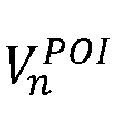
POI bus 111a, In-m is the current flowing throughconnection line 161, and Zn-m is the impedance ofline 161 betweenPOI bus 111a and POI bus 131a.
- It shall be appreciated that an estimated voltage may include a magnitude, a phase angle, or both. Once the voltage of bus 131a is estimated,
system 114 compares the estimate to an estimated value of bus 131a voltage received fromcentral control system 150, which may be based on aggregated measurements or an estimate calculated bycentral control system 150.Microgrid control system 114 determines there is a topology error if the estimate calculated bymicrogrid control system 114 and the estimate of bus 131a voltage received fromcentral control system 150 do not match, such as differing by more than 5%, to name one example. A topology error may be caused by false data due to a sensor error, communication noise, or cyberattack. False data injection may occur at a field device, atmicrogrid 110 or atcentral control system 150. For example, a cyber intruder could closebreaker 162 while injecting false data to microgridcontrol system 114 purporting to be measurements from sensor113a indicating breaker 162 is still open. - For detecting internal topology errors,
microgrid control system 114 continues to estimate bus voltage for all buses ofmicrogrid 110, such asbuses 111b and 111c using equation (1).Microgrid control system 114 compares an estimated value of a bus to the measured value of a bus to determine if there is a topology error in the switch status ofcircuit breaker - In addition to
microgrid control system 114 detecting and updating topology,microgrid control system 114 will also receive topology information fromcentral control system 150 to correct topology error.System 114, in response, will replace the false switch status with the correct status received fromcentral control system 150. -
Process 300 proceeds tooperation 307 wheremicrogrid control system 114 performs observability analysis to determine whether there are sufficient measurements, including pseudo measurements, to perform state estimation. Specifically, observability analysis includes verifying whether the number and location of measurements from field devices ofmicrogrid 110 will allow a set of state estimated variables to be calculated. Additional pseudo measurements may be calculated using local measurements to increase the accuracy of future operations. Any type of observability analysis may be performed, including topological or numerical techniques, pseudo-measurement determination problems, or Gaussian elimination to calculate the null space of the Jacobian matrix, to name but a few examples. - Once
microgrid control system 114 determines there are sufficient measurements to perform state estimation,process 300 proceeds tooperation 309 wheremicrogrid control system 114 performs local state estimation. If the measurements to be used are synchronized, such as by a time stamp, linear state estimation is used. Otherwise, nonlinear state estimation is used. State estimation may be performed using the following equation, where z is a measurement vector including all bus measurements, current measurements, and pseudo measurements; H is a matrix including the microgrid topology; x is a state vector including estimated bus voltage magnitudes and angle; and e is a measurement error vector.
-
Process 300 proceeds tooperation 311 where measurements errors, also known as false data, are detected bymicrogrid control system 114 using the local state estimation fromoperation 309 and global state estimation performed bycentral control system 150. As with topology errors, measurement errors may be caused by sensor errors, communication network errors, or cyber intrusions. For example, measurement errors may be caused by instrument transformer errors, communication network failure or unexpected noise, or false data injection attacks, to name but a few examples.Microgrid control system 114 compares the local state estimation and the global state estimation to detect false data. Techniques to compare the local state estimation and the global state estimation include, but are not limited to, Chi-square distribution, normalized residuals, or hypothesis testing identification. -
Process 300 proceeds tooperation 313 where detected false data is removed from the set of local measurements used byoperations 305 to 309. In certain embodiments,microgrid control system 114 may also transmit an alarm in response to detected false data, block future measurements purporting to be from the same purported source as the false data, or isolate the source of the false data using software defined networking techniques, to name but a few examples.Process 300 then returns tooperation 305 and performsoperations 305 through 309 with the false data removed. Onceprocess 300 returns tooperation 311,microgrid control system 114 will transmit the updated local state estimation tocentral control system 150 as long as no additional false data is detected. - The
central control system 150 portion ofprocess 300 beings atstart operation 321 and proceeds tooperation 323 wherecentral control system 150 receives periodically polled data from all microgrids ofsystem 100, including measurements from the field devices ofmicrogrids central control system 150 or by way of the microgrid control systems.Central control system 150 also receives the local state estimation from each microgrid. -
Process 300 proceeds tooperation 325 wherecentral control system 150 detects system topology errors. First,central control system 150 uses equation (1) to calculate a system topology with the periodically polled measurements from the field devices of all microgrids as input variables. Next,central control system 150 uses equation (1) to calculate a system topology with the local state estimations as input variables. The two calculated system topologies are compared as inoperation 305 to determine whether topology errors exist and need correction. Once the topology is updated, the corrected topology is transmitted to each microgrid. -
Process 300 proceeds tooperation 327 wherecentral control system 150 performs observability analysis to determine whether the number and locations of measurements received inoperation 323 and pseudo measurements are sufficient to perform state estimation. - Once
central control system 150 determines there are sufficient measurements to perform state estimation,process 300 proceeds tooperation 329 wherecentral control system 150 generates two sets of state estimations using equation (2). First,central control system 150 uses all the local state estimations received from each microgrid to perform state-based global state estimation. Second,central control system 150 uses the raw measurements received from the field devices to perform measurement-based global state estimation. -
Process 300 proceeds tooperation 331 wherecentral control system 150 detects false data by comparing the state based global state estimation and the measurement based global state estimation. Discrepancies between the two global state estimations indicate false data. Techniques to compare the global state estimations include, but are not limited to Chi-square distribution, normalized residuals, or hypothesis testing identification. - If false data is detected,
process 300 proceeds tooperation 333 where detected false data is removed from the set of measurements used byoperations 325 to 329. In certain embodiments,central control system 150 may also transmit an alarm in response to detected false data, block future measurements purporting to be from the same purported source as the false data, or isolate the source of the false data using software defined networking techniques, to name but a few examples.Process 300 then returns tooperation 325 where the updated global state estimation is used to performsoperations 325 through 329 with the false data removed. - After
process 300re-executes operation 331 without detecting false data,process 300 proceeds tooperation 335 wherecentral control system 150 transmits the updated global state estimation to other applications for analysis.Central control system 150 may transmit either the global state estimation calculated using the raw measurements, the global state estimation calculated using the local state estimations, or a combination thereof. Global state estimation may be used by other applications for market simulations, stability analysis, and demand response, to name but a few examples.Process 300 may be repeated every time a new measurement is received from a field device or a set of new measurements are received from a set of field devices.Process 300 may also be repeated after a time interval. For example,process 300 may be repeated every 10 seconds for microgrid systems without PMUs, or 50 times per second for microgrid systems including PMUs. - With reference to
Fig. 4 , there is illustrated anexemplary process 400 for multi-layer predictive analysis of switching commands in a nested microgrid system using multi-layer state estimation. The following description ofprocess 400 is made with reference to nestedmicrogrid system 100 illustrated inFig. 1 . It is to be understood, however, thatprocess 400 may be used in combination with other forms of nested microgrid systems. It shall be further appreciated that a number of variations and modifications to process 400 are contemplated including, for example, the omission of one or more aspects ofprocess 400, the addition of further conditionals and operations and the reorganization or separation of operations and conditionals into separate processes. -
Process 400 begins atstart operation 401 and proceeds tooperation 403 wheremicrogrid control system 114 receives a switching command to operate a circuit breaker inmicrogrid 110, such asclosing circuit breaker 118. A switching command may be received fromcentral control system 150, such as a DMS or DERMS, to name but a few examples. -
Process 400 proceeds tooperation 405 wheremicrogrid control system 114 polls field devices for data including updated measurements and switch statuses.Process 400 proceeds tooperation 407 wheremicrogrid control system 114 updates the system topology using the polled data received inoperation 405 as described with respect tooperation 305 inFig. 3 .Process 400 proceeds tooperation 409 wheremicrogrid control system 114 modifies the system topology updated inoperation 407 based on the received switching command. For example, if the switching command included closingcircuit breaker 118, the system topology is updated to indicatecircuit breaker 118 as closed. -
Process 400 proceeds tooperation 411 wheremicrogrid control system 114 andcentral control system 150 perform multi-layer state estimation as described with respect tooperations Fig. 3 .Microgrid control system 114 performs local state estimation and compares the local state estimation to the global state estimation received fromcentral control system 150. -
Process 400 proceeds to conditional 413 wheremicrogrid control system 114 determines whether a solution of the state estimation can be obtained, i.e. whether state estimation produced converged results. If the state estimation cannot converge during the simulation of the new switching command, the simulation indicatessystem 100 could experience a voltage collapse if the switching command were executed. Therefore,process 400 will proceed tooperation 415 if a solution cannot be obtained. Atoperation 415 the switching command is not executed, an alarm is issued tocentral control system 150 or a substation operator, or the source of the switching command is identified and isolated using software defined network techniques. Process then proceeds to endoperation 421. - With continuing reference to conditional 413, if the state estimation does converge,
process 400 proceeds to conditional 417 wheremicrogrid control system 114 determines whether the simulation indicates a voltage limit violation. If the simulation indicates the switching command would generate an overvoltage condition on one of the buses ofsystem 100 causing circuit breakers to trip,process 400 proceeds tooperation 415. If the simulation indicates the switching command would generate an undervoltage condition on one of the buses ofsystem 100 causing load shedding, process proceeds tooperation 415. Ifmicrogrid control system 114 cannot detect any problem caused by the switching command using the simulated state estimation,process 400 proceeds to operation 423, where the switching command is executed.Process 400 then proceeds to endoperation 421. - It is contemplated that the various aspects, features, processes, and operations from the various embodiments may be used in any of the other embodiments unless expressly stated to the contrary. Certain operations illustrated may be implemented by a computer executing a computer program product on a non-transient, computer-readable storage medium, where the computer program product includes instructions causing the computer to execute one or more of the operations, or to issue commands to other devices to execute one or more operations.
- Further written description of a number of exemplary embodiments shall now be provided. One embodiment is a method for removing false data in a nested microgrid system, the method comprising: calculating, with a first microgrid control system of a first microgrid, a first local state estimation using a first plurality of local measurements; calculating, with a second microgrid control system of a second microgrid, a second local state estimation using a second plurality of local measurements; calculating, with a central control system, a plurality of global state estimations including a first global state estimation using the first plurality of measurements and the second plurality of measurements, and a second global state estimation using the first local state estimation and the second local state estimation; performing, with the first microgrid control system, a first false data detection test using the first local state estimation and one global state estimation of the plurality of global state estimations; performing, with the central control system, a second false data detection test using the first global state estimation and the second global state estimation; detecting false data in response to performing the first false data detection test or the second false data detection test; and updating the first global state estimation, the second global state estimation, or the first local state estimation in response to detecting the false data.
- In some examples of the foregoing method, the first microgrid includes a first plurality of field devices structured to generate the first plurality of local measurements corresponding to physical or electrical characteristics of the first microgrid, and wherein the second microgrid includes a second plurality of field devices structured to generate the second plurality of local measurements corresponding to physical or electrical characteristics of the second microgrid. In some examples, false data is detected in response to performing the first false data detection test, and wherein updating in response to detecting the false data includes determining, with the first microgrid control system, the first local state estimation includes false data, recalculating, with the first microgrid control system, the local state estimation without the false data, and transmitting the recalculated local state estimation to the central control system. In some examples, false data is detected in response to performing the second false data detection test, and wherein updating in response to detecting the false data includes determining, with the central control system, the first local state estimation includes false data, recalculating, with the central control system, the plurality of global states estimations without the false data, and transmitting one recalculated global state estimation to the central control system. In some examples, the method comprises generating, with the first microgrid control system, a first microgrid topology using the first plurality of measurements; generating, with the central microgrid control system, a system topology using the first plurality of measurements and the second plurality of measurements; detecting, with the first microgrid control system, a topology error in response to comparing the system topology error and the first microgrid topology; and updating the first microgrid topology in response to detecting the topology error. In some examples, the method comprises receiving a switch command with the first microgrid control system; and generating, with the first microgrid control system, a simulated microgrid topology, wherein calculating the local state estimation includes using the simulated microgrid topology, and wherein detecting false data includes determining the received switch command would cause a voltage collapse or a voltage limit violation. In some examples, the method comprises determining a source of the false data; and preventing false data from being introduced into future state estimations. In some examples, preventing false data from being introduced into future state estimations includes transmitting an alarm to a system operation or blocking data received from the determined source of the false data. In some examples, the false data includes data injected by a cyber intruder and the determined source of the false data is a field device, the first microgrid control system, or the central control system. In some examples, a first plurality of field devices and the first microgrid control system are structured to communicate by way of a software defined networking (SDN) controller and wherein preventing false data from being introduced into future state estimations includes transmitting a command to the SDN controller effective to disable communication by the determined source of the false data. In some examples, the first microgrid includes a circuit breaker, and wherein preventing false data from being introduced into future state estimations includes toggling the circuit breaker with the SDN controller before disabling communication by the determined source of false data. In some examples, the first plurality of measurements includes a voltage magnitude and phase angle for a first plurality of buses of the first microgrid and the second plurality of measurements includes a voltage magnitude and phase angle for a second plurality of buses of the second microgrid.
- Another exemplary embodiment is a method for mitigating a false switching command in a nested microgrid system including a first microgrid, the method comprising: receiving, with a first microgrid control system of the first microgrid, a switching command effective to toggle a controllable switch of the first microgrid; generating, with the first microgrid control system, a simulated microgrid topology using a first plurality of measurements; generating, with a central control system, a simulated system topology using a first plurality of measurements and a second plurality of measurements from a second microgrid; calculating, with a first microgrid control system of a first microgrid, a first local state estimation using the simulated microgrid topology; calculating, with the central control system, a plurality of global state estimations including a first global state estimation using simulated system topology, and a second global state estimation using the first local state estimation; performing, with the first microgrid control system, a first false data detection test by comparing the first local state estimation and one global state estimation of the plurality of global state estimations; performing, with the second microgrid control system, a second false data detection test by comparing the first global state estimation and the second global state estimation; determining the switching command includes false data in response to performing the first false data detection test or the second false data detection test; and ignoring, with the first microgrid control system, the received switch command. In some examples, the first microgrid includes a first plurality of field devices structured to generate the first plurality of local measurements corresponding to physical or electrical characteristics of the first microgrid, and wherein the second microgrid includes a second plurality of field devices structured to generate the second plurality of local measurements corresponding to physical or electrical characteristics of the second microgrid. In some examples, determining the switching command includes false data includes determining that execution of the switching command would cause a voltage collapse on the first microgrid. In some examples, determining the switching command includes false data includes determining that execution of the switching command would cause an over voltage condition or and under voltage condition on the first microgrid. In some examples, a first plurality of field devices, the first microgrid control system, and the central control system are structured to communicate by way of a software defined networking (SDN) controller and wherein ignoring the received switch command includes transmitting a command to the SDN controller effective to disable communication from one field device of the first plurality of field devices, the first microgrid, or the central control system. In some examples, the first microgrid includes a circuit breaker, and wherein preventing false data from being introduced into future state estimations includes toggling the circuit breaker with the SDN controller before disabling communication. In some examples, the switching command is received from the central control system, and wherein the central control system generated the switching command using false data cause by a cyber intruder, a faulty sensor, or signal noise. In some examples, ignoring the switching command includes blocking a source of the switching command or alerting a system operator.
- For the purposes of clearly, concisely and exactly describing non-limiting exemplary embodiments of the disclosure, the manner and process of making and using the same, and to enable the practice, making and use of the same, reference has been made to certain exemplary embodiments, including those illustrated in the figures, and specific language has been used to describe the same. It shall nevertheless be understood that no limitation of the scope of the present disclosure is thereby created, and that the present disclosure includes and protects such alterations, modifications, and further applications of the exemplary embodiments as would occur to one skilled in the art with the benefit of the present disclosure.
- While the present disclosure has been illustrated and described in detail in the drawings and foregoing description, the same is to be considered as illustrative and not restrictive in character, it being understood that only certain exemplary embodiments have been shown and described, and that all changes and modifications that come within the spirit of the present disclosure are desired to be protected. It should be understood that while the use of words such as "preferable," "preferably," "preferred" or "more preferred" utilized in the description above indicate that the feature so described may be more desirable, it nonetheless may not be necessary, and embodiments lacking the same may be contemplated as within the scope of the present disclosure, the scope being defined by the claims that follow. In reading the claims, it is intended that when words such as "a," "an," "at least one," or "at least one portion" are used there is no intention to limit the claim to only one item unless specifically stated to the contrary in the claim. The term "of" may connote an association with, or a connection to, another item, as well as a belonging to, or a connection with, the other item as informed by the context in which it is used. The terms "coupled to," "coupled with" and the like include indirect connection and coupling, and further include but do not require a direct coupling or connection unless expressly indicated to the contrary. When the language "at least a portion" and/or "a portion" is used, the item can include a portion and/or the entire item unless specifically stated to the contrary.
- The following items refer to preferred embodiments:
- 1. A method for removing false data in a nested microgrid system, the method comprising:
- calculating, with a first microgrid control system of a first microgrid, a first local state estimation using a first plurality of local measurements;
- calculating, with a second microgrid control system of a second microgrid, a second local state estimation using a second plurality of local measurements;
- calculating, with a central control system, a plurality of global state estimations including a first global state estimation using the first plurality of measurements and the second plurality of measurements, and a second global state estimation using the first local state estimation and the second local state estimation;
- performing, with the first microgrid control system, a first false data detection test using the first local state estimation and one global state estimation of the plurality of global state estimations;
- performing, with the central control system, a second false data detection test using the first global state estimation and the second global state estimation;
- detecting false data in response to performing the first false data detection test or the second false data detection test; and
- updating the first global state estimation, the second global state estimation, or the first local state estimation in response to detecting the false data.
- 2. The method of item 1 wherein the first microgrid includes a first plurality of field devices structured to generate the first plurality of local measurements corresponding to physical or electrical characteristics of the first microgrid, and wherein the second microgrid includes a second plurality of field devices structured to generate the second plurality of local measurements corresponding to physical or electrical characteristics of the second microgrid.
- 3. The method of item 1 wherein false data is detected in response to performing the first false data detection test, and wherein updating in response to detecting the false data includes determining, with the first microgrid control system, the first local state estimation includes false data, recalculating, with the first microgrid control system, the local state estimation without the false data, and transmitting the recalculated local state estimation to the central control system.
- 4. The method of item 1 wherein false data is detected in response to performing the second false data detection test, and wherein updating in response to detecting the false data includes determining, with the central control system, the first local state estimation includes false data, recalculating, with the central control system, the plurality of global states estimations without the false data, and transmitting one recalculated global state estimation to the central control system.
- 5. The method of item 1 comprising:
- generating, with the first microgrid control system, a first microgrid topology using the first plurality of measurements;
- generating, with the central microgrid control system, a system topology using the first plurality of measurements and the second plurality of measurements;
- detecting, with the first microgrid control system, a topology error in response to comparing the system topology error and the first microgrid topology; and
- updating the first microgrid topology in response to detecting the topology error.
- 6. The method of item 1 comprising:
- receiving a switch command with the first microgrid control system; and
- generating, with the first microgrid control system, a simulated microgrid topology,
- wherein calculating the local state estimation includes using the simulated microgrid topology, and
- wherein detecting false data includes determining the received switch command would cause a voltage collapse or a voltage limit violation.
- 7. The method of item 1 comprising:
- determining a source of the false data; and
- preventing false data from being introduced into future state estimations.
- 8. The method of item 7 wherein preventing false data from being introduced into future state estimations includes transmitting an alarm to a system operation or blocking data received from the determined source of the false data.
- 9. The method of item 7 wherein the false data includes data injected by a cyber intruder and the determined source of the false data is a field device, the first microgrid control system, or the central control system.
- 10. The method of item 7 wherein a first plurality of field devices and the first microgrid control system are structured to communicate by way of a software defined networking (SDN) controller and wherein preventing false data from being introduced into future state estimations includes transmitting a command to the SDN controller effective to disable communication by the determined source of the false data.
- 11. The method of item 10 wherein the first microgrid includes a circuit breaker, and wherein preventing false data from being introduced into future state estimations includes toggling the circuit breaker with the SDN controller before disabling communication by the determined source of false data.
- 12. The method of item 1 wherein the first plurality of measurements includes a voltage magnitude and phase angle for a first plurality of buses of the first microgrid and the second plurality of measurements includes a voltage magnitude and phase angle for a second plurality of buses of the second microgrid.
- 13. A method for mitigating a false switching command in a nested microgrid system including a first microgrid, the method comprising:
- receiving, with a first microgrid control system of the first microgrid, a switching command effective to toggle a controllable switch of the first microgrid;
- generating, with the first microgrid control system, a simulated microgrid topology using a first plurality of measurements;
- generating, with a central control system, a simulated system topology using a first plurality of measurements and a second plurality of measurements from a second microgrid;
- calculating, with a first microgrid control system of a first microgrid, a first local state estimation using the simulated microgrid topology;
- calculating, with the central control system, a plurality of global state estimations including a first global state estimation using simulated system topology, and a second global state estimation using the first local state estimation;
- performing, with the first microgrid control system, a first false data detection test by comparing the first local state estimation and one global state estimation of the plurality of global state estimations;
- performing, with the second microgrid control system, a second false data detection test by comparing the first global state estimation and the second global state estimation;
- determining the switching command includes false data in response to performing the first false data detection test or the second false data detection test; and
- ignoring, with the first microgrid control system, the received switch command.
- 14. The method of item 13 wherein the first microgrid includes a first plurality of field devices structured to generate the first plurality of local measurements corresponding to physical or electrical characteristics of the first microgrid, and wherein the second microgrid includes a second plurality of field devices structured to generate the second plurality of local measurements corresponding to physical or electrical characteristics of the second microgrid.
- 15. The method of item 13 wherein determining the switching command includes false data includes determining that execution of the switching command would cause a voltage collapse on the first microgrid.
- 16. The method of item 13 wherein determining the switching command includes false data includes determining that execution of the switching command would cause an over voltage condition or and under voltage condition on the first microgrid.
- 17. The method of item 13 wherein a first plurality of field devices, the first microgrid control system, and the central control system are structured to communicate by way of a software defined networking (SDN) controller and wherein ignoring the received switch command includes transmitting a command to the SDN controller effective to disable communication from one field device of the first plurality of field devices, the first microgrid, or the central control system.
- 18. The method of item 18 wherein the first microgrid includes a circuit breaker, and wherein preventing false data from being introduced into future state estimations includes toggling the circuit breaker with the SDN controller before disabling communication.
- 19. The method of item 13 wherein the switching command is received from the central control system, and wherein the central control system generated the switching command using false data cause by a cyber intruder, a faulty sensor, or signal noise.
- 20. The method of item 13 wherein ignoring the switching command includes blocking a source of the switching command or alerting a system operator.
Claims (8)
- A method for mitigating a false switching command in a nested microgrid system including a first microgrid, the method comprising:receiving, with a first microgrid control system of the first microgrid, a switching command effective to toggle a controllable switch of the first microgrid;generating, with the first microgrid control system, a simulated microgrid topology using a first plurality of measurements;generating, with a central control system, a simulated system topology using a first plurality of measurements and a second plurality of measurements from a second microgrid;calculating, with a first microgrid control system of a first microgrid, a first local state estimation using the simulated microgrid topology;calculating, with the central control system, a plurality of global state estimations including a first global state estimation using simulated system topology, and a second global state estimation using the first local state estimation;performing, with the first microgrid control system, a first false data detection test by comparing the first local state estimation and one global state estimation of the plurality of global state estimations;performing, with the second microgrid control system, a second false data detection test by comparing the first global state estimation and the second global state estimation;determining the switching command includes false data in response to performing the first false data detection test or the second false data detection test; andignoring, with the first microgrid control system, the received switch command.
- The method of claim 1, wherein the first microgrid includes a first plurality of field devices structured to generate the first plurality of local measurements corresponding to physical or electrical characteristics of the first microgrid, and wherein the second microgrid includes a second plurality of field devices structured to generate the second plurality of local measurements corresponding to physical or electrical characteristics of the second microgrid.
- The method of claim 1 or 2, wherein determining the switching command includes false data includes determining that execution of the switching command would cause a voltage collapse on the first microgrid.
- The method of any one of claims 1 to 3, wherein determining the switching command includes false data includes determining that execution of the switching command would cause an over voltage condition or and under voltage condition on the first microgrid.
- The method of any one of claims 1 to 4, wherein a first plurality of field devices, the first microgrid control system, and the central control system are structured to communicate by way of a software defined networking, SDN, controller and wherein ignoring the received switch command includes transmitting a command to the SDN controller effective to disable communication from one field device of the first plurality of field devices, the first microgrid, or the central control system.
- The method of claim 5, wherein the first microgrid includes a circuit breaker, and wherein preventing false data from being introduced into future state estimations includes toggling the circuit breaker with the SDN controller before disabling communication.
- The method of any one of claims 1 to 6, wherein the switching command is received from the central control system, and wherein the central control system generated the switching command using false data cause by a cyber intruder, a faulty sensor, or signal noise.
- The method of any one of claims 1 to 7, wherein ignoring the switching command includes blocking a source of the switching command or alerting a system operator.
Applications Claiming Priority (3)
| Application Number | Priority Date | Filing Date | Title |
|---|---|---|---|
| US16/147,979 US12149070B2 (en) | 2018-10-01 | 2018-10-01 | Decentralized false data mitigation for nested microgrids |
| EP19869643.7A EP3861617A4 (en) | 2018-10-01 | 2019-10-01 | DECENTRALIZED FALSE DATA MITIGATION FOR NESTED MINI-GRIDS |
| PCT/US2019/054040 WO2020072477A1 (en) | 2018-10-01 | 2019-10-01 | Decentralized false data mitigation for nested microgrids |
Related Parent Applications (1)
| Application Number | Title | Priority Date | Filing Date |
|---|---|---|---|
| EP19869643.7A Division EP3861617A4 (en) | 2018-10-01 | 2019-10-01 | DECENTRALIZED FALSE DATA MITIGATION FOR NESTED MINI-GRIDS |
Publications (2)
| Publication Number | Publication Date |
|---|---|
| EP4465055A2 true EP4465055A2 (en) | 2024-11-20 |
| EP4465055A3 EP4465055A3 (en) | 2025-02-26 |
Family
ID=69945253
Family Applications (2)
| Application Number | Title | Priority Date | Filing Date |
|---|---|---|---|
| EP24197887.3A Pending EP4465055A3 (en) | 2018-10-01 | 2019-10-01 | Decentralized false data mitigation for nested microgrids |
| EP19869643.7A Pending EP3861617A4 (en) | 2018-10-01 | 2019-10-01 | DECENTRALIZED FALSE DATA MITIGATION FOR NESTED MINI-GRIDS |
Family Applications After (1)
| Application Number | Title | Priority Date | Filing Date |
|---|---|---|---|
| EP19869643.7A Pending EP3861617A4 (en) | 2018-10-01 | 2019-10-01 | DECENTRALIZED FALSE DATA MITIGATION FOR NESTED MINI-GRIDS |
Country Status (6)
| Country | Link |
|---|---|
| US (1) | US12149070B2 (en) |
| EP (2) | EP4465055A3 (en) |
| JP (1) | JP7167351B2 (en) |
| CN (1) | CN113169558B (en) |
| AU (1) | AU2019352596B2 (en) |
| WO (1) | WO2020072477A1 (en) |
Families Citing this family (6)
| Publication number | Priority date | Publication date | Assignee | Title |
|---|---|---|---|---|
| US11387883B2 (en) * | 2020-04-28 | 2022-07-12 | The Boeing Company | Estimator for determining updates to an estimated local state vector |
| CN114189047B (en) * | 2021-12-02 | 2023-07-18 | 南京邮电大学 | False data detection and correction method for state estimation of active distribution network |
| CN114336674B (en) * | 2021-12-09 | 2023-10-20 | 北京交通大学 | A distributed resilient frequency control method for AC microgrid |
| EP4511979A4 (en) * | 2022-04-22 | 2026-04-22 | Aclara Tech Llc | SYSTEM AND METHOD FOR LINEAR STATUS ESTIMATING OF A DISTRIBUTION NETWORK CONSISTING OF A SYNCHRONIC SMART MEASURING DEVICE AND A LINE SENSOR |
| CN115766062B (en) * | 2022-09-23 | 2025-07-08 | 上海理工大学 | Method for detecting, isolating and eliminating false data injection attack of micro-grid system |
| CN117117900B (en) * | 2023-08-29 | 2024-06-14 | 浙江大学海南研究院 | Micro-grid self-triggering control method and system for resisting FDI attack |
Family Cites Families (19)
| Publication number | Priority date | Publication date | Assignee | Title |
|---|---|---|---|---|
| WO2012061674A2 (en) | 2010-11-04 | 2012-05-10 | Siemens Corporation | Stochastic state estimation for smart grids |
| CN102522743B (en) | 2011-11-08 | 2013-10-23 | 西安交通大学 | Method for defending false-data injection attack in direct-current state estimation of electrical power system |
| US9281686B2 (en) * | 2012-11-06 | 2016-03-08 | General Electric Technology Gmbh | State estimation for cooperative electrical grids |
| CN103034787A (en) | 2012-12-25 | 2013-04-10 | 深圳供电局有限公司 | Method for estimating state of microgrid |
| US10761147B2 (en) * | 2016-11-21 | 2020-09-01 | GRID20/20, Inc. | Transformer monitoring and data analysis systems and methods |
| CN103413044B (en) * | 2013-08-13 | 2016-03-30 | 东北电网有限公司 | A kind of electric system local topology method of estimation based on transformer station's measurement information |
| JP6144611B2 (en) * | 2013-12-03 | 2017-06-07 | 株式会社日立製作所 | Distribution system state estimation device, state estimation method, and state estimation program |
| TWI505597B (en) | 2014-04-10 | 2015-10-21 | 中興電工機械股份有限公司 | Intelligent microgrid power quality management operating system |
| CN103972888B (en) | 2014-05-22 | 2015-10-28 | 上海电气集团股份有限公司 | A kind of piconet controller |
| CN104134999B (en) * | 2014-08-06 | 2016-06-08 | 国家电网公司 | Distribution network based on multi-data source measures the practical method of calculation of efficiency analysis |
| WO2016176682A1 (en) | 2015-04-30 | 2016-11-03 | Abb Inc. | Detecting cyber-attacks and sensor failures in digital substations |
| US10061283B2 (en) * | 2015-12-07 | 2018-08-28 | Opus One Solutions Energy Corp. | Systems and methods for integrated microgrid management system in electric power systems |
| CN105656028B (en) * | 2016-01-20 | 2019-04-30 | 国网河北省电力公司电力科学研究院 | A Visual Display Method of Grid Stability Margin Based on GIS |
| JP6083009B1 (en) | 2016-05-11 | 2017-02-22 | アライドテレシスホールディングス株式会社 | SDN controller |
| US10355483B2 (en) * | 2016-06-07 | 2019-07-16 | Mitsubishi Electric Research Laboratories, Inc. | Fully distributed filtering for load-based dynamic state estimation |
| US10372569B2 (en) | 2016-07-25 | 2019-08-06 | General Electric Company | Methods and system for detecting false data injection attacks |
| SG10201912502QA (en) * | 2016-09-07 | 2020-02-27 | Univ Singapore Technology & Design | Defense system and method against cyber-physical attacks |
| US10305932B2 (en) * | 2016-12-21 | 2019-05-28 | Abb Inc. | System and method for detecting false data injection in electrical substations |
| EP3422517B1 (en) * | 2017-06-28 | 2020-04-15 | Siemens Aktiengesellschaft | A method for recognizing contingencies in a power supply network |
-
2018
- 2018-10-01 US US16/147,979 patent/US12149070B2/en active Active
-
2019
- 2019-10-01 EP EP24197887.3A patent/EP4465055A3/en active Pending
- 2019-10-01 JP JP2021542079A patent/JP7167351B2/en active Active
- 2019-10-01 CN CN201980065257.6A patent/CN113169558B/en active Active
- 2019-10-01 WO PCT/US2019/054040 patent/WO2020072477A1/en not_active Ceased
- 2019-10-01 EP EP19869643.7A patent/EP3861617A4/en active Pending
- 2019-10-01 AU AU2019352596A patent/AU2019352596B2/en active Active
Also Published As
| Publication number | Publication date |
|---|---|
| CN113169558A (en) | 2021-07-23 |
| JP2022503000A (en) | 2022-01-11 |
| EP4465055A3 (en) | 2025-02-26 |
| WO2020072477A1 (en) | 2020-04-09 |
| EP3861617A4 (en) | 2022-07-27 |
| US12149070B2 (en) | 2024-11-19 |
| JP7167351B2 (en) | 2022-11-08 |
| EP3861617A1 (en) | 2021-08-11 |
| AU2019352596A1 (en) | 2021-05-27 |
| US20200106301A1 (en) | 2020-04-02 |
| CN113169558B (en) | 2024-08-30 |
| AU2019352596B2 (en) | 2022-06-09 |
Similar Documents
| Publication | Publication Date | Title |
|---|---|---|
| AU2019352596B2 (en) | Decentralized false data mitigation for nested microgrids | |
| US10305932B2 (en) | System and method for detecting false data injection in electrical substations | |
| Cavraro et al. | Distribution network topology detection with time-series measurements | |
| CN102089667B (en) | Method and device for supervising secondary circuit of instrument transformer in power system | |
| US9874593B2 (en) | Decision support system for outage management and automated crew dispatch | |
| AU2019348020B9 (en) | Secure distributed state estimation for networked microgrids | |
| Clements | The impact of pseudo-measurements on state estimator accuracy | |
| Bansal et al. | PMUs enabled Tellegen's theorem-based fault identification method for unbalanced active distribution network using RTDS | |
| US20190296543A1 (en) | Method for detecting fault in power transmission line and protection system using the same | |
| CN114982090B (en) | Adaptive state assessment for power systems | |
| Janssen et al. | Monitoring, protection and fault location in power distribution networks using system-wide measurements | |
| Qin et al. | A multiple model filtering approach to transmission line fault diagnosis | |
| Zhang et al. | A novel wide-area fault isolation scheme for regional power systems with changeable network topologies | |
| CN117310358B (en) | Neutral line or phase loss detection | |
| Giannini | Improving cyber-security of power system state estimators | |
| Sharma et al. | Parameter error identification for validation and calibration of dynamic models of inverter-based resources | |
| Lwin et al. | Model-based relaying supervision for mitigation of cascading outages | |
| Dai et al. | Line outage identification based on AC power flow and synchronized measurements | |
| Jena et al. | Directional relaying during power swing and single-pole tripping | |
| Cavraro et al. | Distribution network topology detection with time series measurement data analysis | |
| Dong et al. | Real-time ground fault detection for inverter-based microgrid systems | |
| Timofeev et al. | Analysis of possibility of using PMU based methods for providing the correct operation of distance protection | |
| Parlaktuna et al. | WLAV state estimation based topology error detection and identification in distribution networks with limited number of measurements | |
| Mouco | Robust monitoring and fault location in 3-phase power grids | |
| Ghaedi et al. | Wide-area Transmission System Fault Analysis Based on Three-Phase State Estimation with Considering Measurement Errors |
Legal Events
| Date | Code | Title | Description |
|---|---|---|---|
| PUAI | Public reference made under article 153(3) epc to a published international application that has entered the european phase |
Free format text: ORIGINAL CODE: 0009012 |
|
| STAA | Information on the status of an ep patent application or granted ep patent |
Free format text: STATUS: THE APPLICATION HAS BEEN PUBLISHED |
|
| AC | Divisional application: reference to earlier application |
Ref document number: 3861617 Country of ref document: EP Kind code of ref document: P |
|
| AK | Designated contracting states |
Kind code of ref document: A2 Designated state(s): AL AT BE BG CH CY CZ DE DK EE ES FI FR GB GR HR HU IE IS IT LI LT LU LV MC MK MT NL NO PL PT RO RS SE SI SK SM TR |
|
| REG | Reference to a national code |
Ref country code: DE Ref legal event code: R079 Free format text: PREVIOUS MAIN CLASS: G01R0022060000 Ipc: H02J0013000000 |
|
| PUAL | Search report despatched |
Free format text: ORIGINAL CODE: 0009013 |
|
| AK | Designated contracting states |
Kind code of ref document: A3 Designated state(s): AL AT BE BG CH CY CZ DE DK EE ES FI FR GB GR HR HU IE IS IT LI LT LU LV MC MK MT NL NO PL PT RO RS SE SI SK SM TR |
|
| RIC1 | Information provided on ipc code assigned before grant |
Ipc: G01R 22/06 20060101ALI20250121BHEP Ipc: H02J 3/38 20060101ALI20250121BHEP Ipc: H02J 13/00 20060101AFI20250121BHEP |
|
| STAA | Information on the status of an ep patent application or granted ep patent |
Free format text: STATUS: REQUEST FOR EXAMINATION WAS MADE |
|
| 17P | Request for examination filed |
Effective date: 20250709 |